EP2900637B1 - Thiazol- oder imidazol-substituierte pyrimidin-, pyridin- und pyrazin-amid-derivate und verwandte verbindungen als abl1, abl2 und bcr-abl1-inhibitoren zur behandlung von krebs, spezifischen viralen infektionen sowie spezifischen zns-erkrankungen - Google Patents
Thiazol- oder imidazol-substituierte pyrimidin-, pyridin- und pyrazin-amid-derivate und verwandte verbindungen als abl1, abl2 und bcr-abl1-inhibitoren zur behandlung von krebs, spezifischen viralen infektionen sowie spezifischen zns-erkrankungen Download PDFInfo
- Publication number
- EP2900637B1 EP2900637B1 EP13730654.4A EP13730654A EP2900637B1 EP 2900637 B1 EP2900637 B1 EP 2900637B1 EP 13730654 A EP13730654 A EP 13730654A EP 2900637 B1 EP2900637 B1 EP 2900637B1
- Authority
- EP
- European Patent Office
- Prior art keywords
- mmol
- compound
- phenyl
- trifluoromethoxy
- hydroxy
- Prior art date
- Legal status (The legal status is an assumption and is not a legal conclusion. Google has not performed a legal analysis and makes no representation as to the accuracy of the status listed.)
- Active
Links
- 0 CC(**1)=C(*)C=C1N Chemical compound CC(**1)=C(*)C=C1N 0.000 description 11
- LABFVUOSRORCGB-UHFFFAOYSA-N COCCOc(ncc(C(Nc(cc1)ccc1OC(F)(F)F)=O)c1)c1-c1cncnc1 Chemical compound COCCOc(ncc(C(Nc(cc1)ccc1OC(F)(F)F)=O)c1)c1-c1cncnc1 LABFVUOSRORCGB-UHFFFAOYSA-N 0.000 description 1
- BGAAZBFODQYROI-UHFFFAOYSA-N COc(c(Br)c1)ccc1C(Nc(cc1)ccc1OC(F)(F)F)=O Chemical compound COc(c(Br)c1)ccc1C(Nc(cc1)ccc1OC(F)(F)F)=O BGAAZBFODQYROI-UHFFFAOYSA-N 0.000 description 1
- GVTGUGSYELVURC-UHFFFAOYSA-N Nc1ncc(-c2cccc(C(Nc(cc3)ccc3OC(F)(F)F)=O)c2)nc1 Chemical compound Nc1ncc(-c2cccc(C(Nc(cc3)ccc3OC(F)(F)F)=O)c2)nc1 GVTGUGSYELVURC-UHFFFAOYSA-N 0.000 description 1
- COHJZRICMCVUDO-UHFFFAOYSA-N O=C(c(cc(cc1)Br)c1F)Nc(cc1)ccc1OC(F)(F)F Chemical compound O=C(c(cc(cc1)Br)c1F)Nc(cc1)ccc1OC(F)(F)F COHJZRICMCVUDO-UHFFFAOYSA-N 0.000 description 1
- NWIRWOGYEZFEDO-UHFFFAOYSA-N O=C(c(cc1Br)cnc1Cl)Nc(cc1)ccc1OC(F)(F)F Chemical compound O=C(c(cc1Br)cnc1Cl)Nc(cc1)ccc1OC(F)(F)F NWIRWOGYEZFEDO-UHFFFAOYSA-N 0.000 description 1
- IEPKEELESQZYDU-UHFFFAOYSA-N O=C(c1cc(-c2cncnc2)ccc1)Nc(cc1)ccc1OC(F)(F)Cl Chemical compound O=C(c1cc(-c2cncnc2)ccc1)Nc(cc1)ccc1OC(F)(F)Cl IEPKEELESQZYDU-UHFFFAOYSA-N 0.000 description 1
- RNTIFFNTFJRKCE-UHFFFAOYSA-N O=C(c1cccc(-c2cncnc2)c1)Nc1ccc(CC(F)(F)F)cc1 Chemical compound O=C(c1cccc(-c2cncnc2)c1)Nc1ccc(CC(F)(F)F)cc1 RNTIFFNTFJRKCE-UHFFFAOYSA-N 0.000 description 1
- UUAYMFZLEYLOMO-UHFFFAOYSA-N O=C(c1cnc(C2=CCOCC2)c(Br)c1)Nc(cc1)ccc1OC(F)(F)F Chemical compound O=C(c1cnc(C2=CCOCC2)c(Br)c1)Nc(cc1)ccc1OC(F)(F)F UUAYMFZLEYLOMO-UHFFFAOYSA-N 0.000 description 1
- HZUSSBYGSRREPT-UHFFFAOYSA-N O=C(c1cncc(-c2cncc(F)c2)c1)Nc(cc1)ccc1OC(F)(F)F Chemical compound O=C(c1cncc(-c2cncc(F)c2)c1)Nc(cc1)ccc1OC(F)(F)F HZUSSBYGSRREPT-UHFFFAOYSA-N 0.000 description 1
Classifications
-
- C—CHEMISTRY; METALLURGY
- C07—ORGANIC CHEMISTRY
- C07D—HETEROCYCLIC COMPOUNDS
- C07D403/00—Heterocyclic compounds containing two or more hetero rings, having nitrogen atoms as the only ring hetero atoms, not provided for by group C07D401/00
- C07D403/02—Heterocyclic compounds containing two or more hetero rings, having nitrogen atoms as the only ring hetero atoms, not provided for by group C07D401/00 containing two hetero rings
- C07D403/04—Heterocyclic compounds containing two or more hetero rings, having nitrogen atoms as the only ring hetero atoms, not provided for by group C07D401/00 containing two hetero rings directly linked by a ring-member-to-ring-member bond
-
- A—HUMAN NECESSITIES
- A61—MEDICAL OR VETERINARY SCIENCE; HYGIENE
- A61K—PREPARATIONS FOR MEDICAL, DENTAL OR TOILETRY PURPOSES
- A61K31/00—Medicinal preparations containing organic active ingredients
- A61K31/33—Heterocyclic compounds
- A61K31/335—Heterocyclic compounds having oxygen as the only ring hetero atom, e.g. fungichromin
- A61K31/357—Heterocyclic compounds having oxygen as the only ring hetero atom, e.g. fungichromin having two or more oxygen atoms in the same ring, e.g. crown ethers, guanadrel
- A61K31/36—Compounds containing methylenedioxyphenyl groups, e.g. sesamin
-
- A—HUMAN NECESSITIES
- A61—MEDICAL OR VETERINARY SCIENCE; HYGIENE
- A61K—PREPARATIONS FOR MEDICAL, DENTAL OR TOILETRY PURPOSES
- A61K31/00—Medicinal preparations containing organic active ingredients
- A61K31/33—Heterocyclic compounds
- A61K31/38—Heterocyclic compounds having sulfur as a ring hetero atom
- A61K31/381—Heterocyclic compounds having sulfur as a ring hetero atom having five-membered rings
-
- A—HUMAN NECESSITIES
- A61—MEDICAL OR VETERINARY SCIENCE; HYGIENE
- A61K—PREPARATIONS FOR MEDICAL, DENTAL OR TOILETRY PURPOSES
- A61K31/00—Medicinal preparations containing organic active ingredients
- A61K31/33—Heterocyclic compounds
- A61K31/395—Heterocyclic compounds having nitrogen as a ring hetero atom, e.g. guanethidine or rifamycins
- A61K31/40—Heterocyclic compounds having nitrogen as a ring hetero atom, e.g. guanethidine or rifamycins having five-membered rings with one nitrogen as the only ring hetero atom, e.g. sulpiride, succinimide, tolmetin, buflomedil
- A61K31/4025—Heterocyclic compounds having nitrogen as a ring hetero atom, e.g. guanethidine or rifamycins having five-membered rings with one nitrogen as the only ring hetero atom, e.g. sulpiride, succinimide, tolmetin, buflomedil not condensed and containing further heterocyclic rings, e.g. cromakalim
-
- A—HUMAN NECESSITIES
- A61—MEDICAL OR VETERINARY SCIENCE; HYGIENE
- A61K—PREPARATIONS FOR MEDICAL, DENTAL OR TOILETRY PURPOSES
- A61K31/00—Medicinal preparations containing organic active ingredients
- A61K31/33—Heterocyclic compounds
- A61K31/395—Heterocyclic compounds having nitrogen as a ring hetero atom, e.g. guanethidine or rifamycins
- A61K31/41—Heterocyclic compounds having nitrogen as a ring hetero atom, e.g. guanethidine or rifamycins having five-membered rings with two or more ring hetero atoms, at least one of which being nitrogen, e.g. tetrazole
- A61K31/415—1,2-Diazoles
-
- A—HUMAN NECESSITIES
- A61—MEDICAL OR VETERINARY SCIENCE; HYGIENE
- A61K—PREPARATIONS FOR MEDICAL, DENTAL OR TOILETRY PURPOSES
- A61K31/00—Medicinal preparations containing organic active ingredients
- A61K31/33—Heterocyclic compounds
- A61K31/395—Heterocyclic compounds having nitrogen as a ring hetero atom, e.g. guanethidine or rifamycins
- A61K31/41—Heterocyclic compounds having nitrogen as a ring hetero atom, e.g. guanethidine or rifamycins having five-membered rings with two or more ring hetero atoms, at least one of which being nitrogen, e.g. tetrazole
- A61K31/4164—1,3-Diazoles
-
- A—HUMAN NECESSITIES
- A61—MEDICAL OR VETERINARY SCIENCE; HYGIENE
- A61K—PREPARATIONS FOR MEDICAL, DENTAL OR TOILETRY PURPOSES
- A61K31/00—Medicinal preparations containing organic active ingredients
- A61K31/33—Heterocyclic compounds
- A61K31/395—Heterocyclic compounds having nitrogen as a ring hetero atom, e.g. guanethidine or rifamycins
- A61K31/41—Heterocyclic compounds having nitrogen as a ring hetero atom, e.g. guanethidine or rifamycins having five-membered rings with two or more ring hetero atoms, at least one of which being nitrogen, e.g. tetrazole
- A61K31/425—Thiazoles
- A61K31/426—1,3-Thiazoles
-
- A—HUMAN NECESSITIES
- A61—MEDICAL OR VETERINARY SCIENCE; HYGIENE
- A61K—PREPARATIONS FOR MEDICAL, DENTAL OR TOILETRY PURPOSES
- A61K31/00—Medicinal preparations containing organic active ingredients
- A61K31/33—Heterocyclic compounds
- A61K31/395—Heterocyclic compounds having nitrogen as a ring hetero atom, e.g. guanethidine or rifamycins
- A61K31/435—Heterocyclic compounds having nitrogen as a ring hetero atom, e.g. guanethidine or rifamycins having six-membered rings with one nitrogen as the only ring hetero atom
- A61K31/44—Non condensed pyridines; Hydrogenated derivatives thereof
- A61K31/4418—Non condensed pyridines; Hydrogenated derivatives thereof having a carbocyclic group directly attached to the heterocyclic ring, e.g. cyproheptadine
-
- A—HUMAN NECESSITIES
- A61—MEDICAL OR VETERINARY SCIENCE; HYGIENE
- A61K—PREPARATIONS FOR MEDICAL, DENTAL OR TOILETRY PURPOSES
- A61K31/00—Medicinal preparations containing organic active ingredients
- A61K31/33—Heterocyclic compounds
- A61K31/395—Heterocyclic compounds having nitrogen as a ring hetero atom, e.g. guanethidine or rifamycins
- A61K31/435—Heterocyclic compounds having nitrogen as a ring hetero atom, e.g. guanethidine or rifamycins having six-membered rings with one nitrogen as the only ring hetero atom
- A61K31/44—Non condensed pyridines; Hydrogenated derivatives thereof
- A61K31/4427—Non condensed pyridines; Hydrogenated derivatives thereof containing further heterocyclic ring systems
- A61K31/4439—Non condensed pyridines; Hydrogenated derivatives thereof containing further heterocyclic ring systems containing a five-membered ring with nitrogen as a ring hetero atom, e.g. omeprazole
-
- A—HUMAN NECESSITIES
- A61—MEDICAL OR VETERINARY SCIENCE; HYGIENE
- A61K—PREPARATIONS FOR MEDICAL, DENTAL OR TOILETRY PURPOSES
- A61K31/00—Medicinal preparations containing organic active ingredients
- A61K31/33—Heterocyclic compounds
- A61K31/395—Heterocyclic compounds having nitrogen as a ring hetero atom, e.g. guanethidine or rifamycins
- A61K31/495—Heterocyclic compounds having nitrogen as a ring hetero atom, e.g. guanethidine or rifamycins having six-membered rings with two or more nitrogen atoms as the only ring heteroatoms, e.g. piperazine or tetrazines
- A61K31/4965—Non-condensed pyrazines
-
- A—HUMAN NECESSITIES
- A61—MEDICAL OR VETERINARY SCIENCE; HYGIENE
- A61K—PREPARATIONS FOR MEDICAL, DENTAL OR TOILETRY PURPOSES
- A61K31/00—Medicinal preparations containing organic active ingredients
- A61K31/33—Heterocyclic compounds
- A61K31/395—Heterocyclic compounds having nitrogen as a ring hetero atom, e.g. guanethidine or rifamycins
- A61K31/495—Heterocyclic compounds having nitrogen as a ring hetero atom, e.g. guanethidine or rifamycins having six-membered rings with two or more nitrogen atoms as the only ring heteroatoms, e.g. piperazine or tetrazines
- A61K31/505—Pyrimidines; Hydrogenated pyrimidines, e.g. trimethoprim
-
- A—HUMAN NECESSITIES
- A61—MEDICAL OR VETERINARY SCIENCE; HYGIENE
- A61K—PREPARATIONS FOR MEDICAL, DENTAL OR TOILETRY PURPOSES
- A61K31/00—Medicinal preparations containing organic active ingredients
- A61K31/33—Heterocyclic compounds
- A61K31/395—Heterocyclic compounds having nitrogen as a ring hetero atom, e.g. guanethidine or rifamycins
- A61K31/495—Heterocyclic compounds having nitrogen as a ring hetero atom, e.g. guanethidine or rifamycins having six-membered rings with two or more nitrogen atoms as the only ring heteroatoms, e.g. piperazine or tetrazines
- A61K31/505—Pyrimidines; Hydrogenated pyrimidines, e.g. trimethoprim
- A61K31/506—Pyrimidines; Hydrogenated pyrimidines, e.g. trimethoprim not condensed and containing further heterocyclic rings
-
- A—HUMAN NECESSITIES
- A61—MEDICAL OR VETERINARY SCIENCE; HYGIENE
- A61K—PREPARATIONS FOR MEDICAL, DENTAL OR TOILETRY PURPOSES
- A61K31/00—Medicinal preparations containing organic active ingredients
- A61K31/33—Heterocyclic compounds
- A61K31/395—Heterocyclic compounds having nitrogen as a ring hetero atom, e.g. guanethidine or rifamycins
- A61K31/535—Heterocyclic compounds having nitrogen as a ring hetero atom, e.g. guanethidine or rifamycins having six-membered rings with at least one nitrogen and one oxygen as the ring hetero atoms, e.g. 1,2-oxazines
- A61K31/5375—1,4-Oxazines, e.g. morpholine
- A61K31/5377—1,4-Oxazines, e.g. morpholine not condensed and containing further heterocyclic rings, e.g. timolol
-
- A—HUMAN NECESSITIES
- A61—MEDICAL OR VETERINARY SCIENCE; HYGIENE
- A61K—PREPARATIONS FOR MEDICAL, DENTAL OR TOILETRY PURPOSES
- A61K45/00—Medicinal preparations containing active ingredients not provided for in groups A61K31/00 - A61K41/00
- A61K45/06—Mixtures of active ingredients without chemical characterisation, e.g. antiphlogistics and cardiaca
-
- A—HUMAN NECESSITIES
- A61—MEDICAL OR VETERINARY SCIENCE; HYGIENE
- A61P—SPECIFIC THERAPEUTIC ACTIVITY OF CHEMICAL COMPOUNDS OR MEDICINAL PREPARATIONS
- A61P25/00—Drugs for disorders of the nervous system
- A61P25/28—Drugs for disorders of the nervous system for treating neurodegenerative disorders of the central nervous system, e.g. nootropic agents, cognition enhancers, drugs for treating Alzheimer's disease or other forms of dementia
-
- A—HUMAN NECESSITIES
- A61—MEDICAL OR VETERINARY SCIENCE; HYGIENE
- A61P—SPECIFIC THERAPEUTIC ACTIVITY OF CHEMICAL COMPOUNDS OR MEDICINAL PREPARATIONS
- A61P31/00—Antiinfectives, i.e. antibiotics, antiseptics, chemotherapeutics
- A61P31/12—Antivirals
-
- A—HUMAN NECESSITIES
- A61—MEDICAL OR VETERINARY SCIENCE; HYGIENE
- A61P—SPECIFIC THERAPEUTIC ACTIVITY OF CHEMICAL COMPOUNDS OR MEDICINAL PREPARATIONS
- A61P31/00—Antiinfectives, i.e. antibiotics, antiseptics, chemotherapeutics
- A61P31/12—Antivirals
- A61P31/14—Antivirals for RNA viruses
-
- A—HUMAN NECESSITIES
- A61—MEDICAL OR VETERINARY SCIENCE; HYGIENE
- A61P—SPECIFIC THERAPEUTIC ACTIVITY OF CHEMICAL COMPOUNDS OR MEDICINAL PREPARATIONS
- A61P31/00—Antiinfectives, i.e. antibiotics, antiseptics, chemotherapeutics
- A61P31/12—Antivirals
- A61P31/20—Antivirals for DNA viruses
-
- A—HUMAN NECESSITIES
- A61—MEDICAL OR VETERINARY SCIENCE; HYGIENE
- A61P—SPECIFIC THERAPEUTIC ACTIVITY OF CHEMICAL COMPOUNDS OR MEDICINAL PREPARATIONS
- A61P35/00—Antineoplastic agents
-
- A—HUMAN NECESSITIES
- A61—MEDICAL OR VETERINARY SCIENCE; HYGIENE
- A61P—SPECIFIC THERAPEUTIC ACTIVITY OF CHEMICAL COMPOUNDS OR MEDICINAL PREPARATIONS
- A61P43/00—Drugs for specific purposes, not provided for in groups A61P1/00-A61P41/00
-
- C—CHEMISTRY; METALLURGY
- C07—ORGANIC CHEMISTRY
- C07D—HETEROCYCLIC COMPOUNDS
- C07D213/00—Heterocyclic compounds containing six-membered rings, not condensed with other rings, with one nitrogen atom as the only ring hetero atom and three or more double bonds between ring members or between ring members and non-ring members
- C07D213/02—Heterocyclic compounds containing six-membered rings, not condensed with other rings, with one nitrogen atom as the only ring hetero atom and three or more double bonds between ring members or between ring members and non-ring members having three double bonds between ring members or between ring members and non-ring members
- C07D213/04—Heterocyclic compounds containing six-membered rings, not condensed with other rings, with one nitrogen atom as the only ring hetero atom and three or more double bonds between ring members or between ring members and non-ring members having three double bonds between ring members or between ring members and non-ring members having no bond between the ring nitrogen atom and a non-ring member or having only hydrogen or carbon atoms directly attached to the ring nitrogen atom
- C07D213/60—Heterocyclic compounds containing six-membered rings, not condensed with other rings, with one nitrogen atom as the only ring hetero atom and three or more double bonds between ring members or between ring members and non-ring members having three double bonds between ring members or between ring members and non-ring members having no bond between the ring nitrogen atom and a non-ring member or having only hydrogen or carbon atoms directly attached to the ring nitrogen atom with hetero atoms or with carbon atoms having three bonds to hetero atoms with at the most one bond to halogen, e.g. ester or nitrile radicals, directly attached to ring carbon atoms
- C07D213/78—Carbon atoms having three bonds to hetero atoms, with at the most one bond to halogen, e.g. ester or nitrile radicals
- C07D213/81—Amides; Imides
-
- C—CHEMISTRY; METALLURGY
- C07—ORGANIC CHEMISTRY
- C07D—HETEROCYCLIC COMPOUNDS
- C07D213/00—Heterocyclic compounds containing six-membered rings, not condensed with other rings, with one nitrogen atom as the only ring hetero atom and three or more double bonds between ring members or between ring members and non-ring members
- C07D213/02—Heterocyclic compounds containing six-membered rings, not condensed with other rings, with one nitrogen atom as the only ring hetero atom and three or more double bonds between ring members or between ring members and non-ring members having three double bonds between ring members or between ring members and non-ring members
- C07D213/04—Heterocyclic compounds containing six-membered rings, not condensed with other rings, with one nitrogen atom as the only ring hetero atom and three or more double bonds between ring members or between ring members and non-ring members having three double bonds between ring members or between ring members and non-ring members having no bond between the ring nitrogen atom and a non-ring member or having only hydrogen or carbon atoms directly attached to the ring nitrogen atom
- C07D213/60—Heterocyclic compounds containing six-membered rings, not condensed with other rings, with one nitrogen atom as the only ring hetero atom and three or more double bonds between ring members or between ring members and non-ring members having three double bonds between ring members or between ring members and non-ring members having no bond between the ring nitrogen atom and a non-ring member or having only hydrogen or carbon atoms directly attached to the ring nitrogen atom with hetero atoms or with carbon atoms having three bonds to hetero atoms with at the most one bond to halogen, e.g. ester or nitrile radicals, directly attached to ring carbon atoms
- C07D213/78—Carbon atoms having three bonds to hetero atoms, with at the most one bond to halogen, e.g. ester or nitrile radicals
- C07D213/84—Nitriles
- C07D213/85—Nitriles in position 3
-
- C—CHEMISTRY; METALLURGY
- C07—ORGANIC CHEMISTRY
- C07D—HETEROCYCLIC COMPOUNDS
- C07D231/00—Heterocyclic compounds containing 1,2-diazole or hydrogenated 1,2-diazole rings
- C07D231/02—Heterocyclic compounds containing 1,2-diazole or hydrogenated 1,2-diazole rings not condensed with other rings
- C07D231/10—Heterocyclic compounds containing 1,2-diazole or hydrogenated 1,2-diazole rings not condensed with other rings having two or three double bonds between ring members or between ring members and non-ring members
- C07D231/12—Heterocyclic compounds containing 1,2-diazole or hydrogenated 1,2-diazole rings not condensed with other rings having two or three double bonds between ring members or between ring members and non-ring members with only hydrogen atoms, hydrocarbon or substituted hydrocarbon radicals, directly attached to ring carbon atoms
-
- C—CHEMISTRY; METALLURGY
- C07—ORGANIC CHEMISTRY
- C07D—HETEROCYCLIC COMPOUNDS
- C07D233/00—Heterocyclic compounds containing 1,3-diazole or hydrogenated 1,3-diazole rings, not condensed with other rings
- C07D233/04—Heterocyclic compounds containing 1,3-diazole or hydrogenated 1,3-diazole rings, not condensed with other rings having one double bond between ring members or between a ring member and a non-ring member
- C07D233/28—Heterocyclic compounds containing 1,3-diazole or hydrogenated 1,3-diazole rings, not condensed with other rings having one double bond between ring members or between a ring member and a non-ring member with hetero atoms or with carbon atoms having three bonds to hetero atoms with at the most one bond to halogen, e.g. ester or nitrile radicals, directly attached to ring carbon atoms
- C07D233/30—Oxygen or sulfur atoms
- C07D233/32—One oxygen atom
- C07D233/38—One oxygen atom with acyl radicals or hetero atoms directly attached to ring nitrogen atoms
-
- C—CHEMISTRY; METALLURGY
- C07—ORGANIC CHEMISTRY
- C07D—HETEROCYCLIC COMPOUNDS
- C07D233/00—Heterocyclic compounds containing 1,3-diazole or hydrogenated 1,3-diazole rings, not condensed with other rings
- C07D233/54—Heterocyclic compounds containing 1,3-diazole or hydrogenated 1,3-diazole rings, not condensed with other rings having two double bonds between ring members or between ring members and non-ring members
-
- C—CHEMISTRY; METALLURGY
- C07—ORGANIC CHEMISTRY
- C07D—HETEROCYCLIC COMPOUNDS
- C07D233/00—Heterocyclic compounds containing 1,3-diazole or hydrogenated 1,3-diazole rings, not condensed with other rings
- C07D233/54—Heterocyclic compounds containing 1,3-diazole or hydrogenated 1,3-diazole rings, not condensed with other rings having two double bonds between ring members or between ring members and non-ring members
- C07D233/56—Heterocyclic compounds containing 1,3-diazole or hydrogenated 1,3-diazole rings, not condensed with other rings having two double bonds between ring members or between ring members and non-ring members with only hydrogen atoms or radicals containing only hydrogen and carbon atoms, attached to ring carbon atoms
-
- C—CHEMISTRY; METALLURGY
- C07—ORGANIC CHEMISTRY
- C07D—HETEROCYCLIC COMPOUNDS
- C07D239/00—Heterocyclic compounds containing 1,3-diazine or hydrogenated 1,3-diazine rings
- C07D239/02—Heterocyclic compounds containing 1,3-diazine or hydrogenated 1,3-diazine rings not condensed with other rings
- C07D239/24—Heterocyclic compounds containing 1,3-diazine or hydrogenated 1,3-diazine rings not condensed with other rings having three or more double bonds between ring members or between ring members and non-ring members
- C07D239/26—Heterocyclic compounds containing 1,3-diazine or hydrogenated 1,3-diazine rings not condensed with other rings having three or more double bonds between ring members or between ring members and non-ring members with only hydrogen atoms, hydrocarbon or substituted hydrocarbon radicals, directly attached to ring carbon atoms
-
- C—CHEMISTRY; METALLURGY
- C07—ORGANIC CHEMISTRY
- C07D—HETEROCYCLIC COMPOUNDS
- C07D239/00—Heterocyclic compounds containing 1,3-diazine or hydrogenated 1,3-diazine rings
- C07D239/02—Heterocyclic compounds containing 1,3-diazine or hydrogenated 1,3-diazine rings not condensed with other rings
- C07D239/24—Heterocyclic compounds containing 1,3-diazine or hydrogenated 1,3-diazine rings not condensed with other rings having three or more double bonds between ring members or between ring members and non-ring members
- C07D239/28—Heterocyclic compounds containing 1,3-diazine or hydrogenated 1,3-diazine rings not condensed with other rings having three or more double bonds between ring members or between ring members and non-ring members with hetero atoms or with carbon atoms having three bonds to hetero atoms with at the most one bond to halogen, directly attached to ring carbon atoms
- C07D239/30—Halogen atoms or nitro radicals
-
- C—CHEMISTRY; METALLURGY
- C07—ORGANIC CHEMISTRY
- C07D—HETEROCYCLIC COMPOUNDS
- C07D239/00—Heterocyclic compounds containing 1,3-diazine or hydrogenated 1,3-diazine rings
- C07D239/02—Heterocyclic compounds containing 1,3-diazine or hydrogenated 1,3-diazine rings not condensed with other rings
- C07D239/24—Heterocyclic compounds containing 1,3-diazine or hydrogenated 1,3-diazine rings not condensed with other rings having three or more double bonds between ring members or between ring members and non-ring members
- C07D239/28—Heterocyclic compounds containing 1,3-diazine or hydrogenated 1,3-diazine rings not condensed with other rings having three or more double bonds between ring members or between ring members and non-ring members with hetero atoms or with carbon atoms having three bonds to hetero atoms with at the most one bond to halogen, directly attached to ring carbon atoms
- C07D239/32—One oxygen, sulfur or nitrogen atom
- C07D239/34—One oxygen atom
-
- C—CHEMISTRY; METALLURGY
- C07—ORGANIC CHEMISTRY
- C07D—HETEROCYCLIC COMPOUNDS
- C07D241/00—Heterocyclic compounds containing 1,4-diazine or hydrogenated 1,4-diazine rings
- C07D241/02—Heterocyclic compounds containing 1,4-diazine or hydrogenated 1,4-diazine rings not condensed with other rings
- C07D241/10—Heterocyclic compounds containing 1,4-diazine or hydrogenated 1,4-diazine rings not condensed with other rings having three double bonds between ring members or between ring members and non-ring members
- C07D241/12—Heterocyclic compounds containing 1,4-diazine or hydrogenated 1,4-diazine rings not condensed with other rings having three double bonds between ring members or between ring members and non-ring members with only hydrogen atoms, hydrocarbon or substituted hydrocarbon radicals, directly attached to ring carbon atoms
-
- C—CHEMISTRY; METALLURGY
- C07—ORGANIC CHEMISTRY
- C07D—HETEROCYCLIC COMPOUNDS
- C07D241/00—Heterocyclic compounds containing 1,4-diazine or hydrogenated 1,4-diazine rings
- C07D241/02—Heterocyclic compounds containing 1,4-diazine or hydrogenated 1,4-diazine rings not condensed with other rings
- C07D241/10—Heterocyclic compounds containing 1,4-diazine or hydrogenated 1,4-diazine rings not condensed with other rings having three double bonds between ring members or between ring members and non-ring members
- C07D241/14—Heterocyclic compounds containing 1,4-diazine or hydrogenated 1,4-diazine rings not condensed with other rings having three double bonds between ring members or between ring members and non-ring members with hetero atoms or with carbon atoms having three bonds to hetero atoms with at the most one bond to halogen, e.g. ester or nitrile radicals, directly attached to ring carbon atoms
- C07D241/20—Nitrogen atoms
-
- C—CHEMISTRY; METALLURGY
- C07—ORGANIC CHEMISTRY
- C07D—HETEROCYCLIC COMPOUNDS
- C07D277/00—Heterocyclic compounds containing 1,3-thiazole or hydrogenated 1,3-thiazole rings
- C07D277/02—Heterocyclic compounds containing 1,3-thiazole or hydrogenated 1,3-thiazole rings not condensed with other rings
- C07D277/20—Heterocyclic compounds containing 1,3-thiazole or hydrogenated 1,3-thiazole rings not condensed with other rings having two or three double bonds between ring members or between ring members and non-ring members
- C07D277/22—Heterocyclic compounds containing 1,3-thiazole or hydrogenated 1,3-thiazole rings not condensed with other rings having two or three double bonds between ring members or between ring members and non-ring members with only hydrogen atoms, hydrocarbon or substituted hydrocarbon radicals, directly attached to ring carbon atoms
-
- C—CHEMISTRY; METALLURGY
- C07—ORGANIC CHEMISTRY
- C07D—HETEROCYCLIC COMPOUNDS
- C07D277/00—Heterocyclic compounds containing 1,3-thiazole or hydrogenated 1,3-thiazole rings
- C07D277/02—Heterocyclic compounds containing 1,3-thiazole or hydrogenated 1,3-thiazole rings not condensed with other rings
- C07D277/20—Heterocyclic compounds containing 1,3-thiazole or hydrogenated 1,3-thiazole rings not condensed with other rings having two or three double bonds between ring members or between ring members and non-ring members
- C07D277/22—Heterocyclic compounds containing 1,3-thiazole or hydrogenated 1,3-thiazole rings not condensed with other rings having two or three double bonds between ring members or between ring members and non-ring members with only hydrogen atoms, hydrocarbon or substituted hydrocarbon radicals, directly attached to ring carbon atoms
- C07D277/30—Radicals substituted by carbon atoms having three bonds to hetero atoms with at the most one bond to halogen, e.g. ester or nitrile radicals
-
- C—CHEMISTRY; METALLURGY
- C07—ORGANIC CHEMISTRY
- C07D—HETEROCYCLIC COMPOUNDS
- C07D317/00—Heterocyclic compounds containing five-membered rings having two oxygen atoms as the only ring hetero atoms
- C07D317/08—Heterocyclic compounds containing five-membered rings having two oxygen atoms as the only ring hetero atoms having the hetero atoms in positions 1 and 3
- C07D317/44—Heterocyclic compounds containing five-membered rings having two oxygen atoms as the only ring hetero atoms having the hetero atoms in positions 1 and 3 ortho- or peri-condensed with carbocyclic rings or ring systems
- C07D317/46—Heterocyclic compounds containing five-membered rings having two oxygen atoms as the only ring hetero atoms having the hetero atoms in positions 1 and 3 ortho- or peri-condensed with carbocyclic rings or ring systems condensed with one six-membered ring
- C07D317/48—Methylenedioxybenzenes or hydrogenated methylenedioxybenzenes, unsubstituted on the hetero ring
- C07D317/50—Methylenedioxybenzenes or hydrogenated methylenedioxybenzenes, unsubstituted on the hetero ring with only hydrogen atoms, hydrocarbon or substituted hydrocarbon radicals, directly attached to atoms of the carbocyclic ring
- C07D317/60—Radicals substituted by carbon atoms having three bonds to hetero atoms with at the most one bond to halogen, e.g. ester or nitrile radicals
-
- C—CHEMISTRY; METALLURGY
- C07—ORGANIC CHEMISTRY
- C07D—HETEROCYCLIC COMPOUNDS
- C07D333/00—Heterocyclic compounds containing five-membered rings having one sulfur atom as the only ring hetero atom
- C07D333/02—Heterocyclic compounds containing five-membered rings having one sulfur atom as the only ring hetero atom not condensed with other rings
- C07D333/04—Heterocyclic compounds containing five-membered rings having one sulfur atom as the only ring hetero atom not condensed with other rings not substituted on the ring sulphur atom
- C07D333/06—Heterocyclic compounds containing five-membered rings having one sulfur atom as the only ring hetero atom not condensed with other rings not substituted on the ring sulphur atom with only hydrogen atoms, hydrocarbon or substituted hydrocarbon radicals, directly attached to the ring carbon atoms
- C07D333/22—Radicals substituted by doubly bound hetero atoms, or by two hetero atoms other than halogen singly bound to the same carbon atom
-
- C—CHEMISTRY; METALLURGY
- C07—ORGANIC CHEMISTRY
- C07D—HETEROCYCLIC COMPOUNDS
- C07D333/00—Heterocyclic compounds containing five-membered rings having one sulfur atom as the only ring hetero atom
- C07D333/02—Heterocyclic compounds containing five-membered rings having one sulfur atom as the only ring hetero atom not condensed with other rings
- C07D333/04—Heterocyclic compounds containing five-membered rings having one sulfur atom as the only ring hetero atom not condensed with other rings not substituted on the ring sulphur atom
- C07D333/26—Heterocyclic compounds containing five-membered rings having one sulfur atom as the only ring hetero atom not condensed with other rings not substituted on the ring sulphur atom with hetero atoms or with carbon atoms having three bonds to hetero atoms with at the most one bond to halogen, e.g. ester or nitrile radicals, directly attached to ring carbon atoms
- C07D333/38—Carbon atoms having three bonds to hetero atoms with at the most one bond to halogen, e.g. ester or nitrile radicals
-
- C—CHEMISTRY; METALLURGY
- C07—ORGANIC CHEMISTRY
- C07D—HETEROCYCLIC COMPOUNDS
- C07D401/00—Heterocyclic compounds containing two or more hetero rings, having nitrogen atoms as the only ring hetero atoms, at least one ring being a six-membered ring with only one nitrogen atom
- C07D401/02—Heterocyclic compounds containing two or more hetero rings, having nitrogen atoms as the only ring hetero atoms, at least one ring being a six-membered ring with only one nitrogen atom containing two hetero rings
- C07D401/04—Heterocyclic compounds containing two or more hetero rings, having nitrogen atoms as the only ring hetero atoms, at least one ring being a six-membered ring with only one nitrogen atom containing two hetero rings directly linked by a ring-member-to-ring-member bond
-
- C—CHEMISTRY; METALLURGY
- C07—ORGANIC CHEMISTRY
- C07D—HETEROCYCLIC COMPOUNDS
- C07D405/00—Heterocyclic compounds containing both one or more hetero rings having oxygen atoms as the only ring hetero atoms, and one or more rings having nitrogen as the only ring hetero atom
- C07D405/14—Heterocyclic compounds containing both one or more hetero rings having oxygen atoms as the only ring hetero atoms, and one or more rings having nitrogen as the only ring hetero atom containing three or more hetero rings
-
- C—CHEMISTRY; METALLURGY
- C07—ORGANIC CHEMISTRY
- C07D—HETEROCYCLIC COMPOUNDS
- C07D407/00—Heterocyclic compounds containing two or more hetero rings, at least one ring having oxygen atoms as the only ring hetero atoms, not provided for by group C07D405/00
- C07D407/14—Heterocyclic compounds containing two or more hetero rings, at least one ring having oxygen atoms as the only ring hetero atoms, not provided for by group C07D405/00 containing three or more hetero rings
-
- C—CHEMISTRY; METALLURGY
- C07—ORGANIC CHEMISTRY
- C07D—HETEROCYCLIC COMPOUNDS
- C07D409/00—Heterocyclic compounds containing two or more hetero rings, at least one ring having sulfur atoms as the only ring hetero atoms
- C07D409/02—Heterocyclic compounds containing two or more hetero rings, at least one ring having sulfur atoms as the only ring hetero atoms containing two hetero rings
- C07D409/06—Heterocyclic compounds containing two or more hetero rings, at least one ring having sulfur atoms as the only ring hetero atoms containing two hetero rings linked by a carbon chain containing only aliphatic carbon atoms
Definitions
- the present invention relates to compounds capable of inhibiting the tyrosine kinase enzymatic activity of the Abelson protein (ABL1), the Abelson-related protein (ABL2) and related chimeric proteins, in particular BCR-ABL1.
- the invention further relates to a process for the preparation of compounds of the invention, pharmaceutical preparations comprising such compounds and methods of using such compounds in the treatment of cancers.
- the tyrosine kinase activity of the ABL1 protein is normally tightly regulated, with the N -terminal cap region of the SH3 domain playing an important role.
- One regulatory mechanism involves the N -terminal cap glycine-2 residue being myristoylated and then interacting with a myristate binding site within the SH1 catalytic domain.
- a hallmark of chronic myeloid leukemia (CML) is the Philadelphia chromosome (Ph), formed by the t(9,22) reciprocal chromosome translocation in a haematopoietic stem cell.
- This chromosome carries the BCR-ABL1 oncogene which encodes the chimeric BCR-ABL1 protein, that lacks the N -terminal cap and has a constitutively active tyrosine kinase domain.
- drugs that inhibit the tyrosine kinase activity of BCR-ABL1 via an ATP-competitive mechanism such as Gleevec® / Glivec® (imatinib), Tasigna® (nilotinib) and Sprycel® (dasatinib) are effective in the treatment of CML, some patients relapse due to the emergence of drug-resistant clones, in which mutations in the SH1 domain compromise inhibitor binding.
- BCR-ABL1 fusion proteins are causative in a percentage of acute lymphocytic leukemias, and drugs targeting ABL kinase activity also have utility in this indication.
- BCR-ABL1 disorders J. Zhang, F. J. Adrian, W. Jahnke, S. W. Cowan-Jacob, A. G. Li, R. E. Iacob4, T. Sim, J. Powers, C. Dierks, F. Sun, G.-R. Guo, Q. Ding, B. Okram, Y. Choi, A. Wojciechowski, X. Deng, G. Liu, G. Fendrich, A. Strauss, N. Vajpai, S. Grzesiek, T. Tuntland, Y. Liu, B. Bursulaya, M.
- Bcr-Ab1 by combining allosteric with ATP-binding-site inhibitors. Nature 2010;463:501-6 ).
- a combination treatment using both types of inhibitor can be developed for the treatment of BCR-ABL1 related disorders.
- compounds of the invention as inhibitors of ABL1 kinase activity have the potential to be used as therapies for the treatment of metastatic invasive carcinomas and viral infections such as pox and Ebola viruses.
- the compounds from the present invention also have the potential to treat or prevent diseases or disorders associated with abnormally activated kinase activity of wild-type Abl, including non-malignant diseases or disorders, such as CNS diseases in particular neurodegenerative diseases (for example Alzheimer's, Parkinson's diseases), motoneuroneuron diseases (amyotophic lateral sclerosis), muscular dystrophies, autoimmune and inflammatory diseases (diabetes and pulmonary fibrosis), viral infections, prion diseases.
- non-malignant diseases or disorders such as CNS diseases in particular neurodegenerative diseases (for example Alzheimer's, Parkinson's diseases), motoneuroneuron diseases (amyotophic lateral sclerosis), muscular dystrophies, autoimmune and inflammatory diseases (diabetes and pulmonary fibrosis), viral infections, prion diseases.
- CNS diseases in particular neurodegenerative diseases (for example Alzheimer's, Parkinson's diseases), motoneuroneuron diseases (amyotophic lateral sclerosis), muscular dystrophies,
- WO 03/055477 A1 discloses chelates and chelators as melanocortin receptor agonists.
- WO 89/02891 A1 discloses compounds and use thereof as herbicides.
- WO 2011/060295 A1 discloses pyrropyrimidine and pyrazolopyrimidine derivatives as protein kinase inhibitors useful for treating cell proliferative disease.
- WO 2011/008788 A1 discloses compounds and use thereof for treating and preventing a Bcr-Abl, c-Kit or PDGF-R mediated disorder.
- the present invention provides compounds of formula (I): in which:
- the present invention provides a pharmaceutical composition which contains a compound of the examples or a pharmaceutically acceptable salt thereof, in admixture with one or more suitable excipients.
- a compound of formula (I) may be used in the manufacture of a medicament for treating a disease in an animal in which BCR-ABL1 activity contributes to the pathology and/or symptomology of the disease.
- alkyl refers to a fully saturated branched or unbranched hydrocarbon moiety having up to 20 carbon atoms. Unless otherwise provided, alkyl refers to hydrocarbon moieties having 1 to 7 carbon atoms (C 1-7 alkyl), or 1 to 4 carbon atoms (C 1-4 alkyl).
- alkyl include, but are not limited to, methyl, ethyl, n -propyl, iso -propyl, n -butyl, sec- butyl, iso -butyl, tert-butyl, n -pentyl, isopentyl, neopentyl, n -hexyl, 3-methylhexyl, 2,2-dimethylpentyl, 2,3-dimethylpentyl, n -heptyl, n -octyl, n -nonyl, n -decyl and the like.
- a substituted alkyl is an alkyl group containing one or more, such as one, two or three substituents selected from halogen, hydroxy or alkoxy groups.
- Halo-substituted-alkyl and halo-substituted-alkoxy can be either straight-chained or branched and includes, methoxy, ethoxy, difluoromethyl, trifluoromethyl, pentafluoroethyl, difluoromethoxy, trifluoromethoxy, and the like.
- Aryl means a monocyclic or fused bicyclic aromatic ring assembly containing six to ten ring carbon atoms.
- aryl may be phenyl or naphthyl, preferably phenyl.
- Arylene means a divalent radical derived from an aryl group.
- BCR-ABL1 refers to a fusion protein created from the N -terminal exons of the breakpoint cluster region ( BCR) gene and the major C-terminal part (exons 2-11) of the Abelson ( ABL1 ) gene.
- the most common fusion transcripts encode for a 210-kDa protein (p210 BCR-ABL1), although rarer tanscripts encode a 190-kDa protein (p190 BCR-ABL1) and a 230-kDa protein (p230 BCR-ABL1).
- the ABL1 sequences of these proteins contains an ABL1 tyrosine kinase domain which is tightly regulated in the wild-type protein, but constitutively activated in the BCR-ABL1 fusion proteins. This deregulated tyrosine kinase interacts with multiple cellular signalling pathways leading to transformation and deregulated proliferation of the cells.
- BCR-ABL1 mutants refers to the numerous single site mutations in BCR-ABL1 including: Glu255 ⁇ Lysine, Glu255 ⁇ Valine, Thr315 ⁇ Isoleucine, Met244 ⁇ Val, Phe317 ⁇ Leu, Leu248 ⁇ Val, Met343 ⁇ Thr, Gly250 ⁇ Ala, Met351 ⁇ Thr, Gly250 ⁇ Glu, Glu355 ⁇ Gly, Gln252 ⁇ His, Phe358 ⁇ Ala, Gln252 ⁇ Arg, Phe359 ⁇ Val, Tyr253 ⁇ His, Val379 ⁇ Ile, Tyr253 ⁇ Phe, Phe382 ⁇ Leu, Glu255 ⁇ Lys, Leu387 ⁇ Met, Glu255 ⁇ Val, His396 ⁇ Pro, Phe311 ⁇ Ile, His396 ⁇ Arg, Phe311 ⁇ Leu, Ser417 ⁇ Tyr, Thr315 ⁇ Ile, Glu459 ⁇ Lys and Phe486 ⁇ Ser.
- c-ABL refers to the full length gene product of the non-mutated wild-type ABL1.
- Heteroaryl is as defined for aryl above where one or more of the ring members is a heteroatom.
- C 5-10 heteroaryl is a minimum of 5 members as indicated by the carbon atoms but that these carbon atoms can be replaced by a heteroatom.
- C 5-10 heteroaryl includes pyridyl, indolyl, indazolyl, quinoxalinyl, quinolinyl, benzofuranyl, benzopyranyl, benzothiopyranyl, benzo[1,3]dioxole, imidazolyl, benzo-imidazolyl, pyrimidinyl, furanyl, oxazolyl, isoxazolyl, triazolyl, tetrazolyl, pyrazolyl, thienyl, etc.
- Cycloalkyl means a saturated or partially unsaturated, monocyclic, fused bicyclic or bridged polycyclic ring assembly containing the number of ring atoms indicated.
- C 3-10 cycloalkyl includes cyclopropyl, cyclobutyl, cyclopentyl, cyclohexyl, etc.
- C 3-8 heterocycloalkyl as used in this application to describe compounds of the invention includes morpholino, pyrrolidinyl, pyrrolidinyl-2-one, piperazinyl, piperidinyl, piperidinylone, 1,4-dioxa-8-aza-spiro[4.5]dec-8-yl, thiomorpholino, sulfanomorpholino, sulfonomorpholino, etc.
- Halogen (or halo) preferably represents chloro or fluoro, but may also be bromo or iodo.
- any asymmetric carbon atom may be present in the (R)-, (S)- or (R,S)-configuration, preferably in the (R)- or (S)-configuration.
- the compounds may thus be present as mixtures of isomers or preferably as pure isomers, preferably as pure diastereomers or pure enantiomers.
- the present invention also includes all suitable isotopic variations of the compounds of the invention, or pharmaceutically acceptable salts thereof.
- An isotopic variation of a compound of the invention or a pharmaceutically acceptable salt thereof is defined as one in which at least one atom is replaced by an atom having the same atomic number but an atomic mass different from the atomic mass usually found in nature.
- isotopes that may be incorporated into the compounds of the invention and pharmaceutically acceptable salts thereof include, but are not limited to, isotopes of hydrogen, carbon, nitrogen and oxygen such as as 2 H (D or deuterium), 3 H 11 C, 13 C, 14 C, 15 N, 17 O, 18 O, 35 S, 18 F 36 Cl and 123 I.
- isotopic variations of the compounds of the invention and pharmaceutically acceptable salts thereof are useful in drug and/or substrate tissue distribution studies.
- 3 H and 14 C isotopes may be used for their ease of preparation and detectability.
- substitution with isotopes such as 2 H may afford certain therapeutic advantages resulting from greater metabolic stability, such as increased in vivo half-life or reduced dosage requirements.
- Isotopic variations of the compounds of the invention or pharmaceutically acceptable salts thereof can generally be prepared by conventional procedures using appropriate isotopic variations of suitable reagents.
- the present invention relates to compounds capable of inhibiting the activity of BCR-ABL1 or mutants of BCR-ABL1 through the allosteric, myristoyl binding site.
- Y at each occurrence is independently selected from N and CH; Y 1 is selected from N and CR 5 ; wherein R 5 is selected from hydrogen, methoxy and imidazolyl; wherein said imidazolyl is unsubstituted or substituted with methyl; is a selected from pyrimidinyl, pyridinyl, pyrazinyl, thienyl, pyrrolidinyl, imidazolyl, thiazolyl and pyrazolyl; wherein said pyrimidinyl, pyridinyl, pyrazinyl, thienyl and pyrazolyl of R 1 is unsubstituted or substituted with a group selected from cyano, methyl, halo, hydroxy, hydroxy-ethyl, methyl-carbonyl, methoxy, hydroxy-ethoxy, amino, methoxy-
- the compounds for use are those in which Y is CH; and R 2 is selected from hydrogen, halo and methyl.
- the compounds for use are those in which R 3 is hydrogen and R 4 is selected from trifluoro-methoxy, trifluoro-methyl-thio and chloro-difluoro-methoxy.
- the compounds for use are those in which: Y is CH; and R 2 is selected from hydroxy, C 1-4 alkoxy, methoxy-carbonyl, 3,6-dihydro-2H-pyran-4-yl, tetrahydro-2H-pyran-4-yl, tetrahydro-2H-pyran-4-yl-oxy and cyclobutyl; wherein said C 1-4 alkoxy, cyclobutyl or tetrahydro-2H-pyran-4-yl of R 2 can be unsubstituted or substituted with 1 to 3 groups independently selected from halo, hydroxy, cyano, C 1-4 alkoxy, morpholino, piperazinyl and NR 5a R 5b ; wherein R 5a is selected from hydrogen and C 1-4 alkyl; and R 5b is selected from hydroxy-ethyl; wherein said piperazinyl substituent of R 2 can be unsubstituted or further substituted with C 1-4 alkyl
- the compounds for use are those in which: R 2 is selected from methoxy, ethoxy, morpholino-ethoxy, hydroxy-ethoxy, pyrrolidinyl-ethoxy, hydroxy, methoxy-ethoxy, (hydroxy-ethyl)amino-ethoxy, (tetrahydro-2H-pyran-4-yl)oxy and piperazinyl-ethoxy; wherein said piperazinyl-ethoxy is unsubstituted or substituted with isobutyl.
- the compounds for use are those in which: R 3 is hydrogen and R 4 is selected from trifluoro-methoxy and chloro-difluoro-methoxy.
- a compound of formula (I) according to the invention shows therapeutic efficacy especially against disorders dependent on BCR-ABL1 activity.
- compounds of the present invention inhibit the allosteric or myristoyl binding site of BCR-ABL1 (including wild-type BCR-ABL1 and/or mutations thereof).
- BCR-ABL1+KCL-22 cells treated every 3-4 days with a compound of the invention showed an acquired resistance after approximately 28 days whereas these same cells treated every 3-4 days with nilotinib or dasatinib showed an acquired resistance after only 18-21 days.
- BCR-ABL1+KCL-22 cells were treated every 3-4 days with a combination of a compound of the invention and either nilotinib or dasatinib, no acquired resistance was observed in at least the first 60 days.
- myristoyl-binding site compounds of the present invention in combination with BCR-ABL1 inhibitors that bind to the ATP binding site are especially important for the treatment of proliferative diseases involving upregulation of ABL1 kinase activity, as in the case of BCR-ABL1 fusion proteins in CML and subsets of other haematological malignancies such as ALL and AML.
- Carcinoma cells utilize invapodia to degrade the extra cellular matrix during tumor invasion and metastasis.
- ABL kinase activity is required for Src-induced invapodia formation, regulating distinct stages of invapodia assembly and function.
- the compounds of the invention therefore, as inhibitors of ABL, have the potential to be used as therapies for the treatment of metastatic invasive carcinomas.
- An allosteric inhibitor of c-ABL kinase can be used to treat brain cancers: including Glioblastoma which is the most common & most aggressive malignant primary brain tumor in which the expression of c-ABL is immunohistochemically detectable in a subset of patients ( Haberler C, Gelpi E, Marosi C, Rossler K, Birner P, Budka H, Hainfellner JA. Immunohistochemical analysis of platelet-derived growth factor receptor-alpha, -beta, c-kit, c-ABL, and arg proteins in glioblastoma: possible implications for patient selection for imatinib mesylate therapy. J Neurooncol. 2006 Jan;76(2):105-9 ).
- Irradiation is known to enhance the blood-brain barrier opening.
- glioblastoma multiforme response to Gleevec® correlated with an increase in tumor growth delay and survival when Gleevec® was administered in conjunction with daily irradiation ( Geng L, Shinohara ET, Kim D, Tan J, Osusky K, Shyr Y, Hallahan DE.
- STI571 (Gleevec) improves tumor growth delay and survival in irradiated mouse models of glioblastoma. Int J Radiat Oncol Biol Phys. 2006 Jan 1;64(1):263-71 ). Therefore a new c-ABL inhibitor with high brain exposure represents a solid therapeutic approach for glioblastoma and other brain cancers.
- CNS-CML In some CML patients treated with Gleevec®, CNS Blast crisis and failure have been reported and can be explained by the poor brain exposure of Gleevec®.
- c-ABL inhibitors from the present invention which show a high brain exposure represent a valid approach for development of therapies against CML including CNS-CML.
- Compounds of the invention can be useful in the treatment of viruses.
- viral infections can be mediated by ABL1 kinase activity, as in the case of pox-viruses and the Ebola virus.
- Gleevec® and Tasigna® have been shown to stop the release of Ebola viral particles from infected cells, in vitro (Kalman, Daniel; Bommann, William Gerard, Methods of use of non-ATP competitive tyrosine kinase inhibitors to treat pathogenic infection, PCT Int. Appl. 2007, WO 2007002441 ; Garcia Mayra; Cooper Arik; Shi Wei; Bommann William; Carrion Ricardo; Kalman Daniel; Nabel Gary J.
- Compounds of the invention can also be useful in the treatment of neural degeneration. While native c-ABL tyrosine kinase remains relatively quiescent in healthy adult brain, it can be activated in the brain of patients with CNS diseases, including neurodegenerative diseases such as, Alzheimer's disease (AD), Parkinson's disease (AD), frontotemporal dementia (FTD), Picks disease, Niemann-Pick type C disease (NPC) and other degenerative, inflammatory and autoimmune diseases and ageing.
- CNS diseases including neurodegenerative diseases such as, Alzheimer's disease (AD), Parkinson's disease (AD), frontotemporal dementia (FTD), Picks disease, Niemann-Pick type C disease (NPC) and other degenerative, inflammatory and autoimmune diseases and ageing.
- Parkinson's disease is the second most prevalent chronic neurodegenerative disease with the most common familial autosomal-recessive form being caused by mutations in the E3 ubiquitin ligase, parkin.
- E3 ubiquitin ligase E3 ubiquitin ligase
- Recent studies showed that activated c-ABL was found in the striatum of patients with sporadic Parkinson's disease.
- parkin was tyrosine-phosphorylated, causing loss of its ubiquitin ligase and cytoprotective activities as indicated by the accumulation of parkin substrates ( Ko HS, Lee Y, Shin JH, Karuppagounder SS, Gadad BS, Koleske AJ, Pletnikova O, Troncoso JC, Dawson VL, Dawson TM.
- Alzheimer's disease is characterized by two main hallmarks: extracellular deposits of the neurotoxic amyloid- ⁇ which leads to amyloid plaque development, and intracellular accumulation of hyperphosphorylated tau which contributes to the development of neurofibrillary tangles (NFTs).
- NFTs neurofibrillary tangles
- Amyloid- ⁇ level is reduced following intrathecal treatment with Gleevec® in the brain of wild-type guinea-pigs and in cell models ( Netzer WJ, Dou F, Cai D, Veach D, Jean S, Li Y, Bornmann WG, Clarkson B, Xu H, Greengard P. Gleevec inhibits beta-amyloid production but not Notch cleavage. Proc Natl Acad Sci USA. 2003 Oct 14;100(21):12444-9 ).
- Gleevec ® achieves its amyloid- ⁇ -lowering effect via a new mechanism preventing GSAP interaction with the gamma-secretase substrate, APP-CTF ( He G, Luo W, Li P, Remmers C, Netzer WJ, Hendrick J, Bettayeb K, Flajolet M, Gorelick F, Wennogle LP, Greengard P.
- APP-CTF gamma-secretase activating protein is a therapeutic target for Alzheimer's disease. Nature. 2010 Sep 2;467(7311):95-8 ).
- Gleevec®'s effect to inhibit GSAP/APP-CTF wass only seen at micromolar concentrations.
- Tau has been shown to be phosphorylated by c-ABL kinase at tyrosines 18, 197, 310, and 394 in cell models, and tau pY394 has been shown to be present in the lesions NFTs in the brain of AD patients.
- c-ABL is activated in the brain of patients with sporadic Alzheimer's disease as shown by its phosphorylation either at Y412, an indicator of activation, which co-localizes granulovacuolar degeneration, or at T735 which co-localized with the typical lesions, amyloid plaques, neurofibrillary tangles (NFTs) in addition to GVD.
- Amyloid- ⁇ and oxidative stress activate c-ABL kinase in neuronal cultures and intracerebral injection of fibrillar amyloid peptide leads to increased expression of c-ABL and a downstream effector p73.
- Transgenic mice showed higher levels of c-ABL in their brain and, when these mice were treated with the c-ABL inhibitor Gleevec®, tau phosphorylation was decreased in their brains.
- a transgenic mouse model expressing constitutively active c-ABL in forebrain neurons exhibited neuronal loss, severe neuroinflammation, and tyrosine phosphorylation of tau in the brain (For review, see Schlatterer SD, Acker CM, Davies P. c-ABL in neurodegenerative disease. J Mol Neurosci. 2011 Nov;45(3):445-52 ).
- activated c-ABL is also present in other tauopathies besides sporadic Alzheimer's including in the brain of patients with frontotemporal dementia with N279K and P301L mutations, Pick's disease, and Guam Parkinson-dementia ( Schlatterer SD, Acker CM, Davies P. c-ABL in neurodegenerative disease. J Mol Neurosci. 2011 Nov;45(3):445-52 ).
- compounds of the present invention by inhibiting c-ABL in the CNS, represent a valid approach for development of therapies against Alzheimer's disease, as well as other ⁇ -amyloidoses, such as vascular dementia and other tauopathies, such as frontotemporal dementia and picks disease.
- NPC Niemann-Pick type C
- Gleevec® showed beneficial effects: It delayed prion neuroinvasion by inhibiting prion propagation from the periphery to the CNS ( Yun SW, Ertmer A, Flechsig E, Gilch S, Riederer P, Gerlach M, Schiserl HM, Klein MA.
- the tyrosine kinase inhibitor imatinib mesylate delays prion neuroinvasion by inhibiting prion propagation in the periphery. J Neurovirol. 2007 Aug;13(4):328-37 ).
- X-linked recessive Emery-Dreifuss muscular dystrophy is caused by mutations of emerin, a nuclear-membrane protein with roles in nuclear architecture, gene regulation and signaling.
- emerin a nuclear-membrane protein with roles in nuclear architecture, gene regulation and signaling.
- a recent study has shown that emerin is tyrosine-phosphorylated directly by c-ABL in cell models, and that the phosphorylation status of emerin changes emerin binding to other proteins such as BAF. This, in turn, may explain the mislocalization of mutant emerin from nuclear to cytosolic compartments and consequently changes in downstream effector and signal integrator for signaling pathway(s) at the nuclear envelope ( Tifft KE, Bradbury KA, Wilson KL.
- novel c-ABL inhibitors from the present invention also represent therapeutic approaches for treatment of skeletal and muscular dystrophies.
- c-ABL kinase plays a role in inflammation and oxidative stress, two mechanisms that are implicated in a variety of human diseases ranging from acute CNS diseases, such as stroke and traumatic brain or spinal cord injuries, chronic CNS diseases, such as Alzheimer's, Parkinson's, Huntington's and motoneuron diseases, to non-CNS inflammatory and autoimmune diseases, such as diabetes, pulmonary fibrosis.
- acute CNS diseases such as stroke and traumatic brain or spinal cord injuries
- chronic CNS diseases such as Alzheimer's, Parkinson's, Huntington's and motoneuron diseases
- non-CNS inflammatory and autoimmune diseases such as diabetes, pulmonary fibrosis.
- Gleevec® prevents fibrosis in different preclinical models of systemic sclerosis and induces regression of established fibrosis ( Akhmetshina A, Venalis P, Dees C, Busch N, Zwerina J, Schett G, Distler O, Distler JH. Treatment with imatinib prevents fibrosis in different preclinical models of systemic sclerosis and induces regression of established fibrosis. Arthritis Rheum.
- nilotinib which is a more potent c-ABL inhibitor than imatinib showed superior therapeutic antifibrotic effects, thus supporting the therapeutic applicability of c-ABL inhibitors for treatment of human diseases with pulmonary inflammation.
- exposure of mice to hyperoxia increased c-ABL activation which is required for dynamin 2 phosphorylation and reactive oxygen species production and pulmonary leak ( Singleton PA, Pendyala S, Gorshkova IA, Mambetsariev N, Moitra J, Garcia JG, Natarajan V.
- Dynamin 2 and c-ABL are novel regulators of hyperoxia-mediated NADPH oxidase activation and reactive oxygen species production in caveolin-enriched microdomains of the endothelium. J Biol Chem. 2009 Dec 11;284(50):34964-75 ).
- c-ABL activation by insulin via a modification of FAK response, may play an important role in directing mitogenic versus metabolic insulin receptor signaling ( Genua M, Pandini G, Cassarino MF, Messina RL, Frasca F. c-ABL and insulin receptor signalling. Vitam Horm. 2009;80:77-105 ).
- c-ABL inhibitors such as Gleevec® have been shown to reverse type 1 diabetes in nonobese diabetic mice ( Louvet C, Szot GL, Lang J, Lee MR, Martinier N, Bollag G, Zhu S, Weiss A, Bluestone JA. Tyrosine kinase inhibitors reverse type 1 diabetes in nonobese diabetic mice.
- the new c-ABL inhibitors from the present invention have therapeutic applicability for treatment of human diabetes.
- a c-ABL inhibitor from the present invention can be used in combination with one or more of the existing treatment for the above diseases: for example a c-ABL inhibitor from the present invention can be used in combination with Levodopa or other L-DOPA-containing medicaments or a dopamine agonist for the treatment of Parkinson's disease or in combination with a cholinesterase inhibitor such as Exelon capsule or transdermal patch for the treatment of Alzheimer's disease.
- CML chronic myelogeous leukemia
- HSCs hematopoietic stem cells
- ABL encodes a tightly regulated protein tyrosine kinase, which plays a fundamental role in regulating cell proliferation, adherence and apoptosis
- the BCR-ABL1 fusion gene encodes as constitutively activated kinase.
- This activated kinase transforms HSCs to produce a phenotype exhibiting deregulated clonal proliferation, reduced capacity to adhere to the bone marrow stroma and a reduced apoptotic response to mutagenic stimuli, resulting in progressively more malignant transformations.
- the resulting granulocytes fail to develop into mature lymphocytes and are released into the circulation, leading to a deficiency in the mature cells and increased susceptibility to infection.
- BCR-ABL1 ATP-competitive inhibitors of BCR-ABL1 have been demonstrated to prevent the kinase from activating mitogenic and anti-apoptotic pathways (for example, P-3 kinase and STAT5), leading to the death of the BCR-ABL1 phenotype cells and thereby providing an effective therapy against CML.
- the compounds of the invention, as BCR-ABL1 inhibitors, including mutants thereof, are thus especially appropriate for the therapy of diseases related to its over-expression, such as ALL or CML leukemias.
- Compounds of the invention have also been demonstrated to have anti-tumor activity, in vivo :
- the in vivo antitumor activity is tested, for example using leukemic cell lines such as Ba/F3-BCR-ABL1, KCL-22, K-562, MEG-01, KYO-1, LAMA-84, KU812, EM-2, CML-T1, BV-173, or ALL-SIL.
- a compound of the invention or a pharmaceutical composition may be used in a method to treat cancer, comprising administering to a subject in need of such treatment an effective amount of a compound of the invention or a pharmaceutical composition.
- An additional therapeutic agent may be administered.
- the additional therapeutic agent may be a different BCR-ABL1 inhibitor selected from imatinib, nilotinib, dasatinib, dosutinib, ponatinib and bafetinib.
- a method to treat a condition mediated by BCR-ABL1 may comprise administering to a subject in need thereof an effective amount of a compound of the invention or a pharmaceutical composition.
- the BCR-ABL1 may contain one or more mutations ( UJane F. Apperley. Part 1: Mechanism of resistance to imatinib in chronic myeloid leukaemia. Lancet Oncology 2007;8:1018 ). Examples of such mutations include V299L, T315I, F317I, F317L, Y253F, Y253H, E255K, E255V, F359C and F359V.
- the compound may be administered parenterally.
- the compound may be administered intramuscularly, intravenously, subcutaneously, orally, pulmonary, intrathecally, topically or intranasally.
- the compound may be administered systemically.
- the patient may be a mammal.
- the patient may be a primate.
- the patient may be a human.
- a method of treating an ABL1/BCR-ABL1 -mediated disorder may comprise the step of: administering to a patient in need thereof a therapeutically effective amount of a chemotherapeutic agent in combination with a therapeutically effective amount of a compound of formula I as defined in the Summary of the Invention.
- a method of treating a ABL1/BCR-ABL1-mediated disorder may comprise the step of: administering to a patient in need thereof a therapeutically effective amount of a chemotherapeutic agent in combination with a therapeutically effective amount of a compound of formula (I).
- compositions can be provided which comprise a therapeutically-effective amount of one or more of the compounds described above, formulated together with one or more pharmaceutically acceptable carriers (additives) and/or diluents.
- pharmaceutically acceptable carriers additives
- the pharmaceutical compositions of the present invention may be specially formulated for administration in solid or liquid form, including those adapted for the following: (1) oral administration, for example, drenches (aqueous or non-aqueous solutions or suspensions), tablets, e .
- parenteral administration for example, by subcutaneous, intramuscular, intravenous or epidural injection as, for example, a sterile solution or suspension, or sustained-release formulation
- parenteral application for example, as a cream, ointment, or a controlled-release patch or spray applied to the skin
- topical application for example, as a cream, ointment, or a controlled-release patch or spray applied to the skin
- intravaginally or intrarectally for example, as a pessary, cream or foam
- terapéuticaally-effective amount means that amount of a compound, material, or composition comprising a compound of the present invention which is effective for producing some desired therapeutic effect in at least a sub-population of cells in an animal at a reasonable benefit/risk ratio applicable to any medical treatment.
- phrases "pharmaceutically acceptable” is employed herein to refer to those compounds, materials, compositions, and/or dosage forms which are, within the scope of sound medical judgment, suitable for use in contact with the tissues of human beings and animals without excessive toxicity, irritation, allergic response, or other problem or complication, commensurate with a reasonable benefit/risk ratio.
- pharmaceutically-acceptable carrier means a pharmaceutically-acceptable material, composition or vehicle, such as a liquid or solid filler, diluent, excipient, manufacturing aid (e.g., lubricant, talc magnesium, calcium or zinc stearate, or steric acid), or solvent encapsulating material, involved in carrying or transporting the subject compound from one organ, or portion of the body, to another organ, or portion of the body.
- manufacturing aid e.g., lubricant, talc magnesium, calcium or zinc stearate, or steric acid
- solvent encapsulating material involved in carrying or transporting the subject compound from one organ, or portion of the body, to another organ, or portion of the body.
- Each carrier must be “acceptable” in the sense of being compatible with the other ingredients of the formulation and not injurious to the patient.
- materials which can serve as pharmaceutically-acceptable carriers include: (1) sugars, such as lactose, glucose and sucrose; (2) starches, such as corn starch and potato starch; (3) cellulose, and its derivatives, such as sodium carboxymethyl cellulose, ethyl cellulose and cellulose acetate; (4) powdered tragacanth; (5) malt; (6) gelatin; (7) talc; (8) excipients, such as cocoa butter and suppository waxes; (9) oils, such as peanut oil, cottonseed oil, safflower oil, sesame oil, olive oil, corn oil and soybean oil; (10) glycols, such as propylene glycol; (11) polyols, such as glycerin, sorbitol, mannitol and polyethylene glycol; (12) esters, such as ethyl oleate and ethyl laurate; (13) agar; (14) buffering agents, such as magnesium hydroxide and aluminum hydrox
- certain embodiments of the present compounds may contain a basic functional group, such as amino or alkylamino, and are, thus, capable of forming pharmaceutically-acceptable salts with pharmaceutically-acceptable acids.
- pharmaceutically-acceptable salts refers to the relatively non-toxic, inorganic and organic acid addition salts of compounds of the present invention. These salts can be prepared in situ in the administration vehicle or the dosage form manufacturing process, or by separately reacting a purified compound of the invention in its free base form with a suitable organic or inorganic acid, and isolating the salt thus formed during subsequent purification.
- Representative salts include the hydrobromide, hydrochloride, sulfate, bisulfate, phosphate, nitrate, acetate, valerate, oleate, palmitate, stearate, laurate, benzoate, lactate, phosphate, tosylate, citrate, maleate, fumarate, succinate, tartrate, napthylate, mesylate, glucoheptonate, lactobionate, and laurylsulphonate salts and the like. (See, for example, Berge et al. (1977) "Pharmaceutical Salts", J. Pharm. Sci. 66:1-19 ).
- the pharmaceutically acceptable salts of the subject compounds include the conventional nontoxic salts or quaternary ammonium salts of the compounds, e . g ., from non-toxic organic or inorganic acids.
- such conventional nontoxic salts include those derived from inorganic acids such as hydrochloride, hydrobromic, sulfuric, sulfamic, phosphoric, nitric, and the like; and the salts prepared from organic acids such as acetic, propionic, succinic, glycolic, stearic, lactic, malic, tartaric, citric, ascorbic, palmitic, maleic, hydroxymaleic, phenylacetic, glutamic, benzoic, salicyclic, sulfanilic, 2-acetoxybenzoic, fumaric, toluenesulfonic, methanesulfonic, ethane disulfonic, oxalic, isothionic, and the like.
- the compounds of the present invention may contain one or more acidic functional groups and, thus, are capable of forming pharmaceutically-acceptable salts with pharmaceutically-acceptable bases.
- pharmaceutically-acceptable salts refers to the relatively non-toxic, inorganic and organic base addition salts of compounds of the present invention. These salts can likewise be prepared in situ in the administration vehicle or the dosage form manufacturing process, or by separately reacting the purified compound in its free acid form with a suitable base, such as the hydroxide, carbonate or bicarbonate of a pharmaceutically-acceptable metal cation, with ammonia, or with a pharmaceutically-acceptable organic primary, secondary or tertiary amine.
- a suitable base such as the hydroxide, carbonate or bicarbonate of a pharmaceutically-acceptable metal cation, with ammonia, or with a pharmaceutically-acceptable organic primary, secondary or tertiary amine.
- Representative alkali or alkaline earth salts include the lithium, sodium, potassium, calcium, magnesium, and aluminum salts and the like.
- Representative organic amines useful for the formation of base addition salts include ethylamine, diethylamine, ethylenediamine, ethanolamine, diethanolamine, piperazine and the like. (See, for example, Berge et al., supra )
- wetting agents such as sodium lauryl sulfate and magnesium stearate, as well as coloring agents, release agents, coating agents, sweetening, flavoring and perfuming agents, preservatives and antioxidants can also be present in the compositions.
- antioxidants examples include: (1) water soluble antioxidants, such as ascorbic acid, cysteine hydrochloride, sodium bisulfate, sodium metabisulfite, sodium sulfite and the like; (2) oil-soluble antioxidants, such as ascorbyl palmitate, butylated hydroxyanisole (BHA), butylated hydroxytoluene (BHT), lecithin, propyl gallate, alpha-tocopherol, and the like; and (3) metal chelating agents, such as citric acid, ethylenediamine tetraacetic acid (EDTA), sorbitol, tartaric acid, phosphoric acid, and the like.
- water soluble antioxidants such as ascorbic acid, cysteine hydrochloride, sodium bisulfate, sodium metabisulfite, sodium sulfite and the like
- oil-soluble antioxidants such as ascorbyl palmitate, butylated hydroxyanisole (BHA), butylated hydroxytoluene (BHT), le
- Formulations of the present invention include those suitable for oral, nasal, topical (including buccal and sublingual), rectal, vaginal and/or parenteral administration.
- the formulations may conveniently be presented in unit dosage form and may be prepared by any methods well known in the art of pharmacy.
- the amount of active ingredient which can be combined with a carrier material to produce a single dosage form will vary depending upon the host being treated, the particular mode of administration.
- the amount of active ingredient which can be combined with a carrier material to produce a single dosage form will generally be that amount of the compound which produces a therapeutic effect. Generally, out of one hundred per cent, this amount will range from about 0.1 per cent to about ninety-nine percent of active ingredient, preferably from about 5 per cent to about 70 per cent, most preferably from about 10 percent to about 30 percent.
- a formulation of the present invention comprises an excipient selected from the group consisting of cyclodextrins, celluloses, liposomes, micelle forming agents, e.g., bile acids, and polymeric carriers, e.g., polyesters and polyanhydrides; and a compound of the present invention.
- an aforementioned formulation renders orally bioavailable a compound of the present invention.
- Methods of preparing these formulations or compositions include the step of bringing into association a compound of the present invention with the carrier and, optionally, one or more accessory ingredients.
- the formulations are prepared by uniformly and intimately bringing into association a compound of the present invention with liquid carriers, or finely divided solid carriers, or both, and then, if necessary, shaping the product.
- Formulations of the invention suitable for oral administration may be in the form of capsules, cachets, pills, tablets, lozenges (using a flavored basis, usually sucrose and acacia or tragacanth), powders, granules, or as a solution, suspension or solid dispersion in an aqueous or non-aqueous liquid, or as an oil-in-water or water-in-oil liquid emulsion, or as an elixir or syrup, or as pastilles (using an inert base, such as gelatin and glycerin, or sucrose and acacia) and/or as mouth washes and the like, each containing a predetermined amount of a compound of the present invention as an active ingredient.
- a compound of the present invention may also be administered as a bolus, electuary or paste.
- the active ingredient is mixed with one or more pharmaceutically-acceptable carriers, such as sodium citrate or dicalcium phosphate, and/or any of the following: (1) fillers or extenders, such as starches, lactose, sucrose, glucose, mannitol, and/or silicic acid; (2) binders, such as, for example, carboxymethylcellulose, alginates, gelatin, polyvinyl pyrrolidone, sucrose and/or acacia; (3) humectants, such as glycerol; (4) disintegrating agents, such as agar-agar, calcium carbonate, potato or tapioca starch, alginic acid, certain silicates, and sodium carbonate; (5) solution retarding agents, such as paraffin; (6) absorption accelerators, such as quaternary ammonium compounds and surfactants, such as poloxa
- pharmaceutically-acceptable carriers such as sodium citrate or dicalcium phosphate
- compositions may also comprise buffering agents.
- Solid compositions of a similar type may also be employed as fillers in soft and hard-shelled gelatin capsules using such excipients as lactose or milk sugars, as well as high molecular weight polyethylene glycols and the like.
- a tablet may be made by compression or molding, optionally with one or more accessory ingredients.
- Compressed tablets may be prepared using binder (for example, gelatin or hydroxypropylmethyl cellulose), lubricant, inert diluent, preservative, disintegrant (for example, sodium starch glycolate or cross-linked sodium carboxymethyl cellulose), surface-active or dispersing agent.
- Molded tablets may be made by molding in a suitable machine a mixture of the powdered compound moistened with an inert liquid diluent.
- the tablets, and other solid dosage forms of the pharmaceutical compositions of the present invention may optionally be scored or prepared with coatings and shells, such as enteric coatings and other coatings well known in the pharmaceutical-formulating art. They may also be formulated so as to provide slow or controlled release of the active ingredient therein using, for example, hydroxypropylmethyl cellulose in varying proportions to provide the desired release profile, other polymer matrices, liposomes and/or microspheres. They may be formulated for rapid release, e . g ., freeze-dried.
- compositions may be sterilized by, for example, filtration through a bacteria-retaining filter, or by incorporating sterilizing agents in the form of sterile solid compositions which can be dissolved in sterile water, or some other sterile injectable medium immediately before use.
- These compositions may also optionally contain opacifying agents and may be of a composition that they release the active ingredient(s) only, or preferentially, in a certain portion of the gastrointestinal tract, optionally, in a delayed manner.
- embedding compositions which can be used include polymeric substances and waxes.
- the active ingredient can also be in micro-encapsulated form, if appropriate, with one or more of the above-described excipients.
- Liquid dosage forms for oral administration of the compounds of the invention include pharmaceutically acceptable emulsions, microemulsions, solutions, suspensions, syrups and elixirs.
- the liquid dosage forms may contain inert diluents commonly used in the art, such as, for example, water or other solvents, solubilizing agents and emulsifiers, such as ethyl alcohol, isopropyl alcohol, ethyl carbonate, ethyl acetate, benzyl alcohol, benzyl benzoate, propylene glycol, 1,3-butylene glycol, oils (in particular, cottonseed, groundnut, corn, germ, olive, castor and sesame oils), glycerol, tetrahydrofuryl alcohol, polyethylene glycols and fatty acid esters of sorbitan, and mixtures thereof.
- inert diluents commonly used in the art, such as, for example, water or other solvents, solubilizing agents and
- the oral compositions can also include adjuvants such as wetting agents, emulsifying and suspending agents, sweetening, flavoring, coloring, perfuming and preservative agents.
- adjuvants such as wetting agents, emulsifying and suspending agents, sweetening, flavoring, coloring, perfuming and preservative agents.
- Suspensions in addition to the active compounds, may contain suspending agents as, for example, ethoxylated isostearyl alcohols, polyoxyethylene sorbitol and sorbitan esters, microcrystalline cellulose, aluminum metahydroxide, bentonite, agar-agar and tragacanth, and mixtures thereof.
- suspending agents as, for example, ethoxylated isostearyl alcohols, polyoxyethylene sorbitol and sorbitan esters, microcrystalline cellulose, aluminum metahydroxide, bentonite, agar-agar and tragacanth, and mixtures thereof.
- Formulations of the pharmaceutical compositions of the invention for rectal or vaginal administration may be presented as a suppository, which may be prepared by mixing one or more compounds of the invention with one or more suitable nonirritating excipients or carriers comprising, for example, cocoa butter, polyethylene glycol, a suppository wax or a salicylate, and which is solid at room temperature, but liquid at body temperature and, therefore, will melt in the rectum or vaginal cavity and release the active compound.
- suitable nonirritating excipients or carriers comprising, for example, cocoa butter, polyethylene glycol, a suppository wax or a salicylate, and which is solid at room temperature, but liquid at body temperature and, therefore, will melt in the rectum or vaginal cavity and release the active compound.
- Formulations of the present invention which are suitable for vaginal administration also include pessaries, tampons, creams, gels, pastes, foams or spray formulations containing such carriers as are known in the art to be appropriate.
- Dosage forms for the topical or transdermal administration of a compound of this invention include powders, sprays, ointments, pastes, creams, lotions, gels, solutions, patches and inhalants.
- the active compound may be mixed under sterile conditions with a pharmaceutically-acceptable carrier, and with any preservatives, buffers, or propellants which may be required.
- the ointments, pastes, creams and gels may contain, in addition to an active compound of this invention, excipients, such as animal and vegetable fats, oils, waxes, paraffins, starch, tragacanth, cellulose derivatives, polyethylene glycols, silicones, bentonites, silicic acid, talc and zinc oxide, or mixtures thereof.
- excipients such as animal and vegetable fats, oils, waxes, paraffins, starch, tragacanth, cellulose derivatives, polyethylene glycols, silicones, bentonites, silicic acid, talc and zinc oxide, or mixtures thereof.
- Powders and sprays can contain, in addition to a compound of this invention, excipients such as lactose, talc, silicic acid, aluminum hydroxide, calcium silicates and polyamide powder, or mixtures of these substances.
- Sprays can additionally contain customary propellants, such as chlorofluorohydrocarbons and volatile unsubstituted hydrocarbons, such as butane and propane.
- Transdermal patches have the added advantage of providing controlled delivery of a compound of the present invention to the body.
- dosage forms can be made by dissolving or dispersing the compound in the proper medium.
- Absorption enhancers can also be used to increase the flux of the compound across the skin. The rate of such flux can be controlled by either providing a rate controlling membrane or dispersing the compound in a polymer matrix or gel.
- Ophthalmic formulations are also contemplated as being within the scope of this invention.
- compositions of this invention suitable for parenteral administration comprise one or more compounds of the invention in combination with one or more pharmaceutically-acceptable sterile isotonic aqueous or nonaqueous solutions, dispersions, suspensions or emulsions, or sterile powders which may be reconstituted into sterile injectable solutions or dispersions just prior to use, which may contain sugars, alcohols, antioxidants, buffers, bacteriostats, solutes which render the formulation isotonic with the blood of the intended recipient or suspending or thickening agents.
- aqueous and nonaqueous carriers examples include water, ethanol, polyols (such as glycerol, propylene glycol, polyethylene glycol, and the like), and suitable mixtures thereof, vegetable oils, such as olive oil, and injectable organic esters, such as ethyl oleate.
- polyols such as glycerol, propylene glycol, polyethylene glycol, and the like
- vegetable oils such as olive oil
- injectable organic esters such as ethyl oleate.
- Proper fluidity can be maintained, for example, by the use of coating materials, such as lecithin, by the maintenance of the required particle size in the case of dispersions, and by the use of surfactants.
- compositions may also contain adjuvants such as preservatives, wetting agents, emulsifying agents and dispersing agents. Prevention of the action of microorganisms upon the subject compounds may be ensured by the inclusion of various antibacterial and antifungal agents, for example, paraben, chlorobutanol, phenol sorbic acid, and the like. It may also be desirable to include isotonic agents, such as sugars, sodium chloride, and the like into the compositions. In addition, prolonged absorption of the injectable pharmaceutical form may be brought about by the inclusion of agents which delay absorption such as aluminum monostearate and gelatin.
- the absorption of the drug in order to prolong the effect of a drug, it is desirable to slow the absorption of the drug from subcutaneous or intramuscular injection. This may be accomplished by the use of a liquid suspension of crystalline or amorphous material having poor water solubility. The rate of absorption of the drug then depends upon its rate of dissolution which, in turn, may depend upon crystal size and crystalline form. Alternatively, delayed absorption of a parenterally-administered drug form is accomplished by dissolving or suspending the drug in an oil vehicle.
- Injectable depot forms are made by forming microencapsule matrices of the subject compounds in biodegradable polymers such as polylactide-polyglycolide. Depending on the ratio of drug to polymer, and the nature of the particular polymer employed, the rate of drug release can be controlled. Examples of other biodegradable polymers include poly(orthoesters) and poly(anhydrides). Depot injectable formulations are also prepared by entrapping the drug in liposomes or microemulsions which are compatible with body tissue.
- the compounds of the present invention are administered as pharmaceuticals, to humans and animals, they can be given per se or as a pharmaceutical composition containing, for example, 0.1 to 99% (more preferably, 10 to 30%) of active ingredient in combination with a pharmaceutically acceptable carrier.
- the preparations of the present invention may be given orally, parenterally, topically, or rectally. They are of course given in forms suitable for each administration route. For example, they are administered in tablets or capsule form, by injection, inhalation, eye lotion, ointment, suppository, etc. administration by injection, infusion or inhalation; topical by lotion or ointment; and rectal by suppositories. Oral administrations are preferred.
- parenteral administration and “administered parenterally” as used herein means modes of administration other than enteral and topical administration, usually by injection, and includes, without limitation, intravenous, intramuscular, intraarterial, intrathecal, intracapsular, intraorbital, intracardiac, intradermal, intraperitoneal, transtracheal, subcutaneous, subcuticular, intraarticulare, subcapsular, subarachnoid, intraspinal and intrastemal injection and infusion.
- systemic administration means the administration of a compound, drug or other material other than directly into the central nervous system, such that it enters the patient's system and, thus, is subject to metabolism and other like processes, for example, subcutaneous administration.
- These compounds may be administered to humans and other animals for therapy by any suitable route of administration, including orally, nasally, as by, for example, a spray, rectally, intravaginally, parenterally, intracisternally and topically, as by powders, ointments or drops, including buccally and sublingually.
- the compounds of the present invention which may be used in a suitable hydrated form, and/or the pharmaceutical compositions of the present invention, are formulated into pharmaceutically-acceptable dosage forms by conventional methods known to those of skill in the art.
- Actual dosage levels of the active ingredients in the pharmaceutical compositions of this invention may be varied so as to obtain an amount of the active ingredient which is effective to achieve the desired therapeutic response for a particular patient, composition, and mode of administration, without being toxic to the patient.
- the selected dosage level will depend upon a variety of factors including the activity of the particular compound of the present invention employed, or the ester, salt or amide thereof, the route of administration, the time of administration, the rate of excretion or metabolism of the particular compound being employed, the rate and extent of absorption, the duration of the treatment, other drugs, compounds and/or materials used in combination with the particular compound employed, the age, sex, weight, condition, general health and prior medical history of the patient being treated, and like factors well known in the medical arts.
- a physician or veterinarian having ordinary skill in the art can readily determine and prescribe the effective amount of the pharmaceutical composition required.
- the physician or veterinarian could start doses of the compounds of the invention employed in the pharmaceutical composition at levels lower than that required in order to achieve the desired therapeutic effect and gradually increase the dosage until the desired effect is achieved.
- a suitable daily dose of a compound of the invention will be that amount of the compound which is the lowest dose effective to produce a therapeutic effect. Such an effective dose will generally depend upon the factors described above. Generally, oral, intravenous, intracerebroventricular and subcutaneous doses of the compounds of this invention for a patient, when used for the indicated analgesic effects, will range from about 0.0001 to about 100 mg per kilogram of body weight per day.
- the effective daily dose of the active compound may be administered as two, three, four, five, six or more sub-doses administered separately at appropriate intervals throughout the day, optionally, in unit dosage forms. Preferred dosing is one administration per day.
- composition While it is possible for a compound of the present invention to be administered alone, it is preferable to administer the compound as a pharmaceutical formulation (composition).
- the compounds according to the invention may be formulated for administration in any convenient way for use in human or veterinary medicine, by analogy with other pharmaceuticals.
- compositions which comprise a therapeutically-effective amount of one or more of the subject compounds, as described above, formulated together with one or more pharmaceutically acceptable carriers (additives) and/or diluents.
- the pharmaceutical compositions may be specially formulated for administration in solid or liquid form, including those adapted for the following: (1) oral administration, for example, drenches (aqueous or non-aqueous solutions or suspensions), tablets, boluses, powders, granules, pastes for application to the tongue; (2) parenteral administration, for example, by subcutaneous, intramuscular or intravenous injection as, for example, a sterile solution or suspension; (3) topical application, for example, as a cream, ointment or spray applied to the skin, lungs, or mucous membranes; or (4) intravaginally or intrarectally, for example, as a pessary, cream or foam; (5) sublingually or buccally; (6) ocularly; (7) trans
- treatment is intended to encompass also prophylaxis, therapy and cure.
- the patient receiving this treatment is any animal in need, including primates, in particular humans, and other mammals such as equines, cattle, swine and sheep; and poultry and pets in general.
- Microemulsification technology can improve bioavailability of some lipophilic (water insoluble) pharmaceutical agents.
- examples include Trimetrine ( Dordunoo, S. K., et al., Drug Development and Industrial Pharmacy, 17(12), 1685-1713, 1991 and REV 5901 ( Sheen, P. C., et al., J Pharm Sci 80(7), 712-714, 1991 ).
- microemulsification provides enhanced bioavailability by preferentially directing absorption to the lymphatic system instead of the circulatory system, which thereby bypasses the liver, and prevents destruction of the compounds in the hepatobiliary circulation.
- amphiphilic carriers While all suitable amphiphilic carriers are contemplated, the presently preferred carriers are generally those that have Generally-Recognized-as-Safe (GRAS) status, and that can both solubilize the compound of the present invention and microemulsify it at a later stage when the solution comes into a contact with a complex water phase (such as one found in human gastrointestinal tract).
- GRAS Generally-Recognized-as-Safe
- amphiphilic ingredients that satisfy these requirements have HLB (hydrophilic to lipophilic balance) values of 2-20, and their structures contain straight chain aliphatic radicals in the range of C-6 to C-20. Examples are polyethylene-glycolized fatty glycerides and polyethylene glycols.
- amphiphilic carriers are particularly contemplated, including Gelucire-series, Labrafil, Labrasol, or Lauroglycol (all manufactured and distributed by Gattefosse Corporation, Saint Priest, France), PEG-mono-oleate, PEG-di-oleate, PEG-monolaurate and di-laurate, Lecithin, Polysorbate 80, etc (produced and distributed by a number of companies in USA and worldwide).
- Hydrophilic polymers suitable for use in the present invention are those which are readily water-soluble, can be covalently attached to a vesicle-forming lipid, and which are tolerated in vivo without toxic effects ( i.e., are biocompatible).
- Suitable polymers include polyethylene glycol (PEG), polylactic (also termed polylactide), polyglycolic acid (also termed polyglycolide), a polylactic-polyglycolic acid copolymer, and polyvinyl alcohol.
- PEG polyethylene glycol
- polylactic also termed polylactide
- polyglycolic acid also termed polyglycolide
- a polylactic-polyglycolic acid copolymer a polyvinyl alcohol.
- Preferred polymers are those having a molecular weight of from about 100 or 120 daltons up to about 5,000 or 10,000 daltons, and more preferably from about 300 daltons to about 5,000 daltons.
- the polymer is polyethyleneglycol having a molecular weight of from about 100 to about 5,000 daltons, and more preferably having a molecular weight of from about 300 to about 5,000 daltons.
- the polymer is polyethyleneglycol of 750 daltons (PEG(750)).
- Polymers may also be defined by the number of monomers therein; a preferred embodiment of the present invention utilizes polymers of at least about three monomers, such PEG polymers consisting of three monomers (approximately 150 daltons).
- hydrophilic polymers which may be suitable for use in the present invention include polyvinylpyrrolidone, polymethoxazoline, polyethyloxazoline, polyhydroxypropyl methacrylamide, polymethacrylamide, polydimethylacrylamide, and derivatized celluloses such as hydroxymethylcellulose or hydroxyethylcellulose.
- a formulation may comprise a biocompatible polymer selected from the group consisting of polyamides, polycarbonates, polyalkylenes, polymers of acrylic and methacrylic esters, polyvinyl polymers, polyglycolides, polysiloxanes, polyurethanes and co-polymers thereof, celluloses, polypropylene, polyethylenes, polystyrene, polymers of lactic acid and glycolic acid, polyanhydrides, poly(ortho)esters, poly(butic acid), poly(valeric acid), poly(lactide-co-caprolactone), polysaccharides, proteins, polyhyaluronic acids, polycyanoacrylates, and blends, mixtures, or copolymers thereof.
- a biocompatible polymer selected from the group consisting of polyamides, polycarbonates, polyalkylenes, polymers of acrylic and methacrylic esters, polyvinyl polymers, polyglycolides, polysiloxanes, polyurethanes and co-poly
- Cyclodextrins are cyclic oligosaccharides, consisting of 6, 7 or 8 glucose units, designated by the Greek letter alpha, beta or gamma, respectively. Cyclodextrins with fewer than six glucose units are not known to exist. The glucose units are linked by alpha-1,4-glucosidic bonds. As a consequence of the chair conformation of the sugar units, all secondary hydroxyl groups (at C-2, C-3) are located on one side of the ring, while all the primary hydroxyl groups at C-6 are situated on the other side. As a result, the external faces are hydrophilic, making the cyclodextrins water-soluble.
- the cavities of the cyclodextrins are hydrophobic, since they are lined by the hydrogen of atoms C-3 and C-5, and by ether-like oxygens.
- These matrices allow complexation with a variety of relatively hydrophobic compounds, including, for instance, steroid compounds such as 17-beta-estradiol (see, e.g., van Uden et al. Plant Cell Tiss. Org. Cult. 38:1-3-113 (1994 )).
- the complexation takes place by Van der Waals interactions and by hydrogen bond formation.
- the physico-chemical properties of the cyclodextrin derivatives depend strongly on the kind and the degree of substitution. For example, their solubility in water ranges from insoluble (e . g ., triacetyl-beta-cyclodextrin) to 147% soluble (w/v) (G-2-beta-cyclodextrin). In addition, they are soluble in many organic solvents.
- the properties of the cyclodextrins enable the control over solubility of various formulation components by increasing or decreasing their solubility.
- Other derivatives include cyclodextrins with cationic properties [Parmeter (II), U.S. Pat. No. 3,453,257 ], insoluble crosslinked cyclodextrins (Solms, U.S. Pat. No. 3,420,788 ), and cyclodextrins with anionic properties [Parmeter (III), U.S. Pat. No.
- Liposomes consist of at least one lipid bilayer membrane enclosing an aqueous internal compartment. Liposomes may be characterized by membrane type and by size. Small unilamellar vesicles (SUVs) have a single membrane and typically range between 0.02 and 0.05 ⁇ m in diameter; large unilamellar vesicles (LUVS) are typically larger than 0.05 ⁇ m Oligolamellar large vesicles and multilamellar vesicles have multiple, usually concentric, membrane layers and are typically larger than 0.1 ⁇ m. Liposomes with several nonconcentric membranes, i.e., several smaller vesicles contained within a larger vesicle, are termed multivesicular vesicles.
- SUVs Small unilamellar vesicles
- LUVS large unilamellar vesicles
- Oligolamellar large vesicles and multilamellar vesicles have multiple, usually concentric
- One disclosure relates to formulations comprising liposomes containing a compound of the present invention, where the liposome membrane is formulated to provide a liposome with increased carrying capacity.
- the compound of the present invention may be contained within, or adsorbed onto, the liposome bilayer of the liposome.
- the compound of the present invention may be aggregated with a lipid surfactant and carried within the liposome's internal space; in these cases, the liposome membrane is formulated to resist the disruptive effects of the active agent-surfactant aggregate.
- the lipid bilayer of a liposome contains lipids derivatized with polyethylene glycol (PEG), such that the PEG chains extend from the inner surface of the lipid bilayer into the interior space encapsulated by the liposome, and extend from the exterior of the lipid bilayer into the surrounding environment.
- PEG polyethylene glycol
- Active agents contained within liposomes are in solubilized form. Aggregates of surfactant and active agent (such as emulsions or micelles containing the active agent of interest) may be entrapped within the interior space of liposomes.
- a surfactant acts to disperse and solubilize the active agent, and may be selected from any suitable aliphatic, cycloaliphatic or aromatic surfactant, including but not limited to biocompatible lysophosphatidylcholines (LPCs) of varying chain lengths (for example, from about C.sub. 4 to about C.sub.20).
- Polymer-derivatized lipids such as PEG-lipids may also be utilized for micelle formation as they will act to inhibit micelle/membrane fusion, and as the addition of a polymer to surfactant molecules decreases the CMC of the surfactant and aids in micelle formation.
- Liposomes may be prepared by any of a variety of techniques that are known in the art. See, e.g., U.S. Pat. No. 4,235,871 ; Published PCT applications WO 96/14057 ; New RRC, Liposomes: A practical approach, IRL Press, Oxford (1990), pages 33-104 ; Lasic DD, Liposomes from physics to applications, Elsevier Science Publishers BV, Amsterdam, 1993 .
- liposomes may be prepared by diffusing a lipid derivatized with a hydrophilic polymer into preformed liposomes, such as by exposing preformed liposomes to micelles composed of lipid-grafted polymers, at lipid concentrations corresponding to the final mole percent of derivatized lipid which is desired in the liposome.
- Liposomes containing a hydrophilic polymer can also be formed by homogenization, lipid-field hydration, or extrusion techniques, as are known in the art.
- the liposomes are prepared to have substantially homogeneous sizes in a selected size range.
- One effective sizing method involves extruding an aqueous suspension of the liposomes through a series of polycarbonate membranes having a selected uniform pore size; the pore size of the membrane will correspond roughly with the largest sizes of liposomes produced by extrusion through that membrane. See e.g., U.S. Pat. No. 4,737,323 (Apr. 12, 1988 ).
- release characteristics of a formulation depend on the encapsulating material, the concentration of encapsulated drug, and the presence of release modifiers.
- release can be manipulated to be pH dependent, for example, using a pH sensitive coating that releases only at a low pH, as in the stomach, or a higher pH, as in the intestine.
- An enteric coating can be used to prevent release from occurring until after passage through the stomach.
- Multiple coatings or mixtures of cyanamide encapsulated in different materials can be used to obtain an initial release in the stomach, followed by later release in the intestine.
- Release can also be manipulated by inclusion of salts or pore forming agents, which can increase water uptake or release of drug by diffusion from the capsule.
- Excipients which modify the solubility of the drug can also be used to control the release rate.
- Agents which enhance degradation of the matrix or release from the matrix can also be incorporated. They can be added to the drug, added as a separate phase ( i.e., as particulates), or can be co-dissolved in the polymer phase depending on the compound. In all cases the amount should be between 0.1 and thirty percent (w/w polymer).
- Types of degradation enhancers include inorganic salts such as ammonium sulfate and ammonium chloride, organic acids such as citric acid, benzoic acid, and ascorbic acid, inorganic bases such as sodium carbonate, potassium carbonate, calcium carbonate, zinc carbonate, and zinc hydroxide, and organic bases such as protamine sulfate, spermine, choline, ethanolamine, diethanolamine, and triethanolamine and surfactants such as Tween® and Pluronic®.
- Pore forming agents which add microstructure to the matrices i . e ., water soluble compounds such as inorganic salts and sugars
- the range should be between one and thirty percent (w/w polymer).
- Uptake can also be manipulated by altering residence time of the particles in the gut. This can be achieved, for example, by coating the particle with, or selecting as the encapsulating material, a mucosal adhesive polymer.
- a mucosal adhesive polymer examples include most polymers with free carboxyl groups, such as chitosan, celluloses, and especially polyacrylates (as used herein, polyacrylates refers to polymers including acrylate groups and modified acrylate groups such as cyanoacrylates and methacrylates).
- the invention especially relates to a compound of the formula I (or a pharmaceutical composition comprising a compound of the formula I) for use in the treatment of one or more of the diseases mentioned herein; wherein the response to treatment is beneficial as demonstrated, for example, by the partial or complete removal of one or more of the symptoms of the disease up to complete cure or remission.
- Philadelphia chromosome positive (Ph+) ALL accounts for 15-30 % of adult ALL and up to 5% of pediatric ALL ( Faderl S, Garcia-MAnero G, Thomas D, et al. Philadelphia Chromosome Positive Acute Lymphoblastic Leukemia- Current Concepts and Future Perspectives. Rev Clin Exp Hematol 2002;6:142-160 ).
- Pediatric Ph+ ALL is characterized by an older age (median 9-10 years versus approximately 4 years for all ALL patients) and higher WBC counts at diagnosis.
- Ph+ ALL is characterized by a reciprocal translocation between chromosomes 9 and 22 (t(9;22)(q34;q11)) resulting in fusion of the BCR gene on chromosome 22 with ABL gene sequences translocated from chromosome 9, resulting in expression of the BCR-ABL1 protein.
- BCR-ABL1 There are 2 primary variants of BCR-ABL1, p190BCR-ABL1, detectable in approximately 85% of Ph+ ALL patients, and p210 BCR-ABL1, typical of CML, identified in approximately 15% of Ph+ ALL patients ( Dombret H, Galbert J, Boiron J, et al.
- ALL The treatment of ALL is based on each patient's risk classification, with increasingly intensive treatment for patients who are at higher risk of relapse; this strategy maximizes remission rates while limiting unnecessary toxicities.
- Ph+ALL patients Prior to the development of imatinib, Ph+ALL patients were treated with intensive chemotherapy followed by hematopoietic stem cell transplant (HSCT), ideally with a matched related donor, as this was shown to result in improved EFS versus either HSCT with other donors or chemotherapy alone.
- HSCT hematopoietic stem cell transplant
- EFS event free survival
- a compound of formula (I) can also be used in combination with other antineoplastic compounds.
- Such compounds include, but are not limited to ribonucleotide reductase inhibitors, topoisomerase I inhibitors; topoisomerase II inhibitors; microtubule active compounds; alkylating compounds; histone deacetylase inhibitors; mTOR inhibitors,such as RAD001; antineoplastic antimetabolites; platin compounds; compounds targeting/decreasing a protein or lipid kinase activity methionine aminopeptidase inhibitors; biological response modifiers; inhibitors of Ras oncogenic isoforms; telomerase inhibitors; proteasome inhibitors; compounds used in the treatment of hematologic malignancies, such as FLUDARABINE; compounds which target, decrease or inhibit the activity of PKC, such as midostaurin; HSP90 inhibitors such as 17-AAG (17-allylaminogeldanamycin, NSC330507), 17-DMAG (17-di
- ribonucleotide reductase inhibitors refers to pyrimidine or purine nucleoside analogues including, but not limited to, fludarabine and/or cytosine arabinoside (ara-C), 6-thioguanine, 5-fluorouracil, cladribine, 6-mercaptopurine (especially in combination with ara-C against ALL), clofarabine, nelarabine (a prodrug of 9- ⁇ -arabinofuranosylguanine, ara-G), pentostatin, hydroxyurea or 2-hydroxy-1 H -isoindole-1,3-dione derivatives ( Nandy et al., Acta Oncologica 1994;33:953-961 .
- topoisomerase I inhibitor includes, but is not limited to topotecan, gimatecan, irinotecan, camptothecian and its analogues, 9-nitrocamptothecin and the macromolecular camptothecin conjugate PNU-166148 (compound A1 in WO99/17804 ).
- Irinotecan can be administered, e.g. in the form as it is marketed, e.g. under the trademark CAMPTOSAR.
- Topotecan can be administered, e.g., in the form as it is marketed, e.g. under the trademark HYCAMTIN.
- topoisomerase II inhibitor includes, but is not limited to the anthracyclines such as doxorubicin (including liposomal formulation, e . g . CAELYX), daunorubicin, epirubicin, idarubicin and nemorubicin, the anthraquinones mitoxantrone and losoxantrone, and the podophillotoxines etoposide and teniposide.
- Etoposide can be administered, e.g. in the form as it is marketed, e.g. under the trademark ETOPOPHOS.
- Teniposide can be administered, e.g. in the form as it is marketed, e.g.
- Doxorubicin can be administered, e.g. in the form as it is marketed, e.g. under the trademark ADRIBLASTIN or ADRIAMYCIN.
- Epirubicin can be administered, in the form as it is marketed.
- FARMORUBICIN can be administered, e. g . in the form as it is marketed, e.g. under the trademark ZAVEDOS.
- Mitoxantrone can be administered, e.g. in the form as it is marketed, e . g . under the trademark NOVANTRON.
- microtubule active compound relates to microtubule stabilizing, microtubule destabilizing compounds and microtublin polymerization inhibitors including, but not limited to taxanes, e.g. paclitaxel and docetaxel, vinca alkaloids, e.g., vinblastine, especially vinblastine sulfate, vincristine especially vincristine sulfate, and vinorelbine, discodermolides, cochicine and epothilones and derivatives thereof, e . g . epothilone B or D or derivatives thereof.
- Paclitaxel may be administered e.g. in the form as it is marketed, e.g. TAXOL.
- Docetaxel can be administered, e.g., in the form as it is marketed, e.g. under the trademark TAXOTERE.
- Vinblastine sulfate can be administered, e.g., in the form as it is marketed, e.g. under the trademark VINBLASTIN R.P..
- Vincristine sulfate can be administered, e . g ., in the form as it is marketed, e.g. under the trademark FARMISTIN.
- Discodermolide can be obtained, e.g., as disclosed in US 5,010,099 .
- Epothilone derivatives which are disclosed in WO 98/10121 , US 6,194,181 , WO 98/25929 , WO 98/08849 , WO 99/43653 , WO 98/22461 and WO 00/31247 .
- Epothilone A and/or B are especially preferred.
- alkylating compound includes, but is not limited to, cyclophosphamide, ifosfamide, melphalan or nitrosourea (BCNU or Gliadel).
- Cyclophosphamide can be administered, e.g., in the form as it is marketed, e.g. under the trademark CYCLOSTIN.
- Ifosfamide can be administered, e.g., in the form as it is marketed, e.g. under the trademark HOLOXAN.
- histone deacetylase inhibitors or "HDAC inhibitors” relates to compounds which inhibit the histone deacetylase and which possess antiproliferative activity. This includes compounds such as LDH589 disclosed in WO 02/22577 , especially N-hydroxy-3-[4-[[(2-hydroxyethyl)[2-(1H-indol-3-yl)ethyl]-amino]methyl]phenyl]-2E-2-propenamide, N-hydroxy-3-[4-[[[2-(2-methyl-1 H -indol-3-yl)-ethyl]-amino]methyl]phenyl]-2 E -2-propenamide and pharmaceutically acceptable salts thereof. It further especially includes Suberoylanilide hydroxamic acid (SAHA).
- SAHA Suberoylanilide hydroxamic acid
- antimetabolite includes, but is not limited to, 5-fluorouracil or 5-FU, capecitabine, gemcitabine, DNA demethylating compounds, such as 5-azacytidine and decitabine, methotrexate and edatrexate, and folic acid antagonists such as pemetrexed.
- Capecitabine can be administered, e.g., in the form as it is marketed, e.g. under the trademark XELODA.
- Gemcitabine can be administered, e.g., in the form as it is marketed, e.g. under the trademark GEMZAR.
- platinum compound as used herein includes, but is not limited to, carboplatin, cis-platin, cisplatinum and oxaliplatin.
- Carboplatin can be administered, e . g ., in the form as it is marketed, e . g . under the trademark CARBOPLAT.
- Oxaliplatin can be administered, e.g., in the form as it is marketed, e.g. under the trademark ELOXATIN.
- lipid kinase activity includes, but is not limited to, protein tyrosine kinase and/or serine and/or threonine kinase inhibitors or lipid kinase inhibitors, for example:
- gene-fusion products e.g. BCR-ABL1 kinase
- mutants such as compounds which target decrease or inhibit the activity of ABL1 family members and their gene fusion products, e.g. imatinib, nilotinib, dasatinib, bosutinib, ponatinib, bafetinib, PD180970, AG957, NSC 680410 and PD173955;
- UCN-01 safingol, BAY 43-9006, Bryostatin 1, Perifosine; Ilmofosine; RO 318220 and RO 320432; GO 6976; Isis 3521; LY333531/LY379196; isochinoline compounds such as those disclosed in WO 00/09495 ; FTIs; BEZ235 (a P13K inhibitor) or AT7519 (CDK inhibitor);
- mTOR inhibitors relates to compounds which inhibit the mammalian target of rapamycin (mTOR) and which possess antiproliferative activity such as sirolimus (Rapamune®), everolimus (CerticanTM), CCI-779 and ABT578.
- biological response modifier refers to a lymphokine or interferons, e . g . interferon ⁇ .
- inhibitor of Ras oncogenic isoforms e . g . H-Ras, K-Ras, or N-Ras
- a "farnesyl transferase inhibitor” e.g. L-744832, DK8G557 or R115777 (Zarnestra).
- telomerase inhibitor refers to compounds which target, decrease or inhibit the activity of telomerase.
- Compounds which target, decrease or inhibit the activity of telomerase are especially compounds which inhibit the telomerase receptor, e.g. telomestatin.
- methionine aminopeptidase inhibitor refers to compounds which target, decrease or inhibit the activity of methionine aminopeptidase.
- Compounds which target, decrease or inhibit the activity of methionine aminopeptidase are e.g. bengamide or a derivative thereof.
- proteasome inhibitor refers to compounds which target, decrease or inhibit the activity of the proteasome.
- Compounds which target, decrease or inhibit the activity of the proteasome include e.g. Bortezomid (VelcadeTM)and MLN 341.
- HSP90 inhibitors includes, but is not limited to, compounds targeting, decreasing or inhibiting the intrinsic ATPase activity of HSP90; degrading, targeting, decreasing or inhibiting the HSP90 client proteins via the ubiquitin proteosome pathway.
- Compounds targeting, decreasing or inhibiting the intrinsic ATPase activity of HSP90 are especially compounds, proteins or antibodies which inhibit the ATPase activity of HSP90 e . g ., 17-allylamino,17-demethoxygeldanamycin (17AAG), a geldanamycin derivative; other geldanamycin related compounds; radicicol and HDAC inhibitors.
- Example HSP90 inhibitors are HSP990 and AUY922.
- compounds of formula (I) can be used in combination with standard leukemia therapies, especially in combination with therapies used for the treatment of AML.
- compounds of formula (I) can be administered in combination with, e . g ., farnesyl transferase inhibitors and/or other drugs useful for the treatment of AML, such as Daunorubicin, Adriamycin, Ara-C, VP-16, Teniposide, Mitoxantrone, Idarubicin, Carboplatinum and PKC412.
- HDAC histone deacetylase
- SAHA suberoylanilide hydroxamic acid
- HDAC inhibitors include MS275, SAHA, FK228 (formerly FR901228), Trichostatin A and compounds disclosed in US 6,552,065 , in particular, N -hydroxy-3-[4-[[[2-(2-methyl-1 H -indol-3-yl)-ethyl]-amino]-methyl]phenyl]-2E-2-propenamide, or a pharmaceutically acceptable salt thereof and N -hydroxy-3-[4-[(2-hydroxyethyl) ⁇ 2-(1 H -indol-3-yl)ethyl]-amino]methyl]phenyl]-2 E -2-propenamide, or a pharmaceutically acceptable salt thereof, especially the lactate salt.
- Tumor cell damaging approaches refer to approaches such as ionizing radiation.
- ionizing radiation means ionizing radiation that occurs as either electromagnetic rays (such as X-rays and gamma rays) or particles (such as alpha and beta particles). Ionizing radiation is provided in, but not limited to, radiation therapy and is known in the art. See Hellman, Principles of Radiation Therapy, Cancer, in Principles and Practice of Oncology, Devita et al., Eds., 4th Edition, Vol. 1, pp. 248-275 (1993 ).
- S -adenosylmethionine decarboxylase inhibitors includes, but is not limited to the compounds disclosed in US 5,461,076 .
- “Other chemotherapeutic compounds” include, but are not limited to, plant alkaloids, hormonal compounds and antagonists; biological response modifiers, preferably lymphokines or interferons; antisense oligonucleotides or oligonucleotide derivatives; shRNA or siRNA; or miscellaneous compounds or compounds with other or unknown mechanism of action.
- the present disclosure also includes processes for the preparation of compounds of the invention.
- reactive functional groups for example hydroxy, amino, imino, thio or carboxy groups, where these are desired in the final product, to avoid their unwanted participation in the reactions.
- Conventional protecting groups can be used in accordance with standard practice, for example, see T.W. Greene and P. G. M. Wuts in "Protective Groups in Organic Chemistry", John Wiley and Sons, 1991 .
- reaction may take place in the presence of one or more diluents and/or solvents.
- the starting materials may be used in equimolar amounts; alternatively, a compound may be used in excess, e.g. to function as a solvent or to shift equilibrium or to generally accelerate reaction rates.
- Reaction aids such as acids, bases or catalysts may be added in suitable amounts, as known in the field, required by a reaction and in line with generally known procedures.
- Step a A compound of formula (3) by reacting the acid chloride from a compound of formula (1) with a compound of formula (2) in the presence of a suitable solvent (for example tetrahydrofuran, or the like), and an organic base (for example diisopropylethylamine, or the like).
- a suitable solvent for example tetrahydrofuran, or the like
- an organic base for example diisopropylethylamine, or the like.
- the acid chloride of a compound of formula (1) can be prepared with a chlorinating agent (for example thionyl chloride, or oxalyl chloride, or the like) in the presence of a catalyst (for example dimethylformamide, or the like) and a suitable solvent (for example toluene, or the like).
- a chlorinating agent for example thionyl chloride, or oxalyl chloride, or the like
- a catalyst for example dimethylformamide, or the like
- a suitable solvent for example toluene, or the like
- a compound of formula (3) can be prepared by reacting a compound of formula (1) with a compound of formula (2) in the presence of a coupling reagent (such as 1-ethyl-3-(3-dimethylaminopropyl)carbodiimide hydrochloride and hydroxybenzotriazole, or 2-(6-chloro-1H-benzotriazole-1-yl)-1,1,3,3-tetramethylaminium hexafluorophosphate, or the like), a suitable base (such as N-methylmorpholine, diisopropylethylamine, or the like) and a suitable solvent (such as dichloromethane, dimethylformamide, tetrahydrofuran, or the like).
- a coupling reagent such as 1-ethyl-3-(3-dimethylaminopropyl)carbodiimide hydrochloride and hydroxybenzotriazole, or 2-(6-chloro-1H-benzotriazole-1-y
- a compound of formula (I) can be prepared by reacting a compound of formula (3), X 1 being a halogen, preferably chloro, bromo or iodo, with R 1 -Z 1 , wherein is as defined herein, Z 1 being preferably a boronic acid or ester (Suzuki reaction), in the presence of a suitable solvent (for example dimethoxyethane, or a mixture of dimethoxyethane and water, or the like), a suitable inorganic base (for example sodium carbonate, or the like), and a palladium catalyst (for example bis(triphenylphosphine)palladium(II) dichloride, or 1,1'-bis(diphenylphosphino)ferrocene-palladium(II)dichloride dichloromethane complex, or tetrakis(triphenylphosphine)palladium(0), or the like) and optionally a cosolvent (for example, ethanol,
- X 1 being a halogen, preferably iodo
- a suitable solvent for dimethylsulfoxide, or the like
- a suitable inorganic base for example potassium carbonate, or the like
- catalyst for example a combination of copper iodide and L-proline, or the like.
- a compound of formula (3), X 1 being a proton by reacting a compound of formula (3), X 1 being a proton, with thiazole, in the presence of a suitable solvent (for dimethylacetamide, or the like), a suitable inorganic base (for example potassium acetate, or the like), and a palladium catalyst (for example palladium acetate, or the like).
- a suitable solvent for dimethylacetamide, or the like
- a suitable inorganic base for example potassium acetate, or the like
- a palladium catalyst for example palladium acetate, or the like
- Step c A compound of formula (5) can be prepared by reacting a compound of formula (4) with a compound of formula (2), using the acid chloride of the compound of formula (4) in analogy to Step a.
- a compound of formula (6) can be prepared by reacting a compound of formula (5), where X 2 being preferably chloro, with a borane reagent (2-(3,6-dihydro-2 h-pyran-4-yl)-4,4,5,5-tetramethyl-1,3,2-dioxaborolane, trimetylboroxine, or the like) in the presence of a suitable solvent (for example dioxane, toluene-ethanol, or the like), an inorganic base (for example potassium or sodium carbonate, or the like), and a palladium catalyst (for example tetrakis(triphenylphosphine)palladium(0), or the like).
- a suitable solvent for example dioxane, toluene-ethanol, or the like
- an inorganic base for example potassium or sodium carbonate, or the like
- a palladium catalyst for example tetrakis(triphenylphosphine)palladium(0), or the like
- R 2 is as defined in the Summary of the Invention, (for example isobutyronitrile, tetrahydro-2h-pyran-4-carbonitrile, cyclobutane carbonitrile, or the like) in the presence of a suitable solvent (for example tetrahydrofuran, or the like), and a base (for example potassium bis(trimethylsilyl)amide, or the like).
- a suitable solvent for example tetrahydrofuran, or the like
- a base for example potassium bis(trimethylsilyl)amide, or the like
- R 7 -OH represents R 2 as defined in the Summary of the Invention in which R 2 is linked to the ring carbon via an oxygen atom
- an alkoxide for example sodium methoxide, sodium ethoxide, or the like
- a suitable solvent for example methanol, ethanol, or the like
- R 7 -OH represents R 2 as defined in the Summary of the Invention in which R 2 is linked to the ring carbon via an oxygen atom
- R 7 -O represents R 2 as defined in the Summary of the Invention in which R 2 is linked to the ring carbon via an oxygen atom
- an alcohol for example 2-methoxyethanol, ethane-1,2-diol, or the like
- an inorganic base for example potassium carbonate, or the like
- a suitable solvent for example dimethylformamide, or the like.
- a compound of formula (Ib) can be prepared by reacting a compound of formula (7), X 1 being a halogen, preferably chloro, bromo or iodo, with R 1 -Z 1 , wherein is as defined herein, Z 1 being preferably a boronic acid or ester (Suzuki reaction), in analogy to Step b.
- a compound of formula (8) can be prepared by reacting a compound of formula (7), X 1 being preferably iodo, with an a solution of an alkylmagnesium chloride - lithium chloride complex (for example isopropylmagnesium chloride - lithium chloride complex 1 M in tetrahydrofuran, or the like), and subsequently with an alkylborate (for example trimethylborate, or the like), in the presence of a suitable solvent (for example tetrahydrofuran, or the like), The reaction takes place at about -15°C to room temperature, and can take up to an hour to complete.
- an alkylmagnesium chloride - lithium chloride complex for example isopropylmagnesium chloride - lithium chloride complex 1 M in tetrahydrofuran, or the like
- an alkylborate for example trimethylborate, or the like
- a suitable solvent for example tetrahydrofuran, or the like
- Step g A compound of formula (Ib) can be prepared by reacting a compound of formula (8) with R 1 -X 3 , X 3 being preferably bromo, wherein is as defined herein, in the presence of a suitable solvent (for example dimethoxyethane, or the like), (Suzuki reaction) in analogy to Step b.
- a suitable solvent for example dimethoxyethane, or the like
- Step h A compound of formula (Ic) can be prepared by reacting the acid chloride of a compound of formula (9) with a compound of formula (10), in analogy to Step a.
- a compound of formula (12) can be prepared by reacting a compound of formula (11) with X 3 -R 7 , wherein R 7 is as defined herein, X 3 being preferably chloro or bromo, in the presence of a suitable solvent (for example acetone, or the like), and an inorganic base (for example potassium carbonate, or the like). The reaction takes place from about 70°C to about 80°C and can take up to about 16 hours to complete.
- a suitable solvent for example acetone, or the like
- an inorganic base for example potassium carbonate, or the like
- Step j A compound of formula (Id) can be prepared by reacting a compound of formula (12), X 1 being bromo, with R 1 -Z 1 , wherein is as defined herein, Z 1 being preferably a boronic acid or ester (Suzuki reaction), in analogy to Step b.
- Y, Y 1 , Y 5 , Y 6 , R 1 , R 2 , R 3 and R 4 are as defined for formula (I) in the Summary of the Invention and X 1 and X 2 represent halogen atoms
- X 1 can be selected from chloro, bromo, or iodo
- X 2 can be selected from chloro or fluoro.
- a compound of formula (13) can be prepared by reacting a compound of formula (5) with Grignard reagent (for example isopropyl magnesium chloride, or the like) in the presence of a suitable solvent (for example tetrahydrofuran, or the like), followed by the addition of dimethyl formamide.
- Grignard reagent for example isopropyl magnesium chloride, or the like
- a suitable solvent for example tetrahydrofuran, or the like
- a compound of formula (Ie) can be prepared by reacting a compound of formula (16) with glyoxal and ammoniac in the presence of a suitable solvent (for example water / methanol, or the like). The reaction takes place at about 80°C and can take up to about 2 hours to complete.
- a suitable solvent for example water / methanol, or the like.
- Y, Y 1 , Y 5 , Y 6 , R 1 , R 2 , R 3 and R 4 are as defined for formula (I) in the Summary of the Invention and X 1 and X 2 represent halogen atoms, X 1 can be selected from bromo, or iodo and X 2 can be selected from chloro or fluoro.
- Step m A compound of formula (14) can be prepared by reacting a compound of formula (5), with R 1 -Z 1 , wherein is as defined herein, Z 1 being preferably a boronic acid or ester (Suzuki reaction), in analogy to Step b.
- a compound of formula (Ib) can be prepared by reacting a compound of formula (14) with R 7 -OH, wherein R 7 -O represents R 2 as defined in the Summary of the Invention in which R 2 is linked to the ring carbon via an oxygen atom, with an alcohol (for example tetrahydro-2H-pyran-4-ol, or the like) in the presence of an inorganic base (potassium carbonate, or the like) and a suitable solvent (for example acetonitrile, or the like).
- an alcohol for example tetrahydro-2H-pyran-4-ol, or the like
- a suitable solvent for example acetonitrile, or the like
- a compound of the invention can be prepared as a pharmaceutically acceptable acid addition salt by reacting the free base form of the compound with a pharmaceutically acceptable inorganic or organic acid.
- a pharmaceutically acceptable base addition salt of a compound of the invention can be prepared by reacting the free acid form of the compound with a pharmaceutically acceptable inorganic or organic base.
- Compounds of the formula (I) can also be modified by appending appropriate functionalities to enhance selective biological properties. Modifications of this kind are known in the art and include those that increase penetration into a given biological system (e.g. blood, lymphatic system, central nervous system, testis), increase bioavailability, increase solubility to allow parenteral administration ( e . g . injection, infusion), alter metabolism and/or alter the rate of secretion. Examples of this type of modifications include but are not limited to esterification, e . g . with polyethylene glycols, derivatisation with pivaloyloxy or fatty acid substituents, conversion to carbamates, hydroxylation of aromatic rings and heteroatom substitution in aromatic rings.
- the salt forms of the compounds of the invention can be prepared using salts of the starting materials or intermediates.
- any reference to the compounds or a compound of the formula (I) hereinbefore and hereinafter is to be understood as referring to the compound in free form and/or also to one or more salts thereof, as appropriate and expedient, as well as to one or more solvates, e . g . hydrates.
- Salts are formed, for example, as acid addition salts, preferably with organic or inorganic acids, from compounds of formula (I) with a basic nitrogen atom, especially the pharmaceutically acceptable salts.
- Suitable inorganic acids are, for example, halogen acids, such as hydrochloric acid, sulfuric acid, or phosphoric acid.
- Suitable organic acids are, for example, carboxylic, phosphonic, sulfonic or sulfamic acids, for example acetic acid, propionic acid, octanoic acid, decanoic acid, dodecanoic acid, glycolic acid, lactic acid, fumaric acid, succinic acid, malonic acid, adipic acid, pimelic acid, suberic acid, azelaic acid, malic acid, tartaric acid, citric acid, amino acids, such as glutamic acid or aspartic acid, maleic acid, hydroxymaleic acid, methylmaleic acid, cyclohexanecarboxylic acid, adamantanecarboxylic acid, benzoic acid, salicylic acid, 4-aminosalicylic acid, phthalic acid, phenylacetic acid, mandelic acid, cinnamic acid, methane- or ethane-sulfonic acid, 2-hydroxyethanesulfonic acid, ethane-1
- salts for isolation or purification purposes it is also possible to use pharmaceutically unacceptable salts, for example picrates or perchlorates.
- pharmaceutically acceptable salts or free compounds are employed (where applicable in the form of pharmaceutical preparations), and these are therefore preferred.
- the free acid or free base forms of the compounds of the invention can be prepared from the corresponding base addition salt or acid addition salt from, respectively.
- a compound of the invention in an acid addition salt form can be converted to the corresponding free base by treating with a suitable base (e . g ., ammonium hydroxide solution, sodium hydroxide, and the like).
- a compound of the invention in a base addition salt form can be converted to the corresponding free acid by treating with a suitable acid (e . g ., hydrochloric acid, etc.).
- Compounds of the invention in unoxidized form can be prepared from N-oxides of compounds of the invention by treating with a reducing agent (e . g ., sulfur, sulfur dioxide, triphenyl phosphine, lithium borohydride, sodium borohydride, phosphorus trichloride, tribromide, or the like) in a suitable inert organic solvent (e . g . acetonitrile, ethanol, aqueous dioxane, or the like) at 0 to 80°C.
- a reducing agent e . g ., sulfur, sulfur dioxide, triphenyl phosphine, lithium borohydride, sodium borohydride, phosphorus trichloride, tribromide, or the like
- a suitable inert organic solvent e . g . acetonitrile, ethanol, aqueous dioxane, or the like
- Prodrug derivatives of the compounds of the invention can be prepared by methods known to those of ordinary skill in the art (e.g., for further details see Saulnier et al., (1994), Bioorganic and Medicinal Chemistry Letters, Vol. 4, p. 1985 ).
- Protected derivatives of the compounds of the invention can be made by means known to those of ordinary skill in the art. If one or more other functional groups, for example carboxy, hydroxy, amino, sulfhydryl or the like are or need to be protected in a starting material as described herein or any other precursor, because they should not take part in the reaction or disturb the reaction, these are such groups as are usually used in the synthesis of peptide compounds, and also of cephalosporins and penicillins, as well as nucleic acid derivatives and sugars.
- Protecting groups are such groups that are no longer present in the final compounds once they are removed, while groups that remain as substituents are not protecting groups in the sense used here which are groups that are added at a starting material or intermediate stage and removed to obtain a final compound. Also in the case of conversions of a compound of the formula (I) into a different compound of the formula (I), protecting groups may be introduced and removed, if useful or required. The protecting groups may already be present in precursors and should protect the functional groups concerned against unwanted secondary reactions, such as acylations, etherifications, esterifications, oxidations, solvolysis, and similar reactions. It is a characteristic of protecting groups that they lend themselves readily, i.e.
- Hydrates of compounds of the present invention can be conveniently prepared, or formed during the process of the invention, as solvates (e.g., hydrates). Hydrates of compounds of the present invention can be conveniently prepared by recrystallization from an aqueous/organic solvent mixture, using organic solvents such as dioxin, tetrahydrofuran or methanol.
- Compounds of the invention can be prepared as their individual stereoisomers by reacting a racemic mixture of the compound with an optically active resolving agent to form a pair of diastereoisomeric compounds, separating the diastereomers and recovering the optically pure enantiomers. While resolution of enantiomers can be carried out using covalent diastereomeric derivatives of the compounds of the invention, dissociable complexes are preferred (e.g., crystalline diastereomeric salts). Diastereomers have distinct physical properties (e.g., melting points, boiling points, solubilities, reactivity, etc.) and can be readily separated by taking advantage of these dissimilarities.
- Diastereomeric mixtures for example may be separated into their individual diastereomers by means of fractionated crystallization, chromatography, solvent distribution, and similar procedures. This separation may take place either at the level of a starting compound or in a compound of formula (I) itself.
- Enantiomers may be separated through the formation of diastereomeric salts, for example by salt formation with an enantiomer-pure chiral acid, or by means of chromatography, for example by HPLC, using chromatographic substrates with chiral ligands. The optically pure enantiomer is then recovered, along with the resolving agent, by any practical means that would not result in racemization.
- Example 35 is provided for reference purposes. In the examples provided, temperatures are given in degrees Celsius. Unless otherwise indicated, the reactions take place at room temperature. Further, if not indicated otherwise, the analytical HPLC conditions are as follows:
- aq. aqueous
- DAD diode array detector
- DCM diichloromethane
- DIPEA diisopropyl-ethylamine
- DMF N,N-dimethylformamide
- DCE 1,2-dichloroethane
- DME diimethoxyethane
- DMSO dimethyl sulfoxide
- dppf 1,1'-bis(diphenylphosphino)ferrocene
- the RM was filtered through a PL-Thiol MP SPE cartridge (StratoSpheresTM, 6 mL) and the cartridge was washed with MeOH (10 mL). The combined filtrates were evaporated to dryness under reduced pressure and the crude product was purified by preparative HPLC to afford the title compound.
- the RM was filtered through a PL-Thiol MP SPE cartridge (StratoSpheresTM, 6 mL) and the cartridge was washed with MeOH (10 mL). The combined filtrates were evaporated to dryness under reduced pressure and the crude product was purified by preparative HPLC to afford the title compound.
- the RM was cooled, diluted with THF (4 mL), stirred for 2 h with Si-Thiol (Silicycle, 118 mg, 0.150 mmol), filtered and the filtrate was evaporated off under reduced pressure to give the crude product which was purified by flash chromatography (Redisep® Silica gel column, 12 g, cyclohexane / EtOAc, from 20% to 75% EtOAc) to afford the title compound as white needles.
- the RM was filtered through a PL-Thiol MP SPE cartridge (StratoSpheresTM, 6 mL), the cartridge was washed with MeOH (10 mL) and the combined filtrates were evaporated to dryness under reduced pressure to give the crude product was purified by preparative HPLC to afford the title compound.
- the RM was filtered through a PL-Thiol MP SPE cartridge (StratoSpheresTM, 6 mL), the cartridge was washed with MeOH (10 mL) and the combined filtrates were evaporated under reduced pressure to give the crude product was purified by preparative HPLC to afford the title compound.
- the RM was filtered through a PL-Thiol MP SPE cartridge (StratoSpheresTM, 6 mL), the cartridge was washed with MeOH (10 mL) and the combined filtrates were evaporated under reduced pressure to give the crude product was purified by preparative HPLC to afford the title compound.
- the RM was diluted with THF (3 mL) then stirred with Si-Thiol (Silicycle, 62.8 mg, 0.080 mmol) for 2 h, filtered and the filtrate was evaporated off under reduced pressure to give the crude product was purified by preparative HPLC (Condition 8, 40% for 0.2 min then 40% to 70% in 14 min)the title compound as a white solid.
- the RM was treated with 4M NaOH (23.04 mL, 92 mmol), heated at 100°C for 3 h and the solvent was evaporated off under reduced pressure.
- the residue was treated with aq. HCl (50 mL of 1M), and extracted with TBME / EtOAc (1:1).
- the combined extracts were washed with sat. aq. NaHCO 3 and brine, dried over MgSO 4 and the solvent was evaporated off under reduced pressure to give the crude product was purified by flash chromatography (Silica gel column, 100 g, DCM / EtOAc from 0% to 20EtOAc) and crystallized from cyclohexane / DCM to afford the title compound as a beige solid.
- the RM was diluted with THF (3 mL) then stirred with Si-Thiol (Silicycle, 105 mg, 0.133 mmol) for 2 h, filtered and the filtrate was evaporated off under reduced pressure to give the crude product which was purified by flash chromatography (Silica gel column, 12 g, cyclohexane / EtOAc from 30% to 95% EtOAc) to afford the acylated product, which was treated with aq. 4 M NaOH (138 ⁇ L, 0.552 mmol) and MeOH (250 ⁇ L) at and stirred at RT for 4 h.
- the RM was diluted with EtOAc, washed with brine, dried over Na 2 SO 4 and the solvent was evaporated off under reduced pressure to give the crude product which was purified by flash chromatography (RediSep® Silica gel column, DCM /MeOH from 2 to 5% MeOH) and treated with Si-Thiol (90 mg) in MeOH to afford the title product as a solid.
- the RM was quenched with water and the solvent was evaporated off under reduced pressure to afford 5-bromo-6-(4-cyanotetrahydro-2 h-pyran-4-yl)-N-(4-(trifluoromethoxy)phenyl)nicotinamide, of which (50 mg, 0.106 mmol), Pd(Ph 3 P) 4 (18 mg, 0.016 mmol), pyrimidin-5-ylboronic acid (20 mg, 0.159 mmol), K 3 PO 4 (68 mg, 0.319 mmol) and toluene (1.3 mL) were added to a vial, which was sealed, evacuated / purged with argon.
- the RM was stirred at 110°C for 3 h, diluted with MeOH, filtered through a cartridge PL-Thiol MP-Resin and concentrated the combined filtrates were evaporated to dryness under reduced pressure.
- the crude product was purified by preparative SFC (Column 2-EP, gradient: 6% to 11% in 6 min) and lyophilized to afford an off-white powder.
- the RM was stirred at 90°C for 3 h, cooled to RT, treated with water and extracted with EtOAc. The combined extracts were dried over Na 2 SO 4 and the solvent was evaporated off under reduced pressure to give the crude product which was purified by flash chromatography (RediSep® Silica gel column, 24 g, MeOH / DCM, isocratic 5:95) to afford the title product as a yellow solid.
- the RM was diluted with 1.5 mL of THF, stirred with Si-Thiol (Silicycle, 59.7 mg, 0.076 mmol) for 1 h, filtrated and the filtrate was evaporated to dryness under reduced pressure to give a residue which was purified by preparative HPLC (Condition 8, 20% for 0.2 min then 20% to 50% in 12 min) to yield the title compound as a white solid.
- the RM was diluted with MeOH, filtered through a cartridge of PL-Thiol MP-Resin, and the filtrate was evaporated to dryness under reduced pressure. The residue was purified by preparative SFC (Column DEAP, from 7% to 12% in 6 min)to afford the title compound was lyophilized to afford an off-white powder.
- the RM was diluted with MeOH, filtered through a cartridge of PL-Thiol MP-Resin, and the filtrate was evaporated to dryness under reduced pressure. The residue was purified by preparative SFC (Column DEAP, from 12% to 17% in 6 min.) to afford the title compound as an off-white powder.
- Tetrahydro-2 h-pyran-4-ol (0.361 mL, 3.79 mmol) and K 2 CO 3 (314 mg, 2.275 mmol)were added to a suspension of 5-bromo-6-chloro-N-(4-(trifluoromethoxy)phenyl)nicotinamide ( Stage 44.2, 300 mg, 0.758 mmol) in DMF (2 mL) and the RM was stirred at 120°C for 3.5 h. The solvent was evaporated off under reduced pressure.
- the cooled RM was diluted with MeOH, filtered through a cartridge of PL-Thiol MP-Resin, and the filtrate was evaporated to dryness under reduced pressure.
- the residue was purified by preparative SFC (Column 4-EP; gradient 7% to 12% in 6 min.) and lyophilized to afford an off-white powder.
- a mixture of 5-bromo-6-(2-methoxyethoxy)-N-(4-(trifluoromethoxy)phenyl)nicotinamide ( Stage 52.1, 100 mg, 0.237 mmol), 1-(tetrahydro-2 h-pyran-2-yl)-5-(4,4,5,5-tetramethyl-1,3,2-dioxaborolan-2-yl)-1H-pyrazole (66 mg, 0.237 mmol), Pd(Ph 3 P) 4 (27 mg, 0.024 mmol), K 3 PO 4 (151 mg, 0.712 mmol) and toluene (1.5 mL) was stirred at 110°C for 5 h under an argon atmosphere.
- the RM was diluted with MeOH, filtered through a cartridge of PL-Thiol MP-Resin, and the filtrate was evaporated to dryness under reduced pressure to afford 6-(2-hydroxyethoxy)-5-(1-(tetrahydro-2 h-pyran-2-yl)-1H-pyrazol-5-yl)-N-(4-(trifluoromethoxy)phenyl)nicotinamide, which was dissolved in DCM (0.4 mL), treated with TFA (0.25 mL, 3.24 mmol) and stirred overnight at RT. The mixture was treated with a solution of Na 2 CO 3 (2 M) and extracted with EtOAc.
- Carbonyldiimidazole (1.054 g, 6.50 mmol) was added to a solution of 5-bromo-2-fluorobenzoic acid (1.129 g, 5.0 mmol) in DMF (10 mL) and the RM was stirred for 2 h at 0°C.
- 4-(trifluoromethoxy)aniline (1.129 g, 5.0 mmol) was added and the RM was allowed to warm up RT and stirred for 2 days. The solvent was evaporated off under reduced pressure and the residue was treated with aq. NaHCO 3 , stirred and filtered.
- the RM was treated with an aq. NaHCO 3 and extracted with DCM. The combined extracts were washed with water, dried over Na 2 SO 4 and the solvent was evaporated off under reduced pressure to give the crude product which was purified by flash chromatography (Silica gel column, 100 g, n- hexane / EtOAc 2:1) to afford the title compound as beige crystals.
- the RM was treated with water and extracted with EtOAc.
- the combined extracts were dried over Na 2 SO 4 and the solvent was evaporated off under reduced pressure to give a residue which was purified by flash chromatography (Silica gel column, 25 g, EtOAc).
- the purified intermediate was treated with 5 M HCl in MeOH (5 mL) and stirred at RT for 1 h.
- the solvent was evaporated off under reduced pressure and the residue was treated with aq. NaHCO 3 and extracted with EtOAc.
- the combined extracts were washed with water and brine, dried over Na 2 SO 4 , and the solvent was evaporated off under reduced pressure to give the product which was recrystallized from Et 2 O / EtOAc afford the title compound as a beige powder.
- 6-Chloro-5-(pyrimidin-5-yl)-N-(4-(trifluoromethoxy)phenyl)nicotinamide (Example 56, 100 mg, 0.253 mmol), tributyl(1-ethoxyvinyl)stannane (0.103 mL, 0.304 mmol), Pd(Ph 3 P) 4 (29.3 mg, 0.025 mmol) and dioxane (1 mL) were added to a vial, which was sealed, evacuated / purged with argon and the RM was stirred at 110°C for 2 h.
- the 6-acetyl-5-(pyrimidin-5-yl)-N-(4-(trifluoromethoxy)phenyl)nicotinamide (25 mg, 0.062 mmol) was dissolved in DCM (3 mL), cooled to -60 °C and treated dropwise with a solution of MeMgBr 1.4 M in THF/toluene (1:3) (0.089 mL, 0.124 mmol) at The RM was stirred for 1.5 h at -60 °C, then treated with a sat. aq. NH 4 Cl solution and extracted with DCM.
- Tetrahydro-2H-pyran-4-ol (0.105 mL, 1.095 mmol) was added to a stirred mixture of 6-chloro-N-(4-(chlorodifluoromethoxy)phenyl)-5-(pyrimidin-5-yl)nicotinamide (Example 76, 100 mg, 0.243 mmol) and K 2 CO 3 (201.6 mg, 1.458 mmol) in MeCN (1 mL) and the RM was stirred at 110 - 130°C for 26 h.
- RM was diluted with DME (3 mL) and stirred overnight with Si-Thiol (1.3 mmol/g, 413 mg, 0.537 mmol). The mixture was centrifuged, filtered and the filtrate was evaporated off under reduced pressure to give the crude product which was purified by flash chromatography (Silica gel, cyclohexane / EtOAc, 2% to 50% EtOAc) to afford the title compound as a yellow solid.
- the RM was stirred with Si-Thiol (53.8 mg, 0.078 mmol) for 30 min.
- the resin was filtered off and the solvent was evaporated off under reduced pressure to give a residue which was purified by flash chromatography (Biotage Silica gel column, 4 g, DCM / MeOH + 1% NH 4 OH from 1.5% to 20% MeOH + 1% NH 4 OH) to yield the title compound as an off-white solid.
- Carbonyldiimidazole (2.367 g, 14.60 mmol) was added to a stirred solution of 2-bromoisonicotinic acid (2.4572 g, 12.16 mmol) in MeCN (30 mL) and the RM was stirred at RT for 3 h.
- 4-(trifluoromethoxy)aniline (2.467 mL, 18.25 mmol) was added and RM was stirred at RT overnight, and the mixture was treated with sat. aq. Na 2 CO 3 (50 mL) and extracted with TBME. The combined extracts were washed with aq.
- the RM was diluted with THF (2 mL), stirred overnight with Si-Thiol (Silicycle, 124 mg, 0.157 mmol), filtered and the filtrate was evaporated off under reduced pressure to give the crude product which was purified by flash chromatography (Silica gel column, 4 g, DCM / EtOAc + 0.1% NH 4 OH from 20% to 80% EtOAc+ 0.1% NH 4 OH). Crystallization from MeOH afforded the title product as white needles.
- the RM was diluted with THF (3 mL),stirred for 2 h with Si-Thiol (Silicycle, 111 mg, 0.141 mmol), filtered and the filtrate was evaporated off under reduced pressure to give the crude product which was purified by flash chromatography (Silica gel column, 12 g, cyclohexane / EtOAc + 0.1% NH 4 OH from 25% to 100% EtOAc + 0.1% NH 4 OH) and preparative HPLC (Column: two SunFireTM dc18 30 x 100 mm, 5 ⁇ m, coupled by a capillary tubing, gradient elution of water + 0.1% TFA / MeOH-MeCN (3:1) from 40% to 83% MeOH-MeCN (3:1) in 20 min) to yield the title product as a white solid.
- the title compound was prepared in an analogous fashion to that described in Example 57 using 6-bromo-N-(4-(trifluoromethoxy)phenyl)picolinamide ( Stage 73.1) and 5-pyrimidine boronic acid to afford the title compound as a white powder.
- the RM was dissolved in EtOAc (200 mL), washed with water, dried over Na 2 SO 4 and the solvent was evaporated off under reduced pressure. The residue was purified by flash chromatography (Silica gel column, 750 g, EtOAc / n-hexane 1:1) and recrystallized from EtOAc / iPr 2 O to give the title product as a pink solid.
- the title compound was prepared in an analogous fashion to that described in Example 76 using 6-chloro-N-(4-(chlorodifluoromethoxy)phenyl)-5-iodonicotinamide ( Stage 76 . 1 ) and 3-Fluoropyridine-5-boronic acid pinacolester (80°C instead of 90°C) to afford the title compound as a white solid.
- the RM was filtered through Hyflo®, washed with EtOAc (100 mL) and the combined filtrates were evaporated to dryness under reduced pressure.
- the residue was purified by flash chromatography (Silica gel column, 80 g, n-hexane / EtOAc from 9:1 to 1:1) to give the protected intermediate, of which 1.5 g (3.02 mmol) was dissolved in DCM (20 mL), treated with TFA (2.32 mL, 30.2 mmol) and stirred for at RT for 76 h..
- the solvent was evaporated off under reduced pressure and the residue was treated with sat. aq. Na 2 CO 3 (80 mL) and extracted with EtOAc.
- ABL64-515 protein was generated and used for in vitro kinase assays.
- the protein was generated by a co-expression vector carrying the DNA fragments for ABL1 (1a isoform, with an N-terminal His6-tag followed by a PreScission protease cleavage site) and the human protein tyrosine phosphatase-1B (residues 1-283, untagged), using the dual expression vector pCDF Duet-1 (Novagen).
- the His-ABL was expressed in E.coli BL21 (DE3) and the ABL proteins were isolated by Ni-affinity on a Ni-NTA column (Qiagen). The His-tag was removed by PreScission protease (GE Healthcare) and the non-phosphoprylated ABL further purified on a Mono Q HR 10/10 (GE Healthcare, mono-phosphorylated ABL is about 10-20 % of total ABL protein) and HiLoad 16/60 Superdex 200 size exclusion column (GE Healthcare). Non-phosphorylated ABL64-515 proteins were analyzed by mass spectroscopic analysis and flash-frozen in aliquots and stored at - 80°C.
- the radiometric filter-binding assay was used for determination of ABL kinase activity.
- Pre-incubation of enzyme with compounds was performed by exposing the enzyme to compounds prior to addition of the substrate mixture (ATP and/or peptide substrate). After 15 min at room temperature, the reaction was stopped by the addition of 50 ⁇ L 125 mM EDTA, and the peptide-bound 33P separated on filter-plates (PVDF or MAIP; Millipore, Volketswil, Switzerland) prepared according to the manufacturer's instructions. Filter-plates were washed 3x with 0.5% H 3 PO 4 , followed by addition of 30 ⁇ L scintillation cocktail (Microscint, Perkin Elmer) per well and then analysed in a TopCount NXT scintillation counter (Perkin Elmer).
- the substrate mixture ATP and/or peptide substrate
- the reaction was stopped by the addition of 50 ⁇ L 125 mM EDTA, and the peptide-bound 33P separated on filter-plates (PVDF or MAIP; Millipore, Volketswil, Switzerland) prepared according
- K m values for ATP were determined by assaying the ABL kinase with increasing concentrations of ATP and keeping the exogenous acceptor protein substrate (poly-AEKY) at a constant concentration (at about 2-fold its K m ) and vice versa .
- K m and V max were calculated according to Eadie-Hofstee as described ( D. Fabbro, G. Fendrich, V. Guez, T. Meyer, P. Furet, J. Mestan, J.D. Griffin, P.W. Manley, S.W. Cowan-Jacob, Targeted therapy with imatinib: An exception or a rule?
- the assay plates were prepared by addition of 50 nL per well of compound solution in 90% DMSO.
- the kinase reactions were started by stepwise addition of 4.5 ⁇ L per well of peptide/ATP-solution (50 mM HEPES, pH 7.5, 1 mM DTT, 0.02% BSA, 0.6% DMSO, 10 mM beta-glycerophosphate, and 10 ⁇ M sodium orthovanadate, 20 mM MgCl 2 , 2 mM MnCl 2 , 4 ⁇ M ATP, 4 ⁇ M peptide (FITC-Ahx-EAIYAAPFAKKK-NH2)) and 4.5 ⁇ L per well of enzyme solution (50 mM HEPES, pH 7.5, 1 mM DTT, 0.02% BSA, 0.6% DMSO, 10 mM beta-glycerophosphate, and 10 ⁇ M sodium orthovanadate, 20 mM MgCl 2 , 2mM MnCl 2 ,
- Phosphorylated peptide (product) and unphosphorylated peptide (substrate) are separated in an electric field by their charge/mass ratio.
- Kinase activities were calculated from the amounts of formed phospho-peptide.
- IC50 values were determined from percent inhibition values at different compound concentrations by non-linear regression analysis.
- Test compounds were dissolved in DMSO (10 mM) and transferred into 1.4mL flat bottom or V-shaped Matrix tubes carrying a unique 2D matrix. The stock solutions were stored at +2°C if not used immediately. For the test procedure the vials were defrosted and identified by a scanner whereby a working sheet was generated that guided the subsequent working steps.
- Pre-dilution plates Polypropylene 96-well plates were used as pre-dilution plates. A total of 4 pre-dilution plates were prepared including 10 test compounds each on the plate positions A1-A10, one standard compound at A11 and one DMSO control at A12. All dilution steps were done on a HamiltonSTAR robot.
- Master plates 30 ⁇ L of individual compound dilutions including standard compound and controls of the 4 "pre-dilution plates” were transferred into a 384 "master plate” including the following concentrations 1'810, 362, 72.5, 54.6, 14.5, 2.9, 0.58 and 0.12 ⁇ M, respectively in 90% of DMSO.
- Assay plates Identical "assay plates” were then prepared by pipetting 50nL each of compound dilutions of the "master plates” into 384-well “assay plates” by means of a HummingBird 384-channel dispenser. These plates were used directly for the assay which was performed in a total volume of 9.05 ⁇ L. This led to a final compound concentration of 10, 2.0, 0.4, 0.08, 0.016, 0.0032, 0.00064 and 0.000128 ⁇ M and a final DMSO concentration of 0.5 % in the assay.
- the murine bone marrow-derived cell line Ba/F3 was used to generate the appropriate cell line models.
- Ba/F3 cells were obtained from the German Collection of Microorganisms and Cell Cultures (DSMZ, Braunschweig and DSMZ No. ACC 300).
- Parental Ba/F3 cells depend on IL3 for growth and survival and were used as the reference cell line that does not depend on BCR-ABL1 activity for growth and survival. These cells are referred to as Ba/F3-WT.
- Ba/F3 cells that depend on BCR-ABL1 expression for growth and survival
- Ba/F3 cells were engineered to express BCR-ABL1 using retroviral transduction with a MSCV based retroviral vector containing a p210 BCR-ABL1 expression cassette.
- the proliferation of the cells is dependent on the expression of BCR-ABL1.
- These cells are referred to as Ba/F3-BCR-ABL1-WT.
- Ba/F3 cells that depend on a BCR-ABL1 variant in which threonine 315 is replaced with isoleucine. These cells are referred to as Ba/F3-BCR-ABL1-T315I.
- Ba/F3-WT cells were maintained in RPMI1640 media with L-glutamine, HEPES (Lonza), 10% FBS (Gibco) and 5ng/ml IL-3 (Calbiochem).
- Ba/F3-BCR-ABL1-WT cells and Ba/F3-BCR-ABL1-T315I cells were manitained in RPMI1640 media with L-glutamine, HEPES (Lonza) and 10% FBS (Gibco).
- the cell density was adjusted to 50 000 cells/mL and 50 ⁇ L (2500 cells) added per well of a 384-well assay plate.
- Test compounds were resuspended in DMSO at a concentration of 10 mM. A serial three-fold dilution of each compound with DMSO was performed in 384-well plates using the Janus Liquid Dispenser (PerkinElmer). Compound was delivered to the assay plates containing 2500 cells in a 50 ⁇ L volume via Acoustic delivery from an ATS-100 (EDC).
- EDC ATS-100
- Brain homogenation Approximately two parts volume of MeOH/water (2/8 v/v) were added to the preweighted brain samples ( ⁇ 250 mg) and subsequently homogenized using CovarisTM instrument. A 50 ⁇ L aliquot was subjected to protein precipitation and analysis as described below.
- Sample processing Fifty ⁇ L aliquots of blood or brain homogenate from animals treated with c-ABL inhibitors were first spiked with 5 ⁇ L of the internal standard (N-(4-methyl-3-((4-(6-methylpyridin-3-yl)pyrimidin-2-yl)amino)phenyl)-4-((4-methylpiperazin-1-yl)methyl)benzamide for positive ion mode 5-chloro-N-(4-(N-(cyclohexylcarbamoyl)sulfamoyl)-phenethyl)-2-methoxybenzamide for negative ion mode, respectively), subsequently deproteinated by adding MeCN (200 ⁇ L), centrifuged, the supernatant evaporated to dryness, and re-dissolved in 100 ⁇ L of a MeOH/water (1/1 v/v).
- the internal standard N-(4-methyl-3-((4-(6-methylpyridin-3-yl)pyrimidin-2
- the compounds of the invention show IC 50 values in the range of 1 nM to 750 nM for inhibition of Abl kinase activity in a radiometric filter binding (Radio).
- Radio radiometric filter binding
- IC 50 values can be found in the range of 1 nM to 1 ⁇ M.
- GI 50 values can be found in the range of 1 nM to 2 ⁇ M.
- some compounds of the invention have a higher concentration in the brain [pmol ⁇ g -1 ] than in the plasma [pmol ⁇ mL -1 ] following a single dose of 1mg/kg in mice.
- concentrations can be found in the range of 4000 pmol ⁇ g -1 to 8500 pmol ⁇ g -1 in the brain, and in the range of 1000 pmol ⁇ mL -1 to 5000 pmol ⁇ mL -1 in the plasma, with a ratio of brain concentration to plasma concentration of 1 to 5.
- such a ratio of compounds from the present invention is up to 100 fold higher than the ratio of brain concentration to plasma concentration of Gleevec®.
- Table of drug concentration in plasma [pmol ⁇ mL -1 ] and brain [pmol ⁇ g -1 ] samples taken 5 minutes after a single intravenous injection of 1mg/kg in mice Example # Mean blood SD blood Mean brain SD brain Mean Ratio (brain/plasma) SD ratio 1 1160 51 4946 939 4.25 0.69 10 1260 26 4093 499 3.24 0.34 11 1469 73 7341 830 4.99 0.36 13 3086 182 4011 706 1.29 0.16 15 2137 68 6847 642 3.20 0.20 17 3026 273 6985 1112 2.30 0.17 30 5389 265 4471 419 0.83 0.04 74 2581 157 8509 1187 3.29 0.26 SD: Standard deviation.
Landscapes
- Chemical & Material Sciences (AREA)
- Organic Chemistry (AREA)
- Health & Medical Sciences (AREA)
- Life Sciences & Earth Sciences (AREA)
- Animal Behavior & Ethology (AREA)
- Medicinal Chemistry (AREA)
- Pharmacology & Pharmacy (AREA)
- General Health & Medical Sciences (AREA)
- Public Health (AREA)
- Veterinary Medicine (AREA)
- Epidemiology (AREA)
- Nuclear Medicine, Radiotherapy & Molecular Imaging (AREA)
- General Chemical & Material Sciences (AREA)
- Chemical Kinetics & Catalysis (AREA)
- Virology (AREA)
- Engineering & Computer Science (AREA)
- Bioinformatics & Cheminformatics (AREA)
- Communicable Diseases (AREA)
- Oncology (AREA)
- Neurosurgery (AREA)
- Molecular Biology (AREA)
- Biomedical Technology (AREA)
- Neurology (AREA)
- Biotechnology (AREA)
- Psychiatry (AREA)
- Hospice & Palliative Care (AREA)
- Pharmaceuticals Containing Other Organic And Inorganic Compounds (AREA)
- Plural Heterocyclic Compounds (AREA)
- Heterocyclic Compounds Containing Sulfur Atoms (AREA)
- Thiazole And Isothizaole Compounds (AREA)
- Pyridine Compounds (AREA)
- Medicinal Preparation (AREA)
- Medicines That Contain Protein Lipid Enzymes And Other Medicines (AREA)
- Heterocyclic Compounds That Contain Two Or More Ring Oxygen Atoms (AREA)
Claims (16)
- Verbindung der Formel (I):
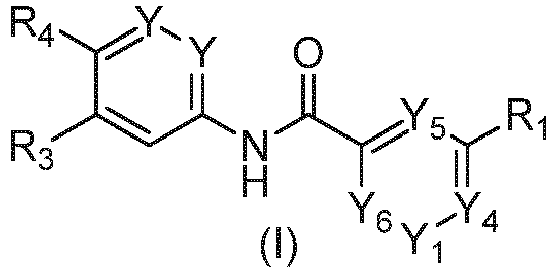 Y bei jedem Auftreten unabhängig aus N und CH ausgewählt ist;Y1 aus N und CR5 ausgewählt ist; wobei R5 aus Wasserstoff, Methoxy und Imidazolyl ausgewählt ist;wobei das Imidazolyl nicht substituiert oder mit Methyl substituiert ist;R1 ein 5- bis 9-gliedriger Heteroarylring ist, der ein bis vier Stickstoff-, Sauerstoff- oder Schwefelatome enthält, wobei nicht mehr als eines der Atome aus einem Sauerstoff oder Schwefel ausgewählt ist; wobei das Heteroaryl von R1 nicht substituiert oder mit 1 bis 3 R6-Gruppen substituiert ist;R2 ausgewählt ist aus Wasserstoff, Halogen, Hydroxy, C1-4-Alkyl, C1-4-Alkoxy, Methoxycarbonyl, 3,6-Dihydro-2H-pyran-4-yl, Tetrahydro-2H-pyran-4-yl, Tetrahydro-2H-pyran-4-yl-oxy und Cyclobutyl; wobei das C1-4-Alkyl, C1-4-Alkoxy, Cyclobutyl oder Tetrahydro-2H-pyran-4-yl von R2 nicht substituiert oder mit 1 bis 3 Gruppen substituiert sein kann, die unabhängig aus Halogen, Hydroxy, Cyano, C1-4-Alkoxy, Morpholino, Piperazinyl und NR5aR5b ausgewählt sind; wobei R5a aus Wasserstoff und C1-4-Alkyl ausgewählt ist; und R5b aus Hydroxyethyl ausgewählt ist; wobei der Piperazinylsubstituent von R2 nicht substituiert oder mit C1-4-Alkyl weiter substituiert sein kann;R3 aus Wasserstoff und Halogen ausgewählt ist;R4 aus -SF5 und -Y2-CF2-Y3 ausgewählt ist;R6 bei jedem Auftreten unabhängig ausgewählt ist aus Wasserstoff, Hydroxy, C1-4-Alkyl, C1-4-Alkoxy, Cyano, Trifluormethyl, Halogen, Amino, Methylcarbonyl, Methoxycarbonyl, Cyclopropyl und Pyrrolidinylmethyl;wobei das C1-4-Alkyl oder C1-4-Alkoxy von R6 nicht substituiert oder mit 1 bis 3 Gruppen substituiert ist,die unabhängig aus Halogen und Hydroxy ausgewählt sind;Y2 aus CF2, O und S(O)0-2 ausgewählt ist; undY3 aus Wasserstoff, Halogen, Methyl, Difluormethyl undTrifluormethyl ausgewählt ist;Y4 aus N und CR2 ausgewählt ist;Y5 und Y6 unabhängig aus N, CR5 oder CF ausgewählt sind; wobei R5 aus Wasserstoff und Halogen ausgewählt ist; mit der Vorgabe, dass, wenn Y4 N ist, Y5, Y6 und Y1 jeweils CR5 sind; oder die pharmazeutisch annehmbaren Salze davon; mit der Vorgabe, dass die Verbindungen der Formel I nicht 3-(2-Aminochinazolin-6-yl)-4-methyl-N-(4-(trifluormethoxy)phenyl)-benzamid und 3-(2-Aminochinazolin-6-yl)-5-brom-N-(4-(trifluormethoxy)phenyl)-benzamid einschließen, zur Verwendung bei der Behandlung von Krebs, einer Virusinfektion, ausgewählt aus einer Pocken-Virus- und einer Ebola-Virus-Infektion, oder einer c-ABLvermittelten ZNS-Erkrankung, ausgewählt aus Alzheimer-Krankheit und Pick-Krankheit.
 - Verbindung zur Verwendung nach Anspruch 1 der Formel (Ia) :
 Y bei jedem Auftreten unabhängig aus N und CH ausgewählt ist;Y1 aus N und CR5 ausgewählt ist; wobei R5 aus Wasserstoff, Methoxy und Imidazolyl ausgewählt ist; wobei das Imidazolyl nicht substituiert oder mit Methyl substituiert ist;R1 ausgewählt ist aus Pyrimidinyl, Pyridinyl, Pyrazinyl, Thienyl, Pyrrolidinyl, Imidazolyl, Thiazolyl und Pyrazolyl; wobei das Pyrimidinyl, Pyridinyl, Pyrazinyl, Thienyl und Pyrazolyl von R1 nicht substituiert oder mit einer Gruppe substituiert ist, die aus Cyano, Methyl, Halogen, Hydroxy, Hydroxyethyl, Methylcarbonyl, Methoxy, Hydroxyethoxy, Amino, Methoxycarbonyl und Pyrrolidinylmethyl ausgewählt ist;R2 ausgewählt ist aus Wasserstoff, Halogen, Hydroxy, C1-4-Alkyl, C1-4-Alkoxy, Methoxycarbonyl, 3,6-Dihydro-2H-pyran-4-yl, Tetrahydro-2H-pyran-4-yl, Tetrahydro-2H-pyran-4-yl-oxy und Cyclobutyl; wobei das C1-4-Alkyl, C1-4-Alkoxy, Cyclobutyl oder Tetrahydro-2H-pyran-4-yl von R2 nicht substituiert oder mit 1 bis 3 Gruppen substituiert sein kann, die unabhängig aus Halogen, Hydroxy, Cyano, C1-4-Alkoxy, Morpholino, Piperazinyl und NR5aR5b ausgewählt sind; wobei R5a aus Wasserstoff und C1-4-Alkyl ausgewählt ist; und R5b aus Hydroxyethyl ausgewählt ist; wobei der Piperazinylsubstituent von R2 nicht substituiert oder mit C1-4-Alkyl weiter substituiert sein kann;R4 aus -SF5 und -Y2-CF2-Y3 ausgewählt ist;R6 bei jedem Auftreten unabhängig ausgewählt ist aus Wasserstoff, Hydroxy, C1-4-Alkyl, C1-4-Alkoxy, Cyano, Trifluormethyl, Halogen, Amino, Methylcarbonyl, Methoxycarbonyl, Cyclopropyl und Pyrrolidinylmethyl;wobei das C1-4-Alkyl oder C1-4-Alkoxy von R6 nicht substituiert oder mit 1 bis 3 Gruppen substituiert ist, die unabhängig aus Halogen und Hydroxy ausgewählt sind;Y2 aus CF2, O und S(O)0-2 ausgewählt ist; undY3 aus Wasserstoff, Halogen, Methyl, Difluormethyl und Trifluormethyl ausgewählt ist;Y4 aus N und CR2 ausgewählt ist;Y5 und Y6 unabhängig aus N, CR5 oder CF ausgewählt sind; wobei R5 aus Wasserstoff und Halogen ausgewählt ist; mit der Vorgabe, dass, wenn Y4 N ist, Y5, Y6 und Y1 jeweils CR5 sind; oder die pharmazeutisch annehmbaren Salze davon.
 - Verbindung zur Verwendung nach Anspruch 2, in der:Y CH ist; und R2 aus Wasserstoff, Halogen und Methyl ausgewählt ist.
- Verbindung zur Verwendung nach Anspruch 3, in der R3 Wasserstoff ist und R4 aus Trifluormethoxy, Trifluormethylthio und Chlordifluormethoxy ausgewählt ist.
- Verbindung zur Verwendung nach Anspruch 2, in der:Y CH ist; und R2 ausgewählt ist aus Wasserstoff, C1-4-Alkoxy, Methoxycarbonyl, 3,6-Dihydro-2H-pyran-4-yl, Tetrahydro-2H-pyran-4-yl, Tetrahydro-2H-pyran-4-yl-oxy und Cyclobutyl; wobei das C1-4-Alkoxy, Cyclobutyl oder Tetrahydro-2H-pyran-4-yl von R2 nicht substituiert oder mit 1 bis 3 Gruppen substituiert sein kann, die unabhängig aus Halogen, Hydroxy, Cyano, C1-4-Alkoxy, Morpholino, Piperazinyl und NR5aR5b ausgewählt sind; wobei R5a aus Wasserstoff und C1-4-Alkyl ausgewählt ist; und R5b aus Hydroxyethyl ausgewählt ist; wobei der Piperazinylsubstituent von R2 nicht substituiert oder mit C1-4-Alkyl weiter substituiert sein kann.
- Verbindung zur Verwendung nach Anspruch 5, in der:R2 aus Methoxy, Ethoxy, Morpholinoethoxy, Hydroxyethoxy, Pyrrolidinylethoxy, Hydroxy, Methoxyethoxy, (Hydroxyethyl)aminoethoxy, (Tetrahydro-2H-pyran-4-yl)oxy und Piperazinylethoxy ausgewählt ist; wobei das Piperazinylethoxy nicht substituiert oder mit Isobutyl substituiert ist.
- Verbindung zur Verwendung nach Anspruch 6, in der:R3 Wasserstoff ist und R4 aus Trifluormethoxy und Chlordifluormethoxy ausgewählt ist.
- Verbindung ausgewählt aus:


- Verbindung nach Anspruch 8, die

- Pharmazeutische Zusammensetzung, die eine Verbindung nach Anspruch 8 oder Anspruch 9 umfasst, in Beimischung mit mindestens einem pharmazeutisch annehmbaren Hilfsstoff.
- Pharmazeutische Zusammensetzung nach Anspruch 10, die weiter ein zusätzliches Therapeutikum enthält.
- Pharmazeutische Zusammensetzung nach Anspruch 11, wobei das zusätzliche Therapeutikum aus einer Antikrebsverbindung, einem Analgetikum, einem Antiemetikum, einem Antidepressivum, und einem entzündungshemmenden Mittel ausgewählt ist.
- Verbindung nach Anspruch 8 oder Anspruch 9 oder eine pharmazeutische Zusammensetzung nach Anspruch 10, zur Verwendung bei der Behandlung von Krebs.
- Verbindung zur Verwendung oder pharmazeutische Zusammensetzung zur Verwendung nach Anspruch 13, wobei der Krebs ausgewählt ist aus Lungenkarzinom, Bauchspeicheldrüsenkarzinom, Blasenkarzinom, Kolonkarzinom, myeloiden Störungen, Prostatakrebs, Schilddrüsenkrebs, Melanom, Adenomen und Karzinomen des Eierstocks, der Augen, der Leber, des Gallenwegs, und des Nervensystems.
- Verbindung nach Anspruch 8 oder Anspruch 9 oder eine pharmazeutische Zusammensetzung nach Anspruch 10, zur Verwendung bei der Behandlung einer Virusinfektion, ausgewählt aus einer Pocken-Virus- und einer Ebola-Virus-Infektion.
- Verbindung nach Anspruch 8 oder Anspruch 9 oder eine pharmazeutische Zusammensetzung nach Anspruch 10, zur Verwendung bei der Behandlung einer c-ABLvermittelten ZNS-Erkrankung, ausgewählt aus Alzheimer-Krankheit und Pick-Krankheit.
Priority Applications (1)
| Application Number | Priority Date | Filing Date | Title |
|---|---|---|---|
| PL13730654T PL2900637T3 (pl) | 2012-05-15 | 2013-05-09 | Pirymidyna podstawiona tiazolem lub imidazolem, amidowe pochodne pirazyny i pirydyny i powiązane związki takie jak inhibitory abl1, abl2 i bcr-abl1 do leczenia nowotworu, specyficznych infekcji wirusowych i specyficznych zaburzeń cns |
Applications Claiming Priority (3)
| Application Number | Priority Date | Filing Date | Title |
|---|---|---|---|
| US201261647197P | 2012-05-15 | 2012-05-15 | |
| US201361787513P | 2013-03-15 | 2013-03-15 | |
| PCT/IB2013/053770 WO2013171641A1 (en) | 2012-05-15 | 2013-05-09 | Compounds and compositions for inhibiting the activity of abl1, abl2 and bcr-abl1 |
Publications (2)
| Publication Number | Publication Date |
|---|---|
| EP2900637A1 EP2900637A1 (de) | 2015-08-05 |
| EP2900637B1 true EP2900637B1 (de) | 2017-08-09 |
Family
ID=48670632
Family Applications (1)
| Application Number | Title | Priority Date | Filing Date |
|---|---|---|---|
| EP13730654.4A Active EP2900637B1 (de) | 2012-05-15 | 2013-05-09 | Thiazol- oder imidazol-substituierte pyrimidin-, pyridin- und pyrazin-amid-derivate und verwandte verbindungen als abl1, abl2 und bcr-abl1-inhibitoren zur behandlung von krebs, spezifischen viralen infektionen sowie spezifischen zns-erkrankungen |
Country Status (14)
| Country | Link |
|---|---|
| US (2) | US9315489B2 (de) |
| EP (1) | EP2900637B1 (de) |
| JP (1) | JP6080947B2 (de) |
| KR (1) | KR102190848B1 (de) |
| CN (1) | CN104334529B (de) |
| AU (1) | AU2013261129B2 (de) |
| BR (1) | BR112014027584B1 (de) |
| CA (1) | CA2870339C (de) |
| EA (1) | EA026559B1 (de) |
| ES (1) | ES2646777T3 (de) |
| MX (1) | MX357305B (de) |
| PL (1) | PL2900637T3 (de) |
| PT (1) | PT2900637T (de) |
| WO (1) | WO2013171641A1 (de) |
Families Citing this family (41)
| Publication number | Priority date | Publication date | Assignee | Title |
|---|---|---|---|---|
| KR20150008406A (ko) * | 2012-05-15 | 2015-01-22 | 노파르티스 아게 | Abl1, abl2 및 bcr-abl1의 활성을 억제하기 위한 벤즈아미드 유도체 |
| ES2670667T3 (es) * | 2012-05-15 | 2018-05-31 | Novartis Ag | Derivados de benzamida para inhibir la actividad de ABL1, ABL2 y BCR-ABL1 |
| PT2861579T (pt) | 2012-05-15 | 2018-04-27 | Novartis Ag | Derivados de benzamida para inibir a atividade de abl1, abl2 e bcr-abl |
| WO2013171641A1 (en) | 2012-05-15 | 2013-11-21 | Novartis Ag | Compounds and compositions for inhibiting the activity of abl1, abl2 and bcr-abl1 |
| SG10201900002QA (en) | 2014-01-24 | 2019-02-27 | Dana Farber Cancer Institue Inc | Antibody molecules to pd-1 and uses thereof |
| EP3099717B1 (de) | 2014-01-31 | 2019-03-27 | Novartis AG | Antikörpermoleküle mit tim-3 und verwendungen davon |
| US20150259420A1 (en) | 2014-03-14 | 2015-09-17 | Novartis Ag | Antibody molecules to lag-3 and uses thereof |
| WO2015143654A1 (en) * | 2014-03-26 | 2015-10-01 | Merck Sharp & Dohme Corp. | TrkA KINASE INHIBITORS,COMPOSITIONS AND METHODS THEREOF |
| JP6646044B2 (ja) * | 2014-09-12 | 2020-02-14 | ノバルティス アーゲー | キナーゼ阻害剤としての化合物および組成物 |
| MA41044A (fr) | 2014-10-08 | 2017-08-15 | Novartis Ag | Compositions et procédés d'utilisation pour une réponse immunitaire accrue et traitement contre le cancer |
| TWI716362B (zh) | 2014-10-14 | 2021-01-21 | 瑞士商諾華公司 | 針對pd-l1之抗體分子及其用途 |
| WO2016100882A1 (en) | 2014-12-19 | 2016-06-23 | Novartis Ag | Combination therapies |
| HK1248603A1 (zh) | 2015-03-10 | 2018-10-19 | Aduro Biotech, Inc. | 用於活化"干扰素基因的刺激剂"依懒性信号传导的组合物和方法 |
| US20180222982A1 (en) | 2015-07-29 | 2018-08-09 | Novartis Ag | Combination therapies comprising antibody molecules to pd-1 |
| EP3878465A1 (de) | 2015-07-29 | 2021-09-15 | Novartis AG | Kombinationstherapien mit antikörpermolekülen gegen tim-3 |
| DK3317301T3 (da) | 2015-07-29 | 2021-06-28 | Immutep Sas | Kombinationsterapier omfattende antistofmolekyler mod lag-3 |
| EP3370768B9 (de) | 2015-11-03 | 2022-03-16 | Janssen Biotech, Inc. | Spezifisch an pd-1 bindende antikörper und deren verwendung |
| WO2017106656A1 (en) | 2015-12-17 | 2017-06-22 | Novartis Ag | Antibody molecules to pd-1 and uses thereof |
| JP2019515932A (ja) * | 2016-04-29 | 2019-06-13 | アスター バイオテック リミテッド ライアビリティ カンパニー | チロシンキナーゼbcr−abl阻害剤としての新規複素環化合物 |
| WO2018009466A1 (en) | 2016-07-05 | 2018-01-11 | Aduro Biotech, Inc. | Locked nucleic acid cyclic dinucleotide compounds and uses thereof |
| US10875853B2 (en) | 2017-01-20 | 2020-12-29 | Shenzhen Targetrx, Inc. | (Hetero)arylamide compound for inhibiting protein kinase activity |
| US11091462B2 (en) | 2017-01-20 | 2021-08-17 | Shenzhen Targetrx, Inc. | (Hetero)arylamide compound for inhibiting protein kinase activity |
| UY37695A (es) | 2017-04-28 | 2018-11-30 | Novartis Ag | Compuesto dinucleótido cíclico bis 2’-5’-rr-(3’f-a)(3’f-a) y usos del mismo |
| WO2018237173A1 (en) | 2017-06-22 | 2018-12-27 | Novartis Ag | Antibody molecules to cd73 and uses thereof |
| US12398209B2 (en) | 2018-01-22 | 2025-08-26 | Janssen Biotech, Inc. | Methods of treating cancers with antagonistic anti-PD-1 antibodies |
| AR126019A1 (es) | 2018-05-30 | 2023-09-06 | Novartis Ag | Anticuerpos frente a entpd2, terapias de combinación y métodos de uso de los anticuerpos y las terapias de combinación |
| IL281427B2 (en) | 2018-09-18 | 2026-01-01 | Terns Inc | Compounds that inhibit tyrosine kinase activity for use in the treatment of leukemia |
| CN112300130B (zh) | 2019-07-29 | 2023-04-25 | 苏州亚盛药业有限公司 | 作为bcr-abl抑制剂的三环化合物 |
| WO2021018194A1 (en) * | 2019-07-29 | 2021-02-04 | Ascentage Pharma (Suzhou) Co., Ltd. | Heterocyclic compounds as bcr-abl inhibitors |
| GB201913110D0 (en) * | 2019-09-11 | 2019-10-23 | Benevolentai Bio Ltd | New compounds and methods |
| US20220348651A1 (en) | 2019-09-18 | 2022-11-03 | Novartis Ag | Entpd2 antibodies, combination therapies, and methods of using the antibodies and combination therapies |
| CN114728943B (zh) * | 2020-01-19 | 2024-12-06 | 正大天晴药业集团股份有限公司 | 作为bcr-abl抑制剂的化合物 |
| JP7612229B2 (ja) * | 2020-04-20 | 2025-01-14 | 深▲チェン▼市塔吉瑞生物医薬有限公司 | ピラジン置換ニコチンアミドの固体形態ならびにその調製および使用 |
| CN116710090A (zh) * | 2020-10-09 | 2023-09-05 | Napa医疗有限公司 | Cd38的杂芳基酰胺抑制剂 |
| CA3208490A1 (en) * | 2021-02-24 | 2022-09-01 | Aleksandrs Zavoronkovs | Analogs for the treatment of disease |
| JP2024519538A (ja) * | 2021-05-28 | 2024-05-15 | チア タイ ティエンチン ファーマシューティカル グループ カンパニー リミテッド | Bcr-abl阻害剤としての化合物 |
| CN113698383B (zh) * | 2021-08-26 | 2023-10-13 | 上海药明康德新药开发有限公司 | 一种哌嗪类化合物及其应用 |
| CN114369085B (zh) * | 2021-12-27 | 2023-01-03 | 武汉九州钰民医药科技有限公司 | 盐酸Asciminib的制备方法 |
| WO2024122617A1 (ja) * | 2022-12-08 | 2024-06-13 | 塩野義製薬株式会社 | セロトニン受容体結合活性を有する含窒素複素環および炭素環誘導体 |
| AU2024350472A1 (en) * | 2023-09-28 | 2026-04-16 | Shenzhen Targetrx Co., Ltd. | Heterocyclic fused ring compound, and composition and use thereof |
| CN120842151A (zh) * | 2024-04-26 | 2025-10-28 | 北京英飞智药科技有限公司 | 一种2-芳基苯并咪唑类化合物及其制备方法与应用 |
Family Cites Families (57)
| Publication number | Priority date | Publication date | Assignee | Title |
|---|---|---|---|---|
| FR901228A (fr) | 1943-01-16 | 1945-07-20 | Deutsche Edelstahlwerke Ag | Système d'aimant à entrefer annulaire |
| CH445129A (fr) | 1964-04-29 | 1967-10-15 | Nestle Sa | Procédé pour la préparation de composés d'inclusion à poids moléculaire élevé |
| US3459731A (en) | 1966-12-16 | 1969-08-05 | Corn Products Co | Cyclodextrin polyethers and their production |
| US3453257A (en) | 1967-02-13 | 1969-07-01 | Corn Products Co | Cyclodextrin with cationic properties |
| US3426011A (en) | 1967-02-13 | 1969-02-04 | Corn Products Co | Cyclodextrins with anionic properties |
| US3453259A (en) | 1967-03-22 | 1969-07-01 | Corn Products Co | Cyclodextrin polyol ethers and their oxidation products |
| US4235871A (en) | 1978-02-24 | 1980-11-25 | Papahadjopoulos Demetrios P | Method of encapsulating biologically active materials in lipid vesicles |
| US4737323A (en) | 1986-02-13 | 1988-04-12 | Liposome Technology, Inc. | Liposome extrusion method |
| US5093330A (en) | 1987-06-15 | 1992-03-03 | Ciba-Geigy Corporation | Staurosporine derivatives substituted at methylamino nitrogen |
| WO1989002891A1 (fr) * | 1987-09-23 | 1989-04-06 | F. Hoffmann-La Roche & Co. Aktiengesellschaft | Composes heterocycliques |
| US5010099A (en) | 1989-08-11 | 1991-04-23 | Harbor Branch Oceanographic Institution, Inc. | Discodermolide compounds, compositions containing same and method of preparation and use |
| KR0166088B1 (ko) | 1990-01-23 | 1999-01-15 | . | 수용해도가 증가된 시클로덱스트린 유도체 및 이의 용도 |
| US5395855A (en) | 1990-05-07 | 1995-03-07 | Ciba-Geigy Corporation | Hydrazones |
| IL115849A0 (en) | 1994-11-03 | 1996-01-31 | Merz & Co Gmbh & Co | Tangential filtration preparation of liposomal drugs and liposome product thereof |
| EP0923583A1 (de) | 1996-08-30 | 1999-06-23 | Novartis AG | Verfahren zur herstellung von epothilonen und zwischenprodukte innerhalb des verfahrens |
| DE69724269T2 (de) | 1996-09-06 | 2004-06-09 | Obducat Ab | Verfahren für das anisotrope ätzen von strukturen in leitende materialien |
| DK1367057T3 (da) | 1996-11-18 | 2009-01-19 | Biotechnolog Forschung Gmbh | Epothiloner E og F |
| US6441186B1 (en) | 1996-12-13 | 2002-08-27 | The Scripps Research Institute | Epothilone analogs |
| GB9721069D0 (en) | 1997-10-03 | 1997-12-03 | Pharmacia & Upjohn Spa | Polymeric derivatives of camptothecin |
| US6194181B1 (en) | 1998-02-19 | 2001-02-27 | Novartis Ag | Fermentative preparation process for and crystal forms of cytostatics |
| DE69927790T2 (de) | 1998-02-25 | 2006-07-20 | Sloan-Kettering Institute For Cancer Research | Synthese von epothilonen, ihren zwischenprodukten und analogen verbindungen |
| ATE459616T1 (de) | 1998-08-11 | 2010-03-15 | Novartis Ag | Isochinoline derivate mit angiogenesis-hemmender wirkung |
| NZ511722A (en) | 1998-11-20 | 2004-05-28 | Kosan Biosciences Inc | Recombinant methods and materials for producing epothilone and epothilone derivatives |
| AU2001231143A1 (en) | 2000-01-27 | 2001-08-07 | Cytovia, Inc. | Substituted nicotinamides and analogs as activators of caspases and inducers of apoptosis and the use thereof |
| PE20020354A1 (es) | 2000-09-01 | 2002-06-12 | Novartis Ag | Compuestos de hidroxamato como inhibidores de histona-desacetilasa (hda) |
| WO2003039529A1 (en) | 2001-11-07 | 2003-05-15 | 4Sc A.G. | Selective antibacterial agents |
| WO2003055477A1 (en) * | 2001-12-21 | 2003-07-10 | 7Tm Pharma A/S | Method for the treatment of mc receptor related disorders with a chelate and/or a chelator |
| GB0215676D0 (en) | 2002-07-05 | 2002-08-14 | Novartis Ag | Organic compounds |
| SI1569907T1 (sl) | 2002-12-13 | 2016-06-30 | Ym Biosciences Australia Pty Ltd | Na nikotinamidu osnovani kinazni inhibitorji |
| TW200505902A (en) | 2003-03-20 | 2005-02-16 | Schering Corp | Cannabinoid receptor ligands |
| US20070054916A1 (en) * | 2004-10-01 | 2007-03-08 | Amgen Inc. | Aryl nitrogen-containing bicyclic compounds and methods of use |
| US20080167347A1 (en) | 2005-01-20 | 2008-07-10 | Shiongi & Co., Ltd. | Ctgf Expression Inhibitor |
| WO2006120178A1 (en) | 2005-05-11 | 2006-11-16 | Novo Nordisk A/S | New haloalkylsulfone substituted compounds useful for treating obesity and diabetes |
| WO2007002441A1 (en) | 2005-06-24 | 2007-01-04 | Emory University | Methods of use for non-atp competitive tyrosine kinase inhibitors to treat pathogenic infection |
| DE602005018911D1 (de) | 2005-07-20 | 2010-03-04 | Aventis Pharma Sa | 1,4-Dihydropyridine-kondensierte Heterocyclen Verfahren zu deren Herstellung sowie Verwendung und Zusammensetzungen dergleichen |
| JP2009518442A (ja) * | 2005-12-05 | 2009-05-07 | ベーリンガー インゲルハイム インターナショナル ゲゼルシャフト ミット ベシュレンクテル ハフツング | 可溶性エポキシド加水分解酵素インヒビターとして有益な置換ピラゾール化合物 |
| WO2008021725A2 (en) | 2006-08-11 | 2008-02-21 | Smithkline Beecham Corporation | Chemical compounds |
| EA200900573A1 (ru) | 2006-10-20 | 2009-10-30 | АйАрЭм ЭлЭлСи | Композиции и способы для модуляции рецепторов c-kit и pdgfr |
| US7939690B2 (en) * | 2006-11-15 | 2011-05-10 | High Point Pharmaceuticals, Llc | Haloalkylsulfone substituted compounds useful for treating obesity and diabetes |
| WO2008112695A2 (en) | 2007-03-12 | 2008-09-18 | Irm Llc | Pyrazolo [3,4-d] pyrimidines and 1, 2, 5, 6-tetraaza- as- indacenes as protein kinase inhibitors for cancer treatment |
| WO2008124393A1 (en) | 2007-04-04 | 2008-10-16 | Irm Llc | Benzothiazole derivatives and their use as protein kinase inhibitors |
| WO2008144253A1 (en) | 2007-05-14 | 2008-11-27 | Irm Llc | Protein kinase inhibitors and methods for using thereof |
| CA2695071A1 (en) | 2007-08-02 | 2009-02-05 | F. Hoffmann-La Roche Ag | The use of benzamide derivatives for the treatment of cns disorders |
| MY162760A (en) | 2007-09-17 | 2017-07-14 | Abbvie Bahamas Ltd | Anti-infective agents and uses thereof |
| EP2297097A2 (de) | 2008-06-11 | 2011-03-23 | Irm Llc | Zur behandlung von malaria geeignete verbindungen und zusammensetzungen |
| AR073700A1 (es) | 2008-09-29 | 2010-11-24 | Boehringer Ingelheim Int | Heterociclos y composiciones farmaceuticas para usarse en el tratamiento de cancer, infecciones y enfermedades autoinmunitarias |
| WO2011008788A1 (en) * | 2009-07-14 | 2011-01-20 | Dawei Zhang | Fluoro-substituted compounds as kinase inhibitors and methods of use thereof |
| JP2011057661A (ja) | 2009-08-14 | 2011-03-24 | Bayer Cropscience Ag | 殺虫性カルボキサミド類 |
| MX2012005332A (es) | 2009-11-13 | 2012-10-15 | Oscotec Inc | Inhibidores de cinasa. |
| WO2011082400A2 (en) | 2010-01-04 | 2011-07-07 | President And Fellows Of Harvard College | Modulators of immunoinhibitory receptor pd-1, and methods of use thereof |
| CN102725296B (zh) | 2010-01-29 | 2015-04-01 | 韩美科学株式会社 | 对蛋白激酶有抑制活性的噻吩并[3,2-d]嘧啶衍生物 |
| WO2012129562A2 (en) | 2011-03-24 | 2012-09-27 | The Scripps Research Institute | Compounds and methods for inducing chondrogenesis |
| JP6007417B2 (ja) | 2011-05-31 | 2016-10-12 | レセプトス エルエルシー | 新規glp−1受容体安定剤および調節剤 |
| KR20150008406A (ko) | 2012-05-15 | 2015-01-22 | 노파르티스 아게 | Abl1, abl2 및 bcr-abl1의 활성을 억제하기 위한 벤즈아미드 유도체 |
| PT2861579T (pt) | 2012-05-15 | 2018-04-27 | Novartis Ag | Derivados de benzamida para inibir a atividade de abl1, abl2 e bcr-abl |
| WO2013171641A1 (en) | 2012-05-15 | 2013-11-21 | Novartis Ag | Compounds and compositions for inhibiting the activity of abl1, abl2 and bcr-abl1 |
| ES2670667T3 (es) * | 2012-05-15 | 2018-05-31 | Novartis Ag | Derivados de benzamida para inhibir la actividad de ABL1, ABL2 y BCR-ABL1 |
-
2013
- 2013-05-09 WO PCT/IB2013/053770 patent/WO2013171641A1/en not_active Ceased
- 2013-05-09 JP JP2015512171A patent/JP6080947B2/ja active Active
- 2013-05-09 ES ES13730654.4T patent/ES2646777T3/es active Active
- 2013-05-09 BR BR112014027584-0A patent/BR112014027584B1/pt active IP Right Grant
- 2013-05-09 PL PL13730654T patent/PL2900637T3/pl unknown
- 2013-05-09 US US14/400,990 patent/US9315489B2/en active Active
- 2013-05-09 MX MX2014013375A patent/MX357305B/es active IP Right Grant
- 2013-05-09 PT PT137306544T patent/PT2900637T/pt unknown
- 2013-05-09 CN CN201380025559.3A patent/CN104334529B/zh active Active
- 2013-05-09 AU AU2013261129A patent/AU2013261129B2/en active Active
- 2013-05-09 EP EP13730654.4A patent/EP2900637B1/de active Active
- 2013-05-09 EA EA201492092A patent/EA026559B1/ru not_active IP Right Cessation
- 2013-05-09 KR KR1020147031736A patent/KR102190848B1/ko active Active
- 2013-05-09 CA CA2870339A patent/CA2870339C/en active Active
-
2016
- 2016-03-04 US US15/060,723 patent/US9458112B2/en active Active
Non-Patent Citations (1)
| Title |
|---|
| None * |
Also Published As
| Publication number | Publication date |
|---|---|
| EA026559B1 (ru) | 2017-04-28 |
| JP2015520157A (ja) | 2015-07-16 |
| ES2646777T3 (es) | 2017-12-15 |
| US20150141427A1 (en) | 2015-05-21 |
| WO2013171641A1 (en) | 2013-11-21 |
| CA2870339C (en) | 2020-06-02 |
| MX2014013375A (es) | 2015-08-14 |
| CN104334529A (zh) | 2015-02-04 |
| US9315489B2 (en) | 2016-04-19 |
| PT2900637T (pt) | 2017-11-15 |
| EA201492092A1 (ru) | 2015-03-31 |
| AU2013261129B2 (en) | 2016-05-12 |
| KR20150014452A (ko) | 2015-02-06 |
| MX357305B (es) | 2018-07-04 |
| AU2013261129A1 (en) | 2014-10-23 |
| EP2900637A1 (de) | 2015-08-05 |
| BR112014027584A2 (pt) | 2017-06-27 |
| PL2900637T3 (pl) | 2018-01-31 |
| BR112014027584B1 (pt) | 2023-01-24 |
| US9458112B2 (en) | 2016-10-04 |
| CA2870339A1 (en) | 2013-11-21 |
| JP6080947B2 (ja) | 2017-02-15 |
| KR102190848B1 (ko) | 2020-12-15 |
| US20160185733A1 (en) | 2016-06-30 |
| CN104334529B (zh) | 2017-03-15 |
Similar Documents
| Publication | Publication Date | Title |
|---|---|---|
| EP2900637B1 (de) | Thiazol- oder imidazol-substituierte pyrimidin-, pyridin- und pyrazin-amid-derivate und verwandte verbindungen als abl1, abl2 und bcr-abl1-inhibitoren zur behandlung von krebs, spezifischen viralen infektionen sowie spezifischen zns-erkrankungen | |
| EP2861579B1 (de) | Benzamidderivate zur inhibition der aktivität von abl1, abl2 und bcr-abl1 | |
| EP2861576B1 (de) | Benzamidderivate zur inhibition der aktivität von abl1, abl2 und bcr-abl1 | |
| EP2858988B1 (de) | Benzamidderivate zur inhibition der aktivität von abl1, abl2 und bcr-abl1 | |
| HK1203495B (en) | Benzamide derivatives for inhibiting the activity of abl1, abl2 and bcr-abl1 |
Legal Events
| Date | Code | Title | Description |
|---|---|---|---|
| PUAI | Public reference made under article 153(3) epc to a published international application that has entered the european phase |
Free format text: ORIGINAL CODE: 0009012 |
|
| 17P | Request for examination filed |
Effective date: 20141215 |
|
| AK | Designated contracting states |
Kind code of ref document: A1 Designated state(s): AL AT BE BG CH CY CZ DE DK EE ES FI FR GB GR HR HU IE IS IT LI LT LU LV MC MK MT NL NO PL PT RO RS SE SI SK SM TR |
|
| AX | Request for extension of the european patent |
Extension state: BA ME |
|
| DAX | Request for extension of the european patent (deleted) | ||
| 17Q | First examination report despatched |
Effective date: 20160609 |
|
| RIC1 | Information provided on ipc code assigned before grant |
Ipc: C07D 239/30 20060101ALI20161220BHEP Ipc: C07D 213/81 20060101AFI20161220BHEP Ipc: C07D 317/60 20060101ALI20161220BHEP Ipc: C07D 277/20 20060101ALI20161220BHEP Ipc: C07D 241/20 20060101ALI20161220BHEP Ipc: C07D 239/26 20060101ALI20161220BHEP Ipc: A61P 35/00 20060101ALI20161220BHEP Ipc: C07D 401/04 20060101ALI20161220BHEP Ipc: C07D 407/14 20060101ALI20161220BHEP Ipc: C07D 241/12 20060101ALI20161220BHEP Ipc: A61P 31/20 20060101ALI20161220BHEP Ipc: A61K 31/505 20060101ALI20161220BHEP Ipc: C07D 233/38 20060101ALI20161220BHEP Ipc: A61P 31/14 20060101ALI20161220BHEP Ipc: C07D 233/54 20060101ALI20161220BHEP Ipc: C07D 231/12 20060101ALI20161220BHEP Ipc: C07D 213/85 20060101ALI20161220BHEP Ipc: C07D 239/34 20060101ALI20161220BHEP Ipc: A61P 31/12 20060101ALI20161220BHEP Ipc: A61P 25/28 20060101ALI20161220BHEP |
|
| GRAP | Despatch of communication of intention to grant a patent |
Free format text: ORIGINAL CODE: EPIDOSNIGR1 |
|
| INTG | Intention to grant announced |
Effective date: 20170224 |
|
| GRAS | Grant fee paid |
Free format text: ORIGINAL CODE: EPIDOSNIGR3 |
|
| GRAA | (expected) grant |
Free format text: ORIGINAL CODE: 0009210 |
|
| AK | Designated contracting states |
Kind code of ref document: B1 Designated state(s): AL AT BE BG CH CY CZ DE DK EE ES FI FR GB GR HR HU IE IS IT LI LT LU LV MC MK MT NL NO PL PT RO RS SE SI SK SM TR |
|
| REG | Reference to a national code |
Ref country code: GB Ref legal event code: FG4D |
|
| REG | Reference to a national code |
Ref country code: CH Ref legal event code: EP Ref country code: AT Ref legal event code: REF Ref document number: 916644 Country of ref document: AT Kind code of ref document: T Effective date: 20170815 |
|
| REG | Reference to a national code |
Ref country code: IE Ref legal event code: FG4D |
|
| REG | Reference to a national code |
Ref country code: DE Ref legal event code: R096 Ref document number: 602013024749 Country of ref document: DE |
|
| REG | Reference to a national code |
Ref country code: PT Ref legal event code: SC4A Ref document number: 2900637 Country of ref document: PT Date of ref document: 20171115 Kind code of ref document: T Free format text: AVAILABILITY OF NATIONAL TRANSLATION Effective date: 20171108 |
|
| REG | Reference to a national code |
Ref country code: NL Ref legal event code: FP |
|
| REG | Reference to a national code |
Ref country code: ES Ref legal event code: FG2A Ref document number: 2646777 Country of ref document: ES Kind code of ref document: T3 Effective date: 20171215 |
|
| REG | Reference to a national code |
Ref country code: LT Ref legal event code: MG4D |
|
| PG25 | Lapsed in a contracting state [announced via postgrant information from national office to epo] |
Ref country code: LT Free format text: LAPSE BECAUSE OF FAILURE TO SUBMIT A TRANSLATION OF THE DESCRIPTION OR TO PAY THE FEE WITHIN THE PRESCRIBED TIME-LIMIT Effective date: 20170809 Ref country code: SE Free format text: LAPSE BECAUSE OF FAILURE TO SUBMIT A TRANSLATION OF THE DESCRIPTION OR TO PAY THE FEE WITHIN THE PRESCRIBED TIME-LIMIT Effective date: 20170809 Ref country code: FI Free format text: LAPSE BECAUSE OF FAILURE TO SUBMIT A TRANSLATION OF THE DESCRIPTION OR TO PAY THE FEE WITHIN THE PRESCRIBED TIME-LIMIT Effective date: 20170809 Ref country code: NO Free format text: LAPSE BECAUSE OF FAILURE TO SUBMIT A TRANSLATION OF THE DESCRIPTION OR TO PAY THE FEE WITHIN THE PRESCRIBED TIME-LIMIT Effective date: 20171109 Ref country code: HR Free format text: LAPSE BECAUSE OF FAILURE TO SUBMIT A TRANSLATION OF THE DESCRIPTION OR TO PAY THE FEE WITHIN THE PRESCRIBED TIME-LIMIT Effective date: 20170809 |
|
| PG25 | Lapsed in a contracting state [announced via postgrant information from national office to epo] |
Ref country code: RS Free format text: LAPSE BECAUSE OF FAILURE TO SUBMIT A TRANSLATION OF THE DESCRIPTION OR TO PAY THE FEE WITHIN THE PRESCRIBED TIME-LIMIT Effective date: 20170809 Ref country code: BG Free format text: LAPSE BECAUSE OF FAILURE TO SUBMIT A TRANSLATION OF THE DESCRIPTION OR TO PAY THE FEE WITHIN THE PRESCRIBED TIME-LIMIT Effective date: 20171109 Ref country code: LV Free format text: LAPSE BECAUSE OF FAILURE TO SUBMIT A TRANSLATION OF THE DESCRIPTION OR TO PAY THE FEE WITHIN THE PRESCRIBED TIME-LIMIT Effective date: 20170809 Ref country code: IS Free format text: LAPSE BECAUSE OF FAILURE TO SUBMIT A TRANSLATION OF THE DESCRIPTION OR TO PAY THE FEE WITHIN THE PRESCRIBED TIME-LIMIT Effective date: 20171209 |
|
| REG | Reference to a national code |
Ref country code: GR Ref legal event code: EP Ref document number: 20170402869 Country of ref document: GR Effective date: 20180330 |
|
| PG25 | Lapsed in a contracting state [announced via postgrant information from national office to epo] |
Ref country code: DK Free format text: LAPSE BECAUSE OF FAILURE TO SUBMIT A TRANSLATION OF THE DESCRIPTION OR TO PAY THE FEE WITHIN THE PRESCRIBED TIME-LIMIT Effective date: 20170809 Ref country code: CZ Free format text: LAPSE BECAUSE OF FAILURE TO SUBMIT A TRANSLATION OF THE DESCRIPTION OR TO PAY THE FEE WITHIN THE PRESCRIBED TIME-LIMIT Effective date: 20170809 Ref country code: RO Free format text: LAPSE BECAUSE OF FAILURE TO SUBMIT A TRANSLATION OF THE DESCRIPTION OR TO PAY THE FEE WITHIN THE PRESCRIBED TIME-LIMIT Effective date: 20170809 |
|
| REG | Reference to a national code |
Ref country code: FR Ref legal event code: PLFP Year of fee payment: 6 |
|
| REG | Reference to a national code |
Ref country code: DE Ref legal event code: R097 Ref document number: 602013024749 Country of ref document: DE |
|
| PG25 | Lapsed in a contracting state [announced via postgrant information from national office to epo] |
Ref country code: SK Free format text: LAPSE BECAUSE OF FAILURE TO SUBMIT A TRANSLATION OF THE DESCRIPTION OR TO PAY THE FEE WITHIN THE PRESCRIBED TIME-LIMIT Effective date: 20170809 Ref country code: SM Free format text: LAPSE BECAUSE OF FAILURE TO SUBMIT A TRANSLATION OF THE DESCRIPTION OR TO PAY THE FEE WITHIN THE PRESCRIBED TIME-LIMIT Effective date: 20170809 Ref country code: EE Free format text: LAPSE BECAUSE OF FAILURE TO SUBMIT A TRANSLATION OF THE DESCRIPTION OR TO PAY THE FEE WITHIN THE PRESCRIBED TIME-LIMIT Effective date: 20170809 |
|
| PLBE | No opposition filed within time limit |
Free format text: ORIGINAL CODE: 0009261 |
|
| STAA | Information on the status of an ep patent application or granted ep patent |
Free format text: STATUS: NO OPPOSITION FILED WITHIN TIME LIMIT |
|
| 26N | No opposition filed |
Effective date: 20180511 |
|
| PG25 | Lapsed in a contracting state [announced via postgrant information from national office to epo] |
Ref country code: SI Free format text: LAPSE BECAUSE OF FAILURE TO SUBMIT A TRANSLATION OF THE DESCRIPTION OR TO PAY THE FEE WITHIN THE PRESCRIBED TIME-LIMIT Effective date: 20170809 |
|
| PG25 | Lapsed in a contracting state [announced via postgrant information from national office to epo] |
Ref country code: MC Free format text: LAPSE BECAUSE OF FAILURE TO SUBMIT A TRANSLATION OF THE DESCRIPTION OR TO PAY THE FEE WITHIN THE PRESCRIBED TIME-LIMIT Effective date: 20170809 |
|
| REG | Reference to a national code |
Ref country code: IE Ref legal event code: MM4A |
|
| PG25 | Lapsed in a contracting state [announced via postgrant information from national office to epo] |
Ref country code: LU Free format text: LAPSE BECAUSE OF NON-PAYMENT OF DUE FEES Effective date: 20180509 |
|
| PG25 | Lapsed in a contracting state [announced via postgrant information from national office to epo] |
Ref country code: IE Free format text: LAPSE BECAUSE OF NON-PAYMENT OF DUE FEES Effective date: 20180509 |
|
| PG25 | Lapsed in a contracting state [announced via postgrant information from national office to epo] |
Ref country code: MT Free format text: LAPSE BECAUSE OF NON-PAYMENT OF DUE FEES Effective date: 20180509 |
|
| PG25 | Lapsed in a contracting state [announced via postgrant information from national office to epo] |
Ref country code: HU Free format text: LAPSE BECAUSE OF FAILURE TO SUBMIT A TRANSLATION OF THE DESCRIPTION OR TO PAY THE FEE WITHIN THE PRESCRIBED TIME-LIMIT; INVALID AB INITIO Effective date: 20130509 Ref country code: MK Free format text: LAPSE BECAUSE OF NON-PAYMENT OF DUE FEES Effective date: 20170809 Ref country code: CY Free format text: LAPSE BECAUSE OF FAILURE TO SUBMIT A TRANSLATION OF THE DESCRIPTION OR TO PAY THE FEE WITHIN THE PRESCRIBED TIME-LIMIT Effective date: 20170809 |
|
| PG25 | Lapsed in a contracting state [announced via postgrant information from national office to epo] |
Ref country code: AL Free format text: LAPSE BECAUSE OF FAILURE TO SUBMIT A TRANSLATION OF THE DESCRIPTION OR TO PAY THE FEE WITHIN THE PRESCRIBED TIME-LIMIT Effective date: 20170809 |
|
| REG | Reference to a national code |
Ref country code: AT Ref legal event code: UEP Ref document number: 916644 Country of ref document: AT Kind code of ref document: T Effective date: 20170809 |
|
| PGFP | Annual fee paid to national office [announced via postgrant information from national office to epo] |
Ref country code: NL Payment date: 20250425 Year of fee payment: 13 |
|
| PGFP | Annual fee paid to national office [announced via postgrant information from national office to epo] |
Ref country code: PL Payment date: 20250425 Year of fee payment: 13 Ref country code: DE Payment date: 20250423 Year of fee payment: 13 |
|
| PGFP | Annual fee paid to national office [announced via postgrant information from national office to epo] |
Ref country code: ES Payment date: 20250605 Year of fee payment: 13 |
|
| PGFP | Annual fee paid to national office [announced via postgrant information from national office to epo] |
Ref country code: BE Payment date: 20250425 Year of fee payment: 13 Ref country code: IT Payment date: 20250428 Year of fee payment: 13 |
|
| PGFP | Annual fee paid to national office [announced via postgrant information from national office to epo] |
Ref country code: PT Payment date: 20250506 Year of fee payment: 13 |
|
| PGFP | Annual fee paid to national office [announced via postgrant information from national office to epo] |
Ref country code: FR Payment date: 20250422 Year of fee payment: 13 |
|
| PGFP | Annual fee paid to national office [announced via postgrant information from national office to epo] |
Ref country code: GR Payment date: 20250428 Year of fee payment: 13 |
|
| PGFP | Annual fee paid to national office [announced via postgrant information from national office to epo] |
Ref country code: CH Payment date: 20250601 Year of fee payment: 13 |
|
| PGFP | Annual fee paid to national office [announced via postgrant information from national office to epo] |
Ref country code: AT Payment date: 20250425 Year of fee payment: 13 |
|
| PGFP | Annual fee paid to national office [announced via postgrant information from national office to epo] |
Ref country code: TR Payment date: 20250430 Year of fee payment: 13 |
|
| PGFP | Annual fee paid to national office [announced via postgrant information from national office to epo] |
Ref country code: GB Payment date: 20260313 Year of fee payment: 14 |