EP2905374A2 - Method of preparing micro/nano hybrid woven fabric surfaces for oil-oil filtration or oil-water filtration - Google Patents
Method of preparing micro/nano hybrid woven fabric surfaces for oil-oil filtration or oil-water filtration Download PDFInfo
- Publication number
- EP2905374A2 EP2905374A2 EP14154675.4A EP14154675A EP2905374A2 EP 2905374 A2 EP2905374 A2 EP 2905374A2 EP 14154675 A EP14154675 A EP 14154675A EP 2905374 A2 EP2905374 A2 EP 2905374A2
- Authority
- EP
- European Patent Office
- Prior art keywords
- oil
- woven fabric
- hydrophobic
- pores
- nano
- Prior art date
- Legal status (The legal status is an assumption and is not a legal conclusion. Google has not performed a legal analysis and makes no representation as to the accuracy of the status listed.)
- Granted
Links
Images




Classifications
-
- D—TEXTILES; PAPER
- D06—TREATMENT OF TEXTILES OR THE LIKE; LAUNDERING; FLEXIBLE MATERIALS NOT OTHERWISE PROVIDED FOR
- D06M—TREATMENT, NOT PROVIDED FOR ELSEWHERE IN CLASS D06, OF FIBRES, THREADS, YARNS, FABRICS, FEATHERS OR FIBROUS GOODS MADE FROM SUCH MATERIALS
- D06M10/00—Physical treatment of fibres, threads, yarns, fabrics or fibrous goods made from such materials, e.g. by ultrasonic waves, corona discharge, irradiation, electric currents or magnetic fields; Physical treatment combined with treatment with chemical compounds or elements
- D06M10/02—Sonic or ultrasonic waves; Corona discharge
- D06M10/025—Corona discharge or low temperature plasma
-
- C—CHEMISTRY; METALLURGY
- C03—GLASS; MINERAL OR SLAG WOOL
- C03C—CHEMICAL COMPOSITION OF GLASSES, GLAZES OR VITREOUS ENAMELS; SURFACE TREATMENT OF GLASS; SURFACE TREATMENT OF FIBRES OR FILAMENTS MADE FROM GLASS, MINERALS OR SLAGS; JOINING GLASS TO GLASS OR OTHER MATERIALS
- C03C25/00—Surface treatment of fibres or filaments made from glass, minerals or slags
- C03C25/66—Chemical treatment, e.g. leaching, acid or alkali treatment
- C03C25/68—Chemical treatment, e.g. leaching, acid or alkali treatment by etching
-
- B—PERFORMING OPERATIONS; TRANSPORTING
- B01—PHYSICAL OR CHEMICAL PROCESSES OR APPARATUS IN GENERAL
- B01D—SEPARATION
- B01D39/00—Filtering material for liquid or gaseous fluids
- B01D39/08—Filter cloth, i.e. woven, knitted or interlaced material
- B01D39/083—Filter cloth, i.e. woven, knitted or interlaced material of organic material
-
- C—CHEMISTRY; METALLURGY
- C23—COATING METALLIC MATERIAL; COATING MATERIAL WITH METALLIC MATERIAL; CHEMICAL SURFACE TREATMENT; DIFFUSION TREATMENT OF METALLIC MATERIAL; COATING BY VACUUM EVAPORATION, BY SPUTTERING, BY ION IMPLANTATION OR BY CHEMICAL VAPOUR DEPOSITION, IN GENERAL; INHIBITING CORROSION OF METALLIC MATERIAL OR INCRUSTATION IN GENERAL
- C23C—COATING METALLIC MATERIAL; COATING MATERIAL WITH METALLIC MATERIAL; SURFACE TREATMENT OF METALLIC MATERIAL BY DIFFUSION INTO THE SURFACE, BY CHEMICAL CONVERSION OR SUBSTITUTION; COATING BY VACUUM EVAPORATION, BY SPUTTERING, BY ION IMPLANTATION OR BY CHEMICAL VAPOUR DEPOSITION, IN GENERAL
- C23C16/00—Chemical coating by decomposition of gaseous compounds, without leaving reaction products of surface material in the coating, i.e. chemical vapour deposition [CVD] processes
- C23C16/22—Chemical coating by decomposition of gaseous compounds, without leaving reaction products of surface material in the coating, i.e. chemical vapour deposition [CVD] processes characterised by the deposition of inorganic material, other than metallic material
- C23C16/26—Deposition of carbon only
-
- C—CHEMISTRY; METALLURGY
- C23—COATING METALLIC MATERIAL; COATING MATERIAL WITH METALLIC MATERIAL; CHEMICAL SURFACE TREATMENT; DIFFUSION TREATMENT OF METALLIC MATERIAL; COATING BY VACUUM EVAPORATION, BY SPUTTERING, BY ION IMPLANTATION OR BY CHEMICAL VAPOUR DEPOSITION, IN GENERAL; INHIBITING CORROSION OF METALLIC MATERIAL OR INCRUSTATION IN GENERAL
- C23C—COATING METALLIC MATERIAL; COATING MATERIAL WITH METALLIC MATERIAL; SURFACE TREATMENT OF METALLIC MATERIAL BY DIFFUSION INTO THE SURFACE, BY CHEMICAL CONVERSION OR SUBSTITUTION; COATING BY VACUUM EVAPORATION, BY SPUTTERING, BY ION IMPLANTATION OR BY CHEMICAL VAPOUR DEPOSITION, IN GENERAL
- C23C16/00—Chemical coating by decomposition of gaseous compounds, without leaving reaction products of surface material in the coating, i.e. chemical vapour deposition [CVD] processes
- C23C16/44—Chemical coating by decomposition of gaseous compounds, without leaving reaction products of surface material in the coating, i.e. chemical vapour deposition [CVD] processes characterised by the method of coating
- C23C16/50—Chemical coating by decomposition of gaseous compounds, without leaving reaction products of surface material in the coating, i.e. chemical vapour deposition [CVD] processes characterised by the method of coating using electric discharges
- C23C16/505—Chemical coating by decomposition of gaseous compounds, without leaving reaction products of surface material in the coating, i.e. chemical vapour deposition [CVD] processes characterised by the method of coating using electric discharges using radio frequency discharges
-
- D—TEXTILES; PAPER
- D06—TREATMENT OF TEXTILES OR THE LIKE; LAUNDERING; FLEXIBLE MATERIALS NOT OTHERWISE PROVIDED FOR
- D06M—TREATMENT, NOT PROVIDED FOR ELSEWHERE IN CLASS D06, OF FIBRES, THREADS, YARNS, FABRICS, FEATHERS OR FIBROUS GOODS MADE FROM SUCH MATERIALS
- D06M10/00—Physical treatment of fibres, threads, yarns, fabrics or fibrous goods made from such materials, e.g. by ultrasonic waves, corona discharge, irradiation, electric currents or magnetic fields; Physical treatment combined with treatment with chemical compounds or elements
-
- D—TEXTILES; PAPER
- D06—TREATMENT OF TEXTILES OR THE LIKE; LAUNDERING; FLEXIBLE MATERIALS NOT OTHERWISE PROVIDED FOR
- D06M—TREATMENT, NOT PROVIDED FOR ELSEWHERE IN CLASS D06, OF FIBRES, THREADS, YARNS, FABRICS, FEATHERS OR FIBROUS GOODS MADE FROM SUCH MATERIALS
- D06M10/00—Physical treatment of fibres, threads, yarns, fabrics or fibrous goods made from such materials, e.g. by ultrasonic waves, corona discharge, irradiation, electric currents or magnetic fields; Physical treatment combined with treatment with chemical compounds or elements
- D06M10/04—Physical treatment combined with treatment with chemical compounds or elements
-
- D—TEXTILES; PAPER
- D06—TREATMENT OF TEXTILES OR THE LIKE; LAUNDERING; FLEXIBLE MATERIALS NOT OTHERWISE PROVIDED FOR
- D06M—TREATMENT, NOT PROVIDED FOR ELSEWHERE IN CLASS D06, OF FIBRES, THREADS, YARNS, FABRICS, FEATHERS OR FIBROUS GOODS MADE FROM SUCH MATERIALS
- D06M10/00—Physical treatment of fibres, threads, yarns, fabrics or fibrous goods made from such materials, e.g. by ultrasonic waves, corona discharge, irradiation, electric currents or magnetic fields; Physical treatment combined with treatment with chemical compounds or elements
- D06M10/04—Physical treatment combined with treatment with chemical compounds or elements
- D06M10/08—Organic compounds
-
- D—TEXTILES; PAPER
- D06—TREATMENT OF TEXTILES OR THE LIKE; LAUNDERING; FLEXIBLE MATERIALS NOT OTHERWISE PROVIDED FOR
- D06M—TREATMENT, NOT PROVIDED FOR ELSEWHERE IN CLASS D06, OF FIBRES, THREADS, YARNS, FABRICS, FEATHERS OR FIBROUS GOODS MADE FROM SUCH MATERIALS
- D06M13/00—Treating fibres, threads, yarns, fabrics or fibrous goods made from such materials, with non-macromolecular organic compounds; Such treatment combined with mechanical treatment
- D06M13/50—Treating fibres, threads, yarns, fabrics or fibrous goods made from such materials, with non-macromolecular organic compounds; Such treatment combined with mechanical treatment with organometallic compounds; with organic compounds containing boron, silicon, selenium or tellurium atoms
- D06M13/51—Compounds with at least one carbon-metal or carbon-boron, carbon-silicon, carbon-selenium, or carbon-tellurium bond
- D06M13/513—Compounds with at least one carbon-metal or carbon-boron, carbon-silicon, carbon-selenium, or carbon-tellurium bond with at least one carbon-silicon bond
-
- B—PERFORMING OPERATIONS; TRANSPORTING
- B01—PHYSICAL OR CHEMICAL PROCESSES OR APPARATUS IN GENERAL
- B01D—SEPARATION
- B01D2239/00—Aspects relating to filtering material for liquid or gaseous fluids
- B01D2239/04—Additives and treatments of the filtering material
- B01D2239/0414—Surface modifiers, e.g. comprising ion exchange groups
- B01D2239/0428—Rendering the filter material hydrophobic
-
- B—PERFORMING OPERATIONS; TRANSPORTING
- B01—PHYSICAL OR CHEMICAL PROCESSES OR APPARATUS IN GENERAL
- B01D—SEPARATION
- B01D2239/00—Aspects relating to filtering material for liquid or gaseous fluids
- B01D2239/10—Filtering material manufacturing
Definitions
- the present invention relates to a method to prepare micro/nano hybrid hydrophobic/oleophobic polymer woven fabric surface and the hydrophobic/oleophobic surface prepared by the method.
- the present invention a method to prepare micro/nano hybrid hydrophobic/oleophobic polymer woven fabric surface artificially which has much lower wettability, variable contact angle to oil and great contact angle to pure water and the hydrophobic/oleophobic woven fabric surface prepared by the method.
- wettability of a solid surface depends on chemical features of the surface, but when minute pattern is formed on the solid surface, its wettability increase or decrease remarkably, so its hydrophilicity and hydrophobicity is improved.
- minute pillar or pore structures are formed on a flat surface with same chemical composition, the surface shows a trend that when its contact angle to pure water (an angle between fluid and solid equilibrating hydromechanically on the solid surface) is less than 90 degree, it decreases further and when the angle is more than 90 degree, it increases further.
- contact angle > 90 degree existing 150 degree may increase to 170 degree, showing superhydrophobicity. Accordingly, wettability of the surface decreases remarkably.
- a surface layer with chemically low surface energy should be formed and surface roughness should exist concurrently. It is suggested that for the surface roughness, distribution of fine pillar or pore size plays a considerably important role. Especially, a structure like a lotus leaf having nano sized roughness on micro sized roughness is suggested. It is reported that on the lotus leaf, both micro scale pillars (bump) and nanometer scale pillars (nanopillar) exist and at the same time, a chemical like wax having low surface energy is distributed to maintain its superhydrophobicity. In addition, recessed pore like structure well as this prominent shaped roughness shows similar features. Especially, when the pore size is hybrid of nano and micro scale and chemical composition of the surface is adjusted, it is possible to form hydrophobic, further even superhydrophobic surface.
- an objective of the present invention is to provide a method to prepare a woven fabric filter surface capable of oil-oil filtration for specific materials as well as oil-water filtration by granting selective hydrophobicity/oleophobicity from nano structure formed on woven fabric filter with micro pores and the woven fabric filter prepared by the method.
- An objective of the present invention is to provide a method to prepare a hydrophobic or superhydrophobic woven fabric surface with hybrid pores comprising: (i) a step to form micro-nano hybrid pore structure by making nano meter sized pores with plasma etching on the micro sized pores; and (ii) a step to form hydrophobic film on the above micro-nano hybrid structure.
- the above fabric used in the present invention is a woven fabric.
- the inventors of the present invention identified that it was possible to grant homogeneous nano structure on the woven fabric surface which transmits droplets well due to large gap and perform oil-water filtering in spite of large gaps of the woven fabric by adjusting surface energy in coating and completed this invention by identifying that it was possible to accomplish effects that the non-woven fabric did not have due to the homogeneous nano structure, including not only oil-water filtering with large flux but also oil-oil filtration effect for specific materials by optimization of filter performance by size controlling of the pores depending on fluid mixture to be filtered.
- the present invention has a merit that it can be applied to various clothing, diaper, sanitary napkin, and filter because it is applicable to various woven fabrics including natural fabrics such as cotton and silk as well as polymeric artificial fabrics, in comparison with existing surface treatment on filter membrane in form of spun or non-woven fabric.
- the woven fabrics applicable to the method of present invention included at least one polymeric woven fabric selected from the group comprising PP (polypropylene), nylon 6, nylon 66, PC (polycarbonate), PI (polyimide), PS (polystyrene), PE (polyethylene), PMMA (Poly(methyl methacrylate)), PDMS (Polydimethylsiloxane), PLGA (poly(lactic-co-glycolic) acid), hydrogel, PET (polyethylene terephthalate), silicon rubber, PC/ABS (polycarbonate/acrylonitrile butadiene styrene), PC/SAN (polycarbonate/styrene acrylonitrile), and PC/PBT (polycarbonate/polybutylene terephthalate).
- PP polypropylene
- nylon 6, nylon 66 polycarbonate
- PC polycarbonate
- PI polyimide
- PS polystyrene
- PE polyethylene
- PMMA Poly(methyl
- etching can be performed by plasma etching using O 2 gas.
- the etching can be performed 1Pa ⁇ 10Pa of etching pressure and - 100Vb ⁇ -1000Vb of voltage condition.
- Size of nano pore formed by the above etching may have 1 ⁇ 1000 nm of diameter.
- hydrophobic thin film formed on micro-nano hybrid pore structure may include amorphous carbon film (a-C:H:Si:O) containing silicon and oxygen formed through PECVD(Plasma-enhanced chemical vapor deposition) method,
- the step to prepare the hydrophobic thin film can be performed under 2Pa ⁇ 10Pa of pressure by using gas containing hexamethyldisiloxane (HMDSO) or gas mixture including hexamethyldisiloxane (HMDSO) with 10 ⁇ 30% of oxygen fraction.
- HMDSO hexamethyldisiloxane
- HMDSO gas mixture including hexamethyldisiloxane
- the hydrophobic thin-film can be controlled to have selective oil absorbability by adjusting ratio between HMDSO and oxygen.
- size and shape of the above nano pore can be controlled by changing at least one selected from the group comprising irradiation time and acceleration voltage of the plasma in plasma etching.
- Contact angle to pure water of superhydrophobic surface prepared by the method of present invention is at least 150 degree.
- Another objective of the present invention is to be accomplished by hydrophobic or superhydrophobic surface featured by including nano meter sized pores formed on polymeric woven fabric surface with micro sized pores and hydrophobic film covering up micro/nano sized pores on the polymeric surface.
- Diameter of the above nano meter sized pores may be 1 nm ⁇ 1000 nm.
- hydrophobic thin-film may be amorphous carbon film containing silicon and oxygen (a-C:H:Si:O) with 1 nm ⁇ 100 nm of thickness.
- the present invention relates to a technology to form hydrophobic/superhydrophobic surface with at least 150 degree of contact angle to fluid like pure water by forming nano meter sized pores on the polymeric filter with several tens and hundreds micrometer ( ⁇ m) sized pores and hydrophobic thin-films on nano/micro hybrid surface and a superhydrophobic surface prepared by the technology.
- nano-meter sized pores are formed on woven fabrics with micro meter sized pore, for example.
- the etching may be plasma etching using only O 2 as gas.
- a micro/nano hybrid pore formed surface is prepared by forming nano-meter sized pores on the surface of woven fabric with existing micro meter sized pores. Because this surface prevents transmission of fluid which could be transmitted prior to the surface treatment and selective filtering is possible like Fig. 1e .
- the hydrophobic thin film may be amorphous carbon film containing silicon and oxygen (a-C:H:Si:O) formed through PECVD(plasma enhanced chemical vapor deposition) method.
- the woven fabric filter of the present invention can perform filtration of desired mixture effectively, by adjusting selective superhydrophobic/superoleophobic surface through size of the woven fabric, material of spinning thread, and existence of nano structure.
- the present invention provides a method to prepare superhydrophobic polymer woven fabric filter surface with large contact angle.
- the filter prepared by the method can be used in various areas including oil-oil filtration filter, desalination filter, pretreatment of crude oil refining as well as oil-water filtration filter, because it can have selective oleophilicity to special oil. Degree of hydrophobicity can be controlled by size of micro pores, existence of nano structure, and composition of the coating film, through which selective oleophilicity can be given.
- nano pores were formed on the surface with micro meter sized pores with below method.
- PET Polyethylene terephthalate
- the PET surface with micro meter sized pores was etched with O 2 plasma etching using r.f. PECVD. At this times, only O 2 was used as gas and the O 2 plasma etching was performed in condition of 1Pa ⁇ 10Pa of etching pressure and -100Vb ⁇ -1000Vb of r.f. voltage. Accordingly, as shown in Fig. 2b , it was found that multiple nano pores with about 50 nm in diameter on the micro sized pore surface and between micro pores were formed.
- a method to prepare hydrophobic thin film on the micro/nano hybrid pore formed polyethylene is desbribed.
- amorphous carbon film containing silicon and oxygen (a-C:H:Si:O) was formed through PECVD method.
- This hydrophobic thin film was deposited using HMDSO (hexamethyldisiloxane) and O 2 gas by 13.56Mhz r.f. PACVD.
- r.f. power was fixed as -400Vb.
- the hydrophobic film was deposited as 10 nm, 50 nm, and 100 nm in thickness and the used pressure was 20 mTorr. It was identified that the surface property of this prepared hydrophobic surface depended on r.f. power and O 2 fraction in leading gas. Thus, it is possible to deposit hydrophobicity improved film by adjusting r.f. power and O 2 fraction in leading gas properly.
- the O 2 fraction can be changed to obtain alteration of process condition and desired surface property of hydrophobic thin film.
- the diameter of nano pores was 1nm ⁇ 1000nm.
- Fig. 5a shows an image of contact angle to pure water on the PET woven fabric where hybrid pores and hydrophobic film prepared in the example of the present invention were formed.
- the static contact angle was measured as about 150 degree.
- Fig. 5b is an image of ethylene glycol on the PET woven fabric where hybrid pores and hydrophobic film prepared in the example of the present invention were formed. It was found that the contact angle was about 140 degree.
- Fig. 5c is an image of silicon oil on the PET woven fabric where hybrid pores and hydrophobic film prepared in the example of the present invention were formed. It was suggested that when a hydrophobic film (a-C:H:Si:O film) was coated on the nano structure formed after drying type etching on the PET filter surface with micro pores, all the solution was absorbed into the woven fabric.
- a hydrophobic film a-C:H:Si:O film
- hydrophobic or superhydrophobic surface body where hydrophobic film was formed on the nano/micro hybrid structure prepared in the present invention can be used as an woven fabric filter applicable to separation of a mixture of ethylene glycol and silicon oil or a mixture of water and silicone oil.
- nano pores were prepared on the surface of non-woven fabric and then the hydrophobic film was deposited using deposition method with HMDSO (hexamethyldisiloxane)/O 2 gas. Then, a wetting experiment for ethylene glycol and silicon oil was performed.
- HMDSO hexamethyldisiloxane
- the PET surface with micro meter sized pores was etched under argon gas atmosphere through plasma etching.
- hydrophobic film was deposited using gas mixture containing C 2 F 6 and CH 4 as 1:1 ratio instead of HMDSO/O 2 and then the wetting experiment for ethylene glycol and silicon oil was performed.
Landscapes
- Engineering & Computer Science (AREA)
- Chemical & Material Sciences (AREA)
- Textile Engineering (AREA)
- Chemical Kinetics & Catalysis (AREA)
- Organic Chemistry (AREA)
- Materials Engineering (AREA)
- General Chemical & Material Sciences (AREA)
- Physics & Mathematics (AREA)
- Plasma & Fusion (AREA)
- Inorganic Chemistry (AREA)
- Life Sciences & Earth Sciences (AREA)
- Mechanical Engineering (AREA)
- Metallurgy (AREA)
- Geochemistry & Mineralogy (AREA)
- General Life Sciences & Earth Sciences (AREA)
- Separation Using Semi-Permeable Membranes (AREA)
- Filtering Materials (AREA)
Abstract
Description
- The present invention relates to a method to prepare micro/nano hybrid hydrophobic/oleophobic polymer woven fabric surface and the hydrophobic/oleophobic surface prepared by the method.
- More particularly, the present invention a method to prepare micro/nano hybrid hydrophobic/oleophobic polymer woven fabric surface artificially which has much lower wettability, variable contact angle to oil and great contact angle to pure water and the hydrophobic/oleophobic woven fabric surface prepared by the method.
- In general, it is known that wettability of a solid surface depends on chemical features of the surface, but when minute pattern is formed on the solid surface, its wettability increase or decrease remarkably, so its hydrophilicity and hydrophobicity is improved. For example, when minute pillar or pore structures are formed on a flat surface with same chemical composition, the surface shows a trend that when its contact angle to pure water (an angle between fluid and solid equilibrating hydromechanically on the solid surface) is less than 90 degree, it decreases further and when the angle is more than 90 degree, it increases further. Thus, in case of hydrophobicity (contact angle > 90 degree), existing 150 degree may increase to 170 degree, showing superhydrophobicity. Accordingly, wettability of the surface decreases remarkably.
- For the theory about contact angle of a pure water drop on a fine pillar or pore formed hydrophobic surface, namely a surface with roughness, 2 models are known. One is a model with completely wet area under the water drop supposed by Wenzel[R.N. Wenzel, Ind. Eng. Chem. 28(1936)988], which is a theory that the roughness on the surface results in increase of apparent contact angle by increasing contact area between solid and water drop (fluid). The other one is a theory supposed by Cassie-Baxter [A.B.D.Cassie, S. Baxter, S. Trans, Faraday Soc. 40(1944)546], proposing that air is trapped between the rough surface and water drop and the shape of water drop placed on the air increases the contact angle.
- Thus, in order to prepare a hydrophobic or superhydrophobic surface, a surface layer with chemically low surface energy should be formed and surface roughness should exist concurrently. It is suggested that for the surface roughness, distribution of fine pillar or pore size plays a considerably important role. Especially, a structure like a lotus leaf having nano sized roughness on micro sized roughness is suggested. It is reported that on the lotus leaf, both micro scale pillars (bump) and nanometer scale pillars (nanopillar) exist and at the same time, a chemical like wax having low surface energy is distributed to maintain its superhydrophobicity. In addition, recessed pore like structure well as this prominent shaped roughness shows similar features. Especially, when the pore size is hybrid of nano and micro scale and chemical composition of the surface is adjusted, it is possible to form hydrophobic, further even superhydrophobic surface.
- For general filters, their flux to be purified is determined by pore size, surface energy, porosity, and tortuosity, wherein the pore size and the surface energy determine target fluid type to be filtered. For woven fabric filters, their transmissible fluid type is determined by a certain size of pore and surface energy of fabric. The inventors identified that it was possible to change the transmissibility with only existence of nano structure even in same material and same pore size by adjusting hydrophobicity/hydrophilicity from the above mentioned nanostructure.
- Accordingly, an objective of the present invention is to provide a method to prepare a woven fabric filter surface capable of oil-oil filtration for specific materials as well as oil-water filtration by granting selective hydrophobicity/oleophobicity from nano structure formed on woven fabric filter with micro pores and the woven fabric filter prepared by the method.
- The accompanying drawings, which are included to provide a further understanding of the invention and are incorporated in and constitute a part of this specification, illustrate exemplary embodiments and together with the description serve to explain the principles of the invention.
- In the drawings:
-
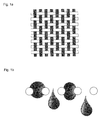
Fig. 1a is a schematic diagram of woven fabric filters having micro sized pores. -
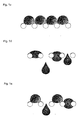
Fig. 1b is a schematic diagram showing transmittance of a filter without nano structure and hydrophobic/oleophobic treatment to a certain fluid. -
Fig. 1c is a schematic diagram showing that the fluid which had been transmitted is not transmitted after nano structure and hydrophobic/oleophobic treatment. -
Fig. 1d is a schematic diagram showing that the woven fabric filter in the aboveFig. 1c can transmit another fluid. -
Fig. 1e is a schematic diagram showing that for the mixture of 2 fluids illustrated in the aboveFig 1c and1 , oil-oil filtration is enabled by using the woven fabric filter treated with nano structure and hydrophobicity/oleophobicity. -
Fig. 2a and 2b is a SEM (Scanning Electron Microscope) image of an woven fabric surface before and after nano structure hydrophobic/oleo phobic treatment to explain a surface with hybrid pores according to an example of the present invention. -
Fig. 3a is an image of polyethylene surface with micro pores before plasma etching andFig. 3b is an image of the surface etched by using O2 plasma on -400Vb of voltage. -
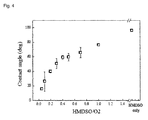
Fig. 4 shows that hydrophobicity/oleophobicity on the surface can be adjusted selectively as change of contact angle to pure water at different HMDSO/O2 fraction. -
Fig 5a is an image of surface after hydrophobic coating on polyethylene woven fabric surface with micro pores and contact state of water drop on the surface. -
Fig 5b is an image of surface after hydrophobic coating on a polyethylene woven fabric surface with micro pores and contact state of ethylene glycol on the surface. -
Fig 5c is an image of surface after hydrophobic coating on a polyethylene woven fabric surface with micro pores and contact state of silicon oil drop on the surface. - An objective of the present invention is to provide a method to prepare a hydrophobic or superhydrophobic woven fabric surface with hybrid pores comprising: (i) a step to form micro-nano hybrid pore structure by making nano meter sized pores with plasma etching on the micro sized pores; and (ii) a step to form hydrophobic film on the above micro-nano hybrid structure.
- The above fabric used in the present invention is a woven fabric.
- Because a densely woven fabric has wide gap and is wetted with and transmits droplets easily, most studies has performed on oil-water filters using spun fabric or non-woven fabric with tight gaps.
- However, the inventors found that the densely woven non-woven fabric is likely to occur fouling, develop blocking during treating contaminated water, and has smaller processable flux due to coexistence of proper sized pores and smaller than proper sized pores and not densely woven fabric has much lower filter performance due to coexistence of larger than proper sized pores.
- In this situation, the inventors of the present invention identified that it was possible to grant homogeneous nano structure on the woven fabric surface which transmits droplets well due to large gap and perform oil-water filtering in spite of large gaps of the woven fabric by adjusting surface energy in coating and completed this invention by identifying that it was possible to accomplish effects that the non-woven fabric did not have due to the homogeneous nano structure, including not only oil-water filtering with large flux but also oil-oil filtration effect for specific materials by optimization of filter performance by size controlling of the pores depending on fluid mixture to be filtered.
- In addition, the present invention has a merit that it can be applied to various clothing, diaper, sanitary napkin, and filter because it is applicable to various woven fabrics including natural fabrics such as cotton and silk as well as polymeric artificial fabrics, in comparison with existing surface treatment on filter membrane in form of spun or non-woven fabric.
- The woven fabrics applicable to the method of present invention included at least one polymeric woven fabric selected from the group comprising PP (polypropylene), nylon 6, nylon 66, PC (polycarbonate), PI (polyimide), PS (polystyrene), PE (polyethylene), PMMA (Poly(methyl methacrylate)), PDMS (Polydimethylsiloxane), PLGA (poly(lactic-co-glycolic) acid), hydrogel, PET (polyethylene terephthalate), silicon rubber, PC/ABS (polycarbonate/acrylonitrile butadiene styrene), PC/SAN (polycarbonate/styrene acrylonitrile), and PC/PBT (polycarbonate/polybutylene terephthalate).
- In the method of present invention, etching can be performed by plasma etching using O2 gas.
- In addition, the etching can be performed 1Pa ∼ 10Pa of etching pressure and - 100Vb ∼ -1000Vb of voltage condition.
- Size of nano pore formed by the above etching may have 1 ∼ 1000 nm of diameter.
- In the method of present invention, hydrophobic thin film formed on micro-nano hybrid pore structure may include amorphous carbon film (a-C:H:Si:O) containing silicon and oxygen formed through PECVD(Plasma-enhanced chemical vapor deposition) method,
- And, the step to prepare the hydrophobic thin film can be performed under 2Pa ∼ 10Pa of pressure by using gas containing hexamethyldisiloxane (HMDSO) or gas mixture including hexamethyldisiloxane (HMDSO) with 10 ∼ 30% of oxygen fraction.
- The hydrophobic thin-film can be controlled to have selective oil absorbability by adjusting ratio between HMDSO and oxygen.
- In addition, size and shape of the above nano pore can be controlled by changing at least one selected from the group comprising irradiation time and acceleration voltage of the plasma in plasma etching.
- Contact angle to pure water of superhydrophobic surface prepared by the method of present invention is at least 150 degree.
- Another objective of the present invention is to be accomplished by hydrophobic or superhydrophobic surface featured by including nano meter sized pores formed on polymeric woven fabric surface with micro sized pores and hydrophobic film covering up micro/nano sized pores on the polymeric surface.
- Diameter of the above nano meter sized pores may be 1 nm ∼ 1000 nm.
- And the hydrophobic thin-film may be amorphous carbon film containing silicon and oxygen (a-C:H:Si:O) with 1 nm ∼ 100 nm of thickness.
- Hereinafter, the method to prepare hydrophobic surface and the hydrophobic surface prepared by the method will be described as with reference to the drawings.
- The present invention relates to a technology to form hydrophobic/superhydrophobic surface with at least 150 degree of contact angle to fluid like pure water by forming nano meter sized pores on the polymeric filter with several tens and hundreds micrometer (µm) sized pores and hydrophobic thin-films on nano/micro hybrid surface and a superhydrophobic surface prepared by the technology.
- Particularly, as shown in the
Fig. 1 , nano-meter sized pores are formed on woven fabrics with micro meter sized pore, for example. Using plasma etching on the PET filter surface. The etching may be plasma etching using only O2 as gas. Accordingly, a micro/nano hybrid pore formed surface is prepared by forming nano-meter sized pores on the surface of woven fabric with existing micro meter sized pores. Because this surface prevents transmission of fluid which could be transmitted prior to the surface treatment and selective filtering is possible likeFig. 1e . - At this point, when etching a polymeric woven surface with micro sized pores through plasma etching, it is suggested that a number of nano sized pores are formed when magnifying the etched micro structure part (
Fig. 2b ). - Then, a hydrophobic thin film is formed on the surface of micro/nano hybrid polymer surface. The hydrophobic thin film may be amorphous carbon film containing silicon and oxygen (a-C:H:Si:O) formed through PECVD(plasma enhanced chemical vapor deposition) method.
- Through this process, a material having hydrophobic or superhydrophobic surface (superhydrophobic surface body) is completed. Contact angle of the superhydrophobic surface prepared by this method is at least 150 degree.
- Accordingly, the woven fabric filter of the present invention can perform filtration of desired mixture effectively, by adjusting selective superhydrophobic/superoleophobic surface through size of the woven fabric, material of spinning thread, and existence of nano structure.
- As explained in the above, the present invention provides a method to prepare superhydrophobic polymer woven fabric filter surface with large contact angle.
- The filter prepared by the method can be used in various areas including oil-oil filtration filter, desalination filter, pretreatment of crude oil refining as well as oil-water filtration filter, because it can have selective oleophilicity to special oil. Degree of hydrophobicity can be controlled by size of micro pores, existence of nano structure, and composition of the coating film, through which selective oleophilicity can be given.
- The foregoing embodiments and advantages are merely exemplary and are not to be construed as limiting the present disclosure. The present teachings can be readily applied to other types of apparatuses. This description is intended to be illustrative, and not to limit the scope of the claims. Many alternatives, modifications, and variations will be apparent to those skilled in the art. The features, structures, methods, and other characteristics of the exemplary embodiments described herein may be combined in various ways to obtain additional and/or alternative exemplary embodiments.
- First, nano pores were formed on the surface with micro meter sized pores with below method.
- First of all, Polyethylene terephthalate (PET) woven fabric with 1 ∼ 100 micro meter sized pores was prepared. The surface shape prior to plasma etching was shown in
Fig. 2a . - The PET surface with micro meter sized pores was etched with O2 plasma etching using r.f. PECVD. At this times, only O2 was used as gas and the O2 plasma etching was performed in condition of 1Pa ∼ 10Pa of etching pressure and -100Vb ∼ -1000Vb of r.f. voltage. Accordingly, as shown in
Fig. 2b , it was found that multiple nano pores with about 50 nm in diameter on the micro sized pore surface and between micro pores were formed. - A method to prepare hydrophobic thin film on the micro/nano hybrid pore formed polyethylene is desbribed. For hydrophobic thin film, amorphous carbon film containing silicon and oxygen (a-C:H:Si:O) was formed through PECVD method. This hydrophobic thin film was deposited using HMDSO (hexamethyldisiloxane) and O2 gas by 13.56Mhz r.f. PACVD. At this time, r.f. power was fixed as -400Vb.The hydrophobic film was deposited as 10 nm, 50 nm, and 100 nm in thickness and the used pressure was 20 mTorr. It was identified that the surface property of this prepared hydrophobic surface depended on r.f. power and O2 fraction in leading gas. Thus, it is possible to deposit hydrophobicity improved film by adjusting r.f. power and O2 fraction in leading gas properly.
- Besides, the O2 fraction can be changed to obtain alteration of process condition and desired surface property of hydrophobic thin film.
- Accordingly, a body with hydrophobic or superhydrophobic surface (superhydrophobic surface body) where hydrophobic thin film was formed on nano/micro hybrid pore structure was completed.
- As described in the above mentioned preparing method, it was found that the diameter of nano pores was 1nm ∼ 1000nm.
- Hereinafter, a method to measure properties of the above prepared surface body with hybrid pores and results are described concretely.
- Contact angle was measured using Goniometer(Data Physics instrument Gmbh, OCA 20L). This equipment allows measurement of optical image and contact angle of sessile droplet on the surface. Static contact angle was measured by gentile landing of 5 ml droplet on the surface.
-
Fig. 5a shows an image of contact angle to pure water on the PET woven fabric where hybrid pores and hydrophobic film prepared in the example of the present invention were formed. The static contact angle was measured as about 150 degree. -
Fig. 5b is an image of ethylene glycol on the PET woven fabric where hybrid pores and hydrophobic film prepared in the example of the present invention were formed. It was found that the contact angle was about 140 degree. -
Fig. 5c is an image of silicon oil on the PET woven fabric where hybrid pores and hydrophobic film prepared in the example of the present invention were formed. It was suggested that when a hydrophobic film (a-C:H:Si:O film) was coated on the nano structure formed after drying type etching on the PET filter surface with micro pores, all the solution was absorbed into the woven fabric. - Results from the above mentioned experiment (
Fig. 5 ) are as follows. It was confirmed that the contact angle to pure water was measured larger on the surface with micro/nano sized hybrid pores or roughness than hydrophobic film coated surface with micro sized pores. In addition, it was identified that while the silicon oil was absorbed into the surface, the ethylene glycol was not absorbed into and stayed on the surface. Because the contact angle to oil was altered depending on the material of hydrophobic film (fraction between oxygen and HMDSO), it was suggested that preparation of oil-oil filter with oleophilic/oleophobic property was possible (Fig. 4 ).Fig. 5 showed that the hydrophobic or superhydrophobic surface body where hydrophobic film was formed on the nano/micro hybrid structure prepared in the present invention can be used as an woven fabric filter applicable to separation of a mixture of ethylene glycol and silicon oil or a mixture of water and silicone oil. - As described in Example except using non-woven fabric prepared by spinning method instead of the PET woven fabric, nano pores were prepared on the surface of non-woven fabric and then the hydrophobic film was deposited using deposition method with HMDSO (hexamethyldisiloxane)/O2 gas. Then, a wetting experiment for ethylene glycol and silicon oil was performed.
- As results of the experiment, it was found that when using the loosely spun non-woven fabric, the performance of filter was lowered remarkably and could not perform the oil-water and oil-oil separation. It was considered that it was because larger pores than desired size coexisted due to inconsistency of pores of non-woven fabric.
- On the contrary, it was identified that when using densely spun non-woven fabric, the performance of the filter was lowered remarkably and the filter got clogged during treatment of contaminated water, due to coexistence of smaller pores than desired size (inconsistency of pores).
- In preparing nano pores on the micro surface of PET woven fabric and between micro pores, the PET surface with micro meter sized pores was etched under argon gas atmosphere through plasma etching.
- In preparing hydrophobic film on the above pore etched PET surface, the hydrophobic film was deposited using gas mixture containing C2F6 and CH4 as 1:1 ratio instead of HMDSO/O2 and then the wetting experiment for ethylene glycol and silicon oil was performed.
- As results of the experiment, it was identified that as the above surface body did not transmit water molecule but transmitted the ethylene glycol oil and silicon oil, so it had a function as oil-water separation filter. However, as it could not separate the ethylene glycol oil and silicon oil, it was impossible to use it as oil-oil separation filter.
Claims (12)
- A method of preparing a hydrophobic or superhydrophobic woven fabric surface having hybrid pores comprising:(i) a step of preparing micro-nano hybrid pore structure by forming nano sized pores on the surface of the woven fabric having micro sized pores by plasma etching; and(ii) a step of forming hydrophobic film on the micro-nano hybrid pore structure prepared in step (i).
- The method according to claim 1, wherein the etching onto the surface of the woven fabric is carried out by plasma etching using O2 gas.
- The method according to claim 2, wherein the etching is carried out under a etching pressure of 1 to 10 Pa and voltage condition of -100 to -1000 Vb.
- The method according to claim 1, wherein the diameter of nano pores is 1nm to 1000nm
- The method according to claim 1, wherein the hydrophobic thin film is amorphous carbon film containing silicon and oxygen (a-C:H:Si:O) formed through plasma-enhanced chemical vapor deposition (PECVD) method.
- The method according to claim 5, wherein the step of forming the hydrophobic thin film is carried out using a gas comprising hexamethyldisiloxane.
- The method according to claim 6, wherein the step of forming the hydrophobic thin film is carried out using a gas mixture comprising hexamethyldisiloxane (HMDSO) and oxygen with an oxygen fraction of 10 to 30%.
- The method according to claim 5, wherein the step of forming the hydrophobic thin film is carried out under a pressure of 1 to 10.
- The method according to claim 5, wherein the surface energy of the hydrophobic thin-film can be controlled to have selective oil absorbability by adjusting ratio between HMDSO and oxygen.
- The method according to claim 1, wherein the hydrophobic or superhydrophobic woven fabric surface has at least 150 degree of contact angle.
- The method according to claim 1, wherein the size and shape of the above nano pore can be controlled by changing at least one selected from plasma irradiation time and acceleration voltage in carrying out plasma ething.
- The method according to claim 1, wherein the woven fabric includes at least one polymeric woven fabric selected from the group consisting of PP (polypropylene), nylon 6, nylon 66, PC (polycarbonate), PI (polyimide), PS (polystyrene), PE (polyethylene), PMMA (Poly(methyl methacrylate)), PDMS (Polydimethylsiloxane), PLGA (poly(lactic-co-glycolic) acid), hydrogel, PET (polyethylene terephthalate), silicon rubber, PC/ABS (polycarbonate/acrylonitrile butadiene styrene), PC/SAN (polycarbonate/styrene acrylonitrile), and PC/PBT (polycarbonate/polybutylene terephthalate).
Applications Claiming Priority (1)
| Application Number | Priority Date | Filing Date | Title |
|---|---|---|---|
| KR1020140014695A KR101638411B1 (en) | 2014-02-10 | 2014-02-10 | Method of Preparing Micro/nano Hybrid Woven Fabric Surfaces for Oil-Oil Filtration or Oil-Water Filtration |
Publications (3)
| Publication Number | Publication Date |
|---|---|
| EP2905374A2 true EP2905374A2 (en) | 2015-08-12 |
| EP2905374A3 EP2905374A3 (en) | 2015-10-21 |
| EP2905374B1 EP2905374B1 (en) | 2017-10-25 |
Family
ID=50070470
Family Applications (1)
| Application Number | Title | Priority Date | Filing Date |
|---|---|---|---|
| EP14154675.4A Not-in-force EP2905374B1 (en) | 2014-02-10 | 2014-02-11 | Method of preparing micro/nano hybrid woven fabric surfaces for oil-oil filtration or oil-water filtration |
Country Status (3)
| Country | Link |
|---|---|
| US (1) | US9422191B2 (en) |
| EP (1) | EP2905374B1 (en) |
| KR (1) | KR101638411B1 (en) |
Cited By (9)
| Publication number | Priority date | Publication date | Assignee | Title |
|---|---|---|---|---|
| CN105855151A (en) * | 2016-04-21 | 2016-08-17 | 厦门建霖工业有限公司 | Long-acting hydrophobic-oleophobic surface treatment process |
| EP3101170A1 (en) * | 2015-06-03 | 2016-12-07 | Europlasma NV | Surface coatings |
| WO2017089789A1 (en) * | 2015-11-27 | 2017-06-01 | Porvair Filtration Group Limited | Filtration material and method of manufacture thereof |
| WO2017088070A1 (en) * | 2015-11-27 | 2017-06-01 | Queen's University At Kingston | Functional filters for hydrophobic liquid/hydrophilic liquid separations |
| ITUA20163141A1 (en) * | 2016-05-04 | 2017-11-04 | Univ Degli Studi Di Milano Bicocca | FLEXIBLE MATERIALS TREATED SURFACEALLY SUITABLE FOR FILTRATION AND SEPARATION OF IMMISCIBLE LIQUIDS |
| CN109806775A (en) * | 2019-03-08 | 2019-05-28 | 哈尔滨工业大学 | It is a kind of it is underwater it is superoleophobic and oily under super-hydrophobic seperation film and its preparation method and application |
| CN110184584A (en) * | 2019-06-19 | 2019-08-30 | 中国科学院宁波材料技术与工程研究所 | A kind of oleophilic drainage material, preparation method and application |
| CN110656484A (en) * | 2019-09-24 | 2020-01-07 | 东华大学 | Plasma treatment method of siloxane durable super-hydrophobic gradient film |
| GB2602059A (en) * | 2020-12-17 | 2022-06-22 | Clean Power Ltd | Apparatus and method |
Families Citing this family (11)
| Publication number | Priority date | Publication date | Assignee | Title |
|---|---|---|---|---|
| KR101405721B1 (en) * | 2011-04-29 | 2014-06-13 | 한국과학기술연구원 | A porous media with enhanced hydrophobicity and a fabrication method thereof |
| CN105127058B (en) * | 2015-08-31 | 2019-05-28 | 湖北慧狮塑业股份有限公司 | A kind of non-woven fabrics lamination production method and its pressuring flat device |
| KR101921626B1 (en) * | 2016-12-28 | 2018-11-26 | 한국과학기술연구원 | Oil collecting apparatus and oil collecting system having the same |
| US11015032B2 (en) * | 2018-03-02 | 2021-05-25 | Seton Hall University | Photoactive polymer coatings |
| CN108771982A (en) * | 2018-06-13 | 2018-11-09 | 洛阳纳诺环保科技有限公司 | A kind of preparation method of super-hydrophobic/super-oleophilic high efficiency oil-water seperation film |
| KR102212152B1 (en) * | 2019-03-05 | 2021-02-04 | 한국과학기술연구원 | Filter apparatus for oil-water separation |
| CN110026136A (en) * | 2019-05-17 | 2019-07-19 | 湖北大学 | Underwater superoleophobic freeze proof organic hydrogels and preparation method thereof, application, coating, oil-water separating net and preparation method thereof |
| KR20220073739A (en) * | 2019-10-24 | 2022-06-03 | 사아티 에스.피.에이. | Method for manufacturing composite filter media and composite filter media obtained by the method |
| US20240382886A1 (en) * | 2023-05-18 | 2024-11-21 | Hollingsworth & Vose Company | Morphologically enhanced, adsorbent filter media |
| US20240382880A1 (en) * | 2023-05-18 | 2024-11-21 | Hollingsworth & Vose Company | Morphological improvements in filter media |
| EP4632142A1 (en) * | 2024-04-09 | 2025-10-15 | Sefar AG | Method of producing a fabric having a hydro- and oleophobic characteristics |
Family Cites Families (7)
| Publication number | Priority date | Publication date | Assignee | Title |
|---|---|---|---|---|
| WO2003100156A1 (en) * | 2002-05-23 | 2003-12-04 | Universita' Degli Studi Di Milano-Bicocca | Method for processing materials with plasma |
| TWI306130B (en) * | 2004-10-22 | 2009-02-11 | Formosa Taffeta Co Ltd | Preparation of fabrics having lotus leaf effect and fabrics having lotus leaf effect |
| US8414980B2 (en) * | 2009-08-21 | 2013-04-09 | Atomic Energy Council-Institute Of Nuclear Energy Research | Method for hydrophobic and oleophobic modification of polymeric materials with atmospheric plasmas |
| KR101149435B1 (en) * | 2010-02-24 | 2012-05-24 | 한국과학기술연구원 | Superhydrophobic surface material with micro and nano hybrid porous structure and a fabrication method thereof |
| KR101311851B1 (en) * | 2011-03-03 | 2013-09-27 | 한국과학기술연구원 | Superhydrophobic/amphilic surface with nano structure and the fabrication method thereof |
| KR101405721B1 (en) * | 2011-04-29 | 2014-06-13 | 한국과학기술연구원 | A porous media with enhanced hydrophobicity and a fabrication method thereof |
| KR101349075B1 (en) * | 2011-10-10 | 2014-01-16 | 한국과학기술연구원 | Fuel Cell with Enhanced Mass Transport Capability |
-
2014
- 2014-02-10 KR KR1020140014695A patent/KR101638411B1/en not_active Expired - Fee Related
- 2014-02-11 EP EP14154675.4A patent/EP2905374B1/en not_active Not-in-force
- 2014-02-12 US US14/178,947 patent/US9422191B2/en not_active Expired - Fee Related
Non-Patent Citations (1)
| Title |
|---|
| None |
Cited By (15)
| Publication number | Priority date | Publication date | Assignee | Title |
|---|---|---|---|---|
| BE1024821B1 (en) * | 2015-06-03 | 2018-07-13 | Europlasma Nv | Surface coatings |
| EP3101170A1 (en) * | 2015-06-03 | 2016-12-07 | Europlasma NV | Surface coatings |
| WO2017088070A1 (en) * | 2015-11-27 | 2017-06-01 | Queen's University At Kingston | Functional filters for hydrophobic liquid/hydrophilic liquid separations |
| WO2017089789A1 (en) * | 2015-11-27 | 2017-06-01 | Porvair Filtration Group Limited | Filtration material and method of manufacture thereof |
| CN108290096A (en) * | 2015-11-27 | 2018-07-17 | 波韦尔过滤集团有限公司 | Filtering material and its manufacturing method |
| EP3603768A1 (en) * | 2015-11-27 | 2020-02-05 | Porvair Filtration Group Limited | Filtration material and method of manufacture thereof |
| US10874991B2 (en) | 2015-11-27 | 2020-12-29 | Queen's University At Kingston | Functional filters for hydrophobic liquid/hydrophilic liquid separations |
| CN105855151A (en) * | 2016-04-21 | 2016-08-17 | 厦门建霖工业有限公司 | Long-acting hydrophobic-oleophobic surface treatment process |
| ITUA20163141A1 (en) * | 2016-05-04 | 2017-11-04 | Univ Degli Studi Di Milano Bicocca | FLEXIBLE MATERIALS TREATED SURFACEALLY SUITABLE FOR FILTRATION AND SEPARATION OF IMMISCIBLE LIQUIDS |
| WO2017191577A1 (en) * | 2016-05-04 | 2017-11-09 | Università Degli Studi Di Milano - Bicocca | Superficially treated flexible materials suitable for filtering and separating immiscible liquids |
| US11041270B2 (en) | 2016-05-04 | 2021-06-22 | Universita' Degli Studi Di Milano-Bicocca | Superficially treated flexible materials suitable for filtering and separating immiscible liquids |
| CN109806775A (en) * | 2019-03-08 | 2019-05-28 | 哈尔滨工业大学 | It is a kind of it is underwater it is superoleophobic and oily under super-hydrophobic seperation film and its preparation method and application |
| CN110184584A (en) * | 2019-06-19 | 2019-08-30 | 中国科学院宁波材料技术与工程研究所 | A kind of oleophilic drainage material, preparation method and application |
| CN110656484A (en) * | 2019-09-24 | 2020-01-07 | 东华大学 | Plasma treatment method of siloxane durable super-hydrophobic gradient film |
| GB2602059A (en) * | 2020-12-17 | 2022-06-22 | Clean Power Ltd | Apparatus and method |
Also Published As
| Publication number | Publication date |
|---|---|
| US9422191B2 (en) | 2016-08-23 |
| EP2905374A3 (en) | 2015-10-21 |
| US20150225290A1 (en) | 2015-08-13 |
| KR20150093988A (en) | 2015-08-19 |
| KR101638411B1 (en) | 2016-07-11 |
| EP2905374B1 (en) | 2017-10-25 |
Similar Documents
| Publication | Publication Date | Title |
|---|---|---|
| US9422191B2 (en) | Method of preparing micro/nano hybrid woven fabric surfaces for oil-oil filtration or oil-water filtration | |
| Ma et al. | Plasma-controlled surface wettability: recent advances and future applications | |
| Zhu et al. | Breathable and asymmetrically superwettable Janus membrane with robust oil-fouling resistance for durable membrane distillation | |
| Wang et al. | Superhydrophobic/superoleophilic cotton for efficient oil–water separation based on the combined octadecanoyl chain bonding and polymer grafting via surface-initiated ATRP | |
| Ganesh et al. | A review on self-cleaning coatings | |
| Roach et al. | Progess in superhydrophobic surface development | |
| Palamà et al. | Underwater Wenzel and Cassie oleophobic behaviour | |
| Chen et al. | Robust and superhydrophobic surface modification by a “Paint+ Adhesive” method: applications in self-cleaning after oil contamination and oil–water separation | |
| Zhang et al. | Superoleophobic coatings with ultralow sliding angles based on silicone nanofilaments | |
| Liu et al. | A facile electrodeposition process for the fabrication of superhydrophobic and superoleophilic copper mesh for efficient oil–water separation | |
| Youngblood et al. | Ultrahydrophobic polymer surfaces prepared by simultaneous ablation of polypropylene and sputtering of poly (tetrafluoroethylene) using radio frequency plasma | |
| Zhao et al. | Fabrication, surface properties, and origin of superoleophobicity for a model textured surface | |
| KR101311851B1 (en) | Superhydrophobic/amphilic surface with nano structure and the fabrication method thereof | |
| KR20150108286A (en) | Nano composite structure having nano patterned structure on its surface, and method for preparing the same | |
| Chen et al. | Robust and elastic superhydrophobic breathable fibrous membrane with in situ grown hierarchical structures | |
| Xing et al. | A novel and facile approach to prepare self-cleaning yellow superhydrophobic polycarbonates | |
| Ouyang et al. | Self-indicating and recyclable superhydrophobic membranes for effective oil/water separation in harsh conditions | |
| Pi et al. | One-pot mussel-inspiration and silication: A platform for constructing oil-repellent surfaces toward crude oil/water separation | |
| KR102187858B1 (en) | Polymeric material having micro-nano composite structure, device including the same, and method for manufacturing the polymeric material | |
| Yu et al. | Mussel-inspired modification of honeycomb structured films for superhydrophobic surfaces with tunable water adhesion | |
| Laird et al. | Electric field-induced, reversible lotus-to-rose transition in nanohybrid shish kebab paper with hierarchical roughness | |
| Li et al. | Preparation and separation performance of biomimetic polycaprolactone/graphene oxide composite membrane | |
| Li et al. | Facile fabrication of superhydrophobic meshes with different water adhesion and their influence on oil/water separation | |
| Zhang et al. | Centrifugally spun superhydrophobic fibrous membranes with core-sheath structure assisted by hyper branched polymer and via click chemistry for high efficiency oil–water separation | |
| Becher-Nienhaus et al. | Surprising lack of influence on water droplet motion by hydrophilic microdomains on checkerboard-like surfaces with matched contact angle hysteresis |
Legal Events
| Date | Code | Title | Description |
|---|---|---|---|
| PUAI | Public reference made under article 153(3) epc to a published international application that has entered the european phase |
Free format text: ORIGINAL CODE: 0009012 |
|
| 17P | Request for examination filed |
Effective date: 20140227 |
|
| AK | Designated contracting states |
Kind code of ref document: A2 Designated state(s): AL AT BE BG CH CY CZ DE DK EE ES FI FR GB GR HR HU IE IS IT LI LT LU LV MC MK MT NL NO PL PT RO RS SE SI SK SM TR |
|
| AX | Request for extension of the european patent |
Extension state: BA ME |
|
| PUAL | Search report despatched |
Free format text: ORIGINAL CODE: 0009013 |
|
| AK | Designated contracting states |
Kind code of ref document: A3 Designated state(s): AL AT BE BG CH CY CZ DE DK EE ES FI FR GB GR HR HU IE IS IT LI LT LU LV MC MK MT NL NO PL PT RO RS SE SI SK SM TR |
|
| AX | Request for extension of the european patent |
Extension state: BA ME |
|
| RIC1 | Information provided on ipc code assigned before grant |
Ipc: D06M 10/02 20060101AFI20150916BHEP Ipc: C03C 25/68 20060101ALI20150916BHEP Ipc: D06M 10/08 20060101ALI20150916BHEP Ipc: B05D 5/08 20060101ALI20150916BHEP Ipc: D06M 10/04 20060101ALI20150916BHEP Ipc: B05D 1/00 20060101ALI20150916BHEP Ipc: B05D 3/14 20060101ALI20150916BHEP Ipc: D06M 13/513 20060101ALI20150916BHEP Ipc: B01D 39/08 20060101ALI20150916BHEP |
|
| GRAP | Despatch of communication of intention to grant a patent |
Free format text: ORIGINAL CODE: EPIDOSNIGR1 |
|
| STAA | Information on the status of an ep patent application or granted ep patent |
Free format text: STATUS: GRANT OF PATENT IS INTENDED |
|
| GRAJ | Information related to disapproval of communication of intention to grant by the applicant or resumption of examination proceedings by the epo deleted |
Free format text: ORIGINAL CODE: EPIDOSDIGR1 |
|
| STAA | Information on the status of an ep patent application or granted ep patent |
Free format text: STATUS: REQUEST FOR EXAMINATION WAS MADE |
|
| RIC1 | Information provided on ipc code assigned before grant |
Ipc: D06M 10/02 20060101AFI20170407BHEP Ipc: B01D 39/08 20060101ALI20170407BHEP Ipc: B05D 1/00 20060101ALI20170407BHEP Ipc: D06M 10/04 20060101ALI20170407BHEP Ipc: D06M 13/513 20060101ALI20170407BHEP Ipc: B05D 5/08 20060101ALI20170407BHEP Ipc: B05D 3/14 20060101ALI20170407BHEP Ipc: D06M 10/08 20060101ALI20170407BHEP Ipc: C03C 25/68 20060101ALI20170407BHEP Ipc: C23C 16/26 20060101ALI20170407BHEP |
|
| GRAP | Despatch of communication of intention to grant a patent |
Free format text: ORIGINAL CODE: EPIDOSNIGR1 |
|
| STAA | Information on the status of an ep patent application or granted ep patent |
Free format text: STATUS: GRANT OF PATENT IS INTENDED |
|
| INTG | Intention to grant announced |
Effective date: 20170509 |
|
| INTG | Intention to grant announced |
Effective date: 20170511 |
|
| INTC | Intention to grant announced (deleted) | ||
| INTG | Intention to grant announced |
Effective date: 20170524 |
|
| GRAS | Grant fee paid |
Free format text: ORIGINAL CODE: EPIDOSNIGR3 |
|
| GRAA | (expected) grant |
Free format text: ORIGINAL CODE: 0009210 |
|
| STAA | Information on the status of an ep patent application or granted ep patent |
Free format text: STATUS: THE PATENT HAS BEEN GRANTED |
|
| AK | Designated contracting states |
Kind code of ref document: B1 Designated state(s): AL AT BE BG CH CY CZ DE DK EE ES FI FR GB GR HR HU IE IS IT LI LT LU LV MC MK MT NL NO PL PT RO RS SE SI SK SM TR |
|
| REG | Reference to a national code |
Ref country code: GB Ref legal event code: FG4D |
|
| RIN1 | Information on inventor provided before grant (corrected) |
Inventor name: LEE, SEOCK HEON Inventor name: LEE, HEON JU Inventor name: KO, TAE JUN Inventor name: OH, KYU HWAN Inventor name: KIM, DO HYUN Inventor name: SO, JI HYUN Inventor name: MOON, MYOUNG WOON Inventor name: YU, EU SUN |
|
| REG | Reference to a national code |
Ref country code: CH Ref legal event code: EP |
|
| REG | Reference to a national code |
Ref country code: AT Ref legal event code: REF Ref document number: 940051 Country of ref document: AT Kind code of ref document: T Effective date: 20171115 |
|
| REG | Reference to a national code |
Ref country code: IE Ref legal event code: FG4D |
|
| REG | Reference to a national code |
Ref country code: DE Ref legal event code: R096 Ref document number: 602014016159 Country of ref document: DE |
|
| REG | Reference to a national code |
Ref country code: FR Ref legal event code: PLFP Year of fee payment: 5 |
|
| REG | Reference to a national code |
Ref country code: NL Ref legal event code: MP Effective date: 20171025 |
|
| REG | Reference to a national code |
Ref country code: LT Ref legal event code: MG4D |
|
| REG | Reference to a national code |
Ref country code: AT Ref legal event code: MK05 Ref document number: 940051 Country of ref document: AT Kind code of ref document: T Effective date: 20171025 |
|
| PG25 | Lapsed in a contracting state [announced via postgrant information from national office to epo] |
Ref country code: NL Free format text: LAPSE BECAUSE OF FAILURE TO SUBMIT A TRANSLATION OF THE DESCRIPTION OR TO PAY THE FEE WITHIN THE PRESCRIBED TIME-LIMIT Effective date: 20171025 |
|
| PG25 | Lapsed in a contracting state [announced via postgrant information from national office to epo] |
Ref country code: LT Free format text: LAPSE BECAUSE OF FAILURE TO SUBMIT A TRANSLATION OF THE DESCRIPTION OR TO PAY THE FEE WITHIN THE PRESCRIBED TIME-LIMIT Effective date: 20171025 Ref country code: FI Free format text: LAPSE BECAUSE OF FAILURE TO SUBMIT A TRANSLATION OF THE DESCRIPTION OR TO PAY THE FEE WITHIN THE PRESCRIBED TIME-LIMIT Effective date: 20171025 Ref country code: SE Free format text: LAPSE BECAUSE OF FAILURE TO SUBMIT A TRANSLATION OF THE DESCRIPTION OR TO PAY THE FEE WITHIN THE PRESCRIBED TIME-LIMIT Effective date: 20171025 Ref country code: NO Free format text: LAPSE BECAUSE OF FAILURE TO SUBMIT A TRANSLATION OF THE DESCRIPTION OR TO PAY THE FEE WITHIN THE PRESCRIBED TIME-LIMIT Effective date: 20180125 Ref country code: ES Free format text: LAPSE BECAUSE OF FAILURE TO SUBMIT A TRANSLATION OF THE DESCRIPTION OR TO PAY THE FEE WITHIN THE PRESCRIBED TIME-LIMIT Effective date: 20171025 |
|
| PG25 | Lapsed in a contracting state [announced via postgrant information from national office to epo] |
Ref country code: HR Free format text: LAPSE BECAUSE OF FAILURE TO SUBMIT A TRANSLATION OF THE DESCRIPTION OR TO PAY THE FEE WITHIN THE PRESCRIBED TIME-LIMIT Effective date: 20171025 Ref country code: IS Free format text: LAPSE BECAUSE OF FAILURE TO SUBMIT A TRANSLATION OF THE DESCRIPTION OR TO PAY THE FEE WITHIN THE PRESCRIBED TIME-LIMIT Effective date: 20180225 Ref country code: RS Free format text: LAPSE BECAUSE OF FAILURE TO SUBMIT A TRANSLATION OF THE DESCRIPTION OR TO PAY THE FEE WITHIN THE PRESCRIBED TIME-LIMIT Effective date: 20171025 Ref country code: AT Free format text: LAPSE BECAUSE OF FAILURE TO SUBMIT A TRANSLATION OF THE DESCRIPTION OR TO PAY THE FEE WITHIN THE PRESCRIBED TIME-LIMIT Effective date: 20171025 Ref country code: GR Free format text: LAPSE BECAUSE OF FAILURE TO SUBMIT A TRANSLATION OF THE DESCRIPTION OR TO PAY THE FEE WITHIN THE PRESCRIBED TIME-LIMIT Effective date: 20180126 Ref country code: BG Free format text: LAPSE BECAUSE OF FAILURE TO SUBMIT A TRANSLATION OF THE DESCRIPTION OR TO PAY THE FEE WITHIN THE PRESCRIBED TIME-LIMIT Effective date: 20180125 Ref country code: LV Free format text: LAPSE BECAUSE OF FAILURE TO SUBMIT A TRANSLATION OF THE DESCRIPTION OR TO PAY THE FEE WITHIN THE PRESCRIBED TIME-LIMIT Effective date: 20171025 |
|
| REG | Reference to a national code |
Ref country code: DE Ref legal event code: R097 Ref document number: 602014016159 Country of ref document: DE |
|
| PG25 | Lapsed in a contracting state [announced via postgrant information from national office to epo] |
Ref country code: CY Free format text: LAPSE BECAUSE OF FAILURE TO SUBMIT A TRANSLATION OF THE DESCRIPTION OR TO PAY THE FEE WITHIN THE PRESCRIBED TIME-LIMIT Effective date: 20171025 Ref country code: SK Free format text: LAPSE BECAUSE OF FAILURE TO SUBMIT A TRANSLATION OF THE DESCRIPTION OR TO PAY THE FEE WITHIN THE PRESCRIBED TIME-LIMIT Effective date: 20171025 Ref country code: CZ Free format text: LAPSE BECAUSE OF FAILURE TO SUBMIT A TRANSLATION OF THE DESCRIPTION OR TO PAY THE FEE WITHIN THE PRESCRIBED TIME-LIMIT Effective date: 20171025 Ref country code: EE Free format text: LAPSE BECAUSE OF FAILURE TO SUBMIT A TRANSLATION OF THE DESCRIPTION OR TO PAY THE FEE WITHIN THE PRESCRIBED TIME-LIMIT Effective date: 20171025 Ref country code: DK Free format text: LAPSE BECAUSE OF FAILURE TO SUBMIT A TRANSLATION OF THE DESCRIPTION OR TO PAY THE FEE WITHIN THE PRESCRIBED TIME-LIMIT Effective date: 20171025 |
|
| PG25 | Lapsed in a contracting state [announced via postgrant information from national office to epo] |
Ref country code: PL Free format text: LAPSE BECAUSE OF FAILURE TO SUBMIT A TRANSLATION OF THE DESCRIPTION OR TO PAY THE FEE WITHIN THE PRESCRIBED TIME-LIMIT Effective date: 20171025 Ref country code: RO Free format text: LAPSE BECAUSE OF FAILURE TO SUBMIT A TRANSLATION OF THE DESCRIPTION OR TO PAY THE FEE WITHIN THE PRESCRIBED TIME-LIMIT Effective date: 20171025 Ref country code: IT Free format text: LAPSE BECAUSE OF FAILURE TO SUBMIT A TRANSLATION OF THE DESCRIPTION OR TO PAY THE FEE WITHIN THE PRESCRIBED TIME-LIMIT Effective date: 20171025 Ref country code: SM Free format text: LAPSE BECAUSE OF FAILURE TO SUBMIT A TRANSLATION OF THE DESCRIPTION OR TO PAY THE FEE WITHIN THE PRESCRIBED TIME-LIMIT Effective date: 20171025 |
|
| PLBE | No opposition filed within time limit |
Free format text: ORIGINAL CODE: 0009261 |
|
| STAA | Information on the status of an ep patent application or granted ep patent |
Free format text: STATUS: NO OPPOSITION FILED WITHIN TIME LIMIT |
|
| REG | Reference to a national code |
Ref country code: CH Ref legal event code: PL |
|
| PG25 | Lapsed in a contracting state [announced via postgrant information from national office to epo] |
Ref country code: MC Free format text: LAPSE BECAUSE OF FAILURE TO SUBMIT A TRANSLATION OF THE DESCRIPTION OR TO PAY THE FEE WITHIN THE PRESCRIBED TIME-LIMIT Effective date: 20171025 |
|
| 26N | No opposition filed |
Effective date: 20180726 |
|
| REG | Reference to a national code |
Ref country code: IE Ref legal event code: MM4A |
|
| REG | Reference to a national code |
Ref country code: BE Ref legal event code: MM Effective date: 20180228 |
|
| PG25 | Lapsed in a contracting state [announced via postgrant information from national office to epo] |
Ref country code: CH Free format text: LAPSE BECAUSE OF NON-PAYMENT OF DUE FEES Effective date: 20180228 Ref country code: LI Free format text: LAPSE BECAUSE OF NON-PAYMENT OF DUE FEES Effective date: 20180228 Ref country code: SI Free format text: LAPSE BECAUSE OF FAILURE TO SUBMIT A TRANSLATION OF THE DESCRIPTION OR TO PAY THE FEE WITHIN THE PRESCRIBED TIME-LIMIT Effective date: 20171025 Ref country code: LU Free format text: LAPSE BECAUSE OF NON-PAYMENT OF DUE FEES Effective date: 20180211 |
|
| PG25 | Lapsed in a contracting state [announced via postgrant information from national office to epo] |
Ref country code: IE Free format text: LAPSE BECAUSE OF NON-PAYMENT OF DUE FEES Effective date: 20180211 |
|
| PG25 | Lapsed in a contracting state [announced via postgrant information from national office to epo] |
Ref country code: BE Free format text: LAPSE BECAUSE OF NON-PAYMENT OF DUE FEES Effective date: 20180228 |
|
| PG25 | Lapsed in a contracting state [announced via postgrant information from national office to epo] |
Ref country code: MT Free format text: LAPSE BECAUSE OF NON-PAYMENT OF DUE FEES Effective date: 20180211 |
|
| PG25 | Lapsed in a contracting state [announced via postgrant information from national office to epo] |
Ref country code: TR Free format text: LAPSE BECAUSE OF FAILURE TO SUBMIT A TRANSLATION OF THE DESCRIPTION OR TO PAY THE FEE WITHIN THE PRESCRIBED TIME-LIMIT Effective date: 20171025 |
|
| PG25 | Lapsed in a contracting state [announced via postgrant information from national office to epo] |
Ref country code: PT Free format text: LAPSE BECAUSE OF FAILURE TO SUBMIT A TRANSLATION OF THE DESCRIPTION OR TO PAY THE FEE WITHIN THE PRESCRIBED TIME-LIMIT Effective date: 20171025 |
|
| PG25 | Lapsed in a contracting state [announced via postgrant information from national office to epo] |
Ref country code: MK Free format text: LAPSE BECAUSE OF NON-PAYMENT OF DUE FEES Effective date: 20171025 Ref country code: HU Free format text: LAPSE BECAUSE OF FAILURE TO SUBMIT A TRANSLATION OF THE DESCRIPTION OR TO PAY THE FEE WITHIN THE PRESCRIBED TIME-LIMIT; INVALID AB INITIO Effective date: 20140211 |
|
| PG25 | Lapsed in a contracting state [announced via postgrant information from national office to epo] |
Ref country code: AL Free format text: LAPSE BECAUSE OF FAILURE TO SUBMIT A TRANSLATION OF THE DESCRIPTION OR TO PAY THE FEE WITHIN THE PRESCRIBED TIME-LIMIT Effective date: 20171025 |
|
| PGFP | Annual fee paid to national office [announced via postgrant information from national office to epo] |
Ref country code: FR Payment date: 20230119 Year of fee payment: 10 |
|
| PGFP | Annual fee paid to national office [announced via postgrant information from national office to epo] |
Ref country code: GB Payment date: 20230119 Year of fee payment: 10 Ref country code: DE Payment date: 20230119 Year of fee payment: 10 |
|
| REG | Reference to a national code |
Ref country code: DE Ref legal event code: R119 Ref document number: 602014016159 Country of ref document: DE |
|
| GBPC | Gb: european patent ceased through non-payment of renewal fee |
Effective date: 20240211 |
|
| PG25 | Lapsed in a contracting state [announced via postgrant information from national office to epo] |
Ref country code: DE Free format text: LAPSE BECAUSE OF NON-PAYMENT OF DUE FEES Effective date: 20240903 |
|
| PG25 | Lapsed in a contracting state [announced via postgrant information from national office to epo] |
Ref country code: GB Free format text: LAPSE BECAUSE OF NON-PAYMENT OF DUE FEES Effective date: 20240211 |
|
| PG25 | Lapsed in a contracting state [announced via postgrant information from national office to epo] |
Ref country code: FR Free format text: LAPSE BECAUSE OF NON-PAYMENT OF DUE FEES Effective date: 20240229 |
|
| PG25 | Lapsed in a contracting state [announced via postgrant information from national office to epo] |
Ref country code: GB Free format text: LAPSE BECAUSE OF NON-PAYMENT OF DUE FEES Effective date: 20240211 Ref country code: FR Free format text: LAPSE BECAUSE OF NON-PAYMENT OF DUE FEES Effective date: 20240229 Ref country code: DE Free format text: LAPSE BECAUSE OF NON-PAYMENT OF DUE FEES Effective date: 20240903 |