EP3077878B1 - Procédé implémenté par ordinateur et système de surveillance automatique et de détermination de l'état de l'intégralité des étapes de processus dans une unité de traitement - Google Patents
Procédé implémenté par ordinateur et système de surveillance automatique et de détermination de l'état de l'intégralité des étapes de processus dans une unité de traitement Download PDFInfo
- Publication number
- EP3077878B1 EP3077878B1 EP14809380.0A EP14809380A EP3077878B1 EP 3077878 B1 EP3077878 B1 EP 3077878B1 EP 14809380 A EP14809380 A EP 14809380A EP 3077878 B1 EP3077878 B1 EP 3077878B1
- Authority
- EP
- European Patent Office
- Prior art keywords
- monitoring
- learning
- vector
- der
- module
- Prior art date
- Legal status (The legal status is an assumption and is not a legal conclusion. Google has not performed a legal analysis and makes no representation as to the accuracy of the status listed.)
- Active
Links
Images



Classifications
-
- G—PHYSICS
- G05—CONTROLLING; REGULATING
- G05B—CONTROL OR REGULATING SYSTEMS IN GENERAL; FUNCTIONAL ELEMENTS OF SUCH SYSTEMS; MONITORING OR TESTING ARRANGEMENTS FOR SUCH SYSTEMS OR ELEMENTS
- G05B13/00—Adaptive control systems, i.e. systems automatically adjusting themselves to have a performance which is optimum according to some preassigned criterion
- G05B13/02—Adaptive control systems, i.e. systems automatically adjusting themselves to have a performance which is optimum according to some preassigned criterion electric
- G05B13/0265—Adaptive control systems, i.e. systems automatically adjusting themselves to have a performance which is optimum according to some preassigned criterion electric the criterion being a learning criterion
-
- G—PHYSICS
- G05—CONTROLLING; REGULATING
- G05B—CONTROL OR REGULATING SYSTEMS IN GENERAL; FUNCTIONAL ELEMENTS OF SUCH SYSTEMS; MONITORING OR TESTING ARRANGEMENTS FOR SUCH SYSTEMS OR ELEMENTS
- G05B19/00—Program-control systems
- G05B19/02—Program-control systems electric
- G05B19/418—Total factory control, i.e. centrally controlling a plurality of machines, e.g. direct or distributed numerical control [DNC], flexible manufacturing systems [FMS], integrated manufacturing systems [IMS] or computer integrated manufacturing [CIM]
- G05B19/41885—Total factory control, i.e. centrally controlling a plurality of machines, e.g. direct or distributed numerical control [DNC], flexible manufacturing systems [FMS], integrated manufacturing systems [IMS] or computer integrated manufacturing [CIM] characterised by modeling, simulation of the manufacturing system
-
- G—PHYSICS
- G05—CONTROLLING; REGULATING
- G05B—CONTROL OR REGULATING SYSTEMS IN GENERAL; FUNCTIONAL ELEMENTS OF SUCH SYSTEMS; MONITORING OR TESTING ARRANGEMENTS FOR SUCH SYSTEMS OR ELEMENTS
- G05B23/00—Testing or monitoring of control systems or parts thereof
- G05B23/02—Electric testing or monitoring
- G05B23/0205—Electric testing or monitoring by means of a monitoring system capable of detecting and responding to faults
- G05B23/0208—Electric testing or monitoring by means of a monitoring system capable of detecting and responding to faults characterized by the configuration of the monitoring system
- G05B23/0216—Human interface functionality, e.g. monitoring system providing help to the user in the selection of tests or in its configuration
-
- G—PHYSICS
- G05—CONTROLLING; REGULATING
- G05B—CONTROL OR REGULATING SYSTEMS IN GENERAL; FUNCTIONAL ELEMENTS OF SUCH SYSTEMS; MONITORING OR TESTING ARRANGEMENTS FOR SUCH SYSTEMS OR ELEMENTS
- G05B23/00—Testing or monitoring of control systems or parts thereof
- G05B23/02—Electric testing or monitoring
- G05B23/0205—Electric testing or monitoring by means of a monitoring system capable of detecting and responding to faults
- G05B23/0218—Electric testing or monitoring by means of a monitoring system capable of detecting and responding to faults characterised by the fault detection method dealing with either existing or incipient faults
- G05B23/0243—Electric testing or monitoring by means of a monitoring system capable of detecting and responding to faults characterised by the fault detection method dealing with either existing or incipient faults model based detection method, e.g. first-principles knowledge model
- G05B23/0254—Electric testing or monitoring by means of a monitoring system capable of detecting and responding to faults characterised by the fault detection method dealing with either existing or incipient faults model based detection method, e.g. first-principles knowledge model based on a quantitative model, e.g. mathematical relationships between inputs and outputs; functions: observer, Kalman filter, residual calculation, Neural Networks
-
- G—PHYSICS
- G05—CONTROLLING; REGULATING
- G05B—CONTROL OR REGULATING SYSTEMS IN GENERAL; FUNCTIONAL ELEMENTS OF SUCH SYSTEMS; MONITORING OR TESTING ARRANGEMENTS FOR SUCH SYSTEMS OR ELEMENTS
- G05B2219/00—Program-control systems
- G05B2219/20—Pc systems
- G05B2219/24—Pc safety
- G05B2219/24015—Monitoring
-
- G—PHYSICS
- G05—CONTROLLING; REGULATING
- G05B—CONTROL OR REGULATING SYSTEMS IN GENERAL; FUNCTIONAL ELEMENTS OF SUCH SYSTEMS; MONITORING OR TESTING ARRANGEMENTS FOR SUCH SYSTEMS OR ELEMENTS
- G05B2219/00—Program-control systems
- G05B2219/30—Nc systems
- G05B2219/33—Director till display
- G05B2219/33037—Learn parameters of network offline, not while controlling system
-
- G—PHYSICS
- G05—CONTROLLING; REGULATING
- G05B—CONTROL OR REGULATING SYSTEMS IN GENERAL; FUNCTIONAL ELEMENTS OF SUCH SYSTEMS; MONITORING OR TESTING ARRANGEMENTS FOR SUCH SYSTEMS OR ELEMENTS
- G05B2219/00—Program-control systems
- G05B2219/30—Nc systems
- G05B2219/33—Director till display
- G05B2219/33322—Failure driven learning
-
- Y—GENERAL TAGGING OF NEW TECHNOLOGICAL DEVELOPMENTS; GENERAL TAGGING OF CROSS-SECTIONAL TECHNOLOGIES SPANNING OVER SEVERAL SECTIONS OF THE IPC; TECHNICAL SUBJECTS COVERED BY FORMER USPC CROSS-REFERENCE ART COLLECTIONS [XRACs] AND DIGESTS
- Y02—TECHNOLOGIES OR APPLICATIONS FOR MITIGATION OR ADAPTATION AGAINST CLIMATE CHANGE
- Y02P—CLIMATE CHANGE MITIGATION TECHNOLOGIES IN THE PRODUCTION OR PROCESSING OF GOODS
- Y02P90/00—Enabling technologies with a potential contribution to greenhouse gas [GHG] emissions mitigation
- Y02P90/02—Total factory control, e.g. smart factories, flexible manufacturing systems [FMS] or integrated manufacturing systems [IMS]
-
- Y—GENERAL TAGGING OF NEW TECHNOLOGICAL DEVELOPMENTS; GENERAL TAGGING OF CROSS-SECTIONAL TECHNOLOGIES SPANNING OVER SEVERAL SECTIONS OF THE IPC; TECHNICAL SUBJECTS COVERED BY FORMER USPC CROSS-REFERENCE ART COLLECTIONS [XRACs] AND DIGESTS
- Y02—TECHNOLOGIES OR APPLICATIONS FOR MITIGATION OR ADAPTATION AGAINST CLIMATE CHANGE
- Y02P—CLIMATE CHANGE MITIGATION TECHNOLOGIES IN THE PRODUCTION OR PROCESSING OF GOODS
- Y02P90/00—Enabling technologies with a potential contribution to greenhouse gas [GHG] emissions mitigation
- Y02P90/80—Management or planning
Definitions
- the invention relates to a method and a computer-implemented system for automatic computer-implemented monitoring and status determination of entire process sections in a process unit.
- a central objective of modern plant asset management is to increase plant availability and plant utilization by monitoring the condition of field devices and plant components (asset monitoring).
- asset status information already exists at the device level.
- intelligent field devices have already largely established themselves in many companies.
- condition monitoring systems are already offered and available at the level of more complex machines and devices, such as pumps or heat exchangers [ Mühlenkamp, S., Geipel-Kern, A .: Plant Asset Management: Unused potential lies dormant in the diagnosis of mechanical assets, PROCESS, (2011) No. 3, 36-38 ].
- the task-oriented compression of the status information is absolutely essential for the user.
- the task was therefore to develop a system and a method for monitoring process-related parts of the plant (process units), which can be used for asset monitoring in companies based on the existing field instrumentation without significant engineering and modeling efforts, and a reliable one for the user as well as a monitoring tool that is easy and quick to use, whereby the asset status information per process unit is automatically compressed and aggregated in a simple form.
- Asset status information should be provided beyond the level of the intelligent field devices, also from "non-intelligent" system parts and from sub-systems of process engineering companies.
- the task for this was to provide a technical software solution that enables the setting of the threshold value and thus the distinction between the good status and deviations from it to be determined automatically during the process.
- these are intelligent field devices that monitor themselves using sensors and / or diagnostic software.
- the method can usually be carried out on a commercially available computer that is somewhat more powerful and by means of software installed on this computer. There are no special hardware requirements.
- the solution according to the invention does not require any considerable engineering and modeling efforts and can be used on the basis of the existing field instrumentation.
- the Process Unit Monitor usually has OPC, ODBC and SQL interfaces.
- OPC-DA real-time data
- the status information is also made available externally for each process unit by means of the internal OPC-DA server.
- step a system parts (process units) or sub-systems (process sections) that are usually to be monitored are defined. These plant parts or process sections are characterized by their M process parameters to be monitored. Examples of system components are distillation columns, heat exchanger-pump combinations, dryers, screw extruders or boilers including the connected peripherals - such as pipelines and instrumentation.
- This is where the process expert sets the sensors / actuators required for monitoring and the associated Measuring ranges fixed. It determines which process parameters - pressures, temperatures, flow rates, etc. - are included in the monitoring and which are not. All actual values, setpoint values and / or control values of the functional monitoring unit under consideration are usually relevant.
- the software supports the configuration by simply selecting and deselecting process parameters. In a particular embodiment, certain process parameters are additionally declared as “mandatory” and / or as “key variables”.
- Mandatory process parameters are process parameters that are necessary for monitoring. If a mandatory process parameter in the monitoring fails, it is usually automatically deactivated and the process unit status "traffic light” changes from “red”, “yellow” or “green” to “gray”. Such a change informs the user about the failure of a sensor / actuator in the process unit.
- Key variables are mandatory parameters that must not leave the previously defined range of values.
- the minimum and / or the maximum value of each learning data phase is preferably expanded by an adjustable high percentage upwards and downwards as a tolerance range.
- the model is typically only trained in this previously defined and extended range of values. If the monitoring vector leaves the value ranges extended in this way, the monitoring of the process unit including the traffic light status is also deactivated and "gray". In the case of a load variable (feed), this can prevent the monitoring from being applied to untrained process states.
- Key variables are automatically also mandatory parameters. The reverse is not the case.
- step c) the process expert can visualize the potential learning data phases and then select learning or reference data sets (selected learning data phases) in which the system was operated in accordance with the requirements in accordance with the good status.
- Learning or reference data sets for several products or load conditions are preferably entered into the model.
- a load or product parameter is included in step a), which marks the various system states (product and / or load states). This is usually trained as an additional "process parameter".
- process parameter not only data about the sensors / actuators but preferably also data about the product and / or load conditions can be used as process parameters. This reduces the effort for model creation and monitoring.
- the process expert can carry out a detailed definition of the good status in step a), which then enables an automatic import (step b) and / or selection (step c) of learning data phases.
- step d) the neural network-based model of the good status is calculated.
- the training of the neural network-based model usually takes place according to the learning rules of Frey et al. [ Frey, CW: Process diagnosis and monitoring of fieldbus-based automation systems using self-organizing cards and watershed transformation, at-Automatmaschinestechnik 56 (2008) No. 7, pp. 374-380 ].
- the underlying algorithm is based on so-called self-organizing cards (SOM) and the data-driven model creation uses process information (from the connected actuators / sensors), such as temperatures, flow rates, pressures, motor currents, etc., from the part of the system to be monitored or that to be monitored Unit.
- the tool could be designed in such a way that the user can generate the monitoring models himself - at the push of a button, so to speak - within a minute and then use them immediately for monitoring.
- the process expert selects the necessary process information in the form of so-called learning or reference data sets.
- This data-driven approach differs fundamentally from the procedure for analytical model-based methods. These require extensive modeling and a lot of experience on the part of the developer. If the process changes, e.g. B. because structural or process-optimizing measures have been carried out, the analytical model must also be adapted accordingly. Additional modeling efforts are the result. In contrast, the data-driven approach presented here only requires a new adjustment of the model by the user.
- the neural network-based model is adaptable through training when the input changes.
- the trained model depicts the good status (reference) of the process section to be monitored. Deviations from the model become flexible and, in a preferred embodiment of the invention, automatically in threshold values, at least in a basic threshold particularly preferably multiplied by the tolerance range in the form of an integer positive factor of usually 2-4, preferably 3, based on experience.
- the number of segments is set on the basis of empirical values and is usually from 10 to 100, preferably 15 to 75, particularly preferably 50.
- the resolution of the value range must be high enough to be able to set the threshold precisely. This is the case with at least 50 segments.
- the user should make sure that the resolution is not too high - i.e. that it remains adapted to the problem. Otherwise there can be numerous unoccupied segments, which leads to an unnecessarily high computing effort.
- sorting the learning vectors into the segments based on their total deviation errors in rare cases it can happen that more than 85% of the events are in the 1st to the 15th segment and the rest are distributed over the segments 16-50.
- the percentage of ⁇ 15% of the learning data vectors with the total deviation error ⁇ base threshold would be set too low. Therefore, the percentage of the learning data vectors with the total deviation error ⁇ base threshold is usually set after ⁇ 5% of the events with the highest values.
- the calculated basic threshold is particularly preferably multiplied by a tolerance range in the form of an integer positive factor of usually 2-4, preferably 3, according to experience.
- the deviation errors can also be transferred to the module for analyzing the deviation errors and a basic threshold can be determined for each process parameter.
- Another output of the method is then an assignment of the considered parameter of each monitoring vector in comparison to a pre-parameterized threshold (base threshold times the positive integer factor) of the considered parameter.
- the system is used to monitor a process unit over a longer period of time, the number of applicable learning data sets increases. It may be advantageous to repeat the training of the neural network in order to take new learning sentences into account in the model of the good state.
- the model update should ideally be integrated into everyday operations as part of a PAM strategy. The effort is manageable thanks to the simple operation and the small number of work steps. And updating a model usually only takes a few minutes.
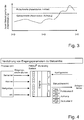
- the output is preferred in the form of a traffic light system such as on Fig. 3 shown.
- the setting parameter controls the sensitivity of the error detection (i.e. whether small or only large deviations from the trained model lead to a red traffic light) in the course of the subsequent monitoring of the system part or the subsystem and can optionally be changed.
- the yellow threshold can also be optionally changed as a percentage of the red threshold.
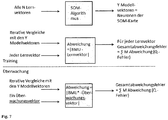
- the yellow and a red threshold are set which, in the case of monitoring (real time) or analysis (offline), allow the user to be informed about the health status (asset Status) of the system part or the subsystem (cf. Fig. 1 ).
- the placement of the traffic lights to visualize the process unit status based on the calculated basic threshold can preferably be adjusted by the user via the user interface.
- a traffic light OK, increased attention, error
- the process parameter deviations from one usually of several monitoring vectors, descending according to size can be graphically represented ( Fig 6 ).
- the percentage of the total deviation error for each process parameter can be calculated and displayed graphically.
- Another subject matter of the application is a computer program or software for carrying out the computer-implemented method.
- the system according to the invention is particularly advantageous for all system components that are not equipped with a self-diagnosis as standard, such as boilers and pipelines, heat exchangers or distillation columns [Hotop, R., Ochs, S., Ross, T .: Monitoring of system parts, atp edition, 06 / 2010].
- the process parameters of a process unit are not viewed in isolation on their own. Rather, the system correlates all parameter sets with one another and in this way records the characteristic interaction of the individual components of the functional unit to be monitored. It learns and checks their dependencies and derives summary status statements from them, for example in the sense of a traffic light scheme in which a distinction is made between good status ("green”), emerging need for action (“yellow”) and malfunction (“red”).
- Process Unit Monitor can also be used profitably for monitoring failure-prone asset combinations, for which, in principle, individual monitoring solutions already exist on the market.
- Process Unit Monitor can also be used profitably for monitoring failure-prone asset combinations, for which, in principle, individual monitoring solutions already exist on the market.
Landscapes
- Engineering & Computer Science (AREA)
- Physics & Mathematics (AREA)
- General Physics & Mathematics (AREA)
- Automation & Control Theory (AREA)
- Manufacturing & Machinery (AREA)
- Artificial Intelligence (AREA)
- Evolutionary Computation (AREA)
- Mathematical Physics (AREA)
- General Engineering & Computer Science (AREA)
- Quality & Reliability (AREA)
- Human Computer Interaction (AREA)
- Health & Medical Sciences (AREA)
- Computer Vision & Pattern Recognition (AREA)
- Medical Informatics (AREA)
- Software Systems (AREA)
- Testing And Monitoring For Control Systems (AREA)
- Debugging And Monitoring (AREA)
Claims (4)
- Procédé implémenté par ordinateur permettant de surveiller des parties d'installation liées au niveau du processus qui comprennent une ou plusieurs unités de processus, comprenant les étapes suivantes :à l'étape a), un nombre M de paramètres de processus à surveiller et leurs limites de plage de mesure sont entrés dans une interface utilisateur pour définir un état correct d'une ou de plusieurs unités de processus à surveiller et transmis à un module pour définir l'unité de processus,à l'étape b), des phases de données d'apprentissage composées de vecteurs d'apprentissage sont importées dans un module de base de données,à l'étape c), un nombre de N vecteurs d'apprentissage parmi les phases de données d'apprentissage de l'étape b) est sélectionné par l'intermédiaire de l'interface utilisateur, ou un nombre de N vecteurs d'apprentissage parmi les phases d'apprentissage est sélectionné automatiquement à l'aide des limites de plage de mesure de l'étape a),à l'étape d), les vecteurs d'apprentissage de l'étape c) sont transmis du module de base de données à un module de modèle relié à celui-ci ; dans le module de modèle, un modèle basé sur un réseau neuronal est généré en ce que chaque vecteur d'apprentissage est associé à un neurone correspondant le mieux ayant la plus petite distance par rapport au vecteur d'apprentissage, ce neurone correspondant le mieux étant définie par ses M paramètres de processus, et les unités correspondant le mieux constituant une carte neuronale auto-organisatrice,à l'étape e), MxN erreurs d'écart et un nombre de N erreurs d'écart totales sont automatiquement calculées en nombre dans une matrice, dans lequel :• pour chacun des N vecteurs d'apprentissage, une erreur d'écart comme la distance de chaque valeur de paramètre de processus d'un vecteur d'apprentissage par rapport à la valeur de paramètre de processus du neurone correspondant le mieux qui lui est associée,• pour chacun des N vecteurs d'apprentissage, une erreur d'écart totale comme la somme des erreurs d'écart de ses M paramètres de processus,à l'étape f), l'erreur d'écart totale pour chaque vecteur d'apprentissage de l'étape e) est transférée dans un module destiné à l'analyse de l'erreur d'écart, et une valeur minimale et une valeur maximale des N erreurs d'écart totales calculées y sont établies automatiquement, et au moins un seuil est fixé automatiquement par les étapes suivantes :- la plage de valeurs établie les valeurs minimale et maximale est divisée en 10 à 100 segments équidistants,- les erreurs d'écart totales des vecteurs d'apprentissage sont classées automatiquement dans les segments,- le seuil étant le premier point nodal de segment pour lequel il est vrai qu'un pourcentage supérieur ou égal à 5 à 15 % des erreurs d'écart totales les plus élevées se trouve à l'intérieur des segments en partant de la valeur maximale, et le seuil se trouve au niveau des 7/10 des segments supérieurs en partant de la valeur maximale,pour surveiller les unités de processus, à l'étape g), une transmission automatique de vecteurs de surveillance de l'unité de processus est effectuée dans le temps au module de base de données, le vecteur de surveillance étant défini par ses M paramètres de processus surveillés en ligne pour un horodatage t, suivi de la transmission du vecteur de surveillance au module de modèle,- à l'étape h), dans le module de modèle, une association automatique de chaque vecteur de surveillance de l'étape g) à l'un des neurones de la carte neuronale (SOM) de l'étape c) correspondant le mieux est effectuée par une comparaison des valeurs de paramètres de processus du vecteur de surveillance avec les valeurs de paramètres de processus de chaque neurone correspondant le mieux de la carte neuronale et par une sélection sur la base de la plus petite distance,à l'étape i), le calcul des erreurs d'écart et des erreurs d'écart totales du vecteur de surveillance est effectué, l'erreur d'écart étant définie comme la distance de chaque valeur de paramètre de processus du vecteur de surveillance par rapport à la valeur de paramètre de processus correspondante du neurone correspondant le mieux qui lui est associée, et les erreurs d'écart totales étant la somme des erreurs d'écart de ses M paramètres de processus,à l'étape j), l'erreur d'écart totale du vecteur de surveillance est transmise au module destiné à l'analyse des erreurs d'écart, comparée à la valeur minimale et à la valeur maximale des N erreurs d'écart totales calculées sous f), et la comparaison est affichée par l'intermédiaire de l'interface utilisateur.
- Procédé implémenté par ordinateur selon la revendication 1, dans lequel le seuil calculé est multiplié par une zone de tolérance sous la forme d'un facteur positif entier habituellement de 2 à 4.
- Programme informatique, comprenant des instructions qui, lorsque le programme est exécuté par un ordinateur, ont pour effet que celui-ci exécute toutes les étapes du procédé selon l'une quelconque des revendications 1 et 2.
- Système informatique comprenant des moyens permettant d'exécuter toutes les étapes du procédé implémenté par ordinateur selon l'une quelconque des revendications 1 et 2.
Priority Applications (1)
| Application Number | Priority Date | Filing Date | Title |
|---|---|---|---|
| EP14809380.0A EP3077878B1 (fr) | 2013-12-05 | 2014-12-05 | Procédé implémenté par ordinateur et système de surveillance automatique et de détermination de l'état de l'intégralité des étapes de processus dans une unité de traitement |
Applications Claiming Priority (3)
| Application Number | Priority Date | Filing Date | Title |
|---|---|---|---|
| EP13195897.7A EP2881822A1 (fr) | 2013-12-05 | 2013-12-05 | Procédé implémenté par ordinateur et système de surveillance automatique et de détermination de l'état de l'intégralité des étapes de processus dans une unité de traitement |
| EP14809380.0A EP3077878B1 (fr) | 2013-12-05 | 2014-12-05 | Procédé implémenté par ordinateur et système de surveillance automatique et de détermination de l'état de l'intégralité des étapes de processus dans une unité de traitement |
| PCT/EP2014/076677 WO2015082669A1 (fr) | 2013-12-05 | 2014-12-05 | Procédé informatisé et système de surveillance et détermination d'état automatiques de sections entières d'une unité de processus |
Publications (2)
| Publication Number | Publication Date |
|---|---|
| EP3077878A1 EP3077878A1 (fr) | 2016-10-12 |
| EP3077878B1 true EP3077878B1 (fr) | 2021-07-07 |
Family
ID=49752999
Family Applications (2)
| Application Number | Title | Priority Date | Filing Date |
|---|---|---|---|
| EP13195897.7A Pending EP2881822A1 (fr) | 2013-12-05 | 2013-12-05 | Procédé implémenté par ordinateur et système de surveillance automatique et de détermination de l'état de l'intégralité des étapes de processus dans une unité de traitement |
| EP14809380.0A Active EP3077878B1 (fr) | 2013-12-05 | 2014-12-05 | Procédé implémenté par ordinateur et système de surveillance automatique et de détermination de l'état de l'intégralité des étapes de processus dans une unité de traitement |
Family Applications Before (1)
| Application Number | Title | Priority Date | Filing Date |
|---|---|---|---|
| EP13195897.7A Pending EP2881822A1 (fr) | 2013-12-05 | 2013-12-05 | Procédé implémenté par ordinateur et système de surveillance automatique et de détermination de l'état de l'intégralité des étapes de processus dans une unité de traitement |
Country Status (8)
| Country | Link |
|---|---|
| US (2) | US10261480B2 (fr) |
| EP (2) | EP2881822A1 (fr) |
| JP (1) | JP6538057B2 (fr) |
| KR (1) | KR102343752B1 (fr) |
| CN (1) | CN105793789B (fr) |
| CA (1) | CA2932489A1 (fr) |
| SG (2) | SG10201804503UA (fr) |
| WO (1) | WO2015082669A1 (fr) |
Families Citing this family (12)
| Publication number | Priority date | Publication date | Assignee | Title |
|---|---|---|---|---|
| JP6059375B1 (ja) | 2016-02-09 | 2017-01-11 | ファナック株式会社 | 生産制御システムおよび統合生産制御システム |
| CN105867341B (zh) * | 2016-05-31 | 2018-08-07 | 山东中烟工业有限责任公司 | 一种烟草加工设备的在线设备健康状态自检方法及系统 |
| EP3258333A1 (fr) * | 2016-06-17 | 2017-12-20 | Siemens Aktiengesellschaft | Procédé et système pour surveiller des données de capteur d'équipement rotatif |
| EP3282399B1 (fr) * | 2016-08-11 | 2020-05-13 | Siemens Aktiengesellschaft | Procede de reconnaissance ameliore d'anomalies de processus d'une installation technique et systeme de diagnostic correspondant |
| DE102017200134A1 (de) * | 2017-01-05 | 2018-07-05 | Fraunhofer-Gesellschaft zur Förderung der angewandten Forschung e.V. | Selbstkonfigurierende Überwachungseinrichtung für ein auf einem industriellen Datenkommunikationsnetzwerk basierendes Automatisierungssystem |
| WO2018138880A1 (fr) * | 2017-01-27 | 2018-08-02 | 三菱日立パワーシステムズ株式会社 | Dispositif et procédé d'estimation de valeurs de paramètres de modèle, programme, support d'enregistrement sur lequel est enregistré un programme, et système d'estimation de valeurs de paramètres de modèle |
| GB2567850B (en) * | 2017-10-26 | 2020-11-04 | Gb Gas Holdings Ltd | Determining operating state from complex sensor data |
| EP3699710A1 (fr) * | 2019-02-20 | 2020-08-26 | Siemens Aktiengesellschaft | Procédé et dispositif de fourniture structuré des informations d'un système de production et / ou d'un composant de système de production |
| CN111026664B (zh) * | 2019-12-09 | 2020-12-22 | 遵义职业技术学院 | 基于ann的程序检测方法和检测系统及应用 |
| CN113867167A (zh) * | 2021-10-28 | 2021-12-31 | 中央司法警官学院 | 一种基于人工神经网络的家居环境智能监控方法及系统 |
| DE102023118121A1 (de) * | 2023-07-10 | 2025-01-16 | Krones Aktiengesellschaft | Fehlerursachenanalyse für eine Maschinenlinie |
| KR200499371Y1 (ko) | 2023-11-13 | 2025-07-16 | 주)케이아이글로벌컴퍼니 | 인형으로 변형되는 머플러 |
Family Cites Families (15)
| Publication number | Priority date | Publication date | Assignee | Title |
|---|---|---|---|---|
| DE19732046A1 (de) * | 1997-07-25 | 1999-01-28 | Abb Patent Gmbh | Prozeßdiagnosesystem und Verfahren zur Diagnose von Vorgängen und Zuständen eines technischen Prozesses |
| US6285966B1 (en) * | 1998-06-25 | 2001-09-04 | Fisher Controls International, Inc. | Function block apparatus for viewing data in a process control system |
| ATE303618T1 (de) * | 2000-03-10 | 2005-09-15 | Smiths Detection Inc | Steuerung für einen industriellen prozes mit einer oder mehreren multidimensionalen variablen |
| US6556939B1 (en) * | 2000-11-22 | 2003-04-29 | Smartsignal Corporation | Inferential signal generator for instrumented equipment and processes |
| US20020183971A1 (en) | 2001-04-10 | 2002-12-05 | Wegerich Stephan W. | Diagnostic systems and methods for predictive condition monitoring |
| US6643600B2 (en) * | 2001-04-26 | 2003-11-04 | General Electric Company | Method and system for assessing adjustment factors in testing or monitoring process |
| JP4064159B2 (ja) * | 2002-06-06 | 2008-03-19 | 本田技研工業株式会社 | プラントの制御装置 |
| DE10241746B8 (de) * | 2002-09-10 | 2007-09-20 | Haag, Günter, Prof.Dr. | Verfahren zur zyklischen Qualitätsbewertung und Prozessüberwachung bei periodischen Produktionsprozessen |
| DE10341764B4 (de) * | 2002-09-11 | 2019-01-10 | Fisher-Rosemount Systems, Inc. | Integrierte Modell-Vorhersagesteuerung und -Optimierung innerhalb eines Prozesssteuerungssystems |
| US7729789B2 (en) * | 2004-05-04 | 2010-06-01 | Fisher-Rosemount Systems, Inc. | Process plant monitoring based on multivariate statistical analysis and on-line process simulation |
| CN101017373A (zh) * | 2006-12-28 | 2007-08-15 | 浙江大学 | 工业过程多分辨率软测量仪表及方法 |
| US7756678B2 (en) * | 2008-05-29 | 2010-07-13 | General Electric Company | System and method for advanced condition monitoring of an asset system |
| JP5048625B2 (ja) | 2008-10-09 | 2012-10-17 | 株式会社日立製作所 | 異常検知方法及びシステム |
| JP5501908B2 (ja) | 2010-09-15 | 2014-05-28 | シャープ株式会社 | 要因分析方法、要因分析装置、及び記録媒体 |
| US8620853B2 (en) * | 2011-07-19 | 2013-12-31 | Smartsignal Corporation | Monitoring method using kernel regression modeling with pattern sequences |
-
2013
- 2013-12-05 EP EP13195897.7A patent/EP2881822A1/fr active Pending
-
2014
- 2014-12-05 SG SG10201804503UA patent/SG10201804503UA/en unknown
- 2014-12-05 CA CA2932489A patent/CA2932489A1/fr not_active Abandoned
- 2014-12-05 CN CN201480066575.1A patent/CN105793789B/zh not_active Expired - Fee Related
- 2014-12-05 SG SG11201604410VA patent/SG11201604410VA/en unknown
- 2014-12-05 US US15/101,614 patent/US10261480B2/en active Active
- 2014-12-05 KR KR1020167016557A patent/KR102343752B1/ko not_active Expired - Fee Related
- 2014-12-05 EP EP14809380.0A patent/EP3077878B1/fr active Active
- 2014-12-05 JP JP2016536556A patent/JP6538057B2/ja not_active Expired - Fee Related
- 2014-12-05 WO PCT/EP2014/076677 patent/WO2015082669A1/fr not_active Ceased
-
2019
- 2019-01-24 US US16/256,134 patent/US10678193B2/en active Active
Non-Patent Citations (1)
| Title |
|---|
| None * |
Also Published As
| Publication number | Publication date |
|---|---|
| US20190171168A1 (en) | 2019-06-06 |
| US10678193B2 (en) | 2020-06-09 |
| EP2881822A1 (fr) | 2015-06-10 |
| EP3077878A1 (fr) | 2016-10-12 |
| JP2016539425A (ja) | 2016-12-15 |
| US10261480B2 (en) | 2019-04-16 |
| KR102343752B1 (ko) | 2021-12-24 |
| SG10201804503UA (en) | 2018-07-30 |
| CA2932489A1 (fr) | 2015-06-11 |
| CN105793789A (zh) | 2016-07-20 |
| KR20160094383A (ko) | 2016-08-09 |
| WO2015082669A1 (fr) | 2015-06-11 |
| US20170082988A1 (en) | 2017-03-23 |
| JP6538057B2 (ja) | 2019-07-03 |
| CN105793789B (zh) | 2019-11-15 |
| SG11201604410VA (en) | 2016-07-28 |
Similar Documents
| Publication | Publication Date | Title |
|---|---|---|
| EP3077878B1 (fr) | Procédé implémenté par ordinateur et système de surveillance automatique et de détermination de l'état de l'intégralité des étapes de processus dans une unité de traitement | |
| EP3279756B1 (fr) | Dispositif de diagnostic et procédé de surveillance du fonctionnement d'une installation technique | |
| DE102017000287B4 (de) | Zellensteuerung und produktionssystem zum verwalten der arbeitssituation einer vielzahl von fertigungsmaschinen in einer fertigungszelle | |
| DE112011101738T5 (de) | Mehrstufiges Prozessmodellierungsverfahren | |
| DE112004000432T5 (de) | Generierung von Daten für die Kennzeichnung des betrieblichen Zustands von Maschinen | |
| DE102014109033A1 (de) | Nicht intrusive datenanalyse in einem prozesssteuerungssystem | |
| WO2009027211A1 (fr) | Procédé d'amélioration d'une fonction diagnostic d'un appareil de terrain | |
| WO2022069258A1 (fr) | Dispositif et procédé de détection d'anomalies dans une installation industrielle pour l'exécution d'un processus de production | |
| DE102007039531A1 (de) | Verfahren zum Beschaffen von instandhaltungsrelevanten Informationen zu einer Anlage | |
| DE112023002048T5 (de) | Erweiterte analytik für bio-/chemische und halbleiter-produktionsanlagen | |
| EP4268029B1 (fr) | Procédé et système de supervision du fonctionnement d'une installation technique | |
| EP3999925A1 (fr) | Procédés et dispositifs permettant de déterminer une qualité de produit | |
| EP4278098A1 (fr) | Procédé de fourniture d'au moins un élément d'informations relatives à un système hydraulique | |
| EP3961333A1 (fr) | Système et procédé de détermination d'une cause d'anomalie de fonctionnement d'une machine ainsi que programme informatique et les supports de données lisibles électroniquement | |
| EP3056994B1 (fr) | Dispositif et procede de detection, de verification et de memorisation de donnees de processus provenant au moins de deux etapes de processus | |
| DE102018124285A1 (de) | Systeme und verfahren zum überwachen der leistungsfähigkeit von prozesssteuerungssystemen an mehreren standorten | |
| DE102011084321A1 (de) | Kommunikationseinheit mit Informationsdarstellung basierend auf Anlagenstruktur | |
| EP4060441A1 (fr) | Procédé et système de détection des anomalies dans le fonctionnement d'une installation technique | |
| DE112021008086B4 (de) | Zustandserfassungssystem, zustandserfassungsverfahren und zustandserfassungsprogramm | |
| EP4127848B1 (fr) | Procédé et système de diagnostic de messages | |
| DE102017219864A1 (de) | Verfahren zur Diagnose wenigstens einer Automatisierungsanlage und System | |
| DE102024209895A1 (de) | Computerimplementiertes Verfahren zum Finden einer Fehlerursache in einem industriellen Prozess | |
| DE102025128023A1 (de) | Apparat, Verfahren und Programm | |
| DE102023113134A1 (de) | Verfahren und Vorrichtung zur Erfassung von Messdaten einer Maschine sowie Reifenheizpresse aufweisend eine Vorrichtung zur Erfassung von Messdaten | |
| DE102024123366A1 (de) | System zum Optimieren des Betriebs einer Anlage der Automatisierungstechnik und Verfahren zum Optimieren des Betriebs einer Anlage der Automatisierungstechnik |
Legal Events
| Date | Code | Title | Description |
|---|---|---|---|
| PUAI | Public reference made under article 153(3) epc to a published international application that has entered the european phase |
Free format text: ORIGINAL CODE: 0009012 |
|
| 17P | Request for examination filed |
Effective date: 20160705 |
|
| AK | Designated contracting states |
Kind code of ref document: A1 Designated state(s): AL AT BE BG CH CY CZ DE DK EE ES FI FR GB GR HR HU IE IS IT LI LT LU LV MC MK MT NL NO PL PT RO RS SE SI SK SM TR |
|
| AX | Request for extension of the european patent |
Extension state: BA ME |
|
| RAP1 | Party data changed (applicant data changed or rights of an application transferred) |
Owner name: BAYER AKTIENGESELLSCHAFT |
|
| STAA | Information on the status of an ep patent application or granted ep patent |
Free format text: STATUS: REQUEST FOR EXAMINATION WAS MADE |
|
| DAX | Request for extension of the european patent (deleted) | ||
| STAA | Information on the status of an ep patent application or granted ep patent |
Free format text: STATUS: EXAMINATION IS IN PROGRESS |
|
| 17Q | First examination report despatched |
Effective date: 20180405 |
|
| GRAP | Despatch of communication of intention to grant a patent |
Free format text: ORIGINAL CODE: EPIDOSNIGR1 |
|
| STAA | Information on the status of an ep patent application or granted ep patent |
Free format text: STATUS: GRANT OF PATENT IS INTENDED |
|
| INTG | Intention to grant announced |
Effective date: 20210317 |
|
| GRAS | Grant fee paid |
Free format text: ORIGINAL CODE: EPIDOSNIGR3 |
|
| GRAA | (expected) grant |
Free format text: ORIGINAL CODE: 0009210 |
|
| STAA | Information on the status of an ep patent application or granted ep patent |
Free format text: STATUS: THE PATENT HAS BEEN GRANTED |
|
| AK | Designated contracting states |
Kind code of ref document: B1 Designated state(s): AL AT BE BG CH CY CZ DE DK EE ES FI FR GB GR HR HU IE IS IT LI LT LU LV MC MK MT NL NO PL PT RO RS SE SI SK SM TR |
|
| REG | Reference to a national code |
Ref country code: GB Ref legal event code: FG4D Free format text: NOT ENGLISH |
|
| REG | Reference to a national code |
Ref country code: AT Ref legal event code: REF Ref document number: 1409189 Country of ref document: AT Kind code of ref document: T Effective date: 20210715 |
|
| REG | Reference to a national code |
Ref country code: DE Ref legal event code: R096 Ref document number: 502014015729 Country of ref document: DE |
|
| REG | Reference to a national code |
Ref country code: IE Ref legal event code: FG4D Free format text: LANGUAGE OF EP DOCUMENT: GERMAN |
|
| REG | Reference to a national code |
Ref country code: LT Ref legal event code: MG9D |
|
| REG | Reference to a national code |
Ref country code: NL Ref legal event code: MP Effective date: 20210707 |
|
| PG25 | Lapsed in a contracting state [announced via postgrant information from national office to epo] |
Ref country code: HR Free format text: LAPSE BECAUSE OF FAILURE TO SUBMIT A TRANSLATION OF THE DESCRIPTION OR TO PAY THE FEE WITHIN THE PRESCRIBED TIME-LIMIT Effective date: 20210707 Ref country code: SE Free format text: LAPSE BECAUSE OF FAILURE TO SUBMIT A TRANSLATION OF THE DESCRIPTION OR TO PAY THE FEE WITHIN THE PRESCRIBED TIME-LIMIT Effective date: 20210707 Ref country code: RS Free format text: LAPSE BECAUSE OF FAILURE TO SUBMIT A TRANSLATION OF THE DESCRIPTION OR TO PAY THE FEE WITHIN THE PRESCRIBED TIME-LIMIT Effective date: 20210707 Ref country code: PT Free format text: LAPSE BECAUSE OF FAILURE TO SUBMIT A TRANSLATION OF THE DESCRIPTION OR TO PAY THE FEE WITHIN THE PRESCRIBED TIME-LIMIT Effective date: 20211108 Ref country code: NL Free format text: LAPSE BECAUSE OF FAILURE TO SUBMIT A TRANSLATION OF THE DESCRIPTION OR TO PAY THE FEE WITHIN THE PRESCRIBED TIME-LIMIT Effective date: 20210707 Ref country code: NO Free format text: LAPSE BECAUSE OF FAILURE TO SUBMIT A TRANSLATION OF THE DESCRIPTION OR TO PAY THE FEE WITHIN THE PRESCRIBED TIME-LIMIT Effective date: 20211007 Ref country code: ES Free format text: LAPSE BECAUSE OF FAILURE TO SUBMIT A TRANSLATION OF THE DESCRIPTION OR TO PAY THE FEE WITHIN THE PRESCRIBED TIME-LIMIT Effective date: 20210707 Ref country code: FI Free format text: LAPSE BECAUSE OF FAILURE TO SUBMIT A TRANSLATION OF THE DESCRIPTION OR TO PAY THE FEE WITHIN THE PRESCRIBED TIME-LIMIT Effective date: 20210707 Ref country code: LT Free format text: LAPSE BECAUSE OF FAILURE TO SUBMIT A TRANSLATION OF THE DESCRIPTION OR TO PAY THE FEE WITHIN THE PRESCRIBED TIME-LIMIT Effective date: 20210707 Ref country code: BG Free format text: LAPSE BECAUSE OF FAILURE TO SUBMIT A TRANSLATION OF THE DESCRIPTION OR TO PAY THE FEE WITHIN THE PRESCRIBED TIME-LIMIT Effective date: 20211007 |
|
| PG25 | Lapsed in a contracting state [announced via postgrant information from national office to epo] |
Ref country code: PL Free format text: LAPSE BECAUSE OF FAILURE TO SUBMIT A TRANSLATION OF THE DESCRIPTION OR TO PAY THE FEE WITHIN THE PRESCRIBED TIME-LIMIT Effective date: 20210707 Ref country code: LV Free format text: LAPSE BECAUSE OF FAILURE TO SUBMIT A TRANSLATION OF THE DESCRIPTION OR TO PAY THE FEE WITHIN THE PRESCRIBED TIME-LIMIT Effective date: 20210707 Ref country code: GR Free format text: LAPSE BECAUSE OF FAILURE TO SUBMIT A TRANSLATION OF THE DESCRIPTION OR TO PAY THE FEE WITHIN THE PRESCRIBED TIME-LIMIT Effective date: 20211008 |
|
| REG | Reference to a national code |
Ref country code: DE Ref legal event code: R097 Ref document number: 502014015729 Country of ref document: DE |
|
| PG25 | Lapsed in a contracting state [announced via postgrant information from national office to epo] |
Ref country code: DK Free format text: LAPSE BECAUSE OF FAILURE TO SUBMIT A TRANSLATION OF THE DESCRIPTION OR TO PAY THE FEE WITHIN THE PRESCRIBED TIME-LIMIT Effective date: 20210707 |
|
| PLBE | No opposition filed within time limit |
Free format text: ORIGINAL CODE: 0009261 |
|
| STAA | Information on the status of an ep patent application or granted ep patent |
Free format text: STATUS: NO OPPOSITION FILED WITHIN TIME LIMIT |
|
| PG25 | Lapsed in a contracting state [announced via postgrant information from national office to epo] |
Ref country code: SM Free format text: LAPSE BECAUSE OF FAILURE TO SUBMIT A TRANSLATION OF THE DESCRIPTION OR TO PAY THE FEE WITHIN THE PRESCRIBED TIME-LIMIT Effective date: 20210707 Ref country code: SK Free format text: LAPSE BECAUSE OF FAILURE TO SUBMIT A TRANSLATION OF THE DESCRIPTION OR TO PAY THE FEE WITHIN THE PRESCRIBED TIME-LIMIT Effective date: 20210707 Ref country code: RO Free format text: LAPSE BECAUSE OF FAILURE TO SUBMIT A TRANSLATION OF THE DESCRIPTION OR TO PAY THE FEE WITHIN THE PRESCRIBED TIME-LIMIT Effective date: 20210707 Ref country code: EE Free format text: LAPSE BECAUSE OF FAILURE TO SUBMIT A TRANSLATION OF THE DESCRIPTION OR TO PAY THE FEE WITHIN THE PRESCRIBED TIME-LIMIT Effective date: 20210707 Ref country code: CZ Free format text: LAPSE BECAUSE OF FAILURE TO SUBMIT A TRANSLATION OF THE DESCRIPTION OR TO PAY THE FEE WITHIN THE PRESCRIBED TIME-LIMIT Effective date: 20210707 Ref country code: AL Free format text: LAPSE BECAUSE OF FAILURE TO SUBMIT A TRANSLATION OF THE DESCRIPTION OR TO PAY THE FEE WITHIN THE PRESCRIBED TIME-LIMIT Effective date: 20210707 |
|
| 26N | No opposition filed |
Effective date: 20220408 |
|
| PG25 | Lapsed in a contracting state [announced via postgrant information from national office to epo] |
Ref country code: MC Free format text: LAPSE BECAUSE OF FAILURE TO SUBMIT A TRANSLATION OF THE DESCRIPTION OR TO PAY THE FEE WITHIN THE PRESCRIBED TIME-LIMIT Effective date: 20210707 Ref country code: IT Free format text: LAPSE BECAUSE OF FAILURE TO SUBMIT A TRANSLATION OF THE DESCRIPTION OR TO PAY THE FEE WITHIN THE PRESCRIBED TIME-LIMIT Effective date: 20210707 |
|
| REG | Reference to a national code |
Ref country code: CH Ref legal event code: PL |
|
| REG | Reference to a national code |
Ref country code: BE Ref legal event code: MM Effective date: 20211231 |
|
| PG25 | Lapsed in a contracting state [announced via postgrant information from national office to epo] |
Ref country code: LU Free format text: LAPSE BECAUSE OF NON-PAYMENT OF DUE FEES Effective date: 20211205 Ref country code: IE Free format text: LAPSE BECAUSE OF NON-PAYMENT OF DUE FEES Effective date: 20211205 |
|
| PG25 | Lapsed in a contracting state [announced via postgrant information from national office to epo] |
Ref country code: FR Free format text: LAPSE BECAUSE OF NON-PAYMENT OF DUE FEES Effective date: 20211231 Ref country code: BE Free format text: LAPSE BECAUSE OF NON-PAYMENT OF DUE FEES Effective date: 20211231 |
|
| PG25 | Lapsed in a contracting state [announced via postgrant information from national office to epo] |
Ref country code: LI Free format text: LAPSE BECAUSE OF NON-PAYMENT OF DUE FEES Effective date: 20211231 Ref country code: CH Free format text: LAPSE BECAUSE OF NON-PAYMENT OF DUE FEES Effective date: 20211231 |
|
| REG | Reference to a national code |
Ref country code: AT Ref legal event code: MM01 Ref document number: 1409189 Country of ref document: AT Kind code of ref document: T Effective date: 20211205 |
|
| PG25 | Lapsed in a contracting state [announced via postgrant information from national office to epo] |
Ref country code: AT Free format text: LAPSE BECAUSE OF NON-PAYMENT OF DUE FEES Effective date: 20211205 |
|
| PG25 | Lapsed in a contracting state [announced via postgrant information from national office to epo] |
Ref country code: HU Free format text: LAPSE BECAUSE OF FAILURE TO SUBMIT A TRANSLATION OF THE DESCRIPTION OR TO PAY THE FEE WITHIN THE PRESCRIBED TIME-LIMIT; INVALID AB INITIO Effective date: 20141205 |
|
| PG25 | Lapsed in a contracting state [announced via postgrant information from national office to epo] |
Ref country code: CY Free format text: LAPSE BECAUSE OF FAILURE TO SUBMIT A TRANSLATION OF THE DESCRIPTION OR TO PAY THE FEE WITHIN THE PRESCRIBED TIME-LIMIT Effective date: 20210707 |
|
| PGFP | Annual fee paid to national office [announced via postgrant information from national office to epo] |
Ref country code: GB Payment date: 20231116 Year of fee payment: 10 |
|
| PGFP | Annual fee paid to national office [announced via postgrant information from national office to epo] |
Ref country code: DE Payment date: 20231121 Year of fee payment: 10 |
|
| PG25 | Lapsed in a contracting state [announced via postgrant information from national office to epo] |
Ref country code: MK Free format text: LAPSE BECAUSE OF FAILURE TO SUBMIT A TRANSLATION OF THE DESCRIPTION OR TO PAY THE FEE WITHIN THE PRESCRIBED TIME-LIMIT Effective date: 20210707 |
|
| PG25 | Lapsed in a contracting state [announced via postgrant information from national office to epo] |
Ref country code: TR Free format text: LAPSE BECAUSE OF FAILURE TO SUBMIT A TRANSLATION OF THE DESCRIPTION OR TO PAY THE FEE WITHIN THE PRESCRIBED TIME-LIMIT Effective date: 20210707 |
|
| PG25 | Lapsed in a contracting state [announced via postgrant information from national office to epo] |
Ref country code: MT Free format text: LAPSE BECAUSE OF FAILURE TO SUBMIT A TRANSLATION OF THE DESCRIPTION OR TO PAY THE FEE WITHIN THE PRESCRIBED TIME-LIMIT Effective date: 20210707 |
|
| REG | Reference to a national code |
Ref country code: DE Ref legal event code: R119 Ref document number: 502014015729 Country of ref document: DE |
|
| GBPC | Gb: european patent ceased through non-payment of renewal fee |
Effective date: 20241205 |
|
| PG25 | Lapsed in a contracting state [announced via postgrant information from national office to epo] |
Ref country code: DE Free format text: LAPSE BECAUSE OF NON-PAYMENT OF DUE FEES Effective date: 20250701 |
|
| PG25 | Lapsed in a contracting state [announced via postgrant information from national office to epo] |
Ref country code: GB Free format text: LAPSE BECAUSE OF NON-PAYMENT OF DUE FEES Effective date: 20241205 |