EP3217208B1 - Kopfvorrichtung einer ausrüstung zur dreidimensionalen modellierung mit unidirektional rotierenden polygonspiegeln, abtastverfahren für eine modellierungsebene damit und vorrichtung zur dreidimensionalen modellierung damit - Google Patents
Kopfvorrichtung einer ausrüstung zur dreidimensionalen modellierung mit unidirektional rotierenden polygonspiegeln, abtastverfahren für eine modellierungsebene damit und vorrichtung zur dreidimensionalen modellierung damit Download PDFInfo
- Publication number
- EP3217208B1 EP3217208B1 EP14904146.9A EP14904146A EP3217208B1 EP 3217208 B1 EP3217208 B1 EP 3217208B1 EP 14904146 A EP14904146 A EP 14904146A EP 3217208 B1 EP3217208 B1 EP 3217208B1
- Authority
- EP
- European Patent Office
- Prior art keywords
- modeling
- polygon mirror
- axis
- plane
- modeling beam
- Prior art date
- Legal status (The legal status is an assumption and is not a legal conclusion. Google has not performed a legal analysis and makes no representation as to the accuracy of the status listed.)
- Active
Links
Images




Classifications
-
- H—ELECTRICITY
- H04—ELECTRIC COMMUNICATION TECHNIQUE
- H04N—PICTORIAL COMMUNICATION, e.g. TELEVISION
- H04N1/00—Scanning, transmission or reproduction of documents or the like, e.g. facsimile transmission; Details thereof
- H04N1/04—Scanning arrangements, i.e. arrangements for the displacement of active reading or reproducing elements relative to the original or reproducing medium, or vice versa
- H04N1/113—Scanning arrangements, i.e. arrangements for the displacement of active reading or reproducing elements relative to the original or reproducing medium, or vice versa using oscillating or rotating mirrors
-
- G—PHYSICS
- G02—OPTICS
- G02B—OPTICAL ELEMENTS, SYSTEMS OR APPARATUS
- G02B26/00—Optical devices or arrangements for the control of light using movable or deformable optical elements
- G02B26/08—Optical devices or arrangements for the control of light using movable or deformable optical elements for controlling the direction of light
- G02B26/10—Scanning systems
- G02B26/12—Scanning systems using multifaceted mirrors
- G02B26/127—Adaptive control of the scanning light beam, e.g. using the feedback from one or more detectors
-
- B—PERFORMING OPERATIONS; TRANSPORTING
- B29—WORKING OF PLASTICS; WORKING OF SUBSTANCES IN A PLASTIC STATE IN GENERAL
- B29C—SHAPING OR JOINING OF PLASTICS; SHAPING OF MATERIAL IN A PLASTIC STATE, NOT OTHERWISE PROVIDED FOR; AFTER-TREATMENT OF THE SHAPED PRODUCTS, e.g. REPAIRING
- B29C67/00—Shaping techniques not covered by groups B29C39/00 - B29C65/00, B29C70/00 or B29C73/00
-
- B—PERFORMING OPERATIONS; TRANSPORTING
- B29—WORKING OF PLASTICS; WORKING OF SUBSTANCES IN A PLASTIC STATE IN GENERAL
- B29C—SHAPING OR JOINING OF PLASTICS; SHAPING OF MATERIAL IN A PLASTIC STATE, NOT OTHERWISE PROVIDED FOR; AFTER-TREATMENT OF THE SHAPED PRODUCTS, e.g. REPAIRING
- B29C64/00—Additive manufacturing, i.e. manufacturing of three-dimensional [3D] objects by additive deposition, additive agglomeration or additive layering, e.g. by 3D printing, stereolithography or selective laser sintering
- B29C64/20—Apparatus for additive manufacturing; Details thereof or accessories therefor
- B29C64/227—Driving means
- B29C64/241—Driving means for rotary motion
-
- B—PERFORMING OPERATIONS; TRANSPORTING
- B29—WORKING OF PLASTICS; WORKING OF SUBSTANCES IN A PLASTIC STATE IN GENERAL
- B29C—SHAPING OR JOINING OF PLASTICS; SHAPING OF MATERIAL IN A PLASTIC STATE, NOT OTHERWISE PROVIDED FOR; AFTER-TREATMENT OF THE SHAPED PRODUCTS, e.g. REPAIRING
- B29C64/00—Additive manufacturing, i.e. manufacturing of three-dimensional [3D] objects by additive deposition, additive agglomeration or additive layering, e.g. by 3D printing, stereolithography or selective laser sintering
- B29C64/20—Apparatus for additive manufacturing; Details thereof or accessories therefor
- B29C64/264—Arrangements for irradiation
-
- B—PERFORMING OPERATIONS; TRANSPORTING
- B29—WORKING OF PLASTICS; WORKING OF SUBSTANCES IN A PLASTIC STATE IN GENERAL
- B29C—SHAPING OR JOINING OF PLASTICS; SHAPING OF MATERIAL IN A PLASTIC STATE, NOT OTHERWISE PROVIDED FOR; AFTER-TREATMENT OF THE SHAPED PRODUCTS, e.g. REPAIRING
- B29C64/00—Additive manufacturing, i.e. manufacturing of three-dimensional [3D] objects by additive deposition, additive agglomeration or additive layering, e.g. by 3D printing, stereolithography or selective laser sintering
- B29C64/30—Auxiliary operations or equipment
- B29C64/386—Data acquisition or data processing for additive manufacturing
-
- B—PERFORMING OPERATIONS; TRANSPORTING
- B33—ADDITIVE MANUFACTURING TECHNOLOGY
- B33Y—ADDITIVE MANUFACTURING, i.e. MANUFACTURING OF THREE-DIMENSIONAL [3D] OBJECTS BY ADDITIVE DEPOSITION, ADDITIVE AGGLOMERATION OR ADDITIVE LAYERING, e.g. BY 3D PRINTING, STEREOLITHOGRAPHY OR SELECTIVE LASER SINTERING
- B33Y30/00—Apparatus for additive manufacturing; Details thereof or accessories therefor
-
- B—PERFORMING OPERATIONS; TRANSPORTING
- B33—ADDITIVE MANUFACTURING TECHNOLOGY
- B33Y—ADDITIVE MANUFACTURING, i.e. MANUFACTURING OF THREE-DIMENSIONAL [3D] OBJECTS BY ADDITIVE DEPOSITION, ADDITIVE AGGLOMERATION OR ADDITIVE LAYERING, e.g. BY 3D PRINTING, STEREOLITHOGRAPHY OR SELECTIVE LASER SINTERING
- B33Y50/00—Data acquisition or data processing for additive manufacturing
- B33Y50/02—Data acquisition or data processing for additive manufacturing for controlling or regulating additive manufacturing processes
-
- G—PHYSICS
- G02—OPTICS
- G02B—OPTICAL ELEMENTS, SYSTEMS OR APPARATUS
- G02B26/00—Optical devices or arrangements for the control of light using movable or deformable optical elements
- G02B26/08—Optical devices or arrangements for the control of light using movable or deformable optical elements for controlling the direction of light
- G02B26/10—Scanning systems
-
- G—PHYSICS
- G02—OPTICS
- G02B—OPTICAL ELEMENTS, SYSTEMS OR APPARATUS
- G02B26/00—Optical devices or arrangements for the control of light using movable or deformable optical elements
- G02B26/08—Optical devices or arrangements for the control of light using movable or deformable optical elements for controlling the direction of light
- G02B26/10—Scanning systems
- G02B26/101—Scanning systems with both horizontal and vertical deflecting means, e.g. raster or XY scanners
-
- G—PHYSICS
- G02—OPTICS
- G02B—OPTICAL ELEMENTS, SYSTEMS OR APPARATUS
- G02B26/00—Optical devices or arrangements for the control of light using movable or deformable optical elements
- G02B26/08—Optical devices or arrangements for the control of light using movable or deformable optical elements for controlling the direction of light
- G02B26/10—Scanning systems
- G02B26/12—Scanning systems using multifaceted mirrors
-
- G—PHYSICS
- G05—CONTROLLING; REGULATING
- G05B—CONTROL OR REGULATING SYSTEMS IN GENERAL; FUNCTIONAL ELEMENTS OF SUCH SYSTEMS; MONITORING OR TESTING ARRANGEMENTS FOR SUCH SYSTEMS OR ELEMENTS
- G05B19/00—Program-control systems
- G05B19/02—Program-control systems electric
- G05B19/18—Numerical control [NC], i.e. automatically operating machines, in particular machine tools, e.g. in a manufacturing environment, so as to execute positioning, movement or co-ordinated operations by means of program data in numerical form
- G05B19/4097—Numerical control [NC], i.e. automatically operating machines, in particular machine tools, e.g. in a manufacturing environment, so as to execute positioning, movement or co-ordinated operations by means of program data in numerical form characterised by using design data to control NC machines, e.g. CAD/CAM
- G05B19/4099—Surface or curve machining, making three-dimensional [3D] objects, e.g. desktop manufacturing
-
- G—PHYSICS
- G05—CONTROLLING; REGULATING
- G05B—CONTROL OR REGULATING SYSTEMS IN GENERAL; FUNCTIONAL ELEMENTS OF SUCH SYSTEMS; MONITORING OR TESTING ARRANGEMENTS FOR SUCH SYSTEMS OR ELEMENTS
- G05B2219/00—Program-control systems
- G05B2219/30—Nc systems
- G05B2219/49—Nc machine tool, till multiple
- G05B2219/49023—3-D printing, layer of powder, add drops of binder in layer, new powder
Definitions
- the present invention relates to the head apparatus of the three-dimensional modeling equipment and a method for scanning a modeling plane using the same and, more particularly, to the head apparatus of the three-dimensional modeling equipment which has a configuration including polygon mirrors that rotate in one direction, can perform 2-axis scanning at high speed by a combination of the polygon mirrors, can easily control timing and a location to which a modeling beam is radiated, and has an advantage of improving modeling precision, and a method for scanning a modeling plane using the same.
- 3D printing is one of methods for fabricating a product, and has been chiefly used to fabricate a prototype because it has a smaller loss of materials than conventional cutting processing due to the use of a stacking method and it consumes a relatively low production cost.
- a 3D printing method includes methods, such as a stereo lithography apparatus (SLA), selective laser sintering (SLS), and fused deposition modeling (SDM).
- Korean Patent Application Publication No. 1996-0024766 discloses a 3D model forming apparatus, including a controller which corrects a control pulse based on a signal fed back by a motor so that the motor is rotated at a target speed, a motor driver which supplies a driving voltage to the motor in response to the control pulse output by the controller, a laser oscillation unit which generates a laser beam, and an attenuator which attenuates a laser beam output to the scan lens side in response to the driving voltage, in order to solve a problem in that a model is deformed into an unwanted structure because the radiation time of a laser beam becomes longer than a steady movement section in an acceleration and deceleration section that appears near the driving start point and driving end point of a servo motor with respect to a beam modeling apparatus of an X-Y plotter method.
- EP 0 863 806 A1 US 2014
- the prior art has a first problem in that control precision is deteriorated compared to a method of controlling a beam path because a head directly moves to a beam radiation point through a 2-3 axis moving rail and radiates a modeling beam, a second problem in that modeling quality is deteriorated because the relatively heavy head is directly moved and vibration is generated due to the acceleration or deceleration of the head, and a third problem in that such a vibration problem becomes further severe when a modeling speed is increased.
- the head in order to implement the radiation of a modeling beam not having an omitted portion with respect to a one modeling plane, the head does not directly move to a modeling portion and does not radiate a modeling beam.
- two sets of optical elements called polygon mirrors are properly arranged in the space, and the angular displacement and angular speed of two polygon mirrors and a modeling beam source unit for generating a modeling beam are controlled so that they operate in conjunction with each other.
- the polygon mirrors are rotated in one direction, a vibration possibility generated due to the stop or acceleration of the polygon mirror and a change in the rotating direction of the polygon mirror can be minimized, and a modeling speed can be increased.
- the modeling beam source unit is controlled or a separate element is introduced in order to correct a difference in the modeling beam output power density in each incident point of a modeling plane and a difference in the path length of a modeling beam.
- the present invention has a first advantage in that the radiation of a modeling beam can be performed at high speed because the polygon mirrors rotating in a single direction are adopted and the polygon mirror continues to rotate without a stop, a second advantage in that vibration and noise generated by the head apparatus can be reduced and thus quality of a modeling layer formed in a modeling plane 10 can be improved because control is performed through control of the rotating angular speed and rotating angular displacement of the two polygon mirrors in controlling the radiation location of a modeling beam, and a third advantage in that modeling quality can be improved by controlling the output value of a modeling beam through a controller or implementing uniform modeling beam output power density with respect to the entire modeling plane 10 by applying a modeling beam incident angle correction unit 50. Furthermore, the present invention may be applied to three-dimensional modeling apparatuses of various methods including the SLA or SLS method.
- the head apparatus of three-dimensional modeling equipment includes, in order to implement a function to radiate a modeling beam to the entire surface of a modeling plane 10 perpendicular to a third axis 3 and including a first axis 1 and a second axis 2 in a specific scanning pattern, the first axis 1 and the second axis 2 being perpendicular to each other, a modeling beam source unit 15 which generates the modeling beam, a first light guide unit 20 disposed at a specific location over the modeling plane 10 and having a function to primarily reflect the modeling beam from the modeling beam source unit 15 and to enable the primarily reflected modeling beam to be incident on a second light guide unit 30, the second light guide unit 30 disposed at a specific location over the modeling plane 10 and having a function to secondarily reflect the modeling beam incident from the first light guide unit 20 and to enable the secondarily reflected modeling beam to be incident on the modeling plane 10, and a control unit 40 which turns on or off the modeling beam, adjusts output power of the modeling beam, and controls
- a rotating axis of the first light guide unit 20 and a rotating axis of the second light guide unit 30 are perpendicular to each other.
- the modeling beam is incident on the first light guide unit 20 while forming a specific angle to the second axis 2
- the scanning pattern is a pattern formed as a plurality of line scans having a direction parallel to the second axis 2 or to the first axis 1 and is stepped at a specific interval in the direction, respectively, of the first axis 1 or the second axis 2
- the first light guide unit 20 comprises a first polygon mirror 21, the first polygon mirror 21 is disposed using a fourth axis 4 parallel to the first axis 1 or a tenth axis 10x parallel to the third axis 3 as its rotating central axis
- the second light guide unit 30 comprises a second polygon mirror 31, and the second polygon mirror 31 is disposed using a fifth axis 5 parallel to the third axis 3 as its rotating central axis if the first polygon mirror
- a point at which a modeling beam is reflected by the first polygon mirror is incident on the side reflection surface of the second polygon mirror is formed from top to bottom.
- the second polygon mirror further has a top reflection surface
- the head apparatus comprises a modeling beam incident angle correction unit 50 having a function to enable the modeling beam to be vertically incident on the modeling plane 10 in all of points forming the modeling plane 10.
- the control unit 40 comprises a first photosensor 41 having a function to determine start or end timing of each of a plurality of line scans in a direction parallel to the first axis 1 or the second axis 2 by sensing a modeling beam incident on a specific point and to synchronize the driving of the modeling beam source unit 15 and the driving of the first light guide unit 20, wherein the first photosensor is disposed over the top surface of the second polygon mirror to detect a reflection of the modeling beam from the top surface of the second polygon mirror before a next line scan is started after one line scan is terminated.
- control unit 40 controls the pulse amplitude or pulse frequency of the modeling beam in order to correct a difference in the path length which is necessary for the modeling beam to reach each of points forming the modeling plane 10 or a difference in output power density of a modeling beam in each of the points which is caused depending on a difference in the incident angle of the modeling beam.
- the control unit 40 includes the first photosensor 41 having a function to determine the start timing of each of a plurality of line scans in a direction parallel to the second axis 2 by sensing a modeling beam incident on a specific point and to synchronize the driving of the modeling beam source unit 15 and the driving of the first light guide unit 20 or the second light guide unit 30.
- control unit 40 further includes a fourth photosensor 44 having a function to determine end timing of each of a plurality of line scans in the direction parallel to the second axis 2 by sensing modeling beam incident on a specific point and to synchronize the driving of the modeling beam source unit 15 and the driving of the first light guide unit 20 or the second light guide unit 30.
- control unit 40 includes a second photosensor 42 having a function to determine first start timing of the radiation of a modeling beam to the modeling plane 10 by sensing the modeling beam incident on a specific location of the modeling plane 10 and to synchronize the driving of the modeling beam source unit 15 and the driving of the first light guide unit 20 or the second light guide unit 30.
- control unit 40 further includes a third photosensor 43 having a function to determine the final end timing of the radiation of a modeling beam to the modeling plane 10 by sending the modeling beam incident on a specific location of the modeling plane 10.
- the modeling beam is incident on the first light guide unit 20 while forming a specific angle to the second axis 2.
- the scanning pattern may be a pattern formed as a plurality of line scans having a direction parallel to the second axis 2 is stepped at a specific interval in the direction of the first axis 1.
- the first light guide unit 20 of the head apparatus of the three-dimensional modeling equipment of the present invention includes the first polygon mirror 21.
- the first polygon mirror 21 is disposed using a fourth axis 4 parallel to the first axis 1 as its rotating central axis.
- the second light guide unit 30 includes the second polygon mirror 31.
- the second polygon mirror 31 is disposed using a fifth axis 5 parallel to the third axis 3 as its rotating central axis.
- the plurality of line scans in the direction parallel to the second axis 2 is performed as the first polygon mirror 21 is rotated.
- the stepping at the specific interval in the direction of the first axis 1 is performed as the second polygon mirror 31 is rotated.
- a method for scanning the modeling plane 10 includes the steps of, first, rotating, by the first polygon mirror 21, in one direction and starting, by the modeling beam source unit 15, to have a modeling beam incident on the first polygon mirror 21; second, enabling a modeling beam primarily reflected by the first polygon mirror 21 to be secondarily reflected by the second polygon mirror 31 and then to perform a line scan on the modeling plane 10 in the direction parallel to the second axis 2 while the first polygon mirror 21 continues to rotate at a specific speed; third, controlling the modeling beam 11 so that the modeling beam 11 is not radiated to the modeling plane 10, thereby terminating the line scan in the step (ii); fourth, rotating, by the second polygon mirror 31, at specific angular displacement and continuing to rotate, by the first polygon mirror 21, in the same rotating direction until a next reflection surface adjacent to a previous reflection surface reaches a specific location in order to perform a next line scan after stepping at a specific interval in the direction of the first axis 1 after the line scan in the second step
- the method for scanning the modeling plane 10 according to the present invention further includes the step of preparing, by the second polygon mirror 31, rotation in the direction identical with the rotating direction in the fifth step after the fifth step.
- the method for scanning the modeling plane 10 according to the present invention further includes the step of preparing, by the second polygon mirror 31, rotation in the direction opposite the rotating direction in the fifth step after the fifth step.
- the rotation of the second polygon mirror 31 and the rotation of the first polygon mirror 21 in the fourth step is simultaneously performed.
- the modeling beam is incident on the first light guide unit 20 while forming a specific angle to the second axis 2.
- the scanning pattern is a pattern formed as a plurality of line scans having a direction parallel to the first axis 1 is stepped at a specific interval in the direction of the second axis 2.
- the first light guide unit 20 includes the third polygon mirror 22.
- the third polygon mirror 22 is disposed using a sixth axis 6 parallel to the first axis 1 as its rotating central axis.
- the second light guide unit 30 includes a fourth polygon mirror 32.
- the fourth polygon mirror 32 is disposed using a seventh axis 7 parallel to the third axis 3 as its rotating central axis.
- the line scan in the direction parallel to the first axis 1 is performed as the fourth polygon mirror 32 is rotated.
- the stepping at the specific interval in the direction of the second axis 2 is performed as the third polygon mirror 22 is rotated.
- a method for scanning the modeling plane 10 includes the steps of, first, rotating, by the fourth polygon mirror 32, in one direction and starting, by the modeling beam source unit 15, to have a modeling beam incident on the third polygon mirror 22; second, enabling a modeling beam primarily reflected by the third polygon mirror 22 to be secondarily reflected by the fourth polygon mirror 32 and then to perform a line scan on the modeling plane 10 in the direction parallel to the first axis 1 while the fourth polygon mirror 32 continues to rotate at a specific speed; third, controlling the modeling beam 11 so that the modeling beam 11 is not radiated to the modeling plane 10, thereby terminating the line scan in the step (ii); fourth, rotating, by the third polygon mirror 22, at specific angular displacement and continuing to rotate, by the fourth polygon mirror 32, in the same rotating direction until a next reflection surface adjacent to a previous reflection surface reaches a specific location in order to perform a next line scan after stepping at a specific interval in the direction of the second axis 2 after the line scan in the
- the method for scanning a modeling plane according to the present invention may further include the step of preparing, by the third polygon mirror 22, rotating in the direction identical with the rotating direction in the fifth step after the fifth step.
- the method for scanning a modeling plane according to the present invention further includes the step of preparing, by the third polygon mirror 22, rotation in the direction opposite the rotating direction in the fifth step after the fifth step.
- the rotation of the third polygon mirror 22 and the rotation of the fourth polygon mirror 32 in the fourth step may be simultaneously performed.
- the first light guide unit 20 may include a fifth polygon mirror 23.
- the fifth polygon mirror 23 may be disposed using an eighth axis 8 having a specific angle to the third axis 3 as its rotating central axis.
- the second light guide unit 30 may include a sixth polygon mirror 33.
- the sixth polygon mirror 33 may be disposed using a ninth axis 9 parallel to the first axis 1 as its rotating central axis.
- a plurality of line scans in the direction parallel to the first axis 1 may be performed as the fifth polygon mirror 23 is rotated.
- the stepping at the specific interval in the direction of the second axis 2 may be performed as the sixth polygon mirror 33 is rotated.
- a method for scanning the modeling plane 10 includes the steps of, first, rotating, by the fifth polygon mirror 23, in one direction and starting, by the modeling beam source unit 15, to have a modeling beam incident on the fifth polygon mirror 23; second, enabling a modeling beam primarily reflected by the fifth polygon mirror 23 to be secondarily reflected by the sixth polygon mirror 33 and then to perform a line scan on the modeling plane 10 in the direction parallel to the first axis 1 while the fifth polygon mirror 23 continues to rotate at a specific speed; third, controlling the modeling beam 11 so that the modeling beam 11 may be not radiated to the modeling plane 10, thereby terminating the line scan in the step (ii); fourth, rotating, by the sixth polygon mirror 33, at specific angular displacement and continuing to rotate, by the fifth polygon mirror 23, in the same rotating direction until a next reflection surface adjacent to a previous reflection surface reaches a specific location in order to perform a next line scan after stepping at a specific interval in the direction of the second axis 2 after the line scan in the
- the method for scanning the modeling plane 10 according to the present invention may further include the step of preparing, by the sixth polygon mirror 33, rotation in the direction identical with the rotating direction in the fifth step after the fifth step.
- the method for scanning the modeling plane 10 according to the present invention may further include the step of preparing, by the sixth polygon mirror 33, rotation in the direction opposite the rotating direction in the fifth step after the fifth step.
- the rotation of the fifth polygon mirror 23 and the rotation of the sixth polygon mirror 33 in the fourth step may be simultaneously performed.
- the first light guide unit 20 may include a seventh polygon mirror 24.
- the seventh polygon mirror 24 may be disposed using a tenth axis 10x parallel to the third axis 3 as its rotating central axis.
- the second light guide unit 30 may include an eighth polygon mirror 34.
- the eighth polygon mirror 34 may be disposed using an eleventh axis 11x parallel to the first axis 1 as its rotating central axis.
- a plurality of line scans in the direction parallel to the second axis 2 may be performed as the eighth polygon mirror 34 is rotated.
- the stepping at the specific interval in the direction of the first axis 1 may be performed as the seventh polygon mirror 24 is rotated.
- a method for scanning a modeling plane includes the steps of, first, rotating, by the eighth polygon mirror 34, in one direction and starting, by the modeling beam source unit 15, to have a modeling beam incident on the seventh polygon mirror 24; second, enabling a modeling beam primarily reflected by the seventh polygon mirror 24 to be secondarily reflected by the eighth polygon mirror 34 and then to perform a line scan on the modeling plane 10 in the direction parallel to the second axis 2 while the eighth polygon mirror 34 continues to rotate at a specific speed; third, controlling the modeling beam 11 so that the modeling beam 11 is not radiated to the modeling plane 10, thereby terminating the line scan in the second step; fourth, rotating, by the seventh polygon mirror 24, at specific angular displacement and continuing to rotate, by the eighth polygon mirror 34, in the same rotating direction until a next reflection surface adjacent to a previous reflection surface reaches a specific location in order to perform a next line scan after stepping at a specific interval in the direction of the first axis 1 after the line scan in the second step
- the method for scanning a modeling plane according to the present invention may further include the step of preparing, by the seventh polygon mirror 24, rotation in the direction identical with the rotating direction in the fifth step after the fifth step.
- the method for scanning a modeling plane according to the present invention may further include the step of preparing, by the seventh polygon mirror 24, rotation in the direction opposite the rotating direction in the fifth step after the fifth step.
- the rotation of the seventh polygon mirror 24 and the rotation of the eighth polygon mirror 34 in the fourth step may be simultaneously performed.
- a three-dimensional modeling apparatus of the present invention includes the aforementioned head apparatus.
- the head apparatus of three-dimensional modeling equipment includes a modeling beam source unit 15 which generates a modeling beam, a first light guide unit 20 which has a modeling beam incident on a second light guide unit 30 by primarily reflecting the modeling beam, the second light guide unit 30 which functions to have a modeling beam received from the first light guide unit 20 incident on a modeling plane 10 by secondarily reflecting the received modeling beam, and a control unit 40 which turns on or off the modeling beam, adjusts output power of the modeling beam, and controls the first light guide unit 20 and the second light guide unit 30 together, so that they operate in conjunction with each other as major elements.
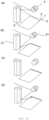
- the head apparatus functions to radiate a modeling beam to the entire modeling plane 10 in a specific scanning pattern. A schematic diagram of such a configuration is shown in FIG. 2 .
- the modeling plane 10 also means a region in which a modeling beam whose path is controlled is radiated in the head apparatus of the three-dimensional modeling equipment according to the present invention, and also means a logical region which includes a first axis 1 and a second axis 2 that are perpendicular to each other and in which a location on the plane of the region is described as coordinate values according to the first axis 1 and the second axis 2 in order to mathematically represent the region in which a modeling beam is actually radiated.
- An actual modeling plane 10 may be directly exposed to the outside or may have a state shielded by a transparent member through which a modeling beam can pass although the modeling beam is not directly radiated to the modeling plane.
- the modeling plane 10 may also be represented as an effective forming region in that energy is applied to a modeling beam and the generation of an action, such as photo curing or sintering curing, is limited to the region of the modeling plane 10.
- the first axis 1, the second axis 2 or a third axis 3 is a criterion in describing a relation between the scanning direction and pattern of a modeling beam or the location of a polygon mirror rotating axis with respect to the modeling plane 10 to be described later.
- the third axis 3 is an axis perpendicular to both the first axis 1 and the second axis 2.
- the first axis 1 and the second axis 2 are randomly located on an actual modeling plane 10.
- the modeling beam source unit 15 functions to generate a modeling beam and to enable the modeling beam to be incident on the first light guide unit 20 to be described later.
- the modeling beam is not limited to the type of light, such as ultraviolet rays (UV rays) or a laser, because it has only to have energy necessary to cure a modeling material used.
- a laser is suitable for use as a modeling beam because high energy can be condensed and output intensity and on/off control of the laser can be easily controlled if the laser is used.
- the output and wavelength of a laser needs to be determined in accordance with a modeling material used.
- a device such as a laser diode (LD) or a VCSEL, may be used, but is not limited thereto.
- a single device does not need to be used because a beam of a single channel is used as a modeling beam.
- a laser array may be formed using a plurality of devices, and beams from the laser array may be condensed as a single laser beam using a relay module. Furthermore, the improvement of quality of a modeling beam or the design of a configuration for reducing the size of the head apparatus by applying various optical elements, such as an optical modulation module, a condensing lens, and a prism, may also be taken into consideration.
- the first light guide unit 20 and the second light guide unit 30 are located in the space over the modeling plane 10 so that they are not parallel to each other.
- the first light guide unit 20 and the second light guide unit 30 continuously determine the location where a modeling beam is radiated with respect to time so that an omitted portion is not generated in scanning for the modeling plane 10. From a viewpoint of a modeling beam, a modeling beam from the modeling beam source unit 15 is primarily reflected by the first light guide unit 20 and incident on the second light guide unit 30, and is then secondarily reflected by the second light guide unit 30 and incident on the modeling plane 10.
- the present invention proposes that one or more of the first light guide unit 20 and the second light guide unit 30 has a specific number of light reflection surfaces on its side and includes a polygon mirror that rotates in one direction around a specific rotating axis.
- a cross-sectional shape of the polygon mirror which is perpendicular to a rotating axis, needs to be a polygon, and a lateral surface of the polygon mirror needs to be configured to reflect a modeling beam. More preferably, if a polygon mirror whose cross-sectional shape is a regular polygon is adopted, it is advantageous because the rotating speed and rotating direction of the polygon mirror can be precisely controlled.
- the cross section of the polygon mirror may be a regular quadrilateral, a regular pentagon, a regular hexagon or a regular octagon, but is not limited thereto.
- a (e.g., regular quadrilateral) line scan can be increased as the parameter of a regular polygon in the cross section of a polygon mirror is reduced because once line scan is performed by one side reflection surface of the polygon mirror.
- the rotating speed of the polygon mirror needs to be increased in order to produce the same modeling speed because the rotating angular displacement of the polygon mirror needs to be increased in order to perform one line scan.
- the side reflection surface may be a rectangle or trapezoid having the same shape and size.
- a general shape of the polygon mirror may be a regular polygon post or a regular polygon horn post.
- the polygon mirror may be configured to have a shape having any one of a regular polygon post and a regular polygon horn post depending on an angle at which the rotating axis of the polygon mirror has been installed, the incident angle of a modeling beam, a location between the first light guide unit 20 and the second light guide unit 30, or the size of the head apparatus of the present invention.
- the first light guide unit 20 has been implemented to have a shape of a regular octagon post and the second light guide unit 30 has been implemented to have a shape of a regular hexagon post.
- the rotating axis of the polygon mirror may be disposed at a specific location over the modeling plane 10 in various manners. Furthermore, reflection surface processing needs to be performed on the top and bottom surfaces of the polygon mirror in addition to the side of the polygon mirror. This is described later because it is related to a first photosensor 41. Furthermore, such a polygon mirror may be applied to both the first light guide unit 20 and the second light guide unit 30, but may be applied to only one of the first light guide unit 20 and the second light guide unit 30.
- the first light guide unit 20 first receives a modeling beam.
- the incident direction of the modeling beam incident from the modeling beam source unit 15 has been fixed. Accordingly, the length of the first light guide unit 20 in its rotating axis direction may be relatively short.
- the second light guide unit 30 is configured to secondarily reflect a modeling beam primarily reflected by the first light guide unit 20. The length of the second light guide unit 30 in its rotating axis direction needs to be set to be relatively long.
- the control unit 40 associates and controls the modeling beam source unit 15, the first light guide unit 20 and the second light guide unit 30.
- a detailed target to be controlled by the control unit 40 may turn on or off the modeling beam, adjust output power of the modeling beam, and control the first light guide unit 20 and the second light guide unit 30 together.
- a radiation location may be specified with respect to the modeling plane 10 of a modeling beam depending on control of the rotating angle of the first light guide unit 20 and the second light guide unit 30.
- a modeling layer may be formed at the specified radiation location by controlling the on/off of the modeling beam based on information about an image of the modeling layer.
- the control unit 40 basically includes a processing unit for generating a proper control signal with respect to a control parameter and a driving unit for driving a corresponding element by processing the control signal generated by the processing unit.
- the processing unit may be implemented using hardware, such as a circuit, or may be configured in software, such as a program.
- Control of the on/off of a modeling beam may be performed by controlling the on/off of a modeling beam generation device -LD or VCSEL or may be implemented through control of additional elements, such as a shutter for selectively transmitting or blocking a modeling beam generated by the modeling beam generation device over time, but the present invention is not limited thereto. More specifically, control of the output value of a modeling beam includes controlling the amplitude or frequency of a pulse which forms a modeling beam.
- the degree of an action such as the curing-photo curing or powder sintering of a modeling beam for a modeling material
- the degree of an action is proportional to the size of modeling beam output power density. Accordingly, in order to secure quality of a modeling layer by guaranteeing uniform modeling beam output power density with respect to the entire area of the modeling plane 10, it is necessary to control the output value of the modeling beam as described above.
- the size of the head apparatus of the present invention is increased, there will be a difference in the energy loss degree of a modeling beam depending on a beam path length that is necessary for the modeling beam to reach each of points forming the modeling plane 10. Accordingly, it is necessary to correct the difference.
- Control of the first light guide unit 20 and the second light guide unit 30 by the control unit 40 is performed by controlling the rotation of the polygon mirror.
- Major control parameters include the rotating angular speed, rotating angular displacement and rotating angular acceleration of the polygon mirror. Such control parameters need to follow the control signal of the control unit 40 with a small error within a small lead time.
- an electromotive control method may be preferably used. More preferably, an electric servo-motor capable of implementing the rotating angular speed, rotating angular displacement, and rotating angular acceleration in response to a control signal (electrical signal) that varies over time may be used, but the present invention is not limited thereto.
- control unit 40 may further include the first photosensor 41 having a function to determine the start timing of each of a plurality of line scans in the direction parallel to the first axis 1 or the second axis 2 by detecting a modeling beam incident on a specific point and to synchronize the driving of the modeling beam source unit 15 and the driving of the first light guide unit 20 or the second light guide unit 30, in controlling the driving of the polygon mirrors that form the first light guide unit 20 and the second light guide unit 30.
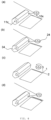
- One embodiment of the first photosensor 41 which may be applied to a ⁇ (1-1)-th configuration' to be described later is shown in FIG. 7 . In the '(1-1)-th configuration', the first polygon mirror 21 performs a line scan while rotating in a single direction.
- a point at which a modeling beam reflected by the first polygon mirror 21 is incident on the side (reflection surface) of the second polygon mirror 31 is formed from top to bottom.
- a method for reflecting a modeling beam toward the top surface of the second polygon mirror 31 right before a next line scan is started after one line scan is terminated and disposing the first photosensor 41 in a corresponding path is taken into consideration ( FIG. 7(a) ).
- the first light guide unit 20 is an element responsible for a line scan
- the subject of synchronization control by the first photosensor 41 is the first light guide unit 20 and the modeling beam source unit 15.
- the subject of synchronization control by the first photosensor 41 may be the second light guide unit 30 and the modeling beam source unit 15.
- FIG. 7(b) shows one embodiment in which tempering processing has been performed on the edge of the second light guide unit 30 (the second polygon mirror 31) so that the edge has an inclined plane having a specific tilt angle and a modeling beam reflected by the inclined plane is detected.
- the second polygon mirror 31 is subjected to angular displacement of a specific angle.
- the first photosensor 41 may be arranged in the form of a plurality of arrays as shown in FIG. 7(b) . The output signal of the first photosensor 41 is transferred to the processing unit.
- the processing unit may determine the start timing of the line scan using the output signal, and may synchronize the modeling beam source unit 15 and the first light guide unit 20 (the first polygon mirror 21) using the start timing.
- the control unit 40 may perform control by precisely controlling only the angular displacement of the first light guide unit 20 (the first polygon mirror 21). However, when a process error and response delay inherent in a mechanical element, such as a servo motor, is taken into consideration, an effect of correcting such an error, etc. can be obtained through an additional element, such as the first photosensor 41.
- the first light guide unit 20 (the first polygon mirror 21) and the modeling beam source unit 15 may operate in conjunction with each other in response to the driving signal of the first light guide unit 20 and the driving signal of the modeling beam source unit 15, which are generated after the control unit 40 processes a signal generated by the first photosensor 41.
- the control unit 40 may further include a fourth photosensor 44 having a function to determine the end timing of each of a plurality of line scans in the direction parallel to the first axis 1 or the second axis 2 by detecting a modeling beam incident on a specific point and to synchronize the driving of the modeling beam source unit 15 and the driving of the first light guide unit 20 or the second light guide unit 30.
- FIG. 7(c) shows one embodiment of a configuration in which the fourth photosensor 44 is selectively further disposed under the second light guide unit 30 (the second polygon mirror 31) to determine the end timing of each line scan.
- control unit 40 may further include a second photosensor 42 having a function to determine the first start timing of the radiation of a modeling beam to the modeling plane 10 by detecting the modeling beam incident on a specific location of the modeling plane 10 and to synchronize the driving of the modeling beam source unit 15 and the driving of the second light guide unit 30.
- a third photosensor 43 having a function to determine the final end timing of the radiation of a modeling beam to the modeling plane 10 by detecting the modeling beam incident on a specific location of the modeling plane 10 may be further installed.
- the first start timing and final end timing of a modeling beam have a direct relation with the driving of an element that belongs to the first light guide unit 20 and the second light guide unit 30 and that is responsible for the stepping of each line scan.
- FIG. 8 shows one embodiment of the second photosensor 42 and the third photosensor 43 disposed in the '(1-1)-th configuration'. The first start timing and final end timing of a modeling beam radiated (scanned) to the modeling plane 10 are determined by the second photosensor 42 and the third photosensor 43.
- the second light guide unit 30 (the second polygon mirror 31) is an element responsible for the stepping of a line scan
- the second light guide unit 30 and the modeling beam source unit 15 are driven in conjunction with each other in response to the driving signal of the second light guide unit 30 and the driving signal of the modeling beam source unit 15, which are generated after the processing unit receives and processes the signals of the second photosensor 42 and the third photosensor 43.
- the head apparatus of the three-dimensional modeling equipment of the present further includes a modeling beam incident angle correction unit 50 having a function to enable a modeling beam to be vertically incident on the modeling plane 10 at all of points that form the modeling plane 10. As described above, this is to make output power density of a modeling beam uniform at each incident point.
- the modeling beam incident angle correction unit 50 according to one embodiment of FIG. 9 is a lens disposed over the modeling plane 10. The modeling beam incident angle correction unit 50 functions to induce a modeling beam, secondarily reflected by the second light guide unit 30, to be vertically incident on the modeling plane 10 after the modeling beam experiences twice refraction processes although the modeling beam has a different incident angle for each point.
- a modeling beam is incident on the first light guide unit 20 at a specific angle to the second axis 2.
- a scanning pattern may be a pattern formed as a plurality of line scans having the direction parallel to the second axis 2 is stepped at specific intervals in the direction of the first axis 1 (hereinafter referred to as a "first scanning pattern").
- FIGS. 3 and 6 show one embodiment of the first scanning pattern.
- a modeling beam is incident on the first light guide unit 20 at a specific angle to the second axis 2.
- a scanning pattern may be a pattern formed as a plurality of line scans having the direction parallel to the first axis 1 is stepped at specific intervals in the direction of the second axis 2 (hereinafter referred to as a "second scanning pattern").
- a second scanning pattern One embodiment of such a pattern is shown in FIGS. 4 and 5 .
- the modeling beams in the first scanning pattern and the second scanning pattern may be incident in parallel to the second axis 2, and may be incident in a direction in which the modeling beams are not included in a plane formed by the second axis 2 and the third axis 3.
- the incident direction of the modeling beam may be determined in relation to the location where the first light guide unit 20 and the second light guide unit 30 are installed.
- the first light guide unit 20 is configured to include a first polygon mirror 21.
- the first polygon mirror 21 is disposed using a fourth axis 4 parallel to the first axis 1 as its rotating central axis.
- the second light guide unit 30 is configured to include the second polygon mirror 31.
- the second polygon mirror 31 is disposed using a fifth axis 5 parallel to the third axis 3 as its rotating central axis.
- a plurality of line scans in the direction parallel to the second axis 2 is performed when the first polygon mirror 21 is rotated, and the stepping of the plurality of line scans at a specific interval in the direction of the first axis 1 is performed when the second polygon mirror 31 is rotated.
- one line scan is performed by one side reflection surface of the first polygon mirror 21 in which the incident angle of a modeling beam continues to change while the first polygon mirror 21 is rotated.
- control of a modeling beam while it moves from one side reflection surface of the first polygon mirror 21 to another adjacent side reflection surface thereof may be performed by turning off the output of the modeling beam source unit, by blocking the modeling beam using an additional element, such as a shutter, or by applying a method using a shield film disposed near the modeling plane.
- a method for lowering the output of a modeling beam to the extent that the curing or sintering action of a modeling material is not generated although the modeling beam is incident on the modeling plane may be taken into consideration.
- FIG. 3 One embodiment of such a configuration is shown in FIG. 3 .
- first polygon mirror 21 is alternately rotated forward and backward, only one side reflection surface of the first polygon mirror 21 is used in all of the line scans.
- FIG. 10 One embodiment of such a configuration is shown in FIG. 10 . Such a configuration is not preferred. This is described later.
- the first light guide unit 20 is configured to include a seventh polygon mirror 24.
- the seventh polygon mirror 24 is disposed using a tenth axis 10x parallel to the third axis 3 as its rotating central axis.
- the second light guide unit 30 is configured to include an eighth polygon mirror 34.
- the eighth polygon mirror 34 is disposed using an eleventh axis 11x parallel to the first axis 1 as its rotating central axis. A plurality of line scans in the direction parallel to the second axis 2 is performed when the eighth polygon mirror 34 is rotated.
- the stepping of the plurality of line scans at a specific interval in the direction of the first axis 1 is performed when the seventh polygon mirror 24 is rotated.
- one line scan may be performed by one side reflection surface of the eighth polygon mirror 34 in which the incident angle of a modeling beam continues to change while the eighth polygon mirror 34 is rotated. Since the eighth polygon mirror 34 continues to rotate in one direction, control of a modeling beam while it moves from one side reflection surface of the eighth polygon mirror 34 to another adjacent side reflection surface thereof may be performed by turning off the output of the modeling beam source unit, by blocking the modeling beam using an additional element, such as a shutter, or by applying a method using a shield film disposed near the modeling plane.
- a method for lowering the output of a modeling beam to the extent that the curing or sintering action of a modeling material is not generated although the modeling beam is incident on the modeling plane may be taken into consideration. Furthermore, if the seventh polygon mirror 24 is alternately rotated forward and backward, only one side reflection surface of the seventh polygon mirror 24 is used in all of the line scans.
- the first light guide unit 20 is configured to include a third polygon mirror 22.
- the third polygon mirror 22 is disposed using a sixth axis 6 parallel to the first axis 1 as its rotating central axis.
- the second light guide unit 30 is configured to include a fourth polygon mirror 32.
- the fourth polygon mirror 32 is disposed using a seventh axis 7 parallel to the third axis 3 as its rotating central axis. A line scan in the direction parallel to the first axis 1 is performed when the fourth polygon mirror 32 is rotated. Stepping at a specific interval in the direction of the second axis 2 is performed when the third polygon mirror 22.
- One line scan is performed by one side reflection surface of the fourth polygon mirror 32 in which the incident angle of a modeling beam continues to change while the fourth polygon mirror 32 is rotated. If the fourth polygon mirror 32 continues to rotate in one direction, control of a modeling beam while it moves from one side reflection surface of the fourth polygon mirror 32 to another adjacent side reflection surface thereof may be performed by turning off the output of the modeling beam source unit, by blocking the modeling beam using an additional element, such as a shutter, or by applying a method using a shield film disposed near the modeling plane.
- a method for lowering the output of a modeling beam to the extent that the curing or sintering action of a modeling material is not generated although the modeling beam is incident on the modeling plane may be taken into consideration.
- each line scan in the direction of the second axis 2 is generated as the third polygon mirror 22 rotates at specific angular displacement and as a result, the location where a modeling beam is reflected in the side reflection surface of the fourth polygon mirror 32 is stepped. Furthermore, if the fourth polygon mirror 32 is alternately rotated forward and backward, only one side reflection surface of the fourth polygon mirror 32 is used in all of the line scans (In this case, such a configuration is not preferred. This is described later.)
- the first light guide unit 20 is configured to include a fifth polygon mirror 23.
- the fifth polygon mirror 23 is disposed using an eighth axis 8 that forms a specific angle to the third axis 3 as its rotating central axis.
- the second light guide unit 30 is configured to include a sixth polygon mirror 33.
- the sixth polygon mirror 33 is disposed using a ninth axis 9 parallel to the first axis 1 as its rotating central axis. A plurality of line scans in the direction parallel to the first axis 1 may be performed when the fifth polygon mirror 23 is rotated.
- Stepping at a specific interval in the direction of the second axis 2 is performed when the sixth polygon mirror 33 is rotated.
- One line scan is performed by one side reflection surface of the fifth polygon mirror 23 in which the incident angle of a modeling beam continues to change while the fifth polygon mirror 23 is rotated. If the fifth polygon mirror 23 continues to rotate in one direction, control of a modeling beam while it moves from one side reflection surface of the fifth polygon mirror 23 to another adjacent side reflection surface thereof may be performed by turning off the output of the modeling beam source unit, by blocking the modeling beam using an additional element, such as a shutter, or by applying a method using a shield film disposed near the modeling plane.
- a method for lowering the output of a modeling beam to the extent that the curing or sintering action of a modeling material is not generated although the modeling beam is incident on the modeling plane may be taken into consideration. Furthermore, the stepping of each line scan in the direction of the second axis 2 is generated as the sixth polygon mirror 33 rotates at specific angular displacement and thus the location where a modeling beam is reflected is stepped. Furthermore, if the fifth polygon mirror 23 is alternately rotated forward and backward, only one side reflection surface of the fifth polygon mirror 23 is used in all of the line scans.
- a method for scanning the modeling plane 10 using the head apparatus of the three-dimensional modeling equipment of the present invention is described below. To this end, it is a precondition that a modeling material is actually supplied to the aforementioned modeling plane 10 and located therein. When the scanning of a modeling beam for one modeling plane 10 is completed, one modeling layer is formed. Such modeling layers are stacked to form one three-dimensional model. In the scanning of the modeling plane 10, a portion to which a modeling beam has not been radiated should not be present. It is preferred that scanning is performed through an optimal path capable of minimizing a required scanning time.
- the first polygon mirror 21 is rotated in one direction, and the modeling beam source unit 15 starts to enable a modeling beam to be incident on the first polygon mirror 21.
- the modeling beam primarily reflected by the first polygon mirror 21 is secondarily reflected by the second polygon mirror 31, and performs a line scan on the modeling plane 10 in the direction parallel to the second axis 2.
- a modeling beam 11 is controlled so that it is not radiated to the modeling plane 10, so the line scan in the second step is terminated.
- control may be performed by turning off the output of the modeling beam source unit, by using an additional element, such as a shutter, or by using a shield film disposed near the modeling plane.
- a method for lowering the output of the modeling beam to the extent that the curing or sintering action of a modeling material is not generated although the modeling beam is incident on the modeling plane may be taken into consideration.
- the second polygon mirror 31 rotates at specific angular displacement and the first polygon mirror 21 continues to rotate in the same direction until a next reflection surface adjacent to a previous reflection surface reaches a specific location.
- the first step to the fourth step are repeatedly performed until the radiation of the modeling beam to the entire surface of the modeling plane 10 is completed.
- the first polygon mirror 21 may be configured to alternately rotate forward and backward as in a case shown in FIG. 10 .
- an actual profit using the present invention is reduced because the time taken for each line scan is increased due to the repetition of the forward rotation-stop-backward rotation-stop of the first polygon mirror 21.
- an electric motor element for driving the first polygon mirror 21 becomes complicated, and a good possibility that vibration and noise may be seriously generated in the repeated process must be taken into consideration. It is evident that the second polygon mirror 31 has to continue to rotate in one direction in the process of performing radiation on the one modeling plane 10.
- the second polygon mirror 31 when radiation to a next modeling plane 10 is performed after the one modeling plane 10 is illuminated, the second polygon mirror 31 may rotate in the same direction as the rotating direction in the radiation process for the previous modeling plane 10 or the second polygon mirror 31 may rotate in the direction opposite the rotating direction in the radiation process for the previous modeling plane 10.
- a problem such as that in the first polygon mirror 21 is not generated because the second polygon mirror 31 has to be in the stop state while a line scan is performed.
- the second polygon mirror 31 does not need to be essentially configured to have a mirror of a polygon form.
- FIG. 6 An embodiment of the procedure of the method is shown in FIG. 6 .
- the eighth polygon mirror 34 rotates in one direction and the modeling beam source unit 15 starts to enable a modeling beam to be incident on the seventh polygon mirror 24.
- the eighth polygon mirror 34 continues to rotate at a specific speed, the modeling beam primarily reflected by the seventh polygon mirror 24 is secondarily reflected by the eighth polygon mirror 34, and performs a line scan on the modeling plane 10 in the direction parallel to the second axis 2.
- the modeling beam 11 is controlled so that it is not radiated to the modeling plane 10, and thus the line scan in the second step is terminated.
- control may be performed by turning off the output of the modeling beam source unit, by using an additional element, such as a shutter, or by using a shield film disposed near the modeling plane.
- a method for lowering the output of the modeling beam to the extent that the curing or sintering action of a modeling material is not generated although the modeling beam is incident on the modeling plane may be taken into consideration.
- the seventh polygon mirror 24 rotates at specific angular displacement and the eighth polygon mirror 34 continues to rotate in the same direction until a next reflection surface adjacent to a previous reflection surface reaches a specific location.
- a total modeling time can be reduced.
- the first step to the fourth step are repeatedly performed until the radiation of the modeling beam to the entire surface of the modeling plane 10 is completed. In this method, it is preferred that the eighth polygon mirror 34 is rotated in one specific direction only.
- the eighth polygon mirror 34 is rotated in one direction only as described above, the time taken between one line scan and a next line scan can be minimized, and the time necessary for the eighth polygon mirror 34 to be accelerated from a stop state can also be minimized. Accordingly, an overall modeling time can be reduced.
- the eighth polygon mirror 34 may be configured to alternately rotate forward and backward. In such a configuration, an actual profit using the present invention is reduced because the time taken for each line scan is increased due to the repetition of the forward rotation-stop-backward rotation-stop of the eighth polygon mirror 34. Furthermore, an electric motor element for driving the eighth polygon mirror 34 becomes complicated, and a good possibility that vibration and noise may be seriously generated in the repeated process must be taken into consideration.
- the seventh polygon mirror 24 has to continue to rotate in one direction in the process of performing radiation on the one modeling plane 10.
- the seventh polygon mirror 24 may rotate in the same direction as the rotating direction in the radiation process for the previous modeling plane 10 or the seventh polygon mirror 24 may rotate in the direction opposite the rotating direction in the radiation process for the previous modeling plane 10.
- a problem such as that in the eighth polygon mirror 34 is not generated because the seventh polygon mirror 24 has to be in the stop state while a line scan is performed.
- the seventh polygon mirror 24 does not need to be essentially configured to have a mirror of a polygon form.
- the fourth polygon mirror 32 rotates in one direction, and the modeling beam source unit 15 starts to enable a modeling beam to be incident on the third polygon mirror 22.
- the modeling beam primarily reflected by the third polygon mirror 22 is secondarily reflected by the fourth polygon mirror 32, and performs a line scan on the modeling plane 10 in the direction parallel to the first axis 1.
- the modeling beam 11 is controlled so that it is not radiated to the modeling plane 10, and the line scan in the second step is terminated.
- control may be performed by turning off the output of the modeling beam source unit, by using an additional element, such as a shutter, or by using a shield film disposed near the modeling plane.
- a method for lowering the output of the modeling beam to the extent that the curing or sintering action of a modeling material is not generated although the modeling beam is incident on the modeling plane may be taken into consideration.
- the third polygon mirror 22 rotates at specific angular displacement and the fourth polygon mirror 32 continues to rotate in the same direction until a next reflection surface adjacent to a previous reflection surface reaches a specific location.
- the first step to the fourth step are repeatedly performed until the radiation of the modeling beam to the entire surface of the modeling plane 10 is completed.
- the fourth polygon mirror 32 is rotated in one specific direction only.
- the third polygon mirror 22 has to continue to rotate in the same direction in the process of radiating the modeling beam to the one modeling plane 10.
- the third polygon mirror 22 may start to rotate in the same direction as the rotating direction in the radiation for the previous modeling plane 10 or may start to rotate in the direction opposite the rotating direction in the radiation for the previous modeling plane 10. In the latter case not covered by the claims, the third polygon mirror 22 does not need to be essentially configured to have a mirror of a polygon form.
- the fifth polygon mirror 23 rotates in one direction, and the modeling beam source unit 15 starts to enable a modeling beam to be incident on the fifth polygon mirror 23.
- the modeling beam primarily reflected by the fifth polygon mirror 23 is secondarily reflected by the sixth polygon mirror 33, and performs a line scan on the modeling plane 10 in the direction parallel to the first axis 1.
- the modeling beam 11 is controlled so that it is not radiated to the modeling plane 10, and thus the line scan in the second step is terminated.
- control may be performed by turning off the output of the modeling beam source unit, by using an additional element, such as a shutter, or by using a shield film disposed near the modeling plane.
- a method for lowering the output of the modeling beam to the extent that the curing or sintering action of a modeling material is not generated although the modeling beam is incident on the modeling plane may be taken into consideration.
- the sixth polygon mirror 33 rotates at specific angular displacement and the fifth polygon mirror 23 continues to rotate in the same direction until a next reflection surface adjacent to a previous reflection surface reaches a specific location.
- the first step to the fourth step are repeatedly performed until the radiation of the modeling beam to the entire surface of the modeling plane 10 is completed.
- the fifth polygon mirror 23 is rotated in one specific direction only.
- the sixth polygon mirror 33 has to continue to rotate in the same direction in the process of radiating the modeling beam to the one modeling plane 10.
- the sixth polygon mirror 33 may start to rotate in the same direction as the rotating direction in the radiation for the previous modeling plane 10 or may start to rotate in the direction opposite the rotating direction in the radiation for the previous modeling plane 10. In the latter case not covered by the claims, the sixth polygon mirror 33 does not need to be essentially configured to have a mirror of a polygon form
Landscapes
- Engineering & Computer Science (AREA)
- Physics & Mathematics (AREA)
- Materials Engineering (AREA)
- Chemical & Material Sciences (AREA)
- Manufacturing & Machinery (AREA)
- Optics & Photonics (AREA)
- General Physics & Mathematics (AREA)
- Mechanical Engineering (AREA)
- Signal Processing (AREA)
- Multimedia (AREA)
- Human Computer Interaction (AREA)
- Automation & Control Theory (AREA)
- Health & Medical Sciences (AREA)
- Toxicology (AREA)
Claims (10)
- Eine Kopfvorrichtung für eine Dreidimensionale-Modellierung-Ausrüstung, die einen Modellierungsstrahl auf eine gesamte Oberfläche einer Modellierungsebene (10) senkrecht zu einer dritten Achse (3) und aufweisend eine erste Achse (1) und eine zweite Achse (2) in einem spezifischen Abtastmuster abstrahlt, wobei die erste Achse (1) und die zweite Achse (2) senkrecht zueinander sind, wobei die Kopfvorrichtung folgende Merkmale aufweist:eine Modellierungsstrahlquelleinheit (15), die den Modellierungsstrahl erzeugt;eine erste Lichtleitungseinheit (20), die an einer spezifischen Position über der Modellierungsebene (10) angeordnet ist und eine Funktion dahingehend aufweist, den Modellierungsstrahl primär von der Modellierungsstrahlquelleinheit (15) zu reflektieren und zu ermöglichen, dass der primär reflektierte Modellierungsstrahl auf eine zweite Lichtleitungseinheit (30) auftrifft;wobei die zweite Lichtleitungseinheit (30) an einer spezifischen Position über der Modellierungsebene (10) angeordnet ist und eine Funktion dahingehend aufweist, den Modellierungsstrahl, der von der ersten Lichtleitungseinheit (20) auftrifft, sekundär zu reflektieren und zu ermöglichen, dass der sekundär reflektierte Modellierungsstrahl auf die Modellierungsebene (10) auftrifft;eine Steuereinheit (40), die den Modellierungsstrahl ein- oder ausschaltet, eine Ausgangsleistung des Modellierungsstrahls einstellt und die erste Lichtleitungseinheit (20) und die zweite Lichtleitungseinheit (30) gemeinsam steuert; undwobei eine Drehachse der ersten Lichtleitungseinheit (20) und eine Drehachse der zweiten Lichtleitungseinheit (30) senkrecht zueinander sind,wobei der Modellierungsstrahl auf die erste Lichtleitungseinheit (20) auftrifft, während ein spezifischer Winkel in Bezug auf die zweite Achse (2) gebildet wird, wobei das Abtastmuster ein Muster ist, das aus einer Mehrzahl von Zeilenabtastungen mit einer Richtung parallel zu der zweiten Achse (2) oder zu der ersten Achse (1) gebildet ist und in einem spezifischen Abstand in der Richtung der ersten Achse (1) beziehungsweise der zweiten Achse (2) gestuft ist,wobei die erste Lichtleitungseinheit (20) einen ersten Polygonspiegel (21) aufweist,wobei der erste Polygonspiegel (21) unter Verwendung einer vierten Achse (4) parallel zu der ersten Achse (1) oder einer zehnten Achse (10x) parallel zu der dritten Achse (3) als seine Drehmittelachse angeordnet ist,wobei die zweite Lichtleitungseinheit (30) einen zweiten Polygonspiegel (31) aufweist, undwobei der zweite Polygonspiegel (31) unter Verwendung einer fünften Achse (5) parallel zu der dritten Achse (3) als seine Drehmittelachse angeordnet ist, falls der erste Polygonspiegel (21) unter Verwendung der vierten Achse (4) angeordnet ist, oder unter Verwendung einer elften Achse (11x) parallel zu der ersten Achse (1) angeordnet ist, falls der erste Polygonspiegel (21) unter Verwendung der zehnten Achse (10x) angeordnet ist,wobei der zweite Polygonspiegel eine spezifische Anzahl an Lichtreflexionsoberflächen auf einer Seite desselben aufweist und sich in einer Richtung um seine Mitteldrehachse dreht,wobei ein Punkt, an dem ein Modellierungsstrahl, der von dem ersten Polygonspiegel reflektiert wird, auf der Seitenreflexionsoberfläche des zweiten Polygonspiegels auftrifft, von oben nach unten gebildet ist,dadurch gekennzeichnet, dassder zweite Polygonspiegel ferner eine Oberseitenreflexionsoberfläche aufweist, die Kopfvorrichtung ferner eine Modellierstrahlauftreffwinkelkorrektureinheit (50) mit einer Funktion dahingehend aufweist, zu ermöglichen, dass der Modellierungsstrahl vertikal auf der Modellierungsebene (10) in allen Punkten auftrifft, die die Modellierungsebene (10) bilden, wobei die Steuereinheit (40) Folgendes aufweist:einen ersten Fotosensor (41) mit einer Funktion dahingehend, einen Start- oder Endzeitpunkt jeder einer Mehrzahl von Zeilenabtastungen in einer Richtung parallel zu der ersten Achse (1) oder der zweiten Achse (2) durch Erfassen eines Modellierungsstrahls, der an einem spezifischen Punkt auftrifft, zu bestimmen und den Antrieb der Modellierungsstrahlquelleinheit (15) und den Antrieb der ersten Lichtleitungseinheit (20) zu synchronisieren, wobeider erste Fotosensor über der Oberseitenoberfläche des zweiten Polygonspiegels angeordnet ist, um eine Reflexion des Modellierungsstrahls von der Oberseitenoberfläche des zweiten Polygonspiegels vor dem Start einer nächsten Zeilenabtastung nach der Beendigung einer Zeilenabtastung zu detektieren.
- Die Kopfvorrichtung gemäß Anspruch 1,
wobei die Steuereinheit (4) eine Pulsamplitude oder Pulsfrequenz des Modellierungsstrahls steuert, um eine Differenz einer Pfadlänge zu korrigieren, die notwendig ist, damit der Modellierungsstrahl jeden von Punkten erreicht, die die Modellierungsebene (10) bilden, oder eine Differenz hinsichtlich der Ausgangsleistungsdichte eines Modellierungsstrahls in jedem der Punkte zu korrigieren, die in Abhängigkeit von einer Differenz eines Einfallswinkels des Modellierungsstrahls verursacht wird. - Die Kopfvorrichtung gemäß Anspruch 1, wobei die Steuereinheit (40) Folgendes aufweist:einen zweiten Fotosensor (42) mit einer Funktion dahingehend, einen ersten Startzeitpunkt einer Abstrahlung des Modellierungsstrahls auf die Modellierungsebene (10) durch Erfassen des Modellierungsstrahls, der an einer spezifischen Position der Modellierungsebene (10) eintrifft, zu bestimmen und den Antrieb der Modellierungsstrahlquelleinheit (15) und den Antrieb der ersten Lichtleitungseinheit (20) oder der zweiten Lichtleitungseinheit (30) zu synchronisieren;einen dritten Fotosensor (43) mit einer Funktion dahingehend, einen finalen Endzeitpunkt einer Abstrahlung eines Modellierungsstrahls auf die Modellierungsebene (10) durch Senden des Modellierungsstrahls, der an einer spezifischen Position der Modellierungsebene (10) eintrifft, zu bestimmen; undeinen vierten Fotosensor (44) mit einer Funktion dahingehend, einen Endzeitpunkt jeder einer Mehrzahl von Zeilenabtastungen in der Richtung parallel zu der ersten Achse (1) oder der zweiten Achse (2) durch Erfassen eines Modellierungsstrahls, der an einem spezifischen Punkt auftrifft, zu bestimmen und den Antrieb der Modellierungsstrahlquelleinheit (15) und den Antrieb der ersten Lichtleitungseinheit (20) oder der zweiten Lichtleitungseinheit (30) zu synchronisieren.
- Die Kopfvorrichtung gemäß Anspruch 1, wobei:eine Mehrzahl von Zeilenabtastungen in einer Richtung parallel zu der zweiten Achse (2) ausgeführt werden, während der erste Polygonspiegel (21), der unter Verwendung der vierten Achse (4) angeordnet ist, gedreht wird, undwobei die Stufung in dem spezifischen Abstand in der Richtung der ersten Achse (1) ausgeführt wird, während der zweite Polygonspiegel (31), der unter Verwendung der fünften Achse (5) angeordnet ist, gedreht wird.
- Ein Verfahren zum Abtasten der Modellierungsebene (10) unter Verwendung der Kopfvorrichtung der Dreidimensionale-Modellierung-Ausrüstung gemäß Anspruch 4, wobei das Verfahren folgende Schritte aufweist:(i) einen Schritt (s10) eines Drehens, durch den ersten Polygonspiegel (21), in einer Richtung und Beginnen damit, durch die Modellierungsstrahlquelleinheit (15), dass ein Modellierungsstrahl auf dem ersten Polygonspiegel (21) auftritt;(ii) einen Schritt (s20) eines Ermöglichen, dass ein Modellierungsstrahl, der primär von dem ersten Polygonspiegel (21) reflektiert wird, sekundär von dem zweiten Polygonspiegel (31) reflektiert wird, und um dann eine Zeilenabtastung auf der Modellierungsebene (10) in der Richtung parallel zu der zweiten Achse (2) auszuführen, während sich der erste Polygonspiegel (21) weiterhin mit einer spezifischen Geschwindigkeit dreht;(iii) einen Schritt (s30) eines Steuerns des Modellierungsstrahls (11), so dass der Modellierungsstrahl (11) nicht auf die Modellierungsebene (10) abgestrahlt wird, wodurch die Zeilenabtastung in Schritt (ii) beendet wird;(iv) einen Schritt (s40) eines Drehens, durch den zweiten Polygonspiegel (31), bei einem spezifischen Winkelversatz und eines Fortsetzens des Drehens, durch den ersten Polygonspiegel (21), in derselben Drehrichtung bis eine nächste Reflexionsoberfläche, die benachbart zu einer vorherigen Reflexionsoberfläche ist, eine spezifische Position erreicht, um eine nächste Zeilenabtastung nach einer Stufung in einem spezifischen Abstand in der Richtung der ersten Achse (1) nach der Zeilenabtastung in Schritt (ii) auszuführen; und(v) einen Schritt (s50) eines wiederholten Ausführens von Schritt (i) bis Schritt (iv), bis die Abstrahlung des Modellierungsstrahls auf die gesamte Oberfläche der Modellierungsebene (10) abgeschlossen ist,wobei der erste Polygonspiegel (21) lediglich in einer spezifischen Richtung gedreht wird.
- Das Verfahren gemäß Anspruch 5, das ferner einen Schritt (s55) eines Vorbereitens, durch den Polygonspiegel (31), einer Drehung in einer Richtung, die identisch oder entgegengesetzt zu der Drehrichtung in Schritt (v) ist, nach Schritt (v) aufweist.
- Das Verfahren gemäß Anspruch 5, wobei die Drehung des zweiten Polygonspiegels (31) und die Drehung des ersten Polygonspiegels (21) in Schritt (iv) simultan ausgeführt werden.
- Ein Verfahren zum Abtasten der Modellierungsebene (10) unter Verwendung der Kopfvorrichtung der Dreidimensionale-Modellierung-Ausrüstung gemäß Anspruch 1, wobei das Verfahren folgende Schritte aufweist:(i) einen Schritt (s100) eines Drehens, durch den zweiten Polygonspiegel (31), in einer Richtung und eines Beginnens damit, durch die Modellierungsstrahlquelleinheit (15), dass ein Modellierungsstrahl auf den ersten Polygonspiegel (21) auftrifft;(ii) einen Schritt (s200) eines Ermöglichens, dass ein Modellierungsstrahl, der primär von dem ersten Polygonspiegel (21) reflektiert wird, sekundär von dem zweiten Polygonspiegel (31) reflektiert wird, und um dann eine Zeilenabtastung auf der Modellierungsebene (10) in der Richtung parallel zu der ersten Achse (1) auszuführen, während der zweite Polygonspiegel (31) sich weiterhin mit einer vorbestimmten Geschwindigkeit dreht;(iii) einen Schritt (300) eines Steuerns des Modellierungsstrahls (11), so dass der Modellierungsstrahl (11) nicht auf die Modellierungsebene (10) abgestrahlt wird, wodurch die Zeilenabtastung im Schritt (ii) abgeschlossen wird;(iv) einen Schritt (s400) eines Drehens, durch den ersten Polygonspiegel (21), bei einem spezifischen Winkelversatz und zum Fortsetzen des Drehens, durch den zweiten Polygonspiegel (31), in derselben Drehrichtung, bis eine nächste Reflexionsoberfläche benachbart zu einer vorherigen Reflexionsoberfläche eine spezifische Position erreicht, um eine nächste Zeilenabtastung nach einer Stufung in einem spezifischen Abstand in der Richtung der zweiten Achse (2) nach der Zeilenabtastung im Schritt (ii) auszuführen; und(v) einen Schritt (s500) eines wiederholten Ausführens von Schritt (i) bis Schritt (iv), bis die Abstrahlung des Modellierungsstrahls auf die gesamte Oberfläche der Modellierungsebene (10) abgeschlossen ist,wobei der zweite Polygonspiegel (31) lediglich in einer spezifischen Richtung gedreht wird.
- Das Verfahren gemäß Anspruch 8, das ferner einen Schritt (s550) eines Vorbereitens, durch den ersten Polygonspiegel (21), einer Drehung in einer Richtung, die identisch zu oder entgegengesetzt zu der Drehrichtung im Schritt (v) ist, nach Schritt (v) aufweist.
9. Das Verfahren gemäß Anspruch 8, wobei die Drehung des ersten Polygonspiegels (21) und die Drehung des zweiten Polygonspiegels (31) in Schritt (iv) simultan ausgeführt werden. - Ein Verfahren zum Abtasten der Modellierungsebene unter Verwendung der Kopfvorrichtung der Dreidimensionale-Modellierung-Ausrüstung gemäß Anspruch 1, wobei das Verfahren folgende Schritte aufweist:(i) einen Schritt (s10000) eines Drehens, durch den zweiten Polygonspiegel (31), in einer Richtung und eines Beginnens damit, durch die Modellierungsstrahlquelleinheit (15), dass ein Modellierungsstrahl auf den ersten Polygonspiegel (21) auftrifft;(ii) einen Schritt (s20000) eines Ermöglichens, dass ein Modellierungsstrahl, der primär durch den ersten Polygonspiegel (21) reflektiert wird, sekundär von dem zweiten Polygonspiegel (31) reflektiert wird, und um dann eine Zeilenabtastung auf der Modellierungsebene (10) in der Richtung parallel zu der zweiten Achse (2) auszuführen, während der zweite Polygonspiegel (34) sich weiterhin mit einer spezifischen Geschwindigkeit dreht;(iii) einen Schritt (s30000) eines Steuerns des Modellierungsstrahls (11), so dass der Modellierungsstrahl (11) nicht auf die Modellierungsebene (10) abgestrahlt wird, wodurch die Zeilenabtastung im Schritt (ii) beendet wird;(iv) einen Schritt (s40000) eines Drehens, durch den ersten Polygonspiegel (21), bei einem spezifischen Winkelversatz und eines Forstsetzens des Drehens, durch den zweiten Polygonspiegel (31), in derselben Drehrichtung, bis eine nächste Reflexionsoberfläche benachbart zu einer vorherigen Reflexionsoberfläche eine spezifische Position erreicht, um eine nächste Zeilenabtastung nach einer Stufung in einem spezifischen Abstand in der Richtung der ersten Achse (1) nach der Zeilenabtastung in Schritt (ii) auszuführen; und(v) einen Schritt (s50000) eines wiederholten Ausführens von Schritt (i) bis Schritt (iv), bis die Abstrahlung des Modellierungsstrahls auf die gesamte Oberfläche der Modellierungsebene (10) abgeschlossen ist,wobei der zweite Polygonspiegel (34) lediglich in einer spezifischen Richtung gedreht wird.
Applications Claiming Priority (2)
| Application Number | Priority Date | Filing Date | Title |
|---|---|---|---|
| KR1020140139616A KR101590774B1 (ko) | 2014-10-16 | 2014-10-16 | 단방향으로 회전하는 폴리곤미러를 구비하는 입체조형장비의 헤드장치 및 이를 이용하는 조형평면의 스캐닝방법 및 이를 이용하는 입체조형장치. |
| PCT/KR2014/010260 WO2016060315A1 (ko) | 2014-10-16 | 2014-10-29 | 단방향으로 회전하는 폴리곤미러를 구비하는 입체조형장비의 헤드장치 및 이를 이용하는 조형평면의 스캐닝방법 및 이를 이용하는 입체조형장치 |
Publications (3)
| Publication Number | Publication Date |
|---|---|
| EP3217208A1 EP3217208A1 (de) | 2017-09-13 |
| EP3217208A4 EP3217208A4 (de) | 2018-06-06 |
| EP3217208B1 true EP3217208B1 (de) | 2024-05-08 |
Family
ID=55448811
Family Applications (1)
| Application Number | Title | Priority Date | Filing Date |
|---|---|---|---|
| EP14904146.9A Active EP3217208B1 (de) | 2014-10-16 | 2014-10-29 | Kopfvorrichtung einer ausrüstung zur dreidimensionalen modellierung mit unidirektional rotierenden polygonspiegeln, abtastverfahren für eine modellierungsebene damit und vorrichtung zur dreidimensionalen modellierung damit |
Country Status (4)
| Country | Link |
|---|---|
| US (1) | US10690908B2 (de) |
| EP (1) | EP3217208B1 (de) |
| KR (1) | KR101590774B1 (de) |
| WO (1) | WO2016060315A1 (de) |
Families Citing this family (14)
| Publication number | Priority date | Publication date | Assignee | Title |
|---|---|---|---|---|
| US10688733B2 (en) * | 2015-11-25 | 2020-06-23 | The Boeing Company | Method and apparatus for three-dimensional printing |
| KR101819470B1 (ko) * | 2016-09-12 | 2018-01-16 | 한국생산기술연구원 | 입체조형장비를 위한 광원조사위치 센싱장치 및 이를 이용한 제어방법 |
| US10981323B2 (en) * | 2017-05-26 | 2021-04-20 | Applied Materials, Inc. | Energy delivery with rotating polygon and multiple light beams on same path for additive manufacturing |
| US11331855B2 (en) * | 2017-11-13 | 2022-05-17 | Applied Materials, Inc. | Additive manufacturing with dithering scan path |
| US20190151944A1 (en) * | 2017-11-22 | 2019-05-23 | Applied Materials, Inc. | Additive Manufacturing with a Two-Part Polygon Scanner |
| US10502949B2 (en) * | 2018-04-04 | 2019-12-10 | Irvine Sensors Corp. | Multi-polygon laser scanner comprising pyramidal timing polygon |
| US11518100B2 (en) | 2018-05-09 | 2022-12-06 | Applied Materials, Inc. | Additive manufacturing with a polygon scanner |
| CA3136636C (en) | 2019-04-12 | 2023-05-02 | Lumibird Limited | Monostatic scanning lidar using a multi-faceted polygon mirror as one of dual redirecting elements |
| US11567341B2 (en) | 2019-09-03 | 2023-01-31 | Raytheon Company | System and method for correcting for atmospheric jitter and high energy laser broadband interference using fast steering mirrors |
| US11513227B2 (en) | 2019-10-08 | 2022-11-29 | Raytheon Company | Atmospheric jitter correction and target tracking using single imaging sensor in high-energy laser systems |
| US11513191B2 (en) * | 2019-10-08 | 2022-11-29 | Raytheon Company | System and method for predictive compensation of uplink laser beam atmospheric jitter for high energy laser weapon systems |
| US11900562B2 (en) | 2019-11-05 | 2024-02-13 | Raytheon Company | Super-resolution automatic target aimpoint recognition and tracking |
| CN110757786B (zh) * | 2019-11-18 | 2021-08-03 | 温州大学 | 一种3d打印机在线激光调平检测方法 |
| US11237386B2 (en) * | 2020-03-11 | 2022-02-01 | Rohr, Inc. | Substrate perforation system and method using polygon mirror(s) |
Citations (1)
| Publication number | Priority date | Publication date | Assignee | Title |
|---|---|---|---|---|
| EP0863806A1 (de) * | 1995-11-27 | 1998-09-16 | The Board Of Regents, The University Of Texas System | Laserimterstützte herstellung von gegenständen unter verwendung von isostatischer heissverarbeitung |
Family Cites Families (15)
| Publication number | Priority date | Publication date | Assignee | Title |
|---|---|---|---|---|
| JPS5596917A (en) * | 1979-01-17 | 1980-07-23 | Canon Inc | Two-dimensional scanner |
| JPH06114950A (ja) * | 1992-10-01 | 1994-04-26 | Shiimetsuto Kk | 光硬化造形装置 |
| KR970005556B1 (ko) | 1994-12-31 | 1997-04-17 | 엘지전자 주식회사 | 광조형장치를 이용한 입체형상 형성장치 |
| US6804269B2 (en) * | 2001-06-19 | 2004-10-12 | Hitachi Via Mechanics, Ltd. | Laser beam delivery system with trepanning module |
| JP4238967B2 (ja) * | 2002-06-17 | 2009-03-18 | セイコーエプソン株式会社 | 光走査装置 |
| JP4049654B2 (ja) * | 2002-11-08 | 2008-02-20 | ローランドディー.ジー.株式会社 | 3次元造形装置および3次元造形方法 |
| KR100606458B1 (ko) | 2004-07-05 | 2006-08-01 | 한국기계연구원 | 3차원 조형시스템의 경화장치 |
| JP2008033141A (ja) * | 2006-07-31 | 2008-02-14 | Ricoh Co Ltd | 光走査装置および光走査装置を用いた画像形成装置 |
| KR20080028559A (ko) | 2006-09-27 | 2008-04-01 | 주식회사 이오테크닉스 | 폴리곤 미러를 이용한 대상물 다중 가공 방법 |
| JP2010089364A (ja) | 2008-10-07 | 2010-04-22 | Roland Dg Corp | 三次元造形装置 |
| JP5724317B2 (ja) * | 2010-11-18 | 2015-05-27 | ソニー株式会社 | 3次元造形装置 |
| JP6019113B2 (ja) * | 2011-06-28 | 2016-11-02 | ガルフ・フィルトレイション・システムズ・インコーポレイテッドGulf Filtration Systems Inc. | 3次元物体を線形凝固を用いて形成するための装置および方法 |
| CN105209240B (zh) * | 2013-03-12 | 2017-06-20 | 橙色制造者有限责任公司 | 使用螺旋堆积的3d打印 |
| WO2014144482A1 (en) * | 2013-03-15 | 2014-09-18 | Matterfab Corp. | Apparatus and methods for manufacturing |
| WO2015160252A1 (en) * | 2014-04-15 | 2015-10-22 | Nederlandse Organisatie Voor Toegepast-Natuurwetenschappelijk Onderzoek Tno | Exposure head, exposure apparatus and method of operating an exposure head |
-
2014
- 2014-10-16 KR KR1020140139616A patent/KR101590774B1/ko active Active
- 2014-10-29 US US15/519,749 patent/US10690908B2/en active Active
- 2014-10-29 WO PCT/KR2014/010260 patent/WO2016060315A1/ko not_active Ceased
- 2014-10-29 EP EP14904146.9A patent/EP3217208B1/de active Active
Patent Citations (1)
| Publication number | Priority date | Publication date | Assignee | Title |
|---|---|---|---|---|
| EP0863806A1 (de) * | 1995-11-27 | 1998-09-16 | The Board Of Regents, The University Of Texas System | Laserimterstützte herstellung von gegenständen unter verwendung von isostatischer heissverarbeitung |
Also Published As
| Publication number | Publication date |
|---|---|
| EP3217208A1 (de) | 2017-09-13 |
| US10690908B2 (en) | 2020-06-23 |
| KR101590774B1 (ko) | 2016-02-19 |
| WO2016060315A1 (ko) | 2016-04-21 |
| US20170261743A1 (en) | 2017-09-14 |
| EP3217208A4 (de) | 2018-06-06 |
Similar Documents
| Publication | Publication Date | Title |
|---|---|---|
| EP3217208B1 (de) | Kopfvorrichtung einer ausrüstung zur dreidimensionalen modellierung mit unidirektional rotierenden polygonspiegeln, abtastverfahren für eine modellierungsebene damit und vorrichtung zur dreidimensionalen modellierung damit | |
| US10962769B2 (en) | Head device of three-dimensional modelling equipment having modelling light source array and polygonal mirror, and modelling plane scanning method using same | |
| EP3213905B1 (de) | Mehrkanalige kopfanordnung für dreidimensionale modelliervorrichtung mit polygonspiegel mit monodirektionaler drehung und dreidimensionale modelliervorrichtung damit | |
| KR101697530B1 (ko) | 단방향으로 회전하는 폴리곤미러를 구비하고 조형광선의 에너지밀도 조절기능을 갖는 입체조형장비의 헤드장치 및 이를 이용하는 조형평면의 스캐닝방법 및 이를 이용하는 입체조형장치. | |
| US7758329B2 (en) | Optical modeling apparatus | |
| JP6224707B2 (ja) | 積層を利用して三次元立体物を製造する装置及び製造方法 | |
| EP1935620B1 (de) | Optische Modelliervorrichtung und optische Modellierverfahren | |
| US11225017B2 (en) | Three-dimensional object shaping apparatus and method | |
| US5536467A (en) | Method and apparatus for producing a three-dimensional object | |
| US8933374B2 (en) | Pulse laser machining apparatus and pulse laser machining method | |
| US20090142436A1 (en) | Optical shaping apparatus and optical shaping method | |
| US20090051997A1 (en) | Laser radar and beam irradiation apparatus therefor | |
| KR20170141669A (ko) | 개선된 광학 유닛을 구비한 입체 리소그래피 기계 | |
| KR20130082449A (ko) | 중첩된 스캐닝 부재를 사용하는 단일 스캔 라인 스캔 결정화 | |
| EP3831518B1 (de) | Laminierformvorrichtung | |
| JP6447400B2 (ja) | レーザレーダ装置及びその制御方法 | |
| TW202135965A (zh) | 雷射加工裝置和雷射加工工件的方法 | |
| US20230173610A1 (en) | Laser irradiation apparatus and laser irradiation method | |
| CN115319295B (zh) | 一种激光加工装置 | |
| KR20180092738A (ko) | 디지털 마이크로 미러 소자를 이용한 거리 정보 획득 장치 및 방법 | |
| CN110662980B (zh) | 用于扫描立体角的方法和设备 | |
| KR101849999B1 (ko) | 조형광원어레이 및 폴리곤미러를 구비하는 입체조형장비의 멀티헤드장치 및 이를 이용하는 멀티 조형평면 스캐닝 방법 | |
| JP2003161907A (ja) | レーザビーム径可変装置 | |
| KR101704547B1 (ko) | 단방향으로 회전하는 폴리곤미러를 구비하고 조형광선의 빔스팟크기 조절기능을 갖는 입체조형장비의 헤드장치 및 이를 이용하는 조형평면의 스캐닝방법 및 이를 이용하는 입체조형장치. | |
| CN119247324A (zh) | 一种激光雷达 |
Legal Events
| Date | Code | Title | Description |
|---|---|---|---|
| STAA | Information on the status of an ep patent application or granted ep patent |
Free format text: STATUS: THE INTERNATIONAL PUBLICATION HAS BEEN MADE |
|
| PUAI | Public reference made under article 153(3) epc to a published international application that has entered the european phase |
Free format text: ORIGINAL CODE: 0009012 |
|
| STAA | Information on the status of an ep patent application or granted ep patent |
Free format text: STATUS: REQUEST FOR EXAMINATION WAS MADE |
|
| PUAB | Information related to the publication of an a document modified or deleted |
Free format text: ORIGINAL CODE: 0009199EPPU |
|
| PUAI | Public reference made under article 153(3) epc to a published international application that has entered the european phase |
Free format text: ORIGINAL CODE: 0009012 |
|
| 17P | Request for examination filed |
Effective date: 20170515 |
|
| AK | Designated contracting states |
Kind code of ref document: A1 Designated state(s): AL AT BE BG CH CY CZ DE DK EE ES FI FR GB GR HR HU IE IS IT LI LT LU LV MC MK MT NL NO PL PT RO RS SE SI SK SM TR |
|
| AX | Request for extension of the european patent |
Extension state: BA ME |
|
| DAX | Request for extension of the european patent (deleted) | ||
| A4 | Supplementary search report drawn up and despatched |
Effective date: 20180508 |
|
| RIC1 | Information provided on ipc code assigned before grant |
Ipc: H04N 1/113 20060101ALI20180502BHEP Ipc: G02B 26/10 20060101AFI20180502BHEP |
|
| STAA | Information on the status of an ep patent application or granted ep patent |
Free format text: STATUS: EXAMINATION IS IN PROGRESS |
|
| 17Q | First examination report despatched |
Effective date: 20190509 |
|
| GRAP | Despatch of communication of intention to grant a patent |
Free format text: ORIGINAL CODE: EPIDOSNIGR1 |
|
| STAA | Information on the status of an ep patent application or granted ep patent |
Free format text: STATUS: GRANT OF PATENT IS INTENDED |
|
| INTG | Intention to grant announced |
Effective date: 20240108 |
|
| GRAS | Grant fee paid |
Free format text: ORIGINAL CODE: EPIDOSNIGR3 |
|
| GRAA | (expected) grant |
Free format text: ORIGINAL CODE: 0009210 |
|
| STAA | Information on the status of an ep patent application or granted ep patent |
Free format text: STATUS: THE PATENT HAS BEEN GRANTED |
|
| AK | Designated contracting states |
Kind code of ref document: B1 Designated state(s): AL AT BE BG CH CY CZ DE DK EE ES FI FR GB GR HR HU IE IS IT LI LT LU LV MC MK MT NL NO PL PT RO RS SE SI SK SM TR |
|
| P01 | Opt-out of the competence of the unified patent court (upc) registered |
Effective date: 20240403 |
|
| REG | Reference to a national code |
Ref country code: GB Ref legal event code: FG4D |
|
| REG | Reference to a national code |
Ref country code: CH Ref legal event code: EP |
|
| REG | Reference to a national code |
Ref country code: DE Ref legal event code: R096 Ref document number: 602014090147 Country of ref document: DE |
|
| REG | Reference to a national code |
Ref country code: IE Ref legal event code: FG4D |
|
| REG | Reference to a national code |
Ref country code: LT Ref legal event code: MG9D |
|
| REG | Reference to a national code |
Ref country code: NL Ref legal event code: MP Effective date: 20240508 |
|
| PG25 | Lapsed in a contracting state [announced via postgrant information from national office to epo] |
Ref country code: IS Free format text: LAPSE BECAUSE OF FAILURE TO SUBMIT A TRANSLATION OF THE DESCRIPTION OR TO PAY THE FEE WITHIN THE PRESCRIBED TIME-LIMIT Effective date: 20240908 |
|
| PG25 | Lapsed in a contracting state [announced via postgrant information from national office to epo] |
Ref country code: BG Free format text: LAPSE BECAUSE OF FAILURE TO SUBMIT A TRANSLATION OF THE DESCRIPTION OR TO PAY THE FEE WITHIN THE PRESCRIBED TIME-LIMIT Effective date: 20240508 |
|
| PG25 | Lapsed in a contracting state [announced via postgrant information from national office to epo] |
Ref country code: FI Free format text: LAPSE BECAUSE OF FAILURE TO SUBMIT A TRANSLATION OF THE DESCRIPTION OR TO PAY THE FEE WITHIN THE PRESCRIBED TIME-LIMIT Effective date: 20240508 Ref country code: HR Free format text: LAPSE BECAUSE OF FAILURE TO SUBMIT A TRANSLATION OF THE DESCRIPTION OR TO PAY THE FEE WITHIN THE PRESCRIBED TIME-LIMIT Effective date: 20240508 |
|
| PG25 | Lapsed in a contracting state [announced via postgrant information from national office to epo] |
Ref country code: GR Free format text: LAPSE BECAUSE OF FAILURE TO SUBMIT A TRANSLATION OF THE DESCRIPTION OR TO PAY THE FEE WITHIN THE PRESCRIBED TIME-LIMIT Effective date: 20240809 |
|
| PG25 | Lapsed in a contracting state [announced via postgrant information from national office to epo] |
Ref country code: PT Free format text: LAPSE BECAUSE OF FAILURE TO SUBMIT A TRANSLATION OF THE DESCRIPTION OR TO PAY THE FEE WITHIN THE PRESCRIBED TIME-LIMIT Effective date: 20240909 |
|
| REG | Reference to a national code |
Ref country code: AT Ref legal event code: MK05 Ref document number: 1685463 Country of ref document: AT Kind code of ref document: T Effective date: 20240508 |
|
| PG25 | Lapsed in a contracting state [announced via postgrant information from national office to epo] |
Ref country code: NL Free format text: LAPSE BECAUSE OF FAILURE TO SUBMIT A TRANSLATION OF THE DESCRIPTION OR TO PAY THE FEE WITHIN THE PRESCRIBED TIME-LIMIT Effective date: 20240508 |
|
| PG25 | Lapsed in a contracting state [announced via postgrant information from national office to epo] |
Ref country code: ES Free format text: LAPSE BECAUSE OF FAILURE TO SUBMIT A TRANSLATION OF THE DESCRIPTION OR TO PAY THE FEE WITHIN THE PRESCRIBED TIME-LIMIT Effective date: 20240508 |
|
| PG25 | Lapsed in a contracting state [announced via postgrant information from national office to epo] |
Ref country code: AT Free format text: LAPSE BECAUSE OF FAILURE TO SUBMIT A TRANSLATION OF THE DESCRIPTION OR TO PAY THE FEE WITHIN THE PRESCRIBED TIME-LIMIT Effective date: 20240508 |
|
| PG25 | Lapsed in a contracting state [announced via postgrant information from national office to epo] |
Ref country code: PL Free format text: LAPSE BECAUSE OF FAILURE TO SUBMIT A TRANSLATION OF THE DESCRIPTION OR TO PAY THE FEE WITHIN THE PRESCRIBED TIME-LIMIT Effective date: 20240508 |
|
| PG25 | Lapsed in a contracting state [announced via postgrant information from national office to epo] |
Ref country code: LV Free format text: LAPSE BECAUSE OF FAILURE TO SUBMIT A TRANSLATION OF THE DESCRIPTION OR TO PAY THE FEE WITHIN THE PRESCRIBED TIME-LIMIT Effective date: 20240508 |
|
| PG25 | Lapsed in a contracting state [announced via postgrant information from national office to epo] |
Ref country code: PT Free format text: LAPSE BECAUSE OF FAILURE TO SUBMIT A TRANSLATION OF THE DESCRIPTION OR TO PAY THE FEE WITHIN THE PRESCRIBED TIME-LIMIT Effective date: 20240909 Ref country code: PL Free format text: LAPSE BECAUSE OF FAILURE TO SUBMIT A TRANSLATION OF THE DESCRIPTION OR TO PAY THE FEE WITHIN THE PRESCRIBED TIME-LIMIT Effective date: 20240508 Ref country code: NO Free format text: LAPSE BECAUSE OF FAILURE TO SUBMIT A TRANSLATION OF THE DESCRIPTION OR TO PAY THE FEE WITHIN THE PRESCRIBED TIME-LIMIT Effective date: 20240808 Ref country code: NL Free format text: LAPSE BECAUSE OF FAILURE TO SUBMIT A TRANSLATION OF THE DESCRIPTION OR TO PAY THE FEE WITHIN THE PRESCRIBED TIME-LIMIT Effective date: 20240508 Ref country code: LV Free format text: LAPSE BECAUSE OF FAILURE TO SUBMIT A TRANSLATION OF THE DESCRIPTION OR TO PAY THE FEE WITHIN THE PRESCRIBED TIME-LIMIT Effective date: 20240508 Ref country code: IS Free format text: LAPSE BECAUSE OF FAILURE TO SUBMIT A TRANSLATION OF THE DESCRIPTION OR TO PAY THE FEE WITHIN THE PRESCRIBED TIME-LIMIT Effective date: 20240908 Ref country code: HR Free format text: LAPSE BECAUSE OF FAILURE TO SUBMIT A TRANSLATION OF THE DESCRIPTION OR TO PAY THE FEE WITHIN THE PRESCRIBED TIME-LIMIT Effective date: 20240508 Ref country code: GR Free format text: LAPSE BECAUSE OF FAILURE TO SUBMIT A TRANSLATION OF THE DESCRIPTION OR TO PAY THE FEE WITHIN THE PRESCRIBED TIME-LIMIT Effective date: 20240809 Ref country code: FI Free format text: LAPSE BECAUSE OF FAILURE TO SUBMIT A TRANSLATION OF THE DESCRIPTION OR TO PAY THE FEE WITHIN THE PRESCRIBED TIME-LIMIT Effective date: 20240508 Ref country code: ES Free format text: LAPSE BECAUSE OF FAILURE TO SUBMIT A TRANSLATION OF THE DESCRIPTION OR TO PAY THE FEE WITHIN THE PRESCRIBED TIME-LIMIT Effective date: 20240508 Ref country code: BG Free format text: LAPSE BECAUSE OF FAILURE TO SUBMIT A TRANSLATION OF THE DESCRIPTION OR TO PAY THE FEE WITHIN THE PRESCRIBED TIME-LIMIT Effective date: 20240508 Ref country code: AT Free format text: LAPSE BECAUSE OF FAILURE TO SUBMIT A TRANSLATION OF THE DESCRIPTION OR TO PAY THE FEE WITHIN THE PRESCRIBED TIME-LIMIT Effective date: 20240508 Ref country code: RS Free format text: LAPSE BECAUSE OF FAILURE TO SUBMIT A TRANSLATION OF THE DESCRIPTION OR TO PAY THE FEE WITHIN THE PRESCRIBED TIME-LIMIT Effective date: 20240808 |
|
| PG25 | Lapsed in a contracting state [announced via postgrant information from national office to epo] |
Ref country code: DK Free format text: LAPSE BECAUSE OF FAILURE TO SUBMIT A TRANSLATION OF THE DESCRIPTION OR TO PAY THE FEE WITHIN THE PRESCRIBED TIME-LIMIT Effective date: 20240508 |
|
| PG25 | Lapsed in a contracting state [announced via postgrant information from national office to epo] |
Ref country code: EE Free format text: LAPSE BECAUSE OF FAILURE TO SUBMIT A TRANSLATION OF THE DESCRIPTION OR TO PAY THE FEE WITHIN THE PRESCRIBED TIME-LIMIT Effective date: 20240508 |
|
| PG25 | Lapsed in a contracting state [announced via postgrant information from national office to epo] |
Ref country code: CZ Free format text: LAPSE BECAUSE OF FAILURE TO SUBMIT A TRANSLATION OF THE DESCRIPTION OR TO PAY THE FEE WITHIN THE PRESCRIBED TIME-LIMIT Effective date: 20240508 |
|
| PG25 | Lapsed in a contracting state [announced via postgrant information from national office to epo] |
Ref country code: SK Free format text: LAPSE BECAUSE OF FAILURE TO SUBMIT A TRANSLATION OF THE DESCRIPTION OR TO PAY THE FEE WITHIN THE PRESCRIBED TIME-LIMIT Effective date: 20240508 Ref country code: RO Free format text: LAPSE BECAUSE OF FAILURE TO SUBMIT A TRANSLATION OF THE DESCRIPTION OR TO PAY THE FEE WITHIN THE PRESCRIBED TIME-LIMIT Effective date: 20240508 |
|
| PG25 | Lapsed in a contracting state [announced via postgrant information from national office to epo] |
Ref country code: SM Free format text: LAPSE BECAUSE OF FAILURE TO SUBMIT A TRANSLATION OF THE DESCRIPTION OR TO PAY THE FEE WITHIN THE PRESCRIBED TIME-LIMIT Effective date: 20240508 |
|
| PG25 | Lapsed in a contracting state [announced via postgrant information from national office to epo] |
Ref country code: SM Free format text: LAPSE BECAUSE OF FAILURE TO SUBMIT A TRANSLATION OF THE DESCRIPTION OR TO PAY THE FEE WITHIN THE PRESCRIBED TIME-LIMIT Effective date: 20240508 Ref country code: SK Free format text: LAPSE BECAUSE OF FAILURE TO SUBMIT A TRANSLATION OF THE DESCRIPTION OR TO PAY THE FEE WITHIN THE PRESCRIBED TIME-LIMIT Effective date: 20240508 Ref country code: RO Free format text: LAPSE BECAUSE OF FAILURE TO SUBMIT A TRANSLATION OF THE DESCRIPTION OR TO PAY THE FEE WITHIN THE PRESCRIBED TIME-LIMIT Effective date: 20240508 Ref country code: EE Free format text: LAPSE BECAUSE OF FAILURE TO SUBMIT A TRANSLATION OF THE DESCRIPTION OR TO PAY THE FEE WITHIN THE PRESCRIBED TIME-LIMIT Effective date: 20240508 Ref country code: DK Free format text: LAPSE BECAUSE OF FAILURE TO SUBMIT A TRANSLATION OF THE DESCRIPTION OR TO PAY THE FEE WITHIN THE PRESCRIBED TIME-LIMIT Effective date: 20240508 Ref country code: CZ Free format text: LAPSE BECAUSE OF FAILURE TO SUBMIT A TRANSLATION OF THE DESCRIPTION OR TO PAY THE FEE WITHIN THE PRESCRIBED TIME-LIMIT Effective date: 20240508 |
|
| PG25 | Lapsed in a contracting state [announced via postgrant information from national office to epo] |
Ref country code: IT Free format text: LAPSE BECAUSE OF FAILURE TO SUBMIT A TRANSLATION OF THE DESCRIPTION OR TO PAY THE FEE WITHIN THE PRESCRIBED TIME-LIMIT Effective date: 20240508 |
|
| REG | Reference to a national code |
Ref country code: DE Ref legal event code: R097 Ref document number: 602014090147 Country of ref document: DE |
|
| PLBE | No opposition filed within time limit |
Free format text: ORIGINAL CODE: 0009261 |
|
| STAA | Information on the status of an ep patent application or granted ep patent |
Free format text: STATUS: NO OPPOSITION FILED WITHIN TIME LIMIT |
|
| 26N | No opposition filed |
Effective date: 20250211 |
|
| PG25 | Lapsed in a contracting state [announced via postgrant information from national office to epo] |
Ref country code: SI Free format text: LAPSE BECAUSE OF FAILURE TO SUBMIT A TRANSLATION OF THE DESCRIPTION OR TO PAY THE FEE WITHIN THE PRESCRIBED TIME-LIMIT Effective date: 20240508 |
|
| REG | Reference to a national code |
Ref country code: CH Ref legal event code: PL |
|
| GBPC | Gb: european patent ceased through non-payment of renewal fee |
Effective date: 20241029 |
|
| PG25 | Lapsed in a contracting state [announced via postgrant information from national office to epo] |
Ref country code: MC Free format text: LAPSE BECAUSE OF FAILURE TO SUBMIT A TRANSLATION OF THE DESCRIPTION OR TO PAY THE FEE WITHIN THE PRESCRIBED TIME-LIMIT Effective date: 20240508 |
|
| PG25 | Lapsed in a contracting state [announced via postgrant information from national office to epo] |
Ref country code: GB Free format text: LAPSE BECAUSE OF NON-PAYMENT OF DUE FEES Effective date: 20241029 |
|
| PG25 | Lapsed in a contracting state [announced via postgrant information from national office to epo] |
Ref country code: BE Free format text: LAPSE BECAUSE OF NON-PAYMENT OF DUE FEES Effective date: 20241031 Ref country code: LU Free format text: LAPSE BECAUSE OF NON-PAYMENT OF DUE FEES Effective date: 20241029 |
|
| PG25 | Lapsed in a contracting state [announced via postgrant information from national office to epo] |
Ref country code: FR Free format text: LAPSE BECAUSE OF NON-PAYMENT OF DUE FEES Effective date: 20241031 |
|
| PG25 | Lapsed in a contracting state [announced via postgrant information from national office to epo] |
Ref country code: CH Free format text: LAPSE BECAUSE OF NON-PAYMENT OF DUE FEES Effective date: 20241031 |
|
| REG | Reference to a national code |
Ref country code: BE Ref legal event code: MM Effective date: 20241031 |
|
| PG25 | Lapsed in a contracting state [announced via postgrant information from national office to epo] |
Ref country code: SE Free format text: LAPSE BECAUSE OF FAILURE TO SUBMIT A TRANSLATION OF THE DESCRIPTION OR TO PAY THE FEE WITHIN THE PRESCRIBED TIME-LIMIT Effective date: 20240508 |
|
| PG25 | Lapsed in a contracting state [announced via postgrant information from national office to epo] |
Ref country code: IE Free format text: LAPSE BECAUSE OF NON-PAYMENT OF DUE FEES Effective date: 20241029 |
|
| PGFP | Annual fee paid to national office [announced via postgrant information from national office to epo] |
Ref country code: DE Payment date: 20250922 Year of fee payment: 12 |
|
| PG25 | Lapsed in a contracting state [announced via postgrant information from national office to epo] |
Ref country code: HU Free format text: LAPSE BECAUSE OF FAILURE TO SUBMIT A TRANSLATION OF THE DESCRIPTION OR TO PAY THE FEE WITHIN THE PRESCRIBED TIME-LIMIT; INVALID AB INITIO Effective date: 20141029 |
|
| PG25 | Lapsed in a contracting state [announced via postgrant information from national office to epo] |
Ref country code: CY Free format text: LAPSE BECAUSE OF FAILURE TO SUBMIT A TRANSLATION OF THE DESCRIPTION OR TO PAY THE FEE WITHIN THE PRESCRIBED TIME-LIMIT; INVALID AB INITIO Effective date: 20141029 |