EP3225680A1 - Méthode à reconditionner un moteur à allumage par compression - Google Patents
Méthode à reconditionner un moteur à allumage par compression Download PDFInfo
- Publication number
- EP3225680A1 EP3225680A1 EP17163529.5A EP17163529A EP3225680A1 EP 3225680 A1 EP3225680 A1 EP 3225680A1 EP 17163529 A EP17163529 A EP 17163529A EP 3225680 A1 EP3225680 A1 EP 3225680A1
- Authority
- EP
- European Patent Office
- Prior art keywords
- range
- fuel
- mixture
- cetane number
- lubricant
- Prior art date
- Legal status (The legal status is an assumption and is not a legal conclusion. Google has not performed a legal analysis and makes no representation as to the accuracy of the status listed.)
- Withdrawn
Links
Images
Classifications
-
- C—CHEMISTRY; METALLURGY
- C10—PETROLEUM, GAS OR COKE INDUSTRIES; TECHNICAL GASES CONTAINING CARBON MONOXIDE; FUELS; LUBRICANTS; PEAT
- C10L—FUELS NOT OTHERWISE PROVIDED FOR; NATURAL GAS; SYNTHETIC NATURAL GAS OBTAINED BY PROCESSES NOT COVERED BY SUBCLASSES C10G OR C10K; LIQUIFIED PETROLEUM GAS; USE OF ADDITIVES TO FUELS OR FIRES; FIRE-LIGHTERS
- C10L1/00—Liquid carbonaceous fuels
- C10L1/10—Liquid carbonaceous fuels containing additives
-
- C—CHEMISTRY; METALLURGY
- C10—PETROLEUM, GAS OR COKE INDUSTRIES; TECHNICAL GASES CONTAINING CARBON MONOXIDE; FUELS; LUBRICANTS; PEAT
- C10L—FUELS NOT OTHERWISE PROVIDED FOR; NATURAL GAS; SYNTHETIC NATURAL GAS OBTAINED BY PROCESSES NOT COVERED BY SUBCLASSES C10G OR C10K; LIQUIFIED PETROLEUM GAS; USE OF ADDITIVES TO FUELS OR FIRES; FIRE-LIGHTERS
- C10L1/00—Liquid carbonaceous fuels
- C10L1/10—Liquid carbonaceous fuels containing additives
- C10L1/14—Organic compounds
- C10L1/18—Organic compounds containing oxygen
- C10L1/19—Esters ester radical containing compounds; ester ethers; carbonic acid esters
- C10L1/191—Esters ester radical containing compounds; ester ethers; carbonic acid esters of di- or polyhydroxyalcohols
-
- C—CHEMISTRY; METALLURGY
- C10—PETROLEUM, GAS OR COKE INDUSTRIES; TECHNICAL GASES CONTAINING CARBON MONOXIDE; FUELS; LUBRICANTS; PEAT
- C10L—FUELS NOT OTHERWISE PROVIDED FOR; NATURAL GAS; SYNTHETIC NATURAL GAS OBTAINED BY PROCESSES NOT COVERED BY SUBCLASSES C10G OR C10K; LIQUIFIED PETROLEUM GAS; USE OF ADDITIVES TO FUELS OR FIRES; FIRE-LIGHTERS
- C10L1/00—Liquid carbonaceous fuels
- C10L1/10—Liquid carbonaceous fuels containing additives
- C10L1/14—Organic compounds
- C10L1/22—Organic compounds containing nitrogen
- C10L1/23—Organic compounds containing nitrogen containing at least one nitrogen-to-oxygen bond, e.g. nitro-compounds, nitrates, nitrites
- C10L1/231—Organic compounds containing nitrogen containing at least one nitrogen-to-oxygen bond, e.g. nitro-compounds, nitrates, nitrites nitro compounds; nitrates; nitrites
-
- C—CHEMISTRY; METALLURGY
- C10—PETROLEUM, GAS OR COKE INDUSTRIES; TECHNICAL GASES CONTAINING CARBON MONOXIDE; FUELS; LUBRICANTS; PEAT
- C10L—FUELS NOT OTHERWISE PROVIDED FOR; NATURAL GAS; SYNTHETIC NATURAL GAS OBTAINED BY PROCESSES NOT COVERED BY SUBCLASSES C10G OR C10K; LIQUIFIED PETROLEUM GAS; USE OF ADDITIVES TO FUELS OR FIRES; FIRE-LIGHTERS
- C10L10/00—Use of additives to fuels or fires for particular purposes
- C10L10/08—Use of additives to fuels or fires for particular purposes for improving lubricity; for reducing wear
-
- C—CHEMISTRY; METALLURGY
- C10—PETROLEUM, GAS OR COKE INDUSTRIES; TECHNICAL GASES CONTAINING CARBON MONOXIDE; FUELS; LUBRICANTS; PEAT
- C10L—FUELS NOT OTHERWISE PROVIDED FOR; NATURAL GAS; SYNTHETIC NATURAL GAS OBTAINED BY PROCESSES NOT COVERED BY SUBCLASSES C10G OR C10K; LIQUIFIED PETROLEUM GAS; USE OF ADDITIVES TO FUELS OR FIRES; FIRE-LIGHTERS
- C10L10/00—Use of additives to fuels or fires for particular purposes
- C10L10/12—Use of additives to fuels or fires for particular purposes for improving the cetane number
-
- C—CHEMISTRY; METALLURGY
- C10—PETROLEUM, GAS OR COKE INDUSTRIES; TECHNICAL GASES CONTAINING CARBON MONOXIDE; FUELS; LUBRICANTS; PEAT
- C10L—FUELS NOT OTHERWISE PROVIDED FOR; NATURAL GAS; SYNTHETIC NATURAL GAS OBTAINED BY PROCESSES NOT COVERED BY SUBCLASSES C10G OR C10K; LIQUIFIED PETROLEUM GAS; USE OF ADDITIVES TO FUELS OR FIRES; FIRE-LIGHTERS
- C10L2200/00—Components of fuel compositions
- C10L2200/04—Organic compounds
- C10L2200/0407—Specifically defined hydrocarbon fractions as obtained from, e.g. a distillation column
- C10L2200/0415—Light distillates, e.g. LPG, naphtha
- C10L2200/0423—Gasoline
-
- C—CHEMISTRY; METALLURGY
- C10—PETROLEUM, GAS OR COKE INDUSTRIES; TECHNICAL GASES CONTAINING CARBON MONOXIDE; FUELS; LUBRICANTS; PEAT
- C10L—FUELS NOT OTHERWISE PROVIDED FOR; NATURAL GAS; SYNTHETIC NATURAL GAS OBTAINED BY PROCESSES NOT COVERED BY SUBCLASSES C10G OR C10K; LIQUIFIED PETROLEUM GAS; USE OF ADDITIVES TO FUELS OR FIRES; FIRE-LIGHTERS
- C10L2200/00—Components of fuel compositions
- C10L2200/04—Organic compounds
- C10L2200/0407—Specifically defined hydrocarbon fractions as obtained from, e.g. a distillation column
- C10L2200/0438—Middle or heavy distillates, heating oil, gasoil, marine fuels, residua
- C10L2200/0446—Diesel
-
- C—CHEMISTRY; METALLURGY
- C10—PETROLEUM, GAS OR COKE INDUSTRIES; TECHNICAL GASES CONTAINING CARBON MONOXIDE; FUELS; LUBRICANTS; PEAT
- C10L—FUELS NOT OTHERWISE PROVIDED FOR; NATURAL GAS; SYNTHETIC NATURAL GAS OBTAINED BY PROCESSES NOT COVERED BY SUBCLASSES C10G OR C10K; LIQUIFIED PETROLEUM GAS; USE OF ADDITIVES TO FUELS OR FIRES; FIRE-LIGHTERS
- C10L2270/00—Specifically adapted fuels
- C10L2270/02—Specifically adapted fuels for internal combustion engines
- C10L2270/026—Specifically adapted fuels for internal combustion engines for diesel engines, e.g. automobiles, stationary, marine
Definitions
- the present invention relates to the field of compression-ignition engines and their operation.
- a method of reconditioning a compression-ignition engine wrongfully filled with a petrol-like fuel is provided herein and furthermore a container comprising a mixture for reconditioning of the same engine.
- the present invention provides a simple method for reconditioning of a compression-ignition engine that has been wrongly filled with a petrol-like fuel involving addition of a homogenous mixture of a lubricant and a cetane number improver to the petrol-like fuel.
- Mixing a petrol-like fuel with a lubricant and a cetane number improver renders the petrol-like fuel suitable for use in a compression-ignition engine.
- the present invention discloses that if a homogenous mixture of lubricant and cetane number improver is added directly to a petrol-like fuel in a fuel supply reservoir, then said mixture will mix sufficiently with the petrol-like fuel in the reservoir even in the absence of any additional physical mixing.
- the invention allows adding a homogenous mixture of a lubricant and a cetane number improver to any fuel supply reservoir containing a petrol-like fuel.
- a mixture of petrol-like fuel, lubricant and cetane number improver which is sufficiently mixed for use as fuel in a compression-ignition engine.
- the present disclosure provides a method of reconditioning a compression-ignition engine system, said compression-ignition engine system comprising a compression-ignition engine connected to a fuel supply reservoir, wherein the fuel supply reservoir contains a petrol-like fuel, said method comprising the steps of:
- the present disclosure also provides a closed container comprising:
- the present disclosure also provides use of a homogeneous mixture comprising 0.25-10% v/v of a lubricant and 90-99.75% v/v of a cetane number improver for reconditioning a compression-ignition engine system, said compression-ignition engine system comprising a compression-ignition engine connected to a fuel supply reservoir, wherein the fuel supply reservoir contains a petrol-like fuel.
- cetane number refers to a measure of the propensity of a fuel to auto-ignite due to compression. The higher the cetane number the less compression is required for auto-ignition. The higher the cetane number, the faster will the fuel combust in a compression-ignition engine.
- the cetane number is an inverse function of a fuel's ignition delay, and the time period between the start of injection and the first identifiable pressure increase during combustion of the fuel. In a particular diesel engine, higher cetane fuels will have shorter ignition delay periods than lower cetane fuels.
- the cetane number of a fuel composition may be determined in known manner, for instance using the Standard test procedure ASTM D613 (ISO 5165 , IP 41) which provides a so-called “measured” cetane number obtained under engine running conditions. More preferably the cetane number may be determined using the more recent and accurate “ignition quality test (IQT) "(ASTM D6890 , IP 498/03), which provides a "derived” cetane number based on the time delay between injection and combustion of a fuel sample introduced into a constant volume combustion chamber. This relatively rapid technique can be used on laboratory scale (ca. 100ml) samples of a range of different fuels.
- cetane number may be measured by near infrared spectroscopy (NIR), as for example described in US-A-5349188 . This method may be preferred in a refinery environment as it can be less cumbersome than for instance ASTM D613. NIR measurements make use of a correlation between the measured spectrum and the actual cetane number of the sample. An underlying model is prepared by correlating the known cetane numbers of a variety of fuel samples with their near infrared spectral data.
- NIR near infrared spectroscopy
- cetane number improver refers to a compound or a mixture of compounds that when added to a fuel results in an increase of the cetane number of that fuel. Cetane number improvers may be also referred to as ignition accelerators, ignition improver or combustion improvers.
- a compound used as cetane number improver, when added to a fuel composition, causes an increase in cetane number, such as an increase in cetane number that is not linearly proportional to the amount of cetane number improver added.
- the cetane number may be determined by any useful test, however, in order to determine whether a particular compound or mixture of compounds are cetane number improver, then in general the same test should be applied to determine the cetane number before and after addition of the compound(s).
- Compounds used as cetane number improvers comprise hydrocarbons comprising a straight chain of at least 7 carbon atoms, organic nitrates and organic peroxides.
- compression-ignition engine refers to an internal combustion engine in which the ignition of the fuel into the combustion chamber is initiated by the high temperature achieved by a compressed gas.
- diesel refers to a fuel having the following characteristics at standard ambient pressure (101 kPa):
- diesel-like refers to a fuel that, in a compression-ignition engine, can ignite when injected in a chamber containing highly compressed gas.
- a diesel-like fuel preferably has a cetane number in the range of 38 to 60.
- fuel supply reservoir refers to a chamber connected to a compression-ignition engine that can be filled with fuel and allow storage of the fuel in the system operated by such engine.
- a fuel supply reservoir may be a tank.
- Lubricant refers to a compound or a mixture that reduce friction between surfaces in mutual contact.
- a lubricant when added to a fuel, enhances the fuel lubricating action and so helps prevent wear damage in the fuel system and in the engine.
- Lubricants can be organic molecules that provide a lubricating film between metal surfaces.
- lubricants are compounds characterized by having a polar functional group attached to a lipophilic group, for example fatty acids.
- a “lipophilic group” as used herein refers to a chemical group that tends to dissolve in fats, oil, non-polar solvents. Lipophilic groups or compounds are characterized by having large octanol/water partition coefficient (log 10 P), such as a log 10 P in the range of 3 and 10.
- the polar functional groups can for example be carboxylic acids or amides.
- motor fuel is a general term that incorporates all fuels used to provide power to an engine.
- petrol also referred to as “gasoline”, as used herein refers to a fuel produced by fractional distillation of crude oil or petroleum at temperatures below 150°C.
- petrol refers to a fuel having the following characteristics at standard ambient pressure 101 kPa:
- Petrol-like refers to a fuel suitable for operating an internal combustion engine with spark-ignition.
- Petrol-like fuel has preferably an octane number of 91-112 RON or 83-105 AKI.
- reconditioning refers to the process of repairing a system by actively modifying the defective features.
- reconditioning means converting petrol fuel or a petrol-like fuel to a fuel useful for use in a compression-ignition engine system.
- the present disclosure relates to a method of reconditioning a compression-ignition engine system, said compression-ignition engine system comprising a compression-ignition engine connected to a fuel supply reservoir, wherein the fuel supply reservoir contains a petrol-like fuel.
- the method disclosed comprises the steps of providing a homogeneous mixture comprising in the range of 0.1 to 10% of a lubricant and in the range of 90 to 99.9% of a cetane number improver and adding said mixture to the fuel supply reservoir.
- said mixture may contain 0.25-10% of a lubricant and 90-99.75% of a cetane number improver. There is no need of stirring the mixture once it has been added to the fuel supply reservoir.
- the method of the invention does not comprise a step of active physical mixing beyond mixing achieved by normal operation of the engine.
- the cetane number improver and the lubricant may be any of the cetane number improvers and lubricants described in the sections below “Cetane number improver” and “Lubricant”, respectively.
- the petrol-like fuel in the fuel supply reservoir may be any kind of petrol-like fuel, Preferably, the petrol-like fuel in the fuel supply reservoir has initial boiling point between 28°C and 40°C and final boiling point between 177°C and 201°C.
- the petrol-like fuel in the fuel supply reservoir comprises petrol.
- the petrol-like fuel in said reservoir may consist of petrol.
- the petrol fuel may in addition to petrol contain a minor part of another fuel, for example ethanol as alternative fuel, below 15% volume.
- the petrol-like fuel that is present in the fuel supply reservoir of the engine comprises at least 80% petrol, such as at least 85% petrol, such as at least 90% petrol, such as at least 95% petrol.
- the remainder of the petrol-like fuel may comprise or consists of another fuel, e.g. ethanol.
- the petrol-like fuel may also comprise ethanol, for example 5% ethanol, such as 10% ethanol, such as 15% ethanol.
- the compression-ignition engine system that needs reconditioning is part of a motor vehicle or of an electric generator, as described in the section below "Engine system”.
- the fuel supply reservoir that is part of the compression-ignition engine system that needs reconditioning is a tank.
- the method disclosed herein comprises adding a mixture of a lubricant and a cetane number improver to the petrol-like fuel in the fuel supply reservoir of the compression-ignition engine system that needs reconditioning, and that results in the petrol-like fuel being modified into a diesel-like fuel, such as into a motor fuel that can be ignited by a compression-ignition engine.
- the mixture of lubricant and cetane number improver is a homogenous mixture, in particular, it is preferred that it is a homogenous mixture immediately prior to addition to the fuel supply reservoir. This may be achieved by thorough mixing the lubricant and the cetane number improver immediately prior to addition to the fuel supply reservoir.
- the method of reconditioning a compression-ignition engine system may comprise the steps of:
- the mixture of lubricant and cetane number improver is stored in a closed container prior to use.
- the container comprising the mixture is shaken prior to addition of the mixture to the fuel supply reservoir.
- said container may be shaken in order to obtain a homogenous mixture.
- the mixture is then added to the fuel supply reservoir and the engine is turned on after at least 1 minute, preferably after at least 2 minutes, preferably after at least 3 minutes, preferably after at least 4 minutes, preferably after at least 5 minutes.
- no active mixing is applied to the fuel supply reservoir.
- the present invention surprisingly discloses that if a homogenous mixture of lubricant and cetane number improver is added directly to a petrol-like fuel in a fuel supply reservoir, then said mixture will mix sufficiently with the petrol-like fuel in the reservoir even in the absence of any additional physical mixing. It is preferred that at the most 10 min., preferably at the most 7 min. more preferably at the most 5 min, such as at the most 3 min. after the homogenous lubricant and cetane improver mixture is added to the fuel supply reservoir, then the lubricant and cetane number improver are sufficiently mixed with said petrol-like fuel. Sufficient mixing may be determined in any useful manner.
- sufficient mixing is determined by adding a homogenous mixture of lubricant and cetane number improver to a petrol-like fuel (preferably in a ratio described herein elsewhere) without application of physical mixing or agitation, and determining turbidity. If the difference in turbidity compared to a fully mixed mixture of cetane number improver, lubricant and petrol-like fuel is reduced by at least 90% within 10 min. preferably within 7 min., more preferably within 5 min., such as within 3 min. after addition of said homogenous mixture, then sufficient mixing is considered to have occurred. Turbidity may be determined using a turbidity tube or an optical turbidity sensor based on light scattering.
- a non-limiting example of a turbidity sensor is a nephelometer. It may be impractical to determine sufficient mixing in a fuel supply reservoir, and accordingly, sufficient mixing may be determined in a test system, e.g. as described herein below in Example 3 or 4. It is considered that mixing will have occurred in a fuel supply reservoir if mixing has occurred in a similar test system, for example if the test system uses the same lubricant, cetane number improver and petrol-like fuel in the same or similar ratios.
- the lubricant concentration in the fuel supply reservoir, after addition of the mixture according to the disclosed method, is preferably in the range of 0.005 to 0.5% v/v, for example in the range of 0.010 to 0.5% v/v, such as in the range of 0.013 to 0.5% v/v.
- the lubricant concentration may be in the range of 0.005 to 0.4% v/v, for example in the range of 0.01 to 0.4% v/v, for example 0.013 to 0.4% v/v, such as in the range of 0.005 to 0.3% v/v, for example in the range of 0.01 to 0.3% v/v, such as in the range of 0.013 to 0.3% v/v, such as in the range of 0.005 to 0.2% v/v, for example in the range of 0.01 to 0.2%, such as in the range of 0.013 to 0.2% v/v, such as in the range of 0.005 to 0.1% v/v, for example in the range of 0.01 to 0.1% v/v, such as in the range of 0.013 to 0.1 % v/v, such as in the range of 0.005 to 0.05% v/v, for example in the range of 0.01 to 0.05% v/v, such as in the range of 0.013 to 0.05% v/v/
- the lubricant concentration in the fuel supply reservoir, after addition of the mixture according to the disclosed method is preferably in the range of 0.005 to 0.5%, such as in the range of 0.01 to 0.5%, for example in the range of 0.02 to 0.5% v/v, such as in the range of 0.05 to 0.5% v/v, such as in the range of 0.1 to 0.5% v/v, such as in the range of 0.2 to 0.5% v/v, such as in the range of 0.3 to 0.5% v/v, such as in the range of 0.4 to 0.5% v/v.
- the concentration of the cetane number improver in the fuel supply reservoir, after addition of the mixture according to the disclosed method, may preferably be in the range of 0.45 to 10% v/v.
- the concentration of the cetane number improver is in the range of 0.45 to 9% v/v, such as in the range of 0.45 to 8% v/v, such as in the range of 0.45 to 7% v/v, such as in the range of 0.45 to 6% v/v, such as in the range of 0.45 to 5% v/v, such as in the range of 0.45 to 4% v/v, such as in the range of 0.45 to 3% v/v, such as in the range of 0.45 to 2% v/v, such as in the range of 0.45 to 1% v/v.
- the concentration of the cetane number improver in the fuel supply reservoir, after addition of the mixture according to the disclosed method is preferably in the range of 0.5 to 10% v/v, such as in the range of 1 to 10% v/v, such as in the range of 2 to 10% v/v such as in the range of 3 to 10% v/v such as in the range of 4 to 10% v/v, such as in the range of 5 to 10% v/v, such in the range of 6 to 10% v/v, such as in the range of 7 to 10% v/v, such as in the range of 8 to 10% v/v, such as in the range of 9 to 10% v/v.
- the concentration of the cetane number improver in the fuel supply reservoir, after addition of the mixture according to the disclosed method is preferably in the range of 2 to 10% v/v, such as in the range of 2 to 6% v/v.
- the method disclosed herein can change the characteristics of the petrol-like fuel contained in the fuel supply reservoir.
- the method of the present disclosure results in the fuel contained in the fuel supply reservoir having a cetane number in the range of 38 to 65, such as in the range of 38 to 60, such as in the range of 38 to 55, such as in the range of 38 to 50, such as in the range of 38 to 45, such as in the range of 38 to 42 after addition of said mixture.
- the method of the present disclosure results in the fuel contained in the fuel supply reservoir having a cetane number in the range of 42 to 65, such as in the range of 45 to 65, such as in the range of 50 to 65, such as in the range of 55 to 65, such as in the range of 60 to 65 after addition of said mixture.
- the method of the present disclosure results in the fuel contained in the fuel supply reservoir having a lubricity that results in a wear scar diameter of lower than 460 ⁇ m.
- the method of reconditioning a compression-ignition engine system disclosed herein results in a coefficient of variation of IMEP in a range of 3 to 10% at 1 bar IMEP (idle) and in a range of 1 to 10% at 6 bar IMEP.
- the reconditioning results in the coefficient of variation of IMEP at 6 bar being lower than 10%, such as lower than 9%, such as lower than 8%, such as lower than 7% such as lower than 6%, such as lower than 5%, such as lower than 4%, such as lower than 3%, such as lower than 2%.
- the reconditioning results in the coefficient of variation of IMEP at 6 bar being equal or lower than 5%.
- the reconditioning results in the coefficient of variation of IMEP at 1 bar IMEP being lower than 10%, such as lower than 9%, such as lower than 8%, such as lower than 7% such as lower than 6%.
- the method disclosed herein can be performed at any suitable temperature.
- the method may for example be performed at any temperature above -10°C, for example at a temperature in the range of -10°C to +50°C.
- the temperature at which the method is performed is comprised between -10°C and +40°C, such as between -10°C and +30°C, such as between -10°C and +25°C, such as between -10°C and +20°C, such as between -10°C and +15°C, such as between -10°C and +10°C, such as between -10°C and +5°C, such as between -10°C and +5°C, such as between -10°C and 0°C, such as between -10°C and -5°C.
- the method can be performed at any temperature that occurs outdoors at any time of the year and at any latitude.
- the present disclosure relates to a method of reconditioning an engine system, the system characterized by comprising a compression-ignition engine and a fuel reservoir filled with a petrol-like fuel.
- the so described engine system cannot run properly when filled with a petrol-like fuel and the method of reconditioning the system, as disclosed herein, allows the engine system to run properly again.
- the compression-ignition engine may be any compression-ignition engine.
- the engine system can be part of a motor vehicle.
- motor vehicles comprising a compression-ignition engine system are cars, buses, motorcycles, off-road vehicles, light trucks, regular trucks, ships, boats, hovercraft, submarines, heavy-duty vehicles and aircrafts.
- the method of the invention may comprise the step of adding a homogenous mixture of a lubricant and a cetane number improver to the tank of a motor vehicle, for example to the tank of a car.
- a car driven by a compression-ignition engine e.g. a diesel car
- addition of a homogenous mixture of lubricant and cetane number improver directly into the tank of said car according to the methods of the invention will allow the car to run normally.
- the compression-ignition engine system that needs reconditioning can also be part of an electric generator, such as small portable electric generators.
- the engine system comprises a fuel reservoir as described in detailed in the section below "Fuel supply reservoir”.
- the present disclosure relates to a method of reconditioning a compression-ignition engine system, said compression-ignition engine system comprising a compression-ignition engine connected to a fuel supply reservoir, wherein the fuel supply reservoir contains a petrol-like fuel.
- the method disclosed described in details in the section above "Method of reconditioning a compression-ignition engine system", comprises addition of a homogeneous mixture comprising a lubricant, described below in the section "Lubricant", and a cetane number improver to the fuel supply reservoir.
- the cetane number improver may be any hydrocarbon comprising a straight chain of at least 7 carbon atoms, or any organic nitrate or any organic peroxide.
- the cetane number improver may be any fuel having cetane number higher than the cetane number of the fuel already present in the engine system to be reconditioned.
- the cetane number improver is selected from a group consisting of alkyl nitrates, organic peroxides and fatty alcohol nitrate esters.
- the cetane number improver is a compound selected from the group consisting of 2-ethylhexyl nitrate (2-EHN), di-tertiary-butyl peroxide (DTBP or DTB) and fatty alcohol nitrate ester (FANE).
- the cetane number improver comprises or consists of 2-EHN.
- the cetane number improver comprised in the homogeneous mixture is 2-EHN.
- the present disclosure relates to a method of reconditioning a compression-ignition engine system, said compression-ignition engine system comprising a compression-ignition engine connected to a fuel supply reservoir, wherein the fuel supply reservoir contains a petrol-like fuel.
- the method disclosed described in details in the section above "Method of reconditioning a compression-ignition engine system", comprises addition of a homogeneous mixture comprising a lubricant and a cetane number improver, described above in the section "Cetane number improver", to the fuel supply reservoir.
- the lubricity of a fuel is usually measured by means of specific empirical methods well known to experts in the field, such as the indication of the so-called lubricity according to the high frequency reciprocating rig (HFRR) method (regulation CEC-F-06-A-96), which measures the wear scar diameter.
- HFRR high frequency reciprocating rig
- the lubricant used with the present disclosure preferably has melting temperature above the temperature at which the disclosed method is performed.
- the lubricant preferably has a melting temperature above -10°C.
- Lubricants can be synthetic, derived from crude oil or biological.
- Lubricants that derive from crude oil are also called mineral oil and they can be paraffinic hydrocarbons, naphthenic hydrocarbons and aromatic hydrocarbons, where said hydrocarbons have been modified with addition of at least one polar group, such as a carboxylic acid, an ester, or an amide.
- the lubricant comprises a compound selected from the group consisting of fatty acids and esters thereof. More preferably the lubricant may comprise or consists of a fatty acid.
- Lubricants that derive from biological sources may be triglyceride esters and can have a vegetable origin like canola oil, castor oil, palm oil, sunflower seed oil, rapeseed oil and tall oil. They can also derive from animals, for example lanolin. Lubricants can also be of synthetic origin.
- the lubricant to be used with the invention may be selected from the group consisting of AO series products, AO 22TM, AO 24TM, AO 29TM, AO 30TM, AO 3TM, AO 32TM, AO 36TM, AO 36DTM, AO 37TM, AO 37DTM, DCI series products, DCI 4A TM, DCI 6ATM, DCI 11 TM, DCI 28 TM, and DCI 30 TM, HITEC 4140ATM, 4142TM 4898TM, 580TM, ONDEO-NALCO 5403TM, OLI 5015TM, OLI 5000 series products, OLI 9000 series products, R655 from Infineum, oils, and polyalphaolefins.
- tally-oil based lubricants are used.
- the tally-oil based lubricant R655 from Infineum is used.
- the methods of the present disclosure relate to use of a mixture of a lubricant and a cetane number improver.
- a mixture of a lubricant and a cetane number improver Prior to addition of said mixture to a fuel supply reservoir according to the methods of the invention, then said mixture may be stored in a closed container.
- the invention also relates to a closed container comprising a mixture comprising 0.25-10% v/v of a lubricant, 90-99.75% v/v of a cetane number improver.
- the container may also comprise an inert gas.
- the container only comprises said mixture and an inert gas, but no other compounds.
- the mixture in the container is prepared by blending lubricant and cetane number improver, in the right amounts as described below.
- An inert gas may be added into the container to avoid oxidation of the components of the mixture.
- the inert gas is nitrogen.
- the concentration of the lubricant in the mixture can vary within a certain interval.
- the concentration of the lubricant in the mixture may be in the range of 0.1 to 9% v/v, for example in the range of 0.25-9% v/v, such as in the range of 0.1 to 8% v/v, for example in the range of 0.25-8% v/v, such as in the range of 0.1 to 7% v/v, for example in the range of 0.25-7% v/v, such as in the range of 0.1 to 5% v/v, for example in the range of 0.25-5% v/v such as in the range of 0.1 to 4% v/v, for example in the range of 0.25-4% v/v, such as in the range of 0.1 to 3% v/v, for example in the range of 0.25-3% v/v, such as in the range of 0.1 to 2% v/v, for example in the range of 0.25-2% v/v, such as in the range of
- the concentration of the lubricant in the mixture may be in the range of 0.3-10% v/v, such as in the range of 0.4-10% v/v, such as in the range of 0.5-10% v/v, such as in the range of 0.6-10% v/v, such as in the range of 0.7-10% v/v, such as in the range of 0.8-10% v/v, such as in the range of 0.9-10% v/v, such as in the range of 1-10% v/v, such as in the range of 2-10% v/v, such as in the range of 3-10% v/v, such as in the range of 4-10% v/v, such as in the range of 5-10% v/v, such as in the range of 6-10% v/v, such as in the range of 7-10% v/v, such as in the range of 8-10% v/v, such as in the range of 9-10% v/v.
- the concentration of the cetane number improver in the mixture can also vary within a certain interval. Accordingly, the concentration of the cetane number improver in the mixture may be in the range of 90 to 99.9% v/v, for example in the range of 90-99.5% v/v, such as in the range of 90-99.3% v/v, such as in the range of 90-99.1 % v/v, such as in the range of 90-98.9% v/v, such as in the range of 90-98.7% v/v, such as in the range of 90-98.5% v/v, such as in the range of 90-98.3% v/v, such as in the range of 90-98.1% v/v, such as in the range of 90-97.9% v/v, such as in the range of 90-97.5% v/v, such as in the range of 90-97.3% v/v, such as in the range of 90-97.1 % v/v, such as in the range of
- the concentration of the cetane improver in the mixture in the container is in the range of 90.5-99.5% v/v, such as in the range of 91-99.5% v/v, such as in the range of 91 to 99.9% v/v, for example in the range of 91.5-99.5% v/v, such as in the range of 92 to 99.9% v/v, for example in the range of 92-99.5% v/v, such as in the range of 92.5-99.5% v/v, such as in the range of 92.5 to 99.9% v/v, for example in the range of 93 to 99.9% v/v, for example in the range of 93-99.5% v/v, such as in the range of 93.5 to 99.9% v/v, for example in the range of 93.5-99.5% v/v, such as in the range of 94 to 99.9% v/v, for example in the range of 94-99.5% v/v, such as
- the container comprising the described mixture may be shaken so that the components are blended and a homogeneous mixture is obtained.
- the container may have a shape that promotes mixing.
- the inner surface of the container is not smooth, for example it may have one or more indents and thus promotes mixing.
- the container comprises opening means, which allow opening and closing the container in a controllable manner, for example a lid.
- the inert gas present in the container is nitrogen.
- the container disclosed herein has capacity of at least 0.5 L and at most 25 L.
- the capacity of the container is in the range of 0.5-20 L, such as 0.5-15 L, such as 0.5-10 L, such as 0.5-5 L, such as 0.5-1 L.
- the capacity of the container is of 1-25 L, such as 5-25 L, such as 10-25 L, such as 15-25 L, such as 20-25 L.
- the container has a suitable size for use for reconditioning the engine of a car.
- the container comprises a mixture having volume in the range of 1 to 10L, which is suitable for reconditioning the engine of a car comprising a tank having a total capacity in the range of 40 to 60L.
- the container is preferably made of a non-transparent material. Materials and methods suitable for production of such a container are known and a person skilled in the art can easily choose a suitable container.
- the fuel supply reservoir is connected to the compression-ignition engine system and comprises an inlet, used to enter fuel into the reservoir itself, and an outlet through which the fuel reaches the engine.
- the fuel may move from the reservoir to the engine via one or more pumps.
- the volume of the fuel supply reservoir depends on where the engine system is placed.
- the fuel supply reservoir is a fuel tank.
- the fuel supply reservoir has a volume of at least 10 L, such as at least 20 L, such as at least 30 L, such as at least 40 L, such as at least 50 L.
- the fuel supply reservoir will typically be a tank with a volume of in the range of 30 to 200 L.
- the fuel supply reservoir can have larger volume, for example, a fuel supply reservoir situated in an aircraft can have a capacity as high as 100.000 L.
- the inlet and outlet channels can have various shapes, preferably they are cylindrical.
- the dimensions of both the inlet and the outlet channel may be significantly smaller than the dimension of the fuel supply reservoir and the volume of fuel that can be contained in the inner and outer channels is significantly smaller, i.e. at least 1/25, such as at least 1/50, such as at least 1/100 than the volume of the fuel supply reservoir.
- the inlet and outlet channels can typically be closed and opened according to the operation of the engine system.
- the fuel supply reservoir can be made of various materials from plastic to metal according to what is known in the art.
- the invention may further be defined by the following items:
- Example 1 Container comprising the fuel additive mixture
- the fuel additive contained 2-EHN cetane number improver and tall-oil based lubricity additive in the right proportions to obtain a final concentration of the compounds as described in Example 2.
- the test was carried out at 10°C.
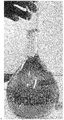
- Figure 3a shows the gasoline and the premixed additive while pouring, the two phases are not mixed and cloudiness can be seen in the flask.
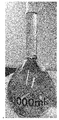
- Figure 3b shows the gasoline comprising the fuel additive, two minutes after pouring. No cloudiness can be seen, indicating that the mixing between gasoline and additive is complete and two components are now in the form of a homogeneous mixture.
- a homogenous mixture of a cetane number improver and a lubricant is added to petrol in a glass container without physical agitation and the turbidity is measured as a function of time.
- the same cetane number improver and lubricant is added to petrol in the same ratio and the mixture is mixed thoroughly by physical agitation and the turbidity is determined.
- the difference in turbidity between the test mixture and the control is determined. If the turbidity difference compared to the control decreases by at least 90% within five minutes after adding the mixture, the mixture can be considered to self-mix with the petrol-like fuel in a satisfactory way.
- the turbidity is measured using a turbidity tube or an optical turbidity sensor based on light scattering.
- cetane number improver and lubricant may be tested.
- a homogenous mixture between 2-ethyl-hexyl nitrate (2-EHN) and tall-oil based lubricity additive is tested.
- the % and ppm provided are the concentration in the final mixture of petrol, 2-EHN and lubtricant.
Landscapes
- Chemical & Material Sciences (AREA)
- Oil, Petroleum & Natural Gas (AREA)
- Engineering & Computer Science (AREA)
- Chemical Kinetics & Catalysis (AREA)
- General Chemical & Material Sciences (AREA)
- Organic Chemistry (AREA)
- Liquid Carbonaceous Fuels (AREA)
Applications Claiming Priority (1)
| Application Number | Priority Date | Filing Date | Title |
|---|---|---|---|
| SE1650403 | 2016-03-29 |
Publications (1)
| Publication Number | Publication Date |
|---|---|
| EP3225680A1 true EP3225680A1 (fr) | 2017-10-04 |
Family
ID=58464240
Family Applications (1)
| Application Number | Title | Priority Date | Filing Date |
|---|---|---|---|
| EP17163529.5A Withdrawn EP3225680A1 (fr) | 2016-03-29 | 2017-03-29 | Méthode à reconditionner un moteur à allumage par compression |
Country Status (1)
| Country | Link |
|---|---|
| EP (1) | EP3225680A1 (fr) |
Citations (6)
| Publication number | Priority date | Publication date | Assignee | Title |
|---|---|---|---|---|
| DE3208077A1 (de) * | 1981-03-10 | 1982-11-11 | Chevron Research Co., 94105 San Francisco, Calif. | Fluessigkeitsbehaelter |
| US5349188A (en) | 1990-04-09 | 1994-09-20 | Ashland Oil, Inc. | Near infrared analysis of piano constituents and octane number of hydrocarbons |
| US5891203A (en) | 1998-01-20 | 1999-04-06 | Ethyl Corporation | Fuel lubricity from blends of a diethanolamine derivative and biodiesel |
| WO2005035694A1 (fr) | 2003-09-17 | 2005-04-21 | Weber Ronald F | Systemes d'additifs pour carburants |
| EP2578529A1 (fr) * | 2011-10-06 | 2013-04-10 | Robert Bosch Gmbh | Procédé et dispositif de transfer du carburant depuis le réservoir de carburant d'un véhicule automobile |
| US20130298452A1 (en) | 2012-01-19 | 2013-11-14 | Don Ricardo Oniel Ford | High Lubricity Fuel Reformulation to Increase Mileage and Reduce Emissions |
-
2017
- 2017-03-29 EP EP17163529.5A patent/EP3225680A1/fr not_active Withdrawn
Patent Citations (6)
| Publication number | Priority date | Publication date | Assignee | Title |
|---|---|---|---|---|
| DE3208077A1 (de) * | 1981-03-10 | 1982-11-11 | Chevron Research Co., 94105 San Francisco, Calif. | Fluessigkeitsbehaelter |
| US5349188A (en) | 1990-04-09 | 1994-09-20 | Ashland Oil, Inc. | Near infrared analysis of piano constituents and octane number of hydrocarbons |
| US5891203A (en) | 1998-01-20 | 1999-04-06 | Ethyl Corporation | Fuel lubricity from blends of a diethanolamine derivative and biodiesel |
| WO2005035694A1 (fr) | 2003-09-17 | 2005-04-21 | Weber Ronald F | Systemes d'additifs pour carburants |
| EP2578529A1 (fr) * | 2011-10-06 | 2013-04-10 | Robert Bosch Gmbh | Procédé et dispositif de transfer du carburant depuis le réservoir de carburant d'un véhicule automobile |
| US20130298452A1 (en) | 2012-01-19 | 2013-11-14 | Don Ricardo Oniel Ford | High Lubricity Fuel Reformulation to Increase Mileage and Reduce Emissions |
Non-Patent Citations (3)
| Title |
|---|
| GERBEN DOORNBOS ET AL: "A First Implementation of an Efficient Combustion Strategy in a Multi Cylinder Two-Stage Turbo CI-Engine Producing Low Emissions While Consuming a Gasoline/EHN Blend", SAE TECHNICAL PAPER SERIES, vol. 1, 15 September 2013 (2013-09-15), US, XP055375210, ISSN: 0148-7191, DOI: 10.4271/2013-24-0103 * |
| R CRACKNELL ET AL: "Exploring a Gasoline Compression Ignition (GCI) engine concept", CONCAWE REPORT 13/14, 1 December 2014 (2014-12-01), Brussels, XP055375373, Retrieved from the Internet <URL:https://www.concawe.eu/wp-content/uploads/2017/01/report13_14-exploring-a-gasoline-compression-ignition-gci-engine-concept.pdf> [retrieved on 20170523] * |
| WEI DP; SPIKES HA: "The lubricity of gasoline", TRIBOLOGY TRANSACTIONS, vol. 42, no. 4, 1999, pages 813 - 823, XP055205586, DOI: doi:10.1080/10402009908982288 |
Similar Documents
| Publication | Publication Date | Title |
|---|---|---|
| Karavalakis et al. | Evaluation of the oxidation stability of diesel/biodiesel blends | |
| US5599358A (en) | Gas oil composition | |
| Tang et al. | Fuel properties and precipitate formation at low temperature in soy-, cottonseed-, and poultry fat-based biodiesel blends | |
| Khuong et al. | A review on the effect of bioethanol dilution on the properties and performance of automotive lubricants in gasoline engines | |
| Pradelle et al. | Experimental assessment of some key physicochemical properties of diesel-biodiesel-ethanol (DBE) blends for use in compression ignition engines | |
| Gómez et al. | Evaluation of sooting tendency of different oxygenated and paraffinic fuels blended with diesel fuel | |
| Gorski et al. | Effects of ethyl-tert-butyl ether (ETBE) addition on the physicochemical properties of diesel oil and particulate matter and smoke emissions from diesel engines | |
| Zöldy | Fuel properties of butanol–hydrogenated vegetable oil blends as a diesel extender option for internal combustion engines | |
| Zoldy et al. | Butanol as a diesel extender option for internal combustion engines | |
| US10760020B2 (en) | Heavy fuel oil C composition | |
| EA031490B1 (ru) | Добавки для повышения устойчивости к износу и отложению лакообразного нагара моторных топлив типа газойля или биогазойля | |
| Fang et al. | Biodiesel impact on wear protection of engine oils | |
| CN101273230B (zh) | 用于监控压缩点火内燃发动机的性能的方法 | |
| WO2009135307A1 (fr) | Biocarburant ou additif et procédé de fabrication et d’utilisation | |
| US20110232165A1 (en) | Fuel or fuel additive composition and method for its manufacture and use | |
| Gómez-Cuenca et al. | Effects of ethylene glycol ethers on diesel fuel properties and emissions in a diesel engine | |
| WO2007114028A1 (fr) | Composition de gazole | |
| Wadumesthrige et al. | Properties of butanol-biodiesel-ULSD ternary mixtures | |
| Barabás et al. | Utilization of biodiesel-diesel-ethanol blends in CI engine | |
| CN101321849B (zh) | 燃料制剂 | |
| EP3225680A1 (fr) | Méthode à reconditionner un moteur à allumage par compression | |
| Mori et al. | Influence of biodiesel fuel on lubricant oil oxidative degradation | |
| de Goede et al. | The properties and injector nozzle fouling performance of GTL and EN590 diesel with RME and SME biodiesel | |
| Fortunato et al. | Oxidation stability of diesel/biodiesel blends: impact of fuels physical-chemical properties over ageing during storage and accelerated oxidation | |
| Mohsin et al. | Effect of Biodiesel Blend on Exhaust Emission and Engine Performance of Diesel Dual Fuel Engine (Research Note) |
Legal Events
| Date | Code | Title | Description |
|---|---|---|---|
| PUAI | Public reference made under article 153(3) epc to a published international application that has entered the european phase |
Free format text: ORIGINAL CODE: 0009012 |
|
| AK | Designated contracting states |
Kind code of ref document: A1 Designated state(s): AL AT BE BG CH CY CZ DE DK EE ES FI FR GB GR HR HU IE IS IT LI LT LU LV MC MK MT NL NO PL PT RO RS SE SI SK SM TR |
|
| AX | Request for extension of the european patent |
Extension state: BA ME |
|
| STAA | Information on the status of an ep patent application or granted ep patent |
Free format text: STATUS: THE APPLICATION IS DEEMED TO BE WITHDRAWN |
|
| 18D | Application deemed to be withdrawn |
Effective date: 20180405 |