EP3239896B1 - Datenstruktur zur beschreibung einer bildsequenz und verfahren zum extrahieren und abgleichen dieser datenstrukturen - Google Patents
Datenstruktur zur beschreibung einer bildsequenz und verfahren zum extrahieren und abgleichen dieser datenstrukturen Download PDFInfo
- Publication number
- EP3239896B1 EP3239896B1 EP16167518.6A EP16167518A EP3239896B1 EP 3239896 B1 EP3239896 B1 EP 3239896B1 EP 16167518 A EP16167518 A EP 16167518A EP 3239896 B1 EP3239896 B1 EP 3239896B1
- Authority
- EP
- European Patent Office
- Prior art keywords
- descriptors
- descriptor
- image sequence
- global
- local
- Prior art date
- Legal status (The legal status is an assumption and is not a legal conclusion. Google has not performed a legal analysis and makes no representation as to the accuracy of the status listed.)
- Active
Links
Images



Classifications
-
- G—PHYSICS
- G06—COMPUTING OR CALCULATING; COUNTING
- G06V—IMAGE OR VIDEO RECOGNITION OR UNDERSTANDING
- G06V20/00—Scenes; Scene-specific elements
- G06V20/40—Scenes; Scene-specific elements in video content
- G06V20/46—Extracting features or characteristics from the video content, e.g. video fingerprints, representative shots or key frames
- G06V20/47—Detecting features for summarising video content
-
- G—PHYSICS
- G06—COMPUTING OR CALCULATING; COUNTING
- G06F—ELECTRIC DIGITAL DATA PROCESSING
- G06F16/00—Information retrieval; Database structures therefor; File system structures therefor
- G06F16/70—Information retrieval; Database structures therefor; File system structures therefor of video data
- G06F16/71—Indexing; Data structures therefor; Storage structures
-
- G—PHYSICS
- G06—COMPUTING OR CALCULATING; COUNTING
- G06F—ELECTRIC DIGITAL DATA PROCESSING
- G06F16/00—Information retrieval; Database structures therefor; File system structures therefor
- G06F16/70—Information retrieval; Database structures therefor; File system structures therefor of video data
- G06F16/78—Retrieval characterised by using metadata, e.g. metadata not derived from the content or metadata generated manually
- G06F16/783—Retrieval characterised by using metadata, e.g. metadata not derived from the content or metadata generated manually using metadata automatically derived from the content
-
- G—PHYSICS
- G06—COMPUTING OR CALCULATING; COUNTING
- G06F—ELECTRIC DIGITAL DATA PROCESSING
- G06F18/00—Pattern recognition
- G06F18/20—Analysing
- G06F18/22—Matching criteria, e.g. proximity measures
-
- G—PHYSICS
- G06—COMPUTING OR CALCULATING; COUNTING
- G06V—IMAGE OR VIDEO RECOGNITION OR UNDERSTANDING
- G06V10/00—Arrangements for image or video recognition or understanding
- G06V10/40—Extraction of image or video features
- G06V10/46—Descriptors for shape, contour or point-related descriptors, e.g. scale invariant feature transform [SIFT] or bags of words [BoW]; Salient regional features
- G06V10/462—Salient features, e.g. scale invariant feature transforms [SIFT]
-
- G—PHYSICS
- G06—COMPUTING OR CALCULATING; COUNTING
- G06V—IMAGE OR VIDEO RECOGNITION OR UNDERSTANDING
- G06V20/00—Scenes; Scene-specific elements
- G06V20/40—Scenes; Scene-specific elements in video content
- G06V20/46—Extracting features or characteristics from the video content, e.g. video fingerprints, representative shots or key frames
-
- G—PHYSICS
- G06—COMPUTING OR CALCULATING; COUNTING
- G06V—IMAGE OR VIDEO RECOGNITION OR UNDERSTANDING
- G06V20/00—Scenes; Scene-specific elements
- G06V20/40—Scenes; Scene-specific elements in video content
- G06V20/48—Matching video sequences
-
- G—PHYSICS
- G06—COMPUTING OR CALCULATING; COUNTING
- G06V—IMAGE OR VIDEO RECOGNITION OR UNDERSTANDING
- G06V20/00—Scenes; Scene-specific elements
- G06V20/40—Scenes; Scene-specific elements in video content
- G06V20/49—Segmenting video sequences, i.e. computational techniques such as parsing or cutting the sequence, low-level clustering or determining units such as shots or scenes
Definitions
- the invention relates to the field of video analysis, in particular to a data structure providing an image sequence descriptor, used for describing an image sequence, as well as a method for extracting such a descriptor from a digital image sequence, and a method for matching a descriptor of this type against one or a set of descriptors of the same type or compatible still image descriptors.
- Methods are known for the extraction of compact descriptors from still images, which methods include filtering local interest point descriptors, aggregating them to global descriptors and compressing descriptors by means such as dimensionality reductions and binarisation. Examples of such methods are:
- EP 1147655 B1 describes a system and method for the description of videos based on contained objects and their relations. While being able to describe video content in a semantic form, the method cannot be applied for efficient visual matching, where extraction of actual objects cannot be applied due to complexity and computational costs.
- WO 2009/129243 A1 describes methods and systems for representation and matching of video content. The method aims at spatially and temporally aligning segments of video rather than determining a numeric value of their similarity. While performing selection of features, the method of WO 2009/129243 A1 does not encode the features in a compressed way. In addition, time and space coordinates are discarded, thus not allowing for spatiotemporal localisation.
- a common problem in applications processing and managing image sequences is to determine the similarity of image sequences based on the visual similarity of foreground or background objects visible in all or a temporal segment of the image sequence.
- the analysis of image sequences is significantly different from video copy detection, for which a number of approaches exist (e.g. in US 7,532,804 ), and will require a different approach.
- additional intricacies may arise in this context in cases where the objects used for determining similarity are visible only in a spatial, temporal or spatiotemporal segment of the image sequence, where objects are depicted from different views and under different conditions, and/or where image formation and processing may have been different.
- a data structure for describing an image sequence (or segment thereof) containing a plurality of images in a predetermined order said data structure including an image sequence descriptor comprising:
- the reconstruction of the global descriptors will generally allow an exact or approximate recovery of the original global descriptor data, depending on the detail of the implementation.
- the global descriptors are associated with respective images of the image sequence (or segment thereof), and each global descriptor contains aggregated information relating to interest points within the video content of the respective image.
- the invention provides an efficient format for describing the visual information in image sequences, which is more compact than prior art which treats single images independently. This does not only reduce the memory space needed to store descriptors of an image sequence, but it also reduces the computational complexity of matching the descriptors of two image sequences.
- This type of descriptor is extracted from local and/or global descriptors, using a method for local descriptor extraction from interest points of a single image and a method for aggregation of such descriptors to a global descriptor for a single image, but is agnostic of the specific type of local descriptor extractions and aggregation method.
- the data structure may also refer to a part or a segment of an image sequence a segmented image sequence.
- the image sequence descriptor may advantageously comprise, for each of a number of segments within the image sequence, a segment global descriptor which includes a base descriptor and relative descriptors (e.g. differential descriptors) associated with images of the respective segment.
- the number of segments may be two or more.
- a non-segmented image sequence can be considered as one segment which comprises the entire image sequence.
- the relative descriptors may be "differential" descriptors, in that they contain an encoded difference between the respective global descriptor and the base global descriptor, wherein the difference is determined using a predefined difference function.
- the representative frame may be a medoid frame among the images of the respective segment.
- any suitable method may be used, and preferably, a method representing a global descriptor as a vector and defining a metric for comparing such vectors.
- the descriptors may be coded according to any method chosen from the group comprising: Fisher Vectors, SCFV, CDVS, VLAD, VLAT, or combinations thereof.
- VLAD is to be understood as also including any known variant of VLAD.
- the data structure may also include local descriptors (also referred to as local feature descriptors).
- the image sequence descriptor may comprise, for each of a number of segments within the image sequence (in the case of a segmented image sequence) or for the image sequence as such, a segment local descriptor, said segment local descriptor comprising a set of encoded local feature descriptors.
- Any suitable known method for interest point detection and extraction of descriptors from a region around those interest points may be used for determining local feature descriptors. For instance, they may be coded according to any method chosen from the group comprising: CDVS, SIFT, SURF, ORB, or combinations thereof.
- the data structure may also comprise other data describing the underlying video sequence.
- the image sequence descriptor may further comprise one or more of the following data:
- Another aspect of the invention is directed at a method for describing an image sequence, said image sequence containing a plurality of images in a predetermined order. This method includes the steps of
- the descriptor extraction method uses a method for local descriptor extraction from interest points of a single image and a method for aggregation of such descriptors to a global descriptor for a single image, but is agnostic of the specific type of local descriptor extractions and aggregation method.
- the method may, advantageously, apply temporal subsampling and lossless or lossy compression of the global and local descriptors in the sequence, for instance by selecting a frame as the medoid of the segment and representing global and local descriptors of other frames as differences to the respective descriptors of the medoid.
- the said descriptor extraction method can be parameterised for different target descriptor bitrates.
- image sequence is to be segmented
- the representative frame may be chosen as a medoid frame among the images of the respective segment based on a predefined distance function on global descriptors of images, and/or the relative descriptors may be determined by encoding the difference between the respective global descriptor and the base global descriptor, wherein the difference is determined using a predefined difference function.
- the relative descriptors may be encoded using an entropy coding method.
- the method according to this aspect of the invention may also include applying filtering, aggregation and compression of local features to obtain a set of local feature descriptors and/or including filtering, aggregation and compression of the global descriptors, so the step of generating an image sequence descriptor will also include encoding the local feature descriptors into the image sequence descriptor.
- the set of local feature descriptors is filtered to exclude all local feature descriptors that are more similar to any of the local descriptors already encoded, with regard to a predetermined similarity function and a predetermined threshold ⁇ 1 of similarity, and for each of the remaining local feature descriptors, the difference to the most similar of the local feature descriptors already encoded is determined and the difference thus obtained is encoded using an entropy coding method.
- the threshold value is controlled so as to adjust the size of the resulting image sequence descriptor to fall below the maximum size.
- the extracting method may be done for all images of the image sequence, or for a (regularly or irregularly) sampled subset of the images in the image sequence.
- the images in the input i.e., in the image sequence or the sampled subset
- the resulting image sequence descriptor may be serialised (i.e., coded into a linear sequence of data/symbols) and transferred to a bitstream, or file, or a database, such as a database of video descriptors.
- the data structure, or the bitstream/file/database made from it may be stored on any data storage medium of known type.
- the data structure may be stored separately from the original images sequence (such as a video file or video stream), or together with it, for instance the data structure is inserted or appended to the original image sequence, or combined into a complex data file.
- a further aspect of the invention is directed at methods for operating with or processing video sequences. For instance, it may be desired to operate with image sequences by matching the corresponding image sequence descriptors, and/or a method for retrieving an image sequence from a given set of image sequences, for instance in order to find a most similar sequence with respect to a given video portion. This involves a comparison ("matching") of image sequence descriptors, in order to obtain a matching measure describing the similarity of the image sequences involved.
- a method for matching two image sequence descriptors of the above-described type is proposed, where a scalar distance value between the image sequence descriptors is determined, preferably by performing a distance calculation between the base descriptors of the image sequence descriptors and between global descriptors of either image sequence descriptors.
- the global descriptors used in the distance calculation are retrieved or reconstructed by a suitable method disclosed herein.
- the distance calculation may be performed from coarse to fine temporal resolution for efficiency of the calculation. Following a coarse to fine matching paradigm allows to terminate matching of dissimilar descriptors as early as possible.
- the matching method may include that said global descriptors are reconstructed until a number of global descriptors is reached which is precalculated from the length of the image sequences underlying the image sequence descriptors.
- a method for retrieving from a set of image sequences will comprise obtaining an image sequence descriptor relating to the reference image sequence (e.g. by reading/loading the descriptor from an input such as a storage device or extracting it from the image sequence) and comparing said image sequence descriptor with image sequence descriptors relating to the image sequences of the set (again, these descriptors may be obtained by reading/loading them from suitable input or storage, such as a database, or calculated from the image sequences).
- the result(s) of this matching will give information that can be used in, e.g., identifying and/or retrieving the image sequence which is most similar to the first image sequence.
- the results thus obtained may be used to obtain a retrieval measure, and/or an image sequence descriptor that represents a best match within the set, and/or identifying the image sequence which is the best match within the set.
- the matching method of the invention reduces the number of descriptors to one per segment.
- the time needed to match a pair of segment descriptors extracted by the method of the invention is the same as for matching (only) a pair of still image descriptors of methods in prior art.
- the matching method of the invention has the advantage that the matching time is also significantly lower than the matching time of still image descriptors, even in less favourable cases.
- the extracting, matching and retrieving methods according to the invention may be realised as a computer program, to be executed on any suitable data processing system.
- a data storage medium comprising computer program instructions for carrying out the method according to the invention may be used to distribute the invention.
- a further aspect of the invention is a system capable of performing the methods of descriptor extraction, matching, and/or retrieval.
- a system for processing image sequence descriptors of the kind as disclosed herein will include at least one module configured for performing one or more of the descriptor-processing methods described above; further modules for input, output, storing, etc., may be included as will be suitable.
- a system for image sequence description will comprise at least an image sequence input module, a descriptor extraction module, and an output module, wherein the descriptor extraction module implements an extraction method as described herein.
- a system for image sequence matching or retrieval will comprise a storage device, at least two instances of an input module for reading descriptors from a storage device, a memory for storing descriptors, a descriptor matching module and a reporting module for outputting matching or retrieval results, wherein the descriptor matching module implements a matching method as described herein; in this system, it is also possible that one or all of the input modules are replaced by a subsystem corresponding to a system for image sequence description as mentioned before.
- the invention enables to describe the visual information in image sequences more compact than prior art which treats single images independently. This does not only reduce the memory space needed to store descriptors of an image sequence, but it also reduces the computational complexity of matching the descriptors of two image sequences.
- the mentioned properties of the invention enable building matching and retrieval systems handling larger sets of image sequences more efficiently, including applications in media archives, video production and distribution and law enforcement. Typical problems from these applications addressed by the invention include finding image sequences with temporal segments showing the same or similar background scenes or salient objects, possibly from different viewpoints, under different lighting conditions and depicted with different size, resolution and/or using different sensors or encodings.
- a descriptor according to a preferred embodiment of the invention is discussed. First, the format of the descriptor is discussed, and then methods for extracting and matching descriptors are described.
- a "video file” or "video sequence” is understood as data (usually stored on a data carrier such as a hard disk, DVD or digital magnetic tape) including a sequence of images; in the following, no difference is made between a video sequence and the corresponding image sequence, unless expressly noted otherwise.
- to extract or “extracting” a descriptor (or other information) from initial data (such as a video sequence) is understood as referring to the actions for determining/calculating the descriptor (or other information) from the initial data without affecting the latter, and the descriptor thus extracted may contain data elements copied from the initial data and/or data elements generated based on the initial data.
- to match or “matching” descriptors is understood as referring to the action of comparing the descriptors so as to derive a measure (such as score value) describing the similarity of the descriptors or underlying initial data.
- image and “frame” are used herein interchangeably.
- a “segment” of a sequence of images is understood, except where denoted explicitly otherwise, as the entire sequence or a part thereof, with a segment representing a set of frames which spans the interval between the first and last image of the segment, without any other segment or segment portion occurring within this interval; often, a segment is additionally required to represent a temporally continuous sequence of frames between the specified first and last image of the segment.
- a video sequence (or more generally, an image sequence) is given as the sequence of images in the video.
- a segment is only characterised by visual similarity and only continuous changes between subsequent frames, but does not necessarily coincide with a semantic unit of the video. However, in practice, a segment is likely to be a shot or subshot. In the case the video sequence is not segmented, the video is regarded as representing one segment,
- the index m of an image I m k (within the respective segment S k ) may be used as a shorthand for the image itself.
- D m d 1 m , ... , d n m denotes a corresponding set of descriptors of the surrounding region of the interest point, called "local descriptors"; such local descriptors are extracted using a known method for feature detection such as SIFT, SURF or ORB (see E. Rublee, V. Rabaud, K. Konolige and G. Bradski, "ORB: An efficient alternative to SIFT or SURF", 2011 International Conference on Computer Vision, Barcelona, 2011, pp. 2564-2571 ).
- a "global descriptor" of a frame of index m is denoted as G m ; and the global descriptor is obtained from aggregating the local descriptors in D m using a known aggregating method. Suitable methods for aggregating descriptors include Fisher Vectors (FV), SCFV, VLAD or VLAT.
- G 0 m denotes an encoded version of G m , such as after dimension reduction. For instance, G 0 m may be formed such that it only contains the values for the non-zero components of the descriptor and starts with an index indicating the components being present.
- the invention offers a method for extracting a single descriptor from a temporal segment, i.e., a set of consecutive and related frames (e.g., a shot) of an image sequence.
- This type of descriptor is created from an aggregation of sets of local descriptors from each of the images in the segment, and contains an aggregation of global descriptors and, optionally, a set of the extracted local descriptors, together with their time and location.
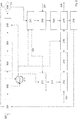
- Fig. 1 shows a schematic depiction of the structure of an image sequence descriptor 101, which has been extracted for a segment S k according to the embodiment of the invention.
- the descriptor 101 comprises a segment global descriptor 113, denoted and may further comprise a local part or segment local descriptor 114; thus, the descriptor 101 may be stated as
- the descriptor 101 may also comprise a header structure 110, which states the version/type of the descriptor, length of the descriptor and/or number of components contained.
- the descriptor may advantageously also contain data to describe the underlying segment, such as a segment start time 111 and a segment end time 112, and/or the number of frames contained (not shown).
- the segment global descriptor 113 contains information of global descriptors, for instance in the form
- This structure includes one "base descriptor”, which is the descriptor G 0 m ⁇ of a "representative frame” (whose index is denoted by a symbol with tilde, such as m ⁇ , and which is selected as described in detail below), and a set of descriptors ⁇ G j for all or a subset of the other frames in the segment.
- ⁇ G j is calculated as enc G 0 j ⁇ G 0 m ⁇ , with enc() being a suitable coding such as the encoding defined below.
- the segment global descriptor 113 may include a component 120 containing the index m ⁇ of the representative frame, the base descriptor 121, a component 122 containing the number of frames described in the descriptor 113 and their relative temporal positions 123, a block 125 (coded global descriptors block) which holds the set of encoded descriptors ⁇ G j relating to coded global descriptors other than the base descriptor, and the size 124 of the coded global descriptors block.
- the local part comprises a coded local descriptor block 132 which contains the encoded local descriptors f m ⁇ of the representative frame and differentially encoded descriptors of other frames ⁇ .
- the local part may preferably also include a component 130 stating the number of local descriptors in the segment, the size 131 of the coded local descriptor block.
- the local part may further comprise a structure 134 (coded keypoint location block) containing the set of encoded locations of the descriptors ⁇ j in each of the frames j, as well as the size 133 of the structure 134.
- the coded local descriptor block 132 may comprise the local descriptors f m ⁇ in a component 141. It may further include a time map T (component 140) indicating the presence (time) of descriptors in the frames of the segments, and/or a (sub)set ⁇ of local descriptors of other frames (in component 142), which are encoded as the differences of the feature descriptors in component 141.
- T time map
- the coded local descriptor block 132 may comprise the local descriptors f m ⁇ in a component 141. It may further include a time map T (component 140) indicating the presence (time) of descriptors in the frames of the segments, and/or a (sub)set ⁇ of local descriptors of other frames (in component 142), which are encoded as the differences of the feature descriptors in component 141.
- a compact image sequence descriptor which can be used for describing an image sequence, comprises at least a segment global descriptor 113 for a segment within the sequence, which includes global descriptor information for respective images, relating to interest points within the video content of the images.
- the segment global descriptor 113 includes a base descriptor 121, which is a global descriptor associated with a representative frame 120 of the image sequence, and a number of relative descriptors 125.
- the relative descriptors contain information of a respective global descriptor relative to the base descriptor allowing to reconstruct an exact or approximated global descriptor associated with a respective image of the image sequence.
- the image sequence descriptor 101 may further include a segment local descriptor 114 for the segment, comprising a set of encoded local feature descriptors.
- the data structure will comprises multiple image sequence descriptors 101 in the case that the image sequence is segmented into multiple segments.
- Fig. 2 shows a schematic flow diagram of one embodiment of the invention, namely, an exemplary process for extracting an image sequence descriptor 101, also referred to as segment descriptor, from an image sequence in a video, supplied as input 220.
- the extraction can be performed from all or a subset of frames of the image sequence220; for instance, a subset may be formed (not shown in Fig. 2 ) by regular subsampling of the image sequence by a factor f s .
- this parameter impacts the size of the resulting descriptor and determines the upper boundary of the temporal localisation precision of the descriptor.
- An additional input parameter is the average upper boundary of the descriptor size S max , typically expressed in relation to its length of duration (e.g., in kilobytes per second of video).
- An upper boundary for S max is the size of the encoded image sequence (also expressed as bitrate), and typical values are in the range of 4 kB/s to 32 kB/s.
- a first stage is temporal segmentation of the video in visually homogeneous segments, in steps 201-206.
- interest points P m are detected (step 202), local descriptors D m are extracted (step 203) and aggregated to a global descriptor G m (step 204).
- step 205 (optional) temporal segmentation is performed.
- ⁇ g G i , G i ⁇ 1 ⁇ ⁇ g ⁇ I i ⁇ 1 ⁇ S k , i î ... ⁇ , where ⁇ g is an appropriate distance function for global descriptors (e.g., a L1 or L2 norm defined on the vector representation, or a Hamming distance), and ⁇ g is a threshold chosen for the desired temporal segmentation properties.
- ⁇ g is an appropriate distance function for global descriptors (e.g., a L1 or L2 norm defined on the vector representation, or a Hamming distance)
- ⁇ g is a threshold chosen for the desired temporal segmentation properties.
- the segment will include all frames starting from frame î until the "dissimilarity" (as measured by ⁇ g ) between to subsequent frames exceeds the threshold (step 206). The next segment will then start with this frame where the threshold is exceeded, and so on.
- ⁇ g depends on the type of global descriptors employed; for example, for SCFV with 512 elements values of ⁇ g in the range of 480-500 were found to yield good results. Smaller values will yield more homogenous segments (in terms of visual variations) with shorter duration, but more compact descriptors for these segments.
- the descriptor for a segment is encoded by aggregating global descriptors (steps 207-209) and (optionally) coding local descriptors (steps 210-214) of the segments, in subsequent stages described in the following two subsections.
- This frame is the one which is "overall most similar" to all frames of the segment.
- the corresponding descriptor 121 is denoted G 0 m ⁇ .
- a relative descriptor is determined, for instance by differential coding and arithmetic encoding of global descriptors:
- the rationale is to obtain descriptors of the same size, but with a lower number of bits set.
- the function enc() is implemented as adaptive binary arithmetic encoding (as described in W. B. Pennebaker, J. L. Mitchell, G. G. Langdon & R. B. Arps: "An Overview of the Basic Principles of the Q-Coder Adaptive Binary Arithmetic Coder", IBM J. Res. Develop. 32, pp. 717-726,1988 ).
- step 209 it is possible to insert filtering 208 of the descriptors, based on the descriptor size S max mentioned above, which is accepted in this step 208 as a parameter 230 describing the bit budget for global descriptors.
- S max the descriptor size
- all or only a subset of the descriptors is included in the descriptor for the segment.
- descriptors need to be removed, they are removed by ascending values of ⁇ g (G i , G m ⁇ ), i.e. descriptors more similar to the medoid descriptor are removed first, until their encoded size is sufficiently small to meet (or fall below) the target size S max .
- the remaining number of difference descriptors is denoted K g .
- the resulting global descriptor consists only of the medoid descriptor. For segments with average visual variability (i.e., neither static nor very dynamic), there are typically 3-7 remaining descriptors.
- the image sequence descriptor according to the invention may also include local feature descriptors, coded in a segment local descriptor.
- the construction of the segment local descriptor of the embodiment illustrated in Fig. 2 is done as follows.
- step 210 local descriptors are determined. For each of the frames feature selection is performed as defined in the encoding process for d ⁇ m ⁇ but encoding is not yet performed.
- Each local descriptor has been extracted around an interest point (x,y).
- Some local descriptor extraction methods also provide a selection priority ⁇ , expressing the confidence in the interest point (higher values corresponding to higher confidence).
- the notation ⁇ m ⁇ - 1, m ⁇ + 1, ... ⁇ is used to denote an order of the index which will comprise alternatingly decreasing and increasing indices, starting from the medoid frame m ⁇ .
- the selection is based on pairwise distances d 1 ( ⁇ ) determined by an appropriate distance function for the type of local descriptor, such as the L1 or L2 norm, in step 211. Processing local descriptors starting from the medoid frame has the advantage that it will have more similar descriptors processed first in most cases.
- the frames are identified by time points t(m i ) relative to the start time of the segment.
- step 213 differential coding and arithmetic encoding of local descriptors is made.
- Adaptive binary arithmetic encoding is applied to the difference descriptors ⁇ i .
- the encoding of interest points locations is preferably performed using function locenc().
- the known function locenc() encodes the (approximate) locations of the interest points of the encoded descriptors; it may, for example, be implemented using the histogram based location encoding methods described in ISO/IEC 15938-13 or in WO 2013/102574 A1 .
- the local part of the segment descriptor is composed of the set of the time map 140 ( Fig. 1c ), the local descriptors appearing in the medoid frame and the set of encoded local difference descriptors (component 141 of Fig. 1c as described above), and of the locations of all interest points (for instance, in the coded keypoint location block 134, Fig. 1b ): T , f m ⁇ , ⁇ ⁇ , locenc L m ⁇ ⁇ , locenc L m ⁇ + 1 ⁇ , locenc L m ⁇ ⁇ 1 ⁇ , ... , where L ⁇ is the set of locations of local descriptors present in frame i.
- the global and local segment descriptors thus obtained are combined into a segment descriptor (step 215) and, if required, serialised into a linear sequence of data.
- the various data generated may be written (permanently or only for buffering) to a storage device 217, serving as a frame store for the current segment.
- the frame store for the current segment may be cleared in order to save storage space.
- the segment descriptors are combined into an image sequence descriptor 101, which describes the segmented image sequence, which is serialised and transferred to output. Alternatively, if preferred, it is possible to output the segment descriptors as separate image sequence descriptors.
- This extraction process of the invention of which an embodiment is illustrated in Fig. 2 , allows to generate an image sequence descriptor which exploits the inherent similarities of the descriptors in order to reduce the size of the resulting data structure.
- Fig. 3 shows a schematic flow diagram of another embodiment of the invention, namely, an exemplary process for matching two image sequence descriptors, which are input as, e.g., bitstreams 102,103.
- the process reads the bitstreams (steps 301, 302) and built into descriptors, respectively denoted as A and B in the following.
- denoting the respective segment lengths
- matching is performed as described below, in order to obtain an output quantity 320 in the form of, e.g., a matching score ⁇ in the range [0;1], which is determined as described below.
- step 303 the global medoid descriptors are matched. This is done, for instance, by determining the similarity ⁇ g of the medoid descriptors G 0 A and G 0 B of the two frames, using a distance function as mentioned above.
- the value of the threshold depends on the type of local descriptor; for example for SCFV suitable values are between 3 and 7.
- step 306 iterative decoding and matching of global descriptors.
- the process proceeds to incrementally decode global descriptors G 1 A ... G K A and G 1 B ... G K B , and match them against all global descriptors decoded so far, yielding similarities ⁇ 1 ...
- ) descriptors are matched (loop of steps 306, 307), with s min being a predefined constant ⁇ 1, typically in the range 0.05-0.20.
- the constant factor two ensures, in correspondence with the order of relative descriptors as mentioned above, that at least the most dissimilar global descriptors to the medoid global descriptor are matched (if they were encoded in the descriptor).
- step 308 it is checked whether the similarity score decreases: As additional global descriptors are more similar to the medoid descriptor, decoding and matching further global descriptors from either of the segment descriptors will stop after having matched the minimum number of frames when it is found that ⁇ k would decrease. If this is the case for both segment descriptors, global matching terminates (branch to step 310). Global matching also terminates (through step 309) if all descriptors of all frames present in the segment descriptor have been matched.
- step 310 If only global matching is to be performed (step 310), matching terminates; otherwise, the process continues with local matching (steps 311-316).
- the descriptor 1c it may be used to match only descriptors with higher relevance. If location information is encoded in the local descriptors (e.g. in the coded keypoint location block 134), matching may also include spatial verification. As the descriptors are also referenced from other frames, it may be advantageous to store the similarities for later use.
- Step 312 is iterative decoding and matching of local descriptors for frames in the segment.
- Each of the similarities ⁇ p , q L of the medoid descriptors is compared against a threshold ⁇ ⁇ (which is a predetermined parameter chosen, e.g., around 2.0 for CDVS), and count the matching descriptor pairs.
- the matching of the local descriptors is suitably done in the same sequence as for global descriptors (and with the same number of minimum frames to be matched, this is checked in step 313), and for the corresponding frames, calculating new distances or reusing the already calculated ones.
- the average similarity is updated from the matching frames, and matching terminates when it is found that the matching score decreases (step 314) or all descriptors of all frames present in the segment descriptor have been matched (step 315).
- the local match count is increased if a minimum number of matching descriptor pairs is found.
- the local matching score ⁇ L is calculated as median of the n min highest pairwise similarities.
- step 316 the global matching score ⁇ G and the local matching score ⁇ L are combined into a total matching score ⁇ , which is returned in step 305.
- the total matching score ⁇ may be determined according to any suitable method, preferably as a weighted sum (e.g., assigning equal weight to both) of the scores ⁇ G and ⁇ L , or as the maximum value, max( ⁇ G , ⁇ L ).
- the matching method for descriptors can be used in retrieval of image sequences. For instance, a typical retrieval task is finding, in a set of videos or a video database, the video segment which is the most similar to a given reference image sequence. For the reference, an image sequence descriptor is obtained, e.g. by reading/loading the descriptor from an input such as a storage device; alternatively, the descriptor is extracted directly from the image sequence. This image sequence descriptor is compared (matched) with image sequence descriptors relating to the image sequences of the set (again, these descriptors may be obtained by reading/loading them from suitable input or storage, such as a database, or calculated from the image sequences). This will give a set of matching results (each representing the similarity between the reference image sequence one video segment), of which typically the highest value can be used to identify the most similar video segment.
- Fig. 4 illustrates a system 400 for extraction of descriptors of the type as described above.
- the system contains a component 401 for reading and (if required) decoding the input image sequence 220, a component 200 which is configured to perform the extraction process described according to the invention (see above, e.g. Fig. 2 ).
- the descriptors thus calculated are kept in the memory 404 of the system for use in a matching or retrieval operation to be performed subsequently, or are serialised in a storage output module 402 to a storage device.
- Fig. 5 illustrates a system 500 for matching and/or retrieval of descriptors of the type as described above.
- two (or more) descriptors 101 are extracted by a subsystem, which corresponds to the system 400 as described with reference to Fig. 4 , or input from a storage device 403. They may be buffered in a memory 404, if required.
- the descriptors are matched in a descriptor matching module 300 performing a matching process according to the invention (see above, e.g. Fig. 3 ).
- the matching score 320 obtained from the process is returned through a reporting module 405 as output of the system.
- a retrieval of descriptors is done as follows: Descriptors 101 are extracted by a subsystem as described with reference to system 400 and Fig. 4 above, or input from a storage device 403.
- a first descriptor has the role of a query, and the aim is to obtain a ranked list of the other descriptors in the memory of the system, ordered by similarity to the query descriptor, where this similarity is defined by a matching process as described herein.
- the implementation of a retrieval subsystem may use an appropriate index data structure to select a subset of descriptor pairs, to which the matching process described in this invention is applied.
- Fig. 6 illustrates the main stages of extracting and matching image sequence descriptors for two exemplary image sequences.
- the two image sequences 601, 602 depict the same scenery from slightly different angles at different times.
- interest points are detected, and a local descriptor is extracted from the region around each interest point.
- the local descriptors represent the image as a set of regions, which may be found in another image in a slightly different spatial configuration, e.g., if objects have moved.
- picture 603 which shows the first frame of sequence 602 to which an overlay of location and descriptor regions is added, illustrating local descriptors obtained by detecting interest points by SIFT.
- the local descriptors of this frame 603 are aggregated to a global descriptor 604, which represents a statistics of the local descriptors in the image (e.g., Fisher Vector or VLAD).
- the global descriptor thus describes the set of local descriptors found in the image, and images with overall similar components will yield similar global descriptors.
- Local and global descriptors for each frame in each of the sequences are determined (not shown), and to the descriptors of each of the two image sequences the extraction method as described above is applied (denoted by reference symbols 601 and 620, respectively).
- the image sequence descriptors represent the content of the set of images in each of the sequences, making use of the redundancy in the global and local descriptors of subsequent frames in order to obtain a more compact description.
- These two image sequence descriptors 611, 621 may then proceed to matching 630. Applying the matching method described above will determine a similarity score from the pair of descriptors 611, 621. In this example, the resulting value is close to 1, such as 0.9, due to the considerable visual similarity of large parts of the image sequences 601, 602.
Landscapes
- Engineering & Computer Science (AREA)
- Theoretical Computer Science (AREA)
- General Physics & Mathematics (AREA)
- Physics & Mathematics (AREA)
- Multimedia (AREA)
- Data Mining & Analysis (AREA)
- General Engineering & Computer Science (AREA)
- Databases & Information Systems (AREA)
- Library & Information Science (AREA)
- Computer Vision & Pattern Recognition (AREA)
- Software Systems (AREA)
- Bioinformatics & Cheminformatics (AREA)
- Evolutionary Computation (AREA)
- Evolutionary Biology (AREA)
- Bioinformatics & Computational Biology (AREA)
- Artificial Intelligence (AREA)
- Life Sciences & Earth Sciences (AREA)
- Computing Systems (AREA)
- Image Analysis (AREA)
Claims (16)
- Datenstruktur zur Beschreibung des Video-Inhalts einer Bildsequenz (220) mit zumindest einem Segment, das eine Vielzahl von Bildern in einer vorbestimmten Reihenfolge enthält, wobei die Datenstruktur einen Bildsequenz-Deskriptor (101) beinhaltet, der für das/jedes Segment aufweist:- einen Basis-Deskriptor (121), welcher einen globalen Deskriptor darstellt, der einem spezifischen Bild des Segments - bezeichnet als repräsentativer Rahmen (120) - zugeordnet ist,- eine Anzahl relativer Deskriptoren (125), die sich auf globale Deskriptoren beziehen, die Bildern in dem Segment zugeordnet sind, wobei jeder dieser relativen Deskriptoren Information über einen jeweiligen globalen Deskriptor relativ zum Basis-Deskriptor enthält, die die Rekonstruktion eines globalen Deskriptors, der einem jeweiligen Bild des Segments zugeordnet ist, aus dem relativen Deskriptor und dem Basis-Deskriptor ermöglicht;wobei jeder der globalen Deskriptoren jeweils einem Bild des Segments zugeordnet ist und aus Aggregation lokaler Deskriptoren in Bezug auf detektierter Punkte von Interesse in dem Video-Inhalt des jeweiligen Bildes gewonnene Information enthält, und
wobei der Bildsequenz-Deskriptor (101) ferner für jedes aus einer Anzahl von Segmenten in der Bildsequenz (220) einen lokalen Segment-Deskriptor (114) aufweist, welcher eine Menge kodierter Deskriptoren lokaler Merkmale (141) umfasst. - Datenstruktur nach Anspruch 1, wobei die relativen Deskriptoren (125) eine kodierte Differenz zwischen dem jeweiligen globalen Deskriptor und dem globalen Basis-Deskriptor enthalten, wobei die Differenz mithilfe einer vordefinierten Differenzfunktion bestimmt wird, und wobei die globalen Deskriptoren vorzugsweise kodierte Deskriptoren gemäß einem Verfahren ausgewählt aus der Gruppe umfassend Fisher-Vektoren, SCFV, CDVS, VLAD, VLAT oder Kombinationen davon sind.
- Datenstruktur nach Anspruch 1 oder 2, wobei die Deskriptoren lokaler Merkmale (141) kodierte lokale Deskriptoren gemäß einem Verfahren ausgewählt aus der Gruppe umfassend CDVS, SIFT, SURF; ORB oder Kombinationen davon sind.
- Datenstruktur nach Anspruch 1, 2 oder 3, wobei der Bildsequenz-Deskriptor (101) ferner zumindest eines der Folgenden aufweist:- Daten zur Angabe relativer zeitlicher Positionen der Bilder, denen die globalen Deskriptoren zugeordnet sind,- Daten zur Angabe relativer zeitlicher Positionen von Bildern, denen lokale Deskriptoren zugeordnet sind,- Daten zur Angabe räumlicher Positionen von Merkmalen in Bildern, auf die sich lokale Deskriptoren beziehen, und- Daten, die Relevanzinformation von globalen und/oder lokalen Deskriptoren wiedergeben.
- Verfahren zur Beschreibung des Video-Inhalts einer Bildsequenz (220), welche eine Vielzahl von Bildern in einer vorbestimmten Reihenfolge enthält, wobei das Verfahren folgende Schritte umfasst:- Ermitteln von Punkten von Interesse in jedem Bild,- Extrahieren lokaler Merkmale aus jedem Bild, wobei diese lokalen Merkmale sich auf die ermittelten Punkte von Interesse beziehen,- Aggregieren lokaler Merkmale in jedem Bild zum Erstellen eines globalen Deskriptors jedes Bildes,wobei das Verfahren weiter gekennzeichnet durch die folgenden Schritte ist, die für zumindest ein Segment der Bildsequenz ausgeführt werden:- Auswählen eines repräsentativen Rahmens (120), wobei der globale Deskriptor, der dem repräsentativen Rahmen zugeordnet ist, als Basis-Deskriptor (121) für das Segment ausgewählt wird,- Bestimmen relativer Deskriptoren (125) aus den globalen Deskriptoren, die Bildern in dem Segment zugeordnet sind, wobei jeder dieser relativen Deskriptoren Informationen eines zugehörenden globalen Deskriptors relativ zum Basis-Deskriptor enthält, und- Erzeugen eines Bildsequenz-Deskriptors (101) durch Kodieren des Basis-Deskriptors (121) und relativer Deskriptoren (125), und- erzeugen eines lokalen Segment-Deskriptors (114) und Kodieren desselben in den Bildsequenz-Deskriptor (101), wobei der lokale Segment-Deskriptor eine Menge kodierter Deskriptoren lokaler Merkmale (141) umfasst.
- Verfahren nach Anspruch 5, zudem umfassend Segmentieren der Bildsequenz (220) durch Aufteilen der Bildsequenz in eine Anzahl von zueinander disjunkten Segmenten anhand der globalen Deskriptoren der Bilder, wobei jedes Segment eine Anzahl aufeinanderfolgender Bilder aus der Bildsequenz enthält.
- Verfahren nach Anspruch 5 oder 6, wobei
in dem Schritt des Auswählens eines repräsentativen Rahmens der repräsentative Rahmen (120) aus den Bildern des jeweiligen Segments als ein Medoid-Rahmen aufgrund einer vordefinierten Abstandsfunktion auf globalen Deskriptoren von Bilden ausgewählt wird, und/oder in dem Schritt des Bestimmens relativer Deskriptoren (125) die relativen Deskriptoren (125) dadurch bestimmt werden, dass die Differenz zwischen dem jeweiligen globalen Deskriptor und dem globalen Basis-Deskriptor kodiert wird, wobei die Differenz mithilfe einer vordefinierten Differenzfunktion bestimmt wird. - Verfahren nach einem der Ansprüche 5 bis 7, wobei bei dem Bestimmen relativer Deskriptoren (125) Deskriptoren, die einer Differenz kleiner als einem vorbestimmten Schwellwert (θg) entsprechen, weggelassen werden und die verbleibenden relativen Deskriptoren mithilfe eines Entropie-kodierenden Verfahrens kodiert werden.
- Verfahren nach einem der Ansprüche 5 bis 8, zudem umfassend den Schritt- Anwenden von Filtern, Aggregieren und Komprimieren lokaler Merkmale, um eine Menge von Deskriptoren lokaler Merkmale (141) zu erhalten,wobei während des Schritts des Anwendens von Filtern, Aggregieren und Komprimieren lokaler Merkmale die Menge von Deskriptoren lokaler Merkmale gefiltert wird, um sämtliche Deskriptoren lokaler Merkmale, die bezüglich einer vorbestimmte Ähnlichkeitsfunktion und eines vorbestimmten Schwellwerts (θl) der Ähnlichkeit ähnlicher sind als jeder der bereits kodierten lokalen Deskriptoren, auszuschließen, und für jeden der verbleibenden Deskriptoren lokaler Merkmale die Differenz zu dem ähnlichsten der bereits kodierten Deskriptoren lokaler Merkmale ermittelt wird und die so gewonnene Differenz mithilfe eines Entropie-kodierenden Verfahrens kodiert wird.
- Verfahren nach Anspruch 8 oder 9, wobei eine Maximalgröße vordefiniert wird und der Schwellwert dahingehend gesteuert wird, dass die Größe des sich ergebenden Bildsequenz-Deskriptors (101) unter die Maximalgröße fällt.
- Verfahren nach einem der Ansprüche 5 bis 10, wobei, anstelle aller Bilder der Bildsequenz (220), eine abgetastete Teilmenge der Bilder in der Bildsequenz als Input verwendet wird, und wobei die Bilder in dem Input in zeitlicher Reihenfolge oder in der Reihenfolge eines von einer Funktion eines Zählers der Bilder in dem Input gelieferten Wertes verarbeitet werden.
- Verfahren nach einem der Ansprüche 5 bis 11, wobei der gewonnene Bildsequenz-Deskriptor serialisiert wird und in einen Bitstream, eine Datei oder eine Datenbank übertragen wird.
- Verfahren zum Abgleichen von zwei Bildsequenz-Deskriptoren (101), die gemäß dem Verfahren nach einem der Ansprüche 5 bis 12 erzeugt worden sind, dadurch gekennzeichnet, dass ein skalarer Abstandswert zwischen den Bildsequenz-Deskriptoren dadurch bestimmt wird, dass eine Abstandberechnung zwischen den Basis-Deskriptoren der Bildsequenz-Deskriptoren (101) und Abstandberechnungen zwischen globalen Deskriptoren beider Bildsequenz-Deskriptoren (101) durchgeführt werden.
- Verfahren nach Anspruch 13, wobei die Abstandberechnung von grober zu feiner zeitlicher Auflösung für die Effizienz der Berechnung durchgeführt wird, wobei die globale Deskriptoren rekonstruiert werden, bis eine Anzahl von globalen Deskriptoren erreicht wird, die aus der Länge der den Bildsequenz-Deskriptoren zugrunde liegenden Bildsequenzen vorausberechnet wird.
- Verfahren zum Abfragen eines Retrieval-Maßes oder Abgleichs aus einer Menge von Bildsequenzen unter Verwendung einer Referenz-Bildsequenz, wobei das Verfahren enthält: Gewinnen eines Bildsequenz-Deskriptors (101), der sich auf die Referenz-Bildsequenz bezieht und gemäß dem Verfahren nach einem der Ansprüche 5 bis 12 erzeugt worden ist; Abgleichen des Bildsequenz-Deskriptors (101) mit Bildsequenz-Deskriptoren, die sich auf Bildsequenzen aus besagter Menge beziehen und gemäß dem Verfahren nach einem der Ansprüche 5 bis 12 erzeugt worden sind, unter Verwendung von vorzugsweise einer Abgleichfunktion nach Anspruch 13 oder 14; und Auswerten so gewonnener Ergebnisse zum Gewinnen zumindest eines der Folgenden: ein Retrieval-Maß; einen Bildsequenz-Deskriptor, der eine beste Übereinstimmung in besagter Menge darstellt; sowie Daten, die eine Bildsequenz aus besagter Menge bezeichnen, die eine beste Übereinstimmung darstellt.
- Datenspeichermedium mit Computerprogrammanweisungen zum Ausführen des Verfahrens nach einem der vorhergehenden Ansprüche.
Priority Applications (2)
| Application Number | Priority Date | Filing Date | Title |
|---|---|---|---|
| EP16167518.6A EP3239896B1 (de) | 2016-04-28 | 2016-04-28 | Datenstruktur zur beschreibung einer bildsequenz und verfahren zum extrahieren und abgleichen dieser datenstrukturen |
| US15/499,724 US10387731B2 (en) | 2016-04-28 | 2017-04-27 | Systems and methods for extracting and matching descriptors from data structures describing an image sequence |
Applications Claiming Priority (1)
| Application Number | Priority Date | Filing Date | Title |
|---|---|---|---|
| EP16167518.6A EP3239896B1 (de) | 2016-04-28 | 2016-04-28 | Datenstruktur zur beschreibung einer bildsequenz und verfahren zum extrahieren und abgleichen dieser datenstrukturen |
Publications (2)
| Publication Number | Publication Date |
|---|---|
| EP3239896A1 EP3239896A1 (de) | 2017-11-01 |
| EP3239896B1 true EP3239896B1 (de) | 2018-11-28 |
Family
ID=55910773
Family Applications (1)
| Application Number | Title | Priority Date | Filing Date |
|---|---|---|---|
| EP16167518.6A Active EP3239896B1 (de) | 2016-04-28 | 2016-04-28 | Datenstruktur zur beschreibung einer bildsequenz und verfahren zum extrahieren und abgleichen dieser datenstrukturen |
Country Status (2)
| Country | Link |
|---|---|
| US (1) | US10387731B2 (de) |
| EP (1) | EP3239896B1 (de) |
Families Citing this family (9)
| Publication number | Priority date | Publication date | Assignee | Title |
|---|---|---|---|---|
| EP3710993B1 (de) * | 2017-11-20 | 2022-01-05 | Google LLC | Bildsegmentierung unter verwendung neuronaler netzwerke |
| US10825071B2 (en) * | 2018-04-09 | 2020-11-03 | International Business Machines Corporation | Adaptive multi-perceptual similarity detection and resolution |
| CN111161314B (zh) * | 2019-12-17 | 2024-03-12 | 中国科学院上海微系统与信息技术研究所 | 目标对象的位置区域确定方法、装置、电子设备及存储介质 |
| CN111080674B (zh) * | 2019-12-18 | 2023-11-14 | 上海无线电设备研究所 | 一种基于混合高斯模型的多目标isar关键点提取方法 |
| US11461578B2 (en) * | 2021-02-04 | 2022-10-04 | Verizon Patent And Licensing Inc. | Methods and systems for generating composite image descriptors |
| CN115050064B (zh) | 2021-03-08 | 2025-03-25 | 腾讯科技(深圳)有限公司 | 人脸活体检测方法、装置、设备及介质 |
| CN113762282B (zh) * | 2021-08-19 | 2024-11-26 | 武汉纺织大学 | GreAtt特征描述方法 |
| CN114697702B (zh) * | 2022-03-23 | 2024-01-30 | 咪咕文化科技有限公司 | 音视频标记方法、装置、设备及存储介质 |
| CN119211665A (zh) * | 2024-09-24 | 2024-12-27 | 平安科技(深圳)有限公司 | 一种视频生成方法、装置、计算机设备及存储介质 |
Family Cites Families (10)
| Publication number | Priority date | Publication date | Assignee | Title |
|---|---|---|---|---|
| WO2000028725A2 (en) | 1998-11-06 | 2000-05-18 | The Trustees Of Columbia University In The City Of New York | Video description system and method |
| US8006186B2 (en) * | 2000-12-22 | 2011-08-23 | Muvee Technologies Pte. Ltd. | System and method for media production |
| US7532804B2 (en) | 2003-06-23 | 2009-05-12 | Seiko Epson Corporation | Method and apparatus for video copy detection |
| US8676030B2 (en) | 2008-04-15 | 2014-03-18 | Shlomo Selim Rakib | Methods and systems for interacting with viewers of video content |
| KR101323439B1 (ko) | 2008-11-12 | 2013-10-29 | 보드 오브 트러스티스 오브 더 리랜드 스탠포드 주니어 유니버시티 | 특징 디스크립터를 표현하고 식별하는 방법, 장치 및 컴퓨터 판독가능 저장 매체 |
| EP2783329A4 (de) | 2011-11-22 | 2016-08-24 | Nokia Corp | Verfahren zur bildverarbeitung und vorrichtung |
| ITMI20120003A1 (it) | 2012-01-02 | 2013-07-03 | Telecom Italia Spa | Analisi d'immagine |
| US9258564B2 (en) | 2012-02-07 | 2016-02-09 | Stmicroelectronics S.R.L. | Visual search system architectures based on compressed or compact feature descriptors |
| ITMI20121210A1 (it) * | 2012-07-11 | 2014-01-12 | Rai Radiotelevisione Italiana | A method and an apparatus for the extraction of descriptors from video content, preferably for search and retrieval purpose |
| ITMI20131244A1 (it) | 2013-07-24 | 2015-01-25 | Telecom Italia Spa | Identificazione di keypoint |
-
2016
- 2016-04-28 EP EP16167518.6A patent/EP3239896B1/de active Active
-
2017
- 2017-04-27 US US15/499,724 patent/US10387731B2/en not_active Expired - Fee Related
Non-Patent Citations (1)
| Title |
|---|
| None * |
Also Published As
| Publication number | Publication date |
|---|---|
| US20170316269A1 (en) | 2017-11-02 |
| EP3239896A1 (de) | 2017-11-01 |
| US10387731B2 (en) | 2019-08-20 |
Similar Documents
| Publication | Publication Date | Title |
|---|---|---|
| EP3239896B1 (de) | Datenstruktur zur beschreibung einer bildsequenz und verfahren zum extrahieren und abgleichen dieser datenstrukturen | |
| US20170300744A1 (en) | Method and apparatus for determining identity identifier of face in face image, and terminal | |
| CN110502664B (zh) | 视频标签索引库创建方法、视频标签生成方法及装置 | |
| CN106937114B (zh) | 用于对视频场景切换进行检测的方法和装置 | |
| CN105761263A (zh) | 一种基于镜头边界检测和聚类的视频关键帧提取方法 | |
| US20100182401A1 (en) | System and method for managing digital videos using video features | |
| CN101789082B (zh) | 视频识别 | |
| US20080159403A1 (en) | System for Use of Complexity of Audio, Image and Video as Perceived by a Human Observer | |
| CN108376242A (zh) | 针对视频的持续性特征描述符 | |
| US8175392B2 (en) | Time segment representative feature vector generation device | |
| JP2011108262A (ja) | 少なくとも1つの画像及び画像群を表現する方法、画像及び/又は画像群を比較する方法、画像又は画像群を符号化する方法、画像又は画像シーケンスを復号する方法、符号化されたデータの使用、装置、コンピュータプログラム、システム、及びコンピュータ読み取り可能な記憶媒体 | |
| JP4907938B2 (ja) | 少なくとも1つの画像及び画像群を表現する方法、画像又は画像群の表現、画像及び/又は画像群を比較する方法、画像又は画像群を符号化する方法、画像又は画像シーケンスを復号する方法、符号化されたデータの使用、画像又は画像群を表現する装置、画像及び/又は画像群を比較する装置、コンピュータプログラム、システム、及びコンピュータ読み取り可能な記憶媒体 | |
| CN113407780B (zh) | 一种目标检索方法、装置及存储介质 | |
| JPWO2012070474A1 (ja) | 物体または形状の情報表現方法 | |
| Zhang et al. | Effective real-scenario video copy detection | |
| CN116797607A (zh) | 图像分割方法和装置 | |
| CN118381980A (zh) | 基于语义分割的智能视频编辑与摘要生成方法及设备 | |
| US20140270541A1 (en) | Apparatus and method for processing image based on feature point | |
| Bhaumik et al. | Towards redundancy reduction in storyboard representation for static video summarization | |
| Tharani et al. | Unsupervised deep features for remote sensing image matching via discriminator network | |
| CN117079160A (zh) | 无人机图像识别网络训练方法、应用方法及电子设备 | |
| JP2018137639A (ja) | 動画像処理システム、並びに、符号化装置及びプログラム、並びに、復号装置及びプログラム | |
| Thepade et al. | Novel keyframe extraction for video content summarization using LBG codebook generation technique of vector quantization | |
| Chandrasekhar | Low bitrate image retrieval with compressed histogram of gradients descriptors | |
| Bailer et al. | Compressing visual descriptors of image sequences |
Legal Events
| Date | Code | Title | Description |
|---|---|---|---|
| PUAI | Public reference made under article 153(3) epc to a published international application that has entered the european phase |
Free format text: ORIGINAL CODE: 0009012 |
|
| STAA | Information on the status of an ep patent application or granted ep patent |
Free format text: STATUS: REQUEST FOR EXAMINATION WAS MADE |
|
| 17P | Request for examination filed |
Effective date: 20170509 |
|
| AK | Designated contracting states |
Kind code of ref document: A1 Designated state(s): AL AT BE BG CH CY CZ DE DK EE ES FI FR GB GR HR HU IE IS IT LI LT LU LV MC MK MT NL NO PL PT RO RS SE SI SK SM TR |
|
| AX | Request for extension of the european patent |
Extension state: BA ME |
|
| STAA | Information on the status of an ep patent application or granted ep patent |
Free format text: STATUS: EXAMINATION IS IN PROGRESS |
|
| 17Q | First examination report despatched |
Effective date: 20171124 |
|
| GRAP | Despatch of communication of intention to grant a patent |
Free format text: ORIGINAL CODE: EPIDOSNIGR1 |
|
| STAA | Information on the status of an ep patent application or granted ep patent |
Free format text: STATUS: GRANT OF PATENT IS INTENDED |
|
| INTG | Intention to grant announced |
Effective date: 20180525 |
|
| GRAJ | Information related to disapproval of communication of intention to grant by the applicant or resumption of examination proceedings by the epo deleted |
Free format text: ORIGINAL CODE: EPIDOSDIGR1 |
|
| STAA | Information on the status of an ep patent application or granted ep patent |
Free format text: STATUS: EXAMINATION IS IN PROGRESS |
|
| INTC | Intention to grant announced (deleted) | ||
| GRAP | Despatch of communication of intention to grant a patent |
Free format text: ORIGINAL CODE: EPIDOSNIGR1 |
|
| STAA | Information on the status of an ep patent application or granted ep patent |
Free format text: STATUS: GRANT OF PATENT IS INTENDED |
|
| INTG | Intention to grant announced |
Effective date: 20180911 |
|
| GRAS | Grant fee paid |
Free format text: ORIGINAL CODE: EPIDOSNIGR3 |
|
| GRAA | (expected) grant |
Free format text: ORIGINAL CODE: 0009210 |
|
| STAA | Information on the status of an ep patent application or granted ep patent |
Free format text: STATUS: THE PATENT HAS BEEN GRANTED |
|
| RIN1 | Information on inventor provided before grant (corrected) |
Inventor name: WECHTITSCH, STEFANIE Inventor name: BAILER, WERNER |
|
| AK | Designated contracting states |
Kind code of ref document: B1 Designated state(s): AL AT BE BG CH CY CZ DE DK EE ES FI FR GB GR HR HU IE IS IT LI LT LU LV MC MK MT NL NO PL PT RO RS SE SI SK SM TR |
|
| REG | Reference to a national code |
Ref country code: CH Ref legal event code: EP |
|
| REG | Reference to a national code |
Ref country code: AT Ref legal event code: REF Ref document number: 1071086 Country of ref document: AT Kind code of ref document: T Effective date: 20181215 |
|
| REG | Reference to a national code |
Ref country code: DE Ref legal event code: R096 Ref document number: 602016007498 Country of ref document: DE |
|
| REG | Reference to a national code |
Ref country code: IE Ref legal event code: FG4D |
|
| REG | Reference to a national code |
Ref country code: CH Ref legal event code: NV Representative=s name: WERNER FENNER PATENTANWALT, CH |
|
| REG | Reference to a national code |
Ref country code: NL Ref legal event code: MP Effective date: 20181128 |
|
| REG | Reference to a national code |
Ref country code: LT Ref legal event code: MG4D |
|
| PG25 | Lapsed in a contracting state [announced via postgrant information from national office to epo] |
Ref country code: LV Free format text: LAPSE BECAUSE OF FAILURE TO SUBMIT A TRANSLATION OF THE DESCRIPTION OR TO PAY THE FEE WITHIN THE PRESCRIBED TIME-LIMIT Effective date: 20181128 Ref country code: BG Free format text: LAPSE BECAUSE OF FAILURE TO SUBMIT A TRANSLATION OF THE DESCRIPTION OR TO PAY THE FEE WITHIN THE PRESCRIBED TIME-LIMIT Effective date: 20190228 Ref country code: HR Free format text: LAPSE BECAUSE OF FAILURE TO SUBMIT A TRANSLATION OF THE DESCRIPTION OR TO PAY THE FEE WITHIN THE PRESCRIBED TIME-LIMIT Effective date: 20181128 Ref country code: LT Free format text: LAPSE BECAUSE OF FAILURE TO SUBMIT A TRANSLATION OF THE DESCRIPTION OR TO PAY THE FEE WITHIN THE PRESCRIBED TIME-LIMIT Effective date: 20181128 Ref country code: NO Free format text: LAPSE BECAUSE OF FAILURE TO SUBMIT A TRANSLATION OF THE DESCRIPTION OR TO PAY THE FEE WITHIN THE PRESCRIBED TIME-LIMIT Effective date: 20190228 Ref country code: IS Free format text: LAPSE BECAUSE OF FAILURE TO SUBMIT A TRANSLATION OF THE DESCRIPTION OR TO PAY THE FEE WITHIN THE PRESCRIBED TIME-LIMIT Effective date: 20190328 Ref country code: FI Free format text: LAPSE BECAUSE OF FAILURE TO SUBMIT A TRANSLATION OF THE DESCRIPTION OR TO PAY THE FEE WITHIN THE PRESCRIBED TIME-LIMIT Effective date: 20181128 |
|
| PG25 | Lapsed in a contracting state [announced via postgrant information from national office to epo] |
Ref country code: AL Free format text: LAPSE BECAUSE OF FAILURE TO SUBMIT A TRANSLATION OF THE DESCRIPTION OR TO PAY THE FEE WITHIN THE PRESCRIBED TIME-LIMIT Effective date: 20181128 Ref country code: SE Free format text: LAPSE BECAUSE OF FAILURE TO SUBMIT A TRANSLATION OF THE DESCRIPTION OR TO PAY THE FEE WITHIN THE PRESCRIBED TIME-LIMIT Effective date: 20181128 Ref country code: PT Free format text: LAPSE BECAUSE OF FAILURE TO SUBMIT A TRANSLATION OF THE DESCRIPTION OR TO PAY THE FEE WITHIN THE PRESCRIBED TIME-LIMIT Effective date: 20190328 Ref country code: RS Free format text: LAPSE BECAUSE OF FAILURE TO SUBMIT A TRANSLATION OF THE DESCRIPTION OR TO PAY THE FEE WITHIN THE PRESCRIBED TIME-LIMIT Effective date: 20181128 Ref country code: GR Free format text: LAPSE BECAUSE OF FAILURE TO SUBMIT A TRANSLATION OF THE DESCRIPTION OR TO PAY THE FEE WITHIN THE PRESCRIBED TIME-LIMIT Effective date: 20190301 |
|
| PG25 | Lapsed in a contracting state [announced via postgrant information from national office to epo] |
Ref country code: NL Free format text: LAPSE BECAUSE OF FAILURE TO SUBMIT A TRANSLATION OF THE DESCRIPTION OR TO PAY THE FEE WITHIN THE PRESCRIBED TIME-LIMIT Effective date: 20181128 |
|
| PG25 | Lapsed in a contracting state [announced via postgrant information from national office to epo] |
Ref country code: ES Free format text: LAPSE BECAUSE OF FAILURE TO SUBMIT A TRANSLATION OF THE DESCRIPTION OR TO PAY THE FEE WITHIN THE PRESCRIBED TIME-LIMIT Effective date: 20181128 Ref country code: CZ Free format text: LAPSE BECAUSE OF FAILURE TO SUBMIT A TRANSLATION OF THE DESCRIPTION OR TO PAY THE FEE WITHIN THE PRESCRIBED TIME-LIMIT Effective date: 20181128 Ref country code: DK Free format text: LAPSE BECAUSE OF FAILURE TO SUBMIT A TRANSLATION OF THE DESCRIPTION OR TO PAY THE FEE WITHIN THE PRESCRIBED TIME-LIMIT Effective date: 20181128 Ref country code: IT Free format text: LAPSE BECAUSE OF FAILURE TO SUBMIT A TRANSLATION OF THE DESCRIPTION OR TO PAY THE FEE WITHIN THE PRESCRIBED TIME-LIMIT Effective date: 20181128 Ref country code: PL Free format text: LAPSE BECAUSE OF FAILURE TO SUBMIT A TRANSLATION OF THE DESCRIPTION OR TO PAY THE FEE WITHIN THE PRESCRIBED TIME-LIMIT Effective date: 20181128 |
|
| REG | Reference to a national code |
Ref country code: DE Ref legal event code: R097 Ref document number: 602016007498 Country of ref document: DE |
|
| PG25 | Lapsed in a contracting state [announced via postgrant information from national office to epo] |
Ref country code: SK Free format text: LAPSE BECAUSE OF FAILURE TO SUBMIT A TRANSLATION OF THE DESCRIPTION OR TO PAY THE FEE WITHIN THE PRESCRIBED TIME-LIMIT Effective date: 20181128 Ref country code: RO Free format text: LAPSE BECAUSE OF FAILURE TO SUBMIT A TRANSLATION OF THE DESCRIPTION OR TO PAY THE FEE WITHIN THE PRESCRIBED TIME-LIMIT Effective date: 20181128 Ref country code: SM Free format text: LAPSE BECAUSE OF FAILURE TO SUBMIT A TRANSLATION OF THE DESCRIPTION OR TO PAY THE FEE WITHIN THE PRESCRIBED TIME-LIMIT Effective date: 20181128 Ref country code: EE Free format text: LAPSE BECAUSE OF FAILURE TO SUBMIT A TRANSLATION OF THE DESCRIPTION OR TO PAY THE FEE WITHIN THE PRESCRIBED TIME-LIMIT Effective date: 20181128 |
|
| PLBE | No opposition filed within time limit |
Free format text: ORIGINAL CODE: 0009261 |
|
| STAA | Information on the status of an ep patent application or granted ep patent |
Free format text: STATUS: NO OPPOSITION FILED WITHIN TIME LIMIT |
|
| PG25 | Lapsed in a contracting state [announced via postgrant information from national office to epo] |
Ref country code: SI Free format text: LAPSE BECAUSE OF FAILURE TO SUBMIT A TRANSLATION OF THE DESCRIPTION OR TO PAY THE FEE WITHIN THE PRESCRIBED TIME-LIMIT Effective date: 20181128 |
|
| 26N | No opposition filed |
Effective date: 20190829 |
|
| REG | Reference to a national code |
Ref country code: BE Ref legal event code: MM Effective date: 20190430 |
|
| PG25 | Lapsed in a contracting state [announced via postgrant information from national office to epo] |
Ref country code: MC Free format text: LAPSE BECAUSE OF FAILURE TO SUBMIT A TRANSLATION OF THE DESCRIPTION OR TO PAY THE FEE WITHIN THE PRESCRIBED TIME-LIMIT Effective date: 20181128 Ref country code: LU Free format text: LAPSE BECAUSE OF NON-PAYMENT OF DUE FEES Effective date: 20190428 |
|
| PG25 | Lapsed in a contracting state [announced via postgrant information from national office to epo] |
Ref country code: BE Free format text: LAPSE BECAUSE OF NON-PAYMENT OF DUE FEES Effective date: 20190430 |
|
| PG25 | Lapsed in a contracting state [announced via postgrant information from national office to epo] |
Ref country code: TR Free format text: LAPSE BECAUSE OF FAILURE TO SUBMIT A TRANSLATION OF THE DESCRIPTION OR TO PAY THE FEE WITHIN THE PRESCRIBED TIME-LIMIT Effective date: 20181128 |
|
| PG25 | Lapsed in a contracting state [announced via postgrant information from national office to epo] |
Ref country code: IE Free format text: LAPSE BECAUSE OF NON-PAYMENT OF DUE FEES Effective date: 20190428 |
|
| REG | Reference to a national code |
Ref country code: AT Ref legal event code: UEP Ref document number: 1071086 Country of ref document: AT Kind code of ref document: T Effective date: 20181128 |
|
| PG25 | Lapsed in a contracting state [announced via postgrant information from national office to epo] |
Ref country code: CY Free format text: LAPSE BECAUSE OF FAILURE TO SUBMIT A TRANSLATION OF THE DESCRIPTION OR TO PAY THE FEE WITHIN THE PRESCRIBED TIME-LIMIT Effective date: 20181128 |
|
| PG25 | Lapsed in a contracting state [announced via postgrant information from national office to epo] |
Ref country code: HU Free format text: LAPSE BECAUSE OF FAILURE TO SUBMIT A TRANSLATION OF THE DESCRIPTION OR TO PAY THE FEE WITHIN THE PRESCRIBED TIME-LIMIT; INVALID AB INITIO Effective date: 20160428 Ref country code: MT Free format text: LAPSE BECAUSE OF FAILURE TO SUBMIT A TRANSLATION OF THE DESCRIPTION OR TO PAY THE FEE WITHIN THE PRESCRIBED TIME-LIMIT Effective date: 20181128 |
|
| REG | Reference to a national code |
Ref country code: DE Ref legal event code: R079 Ref document number: 602016007498 Country of ref document: DE Free format text: PREVIOUS MAIN CLASS: G06K0009000000 Ipc: G06V0010000000 |
|
| PG25 | Lapsed in a contracting state [announced via postgrant information from national office to epo] |
Ref country code: MK Free format text: LAPSE BECAUSE OF FAILURE TO SUBMIT A TRANSLATION OF THE DESCRIPTION OR TO PAY THE FEE WITHIN THE PRESCRIBED TIME-LIMIT Effective date: 20181128 |
|
| P01 | Opt-out of the competence of the unified patent court (upc) registered |
Effective date: 20230524 |
|
| PGFP | Annual fee paid to national office [announced via postgrant information from national office to epo] |
Ref country code: DE Payment date: 20230420 Year of fee payment: 8 |
|
| PGFP | Annual fee paid to national office [announced via postgrant information from national office to epo] |
Ref country code: GB Payment date: 20240419 Year of fee payment: 9 |
|
| PGFP | Annual fee paid to national office [announced via postgrant information from national office to epo] |
Ref country code: CH Payment date: 20240501 Year of fee payment: 9 |
|
| PGFP | Annual fee paid to national office [announced via postgrant information from national office to epo] |
Ref country code: AT Payment date: 20240430 Year of fee payment: 9 |
|
| PGFP | Annual fee paid to national office [announced via postgrant information from national office to epo] |
Ref country code: FR Payment date: 20240425 Year of fee payment: 9 |
|
| REG | Reference to a national code |
Ref country code: DE Ref legal event code: R119 Ref document number: 602016007498 Country of ref document: DE |
|
| REG | Reference to a national code |
Ref country code: CH Ref legal event code: H13 Free format text: ST27 STATUS EVENT CODE: U-0-0-H10-H13 (AS PROVIDED BY THE NATIONAL OFFICE) Effective date: 20251125 |
|
| REG | Reference to a national code |
Ref country code: AT Ref legal event code: MM01 Ref document number: 1071086 Country of ref document: AT Kind code of ref document: T Effective date: 20250428 |
|
| GBPC | Gb: european patent ceased through non-payment of renewal fee |
Effective date: 20250428 |
|
| PG25 | Lapsed in a contracting state [announced via postgrant information from national office to epo] |
Ref country code: DE Free format text: LAPSE BECAUSE OF NON-PAYMENT OF DUE FEES Effective date: 20251104 |
|
| PG25 | Lapsed in a contracting state [announced via postgrant information from national office to epo] |
Ref country code: GB Free format text: LAPSE BECAUSE OF NON-PAYMENT OF DUE FEES Effective date: 20250428 |
|
| PG25 | Lapsed in a contracting state [announced via postgrant information from national office to epo] |
Ref country code: AT Free format text: LAPSE BECAUSE OF NON-PAYMENT OF DUE FEES Effective date: 20250428 |
|
| PG25 | Lapsed in a contracting state [announced via postgrant information from national office to epo] |
Ref country code: FR Free format text: LAPSE BECAUSE OF NON-PAYMENT OF DUE FEES Effective date: 20250430 |
|
| PG25 | Lapsed in a contracting state [announced via postgrant information from national office to epo] |
Ref country code: CH Free format text: LAPSE BECAUSE OF NON-PAYMENT OF DUE FEES Effective date: 20250430 |