EP3265308B1 - Film multicouche et procédé pour former un film de couvercle entaillé pour emballages-coques - Google Patents
Film multicouche et procédé pour former un film de couvercle entaillé pour emballages-coques Download PDFInfo
- Publication number
- EP3265308B1 EP3265308B1 EP16707576.1A EP16707576A EP3265308B1 EP 3265308 B1 EP3265308 B1 EP 3265308B1 EP 16707576 A EP16707576 A EP 16707576A EP 3265308 B1 EP3265308 B1 EP 3265308B1
- Authority
- EP
- European Patent Office
- Prior art keywords
- scored
- layer
- film
- slit
- web
- Prior art date
- Legal status (The legal status is an assumption and is not a legal conclusion. Google has not performed a legal analysis and makes no representation as to the accuracy of the status listed.)
- Active
Links
Images






Classifications
-
- B—PERFORMING OPERATIONS; TRANSPORTING
- B32—LAYERED PRODUCTS
- B32B—LAYERED PRODUCTS, i.e. PRODUCTS BUILT-UP OF STRATA OF FLAT OR NON-FLAT, e.g. CELLULAR OR HONEYCOMB, FORM
- B32B27/00—Layered products comprising a layer of synthetic resin
- B32B27/06—Layered products comprising a layer of synthetic resin as the main or only constituent of a layer, which is next to another layer of the same or of a different material
- B32B27/08—Layered products comprising a layer of synthetic resin as the main or only constituent of a layer, which is next to another layer of the same or of a different material of synthetic resin
-
- B—PERFORMING OPERATIONS; TRANSPORTING
- B32—LAYERED PRODUCTS
- B32B—LAYERED PRODUCTS, i.e. PRODUCTS BUILT-UP OF STRATA OF FLAT OR NON-FLAT, e.g. CELLULAR OR HONEYCOMB, FORM
- B32B27/00—Layered products comprising a layer of synthetic resin
- B32B27/30—Layered products comprising a layer of synthetic resin comprising vinyl (co)polymers; comprising acrylic (co)polymers
- B32B27/306—Layered products comprising a layer of synthetic resin comprising vinyl (co)polymers; comprising acrylic (co)polymers comprising vinyl acetate or vinyl alcohol (co)polymers
-
- B—PERFORMING OPERATIONS; TRANSPORTING
- B32—LAYERED PRODUCTS
- B32B—LAYERED PRODUCTS, i.e. PRODUCTS BUILT-UP OF STRATA OF FLAT OR NON-FLAT, e.g. CELLULAR OR HONEYCOMB, FORM
- B32B27/00—Layered products comprising a layer of synthetic resin
- B32B27/30—Layered products comprising a layer of synthetic resin comprising vinyl (co)polymers; comprising acrylic (co)polymers
- B32B27/308—Layered products comprising a layer of synthetic resin comprising vinyl (co)polymers; comprising acrylic (co)polymers comprising acrylic (co)polymers
-
- B—PERFORMING OPERATIONS; TRANSPORTING
- B32—LAYERED PRODUCTS
- B32B—LAYERED PRODUCTS, i.e. PRODUCTS BUILT-UP OF STRATA OF FLAT OR NON-FLAT, e.g. CELLULAR OR HONEYCOMB, FORM
- B32B27/00—Layered products comprising a layer of synthetic resin
- B32B27/32—Layered products comprising a layer of synthetic resin comprising polyolefins
-
- B—PERFORMING OPERATIONS; TRANSPORTING
- B32—LAYERED PRODUCTS
- B32B—LAYERED PRODUCTS, i.e. PRODUCTS BUILT-UP OF STRATA OF FLAT OR NON-FLAT, e.g. CELLULAR OR HONEYCOMB, FORM
- B32B27/00—Layered products comprising a layer of synthetic resin
- B32B27/36—Layered products comprising a layer of synthetic resin comprising polyesters
-
- B—PERFORMING OPERATIONS; TRANSPORTING
- B32—LAYERED PRODUCTS
- B32B—LAYERED PRODUCTS, i.e. PRODUCTS BUILT-UP OF STRATA OF FLAT OR NON-FLAT, e.g. CELLULAR OR HONEYCOMB, FORM
- B32B3/00—Layered products comprising a layer with external or internal discontinuities or unevennesses, or a layer of non-planar shape; Layered products comprising a layer having particular features of form
- B32B3/02—Layered products comprising a layer with external or internal discontinuities or unevennesses, or a layer of non-planar shape; Layered products comprising a layer having particular features of form characterised by features of form at particular places, e.g. in edge regions
- B32B3/04—Layered products comprising a layer with external or internal discontinuities or unevennesses, or a layer of non-planar shape; Layered products comprising a layer having particular features of form characterised by features of form at particular places, e.g. in edge regions characterised by at least one layer folded at the edge, e.g. over another layer ; characterised by at least one layer enveloping or enclosing a material
-
- B—PERFORMING OPERATIONS; TRANSPORTING
- B32—LAYERED PRODUCTS
- B32B—LAYERED PRODUCTS, i.e. PRODUCTS BUILT-UP OF STRATA OF FLAT OR NON-FLAT, e.g. CELLULAR OR HONEYCOMB, FORM
- B32B3/00—Layered products comprising a layer with external or internal discontinuities or unevennesses, or a layer of non-planar shape; Layered products comprising a layer having particular features of form
- B32B3/26—Layered products comprising a layer with external or internal discontinuities or unevennesses, or a layer of non-planar shape; Layered products comprising a layer having particular features of form characterised by a particular shape of the outline of the cross-section of a continuous layer; characterised by a layer with cavities or internal voids ; characterised by an apertured layer
- B32B3/30—Layered products comprising a layer with external or internal discontinuities or unevennesses, or a layer of non-planar shape; Layered products comprising a layer having particular features of form characterised by a particular shape of the outline of the cross-section of a continuous layer; characterised by a layer with cavities or internal voids ; characterised by an apertured layer characterised by a layer formed with recesses or projections, e.g. hollows, grooves, protuberances, ribs
-
- B—PERFORMING OPERATIONS; TRANSPORTING
- B32—LAYERED PRODUCTS
- B32B—LAYERED PRODUCTS, i.e. PRODUCTS BUILT-UP OF STRATA OF FLAT OR NON-FLAT, e.g. CELLULAR OR HONEYCOMB, FORM
- B32B7/00—Layered products characterised by the relation between layers; Layered products characterised by the relative orientation of features between layers, or by the relative values of a measurable parameter between layers, i.e. products comprising layers having different physical, chemical or physicochemical properties; Layered products characterised by the interconnection of layers
- B32B7/04—Interconnection of layers
- B32B7/05—Interconnection of layers the layers not being connected over the whole surface, e.g. discontinuous connection or patterned connection
-
- B—PERFORMING OPERATIONS; TRANSPORTING
- B65—CONVEYING; PACKING; STORING; HANDLING THIN OR FILAMENTARY MATERIAL
- B65B—MACHINES, APPARATUS OR DEVICES FOR, OR METHODS OF, PACKAGING ARTICLES OR MATERIALS; UNPACKING
- B65B47/00—Apparatus or devices for forming pockets or receptacles in or from sheets, blanks, or webs, comprising essentially a die into which the material is pressed or a folding die through which the material is moved
-
- B—PERFORMING OPERATIONS; TRANSPORTING
- B65—CONVEYING; PACKING; STORING; HANDLING THIN OR FILAMENTARY MATERIAL
- B65D—CONTAINERS FOR STORAGE OR TRANSPORT OF ARTICLES OR MATERIALS, e.g. BAGS, BARRELS, BOTTLES, BOXES, CANS, CARTONS, CRATES, DRUMS, JARS, TANKS, HOPPERS, FORWARDING CONTAINERS; ACCESSORIES, CLOSURES, OR FITTINGS THEREFOR; PACKAGING ELEMENTS; PACKAGES
- B65D75/00—Packages comprising articles or materials partially or wholly enclosed in strips, sheets, blanks, tubes or webs of flexible sheet material, e.g. in folded wrappers
- B65D75/28—Articles or materials wholly enclosed in composite wrappers, i.e. wrappers formed by associating or interconnecting two or more sheets or blanks
- B65D75/30—Articles or materials enclosed between two opposed sheets or blanks having their margins united, e.g. by pressure-sensitive adhesive, crimping, heat-sealing, or welding
- B65D75/32—Articles or materials enclosed between two opposed sheets or blanks having their margins united, e.g. by pressure-sensitive adhesive, crimping, heat-sealing, or welding one or both sheets or blanks being recessed to accommodate contents
- B65D75/325—Articles or materials enclosed between two opposed sheets or blanks having their margins united, e.g. by pressure-sensitive adhesive, crimping, heat-sealing, or welding one or both sheets or blanks being recessed to accommodate contents one sheet being recessed, and the other being a flat not- rigid sheet, e.g. puncturable or peelable foil
- B65D75/327—Articles or materials enclosed between two opposed sheets or blanks having their margins united, e.g. by pressure-sensitive adhesive, crimping, heat-sealing, or welding one or both sheets or blanks being recessed to accommodate contents one sheet being recessed, and the other being a flat not- rigid sheet, e.g. puncturable or peelable foil and forming several compartments
-
- B—PERFORMING OPERATIONS; TRANSPORTING
- B32—LAYERED PRODUCTS
- B32B—LAYERED PRODUCTS, i.e. PRODUCTS BUILT-UP OF STRATA OF FLAT OR NON-FLAT, e.g. CELLULAR OR HONEYCOMB, FORM
- B32B2250/00—Layers arrangement
- B32B2250/03—3 layers
-
- B—PERFORMING OPERATIONS; TRANSPORTING
- B32—LAYERED PRODUCTS
- B32B—LAYERED PRODUCTS, i.e. PRODUCTS BUILT-UP OF STRATA OF FLAT OR NON-FLAT, e.g. CELLULAR OR HONEYCOMB, FORM
- B32B2250/00—Layers arrangement
- B32B2250/24—All layers being polymeric
-
- B—PERFORMING OPERATIONS; TRANSPORTING
- B32—LAYERED PRODUCTS
- B32B—LAYERED PRODUCTS, i.e. PRODUCTS BUILT-UP OF STRATA OF FLAT OR NON-FLAT, e.g. CELLULAR OR HONEYCOMB, FORM
- B32B2270/00—Resin or rubber layer containing a blend of at least two different polymers
-
- B—PERFORMING OPERATIONS; TRANSPORTING
- B32—LAYERED PRODUCTS
- B32B—LAYERED PRODUCTS, i.e. PRODUCTS BUILT-UP OF STRATA OF FLAT OR NON-FLAT, e.g. CELLULAR OR HONEYCOMB, FORM
- B32B2307/00—Properties of the layers or laminate
- B32B2307/30—Properties of the layers or laminate having particular thermal properties
- B32B2307/31—Heat sealable
-
- B—PERFORMING OPERATIONS; TRANSPORTING
- B32—LAYERED PRODUCTS
- B32B—LAYERED PRODUCTS, i.e. PRODUCTS BUILT-UP OF STRATA OF FLAT OR NON-FLAT, e.g. CELLULAR OR HONEYCOMB, FORM
- B32B2307/00—Properties of the layers or laminate
- B32B2307/50—Properties of the layers or laminate having particular mechanical properties
- B32B2307/582—Tearability
-
- B—PERFORMING OPERATIONS; TRANSPORTING
- B32—LAYERED PRODUCTS
- B32B—LAYERED PRODUCTS, i.e. PRODUCTS BUILT-UP OF STRATA OF FLAT OR NON-FLAT, e.g. CELLULAR OR HONEYCOMB, FORM
- B32B2307/00—Properties of the layers or laminate
- B32B2307/70—Other properties
- B32B2307/702—Amorphous
-
- B—PERFORMING OPERATIONS; TRANSPORTING
- B32—LAYERED PRODUCTS
- B32B—LAYERED PRODUCTS, i.e. PRODUCTS BUILT-UP OF STRATA OF FLAT OR NON-FLAT, e.g. CELLULAR OR HONEYCOMB, FORM
- B32B2307/00—Properties of the layers or laminate
- B32B2307/70—Other properties
- B32B2307/704—Crystalline
-
- B—PERFORMING OPERATIONS; TRANSPORTING
- B32—LAYERED PRODUCTS
- B32B—LAYERED PRODUCTS, i.e. PRODUCTS BUILT-UP OF STRATA OF FLAT OR NON-FLAT, e.g. CELLULAR OR HONEYCOMB, FORM
- B32B2307/00—Properties of the layers or laminate
- B32B2307/70—Other properties
- B32B2307/732—Dimensional properties
-
- B—PERFORMING OPERATIONS; TRANSPORTING
- B32—LAYERED PRODUCTS
- B32B—LAYERED PRODUCTS, i.e. PRODUCTS BUILT-UP OF STRATA OF FLAT OR NON-FLAT, e.g. CELLULAR OR HONEYCOMB, FORM
- B32B2307/00—Properties of the layers or laminate
- B32B2307/70—Other properties
- B32B2307/738—Thermoformability
-
- B—PERFORMING OPERATIONS; TRANSPORTING
- B32—LAYERED PRODUCTS
- B32B—LAYERED PRODUCTS, i.e. PRODUCTS BUILT-UP OF STRATA OF FLAT OR NON-FLAT, e.g. CELLULAR OR HONEYCOMB, FORM
- B32B2435/00—Closures, end caps, stoppers
-
- B—PERFORMING OPERATIONS; TRANSPORTING
- B32—LAYERED PRODUCTS
- B32B—LAYERED PRODUCTS, i.e. PRODUCTS BUILT-UP OF STRATA OF FLAT OR NON-FLAT, e.g. CELLULAR OR HONEYCOMB, FORM
- B32B2435/00—Closures, end caps, stoppers
- B32B2435/02—Closures, end caps, stoppers for containers
-
- B—PERFORMING OPERATIONS; TRANSPORTING
- B32—LAYERED PRODUCTS
- B32B—LAYERED PRODUCTS, i.e. PRODUCTS BUILT-UP OF STRATA OF FLAT OR NON-FLAT, e.g. CELLULAR OR HONEYCOMB, FORM
- B32B2439/00—Containers; Receptacles
- B32B2439/40—Closed containers
-
- B—PERFORMING OPERATIONS; TRANSPORTING
- B32—LAYERED PRODUCTS
- B32B—LAYERED PRODUCTS, i.e. PRODUCTS BUILT-UP OF STRATA OF FLAT OR NON-FLAT, e.g. CELLULAR OR HONEYCOMB, FORM
- B32B2553/00—Packaging equipment or accessories not otherwise provided for
-
- B—PERFORMING OPERATIONS; TRANSPORTING
- B65—CONVEYING; PACKING; STORING; HANDLING THIN OR FILAMENTARY MATERIAL
- B65D—CONTAINERS FOR STORAGE OR TRANSPORT OF ARTICLES OR MATERIALS, e.g. BAGS, BARRELS, BOTTLES, BOXES, CANS, CARTONS, CRATES, DRUMS, JARS, TANKS, HOPPERS, FORWARDING CONTAINERS; ACCESSORIES, CLOSURES, OR FITTINGS THEREFOR; PACKAGING ELEMENTS; PACKAGES
- B65D2575/00—Packages comprising articles or materials partially or wholly enclosed in strips, sheets, blanks, tubes or webs of flexible sheet material, e.g. in folded wrappers
- B65D2575/28—Articles or materials wholly enclosed in composite wrappers, i.e. wrappers formed by association or interconnecting two or more sheets or blanks
- B65D2575/30—Articles or materials enclosed between two opposed sheets or blanks having their margins united, e.g. by pressure-sensitive adhesive, crimping, heat-sealing, or welding
- B65D2575/32—Articles or materials enclosed between two opposed sheets or blanks having their margins united, e.g. by pressure-sensitive adhesive, crimping, heat-sealing, or welding one or both sheets or blanks being recessed to accommodate contents
- B65D2575/3209—Details
- B65D2575/3218—Details with special means for gaining access to the contents
- B65D2575/3227—Cuts or weakening lines
Definitions
- the present invention relates to lidding film for a blister package and more particularly to a multi-layer web and mechanical scoring process for forming such lidding film.
- Blister packaging for receiving a product, e.g., in tablet or powder form, wherein each of the individual recesses or compartments of the base substrate can be provided with one product or the like and the packaging can then be sealed with a cover, e.g., in the form of a lidding film.
- the lidding film is sealed to the base substrate on plane surfaces provided between the recesses and along recesses outer edges of the base.
- the packaged material is sealed tight against the exterior environment and each individual product in the various compartments is mutually separated from one another.
- Packaging of this type is known as "push-through" blister packaging when the product in an individual recess can be removed by manually pressing on the base substrate (below the recess) and pushing the product through the lidding film.
- Blister packages are known having a base section made of plastic and a cover that includes an aluminum foil or an aluminum foil containing composite.
- a base section made of plastic
- a cover that includes an aluminum foil or an aluminum foil containing composite.
- One type of all-plastic blister package has a peelable (as opposed to push through) heat seal lid.
- the opening action is generally considered less user friendly (e.g., more difficult for seniors) compared to the push-through lidding films.
- the peelable heat seal formulations are generally of different materials than the base, which impacts recyclability.
- lidding film for blister packages consisting of mineral filled thermoplastic polymer components
- US Patents 5,932,338 and 6,006,913 Another type of lidding film for blister packages, consisting of mineral filled thermoplastic polymer components, is described in US Patents 5,932,338 and 6,006,913 .
- One lidding film of this type is commercially available from Etimex GMBH ( http://www.etimex-pp.com/ ), under the "Purelay” brand. These films are devoid of metal foils, and possess frangible push-through characteristics.
- these mineral based films are known to be rigid or brittle, and difficult to process during slitting, rewinding and heat sealing. While the push-through force for a given package design can theoretically be tailored by altering the mineral filler content, the range for such adjustments is limited.
- the film may be too brittle to handle during the slitting, rewinding and heat sealing processes and may prematurely fracture during such handling and conversion processes.
- An all-polymer lidding film, devoid of metal foils typically requires scoring of the film to enable the push-through characteristic. Scoring can be performed either mechanically or by laser scoring. Laser scoring is significantly more expensive and typically costs multiple times per unit cost of a mechanical scoring process.
- US-A-2013/008825 discloses a blister package having a top layer covering a receptacle hollow with a portion overlapping and sealed to a sealing flange.
- a score pattern formed in the top layer is defined by a plurality of rows of parallel straight lines aligned with the receptacle hollow.
- a plurality of spaced curved or bowed score lines transversely intersect the rows of straight lines above the receptacle hollow.
- US-A-2009/188827 discloses a blister package having an outer laminate which includes a first layer covering a sealing layer, with the sealing layer bonded to a receptacle flange.
- a repeating score line pattern in the outer laminate extends substantially across the area of the outer laminate covering the receptacle hollow and includes a plurality of spaced score lines formed in a crosswise relationship.
- the present invention provides a multi-layer web according to claim 1 and a multi-layer web according to claim 2.
- the present invention also provides a scored and slit lidding film according to claim 3.
- Preferred features of the multi-layer web and lidding film are defined in claims 4 to 12.
- the present invention also provides a method of forming blister packages according to claim 13 and a method of forming blister packages according to claim 14. A preferred feature of the methods is defined in claim 15.
- the preferred embodiments of the present invention provide a multi-layer web and mechanical scoring process for forming lidding film for push through blister packages in which the web is configured to resist the tensile forces encountered during manufacturing processes, including slitting, rewinding and heat sealing processes.
- a simplified web conversion process for creating mechanically scored lidding film for blister packages is provided at reduced investment and operational costs compared to prior art systems.
- Fig. 1 illustrates one embodiment of a process for making a push through blister package, of the type illustrated in Figs. 2 and 5-6 , according to one embodiment of the invention.
- Fig. 1 there is schematically shown an inline forming and assembly apparatus for making a series of blister packages.
- a final blister package 10 is shown exiting the final cutting station 7.
- the packages are formed by unwinding a base film (web 12W) from a roll 48 on a core, forming and then filing recesses in the base film at stations 2-5 and then attaching a lidding film (web 14W), unwound from roll 40 on a core, to the formed and filled base substrate film at station 6, followed by cutting the final package at station 7.
- the final cut package, comprising a base substrate 12 and a scored lidding film 14 is shown in Figs 2A-2B and Fig. 6B .
- Fig. 6A shows the attached lidding film and base substrate prior to cutting.
- a web 12W of base film is unwound from roll 48 on a core and heated at pre-heat station 2; the base film is then thermoformed at forming station 3 to form recesses or hollows 16 in a series of base substrates (along machine direction M). The formed series of base substrates is then fed around rollers 9 to a filling station 5 where each recess 16 is filled with product 20.
- the filled base film 12W is then aligned with the web 14W of lidding film, being unwound from roll 40 on a core, wherein the open end of each filled recess 16 is brought into alignment with the lidding film web 12W at a thermal sealing station 6 (or similar station) for securing the lidding film to the base substrate.
- the lidding film is sealed to top planar areas 15 in between and around the recesses of the base to close each recess 16 and seal the product 20 therein (see Fig. 2 ).
- the combined lidding film and base substrate is then cut and separated as desired at cutting station 7 to define individual blister packages 10 each having a desired number of products in the thermoformed recesses (e.g., as shown in Figs. 2A-2B and 6B ).
- edge trim areas of both the lidding film and underlying base substrate removed to form the final cut blister package 10.
- Fig. 1 The schematic of Fig. 1 is provided to show the steps of an assembly process for a finished package according to one embodiment.
- the steps may be performed together or as part of separate operations.
- the lidding film 14 may be printed, coated or die cut as part of one operation or separate operations.
- each roll of lidding film 40 may be slit from a master web roll 30 that has been scored, and then slit into individual slit lidding film rolls (such as roll 40 in Fig. 1 ).
- Other operations may be performed within the conversion process as known to the skilled person.
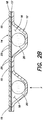
- Fig. 2A illustrates, in exploded view, the components of a blister package 10 according to one embodiment.
- the package 10 includes a base substrate 12 and a scored lidding film 14.
- the base 12 includes a plurality of recesses 16 that are arranged in an aligned pattern or array (e.g., rectangular array of rows and columns), with each recess 16 separated by a top planar sealing flange 15.
- Each recess 16 retains product 20.
- the blister package may be formed with any number of recesses, and each recess may hold an individual product or multiple products or a quantity of loose product, such as a powder or granular material.
- a series of separation lines may be provided within the sealing flange 15, between adjacent recesses, or group of multiple recesses, as desired, to permit separation of a portion of the base substrate from the remainder.
- the lidding film 14 is joined to the base substrate 12 of a package as shown in the cross sectional view of Fig. 2B .
- the lidding film 14 is joined to the sealing flange 15 by a thermal weld seal, such that each individual recess 16 containing product 20 is covered and closed.
- a score pattern 22 of scored formations 23 ( Figs. 2A-2B ) is formed only in an outer layer 18 of the multi-layer lidding film 14.
- the score pattern 22 is provided for the initiation and propagation of the tear within the lidding film 14 overlying the recess 16, upon application of a force against the base material forming the recess 16, and the product 20 retained therein.
- the force is represented by the arrow F, with the resulting tear in the lidding film 14 occurring in an area of the scored lidding film 14 over the recess 16, for releasing the previously sealed product 20.
- the lidding film is designed to tear above a recess, without breaking the weld seal between the lidding film and base substrate.
- the score pattern 22 in the disclosed embodiment includes a plurality of individual scored formations 23, separated by non-scored areas 25 surrounding each scored formation.
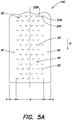
- Each scored formation in this example is shaped like an arrow head, including two generally straight lines 23A and 23B, joined at an apex 23C ( Fig. 5A ).
- the apexes of the scored formations 23 all point in the machine direction M in this example (same as the lengthwise package direction L).
- the individual scored formations may be aligned in rows and columns, which are equidistantly spaced from one another, where each row is offset with respect to the adjacent rows. Other patterns (e.g., irregular spacing between scored formations) may be used.
- the shape of the scored formation 23 and the size, depth, width of scoring lines 23A, 23B and number of scored formations across the width of the blister package, and/or across the width of each recess, can be varied for purposes of customizing the package based on the materials used for the base film and lidding film, the contents (product enclosed), and the desired push-through force.
- the scored formations 23 extend across all of the recesses 16 of the lidding film in the final package 10 such that no registration (alignment) of the scored formations of the lidding film and the recesses is required. This greatly simplifies production and assembly.
- the lidding film 14 is a multi-layer film comprising inner and outer film layers of different thermoplastic polymer materials, and without a metal layer.
- An inner seal layer 17 of the lidding film 14 forms a weld seal bond to the top surface (the sealing flange 15) of the base substrate 12.
- the inner seal layer 17 is formed of a thermoplastic polymer material that softens at a lower melt temperature than the outer layer 18, in order to bond the inner layer to the base substrate.
- the inner layer material for forming the weld (non-peelable) seal may comprise any of various known sealing materials based on, for example, ethylene vinyl acetate (EVA), polyester, polyolefin, acrylic, and others, including co-polymers, homopolymers and blends thereof.
- EVA ethylene vinyl acetate
- the outer layer 18 of the lidding film is a heat resistant layer, compared to the inner layer. The outer layer resists softening and maintains structural integrity for handling of the lidding film composite when the inner layer is softened for weld sealing to the base substrate.
- the outer layer may comprise any of various thermoplastic polymer materials, such as polyester, (e.g., polyethylene terephthalate PET), polyolefin (e.g., polypropylene or polyethylene), including homopolymers, co-polymers, and blends thereof.
- the different thermoplastic polymer materials of the inner and outer film layers 17, 18 includes polymers of different chemistry or polymers of the same chemistry (thermoplastic family, such as polyester) but having different characteristics (e.g., crystalline, semi-crystalline, or amorphous) and/or comprising homopolymers, copolymers of blends thereof.
- the outer layer comprises homopolymer polypropylene and the inner layer comprises polypropylene copolymer.
- the outer layer comprises semi-crystalline polyethylene terephthatlate (PET) and the inner layer comprises an amorphous polyethylene terephthalate copolymer.
- lidding film materials and base substrate materials are preferably compatible in commercial recycling streams.
- both the base substrate and lidding film materials may be from the same thermoplastic family (e.g., polypropylene, or polyester).
- Materials that are compatible in recycling means materials of the same thermoplastic family that are melt compatible.
- Fig. 3 illustrates a schematic view of one apparatus and process for scoring and slitting a master web 30 of lidding film being unwound from a master roll unwound unit 50 in order to generate multiple individual scored and slit rolls of lidding film.
- Fig. 4 illustrates a length of the master web 30 during the scoring and slitting process illustrated in Fig. 3 .
- the master web of lidding film 30 has an initial width W1 in a direction transverse T to the machine direction M (the machine direction being the direction in which the web 30 is advanced through the scoring and slitting apparatus).
- the master web 30 (shown moving to the left in Figs. 3-4 ) will be first scored by scoring unit 52 ( Fig. 3 .).
- the scored web is then slit by slitting station 54 ( Fig. 3 ).
- the result is six individual scored and slit rolls 14A-F of lidding film.
- Each scored and slit roll is then rewound onto a separate core at rewind station 56 (only two of six cores are shown in cross section).
- the film from the master web 30 after passing through the scoring and slitting stations 52, 54 includes non-scored outermost opposing edge trim areas 31, 32 ( Fig. 4 ) along the length of the roll (in the M direction), and between those non-scored edges 31,32, six (6) equally sized individual lidding films 14A, 14B, 14C, 14D, 14E, 14F.
- Each individual lidding film 14A-F of width W2 has a central scored area 40 of width B for forming the scored lidding film of a blister package, and opposing non-scored edge grip areas 41, 42, each of width A.
- the edge grip areas 41, 42 extend along the longitudinal length L (same as machine direction M) of the film from the master web 30 that has been scored and split into individual rolls 14.
- Fig. 5A is a top view of a length of one slit roll of lidding film (e.g. 14C), of width A+B+A, including central scored area 40 of width B, and two opposing non-scored edge grip areas 41, 42 each of width A.
- Fig. 5B shows a cross section of the slit roll, including outer layer 18 of thickness t1 and inner seal layer 17 of thickness t2.
- the total film thickness t3 is the sum of t1+t2.
- the scoring depth (SD) of the scored formations is also shown, extending only partially through the thickness t1 of the outer layer 18.
- the inner seal layer 17 is not scored.
- the master web 30 of lidding film is unrolled from a master roll unwind unit 50, and fed to a scoring station 52, where the web 30 is fed between two opposing rollers 53, 55, one roller 53 having formed thereon scoring surfaces 57 (see Fig. 7A and 7B ) for scoring the outer layer 18 of the web film 30 to form the scored central area 40 of width B, between two non-scored areas 41, 42 each of width A.
- the scored web 30A advances in line to a slitting station 54 where the scored web 30A is slit into multiple slit rolls 30B, in this example into six individual slit rolls 14A-F, each slit roll 14 then being wound on a separate core as a separate roll 58, 59 at rewind station 56.
- the outermost non-scored trim edges 31, 32 of the master roll 30 are removed during the slitting process (at station 54), such that each of the six individual film rolls has the same width W2, including the central scored area 40 of width B and two opposing non-scored edges 41, 42 each of width A.
- the non-scored edges 41, 42 of each individual slit roll 30B provide structural integrity to prevent tearing of the rolls during the scoring, slitting, and winding/rewinding steps.
- the scored formations 23 are preferably formed on a continuous basis by a rotary die cut roller, such as scoring roller 53 shown in Fig. 7A .
- the scoring roller may have only a single width B of scoring to form lidding film for a single blister package 10, of width A+B+A.
- the scoring roller may include multiple scoring areas, each of width B, for simultaneously forming multiple scored lidding films that are later slit to form multiple slit rolls of scored lidding film.
- a scoring roller 53 the film is passed through the nip of a pair of opposing rollers 53, 55, one of which is a scoring roller 53.
- the opposing non-scoring roller 55 supports the web film as it passes against the scoring roller 53.
- passing against a scoring roller includes the use of one or multiple rollers.
- each individual scored lidding film roll 58, 59 can be unwound from its core and aligned with a formed base substrate (filled with product) as shown in Fig. 1 , for weld sealing the lidding film to the substrate to form the filled blister packages.
- the individual slit rolls form narrow rolls 14A-14F, each having a width adapted for a blister package.
- the slit rolls are then separately sealed to a series of base substrates during the inline forming and sealing operations, with the individual (or multiple) packages 10 then being cut from the series of sealed base substrates and lidding film formed inline in the machine direction.
- the non-scored edge areas 41, 42 of the lidding film and underlying base substrate are removed during the final die cutting of the individual blister packages as shown in the final step (cutting station 7) of Fig. 1 .
- a scored and slit roll of lidding film may be wide enough to form multiple packages across the width of the lidding film.
Landscapes
- Engineering & Computer Science (AREA)
- Mechanical Engineering (AREA)
- Chemical & Material Sciences (AREA)
- Composite Materials (AREA)
- Packages (AREA)
- Physics & Mathematics (AREA)
- Fluid Mechanics (AREA)
- Containers And Plastic Fillers For Packaging (AREA)
Claims (15)
- Film multicouche comprenant :un film multicouche (14) de film enroulable sur un noyau et adapté de sorte à être découpé pour former un film de couvercle entaillé (14) pour emballages-coques (10), le film (14) étant formé sans une couche de métal et en incluant une couche de scellage interne (17) et une couche externe (18) composées de différents matériaux polymères thermoplastiques,la couche de scellage interne (17), configurée pour former un joint de soudage thermique avec un substrat de base (12) d'un emballage-coque (10), alors que la couche externe (18) comporte une zone entaillée configurée pour rompre et libérer un produit (20) contenu dans un renfoncement (16) d'un substrat de base (12) sans briser le joint de soudage,le film (14) étant déroulé du noyau dans un sens machine M transversal à un axe longitudinal central CL du noyau sur lequel est enroulé le film (14),la zone entaillée étant dimensionnée pour couvrir une pluralité de renfoncements (16) dans un substrat de base (12) d'un emballage-coque et comportant une pluralité de formations entaillées individuelles (23) espacées entre elles, l'entaille étant uniformément distribuée dans la zone entaillée, sans qu'il n'y ait besoin d'associer les formations entaillées (23) avec les renforcements individuels (16) dans le sens machine M ou dans un sens transversal à celle-ci, etla zone entaillée étant formée en faisant passer le film (12) contre un rouleau d'entaille (53) pour mécaniquement pratiquer une entaille partiellement à travers la couche externe (18), sans entailler la couche de scellage interne (17), dans lequel la profondeur d'entaille correspond à 30 %-70 % de l'épaisseur de la couche externe, la couche de scellage interne (17) occupe 5 % à 30 % de l'épaisseur totale du film et la couche externe (18) occupe 70 % à 95 % de l'épaisseur totale du film, l'épaisseur totale du film étant celle du film multicouche (14) du film, et le film multicouche (14) du film ayant une épaisseur de 20 à 80 microns.
- Film multicouche comprenant :un film multicouche (14) de film enroulable sur un noyau et adapté de sorte à être découpé pour former un film de couvercle entaillé (14) pour emballages-coques (10), le film (14) étant formé sans une couche de métal et en incluant une couche de scellage interne (17) et une couche externe (18) composées de différents matériaux polymères thermoplastiques,la couche de scellage interne (17), configurée pour former un joint de soudage thermique avec un substrat de base (12) d'un emballage-coque (10), alors que la couche externe (18) comporte une zone entaillée centrale (40) configurée pour rompre et libérer un produit (20) contenu dans un renfoncement (16) d'un substrat de base (12) sans briser le joint de soudage,le film (14) étant déroulé du noyau dans un sens machine M transversal à un axe longitudinal central CL du noyau sur lequel est enroulé le film (14),la zone entaillée centrale (40) s'étendant dans le sens machine M entre la première et la deuxième zones d'adhérence opposées non entaillées (41,42) alignées dans le sens machine M, la zone entaillée centrale (40) étant dimensionnée pour couvrir une pluralité de renfoncements (16) dans un substrat de base (12) d'un emballage-coque (10) et comprenant une pluralité de formations entaillées individuelles (23) espacées entre elles, l'entaille étant uniformément distribuée dans la zone centrale (40) dans le sens machine M, sans qu'il n'y ait besoin d'associer les formations entaillées (23) avec des renforcements individuels (16) dans le sens machine M,la zone entaillée centrale (40) étant formée en faisant passer le film contre un rouleau d'entaille (53) pour mécaniquement entailler partiellement à travers la couche externe (18), sans entailler la couche de scellage interne (17), dans lequel la profondeur d'entaille correspond à 30 %-70 % de l'épaisseur de la couche externe, la couche de scellage interne (17) occupe 5 % à 30 % de l'épaisseur totale du film et la couche externe (18) occupe 70 % à 95 % de l'épaisseur totale du film, l'épaisseur totale du film étant celle du film multicouche (14) du film, et le film multicouche (14) du film a une épaisseur de 20 à 80 microns,la première et la deuxième zones d'adhérence opposées (41,42) n'étant pas entaillées et chacune ayant une largeur minimale, transversalement au sens machine M, configurées pour assurer une intégrité structurelle au film (14) au cours de l'enroulement du film (14) sur le noyau et du déroulement de celui-ci du noyau, etles zones d'adhérence non entaillées (41,42) pouvant être découpées pour former un film (14) de couvercle entaillé et découpé pour emballages-coques (10), le film (14) de couvercle entaillé et découpé comportant la zone entaillée centrale (40) entre la première et la deuxième zones d'adhérence non entaillées (41,42), dans lequel la zone entaillée centrale (40) occupe 75 % à 99 % d'une largeur totale du film de couvercle découpé (14) et les parties restantes de la première et de la deuxième zones d'adhérence non entaillées (41,42) occupent entre elles 1 % à 25 % de la largeur totale du film de couvercle découpé (14).
- Film entaillé et découpé pour emballages-coques, qui a été formé en découpant le film multicouche selon la revendication 2, dans lequel le film de couvercle entaillé et découpé (14) comporte la zone entaillées centrale (40) entre les parties restantes de la première et de la deuxième zones d'adhérence non entaillées (41,42), dans lequel la zone entaillée centrale (40) occupe 75 % à 99 % d'une largeur totale du film de couvercle découpé (14) et les parties restantes de la première et de la deuxième zones d'adhérence non entaillées (41,42) occupent entre elles 1 % à 25 % de la largeur totale du film de couvercle découpé (14).
- Film de couvercle entaillé et découpé selon la revendication 3, dans lequel la zone entaillée centrale (40) occupe 80 % à 99 % de la largeur totale du film de couvercle découpé, ou dans lequel la zone entaillée centrale (40) occupe 85 % à 99 % de la largeur totale du film de couvercle découpé.
- Film multicouche selon, soit la revendication 1, soit la revendication 2, ou film de couvercle entaillé et découpé selon la revendication 3, dans lequel l'entaille comprend des formations entaillées en forme de flèche (23)espacées entre elles et alignées dans le sens M.
- Film multicouche selon, soit la revendication 1, soit la revendication 2, ou film de couvercle entaillé et découpé selon la revendication 3, dans lequel la largeur d'entaille est de 5 à 100 microns.
- Film de couvercle selon la revendication 3, combiné à un substrat de base thermoformé, la couche interne (17) étant scellée par soudage au substrat de base (12).
- Film de couvercle et substrat de base selon la revendication 7, découpés pour former un seul emballage-coque (10) .
- Film de couvercle et substrat de base selon la revendication 8, fabriqués dans des matériaux compatibles avec un recyclage, éventuellement tous deux fabriqués en polypropylène, ou tous deux fabriqués en polyester.
- Film multicouche selon, soit la revendication 1, soit la revendication 2, ou film de couvercle entaillé et découpé selon la revendication 3, dans lequel le film multicouche (14) est formé par co-extrusion de la couche de scellage interne (17) et de la couche externe (18), par revêtement par extrusion de la couche de scellage interne (17) sur la couche externe (18), ou par revêtement de la couche de scellage interne (17) sur la couche externe (18) au moyen de procédés de revêtement à base de solvant, d'eau ou sans solvant ou par laminage-collage humide ou sec de la couche de scellage interne (17) sur la couche externe (18).
- Film multicouche selon, soit la revendication 1, soit la revendication 2, ou film de couvercle entaillé et découpé selon la revendication 3, dans lequel la couche externe (18) est constitué de polyester ou de polyoléfine, ou dans lequel la couche externe (18) est constituée de polyéthylène téréphtalate ou de polypropylène, notamment d'homopolymères, de copolymères et de mélanges de ceux-ci, ou dans lequel la couche externe (18) est constituée de polyéthylène téréphtalate semi-cristallin et la couche interne est constituée d'un copolymère obtenu à partir de polyéthylène téréphtalate amorphe, ou dans lequel la couche externe (18) est constituée de polypropylène homopolymère et la couche interne est constituée de copolymère de polypropylène.
- Film multicouche selon, soit la revendication 1, soit la revendication 2, ou film de couvercle entaillé et découpé selon la revendication 3, dans lequel la couche interne (17) est constituée d'éthylène-acétate de vinyle, de polyester, de polyéthylène, de polypropylène, ou d'acrylique, notamment d'homopolymères, de copolymères et de mélanges de ceux-ci.
- Procédé de formage d'emballages-coques comprenant les étapes consistant à :produire un rouleau principal de film multicouche selon la revendication 1, dans lequel le rouleau principal est configuré pour former un film de couvercle entaillé (14) pour des emballages-coques multiples (10) en travers d'une largeur W du rouleau principal transversalement au sens machine M,dérouler une longueur du rouleau principal dans le sens machine M,découper le rouleau principal le long du sens machine M pour former une multitude de rouleaux découpés de film de couvercle entaillé (14),dérouler un rouleau découpé de film de couvercle (14) et fixer une série de substrats de base (12) le long d'une longueur du rouleau découpé déroulé pour former une série d'emballages-coques (10), dans lequel dans chaque emballage-coque (10) la zone entaillée recouvre un renforcement (16) dans un substrat de base (12) d'un emballage-coque (10) et est jointe à une bride de scellage (15) du substrat de base (12), sans qu'il y ait besoin d'associer les formations entaillées (23) avec le renforcement (16) dans le sens machine M ou dans un sens transversal à celle-ci.
- Procédé de formage d'emballages-coques comprenant les étapes consistant à :produire un rouleau principal de film multicouche selon la revendication 2, dans lequel le rouleau principal est configuré pour former un film de couvercle entaillé (14) pour des emballages-coques multiples (10) en travers d'une largeur W du rouleau principal transversalement au sens machine M, dans lequel les multiples zones entaillées centrales (40) sont formées en travers de la largeur du rouleau principal entre des zones non entaillées (41,42),dérouler une longueur de rouleau principal dans le sens machine M,découper le rouleau principal le long du sens machine M dans les zones d'adhérence non entaillées (41,42) entre deux zones entaillées centrales (40) pour former une multitude de rouleaux découpés de film de couvercle entaillé (14),dérouler un rouleau découpé de film de couvercle (14) et fixer une série de substrats de base (12) le long d'une longueur du rouleau découpé non déroulé pour former une série d'emballages-coques (10), dans lequel dans chaque emballage-coque (10) la zone entaillée centrale (40) recouvre un renforcement (16) dans un substrat de base (12) d'un emballage-coque (10) et, dans le sens machine M, est jointe à une bride de scellage (15) du substrat de base (12), sans qu'il n'y ait besoin d'associer les formations entaillées (23) avec le renforcement (16) dans le sens machine M, et la première et la deuxième zones d'adhérence non entaillées (41,42) sont jointes à la bride de scellage (15) du substrat de base (12) sur les côtés opposés de la zone entaillée centrale (40) dans un sens transversal au sens machine M.
- Procédé selon, soit la revendication 13, soit la revendication 14, consistant en outre à découper des emballages-coques individuels (10) de la série d'emballages-coques (10).
Applications Claiming Priority (2)
| Application Number | Priority Date | Filing Date | Title |
|---|---|---|---|
| US14/637,764 US20160257438A1 (en) | 2015-03-04 | 2015-03-04 | Multi-layer web and process for forming scored lidding film for blister packages |
| PCT/US2016/016266 WO2016140758A1 (fr) | 2015-03-04 | 2016-02-03 | Film multicouche et procédé pour former un film de couvercle entaillé pour emballages-coques |
Publications (2)
| Publication Number | Publication Date |
|---|---|
| EP3265308A1 EP3265308A1 (fr) | 2018-01-10 |
| EP3265308B1 true EP3265308B1 (fr) | 2019-01-02 |
Family
ID=55451558
Family Applications (1)
| Application Number | Title | Priority Date | Filing Date |
|---|---|---|---|
| EP16707576.1A Active EP3265308B1 (fr) | 2015-03-04 | 2016-02-03 | Film multicouche et procédé pour former un film de couvercle entaillé pour emballages-coques |
Country Status (4)
| Country | Link |
|---|---|
| US (2) | US20160257438A1 (fr) |
| EP (1) | EP3265308B1 (fr) |
| MX (1) | MX2017011047A (fr) |
| WO (1) | WO2016140758A1 (fr) |
Families Citing this family (15)
| Publication number | Priority date | Publication date | Assignee | Title |
|---|---|---|---|---|
| US10501248B2 (en) | 2016-11-02 | 2019-12-10 | Tekni-Plex, Inc. | Blister package and method of manufacture |
| EP3863931B1 (fr) * | 2018-10-11 | 2025-01-08 | Cryovac, LLC | Appareil et procédé de fabrication de supports ou d'emballages et appareil et procédé d'emballage |
| US11370587B2 (en) | 2019-12-04 | 2022-06-28 | Tekni-Plex, Inc. | Aroma penetration heat seal liner and method of sealing a container |
| CN112060648B (zh) * | 2020-08-27 | 2022-07-29 | 京东方科技集团股份有限公司 | 一种泡罩制备装置及方法 |
| WO2022236313A1 (fr) * | 2021-05-06 | 2022-11-10 | Csp Technologies, Inc. | Emballages-coques contenant un matériau actif et leurs procédés de fabrication et d'utilisation |
| EP4330156B1 (fr) | 2021-06-03 | 2025-05-07 | Tekni-Plex, Inc. | Emballage-coque recyclable |
| WO2023044067A1 (fr) | 2021-09-17 | 2023-03-23 | Proampac Holdings Inc. | Film d'emballage recyclable et procédé et article avec ligne de déchirure commandée par pré-fente mécanique |
| CN114619657B (zh) * | 2022-01-22 | 2024-08-23 | 东莞市思纯塑胶制品有限公司 | 一种pla餐盘一次结晶方法及其结晶模具、结晶设备 |
| DE102022107651A1 (de) * | 2022-03-31 | 2023-10-05 | Huhtamaki Flexible Packaging Germany Gmbh & Co. Kg | Durchdrückbare Deckelfolie mit einer Mehrzahl sich nicht schneidender Materialschwächungen und Durchdrückverpackung mit einer solchen Deckelfolie |
| JP2023166282A (ja) * | 2022-05-09 | 2023-11-21 | 株式会社カナエ | 蓋材シートの製造方法及び包装体の製造方法 |
| WO2024118644A1 (fr) * | 2022-12-01 | 2024-06-06 | Liveo Research Ag | Emballage coque à passage direct avec gravure produite par laser uv et procédés de fabrication associés |
| US12043463B1 (en) * | 2023-02-07 | 2024-07-23 | Medi-Dose, Inc. | Tamper-evident cover sheet for multi-compartment article dispensing package |
| DE102023108752A1 (de) * | 2023-04-05 | 2024-10-10 | Mitsubishi Polyester Film Gmbh | Mehrschichtige, coextrudierte Polyesterfolie mit verringerter Durchstossfestigkeit zur Verwendung als Blisterabdeckfolie |
| DE102024109643A1 (de) * | 2024-04-05 | 2025-10-09 | Huhtamaki Flexible Packaging Germany Gmbh & Co. Kg | Durchdrückbare Verpackungsfolie und Blisterverpackung mit einer solchen |
| DE102024109647A1 (de) | 2024-04-05 | 2025-10-09 | Huhtamaki Flexible Packaging Germany Gmbh & Co. Kg | Verpackungsfolie, insbesondere Deckelfolie für eine Blisterverpackung, und Blisterverpackung |
Family Cites Families (18)
| Publication number | Priority date | Publication date | Assignee | Title |
|---|---|---|---|---|
| US3759371A (en) | 1972-07-12 | 1973-09-18 | R Marks | Containers for small articles such as pills |
| US4375494A (en) * | 1980-03-12 | 1983-03-01 | Imperial Chemical Industries Plc | Polyester film composites |
| CH684081A5 (de) * | 1991-11-18 | 1994-07-15 | Alusuisse Lonza Services Ag | Durchdrückpackung. |
| US5236749A (en) * | 1991-12-02 | 1993-08-17 | Ewing William D | Blister package |
| DE4236450A1 (de) | 1992-10-28 | 1994-05-05 | Bp Chemicals Plastec Gmbh | Folie für manipulationssichere Abdeckungen von Warenträgern |
| CH684788A5 (de) * | 1993-03-04 | 1994-12-30 | Alusuisse Lonza Services Ag | Metallfolienfreie Deckelfolie für Durchdrückpackungen. |
| DE29623683U1 (de) | 1996-04-09 | 1999-04-15 | BP Chemicals PlasTec GmbH, 89165 Dietenheim | Verpackung |
| EP1697228A1 (fr) | 2003-12-10 | 2006-09-06 | 3Point Blue Limited | Ameliorations apportees ou se rapportant a des emballages-coque |
| US7413800B2 (en) * | 2004-03-22 | 2008-08-19 | Terphane Inc. | Co-extruded biaxially oriented sealable, peelable film and process for its production |
| US20050284789A1 (en) * | 2004-06-29 | 2005-12-29 | Carespodi Dennis L | Laser-scored push-through blister backing and methods of making same |
| US9216850B2 (en) | 2006-09-26 | 2015-12-22 | Intercontinental Great Brands Llc | Rupturable substrate |
| PL2069215T3 (pl) | 2006-09-26 | 2012-10-31 | Intercontinental Great Brands Llc | Opakowanie blistrowe podatne na przerwanie |
| US8079475B2 (en) | 2008-01-24 | 2011-12-20 | Sonoco Development, Inc. | Blister package |
| ES2423288T3 (es) * | 2008-05-22 | 2013-09-19 | Wm. Wrigley Jr. Company | Cubierta de envase blíster con muesca formada por láser dual |
| US8479921B2 (en) | 2009-12-09 | 2013-07-09 | Amcor Flexibles, Inc. | Child resistant blister package |
| SG194034A1 (en) | 2011-04-01 | 2013-11-29 | Mannkind Corp | Blister package for pharmaceutical cartridges |
| US9138378B2 (en) * | 2011-07-06 | 2015-09-22 | Sonoco Development, Inc. | Blister package and method of forming same |
| US10450126B2 (en) | 2011-07-06 | 2019-10-22 | Sonoco Development, Inc. | Die-cut patterns for blister package |
-
2015
- 2015-03-04 US US14/637,764 patent/US20160257438A1/en not_active Abandoned
-
2016
- 2016-02-03 MX MX2017011047A patent/MX2017011047A/es unknown
- 2016-02-03 WO PCT/US2016/016266 patent/WO2016140758A1/fr not_active Ceased
- 2016-02-03 EP EP16707576.1A patent/EP3265308B1/fr active Active
-
2019
- 2019-05-07 US US16/405,211 patent/US11014729B2/en active Active
Non-Patent Citations (1)
| Title |
|---|
| None * |
Also Published As
| Publication number | Publication date |
|---|---|
| US11014729B2 (en) | 2021-05-25 |
| US20160257438A1 (en) | 2016-09-08 |
| US20190263549A1 (en) | 2019-08-29 |
| EP3265308A1 (fr) | 2018-01-10 |
| WO2016140758A1 (fr) | 2016-09-09 |
| MX2017011047A (es) | 2017-11-10 |
Similar Documents
| Publication | Publication Date | Title |
|---|---|---|
| US11014729B2 (en) | Multi-layer web and process for forming scored lidding film for blister packages | |
| USRE49960E1 (en) | Resealable package film | |
| US5975304A (en) | Sealed containers with tabs and method of making the same | |
| TWI344351B (en) | A method for producing a detachably connected container having barrier properties | |
| EP3109172B1 (fr) | Produits d'emballage à film souple à ouverture et fermeture faciles et procédés de fabrication | |
| US20030102247A1 (en) | Package, method of manufacturing the package and packet of the package | |
| US10822140B2 (en) | Plastic fabric composite, packaging bag made of a plastic fabric composite, and a method for manufacturing a packaging bag | |
| US10501248B2 (en) | Blister package and method of manufacture | |
| EP0596747A1 (fr) | Emballage facile à ouvrir, film et procédé de fabrication | |
| WO2015009658A2 (fr) | Scellement intérieur pour contenant comprenant un panneau détachable | |
| US20110248034A1 (en) | Foil-lid to close a tray, and method of manufacturing said foil-lid | |
| WO2017116797A1 (fr) | Emballages en film souple scellés à froid et procédés | |
| EP2482774B1 (fr) | Procédé de fixation de languettes de saisie d'une couche de support de pansement film | |
| JPH09267819A (ja) | アイスクリ−ム用包装材料、それを使用した包装袋および包装体 | |
| JP6780228B2 (ja) | 包装容器 | |
| AU2011304696B2 (en) | Pre-cut multilayer packaging material | |
| EP4119341A1 (fr) | Stratifié de feuilles d'emballage en bande et emballage | |
| JP7440737B2 (ja) | 製袋充填用フィルム、製袋充填方法 | |
| JPH08324588A (ja) | 易開封性袋 | |
| NZ615554B2 (en) | Reclosable flexible film packaging products and methods of manufacture | |
| MXPA99007797A (en) | Sealed containers with tabs and method to prepare |
Legal Events
| Date | Code | Title | Description |
|---|---|---|---|
| STAA | Information on the status of an ep patent application or granted ep patent |
Free format text: STATUS: THE INTERNATIONAL PUBLICATION HAS BEEN MADE |
|
| PUAI | Public reference made under article 153(3) epc to a published international application that has entered the european phase |
Free format text: ORIGINAL CODE: 0009012 |
|
| STAA | Information on the status of an ep patent application or granted ep patent |
Free format text: STATUS: REQUEST FOR EXAMINATION WAS MADE |
|
| 17P | Request for examination filed |
Effective date: 20171003 |
|
| AK | Designated contracting states |
Kind code of ref document: A1 Designated state(s): AL AT BE BG CH CY CZ DE DK EE ES FI FR GB GR HR HU IE IS IT LI LT LU LV MC MK MT NL NO PL PT RO RS SE SI SK SM TR |
|
| AX | Request for extension of the european patent |
Extension state: BA ME |
|
| DAV | Request for validation of the european patent (deleted) | ||
| DAX | Request for extension of the european patent (deleted) | ||
| GRAP | Despatch of communication of intention to grant a patent |
Free format text: ORIGINAL CODE: EPIDOSNIGR1 |
|
| STAA | Information on the status of an ep patent application or granted ep patent |
Free format text: STATUS: GRANT OF PATENT IS INTENDED |
|
| INTG | Intention to grant announced |
Effective date: 20180724 |
|
| GRAS | Grant fee paid |
Free format text: ORIGINAL CODE: EPIDOSNIGR3 |
|
| GRAA | (expected) grant |
Free format text: ORIGINAL CODE: 0009210 |
|
| STAA | Information on the status of an ep patent application or granted ep patent |
Free format text: STATUS: THE PATENT HAS BEEN GRANTED |
|
| AK | Designated contracting states |
Kind code of ref document: B1 Designated state(s): AL AT BE BG CH CY CZ DE DK EE ES FI FR GB GR HR HU IE IS IT LI LT LU LV MC MK MT NL NO PL PT RO RS SE SI SK SM TR |
|
| REG | Reference to a national code |
Ref country code: GB Ref legal event code: FG4D |
|
| REG | Reference to a national code |
Ref country code: CH Ref legal event code: EP Ref country code: AT Ref legal event code: REF Ref document number: 1083839 Country of ref document: AT Kind code of ref document: T Effective date: 20190115 |
|
| REG | Reference to a national code |
Ref country code: IE Ref legal event code: FG4D |
|
| REG | Reference to a national code |
Ref country code: DE Ref legal event code: R096 Ref document number: 602016008980 Country of ref document: DE |
|
| REG | Reference to a national code |
Ref country code: NL Ref legal event code: MP Effective date: 20190102 |
|
| REG | Reference to a national code |
Ref country code: LT Ref legal event code: MG4D |
|
| REG | Reference to a national code |
Ref country code: AT Ref legal event code: MK05 Ref document number: 1083839 Country of ref document: AT Kind code of ref document: T Effective date: 20190102 |
|
| PG25 | Lapsed in a contracting state [announced via postgrant information from national office to epo] |
Ref country code: NL Free format text: LAPSE BECAUSE OF FAILURE TO SUBMIT A TRANSLATION OF THE DESCRIPTION OR TO PAY THE FEE WITHIN THE PRESCRIBED TIME-LIMIT Effective date: 20190102 |
|
| PG25 | Lapsed in a contracting state [announced via postgrant information from national office to epo] |
Ref country code: FI Free format text: LAPSE BECAUSE OF FAILURE TO SUBMIT A TRANSLATION OF THE DESCRIPTION OR TO PAY THE FEE WITHIN THE PRESCRIBED TIME-LIMIT Effective date: 20190102 Ref country code: NO Free format text: LAPSE BECAUSE OF FAILURE TO SUBMIT A TRANSLATION OF THE DESCRIPTION OR TO PAY THE FEE WITHIN THE PRESCRIBED TIME-LIMIT Effective date: 20190402 Ref country code: LT Free format text: LAPSE BECAUSE OF FAILURE TO SUBMIT A TRANSLATION OF THE DESCRIPTION OR TO PAY THE FEE WITHIN THE PRESCRIBED TIME-LIMIT Effective date: 20190102 Ref country code: PL Free format text: LAPSE BECAUSE OF FAILURE TO SUBMIT A TRANSLATION OF THE DESCRIPTION OR TO PAY THE FEE WITHIN THE PRESCRIBED TIME-LIMIT Effective date: 20190102 Ref country code: ES Free format text: LAPSE BECAUSE OF FAILURE TO SUBMIT A TRANSLATION OF THE DESCRIPTION OR TO PAY THE FEE WITHIN THE PRESCRIBED TIME-LIMIT Effective date: 20190102 Ref country code: PT Free format text: LAPSE BECAUSE OF FAILURE TO SUBMIT A TRANSLATION OF THE DESCRIPTION OR TO PAY THE FEE WITHIN THE PRESCRIBED TIME-LIMIT Effective date: 20190502 Ref country code: SE Free format text: LAPSE BECAUSE OF FAILURE TO SUBMIT A TRANSLATION OF THE DESCRIPTION OR TO PAY THE FEE WITHIN THE PRESCRIBED TIME-LIMIT Effective date: 20190102 |
|
| PG25 | Lapsed in a contracting state [announced via postgrant information from national office to epo] |
Ref country code: LV Free format text: LAPSE BECAUSE OF FAILURE TO SUBMIT A TRANSLATION OF THE DESCRIPTION OR TO PAY THE FEE WITHIN THE PRESCRIBED TIME-LIMIT Effective date: 20190102 Ref country code: HR Free format text: LAPSE BECAUSE OF FAILURE TO SUBMIT A TRANSLATION OF THE DESCRIPTION OR TO PAY THE FEE WITHIN THE PRESCRIBED TIME-LIMIT Effective date: 20190102 Ref country code: RS Free format text: LAPSE BECAUSE OF FAILURE TO SUBMIT A TRANSLATION OF THE DESCRIPTION OR TO PAY THE FEE WITHIN THE PRESCRIBED TIME-LIMIT Effective date: 20190102 Ref country code: BG Free format text: LAPSE BECAUSE OF FAILURE TO SUBMIT A TRANSLATION OF THE DESCRIPTION OR TO PAY THE FEE WITHIN THE PRESCRIBED TIME-LIMIT Effective date: 20190402 Ref country code: IS Free format text: LAPSE BECAUSE OF FAILURE TO SUBMIT A TRANSLATION OF THE DESCRIPTION OR TO PAY THE FEE WITHIN THE PRESCRIBED TIME-LIMIT Effective date: 20190502 Ref country code: GR Free format text: LAPSE BECAUSE OF FAILURE TO SUBMIT A TRANSLATION OF THE DESCRIPTION OR TO PAY THE FEE WITHIN THE PRESCRIBED TIME-LIMIT Effective date: 20190403 |
|
| REG | Reference to a national code |
Ref country code: CH Ref legal event code: PL |
|
| REG | Reference to a national code |
Ref country code: DE Ref legal event code: R097 Ref document number: 602016008980 Country of ref document: DE |
|
| PG25 | Lapsed in a contracting state [announced via postgrant information from national office to epo] |
Ref country code: DK Free format text: LAPSE BECAUSE OF FAILURE TO SUBMIT A TRANSLATION OF THE DESCRIPTION OR TO PAY THE FEE WITHIN THE PRESCRIBED TIME-LIMIT Effective date: 20190102 Ref country code: MC Free format text: LAPSE BECAUSE OF FAILURE TO SUBMIT A TRANSLATION OF THE DESCRIPTION OR TO PAY THE FEE WITHIN THE PRESCRIBED TIME-LIMIT Effective date: 20190102 Ref country code: AL Free format text: LAPSE BECAUSE OF FAILURE TO SUBMIT A TRANSLATION OF THE DESCRIPTION OR TO PAY THE FEE WITHIN THE PRESCRIBED TIME-LIMIT Effective date: 20190102 Ref country code: SK Free format text: LAPSE BECAUSE OF FAILURE TO SUBMIT A TRANSLATION OF THE DESCRIPTION OR TO PAY THE FEE WITHIN THE PRESCRIBED TIME-LIMIT Effective date: 20190102 Ref country code: CZ Free format text: LAPSE BECAUSE OF FAILURE TO SUBMIT A TRANSLATION OF THE DESCRIPTION OR TO PAY THE FEE WITHIN THE PRESCRIBED TIME-LIMIT Effective date: 20190102 Ref country code: RO Free format text: LAPSE BECAUSE OF FAILURE TO SUBMIT A TRANSLATION OF THE DESCRIPTION OR TO PAY THE FEE WITHIN THE PRESCRIBED TIME-LIMIT Effective date: 20190102 Ref country code: LU Free format text: LAPSE BECAUSE OF NON-PAYMENT OF DUE FEES Effective date: 20190203 Ref country code: EE Free format text: LAPSE BECAUSE OF FAILURE TO SUBMIT A TRANSLATION OF THE DESCRIPTION OR TO PAY THE FEE WITHIN THE PRESCRIBED TIME-LIMIT Effective date: 20190102 Ref country code: AT Free format text: LAPSE BECAUSE OF FAILURE TO SUBMIT A TRANSLATION OF THE DESCRIPTION OR TO PAY THE FEE WITHIN THE PRESCRIBED TIME-LIMIT Effective date: 20190102 |
|
| PLBE | No opposition filed within time limit |
Free format text: ORIGINAL CODE: 0009261 |
|
| STAA | Information on the status of an ep patent application or granted ep patent |
Free format text: STATUS: NO OPPOSITION FILED WITHIN TIME LIMIT |
|
| REG | Reference to a national code |
Ref country code: IE Ref legal event code: MM4A |
|
| PG25 | Lapsed in a contracting state [announced via postgrant information from national office to epo] |
Ref country code: SM Free format text: LAPSE BECAUSE OF FAILURE TO SUBMIT A TRANSLATION OF THE DESCRIPTION OR TO PAY THE FEE WITHIN THE PRESCRIBED TIME-LIMIT Effective date: 20190102 |
|
| 26N | No opposition filed |
Effective date: 20191003 |
|
| PG25 | Lapsed in a contracting state [announced via postgrant information from national office to epo] |
Ref country code: CH Free format text: LAPSE BECAUSE OF NON-PAYMENT OF DUE FEES Effective date: 20190228 Ref country code: LI Free format text: LAPSE BECAUSE OF NON-PAYMENT OF DUE FEES Effective date: 20190228 |
|
| PG25 | Lapsed in a contracting state [announced via postgrant information from national office to epo] |
Ref country code: IE Free format text: LAPSE BECAUSE OF NON-PAYMENT OF DUE FEES Effective date: 20190203 |
|
| PG25 | Lapsed in a contracting state [announced via postgrant information from national office to epo] |
Ref country code: SI Free format text: LAPSE BECAUSE OF FAILURE TO SUBMIT A TRANSLATION OF THE DESCRIPTION OR TO PAY THE FEE WITHIN THE PRESCRIBED TIME-LIMIT Effective date: 20190102 |
|
| PG25 | Lapsed in a contracting state [announced via postgrant information from national office to epo] |
Ref country code: TR Free format text: LAPSE BECAUSE OF FAILURE TO SUBMIT A TRANSLATION OF THE DESCRIPTION OR TO PAY THE FEE WITHIN THE PRESCRIBED TIME-LIMIT Effective date: 20190102 |
|
| PG25 | Lapsed in a contracting state [announced via postgrant information from national office to epo] |
Ref country code: MT Free format text: LAPSE BECAUSE OF NON-PAYMENT OF DUE FEES Effective date: 20190203 |
|
| PG25 | Lapsed in a contracting state [announced via postgrant information from national office to epo] |
Ref country code: CY Free format text: LAPSE BECAUSE OF FAILURE TO SUBMIT A TRANSLATION OF THE DESCRIPTION OR TO PAY THE FEE WITHIN THE PRESCRIBED TIME-LIMIT Effective date: 20190102 |
|
| PG25 | Lapsed in a contracting state [announced via postgrant information from national office to epo] |
Ref country code: HU Free format text: LAPSE BECAUSE OF FAILURE TO SUBMIT A TRANSLATION OF THE DESCRIPTION OR TO PAY THE FEE WITHIN THE PRESCRIBED TIME-LIMIT; INVALID AB INITIO Effective date: 20160203 |
|
| PG25 | Lapsed in a contracting state [announced via postgrant information from national office to epo] |
Ref country code: MK Free format text: LAPSE BECAUSE OF FAILURE TO SUBMIT A TRANSLATION OF THE DESCRIPTION OR TO PAY THE FEE WITHIN THE PRESCRIBED TIME-LIMIT Effective date: 20190102 |
|
| P01 | Opt-out of the competence of the unified patent court (upc) registered |
Effective date: 20230526 |
|
| REG | Reference to a national code |
Ref country code: DE Ref legal event code: R082 Ref document number: 602016008980 Country of ref document: DE Representative=s name: WESTPHAL, MUSSGNUG & PARTNER PATENTANWAELTE MI, DE |
|
| PGFP | Annual fee paid to national office [announced via postgrant information from national office to epo] |
Ref country code: GB Payment date: 20260227 Year of fee payment: 11 |
|
| PGFP | Annual fee paid to national office [announced via postgrant information from national office to epo] |
Ref country code: DE Payment date: 20260227 Year of fee payment: 11 |
|
| PGFP | Annual fee paid to national office [announced via postgrant information from national office to epo] |
Ref country code: IT Payment date: 20260219 Year of fee payment: 11 Ref country code: BE Payment date: 20260227 Year of fee payment: 11 |
|
| PGFP | Annual fee paid to national office [announced via postgrant information from national office to epo] |
Ref country code: FR Payment date: 20260225 Year of fee payment: 11 |