EP3302690B1 - Système de neuromodulation à l'aide de stimulation modulée de manière stochastique - Google Patents
Système de neuromodulation à l'aide de stimulation modulée de manière stochastique Download PDFInfo
- Publication number
- EP3302690B1 EP3302690B1 EP16725275.8A EP16725275A EP3302690B1 EP 3302690 B1 EP3302690 B1 EP 3302690B1 EP 16725275 A EP16725275 A EP 16725275A EP 3302690 B1 EP3302690 B1 EP 3302690B1
- Authority
- EP
- European Patent Office
- Prior art keywords
- neuromodulation
- stochastically
- parameter
- stochastic
- modulated
- Prior art date
- Legal status (The legal status is an assumption and is not a legal conclusion. Google has not performed a legal analysis and makes no representation as to the accuracy of the status listed.)
- Active
Links
Images



Classifications
-
- A—HUMAN NECESSITIES
- A61—MEDICAL OR VETERINARY SCIENCE; HYGIENE
- A61N—ELECTROTHERAPY; MAGNETOTHERAPY; RADIATION THERAPY; ULTRASOUND THERAPY
- A61N1/00—Electrotherapy; Circuits therefor
- A61N1/18—Applying electric currents by contact electrodes
- A61N1/32—Applying electric currents by contact electrodes alternating or intermittent currents
- A61N1/36—Applying electric currents by contact electrodes alternating or intermittent currents for stimulation
- A61N1/3605—Implantable neurostimulators for stimulating central or peripheral nerve system
- A61N1/3606—Implantable neurostimulators for stimulating central or peripheral nerve system adapted for a particular treatment
- A61N1/36071—Pain
-
- A—HUMAN NECESSITIES
- A61—MEDICAL OR VETERINARY SCIENCE; HYGIENE
- A61N—ELECTROTHERAPY; MAGNETOTHERAPY; RADIATION THERAPY; ULTRASOUND THERAPY
- A61N1/00—Electrotherapy; Circuits therefor
- A61N1/18—Applying electric currents by contact electrodes
- A61N1/32—Applying electric currents by contact electrodes alternating or intermittent currents
- A61N1/36—Applying electric currents by contact electrodes alternating or intermittent currents for stimulation
- A61N1/3605—Implantable neurostimulators for stimulating central or peripheral nerve system
- A61N1/36128—Control systems
- A61N1/36189—Control systems using modulation techniques
-
- A—HUMAN NECESSITIES
- A61—MEDICAL OR VETERINARY SCIENCE; HYGIENE
- A61N—ELECTROTHERAPY; MAGNETOTHERAPY; RADIATION THERAPY; ULTRASOUND THERAPY
- A61N1/00—Electrotherapy; Circuits therefor
- A61N1/18—Applying electric currents by contact electrodes
- A61N1/32—Applying electric currents by contact electrodes alternating or intermittent currents
- A61N1/36—Applying electric currents by contact electrodes alternating or intermittent currents for stimulation
- A61N1/372—Arrangements in connection with the implantation of stimulators
- A61N1/37211—Means for communicating with stimulators
- A61N1/37235—Aspects of the external programmer
- A61N1/37247—User interfaces, e.g. input or presentation means
Definitions
- This document relates generally to medical devices, and more particularly, to systems for delivering neural modulation.
- Neural modulation has been proposed as a therapy for a number of conditions. Often, neural modulation and neural stimulation may be used interchangeably to describe excitatory stimulation that causes action potentials as well as inhibitory and other effects. Examples of neuromodulation include Spinal Cord Stimulation (SCS), Deep Brain Stimulation (DBS), Peripheral Nerve Stimulation (PNS), and Functional Electrical Stimulation (FES). SCS, by way of example and not limitation, has been used to treat chronic pain syndromes.
- SCS Spinal Cord Stimulation
- DBS Deep Brain Stimulation
- PPS Peripheral Nerve Stimulation
- FES Functional Electrical Stimulation
- SCS by way of example and not limitation, has been used to treat chronic pain syndromes.
- US 2007/0027486 A1 discloses an apparatus for providing electrical neurostimulation therapy to a patient.
- An electrical biasing signal defined by a plurality of parameters is generated, at least one of which comprises a random value within a defined range, and the electrical biasing signal is applied to a neural structure to bias an intrinsic neural signal on the structure.
- WO 2015/119768 A1 discloses a neuromodulation system configured for providing sub-threshold neuromodulation therapy to a patient.
- US 2014/0364921 A1 discloses a method for heart treatment that includes analyzing the cardiac rhythm. The method further includes utilizing a generator to produce discharges of N pulses of Vagus Nerve Stimulation (VNS) in succession.
- VNS Vagus Nerve Stimulation
- US 2011/0009923 A1 discloses a neurostimulator for providing therapy to a patient. Electrical background energy is conveyed to a first tissue region of the patient in accordance with a stochastic parameter, thereby modulating the excitability of the first tissue region, and electrical stimulation energy is conveyed to the first tissue region when its excitability is modulated.
- US 2008/0243204 A1 discloses a neural stimulation device, in which one or more stimulation parameters can be automatically and randomly adjusted such that any particular combination of stimulation parameters is not repeated for a given duration of time, thereby limiting habituation to the neural stimulus
- An example of subject matter includes an electrode arrangement and a neuromodulation device configured to use electrodes in the electrode arrangement to generate a neuromodulation field.
- the neuromodulation device includes a neuromodulation generator, a neuromodulation control circuit and a storage.
- the storage includes a stochastically-modulated neuromodulation parameter set and the stochastically-modulated neuromodulation parameter set includes at least one stochastically-modulated parameter.
- the control circuit is configured to control the neuromodulation generator using the stochastically-modulation parameter set to generate the neuromodulation field.
- the system further includes a stochastic modulator configured to stochastically modulate at least one parameter of a neuromodulation parameter set to provide the at least one stochastically-modulated parameter in the stochastically-modulated neuromodulation parameter set.
- a stochastic modulator configured to stochastically modulate at least one parameter of a neuromodulation parameter set to provide the at least one stochastically-modulated parameter in the stochastically-modulated neuromodulation parameter set.
- the system may optionally be configured such that the neuromodulation device includes the stochastic modulator.
- the system may optionally be configured such that the system includes a programming device.
- the programming device may include the stochastic modulator and is configured to program the stochastically-modulated neuromodulation parameter set into the neuromodulation device.
- the stochastic modulator is programmed with at least one modulation model, and is configured to use the at least one modulation model to stochastically modulate the at least one parameter to provide the at least one stochastically-modulated parameter.
- the at least one modulation model may include a probabilistic distribution model, or a stochastic process model, or a real-time / semi-real-time computational model.
- the stochastic modulator may be programmed with another modulation model and may be configured to use the other modulation model to stochastically modulate another parameter.
- the stochastic modulator is configured to use a random or pseudo-random samples of the modulation model to stochastically modulate the at least one parameter.
- the stochastic modulator may include a timer or counter configured to control when the stochastic modulator advances from one sample to another sample.
- the stochastic modulator includes stochastic process rules used to identify if a subsequent sample is permissible for a sequence of random or pseudo-random samples used to stochastically modulate the at least one parameter.
- the system may further include a user interface configured for use to program the stochastic modulator.
- the user interface may be configured to allow a user to select a modulation model to be used by the stochastic modulator.
- the user interface may be configured to allow a user to select a parameter to be stochastically-modulated using the stochastic modulator.
- the user interface may be configured to allow a user to select at least one of the following: at least one model parameter for a stochastic modulation model, the at least one model parameter to at least partially define or constrain the stochastic modulation model; sampling rules to create random or pseudo-random samples of the stochastic modulation model; rules to control when the stochastic modulator advances from one sample to another sample; or rules used to identify if a subsequent sample is permissible for a sequence of random or pseudo-random samples to provide a stochastic process.
- the at least one stochastically-modulated parameter may include a temporal modulation parameter.
- the at least one stochastically-modulated parameter may include a spatial parameter.
- An example of subject matter may include an electrode arrangement and a neuromodulation device configured to use electrodes in the electrode arrangement to generate a neuromodulation field.
- the neuromodulation device includes a neuromodulation generator, a neuromodulation control circuit and a storage.
- the storage includes a stochastically-modulated neuromodulation parameter set, the stochastically-modulated neuromodulation parameter set including at least one stochastically-modulated parameter.
- the control circuit is configured to control the neuromodulation generator using the stochastically-modulation parameter set to generate the neuromodulation field.
- the system further includes a stochastic modulator configured to stochastically modulate at least one parameter of a neuromodulation parameter set to provide the at least one stochastically-modulated parameter in the stochastically-modulated neuromodulation parameter set.
- a stochastic modulator configured to stochastically modulate at least one parameter of a neuromodulation parameter set to provide the at least one stochastically-modulated parameter in the stochastically-modulated neuromodulation parameter set.
- the neuromodulation device may include the stochastic modulator.
- the system may include a programming device.
- the programming device may include the stochastic modulator and may be configured to program the stochastically-modulated neuromodulation parameter set into the neuromodulation device.
- the stochastic modulator is programmed with at least one modulation model, and is configured to use the at least one modulation model to stochastically modulate the at least one parameter to provide the at least one stochastically-modulated parameter.
- the at least one modulation model may include a probabilistic distribution model, or a stochastic process model, or a real-time / semi-real-time computational model.
- the stochastic modulator may be programmed with another modulation model, and may be configured to use the other modulation model to stochastically modulate another parameter.
- the stochastic modulator is configured to use a random or pseudo-random samples of the modulation model to stochastically modulate the at least one parameter.
- the stochastic modulator may include a timer or counter configured to control when the stochastic modulator advances from one sample to another sample.
- the stochastic modulator includes stochastic process rules used to identify if a subsequent sample is permissible for a sequence of random or pseudo-random samples used to stochastically modulate the at least one parameter.
- the system may further include a user interface configured for use to program the stochastic modulator.
- the user interface may be configured to allow a user to select a modulation model to be used by the stochastic modulator.
- the user interface may be configured to allow a user to select a parameter to be stochastically-modulated using the stochastic modulator.
- the user interface may be configured to allow a user to select at least one of the following: at least one model parameter for a stochastic modulation model, the at least one model parameter to at least partially define or constrain the stochastic modulation model; sampling rules to create random or pseudo-random samples of the stochastic modulation model; rules to control when the stochastic modulator advances from one sample to another sample; or rules used to identify if a subsequent sample is permissible for a sequence of random or pseudo-random samples to provide a stochastic process.
- the at least one stochastically-modulated parameter may include a temporal modulation parameter.
- the at least one stochastically-modulated parameter may include a spatial parameter.
- a method for delivering neuromodulation e.g. a method for delivering neuromodulation, a means for performing acts, or a machine-readable medium including instructions that, when performed by the machine, cause the machine to perform acts
- which may include stochastically modulating at least one neuromodulation parameter to provide a stochastically-modulated neuromodulation parameter set, and generating a neuromodulation field using the stochastically-modulated neuromodulation parameter set.
- the method may further include using a modulation model to stochastically modulate the at least one parameter to provide the at least one stochastically-modulated parameter.
- the modulation model may include a probabilistic distribution model, or a stochastic process model, or a real-time / semi-real-time computational model.
- the method may further include using another modulation model to stochastically-modulate at least one other parameter.
- the method may further include implementing stochastic process rules to enforce a permissible sequence of random or pseudo-random samples of a probabilistic distribution used to stochastically modulate the at least one parameter.
- Stochastically modulating at least one neuromodulation parameter may include stochastically modulating at least one temporal parameter or stochastically modulating at least one spatial parameter.
- a stochastic system is non-deterministic or random, having random probability distribution that can be statistically analyzed.
- the activity of neurons in the central nervous system appears noisy, as their firing times are random when they are firing at a given mean rate.
- many aspects of brain function involve central neural processing that has a random or stochastic property. For example, probabilistic decision making, perception, memory recall, short-term memory, attention, and even creativity have a stochastic property.
- the noise caused by the random neural firing times can be useful.
- the noise may provide stochastic resonance, where the resonance between a weak signal and background noise allows the weak signal to become detectable.
- several forms of neural adaptive behaviors or neuroplasticity can occur as a result of constant invariant stimulation, such as neural adaptation, habituation, stimulus generalization, etc., causing reduced sensitivity to the stimulus.
- Various embodiments of the present subject matter stochastically modulate neuromodulation parameters to introduce variation into the modulation by dynamically varying the modulation within a therapeutic window, making it complementary to tonic (time invariant) neuromodulation.
- benefits may include comfort perception of stimulation, increased therapeutic effect, reduced side effect, and improved long term efficacy (therapeutic longevity).
- the neuromodulation parameters that may be stochastically-modulated may include, but are not limited to, one or more of pulse amplitude, pulse width, pulse rate, pulse delay, inter-pulse interval, hold off, number of burst, duty cycle, and on and off of multiple stimulation settings.
- Neuromodulation parameters may be stochastically-modulated to provide temporal variation of the modulation field, to provide spatial variation of the modulation field, or to provide both temporal and spatial variation of the modulation field. Modulating a parameter involves changing a value of the parameter over time.
- a stochastic modulation model may be at least partially defined or constrained by model parameter(s).
- a stochastic modulation model may include a probabilistic distribution. Probabilistic distributions may be at least partially defined by distribution factors which may function as model parameters for the stochastic modulation model. For example, mean and standard deviation are distribution factors of a Gaussian distribution. Modulation parameter(s) may be selected to control characteristics of the stochastic modulation model. For example, various embodiments may apply a probabilistic model to distribute stimulation parameters with a mean value, which may be selected by a user, so that the stimulation parameter can be randomly varied within a therapeutic window while maintaining the mean value.
- the user can also select the mean value for the frequency to control the average therapeutic dose delivered to the targeted neural tissue.
- a relatively smaller standard deviation provides more randomized or pseudo-randomized samples that are closer to the mean, and a relatively large standard deviation provides more randomized or pseudo-randomized samples that are further away from the mean.
- Some embodiments may allow the user to enter value(s) (e.g. a sigma value) to prohibit the extremes in the distribution, or to specify the depth of variation.
- a value of 2 sigma may be used prohibit about the lowest 2% and the highest 2% in the normal distribution from being used to stochastically modulate the neuromodulation parameter (or allow about the 95% in the middle of the normal distribution to stochastically modulate the neuromodulation parameter).
- the model parameter(s) that can be entered or selected by the user may also include sigma values or other values to restrict the permissible range of random values in the stochastic modulation model.
- Various embodiments may apply a stochastic modulation model to create spatial variance in stimulation, e.g.: selection (or on/off) of stimulation electrodes, specify polarity (or cathode/anode) of stimulation electrodes, selection (or on/off) of stimulation areas/channels. Spatial variation may be combined with temporal variation.
- the therapeutic stimulation may be embedded in a background "noise" stimulation which may provide stochastic resonance.
- Various embodiments may implement stochastically-modulated neuromodulation parameters for deep brain stimulation.
- Various embodiments may implement stochastically-modulated neuromodulation parameters for spinal cord stimulation.
- Various embodiments may implement stochastically-modulated neuromodulation parameters for functional modulation such as may be implemented for physical therapy or to improve sensory, motor, or cognitive function.
- Stochastically-modulated neuromodulation may be delivered to other neural tissue for other therapy.
- Non-exhaustive examples of other neuromodulation that may be stochastically-modulated include cortex stimulation, transcranial stimulation, peripheral nerve stimulation, and peripheral nerve field stimulation.
- a stochastic model may use any of a number of stochastical distributions.
- the stochastical distributions may be currently known, or may be developed as a model for activity in a targeted neural tissue.
- Stochastical distributions may be a continuous probabilistic distribution or a discrete probabilistic distribution. Examples of continuous probabilistic distributions include a continuous uniform distribution, a Gaussian/Normal distribution, and Poisson (Poisson distribution, exponential distribution, gamma distribution). Examples of discrete probabilistic distributions include a discrete uniform distribution, binomial distribution (e.g. flipping a coin, rolling a die), Poisson, and Bernoulli.
- stochastical distributions may be used to create a pool of sample values.
- a random or pseudo random selection of these sample values may provide a sequence of values used to modulate at least one parameter in the neuromodulation parameter set.
- rules set up may be set up to enforce a stochastical process, which represents a sequence of random variables and the time series associated with these random variables.
- a subsequent sample taken from a randomized selection may only be used if it follows the previous sample within the bounds of the rule(s).
- the rules may prevent a sequence of randomized values where the difference in values for successive samples is too large.
- These rules may be developed based on observed neural activity in the targeted neural tissue.
- Various embodiments may stochastically modulate the neuromodulation parameter(s) using a continuous probabilistic distribution such as uniform or Gaussian distributions.
- Various embodiments may stochastically modulate the neuromodulation parameter(s) to provide a spatial distribution of the stimulation location using a discrete probabilistic distribution such as a discrete uniform distribution.
- Various embodiments control the train of neuromodulation pulses to follow a discrete process such as, but not limited to, a Poission process.
- Stochastic modulation of a neuromodulation parameter is distinguishable from spectrally distributed random variables, for instance, white noise, and pink noise.
- White noise is a random signal or process that has an equal power spectral density across the frequency. In a discrete form, the white noise is a collection or a sequence of uncorrelated/independent samples with zero mean and finite variance. Pink noise is a random signal or process with power spectral density inversely proportional to the frequency.
- stochastical modulation of one or more neuromodulation parameters will typically not provide a zero mean.
- a stochastic process describes the evolution of random variables over time, which means the samples may be correlated.
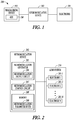
- FIG. 1 illustrates an embodiment of a neuromodulation system.
- the illustrated system 100 includes electrodes 101, a neuromodulation device 102, and a programming device 103.
- the electrodes 103 are configured to be placed on or near one or more neural targets in a patient.
- the electrodes 101 may form part of an electrode arrangement.
- the neuromodulation device 102 may be an implantable medical device operable when implanted within a patient.
- the neuromodulation device 102 may be an external device operable external to the patient.
- the neuromodulation device 102 is configured to be electrically connected to electrodes 101 and deliver neuromodulation energy, such as in the form of electrical pulses, to the one or more neural targets though electrodes 101.
- the delivery of the neuromodulation is controlled using a plurality of neuromodulation parameters, such as neuromodulation parameters specifying the electrical pulses and a selection of electrodes through which each of the electrical pulses is delivered.
- at least some parameters of the plurality of neuromodulation parameters are programmable by a user, such as a physician or other caregiver.
- the programming device 103 may provide the user with accessibility to the user-programmable parameters.
- the programming device 103 is configured to be communicatively coupled to neuromodulation device via a wired or wireless link.
- the programming device 103 includes a graphical user interface (GUI) 104 that allows the user to set and/or adjust values of the user-programmable neuromodulation parameters.
- GUI graphical user interface
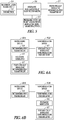
- FIG. 2 illustrates an embodiment of a neuromodulation device 202 connected to a lead system 210, such as may be implemented in the neuromodulation system 100 of FIG. 1 .
- the illustrated embodiment of the neuromodulation device 202 includes a neuromodulation generator 205 with a neuromodulation output circuit 206, a neuromodulation control circuit 207, and memory 208 with neuromodulation parameter set(s) 209.
- the neuromodulation system 202 may include additional components such as sensing circuitry for patient monitoring and/or feedback control of the therapy, telemetry circuitry and power.
- the neuromodulation generator 205 with the neuromodulation output circuit 206 produces and delivers neuromodulation pulses.
- the neuro modulation control circuit 207 controls the delivery of the neuromodulation pulses using neuromodulation parameters in a neuromodulation parameter set.
- the lead system 210 may include one or more leads each configured to be electrically connected to neuromodulation device 202 and a plurality of electrodes 201-1 to 201-N (where N ⁇ 2) distributed in an electrode arrangement using the one or more leads.
- Each lead may have an electrode array consisting of two or more electrodes, which also may be referred to as contacts. Multiple leads may provide multiple electrode arrays to provide the electrode arrangement.
- Each electrode is a single electrically conductive contact providing for an electrical interface between the neuromodulation output circuit 206 and tissue of the patient.
- the neuromodulation pulses are each delivered from the neuromodulation output circuit 206 through a set of electrodes selected from the electrodes 201-1 to 202-N.
- the number of leads and the number of electrodes on each lead may depend on, for example, the distribution of target(s) of the neuromodulation and the need for controlling the distribution of electric field at each target.
- the lead system may include two leads each having eight electrodes.
- the neuromodulation system may be configured to modulate spinal target tissue, brain tissue or other neural tissue.
- the configuration of electrodes used to deliver electrical pulses to the targeted tissue constitutes an electrode configuration, with the electrodes capable of being selectively programmed to act as anodes (positive), cathodes (negative), or left off (zero).
- an electrode configuration represents the polarity being positive, negative, or zero.
- Other parameters that may be controlled or varied include the amplitude, pulse width, and rate (or frequency) of the electrical pulses.
- Each electrode configuration, along with the electrical pulse parameters, can be referred to as a "neuromodulation parameter set.”
- Each set of neuromodulation parameters including fractionalized current distribution to the electrodes (as percentage cathodic current, percentage anodic current, or off), may be stored and combined into a neuromodulation program that can then be used to modulate multiple regions within the patient.
- the neuromodulation system to be programmed has sixteen electrodes, millions of modulation parameter sets may be available for programming into the neuromodulation system.
- SCS systems may have thirty-two electrodes which exponentially increases the number of modulation parameters sets available for programming.
- the clinician generally programs the modulation parameters sets through a computerized programming system to allow more desirable modulation parameters to be determined based on patient feedback or other means and to subsequently program the desired modulation parameter sets.
- Conventional SCS therapy is discussed herein as an example.
- the present subject matter is not limited to conventional SCS therapy, as it may also be implemented to stochastically modulate neuromodulation parameters used in sub-perception SCS or deep brain stimulation or vagal stimulation or stimulation of other neural targets.
- Conventional programming for SCS therapy uses paresthesia to select an appropriate modulation parameter set.
- the paresthesia induced by the modulation and perceived by the patient should be located in approximately the same place in the patient's body as the pain that is the target of treatment.
- an operating room (OR) mapping procedure may be performed to apply electrical modulation to test placement of the leads and/or electrodes, thereby assuring that the leads and/or electrodes are implanted in effective locations within the patient.
- a fitting procedure which may be referred to as a navigation session, may be performed to program the external control device, and if applicable the neuromodulation device, with a set of neuromodulation parameters that best addresses the painful site.
- the navigation session may be used to pinpoint the volume of activation (VOA) or areas correlating to the pain.
- VOA volume of activation
- the procedure may be implemented to target the tissue during implantation, or after implantation should the leads gradually or unexpectedly move that would otherwise relocate the neuromodulation energy away from the target site.
- the VOA By reprogramming the neuromodulation device (typically by independently varying the neuromodulation energy on the electrodes), the VOA can often be moved back to the effective pain site without having to re-operate on the patient in order to reposition the lead and its electrode array.
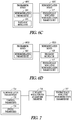
- FIG. 3 illustrates an embodiment of a programming device 303, such as may be used in the neuromodulation system of FIG. 1 .
- the programming device 303 may include a memory or storage device 311 which may be referred to as storage, a programming control circuit 312, and a GUI 304 such as a touchscreen.
- the programming control circuit 312 may be used to generate the plurality of neuromodulation parameters that controls the delivery of the neuromodulation pulses according to the pattern of the neuromodulation pulses.
- the GUI 304 may include any type of presentation device, such as interactive or non-interactive screens, and any type of user input devices that allow the user to program the neuromodulation parameters, such as touchscreen, keyboard, keypad, touchpad, trackball, joystick, and mouse.
- the storage device 311 may store, among other things, neuromodulation parameters to be programmed into the neuromodulation device.
- the programming device 303 may transmit the plurality of neuromodulation parameters to the neuromodulation device. In some embodiments, the programming device 303 may transmit power to the neuromodulation device.
- the programming control circuit 312 may generate the plurality of neuromodulation parameters. In various embodiments, the programming control circuit 312 may check values of the plurality of neuromodulation parameters against safety rules to limit these values within constraints of the safety rules.
- circuits of neuromodulation may be implemented using a combination of hardware, software and firmware.
- the circuit of GUI, modulation control circuit, and programming control circuit may be implemented using an application-specific circuit constructed to perform one or more particular functions or a general-purpose circuit programmed to perform such function(s).
- a general-purpose circuit includes, but is not limited to, a microprocessor or a portion thereof, a microcontroller or portions thereof, and a programmable logic circuit or a portion thereof.
- FIG. 4 illustrates, by way of example, some features of the neuromodulation leads 413 and a neuromodulation device 404.
- the neuromodulation device 404 may be an implantable device or may be an external device such as may be used to test the electrodes during an implantation procedure.
- one of the neuromodulation leads has eight electrodes (labeled E1-E8), and the other neuromodulation lead has eight electrodes (labeled E9-E16).
- E1-E8 eight electrodes
- E9-E16 eight electrodes
- the actual number and shape of leads and electrodes may vary for the intended application.
- An implantable device may include an outer case for housing the electronic and other components.
- the outer case may be composed of an electrically conductive, biocompatible material, such as titanium, that forms a hermetically-sealed compartment wherein the internal electronics are protected from the body tissue and fluids.
- the outer case may serve as an electrode (e.g. case electrode).
- the implanted device may include electronic components, such as a controller/processor (e.g., a microcontroller), memory, a battery, telemetry circuitry, monitoring circuitry, modulation output circuitry, and other suitable components known to those skilled in the art.
- the microcontroller executes a suitable program stored in memory, for directing and controlling the neuromodulation performed by the implanted device.
- Electrical neuromodulation energy is provided to the electrodes in accordance with a set of neuromodulation parameters programmed into the neuromodulation device.
- the electrical modulation energy may be in the form of a pulsed electrical waveform.
- Such neuromodulation parameters may comprise electrode combinations, which define the electrodes that are activated as anodes (positive), cathodes (negative), and turned off (zero), percentage of neuromodulation energy assigned to each electrode (fractionalized electrode configurations), and electrical pulse parameters, which define the pulse amplitude (measured in milliamps or volts depending on whether the pulse generator supplies constant current or constant voltage to the electrode array), pulse width (measured in microseconds), pulse rate (measured in pulses per second), and burst rate (measured as the modulation on duration X and modulation off duration Y).
- the electrical pulse parameters may define an intermittent neuromodulation with "on" periods of time where a train of two or more pulses are delivered and “off" periods of time where pulses are not delivered. Electrodes that are selected to transmit or receive electrical energy are referred to herein as “activated,” while electrodes that are not selected to transmit or receive electrical energy are referred to herein as “non-activated.”
- Electrical neuromodulation occurs between or among a plurality of activated electrodes, one of which may be a case electrode of the implanted device.
- the system may be capable of transmitting neuromodulation energy to the tissue in a monopolar or multipolar (e.g., bipolar, tripolar, etc.) fashion.
- Monopolar neuromodulation occurs when a selected one of the lead electrodes is activated along with the case of the neuromodulation device, so that neuromodulation energy is transmitted between the selected electrode and case.
- any of the electrodes may be assigned to up to k possible groups or timing "channels.” In one embodiment, k may equal four.
- the timing channel identifies which electrodes are selected to synchronously source or sink current to create an electric field in the tissue to be stimulated. Amplitudes and polarities of electrodes on a channel may vary. In particular, the electrodes can be selected to be positive (anode, sourcing current), negative (cathode, sinking current), or off (no current) polarity in any of the k timing channels.
- the neuromodulation device may be configured to individually control the magnitude of electrical current flowing through each of the electrodes, which may be referred to as multiple independent current control (MICC).
- a current generator may be configured to selectively generate individual current-regulated amplitudes from independent current sources for each electrode.
- the pulse generator may have voltage regulated outputs. While individually programmable electrode amplitudes are desirable to achieve fine control, a single output source switched across electrodes may also be used, although with less fine control in programming.
- the neuromodulation device may be designed with mixed current and voltage regulated devices. The individual control of electrical current through each of the electrodes allows the neuromodulation device to fractionalize the current. The fractionalization across the electrical modulation lead can vary in any manner as long as the total of fractionalized currents equals 100%.
- the SCS system may be configured to deliver different electrical fields to achieve a temporal summation of modulation.
- the electrical fields can be generated respectively on a pulse-by-pulse basis. For example, a first electrical field can be generated by the electrodes (using a first current fractionalization) during a first electrical pulse of the pulsed waveform, a second different electrical field can be generated by the electrodes (using a second different current fractionalization) during a second electrical pulse of the pulsed waveform, a third different electrical field can be generated by the electrodes (using a third different current fractionalization) during a third electrical pulse of the pulsed waveform, a fourth different electrical field can be generated by the electrodes (using a fourth different current fractionalized) during a fourth electrical pulse of the pulsed waveform, and so forth.
- These electrical fields may be rotated or cycled through multiple times under a timing scheme, where each field is implemented using a timing channel.
- the electrical fields may be generated at a continuous pulse rate, or may be bursted on and off.
- the interpulse interval i.e., the time between adjacent pulses
- pulse amplitude, and pulse duration during the electrical field cycles may be uniform or may vary within the electrical field cycle.
- Various embodiments stochastically modulate values for one or more neuromodulation parameters such as these and others.
- Some embodiments are configured to provide a neuromodulation parameter set to create a desired neuromodulation field shape (e.g. a broad and uniform neuromodulation field such as may be useful to prime targeted neural tissue with sub-perception modulation or a field shape to reduce or minimize modulation of non-targeted tissue.
- a neuromodulation field shape e.g. a broad and uniform neuromodulation field such as may be useful to prime targeted neural tissue with sub-perception modulation or a field shape to reduce or minimize modulation of non-targeted tissue.
- Various embodiments stochastically modulate values of one or more neuromodulation parameters associated with controlling the field shape in order to stochastically modulate the neuromodulation field shape.
- FIG. 5 illustrates, by way of example and not limitation, a system to stochastically modulate neuromodulation.
- the illustrated system may include at least one neuromodulation parameter set 514 that includes a plurality of parameters that may be used to define the neuromodulation pulse parameters (e.g. amplitude, pulse width, pulse frequency, on/off timing, timing channels, etc.) and electrode configuration(s) used in the neuromodulation.
- the at least one neuromodulation parameter set may include one or more neuromodulation parameters 515 selected to be stochastically-modulated by a stochastic modulator 516 to provide a stochastically-modulated neuromodulation parameter set 517.
- the stochastically-modulated neuromodulation parameter set 517 may be used to generate the stochastically-modulated neuromodulation field.
- the stochastic modulator is programmable.
- the system illustrated in FIG. 5 may optionally include a programming system 523 which may be configured for use to select a modulation model(s), or to create modulation model(s), or to create and select modulation model(s). Additionally or alternatively, the programming system 523 may be configured for use to program parameter settings.
- the stochastic modulator may use modulation model(s) to stochastically-modulate the neuromodulation parameter(s).
- the modulation model(s) may include probabilistic distribution model(s), or stochastic process model(s), or real-time / semi-real-time computational model(s), or combinations of these different types of models.
- FIGS. 6A-6D illustrate, by way of examples and not limitation, some systems to stochastically modulate neuromodulation implemented using a programming device and a neuromodulation device.
- Each of the illustrated systems in FIGS. 6A-6D include a programming device and a neuromodulation device configured to communicate with each other, and the systems further include a stochastic modulator 616 to provide the stochastically-modulated neuromodulation parameter set 617 from the neuromodulation parameter set 614.
- the programming device 601A may include the neuromodulation parameter set 614 and the stochastic modulator 616 which may be used to modulate at least one parameter within the neuromodulator parameter set 614 to form the stochastically-modulated neuromodulation parameter set 617.
- the programming device 601A may program the stochastically-modulated neuromodulation parameter set 617 into the neuromodulation device 602A.
- the programming device 601B may program the neuromodulation parameter set into the neuromodulation device 602B.
- the neuromodulation device 602B may include the stochastic modulator 616 which may be used to modulate at least one parameter within the neuromodulator parameter set 614 to form the stochastically-modulated neuromodulation parameter set 617.
- the stochastically-modulated neuromodulation parameter set 617 may be stored in a non-volatile or persistent memory, or may be generated in real time or near real time by the neuromodulation device 602B as needed to generate the stochastically-modulated neuromodulation field.
- the programming device 601C may include the neuromodulation parameter set 614 and the stochastic modulator 616 which may be used to modulate at least one parameter within the neuromodulator parameter set 614 to program the stochastically-modulated neuromodulation parameter set 617 into the neuromodulation device 602C, which may be done without persistently storing the stochastically-modulated neuromodulation parameter set 617 in the programming device 601C. Rather, the programming device 601C may program the neuromodulation device 602C in real or near real time as it modulates the neuromodulation parameter set 614 into the stochastically-modulated neuromodulation parameter set 617.
- the programming device 601D may be programmed with the neuromodulation parameter set 614.
- the neuromodulation device 602D may include the stochastic modulator 616 which may be used to access the neuromodulator parameter set 614 in the programming device 601B and modulate at least one parameter within the neuromodulator parameter set 614 to form the stochastically-modulated neuromodulation parameter set 617.
- the stochastically-modulated neuromodulation parameter set 617 may be stored in a non-volatile or persistent memory, or may be generated in real time or near real time as needed to generate the stochastically-modulated modulation field.
- FIG. 7 illustrates, by way of example and not limitation, a system to stochastically modulate temporal and/or spatial neuromodulation parameters.
- the illustrated system may include at least one neuromodulation parameter set 714 that includes a plurality of parameters that maybe used to define the neuromodulation pulse parameters (e.g. amplitude, pulse width, pulse frequency, etc.) and electrode configuration(s) used in the neuromodulation.
- the neuromodulation pulse parameters e.g. amplitude, pulse width, pulse frequency, etc.
- electrode configuration(s) used in the neuromodulation.
- the at least one neuromodulation parameter set may include one or more temporal parameters selected to be stochastically-modulated by a stochastic modulator 716 to provide a stochastically-modulated neuromodulation parameter set 717 and/or may include one or more spatial parameter(s) selected to be stochastically-modulated by a stochastic modulator 716 to provide a stochastically-modulated neuromodulation parameter set 717.
- the stochastically-modulated neuromodulation parameter set 717 may be used to generate the stochastically-modulated neuromodulation field.
- FIG. 8 illustrates, by way of example and not limitation, a system to stochastically modulate one or more neuromodulation parameters using one or more stochastic modulation models (e.g. probabilistic distribution model or stochastic process model or real-time / semi-real-time computational model). Similar to FIG. 5 , the illustrated system may include at least one neuromodulation parameter set 814 that includes a plurality of parameters that maybe used to define the neuromodulation pulse parameters (e.g. amplitude, pulse width, pulse frequency, etc) and electrode configuration(s) used in the neuromodulation.
- the neuromodulation pulse parameters e.g. amplitude, pulse width, pulse frequency, etc
- the at least one neuromodulation parameter set may include one or more neuromodulation parameters 815 selected to be stochastically-modulated by a stochastic modulator 816 to provide a stochastically-modulated neuromodulation parameter set 817.
- the stochastic modulator 816 may be programmed with one or more modulation model(s) (e.g. probabilistic distribution model(s) or stochastic process model(s) or real-time / semi-real-time computational model(s).
- the system may be configured to allow a user to select the distribution to be used to stochastically modulate parameter(s) and/or to select a parameter(s) to be stochastically modulated.
- Each probabilistic distribution may be used to stochastically modulate one or more parameters in the neuromodulation parameter set.
- a first probabilistic distribution may be used to stochastically modulate a first parameter
- a second probabilistic distribution may be used to stochastically modulate a second parameter
- an nth probabilistic distribution may be used to stochastically modulate an nth parameter.
- the probabilistic distributions may be known distributions, such as Poisson or Gaussian by way of example and not limitation, that may be used to model neural tissue or may be developed to model targeted neural activity.
- the present subject matter is not limited to known probability distributions or stochastic processes. Additionally or alternatively to known probability distributions or stochastic processes, the model(s) used for the stochastic modulation can be a computation simulation or a / semi-real-time computational modeling based on neural recording.
- FIG. 9 illustrates, by way of examples and not limitation, some features that may be implemented in various stochastic modulator embodiments.
- the illustrated system may include at least one neuromodulation parameter set 914 that includes a plurality of parameters that maybe used to define the neuromodulation pulse parameters (e.g. amplitude, pulse width, pulse frequency, etc) and electrode configuration(s) used in the neuromodulation.
- the at least one neuromodulation parameter set may include one or more neuromodulation parameters 915 selected to be stochastically-modulated by a stochastic modulator 916 to provide a stochastically-modulated neuromodulation parameter set 917.
- the stochastic modulator 916 may be configured to use random or pseudo-random samples of the probability distribution or stochastic process to stochastically modulate the at least one parameter.
- the stochastic modulator 916 may be configured with a timer or a counter 921 for moving between samples. For example, one sample may be used to modulate one pulse before advancing to another sample to modulate a subsequent pulse, or one sample may be used to modulate multiple pulses before advancing to another sample to modulate subsequent pulses.
- the stochastic modulator 916 is configured with stochastic process rules, as generally illustrated at 922, used to identify if a subsequent sample is permissible for a sequence of random or pseudo-random samples used to stochastically modulate the at least one parameter.
- FIG. 10 illustrates, by way of example and not limitation, a system with a user interface used to program the stochastic modulator. Similar to FIG. 5 , the illustrated system may include at least one neuromodulation parameter set 1014 that includes a plurality of parameters that maybe used to define the neuromodulation pulse parameters. One or more neuromodulation parameters 1015 selected to be stochastically-modulated by a stochastic modulator 1016 to provide a stochastically-modulated neuromodulation parameter set 1017.
- the system includes a programming system 1023 configured for use to program the stochastic modulator 1016.
- the programming system 1023 may include a user interface, which may be part of a programming device or another external device accessible by a user.
- the user interface may be used to program a stochastic modulator in a programming device or a stochastic modulator in an implantable or external neuromodulation device. Some external neuromodulation devices may have a user interface.
- a non-exhaustive example of a user interface is provided in FIG. 11 .
- the programming system may include neural activity sensor(s) and a data acquisition model to record neural activity.
- the neural data may be fed into the stochastic modulator for use in creating a real-time / semi-real-time computational model for modulation.
- Real-time / semi-real-time is understood to include near real-time for dynamically generating the model.
- FIG. 11 illustrates, by way of examples and not limitation, some features that may be implemented in the user interface.
- the user interface 1123 illustrates example(s) of the user interface 1023 illustrated in FIG. 10 .
- Various embodiments of the user interface 1123 may include any one of the illustrated features and may include any combination of two or more of the illustrated features.
- the user interface 1123 may include a feature to enable a user-selection of stochastic modulation model(s) 1124 to be used by the stochastic modulator.
- the user interface 1123 may include a feature to enable a user-selection of neuromodulation parameter(s) 1125 to be stochastically-modulated using stochastic modulation model(s).
- the parameter(s) may include temporal neuromodulation parameters that control the timing of the neuromodulation pulses (e.g. frequency, pulse width, start/stop times, etc.), or may include spatial neuromodulation parameter(s) that control the location and shape of the neuromodulation field.
- temporal neuromodulation parameters that control the timing of the neuromodulation pulses (e.g. frequency, pulse width, start/stop times, etc.)
- spatial neuromodulation parameter(s) that control the location and shape of the neuromodulation field.
- the user interface 1123 may include a feature to enable a user to select or enter modulation parameter(s) that at least partially define the stochastic modulation model(s) 1126.
- stochastic modulation models may include a Poisson distribution or a normal distribution.
- lambda may be considered a modulation parameter for a Poisson distribution
- mean and standard deviation may be considered modulation parameters for a normal distribution.
- the user can also select the mean value for the frequency to control the average therapeutic dose delivered to the targeted neural tissue.
- the system may be designed to provide pre-set or user-programmable safety limits.
- the safety limits may be incorporated using, by way of example, hardware or firmware or software, and may be configured to limit the average charge or charge density or may limit the average charge per phase or charge density per phase. In a normal distribution, for example, some embodiments may allow the user to enter a sigma value to prohibit the extremes in the distribution.
- a value of 2 sigma may be used prohibit about the lowest 2% and the highest 2% in the normal distribution from being used to stochastically modulate the neuromodulation parameter (or allow about the 95% in the middle of the normal distribution to stochastically modulate the neuromodulation parameter).
- the modulation parameter(s) that can be entered or selected by the user may also include sigma values or other values to restrict the permissible range of random values in the probabilistic distribution.
- the user interface 1123 may include a feature to enable a user to select or enter sampling rules 1127 to create stochastic modulation samples from stochastic modulation model(s). Thus, rather than randomize all available values in the stochastic modulation model (e.g. probabilistic distribution), some embodiments may use a sampling technique to provide a smaller subset of stochastic modulation samples that is representative of the model (e.g. probabilistic distribution) that can be used to stochastically modulate the neuromodulation parameter(s).
- the user interface 1123 may include a feature to control the timing 1128 for moving between stochastic modulation samples. For example, one sample may be used to modulate one pulse before advancing to another sample to modulate a subsequent pulse, or one sample may be used to modulate multiple pulses before advancing to another sample to modulate subsequent pulses.
- the user interface 1123 may include a feature to enable a user to select or enter stochastic process rules 1129 that control or identify if subsequent sample(s) is (are) permissible in a sequence of random or pseudo-random samples.
- stochastic process rules 1129 that control or identify if subsequent sample(s) is (are) permissible in a sequence of random or pseudo-random samples.
- FIG. 12 illustrates, by way of example and not limitation, a method for delivering stochastic neuromodulation.
- the illustrated method may be performed using a variety of neuromodulation devices delivering a variety of neuromodulation therapies.
- the method may be performed to deliver neural stimulation to neural tissue in and around the spine, in the brain, and in peripheral nerves such as but not limited to the vagus nerve, the carotid sinus nerve, the renal nerve, etc., and may be performed to provide functional modulation such as may be implemented for physical therapy or to improve cognitive function.
- at least one neuromodulation parameter is stochastically-modulated to provide a stochastically-modulated neuromodulation parameter set 1230.
- a neuromodulation field is generated using the stochastically-modulated neuromodulation parameter set 1231.
- a probabilistic distribution may be used to stochastically modulate the at least one parameter to provide the at least one stochastically-modulated parameter.
- Another probabilistic distribution may be used to stochastically-modulate at least one other parameter.
- stochastic process rules may be implemented to enforce a permissible sequence of random or pseudo-random samples of a probabilistic distribution used to stochastically modulate the parameter(s).
- the stochastically-modulated neuromodulation parameter(s) include a temporal neuromodulation parameter.
- the stochastically-modulated neuromodulation parameter(s) include a spatial neuromodulation parameter.
- Method examples described herein but not being part of the invention can be machine or computer-implemented at least in part.
- Some examples may include a computer-readable medium or machine-readable medium encoded with instructions operable to configure an electronic device or system to perform methods as described in the above examples.
- An implementation of such methods can include code, such as microcode, assembly language code, a higher-level language code, or the like.
- Such code can include computer readable instructions for performing various methods.
- the code can form portions of computer program products. Further, the code can be tangibly stored on one or more volatile or non-volatile computer-readable media during execution or at other times.
Landscapes
- Health & Medical Sciences (AREA)
- Engineering & Computer Science (AREA)
- Animal Behavior & Ethology (AREA)
- General Health & Medical Sciences (AREA)
- Biomedical Technology (AREA)
- Nuclear Medicine, Radiotherapy & Molecular Imaging (AREA)
- Radiology & Medical Imaging (AREA)
- Life Sciences & Earth Sciences (AREA)
- Veterinary Medicine (AREA)
- Public Health (AREA)
- Neurosurgery (AREA)
- Neurology (AREA)
- Human Computer Interaction (AREA)
- Pain & Pain Management (AREA)
- Electrotherapy Devices (AREA)
- Measurement And Recording Of Electrical Phenomena And Electrical Characteristics Of The Living Body (AREA)
- Steroid Compounds (AREA)
Claims (12)
- Système, comprenant :un agencement d'électrodes (101 ; 201-1 à 201-N ; 413) ;un dispositif de neuromodulation (102 ; 202 ; 404 ; 602A ; 602B ; 602C ; 602D) configuré pour utiliser des électrodes dans l'agencement d'électrodes (101 ; 201-1 à 201-N ; 413) pour générer un champ de neuromodulation, le dispositif de neuromodulation (102 ; 202 ; 404 ; 602A ; 602B ; 602C ; 602D) incluant un générateur de neuromodulation (205), un circuit de commande de neuromodulation (207) et un stockage (208), le stockage (208) incluant un ensemble de paramètres de neuromodulation modulés de manière stochastique (517 ; 617 ; 717 ; 817 ; 917 ; 1017), l'ensemble de paramètres de neuromodulation modulés de manière stochastique (517 ; 617 ; 717 ; 817 ; 917 ; 1017) incluant au moins un paramètre modulé de manière stochastique,dans lequel le circuit de commande (207) est configuré pour commander le générateur de neuromodulation (205) à l'aide de l'ensemble de paramètres de neuromodulation modulés de manière stochastique (517 ; 617 ; 717 ; 817 ; 917 ; 1017) pour générer le champ de neuromodulation ; etun modulateur stochastique (516 ; 616 ; 716 ; 816 ; 916 ; 1016) programmé avec au moins un modèle de modulation et configuré pour utiliser l'au moins un modèle de modulation pour moduler de manière stochastique au moins un paramètre d'un ensemble de paramètres de neuromodulation (514 ; 614 ; 714 ; 814 ; 914 ; 1014) pour fournir l'au moins un paramètre modulé de manière stochastique dans l'ensemble de paramètres de neuromodulation modulés de manière stochastique (517 ; 617 ; 717 ; 817 ; 917 ; 1017),dans lequel le modulateur stochastique (516 ; 616 ; 716 ; 816 ; 916 ; 1016) est configuré pour utiliser des échantillons aléatoires ou pseudo-aléatoires du modèle de modulation pour moduler de manière stochastique l'au moins un paramètre, etcaractérisé en ce que le modulateur stochastique (516 ; 616 ; 716 ; 816 ; 916 ; 1016) inclut des règles de traitement stochastique (916) utilisées pour identifier si un échantillon suivant est admissible pour une séquence d'échantillons aléatoires ou pseudo-aléatoires utilisés pour moduler de manière stochastique l'au moins un paramètre.
- Système selon la revendication 1, dans lequel le dispositif de neuromodulation (102 ; 202 ; 404 ; 602C ; 602D) inclut le modulateur stochastique (516 ; 616 ; 716 ; 816 ; 916 ; 1016).
- Système selon la revendication 1, dans lequel le système inclut un dispositif de programmation (103 ; 303 ; 601A ; 601C), dans lequel le dispositif de programmation (103 ; 303 ; 601A ; 601C) inclut le modulateur stochastique (516 ; 616 ; 716 ; 816 ; 916 ; 1016) et est configuré pour programmer l'ensemble de paramètres de neuromodulation modulés de manière stochastique (517 ; 617 ; 717 ; 817 ; 917 ; 1017) dans le dispositif de neuromodulation (102 ; 202 ; 404 ; 602A ; 602C).
- Système selon l'une quelconque des revendications précédentes, dans lequel l'au moins un modèle de modulation inclut un modèle de distribution probabiliste, ou un modèle de traitement stochastique, ou un modèle de calcul en temps réel / en temps semi-réel.
- Système selon les revendications précédentes, dans lequel le modulateur stochastique (516 ; 616 ; 716 ; 816 ; 916 ; 1016) est programmé avec un autre modèle de modulation et est configuré pour utiliser l'autre modèle de modulation pour moduler de manière stochastique un autre paramètre.
- Système selon l'une quelconque des revendications précédentes, dans lequel le modulateur stochastique (516 ; 616 ; 716 ; 816 ; 916 ; 1016) inclut un temporisateur ou un compteur (921) configuré pour commander le moment auquel le modulateur stochastique (516 ; 616 ; 716 ; 816 ; 916 ; 1016) passe d'un échantillon à un autre échantillon.
- Système selon l'une quelconque des revendications précédentes, incluant en outre une interface utilisateur (104 ; 304 ; 1124) configurée pour être utilisée pour programmer le modulateur stochastique (516 ; 616 ; 716 ; 816 ; 916 ; 1016).
- Système selon la revendication 7, dans lequel l'interface utilisateur (104 ; 304 ; 1124) est configurée pour permettre à un utilisateur de sélectionner un modèle de modulation à utiliser par le modulateur stochastique (516 ; 616 ; 716 ; 816 ; 916 ; 1016).
- Système selon l'une quelconque des revendications 7 à 8, dans lequel l'interface utilisateur (104 ; 304 ; 1124) est configurée pour permettre à un utilisateur de sélectionner un paramètre à moduler de manière stochastique à l'aide du modulateur stochastique (516 ; 616 ; 716 ; 816 ; 916 ; 1016).
- Système selon l'une quelconque des revendications 7 à 9, dans lequel l'interface utilisateur (104 ; 304 ; 1124) est configurée pour permettre à un utilisateur de sélectionner au moins l'un des éléments suivants :au moins un paramètre de modèle pour un modèle de modulation stochastique, l'au moins un paramètre de modèle permettant d'au moins partiellement définir ou contraindre le modèle de modulation stochastique ;des règles d'échantillonnage pour créer des échantillons aléatoires ou pseudo-aléatoires du modèle de modulation stochastique ;des règles pour commander le moment auquel le modulateur stochastique (516 ; 616 ; 716 ; 816 ; 916 ; 1016) passe d'un échantillon à un autre échantillon ; oudes règles utilisées pour identifier si un échantillon suivant est admissible pour une séquence d'échantillons aléatoires ou pseudo-aléatoires pour fournir un traitement stochastique.
- Système selon l'une quelconque des revendications précédentes, dans lequel l'au moins un paramètre modulé de manière stochastique inclut un paramètre de modulation temporelle.
- Système selon l'une quelconque des revendications précédentes, dans lequel l'au moins un paramètre modulé de manière stochastique inclut un paramètre spatial.
Applications Claiming Priority (2)
| Application Number | Priority Date | Filing Date | Title |
|---|---|---|---|
| US201562167630P | 2015-05-28 | 2015-05-28 | |
| PCT/US2016/030686 WO2016191055A1 (fr) | 2015-05-28 | 2016-05-04 | Neuromodulation à l'aide de stimulation modulée de manière stochastique |
Publications (2)
| Publication Number | Publication Date |
|---|---|
| EP3302690A1 EP3302690A1 (fr) | 2018-04-11 |
| EP3302690B1 true EP3302690B1 (fr) | 2019-09-25 |
Family
ID=56081558
Family Applications (1)
| Application Number | Title | Priority Date | Filing Date |
|---|---|---|---|
| EP16725275.8A Active EP3302690B1 (fr) | 2015-05-28 | 2016-05-04 | Système de neuromodulation à l'aide de stimulation modulée de manière stochastique |
Country Status (5)
| Country | Link |
|---|---|
| US (7) | US9827422B2 (fr) |
| EP (1) | EP3302690B1 (fr) |
| CN (1) | CN107921261B (fr) |
| AU (4) | AU2016268007B2 (fr) |
| WO (1) | WO2016191055A1 (fr) |
Cited By (2)
| Publication number | Priority date | Publication date | Assignee | Title |
|---|---|---|---|---|
| US10940314B2 (en) | 2015-05-28 | 2021-03-09 | Boston Scientific Neuromodulation Corporation | Neuromodulation using stochastically-modulated stimulation parameters |
| US11224750B2 (en) | 2013-03-08 | 2022-01-18 | Boston Scientific Neuromodulation Corporation | Neuromodulation using modulated pulse train |
Families Citing this family (26)
| Publication number | Priority date | Publication date | Assignee | Title |
|---|---|---|---|---|
| US11376435B2 (en) | 2007-07-20 | 2022-07-05 | Boston Scientific Neuromodulation Corporation | System and method for shaped phased current delivery |
| EP3088045B1 (fr) | 2007-07-20 | 2019-06-19 | Boston Scientific Neuromodulation Corporation | Utilisation d'une forme d'impulsion de stimulation pour réguler un ordre de recrutement neuronal et un effet clinique |
| CN109908481B (zh) | 2014-07-03 | 2023-06-20 | 波士顿科学神经调制公司 | 具有灵活模式和波形的神经刺激系统 |
| WO2017044904A1 (fr) | 2015-09-11 | 2017-03-16 | Nalu Medical, Inc. | Appareil de stimulation périphérique ou spinale |
| EP3389768B1 (fr) | 2015-12-18 | 2023-03-01 | Medtronic, Inc. | Thérapie par stimulation électrique à cycle de service élevé |
| CA3014317C (fr) | 2016-02-19 | 2024-07-02 | Nalu Medical, Inc. | Appareil presentant des formes d'onde de stimulation amelioree |
| US10525268B2 (en) | 2016-08-23 | 2020-01-07 | Medtronic, Inc. | Delivery of independent interleaved programs to produce higher-frequency electrical stimulation therapy |
| CN110072590B (zh) | 2016-10-28 | 2023-03-28 | 美敦力公司 | 基于低频滴定仪的高频刺激 |
| US11045650B2 (en) | 2016-12-06 | 2021-06-29 | Medtronic, Inc. | High frequency neurostimulation for pelvic symptom control |
| US11925805B2 (en) * | 2017-01-18 | 2024-03-12 | Soin Neuroscience, LLC | Tunable electrical noise signal technologies |
| EP4417248A3 (fr) | 2017-02-24 | 2024-10-23 | Nalu Medical, Inc. | Appareil avec stimulateurs implantés séquentiellement |
| US11116980B2 (en) | 2017-04-07 | 2021-09-14 | Medtronic, Inc. | Complex variation of electrical stimulation therapy parameters |
| AU2018265016B2 (en) | 2017-05-09 | 2023-01-05 | Nalu Medical, Inc. | Stimulation apparatus |
| US20240342480A1 (en) * | 2017-08-11 | 2024-10-17 | Boston Scientific Neuromodulation Corporation | Bolus Stimulation in a Neurostimulation Device Particularly Useful in Providing Sub-Perception Stimulation |
| US10987515B2 (en) | 2017-10-10 | 2021-04-27 | Medtronic, Inc. | Management of electrical stimulation therapy |
| JP2019072329A (ja) * | 2017-10-18 | 2019-05-16 | オージー技研株式会社 | 電気刺激装置 |
| WO2019157559A1 (fr) | 2018-02-15 | 2019-08-22 | Saluda Medical Pty Limited | Stimulateurs à faible consommation d'énergie |
| WO2019246561A1 (fr) * | 2018-06-22 | 2019-12-26 | The Board Of Trustees Of The Leland Stanford Junior University | Stimulation de désynchronisation multicanal invasive efficace |
| CN109350825A (zh) * | 2018-10-25 | 2019-02-19 | 浙江工业大学 | 一种基于期望误差原理的电刺激警醒方法 |
| CN111359074B (zh) * | 2018-12-26 | 2022-08-02 | 财团法人工业技术研究院 | 个人化参数学习方法、睡眠辅助装置及存储介质 |
| US11547350B2 (en) | 2018-12-26 | 2023-01-10 | Industrial Technology Research Institute | Personalized parameter learning method, sleep-aid device and non-transitory computer readable medium |
| CN109675171A (zh) * | 2019-03-04 | 2019-04-26 | 中国科学院深圳先进技术研究院 | 动物刺激方法、装置、设备和存储介质 |
| US11565116B2 (en) * | 2019-04-10 | 2023-01-31 | Boston Scientific Neuromodulation Corporation | Interferential stimulation method and system for neuromodulation |
| WO2022132380A1 (fr) * | 2020-12-15 | 2022-06-23 | Boston Scientific Neuromodulation Corporation | Système de génération de séquence d'impulsions de neurostimulation modulée |
| CN114931703B (zh) * | 2022-05-09 | 2025-07-25 | 中国科学院电工研究所 | 一种聚焦经颅磁声耦合刺激装置 |
| CN118576894B (zh) * | 2024-05-23 | 2025-06-10 | 中科医电(深圳)医疗科技有限公司 | 基于双靶点同步刺激实现脑治疗的神经调控装置 |
Family Cites Families (123)
| Publication number | Priority date | Publication date | Assignee | Title |
|---|---|---|---|---|
| JPS54119792A (en) * | 1978-03-03 | 1979-09-17 | Iriyou Kougaku Kenkiyuushiyo K | Electric stimulation device for removing pain |
| US5782874A (en) | 1993-05-28 | 1998-07-21 | Loos; Hendricus G. | Method and apparatus for manipulating nervous systems |
| US6944501B1 (en) | 2000-04-05 | 2005-09-13 | Neurospace, Inc. | Neurostimulator involving stimulation strategies and process for using it |
| JPH09269641A (ja) | 1996-03-29 | 1997-10-14 | Fujitsu Ltd | 現像装置およびこの装置を有する画像形成装置 |
| US5938690A (en) | 1996-06-07 | 1999-08-17 | Advanced Neuromodulation Systems, Inc. | Pain management system and method |
| US6246912B1 (en) | 1996-06-27 | 2001-06-12 | Sherwood Services Ag | Modulated high frequency tissue modification |
| US6029090A (en) | 1997-01-27 | 2000-02-22 | Herbst; Ewa | Multi-functional electrical stimulation system |
| US5941906A (en) | 1997-10-15 | 1999-08-24 | Medtronic, Inc. | Implantable, modular tissue stimulator |
| US6421566B1 (en) | 1998-04-30 | 2002-07-16 | Medtronic, Inc. | Selective dorsal column stimulation in SCS, using conditioning pulses |
| US9113801B2 (en) | 1998-08-05 | 2015-08-25 | Cyberonics, Inc. | Methods and systems for continuous EEG monitoring |
| US20030212440A1 (en) | 2002-05-09 | 2003-11-13 | Boveja Birinder R. | Method and system for modulating the vagus nerve (10th cranial nerve) using modulated electrical pulses with an inductively coupled stimulation system |
| US7076307B2 (en) | 2002-05-09 | 2006-07-11 | Boveja Birinder R | Method and system for modulating the vagus nerve (10th cranial nerve) with electrical pulses using implanted and external components, to provide therapy neurological and neuropsychiatric disorders |
| US6516227B1 (en) | 1999-07-27 | 2003-02-04 | Advanced Bionics Corporation | Rechargeable spinal cord stimulator system |
| US20140046407A1 (en) | 2001-08-31 | 2014-02-13 | Bio Control Medical (B.C.M.) Ltd. | Nerve stimulation techniques |
| US6993384B2 (en) | 2001-12-04 | 2006-01-31 | Advanced Bionics Corporation | Apparatus and method for determining the relative position and orientation of neurostimulation leads |
| US7317948B1 (en) | 2002-02-12 | 2008-01-08 | Boston Scientific Scimed, Inc. | Neural stimulation system providing auto adjustment of stimulus output as a function of sensed impedance |
| US20080077192A1 (en) | 2002-05-03 | 2008-03-27 | Afferent Corporation | System and method for neuro-stimulation |
| EP1575664B1 (fr) | 2002-12-06 | 2010-02-17 | Boston Scientific Neuromodulation Corporation | Procede de determination de parametres de stimulation |
| US7627384B2 (en) | 2004-11-15 | 2009-12-01 | Bio Control Medical (B.C.M.) Ltd. | Techniques for nerve stimulation |
| CA2530396C (fr) | 2003-06-24 | 2015-03-24 | Healthonics, Inc. | Appareil et procede de stimulation bioelectrique, d'acceleration de la cicatrisation, de soulagement de la douleur ou de devitalisation d'agents pathogenes |
| WO2005007238A1 (fr) | 2003-07-18 | 2005-01-27 | Campbell James N | Traitement de la douleur |
| US7184837B2 (en) | 2003-09-15 | 2007-02-27 | Medtronic, Inc. | Selection of neurostimulator parameter configurations using bayesian networks |
| US7783353B2 (en) | 2003-12-24 | 2010-08-24 | Cardiac Pacemakers, Inc. | Automatic neural stimulation modulation based on activity and circadian rhythm |
| US20050203600A1 (en) | 2004-03-12 | 2005-09-15 | Scimed Life Systems, Inc. | Collapsible/expandable tubular electrode leads |
| KR20070024533A (ko) * | 2004-04-19 | 2007-03-02 | 아이비비 테크놀로지스, 아이엔씨. | 전자기 치료 장치 및 방법 |
| DE102004025945A1 (de) * | 2004-05-27 | 2005-12-29 | Forschungszentrum Jülich GmbH | Verfahren und Vorrichtung zur Entkopplung und/oder Desynchronisation neuronaler Hirnaktivität |
| US7539538B2 (en) | 2004-05-28 | 2009-05-26 | Boston Science Neuromodulation Corporation | Low power loss current digital-to-analog converter used in an implantable pulse generator |
| JP2008506464A (ja) | 2004-07-15 | 2008-03-06 | ノーススター ニューロサイエンス インコーポレイテッド | 神経刺激効率及び/又は効力の強化又はそれに影響を及ぼすためのシステム及び方法 |
| JP5132310B2 (ja) | 2004-09-08 | 2013-01-30 | スパイナル・モデュレーション・インコーポレイテッド | 神経刺激の方法及びシステム |
| US8175705B2 (en) | 2004-10-12 | 2012-05-08 | Cardiac Pacemakers, Inc. | System and method for sustained baroreflex stimulation |
| US8019439B2 (en) | 2005-01-11 | 2011-09-13 | Boston Scientific Neuromodulation Corporation | Lead assembly and method of making same |
| US8788044B2 (en) | 2005-01-21 | 2014-07-22 | Michael Sasha John | Systems and methods for tissue stimulation in medical treatment |
| US8825166B2 (en) | 2005-01-21 | 2014-09-02 | John Sasha John | Multiple-symptom medical treatment with roving-based neurostimulation |
| US7979119B2 (en) | 2005-04-26 | 2011-07-12 | Boston Scientific Neuromodulation Corporation | Display graphics for use in stimulation therapies |
| EP1904160B1 (fr) | 2005-06-09 | 2011-12-21 | Medtronic, Inc. | Stimulation de champ de nerf peripherique et stimulation de la moelle epiniere |
| US20070021803A1 (en) | 2005-07-22 | 2007-01-25 | The Foundry Inc. | Systems and methods for neuromodulation for treatment of pain and other disorders associated with nerve conduction |
| US20070025608A1 (en) * | 2005-07-29 | 2007-02-01 | Cyberonics, Inc. | Enhancing intrinsic neural activity using a medical device to treat a patient |
| US7650184B2 (en) | 2005-12-01 | 2010-01-19 | Boston Scientific Neuromodulation Corporation | Cylindrical multi-contact electrode lead for neural stimulation and method of making same |
| US8700178B2 (en) | 2005-12-27 | 2014-04-15 | Boston Scientific Neuromodulation Corporation | Stimulator leads and methods for lead fabrication |
| WO2007087626A2 (fr) | 2006-01-26 | 2007-08-02 | Advanced Neuromodulation Systems, Inc. | Procédé de neurostimulation de structures neuronales distinctes mettant en oeuvre un réseau d'électrode unique pour le traitement d'une pluralité de zones douloureuses et réseau d'électrodes à colonnes multiples, à rangées multiples pour une telle neurostimulation |
| US7894905B2 (en) | 2006-03-13 | 2011-02-22 | Neuropace, Inc. | Implantable system enabling responsive therapy for pain |
| US7949401B2 (en) | 2006-04-11 | 2011-05-24 | Advanced Neuromodulation Systems, Inc. | Electromagnetic signal delivery for tissue affected by neuronal dysfunction, degradation, damage, and/or necrosis, and associated systems and methods |
| EP2114518B1 (fr) | 2007-02-01 | 2015-09-23 | Boston Scientific Neuromodulation Corporation | Système de neurostimulation destiné à mesurer l'activité d'un patient |
| US9072897B2 (en) * | 2007-03-09 | 2015-07-07 | Mainstay Medical Limited | Systems and methods for restoring muscle function to the lumbar spine |
| US8224453B2 (en) | 2007-03-15 | 2012-07-17 | Advanced Neuromodulation Systems, Inc. | Spinal cord stimulation to treat pain |
| US20080243204A1 (en) * | 2007-03-28 | 2008-10-02 | University Of Florida Research Foundation, Inc. | Variational parameter neurostimulation paradigm for treatment of neurologic disease |
| US8244361B1 (en) | 2007-04-26 | 2012-08-14 | Advanced Neuromodulation Systems, Inc. | Stimulation system and method for treating fragile bone disorders |
| US20130304152A1 (en) | 2012-05-14 | 2013-11-14 | Boston Scientific Neuromodulation Corporation | System and method for shaped phased current delivery |
| EP3088045B1 (fr) | 2007-07-20 | 2019-06-19 | Boston Scientific Neuromodulation Corporation | Utilisation d'une forme d'impulsion de stimulation pour réguler un ordre de recrutement neuronal et un effet clinique |
| US20090118777A1 (en) | 2007-08-09 | 2009-05-07 | Kobi Iki | Efferent and afferent splanchnic nerve stimulation |
| EP2185237A1 (fr) | 2007-09-13 | 2010-05-19 | Cardiac Pacemakers, Inc. | Systèmes pour éviter une accoutumance à une stimulation neurale |
| US20090204173A1 (en) | 2007-11-05 | 2009-08-13 | Zi-Ping Fang | Multi-Frequency Neural Treatments and Associated Systems and Methods |
| CN201139869Y (zh) | 2008-01-22 | 2008-10-29 | 重庆大学 | 用于治疗心肌缺血的装置 |
| ATE531421T1 (de) | 2008-01-31 | 2011-11-15 | Medtronic Inc | Elektroden-leitungs-verbindung mit bildgebung nach der implantation |
| WO2010006304A2 (fr) | 2008-07-11 | 2010-01-14 | Boston Scientific Neuromodulation Corporation | Système et procédé pour convertir des programmes de stimulation de tissu dans un format pouvant être utilisé par un navigateur de commande de courant électrique |
| WO2010011969A1 (fr) | 2008-07-24 | 2010-01-28 | Boston Scientific Neuromodulation Corporation | Système et procédé pour éviter, inverser, et gérer l'adaptation neurologique à une stimulation électrique |
| US7987000B2 (en) | 2008-09-04 | 2011-07-26 | Boston Scientific Neuromodulation Corporation | Multiple tunable central cathodes on a paddle for increased medial-lateral and rostral-caudal flexibility via current steering |
| US8437857B2 (en) | 2008-09-04 | 2013-05-07 | Boston Scientific Neuromodulation Corporation | Multiple tunable central cathodes on a paddle for increased medial-lateral and rostral-caudal flexibility via current steering |
| US8255057B2 (en) | 2009-01-29 | 2012-08-28 | Nevro Corporation | Systems and methods for producing asynchronous neural responses to treat pain and/or other patient conditions |
| US9327121B2 (en) | 2011-09-08 | 2016-05-03 | Nevro Corporation | Selective high frequency spinal cord modulation for inhibiting pain, including cephalic and/or total body pain with reduced side effects, and associated systems and methods |
| US20100121409A1 (en) | 2008-11-12 | 2010-05-13 | Sridhar Kothandaraman | System and method for determining appropriate steering tables for distributing stimulation energy among multiple neurostimulation electrodes |
| US8504160B2 (en) | 2008-11-14 | 2013-08-06 | Boston Scientific Neuromodulation Corporation | System and method for modulating action potential propagation during spinal cord stimulation |
| EP3431137A1 (fr) | 2009-02-10 | 2019-01-23 | Nevro Corporation | Systèmes d'administration de thérapie neurale corrélée avec un état de patient |
| JP2012521801A (ja) | 2009-03-24 | 2012-09-20 | スパイナル・モデュレーション・インコーポレイテッド | 錯感覚に対する閾値以下の刺激を伴う疼痛の管理 |
| CA2759291C (fr) | 2009-04-20 | 2020-09-15 | Monsanto Technology Llc | Resistance multi virus dans les plants de tomate transgeniques |
| ES2624748T3 (es) | 2009-04-22 | 2017-07-17 | Nevro Corporation | Modulación de alta frecuencia selectiva de la médula espinal para la inhibición del dolor con efectos secundarios reducidos, y sistemas y métodos asociados |
| ES2942684T3 (es) | 2009-04-22 | 2023-06-05 | Nevro Corp | Sistemas de modulación de la médula espinal para inducir efectos parestésicos y anestésicos |
| US8812115B2 (en) * | 2009-07-10 | 2014-08-19 | Boston Scientific Neuromodulation Corporation | System and method for reducing excitability of dorsal root fiber by introducing stochastic background noise |
| WO2011019935A1 (fr) | 2009-08-12 | 2011-02-17 | Medtronic, Inc. | Thérapie par stimulation de la colonne vertébrale |
| US8412345B2 (en) | 2009-11-03 | 2013-04-02 | Boston Scientific Neuromodulation Corporation | System and method for mapping arbitrary electric fields to pre-existing lead electrodes |
| US8099170B2 (en) | 2010-03-19 | 2012-01-17 | Medtronic, Inc. | Electrical stimulation based on phase response mapping |
| US8364272B2 (en) * | 2010-04-30 | 2013-01-29 | Medtronic, Inc. | Brain stimulation programming |
| WO2011143258A1 (fr) | 2010-05-11 | 2011-11-17 | Boston Scientific Neuromodulation Corporation | Système et procédé de définition de configurations de fils pour la neurostimulation |
| US10321841B2 (en) | 2010-05-26 | 2019-06-18 | Flint Hills Scientific, Llc | Quantitative multivariate analysis of seizures |
| US8805519B2 (en) | 2010-09-30 | 2014-08-12 | Nevro Corporation | Systems and methods for detecting intrathecal penetration |
| US8731675B2 (en) | 2010-10-06 | 2014-05-20 | Boston Scientific Neuromodulation Corporation | Neurostimulation system and method for providing therapy to patient with minimal side effects |
| US8788048B2 (en) | 2010-11-11 | 2014-07-22 | Spr Therapeutics, Llc | Systems and methods for the treatment of pain through neural fiber stimulation |
| US8649874B2 (en) | 2010-11-30 | 2014-02-11 | Nevro Corporation | Extended pain relief via high frequency spinal cord modulation, and associated systems and methods |
| US8706250B2 (en) | 2010-12-23 | 2014-04-22 | Boston Scientific Neuromodulation Corporation | Neurostimulation system for implementing model-based estimate of neurostimulation effects |
| US8644947B2 (en) | 2010-12-23 | 2014-02-04 | Boston Scientific Neuromodulation Corporation | Neurostimulation system for estimating desired stimulation amplitude for electrode configuration |
| US9168374B2 (en) | 2011-01-28 | 2015-10-27 | Medtronic, Inc. | Intra-burst pulse variation for stimulation therapy |
| US8909350B2 (en) | 2011-03-15 | 2014-12-09 | Boston Scientific Neuromodulation Corporation | Neurostimulation system for defining a generalized ideal multipole configuration |
| US20120253422A1 (en) | 2011-03-30 | 2012-10-04 | Nevro Corporation | Systems and methods for selecting neural modulation contacts from among multiple contacts |
| US20120265279A1 (en) | 2011-04-13 | 2012-10-18 | Boston Scientific Neuromodulation Corporation | Sensing device for indicating posture of patient implanted with a neurostimulation device |
| US8977360B2 (en) | 2011-05-13 | 2015-03-10 | Boston Scientific Neuromodulation Corporation | Neurostimulation system with on-effector programmer control |
| US20120296395A1 (en) | 2011-05-16 | 2012-11-22 | Hamann Jason J | Method and apparatus for neurostimulation with prevention of neural accommodation |
| US9814884B2 (en) | 2011-11-04 | 2017-11-14 | Nevro Corp. | Systems and methods for detecting faults and/or adjusting electrical therapy based on impedance changes |
| US9504838B2 (en) | 2011-11-18 | 2016-11-29 | Boston Scientific Neuromodulation Corporation | Technique for linking electrodes together during programming of neurostimulation system |
| US8660653B2 (en) | 2011-12-16 | 2014-02-25 | Boston Scientific Neuromodulation Corporation | Seamless integration of different programming modes for a neurostimulator programming system |
| US8676331B2 (en) | 2012-04-02 | 2014-03-18 | Nevro Corporation | Devices for controlling spinal cord modulation for inhibiting pain, and associated systems and methods, including controllers for automated parameter selection |
| US9604058B2 (en) | 2012-04-06 | 2017-03-28 | Boston Scientific Neuromodulation Corporation | Method for achieving low-back spinal cord stimulation without significant side-effects |
| US8751009B2 (en) | 2012-04-24 | 2014-06-10 | Medtronic, Inc. | Techniques for confirming a volume of effect of sub-perception threshold stimulation therapy |
| US9084900B2 (en) | 2012-06-29 | 2015-07-21 | Boston Scientific Neuromodulation Corporation | Neuromodulation system and method for reducing energy requirements using feedback |
| EP3539612B1 (fr) | 2012-07-26 | 2024-09-04 | Nyxoah SA | Encapsulation d'implant |
| AU2013309218B2 (en) | 2012-08-29 | 2016-08-25 | Boston Scientific Neuromodulation Corporation | System and method for connecting devices to a neurostimulator |
| US9002459B2 (en) | 2012-09-19 | 2015-04-07 | Boston Scientific Neuromodulation Corporation | Method for selectively modulating neural elements in the dorsal horn |
| US8923988B2 (en) * | 2012-09-21 | 2014-12-30 | Boston Scientific Neuromodulation Corporation | Method for epidural stimulation of neural structures |
| US11207522B2 (en) | 2013-01-25 | 2021-12-28 | Medtronic, Inc. | Notification indicative of a change in efficacy of therapy |
| CN105142718A (zh) | 2013-02-22 | 2015-12-09 | 波士顿科学神经调制公司 | 用于自动调整刺激参数以最优化能量消耗的神经调制系统和方法 |
| WO2014130858A1 (fr) | 2013-02-22 | 2014-08-28 | Boston Scientific Neuromodulation Corporation | Système de neuromodulation multi-canaux équipé d'un moyen assurant la combinaison de trains d'impulsions |
| US9174053B2 (en) | 2013-03-08 | 2015-11-03 | Boston Scientific Neuromodulation Corporation | Neuromodulation using modulated pulse train |
| EP2968933B1 (fr) | 2013-03-15 | 2019-06-12 | Boston Scientific Neuromodulation Corporation | Systèmes pour administrer une thérapie infraliminaire à un patient |
| US10029102B2 (en) | 2013-06-06 | 2018-07-24 | Boston Scientific Neuromodulation Corporation | System and method for delivering modulated sub-threshold therapy to a patient |
| FR3006596A1 (fr) * | 2013-06-11 | 2014-12-12 | Sorin Crm Sas | Dispositif medical implantable actif pour le traitement de l'insuffisance cardiaque avec stimulation stochastique du nerf vague |
| US9381360B2 (en) | 2014-02-05 | 2016-07-05 | Boston Scientific Neuromodulation Corporation | System and method for delivering modulated sub-threshold therapy to a patient |
| CN109908481B (zh) | 2014-07-03 | 2023-06-20 | 波士顿科学神经调制公司 | 具有灵活模式和波形的神经刺激系统 |
| CN106687173A (zh) | 2014-09-15 | 2017-05-17 | 波士顿科学神经调制公司 | 用于对神经刺激脉冲模式进行编程的图形用户界面 |
| JP6452836B2 (ja) | 2014-11-04 | 2019-01-16 | ボストン サイエンティフィック ニューロモデュレイション コーポレイション | 複合神経刺激パターンをプログラムする方法及び装置 |
| JP6452833B2 (ja) | 2015-02-04 | 2019-01-16 | ボストン サイエンティフィック ニューロモデュレイション コーポレイション | 神経刺激波形内の電荷回復をプログラムするための方法及び装置 |
| US9984209B2 (en) * | 2015-02-13 | 2018-05-29 | Medtronic, Inc. | Graphical controls for programming medical device operation |
| US20160279429A1 (en) | 2015-03-24 | 2016-09-29 | Boston Scientific Neuromodulation Corporation | Method and apparatus for controlling temporal patterns of neurostimulation |
| EP3302690B1 (fr) | 2015-05-28 | 2019-09-25 | Boston Scientific Neuromodulation Corporation | Système de neuromodulation à l'aide de stimulation modulée de manière stochastique |
| US10456586B2 (en) | 2015-10-15 | 2019-10-29 | Boston Scientific Neuromodulation Corporation | User interface for neurostimulation waveform composition |
| AU2016381015B2 (en) | 2015-12-30 | 2019-04-18 | Boston Scientific Neuromodulation Corporation | System for composing neurostimulation patterns using a neuronal network model |
| US10365322B2 (en) | 2016-04-19 | 2019-07-30 | Analog Devices Global | Wear-out monitor device |
| US20170304636A1 (en) | 2016-04-20 | 2017-10-26 | Boston Scientific Neuromodulation Corporation | System for increased temporal flexibility in a medical device |
| US11951314B2 (en) | 2017-08-11 | 2024-04-09 | Boston Scientific Neuromodulation Corporation | Fitting algorithm to determine best stimulation parameter from a patient model in a spinal cord stimulation system |
| US10960214B2 (en) | 2017-08-15 | 2021-03-30 | Boston Scientific Neuromodulation Corporation | Systems and methods for controlling electrical stimulation using multiple stimulation fields |
| US20190126029A1 (en) | 2017-10-31 | 2019-05-02 | Advanced Neuromodulation Systems, Inc. | Methods for programming a deep brain stimulation system and a clinician programmer device |
| WO2019118247A1 (fr) | 2017-12-15 | 2019-06-20 | Boston Scientific Neuromodulation Corporation | Utilisation d'impulsions déséquilibrées en charge dans un stimulateur implantable pour effectuer une polarisation de courant continu pseudo-constant |
| US20190329024A1 (en) | 2018-04-27 | 2019-10-31 | Boston Scientific Neuromodulation Corporation | System to Optimize Anodic/Cathodic Stimulation Modes |
| EP3755430B1 (fr) | 2018-06-01 | 2024-09-11 | Boston Scientific Neuromodulation Corporation | Entrelacement de motifs de stimulation fournis par un générateur d'impulsions implantable |
| WO2022132380A1 (fr) | 2020-12-15 | 2022-06-23 | Boston Scientific Neuromodulation Corporation | Système de génération de séquence d'impulsions de neurostimulation modulée |
-
2016
- 2016-05-04 EP EP16725275.8A patent/EP3302690B1/fr active Active
- 2016-05-04 US US15/146,145 patent/US9827422B2/en not_active Expired - Fee Related
- 2016-05-04 CN CN201680042569.1A patent/CN107921261B/zh not_active Expired - Fee Related
- 2016-05-04 WO PCT/US2016/030686 patent/WO2016191055A1/fr not_active Ceased
- 2016-05-04 AU AU2016268007A patent/AU2016268007B2/en not_active Ceased
-
2017
- 2017-11-20 US US15/818,186 patent/US10118036B2/en active Active
-
2018
- 2018-10-10 US US16/156,224 patent/US10258797B2/en active Active
-
2019
- 2019-02-25 US US16/284,525 patent/US10940314B2/en active Active
- 2019-05-30 AU AU2019203787A patent/AU2019203787B2/en not_active Ceased
-
2020
- 2020-12-15 AU AU2020289746A patent/AU2020289746B2/en not_active Ceased
-
2021
- 2021-01-25 US US17/157,659 patent/US12186562B2/en active Active
- 2021-01-25 US US17/157,690 patent/US11684779B2/en active Active
-
2023
- 2023-02-27 AU AU2023201153A patent/AU2023201153A1/en not_active Abandoned
-
2024
- 2024-11-20 US US18/953,521 patent/US20250073468A1/en active Pending
Non-Patent Citations (1)
| Title |
|---|
| None * |
Cited By (5)
| Publication number | Priority date | Publication date | Assignee | Title |
|---|---|---|---|---|
| US11224750B2 (en) | 2013-03-08 | 2022-01-18 | Boston Scientific Neuromodulation Corporation | Neuromodulation using modulated pulse train |
| US12070606B2 (en) | 2013-03-08 | 2024-08-27 | Boston Scientific Neuromodulation Corporation | Neuromodulation using modulated pulse train |
| US10940314B2 (en) | 2015-05-28 | 2021-03-09 | Boston Scientific Neuromodulation Corporation | Neuromodulation using stochastically-modulated stimulation parameters |
| US11684779B2 (en) | 2015-05-28 | 2023-06-27 | Boston Scientific Neuromodulation Corporation | Neuromodulation using stochastically-modulated stimulation parameters |
| US12186562B2 (en) | 2015-05-28 | 2025-01-07 | Boston Scientific Neuromodulation Corporation | Neuromodulation using a parameter distribution |
Also Published As
| Publication number | Publication date |
|---|---|
| US20190184169A1 (en) | 2019-06-20 |
| US11684779B2 (en) | 2023-06-27 |
| US10118036B2 (en) | 2018-11-06 |
| US20210146138A1 (en) | 2021-05-20 |
| US9827422B2 (en) | 2017-11-28 |
| US20180104488A1 (en) | 2018-04-19 |
| US12186562B2 (en) | 2025-01-07 |
| CN107921261A (zh) | 2018-04-17 |
| US10940314B2 (en) | 2021-03-09 |
| CN107921261B (zh) | 2022-01-14 |
| US20250073468A1 (en) | 2025-03-06 |
| AU2016268007B2 (en) | 2019-04-18 |
| US20210146139A1 (en) | 2021-05-20 |
| EP3302690A1 (fr) | 2018-04-11 |
| US10258797B2 (en) | 2019-04-16 |
| US20190038901A1 (en) | 2019-02-07 |
| WO2016191055A1 (fr) | 2016-12-01 |
| AU2020289746A1 (en) | 2021-01-21 |
| AU2023201153A1 (en) | 2023-03-30 |
| AU2020289746B2 (en) | 2023-01-12 |
| AU2019203787A1 (en) | 2019-06-20 |
| US20160346546A1 (en) | 2016-12-01 |
| AU2019203787B2 (en) | 2020-10-22 |
| AU2016268007A1 (en) | 2018-01-18 |
Similar Documents
| Publication | Publication Date | Title |
|---|---|---|
| US20250073468A1 (en) | Neuromodulation using a parameter distribution | |
| US9737715B2 (en) | Perception calibration of neural tissue using field troll | |
| US9814880B2 (en) | Short pulse width stimulation | |
| US9764141B2 (en) | Neuromodulation with burst stimulation | |
| EP3288633B1 (fr) | Système pour amorçage de neuromodulation pour réponse thérapeutique plus rapide | |
| WO2016048951A1 (fr) | Neuromodulation spécifique à une fonction objective du champ de modulation pour un tissu ciblé | |
| WO2016048968A2 (fr) | Systèmes et procédés pour recevoir la sélection des listes d'électrodes fournie par l'utilisateur | |
| US20250025699A1 (en) | Systems and methods with activating recharge stimulation | |
| US20250262440A1 (en) | Systems and methods for providing dynamic neurostimulation |
Legal Events
| Date | Code | Title | Description |
|---|---|---|---|
| STAA | Information on the status of an ep patent application or granted ep patent |
Free format text: STATUS: THE INTERNATIONAL PUBLICATION HAS BEEN MADE |
|
| PUAI | Public reference made under article 153(3) epc to a published international application that has entered the european phase |
Free format text: ORIGINAL CODE: 0009012 |
|
| STAA | Information on the status of an ep patent application or granted ep patent |
Free format text: STATUS: REQUEST FOR EXAMINATION WAS MADE |
|
| 17P | Request for examination filed |
Effective date: 20171228 |
|
| AK | Designated contracting states |
Kind code of ref document: A1 Designated state(s): AL AT BE BG CH CY CZ DE DK EE ES FI FR GB GR HR HU IE IS IT LI LT LU LV MC MK MT NL NO PL PT RO RS SE SI SK SM TR |
|
| AX | Request for extension of the european patent |
Extension state: BA ME |
|
| DAV | Request for validation of the european patent (deleted) | ||
| DAX | Request for extension of the european patent (deleted) | ||
| GRAP | Despatch of communication of intention to grant a patent |
Free format text: ORIGINAL CODE: EPIDOSNIGR1 |
|
| STAA | Information on the status of an ep patent application or granted ep patent |
Free format text: STATUS: GRANT OF PATENT IS INTENDED |
|
| RIC1 | Information provided on ipc code assigned before grant |
Ipc: A61N 1/36 20060101AFI20190305BHEP Ipc: A61N 1/372 20060101ALI20190305BHEP |
|
| INTG | Intention to grant announced |
Effective date: 20190409 |
|
| GRAS | Grant fee paid |
Free format text: ORIGINAL CODE: EPIDOSNIGR3 |
|
| GRAA | (expected) grant |
Free format text: ORIGINAL CODE: 0009210 |
|
| STAA | Information on the status of an ep patent application or granted ep patent |
Free format text: STATUS: THE PATENT HAS BEEN GRANTED |
|
| AK | Designated contracting states |
Kind code of ref document: B1 Designated state(s): AL AT BE BG CH CY CZ DE DK EE ES FI FR GB GR HR HU IE IS IT LI LT LU LV MC MK MT NL NO PL PT RO RS SE SI SK SM TR |
|
| REG | Reference to a national code |
Ref country code: GB Ref legal event code: FG4D |
|
| REG | Reference to a national code |
Ref country code: CH Ref legal event code: EP |
|
| REG | Reference to a national code |
Ref country code: AT Ref legal event code: REF Ref document number: 1183229 Country of ref document: AT Kind code of ref document: T Effective date: 20191015 |
|
| REG | Reference to a national code |
Ref country code: IE Ref legal event code: FG4D |
|
| REG | Reference to a national code |
Ref country code: DE Ref legal event code: R096 Ref document number: 602016021235 Country of ref document: DE |
|
| REG | Reference to a national code |
Ref country code: NL Ref legal event code: FP |
|
| PG25 | Lapsed in a contracting state [announced via postgrant information from national office to epo] |
Ref country code: NO Free format text: LAPSE BECAUSE OF FAILURE TO SUBMIT A TRANSLATION OF THE DESCRIPTION OR TO PAY THE FEE WITHIN THE PRESCRIBED TIME-LIMIT Effective date: 20191225 Ref country code: SE Free format text: LAPSE BECAUSE OF FAILURE TO SUBMIT A TRANSLATION OF THE DESCRIPTION OR TO PAY THE FEE WITHIN THE PRESCRIBED TIME-LIMIT Effective date: 20190925 Ref country code: FI Free format text: LAPSE BECAUSE OF FAILURE TO SUBMIT A TRANSLATION OF THE DESCRIPTION OR TO PAY THE FEE WITHIN THE PRESCRIBED TIME-LIMIT Effective date: 20190925 Ref country code: HR Free format text: LAPSE BECAUSE OF FAILURE TO SUBMIT A TRANSLATION OF THE DESCRIPTION OR TO PAY THE FEE WITHIN THE PRESCRIBED TIME-LIMIT Effective date: 20190925 Ref country code: BG Free format text: LAPSE BECAUSE OF FAILURE TO SUBMIT A TRANSLATION OF THE DESCRIPTION OR TO PAY THE FEE WITHIN THE PRESCRIBED TIME-LIMIT Effective date: 20191225 Ref country code: LT Free format text: LAPSE BECAUSE OF FAILURE TO SUBMIT A TRANSLATION OF THE DESCRIPTION OR TO PAY THE FEE WITHIN THE PRESCRIBED TIME-LIMIT Effective date: 20190925 |
|
| REG | Reference to a national code |
Ref country code: LT Ref legal event code: MG4D |
|
| PG25 | Lapsed in a contracting state [announced via postgrant information from national office to epo] |
Ref country code: GR Free format text: LAPSE BECAUSE OF FAILURE TO SUBMIT A TRANSLATION OF THE DESCRIPTION OR TO PAY THE FEE WITHIN THE PRESCRIBED TIME-LIMIT Effective date: 20191226 Ref country code: LV Free format text: LAPSE BECAUSE OF FAILURE TO SUBMIT A TRANSLATION OF THE DESCRIPTION OR TO PAY THE FEE WITHIN THE PRESCRIBED TIME-LIMIT Effective date: 20190925 Ref country code: RS Free format text: LAPSE BECAUSE OF FAILURE TO SUBMIT A TRANSLATION OF THE DESCRIPTION OR TO PAY THE FEE WITHIN THE PRESCRIBED TIME-LIMIT Effective date: 20190925 |
|
| REG | Reference to a national code |
Ref country code: AT Ref legal event code: MK05 Ref document number: 1183229 Country of ref document: AT Kind code of ref document: T Effective date: 20190925 |
|
| PG25 | Lapsed in a contracting state [announced via postgrant information from national office to epo] |
Ref country code: PT Free format text: LAPSE BECAUSE OF FAILURE TO SUBMIT A TRANSLATION OF THE DESCRIPTION OR TO PAY THE FEE WITHIN THE PRESCRIBED TIME-LIMIT Effective date: 20200127 Ref country code: AL Free format text: LAPSE BECAUSE OF FAILURE TO SUBMIT A TRANSLATION OF THE DESCRIPTION OR TO PAY THE FEE WITHIN THE PRESCRIBED TIME-LIMIT Effective date: 20190925 Ref country code: RO Free format text: LAPSE BECAUSE OF FAILURE TO SUBMIT A TRANSLATION OF THE DESCRIPTION OR TO PAY THE FEE WITHIN THE PRESCRIBED TIME-LIMIT Effective date: 20190925 Ref country code: ES Free format text: LAPSE BECAUSE OF FAILURE TO SUBMIT A TRANSLATION OF THE DESCRIPTION OR TO PAY THE FEE WITHIN THE PRESCRIBED TIME-LIMIT Effective date: 20190925 Ref country code: PL Free format text: LAPSE BECAUSE OF FAILURE TO SUBMIT A TRANSLATION OF THE DESCRIPTION OR TO PAY THE FEE WITHIN THE PRESCRIBED TIME-LIMIT Effective date: 20190925 Ref country code: EE Free format text: LAPSE BECAUSE OF FAILURE TO SUBMIT A TRANSLATION OF THE DESCRIPTION OR TO PAY THE FEE WITHIN THE PRESCRIBED TIME-LIMIT Effective date: 20190925 Ref country code: IT Free format text: LAPSE BECAUSE OF FAILURE TO SUBMIT A TRANSLATION OF THE DESCRIPTION OR TO PAY THE FEE WITHIN THE PRESCRIBED TIME-LIMIT Effective date: 20190925 Ref country code: AT Free format text: LAPSE BECAUSE OF FAILURE TO SUBMIT A TRANSLATION OF THE DESCRIPTION OR TO PAY THE FEE WITHIN THE PRESCRIBED TIME-LIMIT Effective date: 20190925 |
|
| PG25 | Lapsed in a contracting state [announced via postgrant information from national office to epo] |
Ref country code: CZ Free format text: LAPSE BECAUSE OF FAILURE TO SUBMIT A TRANSLATION OF THE DESCRIPTION OR TO PAY THE FEE WITHIN THE PRESCRIBED TIME-LIMIT Effective date: 20190925 Ref country code: SM Free format text: LAPSE BECAUSE OF FAILURE TO SUBMIT A TRANSLATION OF THE DESCRIPTION OR TO PAY THE FEE WITHIN THE PRESCRIBED TIME-LIMIT Effective date: 20190925 Ref country code: IS Free format text: LAPSE BECAUSE OF FAILURE TO SUBMIT A TRANSLATION OF THE DESCRIPTION OR TO PAY THE FEE WITHIN THE PRESCRIBED TIME-LIMIT Effective date: 20200224 Ref country code: SK Free format text: LAPSE BECAUSE OF FAILURE TO SUBMIT A TRANSLATION OF THE DESCRIPTION OR TO PAY THE FEE WITHIN THE PRESCRIBED TIME-LIMIT Effective date: 20190925 |
|
| REG | Reference to a national code |
Ref country code: DE Ref legal event code: R097 Ref document number: 602016021235 Country of ref document: DE |
|
| PG2D | Information on lapse in contracting state deleted |
Ref country code: IS |
|
| PG25 | Lapsed in a contracting state [announced via postgrant information from national office to epo] |
Ref country code: DK Free format text: LAPSE BECAUSE OF FAILURE TO SUBMIT A TRANSLATION OF THE DESCRIPTION OR TO PAY THE FEE WITHIN THE PRESCRIBED TIME-LIMIT Effective date: 20190925 Ref country code: IS Free format text: LAPSE BECAUSE OF FAILURE TO SUBMIT A TRANSLATION OF THE DESCRIPTION OR TO PAY THE FEE WITHIN THE PRESCRIBED TIME-LIMIT Effective date: 20200126 |
|
| PLBE | No opposition filed within time limit |
Free format text: ORIGINAL CODE: 0009261 |
|
| STAA | Information on the status of an ep patent application or granted ep patent |
Free format text: STATUS: NO OPPOSITION FILED WITHIN TIME LIMIT |
|
| 26N | No opposition filed |
Effective date: 20200626 |
|
| PG25 | Lapsed in a contracting state [announced via postgrant information from national office to epo] |
Ref country code: SI Free format text: LAPSE BECAUSE OF FAILURE TO SUBMIT A TRANSLATION OF THE DESCRIPTION OR TO PAY THE FEE WITHIN THE PRESCRIBED TIME-LIMIT Effective date: 20190925 |
|
| PG25 | Lapsed in a contracting state [announced via postgrant information from national office to epo] |
Ref country code: MC Free format text: LAPSE BECAUSE OF FAILURE TO SUBMIT A TRANSLATION OF THE DESCRIPTION OR TO PAY THE FEE WITHIN THE PRESCRIBED TIME-LIMIT Effective date: 20190925 Ref country code: CH Free format text: LAPSE BECAUSE OF NON-PAYMENT OF DUE FEES Effective date: 20200531 Ref country code: LI Free format text: LAPSE BECAUSE OF NON-PAYMENT OF DUE FEES Effective date: 20200531 |
|
| REG | Reference to a national code |
Ref country code: BE Ref legal event code: MM Effective date: 20200531 |
|
| PG25 | Lapsed in a contracting state [announced via postgrant information from national office to epo] |
Ref country code: LU Free format text: LAPSE BECAUSE OF NON-PAYMENT OF DUE FEES Effective date: 20200504 |
|
| PG25 | Lapsed in a contracting state [announced via postgrant information from national office to epo] |
Ref country code: FR Free format text: LAPSE BECAUSE OF NON-PAYMENT OF DUE FEES Effective date: 20200531 |
|
| PG25 | Lapsed in a contracting state [announced via postgrant information from national office to epo] |
Ref country code: BE Free format text: LAPSE BECAUSE OF NON-PAYMENT OF DUE FEES Effective date: 20200531 |
|
| PG25 | Lapsed in a contracting state [announced via postgrant information from national office to epo] |
Ref country code: TR Free format text: LAPSE BECAUSE OF FAILURE TO SUBMIT A TRANSLATION OF THE DESCRIPTION OR TO PAY THE FEE WITHIN THE PRESCRIBED TIME-LIMIT Effective date: 20190925 Ref country code: MT Free format text: LAPSE BECAUSE OF FAILURE TO SUBMIT A TRANSLATION OF THE DESCRIPTION OR TO PAY THE FEE WITHIN THE PRESCRIBED TIME-LIMIT Effective date: 20190925 Ref country code: CY Free format text: LAPSE BECAUSE OF FAILURE TO SUBMIT A TRANSLATION OF THE DESCRIPTION OR TO PAY THE FEE WITHIN THE PRESCRIBED TIME-LIMIT Effective date: 20190925 |
|
| PG25 | Lapsed in a contracting state [announced via postgrant information from national office to epo] |
Ref country code: MK Free format text: LAPSE BECAUSE OF FAILURE TO SUBMIT A TRANSLATION OF THE DESCRIPTION OR TO PAY THE FEE WITHIN THE PRESCRIBED TIME-LIMIT Effective date: 20190925 |
|
| PGFP | Annual fee paid to national office [announced via postgrant information from national office to epo] |
Ref country code: NL Payment date: 20250423 Year of fee payment: 10 |
|
| PGFP | Annual fee paid to national office [announced via postgrant information from national office to epo] |
Ref country code: DE Payment date: 20250423 Year of fee payment: 10 |
|
| PGFP | Annual fee paid to national office [announced via postgrant information from national office to epo] |
Ref country code: IE Payment date: 20250424 Year of fee payment: 10 |
|
| PGFP | Annual fee paid to national office [announced via postgrant information from national office to epo] |
Ref country code: GB Payment date: 20260317 Year of fee payment: 11 |