EP3315181A1 - Article composite et son procédé de production - Google Patents
Article composite et son procédé de production Download PDFInfo
- Publication number
- EP3315181A1 EP3315181A1 EP16814469.9A EP16814469A EP3315181A1 EP 3315181 A1 EP3315181 A1 EP 3315181A1 EP 16814469 A EP16814469 A EP 16814469A EP 3315181 A1 EP3315181 A1 EP 3315181A1
- Authority
- EP
- European Patent Office
- Prior art keywords
- blocks
- composite
- modeling data
- printing
- parts
- Prior art date
- Legal status (The legal status is an assumption and is not a legal conclusion. Google has not performed a legal analysis and makes no representation as to the accuracy of the status listed.)
- Granted
Links
Images




Classifications
-
- B—PERFORMING OPERATIONS; TRANSPORTING
- B29—WORKING OF PLASTICS; WORKING OF SUBSTANCES IN A PLASTIC STATE IN GENERAL
- B29C—SHAPING OR JOINING OF PLASTICS; SHAPING OF MATERIAL IN A PLASTIC STATE, NOT OTHERWISE PROVIDED FOR; AFTER-TREATMENT OF THE SHAPED PRODUCTS, e.g. REPAIRING
- B29C64/00—Additive manufacturing, i.e. manufacturing of three-dimensional [3D] objects by additive deposition, additive agglomeration or additive layering, e.g. by 3D printing, stereolithography or selective laser sintering
- B29C64/30—Auxiliary operations or equipment
- B29C64/386—Data acquisition or data processing for additive manufacturing
-
- A—HUMAN NECESSITIES
- A63—SPORTS; GAMES; AMUSEMENTS
- A63H—TOYS, e.g. TOPS, DOLLS, HOOPS OR BUILDING BLOCKS
- A63H3/00—Dolls
- A63H3/16—Dolls made of parts that can be put together
-
- A—HUMAN NECESSITIES
- A63—SPORTS; GAMES; AMUSEMENTS
- A63H—TOYS, e.g. TOPS, DOLLS, HOOPS OR BUILDING BLOCKS
- A63H3/00—Dolls
- A63H3/36—Details; Accessories
-
- A—HUMAN NECESSITIES
- A63—SPORTS; GAMES; AMUSEMENTS
- A63H—TOYS, e.g. TOPS, DOLLS, HOOPS OR BUILDING BLOCKS
- A63H33/00—Other toys
- A63H33/04—Building blocks, strips, or similar building parts
- A63H33/06—Building blocks, strips, or similar building parts to be assembled without the use of additional elements
- A63H33/08—Building blocks, strips, or similar building parts to be assembled without the use of additional elements provided with complementary holes, grooves, or protuberances, e.g. dovetails
-
- A—HUMAN NECESSITIES
- A63—SPORTS; GAMES; AMUSEMENTS
- A63H—TOYS, e.g. TOPS, DOLLS, HOOPS OR BUILDING BLOCKS
- A63H33/00—Other toys
- A63H33/04—Building blocks, strips, or similar building parts
- A63H33/06—Building blocks, strips, or similar building parts to be assembled without the use of additional elements
- A63H33/08—Building blocks, strips, or similar building parts to be assembled without the use of additional elements provided with complementary holes, grooves, or protuberances, e.g. dovetails
- A63H33/086—Building blocks, strips, or similar building parts to be assembled without the use of additional elements provided with complementary holes, grooves, or protuberances, e.g. dovetails with primary projections fitting by friction in complementary spaces between secondary projections, e.g. sidewalls
-
- A—HUMAN NECESSITIES
- A63—SPORTS; GAMES; AMUSEMENTS
- A63H—TOYS, e.g. TOPS, DOLLS, HOOPS OR BUILDING BLOCKS
- A63H9/00—Special methods or compositions for the manufacture of dolls, toy animals, toy figures, or parts thereof
-
- B—PERFORMING OPERATIONS; TRANSPORTING
- B22—CASTING; POWDER METALLURGY
- B22F—WORKING METALLIC POWDER; MANUFACTURE OF ARTICLES FROM METALLIC POWDER; MAKING METALLIC POWDER; APPARATUS OR DEVICES SPECIALLY ADAPTED FOR METALLIC POWDER
- B22F5/00—Manufacture of workpieces or articles from metallic powder characterised by the special shape of the product
-
- B—PERFORMING OPERATIONS; TRANSPORTING
- B29—WORKING OF PLASTICS; WORKING OF SUBSTANCES IN A PLASTIC STATE IN GENERAL
- B29C—SHAPING OR JOINING OF PLASTICS; SHAPING OF MATERIAL IN A PLASTIC STATE, NOT OTHERWISE PROVIDED FOR; AFTER-TREATMENT OF THE SHAPED PRODUCTS, e.g. REPAIRING
- B29C67/00—Shaping techniques not covered by groups B29C39/00 - B29C65/00, B29C70/00 or B29C73/00
-
- B—PERFORMING OPERATIONS; TRANSPORTING
- B33—ADDITIVE MANUFACTURING TECHNOLOGY
- B33Y—ADDITIVE MANUFACTURING, i.e. MANUFACTURING OF THREE-DIMENSIONAL [3D] OBJECTS BY ADDITIVE DEPOSITION, ADDITIVE AGGLOMERATION OR ADDITIVE LAYERING, e.g. BY 3D PRINTING, STEREOLITHOGRAPHY OR SELECTIVE LASER SINTERING
- B33Y10/00—Processes of additive manufacturing
-
- B—PERFORMING OPERATIONS; TRANSPORTING
- B33—ADDITIVE MANUFACTURING TECHNOLOGY
- B33Y—ADDITIVE MANUFACTURING, i.e. MANUFACTURING OF THREE-DIMENSIONAL [3D] OBJECTS BY ADDITIVE DEPOSITION, ADDITIVE AGGLOMERATION OR ADDITIVE LAYERING, e.g. BY 3D PRINTING, STEREOLITHOGRAPHY OR SELECTIVE LASER SINTERING
- B33Y50/00—Data acquisition or data processing for additive manufacturing
-
- B—PERFORMING OPERATIONS; TRANSPORTING
- B33—ADDITIVE MANUFACTURING TECHNOLOGY
- B33Y—ADDITIVE MANUFACTURING, i.e. MANUFACTURING OF THREE-DIMENSIONAL [3D] OBJECTS BY ADDITIVE DEPOSITION, ADDITIVE AGGLOMERATION OR ADDITIVE LAYERING, e.g. BY 3D PRINTING, STEREOLITHOGRAPHY OR SELECTIVE LASER SINTERING
- B33Y80/00—Products made by additive manufacturing
-
- B—PERFORMING OPERATIONS; TRANSPORTING
- B22—CASTING; POWDER METALLURGY
- B22F—WORKING METALLIC POWDER; MANUFACTURE OF ARTICLES FROM METALLIC POWDER; MAKING METALLIC POWDER; APPARATUS OR DEVICES SPECIALLY ADAPTED FOR METALLIC POWDER
- B22F2207/00—Aspects of the compositions, gradients
- B22F2207/20—Cooperating components
-
- B—PERFORMING OPERATIONS; TRANSPORTING
- B22—CASTING; POWDER METALLURGY
- B22F—WORKING METALLIC POWDER; MANUFACTURE OF ARTICLES FROM METALLIC POWDER; MAKING METALLIC POWDER; APPARATUS OR DEVICES SPECIALLY ADAPTED FOR METALLIC POWDER
- B22F2998/00—Supplementary information concerning processes or compositions relating to powder metallurgy
Definitions
- the present invention relates to an object and the like produced using 3D printing.
- Patent Document 1 JP 2015-10104573A (p. 1, FIG. 1 , etc.)
- 3D printing makes it possible to easily produce an object and the like having a complex structure.
- a material such as resin used for 3D printing
- the amount of the material such as resin used for 3D printing increases, which is problematic in that the material cost increases.
- such a material for 3D printing is a special-purpose material, which is expensive, resulting in a problem that the material cost is expensive.
- the time necessary for printing is long, and thus, the time taken to print one object becomes long, resulting in a problem that the production cost increases.
- the present invention was arrived at in order to solve the above-described problems, and it is an object thereof to provide a composite object that can be produced at high quality and low cost using a 3D printer.
- the present invention is directed to a composite object including: a first object; and a second object constituted by one or more parts produced through 3D printing, and configured to be attached to the first object so as to cover at least a portion except for part of a surface thereof, the second object being different from the first object.
- the first object it is possible to reduce the amount of second object produced through 3D printing, to reduce the amount of material for 3D printing, to shorten the time necessary for printing, and to reduce the production cost.
- the first object if the first object is arranged, it is possible to increase the strength of the composite object, and to improve the quality of the composite object while maintaining the strength of the composite object.
- the composite object according to the present invention is such that the second object is attached to the first object so as to cover at least a portion except for a bottom face thereof.
- the first object it is possible to reduce the amount of second object produced through 3D printing, to reduce the amount of material for 3D printing, to shorten the time necessary for printing, and to reduce the production cost.
- the first object is arranged inside the composite object, it is possible to increase the strength of the composite object, and to improve the quality of the composite object while maintaining the strength of the composite object.
- the composite object according to the present invention is such that the first object is an object having one or more assemblable toy blocks.
- the first object it is possible to reduce the amount of second object produced through 3D printing, to reduce the amount of material for 3D printing, to shorten the time necessary for printing, and to reduce the production cost.
- the first object constituted by toy blocks is arranged inside the composite object, it is possible to increase the strength of the composite object, and to improve the quality of the composite object while maintaining the strength of the composite object.
- the first object is constituted by assembling toy blocks, it is possible to flexibly use the first object in composite objects having various appearances and sizes.
- the composite object according to the present invention is such that the second object is made of a material different from a material of which the first object is made.
- the composite object according to the present invention is such that each of toy blocks constituting the first object has a joining unit for joining with another block, one or more joining units are positioned on a surface of the first object, and the second object is shaped to be joined with the one or more joining units positioned on the surface of the first object, at a position facing the one or more joining units.
- the composite object according to the present invention is such that the second object has a surface shape indicated by 3D modeling data of one subject.
- the composite object according to the present invention is such that the second object is constituted by multiple parts, and each of the multiple parts constituting the second object has a fitting structure configured to be fitted to a part adjacent thereto.
- the composite object according to the present invention is such that the second object is shaped to be fitted to the first object.
- FIG. 1 shows a perspective view showing an example of a composite object 1 in this embodiment ( FIG. 1(a) ), and a view showing an example of a state before multiple parts constituting a second object 20 is attached to a first object 10 ( FIG. 1(b) ).
- FIG. 2 shows a perspective view showing an example of a toy block 101 used for constituting the first object 10, as viewed from above ( FIG. 2(a) ), a perspective view thereof as viewed from below ( FIG. 2(b) ), a perspective view showing an example of a state in which two the toy blocks 101 are assembled, as viewed from above (FIG. 2(c)), and a perspective view thereof as viewed from below (FIG. 2(d)).
- the composite object 1 includes the first object 10 and the second object 20.
- the composite object is, for example, an object constituted by multiple objects.
- the multiple objects constituting the composite object may be made of the same material, or may be made of different materials.
- the first object 10 is, for example, an object having one or at least two assemblable toy blocks 101 (hereinafter, referred to as "blocks 101"). For example, it is an object obtained by assembling one or at least two assemblable toy blocks 101.
- the first object 10 may be considered as an object for reinforcing the composite object 1. Also in the case where the number of blocks 101 constituting the first object 10 is one, the first object 10 may be considered as being obtained by assembling one block.
- Two or more blocks 101 constituting one first object 10 are assembled typically via joining units 1011 described later. Note that the two or more blocks 101 constituting one first object 10 may be assembled by joining the joining units 1011 and furthermore by causing the blocks 101 to adhere to each other using an adhesive or the like.
- Each of the one or at least two blocks 101 has one or at least two joining units 1011 used for joining with other one or at least two blocks 101.
- Each of the blocks 101 has, for example, one or at least two engageable units 1012 that can be engaged with the joining units 1011, and, if at least one joining unit 1011 of one block 101 is engaged with at least one engageable unit 1012 of another block 101, the one block 101 and the other block 101 are joined to each other, for example, as shown in FIGS. 2(c) and 2(d).
- the blocks 101 are joined to each other in this manner, so that the first object 10 is assembled.
- the joining units 1011 are, for example, protrusions provided on a block 101 as shown in FIG. 2(a) .
- the protrusions may be each in the shape of a solid cylinder or a quadrangular prism, and there is no limitation on their shape, size, and the like.
- the engageable units 1012 are, for example, recesses, grooves, or gaps that can be engaged with the protrusions forming the joining units 1011 as shown in FIG. 2(b) .
- Each of the blocks 101 typically has the joining units 1011 on its upper face side, and has the engageable units 1012 on its bottom face side.
- the material for the blocks 101 is, for example, resin. Furthermore, there is no limitation on the size and the like of the blocks 101.
- the three-dimensional shape of the blocks 101 is a rectangular parallelepiped or a cube.
- the multiple blocks 101 constituting the first object 10 may be blocks having the same three-dimensional shape, or may be blocks having different three-dimensional shapes.
- One or more blocks 101 each may be a block constituted by a plate-like member on which one or more joining units 1011 are arranged.
- such blocks 101 can be used as a base member or a placement member of the first object 10.
- the two or more blocks 101 used for assembling the first object 10 preferably have joining units 1011 having a common size and engageable units 1012 having a common size, regardless of whether or not the two or more blocks 101 have the same three-dimensional shape.
- the two or more blocks 101 may have interchangeable engageable units 1011 and engageable units 1012.
- the first object 10 is obtained by assembling three blocks 101a whose planar shape is rectangular and two blocks 101b whose planar shape is quadrangular obtained by dividing a block 101a into two portions along a direction perpendicular to the longitudinal direction.
- as the assemblable toy blocks 101 commonly used assemblable toy blocks can be used.
- blocks disclosed in Japanese Examined Utility Model Application Publication No. S37-18847 can be used as the assemblable toy blocks 101.
- the first object 10 is an object obtained by assembling one or more assemblable toy blocks 101, but the first object 10 may be an object other than those obtained by assembling the blocks 101.
- the first object 10 may be, for example, an object molded using molds or molded through injection molding, or may be an object produced through cutting or the like.
- the first object 10 may be an object constituted by a material (e.g., a resin, etc.) with which the hollow portion is filled.
- the material for the first object 10 may include resins, metals, woods, and the like.
- the first object 10 is preferably an object excluding those produced through 3D printing.
- the second object 20 is an object different from the first object 10, and is attached to the first object 10 so as to cover at least a portion except for part of a surface thereof.
- the covering at least a portion except for part of a surface thereof is, for example, covering at least the surface of the first object 10 except for part of the surface thereof.
- the second object 20 may be an object that is attached to the first object 10 so as to cover the entire surface thereof.
- the second object 20 may be, for example, an object that is attached to the first object 10 so as to cover at least a portion except for a bottom face thereof.
- the second object 20 may be an object that is attached to the first object 10 so as to cover the entire surface thereof including the bottom face of the first object 10 as well.
- the bottom face of the first object 10 is, for example, bottom faces of one or more blocks 101 that are arranged at the lowermost, among the one or more blocks 101 constituting the first object 10.
- the bottom face of the first object 10 is, for example, a face that is a lowermost face of the first object 10 when the composite object 1 is placed on a flat face.
- the state in which the object is different from the first object 10 may be considered, for example, as a state in which the first object 10 is not at least an object produced through 3D printing.
- the second object 20 may have, for example, a surface shape indicated by 3D modeling data of one subject.
- the second object 20 may have a surface shape indicated by 3D modeling data produced using one or more images obtained by imaging one subject from different orientations.
- the 3D modeling data is, for example, data for defining the shape and the like of the object in a virtual three-dimensional space.
- the 3D modeling data may have information on the texture, the color, and the like of the surface of the object, and information on the material, the color, and the like of each portion of the object.
- the 3D modeling data may be referred to also as 3D data, a 3D model, or the like.
- the one or more images that are used to produce the 3D modeling data are preferably two or more images.
- the one or more images obtained by imaging one subject from different orientations may be one or more still images, or may be one or more frame images constituting a moving image obtained by imaging the one subject from different orientations.
- the one or more images obtained by imaging a subject may be images obtained by imaging the subject using a 3D scanner or the like.
- the technique for acquiring 3D modeling data having an appearance of an object from one or more images obtained by imaging the object in an actual space is a known technique, and, thus, in this example, a detailed description thereof has been omitted.
- Patent Document 2 Patent Document 2: JP 2001-166809A (p. 1, FIG. 1 , etc.).
- the 3D modeling data may be 3D modeling data acquired through tomography such as CT scanning or the like.
- the thus acquired 3D modeling data is used to produce modeling data of one or at least two parts 201 constituting the second object 20, and this modeling data is used to produce the parts 201 constituting the second object 20 through 3D printing described later.
- the second object 20 may have any surface shape.
- the surface shape of the second object 20 may be a shape expressing an appearance of a person, an animal such as a pet, or a plant, or may be a shape expressing an appearance of an article such as an automobile or an airplane, or a building such a house, a castle, or a tower.
- the surface shape may be a shape expressing an appearance, a cross-section, or the like of an organ, for example.
- the color and the like of the second object 20 may be an object having a color shown by a material used for printing, may be an object printed using materials respectively colored so as to have two or more colors, or may be an object whose surface is painted with one or more colors.
- the second object 20 is preferably shaped such that, when the composite object 1 is placed on a flat face, the first object 10 is completely hidden.
- the second object 20 is preferably attached to the first object 10 so as to cover at least a portion except for a bottom face thereof.
- the second object 20 is preferably made of an opaque material, colored so as to make the second object 20 opaque, or painted so as to make the second object 20 opaque so that the first object 10 therein is not seen. Accordingly, the first object 10 can be used as an internal reinforcing member, and, when the composite object 1 is placed on a flat face, the first object 10 is not seen from the outside, so that the influence of the first object 10 on the appearance of the composite object 1 can be suppressed to the minimum.
- the second object 20 is constituted by one or at least two parts 201 produced through 3D printing. For example, if two or more parts 201 constituting the second object 20 are combined so as to respectively arranged at predesignated locations, the second object 20 having a shape that allows the second object 20 to cover the portion of the first object 10 except for the bottom face thereof is formed.
- the parts 201 constituting the second object 20 are two parts consisting of a first part 201a and a second part 201b.
- the parts 201 produced through 3D printing are parts 201 produced (e.g., printed) using a 3D printer (not shown).
- a 3D printer (not shown).
- 3D printing There is no limitation on the method and the like of 3D printing that is used to produce the parts 201.
- the 3D printing method include stereolithography, selective laser sintering, powder plaster molding, fused deposition modeling, inkjet method, and the like.
- 3D modeling data of each part constituting the second object 20 used for 3D printing may be 3D modeling data prepared in advance, or may be 3D modeling data produced, for example, using images obtained by imaging a subject as described later.
- the parts 201 constituting the second object 20 are produced through 3D printing, and, thus, the material for the parts 201 is a material that can be used in production by a 3D printer.
- the material that can be used in production by a 3D printer is determined, for example, according to materials used in the 3D printer, such as filaments, toners, inks, solidifying liquids, and the like.
- the material for the parts 201 that are to be produced is, for example, a resin, a metal, or the like.
- each of the multiple parts 201 constituting the second object 20 may be provided with one or at least two fitting structures 2012 that are fitted to its adjacent part 201.
- the fitting structures 2012 are provided on portions at which two adjacent parts 201 are in contact with each other, that is, portions that form contact faces when the multiple parts 201 constituting the second object 20 are combined.
- the fitting structure 2012 includes, for example, a protrusion or projection (not shown) provided on one part 201 and a recess (not shown) configured to be fitted to the protrusion or projection of the one part, the recess being provided on a part 201 adjacent to the one part, at a point thereof facing the protrusion or recess.
- a protrusion 2012a provided on the first part 201a and a recess 2012b provided in the second part 201b and configured to be fitted to the protrusion 2012a constitute the fitting structure 2012.
- the second object 20 is preferably shaped to be fitted to the first object 10.
- the insides of the two or more parts 201 constituting the second object 20 have recesses 202 (hereinafter, referred to as "fitting recesses") that are shaped to be fitted to the first object 10, and, when the parts 201 are combined to form the second object 20, the fitting recesses 202 of the parts 201 are also combined, and the combined portion of the fitting recesses 202 forms a shape that allows the fitting recesses 202 to be fitted to the first object 10.
- the fitting recesses 202 are provided, for example, so as to have bottom faces that are open to the one part 201 constituting the second object 20, and function as recesses configured to be fitted to the first object 10.
- the fitting recesses 202 are preferably shaped to allow the joining units 1011 to be fitted thereinto.
- the fitting recesses 202 may have, for example, one or more recesses 2021 or grooves (not shown) configured to be fitted to one or more protrusions that are the joining units 1011 positioned on the surface of the first object 10.
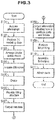
- FIG. 3 is a flowchart illustrating a method for producing the composite object 1.
- FIG. 4 shows views illustrating the method for producing the composite object 1 ( FIGS. 4(a) and 4(b) ).
- FIG. 5 shows display examples illustrating the method for producing the composite object 1 ( FIGS. 5(a) and 5(b) ).
- FIG. 6 shows display examples illustrating the method for producing the composite object 1 ( FIGS. 6(a) and 6(b) ).
- FIGS. 5(a), 5(b) , 6(a), and 6(b) show display examples of 3D modeling data displayed, for example, on a monitor of a computer that has executed software or the like for producing 3D modeling data.
- Step S101 A user acquires one or more images obtained by imaging one subject.
- the user captures images of one subject from two or more different directions using an image capturing apparatus such as a camera, thereby acquiring two or more photograph images.
- images of one subject 40 are captured from multiple directions using a camera 41, so that multiple images 42 to 44 and the like as shown in FIG. 4(b) are acquired.
- Step S102 A computer is caused to execute software or the like for producing 3D modeling data from images, using the images acquired in step S101, so that 3D modeling data indicating the surface shape of the composite object 1 is acquired.
- the data may be considered as data for defining the surface boundaries of the composite object 1.
- 3D modeling data 51 as shown in FIG. 5(a) is acquired.
- the 3D modeling data is placed, for example, on one virtual flat face.
- the output size and the like of the 3D modeling data may be set by the user, or may be set by default or the like.
- the output size of the 3D modeling data may be changed as appropriate according to an instruction from the user or the like.
- Step S103 3D modeling data of one or more blocks 101 is arranged inside the 3D modeling data acquired in step S102.
- the 3D modeling data of the blocks 101 is arranged, for example, by the user or the like using the computer that has executed the software or the like for producing 3D modeling data.
- steps S104 to S108 the same applies to steps S104 to S108 below.
- the 3D modeling data of the blocks 101 is arranged inside the 3D modeling data acquired in step S102 in response to an operation performed by the user on an unshown input device or the like.
- portions corresponding to one or more joining units 1011 of 3D modeling data of one block 101 are connected to portions corresponding to engageable units 1012 of 3D modeling data of blocks 101 that are stacked on the one block 101. It is preferable that all pieces of 3D modeling data of the two or more blocks 101 arranged inside the 3D modeling data acquired in step S102 are joined to each other via the joining units 1011 or the like.
- Data constituted by the 3D modeling data of the thus arranged one or more blocks may be considered as modeling data for setting the structure of the first object 10, or may be considered as data for defining the structure of the first object 10 that forms an inner structure of the composite object 1.
- any surface boundaries of the 3D modeling data of the blocks 101 do not bulge out from the surface boundaries of the 3D modeling data acquired in step S102.
- the bottom face of the 3D modeling data of one or more blocks 101 arranged at the lowermost may be arranged so as to match the bottom face of the 3D modeling data acquired in step S102.
- Step S104 3D modeling data indicating a difference between the 3D modeling data acquired in step S102 and the 3D modeling data of the first object 10 acquired in step S103 is acquired.
- the 3D modeling data of the first object 10 acquired in step S103 is subtracted from the 3D modeling data acquired in step S102. That is to say, the 3D modeling data 52a and the 3D modeling data 52b are subtracted.
- 3D modeling data of the thus acquired difference is 3D modeling data 53 for setting the structure of the second object 20.
- the 3D modeling data 53 may be considered as data for defining the structure of the second object 20 that forms an outer structure of the composite object 1.
- the difference may be, for example, acquired according to an instruction from the user or the like, or may be automatically acquired.
- the portion in which the 3D modeling data 52a and the 3D modeling data 52b are arranged forms a portion 55 corresponding to the fitting recesses.
- Step S105 The 3D modeling data 53 for the second object 20 acquired in step S104 is divided into two or more pieces of 3D modeling data.
- the 3D modeling data 53 is divided into multiple portions at a position designated by the user.
- the 3D modeling data 53 indicating the difference is divided into two portions along a vertical face.
- a line 54 is a line indicating the dividing position. If the second object 20 does not have to be divided into multiple parts 201, this processing may be omitted.
- the object may be divided, for example, along a face or the like designated by the user.
- Step S106 The divided portions of the 3D modeling data divided in step S105 are provided with the fitting structure 2012.
- a face of one of the divided two parts 201 is shaped to have the protrusion 2012a prepared in advance, and a face of the other divided part is shaped to have the recess 2012b prepared in advance so as to be fitted to the protrusion 2012a, at a position facing the protrusion 2012a.
- the positions at which the fitting structure 2012 is to be provided are designated, for example, by the user using an unshown input device or the like. For example, as shown in FIG. 6(b) , the fitting structure 2012 is provided at the divided positions.
- Step S107 The 3D modeling data of the parts 201 provided with the fitting structures in step S106 is output.
- the output may be, for example, transmission to an unshown 3D printer, or writing of data to an unshown storage medium or the like.
- Step S108 The computer that has executed the software or the like for producing 3D modeling data outputs information for specifying the blocks 101 indicated by the 3D modeling data of the blocks 101 arranged in step S103, and information indicating positions at which the blocks 101 indicated by the information are arranged.
- the information for specifying the blocks 101 may be identifiers such as model numbers of the blocks, may be information indicating types of the blocks, or may be information indicating sizes, shapes, or the like of the blocks.
- information indicating positions at which the parts 201 provided with the fitting structures in step S106 are arranged is output.
- the information that is output may be considered as information indicating how to assemble or how to combine the composite object 1 to the user, for example, information indicating an assembling method.
- the information indicating positions may be information indicating a relative positional relationship between the blocks 101, between the parts 201, or between the blocks 101 and the parts 201.
- As the information indicating positions at which the blocks 101 or the parts 201 are arranged for example, an image obtained by rendering, in a wireframe, the 3D modeling data of the one or more blocks 101 arranged in step S103, and the 3D modeling data of the parts 201 acquired in step S106 may be output. If the sizes of blocks that are to be used can be specified from the output image, the information for specifying the blocks 101 does not have to be output.
- an image obtained by moving the 3D modeling data indicating the blocks 101 and the parts 201 constituting the composite object 1, for example, such that the blocks 101 and the parts 201 in contact with each other are spaced away from each other by a predesignated distance or more, and rendering the moved 3D modeling data by arranging a wireframe or textures may be output.
- the displaying an image is display of an image on an unshown monitor or the like, printing by a printer, or the like.
- the information indicating positions at which the blocks 101 are arranged and the information indicating positions at which the parts 201 are arranged are, for example, information produced by the user using the 3D modeling data of the blocks 101 arranged in step S103 and the 3D modeling data of the parts 201 acquired in step S106.
- Step S109 The 3D modeling data of the parts 201 output in step S107 is used to 3D print the parts 201 using a 3D printer (not shown). Accordingly, the part 201a and the part 201b as shown in FIG. 1(b) are obtained.
- the 3D modeling data of the thus obtained potions may be used to perform 3D printing. Accordingly, multiple parts constituting the second object 20 arranged so as to cover the first object 10 at least a portion except for part of a surface thereof can be acquired through 3D printing.
- Step S110 Referring to the information acquired in step S108, one or more blocks 101 indicated by the information are obtained, and the obtained blocks 101 are stacked, so that the first object 10 as shown in FIG. 1(b) is produced. Furthermore, the parts 201 obtained in step S109 are attached to the first object 10 referring to the information acquired in step S108.
- the recesses 2021 in the fitting recesses 202 of the parts 201 provided at positions facing the one or more joining units 1011 of the first object 10 are fitted to the facing one or more joining units 1011.
- the second object 20 may be attached to the first object 10 after all parts 201 are combined such that the fitting structures 2012 are fitted to each other to form the second object 20, and this case may be considered also as attaching the parts 201 to the first object 10.
- the blocks 101 may be adhered to each other using an adhesive or the like.
- the parts 201 constituting the second object 20, or the parts 201 and the first object 10 may be adhered to each other using an adhesive or the like. Accordingly, the composite object 1 as shown in FIG. 1(a) is produced.
- step S107 the user who outputs the 3D modeling data in step S107 and the user who performs 3D printing and the like in step S109 may be different users.
- the first object is arranged at part of the inside of an object, it is possible to reduce the amount of portion produced through 3D printing, to reduce the amount of material used for 3D printing, to shorten the time necessary for printing, and to reduce the production cost.
- the first object reinforces the object from the inside, and, thus, it is possible to maintain the strength of the object produced, and to produce a high-quality object.
- the blocks reinforce the object from the inside, and, thus, it is possible to maintain the strength of the object produced.
- an object having one or at least two blocks that is, one or at least two stacked blocks are used as an object arranged inside an object produced
- variously shaped and sized toy blocks that can be joined to each other via the same joining units are commonly available and easily obtained, and, thus, it is possible to easily produce variously shaped and sized first objects.
- the first object is an object obtained by assembling blocks, it is possible to easily produce a first object used for reinforcement and the like manually by the user, without using any dedicated apparatuses or the like.
- the composite object and the like according to the present invention are suitable as an object and the like produced using 3D modeling data or the like, particularly as an object and the like produced using 3D printing.
Landscapes
- Engineering & Computer Science (AREA)
- Chemical & Material Sciences (AREA)
- Materials Engineering (AREA)
- Manufacturing & Machinery (AREA)
- Mechanical Engineering (AREA)
- Physics & Mathematics (AREA)
- Optics & Photonics (AREA)
- Toys (AREA)
Applications Claiming Priority (2)
| Application Number | Priority Date | Filing Date | Title |
|---|---|---|---|
| JP2015128322A JP6893632B2 (ja) | 2015-06-26 | 2015-06-26 | 複合物体、および複合物体の製造方法 |
| PCT/JP2016/068750 WO2016208700A1 (fr) | 2015-06-26 | 2016-06-24 | Article composite et son procédé de production |
Publications (3)
| Publication Number | Publication Date |
|---|---|
| EP3315181A1 true EP3315181A1 (fr) | 2018-05-02 |
| EP3315181A4 EP3315181A4 (fr) | 2018-12-26 |
| EP3315181B1 EP3315181B1 (fr) | 2021-03-10 |
Family
ID=57585435
Family Applications (1)
| Application Number | Title | Priority Date | Filing Date |
|---|---|---|---|
| EP16814469.9A Active EP3315181B1 (fr) | 2015-06-26 | 2016-06-24 | Article composite et son procédé de production |
Country Status (6)
| Country | Link |
|---|---|
| US (1) | US11472112B2 (fr) |
| EP (1) | EP3315181B1 (fr) |
| JP (1) | JP6893632B2 (fr) |
| DK (1) | DK3315181T3 (fr) |
| TW (1) | TWI661930B (fr) |
| WO (1) | WO2016208700A1 (fr) |
Families Citing this family (10)
| Publication number | Priority date | Publication date | Assignee | Title |
|---|---|---|---|---|
| JP6839509B2 (ja) * | 2016-02-29 | 2021-03-10 | 株式会社ミマキエンジニアリング | 三次元造形物製造方法および造形装置 |
| US10317881B2 (en) * | 2017-03-01 | 2019-06-11 | General Electric Company | Parallelized CAD using multi laser additive printing |
| JP6862051B2 (ja) * | 2017-05-11 | 2021-04-21 | 株式会社ミマキエンジニアリング | 造形物の製造方法、オブジェクトの製造方法、及び造形装置 |
| US20200368633A1 (en) * | 2017-12-01 | 2020-11-26 | Lego A/S | An additively manufactured toy building brick |
| DK3737481T3 (da) * | 2018-01-11 | 2022-08-01 | Lego As | Legetøjsgearkasse |
| JP2023098565A (ja) * | 2021-12-28 | 2023-07-10 | 株式会社リコー | 管理装置、生産システム、抽出方法およびプログラム |
| US12151166B2 (en) | 2022-08-09 | 2024-11-26 | Reuven Bakalash | Integrated reality gamified applications |
| US12220643B2 (en) * | 2022-08-09 | 2025-02-11 | Reuven Bakalash | Build and design-an integrated-reality educational gaming application |
| US20240190078A1 (en) * | 2022-12-08 | 2024-06-13 | GM Global Technology Operations LLC | System and method for locating and joining part sections enabled by additive manufacturing |
| JP7834293B2 (ja) * | 2023-12-26 | 2026-03-24 | 国立大学法人東京科学大学 | 積層造形樹脂部品嵌合接合体及びその製造方法 |
Family Cites Families (19)
| Publication number | Priority date | Publication date | Assignee | Title |
|---|---|---|---|---|
| US3005282A (en) * | 1958-01-28 | 1961-10-24 | Interlego Ag | Toy building brick |
| US3616943A (en) * | 1969-09-17 | 1971-11-02 | Grace W R & Co | Stacking system |
| JPH0811218A (ja) * | 1994-07-05 | 1996-01-16 | Kashio Polymertech Kk | 光造形における異材質複合成形体およびその成形法 |
| JPH10217337A (ja) * | 1997-02-06 | 1998-08-18 | Ricoh Co Ltd | 3次元造形方法 |
| JP2001166810A (ja) | 1999-02-19 | 2001-06-22 | Sanyo Electric Co Ltd | 立体モデル提供装置及び方法 |
| JP2001166809A (ja) * | 1999-02-19 | 2001-06-22 | Sanyo Electric Co Ltd | 実立体モデル作成装置、立体データ作成装置、疑似立体データ作成装置並びにその方法 |
| JP3068990U (ja) * | 1999-11-16 | 2000-05-26 | 玉麟 黄 | 携帯型リ―ル装置 |
| JP2002251209A (ja) * | 2001-02-23 | 2002-09-06 | Minolta Co Ltd | データ処理装置、データ処理方法、記録媒体およびプログラム |
| US7267598B2 (en) | 2005-06-07 | 2007-09-11 | Connector Set Limited Partnership | Interfacings between block type and rod and connector type construction toy sets |
| JP5494042B2 (ja) * | 2010-03-12 | 2014-05-14 | オムロン株式会社 | 接点開閉構造及び電磁リレー |
| CN103347682B (zh) * | 2010-11-28 | 2016-09-14 | 斯特拉塔西斯有限公司 | 用于对象的加式制造的系统和方法 |
| FR2973715A1 (fr) | 2011-04-08 | 2012-10-12 | Co Web | Figurine creuse, en plusieurs elements a assembler, fabriquee par impression 3d |
| EP2729225B1 (fr) | 2011-07-05 | 2018-12-05 | Lego A/S | Procédé et système de conception et de réalisation d'un élément de construction de jouet défini par un utilisateur |
| US20130233872A1 (en) * | 2012-03-09 | 2013-09-12 | Robert Gluck | Container with one or more connection interfaces for attaching three-dimensional elements and method of making and using the same |
| EP2869981B1 (fr) * | 2012-07-04 | 2019-05-08 | Lego A/S | Procédé de fabrication d'un produit en matière plastique et produit fabriqué par le procédé |
| US20150165690A1 (en) * | 2012-07-18 | 2015-06-18 | Adam P. Tow | Systems and methods for manufacturing of multi-property anatomically customized devices |
| US10045839B2 (en) * | 2012-08-13 | 2018-08-14 | University Of Louisville Research Foundation, Inc. | Methods for fabricating dental prostheses |
| JP2015104573A (ja) * | 2013-11-29 | 2015-06-08 | 株式会社タイトー | ゲーム装置、3dプリント制御方法及び3dプリンタ制御プログラム |
| KR101652623B1 (ko) | 2015-01-16 | 2016-08-30 | 박순덕 | 완구용 입체딱지 |
-
2015
- 2015-06-26 JP JP2015128322A patent/JP6893632B2/ja active Active
-
2016
- 2016-06-17 TW TW105119214A patent/TWI661930B/zh active
- 2016-06-24 WO PCT/JP2016/068750 patent/WO2016208700A1/fr not_active Ceased
- 2016-06-24 EP EP16814469.9A patent/EP3315181B1/fr active Active
- 2016-06-24 US US15/738,751 patent/US11472112B2/en active Active
- 2016-06-24 DK DK16814469.9T patent/DK3315181T3/da active
Also Published As
| Publication number | Publication date |
|---|---|
| TW201707935A (zh) | 2017-03-01 |
| JP6893632B2 (ja) | 2021-06-23 |
| TWI661930B (zh) | 2019-06-11 |
| JP2017006577A (ja) | 2017-01-12 |
| EP3315181A4 (fr) | 2018-12-26 |
| WO2016208700A1 (fr) | 2016-12-29 |
| US11472112B2 (en) | 2022-10-18 |
| US20180169949A1 (en) | 2018-06-21 |
| EP3315181B1 (fr) | 2021-03-10 |
| DK3315181T3 (da) | 2021-05-31 |
Similar Documents
| Publication | Publication Date | Title |
|---|---|---|
| EP3315181B1 (fr) | Article composite et son procédé de production | |
| Baudisch et al. | Personal fabrication | |
| Gibson et al. | Direct digital manufacturing | |
| Kvan et al. | Rapid prototyping for architectural models | |
| US9073259B2 (en) | Media-based system for forming three-dimensional objects | |
| KR101652753B1 (ko) | 3차원 파노라마 가상현실 이미지 제공방법 및 이를 이용한 제공시스템 | |
| US20160229125A1 (en) | System and Method for Generating an Image in a Three-Dimensionally Printed Object | |
| US8036450B2 (en) | Electronic photo-optical system for surveying, digitalizing and reproducing the external surface of a three-dimensional object, either virtually or in plastic, composite or papery material | |
| JP2016097657A (ja) | 画像情報処理装置、画像情報処理方法およびプログラム、並びに撮像装置 | |
| CA3213941A1 (fr) | Systemes et procedes de coulage en sable hybride | |
| JP5868223B2 (ja) | 立体成形品及びその製造方法、並びに加飾シート及びその製造方法 | |
| US11663693B2 (en) | Generating downscaled images representing an object to be generated in additive manufacturing | |
| Vilbrandt et al. | Universal desktop fabrication | |
| KR101711289B1 (ko) | 맞춤형 부조 사진의 제조방법 | |
| WO2009046608A1 (fr) | Procédé de fabrication d'un modèle stéréo d'individuation à l'aide d'un ordinateur | |
| US20180194069A1 (en) | 3d printed pin and void systems and methods | |
| KR101688088B1 (ko) | 폐품을 이용한 완구 제작 방법 | |
| JP2011219154A (ja) | 加飾二重容器 | |
| GB2376915A (en) | Smooth surfaced lithophane | |
| KR101579622B1 (ko) | 쾌속 조형기를 이용한 항공 부품 조형 방법 | |
| Wallich | Taking shape | |
| JP3151635U (ja) | イラスト表示物品 | |
| KR20170089698A (ko) | 사용자 드로잉 기반 3차원 모형 전개도 생성 장치 및 방법 | |
| KR100451131B1 (ko) | 쾌속 조형기를 이용한 시제품 조형 방법 | |
| CN113427765A (zh) | 基于3d打印的待展示模型成型方法及成型系统 |
Legal Events
| Date | Code | Title | Description |
|---|---|---|---|
| STAA | Information on the status of an ep patent application or granted ep patent |
Free format text: STATUS: THE INTERNATIONAL PUBLICATION HAS BEEN MADE |
|
| PUAI | Public reference made under article 153(3) epc to a published international application that has entered the european phase |
Free format text: ORIGINAL CODE: 0009012 |
|
| STAA | Information on the status of an ep patent application or granted ep patent |
Free format text: STATUS: REQUEST FOR EXAMINATION WAS MADE |
|
| 17P | Request for examination filed |
Effective date: 20180126 |
|
| AK | Designated contracting states |
Kind code of ref document: A1 Designated state(s): AL AT BE BG CH CY CZ DE DK EE ES FI FR GB GR HR HU IE IS IT LI LT LU LV MC MK MT NL NO PL PT RO RS SE SI SK SM TR |
|
| AX | Request for extension of the european patent |
Extension state: BA ME |
|
| DAV | Request for validation of the european patent (deleted) | ||
| DAX | Request for extension of the european patent (deleted) | ||
| A4 | Supplementary search report drawn up and despatched |
Effective date: 20181126 |
|
| RIC1 | Information provided on ipc code assigned before grant |
Ipc: B29C 67/00 20170101ALI20181120BHEP Ipc: A63H 33/08 20060101ALI20181120BHEP Ipc: A63H 9/00 20060101AFI20181120BHEP Ipc: B29C 64/386 20170101ALI20181120BHEP Ipc: B33Y 80/00 20150101ALI20181120BHEP Ipc: B33Y 50/00 20150101ALI20181120BHEP Ipc: B33Y 10/00 20150101ALI20181120BHEP Ipc: A63H 3/36 20060101ALI20181120BHEP |
|
| STAA | Information on the status of an ep patent application or granted ep patent |
Free format text: STATUS: EXAMINATION IS IN PROGRESS |
|
| 17Q | First examination report despatched |
Effective date: 20191018 |
|
| GRAP | Despatch of communication of intention to grant a patent |
Free format text: ORIGINAL CODE: EPIDOSNIGR1 |
|
| STAA | Information on the status of an ep patent application or granted ep patent |
Free format text: STATUS: GRANT OF PATENT IS INTENDED |
|
| INTG | Intention to grant announced |
Effective date: 20201029 |
|
| GRAS | Grant fee paid |
Free format text: ORIGINAL CODE: EPIDOSNIGR3 |
|
| GRAA | (expected) grant |
Free format text: ORIGINAL CODE: 0009210 |
|
| STAA | Information on the status of an ep patent application or granted ep patent |
Free format text: STATUS: THE PATENT HAS BEEN GRANTED |
|
| AK | Designated contracting states |
Kind code of ref document: B1 Designated state(s): AL AT BE BG CH CY CZ DE DK EE ES FI FR GB GR HR HU IE IS IT LI LT LU LV MC MK MT NL NO PL PT RO RS SE SI SK SM TR |
|
| REG | Reference to a national code |
Ref country code: GB Ref legal event code: FG4D |
|
| REG | Reference to a national code |
Ref country code: AT Ref legal event code: REF Ref document number: 1369193 Country of ref document: AT Kind code of ref document: T Effective date: 20210315 Ref country code: CH Ref legal event code: EP |
|
| REG | Reference to a national code |
Ref country code: IE Ref legal event code: FG4D |
|
| REG | Reference to a national code |
Ref country code: DE Ref legal event code: R096 Ref document number: 602016054123 Country of ref document: DE |
|
| REG | Reference to a national code |
Ref country code: DK Ref legal event code: T3 Effective date: 20210528 |
|
| REG | Reference to a national code |
Ref country code: LT Ref legal event code: MG9D |
|
| PG25 | Lapsed in a contracting state [announced via postgrant information from national office to epo] |
Ref country code: LT Free format text: LAPSE BECAUSE OF FAILURE TO SUBMIT A TRANSLATION OF THE DESCRIPTION OR TO PAY THE FEE WITHIN THE PRESCRIBED TIME-LIMIT Effective date: 20210310 Ref country code: BG Free format text: LAPSE BECAUSE OF FAILURE TO SUBMIT A TRANSLATION OF THE DESCRIPTION OR TO PAY THE FEE WITHIN THE PRESCRIBED TIME-LIMIT Effective date: 20210610 Ref country code: NO Free format text: LAPSE BECAUSE OF FAILURE TO SUBMIT A TRANSLATION OF THE DESCRIPTION OR TO PAY THE FEE WITHIN THE PRESCRIBED TIME-LIMIT Effective date: 20210610 Ref country code: HR Free format text: LAPSE BECAUSE OF FAILURE TO SUBMIT A TRANSLATION OF THE DESCRIPTION OR TO PAY THE FEE WITHIN THE PRESCRIBED TIME-LIMIT Effective date: 20210310 Ref country code: GR Free format text: LAPSE BECAUSE OF FAILURE TO SUBMIT A TRANSLATION OF THE DESCRIPTION OR TO PAY THE FEE WITHIN THE PRESCRIBED TIME-LIMIT Effective date: 20210611 Ref country code: FI Free format text: LAPSE BECAUSE OF FAILURE TO SUBMIT A TRANSLATION OF THE DESCRIPTION OR TO PAY THE FEE WITHIN THE PRESCRIBED TIME-LIMIT Effective date: 20210310 |
|
| REG | Reference to a national code |
Ref country code: AT Ref legal event code: MK05 Ref document number: 1369193 Country of ref document: AT Kind code of ref document: T Effective date: 20210310 |
|
| REG | Reference to a national code |
Ref country code: NL Ref legal event code: MP Effective date: 20210310 |
|
| PG25 | Lapsed in a contracting state [announced via postgrant information from national office to epo] |
Ref country code: RS Free format text: LAPSE BECAUSE OF FAILURE TO SUBMIT A TRANSLATION OF THE DESCRIPTION OR TO PAY THE FEE WITHIN THE PRESCRIBED TIME-LIMIT Effective date: 20210310 Ref country code: LV Free format text: LAPSE BECAUSE OF FAILURE TO SUBMIT A TRANSLATION OF THE DESCRIPTION OR TO PAY THE FEE WITHIN THE PRESCRIBED TIME-LIMIT Effective date: 20210310 Ref country code: SE Free format text: LAPSE BECAUSE OF FAILURE TO SUBMIT A TRANSLATION OF THE DESCRIPTION OR TO PAY THE FEE WITHIN THE PRESCRIBED TIME-LIMIT Effective date: 20210310 |
|
| PG25 | Lapsed in a contracting state [announced via postgrant information from national office to epo] |
Ref country code: NL Free format text: LAPSE BECAUSE OF FAILURE TO SUBMIT A TRANSLATION OF THE DESCRIPTION OR TO PAY THE FEE WITHIN THE PRESCRIBED TIME-LIMIT Effective date: 20210310 |
|
| PG25 | Lapsed in a contracting state [announced via postgrant information from national office to epo] |
Ref country code: SM Free format text: LAPSE BECAUSE OF FAILURE TO SUBMIT A TRANSLATION OF THE DESCRIPTION OR TO PAY THE FEE WITHIN THE PRESCRIBED TIME-LIMIT Effective date: 20210310 Ref country code: AT Free format text: LAPSE BECAUSE OF FAILURE TO SUBMIT A TRANSLATION OF THE DESCRIPTION OR TO PAY THE FEE WITHIN THE PRESCRIBED TIME-LIMIT Effective date: 20210310 Ref country code: CZ Free format text: LAPSE BECAUSE OF FAILURE TO SUBMIT A TRANSLATION OF THE DESCRIPTION OR TO PAY THE FEE WITHIN THE PRESCRIBED TIME-LIMIT Effective date: 20210310 Ref country code: EE Free format text: LAPSE BECAUSE OF FAILURE TO SUBMIT A TRANSLATION OF THE DESCRIPTION OR TO PAY THE FEE WITHIN THE PRESCRIBED TIME-LIMIT Effective date: 20210310 |
|
| PG25 | Lapsed in a contracting state [announced via postgrant information from national office to epo] |
Ref country code: SK Free format text: LAPSE BECAUSE OF FAILURE TO SUBMIT A TRANSLATION OF THE DESCRIPTION OR TO PAY THE FEE WITHIN THE PRESCRIBED TIME-LIMIT Effective date: 20210310 Ref country code: RO Free format text: LAPSE BECAUSE OF FAILURE TO SUBMIT A TRANSLATION OF THE DESCRIPTION OR TO PAY THE FEE WITHIN THE PRESCRIBED TIME-LIMIT Effective date: 20210310 Ref country code: PT Free format text: LAPSE BECAUSE OF FAILURE TO SUBMIT A TRANSLATION OF THE DESCRIPTION OR TO PAY THE FEE WITHIN THE PRESCRIBED TIME-LIMIT Effective date: 20210712 Ref country code: PL Free format text: LAPSE BECAUSE OF FAILURE TO SUBMIT A TRANSLATION OF THE DESCRIPTION OR TO PAY THE FEE WITHIN THE PRESCRIBED TIME-LIMIT Effective date: 20210310 Ref country code: IS Free format text: LAPSE BECAUSE OF FAILURE TO SUBMIT A TRANSLATION OF THE DESCRIPTION OR TO PAY THE FEE WITHIN THE PRESCRIBED TIME-LIMIT Effective date: 20210710 |
|
| REG | Reference to a national code |
Ref country code: DE Ref legal event code: R097 Ref document number: 602016054123 Country of ref document: DE |
|
| PLBE | No opposition filed within time limit |
Free format text: ORIGINAL CODE: 0009261 |
|
| STAA | Information on the status of an ep patent application or granted ep patent |
Free format text: STATUS: NO OPPOSITION FILED WITHIN TIME LIMIT |
|
| PG25 | Lapsed in a contracting state [announced via postgrant information from national office to epo] |
Ref country code: ES Free format text: LAPSE BECAUSE OF FAILURE TO SUBMIT A TRANSLATION OF THE DESCRIPTION OR TO PAY THE FEE WITHIN THE PRESCRIBED TIME-LIMIT Effective date: 20210310 Ref country code: AL Free format text: LAPSE BECAUSE OF FAILURE TO SUBMIT A TRANSLATION OF THE DESCRIPTION OR TO PAY THE FEE WITHIN THE PRESCRIBED TIME-LIMIT Effective date: 20210310 Ref country code: MC Free format text: LAPSE BECAUSE OF FAILURE TO SUBMIT A TRANSLATION OF THE DESCRIPTION OR TO PAY THE FEE WITHIN THE PRESCRIBED TIME-LIMIT Effective date: 20210310 |
|
| REG | Reference to a national code |
Ref country code: CH Ref legal event code: PL |
|
| 26N | No opposition filed |
Effective date: 20211213 |
|
| PG25 | Lapsed in a contracting state [announced via postgrant information from national office to epo] |
Ref country code: SI Free format text: LAPSE BECAUSE OF FAILURE TO SUBMIT A TRANSLATION OF THE DESCRIPTION OR TO PAY THE FEE WITHIN THE PRESCRIBED TIME-LIMIT Effective date: 20210310 |
|
| REG | Reference to a national code |
Ref country code: BE Ref legal event code: MM Effective date: 20210630 |
|
| PG25 | Lapsed in a contracting state [announced via postgrant information from national office to epo] |
Ref country code: LU Free format text: LAPSE BECAUSE OF NON-PAYMENT OF DUE FEES Effective date: 20210624 |
|
| PG25 | Lapsed in a contracting state [announced via postgrant information from national office to epo] |
Ref country code: LI Free format text: LAPSE BECAUSE OF NON-PAYMENT OF DUE FEES Effective date: 20210630 Ref country code: IT Free format text: LAPSE BECAUSE OF FAILURE TO SUBMIT A TRANSLATION OF THE DESCRIPTION OR TO PAY THE FEE WITHIN THE PRESCRIBED TIME-LIMIT Effective date: 20210310 Ref country code: IE Free format text: LAPSE BECAUSE OF NON-PAYMENT OF DUE FEES Effective date: 20210624 Ref country code: CH Free format text: LAPSE BECAUSE OF NON-PAYMENT OF DUE FEES Effective date: 20210630 |
|
| PG25 | Lapsed in a contracting state [announced via postgrant information from national office to epo] |
Ref country code: IS Free format text: LAPSE BECAUSE OF FAILURE TO SUBMIT A TRANSLATION OF THE DESCRIPTION OR TO PAY THE FEE WITHIN THE PRESCRIBED TIME-LIMIT Effective date: 20210710 |
|
| PG25 | Lapsed in a contracting state [announced via postgrant information from national office to epo] |
Ref country code: BE Free format text: LAPSE BECAUSE OF NON-PAYMENT OF DUE FEES Effective date: 20210630 |
|
| P01 | Opt-out of the competence of the unified patent court (upc) registered |
Effective date: 20230509 |
|
| PG25 | Lapsed in a contracting state [announced via postgrant information from national office to epo] |
Ref country code: CY Free format text: LAPSE BECAUSE OF FAILURE TO SUBMIT A TRANSLATION OF THE DESCRIPTION OR TO PAY THE FEE WITHIN THE PRESCRIBED TIME-LIMIT Effective date: 20210310 |
|
| PG25 | Lapsed in a contracting state [announced via postgrant information from national office to epo] |
Ref country code: HU Free format text: LAPSE BECAUSE OF FAILURE TO SUBMIT A TRANSLATION OF THE DESCRIPTION OR TO PAY THE FEE WITHIN THE PRESCRIBED TIME-LIMIT; INVALID AB INITIO Effective date: 20160624 |
|
| PG25 | Lapsed in a contracting state [announced via postgrant information from national office to epo] |
Ref country code: MK Free format text: LAPSE BECAUSE OF FAILURE TO SUBMIT A TRANSLATION OF THE DESCRIPTION OR TO PAY THE FEE WITHIN THE PRESCRIBED TIME-LIMIT Effective date: 20210310 |
|
| PG25 | Lapsed in a contracting state [announced via postgrant information from national office to epo] |
Ref country code: MT Free format text: LAPSE BECAUSE OF FAILURE TO SUBMIT A TRANSLATION OF THE DESCRIPTION OR TO PAY THE FEE WITHIN THE PRESCRIBED TIME-LIMIT Effective date: 20210310 |
|
| PGFP | Annual fee paid to national office [announced via postgrant information from national office to epo] |
Ref country code: GB Payment date: 20250620 Year of fee payment: 10 Ref country code: DK Payment date: 20250618 Year of fee payment: 10 |
|
| PGFP | Annual fee paid to national office [announced via postgrant information from national office to epo] |
Ref country code: FR Payment date: 20250626 Year of fee payment: 10 |
|
| PGFP | Annual fee paid to national office [announced via postgrant information from national office to epo] |
Ref country code: DE Payment date: 20250630 Year of fee payment: 10 |
|
| PG25 | Lapsed in a contracting state [announced via postgrant information from national office to epo] |
Ref country code: TR Free format text: LAPSE BECAUSE OF FAILURE TO SUBMIT A TRANSLATION OF THE DESCRIPTION OR TO PAY THE FEE WITHIN THE PRESCRIBED TIME-LIMIT Effective date: 20210310 |