EP3318587A1 - Hydriertes erdölharz und herstellungsverfahren und verwendung dafür - Google Patents
Hydriertes erdölharz und herstellungsverfahren und verwendung dafür Download PDFInfo
- Publication number
- EP3318587A1 EP3318587A1 EP16818190.7A EP16818190A EP3318587A1 EP 3318587 A1 EP3318587 A1 EP 3318587A1 EP 16818190 A EP16818190 A EP 16818190A EP 3318587 A1 EP3318587 A1 EP 3318587A1
- Authority
- EP
- European Patent Office
- Prior art keywords
- petroleum resin
- ppm
- hydrogenated petroleum
- group
- methyl
- Prior art date
- Legal status (The legal status is an assumption and is not a legal conclusion. Google has not performed a legal analysis and makes no representation as to the accuracy of the status listed.)
- Pending
Links
Images






Classifications
-
- C—CHEMISTRY; METALLURGY
- C09—DYES; PAINTS; POLISHES; NATURAL RESINS; ADHESIVES; COMPOSITIONS NOT OTHERWISE PROVIDED FOR; APPLICATIONS OF MATERIALS NOT OTHERWISE PROVIDED FOR
- C09J—ADHESIVES; NON-MECHANICAL ASPECTS OF ADHESIVE PROCESSES IN GENERAL; ADHESIVE PROCESSES NOT PROVIDED FOR ELSEWHERE; USE OF MATERIALS AS ADHESIVES
- C09J147/00—Adhesives based on homopolymers or copolymers of compounds having one or more unsaturated aliphatic radicals, at least one having two or more carbon-to-carbon double bonds; Adhesives based on derivatives of such polymers
-
- C—CHEMISTRY; METALLURGY
- C08—ORGANIC MACROMOLECULAR COMPOUNDS; THEIR PREPARATION OR CHEMICAL WORKING-UP; COMPOSITIONS BASED THEREON
- C08F—MACROMOLECULAR COMPOUNDS OBTAINED BY REACTIONS ONLY INVOLVING CARBON-TO-CARBON UNSATURATED BONDS
- C08F240/00—Copolymers of hydrocarbons and mineral oils, e.g. petroleum resins
-
- C—CHEMISTRY; METALLURGY
- C08—ORGANIC MACROMOLECULAR COMPOUNDS; THEIR PREPARATION OR CHEMICAL WORKING-UP; COMPOSITIONS BASED THEREON
- C08F—MACROMOLECULAR COMPOUNDS OBTAINED BY REACTIONS ONLY INVOLVING CARBON-TO-CARBON UNSATURATED BONDS
- C08F210/00—Copolymers of unsaturated aliphatic hydrocarbons having only one carbon-to-carbon double bond
- C08F210/14—Monomers containing five or more carbon atoms
-
- C—CHEMISTRY; METALLURGY
- C08—ORGANIC MACROMOLECULAR COMPOUNDS; THEIR PREPARATION OR CHEMICAL WORKING-UP; COMPOSITIONS BASED THEREON
- C08F—MACROMOLECULAR COMPOUNDS OBTAINED BY REACTIONS ONLY INVOLVING CARBON-TO-CARBON UNSATURATED BONDS
- C08F232/00—Copolymers of cyclic compounds containing no unsaturated aliphatic radicals in a side chain, and having one or more carbon-to-carbon double bonds in a carbocyclic ring system
- C08F232/08—Copolymers of cyclic compounds containing no unsaturated aliphatic radicals in a side chain, and having one or more carbon-to-carbon double bonds in a carbocyclic ring system having condensed rings
-
- C—CHEMISTRY; METALLURGY
- C08—ORGANIC MACROMOLECULAR COMPOUNDS; THEIR PREPARATION OR CHEMICAL WORKING-UP; COMPOSITIONS BASED THEREON
- C08F—MACROMOLECULAR COMPOUNDS OBTAINED BY REACTIONS ONLY INVOLVING CARBON-TO-CARBON UNSATURATED BONDS
- C08F32/00—Homopolymers and copolymers of cyclic compounds having no unsaturated aliphatic radicals in a side chain, and having one or more carbon-to-carbon double bonds in a carbocyclic ring system
-
- C—CHEMISTRY; METALLURGY
- C08—ORGANIC MACROMOLECULAR COMPOUNDS; THEIR PREPARATION OR CHEMICAL WORKING-UP; COMPOSITIONS BASED THEREON
- C08F—MACROMOLECULAR COMPOUNDS OBTAINED BY REACTIONS ONLY INVOLVING CARBON-TO-CARBON UNSATURATED BONDS
- C08F8/00—Chemical modification by after-treatment
- C08F8/04—Reduction, e.g. hydrogenation
-
- C—CHEMISTRY; METALLURGY
- C08—ORGANIC MACROMOLECULAR COMPOUNDS; THEIR PREPARATION OR CHEMICAL WORKING-UP; COMPOSITIONS BASED THEREON
- C08L—COMPOSITIONS OF MACROMOLECULAR COMPOUNDS
- C08L45/00—Compositions of homopolymers or copolymers of compounds having no unsaturated aliphatic radicals in side chain, and having one or more carbon-to-carbon double bonds in a carbocyclic or in a heterocyclic ring system; Compositions of derivatives of such polymers
-
- C—CHEMISTRY; METALLURGY
- C08—ORGANIC MACROMOLECULAR COMPOUNDS; THEIR PREPARATION OR CHEMICAL WORKING-UP; COMPOSITIONS BASED THEREON
- C08L—COMPOSITIONS OF MACROMOLECULAR COMPOUNDS
- C08L57/00—Compositions of unspecified polymers obtained by reactions only involving carbon-to-carbon unsaturated bonds
- C08L57/02—Copolymers of mineral oil hydrocarbons
-
- C—CHEMISTRY; METALLURGY
- C09—DYES; PAINTS; POLISHES; NATURAL RESINS; ADHESIVES; COMPOSITIONS NOT OTHERWISE PROVIDED FOR; APPLICATIONS OF MATERIALS NOT OTHERWISE PROVIDED FOR
- C09J—ADHESIVES; NON-MECHANICAL ASPECTS OF ADHESIVE PROCESSES IN GENERAL; ADHESIVE PROCESSES NOT PROVIDED FOR ELSEWHERE; USE OF MATERIALS AS ADHESIVES
- C09J123/00—Adhesives based on homopolymers or copolymers of unsaturated aliphatic hydrocarbons having only one carbon-to-carbon double bond; Adhesives based on derivatives of such polymers
- C09J123/02—Adhesives based on homopolymers or copolymers of unsaturated aliphatic hydrocarbons having only one carbon-to-carbon double bond; Adhesives based on derivatives of such polymers not modified by chemical after-treatment
- C09J123/04—Homopolymers or copolymers of ethene
- C09J123/06—Polyethylene
-
- C—CHEMISTRY; METALLURGY
- C09—DYES; PAINTS; POLISHES; NATURAL RESINS; ADHESIVES; COMPOSITIONS NOT OTHERWISE PROVIDED FOR; APPLICATIONS OF MATERIALS NOT OTHERWISE PROVIDED FOR
- C09J—ADHESIVES; NON-MECHANICAL ASPECTS OF ADHESIVE PROCESSES IN GENERAL; ADHESIVE PROCESSES NOT PROVIDED FOR ELSEWHERE; USE OF MATERIALS AS ADHESIVES
- C09J123/00—Adhesives based on homopolymers or copolymers of unsaturated aliphatic hydrocarbons having only one carbon-to-carbon double bond; Adhesives based on derivatives of such polymers
- C09J123/02—Adhesives based on homopolymers or copolymers of unsaturated aliphatic hydrocarbons having only one carbon-to-carbon double bond; Adhesives based on derivatives of such polymers not modified by chemical after-treatment
- C09J123/04—Homopolymers or copolymers of ethene
- C09J123/08—Copolymers of ethene
- C09J123/0846—Copolymers of ethene with unsaturated hydrocarbons containing other atoms than carbon or hydrogen atoms
- C09J123/0853—Vinylacetate
-
- C—CHEMISTRY; METALLURGY
- C09—DYES; PAINTS; POLISHES; NATURAL RESINS; ADHESIVES; COMPOSITIONS NOT OTHERWISE PROVIDED FOR; APPLICATIONS OF MATERIALS NOT OTHERWISE PROVIDED FOR
- C09J—ADHESIVES; NON-MECHANICAL ASPECTS OF ADHESIVE PROCESSES IN GENERAL; ADHESIVE PROCESSES NOT PROVIDED FOR ELSEWHERE; USE OF MATERIALS AS ADHESIVES
- C09J123/00—Adhesives based on homopolymers or copolymers of unsaturated aliphatic hydrocarbons having only one carbon-to-carbon double bond; Adhesives based on derivatives of such polymers
- C09J123/02—Adhesives based on homopolymers or copolymers of unsaturated aliphatic hydrocarbons having only one carbon-to-carbon double bond; Adhesives based on derivatives of such polymers not modified by chemical after-treatment
- C09J123/10—Homopolymers or copolymers of propene
- C09J123/14—Copolymers of propene
-
- C—CHEMISTRY; METALLURGY
- C09—DYES; PAINTS; POLISHES; NATURAL RESINS; ADHESIVES; COMPOSITIONS NOT OTHERWISE PROVIDED FOR; APPLICATIONS OF MATERIALS NOT OTHERWISE PROVIDED FOR
- C09J—ADHESIVES; NON-MECHANICAL ASPECTS OF ADHESIVE PROCESSES IN GENERAL; ADHESIVE PROCESSES NOT PROVIDED FOR ELSEWHERE; USE OF MATERIALS AS ADHESIVES
- C09J123/00—Adhesives based on homopolymers or copolymers of unsaturated aliphatic hydrocarbons having only one carbon-to-carbon double bond; Adhesives based on derivatives of such polymers
- C09J123/02—Adhesives based on homopolymers or copolymers of unsaturated aliphatic hydrocarbons having only one carbon-to-carbon double bond; Adhesives based on derivatives of such polymers not modified by chemical after-treatment
- C09J123/16—Elastomeric ethylene-propylene or ethylene-propylene-diene copolymers, e.g. EPR and EPDM rubbers
-
- C—CHEMISTRY; METALLURGY
- C09—DYES; PAINTS; POLISHES; NATURAL RESINS; ADHESIVES; COMPOSITIONS NOT OTHERWISE PROVIDED FOR; APPLICATIONS OF MATERIALS NOT OTHERWISE PROVIDED FOR
- C09J—ADHESIVES; NON-MECHANICAL ASPECTS OF ADHESIVE PROCESSES IN GENERAL; ADHESIVE PROCESSES NOT PROVIDED FOR ELSEWHERE; USE OF MATERIALS AS ADHESIVES
- C09J133/00—Adhesives based on homopolymers or copolymers of compounds having one or more unsaturated aliphatic radicals, each having only one carbon-to-carbon double bond, and at least one being terminated by only one carboxyl radical, or of salts, anhydrides, esters, amides, imides, or nitriles thereof; Adhesives based on derivatives of such polymers
- C09J133/04—Homopolymers or copolymers of esters
- C09J133/06—Homopolymers or copolymers of esters of esters containing only carbon, hydrogen and oxygen, the oxygen atom being present only as part of the carboxyl radical
- C09J133/062—Copolymers with monomers not covered by C09J133/06
-
- C—CHEMISTRY; METALLURGY
- C09—DYES; PAINTS; POLISHES; NATURAL RESINS; ADHESIVES; COMPOSITIONS NOT OTHERWISE PROVIDED FOR; APPLICATIONS OF MATERIALS NOT OTHERWISE PROVIDED FOR
- C09J—ADHESIVES; NON-MECHANICAL ASPECTS OF ADHESIVE PROCESSES IN GENERAL; ADHESIVE PROCESSES NOT PROVIDED FOR ELSEWHERE; USE OF MATERIALS AS ADHESIVES
- C09J145/00—Adhesives based on homopolymers or copolymers of compounds having no unsaturated aliphatic radicals in a side chain, and having one or more carbon-to-carbon double bonds in a carbocyclic or in a heterocyclic system; Adhesives based on derivatives of such polymers
-
- C—CHEMISTRY; METALLURGY
- C09—DYES; PAINTS; POLISHES; NATURAL RESINS; ADHESIVES; COMPOSITIONS NOT OTHERWISE PROVIDED FOR; APPLICATIONS OF MATERIALS NOT OTHERWISE PROVIDED FOR
- C09J—ADHESIVES; NON-MECHANICAL ASPECTS OF ADHESIVE PROCESSES IN GENERAL; ADHESIVE PROCESSES NOT PROVIDED FOR ELSEWHERE; USE OF MATERIALS AS ADHESIVES
- C09J157/00—Adhesives based on unspecified polymers obtained by reactions only involving carbon-to-carbon unsaturated bonds
- C09J157/02—Copolymers of mineral oil hydrocarbons
Definitions
- the present invention relates to a hydrogenated petroleum resin which can be applied to an adhesive agent, and manufacturing method and use thereof.
- Petroleum resin is a representative tackifier and mainly used to a material giving tackifying property or adhesiveness to an adhesive tape or a product such as paint, ink, rubber, tire and the like. It is a liquid or solid type thermoplastic resin at a room temperature and may have various forms from transparent semi-fluid to pale yellow and transparent colorless (Water White) solid.
- the petroleum resin is generally manufactured vis processes such as polymerization of C 5 or C 9 diolefin oil with a catalyst (mainly AlCl 3 or BF 3 ) followed by catalyst removal, washing, resin separation and the like, and recently, the resin is manufactured by other polymerization method such as thermal polymerization or radical polymerization so as to improve properties.
- a catalyst mainly AlCl 3 or BF 3
- the resin is manufactured by other polymerization method such as thermal polymerization or radical polymerization so as to improve properties.
- U.S. Patent No.5,410,004 discloses a petroleum resin manufactured by thermal polymerization of dicyclopentadiene (DCPD) and olefinic modifier in the presence of an acidic catalyst.
- DCPD dicyclopentadiene
- olefinic modifier in the presence of an acidic catalyst.
- such petroleum resin contains a double bond and unreacted material in its molecular structure, and due to its weakness on heat or acid, there are problems that transparency of the petroleum resin during or after processing is deteriorated and bad odor becomes heavy.
- the hydrogenation reaction which is a reaction to eliminate the double bond
- the petroleum resin can be used as it is after polymerization, and recently, it is used in the form of a hydrogenated petroleum resin which is manufactured by additionally conducting for enhancing properties.
- the hydrogenated petroleum resin is a thermoplastic resin made from high-grade unsaturated hydrocarbons in high-temperature pyrolysis oil such as naphtha at a petrochemical plant, and it is has excellent stability for heat and ultraviolet rays (UV) and adhesive property. Therefore, it is variously used to medical supplies, woodworking supplies, sanitary goods and the like.
- U.S. Patent No.5,652,308 discloses a tackifier resin wherein a part of a C5 monomer is partly replaced by a C3 monomer by copolymerizing propylene as a C3 monomer and DCPD manufactured from a C5 monomer using a metallocene catalyst.
- the expensive metallocene catalyst which is very weak on oxygen and moisture should be used. Therefore, the above method is difficult to put into practical use because the process design is complicated, the manufacturing cost is high, and the yield is also very low at less than 30%.
- the present inventors have conducted multi-modal studies, and then found that when manufacturing a hydrogenated petroleum resin by conducting a hydrogenation reaction after thermal polymerization, not complicated catalytic polymerization, if, as a raw material, dicyclopentadiene is used together with an olefinic monomer as a comonomers olefinic monomer, adhesive force and heat resistance of the finally obtained hydrogenated petroleum resin are enhanced, bad odor is improved, and when it is applied to an adhesive agent, its properties also improved, thereby completing the present invention.
- an object of the present invention is to provide a method for manufacturing a hydrogenated petroleum resin, which can be easily put to practical use, by a simplified process.
- Another object of the present invention is to provide a hydrogenated petroleum resin, which is manufactured by the above method, thereby having enhanced properties and improved bad odor.
- further another object of the present invention is to provide a use of the hydrogenated petroleum resin as an adhesive agent.
- a hydrogenated petroleum resin containing repeating units represented by the following Chemical Formulas 1 and 2: wherein, R 1 is H or a methyl group, R 2 is a C1 to C18 alkyl group, and 0 ⁇ m ⁇ 10 and 0 ⁇ n ⁇ 10.
- the present invention provides a method for manufacturing a hydrogenated petroleum resin comprising the following steps of:
- the present invention provides a use of the hydrogenated petroleum resin to be used in a composition for adhesion.
- a method for manufacturing the hydrogenated petroleum resin according to the present invention solves a problem of demand and supply of a raw material by replacing a C3 olefin used as a raw material of a conventional petroleum resin with C6 to C20 olefin, and largely enhances a polymerization yield by using a thermal polymerization process instead of a catalytic polymerization process for polymerization.
- the hydrogenated petroleum resin manufactured by the manufacturing method of the present invention solves the problem which was not improved in the conventional petroleum resin and forms the unique and unpleasant bad odor, thereby improving the bad odor so that the odor does not occur.
- the hydrogenated petroleum resin manufactured by the above method has excellent bad odor and adhesiveness, high softening point, excellent transparency and color, low molecular weight, and excellent compatibility to natural rubber or synthetic rubber. Accordingly, it can be useful as an adhesive agent in the various fields, and in particular, it can be more competitive when it is applied to sanitary goods.
- the present invention provides a petroleum resin with a novel structure, which has improved bad odor and therefore can be applied to an adhesive agent or tackifier and the like.
- the hydrogenated petroleum resin according to the present invention is manufacture by thermal polymerization of dicyclopentadiene and an olefinic monomer followed by a hydrogenation reaction, and contains repeating units represented by the following Chemical Formulas 1 and 2: wherein, R 1 is H or a methyl group, R 2 is a C1 to C18 alkyl group, and 0 ⁇ m ⁇ 10 and 0 ⁇ n ⁇ 10.
- R 1 may be H
- R 2 may be a C1 to C18 alkyl group.
- the alkyl group may be a linear or a branched alkyl group, preferably a linear alkyl group.
- it may preferably be a methyl group, an ethyl group, a propyl group, a butyl group, a pentyl group, a hexyl group, a octyl group, a nonyl group, a decyl group, a dodecyl group or a tetradecyl group, preferably a C4 or more alkyl group such as a butyl group, a pentyl group, a hexyl group, a octyl group, a nonyl group, a decyl group, a dodecyl group or a tetradecyl group.
- the hydrogenated petroleum resin according to the present invention contains the repeating units of Chemical Formulas 1 and 2, but it is saturated without a double bond in the molecular structure, and the repeating units are copolymerized.
- the shape of the copolymer is expressed as above, but it is not particularly limited, and it may be various such as random copolymer, alternative copolymer, block copolymer, graft copolymer and star block copolymer.
- the repeating unit of Chemical Formula 1 is derived from dicyclopentadiene
- the repeating unit of Chemical Formula 2 is derived from polymerization reaction of dicyclopentadiene and an olefinic monomer as a co-monomer
- the units have a structure whose end is substituted with an alkyl group.
- Bad odor of the petroleum resin is improved by using the olefin-derived alkyl group constituting the repeating unit of Chemical Formula 2.
- the petroleum resin may contain the olefin-derived alkyl group in an amount of 10 mol% to 50 mol%, preferably 10 mol% to 45 mol%.
- the amount of the alkyl group is less than the above range, it may be difficult to reveal the effect of improving adhesion performance and bad odor caused by copolymerization with the olefinic monomer, and if the amount is over the range, the adhesion performance may be deteriorated.
- the repeating units of Chemical Formulas 1 and 2 are contained at a certain molar ratio, and specifically, the repeating unit of Chemical Formula 1 is contained at 40 mol% to 90 mol% and the repeating unit of Chemical Formula 2 is contained at 10 mol% to 60 mol%. If the amount of the repeating unit of Chemical Formula 2 is relatively small, the effects of improving bad odor and adhesion performance can't be secured. On the contrary, if the amount thereof is excessive, properties of the petroleum resin itself are deteriorated. Therefore, the unit should be properly used within the above range.
- the hydrogenated petroleum resin according to the present invention having the above structure may be analyzed through a 1 H-NMR analyzer (nuclear magnetic resonance spectrometry), and the hydrogenated petroleum resin can be specified by analyzing the peak thus obtained.
- 1 H-NMR analysis is an analytical method to find out what atom is bonding with a hydrogen atom in a compound, and which functional groups are involved, as well as the spatial arrangement. Tis method is used for identification and confirmation of a compound, and it may be used for measuring change on bonding state as well as quantitative analysis of a mixture and estimation of molecular structure.
- the proton (H + ) in the same relationship in the molecule appears as one peak, and if it is closely related to another nucleus, it divides into multiple lines.
- the peaks differ in the position of the chemical shifts (i.e., frequency interval, ppm), and their intensities vary according to the proton present in single and double bonds (i.e., unsaturated bonds).
- the chemical shift data can be used to determine what kind of proton is present in the molecule, what proportion of each proton exists through the intensity (integral), and which proton is adjacent to each other through coupling.
- the hydrogenated petroleum resin presented in the present invention has the repeating units of Chemical Formulas 1 and 2, and at this time, the repeating unit of Chemical Formula 1 is composed of only a dicyclopentadiene-derived ring structure, and the repeating unit of Chemical Formula 2 is composed of a linear structure of the olefin-derived alkyl group together with the above ring structure.
- the hydrogenated petroleum resin can be specified by confirming the peak specifying R 2 of Chemical Formula 2.
- 1 H-NMR spectrum peak is related to the number of protons and the peak analysis between 0.8 ppm and 1.4 ppm is very important to confirm that R 2 is bound to the hydrogenated petroleum resin of the present invention.
- the peak analysis is divided into a case of using the peak area as a parameter and a case of using the peak width as a parameter. Namely, by analyzing the parameters related to the peak area and the peak width, quantitative analysis and qualitative analysis are possible and can be identified through the present invention of the hydrogenated petroleum resin.
- Fig. 1 is a mimetic diagram for explaining NMR spectrum presented in the present invention, wherein (a) shows peak area and (b) shows definition of FWHM.
- a ppm to b ppm peak area presented in the present invention refers to the area of the corresponding region when cutting the peak in the vertical direction including the baseline at points a and b ppm of the chemical shift of the X-axis.
- a' ppm peak width (FWHM) presented in the present invention refers to the width at half point (H/2) of the peak height (H) including the baseline at the a 'point of the chemical shift of the X axis.
- the hydrogenated petroleum resin of the present invention can be specified by a parameter of the peak area, and at this time, the peak area has the same definition shown in Fig. 1(a) .
- the alkyl group peak of R 2 related to olefin occurs in the range of 0.8 ppm to 1.4 ppm, and the peak is divided into two peaks in this range.
- the peak at 0.8 ppm to 1.0 ppm and the peak at 1.0 ppm to 1.4 ppm are related to the content of R 2 , and the ratio of the peak at 0.8 ppm to 1.0 ppm and the peak at 1.0 ppm to 1.4 ppm correspond to the carbon number of R 2 i.e., the peak is about the type of olefin used.
- the hydrogenated petroleum resin according to the present invention can estimate the content of R 2 in the entire hydrogenated petroleum resin by measuring the peak area obtained after 1 H-NMR measurement. At this time, the area can be easily derived from NMR spectroscope.
- the hydrogenated petroleum resin of the present invention has the peak area at 0.8 ppm to 1.0 ppm against peak area at 1.4 ppm to 7.5 ppm of 0.2 or more, preferably a range from 0.2 to 0.8, more preferably a range from 0.5 to 0.7.
- the area ratio is related to the R 2 content and the effect desired to obtain by the substitution of an alkyl group. Namely, if the area ratio is out of the range, it is difficult to secure the effects such as enhancement of heat resistance and improvement of bad odor of the petroleum resin.
- the hydrogenated petroleum resin of the present invention has the peak area at 1.0 ppm to 1.4 ppm against peak area at 1.4 ppm to 7.5 ppm of 0.5 or more, preferably a range from 0.5 to 0.8, more preferably arrange from 0.6 to 0.7.
- the area ratio is related to the kind of R 2 and the effect desired to obtain by the substitution of an alkyl group. Namely, if the area ratio is out of the range, it is difficult to secure the effects such as enhancement of heat resistance and improvement of bad odor of the petroleum resin.
- each peak area ratio may be satisfied by at least one thereof, and more preferably satisfied by all of them.
- the hydrogenated petroleum resin of the present invention can be specified by a parameter of FWHM of the peak, and at this time, the peak width has the same definition shown in Fig.1(b) .
- the peak related to R 2 is shown at 0.8 ppm to 1.4 ppm, the peak related to the content of R 2 at 0.8 ppm to 1.0 ppm and the peak related to the kind of R 2 at 1.0 ppm to 1.4 ppm are specified by FWHM parameter.
- FWHM at 0.85 ppm is confirmed, and in connection with the carbon number of R 2 , FWHM at 1.20 ppm is confirmed.
- FWHM at 0.85 ppm peak is 0.1 ppm or less, preferably 0.01 ppm to 0.1 ppm, and FWHM at 1.20 ppm peak is 0.4 ppm or less, preferably 0.01 ppm to 0.4 ppm.
- the FWHM parameter is a limited range to achieve enhancement of adhesion and improvement of bad odor through the use of olefinic monomer, and if the parameter is out of the range, the effects can't be secured.
- the hydrogenated petroleum resin according to the present invention may be satisfied by at least one of the FWHMs at 0.85 ppm and 1.20 ppm, and more preferably satisfied by all of them.
- the hydrogenated petroleum resin according to the present invention is characterized by having weight average molecular weight of 500 g/mol to 3,000 g/mol, softening point of 90°C to 150°C and color (APHA color) of 1 to 100. If the weight average molecular weight is less than 500 g/mol, adhesive force may be deteriorated, and if it is more than 3000 g/mol, compatibility may be poor. If the softening point is lower than 90°C, adhesive force may be deteriorated, and if it is higher than 150°C, it is not preferred because it is difficult to be applied to a manufacturing process. Accordingly, it is not preferred.
- the weight average molecular weight is related to the application field of hydrogenated petroleum resin.
- the range is that the weight average molecular weight can be fully utilized when applied to the adhesive agent field suggested in the following Use part. If the molecular weight is less than the above range, adhesiveness may be deteriorated, and on the contrary, if it is more than the above range, compatibility with other resin may be deteriorated.
- the softening point means a temperature at which softening is caused by heat, and if the softening point is too low when applied to the adhesive agent field, there may be a problem that the petroleum resin itself may melt during storage of the petroleum resin, and on the contrary, if the softening point is over the range, there may be a problem that adhesive property of the adhesive agent may be deteriorated.
- the APHA color related to color is applied to measure the chromaticity of a clear liquid and a solid state, and is usually expressed by subdividing the color into 1 to 500 levels. Its value has a correlated with a yellowness index.
- the hydrogenated petroleum resin of the present invention has APHA value of 1 to 100, and if it is more than 100, it may show opaque property or color is turbid when mixed with other resin, resulting in deterioration of the value of a product.
- compatibility indicates how well the resin is compatible with the other ingredients
- polyolefin rubber and wax were mixed at a constant ratio, and the resulting mixture was heated until it became transparent. Then, while cooling the resulting composition, compatibility was measured with a cloud point at a temperature at which the resin composition was blurred.
- the compatibility of room temperature to 150°C means that the hydrogenated petroleum resin of the present invention can be well mixed with other resin at a room temperature to 150°C.
- the hydrogenated petroleum resin according to the present invention is manufacture by the following steps of (see Fig. 2 ):
- dicyclopentadiene and a C3 to C20 olefinic monomer as a co-monomer are thermally polymerized to prepare a petroleum resin.
- the olefinic monomer used as a co-monomer may be an olefin compound up to C20 as well as a C3 olefin which was conventionally used as a major ingredient of a petroleum resin.
- the olefinic monomer may be a linear or branched alpha olefinic monomer.
- the alpha olefinic monomer is a linear alpha olefin
- the linear alpha olefin has higher flexibility and better fluidity and structural penetration force than the branched alpha olefin,. Accordingly, when used as an adhesive agent or a tackifier, high wettability to a substrate can be secured, thereby securing high adhesive force.
- the alpha olefinic monomer may be one or a mixture of two or more of the following monomers, but not limited thereto.
- the olefinic monomer which can be used may be linear alpha-olefin such as ethylene (or ethene), propylene (or propene), 1-butene, 1-pentene, 1-hexene, 1-heptene, 1-octene, 1-decene, 1-undecene, 1-dodecene, 1-tetradecene, 1-hexadecene, 1-eicosene and the like; branched alpha-olefin such as isobutylene, 3-methyl-1-butene, 2-methyl-1-butene, 3-methyl-1-butene, 4-methyl-1-butene, 3-methyl-1-pentene, 4-methyl-1-pentene, 4-methyl-1-hexene, 5-methyl-1-hexene, dimethyl pentene, diethyl hexane and the like; and a mixture thereof, and the olefinic monomer may be used alone of as a mixture. More preferably, it may be
- reaction of the dicyclopentadiene and 1-hexene as the C6 olefin is shown in the following Reaction Formula 1.
- the polymerization of the dicyclopentadiene and the olefinic monomer is conducted by thermal polymerization not catalytic polymerization.
- the dicyclopentadiene and the olefinic monomer When the dicyclopentadiene and the olefinic monomer are heated to a certain level of heat, they themselves form radicals to initiate the reaction, and the petroleum resin is manufactured through continuous polymerization.
- This thermal polymerization does not use an initiator, so it can solve the problem of increase in the cost due to the use of the initiator and purity problem of the petroleum resin.
- the molar ratio of the dicyclopentadiene to the olefinic monomer is 1:0.2 to 1:0.5, preferably 1:0.25 to 1:0.45.
- the mole ratio is related to the physical properties of the finally obtained hydrogenated petroleum resin. If the molar ratio is less than the above range, it is difficult to manufacture a hydrogenated petroleum resin having a desired level of physical properties by using too little olefinic monomer. On the contrary, if the molar ratio is more than the above range, the content of the dicyclopentadiene is relatively reduced and the physical properties of the finally obtained hydrogenated petroleum resin are deteriorated, so that it is appropriately adjusted within the above range.
- the thermal polymerization is not particularly limited in the present invention, and bulk polymerization and solution polymerization methods, preferably solution polymerization method may be used.
- dicyclopentadiene solution is prepared by dissolving the dicyclopentadiene in a solvent, the olefinic monomer is added to the obtained dicyclopentadiene solution, and thermal polymerization is performed.
- the solvent may be any solvent which can fully dissolve the dicyclopentadiene, but not limited in the present invention.
- it may be one selected from the group consisting of toluene, methylene chloride, hexane, xylene, trichlorobenzene, alkyl benzene, acetonitrile, dimethyl formamide, N-methyl pyrrolidone, dimethyl acetamide, dimethyl sulfoxide, gamma-butyrolactone, furfural, acetone and a mixture thereof.
- the amount of the solvent may be the amount enough to fully dissolve dicyclopentadiene, and for example, it may be in a range from 2 mol to 10 mol based on dicyclopentadiene 1 mol.
- the thermal polymerization is performed at a temperature at which initiation and polymerization of the dicyclopentadiene and the olefinic monomer can sufficiently take place, and the temperature can be changed depending on the type of the dicyclopentadiene and the olefinic monomer.
- the thermal polymerization is performed at lower than 200°C or for less than 0.5 hour, the yield may low, and if it is performed at higher than 320°C or for more than 4 hours, gel may be formed.
- the temperature is directly related to initiation and polymerization reaction. If the temperature is lower than the above range, the initiation does not occur, and on the contrary, if the temperature exceeds the above range, decomposition of the dicyclopentadiene or the olefinic monomer as raw material or gel formation occurs, and control of polymerization speed is not easy.
- reaction time is related to yield. If the time is less than the above time, the yield may low, and on the contrary, even if the reaction is conducted for a long time, it is uneconomical because there is no large increase in yield, so that it is appropriately adjusted within the above range.
- the present invention can solve the problem that it is difficult to supply raw materials of C5 olefin which was used as a main material in the conventional petroleum resin, and the problem of bad odor which could not be solved by the conventional petroleum resin.
- the catalyst removal process which has been an essential process in the cationic catalyst method, which was a conventional method for manufacturing a petroleum resin, may not be required, and in particular, it is preferred because the yield can be greatly enhanced to 90% or more.
- a hydrogenation catalyst is added to the petroleum resin manufactured above, and hydrogenation reaction is performed to manufacture a hydrogenated petroleum resin.
- the hydrogenation reaction is a reaction in which hydrogen is added to an unsaturated double bond to form a single bond, and a hydrogenated petroleum resin in which all double bonds are eliminated by the hydrogenation reaction is manufactured.
- the hydrogenation reaction is carried out by the addition of a hydrogenation catalyst, and involves a high degree of exothermic process, so that temperature control requirements are difficult and high pressure should be maintained.
- the hydrogenation reaction is performed under a pressure of 50 bar to 150 bar at 150°C to 300°C. If the temperature and the pressure are less than the above range, the hydrogenation reaction is not sufficiently performed, and on the contrary, if the temperature and the pressure over the range, molecular structure may be broken due to harsh reaction condition, so that it is appropriately adjusted within the above range.
- the hydrogenation catalyst used at this time is not particularly limited in the present invention, and it may be any hydrogenation catalyst known in the art.
- the hydrogenation catalyst may be one selected from the group consisting of Ni, Fe, Cu, Co, Mo, Pd, Rh, Pt, Nb, Au, Rd, Raney Ni and a combination thereof, and preferably it may be Pd.
- the hydrogenation catalyst is used at a molar ratio of 0.001 to 0.5, preferably 0.05 to 0.2 based on dicyclopentadiene 1 mol. If it is used at less than 0.001 mol based on dicyclopentadiene 1 mol, reactivity may be poor, and if it is more than 0.5 mol, it is not economical due to use of a large amount of the catalyst.
- the method for manufacturing the hydrogenated petroleum resin according to the present invention can manufacture a hydrogenated petroleum resin at a high yield through thermal polymerization, and the process can be simplified, the cost can be reduced, and it can be easily applied to the practical process.
- the manufacturing method according to the present invention described above can manufacture a petroleum resin with highly improved bad odor at a high yield of 90% or more.
- the petroleum resin manufactured in the present invention can give tackifying property or adhesiveness to a hot melt adhesive agent, a pressure sensitive adhesive agent, ink, paint, paint for road marking and the like, and can be useful as an adhesive agent by mixing to various resin such as natural rubber, synthetic rubber and the like.
- an adhesive agent composition which comprises a petroleum resin comprising the repeating unit represented by Chemical Formula 1 and the repeating unit represented by Chemical Formula 2; at least one polymer selected from styrenic block copolymers such as styrene-isoprene block copolymer, styrene-isoprene-styrene block copolymer, styrene-butadiene block copolymer and styrene-butadiene-styrene block copolymer, and ethylene based poly olefin block copolymers such as polyethylene, polypropylene, ethylene vinyl acetate and propylene-ethylene copolymer; and at least one oil selected from the group consisting of synthetic wax such as paraffin wax and microcrystalline wax, animal natural wax, vegetable natural wax, aromatic oil, naphthenic oil and paraffinic oil.
- synthetic wax such as paraffin wax and microcrystalline wax, animal natural wax, vegetable natural wax, aromatic oil, naphthenic oil and
- the adhesive agent manufactured from the adhesive agent composition is characterized by having softening point of 50°C to 150°C, and melt viscosity of 300 cps to 10,000 cps at 160°C and 200 cps to 8,000 cps at 180°C.
- the softening point of the adhesive agent is less than 50°C, adhesive force may be deteriorated, and if it is over 150°C, it is not preferred because it is difficult to be applied to a manufacturing process. Accordingly, it is not preferred.
- melt viscosity is more than 10,000 cps at 160°C
- processability may be deteriorated, if it is less than 300 cps at 160°C, adhesive force may be deteriorated, if it is more than 8,000 cps at 180°C, processability may be deteriorated, and if it is less than 200 cps at 180°C, adhesive force may be deteriorated.
- the adhesive agent manufactured from the adhesive agent may be used as a hot melt adhesive (HMA) or a pressure sensitive adhesive agent (hot melt sensitive adhesive (HMPSA)).
- HMA hot melt adhesive
- HMPSA hot melt sensitive adhesive
- the hot melt adhesive agent has excellent properties such as compatibility of 100°C or lower, hardness from 30°C to 90°C, open time from 5 sec to less than 30 sec and set time from 0.1 sec to less than 5 sec.
- the pressure sensitive adhesive agent has excellent properties, for example, in Ball Tack method, it has a value of 40 cm or less in the beginning and a value of 40 cm or less after aging; in Peel strength method, it has a value of 500 gf/in or more in the beginning and a value of 500 gf/in or more after aging; in Holding power method, it has a value of 30 min or longer in the beginning and a value of 30 min or longer after aging; and in SAFT method, it has a value of 40°C or higher in the beginning and a value of 40°C or higher after aging. Accordingly, it can be found that it has excellent properties as a pressure sensitive adhesive agent.
- a hydrogenated petroleum resin has no double bonds by a hydrogenation reaction, and the agent is manufactured by thermal polymerization without unreacted raw materials, solvents and low molecular oligomers, resulting in improvement of bad odor caused by them.
- Such adhesive agent can be suitably used in a hot melt pressure sensitive adhesive agent or an adhesive agent for sanitary goods in contact with human body such as diapers, sanitary napkins, adult diapers and the like.
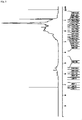
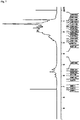
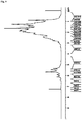
- a peak between 0.85 ppm to 0.95 ppm refers to a methyl group of olefin
- a peak between 1.20 ppm to 1.30 ppm refers to a ⁇ -CH 2 -> chain of olefin
- a peak between 4.9 ppm to 6.5 ppm refers to a double bond of dicyclopentadiene.
- DCPD Dicyclopentadiene
- DCPD Dicyclopentadiene
- TCDE tricyclodecene
- An initiator was added thereto, and then the reactor was fastened.
- a catalyst was added to the resulting mixture and then reacted. Reaction temperature was maintained at 40°C and the reaction was stopped after 2 hours.
- the petroleum resin thus obtained was mixed with water 300 g to separate the catalyst. Then the solution was distilled at 240°C for 5 min to recover unreacted oil and then remained petroleum resin was harvested.
- Toluene as a hydrogenation solvent 1.5 folds more than the resin was added to the petroleum resin thus obtained 300 g to completely dissolve the resin, and then put into a 1L autoclave.
- a palladium catalyst 60 g was added thereto, the reactor was fastened and a hydrogenation reaction was performed at a hydrogen pressure of 80 bar and a temperature of 230°C for 90 min. After completing the reaction, the resulting reaction solution was distilled in a vacuum of 5 torr at 250°C for 5 min to obtain a hydrogenated petroleum resin.
- Table 1 Each specific ingredient and the contents thereof are shown in Table 1.
- the softening point was measured according to a Ring and ball softening method (ASTM E 28 standard). The sample was melted and poured on a spherical mold and the mold was mounted on a glycerin-filled beaker. A ball was placed on the spherical mold with the resin. While the temperature was increased at 2.5°C/min, the temperature (softening point) was measured when the ball fell down after the resin melted. The result was shown in Table 3.
- the polystyrene-converted weight average molecular weight and number average molecular weight were measured by gel permeation chromatography (GPC) (PL GPC-220).
- GPC gel permeation chromatography
- the hydrogenated petroleum resin to be measured was dissolved in 1,2,4-trichlorobenzene to the concentration of 0.34 wt% and 288 ⁇ l thereof was injected to GPC.
- 1,2,4-trichlorobenzene was used and injected at a flow rate of 1 mL/min, and then analysis was performed at 130°C.
- Two Guard columns and one PL 5 ⁇ l mixed-D were connected in series. While heating to 250°C at a rate of 10°C/min, measurement was performed using a differential scanning calorimeter as a detector, and analysis was carried out under N 2 atmosphere up to 2 nd scan. The results were shown in Table 3.
- the Mw listed in the following Table 3 refers to weight average molecular weight, and the MWD refers to Mw/Mn.
- the olefin content (mol%) in a hydrogenated petroleum resin was analyzed from the results of 1 H-NMR spectrum by nuclear magnetic resonance spectrometry (Bruker,500NMR, 14.1 telsa).
- Color was measured according to ASTM D1544. Specifically, a hydrogenated petroleum resin 10.0 g was dissolved in toluene 10.0 g, and then put into a quartz cell with rectangular cross section (width of 5 cm, height of 4 cm and path length of 50 mm). The cell was installed in PFX195 colormeter and then the colormeter was operated to measure APHA color.
- Specific gravity was measured according to ASTM D71. Specifically, a hydrogenated petroleum resin 5 g was melt on a 200°C hot plate and poured in a spherical mold. The hydrogenated petroleum resin hardened in the spherical shape was separated and put into a specific gravimeter (QUALITEST: Densimeter SD-200L) to measure specific gravity.
- QUALITEST Densimeter SD-200L
- Example 3 Yield (%) Softening point (°C) Molecular weight Olefin content in hydrogenated Petroleum resin (mol%) Color APHA Specific gravity Bad Odor strength Mw MWD
- Example.1 91 85 850 1.8 21 20 1.05 1.0
- Example 2 100 100 1000 2 23 20 1.05 1.0
- Example 3 100 110 1150 2.1 13 30 1.05 0.9
- Example 4 90 88 870 1.7 20 20 1.05 0.9
- Example 5 99 102 1100 2 21 20 1.05 0.8
- Example 6 100 115 1210 2 12 30 1.05 0.7
- Example 7 100 105 1300 2 19 30 1.05 0.5
- Example 8 100 109 1320 2 17 35 1.05 0.5
- Example 9 90 100 1150 1.8 15 30 1.05 0.6
- Example 10 60 75 800 2.2 35 20 1.1 2.5
- Example 12 80 80 705 1.9 19 20 1.08 2.0
- Example 13 85 86 810 2.1 21 20 1.08 2.0
- Example 14 85
- Examples 1 to 9 were manufactured at a yield of 90% or more. Further, it can be found that bad odor of the compositions of all Examples were significantly improved compared to the compositions of Comparative Examples. It can be found that Examples 1 to 12 in which C4 or more alkyl group was substituted showed excellent results.
- Comparative Examples 4 and 5 polymerized using a cation catalyst has markedly reduced yield and significantly increased molecular weight and molecular weight distribution.
- Hardness was measured using a Shore A hardness tester of 124ASTM standard. A sample to be measured was place on a flat surface and the sample was pierced with a sharp portion of the hardness tester. A value measured was recorded.
- Open time was measured by using a standard hot melt tester (JIT). After a certain amount of an adhesive agent was coated on a width of 5 cm x height of 5 cm corrugated cardboard, a width of 5 cm x height of 10 cm corrugated cardboard was attached thereto. The strength when the corrugated cardboard was detached therefrom was recorded in increments of 5 sec from 0 sec. When a graph was drawn, the time at which the strength was begun to fall sharply was recorded.
- JIT hot melt tester
- Set time was measured by using a standard hot melt tester (JIT). After a certain amount of an adhesive agent was coated on a width of 5 cm x height of 5 cm corrugated cardboard, a width of 5 cm x height of 10 cm corrugated cardboard was attached thereto. The strength when the corrugated cardboard was detached therefrom was recorded in increments of 0.5 sec from 0 sec. When a graph was drawn, the time at which the strength value on Y-axis was begun to become constant was recorded.
- JIT hot melt tester
- Peel strength was measured by using a UTM device.
- a tape was prepared by coating a sample (adhesive agent) on a PET film to a thickness of 25 micrometer.
- the tape was attached to a SUS-304 steel plate.
- the part where the PET film was attached was equipped to a UTM grip, and then the strength was measured at a rate of 30 mm/min.
- the numerical value input to the UTM device means adhesive force (kgf/in).
- Tackifying force was evaluated according to ASTM D3121 method.
- a specimen tape on which an adhesive agent was coated at 20 micrometer to 30 micrometer was cut to width of 10 cm and height of 50 cm.
- a ball tack tester JIS Z0237
- JIS Z0237 was placed at one end and the angle was set at a standard tilt angle of 30 degree, and a steel ball No.9 was rolled thereon. The rolling distance was measured, and the less the ball rolls, the better the performance of the tack.
- Adhesive force was evaluated according to ASTM D3330 method.
- a specimen tape on which an adhesive agent was coated at 20 micrometer to 30 micrometer was cut to width of 2 inch and height of 6 inch.
- the specimen was placed on a release paper, made to a size of width of 1 inch and height of 2 inch, and then attached to a cleansed SUS 304 steep plate (At this time, the specimen was attached to leave about 2 cm or more of the specimen unattached, and the part required for measurement was compressed by using a roll down device (Cheminstruments) by moving a roll back and forth once).
- the specimen not attached to the SUS 304 steep plate was cut with scissors so as to leave about 2 cm or more of the specimen unattached.
- the specimen not attached to the SUS 304 steel plate was inserted into a ring for measuring cohesion and adhered to the passing specimen.
- Each Two scotch tapes for fixing were attached on the front and back sides of the SUS 304 steel plate in parallel to the horizontal end of the steel plate, and then the specimen was fixed by stapling 2 times parallel between the ring for measuring cohesion and the SUS304 steel plate.
- the remaining specimen was cut so that the specimen was attached on the SUS 304 steel plate at a size of width of 1 inch and height of 1 inch.
- the specimen was hanged on a SUS steel plate cradle in a shear test oven. A 1 kg weight was hanged on the ring for measuring holding power attached to the specimen. The time at which the weight was fallen down on a timer was recorded.
- Adhesive force was evaluated according to ASTM D3654 method.
- a specimen tape on which an adhesive agent was coated at 20 micrometer to 30 micrometer was cut to width of 2 inch and height of 6 inch.
- the specimen was placed on a release paper, made to a size of width of 1 inch and height of 2 inch, and then attached to a cleansed SUS 304 steep plate (At this time, the specimen was attached to leave about 2 cm or more of the specimen unattached, and the part required for measurement was compressed by using a roll down device (Cheminstruments) by moving a roll back and forth once).
- the specimen not attached to the SUS 304 steep plate was cut with scissors so as to leave about 2 cm or more of the specimen unattached.
- the specimen not attached to the SUS 304 steel plate was inserted into a ring for measuring cohesion and adhered to the passing specimen.
- Each Two scotch tapes for fixing were attached on the front and back sides of the SUS 304 steel plate in parallel to the horizontal end of the steel plate, and then the specimen was fixed by stapling 2 times parallel between the ring for measuring cohesion and the SUS304 steel plate.
- the remaining specimen was cut so that the specimen was attached on the SUS 304 steel plate at a size of width of 1 inch and height of 1 inch.
- the specimen was hanged on a SUS steel plate cradle in a shear test oven. A 1 kg weight was hanged on the ring for measuring holding power attached to the specimen. While increasing the oven temperature at a rate of 0.4°C /min, the time at which the weight was fallen down on a timer was recorded.
- a 10 g sample was weighed in a test tube and aged in an 180°C oven. After 24 hours, the heat resistance was evaluated by Gardner color scale. Gardner color has a total of 18 step colors and the color step of the nearest color to the naked eyes was recorded.
- a viscometer (Brookfield) was used.
- HT-2DB chamber was used and a sample of 10.5 was put into a spindle No.27. The temperature was raised to the temperature desired for measurement and the sample was stabilized for 30 min. Stirring was started from stirring axis RPM of 0.5 and the viscosity value when torque value was 50% was recorded.
- the softening point was measured according to a Ring and ball softening method (ASTM E 28 standard). The sample was melted and poured on a spherical mold and the mold was mounted on a glycerin-filled beaker. A ball was placed on the spherical mold with the resin. While the temperature was increased at 2.5°C/min, the temperature (softening point) was measured when the ball fell down after the resin melted. The result was shown in Table 3.
- Test Example 3 Manufacture of me-PP based HMPSA (adhesive agent A) and measurement of property
- a mixture 100 parts by weight which comprises Infuse 9807 (metallocene catalyzed ethylene based polyolefin block copolymer, Dow chemical) as a polymer 20 wt%, KL-240 (Michang Oil Ind. Co., Ltd.) as an oil 20 wt% and a petroleum resin used in Examples and Comparative Examples 60 wt%, was mixed with an antioxidant (Songwon Songnox 1010) 0.75 part by weight to manufacture adhesive agents A (HMPSA) of Examples 2, 6, 8 and 13 and Comparative Example 1 as a me-PE hot melt pressure sensitive adhesive (HMPSA).
- HMPSA me-PE hot melt pressure sensitive adhesive
- Test Example 4 Manufacture of me-PP based HMPSA (adhesive agent B) and measurement of property
- a mixture 100 parts by weight which comprises Vistamaxx 6202 (metallocene catalyzed poly propylene, Exxonmobil chemical) 20 wt% and Vestoplast 703 (Amorphous propylene-ethylene copolymer, Evonik) 7.5 wt% as a polymer 20 wt%, KL-240 (Michang Oil Ind. Co., Ltd.) as an oil 22.5 wt% and a petroleum resin used in Examples and Comparative Examples 50 wt%, was mixed with an antioxidant (Songwon Songnox 1010) 0.75 part by weight to manufacture adhesive agents B (HMPSA) of Examples 2, 6, 8, 9 and 13 and Comparative Example 1 as a HMPSA adhesive agent(me-PP based HMPSA).
- Vistamaxx 6202 metalocene catalyzed poly propylene, Exxonmobil chemical
- Vestoplast 703 Amorphous propylene-ethylene copolymer, Evonik
- 7.5 wt% as a polymer 20 wt%
- *Aged refers to the result measured after standing each sample at 70°C for 3 days.
- Test Example 5 Manufacture of SIS based HMPSA (adhesive agent C ) and measurement of property
- a mixture 100 parts by weight which comprises SIS D-1161(Styrene-Isoprene-Styrene Block Colpolymer, Kraton polymer) as a polymer 25 wt%, KL-240 (Michang Oil Ind. Co., Ltd.) as an oil 18 wt% and a petroleum resin used in Examples and Comparative Examples 57 wt%, was mixed with an antioxidant (Songwon Songnox 1010) 0.75 part by weight to manufacture adhesive agents C (HMPSA) of Examples 2, 6, 8, 9 and 13 and Comparative Example 1 as a HMPSA adhesive agent (SIS based HMPSA).
- Test Example 6 Manufacture of me-PP based HMA (adhesive agent D) and measurement of property
- Affinity 1950GA metalocene catalyzed poly ethylene, Dow chemical
- Sasol C-80 Sasol 20wt% as a wax and a petroleum resin used in Examples and Comparative Examples 40 wt%
- adhesive agents D HMA
- me-PE based HMA a HMA adhesive agent
- Test Example 7 Manufacture of EVA based HMA (adhesive agent E) and measurement of property
- EVA 28/400 Ethylene Vinyl Acetate, VA contents 28%, MI 400, Arkema
- Sasol C-80 Sasol 20wt% as a wax and a petroleum resin used in Examples and Comparative Examples 40 wt%
- adhesive agents E (HMA) of Examples 2, 6, 7, 8 and 13 and Comparative Examples 1, 2 and 4 as a HMA adhesive agent (EVA based HMA).
- Test Example 8 Manufacture of APAO hot melt adhesive agent (EVA based HMA, adhesive agent F) and measurement of property
- Vestoplast 703 (Amorphous propylene-ethylene copolymer, Evonik) as a polymer 40 wt%, Sasol C-80 (Sasol) 20wt% as a wax and a petroleum resin used in Examples and Comparative Examples 40 wt% were mixed to manufacture adhesive agents F (HMA) of Examples 2, 6, 7, 8 and 13 and Comparative Examples 1, 2 and 4 as a HMA adhesive agent (APAO based HMA).
- the adhesive agent of the present invention has increased adhesive force, and enhanced bad odor and heat resistance.
Landscapes
- Chemical & Material Sciences (AREA)
- Organic Chemistry (AREA)
- Chemical Kinetics & Catalysis (AREA)
- Health & Medical Sciences (AREA)
- Medicinal Chemistry (AREA)
- Polymers & Plastics (AREA)
- Oil, Petroleum & Natural Gas (AREA)
- General Chemical & Material Sciences (AREA)
- Engineering & Computer Science (AREA)
- Addition Polymer Or Copolymer, Post-Treatments, Or Chemical Modifications (AREA)
- Adhesives Or Adhesive Processes (AREA)
- Low-Molecular Organic Synthesis Reactions Using Catalysts (AREA)
Applications Claiming Priority (4)
| Application Number | Priority Date | Filing Date | Title |
|---|---|---|---|
| KR20150093774 | 2015-06-30 | ||
| KR1020150191077A KR20170003367A (ko) | 2015-06-30 | 2015-12-31 | 석유수지, 석유수지의 제조방법 및 접착제 조성물 |
| KR1020160080204A KR101805892B1 (ko) | 2015-06-30 | 2016-06-27 | 수소첨가 석유수지, 이의 제조방법 및 용도 |
| PCT/KR2016/006905 WO2017003157A1 (ko) | 2015-06-30 | 2016-06-28 | 수소첨가 석유수지, 이의 제조방법 및 용도 |
Publications (2)
| Publication Number | Publication Date |
|---|---|
| EP3318587A1 true EP3318587A1 (de) | 2018-05-09 |
| EP3318587A4 EP3318587A4 (de) | 2019-03-06 |
Family
ID=57609489
Family Applications (2)
| Application Number | Title | Priority Date | Filing Date |
|---|---|---|---|
| EP15897275.2A Withdrawn EP3318586A4 (de) | 2015-06-30 | 2015-12-31 | Kohlenwasserstoffharz, verfahren zur herstellung eines kohlenwasserstoffharzes und klebstoffzusammensetzung |
| EP16818190.7A Pending EP3318587A4 (de) | 2015-06-30 | 2016-06-28 | Hydriertes erdölharz und herstellungsverfahren und verwendung dafür |
Family Applications Before (1)
| Application Number | Title | Priority Date | Filing Date |
|---|---|---|---|
| EP15897275.2A Withdrawn EP3318586A4 (de) | 2015-06-30 | 2015-12-31 | Kohlenwasserstoffharz, verfahren zur herstellung eines kohlenwasserstoffharzes und klebstoffzusammensetzung |
Country Status (7)
| Country | Link |
|---|---|
| US (3) | US10988644B2 (de) |
| EP (2) | EP3318586A4 (de) |
| JP (2) | JP6586473B2 (de) |
| KR (1) | KR20170003367A (de) |
| CN (2) | CN107709387B (de) |
| TW (1) | TWI766839B (de) |
| WO (1) | WO2017003057A1 (de) |
Families Citing this family (14)
| Publication number | Priority date | Publication date | Assignee | Title |
|---|---|---|---|---|
| KR20170003367A (ko) * | 2015-06-30 | 2017-01-09 | 코오롱인더스트리 주식회사 | 석유수지, 석유수지의 제조방법 및 접착제 조성물 |
| JP6801512B2 (ja) * | 2017-02-27 | 2020-12-16 | 日本ゼオン株式会社 | 変性炭化水素樹脂およびホットメルト粘接着剤組成物 |
| KR102245614B1 (ko) * | 2017-04-27 | 2021-04-27 | 한화솔루션 주식회사 | 에틸렌 비닐아세테이트 수지에 대한 수첨 석유수지의 상용성 평가 방법 |
| KR102327051B1 (ko) * | 2018-04-09 | 2021-11-15 | 한화솔루션 주식회사 | 점착 부여제 및 이를 포함하는 감압 접착제 조성물 |
| KR102334253B1 (ko) * | 2018-04-27 | 2021-12-01 | 한화솔루션 주식회사 | 핫멜트 접착제 |
| KR102373008B1 (ko) * | 2018-12-05 | 2022-03-11 | 한화솔루션 주식회사 | 디사이클로펜타디엔계 수지, 디사이클로펜타디엔계수첨 수지 및 이를 포함하는 접착수지 조성물 |
| US12173109B2 (en) | 2019-06-03 | 2024-12-24 | Hanwha Solutions Corporation | Preparation method of hydrogenated petroleum resin |
| KR102414716B1 (ko) * | 2019-10-02 | 2022-06-28 | 한화솔루션 주식회사 | 점접착제용 수지 조성물 및 이의 제조방법 |
| KR102155698B1 (ko) * | 2019-12-17 | 2020-09-14 | 코오롱인더스트리 주식회사 | 수소첨가 석유수지 및 이를 포함하는 고무 조성물 |
| DE102020201657A1 (de) | 2020-02-11 | 2021-08-12 | Robert Bosch Gesellschaft mit beschränkter Haftung | Anordnung, Kraftfahrzeug |
| KR20220082573A (ko) * | 2020-12-10 | 2022-06-17 | 한화솔루션 주식회사 | 수첨 석유수지의 연속적 제조 방법 |
| CN115010859B (zh) * | 2022-08-05 | 2022-10-11 | 淄博鲁华泓锦新材料集团股份有限公司 | 一种回用热聚液体树脂生产碳九加氢树脂的方法 |
| KR102915635B1 (ko) * | 2022-08-18 | 2026-01-20 | 코오롱인더스트리 주식회사 | 수소첨가 석유수지, 이를 포함한 접착제 조성물 및 이의 제조방법 |
| CN118894964B (zh) * | 2024-07-18 | 2025-12-02 | 广东新华粤树脂科技有限公司 | 一种长链烯烃改性双环戊二烯热聚加氢树脂的制备方法与应用 |
Family Cites Families (31)
| Publication number | Priority date | Publication date | Assignee | Title |
|---|---|---|---|---|
| FR2463782A1 (fr) * | 1979-08-22 | 1981-02-27 | Nippon Oil Co Ltd | Procede pour preparer une nouvelle resine a partir d'un compose cyclique pentagonal ayant une paire de doubles liaisons conjuguees et/ou d'un produit d'addition de diels-alder correspondant, procede pour hydrogener cette nouvelle resine et composition de resine contenant cette resine hydrogenee |
| JPS624785A (ja) * | 1985-07-02 | 1987-01-10 | Nippon Oil Co Ltd | トラクシヨンドライブ用流体 |
| JP2517233B2 (ja) | 1986-06-14 | 1996-07-24 | 丸善石油化学 株式会社 | ゴム組成物 |
| JPS6320310A (ja) * | 1986-07-15 | 1988-01-28 | Maruzen Petrochem Co Ltd | シクロペンタジエン系樹脂の製造方法 |
| JPS63146952A (ja) * | 1986-12-11 | 1988-06-18 | Maruzen Petrochem Co Ltd | ポリプロピレン系樹脂組成物 |
| JPS63172701A (ja) * | 1987-01-13 | 1988-07-16 | Nippon Zeon Co Ltd | 水素化炭化水素樹脂の製造方法 |
| US5171793A (en) * | 1990-02-22 | 1992-12-15 | Exxon Chemical Patents Inc. | Hydrogenated resins, adhesive formulations and process for production of resins |
| JP2929331B2 (ja) * | 1990-07-18 | 1999-08-03 | 丸善石油化学株式会社 | トラクションドライブ用流体 |
| US5410004A (en) * | 1994-01-24 | 1995-04-25 | Arizona Chemical Company | Thermal polymerization of dicyclopentadiene |
| JP2814057B2 (ja) * | 1994-07-06 | 1998-10-22 | 株式会社コスモ総合研究所 | スキーワックス |
| US5552489A (en) | 1994-07-22 | 1996-09-03 | Exxon Chemical Patents Inc. | Tackifiers and a process to obtain tackifiers |
| US5502140A (en) * | 1994-10-19 | 1996-03-26 | Hercules Incorporated | Thermally polymerized dicyclopentadiene/vinyl aromatic resins |
| JPH1016178A (ja) | 1996-07-03 | 1998-01-20 | Kureha Elastomer Kk | レーザー加工用ゴム印材およびその製造法 |
| JP3812855B2 (ja) * | 1996-12-18 | 2006-08-23 | 株式会社コスモ総合研究所 | 潤滑油基油組成物 |
| US6232418B1 (en) * | 1997-06-17 | 2001-05-15 | Exxon Mobile Chemical Patents, Inc | Process for the production of an aromatic modified resin based on crude C5 |
| US6755963B2 (en) | 1997-07-15 | 2004-06-29 | Exxonmobil Chemical Patents Inc. | Hydrogenation process for hydrocarbon resins |
| JP3953196B2 (ja) * | 1998-06-19 | 2007-08-08 | 株式会社コスモ総合研究所 | トラクショングリース組成物 |
| KR100366972B1 (ko) * | 2000-03-07 | 2003-01-09 | 코오롱유화주식회사 | 점·접착제용 공중합 석유수지 및 그의 제조방법 |
| US6825291B2 (en) | 2000-12-11 | 2004-11-30 | Eastman Chemical Resins, Inc. | Thermally polymerized copolymers made from styrene and dicyclopentadiene monomers |
| US7402715B2 (en) * | 2001-08-08 | 2008-07-22 | Idemitsu Kosan Co., Ltd. | Fluids for traction drive |
| JP2003192870A (ja) * | 2001-12-27 | 2003-07-09 | Nippon Zeon Co Ltd | 脂環族系石油樹脂組成物 |
| CA2490891A1 (en) * | 2002-06-26 | 2004-01-08 | Idemitsu Kosan Co., Ltd. | High softening point copolymer, production process for the same and hydrogenated product thereof |
| EP1574526A4 (de) | 2002-12-20 | 2007-06-06 | Idemitsu Kosan Co | Verfahren zur herstellung von hydriertem erdölharz |
| JP2006063141A (ja) * | 2004-08-25 | 2006-03-09 | Nippon Zeon Co Ltd | 重合体水素化物の製造方法 |
| JP5077042B2 (ja) | 2008-04-18 | 2012-11-21 | Jsr株式会社 | 射出成形体形成用樹脂組成物および射出成形体 |
| EP2578691A4 (de) | 2010-05-28 | 2016-11-23 | Nippon Suisan Kaisha Ltd | Verfahren zur herstellung von öl oder fett mit einer lipasehaltigen hoch ungesättigten fettsäure |
| JP5787624B2 (ja) | 2011-06-01 | 2015-09-30 | 出光興産株式会社 | 水添石油樹脂ペレットの製造方法 |
| KR101595604B1 (ko) | 2012-06-29 | 2016-02-18 | 코오롱인더스트리 주식회사 | 환상올레핀계 고분자 화합물 및 그 제조방법 |
| WO2014047356A1 (en) * | 2012-09-24 | 2014-03-27 | Exxonmobil Chemical Patents Inc. | Functionalized resins obtained via olefin metathesis |
| KR20150031700A (ko) * | 2013-09-16 | 2015-03-25 | 코오롱인더스트리 주식회사 | 수소첨가 석유수지 및 그 제조방법 |
| KR20170003367A (ko) * | 2015-06-30 | 2017-01-09 | 코오롱인더스트리 주식회사 | 석유수지, 석유수지의 제조방법 및 접착제 조성물 |
-
2015
- 2015-12-31 KR KR1020150191077A patent/KR20170003367A/ko active Pending
- 2015-12-31 WO PCT/KR2015/014584 patent/WO2017003057A1/ko not_active Ceased
- 2015-12-31 US US15/741,099 patent/US10988644B2/en active Active
- 2015-12-31 CN CN201580081365.4A patent/CN107709387B/zh active Active
- 2015-12-31 JP JP2017567601A patent/JP6586473B2/ja active Active
- 2015-12-31 EP EP15897275.2A patent/EP3318586A4/de not_active Withdrawn
-
2016
- 2016-06-28 US US15/740,641 patent/US10647896B2/en active Active
- 2016-06-28 EP EP16818190.7A patent/EP3318587A4/de active Pending
- 2016-06-28 JP JP2017568070A patent/JP6827001B2/ja active Active
- 2016-06-28 CN CN201680049664.4A patent/CN107922552B/zh active Active
- 2016-06-29 TW TW105120403A patent/TWI766839B/zh active
-
2020
- 2020-04-03 US US16/839,383 patent/US11186754B2/en active Active
Also Published As
| Publication number | Publication date |
|---|---|
| JP2018526482A (ja) | 2018-09-13 |
| US10647896B2 (en) | 2020-05-12 |
| US11186754B2 (en) | 2021-11-30 |
| JP2018526483A (ja) | 2018-09-13 |
| JP6586473B2 (ja) | 2019-10-02 |
| EP3318586A4 (de) | 2019-03-06 |
| CN107709387B (zh) | 2020-10-23 |
| US10988644B2 (en) | 2021-04-27 |
| US20200231847A1 (en) | 2020-07-23 |
| KR20170003367A (ko) | 2017-01-09 |
| CN107709387A (zh) | 2018-02-16 |
| EP3318586A1 (de) | 2018-05-09 |
| WO2017003057A1 (ko) | 2017-01-05 |
| TW201708287A (zh) | 2017-03-01 |
| JP6827001B2 (ja) | 2021-02-10 |
| US20180187054A1 (en) | 2018-07-05 |
| CN107922552A (zh) | 2018-04-17 |
| US20180186903A1 (en) | 2018-07-05 |
| CN107922552B (zh) | 2021-05-28 |
| EP3318587A4 (de) | 2019-03-06 |
| TWI766839B (zh) | 2022-06-11 |
Similar Documents
| Publication | Publication Date | Title |
|---|---|---|
| US11186754B2 (en) | Hydrogenated petroleum resin, and production method and use therefor | |
| KR101805892B1 (ko) | 수소첨가 석유수지, 이의 제조방법 및 용도 | |
| EP2327750B1 (de) | Haftzusammensetzung und haftmittel damit | |
| CA2312242C (en) | Process for producing hydrogenated c9 petroleum resin and hydrogenated c9 petroleum resin obtained by the process | |
| JP6189864B2 (ja) | 低分子量ポリスチレン樹脂ならびにその製造方法及び使用方法 | |
| KR20190017229A (ko) | 수소첨가 석유수지, 이의 제조방법 및 용도 | |
| KR20150031700A (ko) | 수소첨가 석유수지 및 그 제조방법 | |
| KR20240116560A (ko) | 프로필렌계 블렌드 조성물 | |
| US11168156B2 (en) | Hydrocarbon resin, method for preparing hydrocarbon resin, and adhesive composition | |
| KR102313148B1 (ko) | 부분 수소첨가 석유수지, 이의 제조방법 및 용도 | |
| KR102915635B1 (ko) | 수소첨가 석유수지, 이를 포함한 접착제 조성물 및 이의 제조방법 | |
| EP3824038A1 (de) | Polyolefinbasierte heissschmelzhaftkleberzusammensetzung |
Legal Events
| Date | Code | Title | Description |
|---|---|---|---|
| STAA | Information on the status of an ep patent application or granted ep patent |
Free format text: STATUS: THE INTERNATIONAL PUBLICATION HAS BEEN MADE |
|
| PUAI | Public reference made under article 153(3) epc to a published international application that has entered the european phase |
Free format text: ORIGINAL CODE: 0009012 |
|
| STAA | Information on the status of an ep patent application or granted ep patent |
Free format text: STATUS: REQUEST FOR EXAMINATION WAS MADE |
|
| 17P | Request for examination filed |
Effective date: 20180108 |
|
| AK | Designated contracting states |
Kind code of ref document: A1 Designated state(s): AL AT BE BG CH CY CZ DE DK EE ES FI FR GB GR HR HU IE IS IT LI LT LU LV MC MK MT NL NO PL PT RO RS SE SI SK SM TR |
|
| AX | Request for extension of the european patent |
Extension state: BA ME |
|
| DAV | Request for validation of the european patent (deleted) | ||
| DAX | Request for extension of the european patent (deleted) | ||
| A4 | Supplementary search report drawn up and despatched |
Effective date: 20190201 |
|
| RIC1 | Information provided on ipc code assigned before grant |
Ipc: C09J 145/00 20060101ALI20190125BHEP Ipc: C08F 8/04 20060101ALI20190125BHEP Ipc: C08F 210/14 20060101ALI20190125BHEP Ipc: C09J 123/02 20060101ALI20190125BHEP Ipc: C08F 232/08 20060101AFI20190125BHEP |
|
| RAP1 | Party data changed (applicant data changed or rights of an application transferred) |
Owner name: KOLON INDUSTRIES, INC. |
|
| STAA | Information on the status of an ep patent application or granted ep patent |
Free format text: STATUS: EXAMINATION IS IN PROGRESS |
|
| 17Q | First examination report despatched |
Effective date: 20220315 |