EP3334706B1 - Pillararènes et utilisations de ceux-ci - Google Patents
Pillararènes et utilisations de ceux-ci Download PDFInfo
- Publication number
- EP3334706B1 EP3334706B1 EP16834760.7A EP16834760A EP3334706B1 EP 3334706 B1 EP3334706 B1 EP 3334706B1 EP 16834760 A EP16834760 A EP 16834760A EP 3334706 B1 EP3334706 B1 EP 3334706B1
- Authority
- EP
- European Patent Office
- Prior art keywords
- independently
- alkyl
- compound
- alkylene
- halogen
- Prior art date
- Legal status (The legal status is an assumption and is not a legal conclusion. Google has not performed a legal analysis and makes no representation as to the accuracy of the status listed.)
- Active
Links
- 0 **Oc(c(*ICI)c1*)c(*)c2c1O*(*)(CN)CCC2 Chemical compound **Oc(c(*ICI)c1*)c(*)c2c1O*(*)(CN)CCC2 0.000 description 2
Images





Classifications
-
- C—CHEMISTRY; METALLURGY
- C07—ORGANIC CHEMISTRY
- C07C—ACYCLIC OR CARBOCYCLIC COMPOUNDS
- C07C217/00—Compounds containing amino and etherified hydroxy groups bound to the same carbon skeleton
- C07C217/54—Compounds containing amino and etherified hydroxy groups bound to the same carbon skeleton having etherified hydroxy groups bound to carbon atoms of at least one six-membered aromatic ring and amino groups bound to acyclic carbon atoms or to carbon atoms of rings other than six-membered aromatic rings of the same carbon skeleton
-
- C—CHEMISTRY; METALLURGY
- C07—ORGANIC CHEMISTRY
- C07C—ACYCLIC OR CARBOCYCLIC COMPOUNDS
- C07C217/00—Compounds containing amino and etherified hydroxy groups bound to the same carbon skeleton
- C07C217/02—Compounds containing amino and etherified hydroxy groups bound to the same carbon skeleton having etherified hydroxy groups and amino groups bound to acyclic carbon atoms of the same carbon skeleton
- C07C217/04—Compounds containing amino and etherified hydroxy groups bound to the same carbon skeleton having etherified hydroxy groups and amino groups bound to acyclic carbon atoms of the same carbon skeleton the carbon skeleton being acyclic and saturated
- C07C217/06—Compounds containing amino and etherified hydroxy groups bound to the same carbon skeleton having etherified hydroxy groups and amino groups bound to acyclic carbon atoms of the same carbon skeleton the carbon skeleton being acyclic and saturated having only one etherified hydroxy group and one amino group bound to the carbon skeleton, which is not further substituted
- C07C217/14—Compounds containing amino and etherified hydroxy groups bound to the same carbon skeleton having etherified hydroxy groups and amino groups bound to acyclic carbon atoms of the same carbon skeleton the carbon skeleton being acyclic and saturated having only one etherified hydroxy group and one amino group bound to the carbon skeleton, which is not further substituted the oxygen atom of the etherified hydroxy group being further bound to a carbon atom of a six-membered aromatic ring
- C07C217/18—Compounds containing amino and etherified hydroxy groups bound to the same carbon skeleton having etherified hydroxy groups and amino groups bound to acyclic carbon atoms of the same carbon skeleton the carbon skeleton being acyclic and saturated having only one etherified hydroxy group and one amino group bound to the carbon skeleton, which is not further substituted the oxygen atom of the etherified hydroxy group being further bound to a carbon atom of a six-membered aromatic ring the six-membered aromatic ring or condensed ring system containing that ring being further substituted
- C07C217/20—Compounds containing amino and etherified hydroxy groups bound to the same carbon skeleton having etherified hydroxy groups and amino groups bound to acyclic carbon atoms of the same carbon skeleton the carbon skeleton being acyclic and saturated having only one etherified hydroxy group and one amino group bound to the carbon skeleton, which is not further substituted the oxygen atom of the etherified hydroxy group being further bound to a carbon atom of a six-membered aromatic ring the six-membered aromatic ring or condensed ring system containing that ring being further substituted by halogen atoms, by trihalomethyl, nitro or nitroso groups, or by singly-bound oxygen atoms
-
- A—HUMAN NECESSITIES
- A61—MEDICAL OR VETERINARY SCIENCE; HYGIENE
- A61K—PREPARATIONS FOR MEDICAL, DENTAL OR TOILETRY PURPOSES
- A61K31/00—Medicinal preparations containing organic active ingredients
- A61K31/13—Amines
- A61K31/135—Amines having aromatic rings, e.g. ketamine, nortriptyline
- A61K31/138—Aryloxyalkylamines, e.g. propranolol, tamoxifen, phenoxybenzamine
-
- A—HUMAN NECESSITIES
- A61—MEDICAL OR VETERINARY SCIENCE; HYGIENE
- A61K—PREPARATIONS FOR MEDICAL, DENTAL OR TOILETRY PURPOSES
- A61K31/00—Medicinal preparations containing organic active ingredients
- A61K31/33—Heterocyclic compounds
- A61K31/395—Heterocyclic compounds having nitrogen as a ring hetero atom, e.g. guanethidine or rifamycins
- A61K31/41—Heterocyclic compounds having nitrogen as a ring hetero atom, e.g. guanethidine or rifamycins having five-membered rings with two or more ring hetero atoms, at least one of which being nitrogen, e.g. tetrazole
- A61K31/4164—1,3-Diazoles
- A61K31/4178—1,3-Diazoles not condensed 1,3-diazoles and containing further heterocyclic rings, e.g. pilocarpine, nitrofurantoin
-
- A—HUMAN NECESSITIES
- A61—MEDICAL OR VETERINARY SCIENCE; HYGIENE
- A61K—PREPARATIONS FOR MEDICAL, DENTAL OR TOILETRY PURPOSES
- A61K31/00—Medicinal preparations containing organic active ingredients
- A61K31/66—Phosphorus compounds
-
- A—HUMAN NECESSITIES
- A61—MEDICAL OR VETERINARY SCIENCE; HYGIENE
- A61K—PREPARATIONS FOR MEDICAL, DENTAL OR TOILETRY PURPOSES
- A61K45/00—Medicinal preparations containing active ingredients not provided for in groups A61K31/00 - A61K41/00
- A61K45/06—Mixtures of active ingredients without chemical characterisation, e.g. antiphlogistics and cardiaca
-
- A—HUMAN NECESSITIES
- A61—MEDICAL OR VETERINARY SCIENCE; HYGIENE
- A61P—SPECIFIC THERAPEUTIC ACTIVITY OF CHEMICAL COMPOUNDS OR MEDICINAL PREPARATIONS
- A61P31/00—Antiinfectives, i.e. antibiotics, antiseptics, chemotherapeutics
-
- A—HUMAN NECESSITIES
- A61—MEDICAL OR VETERINARY SCIENCE; HYGIENE
- A61P—SPECIFIC THERAPEUTIC ACTIVITY OF CHEMICAL COMPOUNDS OR MEDICINAL PREPARATIONS
- A61P31/00—Antiinfectives, i.e. antibiotics, antiseptics, chemotherapeutics
- A61P31/04—Antibacterial agents
-
- C—CHEMISTRY; METALLURGY
- C02—TREATMENT OF WATER, WASTE WATER, SEWAGE, OR SLUDGE
- C02F—TREATMENT OF WATER, WASTE WATER, SEWAGE, OR SLUDGE
- C02F1/00—Treatment of water, waste water, or sewage
- C02F1/50—Treatment of water, waste water, or sewage by addition or application of a germicide or by oligodynamic treatment
-
- C—CHEMISTRY; METALLURGY
- C07—ORGANIC CHEMISTRY
- C07C—ACYCLIC OR CARBOCYCLIC COMPOUNDS
- C07C59/00—Compounds having carboxyl groups bound to acyclic carbon atoms and containing any of the groups OH, O—metal, —CHO, keto, ether, groups, groups, or groups
- C07C59/40—Unsaturated compounds
- C07C59/58—Unsaturated compounds containing ether groups, groups, groups, or groups
- C07C59/72—Unsaturated compounds containing ether groups, groups, groups, or groups containing six-membered aromatic rings and other rings
-
- C—CHEMISTRY; METALLURGY
- C07—ORGANIC CHEMISTRY
- C07D—HETEROCYCLIC COMPOUNDS
- C07D233/00—Heterocyclic compounds containing 1,3-diazole or hydrogenated 1,3-diazole rings, not condensed with other rings
- C07D233/54—Heterocyclic compounds containing 1,3-diazole or hydrogenated 1,3-diazole rings, not condensed with other rings having two double bonds between ring members or between ring members and non-ring members
- C07D233/56—Heterocyclic compounds containing 1,3-diazole or hydrogenated 1,3-diazole rings, not condensed with other rings having two double bonds between ring members or between ring members and non-ring members with only hydrogen atoms or radicals containing only hydrogen and carbon atoms, attached to ring carbon atoms
- C07D233/60—Heterocyclic compounds containing 1,3-diazole or hydrogenated 1,3-diazole rings, not condensed with other rings having two double bonds between ring members or between ring members and non-ring members with only hydrogen atoms or radicals containing only hydrogen and carbon atoms, attached to ring carbon atoms with hydrocarbon radicals, substituted by oxygen or sulfur atoms, attached to ring nitrogen atoms
-
- C—CHEMISTRY; METALLURGY
- C07—ORGANIC CHEMISTRY
- C07F—ACYCLIC, CARBOCYCLIC OR HETEROCYCLIC COMPOUNDS CONTAINING ELEMENTS OTHER THAN CARBON, HYDROGEN, HALOGEN, OXYGEN, NITROGEN, SULFUR, SELENIUM OR TELLURIUM
- C07F9/00—Compounds containing elements of Groups 5 or 15 of the Periodic Table
- C07F9/02—Phosphorus compounds
- C07F9/28—Phosphorus compounds with one or more P—C bonds
- C07F9/54—Quaternary phosphonium compounds
- C07F9/5407—Acyclic saturated phosphonium compounds
-
- C—CHEMISTRY; METALLURGY
- C09—DYES; PAINTS; POLISHES; NATURAL RESINS; ADHESIVES; COMPOSITIONS NOT OTHERWISE PROVIDED FOR; APPLICATIONS OF MATERIALS NOT OTHERWISE PROVIDED FOR
- C09D—COATING COMPOSITIONS, e.g. PAINTS, VARNISHES OR LACQUERS; FILLING PASTES; CHEMICAL PAINT OR INK REMOVERS; INKS; CORRECTING FLUIDS; WOODSTAINS; PASTES OR SOLIDS FOR COLOURING OR PRINTING; USE OF MATERIALS THEREFOR
- C09D5/00—Coating compositions, e.g. paints, varnishes or lacquers, characterised by their physical nature or the effects produced; Filling pastes
- C09D5/16—Antifouling paints; Underwater paints
- C09D5/1687—Use of special additives
-
- A—HUMAN NECESSITIES
- A61—MEDICAL OR VETERINARY SCIENCE; HYGIENE
- A61K—PREPARATIONS FOR MEDICAL, DENTAL OR TOILETRY PURPOSES
- A61K9/00—Medicinal preparations characterised by special physical form
- A61K9/0012—Galenical forms characterised by the site of application
- A61K9/0014—Skin, i.e. galenical aspects of topical compositions
-
- A—HUMAN NECESSITIES
- A61—MEDICAL OR VETERINARY SCIENCE; HYGIENE
- A61K—PREPARATIONS FOR MEDICAL, DENTAL OR TOILETRY PURPOSES
- A61K9/00—Medicinal preparations characterised by special physical form
- A61K9/0012—Galenical forms characterised by the site of application
- A61K9/007—Pulmonary tract; Aromatherapy
-
- C—CHEMISTRY; METALLURGY
- C02—TREATMENT OF WATER, WASTE WATER, SEWAGE, OR SLUDGE
- C02F—TREATMENT OF WATER, WASTE WATER, SEWAGE, OR SLUDGE
- C02F2303/00—Specific treatment goals
- C02F2303/20—Prevention of biofouling
-
- C—CHEMISTRY; METALLURGY
- C07—ORGANIC CHEMISTRY
- C07C—ACYCLIC OR CARBOCYCLIC COMPOUNDS
- C07C2603/00—Systems containing at least three condensed rings
- C07C2603/92—Systems containing at least three condensed rings with a condensed ring system consisting of at least two mutually uncondensed aromatic ring systems, linked by an annular structure formed by carbon chains on non-adjacent positions of the aromatic system, e.g. cyclophanes
-
- Y—GENERAL TAGGING OF NEW TECHNOLOGICAL DEVELOPMENTS; GENERAL TAGGING OF CROSS-SECTIONAL TECHNOLOGIES SPANNING OVER SEVERAL SECTIONS OF THE IPC; TECHNICAL SUBJECTS COVERED BY FORMER USPC CROSS-REFERENCE ART COLLECTIONS [XRACs] AND DIGESTS
- Y02—TECHNOLOGIES OR APPLICATIONS FOR MITIGATION OR ADAPTATION AGAINST CLIMATE CHANGE
- Y02A—TECHNOLOGIES FOR ADAPTATION TO CLIMATE CHANGE
- Y02A50/00—TECHNOLOGIES FOR ADAPTATION TO CLIMATE CHANGE in human health protection, e.g. against extreme weather
- Y02A50/30—Against vector-borne diseases, e.g. mosquito-borne, fly-borne, tick-borne or waterborne diseases whose impact is exacerbated by climate change
Definitions
- the present invention relates to cationic pillar[n]arenes, e.g., cationic pillar[5-6]arenes, and uses thereof in inhibiting or disrupting biofilm formation, or reducing biofilm.
- Bacterial biofilms are defined as microbial communities (cities of microbes) that are held together by an extracellular matrix.
- biofilms have an increasing interest in bacterial biofilms as a result of the fact that in the majority of the cases biofilms lead to a dramatic enhancement in resistance to antimicrobial agents (Fux et al., 2005; Davies, 2003; Rabin et al., 2015).
- planktonic bacteria bacteria that grow in suspension
- biofilm forming bacteria can be up to almost three orders of magnitude less susceptible to antibiotics (Bottcher et al., 2013).
- biofilms account for a large percentage of nosocomial and implanted device-derived microbial infections in patients (Davey and O'Toole, 2000).
- Biofilm matrices are composed of exo-polymeric substances (EPS) that are high-molecular weight compounds secreted by the bacteria into the extracellular environment and are crucial for the integrity of all biofilms (Bottcher et al., 2013; Davey and O'Toole, 2000).
- EPS components include polysaccharides also termed exo-polysaccharides, proteins, extracellular DNA, lipids and bacterial decomposition substances that are held together by a highly complex network of hydrogen bonds as well as ionic and van der Waals interactions between the different matrix components.
- the composition of biofilm matrices varies significantly amongst different bacterial strains; some matrices contain mainly exo-polysaccharides and some mainly proteins. Moreover, the structure of the proteins and the monosaccharide building blocks that compose exo-polysaccharides vary between different biofilm producing bacterial strains.
- biofilm forming bacterial cells leave the mature biofilm into the environment and remain as planktonic bacteria or establish new biofilm colonies depending on the environmental conditions.
- Clardy and coworkers previously reported a collection of synthetic guanidine- and bi-guanidine-based cationic amphiphiles that inhibited biofilm formation as well as eradicated existing biofilms of bacillus subtillis and Staphylococcus aureus strains (Bottcher et al., 2013). More recently, Wuest and coworkers reported a collection of quaternary ammonium amphiphiles (Jennings et al., 2014) that demonstrated antimicrobial activity against a collection of Gram positive and Gram negative bacterial strains.
- Pillar[n]arenes first reported in 2008 (Ogoshi et al., 2008), have symmetrical cylindrical structures and relatively large free volumes. Pillar[n]arenes can be obtained and functionalized by simple and high yield synthesis routes making them a versatile macrocycles for various applications. These macrocycles possess host-guest properties owing to their ⁇ -electron rich cavity and crown ether-like arrangement of oxygen atoms at both rims.
- pillar[n]arenes have been used in host-guest chemistry and as sensors and were used to construct supramolecular polymers, interlocked molecules, and hybrid biomolecular materials (Ogoshi et al., 2008; Ogoshi and Yamagishi, 2014; Cragg and Sharma, 2012; Xue et al., 2012; Dong et al., 2014a; Chunju, 2014; Ogoshi et al., 2016; Ma et al., 2016; Liz et al., 2016; Shi et al., 2016; Ogoshi et al., 2015; Nierengarten et al., 2013; Li, 2014; Yang et al., 2014; Adiri et al., 2013; Zhang and Zhao, 2013; Yao et al., 2014; Dong et al., 2014b; Mao et al., 2016; Wang et al., 2015; Jie et al., 2014).
- the present disclosure provides a compound of the formula I: wherein
- the present invention provides a composition
- a composition comprising a compound of the formula I as defined above, i.e., excluding the compounds excluded by the proviso above, and a carrier.
- the present invention relates to a non-therapeutic method for inhibiting or disrupting biofilm formation in an aqueous media or on an object, or for reducing biofilm existing in an aqueous media or attached to an object, said method comprising contacting said aqueous media or object with a compound of the formula I, including the compounds excluded by the proviso above.
- the non-therapeutic method of the present invention is for inhibiting or disrupting biofilm formation in an aqueous media, or for reducing biofilm existing in said aqueous media, and comprises in fact dissolving of said compound or a composition comprising it within said aqueous media.
- the method of the present invention is for inhibiting or disrupting biofilm formation on an object, or for reducing biofilm attached to said object, and comprises coating of said object with said compound or a composition comprising it, or immersing of said object within a composition comprising said compound, respectively.
- the present disclosure relates to a pharmaceutical composition for inhibiting or disrupting biofilm, e.g., bacterial or fungal biofilm, formation, or reducing biofilm, said composition comprising a pharmaceutically acceptable carrier, and a compound of the formula I wherein X is a pharmaceutically acceptable anion, including the compounds excluded by the proviso above.
- the present invention relates to a compound of the formula I, including the compounds excluded by the proviso above, for use as a medicament in inhibiting or disrupting biofilm, e.g., bacterial or fungal biofilm, formation, or reducing biofilm.
- biofilm e.g., bacterial or fungal biofilm, formation, or reducing biofilm.
- the present disclosure relates to a method for inhibiting or disrupting biofilm formation, or reducing biofilm, in an individual in need thereof, comprising administering to said individual a therapeutically effective amount of a compound of the formula I, including the compounds excluded by the proviso above.
- the present invention relates to cationic amphiphilic systems capable of interfering with the chemical interactions between different components of biofilm matrices, more particularly bacterial biofilm matrices, thereby inhibiting or preventing biofilm formation and facilitating existing biofilm decomposition without intervening with bacterial viability and damaging mammalian cell membranes as many families of cationic amphiphiles do.
- the invention provides cationic pillararene derivatives such as positively charged poly-ammonium, poly-phosphonium and poly-imidazolium pillararene derivatives.
- cationic pillararene derivatives such as positively charged poly-ammonium, poly-phosphonium and poly-imidazolium pillararene derivatives.
- These systems are water soluble organic salts containing both a lipophilic but relatively electron-rich cavity as well as two arrays of positively charged moieties of the two opposite faces of the pillararene backbone which can interact with the negatively charged membranes and other different molecular components of the biofilm matrices.
- the cationic ammonium/phosphonium pillar[5-6]arenes exemplified herein, including both known and novel compounds, were synthesized according to the procedures described in detail in the Experimental Section and depicted in Schemes 1-3 hereinafter, and are shown in Scheme 4.
- novel cationic pillar[5-6]arene derivatives specifically disclosed herein are compounds of the formula I, wherein (i) n is 5; R 1 is -CH 2 -; R 2 and R 3 are H; R 4 and R 5 are -(CH 2 ) 3 -; and Y is -N + (CH 3 ) 3 or -P + (CH 3 ) 3 , herein identified compound 25 and 29, respectively; (ii) n is 5; R 1 is -CH 2 -; R 2 and R 3 are H; R 4 and R 5 are -(CH 2 ) 3 -; and Y is-N + (C 2 H 5 ) 3 or -P + (C 2 H 5 ) 3 , herein identified compound 28 and 30, respectively; (iii) n is 5; R 1 is -CH 2 -; R 2 and R 3 are H; R 4 and R 5 are -(CH 2 ) 6 -, and Y is -N + (CH 3 ) 3 , herein identified
- Additional cationic pillar[5-6]arene derivatives specifically exemplified are compounds of the formula I, wherein (i) n is 5; R 1 is -CH 2 -; R 2 and R 3 are H; R 4 and R 5 are -(CH 2 ) 2 -; and Y is -N + (CH 3 ) 3 , -N + (C 2 H 5 ) 3 , or 1-methylimidazolium-3-yl, herein identified compound 21 (or 26 ), 23 and 22, respectively; or (ii) n is 6; R 1 is -CH 2 -; R 2 and R 3 are H; R 4 and R 5 are -(CH 2 ) 2 -, and Y is -N + (CH 3 ) 3 , or 1-methylimidazolium-3-yl, herein identified compound 27 and 33, respectively.
- X is Br - or Cl - .
- the water soluble cationic pillar[5-6]arene derivatives tested are extremely efficient in inhibiting biofilm formation at sub ⁇ M concentrations, without affecting the tested bacterial cell viability or causing measurable damage to the membranes of mammalian red blood cells (RBCs).
- the phosphonium-decorated pillararenes exhibited similar potencies as inhibitors of biofilm formation as their corresponding ammonium analogues, demonstrating that the number of positively charged groups and not their chemical identity are key to their anti-biofilm activity.
- the pillararene platform appears to be important and positive charges operating cooperatively are needed for effective anti-biofilm activity, as indicated by our finding that the respective cationic monomers were completely inactive.
- the cationic pillararene derivatives tested retained their anti-biofilm capability even after four hours of exposure to acidic or alkaline pH.
- the organisms in which the compounds were found to inhibit biofilm formation include clinical pathogens such as Methicillin-resistant Staphylococcus aureus (MRSA), Pseudomonas aeruginosa and more.
- Such cationic pillararene derivatives can thus be used to fight biofilm formation and to eradicate existing biofilms in myriad of applications such as in water reservoirs, closed circuit water systems, in painting industries especially in dyes used to protect vessels from water, in toothpaste and dentistry industry, and more.
- the compounds may also be used to fight biofilm on surfaces in hospitals, medical devices and implants, as well as in external and internal pads and optionally in conjunction with antibiotic treatments.
- the present invention thus provides a compound of the formula I: wherein
- halogen refers to a halogen and includes fluoro, chloro, bromo, and iodo, and it is preferably chloro or bromo.
- alkyl typically means a linear or branched saturated hydrocarbon radical having 1-8 carbon atoms and includes, e.g., methyl, ethyl, n-propyl, isopropyl, n-butyl, sec-butyl, isobutyl, tert-butyl, n-pentyl, isoamyl, 2,2-dimethylpropyl, n-hexyl, n-heptyl, n-octyl, and the like.
- Preferred are (C 1 -C 6 )alkyl groups, more preferably (C 1 -C 4 )alkyl groups, most preferably methyl, ethyl or propyl.
- alkylene typically means a straight or branched divalent hydrocarbon radical having 1-10 carbon atoms, e.g., methylene, ethylene, propylene, butylene, 2-methylpropylene, pentylene, 2-methylbutylene, hexylene, 2-methylpentylene, 3-methylpentylene, 2,3-dimethylbutylene, heptylene, octylene, nonylene, decanylene, and the like.
- Preferred are (C 1 -C 8 )alkylene or (C 1 -C 6 )alkylene, more preferably (C 1 -C 4 )alkylene, most preferably methylene, ethylene, propylene, or butylene.
- alkenylene and alkynylene typically mean straight or branched divalent hydrocarbon radicals having 2-10 carbon atoms, and one or more double or triple bonds, respectively.
- aryl denotes an aromatic carbocyclic group having 6-10 carbon atoms consisting of a single ring or condensed multiple rings such as, but not limited to, phenyl and naphthyl.
- arylenediyl refers to a divalent radical derived from an "aryl” as defined herein by removal of a further hydrogen atom from any of the ring atoms.
- heterocyclic ring denotes a mono- or poly-cyclic non-aromatic ring of 4-12 atoms containing at least one carbon atom and one to three heteroatoms selected from sulfur, oxygen or nitrogen, which may be saturated or unsaturated, i.e., containing at least one unsaturated bond. Preferred are 3- or 7-membered heterocyclic rings.
- heterocyclyl refers to any univalent radical derived from a heterocyclic ring as defined herein by removal of hydrogen from any ring atom. Examples of such radicals include, without limitation, piperidino, 4-morpholinyl, or pyrrolidinyl.
- heteroaryl refers to a radical derived from a 5-10-membered mono- or poly-cyclic heteroaromatic ring containing 1-3, preferably 1-2, heteroatoms selected from nitrogen, sulfur or oxygen.
- mono-cyclic heteroaryls include, without being limited to, pyrrolyl, furyl, thienyl, thiazinyl, pyrazolyl, pyrazinyl, imidazolyl, oxazolyl, isoxazolyl, thiazolyl, isothiazolyl, pyridyl, pyrimidinyl, 1,2,3-triazinyl, 1,3,4-triazinyl, and 1,3,5-triazinyl.
- Polycyclic heteroaryl radicals are preferably composed of two rings such as, but not limited to, benzofuryl, isobenzofuryl, benzothienyl, indolyl, quinolinyl, isoquinolinyl, imidazo[1,2- a ]pyridyl, benzimidazolyl, benzthiazolyl, benzoxazolyl, pyrido[1,2-a]pyrimidinyl and 1,3-benzodioxinyl.
- heteroarylenediyl denotes a divalent radical derived from a "heteroaryl” as defined herein by removal of a further hydrogen atom from any of the ring atoms.
- R' each independently is
- cation derived from an onium group not containing nitrogen denotes for example, but without limiting, phosphonium [-P + (R') 3 ], arsonium [-As + (R') 3 ], oxonium [-O + (R') 2 ], sulfonium [-S + (R') 2 ], selenonium [-Se + (R') 2 ], telluronium [-Te + (R') 2 ], stibonium [-Sb + (R') 3 ], or bismuthonium [-Bi + (R') 3 ], wherein R' each independently is H, (C 1 -C 6 )alkyl, phenyl, benzyl, or heterocyclyl.
- the cation derived from an onium group not containing nitrogen is a phosphonium as defined hereinabove.
- R 6 and R 7 each independently is (C 1 -C 8 )alkyl, preferably (C 1 -C 4 )alkyl, or H.
- R 1 is -CH 2 -, i.e., R 6 and R 7 are each H.
- the compound of the present invention is a compound of the formula I, wherein R 4 and R 5 each independently is (C 2 -C 10 )alkylene optionally substituted and further optionally interrupted as defined above.
- R 4 and R 5 each independently is (C 2 -C 10 )alkylene, (C 2 -C 8 )alkylene or (C 2 -C 6 )alkylene, optionally interrupted by one or more identical or different heteroatoms, preferably one or more O atoms.
- the compound of the present invention is a compound of the formula I, wherein R 4 and R 5 are identical.
- the compound of the present invention is a compound of the formula I, wherein Y each independently is ammonium [-N + (R') 3 ] or phosphonium [-P + (R') 3 ], wherein R' each independently is H, (C 1 -C 6 )alkyl, phenyl, benzyl, or 1 heterocyclyl.
- Particular such compounds are those wherein Y each independently is ammonium [-N + (R') 3 ] or phosphonium [-P + (R') 3 ], wherein R' each independently is H, methyl, ethyl, or propyl.
- the compound of the present invention is a compound of the formula I, wherein n is an integer of 5, 6, 7 or 8, preferably 5 or 6.
- the compound of the invention is a compound of the formula I, wherein R 1 is -CH 2 -; R 2 and R 3 are H; and R 4 and R 5 each independently is (C 2 -C 10 )alkylene, (C 2 -C 8 )alkylene or (C 2 -C 6 )alkylene, optionally interrupted by one or more O atoms.
- Y each independently is (i) ammonium [-N + (R') 3 ] or phosphonium [-P + (R') 3 ], wherein R' each independently is H, (C 1 -C 6 )alkyl, phenyl, benzyl, or heterocyclyl, but preferably H, methyl, ethyl or propyl.
- n is an integer of 5 or 6.
- Specific cationic pillararenes are the compounds of the formula I, wherein R 1 is -CH 2 -; R 2 and R 3 are H; X is a counter anion as defined above; and: (i) R 4 and R 5 are -(CH 2 ) 3 -, or -(CH 2 ) 6 -; Y is-N + (CH 3 ) 3 , -N + (C 2 H 5 ) 3 , -P + (CH 3 ) 3 , or -P + (C 2 H 5 ) 3 ; and n is 5; or (ii) R 4 and R 5 are -(CH 2 ) 3 -; Y is -N + (CH 3 ) 3 or -P + (CH 3 ) 3 ; and n is 6.
- the cationic pillararenes of the invention also referred to herein as “biofilm inhibitors” can be prepared by any suitable procedure and technology known in the art, e.g., as exemplified herein and depicted in detail in Schemes 1-3.
- the present invention provides a composition
- a composition comprising a carrier and (a) a compound of the formula I as defined in any one of the embodiments above, but excluding the compounds wherein R 1 is -CH 2 -; R 2 and R 3 are H; and: (i) n is 5; R 4 and R 5 are -(CH 2 ) 2 -; and Y is -N + (CH 3 ) 3 ; (ii) n is 5; R 4 and R 5 are -(CH 2 ) 3 -; and Y is -P + (C 4 H 9 ) 3 ; (iii) n is 5; R 4 and R 5 are -(CH 2 ) 4 -; and Y is -N + (CH 3 ) 3 ; (iv) n is 6; R 4 and R 5 are -(CH 2 ) 2 -; and Y is -N + (CH 3 ) 3 ; (v) n is 6; R 4 and R 5 are -(CH
- the composition of the present invention comprises a compound selected from those specifically disclosed herein, i.e., a compound of the formula I, wherein R 1 is -CH 2 -; R 2 and R 3 are H; X is a counter anion as defined above; and: (i) R 4 and R 5 are -(CH 2 ) 3 -, or -(CH 2 ) 6 -; Y is -N + (CH 3 ) 3 , -N + (C 2 H 5 ) 3 , -P + (CH 3 ) 3 , or -P + (C 2 H 5 ) 3 ; and n is 5; or (ii) R 4 and R 5 are -(CH 2 ) 3 -; Y is -N + (CH 3 ) 3 , -P + (CH 3 ) 3 , or 1-methyl-imidazolium-3-yl; and n is 6.
- the present invention relates to a non-therapeutic method for inhibiting or disrupting biofilm formation in an aqueous media or on an object, or for reducing biofilm existing in an aqueous media or attached to an object, said method comprising contacting said aqueous media or object with a compound of the formula I as defined in claim 12.
- the method of the present invention comprises contacting said aqueous media or object with a compound of the formula I, wherein R 1 is -CH 2 -; R 2 and R 3 are H; R 4 and R 5 are identical and each one is -(CH 2 ) 2-10 -, i.e., -(CH 2 ) 2 , -(CH 2 ) 3 , -(CH 2 ) 4 , -(CH 2 ) 5 , -(CH 2 ) 6 , -(CH 2 ) 7 , -(CH 2 ) 8 , -(CH 2 ) 9 , or -(CH 2 ) 10 ; Y is -N + (CH 3 ) 3 , -N + (C 2 H 5 ) 3 ,-P + (CH 3 ) 3 , -P + (C 2 H 5 ) 3 , or 1-methyl-imidazolium-3-yl; n is 5 or 6; and X is a counter anion
- the method of the present invention is for inhibiting or disrupting biofilm formation in an aqueous media, i.e., a medium having water in it, or for reducing biofilm existing in said aqueous media, wherein said contacting comprises dissolving a compound of the formula I, or a composition comprising it, within said aqueous media.
- the non-therapeutic method of the present invention is for inhibiting or disrupting biofilm formation on an object, or for reducing biofilm attached to said object, wherein said contacting comprises coating said object with a compound of the formula I, or a composition comprising it, or immersing said object within a composition comprising said compound, respectively.
- the object being "treated" according to the method of the present invention may be, without being limited to, an object designed for functioning in water, e.g., the hull of a boat, a pipe, a filter, a pump, or a heat-exchanger; a medical implant such as a stent; a medical device such as a catheter; or a biomedical pad such as an adhesive bandage.
- the method of the present invention comprises coating said object with a composition comprising a compound of the formula I, i.e., with an antifouling composition such as antifouling paints and coatings for use inter alia in the food industry and hospitals.
- a composition comprising a compound of the formula I, i.e., with an antifouling composition
- an antifouling composition such as antifouling paints and coatings for use inter alia in the food industry and hospitals.
- paints and coatings may be formulated, e.g., as sprays or hydrogels.
- the method of the present invention results in increased sensitivity of said aqueous media or object to a bacteriocide, i.e., a substance that kills bacteria such as a disinfectant (an antimicrobial agent that is applied to non-living objects to destroy microorganisms that are living on the objects), antiseptic, or antibiotic, and optionally further comprises contacting said aqueous media or object with said bacteriocide.
- a bacteriocide i.e., a substance that kills bacteria such as a disinfectant (an antimicrobial agent that is applied to non-living objects to destroy microorganisms that are living on the objects), antiseptic, or antibiotic
- the aqueous media or object "treated" by the method of the invention can be contacted with said compound of the formula I and said bacteriocide either at the same time (i.e., contacted with a combination of said compound of the formula I and said bacteriocide) or sequentially at any order.
- the present invention relates to a pharmaceutical composition for inhibiting or disrupting biofilm, e.g., bacterial or fungal biofilm, formation, or reducing biofilm, said composition comprising a pharmaceutically acceptable carrier, and a compound of the formula I as defined in any one of the embodiments above, including the compounds wherein R 1 is -CH 2 -, R 2 and R 3 are H; and: (i) n is 5; R 4 and R 5 are -(CH 2 ) 2 -; and Y is 1-methyl-imidazolium-3-yl or -N + (CH 3 ) 3 ; (ii) n is 5; R 4 and R 5 are -(CH 2 ) 3 -; and Y is-P + (C 4 H 9 ) 3 ; (iii) n is 5; R 4 and R 5 are -(CH 2 ) 4 -; and Y is -N + (CH 3 ) 3 ; (iv) n is 6; R 4 and R 5
- Pharmaceutically acceptable anions include, without limiting, chloride, bromide, iodide, acetate, mesylate, esylate, maleate, fumarate, tartrate, bitartrate, sulfate, p-toluenesulfonate, benzenesulfonate, methanesulfonate, ethanedisulfonate (edisylate), ethanesulfonate (esylate), tosylate, benzoate, acetate, phosphate, carbonate, bicarbonate, succinate, and citrate. Multiple anions can be used in a single preparation if desired.
- the pharmaceutical composition of the present invention comprises a compound of the formula I, wherein R 1 is -CH 2 -; R 2 and R 3 are H; R 4 and R 5 are identical and each one is -(CH 2 ) 2-10 -, i.e., -(CH 2 ) 2 , -(CH 2 ) 3 , -(CH 2 ) 4 , -(CH 2 ) 5 , -(CH 2 ) 6 ,-(CH 2 ) 7 , -(CH 2 ) 8 , -(CH 2 ) 9 , or -(CH 2 ) 10 ; Y is -N + (CH 3 ) 3 , -N + (C 2 H 5 ) 3 , -P + (CH 3 ) 3 , -P + (C 2 H 5 ) 3 , or 1-methyl-imidazolium-3-yl; n is 5 or 6; and X is a pharmaceutically acceptable anion, wherein each one of the combinations
- compositions provided by the present invention may be prepared by conventional techniques, e.g., as described in Remington: The Science and Practice of Pharmacy, 19th Ed., 1995 .
- the compositions can be prepared, e.g., by uniformly and intimately bringing the active agent, i.e., the compound of the formula I, into association with a liquid carrier, a finely divided solid carrier, or both, and then, if necessary, shaping the product into the desired formulation.
- the compositions may be in liquid, solid or semisolid form and may further include pharmaceutically acceptable fillers, carriers, diluents or adjuvants, and other inert ingredients and excipients.
- the pharmaceutical composition of the present invention is formulated as nanoparticles.
- compositions can be formulated for any suitable route of administration, e.g., for parenteral administration such as intravenous, intraarterial, intrathecal, intrapleural, intratracheal, intraperitoneal, intramuscular or subcutaneous administration, topical administration, oral or enteral administration, or for inhalation. In certain embodiments, these compositions are formulated for either topical administration or for inhalation.
- parenteral administration such as intravenous, intraarterial, intrathecal, intrapleural, intratracheal, intraperitoneal, intramuscular or subcutaneous administration, topical administration, oral or enteral administration, or for inhalation.
- these compositions are formulated for either topical administration or for inhalation.
- the pharmaceutical composition of the invention may be in the form of a sterile injectable aqueous or oleaginous suspension, which may be formulated according to the known art using suitable dispersing, wetting or suspending agents.
- the sterile injectable preparation may also be a sterile injectable solution or suspension in a non-toxic parenterally acceptable diluent or solvent.
- Acceptable vehicles and solvents include, without limiting, water, Ringer's solution and isotonic sodium chloride solution.
- compositions for topical administration may thus be in the form of an aqueous solution, a gel, a cream, a paste, a lotion, a spray, a suspension, a powder, a dispersion, a salve, an ointment, a serum, an anhydrous stick, oil based sprays, oil-in-water emulsions or water-in-oil emulsions.
- the pharmaceutical composition of the invention is a dental composition formulated, e.g., as a mouthwash, toothpaste, a composition for root canal cleaning and disinfection, or a filling composition with biofilm inhibition/prevention properties.
- the pharmaceutical composition of the invention is formulated for hygienic wash.
- compositions according to the present invention when formulated for inhalation, may be administered utilizing any suitable device known in the art, such as metered dose inhalers, liquid nebulizers, dry powder inhalers, sprayers, thermal vaporizers, electrohydrodynamic aerosolizers, and the like.
- compositions according to the present invention when formulated for administration route other than parenteral administration, may be in a form suitable for oral use, e.g., as tablets, troches, lozenges, aqueous, or oily suspensions, dispersible powders or granules, emulsions, hard or soft capsules, or syrups or elixirs.
- Compositions intended for oral use may be prepared according to any method known to the art for the manufacture of pharmaceutical compositions and may further comprise one or more agents selected from sweetening agents, flavoring agents, coloring agents and preserving agents in order to provide pharmaceutically elegant and palatable preparations.
- Tablets contain the active agent(s) in admixture with non-toxic pharmaceutically acceptable excipients, which are suitable for the manufacture of tablets.
- excipients may be, e.g., inert diluents such as calcium carbonate, sodium carbonate, lactose, calcium phosphate, or sodium phosphate; granulating and disintegrating agents, e.g., corn starch or alginic acid; binding agents, e.g., starch, gelatin or acacia; and lubricating agents, e.g., magnesium stearate, stearic acid, or talc.
- inert diluents such as calcium carbonate, sodium carbonate, lactose, calcium phosphate, or sodium phosphate
- granulating and disintegrating agents e.g., corn starch or alginic acid
- binding agents e.g., starch, gelatin or acacia
- lubricating agents e.g.,
- the tablets may be either uncoated or coated utilizing known techniques to delay disintegration and absorption in the gastrointestinal tract and thereby provide a sustained action over a longer period.
- a time delay material such as glyceryl monostearate or glyceryl distearate may be employed. They may also be coated using the techniques described in the US Patent Nos. 4,256,108 , 4,166,452 and 4,265,874 to form osmotic therapeutic tablets for control release.
- the pharmaceutical composition of the invention may also be in the form of oil-in-water emulsion.
- compositions of the invention may be formulated for controlled release of the active agent.
- Such compositions may be formulated as controlled-release matrix, e.g., as controlled-release matrix tablets in which the release of a soluble active agent is controlled by having the active diffuse through a gel formed after the swelling of a hydrophilic polymer brought into contact with dissolving liquid ( in vitro ) or gastro-intestinal fluid ( in vivo ).
- Many polymers have been described as capable of forming such gel, e.g., derivatives of cellulose, in particular the cellulose ethers such as hydroxypropyl cellulose, hydroxymethyl cellulose, methylcellulose or methyl hydroxypropyl cellulose, and among the different commercial grades of these ethers are those showing fairly high viscosity.
- compositions comprise the active agent formulated for controlled release in microencapsulated dosage form, in which small droplets of the active agent are surrounded by a coating or a membrane to form particles in the range of a few micrometers to a few millimeters.
- biodegradable polymers wherein as the polymer degrades, the active agent is slowly released.
- the most common class of biodegradable polymers is the hydrolytically labile polyesters prepared from lactic acid, glycolic acid, or combinations of these two molecules.
- Polymers prepared from these individual monomers include poly (D,L-lactide) (PLA), poly (glycolide) (PGA), and the copolymer poly (D,L-lactide-co-glycolide) (PLG).
- compositions of the invention can be provided in a variety of dosages, wherein the actual dose administered will depend on the state of the individual treated, and will be determined as deemed appropriate by the practitioner.
- the present invention relates to a compound of the formula I as defined in claim 17, for use as a medicament in inhibiting or disrupting biofilm formation, or reducing biofilm.
- the compound used for inhibiting or disrupting biofilm formation, or for reducing biofilm is a compound of the formula I, wherein R 1 is -CH 2 -; R 2 and R 3 are H; R 4 and R 5 are identical and each one is -(CH 2 ) 2-10 -, i.e., -(CH 2 ) 2 , -(CH 2 ) 3 ,-(CH 2 ) 4 , -(CH 2 ) 5 , -(CH 2 ) 6 , -(CH 2 ) 7 , -(CH 2 ) 8 , -(CH 2 ) 9 , or -(CH 2 ) 10 ; Y is -N + (CH 3 ) 3 , -N + (C 2 H 5 ) 3 , -P + (CH 3 ) 3 , -P + (C 2 H 5 ) 3 , or 1-methyl-imidazolium-3-yl; n is 5 or 6; and X is a
- the use of the compound of the formula I according to the present invention results in increased sensitivity to antibiotic treatment.
- the present disclosure relates to a method for inhibiting or disrupting biofilm formation, or reducing biofilm, in an individual in need thereof, comprising administering to said individual a therapeutically effective amount of a compound of the formula I as defined in any one of the embodiments above, including the compounds wherein R 1 is -CH 2 -; R 2 and R 3 are H; and: (i) n is 5; R 4 and R 5 are -(CH 2 ) 2 -; and Y is 1-methyl-imidazolium-3-yl or -N + (CH 3 ) 3 ; (ii) n is 5; R 4 and R 5 are -(CH 2 ) 3 -; and Y is -P + (C 4 H 9 ) 3 ; (iii) n is 5; R 4 and R 5 are -(CH 2 ) 4 -; and Y is -N + (CH 3 ) 3 ; (iv) n is 6; R 4 and R 5 are -(
- MBIC 50 mean IC 50 value for biofilm inhibition
- Table 1 The most impressive biofilm inhibition properties were observed for deca-trimethylammonium pillar[5]arene 21 and the deca- N -methyl-imidazolium pillar[5]arene 22.
- the MBIC 50 values of these compounds against each of the tested biofilm-forming Gram-positive pathogens ranged from 0.4 to 6.4 ⁇ M. Inhibition of biofilm formation was selective for Gram-positive strains.
- TMA-Cl and TMA-Br are tetramethylammonium chloride and tetramethylammonium bromide, respectively. Each value is a mean of at least three independent experiments each including five replicates of each concentration.
- Pillar[5]arene 5 which has carboxylic head groups that are negatively charged under physiological conditions, did not inhibit biofilm formation by any of the tested strains. This showed that the positive charge was important for the observed activity.
- TMA-Br tetramethylammonium bromide
- TMA-Cl tetramethylammonium chloride
- the effect of the halogen ion on the inhibition of biofilm formation in the tested strains was further examined by the preparation of compound 26 ; the chloride analogue of compound 21.
- Compounds 21 and 26 had very similar MBIC50 values against four of the tested strains (strains A, B, D, E; Table 1 ).
- the halogen ion type did affect the ability of pillararene 26 to inhibit S. aureus BAA/043 (strain C) and S. mutans ATCC 700610 (strain F) biofilm formation; for these strains, the MBIC50 values of compound 26 with the chloride counter ion were two- and four-fold higher than those of compound 21 with the bromide anion, respectively.
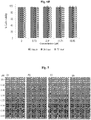
- Compound 27 was found to be the most potent inhibitor of biofilm formation of all the cationic pillararenes tested strains as summarized in Table 1 and demonstrated visually in Fig. 2 .
- the MBIC50 values of pillar[6]arene analogue 27 were from 2- to 5-fold lower for four of the tested biofilm forming Gram-positive pathogens; no significant difference in the inhibition of biofilm formation between 21 and 27 was observed in for S. aureus BAA/043 (strain C, Table 1 ).
- S. mutans ATCC 700610 however, compound 21 was slightly more active than 27 (strain F, Table 1 ).
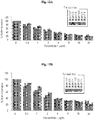
- the dose-dependent biofilm inhibition ability of compounds 21-27 against E. faecalis ATCC 29212 and S. aureus subsp. aureus Rosenbach ATCC 33592 is presented in Fig. 3 .
- Pillararenes 21 and 27 the most potent inhibitors of biofilm formation, did not eradicate mature biofilms.
- Table 2 Effect of initial inoculum on MBIC 50 values of compound 27 Bacteria strain Initial inoculum (OD 600 ) MBIC 50 [ ⁇ M] 0.025 0.37 0.05 0.37 S. aureus subsp. aureus Rosenbach ATCC 33592 0.1 0.37 E. faecalis (ATCC 29212) 0.025 0.37 0.05 0.73 0.1 0.73
- the MIC values against the examined Gram-positive strains were higher than ⁇ 47 ⁇ M, at least 16-fold higher than the highest MBIC50 value measured for pillar[6]arene 27 against the tested strains. We therefore concluded that the observed inhibition of biofilm formation did not result from a bactericidal effect.
- the possibility that pillar[6]arene 27 had a bacteriostatic effect was examined by comparing the growth curves of two of Gram-negative strains ( E. coli ATCC 29522 and P. Aeruginosa PAO1) and two Gram-positive strains ( S. aureus subsp. aureus Rosenbach ATCC 33592 and E.
- Rat red blood cells serve as a standard model for the evaluation of the ability of compounds to lyse mammalian cell membranes. Up to a concentration of 94 ⁇ M, none of the cationic pillararenes caused any measurable hemolysis of red blood cells obtained from laboratory rats following a previously reported protocol (Benhamou et al., 2015).
- the water-soluble cationic pillar[5]arene derivatives used in this study were synthesized by a four-step process ( Scheme 3 ). Briefly, in the first step commercially available hydroquinone was alkylated with 1,3-dibromopropane using potassium carbonate in acetone to afford the monomer 8a .
- the functionalized pillar[5]arene 9a was obtained by the cyclization of monomer 8a with paraformaldehyde and boron trifluoride diethyletherate in dichloroethane.
- cationic amphiphiles act as antimicrobial agents that kill bacteria (Kanazawa et al., 1993 and 1994; Cieniecka-RosIonkiewicz et al., 2005; Kurata et al., 2011; Xue et al., 2015). Therefore, to evaluate whether the inhibiting effect of compounds 25 and 28-30 on biofilm formation originated from a possible antimicrobial activity of these compounds we measured the minimal inhibitory concentrations (MICs) against the tested strains. The MIC values for compounds 25 and 28-30 were found to be 27, 23, 25 and 21 ⁇ M, respectively, more than 16 fold higher than the highest MBIC 50 values measured for these compounds against the two tested strains. These results demonstrate that the inhibition of biofilm formation by the phosphonium-decorated pillararenes 29 and 30 did not originate from antibacterial activity.
- the stability of a bioactive compound may affect the molecule performance.
- the stability of the new phosphonium and ammonium pillar[5]arene derivatives was evaluated by incubation for 4 hours in solutions at different pH values. Thereafter the materials were freeze dried, inspected by 1 H-NMR and tested for their biofilm inhibition properties. No significant decomposition was observed in the 1 H-NMR spectra recorded after exposure to acidic or alkaline pH ( Fig. 11 ). More importantly, the anti-biofilm activities of compounds 28 and 30 remained unchanged after these exposures as seen in Table 4 and Fig. 12 .
- Table 4 Biofilm inhibitory activity against Gram positive strains of compounds 20 and 22 after incubation at different pH levels for 4 hours Compound pH MBIC 50 in ⁇ M ( ⁇ g/mL) S. aureus subsp. aureus Rosenbach ATCC 33592 E. faecalis ATCC 29212 28 2.3 1.41 (4) 1.41 (4) 7.4 1.41 (4) 1.41 (4) 10.7 1.41 (4) 1.41 (4) 30 2.3 0.67 (2) 1.33 (4) 7.4 0.67 (2) 1.33 (4)) 10.2 1.33 (4) 0.67 (2)
- the ammonium pillar[5-6]arene derivatives prepared are compounds 31, 32 and 33 and are shown in Scheme 4.
- Compound 31 is an ammonium pillar[5]arene derivative similar to compound 25, wherein the spacer represented by each one of the groups R 4 and R 5 in the formula I is -(CH 2 ) 6 - rather than -(CH 2 ) 3 - as in compound 25;
- compound 32 is an ammonium pillar[6]arene derivative similar to compound 27, wherein the spacer represented by each one of the groups R 4 and R 5 in the formula I is -(CH 2 ) 3 - rather than -(CH 2 ) 2 - as in compound 27;
- compound 33 is an ammonium pillar[6]arene derivative similar to compound 27, wherein the cation represented by the group Y in the formula I is 1-methyl-imidazolium-3-yl rather than -N + (CH 3 ) 3 as in compound 27.
Landscapes
- Chemical & Material Sciences (AREA)
- Health & Medical Sciences (AREA)
- Organic Chemistry (AREA)
- Life Sciences & Earth Sciences (AREA)
- General Health & Medical Sciences (AREA)
- Medicinal Chemistry (AREA)
- Public Health (AREA)
- Pharmacology & Pharmacy (AREA)
- Veterinary Medicine (AREA)
- Animal Behavior & Ethology (AREA)
- Epidemiology (AREA)
- Engineering & Computer Science (AREA)
- Water Supply & Treatment (AREA)
- Hydrology & Water Resources (AREA)
- Environmental & Geological Engineering (AREA)
- Biochemistry (AREA)
- Molecular Biology (AREA)
- Communicable Diseases (AREA)
- Oncology (AREA)
- Chemical Kinetics & Catalysis (AREA)
- General Chemical & Material Sciences (AREA)
- Nuclear Medicine, Radiotherapy & Molecular Imaging (AREA)
- Materials Engineering (AREA)
- Wood Science & Technology (AREA)
- Pharmaceuticals Containing Other Organic And Inorganic Compounds (AREA)
Claims (18)
- Composé de la formule I :
 R1 est -CR6R7-, où chaque R6 et R7 est indépendamment H, un halogène, -CORs, -COOR8, -OCOOR8, -OCON(R8)2, -CN, -NO2, -SR8, -OR8, -N(R8)2, -CON(R8)2, -SO2R8, -SO3H, -S(=O)R8 ou un alkyle en C1-C8 facultativement substitué par un ou plusieurs groupes chacun indépendamment choisi parmi -COR8, -COOR8, -OCOOR8, - OCON(R8)2, -CN, -NO2, -SR8, -OR8, -N(R8)2, -CON(R8)2, -SO2R8, -SO3H, -S(=O)R8, - N+(R')3 ou -P+(R')3, où chaque R' est indépendamment H, un alkyle en C1-C6, un phényle, un benzyle ou un hétérocyclyle, ou deux R' forment, conjointement avec l'atome N auquel ils sont attachés, un cycle saturé à 3 à 7 chaînons, contenant facultativement un ou plusieurs hétéroatomes choisis parmi O, S ou N et en outre facultativement substitué au niveau de l'atome N supplémentaire ;chaque R2 et R3 est indépendamment H, un halogène ou un alkyle en C1-C8 facultativement substitué par un ou plusieurs groupes chacun indépendamment choisi parmi un halogène, -CORs, -COOR8, -OCOOR8, -OCON(R8)2, -CN, -NO2, -SR8, -OR8, -N(R8)2, -CON(R8)2, -SO2R8, -SO3H, -S(=O)R8, -N+(R')3 ou -P+(R')3, où chaque R' est indépendamment H, un alkyle en C1-C6, un phényle, un benzyle ou un hétérocyclyle, ou deux R' forment, conjointement avec l'atome N auquel ils sont attachés, un cycle saturé à 3 à 7 chaînons, contenant facultativement un ou plusieurs hétéroatomes choisis parmi O, S ou N et en outre facultativement substitué au niveau de l'atome N supplémentaire ;chaque R4 et R5 est indépendamment choisi parmi un alkylène en C1-C10, un alcénylène en C2-C10 ou un alcynylène en C2-C10, facultativement substitué par un ou plusieurs groupes chacun indépendamment choisi parmi un halogène, -COR8, -COOR8, -OCOOR8, -OCON(R8)2, -CN, -NO2, -SR8, -OR8, -N(R8)2, -CON(R8)2, -SO2R8, -SO3H, -S(=O)R8, un aryle en C6-C10, un alkylène en C1-C4-aryle en C6-C10, un hétéroaryle ou un alkylène en C1-C4-hétéroaryle, et en outre facultativement interrompu par un ou plusieurs hétéroatomes identiques ou différents choisis parmi S, O ou N, et/ou au moins un groupe chacun indépendamment choisi parmi -NH-CO-, -CO-NH-, -N(alkyl en C1-C8)-, -N(aryl en C6-C10)-, un arylènediyle en C6-C10 ou un hétéroarylènediyle ;chaque R8 est indépendamment H ou un alkyle en C1-C8 ;chaque Y est indépendamment (i) un cation issu d'un groupe contenant de l'azote et choisi parmi un ammonium [-N+(R')3], un hydrazinium [-N+(R')2-N(R')2], un ammoniumoxy [-N+(R')2→O], un iminium [-N+(R')2=C<], un amidinium [-N+(R')2-C(R')=NR'] ou un guanidinium [-N+(R')2-C(=NR')-N(R')2] ; (ii) un cation issu d'un groupe hétéroaromatique mono- ou polycyclique contenant de l'azote et choisi parmi le pyrazolium, l'oxazolium, le thiazolium, le pyridinium, le pyrimidinium, le quinolinium, l'isoquinolinium, le 1,2,4-triazinium, le 1,3,5-triazinium ou le purinium, facultativement substitué par un ou plusieurs groupes chacun indépendamment choisi parmi un halogène, un alkyle en C1-C6, -COH, -COOH, -OCOOH, -OCONH2, -CN, -NO2, -SH, -OH, -NH2, -CONH2, -SO3H, -SO2H ou -S(=O)H ; ou (iii) un cation issu d'un groupe onium ne contenant pas d'azote et choisi parmi le phosphonium [-P+(R')3], l'arsonium [-As+(R')3], l'oxonium [-O+(R')2], le sulfonium [-S+(R')2], le sélénonium [-Se+(R')2], le telluronium [-Te+(R')2], le stibonium [-Sb+(R')3] ou le bismuthonium [-Bi+(R')3], où chaque R' est indépendamment H, un alkyle en C1-C6, un phényle, un benzyle ou un hétérocyclyle, ou deux R' dans les groupes ammonium, hydrazinium, ammoniumoxy, iminium, amidinium ou guanidinium, conjointement avec l'atome N auquel ils sont attachés, forment un cycle saturé à 3 à 7 chaînons, contenant facultativement un ou plusieurs hétéroatomes choisis parmi O, S ou N et en outre facultativement substitué au niveau de l'atome N supplémentaire ;X est un contre-anion tel que Br, Cl-, F-, I-, PF6 -, BF4 -, OH-, ClO4 -, HSO4 -, CF3COO- , CN-, alkylCOO-, arylCOO-, un anion pharmaceutiquement acceptable, ou une combinaison de ceux-ci ; etn est un nombre entier de 5 à 11,mais à l'exclusion des composés où R1 est -CH2- ; R2 et R3 sont H ; et : (i) n vaut 5 ; R4 et R5 sont -(CH2)2- ; et Y est -N+(CH3)3 ; (ii) n vaut 5 ; R4 et R5 sont -(CH2)3- ; et Y est -P+(C4H9)3 ; (iii) n vaut 5 ; R4 et R5 sont -(CH2)4- ; et Y est -N+(CH3)3 ; (iv) n vaut 6 ; R4 et R5 sont -(CH2)2- ; et Y est -N+(CH3)3 ; (v) n vaut 6 ; R4 et R5 sont -(CH2)4- ; et Y est -N+(CH3)3 ; ou (vi) n vaut 6 ; R4 et R5 sont -(CH2)4- ; et Y est le 1-pyridinium.
 - Composé selon la revendication 1, où :(i) R1 est -CR6R7-, où chaque R6 et R7 est indépendamment H, un halogène, -COH, -COOH, -OCOOH, -OCONH2, -CN, -NO2, -SH, -OH, -NH2, -CONH2, -SO3H, -SO2H, -S(=O)H ou un alkyle en C1-C8 facultativement substitué par un ou plusieurs groupes chacun indépendamment choisi parmi -COH, - COOH, -OCOOH, -OCONH2, -CN-, NO2, -SH, -OH, -NH2, -CONH2, - SO3H, -SO2H, -S(=O)H, -N+(R')3 ou -P+(R')3, où chaque R' est indépendamment H, un alkyle en C1-C4, un phényle ou un benzyle ; ou(ii) chaque R2 et R3 est indépendamment H ou un alkyle en C1-C4, de préférence un alkyle en C1-C2, facultativement substitué par un ou plusieurs groupes chacun indépendamment choisi parmi un halogène, -COH, -COOH, - OCOOH, -OCONH2, -CN, -NO2, -SH, -OH, -NH2, -CONH2, -SO3H, -SO2H, - S(=O)H, -N+(R')3 ou -P+(R')3, où chaque R' est indépendamment H, un alkyle en C1-C4, un phényle ou un benzyle ; ou(iii) où chaque R4 et R5 est indépendamment un alkylène en C2-C10 ou un alkylène en C2-C8, facultativement substitué par un ou plusieurs groupes chacun indépendamment choisi parmi un halogène, -COH, -COOH, - OCOOH, -OCONH2, -CN, -NO2, -SH, -OH, -NH2, -CONH2, -SO3H, -SO2H, -S(=O)H, un aryle en C6, un alkylène en C1-C4-aryle en C6, un hétéroaryle ou un alkylène en C1-C4-hétéroaryle, et en outre facultativement interrompu par un ou plusieurs hétéroatomes identiques ou différents choisis parmi S, O et N, et/ou au moins un groupe chacun indépendamment choisi parmi -NH-CO-, -CO-NH-, -N(alkyl en C1-C8)-, -N(aryl en C6)-, un arylènediyle en C6 ou un hétéroarylènediyle ; ou(iv) R4 et R5 sont identiques ; ou(v) chaque Y est indépendamment un ammonium [-N+(R')3] ou un phosphonium [-P+(R')3], où chaque R' est indépendamment H, un alkyle en C1-C6, un phényle, un benzyle ou un hétérocyclyle ; ou(vi) n vaut 5, 6, 7 ou 8, de préférence 5 ou 6.
- Composé selon la revendication 2, où :(i) R1 est -CH2- ; ou(ii) R2 et R3 sont H ; ou(iii) chaque R4 et R5 est indépendamment un alkylène en C2-C10 ou un alkylène en C2-C8, facultativement interrompu par un ou plusieurs atomes O ; ou(iv) chaque Y est indépendamment un ammonium [-N+(R')3] ou un phosphonium [-P+(R')3], où chaque R' est indépendamment H, un méthyle, un éthyle ou un propyle.
- Composé selon la revendication 1, où
R1 est -CR6R7-, où chaque R6 et R7 est indépendamment H, un halogène, -COH, -COOH, -OCOOH, -OCONH2, -CN, -NO2, -SH, -OH, -NH2, -CONH2, -SO3H, -SO2H, -S(=O)H ou un alkyle en C1-C8 facultativement substitué par un ou plusieurs groupes chacun indépendamment choisi parmi -COH, -COOH, -OCOOH, -OCONH2, -CN, -NO2, -SH, -OH, -NH2, -CONH2, -SO3H, -SO2H, -S(=O)H, -N+(R')3 ou -P+(R')3, où chaque R' est indépendamment H, un alkyle en C1-C4, un phényle ou un benzyle ;
chaque R2 et R3 est indépendamment H ou un alkyle en C1-C4, de préférence un alkyle en C1-C2, facultativement substitué par un ou plusieurs groupes chacun indépendamment choisi parmi un halogène, -COH, -COOH, -OCOOH, -OCONH2, -CN, -NO2, -SH, -OH, -NH2, -CONH2, -SO3H, -SO2H, -S(=O)H, -N+(R')3 ou -P+(R')3, où chaque R' est indépendamment H, un alkyle en C1-C4, un phényle ou un benzyle ;
chaque R4 et R5 est indépendamment un alkylène en C2-C10 ou un alkylène en C2-C8, facultativement substitué par un ou plusieurs groupes chacun indépendamment choisi parmi un halogène, -COH, -COOH, -OCOOH, -OCONH2, -CN, -NO2, -SH, -OH, - NH2, -CONH2, -SO3H, -SO2H, -S(=O)H, un aryle en C6, un alkylène en C1-C4-aryle en C6, un hétéroaryle ou un alkylène en C1-C4-hétéroaryle, et en outre facultativement interrompu par un ou plusieurs hétéroatomes identiques ou différents choisis parmi S, O et N, et/ou au moins un groupe chacun indépendamment choisi parmi -NH-CO-, -CO-NH-, -N(alkyl en C1-C8)-, -N(aryl en C6)-, un arylènediyle en C6 ou un hétéroarylènediyle ; et
n vaut 5, 6, 7 ou 8. - Composé selon la revendication 4, où R1 est -CH2- ; R2 et R3 sont H ; et chaque R4 et R5 est indépendamment un alkylène en C2-C10 ou un alkylène en C2-C8, facultativement interrompu par un ou plusieurs atomes O.
- Composé selon la revendication 5, où Y est un ammonium [-N+(R')3] ou un phosphonium [-P+(R')3], où chaque R' est indépendamment H, un alkyle en C1-C6, un phényle, un benzyle ou un hétérocyclyle.
- Composé selon la revendication 6, où chaque Y est indépendamment un ammonium [-N+(R')3] ou un phosphonium [-P+(R')3], où chaque R' est indépendamment H, un méthyle, un éthyle ou un propyle.
- Composé selon la revendication 7, où n vaut 5 ou 6.
- Composé selon la revendication 8, où R1 est -CH2- ; R2 et R3 sont H ; X est un contre-anion tel que Br- ou Cl- ; et : (i) R4 et R5 sont -(CH2)3- ou -(CH2)6- ; Y est -N+(CH3)3, -N+(C2H5)3, -P+(CH3)3 ou -P+(C2H5)3 ; et n vaut 5 ; ou (ii) R4 et R5 sont -(CH2)3- ; Y est -N+(CH3)3 ou -P+(CH3)3 ; et n vaut 6.
- Composé de la formule I :

- Composition comprenant un composé de la formule I tel que revendiqué dans l'une quelconque des revendications 1 à 10.
- Procédé non thérapeutique pour inhiber ou perturber une formation de biofilm dans un milieu aqueux ou sur un objet, ou pour réduire un biofilm existant dans un milieu aqueux ou attaché à un objet, ledit procédé comprenant la mise en contact dudit milieu aqueux ou objet avec un composé de la formule I :
 R1 est -CR6R7-, où chaque R6 et R7 est indépendamment H, un halogène, -CORs, -COOR8, -OCOOR8, -OCON(R8)2, -CN, -NO2, -SR8, -OR8, -N(R8)2, -CON(R8)2, -SO2R8, -SO3H, -S(=O)R8 ou un alkyle en C1-C8 facultativement substitué par un ou plusieurs groupes chacun indépendamment choisi parmi -COR8, -COOR8, -OCOOR8, - OCON(R8)2, -CN, -NO2, -SR8, -OR8, -N(R8)2, -CON(R8)2, -SO2R8, -SO3H, -S(=O)R8, - N+(R')3 ou -P+(R')3, où chaque R' est indépendamment H, un alkyle en C1-C6, un phényle, un benzyle ou un hétérocyclyle, ou deux R' forment, conjointement avec l'atome N auquel ils sont attachés, un cycle saturé à 3 à 7 chaînons, contenant facultativement un ou plusieurs hétéroatomes choisis parmi O, S ou N et en outre facultativement substitué au niveau de l'atome N supplémentaire ;chaque R2 et R3 est indépendamment H, un halogène ou un alkyle en C1-C8 facultativement substitué par un ou plusieurs groupes chacun indépendamment choisi parmi un halogène, -CORs, -COOR8, -OCOOR8, -OCON(R8)2, -CN, -NO2, -SR8, -OR8, -N(R8)2, -CON(R8)2, -SO2R8, -SO3H, -S(=O)R8, -N+(R')3 ou -P+(R')3, où chaque R' est indépendamment H, un alkyle en C1-C6, un phényle, un benzyle ou un hétérocyclyle, ou deux R' forment, conjointement avec l'atome N auquel ils sont attachés, un cycle saturé à 3 à 7 chaînons, contenant facultativement un ou plusieurs hétéroatomes choisis parmi O, S ou N et en outre facultativement substitué au niveau de l'atome N supplémentaire ;chaque R4 et R5 est indépendamment choisi parmi un alkylène en C1-C10, un alcénylène en C2-C10 ou un alcynylène en C2-C10, facultativement substitué par un ou plusieurs groupes chacun indépendamment choisi parmi un halogène, -CORs, -COOR8, -OCOOR8, -OCON(R8)2, -CN, -NO2, -SR8, -OR8, -N(R8)2, -CON(R8)2, -SO2R8, -SO3H, -S(=O)R8, un aryle en C6-C10, un alkylène en C1-C4-aryle en C6-C10, un hétéroaryle ou un alkylène en C1-C4-hétéroaryle, et en outre facultativement interrompu par un ou plusieurs hétéroatomes identiques ou différents choisis parmi S, O ou N, et/ou au moins un groupe chacun indépendamment choisi parmi -NH-CO-, -CO-NH-, -N(alkyl en C1-C8)-, -N(aryl en C6-C10)-, un arylènediyle en C6-C10 ou un hétéroarylènediyle ;chaque R8 est indépendamment H ou un alkyle en (C1-C8) ;chaque Y est indépendamment (i) un cation issu d'un groupe contenant de l'azote et choisi parmi un ammonium [-N+(R')3], un hydrazinium [-N+(R')2-N(R')2], un ammoniumoxy [-N+(R')2→O], un iminium [-N+(R')2=C<], un amidinium [-N+(R')2-C(R')=NR'] ou un guanidinium [-N+(R')2-C(=NR')-N(R')2] ; (ii) un cation issu d'un groupe hétéroaromatique mono- ou polycyclique contenant de l'azote et choisi parmi le pyrazolium, l'oxazolium, le thiazolium, le pyridinium, le pyrimidinium, le quinolinium, l'isoquinolinium, le 1,2,4-triazinium, le 1,3,5-triazinium ou le purinium, facultativement substitué par un ou plusieurs groupes chacun indépendamment choisi parmi un halogène, un alkyle en C1-C6, -COH, -COOH, -OCOOH, -OCONH2, -CN, -NO2, -SH, -OH, -NH2, -CONH2, -SO3H, -SO2H ou -S(=O)H ; ou (iii) un cation issu d'un groupe onium ne contenant pas d'azote et choisi parmi le phosphonium [-P+(R')3], l'arsonium [-As+(R')3], l'oxonium [-O+(R')2], le sulfonium [-S+(R')2], le sélénonium [-Se+(R')2], le telluronium [-Te+(R')2], le stibonium [-Sb+(R')3] ou le bismuthonium [-Bi+(R')3], où chaque R' est indépendamment H, un alkyle en C1-C6, un phényle, un benzyle ou un hétérocyclyle, ou deux R' dans les groupes ammonium, hydrazinium, ammoniumoxy, iminium, amidinium ou guanidinium, conjointement avec l'atome N auquel ils sont attachés, forment un cycle saturé à 3 à 7 chaînons, contenant facultativement un ou plusieurs hétéroatomes choisis parmi O, S ou N et en outre facultativement substitué au niveau de l'atome N supplémentaire ;X est un contre-anion tel que Br, Cl-, F-, I-, PF6 -, BF4 -, OH-, ClO4 -, HSO4 -, CF3COO- , CN-, alkylCOO-, arylCOO-, un anion pharmaceutiquement acceptable, ou une combinaison de ceux-ci ; etn est un nombre entier de 5 à 11.
 - Procédé non thérapeutique selon la revendication 12, où R1 est -CH2- ; R2 et R3 sont H ; R4 et R5 sont identiques et chacun est -(CH2)2-10- ; Y est -N+(CH3)3, -N+(C2H5)3, -P+(CH3)3, -P+(C2H5)3 ou un 1-méthyl-imidazolium-3-yle ; n vaut 5 ou 6 ; et X est un contre-anion.
- Procédé non thérapeutique selon la revendication 12 ou 13,(i) pour inhiber ou perturber une formation de biofilm dans un milieu aqueux, ou pour réduire un biofilm existant dans ledit milieu aqueux, où ladite mise en contact comprend la dissolution dudit composé ou d'une composition le comprenant au sein dudit milieu aqueux ; ou(ii) pour inhiber ou perturber une formation de biofilm sur un objet, ou pour réduire un biofilm attaché audit objet, où ladite mise en contact comprend respectivement le revêtement dudit objet par ledit composé ou une composition le comprenant, ou l'immersion dudit objet au sein d'une composition comprenant ledit composé.
- Procédé non thérapeutique selon la revendication 14, pour inhiber ou perturber une formation de biofilm sur un objet, ou pour réduire un biofilm attaché audit objet, où :(i) ledit objet est choisi parmi un objet conçu pour fonctionner dans l'eau tel que la coque d'un bateau, un tuyau, un filtre, une pompe ou un échangeur de chaleur ; un implant médical tel qu'une endoprothèse ; un dispositif médical tel qu'un cathéter ; ou un tampon biomédical tel qu'un bandage adhésif ; ou(ii) ladite mise en contact comprend le revêtement dudit objet par une composition comprenant ledit composé, et ladite composition est une peinture.
- Procédé non thérapeutique selon la revendication 12, où ledit procédé conduit à une sensibilité accrue dudit milieu aqueux ou objet à un bactéricide, et comprend en outre facultativement la mise en contact dudit milieu aqueux ou objet avec ledit bactéricide.
- Composé de la formule I :
 R1 est -CR6R7-, où chaque R6 et R7 est indépendamment H, un halogène, -CORs, -COOR8, -OCOOR8, -OCON(R8)2, -CN, -NO2, -SR8, -OR8, -N(R8)2, -CON(R8)2, -SO2R8, -SO3H, -S(=O)R8 ou un alkyle en C1-C8 facultativement substitué par un ou plusieurs groupes chacun indépendamment choisi parmi -COR8, -COOR8, -OCOOR8, - OCON(R8)2, -CN, -NO2, -SR8, -OR8, -N(R8)2, -CON(R8)2, -SO2R8, -SO3H, -S(=O)R8, - N+(R')3 ou -P+(R')3, où chaque R' est indépendamment H, un alkyle en C1-C6, un phényle, un benzyle ou un hétérocyclyle, ou deux R' forment, conjointement avec l'atome N auquel ils sont attachés, un cycle saturé à 3 à 7 chaînons, contenant facultativement un ou plusieurs hétéroatomes choisis parmi O, S ou N et en outre facultativement substitué au niveau de l'atome N supplémentaire ;chaque R2 et R3 est indépendamment H, un halogène ou un alkyle en C1-C8 facultativement substitué par un ou plusieurs groupes chacun indépendamment choisi parmi un halogène, -CORs, -COOR8, -OCOOR8, -OCON(R8)2, -CN, -NO2, -SR8, -OR8, -N(R8)2, -CON(R8)2, -SO2R8, -SO3H, -S(=O)R8, -N+(R')3 ou -P+(R')3, où chaque R' est indépendamment H, un alkyle en C1-C6, un phényle, un benzyle ou un hétérocyclyle, ou deux R' forment, conjointement avec l'atome N auquel ils sont attachés, un cycle saturé à 3 à 7 chaînons, contenant facultativement un ou plusieurs hétéroatomes choisis parmi O, S ou N et en outre facultativement substitué au niveau de l'atome N supplémentaire ;chaque R4 et R5 est indépendamment choisi parmi un alkylène en C1-C10, un alcénylène en C2-C10 ou un alcynylène en C2-C10, facultativement substitué par un ou plusieurs groupes chacun indépendamment choisi parmi un halogène, -CORs, -COOR8, -OCOOR8, -OCON(R8)2, -CN, -NO2, -SR8, -OR8, -N(R8)2, -CON(R8)2, -SO2R8, -SO3H, -S(=O)R8, un aryle en C6-C10, un alkylène en C1-C4-aryle en C6-C10, un hétéroaryle ou un alkylène en C1-C4-hétéroaryle, et en outre facultativement interrompu par un ou plusieurs hétéroatomes identiques ou différents choisis parmi S, O ou N, et/ou au moins un groupe chacun indépendamment choisi parmi -NH-CO-, -CO-NH-, -N(alkyl en Ci-Cs)-, -N(aryl en C6-C10)-, un arylènediyle en C6-C10 ou un hétéroarylènediyle ;chaque R8 est indépendamment H ou un alkyle en C1-C8 ;chaque Y est indépendamment (i) un cation issu d'un groupe contenant de l'azote et choisi parmi un ammonium [-N+(R')3], un hydrazinium [-N+(R')2-N(R')2], un ammoniumoxy [-N+(R')2→O], un iminium [-N+(R')2=C<], un amidinium [-N+(R')2-C(R')=NR'] ou un guanidinium [-N+(R')2-C(=NR')-N(R')2] ; (ii) un cation issu d'un groupe hétéroaromatique mono- ou polycyclique contenant de l'azote et choisi parmi le pyrazolium, l'oxazolium, le thiazolium, le pyridinium, le pyrimidinium, le quinolinium, l'isoquinolinium, le 1,2,4-triazinium, le 1,3,5-triazinium ou le purinium, facultativement substitué par un ou plusieurs groupes chacun indépendamment choisi parmi un halogène, un alkyle en C1-C6, -COH, -COOH, -OCOOH, -OCONH2, -CN, -NO2, -SH, -OH, -NH2, -CONH2, -SO3H, -SO2H ou -S(=O)H ; ou (iii) un cation issu d'un groupe onium ne contenant pas d'azote et choisi parmi le phosphonium [-P+(R')3], l'arsonium [-As+(R')3], l'oxonium [-O+(R')2], le sulfonium [-S+(R')2], le sélénonium [-Se+(R')2], le telluronium [-Te+(R')2], le stibonium [-Sb+(R')3] ou le bismuthonium [-Bi+(R')3], où chaque R' est indépendamment H, un alkyle en C1-C6, un phényle, un benzyle ou un hétérocyclyle, ou deux R' dans les groupes ammonium, hydrazinium, ammoniumoxy, iminium, amidinium ou guanidinium, conjointement avec l'atome N auquel ils sont attachés, forment un cycle saturé à 3 à 7 chaînons, contenant facultativement un ou plusieurs hétéroatomes choisis parmi O, S ou N et en outre facultativement substitué au niveau de l'atome N supplémentaire ;X est un contre-anion tel que Br, Cl-, F-, I-, PF6 -, BF4 -, OH-, ClO4 -, HSO4 -, CF3COO- , CN-, alkylCOO-, arylCOO-, un anion pharmaceutiquement acceptable, ou une combinaison de ceux-ci ; etn est un nombre entier de 5 à 11, pour utilisation comme médicament dans l'inhibition ou la perturbation d'une formation de biofilm, la réduction de biofilm ou l'augmentation de la sensibilité à un traitement antibiotique.
 - Composé pour utilisation selon la revendication 17, où ledit composé est formulé pour une administration topique ou pour une inhalation.
Applications Claiming Priority (2)
| Application Number | Priority Date | Filing Date | Title |
|---|---|---|---|
| IL24047915 | 2015-08-10 | ||
| PCT/IL2016/050848 WO2017025951A1 (fr) | 2015-08-10 | 2016-08-03 | Pillararènes et utilisations de ceux-ci |
Publications (3)
| Publication Number | Publication Date |
|---|---|
| EP3334706A1 EP3334706A1 (fr) | 2018-06-20 |
| EP3334706A4 EP3334706A4 (fr) | 2019-03-13 |
| EP3334706B1 true EP3334706B1 (fr) | 2020-09-30 |
Family
ID=57983675
Family Applications (1)
| Application Number | Title | Priority Date | Filing Date |
|---|---|---|---|
| EP16834760.7A Active EP3334706B1 (fr) | 2015-08-10 | 2016-08-03 | Pillararènes et utilisations de ceux-ci |
Country Status (3)
| Country | Link |
|---|---|
| US (3) | US11161801B2 (fr) |
| EP (1) | EP3334706B1 (fr) |
| WO (1) | WO2017025951A1 (fr) |
Families Citing this family (24)
| Publication number | Priority date | Publication date | Assignee | Title |
|---|---|---|---|---|
| CN107098821A (zh) * | 2017-06-15 | 2017-08-29 | 西北师范大学 | 季铵化柱5芳烃及合成和荧光检测l‑色氨酸的应用 |
| CN108017690B (zh) * | 2017-08-17 | 2020-11-24 | 河南师范大学 | 具有抗菌活性的柱[5]芳烃类人工跨膜通道及其制备方法和应用 |
| EP3502093A1 (fr) * | 2017-12-20 | 2019-06-26 | Freie Universität Berlin | Derives pillararenes zwitterioniques |
| CN108640198A (zh) * | 2018-05-02 | 2018-10-12 | 南京工业大学 | 一种基于吸附法除去水体中六价铬离子的方法 |
| CN109054032B (zh) * | 2018-06-20 | 2020-11-24 | 西北师范大学 | 一种超分子有机框架及金属配合物的制备和应用 |
| FI20185841A1 (fi) | 2018-10-08 | 2020-04-09 | Aalto Univ Foundation Sr | Makrosykliset yhdisteet ja niiden käytöt |
| CN109232614B (zh) * | 2018-10-26 | 2021-03-26 | 四川理工学院 | 一种柱[5]芳烃-双杯[4]吡咯手性超分子、其制备方法及其应用 |
| CN109851809B (zh) * | 2019-03-12 | 2019-09-17 | 华东师范大学 | 一种柱[5]芳烃单体及其均聚物及制备方法 |
| CN110372580B (zh) * | 2019-06-20 | 2020-09-01 | 浙江大学 | 一种2-氯吡啶和3-氯吡啶的分离方法 |
| CN110193344B (zh) * | 2019-07-03 | 2022-02-11 | 云南民族大学 | 一种阳离子柱[5]芳烃改性沸石吸附材料及其制备方法和应用 |
| CN110305333B (zh) * | 2019-07-26 | 2022-03-11 | 中山大学 | 一种柱[5]芳烃聚合物微球及其制备方法和应用 |
| CN111393370B (zh) * | 2020-03-30 | 2022-07-19 | 山西大学 | 一种基于柱[5]芳烃和咪唑衍生物的ab单体及超分子聚合物网络的构筑和应用 |
| FI20205369A1 (en) * | 2020-04-07 | 2021-10-08 | Helsingin Yliopisto | COMBINATION TREATMENT |
| FI20205368A1 (en) * | 2020-04-07 | 2021-10-08 | Aalto Univ Foundation Sr | FORMULATION |
| CN111517911B (zh) * | 2020-05-12 | 2021-06-29 | 浙江大学 | 一种间甲乙苯和对甲乙苯的分离方法 |
| CN112011034B (zh) * | 2020-08-19 | 2021-09-28 | 盐城海关综合技术服务中心 | 二甲氧基柱[n]芳烃打结共轭聚合物及其制备方法和应用 |
| CN113061088B (zh) * | 2021-04-09 | 2023-05-02 | 南通大学 | 一种不对称柱[5]芳烃及其制备方法和应用 |
| CN114904010B (zh) * | 2022-05-06 | 2023-05-23 | 北京师范大学 | 一种分层自组装负载siRNA纳米粒子的制备方法及其应用 |
| CN115592109A (zh) * | 2022-10-24 | 2023-01-13 | 中国石油大学(华东)(Cn) | 一种基于主客体作用的无机纳米粒子自组装的方法 |
| CN115671313A (zh) * | 2022-11-07 | 2023-02-03 | 中国人民解放军军事科学院军事医学研究院 | 一种柱芳烃类复合物、其制备方法和用途 |
| CN115974963B (zh) * | 2022-11-23 | 2026-04-24 | 复旦大学 | 氨基酸修饰的人工水通道及其制备方法和用途 |
| CN116425644B (zh) * | 2023-03-09 | 2026-04-14 | 西北大学 | 一种水溶光诱导释放一氧化氮抗菌的超分子复合物及其制备和应用 |
| CN117142968B (zh) * | 2023-08-04 | 2026-03-10 | 南通大学 | 一种水溶性拓展柱[6]芳烃及其应用 |
| WO2025112086A1 (fr) * | 2023-12-01 | 2025-06-05 | 浙江大学 | Pillararène soluble dans l'eau cationique sensible à l'oxydation, procédé de préparation et utilisation |
Family Cites Families (5)
| Publication number | Priority date | Publication date | Assignee | Title |
|---|---|---|---|---|
| US4166452A (en) | 1976-05-03 | 1979-09-04 | Generales Constantine D J Jr | Apparatus for testing human responses to stimuli |
| US4256108A (en) | 1977-04-07 | 1981-03-17 | Alza Corporation | Microporous-semipermeable laminated osmotic system |
| US4265874A (en) | 1980-04-25 | 1981-05-05 | Alza Corporation | Method of delivering drug with aid of effervescent activity generated in environment of use |
| GB2498356B (en) * | 2012-01-11 | 2016-09-07 | Camstent Ltd | Calixarene-derived coatings for implantable medical devices |
| CN104447363B (zh) | 2014-11-11 | 2016-08-17 | 西北师范大学 | 阳离子型水溶性柱[5]芳烃及其制备和作为受体在检测银离子中的应用 |
-
2016
- 2016-08-03 EP EP16834760.7A patent/EP3334706B1/fr active Active
- 2016-08-03 US US15/751,786 patent/US11161801B2/en active Active
- 2016-08-03 WO PCT/IL2016/050848 patent/WO2017025951A1/fr not_active Ceased
-
2021
- 2021-10-29 US US17/452,970 patent/US20220119339A1/en not_active Abandoned
-
2023
- 2023-07-14 US US18/352,955 patent/US12398092B2/en active Active
Non-Patent Citations (1)
| Title |
|---|
| None * |
Also Published As
| Publication number | Publication date |
|---|---|
| US20230365491A1 (en) | 2023-11-16 |
| US12398092B2 (en) | 2025-08-26 |
| EP3334706A4 (fr) | 2019-03-13 |
| EP3334706A1 (fr) | 2018-06-20 |
| US11161801B2 (en) | 2021-11-02 |
| US20200172471A1 (en) | 2020-06-04 |
| WO2017025951A1 (fr) | 2017-02-16 |
| US20220119339A1 (en) | 2022-04-21 |
Similar Documents
| Publication | Publication Date | Title |
|---|---|---|
| US12398092B2 (en) | Method for inhibiting or disrupting biofilm formation, or reducing biofilm | |
| AU2022231716B2 (en) | Nitric oxide-releasing alginates as biodegradable antibacterial scaffolds and methods pertaining thereto | |
| KR101955636B1 (ko) | 항생제 그리고 분산제 또는 항-부착제를 포함하는 조성물 | |
| KR101057609B1 (ko) | N,n-디할로겐화 아미노산 및 유도체 | |
| EP2885323B1 (fr) | Polyglucosamines libérant de l'oxyde nitrique solubles dans l'eau et leurs utilisations | |
| Joseph et al. | Phosphonium pillar [5] arenes as a new class of efficient biofilm inhibitors: importance of charge cooperativity and the pillar platform | |
| CN112313205B (zh) | 共轭低聚电解质作为抗菌剂 | |
| JP2017218457A (ja) | キサントン化合物の誘導体 | |
| WO2020252131A1 (fr) | Composés antibiotiques | |
| Aleksandrova et al. | Antibacterial activity of various morphologies of films based on guanidine derivatives of pillar [5] arene: influence of the nature of one substitute on self-assembly | |
| US11324773B2 (en) | Compounds, compositions and methods for inhibiting a pathogen and/or modifying mucus | |
| WO2008050857A1 (fr) | Composé amide ou un sel de celui-ci, et inhibiteur de formation de biofilm, agent d'élimination de biofilm et bactéricide, chacun utilisant le composé amide ou un sel de celui-ci | |
| US10995177B2 (en) | Antimicrobial polycarbonates for multidrug resistant bacteria | |
| KR101652308B1 (ko) | 산화 그래핀 유도체-삼중 요오드 복합체를 유효성분으로 함유하는 생체적합성인 항박테리아 조성물 및 이의 제조방법 | |
| ITRM960180A1 (it) | Bis alcanoil esteri della carnitina ad attivita' antibatterica, anti= micotica ed antiprotozoaria. | |
| WO2024129836A1 (fr) | Composés de phosphonium quaternaire biscationiques en tant qu'agents antimicrobiens mous | |
| Bera et al. | Substrate Induced Regulation of Rigidity of G4‐Hydrogels: Toward Peroxidase‐Mimic Facilitated Eradication of Fungi via Turning a Metabolic Friend to a Foe |
Legal Events
| Date | Code | Title | Description |
|---|---|---|---|
| STAA | Information on the status of an ep patent application or granted ep patent |
Free format text: STATUS: THE INTERNATIONAL PUBLICATION HAS BEEN MADE |
|
| PUAI | Public reference made under article 153(3) epc to a published international application that has entered the european phase |
Free format text: ORIGINAL CODE: 0009012 |
|
| STAA | Information on the status of an ep patent application or granted ep patent |
Free format text: STATUS: REQUEST FOR EXAMINATION WAS MADE |
|
| 17P | Request for examination filed |
Effective date: 20180118 |
|
| AK | Designated contracting states |
Kind code of ref document: A1 Designated state(s): AL AT BE BG CH CY CZ DE DK EE ES FI FR GB GR HR HU IE IS IT LI LT LU LV MC MK MT NL NO PL PT RO RS SE SI SK SM TR |
|
| AX | Request for extension of the european patent |
Extension state: BA ME |
|
| DAV | Request for validation of the european patent (deleted) | ||
| DAX | Request for extension of the european patent (deleted) | ||
| A4 | Supplementary search report drawn up and despatched |
Effective date: 20190212 |
|
| RIC1 | Information provided on ipc code assigned before grant |
Ipc: C02F 1/50 20060101ALI20190206BHEP Ipc: A61K 45/06 20060101ALI20190206BHEP Ipc: C07D 233/60 20060101ALI20190206BHEP Ipc: C07F 9/54 20060101ALI20190206BHEP Ipc: A61P 31/04 20060101ALI20190206BHEP Ipc: C07C 217/20 20060101AFI20190206BHEP |
|
| REG | Reference to a national code |
Ref country code: DE Ref legal event code: R079 Ref document number: 602016045125 Country of ref document: DE Free format text: PREVIOUS MAIN CLASS: C07C0211630000 Ipc: C07C0217200000 |
|
| RIC1 | Information provided on ipc code assigned before grant |
Ipc: A61P 31/04 20060101ALI20200205BHEP Ipc: C07F 9/54 20060101ALI20200205BHEP Ipc: C07D 233/60 20060101ALI20200205BHEP Ipc: C02F 1/50 20060101ALI20200205BHEP Ipc: C07C 217/20 20060101AFI20200205BHEP Ipc: A61K 45/06 20060101ALI20200205BHEP Ipc: C07C 59/72 20060101ALI20200205BHEP |
|
| GRAP | Despatch of communication of intention to grant a patent |
Free format text: ORIGINAL CODE: EPIDOSNIGR1 |
|
| STAA | Information on the status of an ep patent application or granted ep patent |
Free format text: STATUS: GRANT OF PATENT IS INTENDED |
|
| INTG | Intention to grant announced |
Effective date: 20200406 |
|
| GRAJ | Information related to disapproval of communication of intention to grant by the applicant or resumption of examination proceedings by the epo deleted |
Free format text: ORIGINAL CODE: EPIDOSDIGR1 |
|
| STAA | Information on the status of an ep patent application or granted ep patent |
Free format text: STATUS: REQUEST FOR EXAMINATION WAS MADE |
|
| GRAR | Information related to intention to grant a patent recorded |
Free format text: ORIGINAL CODE: EPIDOSNIGR71 |
|
| GRAS | Grant fee paid |
Free format text: ORIGINAL CODE: EPIDOSNIGR3 |
|
| STAA | Information on the status of an ep patent application or granted ep patent |
Free format text: STATUS: GRANT OF PATENT IS INTENDED |
|
| INTC | Intention to grant announced (deleted) | ||
| GRAA | (expected) grant |
Free format text: ORIGINAL CODE: 0009210 |
|
| STAA | Information on the status of an ep patent application or granted ep patent |
Free format text: STATUS: THE PATENT HAS BEEN GRANTED |
|
| INTG | Intention to grant announced |
Effective date: 20200818 |
|
| AK | Designated contracting states |
Kind code of ref document: B1 Designated state(s): AL AT BE BG CH CY CZ DE DK EE ES FI FR GB GR HR HU IE IS IT LI LT LU LV MC MK MT NL NO PL PT RO RS SE SI SK SM TR |
|
| REG | Reference to a national code |
Ref country code: CH Ref legal event code: EP Ref country code: GB Ref legal event code: FG4D |
|
| REG | Reference to a national code |
Ref country code: DE Ref legal event code: R096 Ref document number: 602016045125 Country of ref document: DE Ref country code: AT Ref legal event code: REF Ref document number: 1318662 Country of ref document: AT Kind code of ref document: T Effective date: 20201015 |
|
| REG | Reference to a national code |
Ref country code: IE Ref legal event code: FG4D |
|
| PG25 | Lapsed in a contracting state [announced via postgrant information from national office to epo] |
Ref country code: GR Free format text: LAPSE BECAUSE OF FAILURE TO SUBMIT A TRANSLATION OF THE DESCRIPTION OR TO PAY THE FEE WITHIN THE PRESCRIBED TIME-LIMIT Effective date: 20201231 Ref country code: BG Free format text: LAPSE BECAUSE OF FAILURE TO SUBMIT A TRANSLATION OF THE DESCRIPTION OR TO PAY THE FEE WITHIN THE PRESCRIBED TIME-LIMIT Effective date: 20201230 Ref country code: NO Free format text: LAPSE BECAUSE OF FAILURE TO SUBMIT A TRANSLATION OF THE DESCRIPTION OR TO PAY THE FEE WITHIN THE PRESCRIBED TIME-LIMIT Effective date: 20201230 Ref country code: FI Free format text: LAPSE BECAUSE OF FAILURE TO SUBMIT A TRANSLATION OF THE DESCRIPTION OR TO PAY THE FEE WITHIN THE PRESCRIBED TIME-LIMIT Effective date: 20200930 Ref country code: SE Free format text: LAPSE BECAUSE OF FAILURE TO SUBMIT A TRANSLATION OF THE DESCRIPTION OR TO PAY THE FEE WITHIN THE PRESCRIBED TIME-LIMIT Effective date: 20200930 Ref country code: HR Free format text: LAPSE BECAUSE OF FAILURE TO SUBMIT A TRANSLATION OF THE DESCRIPTION OR TO PAY THE FEE WITHIN THE PRESCRIBED TIME-LIMIT Effective date: 20200930 |
|
| REG | Reference to a national code |
Ref country code: AT Ref legal event code: MK05 Ref document number: 1318662 Country of ref document: AT Kind code of ref document: T Effective date: 20200930 |
|
| PG25 | Lapsed in a contracting state [announced via postgrant information from national office to epo] |
Ref country code: LV Free format text: LAPSE BECAUSE OF FAILURE TO SUBMIT A TRANSLATION OF THE DESCRIPTION OR TO PAY THE FEE WITHIN THE PRESCRIBED TIME-LIMIT Effective date: 20200930 Ref country code: RS Free format text: LAPSE BECAUSE OF FAILURE TO SUBMIT A TRANSLATION OF THE DESCRIPTION OR TO PAY THE FEE WITHIN THE PRESCRIBED TIME-LIMIT Effective date: 20200930 |
|
| REG | Reference to a national code |
Ref country code: NL Ref legal event code: MP Effective date: 20200930 |
|
| REG | Reference to a national code |
Ref country code: LT Ref legal event code: MG4D |
|
| PG25 | Lapsed in a contracting state [announced via postgrant information from national office to epo] |
Ref country code: CZ Free format text: LAPSE BECAUSE OF FAILURE TO SUBMIT A TRANSLATION OF THE DESCRIPTION OR TO PAY THE FEE WITHIN THE PRESCRIBED TIME-LIMIT Effective date: 20200930 Ref country code: PT Free format text: LAPSE BECAUSE OF FAILURE TO SUBMIT A TRANSLATION OF THE DESCRIPTION OR TO PAY THE FEE WITHIN THE PRESCRIBED TIME-LIMIT Effective date: 20210201 Ref country code: RO Free format text: LAPSE BECAUSE OF FAILURE TO SUBMIT A TRANSLATION OF THE DESCRIPTION OR TO PAY THE FEE WITHIN THE PRESCRIBED TIME-LIMIT Effective date: 20200930 Ref country code: LT Free format text: LAPSE BECAUSE OF FAILURE TO SUBMIT A TRANSLATION OF THE DESCRIPTION OR TO PAY THE FEE WITHIN THE PRESCRIBED TIME-LIMIT Effective date: 20200930 Ref country code: EE Free format text: LAPSE BECAUSE OF FAILURE TO SUBMIT A TRANSLATION OF THE DESCRIPTION OR TO PAY THE FEE WITHIN THE PRESCRIBED TIME-LIMIT Effective date: 20200930 Ref country code: SM Free format text: LAPSE BECAUSE OF FAILURE TO SUBMIT A TRANSLATION OF THE DESCRIPTION OR TO PAY THE FEE WITHIN THE PRESCRIBED TIME-LIMIT Effective date: 20200930 |
|
| PG25 | Lapsed in a contracting state [announced via postgrant information from national office to epo] |
Ref country code: ES Free format text: LAPSE BECAUSE OF FAILURE TO SUBMIT A TRANSLATION OF THE DESCRIPTION OR TO PAY THE FEE WITHIN THE PRESCRIBED TIME-LIMIT Effective date: 20200930 Ref country code: AT Free format text: LAPSE BECAUSE OF FAILURE TO SUBMIT A TRANSLATION OF THE DESCRIPTION OR TO PAY THE FEE WITHIN THE PRESCRIBED TIME-LIMIT Effective date: 20200930 Ref country code: AL Free format text: LAPSE BECAUSE OF FAILURE TO SUBMIT A TRANSLATION OF THE DESCRIPTION OR TO PAY THE FEE WITHIN THE PRESCRIBED TIME-LIMIT Effective date: 20200930 Ref country code: PL Free format text: LAPSE BECAUSE OF FAILURE TO SUBMIT A TRANSLATION OF THE DESCRIPTION OR TO PAY THE FEE WITHIN THE PRESCRIBED TIME-LIMIT Effective date: 20200930 Ref country code: IS Free format text: LAPSE BECAUSE OF FAILURE TO SUBMIT A TRANSLATION OF THE DESCRIPTION OR TO PAY THE FEE WITHIN THE PRESCRIBED TIME-LIMIT Effective date: 20210130 |
|
| PG25 | Lapsed in a contracting state [announced via postgrant information from national office to epo] |
Ref country code: NL Free format text: LAPSE BECAUSE OF FAILURE TO SUBMIT A TRANSLATION OF THE DESCRIPTION OR TO PAY THE FEE WITHIN THE PRESCRIBED TIME-LIMIT Effective date: 20200930 Ref country code: SK Free format text: LAPSE BECAUSE OF FAILURE TO SUBMIT A TRANSLATION OF THE DESCRIPTION OR TO PAY THE FEE WITHIN THE PRESCRIBED TIME-LIMIT Effective date: 20200930 |
|
| REG | Reference to a national code |
Ref country code: DE Ref legal event code: R097 Ref document number: 602016045125 Country of ref document: DE |
|
| PLBE | No opposition filed within time limit |
Free format text: ORIGINAL CODE: 0009261 |
|
| STAA | Information on the status of an ep patent application or granted ep patent |
Free format text: STATUS: NO OPPOSITION FILED WITHIN TIME LIMIT |
|
| PG25 | Lapsed in a contracting state [announced via postgrant information from national office to epo] |
Ref country code: DK Free format text: LAPSE BECAUSE OF FAILURE TO SUBMIT A TRANSLATION OF THE DESCRIPTION OR TO PAY THE FEE WITHIN THE PRESCRIBED TIME-LIMIT Effective date: 20200930 |
|
| 26N | No opposition filed |
Effective date: 20210701 |
|
| PG25 | Lapsed in a contracting state [announced via postgrant information from national office to epo] |
Ref country code: IT Free format text: LAPSE BECAUSE OF FAILURE TO SUBMIT A TRANSLATION OF THE DESCRIPTION OR TO PAY THE FEE WITHIN THE PRESCRIBED TIME-LIMIT Effective date: 20200930 |
|
| PG25 | Lapsed in a contracting state [announced via postgrant information from national office to epo] |
Ref country code: SI Free format text: LAPSE BECAUSE OF FAILURE TO SUBMIT A TRANSLATION OF THE DESCRIPTION OR TO PAY THE FEE WITHIN THE PRESCRIBED TIME-LIMIT Effective date: 20200930 |
|
| REG | Reference to a national code |
Ref country code: CH Ref legal event code: PL |
|
| PG25 | Lapsed in a contracting state [announced via postgrant information from national office to epo] |
Ref country code: MC Free format text: LAPSE BECAUSE OF FAILURE TO SUBMIT A TRANSLATION OF THE DESCRIPTION OR TO PAY THE FEE WITHIN THE PRESCRIBED TIME-LIMIT Effective date: 20200930 |
|
| REG | Reference to a national code |
Ref country code: BE Ref legal event code: MM Effective date: 20210831 |
|
| PG25 | Lapsed in a contracting state [announced via postgrant information from national office to epo] |
Ref country code: LI Free format text: LAPSE BECAUSE OF NON-PAYMENT OF DUE FEES Effective date: 20210831 Ref country code: CH Free format text: LAPSE BECAUSE OF NON-PAYMENT OF DUE FEES Effective date: 20210831 |
|
| PG25 | Lapsed in a contracting state [announced via postgrant information from national office to epo] |
Ref country code: IS Free format text: LAPSE BECAUSE OF FAILURE TO SUBMIT A TRANSLATION OF THE DESCRIPTION OR TO PAY THE FEE WITHIN THE PRESCRIBED TIME-LIMIT Effective date: 20210130 Ref country code: LU Free format text: LAPSE BECAUSE OF NON-PAYMENT OF DUE FEES Effective date: 20210803 |
|
| PG25 | Lapsed in a contracting state [announced via postgrant information from national office to epo] |
Ref country code: IE Free format text: LAPSE BECAUSE OF NON-PAYMENT OF DUE FEES Effective date: 20210803 Ref country code: BE Free format text: LAPSE BECAUSE OF NON-PAYMENT OF DUE FEES Effective date: 20210831 |
|
| PG25 | Lapsed in a contracting state [announced via postgrant information from national office to epo] |
Ref country code: HU Free format text: LAPSE BECAUSE OF FAILURE TO SUBMIT A TRANSLATION OF THE DESCRIPTION OR TO PAY THE FEE WITHIN THE PRESCRIBED TIME-LIMIT; INVALID AB INITIO Effective date: 20160803 |
|
| PG25 | Lapsed in a contracting state [announced via postgrant information from national office to epo] |
Ref country code: CY Free format text: LAPSE BECAUSE OF FAILURE TO SUBMIT A TRANSLATION OF THE DESCRIPTION OR TO PAY THE FEE WITHIN THE PRESCRIBED TIME-LIMIT Effective date: 20200930 |
|
| P01 | Opt-out of the competence of the unified patent court (upc) registered |
Effective date: 20230529 |
|
| PG25 | Lapsed in a contracting state [announced via postgrant information from national office to epo] |
Ref country code: MK Free format text: LAPSE BECAUSE OF FAILURE TO SUBMIT A TRANSLATION OF THE DESCRIPTION OR TO PAY THE FEE WITHIN THE PRESCRIBED TIME-LIMIT Effective date: 20200930 |
|
| PG25 | Lapsed in a contracting state [announced via postgrant information from national office to epo] |
Ref country code: MT Free format text: LAPSE BECAUSE OF FAILURE TO SUBMIT A TRANSLATION OF THE DESCRIPTION OR TO PAY THE FEE WITHIN THE PRESCRIBED TIME-LIMIT Effective date: 20200930 |
|
| PGFP | Annual fee paid to national office [announced via postgrant information from national office to epo] |
Ref country code: DE Payment date: 20250820 Year of fee payment: 10 |
|
| PGFP | Annual fee paid to national office [announced via postgrant information from national office to epo] |
Ref country code: GB Payment date: 20250821 Year of fee payment: 10 |
|
| PGFP | Annual fee paid to national office [announced via postgrant information from national office to epo] |
Ref country code: FR Payment date: 20250828 Year of fee payment: 10 |
|
| PG25 | Lapsed in a contracting state [announced via postgrant information from national office to epo] |
Ref country code: TR Free format text: LAPSE BECAUSE OF FAILURE TO SUBMIT A TRANSLATION OF THE DESCRIPTION OR TO PAY THE FEE WITHIN THE PRESCRIBED TIME-LIMIT Effective date: 20200930 |