EP3358082A1 - Intelligenter elektrolumineszenter marker - Google Patents
Intelligenter elektrolumineszenter marker Download PDFInfo
- Publication number
- EP3358082A1 EP3358082A1 EP17154341.6A EP17154341A EP3358082A1 EP 3358082 A1 EP3358082 A1 EP 3358082A1 EP 17154341 A EP17154341 A EP 17154341A EP 3358082 A1 EP3358082 A1 EP 3358082A1
- Authority
- EP
- European Patent Office
- Prior art keywords
- marker
- container
- electroluminescent
- emitting element
- light
- Prior art date
- Legal status (The legal status is an assumption and is not a legal conclusion. Google has not performed a legal analysis and makes no representation as to the accuracy of the status listed.)
- Withdrawn
Links
- 239000003550 marker Substances 0.000 title claims abstract description 268
- 238000004020 luminiscence type Methods 0.000 claims abstract description 24
- 230000033001 locomotion Effects 0.000 claims abstract description 15
- 239000000049 pigment Substances 0.000 claims description 40
- 239000000463 material Substances 0.000 claims description 30
- XLOMVQKBTHCTTD-UHFFFAOYSA-N Zinc monoxide Chemical compound [Zn]=O XLOMVQKBTHCTTD-UHFFFAOYSA-N 0.000 claims description 22
- 229910052802 copper Inorganic materials 0.000 claims description 18
- 229910052782 aluminium Inorganic materials 0.000 claims description 17
- 239000004925 Acrylic resin Substances 0.000 claims description 15
- 239000003822 epoxy resin Substances 0.000 claims description 11
- 229920000647 polyepoxide Polymers 0.000 claims description 11
- 239000011787 zinc oxide Substances 0.000 claims description 11
- 229920005749 polyurethane resin Polymers 0.000 claims description 10
- OKTJSMMVPCPJKN-UHFFFAOYSA-N Carbon Chemical compound [C] OKTJSMMVPCPJKN-UHFFFAOYSA-N 0.000 claims description 9
- 239000011521 glass Substances 0.000 claims description 9
- 229910052738 indium Inorganic materials 0.000 claims description 7
- APFVFJFRJDLVQX-UHFFFAOYSA-N indium atom Chemical compound [In] APFVFJFRJDLVQX-UHFFFAOYSA-N 0.000 claims description 7
- -1 polypropylene Polymers 0.000 claims description 7
- 229920002635 polyurethane Polymers 0.000 claims description 7
- 239000004814 polyurethane Substances 0.000 claims description 7
- 239000012780 transparent material Substances 0.000 claims description 7
- 239000011701 zinc Substances 0.000 claims description 7
- 230000004913 activation Effects 0.000 claims description 6
- 229910052793 cadmium Inorganic materials 0.000 claims description 6
- 229910052799 carbon Inorganic materials 0.000 claims description 6
- 239000003086 colorant Substances 0.000 claims description 6
- 229910052748 manganese Inorganic materials 0.000 claims description 6
- TWNQGVIAIRXVLR-UHFFFAOYSA-N oxo(oxoalumanyloxy)alumane Chemical compound O=[Al]O[Al]=O TWNQGVIAIRXVLR-UHFFFAOYSA-N 0.000 claims description 6
- 229920001225 polyester resin Polymers 0.000 claims description 6
- 239000004645 polyester resin Substances 0.000 claims description 6
- 229910052950 sphalerite Inorganic materials 0.000 claims description 6
- 229910052984 zinc sulfide Inorganic materials 0.000 claims description 6
- XAGFODPZIPBFFR-UHFFFAOYSA-N aluminium Chemical compound [Al] XAGFODPZIPBFFR-UHFFFAOYSA-N 0.000 claims description 5
- 229910052725 zinc Inorganic materials 0.000 claims description 5
- GYHNNYVSQQEPJS-UHFFFAOYSA-N Gallium Chemical compound [Ga] GYHNNYVSQQEPJS-UHFFFAOYSA-N 0.000 claims description 4
- 239000004743 Polypropylene Substances 0.000 claims description 4
- 239000005084 Strontium aluminate Substances 0.000 claims description 4
- 239000002322 conducting polymer Substances 0.000 claims description 4
- 229920001940 conductive polymer Polymers 0.000 claims description 4
- 229910052733 gallium Inorganic materials 0.000 claims description 4
- 229910021389 graphene Inorganic materials 0.000 claims description 4
- 229920003023 plastic Polymers 0.000 claims description 4
- 239000004033 plastic Substances 0.000 claims description 4
- 239000004417 polycarbonate Substances 0.000 claims description 4
- 229920000515 polycarbonate Polymers 0.000 claims description 4
- 229920001155 polypropylene Polymers 0.000 claims description 4
- 229920001296 polysiloxane Polymers 0.000 claims description 4
- 229920000915 polyvinyl chloride Polymers 0.000 claims description 4
- 239000004800 polyvinyl chloride Substances 0.000 claims description 4
- 238000001556 precipitation Methods 0.000 claims description 4
- BQCADISMDOOEFD-UHFFFAOYSA-N Silver Chemical compound [Ag] BQCADISMDOOEFD-UHFFFAOYSA-N 0.000 claims description 3
- 239000004020 conductor Substances 0.000 claims description 3
- 229910052711 selenium Inorganic materials 0.000 claims description 3
- 239000000779 smoke Substances 0.000 claims description 3
- 229910052692 Dysprosium Inorganic materials 0.000 claims description 2
- 229910052693 Europium Inorganic materials 0.000 claims description 2
- 229910017623 MgSi2 Inorganic materials 0.000 claims description 2
- 229920000144 PEDOT:PSS Polymers 0.000 claims description 2
- 229920001944 Plastisol Polymers 0.000 claims description 2
- 239000004698 Polyethylene Substances 0.000 claims description 2
- 239000002042 Silver nanowire Substances 0.000 claims description 2
- 229910003669 SrAl2O4 Inorganic materials 0.000 claims description 2
- PNEYBMLMFCGWSK-UHFFFAOYSA-N aluminium oxide Inorganic materials [O-2].[O-2].[O-2].[Al+3].[Al+3] PNEYBMLMFCGWSK-UHFFFAOYSA-N 0.000 claims description 2
- 239000011248 coating agent Substances 0.000 claims description 2
- 238000000576 coating method Methods 0.000 claims description 2
- 229910052593 corundum Inorganic materials 0.000 claims description 2
- 229910001650 dmitryivanovite Inorganic materials 0.000 claims description 2
- 229910001707 krotite Inorganic materials 0.000 claims description 2
- 239000000203 mixture Substances 0.000 claims description 2
- 239000002071 nanotube Substances 0.000 claims description 2
- 239000004999 plastisol Substances 0.000 claims description 2
- 229920000767 polyaniline Polymers 0.000 claims description 2
- 229920000573 polyethylene Polymers 0.000 claims description 2
- 229920001169 thermoplastic Polymers 0.000 claims description 2
- 239000004416 thermosoftening plastic Substances 0.000 claims description 2
- 229910001845 yogo sapphire Inorganic materials 0.000 claims description 2
- 239000010410 layer Substances 0.000 description 38
- 239000010949 copper Substances 0.000 description 14
- 230000009286 beneficial effect Effects 0.000 description 9
- 230000008901 benefit Effects 0.000 description 7
- 238000005265 energy consumption Methods 0.000 description 6
- 229910052751 metal Inorganic materials 0.000 description 4
- 239000002184 metal Substances 0.000 description 4
- KDLHZDBZIXYQEI-UHFFFAOYSA-N Palladium Chemical compound [Pd] KDLHZDBZIXYQEI-UHFFFAOYSA-N 0.000 description 3
- 239000010426 asphalt Substances 0.000 description 3
- 239000011572 manganese Substances 0.000 description 3
- 230000005855 radiation Effects 0.000 description 3
- XOLBLPGZBRYERU-UHFFFAOYSA-N tin dioxide Chemical compound O=[Sn]=O XOLBLPGZBRYERU-UHFFFAOYSA-N 0.000 description 3
- 229920000178 Acrylic resin Polymers 0.000 description 2
- 239000004793 Polystyrene Substances 0.000 description 2
- 229910000831 Steel Inorganic materials 0.000 description 2
- 230000003213 activating effect Effects 0.000 description 2
- 229920000180 alkyd Polymers 0.000 description 2
- WATWJIUSRGPENY-UHFFFAOYSA-N antimony atom Chemical compound [Sb] WATWJIUSRGPENY-UHFFFAOYSA-N 0.000 description 2
- BDOSMKKIYDKNTQ-UHFFFAOYSA-N cadmium atom Chemical compound [Cd] BDOSMKKIYDKNTQ-UHFFFAOYSA-N 0.000 description 2
- 230000008859 change Effects 0.000 description 2
- 239000004567 concrete Substances 0.000 description 2
- 239000004744 fabric Substances 0.000 description 2
- 229910052737 gold Inorganic materials 0.000 description 2
- 239000010931 gold Substances 0.000 description 2
- 229910052736 halogen Inorganic materials 0.000 description 2
- 150000002367 halogens Chemical class 0.000 description 2
- PJXISJQVUVHSOJ-UHFFFAOYSA-N indium(iii) oxide Chemical compound [O-2].[O-2].[O-2].[In+3].[In+3] PJXISJQVUVHSOJ-UHFFFAOYSA-N 0.000 description 2
- NUJOXMJBOLGQSY-UHFFFAOYSA-N manganese dioxide Chemical compound O=[Mn]=O NUJOXMJBOLGQSY-UHFFFAOYSA-N 0.000 description 2
- 150000002739 metals Chemical class 0.000 description 2
- 229910052763 palladium Inorganic materials 0.000 description 2
- BASFCYQUMIYNBI-UHFFFAOYSA-N platinum Chemical compound [Pt] BASFCYQUMIYNBI-UHFFFAOYSA-N 0.000 description 2
- 229920002223 polystyrene Polymers 0.000 description 2
- 229920005989 resin Polymers 0.000 description 2
- 239000011347 resin Substances 0.000 description 2
- 239000011669 selenium Substances 0.000 description 2
- 239000004065 semiconductor Substances 0.000 description 2
- 230000011664 signaling Effects 0.000 description 2
- 239000010959 steel Substances 0.000 description 2
- 229910052715 tantalum Inorganic materials 0.000 description 2
- 229910052721 tungsten Inorganic materials 0.000 description 2
- 239000002023 wood Substances 0.000 description 2
- SKJCKYVIQGBWTN-UHFFFAOYSA-N (4-hydroxyphenyl) methanesulfonate Chemical compound CS(=O)(=O)OC1=CC=C(O)C=C1 SKJCKYVIQGBWTN-UHFFFAOYSA-N 0.000 description 1
- PFNQVRZLDWYSCW-UHFFFAOYSA-N (fluoren-9-ylideneamino) n-naphthalen-1-ylcarbamate Chemical compound C12=CC=CC=C2C2=CC=CC=C2C1=NOC(=O)NC1=CC=CC2=CC=CC=C12 PFNQVRZLDWYSCW-UHFFFAOYSA-N 0.000 description 1
- RHKSESDHCKYTHI-UHFFFAOYSA-N 12006-40-5 Chemical compound [Zn].[As]=[Zn].[As]=[Zn] RHKSESDHCKYTHI-UHFFFAOYSA-N 0.000 description 1
- JKFYKCYQEWQPTM-UHFFFAOYSA-N 2-azaniumyl-2-(4-fluorophenyl)acetate Chemical compound OC(=O)C(N)C1=CC=C(F)C=C1 JKFYKCYQEWQPTM-UHFFFAOYSA-N 0.000 description 1
- ZSLUVFAKFWKJRC-IGMARMGPSA-N 232Th Chemical compound [232Th] ZSLUVFAKFWKJRC-IGMARMGPSA-N 0.000 description 1
- WUPHOULIZUERAE-UHFFFAOYSA-N 3-(oxolan-2-yl)propanoic acid Chemical compound OC(=O)CCC1CCCO1 WUPHOULIZUERAE-UHFFFAOYSA-N 0.000 description 1
- MARUHZGHZWCEQU-UHFFFAOYSA-N 5-phenyl-2h-tetrazole Chemical compound C1=CC=CC=C1C1=NNN=N1 MARUHZGHZWCEQU-UHFFFAOYSA-N 0.000 description 1
- 241001541997 Allionia Species 0.000 description 1
- JBRZTFJDHDCESZ-UHFFFAOYSA-N AsGa Chemical compound [As]#[Ga] JBRZTFJDHDCESZ-UHFFFAOYSA-N 0.000 description 1
- RYGMFSIKBFXOCR-UHFFFAOYSA-N Copper Chemical compound [Cu] RYGMFSIKBFXOCR-UHFFFAOYSA-N 0.000 description 1
- 229910005540 GaP Inorganic materials 0.000 description 1
- 229910001218 Gallium arsenide Inorganic materials 0.000 description 1
- 229910000673 Indium arsenide Inorganic materials 0.000 description 1
- GPXJNWSHGFTCBW-UHFFFAOYSA-N Indium phosphide Chemical compound [In]#P GPXJNWSHGFTCBW-UHFFFAOYSA-N 0.000 description 1
- ZOKXTWBITQBERF-UHFFFAOYSA-N Molybdenum Chemical compound [Mo] ZOKXTWBITQBERF-UHFFFAOYSA-N 0.000 description 1
- BUGBHKTXTAQXES-UHFFFAOYSA-N Selenium Chemical compound [Se] BUGBHKTXTAQXES-UHFFFAOYSA-N 0.000 description 1
- XUIMIQQOPSSXEZ-UHFFFAOYSA-N Silicon Chemical compound [Si] XUIMIQQOPSSXEZ-UHFFFAOYSA-N 0.000 description 1
- 229910021612 Silver iodide Inorganic materials 0.000 description 1
- 229910052776 Thorium Inorganic materials 0.000 description 1
- ATJFFYVFTNAWJD-UHFFFAOYSA-N Tin Chemical compound [Sn] ATJFFYVFTNAWJD-UHFFFAOYSA-N 0.000 description 1
- RTAQQCXQSZGOHL-UHFFFAOYSA-N Titanium Chemical compound [Ti] RTAQQCXQSZGOHL-UHFFFAOYSA-N 0.000 description 1
- NRTOMJZYCJJWKI-UHFFFAOYSA-N Titanium nitride Chemical compound [Ti]#N NRTOMJZYCJJWKI-UHFFFAOYSA-N 0.000 description 1
- HCHKCACWOHOZIP-UHFFFAOYSA-N Zinc Chemical compound [Zn] HCHKCACWOHOZIP-UHFFFAOYSA-N 0.000 description 1
- QCWXUUIWCKQGHC-UHFFFAOYSA-N Zirconium Chemical compound [Zr] QCWXUUIWCKQGHC-UHFFFAOYSA-N 0.000 description 1
- 229910052946 acanthite Inorganic materials 0.000 description 1
- 230000006978 adaptation Effects 0.000 description 1
- 239000012790 adhesive layer Substances 0.000 description 1
- 229910045601 alloy Inorganic materials 0.000 description 1
- 239000000956 alloy Substances 0.000 description 1
- LVQULNGDVIKLPK-UHFFFAOYSA-N aluminium antimonide Chemical compound [Sb]#[Al] LVQULNGDVIKLPK-UHFFFAOYSA-N 0.000 description 1
- 229910052787 antimony Inorganic materials 0.000 description 1
- CZJCMXPZSYNVLP-UHFFFAOYSA-N antimony zinc Chemical compound [Zn].[Sb] CZJCMXPZSYNVLP-UHFFFAOYSA-N 0.000 description 1
- 229910052797 bismuth Inorganic materials 0.000 description 1
- JCXGWMGPZLAOME-UHFFFAOYSA-N bismuth atom Chemical compound [Bi] JCXGWMGPZLAOME-UHFFFAOYSA-N 0.000 description 1
- 229910000416 bismuth oxide Inorganic materials 0.000 description 1
- FSIONULHYUVFFA-UHFFFAOYSA-N cadmium arsenide Chemical compound [Cd].[Cd]=[As].[Cd]=[As] FSIONULHYUVFFA-UHFFFAOYSA-N 0.000 description 1
- 229910052980 cadmium sulfide Inorganic materials 0.000 description 1
- UHYPYGJEEGLRJD-UHFFFAOYSA-N cadmium(2+);selenium(2-) Chemical compound [Se-2].[Cd+2] UHYPYGJEEGLRJD-UHFFFAOYSA-N 0.000 description 1
- 238000010276 construction Methods 0.000 description 1
- OMZSGWSJDCOLKM-UHFFFAOYSA-N copper(II) sulfide Chemical compound [S-2].[Cu+2] OMZSGWSJDCOLKM-UHFFFAOYSA-N 0.000 description 1
- GBRBMTNGQBKBQE-UHFFFAOYSA-L copper;diiodide Chemical compound I[Cu]I GBRBMTNGQBKBQE-UHFFFAOYSA-L 0.000 description 1
- TYIXMATWDRGMPF-UHFFFAOYSA-N dibismuth;oxygen(2-) Chemical compound [O-2].[O-2].[O-2].[Bi+3].[Bi+3] TYIXMATWDRGMPF-UHFFFAOYSA-N 0.000 description 1
- 230000005611 electricity Effects 0.000 description 1
- VTGARNNDLOTBET-UHFFFAOYSA-N gallium antimonide Chemical compound [Sb]#[Ga] VTGARNNDLOTBET-UHFFFAOYSA-N 0.000 description 1
- HZXMRANICFIONG-UHFFFAOYSA-N gallium phosphide Chemical compound [Ga]#P HZXMRANICFIONG-UHFFFAOYSA-N 0.000 description 1
- 229910052732 germanium Inorganic materials 0.000 description 1
- GNPVGFCGXDBREM-UHFFFAOYSA-N germanium atom Chemical compound [Ge] GNPVGFCGXDBREM-UHFFFAOYSA-N 0.000 description 1
- PCHJSUWPFVWCPO-UHFFFAOYSA-N gold Chemical compound [Au] PCHJSUWPFVWCPO-UHFFFAOYSA-N 0.000 description 1
- 230000005802 health problem Effects 0.000 description 1
- 238000005286 illumination Methods 0.000 description 1
- 238000010348 incorporation Methods 0.000 description 1
- WPYVAWXEWQSOGY-UHFFFAOYSA-N indium antimonide Chemical compound [Sb]#[In] WPYVAWXEWQSOGY-UHFFFAOYSA-N 0.000 description 1
- RPQDHPTXJYYUPQ-UHFFFAOYSA-N indium arsenide Chemical compound [In]#[As] RPQDHPTXJYYUPQ-UHFFFAOYSA-N 0.000 description 1
- 229910003437 indium oxide Inorganic materials 0.000 description 1
- 230000002452 interceptive effect Effects 0.000 description 1
- 229910052981 lead sulfide Inorganic materials 0.000 description 1
- 229940056932 lead sulfide Drugs 0.000 description 1
- WPBNNNQJVZRUHP-UHFFFAOYSA-L manganese(2+);methyl n-[[2-(methoxycarbonylcarbamothioylamino)phenyl]carbamothioyl]carbamate;n-[2-(sulfidocarbothioylamino)ethyl]carbamodithioate Chemical compound [Mn+2].[S-]C(=S)NCCNC([S-])=S.COC(=O)NC(=S)NC1=CC=CC=C1NC(=S)NC(=O)OC WPBNNNQJVZRUHP-UHFFFAOYSA-L 0.000 description 1
- VCEXCCILEWFFBG-UHFFFAOYSA-N mercury telluride Chemical compound [Hg]=[Te] VCEXCCILEWFFBG-UHFFFAOYSA-N 0.000 description 1
- 230000005012 migration Effects 0.000 description 1
- 238000013508 migration Methods 0.000 description 1
- 229910052750 molybdenum Inorganic materials 0.000 description 1
- 239000011733 molybdenum Substances 0.000 description 1
- KELHQGOVULCJSG-UHFFFAOYSA-N n,n-dimethyl-1-(5-methylfuran-2-yl)ethane-1,2-diamine Chemical compound CN(C)C(CN)C1=CC=C(C)O1 KELHQGOVULCJSG-UHFFFAOYSA-N 0.000 description 1
- 229910052758 niobium Inorganic materials 0.000 description 1
- 239000010955 niobium Substances 0.000 description 1
- GUCVJGMIXFAOAE-UHFFFAOYSA-N niobium atom Chemical compound [Nb] GUCVJGMIXFAOAE-UHFFFAOYSA-N 0.000 description 1
- 150000004767 nitrides Chemical class 0.000 description 1
- QGLKJKCYBOYXKC-UHFFFAOYSA-N nonaoxidotritungsten Chemical compound O=[W]1(=O)O[W](=O)(=O)O[W](=O)(=O)O1 QGLKJKCYBOYXKC-UHFFFAOYSA-N 0.000 description 1
- 229910052697 platinum Inorganic materials 0.000 description 1
- 230000002035 prolonged effect Effects 0.000 description 1
- 230000009467 reduction Effects 0.000 description 1
- 230000002940 repellent Effects 0.000 description 1
- 239000005871 repellent Substances 0.000 description 1
- 229910052703 rhodium Inorganic materials 0.000 description 1
- 239000010948 rhodium Substances 0.000 description 1
- MHOVAHRLVXNVSD-UHFFFAOYSA-N rhodium atom Chemical compound [Rh] MHOVAHRLVXNVSD-UHFFFAOYSA-N 0.000 description 1
- GGYFMLJDMAMTAB-UHFFFAOYSA-N selanylidenelead Chemical compound [Pb]=[Se] GGYFMLJDMAMTAB-UHFFFAOYSA-N 0.000 description 1
- 229910052710 silicon Inorganic materials 0.000 description 1
- 239000010703 silicon Substances 0.000 description 1
- 229910052709 silver Inorganic materials 0.000 description 1
- 239000004332 silver Substances 0.000 description 1
- 229940045105 silver iodide Drugs 0.000 description 1
- 229940056910 silver sulfide Drugs 0.000 description 1
- XUARKZBEFFVFRG-UHFFFAOYSA-N silver sulfide Chemical compound [S-2].[Ag+].[Ag+] XUARKZBEFFVFRG-UHFFFAOYSA-N 0.000 description 1
- 238000001228 spectrum Methods 0.000 description 1
- GUVRBAGPIYLISA-UHFFFAOYSA-N tantalum atom Chemical compound [Ta] GUVRBAGPIYLISA-UHFFFAOYSA-N 0.000 description 1
- OCGWQDWYSQAFTO-UHFFFAOYSA-N tellanylidenelead Chemical compound [Pb]=[Te] OCGWQDWYSQAFTO-UHFFFAOYSA-N 0.000 description 1
- 229910052714 tellurium Inorganic materials 0.000 description 1
- PORWMNRCUJJQNO-UHFFFAOYSA-N tellurium atom Chemical compound [Te] PORWMNRCUJJQNO-UHFFFAOYSA-N 0.000 description 1
- 229910052718 tin Inorganic materials 0.000 description 1
- 229910001887 tin oxide Inorganic materials 0.000 description 1
- WYUZTTNXJUJWQQ-UHFFFAOYSA-N tin telluride Chemical compound [Te]=[Sn] WYUZTTNXJUJWQQ-UHFFFAOYSA-N 0.000 description 1
- AFNRRBXCCXDRPS-UHFFFAOYSA-N tin(ii) sulfide Chemical compound [Sn]=S AFNRRBXCCXDRPS-UHFFFAOYSA-N 0.000 description 1
- 229910052719 titanium Inorganic materials 0.000 description 1
- 239000010936 titanium Substances 0.000 description 1
- OGIDPMRJRNCKJF-UHFFFAOYSA-N titanium oxide Inorganic materials [Ti]=O OGIDPMRJRNCKJF-UHFFFAOYSA-N 0.000 description 1
- WFKWXMTUELFFGS-UHFFFAOYSA-N tungsten Chemical compound [W] WFKWXMTUELFFGS-UHFFFAOYSA-N 0.000 description 1
- 239000010937 tungsten Substances 0.000 description 1
- 229910001930 tungsten oxide Inorganic materials 0.000 description 1
- 229910052720 vanadium Inorganic materials 0.000 description 1
- XLYOFNOQVPJJNP-UHFFFAOYSA-N water Substances O XLYOFNOQVPJJNP-UHFFFAOYSA-N 0.000 description 1
- 229910052726 zirconium Inorganic materials 0.000 description 1
Images


Classifications
-
- E—FIXED CONSTRUCTIONS
- E01—CONSTRUCTION OF ROADS, RAILWAYS, OR BRIDGES
- E01F—ADDITIONAL WORK, SUCH AS EQUIPPING ROADS OR THE CONSTRUCTION OF PLATFORMS, HELICOPTER LANDING STAGES, SIGNS, SNOW FENCES, OR THE LIKE
- E01F9/00—Arrangement of road signs or traffic signals; Arrangements for enforcing caution
- E01F9/50—Road surface markings; Kerbs or road edgings, specially adapted for alerting road users
- E01F9/553—Low discrete bodies, e.g. marking blocks, studs or flexible vehicle-striking members
- E01F9/559—Low discrete bodies, e.g. marking blocks, studs or flexible vehicle-striking members illuminated
-
- B—PERFORMING OPERATIONS; TRANSPORTING
- B64—AIRCRAFT; AVIATION; COSMONAUTICS
- B64F—GROUND OR AIRCRAFT-CARRIER-DECK INSTALLATIONS SPECIALLY ADAPTED FOR USE IN CONNECTION WITH AIRCRAFT; DESIGNING, MANUFACTURING, ASSEMBLING, CLEANING, MAINTAINING OR REPAIRING AIRCRAFT, NOT OTHERWISE PROVIDED FOR; HANDLING, TRANSPORTING, TESTING OR INSPECTING AIRCRAFT COMPONENTS, NOT OTHERWISE PROVIDED FOR
- B64F1/00—Ground or aircraft-carrier-deck installations
- B64F1/002—Taxiing aids
-
- B—PERFORMING OPERATIONS; TRANSPORTING
- B64—AIRCRAFT; AVIATION; COSMONAUTICS
- B64F—GROUND OR AIRCRAFT-CARRIER-DECK INSTALLATIONS SPECIALLY ADAPTED FOR USE IN CONNECTION WITH AIRCRAFT; DESIGNING, MANUFACTURING, ASSEMBLING, CLEANING, MAINTAINING OR REPAIRING AIRCRAFT, NOT OTHERWISE PROVIDED FOR; HANDLING, TRANSPORTING, TESTING OR INSPECTING AIRCRAFT COMPONENTS, NOT OTHERWISE PROVIDED FOR
- B64F1/00—Ground or aircraft-carrier-deck installations
- B64F1/18—Visual or acoustic landing aids
- B64F1/20—Arrangement of optical beacons
-
- E—FIXED CONSTRUCTIONS
- E01—CONSTRUCTION OF ROADS, RAILWAYS, OR BRIDGES
- E01F—ADDITIONAL WORK, SUCH AS EQUIPPING ROADS OR THE CONSTRUCTION OF PLATFORMS, HELICOPTER LANDING STAGES, SIGNS, SNOW FENCES, OR THE LIKE
- E01F9/00—Arrangement of road signs or traffic signals; Arrangements for enforcing caution
- E01F9/50—Road surface markings; Kerbs or road edgings, specially adapted for alerting road users
- E01F9/576—Traffic lines
- E01F9/582—Traffic lines illuminated
Definitions
- the invention relates to a marker comprising a container encompassing an electroluminescent light-emitting element which controllable luminesces. Furthermore, the invention relates to said marker, wherein the luminescence of the marker is provided with means for adapting to signals sensed in the surrounding of the marker. The invention also relates to the use of the marker interactively for guiding and controlling movement of objects and subjects.
- Retro-reflective type markers require illumination with an external source of light, such as the light provided by conventional road-side streetlights.
- Such streetlights consume a relatively high amount of energy. Since such streetlights are positioned far above the marker, light transfer to the retro-reflective material of the marker is not efficient. Moreover, net energy consumption by the streetlights is further negatively influenced by the fact that such lights are switched on night-time long, at minimum.
- LEDs have the disadvantage that such LEDs degrade over time and lose power efficiency. LEDs suffer from a change in the wavelength of the emitted light, resulting in a migration in the color spectrum towards a different color. Moreover, high energy consumption by a marker using LEDs is of concern.
- Such conventional markers have the further disadvantage that the guidance provided by the markers is not specifically directed in any way towards the needs of the vehicle or subject in need of such guidance.
- a vehicle or subject approaching a conventional marker and being in need of any guidance to be provided by the marker is confronted by a marker not only illuminated at and near the actual position of the subject or vehicle, but in contrast by a marker illuminated over a wide area or distance. This way, receiving the required local guidance by the marker is hampered.
- a road side marker is described, which marker is provided with e.g. an automated emergency services notification or a traffic alert system.
- the road side marker has electroluminescent properties and includes an electronic control system.
- the road side marker is equipped with an electronic circuit to transmit signals to, and receive signals from devices at remote locations. The emitted color is tunable and the marker is actuable.
- the road side marker of US 2007/0223996 takes the form and shape of a rectangle or cone to be adhered to an individual, moveable object such as a pavement marker, a safety cone, a barrel, a roadside marker pole, a warning sign and the like, all having limited dimensions in the order of lengths of between a few centimeters up to a few tens of centimeters, at most. Indeed, in order to span a significant length of e.g. a road, with the road side marker of US 2007/0223996 , such a series of road side markers is placed at an interval of about a few cars length apart along the side of the road.
- the distance of the road between two subsequent road side markers is deprived of any object capable of providing any guidance by luminescing. Since a road track requires numerous separately spaced road side markers, all these individual markers have to be integrated separately in the control system. Furthermore, the road side markers are unsuitable for, for example, heavy duty use if such markers were integrated in e.g. road linings on or in the surface of e . g . highways and the like, at the position where vehicles move across the markers, since they lack measures required to resist the accompanied wear.
- a first aspect of the present invention relates to a marker comprising a container, said container comprising at least a top surface part and a bottom surface part, the container encompassing an inner-component, said inner-component comprising at least two conducting layers, an integrated electric circuit electrically connected thereto, and an electroluminescent light-emitting element comprising at least one electroluminescent pigment, wherein said electroluminescent light-emitting element is embedded between a conducting anode layer and a conducting cathode layer for driving said electroluminescent light-emitting element and wherein at least the conducting layer located near the top surface part of the container and at least said top surface part of the container are made of optically transparent material or optically opaque material, and wherein the container is provided with means arranged for supplying electrical power to said conducting layers.
- the integrated electric circuit of the marker is further provided with a dimmer and/or a momentary switch to dim and/or to actuate the luminescing of the electroluminescent light-emitting element.
- the marker according to the invention is further characterized by the integrated electric circuit being provided with means for receiving a signal, preferably wireless means, said signal provided by preferably at least one sensor, an antenna and/or a reflector, more preferably at least one sensor, such that the activation of the momentary switch and/or the activation of the dimmer is controlled by the intensity of the received signal.
- a signal preferably wireless means, said signal provided by preferably at least one sensor, an antenna and/or a reflector, more preferably at least one sensor, such that the activation of the momentary switch and/or the activation of the dimmer is controlled by the intensity of the received signal.
- the marker of the invention has a length of between about 1 cm and about 100 km, and a width of between about 1 cm and about 100 m.
- the marker of the invention takes virtually any form and is for example provided as an extended body, e.g. a tube several kilometers in length, or a strip several meters in length and several centimeters in width.
- a marker according to the invention has a sensor which is one or more of a sensor for sensing light intensity, number of passing objects such as vehicles, velocity of passing objects, moisture at or surrounding the marker, fog, type and/or intensity of precipitation, temperature, smoke, motion of an object in the surrounding of the marker, motion of the marker, flue, fire, wear of the marker, day light intensity, an object.
- a sensor which is one or more of a sensor for sensing light intensity, number of passing objects such as vehicles, velocity of passing objects, moisture at or surrounding the marker, fog, type and/or intensity of precipitation, temperature, smoke, motion of an object in the surrounding of the marker, motion of the marker, flue, fire, wear of the marker, day light intensity, an object.
- An embodiment of the current invention is the marker according to the invention, wherein the luminescence of the electroluminescent light-emitting element is remotely controllable. This way, functioning of the marker with regard to luminescent light emission is adjustable to the circumstances in an interactive manner.
- the invention provides a marker according to the invention, wherein the integrated electric circuit comprises a microprocessor such that the luminescence of the electroluminescent light-emitting element is programmable.
- a second aspect of the current invention is the use of a marker according to the invention, for guiding the movement of at least one object such as a vehicle, and/or of at least one subject, by providing with the marker a predetermined intensity and/or at least one color of the luminescence of the electroluminescent light-emitting element, and/or by providing with the marker a predetermined alternation of the intensity and/or alternation of at least one color of the luminescence of the electroluminescent light-emitting element, such that the movement of the object and/or the subject is within a predetermined range of velocity and/or in a predetermined direction.
- the marker of the invention is for heavy duty use, such as use in or on the surface of roads such as highways.
- the wear resistance is accomplished by application of wear-resistant material for the container comprised by the marker, which container protects the encompassed electroluminescent light-emitting element.
- conductive layer as used herein has its conventional meaning and refers to a layer of material, said material capable of conducting electricity.
- a first aspect of the present invention relates to a marker comprising a container, said container comprising at least a top surface part and a bottom surface part, the container encompassing an inner-component, said inner-component comprising at least two conducting layers, an integrated electric circuit electrically connected thereto, and an electroluminescent light-emitting element comprising at least one electroluminescent pigment, wherein said electroluminescent light-emitting element is embedded between a conducting anode layer and a conducting cathode layer for driving said electroluminescent light-emitting element and wherein at least the conducting layer located near the top surface part of the container and at least said top surface part of the container are made of optically transparent material or optically opaque material, and wherein the container is provided with means arranged for supplying electrical power to said conducting layers.
- An advantage of the current invention is the application of a marker comprising a container, said container fully embracing, amongst other components, the electroluminescent light-emitting element and the two electrodes sandwiching said electroluminescent light-emitting element.
- a marker comprising a container, said container fully embracing, amongst other components, the electroluminescent light-emitting element and the two electrodes sandwiching said electroluminescent light-emitting element.
- any moisture repellent measures has become superfluous, since the container of the marker of the invention provides for such moisture protection.
- the container of the marker of the invention provides strength to the marker and support to the electroluminescent light-emitting element.
- the invention provides for a more robust marker consisting of a minimal number of components and an improved measure for securing the EL against exposure to moisture. Furthermore, by applying a container as the outer surface exposed to the exterior of the marker, the types of applicable material or combinations of materials suitable to be selected for the container wall is expanded. Furthermore, with the marker of the invention, the robustness and wear resistance is improved by selecting first at least one certain type of strong and wear-resistant material for constructing the container, and second by applying the one or more materials at a desired container wall thickness, thereby strongly influencing the strength and wear resistance of the marker.
- An embodiment of the invention is the marker according to the invention wherein the integrated electric circuit is further provided with a dimmer and/or a momentary switch to dim and/or to actuate the luminescing of the electroluminescent light-emitting element.
- Incorporating a dimmer and/or a momentary switch in the marker of the invention provides the possibility to control and adjust the luminescence of the electroluminescent light-emitting element, e.g. in time and/or in intensity, e.g. ultimately by switching the EL on or off for a predetermined length of time.
- the luminescence by the marker of the invention is adjustable to the demands imposed by the circumstances, i.e. by a need to provide guidance to approaching vehicles and/or subjects, when the marker is for example provided at the road surface or at the side or floor or ceiling of a (public transport) vehicle, a train platform, a building (indoor, outdoor), etc.
- the momentary switch provides the beneficial opportunity to switch off, and herewith thus safe energy, the EL during e . g . day time, or during periods in time in which the immediate surrounding of the marker is idle, that is to say, when no e . g . vehicles or subjects needing guidance, information or direction to be provided by the marker, are in close proximate of the marker.
- the dimmer provides the beneficial opportunity to (manually or autonomously) adapt the intensity of the luminescence emitted by the electroluminescent light-emitting element, such that for example during the period of twilight, or during foggy weather conditions, the light intensity is adjustable to the actual needs in order to provide for e.g. clearly visible and sufficiently intense luminescent light.
- the dimmer is to be used to provide luminescence at minimal intensity as requested by the circumstances, whereas during periods of darkness, either outdoor or indoor, intensity of the emitted luminescent light is adjusted to increased levels, ultimately up to its maximum intensity.
- An embodiment of the invention is the marker according to the invention, wherein the whole surface of the container is made of optically transparent material or optically opaque material.
- the container is also provided with a combination of optically transparent material and optically opaque material, if beneficial to the marker's purpose and application.
- the container completely constructed of transparent material and/or opaque material is the absence of constraints with regard to the positioning of the marker related to the desired direction and path available for the emitted luminescent light. No matter how the marker is e.g. adhered or placed on a surface, the container is able to let the light emitted by the electroluminescent light-emitting element freely pass in all directions. Of course, it is beneficial for the purpose of maximizing light intensity in a selected direction, to position the marker in such orientation that the surface area of the transparent electrode layer is pointing in the (main) direction intended for the emitted luminescent light.
- an embodiment of the invention is the marker according to the invention, wherein the optically transparent or optically opaque container is made of a material selected from: glass made of acrylate resin, two-component epoxy resin, two-component polyurethane resin, one-component polyurethane resin, polyester resin, silicone, polycarbonate plastic, polyvinyl chloride, plastisol, polypropylene, polyethylene and thermoplastic, preferably glass made of acrylate resin, polyester resin, a polyurethane resin, a polyurethane acrylate resin and silicone.
- An embodiment of the invention is the marker according to the invention, wherein the anode layer and the cathode layer are selected from: indium, carbon, nanotubes comprising conducting coating, film comprising graphene, silver nanowire covered with graphene, intrinsically conducting polymer or conducting polymer such as polyaniline and poly(3,4-ethylenedioxythiophene) polystyrene sulfonate, and inorganic conducting materials comprising aluminum, gallium, and indium, and doped zinc oxide such as zinc oxide doped with aluminum, gallium or indium, wherein the anode layer and the cathode layer preferably are the same.
- the preferred conductive materials to be used for the electrode layer are for example metals, conductive carbon and semiconductors. More specifically, preferred conductive layers according to the invention are electrode layers comprising at least one material selected from: copper, silver, gold, zinc, cadmium, aluminum, indium, carbon, silicon, germanium, tin, lead, antimony, bismuth, selenium, tellurium, titanium, zirconium, niobium, tantalum, molybdenum, tungsten, manganese, rhodium, palladium, platinum, thorium, alloys of these metals, conductive carbon, conductive nitrides such as titanium nitride, and semiconductors such as zinc arsenide, cadmium arsenide, zinc antimonide, cadmium antimonide, silver sulfide, copper sulfide, aluminum antimonide, gallium arsenide, gallium phosphide, gallium antimonide, indium
- An embodiment of the invention is the marker according to the invention, wherein the length and the width of the electroluminescent light-emitting element and the length and the width of the two conducting layers essentially coincide with the length and the width of the container, and wherein the length of the integrated electric circuit essentially coincides with the length of the container.
- a further embodiment of the invention is the marker according to the invention, wherein the length of the electroluminescent light-emitting element and the length of the two conducting layers and the length of the integrated electric circuit essentially coincide with the length of the container, whereas the width of the electroluminescent light-emitting element and the width of the two conducting layers is considerably smaller than the width of the container.
- An embodiment of the invention is the marker according to the invention, wherein the inner-component has a thickness of between about 200 micrometer and about 2 millimeter, preferably about 500 micrometer, or about 1 mm.
- a particularly preferred marker according to the invention is a marker having an inner-component with a thickness of between about 35 micrometer and about 950 micrometer, preferably about 85 micrometer.
- the surface area of a cross section of the container is be chosen starting from relatively small dimensions, e . g . a container with an essential tubular shape having an inner diameter of less than 5 cm, for example about 3 cm.
- containers having larger dimensions in any cross sectional direction are applicable in the container of the marker of the invention, though for many applications the width and thickness of the container, or the diameter of the container are selected as small as possible in order to e.g. save material and improve the convenience of processing the marker.
- An embodiment of the invention is the marker according to the invention, wherein the anode layer has a thickness of between about 10 micrometer and about 250 micrometer, preferably about 25 micrometer, the cathode layer has a thickness of between about 10 micrometer and about 250 micrometer, preferably about 25 micrometer, and the electroluminescent light-emitting element has a thickness of between about 15 micrometer and about 450 micrometer, preferably about 35 micrometer.
- An embodiment of the invention is the marker according to the invention, wherein the anode layer has a thickness of about 25 micrometer, the cathode layer has a thickness of about 25 micrometer, and the electroluminescent light-emitting element has a thickness of about 35 micrometer.
- dimensions of the two electrodes and the electroluminescent light-emitting element are selected to be as minimal as possible. Not only to save material, though also for the purpose of limiting the size of the marker containing the electrodes and the electroluminescent light-emitting element inside the container, thereby improving the ease of handling and enlarging the number of possible applications, according to the invention.
- size limitations of the electrodes and the electroluminescent light-emitting element are mainly determined by the intensity of the emitted luminescent radiation required for the purpose at hand.
- the marker of the invention in an office building indoor emerging routing plan requires smaller maximal dimensions of the electrodes and electroluminescent light-emitting element than for example application of the marker in an outdoor signaling and tracking system on an airport landing ground, for the purpose of directing incoming air vessels to the proper landing ground and the selected platform to be taxied to after landing, according to the invention.
- the overall thickness of the two electrodes and the electroluminescent light-emitting element is between about 200 micrometer and 1 mm, preferably about 500 micrometer, preferably less.
- An embodiment of the invention is the marker according to the invention, wherein the container is an extended container, such as a tube, a ribbon, a strip, a beam, preferably a tube or a strip.
- the container is an extended container, such as a tube, a ribbon, a strip, a beam, preferably a tube or a strip.
- An "extended" length as used herein refers to the marker comprising a container having a length that is multiple times larger than the accompanying width and/or thickness of the container of the marker of the invention, and when the container has the shape of a tube or the like ( e . g . a shape with an essentially circular or ellipsoidal cross section, etc .), multiple times larger than the accompanying (largest) diameter of the tube or the like.
- Multiple times larger has to be understood as at least about once, twice, thrice, etc ., up to about ten times or hundred times longer than the dimension of the width or the diameter of the container.
- a container with any (extended) shape or any form applicable for accommodating the inner-component of the marker is suitable for application in the marker of the invention. That is to say, for example a container with an extended form with a triangular cross section is used in the marker of the invention, or a container with an ellipsoidal or squaric cross section are used, although a strip or a tube are preferred for many applications of the marker, according to the invention.
- the marker has a container which can adopt virtually any desired shape as long as, amongst other components, the two electrodes and the electroluminescent light-emitting element are properly encompassed by the container.
- the container also has shapes such as an arrow, a circle, a number, a letter, text, a form such as a bicycle, any (traffic) sign, a square, a triangle, an ellipse, etc., according to the invention.
- An embodiment of the invention is the marker according to the invention, wherein the extended container has a length of between about 1 cm and about 100 km, preferably between about 50 cm and about 30 km, more preferably between about 100 cm and about 10 km, most preferably between about 10 m and about 1 km.
- a marker comprising a container with such an extended length of between one or a few centimeters up to dozens of kilometers, is particularly suitable for applications such as emergency lining, road side marking, middle of the road marking, driving lanes marking, train platform lining, (indoor, outdoor) exiting route lining, helicopter platform marking, marking of the grounds of an airport, etc.
- emergency lining road side marking
- middle of the road marking driving lanes marking
- train platform lining indoor, outdoor exiting route lining
- helicopter platform marking marking of the grounds of an airport, etc.
- marking the lanes and the side of e.g. a highway it is particularly beneficial to apply the marker of the invention encompassing a container having a length of one to several dozens of kilometers.
- such an extended marker of the invention still is controllable, for example remotely controllable, or functioning autonomously, all at once, through e.g.
- the marker of the invention is used for example to inform the drivers driving alongside the marker of the invention implemented on or in the surface of e.g. a highway, by switching the marker on or off, or by changing the luminescence from one marker to another one, for example to direct traffic to a different lane, etc.
- An embodiment of the invention is the marker according to the invention, wherein the extended container has a width of between about 1 cm and about 100 m, preferably between about 2 cm and about 30 m, more preferably between about 5 cm and about 10 m, most preferably between about 10 cm and about 1 m.
- a marker of the invention is provided with a width suitable for a plethora of purposes.
- a marker of the invention comprises a container with a width of between 2 cm and 12 cm, for example about 10 cm, which is particularly suitable for application in linings and as signs, text, etc ., such as for emergency exit routing inside buildings, underground parking lots, cellars, and the like, and such as road side markings, lines, signs, text and stripes at or partially in the surface of pavements, roads, highways, cycle paths, sidewalks, train platforms, etc.
- the length of such markers according to the invention is for most applications at least an order of magnitude larger than the width of the container comprised by the marker of the invention.
- a marker according to the invention has a width encompassing for example completely or partly the width of a driver lane, a road, a race circuit, one or several or even all lanes of a road such as a highway, for example the one or more highway driver lanes approaching the gate of a toll booth.
- a marker of the invention is used as a dynamic stop sign in a lane of a road, e . g . when a lane is (temporarily) blocked due to a red traffic light, an open bridge, a crossing train, an accident, traffic congestion, etc.
- Such marker is then for example switched off using a momentary switch that is remotely controllable, and switched on when required, e . g . emitting red-colored luminescent radiation.
- An embodiment of the invention is the marker according to the invention, wherein at least one voltage converter is electrically connected to the integrated electric circuit, for electrically connecting the power supply to the marker.
- the marker of the invention is provided with electrodes functioning with a voltage of between about 1 Volt and about 1000 Volt, preferably between about 1 Volt and 24 Volt, more preferably about 6 Volt, for a direct current application (DC), or that the marker of the invention is provided with electrodes functioning with a voltage of between 1 Volt and 1000 Volt, preferably about 120 Volt or about 240 Volt, for an alternating current application (AC), said voltages provided for by one or more voltage converter(s).
- markers of the invention comprise electrodes driving the electroluminescent light-emitting element at a voltage of for example about 6 V, about 12 V or about 24 V.
- a marker of the invention comprises as the converter an AC/DC adapter receiving an input voltage of between 100 V and 240 V, providing a voltage to the anode of the inner-component of 24 V, resulting in a current of about 3A.
- a marker of the invention comprises an AC/DC adapter receiving an input voltage of between 100 V and 240 V, providing a voltage to the electrode of the anode of the inner-component of 12 V. It is part of the invention that the marker of the invention is construed in such a manner that the input voltage varies over a relatively wide range of voltages, e . g .
- the electroluminescent light-emitting element in the marker of the invention consumes between about 0.3 Watt and 2 Watt per square meter, for example about 1 Watt per square meter.
- the electroluminescent light-emitting element in the marker of the invention provides for a lumen output of on average between about 70 candela and 120 candela. Such combinations of energy consumption and lumen output make the marker of the invention superior with regard to energy consumption when e.g. compared to application of conventional LEDs in e.g. road marking.
- the electroluminescent light sources in the marker of the invention consume down to about a half percent of the energy consumed by LEDs to be applied to be able to arrive at the similar lighted surface area to a similar light intensity.
- application of the marker of the invention makes the use of many if not all streetlights such as streetlights alongside highways, superfluous.
- the marker of the invention furthermore comes with a reduced risk for health problems since the marker of the invention does not release metal vapor, which release of metal vapor does occur when using conventional streetlights comprising gas discharge lamps.
- a further advantage of the use of the marker of the invention when compared to conventional passive markers illuminated from above using streetlights, is the more robust emission of luminescent light under influence of external circumstances, such as heavy rainfall and the like. That is to say, coverage of the marker of the invention does not hamper the performance of the electroluminescent light-emitting element with regard to the intensity of the emitted light under influence of a layer of for example rain water on top of the marker. In contrast, performance of conventional markers which have to be illuminated with streetlights, is severely hampered as a result of any precipitation on top of the marker.
- An embodiment of the invention is the marker according to the invention, wherein two or more voltage converters are electrically connected to the integrated electric circuit at interval distances of between about 2 cm and 2000 m along the length of the container, preferably at interval distances of between about 1 m and about 150 m, more preferably at an interval distance of between about 35 m and about 70 m.
- An important advantage of the marker of the invention is its extended length, compared to its width and thickness.
- use of the marker of the invention for, for example, the road marking of highways and the like is possible while applying a single marker of the invention for covering e . g . several kilometers of highway track.
- application of a voltage converter at set interval distances along the length of the marker is part of the invention.
- a series of voltage converters is electrically connected to the integrated electric circuit at interval distances of about 35 m or about 70 m, or even at longer interval distances.
- An embodiment of the invention is the marker according to the invention, wherein the electroluminescent light-emitting element comprises at least two electroluminescent pigments that luminesce at different wavelengths, wherein the at least two electroluminescent pigments are spatially separated, such that the marker can luminesce at least two colors.
- the marker of the invention is provided with an electroluminescent light-emitting element comprising an electroluminescent pigment of a single type, or comprising two or more pigments of different types.
- an electroluminescent light-emitting element comprising an electroluminescent pigment of a single type, or comprising two or more pigments of different types.
- the markers of the invention comprising a single type of electroluminescent pigment, a single color is emitted, such as white, yellow-green, red, magenta, blue, dark blue.
- the marker of the invention comprising multiple electroluminescent pigments of a different kind. This way, it is now possible to provide a marker capable of emitting a wide range of different colors, either simultaneously, or one after another.
- a marker of the invention comprises an electroluminescent light-emitting element comprising spatially separated lanes of two, three or four, or even more, for example up to eight, different electroluminescent pigments.
- a marker of the invention comprises an electroluminescent light-emitting element comprising spatially separated lanes of four different electroluminescent pigments, capable of separately emitting red light, green light, blue light and white light, according to the invention.
- the marker of the invention being capable to emit light of different colors opens the way to new applications, according to the invention. With the marker of the invention, it is for example now possible to switch the color of the emitted light by the marker, when desired by the circumstances. Turning the marker from green emitting light marker to red emitting light marker is beneficial in guiding and directing movement of e.g. vehicles, pedestrians, airplanes, etc.
- An embodiment of the invention is the marker according to the invention, wherein the bottom surface part of the container is provided with means to adhere the marker to a surface material, such as an adhesive layer for adhering the marker to a surface material.
- the marker of the invention has numerous beneficial applications.
- the marker of the invention is applied as an electroluminescent lining or marking such as for a pedestrian crossing, on highways, at parking lots, in a parking garage, e.g. for directing an entering vehicle to a free parking lot or for directing an exiting car to the exit, on railway platforms, bus terminals, railway stations, airports, roads with toll gates, in public transport vehicles such as metro, train, bus, aircraft, ferry, vessel, ship, etc., in warehouses, for example at the ground surface or at the ceiling or for marking stored goods, in stockrooms, in stadiums such as soccer stadiums, in offices, universities, schools, in public space such as in and outside public buildings, hospitals, in museums, theatres, movie theatres, conference halls, department stores, malls such as shopping malls, and many more outdoor or indoor locations.
- the marker of the invention takes the form of an extended lining, or takes the form of any alternative shape applicable to its intended purpose of guiding, informing and directing subjects such as subjects driving vehicles, according to the invention.
- the marker is beneficially supplied with any means suitable for adhering the marker to a surface, being it either temporary adherence or permanent adherence, i.e. a horizontal surface such as a road, floor, a ceiling, etc., or a vertical surface, such as for example a wall inside or outside a building, or the side of a vehicle such as used in any form of public transport, or a surface tilted to any degree between horizontal and vertical.
- An embodiment of the invention is the marker according to the invention, wherein the surface material is made of any one or more selected from: concrete, asphalt, steel, wood, plastic, glass, fabric, glass made of any of acrylate resin, epoxy resin, two-component polyurethane resin, one-component polyurethane resin, polyester resin, acrylic resin, halogen resin, alkyd resin, epoxy resin, and polyvinylchloride, polypropylene, polycarbonate and polystyrene.
- the surface material is made of any one or more selected from: concrete, asphalt, steel, wood, plastic, glass, fabric, glass made of any of acrylate resin, epoxy resin, two-component polyurethane resin, one-component polyurethane resin, polyester resin, acrylic resin, halogen resin, alkyd resin, epoxy resin, and polyvinylchloride, polypropylene, polycarbonate and polystyrene.
- the container comprised by the marker of the invention is supplied with means suitable for temporarily or permanently adhering to any type of surface material or any combination thereof, for example selected from the non-limiting list encompassing concrete, asphalt, steel, wood, plastic, glass, fabric, glass made of any of acrylate resin, epoxy resin, two-component polyurethane resin, one-component polyurethane resin, polyester resin, acrylic resin, halogen resin, alkyd resin, epoxy resin, and polyvinylchloride, polypropylene, polycarbonate and polystyrene.
- An embodiment of the invention is the marker according to the invention, wherein the at least one electroluminescent pigment is selected from: zinc oxide, aluminum oxide and a mixture of zinc oxide and aluminum oxide, said pigment comprising one or more selected from: SrAl 2 O 4 : Eu, Dy, and Sr 4 Al 14 O 25 :Eu 2+ Dy 3 , and Sr 2 MgSi 2 O 7 ;Eu 2+ , and CaAl 12 O 4 :Eu 2+ , Nd 3+ , and Y 2 Al 2 O 4 : Eu 2+ , Nd 3+ , and CaAl 2 O 4 ; Eu 2+ , Nd 3+ , and Y 2 Al 2 O 4 :Eu 2+ , Nd 3+ , and Al 2 O 3 and ZnO, or selected from ZnS such as ZnS:Cu, YAG and ZnS;Cu, Mn, and ZnS:Cu, Dy, and ZnS:Cu, Al, and (Zn, Cd) S:Cu
- the marker equally beneficially comprises an electroluminescent light-emitting element comprising an electroluminescent pigment of a single type, or comprises an electroluminescent light-emitting element comprising more than one electroluminescent pigment of a plurality of types.
- Such pigments are known in the art, and the above mentioned series of pigments suitable for incorporation in the marker of the invention is therefore non-limiting.
- aluminum oxide is applied said aluminum oxide comprising Y 2 Al 2 O 4 : Eu 2+ , Nd 3+ .
- Particularly beneficial is the use of the pigment ZnS: Cu, Al in the electroluminescent light-emitting element applied in the marker of the invention.
- An embodiment of the invention is the marker according to the invention, wherein the extended container is a tube with an outer-diameter of between about 0.5 cm and about 5 cm, preferably about 3.5 cm, and with an inner diameter of about 0.4 cm and 4.9 cm, preferably about 3.0 cm, wherein the tube is made of polyurethane acrylate resin, wherein the electroluminescent pigment is ZnS: Cu, Al.
- Such a marker of the invention comprising said tube and with the electroluminescent light-emitting element comprising ZnS: Cu, Al, is particularly suitable for application in e.g. a slit milled in the surface of e.g. a road or a railway platform. Equally applicable is the use of said marker on e.g. the inside walls of a public transport vehicle or on the walls or ceiling of e.g. an office building, for the purpose of providing emergency exit routing and the like.
- the container forming the tube is made of a polyurethane acrylate resin.
- the electroluminescent light-emitting element comprises for example four different electroluminescent pigments capable of emitting white, blue, red and green light.
- the inner diameter of the tubular container is about 3 cm.
- the thickness of the two electrodes and the electroluminescent light-emitting element is about 150 micrometer to about 1 mm, such as about 200 micrometer or about 500 micrometer, according to the invention.
- An embodiment of the invention is the marker according to the invention, wherein the extended container is a strip with a length of between about 1 cm and about 100 m, a width of between about 10 cm and 100 m, a thickness of between about 0.5 cm and about 5 cm, preferably the length is between about 25 cm and about 10 m, preferably the width is between about 50 cm and about 50 m, preferably the thickness is between about 1 cm and 2 cm, wherein the strip is made of epoxy resin, wherein the electroluminescent pigment is ZnS: Cu, Al.
- Such a marker of the invention comprising a container shaped as a strip, or a line, is particularly suitable for application as markings alongside railway platforms, on airport grounds, landing tracks for planes, linings on roads such as highways and the like.
- the marker of the invention comprises a container shaped as an extended line made of for example epoxy resin optionally supplied with a layer of glass such as for example Lumiglass frits, having a yellow-green color and a thickness of about 3 to 5 mm, located at the top surface side of the container, the container encompassing an inner-component, said inner-component comprising an electroluminescent light-emitting element comprising a white light emitting electroluminescent pigment and said electroluminescent light-emitting element together with the anode and the cathode having a thickness of about 1 mm and said three components each having a width of about 10 cm.
- the applied electroluminescent pigment in such a line marker of the invention is preferably ZnS: Cu, Al, according to the invention.
- An embodiment of the invention is the marker according to the invention, wherein the integrated electric circuit is provided with means for receiving a signal, preferably wireless means, said signal provided by preferably at least one sensor, an antenna and/or a reflector, more preferably at least one sensor, such that the activation of the momentary switch and/or the activation of the dimmer is controlled by the intensity of the received signal.
- a signal preferably wireless means, said signal provided by preferably at least one sensor, an antenna and/or a reflector, more preferably at least one sensor, such that the activation of the momentary switch and/or the activation of the dimmer is controlled by the intensity of the received signal.
- An embodiment of the invention is the marker according to the invention, wherein the sensor is one or more of a sensor for sensing light intensity, number of passing objects such as vehicles, velocity of passing objects, moisture at or surrounding the marker, fog, type and/or intensity of precipitation, temperature, smoke, gas, motion of an object in the surrounding of the marker, motion of the marker, flue, fire, wear of the marker, day light intensity, an object.
- the sensor is one or more of a sensor for sensing light intensity, number of passing objects such as vehicles, velocity of passing objects, moisture at or surrounding the marker, fog, type and/or intensity of precipitation, temperature, smoke, gas, motion of an object in the surrounding of the marker, motion of the marker, flue, fire, wear of the marker, day light intensity, an object.
- An embodiment of the invention is the marker according to the invention, wherein the luminescence of the electroluminescent light-emitting element is remotely controllable.
- An embodiment of the invention is the marker according to the invention, wherein the integrated electric circuit comprises a microprocessor such that the luminescence of the electroluminescent light-emitting element is programmable.
- Providing the marker of the invention with a microprocessor allows for controlling the luminescence of the marker, such as remotely controlling, according to the invention.
- providing the marker of the invention with a microprocessor allows for autonomous operation of the marker, according to the invention.
- a signal provided by e.g. a remote sensor or system of sensors to the marker is autonomously processed by an integrated electronic circuit comprising the microprocessor, comprised by the marker of the invention, and subsequently, the integrated electronic circuit autonomously provides the integrated electric circuit with a predetermined signal resulting in adaptation of the luminescence to current circumstances, according to the invention.
- the marker of the invention autonomously shifts from off to on when a sensor senses a threshold intensity decrease of the daylight, whereupon the integrated electronic circuit of the marker receives a predetermined signal, resulting in operation of the momentary switch and/or dimmer, according to the invention.
- An embodiment of the invention is the marker according to the invention, suitable for use at the surface of a road and/or for use when at least partly embedded or integrated in the surface of a road.
- the material selected for the container of the marker of the invention is selectable related to its strength and wear resistance, when the marker is e.g. implemented in the top layer of a road surface, such as in a pre-formed slit in the asphalt, according to the invention.
- wear resistance is of concern when the marker is applied under circumstances where objects such as vehicles and/or subjects cross the marker, and therefore, for such applications of the marker of the invention, the container is made of the suitable material with regard to (partial) transparency, together with a suitable strength and wear resistance, as the circumstances may require, according to the invention.
- the marker of the invention is suitably provided with power from various power supplies, known in the art.
- the marker is for example provided with at least one voltage converter, such that the marker of the invention is suitably connected to a grid, according to the invention.
- such marker of the invention is provided with a battery electrically connected to the converter and further electrically connected to for example a photovoltaic cell, any means which converts wind energy in electrical energy, such as means involving one or more wind mills, any means which converts hydropower in electrical energy, any means which converts tidal flow in electrical energy, etc ., etc ., according to the invention.
- the marker of the invention provided with means to receive power from a conventional generator or battery, the battery to be replaced when empty, according to the invention.
- a second aspect of the invention is the use of a marker according to any of the aforementioned embodiments, for guiding the movement of at least one object such as a vehicle, and/or of at least one subject, by providing with the marker a predetermined intensity and/or at least one color of the luminescence of the electroluminescent light-emitting element, and/or by providing with the marker a predetermined alternation of the intensity and/or at least one color of the luminescence of the electroluminescent light-emitting element, such that the movement of the object and/or the subject is within a predetermined range of velocity and/or in a predetermined direction.
- the marker is provided with an electroluminescent light-emitting element comprising one, two, three, four, five, etc ., electroluminescent pigments, of which luminescence is simultaneously adjustable and controllable separately from each other.
- electroluminescent pigments of which luminescence is simultaneously adjustable and controllable separately from each other.
- a marker of the invention comprising multiple pigments capable of providing multiple discrete colors, is applied for the purpose of being able to provide vehicles or subjects with a change in color of the emitted light by the marker, whereby each color contains a separate message or discrete information, according to the invention.
- a marker of the invention comprises a pigment for red luminescence and a further pigment for green luminescence, providing the marker with the capability to provide a red or green sign, suitable for example to provide the public with the information whether entrance of e.g. a platform or use of a driver lane is allowed or not, etc. This is just one example of the plethora of possibilities for use of the single-colored marker of the invention or the multi-colored marker of the invention, as is appreciated by the skilled person.
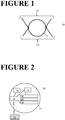
- Figure 1 shows the cross sectional view of a marker constructed according to an embodiment of the invention.
- the marker 10 comprises a container 11 having the extended shape of a tube (circular cross-section), upper surface part 12 , lower surface part 13 .
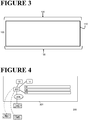
- FIG. 2 shows a schematic drawing of a marker constructed according to a second embodiment of the invention.
- the marker 10' comprises a container 11' having the extended shape of a tube (circular cross-section), a dimmer 14 , a momentary switch 15 , electrically connected to an integrated electric circuit 16 .
- the container further encompasses an inner-component 17 , said inner-component comprising an anode 18 and a cathode 19 , and an electroluminescent light-emitting element 20 .
- the integrated electric circuit is electrically connected with a power supply 21 .
- FIG. 3 schematically shows a cross-sectional view of a marker constructed according to a third embodiment of the invention.
- the marker 100 comprises a container shaped as an elongated strip 110 .
- the upper surface part 120 and lower surface part 130 of the container are indicated.
- FIG. 4 schematically represents a marker 200 constructed according to a fourth embodiment of the invention.
- the marker is provided with a rod shaped container 201 .
- the integrated electric circuit 202 is wirelessly connected to remote sensors 203 , remote controller 204 , and is provided with a converter 205 electrically connected with a grid 206 .
- FIG. 5 is a schematic representation of a marker 300 constructed according to a fifth embodiment of the invention.
- the marker functions autonomously, receives input signals from wirelessly connected remote sensors 301 , which input signals are processed by a microprocessor 302, autonomously resulting in the marker emitting electroluminescent radiation to a certain extent and of a selected color.
- the marker 300 is electrically connected to a battery 303 , which in turn is electrically connected with a photovoltaic cell 304 .
- Example 6 Marker of the invention comprising an extended cuboid shaped container having a rectangular cross section
- Figure 6 shows a cross sectional view of a marker according to the invention.
- the marker is provided with a container 2 shaped as a line encompassing an inner-component, said inner-component comprising an anode layer and a cathode layer, an integrated electric circuit electrically connected thereto, and an electroluminescent light-emitting element comprising one electroluminescent pigment emitting white light.
- the container 2 is made of epoxy resin and is provided with a top layer 3 at the top surface part of the container 2 , said top layer made of Lumiglass frits with a thickness of about 3 to 5 mm and having a yellow-green color.
- the layers of the two electrodes and the electroluminescent light-emitting element are provided as an electroluminescent ribbon 1 having a width of about 10 cm and a thickness of about 1 mm.
- the marker is further comprising an AC/DC adapter receiving an input voltage of 100 V to 240 V and providing an output voltage to the electrodes of 12 V.
- the marker further comprises a momentary switch as a controller for switching the integrated electric circuit on and off, thereby activating or deactivating the electroluminescent light-emitting element.
- Example 7 Marker of the invention comprising an extended tubular container having a circular cross section
- Figure 7 shows a cross sectional view of a marker according to the invention.
- the marker is provided with a container 6' shaped as a tube with an approximate inner diameter of 3 cm and encompassing an inner-component, said inner-component comprising an anode layer and a cathode layer, an integrated electric circuit electrically connected thereto, and an electroluminescent light-emitting element, altogether together forming the indicated assembly 5', wherein the electroluminescent light-emitting element comprises four lanes with each lane made of a different electroluminescent pigment 1'-4' emitting red light, green light, blue light and white light, respectively.
- the container 6' is made of polyurethane acrylate resin.
- the marker is further comprising as a power source an AC/DC adapter receiving an input voltage of 100 V to 240 V and providing an output voltage to the electrodes of 24 V, herewith facilitating a current of 3 A.
- the marker further comprises a switch as a controller for switching the integrated electric circuit on and off, thereby activating or deactivating the electroluminescent light-emitting element, and further for selecting the emission of luminescent light provided by any of the four different lanes comprising the four different electroluminescent pigments 1'-4' .
Landscapes
- Engineering & Computer Science (AREA)
- Mechanical Engineering (AREA)
- Aviation & Aerospace Engineering (AREA)
- Architecture (AREA)
- Civil Engineering (AREA)
- Structural Engineering (AREA)
- Physics & Mathematics (AREA)
- Acoustics & Sound (AREA)
- Road Signs Or Road Markings (AREA)
Priority Applications (3)
| Application Number | Priority Date | Filing Date | Title |
|---|---|---|---|
| EP17154341.6A EP3358082A1 (de) | 2017-02-02 | 2017-02-02 | Intelligenter elektrolumineszenter marker |
| PCT/EP2018/052621 WO2018141893A2 (en) | 2017-02-02 | 2018-02-02 | Smart electroluminescent marker |
| EP18709473.5A EP3577275B1 (de) | 2017-02-02 | 2018-02-02 | System umfassend einen intelligenten elektrolumineszenten marker |
Applications Claiming Priority (1)
| Application Number | Priority Date | Filing Date | Title |
|---|---|---|---|
| EP17154341.6A EP3358082A1 (de) | 2017-02-02 | 2017-02-02 | Intelligenter elektrolumineszenter marker |
Publications (1)
| Publication Number | Publication Date |
|---|---|
| EP3358082A1 true EP3358082A1 (de) | 2018-08-08 |
Family
ID=58094143
Family Applications (1)
| Application Number | Title | Priority Date | Filing Date |
|---|---|---|---|
| EP17154341.6A Withdrawn EP3358082A1 (de) | 2017-02-02 | 2017-02-02 | Intelligenter elektrolumineszenter marker |
Country Status (1)
| Country | Link |
|---|---|
| EP (1) | EP3358082A1 (de) |
Cited By (2)
| Publication number | Priority date | Publication date | Assignee | Title |
|---|---|---|---|---|
| EP3628706A1 (de) * | 2018-09-26 | 2020-04-01 | Röhm GmbH | Reaktionsharzversiegelung für multifunktionale markierungen |
| DE102020111677A1 (de) | 2020-04-29 | 2021-11-04 | Bayerische Motoren Werke Aktiengesellschaft | Verkehrsleitsystem für Verkehrsteilnehmer sowie Anzeigeeinrichtung für ein derartiges Verkehrsleitsystem |
Citations (5)
| Publication number | Priority date | Publication date | Assignee | Title |
|---|---|---|---|---|
| US4857920A (en) * | 1986-10-07 | 1989-08-15 | Sharp Kabushiki Kaisha | Combined traffic signal with stacked EL elements |
| JPH11166213A (ja) * | 1997-12-03 | 1999-06-22 | Sadamu Muraoka | 路面埋込用発光道路標識 |
| US20070223996A1 (en) | 2006-03-27 | 2007-09-27 | Green Donald L | Emissive road marker system |
| JP2009076781A (ja) * | 2007-09-21 | 2009-04-09 | Panasonic Electric Works Co Ltd | 発光モジュール |
| US20160108591A1 (en) * | 2013-04-24 | 2016-04-21 | Heijmans N.V. | Road marking |
-
2017
- 2017-02-02 EP EP17154341.6A patent/EP3358082A1/de not_active Withdrawn
Patent Citations (5)
| Publication number | Priority date | Publication date | Assignee | Title |
|---|---|---|---|---|
| US4857920A (en) * | 1986-10-07 | 1989-08-15 | Sharp Kabushiki Kaisha | Combined traffic signal with stacked EL elements |
| JPH11166213A (ja) * | 1997-12-03 | 1999-06-22 | Sadamu Muraoka | 路面埋込用発光道路標識 |
| US20070223996A1 (en) | 2006-03-27 | 2007-09-27 | Green Donald L | Emissive road marker system |
| JP2009076781A (ja) * | 2007-09-21 | 2009-04-09 | Panasonic Electric Works Co Ltd | 発光モジュール |
| US20160108591A1 (en) * | 2013-04-24 | 2016-04-21 | Heijmans N.V. | Road marking |
Cited By (4)
| Publication number | Priority date | Publication date | Assignee | Title |
|---|---|---|---|---|
| EP3628706A1 (de) * | 2018-09-26 | 2020-04-01 | Röhm GmbH | Reaktionsharzversiegelung für multifunktionale markierungen |
| CN110951295A (zh) * | 2018-09-26 | 2020-04-03 | 罗姆化学有限责任公司 | 用于多功能标记物的反应树脂密封材料 |
| CN110951295B (zh) * | 2018-09-26 | 2022-07-26 | 罗姆化学有限责任公司 | 用于多功能标记物的反应树脂密封材料 |
| DE102020111677A1 (de) | 2020-04-29 | 2021-11-04 | Bayerische Motoren Werke Aktiengesellschaft | Verkehrsleitsystem für Verkehrsteilnehmer sowie Anzeigeeinrichtung für ein derartiges Verkehrsleitsystem |
Similar Documents
| Publication | Publication Date | Title |
|---|---|---|
| US6739735B2 (en) | Lighting strip for direction and guidance systems | |
| US7429919B2 (en) | Multi-purpose wireless communication device | |
| CA1297085C (en) | Luminous horizontal roadway markings | |
| ES2862377T3 (es) | Plancha de señalización luminosa y sistema que puede utilizar una plancha de este tipo | |
| US20200337141A1 (en) | Low-altitude, low-power installable smart streetlight system | |
| PL172139B1 (pl) | Urzadzenie sygnalizacyjne PL PL | |
| KR102313374B1 (ko) | 자가발전 기반 도로 표지병 및 그 제어방법 | |
| US8063795B2 (en) | Pedestrian activated stop sign | |
| DE102007061160A1 (de) | Außenleuchte | |
| KR20130055873A (ko) | Cim/bim기반의 모션디텍션 기능을 가지는 스마트 가로등 시스템 | |
| EP3358082A1 (de) | Intelligenter elektrolumineszenter marker | |
| EP3577275B1 (de) | System umfassend einen intelligenten elektrolumineszenten marker | |
| Porins et al. | PIR-Sensor Based Street Lighting System Control | |
| SK50222015U1 (sk) | Okružná križovatka s výstražným svetelným zariadením | |
| US20170211788A1 (en) | Driveway marker lights | |
| KR102019666B1 (ko) | 엘이디 전구를 이용한 광시스템 | |
| CN113774839A (zh) | 一种智慧潮汐车道光伏自动化护栏 | |
| KR20110055326A (ko) | 레이더 센싱 기능의 도로표지판 | |
| Ngene et al. | A sensor for monitoring the lifespan of color-LEDs in traffic lights | |
| KR102449234B1 (ko) | 표지병을 적용한 스마트 신호등 제어시스템 | |
| EP2163812A2 (de) | Steuersystem für mehrere elektrische Leuchtanlagen | |
| CN222275320U (zh) | 智能网联诱导发光锥标 | |
| KR102901165B1 (ko) | 병렬식 솔라 델리네이터 | |
| NL1010856C2 (nl) | Werkwijze voor het geven van een aanwijzing, alsmede wegdek en aanduiding. | |
| FR2790060A1 (fr) | Dispositif de signalisation pour aide a la circulation de nuit ou par mauvais temps |
Legal Events
| Date | Code | Title | Description |
|---|---|---|---|
| PUAI | Public reference made under article 153(3) epc to a published international application that has entered the european phase |
Free format text: ORIGINAL CODE: 0009012 |
|
| AK | Designated contracting states |
Kind code of ref document: A1 Designated state(s): AL AT BE BG CH CY CZ DE DK EE ES FI FR GB GR HR HU IE IS IT LI LT LU LV MC MK MT NL NO PL PT RO RS SE SI SK SM TR |
|
| AX | Request for extension of the european patent |
Extension state: BA ME |
|
| STAA | Information on the status of an ep patent application or granted ep patent |
Free format text: STATUS: THE APPLICATION IS DEEMED TO BE WITHDRAWN |
|
| 18D | Application deemed to be withdrawn |
Effective date: 20190209 |