EP3375133B1 - Verfahren zur sicherung und authentifizierung einer telekommunikation - Google Patents
Verfahren zur sicherung und authentifizierung einer telekommunikation Download PDFInfo
- Publication number
- EP3375133B1 EP3375133B1 EP16794342.2A EP16794342A EP3375133B1 EP 3375133 B1 EP3375133 B1 EP 3375133B1 EP 16794342 A EP16794342 A EP 16794342A EP 3375133 B1 EP3375133 B1 EP 3375133B1
- Authority
- EP
- European Patent Office
- Prior art keywords
- data
- message
- communicating
- user
- client
- Prior art date
- Legal status (The legal status is an assumption and is not a legal conclusion. Google has not performed a legal analysis and makes no representation as to the accuracy of the status listed.)
- Active
Links
Images


Classifications
-
- H—ELECTRICITY
- H04—ELECTRIC COMMUNICATION TECHNIQUE
- H04L—TRANSMISSION OF DIGITAL INFORMATION, e.g. TELEGRAPHIC COMMUNICATION
- H04L63/00—Network architectures or network communication protocols for network security
- H04L63/08—Network architectures or network communication protocols for network security for authentication of entities
-
- H—ELECTRICITY
- H04—ELECTRIC COMMUNICATION TECHNIQUE
- H04L—TRANSMISSION OF DIGITAL INFORMATION, e.g. TELEGRAPHIC COMMUNICATION
- H04L63/00—Network architectures or network communication protocols for network security
- H04L63/12—Applying verification of the received information
- H04L63/126—Applying verification of the received information the source of the received data
-
- H—ELECTRICITY
- H04—ELECTRIC COMMUNICATION TECHNIQUE
- H04L—TRANSMISSION OF DIGITAL INFORMATION, e.g. TELEGRAPHIC COMMUNICATION
- H04L9/00—Cryptographic mechanisms or cryptographic arrangements for secret or secure communications; Network security protocols
- H04L9/006—Cryptographic mechanisms or cryptographic arrangements for secret or secure communications; Network security protocols involving public key infrastructure [PKI] trust models
-
- H—ELECTRICITY
- H04—ELECTRIC COMMUNICATION TECHNIQUE
- H04L—TRANSMISSION OF DIGITAL INFORMATION, e.g. TELEGRAPHIC COMMUNICATION
- H04L9/00—Cryptographic mechanisms or cryptographic arrangements for secret or secure communications; Network security protocols
- H04L9/32—Cryptographic mechanisms or cryptographic arrangements for secret or secure communications; Network security protocols including means for verifying the identity or authority of a user of the system or for message authentication, e.g. authorization, entity authentication, data integrity or data verification, non-repudiation, key authentication or verification of credentials
- H04L9/321—Cryptographic mechanisms or cryptographic arrangements for secret or secure communications; Network security protocols including means for verifying the identity or authority of a user of the system or for message authentication, e.g. authorization, entity authentication, data integrity or data verification, non-repudiation, key authentication or verification of credentials involving a third party or a trusted authority
- H04L9/3213—Cryptographic mechanisms or cryptographic arrangements for secret or secure communications; Network security protocols including means for verifying the identity or authority of a user of the system or for message authentication, e.g. authorization, entity authentication, data integrity or data verification, non-repudiation, key authentication or verification of credentials involving a third party or a trusted authority using tickets or tokens, e.g. Kerberos
-
- H—ELECTRICITY
- H04—ELECTRIC COMMUNICATION TECHNIQUE
- H04L—TRANSMISSION OF DIGITAL INFORMATION, e.g. TELEGRAPHIC COMMUNICATION
- H04L9/00—Cryptographic mechanisms or cryptographic arrangements for secret or secure communications; Network security protocols
- H04L9/32—Cryptographic mechanisms or cryptographic arrangements for secret or secure communications; Network security protocols including means for verifying the identity or authority of a user of the system or for message authentication, e.g. authorization, entity authentication, data integrity or data verification, non-repudiation, key authentication or verification of credentials
- H04L9/3226—Cryptographic mechanisms or cryptographic arrangements for secret or secure communications; Network security protocols including means for verifying the identity or authority of a user of the system or for message authentication, e.g. authorization, entity authentication, data integrity or data verification, non-repudiation, key authentication or verification of credentials using a predetermined code, e.g. password, passphrase or PIN
-
- H—ELECTRICITY
- H04—ELECTRIC COMMUNICATION TECHNIQUE
- H04L—TRANSMISSION OF DIGITAL INFORMATION, e.g. TELEGRAPHIC COMMUNICATION
- H04L9/00—Cryptographic mechanisms or cryptographic arrangements for secret or secure communications; Network security protocols
- H04L9/32—Cryptographic mechanisms or cryptographic arrangements for secret or secure communications; Network security protocols including means for verifying the identity or authority of a user of the system or for message authentication, e.g. authorization, entity authentication, data integrity or data verification, non-repudiation, key authentication or verification of credentials
- H04L9/3236—Cryptographic mechanisms or cryptographic arrangements for secret or secure communications; Network security protocols including means for verifying the identity or authority of a user of the system or for message authentication, e.g. authorization, entity authentication, data integrity or data verification, non-repudiation, key authentication or verification of credentials using cryptographic hash functions
-
- H—ELECTRICITY
- H04—ELECTRIC COMMUNICATION TECHNIQUE
- H04L—TRANSMISSION OF DIGITAL INFORMATION, e.g. TELEGRAPHIC COMMUNICATION
- H04L9/00—Cryptographic mechanisms or cryptographic arrangements for secret or secure communications; Network security protocols
- H04L9/32—Cryptographic mechanisms or cryptographic arrangements for secret or secure communications; Network security protocols including means for verifying the identity or authority of a user of the system or for message authentication, e.g. authorization, entity authentication, data integrity or data verification, non-repudiation, key authentication or verification of credentials
- H04L9/3247—Cryptographic mechanisms or cryptographic arrangements for secret or secure communications; Network security protocols including means for verifying the identity or authority of a user of the system or for message authentication, e.g. authorization, entity authentication, data integrity or data verification, non-repudiation, key authentication or verification of credentials involving digital signatures
-
- H—ELECTRICITY
- H04—ELECTRIC COMMUNICATION TECHNIQUE
- H04L—TRANSMISSION OF DIGITAL INFORMATION, e.g. TELEGRAPHIC COMMUNICATION
- H04L9/00—Cryptographic mechanisms or cryptographic arrangements for secret or secure communications; Network security protocols
- H04L9/32—Cryptographic mechanisms or cryptographic arrangements for secret or secure communications; Network security protocols including means for verifying the identity or authority of a user of the system or for message authentication, e.g. authorization, entity authentication, data integrity or data verification, non-repudiation, key authentication or verification of credentials
- H04L9/3247—Cryptographic mechanisms or cryptographic arrangements for secret or secure communications; Network security protocols including means for verifying the identity or authority of a user of the system or for message authentication, e.g. authorization, entity authentication, data integrity or data verification, non-repudiation, key authentication or verification of credentials involving digital signatures
- H04L9/3249—Cryptographic mechanisms or cryptographic arrangements for secret or secure communications; Network security protocols including means for verifying the identity or authority of a user of the system or for message authentication, e.g. authorization, entity authentication, data integrity or data verification, non-repudiation, key authentication or verification of credentials involving digital signatures using RSA or related signature schemes, e.g. Rabin scheme
Definitions
- the field of the invention relates to securing communications between two communicating entities, such as a client and a server having network interfaces. More particularly, the invention relates to secure communications which do not require state management or the establishment of a communication session which it is desired to secure. Finally, the field of the invention relates to telecommunications comprising an authentication allowing the establishment of ad hoc secure communications offering flexibility of architecture by limiting the use of a third party authentication.
- the REST-style software architecture style whose acronym stands for "Representational State Transfer” has widely spread due to its simplicity of implementation and integration in distributed systems .
- a client station uses resources distributed on one or more server stations using requests using for example the http protocol, the acronym of which stands for "Hypertext Transfer Protocol” , and referring to a URI, whose meaning is "Uniform Resource Identifier", representing the unique address of the resource on the network.
- the server returns the requested resources to the client computer, generally in XML or JSON format.
- One of the essential characteristics of the REST architecture is to prohibit at the server level any context of communication with the client computer beyond the duration of reception of the request.
- This stateless communication mode also known by the Anglo-Saxon name “stateless” guarantees the server station an ability to scale up. Indeed, the latter can release immediately after receiving the request its resources necessary for communication with the client station, thus making them available for new communication and avoiding the overload of these system resources.
- a first authentication method is based on the exchange of an API key, that is to say a secret shared between two communicating entities.
- a secret such as a password is defined on the server side and is transmitted by the request to a client. This password is then exchanged with each transmission of request between the communicating entities.
- a second authentication method is based on the establishment of an API key signature.
- a secret is then initially shared between two communicating entities, for example, by an enrollment phase between the two entities.
- the secrets are then stored on the client side and on the server side.
- the secret is then used to sign the messages which are then sent.
- An advantage is that the secret is not systematically shared during the transmission of each message between two communicating entities. This solution limits the possibilities of interception of the secret.
- the signature authenticates the messages once received with the secret which is stored in the communicating entity, but which is not transferred during the exchanges.
- a first method is based on SAML technology, which stands for "Security Assertion Markup Language".
- This method is based on the definition of a third-party authentication such as an authentication server.
- This solution involves the implementation of a PKI key management system, the acronym for "Public Key Infrastructure”.
- This method provides good security for data exchanges between communicating entities.
- it is difficult to implement simply because a third-party authentication must be configured.
- it is expensive and requires the establishment of a session between the entities and / or the exchange of certificates.
- the XML protocol is generally used in this method.
- One drawback is that the security header of this protocol is very verbose and is not suitable for low bandwidth communications.
- a second solution is based on the HTTPs protocol which also relies on a PKI key management system and on the exchange of certificates. This solution also provides good security for data exchanges between communicating entities. However, this solution is expensive and difficult to implement. In addition, it involves a mechanism for exchanging keys beforehand with an authentication third party. These methods can be deployed on broadband networks but on more constrained networks, they may encounter some limitations when implementing exchanges.
- a problem with a PKI key management system is that it is difficult, if not impossible, from the server's point of view to suspend equipment for a fixed or indefinite period. Since the authentication third party has rights, it is difficult to have autonomy in managing revocations or suspensions of rights from the point of view of the communication server.
- the US patent 8621598 B2 describes a mechanism based on a REST architecture, however the solution requires the definition of a session which is transmitted between the communicating entities.
- the authentication token is used by the server to exchange with an authentication server authorizing or not the transfer of data between the client and the server.
- This solution involves the implementation of an authentication server comprising a database in which the private keys of the client equipment are stored.
- the invention aims to overcome the aforementioned drawbacks.
- the invention makes it possible to offer a compromise between a sufficient level of security to be implemented between communicating entities and a simplicity of implementation of a certain level of security allowing stateless exchanges between said entities.
- the invention makes it possible to dispense with exchanges of certificates or the establishment of a session.
- the method of the invention makes it possible to dispense with an authentication third party, such as an authentication server.
- An object of the invention relates to a method of communication between two communicating entities, according to independent claim 1.
- An advantage of the invention is to make it possible to secure a data link between two communicating entities without having to implement an authentication third party, such as an authentication server storing authentication data of the communicating entities.
- an authentication third party such as an authentication server storing authentication data of the communicating entities.
- only the communicating entities exchanging data implement the security mechanisms of the data link.
- the method of the invention does not require session or state management between the two communicating entities.
- Each message includes identification, authentication and security elements ensuring a reliable connection.
- the server comprises means of access to the memory storing the data corresponding to the client identifiers and to the equipment identifiers so as to revoke or suspend one or more equipment (s) or client (s).
- Another object of the invention relates to a communicating entity comprising at least a memory, a computer and a communication interface for the execution of the communication method of the invention and / or of the enrollment method.
- Another object of the invention relates to a computer program comprising a set of instructions for implementing the communication method.
- a physical medium such as a memory, makes it possible to record the instructions and a computer makes it possible to implement the steps of the method.
- the computer program is configured to execute the method of the invention on a computer, tablet, smartphone or more generally intelligent electronic equipment comprising a communication interface.
- the computer program is configured to form an API, designating “Application Programming Interface”.
- the latter can be implemented in a computer program within a method for managing a communication interface of an item of equipment.
- a computer program is also designed to include instructions and means for carrying out the enrollment process. Identically, this computer program can be designed to form an API.
- the invention relates to securing and authenticating communications between two communicating entities.
- the description details an embodiment in which the two entities relate respectively to a client and a server.
- the present invention relates to a method of enrollment between at least two entities and a method of communication between at least these two entities.
- a client comprises at least a computer, a memory and a communication interface.
- the client is a computer, a tablet, a smartphone or even industrial equipment of the smart box type or any dedicated electronic equipment for the application aiming at transferring data in a secure manner.
- the client comprises an operating system and a set of functions making it possible to offer a user a set of services within a network.
- the client is therefore associated with equipment.
- the client therefore includes an identifier noted EQ_ID.
- Customer equipment is therefore indifferently rated EQ A , EQ B or CUSTOMER in general.
- the client is generally an entity that is capable of initiating a communication through an enrollment procedure that has the objective of securing a data transfer between said client and a server.
- a server comprises at least a memory and a computer as well as a communication interface.
- the server is a computer connected to a network, such as the internet network.
- the server is configured to receive messages from different clients and store data sent by different clients.
- the server stores in a database data of a plurality of users including client accounts and associations between each client and user equipment EQ.
- the server stores cryptographic data.
- the server is an equipment providing a KSpub public key for one or more clients. This public key is used to encrypt messages sent by the client to the server.
- the data server of the invention is a server offering services to a client.
- the server of the invention is therefore not an authentication server performing exclusively the authentication functions in the sense of a third-party authentication coupled with another data server.
- One of the objectives of the invention is to make it possible to establish secure communications between at least one client and a data server offering services involving a secure connection.
- a user is identified by an identifier USER_ID.
- the user is able to define an account and reference it with the server, for example, by means of a remote link allowing the recording of the data of his account.
- the account includes at least a USER_ID and a USER_MDP password which is associated with the USER_ID.
- the method of exchanging data between two communicating entities therefore previously comprises a step of registering a user on the entity defining the data server.
- the private keys KApriv, KSpriv are not exchanged between the communicating entities during the execution of the methods of the invention.
- K_SUP_C a cryptographic component denoted K_SUP_C.
- This component makes it possible to store the private key KApriv and the public key KApub of the client as well as the public key of the KSpub server acquired during a prior step.
- the figure 1 represents, in addition, a cryptographic component on the server side K_SUP_S which makes it possible to store the pair of asymmetric keys of the server: KSpriv, KSpub.
- each item of equipment is associated with a unique private key of a KApriv item of equipment which can optionally be renewed.
- a private key of a KApriv device is associated with an EQ A device such as a smartphone, a tablet, a PC or industrial equipment of the smart box type such as an electric meter for example.
- a user is associated with one or more EQ A , EQ B , etc. devices.
- Enrollment is a preliminary step to any transmission of useful data between two communicating entities establishing a secure communication according to the communication method of the invention. Enrollment makes it possible to exchange data between the communicating entities which will allow the security of data exchanges.
- a client When a client enrolls with a server, it initiates this procedure by generating a REQ_E request.
- This request does not include the emission of a private key of the equipment.
- the client includes a component noted ENROL_C allowing to implement the enrollment mechanism from the server point of view, in particular to generate the REQ_E enrollment requests.
- a component noted EQ_MG controls the management of equipment and users and processes REQ_E enrollment requests, in particular by checking the validity of the request data.
- a device is enrolled by a server
- its identifier is stored in a memory of the server.
- the server is then able to associate a client with a set of associated equipment which has been enrolled by the user.
- the function managing equipment and users is noted MG on the figure 1 and the function processing the enrollment requests is noted ENROL_S.
- a memory makes it possible to store the public keys of the equipment as well as the passwords of the customer accounts. This memory is noted K_PUB on the figure 1 .
- the enrollment method of the invention is based on the creation of a customer account by a user whose data is stored in a memory of a data server, the SERV data server defining one of the communicating entities. of the invention.
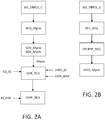
- the figure 2A represents the main steps of a method for generating an enrollment request REC_E engaged by the method for generating an enrollment request M1_ENROL_C carried out by an item of equipment such as a client.
- each client Before communicating with a server according to the communication method of the invention, each client completes an enrollment phase according to the method of generating an enrollment request of the invention.
- the M1_ENROL_C process includes a step activating this process which also corresponds to the eponymous step of the M1_ENROL_C method.
- the method for generating an enrollment request M1_ENROL_C by the client comprises a step corresponding to the acquisition of a public key from a SERV server, denoted ACQ_KSpub.
- the step of acquiring the public key of the KSpub server can be considered as part of the enrollment process or it can be considered as a prior step in which the public key of the server KSpub was acquired by a user before he initiated enrollment. In the latter case, the acquisition of the public key from the KSpub server is not included in the enrollment process.
- This step can be carried out by manual input if a user copies a public key from a KSpub server into an interface on client equipment.
- the public key of the KSpub server can be received from third-party equipment or even directly from the SERV server forming one of the two communicating entities of the invention.
- the public key of the KSpub server can be received, for example, after the creation of a user account with the SERV server.
- the acquisition of the public key of the KSpub server can be generated by means of a file such as an image, a captcha code, a bar code or a 2D code, such as a QR coded.
- the acquisition of the public key of the KSpub server by the client can be carried out, in the latter case, by reading the code or the image comprising said key by means of the equipment.
- the equipment comprises means for capturing an image such as an optical sensor.
- the public key of the server when the acquisition of the public key KSpub of the server has already taken place, the public key of the server is considered as already stored in a memory of the equipment.
- the step of acquiring the public key of the KSpub server of the method can therefore correspond to the acquisition of this key from the memory of the equipment when it has already been acquired from the server.
- the acquisition includes the operation aimed at recovering this public key KSpub from the server. This operation can result from an operation aimed at establishing a dialogue between the client and the server.
- the user recovers the public key from the server without carrying out an exchange between the client and the server, for example by manual copying of the key in a client interface.
- Each device that enlists with a server has stored a public key KSpub of said server.
- the public key of the KSpub server makes it possible to encrypt the enrollment request as well as the messages sent during the communication process of the invention.
- the method for generating an enrollment request by the client comprises a step of generating a public key of an EQ A device , denoted KApub, and a private key equipment rated KApriv.
- the generation steps are respectively noted GEN_KApub and GEN_KApriv on the figure 2A , they are also usually generated at the same time. In the latter case a pair of keys is generated jointly.
- the method for generating an enrollment request aims to extract the public key of the KApub equipment from a memory of the equipment to include it in the request.
- the method for generating an enrollment request comprises only the acquisition in a memory of the equipment of the client's public key and not its generation at each enrollment.
- the method for generating a REQ_E enrollment request by the client therefore comprises the generation of a REQ_E enrollment request intended for the SERV server.
- This step is noted GEN_REQ on the figure 2A .
- This step is carried out by a customer calculator noted on the figure 1 : "REQ”. It includes the recovery of a certain number of data stored in a memory of the client and the generation of the REQ_E request comprising these recovered data.
- the steps for recovering certain data are also carried out during the communication method of the invention.
- the equipment identifier and the user identifier are used each time new messages are transmitted by application of the communication method of the invention. Certain steps which follow are therefore common to the enrollment method and to the communication method of the invention.
- the computer also retrieves a user password USER_MDP.
- the user password USER_MDP can also be either retrieved from a memory of the EQ A equipment in which it was previously stored by a user of the EQ A equipment, or retrieved from an interface input control. user. This step is notably carried out for the enrollment process.
- the computer recovers the public key of the equipment KApub of the equipment EQ A which is stored in a memory of the equipment EQ A after its generation or its recovery from an interface.
- the client's public key is transmitted during the enrollment process, but is not necessarily transmitted during the communication process of the invention. It is precisely an advantage of the invention not to reissue the public key of the equipment each time new messages are transmitted.
- the method of generating an enrollment request comprises a step of encrypting the request, noted CRYP_REQ on the figure 2A , by the public key of the KSpub server.
- This public key has been previously acquired by the client and can be used to encrypt the enrollment request. Consequently, the server will be able to decrypt the request thus encrypted thanks to its private key KSpriv.
- the public key of the KSpub server is used to encrypt a symmetric key.
- This solution is more efficient in terms of calculations than a message encryption algorithm performed using asymmetric keys.
- This solution allows to encrypt a shorter message with an asymmetric key which includes the symmetric key.
- the server's private key KSpriv makes it possible to decrypt the symmetric key and to decode the message encrypted with the symmetric key thus decrypted.
- This alternative can be implemented during the enrollment process and / or during the communication process of the invention.
- the enrollment method is carried out prior to the transmission of messages according to the communication method of the invention.
- Enrollment can be carried out once and for all from the client device or from any device enabling a connection to the data server to be established.
- enrollment can be a preliminary step to the transmission of a message which directly follows the step of secure transmission of messages.
- the invention relates to the M2_ENROL_S processing of a REQ_E enrollment request received by the server.
- the server receives a new enrollment request REQ_E, it proceeds to its reception REC_REQ by means of a communication interface, such as for example a network card.
- the server initiates a step of decrypting the data, noted DECRYPT_REQ, by means of its private key KSpriv.
- the decrypted data is then extracted and stored in a memory of the server.
- the server checks the user identifier USER_ID and the password of the user MDP_USER which are data already saved in a memory of the server when the client account is created on the SERV server.
- the server When the data of the user account received corresponds to the data already recorded, the server records the data of the equipment including its identifier EQ_ID and the public key of the equipment KApub in a memory.
- the SERV server then proceeds to an ASSO_KApub association between the equipment data and a user account.
- a user can be associated with various pieces of equipment whose public keys are known to the server.
- a key renewal mechanism engages the renewal of a pair of asymmetric keys: a private key of the KApriv equipment and a public key of the KApriv equipment are renewed.
- the public key of the KApub equipment can be transmitted again to the server. For this, an enrollment process can be repeated, for example at the request of the server or after a certain time has elapsed.
- the server can send an error message following the reception of a message from the client whose public key is no longer valid.
- the error message may include a rejection code indicating that an enrollment process must be renewed with a new public key.
- an error message can indicate to the client that it is necessary that he retrieve a new public key from the server.
- This mechanism can be automatically engaged and transparently vis-à-vis a user.
- the equipment then renews a new KApub private key which is stored locally and renews a new KApub public key associated with this private key.
- the public key of the equipment is then sent by a new enrollment request to the server.
- the secure communication method of the invention is symmetrical between a client and a server. The communication method therefore applies reciprocally from a transmission from a client to a server or from a server to a client.
- the invention implements a communication method making it possible to transmit secure messages by the generation of an authentication header, denoted TOKEN.
- the communication method could, in another alternative embodiment, be carried out independently of the prior execution of an enrollment method. This is for example the case when the data exchanged in the enrollment process would be defined by a user in each device, such as for example the exchange of public keys and device and user identifiers.
- the TOKEN authentication header is generated by a client component noted on the figure 1 : TOK_GEN_C.
- the component noted TOK_CHK_S checks the authentication header received from the client. Conversely, when a message is sent by the server to a client, a component noted TOK_GEN_S, on the server side, generates the message authentication header and a component noted TOK_CHK_C, on the client side, makes it possible to check the 'authentication header of a message sent by the server to the client.
- the TOKEN authentication header for transmitted messages includes various data fields including the equipment identifier EQ_ID, the user identifier USER_ID, the identification of the message, MES_ID, a security profile PRO_SEC and a signature if applicable.
- the TOKEN authentication header can be, for example, integrated into the transport protocol headers used according to the communications carried out, such as an http protocol header for example.
- the authentication header is added to the list of headers of the transport application protocol used by the application.
- the content of the authentication header generated by the present invention is associated with the “Authorization:” header of the HTTP / 1.1 protocol according to the RFC [2616].
- the computer retrieves a message identifier MES_ID which is generated by a message counter which generates message identifiers.
- MES_ID message identifier
- the figure 1 represents the components used to generate and process message identifiers, they are also noted MES_ID.
- the message counter calculates the MES_ID from a random, that is to say from a random parameter and a date.
- the hazard makes it possible to define a unique identifier for the message.
- the identifier MES_ID includes information relating to the date of generation of the message which can be decoded on reception by the server. .
- the MES_ID can be generated with a non-random parameter and a date.
- the message identifier MES_IS can for example be calculated on the fly, that is to say in real time by a computer of the communicating entity.
- the identifier of the message thus calculated is assigned to a message.
- the security profile PRO_SEC makes it possible to define an algorithm which will be used to sign or encrypt the content to be transmitted and to indicate and define if the response sent by the server must also be encrypted and according to which algorithm.
- the different communicating entities such as a server and a plurality of clients can include a configuration of predefined security profiles.
- Each predefined profile can be activated to define a way of transmitting and receiving data with another entity.
- four security profiles are predefined.
- a first profile corresponds to the activation of a security parameter P1 incorporated in the TOKEN authentication header of the message to be transmitted by the client to the server.
- This parameter indicates the presence of encryption of the transmitted useful data.
- the server receiving this parameter is capable of implementing a decryption of the data transmitted when the latter is encrypted.
- a second profile corresponds to the activation of a security parameter P2 incorporated in the authentication header of the message to be transmitted by the client.
- the P2 parameter indicates that the authentication header is signed.
- the signature is made by the client using the KApriv client's private key.
- the signature is incorporated in the authentication header.
- a third profile corresponds to the activation of a security parameter P3 incorporated in the TOKEN authentication header of the message to be transmitted by the client to the server. This parameter indicates that the data of the return message (s) sent by the server to the client must be encrypted.
- a fourth profile corresponds to the activation of a security parameter P4 incorporated in the TOKEN authentication header of the message to be transmitted by the client.
- the P4 parameter indicates to the server that it must sign the authentication headers of the messages that it will send in return for the message sent by the client.
- the server will encrypt the useful data and sign the TOKEN authentication header of the messages sent in turn to the client in response to (x ) message (s) received from the latter.
- the server can therefore in turn indicate the value of parameters P1, P2, P3 and P4 to inform the client of its data encryption mode as well as the presence of a signature.
- This configuration has the advantage of making it possible to establish communications whose security is entirely self-supporting between two communicating entities.
- the header for authenticating the response from the server therefore also includes a security profile comprising a configuration P1, P2, P3, P4.
- the signature is generated from the private key of the KSpriv server and the encryption of the useful data is carried out with the public key of the KApub client.
- the different security profiles make it possible to adapt the security level of data exchanges between communicating entities according to the context of data exchanges or the type of data to be exchanged.
- the security parameters P2 and P4 directly indicate the signature format applied.
- the enrollment step may comprise the transmission of the definition of a security profile either in the data authentication header TOKEN, or in the payload of the transmitted data.
- an entity can then save the definition of the new security profile and use it to deploy a strategy for encrypting sent messages and decrypting received messages.
- the encryption profile includes the designation of a signature generation algorithm such as for example RSA-SHA256 and where appropriate the designation of a data encryption algorithm, such as for example AES.
- the security profile therefore includes an indication of the presence of a signature and of the presence of data encryption and, where appropriate, the security profile includes the designation of the algorithms used to generate the signature or encrypt the data.
- the TOKEN authentication header also includes a signature of the data transmitted in the header and / or in the message body.
- a signature is created using a signature generation algorithm.
- the signature is carried out by means of a private key of the communicating entity signing. If the client signs the authentication header of a message sent, the signature is made using the KApriv key, ie the equipment's private key.
- an algorithm based on an RSA SHA256 method can be implemented by the invention to generate the signature.
- SHA designates in English terminology: "Secure Hash Algorithm" and corresponds to a cryptographic hash function.
- RSA is an asymmetric cryptography algorithm using a couple of asymmetric keys. The two algorithms can be combined in a single encryption algorithm.
- the ECDSA algorithm designating “Elliptic Curve Digital Signature Algorithm” can be used according to the method of the invention. It is a public key digital signature algorithm.
- the algorithm for generating a signature can be automatically determined according to the client's equipment or its operating system.
- a field of the TOKEN authentication header comprises the signature generated
- another field can be filled in the header to designate the algorithm allowing the signature and / or the algorithm to be generated. encryption of useful data.
- the data server Upon receipt, the data server will be able to decode the signature by choosing the right algorithm to decode the signature.
- the signature is generated from data relating in particular to the customer and the equipment.
- the signature is generated from the data: MES_ID, EQ_ID, USER_ID, PRO_SEC and from the content of the message.
- the signature is generated from the useful data of the message. This generates a signature of the authentication data MES_ID, EQ_ID, USER_ID, of the security profile PRO_SEC, and the contents of the DATA message.
- the data when signed can correspond to encrypted payload or unencrypted payload.
- the signature can take into account the data of a message of the transport protocol which routes the messages exchanged such as protocol header data, the address of the protocol message or even a another protocol-specific field such as the http protocol request line.
- protocol header is used to differentiate it from the authentication header of the invention.
- one or more data relating to the data of the transport protocol can be used.
- Part of a field in a protocol header can also be used.
- the Method field of the http protocol specifying the type of request including in particular the values ⁇ GET, PUT, POST ⁇ , present in the request line of an http request has an interest for has an interest for signing the header TOKEN authentication. This taking into account makes it possible in particular to avoid attacks of the “replay” type by a third party by performing another action than the initial request.
- a message header of an application transport protocol is defined by a pair ⁇ key: value ⁇ .
- the header [Expires: "Sat, 07 Nov 2015 00:59:59 GMT"] represents an expiration date of the request.
- the type of request and the address of the resource to be interrogated are contained in the request line of the message, for example [POST http: // control_center_uri / rest / conso HTTP / 1.1], and can be used to generate the signature.
- This embodiment is particularly advantageous for ensuring the integrity of the data exchanges.
- the generation of a signature includes the execution of a hash function of the data to be signed.
- MES_ID which changes with each message, in the signature allows, thanks to the hash function, to generate a content of the signature totally different from one message to another.
- the generation of a signature can also include a padding function, that is to say a data filling function.
- the signature is finally generated from the private key of the KApriv client.
- the communicating entities of the invention include means for generating a pair of asymmetric keys KApriv, KApub, the private key KApriv making it possible to generate a signature of an authentication header of a message sent by a communicating entity by execution a hash function and a data fill function.
- the encryption profile defines which algorithm is used to encrypt the data.
- the encryption profile is indicated in the TOKEN authentication header of the message and makes it possible to indicate the designation of the encryption algorithm. This designation can be coded in the same field as the designation of the signature generation algorithm.
- the message data which is transmitted to the server is encrypted with the algorithm determined by the client. The data can then be decrypted, on the server side, thanks to the indication of the algorithm used.
- the data encryption algorithm can be automatically determined based on the client's equipment or operating system.
- An advantage is to use the resources already existing on a piece of equipment.
- An example of an algorithm according to the invention can be AES designating "Advanced Encryption Standard" in English terminology. It is an advanced encryption standard also known as Rijndael. Other algorithms such as Script or Vscript can alternatively be used according to the method of the invention.
- the useful data is encrypted from the public key of the KSpub server, that is to say with the public key of a second communicating entity KSpub in the general case where the server is a second communicating entity .
- the data is encrypted using a symmetric key and the symmetric key is itself encrypted by an asymmetric key, such as the public key of the KSpub server.
- This embodiment has the advantage of optimizing the encryption operations on smaller data volumes, in particular relating to the size of a symmetric key instead of a field size relating to data content.
- the security profiles can then be transposed to this case in which it is specified if a message includes a signed header and encrypted content in one direction and in the return direction.
- "encrypted content” means that it was encrypted with a symmetric key and that the symmetric key was encrypted with an asymmetric key.
- the MES_ID field is used to define security against attacks by replaying third-party messages.
- the EQ_ID field is used to define security when a device has been suspended or revoked by the SERV server.
- the USER_ID field is used to define security when a user account has been suspended or revoked by the SERV server.
- the figure 3 represents the main steps of the communication method of the invention from the point of view of a communicating entity which generates an MES message.
- the TOKEN generation step is noted GEN_TOKEN. It includes the substeps for generating a GEN_MES_ID message identifier and for inserting INSERT_MES_ID of this identifier in the TOKEN authentication header.
- the generation of the TOKEN includes, in addition, the insertion of an equipment identifier INSERT_ED_ID and the insertion of a user identifier INSERT_USER_ID.
- the TOKEN When the TOKEN is signed SIGN_TOKEN, it can be signed using the private key of the KApriv client.
- the message comprising the authentication header and the useful data can then be generated GEN_MES according to the protocol used to transmit data between the client and the server, such as for example an HTTP protocol.
- a symmetric Ksym key can be used to encrypt the useful data during the execution of the CRYP_DATA step.
- the symmetric key can itself be encrypted using the public key of the KSpub server and be inserted, for example, into the TOKEN authentication header during the INSERT_Ksym step.
- the data server which corresponds to one of the communicating entities of the invention is intended to manage data transmissions with a plurality of clients. It includes for this purpose a component allowing to manage the equipments, it is noted EQ_MG on the figure 1 .
- This component makes it possible to store the encryption data of the client devices in a memory denoted K_PUB which stores the public keys of the KApub devices.
- K_PUB which stores the public keys of the KApub devices.
- This component includes an MG function which is configured to store customer accounts and an ENROL_S function which allows you to receive and process an equipment enrollment request.
- the processing of a request includes data decryption operations and verification operations aimed at verifying that the equipment, the user or the message received are not suspended or revoked or that the customer accounts already exist.
- the MG function also makes it possible to revoke or suspend equipment or users. This action can be automatically initiated at the request of a client or at the request of a server administrator.
- the message sent by the equipment is received by the server via a communication interface.
- a component of the server performs a step of verifying the message received.
- the server includes an asymmetric key set comprising a public key KSpub and a private key KSpriv.
- the message received by the server has been encrypted with the public key of the KSpub server by the client.
- This public key of the KSpub server has been previously acquired by a user, for example, by means of the EQ A equipment.
- Message verification includes checking the message identifier: MES_ID.
- the MES_ID data check includes checking the message generation date with a local server time.
- the message generation date can be calculated from the message identifier MES_ID by a computer and an appropriate decoding algorithm.
- the server can initiate a refusal of the message received.
- the server can process the message received.
- the server in the case of a too large date difference, the server returns a specific error containing the current date of the server.
- This variant allows the client to resynchronize and reissue a new valid TOKEN.
- the verification of MES_ID by the server makes it possible to limit network attacks by replaying a message over a period longer than the period of time during which a message is validated following the analysis of the value of the MES_D data.
- a second check carried out by the server consists in checking whether the message has already been received by the latter. If the message has already been received, that is to say that the MES_ID of the received message is identical to a MES_ID of a previously received message, then the message is not processed by the server.
- the server proceeds to a step of verifying the authentication of the message.
- the server can alternatively check the authentication data before the identifier MES_ID.
- the SERV server has stored the data for this user account in a memory.
- the server performs a search for the public key of the KApub equipment in its database.
- the public key of the KApub equipment has been associated with the customer whose reference USER_ID is known since it was stored following the registration of the customer account.
- the public key of the KApub equipment which is contained in the transmitted message is then compared to the public key of the equipment stored in the memory of the server.
- validation can be carried out of the message received.
- the public key of the equipment stored in the server can be used to verify that the signature is correctly authenticated, then the message can be processed by the server.
- the message is not processed by the server.
- the signature is invalid, the message is rejected by the server.
- An advantage of this solution is that the server stores only public information of clients, that is to say the public keys of KApub clients. Client private keys are not stored by the server. Consequently, a third party accessing the server's database cannot recover clients 'private keys without the clients' authorization.
- the public key of the KApub equipment known by the SERV server can also be used to verify the signature included in the message which was produced using the private key of the KApriv client.
- the signature can be verified since the server has received the authentication data: USER_ID, EQ_ID, the message identifier MES_ID, the security profile PRO_SEC which includes the format of the signature if necessary, and the content of the DATA message. This data can be used to verify that the message has been properly signed.
- the server When the message identifier MES_ID and the authentication of the message have been verified by the SERV server, the latter processes the field indicating the security profile which has been chosen by the client. When this profile indicates that the message account is encrypted, then the server initiates the decryption of the useful data of the message using the public key of the KApub equipment. The data is decrypted and stored in a memory or sent to an application processing the data.
- the useful data once decoded by the server, is transmitted to an APP component functionally processing the received message.
- This component makes it possible to interpret and manage the message at the level of an application layer.
- the APP component makes it possible to process the content of messages coming from the server when they have been validated and decrypted by the SEC_SW_C component.
- the method of the invention makes it possible to establish a communication in a secure manner in the form of questions / answers between a client and a server without having to manage the states of a communication, that is to say sessions between the entities. communicating.
- the invention makes it possible to dispense with a preliminary protocol between two entities of a network or of a link aiming to prepare the conditions for a secure communication.
- the means of secure communication exchanging data in the form of questions / answers can be implemented while respecting the principles of a REST type architecture.
- the invention therefore makes it possible to dispense with exchanges of data such as certificates or PKIs while allowing secure exchanges.
- the invention therefore overcomes an implementation of a PKI infrastructure involving the management of authentication certificate.
- Another advantage of the invention is to induce a low deployment cost since the secure communication can be established between two entities discovering themselves for the first time.
- the solution of the invention allows equipment to be suspended or revoked by the server. Identically, the server can revoke or suspend a user account.
- Another advantage of the invention is that hacking the server database will not allow a third party to obtain private keys from the equipment since it only stores public information.
- Another advantage of the invention is that it makes it possible to harden the association between an item of equipment and a user.
- the method of the invention makes it possible to associate in the exchanges, between the communicating entities, the user identifier USER_ID and the identifier of an equipment EQ_ID.
- the equipment has an identifier and a set of asymmetric keys and the user has a user account comprising at least a password and an identifier, consequently hacking a couple of data does not allow access to the server without the other couple of data.
Landscapes
- Engineering & Computer Science (AREA)
- Computer Security & Cryptography (AREA)
- Computer Networks & Wireless Communication (AREA)
- Signal Processing (AREA)
- Computer Hardware Design (AREA)
- Computing Systems (AREA)
- General Engineering & Computer Science (AREA)
- Computer And Data Communications (AREA)
- Storage Device Security (AREA)
- Mobile Radio Communication Systems (AREA)
Claims (12)
- Kommunikationsverfahren zwischen zwei kommunizierenden Einheiten, wobei eine erste kommunizierende Einheit eine Datennachricht erzeugt, die zweckdienliche Daten und einen Authentifizierungskopf (TOKEN) umfasst, wobei das genannte Verfahren umfasst:▪ ein Erzeugen einer Nachrichtenkennung (MES_ID) ausgehend von einem bestimmten Parameter und einem Datum und einem Einfügen der Kennung in einem Authentifizierungskopf (TOKEN);▪ ein Einfügen einer Vielzahl von Authentifizierungsdaten, die wenigstens eine Nutzerkennung (USER_ID) und eine Ausrüstungskennung (EQ_ID) in dem Authentifizierungskopf (TOKEN) umfassen;▪ eine Bestimmung und ein Einfügen eines Sicherheitsprofils (PRO_SEC) in dem Authentifizierungskopf (TOKEN), die die Bedingungen definieren:∘ der Verschlüsselung der zweckdienlichen Daten der Nachricht, die von der ersten kommunizierenden Einheit ausgegeben wird;∘ der Erzeugung einer Datensignatur der Nachricht und des Formats der genannten erzeugten Signatur;▪ ein Einfügen der zweckdienlichen Daten in die zu übertragende Nachricht,wobei die zweite kommunizierende Einheit (SERV) beim Empfang einer Nachricht von der ersten kommunizierenden Einheit (CLIENT) den Authentifizierungskopf (TOKEN) derart dekodiert, dass:▪ die Nachrichtenkennung (MES_ID) kontrolliert wird, um zu bestimmen, ob die Nachricht in einer vordefinierten Zeitspanne ausgegeben wurde;▪ die Kennung des Nutzers (USER_ID) und die Kennung der Ausrüstung (EQ_ID) durch Vergleichen des Wertes dieser Parameter mit den Daten kontrolliert werden, die in einem Speicher der zweiten kommunizierenden Einheit (SERV) gespeichert sind, um zu bestimmen, ob die Ausrüstung oder der Nutzer unterbrochen oder widerrufen wurde;▪ der Verschlüsselungsparameter (P1, P3) des Sicherheitsprofils (PRO_SEC) der empfangenen Nachricht kontrolliert wird, um ggf. die zweckdienlichen Daten mit dem privaten Schlüssel der zweiten kommunizierenden Einheit (SERV) zu entschlüsseln;▪ ggf. das Kontrollieren des Signaturparameters (P2, P4) des Sicherheitsprofils (PRO_SEC) der empfangenen Nachricht, um ggf. die Unterschrift mittels des öffentlichen Schlüssels (KApub) der ersten kommunizierenden Einheit (CLIENT) zu überprüfen.
- Kommunikationsverfahren gemäß Anspruch 1, wobei die Gruppe von zu signierenden Daten eine Kombination der folgenden Daten umfasst:▪ Die Nachrichtenkennung (MES_ID);▪ Die Nutzerkennung (USER_EQ);▪ Ein Passwort eines Nutzerkontos (MDP_ID);▪ Die Kennung der Ausrüstung (EQ_ID);▪ Das Sicherheitsprofil (PRO_SEC);▪ Eine Information von Köpfen oder einem Feld von Nachrichtendaten, die das Übertragungsprotokoll der zweckdienlichen Daten darstellt;▪ Die zweckdienlichen Daten (DATA).
- Kommunikationsverfahren gemäß Anspruch 1, wobei die erste kommunizierende Einheit (CLIENT) einen Speicher zum Speichern eines öffentlichen Schlüssels (KSpub) einer zweiten kommunizierenden Einheit (SERVEUR) umfasst, dadurch gekennzeichnet, dass das Sicherheitsprofil (PRO_SEC) umfasst:▪ einen ersten Parameter (P1), der das Vorhandensein oder NichtVorhandensein einer Verschlüsselung der zweckdienlichen Daten (DATA) anzeigt, die ausgehend von dem öffentlichen Schlüssel (KSpub) der zweiten kommunizierenden Einheit (SERVEUR) durchgeführt wird, und;▪ einen zweiten Parameter (P2), der das Vorhandensein oder NichtVorhandensein einer Signatur einer Gruppe von zu signierenden Daten angibt.
- Kommunikationsverfahren gemäß Anspruch 1, wobei die erste kommunizierende Einheit (CLIENT) einen Speicher zum Speichern eines öffentlichen Schlüssels (KSpub) einer zweiten kommunizierenden Einheit (SERVEUR) umfasst, dadurch gekennzeichnet, dass das Sicherheitsprofil (PRO_SEC) umfasst:▪ einen ersten Parameter (P1), der das Vorhandensein oder NichtVorhandensein einer Verschlüsselung der zweckdienlichen Daten (DATA), die ausgehend von einem symmetrischen Schlüssel durchgeführt wird, und ggf. das Vorhandensein einer Verschlüsselung des symmetrischen Schlüssels ausgehend von dem öffentlichen Schlüssel (KSpub) der zweiten kommunizierenden Einheit (SERVEUR) angibt, und;▪ einen zweiten Parameter (P2), der das Vorhandensein oder NichtVorhandensein einer Signatur einer Gruppe von zu signierenden Daten angibt.
- Kommunikationsverfahren gemäß irgendeinem der Ansprüche 3 oder 4, dadurch gekennzeichnet, dass das Sicherheitsprofil (PRO_SEQ) umfasst:▪ einen dritten Parameter (P3), der das Vorhandensein oder NichtVorhandensein einer Verschlüsselung angibt, die ausgehend von dem öffentlichen Schlüssel (KApub) der ersten kommunizierenden Einheit (CLIENT) entweder der zweckdienlichen Daten oder eines symmetrischen Schlüssels angibt; und▪ einen vierten Parameter (P4), der das Vorhandensein oder NichtVorhandensein einer Signatur einer Gruppe von zu signierenden Daten angibt:wenigstens eine Nachricht, die von einer zweiten kommunizierenden Einheit (SERVEUR) in Beantwortung einer Nachricht ausgegeben werden soll, die von der ersten kommunizierenden Einheit (CLIENT) empfangen wird.
- Kommunikationsverfahren gemäß Anspruch 5, dadurch gekennzeichnet, dass der Server Zugangsmittel zu dem Speicher umfasst, die die Daten speichern, die den Client-Kennungen (USER_ID) und den Ausrüstungskennungen (EQ_ID) entsprechen, derart, dass ein(e) oder mehrere Ausrüstung(en) oder Client(s) widerrufen wird / werden.
- Kommunikationsverfahren gemäß einem der Ansprüche 1 bis 6, dadurch gekennzeichnet, dass es zuvor die Ausführung eines Erzeugungsverfahrens einer Einlernanforderung (REQ_E) umfasst, wobei die genannte Einlernanforderung durch eine erste kommunizierende Einheit (CLIENT) erzeugt ist, die für eine zweite kommunizierende Einheit (SER) bestimmt ist, und dadurch gekennzeichnet, dass sie umfasst:▪ Eine Aktivierung des Einlernverfahrens (M1_ENROL_C);▪ Ein Erzeugen einer Einlernanforderung (REQ_E), die eine Kennung einer Ausrüstung (EQ_ID), eine Kennung des Nutzers (USER_ID), ein Passwort des Nutzers (USER_MDP) und einen öffentlichen Schlüssel (KApub) der ersten kommunizierenden Einheit (CLIENT) umfasst;▪ Eine Verschlüsselung der Anforderung mit einem öffentlichen Schlüssel (KSpub) der zweiten kommunizierenden Einheit (SERV) und eine Ausgabe der Einlernanforderung (REQ_E) mittels einer Kommunikationsschnittstelle, die für die zweite kommunizierende Einheit (SERV) bestimmt ist.
- Verfahren gemäß Anspruch 7, dadurch gekennzeichnet, dass es zuvor umfasst:▪ Ein Anlegen eines Nutzerkontos, das eine Kennung (USER_ID) und ein Passwort (USER_MDP) umfasst;▪ Das Speichern der Daten des genannten Nutzerkontos in einem Speicher der zweiten kommunizierenden Einheit (SERV);▪ Einen Erwerb (ACQ_KSpub) eines öffentlichen Schlüssels (KSpub) der zweiten kommunizierenden Einheit (SERV), für den das Einlernverfahren ausgehend von der ersten kommunizierenden Einheit (CLIENT) begonnen wird;▪ Ein Erzeugen eines Paars asymmetrischer Schlüssel (KApub, KApriv) der ersten kommunizierenden Einheit (CLIENT).
- Verfahren, dadurch gekennzeichnet, dass die zweite kommunizierende Einheit (SERV) umfasst:▪ Einen Empfang einer Einlernanforderung, die von einem Erzeugungsverfahren einer Einlernanforderung (REQ_E) gemäß einem der Ansprüche 7 bis 8 erzeugt wird;▪ Eine Entschlüsselung der Daten der Einlernanforderung (REQ_E) mittels eines privaten Schlüssels (KSpriv) der zweiten kommunizierenden Einheit (SERV);▪ Einen Vergleich zwischen der empfangenen Nutzerkennung (USER_ID) und dem empfangenen Nutzerpasswort (USER_MDP) mit Daten von Kundenkonten, die in einem Speicher der zweiten kommunizierenden Einheit (SERV) gespeichert sind;▪ Ein Speichern der Kennung der Ausrüstung (EQ_ID) in einem Speicher der zweiten kommunizierenden Einheit (SERV);▪ Ein Speichern des öffentlichen Schlüssels (KApub) der ersten kommunizierenden Einheit (CLIENT), der der Kennung der Ausrüstung (EQ_ID) in einem Speicher der zweiten kommunizierenden Einheit (SERV) zugeordnet ist.
- Verfahren gemäß Anspruch 9, dadurch gekennzeichnet, dass die zweite kommunizierende Einheit (SERV) umfasst:▪ eine Kontrolle eines aktuellen Datums mit einem Referenzdatum;▪ ein Erzeugen einer Nachricht, die für die erste kommunizierende Einheit (CLIENT) bestimmt ist, die einen spezifischen Code umfasst, der angibt, dass ein Paar asymmetrischer Schlüssel erneuert werden muss;▪ einen Empfang einer neuen Einlernanforderung, die von der ersten kommunizierenden Einheit gemäß dem Verfahren nach einem der Ansprüche 7 bis 8 erzeugt wird.
- Kommunizierende Einheit, dadurch gekennzeichnet, dass sie wenigstens einen Speicher, einen Rechner und eine Kommunikationsschnittstelle für die Ausführung der Schritte des Kommunikationsverfahrens gemäß irgendeinem der Ansprüche 1 bis 10 umfasst, die von einer und derselben Einheit ausgeführt werden.
- Computerprogramm, das einen Anweisungssatz für die Umsetzung des Kommunikationsverfahrens irgendeines der Ansprüche 1 bis 10 umfasst.
Applications Claiming Priority (2)
| Application Number | Priority Date | Filing Date | Title |
|---|---|---|---|
| FR1560916A FR3043870B1 (fr) | 2015-11-13 | 2015-11-13 | Procede de securisation et d'authentification d'une telecommunication |
| PCT/EP2016/077356 WO2017081208A1 (fr) | 2015-11-13 | 2016-11-10 | Procede de securisation et d'authentification d'une telecommunication |
Publications (2)
| Publication Number | Publication Date |
|---|---|
| EP3375133A1 EP3375133A1 (de) | 2018-09-19 |
| EP3375133B1 true EP3375133B1 (de) | 2020-01-01 |
Family
ID=55361653
Family Applications (1)
| Application Number | Title | Priority Date | Filing Date |
|---|---|---|---|
| EP16794342.2A Active EP3375133B1 (de) | 2015-11-13 | 2016-11-10 | Verfahren zur sicherung und authentifizierung einer telekommunikation |
Country Status (5)
| Country | Link |
|---|---|
| US (1) | US11070537B2 (de) |
| EP (1) | EP3375133B1 (de) |
| ES (1) | ES2769091T3 (de) |
| FR (1) | FR3043870B1 (de) |
| WO (1) | WO2017081208A1 (de) |
Families Citing this family (6)
| Publication number | Priority date | Publication date | Assignee | Title |
|---|---|---|---|---|
| US10771453B2 (en) * | 2017-01-04 | 2020-09-08 | Cisco Technology, Inc. | User-to-user information (UUI) carrying security token in pre-call authentication |
| CN110785985A (zh) * | 2017-04-25 | 2020-02-11 | Sky1科技有限公司 | 在物联网(iot)的网络上建立安全通信 |
| CN107360131B (zh) * | 2017-05-27 | 2020-02-07 | 广东网金控股股份有限公司 | 一种业务请求合法性控制的方法、服务器及系统 |
| US11184173B2 (en) | 2018-08-24 | 2021-11-23 | Powch, LLC | Secure distributed information system |
| JP7124679B2 (ja) * | 2018-12-07 | 2022-08-24 | トヨタ自動車株式会社 | 監視装置 |
| CN114785620B (zh) * | 2022-06-16 | 2022-09-02 | 国网浙江省电力有限公司金华供电公司 | 审计数据的全流程加密方法 |
Family Cites Families (2)
| Publication number | Priority date | Publication date | Assignee | Title |
|---|---|---|---|---|
| US8825999B2 (en) * | 2007-10-20 | 2014-09-02 | Blackout, Inc. | Extending encrypting web service |
| US8621598B2 (en) | 2008-03-12 | 2013-12-31 | Intuit Inc. | Method and apparatus for securely invoking a rest API |
-
2015
- 2015-11-13 FR FR1560916A patent/FR3043870B1/fr not_active Expired - Fee Related
-
2016
- 2016-11-10 US US15/775,622 patent/US11070537B2/en not_active Expired - Fee Related
- 2016-11-10 WO PCT/EP2016/077356 patent/WO2017081208A1/fr not_active Ceased
- 2016-11-10 ES ES16794342T patent/ES2769091T3/es active Active
- 2016-11-10 EP EP16794342.2A patent/EP3375133B1/de active Active
Non-Patent Citations (1)
| Title |
|---|
| None * |
Also Published As
| Publication number | Publication date |
|---|---|
| US11070537B2 (en) | 2021-07-20 |
| US20180309740A1 (en) | 2018-10-25 |
| EP3375133A1 (de) | 2018-09-19 |
| ES2769091T3 (es) | 2020-06-24 |
| FR3043870A1 (fr) | 2017-05-19 |
| WO2017081208A1 (fr) | 2017-05-18 |
| FR3043870B1 (fr) | 2019-05-17 |
Similar Documents
| Publication | Publication Date | Title |
|---|---|---|
| EP3375133B1 (de) | Verfahren zur sicherung und authentifizierung einer telekommunikation | |
| US11405208B2 (en) | Vehicle communication system and method of security communication therefor | |
| CN109302369B (zh) | 一种基于密钥验证的数据传输方法及装置 | |
| CN114651421A (zh) | 使用临时密钥的传输层安全中的正向安全 | |
| EP2820795B1 (de) | Verfahren zur verifizierung der identität eines benutzers eines kommunikationsterminal und dazugehörendes system | |
| EP3032799B1 (de) | Authentifizierungsverfahren eines benutzers, entsprechender server, entsprechendes kommunikationsendgerät und entsprechende programme | |
| KR102128244B1 (ko) | Ssl/tls 기반의 네트워크 보안 장치 및 방법 | |
| EP3174241B1 (de) | Methode zur herstellung einer gesicherten end-zu-end-kommunikation zwischen dem endgerät eines nutzers und einem verbundenen objekt | |
| FR2916592A1 (fr) | Procede de securisation d'echange d'information,dispositif, et produit programme d'ordinateur correspondant | |
| EP3222025B1 (de) | Verfahren zur steuerung des zugriffs auf ein produktionssystem eines computersystems ohne anschluss an ein informationssystem des besagten computersystems | |
| EP2166728A1 (de) | Method for exchanging data such as cryptographic keys between a computer system and an electronic entity such as a chip card | |
| WO2007115982A2 (fr) | Procede de protection d'identite, dispositifs, et produit programme d'ordinateur correspondants | |
| CN114390524B (zh) | 一键登录业务的实现方法和装置 | |
| WO2018211026A1 (fr) | Procede de securisation d'une communication sans gestion d'etats | |
| CN106685983A (zh) | 一种基于ssl协议的数据还原方法与装置 | |
| CN114143082B (zh) | 一种加密通信方法、系统及装置 | |
| CN111698264A (zh) | 用于保持用户认证会话的方法和装置 | |
| EP2056565A1 (de) | Authentifizierungsverfahren eines Benutzers, der von einem Computer auf einen Fernserver zugreift | |
| FR2975518A1 (fr) | Procede de securisation d'une architecture d'authentification, dispositifs materiels et logiciels correspondants | |
| EP2630746B1 (de) | Authentifikationsverfahren und -system | |
| WO2021099199A1 (fr) | Procede et systeme pour le provisionnement ou remplacement securise d'un secret dans au moins un dispositif de communication portable. | |
| FR2901084A1 (fr) | Une methode de protection de l'identite avec tls (transport layer security) ou avec une de ses versions | |
| FR2956272A1 (fr) | Authentification par mot de passe a usage unique | |
| EP4160987A1 (de) | Verfahren zur erzeugung einer elektronischen signatur unter verwendung des fido-protokolls | |
| FR2901438A1 (fr) | Un procede d'embarquement d'un protocole securise dans des cartes a puces, des capteurs et des objets intelligents |
Legal Events
| Date | Code | Title | Description |
|---|---|---|---|
| STAA | Information on the status of an ep patent application or granted ep patent |
Free format text: STATUS: UNKNOWN |
|
| STAA | Information on the status of an ep patent application or granted ep patent |
Free format text: STATUS: THE INTERNATIONAL PUBLICATION HAS BEEN MADE |
|
| PUAI | Public reference made under article 153(3) epc to a published international application that has entered the european phase |
Free format text: ORIGINAL CODE: 0009012 |
|
| STAA | Information on the status of an ep patent application or granted ep patent |
Free format text: STATUS: REQUEST FOR EXAMINATION WAS MADE |
|
| 17P | Request for examination filed |
Effective date: 20180509 |
|
| AK | Designated contracting states |
Kind code of ref document: A1 Designated state(s): AL AT BE BG CH CY CZ DE DK EE ES FI FR GB GR HR HU IE IS IT LI LT LU LV MC MK MT NL NO PL PT RO RS SE SI SK SM TR |
|
| AX | Request for extension of the european patent |
Extension state: BA ME |
|
| DAV | Request for validation of the european patent (deleted) | ||
| DAX | Request for extension of the european patent (deleted) | ||
| GRAP | Despatch of communication of intention to grant a patent |
Free format text: ORIGINAL CODE: EPIDOSNIGR1 |
|
| STAA | Information on the status of an ep patent application or granted ep patent |
Free format text: STATUS: GRANT OF PATENT IS INTENDED |
|
| GRAJ | Information related to disapproval of communication of intention to grant by the applicant or resumption of examination proceedings by the epo deleted |
Free format text: ORIGINAL CODE: EPIDOSDIGR1 |
|
| STAA | Information on the status of an ep patent application or granted ep patent |
Free format text: STATUS: REQUEST FOR EXAMINATION WAS MADE |
|
| RIC1 | Information provided on ipc code assigned before grant |
Ipc: H04L 9/32 20060101AFI20190423BHEP Ipc: H04L 9/00 20060101ALI20190423BHEP Ipc: H04L 29/06 20060101ALI20190423BHEP |
|
| GRAP | Despatch of communication of intention to grant a patent |
Free format text: ORIGINAL CODE: EPIDOSNIGR1 |
|
| STAA | Information on the status of an ep patent application or granted ep patent |
Free format text: STATUS: GRANT OF PATENT IS INTENDED |
|
| INTG | Intention to grant announced |
Effective date: 20190523 |
|
| INTC | Intention to grant announced (deleted) | ||
| INTG | Intention to grant announced |
Effective date: 20190612 |
|
| GRAS | Grant fee paid |
Free format text: ORIGINAL CODE: EPIDOSNIGR3 |
|
| RAP1 | Party data changed (applicant data changed or rights of an application transferred) |
Owner name: AIRBUS CYBERSECURITY SAS |
|
| GRAA | (expected) grant |
Free format text: ORIGINAL CODE: 0009210 |
|
| STAA | Information on the status of an ep patent application or granted ep patent |
Free format text: STATUS: THE PATENT HAS BEEN GRANTED |
|
| AK | Designated contracting states |
Kind code of ref document: B1 Designated state(s): AL AT BE BG CH CY CZ DE DK EE ES FI FR GB GR HR HU IE IS IT LI LT LU LV MC MK MT NL NO PL PT RO RS SE SI SK SM TR |
|
| REG | Reference to a national code |
Ref country code: GB Ref legal event code: FG4D Free format text: NOT ENGLISH |
|
| REG | Reference to a national code |
Ref country code: CH Ref legal event code: EP Ref country code: AT Ref legal event code: REF Ref document number: 1221168 Country of ref document: AT Kind code of ref document: T Effective date: 20200115 |
|
| REG | Reference to a national code |
Ref country code: DE Ref legal event code: R096 Ref document number: 602016027445 Country of ref document: DE |
|
| REG | Reference to a national code |
Ref country code: IE Ref legal event code: FG4D Free format text: LANGUAGE OF EP DOCUMENT: FRENCH |
|
| REG | Reference to a national code |
Ref country code: NL Ref legal event code: MP Effective date: 20200101 |
|
| REG | Reference to a national code |
Ref country code: ES Ref legal event code: FG2A Ref document number: 2769091 Country of ref document: ES Kind code of ref document: T3 Effective date: 20200624 |
|
| REG | Reference to a national code |
Ref country code: LT Ref legal event code: MG4D |
|
| PG25 | Lapsed in a contracting state [announced via postgrant information from national office to epo] |
Ref country code: RS Free format text: LAPSE BECAUSE OF FAILURE TO SUBMIT A TRANSLATION OF THE DESCRIPTION OR TO PAY THE FEE WITHIN THE PRESCRIBED TIME-LIMIT Effective date: 20200101 Ref country code: CZ Free format text: LAPSE BECAUSE OF FAILURE TO SUBMIT A TRANSLATION OF THE DESCRIPTION OR TO PAY THE FEE WITHIN THE PRESCRIBED TIME-LIMIT Effective date: 20200101 Ref country code: NL Free format text: LAPSE BECAUSE OF FAILURE TO SUBMIT A TRANSLATION OF THE DESCRIPTION OR TO PAY THE FEE WITHIN THE PRESCRIBED TIME-LIMIT Effective date: 20200101 Ref country code: FI Free format text: LAPSE BECAUSE OF FAILURE TO SUBMIT A TRANSLATION OF THE DESCRIPTION OR TO PAY THE FEE WITHIN THE PRESCRIBED TIME-LIMIT Effective date: 20200101 Ref country code: PT Free format text: LAPSE BECAUSE OF FAILURE TO SUBMIT A TRANSLATION OF THE DESCRIPTION OR TO PAY THE FEE WITHIN THE PRESCRIBED TIME-LIMIT Effective date: 20200527 Ref country code: LT Free format text: LAPSE BECAUSE OF FAILURE TO SUBMIT A TRANSLATION OF THE DESCRIPTION OR TO PAY THE FEE WITHIN THE PRESCRIBED TIME-LIMIT Effective date: 20200101 Ref country code: NO Free format text: LAPSE BECAUSE OF FAILURE TO SUBMIT A TRANSLATION OF THE DESCRIPTION OR TO PAY THE FEE WITHIN THE PRESCRIBED TIME-LIMIT Effective date: 20200401 |
|
| PG25 | Lapsed in a contracting state [announced via postgrant information from national office to epo] |
Ref country code: GR Free format text: LAPSE BECAUSE OF FAILURE TO SUBMIT A TRANSLATION OF THE DESCRIPTION OR TO PAY THE FEE WITHIN THE PRESCRIBED TIME-LIMIT Effective date: 20200402 Ref country code: BG Free format text: LAPSE BECAUSE OF FAILURE TO SUBMIT A TRANSLATION OF THE DESCRIPTION OR TO PAY THE FEE WITHIN THE PRESCRIBED TIME-LIMIT Effective date: 20200401 Ref country code: IS Free format text: LAPSE BECAUSE OF FAILURE TO SUBMIT A TRANSLATION OF THE DESCRIPTION OR TO PAY THE FEE WITHIN THE PRESCRIBED TIME-LIMIT Effective date: 20200501 Ref country code: SE Free format text: LAPSE BECAUSE OF FAILURE TO SUBMIT A TRANSLATION OF THE DESCRIPTION OR TO PAY THE FEE WITHIN THE PRESCRIBED TIME-LIMIT Effective date: 20200101 Ref country code: HR Free format text: LAPSE BECAUSE OF FAILURE TO SUBMIT A TRANSLATION OF THE DESCRIPTION OR TO PAY THE FEE WITHIN THE PRESCRIBED TIME-LIMIT Effective date: 20200101 Ref country code: LV Free format text: LAPSE BECAUSE OF FAILURE TO SUBMIT A TRANSLATION OF THE DESCRIPTION OR TO PAY THE FEE WITHIN THE PRESCRIBED TIME-LIMIT Effective date: 20200101 |
|
| REG | Reference to a national code |
Ref country code: DE Ref legal event code: R097 Ref document number: 602016027445 Country of ref document: DE |
|
| PG25 | Lapsed in a contracting state [announced via postgrant information from national office to epo] |
Ref country code: SM Free format text: LAPSE BECAUSE OF FAILURE TO SUBMIT A TRANSLATION OF THE DESCRIPTION OR TO PAY THE FEE WITHIN THE PRESCRIBED TIME-LIMIT Effective date: 20200101 Ref country code: EE Free format text: LAPSE BECAUSE OF FAILURE TO SUBMIT A TRANSLATION OF THE DESCRIPTION OR TO PAY THE FEE WITHIN THE PRESCRIBED TIME-LIMIT Effective date: 20200101 Ref country code: SK Free format text: LAPSE BECAUSE OF FAILURE TO SUBMIT A TRANSLATION OF THE DESCRIPTION OR TO PAY THE FEE WITHIN THE PRESCRIBED TIME-LIMIT Effective date: 20200101 Ref country code: DK Free format text: LAPSE BECAUSE OF FAILURE TO SUBMIT A TRANSLATION OF THE DESCRIPTION OR TO PAY THE FEE WITHIN THE PRESCRIBED TIME-LIMIT Effective date: 20200101 Ref country code: RO Free format text: LAPSE BECAUSE OF FAILURE TO SUBMIT A TRANSLATION OF THE DESCRIPTION OR TO PAY THE FEE WITHIN THE PRESCRIBED TIME-LIMIT Effective date: 20200101 |
|
| PLBE | No opposition filed within time limit |
Free format text: ORIGINAL CODE: 0009261 |
|
| STAA | Information on the status of an ep patent application or granted ep patent |
Free format text: STATUS: NO OPPOSITION FILED WITHIN TIME LIMIT |
|
| REG | Reference to a national code |
Ref country code: AT Ref legal event code: MK05 Ref document number: 1221168 Country of ref document: AT Kind code of ref document: T Effective date: 20200101 |
|
| 26N | No opposition filed |
Effective date: 20201002 |
|
| PG25 | Lapsed in a contracting state [announced via postgrant information from national office to epo] |
Ref country code: AT Free format text: LAPSE BECAUSE OF FAILURE TO SUBMIT A TRANSLATION OF THE DESCRIPTION OR TO PAY THE FEE WITHIN THE PRESCRIBED TIME-LIMIT Effective date: 20200101 Ref country code: IT Free format text: LAPSE BECAUSE OF FAILURE TO SUBMIT A TRANSLATION OF THE DESCRIPTION OR TO PAY THE FEE WITHIN THE PRESCRIBED TIME-LIMIT Effective date: 20200101 |
|
| PG25 | Lapsed in a contracting state [announced via postgrant information from national office to epo] |
Ref country code: SI Free format text: LAPSE BECAUSE OF FAILURE TO SUBMIT A TRANSLATION OF THE DESCRIPTION OR TO PAY THE FEE WITHIN THE PRESCRIBED TIME-LIMIT Effective date: 20200101 Ref country code: PL Free format text: LAPSE BECAUSE OF FAILURE TO SUBMIT A TRANSLATION OF THE DESCRIPTION OR TO PAY THE FEE WITHIN THE PRESCRIBED TIME-LIMIT Effective date: 20200101 |
|
| PG25 | Lapsed in a contracting state [announced via postgrant information from national office to epo] |
Ref country code: MC Free format text: LAPSE BECAUSE OF FAILURE TO SUBMIT A TRANSLATION OF THE DESCRIPTION OR TO PAY THE FEE WITHIN THE PRESCRIBED TIME-LIMIT Effective date: 20200101 |
|
| REG | Reference to a national code |
Ref country code: CH Ref legal event code: PL |
|
| PG25 | Lapsed in a contracting state [announced via postgrant information from national office to epo] |
Ref country code: LU Free format text: LAPSE BECAUSE OF NON-PAYMENT OF DUE FEES Effective date: 20201110 |
|
| REG | Reference to a national code |
Ref country code: BE Ref legal event code: MM Effective date: 20201130 |
|
| PG25 | Lapsed in a contracting state [announced via postgrant information from national office to epo] |
Ref country code: CH Free format text: LAPSE BECAUSE OF NON-PAYMENT OF DUE FEES Effective date: 20201130 Ref country code: LI Free format text: LAPSE BECAUSE OF NON-PAYMENT OF DUE FEES Effective date: 20201130 |
|
| PG25 | Lapsed in a contracting state [announced via postgrant information from national office to epo] |
Ref country code: IE Free format text: LAPSE BECAUSE OF NON-PAYMENT OF DUE FEES Effective date: 20201110 |
|
| PG25 | Lapsed in a contracting state [announced via postgrant information from national office to epo] |
Ref country code: TR Free format text: LAPSE BECAUSE OF FAILURE TO SUBMIT A TRANSLATION OF THE DESCRIPTION OR TO PAY THE FEE WITHIN THE PRESCRIBED TIME-LIMIT Effective date: 20200101 Ref country code: MT Free format text: LAPSE BECAUSE OF FAILURE TO SUBMIT A TRANSLATION OF THE DESCRIPTION OR TO PAY THE FEE WITHIN THE PRESCRIBED TIME-LIMIT Effective date: 20200101 Ref country code: CY Free format text: LAPSE BECAUSE OF FAILURE TO SUBMIT A TRANSLATION OF THE DESCRIPTION OR TO PAY THE FEE WITHIN THE PRESCRIBED TIME-LIMIT Effective date: 20200101 |
|
| PG25 | Lapsed in a contracting state [announced via postgrant information from national office to epo] |
Ref country code: MK Free format text: LAPSE BECAUSE OF FAILURE TO SUBMIT A TRANSLATION OF THE DESCRIPTION OR TO PAY THE FEE WITHIN THE PRESCRIBED TIME-LIMIT Effective date: 20200101 Ref country code: AL Free format text: LAPSE BECAUSE OF FAILURE TO SUBMIT A TRANSLATION OF THE DESCRIPTION OR TO PAY THE FEE WITHIN THE PRESCRIBED TIME-LIMIT Effective date: 20200101 |
|
| PG25 | Lapsed in a contracting state [announced via postgrant information from national office to epo] |
Ref country code: BE Free format text: LAPSE BECAUSE OF NON-PAYMENT OF DUE FEES Effective date: 20201130 |
|
| PGFP | Annual fee paid to national office [announced via postgrant information from national office to epo] |
Ref country code: GB Payment date: 20231019 Year of fee payment: 8 |
|
| PGFP | Annual fee paid to national office [announced via postgrant information from national office to epo] |
Ref country code: ES Payment date: 20231201 Year of fee payment: 8 |
|
| PGFP | Annual fee paid to national office [announced via postgrant information from national office to epo] |
Ref country code: DE Payment date: 20231019 Year of fee payment: 8 |
|
| REG | Reference to a national code |
Ref country code: DE Ref legal event code: R119 Ref document number: 602016027445 Country of ref document: DE |
|
| GBPC | Gb: european patent ceased through non-payment of renewal fee |
Effective date: 20241110 |
|
| PG25 | Lapsed in a contracting state [announced via postgrant information from national office to epo] |
Ref country code: DE Free format text: LAPSE BECAUSE OF NON-PAYMENT OF DUE FEES Effective date: 20250603 |
|
| PG25 | Lapsed in a contracting state [announced via postgrant information from national office to epo] |
Ref country code: GB Free format text: LAPSE BECAUSE OF NON-PAYMENT OF DUE FEES Effective date: 20241110 |
|
| REG | Reference to a national code |
Ref country code: ES Ref legal event code: FD2A Effective date: 20260102 |
|
| PGFP | Annual fee paid to national office [announced via postgrant information from national office to epo] |
Ref country code: FR Payment date: 20251022 Year of fee payment: 10 |
|
| PG25 | Lapsed in a contracting state [announced via postgrant information from national office to epo] |
Ref country code: ES Free format text: LAPSE BECAUSE OF NON-PAYMENT OF DUE FEES Effective date: 20241111 |