EP3382585B1 - Procédés et systèmes permettant de fournir un accès sécurisé et sélectionné à des données de grande taille - Google Patents
Procédés et systèmes permettant de fournir un accès sécurisé et sélectionné à des données de grande taille Download PDFInfo
- Publication number
- EP3382585B1 EP3382585B1 EP17186068.7A EP17186068A EP3382585B1 EP 3382585 B1 EP3382585 B1 EP 3382585B1 EP 17186068 A EP17186068 A EP 17186068A EP 3382585 B1 EP3382585 B1 EP 3382585B1
- Authority
- EP
- European Patent Office
- Prior art keywords
- data
- user
- access
- column
- columns
- Prior art date
- Legal status (The legal status is an assumption and is not a legal conclusion. Google has not performed a legal analysis and makes no representation as to the accuracy of the status listed.)
- Active
Links
Images

Classifications
-
- G—PHYSICS
- G06—COMPUTING OR CALCULATING; COUNTING
- G06F—ELECTRIC DIGITAL DATA PROCESSING
- G06F21/00—Security arrangements for protecting computers, components thereof, programs or data against unauthorised activity
- G06F21/30—Authentication, i.e. establishing the identity or authorisation of security principals
- G06F21/31—User authentication
- G06F21/32—User authentication using biometric data, e.g. fingerprints, iris scans or voiceprints
-
- G—PHYSICS
- G06—COMPUTING OR CALCULATING; COUNTING
- G06F—ELECTRIC DIGITAL DATA PROCESSING
- G06F16/00—Information retrieval; Database structures therefor; File system structures therefor
- G06F16/20—Information retrieval; Database structures therefor; File system structures therefor of structured data, e.g. relational data
- G06F16/22—Indexing; Data structures therefor; Storage structures
- G06F16/221—Column-oriented storage; Management thereof
-
- G—PHYSICS
- G06—COMPUTING OR CALCULATING; COUNTING
- G06F—ELECTRIC DIGITAL DATA PROCESSING
- G06F16/00—Information retrieval; Database structures therefor; File system structures therefor
- G06F16/20—Information retrieval; Database structures therefor; File system structures therefor of structured data, e.g. relational data
- G06F16/24—Querying
-
- G—PHYSICS
- G06—COMPUTING OR CALCULATING; COUNTING
- G06F—ELECTRIC DIGITAL DATA PROCESSING
- G06F21/00—Security arrangements for protecting computers, components thereof, programs or data against unauthorised activity
- G06F21/60—Protecting data
- G06F21/62—Protecting access to data via a platform, e.g. using keys or access control rules
- G06F21/6218—Protecting access to data via a platform, e.g. using keys or access control rules to a system of files or objects, e.g. local or distributed file system or database
- G06F21/6245—Protecting personal data, e.g. for financial or medical purposes
- G06F21/6254—Protecting personal data, e.g. for financial or medical purposes by anonymising data, e.g. decorrelating personal data from the owner's identification
-
- H—ELECTRICITY
- H04—ELECTRIC COMMUNICATION TECHNIQUE
- H04L—TRANSMISSION OF DIGITAL INFORMATION, e.g. TELEGRAPHIC COMMUNICATION
- H04L63/00—Network architectures or network communication protocols for network security
- H04L63/08—Network architectures or network communication protocols for network security for authentication of entities
- H04L63/0861—Network architectures or network communication protocols for network security for authentication of entities using biometrical features, e.g. fingerprint, retina-scan
-
- H—ELECTRICITY
- H04—ELECTRIC COMMUNICATION TECHNIQUE
- H04L—TRANSMISSION OF DIGITAL INFORMATION, e.g. TELEGRAPHIC COMMUNICATION
- H04L9/00—Cryptographic mechanisms or cryptographic arrangements for secret or secure communications; Network security protocols
- H04L9/08—Key distribution or management, e.g. generation, sharing or updating, of cryptographic keys or passwords
- H04L9/0861—Generation of secret information including derivation or calculation of cryptographic keys or passwords
- H04L9/0866—Generation of secret information including derivation or calculation of cryptographic keys or passwords involving user or device identifiers, e.g. serial number, physical or biometrical information, DNA, hand-signature or measurable physical characteristics
-
- H—ELECTRICITY
- H04—ELECTRIC COMMUNICATION TECHNIQUE
- H04L—TRANSMISSION OF DIGITAL INFORMATION, e.g. TELEGRAPHIC COMMUNICATION
- H04L9/00—Cryptographic mechanisms or cryptographic arrangements for secret or secure communications; Network security protocols
- H04L9/32—Cryptographic mechanisms or cryptographic arrangements for secret or secure communications; Network security protocols including means for verifying the identity or authority of a user of the system or for message authentication, e.g. authorization, entity authentication, data integrity or data verification, non-repudiation, key authentication or verification of credentials
- H04L9/3226—Cryptographic mechanisms or cryptographic arrangements for secret or secure communications; Network security protocols including means for verifying the identity or authority of a user of the system or for message authentication, e.g. authorization, entity authentication, data integrity or data verification, non-repudiation, key authentication or verification of credentials using a predetermined code, e.g. password, passphrase or PIN
- H04L9/3231—Biological data, e.g. fingerprint, voice or retina
-
- H—ELECTRICITY
- H04—ELECTRIC COMMUNICATION TECHNIQUE
- H04L—TRANSMISSION OF DIGITAL INFORMATION, e.g. TELEGRAPHIC COMMUNICATION
- H04L63/00—Network architectures or network communication protocols for network security
- H04L63/10—Network architectures or network communication protocols for network security for controlling access to devices or network resources
- H04L63/101—Access control lists [ACL]
Definitions
- This disclosure relates generally to secured data access, and more particularly to methods and systems for providing secured access to big data.
- the existing methods of providing secured access to big data provide only one layer of data protection. If the first layer of the data protection is breached, the big data may be automatically accessible. Further, the existing methods, fail to provide security to the big data during the transfer of the big data. Owing to these challenges of the data protection, the big data is more vulnerable to security threats.
- US2008/066185 discloses a method of providing selective access to portions of digital content comprising receiving a request to access a digital content item, the digital content item including multiple portions. Responsive to the request, multiple policies relating respectively to the multiple portions of the digital content item are identified. Access to the multiple portions of the digital content item is selectively enabled, based on the multiple policies.
- US2015/347734 discloses a system in which a person may use a Cellular (Mobile) Telephone, a PDA or any other handheld computer to make a transaction which requires authentication, such as any financial transaction, any access control (to account information, etc.), and any physical access scenario such as doubling for a passport or an access key to a restricted area (office, vault, etc.).
- the device may also be used to conduct remote transactions such as those conducted on the Internet (E-Commerce, account access, etc.). In the process, a multifactor authentication is used.
- a method for providing access to big data includes receiving, by a data access device, biometric data of a user to provide access to columns of a table storing the big data, wherein one or more columns of the table are replaced with other data, so as to prevent the actual data from being revealed based on one or more data parameters and authenticating, by the data access device, the user by comparing the biometric data of the user with pre-stored biometric data, wherein the pre-stored biometric data is retrieved from a biometric database. Further, the method includes providing, by the data access device, upon the authentication, the table wherein one or more columns of the table are replaced with other data based on a pre-defined user privilege for each column.
- a data access device for providing access to big data.
- the data access device includes a processor and a memory communicatively coupled to the processor.
- the memory stores processor instructions, which, on execution, causes the processor to receive biometric data of a user to provide access to columns of a table storing the big data, wherein one or more columns of the table are replaced with other data, so as to prevent the actual data from being revealed based on one or more data parameters and authenticate the user by comparing the biometric data of the user with pre-stored biometric data, wherein the pre-stored biometric data is retrieved from a biometric database.
- the processor is further caused to provide upon the authentication, the table wherein one or more columns of the table are replaced with other data based on a pre-defined user privilege for each column.
- a non-transitory computer-readable storage medium having stored thereon, a set of computer-executable instructions for causing a computer comprising one or more processors to perform steps comprising receiving biometric data of a user to provide access to columns of a table storing the big data, wherein one or more columns of the table are replaced with other data, so as to prevent the actual data from being revealed based on one or more data parameters.
- the steps comprise authenticating the user by comparing the biometric data of the user with pre-stored biometric data, wherein the pre-stored biometric data is retrieved from a biometric database and providing upon the authentication, the table wherein one or more columns of the table are replaced with other data based on a pre-defined user privilege for each column.
- the present subject matter discloses systems and methods for providing secured access to data.
- the systems and methods may be implemented in a variety of computing systems.
- the computing systems that can implement the described method(s) include, but are not limited to a server, a desktop personal computer, a notebook or a portable computer, hand-held devices, and a mainframe computer.
- a server a desktop personal computer
- a notebook or a portable computer hand-held devices
- mainframe computer mainframe computer
- the data to which secured access is provided is described as "big data” in the examples described below, but it will be appreciated that the principles disclosed herein can be applied to providing secured access to any sort of data. Nevertheless, the principles disclosed herein can advantageously be applied to "big data” that is characterized by volume, variety and velocity (e.g. a large quantity of data, which is created and/or updated at a high frequency, and which has a number of formats, including structured and/or unstructured data).
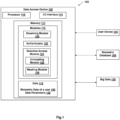
- FIG. 1 illustrates an exemplary network implementation 100 comprising a data access device 102 for providing secured access to big data, according to some embodiments of the present disclosure.
- the data access device 102 is communicatively coupled to a user device 104, a biometric database 106, and big data 108.
- the user device 104 may be, but is not limited to, a microphone, a biometric thumb reader, an iris reader, a Personal Digital Assistant (PDA), any wireless user device, a desktop, a laptop, a tablet, or a phablet,.
- the data access device 102 may provide secured access to the big data 108 using biometric data of a user.
- the big data 108 may be stored in columns of plurality of tables.
- the biometric data of registered users may be stored in the biometric data base 106.
- the big data 108 may be alternatively referred as big data.
- the data access device 102 may be communicatively coupled to the user device 104, the biometric database 106, and the big data 108 through a network.
- the network may be a wireless network, wired network or a combination thereof.
- the network can be implemented as one of the different types of networks, such as intranet, local area network (LAN), wide area network (WAN), the internet, and such.
- the network may either be a dedicated network or a shared network, which represents an association of the different types of networks that use a variety of protocols, for example, Hypertext Transfer Protocol (HTTP), Transmission Control Protocol/Internet Protocol (TCP/IP), Wireless Application Protocol (WAP), etc., to communicate with each other.
- the network may include a variety of network devices, including routers, bridges, servers, computing devices, storage devices, etc.
- the data access device 102 comprises a processor 110, the memory 112 coupled to the processor 110, and input/output (I/O) interface(s) 114.
- the processor 110 may be implemented as one or more microprocessors, microcomputers, microcontrollers, digital signal processors, central processing units, state machines, logic circuitries, and/or any devices that manipulate signals based on operational instructions.
- the processor 110 is configured to fetch and execute computer-readable instructions stored in the memory 112.
- the memory 112 can include any non-transitory computer-readable medium known in the art including, for example, volatile memory (e.g., RAM), and/or non-volatile memory (e.g., EPROM, flash memory, etc.).
- the I/O interface(s) 114 may include a variety of software and hardware interfaces, for example, a web interface, a graphical user interface, etc., allowing the data access device 102 to interact with the user device 104. Further, the I/O interface(s) 114 may enable the data access device 102 to communicate with other computing devices. The I/O interface(s) 114 can facilitate multiple communications within a wide variety of networks and protocol types, including wired networks, for example LAN, cable, etc., and wireless networks such as WLAN, cellular, or satellite. The I/O interface(s) 114 may include one or more ports for connecting a number of devices to each other or to another server.
- the memory 112 includes modules 116 and data 118.
- the modules 116 include routines, programs, objects, components, and data structures, which perform particular tasks or implement particular abstract data types.
- the modules 116 may also be implemented as, signal processor(s), state machine(s), logic circuitries, and/or any other device or component that manipulate signals based on operational instructions. Further, the modules 116 can be implemented by one or more hardware components, by computer-readable instructions executed by a processing unit, or by a combination thereof.
- the data 118 serves, amongst other things, as a repository for storing data fetched, processed, received and generated by one or more of the modules 116.
- the data 118 may include biometric data of a user 130 and data parameters 132.
- the biometric data of the user 130 includes, but is not limited to, fingerprint of the user, iris of the user, or voice of the user.
- the data parameters 132 includes, but is not limited to, data frequency, data source, data type, and content format.
- the data parameters 132 may be alternatively referred as data parameters or one or more data parameters.
- the data 118 may be stored in the memory 112 in the form of various data structures. Additionally, the aforementioned data can be organized using data models, such as relational or hierarchical data models. In an example, the data 118 may also comprise other data used to store data, including temporary data and temporary files, generated by the modules 116 for performing the various functions of the data access device 102.
- the receiving module 120 may receive biometric data of a user.
- the biometric data of the user may include, but is not limited to, fingerprint of the user, iris of the user, or voice of the user.
- the user may provide the biometric data as an input to the data access device 102 through the user device 104.
- the biometric data of the user may be stored in the memory 112 of the data access device 102 for further processing. Further, the biometric data of the user may be used to provide access to columns of a table storing the big data.
- the receiving of the biometric data of the user may be considered as a request for accessing columns of the table storing the big data.
- the masking module 128 may mask one or more columns of the table storing the big data.
- the one or more columns may be masked immediately after the big data is stored in the columns of the table.
- the one or more columns may be masked when the big data is being written into the columns of the table.
- the term "masking" generally refers to replacing actual data with some other data, so as to prevent the actual data being revealed.
- the masking module 128 may mask the one or more columns of the table based on the data parameters.
- the data parameters may include, but is not limited to, data frequency, data source, data type, and content format.
- the data frequency of the big data may be defined by on-demand data feed, continuous data feed, real time data feed, and time series data.
- the on-demand data feed may be human generated.
- the on-demand data feed may be weather forecast.
- the on-demand data feed may be generated when a software application requires data.
- the continuous data feed may be generated on a daily basis.
- the continuous data feed may be stock data associated with retail stores which is required to be updated on a daily basis.
- the real time data feed may be generated on occurrence of an event in a software application.
- the real time data feed may be stored as big data in real time.
- the real time data feed may be real time data generated from social media websites such as Facebook.
- the real time data feed may be generated when a user creates a check in on his profile.
- the creation of the check in may be considered as an event.
- the real time data generated from the creation of check in may be location of check in, time of the check in, and name of the user. This real time data may be stored dynamically as big data.
- the data frequency of the big data may also be defined by time series data.
- the time series data feed may be sales data of an enterprise.
- the time series data may be stored as big data at regular time intervals. The time intervals may be once a day, weekly, or monthly.
- the on-demand data feed, the continuous data feed, the real time data feed, and the time series data may be stored as the big data in columns of a table.
- the real time data feed may be generated from social media websites.
- the real time data feed stored in the columns of the table may be masked selectively. For example, if a user creates a check in, the name of the user may not be masked, however, the location of check in and the time of check in may be masked. Similarly, if the continuous data feed is machine generated, the columns of the table may be masked selectively. On the other hand, if the on-demand data feed is human generated, all the columns of the table may be masked as the risk of breach associated with the on-demand data feed is high. Similarly, if the time series data feed is generated from transaction data, all the columns of the table may be masked as the risk of breach associated with the time series data feed is high.
- the master data may represent pre-defined business objects of an enterprise.
- the pre-defined business objects may include store number, telephone number, store address which are constant and are predefined.
- the master data may also be shared across the enterprise.
- the master data may include static reference data, transaction data, unstructured data, analytical data, hierarchical data, and metadata.
- the master data may be significant for the Information Technology (IT) discipline of Master Data Management (MDM).
- the metadata provides more information about other types of data.
- the type of metadata may be descriptive metadata, structural metadata, and administrative metadata. Further, as shown in the table below, the columns of the table may be masked based on the data type.
- a default masking function may be implemented for masking the columns of the table.
- a default masking function may modify all the characters of the data using a standard method. As shown in the Table 2, if the data is "SMITH” and "500-50-5050", after masking "SMITH” may be converted to "FFECDEF” and "500-50-5050” may be converted to "972-634-3324". If the data type is master data, a partial masking function may be implemented. The partial masking function may mask only partial characters of the data.
- the partial masking function may mask only "100" to provide masked column data as "STORE, 975".
- a random masking function may be implemented to mask the columns of the table.
- the random masking function may randomly choose characters of the data for masking.
- the random masking function may mask a character 2 to provide the masked data as "6370”.
- the columns of the table storing the big data may be masked based on the content format.
- the content format may include, but is not limited to, structured data, unstructured data, and semi structured data. As shown in the table below, the columns of the table may be masked based on the content format. Table 3 Content format Columns to be masked Structured data All the columns Unstructured data All the columns Semi structured data Selective columns
- the content format is structured data or unstructured data
- all the columns of the table may be masked.
- the content format is semi structured data
- columns of the table may be masked selectively.
- the masking of the columns of the table after storing the big data provides a first level of security to the big data. Additional levels of security may be introduced to protect the big data after a user requests access to the columns of the table.
- the second level of security may be introduced by authenticating a user requesting access to the columns of the table storing the big data.
- the authenticator 122 may authenticate the user by comparing the biometric data of the user with pre-stored biometric data.
- the pre-stored biometric data may be retrieved from a biometric database 106.
- the biometric database 106 may store biometric data of user as shown in the below table. Table 4 User Iris Fingerprint Voice User A 1.jpg 11.jpg 111.mav User B 2.jpg 22.jpg 222.mav User C ⁇ empty> ⁇ empty> ⁇ empty>
- the biometric data of user A and user B is pre-stored in the biometric database 106.
- the biometric data of the user C is unavailable in the biometric database 106.
- the authenticator 122 may compare the biometric data of the user A with the pre-stored biometric data, as shown in the Table 4. If the biometric data of the user A is a fingerprint, the fingerprint of the user A may be compared with image 11.jpg. If the fingerprint of the user A matches with the image 11.jpg, the user A may be authenticated to access the columns of the table. Upon a successful match of the fingerprint with the image 11.jpg, the authentication may be recorded as a successful authentication. The authenticator 122 may record each successful authentication of the user to access the columns of the table.
- the authenticator 122 may compare the biometric data of the user C with the pre-stored biometric data, as shown in the Table 4. As the biometric data of the user C is not present in the biometric database 106, the user C is not authenticated to access the columns of the table. The authenticator 122 may record this attempt of the user C to access the columns of the table as an unsuccessful authentication, as the biometric data of user C is unavailable in the biometric database 106. The authenticator 122 may record each unsuccessful authentication of a user to access the columns of the table when the biometric data of the user is unavailable in the biometric database 106. Further, the authentication of the user by comparing the biometric data of the user with pre-stored biometric data is explained in detail in conjunction with the FIG. 3 .
- the selective access module 124 may provide the user a selective access to each column of the table based on a pre-defined user privilege for each column.
- the selective access to each column based on the pre-defined user privilege for each column provides a third level of security for protecting the big data.
- the unmasking module 126 may provide selective access to the columns of the table by unmasking a masked column of the table if the pre-defined user privilege for the masked column allows the user access to the masked column.
- the masking module 128 may provide selective access to the columns of the table by maintaining mask of a masked column if the pre-defined user privilege for the masked column rejects the user access to the masked column.
- the pre-defined user privilege to access the columns of the table may be as shown in below table.
- Table 5 User Column 1 Column 2 Column 3 Column 4 Column 5 Column 6 User A Unmask Unmask Unmask Mask Mask Mask Mask User B Unmask Unmask Unmask Unmask Unmask Unmask Unmask User C Mask Mask Mask Mask mask
- the pre-defined user privilege for the user A allows the user A to access column 1, column 2, and column 3.
- the pre-defined user privilege for the user A rejects the user A access to column 4, column 5, and column 6.
- the selective access module 124 may refer to the Table 5 to provide selective access to user A to column 2 and column 4.
- the unmasking module 126 may unmask the column 2 as the pre-defined user privilege for the column 2 allows the user A access to the column 2.
- the masking module 128 may maintain the mask of the column 4 as the pre-defined user privilege for the column 4 rejects the user A access to the column 4.
- the selective access module 124 may refer to the Table 5 to provide selective access to user B to column 1, column 2, column 3, column 4, column 5, and column 6.
- the unmasking module 126 may unmask the column 1, column 2, column 3, column 4, column 5, and column 6 as the pre-defined user privilege for all the columns i.e. column 1, column 2, column 3, column 4, column 5, and column 6 allow the user B access to the columns.
- the authenticator 122 may not authenticate the user C to selectively access the columns of the table.
- the request of the user C may not be processed further for providing selective access.
- the authenticator 122 may record the request to access the big data as an unsuccessful authentication.
- the data access device 102 may provide multiple levels of security while accessing the big data.
- the multiple levels of security may include, selective or complete masking of the big data based on the data parameters when the big data is stored in columns of a table, authentication of the user before accessing the big data, and selective access to the columns of the table based on pre-defined user privilege.
- FIG. 2 is a flow diagram illustrating a method 200 for providing secured access to big data, in accordance with some embodiments of the present disclosure.
- the method 200 may be described in the general context of computer executable instructions.
- computer executable instructions can include routines, programs, objects, components, data structures, procedures, modules, and functions, which perform particular functions or implement particular abstract data types.
- the method 200 may also be practiced in a distributed computing environment where functions are performed by remote processing devices that are linked through a communication network.
- computer executable instructions may be located in both local and remote computer storage media, including memory storage devices.
- the order in which the method 200 is described is not intended to be construed as a limitation, and any number of the described method blocks can be combined in any order to implement the method 200 or alternative methods. Additionally, individual blocks may be deleted from the method 200 without departing from the scope of the subject matter described herein. Furthermore, the method 200 can be implemented in any suitable hardware, software, firmware, or combination thereof.
- biometric data of a user may be received to provide access to columns of a table storing the big data.
- the biometric data of the user may include, but is not limited to, fingerprint of the user, iris of the user, or voice of the user.
- the user may provide the biometric data as an input to the data access device 102 through the user device 104.
- the biometric data of the user may be stored in the memory 112 of the data access device 102 for further processing. Further, the biometric data of the user may be used to provide access to columns of a table storing the big data.
- the receiving of the biometric data of the user is explained in detail in conjunction with the FIG. 1 .
- the user may be authenticated by comparing the biometric data of the user with pre-stored biometric data.
- the pre-stored biometric data may be retrieved from a biometric database 106. If the biometric data of the user is a fingerprint, the fingerprint may be matched with a pre-stored fingerprint. If the fingerprint matches with the pre-stored fingerprint, the user may be authenticated to access the columns of the table. In one embodiment, the user may be authenticated by the authenticator 122. The authenticating of the user is explained in detail in conjunction with the FIG. 1
- selective access may be provided to each column of the table based on a pre-defined user privilege for each column.
- providing selective access to each column of the table includes unmasking a masked column of the table if the pre-defined user privilege for the masked column allows the user access to the masked column.
- providing selective access to each column of the table includes maintaining mask of a masked column if the pre-defined user privilege for the masked column rejects the user access to the masked column.
- the selective access may be provided to each column of the table by the selective access module 124. The providing of selective access to each column of the table based on the pre-defined user privilege for each column is explained in detail in conjunction with the FIG. 1
- a report may be generated including a number of successful authentications to access the columns of the table and a number of unsuccessful authentications to access the columns of the table.
- each successful authentication may be recorded.
- each unsuccessful authentication of the user to access the columns of the table may be recorded. The unsuccessful authentication may occur when the biometric data of the user is unavailable in the biometric database 106.
- the report including the number of successful authentications and the number of unsuccessful authentications may be as shown below.
- Table 6 Authentication Number Table Access Number User A Successful 50 Successful 25 User B Successful 40 Successful 33 User C Successful 20 Successful 33 User A Unsuccessful 20 Unsuccessful 30 User B Unsuccessful 30 Unsuccessful 45 User C Unsuccessful 40 Unsuccessful 32 User D Unsuccessful 50 Unsuccessful 45
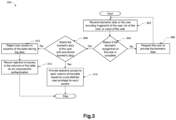
- FIG. 3 is a flow diagram illustrating another method 300 for providing secured access to big data, in accordance with some embodiments of the present disclosure.
- the order in which the method 300 is described is not intended to be construed as a limitation, and any number of the described method blocks can be combined in any order to implement the method 300 or alternative methods. Additionally, individual blocks may be deleted from the method 300 without departing from the scope of the subject matter described herein. Furthermore, the method 300 can be implemented in any suitable hardware, software, firmware, or combination thereof.
- biometric data of a user may be received to provide access to columns of a table storing the big data.
- the biometric data of the user may include, but is not limited to, fingerprint of the user, iris of the user, or voice of the user.
- the user may provide the biometric data as an input to the data access device 102 through the user device 104.
- the biometric data of the user may be stored in the memory 112 of the data access device 102 for further processing. Further, the biometric data of the user may be used to provide access to columns of a table storing the big data.
- the receiving of the biometric data of the user is explained in detail in conjunction with the FIG. 1 .
- completion of biometric recognition of the user may be detected. If the biometric recognition of the user is incomplete, then at block 306, the user may be requested to provide the biometric data again as an input.
- the biometric data of the user may be matched with pre-stored biometric data if the biometric recognition of the user is complete.
- the pre-stored biometric data may be retrieved from a biometric database 106. If the biometric data of the user is a fingerprint, the fingerprint may be matched with a pre-stored fingerprint. In one embodiment, the biometric data of the user may be matched with the pre-stored biometric data by the authenticator 122. The matching of the biometric data of the user with the pre-stored biometric data is explained in detail in conjunction with the FIG. 1 .
- the access to the columns of the table storing the big data may be rejected if the biometric data of the user does not match with the pre-stored biometric data.
- rejection of access to the columns of the table may be recorded as an unsuccessful authentication.
- the unsuccessful authentication may occur when the biometric data of the user is unavailable in the biometric database 106.
- a report may be generated including a number of successful authentications to access the columns of the table and a number of unsuccessful authentications to access the columns of the table.
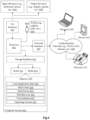
- FIG. 4 is a block diagram of an exemplary computer system for implementing embodiments consistent with the present disclosure. Variations of computer system 401 may be used for implementing the receiving module 120, the authenticator 122, and the selective access module 124.
- Computer system 401 may comprise a central processing unit (“CPU” or "processor") 402.
- Processor 402 may comprise at least one data processor for executing program components for executing user- or system-generated requests.
- a user may include a person, a person using a device such as such as those included in this disclosure, or such a device itself.
- the processor may include specialized processing units such as integrated system (bus) controllers, memory management control units, floating point units, graphics processing units, digital signal processing units, etc.
- the processor may include a microprocessor, such as AMD Athlon, Duron or Opteron, ARM's application, embedded or secure processors, IBM PowerPC, Intel's Core, Itanium, Xeon, Celeron or other line of processors, etc.
- the processor 402 may be implemented using mainframe, distributed processor, multi-core, parallel, grid, or other architectures. Some embodiments may utilize embedded technologies like application-specific integrated circuits (ASICs), digital signal processors (DSPs), Field Programmable Gate Arrays (FPGAs), etc.
- ASICs application-specific integrated circuits
- DSPs digital signal processors
- FPGAs Field Programmable Gate Arrays
- I/O Processor 402 may be disposed in communication with one or more input/output (I/O) devices via I/O interface 403.
- the I/O interface 403 may employ communication protocols/methods such as, without limitation, audio, analog, digital, monoaural, RCA, stereo, IEEE-1394, serial bus, universal serial bus (USB), infrared, PS/2, BNC, coaxial, component, composite, digital visual interface (DVI), high-definition multimedia interface (HDMI), RF antennas, S-Video, VGA, IEEE 802.n /b/g/n/x, Bluetooth, cellular (e.g., code-division multiple access (CDMA), high-speed packet access (HSPA+), global system for mobile communications (GSM), long-term evolution (LTE), WiMax, or the like), etc.
- CDMA code-division multiple access
- HSPA+ high-speed packet access
- GSM global system for mobile communications
- LTE long-term evolution
- WiMax wireless wide area network
- the computer system 401 may communicate with one or more I/O devices.
- the input device 404 may be an antenna, keyboard, mouse, joystick, (infrared) remote control, camera, card reader, fax machine, dongle, biometric reader, microphone, touch screen, touchpad, trackball, sensor (e.g., accelerometer, light sensor, GPS, gyroscope, proximity sensor, or the like), stylus, scanner, storage device, transceiver, video device/source, visors, etc.
- Output device 405 may be a printer, fax machine, video display (e.g., cathode ray tube (CRT), liquid crystal display (LCD), light-emitting diode (LED), plasma, or the like), audio speaker, etc.
- video display e.g., cathode ray tube (CRT), liquid crystal display (LCD), light-emitting diode (LED), plasma, or the like
- audio speaker etc.
- a transceiver 406 may be disposed in connection with the processor 402. The transceiver may facilitate various types of wireless transmission or reception.
- the transceiver may include an antenna operatively connected to a transceiver chip (e.g., Texas Instruments WiLink WL1283, Broadcom BCM4750IUB8, Infineon Technologies X-Gold 618-PMB9800, or the like), providing IEEE 802.11a/b/g/n, Bluetooth, FM, global positioning system (GPS), 2G/3G HSDPA/HSUPA communications, etc.
- a transceiver chip e.g., Texas Instruments WiLink WL1283, Broadcom BCM4750IUB8, Infineon Technologies X-Gold 618-PMB9800, or the like
- IEEE 802.11a/b/g/n e.g., Texas Instruments WiLink WL1283, Broadcom BCM4750IUB8, Infineon Technologies X-Gold 618-PMB9800, or the like
- IEEE 802.11a/b/g/n e.g., Bluetooth, FM, global positioning system (GPS), 2G/3G HSDPA/HS
- the processor 402 may be disposed in communication with a communication network 408 via a network interface 407.
- the network interface 407 may communicate with the communication network 408.
- the network interface may employ connection protocols including, without limitation, direct connect, Ethernet (e.g., twisted pair 10/100/1000 Base T), transmission control protocol/internet protocol (TCP/IP), token ring, IEEE 802.11a/b/g/n/x, etc.
- the communication network 408 may include, without limitation, a direct interconnection, local area network (LAN), wide area network (WAN), wireless network (e.g., using Wireless Application Protocol), the Internet, etc.
- the computer system 401 may communicate with devices 410, 411, and 412.
- These devices may include, without limitation, personal computer(s), server(s), fax machines, printers, scanners, various mobile devices such as cellular telephones, smartphones (e.g., Apple iPhone, Blackberry, Android-based phones, etc.), tablet computers, eBook readers (Amazon Kindle, Nook, etc.), laptop computers, notebooks, gaming consoles (Microsoft Xbox, Nintendo DS, Sony PlayStation, etc.), or the like.
- the computer system 401 may itself embody one or more of these devices.
- the processor 402 may be disposed in communication with one or more memory devices (e.g., RAM 413, ROM 414, etc.) via a storage interface 412.
- the storage interface may connect to memory devices including, without limitation, memory drives, removable disc drives, etc., employing connection protocols such as serial advanced technology attachment (SATA), integrated drive electronics (IDE), IEEE-1394, universal serial bus (USB), fiber channel, small computer systems interface (SCSI), etc.
- the memory drives may further include a drum, magnetic disc drive, magneto-optical drive, optical drive, redundant array of independent discs (RAID), solid-state memory devices, solid-state drives, etc.
- the memory devices may store a collection of program or database components, including, without limitation, an operating system 416, user interface application 417, web browser 418, mail server 419, mail client 420, user/application data 421 (e.g., any data variables or data records discussed in this disclosure), etc.
- the operating system 416 may facilitate resource management and operation of the computer system 401.
- Operating systems include, without limitation, Apple Macintosh OS X, Unix, Unix-like system distributions (e.g., Berkeley Software Distribution (BSD), FreeBSD, NetBSD, OpenBSD, etc.), Linux distributions (e.g., Red Hat, Ubuntu, Kubuntu, etc.), IBM OS/2, Microsoft Windows (XP, Vista/7/8, etc.), Apple iOS, Google Android, Blackberry OS, or the like.
- User interface 417 may facilitate display, execution, interaction, manipulation, or operation of program components through textual or graphical facilities.
- user interfaces may provide computer interaction interface elements on a display system operatively connected to the computer system 401, such as cursors, icons, check boxes, menus, scrollers, windows, widgets, etc.
- GUIs Graphical user interfaces
- GUIs may be employed, including, without limitation, Apple Macintosh operating systems' Aqua, IBM OS/2, Microsoft Windows (e.g., Aero, Metro, etc.), Unix X-Windows, web interface libraries (e.g., ActiveX, Java, Javascript, AJAX, HTML, Adobe Flash, etc.), or the like.
- the computer system 401 may implement a web browser 418 stored program component.
- the web browser may be a hypertext viewing application, such as Microsoft Internet Explorer, Google Chrome, Mozilla Firefox, Apple Safari, etc. Secure web browsing may be provided using HTTPS (secure hypertext transport protocol), secure sockets layer (SSL), Transport Layer Security (TLS), etc. Web browsers may utilize facilities such as AJAX, DHTML, Adobe Flash, JavaScript, Java, application programming interfaces (APIs), etc.
- the computer system 401 may implement a mail server 419 stored program component.
- the mail server may be an Internet mail server such as Microsoft Exchange, or the like.
- the mail server may utilize facilities such as ASP, ActiveX, ANSI C++/C#, Microsoft .NET, CGI scripts, Java, JavaScript, PERL, PHP, Python, WebObjects, etc.
- the mail server may utilize communication protocols such as internet message access protocol (IMAP), messaging application programming interface (MAPI), Microsoft Exchange, post office protocol (POP), simple mail transfer protocol (SMTP), or the like.
- IMAP internet message access protocol
- MAPI messaging application programming interface
- POP post office protocol
- SMTP simple mail transfer protocol
- the computer system 401 may implement a mail client 420 stored program component.
- the mail client may be a mail viewing application, such as Apple Mail, Microsoft Entourage, Microsoft Outlook, Mozilla Thunderbird, etc.
- computer system 401 may store user/application data 421, such as the data, variables, records, etc. as described in this disclosure.
- databases may be implemented as fault-tolerant, relational, scalable, secure databases such as Oracle or Sybase.
- databases may be implemented using standardized data structures, such as an array, hash, linked list, struct, structured text file (e.g., XML), table, or as object-oriented databases (e.g., using ObjectStore, Poet, Zope, etc.).
- object-oriented databases e.g., using ObjectStore, Poet, Zope, etc.
- Such databases may be consolidated or distributed, sometimes among the various computer systems discussed above in this disclosure. It is to be understood that the structure and operation of the any computer or database component may be combined, consolidated, or distributed in any working combination.
- a computer-readable storage medium refers to any type of physical memory on which information or data readable by a processor may be stored.
- a computer-readable storage medium may store instructions for execution by one or more processors, including instructions for causing the processor(s) to perform steps or stages consistent with the embodiments described herein.
- the term "computer-readable medium” should be understood to include tangible items and exclude carrier waves and transient signals, i.e., be non-transitory. Examples include random access memory (RAM), read-only memory (ROM), volatile memory, nonvolatile memory, hard drives, CD ROMs, DVDs, flash drives, disks, and any other known physical storage media.
Landscapes
- Engineering & Computer Science (AREA)
- Theoretical Computer Science (AREA)
- Computer Security & Cryptography (AREA)
- General Engineering & Computer Science (AREA)
- Health & Medical Sciences (AREA)
- Physics & Mathematics (AREA)
- General Physics & Mathematics (AREA)
- General Health & Medical Sciences (AREA)
- Software Systems (AREA)
- Computer Networks & Wireless Communication (AREA)
- Signal Processing (AREA)
- Computer Hardware Design (AREA)
- Databases & Information Systems (AREA)
- Biomedical Technology (AREA)
- Data Mining & Analysis (AREA)
- Bioethics (AREA)
- Biodiversity & Conservation Biology (AREA)
- Computing Systems (AREA)
- Computational Linguistics (AREA)
- Life Sciences & Earth Sciences (AREA)
- Medical Informatics (AREA)
- Storage Device Security (AREA)
Claims (11)
- Procédé mis en oeuvre par ordinateur pour fournir un accès à des données de grande taille, le procédé comprenant la réception (202), par un dispositif d'accès aux données (102), de données biométriques d'un utilisateur pour fournir un accès aux colonnes d'un tableau stockant des données réelles comprenant des données de grande taille, lesdites données réelles dans une ou plusieurs colonnes du tableau sont remplacées par d'autres données, de façon à empêcher que les données réelles soient révélées sur la base d'un ou plusieurs paramètres de données ;l'authentification (204), par le dispositif d'accès aux données (102), de l'utilisateur en comparant les données biométriques de l'utilisateur avec des données biométriques préalablement stockées (130), lesdites données biométriques préalablement stockées (130) étant récupérées à partir d'une base de données biométriques ; etla fourniture (206), par le dispositif d'accès aux données (102), lors de l'authentification, d'un accès sélectif à chaque colonne du tableau, une ou plusieurs colonnes du tableau étant remplacées par les autres données sur la base d'un privilège utilisateur prédéfini (132) pour chaque colonne, ledit accès sélectif à chaque colonne du tableau comprenant : au moins un parmi : le démasquage d'une colonne masquée du tableau si le privilège utilisateur prédéfini pour la colonne masquée permet à l'utilisateur d'accéder à la colonne masquée et la fourniture d'un accès à la colonne non masquée du tableau, et le maintien du masquage d'une colonne masquée si le privilège utilisateur prédéfini pour la colonne masquée rejette l'accès utilisateur à la colonne masquée.
- Procédé selon la revendication 1, comprenant en outre l'enregistrement (208) d'une authentification infructueuse d'un utilisateur pour accéder aux colonnes du tableau, ladite authentification infructueuse se produisant lorsque les données biométriques de l'utilisateur (130) ne sont pas disponibles dans la base de données biométriques.
- Procédé selon la revendication 2, comprenant en outre la génération d'un rapport comprenant un nombre d'authentifications réussies pour accéder aux colonnes du tableau et un nombre d'authentifications infructueuses pour accéder aux colonnes du tableau.
- Procédé selon l'une quelconque des revendications précédentes, lesdites données biométriques comprenant des données d'empreinte digitale de l'utilisateur, des données d'iris de l'utilisateur ou des données vocales de l'utilisateur.
- Procédé selon l'une quelconque des revendications précédentes, ledit ou lesdits paramètres de données comprenant la fréquence de données, la source de données, le type de données et le format de contenu.
- Dispositif d'accès aux données (102) destiné à fournir un accès à des données de grande taille, le dispositif d'accès aux données comprenant :un processeur (110) ; etune mémoire (112) couplée en communication au processeur (110), ladite mémoire stockant des instructions de processeur, qui, lorsqu'elles sont exécutées, amènent le processeur à :recevoir (202) des données biométriques d'un utilisateur pour donner accès aux colonnes d'un tableau stockant des données réelles comprenant des données de grande taille, lesdites données réelles dans une ou plusieurs colonnes du tableau étant remplacées par d'autres données, de façon à empêcher les données réelles d'être révélées sur la base d'un ou plusieurs paramètres de données ;authentifier (204) l'utilisateur en comparant les données biométriques de l'utilisateur avec des données biométriques préalablement stockées, lesdites données biométriques préalablement stockées étant récupérées à partir d'une base de données biométriques ; etfournir (206), lors de l'authentification, un accès sélectif à chaque colonne du tableau, une ou plusieurs colonnes du tableau étant remplacées par les autres données sur la base d'unprivilège d'utilisateur prédéfini pour chaque colonne, ledit accès sélectif à chaque colonne du tableau comprenant : au moins un parmi : le démasquage d'une colonne masquée du tableau si le privilège d'utilisateur prédéfini pour la colonne masquée permet à l'utilisateur d'accéder à la colonne masquée et la fourniture d'un accès à la colonne non masquée du tableau, et le maintien du masquage d'une colonne masquée si le privilège utilisateur prédéfini pour la colonne masquée rejette l'accès utilisateur à la colonne masquée.
- Dispositif d'accès aux données selon la revendication 8, ledit processeur (110) étant en outre amené à enregistrer (208) l'authentification infructueuse d'un utilisateur pour accéder aux colonnes du tableau, ladite authentification infructueuse se produisant lorsque les données biométriques de l'utilisateur ne sont pas disponibles dans la base de données biométriques.
- Dispositif d'accès aux données selon la revendication 9, ledit processeur (110) étant en outre amené à générer un rapport comprenant un nombre d'authentifications réussies pour accéder aux données et un nombre d'authentifications infructueuses pour accéder aux données.
- Dispositif d'accès aux données selon l'une quelconque des revendications 6 à 8, lesdites données biométriques comprenant des données d'empreinte digitale de l'utilisateur, des données d'iris de l'utilisateur ou des données vocales de l'utilisateur.
- Dispositif d'accès aux données selon l'une quelconque des revendications 6 à 9, ledit ou lesdits paramètres de données comprenant la fréquence de données, la source de données, le type de données et le format de contenu.
- Support de stockage lisible par ordinateur sur lequel sont stockés un ensemble d'instructions exécutables par ordinateur qui, lorsqu'elles sont exécutées par un ordinateur, amènent l'ordinateur comprenant un ou plusieurs processeurs à réaliser le procédé selon l'une quelconque des revendications 1 à 5.
Applications Claiming Priority (1)
| Application Number | Priority Date | Filing Date | Title |
|---|---|---|---|
| IN201741011077 | 2017-03-28 |
Publications (2)
| Publication Number | Publication Date |
|---|---|
| EP3382585A1 EP3382585A1 (fr) | 2018-10-03 |
| EP3382585B1 true EP3382585B1 (fr) | 2024-01-03 |
Family
ID=59626494
Family Applications (1)
| Application Number | Title | Priority Date | Filing Date |
|---|---|---|---|
| EP17186068.7A Active EP3382585B1 (fr) | 2017-03-28 | 2017-08-11 | Procédés et systèmes permettant de fournir un accès sécurisé et sélectionné à des données de grande taille |
Country Status (1)
| Country | Link |
|---|---|
| EP (1) | EP3382585B1 (fr) |
Citations (1)
| Publication number | Priority date | Publication date | Assignee | Title |
|---|---|---|---|---|
| US20150128284A1 (en) * | 2013-11-01 | 2015-05-07 | Anonos Inc. | Dynamic De-Identification And Anonymity |
Family Cites Families (3)
| Publication number | Priority date | Publication date | Assignee | Title |
|---|---|---|---|---|
| US9356935B2 (en) * | 2006-09-12 | 2016-05-31 | Adobe Systems Incorporated | Selective access to portions of digital content |
| US10042993B2 (en) * | 2010-11-02 | 2018-08-07 | Homayoon Beigi | Access control through multifactor authentication with multimodal biometrics |
| US11194462B2 (en) * | 2011-08-03 | 2021-12-07 | Avaya Inc. | Exclusion of selected data from access by collaborators |
-
2017
- 2017-08-11 EP EP17186068.7A patent/EP3382585B1/fr active Active
Patent Citations (1)
| Publication number | Priority date | Publication date | Assignee | Title |
|---|---|---|---|---|
| US20150128284A1 (en) * | 2013-11-01 | 2015-05-07 | Anonos Inc. | Dynamic De-Identification And Anonymity |
Also Published As
| Publication number | Publication date |
|---|---|
| EP3382585A1 (fr) | 2018-10-03 |
Similar Documents
| Publication | Publication Date | Title |
|---|---|---|
| EP3561708B1 (fr) | Procédé et dispositif permettant de classer des localisateurs de ressources uniformes sur la base du contenu dans des sites web correspondants | |
| US10225603B2 (en) | Methods and systems for rendering multimedia content on a user device | |
| EP3091452B1 (fr) | Systèmes et procédés pour optimiser la mise en oeuvre d'un entrepôt de données sur un réseau de cloud | |
| US10140444B2 (en) | Methods and systems for dynamically managing access to devices for resolution of an incident ticket | |
| US20200004857A1 (en) | Method and device for data validation using predictive modeling | |
| US9411465B2 (en) | Systems and methods for generating a secure locking interface | |
| US10747608B2 (en) | Method and system for managing exceptions during reconciliation of transactions | |
| US11113640B2 (en) | Knowledge-based decision support systems and method for process lifecycle automation | |
| US11495145B2 (en) | Method and system for selectively encrypting dataset | |
| US20180253736A1 (en) | System and method for determining resolution for an incident ticket | |
| US20190251193A1 (en) | Method and system for managing redundant, obsolete, and trivial (rot) data | |
| US10152525B2 (en) | Methods and systems for transforming training data to improve data classification | |
| US20170118094A1 (en) | System and method for generating a report in real-time from a resource management system | |
| US20160162522A1 (en) | Systems and methods for detecting data leakage in an enterprise | |
| US9910880B2 (en) | System and method for managing enterprise user group | |
| US12339917B2 (en) | Method and system for generating user role-specific responses through Large Language Models | |
| US10380372B2 (en) | Methods and systems for providing secured access to big data | |
| US9450824B2 (en) | Systems and methods for smart request processing | |
| US20220207614A1 (en) | Grants Lifecycle Management System and Method | |
| EP3382585B1 (fr) | Procédés et systèmes permettant de fournir un accès sécurisé et sélectionné à des données de grande taille | |
| US20160099925A1 (en) | Systems and methods for determining digital degrees of separation for digital program implementation | |
| US9794251B2 (en) | Systems and methods for authenticating using air-blow by user | |
| US20220027027A1 (en) | Electronic devices and methods for selecting and displaying multimodal content | |
| WO2019049162A1 (fr) | Procédé et système de gestion de projets de pi | |
| US12519756B2 (en) | Method and system for managing anonymized data using blockchain network |
Legal Events
| Date | Code | Title | Description |
|---|---|---|---|
| PUAI | Public reference made under article 153(3) epc to a published international application that has entered the european phase |
Free format text: ORIGINAL CODE: 0009012 |
|
| STAA | Information on the status of an ep patent application or granted ep patent |
Free format text: STATUS: THE APPLICATION HAS BEEN PUBLISHED |
|
| AK | Designated contracting states |
Kind code of ref document: A1 Designated state(s): AL AT BE BG CH CY CZ DE DK EE ES FI FR GB GR HR HU IE IS IT LI LT LU LV MC MK MT NL NO PL PT RO RS SE SI SK SM TR |
|
| AX | Request for extension of the european patent |
Extension state: BA ME |
|
| STAA | Information on the status of an ep patent application or granted ep patent |
Free format text: STATUS: REQUEST FOR EXAMINATION WAS MADE |
|
| 17P | Request for examination filed |
Effective date: 20190403 |
|
| RBV | Designated contracting states (corrected) |
Designated state(s): AL AT BE BG CH CY CZ DE DK EE ES FI FR GB GR HR HU IE IS IT LI LT LU LV MC MK MT NL NO PL PT RO RS SE SI SK SM TR |
|
| R17P | Request for examination filed (corrected) |
Effective date: 20190403 |
|
| STAA | Information on the status of an ep patent application or granted ep patent |
Free format text: STATUS: EXAMINATION IS IN PROGRESS |
|
| 17Q | First examination report despatched |
Effective date: 20220105 |
|
| REG | Reference to a national code |
Ref country code: DE Ref legal event code: R079 Free format text: PREVIOUS MAIN CLASS: G06F0021320000 Ipc: H04L0009400000 Ref country code: DE Ref legal event code: R079 Ref document number: 602017078066 Country of ref document: DE Free format text: PREVIOUS MAIN CLASS: G06F0021320000 Ipc: H04L0009400000 |
|
| GRAP | Despatch of communication of intention to grant a patent |
Free format text: ORIGINAL CODE: EPIDOSNIGR1 |
|
| STAA | Information on the status of an ep patent application or granted ep patent |
Free format text: STATUS: GRANT OF PATENT IS INTENDED |
|
| RIC1 | Information provided on ipc code assigned before grant |
Ipc: H04L 9/32 20060101ALI20230915BHEP Ipc: G06F 16/24 20190101ALI20230915BHEP Ipc: H04L 9/08 20060101ALI20230915BHEP Ipc: G06F 16/22 20190101ALI20230915BHEP Ipc: G06F 21/32 20130101ALI20230915BHEP Ipc: G06F 21/62 20130101ALI20230915BHEP Ipc: H04L 9/40 20220101AFI20230915BHEP |
|
| INTG | Intention to grant announced |
Effective date: 20231018 |
|
| GRAS | Grant fee paid |
Free format text: ORIGINAL CODE: EPIDOSNIGR3 |
|
| GRAA | (expected) grant |
Free format text: ORIGINAL CODE: 0009210 |
|
| STAA | Information on the status of an ep patent application or granted ep patent |
Free format text: STATUS: THE PATENT HAS BEEN GRANTED |
|
| AK | Designated contracting states |
Kind code of ref document: B1 Designated state(s): AL AT BE BG CH CY CZ DE DK EE ES FI FR GB GR HR HU IE IS IT LI LT LU LV MC MK MT NL NO PL PT RO RS SE SI SK SM TR |
|
| REG | Reference to a national code |
Ref country code: GB Ref legal event code: FG4D |
|
| REG | Reference to a national code |
Ref country code: DE Ref legal event code: R096 Ref document number: 602017078066 Country of ref document: DE |
|
| REG | Reference to a national code |
Ref country code: CH Ref legal event code: EP |
|
| P01 | Opt-out of the competence of the unified patent court (upc) registered |
Effective date: 20231213 |
|
| REG | Reference to a national code |
Ref country code: IE Ref legal event code: FG4D |
|
| REG | Reference to a national code |
Ref country code: LT Ref legal event code: MG9D |
|
| PG25 | Lapsed in a contracting state [announced via postgrant information from national office to epo] |
Ref country code: ES Free format text: LAPSE BECAUSE OF FAILURE TO SUBMIT A TRANSLATION OF THE DESCRIPTION OR TO PAY THE FEE WITHIN THE PRESCRIBED TIME-LIMIT Effective date: 20240103 |
|
| PG25 | Lapsed in a contracting state [announced via postgrant information from national office to epo] |
Ref country code: ES Free format text: LAPSE BECAUSE OF FAILURE TO SUBMIT A TRANSLATION OF THE DESCRIPTION OR TO PAY THE FEE WITHIN THE PRESCRIBED TIME-LIMIT Effective date: 20240103 |
|
| REG | Reference to a national code |
Ref country code: NL Ref legal event code: MP Effective date: 20240103 |
|
| REG | Reference to a national code |
Ref country code: AT Ref legal event code: MK05 Ref document number: 1647897 Country of ref document: AT Kind code of ref document: T Effective date: 20240103 |
|
| PG25 | Lapsed in a contracting state [announced via postgrant information from national office to epo] |
Ref country code: NL Free format text: LAPSE BECAUSE OF FAILURE TO SUBMIT A TRANSLATION OF THE DESCRIPTION OR TO PAY THE FEE WITHIN THE PRESCRIBED TIME-LIMIT Effective date: 20240103 |
|
| PG25 | Lapsed in a contracting state [announced via postgrant information from national office to epo] |
Ref country code: NL Free format text: LAPSE BECAUSE OF FAILURE TO SUBMIT A TRANSLATION OF THE DESCRIPTION OR TO PAY THE FEE WITHIN THE PRESCRIBED TIME-LIMIT Effective date: 20240103 |
|
| PG25 | Lapsed in a contracting state [announced via postgrant information from national office to epo] |
Ref country code: IS Free format text: LAPSE BECAUSE OF FAILURE TO SUBMIT A TRANSLATION OF THE DESCRIPTION OR TO PAY THE FEE WITHIN THE PRESCRIBED TIME-LIMIT Effective date: 20240503 |
|
| PG25 | Lapsed in a contracting state [announced via postgrant information from national office to epo] |
Ref country code: LT Free format text: LAPSE BECAUSE OF FAILURE TO SUBMIT A TRANSLATION OF THE DESCRIPTION OR TO PAY THE FEE WITHIN THE PRESCRIBED TIME-LIMIT Effective date: 20240103 |
|
| PG25 | Lapsed in a contracting state [announced via postgrant information from national office to epo] |
Ref country code: GR Free format text: LAPSE BECAUSE OF FAILURE TO SUBMIT A TRANSLATION OF THE DESCRIPTION OR TO PAY THE FEE WITHIN THE PRESCRIBED TIME-LIMIT Effective date: 20240404 |
|
| PG25 | Lapsed in a contracting state [announced via postgrant information from national office to epo] |
Ref country code: RS Free format text: LAPSE BECAUSE OF FAILURE TO SUBMIT A TRANSLATION OF THE DESCRIPTION OR TO PAY THE FEE WITHIN THE PRESCRIBED TIME-LIMIT Effective date: 20240403 Ref country code: HR Free format text: LAPSE BECAUSE OF FAILURE TO SUBMIT A TRANSLATION OF THE DESCRIPTION OR TO PAY THE FEE WITHIN THE PRESCRIBED TIME-LIMIT Effective date: 20240103 |
|
| PG25 | Lapsed in a contracting state [announced via postgrant information from national office to epo] |
Ref country code: AT Free format text: LAPSE BECAUSE OF FAILURE TO SUBMIT A TRANSLATION OF THE DESCRIPTION OR TO PAY THE FEE WITHIN THE PRESCRIBED TIME-LIMIT Effective date: 20240103 Ref country code: CZ Free format text: LAPSE BECAUSE OF FAILURE TO SUBMIT A TRANSLATION OF THE DESCRIPTION OR TO PAY THE FEE WITHIN THE PRESCRIBED TIME-LIMIT Effective date: 20240103 |
|
| PG25 | Lapsed in a contracting state [announced via postgrant information from national office to epo] |
Ref country code: RS Free format text: LAPSE BECAUSE OF FAILURE TO SUBMIT A TRANSLATION OF THE DESCRIPTION OR TO PAY THE FEE WITHIN THE PRESCRIBED TIME-LIMIT Effective date: 20240403 Ref country code: NO Free format text: LAPSE BECAUSE OF FAILURE TO SUBMIT A TRANSLATION OF THE DESCRIPTION OR TO PAY THE FEE WITHIN THE PRESCRIBED TIME-LIMIT Effective date: 20240403 Ref country code: LT Free format text: LAPSE BECAUSE OF FAILURE TO SUBMIT A TRANSLATION OF THE DESCRIPTION OR TO PAY THE FEE WITHIN THE PRESCRIBED TIME-LIMIT Effective date: 20240103 Ref country code: IS Free format text: LAPSE BECAUSE OF FAILURE TO SUBMIT A TRANSLATION OF THE DESCRIPTION OR TO PAY THE FEE WITHIN THE PRESCRIBED TIME-LIMIT Effective date: 20240503 Ref country code: HR Free format text: LAPSE BECAUSE OF FAILURE TO SUBMIT A TRANSLATION OF THE DESCRIPTION OR TO PAY THE FEE WITHIN THE PRESCRIBED TIME-LIMIT Effective date: 20240103 Ref country code: GR Free format text: LAPSE BECAUSE OF FAILURE TO SUBMIT A TRANSLATION OF THE DESCRIPTION OR TO PAY THE FEE WITHIN THE PRESCRIBED TIME-LIMIT Effective date: 20240404 Ref country code: CZ Free format text: LAPSE BECAUSE OF FAILURE TO SUBMIT A TRANSLATION OF THE DESCRIPTION OR TO PAY THE FEE WITHIN THE PRESCRIBED TIME-LIMIT Effective date: 20240103 Ref country code: BG Free format text: LAPSE BECAUSE OF FAILURE TO SUBMIT A TRANSLATION OF THE DESCRIPTION OR TO PAY THE FEE WITHIN THE PRESCRIBED TIME-LIMIT Effective date: 20240103 Ref country code: AT Free format text: LAPSE BECAUSE OF FAILURE TO SUBMIT A TRANSLATION OF THE DESCRIPTION OR TO PAY THE FEE WITHIN THE PRESCRIBED TIME-LIMIT Effective date: 20240103 |
|
| PG25 | Lapsed in a contracting state [announced via postgrant information from national office to epo] |
Ref country code: PL Free format text: LAPSE BECAUSE OF FAILURE TO SUBMIT A TRANSLATION OF THE DESCRIPTION OR TO PAY THE FEE WITHIN THE PRESCRIBED TIME-LIMIT Effective date: 20240103 Ref country code: PT Free format text: LAPSE BECAUSE OF FAILURE TO SUBMIT A TRANSLATION OF THE DESCRIPTION OR TO PAY THE FEE WITHIN THE PRESCRIBED TIME-LIMIT Effective date: 20240503 |
|
| PG25 | Lapsed in a contracting state [announced via postgrant information from national office to epo] |
Ref country code: SE Free format text: LAPSE BECAUSE OF FAILURE TO SUBMIT A TRANSLATION OF THE DESCRIPTION OR TO PAY THE FEE WITHIN THE PRESCRIBED TIME-LIMIT Effective date: 20240103 Ref country code: PT Free format text: LAPSE BECAUSE OF FAILURE TO SUBMIT A TRANSLATION OF THE DESCRIPTION OR TO PAY THE FEE WITHIN THE PRESCRIBED TIME-LIMIT Effective date: 20240503 Ref country code: PL Free format text: LAPSE BECAUSE OF FAILURE TO SUBMIT A TRANSLATION OF THE DESCRIPTION OR TO PAY THE FEE WITHIN THE PRESCRIBED TIME-LIMIT Effective date: 20240103 Ref country code: LV Free format text: LAPSE BECAUSE OF FAILURE TO SUBMIT A TRANSLATION OF THE DESCRIPTION OR TO PAY THE FEE WITHIN THE PRESCRIBED TIME-LIMIT Effective date: 20240103 |
|
| REG | Reference to a national code |
Ref country code: DE Ref legal event code: R097 Ref document number: 602017078066 Country of ref document: DE |
|
| PG25 | Lapsed in a contracting state [announced via postgrant information from national office to epo] |
Ref country code: DK Free format text: LAPSE BECAUSE OF FAILURE TO SUBMIT A TRANSLATION OF THE DESCRIPTION OR TO PAY THE FEE WITHIN THE PRESCRIBED TIME-LIMIT Effective date: 20240103 |
|
| PG25 | Lapsed in a contracting state [announced via postgrant information from national office to epo] |
Ref country code: SM Free format text: LAPSE BECAUSE OF FAILURE TO SUBMIT A TRANSLATION OF THE DESCRIPTION OR TO PAY THE FEE WITHIN THE PRESCRIBED TIME-LIMIT Effective date: 20240103 |
|
| PG25 | Lapsed in a contracting state [announced via postgrant information from national office to epo] |
Ref country code: EE Free format text: LAPSE BECAUSE OF FAILURE TO SUBMIT A TRANSLATION OF THE DESCRIPTION OR TO PAY THE FEE WITHIN THE PRESCRIBED TIME-LIMIT Effective date: 20240103 |
|
| PG25 | Lapsed in a contracting state [announced via postgrant information from national office to epo] |
Ref country code: SK Free format text: LAPSE BECAUSE OF FAILURE TO SUBMIT A TRANSLATION OF THE DESCRIPTION OR TO PAY THE FEE WITHIN THE PRESCRIBED TIME-LIMIT Effective date: 20240103 |
|
| PG25 | Lapsed in a contracting state [announced via postgrant information from national office to epo] |
Ref country code: SM Free format text: LAPSE BECAUSE OF FAILURE TO SUBMIT A TRANSLATION OF THE DESCRIPTION OR TO PAY THE FEE WITHIN THE PRESCRIBED TIME-LIMIT Effective date: 20240103 Ref country code: SK Free format text: LAPSE BECAUSE OF FAILURE TO SUBMIT A TRANSLATION OF THE DESCRIPTION OR TO PAY THE FEE WITHIN THE PRESCRIBED TIME-LIMIT Effective date: 20240103 Ref country code: RO Free format text: LAPSE BECAUSE OF FAILURE TO SUBMIT A TRANSLATION OF THE DESCRIPTION OR TO PAY THE FEE WITHIN THE PRESCRIBED TIME-LIMIT Effective date: 20240103 Ref country code: EE Free format text: LAPSE BECAUSE OF FAILURE TO SUBMIT A TRANSLATION OF THE DESCRIPTION OR TO PAY THE FEE WITHIN THE PRESCRIBED TIME-LIMIT Effective date: 20240103 Ref country code: DK Free format text: LAPSE BECAUSE OF FAILURE TO SUBMIT A TRANSLATION OF THE DESCRIPTION OR TO PAY THE FEE WITHIN THE PRESCRIBED TIME-LIMIT Effective date: 20240103 |
|
| PLBE | No opposition filed within time limit |
Free format text: ORIGINAL CODE: 0009261 |
|
| STAA | Information on the status of an ep patent application or granted ep patent |
Free format text: STATUS: NO OPPOSITION FILED WITHIN TIME LIMIT |
|
| PG25 | Lapsed in a contracting state [announced via postgrant information from national office to epo] |
Ref country code: IT Free format text: LAPSE BECAUSE OF FAILURE TO SUBMIT A TRANSLATION OF THE DESCRIPTION OR TO PAY THE FEE WITHIN THE PRESCRIBED TIME-LIMIT Effective date: 20240103 |
|
| 26N | No opposition filed |
Effective date: 20241007 |
|
| PG25 | Lapsed in a contracting state [announced via postgrant information from national office to epo] |
Ref country code: IT Free format text: LAPSE BECAUSE OF FAILURE TO SUBMIT A TRANSLATION OF THE DESCRIPTION OR TO PAY THE FEE WITHIN THE PRESCRIBED TIME-LIMIT Effective date: 20240103 |
|
| REG | Reference to a national code |
Ref country code: CH Ref legal event code: PL |
|
| PG25 | Lapsed in a contracting state [announced via postgrant information from national office to epo] |
Ref country code: LU Free format text: LAPSE BECAUSE OF NON-PAYMENT OF DUE FEES Effective date: 20240811 |
|
| PG25 | Lapsed in a contracting state [announced via postgrant information from national office to epo] |
Ref country code: SI Free format text: LAPSE BECAUSE OF FAILURE TO SUBMIT A TRANSLATION OF THE DESCRIPTION OR TO PAY THE FEE WITHIN THE PRESCRIBED TIME-LIMIT Effective date: 20240103 Ref country code: MC Free format text: LAPSE BECAUSE OF FAILURE TO SUBMIT A TRANSLATION OF THE DESCRIPTION OR TO PAY THE FEE WITHIN THE PRESCRIBED TIME-LIMIT Effective date: 20240103 Ref country code: CH Free format text: LAPSE BECAUSE OF NON-PAYMENT OF DUE FEES Effective date: 20240831 |
|
| REG | Reference to a national code |
Ref country code: BE Ref legal event code: MM Effective date: 20240831 |
|
| PG25 | Lapsed in a contracting state [announced via postgrant information from national office to epo] |
Ref country code: BE Free format text: LAPSE BECAUSE OF NON-PAYMENT OF DUE FEES Effective date: 20240831 |
|
| PG25 | Lapsed in a contracting state [announced via postgrant information from national office to epo] |
Ref country code: IE Free format text: LAPSE BECAUSE OF NON-PAYMENT OF DUE FEES Effective date: 20240811 |
|
| PG25 | Lapsed in a contracting state [announced via postgrant information from national office to epo] |
Ref country code: FI Free format text: LAPSE BECAUSE OF FAILURE TO SUBMIT A TRANSLATION OF THE DESCRIPTION OR TO PAY THE FEE WITHIN THE PRESCRIBED TIME-LIMIT Effective date: 20240103 |
|
| PGFP | Annual fee paid to national office [announced via postgrant information from national office to epo] |
Ref country code: DE Payment date: 20250708 Year of fee payment: 9 |
|
| PGFP | Annual fee paid to national office [announced via postgrant information from national office to epo] |
Ref country code: GB Payment date: 20250703 Year of fee payment: 9 |
|
| PGFP | Annual fee paid to national office [announced via postgrant information from national office to epo] |
Ref country code: FR Payment date: 20250708 Year of fee payment: 9 |
|
| PG25 | Lapsed in a contracting state [announced via postgrant information from national office to epo] |
Ref country code: CY Free format text: LAPSE BECAUSE OF FAILURE TO SUBMIT A TRANSLATION OF THE DESCRIPTION OR TO PAY THE FEE WITHIN THE PRESCRIBED TIME-LIMIT; INVALID AB INITIO Effective date: 20170811 |
|
| PG25 | Lapsed in a contracting state [announced via postgrant information from national office to epo] |
Ref country code: HU Free format text: LAPSE BECAUSE OF FAILURE TO SUBMIT A TRANSLATION OF THE DESCRIPTION OR TO PAY THE FEE WITHIN THE PRESCRIBED TIME-LIMIT; INVALID AB INITIO Effective date: 20170811 |