EP3402880B1 - Mutants d'adn polymérases thermophiles - Google Patents
Mutants d'adn polymérases thermophiles Download PDFInfo
- Publication number
- EP3402880B1 EP3402880B1 EP17701807.4A EP17701807A EP3402880B1 EP 3402880 B1 EP3402880 B1 EP 3402880B1 EP 17701807 A EP17701807 A EP 17701807A EP 3402880 B1 EP3402880 B1 EP 3402880B1
- Authority
- EP
- European Patent Office
- Prior art keywords
- examples
- polymerase
- amino acid
- seq
- domain
- Prior art date
- Legal status (The legal status is an assumption and is not a legal conclusion. Google has not performed a legal analysis and makes no representation as to the accuracy of the status listed.)
- Active
Links
Images






Classifications
-
- C—CHEMISTRY; METALLURGY
- C12—BIOCHEMISTRY; BEER; SPIRITS; WINE; VINEGAR; MICROBIOLOGY; ENZYMOLOGY; MUTATION OR GENETIC ENGINEERING
- C12N—MICROORGANISMS OR ENZYMES; COMPOSITIONS THEREOF; PROPAGATING, PRESERVING, OR MAINTAINING MICROORGANISMS; MUTATION OR GENETIC ENGINEERING; CULTURE MEDIA
- C12N9/00—Enzymes; Proenzymes; Compositions thereof; Processes for preparing, activating, inhibiting, separating or purifying enzymes
- C12N9/10—Transferases (2.)
- C12N9/12—Transferases (2.) transferring phosphorus containing groups, e.g. kinases (2.7)
- C12N9/1241—Nucleotidyltransferases (2.7.7)
- C12N9/1252—DNA-directed DNA polymerase (2.7.7.7), i.e. DNA replicase
-
- C—CHEMISTRY; METALLURGY
- C12—BIOCHEMISTRY; BEER; SPIRITS; WINE; VINEGAR; MICROBIOLOGY; ENZYMOLOGY; MUTATION OR GENETIC ENGINEERING
- C12P—FERMENTATION OR ENZYME-USING PROCESSES TO SYNTHESISE A DESIRED CHEMICAL COMPOUND OR COMPOSITION OR TO SEPARATE OPTICAL ISOMERS FROM A RACEMIC MIXTURE
- C12P19/00—Preparation of compounds containing saccharide radicals
- C12P19/26—Preparation of nitrogen-containing carbohydrates
- C12P19/28—N-glycosides
- C12P19/30—Nucleotides
- C12P19/34—Polynucleotides, e.g. nucleic acids, oligoribonucleotides
-
- C—CHEMISTRY; METALLURGY
- C12—BIOCHEMISTRY; BEER; SPIRITS; WINE; VINEGAR; MICROBIOLOGY; ENZYMOLOGY; MUTATION OR GENETIC ENGINEERING
- C12Q—MEASURING OR TESTING PROCESSES INVOLVING ENZYMES, NUCLEIC ACIDS OR MICROORGANISMS; COMPOSITIONS OR TEST PAPERS THEREFOR; PROCESSES OF PREPARING SUCH COMPOSITIONS; CONDITION-RESPONSIVE CONTROL IN MICROBIOLOGICAL OR ENZYMOLOGICAL PROCESSES
- C12Q1/00—Measuring or testing processes involving enzymes, nucleic acids or microorganisms; Compositions therefor; Processes of preparing such compositions
- C12Q1/68—Measuring or testing processes involving enzymes, nucleic acids or microorganisms; Compositions therefor; Processes of preparing such compositions involving nucleic acids
- C12Q1/6844—Nucleic acid amplification reactions
- C12Q1/686—Polymerase chain reaction [PCR]
-
- C—CHEMISTRY; METALLURGY
- C12—BIOCHEMISTRY; BEER; SPIRITS; WINE; VINEGAR; MICROBIOLOGY; ENZYMOLOGY; MUTATION OR GENETIC ENGINEERING
- C12Y—ENZYMES
- C12Y207/00—Transferases transferring phosphorus-containing groups (2.7)
- C12Y207/07—Nucleotidyltransferases (2.7.7)
- C12Y207/07007—DNA-directed DNA polymerase (2.7.7.7), i.e. DNA replicase
-
- C—CHEMISTRY; METALLURGY
- C07—ORGANIC CHEMISTRY
- C07K—PEPTIDES
- C07K2319/00—Fusion polypeptide
- C07K2319/80—Fusion polypeptide containing a DNA binding domain, e.g. Lacl or Tet-repressor
Definitions
- thermophilic DNA polymerase mutants including methods, uses, and compositions thereof.
- Thermophilic DNA polymerases are commonly used in biotechnology and molecular biology applications, including nucleic acid synthesis techniques such as amplification (e.g., polymerase chain reaction, or PCR), which involves cycles of alternating denaturation and primer annealing and extension.
- Thermophilic DNA polymerases are resistant to inactivation by high temperatures and so are compatible with thermal denaturation steps.
- DNA polymerases comprise a catalytic domain that extends a 3' terminus of a DNA strand in a template-dependent manner.
- DNA polymerases can also comprise an exonuclease domain, such as a 3' to 5' exonuclease domain.
- Such an exonuclease domain can reduce the frequency of misincorporation by removing mismatched nucleotides from the 3' end of a nascent DNA strand.
- Certain artificial DNA polymerases further comprise a sequence non-specific double-stranded DNA (dsDNA) binding domain. The presence of this domain can improve performance of the enzyme with respect to various parameters, including processivity, sensitivity, and yield.
- Nucleic acid amplification can permit rapid detection of a target nucleic acid sequence and/or provide sufficient quantities of a sample for further analysis or manipulation, such as sequencing, cloning, restriction digestion, hybridization, ligation, mutagenesis, recombination, etc.
- Two key parameters of amplification are sensitivity and yield. Improving the sensitivity reduces the minimum amount of a target needed to produce a detectable product. Improving the yield increases the amount of product that results from a reaction, or reduces the amount of time and/or reagents necessary to obtain a given amount of product.
- Samples may be refractory to amplification or may decrease sensitivity and/or yield if they contain nucleic acid synthesis inhibitors, which may occur naturally in the sample or may be introduced during earlier sample processing steps.
- nucleic acid synthesis inhibitors include polyanions such as heparin or xylan; anionic detergents such as sodium dodecyl sulfate; and certain complex organic substances such as humic acid, collagen, heme and heme-containing proteins, bile salts, and the like.
- Thermophilic DNA polymerases with improved tolerance of such inhibitors would reduce the need for purification and other sample processing steps in advance of nucleic acid synthesis and reduce the frequency of unsatisfactory synthesis reactions.
- Certain polymerases such as the family B polymerases, including Pyrococcus furiosus (Pfu) DNA polymerase (see Kennedy et al., "The Mechanistic Architecture of the Thermostable Pyrococcus furiosus Family B DNA Polymerase Motif A and its Interaction with dNTP Substrate," Biochemistry 2009 December 1; 48(47): 11161-11168 . doi:10.1021/bi9010122) and related polymerases, may benefit from mutations that increase yield and/or sensitivity. In some instances, an A408S mutation has been introduced into family B polymerases in order to improve accuracy (i.e., reduced error rate or increased fidelity), but with a detrimental impact on yield and/or sensitivity.
- variants of family B polymerases that have improved yield and/or sensitivity. Further, coupled with an A408S mutation, such variants may have improved yield and/or sensitivity and also improved fidelity. It would also be desirable to provide variants of such polymerases with improved inhibitor resistance. Such polymerases could be suitable for use with a broader spectrum of samples and/or could reduce the need for preprocessing in advance of nucleic acid synthesis reactions in which high fidelity is desirable, such as for cloning, sequencing, gene construction, site-directed mutagenesis, etc.
- thermophilic DNA polymerases having increased inhibitor tolerance and/or the capability to provide increased yield and/or sensitivity.
- polymerases and related methods and compositions that can solve these needs and/or provide other benefits.
- thermophilic DNA polymerase comprising a family B polymerase catalytic domain
- the family B polymerase catalytic domain having an amino acid sequence in which the position corresponding to position 379 of SEQ ID NO: 6 is a neutral amino acid residue
- the family B polymerase catalytic domain has at least 85%, 90%, 95%, 98%, 99%, or 100% identity to the family B polymerase catalytic domain sequence of a sequence selected from SEQ ID NOs: 7, 15, 25, 33, 37, 41, 45 and 47..
- the amino acid residue at the position of the amino acid sequence that aligns to position 379 of SEQ ID NO: 6 is a neutral amino acid residue. In some embodiments, the amino acid residue at the position of the amino acid sequence that corresponds to position 25 of SEQ ID NO: 6 is a serine.
- the family B polymerase catalytic domain comprises a consecutive amino acid sequence of WQKTX, XQTGL, KTXQT, YQKTX, XQVGL, KTXQV, YQSSX, XQTGL, SSXQT, TGRVX, XKSLL, RVXKS, TGRSX, XRTLL, or RSXRT; wherein X is a neutral amino acid residue; and wherein X is within 20 residues of the C-terminus of the family B polymerase catalytic domain.
- the family B polymerase catalytic domain is a subfamily B3 polymerase domain.
- the neutral amino acid residue is a polar neutral amino acid residue.
- the neutral amino acid residue comprises an amide. In some embodiments, the neutral amino acid residue is selected from Q, N, H, S, T, Y, C, M, W, A, I, L, F, V, P, and G. In some embodiments, the neutral amino acid residue is selected from Q and N. In some embodiments the neutral amino acid residue is Q.
- the thermophilic DNA polymerase comprises a sequence non-specific double-stranded DNA-binding domain.
- the sequence non-specific double-stranded DNA-binding domain comprises an amino acid sequence having at least 75%, 80%, 85%, 90%, 95%, 98%, 99%, or 100% identity to a sequence selected from SEQ ID NOs: 53 to 62.
- the sequence non-specific double-stranded DNA-binding domain is C-terminal to the family B polymerase catalytic domain.
- the sequence non-specific double-stranded DNA-binding domain is a 7 kD DNA-binding domain.
- the sequence non-specific double-stranded DNA-binding domain is an Sso7d, Sac7d, or Sac7e domain.
- thermophilic DNA polymerase comprises: (a) the consecutive amino acid residues LDFR S , (b) the consecutive amino acid residues FR S LY, or (c) the consecutive amino acid residues S LYPS, wherein the underlined serine residue is within 30 amino acid residues of the N-terminus of the family B polymerase catalytic domain.
- thermophilic DNA polymerase comprises a 3' to 5' exonuclease domain.
- the 3' to 5' exonuclease domain is N-terminal to the family B polymerase catalytic domain.
- the 3' to 5' exonuclease domain is a DEDDy archaeal exonuclease domain.
- the 3' to 5' exonuclease domain comprises an amino acid sequence having at least 90%, 95%, 98%, 99%, or 100% identity to SEQ ID NO: 63.
- the 3' to 5' exonuclease domain comprises an amino acid sequence having at least 90%, 95%, 98%, 99%, or 100% identity to the 3' to 5' exonuclease domain of a sequence selected from SEQ ID NOs: 1, 19, 23, 31, 35, 39, 43, 49, 51, 52, and 76 to 79.
- thermophilic DNA polymerase comprises an amino acid sequence having at least 90%, 95%, 98%, 99%, or 100% identity to a sequence selected from SEQ ID NOs: 11 to 14, 19 to 22, 27 to 30, and 76 to 79, wherein X is the neutral amino acid residue and is selected from Q, N, H, S, T, Y, C, M, W, A, I, L, F, V, P, and G. In some embodiments, X is N or G.
- thermophilic DNA polymerase comprises an amino acid sequence comprising (i) at least one difference at a position corresponding to position 15, 72, 93, 141, 143, 247, 265, 337, 385, 387, 388, 399, 400, 405, 407, 410, 485, 542, 546, 593, or 595 of SEQ ID NO: 1 or (ii) at least one missing residue corresponding to position 92, 93, 94, or 381 of SEQ ID NO: 1.
- the at least one mismatch or missing residue comprises at least one of:
- thermophilic DNA polymerase has at least one of the following properties:
- thermophilic DNA polymerase is bound to a thermolabile inhibitor.
- thermolabile inhibitor comprises an antibody, an Affibody ® , an oligonucleotide, such as an aptamer, and/or a chemical modification.
- a method of in vitro nucleic acid synthesis comprising contacting at least one primer and at least one template with a thermophilic DNA polymerase provided herein in the presence of at least one dNTP.
- the thermophilic DNA polymerase is initially bound to a thermolabile inhibitor and the method comprises denaturing the inhibitor.
- the method further comprises amplification of the template.
- the amplification comprises a PCR.
- a nucleic acid comprising a sequence encoding a thermophilic DNA polymerase described herein is provided.
- an expression vector comprising the nucleic acid is provided.
- an isolated host cell comprising the nucleic acid or the expression vector is provided.
- a method of producing a thermophilic DNA polymerase described herein comprising culturing at least one host cell comprising a nucleic acid encoding the thermophilic DNA polymerase, wherein the at least one host cell expresses the thermophilic DNA polymerase.
- the method further comprises isolating the thermophilic DNA polymerase.
- compositions comprising thermophilic DNA polymerases described herein are provided.
- the composition comprises at least one hot start inhibitor.
- the composition comprises at least two hot start inhibitors.
- each hot start inhibitor is independently selected from an antibody, an Affibody ® ,an oligonucleotide and/or a chemical modification.
- the composition comprises at least two antibodies.
- the composition comprises an antibody and an oligonucleotide.
- the oligonucleotide is an aptamer.
- the composition comprises at least one antibody, and an Affibody ® or an aptamer.
- the composition is a storage composition.
- the composition comprises at least one protein stabilizer.
- the protein stabilizer is selected from BSA, inactive polymerase, and apotransferrin.
- the composition comprises a UTPase.
- the composition comprises at least one buffering agent.
- the buffering agent is selected from acetate buffer, sulfate buffer, phosphate buffer, MOPS, HEPES and Tris-(hydroxymethyl)aminomethane (TRIS).
- the composition comprises at least one monovalent cationic salt.
- the monovalent cationic salt is selected from KCl and NaCl.
- the composition comprises at least one stabilizer.
- the stabilizer is selected from glycerol, trehalose, lactose, maltose, galactose, glucose, sucrose, dimethyl sulfoxide (DMSO), polyethylene glycol, and sorbitol.
- the composition comprises at least one reducing agent.
- the reducing agent is dithiothreitol (DTT).
- the composition comprises at least one divalent chelating agent.
- the divalent chelating agent is EDTA.
- the composition comprises at least one detergent.
- the detergent is anionic.
- the detergent is cationic.
- the detergent is non-ionic.
- the detergent is zwitterionic.
- the composition comprises a detergent selected from Hecameg (6-O-(N-Heptylcarbamoyl)-methyl- ⁇ -D-glucopyranoside), Triton X-200, Brij-58, CHAPS, n-Dodecyl-b-D-maltoside, NP-40, sodium dodecyl sulphate (SDS), TRITON ® X-15, TRITON ® X-35, TRITON ® X-45, TRITON ® X-100, TRITON ® X-102, TRITON ® X-114, TRITON ® X-165, TRITON ® X-305, TRITON ® X-405, TRITON ® X-705, Tween ® 20 and/or ZWITTERGENT ® .
- Hecameg (6-O-(N-Heptylcarbamoyl)-methyl- ⁇ -D-glucopyranoside
- the composition is an aqueous solution. In some examples, the composition is a lyophilized composition.
- the composition is a reaction composition.
- the composition comprises at least one buffering agent.
- the buffering agent is selected from acetate buffer, sulfate buffer, phosphate buffer, MOPS, HEPES and Tris-(hydroxymethyl)aminomethane (TRIS).
- the composition comprises at least one monovalent cationic salt.
- the monovalent cationic salt is selected from KCl and NaCl.
- the composition comprises at least one divalent cationic salt.
- the divalent cationic salt is MgCl 2 or MnCh.
- the composition comprises at least one detergent.
- the detergent is anionic.
- the detergent is cationic.
- the detergent is non-ionic. In some examples, the detergent is zwitterionic. In some examples, the composition comprises a detergent selected from Hecameg (6-O-(N-Heptylcarbamoyl)-methyl- ⁇ -D-glucopyranoside), Triton X-200, Brij-58, CHAPS, n-Dodecyl-b-D-maltoside, NP-40, sodium dodecyl sulphate (SDS), TRITON ® X-15, TRITON ® X-35, TRITON ® X-45, TRITON ® X-100, TRITON ® X-102, TRITON ® X-114, TRITON ® X-165, TRITON ® X-305, TRITON ® X-405, TRITON ® X-705, Tween ® 20 and/or ZWITTERGENT ® .
- Hecameg 6-O-(N-Heptylcarb
- the composition comprises at least one dNTP.
- the composition comprises dATP, dGTP, dTTP, and dCTP.
- the composition further comprises glycerol, DMSO, and/or ammonium sulphate.
- the composition comprises at least one dye.
- the composition comprises at least one dye selected from xylene cyanol FF, tartrazine, phenol red, quinoline yellow, zylene cyanol, Brilliant Blue, Patent Blue, indigocarmine, acid red 1, m-cresol purple, cresol red, neutral red, bromocresol green, acid violet 5, bromo phenol blue, and orange G.
- the composition comprises at least one agent that increases the density of the composition. In some examples, the composition comprises at least one agent selected from PEG 4000 and/or sucrose. In some examples, the composition comprises at least one primer. In some examples, the composition comprises at least one nucleic acid template.
- nucleic acid synthesis refers to template-directed synthesis of a nucleic acid strand using a polymerase enzyme. Nucleic acid synthesis includes all such template-directed nucleic acid synthesis by a polymerase, including, but not limited to, amplification, PCR, end point PCR (epPCR), real time or quantitative PCR (qPCR), one-step RT-PCR, sequencing, etc.
- nucleic acid amplification produces multiple copies of an original biomolecule, such as a nucleic acid.
- nucleic acid amplification produces multiple copies of an original nucleic acid and/or its complement (e.g., target nucleic acid, also referred to as a target polynucleotide), where the copies comprise at least a portion of the template sequence and/or its complement.
- target nucleic acid also referred to as a target polynucleotide
- Such copies may be single-stranded or double-stranded.
- a “template” or “template nucleic acid” or “template polynucleotide” refers to a polynucleotide that comprises the polynucleotide sequence to be amplified.
- the polynucleotide sequence to be amplified is flanked by primer hybridization sites, such as a hybridization site for a 5' primer (or the complement thereof) and a hybridization site for a 3' primer (or the complement thereof).
- a template may comprise RNA and/or DNA, and may be from a natural source, or be synthetic.
- Nonlimiting exemplary templates include genomic DNA, viral DNA, mitochondrial DNA, viral RNA, mRNA, tRNA, microRNA, plasmids, vectors, cosmids, artificial chromosomes, etc. Any polynucleotide that may be copied or amplified by a polymerase enzyme is considered a template.
- Domain refers to a unit of a protein or protein complex, comprising a polypeptide subsequence, a complete polypeptide sequence, or a plurality of polypeptide sequences where that unit has a defined function.
- the function is understood to be broadly defined and can be ligand binding, catalytic activity, and/or can have a stabilizing effect on the structure of the protein.
- Related or variant polypeptides are aligned by any method in the art. Such methods typically maximize matches, and include methods such as using manual alignments and by using any of the numerous alignment programs available (for example, BLASTP) and others known in the art. By aligning the sequences of polypeptides, one of skill in the art can identify corresponding residues, using conserved and identical amino acid residues as guides.
- an amino acid of a polypeptide is considered to correspond to an amino acid in a disclosed sequence when the amino acid of the polypeptide is aligned with the amino acid in the disclosed sequence upon alignment of the polypeptide with the disclosed sequence to maximize identity and homology (e.g., where conserved amino acids are aligned) using a standard alignment algorithm, such as the BLASTP algorithm with default scoring parameters (such as, for example, BLOSUM62 Matrix, Gap existence penalty 11, Gap extension penalty 1, and with default general parameters).
- a standard alignment algorithm such as the BLASTP algorithm with default scoring parameters (such as, for example, BLOSUM62 Matrix, Gap existence penalty 11, Gap extension penalty 1, and with default general parameters).
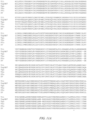
- amino acid residue 408 in SEQ ID NO: 9 corresponds to positions 410, 407, 407, 407, and 408 in SEQ ID NOs: 52, 57, 55, 56, and 51, respectively (marked with an asterisk in Figures 11A ).
- amino acid residue 762 in SEQ ID NO: 9 corresponds to positions 764, 761, 761, 761, and 762 in SEQ ID NOs: 52, 57, 55, 56, and 51, respectively (marked with a pound in Figures 11B ).
- corresponding positions can also be identified using overlaid 3-D structures, where available, as positions at which greater than 50% of the volume occupied by a space-filling model of an amino acid in a first polypeptide is occupied by the space-filling model of the corresponding amino acid in a second polypeptide.
- Identity is measured by a score determined by comparing the amino acid sequences of the two polypeptides using the Bestfit program. Bestfit uses the local homology algorithm of Smith and Waterman, Advances in Applied Mathematics 2:482-489 (1981 ) to find the best segment of similarity between two sequences. When using Bestfit to determine whether a test amino acid sequence is, for instance, 95% identical to a reference sequence according to the present disclosure, the parameters are set so that the percentage of identity is calculated over the full length of the test amino acid sequence, such that 95% of the amino acids in the test amino acid sequence align with identical amino acids on the reference sequence.
- Sequence-non-specific DNA binding domain refers to a protein domain that binds to DNA without significant sequence preference.
- a DNA binding domain binds to double-stranded DNA.
- Non-limiting exemplary DNA binding domains include Sso7d from Sulfolobus solfataricus, Sac7d, Sac7a, Sac7b, and Sac7e from S. acidocaldarius, and Ssh7a and Ssh7b from Sulfolobus shibatae, Pae3192, Pae0384, and Ape3192, HMf family archaeal histone domains, and archaeal PCNA homolog.
- fused means that the two polypeptides or polypeptide domains are contained in a single contiguous polypeptide sequence.
- Heterologous when used with reference to portions of a protein, indicates that the protein comprises two or more domains that are not found in the same relationship to each other in nature.
- a protein e.g., a fusion protein, contains two or more domains from unrelated proteins arranged to make a new functional protein.
- Error-correcting activity of a polymerase or polymerase domain refers to the 3' to 5' exonuclease proofreading activity of a polymerase whereby nucleotides that do not form Watson-Crick base pairs with the template are removed from the 3' end of an oligonucleotide, i.e., a strand being synthesized from a template, in a sequential manner.
- polymerases that have error-correcting activity include polymerases from Pyrococcus furiosus, Thermococcus litoralis, and Thermotoga maritima with wild-type exonuclease domains, and certain others discussed herein.
- low copy number refers to a target nucleic acid that is present at fewer than 10,000 or fewer than 1,000 or fewer than 100 or fewer than 10 copies in the composition comprising the target nucleic acid and the polymerase.
- Specificity refers to the ability of a polymerase to amplify a target nucleic acid while producing fewer non-specific amplification byproducts, such as those resulting from primer-dimers.
- hybridize As used herein the terms “hybridize”, “hybridizing”, “hybridization” and other related terms include hydrogen bonding between two different nucleic acids, or between two different regions of a nucleic acid, to form a duplex nucleic acid.
- Hybridization can comprise Watson-Crick or Hoogstein binding to form a duplex nucleic acid.
- the two different nucleic acids, or the two different regions of a nucleic acid may be complementary, or partially complementary.
- the complementary base pairing can be the standard A-T or C-G base pairing, or can be other forms of base-pairing interactions.
- Duplex nucleic acids can include mismatched base-paired nucleotides. Complementary nucleic acid strands need not hybridize with each other across their entire length.
- conditions that are suitable for nucleic acid hybridization and/or nucleic acid synthesis include parameters such as salts, buffers, pH, temperature, % GC content of the polynucleotide and primers, and/or time.
- conditions suitable for hybridizing nucleic acids can include hybridization solutions having sodium salts, such as NaCl, sodium citrate and/or sodium phosphate.
- a hybridization solution can be a stringent hybridization solution which can include any combination of formamide (e.g., about 50%), 5X SSC (e.g., about 0.75 M NaCl and about 0.075 M sodium citrate), sodium phosphate (e.g., about 50 mM at about pH 6.8), sodium pyrophosphate (e.g., about 0.1%), 5X Denhardt's solution, SDS (e.g., about 0.1%), and/or dextran sulfate (e.g., about 10%).
- hybridization and/or nucleic acid synthesis can be conducted at a temperature range of about 45-55°C, or about 55-65°C, or about 65-75°C.
- hybridization or nucleic acid synthesis conditions can be conducted at a pH range of about 5-10, or about pH 6-9, or about pH 6.5-8, or about pH 6.5-7.
- Thermal melting temperature (T m ) for nucleic acids can be a temperature at which half of the nucleic acid strands are double-stranded and half are single-stranded under a defined condition.
- a defined condition can include ionic strength and pH in an aqueous reaction condition.
- a defined condition can be modulated by altering the concentration of salts (e.g., sodium), temperature, pH, buffers, and/or formamide.
- the calculated thermal melting temperature can be at about 5-30°C below the T m , or about 5-25°C below the T m , or about 5-20°C below the T m , or about 5-15°C below the T m , or about 5-10°C below the T m .
- T m Methods for calculating a T m are well known and can be found in Sambrook (1989 in "Molecular Cloning: A Laboratory Manual", 2nd edition, volumes 1-3 ; Wetmur 1966, J. Mol. Biol., 31:349-370 ; Wetmur 1991 Critical Reviews in Biochemistry and Molecular Biology, 26:227-259 ).
- Other sources for calculating a T m for hybridizing or denaturing nucleic acids include OligoAnalyze (from Integrated DNA Technologies) and Primer3 (distributed by the Whitehead Institute for Biomedical Research).
- thermophilic DNA polymerases comprising a family B polymerase catalytic domain in which a neutral amino acid residue is present at a certain position.
- Family B polymerases Many types are described in Rothwell and Watsman, Advances in Protein Chemistry 71:401-440 (2005 ).
- thermophilic Family B polymerases include those of the Pyrococcus and Thermococcus genera, such as the Deep Vent polymerase and Family B polymerases of P. furiosus, P. calidifontis, P. aerophilum, T. kodakarensis, T. gorgonarius, and Thermococcus sp. 9°N-7.
- Exemplary wild-type amino acid sequences for such thermophilic family B polymerases can be obtained from public databases such as NCBI GenBank or UniProt. Wild-type sequences include naturally-occurring variants of the amino acid sequences for such thermophilic family B polymerases can be obtained from public databases such as NCBI GenBank or UniProt. Note that in some cases, the sequences are annotated as containing inteins; the inteins are not present in the mature enzyme.
- the family B polymerase catalytic domain has an amino acid sequence in which the position corresponding to position 379 of SEQ ID NO: 6 is a neutral amino acid residue. In some embodiments, the family B polymerase catalytic domain has an amino acid sequence wherein the amino acid residue at the position of the amino acid sequence that aligns to position 379 of SEQ ID NO: 6 is a neutral amino acid residue. In some embodiments, the family B polymerase catalytic domain has at least 85%, 90%, 95%, 98%, 99%, or 100% identity to a sequence selected from SEQ ID NOs: 7, 15, 25, 33, 37, 41, 45 and 47, wherein the position corresponding to position 379 of SEQ ID NO: 6 is a neutral amino acid residue.
- the family B polymerase catalytic domain has at least 85%, 90%, 95%, 98%, 99%, or 100% identity to SEQ ID NO: 7, wherein the position corresponding to position 379 of SEQ ID NO: 6 is a neutral amino acid residue. In some embodiments, the family B polymerase catalytic domain has at least 85%, 90%, 95%, 98%, 99%, or 100% identity to the catalytic domain of SEQ ID NO: 15, wherein the position corresponding to position 379 of SEQ ID NO: 6 is a neutral amino acid residue.
- the family B polymerase catalytic domain has at least 85%, 90%, 95%, 98%, 99%, or 100% identity to the catalytic domain of SEQ ID NO: 25, wherein the position corresponding to position 379 of SEQ ID NO: 6 is a neutral amino acid residue. In some embodiments, the family B polymerase catalytic domain has at least 85%, 90%, 95%, 98%, 99%, or 100% identity to the catalytic domain of SEQ ID NO: 33, wherein the position corresponding to position 379 of SEQ ID NO: 6 is a neutral amino acid residue.
- the family B polymerase catalytic domain has at least 85%, 90%, 95%, 98%, 99%, or 100% identity to the catalytic domain of SEQ ID NO: 37, wherein the position corresponding to position 379 of SEQ ID NO: 6 is a neutral amino acid residue. In some embodiments, the family B polymerase catalytic domain has at least 85%, 90%, 95%, 98%, 99%, or 100% identity to the catalytic domain of SEQ ID NO: 47, wherein the position corresponding to position 379 of SEQ ID NO: 6 is a neutral amino acid residue.
- the family B polymerase catalytic domain has at least 85%, 90%, 95%, 98%, 99%, or 100% identity to the catalytic domain of SEQ ID NO: 41, wherein the position corresponding to position 379 of SEQ ID NO: 6 is a neutral amino acid residue. In some embodiments, the family B polymerase catalytic domain has at least 85%, 90%, 95%, 98%, 99%, or 100% identity to the catalytic domain of SEQ ID NO: 45, wherein the position corresponding to position 379 of SEQ ID NO: 6 is a neutral amino acid residue.
- Examples of family B polymerase catalytic domain sequences are shown, e.g., in FIG. 12 .
- the C-terminus is the residue at the position of the conserved leucine shown as the last residue in the multiple sequence alignment in FIG. 12 .
- the C-terminus of the family B polymerase catalytic domain is the position corresponding to position 383 of SEQ ID NO: 6.
- the C-terminus of the family B polymerase catalytic domain is the position corresponding to the leucine which is the last residue of SEQ ID NO: 6.
- the C-terminus of the family B polymerase catalytic domain is the position that aligns to the leucine which is the last residue of SEQ ID NO: 6.
- the C-terminus of the family B polymerase catalytic domain is the position corresponding to a leucine selected from the leucines shown as the final residues in FIG. 12 . In some examples, the C-terminus of the family B polymerase catalytic domain is the position that aligns to a leucine selected from the leucines shown as the final residues in FIG. 12 .
- the C-terminal residue in any of the foregoing examples can be a leucine.
- thermophilic DNA polymerase comprises: (a) the consecutive amino acid residues WQKTX, (b) the consecutive amino acid residues YQKTX, (c) the consecutive amino acid residues XQTGL, (d) the consecutive amino acid residues XQVGL, (e) the consecutive amino acid residues KTXQT, or (f) the consecutive amino acid residues KTXQV; wherein X is a neutral amino acid residue; and wherein X is within 20, 15, 10, 5, or 4 residues of the C-terminus of the family B polymerase catalytic domain.
- the C-terminus of the family B polymerase catalytic domain can be identified as the amino acid that aligns to or corresponds to the last amino acid of SEQ ID NO: 6.
- the thermophilic DNA polymerase comprises a consecutive amino acid sequence of WQKTX, XQTGL, KTXQT, YQKTX, XQVGL, KTXQV, YQSSX, XQTGL, or SSXQT; wherein X is a neutral amino acid residue; and wherein X is within 20, 15, 10, 5, or 4 residues of the C-terminus of the family B polymerase catalytic domain.
- thermophilic DNA polymerase comprises a consecutive amino acid sequence of WQKTX, XQTGL, KTXQT, YQKTX, XQVGL, KTXQV, YQSSX, XQTGL, SSXQT, TGRVX, XKSLL, RVXKS, TGRSX, XRTLL, or RSXRT; wherein X is a neutral amino acid residue; and wherein X is within 20, 15, 10, 5, or 4 residues of the C-terminus of the family B polymerase catalytic domain. X can be within 15 residues of the C-terminus of the family B polymerase catalytic domain in any of the foregoing examples.
- X can be within 10 residues of the C-terminus of the family B polymerase catalytic domain in any of the foregoing examples. X can be within 5 residues of the C-terminus of the family B polymerase catalytic domain in any of the foregoing examples. X can be within 4 residues of the C-terminus of the family B polymerase catalytic domain in any of the foregoing examples.
- residues 1 to n are within n -1 residues of position n ; e.g., if n is 5, positions 1, 2, 3, 4, and 5 and are within 4 residues of position 5.
- Neutral amino acid residues do not have side chains containing groups that are more than 50% charged at pH 7.4 in aqueous solution at 37°C, such as carboxyls, amines, and guanidino groups.
- Neutral amino acid residues include canonical and noncanonical residues unless indicated to the contrary. In some examples, the neutral amino acid is a noncanonical residue.
- a noncanonical residue is a residue other than the twenty amino acid residues abbreviated as one of the twenty following letters: A, C, D, E, F, G, H, I, K, L, M, N, P, Q, R, S, T, V, W, Y (e.g., norleucine and selenomethionine are noncanonical; see, e.g., U.S. Pat. No. 7,541,170 for additional examples of noncanonical residues, which are referred to therein as "nonclassical amino acids or chemical amino acid analogs").
- the neutral amino acid is less than 10%, 1%, 0.1%, or 0.01% charged at pH 7.4 in aqueous solution at 37°C.
- the neutral amino acid residue is a polar neutral amino acid residue.
- a residue is polar if its side chain contains at least one hydrogen bond donor or acceptor.
- the neutral amino acid comprises a side chain comprising an alcohol, amide, carbonyl, ester, or ether.
- the neutral amino acid comprises a side chain comprising an alcohol.
- the neutral amino acid comprises a side chain comprising an amide.
- the neutral amino acid residue is Q, N, H, S, T, Y, C, M, W, A, I, L, F, V, P, or G.
- the neutral amino acid residue is Q, N, H, S, T, Y, C, M, W, A, I, L, F, V, or G. In some embodiments, the neutral amino acid residue is Q, N, S, T, C, M, A, I, L, V, or G. In some embodiments, the neutral amino acid residue is Q, N, S, T, C, M, A, or G. In some embodiments, the neutral amino acid residue is Q, N, H, S, T, Y, C, M, or W. In some embodiments, the neutral amino acid residue is Q, N, H, S, T, Y, or W. In some embodiments, the neutral amino acid residue is Q, N, H, S, T, C, or M.
- the neutral amino acid residue is Q, N, S, T, C, or M. In some embodiments, the neutral amino acid residue is Q, N, S, or T. In some embodiments, the neutral amino acid residue is Q or N. In some embodiments, the neutral amino acid residue is S. In some embodiments, the neutral amino acid residue is T. In some embodiments, the neutral amino acid residue is Q. In some embodiments, the neutral amino acid residue is N.
- the family B polymerase catalytic domain is a subfamily B3 polymerase domain. In some examples, the family B polymerase catalytic domain is a family B polymerase domain of a Pyrococcus in which a neutral amino acid residue is present at a position discussed above. In some examples, the family B polymerase catalytic domain is a family B polymerase domain of a Thermococcus in which a neutral amino acid residue is present at a position discussed above. In some examples, the family B polymerase catalytic domain is a family B polymerase domain of a Pyrobaculum in which a neutral amino acid residue is present at a position discussed above.
- the family B polymerase catalytic domain is a family B polymerase domain of Pyrococcus furiosus in which a neutral amino acid residue is present at a position discussed above. In some examples, the family B polymerase catalytic domain is a family B polymerase domain of Pyrococcus species GB-D in which a neutral amino acid residue is present at a position discussed above. In some examples, the family B polymerase catalytic domain is a family B polymerase domain of Thermococcus kodakarensis in which a neutral amino acid residue is present at a position discussed above.
- the family B polymerase catalytic domain is a family B polymerase domain of Thermococcus litoralis in which a neutral amino acid residue is present at a position discussed above.
- the family B polymerase catalytic domain is a family B polymerase domain of Thermococcus gorgonarius in which a neutral amino acid residue is present at a position discussed above.
- the family B polymerase catalytic domain is a family B polymerase domain of Thermococcus sp. 9°N-7 in which a neutral amino acid residue is present at a position discussed above.
- the family B polymerase catalytic domain is a family B polymerase domain of Pyrobaculum calidifontis in which a neutral amino acid residue is present at a position discussed above. In some examples, the family B polymerase catalytic domain is a family B polymerase domain of Pyrobaculum aerophilum in which a neutral amino acid residue is present at a position discussed above.
- thermophilic DNA polymerase comprises a plurality of polypeptide chains, which may be noncovalently associated or covalently associated.
- the plurality of polypeptide chains can include a first polypeptide comprising a polymerase catalytic domain and a second polypeptide comprising an additional domain, such as a sequence non-specific double-stranded DNA-binding domain.
- a covalent association can include, e.g., one or more disulfide bonds or chemical conjugation using a linking compound, e.g., a chemical crosslinking agent, including, for example, succinimidyl-(N-maleimidomethyl)-cyclohexane-1-carboxylate (SMCC).
- a linking compound e.g., a chemical crosslinking agent, including, for example, succinimidyl-(N-maleimidomethyl)-cyclohexane-1-carboxylate (SMCC).
- SMCC succinimidyl-(N-maleimidomethyl)-cyclohexane-1-carboxylate
- thermophilic DNA polymerase comprises a sequence non-specific DNA-binding domain, e.g., a thermostable DNA binding domain.
- the DNA binding domain can be, for example, present as part of a fusion protein with the polymerase catalytic domain.
- the DNA binding domain is fused C-terminal to the polymerase catalytic domain.
- the DNA binding domain is noncovalently associated with the polypeptide comprising the polymerase catalytic domain, e.g., in the manner of the association between sliding clamps and certain family B polymerases.
- the polypeptide comprising the polymerase catalytic domain further comprises a sequence that noncovalently associates with an DNA binding domain, such as the PCNA-interacting sequence of a dimeric archaeal polymerase such as Pfu Pol II.
- an DNA binding domain can provide improved processivity relative to version of the enzyme lacking the DNA binding domain. Processivity reflects the extent to which a polymerase continues to synthesize DNA (adding nucleotides in processive catalytic events) along the same template without falling off. In some examples, high processivity correlates to high sensitivity in amplification reactions.
- the DNA binding domain is covalently conjugated to the polypeptide comprising the polymerase catalytic domain.
- Techniques for covalent conjugation of heterologous domains are described, e.g., in BIOCONJUGATE TECHNIQUES, Hermanson, Ed., Academic Press (1996 ). Such techniques include, for example, derivitization for the purpose of linking the moieties to each other, either directly or through a linking compound, by methods that are well known in the art of protein chemistry.
- the catalytic domain and the nucleic acid binding domain are linked using a heterobifunctional coupling reagent which ultimately contributes to formation of an intermolecular disulfide bond between the two moieties.
- coupling reagents that are useful in this capacity for the present disclosure are described, for example, in U.S. Pat. No. 4,545,985 .
- an intermolecular disulfide may conveniently be formed between cysteines in each moiety, which occur naturally or are inserted by genetic engineering.
- the means of linking moieties may also use thioether linkages between heterobifunctional crosslinking reagents or specific low pH cleavable crosslinkers or specific protease cleavable linkers or other cleavable or noncleavable chemical linkages.
- the sequence non-specific double-stranded DNA-binding domain comprises an amino acid sequence having at least 75%, 80%, 85%, 90%, 95%, 98%, 99%, or 100% identity to an amino acid sequence selected from SEQ ID NOs: 53 to 62.
- the DNA binding domain is an archaeal DNA binding domain.
- the DNA binding domain is a 7kD DNA-binding domain, which occurs in certain archaeal small basic DNA binding proteins (see, e.g., Choli et al., Biochimica et Biophysica Acta 950:193-203, 1988 ; Baumann et al., Structural Biol.
- the DNA binding domain is an Sso7d domain. In some embodiments, the DNA binding domain is a Sac7d domain. In some embodiments, the DNA binding domain is a Sac7e domain. In some embodiments, the sequence non-specific double-stranded DNA-binding domain comprises an amino acid sequence having at least 75%, 80%, 85%, 90%, 95%, 98%, 99%, or 100% identity to SEQ ID NO: 53. In some embodiments, the sequence non-specific double-stranded DNA-binding domain comprises an amino acid sequence having at least 75%, 80%, 85%, 90%, 95%, 98%, 99%, or 100% identity to SEQ ID NO: 54. In some embodiments, the sequence non-specific double-stranded DNA-binding domain comprises an amino acid sequence having at least 75%, 80%, 85%, 90%, 95%, 98%, 99%, or 100% identity to SEQ ID NO: 62.
- the DNA binding domain is a Pae3192 domain. In some examples, the DNA binding domain is a Pae0384 domain. In some examples, the DNA binding domain is a Ape3192 domain. In some embodiments, the sequence non-specific double-stranded DNA-binding domain comprises an amino acid sequence having at least 75%, 80%, 85%, 90%, 95%, 98%, 99%, or 100% identity to SEQ ID NO: 55. In some embodiments, the sequence non-specific double-stranded DNA-binding domain comprises an amino acid sequence having at least 75%, 80%, 85%, 90%, 95%, 98%, 99%, or 100% identity to SEQ ID NO: 56. In some embodiments, the sequence non-specific double-stranded DNA-binding domain comprises an amino acid sequence having at least 75%, 80%, 85%, 90%, 95%, 98%, 99%, or 100% identity to SEQ ID NO: 57.
- the DNA binding domain is an archaeal histone domain.
- the archaeal histone domain is an HMf family archaeal histone domain (see, e.g., Stanch et al., J Molec. Biol. 255:187-203, 1996 ; Sandman et al., Gene 150:207-208, 1994 ).
- the archaeal histone domain is an HMf family archaeal histone domain from Methanothermus.
- the archaeal histone domain is an HMf family archaeal histone domain from Pyrococcus.
- the archaeal histone domain is an HMf family archaeal histone domain from Methanothermus fervidus. In some examples, the archaeal histone domain is an HMf family archaeal histone domain from Pyrococcus strain GB-3a. In some examples, the archaeal histone domain is a Methanothermus HMfA archaeal histone domain. In some examples, the archaeal histone domain is a Methanothermus HMfB archaeal histone domain. In some examples, the archaeal histone domain is a Pyrococcus HpyA1 archaeal histone domain.
- the archaeal histone domain is a Pyrococcus HpyA2 archaeal histone domain.
- the sequence non-specific double-stranded DNA-binding domain comprises an amino acid sequence having at least 75%, 80%, 85%, 90%, 95%, 98%, 99%, or 100% identity to SEQ ID NO: 58.
- the sequence non-specific double-stranded DNA-binding domain comprises an amino acid sequence having at least 75%, 80%, 85%, 90%, 95%, 98%, 99%, or 100% identity to SEQ ID NO: 59.
- sequence non-specific double-stranded DNA-binding domain comprises an amino acid sequence having at least 75%, 80%, 85%, 90%, 95%, 98%, 99%, or 100% identity to SEQ ID NO: 60. In some embodiments, the sequence non-specific double-stranded DNA-binding domain comprises an amino acid sequence having at least 75%, 80%, 85%, 90%, 95%, 98%, 99%, or 100% identity to SEQ ID NO: 61.
- the DNA binding domain is a sliding clamp, such as an archaeal PCNA homolog.
- Sliding clamps can exist as trimers in solution, and can form a ring-like structure with a central passage capable of accommodating double-stranded DNA.
- the sliding clamp forms specific interactions with the amino acids located at the C terminus of particular DNA polymerases, and tethers those polymerases to the DNA template during replication.
- the sliding clamp in eukaryotes is referred to as the proliferating cell nuclear antigen (PCNA), while similar proteins in other domains are often referred to as PCNA homologs. These homologs have marked structural similarity but limited sequence similarity.
- PCNA homologs have been identified from thermophilic Archaea (e.g., Sulfolobus solfataricus, Pyrococcus furiosus, etc.). Some family B polymerases in Archaea have a C terminus containing a consensus PCNA-interacting amino acid sequence and are capable of using a PCNA homolog as a processivity factor (see, e.g., Cann et al., J. Bacteriol. 181:6591-6599, 1999 and De Felice et al., J Mol. Biol. 291:47-57, 1999 ). These PCNA homologs are useful sequence-non-specific double-stranded DNA binding domains.
- a consensus PCNA-interacting sequence can be joined to a polymerase that does not naturally interact with a PCNA homolog, thereby allowing a PCNA homolog to serve as a processivity factor for the polymerase.
- the PCNA-interacting sequence from Pyrococcus furiosus Pol II (a heterodimeric DNA polymerase containing two family B-like polypeptides) can be covalently joined to a sequence based on Pyrococcus furiosus Pol I (a monomeric family B polymerase that does not normally interact with a PCNA homolog).
- the resulting fusion protein can then be allowed to associate noncovalently with the Pyrococcus furiosus PCNA homolog to generate a heterologous protein with increased processivity.
- Nucleic acids encoding the domains of a fusion protein invention can be obtained using recombinant genetics techniques. Basic texts disclosing the general methods for doing so include Sambrook et al., MOLECULAR CLONING, A LABORATORY MANUAL (2nd ed. 1989 ); Kriegler, GENE TRANSFER AND EXPRESSION: A LABORATORY MANUAL (1990 ); and CURRENT PROTOCOLS IN MOLECULAR BIOLOGY (Ausubel et al., eds., 1994 )).
- catalytic and binding domains of the polymerase are joined by a linker domain, e.g., a polypeptide sequence of 1 to about 200 amino acids in length, such as 1 to about 100, 50, 25, or 10 amino acids.
- linker domain e.g., a polypeptide sequence of 1 to about 200 amino acids in length, such as 1 to about 100, 50, 25, or 10 amino acids.
- proline residues are incorporated into the linker to prevent the formation of significant secondary structural elements by the linker.
- Linkers can often be flexible amino acid subsequences that are synthesized as part of a recombinant fusion protein. For a discussion of linkers, see, e.g., US 2011/0086406 A1 including at paragraphs 83-89 thereof.
- the thermophilic DNA polymerase comprises an exonuclease domain.
- the exonuclease domain is a 3' to 5' exonuclease domain.
- the 3'-5' exonuclease domain can have error-correcting activity, also known as proofreading activity, in which the exonuclease preferentially removes a base from a nascent DNA strand/extension product/3' terminus that is not a Watson-Crick match to the template strand.
- the 3'-5' exonuclease domain is a DEDDy archaeal exonuclease domain.
- the exonuclease domain is N-terminal to the DNA polymerase catalytic domain.
- the thermophilic DNA polymerase comprises a domain having at least 75%, 80%, 85%, 90%, 95%, 98%, 99%, or 100% identity to SEQ ID NO: 63.
- the thermophilic DNA polymerase comprises a domain having at least 75%, 80%, 85%, 90%, 95%, 98%, 99%, or 100% identity to the exonuclease domain of a sequence selected from SEQ ID NO: 1, 19, 23, 31, 35, 39, 43, 49, 51, or 52.
- thermophilic DNA polymerase comprises a domain having at least 75%, 80%, 85%, 90%, 95%, 98%, 99%, or 100% identity to the exonuclease domain of SEQ ID NO: 1. In some embodiments, the thermophilic DNA polymerase comprises a domain having at least 75%, 80%, 85%, 90%, 95%, 98%, 99%, or 100% identity to the exonuclease domain of SEQ ID NO: 19. In some embodiments, the thermophilic DNA polymerase comprises a domain having at least 75%, 80%, 85%, 90%, 95%, 98%, 99%, or 100% identity to the exonuclease domain of SEQ ID NO: 23.
- thermophilic DNA polymerase comprises a domain having at least 75%, 80%, 85%, 90%, 95%, 98%, 99%, or 100% identity to the exonuclease domain of SEQ ID NO: 31. In some embodiments, the thermophilic DNA polymerase comprises a domain having at least 75%, 80%, 85%, 90%, 95%, 98%, 99%, or 100% identity to the exonuclease domain of SEQ ID NO: 35. In some embodiments, the thermophilic DNA polymerase comprises a domain having at least 75%, 80%, 85%, 90%, 95%, 98%, 99%, or 100% identity to the exonuclease domain of SEQ ID NO: 39.
- thermophilic DNA polymerase comprises a domain having at least 75%, 80%, 85%, 90%, 95%, 98%, 99%, or 100% identity to the exonuclease domain of SEQ ID NO: 43. In some embodiments, the thermophilic DNA polymerase comprises a domain having at least 75%, 80%, 85%, 90%, 95%, 98%, 99%, or 100% identity to the exonuclease domain of SEQ ID NO: 49. In some embodiments, the thermophilic DNA polymerase comprises a domain having at least 75%, 80%, 85%, 90%, 95%, 98%, 99%, or 100% identity to the exonuclease domain of SEQ ID NO: 51.
- thermophilic DNA polymerase comprises a domain having at least 75%, 80%, 85%, 90%, 95%, 98%, 99%, or 100% identity to the exonuclease domain of SEQ ID NO: 52.
- An exonuclease domain can be identified using BLASTP against the RefSeq database can be identified by using NCBI BLASTP to search the RefSeq database. NCBI BLASTP automatically identifies certain domains such as exonuclease domains and indicates their termini as the positions at which the domain begins and ends.
- the exonuclease domain is an exonuclease domain of a Pyrococcus. In some examples, the exonuclease domain is an exonuclease domain of a Thermococcus. In some examples, the exonuclease domain is an exonuclease domain of a Pyrobaculum. In some examples, the exonuclease domain is an exonuclease domain of Pyrococcus furiosus. In some examples, the exonuclease domain is an exonuclease domain of Pyrococcus species GB-D.
- the exonuclease domain is an exonuclease domain of Thermococcus kodakarensis. In some examples, the exonuclease domain is an exonuclease domain of Thermococcus litoralis. In some examples, the exonuclease domain is an exonuclease domain of Thermococcus gorgonarius. In some examples, the exonuclease domain is an exonuclease domain of Thermococcus sp. 9°N-7. In some examples, the exonuclease domain is an exonuclease domain of Pyrobaculum calidifontis. In some examples, the exonuclease domain is an exonuclease domain of Pyrobaculum aerophilum.
- thermophilic DNA polymerase comprises an inactivated or reduced-activity exonuclease domain.
- An inactivated exonuclease domain is a mutated version of a wild-type domain that has less than 50% of the wild-type exonuclease activity.
- the inactivated domain has less than 40%, less than 30%, less than 25%, less than 20%, less than 15%, less than 10%, or less than 5% of the wild-type exonuclease activity.
- the inactivated domain has less than 2%, 1%, 0.5%, 0.2%, 0.1%, 0.05%, 0.02%, or 0.01% of the wild-type exonuclease activity.
- a reduced-activity exonuclease domain is a mutated version of a wild-type domain that has less than 10% of the wild-type exonuclease activity. Measurement of exonuclease activity is described, for example, in DNA Replication 2nd, edition, by Kornberg and Baker, W.H. Freeman & Company, New York, N.Y. 1991 . Examples of exo - DNA polymerase mutants include those with a single mutation in Motif I and/or II (Motifs are as described, e.g., in U.S. Pat. No. 8,921,043 , e.g., at FIG.
- Motif I a double mutation in Motif I (such as D141A and E143A, the position numbering corresponds to Pfu polymerase, SEQ ID NO: 1), that reportedly abolishes detectible exonuclease activity (see for example, VENT ® (Thermococcus litoralis) ( Kong et al. J. Biol. Chem. 268(3):1965-1975 ) (New England Biolabs, Inc. (NEB), Ipswich, Mass.); Thermococcus JDF-3 ( U.S. Pat. No. 6,946,273 , U.S.
- the exonuclease domain has a D141A, E143A, D215A, D315A, D141A/E143A, D141A/D315A, E143A/D315A, D215A/D315A, or D141A/E143A/D315A mutation.
- the exonuclease domain has an A, N, S, T, or E residue at the position corresponding to position 141 of SEQ ID NO: 1.
- the exonuclease domain has an A at the position corresponding to position 141 of SEQ ID NO: 1.
- the exonuclease domain has an A at the position corresponding to position 143 of SEQ ID NO: 1.
- the amino acid residue at the position of the family B polymerase catalytic domain amino acid sequence that aligns to position 25 of SEQ ID NO: 6 is a serine. In some examples, the amino acid residue at the position of the family B polymerase catalytic domain amino acid sequence that corresponds to position 25 of SEQ ID NO: 6 is a serine.
- the thermophilic DNA polymerase comprises: (a) the consecutive amino acid residues LDFRS, (b) the consecutive amino acid residues FRSLY, or (c) the consecutive amino acid residues SLYPS, wherein the underlined serine residue is within 30 amino acid residues of the N-terminus of the family B polymerase catalytic domain.
- thermophilic DNA polymerase comprises: (a) the consecutive amino acid residues LDFRS*, (b) the consecutive amino acid residues FRS*LY, or (c) the consecutive amino acid residues S*LYPS, wherein the serine residue immediately followed by an asterisk is within 30 amino acid residues of the N-terminus of the family B polymerase catalytic domain.
- the asterisk is included solely to designate the serine that is within 30 amino acid residues of the N-terminus of the family B polymerase catalytic domain and does not signify a structural difference.
- the N-terminus of the family B polymerase catalytic domain is the residue immediately preceding the conserved tyrosine shown as the second residue in the multiple sequence alignment in FIG.
- the N-terminus of the family B polymerase catalytic domain is the position immediately preceding the position corresponding to the first tyrosine in SEQ ID NO: 6. In some examples, the N-terminus of the family B polymerase catalytic domain is the position that aligns to position 1 of SEQ ID NO: 6. In some examples, the N-terminus of the family B polymerase catalytic domain is the position corresponding to the position immediately preceding a tyrosine selected from the tyrosines shown as the second residues in FIG. 12 .
- the N-terminus of the family B polymerase catalytic domain is the position immediately preceding the position that aligns to a tyrosine selected from the tyrosines shown as the second residues in FIG. 12 . In some examples, the N-terminus of the family B polymerase catalytic domain is the position immediately preceding the position corresponding to a tyrosine selected from the tyrosines shown as the second residues in FIG. 12 .
- the N-terminal residue in any of the foregoing examples can be a serine.
- the N-terminal residue in any of the foregoing examples can be a threonine.
- the N-terminal residue in any of the foregoing examples can be a glycine.
- the N-terminal residue in any of the foregoing examples can be a proline.
- family B polymerases are well-characterized in general and are known to tolerate mutations at a number of positions. Furthermore, the following is a non-exhaustive list of patents and published applications that discuss mutations in family B polymerases and the properties of mutated family B polymerases: US Patent 8,435,775 ; US Patent 8,557,554 ; WO2007/016702 ; US 2003/0180741 ; WO 2004/011605 ; WO 2003/060144 ; and US Patent 9,023,633 .
- thermophilic DNA polymerase comprises an amino acid sequence comprising at least one difference from SEQ ID NO: 1 at a position corresponding to position 15, 72, 93, 141, 143, 247, 265, 337, 385, 387, 388, 399, 400, 405, 407, 410, 485, 542, 546, 593, or 595 of SEQ ID NO: 1.
- thermophilic DNA polymerase comprises an amino acid sequence comprising at least one missing residue corresponding to position 92, 93, 94, or 381 of SEQ ID NO: 1.
- the at least one difference or missing residue is in the exonuclease domain.
- the at least one difference or missing residue is in the polymerase catalytic domain.
- the polymerase with the at least one difference or missing residue has an expanded substrate range relative to a polymerase without the difference or in which the residue is not missing.
- the at least one difference comprises a G or D at the position corresponding to position 400 of SEQ ID NO: 1.
- the at least one difference comprises an I at the position corresponding to position 407 of SEQ ID NO: 1.
- the at least one difference comprises an I at the position corresponding to position 337 of SEQ ID NO: 1.
- the at least one difference comprises a D at the position corresponding to position 399 of SEQ ID NO: 1.
- the at least one difference comprises an H at the position corresponding to position 546 of SEQ ID NO: 91.
- the polymerase with the at least one difference or missing residue incorporates a nucleotide analog to a greater extent than a polymerase without the difference or in which the residue is not missing.
- the at least one difference comprises an L at the position corresponding to position 410 of SEQ ID NO: 1.
- the at least one difference comprises a T at the position corresponding to position 485 of SEQ ID NO: 1.
- the polymerase with the at least one difference or missing residue has reduced uracil sensitivity relative to a polymerase without the difference or in which the residue is not missing.
- the at least one missing residue comprises a missing residue at the position corresponding to position 93 of SEQ ID NO: 1.
- the at least one missing residue comprises a missing residue at the position corresponding to position 94 of SEQ ID NO: 1.
- the at least one missing residue comprises a missing residue at the position corresponding to position 92 of SEQ ID NO: 1.
- the at least one difference comprises a Q, R, E, A, K, N, or G at the position corresponding to position 93 of SEQ ID NO: 1.
- the at least one difference comprises a Q or R at the position corresponding to position 93 of SEQ ID NO: 1.
- an at least one difference or missing residue as discussed above in this paragraph is accompanied by at least one difference or missing residue that offsets a loss of activity.
- the at least one difference that offsets a loss of activity comprises an R at the position corresponding to position 247 of SEQ ID NO: 1.
- the at least one difference that offsets a loss of activity comprises an R at the position corresponding to position 265 of SEQ ID NO: 1.
- the at least one difference that offsets a loss of activity comprises an R at the position corresponding to position 485 of SEQ ID NO: 1.
- the at least one missing residue that offsets a loss of activity comprises a missing residue at the position corresponding to position 381 of SEQ ID NO: 1.
- the at least one difference comprises an R at the position corresponding to position 247 of SEQ ID NO: 1. In some examples, the at least one difference comprises an R at the position corresponding to position 265 of SEQ ID NO: 1. In some examples, the at least one difference comprises an R at the position corresponding to position 485 of SEQ ID NO: 1. In some examples, the at least one missing residue comprises a missing residue at the position corresponding to position 381 of SEQ ID NO: 1. In some examples, the at least one difference comprises an I at the position corresponding to position 15 of SEQ ID NO: 1. In some examples, the at least one difference comprises an R at the position corresponding to position 72 of SEQ ID NO: 1.
- the polymerase with the at least one difference or missing residue has an altered proofreading spectrum relative to a polymerase without the difference or in which the residue is not missing.
- the at least one difference comprises a P or S at the position corresponding to position 387 of SEQ ID NO: 1.
- the at least one difference comprises an E at the position corresponding to position 405 of SEQ ID NO: 1.
- the at least one difference comprises an F at the position corresponding to position 410 of SEQ ID NO: 1.
- the at least one difference comprises a P at the position corresponding to position 542 of SEQ ID NO: 1.
- the at least one difference comprises a T at the position corresponding to position 593 of SEQ ID NO: 1.
- the at least one difference comprises an S at the position corresponding to position 595 of SEQ ID NO: 1. In some examples, the at least one difference comprises a Q, S, N, L, or H at the position corresponding to position 385 of SEQ ID NO: 1. In some examples, the at least one difference comprises a P at the position corresponding to position 388 of SEQ ID NO: 1.
- thermophilic DNA polymerase comprises an amino acid sequence having at least 90%, 95%, 98%, 99%, or 100% identity to a sequence selected from SEQ ID NOs: 11 to 14, 19 to 22, 27 to 30, and 76 to 79. In some embodiments, the thermophilic DNA polymerase comprises an amino acid sequence having at least 90%, 95%, 98%, 99%, or 100% identity to SEQ ID NO: 11. In some embodiments, the thermophilic DNA polymerase comprises an amino acid sequence having at least 90%, 95%, 98%, 99%, or 100% identity to SEQ ID NO: 12. In some embodiments, the thermophilic DNA polymerase comprises an amino acid sequence having at least 90%, 95%, 98%, 99%, or 100% identity to SEQ ID NO: 13.
- thermophilic DNA polymerase comprises an amino acid sequence having at least 90%, 95%, 98%, 99%, or 100% identity to SEQ ID NO: 14. In some embodiments, the thermophilic DNA polymerase comprises an amino acid sequence having at least 90%, 95%, 98%, 99%, or 100% identity to SEQ ID NO: 19. In some embodiments, the thermophilic DNA polymerase comprises an amino acid sequence having at least 90%, 95%, 98%, 99%, or 100% identity to SEQ ID NO: 20. In some embodiments, the thermophilic DNA polymerase comprises an amino acid sequence having at least 90%, 95%, 98%, 99%, or 100% identity to SEQ ID NO: 21.
- thermophilic DNA polymerase comprises an amino acid sequence having at least 90%, 95%, 98%, 99%, or 100% identity to SEQ ID NO: 22. In some embodiments, the thermophilic DNA polymerase comprises an amino acid sequence having at least 90%, 95%, 98%, 99%, or 100% identity to SEQ ID NO: 27. In some embodiments, the thermophilic DNA polymerase comprises an amino acid sequence having at least 90%, 95%, 98%, 99%, or 100% identity to SEQ ID NO: 28. In some embodiments, the thermophilic DNA polymerase comprises an amino acid sequence having at least 90%, 95%, 98%, 99%, or 100% identity to SEQ ID NO: 29.
- thermophilic DNA polymerase comprises an amino acid sequence having at least 90%, 95%, 98%, 99%, or 100% identity to SEQ ID NO: 30. In some embodiments, the thermophilic DNA polymerase comprises an amino acid sequence having at least 90%, 95%, 98%, 99%, or 100% identity to SEQ ID NO: 76. In some embodiments, the thermophilic DNA polymerase comprises an amino acid sequence having at least 90%, 95%, 98%, 99%, or 100% identity to SEQ ID NO: 77. In some embodiments, the thermophilic DNA polymerase comprises an amino acid sequence having at least 90%, 95%, 98%, 99%, or 100% identity to SEQ ID NO: 78. In some embodiments, the thermophilic DNA polymerase comprises an amino acid sequence having at least 90%, 95%, 98%, 99%, or 100% identity to SEQ ID NO: 79.
- the polymerase comprises an affinity purification tag.
- the affinity purification tag comprises a sequence of histidines, such as 6, 7, 8, 9, or 10 consecutive histidines.
- the affinity purification tag can be located, e.g., at the N or C terminus of a polypeptide of the polymerase.
- a polymerase according to this disclosure is provided as a hot-start enzyme or a hot start composition.
- hot-start enzymes and/or compositions see, e.g., US Patent 5,338,671 ; US Patent 7,074,556 ; US Publication 2015/0044683 ; US Publication 2014/0099644 .
- the term "hot start” generally refers to a means of limiting the availability of an essential reaction component (e.g., a polymerase) when the reaction mixture is maintained at a first temperature (typically a lower temperature) until a second temperature (typically a higher temperature) is reached which allows the essential component to participate in the reaction.
- Hot start reactions typically involve incubation at a first (e.g., lower) temperature and subsequent elevation to a second (e.g., higher) temperature which allows the desired reaction to take place.
- Activation of the hot start reaction is preferably achieved by an incubation at a temperature which is equal to or higher than the primer hybridization (annealing) temperature used in the amplification reaction to ensure primer binding specificity.
- the length of incubation required to recover enzyme activity depends on the temperature and pH of the reaction mixture and on the stability of the enzyme. A wide range of incubation conditions are usable; optimal conditions may be determined empirically for each reaction.
- the term “dual hot start reaction mixture” refers to the combination of reagents or reagent solutions which are used to block nucleic acid polymerase extension at low temperatures (e.g., ambient temperature) until the hot start conditions of the initial denaturation temperature in an amplification reaction (e.g., PCR) are reached. At the elevated amplification temperature, the nucleic acid polymerase is no longer inhibited and allows for primer extension.
- the dual hot start reaction mixture is meant to include a reaction mixture that comprises at least two different mechanisms for hot start. Accordingly, “dual hot start reaction mixtures” may include more than two hot start mechanisms (e.g., “triple hot start reaction mixture", “quadruple hot start reaction mixture”, “quintuple hot start reaction mixture”, and so on).
- Nonlimiting exemplary hot start mechanisms include, but are not limited to, antibodies or combinations of antibodies that block nucleic acid polymerase activity at lower temperatures and which dissociate from the polymerase at elevated temperatures (see, e.g., Eastlund et al., LifeSci. Quarterly 2:2 (2001 ), Mizuguchi et al., J. Biochem.
- affibodies small synthetic protein molecules that have high binding affinity for a target protein
- combinations of affibodies sometimes referred to as antibody mimetics
- oligonucleotides that block nucleic acid polymerase activity at lower temperatures and which dissociate from the polymerase at elevated temperatures
- reversible chemical modification of the nucleic acid polymerase such that the nucleic acid polymerase activity is blocked at lower temperatures and the modifications reverse or dissociate at elevated temperatures
- nucleic acid polymerase fusion proteins including hyperstable DNA binding domains and topoisomerases (see, e.g., Pavlov et al., Proc. Natl. Acad. Sci.
- ligands that inhibit the nucleic acid polymerase in a temperature-dependent manner for example, HotMaster TM Taq DNA polymerase from Eppendorf (Hauppauge, N.Y.) and 5 PRIME (Gaithersburg, Md.)); single-stranded binding proteins that sequester primers at low temperatures (see, e.g., U.S. Patent Application Publication No. 2008/0138878 ); thermostable pyrophosphatase which hydrolyzes inorganic pyrophosphate at elevated temperatures (see, e.g., U.S. Patent Application Publication No.
- thermolabile blockers such as a polymerase blocking protein
- primer competitor sequences see, e.g., Puskas et al., Genome Res. 5:309 (1995 ) and Vestheim et al., Front. Zool. 5:12 (2008 )
- modified primer constructs see, e.g., Ailenberg et al., Biotechniques 29:22 (2000 ) and Kaboev et al., Nucl. Acids Res. 28:E94 (2000 )
- modified primers that improve hybridization selectivity see, e.g., U.S. Pat. Nos.
- hot start inhibitors such as antibodies, oligonucleotides, affibodies, chemical modifications, etc., may be referred to as "hot start inhibitors.”
- the hot start composition comprises an antibody specific for the polymerase. In some examples, the hot start composition comprises an antibody specific for the polymerase, which is bound to the polymerase. In some examples, the hot start composition comprises an inhibitor specific for the polymerase, which is bound to the polymerase. In some embodiments, the inhibitor comprises an Affibody ® . Affibodies are described, e.g., in US Publication 2012/0082981 ; see also Nord et al., 2000, J. Biotechnol. 80: 45-54 ; US Patent No. 6602977 ; Nygren, 2008, FEBS J.
- the inhibitor comprises an oligonucleotide. In some embodiments, the inhibitor comprises a chemical modification.
- dual hot start reaction mixtures comprising "at least two different mechanisms” encompass those reaction mixtures that may comprise at least two different hot start mechanisms that function similarly or use similar components.
- dual hot start reaction mixtures can comprise reagents or reagent solutions designed for two different antibody-based hot start mechanisms, or two different oligonucleotide-based hot start mechanisms, or one antibody-based and one oligonucleotide-based hot start mechanism, or one antibody-based and one chemical modification-based hot start mechanism, or any such combination available.
- a hot start composition or dual hot start composition comprises an antibody inhibitor of a thermostable polymerase described herein.
- the antibody is a monoclonal antibody.
- a hot start antibody inhibits the nucleic acid synthesis activity of the thermostable polymerase described herein. In some examples, a hot start antibody inhibits exonuclease activity of the thermostable polymerase. In some examples, a hot start antibody inhibits both the nucleic acid synthesis activity and the exonuclease activity of the thermostable polymerase.
- hot-start antibodies increase the specificity of nucleic acid synthesis reactions, because they inactivate the polymerase at room temperature, thus avoiding extension of nonspecifically hybridized primers.
- the functional activity of the polymerase is restored by disassociating the antibody from the polymerase, for example, by incubating the composition at a higher temperature.
- the "higher temperature” is from about 65°C to about 99°C, from about 70°C to about 99°C, 75°C to about 99°C, or from about 80°C to about 99°C, or from about 85°C to about 99°C, or from about 90°C to about 99°C, for a time period of at least 15 seconds, or at least 30 seconds, or at least 1 minute, or at least 90 seconds, or at least 2 minutes; to about 3 minutes, or about 4 minutes, or about 5 minutes, or about 7 minutes, or about 10 minutes, or more.
- the higher temperature is at least 60°C, at least 65°C, at least 70°C, at least 75°C, at least 80°C, or at least 85°C.
- the temperature and duration of incubation to disassociate the antibody and activate the polymerase may be determined for the particular polymerase and antibody to be employed.
- Methods for screening for antibodies of use in the present disclosure include methods known in the art, such as affinity-based ELISA assays, as well as functional assays for polymerase and/or exonuclease inhibition.
- functional assays for polymerase and/or exonuclease inhibition.
- the amount of DNA produced or digested per unit of time can be correlated to the activity of the polymerase or exonuclease used, thus providing an estimate of the amount of inhibition a particular antibody can exert on either or both the polymerase and exonuclease activity of the polymerase.
- Antibodies may be produced using any method known in the art.
- an antibody to a particular antigen such as a polymerase described herein
- an animal such as a mouse, rat, rabbit, goat, sheep, horse, etc.
- Phage display technology may also be used to produce antibodies that bind to the polymerases described herein. Phage display libraries are commercially available and methods of selecting antibodies from such libraries are known in the art.
- Polymerase processivity may be measured using various methods known in the art. Processivity refers to the number of nucleotides incorporated during a single binding event of polymerase to a primed template.
- a detectably labeled primer may be annealed to circular or linearized DNA to form a primed nucleic acid template.
- the primed nucleic acid template may be present in significant molar excess to the polymerase to reduce the likelihood that any one primed template will be extended more than once by a polymerase.
- a "significant molar excess" may be, for example, a ratio of 500:1, or 1000:1, or 2000:1, or 4000:1, or 5000:1 (primed DNA:DNA polymerase), etc., in the presence of suitable buffers and dNTPs.
- Nucleic acid synthesis may be initiated by adding, for example, MgCh. Nucleic acid synthesis reactions are quenched at various times after initiation, and analyzed by any appropriate method to determine the length of the product. At a polymerase concentration where the median product length does not change with time or polymerase concentration, the length corresponds to the processivity of the enzyme.
- the processivity of a polymerase described such as a polymerase comprising a neutral amino acid at position corresponding to position 762 of SEQ ID NO: 1 may be compared to the processivity of the same polymerase without the neutral amino acid mutation.
- yield can be demonstrated by measuring the ability of a polymerase to produce product.
- Increased yield can be demonstrated by determining the amount of product obtained in a reaction using a polymerase described herein (such as a polymerase comprising a neutral amino acid at position corresponding to position 762 of SEQ ID NO: 1), as compared to the amount of product obtained in a reaction carried out under the same reaction conditions, but with the same polymerase without the neutral amino acid mutation.
- a polymerase described herein such as a polymerase comprising a neutral amino acid at position corresponding to position 762 of SEQ ID NO: 1
- long PCR may be used to determine enhanced processivity and yield.
- an enzyme with enhanced processivity typically allows the amplification of a longer amplicons (>5 kb) in shorter extension times compared to an enzyme with relatively lower processivity.
- the sensitivity of a polymerase described herein may be determined by measuring the yield of nucleic acid synthesis product in a series of reactions with differing copy numbers of nucleic acid template.
- the template copy number at which a polymerase of the disclosure (such as a polymerase comprising a neutral amino acid at position corresponding to position 762 of SEQ ID NO: 1) produces detectable product is compared to the template copy number at which the same polymerase without the neutral amino acid mutation produces detectable product. The lower the template copy number at which the polymerase produces detectable product, the more sensitive the polymerase.
- specificity of a polymerase may be measured by determining the ability of the polymerase to discriminate between matched primer/template duplexes and mismatched primer/template duplexes. In some examples, specificity is a measure of the difference in the relative yield of two reactions, one of which employs a matched primer, and one of which employs a mismatched primer. In some examples, an enzyme with increased discrimination will have a higher relative yield with the matched primer than with the mismatched primer. In some examples, a ratio of the yield with the matched primer versus the mismatched primer is determined. In some examples, the ratio can be compared to the yield obtained under the same reaction conditions using the parental polymerase.
- reagents for nucleic acid synthesis include any one or any combination of target polynucleotides, particles attached with capture primers, solution-phase primers, fusion primers, other additional primers, enzymes (e.g., polymerases), accessory proteins (e.g., recombinase, recombinase loading protein, single-stranded binding protein, helicase or topoisomerase), nucleotides, divalent cations, binding partners, co-factors and/or buffer.
- reagents for nucleic acid synthesis include a dUTPase as an accessory protein.
- the disclosure relates generally to compositions, as well as related systems, methods, kits and apparatuses, comprising one or more nucleotides.
- the compositions includes one type, or a mixture of different types of nucleotides.
- a nucleotide comprises any compound that can bind selectively to, or can be polymerized by, a polymerase. Typically, but not necessarily, selective binding of the nucleotide to the polymerase is followed by polymerization of the nucleotide into a nucleic acid strand by the polymerase.
- nucleotides include not only naturally occurring nucleotides but also any analogs, regardless of their structure, that can bind selectively to, or can be polymerized by, a polymerase. While naturally occurring nucleotides typically comprise base, sugar and phosphate moieties, the nucleotides of the present disclosure can include compounds lacking any one, some or all of such moieties. In some examples, the nucleotide can optionally include a chain of phosphorus atoms comprising three, four, five, six, seven, eight, nine, ten or more phosphorus atoms. In some examples, the phosphorus chain can be attached to any carbon of a sugar ring, such as the 5' carbon.
- the phosphorus chain can be linked to the sugar with an intervening O or S.
- one or more phosphorus atoms in the chain can be part of a phosphate group having P and O.
- the phosphorus atoms in the chain can be linked together with intervening O, NH, S, methylene, substituted methylene, ethylene, substituted ethylene, CNH 2 , C(O), C(CH 2 ), CH 2 CH 2 , or C(OH)CH 2 R (where R can be a 4-pyridine or 1-imidazole).
- the phosphorus atoms in the chain can have side groups having O, BH 3 , or S.
- a phosphorus atom with a side group other than O can be a substituted phosphate group.
- phosphorus atoms with an intervening atom other than O can be a substituted phosphate group.
- nucleotides that can be used in the disclosed compositions (and related methods, systems, kits and apparatuses) include, but are not limited to, ribonucleotides, deoxyribonucleotides, modified ribonucleotides, modified deoxyribonucleotides, ribonucleotide polyphosphates, deoxyribonucleotide polyphosphates, modified ribonucleotide polyphosphates, modified deoxyribonucleotide polyphosphates, peptide nucleotides, modified peptide nucleotides, metallonucleosides, phosphonate nucleosides, and modified phosphate-sugar backbone nucleotides, analogs, derivatives, or variants of the foregoing compounds, and the like.
- the nucleotide can comprise non-oxygen moieties such as, for example, thio- or borano- moieties, in place of the oxygen moiety bridging the alpha phosphate and the sugar of the nucleotide, or the alpha and beta phosphates of the nucleotide, or the beta and gamma phosphates of the nucleotide, or between any other two phosphates of the nucleotide, or any combination thereof.
- a nucleotide can include a purine or pyrimidine base, including adenine, guanine, cytosine, thymine, uracil or inosine.
- a nucleotide includes dATP, dGTP, dCTP, dTTP and dUTP.
- the nucleotide is unlabeled.
- the nucleotide comprises a label and referred to herein as a "labeled nucleotide".
- the label can be in the form of a fluorescent dye attached to any portion of a nucleotide including a base, sugar or any intervening phosphate group or a terminal phosphate group, i.e., the phosphate group most distal from the sugar.
- the disclosure relates generally to compositions, as well as related systems, methods, kits and apparatuses, comprising any one or any combination of capture primers, reverse solution-phase primers, fusion primers, target polynucleotides and/or nucleotides that are non-labeled or attached to at least one label.
- the label comprises a detectable moiety.
- the label can generate, or cause to generate, a detectable signal.
- the detectable signal can be generated from a chemical or physical change (e.g., heat, light, electrical, pH, salt concentration, enzymatic activity, or proximity events).
- a proximity event can include two reporter moieties approaching each other, or associating with each other, or binding each other.
- the detectable signal can be detected optically, electrically, chemically, enzymatically, thermally, or via mass spectroscopy or Raman spectroscopy.
- the label can include compounds that are luminescent, photoluminescent, electroluminescent, bioluminescent, chemiluminescent, fluorescent, phosphorescent or electrochemical.
- the label can include compounds that are fluorophores, chromophores, radioisotopes, haptens, affinity tags, atoms or enzymes.
- the label comprises a moiety not typically present in naturally occurring nucleotides.
- the label can include fluorescent, luminescent or radioactive moieties.
- the nucleic acid synthesis reaction includes a cycled amplification reaction, such as a polymerase chain reaction (PCR) ( U.S. patent 4,683,195 and 4,683,202 both granted to Mullis ). Multiple examples of PCR according to this disclosure are provided below.
- the nucleic acid synthesis reaction includes an isothermal reaction, such as an isothermal self-sustained sequence reaction ( Kwoh 1989 Proceedings National Academy of Science USA 86:1173-1177 ; WO 1988/10315 ; and U.S. patents 5,409,818 , 5,399,491 , and 5,194,370 ), or a recombinase polymerase amplification (RPA) ( U.S. patent No.
- RPA recombinase polymerase amplification
- PCR is a nucleic acid synthesis reaction in which the reaction mixture is subjected to reaction cycles, each reaction cycle comprising a denaturation period and at least one annealing and/or extension period, resulting if successful in synthesis of copies of a nucleic acid template in at least the initial cycles, and copies of the copies in at least the later cycles, generally resulting in exponential amplification of the template.
- a pair of primers are provided that bind at each end of a target region, on opposite strands such that they each prime synthesis toward the other primer.
- the reaction is thermocycled so as to drive denaturation of the substrate in a high temperature step, annealing of the primers at a lower temperature step, and extension at a temperature which may be but is not necessarily higher than that of the annealing step. Exponential amplification occurs because the products of one cycle can serve as template in the next cycle.
- An example of isothermal self-sustained sequence reaction involves synthesizing single-stranded RNA, single-stranded DNA and double-stranded DNA.
- the single-stranded RNA is a first template for a first primer
- the single-stranded DNA is a second template for a second primer
- the double stranded DNA is a third template for synthesis of a plurality of copies of the first template.
- a sequence of the first primer or the second primer is complementary to a sequence of a target nucleic acid and a sequence of the first primer or the second primer is homologous to a sequence of the target nucleic acid.
- a first cDNA strand is synthesized by extension of the first primer along the target by an enzyme with RNA-dependent DNA polymerase activity, such as a reverse transcriptase.
- the first primer can comprise a polymerase binding sequence (PBS) such as a PBS for a DNA-dependent RNA polymerase, such as T7, T3, or SP6 RNA polymerase.
- PBS polymerase binding sequence
- the first primer comprising a PBS is sometimes referred to as a promoter-primer.
- the first cDNA strand is rendered single-stranded, such as by denaturation or by degradation of the RNA, such as by an RNase H.
- the second primer then anneals to the first cDNA strand and is extended to form a second cDNA strand by a DNA polymerase activity. Forming the second cDNA strand renders the cDNA double-stranded, including the PBS.
- RNA can then be synthesized from the cDNA, which comprises the PBS, by a DNA-dependent RNA polymerase, such as T7, T3, or SP6 RNA polymerase, thereby providing a template for further events (extension of the first primer, rendering the product single-stranded, extension of the second primer, and RNA synthesis). Exponential amplification occurs because the RNA product can subsequently serve as a template and also because RNA products can be generated repeatedly from a cDNA comprising the PBS.
- a DNA-dependent RNA polymerase such as T7, T3, or SP6 RNA polymerase
- RPA can be performed isothermally and employs a recombinase to promote strand invasion of a double-stranded template by forward and reverse primers.
- the 3' ends of the primers are extended, displacing template strands at least in part.
- Subsequent strand invasion/annealing events, including to previously produced extension products, occur and are followed by extension, resulting in amplification.
- recombinase activity is supported by the presence of one or more recombinase accessory proteins, such as a recombinase loading protein and/or single-stranded binding protein.
- the disclosure relates generally to compositions, and related methods, systems, kits and apparatuses, comprising a nucleic acid synthesis reaction (synthesis condition) that can be conducted under thermocycling or isothermal conditions, or a combination of both types of conditions.
- synthesis condition can include alternating between thermocycling and isothermal synthesis conditions, in any order.
- thermocycling synthesis conditions comprise a nucleic acid synthesis reaction mixture that is subjected to an elevated temperature for a period of time that is sufficient to denature at least about 30-95% of the double-stranded target nucleic acids, and then subjected to a lower temperature for a period of time that is sufficient to permit hybridization between the single-stranded target nucleic acids and any of the primers (e.g., capture primer, reverse solution-phase primer, or fusion primer).
- the increase and decrease temperature cycle is repeated at least once.
- an isothermal nucleic acid synthesis reaction can be conducted for about 2, 5, 10, 15, 20, 30, 40, 50, 60 or 120 minutes, or longer. In some examples, an isothermal nucleic acid synthesis reaction can be conducted for at least about 2 minutes. In some examples, an isothermal nucleic acid synthesis reaction can be conducted for about 120 minutes or less. In some examples, an isothermal nucleic acid synthesis reaction can be conducted for about 2 to about 120 minutes. In some examples, an isothermal nucleic acid synthesis reaction can be conducted for about 2 to about 60 minutes. In some examples, an isothermal nucleic acid synthesis reaction can be conducted for about 60 to about 120 minutes. In some examples, an isothermal nucleic acid synthesis reaction can be conducted for about 2 to about 5 minutes.
- an isothermal nucleic acid synthesis reaction can be conducted for about 5 to about 10 minutes. In some examples, an isothermal nucleic acid synthesis reaction can be conducted for about 10 to about 15 minutes. In some examples, an isothermal nucleic acid synthesis reaction can be conducted for about 10 to about 15 minutes. In some examples, an isothermal nucleic acid synthesis reaction can be conducted for about 10 to about 15 minutes. In some examples, an isothermal nucleic acid synthesis reaction can be conducted for about 15 to about 20 minutes. In some examples, an isothermal nucleic acid synthesis reaction can be conducted for about 20 to about 30 minutes. In some examples, an isothermal nucleic acid synthesis reaction can be conducted for about 30 to about 40 minutes. In some examples, an isothermal nucleic acid synthesis reaction can be conducted for about 40 to about 50 minutes. In some examples, an isothermal nucleic acid synthesis reaction can be conducted for about 50 to about 60 minutes.
- an isothermal nucleic acid synthesis reaction can be conducted at about 15-30°C, or about 30-45°C, or about 45-60°C, or about 60-75°C, or about 75-90°C, or about 90-93°C, or about 93-99°C.
- an amplified population of nucleic acids can include an affinity moiety.
- a solution-phase/reverse primer that is attached to an affinity moiety e.g., biotin
- the enrichment step comprises forming a enrichment complex by binding the affinity moiety (which is attached to the amplified population of nucleic acids) with a purification particle (e.g., paramagnetic bead) that is attached to a receptor moiety (e.g., streptavidin).
- purification particles include MyOne TM Beads from Dynabeads, which are paramagnetic beads attached to streptavidin.
- a magnet can be used to separate/remove the enrichment complex from amplified population of nucleic acids that lack the affinity moiety.
- the enrichment step can be repeated at least once. In some examples, the enrichment step is followed by one or more washing step.
- the disclosure relates generally to methods, and related compositions, systems, kits and apparatuses that further include at least one washing step.
- the washing step can be conducted at any time during the workflow for nucleic acid synthesis.
- a washing step can remove excess or unreacted components of the nucleic acid synthesis or enrichment reactions.
- any of the nucleic acid synthesis methods, or enrichment steps, according to the present teachings can be conducted manually or by automation.
- any one or any combination of the steps can be conducted manually or by automation, including: conducting a nucleic acid synthesis reaction, enriching, and/or washing.
- any reagents for a nucleic acid synthesis, enrichment or washing can be deposited into, or removed from, a reaction vessel via manual or automated modes.
- the disclosure relates to compositions comprising at least one polymerase described herein.
- the composition is a hot start composition.
- the composition is a dual hot start composition.
- the dual hot start composition comprises at least two different hot start mechanisms that are used to inhibit or substantially inhibit the polymerase activity at a first temperature.
- Such hot start mechanisms include, but are not limited to, antibodies or combinations of antibodies that block DNA polymerase activity at lower temperatures, antibody mimetics or combinations of antibody mimetics that block DNA polymerase activity at lower temperatures (such as, for example, Affibodies ® ), oligonucleotides that block DNA polymerase activity at lower temperatures (such as, for example, aptamers), reversible chemical modifications of the DNA polymerase that dissociate at elevated temperatures, amino acid modifications of the DNA polymerase that provide reduced activity at lower temperatures, fusion proteins that include hyperstable DNA binding domains and topoisomerase, other temperature dependent ligands that inhibit the DNA polymerase, single stranded binding proteins that sequester primers at lower temperatures, modified primers or modified dNTPs.
- a hot start composition comprises a polymerase described herein with or without a hot start chemical modification, a hot start antibody, and a hot start aptamer or a hot start Affibody ® .
- a hot start composition comprises a polymerase described herein with or without a hot start chemical modification, a hot start Affibody ® ,and a hot start antibody or a hot start aptamer.
- a hot start composition comprises a polymerase described herein with or without a hot start chemical modification, a hot start antibody, and a hot start Affibody ® .
- a hot start composition comprises a polymerase described herein with or without a hot start chemical modification, a hot start antibody, and a hot start aptamer.
- detergents may also be suitable, as may be determined by one of skill in the art. See, e.g., U.S. Patent No. 7972828B2 , U.S. Patent No. 8980333B2 U.S. Publication No. 2008/0145910 ; U.S. Publication No. 2008/0064071 ; U.S. Pat. No. 6,242,235 ; U.S. Pat. No. 5,871,975 ; and U.S. Pat. No. 6,127,155 for exemplary detergents.
- Nonlimiting exemplary UTPases that may be used in the compositions provided herein include UTPases from thermophilic bacteria. See, e.g., PNAS, 2002, 99: 596-601 .
- Nonlimiting exemplary dyes that may be used in the compositions provided herein include xylene cyanol FF, tartrazine, phenol red, quinoline yellow, zylene cyanol, Brilliant Blue, Patent Blue, indigocarmine, acid red 1, m-cresol purple, cresol red, neutral red, bromocresol green, acid violet 5, bromo phenol blue, and orange G (see, e.g., US Patent No. 8663925 B2 ). Additional nonlimiting exemplary dyes are described, e.g., in US Patent No. 6,942,964 . One skilled in the art will appreciate that any dye that does not inhibit nucleic acid synthesis by the polymerases described herein may be used.
- a storage composition comprising a polymerase provided herein, at least one hot start antibody, at least one protein stabilizer, and at least one UTPase, in a buffer suitable for storage.
- a storage composition is provided comprising a polymerase provided herein, at least one hot start antibody, at least one Affibody ® , at least one protein stabilizer, and at least one UTPase, in a buffer suitable for storage.
- a storage composition is provided comprising a polymerase provided herein, two hot start antibodies, a protein stabilizer, and a UTPase, in a buffer suitable for storage.
- the storage buffer comprises a buffering agent (such as Tris HCl), a salt (such as KCl or NaCl), a stabilizer (such as glycerol), a reducing agent (such as DTT), a divalent cation chelating agent (such as EDTA), and a detergent (such as hecameg and/or Triton X-200 and/or NP-40 and/or Tween-20, etc.).
- the storage composition comprises 0.5 to 5 units (U), or 0.5 to 3U, or 1 to 3U, or 2U of polymerase per ⁇ l.
- the reaction composition comprises additional stabilizers that increase the density of the composition, such as polyethylene glycol (e.g., PEG 4000) and/or sucrose.
- PEG 4000 may be included, in some examples, at a concentration of 0.5-2%, or about 1%; and sucrose may be included, in some exampes, at a concentration of 1-5%, or 1-3%, or about 2% (or 2-10%, or 2-6%, or about 4% for a 2X reaction composition).
- the buffering agent (such as Tris HCl) is present at a concentration of 5-50 mM, or 5-30 mM, or 5-20 mM (or 10-100 mM, or 10-60 mM, or 10-40 mM for a 2X reaction composition).
- the monovalent cation (such as K+ or Na+) is present at a concentration of 50-300 mM, or 50-200 mM, or 75-150 mM, or about 110 mM (or 100-600 mM, or 100-400 mM, or 150-300 mM, or about 220 mM for a 2X reaction composition).
- a detergent such as hecameg and/or Triton X-200 and/or NP-40 and/or Tween-20, etc.
- a detergent is present at a concentration of 0.05-0.3%, or 0.1-0.2%, or about 0.15% (or 0.01-0.6%, or 0.2-0.4%, or about 0.3% for a 2X reaction composition).
- the Mg 2+ or Mn 2+ is present at a concentration of 0.5-5 mM, or 0.5-3 mM, or about 1.5 mM (or 1-10 mM, or 1-6 mM, or about 3 mM for a 2X reaction composition).
- PCR enhancing factors may also be used to improve efficiency of the amplification.
- a "PCR enhancing factor” or a "Polymerase Enhancing Factor” (PEF) refers to a complex or protein possessing polynucleotide polymerase enhancing activity (see Hogrefe et al., 1997, Strategies 10:93-96 ; and U.S. Pat. No. 6,183,997 ).
- PEF Polymerase Enhancing Factor
- PEF may comprise either P45 in native form (as a complex of P50 and P45) or as a recombinant protein. In the native complex of Pfu P50 and P45, only P45 exhibits PCR enhancing activity.
- the P50 protein is similar in structure to a bacterial flavoprotein.
- the P45 protein is similar in structure to dCTP deaminase and dUTPase, but it functions only as a dUTPase converting dUTP to dUMP and pyrophosphate.
- PEF may also be selected from the group consisting of: an isolated or purified naturally occurring polymerase enhancing protein obtained from an archaeabacteria source (e.g., Pyrococcus furiosus ); a wholly or partially synthetic protein having the same amino acid sequence as Pfu P45, or analogs thereof possessing polymerase enhancing activity; polymerase-enhancing mixtures of one or more of said naturally occurring or wholly or partially synthetic proteins; polymerase-enhancing protein complexes of one or more of said naturally occurring or wholly or partially synthetic proteins; or polymerase-enhancing partially purified cell extracts containing one or more of said naturally occurring proteins ( U.S. Pat. No. 6,183,997 , supra).
- an isolated or purified naturally occurring polymerase enhancing protein obtained from an archaeabacteria source (e.g., Pyrococcus furiosus ); a wholly or partially synthetic protein having the same amino acid sequence as Pfu P45, or analogs thereof possessing polymerase enhancing activity
- a reaction composition further comprises ingredients that enhance nucleic acid synthesis from high GC-content templates.
- the reaction composition comprises glycerol, DMSO, and/or ammonium sulphate.
- the reaction composition comprises glycerol, DMSO, and ammonium sulphate.
- glycerol is present in the reaction composition at a concentration of 5-20%, or 5-15%, or about 10%.
- DMSO is present in the reaction composition at a concentration of 1-10%, or 3-10%, or 3-7%, or about 5%.
- ammonium sulphate is present in the reaction composition at 10-50 mM, or 15-40 mM, or 20-30 mM, or about 25 mM.
- a reaction composition is provided at 2X, 5X, 10X, etc. concentration, in which case, the concentrations discussed herein are multiplied (e.g., as noted above; doubled for 2X).
- a 2X reaction composition is typically diluted by 2-fold, for example, when the template nucleic acid and/or primers are added to the composition.
- a reaction composition comprises nucleic acid template and at least one primer for nucleic acid synthesis.
- each primer is included in the reaction composition at a concentration of 0. 1-0.8 ⁇ M, or 0.1-0.5 ⁇ M, or 0.2-0.4 ⁇ M, or about 0.3 ⁇ M.
- concentrations 0. 1-0.8 ⁇ M, or 0.1-0.5 ⁇ M, or 0.2-0.4 ⁇ M, or about 0.3 ⁇ M.
- concentrations may be provided at a wide range of concentrations, which lower limit, may be determined by the sensitivity of the polymerase.
- the composition comprises at least one PCR inhibitor.
- the PCR inhibitor comprises xylan, heparin, humic acid, or SDS.
- methods according to the disclosure comprise amplifying DNA in the presence of at least one PCR inhibitor.
- the PCR inhibitor comprises xylan.
- the PCR inhibitor comprises heparin.
- the composition may be an aqueous composition. Also, the composition may be a lyophilized composition. In some examples, the composition comprises a cryoprotectant and/or a preservative and/or other additives known to those skilled in the art. Nonlimiting exemplary cryoprotectants and preservatives include, for example, the stabilizers and reducing agents described herein.
- Nucleic acids Nucleic acids; vectors; host cells; methods of production and / or purification.
- nucleic acids comprising a sequence encoding a polymerase according to this disclosure.
- the nucleic acid is operably linked to a promoter.
- the promoter is a promoter for a bacteriophage RNA polymerase, such as a T7 promoter.
- the nucleic acid is codon-optimized for expression in a host cell, such as a microorganism, e.g., a bacterium, such as E. coli.
- vectors comprising any of the nucleic acids comprising a sequence encoding a polymerase according to this disclosure discussed above.
- the vector is a plasmid.
- the vector is an expression vector.
- the vector contains a selectable marker.
- the vector is capable of being propagated in a microorganism, e.g., a bacterium, such as E. coli.
- host cells comprising any of the nucleic acids comprising a sequence encoding a polymerase according to this disclosure discussed above. Also provided herein are host cells comprising any of the vectors comprising a sequence encoding a polymerase according to this disclosure discussed above.
- the host cell is a microorganism, e.g., a bacterium, such as E. coli.
- the host cell further comprises a nucleic acid encoding a heterologous RNA polymerase.
- the heterologous RNA polymerase is a bacteriophage RNA polymerase, such as bacteriophage T7 RNA polymerase.
- the heterologous RNA polymerase is operably linked to a promoter, such as an inducible promoter, e.g., a lac-inducible promoter.
- a promoter such as an inducible promoter, e.g., a lac-inducible promoter.
- the host cell is of a protease-deficient strain.
- the host cell is E. coli BL-21.
- the host cell, such as BL-21 is modified to carry tRNA genes encoding tRNAs with rarer anticodons (for example, argU, ileY, leuW, and proL tRNA genes).
- such a method comprises culturing at least one host cell comprising a nucleic acid encoding a thermophilic DNA polymerase according to this disclosure, wherein the at least one host cell expresses the thermophilic DNA polymerase.
- such a method comprises isolating a polymerase according to this disclosure from host cells that have expressed the polymerase.
- the isolating comprises lysing the host cells.
- the isolating comprises heat treatment to denature host proteins.
- denatured host proteins are removed, e.g., by centrifugation.
- the polymerase is purified via chromatography.
- procedures for purifying DNA polymerases are provided, e.g., in Lawyer et al. (1993, PCR Meth. & App. 2: 275 ) (designed originally for the isolation of Taq polymerase) and Kong et al. (1993, J. Biol. Chem. 268: 1965 ) (involving a heat denaturation step of host proteins, and two column purification steps over DEAE-Sepharose and heparin-Sepharose columns).
- thermophilic DNA polymerase with the sequence of SEQ ID NO: 20 (including a Q at position 762) (762Q polymerase) was compared to a version with a K at position 762 (762K polymerase) by amplifying PCR fragments in the presence of various amounts of polymerase inhibitors.
- the performance of a thermophilic DNA polymerase with the sequence of SEQ ID NO: 22 (including a Q at position 762 and S at position 408) (408S 762Q polymerase) was compared to a version with a K at position 762 (408S 762K polymerase) by amplifying PCR fragments in the presence of various amounts of polymerase inhibitors.
- Heparin A 2 kb fragment was amplified from 20 ng of human genomic DNA template in 20 ⁇ l PCR reactions in the presence of 0 to 0.3 ⁇ M of heparin using the thermophilic DNA polymerases ( FIG. 1 ). Primers with the following sequences were used: GAAGAGCCAAGGACAGGTAC (SEQ ID NO: 64) (forward); CCTCCAAATCAAGCCTCTAC (SEQ ID NO: 65) (reverse). The PCR program was as follows: 98 °C 30 s 98 °C 10 s x30 60 °C 10 s 72 °C 1 min 72 °C 5 min
- Products were detected by agarose gel electrophoresis and staining with Ethidium bromide. Detectable product was observed at up to 0.25 ⁇ M heparin for the 762Q polymerase and 0.15 ⁇ M for 408S 762Q polymerase. Products were not detected at or above 0.1 ⁇ M heparin for the 762K and 408S 762K polymerases.
- Xylan A 2 kb fragment was amplified from 40 ng of human genomic DNA template in 20 ⁇ l PCR reactions in the presence of 0 to 400 ng/ ⁇ l xylan using the thermophilic DNA polymerases ( FIG. 2 ).
- the primers, PCR program, and product detection were as described above with respect to heparin.
- Detectable product was observed at up to 400 ng/ ⁇ l xylan for the 762Q polymerase. Products were not detected at 400 ng/ ⁇ l xylan for the 762K polymerases.
- Humic acid A 2 kb fragment was amplified from 40 ng of human genomic DNA template in 20 ⁇ l PCR mixture in the presence of 0 to 1.0 ng/ml of humic acid using a thermophilic DNA polymerase with the sequence of SEQ ID NO: 20 (including a Q at position 762) was compared to a version with a K at position 762 ( FIG. 3 ). Primers, the PCR program, and product detection were as described above with respect to heparin.
- Sodium dodecyl sulfate A 2 kb fragment was amplified from 40 ng of human genomic DNA template in 20 ⁇ l PCR mixture in the presence of 0 to 0.016% or 0.2% (w/v) sodium dodecyl sulfate (SDS) using the 762Q or 762K polymerases ( FIG. 4 ).
- SDS sodium dodecyl sulfate
- a 2 kb fragment was amplified from a series of amounts of human genomic DNA template between 0 and 400 ng in a 20 ⁇ l PCR mixture using the thermophilic DNA polymerases ( FIG. 5 ).
- the primers and the PCR program were the same as those used in Example 1. Products were analyzed by agarose gel electrophoresis and stained as in Example 1.
- a 10 kb fragment was amplified from a series of amounts of phage lambda DNA template between 0 and 200 ng in a 20 ⁇ l PCR mixture using the thermophilic DNA polymerases.
- the primers were: CAGTGCAGTGCTTGATAACAGG (SEQ ID NO: 66) (forward) and GTAGTGCGCGTTTGATTTCC (SEQ ID NO: 67) (reverse).
- the PCR program was: 98 °C 30 s 98 °C 10 s x25 60 °C 15 s 72 °C 150 s 72 °C 10 min
- Polymerase fidelity was measured by next generation sequencing. Fragmented E. coli DNA ( ⁇ 300 bp) was amplified by Taq polymerase, 762K polymerase, 762Q polymerase, 408S 762K polymerase and 408S 762Q polymerase. The number of effective PCR cycles was found by qPCR. The amplified libraries were subjected to paired-end Illumina sequencing together with control E.coli PCR-free libraries. The polymerase error rates were calculated using bioinformatics techniques. The background level of experimental errors was estimated from PCR-free library sequencing data.
- the fidelity of the 762K polymerase was ⁇ 50X of the Taq polymerase, the 762Q polymerase also showed similar fidelity (Table 1).
- the error rates for the 408S 762K and A408S 762Q polymerases were almost indistinguishable from the background, which indicate >100X fidelity of the Taq polymerase and is the threshold of fidelity measurements using this particular experimental setup.
- Table 1 Polymerase Fidelity, xTaq polymerase fidelity Taq 1 x 762K 20-70 x 762Q 20-70 x 408S 762K >100 x * 408S 762Q >100 x * * - 100 x Taq fidelity is the threshold of fidelity measurements
- Example 4 Yield and sensitivity of PCR with a thermophilic DNA polymerase according to the disclosure provided as hot-start compositions
- thermophilic DNA polymerase with the sequence of SEQ ID NO: 22 (including a Q at position 762 and S at position 408) (408S 762Q polymerase) was compared to a version with a K at position 762 (408S 762K polymerase) by amplifying various PCR fragments, with the polymerases being provided as dual hot-start compositions.
- a dUTPase was also supplied in the reactions.
- the 408S 762Q polymerase showed increased yield and higher sensitivity relative to the 408S ( FIG. 7A ).
- PCR primers were CCTGCTCTGCCGCTTCACGC (SEQ ID NO: 68) (forward) and CGAACGTCGCGCAGAGAAACAGG (SEQ ID NO: 69) (reverse).
- the PCR program was: 98 °C 30 s 98 °C 10 s x30 72 °C 1 min 40 s 72 °C 10 min
- PCR primers were CTGATGAGTTCGTGTCCGTACAACTGGCGTAATC (SEQ ID NO: 70) (forward) and GTGCACCATGCAACATGAATAACAGTGGGTTATC (SEQ ID NO: 71) (reverse).
- the PCR program was: 98 °C 30 s 98 °C 10 s x25 72 °C 10 min 72 °C 10 min
- Lambda DNA was provided as template at amounts between 0 and 100 ng in 20 ⁇ l reactions. Products were analyzed by agarose gel electrophoresis and stained as in Example 1. Band intensities from lower amounts of the template were generally greater for reactions with the 408S 762Q polymerase, indicating increased yield and sensitivity ( FIG. 8 ).
- E. coli gDNA template was provided as template at amounts between 0 and 40 ng in 20 ⁇ l reactions. Products were analyzed by agarose gel electrophoresis and stained as in Example 1.
- the PCR program was: 98 °C 30 s 98 °C 10 s x30 72 °C 180 s 72 °C 10 min
- Example 5 Fidelity of thermophilic DNA polymerases provided as hot-start compositions.
- Polymerase fidelity was measured by next generation sequencing. Fragmented E. coli DNA ( ⁇ 300 bp) was amplified by Taq polymerase, 408S polymerase, and 408S 762Q polymerase with the polymerases being provided as dual hot-start compositions, including affibodies and antibodies. A dUTPase was also supplied in the reactions. Polymerase fidelities were measured as in the Example 3.
- WP_011011325.1 catalytic domain R762X amino acid sequence wherein X is selected from Q, N, H, S, T, Y, C, M, W, A, I, L, F, V, P, and G; in some examples, X is selected from Q and N.
- 8 Pfu DNA polymerase (GenBank Acc. No. WP_011011325.1) catalytic domain A408S R762X amino acid sequence wherein X is selected from Q, N, H, S, T, Y, C, M, W, A, I, L, F, V, P, and G; in some examples, X is selected from Q and N.
- 9 Pfu DNA polymerase GenBank Acc. No.
- WP_011011325.1 catalytic domain
- Pfu GenBank WP_011011325.1 R762Q with DNA binding domain amino acid sequence 13 Pfu GenBank WP_011011325.1 A408S R762X with DNA binding domain amino acid sequence wherein X is selected from Q, N, H, S, T, Y, C, M, W, A, I, L, F, V, P, and G; in some examples, X is selected from Q and N.
- 77 Pyrococcus DNA polymerase sequence including exonuclease domain and catalytic domain, A408S K762X wherein X is selected from Q, N, H, S, T, Y, C, M, W, A, I, L, F, V, P, and G; in some examples, X is selected from Q and N.
- K762Q 79 Pyrococcus DNA polymerase sequence including exonuclease domain and catalytic domain
- A408S K762Q 19 Pyrococcus DNA polymerase sequence including exonuclease domain and DNA binding domain
- K762X wherein X is selected from Q, N, H, S, T, Y, C, M, W, A, I, L, F, V, P, and G; in some examples, X is selected from Q and N.
- X is selected from Q, N, H, S, T, Y, C, M, W, A, I, L, F, V, P, and G; in some examples, X is selected from Q and N.
- K762Q variant of Deep Vent DNA polymerase amino acid sequence 25 K762X variant of Deep Vent DNA polymerase catalytic domain amino acid sequence wherein X is selected from Q, N, H, S, T, Y, C, M, W, A, I, L, F, V, P, and G; in some examples, X is selected from Q and N.
- 26 K762Q variant of Deep Vent DNA polymerase catalytic domain amino acid sequence 27 K762X variant of Deep Vent DNA polymerase amino acid sequence with DNA binding domain wherein X is selected from Q, N, H, S, T, Y, C, M, W, A, I, L, F, V, P, and G; in some examples, X is selected from Q and N.
- K762Q variant of Deep Vent DNA polymerase amino acid sequence with DNA binding domain 29 K762X K775S variant of Deep Vent DNA polymerase amino acid sequence with sequence non-specific DNA binding domain wherein X is selected from Q, N, H, S, T, Y, C, M, W, A, I, L, F, V, P, and G; in some examples, X is selected from Q and N.
- K762Q K775S variant of Deep Vent DNA polymerase amino acid sequence with sequence non-specific DNA binding domain 31 K764X variant of Thermococcus litoralis DNA polymerase wherein X is selected from Q, N, H, S, T, Y, C, M, W, A, I, L, F, V, P, and G; in some examples, X is selected from Q and N.
- ADK47977.1 wherein X is selected from Q, N, H, S, T, Y, C, M, W, A, I, L, F, V, P, and G; in some examples, X is selected from Q and N.
- R761Q variant of Thermococcus gorgonarius DNA polymerase 41 R761X variant of Thermococcus gorgonarius DNA polymerase, catalytic domain amino acid sequence wherein X is selected from Q, N, H, S, T, Y, C, M, W, A, I, L, F, V, P, and G; in some examples, X is selected from Q and N.
- R761Q variant of Thermococcus gorgonarius DNA polymerase catalytic domain amino acid sequence
- R761X variant of Thermococcus kodakarensis DNA polymerase wherein X is selected from Q, N, H, S, T, Y, C, M, W, A, I, L, F, V, P, and G; in some examples, X is selected from Q and N.
- R761Q variant of Thermococcus kodakarensis DNA polymerase 45 R761X variant of Thermococcus kodakarensis DNA polymerase, catalytic domain amino acid sequence wherein X is selected from Q, N, H, S, T, Y, C, M, W, A, I, L, F, V, P, and G; in some examples, X is selected from Q and N.
- R761Q variant of Thermococcus kodakarensis DNA polymerase catalytic domain amino acid sequence
- K761X variant of Thermococcus species 9°N-7 DNA polymerase catalytic domain amino acid sequence wherein X is selected from Q, N, H, S, T, Y, C, M, W, A, I, L, F, V, P, and G; in some examples, X is selected from Q and N.
- K761Q variant of Thermococcus species 9°N-7 DNA polymerase catalytic domain amino acid sequence
- K761X variant of Thermococcus species 9°N-7 DNA polymerase wherein X is selected from Q, N, H, S, T, Y, C, M, W, A, I, L, F, V, P, and G; in some examples, X is selected from Q and N.
Landscapes
- Life Sciences & Earth Sciences (AREA)
- Chemical & Material Sciences (AREA)
- Health & Medical Sciences (AREA)
- Organic Chemistry (AREA)
- Zoology (AREA)
- Wood Science & Technology (AREA)
- Engineering & Computer Science (AREA)
- Molecular Biology (AREA)
- Genetics & Genomics (AREA)
- Bioinformatics & Cheminformatics (AREA)
- General Engineering & Computer Science (AREA)
- Biochemistry (AREA)
- General Health & Medical Sciences (AREA)
- Biotechnology (AREA)
- Microbiology (AREA)
- Chemical Kinetics & Catalysis (AREA)
- Proteomics, Peptides & Aminoacids (AREA)
- Medicinal Chemistry (AREA)
- Biomedical Technology (AREA)
- General Chemical & Material Sciences (AREA)
- Analytical Chemistry (AREA)
- Physics & Mathematics (AREA)
- Biophysics (AREA)
- Immunology (AREA)
- Enzymes And Modification Thereof (AREA)
- Measuring Or Testing Involving Enzymes Or Micro-Organisms (AREA)
Claims (15)
- ADN polymérase thermophile comprenant un domaine catalytique de polymérase de famille B, le domaine catalytique de polymérase de famille B ayant une séquence d'acides aminés dans laquelle la position correspondant à la position 379 de SEQ ID NO: 6 est un résidu d'acide aminé neutre, le domaine catalytique de polymérase de famille B ayant au moins 85 % d'identité par rapport à la séquence de domaine catalytique de polymérase de famille B d'une séquence choisie parmi les SEQ ID NO: 7, 15, 25, 33, 37, 41, 45 et 47.
- ADN polymérase thermophile selon la revendication 1, dans lequel le domaine catalytique de polymérase de famille B a au moins 90 %, 95 %, 98 %, 99 % ou 100 % d'identité par rapport à la séquence de domaine catalytique de polymérase de famille B d'une séquence choisie parmi les SEQ ID NO: 7, 15, 25, 33, 37, 41, 45 et 47.
- ADN polymérase thermophile selon la revendication 1 ou 2, dans lequel le résidu d'acide aminé neutre est choisi parmi Q, N, H, S, T, Y, C, M, W, A, I, L, F, V, P et G.
- ADN polymérase thermophile selon l'une quelconque des revendications précédentes, dans lequel le résidu d'acide aminé à la position de la séquence d'acides aminés qui correspond à la position 25 de SEQ ID NO: 6 est une sérine.
- ADN polymérase thermophile selon l'une quelconque des revendications précédentes, qui comprend un domaine de liaison à l'ADN double brin non spécifique de la séquence.
- ADN polymérase thermophile selon la revendication 5, dans lequel le domaine de liaison à l'ADN double brin non spécifique de la séquence est C-terminal par rapport au domaine catalytique de polymérase de famille B et/ou comprend une séquence d'acides aminés ayant au moins 75 %, 80 %, 85 %, 90 %, 95 %, 98 %, 99 % ou 100 % d'identité par rapport à une séquence choisie parmi les SEQ ID NO: 53 à 62.
- ADN polymérase thermophile selon l'une quelconque des revendications 5 à 6, dans lequel le domaine de liaison à l'ADN double brin non spécifique de la séquence est un domaine Sso7d, Sac7d ou Sac7e.
- ADN polymérase thermophile selon l'une quelconque des revendications précédentes, dans lequel le résidu d'acide aminé neutre est un résidu d'acide aminé neutre polaire et/ou comprend un amide.
- ADN polymérase thermophile selon l'une quelconque des revendications précédentes, dans lequel le résidu d'acide aminé neutre est choisi parmi Q, N, H, S, T, Y, C, M, W, A, I, L, F, V, P et G, de préférence, le résidu d'acide aminé neutre est choisi parmi Q et N.
- ADN polymérase thermophile selon l'une quelconque des revendications précédentes, qui comprend un domaine d'exonucléase 3' à 5', de préférence le domaine d'exonucléase 3' à 5' comprenant une séquence d'acides aminés ayant au moins 90 %, 95 %, 98 %, 99 % ou 100 % d'identité par rapport au domaine d'exonucléase 3' à 5' d'une séquence choisie parmi les SEQ ID NO: 1, 19, 23, 31, 35, 39, 43, 49, 51, 52, et 76 à 79.
- ADN polymérase thermophile selon l'une quelconque des revendications précédentes, l'ADN polymérase thermophile comprenant une séquence d'acides aminés ayant au moins 90 %, 95 %, 98 %, 99 % ou 100 % d'identité par rapport à une séquence choisie parmi les SEQ ID NO: 11 à 14, 19 à 22, 27 à 30, et 76 à 79, X étant le résidu d'acide aminé neutre et étant choisi parmi Q, N, H, S, T, Y, C, M, W, A, I, L, F, V, P et G.
- Procédé de synthèse in vitro d'acide nucléique comprenant la mise en contact d'au moins une amorce et d'au moins un modèle avec l'ADN polymérase thermophile selon l'une quelconque des revendications 1 à 11 en présence d'au moins un dNTP.
- Acide nucléique comprenant une séquence codant pour l'ADN polymérase thermophile selon l'une quelconque des revendications 1 à 11.
- Composition comprenant un ADN polymérase thermophile selon l'une quelconque des revendications 1 à 11.
- Composition selon la revendication 14, comprenant au moins un inhibiteur de démarrage à chaud, de préférence chaque inhibiteur de démarrage à chaud étant indépendamment choisi parmi un anticorps, un Affibody®, une modification chimique et un oligonucléotide.
Applications Claiming Priority (2)
| Application Number | Priority Date | Filing Date | Title |
|---|---|---|---|
| US201662279404P | 2016-01-15 | 2016-01-15 | |
| PCT/EP2017/050631 WO2017121836A1 (fr) | 2016-01-15 | 2017-01-13 | Mutants d'adn polymérases thermophiles |
Publications (2)
| Publication Number | Publication Date |
|---|---|
| EP3402880A1 EP3402880A1 (fr) | 2018-11-21 |
| EP3402880B1 true EP3402880B1 (fr) | 2024-01-03 |
Family
ID=57909584
Family Applications (1)
| Application Number | Title | Priority Date | Filing Date |
|---|---|---|---|
| EP17701807.4A Active EP3402880B1 (fr) | 2016-01-15 | 2017-01-13 | Mutants d'adn polymérases thermophiles |
Country Status (4)
| Country | Link |
|---|---|
| US (2) | US10626383B2 (fr) |
| EP (1) | EP3402880B1 (fr) |
| LT (1) | LT3402880T (fr) |
| WO (1) | WO2017121836A1 (fr) |
Families Citing this family (12)
| Publication number | Priority date | Publication date | Assignee | Title |
|---|---|---|---|---|
| US10273530B2 (en) | 2016-01-15 | 2019-04-30 | Thermo Fisher Scientific Baltics Uab | Antibodies that bind thermophilic DNA polymerases |
| US10626383B2 (en) | 2016-01-15 | 2020-04-21 | Thermo Fisher Scientific Baltics Uab | Thermophilic DNA polymerase mutants |
| EP4491721A3 (fr) * | 2017-05-19 | 2025-03-05 | Gen-Probe Incorporated | Compositions séchées contenant une endonucléase flap |
| US11618891B2 (en) | 2017-06-26 | 2023-04-04 | Thermo Fisher Scientific Baltics Uab | Thermophilic DNA polymerase mutants |
| CN107631989B (zh) * | 2017-08-08 | 2019-12-17 | 河南师范大学 | 中性红预胶束体系在制备温度响应荧光开关器件中的应用 |
| US20200392562A1 (en) | 2017-12-22 | 2020-12-17 | Thermo Fisher Scientific Baltics Uab | Polymerase chain reaction composition comprising amines |
| MY204234A (en) | 2018-08-27 | 2024-08-16 | Regeneron Pharma | Use of raman spectroscopy in downstream purification |
| IL282456B2 (en) | 2018-10-29 | 2025-07-01 | Codexis Inc | Engineered dna polymerase variants |
| US20240025939A1 (en) | 2020-03-06 | 2024-01-25 | Life Technologies Corporation | High sequence fidelity nucleic acid synthesis and assembly |
| CN111690626B (zh) * | 2020-07-02 | 2021-03-26 | 南京诺唯赞生物科技股份有限公司 | 一种融合型Taq DNA聚合酶及其制备方法和应用 |
| CN112280832B (zh) * | 2020-11-09 | 2022-06-24 | 湖南大地同年生物科技有限公司 | 一种免抽提的核酸检测方法及试剂盒 |
| CN115896063A (zh) * | 2022-12-23 | 2023-04-04 | 莫纳(武汉)生物科技有限公司 | 高保真Pfu DNA聚合酶突变体、其制备方法及应用 |
Family Cites Families (72)
| Publication number | Priority date | Publication date | Assignee | Title |
|---|---|---|---|---|
| US4545985A (en) | 1984-01-26 | 1985-10-08 | The United States Of America As Represented By The Secretary, Dept. Of Health And Human Services | Pseudomonas exotoxin conjugate immunotoxins |
| US4683202A (en) | 1985-03-28 | 1987-07-28 | Cetus Corporation | Process for amplifying nucleic acid sequences |
| US4683195A (en) | 1986-01-30 | 1987-07-28 | Cetus Corporation | Process for amplifying, detecting, and/or-cloning nucleic acid sequences |
| US6127155A (en) | 1986-08-22 | 2000-10-03 | Roche Molecular Systems, Inc. | Stabilized thermostable nucleic acid polymerase compositions containing non-ionic polymeric detergents |
| IL86724A (en) | 1987-06-19 | 1995-01-24 | Siska Diagnostics Inc | Methods and kits for amplification and testing of nucleic acid sequences |
| CA1340807C (fr) | 1988-02-24 | 1999-11-02 | Lawrence T. Malek | Procede d'amplification d'une sequence d'acide nucleique |
| CA2020958C (fr) | 1989-07-11 | 2005-01-11 | Daniel L. Kacian | Methodes d'amplification de sequences d'acide nucleique |
| US5223414A (en) | 1990-05-07 | 1993-06-29 | Sri International | Process for nucleic acid hybridization and amplification |
| US5273881A (en) | 1990-05-07 | 1993-12-28 | Daikin Industries, Ltd. | Diagnostic applications of double D-loop formation |
| US5670316A (en) | 1990-05-07 | 1997-09-23 | Daikin Industries, Ltd. | Diagnostic applications of double D-loop formation |
| US5194370A (en) | 1990-05-16 | 1993-03-16 | Life Technologies, Inc. | Promoter ligation activated transcription amplification of nucleic acid sequences |
| US5489523A (en) | 1990-12-03 | 1996-02-06 | Stratagene | Exonuclease-deficient thermostable Pyrococcus furiosus DNA polymerase I |
| US5338671A (en) | 1992-10-07 | 1994-08-16 | Eastman Kodak Company | DNA amplification with thermostable DNA polymerase and polymerase inhibiting antibody |
| SE9400088D0 (sv) | 1994-01-14 | 1994-01-14 | Kabi Pharmacia Ab | Bacterial receptor structures |
| AU699232B2 (en) | 1994-03-10 | 1998-11-26 | Gen-Probe Incorporated | Method for suppressing inhibition of enzyme-mediated reactions by ionic detergents |
| US5773258A (en) | 1995-08-25 | 1998-06-30 | Roche Molecular Systems, Inc. | Nucleic acid amplification using a reversibly inactivated thermostable enzyme |
| EP0822256B1 (fr) | 1996-07-29 | 2003-09-24 | Toyo Boseki Kabushiki Kaisha | Polymérase d'ADN thermostable modifiée et composition ayant une polymérase d'ADN pour l'amplification d'acides nucléiques |
| US6482590B1 (en) | 1996-12-20 | 2002-11-19 | Aventis Behring Gmbh | Method for polynucleotide amplification |
| ATE280177T1 (de) | 1997-03-20 | 2004-11-15 | Hoffmann La Roche | Modifizierte primer |
| US6183997B1 (en) | 1997-03-21 | 2001-02-06 | Stratagene | Polymerase enhancing factor (PEF) extracts PEF protein complexes isolated PEF proteins and methods for purifying and identifying same |
| JP3968606B2 (ja) | 1997-09-03 | 2007-08-29 | 東洋紡績株式会社 | 超好熱始原菌Pyrococcus sp.KOD1株由来DNAポリメラーゼに特異的なモノクローナル抗体を利用した核酸増幅法 |
| US6242235B1 (en) | 1998-06-24 | 2001-06-05 | Promega Corp. | Polymerase stabilization by polyethoxylated amine surfactants |
| US7074556B2 (en) | 1999-03-02 | 2006-07-11 | Invitrogen Corporation | cDNA synthesis improvements |
| US6602977B1 (en) | 1999-04-19 | 2003-08-05 | Biovitrum Ab | Receptor structures |
| US6942964B1 (en) | 1999-07-09 | 2005-09-13 | Sigma-Aldrich Co. | Tracer reagents that enhance reaction-product analysis |
| JP4949585B2 (ja) | 1999-10-29 | 2012-06-13 | アジレント・テクノロジーズ・インク | Dnaポリメラーゼを使用した組成物および方法 |
| US20050123940A1 (en) | 1999-10-29 | 2005-06-09 | Stratagene California | Compositions and methods for synthesizing cDNA |
| WO2001075139A1 (fr) | 2000-04-03 | 2001-10-11 | Biolink Partners, Inc. | Modification chimique reversible d'acides nucleiques et procede ameliore d'hybridation d'acides nucleiques |
| US6627424B1 (en) * | 2000-05-26 | 2003-09-30 | Mj Bioworks, Inc. | Nucleic acid modifying enzymes |
| US7087414B2 (en) | 2000-06-06 | 2006-08-08 | Applera Corporation | Methods and devices for multiplexing amplification reactions |
| ES2254306T3 (es) | 2000-10-25 | 2006-06-16 | F. Hoffmann-La Roche Ag | Amplificacion usando cebadores modificados. |
| GB0110501D0 (en) | 2001-04-30 | 2001-06-20 | Secr Defence Brit | Amplification process |
| EP1275735A1 (fr) | 2001-07-11 | 2003-01-15 | Roche Diagnostics GmbH | Composition et méthode pour l'amplification des acides nucléiques à la facon 'hot start' |
| US7932070B2 (en) | 2001-12-21 | 2011-04-26 | Agilent Technologies, Inc. | High fidelity DNA polymerase compositions and uses therefor |
| US20030180741A1 (en) | 2001-12-21 | 2003-09-25 | Holly Hogrefe | High fidelity DNA polymerase compositions and uses therefor |
| US8030000B2 (en) | 2002-02-21 | 2011-10-04 | Alere San Diego, Inc. | Recombinase polymerase amplification |
| US7399590B2 (en) | 2002-02-21 | 2008-07-15 | Asm Scientific, Inc. | Recombinase polymerase amplification |
| DE60322044D1 (de) | 2002-02-21 | 2008-08-21 | Asm Scient Inc | Rekombinase-polymerase-amplifikation |
| GB0208768D0 (en) | 2002-04-17 | 2002-05-29 | Univ Newcastle | DNA polymerases |
| US7560260B2 (en) | 2002-07-25 | 2009-07-14 | Bio-Rad Laboratories, Inc. | Compositions with polymerase activity |
| JP4575160B2 (ja) | 2002-07-25 | 2010-11-04 | バイオ−ラッド ラボラトリーズ インコーポレーティッド | ハイブリッドタンパク質方法および組成物 |
| US8283148B2 (en) | 2002-10-25 | 2012-10-09 | Agilent Technologies, Inc. | DNA polymerase compositions for quantitative PCR and methods thereof |
| JP4722035B2 (ja) | 2003-03-25 | 2011-07-13 | アジレント・テクノロジーズ・インク | Dnaポリメラーゼ融合物およびその使用 |
| US7700281B2 (en) | 2004-06-30 | 2010-04-20 | Usb Corporation | Hot start nucleic acid amplification |
| EP1841888A4 (fr) | 2005-01-04 | 2009-05-27 | Stratagene California | Réaction en chaine de la polymérase à amorçage à chaud à l'aide d'un bloqueur thermolabile |
| AU2006204006A1 (en) | 2005-01-06 | 2006-07-13 | Applera Corporation | Polypeptides having nucleic acid binding activity and compositions and methods for nucleic acid amplification |
| DE602006018701D1 (de) | 2005-01-06 | 2011-01-20 | Life Technologies Corp | Polypeptide mit nukleinsäurebindender aktivität |
| JP5027126B2 (ja) | 2005-07-25 | 2012-09-19 | アリーア サン ディエゴ, インコーポレイテッド | リコンビナーゼポリメラーゼ増幅を多重化するための方法 |
| US20070190538A1 (en) | 2005-07-29 | 2007-08-16 | Applera Corporation | Chimeric polymerases |
| US7405281B2 (en) | 2005-09-29 | 2008-07-29 | Pacific Biosciences Of California, Inc. | Fluorescent nucleotide analogs and uses therefor |
| US8071308B2 (en) | 2006-05-04 | 2011-12-06 | Alere San Diego, Inc. | Recombinase polymerase amplification |
| WO2008013885A2 (fr) | 2006-07-25 | 2008-01-31 | Stratagene California | Détergents zwittérioniques pour le stockage et l'utilisation d'adn polymérases |
| WO2008029085A2 (fr) | 2006-09-06 | 2008-03-13 | Medical Research Council | Polymérase |
| JP5177996B2 (ja) | 2006-11-02 | 2013-04-10 | セレスター・レキシコ・サイエンシズ株式会社 | Dna複製活性を有するタンパク質 |
| US7972828B2 (en) | 2006-12-19 | 2011-07-05 | Sigma-Aldrich Co. | Stabilized compositions of thermostable DNA polymerase and anionic or zwitterionic detergent |
| US8481685B2 (en) * | 2008-11-03 | 2013-07-09 | Kapa Biosystems | Modified DNA polymerases |
| WO2010062776A2 (fr) | 2008-11-03 | 2010-06-03 | Kapabiosystems | Adn polymérases chimériques |
| EP2382321A4 (fr) | 2009-01-08 | 2012-12-19 | Bio Rad Laboratories | Procédés et compositions pour améliorer l'efficacité de réactions d'amplification d'acides nucléiques |
| GB0915796D0 (en) | 2009-09-09 | 2009-10-07 | Fermentas Uab | Polymerase compositions and uses |
| FI20096013A7 (fi) | 2009-10-02 | 2011-04-03 | Finnzymes Oy | Menetelmä reaktioseoksen valmistelemiseksi ja tähän liittyvät tuotteet |
| US9617588B2 (en) | 2010-10-05 | 2017-04-11 | Thermo Fisher Scientific Baltics Uab | Enzyme mixture |
| KR101424192B1 (ko) | 2011-02-25 | 2014-07-28 | (주)바이오니아 | 블로킹 올리고뉴클레오티드를 포함하는 핫스타트 pcr용 조성물 |
| JP6060447B2 (ja) | 2011-04-08 | 2017-01-18 | バイオ−ラッド ラボラトリーズ インコーポレーティッド | 非特異的活性が低下したSso7ポリメラーゼコンジュゲート |
| SG193990A1 (en) | 2011-04-08 | 2013-11-29 | Bio Rad Laboratories | Pcr reaction mixtures with decreased non-specific activity |
| WO2012154934A1 (fr) | 2011-05-11 | 2012-11-15 | New England Biolabs, Inc. | Variants d'adn polymérases ayant une activité exonucléase réduite et leurs utilisations |
| FI3461807T3 (fi) | 2011-06-08 | 2023-09-07 | Life Technologies Corp | Uudenlaisten detergenttien suunnittelu ja kehitys pcr-järjestelmissä käyttöä varten |
| US8470573B2 (en) | 2011-06-21 | 2013-06-25 | Bio-Rad Laboratories, Inc. | Hybrid polymerases having the ability to produce long amplicons |
| KR101870311B1 (ko) | 2012-03-09 | 2018-06-25 | (주)바이오니아 | 핫스타트 역전사반응 또는 핫스타트 역전사 중합효소 연쇄반응용 조성물 |
| KR20210072137A (ko) | 2012-06-14 | 2021-06-16 | 라이프 테크놀로지스 코포레이션 | 폴리머라제 연쇄 반응 (pcr)을 위한 신규 조성물, 방법 및 키트 |
| JP6478444B2 (ja) | 2012-09-28 | 2019-03-06 | 東洋紡株式会社 | 改変された耐熱性dnaポリメラーゼ |
| EP3539944A1 (fr) | 2013-10-25 | 2019-09-18 | Life Technologies Corporation | Nouveaux composés à utiliser dans des systèmes acp et applications correspondantes |
| US10626383B2 (en) | 2016-01-15 | 2020-04-21 | Thermo Fisher Scientific Baltics Uab | Thermophilic DNA polymerase mutants |
-
2017
- 2017-01-13 US US15/405,574 patent/US10626383B2/en active Active
- 2017-01-13 LT LTEPPCT/EP2017/050631T patent/LT3402880T/lt unknown
- 2017-01-13 EP EP17701807.4A patent/EP3402880B1/fr active Active
- 2017-01-13 WO PCT/EP2017/050631 patent/WO2017121836A1/fr not_active Ceased
-
2020
- 2020-04-08 US US16/843,285 patent/US11560553B2/en active Active
Also Published As
| Publication number | Publication date |
|---|---|
| US20200325460A1 (en) | 2020-10-15 |
| WO2017121836A1 (fr) | 2017-07-20 |
| LT3402880T (lt) | 2024-03-12 |
| EP3402880A1 (fr) | 2018-11-21 |
| US11560553B2 (en) | 2023-01-24 |
| US10626383B2 (en) | 2020-04-21 |
| US20170204384A1 (en) | 2017-07-20 |
Similar Documents
| Publication | Publication Date | Title |
|---|---|---|
| US11560553B2 (en) | Thermophilic DNA polymerase mutants | |
| US20230357732A1 (en) | Thermophilic dna polymerase mutants | |
| EP2927317B1 (fr) | Polymérases d'adn chimériques | |
| US9157073B1 (en) | DNA polymerases | |
| US9040276B2 (en) | DNA binding protein-polymerase chimeras | |
| US10351831B2 (en) | Fusion polymerases | |
| EP2675897B1 (fr) | Adn polymérases avec discrimination accrue des mésappariements à l'extrémité 3' | |
| CA2802000C (fr) | Adn polymerases presentant une discrimination accrue des mesappariements a l'extremite 3' | |
| JP2016533181A (ja) | 強化された特性を有する逆転写酵素 | |
| EP3402826A1 (fr) | Anticorps se liant à des polymérases d'adn thermophiles | |
| EP2582802B1 (fr) | Polymérases d'adn à discrimination accrue des non-concordances en 3' | |
| CA2415767A1 (fr) | Polymerases haute fidelite et leur utilisation | |
| US8192960B2 (en) | One component and two component DNA Pol III replicases and uses thereof | |
| US20120135472A1 (en) | Hot-start pcr based on the protein trans-splicing of nanoarchaeum equitans dna polymerase | |
| EP2675896B1 (fr) | Adn polymérases avec discrimination accrue des mésappariements à l'extrémité 3' | |
| EP2582803B1 (fr) | Polymérases adn avec une distinction ameliorées des mésappariements 3' de paires de bases | |
| EP3172332B1 (fr) | Tampons pour une utilisation avec des polymérases | |
| CN102212506A (zh) | 无去污剂的聚合酶 | |
| EP4157856A2 (fr) | Enzyme polymérase | |
| CA2802304C (fr) | Adn polymerases presentant une discrimination accrue des mesappariements a l'extremite 3' |
Legal Events
| Date | Code | Title | Description |
|---|---|---|---|
| STAA | Information on the status of an ep patent application or granted ep patent |
Free format text: STATUS: UNKNOWN |
|
| STAA | Information on the status of an ep patent application or granted ep patent |
Free format text: STATUS: THE INTERNATIONAL PUBLICATION HAS BEEN MADE |
|
| PUAI | Public reference made under article 153(3) epc to a published international application that has entered the european phase |
Free format text: ORIGINAL CODE: 0009012 |
|
| STAA | Information on the status of an ep patent application or granted ep patent |
Free format text: STATUS: REQUEST FOR EXAMINATION WAS MADE |
|
| 17P | Request for examination filed |
Effective date: 20180813 |
|
| AK | Designated contracting states |
Kind code of ref document: A1 Designated state(s): AL AT BE BG CH CY CZ DE DK EE ES FI FR GB GR HR HU IE IS IT LI LT LU LV MC MK MT NL NO PL PT RO RS SE SI SK SM TR |
|
| AX | Request for extension of the european patent |
Extension state: BA ME |
|
| DAV | Request for validation of the european patent (deleted) | ||
| DAX | Request for extension of the european patent (deleted) | ||
| STAA | Information on the status of an ep patent application or granted ep patent |
Free format text: STATUS: EXAMINATION IS IN PROGRESS |
|
| 17Q | First examination report despatched |
Effective date: 20190925 |
|
| GRAP | Despatch of communication of intention to grant a patent |
Free format text: ORIGINAL CODE: EPIDOSNIGR1 |
|
| STAA | Information on the status of an ep patent application or granted ep patent |
Free format text: STATUS: GRANT OF PATENT IS INTENDED |
|
| INTG | Intention to grant announced |
Effective date: 20230220 |
|
| GRAJ | Information related to disapproval of communication of intention to grant by the applicant or resumption of examination proceedings by the epo deleted |
Free format text: ORIGINAL CODE: EPIDOSDIGR1 |
|
| STAA | Information on the status of an ep patent application or granted ep patent |
Free format text: STATUS: EXAMINATION IS IN PROGRESS |
|
| INTC | Intention to grant announced (deleted) | ||
| GRAP | Despatch of communication of intention to grant a patent |
Free format text: ORIGINAL CODE: EPIDOSNIGR1 |
|
| STAA | Information on the status of an ep patent application or granted ep patent |
Free format text: STATUS: GRANT OF PATENT IS INTENDED |
|
| INTG | Intention to grant announced |
Effective date: 20230830 |
|
| GRAS | Grant fee paid |
Free format text: ORIGINAL CODE: EPIDOSNIGR3 |
|
| GRAA | (expected) grant |
Free format text: ORIGINAL CODE: 0009210 |
|
| STAA | Information on the status of an ep patent application or granted ep patent |
Free format text: STATUS: THE PATENT HAS BEEN GRANTED |
|
| AK | Designated contracting states |
Kind code of ref document: B1 Designated state(s): AL AT BE BG CH CY CZ DE DK EE ES FI FR GB GR HR HU IE IS IT LI LT LU LV MC MK MT NL NO PL PT RO RS SE SI SK SM TR |
|
| REG | Reference to a national code |
Ref country code: GB Ref legal event code: FG4D |
|
| REG | Reference to a national code |
Ref country code: DE Ref legal event code: R096 Ref document number: 602017078079 Country of ref document: DE |
|
| REG | Reference to a national code |
Ref country code: CH Ref legal event code: EP |
|
| REG | Reference to a national code |
Ref country code: IE Ref legal event code: FG4D |
|
| REG | Reference to a national code |
Ref country code: NL Ref legal event code: FP |
|
| P01 | Opt-out of the competence of the unified patent court (upc) registered |
Effective date: 20240206 |
|
| PG25 | Lapsed in a contracting state [announced via postgrant information from national office to epo] |
Ref country code: ES Free format text: LAPSE BECAUSE OF FAILURE TO SUBMIT A TRANSLATION OF THE DESCRIPTION OR TO PAY THE FEE WITHIN THE PRESCRIBED TIME-LIMIT Effective date: 20240103 |
|
| PG25 | Lapsed in a contracting state [announced via postgrant information from national office to epo] |
Ref country code: ES Free format text: LAPSE BECAUSE OF FAILURE TO SUBMIT A TRANSLATION OF THE DESCRIPTION OR TO PAY THE FEE WITHIN THE PRESCRIBED TIME-LIMIT Effective date: 20240103 |
|
| REG | Reference to a national code |
Ref country code: EE Ref legal event code: FG4A Ref document number: E024130 Country of ref document: EE Effective date: 20240302 |
|
| REG | Reference to a national code |
Ref country code: AT Ref legal event code: MK05 Ref document number: 1646805 Country of ref document: AT Kind code of ref document: T Effective date: 20240103 |
|
| PG25 | Lapsed in a contracting state [announced via postgrant information from national office to epo] |
Ref country code: IS Free format text: LAPSE BECAUSE OF FAILURE TO SUBMIT A TRANSLATION OF THE DESCRIPTION OR TO PAY THE FEE WITHIN THE PRESCRIBED TIME-LIMIT Effective date: 20240503 |
|
| PG25 | Lapsed in a contracting state [announced via postgrant information from national office to epo] |
Ref country code: GR Free format text: LAPSE BECAUSE OF FAILURE TO SUBMIT A TRANSLATION OF THE DESCRIPTION OR TO PAY THE FEE WITHIN THE PRESCRIBED TIME-LIMIT Effective date: 20240404 |
|
| PG25 | Lapsed in a contracting state [announced via postgrant information from national office to epo] |
Ref country code: RS Free format text: LAPSE BECAUSE OF FAILURE TO SUBMIT A TRANSLATION OF THE DESCRIPTION OR TO PAY THE FEE WITHIN THE PRESCRIBED TIME-LIMIT Effective date: 20240403 Ref country code: HR Free format text: LAPSE BECAUSE OF FAILURE TO SUBMIT A TRANSLATION OF THE DESCRIPTION OR TO PAY THE FEE WITHIN THE PRESCRIBED TIME-LIMIT Effective date: 20240103 |
|
| PG25 | Lapsed in a contracting state [announced via postgrant information from national office to epo] |
Ref country code: AT Free format text: LAPSE BECAUSE OF FAILURE TO SUBMIT A TRANSLATION OF THE DESCRIPTION OR TO PAY THE FEE WITHIN THE PRESCRIBED TIME-LIMIT Effective date: 20240103 Ref country code: CZ Free format text: LAPSE BECAUSE OF FAILURE TO SUBMIT A TRANSLATION OF THE DESCRIPTION OR TO PAY THE FEE WITHIN THE PRESCRIBED TIME-LIMIT Effective date: 20240103 |
|
| PG25 | Lapsed in a contracting state [announced via postgrant information from national office to epo] |
Ref country code: RS Free format text: LAPSE BECAUSE OF FAILURE TO SUBMIT A TRANSLATION OF THE DESCRIPTION OR TO PAY THE FEE WITHIN THE PRESCRIBED TIME-LIMIT Effective date: 20240403 Ref country code: NO Free format text: LAPSE BECAUSE OF FAILURE TO SUBMIT A TRANSLATION OF THE DESCRIPTION OR TO PAY THE FEE WITHIN THE PRESCRIBED TIME-LIMIT Effective date: 20240403 Ref country code: IS Free format text: LAPSE BECAUSE OF FAILURE TO SUBMIT A TRANSLATION OF THE DESCRIPTION OR TO PAY THE FEE WITHIN THE PRESCRIBED TIME-LIMIT Effective date: 20240503 Ref country code: HR Free format text: LAPSE BECAUSE OF FAILURE TO SUBMIT A TRANSLATION OF THE DESCRIPTION OR TO PAY THE FEE WITHIN THE PRESCRIBED TIME-LIMIT Effective date: 20240103 Ref country code: GR Free format text: LAPSE BECAUSE OF FAILURE TO SUBMIT A TRANSLATION OF THE DESCRIPTION OR TO PAY THE FEE WITHIN THE PRESCRIBED TIME-LIMIT Effective date: 20240404 Ref country code: CZ Free format text: LAPSE BECAUSE OF FAILURE TO SUBMIT A TRANSLATION OF THE DESCRIPTION OR TO PAY THE FEE WITHIN THE PRESCRIBED TIME-LIMIT Effective date: 20240103 Ref country code: BG Free format text: LAPSE BECAUSE OF FAILURE TO SUBMIT A TRANSLATION OF THE DESCRIPTION OR TO PAY THE FEE WITHIN THE PRESCRIBED TIME-LIMIT Effective date: 20240103 Ref country code: AT Free format text: LAPSE BECAUSE OF FAILURE TO SUBMIT A TRANSLATION OF THE DESCRIPTION OR TO PAY THE FEE WITHIN THE PRESCRIBED TIME-LIMIT Effective date: 20240103 |
|
| PG25 | Lapsed in a contracting state [announced via postgrant information from national office to epo] |
Ref country code: PL Free format text: LAPSE BECAUSE OF FAILURE TO SUBMIT A TRANSLATION OF THE DESCRIPTION OR TO PAY THE FEE WITHIN THE PRESCRIBED TIME-LIMIT Effective date: 20240103 Ref country code: PT Free format text: LAPSE BECAUSE OF FAILURE TO SUBMIT A TRANSLATION OF THE DESCRIPTION OR TO PAY THE FEE WITHIN THE PRESCRIBED TIME-LIMIT Effective date: 20240503 |
|
| PG25 | Lapsed in a contracting state [announced via postgrant information from national office to epo] |
Ref country code: SE Free format text: LAPSE BECAUSE OF FAILURE TO SUBMIT A TRANSLATION OF THE DESCRIPTION OR TO PAY THE FEE WITHIN THE PRESCRIBED TIME-LIMIT Effective date: 20240103 Ref country code: PT Free format text: LAPSE BECAUSE OF FAILURE TO SUBMIT A TRANSLATION OF THE DESCRIPTION OR TO PAY THE FEE WITHIN THE PRESCRIBED TIME-LIMIT Effective date: 20240503 Ref country code: PL Free format text: LAPSE BECAUSE OF FAILURE TO SUBMIT A TRANSLATION OF THE DESCRIPTION OR TO PAY THE FEE WITHIN THE PRESCRIBED TIME-LIMIT Effective date: 20240103 Ref country code: LV Free format text: LAPSE BECAUSE OF FAILURE TO SUBMIT A TRANSLATION OF THE DESCRIPTION OR TO PAY THE FEE WITHIN THE PRESCRIBED TIME-LIMIT Effective date: 20240103 |
|
| PG25 | Lapsed in a contracting state [announced via postgrant information from national office to epo] |
Ref country code: LU Free format text: LAPSE BECAUSE OF NON-PAYMENT OF DUE FEES Effective date: 20240113 |
|
| PG25 | Lapsed in a contracting state [announced via postgrant information from national office to epo] |
Ref country code: LU Free format text: LAPSE BECAUSE OF NON-PAYMENT OF DUE FEES Effective date: 20240113 |
|
| REG | Reference to a national code |
Ref country code: DE Ref legal event code: R097 Ref document number: 602017078079 Country of ref document: DE |
|
| PG25 | Lapsed in a contracting state [announced via postgrant information from national office to epo] |
Ref country code: DK Free format text: LAPSE BECAUSE OF FAILURE TO SUBMIT A TRANSLATION OF THE DESCRIPTION OR TO PAY THE FEE WITHIN THE PRESCRIBED TIME-LIMIT Effective date: 20240103 |
|
| PG25 | Lapsed in a contracting state [announced via postgrant information from national office to epo] |
Ref country code: SM Free format text: LAPSE BECAUSE OF FAILURE TO SUBMIT A TRANSLATION OF THE DESCRIPTION OR TO PAY THE FEE WITHIN THE PRESCRIBED TIME-LIMIT Effective date: 20240103 |
|
| PG25 | Lapsed in a contracting state [announced via postgrant information from national office to epo] |
Ref country code: BE Free format text: LAPSE BECAUSE OF NON-PAYMENT OF DUE FEES Effective date: 20240131 |
|
| PG25 | Lapsed in a contracting state [announced via postgrant information from national office to epo] |
Ref country code: SK Free format text: LAPSE BECAUSE OF FAILURE TO SUBMIT A TRANSLATION OF THE DESCRIPTION OR TO PAY THE FEE WITHIN THE PRESCRIBED TIME-LIMIT Effective date: 20240103 |
|
| PG25 | Lapsed in a contracting state [announced via postgrant information from national office to epo] |
Ref country code: SM Free format text: LAPSE BECAUSE OF FAILURE TO SUBMIT A TRANSLATION OF THE DESCRIPTION OR TO PAY THE FEE WITHIN THE PRESCRIBED TIME-LIMIT Effective date: 20240103 Ref country code: SK Free format text: LAPSE BECAUSE OF FAILURE TO SUBMIT A TRANSLATION OF THE DESCRIPTION OR TO PAY THE FEE WITHIN THE PRESCRIBED TIME-LIMIT Effective date: 20240103 Ref country code: RO Free format text: LAPSE BECAUSE OF FAILURE TO SUBMIT A TRANSLATION OF THE DESCRIPTION OR TO PAY THE FEE WITHIN THE PRESCRIBED TIME-LIMIT Effective date: 20240103 Ref country code: DK Free format text: LAPSE BECAUSE OF FAILURE TO SUBMIT A TRANSLATION OF THE DESCRIPTION OR TO PAY THE FEE WITHIN THE PRESCRIBED TIME-LIMIT Effective date: 20240103 Ref country code: BE Free format text: LAPSE BECAUSE OF NON-PAYMENT OF DUE FEES Effective date: 20240131 |
|
| REG | Reference to a national code |
Ref country code: BE Ref legal event code: MM Effective date: 20240131 |
|
| PLBE | No opposition filed within time limit |
Free format text: ORIGINAL CODE: 0009261 |
|
| STAA | Information on the status of an ep patent application or granted ep patent |
Free format text: STATUS: NO OPPOSITION FILED WITHIN TIME LIMIT |
|
| PG25 | Lapsed in a contracting state [announced via postgrant information from national office to epo] |
Ref country code: MC Free format text: LAPSE BECAUSE OF FAILURE TO SUBMIT A TRANSLATION OF THE DESCRIPTION OR TO PAY THE FEE WITHIN THE PRESCRIBED TIME-LIMIT Effective date: 20240103 |
|
| PG25 | Lapsed in a contracting state [announced via postgrant information from national office to epo] |
Ref country code: MC Free format text: LAPSE BECAUSE OF FAILURE TO SUBMIT A TRANSLATION OF THE DESCRIPTION OR TO PAY THE FEE WITHIN THE PRESCRIBED TIME-LIMIT Effective date: 20240103 |
|
| PG25 | Lapsed in a contracting state [announced via postgrant information from national office to epo] |
Ref country code: IT Free format text: LAPSE BECAUSE OF FAILURE TO SUBMIT A TRANSLATION OF THE DESCRIPTION OR TO PAY THE FEE WITHIN THE PRESCRIBED TIME-LIMIT Effective date: 20240103 |
|
| 26N | No opposition filed |
Effective date: 20241007 |
|
| PG25 | Lapsed in a contracting state [announced via postgrant information from national office to epo] |
Ref country code: IT Free format text: LAPSE BECAUSE OF FAILURE TO SUBMIT A TRANSLATION OF THE DESCRIPTION OR TO PAY THE FEE WITHIN THE PRESCRIBED TIME-LIMIT Effective date: 20240103 |
|
| PGFP | Annual fee paid to national office [announced via postgrant information from national office to epo] |
Ref country code: EE Payment date: 20241220 Year of fee payment: 9 |
|
| PG25 | Lapsed in a contracting state [announced via postgrant information from national office to epo] |
Ref country code: IE Free format text: LAPSE BECAUSE OF NON-PAYMENT OF DUE FEES Effective date: 20240113 |
|
| PG25 | Lapsed in a contracting state [announced via postgrant information from national office to epo] |
Ref country code: IE Free format text: LAPSE BECAUSE OF NON-PAYMENT OF DUE FEES Effective date: 20240113 |
|
| PG25 | Lapsed in a contracting state [announced via postgrant information from national office to epo] |
Ref country code: SI Free format text: LAPSE BECAUSE OF FAILURE TO SUBMIT A TRANSLATION OF THE DESCRIPTION OR TO PAY THE FEE WITHIN THE PRESCRIBED TIME-LIMIT Effective date: 20240103 |
|
| PGFP | Annual fee paid to national office [announced via postgrant information from national office to epo] |
Ref country code: CH Payment date: 20250201 Year of fee payment: 9 |
|
| PG25 | Lapsed in a contracting state [announced via postgrant information from national office to epo] |
Ref country code: CY Free format text: LAPSE BECAUSE OF FAILURE TO SUBMIT A TRANSLATION OF THE DESCRIPTION OR TO PAY THE FEE WITHIN THE PRESCRIBED TIME-LIMIT; INVALID AB INITIO Effective date: 20170113 |
|
| PG25 | Lapsed in a contracting state [announced via postgrant information from national office to epo] |
Ref country code: HU Free format text: LAPSE BECAUSE OF FAILURE TO SUBMIT A TRANSLATION OF THE DESCRIPTION OR TO PAY THE FEE WITHIN THE PRESCRIBED TIME-LIMIT; INVALID AB INITIO Effective date: 20170113 |
|
| PG25 | Lapsed in a contracting state [announced via postgrant information from national office to epo] |
Ref country code: FI Free format text: LAPSE BECAUSE OF FAILURE TO SUBMIT A TRANSLATION OF THE DESCRIPTION OR TO PAY THE FEE WITHIN THE PRESCRIBED TIME-LIMIT Effective date: 20240103 |
|
| PG25 | Lapsed in a contracting state [announced via postgrant information from national office to epo] |
Ref country code: TR Free format text: LAPSE BECAUSE OF FAILURE TO SUBMIT A TRANSLATION OF THE DESCRIPTION OR TO PAY THE FEE WITHIN THE PRESCRIBED TIME-LIMIT Effective date: 20240103 |
|
| PGFP | Annual fee paid to national office [announced via postgrant information from national office to epo] |
Ref country code: LT Payment date: 20251230 Year of fee payment: 10 |
|
| PGFP | Annual fee paid to national office [announced via postgrant information from national office to epo] |
Ref country code: NL Payment date: 20251211 Year of fee payment: 10 |
|
| REG | Reference to a national code |
Ref country code: CH Ref legal event code: U11 Free format text: ST27 STATUS EVENT CODE: U-0-0-U10-U11 (AS PROVIDED BY THE NATIONAL OFFICE) Effective date: 20260201 |
|
| PGFP | Annual fee paid to national office [announced via postgrant information from national office to epo] |
Ref country code: GB Payment date: 20260109 Year of fee payment: 10 |
|
| PGFP | Annual fee paid to national office [announced via postgrant information from national office to epo] |
Ref country code: DE Payment date: 20251211 Year of fee payment: 10 |
|
| PGFP | Annual fee paid to national office [announced via postgrant information from national office to epo] |
Ref country code: FR Payment date: 20260114 Year of fee payment: 10 |