EP3434041B1 - Rapport de panne d'émetteur - Google Patents
Rapport de panne d'émetteur Download PDFInfo
- Publication number
- EP3434041B1 EP3434041B1 EP17707524.9A EP17707524A EP3434041B1 EP 3434041 B1 EP3434041 B1 EP 3434041B1 EP 17707524 A EP17707524 A EP 17707524A EP 3434041 B1 EP3434041 B1 EP 3434041B1
- Authority
- EP
- European Patent Office
- Prior art keywords
- base station
- signal
- loss
- hibernation
- power
- Prior art date
- Legal status (The legal status is an assumption and is not a legal conclusion. Google has not performed a legal analysis and makes no representation as to the accuracy of the status listed.)
- Active
Links
Images



Classifications
-
- H—ELECTRICITY
- H04—ELECTRIC COMMUNICATION TECHNIQUE
- H04W—WIRELESS COMMUNICATION NETWORKS
- H04W52/00—Power management, e.g. Transmission Power Control [TPC] or power classes
- H04W52/02—Power saving arrangements
- H04W52/0203—Power saving arrangements in the radio access network or backbone network of wireless communication networks
- H04W52/0206—Power saving arrangements in the radio access network or backbone network of wireless communication networks in access points, e.g. base stations
-
- H—ELECTRICITY
- H04—ELECTRIC COMMUNICATION TECHNIQUE
- H04W—WIRELESS COMMUNICATION NETWORKS
- H04W4/00—Services specially adapted for wireless communication networks; Facilities therefor
- H04W4/20—Services signaling; Auxiliary data signalling, i.e. transmitting data via a non-traffic channel
-
- H—ELECTRICITY
- H04—ELECTRIC COMMUNICATION TECHNIQUE
- H04W—WIRELESS COMMUNICATION NETWORKS
- H04W40/00—Communication routing or communication path finding
- H04W40/24—Connectivity information management, e.g. connectivity discovery or connectivity update
- H04W40/244—Connectivity information management, e.g. connectivity discovery or connectivity update using a network of reference devices, e.g. beaconing
-
- H—ELECTRICITY
- H04—ELECTRIC COMMUNICATION TECHNIQUE
- H04W—WIRELESS COMMUNICATION NETWORKS
- H04W84/00—Network topologies
- H04W84/02—Hierarchically pre-organised networks, e.g. paging networks, cellular networks, WLAN [Wireless Local Area Network] or WLL [Wireless Local Loop]
- H04W84/04—Large scale networks; Deep hierarchical networks
- H04W84/042—Public Land Mobile systems, e.g. cellular systems
- H04W84/045—Public Land Mobile systems, e.g. cellular systems using private Base Stations, e.g. femto Base Stations, home Node B
-
- Y—GENERAL TAGGING OF NEW TECHNOLOGICAL DEVELOPMENTS; GENERAL TAGGING OF CROSS-SECTIONAL TECHNOLOGIES SPANNING OVER SEVERAL SECTIONS OF THE IPC; TECHNICAL SUBJECTS COVERED BY FORMER USPC CROSS-REFERENCE ART COLLECTIONS [XRACs] AND DIGESTS
- Y02—TECHNOLOGIES OR APPLICATIONS FOR MITIGATION OR ADAPTATION AGAINST CLIMATE CHANGE
- Y02D—CLIMATE CHANGE MITIGATION TECHNOLOGIES IN INFORMATION AND COMMUNICATION TECHNOLOGIES [ICT], I.E. INFORMATION AND COMMUNICATION TECHNOLOGIES AIMING AT THE REDUCTION OF THEIR OWN ENERGY USE
- Y02D30/00—Reducing energy consumption in communication networks
- Y02D30/70—Reducing energy consumption in communication networks in wireless communication networks
Definitions
- This invention relates to self-organising communications networks, and in particular to an improved process for reconfiguring such networks as individual communications nodes lose contact with each other.
- SONs Self-Organizing Networks
- the term "cell” as used herein means the area associated with each base station in which that base station is the primary means of communication between any mobile terminals currently in that area and the fixed "backhaul" infrastructure.
- the areas within which the individual base stations can make reliable contact with mobile terminals generally overlap to some extent, making it possible to hand over a mobile terminal from one base station to another without interruption.
- a self-organising network it is also necessary for each base station to be able to detect the presence of its neighbours, which may be done by direct wireless communication or through a supervisory system.
- macrocell "microcell” and “femtocell” are used herein in a relative sense to describe cells, and their associated base stations, with different sizes of areas of coverage.
- a macrocell covers a range of a few kilometres, and a microcell covers a smaller area of where infill of the macrocell network is required either because of high traffic levels or difficulties in coverage by the macrocell network because of obstructions - a typical location is a city street.
- Femtocells are intended for very small coverage areas, typically indoors, and are useful both at sites with difficulties with reception and where high data rates are required. It is expected that future cellular networks will be heterogeneous networks (HetNets), i.e., a mix of macro-cells for ubiquitous user experience and small cells or femto access points (FAPs) for high data rate transmission.
- HetNets heterogeneous networks
- Cell outage detection is one of the main functions required in a self-healing mechanism. Most outage detection algorithms are focused on macro-cells rather than small cells. Most previous outage detection algorithms are not suitable for such networks due to the dense deployment nature of FAPs in the HetNets, as compared to the macro only deployments. Furthermore, there is high possibility of having sparse user statistics in small cells, since they usually support very few users as compared to macro-cells. Macro cells tend to be associated with permanent base stations. It is also more common for smaller cells to be added and removed from the network, as they are usually under the control of individual users rather than the network operator, and the user may wish to power down the base station when he is not using it himself, or to take it to another location.
- IP-based techniques are likely to result in the network overload especially when, as is expected, many thousands of femtocells are deployed.
- Polling via X2 also generates additional network traffic, and suffers from the same reliability issues as centralised polling.
- Polling from a local Home Hub may be useful (especially in case where there are no neighbour Femto cells to report an outage) but is at risk of a common failure mode (hardware/power/backhaul) such that two or more neighbouring cells may be affected by a common cause and thus none of them are able to report the outage.
- FCOD Femtocell Collaborative Outage Detection
- SMR Sleeping Mode Recovery
- US Patent 8116815B2 discloses a base station that is electrically connected to a first power source.
- the base station is configured to receive electric power from the first power source.
- the base station includes a wireless transmitter and a distress module that is configured to determine whether the base station lost the electrical connection to the first power source.
- the distress module is further configured to instruct the wireless transmitter to transmit a distress signal that includes information associated with the status of the base station responsive to determining that the electrical connection was lost between the first power source and the base station.
- the present invention relates to a refinement in the "trigger" stage in which base stations which are shutting down report the impending outage to their neighbours, allowing them to avoid unnecessary use of resources on repeated attempts to detect a base station that has shut down.
- a wireless communications base station having a data store for storing reference transmission characteristics, a receiver for detecting wireless transmissions transmitted by other wireless base stations, a sensor for searching for transmissions received by the receiver for transmissions having the reference characteristics, the sensor being configured to detect a first, hibernation, signal indicative that a neighbouring base station is entering a first hibernation state in which it is scanning for transmissions from mobile terminals but is not transmitting a beacon signal, and to detect a second, shut down signal, indicative that a neighbouring base station is entering a second state in which it is neither transmitting nor receiving, the sensor being configured to identify when a transmission having the reference characteristics ceases to be detected by the sensor, and a reporting system is configured to initiate a channel reallocation plan in response to the second, shutdown, signal, and to report a transmitter outage if the sensor system identifies that a transmission having the reference characteristics has ceased to be detected, and neither the first hibernation signal nor the second shutdown signal has been received
- the first aspect may be embodied in a wireless communications base station capable of cooperation with similar base stations also embodying the first aspect.
- the wireless base station may be arranged to resume normal operation from the hibernation state in response to detection by the sensor of a user terminal, and is responsive to subscriber data transmitted by the user terminal to determine whether it is capable of connecting to the user terminal, and only resuming transmission if it has such a capability.
- the reporting system may respond to the second, shutdown, signal to initiate a channel reallocation plan.
- the invention also provides a method for reporting wireless base station outages in which one or more transmitting base stations broadcast beacon signals and one or more scanning base stations search for the beacon signals, characterized in that if a transmitting base station detects of a loss of power supply, it broadcasts a signal indicative of the loss-of-power before shutting down transmission, and a scanning base station detecting the loss-of-power signal suspends searching for transmissions from the base station that transmitted the loss-of-power signal until a further signal is transmitted from the transmitting base station on detection of restoration of its power supply, and wherein, if a base station is in a "sleep mode" in which it is not transmitting, it transmits a hibernation signal distinguishable from the loss-of-power signal, wherein a scanning base station distinguishes between the hibernation signal and the loss-of-power signal, and in the event of a loss of power signal arranges a channel reallocation plan, in the event of a hibernation signal maintains the current channel allocation plan, and in
- a transmitting base station resumes normal operation after a hibernation in response to detection of a user terminal, wherein the base station is responsive to subscriber data transmitted by the user terminal to determine whether it is capable of connecting to the user terminal, and only resumes transmission if it has such a capability.
- This broadcast "loss of power" signal can be picked up by the neighbouring cells and used to update a store of reference values, thus avoiding a false alarm which would otherwise be generated when the cell fails to be detected on the next sampling cycle.
- a base station is in a "sleep mode" in which it is not transmitting, typically because it can detect no base stations, it is nevertheless an active part of the network. In this case a loss of signal, as detected by neighbouring base stations, could result in an unnecessary change in the frequency plan because the base station is wrongly identified as not being available.
- the invention allows the self-organizing system to distinguish between a sleep mode, intentional disconnection of power, for example when the device is not to be used for a period of time such as at night or during holidays, and other causes of loss of signal from the transmitter such as a transmitter failure, or local interference from other radio sources.
- This invention avoids the mistaken consideration of the "sleeping" base station for an outaged base station.
- a base station When a base station is about to hibernate, it informs the other base stations within the collaborative range before it switches to sleep mode.
- the collaborative base stations will exclude this sleeping base station from the dual-stage outage detection.
- the collaborative base stations will wait a certain time t before checking again the status of this sleeping base station. Once they are informed by the sleeping base station that it is once again active, they will perform the dual-stage outage detection process described in our aforementioned co-pending application claiming priority from claiming priority from EP 16161677.6 .
- a base station will have the capability to operate as both a transmitting and a receiving station according to the invention. However, it is not necessary for all base stations in the network to have the power-loss reporting capability. Should such a base station lose power, it will simply cease transmission and be handled by other base stations as an unexpected outage. Likewise, if any base stations are not equipped to recognise a loss-of-power signal and update the neighbour list accordingly, they will continue to scan for it in the conventional way. Thus base stations configured to operate in accordance with the invention may co-operate with conventional base stations in a communications network.
- An energy-efficient process can be used to control "wake-up" from hibernation, in which the base station uses a sniffer and a micro controller to sense UE activity in order to switch between the sleeping and wakeup mode.
- the base station senses UE activity, it wakes up only if the sensed UE is a subscriber to the network to which it is connected, thereby avoiding the unnecessary activation of the base station in case of presence of a non-subscriber UE in the vicinity.
- the shut-down process can be initiated, and the base station can inform the neighbouring base stations that it is about to switch to the sleep mode.
- the collaborating base stations can then exclude this base station from the dual-stage detection. Consequently, the sleeping base stations will not be falsely detected as in outage. After the sleeping base station becomes active again, it can inform the collaborating base stations in order to be treated as normal.
- the embodiment of the invention to be described uses interference signals between neighbouring cells to detect outages of individual cells. If a signal ceases to be detected, the collaborative neighbours report it to the centralized Operation Administration and Maintenance system. This system requires little or no signalling overhead as each cell detects the normal transmissions of other cells.
- each cell stores reference values, either retrieved from a look-up list provided by a central server, or stored as a record of recent sampling cycles, depending on whether the system is centrally organised or self-organising.
- This embodiment also incorporates the invention of our co-pending application referred to above, with which the present invention may co-operate, although each may also be used independently of the other.
- Figure 1 depicts several base stations (femtocells) 1, 2, 3 and several user terminals 10, 11, 12, 14 capable of communication with the base stations when within wireless communication range of them.
- the coverage areas of the base stations may overlap, in which case handover of a mobile terminal is possible without interruption of service as the mobile station moves through the area within range of both.
- there is no sharply-defined boundary to each base station's area of coverage and the area depicted surrounding each base station in Figure 1 should be taken as indicative only of the area within which signal quality exceeds some arbitrarily-defined value.
- a mobile terminal 14, at a greater distance may still be able to communicate with the nearest base station.
- such areas are often of irregular shape, and may be of different sizes, depending on local topography, transmitter power etc.
- FIG. 2 illustrates a network of base stations (1, 2, 3, 4...........) operating in conjunction with an operation, administration and maintenance centre (OAM) 20 to perform the process of this embodiment.
- OAM operation, administration and maintenance centre
- the process uses interference signals from the collaborative neighbours to detect Femtocell Access Point (FAP) outages. As long as an FAP 1 radiates an interference signal to the neighbours 2, 4 , it is evidence of its presence. An outage is reported if none of the base stations that previously detected it can still do so. The process excludes from the detection process any FAP 3 that has reported that it has performed a "graceful" shutdown, and is in "sleep" mode so as not to be mistakenly taken as an outage. Once an outage detection is confirmed by a neighbour cell 2 for a given femtocell 1, the neighbour cell reports it to a centralized Operation Administration and Maintenance centre (OAM) 90.
- OAM Operation Administration and Maintenance centre
- the OAM co-ordinates these reports with those from other neighbour cells 4, and if all of them report a shutdown or an outage of the femtocell in question, the OAM 90 may take further action to collect data about the outaged FAP 1, which could help in identifying the root cause of the outage. This allows patterns or trends to be monitored - for example clusters of alarms should be investigated for a common root cause.
- the base stations are capable of transmitting beacon signals, and to scan for beacon signals transmitted by other base stations to allow each base stations to determine what other base stations are nearby, to allow the base stations to operate as a self-organising network in determining the frequency plan and signal strength to enable maximum coverage and minimum interference between base stations.
- the self-organising system requires the base stations to co-operate with each other, usually under the overall control of an Operation Administration and Maintenance (OAM) system, to generate a frequency plan.
- OAM Operation Administration and Maintenance
- the frequency plan controls the channels and the signal strength used by each base station to avoid interference between them.
- OAM Operation Administration and Maintenance
- every mobile terminal in the area covered by the group of base stations should be able to communicate with at least one of the base stations, but no mobile station should be within range of two or more base stations operating transmitting or receiving on the same frequency.
- the transmitter strength of the beacon signals is somewhat greater than that of the signals exchanged with the mobile terminals, as the beacons have to be detected by neighbouring base stations, which will be further apart than the distance any mobile terminal would be from the base station it is working to. It is therefore desirable, both for power economy and interference reasons, to minimise the number of such signals and scanning sessions that are required.
- the transmitter typically a femtocell
- the transmitter has an internal electricity supply to operate a "graceful" shutdown process when the main power supply is cut off, and some limited functions during absence of an external supply.
- Femtocells may also power down into a sleep mode, if they are unable to detect any mobile stations in the vicinity, as shown for example for femtocell 3 in Figure 1 . In this mode, the base station continues to monitor for transmissions from mobile terminals which may come into range, but does not transmit a beacon signal until it detects a mobile terminal.
- a femtocell in this "sleep" mode will not be detectable by other base stations, which could therefore respond in the same way as if the sleeping femtocell has lost power.
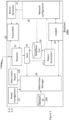
- the base station comprises an RF interface comprising a transmitter 20 and a receiver 21, and a modem 29 connected through a communications network to the OAM 90. Communications traffic between mobile terminals and the network are handled through RF interface 20, 21 and the modem 29 in conventional manner.
- a beacon generator 22 When the base station is in operation a beacon generator 22 generates a signal for broadcast by the transmitter 20 to indicate to nearby receivers that the base station is in operation, and the channels it is operating on.
- a power management system 23 monitors whether the base station is connected to an external supply, and controls its transfer to a more limited function set or "sleep" mode when external power is disconnected.
- a hibernation manager 24 is activated which generates a "hibernation" report for broadcast by the transmitter 20 before closing it down.
- a chargeable battery is integrated within the Femtocell Access Point (FAP).
- FAP Femtocell Access Point
- the power management system 23 detects the loss of mains power and the FAP switches to Battery Mode and reports the unplugging to the monitoring device (OAM, MBS, Neighboring FAPs, etc.) before it switches off (in few seconds).
- the FAP can use X2, S interfaces or radio signal to report the alarm.
- the other FAPs will stop monitoring this FAP, so no outage detection procedure will be performed on this FAP. That will prevent (False-Negative) the FAP from mistakenly considered to be in outage. This will eliminate time, effort and cost of the outage compensation procedures.
- the FAP reports the plugging alarm to the monitoring device. Consequently, the monitoring device will start the monitoring process (outage detection procedure) on this FAP.
- a more limited hibernation process may also be activated if the receiver 21 detects no mobile terminals 10, 11, 12, within range. In this case the receiver continues to operate, at reduced power, so that if a mobile terminal comes within range it will be detected and the base station can resume operation.
- the base station also has a scanning system 25 for monitoring signals received by the receiver 21 to detect beacon signals generated by other base stations with range, as well as any hibernation reports. These are compared with data stored in a neighbour list 26 and a report generator 27 updates the neighbour list with any changes.
- the report generator 27 may also report any hibernations or outages to the OAM 90 through the modem 29 and the communications network, and instructions received through the modem 29 for any reconfiguration required as the network changes are forwarded to a reconfiguration manager 28 which updates the neighbour list 26, instructs the beacon generator 22 if a change in beacon signal is required, and if necessary alters the transmitter and receiver channels and signal strengths.
- the network configuration system 28 may operate autonomously in response to reports from the report generation system 27 resulting from the scanning process 25.
- the self-organising system 28 updates the channel frequency plan as base stations are added or removed from the system.
- efficient updating of the frequency plan can be compromised by temporary losses of signal from individual base stations, resulting in computer processing power having to be used to generate a new frequency plan to accommodate the loss of the station, only to have to be reversed if the base station is detected again on the next scan.
- Re-organising the frequency plan can also require several handovers of mobile terminals, again requiring processing power and running the risk of dropping some sessions.
- receiver power can be wasted in continuing to attempt to detect base stations which have been deliberately powered down.
- the present embodiment includes measures to allow a base station to announce a deliberate power down, so that other base stations can immediately take account of its absence in the self-organising process, and also includes measures to inhibit a base station from reporting to the self-organising system unexpected losses of contact until it can be established that the loss is not transitory.
- the process requires the co-operation of two or more base stations, more than one of which may be of the type depicted in Figure 3 , and in the following description the reference numerals for the respective functional elements in each base station should be taken as a reference to the relevant component in the appropriate base station 1, 2, 3, 4.
- the reporting by a first base station of an outage in a second base station can take place whether or not the second base station is capable of performing the "graceful" hibernation function. If it does not have this capability, any loss of contact with it will be reported as an unexpected outage.
- not all base stations in the network may be capable of reporting outages or hibernations of their neighbours.
- the flow chart of Figure 4 depicts the process by which a base station 2 or 4 ( Figure 2 ) detects an outage of a base station 1.
- the dual-stage Outage detection is initiated in regular time intervals t (step 40).
- each FAP 2, 4 within a certain collaborative range (R) monitors each neighbouring FAPs' current RSRP statistics within a certain collaborative range.
- the scanner is not operated in respect of that base station and the process waits for the scanning interval t before resuming (step 42).
- the scanner searches for the beacon signal (step 43).
- the range will be determined according to the sensitivity of the scanner.
- the scanner 25 may also be used to sense the user terminal activity, but operating to detect base station transmission frequencies and with a sensitivity adjusted to take account of the typically greater distances between neighbouring base stations than the range required for communication with a user terminal.
- step 44 Having detected the current RSRP for a neighbouring base station (step 44) statistics are compared to the initial RSRPs from previously stored benchmark data 25 (step 45).
- the benchmark data is frequently updated (step 46) in case new FAPs are introduced into the network, or re-introduced after a shutdown, or for which outage reports have been received, or any other changes occurring within the collaborative range. If the decision statistic for a certain FAP is greater than a certain Threshold value (T), this FAP (e.g. FAP 1) is recorded as a potential outage. Otherwise, the scanning process is completed and the scanner waits for the interval t (step 40)
- T Threshold value
- the OAM 90 receives the report from the FAP 2 (step 51) and, together with similar reports from other FAPs (e.g FAP 4) (step 52) and any information obtainable from the outaged FAP over its backhaul connection (step 53), performs an analysis (50) to determine the cause of the outage.
- Centralized synchronization is used to manage the initiation of detection for the collaborative FAPs 2, 4.
- the OAM 90 may also initiate a polling process to cause a neighbour FAP 4 to make extra measurements in the event of a potential outage being reported, instead of waiting for the normal polling interval "t" to expire.
- the initial decision for an outage to be reported to centralized Operation Administration and Maintenance (OAM) server is based on a decision statistic D, which is reported to the OAM assist the outage compensation process.
- D a decision statistic
- the process will always be able to detect the outage regardless of the number of users within the collaborative range.
- D RSRP ⁇ RSRP 0 , where RSRP is the normal RSRP statistics from the benchmark data and RSRP 0 is the sensed current RSRP statistic for a certain collaborative FAP.
- the outage decision is based on the following equation: D > T , where T is a heuristically predefined threshold, which is dependent on the false alarm and misdetection rates.
- the OAM will check the initial decision reported from the collaborative FAPs (FAP 2 and FAP 4) as shown in Fig. 3 . If more than two FAPs within a certain collaborative range reported an initial decision of an outage for the same FAP, then the OAM will take the final decision that this FAP is in outage. The OAM will take further action to investigate this outage by polling the outaged FAP and request from the local home hub to poll it as well. Once these data are collected the OAM start analyzing it to determine the root cause of the outage (Hardware, Backhaul, etc.). That will allow patterns/trends to be monitored. For example, clusters of alarms may be investigated for a common route cause).
- the root cause of the outage Hardware, Backhaul, etc.
- the OAM will start the necessary outage compensation scheme with the aid of the reported decision statistic (D). For instance, automated compensation of power levels by neighbouring Femto Cells (i.e. Automatic Power Control, but with the opportunity to respond more quickly based on detected outage of neighbour cell).
- D reported decision statistic
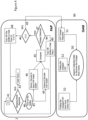
- step 60 the receiver and scanner are operating to detect any mobile terminals that are in the vicinity.
- the FAP (femtocell) 3 is arranged to operate an energy-efficient process to control "wake-up" from hibernation, in which the femtocell 3 uses the scanner 25 and a hibernation management function 24 to sense activity of neighbouring user terminals (also known as user equipment or UEs) in order to switch between the sleeping and wakeup mode.
- the scanner 25 senses user terminals in the vicinity (step 61)
- it initiates a wake up process.
- the first stage of this process it determines whether the UE detected (or any of them, if it detects more than one) is a subscriber for the network to which the FAP is operating (step 62), and only continues the "wake up” process if this is the case.
- Identification of the network to which a UE is operating may be done by reference to a data store 240 within the FAP, or by obtaining data on individual UEs from the OAM 90 through the backhaul connection through the modem 29. If a UE which can connect to the FAP 1 is identified, the hibernation manager activates the transmitter 20 and other functions (step 63), but the FAP is not activated and remains in Sleep mode (step 60) if the sensed UE is not its subscriber. This avoids the unnecessary activation of the FAP in case of presence of a non-subscriber UE in the vicinity.
- the FAP 4 Whilst in active mode, the FAP 4 can be detected by its neighbours 2, 3.
- a shutdown process 64, 65, 60 can be initiated, in which the FAP 3 informs the rest of the neighbouring FAPs (FAP 2 and FAP 4 in Fig. 3 ) within the collaborative range before it switches to the sleep mode as shown in Fig. 2 .
- the collaborative FAPs i.e. FAP 2 and FAP 3
- FAP 2 and FAP 3 will exclude this FAP from the dual-stage detection. Consequently, the sleeping FAPs will not be falsely detected as in outage.
- the sleeping FAP After the sleeping FAP becomes active again (step 63), it informs the collaborative FAPs 2, 4, which detect the FAP (steps 44,46 , Figure 4 ) and treat it as a normal neighbour, and also reports its status to the OAM 90 through the modem 29.
- the hibernation manager 24 activates a report generator 241 which generates a report for transmission to neighbouring FAPs 2, 4 (step 67) informing them that it is shutting down. (A similar report may be sent to the modem 29, to inform the OAM).
- the beacon generator 22, transmitter 20 and receiver 21 are then shut down (step 68) until power is restored (step 69) and the device is rebooted (returning to active mode 63). It should be noted that, unlike the condition when in sleep mode, when shut down the FAP is not scanning for user terminal (UE) activity.
- FAPs on receiving the sleep mode message 65 or the power outage message 67, update their neighbour lists 26 accordingly, so that when scanning (step 40, Figure 4 ) they omit any FAPs reported as shut down or in sleep mode (step 42).
- the only FAPs that are reported by their neighbours as possible outages (step 47) are those that are not hibernating or have undergone a "graceful" shutdown. These remaining outages will be from causes not detected by the FAP itself, such as a transmitter failure, or interference from other transmissions.
- This allows the network operator, through the OAM, to filter outage reports so as to disregard outages triggered by customers turning off their base stations (FAPs) or when an FAP has gone into sleep mode.
- the process is also able to differentiate between cell outage and sleeping cells, and avoids false outage alarms generated from accidental unplugging or rebooting the FAP, minimising the cost and effort generated by false alarms and misdetection.
Landscapes
- Engineering & Computer Science (AREA)
- Computer Networks & Wireless Communication (AREA)
- Signal Processing (AREA)
- Mobile Radio Communication Systems (AREA)
Claims (4)
- Station de base de communication sans fil dotée d'une mémoire de données (26) pour stocker des caractéristiques de transmission de référence, d'un récepteur (21) pour détecter les transmissions sans fil émises par d'autres stations de base sans fil, d'un capteur (25) pour rechercher dans les transmissions reçues par le récepteur des transmissions ayant les caractéristiques de référence,le capteur (25) étant configuré pour détecter un premier signal d'hibernation indiquant qu'une station de base voisine entre dans un premier état d'hibernation dans lequel elle recherche des transmissions de terminaux mobiles mais ne transmet pas de signal de balise, et pour détecter un deuxième signal d'arrêt indiquant qu'une station de base voisine entre dans un deuxième état dans lequel elle n'émet pas et ne reçoit pas,le capteur étant configuré pour identifier le moment où une transmission présentant les caractéristiques de référence cesse d'être détectée par le capteur,et un système de notification (27) est configuré pour initier un plan de réallocation des canaux en réponse au deuxième signal d'arrêt et pour signaler une panne d'émetteur si le système de capteur identifie qu'une transmission présentant les caractéristiques de référence a cessé d'être détectée et que ni le premier signal d'hibernation, ni le deuxième signal d'arrêt n'ont été reçus.
- Procédé de signalement de panne de station de base sans fil, dans lequel une ou plusieurs stations de base émettrices (1) diffusent des signaux de balise, et une ou plusieurs stations de base de balayage (2) recherchent les signaux de balise, le procédé étant caractérisé en ce que, si une station de base émettrice (1) détecte une perte de puissance électrique (23), elle diffuse un signal indicatif de la perte de puissance avant d'interrompre la transmission, et une station de base de balayage détectant le signal de perte de puissance suspend la recherche de transmissions depuis la station de base qui a émis le signal de perte de puissance jusqu'à ce qu'un autre signal soit émis depuis la station de base émettrice lors de la détection du rétablissement de son alimentation électrique, et où, si une station de base est dans un mode de veille, dans lequel elle n'émet pas, elle émet un signal d'hibernation qui se distingue du signal de perte de puissance,
où une station de base de balayage fait la distinction entre le signal d'hibernation et le signal de perte de puissance et, dans le cas où un signal de perte de puissance organise un plan de réallocation des canaux, dans le cas où un signal d'hibernation maintient le plan d'allocation des canaux en cours, et dans le cas où un signal de balise cesse d'être détecté par une station de base de balayage tandis que ni un signal d'hibernation, ni un signal de perte de puissance n'ont été détectés, la station de base de balayage génère une alerte. - Procédé selon la revendication 2, dans lequel le signal de perte de puissance diffusé est détecté par une ou plusieurs stations de base de réception et utilisé pour mettre à jour une liste de voisins dans la, ou chaque, station de base de réception.
- Procédé selon la revendication 2 ou la revendication 3, dans lequel une station de base émettrice reprend son fonctionnement normal après une hibernation en réponse à la détection d'un terminal d'utilisateur, la station de base réagissant aux données d'abonné transmises par le terminal d'utilisateur pour déterminer si elle est capable de se connecter au terminal d'utilisateur, et reprend uniquement la transmission que si elle dispose d'une telle capacité.
Applications Claiming Priority (2)
| Application Number | Priority Date | Filing Date | Title |
|---|---|---|---|
| EP16161677 | 2016-03-22 | ||
| PCT/EP2017/054309 WO2017162399A1 (fr) | 2016-03-22 | 2017-02-24 | Rapport d'interruption d'émetteur |
Publications (2)
| Publication Number | Publication Date |
|---|---|
| EP3434041A1 EP3434041A1 (fr) | 2019-01-30 |
| EP3434041B1 true EP3434041B1 (fr) | 2023-10-11 |
Family
ID=55628830
Family Applications (1)
| Application Number | Title | Priority Date | Filing Date |
|---|---|---|---|
| EP17707524.9A Active EP3434041B1 (fr) | 2016-03-22 | 2017-02-24 | Rapport de panne d'émetteur |
Country Status (3)
| Country | Link |
|---|---|
| US (1) | US11323958B2 (fr) |
| EP (1) | EP3434041B1 (fr) |
| WO (1) | WO2017162399A1 (fr) |
Families Citing this family (8)
| Publication number | Priority date | Publication date | Assignee | Title |
|---|---|---|---|---|
| EP3434040B1 (fr) | 2016-03-22 | 2022-03-02 | British Telecommunications public limited company | Émetteur de détection d'une panne de courant |
| EP3434041B1 (fr) | 2016-03-22 | 2023-10-11 | British Telecommunications public limited company | Rapport de panne d'émetteur |
| US10912004B2 (en) | 2016-10-28 | 2021-02-02 | British Telecommunications Public Limited Company | Method of handling a cell outage in a radiocommunication network |
| EP3607767B1 (fr) | 2017-04-03 | 2022-01-05 | British Telecommunications Public Limited Company | Découverte de panne de réseau |
| US11452038B2 (en) * | 2018-02-23 | 2022-09-20 | Agsensio Pty Ltd | Power conserving local wireless network |
| CN113938991B (zh) * | 2020-06-29 | 2023-09-26 | 大唐移动通信设备有限公司 | 基站射频单元及其休眠唤醒方法 |
| US11770765B2 (en) * | 2020-07-22 | 2023-09-26 | Qualcomm Incorporated | Radio base station sleep mode-beacon and wakeup |
| US20240196325A1 (en) * | 2021-05-10 | 2024-06-13 | Telefonaktiebolaget Lm Ericsson (Publ) | Method for Switching Off Network Cells based on the Capability of Wireless Devices in the Network |
Citations (1)
| Publication number | Priority date | Publication date | Assignee | Title |
|---|---|---|---|---|
| US8116815B2 (en) * | 2007-11-05 | 2012-02-14 | Hewlett-Packard Development Company, L.P. | Systems and methods for maintaining base stations in wireless networks |
Family Cites Families (30)
| Publication number | Priority date | Publication date | Assignee | Title |
|---|---|---|---|---|
| EP1391100A4 (fr) | 2001-05-02 | 2009-03-11 | Strix Systems Inc | Decouverte de voisins d'une station de base sans fil dans un systeme de communication utilisant un plan de sauts de frequence a faible portee |
| US7826820B2 (en) * | 2006-09-08 | 2010-11-02 | Telefonaktiebolaget Lm Ericsson (Publ) | Non-homogenous telecommunications base stations |
| WO2008156782A2 (fr) | 2007-06-19 | 2008-12-24 | Sand Holdings, Llc | Systèmes, dispositifs, agents et procédés pour la surveillance et le redémarrage et la restauration automatiques d'ordinateurs, de réseaux locaux, de points d'accès sans fil, de modems et d'autres matériels |
| US7864687B2 (en) | 2007-12-19 | 2011-01-04 | At&T Intellectual Property Ii, L.P. | Methods and apparatus for fault identification in border gateway protocol networks |
| US8527663B2 (en) | 2007-12-21 | 2013-09-03 | At&T Intellectual Property I, L.P. | Methods and apparatus for performing non-intrusive network layer performance measurement in communication networks |
| EP2129175B1 (fr) | 2008-05-28 | 2010-12-22 | Alcatel Lucent | Procédé de détection d'interruption d'une cellule radio |
| EP2154918B1 (fr) | 2008-08-13 | 2012-02-01 | Alcatel Lucent | Procédé décentralisé pour le traitement d'une panne de cellule dans un réseau de radiocommunication |
| ES2759599T3 (es) * | 2009-02-13 | 2020-05-11 | Ericsson Telefon Ab L M | Control del consumo de energía de un nodo de red inalámbrica |
| EP2528279A3 (fr) | 2009-02-13 | 2013-03-27 | Nokia Siemens Networks Oy | Procédé, système et nýuds pour la détection de la topologie dýun réseau dans des réseaux de communication |
| US20100216453A1 (en) * | 2009-02-20 | 2010-08-26 | Telefonaktiebolaget Lm Ericsson | Compensating for cell outage using priorities |
| EP2230864B1 (fr) | 2009-03-17 | 2020-01-08 | Alcatel Lucent | Détection de fautes dans des stations de base |
| CN101583150B (zh) | 2009-06-18 | 2011-04-20 | 中兴通讯股份有限公司 | 一种无线接入点检测无线终端异常的方法及装置 |
| US8407247B2 (en) | 2010-02-22 | 2013-03-26 | Kenshoo Ltd. | Universal resource locator watchdog |
| CN102752788B (zh) | 2011-04-20 | 2015-12-16 | 华为技术有限公司 | 检测失效小区的方法和设备 |
| WO2013094092A1 (fr) | 2011-12-22 | 2013-06-27 | 日本電気株式会社 | Station de base, système de communication et procédé de commande de station de base |
| CN103220695B (zh) | 2012-01-20 | 2017-04-12 | 华为技术有限公司 | 网元状态的处理方法及装置 |
| US8873403B2 (en) | 2012-02-21 | 2014-10-28 | Avaya Inc. | System and method for automatic DSCP tracing for XoIP elements |
| US8811291B2 (en) | 2012-05-30 | 2014-08-19 | Qualcomm Incorporated | Methods and devices for optimized cell acquisitions |
| KR101991761B1 (ko) * | 2012-10-05 | 2019-06-21 | 삼성전자주식회사 | 셀 정전 검출 및 송신 전력 조절 방법 및 장치 |
| EP2770772B1 (fr) | 2013-02-26 | 2015-04-08 | Alcatel Lucent | Procédé de compensation de défaillance de cellules et noeud de réseau |
| US9331900B2 (en) | 2013-07-03 | 2016-05-03 | Fortinet, Inc. | Centralized management of access points |
| US20150058481A1 (en) | 2013-08-22 | 2015-02-26 | Bruce D. Miller | Method & apparatus for measuring power, bandwidth and monitoring the operation of a network infrastructure from another network infrastructure |
| CN105794253B (zh) | 2013-11-28 | 2017-11-28 | 英国电讯有限公司 | 无线接入点和报告连接的丢失的方法 |
| WO2015160296A1 (fr) | 2014-04-17 | 2015-10-22 | Telefonaktiebolaget L M Ericsson (Publ) | Procédés et stations de base pour des économies d'énergie dans une station de base domestique |
| US9338651B2 (en) | 2014-05-09 | 2016-05-10 | Verizon Patent And Licensing Inc. | Proactive assistance in obtaining a wireless network connection |
| US9930098B2 (en) | 2015-01-23 | 2018-03-27 | Hughes Network Systems, Llc | Method and system for ISP network performance monitoring and fault detection |
| US10034149B2 (en) | 2016-03-02 | 2018-07-24 | Cisco Technology, Inc. | System and method for providing home node B gateway redundancy in a network environment |
| EP3434040B1 (fr) | 2016-03-22 | 2022-03-02 | British Telecommunications public limited company | Émetteur de détection d'une panne de courant |
| EP3434041B1 (fr) | 2016-03-22 | 2023-10-11 | British Telecommunications public limited company | Rapport de panne d'émetteur |
| EP3607767B1 (fr) | 2017-04-03 | 2022-01-05 | British Telecommunications Public Limited Company | Découverte de panne de réseau |
-
2017
- 2017-02-24 EP EP17707524.9A patent/EP3434041B1/fr active Active
- 2017-02-24 US US16/085,765 patent/US11323958B2/en active Active
- 2017-02-24 WO PCT/EP2017/054309 patent/WO2017162399A1/fr not_active Ceased
Patent Citations (1)
| Publication number | Priority date | Publication date | Assignee | Title |
|---|---|---|---|---|
| US8116815B2 (en) * | 2007-11-05 | 2012-02-14 | Hewlett-Packard Development Company, L.P. | Systems and methods for maintaining base stations in wireless networks |
Also Published As
| Publication number | Publication date |
|---|---|
| US11323958B2 (en) | 2022-05-03 |
| EP3434041A1 (fr) | 2019-01-30 |
| US20200305073A1 (en) | 2020-09-24 |
| WO2017162399A1 (fr) | 2017-09-28 |
Similar Documents
| Publication | Publication Date | Title |
|---|---|---|
| EP3434040B1 (fr) | Émetteur de détection d'une panne de courant | |
| EP3434041B1 (fr) | Rapport de panne d'émetteur | |
| US10912004B2 (en) | Method of handling a cell outage in a radiocommunication network | |
| US9420621B2 (en) | Mobile communication method, radio terminal, and base station | |
| KR101473683B1 (ko) | 핸드오버 제어 | |
| CN107113639B (zh) | 用于在无线通信系统中控制接入点操作的方法 | |
| HK1214461A1 (zh) | 在无线通信系统中支持基站进入和退出休眠模式 | |
| CA2911649A1 (fr) | Systeme et procede d'economie d'energie dans un systeme sans fil | |
| AU2013345596A1 (en) | Method and apparatus for controlling operation state of base station in wireless communication system | |
| WO2017157585A1 (fr) | Réseau de télécommunication cellulaire | |
| CN104244321A (zh) | 一种小区节能与唤醒方法及装置 | |
| CN102223690A (zh) | 一种传输系统信息的方法及装置 | |
| WO2011095081A1 (fr) | Procédé et système de gestion d'informations de cellules voisines | |
| EP2453706B1 (fr) | Station de base de petites cellules pour télécommunications sans fil et procédé pour commuter d'un état à l'autre | |
| CN105210413B (zh) | 用于由用户设备改进测量处理的方法和公共陆地移动网络 | |
| CN107548097A (zh) | Ap故障检测方法、装置和电子设备 | |
| WO2014163572A1 (fr) | Détection de proximité dans un réseau sans fil | |
| CN101228740A (zh) | 无线环境中弹性覆盖的系统和方法 | |
| Onireti et al. | Cell outage detection in heterogeneous networks with separated control and data plane | |
| EP3213547B1 (fr) | Détection d'une indisponibilité d'une cellule radio | |
| CN101273579A (zh) | 信号检测装置 | |
| GB2548592A (en) | Transmitter outage reporting | |
| GB2548805A (en) | Transmitter outage detection | |
| CN107241772B (zh) | 一种小小区的邻近小区建立以及使用方法 | |
| EP3410765A1 (fr) | Surveillance de point d'accès |
Legal Events
| Date | Code | Title | Description |
|---|---|---|---|
| STAA | Information on the status of an ep patent application or granted ep patent |
Free format text: STATUS: UNKNOWN |
|
| STAA | Information on the status of an ep patent application or granted ep patent |
Free format text: STATUS: THE INTERNATIONAL PUBLICATION HAS BEEN MADE |
|
| PUAI | Public reference made under article 153(3) epc to a published international application that has entered the european phase |
Free format text: ORIGINAL CODE: 0009012 |
|
| STAA | Information on the status of an ep patent application or granted ep patent |
Free format text: STATUS: REQUEST FOR EXAMINATION WAS MADE |
|
| 17P | Request for examination filed |
Effective date: 20180831 |
|
| AK | Designated contracting states |
Kind code of ref document: A1 Designated state(s): AL AT BE BG CH CY CZ DE DK EE ES FI FR GB GR HR HU IE IS IT LI LT LU LV MC MK MT NL NO PL PT RO RS SE SI SK SM TR |
|
| AX | Request for extension of the european patent |
Extension state: BA ME |
|
| DAV | Request for validation of the european patent (deleted) | ||
| DAX | Request for extension of the european patent (deleted) | ||
| STAA | Information on the status of an ep patent application or granted ep patent |
Free format text: STATUS: EXAMINATION IS IN PROGRESS |
|
| 17Q | First examination report despatched |
Effective date: 20200318 |
|
| RAP3 | Party data changed (applicant data changed or rights of an application transferred) |
Owner name: BRITISH TELECOMMUNICATIONS PUBLIC LIMITED COMPANY |
|
| GRAP | Despatch of communication of intention to grant a patent |
Free format text: ORIGINAL CODE: EPIDOSNIGR1 |
|
| STAA | Information on the status of an ep patent application or granted ep patent |
Free format text: STATUS: GRANT OF PATENT IS INTENDED |
|
| INTG | Intention to grant announced |
Effective date: 20230515 |
|
| P01 | Opt-out of the competence of the unified patent court (upc) registered |
Effective date: 20230623 |
|
| GRAS | Grant fee paid |
Free format text: ORIGINAL CODE: EPIDOSNIGR3 |
|
| GRAA | (expected) grant |
Free format text: ORIGINAL CODE: 0009210 |
|
| STAA | Information on the status of an ep patent application or granted ep patent |
Free format text: STATUS: THE PATENT HAS BEEN GRANTED |
|
| AK | Designated contracting states |
Kind code of ref document: B1 Designated state(s): AL AT BE BG CH CY CZ DE DK EE ES FI FR GB GR HR HU IE IS IT LI LT LU LV MC MK MT NL NO PL PT RO RS SE SI SK SM TR |
|
| REG | Reference to a national code |
Ref country code: GB Ref legal event code: FG4D |
|
| REG | Reference to a national code |
Ref country code: CH Ref legal event code: EP |
|
| REG | Reference to a national code |
Ref country code: DE Ref legal event code: R096 Ref document number: 602017075148 Country of ref document: DE |
|
| REG | Reference to a national code |
Ref country code: IE Ref legal event code: FG4D |
|
| REG | Reference to a national code |
Ref country code: LT Ref legal event code: MG9D |
|
| REG | Reference to a national code |
Ref country code: NL Ref legal event code: MP Effective date: 20231011 |
|
| REG | Reference to a national code |
Ref country code: AT Ref legal event code: MK05 Ref document number: 1621485 Country of ref document: AT Kind code of ref document: T Effective date: 20231011 |
|
| PG25 | Lapsed in a contracting state [announced via postgrant information from national office to epo] |
Ref country code: NL Free format text: LAPSE BECAUSE OF FAILURE TO SUBMIT A TRANSLATION OF THE DESCRIPTION OR TO PAY THE FEE WITHIN THE PRESCRIBED TIME-LIMIT Effective date: 20231011 |
|
| PG25 | Lapsed in a contracting state [announced via postgrant information from national office to epo] |
Ref country code: GR Free format text: LAPSE BECAUSE OF FAILURE TO SUBMIT A TRANSLATION OF THE DESCRIPTION OR TO PAY THE FEE WITHIN THE PRESCRIBED TIME-LIMIT Effective date: 20240112 |
|
| PG25 | Lapsed in a contracting state [announced via postgrant information from national office to epo] |
Ref country code: IS Free format text: LAPSE BECAUSE OF FAILURE TO SUBMIT A TRANSLATION OF THE DESCRIPTION OR TO PAY THE FEE WITHIN THE PRESCRIBED TIME-LIMIT Effective date: 20240211 |
|
| PG25 | Lapsed in a contracting state [announced via postgrant information from national office to epo] |
Ref country code: LT Free format text: LAPSE BECAUSE OF FAILURE TO SUBMIT A TRANSLATION OF THE DESCRIPTION OR TO PAY THE FEE WITHIN THE PRESCRIBED TIME-LIMIT Effective date: 20231011 |
|
| PG25 | Lapsed in a contracting state [announced via postgrant information from national office to epo] |
Ref country code: AT Free format text: LAPSE BECAUSE OF FAILURE TO SUBMIT A TRANSLATION OF THE DESCRIPTION OR TO PAY THE FEE WITHIN THE PRESCRIBED TIME-LIMIT Effective date: 20231011 |
|
| PG25 | Lapsed in a contracting state [announced via postgrant information from national office to epo] |
Ref country code: ES Free format text: LAPSE BECAUSE OF FAILURE TO SUBMIT A TRANSLATION OF THE DESCRIPTION OR TO PAY THE FEE WITHIN THE PRESCRIBED TIME-LIMIT Effective date: 20231011 |
|
| PG25 | Lapsed in a contracting state [announced via postgrant information from national office to epo] |
Ref country code: LT Free format text: LAPSE BECAUSE OF FAILURE TO SUBMIT A TRANSLATION OF THE DESCRIPTION OR TO PAY THE FEE WITHIN THE PRESCRIBED TIME-LIMIT Effective date: 20231011 Ref country code: IS Free format text: LAPSE BECAUSE OF FAILURE TO SUBMIT A TRANSLATION OF THE DESCRIPTION OR TO PAY THE FEE WITHIN THE PRESCRIBED TIME-LIMIT Effective date: 20240211 Ref country code: GR Free format text: LAPSE BECAUSE OF FAILURE TO SUBMIT A TRANSLATION OF THE DESCRIPTION OR TO PAY THE FEE WITHIN THE PRESCRIBED TIME-LIMIT Effective date: 20240112 Ref country code: ES Free format text: LAPSE BECAUSE OF FAILURE TO SUBMIT A TRANSLATION OF THE DESCRIPTION OR TO PAY THE FEE WITHIN THE PRESCRIBED TIME-LIMIT Effective date: 20231011 Ref country code: BG Free format text: LAPSE BECAUSE OF FAILURE TO SUBMIT A TRANSLATION OF THE DESCRIPTION OR TO PAY THE FEE WITHIN THE PRESCRIBED TIME-LIMIT Effective date: 20240111 Ref country code: AT Free format text: LAPSE BECAUSE OF FAILURE TO SUBMIT A TRANSLATION OF THE DESCRIPTION OR TO PAY THE FEE WITHIN THE PRESCRIBED TIME-LIMIT Effective date: 20231011 Ref country code: PT Free format text: LAPSE BECAUSE OF FAILURE TO SUBMIT A TRANSLATION OF THE DESCRIPTION OR TO PAY THE FEE WITHIN THE PRESCRIBED TIME-LIMIT Effective date: 20240212 |
|
| PG25 | Lapsed in a contracting state [announced via postgrant information from national office to epo] |
Ref country code: SE Free format text: LAPSE BECAUSE OF FAILURE TO SUBMIT A TRANSLATION OF THE DESCRIPTION OR TO PAY THE FEE WITHIN THE PRESCRIBED TIME-LIMIT Effective date: 20231011 Ref country code: RS Free format text: LAPSE BECAUSE OF FAILURE TO SUBMIT A TRANSLATION OF THE DESCRIPTION OR TO PAY THE FEE WITHIN THE PRESCRIBED TIME-LIMIT Effective date: 20231011 Ref country code: PL Free format text: LAPSE BECAUSE OF FAILURE TO SUBMIT A TRANSLATION OF THE DESCRIPTION OR TO PAY THE FEE WITHIN THE PRESCRIBED TIME-LIMIT Effective date: 20231011 Ref country code: NO Free format text: LAPSE BECAUSE OF FAILURE TO SUBMIT A TRANSLATION OF THE DESCRIPTION OR TO PAY THE FEE WITHIN THE PRESCRIBED TIME-LIMIT Effective date: 20240111 Ref country code: LV Free format text: LAPSE BECAUSE OF FAILURE TO SUBMIT A TRANSLATION OF THE DESCRIPTION OR TO PAY THE FEE WITHIN THE PRESCRIBED TIME-LIMIT Effective date: 20231011 Ref country code: HR Free format text: LAPSE BECAUSE OF FAILURE TO SUBMIT A TRANSLATION OF THE DESCRIPTION OR TO PAY THE FEE WITHIN THE PRESCRIBED TIME-LIMIT Effective date: 20231011 |
|
| PG25 | Lapsed in a contracting state [announced via postgrant information from national office to epo] |
Ref country code: DK Free format text: LAPSE BECAUSE OF FAILURE TO SUBMIT A TRANSLATION OF THE DESCRIPTION OR TO PAY THE FEE WITHIN THE PRESCRIBED TIME-LIMIT Effective date: 20231011 |
|
| REG | Reference to a national code |
Ref country code: DE Ref legal event code: R097 Ref document number: 602017075148 Country of ref document: DE |
|
| PG25 | Lapsed in a contracting state [announced via postgrant information from national office to epo] |
Ref country code: CZ Free format text: LAPSE BECAUSE OF FAILURE TO SUBMIT A TRANSLATION OF THE DESCRIPTION OR TO PAY THE FEE WITHIN THE PRESCRIBED TIME-LIMIT Effective date: 20231011 |
|
| PG25 | Lapsed in a contracting state [announced via postgrant information from national office to epo] |
Ref country code: SK Free format text: LAPSE BECAUSE OF FAILURE TO SUBMIT A TRANSLATION OF THE DESCRIPTION OR TO PAY THE FEE WITHIN THE PRESCRIBED TIME-LIMIT Effective date: 20231011 |
|
| PG25 | Lapsed in a contracting state [announced via postgrant information from national office to epo] |
Ref country code: SM Free format text: LAPSE BECAUSE OF FAILURE TO SUBMIT A TRANSLATION OF THE DESCRIPTION OR TO PAY THE FEE WITHIN THE PRESCRIBED TIME-LIMIT Effective date: 20231011 Ref country code: SK Free format text: LAPSE BECAUSE OF FAILURE TO SUBMIT A TRANSLATION OF THE DESCRIPTION OR TO PAY THE FEE WITHIN THE PRESCRIBED TIME-LIMIT Effective date: 20231011 Ref country code: RO Free format text: LAPSE BECAUSE OF FAILURE TO SUBMIT A TRANSLATION OF THE DESCRIPTION OR TO PAY THE FEE WITHIN THE PRESCRIBED TIME-LIMIT Effective date: 20231011 Ref country code: IT Free format text: LAPSE BECAUSE OF FAILURE TO SUBMIT A TRANSLATION OF THE DESCRIPTION OR TO PAY THE FEE WITHIN THE PRESCRIBED TIME-LIMIT Effective date: 20231011 Ref country code: EE Free format text: LAPSE BECAUSE OF FAILURE TO SUBMIT A TRANSLATION OF THE DESCRIPTION OR TO PAY THE FEE WITHIN THE PRESCRIBED TIME-LIMIT Effective date: 20231011 Ref country code: DK Free format text: LAPSE BECAUSE OF FAILURE TO SUBMIT A TRANSLATION OF THE DESCRIPTION OR TO PAY THE FEE WITHIN THE PRESCRIBED TIME-LIMIT Effective date: 20231011 Ref country code: CZ Free format text: LAPSE BECAUSE OF FAILURE TO SUBMIT A TRANSLATION OF THE DESCRIPTION OR TO PAY THE FEE WITHIN THE PRESCRIBED TIME-LIMIT Effective date: 20231011 |
|
| PLBE | No opposition filed within time limit |
Free format text: ORIGINAL CODE: 0009261 |
|
| STAA | Information on the status of an ep patent application or granted ep patent |
Free format text: STATUS: NO OPPOSITION FILED WITHIN TIME LIMIT |
|
| 26N | No opposition filed |
Effective date: 20240712 |
|
| PG25 | Lapsed in a contracting state [announced via postgrant information from national office to epo] |
Ref country code: MC Free format text: LAPSE BECAUSE OF FAILURE TO SUBMIT A TRANSLATION OF THE DESCRIPTION OR TO PAY THE FEE WITHIN THE PRESCRIBED TIME-LIMIT Effective date: 20231011 |
|
| REG | Reference to a national code |
Ref country code: CH Ref legal event code: PL |
|
| PG25 | Lapsed in a contracting state [announced via postgrant information from national office to epo] |
Ref country code: LU Free format text: LAPSE BECAUSE OF NON-PAYMENT OF DUE FEES Effective date: 20240224 |
|
| PG25 | Lapsed in a contracting state [announced via postgrant information from national office to epo] |
Ref country code: CH Free format text: LAPSE BECAUSE OF NON-PAYMENT OF DUE FEES Effective date: 20240229 |
|
| PG25 | Lapsed in a contracting state [announced via postgrant information from national office to epo] |
Ref country code: SI Free format text: LAPSE BECAUSE OF FAILURE TO SUBMIT A TRANSLATION OF THE DESCRIPTION OR TO PAY THE FEE WITHIN THE PRESCRIBED TIME-LIMIT Effective date: 20231011 |
|
| PG25 | Lapsed in a contracting state [announced via postgrant information from national office to epo] |
Ref country code: SI Free format text: LAPSE BECAUSE OF FAILURE TO SUBMIT A TRANSLATION OF THE DESCRIPTION OR TO PAY THE FEE WITHIN THE PRESCRIBED TIME-LIMIT Effective date: 20231011 Ref country code: LU Free format text: LAPSE BECAUSE OF NON-PAYMENT OF DUE FEES Effective date: 20240224 Ref country code: CH Free format text: LAPSE BECAUSE OF NON-PAYMENT OF DUE FEES Effective date: 20240229 |
|
| REG | Reference to a national code |
Ref country code: BE Ref legal event code: MM Effective date: 20240229 |
|
| PG25 | Lapsed in a contracting state [announced via postgrant information from national office to epo] |
Ref country code: BE Free format text: LAPSE BECAUSE OF NON-PAYMENT OF DUE FEES Effective date: 20240229 |
|
| PG25 | Lapsed in a contracting state [announced via postgrant information from national office to epo] |
Ref country code: IE Free format text: LAPSE BECAUSE OF NON-PAYMENT OF DUE FEES Effective date: 20240224 |
|
| PG25 | Lapsed in a contracting state [announced via postgrant information from national office to epo] |
Ref country code: IE Free format text: LAPSE BECAUSE OF NON-PAYMENT OF DUE FEES Effective date: 20240224 Ref country code: BE Free format text: LAPSE BECAUSE OF NON-PAYMENT OF DUE FEES Effective date: 20240229 |
|
| PG25 | Lapsed in a contracting state [announced via postgrant information from national office to epo] |
Ref country code: CY Free format text: LAPSE BECAUSE OF FAILURE TO SUBMIT A TRANSLATION OF THE DESCRIPTION OR TO PAY THE FEE WITHIN THE PRESCRIBED TIME-LIMIT; INVALID AB INITIO Effective date: 20170224 |
|
| PG25 | Lapsed in a contracting state [announced via postgrant information from national office to epo] |
Ref country code: HU Free format text: LAPSE BECAUSE OF FAILURE TO SUBMIT A TRANSLATION OF THE DESCRIPTION OR TO PAY THE FEE WITHIN THE PRESCRIBED TIME-LIMIT; INVALID AB INITIO Effective date: 20170224 |
|
| PG25 | Lapsed in a contracting state [announced via postgrant information from national office to epo] |
Ref country code: FI Free format text: LAPSE BECAUSE OF FAILURE TO SUBMIT A TRANSLATION OF THE DESCRIPTION OR TO PAY THE FEE WITHIN THE PRESCRIBED TIME-LIMIT Effective date: 20231011 |
|
| PG25 | Lapsed in a contracting state [announced via postgrant information from national office to epo] |
Ref country code: TR Free format text: LAPSE BECAUSE OF FAILURE TO SUBMIT A TRANSLATION OF THE DESCRIPTION OR TO PAY THE FEE WITHIN THE PRESCRIBED TIME-LIMIT Effective date: 20231011 |
|
| PGFP | Annual fee paid to national office [announced via postgrant information from national office to epo] |
Ref country code: GB Payment date: 20260121 Year of fee payment: 10 |
|
| PGFP | Annual fee paid to national office [announced via postgrant information from national office to epo] |
Ref country code: DE Payment date: 20260121 Year of fee payment: 10 |
|
| PGFP | Annual fee paid to national office [announced via postgrant information from national office to epo] |
Ref country code: FR Payment date: 20260121 Year of fee payment: 10 |