EP3448211B1 - Appareil et procédé de traitement alimentaire domestique - Google Patents
Appareil et procédé de traitement alimentaire domestique Download PDFInfo
- Publication number
- EP3448211B1 EP3448211B1 EP17720126.6A EP17720126A EP3448211B1 EP 3448211 B1 EP3448211 B1 EP 3448211B1 EP 17720126 A EP17720126 A EP 17720126A EP 3448211 B1 EP3448211 B1 EP 3448211B1
- Authority
- EP
- European Patent Office
- Prior art keywords
- food
- heating
- temperature
- vitamin
- vessel
- Prior art date
- Legal status (The legal status is an assumption and is not a legal conclusion. Google has not performed a legal analysis and makes no representation as to the accuracy of the status listed.)
- Active
Links
Images

Classifications
-
- A—HUMAN NECESSITIES
- A47—FURNITURE; DOMESTIC ARTICLES OR APPLIANCES; COFFEE MILLS; SPICE MILLS; SUCTION CLEANERS IN GENERAL
- A47J—KITCHEN EQUIPMENT; COFFEE MILLS; SPICE MILLS; APPARATUS FOR MAKING BEVERAGES
- A47J19/00—Household machines for straining foodstuffs; Household implements for mashing or straining foodstuffs
- A47J19/02—Citrus fruit squeezers; Other fruit juice extracting devices
-
- A—HUMAN NECESSITIES
- A47—FURNITURE; DOMESTIC ARTICLES OR APPLIANCES; COFFEE MILLS; SPICE MILLS; SUCTION CLEANERS IN GENERAL
- A47J—KITCHEN EQUIPMENT; COFFEE MILLS; SPICE MILLS; APPARATUS FOR MAKING BEVERAGES
- A47J43/00—Implements for preparing or holding food, not provided for in other groups of this subclass
- A47J43/04—Machines for domestic use not covered elsewhere, e.g. for grinding, mixing, stirring, kneading, emulsifying, whipping or beating foodstuffs, e.g. power-driven
- A47J43/046—Machines for domestic use not covered elsewhere, e.g. for grinding, mixing, stirring, kneading, emulsifying, whipping or beating foodstuffs, e.g. power-driven with tools driven from the bottom side
-
- A—HUMAN NECESSITIES
- A23—FOODS OR FOODSTUFFS; TREATMENT THEREOF, NOT COVERED BY OTHER CLASSES
- A23L—FOODS, FOODSTUFFS OR NON-ALCOHOLIC BEVERAGES, NOT OTHERWISE PROVIDED FOR; PREPARATION OR TREATMENT THEREOF
- A23L5/00—Preparation or treatment of foods or foodstuffs, in general; Food or foodstuffs obtained thereby; Materials therefor
- A23L5/20—Removal of unwanted matter, e.g. deodorisation or detoxification
- A23L5/21—Removal of unwanted matter, e.g. deodorisation or detoxification by heating without chemical treatment, e.g. steam treatment, cooking
-
- A—HUMAN NECESSITIES
- A23—FOODS OR FOODSTUFFS; TREATMENT THEREOF, NOT COVERED BY OTHER CLASSES
- A23L—FOODS, FOODSTUFFS OR NON-ALCOHOLIC BEVERAGES, NOT OTHERWISE PROVIDED FOR; PREPARATION OR TREATMENT THEREOF
- A23L5/00—Preparation or treatment of foods or foodstuffs, in general; Food or foodstuffs obtained thereby; Materials therefor
- A23L5/30—Physical treatment, e.g. electrical or magnetic means, wave energy or irradiation
- A23L5/32—Physical treatment, e.g. electrical or magnetic means, wave energy or irradiation using phonon wave energy, e.g. sound or ultrasonic waves
-
- A—HUMAN NECESSITIES
- A47—FURNITURE; DOMESTIC ARTICLES OR APPLIANCES; COFFEE MILLS; SPICE MILLS; SUCTION CLEANERS IN GENERAL
- A47J—KITCHEN EQUIPMENT; COFFEE MILLS; SPICE MILLS; APPARATUS FOR MAKING BEVERAGES
- A47J19/00—Household machines for straining foodstuffs; Household implements for mashing or straining foodstuffs
- A47J19/06—Juice presses for vegetables
-
- A—HUMAN NECESSITIES
- A47—FURNITURE; DOMESTIC ARTICLES OR APPLIANCES; COFFEE MILLS; SPICE MILLS; SUCTION CLEANERS IN GENERAL
- A47J—KITCHEN EQUIPMENT; COFFEE MILLS; SPICE MILLS; APPARATUS FOR MAKING BEVERAGES
- A47J27/00—Cooking-vessels
- A47J27/004—Cooking-vessels with integral electrical heating means
-
- A—HUMAN NECESSITIES
- A47—FURNITURE; DOMESTIC ARTICLES OR APPLIANCES; COFFEE MILLS; SPICE MILLS; SUCTION CLEANERS IN GENERAL
- A47J—KITCHEN EQUIPMENT; COFFEE MILLS; SPICE MILLS; APPARATUS FOR MAKING BEVERAGES
- A47J43/00—Implements for preparing or holding food, not provided for in other groups of this subclass
- A47J43/04—Machines for domestic use not covered elsewhere, e.g. for grinding, mixing, stirring, kneading, emulsifying, whipping or beating foodstuffs, e.g. power-driven
- A47J43/07—Parts or details, e.g. mixing tools, whipping tools
-
- A—HUMAN NECESSITIES
- A47—FURNITURE; DOMESTIC ARTICLES OR APPLIANCES; COFFEE MILLS; SPICE MILLS; SUCTION CLEANERS IN GENERAL
- A47J—KITCHEN EQUIPMENT; COFFEE MILLS; SPICE MILLS; APPARATUS FOR MAKING BEVERAGES
- A47J43/00—Implements for preparing or holding food, not provided for in other groups of this subclass
- A47J43/04—Machines for domestic use not covered elsewhere, e.g. for grinding, mixing, stirring, kneading, emulsifying, whipping or beating foodstuffs, e.g. power-driven
- A47J43/07—Parts or details, e.g. mixing tools, whipping tools
- A47J43/0716—Parts or details, e.g. mixing tools, whipping tools for machines with tools driven from the lower side
- A47J43/0722—Mixing, whipping or cutting tools
-
- A—HUMAN NECESSITIES
- A23—FOODS OR FOODSTUFFS; TREATMENT THEREOF, NOT COVERED BY OTHER CLASSES
- A23V—INDEXING SCHEME RELATING TO FOODS, FOODSTUFFS OR NON-ALCOHOLIC BEVERAGES AND LACTIC OR PROPIONIC ACID BACTERIA USED IN FOODSTUFFS OR FOOD PREPARATION
- A23V2002/00—Food compositions, function of food ingredients or processes for food or foodstuffs
Definitions
- This invention relates to a domestic food processing apparatus, such as a blender or juicer.
- Fresh juices, made of fresh vegetables, fruits or both combined, are considered very healthy and natural. In particular a high vitamin C content is of interest.
- Various domestic kitchen appliances are known for extracting juice, including juicers and blenders.
- blenders and juicers are usually used to make fresh juice for immediate consumption.
- plant tissues, and even plant cells are disrupted.
- vitamin C also called ascorbic acid
- DHA dehydroascorbic acid
- the catalyzed oxidative pathway of ascorbic acid degradation caused by ascorbate oxidase is one important reaction pathway for loss of vitamin C in foods. Normally, this enzyme exhibits maximum activity at 40 degrees Celsius, and is almost completely inactivated at 65 degrees Celsius.
- Blenders are well known for creating smoothies with milk / yoghurt and fruit, and have rotating blades that move very quickly to chop the food not leaving anything behind.
- One of the concerns for blenders is that a high speed rotor extraction raises the temperature to a certain temperature range (such as 20 to 30 degrees Celsius). After cell rupture due to blending or juicing, vitamin C contacts with ascorbate oxidase, and is then easily decomposed at this temperature range. This temperature range is responsible for more complete activation of ascorbate oxidase, and the result is that a large portion of the vitamin C is destroyed.
- Fast juicers are used to make juice from fruits and vegetables through a process that separates pulp and seeds.
- the latest in the series of electric juicers are centrifugal juicers that first cut the fruit into pieces and then spin the pieces to produce their juice, which also will destroy parts of the vitamin C content, as well as resulting in some heating as mentioned above in connection with blenders.
- vitamin C will meet ascorbate oxidase during processing or afterwards, so that vitamin C will be oxidized at room temperature.
- WO 2013/035029 discloses a puree preparation device which makes use of heating to deactivate enzymes which speed up the loss of vitamin C.
- a domestic apparatus comprising:
- food such as fruit or vegetables may be processed.
- the processing for example comprises blending or juicing.
- pulp is retained for improved health benefits, when compared to a juicing process.
- either process may be used.
- the heating process is used to deactivate ascorbate oxidase so that it does not break down vitamin C during juicing or blending or after the fruit or vegetables have been blended or juiced.
- the temperature is high enough to provide deactivation of the ascorbate oxidase but not so high as to destroy the vitamin C by overheating.
- the food is typically processed for immediate consumption in a domestic apparatus. Discoloration of the food over prolonged time periods is therefore not an issue, and the focus is on the preservation of vitamin C in the food.
- vitamin C is sensitive to heating, so that the common practice is to avoid heating if vitamin C levels are to be preserved.
- the invention is based on the realization that at low temperature ranges, enzymatic-degradation, which is induced by ascorbate oxidase, plays a more dominant role once it has been activated. By heating up to a temperature within a certain range, meanwhile, beyond the active temperature ranges of ascorbate oxidase, the beneficial effect of deactivating the ascorbate oxidase outweighs the negative effect of the heating degradation on the vitamin C.
- the invention for example provides a process for making fresh juice, by controlling at least the temperature (but optionally also controlling stirring or vibration and treatment time) to retain more vitamin C and without compromising on the taste.
- the invention is suitable for juicing and blending.
- the ultrasonic vibration functions to create a turbulent effect in the food as well as providing heating of the food (either functioning as the heating system or else providing further heating).
- the turbulent effect in particular the resulting high shear forces and pressures, has the benefit of partially destroying ascorbate oxidase activity through mechanical processes in addition to the temperature dependent effects.
- the ultrasonic vibration arrangement is for example used in combination with other heating such as resistive heating.
- the turbulent effect also provides a stirring effect.
- the controller may be is adapted to control the heating system to provide a food temperature in the range 60.0 to 70.0 degrees Celsius.
- a lower maximum temperature avoids destruction of vitamin C by overheating, but may result in incomplete deactivation of the ascorbate oxidase, which then destroys the vitamin C.
- the controller may be adapted to control the heating system to provide heating during a heating time of 2 to 5 minutes to enable the deactivation of the ascorbate oxidase, and thereby assist in retaining the maximum possible levels of vitamin C.
- the maximum time is selected to prevent overheating, and also because there is a maximum duration of the food processing task.
- the apparatus may further comprise a cooling system for cooling the processed food after the heating process.
- the cooling process makes the processed food ready for consumption.
- the cooling system may for example comprise a semiconductor cooler.
- the ultrasound system may comprise an ultrasound transducer coupled to the vessel.
- Ultrasound transducers can be made very small and thin so that they may for example be built in to the inside wall of the vessel of the apparatus, and close to the food processing area.
- the food processing element processes the food, and the cavitation produced by the ultrasound system will inactivate ascorbate oxidase with the assistance of the heating.
- the controller may be adapted to control the ultrasonic vibration arrangement in a pulsed mode. This avoids local high temperatures in the food.
- the heating system may comprise a resistive heater. This provides an easily controllable heating arrangement. There may instead be a combination of ultrasound heating/vibration and resistive heating.
- the resistive heater is for example coupled to the rotary processing element. In this way, heating takes place as part of the processing.
- the processing element may be slowed after processing is complete to perform a stirring function, so that stirred heating is implemented.
- the vessel may have a volume of between 0.6 and 2.0 liters. This is commensurate with a domestic food processing apparatus.
- Examples in accordance with a second aspect of the invention provide a food processing method for implementation by a domestic apparatus, comprising:
- This method finds a balance between preventing destruction of vitamin C by heating and deactivating ascorbate oxidase to prevent destruction of the vitamin C.
- the food temperature may be in the range 60.0 to 70.0 degrees Celsius.
- the heating system may be controlled to provide heating during a heating time of 2 to 5 minutes.
- the method may further comprise cooling the blended food after the heating process.
- the heating may be by using said ultrasonic vibration of the food and/or using resistive heating of the food using a resistive heater.
- the method is for example for processing a volume of food of between 0.6 and 2.0 liters.
- the invention provides a domestic food processing apparatus for rotary food processing, in which a food temperature is controlled to be in the range 50.0 to 75.0 degrees Celsius during or immediately after processing.
- Food such as fruit or vegetables may be processed, for example blended or juiced.
- the heating process is used to deactivate ascorbate oxidase so that it does not break down vitamin C during the juicing or blending or after the fruit or vegetables have been blended or juiced.
- the temperature is high enough to provide deactivation of the ascorbate oxidase but not so high as to destroy the vitamin C by overheating.
- An ultrasound system is used to generate heat and also turbulence thus giving a combined stirring and heating effect, and the stirring effect partially destroys ascorbate oxidase activity through mechanical processes in addition to the temperature dependent effects.
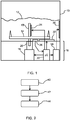
- Fig. 1 shows a domestic food processing apparatus.
- the example shown is a blender, but the processing method may be applied to a juicer as well.
- the apparatus comprises a vessel 10 for receiving food 12 for processing.
- This food is typically raw fruit and/or vegetables.
- a rotary processing element 14 is mounted in the vessel 10, shown in this example as a blender blade.
- the apparatus has a base 16 beneath the vessel, to which the vessel is reversibly coupled.
- a motor 18 for driving the rotary processing element 14, including a gearing arrangement 20.
- the rotary processing element could be in other forms, like an extrusion screw in a slow juicer.
- the base also houses an overall controller 22.
- the controller 22 provides control of the motor 18 to provide control of the timing, duration and speed of the rotation.
- the apparatus has a heating system 24 for heating the food in the vessel and a temperature sensor 26 for measuring the temperature of the food in the vessel.
- the controller controls the heating system 24 to provide a food temperature in the range 50.0 to 75.0 degrees Celsius during or immediately after processing.
- This heating process deactivates ascorbate oxidase so that it does not break down vitamin C after the fruit or vegetables have been processed.
- the temperature is high enough to provide deactivation of the ascorbate oxidase but not so high as to destroy the vitamin C by overheating.
- the enzymatic degradation process is both temperature-dependent and time-dependent. At the relatively low end of the temperature range, partial enzyme activity still exits, and thus enzymatic degradation is the dominant pathway. At the relatively high end of the temperature range, enzyme activity is almost disabled, but there is however partial destruction of vitamin C by overheating.
- the particular temperature chosen may depend on the food item or user's preference for example. The temperature may be in the range 60.0 to 70.0 degrees Celsius.
- a heating duration of 2 to 5 minutes is for example appropriate to enable the deactivation of the ascorbate oxidase, and thereby assist in retaining the maximum possible levels of vitamin C.
- the whole juicing or blending process typically lasts no more than 5 minutes, so the heating may be for the full duration of the process.
- the heating system comprises a resistive heater which is positioned on the shaft 15 of the processing element 14. It may use electrical wires or a thin film heater, and is directly in contact with the food.
- the heating system provides uniform heating while the processing element is rotating.
- the heater provides the desired mild heating effect, which causes a small and similar cavitation effect to deactivate the ascorbate oxidase.
- Fig. 1 also shows a second heating system comprising an ultrasound generator 28 and transducer 30.
- the ultrasound may use continuous wave or pulsed wave generation.
- This ultrasound transducer generates heat and also turbulence.
- the ultrasound transducer 30 in this example is coupled to the inner wall of the vessel 10 close to the bottom to give rise to a turbulent stirring effect.
- the ultrasound system thus implements a combined stirring and heating effect. It functions to provide both heating and vibration, and the vibration creates a turbulent effect which has the benefit of partially destroying ascorbate oxidase activity through mechanical processes in addition to the temperature dependent effects.
- the controller 22 controls the heating system 24 and the ultrasound system 28, 30 to provide the desired temperature. There is feedback control to maintain the desired temperature.
- the frequency and amplitude of the ultrasound system may be controlled to provide the desired temperature control, and the duty cycle or current of the electrical heating system may be controlled.
- the ultrasound system for example uses a frequency in the range 20kHz to 40kHz and a typical power of 50W to 60W.
- Fig. 1 also shows a cooling system 32 for cooling the processed food after the heating process.
- the cooling system 32 is to cool the food temperature to temperature suitable for consumption.
- the cooling system may be implemented as a small semiconductor cooler provided at the inner wall or base of the vessel 10.
- heating using the ultrasound system is optional when resistive heating is applied.
- the cooling system is optional, as the user may instead simply place the processed food in a fridge for a specified time for it to reach the desired temperature for consumption.
- the heating may be implemented using resistive heating, ultrasound or a combination of both.
- resistive heating may be implemented using resistive heating, ultrasound or a combination of both.
- the combination of ultrasound and mild resistive heating is preferred.
- the processing element may complete the food processing (blending or juicing) before the heating is complete.
- the processing element may then be slowed so that it instead performs primarily a stirring function.
- the system of Fig. 1 is able to generate both a mechanical stirring/vibration function and local heating for generating local bubbles (i.e. small cavitation) which will rise and make contact with food cells.
- the high shear force and pressure accompanying cavitation in combination with the mild heating cause inactivation of the ascorbate oxidase.
- the stirring/vibration effect is for example able to shorten the required duration of the heating process to provide the required level of deactivation of the ascorbate oxidase.
- the invention relates to domestic appliances, for example having a vessel size of between 0.6 liters and 2.0 liters.
- Fig. 2 shows a food processing method for implementation by a domestic apparatus.
- the method comprises driving a rotary food processing element within a vessel which contains the food to be processed in step 40.
- step 42 the food is heated to provide a food temperature in the range 50.0 to 75.0 degrees Celsius during or immediately after processing thereby to inactivate ascorbate oxidase by heating.
- This method finds a balance between preventing destruction of vitamin C by heating and deactivating ascorbate oxidase to prevent destruction of the vitamin C.
- the heating of step 42 for example has a duration of 2 to 5 minutes and it may be based on ultrasonic vibration of the food and/or resistive heating of the food.
- step 44 there is optional active cooling of the processed food.
- a first experiment aimed at showing the effect of heating. It made use of fresh orange juice. Each sample was obtained by placing half a fresh orange in a plastic bag, then squeezing the orange using a hammering process, until the orange was homogenously destroyed and had become a juice.
- the bag was then soaked in a water bath with a controlled water temperature.
- control sample Eight samples were processed at different water temperatures, together with a control sample with no soaking.
- the control sample was at 8 degrees Celsius, as this was the core temperature after sample preparation, and this is listed in the table below as the "temperature of soaking” (although there was no prolonged soaking as mentioned above).
- the vitamin C content was then analyzed in a laboratory using high performance liquid chromatography (HPLC).
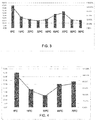
- Fig. 3 shows the results.
- the bars show the vitamin C content (mg per 100g) using the y-axis scale on the left of the graph, and the line graph shows the corresponding retention rate as a percentage, using the y-axis scale on the right of the graph.
- the peak retention can be seen for the temperature range between the samples at 59 degrees Celsius and 80 degrees Celsius.
- a temperature range of 50 to 75 degrees Celsius is of particular interest, and more particularly the temperature range 60 to 70 degrees Celsius.
- a second experiment aimed at showing the effect of ultrasound treatment. It involved preparing samples in the same way as explained above. After soaking, ultrasound exposure is performed to treat the orange juice, while soaking in tap water of 15 °C, for a further period of time.
- the vitamin C content was then again analyzed in a laboratory using high performance liquid chromatography (HPLC).
- the table below shows the results. For each sample, the soaking temperature and time are given, as well as the final vitamin C content, and the percentage retention compared to the control sample. Again, one control sample is present without ultrasound treatment. The soaking temperature was varied for a fixed soaking time. All samples other than the control sample were provided with the same ultrasound treatment.
- Fig. 4 shows the results.
- the bars show the vitamin C content (mg per 100g) using the y-axis scale on the left of the graph, and the line graph shows the corresponding retention rate as a percentage, using the y-axis scale on the right of the graph.
- the retention rate is slightly improved compared to the result of Fig. 3 at the same corresponding temperature.
- the retention is improved further by providing ultrasonic vibration even when at a temperature of 15 degrees Celsius.
- a third experiment aimed at showing the relationship between heating time and temperature. It again made use of fresh orange juice prepared and analyzed in the manner explained above.
- the table below shows the results. For each sample, the soaking temperature and time are given, as well as the final vitamin C content, and the percentage retention compared to the control sample. The soaking time was varied for a fixed soaking temperature of 70°C.
- Fig. 5 shows the results.
- the bars show the vitamin C content (mg per 100g) using the y-axis scale on the left of the graph, and the line graph shows the corresponding retention rate as a percentage, using the y-axis scale on the right of the graph.
- the invention relates to the preparation of food for immediate consumption, without cooking, and for use by domestic users.
- the heating process is thus not intended for cooking the food, and it is generally for consumption cold (either at room temperature or slightly chilled). It may be used for example for preparing juice drinks and smoothies or foods based on fruit or vegetable juice (and optionally pulp).
- the apparatus is a stand-alone domestic appliance for use in the kitchen.
- the apparatus makes use of a controller.
- the controller can be implemented in numerous ways, with software and/or hardware, to perform the various functions required.
- a processor is one example of a controller which employs one or more microprocessors that may be programmed using software (e.g., microcode) to perform the required functions.
- a controller may however be implemented with or without employing a processor, and also may be implemented as a combination of dedicated hardware to perform some functions and a processor (e.g., one or more programmed microprocessors and associated circuitry) to perform other functions.
- controller components that may be employed in various embodiments of the present disclosure include, but are not limited to, conventional microprocessors, application specific integrated circuits (ASICs), and field-programmable gate arrays (FPGAs).
- ASICs application specific integrated circuits
- FPGAs field-programmable gate arrays
- the controller may be associated with one or more storage media such as volatile and non-volatile computer memory such as RAM, PROM, EPROM, and EEPROM.
- the storage media may be encoded with one or more programs that, when executed on one or more processors and/or controllers, perform at the required functions.
- Various storage media may be fixed within a processor or controller or may be transportable, such that the one or more programs stored thereon can be loaded into a processor or controller.
Landscapes
- Engineering & Computer Science (AREA)
- Food Science & Technology (AREA)
- Mechanical Engineering (AREA)
- Health & Medical Sciences (AREA)
- Nutrition Science (AREA)
- Life Sciences & Earth Sciences (AREA)
- Chemical & Material Sciences (AREA)
- Polymers & Plastics (AREA)
- Preparation Of Fruits And Vegetables (AREA)
- Food-Manufacturing Devices (AREA)
Claims (15)
- Appareil ménager, comprenant :un récipient (10) pour recevoir des aliments (12) à traiter ;un élément de traitement rotatif (14) monté dans le récipient ;un moteur (18) pour entraîner l'élément de traitement rotatif ;un système de chauffage (24) ;un capteur de température (26) ;etun dispositif de commande (22),dans lequel le dispositif de commande (22) est adapté pour commander le système de chauffage pour fournir une température d'aliments dans la plage de 50,0 à 75,0 degrés Celsius pendant ou immédiatement après le traitement ;caractérisé en ce qu'il comprend en outre un agencement à vibrations ultrasonores (28, 30) pour faire vibrer les aliments.
- Appareil selon la revendication 1, dans lequel le dispositif de commande (22) est adapté pour commander le système de chauffage pour fournir une température d'aliments dans la plage de 60,0 à 70,0 degrés Celsius.
- Appareil selon la revendication 1 ou 2, dans lequel le dispositif de commande (22) est adapté pour commander le système de chauffage pour fournir un chauffage pendant un temps de chauffage de 2 à 5 minutes.
- Appareil selon une quelconque revendication précédente, comprenant en outre un système de refroidissement (32) pour refroidir les aliments traités après le processus de chauffage.
- Appareil selon une quelconque revendication précédente, dans lequel l'agencement à vibrations ultrasonores comprend un transducteur ultrasonique (30) couplé au récipient.
- Appareil selon la revendication 5, dans lequel le dispositif de commande (22) est adapté pour commander l'agencement à vibrations ultrasonores (28, 30) dans un mode pulsé.
- Appareil selon une quelconque revendication précédente, dans lequel le système de chauffage (24) comprend une résistance chauffante.
- Appareil selon la revendication 7, dans lequel la résistance chauffante est couplée à l'élément de traitement rotatif (14).
- Appareil selon l'une quelconque des revendications 1 à 6, dans lequel le système de chauffage est mis en œuvre par le système à vibrations ultrasonores.
- Appareil selon la revendication 1, dans lequel le récipient (10) a un volume entre 0,6 et 2,0 litres.
- Procédé de traitement des aliments pour mise en œuvre par un appareil ménager, comprenant :l'entraînement d'un élément de traitement d'aliments rotatif (14) dans un récipient (10) qui contient les aliments (12) à traiter ; etle chauffage des aliments pour fournir une température d'aliments dans la plage de 50,0 à 75,0 degrés Celsius pendant ou immédiatement après le traitement inactivant ainsi l'ascorbate oxydase par chauffage ; etla mise en vibration des aliments en utilisant un agencement à vibrations ultrasonores (28, 30).
- Procédé selon la revendication 11, comprenant la fourniture d'une température d'aliments dans la plage de 60,0 à 70,0 degrés Celsius.
- Procédé selon la revendication 11 ou 12, comprenant la commande du système de chauffage pour fournir un chauffage pendant un temps de chauffage de 2 à 5 minutes.
- Procédé selon l'une quelconque des revendications 11 à 13, comprenant en outre le refroidissement des aliments traités après le processus de chauffage.
- Procédé selon l'une quelconque des revendications 11 à 14, comprenant le chauffage en utilisant ladite vibration ultrasonore des aliments et/ou en utilisant le chauffage par résistance des aliments.
Applications Claiming Priority (3)
| Application Number | Priority Date | Filing Date | Title |
|---|---|---|---|
| CN2016082049 | 2016-05-13 | ||
| EP16184947 | 2016-08-19 | ||
| PCT/EP2017/060151 WO2017194327A1 (fr) | 2016-05-13 | 2017-04-28 | Appareil ménager et procédé domestique de traitement des aliments |
Publications (2)
| Publication Number | Publication Date |
|---|---|
| EP3448211A1 EP3448211A1 (fr) | 2019-03-06 |
| EP3448211B1 true EP3448211B1 (fr) | 2019-10-30 |
Family
ID=58640892
Family Applications (1)
| Application Number | Title | Priority Date | Filing Date |
|---|---|---|---|
| EP17720126.6A Active EP3448211B1 (fr) | 2016-05-13 | 2017-04-28 | Appareil et procédé de traitement alimentaire domestique |
Country Status (5)
| Country | Link |
|---|---|
| US (1) | US20190059655A1 (fr) |
| EP (1) | EP3448211B1 (fr) |
| JP (1) | JP2019514565A (fr) |
| CN (2) | CN114601316A (fr) |
| WO (1) | WO2017194327A1 (fr) |
Families Citing this family (7)
| Publication number | Priority date | Publication date | Assignee | Title |
|---|---|---|---|---|
| EP3566624A1 (fr) * | 2018-05-08 | 2019-11-13 | Koninklijke Philips N.V. | Amélioration de la biodisponibilité de folate alimentaire utilisant un procédé de chauffage dédié |
| CN109793148B (zh) * | 2018-12-27 | 2022-06-21 | 浙江大学 | 低氰苷的木薯粉及其制备方法 |
| EP3733026A1 (fr) * | 2019-05-02 | 2020-11-04 | Koninklijke Philips N.V. | Réduction de sucre dans des produits alimentaires |
| WO2020187505A1 (fr) * | 2019-03-15 | 2020-09-24 | Koninklijke Philips N.V. | Réduction de sucre dans des produits alimentaires |
| CA3142059A1 (fr) | 2019-05-28 | 2020-12-03 | Sharkninja Operating Llc | Robot de cuisine chauffant |
| US20220279805A1 (en) * | 2021-02-24 | 2022-09-08 | Sonik Cooking Technologies Pte. Ltd | Method and apparatus for making yogurt |
| CN115682558B (zh) * | 2021-07-30 | 2025-01-10 | 青岛海尔电冰箱有限公司 | 一种冰箱及其超声辅助处理装置的控制方法 |
Family Cites Families (8)
| Publication number | Priority date | Publication date | Assignee | Title |
|---|---|---|---|---|
| CN2803188Y (zh) * | 2005-05-12 | 2006-08-09 | 张疆 | 一种榨汁机 |
| JP4962012B2 (ja) * | 2007-01-12 | 2012-06-27 | パナソニック株式会社 | 電動調理器 |
| DE102010000299B4 (de) * | 2010-02-04 | 2019-02-21 | Vorwerk & Co. Interholding Gmbh | Küchenmaschine |
| WO2013035029A1 (fr) * | 2011-09-07 | 2013-03-14 | Koninklijke Philips Electronics N.V. | Procédé et dispositif de préparation de purée |
| JP5312628B2 (ja) * | 2012-03-02 | 2013-10-09 | シャープ株式会社 | 加熱調理器 |
| RU2497414C1 (ru) * | 2012-07-12 | 2013-11-10 | Юрий Алексеевич Бортников | Способ производства овощного сока (варианты) |
| DE102015101250A1 (de) * | 2015-01-28 | 2016-07-28 | Vorwerk & Co. Interholding Gmbh | Rührgefäß für eine Küchenmaschine |
| CN104605767A (zh) * | 2015-03-02 | 2015-05-13 | 武汉大学 | 一种便携式超声波搅拌机 |
-
2017
- 2017-04-28 EP EP17720126.6A patent/EP3448211B1/fr active Active
- 2017-04-28 CN CN202210350869.3A patent/CN114601316A/zh active Pending
- 2017-04-28 US US16/045,027 patent/US20190059655A1/en not_active Abandoned
- 2017-04-28 JP JP2018556991A patent/JP2019514565A/ja not_active Ceased
- 2017-04-28 CN CN201780029410.0A patent/CN109068873A/zh active Pending
- 2017-04-28 WO PCT/EP2017/060151 patent/WO2017194327A1/fr not_active Ceased
Non-Patent Citations (1)
| Title |
|---|
| None * |
Also Published As
| Publication number | Publication date |
|---|---|
| US20190059655A1 (en) | 2019-02-28 |
| JP2019514565A (ja) | 2019-06-06 |
| WO2017194327A1 (fr) | 2017-11-16 |
| CN114601316A (zh) | 2022-06-10 |
| EP3448211A1 (fr) | 2019-03-06 |
| CN109068873A (zh) | 2018-12-21 |
Similar Documents
| Publication | Publication Date | Title |
|---|---|---|
| EP3448211B1 (fr) | Appareil et procédé de traitement alimentaire domestique | |
| Zhou et al. | Ultrasound, infrared and its assisted technology, a promising tool in physical food processing: A review of recent developments | |
| Aslam et al. | Understanding the effects of ultrasound processng on texture and rheological properties of food | |
| Neoκleous et al. | Non-thermal processing technologies for dairy products: Their effect on safety and quality characteristics | |
| Sulaiman et al. | Thermosonication for polyphenoloxidase inactivation in fruits: Modeling the ultrasound and thermal kinetics in pear, apple and strawberry purees at different temperatures | |
| JP5076551B2 (ja) | 電動調理器 | |
| Kaur et al. | Ohmic heating technology systems, factors governing efficiency and its application to inactivation of pathogenic microbial, enzyme inactivation, and extraction of juice, oil, and bioactive compounds in the food sector | |
| Alkanan et al. | Trends, recent advances, and application of pulsed electric field in food processing: A review | |
| WO2013035029A1 (fr) | Procédé et dispositif de préparation de purée | |
| Javed et al. | System design, modelling, energy analysis, and industrial applications of ohmic heating technology | |
| Silva et al. | Advances in thermosonication for the inactivation of endogenous enzymes in foods | |
| Knorr et al. | Processed foods: From their emergence to resilient technologies | |
| Al-Najjar et al. | Advances in mass transfer and fluid flows in non-thermal food processing industry–a review | |
| Kamble et al. | Application of ohmic heating in the food industry | |
| JP4962012B2 (ja) | 電動調理器 | |
| Benimana et al. | Role of ultrasound application in the production, processing, and preservation of edible flowers: a review | |
| CN112438564A (zh) | 运行控制方法、装置、料理机和计算机可读存储介质 | |
| Lafarga et al. | Thermal processing technologies | |
| Niakousari et al. | Overview on the food industry and its advancement | |
| Villamiel et al. | Novel methods of milk processing | |
| Bhujel et al. | Recent Developments in Non-thermal Processing Techniques to Improve the Quality and Safety of Milk and Milk Products | |
| Singh | Scope Of Ohmic Heating System in the Food Processing Industry | |
| Sain et al. | Ohmic Heating: Application in Various Unit Operations in the Food Processing Industry | |
| Vishawkarma et al. | Innovative approaches to food processing: Unlocking the potential of novel foods and non-thermal techniques | |
| Niranjan et al. | Ultrasound technology for food preservation |
Legal Events
| Date | Code | Title | Description |
|---|---|---|---|
| STAA | Information on the status of an ep patent application or granted ep patent |
Free format text: STATUS: UNKNOWN |
|
| STAA | Information on the status of an ep patent application or granted ep patent |
Free format text: STATUS: THE INTERNATIONAL PUBLICATION HAS BEEN MADE |
|
| PUAI | Public reference made under article 153(3) epc to a published international application that has entered the european phase |
Free format text: ORIGINAL CODE: 0009012 |
|
| STAA | Information on the status of an ep patent application or granted ep patent |
Free format text: STATUS: REQUEST FOR EXAMINATION WAS MADE |
|
| 17P | Request for examination filed |
Effective date: 20181126 |
|
| AK | Designated contracting states |
Kind code of ref document: A1 Designated state(s): AL AT BE BG CH CY CZ DE DK EE ES FI FR GB GR HR HU IE IS IT LI LT LU LV MC MK MT NL NO PL PT RO RS SE SI SK SM TR |
|
| AX | Request for extension of the european patent |
Extension state: BA ME |
|
| GRAP | Despatch of communication of intention to grant a patent |
Free format text: ORIGINAL CODE: EPIDOSNIGR1 |
|
| STAA | Information on the status of an ep patent application or granted ep patent |
Free format text: STATUS: GRANT OF PATENT IS INTENDED |
|
| DAV | Request for validation of the european patent (deleted) | ||
| DAX | Request for extension of the european patent (deleted) | ||
| INTG | Intention to grant announced |
Effective date: 20190516 |
|
| GRAS | Grant fee paid |
Free format text: ORIGINAL CODE: EPIDOSNIGR3 |
|
| GRAA | (expected) grant |
Free format text: ORIGINAL CODE: 0009210 |
|
| STAA | Information on the status of an ep patent application or granted ep patent |
Free format text: STATUS: THE PATENT HAS BEEN GRANTED |
|
| AK | Designated contracting states |
Kind code of ref document: B1 Designated state(s): AL AT BE BG CH CY CZ DE DK EE ES FI FR GB GR HR HU IE IS IT LI LT LU LV MC MK MT NL NO PL PT RO RS SE SI SK SM TR |
|
| REG | Reference to a national code |
Ref country code: GB Ref legal event code: FG4D |
|
| REG | Reference to a national code |
Ref country code: CH Ref legal event code: EP |
|
| REG | Reference to a national code |
Ref country code: AT Ref legal event code: REF Ref document number: 1195256 Country of ref document: AT Kind code of ref document: T Effective date: 20191115 |
|
| REG | Reference to a national code |
Ref country code: DE Ref legal event code: R096 Ref document number: 602017008269 Country of ref document: DE |
|
| REG | Reference to a national code |
Ref country code: IE Ref legal event code: FG4D |
|
| REG | Reference to a national code |
Ref country code: LT Ref legal event code: MG4D |
|
| RAP2 | Party data changed (patent owner data changed or rights of a patent transferred) |
Owner name: KONINKLIJKE PHILIPS N.V. |
|
| PG25 | Lapsed in a contracting state [announced via postgrant information from national office to epo] |
Ref country code: BG Free format text: LAPSE BECAUSE OF FAILURE TO SUBMIT A TRANSLATION OF THE DESCRIPTION OR TO PAY THE FEE WITHIN THE PRESCRIBED TIME-LIMIT Effective date: 20200130 Ref country code: FI Free format text: LAPSE BECAUSE OF FAILURE TO SUBMIT A TRANSLATION OF THE DESCRIPTION OR TO PAY THE FEE WITHIN THE PRESCRIBED TIME-LIMIT Effective date: 20191030 Ref country code: PT Free format text: LAPSE BECAUSE OF FAILURE TO SUBMIT A TRANSLATION OF THE DESCRIPTION OR TO PAY THE FEE WITHIN THE PRESCRIBED TIME-LIMIT Effective date: 20200302 Ref country code: SE Free format text: LAPSE BECAUSE OF FAILURE TO SUBMIT A TRANSLATION OF THE DESCRIPTION OR TO PAY THE FEE WITHIN THE PRESCRIBED TIME-LIMIT Effective date: 20191030 Ref country code: LV Free format text: LAPSE BECAUSE OF FAILURE TO SUBMIT A TRANSLATION OF THE DESCRIPTION OR TO PAY THE FEE WITHIN THE PRESCRIBED TIME-LIMIT Effective date: 20191030 Ref country code: LT Free format text: LAPSE BECAUSE OF FAILURE TO SUBMIT A TRANSLATION OF THE DESCRIPTION OR TO PAY THE FEE WITHIN THE PRESCRIBED TIME-LIMIT Effective date: 20191030 Ref country code: NL Free format text: LAPSE BECAUSE OF FAILURE TO SUBMIT A TRANSLATION OF THE DESCRIPTION OR TO PAY THE FEE WITHIN THE PRESCRIBED TIME-LIMIT Effective date: 20191030 Ref country code: NO Free format text: LAPSE BECAUSE OF FAILURE TO SUBMIT A TRANSLATION OF THE DESCRIPTION OR TO PAY THE FEE WITHIN THE PRESCRIBED TIME-LIMIT Effective date: 20200130 Ref country code: GR Free format text: LAPSE BECAUSE OF FAILURE TO SUBMIT A TRANSLATION OF THE DESCRIPTION OR TO PAY THE FEE WITHIN THE PRESCRIBED TIME-LIMIT Effective date: 20200131 Ref country code: PL Free format text: LAPSE BECAUSE OF FAILURE TO SUBMIT A TRANSLATION OF THE DESCRIPTION OR TO PAY THE FEE WITHIN THE PRESCRIBED TIME-LIMIT Effective date: 20191030 |
|
| REG | Reference to a national code |
Ref country code: NL Ref legal event code: MP Effective date: 20191030 |
|
| PG25 | Lapsed in a contracting state [announced via postgrant information from national office to epo] |
Ref country code: HR Free format text: LAPSE BECAUSE OF FAILURE TO SUBMIT A TRANSLATION OF THE DESCRIPTION OR TO PAY THE FEE WITHIN THE PRESCRIBED TIME-LIMIT Effective date: 20191030 Ref country code: RS Free format text: LAPSE BECAUSE OF FAILURE TO SUBMIT A TRANSLATION OF THE DESCRIPTION OR TO PAY THE FEE WITHIN THE PRESCRIBED TIME-LIMIT Effective date: 20191030 Ref country code: IS Free format text: LAPSE BECAUSE OF FAILURE TO SUBMIT A TRANSLATION OF THE DESCRIPTION OR TO PAY THE FEE WITHIN THE PRESCRIBED TIME-LIMIT Effective date: 20200229 |
|
| PG25 | Lapsed in a contracting state [announced via postgrant information from national office to epo] |
Ref country code: AL Free format text: LAPSE BECAUSE OF FAILURE TO SUBMIT A TRANSLATION OF THE DESCRIPTION OR TO PAY THE FEE WITHIN THE PRESCRIBED TIME-LIMIT Effective date: 20191030 |
|
| PG25 | Lapsed in a contracting state [announced via postgrant information from national office to epo] |
Ref country code: EE Free format text: LAPSE BECAUSE OF FAILURE TO SUBMIT A TRANSLATION OF THE DESCRIPTION OR TO PAY THE FEE WITHIN THE PRESCRIBED TIME-LIMIT Effective date: 20191030 Ref country code: ES Free format text: LAPSE BECAUSE OF FAILURE TO SUBMIT A TRANSLATION OF THE DESCRIPTION OR TO PAY THE FEE WITHIN THE PRESCRIBED TIME-LIMIT Effective date: 20191030 Ref country code: CZ Free format text: LAPSE BECAUSE OF FAILURE TO SUBMIT A TRANSLATION OF THE DESCRIPTION OR TO PAY THE FEE WITHIN THE PRESCRIBED TIME-LIMIT Effective date: 20191030 Ref country code: RO Free format text: LAPSE BECAUSE OF FAILURE TO SUBMIT A TRANSLATION OF THE DESCRIPTION OR TO PAY THE FEE WITHIN THE PRESCRIBED TIME-LIMIT Effective date: 20191030 Ref country code: DK Free format text: LAPSE BECAUSE OF FAILURE TO SUBMIT A TRANSLATION OF THE DESCRIPTION OR TO PAY THE FEE WITHIN THE PRESCRIBED TIME-LIMIT Effective date: 20191030 |
|
| REG | Reference to a national code |
Ref country code: DE Ref legal event code: R097 Ref document number: 602017008269 Country of ref document: DE |
|
| REG | Reference to a national code |
Ref country code: AT Ref legal event code: MK05 Ref document number: 1195256 Country of ref document: AT Kind code of ref document: T Effective date: 20191030 |
|
| PG25 | Lapsed in a contracting state [announced via postgrant information from national office to epo] |
Ref country code: IT Free format text: LAPSE BECAUSE OF FAILURE TO SUBMIT A TRANSLATION OF THE DESCRIPTION OR TO PAY THE FEE WITHIN THE PRESCRIBED TIME-LIMIT Effective date: 20191030 Ref country code: SK Free format text: LAPSE BECAUSE OF FAILURE TO SUBMIT A TRANSLATION OF THE DESCRIPTION OR TO PAY THE FEE WITHIN THE PRESCRIBED TIME-LIMIT Effective date: 20191030 Ref country code: SM Free format text: LAPSE BECAUSE OF FAILURE TO SUBMIT A TRANSLATION OF THE DESCRIPTION OR TO PAY THE FEE WITHIN THE PRESCRIBED TIME-LIMIT Effective date: 20191030 |
|
| PLBE | No opposition filed within time limit |
Free format text: ORIGINAL CODE: 0009261 |
|
| STAA | Information on the status of an ep patent application or granted ep patent |
Free format text: STATUS: NO OPPOSITION FILED WITHIN TIME LIMIT |
|
| 26N | No opposition filed |
Effective date: 20200731 |
|
| PG25 | Lapsed in a contracting state [announced via postgrant information from national office to epo] |
Ref country code: SI Free format text: LAPSE BECAUSE OF FAILURE TO SUBMIT A TRANSLATION OF THE DESCRIPTION OR TO PAY THE FEE WITHIN THE PRESCRIBED TIME-LIMIT Effective date: 20191030 Ref country code: MC Free format text: LAPSE BECAUSE OF FAILURE TO SUBMIT A TRANSLATION OF THE DESCRIPTION OR TO PAY THE FEE WITHIN THE PRESCRIBED TIME-LIMIT Effective date: 20191030 Ref country code: AT Free format text: LAPSE BECAUSE OF FAILURE TO SUBMIT A TRANSLATION OF THE DESCRIPTION OR TO PAY THE FEE WITHIN THE PRESCRIBED TIME-LIMIT Effective date: 20191030 |
|
| REG | Reference to a national code |
Ref country code: CH Ref legal event code: PL |
|
| PG25 | Lapsed in a contracting state [announced via postgrant information from national office to epo] |
Ref country code: LU Free format text: LAPSE BECAUSE OF NON-PAYMENT OF DUE FEES Effective date: 20200428 Ref country code: LI Free format text: LAPSE BECAUSE OF NON-PAYMENT OF DUE FEES Effective date: 20200430 Ref country code: CH Free format text: LAPSE BECAUSE OF NON-PAYMENT OF DUE FEES Effective date: 20200430 |
|
| REG | Reference to a national code |
Ref country code: BE Ref legal event code: MM Effective date: 20200430 |
|
| PG25 | Lapsed in a contracting state [announced via postgrant information from national office to epo] |
Ref country code: BE Free format text: LAPSE BECAUSE OF NON-PAYMENT OF DUE FEES Effective date: 20200430 |
|
| PG25 | Lapsed in a contracting state [announced via postgrant information from national office to epo] |
Ref country code: IE Free format text: LAPSE BECAUSE OF NON-PAYMENT OF DUE FEES Effective date: 20200428 |
|
| PG25 | Lapsed in a contracting state [announced via postgrant information from national office to epo] |
Ref country code: MT Free format text: LAPSE BECAUSE OF FAILURE TO SUBMIT A TRANSLATION OF THE DESCRIPTION OR TO PAY THE FEE WITHIN THE PRESCRIBED TIME-LIMIT Effective date: 20191030 Ref country code: CY Free format text: LAPSE BECAUSE OF FAILURE TO SUBMIT A TRANSLATION OF THE DESCRIPTION OR TO PAY THE FEE WITHIN THE PRESCRIBED TIME-LIMIT Effective date: 20191030 |
|
| PG25 | Lapsed in a contracting state [announced via postgrant information from national office to epo] |
Ref country code: MK Free format text: LAPSE BECAUSE OF FAILURE TO SUBMIT A TRANSLATION OF THE DESCRIPTION OR TO PAY THE FEE WITHIN THE PRESCRIBED TIME-LIMIT Effective date: 20191030 |
|
| P01 | Opt-out of the competence of the unified patent court (upc) registered |
Effective date: 20230530 |
|
| REG | Reference to a national code |
Ref country code: DE Ref legal event code: R081 Ref document number: 602017008269 Country of ref document: DE Owner name: VERSUNI HOLDING B.V., NL Free format text: FORMER OWNER: KONINKLIJKE PHILIPS N.V., EINDHOVEN, NL |
|
| REG | Reference to a national code |
Ref country code: GB Ref legal event code: 732E Free format text: REGISTERED BETWEEN 20231214 AND 20231220 |
|
| PGFP | Annual fee paid to national office [announced via postgrant information from national office to epo] |
Ref country code: GB Payment date: 20240423 Year of fee payment: 8 |
|
| PGFP | Annual fee paid to national office [announced via postgrant information from national office to epo] |
Ref country code: DE Payment date: 20240429 Year of fee payment: 8 |
|
| PGFP | Annual fee paid to national office [announced via postgrant information from national office to epo] |
Ref country code: FR Payment date: 20240430 Year of fee payment: 8 |
|
| PGFP | Annual fee paid to national office [announced via postgrant information from national office to epo] |
Ref country code: TR Payment date: 20240417 Year of fee payment: 8 |
|
| REG | Reference to a national code |
Ref country code: DE Ref legal event code: R119 Ref document number: 602017008269 Country of ref document: DE |
|
| GBPC | Gb: european patent ceased through non-payment of renewal fee |
Effective date: 20250428 |
|
| PG25 | Lapsed in a contracting state [announced via postgrant information from national office to epo] |
Ref country code: DE Free format text: LAPSE BECAUSE OF NON-PAYMENT OF DUE FEES Effective date: 20251104 |
|
| PG25 | Lapsed in a contracting state [announced via postgrant information from national office to epo] |
Ref country code: GB Free format text: LAPSE BECAUSE OF NON-PAYMENT OF DUE FEES Effective date: 20250428 |
|
| PG25 | Lapsed in a contracting state [announced via postgrant information from national office to epo] |
Ref country code: FR Free format text: LAPSE BECAUSE OF NON-PAYMENT OF DUE FEES Effective date: 20250430 |