EP3454079B1 - Procédé permettant de déterminer l'adaptabilité d'une cible radar en tant que repère de position - Google Patents
Procédé permettant de déterminer l'adaptabilité d'une cible radar en tant que repère de position Download PDFInfo
- Publication number
- EP3454079B1 EP3454079B1 EP17190576.3A EP17190576A EP3454079B1 EP 3454079 B1 EP3454079 B1 EP 3454079B1 EP 17190576 A EP17190576 A EP 17190576A EP 3454079 B1 EP3454079 B1 EP 3454079B1
- Authority
- EP
- European Patent Office
- Prior art keywords
- radar
- vehicle
- landmark
- determining
- target
- Prior art date
- Legal status (The legal status is an assumption and is not a legal conclusion. Google has not performed a legal analysis and makes no representation as to the accuracy of the status listed.)
- Active
Links
Images

Classifications
-
- G—PHYSICS
- G01—MEASURING; TESTING
- G01S—RADIO DIRECTION-FINDING; RADIO NAVIGATION; DETERMINING DISTANCE OR VELOCITY BY USE OF RADIO WAVES; LOCATING OR PRESENCE-DETECTING BY USE OF THE REFLECTION OR RERADIATION OF RADIO WAVES; ANALOGOUS ARRANGEMENTS USING OTHER WAVES
- G01S7/00—Details of systems according to groups G01S13/00, G01S15/00, G01S17/00
- G01S7/02—Details of systems according to groups G01S13/00, G01S15/00, G01S17/00 of systems according to group G01S13/00
- G01S7/41—Details of systems according to groups G01S13/00, G01S15/00, G01S17/00 of systems according to group G01S13/00 using analysis of echo signal for target characterisation; Target signature; Target cross-section
-
- G—PHYSICS
- G01—MEASURING; TESTING
- G01S—RADIO DIRECTION-FINDING; RADIO NAVIGATION; DETERMINING DISTANCE OR VELOCITY BY USE OF RADIO WAVES; LOCATING OR PRESENCE-DETECTING BY USE OF THE REFLECTION OR RERADIATION OF RADIO WAVES; ANALOGOUS ARRANGEMENTS USING OTHER WAVES
- G01S7/00—Details of systems according to groups G01S13/00, G01S15/00, G01S17/00
- G01S7/02—Details of systems according to groups G01S13/00, G01S15/00, G01S17/00 of systems according to group G01S13/00
- G01S7/41—Details of systems according to groups G01S13/00, G01S15/00, G01S17/00 of systems according to group G01S13/00 using analysis of echo signal for target characterisation; Target signature; Target cross-section
- G01S7/414—Discriminating targets with respect to background clutter
-
- G—PHYSICS
- G01—MEASURING; TESTING
- G01S—RADIO DIRECTION-FINDING; RADIO NAVIGATION; DETERMINING DISTANCE OR VELOCITY BY USE OF RADIO WAVES; LOCATING OR PRESENCE-DETECTING BY USE OF THE REFLECTION OR RERADIATION OF RADIO WAVES; ANALOGOUS ARRANGEMENTS USING OTHER WAVES
- G01S13/00—Systems using the reflection or reradiation of radio waves, e.g. radar systems; Analogous systems using reflection or reradiation of waves whose nature or wavelength is irrelevant or unspecified
- G01S13/02—Systems using reflection of radio waves, e.g. primary radar systems; Analogous systems
- G01S13/06—Systems determining position data of a target
- G01S13/08—Systems for measuring distance only
-
- G—PHYSICS
- G01—MEASURING; TESTING
- G01S—RADIO DIRECTION-FINDING; RADIO NAVIGATION; DETERMINING DISTANCE OR VELOCITY BY USE OF RADIO WAVES; LOCATING OR PRESENCE-DETECTING BY USE OF THE REFLECTION OR RERADIATION OF RADIO WAVES; ANALOGOUS ARRANGEMENTS USING OTHER WAVES
- G01S13/00—Systems using the reflection or reradiation of radio waves, e.g. radar systems; Analogous systems using reflection or reradiation of waves whose nature or wavelength is irrelevant or unspecified
- G01S13/02—Systems using reflection of radio waves, e.g. primary radar systems; Analogous systems
- G01S13/06—Systems determining position data of a target
- G01S13/08—Systems for measuring distance only
- G01S13/10—Systems for measuring distance only using transmission of interrupted, pulse modulated waves
- G01S13/26—Systems for measuring distance only using transmission of interrupted, pulse modulated waves wherein the transmitted pulses use a frequency- or phase-modulated carrier wave
-
- G—PHYSICS
- G01—MEASURING; TESTING
- G01S—RADIO DIRECTION-FINDING; RADIO NAVIGATION; DETERMINING DISTANCE OR VELOCITY BY USE OF RADIO WAVES; LOCATING OR PRESENCE-DETECTING BY USE OF THE REFLECTION OR RERADIATION OF RADIO WAVES; ANALOGOUS ARRANGEMENTS USING OTHER WAVES
- G01S13/00—Systems using the reflection or reradiation of radio waves, e.g. radar systems; Analogous systems using reflection or reradiation of waves whose nature or wavelength is irrelevant or unspecified
- G01S13/02—Systems using reflection of radio waves, e.g. primary radar systems; Analogous systems
- G01S13/06—Systems determining position data of a target
- G01S13/42—Simultaneous measurement of distance and other co-ordinates
-
- G—PHYSICS
- G01—MEASURING; TESTING
- G01S—RADIO DIRECTION-FINDING; RADIO NAVIGATION; DETERMINING DISTANCE OR VELOCITY BY USE OF RADIO WAVES; LOCATING OR PRESENCE-DETECTING BY USE OF THE REFLECTION OR RERADIATION OF RADIO WAVES; ANALOGOUS ARRANGEMENTS USING OTHER WAVES
- G01S13/00—Systems using the reflection or reradiation of radio waves, e.g. radar systems; Analogous systems using reflection or reradiation of waves whose nature or wavelength is irrelevant or unspecified
- G01S13/88—Radar or analogous systems specially adapted for specific applications
- G01S13/93—Radar or analogous systems specially adapted for specific applications for anti-collision purposes
- G01S13/931—Radar or analogous systems specially adapted for specific applications for anti-collision purposes of land vehicles
-
- G—PHYSICS
- G01—MEASURING; TESTING
- G01S—RADIO DIRECTION-FINDING; RADIO NAVIGATION; DETERMINING DISTANCE OR VELOCITY BY USE OF RADIO WAVES; LOCATING OR PRESENCE-DETECTING BY USE OF THE REFLECTION OR RERADIATION OF RADIO WAVES; ANALOGOUS ARRANGEMENTS USING OTHER WAVES
- G01S7/00—Details of systems according to groups G01S13/00, G01S15/00, G01S17/00
- G01S7/02—Details of systems according to groups G01S13/00, G01S15/00, G01S17/00 of systems according to group G01S13/00
- G01S7/41—Details of systems according to groups G01S13/00, G01S15/00, G01S17/00 of systems according to group G01S13/00 using analysis of echo signal for target characterisation; Target signature; Target cross-section
- G01S7/415—Identification of targets based on measurements of movement associated with the target
-
- G—PHYSICS
- G01—MEASURING; TESTING
- G01S—RADIO DIRECTION-FINDING; RADIO NAVIGATION; DETERMINING DISTANCE OR VELOCITY BY USE OF RADIO WAVES; LOCATING OR PRESENCE-DETECTING BY USE OF THE REFLECTION OR RERADIATION OF RADIO WAVES; ANALOGOUS ARRANGEMENTS USING OTHER WAVES
- G01S13/00—Systems using the reflection or reradiation of radio waves, e.g. radar systems; Analogous systems using reflection or reradiation of waves whose nature or wavelength is irrelevant or unspecified
- G01S13/02—Systems using reflection of radio waves, e.g. primary radar systems; Analogous systems
- G01S13/50—Systems of measurement based on relative movement of target
- G01S13/58—Velocity or trajectory determination systems; Sense-of-movement determination systems
- G01S13/581—Velocity or trajectory determination systems; Sense-of-movement determination systems using transmission of interrupted pulse modulated waves and based upon the Doppler effect resulting from movement of targets
- G01S13/582—Velocity or trajectory determination systems; Sense-of-movement determination systems using transmission of interrupted pulse modulated waves and based upon the Doppler effect resulting from movement of targets adapted for simultaneous range and velocity measurements
-
- G—PHYSICS
- G01—MEASURING; TESTING
- G01S—RADIO DIRECTION-FINDING; RADIO NAVIGATION; DETERMINING DISTANCE OR VELOCITY BY USE OF RADIO WAVES; LOCATING OR PRESENCE-DETECTING BY USE OF THE REFLECTION OR RERADIATION OF RADIO WAVES; ANALOGOUS ARRANGEMENTS USING OTHER WAVES
- G01S13/00—Systems using the reflection or reradiation of radio waves, e.g. radar systems; Analogous systems using reflection or reradiation of waves whose nature or wavelength is irrelevant or unspecified
- G01S13/02—Systems using reflection of radio waves, e.g. primary radar systems; Analogous systems
- G01S13/50—Systems of measurement based on relative movement of target
- G01S13/58—Velocity or trajectory determination systems; Sense-of-movement determination systems
- G01S13/583—Velocity or trajectory determination systems; Sense-of-movement determination systems using transmission of continuous unmodulated waves, amplitude-, frequency-, or phase-modulated waves and based upon the Doppler effect resulting from movement of targets
- G01S13/584—Velocity or trajectory determination systems; Sense-of-movement determination systems using transmission of continuous unmodulated waves, amplitude-, frequency-, or phase-modulated waves and based upon the Doppler effect resulting from movement of targets adapted for simultaneous range and velocity measurements
-
- G—PHYSICS
- G01—MEASURING; TESTING
- G01S—RADIO DIRECTION-FINDING; RADIO NAVIGATION; DETERMINING DISTANCE OR VELOCITY BY USE OF RADIO WAVES; LOCATING OR PRESENCE-DETECTING BY USE OF THE REFLECTION OR RERADIATION OF RADIO WAVES; ANALOGOUS ARRANGEMENTS USING OTHER WAVES
- G01S13/00—Systems using the reflection or reradiation of radio waves, e.g. radar systems; Analogous systems using reflection or reradiation of waves whose nature or wavelength is irrelevant or unspecified
- G01S13/66—Radar-tracking systems; Analogous systems
- G01S13/72—Radar-tracking systems; Analogous systems for two-dimensional [2D] tracking, e.g. combination of angle and range tracking, track-while-scan radar
- G01S13/723—Radar-tracking systems; Analogous systems for two-dimensional [2D] tracking, e.g. combination of angle and range tracking, track-while-scan radar by using numerical data
- G01S13/726—Multiple target tracking
Definitions
- This invention relates to a method of determining the position of a host vehicle and in particular to determining a suitable landmark for geographical mapping.
- Self-localization that is determining the precise location of a host vehicle is one of the most important functions for accurate automated driving or such driver assistance schemes such as collision prevention systems.
- Current car navigation systems generally use a GPS navigation system to estimate the vehicle position.
- GPS navigation system is insufficient for precise self-localization of road vehicles due to effects such as reflections caused by buildings and occlusions of GPS signals from satellites.
- many landmark-based ego localization approaches have been elaborated in the past.
- Such radar systems are able to detect radar reflections (i.e. radar detections) from objects in the vicinity and process the data with respect to said radar reflections.
- radar reflections i.e. radar detections
- the information needed for current self-localization and mapping (SLAM) procedure is collected from such (reflection/detection) data provided by the radar modules over multiple consecutive scans to identify for example a fixed landmark.
- This mapping information is updated over time, and a precise superposition of the individual radar-based maps with the GPS maps is performed. In such a way, for example the geographical position determined by GPS is accurately refined by such local data from radar returns.
- landmark-based alignment of those radar images is a preferred solution.
- a key task is to determine one or more suitable landmarks (i.e. objects) in the environment, i.e. in the vicinity of the vehicle which could serve as suitable and quality positional references (anchors) for precise superposition of the individual maps.
- DE 10 2016 015 405 A1 discloses a vehicle-based method comprising the features according to the preamble of claim 1.
- DE 10 2015 208 288 A1 discloses a vehicle-based method according to which a suitable positional landmark is selected from a predefined landmark database and the positional landmark is used for determining the range of a vision sensor.
- DE 10 2014 011 731 A1 discloses a method for localizing a vehicle using predefined or artificial landmarks.
- One object is to provide a method to determine the suitability of a landmark as a reference.
- a vehicle-based method to determine the suitability of an object in the vicinity of a vehicle as a suitable positional landmark comprising the steps a)-e) as laid down in claim 1.
- the method may be used in a vehicle based radar system adapted to transmit radar signals and receive reflected radar detections from objects in the vicinity of the vehicle.
- Said radar unit may comprise a plurality of receive antenna elements arranged as a receive antenna array.
- Step d) may comprise analyzing range profiles and Doppler profiles of the radar returns across the plurality of antennas.
- Step f) may comprise determining the extent to which one or more of the following varies with azimuthal angle: phase characteristics, polarization characteristics and signal-to-noise ratio.
- step e) said change in azimuthal angle may be determined from location or speed and direction information from a navigation system of said vehicle.
- aspects of the invention aim to improve the precision of the radar-based SLAM procedure, by determining suitable landmarks.
- These landmarks can be used for geographical positioning techniques such as precise location determination e.g. in conjunction with GPS data/maps (in superposition techniques).
- Reliable and robust landmarks are determined from detections of the sensed vehicle environment (i.e. from processed radar reflection/detection data), that allows quality assessment and determination/classification of appropriate landmarks.
- the method determines all of the following criteria in order to assess whether an object in the vicinity of the vehicle, in other words a detected target, (detected via processing of radar reflection data), is suitable as a landmark:
- One or more of the above criteria can be determined by analysis of the radar detection/reflection data in particular the reflectivity pattern of the target/object (such as the radar cross section (RCS)).
- this can be measured e.g. as a function of azimuth angle with respect to the host vehicle.
- This can be performed by processing reflection data from the target at different angles whilst the host vehicle moves relative to it, i.e. whilst driving. Processing of the radar reflection data form the target at different angles can provide a determination of the "quality" of the target as a suitable landmark can be better estimated. If its reflectivity pattern is omnidirectional (like e.g. from street posts), then it is an indicator that the landmark under test is of a "high quality".
- the classification of a target may be carried out in two processing domains: on a detection level and on a tracker level.
- the features of the object/target which are to be analyzed as a suitable landmark sometime referred to as scatterer under test (SUT)
- SUT scatterer under test
- the detections provided by radar of one or more objects (targets) in the vicinity of the vehicle are processed and filtered based on the motion state. Subsequently only those detections that indicate a stationary object are used.
- FIG. 1 shows a flowchart illustrating one example of the methodology.
- step S1 it is determined whether the SUT is a single scatterer.
- step S2 it is determined whether the SUT is stationary.
- steps S3 and S4 it is determined how the observed target parameters change with different azimuth angles, ⁇ .
- step 3 the step determines the azimuth (positional angle) of the vehicle with respect to the SUT, e.g. whether ⁇ is constant.
- step 4 it is determined how parameters of the radar detection from the SUT varies with the azimuth angle, e.g. to what extent the RCS( ⁇ ), that is the Radar Cross Section as a function of ⁇ varies.
- Steps S1 and S2 can take place at the detection level that is to say without the vehicle moving relative to the SUT and steps S3 and S4 can take place at the tracker level where there is relative movement of the vehicle and SUT with respect to the azimuthal angle. If steps 1 or 2 show the SUT to be either not a single scatterer or a stationary object then steps 3 and 4 will not be implemented in one example. Details of these steps will be explained hereinafter.
- the output provides a parameter which is indicative of the quality of a detected object as a suitable landmark.
- the output provides a "soft decision" having the following parameter: the parameter output is 1 for a high-quality landmark, and 0, if the target is not useful as a landmark.
- a good landmark for vehicular radar applications is a single stationary scatterer, whose scattering position, the observed complex reflectivity and polarization do not vary over observation angles, distance, and time. Furthermore, the reflection/detections of a target which is a suitable landmark provide a strong signal amplitude compared to noise and clutter in the vicinity and is preferably detectable from multiple sensors on the vehicle. These characteristics may be fed/input into a feature vector for classification. Details of the various steps will now be explained.
- a single scatterer test In an initial step, is provided a single scatterer test.
- three methods are disclosed to test whether an object/ target (SUT) is a single scatterer (originates from a single scattering center). Amplitude spectrum derived parameters or a phase-spectrum derived object parameters can be utilized to determine the extent to which a SUT is a single scatterer.
- phase-spectrum refers to the phase spectrum component of a radar return signal. It is known to provide system where a transmit antenna radiates Radio Frequency (RF) signal that propagates toward an object in the radar field-of-view.
- the radio frequency signal may be pulse compressed waveform such as a series of waveform pulses commonly called 'chirps' or Frequency Modulated Continuous Wave, Pulse-Doppler and Frequency Shift Key.
- the signals reflected by the object depend on a backscatter property (i.e. Radar Cross Section) of the object.
- the signals reflected by the object can be received by receiving antenna-array elements, which are typically connected to single (i.e. time-multiplexed) or multiple (i.e. not time-multiplexed) signal conditioning and processing devices.
- Detected signals are typically time-domain signals and frequency transformation (e.g. a Fourier transform) can be used to generate frequency profiles. Such frequency profiles can be analyzed to determine the extent to which the SUT is a single scatterer.
- frequency transformation e.g. a Fourier transform
- Pulse-Doppler signal processing can be used to separate reflected signals into a number of "peaks" that occur (after the 2-D Fourier processing) in the 2-D spectral domain (called range-Doppler map).
- One method to analyze if a target response originates from a single scatterer is to involve a (complex-valued) cross-correlation between the measured radar response with the corresponding so called system-dependent Point Spread Function (PSF).
- PSF of a radar system describes its response to an ideal single-scatterer target. If the correlation coefficient is below a (e.g. predetermined) threshold, then the target is considered to be a non-single scatterer.
- a Point Spread Function (PSF) of a radar system describes the response of that radar system, which is observed at the output of the receiver signal processing chain, to a received signal being reflected by an ideal single scatterer.
- the PSF is the Fourier-transformed weighting/windowing function that is multiplied with the sampled time domain data set prior to the (2-D) FFT procedure.
- Each single scatterer response which corresponds to a dirac impulse at a corresponding range/Doppler frequency, is therefore convolved with that PSF.
- the PSF is the sinc function.
- the PSF is not a dirac impulse but a sinc function due to the limited observation/sampling time.
- weighting functions e.g. Dolph-Chebyshev window
- evaluating the range-Doppler spectrum of a detection is carried out by correlating (comparing) the measured complex-valued range-Doppler spectrum of a detection obtained from the M antennas (the so called "beam vectors") with a known system-dependent single-scatterer response.
- the first symmetrical frequency bins means the frequency bins those are one frequency bin away from the superposed signal detection frequency bin to the plus and minus direction (i.e. +/-1 bin away).
- the estimated phase difference converges to a minimum value (or zero) if the detected signal is from a single point scattering center. This is because the signal spreads (amplitude and phase-spectrums) uniformly to symmetrical neighboring frequency bins for a signal that is weighted in the time domain by symmetrical window coefficients about its maximum at the center.
- these first symmetrical frequency bins likely contain unequal signal amplitude and phase values because the scattering centers possess relative position differences and/or rate of change of position differences as those are un-centered to a specific dominant scattering center. That means phase difference between these first symmetrical frequencies bins does not necessarily converge to a minimum value as it was the case for single point scattering center.
- the averaging of these phase differences across the antenna-array elements provides a robust phase difference value that can be used to distinguish single point and multiple near scattering center(s).
- phase difference variation across antenna-array elements due to the fact that relative position and/or rate of change of position differences of scattering centers are not equal for a distributed antenna-array configuration. Therefore, evaluating the slope or the variance of the slope of the phase difference across antenna-array elements can also be employed to identify between single point and multiple near scattering centers.
- Whether or not the target is a suitable landmark a determination of whether it is static or stationary is performed.
- analyzing parameters of radar returns can be used to detect whether the SUT is stationary (e.g. using Doppler analysis as claimed in claim 1, step c)).
- location or speed information (for example from navigation instruments of the vehicle) is used to determine how the vehicles position changes, and compare radar return data from the SUT with that expected from a stationary target.
- the target angle that is estimated by the radar unit itself
- the variation of this may be determined and compared with the angle computed by the vehicle navigation system as the vehicle moves, and a comparison made.
- the claimed method uses Doppler techniques in claim 1, step c).
- a parameter of the reflected radar return such as reflected energy (RCS) may be determined (and stored) at multiple time-points (scans) as the host-vehicle moves.
- RCS reflected energy
- the degree to which these parameters change with azimuthal angle can then be assessed.
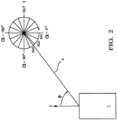
- FIG. 2 shows a plan view of a vehicle and a SUT, i.e. the horizontal plane as in a map.
- This figure shows a host (ego) vehicle 1 travelling in the direction shown by arrow 2 (this can be regarded as the trajectory of the vehicle).
- the SUT is shown as reference numeral 3.
- the line of sight from the vehicle to the SUT is shown by line 4, and the observation angle is given as ⁇ .
- the figure shows angular segmentation radially from the SUT; the SUT azimuthal angle (segmentation angle) given as ⁇ . This may be segmented into a number N of segments SG1, SG2, SG3, . and so on.
- As ⁇ changes the angle of sight of the vehicle from the SUT (segmentation angle) ⁇ will change correspondingly.
- the changes in radar parameters are determined as ⁇ and therefore as ⁇ changes.
- one or more parameters are measured and compared for two or more segments, as the line of sight falls within the appropriate segment.
- the above segmentation technique lends itself to a histogram approach used to determine how radar parameters vary with vehicle and SUT relative azimuthal angle.
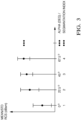
- Figure 3 shows a histogram showing inverse mapping of the mean (and standard deviation, std) values of the RCS against the angle ⁇ in terms of the segments shown in fig2 .
- the one or more of the following parameters may be determined: phase, polarization and signal-to-noise ratio. How these parameters vary with azimuthal angle ⁇ i.e. segmentation angle ⁇ , yields information on the quality of the landmark. The more there is variation of the parameters with said angles the less is the quality of the SUT as a suitable landmark.
- the classification of a target may be carried out in two processing domains: on the detection level and on the tracker level.
- the features of the SUT that are extracted on the detection level are combined with the tracker-based features (collected over time or use a mapping approach) to provide the final classification result; to classify whether the SUT is a suitable landmark.
- detections based on the motion state may be filtered out and only stationary detections used.
- the elevation angle of SUT (if available) may be taken into consideration, because a scatterer on the ground is preferable as it causes no multipath reflections.
Landscapes
- Engineering & Computer Science (AREA)
- Radar, Positioning & Navigation (AREA)
- Remote Sensing (AREA)
- Physics & Mathematics (AREA)
- Computer Networks & Wireless Communication (AREA)
- General Physics & Mathematics (AREA)
- Electromagnetism (AREA)
- Radar Systems Or Details Thereof (AREA)
Claims (6)
- Procédé basé sur un véhicule pour déterminer l'adaptabilité d'un objet (3) dans le voisinage d'un véhicule (1) en tant que repère de position adapté, le procédé comprenant les étapes consistant à :a) émettre une pluralité de signaux radar depuis un système radar basé sur ledit véhicule (1) ;b) détecter, via ledit système radar, les échos radar à partir des signaux radar émis réfléchis par ledit objet (3) ; etc) utiliser une analyse Doppler des échos radar pour déterminer (S2) si ledit objet (3) est un objet stationnaire ;
caractérisé par les étapes consistant àd) déterminer la corrélation croisée des échos radar avec une fonction de propagation de point (PSF, Point Spread Function) correspondante dépendante du système, décrivant la réponse du système radar à une cible de diffuseur unique idéale, pour déterminer (S1) si ledit objet (3) est un centre de diffusion unique ;e) déterminer (S3), à partir des échos radar, des changements dans la position de centre de diffusion dudit objet (3) avec l'angle d'azimut (θ) entre ledit véhicule (1) et ledit objet (3) ; etf) déterminer l'adaptabilité dudit repère pour les résultats des étapes c), d) et e). - Procédé selon la revendication 1 utilisé dans ledit système radar basé sur un véhicule, qui est adapté pour transmettre des signaux radar et pour recevoir des détections radar réfléchies depuis des objets (3) dans le voisinage du véhicule (1).
- Procédé selon la revendication 2, dans lequel ledit système radar comprend une pluralité d'éléments à antennes de réception agencés sous forme de réseau à antennes de réception.
- Procédé selon la revendication 3, dans lequel l'étape d) comprend des profils de plages d'analyse et des profils Doppler des échos radar à travers la pluralité d'éléments à antennes de réception.
- Procédé selon les revendication 1 à 4, dans lequel l'étape f) comprend de déterminer dans quelle mesure un ou plusieurs des éléments suivants varient avec l'angle d'azimut (θ) : caractéristiques de phase, caractéristiques de polarisation et rapport signal sur bruit.
- Procédé selon les revendications 1 à 5, dans lequel, dans l'étape e), ledit changement dans l'angle d'azimut (θ) est déterminé à partir d'informations d'emplacement ou de vitesse et de direction provenant d'un système de géolocalisation dudit véhicule (1).
Priority Applications (3)
| Application Number | Priority Date | Filing Date | Title |
|---|---|---|---|
| EP17190576.3A EP3454079B1 (fr) | 2017-09-12 | 2017-09-12 | Procédé permettant de déterminer l'adaptabilité d'une cible radar en tant que repère de position |
| US16/106,377 US10830874B2 (en) | 2017-09-12 | 2018-08-21 | Method to determine the suitability of a radar target as a positional landmark |
| CN201811055834.7A CN109490874B (zh) | 2017-09-12 | 2018-09-11 | 确定雷达目标作为位置地标的适合性的方法 |
Applications Claiming Priority (1)
| Application Number | Priority Date | Filing Date | Title |
|---|---|---|---|
| EP17190576.3A EP3454079B1 (fr) | 2017-09-12 | 2017-09-12 | Procédé permettant de déterminer l'adaptabilité d'une cible radar en tant que repère de position |
Publications (2)
| Publication Number | Publication Date |
|---|---|
| EP3454079A1 EP3454079A1 (fr) | 2019-03-13 |
| EP3454079B1 true EP3454079B1 (fr) | 2023-11-01 |
Family
ID=59856452
Family Applications (1)
| Application Number | Title | Priority Date | Filing Date |
|---|---|---|---|
| EP17190576.3A Active EP3454079B1 (fr) | 2017-09-12 | 2017-09-12 | Procédé permettant de déterminer l'adaptabilité d'une cible radar en tant que repère de position |
Country Status (3)
| Country | Link |
|---|---|
| US (1) | US10830874B2 (fr) |
| EP (1) | EP3454079B1 (fr) |
| CN (1) | CN109490874B (fr) |
Cited By (1)
| Publication number | Priority date | Publication date | Assignee | Title |
|---|---|---|---|---|
| US12504513B2 (en) | 2021-12-20 | 2025-12-23 | Aptiv Technologies AG | Object reflectivity estimation in a LIDAR system |
Families Citing this family (23)
| Publication number | Priority date | Publication date | Assignee | Title |
|---|---|---|---|---|
| EP3588135B1 (fr) | 2018-06-28 | 2021-05-05 | Aptiv Technologies Limited | Procédé de détermination d'une erreur d'alignement d'une antenne et véhicule équipé d'une antenne et d'un dispositif de détection |
| KR102090880B1 (ko) * | 2018-10-11 | 2020-03-18 | 한국과학기술원 | Fmcw 레이더에서의 누설 신호 감쇄 방법 및 그 레이더 시스템 |
| CN110456343B (zh) * | 2019-07-22 | 2021-05-28 | 深圳普捷利科技有限公司 | 一种基于fmcw毫米波雷达的即时定位方法及系统 |
| DE102019124850B4 (de) * | 2019-09-16 | 2021-08-12 | Infineon Technologies Ag | Phasenoptimierung für die verbesserte Detektion von Radarzielen |
| WO2021053620A1 (fr) * | 2019-09-18 | 2021-03-25 | Thales Canada Inc. | Procédé et système de localisation de véhicule à haute intégrité et détermination de vitesse |
| RU2717233C1 (ru) * | 2019-09-25 | 2020-03-19 | Российская Федерация, от имени которой выступает Государственная корпорация по атомной энергии "Росатом" (Госкорпорация "Росатом") | Способ определения дальности до поверхности земли |
| CN113033586B (zh) * | 2019-12-24 | 2024-04-16 | 大富科技(安徽)股份有限公司 | 目标识别方法及设备 |
| EP3905105A1 (fr) | 2020-04-27 | 2021-11-03 | Aptiv Technologies Limited | Procédé pour déterminer un espace exempt de collision |
| DE102020210059A1 (de) * | 2020-08-07 | 2022-02-10 | Siemens Mobility GmbH | Verfahren, Computer-implementiertes Werkzeug, Fahrzeug-Steuerungseinheit und Fahrzeug zum Verorten von Hindernisobjekten in landmarkengekennzeichneten Fahrstreckenbereichen von Fahrzeugen |
| CN112014822B (zh) * | 2020-08-28 | 2024-04-09 | 北京川速微波科技有限公司 | 车载雷达测量数据识别方法、装置、介质和电子装置 |
| US11802939B2 (en) * | 2020-11-16 | 2023-10-31 | Samsung Electronics Co., Ltd. | Method and apparatus with radar signal processing |
| EP4001962A1 (fr) | 2020-11-23 | 2022-05-25 | Aptiv Technologies Limited | Dispositif, procédé et programme de détermination d'espace libre |
| EP4009228B1 (fr) | 2020-12-02 | 2025-10-29 | Aptiv Technologies AG | Méthode pour déterminer un espace libre sémantique |
| US12366650B2 (en) | 2020-12-31 | 2025-07-22 | Hitachi Rail Gts Canada Inc. | Method and system for high-integrity vehicle localization |
| CN117043038A (zh) | 2020-12-31 | 2023-11-10 | 地面运输系统加拿大公司 | 用于高完整性车辆定位的方法和系统 |
| EP4033269B1 (fr) * | 2021-01-26 | 2025-11-12 | Aptiv Technologies AG | Procédé et système pour déterminer un angle d'une détection |
| GB2603476A (en) | 2021-02-02 | 2022-08-10 | Aptiv Tech Ltd | Object detection with multiple ranges and resolutions |
| EP4047553A1 (fr) | 2021-02-19 | 2022-08-24 | Aptiv Technologies Limited | Compensation et décomposition de mouvement dans des réseaux neuronaux récurrents |
| EP4191274B1 (fr) | 2021-12-03 | 2026-04-08 | Aptiv Technologies AG | Estimation de la hauteur d'un objet basée sur radar |
| GB2615100A (en) | 2022-01-27 | 2023-08-02 | Aptiv Tech Ltd | Method of determining a point of interest and/or a road type in a map, and related cloud server and vehicle |
| CN116094559A (zh) * | 2022-12-28 | 2023-05-09 | 清华大学 | 基于终端视觉感知的波束对准方法及装置 |
| US20240369703A1 (en) * | 2023-04-28 | 2024-11-07 | Arizona Board Of Regents On Behalf Of Arizona State University | Neural volumetric reconstruction for coherent synthetic aperture sonar |
| CN116699550A (zh) * | 2023-06-13 | 2023-09-05 | 苏州豪米波技术有限公司 | 一种基于毫米波雷达判断地面目标的方法 |
Citations (2)
| Publication number | Priority date | Publication date | Assignee | Title |
|---|---|---|---|---|
| US20100076710A1 (en) * | 2008-09-19 | 2010-03-25 | Caterpillar Inc. | Machine sensor calibration system |
| DE102016201250A1 (de) * | 2016-01-28 | 2017-08-03 | Conti Temic Microelectronic Gmbh | Verfahren und Vorrichtung zur Reichweitenbestimmung eines Sensors für ein Kraftfahrzeug |
Family Cites Families (33)
| Publication number | Priority date | Publication date | Assignee | Title |
|---|---|---|---|---|
| DE2518120A1 (de) * | 1975-04-24 | 1976-11-04 | Daimler Benz Ag | Verkehrssystem, insbesondere oeffentliches personennahverkehrssystem |
| FR2657160B1 (fr) * | 1990-01-12 | 1992-05-07 | Aerospatiale | Systeme embarque pour determiner la position d'un vehicule aerien et ses applications. |
| EP0779998B1 (fr) * | 1994-09-06 | 1998-03-25 | Siemens Aktiengesellschaft | Procede de determination de la position d'un point de repere dans la carte de l'environnement d'une unite automobile qui determine dynamiquement la distance qui la separe du point de repere |
| US6002983A (en) * | 1997-08-27 | 1999-12-14 | Delphi Technologies, Inc. | Angle extent estimation method for a motor vehicle object detection system |
| US7250901B2 (en) * | 2003-07-03 | 2007-07-31 | Navcom Technology Inc. | Synthetic aperture radar system and method for local positioning |
| US20050270228A1 (en) * | 2003-07-03 | 2005-12-08 | Stephens Scott A | Radar system for local positioning |
| US7315275B2 (en) * | 2003-07-03 | 2008-01-01 | Navcom Technology, Inc. | Positioning system with intentional multi-path signal |
| US7191056B2 (en) * | 2005-01-04 | 2007-03-13 | The Boeing Company | Precision landmark-aided navigation |
| US7826969B2 (en) * | 2006-12-21 | 2010-11-02 | Deere & Company | Determining position of a vehicle with reference to a landmark |
| US9651388B1 (en) * | 2007-10-25 | 2017-05-16 | Rockwell Collins, Inc. | System and method for improved simultaneous localization and mapping |
| US8155877B2 (en) * | 2007-11-29 | 2012-04-10 | Microsoft Corporation | Location-to-landmark |
| US7840075B2 (en) * | 2009-01-26 | 2010-11-23 | Honeywell International, Inc. | Marine radar system with three-dimensional memory |
| US8340852B2 (en) * | 2009-04-29 | 2012-12-25 | Honeywell International Inc. | System and method for simultaneous localization and map building |
| US20110153338A1 (en) * | 2009-12-17 | 2011-06-23 | Noel Wayne Anderson | System and method for deploying portable landmarks |
| KR101663650B1 (ko) * | 2010-06-29 | 2016-10-07 | 삼성전자주식회사 | 거리 신호를 이용하여 위치를 인식하는 장치 및 방법 |
| US9410804B2 (en) * | 2011-04-21 | 2016-08-09 | Konecranes Global Corporation | Techniques for positioning a vehicle |
| JP2012233743A (ja) * | 2011-04-28 | 2012-11-29 | Furuno Electric Co Ltd | 情報表示装置 |
| DE102012004396A1 (de) * | 2012-03-03 | 2013-09-05 | Volkswagen Aktiengesellschaft | Verfahren und Vorrichtung zum Erfassen von Objekten in einer Umgebung eines Fahrzeugs |
| US9037411B2 (en) * | 2012-05-11 | 2015-05-19 | Honeywell International Inc. | Systems and methods for landmark selection for navigation |
| DE102012224107A1 (de) * | 2012-12-20 | 2014-06-26 | Continental Teves Ag & Co. Ohg | Verfahren zum Bestimmen einer Referenzposition als Startposition für ein Trägheitsnavigationssystem |
| KR20160002178A (ko) * | 2014-06-30 | 2016-01-07 | 현대자동차주식회사 | 자차 위치 인식 장치 및 방법 |
| DE102014011731A1 (de) * | 2014-08-06 | 2015-04-02 | Daimler Ag | Verfahren zum Betreiben eines Kraftfahrzeugs |
| EP3032221B1 (fr) * | 2014-12-09 | 2022-03-30 | Volvo Car Corporation | Procédé et système pour améliorer la précision de données topographiques numériques utilisée par un véhicule |
| DE102015208228A1 (de) * | 2015-05-05 | 2016-11-10 | Bayerische Motoren Werke Aktiengesellschaft | Diagnoseverfahren für einen Sichtsensor eines Fahrzeugs und Fahrzeug mit einem Sichtsensor |
| US20160377711A1 (en) * | 2015-06-26 | 2016-12-29 | Delphi Technologies, Inc. | Radar signal processing for automated vehicles |
| US9464914B1 (en) * | 2015-09-01 | 2016-10-11 | International Business Machines Corporation | Landmark navigation |
| EP3144696A1 (fr) * | 2015-09-15 | 2017-03-22 | Delphi Technologies, Inc. | Système radar pour véhicule automatisé à catégorisation de cible basée sur le changement de phase |
| US10817065B1 (en) * | 2015-10-06 | 2020-10-27 | Google Llc | Gesture recognition using multiple antenna |
| US10126141B2 (en) * | 2016-05-02 | 2018-11-13 | Google Llc | Systems and methods for using real-time imagery in navigation |
| TWI618017B (zh) * | 2016-07-15 | 2018-03-11 | 中華電信股份有限公司 | 結合生活行為分析與社群之地標推薦方法及其電腦程式產品 |
| DE102016015405A1 (de) * | 2016-12-22 | 2017-07-06 | Daimler Ag | Umfassende Umgebungserfassung für einen Kraftwagen mittels Radar |
| US10697779B2 (en) * | 2017-04-21 | 2020-06-30 | X Development Llc | Landmark placement for localization |
| US10761541B2 (en) * | 2017-04-21 | 2020-09-01 | X Development Llc | Localization with negative mapping |
-
2017
- 2017-09-12 EP EP17190576.3A patent/EP3454079B1/fr active Active
-
2018
- 2018-08-21 US US16/106,377 patent/US10830874B2/en active Active
- 2018-09-11 CN CN201811055834.7A patent/CN109490874B/zh active Active
Patent Citations (2)
| Publication number | Priority date | Publication date | Assignee | Title |
|---|---|---|---|---|
| US20100076710A1 (en) * | 2008-09-19 | 2010-03-25 | Caterpillar Inc. | Machine sensor calibration system |
| DE102016201250A1 (de) * | 2016-01-28 | 2017-08-03 | Conti Temic Microelectronic Gmbh | Verfahren und Vorrichtung zur Reichweitenbestimmung eines Sensors für ein Kraftfahrzeug |
Cited By (1)
| Publication number | Priority date | Publication date | Assignee | Title |
|---|---|---|---|---|
| US12504513B2 (en) | 2021-12-20 | 2025-12-23 | Aptiv Technologies AG | Object reflectivity estimation in a LIDAR system |
Also Published As
| Publication number | Publication date |
|---|---|
| EP3454079A1 (fr) | 2019-03-13 |
| US10830874B2 (en) | 2020-11-10 |
| US20200319300A1 (en) | 2020-10-08 |
| CN109490874B (zh) | 2023-06-06 |
| CN109490874A (zh) | 2019-03-19 |
Similar Documents
| Publication | Publication Date | Title |
|---|---|---|
| EP3454079B1 (fr) | Procédé permettant de déterminer l'adaptabilité d'une cible radar en tant que repère de position | |
| EP3546978B1 (fr) | Procédé permettant de tester un objet cible comme centre de diffusion à point unique | |
| EP3663790B1 (fr) | Procédé et appareil de traitement de données radar | |
| EP3746809B1 (fr) | Systèmes et procédés de poursuite au radar à balayage électronique à ouverture virtuelle | |
| KR102784531B1 (ko) | 레이더 센서에서 각도 측정 에러의 검출 방법 | |
| US9470777B2 (en) | Radar system for automated vehicle with phase change based target catagorization | |
| US10989809B2 (en) | Single scatterer test using amplitude and a plurality of receive elements | |
| US5748140A (en) | System for tracking radar targets in background clutter | |
| EP3454080B1 (fr) | Test de diffuseur unique au moyen d'un changement de la phase | |
| US12061285B2 (en) | Detecting a parking row with a vehicle radar system | |
| Joshi et al. | Direction-of-arrival angle and position estimation for extended targets using multichannel airborne radar data | |
| CN114594466A (zh) | 用于确定目标的自有速度估计值和角度估计值的方法 | |
| US6982668B1 (en) | Tangential velocity measurement using interferometric MTI radar | |
| CN118897267A (zh) | 用于校准雷达传感器的方法 | |
| US6816109B1 (en) | Method for automatic association of moving target indications from entities traveling along known route | |
| EP3480624B1 (fr) | Détection d'orientation de rangée de stationnement | |
| Sjögren et al. | Change Detection for Monostatic Pursuit SAR GMTI—Theories and Experimental Results | |
| Zaumseil et al. | Radar-based near field environment perception using back projection algorithm | |
| US20250012894A1 (en) | Method for calibrating a radar sensor | |
| US20240280692A1 (en) | Fine-near-range estimation method for automotive radar applications | |
| Rohling | Development milestones in 24 GHz automotive radar systems | |
| Laribi et al. | Vertical digital beamforming versus vertical Doppler Beam Sharpening |
Legal Events
| Date | Code | Title | Description |
|---|---|---|---|
| PUAI | Public reference made under article 153(3) epc to a published international application that has entered the european phase |
Free format text: ORIGINAL CODE: 0009012 |
|
| STAA | Information on the status of an ep patent application or granted ep patent |
Free format text: STATUS: THE APPLICATION HAS BEEN PUBLISHED |
|
| AK | Designated contracting states |
Kind code of ref document: A1 Designated state(s): AL AT BE BG CH CY CZ DE DK EE ES FI FR GB GR HR HU IE IS IT LI LT LU LV MC MK MT NL NO PL PT RO RS SE SI SK SM TR |
|
| AX | Request for extension of the european patent |
Extension state: BA ME |
|
| STAA | Information on the status of an ep patent application or granted ep patent |
Free format text: STATUS: REQUEST FOR EXAMINATION WAS MADE |
|
| 17P | Request for examination filed |
Effective date: 20190913 |
|
| RBV | Designated contracting states (corrected) |
Designated state(s): AL AT BE BG CH CY CZ DE DK EE ES FI FR GB GR HR HU IE IS IT LI LT LU LV MC MK MT NL NO PL PT RO RS SE SI SK SM TR |
|
| STAA | Information on the status of an ep patent application or granted ep patent |
Free format text: STATUS: EXAMINATION IS IN PROGRESS |
|
| 17Q | First examination report despatched |
Effective date: 20210211 |
|
| RAP3 | Party data changed (applicant data changed or rights of an application transferred) |
Owner name: APTIV TECHNOLOGIES LIMITED |
|
| GRAP | Despatch of communication of intention to grant a patent |
Free format text: ORIGINAL CODE: EPIDOSNIGR1 |
|
| STAA | Information on the status of an ep patent application or granted ep patent |
Free format text: STATUS: GRANT OF PATENT IS INTENDED |
|
| RIC1 | Information provided on ipc code assigned before grant |
Ipc: G01S 13/72 20060101ALN20230426BHEP Ipc: G01S 13/58 20060101ALN20230426BHEP Ipc: G01S 13/931 20200101ALI20230426BHEP Ipc: G01S 13/42 20060101ALI20230426BHEP Ipc: G01S 7/41 20060101AFI20230426BHEP |
|
| RIC1 | Information provided on ipc code assigned before grant |
Ipc: G01S 13/72 20060101ALN20230428BHEP Ipc: G01S 13/58 20060101ALN20230428BHEP Ipc: G01S 13/931 20200101ALI20230428BHEP Ipc: G01S 13/42 20060101ALI20230428BHEP Ipc: G01S 7/41 20060101AFI20230428BHEP |
|
| INTG | Intention to grant announced |
Effective date: 20230524 |
|
| GRAS | Grant fee paid |
Free format text: ORIGINAL CODE: EPIDOSNIGR3 |
|
| GRAA | (expected) grant |
Free format text: ORIGINAL CODE: 0009210 |
|
| STAA | Information on the status of an ep patent application or granted ep patent |
Free format text: STATUS: THE PATENT HAS BEEN GRANTED |
|
| AK | Designated contracting states |
Kind code of ref document: B1 Designated state(s): AL AT BE BG CH CY CZ DE DK EE ES FI FR GB GR HR HU IE IS IT LI LT LU LV MC MK MT NL NO PL PT RO RS SE SI SK SM TR |
|
| REG | Reference to a national code |
Ref country code: GB Ref legal event code: FG4D |
|
| REG | Reference to a national code |
Ref country code: CH Ref legal event code: EP |
|
| REG | Reference to a national code |
Ref country code: IE Ref legal event code: FG4D |
|
| REG | Reference to a national code |
Ref country code: DE Ref legal event code: R096 Ref document number: 602017075928 Country of ref document: DE |
|
| P01 | Opt-out of the competence of the unified patent court (upc) registered |
Effective date: 20231024 |
|
| REG | Reference to a national code |
Ref country code: LT Ref legal event code: MG9D |
|
| REG | Reference to a national code |
Ref country code: NL Ref legal event code: MP Effective date: 20231101 |
|
| PG25 | Lapsed in a contracting state [announced via postgrant information from national office to epo] |
Ref country code: GR Free format text: LAPSE BECAUSE OF FAILURE TO SUBMIT A TRANSLATION OF THE DESCRIPTION OR TO PAY THE FEE WITHIN THE PRESCRIBED TIME-LIMIT Effective date: 20240202 |
|
| PG25 | Lapsed in a contracting state [announced via postgrant information from national office to epo] |
Ref country code: IS Free format text: LAPSE BECAUSE OF FAILURE TO SUBMIT A TRANSLATION OF THE DESCRIPTION OR TO PAY THE FEE WITHIN THE PRESCRIBED TIME-LIMIT Effective date: 20240301 |
|
| PG25 | Lapsed in a contracting state [announced via postgrant information from national office to epo] |
Ref country code: LT Free format text: LAPSE BECAUSE OF FAILURE TO SUBMIT A TRANSLATION OF THE DESCRIPTION OR TO PAY THE FEE WITHIN THE PRESCRIBED TIME-LIMIT Effective date: 20231101 |
|
| REG | Reference to a national code |
Ref country code: AT Ref legal event code: MK05 Ref document number: 1627823 Country of ref document: AT Kind code of ref document: T Effective date: 20231101 |
|
| PG25 | Lapsed in a contracting state [announced via postgrant information from national office to epo] |
Ref country code: NL Free format text: LAPSE BECAUSE OF FAILURE TO SUBMIT A TRANSLATION OF THE DESCRIPTION OR TO PAY THE FEE WITHIN THE PRESCRIBED TIME-LIMIT Effective date: 20231101 |
|
| PG25 | Lapsed in a contracting state [announced via postgrant information from national office to epo] |
Ref country code: AT Free format text: LAPSE BECAUSE OF FAILURE TO SUBMIT A TRANSLATION OF THE DESCRIPTION OR TO PAY THE FEE WITHIN THE PRESCRIBED TIME-LIMIT Effective date: 20231101 |
|
| PG25 | Lapsed in a contracting state [announced via postgrant information from national office to epo] |
Ref country code: ES Free format text: LAPSE BECAUSE OF FAILURE TO SUBMIT A TRANSLATION OF THE DESCRIPTION OR TO PAY THE FEE WITHIN THE PRESCRIBED TIME-LIMIT Effective date: 20231101 |
|
| PG25 | Lapsed in a contracting state [announced via postgrant information from national office to epo] |
Ref country code: NL Free format text: LAPSE BECAUSE OF FAILURE TO SUBMIT A TRANSLATION OF THE DESCRIPTION OR TO PAY THE FEE WITHIN THE PRESCRIBED TIME-LIMIT Effective date: 20231101 Ref country code: LT Free format text: LAPSE BECAUSE OF FAILURE TO SUBMIT A TRANSLATION OF THE DESCRIPTION OR TO PAY THE FEE WITHIN THE PRESCRIBED TIME-LIMIT Effective date: 20231101 Ref country code: IS Free format text: LAPSE BECAUSE OF FAILURE TO SUBMIT A TRANSLATION OF THE DESCRIPTION OR TO PAY THE FEE WITHIN THE PRESCRIBED TIME-LIMIT Effective date: 20240301 Ref country code: GR Free format text: LAPSE BECAUSE OF FAILURE TO SUBMIT A TRANSLATION OF THE DESCRIPTION OR TO PAY THE FEE WITHIN THE PRESCRIBED TIME-LIMIT Effective date: 20240202 Ref country code: ES Free format text: LAPSE BECAUSE OF FAILURE TO SUBMIT A TRANSLATION OF THE DESCRIPTION OR TO PAY THE FEE WITHIN THE PRESCRIBED TIME-LIMIT Effective date: 20231101 Ref country code: BG Free format text: LAPSE BECAUSE OF FAILURE TO SUBMIT A TRANSLATION OF THE DESCRIPTION OR TO PAY THE FEE WITHIN THE PRESCRIBED TIME-LIMIT Effective date: 20240201 Ref country code: AT Free format text: LAPSE BECAUSE OF FAILURE TO SUBMIT A TRANSLATION OF THE DESCRIPTION OR TO PAY THE FEE WITHIN THE PRESCRIBED TIME-LIMIT Effective date: 20231101 Ref country code: PT Free format text: LAPSE BECAUSE OF FAILURE TO SUBMIT A TRANSLATION OF THE DESCRIPTION OR TO PAY THE FEE WITHIN THE PRESCRIBED TIME-LIMIT Effective date: 20240301 |
|
| PG25 | Lapsed in a contracting state [announced via postgrant information from national office to epo] |
Ref country code: SE Free format text: LAPSE BECAUSE OF FAILURE TO SUBMIT A TRANSLATION OF THE DESCRIPTION OR TO PAY THE FEE WITHIN THE PRESCRIBED TIME-LIMIT Effective date: 20231101 Ref country code: RS Free format text: LAPSE BECAUSE OF FAILURE TO SUBMIT A TRANSLATION OF THE DESCRIPTION OR TO PAY THE FEE WITHIN THE PRESCRIBED TIME-LIMIT Effective date: 20231101 Ref country code: PL Free format text: LAPSE BECAUSE OF FAILURE TO SUBMIT A TRANSLATION OF THE DESCRIPTION OR TO PAY THE FEE WITHIN THE PRESCRIBED TIME-LIMIT Effective date: 20231101 Ref country code: NO Free format text: LAPSE BECAUSE OF FAILURE TO SUBMIT A TRANSLATION OF THE DESCRIPTION OR TO PAY THE FEE WITHIN THE PRESCRIBED TIME-LIMIT Effective date: 20240201 Ref country code: LV Free format text: LAPSE BECAUSE OF FAILURE TO SUBMIT A TRANSLATION OF THE DESCRIPTION OR TO PAY THE FEE WITHIN THE PRESCRIBED TIME-LIMIT Effective date: 20231101 Ref country code: HR Free format text: LAPSE BECAUSE OF FAILURE TO SUBMIT A TRANSLATION OF THE DESCRIPTION OR TO PAY THE FEE WITHIN THE PRESCRIBED TIME-LIMIT Effective date: 20231101 |
|
| PG25 | Lapsed in a contracting state [announced via postgrant information from national office to epo] |
Ref country code: DK Free format text: LAPSE BECAUSE OF FAILURE TO SUBMIT A TRANSLATION OF THE DESCRIPTION OR TO PAY THE FEE WITHIN THE PRESCRIBED TIME-LIMIT Effective date: 20231101 |
|
| PG25 | Lapsed in a contracting state [announced via postgrant information from national office to epo] |
Ref country code: CZ Free format text: LAPSE BECAUSE OF FAILURE TO SUBMIT A TRANSLATION OF THE DESCRIPTION OR TO PAY THE FEE WITHIN THE PRESCRIBED TIME-LIMIT Effective date: 20231101 |
|
| PG25 | Lapsed in a contracting state [announced via postgrant information from national office to epo] |
Ref country code: SK Free format text: LAPSE BECAUSE OF FAILURE TO SUBMIT A TRANSLATION OF THE DESCRIPTION OR TO PAY THE FEE WITHIN THE PRESCRIBED TIME-LIMIT Effective date: 20231101 |
|
| PG25 | Lapsed in a contracting state [announced via postgrant information from national office to epo] |
Ref country code: SM Free format text: LAPSE BECAUSE OF FAILURE TO SUBMIT A TRANSLATION OF THE DESCRIPTION OR TO PAY THE FEE WITHIN THE PRESCRIBED TIME-LIMIT Effective date: 20231101 Ref country code: SK Free format text: LAPSE BECAUSE OF FAILURE TO SUBMIT A TRANSLATION OF THE DESCRIPTION OR TO PAY THE FEE WITHIN THE PRESCRIBED TIME-LIMIT Effective date: 20231101 Ref country code: RO Free format text: LAPSE BECAUSE OF FAILURE TO SUBMIT A TRANSLATION OF THE DESCRIPTION OR TO PAY THE FEE WITHIN THE PRESCRIBED TIME-LIMIT Effective date: 20231101 Ref country code: IT Free format text: LAPSE BECAUSE OF FAILURE TO SUBMIT A TRANSLATION OF THE DESCRIPTION OR TO PAY THE FEE WITHIN THE PRESCRIBED TIME-LIMIT Effective date: 20231101 Ref country code: EE Free format text: LAPSE BECAUSE OF FAILURE TO SUBMIT A TRANSLATION OF THE DESCRIPTION OR TO PAY THE FEE WITHIN THE PRESCRIBED TIME-LIMIT Effective date: 20231101 Ref country code: DK Free format text: LAPSE BECAUSE OF FAILURE TO SUBMIT A TRANSLATION OF THE DESCRIPTION OR TO PAY THE FEE WITHIN THE PRESCRIBED TIME-LIMIT Effective date: 20231101 Ref country code: CZ Free format text: LAPSE BECAUSE OF FAILURE TO SUBMIT A TRANSLATION OF THE DESCRIPTION OR TO PAY THE FEE WITHIN THE PRESCRIBED TIME-LIMIT Effective date: 20231101 |
|
| REG | Reference to a national code |
Ref country code: DE Ref legal event code: R097 Ref document number: 602017075928 Country of ref document: DE |
|
| PLBE | No opposition filed within time limit |
Free format text: ORIGINAL CODE: 0009261 |
|
| STAA | Information on the status of an ep patent application or granted ep patent |
Free format text: STATUS: NO OPPOSITION FILED WITHIN TIME LIMIT |
|
| 26N | No opposition filed |
Effective date: 20240802 |
|
| PG25 | Lapsed in a contracting state [announced via postgrant information from national office to epo] |
Ref country code: SI Free format text: LAPSE BECAUSE OF FAILURE TO SUBMIT A TRANSLATION OF THE DESCRIPTION OR TO PAY THE FEE WITHIN THE PRESCRIBED TIME-LIMIT Effective date: 20231101 |
|
| PG25 | Lapsed in a contracting state [announced via postgrant information from national office to epo] |
Ref country code: SI Free format text: LAPSE BECAUSE OF FAILURE TO SUBMIT A TRANSLATION OF THE DESCRIPTION OR TO PAY THE FEE WITHIN THE PRESCRIBED TIME-LIMIT Effective date: 20231101 |
|
| PG25 | Lapsed in a contracting state [announced via postgrant information from national office to epo] |
Ref country code: MC Free format text: LAPSE BECAUSE OF FAILURE TO SUBMIT A TRANSLATION OF THE DESCRIPTION OR TO PAY THE FEE WITHIN THE PRESCRIBED TIME-LIMIT Effective date: 20231101 |
|
| REG | Reference to a national code |
Ref country code: DE Ref legal event code: R081 Ref document number: 602017075928 Country of ref document: DE Owner name: APTIV TECHNOLOGIES AG, CH Free format text: FORMER OWNER: APTIV TECHNOLOGIES LIMITED, ST. MICHAEL, BB Ref country code: CH Ref legal event code: PL |
|
| PG25 | Lapsed in a contracting state [announced via postgrant information from national office to epo] |
Ref country code: LU Free format text: LAPSE BECAUSE OF NON-PAYMENT OF DUE FEES Effective date: 20240912 |
|
| REG | Reference to a national code |
Ref country code: BE Ref legal event code: MM Effective date: 20240930 |
|
| PG25 | Lapsed in a contracting state [announced via postgrant information from national office to epo] |
Ref country code: BE Free format text: LAPSE BECAUSE OF NON-PAYMENT OF DUE FEES Effective date: 20240930 |
|
| PG25 | Lapsed in a contracting state [announced via postgrant information from national office to epo] |
Ref country code: CH Free format text: LAPSE BECAUSE OF NON-PAYMENT OF DUE FEES Effective date: 20240930 |
|
| PG25 | Lapsed in a contracting state [announced via postgrant information from national office to epo] |
Ref country code: IE Free format text: LAPSE BECAUSE OF NON-PAYMENT OF DUE FEES Effective date: 20240912 |
|
| PG25 | Lapsed in a contracting state [announced via postgrant information from national office to epo] |
Ref country code: FI Free format text: LAPSE BECAUSE OF FAILURE TO SUBMIT A TRANSLATION OF THE DESCRIPTION OR TO PAY THE FEE WITHIN THE PRESCRIBED TIME-LIMIT Effective date: 20231101 |
|
| PGFP | Annual fee paid to national office [announced via postgrant information from national office to epo] |
Ref country code: DE Payment date: 20250814 Year of fee payment: 9 |
|
| PGFP | Annual fee paid to national office [announced via postgrant information from national office to epo] |
Ref country code: GB Payment date: 20250818 Year of fee payment: 9 |
|
| PGFP | Annual fee paid to national office [announced via postgrant information from national office to epo] |
Ref country code: FR Payment date: 20250812 Year of fee payment: 9 |
|
| PG25 | Lapsed in a contracting state [announced via postgrant information from national office to epo] |
Ref country code: CY Free format text: LAPSE BECAUSE OF FAILURE TO SUBMIT A TRANSLATION OF THE DESCRIPTION OR TO PAY THE FEE WITHIN THE PRESCRIBED TIME-LIMIT; INVALID AB INITIO Effective date: 20170912 |
|
| PG25 | Lapsed in a contracting state [announced via postgrant information from national office to epo] |
Ref country code: HU Free format text: LAPSE BECAUSE OF FAILURE TO SUBMIT A TRANSLATION OF THE DESCRIPTION OR TO PAY THE FEE WITHIN THE PRESCRIBED TIME-LIMIT; INVALID AB INITIO Effective date: 20170912 |