EP3466933B1 - Triazoles for regulating intracellular calcium homeostasis - Google Patents
Triazoles for regulating intracellular calcium homeostasis Download PDFInfo
- Publication number
- EP3466933B1 EP3466933B1 EP17735609.4A EP17735609A EP3466933B1 EP 3466933 B1 EP3466933 B1 EP 3466933B1 EP 17735609 A EP17735609 A EP 17735609A EP 3466933 B1 EP3466933 B1 EP 3466933B1
- Authority
- EP
- European Patent Office
- Prior art keywords
- compound
- triazole
- formula
- group
- methoxy
- Prior art date
- Legal status (The legal status is an assumption and is not a legal conclusion. Google has not performed a legal analysis and makes no representation as to the accuracy of the status listed.)
- Active
Links
- 0 *S(c1ccccc1)=N Chemical compound *S(c1ccccc1)=N 0.000 description 1
- RSSUACKLRUDKLO-UHFFFAOYSA-N CC(C)(C(O)=O)[n]1nnc(CSc2cc(OC)ccc2)c1 Chemical compound CC(C)(C(O)=O)[n]1nnc(CSc2cc(OC)ccc2)c1 RSSUACKLRUDKLO-UHFFFAOYSA-N 0.000 description 1
- HHQSVEARDUXDET-AWEZNQCLSA-N CC(C)[C@@H](C(O)=O)[n]1nnc(CSc2cc(OC)ccc2)c1 Chemical compound CC(C)[C@@H](C(O)=O)[n]1nnc(CSc2cc(OC)ccc2)c1 HHQSVEARDUXDET-AWEZNQCLSA-N 0.000 description 1
- XCODZOMFRHBPLU-UHFFFAOYSA-N CC(C1)(C=CC2=C1CN(C)CCS2)OC Chemical compound CC(C1)(C=CC2=C1CN(C)CCS2)OC XCODZOMFRHBPLU-UHFFFAOYSA-N 0.000 description 1
- UBWHVFGTRPZKCZ-UHFFFAOYSA-N COC(C[n]1nnc(CS(c2ccccc2)=O)c1)=O Chemical compound COC(C[n]1nnc(CS(c2ccccc2)=O)c1)=O UBWHVFGTRPZKCZ-UHFFFAOYSA-N 0.000 description 1
- KCWGETCFOVJEPI-UHFFFAOYSA-N COc(cc1C2)ccc1SCCN2C(CCN1CCC(Cc2ccccc2)CC1)=O Chemical compound COc(cc1C2)ccc1SCCN2C(CCN1CCC(Cc2ccccc2)CC1)=O KCWGETCFOVJEPI-UHFFFAOYSA-N 0.000 description 1
- CSUPXMYMMCBYMR-GOSISDBHSA-N COc1cc(SCc2c[n]([C@H](Cc3ccccc3)C(O)=O)nn2)ccc1 Chemical compound COc1cc(SCc2c[n]([C@H](Cc3ccccc3)C(O)=O)nn2)ccc1 CSUPXMYMMCBYMR-GOSISDBHSA-N 0.000 description 1
Images



Classifications
-
- A—HUMAN NECESSITIES
- A61—MEDICAL OR VETERINARY SCIENCE; HYGIENE
- A61K—PREPARATIONS FOR MEDICAL, DENTAL OR TOILETRY PURPOSES
- A61K31/00—Medicinal preparations containing organic active ingredients
- A61K31/33—Heterocyclic compounds
- A61K31/395—Heterocyclic compounds having nitrogen as a ring hetero atom, e.g. guanethidine or rifamycins
- A61K31/41—Heterocyclic compounds having nitrogen as a ring hetero atom, e.g. guanethidine or rifamycins having five-membered rings with two or more ring hetero atoms, at least one of which being nitrogen, e.g. tetrazole
- A61K31/4192—1,2,3-Triazoles
-
- A—HUMAN NECESSITIES
- A61—MEDICAL OR VETERINARY SCIENCE; HYGIENE
- A61P—SPECIFIC THERAPEUTIC ACTIVITY OF CHEMICAL COMPOUNDS OR MEDICINAL PREPARATIONS
- A61P19/00—Drugs for skeletal disorders
-
- A—HUMAN NECESSITIES
- A61—MEDICAL OR VETERINARY SCIENCE; HYGIENE
- A61P—SPECIFIC THERAPEUTIC ACTIVITY OF CHEMICAL COMPOUNDS OR MEDICINAL PREPARATIONS
- A61P21/00—Drugs for disorders of the muscular or neuromuscular system
-
- A—HUMAN NECESSITIES
- A61—MEDICAL OR VETERINARY SCIENCE; HYGIENE
- A61P—SPECIFIC THERAPEUTIC ACTIVITY OF CHEMICAL COMPOUNDS OR MEDICINAL PREPARATIONS
- A61P21/00—Drugs for disorders of the muscular or neuromuscular system
- A61P21/04—Drugs for disorders of the muscular or neuromuscular system for myasthenia gravis
-
- A—HUMAN NECESSITIES
- A61—MEDICAL OR VETERINARY SCIENCE; HYGIENE
- A61P—SPECIFIC THERAPEUTIC ACTIVITY OF CHEMICAL COMPOUNDS OR MEDICINAL PREPARATIONS
- A61P25/00—Drugs for disorders of the nervous system
-
- A—HUMAN NECESSITIES
- A61—MEDICAL OR VETERINARY SCIENCE; HYGIENE
- A61P—SPECIFIC THERAPEUTIC ACTIVITY OF CHEMICAL COMPOUNDS OR MEDICINAL PREPARATIONS
- A61P25/00—Drugs for disorders of the nervous system
- A61P25/28—Drugs for disorders of the nervous system for treating neurodegenerative disorders of the central nervous system, e.g. nootropic agents, cognition enhancers, drugs for treating Alzheimer's disease or other forms of dementia
-
- A—HUMAN NECESSITIES
- A61—MEDICAL OR VETERINARY SCIENCE; HYGIENE
- A61P—SPECIFIC THERAPEUTIC ACTIVITY OF CHEMICAL COMPOUNDS OR MEDICINAL PREPARATIONS
- A61P3/00—Drugs for disorders of the metabolism
- A61P3/12—Drugs for disorders of the metabolism for electrolyte homeostasis
- A61P3/14—Drugs for disorders of the metabolism for electrolyte homeostasis for calcium homeostasis
-
- A—HUMAN NECESSITIES
- A61—MEDICAL OR VETERINARY SCIENCE; HYGIENE
- A61P—SPECIFIC THERAPEUTIC ACTIVITY OF CHEMICAL COMPOUNDS OR MEDICINAL PREPARATIONS
- A61P9/00—Drugs for disorders of the cardiovascular system
-
- A—HUMAN NECESSITIES
- A61—MEDICAL OR VETERINARY SCIENCE; HYGIENE
- A61P—SPECIFIC THERAPEUTIC ACTIVITY OF CHEMICAL COMPOUNDS OR MEDICINAL PREPARATIONS
- A61P9/00—Drugs for disorders of the cardiovascular system
- A61P9/04—Inotropic agents, i.e. stimulants of cardiac contraction; Drugs for heart failure
-
- A—HUMAN NECESSITIES
- A61—MEDICAL OR VETERINARY SCIENCE; HYGIENE
- A61P—SPECIFIC THERAPEUTIC ACTIVITY OF CHEMICAL COMPOUNDS OR MEDICINAL PREPARATIONS
- A61P9/00—Drugs for disorders of the cardiovascular system
- A61P9/06—Antiarrhythmics
-
- A—HUMAN NECESSITIES
- A61—MEDICAL OR VETERINARY SCIENCE; HYGIENE
- A61P—SPECIFIC THERAPEUTIC ACTIVITY OF CHEMICAL COMPOUNDS OR MEDICINAL PREPARATIONS
- A61P9/00—Drugs for disorders of the cardiovascular system
- A61P9/10—Drugs for disorders of the cardiovascular system for treating ischaemic or atherosclerotic diseases, e.g. antianginal drugs, coronary vasodilators, drugs for myocardial infarction, retinopathy, cerebrovascula insufficiency, renal arteriosclerosis
-
- C—CHEMISTRY; METALLURGY
- C07—ORGANIC CHEMISTRY
- C07D—HETEROCYCLIC COMPOUNDS
- C07D249/00—Heterocyclic compounds containing five-membered rings having three nitrogen atoms as the only ring hetero atoms
- C07D249/02—Heterocyclic compounds containing five-membered rings having three nitrogen atoms as the only ring hetero atoms not condensed with other rings
- C07D249/04—1,2,3-Triazoles; Hydrogenated 1,2,3-triazoles
-
- A—HUMAN NECESSITIES
- A61—MEDICAL OR VETERINARY SCIENCE; HYGIENE
- A61K—PREPARATIONS FOR MEDICAL, DENTAL OR TOILETRY PURPOSES
- A61K9/00—Medicinal preparations characterised by special physical form
- A61K9/0012—Galenical forms characterised by the site of application
- A61K9/0019—Injectable compositions; Intramuscular, intravenous, arterial, subcutaneous administration; Compositions to be administered through the skin in an invasive manner
- A61K9/0029—Parenteral nutrition; Parenteral nutrition compositions as drug carriers
-
- A—HUMAN NECESSITIES
- A61—MEDICAL OR VETERINARY SCIENCE; HYGIENE
- A61K—PREPARATIONS FOR MEDICAL, DENTAL OR TOILETRY PURPOSES
- A61K9/00—Medicinal preparations characterised by special physical form
- A61K9/0012—Galenical forms characterised by the site of application
- A61K9/0053—Mouth and digestive tract, i.e. intraoral and peroral administration
Definitions
- the present invention relates to new substituted 1,2,3-triazoles useful for improving or restoring intracellular calcium homeostasis function in human and animal cells.
- the present invention also relates to methods for synthesizing said compounds, to pharmaceutical compositions containing them, and to the use thereof for preventing or treating skeletal muscle, heart and neurodegenerative disorders.
- Muscular dystrophies are heterogeneous hereditary diseases characterized by progressive weakening and atrophy of the skeletal muscle.
- X-linked Duchenne muscular dystrophy (DMD) is one of the most common forms affecting 1 out of every 3500 males.
- BMD BMD
- both DMD and BMD are caused by mutations in the gene encoding dystrophin, a 427-kDa cytoskeleton protein. Genetic studies are not enough to eradicate the disease due to the high incidence of sporadic cases, so the search for new effective therapies is therefore an urgent need.
- LGMDs Limb-girdle muscular dystrophies
- calpainopathy or LGMD2A is the most common form and is caused by mutations in the gene encoding calpain 3 (CAPN3), a non-lysosomal cysteine protease necessary for correct muscle functioning and regeneration.
- Myotonic dystrophy type 1 (DM1) is the most common form of muscular dystrophy in adults and is characterized by muscle weakness, myotonia and multisystemic involvement. It is a dominant autosomal hereditary disease caused by an unstable expansion of the CTG triplet repeat located in the 3' non-coding region of the DMPK gene located on the long arm of chromosome 19 and predominantly expressed in skeletal muscle.
- IP3R inositol 1,4,5-trisphosphate receptor
- Calpain 3 has been proven by means of immunoprecipitation assays to interact with calsequestrin (CSQ), a protein participating in calcium homeostasis.
- CSQ calsequestrin
- CAPN3-knockout mice C3KO, Capn3-/-
- the reduction in RyR1 levels is accompanied by a reduction in Ca 2+ release from the SR.
- Ca 2+ reuptake into the SR occurs more slowly, although the basis of this finding requires more in-depth studies.
- CAPN3 proteolytic activity loss in Capn3 cs/cs mice does not affect calcium homeostasis, which indicates that the structural function of CAPN3 is key for maintaining Ca 2+ homeostasis.
- Myotonic dystrophy has been associated with the dysregulation of the alternative connection of the CACNA1S gene encoding the alpha 1S subunit of the dihydropyridine receptor DHPR, a voltage sensor that is essential in excitation-contraction (E-C) coupling.
- E-C excitation-contraction
- disorders and diseases are associated with congenital or acquired RyR1 protein modifications ( Kushmir et al. Recent Pat Biotechnol. 2012, 6, 157-166 "Ryanodine receptor patents ").
- Said disorders and diseases comprise skeletal muscle, heart and nervous system conditions. More specifically they include, but are not limited to, congenital myopathies, muscular dystrophies, sarcopenia, skeletal muscle fatigue, acquired muscle weakness or atrophy, malignant hyperthermia, exercise-induced cardiac arrhythmias, congestive heart failure, hypertrophic cardiomyopathy, Alzheimer's disease and age-related memory loss.
- RyR1 located in the skeletal muscle
- RyR2 located in the heart muscle.
- Each calcium channel is formed by an RyR protein tetramer, each RyR monomer being able to interact with a calstabin protein.
- RyR1 binds to FKBP12 (calstabin1) and RyR2 binds to FKBP12.6 (calstabin2).
- JTV-519 4-[3-(4-benzylpiperidinyl)-propanoyl]-2,3,4,5-tetrahydro-1,4-benzothiazepine (JTV-519) for preventing heart muscle necrosis and myocardial infarction has been demonstrated, for example.
- JTV-519 inhibits in vitro adrenaline- and caffeine-induced myocardial necrosis in the left ventricle of a rat heart without affecting left ventricular heart rate or pressure ( Kaneko, N. et al.
- WO92/12148A1 Preparation of 4-[(4-benzylpiperidinyl)-alkanoyl]-2,3,4,5-tetrahydro-1,4-benzothiazepine derivatives for inhibiting the kinetic cell death of cardiac muscles without inhibiting cardiac functions.
- Compound JTV-519 acts on the calstabin2-associated RyR2 ryanodine receptor (FKBP12.6), increasing FKBP12.6 affinity for the PKA kinase-phosphorylated RyR2 receptor, and also for the mutant RyR2 receptor, which otherwise has a reduced affinity for or does not bind to FKBP12.6.
- This action of JTV-519 fixes the Ca 2+ ion leak in RyR2 ( Marks, A. R. et al. US2004/229781A1 "Compounds and methods for treating and preventing exercise-induced cardiac arrhythmias").
- compositions containing compound S-107, or other structurally related tetrahydrobenzothiazepines are also known to be effective for treating or preventing disorders or diseases related to RyR2 receptors which regulate calcium channel functioning in cardiac cells ( Marks, A. R. et al. US2006/194767A1 "Benzothiazepines as novel agents for preventing and treating disorders involving modulation of the RyR receptors and their preparation and pharmaceutical compositions"; see also: Mei, Y. et al. PLoS One. 2013, 8: e54208 "Stabilization of the skeletal muscle ryanodine receptor ion channel-FKBP12 complex by the 1,4-benzothiazepine derivative S107 ").
- the same family of compounds is also known to be active as an RyR1-calstabin1 interaction stabilizer, reducing muscle fatigue ( Marks, A. R. et al. WO2008/060332A2 "Methods using tetrahydrobenzothiazepine compounds for treating or reducing muscle fatigue"), and for treating sarcopenia ( Marks, A. R. et al. WO2012/019071A1 "Methods and compositions comprising benzazepine derivatives for preventing and treating sarcopenia").
- the ryanodine RyR3 receptor isomorph is known to regulate intracellular calcium homeostasis in the brain or other nervous tissues, and the modulation thereof using benzothiazepines has been claimed for treating some neuronal disorders ( Marks, A. R. et al. WO2012/037105A1 "Methods and compositions comprising benzazepine derivatives for treating or preventing stress-induced neuronal disorders and diseases"). Furthermore, both RyR1 and RyR2 are expressed in the brain, and there is evidence that calcium regulation and nitro-oxidative stress are involved in various brain disorders and neuronal death ( Kakizawa et al., EMBO J. 2012, 31, 417-428 ; Liu X et al., Cell. 2012, 150, 1055-1067 ).
- the authors of the present invention have developed new triazole-derived compounds, particularly, 4-[(phenylthio)alkyl]-1 H -1,2,3-triazoles, suitable for modulating RyR receptors regulating calcium function in animal or human cells. Said compounds are referred to as "AHK" in the invention.
- the compounds according to the present invention have the capacity to modulate intracellular calcium homeostasis in dystrophic muscle fibers, reverting the observed intracellular calcium increases. Furthermore, said compounds have a modulating effect on RyR, their capacity for recovering RyR1-calstabin interaction on healthy human myotubes subjected to nitro-oxidative stress having been demonstrated.
- a first aspect of the invention relates to a 1,4-disubstituted 1,2,3-triazole compound of formula (I): wherein:
- Another aspect of the invention comprises a method for synthesizing the compounds of formula (I), which comprises:
- compositions containing a compound of formula (I), defined as indicated above, together with one or more pharmaceutically acceptable excipients or vehicles.
- An additional aspect of the present invention relates to a compound of formula (I) as defined above for use as a medicinal product.
- a final aspect of the invention relates to a compound of formula (I) as defined above for use in the treatment and/or prevention of intracellular calcium concentration dysregulation- or RyR receptor dysfunction-related disorders or diseases, particularly skeletal muscle disorders or diseases, heart disorders or diseases and nervous system disorders or diseases.
- the present invention provides new triazole compounds that are capable of treating or preventing disorders or diseases associated with intracellular calcium dysregulation or RyR receptor dysfunction.
- alkylene biradical refers to a biradical formed by a linear or branched hydrocarbon chain consisting of carbon and hydrogen atoms, having no unsaturation and bound at its ends to the rest of the molecule through single bonds, such as, for example, methylene, ethylene, propylene, butylene, etc. Mention of a C 1 -C 4 alkylene biradical refers to said biradical having between 1 and 4 carbon atoms, whereas mention of a C 1 -C 6 alkylene biradical refers to said biradical having between 1 and 6 carbon atoms.
- the alkylene biradical can be substituted as specified in the definitions of the R 1 and R 2 substituents in the compound of formula (I).
- alkyl refers to a radical formed by a linear or branched hydrocarbon chain consisting of carbon and hydrogen atoms, which does not contain any saturation and is bound to the rest of the molecule by means of a single bond, for example, methyl, ethyl, n-propyl, i-propyl, n-butyl, t-butyl, n-pentyl, etc. Mention of a C 1 -C 4 alkyl refers to said radical having between 1 and 4 carbon atoms.
- C 6 -C 10 aryl refers to a radical formed by a 6 to 10-membered aromatic ring consisting of carbon and hydrogen atoms, preferably a phenyl radical.
- C 6 -C 10 heteroaryl refers to a radical formed by a 6 to 10-membered aromatic ring consisting of carbon and hydrogen atoms and one or more heteroatoms selected from O, N and S.
- halogen refers to F, Cl, Br or I.
- salts or solvates refers to any pharmaceutically acceptable salt, ester, solvate, or any other compound which, when administered to the recipient, is capable of providing (directly or indirectly) a compound of formula (I) as described in the present document.
- the salts can be prepared by means of methods known in the state of the art.
- salts of the compounds provided in the present document are synthesized from the previously described basic or acidic unit-containing compound by means of conventional chemical methods.
- Such salts are generally prepared, for example, by reacting free acid or base forms of these compounds with a stoichiometric amount of the suitable base or acid in water or in an organic solvent or in a mixture of both.
- Non-aqueous media such as ether, ethyl acetate, ethanol, isopropanol or acetonitrile are generally preferred.
- acid addition salts include mineral acid addition salts such as, for example, hydrochloride, hydrobromide, hydroiodide, sulfate, nitrate, phosphate, and organic acid addition salts such as, for example, acetate, maleate, fumarate, citrate, oxalate, succinate, tartrate, malate, mandelate, methanesulfonate and p-toluenesulfonate.
- alkaline addition salts include inorganic salts such as, for example, sodium, potassium, calcium, ammonium, magnesium, aluminum and lithium, and organic alkaline salts such as, for example, ethylenediamine, ethanolamine, N,N-dialkylenethanolamine, glucamine and basic amino acid salts.
- Solvates refer to a salt of the compound of formula (I) in which the molecules of a pharmaceutically suitable solvent are incorporated in the crystal lattice. Solvation methods are generally known in the state of the art. Examples of pharmaceutically suitable solvents are ethanol, water and the like. In a particular embodiment, the solvate is a hydrate.
- the compounds of formula (I) or the salts or solvates thereof are preferably in a pharmaceutically acceptable form or a substantially pure form.
- a pharmaceutically acceptable form is understood, inter alia , as having a pharmaceutically acceptable level of purity, excluding normal pharmaceutical additives such as diluents and excipients, and without including any material considered toxic at normal dosage levels.
- the levels of purity for the drug are preferably above 50%, more preferably above 70%, and even more preferably above 90%. In a preferred embodiment, it is above 95% of the compound of formula (I) or the salts or solvates thereof.
- the compounds of the present invention represented by formula (I) described above can include any stereoisomer depending on the presence of chiral centers, including enantiomers and diastereoisomers.
- the individual isomers, enantiomers or diastereómeros and mixtures thereof are within the scope of the present invention.
- the R 1 radical is -CH 2 -.
- R 2 is a C 1-4 alkylene biradical optionally substituted with one or two substituents independently selected from the group consisting of methyl, ethyl, propyl, isopropyl, allyl, propargyl, butyl, isobutyl, sec -butyl, tert -butyl, hydroxymethyl, 1-hydroxyethyl, 2-hydroxyethyl, 3-aminopropyl, 4-aminobutyl, 3-guanidylpropyl, 3-indolylmethyl, phenyl, 1-naphthyl, 2-naphthyl, benzyl, 4-hydroxybenzyl, and C 6-10 heteroaryl.
- R 2 is a -CH 2 - or -CH 2 -CH 2 - biradical, optionally substituted with one or two substituents independently selected from the group consisting of methyl, isopropyl, isobutyl and benzyl. Even more preferably, R 2 is a - CH 2 - biradical optionally substituted with two methyl substituents or with one substituent selected from the group consisting of isopropyl, isobutyl and benzyl, or R 2 is a -CH 2 -CH 2 - biradical. Also preferably, R 2 is a -CH 2 - or -CH 2 -CH 2 -biradical.
- R 3 is H.
- m is 1.
- n 0.
- X is - O(C 1-4 alkyl) or halogen, more preferably a methoxy group in meta or para position or chlorine.
- Y is selected from the group consisting of CO 2 H, CO 2 Me, -NMe 2 and - NEt 2 , or a pharmaceutically acceptable salt of said groups.
- Y is selected from the group consisting of CO 2 H and -NMe 2 , even more preferably Y is -CO 2 H or a pharmaceutically acceptable salt thereof.
- the compounds of formula (I) are selected from the group consisting of:
- the R 1 radical is -CH 2 -.
- R 2 is a - CH 2 - or -CH 2 -CH 2 - biradical, optionally substituted with one or two substituents independently selected from the group consisting of methyl, isopropyl and isobutyl. Even more preferably, R 2 is a -CH 2 - biradical optionally substituted with two methyl substituents or with one substituent selected from the group consisting of isopropyl and isobutyl, or R 2 is a -CH 2 -CH 2 - biradical.
- R 3 is H.
- m is 1.
- n 0.
- X is - O(C 1-4 alkyl) or halogen, more preferably a methoxy group in meta or para position or chlorine.
- Y is - N(C 1 -C 4 alkyl) 2
- Y is selected from -NMe 2 and-NEt 2 or a pharmaceutically acceptable salt of said groups. More preferably, Y is -NMe 2 , or a pharmaceutically acceptable salt thereof.
- the R 1 radical is -CH 2 -.
- R 2 is a C 1-4 alkylene biradical optionally substituted with one or two substituents independently selected from the group consisting of methyl, ethyl, propyl, isopropyl, allyl, propargyl, butyl, isobutyl, sec-butyl, tert-butyl, hydroxymethyl, 1-hydroxyethyl, 2-hydroxyethyl, 3-aminopropyl, 4-aminobutyl, 3-guanidylpropyl, 3-indolylmethyl, phenyl, 1-naphthyl, 2-naphthyl, benzyl, 4-hydroxybenzyl, and C 6-10 heteroaryl.
- R 2 is a -CH 2 - or -CH 2 -CH 2 - biradical, optionally substituted with one or two substituents independently selected from the group consisting of methyl, isopropyl, isobutyl and benzyl. Even more preferably, R 2 is a - CH 2 - biradical optionally substituted with two methyl substituents or with one substituent selected from the group consisting of isopropyl, isobutyl and benzyl, or R 2 is a -CH 2 -CH 2 - biradical. Also preferably, R 2 is a -CH 2 - or -CH 2 -CH 2 -biradical.
- R 3 is H.
- m is 1.
- n 0.
- X is - O(C 1-4 alkyl) or halogen, more preferably a methoxy group in meta or para position or chlorine.
- Y is selected from the group consisting of CO 2 H, CO 2 (C 1 -C 4 alkyl), and -N(C 1 -C 4 alkyl) 2 , or a pharmaceutically acceptable salt of said groups.
- Y is selected from -NMe 2 and -NEt 2 or a pharmaceutically acceptable salt of said groups.
- Y is selected from the group consisting of CO 2 H and -NMe 2 or a pharmaceutically acceptable salt thereof.
- the compounds of formula (I) of the present invention can be prepared by means of a method which comprises reacting an alkyne of formula (II) with an azide of formula (III): N 3 -R 2 -Y (III) wherein R 1 , R 2 , R 3 , m, n and X in the compounds of formulae (II)-(III) are as defined for the compounds of formula (I), and wherein Y is a group as defined for the compounds of formula (I), optionally protected with a carboxyl protecting group, a hydroxyl protecting group or an amino protecting group, depending on the nature of said Y group.
- This reaction can be carried out in the presence of a copper catalyst, such as copper(II) sulfate/sodium ascorbate, copper(I) iodide or copper(I) acetate, for example.
- a copper catalyst such as copper(II) sulfate/sodium ascorbate, copper(I) iodide or copper(I) acetate, for example.
- reaction between the compound of formula (II) and the compound of formula (III) is performed in the presence of a base, such as sodium acetate, diisopropylamine or triethylamine, for example.
- a base such as sodium acetate, diisopropylamine or triethylamine, for example.
- the compound of formula (I) obtained according to the preceding method can be treated with an oxidizing agent to yield a compound of formula (I) wherein n is 1 or 2.
- oxidizing agents include, for example, 3-chloroperbenzoic acid or tert-butyl hydroperoxide.
- the compound of formula (I) obtained according to the preceding method has a Y group protected with a protecting group
- said protecting group is removed to yield a compound of formula (I) wherein R 1 , R 2 , R 3 , m, n, X and Y are as defined for the compound of formula (I).
- the protecting group can be removed following methods commonly known for a person skilled in organic synthesis.
- the present invention further provides pharmaceutical compositions comprising a compound of formula (I), or a pharmaceutically acceptable stereoisomer, salt, solvate or complex thereof; and one or more pharmaceutically acceptable excipients or vehicles.
- the pharmaceutically acceptable vehicle must be acceptable in the sense of being compatible with other ingredients of the composition and not being harmful to the receiver thereof.
- Said pharmaceutically acceptable vehicle can be selected from organic and inorganic materials that are used in pharmaceutical formulations and incorporated as analgesic agents, pH regulators, linkers, disintegrants, diluents, emulsifiers, fillers, glidants, solubilizers, stabilizers, suspension agents, tonicity agents and thickeners.
- Pharmaceutical additives such as antioxidants, aromatic agents, dyes, aroma enhancing agents, preservatives and sweeteners can furthermore be added.
- Examples of pharmaceutically acceptable vehicles include, among others, carboxymethyl cellulose, crystalline cellulose, glycerin, acacia gum, lactose, magnesium stearate, methylcellulose, saline solution, sodium alginate, sucrose, starch, talc and water.
- the pharmaceutical formulations of the present invention are prepared by methods well known in the pharmaceutical art.
- the compounds of formula (I) are mixed with a pharmaceutically acceptable excipient or vehicle, as a suspension or solution.
- a pharmaceutically acceptable excipient or vehicle as a suspension or solution.
- the choice of the vehicle is determined by the solubility and the chemical nature of the compounds, the chosen route of administration and standard pharmaceutical practice.
- compositions of the present invention can be administered to a human or animal subject by means of any known method including, without limitation, oral administration, sublingual or buccal administration, parenteral administration, transdermal absorption, by nasal instillation or inhalation, vaginal, rectal and intramuscular administration.
- the administration is performed parenterally, such as by means of subcutaneous injection, intramuscular injection, intraperitoneal injection, intravenous injection, for example.
- parenteral administration the compounds of the invention are combined with a sterile aqueous solution which is isotonic with the subject's blood.
- a formulation of this type is prepared by dissolving the solid active ingredient in water containing physiologically compatible substances, such as sodium chloride, glycine and the like, and having a buffered pH compatible with physiological conditions. Said formulation is presented in single- or multidose containers, such as closed vials or ampoules.
- the administration is performed orally.
- the formulation of the compounds of the invention can be presented in the form of capsules, tablets, powders, granules, or as a suspension or solution.
- Said formulation can include conventional additives, such as lactose, mannitol, starch, etc.; binders, such as crystalline cellulose, cellulose derivatives, acacia gum, cornstarch or gelatins; disintegrants, such as cornstarch and potato starch or sodium carboxymethyl cellulose; lubricants, such as talc or magnesium stearate.
- the compounds of the present invention are suitable for modulating RyR receptors which regulate calcium function in animal or human cells, so they are capable of treating or preventing disorders or diseases associated with intracellular calcium dysregulation fundamentally caused by RyR receptor dysfunction.
- Intracellular calcium dysregulation must be understood as an abnormal regulation of calcium levels and calcium fluxes in cells.
- Ca 2+ -dependent proteases such as calpain.
- calpain activity increases in necrotic muscle fibers of mdx mice and that calpain dysfunction leads to limb-girdle muscular dystrophy
- preventing the activity of calcium-dependent proteases by inhibiting intracellular Ca 2+ increments allows preventing muscle atrophy and therefore treating diseases such as Duchenne muscular dystrophy or Becker muscular dystrophy.
- the in vitro assays performed with the compounds of the invention have shown the capacity of these compounds to revert intracellular calcium increases back in muscle fibers, suggesting that these compounds carry out this reversion through a mechanism involving RyR channel modulation. Furthermore, said compounds have also shown capacity to reduce the number of genes overexpressed in dystrophic mdx muscle by half, one of said genes being linked to skeletal muscle loss or atrophy.
- RyR receptors regulating intracellular calcium function include RyR1, RyR2 and RyR3, as well as an RyR protein or an RyR analogue.
- An RyR analogue refers to a functional variant of an RyR protein with biological activity having a homology of 60% or greater in the amino acid sequence with the RyR protein.
- RyR biological activity must be understood as the activity of the protein or peptide showing the capacity to physically associate itself with or bind to FKBP 12 (calstabin-1) in the case of RyR1 and RyR3, and to FKBP12.6 (calstabin-2) in the case of RyR2, under the assay conditions described herein.
- the compounds of the present invention can be used for limiting or preventing a drop in the RyR-bound FKBP (calstabin) level in the cells of a subject.
- RyR-bound FKBP refers to RyR1-bound FKBP12 (calstabin-1), RyR2-bound FKBP 12.6 (calstabin-2) and RyR3-bound FKBP12 (calstabin-1).
- a drop in the RyR-bound FKBP level in the cells of a subject is limited or prevented when said drop is, in any way, stopped, blocked, hindered, obstructed or reduced by means of administering the compounds of the invention, such that the RyR-bound FKBP level in the cells of a subject is greater than what it would be otherwise in the absence of the administered compound.
- the RyR-bound FKBP level in a subject is detected using standard assays or techniques known by a person skilled in the art, such as immunological techniques, hybridization analysis, immunoprecipitation, Western blot analysis, fluorescence imaging and/or radiation detection techniques, as well as any other assays or techniques, like the ones disclosed in the experimental part of the present document.
- the drop in the RyR-bound FKBP (calstabin) level occurs as a result of subjecting the cells from a subject to nitro-oxidative stress.
- the experimental assays performed with the compounds of the invention have clearly shown that said compounds allow minimizing the degenerative effects of nitro-oxidative stress on healthy human myotubes through an increase in RyR1-calstabin1 interaction affinity.
- the compounds of the invention prevent disorders or conditions involving RyR receptor modulation or intracellular calcium increase, which thereby allows regulating the levels thereof.
- disorders or conditions include skeletal muscle disorders and diseases (related to RyR1 modulation), heart disorders and diseases (related to RyR2 modulation) and nervous system disorders and diseases (related to RyR1, RyR2 or RyR3 modulation).
- an additional aspect of the present invention relates to the compounds of formula (I), or a pharmaceutically acceptable stereoisomer, salt, solvate or complex thereof, for use in the treatment and/or prevention of skeletal muscle disorders and diseases, heart disorders and diseases and nervous system disorders and diseases.
- the skeletal muscle disorders and diseases are selected from muscular dystrophies, congenital myopathies, metabolic myopathies and muscle atrophy.
- said skeletal muscle disorder or disease is Duchenne muscular dystrophy or Becker muscular dystrophy.
- the heart disorders and diseases are selected from heart failure, cardiac ischemia, cardiac arrhythmias and cardiomyopathies.
- the nervous system disorders and diseases are selected from stroke, Alzheimer's disease, frontotemporal dementia and cognitive impairment.
- the compounds according to variant (A) of the present invention are used for the treatment of skeletal muscle disorders and diseases, as well as for the treatment of heart disorders and diseases, such as those described above.
- the compounds according to variant (B) of the present invention are used for the treatment of nervous system disorders and diseases such as those described above.
- the invention also relates to a method for the treatment and/or prevention of skeletal muscle disorders and diseases, heart disorders and diseases and nervous system disorders and diseases, which method comprises administering to a patient in need thereof a therapeutically effective amount of a compound of formula (I), or a pharmaceutically acceptable stereoisomer, salt, solvate or complex thereof.
- “Therapeutically effective” amount must be understood as the amount sufficient to achieve beneficial or desired results, the response being preventive and/or therapeutic, preventing or substantially mitigating unwanted side effects.
- the compounds of the present invention are administered to a subject in an amount effective for modulating abnormal intracellular calcium concentrations.
- This amount can be readily determined by a person skilled in the area using known methods.
- the release of intracellular calcium through RyR channels can be quantified using calcium-sensitive fluorescent dyes, such as Fluo-3 or Fura-2 and monitoring calcium-dependent fluorescence signals with a photomultiplier tube and suitable software ( Brillantes, et al. Cell, 1994, 77, 513-523, "Stabilization of calcium release channel (ryanodine receptor) function by FK506-binding protein "; Gillo, et al. Blood, 1993, 81, 783-792 ).
- the concentration of the compounds of the invention in the serum of a human or animal subject can be determined following methods known in the art ( Thebis, M. et al. Drug Test. Analysis 2009, 1, 32-42 "Screening for the calstabin-ryanodine receptor complex stabilizers JTV-519 and S-107 in doping control analysis ").
- the administered amount of compounds of formula (I) which is effective for limiting or preventing abnormal intracellular calcium levels will depend on the relative efficacy of the chosen compound, the seriousness of the treated disorder and the weight of the affected subject.
- the compounds will typically be administered once a day or more, for example 1, 2, 3 or 4 times daily, with total typical daily doses in the range of between about 1 mg/kg/day and 100 mg/kg/day, and more preferably between 10 mg/kg/day and 40 mg/kg/day, or an amount sufficient for achieving serum levels between about 1 ng/ml and 500 ng/ml.
- the compounds of formula (I) can be used alone, combined with one another, or combined with other drugs having therapeutic activity including, but are not limited to, mRNA exonic splicing enhancer, gene transcription modulators, diuretics, anticoagulants, platelet agents, antiarrhythmics, inotropic agents, chronotropic agents, ⁇ - and ⁇ -blockers, angiotensin inhibitors and vasodilators.
- drugs having therapeutic activity including, but are not limited to, mRNA exonic splicing enhancer, gene transcription modulators, diuretics, anticoagulants, platelet agents, antiarrhythmics, inotropic agents, chronotropic agents, ⁇ - and ⁇ -blockers, angiotensin inhibitors and vasodilators.
- Said drugs can be part of the same composition, or be provided as a separate composition, for administration at the same time or at a different time.
- the present invention also includes an in vitro method for determining the capacity of a compound to modulate intracellular calcium levels and prevent calstabin dissociation from the RyR protein complex, where said method comprises: (a) obtaining or generating a cell culture containing RyR receptors; (b) contacting the cells with the compound to be assayed; (c) exposing the cells to one or more known conditions which alter intracellular calcium regulation or generate post-translational modifications in the RyR receptor; (d) determining if said compound modulates intracellular calcium levels; and (e) determining if said compound limits or prevents calstabin dissociation from the RyR protein complex.
- the conditions which alter intracellular calcium regulation or generate post-translational modifications in the RyR receptor are oxidative stress or nitrosative stress.
- the present invention also contemplates a method for the diagnosis of a disorder or disease, where said method comprises:
- the compound of formula (I) used in the diagnostic method is a compound according to variant (C) of the present invention.
- the tissue sample is a muscle tissue sample.
- the disorder or disease to be diagnosed is a skeletal muscle disorder or disease.
- the disorder or disease to be diagnosed is a heart disorder or disease.
- the disorder or disease to be diagnosed is a nervous system disorder or disease.
- the increase in RyR-calstabin interaction and the drop in intracellular calcium levels can be measured by means of techniques known by a skilled person, such as immunoprecipitation, in situ proximity ligation assays (PLAs) and real time calcium imaging using fluorescent probes.
- PLAs in situ proximity ligation assays
- Example 1 1-methoxycarbonylmethyl-4-[4-(methoxy)phenylthiomethyl]-1 H -1,2,3-triazole
- Example 1 The method of Example 1 was followed starting from 1-(3-methoxyphenylthio)-2-propyne (2.00 mmol, 356 mg) and methyl azidoacetate (2.00 mmol, 230 mg). Yield: 537 mg (88%). Yellowish oil.
- Example 9 4-[3-(methoxy)phenylthiomethyl]-1-(1-methyl-1-methoxycarbonylethyl)-1 H -1,2,3-triazole
- Example 1 The method of Example 1 was followed starting from 1-(3-methoxyphenylthio)-2-propyne (2.00 mmol, 384 mg) and methyl 2-azidoisobutyrate (2.00 mmol, 386 mg). Yield: 258 mg (40%). Yellowish oil.
- 13 C NMR (101 MHz, CDCl 3 ) ⁇ 171.6, 159.7, 144.3, 136.7, 129.6, 121.6, 121.0, 114.8, 112.3, 64.3, 55.1, 53.1, 28.8, 25.5.
- Example 1 The method of Example 1 was followed starting from 1-(4-methoxyphenylthio)-2-propyne (2.00 mmol, 384 mg) and 2-azidoethanol (2.00 mmol, 174 mg). Yield: 520 mg (98%). Yellowish oil.
- Lithium hydroxide monohydrate (2.00 mmol, 84 mg) was added to a solution of 1-methoxycarbonylmethyl-4-[4-(methoxy)phenylthiomethyl]-1 H -1,2,3-triazole (1.00 mmol, 305 mg, Example 1) in THF/H 2 O (1:1, 8 mL) and the resulting mixture was stirred at room temperature for one hour. The organic solvent was evaporated, the resulting aqueous mixture was acidified with 1M HCl, and the solution was extracted with EtOAc (2 x 10 mL). The pooled organic phases were dried (MgSO 4 ) and the solvent was evaporated at reduced pressure. Yield: 158 mg (54%). White solid. MP: 163-170°C.
- Example 11 The method of Example 11 was followed starting from ( R )-1-(1-methoxycarbonyl-2-phenylethyl)-4-[3-(methoxy)phenylthiomethyl]-1 H -1,2,3-triazole (1.00 mmol, 383 mg, example 4). Yield: 280 mg (76%). White solid. MP: 78-86°C.
- the NMR data was identical to that of Example 13.
- Example 19 1-(1-carboxy-1-methylethyl)-4-[3-(methoxy)phenylthiomethyl]-1 H -1,2,3-triazole
- Example 20 1-[2-(N,N-dimethylamino)ethyl]-4-[4-(methoxy)phenylthiomethyl]-1 H -1,2,3-triazole
- Triethylamine (8.80 mmol, 1.22 mL) and mesyl chloride (4.39 mmol, 0.34 mL) were successively added to a solution of 1-(2-hydroxyethyl)-4-[4-(methoxy)phenylthiomethyl]-1 H -1,2,3-triazole (2.92 mmol, 776 mg, example 10) in anhydrous THF (16 mL) cooled at 0°C under a nitrogen atmosphere. The reaction mixture was stirred at room temperature overnight.
- Example 1 The method of Example 1 was followed starting from phenylthio-2-propyne (2.00 mmol, 268 mg) and methyl azidoacetate (2.00 mmol, 230 mg). Yield: 342 mg (65%). White solid. MP: 70-74°C.
- Example 22 1-carboxymethyl-4-[3-(methoxy)phenylsulfonylmethyl]-1 H -1,2,3-triazole
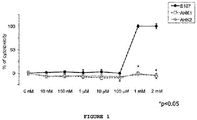
- Example 24 In vitro toxicity biological assays in human cells
- Example 25 In vitro assays for determining intracellular calcium levels in mouse muscle fibers
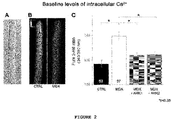
- Fibers isolated from mouse flexor digitorum brevis muscle were cultured overnight in the presence or absence of compounds AHK1 and AHK2 at a concentration of 150 nM. Baseline intracellular calcium levels were evaluated by means of incubating the fibers with Fura 2-AM ratiometric fluorochrome (4 ⁇ M) and pluronic acid (0.02%) for 30 minutes at 37°C, in the culture medium. The fibers were viewed with a high-resolution digital camera and intracellular [Ca 2+ ] was estimated by means of a 340 nm/380 nm excitation ratio.
- Figure 2 shows the in vitro effect of compounds AHK1 and AHK2 on at rest intracellular calcium levels in the mentioned mouse muscle fibers. How the untreated dystrophic fibers (MDX) showed a significant increase in calcium levels in comparison with control fibers (CTRL) can be seen. The overnight treatment of MDX fibers with AHK1 and AHK2 brought intracellular calcium levels back to the control levels, which demonstrates the capacity to revert the increase in intracellular calcium observed in muscle fibers. In view of these results, it is postulated that the compounds according to the invention carry out this reversion through a mechanism involving RyR channel modulation.
- MDX dystrophic fibers
- CRL control fibers
- This assay was carried out in human control myotubes LHCN-M2 after 9 days in differentiation medium. Said myotubes were pre-treated for 12 hours with compounds AHK1 and AHK2 at a concentration of 150 nM. After treatment, the myotubes were subjected to peroxynitrite-induced nitro-oxidative stress by means of the addition of SIN1 (5 mM) for 30 minutes.
- RyR1-calstabin colocalization was analyzed by means of the in situ proximity ligation technique (in situ PLA) for which Sigma's Duolink II Network Fluorescence Kit and RyR1- and calstabin 1-specific antibodies were used. This technique allows detecting the exact location of two antigens located at a distance less than 40 nm from one another.
- To determine RyR1-calstabin-1 colocalization 3 photographs were quantified for each condition with about 9 myotubes per field, using Image J computer software (http://rsb.info.nih.gov/ij/download.html). The colocalization area in each image was normalized to the myosin expression area, which was determined by means of immunofluorescence with a fluorescein-conjugated specific antibody.
- compounds AHK1 and AHK2 have the capacity to partially recover from a decrease in RyR1-calstabinl interaction in healthy human myotube cultures after being subjected to nitro-oxidative stress.
- Analyzing RyR1-Calst1 interaction by means of the PLA technique demonstrated that in the presence of SIN1 dissociation of the RyR1-Calst1 complex occurs and that said dissociation can be partially prevented by means of pretreatment with compounds AHK1 and AHK2.
- the top panel of Figure 3 shows the quantification of the PLA images with Image J, whereas the bottom panel shows representative images of PLA of each condition, where the points represent the RyR1-Calst1 interaction (50 ⁇ m calibration bar).
- the assayed compounds according to the invention not only improve the functionality of Duchenne- or Becker-type dystrophic myotubes, but also minimize the degenerative effects of nitro-oxidative stress on healthy human myotubes through an increase in RyR1-calstabin1 interaction affinity.
- the compounds of the invention can be useful as therapeutic agents against diseases caused by a decrease in RyR1-calstabinl affinity under nitro-oxidative stress conditions.
- One-month old male dystrophic mdx mice supplied by Jackson Laboratory https://www.jax.org/strain/001801) were used.
- the biological assays for measuring the effect of the Ahulken (AHK) compounds on muscle function were performed with one-month old mice, whereas the in vivo assays for determining the effect on the heart and CNS were performed with four-month old mice.
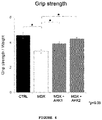
- the one-month old mice were treated with compound AHK1 or compound AHK2 for 5 weeks, where said compounds were administered in drinking water at a concentration of 0.25 mg/mL.
- the muscle strength of the front paws was measured every week using a grip strength meter and the obtained value was normalized by the body weight of the animal.
- the tibialis anterior muscle was obtained and processed for subsequent biochemical and immunohistological analysis to determine the degree of muscle damage.
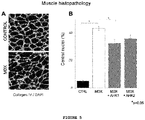
- Cell-death derived regeneration was determined in muscle cryosections by means of quantifying the percentage of central nuclei using standard immunofluorescence techniques for detecting collagen IV and cell nuclei.
- Figure 5 shows representative cryostat sections of control and dystrophic mice diaphragms labeled in order to view collagen IV and DAPI in order to view the nuclei.
- the 5-week treatment of mdx mice with AHK1 and AHK2 significantly reduced the percentage of central nuclei, which clearly shows the capacity of said compounds to reduce histopathological markers of muscular dystrophy after 5 weeks of treatment.
- the biochemical analysis of the tibialis anterior muscle was performed by means of RNA extraction and expression pattern analysis in control mice, mdx mice and mice subjected to different treatments.
- the human skeletal muscle, myogenesis and myopathy RT Profiler PCR Array (PAHS-099Z, QIAGEN) was used, using cDNA mixtures of at least 3 mice per group.
- the expression profile of 84 genes involved in physiopathological mechanisms of the skeletal muscle was thus analyzed.
- the experiments were conducted in 7300 Real-Time PCR equipment (Applied Biosystems) and the results obtained were analyzed using QIAGEN online software (http://www.sabiosciences.com/dataanalysis.php).
- Genes that can be modulated by means of AHK compounds include, but are not limited to, Akt1, Bcl2, Casp3, Cast, Cav3, Cryab, Ctnnb1, Dag1, Des, Dysf, Foxo3, Igfbp3, Igfbp5, Ikbkb, Mapk3, Myod1, Nfkb1, Ppargclb, Prkaa1, Rps6kb1, Utr, Casp3, Igf2, Il1b, I16, Lmna, Mmp9, Myog, Tgfb1, Tnnc1 and Tnnt1.
- Akt1, Il1b, Mapk3, Mmp9 and Utr are genes related to skeletal muscle loss or atrophy.
- mice were treated for 5 weeks with compound AHK2 in drinking water at a concentration of 0.25 mg/mL.
- the four-month old mdx mice show an exacerbated defense response after acute stress which is independent of motor, cardiac and respiratory deficiencies, and is controlled by central mechanisms ( Figure 7 ).
- Acute stress was brought about by means of manual immobilizations for 15 seconds in a posture commonly used for performing intraperitoneal injections. After acute stress, the mice are monitored for 1 minute and the % of freezing time or tonic immobility periods of at least 1 second with 90% immobility sensitivity is calculated.
- the myocardium of the four-month old dystrophic mdx mice is highly susceptible to mechanical stress and the compound isoproterenol induces cardiomyopathy in these mice ( Figure 8 ).
- Cardiomyocyte sarcolemma integrity was determined by means of measuring the uptake of Evans Blue dye that accumulates in cardiomyocytes with membrane damage.
- Evans Blue was administered 24 hours before extracting the hearts at a concentration of 10 mg/ml by means of intraperitoneal injection (10 ⁇ l/g of body weight). Damage with isoproterenol was carried out by means of 3 sequential intraperitoneal injections of beta-isoproterenol (350 ng/g of body weight) 18, 20 and 22 hours after administering Evans Blue in order to determine the degree of muscle damage.
- FIG. 8 shows representative cryostat sections of the hearts of control mice and dystrophic mice injected with Evans Blue to view the heart damage caused by isoproterenol.
- the 5-week treatment of mdx mice with AHK2 increases cardiomyocyte sarcolemma integrity of mdx mice and protects the myocardium from isoproterenol-induced damage, which indicates that said compound reaches the heart muscle, is capable of modulating type 2 ryanodine receptor (RyR2) and is effective in vivo for preventing cardiomyopathies.
- RyR2 type 2 ryanodine receptor
Landscapes
- Health & Medical Sciences (AREA)
- Chemical & Material Sciences (AREA)
- Organic Chemistry (AREA)
- Engineering & Computer Science (AREA)
- Bioinformatics & Cheminformatics (AREA)
- Veterinary Medicine (AREA)
- Public Health (AREA)
- General Health & Medical Sciences (AREA)
- Animal Behavior & Ethology (AREA)
- Life Sciences & Earth Sciences (AREA)
- Medicinal Chemistry (AREA)
- Pharmacology & Pharmacy (AREA)
- Chemical Kinetics & Catalysis (AREA)
- Nuclear Medicine, Radiotherapy & Molecular Imaging (AREA)
- General Chemical & Material Sciences (AREA)
- Cardiology (AREA)
- Neurology (AREA)
- Heart & Thoracic Surgery (AREA)
- Physical Education & Sports Medicine (AREA)
- Biomedical Technology (AREA)
- Neurosurgery (AREA)
- Orthopedic Medicine & Surgery (AREA)
- Hospice & Palliative Care (AREA)
- Psychiatry (AREA)
- Epidemiology (AREA)
- Urology & Nephrology (AREA)
- Vascular Medicine (AREA)
- Endocrinology (AREA)
- Rheumatology (AREA)
- Diabetes (AREA)
- Hematology (AREA)
- Obesity (AREA)
- Pharmaceuticals Containing Other Organic And Inorganic Compounds (AREA)
Priority Applications (2)
| Application Number | Priority Date | Filing Date | Title |
|---|---|---|---|
| PL17735609T PL3466933T3 (pl) | 2016-05-24 | 2017-05-23 | Triazole do regulacji wewnątrzkomórkowej homeostazy wapnia |
| HRP20210211TT HRP20210211T1 (hr) | 2016-05-24 | 2017-05-23 | Triazoli namijenjeni reguliranju homeostaze unutarstaničnog kalcija |
Applications Claiming Priority (2)
| Application Number | Priority Date | Filing Date | Title |
|---|---|---|---|
| ES201630670A ES2643856B1 (es) | 2016-05-24 | 2016-05-24 | Triazoles para la regulación de la homeostasis de calcio intracelular |
| PCT/ES2017/070344 WO2017203083A1 (es) | 2016-05-24 | 2017-05-23 | Triazoles para la regulación de la homeostasis de calcio intracelular |
Publications (2)
| Publication Number | Publication Date |
|---|---|
| EP3466933A1 EP3466933A1 (en) | 2019-04-10 |
| EP3466933B1 true EP3466933B1 (en) | 2020-12-02 |
Family
ID=59285262
Family Applications (1)
| Application Number | Title | Priority Date | Filing Date |
|---|---|---|---|
| EP17735609.4A Active EP3466933B1 (en) | 2016-05-24 | 2017-05-23 | Triazoles for regulating intracellular calcium homeostasis |
Country Status (17)
| Country | Link |
|---|---|
| US (1) | US11377427B2 (da) |
| EP (1) | EP3466933B1 (da) |
| JP (1) | JP6983875B2 (da) |
| CN (1) | CN109563056B (da) |
| AU (1) | AU2017270485B2 (da) |
| CA (1) | CA3025436C (da) |
| CL (1) | CL2018003318A1 (da) |
| DK (1) | DK3466933T3 (da) |
| ES (2) | ES2643856B1 (da) |
| HR (1) | HRP20210211T1 (da) |
| HU (1) | HUE053371T2 (da) |
| IL (1) | IL263168B2 (da) |
| MX (1) | MX381545B (da) |
| PL (1) | PL3466933T3 (da) |
| PT (1) | PT3466933T (da) |
| RU (1) | RU2753509C2 (da) |
| WO (1) | WO2017203083A1 (da) |
Families Citing this family (3)
| Publication number | Priority date | Publication date | Assignee | Title |
|---|---|---|---|---|
| TWI759301B (zh) | 2016-05-24 | 2022-04-01 | 美商安美基公司 | 聚乙二醇化卡非佐米化合物 |
| WO2021162054A1 (ja) * | 2020-02-10 | 2021-08-19 | 学校法人順天堂 | 2型リアノジン受容体活性抑制剤 |
| JP2025520705A (ja) * | 2022-06-23 | 2025-07-03 | ミラムーン、ファーマ、ソシエダッド、リミターダ | 眼疾患治療において使用するためのトリアゾール類 |
Family Cites Families (26)
| Publication number | Priority date | Publication date | Assignee | Title |
|---|---|---|---|---|
| JP2703408B2 (ja) | 1990-12-28 | 1998-01-26 | 麒麟麦酒株式会社 | 1,4‐ベンゾチアゼピン誘導体 |
| US6709599B1 (en) * | 1999-10-27 | 2004-03-23 | Rwe Nukem Corporation | Waste water treatment system with slip stream |
| US20040229781A1 (en) | 2000-05-10 | 2004-11-18 | Marks Andrew Robert | Compounds and methods for treating and preventing exercise-induced cardiac arrhythmias |
| US8022058B2 (en) | 2000-05-10 | 2011-09-20 | The Trustees Of Columbia University In The City Of New York | Agents for preventing and treating disorders involving modulation of the RyR receptors |
| AU2005247473A1 (en) | 2004-05-25 | 2005-12-08 | Metabolex, Inc. | Substituted triazoles as modulators of PPAR and methods of their preparation |
| CA2583267A1 (en) | 2004-10-12 | 2006-04-27 | Amgen Inc. | Novel b1 bradykinin receptor antagonists |
| US7515666B2 (en) | 2005-07-29 | 2009-04-07 | International Business Machines Corporation | Method for dynamically changing the frequency of clock signals |
| US7704990B2 (en) | 2005-08-25 | 2010-04-27 | The Trustees Of Columbia University In The City Of New York | Agents for preventing and treating disorders involving modulation of the RyR receptors |
| US8802726B2 (en) | 2006-02-03 | 2014-08-12 | Nicox S.A. | Use of nitrooxyderivative of drug for the treatment of muscular dystrophies |
| MX2008010187A (es) | 2006-02-10 | 2008-10-31 | Summit Corp Plc | Tratamiento de distrofia muscular de duchenne. |
| US8703804B2 (en) | 2006-03-26 | 2014-04-22 | Uti Limited Partnership | Ryanodine receptor inhibitors and methods relating thereto |
| WO2008060332A2 (en) | 2006-06-02 | 2008-05-22 | The Trustees Of Columbia University In The City Of New York | Methods for treating or reducing muscle fatigue |
| WO2008144483A2 (en) | 2007-05-18 | 2008-11-27 | Armgo Pharma, Inc. | Agents for treating disorders involving modulation of ryanodine receptors |
| GB0715087D0 (en) | 2007-08-03 | 2007-09-12 | Summit Corp Plc | Drug combinations for the treatment of duchenne muscular dystrophy |
| GB0821307D0 (en) | 2008-11-21 | 2008-12-31 | Summit Corp Plc | Compounds for treatment of duchenne muscular dystrophy |
| WO2012019071A1 (en) | 2010-08-06 | 2012-02-09 | The Trustees Of Columbia University In The City Of New York | Methods of preventing and treating sarcopenia |
| WO2012037105A1 (en) | 2010-09-14 | 2012-03-22 | The Trustees Of Columbia University In The City Of New York | Methods of treating, ameliorating or preventing stress-induced neuronal disorders and diseases |
| CA2830866A1 (en) * | 2011-04-08 | 2012-10-11 | Pfizer Inc. | Imidazole, pyrazole, and triazole derivatives useful as antibacterial agents |
| WO2013085890A1 (en) | 2011-12-06 | 2013-06-13 | Glaxo Group Limited | Therapeutic methods |
| EP2828249B1 (en) * | 2012-03-23 | 2018-10-10 | The Regents of The University of California | Premature-termination-codons readthrough compounds |
| EP2708535A1 (en) * | 2012-05-11 | 2014-03-19 | Les Laboratoires Servier | Agents for treating disorders involving modulation of ryanodine receptors |
| WO2014205414A1 (en) * | 2013-06-21 | 2014-12-24 | The Regents Of The University Of California | Expanded therapeutic potential in nitroheteroaryl antimicrobials |
| EP2857388A1 (de) * | 2013-10-01 | 2015-04-08 | Grünenthal GmbH | Sulfon-haltige Azole |
| CA2928235A1 (en) | 2013-10-25 | 2015-04-30 | Bush, Ernest D. | Methods for treatment of muscular dystrophies |
| US20160083380A1 (en) | 2013-12-16 | 2016-03-24 | Cadila Healthcare Limited | Oximino derivatives for the treatment of dyslipidemia |
| WO2016057656A1 (en) * | 2014-10-08 | 2016-04-14 | Mitobridge, Inc. | Ppar-delta agonists for use for treating mitochondrial, vascular, muscular, and demyelinating diseases |
-
2016
- 2016-05-24 ES ES201630670A patent/ES2643856B1/es active Active
-
2017
- 2017-05-23 US US16/304,041 patent/US11377427B2/en active Active
- 2017-05-23 AU AU2017270485A patent/AU2017270485B2/en active Active
- 2017-05-23 HR HRP20210211TT patent/HRP20210211T1/hr unknown
- 2017-05-23 HU HUE17735609A patent/HUE053371T2/hu unknown
- 2017-05-23 PL PL17735609T patent/PL3466933T3/pl unknown
- 2017-05-23 EP EP17735609.4A patent/EP3466933B1/en active Active
- 2017-05-23 DK DK17735609.4T patent/DK3466933T3/da active
- 2017-05-23 CA CA3025436A patent/CA3025436C/en active Active
- 2017-05-23 RU RU2018141584A patent/RU2753509C2/ru active
- 2017-05-23 CN CN201780045689.1A patent/CN109563056B/zh active Active
- 2017-05-23 PT PT177356094T patent/PT3466933T/pt unknown
- 2017-05-23 MX MX2018014414A patent/MX381545B/es unknown
- 2017-05-23 JP JP2019514862A patent/JP6983875B2/ja active Active
- 2017-05-23 IL IL263168A patent/IL263168B2/en unknown
- 2017-05-23 WO PCT/ES2017/070344 patent/WO2017203083A1/es not_active Ceased
- 2017-05-23 ES ES17735609T patent/ES2853701T3/es active Active
-
2018
- 2018-11-21 CL CL2018003318A patent/CL2018003318A1/es unknown
Non-Patent Citations (1)
| Title |
|---|
| None * |
Also Published As
| Publication number | Publication date |
|---|---|
| RU2018141584A3 (da) | 2020-07-27 |
| CL2018003318A1 (es) | 2019-04-12 |
| CA3025436C (en) | 2024-02-20 |
| ES2853701T3 (es) | 2021-09-17 |
| HUE053371T2 (hu) | 2021-06-28 |
| HRP20210211T1 (hr) | 2021-03-19 |
| JP6983875B2 (ja) | 2021-12-17 |
| CA3025436A1 (en) | 2017-11-30 |
| MX381545B (es) | 2025-03-12 |
| CN109563056A (zh) | 2019-04-02 |
| AU2017270485A1 (en) | 2018-12-13 |
| IL263168B1 (en) | 2023-05-01 |
| EP3466933A1 (en) | 2019-04-10 |
| RU2753509C2 (ru) | 2021-08-17 |
| ES2643856B1 (es) | 2018-08-03 |
| WO2017203083A1 (es) | 2017-11-30 |
| RU2018141584A (ru) | 2020-06-25 |
| PL3466933T3 (pl) | 2021-06-14 |
| DK3466933T3 (da) | 2021-01-11 |
| ES2643856A1 (es) | 2017-11-24 |
| AU2017270485B2 (en) | 2021-02-25 |
| CN109563056B (zh) | 2022-08-16 |
| US20200317625A1 (en) | 2020-10-08 |
| IL263168A (en) | 2018-12-31 |
| MX2018014414A (es) | 2019-04-22 |
| IL263168B2 (en) | 2023-09-01 |
| PT3466933T (pt) | 2021-02-23 |
| JP2019520423A (ja) | 2019-07-18 |
| US11377427B2 (en) | 2022-07-05 |
Similar Documents
| Publication | Publication Date | Title |
|---|---|---|
| EP3244891B9 (en) | Compounds for improving mrna splicing | |
| KR102331422B1 (ko) | 아이소인돌린 조성물 및 신경퇴행성 질환을 치료하는 방법 | |
| EP3256218B1 (en) | A kdm1a inhibitor and its use in therapy | |
| EP3466933B1 (en) | Triazoles for regulating intracellular calcium homeostasis | |
| US20160207893A1 (en) | Novel calcium modulators | |
| HUP0100294A2 (hu) | Policiklusos alfa-amino-szigma-kaprolaktám-származékok és rokon vegyületek | |
| EP3122743A1 (en) | Compositions and methods for treating neurodegenerative diseases | |
| CA2390376A1 (en) | .beta.-aminoacid compounds useful for inhibiting .beta.-amyloid peptide release and/or its synthesis | |
| AU2018314833B2 (en) | Novel compounds activating the NRF2 pathway | |
| WO2021160012A1 (zh) | 一种特异性降解tau蛋白的小分子化合物及其用途 | |
| JP2016017049A (ja) | 新規ベンズオキサジン誘導体及びこれを含有する医薬 | |
| US11167007B2 (en) | FOXM1 modulators and uses thereof | |
| US20230399361A1 (en) | Macrocyclic peptides | |
| EP2890687B1 (en) | Salts of benzothiazolone compound as beta-2-adrenoceptor agonist | |
| WO2025126129A1 (en) | Compounds with antitumor activity directed at the hippo pathway | |
| HK40120878A (en) | Kdm1a inhibitors for the treatment of disease | |
| JP2008156313A (ja) | アミロイド疾患の治療およびモニタリングのための薬剤 | |
| HK1206015B (en) | Salts of benzothiazolone compound as beta-2-adrenoceptor agonist | |
| HK1242680A1 (en) | Salts of benzothiazolone compound as beta-2-adrenoceptor agonist | |
| HK1225651B (zh) | 异吲哚啉组合物和治疗神经变性疾病的方法 |
Legal Events
| Date | Code | Title | Description |
|---|---|---|---|
| STAA | Information on the status of an ep patent application or granted ep patent |
Free format text: STATUS: UNKNOWN |
|
| STAA | Information on the status of an ep patent application or granted ep patent |
Free format text: STATUS: THE INTERNATIONAL PUBLICATION HAS BEEN MADE |
|
| PUAI | Public reference made under article 153(3) epc to a published international application that has entered the european phase |
Free format text: ORIGINAL CODE: 0009012 |
|
| STAA | Information on the status of an ep patent application or granted ep patent |
Free format text: STATUS: REQUEST FOR EXAMINATION WAS MADE |
|
| 17P | Request for examination filed |
Effective date: 20181128 |
|
| AK | Designated contracting states |
Kind code of ref document: A1 Designated state(s): AL AT BE BG CH CY CZ DE DK EE ES FI FR GB GR HR HU IE IS IT LI LT LU LV MC MK MT NL NO PL PT RO RS SE SI SK SM TR |
|
| AX | Request for extension of the european patent |
Extension state: BA ME |
|
| DAV | Request for validation of the european patent (deleted) | ||
| DAX | Request for extension of the european patent (deleted) | ||
| STAA | Information on the status of an ep patent application or granted ep patent |
Free format text: STATUS: EXAMINATION IS IN PROGRESS |
|
| 17Q | First examination report despatched |
Effective date: 20191105 |
|
| GRAP | Despatch of communication of intention to grant a patent |
Free format text: ORIGINAL CODE: EPIDOSNIGR1 |
|
| STAA | Information on the status of an ep patent application or granted ep patent |
Free format text: STATUS: GRANT OF PATENT IS INTENDED |
|
| INTG | Intention to grant announced |
Effective date: 20200514 |
|
| GRAS | Grant fee paid |
Free format text: ORIGINAL CODE: EPIDOSNIGR3 |
|
| RIN1 | Information on inventor provided before grant (corrected) |
Inventor name: MIRANDA MURUA, JOSE IGNACIO Inventor name: IRASTORZA EPELDE, AITZIBER Inventor name: ALDANONDO ARISTIZABAL, GARAZI Inventor name: VALLEJO ILLARRAMENDI, AINARA Inventor name: FERRON CELMA, PABLO Inventor name: AIZPURUA IPARRAGUIRRE, JESUS MARIA Inventor name: TORAL OJEDA, IVAN Inventor name: LOPEZ DE MUNAIN ARREGI, ADOLFO JOSE |
|
| GRAA | (expected) grant |
Free format text: ORIGINAL CODE: 0009210 |
|
| STAA | Information on the status of an ep patent application or granted ep patent |
Free format text: STATUS: THE PATENT HAS BEEN GRANTED |
|
| RAP1 | Party data changed (applicant data changed or rights of an application transferred) |
Owner name: UNIVERSIDAD DEL PAIS VASCO/EUSKAL HERRIKO UNIBERTSITATEA Owner name: ADMINISTRACION GENERAL DE LA COMUNIDAD AUTONOMA DE EUSKADI |
|
| AK | Designated contracting states |
Kind code of ref document: B1 Designated state(s): AL AT BE BG CH CY CZ DE DK EE ES FI FR GB GR HR HU IE IS IT LI LT LU LV MC MK MT NL NO PL PT RO RS SE SI SK SM TR |
|
| REG | Reference to a national code |
Ref country code: GB Ref legal event code: FG4D |
|
| REG | Reference to a national code |
Ref country code: AT Ref legal event code: REF Ref document number: 1340786 Country of ref document: AT Kind code of ref document: T Effective date: 20201215 Ref country code: CH Ref legal event code: EP |
|
| REG | Reference to a national code |
Ref country code: IE Ref legal event code: FG4D |
|
| REG | Reference to a national code |
Ref country code: DE Ref legal event code: R096 Ref document number: 602017028777 Country of ref document: DE |
|
| REG | Reference to a national code |
Ref country code: DK Ref legal event code: T3 Effective date: 20210107 |
|
| REG | Reference to a national code |
Ref country code: SE Ref legal event code: TRGR Ref country code: FI Ref legal event code: FGE |
|
| REG | Reference to a national code |
Ref country code: HR Ref legal event code: TUEP Ref document number: P20210211T Country of ref document: HR |
|
| REG | Reference to a national code |
Ref country code: RO Ref legal event code: EPE |
|
| REG | Reference to a national code |
Ref country code: PT Ref legal event code: SC4A Ref document number: 3466933 Country of ref document: PT Date of ref document: 20210223 Kind code of ref document: T Free format text: AVAILABILITY OF NATIONAL TRANSLATION Effective date: 20210217 |
|
| REG | Reference to a national code |
Ref country code: NL Ref legal event code: FP |
|
| REG | Reference to a national code |
Ref country code: HR Ref legal event code: T1PR Ref document number: P20210211 Country of ref document: HR |
|
| REG | Reference to a national code |
Ref country code: GR Ref legal event code: EP Ref document number: 20210400360 Country of ref document: GR Effective date: 20210316 |
|
| REG | Reference to a national code |
Ref country code: NO Ref legal event code: T2 Effective date: 20201202 |
|
| PG25 | Lapsed in a contracting state [announced via postgrant information from national office to epo] |
Ref country code: RS Free format text: LAPSE BECAUSE OF FAILURE TO SUBMIT A TRANSLATION OF THE DESCRIPTION OR TO PAY THE FEE WITHIN THE PRESCRIBED TIME-LIMIT Effective date: 20201202 |
|
| REG | Reference to a national code |
Ref country code: HR Ref legal event code: ODRP Ref document number: P20210211 Country of ref document: HR Payment date: 20210505 Year of fee payment: 5 |
|
| PG25 | Lapsed in a contracting state [announced via postgrant information from national office to epo] |
Ref country code: BG Free format text: LAPSE BECAUSE OF FAILURE TO SUBMIT A TRANSLATION OF THE DESCRIPTION OR TO PAY THE FEE WITHIN THE PRESCRIBED TIME-LIMIT Effective date: 20210302 Ref country code: LV Free format text: LAPSE BECAUSE OF FAILURE TO SUBMIT A TRANSLATION OF THE DESCRIPTION OR TO PAY THE FEE WITHIN THE PRESCRIBED TIME-LIMIT Effective date: 20201202 |
|
| REG | Reference to a national code |
Ref country code: HU Ref legal event code: AG4A Ref document number: E053371 Country of ref document: HU |
|
| REG | Reference to a national code |
Ref country code: LT Ref legal event code: MG9D |
|
| PG25 | Lapsed in a contracting state [announced via postgrant information from national office to epo] |
Ref country code: SM Free format text: LAPSE BECAUSE OF FAILURE TO SUBMIT A TRANSLATION OF THE DESCRIPTION OR TO PAY THE FEE WITHIN THE PRESCRIBED TIME-LIMIT Effective date: 20201202 Ref country code: EE Free format text: LAPSE BECAUSE OF FAILURE TO SUBMIT A TRANSLATION OF THE DESCRIPTION OR TO PAY THE FEE WITHIN THE PRESCRIBED TIME-LIMIT Effective date: 20201202 Ref country code: LT Free format text: LAPSE BECAUSE OF FAILURE TO SUBMIT A TRANSLATION OF THE DESCRIPTION OR TO PAY THE FEE WITHIN THE PRESCRIBED TIME-LIMIT Effective date: 20201202 Ref country code: SK Free format text: LAPSE BECAUSE OF FAILURE TO SUBMIT A TRANSLATION OF THE DESCRIPTION OR TO PAY THE FEE WITHIN THE PRESCRIBED TIME-LIMIT Effective date: 20201202 |
|
| REG | Reference to a national code |
Ref country code: DE Ref legal event code: R097 Ref document number: 602017028777 Country of ref document: DE |
|
| REG | Reference to a national code |
Ref country code: ES Ref legal event code: FG2A Ref document number: 2853701 Country of ref document: ES Kind code of ref document: T3 Effective date: 20210917 |
|
| PG25 | Lapsed in a contracting state [announced via postgrant information from national office to epo] |
Ref country code: IS Free format text: LAPSE BECAUSE OF FAILURE TO SUBMIT A TRANSLATION OF THE DESCRIPTION OR TO PAY THE FEE WITHIN THE PRESCRIBED TIME-LIMIT Effective date: 20210402 |
|
| PLBE | No opposition filed within time limit |
Free format text: ORIGINAL CODE: 0009261 |
|
| STAA | Information on the status of an ep patent application or granted ep patent |
Free format text: STATUS: NO OPPOSITION FILED WITHIN TIME LIMIT |
|
| PG25 | Lapsed in a contracting state [announced via postgrant information from national office to epo] |
Ref country code: AL Free format text: LAPSE BECAUSE OF FAILURE TO SUBMIT A TRANSLATION OF THE DESCRIPTION OR TO PAY THE FEE WITHIN THE PRESCRIBED TIME-LIMIT Effective date: 20201202 |
|
| 26N | No opposition filed |
Effective date: 20210903 |
|
| PG25 | Lapsed in a contracting state [announced via postgrant information from national office to epo] |
Ref country code: SI Free format text: LAPSE BECAUSE OF FAILURE TO SUBMIT A TRANSLATION OF THE DESCRIPTION OR TO PAY THE FEE WITHIN THE PRESCRIBED TIME-LIMIT Effective date: 20201202 |
|
| PG25 | Lapsed in a contracting state [announced via postgrant information from national office to epo] |
Ref country code: MC Free format text: LAPSE BECAUSE OF FAILURE TO SUBMIT A TRANSLATION OF THE DESCRIPTION OR TO PAY THE FEE WITHIN THE PRESCRIBED TIME-LIMIT Effective date: 20201202 |
|
| PG25 | Lapsed in a contracting state [announced via postgrant information from national office to epo] |
Ref country code: IS Free format text: LAPSE BECAUSE OF FAILURE TO SUBMIT A TRANSLATION OF THE DESCRIPTION OR TO PAY THE FEE WITHIN THE PRESCRIBED TIME-LIMIT Effective date: 20210402 |
|
| REG | Reference to a national code |
Ref country code: HR Ref legal event code: ODRP Ref document number: P20210211 Country of ref document: HR Payment date: 20220506 Year of fee payment: 6 |
|
| REG | Reference to a national code |
Ref country code: HR Ref legal event code: ODRP Ref document number: P20210211 Country of ref document: HR Payment date: 20230503 Year of fee payment: 7 |
|
| PG25 | Lapsed in a contracting state [announced via postgrant information from national office to epo] |
Ref country code: CY Free format text: LAPSE BECAUSE OF FAILURE TO SUBMIT A TRANSLATION OF THE DESCRIPTION OR TO PAY THE FEE WITHIN THE PRESCRIBED TIME-LIMIT Effective date: 20201202 |
|
| REG | Reference to a national code |
Ref country code: AT Ref legal event code: UEP Ref document number: 1340786 Country of ref document: AT Kind code of ref document: T Effective date: 20201202 |
|
| PG25 | Lapsed in a contracting state [announced via postgrant information from national office to epo] |
Ref country code: MK Free format text: LAPSE BECAUSE OF FAILURE TO SUBMIT A TRANSLATION OF THE DESCRIPTION OR TO PAY THE FEE WITHIN THE PRESCRIBED TIME-LIMIT Effective date: 20201202 |
|
| REG | Reference to a national code |
Ref country code: HR Ref legal event code: ODRP Ref document number: P20210211 Country of ref document: HR Payment date: 20240517 Year of fee payment: 8 |
|
| PG25 | Lapsed in a contracting state [announced via postgrant information from national office to epo] |
Ref country code: MT Free format text: LAPSE BECAUSE OF FAILURE TO SUBMIT A TRANSLATION OF THE DESCRIPTION OR TO PAY THE FEE WITHIN THE PRESCRIBED TIME-LIMIT Effective date: 20201202 |
|
| REG | Reference to a national code |
Ref country code: HR Ref legal event code: ODRP Ref document number: P20210211 Country of ref document: HR Payment date: 20250515 Year of fee payment: 9 |
|
| PGFP | Annual fee paid to national office [announced via postgrant information from national office to epo] |
Ref country code: NL Payment date: 20250526 Year of fee payment: 9 |
|
| PGFP | Annual fee paid to national office [announced via postgrant information from national office to epo] |
Ref country code: FI Payment date: 20250526 Year of fee payment: 9 |
|
| PGFP | Annual fee paid to national office [announced via postgrant information from national office to epo] |
Ref country code: DE Payment date: 20250529 Year of fee payment: 9 Ref country code: PL Payment date: 20250506 Year of fee payment: 9 |
|
| PGFP | Annual fee paid to national office [announced via postgrant information from national office to epo] |
Ref country code: GB Payment date: 20250527 Year of fee payment: 9 Ref country code: ES Payment date: 20250618 Year of fee payment: 9 Ref country code: DK Payment date: 20250526 Year of fee payment: 9 |
|
| PGFP | Annual fee paid to national office [announced via postgrant information from national office to epo] |
Ref country code: HU Payment date: 20250515 Year of fee payment: 9 Ref country code: NO Payment date: 20250530 Year of fee payment: 9 |
|
| PGFP | Annual fee paid to national office [announced via postgrant information from national office to epo] |
Ref country code: LU Payment date: 20250527 Year of fee payment: 9 Ref country code: IT Payment date: 20250521 Year of fee payment: 9 Ref country code: BE Payment date: 20250527 Year of fee payment: 9 |
|
| PGFP | Annual fee paid to national office [announced via postgrant information from national office to epo] |
Ref country code: HR Payment date: 20250515 Year of fee payment: 9 |
|
| PGFP | Annual fee paid to national office [announced via postgrant information from national office to epo] |
Ref country code: PT Payment date: 20250505 Year of fee payment: 9 |
|
| PGFP | Annual fee paid to national office [announced via postgrant information from national office to epo] |
Ref country code: FR Payment date: 20250526 Year of fee payment: 9 |
|
| PGFP | Annual fee paid to national office [announced via postgrant information from national office to epo] |
Ref country code: GR Payment date: 20250528 Year of fee payment: 9 |
|
| PGFP | Annual fee paid to national office [announced via postgrant information from national office to epo] |
Ref country code: CH Payment date: 20250601 Year of fee payment: 9 |
|
| PGFP | Annual fee paid to national office [announced via postgrant information from national office to epo] |
Ref country code: RO Payment date: 20250506 Year of fee payment: 9 Ref country code: AT Payment date: 20250505 Year of fee payment: 9 |
|
| PGFP | Annual fee paid to national office [announced via postgrant information from national office to epo] |
Ref country code: TR Payment date: 20250515 Year of fee payment: 9 |
|
| PGFP | Annual fee paid to national office [announced via postgrant information from national office to epo] |
Ref country code: CZ Payment date: 20250507 Year of fee payment: 9 |
|
| PGFP | Annual fee paid to national office [announced via postgrant information from national office to epo] |
Ref country code: IE Payment date: 20250527 Year of fee payment: 9 |
|
| PGFP | Annual fee paid to national office [announced via postgrant information from national office to epo] |
Ref country code: SE Payment date: 20250527 Year of fee payment: 9 |