EP3494206B1 - Milchsäurebakterien und deren verwendung zur vorbeugenden, inhibierenden und oder reduzierenden behandlung der bildung von bakteriellen biofilmen. - Google Patents
Milchsäurebakterien und deren verwendung zur vorbeugenden, inhibierenden und oder reduzierenden behandlung der bildung von bakteriellen biofilmen. Download PDFInfo
- Publication number
- EP3494206B1 EP3494206B1 EP17758960.3A EP17758960A EP3494206B1 EP 3494206 B1 EP3494206 B1 EP 3494206B1 EP 17758960 A EP17758960 A EP 17758960A EP 3494206 B1 EP3494206 B1 EP 3494206B1
- Authority
- EP
- European Patent Office
- Prior art keywords
- infections
- treatment
- lactobacillus
- composition
- dsm
- Prior art date
- Legal status (The legal status is an assumption and is not a legal conclusion. Google has not performed a legal analysis and makes no representation as to the accuracy of the status listed.)
- Active
Links
Images




Classifications
-
- C—CHEMISTRY; METALLURGY
- C12—BIOCHEMISTRY; BEER; SPIRITS; WINE; VINEGAR; MICROBIOLOGY; ENZYMOLOGY; MUTATION OR GENETIC ENGINEERING
- C12N—MICROORGANISMS OR ENZYMES; COMPOSITIONS THEREOF; PROPAGATING, PRESERVING, OR MAINTAINING MICROORGANISMS; MUTATION OR GENETIC ENGINEERING; CULTURE MEDIA
- C12N1/00—Microorganisms; Compositions thereof; Processes of propagating, maintaining or preserving microorganisms or compositions thereof; Processes of preparing or isolating a composition containing a microorganism; Culture media therefor
- C12N1/20—Bacteria; Culture media therefor
- C12N1/205—Bacterial isolates
-
- A—HUMAN NECESSITIES
- A61—MEDICAL OR VETERINARY SCIENCE; HYGIENE
- A61K—PREPARATIONS FOR MEDICAL, DENTAL OR TOILETRY PURPOSES
- A61K35/00—Medicinal preparations containing materials or reaction products thereof with undetermined constitution
- A61K35/66—Microorganisms or materials therefrom
- A61K35/74—Bacteria
- A61K35/741—Probiotics
- A61K35/744—Lactic acid bacteria, e.g. enterococci, pediococci, lactococci, streptococci or leuconostocs
- A61K35/747—Lactobacilli, e.g. L. acidophilus or L. brevis
-
- A—HUMAN NECESSITIES
- A61—MEDICAL OR VETERINARY SCIENCE; HYGIENE
- A61P—SPECIFIC THERAPEUTIC ACTIVITY OF CHEMICAL COMPOUNDS OR MEDICINAL PREPARATIONS
- A61P1/00—Drugs for disorders of the alimentary tract or the digestive system
- A61P1/02—Stomatological preparations, e.g. drugs for caries, aphtae, periodontitis
-
- A—HUMAN NECESSITIES
- A61—MEDICAL OR VETERINARY SCIENCE; HYGIENE
- A61P—SPECIFIC THERAPEUTIC ACTIVITY OF CHEMICAL COMPOUNDS OR MEDICINAL PREPARATIONS
- A61P11/00—Drugs for disorders of the respiratory system
-
- A—HUMAN NECESSITIES
- A61—MEDICAL OR VETERINARY SCIENCE; HYGIENE
- A61P—SPECIFIC THERAPEUTIC ACTIVITY OF CHEMICAL COMPOUNDS OR MEDICINAL PREPARATIONS
- A61P11/00—Drugs for disorders of the respiratory system
- A61P11/02—Nasal agents, e.g. decongestants
-
- A—HUMAN NECESSITIES
- A61—MEDICAL OR VETERINARY SCIENCE; HYGIENE
- A61P—SPECIFIC THERAPEUTIC ACTIVITY OF CHEMICAL COMPOUNDS OR MEDICINAL PREPARATIONS
- A61P11/00—Drugs for disorders of the respiratory system
- A61P11/04—Drugs for disorders of the respiratory system for throat disorders
-
- A—HUMAN NECESSITIES
- A61—MEDICAL OR VETERINARY SCIENCE; HYGIENE
- A61P—SPECIFIC THERAPEUTIC ACTIVITY OF CHEMICAL COMPOUNDS OR MEDICINAL PREPARATIONS
- A61P17/00—Drugs for dermatological disorders
-
- A—HUMAN NECESSITIES
- A61—MEDICAL OR VETERINARY SCIENCE; HYGIENE
- A61P—SPECIFIC THERAPEUTIC ACTIVITY OF CHEMICAL COMPOUNDS OR MEDICINAL PREPARATIONS
- A61P17/00—Drugs for dermatological disorders
- A61P17/02—Drugs for dermatological disorders for treating wounds, ulcers, burns, scars, keloids, or the like
-
- A—HUMAN NECESSITIES
- A61—MEDICAL OR VETERINARY SCIENCE; HYGIENE
- A61P—SPECIFIC THERAPEUTIC ACTIVITY OF CHEMICAL COMPOUNDS OR MEDICINAL PREPARATIONS
- A61P27/00—Drugs for disorders of the senses
- A61P27/16—Otologicals
-
- A—HUMAN NECESSITIES
- A61—MEDICAL OR VETERINARY SCIENCE; HYGIENE
- A61P—SPECIFIC THERAPEUTIC ACTIVITY OF CHEMICAL COMPOUNDS OR MEDICINAL PREPARATIONS
- A61P31/00—Antiinfectives, i.e. antibiotics, antiseptics, chemotherapeutics
- A61P31/02—Local antiseptics
-
- A—HUMAN NECESSITIES
- A61—MEDICAL OR VETERINARY SCIENCE; HYGIENE
- A61P—SPECIFIC THERAPEUTIC ACTIVITY OF CHEMICAL COMPOUNDS OR MEDICINAL PREPARATIONS
- A61P31/00—Antiinfectives, i.e. antibiotics, antiseptics, chemotherapeutics
- A61P31/04—Antibacterial agents
-
- C—CHEMISTRY; METALLURGY
- C12—BIOCHEMISTRY; BEER; SPIRITS; WINE; VINEGAR; MICROBIOLOGY; ENZYMOLOGY; MUTATION OR GENETIC ENGINEERING
- C12N—MICROORGANISMS OR ENZYMES; COMPOSITIONS THEREOF; PROPAGATING, PRESERVING, OR MAINTAINING MICROORGANISMS; MUTATION OR GENETIC ENGINEERING; CULTURE MEDIA
- C12N1/00—Microorganisms; Compositions thereof; Processes of propagating, maintaining or preserving microorganisms or compositions thereof; Processes of preparing or isolating a composition containing a microorganism; Culture media therefor
- C12N1/20—Bacteria; Culture media therefor
-
- A—HUMAN NECESSITIES
- A61—MEDICAL OR VETERINARY SCIENCE; HYGIENE
- A61K—PREPARATIONS FOR MEDICAL, DENTAL OR TOILETRY PURPOSES
- A61K35/00—Medicinal preparations containing materials or reaction products thereof with undetermined constitution
- A61K2035/11—Medicinal preparations comprising living procariotic cells
- A61K2035/115—Probiotics
-
- C—CHEMISTRY; METALLURGY
- C12—BIOCHEMISTRY; BEER; SPIRITS; WINE; VINEGAR; MICROBIOLOGY; ENZYMOLOGY; MUTATION OR GENETIC ENGINEERING
- C12R—INDEXING SCHEME ASSOCIATED WITH SUBCLASSES C12C - C12Q, RELATING TO MICROORGANISMS
- C12R2001/00—Microorganisms ; Processes using microorganisms
- C12R2001/01—Bacteria or Actinomycetales ; using bacteria or Actinomycetales
- C12R2001/225—Lactobacillus
-
- C—CHEMISTRY; METALLURGY
- C12—BIOCHEMISTRY; BEER; SPIRITS; WINE; VINEGAR; MICROBIOLOGY; ENZYMOLOGY; MUTATION OR GENETIC ENGINEERING
- C12R—INDEXING SCHEME ASSOCIATED WITH SUBCLASSES C12C - C12Q, RELATING TO MICROORGANISMS
- C12R2001/00—Microorganisms ; Processes using microorganisms
- C12R2001/01—Bacteria or Actinomycetales ; using bacteria or Actinomycetales
- C12R2001/225—Lactobacillus
- C12R2001/25—Lactobacillus plantarum
-
- Y—GENERAL TAGGING OF NEW TECHNOLOGICAL DEVELOPMENTS; GENERAL TAGGING OF CROSS-SECTIONAL TECHNOLOGIES SPANNING OVER SEVERAL SECTIONS OF THE IPC; TECHNICAL SUBJECTS COVERED BY FORMER USPC CROSS-REFERENCE ART COLLECTIONS [XRACs] AND DIGESTS
- Y02—TECHNOLOGIES OR APPLICATIONS FOR MITIGATION OR ADAPTATION AGAINST CLIMATE CHANGE
- Y02A—TECHNOLOGIES FOR ADAPTATION TO CLIMATE CHANGE
- Y02A50/00—TECHNOLOGIES FOR ADAPTATION TO CLIMATE CHANGE in human health protection, e.g. against extreme weather
- Y02A50/30—Against vector-borne diseases, e.g. mosquito-borne, fly-borne, tick-borne or waterborne diseases whose impact is exacerbated by climate change
Definitions
- the present disclosure relates to selected bacterial strains belonging to the genus Lactobacillus and the use thereof for the treatment of bacterial biofilms and, specifically, for preventive treatment aimed at inhibiting and/or reducing the formation of bacterial biofilms.
- the present disclosure relates to the following bacterial strains belonging to the genus Lactobacillus, selected from the group comprising or, alternatively, consisting of Lactobacillus plantarum LMC1 (DSM 32252), Lactobacillus reuteri LMC3 (DSM 32253), Lactobacillus paracasei LMC4 (DSM 32254), Lactobacillus reuteri LMC5 (DSM 32255), Lactobacillus rhamnosus LMC6 (DSM 32256), Lactobacillus rhamnosus LMC7 (DSM 32257), Lactobacillus paracasei LMC8 (DSM 32258), Lactobacillus reuteri LMC9 (DSM 32259) and Lactobac
- the present disclosure relates to a pharmaceutical composition, a composition for a medical device or a composition for dietary supplements comprising a mixture which comprises or, alternatively, consists of one or more of the bacterial strains specified above and, optionally, pharmaceutical or food grade technological additives and/or excipients, for the treatment of bacterial biofilms and, specifically, for preventive treatment aimed at inhibiting and/or reducing the formation of bacterial biofilms.
- biofilm is made up of a community of microorganisms anchored to a biological or non-biological surface and incorporated/enclosed in an extracellular exopolysaccharide matrix (1).
- Biofilm formation (which takes place under the control of specific bacterial genes responsible for its production) is a process that has been compared to cellular differentiation in multicellular organisms.
- a typical example of a biofilm is represented by the one that forms when bacteria adhere to a biological or non-biological surface and anchor themselves to it, growing and dividing so as to form two coating layers made up of an extracellular matrix of polymeric substances, polysaccharides in particular.
- a bacterial biofilm can form on the outer surface of or inside a living organism (for example, human or animal) in or in proximity to or because of lesions of various types associated with an environment that is not perfectly sterile, as in the case, for example, of prostheses.
- bacterial biofilms can also form on abiotic surfaces that are not perfectly sterilised, for example, intravascular catheters and prosthetic implants (6) or in the case for example of bones, bone tissue and insertions of prostheses in bone tissue.
- the microorganisms within the biofilm on such artificial surfaces often derive from the skin flora of the patients themselves or of medical personnel during the insertion or implantation of the device.
- the predominant microorganisms include, in particular, Coagulase-Negative Staphylococci, Staphylococcus aureus, various species of Pseudomonas, Enterococcus, Stenotrophomonas, and Candida on intravascular catheters; Escherichia coli, Enterococcus, Pseudomonas, Klebsiella, Enterobacter, Proteus mirabilis and Candida on urinary catheters; and Staphylococcus aureus, Staphylococcus emidermitis and Propionibacterium acnes on hip replacement implants (6).
- biofilms Since such types of implants often remain in the body of patients for a long period of time, the formation of biofilms by these harmful microorganisms may give rise to serious localised and/or systemic infections that are difficult to eradicate, such as, for example, osteomyelitis, which is an infectious process that simultaneously affects the bones and bone marrow (6).
- Oral biofilms also constitute a breeding ground for microorganisms which can spread through transient bacteraemia, as demonstrated by the different types of biofilms isolated from oral cavity infections (7).
- biofilms naturally present in the gastrointestinal and/or female urogenital tract, that contain beneficial microorganisms, such as, for example, lactobacilli and Streptococcus thermophilus, which are capable of performing a protective role in an organism, because such a structure (biofilm) facilitates the long-term colonisation of regions and the persistence of these bacteria in the organism (17).
- US2014186409 pertains to lactic acid bacteria (Lactobacillus species) which aggregate with infectious bacterial strains (Staphylococcus aureus or Pseudomonas aeruginosa), in particular by coaggregating with them and thus reducing the local concentration of the microorganisms, inhibiting their growth or even killing them or preventing the formation of a biofilm.
- lactic acid bacteria Lactobacillus species
- infectious bacterial strains Staphylococcus aureus or Pseudomonas aeruginosa
- compositions and formulations capable of acting effectively as anti-bacterial biofilm agents so as to inhibit biofilm formation and/or block and/or reduce the growth/development thereof, thereby enabling an optimal application of the necessary/desired antibacterial treatment (for example, antibiotics).
- the aim of the present invention is to provide an adequate response to the above-described technical problem.
- An object of the present invention is one or more bacterial strains of human origin belonging to the genus Lactobacillus, as set forth in the appended independent claim.
- a further object of the present invention is one or more bacterial strains as defined in the claims for use as a medicament.
- a further object of the present invention is one or more bacterial strains of human origin belonging to the genus Lactobacillus, as defined in the claims,for use in the treatment of bacterial biofilms and, specifically, for preventive treatment aimed at inhibiting and/or reducing the formation of bacterial biofilms, as set forth in the appended claims.
- a further object of the present invention is a pharmaceutical composition or a composition for a medical device or a composition for dietary supplements comprising a mixture which comprises or, alternatively, consists of one or more of the bacterial strains specified above and, optionally, pharmaceutical or food grade technological additives and/or excipients, as set forth in the appended independent claim.
- a further object of the present invention is a pharmaceutical composition or a composition for a medical device or a composition for dietary supplements comprising a mixture which comprises or, alternatively, consists of one or more of the bacterial strains specified above and, optionally, pharmaceutical or food grade technological additives and/or excipients, for use in the treatment of bacterial biofilms and, specifically, for preventive treatment aimed at inhibiting and/or reducing the formation of bacterial biofilms, as set forth in the appended independent claim.
- object of the present invention is a composition comprising microorganisms belonging to one or more of the following strains:
- Table 1 illustrates the percentage of inhibition of biofilm production by S. aureus obtained using the lactobacilli of the present invention.
- Table 1 Supernatant % inhibition LMC1 84 LMC4 82 LMC6 54 LMC7 62 LMC8 87
- Figure 1 shows a 3D image of the biofilm in the supernatant of S. aureus (control).
- the biofilm was stained with the FilmTracerTM LIVE/DEAD® Biofilm Viability Kit; the green stain (SYTO9) represents live cells; the red stain (Propidium Iodide) represents dead cells.
- Figure 2 shows a cross-sectional image of the biofilm in the supernatant of S. aureus (control).
- Figure 3 shows a sectional image of the biofilm produced by S. aureus after incubation in the supernatant of LMC8; substantially, very little/no biofilm production.
- strain Lactobacillus plantarum was isolated and analysed in the laboratories of Biolab Research srl, a subsidiary of the Mofin Alce Group, an affiliate of Probiotical S.p.A.
- Table 2 shows the sugar fermentation profile (API 50 CHL, bioMérieux)
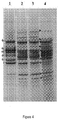
- Figure 4 shows the protein profile (electrophoresis on polyacrylamide gel) of the strain concerned.
- Lines 1-2 show the protein profiles of the Master Cell Bank cultures of the strain; (see lines); as regards lines 1-2 and 3, the profile of the strain is characteristic of the species Lactobacillus plantarum (see arrows).
- the protein profile of the strain is different from the one obtained from a strain belonging to a different species ( Lactobacillus paracasei DSM 32258; see crosses).
- Figure 5 shows the positive reaction for Lactobacillus plantarum, where:
- Score Number used to evaluate the biological relevance of an identification. In sequence alignments, the score is a numerical value describing the overall quality of an alignment. Higher numbers correspond to greater similarity.
- E-value expected value: a value which, if correctly interpreted by a researcher, will indicate the likelihood of a score indicating a correlation between the two biological sequences. The lower the E-value, the more significant the score.
- Figures 6 and 7 show the pulsed-field electrophoresis (PFGE) with the Notl enzyme ( Figure 6 ) and Sfil enzyme ( Figure 7 ), where:
- Table 4 shows the antibiotic resistance profile (E-test, ABBiodisk)
- Table 5 shows the resistance to biological fluids (simulated gastric juice, simulated pancreatic juice and bile salts)
- Table 5 shows the percentage of survival of the probiotic strains in two different types of biological fluids; simulated gastric juice and pancreatic secretion at 37 ° C after different contact times (5, 30 and 60 minutes). ⁇ The results of survival in the presence of bile secretion were obtained by comparing the number of colonies growing in the specific medium "with” and “without” the addition of bile salts.
- strain Lactobacillus paracasei was isolated and analysed in the laboratories of Biolab Research srl, a subsidiary of the Mofin Alce Group, an affiliate of Probiotical S.p.A.
- Figure 8 shows the protein profile (electrophoresis on polyacrylamide gel), where:
- Lines 2-3 show the protein profiles of the Master Cell Bank cultures of the strain; (see lines); in lines 1 and 2-3 the profile of the strain is characteristic of the species Lactobacillus paracasei (see arrows). As regards lines 4 and 2-3, the protein profile of the strain is different from the one obtained from a strain belonging to a different species (Lactobacillus plantarum LMG P-21021; see crosses).
- Figure 9 shows the Polymerase Chain Reaction (PCR) using the primers W2/Y2. The reaction is positive for Lactobacillus paracasei, where:
- Score Number used to evaluate the biological relevance of an identification. In sequence alignments, the score is a numerical value describing the overall quality of an alignment. Higher numbers correspond to greater similarity.
- E-value expected value: a value which, if correctly interpreted by a researcher, will indicate the likelihood of a score indicating a correlation between the two biological sequences. The lower the E-value, the more significant the score.
- Figures 10 and 11 show the pulsed-field electrophoresis (PFGE) with the Notl enzyme( Figure 10 ) and Sfil enzyme ( Figure 11 ), where:
- Table 8 shows the antibiotic resistance profile (E-test, ABBiodisk)
- Table 9 shows the resistance to biological fluids (simulated gastric juice, simulated pancreatic juice and bile salts)
- Table 9 shows the percentage of survival of the probiotic strains in two different types of biological fluids; simulated gastric juice and pancreatic secretion at 37 ° C after different contact times (5, 30 and 60 minutes). ⁇ The results of survival in the presence of bile secretion were obtained by comparing the number of colonies growing in the specific medium "with” and “without” the addition of bile salts.
- strain Lactobacillus paracasei was isolated and analysed in the laboratories of Biolab Research srl, a subsidiary of the Mofin Alce Group, an affiliate of Probiotical S.p.A.
- Figure 12 shows the protein profile (Electrophoresis on polyacrilamide gel), where:
- Lines 2-3 show the protein profiles of the Master Cell Bank cultures of the strain; (see lines); in lines 1 and 2-3, the profile of the strain is characteristic of the species Lactobacillus paracasei (see arrows). As regards lines 4 and 2-3 the protein profile of the strain is different from the one obtained from a strain belonging to a different species ( Lactobacillus plantarum LMG P-21021; see crosses).
- Figure 13 shows the Polymerase Chain Reaction (PCR) using the primers W2/Y2, where the reaction is positive for Lactobacillus paracasei and:
- Score Number used to evaluate the biological relevance of an identification. In sequence alignments, the score is a numerical value describing the overall quality of an alignment. Higher numbers correspond to greater similarity.
- E-value expected value: a value which, if correctly interpreted by a researcher, will indicate the likelihood of a score indicating a correlation between the two biological sequences. The lower the E-value, the more significant the score.
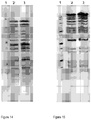
- Figures 14 and 15 show the pulsed-field electrophoresis (PFGE) with the Notl enzyme( Figure 14 ) and Sfil enzyme ( Figure 15 ), where:
- Table 12 shows the antibiotic resistance profile (E-test, ABBiodisk)
- Table 13 shows the resistance to biological fluids (simulated gastric juice, simulated pancreatic juice and bile salts)
- Table 13 shows the percentage of survival of the probiotic strains in two different types of biological fluids; simulated gastric juice and pancreatic secretion at 37 ° C after different contact times (5, 30 and 60 minutes). ⁇ The results of survival in the presence of bile secretion were obtained by comparing the number of colonies growing in the specific medium "with” and “without” the addition of bile salts.
- the present disclosure relates to at least one bacterial strain of human origin belonging to the genus Lactobacillus selected from the group comprising or, alternatively, consisting of:
- the present invention relates to at least one bacterial strain of human origin belonging to the genus Lattobacillus selected from the group comprising or, alternatively, consisting of:
- the present invention relates to at least one bacterial strain of human origin belonging to the genus Lattobacillus selected from the group comprising or, alternatively, consisting of:
- the bacterial strains of the present disclosure listed above were isolated from stool samples of healthy subjects, as described further below in the experimental section, and were all deposited with the DSMZ [ Deutsche Sammlung von Mikroorganismen und Zellkulturen GmbH, Braunschweig, Germany) on 29.01.2016 and registered there under the respective accession numbers -DSM 32252-DSM 32260. Solely for the sake of convenience, the aforesaid strains may also be indicated in the description with their codes LMC1-3-4-5-6-7-8-9-10.
- the present invention also relates to a pharmaceutical composition/formulation comprising a mixture which comprises or, alternatively, consists of at least one of the lactobacilli strains described above with their codes LMC1-3-4-5-6-7-8-9-10 and characterised, or else an appropriate combination thereof (for example, of two or more or all of them).
- the composition comprises a mixture which comprises or, alternatively, consists of at least one bacterial strain selected from among those of the group 2.
- the composition comprises a mixture which comprises or, alternatively, consists of at least one bacterial strain selected from among those of the group 3.
- the at least one bacterial strain or combination of lactobacilli strains of the invention is present in a total amount comprised from 1x10 6 to 1x10 12 CFU/g of mixture; preferably, from 1x10 7 to 1x10 11 CF/g of mixture; more preferably, from 1x10 8 to 1x10 10 CFU/g of mixture.
- the at least one bacterial strain, or combination of the lactobacilli strains, of the invention is present in a total amount comprised from 1x10 6 to 1x10 11 CFU/g of composition; preferably, from 1x10 7 to 1x10 10 CF/g of composition; more preferably, from 1x10 8 to 1x10 9 CFU/g of composition.
- compositions may also further comprise the necessary and/or appropriate amounts of co-formulants, excipients, carriers, surfactants, adjuvants, preservatives and colourants as desired.
- Said substances are appropriately selected, in terms of quality and quantity, among those that are known and commonly used by the person skilled in the art of pharmaceutical formulations.
- Said pharmaceutical composition may be supplied in the form that is best suited to the desired administration.
- This form can be any selected from among the pharmaceutical forms commonly known and prepared in the industry (for example, oral, topical, injectable).
- said composition can be in the form of a mouthwash, a tablet, a lozenge, a pastille, a pill, a capsule (with a soft or hard coating, controlled release), a powder or granules for sublingual administration or packaged in a sachet to be reconstituted, for example in water, prior to administration (according to need, said powder or granules can be incorporated in or coated by a suitable pharmaceutically acceptable polymer or mixture of polymers, able to impart particular properties to them, for example, gastro-resistance and/or a controlled/delayed release depending on the desired site of action in the body).
- a suitable pharmaceutically acceptable polymer or mixture of polymers able to impart particular properties to them, for example, gastro-resistance and/or a controlled/
- composition is prepared using well-known traditional technologies and production equipment (mixers, granulators, stirrers, packaging machines, and so forth) commonly used in the industry.
- the skilled person will have no difficulty, based solely on his knowledge, in identifying and selecting the one that is most suitable for the technical problem to be addressed in its preparation.
- bacterial strains of the present invention (taken as such or in combination with one another), as well as the pharmaceutical formulations thereof, have shown to be effective, or at least very promising, agents capable of inhibiting and/or blocking and/or reducing the formation and/or growth of bacterial biofilms (in particular, those produced by pathogenic bacteria harmful to health), thereby enabling an optimal application of the necessary/desired antibacterial treatment (for example, antibiotics).
- the bacterial strains of the present invention (Group 2 and/or Group 3) and the pharmaceutical compositions thereof have thus shown an excellent/good activity against bacterial biofilms, thanks to their ability to prevent and inhibit the formation and growth of the bacterial biofilms themselves. Therefore, the bacterial strains of the present invention and the pharmaceutical compositions thereof can be advantageously used in all health-related and non-health-related conditions in which there is an involvement of biofilms as the cause of greater microbial resistance to drugs, antibiotics, disinfectants and all other physical and chemical agents endowed with antimicrobial activity.
- the bacterial strains of the present invention (Group 2 and/or Group 3) and the pharmaceutical compositions thereof can be advantageously used, but not only:
- the subject matter of the present invention further relates to the bacterial strains of the present invention and the pharmaceutical compositions thereof for use as a medication.
- the subject matter of the present invention further relates to the bacterial strains of the present invention and the pharmaceutical compositions thereof for use as a medication in the treatment of health-related and non-health-related conditions in which there is an involvement of biofilms as the cause of greater microbial resistance to drugs, antibiotics, disinfectants and all other physical and chemical agents endowed with antimicrobial activity; in particular in the treatment of the health-related and non-health-related conditions described above by way of non-limiting example.
- Lactobacilli strains and Staphylococcus aureus Lactobacilli strains and Staphylococcus aureus
- the nine lactobacilli strains of the disclosure (indicated in the present document as LMC1-3-4-5-6-7-8-9-10, as already mentioned earlier) used in this experiment were isolated in the Microbiology Laboratory of the IRCCS Istituto Ortopedico Galeazzi (Milan, Italy) from stool samples of healthy subjects, using a known methodology.
- the lactobacilli and strains of S. aureus were incubated overnight in a culture broth - Brain-Hearth infusion (BHI, bioMérieux, Marcy l'Etoile, France) - at 37°C under aerobiotic conditions.
- the anti-biofilm activity of the supernatants of the different lactobacilli strains was evaluated by quantifying the entity of biofilm produced by a methicillin-resistant strain of S. aureus, selected for its ability to produce biofilms, when incubated with the supernatants obtained from the tested lactobacilli strains.
- the amount of biofilm produced by S. aureus incubated in its supernatant was used as a negative control.
- Each strain of Lactobacillus was incubated in BHI for 24 hours, as previously described.
- Each culture medium was subsequently centrifuged at 6,000 rpm for 10 minutes in order to separate the bacterial cells from the supernatants. Then 20 ⁇ L of a 0.5 McFarland suspension of S.
- aureus were incubated in 180 ⁇ L of supernatant of the various lactobacilli in a new 96-well microplate. After 24 hours, the medium containing the non-adherent bacteria was removed and replaced with 180 ⁇ L of fresh supernatant. The plates were then incubated for 48 hours. Finally, the bacterial biofilm was evaluated by means of the spectrophotometric method described by Christensen et al. (18). The biofilm cultured in the 96-well plate was air dried and stained by immersion in a 5% Crystal Violet (CV) solution for 15 minutes and was subsequently dried again after numerous washes.
- CV Crystal Violet
- the biomass of the biofilm was quantified by elution of the biofilm-CV bond with 3 ml of ethanol (96%) and subsequent measurement of the absorbance of 100 ⁇ L of the eluted solution at a wavelength of 595 nm by means of a microplate spectrophotometer (Multiskan TM FC; Thermo Scientific; Milan, Italy).
- a confocal laser scanning microscope was used to confirm the data obtained from the Crystal Violet analysis.
- the lactobacilli supernatants were used, whilst the biofilm produced by S. aureus in its own supernatant was used as a negative control.
- the microbial biofilm was incubated on MBEC Biofilm Inoculators (Innovotech Inc., Edmonton CA) plates according to the manufacturer's instructions.
- the wells were prepared with 20 ⁇ L of a 0.5 McFarland suspension of the supernatants of the different lactobacilli or the supernatant of the S. aureus strain (control). The supernatant was prepared as previously described.
- a FilmTracerTM LIVE/DEAD® Biofilm Viability Kit (Molecular Probes, Life Technologies Ltd., Paisley, UK) was used to reveal the biomass in the samples. All the samples were stained for 15 minutes in the dark at room temperature with an appropriate volume of a mixture of the two stains STYO9 and Propidium Iodide (PI) (3 ⁇ L of each element in 1 mL of saline solution). This allowed to distinguish the live bacteria from the dead ones. The stained biofilm was examined under the confocal microscope (Leica TCS SP5; Leica Microsystems CMS GmbH, Mannheim, Germany) using a 63X oil objective.
- a 488 nm laser was used to excite the SYTO9 stain, while the fluorescence emission was read between 500 nm and 540 nm.
- the PI stain was excited with a 561 nm laser, and the fluorescence emission thereof was read between 600 nm and 695 nm.
- a simultaneous acquisition of the two channels was carried out to minimise false colocalisation between the fluorescent spots due to movements of the bacteria. For each sample, 2 ⁇ m sequential optical sections were acquired and then put together in sequence on the z axis in order to obtain the complete thickness of the biofilm.
- FIG. 1 represents a 3D reconstruction of the control sample
- Figure 2 represents a sectional view of said biofilm.
- Figure 1 and Figure 2 show the biofilm produced in the control sample (i.e. the biofilm of S. aureus produced in the supernatant of S. aureus ).
- the biofilm produced by S. aureus is made up of live cells (green) and dead cells (red).
- Figure 3 represents the biofilm produced when S. aureus was incubated with the supernatant of LMC8.
- the lactobacilli of the present invention and the pharmaceutical compositions thereof have demonstrated to be excellent as agents endowed with anti-biofilm activity against bacterial biofilms, thanks to their ability to prevent and inhibit the formation and growth of the bacterial biofilms themselves. Therefore, the bacterial strains of the present invention and the pharmaceutical compositions thereof can be advantageously used in all health-related and non-health-related conditions in which there is an involvement of bacterial biofilms as the cause of greater microbial resistance to drugs, antibiotics, disinfectants and all other physical and chemical agents endowed with antimicrobial activity.
- LMC-1 DSM 32252, LMC-3 DSM 32253, LMC-4 DSM 32254, LMC-5 DSM 32255, LMC-6 DSM 32256, LMC-7 DSM 32257, LMC-8 DSM 32258, LMC-9 DSM 32259, LMC-10 DSM 32260 were classified through phenotypic characterisation (API 50 CHL) and molecular identification with species-specific PCR.
- the API 50 CHL gallery (bioMérieux code 50300) enables the study of carbohydrate metabolism in microorganisms. It consists of 50 microtubes, the first of which, with no active ingredient, constitutes the negative control (blank). The subsequent microtubes each contain a well-defined amount of a dehydrated substrate belonging to the family of carbohydrates and derivatives (heterosides, polyols, uronic acids). These substrates can be metabolised, which results in a change in colour: from purple/violet they turn to yellow, passing through various shades of green, due to a production of acid under anaerobiosis revealed by the pH indicator of the medium (Bromocresol Purple).
- the samples were centrifuged for 5' min at 10000 rpm in order to eliminate the culture medium and resuspended in 2ml of sterile distilled water.
- the inoculum was prepared in 5 ml of sterile distilled water with a quantity of sample equal to 2 on the McFarland scale (bioMèrieux).
- This suspension was inoculated in the ampoule of API 50 CHL Medium and immediately dispensed into the galleries.
- two drops of paraffin (bioMérieux) were introduced for each dome and incubated in a temperature-controlled oven at 37°C. A reading of the galleries was taken at different incubation times, at 24 and 48 hours.
- a phenotypic classification of the various strains was obtained using APIWEB Plus software; the program computes a response, assigning a typicity index (T) and an identification percentage (%id), in addition to a comment on the quality of the analysis (Results in Table 15).
- T typicity index
- %id identification percentage
- the use of the carbohydrate is manifested with a change in colour of the galleries: the reaction is positive if a bright green or yellow colour develops, and negative if dark green or purple develops. Checking the colour of the galleries is facilitated by a comparison with gallery n°. 0, which represents the blank.
- this portion has variable regions (with the same sequence in bacteria of the same species).
- species-specific primers which will lead to the amplification of the portion comprised between them.
- the primers will be able to anneal only if the DNA template belongs to the species for which they were designed, yielding, as the amplification product, fragments whose dimensions will depend on the position of the oligonucleotides along the chromosomal DNA, and which will be longer the farther apart the primers are.
- the lysed material was used as such for subsequent DNA amplification.
- the PCR reaction was set up in sterile test tubes with the addition, in order, of 12.5 ⁇ l of PCR Master Mix (Promega code M7502), sterile water q.s., primer 1 (100 ⁇ M - 0.3 ⁇ l) and primer 2 (100 ⁇ M - 0.3 ⁇ l) and 1 ⁇ l of DNA, for a total volume of 25 ⁇ l.
- a positive control consisting of DNA of the reference strain from an international collection and belonging to the same bacterial species as the sample undergoing analysis
- a negative control consisting of DNA of the reference strain from an international collection but belonging to a bacterial species differing from the sample undergoing analysis
- a blank consisting of the reaction buffer alone to check for any contamination.
- the samples were subjected to a thermal cycle for lactobacilli (MET-INT 049, current version).
- the amplicates obtained were subjected to electrophoresis (30 min, 80V) in 1% agarose gel in 1X TAE buffer supplemented with ethidium bromide (5 ⁇ l/10ml).
- PCR 50-2000 bp Marker SIGMA code P9577 was used to estimate the size of the amplified fragment.
- the agarose gel was viewed under ultraviolet light, using a transilluminator (Gel-Doc, BIO-RAD); results in Table 15.
Landscapes
- Health & Medical Sciences (AREA)
- Life Sciences & Earth Sciences (AREA)
- Chemical & Material Sciences (AREA)
- Engineering & Computer Science (AREA)
- Organic Chemistry (AREA)
- General Health & Medical Sciences (AREA)
- Medicinal Chemistry (AREA)
- Bioinformatics & Cheminformatics (AREA)
- Public Health (AREA)
- Veterinary Medicine (AREA)
- Pharmacology & Pharmacy (AREA)
- Animal Behavior & Ethology (AREA)
- Genetics & Genomics (AREA)
- Wood Science & Technology (AREA)
- Biotechnology (AREA)
- Zoology (AREA)
- General Chemical & Material Sciences (AREA)
- Chemical Kinetics & Catalysis (AREA)
- Nuclear Medicine, Radiotherapy & Molecular Imaging (AREA)
- Microbiology (AREA)
- Virology (AREA)
- Biomedical Technology (AREA)
- Tropical Medicine & Parasitology (AREA)
- Biochemistry (AREA)
- General Engineering & Computer Science (AREA)
- Mycology (AREA)
- Pulmonology (AREA)
- Oncology (AREA)
- Communicable Diseases (AREA)
- Epidemiology (AREA)
- Molecular Biology (AREA)
- Dermatology (AREA)
- Otolaryngology (AREA)
- Medicines Containing Material From Animals Or Micro-Organisms (AREA)
- Micro-Organisms Or Cultivation Processes Thereof (AREA)
- Measuring Or Testing Involving Enzymes Or Micro-Organisms (AREA)
- Medicines That Contain Protein Lipid Enzymes And Other Medicines (AREA)
Claims (13)
- Bakterienstamm menschlichen Ursprungs, gehörend zur Gattung Lactobacillus, ausgewählt aus der Gruppe, bestehend aus:Lactobacillus plantarum, Hinterlegungsnummer DSM 32252 [LMC1] ;Lactobacillus paracasei, Hinterlegungsnummer DSM 32254 [LMC4] ;Lactobacillus rhamnosus, Hinterlegungsnummer DSM 32256 [LMC6] ;Lactobacillus rhamnosus, Hinterlegungsnummer DSM 32257 [LMC7] ;Lactobacillus paracasei, Hinterlegungsnummer DSM 32258 [LMC8],alle am 29.01.2016 bei der DSMZ (Deutschen Sammlung von Mikroorganismen und Zellkulturen GmbH, Braunschweig, Deutschland) hinterlegt.
- Bakterienstamm gemäß Anspruch 1 zur Verwendung als Arzneimittel.
- Bakterienstamm gemäß Anspruch 1 zur Verwendung:- bei der Behandlung von oberflächlichen und tiefen Infektionen, im Fall von Operationswundern oder Dekubitalgeschwüren;- bei der Behandlung von Infektionen durch Gefäß- und Harnkatheter;- bei der Behandlung von Infektionen durch Stents, Herz-Kreislauf-Geräte, Prothesen, Protheseneinlagen, otologische, orthopädische und zahnmedizinische Prothesen, Schrauben und Nägel;- bei der Behandlung von Infektionen des Mundraums und Infektionen der Mund- und Vaginalschleimhaut;- bei der Behandlung von lokalen Infektionen, Otitis, Rhinosinusitis, Pharyngitis, Laryngitis und Lungenentzündung.
- Bakterienstamm zur Verwendung gemäß Anspruch 2, worin die Verwendung- bei der Behandlung von oberflächlichen und tiefen Infektionen, im Fall von Operationswundern oder Dekubitalgeschwüren;- bei der Behandlung von Infektionen durch Gefäß- und Harnkatheter;- bei der Behandlung von Infektionen durch Stents, Herz-Kreislauf-Geräte, Prothesen, Protheseneinlagen, otologische, orthopädische und zahnmedizinische Prothesen, Schrauben und Nägel;- bei der Behandlung von Infektionen des Mundraums und Infektionen der Mund- und Vaginalschleimhaut;- bei der Behandlung von lokalen Infektionen, Otitis, Rhinosinusitis, Pharyngitis, Laryngitis und Lungenentzündung, ist.
- Zusammensetzung, umfassend ein Gemisch, das umfasst oder alternativ besteht aus mindestens einem Bakterienstamm, ausgewählt aus der Gruppe, bestehend aus:Lactobacillus plantarum, Hinterlegungsnummer DSM 32252 [LMC1] ;Lactobacillus paracasei, Hinterlegungsnummer DSM 32254 [LMC4] ;Lactobacillus rhamnosus, Hinterlegungsnummer DSM 32256 [LMC6] ;Lactobacillus rhamnosus, Hinterlegungsnummer DSM 32257 [LMC7] ;Lactobacillus paracasei, Hinterlegungsnummer DSM 32258 [LMC8],alle am 29.01.2016 bei der DSMZ (Deutschen Sammlung von Mikroorganismen und Zellkulturen GmbH, Braunschweig,Deutschland) hinterlegt, und/oder eine Kombination davon.
- Zusammensetzung gemäß Anspruch 5, worin die Zusammensetzung ein Gemisch umfasst, das umfasst oder alternativ besteht aus mindestens einem Bakterienstamm, ausgewählt aus der Gruppe, bestehend aus:Lactobacillus plantarum (DSM 32252) [LMC1];Lactobacillus paracasei (DSM 32254) [LMC4];Lactobacillus paracasei (DSM 32258) [LMC8], und/oder eine Kombination davon
- Zusammensetzung gemäß Anspruch 5 oder 6, worin die Zusammensetzung zur Verwendung als Arzneimittel bestimmt ist.
- Zusammensetzung gemäß Anspruch 5 oder 6, zur Verwendung:- bei der Behandlung von oberflächlichen und tiefen Infektionen, im Fall von Operationswundern oder Dekubitalgeschwüren;- bei der Behandlung von Infektionen durch Gefäß- und Harnkatheter;- bei der Behandlung von Infektionen durch Stents, Herz-Kreislauf-Geräte, Prothesen, Protheseneinlagen, otologische, orthopädische und zahnmedizinische Prothesen, Schrauben und Nägel;- bei der Behandlung von Infektionen des Mundraums und Infektionen der Mund- und Vaginalschleimhaut;- bei der Behandlung von lokalen Infektionen, Otitis, Rhinosinusitis, Pharyngitis, Laryngitis und Lungenentzündung.
- Zusammensetzung zur Verwendung gemäß Anspruch 7, worin die Verwendung- bei der Behandlung von oberflächlichen und tiefen Infektionen, im Fall von Operationswundern oder Dekubitalgeschwüren;- bei der Behandlung von Infektionen durch Gefäß- und Harnkatheter;- bei der Behandlung von Infektionen durch Stents, Herz-Kreislauf-Geräte, Prothesen, Protheseneinlagen, otologische, orthopädische und zahnmedizinische Prothesen, Schrauben und Nägel;- bei der Behandlung von Infektionen des Mundraums und Infektionen der Mund- und Vaginalschleimhaut;- bei der Behandlung von lokalen Infektionen, Otitis, Rhinosinusitis, Pharyngitis, Laryngitis und Lungenentzündung, ist.
- Verwendung der Zusammensetzung gemäß den Ansprüchen 5-6:- bei der in-vitro-Behandlung von bakteriellen Biofilmen, die insbesondere an Geweben oder Prothesen in Laboren haften, um die Möglichkeit der mikrobiologischen Diagnose derselben zu verbessern;- bei den in-vitro-Behandlungen zur Biofilmentfernung von chirurgischen Instrumenten und Sanitärinstrumenten im Allgemeinen (Sanitisierung) im Bereich des Gesundheitswesens;- bei den in-vitro-Behandlungen zur Entfernung und Sanitisierung von Biofilmen, die durch Legionellen oder andere schädliche Mikroorganismen im Umwelt- und Lebensmittelbereich, in Wasserversorgungs- und Abwassersystemen gebildet werden;- bei den Behandlungen zur Reinigung von Behältern, Gefäßen und enthaltenden Tanks, in denen ein bakterieller Biofilm vorhanden ist, im Umwelt- und Lebensmittelbereich;- bei der in-vitro-Behandlung eines bakteriellen Biofilms, der sich aufgrund einer größeren mikrobiellen Resistenz gegen Arzneimittel, Antibiotika, Desinfektionsmittel und physikalische und chemische Mittel mit antimikrobieller Wirkung gebildet hat.
- Zusammensetzung gemäß Anspruch 5 oder 6, Zusammensetzung zur Verwendung gemäß Anspruch 7, 8 oder 9, Verwendung gemäß Anspruch 10, worin der mindestens eine im Gemisch enthaltene Bakterienstamm in einer Gesamtmenge von 1x10⁶ bis 1x10¹² CFU/g des Gemischs; bevorzugt von 1x10⁷ bis 1x10¹¹ CFU/g des Gemischs; stärker bevorzugt von 1x10⁸ bis 1x10¹⁰ CFU/g des Gemischs, vorhanden ist.
- Zusammensetzung gemäß Anspruch 5 oder 6, Zusammensetzung zur Verwendung gemäß Anspruch 7, 8 oder 9, Verwendung gemäß Anspruch 10, worin der mindestens eine im Gemisch enthaltene Bakterienstamm in einer Gesamtmenge von 1x10⁶ bis 1x10¹¹ CFU/g des Gemischs; bevorzugt von 1x10⁷ bis 1x10¹⁰ CFU/g des Gemischs; stärker bevorzugt von 1x10⁸ bis 1x10⁹ CFU/g des Gemischs, vorhanden ist.
- Zusammensetzung gemäß Anspruch 5, 6, 11 oder 12 Zusammensetzung zur Verwendung gemäß Anspruch 7, 8 oder 9, Verwendung gemäß Anspruch 10, worin die Zusammensetzung gegen die Bildung von Biofilmen durch schädliche Bakterienstämme, wie bevorzugt solche, ausgewählt aus Candida, Escherichia coli, Klebsiella, Proteus mirabilis und Propionibacterium acnes, S. aureus, wirksam ist.
Applications Claiming Priority (2)
| Application Number | Priority Date | Filing Date | Title |
|---|---|---|---|
| IT102016000081420A IT201600081420A1 (it) | 2016-08-03 | 2016-08-03 | Batteri lattici e loro uso per il trattamento preventivo, inibitorio,riduttivo della formazione del biofilm batterico |
| PCT/IB2017/054734 WO2018025204A1 (en) | 2016-08-03 | 2017-08-02 | Lactic bacteria and the use thereof for the preventive, inhibitory and/or reductive treatment of the formation of bacterial biofilms |
Publications (2)
| Publication Number | Publication Date |
|---|---|
| EP3494206A1 EP3494206A1 (de) | 2019-06-12 |
| EP3494206B1 true EP3494206B1 (de) | 2021-07-07 |
Family
ID=57610281
Family Applications (1)
| Application Number | Title | Priority Date | Filing Date |
|---|---|---|---|
| EP17758960.3A Active EP3494206B1 (de) | 2016-08-03 | 2017-08-02 | Milchsäurebakterien und deren verwendung zur vorbeugenden, inhibierenden und oder reduzierenden behandlung der bildung von bakteriellen biofilmen. |
Country Status (11)
| Country | Link |
|---|---|
| US (1) | US20200199692A1 (de) |
| EP (1) | EP3494206B1 (de) |
| JP (1) | JP2019524159A (de) |
| KR (1) | KR20190103135A (de) |
| CN (1) | CN110191945A (de) |
| BR (1) | BR112019001984A2 (de) |
| CA (1) | CA3032335A1 (de) |
| IT (1) | IT201600081420A1 (de) |
| MA (1) | MA45852A (de) |
| RU (1) | RU2019105733A (de) |
| WO (1) | WO2018025204A1 (de) |
Families Citing this family (11)
| Publication number | Priority date | Publication date | Assignee | Title |
|---|---|---|---|---|
| ITMI20110793A1 (it) | 2011-05-09 | 2012-11-10 | Probiotical Spa | Ceppi di batteri probiotici e composizione sinbiotica contenente gli stessi destinata alla alimentazione dei neonati. |
| ITUA20162013A1 (it) | 2016-03-24 | 2017-09-24 | Probiotical Spa | Composizione a base di batteri lattici per il trattamento contemporaneo di infezioni vaginali di origine micotica e batterica. |
| AU2020279533A1 (en) * | 2019-05-20 | 2021-12-23 | L'ORéAL S.A. | Composition for treatment, alleviation or prophylaxis of acne |
| CN110628663B (zh) * | 2019-08-02 | 2021-12-17 | 华南理工大学 | 一株鼠李糖乳杆菌及其高密度培养方法和应用 |
| CN112063548A (zh) * | 2020-08-19 | 2020-12-11 | 杭州医学院 | 一株具有产蛋白酶能力的植物乳杆菌及其应用 |
| CN113046258B (zh) * | 2020-10-09 | 2023-04-28 | 江南大学 | 一株能够预防和/或治疗牙周炎的鼠李糖乳杆菌及其应用 |
| US20220110918A1 (en) * | 2020-10-09 | 2022-04-14 | Script Essentials, Llc | Compositions and methods for treatment of skin-related diseases and promoting dermatological health |
| WO2022236527A1 (zh) * | 2021-05-10 | 2022-11-17 | 合肥工业大学 | 一种防止不锈钢制品表面有害细菌生物膜形成的方法 |
| CN113080461A (zh) * | 2021-05-14 | 2021-07-09 | 艾兰得生物科技研究泰州有限公司 | 一种具有抑制奇异变形杆菌生长作用的益生菌及其发酵液和应用 |
| CN113462616A (zh) * | 2021-08-19 | 2021-10-01 | 上海昊岳食品科技有限公司 | 一株人源鼠李糖乳杆菌glr8及其制备方法 |
| CN118516252A (zh) * | 2024-04-18 | 2024-08-20 | 南京农业大学 | 一株乳酸菌菌株及其在制备促进皮肤伤口修复的胞外多糖敷料中的应用 |
Family Cites Families (3)
| Publication number | Priority date | Publication date | Assignee | Title |
|---|---|---|---|---|
| DK2455095T3 (en) * | 2009-07-16 | 2017-07-24 | Univ Hiroshima | PROPHYLACTIC, IMPROVING OR THERAPEUTIC AGENT FOR ORAL DISEASES |
| RU2683225C2 (ru) * | 2011-05-06 | 2019-03-26 | БЕЛАНО Медикал АГ | Новые молочнокислые бактерии и содержащие их составы |
| FR2999601B1 (fr) * | 2012-12-17 | 2015-01-30 | Urgo Lab | Methode pour prevenir et/ou traiter les infections, colonisations ou maladies liees a staphylococcus aureus, pseudomonas aeruginosa, streptococcus pyogenes, enterococcus faecium, enterobacter cloacae, proteus mirabilis et/ou bacteroides fragilis |
-
2016
- 2016-08-03 IT IT102016000081420A patent/IT201600081420A1/it unknown
-
2017
- 2017-08-02 WO PCT/IB2017/054734 patent/WO2018025204A1/en not_active Ceased
- 2017-08-02 CA CA3032335A patent/CA3032335A1/en not_active Abandoned
- 2017-08-02 JP JP2019528179A patent/JP2019524159A/ja active Pending
- 2017-08-02 KR KR1020197006126A patent/KR20190103135A/ko not_active Ceased
- 2017-08-02 MA MA045852A patent/MA45852A/fr unknown
- 2017-08-02 BR BR112019001984-7A patent/BR112019001984A2/pt not_active IP Right Cessation
- 2017-08-02 US US16/322,843 patent/US20200199692A1/en not_active Abandoned
- 2017-08-02 CN CN201780046790.9A patent/CN110191945A/zh active Pending
- 2017-08-02 RU RU2019105733A patent/RU2019105733A/ru not_active Application Discontinuation
- 2017-08-02 EP EP17758960.3A patent/EP3494206B1/de active Active
Non-Patent Citations (1)
| Title |
|---|
| None * |
Also Published As
| Publication number | Publication date |
|---|---|
| IT201600081420A1 (it) | 2018-02-03 |
| WO2018025204A1 (en) | 2018-02-08 |
| BR112019001984A2 (pt) | 2019-05-07 |
| JP2019524159A (ja) | 2019-09-05 |
| MA45852A (fr) | 2019-06-12 |
| EP3494206A1 (de) | 2019-06-12 |
| RU2019105733A (ru) | 2020-09-04 |
| CA3032335A1 (en) | 2018-02-08 |
| CN110191945A (zh) | 2019-08-30 |
| KR20190103135A (ko) | 2019-09-04 |
| US20200199692A1 (en) | 2020-06-25 |
Similar Documents
| Publication | Publication Date | Title |
|---|---|---|
| EP3494206B1 (de) | Milchsäurebakterien und deren verwendung zur vorbeugenden, inhibierenden und oder reduzierenden behandlung der bildung von bakteriellen biofilmen. | |
| Taheur et al. | Anti-bacterial and anti-biofilm activity of probiotic bacteria against oral pathogens | |
| Lim et al. | Antibacterial and anticavity activity of probiotic Lactobacillus plantarum 200661 isolated from fermented foods against Streptococcus mutans | |
| KR101255894B1 (ko) | 락토바실러스 플란타룸 및 그의 용도 | |
| RU2547599C2 (ru) | Бактериоцин-продуцирующий lactobacillus pentosus и его применение в пищевых и фармацевтических композициях | |
| Mahdi et al. | Antibacterial immunomodulatory and antibiofilm triple effect of Salivaricin LHM against Pseudomonas aeruginosa urinary tract infection model | |
| AU2019262200A1 (en) | Methods and compositions for killing a target bacterium | |
| US20190344100A1 (en) | Dermatological preparations for maintaining and/or restoring healthy skin microbiota | |
| CA2800514C (en) | Use of streptococcus salivarius in the treatment of chronic infections of the respiratory tract | |
| US20120045820A1 (en) | New antibiotic-sensitive lactic acid bacteria strains | |
| EP3818985B1 (de) | Lactobacillus fermentum pl9 und seiner anwendung | |
| Fuochi et al. | Probiotic properties of Lactobacillus fermentum strains isolated from human oral samples and description of their antibacterial activity | |
| Firdausy | Anti-biofilm activity of lactic acid bacteria isolated from kefir against multidrug-resistant Klebsiella pneumoniae | |
| Lin et al. | Inhibitory effect of Lactobacillus paracasei subsp. paracasei NTU 101 on rat dental caries | |
| RU2391393C1 (ru) | ШТАММ Lactobacillus delbrueckii TS1-06, ИСПОЛЬЗУЕМЫЙ ДЛЯ ИЗГОТОВЛЕНИЯ БАКТЕРИАЛЬНЫХ ПРЕПАРАТОВ И ПРОИЗВОДСТВА ЖИДКОЙ МОЛОЧНОКИСЛОЙ ЗАКВАСКИ В КАЧЕСТВЕ ПРОДУКТА ПИТАНИЯ ЛЕЧЕБНО-ПРОФИЛАКТИЧЕСКОГО НАЗНАЧЕНИЯ | |
| KR101310123B1 (ko) | 헬리코박터 파이로리의 생육을 저해하는 김치 유래 젖산균 | |
| Fraga et al. | Preventive and therapeutic administration of an indigenous Lactobacillus sp. strain against Proteus mirabilis ascending urinary tract infection in a mouse model | |
| KR102207512B1 (ko) | 항균 활성을 갖는 락토바실러스 젠세니 swpm104 | |
| Silva et al. | Functional and safety characterization of beneficial vaginal lactic acid bacteria for the design of vaginal hygiene products | |
| KR20110009638A (ko) | 신규한 락토바실러스속 유산균 복합 균주를 포함하는 사료첨가제 | |
| Golshahi et al. | Characterization of effective native lactic acid bacteria as potential oral probiotics on growth inhibition of Streptococcus mutans | |
| RU2391395C1 (ru) | ШТАММ Lactobacillus fermentum TS3-06, ИСПОЛЬЗУЕМЫЙ ДЛЯ ИЗГОТОВЛЕНИЯ БАКТЕРИАЛЬНЫХ ПРЕПАРАТОВ И ПРОИЗВОДСТВА ЖИДКОЙ МОЛОЧНОКИСЛОЙ ЗАКВАСКИ В КАЧЕСТВЕ ПРОДУКТА ПИТАНИЯ ЛЕЧЕБНО-ПРОФИЛАКТИЧЕСКОГО НАЗНАЧЕНИЯ | |
| Yeganeh et al. | Antibiofilm effects of Lactobacilli against ciprofloxacin-resistant uropathogenic Escherichia coli strains in pasteurized milk | |
| KR100736517B1 (ko) | 장내 유해세균 억제능을 갖는 락토바실루스 존소니이 아이디씨씨 9203 | |
| KR20090014264A (ko) | 증가된 내산성을 갖는 유산균의 방법과 용도 |
Legal Events
| Date | Code | Title | Description |
|---|---|---|---|
| STAA | Information on the status of an ep patent application or granted ep patent |
Free format text: STATUS: UNKNOWN |
|
| STAA | Information on the status of an ep patent application or granted ep patent |
Free format text: STATUS: THE INTERNATIONAL PUBLICATION HAS BEEN MADE |
|
| PUAI | Public reference made under article 153(3) epc to a published international application that has entered the european phase |
Free format text: ORIGINAL CODE: 0009012 |
|
| STAA | Information on the status of an ep patent application or granted ep patent |
Free format text: STATUS: REQUEST FOR EXAMINATION WAS MADE |
|
| 17P | Request for examination filed |
Effective date: 20190301 |
|
| AK | Designated contracting states |
Kind code of ref document: A1 Designated state(s): AL AT BE BG CH CY CZ DE DK EE ES FI FR GB GR HR HU IE IS IT LI LT LU LV MC MK MT NL NO PL PT RO RS SE SI SK SM TR |
|
| AX | Request for extension of the european patent |
Extension state: BA ME |
|
| DAX | Request for extension of the european patent (deleted) | ||
| RAV | Requested validation state of the european patent: fee paid |
Extension state: MA Effective date: 20190301 |
|
| STAA | Information on the status of an ep patent application or granted ep patent |
Free format text: STATUS: EXAMINATION IS IN PROGRESS |
|
| 17Q | First examination report despatched |
Effective date: 20191128 |
|
| RAP1 | Party data changed (applicant data changed or rights of an application transferred) |
Owner name: PROBIOTICAL S.P.A. Owner name: CRK S.R.L. |
|
| GRAP | Despatch of communication of intention to grant a patent |
Free format text: ORIGINAL CODE: EPIDOSNIGR1 |
|
| STAA | Information on the status of an ep patent application or granted ep patent |
Free format text: STATUS: GRANT OF PATENT IS INTENDED |
|
| INTG | Intention to grant announced |
Effective date: 20210202 |
|
| GRAS | Grant fee paid |
Free format text: ORIGINAL CODE: EPIDOSNIGR3 |
|
| GRAA | (expected) grant |
Free format text: ORIGINAL CODE: 0009210 |
|
| STAA | Information on the status of an ep patent application or granted ep patent |
Free format text: STATUS: THE PATENT HAS BEEN GRANTED |
|
| AK | Designated contracting states |
Kind code of ref document: B1 Designated state(s): AL AT BE BG CH CY CZ DE DK EE ES FI FR GB GR HR HU IE IS IT LI LT LU LV MC MK MT NL NO PL PT RO RS SE SI SK SM TR |
|
| REG | Reference to a national code |
Ref country code: GB Ref legal event code: FG4D |
|
| REG | Reference to a national code |
Ref country code: AT Ref legal event code: REF Ref document number: 1408625 Country of ref document: AT Kind code of ref document: T Effective date: 20210715 |
|
| REG | Reference to a national code |
Ref country code: DE Ref legal event code: R096 Ref document number: 602017041690 Country of ref document: DE |
|
| REG | Reference to a national code |
Ref country code: IE Ref legal event code: FG4D |
|
| REG | Reference to a national code |
Ref country code: LT Ref legal event code: MG9D |
|
| REG | Reference to a national code |
Ref country code: NL Ref legal event code: MP Effective date: 20210707 |
|
| REG | Reference to a national code |
Ref country code: AT Ref legal event code: MK05 Ref document number: 1408625 Country of ref document: AT Kind code of ref document: T Effective date: 20210707 |
|
| PG25 | Lapsed in a contracting state [announced via postgrant information from national office to epo] |
Ref country code: HR Free format text: LAPSE BECAUSE OF FAILURE TO SUBMIT A TRANSLATION OF THE DESCRIPTION OR TO PAY THE FEE WITHIN THE PRESCRIBED TIME-LIMIT Effective date: 20210707 Ref country code: SE Free format text: LAPSE BECAUSE OF FAILURE TO SUBMIT A TRANSLATION OF THE DESCRIPTION OR TO PAY THE FEE WITHIN THE PRESCRIBED TIME-LIMIT Effective date: 20210707 Ref country code: RS Free format text: LAPSE BECAUSE OF FAILURE TO SUBMIT A TRANSLATION OF THE DESCRIPTION OR TO PAY THE FEE WITHIN THE PRESCRIBED TIME-LIMIT Effective date: 20210707 Ref country code: BG Free format text: LAPSE BECAUSE OF FAILURE TO SUBMIT A TRANSLATION OF THE DESCRIPTION OR TO PAY THE FEE WITHIN THE PRESCRIBED TIME-LIMIT Effective date: 20211007 Ref country code: AT Free format text: LAPSE BECAUSE OF FAILURE TO SUBMIT A TRANSLATION OF THE DESCRIPTION OR TO PAY THE FEE WITHIN THE PRESCRIBED TIME-LIMIT Effective date: 20210707 Ref country code: LT Free format text: LAPSE BECAUSE OF FAILURE TO SUBMIT A TRANSLATION OF THE DESCRIPTION OR TO PAY THE FEE WITHIN THE PRESCRIBED TIME-LIMIT Effective date: 20210707 Ref country code: NO Free format text: LAPSE BECAUSE OF FAILURE TO SUBMIT A TRANSLATION OF THE DESCRIPTION OR TO PAY THE FEE WITHIN THE PRESCRIBED TIME-LIMIT Effective date: 20211007 Ref country code: NL Free format text: LAPSE BECAUSE OF FAILURE TO SUBMIT A TRANSLATION OF THE DESCRIPTION OR TO PAY THE FEE WITHIN THE PRESCRIBED TIME-LIMIT Effective date: 20210707 Ref country code: PT Free format text: LAPSE BECAUSE OF FAILURE TO SUBMIT A TRANSLATION OF THE DESCRIPTION OR TO PAY THE FEE WITHIN THE PRESCRIBED TIME-LIMIT Effective date: 20211108 Ref country code: FI Free format text: LAPSE BECAUSE OF FAILURE TO SUBMIT A TRANSLATION OF THE DESCRIPTION OR TO PAY THE FEE WITHIN THE PRESCRIBED TIME-LIMIT Effective date: 20210707 Ref country code: ES Free format text: LAPSE BECAUSE OF FAILURE TO SUBMIT A TRANSLATION OF THE DESCRIPTION OR TO PAY THE FEE WITHIN THE PRESCRIBED TIME-LIMIT Effective date: 20210707 |
|
| PG25 | Lapsed in a contracting state [announced via postgrant information from national office to epo] |
Ref country code: PL Free format text: LAPSE BECAUSE OF FAILURE TO SUBMIT A TRANSLATION OF THE DESCRIPTION OR TO PAY THE FEE WITHIN THE PRESCRIBED TIME-LIMIT Effective date: 20210707 Ref country code: LV Free format text: LAPSE BECAUSE OF FAILURE TO SUBMIT A TRANSLATION OF THE DESCRIPTION OR TO PAY THE FEE WITHIN THE PRESCRIBED TIME-LIMIT Effective date: 20210707 Ref country code: GR Free format text: LAPSE BECAUSE OF FAILURE TO SUBMIT A TRANSLATION OF THE DESCRIPTION OR TO PAY THE FEE WITHIN THE PRESCRIBED TIME-LIMIT Effective date: 20211008 |
|
| REG | Reference to a national code |
Ref country code: DE Ref legal event code: R119 Ref document number: 602017041690 Country of ref document: DE |
|
| REG | Reference to a national code |
Ref country code: CH Ref legal event code: PL |
|
| REG | Reference to a national code |
Ref country code: BE Ref legal event code: MM Effective date: 20210831 |
|
| PG25 | Lapsed in a contracting state [announced via postgrant information from national office to epo] |
Ref country code: LI Free format text: LAPSE BECAUSE OF NON-PAYMENT OF DUE FEES Effective date: 20210831 Ref country code: DK Free format text: LAPSE BECAUSE OF FAILURE TO SUBMIT A TRANSLATION OF THE DESCRIPTION OR TO PAY THE FEE WITHIN THE PRESCRIBED TIME-LIMIT Effective date: 20210707 Ref country code: CH Free format text: LAPSE BECAUSE OF NON-PAYMENT OF DUE FEES Effective date: 20210831 |
|
| PLBE | No opposition filed within time limit |
Free format text: ORIGINAL CODE: 0009261 |
|
| STAA | Information on the status of an ep patent application or granted ep patent |
Free format text: STATUS: NO OPPOSITION FILED WITHIN TIME LIMIT |
|
| PG25 | Lapsed in a contracting state [announced via postgrant information from national office to epo] |
Ref country code: SM Free format text: LAPSE BECAUSE OF FAILURE TO SUBMIT A TRANSLATION OF THE DESCRIPTION OR TO PAY THE FEE WITHIN THE PRESCRIBED TIME-LIMIT Effective date: 20210707 Ref country code: SK Free format text: LAPSE BECAUSE OF FAILURE TO SUBMIT A TRANSLATION OF THE DESCRIPTION OR TO PAY THE FEE WITHIN THE PRESCRIBED TIME-LIMIT Effective date: 20210707 Ref country code: RO Free format text: LAPSE BECAUSE OF FAILURE TO SUBMIT A TRANSLATION OF THE DESCRIPTION OR TO PAY THE FEE WITHIN THE PRESCRIBED TIME-LIMIT Effective date: 20210707 Ref country code: MC Free format text: LAPSE BECAUSE OF FAILURE TO SUBMIT A TRANSLATION OF THE DESCRIPTION OR TO PAY THE FEE WITHIN THE PRESCRIBED TIME-LIMIT Effective date: 20210707 Ref country code: LU Free format text: LAPSE BECAUSE OF NON-PAYMENT OF DUE FEES Effective date: 20210802 Ref country code: EE Free format text: LAPSE BECAUSE OF FAILURE TO SUBMIT A TRANSLATION OF THE DESCRIPTION OR TO PAY THE FEE WITHIN THE PRESCRIBED TIME-LIMIT Effective date: 20210707 Ref country code: CZ Free format text: LAPSE BECAUSE OF FAILURE TO SUBMIT A TRANSLATION OF THE DESCRIPTION OR TO PAY THE FEE WITHIN THE PRESCRIBED TIME-LIMIT Effective date: 20210707 Ref country code: AL Free format text: LAPSE BECAUSE OF FAILURE TO SUBMIT A TRANSLATION OF THE DESCRIPTION OR TO PAY THE FEE WITHIN THE PRESCRIBED TIME-LIMIT Effective date: 20210707 |
|
| 26N | No opposition filed |
Effective date: 20220408 |
|
| GBPC | Gb: european patent ceased through non-payment of renewal fee |
Effective date: 20211007 |
|
| PG25 | Lapsed in a contracting state [announced via postgrant information from national office to epo] |
Ref country code: IT Free format text: LAPSE BECAUSE OF FAILURE TO SUBMIT A TRANSLATION OF THE DESCRIPTION OR TO PAY THE FEE WITHIN THE PRESCRIBED TIME-LIMIT Effective date: 20210707 Ref country code: IE Free format text: LAPSE BECAUSE OF NON-PAYMENT OF DUE FEES Effective date: 20210802 Ref country code: GB Free format text: LAPSE BECAUSE OF NON-PAYMENT OF DUE FEES Effective date: 20211007 Ref country code: FR Free format text: LAPSE BECAUSE OF NON-PAYMENT OF DUE FEES Effective date: 20210907 Ref country code: DE Free format text: LAPSE BECAUSE OF NON-PAYMENT OF DUE FEES Effective date: 20220301 Ref country code: BE Free format text: LAPSE BECAUSE OF NON-PAYMENT OF DUE FEES Effective date: 20210831 |
|
| PG25 | Lapsed in a contracting state [announced via postgrant information from national office to epo] |
Ref country code: CY Free format text: LAPSE BECAUSE OF FAILURE TO SUBMIT A TRANSLATION OF THE DESCRIPTION OR TO PAY THE FEE WITHIN THE PRESCRIBED TIME-LIMIT Effective date: 20210707 |
|
| PG25 | Lapsed in a contracting state [announced via postgrant information from national office to epo] |
Ref country code: HU Free format text: LAPSE BECAUSE OF FAILURE TO SUBMIT A TRANSLATION OF THE DESCRIPTION OR TO PAY THE FEE WITHIN THE PRESCRIBED TIME-LIMIT; INVALID AB INITIO Effective date: 20170802 |
|
| PG25 | Lapsed in a contracting state [announced via postgrant information from national office to epo] |
Ref country code: MK Free format text: LAPSE BECAUSE OF FAILURE TO SUBMIT A TRANSLATION OF THE DESCRIPTION OR TO PAY THE FEE WITHIN THE PRESCRIBED TIME-LIMIT Effective date: 20210707 |
|
| VS25 | Lapsed in a validation state [announced via postgrant information from nat. office to epo] |
Ref country code: MA Free format text: LAPSE BECAUSE OF FAILURE TO SUBMIT A TRANSLATION OF THE DESCRIPTION OR TO PAY THE FEE WITHIN THE PRESCRIBED TIME-LIMIT Effective date: 20210707 |
|
| PG25 | Lapsed in a contracting state [announced via postgrant information from national office to epo] |
Ref country code: MT Free format text: LAPSE BECAUSE OF FAILURE TO SUBMIT A TRANSLATION OF THE DESCRIPTION OR TO PAY THE FEE WITHIN THE PRESCRIBED TIME-LIMIT Effective date: 20210707 |
|
| PG25 | Lapsed in a contracting state [announced via postgrant information from national office to epo] |
Ref country code: TR Free format text: LAPSE BECAUSE OF FAILURE TO SUBMIT A TRANSLATION OF THE DESCRIPTION OR TO PAY THE FEE WITHIN THE PRESCRIBED TIME-LIMIT Effective date: 20210707 |