EP3504155B1 - Nanoparticules de silicium multifonctionnalisées et leurs utilisations dans des procédés de détection par électrochimioluminescence - Google Patents
Nanoparticules de silicium multifonctionnalisées et leurs utilisations dans des procédés de détection par électrochimioluminescence Download PDFInfo
- Publication number
- EP3504155B1 EP3504155B1 EP17758496.8A EP17758496A EP3504155B1 EP 3504155 B1 EP3504155 B1 EP 3504155B1 EP 17758496 A EP17758496 A EP 17758496A EP 3504155 B1 EP3504155 B1 EP 3504155B1
- Authority
- EP
- European Patent Office
- Prior art keywords
- silicon nanoparticles
- multifunctionalized
- amine
- terminated
- amino
- Prior art date
- Legal status (The legal status is an assumption and is not a legal conclusion. Google has not performed a legal analysis and makes no representation as to the accuracy of the status listed.)
- Active
Links
Images





Classifications
-
- C—CHEMISTRY; METALLURGY
- C09—DYES; PAINTS; POLISHES; NATURAL RESINS; ADHESIVES; COMPOSITIONS NOT OTHERWISE PROVIDED FOR; APPLICATIONS OF MATERIALS NOT OTHERWISE PROVIDED FOR
- C09C—TREATMENT OF INORGANIC MATERIALS, OTHER THAN FIBROUS FILLERS, TO ENHANCE THEIR PIGMENTING OR FILLING PROPERTIES ; PREPARATION OF CARBON BLACK ; PREPARATION OF INORGANIC MATERIALS WHICH ARE NO SINGLE CHEMICAL COMPOUNDS AND WHICH ARE MAINLY USED AS PIGMENTS OR FILLERS
- C09C1/00—Treatment of specific inorganic materials other than fibrous fillers; Preparation of carbon black
- C09C1/28—Compounds of silicon
- C09C1/30—Silicic acid
- C09C1/3063—Treatment with low-molecular organic compounds
-
- C—CHEMISTRY; METALLURGY
- C07—ORGANIC CHEMISTRY
- C07F—ACYCLIC, CARBOCYCLIC OR HETEROCYCLIC COMPOUNDS CONTAINING ELEMENTS OTHER THAN CARBON, HYDROGEN, HALOGEN, OXYGEN, NITROGEN, SULFUR, SELENIUM OR TELLURIUM
- C07F7/00—Compounds containing elements of Groups 4 or 14 of the Periodic Table
- C07F7/02—Silicon compounds
- C07F7/08—Compounds having one or more C—Si linkages
- C07F7/0803—Compounds with Si-C or Si-Si linkages
- C07F7/081—Compounds with Si-C or Si-Si linkages comprising at least one atom selected from the elements N, O, halogen, S, Se or Te
-
- C—CHEMISTRY; METALLURGY
- C09—DYES; PAINTS; POLISHES; NATURAL RESINS; ADHESIVES; COMPOSITIONS NOT OTHERWISE PROVIDED FOR; APPLICATIONS OF MATERIALS NOT OTHERWISE PROVIDED FOR
- C09C—TREATMENT OF INORGANIC MATERIALS, OTHER THAN FIBROUS FILLERS, TO ENHANCE THEIR PIGMENTING OR FILLING PROPERTIES ; PREPARATION OF CARBON BLACK ; PREPARATION OF INORGANIC MATERIALS WHICH ARE NO SINGLE CHEMICAL COMPOUNDS AND WHICH ARE MAINLY USED AS PIGMENTS OR FILLERS
- C09C1/00—Treatment of specific inorganic materials other than fibrous fillers; Preparation of carbon black
- C09C1/28—Compounds of silicon
-
- C—CHEMISTRY; METALLURGY
- C09—DYES; PAINTS; POLISHES; NATURAL RESINS; ADHESIVES; COMPOSITIONS NOT OTHERWISE PROVIDED FOR; APPLICATIONS OF MATERIALS NOT OTHERWISE PROVIDED FOR
- C09K—MATERIALS FOR MISCELLANEOUS APPLICATIONS, NOT PROVIDED FOR ELSEWHERE
- C09K11/00—Luminescent materials, e.g. electroluminescent or chemiluminescent
- C09K11/06—Luminescent materials, e.g. electroluminescent or chemiluminescent containing organic luminescent materials
-
- C—CHEMISTRY; METALLURGY
- C12—BIOCHEMISTRY; BEER; SPIRITS; WINE; VINEGAR; MICROBIOLOGY; ENZYMOLOGY; MUTATION OR GENETIC ENGINEERING
- C12Q—MEASURING OR TESTING PROCESSES INVOLVING ENZYMES, NUCLEIC ACIDS OR MICROORGANISMS; COMPOSITIONS OR TEST PAPERS THEREFOR; PROCESSES OF PREPARING SUCH COMPOSITIONS; CONDITION-RESPONSIVE CONTROL IN MICROBIOLOGICAL OR ENZYMOLOGICAL PROCESSES
- C12Q1/00—Measuring or testing processes involving enzymes, nucleic acids or microorganisms; Compositions therefor; Processes of preparing such compositions
- C12Q1/68—Measuring or testing processes involving enzymes, nucleic acids or microorganisms; Compositions therefor; Processes of preparing such compositions involving nucleic acids
- C12Q1/6813—Hybridisation assays
- C12Q1/6816—Hybridisation assays characterised by the detection means
-
- B—PERFORMING OPERATIONS; TRANSPORTING
- B82—NANOTECHNOLOGY
- B82Y—SPECIFIC USES OR APPLICATIONS OF NANOSTRUCTURES; MEASUREMENT OR ANALYSIS OF NANOSTRUCTURES; MANUFACTURE OR TREATMENT OF NANOSTRUCTURES
- B82Y15/00—Nanotechnology for interacting, sensing or actuating, e.g. quantum dots as markers in protein assays or molecular motors
-
- B—PERFORMING OPERATIONS; TRANSPORTING
- B82—NANOTECHNOLOGY
- B82Y—SPECIFIC USES OR APPLICATIONS OF NANOSTRUCTURES; MEASUREMENT OR ANALYSIS OF NANOSTRUCTURES; MANUFACTURE OR TREATMENT OF NANOSTRUCTURES
- B82Y30/00—Nanotechnology for materials or surface science, e.g. nanocomposites
-
- B—PERFORMING OPERATIONS; TRANSPORTING
- B82—NANOTECHNOLOGY
- B82Y—SPECIFIC USES OR APPLICATIONS OF NANOSTRUCTURES; MEASUREMENT OR ANALYSIS OF NANOSTRUCTURES; MANUFACTURE OR TREATMENT OF NANOSTRUCTURES
- B82Y40/00—Manufacture or treatment of nanostructures
-
- C—CHEMISTRY; METALLURGY
- C01—INORGANIC CHEMISTRY
- C01P—INDEXING SCHEME RELATING TO STRUCTURAL AND PHYSICAL ASPECTS OF SOLID INORGANIC COMPOUNDS
- C01P2002/00—Crystal-structural characteristics
- C01P2002/80—Crystal-structural characteristics defined by measured data other than those specified in group C01P2002/70
- C01P2002/84—Crystal-structural characteristics defined by measured data other than those specified in group C01P2002/70 by UV- or VIS- data
-
- C—CHEMISTRY; METALLURGY
- C01—INORGANIC CHEMISTRY
- C01P—INDEXING SCHEME RELATING TO STRUCTURAL AND PHYSICAL ASPECTS OF SOLID INORGANIC COMPOUNDS
- C01P2002/00—Crystal-structural characteristics
- C01P2002/80—Crystal-structural characteristics defined by measured data other than those specified in group C01P2002/70
- C01P2002/85—Crystal-structural characteristics defined by measured data other than those specified in group C01P2002/70 by XPS, EDX or EDAX data
-
- C—CHEMISTRY; METALLURGY
- C01—INORGANIC CHEMISTRY
- C01P—INDEXING SCHEME RELATING TO STRUCTURAL AND PHYSICAL ASPECTS OF SOLID INORGANIC COMPOUNDS
- C01P2004/00—Particle morphology
- C01P2004/01—Particle morphology depicted by an image
- C01P2004/04—Particle morphology depicted by an image obtained by TEM, STEM, STM or AFM
-
- C—CHEMISTRY; METALLURGY
- C01—INORGANIC CHEMISTRY
- C01P—INDEXING SCHEME RELATING TO STRUCTURAL AND PHYSICAL ASPECTS OF SOLID INORGANIC COMPOUNDS
- C01P2004/00—Particle morphology
- C01P2004/60—Particles characterised by their size
- C01P2004/64—Nanometer sized, i.e. from 1-100 nanometer
-
- C—CHEMISTRY; METALLURGY
- C09—DYES; PAINTS; POLISHES; NATURAL RESINS; ADHESIVES; COMPOSITIONS NOT OTHERWISE PROVIDED FOR; APPLICATIONS OF MATERIALS NOT OTHERWISE PROVIDED FOR
- C09C—TREATMENT OF INORGANIC MATERIALS, OTHER THAN FIBROUS FILLERS, TO ENHANCE THEIR PIGMENTING OR FILLING PROPERTIES ; PREPARATION OF CARBON BLACK ; PREPARATION OF INORGANIC MATERIALS WHICH ARE NO SINGLE CHEMICAL COMPOUNDS AND WHICH ARE MAINLY USED AS PIGMENTS OR FILLERS
- C09C3/00—Treatment in general of inorganic materials, other than fibrous fillers, to enhance their pigmenting or filling properties
- C09C3/08—Treatment with low-molecular-weight non-polymer organic compounds
-
- C—CHEMISTRY; METALLURGY
- C12—BIOCHEMISTRY; BEER; SPIRITS; WINE; VINEGAR; MICROBIOLOGY; ENZYMOLOGY; MUTATION OR GENETIC ENGINEERING
- C12Q—MEASURING OR TESTING PROCESSES INVOLVING ENZYMES, NUCLEIC ACIDS OR MICROORGANISMS; COMPOSITIONS OR TEST PAPERS THEREFOR; PROCESSES OF PREPARING SUCH COMPOSITIONS; CONDITION-RESPONSIVE CONTROL IN MICROBIOLOGICAL OR ENZYMOLOGICAL PROCESSES
- C12Q2563/00—Nucleic acid detection characterized by the use of physical, structural and functional properties
- C12Q2563/137—Metal/ion, e.g. metal label
-
- C—CHEMISTRY; METALLURGY
- C12—BIOCHEMISTRY; BEER; SPIRITS; WINE; VINEGAR; MICROBIOLOGY; ENZYMOLOGY; MUTATION OR GENETIC ENGINEERING
- C12Q—MEASURING OR TESTING PROCESSES INVOLVING ENZYMES, NUCLEIC ACIDS OR MICROORGANISMS; COMPOSITIONS OR TEST PAPERS THEREFOR; PROCESSES OF PREPARING SUCH COMPOSITIONS; CONDITION-RESPONSIVE CONTROL IN MICROBIOLOGICAL OR ENZYMOLOGICAL PROCESSES
- C12Q2563/00—Nucleic acid detection characterized by the use of physical, structural and functional properties
- C12Q2563/155—Particles of a defined size, e.g. nanoparticles
Definitions
- the present invention relates to novel multifunctionalized silicon nanoparticles, to processes for their preparation and to compositions comprising the novel multifunctionalized silicon nanoparticles.
- the invention also relates to the use of the novel multifunctionalized silicon nanoparticles in electrochemiluminescence based detection methods and in the in vitro detection of an analyte.
- Silicon nanoparticles have a high specific surface area, providing for high capacity for drug loading. Their high biocompatibility and low toxicity in vivo makes silicon nanoparticles attractive materials, especially for drug/compound delivery into cells.
- ECL electrogenerated chemiluminescence
- WO 2013/087734 A2 describes silicon nanoparticles, which are functionalized with radioactive metal complexes comprising therapeutically relevant radionuclides and their use in radionuclide therapy.
- Electrogenerated chemiluminescence is the process whereby oxidized co-reactants generated at electrodes undergo high-energy electron-transfer reactions to form excited states of metal complexes that emit light.
- ECL Electrogenerated chemiluminescence
- the first detailed ECL studies were described by Hercules and Bard et al. in the mid-1960s. After about 50 years of study, ECL has now become a very powerful analytical technique and is widely used in the areas of, for example, immunoassay, food and water testing, and biowarfare agent detection.
- ECL-based immunoassays involve the use of electrochemiluminescent compounds as labels.
- the presence of a labeled substance or the participation of a labeled substance in a binding reaction is determined via detection of electrochemiluminescence from the ECL label.
- the present invention in one aspect, relates to multifunctionalized silicon nanoparticles comprising
- the multifunctionalized silicon nanoparticles correspond to wherein
- the affinity binding agent is selected from the group consisting of an analyte, a protein, an antibody, biotin, a biotin analogue, avidin, streptavidin, a sugar, lectin, an enzyme, a polypeptide, a nucleic acid, a nucleic acid analogue, a complementary nucleic acid, a nucleotide, a polynucleotide, a peptide nucleic acid (PNA), a polysaccharide, a metal-ion sequestering agent, a receptor agonist, and a receptor antagonist.
- the affinity binding agent is a nucleic acid, a complementary nucleic acid, an antigen or an antibody, or an analyte.
- the affinity binding agent is a partner or member of an affinity binding pair.
- the affinity binding agent is a member of a binding pair selected from nucleic acid and complementary nucleic acid, or antigen and antibody.
- n is 3, 6 or 11, preferably n is 3.
- x is an integer from 1 to 5, from 1 to 4, from 1 to 3, is 1 or 2, or 1.
- y is an integer from 1 to 1000, preferably y is an integer from 1 to 500.
- z is an integer from 1 to 90, e.g. from 20 to 90, from 30 to 90, from 40 to 90, from 50 to 90, from 60 to 90, from 70 to 80, from 1 to 80, from 1 to 70, from 1 to 60, from 1 to 50 or from 1 to 40.
- z is an integer from 50 to 100.
- z is an integer from 50 to 70.
- L 1 has as a backbone a straight- or branched-chain unsubstituted or substituted C 1 -C 20 alkyl chain, C 1 -C 20 alkenyl chain or a 1 to 20 atom chain consisting of carbon atoms, substituted carbon atoms and/or one or more atoms selected from O, N and S, or a chain as described before with the backbone containing one or more cyclic or heterocyclic aromatic or non-aromatic ring systems.
- L 2 is a linker that is formed by reaction of a heterobifunctional crosslinker, which is for example heterobifunctional for binding to sulfhydryl groups and to amino groups, respectively.
- the present invention relates to the use of multifunctionalized silicon nanoparticles as defined above in an electrochemiluminescence based detection method.
- the present invention relates to the use of multifunctionalized silicon nanoparticles as defined above for performing an electrochemiluminescence reaction in an aqueous solution.
- the present invention relates to the use of multifunctionalized silicon nanoparticles as defined above in the in vitro detection of an analyte.
- the present invention relates to a composition comprising multifunctionalized silicon nanoparticles as defined above.
- a problem solved by the present invention was therefore to provide multifunctionalized silicon nanoparticles having the above-mentioned desired characteristics.
- the present invention provides novel multifunctionalized silicon nanoparticles comprising
- the silicon core has a size of from 1 nm to 10 nm and comprises a plurality of silicon atoms.
- the size of the silicon core ranges from 1 nm to 9 nm, e.g. from 1 nm to 8 nm, from 1.5 nm to 7 nm, from 2 nm to 6 nm, from 2 nm to 5nm.
- the amine-terminated C 3 -C 18 aminoalkyl groups, amine-terminated 3-(2-amino-ethoxy)-propyl groups, amine-terminated 3-[2-(2-amino-ethoxy)-ethoxy]-propyl groups and amine-terminated 2-(4-amino-methyl-phenyl)-ethyl groups, are covalently bound to the silicon core by means of an Si-C bond.
- multifunctionalized silicon nanoparticles means that at least two different kinds of functional compounds are bound to the surface of the silicon core of the silicon nanoparticles.
- the functional compounds are bound to the silicon core via a linker to the amine-terminated C 3 -C 18 aminoalkyl groups, amine-terminated 3-(2-amino-ethoxy)-propyl groups, amine-terminated 3-[2-(2-amino-ethoxy)-ethoxy]-propyl groups or amine-terminated 2-(4-amino-methyl-phenyl)-ethyl groups.
- the term "functional compound” means any compound that is needed for a specific application, for example for targeting a specific kind of tissue or cell, or for allowing detection in an assay. Examples include but are not limited to affinity binding agents, any labels such as electrochemiluminescent compounds and fluorescent compounds for use in assays for measuring an analyte of interest.
- at least one functional compound comprised in the multifunctionalized silicon nanoparticles is an affinity binding agent and at least one compound comprised in the multifunctionalized silicon nanoparticles is an electrochemiluminescent compound.
- linker as used herein, has the meaning known to a person skilled in the art and relates to a molecule or groups of molecules, which are used to link two or more molecules. Linkers are characterized by having two or more chemically orthogonal functionalities on a flexible or rigid scaffold. A covalent bond is not a linker in the sense of the present invention.
- C 3 -C 18 aminoalkyl alone or in combination means an H 2 N-R'- group, wherein R' is C 3 -C 18 alkyl and is a straight-chain or branched alkyl group with 3 to 18 carbon atoms, preferably a straight- or branched-chain alkyl group with 3, 6 or 11 carbon atoms and particularly preferred a straight-chain alkyl group with 3 carbon atoms.
- straight-chain C 3 -C 18 aminoalkyl groups are aminopropyl, aminobutyl, aminohexyl, and aminoundecyl, preferably aminopropyl.
- affinity binding agent means a molecule capable of molecular binding to another molecule (target molecule or target) due to attractive interaction between these molecules that results in a stable association in which the molecules are close to each other.
- the result of molecular binding is the formation of a molecular complex.
- the attractive bonding between the components of a complex is normally weaker than in a covalent bond.
- the binding agent is an affinity binding agent, which means that it is capable of forming an affinity complex between the affinity binding agent and its target.
- affinity binding agent is stable under the respective conditions, e.g. in aqueous medium under standard conditions.
- Molecules that can participate in molecular binding include, but are not limited to, proteins, nucleic acids, carbohydrates, lipids, and small organic molecules such as drugs.
- the types of complexes that form as a result of molecular binding include but are not limited to the following affinity binding agent - target molecule complexes: protein - protein, protein - DNA, protein - hormone, protein - drug, antigen - antibody, receptor - ligand, biotin - avidin or streptavidin, nucleic acid - complementary nucleic acid or receptor - receptor (ant)agonist.
- affinity binding agents include, but are not limited to analytes, antigens, proteins, antibodies, biotin, biotin analogues, avidin, streptavidin, sugars, lectin, enzymes, polypeptides, nucleic acids, nucleic acid analogues, complementary nucleic acids, nucleotides, polynucleotides, peptide nucleic acids (PNA), polysaccharides, metal-ion sequestering agents, receptor agonists or a receptor antagonists.
- the affinity binding agent can be one partner of a specific binding pair, wherein the other partner of said binding pair is associated with or is the target on a cell surface or an intracellular structure.
- An affinity binding agent has at least an affinity of 10 7 L/mol to its target, e.g. one member of a specific binding pair, like an antibody, to the other member of the specific binding pair, like its antigen.
- An affinity binding agent preferably has an affinity of 10 8 L/mol or even more preferred of 10 9 L/mol for its target.
- analyte means any inorganic or organic molecule, including any biological substance of interest.
- suitable biological substances that represent an analyte in the sense of the present invention are cells, viruses, subcellular particles, proteins, lipoproteins, glycoproteins, peptides, polypeptides, nucleic acids, oligosaccharides, polysaccharides, lipopolysaccharides, cellular metabolites, haptens, hormones, pharmacological substances, alkaloids, steroids, vitamins, amino acids and sugars.
- the analyte may be selected from the group consisting of a polypeptide, a carbohydrate, and an inorganic or organic drug molecule.
- a polypeptide or protein is a molecule that is essentially composed of amino acids and that has at least two amino acids linked by peptidic linkage.
- the polypeptide preferably will consist of at least 5, 6, 7, 8, 9, 10, 12, 15, 20, 25, and 30 to up to about 10,000 amino acids.
- the polypeptide will contain from 5 to 2,000, also preferred from 10 to 1,000 amino acids.
- analyte is a nucleic acid
- these nucleic acids preferably are naturally occurring DNA or RNA oligonucleotides.
- Biotin analogues are aminobiotin, iminobiotin or desthiobiotin.
- oligonucleotide or "nucleic acid” as used herein, generally refers to short, generally single stranded, polynucleotides that comprise at least 8 nucleotides and at most about 1000 nucleotides. In a preferred embodiment an oligonucleotide will have a length of at least 9, 10, 11, 12, 15, 18, 21, 24, 27 or 30 nucleotides. In a preferred embodiment an oligonucleotide will have a length of no more than 200, 150, 100, 90, 80, 70, 60, 50, 45, 40, 35 or 30 nucleotides.
- oligonucleotide is to be understood broadly and includes DNA and RNA as well as analogues and modifications thereof.
- a nucleic acid analogue may for example contain a substituted nucleotide carrying a substituent at the standard bases deoxyadenosine (dA), deoxyguanosine (dG), deoxycytosine (dC), deoxythymidine (dT), deoxyuracil (dU).
- substituted nucleobases are: 5-substituted pyrimidines like 5 methyl dC, aminoallyl dU or dC, 5-(aminoethyl-3-acrylimido)-dU, 5-propynyl-dU or -dC, 5 halogenated - dU or -dC; N substituted pyrimidines like N4-ethyl-dC; N substituted purines like N6-ethyl-dA, N2-ethyl-dG; 8 substituted purines like 8-[6-amino)-hex-1-yl]-8-amino-dG or -dA, 8 halogenated dA or dG, 8 -alkyl dG or dA; and 2 substituted dA like 2 amino dA.
- a nucleic acid analogue may contain a nucleotide or a nucleoside analogue.
- nucleobase analogs like 5-nitroindol-d-riboside; 3-nitro-pyrrole-d-riboside, deoxyinosine (dl), deoxyxanthosine (dX); 7 deaza -dG, -dA, -dl or -dX; 7-deaza-8-aza -dG, -dA, -dl or -dX; 8-aza -dA, -dG, -dl or -dX; d-Formycin; pseudo dU; pseudo iso dC; 4 thio dT; 6 thio dG; 2 thio dT; iso dG; 5-methyl-iso-dC; N8-linked 8-aza-7-deaza-dA; 5,6-dihydro-5-aza-d
- nucleobase in the complementary strand has to be selected in such manner that duplex formation is specific. If, for example, 5-methyl-iso-dC is used in one strand (e.g. (a)) iso dG has to be in the complementary strand (e.g. (a')).
- the oligonucleotide backbone may be modified to contain substituted sugar residues, sugar analogs, modifications in the internucleoside phosphate moiety, and/or be a PNA.
- An oligonucleotide may for example contain a nucleotide with a substituted deoxy ribose like 2'-methoxy, 2'-fluoro, 2'-methylseleno, 2'-allyloxy, 4'-methyl dN (wherein N is a nucleobase, e.g., A, G, C, T or U).
- Sugar analogs are for example xylose; 2',4' bridged ribose like (2'-O, 4'-C methylene)- (oligomer known as LNA) or (2'-O, 4'-C ethylene)- (oligomer known as ENA); L-ribose, L- d-ribose, hexitol (oligomer known as HNA); cyclohexenyl (oligomer known as CeNA); altritol (oligomer known as ANA); a tricyclic ribose analog where C3' and C5' atoms are connected by an ethylene bridge that is fused to a cyclopropane ring (oligomer known as tricycloDNA); glycerin (oligomer known as GNA); glucopyranose (oligomer known as Homo DNA); carbaribose (with a cyclopentane instead of a tetrahydrofuran subunit); hydroxymethyl-morph
- PNA having a backbone without phosphate and d-ribose
- PNA can also be used as a DNA analog.
- modified nucleotides, nucleotide analogs as well as oligonucleotide backbone modifications can be combined as desired in an oligonucleotide in the sense of the present invention.
- the analyte comprised in multifunctionalized silicon nanoparticles as defined above as an affinity binding agent is a low molecular weight analyte, i.e. an analyte having a molecular weight of 2000 Dalton or less.
- Preferred analytes comprised in such multifunctionalized silicon nanoparticles are diagnostically relevant hormones or/and metabolites among others. Diagnostically relevant hormones or metabolites include folate, especially the so-called total folate as comprised in both the blood plasma and in the red blood cells, steroids like estradiol, estrone, progesterone, 17-hydroxyprogesterone, cortisol, testosterone, androstendione, and hormones like 25-hydroxy vitamin D3.
- antibody herein is used in the broadest sense and specifically covers monoclonal antibodies, polyclonal antibodies, multispecific antibodies (e.g. bispecific antibodies) formed from at least two intact antibodies, and antibody fragments so long as they exhibit the desired biological activity.
- an “isolated” antibody is one which has been identified and separated and/or recovered from a component of its natural environment. Contaminant components of its natural environment are materials which would interfere with research, diagnostic or therapeutic uses for the antibody, and may include enzymes, hormones, and other proteinaceous or nonproteinaceous solutes.
- an antibody is purified (1) to greater than 95% by weight of antibody as determined by, for example, the Lowry method, and in some embodiments, to greater than 99% by weight; (2) to a degree sufficient to obtain at least 15 residues of N-terminal or internal amino acid sequence by use of, for example, a spinning cup sequenator, or (3) to homogeneity by SDS-PAGE under reducing or nonreducing conditions using, for example, Coomassie blue or silver stain.
- Isolated antibody includes the antibody in situ within recombinant cells since at least one component of the antibody's natural environment will not be present. Ordinarily, however, isolated antibody will be prepared by at least one purification step.
- “Native antibodies” are usually heterotetrameric glycoproteins of about 150,000 daltons, composed of two identical light (L) chains and two identical heavy (H) chains. Each light chain is linked to a heavy chain by one covalent disulfide bond, while the number of disulfide linkages varies among the heavy chains of different immunoglobulin isotypes. Each heavy and light chain also has regularly spaced intrachain disulfide bridges. Each heavy chain has at one end a variable domain (VH) followed by a number of constant domains.
- VH variable domain
- Each light chain has a variable domain at one end (VL) and a constant domain at its other end; the constant domain of the light chain is aligned with the first constant domain of the heavy chain, and the light-chain variable domain is aligned with the variable domain of the heavy chain. Particular amino acid residues are believed to form an interface between the light-chain and heavy-chain variable domains.
- variable region or “variable domain” of an antibody refers to the amino-terminal domains of the heavy or light chain of the antibody.
- the variable domain of the heavy chain may be referred to as "VH.”
- the variable domain of the light chain may be referred to as "VL.” These domains are generally the most variable parts of an antibody and contain the antigen-binding sites.
- variable refers to the fact that certain portions of the variable domains differ extensively in sequence among antibodies and are used in the binding and specificity of each particular antibody for its particular antigen. However, the variability is not evenly distributed throughout the variable domains of antibodies. It is concentrated in three segments called hypervariable regions (HVRs) both in the light-chain and the heavy-chain variable domains. The more highly conserved portions of variable domains are called the framework regions (FR).
- HVRs hypervariable regions
- FR framework regions
- the variable domains of native heavy and light chains each comprise four FR regions, largely adopting a beta-sheet configuration, connected by three HVRs, which form loops connecting, and in some cases forming part of, the beta-sheet structure.
- the HVRs in each chain are held together in close proximity by the FR regions and, with the HVRs from the other chain, contribute to the formation of the antigen-binding site of antibodies (see Kabat et al., Sequences of Proteins of Immunological Interest, Fifth Edition, National Institute of Health, Bethesda, MD (1991 )).
- the constant domains are not involved directly in the binding of an antibody to an antigen, but exhibit various effector functions, such as participation of the antibody in antibody-dependent cellular toxicity.
- the "light chains" of antibodies (immunoglobulins) from any vertebrate species can be assigned to one of two clearly distinct types, called kappa ( ⁇ ) and lambda ( ⁇ ), based on the amino acid sequences of their constant domains.
- antibodies can be assigned to different classes.
- immunoglobulins There are five major classes of immunoglobulins: IgA, IgD, IgE, IgG, and IgM, and several of these may be further divided into subclasses (isotypes), e.g., IgG1, IgG2, IgG3, IgG4, IgA1, and IgA2.
- the subunit structures and three-dimensional configurations of different classes of immunoglobulins are well known and described generally in, for example, Abbas et al., Cellular and Mol. Immunology, 4th ed., W.B. Saunders, Co. (2000 ).
- An antibody may be part of a larger fusion molecule, formed by covalent or non-covalent association of the antibody with one or more other proteins or peptides.
- full-length antibody “intact antibody,” and “whole antibody” are used herein interchangeably to refer to an antibody in its substantially intact form, not antibody fragments as defined below.
- Antibody fragments comprise a portion of an intact antibody, preferably comprising the antigen-binding region thereof.
- antibody fragments include Fab, Fab', F(ab')2, and Fv fragments; diabodies; linear antibodies; single-chain antibody molecules; and multispecific antibodies formed from antibody fragments.
- Papain digestion of antibodies produces two identical antigen-binding fragments, called “Fab” fragments, each with a single antigen-binding site, and a residual "Fc” fragment, whose name reflects its ability to crystallize readily.
- Pepsin treatment yields a F(ab')2 fragment that has two antigen-combining sites and is still capable of cross-linking antigen.
- Fv is the minimum antibody fragment which contains a complete antigen-binding site.
- a two-chain Fv species consists of a dimer of one heavy-and one light-chain variable domain in tight, non-covalent association.
- scFv single-chain Fv
- one heavy- and one light-chain variable domain can be covalently linked by a flexible peptide linker such that the light and heavy chains can associate in a "dimeric" structure analogous to that in a two-chain Fv species. It is in this configuration that the three HVRs of each variable domain interact to define an antigen-binding site on the surface of the VH-VL dimer.
- the six HVRs confer antigen-binding specificity to the antibody.
- the Fab fragment contains the heavy- and light-chain variable domains and also contains the constant domain of the light chain and the first constant domain (CH1) of the heavy chain.
- Fab' fragments differ from Fab fragments by the addition of a few residues at the carboxy terminus of the heavy chain CH1 domain including one or more cysteines from the antibody-hinge region.
- Fab'-SH is the designation herein for Fab' in which the cysteine residue(s) of the constant domains bear a free thiol group.
- F(ab')2 antibody fragments originally were produced as pairs of Fab' fragments which have hinge cysteines between them. Other chemical couplings of antibody fragments are also known.
- Single-chain Fv or “scFv” antibody fragments comprise the VH and VL domains of an antibody, wherein these domains are present in a single polypeptide chain.
- the scFv polypeptide further comprises a polypeptide linker between the VH and VL domains that enables the scFv to form the desired structure for antigen binding.
- Plueckthun In: The Pharmacology of Monoclonal Antibodies, Vol. 113, Rosenburg and Moore (eds.), Springer-Verlag, New York (1994) pp. 269-315 .
- diabodies refers to antibody fragments with two antigen-binding sites, which fragments comprise a heavy-chain variable domain (VH) connected to a light-chain variable domain (VL) in the same polypeptide chain (VH-VL).
- VH heavy-chain variable domain
- VL light-chain variable domain
- Diabodies may be bivalent or bispecific. Diabodies are described more fully in, for example, EP 0 404 097 ; WO 1993/01161 ; Hudson, P.J. et al., Nat. Med. 9 (2003) 129-134 ; and Holliger, P. et al., PNAS USA 90 (1993) 6444-6448 .
- Triabodies and tetrabodies are also described in Hudson, P.J. et al., Nat. Med. 9 (2003) 129-134 .
- a monoclonal antibody refers to an antibody obtained from a population of substantially homogeneous antibodies, i.e., the individual antibodies comprising the population are identical except for possible mutations, e.g., naturally occurring mutations, that may be present in minor amounts. Thus, the modifier “monoclonal” indicates the character of the antibody as not being a mixture of discrete antibodies.
- such a monoclonal antibody typically includes an antibody comprising a polypeptide sequence that binds a target, wherein the target-binding polypeptide sequence was obtained by a process that includes the selection of a single target binding polypeptide sequence from a plurality of polypeptide sequences.
- the selection process can be the selection of a unique clone from a plurality of clones, such as a pool of hybridoma clones, phage clones, or recombinant DNA clones.
- a selected target binding sequence can be further altered, for example, to improve affinity for the target, to humanize the target-binding sequence, to improve its production in cell culture, to reduce its immunogenicity in vivo, to create a multispecific antibody, or to introduce reactive groups like cysteins at defined positions etc., and that an antibody comprising the altered target binding sequence is also a monoclonal antibody of this invention.
- each monoclonal antibody of a monoclonal-antibody preparation is directed against a single determinant on an antigen.
- monoclonal-antibody preparations are advantageous in that they are typically uncontaminated by other immunoglobulins.
- electrochemiluminescent compounds means any electrochemiluminescent compound, which can be covalently bound, if appropriate via a linker, to amine-terminated C 3 -C 18 aminoalkyl groups, to amine-terminated 3-(2-amino-ethoxy)-propyl groups, to amine-terminated 3-[2-(2-amino-ethoxy)-ethoxy]-propyl groups or to 2-(4-amino-methyl-phenyl)-ethyl groups.
- electrochemiluminescent (ECL) compounds include positively charged ECL metal complexes, negatively charged ECL metal complexes and electronically neutral ECL metal complexes.
- the multifunctionalized silicon nanoparticles of the present invention correspond to Formula (I) wherein
- the affinity binding agent is selected from the group consisting of an analyte, a protein, an antibody, biotin, a biotin analogue, an avidin, a streptavidin, a sugar, a lectin, an enzyme, a polypeptide, a nucleic acid, a nucleic acid analogue, a complementary nucleic acid, a nucleotide, a polynucleotide, a peptide nucleic acid (PNA), a polysaccharide, a metal-ion sequestering agent, a receptor agonist, and a receptor antagonist.
- the affinity binding agent is a nucleic acid, a complementary nucleic acid, an antigen, an antibody, or an analyte.
- the affinity binding agent is a low molecular weight analyte or a derivative thereof, preferably an analyte having a molecular weight of 2000 Dalton or less.
- Preferred analytes comprised in multifunctionalized silicon nanoparticles of the invention are physiologically/diagnostically relevant hormones and metabolites as defined herein.
- derivative of a low molecular analyte means any derivative of the analyte having binding properties, which are comparable to the binding properties of the analyte in a sample.
- the affinity binding agent is a partner or member of an affinity binding pair.
- the affinity binding agent is a member of a binding pair selected from nucleic acid and complementary nucleic acid, or antigen and antibody.
- n is an integer from 3 to 17, e.g. from 3 to 16, from 1 to 15, from 1 to 14, from 3 to 12, or from 3 to 11; preferably, n is 3, 6 or 11. In a particular preferred embodiment n is 3.
- x is an integer from 1 to 5, e.g. from 1 to 4, from 1 to 3, 1 or 2, or 1. In a particular preferred embodiment x is 1.
- y is an integer from 1 to 1000, e.g. from 1 to 900, from 1 to 800, from 1 to 700, from 1 to 600 or from 1 to 500. In a particular preferred embodiment y is an integer from 1 to 500.
- z is an integer from 1 to 90, e.g. from 20 to 90, from 30 to 90, from 40 to 90, from 50 to 90, from 60 to 90, from 70 to 80, from 1 to 80, from 1 to 70, from 1 to 60, from 1 to 50 or from 1 to 40.
- z is an integer from 50 to 100.
- z is an integer from 50 to 70.
- L 1 has as a backbone a straight-chain or branched-chain unsubstituted or substituted C 1 -C 20 alkyl chain, C 1 -C 20 alkenyl chain, or a 1 to 20 atom chain consisting of carbon atoms, substituted carbon atoms and/or one or more atoms selected from O, N and S, or a chain as described before with the backbone containing one or more cyclic or heterocyclic aromatic or non-aromatic ring systems.
- alkyl alone or in combination means a straight-chain or branched alkyl group with 1 to 20 carbon atoms, preferably a straight- or branched-chain alkyl group with 1 to 10 carbon atoms and particularly preferred a straight- or branched-chain alkyl group with 1 to 6 carbon atoms; or a heteroalkyl chain with 1 to 20 atoms, preferably with 1 to 10 atoms, comprising 1 to 4 heteroatoms selected from O, N, P, and S.
- straight-chain and branched groups include, but are not limited to, methyl, ethyl, propyl, isopropyl, butyl, isobutyl, tert.-butyl, the isomeric pentyls, the isomeric hexyls, the isomeric heptyls, the isomeric octyls, preferably methyl and ethyl and most preferred methyl.
- alkenyl alone or in combination means a straight-chain or branched-chain hydrocarbon residue comprising an olefinic bond and 2 to 20, preferably 2 to 10, particularly preferred 2 to 6 carbon atoms.
- alkenyl groups are ethenyl, 1-propenyl, 2-propenyl, isopropenyl, 1-butenyl, 2-butenyl, 3-butenyl and isobutenyl.
- a preferred example is 2-propenyl.
- C 1 -C 10 alkoxy means the group R'O-, wherein R' is C 1 -C 10 alkyl and has the meanings defined above.
- Examples of C 1 -C 10 alkoxy groups are methoxy, ethoxy, n-propoxy, isopropoxy, n-butoxy, isobutoxy, sec.-butoxy and tert.-butoxy, preferably methoxy and ethoxy.
- L 1 has as a backbone a straight- or branched-chain unsubstituted or substituted C 1 -C 12 alkyl chain, C 2 -C 12 alkenyl chain, or a 1 to 12 atom chain consisting of carbon atoms, substituted carbon atoms and/or one or more atoms selected from O, N and S, or a chain as described before with the backbone containing one or more cyclic or heterocyclic aromatic or non-aromatic ring systems.
- L 1 is a linker comprising a C 1 -C 10 alkyl chain or an arylalky chain with 8 to 20 carbon atoms.
- L 1 is a linker comprising a C 1 -C 10 alkyl chain, C 2 -C 10 alkenyl chain, C 1 -C 10 alkoxy chain, -C 1 -C 10 alkyl-CONH-, -C 1 -C 10 alkyl-NHCO-, or a substituted or unsubstituted 5- or 6-membered aromatic ring.
- L 1 is -CH 2 -CH 2 - or -CH 2 -CH 2 -CH 2 -.
- L 2 is a linker that is formed by reaction of a heterobifunctional crosslinker, which is heterobifunctional, e.g. for binding to sulfhydryl groups and to amino groups, respectively.
- the heterobifunctional crosslinker is selected from the group consisting of NHS-maleimide crosslinkers, which are based on N-hydroxysuccinimide and maleimide reactive groups; succinimidyl-(PEG)n NHS-PEG-maleimide crosslinkers, NHS-haloacetyl crosslinkers; and NHS-pyridyldithiol crosslinkers.
- the heterobifunctional crosslinker is a succinimidyl-(PEG)n NHS-PEG-maleimide crosslinker.
- reactive group means any group, which is suitable for reacting with amine groups, preferably an N-hydroxysuccinimide group or a maleimide group, in order to bind a linker to an amino group; or a group, which is suitable for a second functionality binding, e.g. for reacting with an SH-group, preferably a maleimide group in order to bind a linker to an SH-group.
- L 2 is a linker, which is formed by reaction of a heterobifunctional crosslinker selected from the group consisting of
- R is H, -CO-L 2 with one reactive group, -CO-deactivated L 2 , wherein L 2 is as defined above, or a residue resulting from a NHS-PEGn-OMe surface modification reagent.
- the term "-CO-L 2 with one reactive group” means a linker with one reactive group, resulting from reacting one reactive group of a heterobifunctional crosslinker, i.e. of an N-hydroxysuccinimide group via an amide group -CO-NH- to an amine-terminated C 3 -C 18 aminoalkyl group, to an amine-terminated 3-(2-amino-ethoxy)-propyl group, to an amine-terminated 3-[2-(2-amino-ethoxy)-ethoxy]-propyl groups or to amine-terminated 2-(4-amino-methylphenyl)-ethyl group.
- a heterobifunctional crosslinker i.e. of an N-hydroxysuccinimide group via an amide group -CO-NH- to an amine-terminated C 3 -C 18 aminoalkyl group, to an amine-terminated 3-(2-amino-ethoxy)-propyl group, to an amine
- the term "-CO-deactivated L 2" means a linker resulting from quenching of the remaining activated group of the linker, e.g. a maleimide quenched with cysteine.
- the surface modification reagents may be e.g. selected from the following reagents:
- M is an electrochemiluminescent (ECL) ruthenium, osmium, rhenium, europium, terbium, dysprosium or iridium complex.
- ECL electrochemiluminescent
- M is an electrochemiluminescent (ECL) ruthenium or iridium complex.
- ECL complexes in terms of the present invention are well known to the skilled person and include positively charged ECL complexes, negatively charged ECL complexes and electronically neutral ECL complexes.
- the electronic neutrality of a label molecule is achieved by the counterion(s).
- M is an ECL complex with positively charged luminophores selected from the ECL complexes disclosed in WO 2003/002974 A2 , U.S. Pat. Nos. 5,221,605 and 6,316,607 , the counterions are chloride, hexafluorophosphate etc.
- M is an ECL complex with negatively charged luminophores selected from the ECL complexes disclosed in U.S. Pat. No. 6,808,939 , the counterion is, e.g., sodium ion or proton.
- M is an electronically neutral ECL ruthenium complex selected from the ECL complexes disclosed in US 2016/0146826 A1 .
- M is an ECL iridium complex selected from the ECL complexes disclosed in WO 2012/107419 A1 , WO 2012/107420 A1 , WO 2014/019707 A2 , WO 2014/019708 A2 , WO 2014/019709 A2 , WO 2014/019710 A2 and WO 2014/019711 A2 .
- M is an ECL complex having a core structure selected from or
- L 1 -M is obtainable from one of the following metal complexes:
- the multifunctionalized silicon nanoparticles of the present invention correspond to Formula (I) wherein
- the present disclosure in one aspect, relates to novel processes for the preparation of multifunctionalized silicon nanoparticles.
- Multifunctionalized silicon nanoparticles according to the invention can for example be prepared by the following two processes.
- the process of the invention comprises at least the following steps:
- the analyte comprised in the multifunctionalized silicon nanoparticles as defined above as an affinity binding agent is a low molecular weight analyte, i.e. it has a molecular weight of 2000 Dalton or less.
- Preferred analytes comprised in such multifunctionalized silicon nanoparticles are physiologically/diagnostically relevant hormones or metabolites.
- Physiologically/diagnostically relevant hormones or metabolites include folate, especially the so-called total folate as comprised in both the blood plasma and in the red blood cells, steroids like estradiol, estrone, progesterone, 17-hydroxyprogesterone, cortisol, testosterone, androstendione, hormones like 25-hydroxy vitamin D3.
- the process of the invention comprises at least the following steps:
- the amine-terminated C 3 -C 18 aminoalkyl silicon nanoparticles, amine-terminated 3-(2-amino-ethoxy)-propyl silicon nanoparticles, amine-terminated 3-[2-(2-amino-ethoxy)-ethoxy]-propyl silicon nanoparticles and amine-terminated 2-(4-aminomethyl-phenyl)-ethyl silicon nanoparticles used as a starting material in process step (a) of processes I and II may be prepared by processes as described e.g. by M. Rosso-Vasic, Journal of Materials Chemistry (2009), 19(33), 5926-5933 . Alternatively, they may be obtained as described in WO 2013/087734 A2 or by Y. Zhong, Journal of American Chemical Society (2013), 135, 8350-8356 .
- Suitable monomers for the preparation of the amine-terminated silicon nanoparticles include but are not limited to 2-propen-1-amine, 3-buten-1-amine, 4-penten-1-amine, 5-hexen-1-amine, 6-hepten-1-amine, 7-octen-1-amine, 8-nonen-1-amine, 9-decen-1-amine, 10-undecen-1-amine, 11-dodecen-1-amine, 17-octadecen-1-amine, 2-(2-propen-1-yloxy)-ethanamine, 2-[-(2-propen-1-yloxy)ethoxy]-ethanamine and 4-ethenylbenzenmethanamine.
- electrochemiluminescent compounds comprising an activated linker used as a starting material in process step (a) of processes I and II are well known to the skilled person and are commercially available or can be prepared according to process described in the state of the art. Electrochemiluminescent compounds comprising an activated linker are e.g. disclosed in US 2016/0146826 A1 , WO 2014/019707 A2 , WO 2014/019708 A2 , WO 2014/019709 A2 , WO 2014/019710 A2 and WO 2014/019711 A2 .
- the electrochemiluminescent compounds comprising an activated linker are selected from the group consisting of
- Process step (a) of processes I and II is carried out under standard coupling conditions. Appropriate solvents and appropriate coupling reagents are well known to the skilled person.
- Affinity binding agents which are covalently bound to an activated linker used as starting material in process step (b) of process I are well known to the skilled person. Alternatively, they can be prepared by reacting an affinity binding agent with a commercially available heterobifunctional crosslinker, e.g. with any of the heterobifunctional crosslinkers described above.
- affinity binding agents which are covalently bound to an activated linker include but are not limited to the following analyte-activated linkers:
- Process step (b) of processes I and II and process step (c) of process (c) are carried out under standard coupling conditions.
- Appropriate solvents and appropriate coupling reagents are well known to the skilled person.
- Appropriate solvents and appropriate coupling reagents are well known to the skilled person.
- process I for the preparation of multifunctionalized silicon nanoparticles of Formula (I) comprising at least the following steps:
- LG 1 and LG 2 may be identical or different.
- the amine-terminated silicon nanoparticles of the Formula (II) used as starting material in process step (a) may be prepared by processes as described e.g. by M. Rosso-Vasic, Journal of Materials Chemistry (2009), 19(33), 5926-5933 . Alternatively, they may be obtained as described in WO 2013/087734 A2 and by Y. Zhong, Journal of American Chemical Society (2013), 135, 8350-8356 .
- Suitable monomers for the preparation of the amine-terminated silicon nanoparticles of the Formula (II) include but are not limited to 2-propen-1-amine, 3-buten-1-amine, 4-penten-1-amine, 5-hexen-1-amine, 6-hepten-1-amine, 7-octen-1-amine, 8-nonen-1-amine, 9-decen-1-amine, 10-undecen-1-amine, 11-dodecen-1-amine, 17-octadecen-1-amine, 2-(2-propen-1-yloxy)-ethanamine, 2-[-(2-propen-1-yloxy)ethoxy]-ethanamine and 4-ethenylbenzenmethanamine.
- activated linker-ECL-metal complexes of the Formula (III) used as starting material in process step (a) are well known to the skilled person.
- Activated linker-ECL-metal complexes of the Formula (III) are e.g. disclosed in US 2016/0146826 A1 , WO 2014/019707 A2 , WO 2014/019708 A2 , WO 2014/019709 A2 , WO 2014/019710 A2 and WO 2014/019711 A2 .
- Process step (a) is carried out under standard coupling conditions. Appropriate solvents and appropriate coupling reagents are well known to the skilled person. In a preferred embodiment N,N-dimethylformamide (DMF) is used as a solvent. Examples 2 and 3 show how functionalized silicon nanoparticles of the Formula (IV) can be obtained by process step (a).
- DMF N,N-dimethylformamide
- the functionalized silicon nanoparticles of the Formula (IV) are novel. Therefore, in one aspect, the present invention relates to functionalized silicon nanoparticles of the Formula (IV) as defined above.
- Activated linker-affinity binding agents of the Formula (V) used as starting material in process step (b) are well known to the skilled person. Alternatively, they can be prepared by reacting an affinity binding agent as defined above with a commercially available heterobifunctional crosslinker, e.g. with any of the heterobifunctional crosslinkers described above. Examples of activated linker-affinity binding agents of the Formula (V) include but are not limited to the analyte-activated linkers described above.
- Process step (b) is also carried out under standard coupling conditions. Appropriate solvents and appropriate coupling reagents, are well known to the skilled person.
- process I further comprises the step of (c) reacting multifunctionalized silicon nanoparticles of the Formula (I) as defined above, wherein R is H with
- the amine-terminated silicon nanoparticles of the Formula (II) used as starting material in process step (a) may be prepared by processes as described above.
- the activated linker-ECL-metal complexes of the Formula (III) used as starting material in process step (a) are as indicated above.
- process II further comprises the step of (d) reacting multifunctionalized silicon nanoparticles of the Formula (I) as defined above, wherein R is H with
- Process steps (a), (b), (c) and (d) are also carried out under standard coupling conditions. Appropriate solvents and appropriate coupling reagents, are well known to the skilled person.
- the multifunctionalized silicon nanoparticles as defined above have quite favorable properties.
- the multifunctionalized silicon nanoparticles show a high ECL efficiency.
- This high efficiency is also present if the corresponding measurements are performed in an aqueous system as compared to many ECL-labels that only have shown high ECL-efficiency when analyzed in an organic solvent.
- many electrochemiluminescent molecules usually are analyzed in acetonitrile and either are not soluble in an aequeous solution or, if soluble, do not show efficient electrochemiluminescence in an aequeous solution.
- the multifunctionalized silicon nanoparticles can be adapted to meet the needs of an ECL-based immunoassays since the physical and chemical properties of the multifunctionalized silicon nanoparticles can be tailored dependent on the requirements of the test format.
- the present invention relates to the use of multifunctionalized silicon nanoparticles as defined above in electrochemiluminescence based detection methods.
- the present invention relates to the use of multifunctionalized silicon nanoparticles as defined above for performing an electrochemiluminescence reaction in an aqueous solution.
- An aqueous solution is any solution comprising at least 90 wt. % water (weight by weight). Obviously such aqueous solution may contain in addition ingredients like buffer compounds, detergents and for example tertiary amines like tripropylamine as electron donor in the ECL reaction, as for example in the commercially available ProCell solution.
- the present invention relates to the use of multifunctionalized silicon nanoparticles as defined above in the in vitro detection of an analyte as defined herein.
- the present invention relates to a composition comprising multifunctionalized silicon nanoparticles as defined above.
- the composition may be used for the detection of an analyte of interest present in a sample.
- XPS X-ray photoelectron spectroscopy
- TEM Transmission Electron Microscopy
- DLS Dynamic Light Scattering
- Zeta potential measurements UV-Vis absorption measurements, photoluminescence measurements, ECL and chronoamperometric measurements were carried out with standard measuring devices.
- Alkyl-functionalized silicon nanoparticles were prepared as described by M. Rosso-Vasic et al., Small (2008), 4(10), 1835-1841 .
- Amine-terminated 3-aminopropyl silicon nanoparticles were prepared as described by J. H. Warner et al., Angewandte Chemie (2005), 117, 4626-4630 ; by M. Rosso-Vasic, Journal of Materials Chemistry (2009), 19(33), 5926-5933 ; and by Y. Zhong, Journal of American Chemical Society (2013), 135, 8350-8356 .
- Rubpy-OSu (CAS Reg. Nr.115239-59-3 , 57.6 mg, 54.5 ⁇ mol) were dissolved in 5 mL dried DMF in a 25 ml flask. Amine-terminated 3-aminopropyl silicon nanoparticles (1.8 mL in H 2 O, 40 mg) were added slowly to the solution. Thereafter, the reaction mixture was stirred for 2 days under argon atmosphere at room temperature. Then, the solution was concentrated to about 2 ml solvent. The crude product was purified by dialysis (MWCO: 1000) for 6 hours against water. The water was exchanged every two hours.
- the Si-[Ru] nanoparticles were characterized by X-ray photoelectron spectroscopy.
- the chemical composition of the Si-[Ru] NPs was identified by means of XPS measurements. As shown in Figure 1(a) , the Si-[Ru] nanoparticles contain the following elements: C, N, O, P, Ru, F and Si (cf. Table 1). The bonding energy of Si2p is at 101.53 eV and corresponds to an Si-C bond. No trace of silica formation was observed ( ⁇ 104 eV).
- the deconvolution of N scan was performed as shown in Figure 1(d) and summarized in Table 2.
- the deconvolution of N scan demonstrates that the Si-[Ru] nanoparticles contain three different types of nitrogen: pyridine N from the ruthenium bipyridine, amine N from the 3-aminopropyl silicon nanoparticles, and amide N from the coupling of amine-terminated 3-amino-propyl silicon nanoparticles and the ruthenium complex, which proves that the ruthenium complex is covalently bound to the 3-aminopropyl silicon nanoparticles.
- Table 1 XPS data of Si-[Ru] nanoparticles.
- Figure 2 shows TEM images of Si-[Ru] nanoparticles.
- Figure 2 demonstrates that the Si-[Ru] nanoparticles have a size of about 4 nm and a crystalline structure.
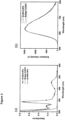
- UV-Vis absorption was performed in order to monitor the absorbance which is necessary to reach the same absorption. Due to the lack of absorption of silicon nanoparticles in the range of 400 to 500 nm, the MLCT absorption band of ruthenium bipyridine can be directly fitted when two absorbances are equal to have the same concentration as the ruthenium complex in Si-[Ru] nanoparticles and in Rubpy.
- Rubpy was measured at 10 -5 M in water solution, the absorption bands at 245, 253 and 286 nm are assigned to the ligand ⁇ * transition, the absorption bands at 456 nm is assigned to the MLCT band.
- the absorbance of Si-[Ru] nanoparticles was tuned to be equal to Rubpy at 456 nm (MLCT band) to reach 10 -5 M.
- the absorption peaks at 245, 256,286 and 456 nm are assigned to Rubpy and the increase of absorption intensity below 250 nm is due to the presence of Si nanoparticles.
- Figure 5(c) shows that the ECL emission of Si-[Ru] nanoparticles has a profile, which is identical to the Rubpy standard but has a lower intensity.
- the ECL efficiency is 70% in comparison to Rubpy (100%).
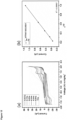
- chronoamperometric measurements were performed and calculated for the ECL efficiency.
- the ECL efficiency of Si-[Ru] nanoparticles in chronoamperometric measurements is 67% compared to Rubpy (100%). All ECL data are summarized in Table 5. Table 5.
- Table 5 ECL data of Si-[Ru] nanoparticles.
- the Ir complex (52.9 mg, 54.5 ⁇ mol) ( CAS Registry Number 1393128-57-8 ), EDC (16.9 mg, 0.109 mmol) and NHS (12.5 mg, 0.109 mmol) were dissolved in 7 mL dried DMF in a 25 ml flask, and stirred for 1 hour under Ar atmosphere at room temperature. Thereafter, amine-terminated 3-aminopropyl silicon nanoparticles (1.8 mL in H 2 O, 40 mg) and diisopropylethylamine (10 ⁇ L) were added slowly to the solution, and the reaction was stirred for 2 days under argon atmosphere at room temperature. Then, the solvent was removed under vacuum.
- the crude product was washed with water and dichloromethane in order to remove unreacted Ir complexes and unreacted amine-terminated 3-aminopropyl silicon nanoparticles.
- the product was dispersed into 15 mL DMF to yield 4.12 mg/mL Si-[Ir] NPs.
- the Si-[Ir] NPs were characterized by X-ray photoelectron spectroscopy.
- Si-[Ir] NPs The chemical composition of Si-[Ir] NPs was identified by means of XPS measurements. As shown in Figure 7(a) , the Si-[Ir] nanoparticles contain the following elements: C, N, O, Ir and Si (cf. Table 7). The bonding energy of Si2p is at 102.00 eV and corresponds to a Si-C bond. No trace of silica formation ( ⁇ 104 eV) was identified.
- the deconvolution of N scan was performed as shown in Figure 7(d) and summarized in Table 7.
- the deconvolution of N scan shows that the Si-[Ir] nanoparticles contain four different types of nitrogen: pyridine nitrogen from Rubpy, amine N and ammonium N from the amine-terminated 3-aminopropyl silicon nanoparticles and amid N from the coupling of amine-terminated 3-aminopropyl silicon nanoparticles with the iridum complex, which proves that the iridium complex is covalently bound to the silicon nanoparticles.
- Table 7 XPS data of Si-[lr] nanoparticles.
- Figure 8 shows a TEM image of Si-[Ir] nanoparticles.
- Figure 8 demonstrates that the Si-[Ir] nanoparticles have a size of about 4 nm and a crystalline structure.
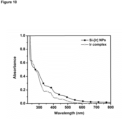
- the UV-Vis absorption was performed in order to monitor the absorbance, which is necessary to reach same absorption than the Ir complex. Due to the lack of absorption of Si NPs in the range of 400 to 500 nm, the MLCT absorption band of the Ir complex can be directly fitted when two absorbances are equal, to have the same concentration as the Ir complex in Si-[Ir] NPs and in the Ir complex.
- Ir complex was measured at 10 -5 M in DMF solution, absorption bands at 288, 350, 358 and 380 nm are assigned to the ligand ⁇ * transition, the absorption bands at 430 and 468 nm are assigned to the MLCT band.
- the absorbance of Si-[Ir] NPs was tuned to be equal to Ir complex at MLCT band to reach 10 -5 M.
- the absorption peaks at 288, 350, 358, 430 and 468 nm are assigned to the Ir complex.
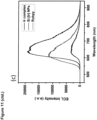
- Fig.11(c) shows that the ECL emission of Si-[Ir] NPs has a profile, which is identical to the Ir complex but has a lower intensity.
- the ECL efficiency is 28% compared to Rubpy (100%).
- chronoamperometric measurements were performed and calculated for the ECL efficiency.
- the ECL efficiency of Si-[Ir] NPs in chronoamperometric measurements is 31% compared to Rubpy (100%). All ECL data are summarized in Table 9. Table 9.
- Table 9 ECL data of Si-[lr] NPs.
- Si-NP functionalized with 60 ruthenium complexes (R1) (1.68 mg in 1 mL solution) and testosterone-3-carboxymethyloxim-NHS ester were mixed in a 10 mL flask. The mixture was stirred at room temperature overnight. Then, the red solution was purified by dialysis using a 1kDa membrane to remove the excess of R2. After 2 days of dialysis, the red solution was lyophilized to give a red solid. The red solid was re-suspended in 2 mL of water and the suspension was filtered to remove the non-soluble residue.
Landscapes
- Chemical & Material Sciences (AREA)
- Organic Chemistry (AREA)
- Life Sciences & Earth Sciences (AREA)
- Engineering & Computer Science (AREA)
- Proteomics, Peptides & Aminoacids (AREA)
- Zoology (AREA)
- Wood Science & Technology (AREA)
- Health & Medical Sciences (AREA)
- Microbiology (AREA)
- Bioinformatics & Cheminformatics (AREA)
- Biotechnology (AREA)
- Immunology (AREA)
- Analytical Chemistry (AREA)
- Molecular Biology (AREA)
- Physics & Mathematics (AREA)
- Genetics & Genomics (AREA)
- Biochemistry (AREA)
- Biophysics (AREA)
- General Engineering & Computer Science (AREA)
- General Health & Medical Sciences (AREA)
- Materials Engineering (AREA)
- Investigating Or Analysing Materials By The Use Of Chemical Reactions (AREA)
- Peptides Or Proteins (AREA)
- Investigating, Analyzing Materials By Fluorescence Or Luminescence (AREA)
- Investigating Or Analysing Biological Materials (AREA)
- Luminescent Compositions (AREA)
Claims (14)
- Nanoparticules de silicium multifonctionnalisées comprenant(a) un noyau de silicium d'une taille de 1 nm à 10 nm,(b) des groupes aminoalkyle en C3-C18 à terminaison amine, des groupes 3-(2-amino-éthoxy)-propyle à terminaison amine, des groupes 3-[2-(2-amino-éthoxy)-éthoxy]-propyle à terminaison amine ou des groupes 2-(4-amino-méthyl-phényl)-éthyle à terminaison amine, les groupes étant liés de manière covalente au noyau de silicium,(c) de 1 à 10 agents de liaison par affinité liés de manière covalente à des groupes aminoalkyle en C3-C18 à terminaison amine, à des groupes 3-(2-amino-éthoxy)-propyle à terminaison amine, à des groupes 3-[2-(2-amino-éthoxy)-éthoxy]-propyle à terminaison amine ou à des groupes 2-(4-amino-méthyl-phényl)-éthyle à terminaison amine, de préférence par le biais d'un lieur, et(d) de 1 à 100 composés électrochimiluminescents liés de manière covalente à des groupes aminoalkyle en C3-C18 à terminaison amine, à des groupes 3-(2-amino-éthoxy)-propyle à terminaison amine, à des groupes 3-[2-(2-amino-éthoxy)-éthoxy]-propyle à terminaison amine ou à des groupes 2-(4-amino-méthyl-phényl)-éthyle à terminaison amine, de préférence par le biais d'un lieur.
- Nanoparticules de silicium multifonctionnalisées selon la revendication 1 correspondant à la formule (I)
 n représente un nombre entier de 3 à 18,x représente un entier de 1 à 10,y représente au moins 1,z représente un entier de 1 à 100,L1 représente un lieur,L2 représente un lieur,
dans lesquelles L1 et L2 sont identiques ou différents,Si représente un noyau de silicium ayant une taille de 1 nm à 10 nm,R représente H, -CO-L2 avec un groupe réactif,-CO-L2 désactivé, L2 étant tel que défini ci-dessus, ou un résidu d'un réactif de modification de surface, etM représente un complexe métallique électrochimiluminescent, ou un sel de celui-ci. - Nanoparticules de silicium multifonctionnalisées selon la revendication 1 ou 2, dans lesquelles l'agent de liaison par affinité est choisi dans le groupe constitué par un analyte, une protéine, un anticorps, la biotine, un analogue de la biotine, l'avidine, la streptavidine, un sucre, la lectine, une enzyme, un polypeptide, un acide nucléique, un analogue d'un acide nucléique, un acide nucléique complémentaire, un nucléotide, un polynucléotide, un acide nucléique peptidique (PNA), un polysaccharide, un agent séquestrant les ions métalliques, un agoniste de récepteur et un antagoniste de récepteur, dans lesquelles l'agent de liaison par affinité est de préférence un acide nucléique, un acide nucléique complémentaire, un antigène, un anticorps ou un analyte.
- Nanoparticules de silicium multifonctionnalisées selon l'une quelconque des revendications 1 à 3, dans lesquelles l'agent de liaison par affinité est un partenaire ou un élément d'une paire de liaison par affinité.
- Nanoparticules de silicium multifonctionnalisées selon l'une quelconque des revendications 1 à 4, dans lesquelles l'agent de liaison par affinité est un élément d'une paire de liaison choisie parmi un acide nucléique et un acide nucléique complémentaire ou un antigène et un anticorps.
- Nanoparticules de silicium multifonctionnalisées selon l'une quelconque des revendications 2 à 5, dans lesquelles n représente 3, 6 ou 11, de préférence n représente 3.
- Nanoparticules de silicium multifonctionnalisées selon l'une quelconque des revendications 2 à 6, dans lesquelles x représente un nombre entier de 1 à 5, 1 à 4, de 1 à 3, représente 1 ou 2, ou 1.
- Nanoparticules de silicium multifonctionnalisées selon l'une quelconque des revendications 2 à 7, dans lesquelles y représente un nombre entier de 1 à 1000, de préférence y représente un nombre entier de 1 à 500.
- Nanoparticules de silicium multifonctionnalisées selon l'une quelconque des revendications 2 à 8, dans lesquelles L1 a pour squelette une chaîne alkyle en C1-C20 non substituée ou substituée linéaire ou ramifiée, une chaîne alcényle en C1-C20 ou une chaîne de 1 à 20 atomes constituée d'atomes de carbone, d'atomes de carbone substitués et/ou d'un ou plusieurs atomes choisis parmi O, N et S, ou une chaîne telle que décrite précédemment avec le squelette contenant un ou plusieurs systèmes de cycle aromatiques ou non aromatiques cycliques ou hétérocycliques.
- Nanoparticules de silicium multifonctionnalisées selon l'une quelconque des revendications 2 à 9, dans lesquelles L2 est un lieur qui est formé par la réaction d'un agent de réticulation hétérobifonctionnel, qui est par exemple hétérobifonctionnel pour une liaison avec les groupes sulfhydryle et avec les groupes amino.
- Utilisation de nanoparticules de silicium multifonctionnalisées selon l'une quelconque des revendications 1 à 10 dans un procédé de détection par électrochimiluminescence.
- Utilisation de nanoparticules de silicium multifonctionnalisées selon l'une quelconque des revendications 1 à 10 pour effectuer une réaction d'électrochimiluminescence dans une solution aqueuse.
- Utilisation de nanoparticules de silicium multifonctionnalisées selon l'une quelconque des revendications 1 à 10 dans la détection in vitro d'un analyte.
- Composition comprenant des nanoparticules de silicium multifonctionnalisées selon l'une quelconque des revendications 1 à 10.
Applications Claiming Priority (2)
| Application Number | Priority Date | Filing Date | Title |
|---|---|---|---|
| EP16001867 | 2016-08-25 | ||
| PCT/EP2017/071271 WO2018037060A1 (fr) | 2016-08-25 | 2017-08-24 | Nanoparticules de silicium multifonctionnalisées, leurs procédés de préparation et leurs utilisations dans des procédés de détection fondés sur l'électrochimioluminescence |
Publications (2)
| Publication Number | Publication Date |
|---|---|
| EP3504155A1 EP3504155A1 (fr) | 2019-07-03 |
| EP3504155B1 true EP3504155B1 (fr) | 2023-03-08 |
Family
ID=56842581
Family Applications (1)
| Application Number | Title | Priority Date | Filing Date |
|---|---|---|---|
| EP17758496.8A Active EP3504155B1 (fr) | 2016-08-25 | 2017-08-24 | Nanoparticules de silicium multifonctionnalisées et leurs utilisations dans des procédés de détection par électrochimioluminescence |
Country Status (8)
| Country | Link |
|---|---|
| US (2) | US11267827B2 (fr) |
| EP (1) | EP3504155B1 (fr) |
| JP (1) | JP7022741B2 (fr) |
| KR (1) | KR102480247B1 (fr) |
| CN (1) | CN110139828B (fr) |
| BR (1) | BR112019003709A2 (fr) |
| ES (1) | ES2944589T3 (fr) |
| WO (1) | WO2018037060A1 (fr) |
Families Citing this family (2)
| Publication number | Priority date | Publication date | Assignee | Title |
|---|---|---|---|---|
| JP7597580B2 (ja) * | 2018-03-13 | 2024-12-10 | エフ. ホフマン-ラ ロシュ アーゲー | 免疫アッセイにおける干渉の低減 |
| JP7120547B2 (ja) * | 2019-02-22 | 2022-08-17 | 国立研究開発法人理化学研究所 | 物質固定化剤、及び当該物質固定化剤を用いた物質固定化方法 |
Family Cites Families (36)
| Publication number | Priority date | Publication date | Assignee | Title |
|---|---|---|---|---|
| US5221605A (en) | 1984-10-31 | 1993-06-22 | Igen, Inc. | Luminescent metal chelate labels and means for detection |
| JPS62231171A (ja) * | 1986-03-31 | 1987-10-09 | Nitto Electric Ind Co Ltd | 標識複合体 |
| US6316607B1 (en) | 1986-04-30 | 2001-11-13 | Igen International, Inc. | Electrochemiluminescent assays |
| DE3920358A1 (de) | 1989-06-22 | 1991-01-17 | Behringwerke Ag | Bispezifische und oligospezifische, mono- und oligovalente antikoerperkonstrukte, ihre herstellung und verwendung |
| US5147777A (en) * | 1990-06-18 | 1992-09-15 | Eastman Kodak Company | Biologically active reagents prepared from carboxy-containing polymer, analytical element and methods of use |
| GB9105031D0 (en) * | 1991-03-09 | 1991-04-24 | Fisons Plc | Processing analytical reagents |
| GB9114948D0 (en) | 1991-07-11 | 1991-08-28 | Pfizer Ltd | Process for preparing sertraline intermediates |
| JP3650582B2 (ja) * | 1998-11-30 | 2005-05-18 | ナノスフェアー インコーポレイテッド | ポリマー−ナノ粒子ハイブリッド粒子 |
| JP2002267671A (ja) * | 2001-03-14 | 2002-09-18 | Nitto Denko Corp | 免疫測定法 |
| US6808939B2 (en) | 2001-06-29 | 2004-10-26 | Igen International, Inc. | ECL labels having improved non-specific binding properties, methods of using and kits containing the same |
| ATE420357T1 (de) * | 2002-07-02 | 2009-01-15 | Nanosphere Inc | Nanopartikel-polyanion-konjugate sowie verfahren zur verwendung davon beim nachweis von analyten |
| FR2863053B1 (fr) | 2003-11-28 | 2007-04-06 | Univ Claude Bernard Lyon | Nouvelles sondes hybrides a luminescence exaltee |
| KR101270829B1 (ko) | 2004-09-23 | 2013-06-07 | 제넨테크, 인크. | 시스테인 유전자조작 항체 및 접합체 |
| WO2007124131A2 (fr) * | 2006-04-20 | 2007-11-01 | The University Of North Carolina At Chapel Hill | Nanomatériaux hybrides utilisés en tant qu'agents de contraste pour l'imagerie multimodale |
| CN101680894B (zh) * | 2007-03-14 | 2014-10-22 | 国防研究与发展组织总干事 | 检测待测物的试剂及其方法 |
| JP2010107207A (ja) * | 2008-10-28 | 2010-05-13 | Panasonic Corp | 免疫分析試薬及びそれを用いた免疫分析方法 |
| CA2744331C (fr) | 2008-11-21 | 2017-04-04 | Genera Biosystems Limited | Essai de detection d'analyte fonde sur des particules microspheroidales marquees de maniere fluorescente |
| JP5172808B2 (ja) | 2009-10-13 | 2013-03-27 | 株式会社東芝 | 磁気抵抗効果素子およびそれを用いた磁気ランダムアクセスメモリ |
| JP5659735B2 (ja) | 2010-11-29 | 2015-01-28 | 株式会社ノーリツ | 太陽熱温水器システム |
| JP6042608B2 (ja) | 2010-12-27 | 2016-12-14 | 一子 小林 | 植栽管状鉢 |
| SG192675A1 (en) | 2011-02-09 | 2013-09-30 | Hoffmann La Roche | New iridium-based complexes for ecl |
| ES2644816T3 (es) | 2011-02-09 | 2017-11-30 | Hoffmann-La Roche Ag | Nuevos complejos basados en iridio para ECL |
| EP2682407B1 (fr) | 2011-03-01 | 2016-09-14 | Chuo University | Complexe hémoglobine-albumine, et dispositif d'expansion de plasma artificiel et vecteur d'oxygène artificiel, chacun contenant le complexe hémoglobine-albumine |
| JP5367915B2 (ja) * | 2011-04-26 | 2013-12-11 | 古河電気工業株式会社 | 生体分子を結合させた機能性分子含有シリカナノ粒子の製造方法 |
| AU2012249615A1 (en) | 2011-04-29 | 2013-08-29 | Kci Licensing, Inc. | Aptamer-modified polymeric materials for the binding of therapeutic factors in a wound environment |
| GB201121288D0 (en) | 2011-12-12 | 2012-01-25 | Univ Muenster Wilhelms | Functionalised silicon nanoparticles |
| PL2872157T3 (pl) * | 2012-07-12 | 2020-07-13 | Hangzhou Dac Biotech Co., Ltd | Koniugaty wiążących komórkę cząsteczek ze środkami cytotoksycznymi |
| CN104822696B (zh) * | 2012-08-02 | 2017-09-22 | 霍夫曼-拉罗奇有限公司 | 用于ecl的新型铱基配合物 |
| CA2879087C (fr) | 2012-08-02 | 2020-10-27 | F. Hoffmann-La Roche Ag | Complexes a base d'iridium pour ecl |
| JP6560120B2 (ja) | 2012-08-02 | 2019-08-14 | エフ.ホフマン−ラ ロシュ アーゲーF. Hoffmann−La Roche Aktiengesellschaft | Ecl製造用の新規ビス−イリジウム錯体 |
| JP6255017B2 (ja) | 2012-08-02 | 2017-12-27 | エフ.ホフマン−ラ ロシュ アーゲーF. Hoffmann−La Roche Aktiengesellschaft | Ecl用の新規イリジウムベース錯体 |
| WO2014019709A2 (fr) | 2012-08-02 | 2014-02-06 | Roche Diagnostics Gmbh | Nouveaux complexes à base d'iridium pour ecl |
| US20160018404A1 (en) | 2013-02-20 | 2016-01-21 | Cornell University | Multilayer fluorescent nanoparticles and methods of making and using same |
| CN105492575B (zh) | 2013-06-18 | 2019-01-22 | 联吡啶钌科学公司 | 作为生物标记物的电中性金属配合物 |
| WO2016075670A1 (fr) * | 2014-11-14 | 2016-05-19 | Novartis Ag | Conjugués anticorps-médicament |
| JP6182520B2 (ja) * | 2014-12-01 | 2017-08-16 | 三洋化成工業株式会社 | 磁性シリカ粒子、該磁性シリカ粒子を用いた測定対象物質測定方法及び測定対象物質測定用試薬 |
-
2017
- 2017-08-24 EP EP17758496.8A patent/EP3504155B1/fr active Active
- 2017-08-24 WO PCT/EP2017/071271 patent/WO2018037060A1/fr not_active Ceased
- 2017-08-24 BR BR112019003709-8A patent/BR112019003709A2/pt not_active Application Discontinuation
- 2017-08-24 ES ES17758496T patent/ES2944589T3/es active Active
- 2017-08-24 JP JP2019510794A patent/JP7022741B2/ja active Active
- 2017-08-24 KR KR1020197008436A patent/KR102480247B1/ko active Active
- 2017-08-24 CN CN201780066308.8A patent/CN110139828B/zh active Active
-
2019
- 2019-02-25 US US16/284,346 patent/US11267827B2/en active Active
-
2022
- 2022-01-31 US US17/588,884 patent/US12570676B2/en active Active
Non-Patent Citations (1)
| Title |
|---|
| JIE TAN ET AL: "Image-Contrast Technology Based on the Electrochemiluminescence of Porous Silicon and Its Application in Fingerprint Visualization", ANGEWANDTE CHEMIE, INTERNATIONAL EDITION, vol. 53, no. 37, 8 September 2014 (2014-09-08), DE, pages 9822 - 9826, XP055679899, ISSN: 1433-7851, DOI: 10.1002/anie.201404948 * |
Also Published As
| Publication number | Publication date |
|---|---|
| BR112019003709A2 (pt) | 2019-05-28 |
| US11267827B2 (en) | 2022-03-08 |
| EP3504155A1 (fr) | 2019-07-03 |
| JP2019534994A (ja) | 2019-12-05 |
| CN110139828B (zh) | 2021-05-28 |
| KR102480247B1 (ko) | 2022-12-21 |
| US20200024292A1 (en) | 2020-01-23 |
| JP7022741B2 (ja) | 2022-02-18 |
| WO2018037060A1 (fr) | 2018-03-01 |
| KR20190042657A (ko) | 2019-04-24 |
| US20220169664A1 (en) | 2022-06-02 |
| ES2944589T3 (es) | 2023-06-22 |
| CN110139828A (zh) | 2019-08-16 |
| US12570676B2 (en) | 2026-03-10 |
Similar Documents
| Publication | Publication Date | Title |
|---|---|---|
| US8835637B2 (en) | Iridium-based complexes for ECL | |
| EP2753674B1 (fr) | Chélates de lanthanides luminescents comprenant trois chromophores et leur utilisation | |
| CA2879094C (fr) | Complexes a base d'iridium pour ecl | |
| US8772486B2 (en) | Iridium-based complexes for ECL | |
| US12570676B2 (en) | Multifunctionalized silicon nanoparticles, process for their preparation and uses thereof in electrochemiluminescence based detection methods | |
| CA2879221C (fr) | Complexes a base d'iridium pour electrochimioluminescence | |
| CA2879087C (fr) | Complexes a base d'iridium pour ecl | |
| EP3768665A1 (fr) | Chélates de lanthanides luminescents et leur utilisation | |
| HK1186472B (en) | New iridium-based complexes for ecl | |
| HK1186472A (en) | New iridium-based complexes for ecl | |
| HK1249760B (zh) | 用於ecl的新型铱基络合物 | |
| HK1212703B (en) | New iridium-based complexes for ecl |
Legal Events
| Date | Code | Title | Description |
|---|---|---|---|
| STAA | Information on the status of an ep patent application or granted ep patent |
Free format text: STATUS: UNKNOWN |
|
| STAA | Information on the status of an ep patent application or granted ep patent |
Free format text: STATUS: THE INTERNATIONAL PUBLICATION HAS BEEN MADE |
|
| PUAI | Public reference made under article 153(3) epc to a published international application that has entered the european phase |
Free format text: ORIGINAL CODE: 0009012 |
|
| STAA | Information on the status of an ep patent application or granted ep patent |
Free format text: STATUS: REQUEST FOR EXAMINATION WAS MADE |
|
| 17P | Request for examination filed |
Effective date: 20190320 |
|
| AK | Designated contracting states |
Kind code of ref document: A1 Designated state(s): AL AT BE BG CH CY CZ DE DK EE ES FI FR GB GR HR HU IE IS IT LI LT LU LV MC MK MT NL NO PL PT RO RS SE SI SK SM TR |
|
| AX | Request for extension of the european patent |
Extension state: BA ME |
|
| DAV | Request for validation of the european patent (deleted) | ||
| DAX | Request for extension of the european patent (deleted) | ||
| STAA | Information on the status of an ep patent application or granted ep patent |
Free format text: STATUS: EXAMINATION IS IN PROGRESS |
|
| 17Q | First examination report despatched |
Effective date: 20200331 |
|
| RIC1 | Information provided on ipc code assigned before grant |
Ipc: C09C 3/08 20060101ALI20220810BHEP Ipc: C09C 1/28 20060101ALI20220810BHEP Ipc: C12Q 1/6816 20180101ALI20220810BHEP Ipc: G01N 33/00 20060101ALI20220810BHEP Ipc: C12Q 1/68 20180101ALI20220810BHEP Ipc: C09C 1/30 20060101ALI20220810BHEP Ipc: B82Y 30/00 20110101AFI20220810BHEP |
|
| GRAP | Despatch of communication of intention to grant a patent |
Free format text: ORIGINAL CODE: EPIDOSNIGR1 |
|
| STAA | Information on the status of an ep patent application or granted ep patent |
Free format text: STATUS: GRANT OF PATENT IS INTENDED |
|
| INTG | Intention to grant announced |
Effective date: 20220916 |
|
| GRAS | Grant fee paid |
Free format text: ORIGINAL CODE: EPIDOSNIGR3 |
|
| GRAA | (expected) grant |
Free format text: ORIGINAL CODE: 0009210 |
|
| STAA | Information on the status of an ep patent application or granted ep patent |
Free format text: STATUS: THE PATENT HAS BEEN GRANTED |
|
| AK | Designated contracting states |
Kind code of ref document: B1 Designated state(s): AL AT BE BG CH CY CZ DE DK EE ES FI FR GB GR HR HU IE IS IT LI LT LU LV MC MK MT NL NO PL PT RO RS SE SI SK SM TR |
|
| REG | Reference to a national code |
Ref country code: GB Ref legal event code: FG4D |
|
| REG | Reference to a national code |
Ref country code: CH Ref legal event code: EP Ref country code: AT Ref legal event code: REF Ref document number: 1552481 Country of ref document: AT Kind code of ref document: T Effective date: 20230315 |
|
| REG | Reference to a national code |
Ref country code: DE Ref legal event code: R096 Ref document number: 602017066635 Country of ref document: DE |
|
| REG | Reference to a national code |
Ref country code: IE Ref legal event code: FG4D |
|
| REG | Reference to a national code |
Ref country code: ES Ref legal event code: FG2A Ref document number: 2944589 Country of ref document: ES Kind code of ref document: T3 Effective date: 20230622 |
|
| REG | Reference to a national code |
Ref country code: LT Ref legal event code: MG9D |
|
| REG | Reference to a national code |
Ref country code: NL Ref legal event code: MP Effective date: 20230308 |
|
| PG25 | Lapsed in a contracting state [announced via postgrant information from national office to epo] |
Ref country code: RS Free format text: LAPSE BECAUSE OF FAILURE TO SUBMIT A TRANSLATION OF THE DESCRIPTION OR TO PAY THE FEE WITHIN THE PRESCRIBED TIME-LIMIT Effective date: 20230308 Ref country code: NO Free format text: LAPSE BECAUSE OF FAILURE TO SUBMIT A TRANSLATION OF THE DESCRIPTION OR TO PAY THE FEE WITHIN THE PRESCRIBED TIME-LIMIT Effective date: 20230608 Ref country code: LV Free format text: LAPSE BECAUSE OF FAILURE TO SUBMIT A TRANSLATION OF THE DESCRIPTION OR TO PAY THE FEE WITHIN THE PRESCRIBED TIME-LIMIT Effective date: 20230308 Ref country code: LT Free format text: LAPSE BECAUSE OF FAILURE TO SUBMIT A TRANSLATION OF THE DESCRIPTION OR TO PAY THE FEE WITHIN THE PRESCRIBED TIME-LIMIT Effective date: 20230308 Ref country code: HR Free format text: LAPSE BECAUSE OF FAILURE TO SUBMIT A TRANSLATION OF THE DESCRIPTION OR TO PAY THE FEE WITHIN THE PRESCRIBED TIME-LIMIT Effective date: 20230308 |
|
| REG | Reference to a national code |
Ref country code: AT Ref legal event code: MK05 Ref document number: 1552481 Country of ref document: AT Kind code of ref document: T Effective date: 20230308 |
|
| PG25 | Lapsed in a contracting state [announced via postgrant information from national office to epo] |
Ref country code: SE Free format text: LAPSE BECAUSE OF FAILURE TO SUBMIT A TRANSLATION OF THE DESCRIPTION OR TO PAY THE FEE WITHIN THE PRESCRIBED TIME-LIMIT Effective date: 20230308 Ref country code: NL Free format text: LAPSE BECAUSE OF FAILURE TO SUBMIT A TRANSLATION OF THE DESCRIPTION OR TO PAY THE FEE WITHIN THE PRESCRIBED TIME-LIMIT Effective date: 20230308 Ref country code: GR Free format text: LAPSE BECAUSE OF FAILURE TO SUBMIT A TRANSLATION OF THE DESCRIPTION OR TO PAY THE FEE WITHIN THE PRESCRIBED TIME-LIMIT Effective date: 20230609 Ref country code: FI Free format text: LAPSE BECAUSE OF FAILURE TO SUBMIT A TRANSLATION OF THE DESCRIPTION OR TO PAY THE FEE WITHIN THE PRESCRIBED TIME-LIMIT Effective date: 20230308 |
|
| PG25 | Lapsed in a contracting state [announced via postgrant information from national office to epo] |
Ref country code: SM Free format text: LAPSE BECAUSE OF FAILURE TO SUBMIT A TRANSLATION OF THE DESCRIPTION OR TO PAY THE FEE WITHIN THE PRESCRIBED TIME-LIMIT Effective date: 20230308 Ref country code: RO Free format text: LAPSE BECAUSE OF FAILURE TO SUBMIT A TRANSLATION OF THE DESCRIPTION OR TO PAY THE FEE WITHIN THE PRESCRIBED TIME-LIMIT Effective date: 20230308 Ref country code: PT Free format text: LAPSE BECAUSE OF FAILURE TO SUBMIT A TRANSLATION OF THE DESCRIPTION OR TO PAY THE FEE WITHIN THE PRESCRIBED TIME-LIMIT Effective date: 20230710 Ref country code: EE Free format text: LAPSE BECAUSE OF FAILURE TO SUBMIT A TRANSLATION OF THE DESCRIPTION OR TO PAY THE FEE WITHIN THE PRESCRIBED TIME-LIMIT Effective date: 20230308 Ref country code: CZ Free format text: LAPSE BECAUSE OF FAILURE TO SUBMIT A TRANSLATION OF THE DESCRIPTION OR TO PAY THE FEE WITHIN THE PRESCRIBED TIME-LIMIT Effective date: 20230308 Ref country code: AT Free format text: LAPSE BECAUSE OF FAILURE TO SUBMIT A TRANSLATION OF THE DESCRIPTION OR TO PAY THE FEE WITHIN THE PRESCRIBED TIME-LIMIT Effective date: 20230308 |
|
| PG25 | Lapsed in a contracting state [announced via postgrant information from national office to epo] |
Ref country code: SK Free format text: LAPSE BECAUSE OF FAILURE TO SUBMIT A TRANSLATION OF THE DESCRIPTION OR TO PAY THE FEE WITHIN THE PRESCRIBED TIME-LIMIT Effective date: 20230308 Ref country code: PL Free format text: LAPSE BECAUSE OF FAILURE TO SUBMIT A TRANSLATION OF THE DESCRIPTION OR TO PAY THE FEE WITHIN THE PRESCRIBED TIME-LIMIT Effective date: 20230308 Ref country code: IS Free format text: LAPSE BECAUSE OF FAILURE TO SUBMIT A TRANSLATION OF THE DESCRIPTION OR TO PAY THE FEE WITHIN THE PRESCRIBED TIME-LIMIT Effective date: 20230708 |
|
| REG | Reference to a national code |
Ref country code: DE Ref legal event code: R097 Ref document number: 602017066635 Country of ref document: DE |
|
| PLBE | No opposition filed within time limit |
Free format text: ORIGINAL CODE: 0009261 |
|
| STAA | Information on the status of an ep patent application or granted ep patent |
Free format text: STATUS: NO OPPOSITION FILED WITHIN TIME LIMIT |
|
| PG25 | Lapsed in a contracting state [announced via postgrant information from national office to epo] |
Ref country code: SI Free format text: LAPSE BECAUSE OF FAILURE TO SUBMIT A TRANSLATION OF THE DESCRIPTION OR TO PAY THE FEE WITHIN THE PRESCRIBED TIME-LIMIT Effective date: 20230308 Ref country code: DK Free format text: LAPSE BECAUSE OF FAILURE TO SUBMIT A TRANSLATION OF THE DESCRIPTION OR TO PAY THE FEE WITHIN THE PRESCRIBED TIME-LIMIT Effective date: 20230308 |
|
| 26N | No opposition filed |
Effective date: 20231211 |
|
| PG25 | Lapsed in a contracting state [announced via postgrant information from national office to epo] |
Ref country code: MC Free format text: LAPSE BECAUSE OF FAILURE TO SUBMIT A TRANSLATION OF THE DESCRIPTION OR TO PAY THE FEE WITHIN THE PRESCRIBED TIME-LIMIT Effective date: 20230308 |
|
| PG25 | Lapsed in a contracting state [announced via postgrant information from national office to epo] |
Ref country code: MC Free format text: LAPSE BECAUSE OF FAILURE TO SUBMIT A TRANSLATION OF THE DESCRIPTION OR TO PAY THE FEE WITHIN THE PRESCRIBED TIME-LIMIT Effective date: 20230308 |
|
| PG25 | Lapsed in a contracting state [announced via postgrant information from national office to epo] |
Ref country code: LU Free format text: LAPSE BECAUSE OF NON-PAYMENT OF DUE FEES Effective date: 20230824 |
|
| PG25 | Lapsed in a contracting state [announced via postgrant information from national office to epo] |
Ref country code: LU Free format text: LAPSE BECAUSE OF NON-PAYMENT OF DUE FEES Effective date: 20230824 |
|
| REG | Reference to a national code |
Ref country code: BE Ref legal event code: MM Effective date: 20230831 |
|
| REG | Reference to a national code |
Ref country code: IE Ref legal event code: MM4A |
|
| PG25 | Lapsed in a contracting state [announced via postgrant information from national office to epo] |
Ref country code: IE Free format text: LAPSE BECAUSE OF NON-PAYMENT OF DUE FEES Effective date: 20230824 |
|
| PG25 | Lapsed in a contracting state [announced via postgrant information from national office to epo] |
Ref country code: IE Free format text: LAPSE BECAUSE OF NON-PAYMENT OF DUE FEES Effective date: 20230824 |
|
| PG25 | Lapsed in a contracting state [announced via postgrant information from national office to epo] |
Ref country code: BE Free format text: LAPSE BECAUSE OF NON-PAYMENT OF DUE FEES Effective date: 20230831 |
|
| PG25 | Lapsed in a contracting state [announced via postgrant information from national office to epo] |
Ref country code: BG Free format text: LAPSE BECAUSE OF FAILURE TO SUBMIT A TRANSLATION OF THE DESCRIPTION OR TO PAY THE FEE WITHIN THE PRESCRIBED TIME-LIMIT Effective date: 20230308 |
|
| PG25 | Lapsed in a contracting state [announced via postgrant information from national office to epo] |
Ref country code: BG Free format text: LAPSE BECAUSE OF FAILURE TO SUBMIT A TRANSLATION OF THE DESCRIPTION OR TO PAY THE FEE WITHIN THE PRESCRIBED TIME-LIMIT Effective date: 20230308 |
|
| PG25 | Lapsed in a contracting state [announced via postgrant information from national office to epo] |
Ref country code: CY Free format text: LAPSE BECAUSE OF FAILURE TO SUBMIT A TRANSLATION OF THE DESCRIPTION OR TO PAY THE FEE WITHIN THE PRESCRIBED TIME-LIMIT; INVALID AB INITIO Effective date: 20170824 |
|
| PG25 | Lapsed in a contracting state [announced via postgrant information from national office to epo] |
Ref country code: HU Free format text: LAPSE BECAUSE OF FAILURE TO SUBMIT A TRANSLATION OF THE DESCRIPTION OR TO PAY THE FEE WITHIN THE PRESCRIBED TIME-LIMIT; INVALID AB INITIO Effective date: 20170824 |
|
| PGFP | Annual fee paid to national office [announced via postgrant information from national office to epo] |
Ref country code: ES Payment date: 20250901 Year of fee payment: 9 |
|
| PGFP | Annual fee paid to national office [announced via postgrant information from national office to epo] |
Ref country code: DE Payment date: 20250724 Year of fee payment: 9 |
|
| PGFP | Annual fee paid to national office [announced via postgrant information from national office to epo] |
Ref country code: IT Payment date: 20250723 Year of fee payment: 9 |
|
| PGFP | Annual fee paid to national office [announced via postgrant information from national office to epo] |
Ref country code: GB Payment date: 20250725 Year of fee payment: 9 |
|
| PGFP | Annual fee paid to national office [announced via postgrant information from national office to epo] |
Ref country code: FR Payment date: 20250725 Year of fee payment: 9 |
|
| PGFP | Annual fee paid to national office [announced via postgrant information from national office to epo] |
Ref country code: CH Payment date: 20250901 Year of fee payment: 9 |
|
| PG25 | Lapsed in a contracting state [announced via postgrant information from national office to epo] |
Ref country code: TR Free format text: LAPSE BECAUSE OF FAILURE TO SUBMIT A TRANSLATION OF THE DESCRIPTION OR TO PAY THE FEE WITHIN THE PRESCRIBED TIME-LIMIT Effective date: 20230308 |