EP3511308B1 - Verfahren zur herstellung eines verbundstoffs auf keramikbasis - Google Patents
Verfahren zur herstellung eines verbundstoffs auf keramikbasis Download PDFInfo
- Publication number
- EP3511308B1 EP3511308B1 EP17848364.0A EP17848364A EP3511308B1 EP 3511308 B1 EP3511308 B1 EP 3511308B1 EP 17848364 A EP17848364 A EP 17848364A EP 3511308 B1 EP3511308 B1 EP 3511308B1
- Authority
- EP
- European Patent Office
- Prior art keywords
- alloy
- ceramic
- production method
- infiltration
- ingot
- Prior art date
- Legal status (The legal status is an assumption and is not a legal conclusion. Google has not performed a legal analysis and makes no representation as to the accuracy of the status listed.)
- Active
Links
Images



Classifications
-
- C—CHEMISTRY; METALLURGY
- C04—CEMENTS; CONCRETE; ARTIFICIAL STONE; CERAMICS; REFRACTORIES
- C04B—LIME, MAGNESIA; SLAG; CEMENTS; COMPOSITIONS THEREOF, e.g. MORTARS, CONCRETE OR LIKE BUILDING MATERIALS; ARTIFICIAL STONE; CERAMICS; REFRACTORIES; TREATMENT OF NATURAL STONE
- C04B35/00—Shaped ceramic products characterised by their composition; Ceramics compositions; Processing powders of inorganic compounds preparatory to the manufacturing of ceramic products
- C04B35/515—Shaped ceramic products characterised by their composition; Ceramics compositions; Processing powders of inorganic compounds preparatory to the manufacturing of ceramic products based on non-oxide ceramics
- C04B35/56—Shaped ceramic products characterised by their composition; Ceramics compositions; Processing powders of inorganic compounds preparatory to the manufacturing of ceramic products based on non-oxide ceramics based on carbides or oxycarbides
- C04B35/565—Shaped ceramic products characterised by their composition; Ceramics compositions; Processing powders of inorganic compounds preparatory to the manufacturing of ceramic products based on non-oxide ceramics based on carbides or oxycarbides based on silicon carbide
- C04B35/573—Shaped ceramic products characterised by their composition; Ceramics compositions; Processing powders of inorganic compounds preparatory to the manufacturing of ceramic products based on non-oxide ceramics based on carbides or oxycarbides based on silicon carbide obtained by reaction sintering or recrystallisation
-
- C—CHEMISTRY; METALLURGY
- C04—CEMENTS; CONCRETE; ARTIFICIAL STONE; CERAMICS; REFRACTORIES
- C04B—LIME, MAGNESIA; SLAG; CEMENTS; COMPOSITIONS THEREOF, e.g. MORTARS, CONCRETE OR LIKE BUILDING MATERIALS; ARTIFICIAL STONE; CERAMICS; REFRACTORIES; TREATMENT OF NATURAL STONE
- C04B35/00—Shaped ceramic products characterised by their composition; Ceramics compositions; Processing powders of inorganic compounds preparatory to the manufacturing of ceramic products
- C04B35/71—Ceramic products containing macroscopic reinforcing agents
- C04B35/78—Ceramic products containing macroscopic reinforcing agents containing non-metallic materials
- C04B35/80—Fibres, filaments, whiskers, platelets, or the like
-
- C—CHEMISTRY; METALLURGY
- C04—CEMENTS; CONCRETE; ARTIFICIAL STONE; CERAMICS; REFRACTORIES
- C04B—LIME, MAGNESIA; SLAG; CEMENTS; COMPOSITIONS THEREOF, e.g. MORTARS, CONCRETE OR LIKE BUILDING MATERIALS; ARTIFICIAL STONE; CERAMICS; REFRACTORIES; TREATMENT OF NATURAL STONE
- C04B35/00—Shaped ceramic products characterised by their composition; Ceramics compositions; Processing powders of inorganic compounds preparatory to the manufacturing of ceramic products
- C04B35/515—Shaped ceramic products characterised by their composition; Ceramics compositions; Processing powders of inorganic compounds preparatory to the manufacturing of ceramic products based on non-oxide ceramics
-
- C—CHEMISTRY; METALLURGY
- C04—CEMENTS; CONCRETE; ARTIFICIAL STONE; CERAMICS; REFRACTORIES
- C04B—LIME, MAGNESIA; SLAG; CEMENTS; COMPOSITIONS THEREOF, e.g. MORTARS, CONCRETE OR LIKE BUILDING MATERIALS; ARTIFICIAL STONE; CERAMICS; REFRACTORIES; TREATMENT OF NATURAL STONE
- C04B35/00—Shaped ceramic products characterised by their composition; Ceramics compositions; Processing powders of inorganic compounds preparatory to the manufacturing of ceramic products
- C04B35/515—Shaped ceramic products characterised by their composition; Ceramics compositions; Processing powders of inorganic compounds preparatory to the manufacturing of ceramic products based on non-oxide ceramics
- C04B35/56—Shaped ceramic products characterised by their composition; Ceramics compositions; Processing powders of inorganic compounds preparatory to the manufacturing of ceramic products based on non-oxide ceramics based on carbides or oxycarbides
- C04B35/565—Shaped ceramic products characterised by their composition; Ceramics compositions; Processing powders of inorganic compounds preparatory to the manufacturing of ceramic products based on non-oxide ceramics based on carbides or oxycarbides based on silicon carbide
-
- C—CHEMISTRY; METALLURGY
- C04—CEMENTS; CONCRETE; ARTIFICIAL STONE; CERAMICS; REFRACTORIES
- C04B—LIME, MAGNESIA; SLAG; CEMENTS; COMPOSITIONS THEREOF, e.g. MORTARS, CONCRETE OR LIKE BUILDING MATERIALS; ARTIFICIAL STONE; CERAMICS; REFRACTORIES; TREATMENT OF NATURAL STONE
- C04B35/00—Shaped ceramic products characterised by their composition; Ceramics compositions; Processing powders of inorganic compounds preparatory to the manufacturing of ceramic products
- C04B35/622—Forming processes; Processing powders of inorganic compounds preparatory to the manufacturing of ceramic products
- C04B35/626—Preparing or treating the powders individually or as batches ; preparing or treating macroscopic reinforcing agents for ceramic products, e.g. fibres; mechanical aspects section B
- C04B35/628—Coating the powders or the macroscopic reinforcing agents
- C04B35/62844—Coating fibres
- C04B35/62857—Coating fibres with non-oxide ceramics
- C04B35/62865—Nitrides
- C04B35/62868—Boron nitride
-
- C—CHEMISTRY; METALLURGY
- C04—CEMENTS; CONCRETE; ARTIFICIAL STONE; CERAMICS; REFRACTORIES
- C04B—LIME, MAGNESIA; SLAG; CEMENTS; COMPOSITIONS THEREOF, e.g. MORTARS, CONCRETE OR LIKE BUILDING MATERIALS; ARTIFICIAL STONE; CERAMICS; REFRACTORIES; TREATMENT OF NATURAL STONE
- C04B35/00—Shaped ceramic products characterised by their composition; Ceramics compositions; Processing powders of inorganic compounds preparatory to the manufacturing of ceramic products
- C04B35/622—Forming processes; Processing powders of inorganic compounds preparatory to the manufacturing of ceramic products
- C04B35/626—Preparing or treating the powders individually or as batches ; preparing or treating macroscopic reinforcing agents for ceramic products, e.g. fibres; mechanical aspects section B
- C04B35/628—Coating the powders or the macroscopic reinforcing agents
- C04B35/62844—Coating fibres
- C04B35/62857—Coating fibres with non-oxide ceramics
- C04B35/62873—Carbon
-
- C—CHEMISTRY; METALLURGY
- C04—CEMENTS; CONCRETE; ARTIFICIAL STONE; CERAMICS; REFRACTORIES
- C04B—LIME, MAGNESIA; SLAG; CEMENTS; COMPOSITIONS THEREOF, e.g. MORTARS, CONCRETE OR LIKE BUILDING MATERIALS; ARTIFICIAL STONE; CERAMICS; REFRACTORIES; TREATMENT OF NATURAL STONE
- C04B41/00—After-treatment of mortars, concrete, artificial stone or ceramics; Treatment of natural stone
- C04B41/80—After-treatment of mortars, concrete, artificial stone or ceramics; Treatment of natural stone of only ceramics
- C04B41/81—Coating or impregnation
- C04B41/85—Coating or impregnation with inorganic materials
-
- C—CHEMISTRY; METALLURGY
- C04—CEMENTS; CONCRETE; ARTIFICIAL STONE; CERAMICS; REFRACTORIES
- C04B—LIME, MAGNESIA; SLAG; CEMENTS; COMPOSITIONS THEREOF, e.g. MORTARS, CONCRETE OR LIKE BUILDING MATERIALS; ARTIFICIAL STONE; CERAMICS; REFRACTORIES; TREATMENT OF NATURAL STONE
- C04B41/00—After-treatment of mortars, concrete, artificial stone or ceramics; Treatment of natural stone
- C04B41/80—After-treatment of mortars, concrete, artificial stone or ceramics; Treatment of natural stone of only ceramics
- C04B41/81—Coating or impregnation
- C04B41/85—Coating or impregnation with inorganic materials
- C04B41/88—Metals
-
- C—CHEMISTRY; METALLURGY
- C10—PETROLEUM, GAS OR COKE INDUSTRIES; TECHNICAL GASES CONTAINING CARBON MONOXIDE; FUELS; LUBRICANTS; PEAT
- C10C—WORKING-UP PITCH, ASPHALT, BITUMEN, TAR; PYROLIGNEOUS ACID
- C10C1/00—Working-up tar
- C10C1/04—Working-up tar by distillation
- C10C1/08—Winning of aromatic fractions
- C10C1/10—Winning of aromatic fractions benzene fraction light fraction
-
- C—CHEMISTRY; METALLURGY
- C22—METALLURGY; FERROUS OR NON-FERROUS ALLOYS; TREATMENT OF ALLOYS OR NON-FERROUS METALS
- C22C—ALLOYS
- C22C1/00—Making non-ferrous alloys
- C22C1/10—Alloys containing non-metals
-
- C—CHEMISTRY; METALLURGY
- C04—CEMENTS; CONCRETE; ARTIFICIAL STONE; CERAMICS; REFRACTORIES
- C04B—LIME, MAGNESIA; SLAG; CEMENTS; COMPOSITIONS THEREOF, e.g. MORTARS, CONCRETE OR LIKE BUILDING MATERIALS; ARTIFICIAL STONE; CERAMICS; REFRACTORIES; TREATMENT OF NATURAL STONE
- C04B2235/00—Aspects relating to ceramic starting mixtures or sintered ceramic products
- C04B2235/02—Composition of constituents of the starting material or of secondary phases of the final product
- C04B2235/30—Constituents and secondary phases not being of a fibrous nature
- C04B2235/38—Non-oxide ceramic constituents or additives
- C04B2235/3817—Carbides
- C04B2235/3826—Silicon carbides
-
- C—CHEMISTRY; METALLURGY
- C04—CEMENTS; CONCRETE; ARTIFICIAL STONE; CERAMICS; REFRACTORIES
- C04B—LIME, MAGNESIA; SLAG; CEMENTS; COMPOSITIONS THEREOF, e.g. MORTARS, CONCRETE OR LIKE BUILDING MATERIALS; ARTIFICIAL STONE; CERAMICS; REFRACTORIES; TREATMENT OF NATURAL STONE
- C04B2235/00—Aspects relating to ceramic starting mixtures or sintered ceramic products
- C04B2235/02—Composition of constituents of the starting material or of secondary phases of the final product
- C04B2235/30—Constituents and secondary phases not being of a fibrous nature
- C04B2235/40—Metallic constituents or additives not added as binding phase
-
- C—CHEMISTRY; METALLURGY
- C04—CEMENTS; CONCRETE; ARTIFICIAL STONE; CERAMICS; REFRACTORIES
- C04B—LIME, MAGNESIA; SLAG; CEMENTS; COMPOSITIONS THEREOF, e.g. MORTARS, CONCRETE OR LIKE BUILDING MATERIALS; ARTIFICIAL STONE; CERAMICS; REFRACTORIES; TREATMENT OF NATURAL STONE
- C04B2235/00—Aspects relating to ceramic starting mixtures or sintered ceramic products
- C04B2235/02—Composition of constituents of the starting material or of secondary phases of the final product
- C04B2235/30—Constituents and secondary phases not being of a fibrous nature
- C04B2235/40—Metallic constituents or additives not added as binding phase
- C04B2235/404—Refractory metals
-
- C—CHEMISTRY; METALLURGY
- C04—CEMENTS; CONCRETE; ARTIFICIAL STONE; CERAMICS; REFRACTORIES
- C04B—LIME, MAGNESIA; SLAG; CEMENTS; COMPOSITIONS THEREOF, e.g. MORTARS, CONCRETE OR LIKE BUILDING MATERIALS; ARTIFICIAL STONE; CERAMICS; REFRACTORIES; TREATMENT OF NATURAL STONE
- C04B2235/00—Aspects relating to ceramic starting mixtures or sintered ceramic products
- C04B2235/02—Composition of constituents of the starting material or of secondary phases of the final product
- C04B2235/30—Constituents and secondary phases not being of a fibrous nature
- C04B2235/42—Non metallic elements added as constituents or additives, e.g. sulfur, phosphor, selenium or tellurium
- C04B2235/422—Carbon
-
- C—CHEMISTRY; METALLURGY
- C04—CEMENTS; CONCRETE; ARTIFICIAL STONE; CERAMICS; REFRACTORIES
- C04B—LIME, MAGNESIA; SLAG; CEMENTS; COMPOSITIONS THEREOF, e.g. MORTARS, CONCRETE OR LIKE BUILDING MATERIALS; ARTIFICIAL STONE; CERAMICS; REFRACTORIES; TREATMENT OF NATURAL STONE
- C04B2235/00—Aspects relating to ceramic starting mixtures or sintered ceramic products
- C04B2235/02—Composition of constituents of the starting material or of secondary phases of the final product
- C04B2235/50—Constituents or additives of the starting mixture chosen for their shape or used because of their shape or their physical appearance
- C04B2235/52—Constituents or additives characterised by their shapes
- C04B2235/5208—Fibers
- C04B2235/5216—Inorganic
- C04B2235/524—Non-oxidic, e.g. borides, carbides, silicides or nitrides
- C04B2235/5244—Silicon carbide
-
- C—CHEMISTRY; METALLURGY
- C04—CEMENTS; CONCRETE; ARTIFICIAL STONE; CERAMICS; REFRACTORIES
- C04B—LIME, MAGNESIA; SLAG; CEMENTS; COMPOSITIONS THEREOF, e.g. MORTARS, CONCRETE OR LIKE BUILDING MATERIALS; ARTIFICIAL STONE; CERAMICS; REFRACTORIES; TREATMENT OF NATURAL STONE
- C04B2235/00—Aspects relating to ceramic starting mixtures or sintered ceramic products
- C04B2235/60—Aspects relating to the preparation, properties or mechanical treatment of green bodies or pre-forms
- C04B2235/614—Gas infiltration of green bodies or pre-forms
-
- C—CHEMISTRY; METALLURGY
- C04—CEMENTS; CONCRETE; ARTIFICIAL STONE; CERAMICS; REFRACTORIES
- C04B—LIME, MAGNESIA; SLAG; CEMENTS; COMPOSITIONS THEREOF, e.g. MORTARS, CONCRETE OR LIKE BUILDING MATERIALS; ARTIFICIAL STONE; CERAMICS; REFRACTORIES; TREATMENT OF NATURAL STONE
- C04B2235/00—Aspects relating to ceramic starting mixtures or sintered ceramic products
- C04B2235/60—Aspects relating to the preparation, properties or mechanical treatment of green bodies or pre-forms
- C04B2235/616—Liquid infiltration of green bodies or pre-forms
Definitions
- the disclosure herein relates to a production method for a ceramic matrix composite applied to devices requiring high-temperature strength, such as aircraft jet engines.
- Ceramics have excellent heat resistance but at the same time many of them have a drawback of brittleness. Many attempts to combine fibers of a ceramic with a matrix of another ceramic or a metal have been studied in order to overcome the brittleness.
- CVI chemical vapor infiltration
- PIP polymer infiltration pyrolysis
- SPI solid phase infiltration
- MI molten metal infiltration
- Patent Literature 1 discloses a related art.
- the MI method as inherently reinforcement fibers are exposed to high temperatures in this method, sometimes causes the reinforcement fibers to deteriorate to an unignorable extent.
- silicon Si
- the reinforcement fibers should be exposed to high temperatures at least higher than the melting point for the purpose of melting and infiltration, while the melting point of Si is 1414 degrees C.
- high temperatures would put a considerable load on a reaction furnace.
- a production method of a ceramic matrix composite is consisted of: forming a ceramic compact including one or more of a reinforcement fiber and a powder, each including SiC; attaching an ingot of a ternary or more multicomponent Si alloy including Y onto the ceramic compact; and infiltrating the alloy into the ceramic compact by heating up to a temperature at which the alloy melts.
- the Si alloy includes: 2 at% or more and 30 at% or less Y; and 2 at% or more and 15 at% or less Ti or Hf.
- the Si alloy consists of: 2 at% or more and 30 at% or less Y; 2 at% or more and 15 at% or less Ti or Hf; and unavoidable impurities and a balance Si.
- the content of Y is in a range of from 2 at% to 6 at%.
- the content of Ti is in a range of from 6 at% to 10 at%.
- the production method further includes, prior to the step of attaching the ingot, infiltrating a powder of any one or more of SiC and C into the ceramic compact.
- Ceramic matrix composites are any machinery components exposed to high-temperature environments, such as components used for aeronautic jet engines, and its examples are turbine blades, combustors, after-burners and such. Of course any other uses are possible.
- a ceramic matrix composite according to an embodiment is produced generally by forming a ceramic compact consisting of one or more of reinforcement fibers and powder of a ceramic such as silicon carbide (SiC) and melting and infiltrating a silicon (Si) alloy of a ternary or more multicomponent Si alloy into the ceramic compact.
- the matrix in which the Si alloy is infiltrated, combines the SiC fabric and/or the powder together, thereby forming the ceramic matrix composite.
- any one or more of chemical vapor infiltration (CVI), liquid phase infiltration (such as polymer infiltration pyrolysis (PIP)) and solid phase infiltration (SPI) can be combined thereto.
- CVI chemical vapor infiltration
- PIP polymer infiltration pyrolysis
- SPI solid phase infiltration
- a ceramic compact is formed in a predetermined shape that is determined in accordance with its use (Step S1).
- the reinforcement fibers of the ceramic may be left as a bundle of the fibers but may be in advance woven into a fabric, and further may be in advance subject to infiltration of the ceramic powder.
- An example for the ceramic is SiC but carbon (C), boron nitride (BN) or any other proper ceramic is still applicable and any mixture thereof may be also applied thereto.
- the reinforcement fibers and the powder may be of a common ceramic or alternatively of distinct ceramics respectively. Further the fabric may be either two-dimensionally woven or three-dimensionally woven.
- the reinforcement fibers may be processed with coating.
- C and BN can be exemplified as the coating layer but are not limiting. Any publicly known production method such as vapor deposition methods and dip methods may be applicable to its production. Further the coating may be deposited before or after the step of forming. The interface coating prevents crack propagation from the matrix to the fibers and increases toughness.
- the powder may be in advance press-formed and pre-sintered.
- the ceramic compact may contain a second ceramic powder distinctive therefrom. It may for instance contain C powder further.
- the C powder can react with the molten Si alloy to produce SiC, which contributes improvement of strength of the ceramic matrix composite.
- the alloy is for instance a ternary Si alloy such as an yttrium (Y) - titanium (Ti) - Si alloy.
- Y yttrium
- Ti titanium
- a three or more multi component Si alloy is instead applicable.
- adding plural elements in combination is more preferable.
- adding Ti alone for instance adding 15 at% Ti to Si depresses the melting point just only down to 1330 degrees C.
- This composition is a so-called eutectic composition in the Si-Ti system and 1330 degrees C is a so-called eutectic point as the lowest melting point in this system. If Si is, in the process of infiltration, exhausted in the carbonizing reaction and the composition in the molten metal is deviated from the eutectic composition toward the Ti-rich side, the melting point increases and then progress of infiltration will be barred anymore.
- Y in combination with Ti is added at 2 at% for instance, this phenomenon is effectively prevented and sufficient infiltration can be expected.
- Y is preferably 30 at% or less, or more preferably 18 at%, which is the eutectic composition, or less.
- an ingot preferably of a ternary or more multicomponent Si alloy is produced.
- the ingot is formed in a proper shape and dimensions so designed with a shape of the ceramic compact to be attached in mind.
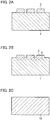
- the produced ingot 3 is attached to the ceramic compact 1 and inserted into a reaction furnace.
- the furnace is evacuated down to a vacuum or purged by introduced inert gas such as argon.
- step S5 to melt and infiltrate the ingot 3 into the ceramic compact 1 (step S5), the ceramic compact 1 and the ingot 3 is heated in the furnace.
- a temperature profile in the step of heating can be exemplified by the following description for instance.
- a rate of temperature increase is 10 degrees C/min for instance while it may be properly selected.
- the step may contain a step of temporarily halting the temperature increase and retaining the temperature. Further, before reaching a maximum temperature Tmax in heating, the rate of temperature increase may be suppressed down to 5 degrees C/min for instance.
- the maximum temperature Tmax in heating should be selected to be a proper temperature that is high enough to melt the ternary or more multicomponent Si alloy according to its composition but is capable of preventing the reinforcement fibers from deterioration.
- Tmax may be determined to be 1395 degrees C for example, or properly determined as a value relative to the melting point, such as the melting point plus 20 degrees C.
- the ingot 3 When reaching the melting point, as schematically shown in FIG. 2B , the ingot 3 starts melting and gradually infiltrating into the ceramic compact 1 as shown by the reference sign 5. This process would finish in a relatively short time and, as schematically shown in FIG. 2C , provides a ceramic matrix composite 10 in which the alloy infiltrates throughout its structure.
- duration of the maximum temperature is preferably made longer. Extremely long duration, however, causes deterioration of the reinforcement fibers. Therefore the duration time should be limited to be properly short. These factors can be taken into consideration to determine the duration time.
- the ceramic matrix composite 10, thereafter, is gradually cooled and then taken out of the furnace (Step S7).
- any proper cooling rate may be set.
- the obtained ceramic matrix composite would be usually subject to finishing, thereby providing a final product. Or, still after finishing, the product may be subject to coating for the purpose of preventing adhesion of foreign substances or any other purpose.
- Some ceramic compacts which were fabrics of SiC fibers with SiC powders infiltrating therein by the solid phase infiltration method respectively, were prepared, and ingots having composites listed in Table 1 were respectively prepared.
- the ingots were respectively combined with the aforementioned ceramic compacts and heated in a vacuum to cause melting and infiltration. Its temperature profile conformed with that described already. Tmax of them aside from the test piece D were 1395 degrees C and that of test piece D was 1250 degrees C.
- the obtained ceramic matrix composites were respectively cut and polished on the sectional surfaces, and were subject to sectional observation using a scanning electron microscope (SEM).
- test piece B Si-15at%Ti
- test piece E Si-9.2at%Hf
- voids were clearly observed on these sectional surfaces and more specifically it is clear that infiltration of Si was insufficient.
- test piece C Si-10at%Y
- test piece F through O ternary alloys
- prominent voids were not observed. More specifically, it is clear that the Y-Si alloy and the ternary Si alloys including Y are superior in infiltration ability.
- test pieces F through O ternary Si alloys
- test piece C are found to have higher infiltration ratios as compared with the test pieces B, E (binary Si alloys). It could be recognized that combined addition depresses melting points as described earlier and as well improves the infiltration ability. At least in a condition that Ti is added in combination, 2 at% or more Y addition is effective for suppressing defects in ceramic matrix composites.
- test pieces were further subject to exposure tests in which test pieces were exposed to the air at 1100 degrees C for 100 hours and thickness reductions by oxidation were measured.
- the thickness reductions are divided by the exposure time to get oxidation ratios, which are summarized in FIG. 4 .
- FIG. 4 shows influence of the Y concentration on oxidation resistance. It is acknowledged that the oxidation rate has a positive slope with respect to the Y concentration. Specifically, at least in a condition of combined addition with Ti, addition of Y is disadvantageous in light of oxidation resistance of ceramic matrix composites, and in particular 6 at% or less Y addition is preferable.
- test pieces were machined into rectangular test pieces having dimensions of 50(length) x 10(width) x 2(thickness) mm, and Young's moduli were respectively measured on the basis of a resonance method. Results are shown in FIG. 5 .
- FIG. 5 shows influence of the Ti concentration on Young's moduli. It is acknowledged that the Young's modulus has a positive slope with respect to the Ti concentration. Specifically, at least in a condition of combined addition with Y, addition of Ti is effective in increase of the Young's modulus. In particular, addition up to 6 at% is prominently positive in the effect of addition but any greater addition moderates increase of the Young's modulus. Specifically, addition of 6 at% or more Ti is preferable in light of increase of the Young's modulus, and 10 at% or less addition is preferable if saturation of the effect is considered.
- a production method of ceramic matrix composites is provided, which prevents deterioration of reinforcement fibers at high temperatures in a step of melting.
Landscapes
- Chemical & Material Sciences (AREA)
- Engineering & Computer Science (AREA)
- Ceramic Engineering (AREA)
- Organic Chemistry (AREA)
- Materials Engineering (AREA)
- Structural Engineering (AREA)
- Manufacturing & Machinery (AREA)
- Inorganic Chemistry (AREA)
- Chemical Kinetics & Catalysis (AREA)
- Mechanical Engineering (AREA)
- Metallurgy (AREA)
- Oil, Petroleum & Natural Gas (AREA)
- Manufacture Of Alloys Or Alloy Compounds (AREA)
- Ceramic Products (AREA)
Claims (6)
- Verfahren zur Herstellung eines keramischen Faserverbundwerkstoffs, umfassend:Bilden eines keramischen Presslings, der eines oder mehrere von einer Verstärkungsfaser und einem Pulver umfasst, die jeweils SiC umfassen;Anfügen eines Rohlings aus einer drei- oder mehrfachen Mehrkomponenten-Si-Legierung, die Y umfasst, an den keramischen Pressling; undInfiltrieren der Legierung in den keramischen Pressling durch Erhitzen auf eine Temperatur, bei der die Legierung schmilzt.
- Verfahren zur Herstellung nach Anspruch 1, wobei die Si-Legierung umfasst:2 At.-% oder mehr und 30 At.-% oder weniger Y; und2 At.-% oder mehr und 15 At.-% oder weniger Ti oder Hf.
- Verfahren zur Herstellung nach Anspruch 1, wobei die Si-Legierung besteht aus:2 At.-% oder mehr und 18 At.-% oder weniger Y;2 At.-% oder mehr und 15 At.-% oder weniger Ti oder Hf; undunvermeidbaren Verunreinigungen und einem Rest an Si.
- Verfahren nach Anspruch 1, wobei ein Gehalt an Y in der Si-Legierung in einem Bereich von 2 At.-% bis 6 At.-% liegt.
- Verfahren nach einem der Ansprüche 1 bis 4, wobei der Gehalt an Ti in der Si-Legierung in einem Bereich von 6 At.-% bis 10 At.-% liegt.
- Herstellungsverfahren nach Anspruch 1, ferner umfassend:
vor dem Schritt des Anbringens des Rohlings, Infiltrieren eines Pulvers aus einem oder mehreren von SiC und C in den keramischen Pressling.
Applications Claiming Priority (2)
| Application Number | Priority Date | Filing Date | Title |
|---|---|---|---|
| JP2016173455 | 2016-09-06 | ||
| PCT/JP2017/019862 WO2018047419A1 (ja) | 2016-09-06 | 2017-05-29 | セラミックス基複合材の製造方法 |
Publications (3)
| Publication Number | Publication Date |
|---|---|
| EP3511308A1 EP3511308A1 (de) | 2019-07-17 |
| EP3511308A4 EP3511308A4 (de) | 2020-05-06 |
| EP3511308B1 true EP3511308B1 (de) | 2021-03-03 |
Family
ID=61561533
Family Applications (1)
| Application Number | Title | Priority Date | Filing Date |
|---|---|---|---|
| EP17848364.0A Active EP3511308B1 (de) | 2016-09-06 | 2017-05-29 | Verfahren zur herstellung eines verbundstoffs auf keramikbasis |
Country Status (6)
| Country | Link |
|---|---|
| US (1) | US10961161B2 (de) |
| EP (1) | EP3511308B1 (de) |
| JP (1) | JP6645586B2 (de) |
| CN (1) | CN109415275B (de) |
| RU (1) | RU2712999C1 (de) |
| WO (1) | WO2018047419A1 (de) |
Families Citing this family (6)
| Publication number | Priority date | Publication date | Assignee | Title |
|---|---|---|---|---|
| CN111170754B (zh) * | 2020-02-08 | 2022-05-13 | 西北工业大学 | 一种具有Si-Y-C三元陶瓷基体复合材料及制备方法 |
| JP7552540B2 (ja) * | 2021-09-09 | 2024-09-18 | 信越化学工業株式会社 | SiC単結晶の製造方法、並びにSiC単結晶の転位を抑制する方法 |
| US11773730B2 (en) | 2021-10-22 | 2023-10-03 | Rolls-Royce Plc | Ceramic matrix composite airfoil with heat transfer augmentation |
| WO2025105217A1 (ja) | 2023-11-14 | 2025-05-22 | 株式会社Ihi | 強化繊維を被覆する方法 |
| JPWO2025105220A1 (de) | 2023-11-17 | 2025-05-22 | ||
| CN119462192A (zh) * | 2024-12-18 | 2025-02-18 | 合肥工业大学 | 一种反应烧结碳化硅陶瓷连接件及其制备方法 |
Family Cites Families (24)
| Publication number | Priority date | Publication date | Assignee | Title |
|---|---|---|---|---|
| US4124401A (en) * | 1977-10-21 | 1978-11-07 | General Electric Company | Polycrystalline diamond body |
| JPS6144775A (ja) | 1984-08-04 | 1986-03-04 | 有限会社 宮田技研 | ジルコニアセラミツク融着性合金 |
| DE69706587T2 (de) | 1996-03-29 | 2002-07-11 | Kabushiki Kaisha Toshiba, Kawasaki | Keramikmatrix-Verbundwerkstoff und Verfahren zur Herstellung desselben |
| US5955391A (en) * | 1996-03-29 | 1999-09-21 | Kabushiki Kaisha Toshiba | Ceramic matrix composite and method of manufacturing the same |
| JPH10152378A (ja) | 1996-03-29 | 1998-06-09 | Toshiba Corp | セラミックス基複合材料およびその製造方法 |
| FR2756277B1 (fr) * | 1996-11-28 | 1999-04-02 | Europ Propulsion | Materiau composite a matrice ceramique et renfort en fibres sic et procede pour sa fabrication |
| JP4907777B2 (ja) * | 2001-04-02 | 2012-04-04 | 太平洋セメント株式会社 | 金属−セラミックス複合材料 |
| AT7382U1 (de) * | 2003-03-11 | 2005-02-25 | Plansee Ag | Wärmesenke mit hoher wärmeleitfähigkeit |
| FR2869609B1 (fr) | 2004-05-03 | 2006-07-28 | Snecma Propulsion Solide Sa | Procede de fabrication d'une piece en materiau composite thermostructural |
| US7686990B2 (en) * | 2004-12-31 | 2010-03-30 | General Electric Company | Method of producing a ceramic matrix composite article |
| US20060163773A1 (en) * | 2005-01-24 | 2006-07-27 | General Electric Company | Method for performing silicon melt infiltration of ceramic matrix composites |
| JP2006265080A (ja) | 2005-03-25 | 2006-10-05 | Ishikawajima Harima Heavy Ind Co Ltd | セラミックス複合材とその製造方法 |
| FR2907117B1 (fr) * | 2006-10-17 | 2010-09-24 | Snecma Propulsion Solide | Procede de fabrication de piece en materiau composite a matrice ceramique contenant des phases de matrice cicatrisante et deviatrice de fissures |
| WO2009123283A1 (ja) | 2008-04-04 | 2009-10-08 | Toto株式会社 | 炭化硼素・炭化珪素・シリコン複合材料 |
| CN101977875B (zh) | 2008-04-04 | 2013-07-31 | Toto株式会社 | 复合材料及其制造方法 |
| JP2010202488A (ja) | 2008-04-04 | 2010-09-16 | Toto Ltd | 炭化硼素・炭化珪素・シリコン複合材料 |
| JP5916088B2 (ja) | 2012-01-18 | 2016-05-11 | 国立研究開発法人宇宙航空研究開発機構 | セラミック繊維強化複合材料の製造方法およびセラミック繊維強化複合材料 |
| US20130287941A1 (en) * | 2012-04-27 | 2013-10-31 | General Electric Company | Method of producing a melt-infiltrated ceramic matrix composite article |
| US9650303B2 (en) * | 2013-03-15 | 2017-05-16 | Rolls-Royce Corporation | Silicon carbide ceramic matrix composites |
| RU2567582C1 (ru) * | 2014-11-18 | 2015-11-10 | Федеральное государственное бюджетное образовательное учреждение высшего профессионального образования "Московский государственный технологический университет "СТАНКИН" (ФГБОУ ВПО МГТУ "СТАНКИН") | Способ изготовления композитных керамических изделий |
| US10399911B2 (en) * | 2015-01-27 | 2019-09-03 | Rolls-Royce Corporation | Forming a surface layer of a ceramic matrix composite article |
| EP3109043B1 (de) * | 2015-06-22 | 2018-01-31 | Rolls-Royce Corporation | Verfahren zur integralen verbindung von infiltrierten keramischem matrix-verbundstoffen |
| US10227264B2 (en) * | 2015-07-13 | 2019-03-12 | Rolls-Royce High Temperature Composites, Inc. | Method for making ceramic matrix composite articles |
| WO2018037617A1 (ja) * | 2016-08-25 | 2018-03-01 | 株式会社Ihi | セラミックス基複合材料及びその製造方法 |
-
2017
- 2017-05-29 EP EP17848364.0A patent/EP3511308B1/de active Active
- 2017-05-29 RU RU2019109450A patent/RU2712999C1/ru active
- 2017-05-29 JP JP2018538025A patent/JP6645586B2/ja active Active
- 2017-05-29 WO PCT/JP2017/019862 patent/WO2018047419A1/ja not_active Ceased
- 2017-05-29 CN CN201780040385.6A patent/CN109415275B/zh not_active Expired - Fee Related
-
2019
- 2019-01-08 US US16/242,031 patent/US10961161B2/en active Active
Non-Patent Citations (1)
| Title |
|---|
| None * |
Also Published As
| Publication number | Publication date |
|---|---|
| RU2712999C1 (ru) | 2020-02-03 |
| US20200024199A1 (en) | 2020-01-23 |
| EP3511308A1 (de) | 2019-07-17 |
| JPWO2018047419A1 (ja) | 2019-06-24 |
| US10961161B2 (en) | 2021-03-30 |
| CN109415275A (zh) | 2019-03-01 |
| EP3511308A4 (de) | 2020-05-06 |
| CN109415275B (zh) | 2021-08-24 |
| WO2018047419A1 (ja) | 2018-03-15 |
| JP6645586B2 (ja) | 2020-02-14 |
Similar Documents
| Publication | Publication Date | Title |
|---|---|---|
| US10961161B2 (en) | Production method of ceramic matrix composite | |
| Halbig et al. | Characterization of silicon carbide joints fabricated using SiC particulate-reinforced Ag–Cu–Ti alloys | |
| US9611180B2 (en) | Method for manufacturing a part made of CMC | |
| EP2970016B1 (de) | Keramikmatrixverbundwerkstoff und verfahren zur dessen herstellung | |
| JP6551059B2 (ja) | SiC繊維を含むハイブリッド複合材料およびその製造方法 | |
| JP6368350B2 (ja) | 反応性溶融物浸透セラミックス基複合材料 | |
| US11548828B2 (en) | Ceramic matrix composite and method of manufacturing the same | |
| EP2578556B1 (de) | Verfahren und keramische Komponente | |
| US8741212B2 (en) | Intermetallic-containing composite bodies, and methods for making same | |
| Aoki et al. | Tyranno ZMI fiber/TiSi2–Si matrix composites for high-temperature structural applications | |
| US20140273681A1 (en) | Sic based ceramic matrix composites with layered matrices and methods for producing sic based ceramic matrix composites with layered matrices | |
| JP2016527173A (ja) | 低融点含浸によって複合部品を製造するプロセス | |
| US11987533B2 (en) | Ceramic matrix composite component and method of producing the same | |
| Fan et al. | Joining of Cf/SiC composite to Ti-6Al-4V with (Ti-Zr-Cu-Ni)+ Ti filler based on in-situ alloying concept | |
| EP1762551A1 (de) | Verfahren zur Reduktion der Oxidation in Keramikverbundwerkstoffe, Verfahren zur Herstellung einen keramischen Verbundkörper und ein Körper enthaltend einen Keramikverbundwerkstoff-Schutzschicht | |
| US20220388912A1 (en) | Through thickness reinforcement | |
| KR100945270B1 (ko) | 저열팽창 복합재료 및 그의 제조방법 | |
| EP3677564A1 (de) | Keramikmatrixverbundbauteil mit modifizierter wärmeausdehnung und herstellungsverfahren dafür | |
| EP1996530B1 (de) | Verfahren zur herstellung von verbundwerkstoffkörper mit intermetallen | |
| US20220227674A1 (en) | Ceramic matrix composite and method for manufacturing same | |
| US11731910B1 (en) | Method of fabricating a ceramic matrix composite for resistance against silicon attack | |
| EP4667441A1 (de) | Reaktivinfiltration mit silizidbildenden binären legierungen | |
| EP3730666B1 (de) | Tial-legierungsmaterial, verfahren zu seiner herstellung und schmiedeverfahren für tial-legierungsmaterial | |
| Marshall et al. | effect of SiC content and third phase metal additions on thermal and mechanical properties of Si/SiC ceramics | |
| JPH09268063A (ja) | セラミックス基繊維複合材料 |
Legal Events
| Date | Code | Title | Description |
|---|---|---|---|
| STAA | Information on the status of an ep patent application or granted ep patent |
Free format text: STATUS: THE INTERNATIONAL PUBLICATION HAS BEEN MADE |
|
| PUAI | Public reference made under article 153(3) epc to a published international application that has entered the european phase |
Free format text: ORIGINAL CODE: 0009012 |
|
| STAA | Information on the status of an ep patent application or granted ep patent |
Free format text: STATUS: REQUEST FOR EXAMINATION WAS MADE |
|
| 17P | Request for examination filed |
Effective date: 20190408 |
|
| AK | Designated contracting states |
Kind code of ref document: A1 Designated state(s): AL AT BE BG CH CY CZ DE DK EE ES FI FR GB GR HR HU IE IS IT LI LT LU LV MC MK MT NL NO PL PT RO RS SE SI SK SM TR |
|
| AX | Request for extension of the european patent |
Extension state: BA ME |
|
| DAV | Request for validation of the european patent (deleted) | ||
| DAX | Request for extension of the european patent (deleted) | ||
| A4 | Supplementary search report drawn up and despatched |
Effective date: 20200402 |
|
| RIC1 | Information provided on ipc code assigned before grant |
Ipc: C04B 35/80 20060101AFI20200328BHEP Ipc: C04B 41/85 20060101ALI20200328BHEP Ipc: C04B 35/573 20060101ALI20200328BHEP Ipc: C04B 41/88 20060101ALI20200328BHEP Ipc: C22C 1/10 20060101ALI20200328BHEP Ipc: C04B 35/628 20060101ALI20200328BHEP |
|
| REG | Reference to a national code |
Ref country code: DE Ref legal event code: R079 Ref document number: 602017034061 Country of ref document: DE Free format text: PREVIOUS MAIN CLASS: C04B0041880000 Ipc: C04B0035800000 |
|
| RIC1 | Information provided on ipc code assigned before grant |
Ipc: C04B 35/80 20060101AFI20200715BHEP Ipc: C04B 35/573 20060101ALI20200715BHEP Ipc: C22C 1/10 20060101ALI20200715BHEP Ipc: C04B 35/628 20060101ALI20200715BHEP Ipc: C04B 41/88 20060101ALI20200715BHEP Ipc: C04B 41/85 20060101ALI20200715BHEP |
|
| GRAP | Despatch of communication of intention to grant a patent |
Free format text: ORIGINAL CODE: EPIDOSNIGR1 |
|
| STAA | Information on the status of an ep patent application or granted ep patent |
Free format text: STATUS: GRANT OF PATENT IS INTENDED |
|
| INTG | Intention to grant announced |
Effective date: 20200917 |
|
| GRAS | Grant fee paid |
Free format text: ORIGINAL CODE: EPIDOSNIGR3 |
|
| GRAA | (expected) grant |
Free format text: ORIGINAL CODE: 0009210 |
|
| STAA | Information on the status of an ep patent application or granted ep patent |
Free format text: STATUS: THE PATENT HAS BEEN GRANTED |
|
| AK | Designated contracting states |
Kind code of ref document: B1 Designated state(s): AL AT BE BG CH CY CZ DE DK EE ES FI FR GB GR HR HU IE IS IT LI LT LU LV MC MK MT NL NO PL PT RO RS SE SI SK SM TR |
|
| REG | Reference to a national code |
Ref country code: GB Ref legal event code: FG4D |
|
| REG | Reference to a national code |
Ref country code: AT Ref legal event code: REF Ref document number: 1367036 Country of ref document: AT Kind code of ref document: T Effective date: 20210315 Ref country code: CH Ref legal event code: EP |
|
| REG | Reference to a national code |
Ref country code: DE Ref legal event code: R096 Ref document number: 602017034061 Country of ref document: DE |
|
| REG | Reference to a national code |
Ref country code: IE Ref legal event code: FG4D |
|
| REG | Reference to a national code |
Ref country code: LT Ref legal event code: MG9D |
|
| PG25 | Lapsed in a contracting state [announced via postgrant information from national office to epo] |
Ref country code: NO Free format text: LAPSE BECAUSE OF FAILURE TO SUBMIT A TRANSLATION OF THE DESCRIPTION OR TO PAY THE FEE WITHIN THE PRESCRIBED TIME-LIMIT Effective date: 20210603 Ref country code: GR Free format text: LAPSE BECAUSE OF FAILURE TO SUBMIT A TRANSLATION OF THE DESCRIPTION OR TO PAY THE FEE WITHIN THE PRESCRIBED TIME-LIMIT Effective date: 20210604 Ref country code: FI Free format text: LAPSE BECAUSE OF FAILURE TO SUBMIT A TRANSLATION OF THE DESCRIPTION OR TO PAY THE FEE WITHIN THE PRESCRIBED TIME-LIMIT Effective date: 20210303 Ref country code: HR Free format text: LAPSE BECAUSE OF FAILURE TO SUBMIT A TRANSLATION OF THE DESCRIPTION OR TO PAY THE FEE WITHIN THE PRESCRIBED TIME-LIMIT Effective date: 20210303 Ref country code: LT Free format text: LAPSE BECAUSE OF FAILURE TO SUBMIT A TRANSLATION OF THE DESCRIPTION OR TO PAY THE FEE WITHIN THE PRESCRIBED TIME-LIMIT Effective date: 20210303 Ref country code: BG Free format text: LAPSE BECAUSE OF FAILURE TO SUBMIT A TRANSLATION OF THE DESCRIPTION OR TO PAY THE FEE WITHIN THE PRESCRIBED TIME-LIMIT Effective date: 20210603 |
|
| REG | Reference to a national code |
Ref country code: NL Ref legal event code: MP Effective date: 20210303 |
|
| REG | Reference to a national code |
Ref country code: AT Ref legal event code: MK05 Ref document number: 1367036 Country of ref document: AT Kind code of ref document: T Effective date: 20210303 |
|
| PG25 | Lapsed in a contracting state [announced via postgrant information from national office to epo] |
Ref country code: RS Free format text: LAPSE BECAUSE OF FAILURE TO SUBMIT A TRANSLATION OF THE DESCRIPTION OR TO PAY THE FEE WITHIN THE PRESCRIBED TIME-LIMIT Effective date: 20210303 Ref country code: PL Free format text: LAPSE BECAUSE OF FAILURE TO SUBMIT A TRANSLATION OF THE DESCRIPTION OR TO PAY THE FEE WITHIN THE PRESCRIBED TIME-LIMIT Effective date: 20210303 Ref country code: LV Free format text: LAPSE BECAUSE OF FAILURE TO SUBMIT A TRANSLATION OF THE DESCRIPTION OR TO PAY THE FEE WITHIN THE PRESCRIBED TIME-LIMIT Effective date: 20210303 Ref country code: SE Free format text: LAPSE BECAUSE OF FAILURE TO SUBMIT A TRANSLATION OF THE DESCRIPTION OR TO PAY THE FEE WITHIN THE PRESCRIBED TIME-LIMIT Effective date: 20210303 |
|
| PG25 | Lapsed in a contracting state [announced via postgrant information from national office to epo] |
Ref country code: NL Free format text: LAPSE BECAUSE OF FAILURE TO SUBMIT A TRANSLATION OF THE DESCRIPTION OR TO PAY THE FEE WITHIN THE PRESCRIBED TIME-LIMIT Effective date: 20210303 |
|
| PG25 | Lapsed in a contracting state [announced via postgrant information from national office to epo] |
Ref country code: AT Free format text: LAPSE BECAUSE OF FAILURE TO SUBMIT A TRANSLATION OF THE DESCRIPTION OR TO PAY THE FEE WITHIN THE PRESCRIBED TIME-LIMIT Effective date: 20210303 Ref country code: SM Free format text: LAPSE BECAUSE OF FAILURE TO SUBMIT A TRANSLATION OF THE DESCRIPTION OR TO PAY THE FEE WITHIN THE PRESCRIBED TIME-LIMIT Effective date: 20210303 Ref country code: CZ Free format text: LAPSE BECAUSE OF FAILURE TO SUBMIT A TRANSLATION OF THE DESCRIPTION OR TO PAY THE FEE WITHIN THE PRESCRIBED TIME-LIMIT Effective date: 20210303 Ref country code: EE Free format text: LAPSE BECAUSE OF FAILURE TO SUBMIT A TRANSLATION OF THE DESCRIPTION OR TO PAY THE FEE WITHIN THE PRESCRIBED TIME-LIMIT Effective date: 20210303 |
|
| PG25 | Lapsed in a contracting state [announced via postgrant information from national office to epo] |
Ref country code: IS Free format text: LAPSE BECAUSE OF FAILURE TO SUBMIT A TRANSLATION OF THE DESCRIPTION OR TO PAY THE FEE WITHIN THE PRESCRIBED TIME-LIMIT Effective date: 20210703 Ref country code: RO Free format text: LAPSE BECAUSE OF FAILURE TO SUBMIT A TRANSLATION OF THE DESCRIPTION OR TO PAY THE FEE WITHIN THE PRESCRIBED TIME-LIMIT Effective date: 20210303 Ref country code: SK Free format text: LAPSE BECAUSE OF FAILURE TO SUBMIT A TRANSLATION OF THE DESCRIPTION OR TO PAY THE FEE WITHIN THE PRESCRIBED TIME-LIMIT Effective date: 20210303 Ref country code: PT Free format text: LAPSE BECAUSE OF FAILURE TO SUBMIT A TRANSLATION OF THE DESCRIPTION OR TO PAY THE FEE WITHIN THE PRESCRIBED TIME-LIMIT Effective date: 20210705 |
|
| REG | Reference to a national code |
Ref country code: DE Ref legal event code: R119 Ref document number: 602017034061 Country of ref document: DE |
|
| REG | Reference to a national code |
Ref country code: CH Ref legal event code: PL |
|
| PLBE | No opposition filed within time limit |
Free format text: ORIGINAL CODE: 0009261 |
|
| STAA | Information on the status of an ep patent application or granted ep patent |
Free format text: STATUS: NO OPPOSITION FILED WITHIN TIME LIMIT |
|
| PG25 | Lapsed in a contracting state [announced via postgrant information from national office to epo] |
Ref country code: MC Free format text: LAPSE BECAUSE OF FAILURE TO SUBMIT A TRANSLATION OF THE DESCRIPTION OR TO PAY THE FEE WITHIN THE PRESCRIBED TIME-LIMIT Effective date: 20210303 Ref country code: LI Free format text: LAPSE BECAUSE OF NON-PAYMENT OF DUE FEES Effective date: 20210531 Ref country code: LU Free format text: LAPSE BECAUSE OF NON-PAYMENT OF DUE FEES Effective date: 20210529 Ref country code: AL Free format text: LAPSE BECAUSE OF FAILURE TO SUBMIT A TRANSLATION OF THE DESCRIPTION OR TO PAY THE FEE WITHIN THE PRESCRIBED TIME-LIMIT Effective date: 20210303 Ref country code: DK Free format text: LAPSE BECAUSE OF FAILURE TO SUBMIT A TRANSLATION OF THE DESCRIPTION OR TO PAY THE FEE WITHIN THE PRESCRIBED TIME-LIMIT Effective date: 20210303 Ref country code: CH Free format text: LAPSE BECAUSE OF NON-PAYMENT OF DUE FEES Effective date: 20210531 Ref country code: ES Free format text: LAPSE BECAUSE OF FAILURE TO SUBMIT A TRANSLATION OF THE DESCRIPTION OR TO PAY THE FEE WITHIN THE PRESCRIBED TIME-LIMIT Effective date: 20210303 |
|
| 26N | No opposition filed |
Effective date: 20211206 |
|
| REG | Reference to a national code |
Ref country code: BE Ref legal event code: MM Effective date: 20210531 |
|
| PG25 | Lapsed in a contracting state [announced via postgrant information from national office to epo] |
Ref country code: SI Free format text: LAPSE BECAUSE OF FAILURE TO SUBMIT A TRANSLATION OF THE DESCRIPTION OR TO PAY THE FEE WITHIN THE PRESCRIBED TIME-LIMIT Effective date: 20210303 |
|
| PG25 | Lapsed in a contracting state [announced via postgrant information from national office to epo] |
Ref country code: IT Free format text: LAPSE BECAUSE OF FAILURE TO SUBMIT A TRANSLATION OF THE DESCRIPTION OR TO PAY THE FEE WITHIN THE PRESCRIBED TIME-LIMIT Effective date: 20210303 Ref country code: IE Free format text: LAPSE BECAUSE OF NON-PAYMENT OF DUE FEES Effective date: 20210529 Ref country code: DE Free format text: LAPSE BECAUSE OF NON-PAYMENT OF DUE FEES Effective date: 20211201 |
|
| PG25 | Lapsed in a contracting state [announced via postgrant information from national office to epo] |
Ref country code: IS Free format text: LAPSE BECAUSE OF FAILURE TO SUBMIT A TRANSLATION OF THE DESCRIPTION OR TO PAY THE FEE WITHIN THE PRESCRIBED TIME-LIMIT Effective date: 20210703 |
|
| PG25 | Lapsed in a contracting state [announced via postgrant information from national office to epo] |
Ref country code: BE Free format text: LAPSE BECAUSE OF NON-PAYMENT OF DUE FEES Effective date: 20210531 |
|
| PGFP | Annual fee paid to national office [announced via postgrant information from national office to epo] |
Ref country code: FR Payment date: 20220523 Year of fee payment: 6 |
|
| PG25 | Lapsed in a contracting state [announced via postgrant information from national office to epo] |
Ref country code: CY Free format text: LAPSE BECAUSE OF FAILURE TO SUBMIT A TRANSLATION OF THE DESCRIPTION OR TO PAY THE FEE WITHIN THE PRESCRIBED TIME-LIMIT Effective date: 20210303 |
|
| PG25 | Lapsed in a contracting state [announced via postgrant information from national office to epo] |
Ref country code: HU Free format text: LAPSE BECAUSE OF FAILURE TO SUBMIT A TRANSLATION OF THE DESCRIPTION OR TO PAY THE FEE WITHIN THE PRESCRIBED TIME-LIMIT; INVALID AB INITIO Effective date: 20170529 |
|
| PG25 | Lapsed in a contracting state [announced via postgrant information from national office to epo] |
Ref country code: MK Free format text: LAPSE BECAUSE OF FAILURE TO SUBMIT A TRANSLATION OF THE DESCRIPTION OR TO PAY THE FEE WITHIN THE PRESCRIBED TIME-LIMIT Effective date: 20210303 |
|
| PG25 | Lapsed in a contracting state [announced via postgrant information from national office to epo] |
Ref country code: FR Free format text: LAPSE BECAUSE OF NON-PAYMENT OF DUE FEES Effective date: 20230531 |
|
| PG25 | Lapsed in a contracting state [announced via postgrant information from national office to epo] |
Ref country code: MT Free format text: LAPSE BECAUSE OF FAILURE TO SUBMIT A TRANSLATION OF THE DESCRIPTION OR TO PAY THE FEE WITHIN THE PRESCRIBED TIME-LIMIT Effective date: 20210303 |
|
| PGFP | Annual fee paid to national office [announced via postgrant information from national office to epo] |
Ref country code: GB Payment date: 20250423 Year of fee payment: 9 |
|
| PG25 | Lapsed in a contracting state [announced via postgrant information from national office to epo] |
Ref country code: TR Free format text: LAPSE BECAUSE OF FAILURE TO SUBMIT A TRANSLATION OF THE DESCRIPTION OR TO PAY THE FEE WITHIN THE PRESCRIBED TIME-LIMIT Effective date: 20210303 |