EP3511564B1 - Verfahren und system zum steuern einer windenergieanlage - Google Patents
Verfahren und system zum steuern einer windenergieanlage Download PDFInfo
- Publication number
- EP3511564B1 EP3511564B1 EP19150713.6A EP19150713A EP3511564B1 EP 3511564 B1 EP3511564 B1 EP 3511564B1 EP 19150713 A EP19150713 A EP 19150713A EP 3511564 B1 EP3511564 B1 EP 3511564B1
- Authority
- EP
- European Patent Office
- Prior art keywords
- weighting
- preset value
- external
- value
- default value
- Prior art date
- Legal status (The legal status is an assumption and is not a legal conclusion. Google has not performed a legal analysis and makes no representation as to the accuracy of the status listed.)
- Not-in-force
Links
Images


Classifications
-
- F—MECHANICAL ENGINEERING; LIGHTING; HEATING; WEAPONS; BLASTING
- F03—MACHINES OR ENGINES FOR LIQUIDS; WIND, SPRING, OR WEIGHT MOTORS; PRODUCING MECHANICAL POWER OR A REACTIVE PROPULSIVE THRUST, NOT OTHERWISE PROVIDED FOR
- F03D—WIND MOTORS
- F03D7/00—Controlling wind motors
- F03D7/02—Controlling wind motors the wind motors having rotation axis substantially parallel to the air flow entering the rotor
- F03D7/04—Automatic control; Regulation
- F03D7/042—Automatic control; Regulation by means of an electrical or electronic controller
-
- Y—GENERAL TAGGING OF NEW TECHNOLOGICAL DEVELOPMENTS; GENERAL TAGGING OF CROSS-SECTIONAL TECHNOLOGIES SPANNING OVER SEVERAL SECTIONS OF THE IPC; TECHNICAL SUBJECTS COVERED BY FORMER USPC CROSS-REFERENCE ART COLLECTIONS [XRACs] AND DIGESTS
- Y02—TECHNOLOGIES OR APPLICATIONS FOR MITIGATION OR ADAPTATION AGAINST CLIMATE CHANGE
- Y02E—REDUCTION OF GREENHOUSE GAS [GHG] EMISSIONS, RELATED TO ENERGY GENERATION, TRANSMISSION OR DISTRIBUTION
- Y02E10/00—Energy generation through renewable energy sources
- Y02E10/70—Wind energy
- Y02E10/72—Wind turbines with rotation axis in wind direction
Definitions
- the invention relates to a method and a system for controlling a wind turbine.
- the manipulated variables of a wind turbine can be influenced.
- the manipulated variables of a wind power installation include, for example, the pitch angle of the rotor blades, through which the power consumption from the wind is determined, and the electrical torque, which is opposed to the rotor by the electrical system of the wind power installation.
- the manipulated variables of the wind turbine are usually subject to control by a closed control loop. There is a difference between an actual value and a setpoint of the variable to be controlled (controlled variable) at the input of the controller. From this, the controller derives a manipulated variable with which a manipulated variable is set. By measuring the actual value of the controlled variable and feeding it back to the input of the controller, it is a closed control loop.
- Wind energy plants can receive external specifications for the operation, for example by the network operator demanding that the wind energy plant feed a certain amount of active power. If an external default value is received by the wind turbine, the wind turbine should be set according to the external default value. A single change in the external default value generally does not affect the operational safety of the wind turbine, which is why an immediate implementation of the external default value can be permitted.
- document DE 10 2016 103 101 A1 presents a method for regulating a wind farm, wherein at least one manipulated variable is generated as a function of at least one control error and a park state is recorded at a state input of a control module.
- the invention is based on the object of presenting a method and a system for controlling a wind energy installation with which the operational safety of the wind energy installation is increased. Based on the prior art mentioned, the problem is solved with the Features of the independent claims. Advantageous embodiments are specified in the subclaims.
- a manipulated variable for a manipulated variable of the wind turbine is determined in a closed control loop.
- the manipulated variable is set according to an external default value provided with a weighting.
- a sequence of external default values (default value sequence) with at least one change in direction reduces the weighting of the external default value.
- the invention has recognized that the operational safety of the wind turbine can be adversely affected by an unfavorable sequence of external default values. For example, if increases and decreases in power output are required in a rapid change, the associated load changes can cause the wind turbine to vibrate.
- the invention proposes to reduce the weighting of the external default value when setting the manipulated variable as a function of changes in direction of the external default value.
- the invention has recognized that it is precisely changes in direction in the external default values that can impair the stability of the operation of the wind energy installation.
- the new external default value can represent an increase or a decrease compared to the previous external default value. It is called a change of direction when the external default value changes between an increase and a decrease.
- a sequence of at least three external default values is considered. If the first external default value and the third external default value are lower than the second external default value, the third external default value represents a change in direction with which the external default changes from an increase to a decrease. Conversely, if the first external default value and the third external default value are higher than the second external default value, the third external default value represents a change in direction with which the external default changes from a decrease to an increase.
- a default value sequence with more than three default values a plurality of identical default values can lie between the increases or decreases in question.
- the default value sequence according to the invention can consist of continuously received external default values or of external default values that are received at time intervals. In both cases, a change in direction in the default value sequence can be easily determined.
- the manipulated variable is set according to the external default value, a setting is made on the wind turbine in order to bring the controlled variable to the external default value.
- the weighting determines how large the influence of the external default value on the manipulated variable is compared to other influences, in particular compared to the influence of disturbance variables.
- the external default value can be fed to the closed control loop.
- the external default value can be fed into the closed control loop as a modified setpoint.
- the controller can then determine a manipulated variable for the wind energy installation so that the controlled variable approximates the external default value. Since the control loop is subject to time constants, a certain amount of time passes until the external default value is approximated.
- the advantage of this embodiment is the use of a control loop with a short time constant.
- the external default value at the output of the controller is superimposed on the manipulated value determined by the controller (pre-control).
- the external default value is then used to influence the manipulated variable bypassing the controller.
- the external default value is used both as a setpoint for the controller and as a pilot control value, which is superimposed on the control value of the controller.
- the external default value can be designed in such a way that it can be used directly as a setpoint or as a pilot value. This is particularly possible if the external default value affects the same size that is set in the closed control loop. In many cases, this requirement is not met. For example, it is conceivable that the external default value requires a certain amount of active power, while the pitch angle of the rotor blades is set in the control loop. A conversion may therefore be necessary in order to derive a specification from the external specification value that can be processed in the control loop as a setpoint value or as a control value. Such a derived specification is also an external specification in the sense of the invention.
- the method can be carried out in such a way that a single change in direction in the default value sequence is reason enough to reduce the weighting of the external default value.
- the weighting only occurs after the occurrence of several Changes in direction are reduced, for example after at least two changes in direction, preferably after at least three changes in direction, further preferably after at least five changes in direction.
- the individual change in direction or the plurality of changes in direction is set in relation to a time interval, so that the weighting is only reduced if the one change in direction or the plurality of changes in direction occurs within a predetermined time interval.
- the section between the beginning of the time interval and the first default value received within the time interval is considered to be a phase in which no change in direction has taken place. In other words, it does not matter whether the last default value that was received before the start of the time interval specified an increase or a decrease.
- the length of the time interval can be, for example, between 10 s and 60 s.
- the time interval can be a sliding interval.
- the sliding interval can extend from the current time to the past.
- a difference between two external default values can be considered, so that the weighting is only reduced if the difference between a first external default value and a second external default value is greater than a predetermined threshold value. If the external default values are received discretely in time, the difference between two successive external default values can be evaluated in particular. In the case of continuously received external default values, the difference can be evaluated in relation to a predetermined time interval.
- the default value sequence is evaluated using two criteria. According to a first criterion, it is checked whether a first number of changes in direction occurs within a first predetermined time period. According to a second criterion, it is checked whether a second number is within a second predetermined time period of changes in direction occurs in which the difference between the default values is greater than a predetermined threshold value.
- the second number of changes of direction can be smaller than the first number of changes of direction, in particular the second number of Changes of direction be one.
- the second predetermined time period can be shorter, longer or the same length compared to the first predetermined time period.
- the second predetermined time period can start at the same time as the first predetermined time period or at a different time.
- the method can be carried out in such a way that the weighting is reduced if one of the two criteria is met. In other words, the weighting is reduced if, within the relevant time periods, either a larger number of "minor” changes in direction occur or a smaller number of "serious" changes in direction.
- a connection period can be started.
- the method can be carried out in such a way that the change in weighting initiated by the threshold being exceeded is only withdrawn after the connection period has expired. Additionally or alternatively, the method can be carried out in such a way that the weighting of the external default value is reduced more if a condition for a reduction in the weighting of the external default value occurs within the connection period. In this case, the connection period can be started again.
- a reduction in the weighting of the external default value is a reduction compared to an initial weighting.
- the initial weighting is the weighting with which the external default value is taken into account when setting the manipulated variable before a condition for a reduction in the weighting occurs. If a condition for a reduction in the weighting occurs for the first time, the weighting can, for example, be set to a value between 30% and 70% compared to the starting weighting. If a condition for a reduction in the weighting occurs a second time within the connection period, the weighting can, for example, be set to a value between 0% and 30% compared to the initial weighting. With a weighting of 0%, the control value determined by the controller is no longer changed by the external default value.
- the weighting can be set, for example, by adapting a gain factor with which the external default value is fed to the closed control loop.
- Other regulations are also possible for setting the weighting of the external standard value, as well as other regulations with which the external standard values are appropriately smoothed, filtered or otherwise adjusted.
- the external default value can relate, for example, to the active power and / or to the reactive power that is to be fed into a connection network by the wind energy installation. With such a specification, it takes a certain amount of time before any effects of unfavorable sequences of external setpoints can actually be measured. The harmful effects can be avoided by the method according to the invention before they manifest themselves in a measurable manner.
- the method according to the invention can generally be used in the relationship between a higher control level and a lower control level.
- the external default value is generated at the higher control level and transmitted to the lower control level.
- the lower control level receives the external default value and implements it in interaction with the closed control loop acting on the lower control level.
- the subordinate control level can correspond, for example, to the control of an individual wind energy installation.
- the higher-level control level is the connection network, into which the electrical energy generated by the wind energy installation is fed.
- the higher-level control level can also be a wind farm control (park master), from which external default values are transmitted to the control of the wind energy installation.
- control levels it is also possible for a plurality of control levels to be provided within a single wind energy installation. This can be the case, for example, with a modular control architecture in which a first control module generates an external default value for a second control module.
- the upper control level is a model predictive control (MPC, Model Predictive Control, Receding horizon control), which specifies external default values for the lower control level.
- MPC model predictive control
- the invention also relates to a control system for a wind energy installation, comprising a controller and a weighting module.
- the controller determines a manipulated variable for a manipulated variable of the wind turbine in a closed control loop.
- the weighting module is designed to supply the closed control loop with an external default value with a weighting, so that the manipulated variable is set in accordance with the external default value with the weighting.
- the weighting module is also designed to weight the external default value depending on a change in direction decrease in the default value sequence.
- the invention also relates to a wind power installation equipped with such a control system.
- control system can be developed with further features which are described in connection with the method according to the invention.
- the method can be developed with further features which are described in connection with the control system according to the invention.
- a wind turbine 14 is rotatably mounted on a tower 15.
- the nacelle carries a rotor 16 which is rotated by the wind.
- the rotor is connected via a gear 17 to a generator 18 which generates electrical energy when the rotor 16 rotates.
- the electrical energy is fed into a connection network (not shown) via a converter 19.
- a controller 20 makes specifications for the operation of the wind energy installation.
- the specifications relate to manipulated variables of the wind energy installation, which include in particular the pitch angle of the rotor blades and the settings of the generator 18 and the converter 19.
- the generator 18 and the converter 19 together form an electrical system that opposes a torque to the rotor.
- a controller 21 to which measured values 26 are fed via the actual system state of the wind energy installation.
- An external default value 24 is present at the input of the controller as a setpoint.
- the controller 21 evaluates the difference between the actual values and the target values and uses them to determine manipulated values 25 for the manipulated variables of the wind energy installation.
- the manipulated variables are in Fig. 2 the pitch angle of the rotor 16 and the settings of the generator 18 and the converter 19.
- the manipulated values 25 determined by the controller 21 are passed directly to the actuators, so that they can be adjusted accordingly.
- the external default value 24 changes, on the one hand there is a changed setpoint at the input of the controller 21.
- the new external default value 24 is passed via a weighting module 22 to the output of the controller 21 and is superimposed there on the manipulated value 25 determined by the controller 21.
- the external specification value 24 relates, for example, to a changed specification for the active power of the wind energy installation, then specific values for the pitch angle, to which the rotor 16 can be set, are derived directly.
- a conversion is carried out in the weighting module 22 in order to convert the external default value 24 into a quantity that can be processed in the control loop as a pre-control value.
- the weighting with which the external default value 24 is superimposed on the manipulated value 25 of the controller 21 is defined in the weighting module 22.
- the weighting module 22 comprises an evaluation unit 23 which analyzes the sequence of the external default values 24 in a sliding period T 0 to T 1 , where T 1 corresponds to the current point in time. If the external default value 24 remains constant in the period T 0 to T 1 or if there are only a few minor changes, the external default value 24 is superimposed on the manipulated variable 25 of the controller 21 with a high weighting. If there are several small changes of direction or one large change of direction in the external default value 24 in the period T 0 to T 1 , the weighting of the external default value 24 is reduced relative to the control value 25 of the controller 21.
- Fig. 3 the course of the external default value 24 for the active power P is shown over the time t.
- the external default value 24 changes down only once.
- the weighting of the external default value 24 is not reduced compared to the control value 25 of the controller 21.
- the external default value 24 superimposes the manipulated variable 25 with a high weighting (initial weighting), so that the manipulated variable 25 has only a minor influence on the manipulated variables.
- the default value sequence shown comprises only a single change of direction within the period T 0 to T 1 .
- the individual change of direction on its own is no reason to reduce the weighting of the external default value 24 relative to the control value 25 of the controller 21.
- the jump in the external default value 24 is greater than a predetermined threshold value, which is why the single change in direction can be sufficient to impair the stability of the operating state of the wind energy installation.
- the weighting module 22 therefore reduces the weighting of the external default value 24 to 50%. The reduced weighting is applied directly to the last jump of the external default value 24 that triggered the reduction.
Landscapes
- Engineering & Computer Science (AREA)
- Life Sciences & Earth Sciences (AREA)
- Sustainable Development (AREA)
- Sustainable Energy (AREA)
- Chemical & Material Sciences (AREA)
- Combustion & Propulsion (AREA)
- Mechanical Engineering (AREA)
- General Engineering & Computer Science (AREA)
- Wind Motors (AREA)
Description
- Die Erfindung betrifft ein Verfahren und ein System zum Steuern einer Windenergieanlage.
- Mit der Steuerung einer Windenergieanlage können Stellgrößen der Windenergieanlage beeinflusst werden. Zu den Stellgrößen einer Windenergieanlage gehören beispielsweise der Anstellwinkel (Pitchwinkel) der Rotorblätter, durch den die Leistungsaufnahme aus dem Wind bestimmt wird, sowie das elektrische Drehmoment, das dem Rotor durch das elektrische System der Windenergieanlage entgegengesetzt wird. Üblicherweise unterliegen die Stellgrößen der Windenergieanlage der Kontrolle durch einen geschlossenen Regelkreis. Dabei liegt am Eingang des Reglers eine Differenz zwischen einem Istwert und einem Sollwert der zu regelnden Größe (Regelgröße) an. Der Regler leitet daraus einen Stellwert ab, mit dem eine Stellgröße eingestellt wird. Indem der Istwert der Regelgröße gemessen wird und an den Eingang des Reglers zurückgeführt wird, handelt es sich um einen geschlossenen Regelkreis.
- Windenergieanlagen können externe Vorgabe für den Betrieb erhalten, beispielsweise indem der Netzbetreiber fordert, dass die Windenergieanlage eine bestimmte Menge Wirkleistung einspeist. Wenn ein externer Vorgabewert bei der Windenergieanlage eingeht, soll die Windenergieanlage entsprechend dem externen Vorgabewert eingestellt werden. Eine einzelne Änderung des externen Vorgabewerts stellt im Allgemeinen keine Beeinträchtigung für die Betriebssicherheit der Windenergieanlage dar, weswegen eine unmittelbare Umsetzung des externen Vorgabewerts zugelassen werden kann.
- Dokument
DE 10 2016 103101 A1 stellt ein Verfahren zum Regeln eines Windparks vor, wobei wenigstens eine Stellgröße in Abhängigkeit von wenigstens einem Regelfehler erzeugt wird und wobei ein Parkzustand an einem Zustandseingang eines Regelungsmoduls aufgenommen wird. - Der Erfindung liegt die Aufgabe zugrunde, ein Verfahren und ein System zum Steuern einer Windenergieanlage vorzustellen, mit denen die Betriebssicherheit der Windenergieanlage erhöht wird. Ausgehend vom genannten Stand der Technik wird die Aufgabe gelöst mit den Merkmalen der unabhängigen Ansprüche. Vorteilhafte Ausführungsformen sind in den Unteransprüchen angegeben.
- Bei dem erfindungsgemäßen Verfahren wird in einem geschlossenen Regelkreis ein Stellwert für eine Stellgröße der Windenergieanlage ermittelt. Bei dem Verfahren wird die Stellgröße gemäß einem mit einer Gewichtung versehenen externen Vorgabewert eingestellt. Bei einer Folge von externen Vorgabewerten (Vorgabewertfolge) mit wenigstens einer Richtungsänderung wird die Gewichtung des externen Vorgabewerts vermindert.
- Die Erfindung hat erkannt, dass die Betriebssicherheit der Windenergieanlage durch eine ungünstige Abfolge von externen Vorgabewerten beeinträchtigt werden kann. Werden beispielsweise in einem schnellen Wechsel Erhöhungen und Verminderungen der Leistungsabgabe gefordert, so können die damit verbundenen Lastwechsel die Windenergieanlage zum Schwingen bringen.
- Mit der Erfindung wird vorgeschlagen, die Gewichtung des externen Vorgabewerts beim Einstellen der Stellgröße in Abhängigkeit von Richtungsänderungen des externen Vorgabewerts zu vermindern. Die Erfindung hat erkannt, dass es gerade Richtungsänderungen in den externen Vorgabewerten sind, die die Stabilität des Betriebs der Windenergieanlage beeinträchtigen können.
- Geht ein neuer externer Vorgabewert bei der Steuerung ein, so kann der neue externe Vorgabewert verglichen mit dem vorangegangenen externen Vorgabewert eine Erhöhung oder eine Verminderung darstellen. Als Richtungsänderung wird es bezeichnet, wenn der externe Vorgabewert zwischen einer Erhöhung und einer Verminderung wechselt. Um eine Richtungsänderung erkennen zu können, wird eine Folge von wenigstens drei externen Vorgabewerten betrachtet. Sind der erste externe Vorgabewert und der dritte externe Vorgabewert niedriger als der zweite externe Vorgabewert, so stellt der dritte externe Vorgabewert eine Richtungsänderung dar, mit der die externe Vorgabe von einer Erhöhung zu einer Verminderung wechselt. Sind umgekehrt der erste externe Vorgabewert und der dritte externe Vorgabewert höher als der zweite externe Vorgabewert, so stellt der dritte externe Vorgabewert eine Richtungsänderung dar, mit der die externe Vorgabe von einer Verminderung zu einer Erhöhung wechselt. Bei einer Vorgabewertfolge mit mehr als drei Vorgabewerten kann zwischen den betreffenden Erhöhungen bzw. Verminderungen eine Mehrzahl von identischen Vorgabewerten liegen.
- Die erfindungsgemäße Vorgabewertfolge kann aus kontinuierlich empfangenen externen Vorgabewerten bestehen oder aus externen Vorgabewerten, die in zeitlichen Abständen empfangen werden. In beiden Fällen kann eine Richtungsänderung in der Vorgabewertfolge ohne weiteres festgestellt werden.
- Wird die Stellgröße gemäß dem externen Vorgabewert eingestellt, so wird eine Einstellung an der Windenergieanlage vorgenommen, um die geregelte Größe an den externen Vorgabewert heranzuführen. Mit der Gewichtung wird festgelegt, wie groß der Einfluss des externen Vorgabewerts auf die Stellgröße verglichen mit anderen Einflüssen ist, insbesondere verglichen mit dem Einfluss von Störgrößen.
- Bei dem erfindungsgemäßen Verfahren gibt es mehrere Möglichkeiten, wie der externe Vorgabewert dem geschlossenen Regelkreis zugegführt werden kann. Beispielsweise kann der externe Vorgabewert als geänderter Sollwert in den geschlossenen Regelkreis eingespeist werden. Der Regler kann dann einen Stellwert für die Windenergieanlage ermitteln, so dass die geregelte Größe sich an den externen Vorgabewert annähert. Da der Regelkreis Zeitkonstanten unterliegt, vergeht eine gewisse Zeit, bis die Annäherung an den externen Vorgabewert erfolgt ist. Von Vorteil bei dieser Ausführungsform ist die Verwendung eines Regelkreises mit kurzer Zeitkonstante.
- Insbesondere wenn eine schnelle Umsetzung des externen Vorgabewerts gefordert ist, kann es sich anbieten, dass der externe Vorgabewert am Ausgang des Reglers dem von dem Regler ermittelten Stellwert überlagert wird (Vorsteuerung). Mit dem externen Vorgabewert wird dann unter Umgehung des Reglers Einfluss auf die Stellgröße genommen. In einer Ausführungsform wird der externe Vorgabewert sowohl als Sollwert für den Regler als auch als Vorsteuerwert verwendet, der dem Stellwert des Reglers überlagert wird.
- Der externe Vorgabewert kann so gestaltet sein, dass eine direkte Verwendung als Sollwert bzw. als Vorsteuerwert möglich ist. Dies ist insbesondere dann möglich, wenn der externe Vorgabewert dieselbe Größe betrifft, die in dem geschlossenen Regelkreis eingestellt wird. In vielen Fällen ist diese Voraussetzung nicht gegeben. Beispielsweise ist denkbar, dass mit dem externen Vorgabewert eine bestimmte Menge an Wirkleistung gefordert wird, während in dem Regelkreis der Pitchwinkel der Rotorblätter eingestellt wird. Es kann also eine Umrechnung erforderlich sein, um aus dem externen Vorgabewert eine Vorgabe abzuleiten, die in dem Regelkreis als Sollwert oder als Vorsteuerwert verarbeitet werden kann. Auch eine solch abgeleitete Vorgabe ist ein externer Vorgabewert im Sinne der Erfindung.
- Das Verfahren kann so durchgeführt werden, dass bereits eine einzelne Richtungsänderung in der Vorgabewertfolge Anlass ist, die Gewichtung des externen Vorgabewerts zu vermindern. In anderen Ausführungsformen wird die Gewichtung erst nach dem Auftreten von mehreren Richtungsänderungen vermindert, beispielsweise nach wenigstens zwei Richtungsänderungen, vorzugsweise nach wenigstens drei Richtungsänderungen, weiter vorzugsweise nach wenigstens fünf Richtungsänderungen.
- Die einzelne Richtungsänderung oder die Mehrzahl von Richtungsänderungen wird erfindungsgemäß in Bezug zu einem zeitlichen Intervall gesetzt, sodass die Gewichtung nur dann vermindert wird, wenn die eine Richtungsänderung oder die Mehrzahl von Richtungsänderungen innerhalb eines vorgegebenen zeitlichen Intervalls auftritt. Dabei gilt der Abschnitt zwischen dem Beginn des zeitlichen Intervalls und dem ersten innerhalb des zeitlichen Intervalls eingegangenen Vorgabewert als Phase, in der keine Richtungsänderung stattgefunden hat. Es spielt mit anderen Worten keine Rolle, ob der letzte Vorgabewert, der vor Beginn des zeitlichen Intervalls eingegangen ist, eine Erhöhung oder eine Verminderung vorgegeben hat.
- Die Länge des zeitlichen Intervalls kann beispielsweise zwischen 10 s und 60 s liegen. Das zeitliche Intervall kann ein gleitendes Intervall sein. Das gleitende Intervall kann sich vom aktuellen Zeitpunkt in die Vergangenheit erstrecken.
- Zusätzlich oder alternativ dazu kann eine Differenz zwischen zwei externen Vorgabewerten betrachtet werden, sodass die Gewichtung nur dann vermindert wird, wenn die Differenz zwischen einem ersten externen Vorgabewert und einem zweiten externen Vorgabewert größer ist als ein vorgegebener Schwellwert. Werden die externen Vorgabewerte zeitlich diskret empfangen, so kann insbesondere die Differenz zwischen zwei aufeinanderfolgenden externen Vorgabewerten ausgewertet werden. Bei kontinuierlich empfangenen externen Vorgabewerten, kann die Differenz bezogen auf einen vorgegebenen zeitlichen Abstand ausgewertet werden.
- Die Erfindung hat erkannt, dass sowohl die Anzahl der Richtungsänderungen als auch die Stärke der Richtungsänderungen relevant für den Betrieb der Windenergieanlage ist. In einer Ausführungsform des Verfahrens wird die Vorgabewertfolge anhand zweier Kriterien bewertet. Gemäß einem ersten Kriterium wird geprüft, ob eine erste Anzahl von Richtungsänderungen innerhalb einer ersten vorgegebenen Zeitspanne auftritt. Gemäß einem zweiten Kriterium wird geprüft, ob innerhalb einer zweiten vorgegebenen Zeitspanne eine zweite Anzahl von Richtungsänderungen auftritt, bei der die Differenz der Vorgabewerte größer ist als ein vorgegebener Schwellwert. Die zweite Anzahl von Richtungsänderungen kann kleiner sein als die erste Anzahl von Richtungsänderungen, insbesondere kann die zweite Anzahl von Richtungsänderungen eins sein. Die zweite vorgegebene Zeitspanne kann verglichen mit der ersten vorgegebenen Zeitspanne kürzer, länger oder gleich lang sein. Die zweite vorgegebene Zeitspanne kann zum gleichen Zeitpunkt beginnen wie die erste vorgegebene Zeitspanne oder zu einem anderen Zeitpunkt. Das Verfahren kann so durchgeführt werden, dass die Gewichtung reduziert wird, wenn eines der beiden Kriterien erfüllt ist. Mit anderen Worten wird die Gewichtung dann vermindert, wenn innerhalb der betreffenden Zeitspannen entweder eine größere Zahl von "geringfügigen" Richtungsänderungen auftritt oder eine kleinere Zahl von "gravierenden" Richtungsänderungen.
- Wenn die Gewichtung des externen Vorgabewerts infolge einer Richtungsänderung in der Vorgabewertfolge reduziert wurde, kann eine Anschlusszeitspanne in Gang gesetzt werden. Das Verfahren kann so durchgeführt werden, dass die durch das Überschreiten der Schwelle eingeleitete Änderung der Gewichtung erst nach Ablauf der Anschlusszeitspanne zurückgenommen wird. Zusätzlich oder alternativ dazu kann das Verfahren so durchgeführt werden, dass die Gewichtung des externen Vorgabewerts stärker reduziert wird, falls innerhalb der Anschlusszeitspanne ein zweites Mal eine Bedingung für eine Verminderung der Gewichtung des externen Vorgabewerts eintritt. Die Anschlusszeitspanne kann in diesem Fall von neuem gestartet werden.
- Im Rahmen der Erfindung ist eine Verminderung der Gewichtung des externen Vorgabewerts eine Verminderung verglichen mit einer Ausgangsgewichtung. Ausgangsgewichtung ist diejenige Gewichtung, mit der der externe Vorgabewert beim Einstellen der Stellgröße berücksichtigt wird, bevor eine Bedingung für eine Verminderung der Gewichtung eintritt. Tritt ein erstes Mal eine Bedingung für eine Verminderung der Gewichtung ein, so kann die Gewichtung beispielsweise auf einen Wert zwischen 30 % und 70 % verglichen mit der Ausgangsgewichtung gesetzt werden. Tritt innerhalb der Anschlusszeitspanne ein zweites Mal eine Bedingung für eine Verminderung der Gewichtung auf, so kann die Gewichtung beispielsweise auf einen Wert zwischen 0 % und 30 % verglichen mit der Ausgangsgewichtung gesetzt werden. Bei einer Gewichtung von 0 % wird der von dem Regler ermittelte Stellwert gar nicht mehr von dem externen Vorgabewert verändert. Das Einstellen der Gewichtung kann beispielsweise dadurch erfolgen, dass ein Verstärkungsfaktor angepasst wird, mit dem der externe Vorgabewert dem geschlossenen Regelkreis zugeführt wird. Möglich sind auch andere Vorschriften, um die Gewichtung des externen Vorgabewerts einzustellen, sowie andere Vorschriften, mit denen die externen Vorgabewerte in geeigneter Weise geglättet, gefiltert oder in sonstiger Weise angepasst werden.
- Der externe Vorgabewert kann sich beispielsweise auf die Wirkleistung und/oder auf die Blindleistung beziehen, die von der Windenergieanlage in ein Anschlussnetz eingespeist werden soll. Bei einer derartigen Vorgabe dauert es eine gewisse Zeit, bis eventuelle Auswirkungen von ungünstigen Abfolgen von externen Sollwerten tatsächlich gemessen werden können. Durch das erfindungsgemäße Verfahren können die schädlichen Auswirkungen vermieden werden, bevor sie sich messbar äußern.
- Das erfindungsgemäße Verfahren kann allgemein Anwendung finden im Verhältnis zwischen einer übergeordneten Steuerungsebene und einer untergeordneten Steuerungsebene. Auf der übergeordneten Steuerungsebene wird der externe Vorgabewert generiert und an die untere Steuerungsebene übermittelt. Die untere Steuerungsebene empfängt den externen Vorgabewert und setzt ihn im Zusammenspiel mit dem auf der unteren Steuerungsebene wirkenden geschlossenen Regelkreis um.
- Die untergeordnete Steuerungsebene kann beispielsweise der Steuerung einer einzelnen Windenergieanlage entsprechen. Die übergeordnete Steuerungsebene ist in einer Ausführungsform das Anschlussnetz, in das die von der Windenergieanlage erzeugte elektrische Energie eingespeist wird. Die übergeordnete Steuerungsebene kann auch eine Windparksteuerung (Parkmaster) sein, von der aus externe Vorgabewerte an die Steuerung der Windenergieanlage übermittelt werden.
- Möglich ist auch, dass innerhalb einer einzelnen Windenergieanlage eine Mehrzahl von Steuerungsebenen vorgesehen ist. Dies kann etwa bei einer modularen Steuerungsarchitektur der Fall sein, bei dem ein erstes Steuermodul einen externen Vorgabewert für ein zweites Steuermodul erzeugt. In einer Ausführungsform ist die obere Steuerungsebene eine modellprädiktive Regelung (MPC, Model Predictive Control, Receding horizon control), die externe Vorgabewerte für die untere Steuerungsebene vorgibt.
- Die Erfindung betrifft außerdem ein Steuerungssystem für eine Windenergieanlage, umfassend einen Regler und ein Gewichtungsmodul. Der Regler ermittelt in einem geschlossenen Regelkreis einen Stellwert für eine Stellgröße der Windenergieanlage. Das Gewichtungsmodul ist dazu ausgelegt, dem geschlossenen Regelkreis einen externen Vorgabewert mit einer Gewichtung zuzuführen, so dass die Stellgröße gemäß dem mit der Gewichtung versehenen externen Vorgabewert eingestellt wird. Das Gewichtungsmodul ist außerdem dazu ausgelegt, die Gewichtung des externen Vorgabewerts in Abhängigkeit von einer Richtungsänderung in der Vorgabewertfolge zu vermindern. Die Erfindung betrifft außerdem eine mit einem solchen Steuerungssystem ausgestattete Windenergieanlage.
- Das Steuerungssystem kann mit weiteren Merkmalen fortgebildet werden, die im Zusammenhang des erfindungsgemäßen Verfahrens beschrieben sind. Das Verfahren kann mit weiteren Merkmalen fortgebildet werden, die im Zusammenhang des erfindungsgemäßen Steuerungssystems beschrieben sind.
- Die Erfindung wird nachfolgend unter Bezugnahme auf die beigefügten Zeichnungen anhand vorteilhafter Ausführungsformen beispielhaft beschrieben. Es zeigen:
- Fig. 1:
- eine schematische Darstellung einer erfindungsgemäßen Windenergieanlage;
- Fig. 2:
- ein erfindungsgemäßes Steuerungssystem;
- Fig. 3 bis 6:
- verschiedene Beispiele von Vorgabewertfolgen.
- Bei einer in
Fig. 1 gezeigten Windenergieanlage ist eine Gondel 14 drehbar auf einem Turm 15 gelagert. Die Gondel trägt einen Rotor 16, der durch den Wind in Drehung versetzt wird. Der Rotor ist über ein Getriebe 17 an einen Generator 18 angeschlossen, der bei einer Drehung des Rotors 16 elektrische Energie erzeugt. Über einen Umrichter 19 wird die elektrische Energie in ein nicht dargestelltes Anschlussnetz eingespeist. - Eine Steuerung 20 macht Vorgaben für den Betrieb der Windenergieanlage. Die Vorgaben betreffen Stellgrößen der Windenergieanlage, zu denen insbesondere der Pitchwinkel der Rotorblätter sowie den Einstellungen des Generators 18 und des Umrichters 19 gehören. Der Generator 18 und der Umrichter 19 bilden gemeinsam ein elektrisches System, das dem Rotor ein Drehmoment entgegensetzt.
- Die Steuerung 20 umfasst gemäß
Fig. 2 einen Regler 21, dem Messwerte 26 über den tatsächlichen Systemzustand der Windenergieanlage zugeführt werden. Ein externer Vorgabewert 24 liegt am Eingang des Reglers als Sollwert an. Der Regler 21 wertet die Differenz zwischen den Istwerten und den Sollwerten aus und ermittelt daraus Stellwerte 25 für die Stellgrößen der Windenergieanlage. Die Stellgrößen sind inFig. 2 der Pitchwinkel des Rotors 16 sowie die Einstellungen des Generators 18 und des Umrichters 19. - Solange der externe Vorgabewert 24 sich nicht ändert, werden die von dem Regler 21 ermittelten Stellwerte 25 direkt an die Stellglieder geleitet, so das diese entsprechend eingestellt werden können.
- Ändert sich der externe Vorgabewert 24, so liegt zum einen ein geänderter Sollwert am Eingang des Reglers 21 an. Zum anderen wird der neue externe Vorgabewert 24 über ein Gewichtungsmodul 22 an den Ausgang des Reglers 21 geleitet und dort dem von dem Regler 21 ermittelten Stellwert 25 überlagert. Betrifft der externe Vorgabewert 24 beispielsweise eine geänderte Vorgabe für die Wirkleistung der Windenergieanlage, so leiten sich daraus unmittelbar bestimmte Werte für den Pitchwinkel ab, auf den der Rotor 16 eingestellt werden kann. In dem Gewichtungsmodul 22 wird eine Umrechnung vorgenommen, um den externen Vorgabewert 24 in eine Größe umzurechnen, die in dem Regelkreis als Vorsteuerwert verarbeitet werden kann.
- Die Gewichtung, mit der der externe Vorgabewert 24 dem Stellwert 25 des Reglers 21 überlagert wird, wird in dem Gewichtungsmodul 22 festgelegt. Das Gewichtungsmodul 22 umfasst eine Auswerteeinheit 23, die die Abfolge der externen Vorgabewerte 24 in einem gleitenden Zeitraum T0 bis T1 analysiert, wobei T1 dem aktuellen Zeitpunkt entspricht. Bleibt der externe Vorgabewert 24 in dem Zeitraum T0 bis T1 konstant oder kommt es nur zu wenigen geringfügigen Änderungen, so wird der externe Vorgabewert 24 dem Stellwert 25 des Reglers 21 mit hoher Gewichtung überlagert. Kommt es in dem Zeitraum T0 bis T1 zu mehreren kleinen Richtungsänderungen oder einer großen Richtungsänderung bei dem externen Vorgabewert 24, so wird die Gewichtung des externen Vorgabewerts 24 relativ zu dem Stellwert 25 des Reglers 21 vermindert.
- In
Fig. 3 ist der Verlauf des externen Vorgabewerts 24 für die Wirkleistung P über der Zeit t dargestellt. In dem Zeitraum T0 bis T1 ändert sich der externe Vorgabewert 24 lediglich einmal nach unten. Vor dem Zeitpunkt T0 gab es eine Änderung nach oben, die jedoch außerhalb des Zeitraums T0 bis T1 liegt und deswegen nicht mehr berücksichtigt wird. InFig. 3 gibt es also eine einzelne Änderung des externen Vorgabewerts 24 jedoch keine Richtungsänderung. Ohne Richtungsänderung in dem Zeitraum T0 bis T1 wird die Gewichtung des externen Vorgabewerts 24 gegenüber dem Stellwert 25 des Reglers 21 nicht vermindert. Der externe Vorgabewert 24 überlagert den Stellwert 25 mit einer hohen Gewichtung (Ausgangsgewichtung), sodass der Stellwert 25 nur einen geringen Einfluss auf die Stellgrößen hat. - Bei der in
Fig. 4 gezeigten Vorgabewertfolge kommt es zu Beginn des Zeitraums T0 bis T1 zu einer Änderung des externen Vorgabewerts 24 nach oben, dann zu einer Änderung nach unten, dann zu einer weiteren Änderung nach oben und einer weiteren Änderung nach unten. Es gibt also innerhalb des Zeitraums T0 bis T1 insgesamt drei Richtungsänderungen, die mit der Auswerteeinheit 23 festgestellt werden. Damit ist die Bedingung für eine Verminderung der Gewichtung des externen Vorgabewerts 24 gegenüber dem Stellwert 25 eingetreten. Das Gewichtungsmodul 22 vermindert die Gewichtung bezogen auf die Ausgangsgewichtung um 50 %. - Die in
Fig. 5 gezeigte Vorgabewertfolge umfasst lediglich eine einzelne Richtungsänderung innerhalb des Zeitraums T0 bis T1. Die einzelne Richtungsänderung für sich genommen ist kein Anlass, die Gewichtung des externen Vorgabewerts 24 relativ zu dem Stellwert 25 des Reglers 21 zu vermindern. Allerdings ist der Sprung des externen Vorgabewerts 24 nach oben größer als ein vorgegebener Schwellwert, weswegen bereits die einzelne Richtungsänderung ausreichen kann, um die Stabilität des Betriebszustands der Windenergieanlage zu beeinträchtigen. Das Gewichtungsmodul 22 vermindert deswegen die Gewichtung des externen Vorgabewerts 24 auf 50 %. Die verminderte Gewichtung wird direkt angewendet auf den letzten Sprung des externen Vorgabewerts 24, der die Verminderung ausgelöst hat. - In dem Ausführungsbeispiel gemäß
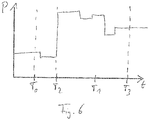
Fig. 6 kommt es zum Zeitpunkt T2, der innerhalb des Zeitraums T0 bis T1 liegt, erneut zu einem großen Sprung nach oben, sodass das Gewichtungsmodul 22 die Gewichtung des externen Vorgabewerts 24 auf 50 % reduziert. Zum Zeitpunkt T2 wird eine Anschlusszeitspanne T2 bis T3 in Gang gesetzt. Innerhalb der Anschlusszeitspanne T2 bis T3 treten mehrere weitere Richtungsänderungen auf. Das Gewichtungsmodul 22 wird dadurch veranlasst, die Gewichtung des externen Vorgabewerts 24 weiter zu reduzieren, beispielsweise auf 0 %. Der Stellwert 25 des Reglers 21 wird dann durch den externen Vorgabewert 24 nicht beeinflusst, sondern wird unverändert zu den Stellgliedern 16, 18, 19 geleitet.
Claims (14)
- Verfahren zum Steuern einer Windenergieanlage, bei dem in einem geschlossenen Regelkreis (21, 26) ein Stellwert (25) für eine Stellgröße (16, 18, 19) der Windenergieanlage ermittelt wird und bei dem die Stellgröße (16, 18, 19) gemäß einem mit einer Gewichtung versehenen externen Vorgabewert (24) eingestellt wird, wobei bei einer Vorgabewertfolge mit wenigstens einer Richtungsänderung die Gewichtung des externen Vorgabewerts (24) vermindert wird, dadurch gekennzeichnet, dass die Gewichtung des externen Vorgabewerts (24) vermindert wird, wenn die eine Richtungsänderung oder die Mehrzahl von Richtungsänderungen innerhalb eines vorgegebenen zeitlichen Intervalls (T0, T1) auftritt.
- Verfahren nach Anspruch 1, dadurch gekennzeichnet, dass der externe Vorgabewert (24) dem Stellwert (25) überlagert wird.
- Verfahren nach Anspruch 1 oder 2, dadurch gekennzeichnet, dass der externe Vorgabewert (24) dem geschlossenen Regelkreis als Sollwert zugeführt wird.
- Verfahren nach einem der Ansprüche 1 bis 3, dadurch gekennzeichnet, dass die Gewichtung des externen Vorgabewerts (24) vermindert wird, wenn die Vorgabewertfolge eine Mehrzahl von Richtungsänderungen aufweist.
- Verfahren nach einem der Ansprüche 1 bis 4, dadurch gekennzeichnet, dass die Gewichtung des externen Vorgabewerts (24) vermindert wird, wenn die Vorgabewertfolge eine einzelne Richtungsänderung aufweist, sofern die Differenz zwischen zwei externen Vorgabewerten (24) der Vorgabewertfolge größer ist als ein vorgegebener Schwellwert.
- Verfahren nach Anspruch 5, dadurch gekennzeichnet, dass das zeitliche Intervall (T0, T1) ein gleitendes Intervall ist.
- Verfahren nach einem der Ansprüche 1 bis 6, dadurch gekennzeichnet, dass die Gewichtung des externen Vorgabewerts (24) vermindert wird, wenn entweder eine erste Anzahl von Richtungsänderungen innerhalb einer ersten vorgegebenen Zeitspanne auftritt, oder wenn innerhalb einer zweiten vorgegebenen Zeitspanne eine zweite Anzahl von Richtungsänderungen auftritt, bei der die Differenz der externen Vorgabewerte (24) größer ist als ein vorgegebener Schwellwert.
- Verfahren nach einem der Ansprüche 1 bis 7, dadurch gekennzeichnet, dass mit der ersten Verminderung der Gewichtung des externen Vorgabewerts (24) eine Anschlusszeitspanne (T2, T3) in Gang gesetzt wird und dass die Gewichtung des externen Vorgabewerts (24) stärker vermindert wird, wenn innerhalb der Anschlusszeitspanne (T2, T3) ein zweites Mal eine Bedingung für eine Verminderung der Gewichtung des externen Vorgabewerts (24) eintritt.
- Verfahren nach Anspruch 8, dadurch gekennzeichnet, dass mit der ersten Verminderung die Gewichtung auf einen Wert von 30 % bis 70 % verglichen mit einer Ausgangsgewichtung gesetzt wird und dass mit der zweiten Verminderung die Gewichtung auf einen Wert zwischen 0 % und 30 % verglichen mit der Ausgangsgewichtung gesetzt wird.
- Verfahren nach einem der Ansprüche 1 bis 9, dadurch gekennzeichnet, dass der externe Vorgabewert (24) sich auf die Wirkleistung und/oder die Blindleistung der Windenergieanlage bezieht.
- Verfahren nach einem der Ansprüche 1 bis 10, dadurch gekennzeichnet, dass der externe Vorgabewert (24) vorgegeben wird von einem Anschlussnetz, in das die Windenergieanlage elektrische Energie einspeist, oder vorgegeben wird von einer Steuerung eines Windparks, an die Windenergieanlage angeschlossen ist, oder vorgegeben wird von einer übergeordneten Steuerungsebene der Windenergieanlage.
- Verfahren nach einem der Ansprüche 1 bis 11, dadurch gekennzeichnet, dass Einstellen der Gewichtung dadurch erfolgt, dass ein Verstärkungsfaktor angepasst wird, mit dem der externe Vorgabewert (24) dem geschlossenen Regelkreis zugeführt wird.
- Verfahren nach einem der Ansprüche 1 bis 12, dadurch gekennzeichnet, dass Einstellen der Gewichtung dadurch erfolgt, dass die Vorgabewertfolge geglättet oder gefiltert wird.
- Steuerungssystem für eine Windenergieanlage, mit einem Regler (21), der in einem geschlossenen Regelkreis (21, 26) einen Stellwert (25) für eine Stellgröße (16, 18, 19) der Windenergieanlage ermittelt, und mit einem Gewichtungsmodul (22), das dazu ausgelegt ist, dem geschlossenen Regelkreis (21, 16) einen externen Vorgabewert (24) mit einer Gewichtung zuzuführen, so dass die Stellgröße (16, 18, 21) gemäß dem mit der Gewichtung versehenen externen Vorgabewert (24) eingestellt wird, dadurch gekennzeichnet, dass das Gewichtungsmodul (22) dazu ausgelegt ist, die Gewichtung des externen Vorgabewerts (24) in Abhängigkeit von einer Richtungsänderung in einer Vorgabewertfolge zu vermindern, wenn die eine Richtungsänderung oder die Mehrzahl von Richtungsänderungen innerhalb eines vorgegebenen zeitlichen Intervalls (T0, T1) auftritt..
Applications Claiming Priority (1)
| Application Number | Priority Date | Filing Date | Title |
|---|---|---|---|
| DE102018000156.4A DE102018000156A1 (de) | 2018-01-11 | 2018-01-11 | Verfahren und System zum Steuern einer Windenergieanlage |
Publications (2)
| Publication Number | Publication Date |
|---|---|
| EP3511564A1 EP3511564A1 (de) | 2019-07-17 |
| EP3511564B1 true EP3511564B1 (de) | 2020-07-15 |
Family
ID=65010589
Family Applications (1)
| Application Number | Title | Priority Date | Filing Date |
|---|---|---|---|
| EP19150713.6A Not-in-force EP3511564B1 (de) | 2018-01-11 | 2019-01-08 | Verfahren und system zum steuern einer windenergieanlage |
Country Status (3)
| Country | Link |
|---|---|
| EP (1) | EP3511564B1 (de) |
| DE (1) | DE102018000156A1 (de) |
| ES (1) | ES2822282T3 (de) |
Family Cites Families (3)
| Publication number | Priority date | Publication date | Assignee | Title |
|---|---|---|---|---|
| DE19908250A1 (de) * | 1999-02-25 | 2000-08-31 | Zahnradfabrik Friedrichshafen | Übersetzungsregelung eines stufenlosen Automatgetriebes |
| DE102013105444A1 (de) * | 2012-11-13 | 2014-05-15 | Sma Solar Technology Ag | Verfahren zur spannungsstabilisierung in einem elektrischen verteilnetz und vorrichtung hierzu |
| DE102016103101A1 (de) * | 2016-02-23 | 2017-08-24 | Wobben Properties Gmbh | Verfahren und Windparkregelungsmodul zum Regeln eines Windparks |
-
2018
- 2018-01-11 DE DE102018000156.4A patent/DE102018000156A1/de not_active Withdrawn
-
2019
- 2019-01-08 ES ES19150713T patent/ES2822282T3/es active Active
- 2019-01-08 EP EP19150713.6A patent/EP3511564B1/de not_active Not-in-force
Non-Patent Citations (1)
| Title |
|---|
| None * |
Also Published As
| Publication number | Publication date |
|---|---|
| DE102018000156A1 (de) | 2019-07-11 |
| ES2822282T3 (es) | 2021-04-30 |
| EP3511564A1 (de) | 2019-07-17 |
Similar Documents
| Publication | Publication Date | Title |
|---|---|---|
| EP2989708B1 (de) | Verfahren zum einspeisen elektrischer leistung in ein elektrisches versorgungsnetz | |
| EP2244348B1 (de) | Windpark mit mehreren Windenergieanlagen sowie Verfahren zur Regelung der Einspeisung von einem Windpark | |
| EP2872777B1 (de) | Verfahren zum steuern eines elektrischen erzeugers | |
| EP2556247B1 (de) | Dynamische trägheitsregelung | |
| EP2841766B1 (de) | Windpark mit schneller lokaler blindleistungsregelung | |
| EP2028368B1 (de) | Windpark mit einer Vielzahl von Windenergieanlagen sowie Verfahren zum Betreiben des Windsparks | |
| EP2093419B1 (de) | Verfahren zum Betreiben einer Windenergieanlage und Windenergieanlage | |
| EP2267302B1 (de) | Windpark und Verfahren zum Regeln eines Windparks | |
| EP2989321B1 (de) | Verfahren zum steuern eines windparks | |
| EP3156646B1 (de) | Windenergieanlage mit einem drehzahl- und einem generatorregler | |
| WO2015106994A1 (de) | Verfahren und regel- und/oder steuereinrichtung zum betrieb einer windenergieanlage und/oder eines windparks sowie windenergieanlage und windpark | |
| EP3526891B1 (de) | Regelvorrichtung für einen gleichspannungskonverter, gleichspannungskonverter und verfahren zur regelung eines gleichspannungskonverters | |
| EP3420222B1 (de) | Verfahren und windparkregelungsmodul zum regeln eines windparks | |
| DE102011000148A1 (de) | System und Verfahren zum Steuern eines Hochfahrvorgangs einer Gasturbine | |
| EP1892412A1 (de) | Verfahren zum Betreiben von Windenergieanlagen | |
| DE102006032389A1 (de) | Windpark sowie Verfahren zum Betreiben eines Windparks | |
| DE102016007098A1 (de) | Windpark mit schneller Reaktion auf Netzparameteränderungen und Verfahren hierfür | |
| EP3097622B1 (de) | Windparkregelung mit verbessertem sollwertsprungverhalten | |
| EP3511564B1 (de) | Verfahren und system zum steuern einer windenergieanlage | |
| CH619509A5 (de) | ||
| EP3376026B1 (de) | Verfahren zur regelung der wirkleistungsabgabe eines windparks sowie ein entsprechender windpark | |
| EP3086429B1 (de) | Steuerungssystem für eine windenergieanlage oder einen windpark und steuerungsverfahren | |
| WO2020148313A1 (de) | Windenergieanlage zum einspeisen elektrischer leistung in ein elektrisches versorgungsnetz | |
| WO2020144169A1 (de) | Windenergieanlage | |
| EP3068006B1 (de) | Steuerung für eine windenergieanlage/einen windpark und steuerverfahren |
Legal Events
| Date | Code | Title | Description |
|---|---|---|---|
| PUAI | Public reference made under article 153(3) epc to a published international application that has entered the european phase |
Free format text: ORIGINAL CODE: 0009012 |
|
| STAA | Information on the status of an ep patent application or granted ep patent |
Free format text: STATUS: THE APPLICATION HAS BEEN PUBLISHED |
|
| AK | Designated contracting states |
Kind code of ref document: A1 Designated state(s): AL AT BE BG CH CY CZ DE DK EE ES FI FR GB GR HR HU IE IS IT LI LT LU LV MC MK MT NL NO PL PT RO RS SE SI SK SM TR |
|
| AX | Request for extension of the european patent |
Extension state: BA ME |
|
| STAA | Information on the status of an ep patent application or granted ep patent |
Free format text: STATUS: REQUEST FOR EXAMINATION WAS MADE |
|
| 17P | Request for examination filed |
Effective date: 20191017 |
|
| RBV | Designated contracting states (corrected) |
Designated state(s): AL AT BE BG CH CY CZ DE DK EE ES FI FR GB GR HR HU IE IS IT LI LT LU LV MC MK MT NL NO PL PT RO RS SE SI SK SM TR |
|
| GRAP | Despatch of communication of intention to grant a patent |
Free format text: ORIGINAL CODE: EPIDOSNIGR1 |
|
| STAA | Information on the status of an ep patent application or granted ep patent |
Free format text: STATUS: GRANT OF PATENT IS INTENDED |
|
| INTG | Intention to grant announced |
Effective date: 20200131 |
|
| GRAS | Grant fee paid |
Free format text: ORIGINAL CODE: EPIDOSNIGR3 |
|
| GRAA | (expected) grant |
Free format text: ORIGINAL CODE: 0009210 |
|
| STAA | Information on the status of an ep patent application or granted ep patent |
Free format text: STATUS: THE PATENT HAS BEEN GRANTED |
|
| AK | Designated contracting states |
Kind code of ref document: B1 Designated state(s): AL AT BE BG CH CY CZ DE DK EE ES FI FR GB GR HR HU IE IS IT LI LT LU LV MC MK MT NL NO PL PT RO RS SE SI SK SM TR |
|
| REG | Reference to a national code |
Ref country code: CH Ref legal event code: EP Ref country code: GB Ref legal event code: FG4D Free format text: NOT ENGLISH |
|
| REG | Reference to a national code |
Ref country code: IE Ref legal event code: FG4D Free format text: LANGUAGE OF EP DOCUMENT: GERMAN |
|
| REG | Reference to a national code |
Ref country code: DE Ref legal event code: R096 Ref document number: 502019000084 Country of ref document: DE |
|
| REG | Reference to a national code |
Ref country code: AT Ref legal event code: REF Ref document number: 1291306 Country of ref document: AT Kind code of ref document: T Effective date: 20200815 |
|
| REG | Reference to a national code |
Ref country code: DK Ref legal event code: T3 Effective date: 20200929 |
|
| REG | Reference to a national code |
Ref country code: LT Ref legal event code: MG4D |
|
| RAP2 | Party data changed (patent owner data changed or rights of a patent transferred) |
Owner name: SIEMENS GAMESA RENEWABLE ENERGY SERVICE GMBH |
|
| REG | Reference to a national code |
Ref country code: NL Ref legal event code: MP Effective date: 20200715 |
|
| PG25 | Lapsed in a contracting state [announced via postgrant information from national office to epo] |
Ref country code: FI Free format text: LAPSE BECAUSE OF FAILURE TO SUBMIT A TRANSLATION OF THE DESCRIPTION OR TO PAY THE FEE WITHIN THE PRESCRIBED TIME-LIMIT Effective date: 20200715 Ref country code: GR Free format text: LAPSE BECAUSE OF FAILURE TO SUBMIT A TRANSLATION OF THE DESCRIPTION OR TO PAY THE FEE WITHIN THE PRESCRIBED TIME-LIMIT Effective date: 20201016 Ref country code: NO Free format text: LAPSE BECAUSE OF FAILURE TO SUBMIT A TRANSLATION OF THE DESCRIPTION OR TO PAY THE FEE WITHIN THE PRESCRIBED TIME-LIMIT Effective date: 20201015 Ref country code: PT Free format text: LAPSE BECAUSE OF FAILURE TO SUBMIT A TRANSLATION OF THE DESCRIPTION OR TO PAY THE FEE WITHIN THE PRESCRIBED TIME-LIMIT Effective date: 20201116 Ref country code: HR Free format text: LAPSE BECAUSE OF FAILURE TO SUBMIT A TRANSLATION OF THE DESCRIPTION OR TO PAY THE FEE WITHIN THE PRESCRIBED TIME-LIMIT Effective date: 20200715 Ref country code: SE Free format text: LAPSE BECAUSE OF FAILURE TO SUBMIT A TRANSLATION OF THE DESCRIPTION OR TO PAY THE FEE WITHIN THE PRESCRIBED TIME-LIMIT Effective date: 20200715 Ref country code: BG Free format text: LAPSE BECAUSE OF FAILURE TO SUBMIT A TRANSLATION OF THE DESCRIPTION OR TO PAY THE FEE WITHIN THE PRESCRIBED TIME-LIMIT Effective date: 20201015 Ref country code: LT Free format text: LAPSE BECAUSE OF FAILURE TO SUBMIT A TRANSLATION OF THE DESCRIPTION OR TO PAY THE FEE WITHIN THE PRESCRIBED TIME-LIMIT Effective date: 20200715 |
|
| PG25 | Lapsed in a contracting state [announced via postgrant information from national office to epo] |
Ref country code: PL Free format text: LAPSE BECAUSE OF FAILURE TO SUBMIT A TRANSLATION OF THE DESCRIPTION OR TO PAY THE FEE WITHIN THE PRESCRIBED TIME-LIMIT Effective date: 20200715 Ref country code: LV Free format text: LAPSE BECAUSE OF FAILURE TO SUBMIT A TRANSLATION OF THE DESCRIPTION OR TO PAY THE FEE WITHIN THE PRESCRIBED TIME-LIMIT Effective date: 20200715 Ref country code: RS Free format text: LAPSE BECAUSE OF FAILURE TO SUBMIT A TRANSLATION OF THE DESCRIPTION OR TO PAY THE FEE WITHIN THE PRESCRIBED TIME-LIMIT Effective date: 20200715 Ref country code: IS Free format text: LAPSE BECAUSE OF FAILURE TO SUBMIT A TRANSLATION OF THE DESCRIPTION OR TO PAY THE FEE WITHIN THE PRESCRIBED TIME-LIMIT Effective date: 20201115 |
|
| PG25 | Lapsed in a contracting state [announced via postgrant information from national office to epo] |
Ref country code: NL Free format text: LAPSE BECAUSE OF FAILURE TO SUBMIT A TRANSLATION OF THE DESCRIPTION OR TO PAY THE FEE WITHIN THE PRESCRIBED TIME-LIMIT Effective date: 20200715 |
|
| REG | Reference to a national code |
Ref country code: DE Ref legal event code: R097 Ref document number: 502019000084 Country of ref document: DE |
|
| PG25 | Lapsed in a contracting state [announced via postgrant information from national office to epo] |
Ref country code: IT Free format text: LAPSE BECAUSE OF FAILURE TO SUBMIT A TRANSLATION OF THE DESCRIPTION OR TO PAY THE FEE WITHIN THE PRESCRIBED TIME-LIMIT Effective date: 20200715 Ref country code: SM Free format text: LAPSE BECAUSE OF FAILURE TO SUBMIT A TRANSLATION OF THE DESCRIPTION OR TO PAY THE FEE WITHIN THE PRESCRIBED TIME-LIMIT Effective date: 20200715 Ref country code: EE Free format text: LAPSE BECAUSE OF FAILURE TO SUBMIT A TRANSLATION OF THE DESCRIPTION OR TO PAY THE FEE WITHIN THE PRESCRIBED TIME-LIMIT Effective date: 20200715 Ref country code: RO Free format text: LAPSE BECAUSE OF FAILURE TO SUBMIT A TRANSLATION OF THE DESCRIPTION OR TO PAY THE FEE WITHIN THE PRESCRIBED TIME-LIMIT Effective date: 20200715 Ref country code: CZ Free format text: LAPSE BECAUSE OF FAILURE TO SUBMIT A TRANSLATION OF THE DESCRIPTION OR TO PAY THE FEE WITHIN THE PRESCRIBED TIME-LIMIT Effective date: 20200715 |
|
| REG | Reference to a national code |
Ref country code: ES Ref legal event code: FG2A Ref document number: 2822282 Country of ref document: ES Kind code of ref document: T3 Effective date: 20210430 |
|
| PLBE | No opposition filed within time limit |
Free format text: ORIGINAL CODE: 0009261 |
|
| STAA | Information on the status of an ep patent application or granted ep patent |
Free format text: STATUS: NO OPPOSITION FILED WITHIN TIME LIMIT |
|
| PG25 | Lapsed in a contracting state [announced via postgrant information from national office to epo] |
Ref country code: AL Free format text: LAPSE BECAUSE OF FAILURE TO SUBMIT A TRANSLATION OF THE DESCRIPTION OR TO PAY THE FEE WITHIN THE PRESCRIBED TIME-LIMIT Effective date: 20200715 |
|
| 26N | No opposition filed |
Effective date: 20210416 |
|
| PG25 | Lapsed in a contracting state [announced via postgrant information from national office to epo] |
Ref country code: SK Free format text: LAPSE BECAUSE OF FAILURE TO SUBMIT A TRANSLATION OF THE DESCRIPTION OR TO PAY THE FEE WITHIN THE PRESCRIBED TIME-LIMIT Effective date: 20200715 |
|
| PG25 | Lapsed in a contracting state [announced via postgrant information from national office to epo] |
Ref country code: MC Free format text: LAPSE BECAUSE OF FAILURE TO SUBMIT A TRANSLATION OF THE DESCRIPTION OR TO PAY THE FEE WITHIN THE PRESCRIBED TIME-LIMIT Effective date: 20200715 Ref country code: SI Free format text: LAPSE BECAUSE OF FAILURE TO SUBMIT A TRANSLATION OF THE DESCRIPTION OR TO PAY THE FEE WITHIN THE PRESCRIBED TIME-LIMIT Effective date: 20200715 |
|
| PG25 | Lapsed in a contracting state [announced via postgrant information from national office to epo] |
Ref country code: LU Free format text: LAPSE BECAUSE OF NON-PAYMENT OF DUE FEES Effective date: 20210108 |
|
| REG | Reference to a national code |
Ref country code: BE Ref legal event code: MM Effective date: 20210131 |
|
| PG25 | Lapsed in a contracting state [announced via postgrant information from national office to epo] |
Ref country code: IE Free format text: LAPSE BECAUSE OF NON-PAYMENT OF DUE FEES Effective date: 20210108 |
|
| REG | Reference to a national code |
Ref country code: DE Ref legal event code: R081 Ref document number: 502019000084 Country of ref document: DE Owner name: SIEMENS GAMESA RENEWABLE ENERGY SERVICE GMBH, DE Free format text: FORMER OWNER: SENVION GMBH, 22297 HAMBURG, DE |
|
| PG25 | Lapsed in a contracting state [announced via postgrant information from national office to epo] |
Ref country code: BE Free format text: LAPSE BECAUSE OF NON-PAYMENT OF DUE FEES Effective date: 20210131 |
|
| REG | Reference to a national code |
Ref country code: CH Ref legal event code: PL |
|
| PG25 | Lapsed in a contracting state [announced via postgrant information from national office to epo] |
Ref country code: LI Free format text: LAPSE BECAUSE OF NON-PAYMENT OF DUE FEES Effective date: 20220131 Ref country code: CH Free format text: LAPSE BECAUSE OF NON-PAYMENT OF DUE FEES Effective date: 20220131 |
|
| PGFP | Annual fee paid to national office [announced via postgrant information from national office to epo] |
Ref country code: FR Payment date: 20230123 Year of fee payment: 5 Ref country code: ES Payment date: 20230216 Year of fee payment: 5 Ref country code: DK Payment date: 20230123 Year of fee payment: 5 |
|
| PGFP | Annual fee paid to national office [announced via postgrant information from national office to epo] |
Ref country code: GB Payment date: 20230124 Year of fee payment: 5 Ref country code: DE Payment date: 20230119 Year of fee payment: 5 |
|
| PG25 | Lapsed in a contracting state [announced via postgrant information from national office to epo] |
Ref country code: CY Free format text: LAPSE BECAUSE OF FAILURE TO SUBMIT A TRANSLATION OF THE DESCRIPTION OR TO PAY THE FEE WITHIN THE PRESCRIBED TIME-LIMIT Effective date: 20200715 |
|
| PG25 | Lapsed in a contracting state [announced via postgrant information from national office to epo] |
Ref country code: HU Free format text: LAPSE BECAUSE OF FAILURE TO SUBMIT A TRANSLATION OF THE DESCRIPTION OR TO PAY THE FEE WITHIN THE PRESCRIBED TIME-LIMIT; INVALID AB INITIO Effective date: 20190108 |
|
| REG | Reference to a national code |
Ref country code: GB Ref legal event code: 732E Free format text: REGISTERED BETWEEN 20230727 AND 20230802 |
|
| PG25 | Lapsed in a contracting state [announced via postgrant information from national office to epo] |
Ref country code: MK Free format text: LAPSE BECAUSE OF FAILURE TO SUBMIT A TRANSLATION OF THE DESCRIPTION OR TO PAY THE FEE WITHIN THE PRESCRIBED TIME-LIMIT Effective date: 20200715 |
|
| REG | Reference to a national code |
Ref country code: DE Ref legal event code: R119 Ref document number: 502019000084 Country of ref document: DE |
|
| REG | Reference to a national code |
Ref country code: DK Ref legal event code: EBP Effective date: 20240131 |
|
| GBPC | Gb: european patent ceased through non-payment of renewal fee |
Effective date: 20240108 |
|
| PG25 | Lapsed in a contracting state [announced via postgrant information from national office to epo] |
Ref country code: MT Free format text: LAPSE BECAUSE OF FAILURE TO SUBMIT A TRANSLATION OF THE DESCRIPTION OR TO PAY THE FEE WITHIN THE PRESCRIBED TIME-LIMIT Effective date: 20200715 |
|
| PG25 | Lapsed in a contracting state [announced via postgrant information from national office to epo] |
Ref country code: DE Free format text: LAPSE BECAUSE OF NON-PAYMENT OF DUE FEES Effective date: 20240801 |
|
| PG25 | Lapsed in a contracting state [announced via postgrant information from national office to epo] |
Ref country code: GB Free format text: LAPSE BECAUSE OF NON-PAYMENT OF DUE FEES Effective date: 20240108 |
|
| PG25 | Lapsed in a contracting state [announced via postgrant information from national office to epo] |
Ref country code: FR Free format text: LAPSE BECAUSE OF NON-PAYMENT OF DUE FEES Effective date: 20240131 |
|
| PG25 | Lapsed in a contracting state [announced via postgrant information from national office to epo] |
Ref country code: GB Free format text: LAPSE BECAUSE OF NON-PAYMENT OF DUE FEES Effective date: 20240108 Ref country code: FR Free format text: LAPSE BECAUSE OF NON-PAYMENT OF DUE FEES Effective date: 20240131 Ref country code: DE Free format text: LAPSE BECAUSE OF NON-PAYMENT OF DUE FEES Effective date: 20240801 |
|
| PG25 | Lapsed in a contracting state [announced via postgrant information from national office to epo] |
Ref country code: DK Free format text: LAPSE BECAUSE OF NON-PAYMENT OF DUE FEES Effective date: 20240131 |
|
| PG25 | Lapsed in a contracting state [announced via postgrant information from national office to epo] |
Ref country code: DK Free format text: LAPSE BECAUSE OF NON-PAYMENT OF DUE FEES Effective date: 20240131 |
|
| REG | Reference to a national code |
Ref country code: ES Ref legal event code: FD2A Effective date: 20250226 |
|
| REG | Reference to a national code |
Ref country code: AT Ref legal event code: MM01 Ref document number: 1291306 Country of ref document: AT Kind code of ref document: T Effective date: 20240108 |
|
| PG25 | Lapsed in a contracting state [announced via postgrant information from national office to epo] |
Ref country code: ES Free format text: LAPSE BECAUSE OF NON-PAYMENT OF DUE FEES Effective date: 20240109 |
|
| PG25 | Lapsed in a contracting state [announced via postgrant information from national office to epo] |
Ref country code: AT Free format text: LAPSE BECAUSE OF NON-PAYMENT OF DUE FEES Effective date: 20240108 |
|
| PG25 | Lapsed in a contracting state [announced via postgrant information from national office to epo] |
Ref country code: TR Free format text: LAPSE BECAUSE OF FAILURE TO SUBMIT A TRANSLATION OF THE DESCRIPTION OR TO PAY THE FEE WITHIN THE PRESCRIBED TIME-LIMIT Effective date: 20200715 |
|
| PGFP | Annual fee paid to national office [announced via postgrant information from national office to epo] |
Ref country code: AT Payment date: 20260410 Year of fee payment: 5 |