EP3583712B1 - Procédé et appareil d'ajustement de cqi sensible au transfert dans des réseaux sans fil - Google Patents
Procédé et appareil d'ajustement de cqi sensible au transfert dans des réseaux sans fil Download PDFInfo
- Publication number
- EP3583712B1 EP3583712B1 EP17710173.0A EP17710173A EP3583712B1 EP 3583712 B1 EP3583712 B1 EP 3583712B1 EP 17710173 A EP17710173 A EP 17710173A EP 3583712 B1 EP3583712 B1 EP 3583712B1
- Authority
- EP
- European Patent Office
- Prior art keywords
- information
- predicted
- serving
- cqi
- confidence interval
- Prior art date
- Legal status (The legal status is an assumption and is not a legal conclusion. Google has not performed a legal analysis and makes no representation as to the accuracy of the status listed.)
- Active
Links
Images




Classifications
-
- H—ELECTRICITY
- H04—ELECTRIC COMMUNICATION TECHNIQUE
- H04L—TRANSMISSION OF DIGITAL INFORMATION, e.g. TELEGRAPHIC COMMUNICATION
- H04L1/00—Arrangements for detecting or preventing errors in the information received
- H04L1/0001—Systems modifying transmission characteristics according to link quality, e.g. power backoff
- H04L1/0023—Systems modifying transmission characteristics according to link quality, e.g. power backoff characterised by the signalling
- H04L1/0026—Transmission of channel quality indication
-
- H—ELECTRICITY
- H04—ELECTRIC COMMUNICATION TECHNIQUE
- H04B—TRANSMISSION
- H04B17/00—Monitoring; Testing
- H04B17/30—Monitoring; Testing of propagation channels
- H04B17/309—Measuring or estimating channel quality parameters
- H04B17/336—Signal-to-interference ratio [SIR] or carrier-to-interference ratio [CIR]
-
- H—ELECTRICITY
- H04—ELECTRIC COMMUNICATION TECHNIQUE
- H04W—WIRELESS COMMUNICATION NETWORKS
- H04W36/00—Hand-off or reselection arrangements
- H04W36/0005—Control or signalling for completing the hand-off
- H04W36/0055—Transmission or use of information for re-establishing the radio link
-
- H—ELECTRICITY
- H04—ELECTRIC COMMUNICATION TECHNIQUE
- H04W—WIRELESS COMMUNICATION NETWORKS
- H04W36/00—Hand-off or reselection arrangements
- H04W36/16—Performing reselection for specific purposes
- H04W36/20—Performing reselection for specific purposes for optimising the interference level
Definitions
- the invention relates to the field of wireless communications, and more particularly to an apparatus, a method and a wireless communication system for adjusting the quality of a communication channel between a client device and a serving device, as well as such a client device and serving device.
- US 2006/0105717 A1 (KWON YOUNG-HOON [KR] ET AL), 18 May 2006 (2006-05-18) relates to a method and apparatus for determining a data rate in a cellular mobile communication system using a smart antenna, and in particular, to a method and apparatus for efficiently and stably allocating an appropriate data rate to a mobile station (MS) despite time-variant other-cell interference from neighbour base stations (BSs) arising from the use of smart antennas in the BSs.
- MS mobile station
- BSs neighbour base stations
- GB 2504739 A (VODAPHONE IP LICENSING LTD [GB]), 12 February 2014 (2014-02-12) relates to a CQI adjustment to take into consideration the changes in radio conditions between the time of receiving of a CQI report and the time of using it for the purpose of scheduling.
- the communication systems automatically adapt their transmission to their propagation channel. As those channels are highly unstable, frequent feedbacks are performed through channel quality indicator (CQI) measurements performed on the transmitted data in the downlink.
- CQI channel quality indicator
- the computation of the CQI is based on the signal-to-interference-plus-noise ratio (SINR), which takes different degradation terms, such as propagation path-loss, shadowing, fast fading and random inter-cell interference factors, into consideration.
- SINR signal-to-interference-plus-noise ratio
- This interference can usually be regarded as a noise mainly caused by the use of inter-cell interference coordination schemes. Nevertheless, this assumption does not hold anymore when the UE device gets closer to the cell edge. In fact, in these overlapping regions, the interference component due to the transmission of neighboring BSs becomes almost equivalent to the useful signal received from the serving BS and aimed at the considered UE device.
- the SINR is highly affected by the interference component.
- the perceived interference level highly depends on the load of the neighboring BSs, which is related to the requested traffic of their attached UE devices as well as their respective schedulers.
- the reported CQI at a given time slot N can be drastically different from the CQI at a later time N + 1.
- the performance loss is even more important at the cell edge and the usage of the CQI that has been fed back at a time slot N would become obsolete at a later time slot N + 1.
- the proposed solutions consider a set of observations as an input. Based on these input observations collected up to an instant N, an extrapolation is carried out in order to estimate the potential values at the next instants N + 1, ..., N + L, where L is the prediction horizon value.
- This object is solved by an apparatus of claim 1, a method of claim 10, a client device according to claim 5, a serving device according to claim 6, a wireless communication system according to claims 8 or 9, and a computer program according to claim 13.
- the invention relates to an apparatus for adjusting channel quality indicator (CQI) measurements of a channel between a client device and a serving device within a wireless communication system.
- the apparatus comprises a controller and an adjustment function entity.
- the controller is adapted to receive, from the client device, a first information and, when the client device is in a handover (HO) zone, a second information, and to transmit, according to a switching sequence, either the first information alone or the first information together with the second information.
- the adjustment function entity is adapted to receive, from the controller according to the switching sequence, the first information together with the second information, and to adjust the first information based on the second information by modifying said first information or keeping it unchanged.
- the first information is related to the CQI measurements and the second information is related to the HO.
- the apparatus may be an adjustment device comprising the controller and the adjustment function entity.
- the first information may consist of conventional CQI adjustment inputs such as the CQI measurements and their target usage such as a radio resource scheduling and an adaptive modulation and coding (AMC), and the second information may consist of reference signal measurements such as reference signal received power (RSRP) and reference signal received quality (RSRQ) along with any HO-related event such as a verification of a predefined HO event condition.
- RSRP reference signal received power
- RSRQ reference signal received quality
- the controller is adapted to deactivate any adjustment or correction when the client device is in the HO zone, and the first information alone is transmitted towards an output of the apparatus.
- the second information is taken into consideration in order to detect that the client device enters the HO zone, and the deactivation of any adjustment or correction in the network may allow the system performance to be improved if the gap between the used first information related to a CQI measurement and an adjusted first information related to the CQI measurement were to be huge.
- the first information alone corresponds to the first information received by the controller when the client device is in the HO zone, and is transmitted as such from the controller towards an output of the apparatus.
- the controller is adapted to activate the adjustment function entity when the client device is in the HO zone, and the first information together with the second information are transmitted towards the adjustment function entity.
- the additional information brought by the second information may be used by the adjustment function entity in order to adjust the first information, and thereby the CQI measurements.
- the adjusted first information resulting from the adjustment of the first information based on the second information is transmitted towards the output of the apparatus.
- the adjustment of the first information is based on a confidence interval.
- the adjustment function entity is adapted to adjust the first information by deriving an estimated signal-to-noise ratio (SNR) from the first information, by computing the confidence interval around the estimated SNR, by deriving an estimated signal-to-interference-plus-noise ratio (SINR) from the second information, by keeping the first information unchanged if the estimated SINR is within the confidence interval, and by modifying the first information through a correction into a corrected first information if the estimated SINR is outside the confidence interval.
- SNR estimated signal-to-noise ratio
- SINR estimated signal-to-interference-plus-noise ratio
- the adjustment function entity is adapted to adjust the first information by performing a prediction procedure applied to the first information as to obtain a predicted first information, the prediction procedure consisting in an estimation of the first information at a predefined future time, by performing another prediction procedure applied to the second information as to obtain a predicted second information, the other prediction procedure consisting in an estimation of the second information at the predefined future time, by performing a quantization procedure applied to the predicted second information as to obtain a quantized predicted second information, by computing the confidence interval around the predicted first information, by, if the quantized predicted second information is within the confidence interval, keeping the predicted first information unchanged and modifying the first information into the predicted first information, and by, if the quantized predicted second information is outside the confidence interval, correcting the predicted first information into a corrected predicted first information and modifying the first information into the corrected predicted first information.
- the invention relates to a client device comprising the apparatus as claimed in any one of the implementations of the first aspect.
- the apparatus for adjusting the CQI measurements of a channel between the client device and the serving device may be located inside the client device instead of inside the serving device.
- the invention relates to a serving device comprising the apparatus as claimed in any one of the implementations of the first aspect.
- the apparatus for adjusting the CQI measurements of a channel between the client device and the serving device may be located inside the serving device instead of inside the client device.
- the serving device is a base station (BS) or an evolved nodeB (eNodeB) or any other network-capable entity.
- BS base station
- eNodeB evolved nodeB
- the apparatus may be located at or moved towards any entity of the network level, for example, in the case of a cloud radio access network (RAN).
- RAN radio access network
- the invention relates to a wireless communication system comprising one or more client devices as individually claimed in the second aspect, and one or more devices communicating with the one or more client devices and being serving devices with respect to the one or more client devices.
- the invention relates to a wireless communication system comprising one or more serving devices as individually claimed in any one of the third aspect and the first implementation of the serving device according to the third aspect, and one or more client devices communicating with the one or more serving devices.
- the invention relates to a method comprising the step of receiving, at a controller and from the client device, a first information and, when the client device is in a handover (HO) zone, a second information, the step of transmitting, according to a switching sequence, either the first information alone or the first information together with the second information, the step of receiving, at an adjustment function entity and from the controller according to the switching sequence, the first information together with the second information, and the step of adjusting, at the adjustment function entity, the first information based on the second information by modifying said first information or keeping it unchanged.
- the first information is related to the CQI measurements and the second information is related to the HO.
- the method comprises deactivating any adjustment or correction when the client device is in the HO zone, and the first information alone is transmitted towards an output of the apparatus.
- the method comprises activating the adjustment function entity when the client device is in the HO zone, and the first information together with the second information are transmitted towards the adjustment function entity.
- the step of adjusting the first information is based on a confidence interval.
- the step of adjusting the first information comprises the step of deriving an estimated signal-to-noise ratio (SNR) from the first information, the step of computing the confidence interval around the estimated SNR, the step of deriving an estimated signal-to-interference-plus-noise ratio (SINR) from the second information, the step of keeping the first information unchanged if the estimated SINR is within the confidence interval, and the step of modifying the first information through a correction into a corrected first information if the estimated SINR is outside the confidence interval.
- SNR estimated signal-to-noise ratio
- SINR estimated signal-to-interference-plus-noise ratio
- the step of adjusting the first information comprises the step of performing a prediction procedure applied to the first information as to obtain a predicted first information, the prediction procedure consisting in an estimation of the first information at a predefined future time, the step of performing another prediction procedure applied to the second information as to obtain a predicted second information, the other prediction procedure consisting in an estimation of the second information at the predefined future time, the step of performing a quantization procedure applied to the predicted second information as to obtain a quantized predicted second information, the step of computing the confidence interval around the predicted first information, the step, if the quantized predicted second information is within the confidence interval, of keeping the predicted first information unchanged and modifying the first information into the predicted first information, and the step, if the quantized predicted second information is outside the confidence interval, of correcting the predicted first information into a corrected predicted first information and modifying the first information into the corrected predicted first information.
- the step of performing another prediction procedure applied to the second information comprises although not claimed as such deriving an estimated signal-to-interference-plus-noise ratio (SINR) from the second information, and obtaining a predicted estimated SINR as the predicted second information.
- SINR estimated signal-to-interference-plus-noise ratio
- the present invention may also be used for an optimal initialization of the CQI measurements of the channel between this UE device and this new serving BS, and may by the way be used for an optimal initialization of the MCS selected.
- estimated CQI measurements may, at the target BS (i.e., the new serving BS), be derived only from the HO-related measurements as the CQI measurements are not yet available.
- estimated CQI measurements may then be adjusted (i.e., modified or kept unchanged) based on the available HO-related measurements using the method of the sixth aspect or any implementation of the method of the sixth aspect. Thereby, the convergence may be accelerated and the quality of the links may be enhanced in comparison with a static predefined initialization as it is done nowadays.
- the invention relates to a computer program comprising a program code for performing the method according to the sixth aspect or any one of the implementations of the sixth aspect when executed on a computer.
- the method can be performed in an automatic and repeatable manner.
- the computer program can be performed although not claimed as such by the above apparatuses.
- Fig. 1 shows a schematic block diagram illustrating the kinds of information reported from a user equipment (UE) device towards a base station (BS) according to an embodiment of the present invention.
- UE user equipment
- BS base station
- a client device may be specified as a UE device, which may be referred to as a client terminal or a mobile station.
- a serving device may be specified as a BS, which may be referred to as a cell.
- the client device which is defined with an identification value (id value), may be attached to its serving device through a dedicated channel communication.
- the serving device of the invention is not limited to a BS, and may be extended to an evolved nodeB (eNodeB) or any other network-capable entity.
- eNodeB evolved nodeB
- the first one is related to the channel quality indicator (CQI) and its target usage (e.g., adaptive modulation and coding (AMC), radio resource scheduling, and so forth).
- the second one is related to a handover (HO) during which the UE device moves from a currently located radio zone towards a neighboring radio zone through an overlapping region of the cell edge region of the serving BS and the cell edge region of one or more neighboring or target BSs.
- a neighboring or target BS may be defined as a BS that is in the vicinity of the serving BS and becomes the "new" serving BS once the UE device is detached from said "old" serving BS to be attached to said "new” serving BS.
- the communication with the UE device may be handed over from a cell towards another one.
- the UE device attached to the serving BS performs CQI measurements and reports an information related to these CQI measurements towards a first input terminal denoted by "in1" of an adjustment device located, in the present case, in the serving BS (step depicted by the number "1" in parentheses).
- the adjustment device may be located inside the UE device instead of inside the serving BS.
- the reported information which will be designated hereafter as the first information, gives an indication on the performed CQI measurements and the way (e.g., AMC, radio resource scheduling, and so forth) in which they are intended to be used.
- the CQI measurements are mandatory in the network in order to allow their target usage to be achieved.
- such usage may comprise an appropriate radio resource scheduling amongst a set of available radio resources, or an appropriate selection of a modulation and coding scheme (MCS) and its associated AMC for the downlink transmission from the serving BS towards the attached UE device.
- MCS modulation and coding scheme
- the CQI measurements will be adjusted through an adjustment of the first information by the adjustment device, and will be then transmitted from the output terminal denoted by "out" of the adjustment device towards the depicted entity allowing their usage in the network.
- these CQI measurements may be obtained using a link quality model such as the effective exponential signal-to-interference-plus-noise ratio (SINR) mapping (EESM), which allows to compress a set of instantaneous SINRs into a unique value corresponding to the effective signal-to-noise ratio (SNR), and to then map the effective SNR into an integer CQI.
- SINR signal-to-interference-plus-noise ratio
- SNR effective signal-to-noise ratio
- the granularity of the CQI report may be divided into a wide-band and a sub-band (also referred to as a narrow band), and the respective wide-band CQI and sub-band CQI are eventually reported from the UE device towards the serving BS either in an aperiodic manner upon a predefined trigger or in a periodic manner with standard values ranging from 10ms to 50ms.
- the UE device attached to the serving BS periodically performs measurements of signal level and quality on a reference signal by measuring either a reference signal received power (RSRP) or a reference signal received quality (RSRQ) or both in evolved universal terrestrial radio access network (E-UTRAN).
- RSRP reference signal received power
- RSRQ reference signal received quality
- E-UTRAN evolved universal terrestrial radio access network
- RSRP and RSRQ may, for example, be given by 3GPP TS 36.214 V13.0.0 Release 13.
- a predefined HO condition also referred to as a HO reporting criterion/event or a triggering criterion/event
- a typical reporting period value may, for example, be equal to 50ms.
- the predefined HO condition may be a long term evolution (LTE) event based upon either RSRP or RSRQ, such as the LTE event denoted by "A2", which is triggered when the serving cell (i.e., the serving BS) becomes worse than a threshold, and the LTE event denoted by "A3”, which is triggered when a neighboring cell (i.e., a neighboring BS) becomes better than the serving cell by a positive or negative offset.
- Other well-known reporting events such as the LTE events denoted by "A1", "A4" and "A5" may also define the predefined HO condition.
- the reported information which is a HO-related information and will be designated hereafter as the second information, gives an indication not only on the reference signal measurements but also on the HO reporting criteria/events.
- the second information is directed both towards a second input terminal, denoted by "in2", of the adjustment device located in the serving BS (step depicted by the number "2" in parentheses) and towards a HO decision unit (step depicted by the number "4" in parentheses) through which the serving BS verifies whether decision criteria are met. If met, the serving BS can then proceed to a HO execution by selecting the target BS and allowing the current communication between the UE device and the serving BS to be handed over from the serving BS towards the target BS.
- these reference signal measurements may be submitted to a double filtering procedure before reporting them from the UE device to the serving BS when the verification of the above-mentioned predefined HO condition is met.
- instantaneous RSRP and/or RSRQ measurements may be first filtered through a layer 1 (L1) filter having a filter coefficient denoted by "T", where L1 represents the physical layer of the radio interface.
- the L1 filtering procedure is usually a sliding-window filtering with a typical sliding-window size ranging from 200 to 400ms.
- the resulting L1 filtered RSRP and/or RSRQ measurements may be then filtered through a layer 3 (L3) filter having a filter coefficient denoted by "a”, where L3 represents the radio resource control (RRC) layer of the radio interface.
- RRC radio resource control
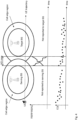
- Fig. 4 shows a schematic diagram illustrating the measurements reported over time by a UE device moving from its serving BS towards its target BS according to an embodiment of the present invention.
- the UE device moves along a trajectory from its serving BS, also sometimes referred to as its source BS, towards its target BS through an overlapping region of the cell edge regions of the respective serving and target BSs, where the overlapping region represents the depicted HO zone.
- the CQI measurements are reported as long as they are available, whereas the reference signal measurements (i.e., RSRP and/or RSRQ) are reported only when the UE device enters the HO zone and the verification of the predefined HO condition is met. All these CQI and reference signal measurements may be collected and stored in a dedicated database.
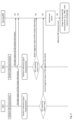
- Fig. 1 the steps that are numbered from (1) to (3) are illustrated at the network level in the schematic flow diagram of Fig. 5 in the case where multiple UE devices (each being identified by its own id value) are attached to the same serving BS, according to an embodiment of the present invention.
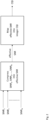
- Fig. 6 shows a detailed schematic view of the adjustment device of Fig. 1 according to an embodiment of the present invention.
- the adjustment device may comprise a controller and an adjustment function entity.
- the verification of the predefined HO condition is schematically represented by a switching device denoted by "K4", which is turned OFF when this verification is not met and turned ON when this verification is met.
- K4 is turned OFF when the UE device is outside the HO zone and turned ON when the UE device enters the HO zone and remains located therein.
- the controller may internally control three switching devices, respectively denoted by "K1", “K2” and "K3", according to a switching sequence featuring the embodiments of the present invention.
- the controller may be adapted to receive, from the UE device, the first information and, when the UE device is in the HO zone, the second information, and also adapted to transmit, according to the switching sequence, either the first information alone or the first information together with the second information.
- the adjustment function entity may be adapted to receive, from the controller according to the switching sequence, the first information together with the second information, and also adapted to adjust the first information based on the second information by modifying said first information or keeping it unchanged.
- each switching device amongst K1, K2 and K3 may be a respective single pole, single throw (SPST) switch.
- K1 may be a SPST switch and K2 together with K3 may be a double pole, single throw (DPST) switch.
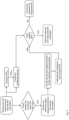
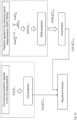
- Fig. 7 shows a schematic flow diagram illustrating a first method for adjusting the CQI measurements according to an embodiment of the present invention.
- the serving BS verifies whether the UE device enters the HO zone by verifying whether the second information (and through which the reference signal measurements) is provided at the input terminal (denoted by "in2") of the adjustment device.
- the UE device enters the HO zone, it is usually subject to undergo increasing levels of interference due to its trajectory towards the neighboring BSs and to get lower signal levels from its serving BS, which may lead to a huge gap, mainly due to the transmission delay, between used and measured CQI values as reported by the UE device when it is in the HO zone and thereby lead to an important performance loss.
- the controller of Fig. 6 deactivates any adjustment or correction in the network and transmits only the first information (and through which the CQI measurements) as reported by the UE device, towards the output terminal (denoted by "out") of the adjustment device in order to allow the usage of the corresponding CQI measurements included in that first information. If the second information is not provided (i.e., if the UE device is outside the HO zone), then the controller of Fig.
- this embodiment corresponds to the following switching sequence of the controller: K1 ON, K2 OFF, K3 OFF.
- Fig. 8 shows a schematic flow diagram illustrating a second method for adjusting the CQI measurements according to an embodiment of the present invention.
- the serving BS verifies whether the UE device enters the HO zone by verifying whether the second information (and through which the reference signal measurements) is provided at the input terminal (denoted by "in2") of the adjustment device. If the second information is provided (i.e., if the UE device is in the HO zone), then the controller of Fig. 6 activates the adjustment function entity and transmits the first information (and thereby the CQI measurements) together with the second information towards that adjustment function entity.
- the adjustment function entity adjusts the first information based on the second information and in turn transmits the adjusted first information towards the output terminal (denoted by "out2") of the adjustment device in order to allow the usage of the corresponding adjusted CQI measurements included in that adjusted first information.
- the controller of Fig. 6 transmits only the first information as being reported by the UE device, directly towards the output terminal (denoted by "out") of the adjustment device in order to allow the usage of the corresponding CQI measurements included in that first information.
- this embodiment corresponds to the following switching sequence of the controller: K1 OFF, K2 ON, K3 ON.
- the adjustment of the first information based on the second information may be performed by the adjustment function entity using a confidence interval.
- the adjustment function entity may adjust the first information starting from both the first information as received from the controller (i.e., from the UE device) and the second information as received from the controller (i.e., from the UE device).
- both the first information and the second information may be submitted to a respective prediction procedure (either identical or different) and the adjustment function entity may adjust the first information starting from the resulting predicted first and second information.
- only the second information may be submitted to a prediction procedure and the adjustment function entity may adjust the first information starting from the first information as received from the controller (i.e., from the UE device) and the resulting predicted second information.
- only the first information may be submitted to a prediction procedure and the adjustment function entity may adjust the first information starting from the resulting predicted first information and the second information as received from the controller (i.e., from the UE device).
- a conventional prediction procedure applied to an information consists in an estimation of the information at a predefined future time, which enables to correct this information into a corrected predicted information by accounting for the delay between the time when the information is received and the time when it is actually used in the network.
- Fig. 9 shows a schematic flow diagram detailing the second method in the case of the first configuration according to an embodiment of the present invention.
- the second method basically consists in using the reference signal measurements (i.e., RSRP, RSRQ) in order to correct the signal-to-interference-plus-noise ratio (SINR) based on an estimated interference from the neighboring BSs.
- the reference signal measurements i.e., RSRP, RSRQ
- SINR signal-to-interference-plus-noise ratio
- SNR eff ⁇ f CQI
- the reference signal measurements i.e., RSRP, RSRQ
- RSRP reference signal measurements
- RSRQ the reference signal measurements
- SINR ⁇ is compared to the confidence interval I. If SINR ⁇ is within the confidence interval I (i.e., SINR ⁇ ⁇ I ) around SNR eff ⁇ , then the retrieved CQI measurements keep unchanged. Otherwise, if SINR ⁇ is outside the confidence interval I, then a gap exists between SINR ⁇ and SNR eff ⁇ and the retrieved CQI measurements are modified through a correction procedure into corrected CQI measurements.
- the correction procedure may consist in applying an adaptive bias accounting for the difference between SINR ⁇ and SNR eff ⁇ .
- the adaptive bias may, for example, be computed using non-linear algorithms.
- Fig. 10 shows a schematic flow diagram illustrating the prediction procedures of the second configuration of the second method according to the present invention.
- another prediction procedure is applied to the reference signal measurements (i.e., RSRP, RSRQ), which are retrieved from the second information when the UE device is in the HO zone.
- the present invention has the benefit of making usage of existing HO-related measurements, which are reported when a HO event is detected, in order to optimize an adjustment of the CQI measurements. Thereby, no extra measurement is requested.
- our invention allows to decrease the capacity loss due to delayed CQI reports. Thereby, the overall system capacity can highly increase.
- the present invention can be beneficial to increase the accuracy of the reported CQI measurements and to improve the handover control quality.
- the present invention may also be used for an optimal initialization of the CQI measurements of the channel between this UE device and this new serving BS, and may by the way be used for an optimal initialization of the MCS selected.
- estimated CQI measurements may, at the target BS (i.e., the new serving BS), be derived only from the HO-related measurements as the CQI measurements are not yet available.
- estimated CQI measurements may then be adjusted (i.e., modified or kept unchanged) based on the available HO-related measurements using the same above-mentioned first and/or second methods of the present invention. Thereby, the convergence may be accelerated and the quality of the links may be enhanced in comparison with a static predefined initialization as it is done nowadays.
- the present invention relates to an apparatus for adjusting channel quality indicator measurements of a channel between a client device and a serving device within a wireless communication system.
- the apparatus comprises a controller adapted to receive, from the client device, a first information and, when the client device is in a handover (HO) zone, a second information.
- the controller is further adapted to transmit according to a switching sequence either the first information alone or the first information together with the second information.
- the apparatus also comprises an adjustment function entity adapted to receive the first information together with the second information and adapted to adjust the first information based on the second information by modifying said first information or keeping it unchanged.
- the first information is related to the CQI measurements, while the second information is related to a handover (HO), and in particular to HO-related measurements like RSRP and/or RSRQ.
- a computer program may be stored/distributed on a suitable medium, such as an optical storage medium or a solid-state medium supplied together with or as part of other hardware, but may also be distributed in other forms, such as via the Internet or other wired or wireless telecommunication systems.
- a suitable medium such as an optical storage medium or a solid-state medium supplied together with or as part of other hardware, but may also be distributed in other forms, such as via the Internet or other wired or wireless telecommunication systems.
Landscapes
- Engineering & Computer Science (AREA)
- Computer Networks & Wireless Communication (AREA)
- Signal Processing (AREA)
- Quality & Reliability (AREA)
- Physics & Mathematics (AREA)
- Electromagnetism (AREA)
- Mobile Radio Communication Systems (AREA)
Claims (13)
- Appareil d'ajustement de mesures d'un indicateur de qualité de canal, CQI, d'un canal entre un dispositif client et un dispositif de desserte au sein d'un système de communication sans fil, dans lequel l'appareil est caractérisé par :- un dispositif de commande conçu pour :- recevoir, du dispositif client, des premières informations et, lorsque le dispositif client est dans une zone de transfert, HO, recevoir également des secondes informations ; et- transmettre, selon une séquence de commutation, les premières informations conjointement avec les secondes informations ;- une entité de fonction d'ajustement conçue pour :- recevoir, du dispositif de commande selon la séquence de commutation, les premières informations conjointement avec les secondes informations ; et- ajuster les premières informations sur la base des secondes informations par modification desdites premières informations,dans lequel les premières informations sont liées aux mesures de CQI et les secondes informations sont une mesure de signal de référence telle qu'une mesure d'une puissance reçue de signal de référence, RSRP, et/ou d'une qualité reçue de signal de référence, RSRQ ainsi qu'un quelconque événement lié au HO ;dans lequel l'ajustement des premières informations est basé sur un intervalle de confiance ; etdans lequel l'entité de fonction d'ajustement est conçue pour ajuster les premières informations par :- la réalisation d'une procédure de prédiction appliquée aux premières informations de manière à obtenir des premières informations prédites, la procédure de prédiction consistant en une estimation des premières informations à un instant futur prédéfini ;- la réalisation d'une autre procédure de prédiction appliquée aux secondes informations de manière à obtenir des secondes informations prédites, l'autre procédure de prédiction consistant en une estimation des secondes informations à l'instant futur prédéfini ;- la réalisation d'une procédure de quantification appliquée aux secondes informations prédites de manière à obtenir des secondes informations prédites quantifiées ;- le calcul de l'intervalle de confiance autour des premières informations prédites ;- si les secondes informations prédites quantifiées se situent dans l'intervalle de confiance, le maintien des premières informations prédites inchangées et la modification des premières informations en premières informations prédites ; et- si les secondes informations prédites quantifiées sont en dehors de l'intervalle de confiance, la correction des premières informations prédites en premières informations prédites corrigées et la modification des premières informations en premières informations prédites corrigées.
- Appareil selon la revendication 1, dans lequel le dispositif de commande est conçu pour :- désactiver un quelconque ajustement ou une quelconque correction lorsque le dispositif client est en zone de HO.
- Appareil selon la revendication 1, dans lequel le dispositif de commande est conçu pour :- activer l'entité de fonction d'ajustement lorsque le dispositif client se trouve dans la zone de HO, et dans lequel les premières informations conjointement avec les secondes informations sont transmises vers l'entité de fonction d'ajustement.
- Appareil selon la revendication 1, dans lequel l'entité de fonction d'ajustement est conçue pour ajuster les premières informations par :- la dérivation d'un rapport signal sur bruit estimé, SNR, à partir des premières informations ;- le calcul de l'intervalle de confiance autour du SNR estimé ;- la dérivation d'un rapport signal sur interférence plus bruit estimé, SINR, à partir des secondes informations ;- si le SINR estimé se situe dans l'intervalle de confiance, le maintien des premières informations inchangées ; et- si le SINR estimé est en dehors de l'intervalle de confiance, la modification des premières informations par l'intermédiaire d'une correction en premières informations corrigées.
- Dispositif client comprenant :- l'appareil selon l'une quelconque des revendications 1 à 4.
- Dispositif de desserte comprenant :- l'appareil selon l'une quelconque des revendications 1 à 4.
- Dispositif de desserte selon la revendication 6, dans lequel le dispositif de desserte est une station de base, BS, ou un noeud B évolué, e noeud B, ou une quelconque autre entité capable de réseau.
- Système de communication sans fil comprenant :- un ou plusieurs dispositifs clients individuellement selon la revendication 5 ; et- un ou plusieurs dispositifs communiquant avec les un ou plusieurs dispositifs clients et qui sont des dispositifs de desserte par rapport aux un ou plusieurs dispositifs clients.
- Système de communication sans fil comprenant :- un ou plusieurs dispositifs de desserte individuellement selon l'une quelconque des revendications 6 à 7 ; et- un ou plusieurs dispositifs clients communiquant avec les un ou plusieurs dispositifs de desserte.
- Procédé d'ajustement de mesures d'un indicateur de qualité de canal, CQI, d'un canal entre un dispositif client et un dispositif de desserte au sein d'un système de communication sans fil, dans lequel le procédé est caractérisé par les étapes :- de réception, au niveau d'un dispositif de commande et à partir du dispositif client, de premières informations et, lorsque le dispositif client est dans une zone de transfert, HO, de réception également de secondes informations ;- de transmission, selon une séquence de commutation, des premières informations conjointement avec les secondes informations ;- de réception, au niveau d'une entité de fonction de réglage et à partir du dispositif de commande selon la séquence de commutation, des premières informations conjointement avec les secondes informations ; et- d'ajustement, au niveau de l'entité de fonction d'ajustement, des premières informations sur la base des secondes informations par modification desdites premières informations,dans lequel les premières informations sont liées aux mesures de CQI et les secondes informations sont une mesure de signal de référence telle qu'une mesure d'une puissance reçue de signal de référence, RSRP, et/ou d'une qualité reçue de signal de référence, RSRQ ainsi qu'un quelconque événement lié au HO ; etdans lequel l'ajustement des premières informations est basé sur un intervalle de confiance ; etdans lequel l'ajustement des premières informations comprend les étapes :- de réalisation d'une procédure de prédiction appliquée aux premières informations de manière à obtenir des premières informations prédites, la procédure de prédiction consistant en une estimation des premières informations à un instant futur prédéfini ;- de réalisation d'une autre procédure de prédiction appliquée aux secondes informations de manière à obtenir des secondes informations prédites, l'autre procédure de prédiction consistant en une estimation des secondes informations à l'instant futur prédéfini ;- de réalisation d'une procédure de quantification appliquée aux secondes informations prédites de manière à obtenir des secondes informations prédites quantifiées ;- de calcul de l'intervalle de confiance autour des premières informations prédites ;- si les secondes informations prédites quantifiées se situent dans l'intervalle de confiance, de maintien des premières informations prédites inchangées et de modification des premières informations en premières informations prédites ; et- si les secondes informations prédites quantifiées sont en dehors de l'intervalle de confiance, de correction des premières informations prédites en premières informations prédites corrigées et de modification des premières informations en premières informations prédites corrigées.
- Procédé selon la revendication 10, comprenant :- la désactivation d'un quelconque ajustement ou d'une quelconque correction lorsque le dispositif client est en zone de HO.
- Procédé selon la revendication 10, comprenant :- l'activation de l'entité de fonction d'ajustement lorsque le dispositif client se trouve dans la zone de HO, dans lequel les premières informations conjointement avec les secondes informations sont transmises vers l'entité de fonction d'ajustement.
- Programme informatique comprenant un programme qui amène un ordinateur à réaliser le procédé selon l'une quelconque des revendications 10 à 12, lorsque le code de programme est exécuté sur l'ordinateur.
Applications Claiming Priority (1)
| Application Number | Priority Date | Filing Date | Title |
|---|---|---|---|
| PCT/EP2017/055344 WO2018162045A1 (fr) | 2017-03-07 | 2017-03-07 | Procédé et appareil d'ajustement de cqi sensible au transfert dans des réseaux sans fil |
Publications (2)
| Publication Number | Publication Date |
|---|---|
| EP3583712A1 EP3583712A1 (fr) | 2019-12-25 |
| EP3583712B1 true EP3583712B1 (fr) | 2024-06-19 |
Family
ID=58266582
Family Applications (1)
| Application Number | Title | Priority Date | Filing Date |
|---|---|---|---|
| EP17710173.0A Active EP3583712B1 (fr) | 2017-03-07 | 2017-03-07 | Procédé et appareil d'ajustement de cqi sensible au transfert dans des réseaux sans fil |
Country Status (4)
| Country | Link |
|---|---|
| US (1) | US10951354B2 (fr) |
| EP (1) | EP3583712B1 (fr) |
| CN (1) | CN110268652B (fr) |
| WO (1) | WO2018162045A1 (fr) |
Families Citing this family (3)
| Publication number | Priority date | Publication date | Assignee | Title |
|---|---|---|---|---|
| CN115398959B (zh) * | 2020-04-30 | 2025-10-28 | 中兴通讯股份有限公司 | 先验信道信息传输的方法 |
| EP4409765A4 (fr) * | 2021-10-27 | 2025-01-29 | Samsung Electronics Co., Ltd. | Procédé et appareil pour effectuer une prédiction de csi |
| CN115087011B (zh) * | 2022-06-20 | 2024-04-12 | 中国联合网络通信集团有限公司 | 灵活帧结构仿真系统的下行信号检测方法及装置 |
Family Cites Families (13)
| Publication number | Priority date | Publication date | Assignee | Title |
|---|---|---|---|---|
| KR100725772B1 (ko) * | 2004-11-16 | 2007-06-08 | 삼성전자주식회사 | 데이터 전송률 결정 방법 및 장치 |
| CN101420745B (zh) * | 2007-10-23 | 2011-01-19 | 中兴通讯股份有限公司 | 一种空分多址模式转换的信道质量指示调整方法 |
| US20120039207A1 (en) | 2009-04-14 | 2012-02-16 | Telefonaktiebolaget Lm Ericsson (Publ) | Link Adaptation with Aging of CQI Feedback Based on Channel Variability |
| CN101808369B (zh) | 2009-06-30 | 2012-12-12 | 中山大学 | 一种基于cqi预测的自适应调制编码方法 |
| US8675794B1 (en) | 2009-10-13 | 2014-03-18 | Marvell International Ltd. | Efficient estimation of feedback for modulation and coding scheme (MCS) selection |
| WO2011109940A1 (fr) | 2010-03-11 | 2011-09-15 | Qualcomm Incorporated | Procédé et appareil permettant d'améliorer la fréquence de mise à jour d'un cqi |
| CN101877624A (zh) | 2010-06-23 | 2010-11-03 | 中兴通讯股份有限公司 | 信道条件指示cqi修正的方法及基站 |
| US8725153B2 (en) * | 2012-02-15 | 2014-05-13 | Telefonaktiebolaget L M Ericsson (Publ) | Methods and devices for adjusting resource management procedures in heterogeneous communication networks |
| US9351205B2 (en) * | 2012-05-11 | 2016-05-24 | Qualcomm Incorporated | Carrier aggregation capable mobile operation over single frequency |
| GB2504739B (en) * | 2012-08-08 | 2015-01-07 | Vodafone Ip Licensing Ltd | CQI adjustment |
| US20150038140A1 (en) * | 2013-07-31 | 2015-02-05 | Qualcomm Incorporated | Predictive mobility in cellular networks |
| CN105409134A (zh) * | 2014-04-08 | 2016-03-16 | 华为技术有限公司 | 无线通信网络中的方法与网络节点 |
| CN105634682B (zh) * | 2014-10-27 | 2019-11-05 | 南京中兴软件有限责任公司 | 一种调整调度cqi的方法及装置 |
-
2017
- 2017-03-07 CN CN201780086028.3A patent/CN110268652B/zh active Active
- 2017-03-07 WO PCT/EP2017/055344 patent/WO2018162045A1/fr not_active Ceased
- 2017-03-07 EP EP17710173.0A patent/EP3583712B1/fr active Active
-
2019
- 2019-09-06 US US16/562,528 patent/US10951354B2/en active Active
Also Published As
| Publication number | Publication date |
|---|---|
| US10951354B2 (en) | 2021-03-16 |
| EP3583712A1 (fr) | 2019-12-25 |
| CN110268652A (zh) | 2019-09-20 |
| US20190393981A1 (en) | 2019-12-26 |
| WO2018162045A1 (fr) | 2018-09-13 |
| CN110268652B (zh) | 2021-04-20 |
Similar Documents
| Publication | Publication Date | Title |
|---|---|---|
| EP2534804B1 (fr) | Procédé et agencement dans un système de télécommunications | |
| EP2537359B1 (fr) | Compensation des trous de couverture dans un système radio cellulaire | |
| US10149214B2 (en) | Secondary cell selection based on geographic signatures | |
| US8848634B2 (en) | Base station apparatus, radio communication system, control method of base station, and control method of radio communication system | |
| US10447455B2 (en) | Enabling higher-order modulation in a cellular network | |
| EP3228119B1 (fr) | Déclenchement d'un rapport de mesure pour la coordination intercellules dans un déploiement cellulaire | |
| US20160366685A1 (en) | Method and system for coexistence of radar and communication systems | |
| US10887639B2 (en) | Video data processing method and device | |
| EP2683192B1 (fr) | Appareil, procédé et programme informatique pour la détermination par un émetteur-récepteur de station de base d'une configuration de mesures pour un émetteur-récepteur de station mobile en relation avec une séquence de trames à transmission réduite ou suspendue | |
| US9491711B2 (en) | Methods and nodes for multiple user MIMO scheduling and power control | |
| US20150195842A1 (en) | Methods and Nodes for Multiple User MIMO Scheduling | |
| US20150208433A1 (en) | Methods and Nodes for Multiple User MIMO Scheduling | |
| EP3047591A1 (fr) | Coordination entre cellules dans un déploiement cellulaire | |
| US20140204861A1 (en) | Method and Apparatus for Power Control and Parameter Configuration | |
| US10951354B2 (en) | Method and apparatus for adjusting channel quality information (CQI) considering handover | |
| US20150201428A1 (en) | Cqi adjustment | |
| EP3465958B1 (fr) | Réglage à boucle externe pour une adaptation de liaison | |
| WO2016119128A1 (fr) | Procédé de sélection de schéma de modulation et de codage, ainsi que station de base | |
| US10856233B2 (en) | Coverage extension for wireless devices | |
| CN119521294A (zh) | 模型监控方法和通信设备 |
Legal Events
| Date | Code | Title | Description |
|---|---|---|---|
| STAA | Information on the status of an ep patent application or granted ep patent |
Free format text: STATUS: UNKNOWN |
|
| STAA | Information on the status of an ep patent application or granted ep patent |
Free format text: STATUS: THE INTERNATIONAL PUBLICATION HAS BEEN MADE |
|
| PUAI | Public reference made under article 153(3) epc to a published international application that has entered the european phase |
Free format text: ORIGINAL CODE: 0009012 |
|
| STAA | Information on the status of an ep patent application or granted ep patent |
Free format text: STATUS: REQUEST FOR EXAMINATION WAS MADE |
|
| 17P | Request for examination filed |
Effective date: 20190916 |
|
| AK | Designated contracting states |
Kind code of ref document: A1 Designated state(s): AL AT BE BG CH CY CZ DE DK EE ES FI FR GB GR HR HU IE IS IT LI LT LU LV MC MK MT NL NO PL PT RO RS SE SI SK SM TR |
|
| AX | Request for extension of the european patent |
Extension state: BA ME |
|
| DAV | Request for validation of the european patent (deleted) | ||
| DAX | Request for extension of the european patent (deleted) | ||
| STAA | Information on the status of an ep patent application or granted ep patent |
Free format text: STATUS: EXAMINATION IS IN PROGRESS |
|
| 17Q | First examination report despatched |
Effective date: 20210319 |
|
| GRAP | Despatch of communication of intention to grant a patent |
Free format text: ORIGINAL CODE: EPIDOSNIGR1 |
|
| STAA | Information on the status of an ep patent application or granted ep patent |
Free format text: STATUS: GRANT OF PATENT IS INTENDED |
|
| INTG | Intention to grant announced |
Effective date: 20240208 |
|
| GRAS | Grant fee paid |
Free format text: ORIGINAL CODE: EPIDOSNIGR3 |
|
| GRAA | (expected) grant |
Free format text: ORIGINAL CODE: 0009210 |
|
| STAA | Information on the status of an ep patent application or granted ep patent |
Free format text: STATUS: THE PATENT HAS BEEN GRANTED |
|
| AK | Designated contracting states |
Kind code of ref document: B1 Designated state(s): AL AT BE BG CH CY CZ DE DK EE ES FI FR GB GR HR HU IE IS IT LI LT LU LV MC MK MT NL NO PL PT RO RS SE SI SK SM TR |
|
| REG | Reference to a national code |
Ref country code: GB Ref legal event code: FG4D |
|
| REG | Reference to a national code |
Ref country code: CH Ref legal event code: EP |
|
| REG | Reference to a national code |
Ref country code: DE Ref legal event code: R096 Ref document number: 602017082673 Country of ref document: DE |
|
| PG25 | Lapsed in a contracting state [announced via postgrant information from national office to epo] |
Ref country code: BG Free format text: LAPSE BECAUSE OF FAILURE TO SUBMIT A TRANSLATION OF THE DESCRIPTION OR TO PAY THE FEE WITHIN THE PRESCRIBED TIME-LIMIT Effective date: 20240619 |
|
| PG25 | Lapsed in a contracting state [announced via postgrant information from national office to epo] |
Ref country code: FI Free format text: LAPSE BECAUSE OF FAILURE TO SUBMIT A TRANSLATION OF THE DESCRIPTION OR TO PAY THE FEE WITHIN THE PRESCRIBED TIME-LIMIT Effective date: 20240619 Ref country code: HR Free format text: LAPSE BECAUSE OF FAILURE TO SUBMIT A TRANSLATION OF THE DESCRIPTION OR TO PAY THE FEE WITHIN THE PRESCRIBED TIME-LIMIT Effective date: 20240619 |
|
| REG | Reference to a national code |
Ref country code: LT Ref legal event code: MG9D |
|
| PG25 | Lapsed in a contracting state [announced via postgrant information from national office to epo] |
Ref country code: GR Free format text: LAPSE BECAUSE OF FAILURE TO SUBMIT A TRANSLATION OF THE DESCRIPTION OR TO PAY THE FEE WITHIN THE PRESCRIBED TIME-LIMIT Effective date: 20240920 |
|
| REG | Reference to a national code |
Ref country code: NL Ref legal event code: MP Effective date: 20240619 |
|
| PG25 | Lapsed in a contracting state [announced via postgrant information from national office to epo] |
Ref country code: LV Free format text: LAPSE BECAUSE OF FAILURE TO SUBMIT A TRANSLATION OF THE DESCRIPTION OR TO PAY THE FEE WITHIN THE PRESCRIBED TIME-LIMIT Effective date: 20240619 |
|
| PG25 | Lapsed in a contracting state [announced via postgrant information from national office to epo] |
Ref country code: NO Free format text: LAPSE BECAUSE OF FAILURE TO SUBMIT A TRANSLATION OF THE DESCRIPTION OR TO PAY THE FEE WITHIN THE PRESCRIBED TIME-LIMIT Effective date: 20240919 Ref country code: LV Free format text: LAPSE BECAUSE OF FAILURE TO SUBMIT A TRANSLATION OF THE DESCRIPTION OR TO PAY THE FEE WITHIN THE PRESCRIBED TIME-LIMIT Effective date: 20240619 Ref country code: HR Free format text: LAPSE BECAUSE OF FAILURE TO SUBMIT A TRANSLATION OF THE DESCRIPTION OR TO PAY THE FEE WITHIN THE PRESCRIBED TIME-LIMIT Effective date: 20240619 Ref country code: GR Free format text: LAPSE BECAUSE OF FAILURE TO SUBMIT A TRANSLATION OF THE DESCRIPTION OR TO PAY THE FEE WITHIN THE PRESCRIBED TIME-LIMIT Effective date: 20240920 Ref country code: FI Free format text: LAPSE BECAUSE OF FAILURE TO SUBMIT A TRANSLATION OF THE DESCRIPTION OR TO PAY THE FEE WITHIN THE PRESCRIBED TIME-LIMIT Effective date: 20240619 Ref country code: BG Free format text: LAPSE BECAUSE OF FAILURE TO SUBMIT A TRANSLATION OF THE DESCRIPTION OR TO PAY THE FEE WITHIN THE PRESCRIBED TIME-LIMIT Effective date: 20240619 Ref country code: RS Free format text: LAPSE BECAUSE OF FAILURE TO SUBMIT A TRANSLATION OF THE DESCRIPTION OR TO PAY THE FEE WITHIN THE PRESCRIBED TIME-LIMIT Effective date: 20240919 |
|
| PG25 | Lapsed in a contracting state [announced via postgrant information from national office to epo] |
Ref country code: NL Free format text: LAPSE BECAUSE OF FAILURE TO SUBMIT A TRANSLATION OF THE DESCRIPTION OR TO PAY THE FEE WITHIN THE PRESCRIBED TIME-LIMIT Effective date: 20240619 |
|
| REG | Reference to a national code |
Ref country code: AT Ref legal event code: MK05 Ref document number: 1696650 Country of ref document: AT Kind code of ref document: T Effective date: 20240619 |
|
| PG25 | Lapsed in a contracting state [announced via postgrant information from national office to epo] |
Ref country code: NL Free format text: LAPSE BECAUSE OF FAILURE TO SUBMIT A TRANSLATION OF THE DESCRIPTION OR TO PAY THE FEE WITHIN THE PRESCRIBED TIME-LIMIT Effective date: 20240619 |
|
| PG25 | Lapsed in a contracting state [announced via postgrant information from national office to epo] |
Ref country code: PT Free format text: LAPSE BECAUSE OF FAILURE TO SUBMIT A TRANSLATION OF THE DESCRIPTION OR TO PAY THE FEE WITHIN THE PRESCRIBED TIME-LIMIT Effective date: 20241021 |
|
| PG25 | Lapsed in a contracting state [announced via postgrant information from national office to epo] |
Ref country code: PT Free format text: LAPSE BECAUSE OF FAILURE TO SUBMIT A TRANSLATION OF THE DESCRIPTION OR TO PAY THE FEE WITHIN THE PRESCRIBED TIME-LIMIT Effective date: 20241021 |
|
| PG25 | Lapsed in a contracting state [announced via postgrant information from national office to epo] |
Ref country code: PL Free format text: LAPSE BECAUSE OF FAILURE TO SUBMIT A TRANSLATION OF THE DESCRIPTION OR TO PAY THE FEE WITHIN THE PRESCRIBED TIME-LIMIT Effective date: 20240619 |
|
| PG25 | Lapsed in a contracting state [announced via postgrant information from national office to epo] |
Ref country code: EE Free format text: LAPSE BECAUSE OF FAILURE TO SUBMIT A TRANSLATION OF THE DESCRIPTION OR TO PAY THE FEE WITHIN THE PRESCRIBED TIME-LIMIT Effective date: 20240619 |
|
| PG25 | Lapsed in a contracting state [announced via postgrant information from national office to epo] |
Ref country code: IS Free format text: LAPSE BECAUSE OF FAILURE TO SUBMIT A TRANSLATION OF THE DESCRIPTION OR TO PAY THE FEE WITHIN THE PRESCRIBED TIME-LIMIT Effective date: 20241019 Ref country code: AT Free format text: LAPSE BECAUSE OF FAILURE TO SUBMIT A TRANSLATION OF THE DESCRIPTION OR TO PAY THE FEE WITHIN THE PRESCRIBED TIME-LIMIT Effective date: 20240619 |
|
| PG25 | Lapsed in a contracting state [announced via postgrant information from national office to epo] |
Ref country code: CZ Free format text: LAPSE BECAUSE OF FAILURE TO SUBMIT A TRANSLATION OF THE DESCRIPTION OR TO PAY THE FEE WITHIN THE PRESCRIBED TIME-LIMIT Effective date: 20240619 |
|
| PG25 | Lapsed in a contracting state [announced via postgrant information from national office to epo] |
Ref country code: SK Free format text: LAPSE BECAUSE OF FAILURE TO SUBMIT A TRANSLATION OF THE DESCRIPTION OR TO PAY THE FEE WITHIN THE PRESCRIBED TIME-LIMIT Effective date: 20240619 Ref country code: RO Free format text: LAPSE BECAUSE OF FAILURE TO SUBMIT A TRANSLATION OF THE DESCRIPTION OR TO PAY THE FEE WITHIN THE PRESCRIBED TIME-LIMIT Effective date: 20240619 |
|
| PG25 | Lapsed in a contracting state [announced via postgrant information from national office to epo] |
Ref country code: ES Free format text: LAPSE BECAUSE OF FAILURE TO SUBMIT A TRANSLATION OF THE DESCRIPTION OR TO PAY THE FEE WITHIN THE PRESCRIBED TIME-LIMIT Effective date: 20240619 Ref country code: SM Free format text: LAPSE BECAUSE OF FAILURE TO SUBMIT A TRANSLATION OF THE DESCRIPTION OR TO PAY THE FEE WITHIN THE PRESCRIBED TIME-LIMIT Effective date: 20240619 |
|
| PG25 | Lapsed in a contracting state [announced via postgrant information from national office to epo] |
Ref country code: SM Free format text: LAPSE BECAUSE OF FAILURE TO SUBMIT A TRANSLATION OF THE DESCRIPTION OR TO PAY THE FEE WITHIN THE PRESCRIBED TIME-LIMIT Effective date: 20240619 Ref country code: SK Free format text: LAPSE BECAUSE OF FAILURE TO SUBMIT A TRANSLATION OF THE DESCRIPTION OR TO PAY THE FEE WITHIN THE PRESCRIBED TIME-LIMIT Effective date: 20240619 Ref country code: RO Free format text: LAPSE BECAUSE OF FAILURE TO SUBMIT A TRANSLATION OF THE DESCRIPTION OR TO PAY THE FEE WITHIN THE PRESCRIBED TIME-LIMIT Effective date: 20240619 Ref country code: PL Free format text: LAPSE BECAUSE OF FAILURE TO SUBMIT A TRANSLATION OF THE DESCRIPTION OR TO PAY THE FEE WITHIN THE PRESCRIBED TIME-LIMIT Effective date: 20240619 Ref country code: IS Free format text: LAPSE BECAUSE OF FAILURE TO SUBMIT A TRANSLATION OF THE DESCRIPTION OR TO PAY THE FEE WITHIN THE PRESCRIBED TIME-LIMIT Effective date: 20241019 Ref country code: ES Free format text: LAPSE BECAUSE OF FAILURE TO SUBMIT A TRANSLATION OF THE DESCRIPTION OR TO PAY THE FEE WITHIN THE PRESCRIBED TIME-LIMIT Effective date: 20240619 Ref country code: EE Free format text: LAPSE BECAUSE OF FAILURE TO SUBMIT A TRANSLATION OF THE DESCRIPTION OR TO PAY THE FEE WITHIN THE PRESCRIBED TIME-LIMIT Effective date: 20240619 Ref country code: CZ Free format text: LAPSE BECAUSE OF FAILURE TO SUBMIT A TRANSLATION OF THE DESCRIPTION OR TO PAY THE FEE WITHIN THE PRESCRIBED TIME-LIMIT Effective date: 20240619 Ref country code: AT Free format text: LAPSE BECAUSE OF FAILURE TO SUBMIT A TRANSLATION OF THE DESCRIPTION OR TO PAY THE FEE WITHIN THE PRESCRIBED TIME-LIMIT Effective date: 20240619 |
|
| PG25 | Lapsed in a contracting state [announced via postgrant information from national office to epo] |
Ref country code: IT Free format text: LAPSE BECAUSE OF FAILURE TO SUBMIT A TRANSLATION OF THE DESCRIPTION OR TO PAY THE FEE WITHIN THE PRESCRIBED TIME-LIMIT Effective date: 20240619 |
|
| REG | Reference to a national code |
Ref country code: DE Ref legal event code: R097 Ref document number: 602017082673 Country of ref document: DE |
|
| PG25 | Lapsed in a contracting state [announced via postgrant information from national office to epo] |
Ref country code: DK Free format text: LAPSE BECAUSE OF FAILURE TO SUBMIT A TRANSLATION OF THE DESCRIPTION OR TO PAY THE FEE WITHIN THE PRESCRIBED TIME-LIMIT Effective date: 20240619 |
|
| PLBE | No opposition filed within time limit |
Free format text: ORIGINAL CODE: 0009261 |
|
| STAA | Information on the status of an ep patent application or granted ep patent |
Free format text: STATUS: NO OPPOSITION FILED WITHIN TIME LIMIT |
|
| 26N | No opposition filed |
Effective date: 20250320 |
|
| PG25 | Lapsed in a contracting state [announced via postgrant information from national office to epo] |
Ref country code: SE Free format text: LAPSE BECAUSE OF FAILURE TO SUBMIT A TRANSLATION OF THE DESCRIPTION OR TO PAY THE FEE WITHIN THE PRESCRIBED TIME-LIMIT Effective date: 20240619 |
|
| PG25 | Lapsed in a contracting state [announced via postgrant information from national office to epo] |
Ref country code: MC Free format text: LAPSE BECAUSE OF FAILURE TO SUBMIT A TRANSLATION OF THE DESCRIPTION OR TO PAY THE FEE WITHIN THE PRESCRIBED TIME-LIMIT Effective date: 20240619 |
|
| REG | Reference to a national code |
Ref country code: CH Ref legal event code: H13 Free format text: ST27 STATUS EVENT CODE: U-0-0-H10-H13 (AS PROVIDED BY THE NATIONAL OFFICE) Effective date: 20251024 |
|
| PG25 | Lapsed in a contracting state [announced via postgrant information from national office to epo] |
Ref country code: LU Free format text: LAPSE BECAUSE OF NON-PAYMENT OF DUE FEES Effective date: 20250307 |
|
| REG | Reference to a national code |
Ref country code: BE Ref legal event code: MM Effective date: 20250331 |
|
| PG25 | Lapsed in a contracting state [announced via postgrant information from national office to epo] |
Ref country code: FR Free format text: LAPSE BECAUSE OF NON-PAYMENT OF DUE FEES Effective date: 20250331 |
|
| PG25 | Lapsed in a contracting state [announced via postgrant information from national office to epo] |
Ref country code: BE Free format text: LAPSE BECAUSE OF NON-PAYMENT OF DUE FEES Effective date: 20250331 |
|
| PG25 | Lapsed in a contracting state [announced via postgrant information from national office to epo] |
Ref country code: CH Free format text: LAPSE BECAUSE OF NON-PAYMENT OF DUE FEES Effective date: 20250331 |
|
| PG25 | Lapsed in a contracting state [announced via postgrant information from national office to epo] |
Ref country code: IE Free format text: LAPSE BECAUSE OF NON-PAYMENT OF DUE FEES Effective date: 20250307 |
|
| PGFP | Annual fee paid to national office [announced via postgrant information from national office to epo] |
Ref country code: GB Payment date: 20260202 Year of fee payment: 10 |
|
| PGFP | Annual fee paid to national office [announced via postgrant information from national office to epo] |
Ref country code: DE Payment date: 20260204 Year of fee payment: 10 |