EP3609909B1 - Enzyme lactase avec de l'activité améliorée à des températures basses - Google Patents
Enzyme lactase avec de l'activité améliorée à des températures basses Download PDFInfo
- Publication number
- EP3609909B1 EP3609909B1 EP18716285.4A EP18716285A EP3609909B1 EP 3609909 B1 EP3609909 B1 EP 3609909B1 EP 18716285 A EP18716285 A EP 18716285A EP 3609909 B1 EP3609909 B1 EP 3609909B1
- Authority
- EP
- European Patent Office
- Prior art keywords
- milk
- lactose
- enzyme
- concentration
- mixture
- Prior art date
- Legal status (The legal status is an assumption and is not a legal conclusion. Google has not performed a legal analysis and makes no representation as to the accuracy of the status listed.)
- Active
Links
Images







Classifications
-
- C—CHEMISTRY; METALLURGY
- C07—ORGANIC CHEMISTRY
- C07K—PEPTIDES
- C07K14/00—Peptides having more than 20 amino acids; Gastrins; Somatostatins; Melanotropins; Derivatives thereof
- C07K14/195—Peptides having more than 20 amino acids; Gastrins; Somatostatins; Melanotropins; Derivatives thereof from bacteria
-
- A—HUMAN NECESSITIES
- A23—FOODS OR FOODSTUFFS; TREATMENT THEREOF, NOT COVERED BY OTHER CLASSES
- A23C—DAIRY PRODUCTS, e.g. MILK, BUTTER OR CHEESE; MILK OR CHEESE SUBSTITUTES; PREPARATION THEREOF
- A23C9/00—Milk preparations; Milk powder or milk powder preparations
- A23C9/12—Fermented milk preparations; Treatment using microorganisms or enzymes
- A23C9/1203—Addition of, or treatment with, enzymes or microorganisms other than lactobacteriaceae
- A23C9/1206—Lactose hydrolysing enzymes, e.g. lactase, beta-galactosidase
-
- C—CHEMISTRY; METALLURGY
- C12—BIOCHEMISTRY; BEER; SPIRITS; WINE; VINEGAR; MICROBIOLOGY; ENZYMOLOGY; MUTATION OR GENETIC ENGINEERING
- C12N—MICROORGANISMS OR ENZYMES; COMPOSITIONS THEREOF; PROPAGATING, PRESERVING, OR MAINTAINING MICROORGANISMS; MUTATION OR GENETIC ENGINEERING; CULTURE MEDIA
- C12N9/00—Enzymes; Proenzymes; Compositions thereof; Processes for preparing, activating, inhibiting, separating or purifying enzymes
- C12N9/14—Hydrolases (3)
- C12N9/24—Hydrolases (3) acting on glycosyl compounds (3.2)
- C12N9/2402—Hydrolases (3) acting on glycosyl compounds (3.2) hydrolysing O- and S- glycosyl compounds (3.2.1)
- C12N9/2468—Hydrolases (3) acting on glycosyl compounds (3.2) hydrolysing O- and S- glycosyl compounds (3.2.1) acting on beta-galactose-glycoside bonds, e.g. carrageenases (3.2.1.83; 3.2.1.157); beta-agarase (3.2.1.81)
- C12N9/2471—Beta-galactosidase (3.2.1.23), i.e. exo-(1-->4)-beta-D-galactanase
-
- C—CHEMISTRY; METALLURGY
- C12—BIOCHEMISTRY; BEER; SPIRITS; WINE; VINEGAR; MICROBIOLOGY; ENZYMOLOGY; MUTATION OR GENETIC ENGINEERING
- C12Y—ENZYMES
- C12Y302/00—Hydrolases acting on glycosyl compounds, i.e. glycosylases (3.2)
- C12Y302/01—Glycosidases, i.e. enzymes hydrolysing O- and S-glycosyl compounds (3.2.1)
- C12Y302/01023—Beta-galactosidase (3.2.1.23), i.e. exo-(1-->4)-beta-D-galactanase
Definitions
- the present invention relates to methods for producing a dairy product and methods for reducing the lactose content of a dairy product using a new peptide exhibiting beta-galactosidase enzyme activity with improved activity at low temperatures.
- lactose hydrolysis is a good way for lactic acid bacteria to obtain glucose and galactose as carbon source.
- Lactase (beta-galactosidase; EC 3.2.1.23) is the enzyme that performs the hydrolysis step of the milk sugar lactose into monosaccharides.
- the commercial use of lactase is to break down lactose in dairy products. Lactose intolerant people have difficulties to digest dairy products with high lactose levels. It is estimated that about 70% of the world's population has a limited ability to digest lactose. Accordingly, there is a growing demand for dairy food products that contain no or only low levels of lactose.
- Lactases have been isolated from a large variety of organisms, including microorganisms like Kluyveromyces and Bacillus. Kluyveromyces, especially K. fragilis and K. lactis, and other fungi such as those of the genera Candida, Torula and Torulopsis, are a common source of fungal lactases, whereas B. coagulans and B. circulans are well known sources for bacterial lactases.
- Several commercial lactase preparations derived from these organisms are available such as Lactozym ® (available from Novozymes, Denmark), HA-Lactase (available from Chr. Hansen, Denmark) and Maxilact ® (available from DSM, the Netherlands), all from K. lactis.
- lactases are so-called neutral lactases having a pH optimum between pH 6 and pH 8, as well as a temperature optimum around 37°C.
- the enzyme treatment will either have to be done in a separate step before fermentation or rather high enzyme dosages have to be used because their activity will drop as the pH decreases during fermentation.
- a typical process for production of pasteurized milk with reduced lactose comprises addition of the lactase enzyme to the milk followed by prolonged incubation (10-48 h, often 24 h) at temperatures around 6°C. Because the Ha-Lactase and NOLA ® Fit activity is in the range of 45-70 ⁇ mol per min per mg of enzyme, enzyme doses in the range of 55-70 mg/L and 45-60mg/L respectively for pasteurized milk are required to achieve the desired residual lactose level. The Ha-Lactase and NOLA ® Fit enzymes have temperature optimum around 37°C. Longer incubation of milk at 37°C can result in microbial growth.
- lactases are not suitable for hydrolysis of lactose in milk performed at high or low temperatures, which would in some cases be beneficial in order to keep the microbial count low and thus ensure high milk quality.
- the known lactases would not be suitable for use in a desired process for the production of ultra-heat treated (UHT) milk, wherein enzymes were added prior to the UHT treatment.
- UHT ultra-heat treated
- WO92/13068 relates to compositions comprising lactase activity obtained from sonication of microbial cells of bacteria or yeast.
- WO2010092057 and WO0104276 relate to cold-active beta-galactosidases.
- WO07110619 relates to beta-galactosidase with high transgalactosylating activity, whereas WO2009071539 relates to beta-galactosidase with lower transgalactosylating activity.
- EP2530148 relates to a beta-galactosidase for production of lactose depleted milk products which is inactivated at a pasteurization temperature.
- beta-galactosidases with properties not previously described that enable the production of improved lactose-free or low-lactose products as well as enabling improved production methods for such lactose-free or low-lactose products.
- these beta-galactosidases have been shown to be very stable with relatively high activity at a very broad range of both temperatures as well as pH values. They are also useable at specific temperatures, such as at high temperatures and pH values not normally seen with these enzymes.
- this enables to the use of beta-galactosidases at specific pH values and temperatures that were not known to be possible. It also enables the use of the same specific enzyme in several different applications, which is highly requested in the industry.
- the present invention provides methods for producing a dairy product comprising:
- the methods of the present invention are advantageous as they only require a low concentration of the peptide exhibiting beta-galactosidase activity and still significantly reduce the lactose concentration.
- the peptide exhibiting beta-galactosidase activity is added in a concentration of 35 to 52 mg/L, in a concentration of 40 to 52 mg/L or in a concentration of 45 to 52 mg/L.
- the milk-based substrate can be any substrate containing milk.
- the above methods use a milk-based substrate which is:
- the above methods use cow milk comprising lactose in a concentration of about 37 to 50 g/L or a heat treated, pasteurized, raw and/or filtered form thereof as the milk-based substrate.
- the above methods provide for a significant reduction of the concentration of lactose in a short period of time.
- the concentration is reduced to a value of less than 0.2 g/l lactose after incubation for at least 4 hours, at least 8 hours, at least 12 hours or at least 24 hours.
- One of the advantages of the methods of the present invention resides in reduction of the concentration of lactose at low temperatures.
- the methods provide a significant reduction of the concentration of lactose and preferably the incubation in step (b) reduces the lactose concentration in the mixture to less than 0.05 g/L, to less than 0.02 g/L, or to less than 0.01 g/L.
- the peptide exhibiting beta-galactosidase activity to be used in the methods of the invention are not only highly active at low temperatures, but also at high temperatures.
- the invention thus provides method as described above, wherein the mixture comprising the milk-based substrate and the peptide exhibiting beta-galactosidase activity is heated to a temperature of at least 60°C for at least four seconds before or after incubating the mixture at a temperature from 3°C-6°C.
- the method may comprise a heating step including heating to a temperature of 72°C for about 15 seconds before or after incubating the mixture at low temperatures in step (b).
- the methods of the present invention are used for producing a dairy product. These methods may further comprise a step of fermenting the milk-based substrate with lactic acid bacteria. The fermentation step is carried out before or after the incubation with a peptide exhibiting beta-galactosidase activity.
- the methods are particularly suitable for producing dairy products, such as a fermented milk product, cheese, yoghurt, butter, dairy spread, butter milk, acidified milk drink, sour cream, whey based drink, ice cream, condensed milk, dulce de leche or a flavored milk drink.
- dairy products such as a fermented milk product, cheese, yoghurt, butter, dairy spread, butter milk, acidified milk drink, sour cream, whey based drink, ice cream, condensed milk, dulce de leche or a flavored milk drink.
- the present invention relates to the use of a peptide exhibiting beta-galactosidase activity for producing a dairy product with reduced lactose content at a temperature from 3°C-6°C for a period of time sufficient to reduce the lactose concentration in the mixture to less than 0.2 g/L, wherein the peptide exhibiting beta-galactosidase activity is a peptide having the amino acid sequence represented by SEQ ID NO: 14.
- the present inventors have found that certain peptides exhibiting beta-galactosidase enzyme activity are surprisingly stabile at many different physical conditions giving a relatively high activity outside of the ranges normally seen to be optimal for this class of enzymes.
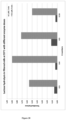
- these by the present inventors identified enzymes have a relatively high activity around 4°C or 5°C and may thus be used for lactose hydrolysis in the production of e.g. fresh milk.
- the novel enzymes are thus particularly suitable for reducing the lactose content of milk-based products, such as dairy products, at low temperatures.
- a further advantage of these novel improved peptides exhibiting beta-galactosidase enzyme activity is that they have a relatively low degree of galactose inhibition.
- the lower galactose inhibition of these novel enzymes is highly relevant for applications wherein very low lactose concentrations are desired.
- the enzymes as described herein have a high beta-galactosidase enzymatic activity at a relatively broad temperature range of between 4°C and 43°C, such as around 37°C, where fermentation would normally be optimal, but also that this activity of the beta-galactosidase enzyme is present at low pH, such as down to 4.5, or down to 4.0, or down to 3.5, or even down to pH 3.
- some peptides exhibiting beta-galactosidase enzyme activity is active over wide range of temperature, active over wide range of pH, has a general high hydrolytic activity without side activities, that these peptides have no or little galactose inhibition, such as less than 60%, and that they are stable over long-term storage.
- the beta-galactosidase activity may be determined by measuring the amount of released glucose after incubation with lactose at set conditions. Released glucose can be detected by a coloring reaction.
- milk as used herein and in the context of the present invention, is to be understood as the lacteal secretion obtained by milking any mammal, such as cow, sheep, goats, buffalo or camel.
- composition containing lactose refers to any composition, such as any liquid that contain lactose in significant measurable degree, such as a lactose content higher than 0.002% (0.002 g/100ml). Encompassed within this term are milk and milk-based substrates.
- milk-based substrate in the context of the present invention, may be any raw and/or processed milk material.
- Useful milk-based substrates include, but are not limited to solutions/suspensions of any milk or milk like products comprising lactose, such as whole or low fat milk, skim milk, buttermilk, low-lactose milk, reconstituted milk powder, condensed milk, solutions of dried milk, UHT milk, whey, whey permeate, acid whey, cream, fermented milk products, such as yoghurt, cheese, dietary supplement and probiotic dietary products.
- milk-based substrate refers to a raw or processed milk material that is processed further in order to produce a dairy product.
- pasteurization refers to the process of reducing or eliminating the presence of live organisms, such as microorganisms in a milk-based substrate.
- pasteurization is attained by maintaining a specified temperature for a specified period of time.
- the specified temperature is usually attained by heating.
- the temperature and duration may be selected in order to kill or inactivate certain bacteria, such as harmful bacteria, and/or to inactivate enzymes in the milk.
- a rapid cooling step may follow.
- the term "dairy product” as used herein may be any food product wherein one of the major constituents is milk-based.
- the major constituent is milk-based and in some embodiments, the major constituent is a milk-based substrate which has been treated with an enzyme having beta-galactosidase activity according to a method of the present invention.
- the Specific Activity of Lactase (also herein designated SUAL-1) at pH 6.7 at 37°C is defined as ⁇ mol of glucose formed/min/mg of enzyme and is determined by dividing UAL-1 by the lactase protein concentration in mg. Full details of a preferred alternative of carrying out this assay are illustrated in Example 6.
- host cell includes any cell type which is susceptible to transformation, transfection, transduction, and the like with a nucleic acid construct or expression vector comprising a polynucleotide encoding the peptide of the present invention.
- a host cell may be the cell type, where a specific enzyme is derived from or it may be an alternative cell type susceptible to the production of a specific enzyme.
- the term includes both wild type and attenuated strains.
- the specific activity of the enzymes was determined at pH 6.7 and at 37°C and used to calculate the approximate time required for hydrolysis of lactose using a fixed enzyme dose based activity units at pH 6.7 at 37°C and 140 mM lactose as substrate (SUAL-1).
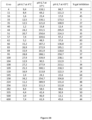
- the results in terms of time calculated for lactose hydrolysis are shown in Table 2: TABLE 2.
- Specific activity of purified enzymes determined at pH 6.7 at 37°C with lactose as substrate, described SUAL-1, discussed in example 6. The calculated time required in seconds for the complete lactose hydrolysis. The measured standard deviation at the given condition was less than 6%.
- the maximum absorbance value for each lactase was used to determine ⁇ M of glucose formed per sec, described as 1 Unit of Activity with Galactose at pH 6.7 at 37°C (UAG).
- the specific activity at pH 6.7 at 37°C in presence of galactose is defined as ⁇ M of glucose formed per second per ⁇ M of enzyme ( ⁇ M of glucose/sec/ ⁇ M of enzyme) and determined by dividing UAG by the protein concentration in ⁇ M, described as SUAG.
- A is specific activity in of enzymes with lactose at pH 6.7 at 37°C (SUAL) as described in the example 6
- B stand for the specific activity of enzymes in presence of galactose at pH 6.7 at 37°C (SUAG) as described in the example 7.
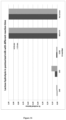
- the detail results of the % galactose inhibition are described the figure 2 and figure 28 .
- the lower galactose inhibition is highly relevant for the applications where very low lactose concentration is desired.
- Example 8 Activity determination using purified enzymes on lactose as substrate at pH 6.7 at 4°C
- the purified lactases were diluted up to 40x in buffer A (50 mM NaH 2 PO 4 buffer pH 6.7 containing 100 ⁇ M of MgSO 4 ).
- the diluted enzyme was incubated with lactose solution prepared in buffer B (140 mM of lactose prepared in 100 mM sodium-citrate buffer of pH 6.7, containing 100 ⁇ M of MgSO 4 ).
- the reaction mixture was prepared by mixing 13 ⁇ L of diluted purified enzyme and 37 ⁇ L of lactose solution in a PCR tube.
- reaction mixture was incubated in a DNA thermal cycler using the following incubating parameters (reaction time; 60 min at 4°C, enzyme inactivation; 10 min at 95°C, storage; 4°C).
- reaction mixtures were stored at -20°C freezer until further use.
- the amount of glucose formed during the reaction was determined by following the protocol described in example 6.
- the maximum absorbance value for each lactase was used to determine ⁇ M of glucose formed per sec, described as 1 Unit of Activity with Lactose at pH 6.7 at 4°C (UAL-2).
- the specific activity at pH 6.7 at 4°C is defined as ⁇ M of glucose formed per second per ⁇ M of enzyme ( ⁇ M of glucose/sec/ ⁇ M of enzyme), and is determined by dividing UAL-2 by the protein concentration in ⁇ M, described as SUAL-2.
- the high specific activity at pH 6.7 at 4°C is highly desired for the lactose hydrolysis for fresh/pasteurized milk applications.
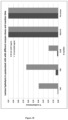
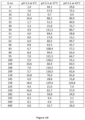
- the detail results of the specific activity of enzymes at pH 6.7 at 4°C are described in the figure 3 .
- Example 9 Activity determination using purified enzymes on lactose as substrate at pH 6.7 at 43°C
- the purified lactases were diluted to 40x in buffer A (50 mM NaH 2 PO 4 buffer pH 6.7 containing 100 ⁇ M of MgSO 4 ).
- buffer A 50 mM NaH 2 PO 4 buffer pH 6.7 containing 100 ⁇ M of MgSO 4
- the diluted enzyme was incubated with lactose solution prepared in buffer B (140 mM of lactose prepared in 100 mM sodium-citrate buffer of pH 6.7, containing 100 ⁇ M of MgSO 4 ).
- the reaction mixture was prepared by mixing 13 ⁇ L of diluted purified enzyme and 37 ⁇ L of lactose solution in a PCR tube.
- reaction mixture was incubated in a DNA thermal cycler using the following incubating parameters (reaction time; 60 min at 4°C, enzyme inactivation; 10 min at 95°C, storage; 4°C).
- the reaction mixtures were stored at -20°C freezer until further use.
- 10 ⁇ L of the reaction mixture was transferred to one well of standard microtiter plate containing 80 ⁇ L of buffer C and incubated at 30°C for 40 min. After 40 min, the absorbance was determined at 610 nm using FLUOStar Omega UV-plate reader (BMG Labtech, Germany). The absorbance value between 0.1 and 1.5 were used for calculations, if the A610 nm value >1.5, the reaction mixture was diluted up to 5x with buffer A.
Landscapes
- Chemical & Material Sciences (AREA)
- Life Sciences & Earth Sciences (AREA)
- Health & Medical Sciences (AREA)
- Organic Chemistry (AREA)
- Engineering & Computer Science (AREA)
- Genetics & Genomics (AREA)
- Zoology (AREA)
- Bioinformatics & Cheminformatics (AREA)
- Wood Science & Technology (AREA)
- General Health & Medical Sciences (AREA)
- Biochemistry (AREA)
- Microbiology (AREA)
- Medicinal Chemistry (AREA)
- Molecular Biology (AREA)
- General Engineering & Computer Science (AREA)
- Biomedical Technology (AREA)
- Biotechnology (AREA)
- Food Science & Technology (AREA)
- Polymers & Plastics (AREA)
- Gastroenterology & Hepatology (AREA)
- Biophysics (AREA)
- Proteomics, Peptides & Aminoacids (AREA)
- Dairy Products (AREA)
- Enzymes And Modification Thereof (AREA)
- Medicines That Contain Protein Lipid Enzymes And Other Medicines (AREA)
Claims (14)
- Procédé de fabrication d'un produit laitier comprenant :(a) le mélange d'un substrat à base de lait comprenant du lactose à une concentration d'au moins 10 g/L et un peptide présentant une activité bêta-galactosidase à une concentration de 20 à 55 mg/L ;(b) l'incubation du mélange à une température comprise entre 3°C et 6°C pendant une durée suffisante pour réduire la concentration de lactose dans le mélange à moins de 0,2 g/L,dans lequel le peptide présentant une activité bêta-galactosidase est :
un peptide ayant la séquence d'acides aminés représentée par SEQ ID NO: 14. - Procédé de réduction de la teneur en lactose d'un substrat à base de lait :(a) le mélange d'un substrat à base de lait comprenant du lactose à une concentration d'au moins 10 g/L et un peptide présentant une activité bêta-galactosidase à une concentration de 20 à 55 mg/L ;(b) l'incubation du mélange à une température comprise entre 3°C et 6°C pendant une durée suffisante pour réduire la concentration de lactose dans le mélange à moins de 0,2 g/L,dans lequel le peptide présentant une activité bêta-galactosidase est :
un peptide ayant la séquence d'acides aminés représentée par SEQ ID NO: 14. - Procédé selon l'une quelconque des revendications 1 à 2, dans lequel le peptide présentant une activité bêta-galactosidase est ajouté à une concentration de 35 à 52 mg/L, à une concentration de 40 à 52 mg/L ou à une concentration de 45 à 52 mg/L.
- Procédé selon l'une quelconque des revendications 1 à 3, dans lequel le substrat à base de lait comprenant du lactose est :(i) le lait de vache, le lait de brebis, le lait de chèvre, le lait de bufflonne, le lait de chamelle, ou une forme pasteurisée, crue et/ou filtrée de celui-ci ; ou(ii) un produit laitier fermenté obtenu à partir de (i) par fermentation.
- Procédé selon la revendication 4, dans lequel le substrat à base de lait comprenant du lactose est du lait de vache comprenant du lactose à une concentration d'environ 37 à 50 g/L ou une forme traitée thermiquement, pasteurisée et/ou filtrée de celui-ci.
- Procédé selon l'une quelconque des revendications 1 à 4, dans lequel la concentration inférieure à 0,2 g/I de lactose est atteinte après une incubation d'au moins 4 heures, d'au moins 8 heures, d'au moins 12 heures ou d'au moins 24 heures.
- Procédé selon l'une quelconque des revendications 1 à 6, dans lequel l'incubation à l'étape (b) réduit la concentration de lactose dans le mélange à moins de 0,05 g/L, à moins de 0,02 g/L ou à moins de 0,01 g/L.
- Procédé selon l'une quelconque des revendications 1 à 7, dans lequel le mélange comprenant le substrat à base de lait et le peptide présentant une activité bêta-galactosidase est chauffé à une température d'au moins 60°C pendant au moins quatre secondes avant ou après l'incubation du mélange à une température comprise entre 3°C et 6°C.
- Procédé selon la revendication 8, dans lequel le mélange comprenant le substrat à base de lait et le peptide présentant une activité bêta-galactosidase est chauffé à une température de 72°C pendant environ 15 secondes avant ou après l'incubation du mélange à basse température à l'étape (b).
- Procédé selon l'une quelconque des revendications 1 ou 2 à 7, dans lequel le procédé comprend une étape de fermentation du substrat à base de lait avec des bactéries lactiques.
- Procédé selon la revendication 10, dans lequel l'étape de fermentation est effectuée avant ou après l'incubation avec un peptide présentant une activité bêta-galactosidase.
- Procédé selon l'une quelconque des revendications 1 ou 2 à 7, dans lequel le produit laitier est un produit laitier fermenté, un fromage, un yaourt, du beurre, une pâte à tartiner, du lait de beurre, une boisson lactée acidifiée, une crème acidulée, une boisson à base de lactosérum, une crème glacée, du lait condensé, du dulce de leche ou une boisson lactée aromatisée.
- Utilisation d'un peptide présentant une activité bêta-galactosidase dans un procédé de production d'un produit laitier comprenant :(a) le mélange d'un substrat à base de lait comprenant du lactose à une concentration d'au moins 10 g/L et un peptide présentant une activité bêta-galactosidase à une concentration de 20 à 55 mg/L ;(b) l'incubation du mélange à une température comprise entre 3°C et 6°C pendant une durée suffisante pour réduire la concentration de lactose dans le mélange à moins de 0,2 g/L,dans lequel le peptide présentant une activité bêta-galactosidase est :
un peptide ayant la séquence d'acides aminés représentée par SEQ ID NO: 14. - Utilisation d'un peptide présentant une activité bêta-galactosidase dans un procédé de réduction de la teneur en lactose d'un substrat à base de lait comprenant :(a) le mélange d'un substrat à base de lait comprenant du lactose à une concentration d'au moins 10 g/L et un peptide présentant une activité bêta-galactosidase à une concentration de 20 à 55 mg/L ;(b) l'incubation du mélange à une température comprise entre 3°C et 6°C pendant une durée suffisante pour réduire la concentration de lactose dans le mélange à moins de 0,2 g/L,dans lequel le peptide présentant une activité bêta-galactosidase est :
un peptide ayant la séquence d'acides aminés représentée par SEQ ID NO: 14.
Priority Applications (1)
| Application Number | Priority Date | Filing Date | Title |
|---|---|---|---|
| EP25179774.2A EP4674957A3 (fr) | 2017-04-11 | 2018-04-11 | Enzymes lactase à activité améliorée à basses températures |
Applications Claiming Priority (3)
| Application Number | Priority Date | Filing Date | Title |
|---|---|---|---|
| EP17166021 | 2017-04-11 | ||
| EP17188732 | 2017-08-31 | ||
| PCT/EP2018/059289 WO2018189242A1 (fr) | 2017-04-11 | 2018-04-11 | Enzymes de lactase ayant une activité améliorée à basses températures |
Related Child Applications (1)
| Application Number | Title | Priority Date | Filing Date |
|---|---|---|---|
| EP25179774.2A Division EP4674957A3 (fr) | 2017-04-11 | 2018-04-11 | Enzymes lactase à activité améliorée à basses températures |
Publications (2)
| Publication Number | Publication Date |
|---|---|
| EP3609909A1 EP3609909A1 (fr) | 2020-02-19 |
| EP3609909B1 true EP3609909B1 (fr) | 2025-07-02 |
Family
ID=61911630
Family Applications (2)
| Application Number | Title | Priority Date | Filing Date |
|---|---|---|---|
| EP18716285.4A Active EP3609909B1 (fr) | 2017-04-11 | 2018-04-11 | Enzyme lactase avec de l'activité améliorée à des températures basses |
| EP25179774.2A Pending EP4674957A3 (fr) | 2017-04-11 | 2018-04-11 | Enzymes lactase à activité améliorée à basses températures |
Family Applications After (1)
| Application Number | Title | Priority Date | Filing Date |
|---|---|---|---|
| EP25179774.2A Pending EP4674957A3 (fr) | 2017-04-11 | 2018-04-11 | Enzymes lactase à activité améliorée à basses températures |
Country Status (10)
| Country | Link |
|---|---|
| US (1) | US12369597B2 (fr) |
| EP (2) | EP3609909B1 (fr) |
| CN (1) | CN110678478A (fr) |
| AU (2) | AU2018250886C1 (fr) |
| BR (1) | BR112019021117A2 (fr) |
| CA (1) | CA3059279A1 (fr) |
| DK (1) | DK3609909T3 (fr) |
| FI (1) | FI3609909T3 (fr) |
| MA (1) | MA50220A (fr) |
| WO (1) | WO2018189242A1 (fr) |
Families Citing this family (5)
| Publication number | Priority date | Publication date | Assignee | Title |
|---|---|---|---|---|
| US12435326B2 (en) | 2017-04-11 | 2025-10-07 | Kerry Group Services International Ltd | Lactase enzymes with improved properties |
| ES3057273T3 (en) | 2017-04-11 | 2026-02-27 | Kerry Group Services Int Ltd | Lactase enzymes with improved properties |
| CN110678479A (zh) | 2017-04-11 | 2020-01-10 | 科·汉森有限公司 | 性能改善的乳糖酶 |
| ES2909902B2 (es) * | 2020-11-05 | 2023-09-27 | Univ Coruna | Beta-galactosidasa y usos de la misma |
| CN114806906B (zh) * | 2022-05-31 | 2023-02-21 | 江南大学 | 一株产中性乳糖酶的乳酸克鲁维酵母 |
Family Cites Families (28)
| Publication number | Priority date | Publication date | Assignee | Title |
|---|---|---|---|---|
| GB9101012D0 (en) | 1991-01-17 | 1991-02-27 | Univ Alberta | Process for lactose hydrolysis in milk and other dairy products using sonicated dairy cultures |
| JP2003504048A (ja) | 1999-07-09 | 2003-02-04 | ユニベルシテ ドゥ リエージュ | 低温活性ベータ・ガラクトシダーゼ、その製法、及びその使用 |
| EP1227152A1 (fr) | 2001-01-30 | 2002-07-31 | Société des Produits Nestlé S.A. | Souche bactérienne et genome de bifidobacterium |
| US7459289B2 (en) | 2004-03-08 | 2008-12-02 | North Carolina State University | Lactobacillus acidophilus nucleic acid sequences encoding carbohydrate utilization-related proteins and uses therefor |
| US7608700B2 (en) | 2004-03-08 | 2009-10-27 | North Carolina State University | Lactobacillus acidophilus nucleic acid sequences encoding stress-related proteins and uses therefor |
| RU2278160C2 (ru) | 2004-04-13 | 2006-06-20 | Институт Молекулярной Генетики Российской Академии Наук (Имг Ран) | РЕКОМБИНАНТНЫЙ БЕЛОК LACspCBD, ОБЛАДАЮЩИЙ БЕТА-ГАЛАКТОЗИДАЗНОЙ АКТИВНОСТЬЮ И СПОСОБНОСТЬЮ САМОПРОИЗВОЛЬНО СВЯЗЫВАТЬСЯ С ЦЕЛЛЮЛОЗОСОДЕРЖАЩИМИ СОРБЕНТАМИ, РЕКОМБИНАНТНАЯ ПЛАЗМИДНАЯ ДНК, КОДИРУЮЩАЯ СИНТЕЗ РЕКОМБИНАНТНОГО БЕЛКА LACspCBD, ШТАММ Escherichia coli M15 [pREP4, pLACspCBD] - ПРОДУЦЕНТ РЕКОМБИНАНТНОГО БЕЛКА LACspCBD, СПОСОБ ПОЛУЧЕНИЯ ИММОБИЛИЗОВАННОГО РЕКОМБИНАНТНОГО БЕЛКА LACspCBD НА ЦЕЛЛЮЛОЗЕ И СПОСОБ ФЕРМЕНТАТИВНОГО РАСЩЕПЛЕНИЯ ЛАКТОЗЫ |
| GB0601901D0 (en) * | 2006-01-31 | 2006-03-08 | Product and Process | |
| GB0606112D0 (en) | 2006-03-28 | 2006-05-03 | Product and process | |
| EP2069520A4 (fr) | 2006-09-15 | 2010-05-05 | Univ California | Séquences géniques de bifidobactéries et leur utilisation |
| WO2009009142A2 (fr) | 2007-07-10 | 2009-01-15 | Monsanto Technology, Llc | Plantes transgéniques à caractéristiques agronomiques améliorées |
| US20100285175A1 (en) | 2007-12-03 | 2010-11-11 | Novozymes A/S | Method for Producing a Dairy Product |
| US20090297660A1 (en) | 2008-06-02 | 2009-12-03 | Kraft Food Holdings, Inc. | Cheese Products Containing Galacto-Oligosaccharides And Having Reduced Lactose Levels |
| CA2751957C (fr) | 2009-02-10 | 2018-07-24 | Peter Stougaard | Beta-galactosidase active a froid, son procede de fabrication et utilisation d'une telle enzyme |
| EP2530148B1 (fr) * | 2011-05-30 | 2015-04-29 | B.R.A.I.N. Biotechnology Research And Information Network AG | Nouveaux béta-galactosidases utiles pour la production de produits laitiers appauvris en lactose |
| CN102220301B (zh) * | 2011-05-30 | 2012-10-24 | 云南师范大学 | 一种耐碱性低温α-半乳糖苷酶AgaAJB13及基因 |
| EA033795B1 (ru) | 2012-04-25 | 2019-11-26 | Chr Hansen As | Применение молочнокислых бактерий для получения ферментированных пищевых продуктов с повышенной естественной сладостью |
| CN103431042B (zh) | 2013-08-28 | 2015-01-21 | 光明乳业股份有限公司 | 发酵乳基料、脱乳清风味发酵乳、原料组合物及制备方法 |
| MX375778B (es) * | 2014-01-14 | 2025-03-07 | Dsm Ip Assets Bv | Variantes mejoradas de enzimas. |
| EP3375292A1 (fr) | 2014-06-19 | 2018-09-19 | Chr. Hansen A/S | Procédé de production d'un produit laitier fermenté avec commande améliorée de post-acidification |
| JP5959132B1 (ja) | 2014-10-17 | 2016-08-02 | 合同酒精株式会社 | ラクターゼ溶液及びそれを用いた乳 |
| CN109310101A (zh) | 2016-06-14 | 2019-02-05 | 科·汉森有限公司 | 乳糖含量降低的发酵乳制品 |
| WO2018041869A1 (fr) | 2016-08-31 | 2018-03-08 | Chr. Hansen A/S | Procédé de production d'un produit laitier fermenté thermiquement traité |
| EP3821712B1 (fr) | 2017-01-13 | 2022-11-09 | Chr. Hansen A/S | Produit laitier fermenté obtenu par un procede ameliore |
| DK3607097T3 (da) | 2017-04-07 | 2023-09-18 | Dupont Nutrition Biosci Aps | Bacillus-værtsceller, der danner beta-galactosidaser og lactaser i fravær af p-nitrobenzylesterase-sideaktivitet |
| CN110678479A (zh) | 2017-04-11 | 2020-01-10 | 科·汉森有限公司 | 性能改善的乳糖酶 |
| ES3057273T3 (en) | 2017-04-11 | 2026-02-27 | Kerry Group Services Int Ltd | Lactase enzymes with improved properties |
| US12435326B2 (en) | 2017-04-11 | 2025-10-07 | Kerry Group Services International Ltd | Lactase enzymes with improved properties |
| BR112021007244A2 (pt) | 2018-10-17 | 2021-08-10 | Chr. Hansen A/S | enzimas lactase com propriedades melhoradas em ph ácido |
-
2018
- 2018-04-11 FI FIEP18716285.4T patent/FI3609909T3/fi active
- 2018-04-11 EP EP18716285.4A patent/EP3609909B1/fr active Active
- 2018-04-11 CA CA3059279A patent/CA3059279A1/fr active Pending
- 2018-04-11 BR BR112019021117-9A patent/BR112019021117A2/pt unknown
- 2018-04-11 MA MA050220A patent/MA50220A/fr unknown
- 2018-04-11 CN CN201880035254.3A patent/CN110678478A/zh active Pending
- 2018-04-11 DK DK18716285.4T patent/DK3609909T3/da active
- 2018-04-11 EP EP25179774.2A patent/EP4674957A3/fr active Pending
- 2018-04-11 AU AU2018250886A patent/AU2018250886C1/en active Active
- 2018-04-11 US US16/604,134 patent/US12369597B2/en active Active
- 2018-04-11 WO PCT/EP2018/059289 patent/WO2018189242A1/fr not_active Ceased
-
2022
- 2022-07-19 AU AU2022206727A patent/AU2022206727A1/en not_active Abandoned
Non-Patent Citations (4)
| Title |
|---|
| DATABASE Gene Bank NCBI [online] 27 February 2015 (2015-02-27), ANONYMOUS: "Beta-galactosidase [Lactobacillus delbrueckii subsp. bulgaricus ATCC 1 - Protein - NCBI", XP055888434, retrieved from https://www.ncbi.nlm.nih.gov/protein/CAI98003.1 Database accession no. GenBank: CAI98003.1 * |
| DATABASE UniProt [online] 25 January 2012 (2012-01-25), "Unreviewed; 1008 AA. RecName: Full=Beta-galactosidase {ECO:0000256|ARBA:ARBA00013303, ECO:0000256|RuleBase:RU361154}; EC=3.2.1.23 {ECO:0000256|ARBA:ARBA00012756, ECO:0000256|RuleBase:RU361154}; AltName: Full=Lactase {ECO:0000256|ARBA:ARBA00017614, ECO:0000256|RuleBase:RU361154};", retrieved from EBI accession no. UNIPROT:G6F860 Database accession no. G6F860 * |
| KREFT MARY ET AL: "Lactose hydrolysing ability of sonicated cultures of Lactobacillus delbrueckii ssp. bulgaricus 11842", LE LAIT, vol. 81, no. 3, 1 January 2001 (2001-01-01), pages 355 - 364, XP055814484, Retrieved from the Internet <URL:https://hal.archives-ouvertes.fr/hal-00895381/document> DOI: 10.1051/lait:2001137ï¿¿ * |
| RHIMI MOEZ ET AL: "Exploring the acidotolerance of beta-galactosidase from Lactobacillus delbrueckii subsp. bulgaricus: an attractive enzyme for lactose bioconversion.", RESEARCH IN MICROBIOLOGY DEC 2009, vol. 160, no. 10, December 2009 (2009-12-01), pages 775 - 784, ISSN: 1769-7123 * |
Also Published As
| Publication number | Publication date |
|---|---|
| DK3609909T3 (da) | 2025-09-01 |
| AU2024204415B2 (en) | 2026-04-23 |
| WO2018189242A1 (fr) | 2018-10-18 |
| US12369597B2 (en) | 2025-07-29 |
| MA50220A (fr) | 2020-07-22 |
| AU2024204415A1 (en) | 2024-07-18 |
| EP3609909A1 (fr) | 2020-02-19 |
| BR112019021117A2 (pt) | 2020-05-12 |
| AU2018250886C1 (en) | 2023-10-19 |
| FI3609909T3 (fi) | 2025-09-03 |
| CN110678478A (zh) | 2020-01-10 |
| EP4674957A2 (fr) | 2026-01-07 |
| AU2022206727A1 (en) | 2022-09-22 |
| AU2018250886B2 (en) | 2022-04-28 |
| RU2019134228A (ru) | 2021-05-11 |
| CA3059279A1 (fr) | 2018-10-18 |
| EP4674957A3 (fr) | 2026-04-01 |
| NZ758427A (en) | 2025-10-31 |
| AU2018250886A1 (en) | 2019-11-07 |
| RU2019134228A3 (fr) | 2021-10-13 |
| US20230210121A1 (en) | 2023-07-06 |
Similar Documents
| Publication | Publication Date | Title |
|---|---|---|
| US12215367B2 (en) | Lactase enzymes with improved properties | |
| EP3609908B1 (fr) | Enzymes de lactase à propriétés améliorées | |
| EP3609909B1 (fr) | Enzyme lactase avec de l'activité améliorée à des températures basses | |
| US12435326B2 (en) | Lactase enzymes with improved properties | |
| US20250324990A1 (en) | Lactase enzymes with improved activity at low temperatures | |
| AU2024204415B9 (en) | Lactase enzymes with improved activity at low temperatures | |
| RU2800427C2 (ru) | Ферменты лактазы с улучшенной активностью при низких температурах | |
| RU2788608C2 (ru) | Ферменты лактазы с улучшенными свойствами | |
| RU2806709C2 (ru) | Ферменты лактазы с улучшенными свойствами |
Legal Events
| Date | Code | Title | Description |
|---|---|---|---|
| STAA | Information on the status of an ep patent application or granted ep patent |
Free format text: STATUS: UNKNOWN |
|
| STAA | Information on the status of an ep patent application or granted ep patent |
Free format text: STATUS: THE INTERNATIONAL PUBLICATION HAS BEEN MADE |
|
| PUAI | Public reference made under article 153(3) epc to a published international application that has entered the european phase |
Free format text: ORIGINAL CODE: 0009012 |
|
| STAA | Information on the status of an ep patent application or granted ep patent |
Free format text: STATUS: REQUEST FOR EXAMINATION WAS MADE |
|
| 17P | Request for examination filed |
Effective date: 20191111 |
|
| AK | Designated contracting states |
Kind code of ref document: A1 Designated state(s): AL AT BE BG CH CY CZ DE DK EE ES FI FR GB GR HR HU IE IS IT LI LT LU LV MC MK MT NL NO PL PT RO RS SE SI SK SM TR |
|
| AX | Request for extension of the european patent |
Extension state: BA ME |
|
| DAX | Request for extension of the european patent (deleted) | ||
| RAV | Requested validation state of the european patent: fee paid |
Extension state: MA Effective date: 20191111 |
|
| STAA | Information on the status of an ep patent application or granted ep patent |
Free format text: STATUS: EXAMINATION IS IN PROGRESS |
|
| 17Q | First examination report despatched |
Effective date: 20200922 |
|
| TPAC | Observations filed by third parties |
Free format text: ORIGINAL CODE: EPIDOSNTIPA |
|
| RAP1 | Party data changed (applicant data changed or rights of an application transferred) |
Owner name: KERRY GROUP SERVICES INTERNATIONAL LTD |
|
| GRAP | Despatch of communication of intention to grant a patent |
Free format text: ORIGINAL CODE: EPIDOSNIGR1 |
|
| STAA | Information on the status of an ep patent application or granted ep patent |
Free format text: STATUS: GRANT OF PATENT IS INTENDED |
|
| INTG | Intention to grant announced |
Effective date: 20250120 |
|
| GRAS | Grant fee paid |
Free format text: ORIGINAL CODE: EPIDOSNIGR3 |
|
| GRAA | (expected) grant |
Free format text: ORIGINAL CODE: 0009210 |
|
| STAA | Information on the status of an ep patent application or granted ep patent |
Free format text: STATUS: THE PATENT HAS BEEN GRANTED |
|
| AK | Designated contracting states |
Kind code of ref document: B1 Designated state(s): AL AT BE BG CH CY CZ DE DK EE ES FI FR GB GR HR HU IE IS IT LI LT LU LV MC MK MT NL NO PL PT RO RS SE SI SK SM TR |
|
| REG | Reference to a national code |
Ref country code: GB Ref legal event code: FG4D |
|
| REG | Reference to a national code |
Ref country code: CH Ref legal event code: EP |
|
| REG | Reference to a national code |
Ref country code: DE Ref legal event code: R096 Ref document number: 602018083162 Country of ref document: DE |
|
| REG | Reference to a national code |
Ref country code: IE Ref legal event code: FG4D |
|
| REG | Reference to a national code |
Ref country code: DK Ref legal event code: T3 Effective date: 20250827 |
|
| REG | Reference to a national code |
Ref country code: FI Ref legal event code: FGE |
|
| REG | Reference to a national code |
Ref country code: NL Ref legal event code: MP Effective date: 20250702 |
|
| PG25 | Lapsed in a contracting state [announced via postgrant information from national office to epo] |
Ref country code: PT Free format text: LAPSE BECAUSE OF FAILURE TO SUBMIT A TRANSLATION OF THE DESCRIPTION OR TO PAY THE FEE WITHIN THE PRESCRIBED TIME-LIMIT Effective date: 20251103 |
|
| PG25 | Lapsed in a contracting state [announced via postgrant information from national office to epo] |
Ref country code: NL Free format text: LAPSE BECAUSE OF FAILURE TO SUBMIT A TRANSLATION OF THE DESCRIPTION OR TO PAY THE FEE WITHIN THE PRESCRIBED TIME-LIMIT Effective date: 20250702 |
|
| REG | Reference to a national code |
Ref country code: AT Ref legal event code: MK05 Ref document number: 1809179 Country of ref document: AT Kind code of ref document: T Effective date: 20250702 |
|
| PG25 | Lapsed in a contracting state [announced via postgrant information from national office to epo] |
Ref country code: IS Free format text: LAPSE BECAUSE OF FAILURE TO SUBMIT A TRANSLATION OF THE DESCRIPTION OR TO PAY THE FEE WITHIN THE PRESCRIBED TIME-LIMIT Effective date: 20251102 |
|
| PG25 | Lapsed in a contracting state [announced via postgrant information from national office to epo] |
Ref country code: NO Free format text: LAPSE BECAUSE OF FAILURE TO SUBMIT A TRANSLATION OF THE DESCRIPTION OR TO PAY THE FEE WITHIN THE PRESCRIBED TIME-LIMIT Effective date: 20251002 |
|
| REG | Reference to a national code |
Ref country code: LT Ref legal event code: MG9D |
|
| PG25 | Lapsed in a contracting state [announced via postgrant information from national office to epo] |
Ref country code: AT Free format text: LAPSE BECAUSE OF FAILURE TO SUBMIT A TRANSLATION OF THE DESCRIPTION OR TO PAY THE FEE WITHIN THE PRESCRIBED TIME-LIMIT Effective date: 20250702 |
|
| PG25 | Lapsed in a contracting state [announced via postgrant information from national office to epo] |
Ref country code: HR Free format text: LAPSE BECAUSE OF FAILURE TO SUBMIT A TRANSLATION OF THE DESCRIPTION OR TO PAY THE FEE WITHIN THE PRESCRIBED TIME-LIMIT Effective date: 20250702 |
|
| PG25 | Lapsed in a contracting state [announced via postgrant information from national office to epo] |
Ref country code: GR Free format text: LAPSE BECAUSE OF FAILURE TO SUBMIT A TRANSLATION OF THE DESCRIPTION OR TO PAY THE FEE WITHIN THE PRESCRIBED TIME-LIMIT Effective date: 20251003 |
|
| PG25 | Lapsed in a contracting state [announced via postgrant information from national office to epo] |
Ref country code: SE Free format text: LAPSE BECAUSE OF FAILURE TO SUBMIT A TRANSLATION OF THE DESCRIPTION OR TO PAY THE FEE WITHIN THE PRESCRIBED TIME-LIMIT Effective date: 20250702 Ref country code: CZ Free format text: LAPSE BECAUSE OF FAILURE TO SUBMIT A TRANSLATION OF THE DESCRIPTION OR TO PAY THE FEE WITHIN THE PRESCRIBED TIME-LIMIT Effective date: 20250702 |
|
| PG25 | Lapsed in a contracting state [announced via postgrant information from national office to epo] |
Ref country code: LV Free format text: LAPSE BECAUSE OF FAILURE TO SUBMIT A TRANSLATION OF THE DESCRIPTION OR TO PAY THE FEE WITHIN THE PRESCRIBED TIME-LIMIT Effective date: 20250702 |
|
| PG25 | Lapsed in a contracting state [announced via postgrant information from national office to epo] |
Ref country code: PL Free format text: LAPSE BECAUSE OF FAILURE TO SUBMIT A TRANSLATION OF THE DESCRIPTION OR TO PAY THE FEE WITHIN THE PRESCRIBED TIME-LIMIT Effective date: 20250702 Ref country code: BG Free format text: LAPSE BECAUSE OF FAILURE TO SUBMIT A TRANSLATION OF THE DESCRIPTION OR TO PAY THE FEE WITHIN THE PRESCRIBED TIME-LIMIT Effective date: 20250702 |
|
| PG25 | Lapsed in a contracting state [announced via postgrant information from national office to epo] |
Ref country code: RS Free format text: LAPSE BECAUSE OF FAILURE TO SUBMIT A TRANSLATION OF THE DESCRIPTION OR TO PAY THE FEE WITHIN THE PRESCRIBED TIME-LIMIT Effective date: 20251002 |
|
| PG25 | Lapsed in a contracting state [announced via postgrant information from national office to epo] |
Ref country code: ES Free format text: LAPSE BECAUSE OF FAILURE TO SUBMIT A TRANSLATION OF THE DESCRIPTION OR TO PAY THE FEE WITHIN THE PRESCRIBED TIME-LIMIT Effective date: 20250702 |
|
| PG25 | Lapsed in a contracting state [announced via postgrant information from national office to epo] |
Ref country code: SM Free format text: LAPSE BECAUSE OF FAILURE TO SUBMIT A TRANSLATION OF THE DESCRIPTION OR TO PAY THE FEE WITHIN THE PRESCRIBED TIME-LIMIT Effective date: 20250702 |
|
| VS25 | Lapsed in a validation state [announced via postgrant information from nat. office to epo] |
Ref country code: MA Free format text: LAPSE BECAUSE OF FAILURE TO SUBMIT A TRANSLATION OF THE DESCRIPTION OR TO PAY THE FEE WITHIN THE PRESCRIBED TIME-LIMIT Effective date: 20250702 |
|
| PG25 | Lapsed in a contracting state [announced via postgrant information from national office to epo] |
Ref country code: SK Free format text: LAPSE BECAUSE OF FAILURE TO SUBMIT A TRANSLATION OF THE DESCRIPTION OR TO PAY THE FEE WITHIN THE PRESCRIBED TIME-LIMIT Effective date: 20250702 Ref country code: EE Free format text: LAPSE BECAUSE OF FAILURE TO SUBMIT A TRANSLATION OF THE DESCRIPTION OR TO PAY THE FEE WITHIN THE PRESCRIBED TIME-LIMIT Effective date: 20250702 |