EP3613763A1 - Procédés de réduction de l'agrégation de glycoprotéine - Google Patents
Procédés de réduction de l'agrégation de glycoprotéine Download PDFInfo
- Publication number
- EP3613763A1 EP3613763A1 EP19189556.4A EP19189556A EP3613763A1 EP 3613763 A1 EP3613763 A1 EP 3613763A1 EP 19189556 A EP19189556 A EP 19189556A EP 3613763 A1 EP3613763 A1 EP 3613763A1
- Authority
- EP
- European Patent Office
- Prior art keywords
- serine
- linked glycosylation
- linked
- alanine
- protein
- Prior art date
- Legal status (The legal status is an assumption and is not a legal conclusion. Google has not performed a legal analysis and makes no representation as to the accuracy of the status listed.)
- Withdrawn
Links
Images



Classifications
-
- C—CHEMISTRY; METALLURGY
- C07—ORGANIC CHEMISTRY
- C07K—PEPTIDES
- C07K16/00—Immunoglobulins [IG], e.g. monoclonal or polyclonal antibodies
- C07K16/18—Immunoglobulins [IG], e.g. monoclonal or polyclonal antibodies against material from animals or humans
-
- C—CHEMISTRY; METALLURGY
- C07—ORGANIC CHEMISTRY
- C07K—PEPTIDES
- C07K14/00—Peptides having more than 20 amino acids; Gastrins; Somatostatins; Melanotropins; Derivatives thereof
- C07K14/435—Peptides having more than 20 amino acids; Gastrins; Somatostatins; Melanotropins; Derivatives thereof from animals; from humans
- C07K14/705—Receptors; Cell surface antigens; Cell surface determinants
- C07K14/70503—Immunoglobulin superfamily
- C07K14/70521—CD28, CD152
-
- C—CHEMISTRY; METALLURGY
- C07—ORGANIC CHEMISTRY
- C07K—PEPTIDES
- C07K2317/00—Immunoglobulins specific features
- C07K2317/40—Immunoglobulins specific features characterized by post-translational modification
- C07K2317/41—Glycosylation, sialylation, or fucosylation
-
- C—CHEMISTRY; METALLURGY
- C07—ORGANIC CHEMISTRY
- C07K—PEPTIDES
- C07K2317/00—Immunoglobulins specific features
- C07K2317/50—Immunoglobulins specific features characterized by immunoglobulin fragments
- C07K2317/52—Constant or Fc region; Isotype
-
- C—CHEMISTRY; METALLURGY
- C07—ORGANIC CHEMISTRY
- C07K—PEPTIDES
- C07K2317/00—Immunoglobulins specific features
- C07K2317/90—Immunoglobulins specific features characterized by (pharmaco)kinetic aspects or by stability of the immunoglobulin
- C07K2317/94—Stability, e.g. half-life, pH, temperature or enzyme-resistance
-
- C—CHEMISTRY; METALLURGY
- C07—ORGANIC CHEMISTRY
- C07K—PEPTIDES
- C07K2319/00—Fusion polypeptide
- C07K2319/30—Non-immunoglobulin-derived peptide or protein having an immunoglobulin constant or Fc region, or a fragment thereof, attached thereto
Definitions
- This invention relates to methods for reducing glycoprotein aggregation by optimizing the number of O-linked glycosylation sites.
- Protein glycosylation is a critical quality attribute in determining the potency and pharmacokinetic longevity of a biologic. Understanding how each glycosylation site affects the overall function of the protein helps optimize final product quality. By achieving a homogeneous glycosylation profile, increases in yield can be achieved with assurance of product comparability.
- O-linked glycosylation refers to the attachment of one of the sugars N-acetylgalactosamine, galactose, or xylose to a hydroxyamino acid, most commonly serine or threonine.
- O-linked sugar residues have fewer structural rules than N-linked glycosylation and therefore create a greater diversity in glycoforms.
- O-linked glycosylation is difficult to predict due to lack of consensus recognition sequences.
- neural network approaches have been developed to better predict mucin-type O-linked sites ( Julenius, K., et.al. 2005. Glycobiology 15, 153-164 ).
- glycosylation is believed to affect immunogenicity, efficacy, solubility, and half-life of commercial biologics ( Lis, H. et.al.1993. Eur J Biochem 218, 1-27 ; Lowe, J.B. et.al. 2003. Annu Rev Biochem 72, 643-691 ; Van den Steen, P. et.al.1998. Crit Rev Biochem Mol Biol 33, 151-208 ).
- most literature focuses on the effects of N-linked glycosylation ( Hossler, P. et.al.2009. Glycobiology 19, 936-949 ).
- the information regarding the effects of O-linked glycosylation on protein quality is scarce; especially with respect to protein aggregation.
- the glycoprotein may be a fusion protein.
- the fusion protein may comprise the hinge portion of the Fc region of a human immunoglobulin.
- the human immunoglobulin may be human IgG.
- the invention provides a method of reducing glycoprotein aggregation comprising elimination of one or more O-linked glycosylation sites therein.
- the O-linked glycosylaiton site to be eliminated may be in the hinge region of a Fc domain.
- the invention provides a method of reducing glycoprotein aggregation comprising elimination of one or more O-linked glycosylation sites through amino acid substitution and/or deletion.
- the one or more substituted and/or deleted O-linked glycosylaiton sites may be in the hinge region of a Fc domain shown in SEQ ID NO:5.
- the O-linked glycosylation sites in the hinge region of the Fc domain shown in SEQ ID NO:5 that may be eliminated are selected from S248, T252, T254.
- the one or more substituted and/or deleted O-linked glycosylaiton sites may be in the hinge region of the mutated Fc domain shown in SEQ ID NO:4.
- the O-linked glycosylation sites in the hinge region of the Fc domain shown in SEQ ID NO:4 that may be eliminated are selected from S129, S130, S136, S139, T133, T135.
- the invention provides the CTLA4Ig fusion glycoprotein shown in Figure 6 comprising elimination of at least one of the O-linked glycosylation sites selected from S129, S130, S136, S139, T133, T135.
- belatacept is a fusion protein that is a soluble CTLA4Ig mutant molecule comprising an extracellular domain of wildtype CTLA4 with amino acid changes A29Y (a tyrosine amino acid residue substituting for an alanine at position 29) and L104E (a glutamic acid amino acid residue substituting for a leucine at position +104), joined to an Ig tail (included in Figure 6 , SEQ ID NOS: 1 and 2; DNA encoding L104EA29Y-Ig was deposited on Jun. 20, 2000, with the American Type Culture Collection (ATCC) under the provisions of the Budapest Treaty. It has been accorded ATCC accession number PTA-2104. L104EA29Y-Ig is further described in U.S. patent 7,094,874, issued on August 22, 2006 , which is incorporated by reference herein in their entireties.
- aggregate is used interchangeably with “high molecular weight species”.
- a high molecular weight aggregate may be a tetramer, a pentamer or a hexamer.
- the monomer, dimer and HMW species of a glycoprotein may be separated by size exclusion chromatography (SEC).
- SEC size exclusion chromatography
- SEC separates molecules based on the molecular size. Separation is achieved by the differential molecular exclusion or inclusion as the molecules migrate along the length of the column. Thus, resolution increases as a function of column length.
- CTLA4Ig molecule samples may be separated using a 2695 Alliance HPLC (Waters, Milford, MA) equipped with TSK Gel® G3000SWXL (300mm x 7.8mm) and TSK Gel® G3000SWXL (40mm x 6.0mm) columns (Tosoh Bioscience, Montgomery, PA) in tandem.
- Samples at 10 mg/ml (20 ⁇ l aliquot) are separated using a mobile phase consisting of 0.2 M KH 2 PO 4 , 0.9% NaCl, pH 6.8, at a flow rate of 1.0 ml/min. Samples are monitored at an absorbance of 280 nm using Water's 2487 Dual Wavelength detector. Using this system, the HMW species has a retention time of 7.5 min ⁇ 1.0 min. Each peak is integrated for area under the peak. The % HMW species calculated by dividing the HMW peak area by the total peak area.
- the "hinge region" of a human immunoglobulin antibody joins the Fab arms to the Fc piece.
- the flexibility of the hinge region allows the Fab arms to adopt a wide range of angles, permitting binding to epitopes spaced variable distances apart.
- the hinge region of human IgG immunoglobulin comprises the amino acid sequence: 245 EPKSCDKTHTCPPCPAPELLGGPSVFLF 272 (SEQ ID NO: 5)
- the hinge region of belatacept comprises the amino acid sequence starting with glutamic acid at position +152 and ending at phenylalanine at position +179 as shown in SEQ ID NO: 2.
- the glycoprotein may be a fusion protein.
- the fusion protein may comprise the hinge portion of an Fc region of a human immunoglobulin.
- the human immunoglobulin may be human IgG.
- the invention provides a method for reducing glycoprotein aggregation comprising elimination of one or more of O-linked glycosylation sites within the hinge region of the Fc domain.
- the invention provides a method for reducing glycoprotein aggregation comprising substituting and/or deleting at least one of the O-linked glycosylation sites within the hinge region of the Fc domain, wherein the O-linked glycosylation site is selected from S248, T252, T254 shown in SEQ ID NO: 5.
- HMW high molecular weight species
- Example 1 protein aggregation was reduced by eliminating O-linked sites through substitution or deletion judged by a significant reduction in the amount of HMW species in the protein products. Protein aggregation is reduced by 5% to 98%, from 8% to 60% , from 8% to 30 by elimination of at least one or more O-linked glycosylation sites.
- the invention provides a method for reducing glycoprotein aggregation comprises substitution and/or deletion of at least one of the O-linked glycosylation sites within the hinge region shown in SEQ ID NO: 4.
- the invention provides a method for reducing glycoprotein aggregation comprises substitution and/or deletion of at least one of the O-linked glycosylation sites, selected from S129, S130, S136, S139, T133, T135 shown in SEQ ID NO: 4.
- the invention provides a method for reducing glycoprotein aggregation comprising substitution and/or deletion of O-linked glycosylation sites S129 and/or S139 shown in SEQ ID NO: 4.
- Example 1 site-directed mutagenesis was carried out with either a complete deletion or substitution with alanine or glutamine. Typically, residues that protrude out of the surface of the molecule are substituted with alanine and the buried residues are substituted with glutamine to avoid structural collapse. With respect to creating a functional protein, the only difference between an alanine and a serine is the substitution of hydrogen with a hydroxyl, which is unlikely to modify the general structure of the protein. In this model protein, even a complete deletion of the amino acid still resulted in secretion of a properly folded protein.
- the invention provides the fusion protein shown in Figure 6 comprising deletion of O-linked glycosylation site S129 or S139.
- the invention provides the fusion protein shown in Figure 6 comprising deletion of O-linked glycosylation site S129 and S139.
- the invention provides the fusion protein shown in Figure 6 comprising substitution of S129 with glutamine (Q) or alanine (A).
- the invention provides the fusion protein shown in Figure 6 comprising substitution of S139 with glutamine (Q) or alanine (A).
- the invention provides the fusion protein shown in Figure 6 comprising A130A133A135A136A139 substitutions.
- the invention provides the fusion protein shown in Figure 6 comprising A129A133A135A136A139 substitutions.
- the invention provides the fusion protein shown in Figure 6 comprising deletion of amino acids S129S130S139.
- the invention provides the fusion protein shown in Figure 6 comprising substitution of one or more of S130, T133, T135 and S136 with alanine (A).
- CTLA4Ig molecules can be in prokaryotic cells. Prokaryotes most frequently are represented by various strains of bacteria. The bacteria may be a gram positive or a gram negative. Typically, gram-negative bacteria such as E. coli are preferred. Other microbial strains may also be used.
- CTLA4Ig molecules can be inserted into a vector designed for expressing foreign sequences in prokaryotic cells such as E. coli.
- These vectors can include commonly used prokaryotic control sequences which are defined herein to include promoters for transcription initiation, optionally with an operator, along with ribosome binding site sequences, include such commonly used promoters as the beta-lactamase (penicillinase) and lactose (lac) promoter systems ( Chang, et al., (1977) Nature 198:1056 ), the tryptophan (trp) promoter system ( Goeddel, et al., (1980) Nucleic Acids Res. 8:4057 ) and the lambda derived P L promoter and N-gene ribosome binding site ( Shimatake, et al., (1981) Nature 292:128 ).
- Such expression vectors will also include origins of replication and selectable markers, such as a beta-lactamase or neomycin phosphotransferase gene conferring resistance to antibiotics, so that the vectors can replicate in bacteria and cells carrying the plasmids can be selected for when grown in the presence of antibiotics, such as ampicillin or kanamycin.
- origins of replication such as a beta-lactamase or neomycin phosphotransferase gene conferring resistance to antibiotics, so that the vectors can replicate in bacteria and cells carrying the plasmids can be selected for when grown in the presence of antibiotics, such as ampicillin or kanamycin.
- the expression plasmid can be introduced into prokaryotic cells via a variety of standard methods, including but not limited to CaCl 2 -shock ( Cohen, (1972) Proc. Natl. Acad. Sci. USA 69:2110 , and Sambrook et al. (eds.), "Molecular Cloning: A Laboratory Manual", 2nd Edition, Cold Spring Harbor Press, (1989 )) and electroporation.
- eukaryotic cells are also suitable host cells.
- eukaryotic cells include any animal cell, whether primary or immortalized, yeast (e.g., Saccharomyces cerevisiae, Schizosaccharomyces pombe, and Pichia pastoris ), and plant cells.
- yeast e.g., Saccharomyces cerevisiae, Schizosaccharomyces pombe, and Pichia pastoris
- Myeloma, COS and CHO cells are examples of animal cells that may be used as hosts.
- Particular CHO cells include, but are not limited to, DG44 ( Chasin, et la., 1986 Som. Cell. Molec. Genet. 12:555-556 ; Kolkekar 1997 Biochemistry 36:10901-10909 ), CHO-K1 (ATCC No.
- CHO-K1 Tet-On cell line CCL-61
- CHO designated ECACC 85050302 (CAMR, Salisbury, Wiltshire, UK)
- CHO clone 13 (GEIMG, Genova, IT)
- CHO clone B (GEIMG, Genova, IT)
- CHO-K1/SF designated ECACC 93061607 (CAMR, Salisbury, Wiltshire, UK)
- RR-CHOK1 designated ECACC 92052129 (CAMR, Salisbury, Wiltshire, UK).
- Illustrative plant cells include tobacco (whole plants, cell culture, or callus), corn, soybean, and rice cells. Corn, soybean, and rice seeds are also acceptable.
- Nucleic acid sequences encoding CTLA4Ig molecules described above can also be inserted into a vector designed for expressing foreign sequences in a eukaryotic host.
- the regulatory elements of the vector can vary according to the particular eukaryotic host.
- Commonly used eukaryotic control sequences for use in expression vectors include promoters and control sequences compatible with mammalian cells such as, for example, CMV promoter (CDM8 vector) and avian sarcoma virus (ASV) ( ⁇ LN vector).
- CMV promoter CDM8 vector
- ASV avian sarcoma virus
- Other commonly used promoters include the early and late promoters from Simian Virus 40 (SV40) ( Fiers, et al., (1973) Nature 273:113 ), or other viral promoters such as those derived from polyoma, Adenovirus 2, and bovine papilloma virus.
- An inducible promoter such as hMTII ( Karin, et al., (1982) Nature 299:797-802 ) may also be used.
- Vectors for expressing CTLA4Ig molecules in eukaryotes may also carry sequences called enhancer regions. These are important in optimizing gene expression and are found either upstream or downstream of the promoter region.
- expression vectors for eukaryotic host cells include, but are not limited to, vectors for mammalian host cells (e.g., BPV-1, pHyg, pRSV, pSV2, pTK2 (Maniatis); pIRES (Clontech); pRc/CMV2, pRc/RSV, pSFV1 (Life Technologies); pVPakc Vectors, pCMV vectors, pSG5 vectors (Stratagene)), retroviral vectors (e.g., pFB vectors (Stratagene)), pCDNA-3 (Invitrogen) or modified forms thereof,adenoviral vectors; Adeno-associated virus vectors, baculovirus vectors, yeast vectors (e.g., pESC vectors (Stratagene)).
- mammalian host cells e.g., BPV-1, pHyg, pRSV, pSV2, pTK2 (Maniatis); pIRE
- Nucleic acid sequences encodingCTLA4Ig molecules can integrate into the genome of the eukaryotic host cell and replicate as the host genome replicates.
- the vector carrying CTLA4Ig molecules can contain origins of replication allowing for extrachromosomal replication.
- the origin of replication from the endogenous yeast plasmid can be used.
- sequences from the yeast genome capable of promoting autonomous replication can be used (see, for example, Stinchcomb et al., (1979) Nature 282:39 ); Tschemper et al., (1980) Gene 10:157 ; and Clarke et al., (1983) Meth. Enz. 101:300 ).
- Transcriptional control sequences for yeast vectors include promoters for the synthesis of glycolytic enzymes ( Hess et al., (1968) J. Adv. Enzyme Reg. 7:149 ; Holland et al., (1978) Biochemistry 17:4900 ). Additional promoters known in the art include the CMV promoter provided in the CDM8 vector ( Toyama and Okayama, (1990) FEBS 268:217-221 ); the promoter for 3-phosphoglycerate kinase ( Hitzeman et al., (1980) J. Biol. Chem. 255:2073 ), and those for other glycolytic enzymes.
- promoters are inducible because they can be regulated by environmental stimuli or the growth medium of the cells. These inducible promoters include those from the genes for heat shock proteins, alcohol dehydrogenase 2, isocytochrome C, acid phosphatase, enzymes associated with nitrogen catabolism, and enzymes responsible for maltose and galactose utilization.
- Regulatory sequences may also be placed at the 3' end of the coding sequences. These sequences may act to stabilize messenger RNA. Such terminators are found in the 3' untranslated region following the coding sequences in several yeast-derived and mammalian genes.
- Illustrative vectors for plants and plant cells include, but are not limited to, Agrobacterium T i plasmids, cauliflower mosaic virus (CaMV), and tomato golden mosaic virus (TGMV).
- Mammalian cells can be transformed by methods including but not limited to, transfection in the presence of calcium phosphate, microinjection, electroporation, or via transduction with viral vectors.
- Methods for introducing foreign DNA sequences into plant and yeast genomes include (1) mechanical methods, such as microinjection of DNA into single cells or protoplasts, vortexing cells with glass beads in the presence of DNA, or shooting DNA-coated tungsten or gold spheres into cells or protoplasts; (2) introducing DNA by making cell membranes permeable to macromolecules through polyethylene glycol treatment or subjection to high voltage electrical pulses (electroporation); or (3) the use of liposomes (containing cDNA) which fuse to cell membranes.
- US patent Number 7,541,164 and US patent Number 7,332,303 teach processes for the production of proteins of the invention, specifically recombinant glycoprotein products, by animal or mammalian cell cultures and are herein incorporated by reference.
- CTLA4Ig molecules are recovered from the cell culture medium using techniques understood by one skilled in the art.
- the CTLA4Ig molecule is recovered from the culture medium as a secreted polypeptide.
- the culture medium is initially centrifuged to remove cellular debris and particulates.
- the desired protein subsequently is purified from contaminant DNA, soluble proteins, and polypeptides, with the following non-limiting purification procedures well-established in the art: SDS-PAGE; ammonium sulfate precipitation; ethanol precipitation; fractionation on immunoaffinity or ion-exchange columns; reverse phase HPLC; chromatography on silica or on an anion-exchange resin such as QAE or DEAE; chromatofocusing; gel filtration using, for example, Sephadex G-75TM column; and protein A SepharoseTM columns to remove contaminants such as IgG.
- a protease inhibitor such as phenyl methyl sulfonyl fluoride (PMSF), or a protease inhibitor cocktail mix
- PMSF phenyl methyl sulfonyl fluoride
- a protease inhibitor cocktail mix also can be useful to inhibit proteolytic degradation during purification.
- a protease inhibitor such as phenyl methyl sulfonyl fluoride (PMSF)
- PMSF phenyl methyl sulfonyl fluoride
- a protease inhibitor cocktail mix also can be useful to inhibit proteolytic degradation during purification.
- purification methods suitable for a protein of interest for example a glycoprotein, can require alterations to account for changes in the character of the protein upon expression in recombinant cell culture.
- Purification techniques and methods that select for the carbohydrate groups of the glycoprotein are also of utility within the context of the present invention.
- such techniques include, HPLC or ion-exchange chromatography using cation- or anion-exchange resins, wherein the more basic or more acidic fraction is collected, depending on which carbohydrate is being selected for.
- Use of such techniques also can result in the concomitant removal of contaminants.
- the purification method can further comprise additional steps that inactivate and/or remove viruses and/or retroviruses that might potentially be present in the cell culture medium of mammalian cell lines.
- additional steps that inactivate and/or remove viruses and/or retroviruses that might potentially be present in the cell culture medium of mammalian cell lines.
- a significant number of viral clearance steps are available, including but not limited to, treating with chaotropes such as urea or guanidine, detergents, additional ultrafiltration/diafiltration steps, conventional separation, such as ion-exchange or size exclusion chromatography, pH extremes, heat, proteases, organic solvents or any combination thereof.
- the purified CTLA4Ig molecule require concentration and a buffer exchange prior to storage or further processing.
- a Pall Filtron TFF system may be used to concentrate and exchange the elution buffer from the previous purification column with the final buffer desired for the drug substance.
- purified CTLA4Ig molecules which have been concentrated and subjected to diafiltration step, can be filled into 2-L Biotainer® bottles, 50-L bioprocess bag or any other suitable vessel.
- CTLA4Ig molecules in such vessels can be stored for about 60 days at 2° to 8°C prior to freezing. Extended storage of purified CTLA4Ig molecules at 2° to 8°C may lead to an increase in the proportion of HMW species. Therefore, for long-term storage, CTLA4Ig molecules can be frozen at about -70°C prior to storage and stored at a temperate of about -40°C. The freezing temperature can vary from about -50°C to about -90°C.
- the freezing time can vary and largely depends on the volume of the vessel that contains CTLA4Ig molecules, and the number of vessels that are loaded in the freezer.
- CTLA4Ig molecules are in 2-L Biotainer® bottles. Loading of less than four 2-L Biotainer® bottles in the freezer may require from about 14 to at least 18 hours of freezing time. Loading of at least four bottles may require from about 18 to at least 24 hours of freezing time.
- Vessels with frozen CTLA4Ig molecules are stored at a temperature from about -35°C to about -55°C. The storage time at a temperature of about -35°C to about -55°C can vary and can be as short as 18 hours.
- the frozen drug substance can be thawed in a control manner for formulation of drug product.
- Human embryonic kidney 293-F (HEK293-F) FreeStyle (Invitrogen) suspension cells were grown in serum-free FreeStyle 293 expression medium (Invitrogen) and passaged in shake flasks every three days. Cells were incubated at 130 rpm on an orbital shaker platform in a 37°C incubator with 6% CO 2 in air.
- the O-linked glycosylation sites of belatacept were predicted by the neural network method NetOGlyc3.1 at www.cbs.dtu.dk/services/netoglyc .
- the result for belatacept wild-type is shown in Figure 1C .
- the belatacept amino acid sequence was used as input into the NetOGlyc3.1 software online.
- the output predicted that belatacept contains six O-linked sites at S129, S130, T133, T135, S136, and S139.
- Site-directed mutagenesis was carried out with either a complete deletion or substitution with alanine or glutamine.
- the mutagenesis reaction was performed with methylated belatacept plasmid DNA as the template, and with two overlapping primers, one of which contained the target mutation.
- the mutagenesis products were transformed into E. coli competent cells, where unmethylated linear mutated DNA was circularized and replicated. Plasmid DNAs were purified with a Maxi-prep plasmid kit (Qiagen, Mississauga, ON, Canada) and sequenced to confirm the correct mutant was present (Cogenics, Houston, TX).
- Diluted DNA solution and diluted transfection reagent were mixed gently and incubated at room temperature for 20 minutes. DNA-transfection-reagent mixture was then slowly added to freshly diluted cells in 125-ml flasks. Transfected cells were incubated at 37°C, 6% CO 2 on an orbital shaker platform rotating at 135 rpm for 7 days in batch mode.
- Protein-A purified samples were treated with PNGase and the asialylated and sialylated N-linked glycans were labeled with 2-AB (aminobenzamide).
- the 2-AB labeled oligosaccharides were separated into neutral and acidic fractions using a weak anion exchange HPLC method using a Glyko-GlycoSep C Column (7.5 x 75 mm, Prozyme, San Leandro, CA).
- the mobile phase consisted of a gradient, formed from a solution of 0.5 M ammonium formate, adjusted to pH 4.5 and a solution of 20% (v/v) acetonitrile in water.
- the flow rate was 0.75 mL/min and fluorescence detection was carried out using an excitation wavelength of 330 nm and an emission wavelength of 420 nm.
- N-linked sialic acid was calculated based on the fractions of asialylated and sialylated glycoforms.
- Total sialic acid content was determined by the method described previously ( Jing, Y., et.al. 2010. Biotechnol Bioeng 107, 488-496 ).
- Sialic acids N-acetylneuraminic acid and N-glycolylneuraminic acid
- N-glycolylneuraminic acid was below the limit of detection in all cases ( ⁇ 0.1 mol per mol glycoprotein).
- the supernatant samples were purified with Protein-A capture and sialic acids including N-Acetylneuraminic (Neu5Ac) and N-Glycolylneuraminic acid (Neu5Gc) were released by partial acid hydrolysis and were separated by reversed-phase HPLC to determine total sialic acid content, which were derived from both N-linked and O-linked glycosylation.
- N-Acetylneuraminic (Neu5Ac) and N-Glycolylneuraminic acid (Neu5Gc) were released by partial acid hydrolysis and were separated by reversed-phase HPLC to determine total sialic acid content, which were derived from both N-linked and O-linked glycosylation.
- Protein-A purified samples were diluted in 100 mM Tris, 25 mM NaCl, pH 7.6 and incubated with PNGase F overnight to remove N-linked oligosaccharides. Samples were then spiked with an internal standard of insulin, loaded onto a Waters Oasis HLB cartridge, and washed with 0.1 formic acid in 5% acetonitrile followed by gradient elution with 0.1 formic acid in acetonitrile. The capillary and cone voltages were 3 kV and 30 V, respectively, and scans made from 800 to 2500 m/z. Spectra were deconvoluted by MaxEnt1 algorithm to determine molecular masses and O-linked glycan species.
- HMW high molecular weight
- SEC was used to identify high molecular weight (HMW) species in wild-type and mutant belatacept samples by the method described previously ( Qian, Y., et.al. 2010 Biotechnol Prog 26, 1417-1423 ).
- Protein-A purified samples and reference standard were directly injected into an HPLC equipped with a 7.8 x 300 mm Toso Haas Biosep TSK G3000SWXL column.
- the separation was isocratic using PBS at pH 7.2 at room temperature at a flow rate of 0.5 mL/minute for 30 minutes.
- the isocratic elution profile was monitored at 280 nm. Quantitation was performed by calculating relative peak area percentages of HMW, monomer and low molecular weight (LMW) species between the void and the inclusion volumes.
- LMW low molecular weight
- the binding kinetics for each mutant was measured with CD80Ig and found to be comparable to the wild-type, and reference standards. Removing single and multiple O-linked sites had no significant effect on the CD80 binding kinetics in terms of the equilibrium constants and binding efficiency.
- Figure 2 demonstrated that a single mutation at the same position caused a significant variation in total sialic acid contents.
- those mutants were further analyzed for O-glycoforms. All mutants' O-linked glycosylation was found to be altered compared with the wild-type, and more interestingly O-linked glycosylation patterns of these mutants were different from each other ( Fig. 4 ).
- glutamine instead of alanine
- multiple glycoforms were generated that were not previously seen in the wild-type protein, whereas the substitution of alanine narrowed the number of glycoforms. This indicates that O-glycosylation can be affected by its neighbor sequence, depending upon which amino acid is the placeholder.
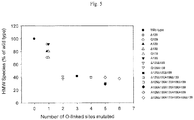
- Protein aggregation was reduced by eliminating O-linked sites through substitution or deletion judged by a significant reduction in the amount of HMW species in the protein products. Mutating either S129 or S139 caused a decrease in the percentage of HMW species ranging from 8% to 29% whereas mutating both caused a 60% decrease in HMW ( Fig. 5 ). Eliminating three or more O-linked glycosylation sites did not further enhance reduction in HMW beyond what was seen in the double deletion mutants.
Landscapes
- Health & Medical Sciences (AREA)
- Chemical & Material Sciences (AREA)
- Life Sciences & Earth Sciences (AREA)
- Organic Chemistry (AREA)
- Immunology (AREA)
- Medicinal Chemistry (AREA)
- General Health & Medical Sciences (AREA)
- Genetics & Genomics (AREA)
- Biophysics (AREA)
- Molecular Biology (AREA)
- Proteomics, Peptides & Aminoacids (AREA)
- Biochemistry (AREA)
- Cell Biology (AREA)
- Toxicology (AREA)
- Zoology (AREA)
- Gastroenterology & Hepatology (AREA)
- Peptides Or Proteins (AREA)
Applications Claiming Priority (4)
| Application Number | Priority Date | Filing Date | Title |
|---|---|---|---|
| US201261666296P | 2012-06-29 | 2012-06-29 | |
| US201361839393P | 2013-06-26 | 2013-06-26 | |
| PCT/US2013/048105 WO2014004780A1 (fr) | 2012-06-29 | 2013-06-27 | Procédés pour la réduction de l'agrégation de glycoprotéines |
| EP13734632.6A EP2867251B1 (fr) | 2012-06-29 | 2013-06-27 | Procédés pour la réduction de l'agrégation de glycoprotéines |
Related Parent Applications (1)
| Application Number | Title | Priority Date | Filing Date |
|---|---|---|---|
| EP13734632.6A Division EP2867251B1 (fr) | 2012-06-29 | 2013-06-27 | Procédés pour la réduction de l'agrégation de glycoprotéines |
Publications (1)
| Publication Number | Publication Date |
|---|---|
| EP3613763A1 true EP3613763A1 (fr) | 2020-02-26 |
Family
ID=48747805
Family Applications (2)
| Application Number | Title | Priority Date | Filing Date |
|---|---|---|---|
| EP19189556.4A Withdrawn EP3613763A1 (fr) | 2012-06-29 | 2013-06-27 | Procédés de réduction de l'agrégation de glycoprotéine |
| EP13734632.6A Active EP2867251B1 (fr) | 2012-06-29 | 2013-06-27 | Procédés pour la réduction de l'agrégation de glycoprotéines |
Family Applications After (1)
| Application Number | Title | Priority Date | Filing Date |
|---|---|---|---|
| EP13734632.6A Active EP2867251B1 (fr) | 2012-06-29 | 2013-06-27 | Procédés pour la réduction de l'agrégation de glycoprotéines |
Country Status (16)
| Country | Link |
|---|---|
| US (1) | US9926365B2 (fr) |
| EP (2) | EP3613763A1 (fr) |
| JP (2) | JP2015522024A (fr) |
| CN (1) | CN104520316B (fr) |
| CY (1) | CY1122376T1 (fr) |
| DK (1) | DK2867251T3 (fr) |
| ES (1) | ES2753150T3 (fr) |
| HR (1) | HRP20192084T1 (fr) |
| HU (1) | HUE047077T2 (fr) |
| LT (1) | LT2867251T (fr) |
| PL (1) | PL2867251T3 (fr) |
| PT (1) | PT2867251T (fr) |
| RS (1) | RS59577B1 (fr) |
| SI (1) | SI2867251T1 (fr) |
| SM (1) | SMT201900651T1 (fr) |
| WO (1) | WO2014004780A1 (fr) |
Citations (11)
| Publication number | Priority date | Publication date | Assignee | Title |
|---|---|---|---|---|
| US20040137581A1 (en) * | 2002-10-01 | 2004-07-15 | Xencor | Interferon variants with improved properties |
| EP1449849A2 (fr) * | 1992-02-05 | 2004-08-25 | Paion GmbH | Analogue de thrombomoduline résistant à la protéase |
| US7094874B2 (en) | 2000-05-26 | 2006-08-22 | Bristol-Myers Squibb Co. | Soluble CTLA4 mutant molecules |
| US20060234917A1 (en) * | 2003-03-28 | 2006-10-19 | Christine Ambrose | Truncated baff receptors |
| WO2007076032A2 (fr) * | 2005-12-20 | 2007-07-05 | Bristol-Myers Squibb Company | Compositions et procédés de production d'une composition |
| US7332303B2 (en) | 2002-12-23 | 2008-02-19 | Bristol-Myers Squibb Company | Product quality enhancement in mammalian cell culture processes for protein production |
| WO2008143954A2 (fr) * | 2007-05-14 | 2008-11-27 | Biogen Idec Ma Inc. | Régions fc simple chaîne, polypeptides de liaison comportant de telles régions, et procédés correspondants |
| US7541164B2 (en) | 2002-12-23 | 2009-06-02 | Bristol-Myers Squibb Company | Mammalian cell culture processes for protein production |
| US20100166774A1 (en) | 2005-12-20 | 2010-07-01 | Bristol-Myers Squibb Company | Stable Protein Formulations |
| WO2010085682A2 (fr) * | 2009-01-23 | 2010-07-29 | Biogen Idec Ma Inc. | Polypeptides fc stabilisés avec une fonction effectrice réduite et procédés d'utilisation |
| WO2010128145A1 (fr) * | 2009-05-07 | 2010-11-11 | Novozymes Biopharma Dk A/S | Procédé pour limiter la glycosylation à liaison o des anticorps |
Family Cites Families (7)
| Publication number | Priority date | Publication date | Assignee | Title |
|---|---|---|---|---|
| CA2411828A1 (fr) * | 2000-06-23 | 2002-01-03 | Maxygen, Inc. | Nouvelles molecules costimulatrices |
| MXPA03000311A (es) * | 2000-07-12 | 2004-12-13 | Gryphon Therapeutics Inc | Produccion y uso de moduladores de receptor de quimiocina. |
| US20030054354A1 (en) * | 2001-08-23 | 2003-03-20 | Bennett C. Frank | Use of antisense oligonucleotide libraries for identifying gene function |
| CN101448852A (zh) * | 2005-12-20 | 2009-06-03 | 布里斯托尔—迈尔斯斯奎布公司 | 组合物和用于生产组合物的方法 |
| US9540426B2 (en) * | 2009-10-06 | 2017-01-10 | Bristol-Myers Squibb Company | Mammalian cell culture processes for protein production |
| EP2718328A4 (fr) * | 2011-06-08 | 2014-12-24 | Acceleron Pharma Inc | Compositions et procédés pour augmenter la demi-vie sérique |
| JP6228971B2 (ja) * | 2012-05-11 | 2017-11-08 | メディミューン,エルエルシー | Ctla−4バリアント |
-
2013
- 2013-06-27 HU HUE13734632A patent/HUE047077T2/hu unknown
- 2013-06-27 EP EP19189556.4A patent/EP3613763A1/fr not_active Withdrawn
- 2013-06-27 DK DK13734632T patent/DK2867251T3/da active
- 2013-06-27 RS RS20191478A patent/RS59577B1/sr unknown
- 2013-06-27 US US14/410,709 patent/US9926365B2/en active Active
- 2013-06-27 PL PL13734632T patent/PL2867251T3/pl unknown
- 2013-06-27 HR HRP20192084TT patent/HRP20192084T1/hr unknown
- 2013-06-27 SI SI201331601T patent/SI2867251T1/sl unknown
- 2013-06-27 ES ES13734632T patent/ES2753150T3/es active Active
- 2013-06-27 CN CN201380034684.0A patent/CN104520316B/zh not_active Expired - Fee Related
- 2013-06-27 JP JP2015520487A patent/JP2015522024A/ja not_active Ceased
- 2013-06-27 SM SM20190651T patent/SMT201900651T1/it unknown
- 2013-06-27 LT LT13734632T patent/LT2867251T/lt unknown
- 2013-06-27 WO PCT/US2013/048105 patent/WO2014004780A1/fr not_active Ceased
- 2013-06-27 PT PT137346326T patent/PT2867251T/pt unknown
- 2013-06-27 EP EP13734632.6A patent/EP2867251B1/fr active Active
-
2017
- 2017-11-14 JP JP2017219142A patent/JP2018057387A/ja active Pending
-
2019
- 2019-11-20 CY CY20191101217T patent/CY1122376T1/el unknown
Patent Citations (12)
| Publication number | Priority date | Publication date | Assignee | Title |
|---|---|---|---|---|
| EP1449849A2 (fr) * | 1992-02-05 | 2004-08-25 | Paion GmbH | Analogue de thrombomoduline résistant à la protéase |
| US7094874B2 (en) | 2000-05-26 | 2006-08-22 | Bristol-Myers Squibb Co. | Soluble CTLA4 mutant molecules |
| US20040137581A1 (en) * | 2002-10-01 | 2004-07-15 | Xencor | Interferon variants with improved properties |
| US7332303B2 (en) | 2002-12-23 | 2008-02-19 | Bristol-Myers Squibb Company | Product quality enhancement in mammalian cell culture processes for protein production |
| US7541164B2 (en) | 2002-12-23 | 2009-06-02 | Bristol-Myers Squibb Company | Mammalian cell culture processes for protein production |
| US20060234917A1 (en) * | 2003-03-28 | 2006-10-19 | Christine Ambrose | Truncated baff receptors |
| WO2007076032A2 (fr) * | 2005-12-20 | 2007-07-05 | Bristol-Myers Squibb Company | Compositions et procédés de production d'une composition |
| US20090252749A1 (en) | 2005-12-20 | 2009-10-08 | Bristol-Myers Squibb Company | Compositions and Methods for Producing a Composition |
| US20100166774A1 (en) | 2005-12-20 | 2010-07-01 | Bristol-Myers Squibb Company | Stable Protein Formulations |
| WO2008143954A2 (fr) * | 2007-05-14 | 2008-11-27 | Biogen Idec Ma Inc. | Régions fc simple chaîne, polypeptides de liaison comportant de telles régions, et procédés correspondants |
| WO2010085682A2 (fr) * | 2009-01-23 | 2010-07-29 | Biogen Idec Ma Inc. | Polypeptides fc stabilisés avec une fonction effectrice réduite et procédés d'utilisation |
| WO2010128145A1 (fr) * | 2009-05-07 | 2010-11-11 | Novozymes Biopharma Dk A/S | Procédé pour limiter la glycosylation à liaison o des anticorps |
Non-Patent Citations (25)
| Title |
|---|
| "Molecular Cloning: A Laboratory Manual", 1989, COLD SPRING HARBOR PRESS |
| BILLER, M. ET AL., GLYCOBIOLOGY, vol. 10, 2000, pages 1259 - 1269 |
| CHANG ET AL., NATURE, vol. 198, 1977, pages 1056 |
| CHASIN, SOM. CELL. MOLEC. GENET., vol. 12, 1986, pages 555 - 556 |
| CLARKE ET AL., METH. ENZ., vol. 101, 1983, pages 300 |
| COHEN, PROC. NATL. ACAD. SCI. USA, vol. 69, 1972, pages 2110 |
| FIERS ET AL., NATURE, vol. 273, 1973, pages 113 |
| GOEDDEL ET AL., NUCLEIC ACIDS RES., vol. 8, 1980, pages 4057 |
| HESS ET AL., J. ADV. ENZYME REG., vol. 7, 1968, pages 149 |
| HITZEMAN ET AL., J. BIOL. CHEM., vol. 255, 1980, pages 2073 |
| HOLLAND ET AL., BIOCHEMISTRY, vol. 17, 1978, pages 4900 |
| HOSSLER, P., GLYCOBIOLOGY, vol. 19, 2009, pages 936 - 949 |
| JING, Y., BIOTECHNOL BIOENG, vol. 107, 2010, pages 488 - 496 |
| JULENIUS, K., GLYCOBIOLOGY, vol. 15, 2005, pages 153 - 164 |
| KARIN ET AL., NATURE, vol. 299, 1982, pages 797 - 802 |
| KOLKEKAR, BIOCHEMISTRY, vol. 36, 1997, pages 10901 - 10909 |
| LIS, H., EUR JBIOCHEM, vol. 218, 1993, pages 1 - 27 |
| LOWE, J.B., ANNU REV BIOCHEM, vol. 72, 2003, pages 643 - 691 |
| QIAN, Y., BIOTECHNOL PROG, vol. 26, 2010, pages 1417 - 1423 |
| SHIMATAKE ET AL., NATURE, vol. 292, 1981, pages 128 |
| STINCHCOMB ET AL., NATURE, vol. 282, 1979, pages 39 |
| TOYAMAOKAYAMA, FEBS, vol. 268, 1990, pages 217 - 221 |
| TSCHEMPER ET AL., GENE, vol. 10, 1980, pages 157 |
| VAN DEN STEEN, P., CRIT REV BIOCHEM MOL BIOL, vol. 33, 1998, pages 151 - 208 |
| WEENEN, C. ET AL., J CLIN ENDOCRINOL METAB, vol. 89, 2004, pages 5204 - 5212 |
Also Published As
| Publication number | Publication date |
|---|---|
| US20150322139A1 (en) | 2015-11-12 |
| LT2867251T (lt) | 2019-11-25 |
| JP2015522024A (ja) | 2015-08-03 |
| HUE047077T2 (hu) | 2020-04-28 |
| CN104520316A (zh) | 2015-04-15 |
| EP2867251A1 (fr) | 2015-05-06 |
| WO2014004780A1 (fr) | 2014-01-03 |
| CY1122376T1 (el) | 2021-01-27 |
| PL2867251T3 (pl) | 2020-03-31 |
| RS59577B1 (sr) | 2019-12-31 |
| US9926365B2 (en) | 2018-03-27 |
| EP2867251B1 (fr) | 2019-08-21 |
| ES2753150T3 (es) | 2020-04-07 |
| DK2867251T3 (da) | 2019-11-25 |
| CN104520316B (zh) | 2021-07-06 |
| SI2867251T1 (sl) | 2019-12-31 |
| PT2867251T (pt) | 2019-11-11 |
| SMT201900651T1 (it) | 2020-01-14 |
| HRP20192084T1 (hr) | 2020-02-21 |
| JP2018057387A (ja) | 2018-04-12 |
Similar Documents
| Publication | Publication Date | Title |
|---|---|---|
| CN102648212B (zh) | 包含冯维勒布兰德因子(vWF)的制剂及其相关制备方法、试剂盒和用途 | |
| KR101454316B1 (ko) | 활성형 TNFR-Fc 융합 단백질을 제조하는 방법 | |
| EP2726496B1 (fr) | Procédé de séparation des polypeptides monomères de polypeptides agrégés | |
| US12018046B2 (en) | Use of cation-exchange chromatography in the flow-through mode to enrich post-translational modifications | |
| CN103827134A (zh) | 多肽分离方法 | |
| RS65559B1 (sr) | Sastav il-1beta inhibitora i njegova upotreba | |
| CN107428817A (zh) | 纯化白蛋白融合蛋白的方法 | |
| US12497434B2 (en) | IL-37 fusion proteins and uses thereof | |
| EP0736599A2 (fr) | Le gène d'obésité de rat, son produit génique et sa production | |
| McALISTER et al. | Structural analysis of the CD5 antigen: expression, disulphide bond analysis and physical characterisation of CD5 scavenger receptor superfamily domain 1 | |
| SG11202109738QA (en) | Recombinant ccn domain proteins and fusion proteins | |
| EP2975050B1 (fr) | Quantification de TNFR2:fc mal replié | |
| US9926365B2 (en) | Methods for reducing glycoprotein aggregation | |
| EP2905289A1 (fr) | Procédé de purification de teriparatide (PTH1-34) | |
| JPH11505410A (ja) | ヒトゴナドトロピンホルモン受容体の可溶性細胞外ドメインの発現と分泌の方法 | |
| CN111440820B (zh) | 血管性血友病因子片段和八因子的共表达载体 | |
| CN118891276A (zh) | B细胞活化因子(baff)-增殖诱导配体(april)双重抑制剂 | |
| HK40068945A (en) | Il-37 fusion proteins and uses thereof | |
| JP5493295B2 (ja) | ヒト型Fcレセプター発現細胞、及びそれを用いたヒト型Fcレセプターの製造方法 |
Legal Events
| Date | Code | Title | Description |
|---|---|---|---|
| PUAI | Public reference made under article 153(3) epc to a published international application that has entered the european phase |
Free format text: ORIGINAL CODE: 0009012 |
|
| STAA | Information on the status of an ep patent application or granted ep patent |
Free format text: STATUS: THE APPLICATION HAS BEEN PUBLISHED |
|
| AC | Divisional application: reference to earlier application |
Ref document number: 2867251 Country of ref document: EP Kind code of ref document: P |
|
| AK | Designated contracting states |
Kind code of ref document: A1 Designated state(s): AL AT BE BG CH CY CZ DE DK EE ES FI FR GB GR HR HU IE IS IT LI LT LU LV MC MK MT NL NO PL PT RO RS SE SI SK SM TR |
|
| STAA | Information on the status of an ep patent application or granted ep patent |
Free format text: STATUS: REQUEST FOR EXAMINATION WAS MADE |
|
| 17P | Request for examination filed |
Effective date: 20200619 |
|
| RBV | Designated contracting states (corrected) |
Designated state(s): AL AT BE BG CH CY CZ DE DK EE ES FI FR GB GR HR HU IE IS IT LI LT LU LV MC MK MT NL NO PL PT RO RS SE SI SK SM TR |
|
| STAA | Information on the status of an ep patent application or granted ep patent |
Free format text: STATUS: EXAMINATION IS IN PROGRESS |
|
| 17Q | First examination report despatched |
Effective date: 20221114 |
|
| STAA | Information on the status of an ep patent application or granted ep patent |
Free format text: STATUS: THE APPLICATION HAS BEEN WITHDRAWN |
|
| 18W | Application withdrawn |
Effective date: 20230103 |