EP3661062B1 - Dispositif de codage, dispositif de décodage, procédé de codage, procédé de décodage, programme de codage et programme de décodage - Google Patents
Dispositif de codage, dispositif de décodage, procédé de codage, procédé de décodage, programme de codage et programme de décodage Download PDFInfo
- Publication number
- EP3661062B1 EP3661062B1 EP18838945.6A EP18838945A EP3661062B1 EP 3661062 B1 EP3661062 B1 EP 3661062B1 EP 18838945 A EP18838945 A EP 18838945A EP 3661062 B1 EP3661062 B1 EP 3661062B1
- Authority
- EP
- European Patent Office
- Prior art keywords
- code
- integer
- bit
- encoding
- parameter
- Prior art date
- Legal status (The legal status is an assumption and is not a legal conclusion. Google has not performed a legal analysis and makes no representation as to the accuracy of the status listed.)
- Active
Links
Images





Classifications
-
- H—ELECTRICITY
- H03—ELECTRONIC CIRCUITRY
- H03M—CODING; DECODING; CODE CONVERSION IN GENERAL
- H03M7/00—Conversion of a code where information is represented by a given sequence or number of digits to a code where the same, similar or subset of information is represented by a different sequence or number of digits
- H03M7/30—Compression; Expansion; Suppression of unnecessary data, e.g. redundancy reduction
- H03M7/40—Conversion to or from variable length codes, e.g. Shannon-Fano code, Huffman code, Morse code
- H03M7/4031—Fixed length to variable length coding
- H03M7/4037—Prefix coding
- H03M7/4043—Adaptive prefix coding
- H03M7/4068—Parameterized codes
- H03M7/4075—Golomb codes
-
- H—ELECTRICITY
- H03—ELECTRONIC CIRCUITRY
- H03M—CODING; DECODING; CODE CONVERSION IN GENERAL
- H03M7/00—Conversion of a code where information is represented by a given sequence or number of digits to a code where the same, similar or subset of information is represented by a different sequence or number of digits
- H03M7/30—Compression; Expansion; Suppression of unnecessary data, e.g. redundancy reduction
- H03M7/40—Conversion to or from variable length codes, e.g. Shannon-Fano code, Huffman code, Morse code
-
- G—PHYSICS
- G10—MUSICAL INSTRUMENTS; ACOUSTICS
- G10L—SPEECH ANALYSIS TECHNIQUES OR SPEECH SYNTHESIS; SPEECH RECOGNITION; SPEECH OR VOICE PROCESSING TECHNIQUES; SPEECH OR AUDIO CODING OR DECODING
- G10L19/00—Speech or audio signals analysis-synthesis techniques for redundancy reduction, e.g. in vocoders; Coding or decoding of speech or audio signals, using source filter models or psychoacoustic analysis
-
- H—ELECTRICITY
- H03—ELECTRONIC CIRCUITRY
- H03M—CODING; DECODING; CODE CONVERSION IN GENERAL
- H03M7/00—Conversion of a code where information is represented by a given sequence or number of digits to a code where the same, similar or subset of information is represented by a different sequence or number of digits
- H03M7/30—Compression; Expansion; Suppression of unnecessary data, e.g. redundancy reduction
- H03M7/46—Conversion to or from run-length codes, i.e. by representing the number of consecutive digits, or groups of digits, of the same kind by a code word and a digit indicative of that kind
-
- H—ELECTRICITY
- H03—ELECTRONIC CIRCUITRY
- H03M—CODING; DECODING; CODE CONVERSION IN GENERAL
- H03M7/00—Conversion of a code where information is represented by a given sequence or number of digits to a code where the same, similar or subset of information is represented by a different sequence or number of digits
- H03M7/30—Compression; Expansion; Suppression of unnecessary data, e.g. redundancy reduction
- H03M7/46—Conversion to or from run-length codes, i.e. by representing the number of consecutive digits, or groups of digits, of the same kind by a code word and a digit indicative of that kind
- H03M7/48—Conversion to or from run-length codes, i.e. by representing the number of consecutive digits, or groups of digits, of the same kind by a code word and a digit indicative of that kind alternating with other codes during the code conversion process, e.g. run-length coding being performed only as long as sufficientlylong runs of digits of the same kind are present
-
- G—PHYSICS
- G10—MUSICAL INSTRUMENTS; ACOUSTICS
- G10L—SPEECH ANALYSIS TECHNIQUES OR SPEECH SYNTHESIS; SPEECH RECOGNITION; SPEECH OR VOICE PROCESSING TECHNIQUES; SPEECH OR AUDIO CODING OR DECODING
- G10L19/00—Speech or audio signals analysis-synthesis techniques for redundancy reduction, e.g. in vocoders; Coding or decoding of speech or audio signals, using source filter models or psychoacoustic analysis
- G10L19/02—Speech or audio signals analysis-synthesis techniques for redundancy reduction, e.g. in vocoders; Coding or decoding of speech or audio signals, using source filter models or psychoacoustic analysis using spectral analysis, e.g. transform vocoders or subband vocoders
- G10L19/032—Quantisation or dequantisation of spectral components
Definitions
- the present invention relates to a technique for encoding or decoding a sample sequence composed of integer values such as a sample sequence of voice or acoustic time-series digital signals.
- a code configuration (assignment of code to each integer value) needs to be suitable for a distribution of values in a sequence of integer values. More specifically, it is possible to reduce an expected value of a compressed bit length of a sequence of integer values by assigning a short code to an integer value having a high appearance probability and assigning a long code to an integer value having a low appearance probability.
- the Golomb-Rice code is a Golomb-Rice code that has been used as one of simplest variable length codes.
- a sequence of integer values belongs to a Laplacian distribution, that is, when an appearance probability of integer values is exponentially lowered with respect to the magnitude of the values, the Golomb-Rice code is known to achieve a minimum expected bit length (minimum bit length).
- the Golomb-Rice code Since this Golomb-Rice code has an extremely simple configuration, it is widely used.
- the Golomb-Rice code is used, for example, to divide sample values included in a sequence of integer values obtained by AD converting an acoustic signal to PCM or a sequence obtained by Fourier transforming the aforementioned sequence into a frequency spectrum by a quantized value and to encode a sequence of absolute values of the obtained integer values.
- the Rice parameter r is a non-negative integer value. That is, if the Rice parameter r is a small non-negative integer value, it is possible to encode a sequence of values of large deviation with a small average number of bits, whereas if r is a large non-negative integer value, it is possible to encode a sequence of values of small deviation with a small average number of bits.
- the Rice parameter r cannot take a negative value in Golomb-Rice encoding, the compression efficiency deteriorates no matter how the Rice parameter r is set as a deviation of a value of the sequence such as a sequence of values following a distribution p (x, 0.1) becomes larger than the distribution p (x, 1).
- a representable range of numerical values is set to allow recording of up to a high sound volume, and so values included in a sequence of many signals tend to be biased toward small absolute values of the representable range of numerical values.
- a voice signal in particular includes a time section with no utterance, and so signal values are biased toward extremely small values with only zero values or background noise.
- a sequence of integer values obtained by dividing the values included in such a sequence of signals by a quantized value is also biased toward small values including more zero values than the original sequence due to quantization.
- Non-Patent Literature 1 As a prior art for encoding a sequence of integer values biased toward zero values, there is a technique of Non-Patent Literature 1.
- the technique described in Non-Patent Literature 1 encodes zero values included in an inputted sequence of integer values with a predetermined fixed number of bits for the length of the run of zero values and Golomb-Rice encodes a value obtained by subtracting 1 from non-zero values included in the inputted sequence of integer values (value -1).
- Non-Patent Literature 2 As a prior art for encoding a sequence of integer values biased toward small values including zero values, there is a technique described in Non-Patent Literature 2.
- the technique in Non-Patent Literature 2 associates a set of two integer values with one integer value so as to be bijective with each other in advance, transforms the set of two integer values into one integer value and Golomb-Rice encodes the transformed sequence of integer values.
- Non-Patent Literature 3 As a prior art used for lossless data compression, there is a technique of Non-Patent Literature 3.
- the technique described in Non-Patent Literature 3 generally describes basics, properties, variations and applications of the commonly used Huffman coding.
- Non-Patent Literature 1 encoding can be performed with a small average number of bits for zero values.
- the technique of Non-Patent Literature 1 performs substantially the same encoding as Golomb-Rice encoding for non-zero values, and so when small non-zero values are biased more heavily than the distribution p (x, 1), there is a problem with the technique of Non-Patent Literature 1 that compression performance deteriorates.
- Non-Patent Literature 1 is not any encoding method corresponding to a mathematically represented distribution. Therefore, the technique in Non-Patent Literature 1 also involves a problem that it is not possible to know what number of bits used to represent the length of the run of zero values should be selected for encoding so as to be able to encode the zero values with a small average number of bits even if the distribution of values in the sequence of integer values is known.
- Non-Patent Literature 2 a sequence of integer values more heavily biased than the distribution p (x, 1) can be encoded with a small average number of bits.
- the technique in Non-Patent Literature 2 cannot make the average number of bits for one integer value smaller than 0.5 bits and involves a problem that compression performance deteriorates for a sequence of integer values with such a large deviation that a theoretically optimal average number of bits is less than 0.5 bits.
- the present invention provides an encoding apparatus, a decoding apparatus, an encoding method, a decoding method, an encoding program and a decoding program, having the features of respective independent claims.
- the dependent claims relate to preferred embodiments.
- One example not encompassed by the claims comprises an integer encoding part that obtains, for an inputted sequence of non-negative integer values x_n, n ⁇ ⁇ 1, 2, ..., N ⁇ (hereinafter referred to as an "integer sequence"), a 1-bit code (hereinafter referred to as a "code A”) as a code corresponding to a run of integer values 0 of length L, a predetermined number which satisfies 2 ⁇ L ⁇ 2 K-1 , which is included in the integer sequence, and obtains a (K ⁇ x_n)-bit or (K ⁇ x_n+1)-bit code (hereinafter referred to as a "code B”) as a code corresponding to a set of a run of integer values 0 of length from 0 to L-1 and one non-zero integer value x_n included in the integer sequence, where K is assumed to be an integer equal to or larger than 2.
- Another example not encompassed by the claims comprises an integer decoding part that obtains a sequence of integer value x_n, n ⁇ ⁇ 1, 2, ..., N ⁇ by obtaining, for an inputted code string, a run of integer values 0 of length L, a predetermined number which satisfies 2 ⁇ L ⁇ 2 K-1 , from a 1-bit code (hereinafter referred to as a "code A") included in the inputted code string, and obtaining a set of a run of integer values 0 of length from 0 to L-1 and one non-zero integer value x_n from a (K ⁇ x_n)-bit or (K ⁇ x_n+1)-bit code (hereinafter referred to as a "code B”) included in the inputted code string, where K is assumed to be an integer equal to or larger than 2.
- a further example not encompassed by the claims is a data structure of a code string representing a sequence of non-negative integer values x_n, n ⁇ ⁇ 1, 2, ..., N ⁇ (hereinafter referred to as an "integer sequence"), the code string being used for an encoding apparatus that obtains the code string from the integer sequence or/and a decoding apparatus that obtains the integer sequence from the code string, the data structure comprising a 1-bit code (hereinafter referred to as a "code A”) which is a code corresponding to a run of integer values 0 of length L, a predetermined number which satisfies 2 ⁇ L ⁇ 2 K-1 , which is included in the integer sequence, and a (K ⁇ x_n)-bit or (K ⁇ x_n+1)-bit code (hereinafter referred to as a "code B”) which is a code corresponding to a set of a run of integer values 0 of length from 0 to L-1 and one non-zero integer value x_n
- Non-Patent Literature 2 it is possible to encode, with a small average number of bits, even a sequence of integer values including small non-zero values and heavily biased toward small values or a sequence of integer values biased to an extent that cannot be covered by the technique in Non-Patent Literature 2. Furthermore, it is possible to decode such a code.
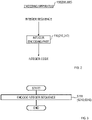
- a processing procedure for an encoding method executed by an encoding apparatus 100 of a first example will be described with reference to Fig. 2 and Fig. 3 .
- the encoding apparatus 100 of the first example includes an integer encoding part 110.
- the encoding method of the first example is implemented by the encoding apparatus 100 of the first example executing processes in respective steps shown in Fig. 3 .
- a sequence of non-negative integer values is inputted to the encoding apparatus 100 of the first example.
- the sequence of non-negative integer values for example, a sequence of absolute values of integer values obtained from some or all of signals obtained by transforming voice collected using a microphone, music or the like into a digital signal or by transforming images or video captured by a camera into a digital signal and quantizing the digital signal using an existing technique into finite precision values or a sequence of x' obtained according to equation (1) assuming an integer value as x may be inputted.
- the encoding apparatus 100 of the first example variable-length encodes a sequence of non-negative integer values using a plurality of predetermined code trees according to a predetermined rule to thereby implement an encoding process resulting in a shorter bit length than Golomb-Rice encoding on a sequence of non-negative integer values having a distribution more heavily biased than a Laplacian distribution.
- the "code tree” refers to a graph representing a predetermined rule as to which code is to be assigned to an inputted non-negative integer value.
- integer values inputted to the encoding apparatus 100 of the present example will be simply referred to as "integer values.”
- a sequence of integer values inputted to the encoding apparatus 100 is inputted to the integer encoding part 110 by N samples (N is a natural number) at a time.
- the inputted sequence of integer values is assumed to be an integer sequence x_1, x_2, ..., x_N.
- the integer encoding part 110 encodes the integer sequence x_1, x_2, ..., x_N through an encoding process using the following code tree based on an encoding parameter K which is a natural number equal to or larger than 2 inputted by predetermined means (not shown) to obtain a code and outputs the obtained code as an integer code (S110).
- K an encoding parameter K which is a natural number equal to or larger than 2 inputted by predetermined means (not shown) to obtain a code and outputs the obtained code as an integer code (S110).
- each integer of the integer sequence x_1, x_2, ..., x_N is x_n (n is a sample number in the sequence, n
- the integer encoding part 110 stores 2 K-1 (2 to the (K-1)-th power) code trees in advance as illustrated in Fig. 4 to Fig. 6 .
- Fig. 6 shows an example of a code tree when K is generalized, and T(0) to T(2 K-1 -1) are code trees respectively.
- a number in parentheses attached to T will be called a "code tree number.”
- An integer value enclosed by a triangle to the right of a node on each code tree corresponds to an inputted integer value.
- Bit values '0' and '1' on the left side of an edge of each code tree correspond to a rule of a code assigned to the inputted integer value.
- This rule is a rule according to which a sequence of bit values arranged on the left side of the edge from a node at a top end of the code tree to a node corresponding to the inputted integer value are obtained as codes to be assigned to the inputted integer values.
- One of the 2 K-1 code trees corresponds to T(0) in Fig. 4 to Fig. 6 and is a code tree corresponding to a rule for obtaining codes that the number of bits is (K ⁇ x_n+1) as the codes corresponding to the inputted integer value x_n, the bit value of the first 1 bit is '1' and the bit values of the second bit to the (K ⁇ x_n+1)-th bit are '0.' Note that according to this code tree, when the inputted integer value x_n is 0, since the number of bits K ⁇ x_n+1 of the code is one, a code of 1 bit whose bit value is '1' is obtained.
- (2 K-1 -1) code trees other than the one described above correspond to T(1) to T(2 K-1 -1) in Fig. 4 to Fig. 6 , and as a code corresponding to the inputted integer value x_n, the number of bits is K ⁇ x_n, the bit value of the first bit is '0' and the bit value of at least 1 bit of (K-1) bits from the second bit to the K-th bit is '1' and the bit values of the K ⁇ (x_n-1) bits from the (K+1)-th bit to the (K ⁇ x_n)-th bit are '0.' That is, this is a code tree corresponding to a rule for obtaining a code whose bit value of the K ⁇ (x_n-1)-th bit from the last is '0.
- the (K-1) bits from the second bit to the K-th bit constitute a bit group corresponding to (2 K-1 -1) code trees from the second bit to the K-th bit one to one.
- the rule applicable to an inputted integer value and a code corresponding to the integer value is such a rule that when an inputted integer value 0 is encoded by the code tree T(0), '1' is obtained as a code corresponding to the inputted integer value 0, when an inputted integer value 1 is encoded by the code tree T(0), '100' is obtained as a code corresponding to the inputted integer value 1, when an inputted integer value 2 is encoded by the code tree T(0), '10000' is obtained as a code corresponding to the inputted integer value 2, when the inputted integer value 0 is encoded by the code tree T(1), no code corresponding to the inputted integer value 0 is obtained, when the inputted integer value 1 is encoded by the code tree T(1), '01' is obtained as a code corresponding to the inputted integer value 1, and when the inputted integer value 2 is encoded by the code tree T(1), '0100' is obtained as a code corresponding to the input value.
- the integer encoding part 110 also stores a rule using a plurality of code trees in advance.
- a right-facing triangle represents a rule for using a code tree on the right side (a code tree with one larger code tree number) when encoding an integer value next to the inputted integer value. Note that it is assumed in such a case that the right side of a rightmost code tree (code tree with the largest code tree number) corresponds to the leftmost code tree (code tree with the smallest code tree number). Note that this rule is merely an example and any rule may be used if it is a cyclic rule to use multiple code trees.
- any rule may be adopted for using a code tree different from that for encoding the next integer value when the right-facing triangle is used, if such a rule for all code trees prevents a code tree used for encoding the next integer value in the case of a right-facing triangle from overlapping.
- the maximum number of code trees used is 2 K-1 .
- a down-facing triangle represents a rule for using a code tree T(1) when encoding an integer value next to the inputted integer value.
- this rule is also merely an example and any rule may be used if it is a rule that for each down-facing triangle, any one predetermined code tree is used for encoding the next integer value.
- the rule may be such that any one identical code tree predetermined for all the down-facing triangles is a code tree used for encoding the next integer value.
- the rule may be such that when the down-facing triangle is used, a code tree other than the code trees corresponding to T(0) in Fig. 4 to Fig. 6 is used as a code tree used for encoding the next integer value.
- any one of the plurality of code trees may be used at the beginning of an encoding process, but a rule about which code tree is used at the beginning of the encoding process is also stored in advance as a rule for using a plurality of code trees.
- a rule that the integer value x_1 is encoded with T(0) may be used or a rule that the integer value x_1 is encoded with T(1) may be used, in which case which of T(0) or T(1) is to be used for encoding of the integer value x_1 may be predetermined and stored in advance.
- the integer encoding part 110 encodes integer values included in the inputted integer sequence x_1, x_2, ..., x_N in predetermined order to obtain a code and outputs the obtained code as an integer code.
- the predetermined order is order of sample numbers in the sequence and the code tree used first is T(0)
- the encoding procedure carried out by the integer encoding part 110 is as follows.
- step 3 of the encoding procedure is not essential.
- the code tree used first is T(0)
- the first obtained code among the codes obtained in steps 1 and 2 is '1' no matter what the value of x_1 may be. Therefore, even when the encoding apparatus 100 outputs a code resulting from removing the first obtained code '1' as the integer code, if the decoding apparatus 150 adds a code '1' to the beginning of the inputted integer code, it is possible for the decoding apparatus 150 to perform a decoding process corresponding to the encoding process carried out by the integer encoding part 110 of the encoding apparatus 100. From this, in step 3 of the encoding procedure, the first obtained code '1' is removed.
- step 3 of the encoding procedure need not always be performed and the first obtained code '1' need not be removed from among the codes obtained in steps 1 and 2. In this case, it is possible to prevent the corresponding decoding apparatus 150 from performing the process of adding a code '1' to the beginning of the inputted integer code and step 3 of the encoding procedure needs not be performed.
- Step 4 of the encoding procedure needs not be performed depending on how to transmit integer codes from the encoding apparatus 100 to the decoding apparatus 150.
- the decoding procedure in the decoding apparatus 150 will be described later, in order for the decoding apparatus 150 to perform a decoding process corresponding to the encoding process performed by the integer encoding part 110, the decoding apparatus 150 needs to be able to identify a termination end of an integer code.
- the encoding apparatus 100 As a configuration for the encoding apparatus 100 to transmit an integer code to the decoding apparatus 150, it is possible to adopt, for example, a configuration in which integer codes obtained for the integer sequence x_1, x_2, ..., x_N in the encoding apparatus 100 or in a post stage of the encoding apparatus 100 are stored in a packet using a well-known packetizing technique and transmitted to the decoding apparatus 150.
- a configuration of extracting integer codes from the packet in the decoding apparatus 150 or in a pre-stage of the decoding apparatus 150 is adopted, and therefore the decoding apparatus 150 can identify the termination end of the integer code. Therefore, in such a case, step 4 of the encoding procedure needs not be performed.
- the configuration of transmitting an integer code from the encoding apparatus 100 to the decoding apparatus 150 it may be possible to adopt a configuration of connecting another code to the rear of integer codes obtained for the integer sequence x_1, x_2, ..., x_N, storing them in the aforementioned packet and transmitting them to the decoding apparatus 150 or a configuration of connecting another code to the rear of integer codes obtained for the integer sequence x_1, x_2, ..., x_N without the aforementioned packetization and transmitting them to the decoding apparatus 150.
- step 4 of the encoding procedure in these configurations is not performed, if the code connected to the rear is '0000,' the decoding apparatus 150 cannot determine how far the code corresponding to the N-th integer value reaches and from where the code connected to the rear starts. Therefore, in these configurations, the same predetermined value of N needs to be stored in the encoding apparatus 100 and the decoding apparatus 150 so as to allow the decoding apparatus 150 to grasp that the integer codes correspond to the N integer values and step 4 of the encoding procedure needs also to be performed so that the decoding apparatus 150 may identify the termination end of the integer code.
- code '0' in the aforementioned description is an example of any one of the two bit values and code '1' in the aforementioned description is an example of the other bit value of the two bit values. That is, as a matter of course, code '1' may be used instead of code '0' and code '0' may be used instead of code '1' in the aforementioned description.
- the decoding apparatus 150 of the first example includes an integer decoding part 160.
- the decoding method of the first example is implemented by the decoding apparatus 150 of the first example executing processes in respective steps shown in Fig. 8 .
- An integer code outputted by the encoding apparatus 100 of the first example is inputted to the decoding apparatus 150 of the first example.
- the decoding apparatus 150 of the first example decodes the inputted integer code through a decoding process using a plurality of predetermined code trees corresponding to the encoding apparatus 100 of the first example according to a predetermined rule corresponding to the encoding apparatus 100 of the first example, obtains a sequence of non-negative integer values to thereby reconstruct the sequence of non-negative integer values inputted to the encoding apparatus 100 of the first example itself.
- non-negative integer values will be simply referred to as "integer values" as with the description of the aforementioned encoding apparatus 100.
- the integer code inputted to the decoding apparatus 150 is inputted to the integer decoding part 160.
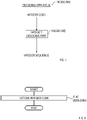
- the integer decoding part 160 decodes the inputted integer code through the decoding process using the following code trees based on an encoding parameter K which is a natural number equal to or larger than 2 inputted by predetermined means (not shown) which is the same value as the encoding parameter K used by the integer encoding part 110 of the encoding apparatus 100, obtains a sequence of integer values and outputs the obtained integer sequence x_1, x_2, ..., x_N (S160). Description will be given hereinafter assuming that each integer of the integer sequence x_1, x_2, ..., x_N is x_n (n is a sample number in the sequence, and n ⁇ ⁇ 1,2, ..., N ⁇ ).
- Code trees used for the decoding process are the same code trees used by the integer encoding part 110 of the encoding apparatus 100 of the first example and the integer decoding part 160 stores 2 K-1 (2 to the (K-1)-th power) code trees in advance as illustrated in Fig. 4 to Fig. 6 .
- the relationship between an inputted code on a code tree and integer values corresponding to the code in the decoding process, and a rule for using a plurality of code trees correspond to the rule in the encoding process of the integer encoding part 110 of the encoding apparatus 100 of the first example, and is the rule whereby the "code to be assigned to the inputted integer value" in the rule in the encoding process of the integer encoding part 110 of the encoding apparatus 100 of the first example is read as the "inputted code” and the "inputted integer value” is read as the "integer value to be assigned to the inputted code" and is stored in the integer decoding part 160 in advance.
- the value of the parameter K used for the decoding process is the same value as the parameter K used by the integer encoding part 110 of the encoding apparatus 100 of the first example, and is stored in the integer decoding part 160 in advance.
- the rule about which code tree is to be used first in the decoding process is also the same rule as the rule used by the integer encoding part 110 of the encoding apparatus 100 of the first example and is stored in the integer decoding part 160 in advance.
- the integer decoding part 160 obtains a sequence of integer values corresponding to the inputted integer code, arranges the respective integers of the obtained sequence of integer values in predetermined order, and obtains and outputs the integer sequence as the integer sequence x_1, x_2, ..., x_N.
- the predetermined order is a sample number order in the sequence and the code tree used first is T(0)
- the decoding procedure carried out by the integer decoding part 160 is, for example, a decoding procedure 1 and a decoding procedure 2 shown below.
- a code '1' is added to the head of the integer code '100001' and the integer code is assumed to be '1100001.
- '1' which is the first 1 bit of an integer code '1100001' is a code corresponding to the code tree T(0), but since '11' which is the first 2 bits has no code corresponding to the code tree T(0), '1' which is the first 1 bit of the integer code is read, an integer value 0 corresponding to '1' is obtained and the code tree to be used next is assumed to be T(1).
- a code corresponding to a non-negative integer value x_n consists of K ⁇ x_n bits or (K ⁇ x_n+1) bits.
- the code of the present invention used in the first example is a code that provides an approximate optimal expected bit length for a sequence of non-negative integer values following a one-sided Laplacian distribution having a large deviation as shown below, which is a code capable of reducing an average number of bits with respect to a sequence of non-negative integer values heavily biased toward small values compared to a Golomb-Rice code.
- the relationship between an integer value and a code corresponding to the integer value in the code tree of the present invention used for the encoding apparatus 100 and the decoding apparatus 150 of the first example and the rule for using a plurality of code trees are designed by taking into account the fact that a code corresponding to the non-negative integer value x_n is not only assumed to be K ⁇ x_n bits or (K ⁇ x_n+1) bits but also assumed to be a decodable code.
- a constraint is provided such that '1' which is a 1-bit code is assigned to a run of a predetermined number of integer values 0 of 2 to 2 K-1 , and a code, at least 1-bit bit value '1' of which is included in the first K bits and subsequent bit values are '0' is assigned to a run of 0 to a predetermined maximum of (2 K-1 -1) integer values 0 and subsequent one non-negative integer value x_n ⁇ 0.
- the decoding apparatus 150 reads an integer code corresponding to an integer sequence including a plurality of integer values, know that a boundary between a certain code in the integer code and the immediately following code is included in the portion containing a bit value '1' among K bits.
- the number of bits of a code corresponding to a run of 0 to a predetermined maximum of (2 K-1 -1) integer values 0 and one subsequent non-negative integer value x_n is not only K ⁇ x_n bits but K ⁇ x_n bits or (K ⁇ x_n+1) bits.
- FIG. 2 A processing procedure for an encoding method executed by an encoding apparatus 200 of the second example will be described with reference to Fig. 2 and Fig. 3 .
- the encoding apparatus 200 of the second example includes an integer encoding part 210 as in the case of the encoding apparatus 100 of the first example.
- the encoding method of the second example is implemented by the encoding apparatus 200 of the second example executing processes in respective steps shown in Fig. 3 as in the case of the encoding apparatus 100 of the first example.
- a sequence of non-negative integer values are inputted to the encoding apparatus 200 of the second example as in the case of the first example.
- the encoding apparatus 200 of the second example variable-length encodes a sequence of non-negative integer values according to a predetermined correspondence table and thereby implements an encoding process resulting in a shorter bit length than in Golomb-Rice encoding on a sequence of non-negative integer values with a distribution more heavily biased than a Laplacian distribution.
- non-negative integer values inputted to the encoding apparatus 200 will be simply referred to as "integer values.”
- An integer sequence x_1, x_2, ..., x_N of the sequence of integer values inputted to the encoding apparatus 200 by N samples at a time is inputted to the integer encoding part 210.
- the integer encoding part 210 of the second example encodes the inputted integer sequence x_1, x_2, ..., x_N based on the correspondence table created in advance in association with the encoding parameter K which is a natural number equal to or larger than 2 and stored in the integer encoding part 210, thereby obtains a code and outputs the obtained code as an integer code (S210).
- the rule stored in the correspondence table is such a rule that a 1-bit code whose bit value is '1' is assigned to a partial sequence of a run of 2 K-1 zero values, and for other partial sequences, that is, a partial sequence of a run of 0 to (2 K-1 -1) zero values and one subsequent non-zero value x_n, a code of K ⁇ x_n bits or (K ⁇ x_n+1) bits is assigned to a combination of a run of the respective zero values and non-zero value x.
- At least one-bit '1' exists within initial K bits in a partial sequence of a run of 0 to (2 K-1 -1) zero values and one subsequent non-zero value x_n respectively and codes of'0' are assigned to all the remaining K ⁇ (x_n-1) bits or (K ⁇ (x_n-1)+1) bits.
- 2 K-1 partial codes consisting of one partial code from the first bit to the (K+1)-th bit
- bit values of the first bit of the code of (K ⁇ x_n+1)-th bit is '1' and the second bit to the (K+1)-th bit are '0' and (2 K-1 -1) partial codes from the first bit to K-th bit
- the bit value of the first bit of the code of the (K ⁇ x_n) bits is '0'
- at least 1 bit of (K-1) bits from the second bit to the K-th bit is '1' and a run of 2 K-1 zero values from 0 to (2 K-1 -1) form a one-to-one correspondence.
- the integer encoding part 210 obtains a code by encoding the respective integer values included in the inputted integer sequence x_1, x_2, ..., x_N in predetermined order and outputs the obtained code as an integer code.
- the predetermined order is order of sample numbers in the sequence
- the encoding procedure performed by the integer encoding part 210 is as follows.
- the codes obtained through the encoding process using Fig. 9 (A, B) and Fig. 10 (A, B, C, D) in the integer encoding part 210 of the encoding apparatus 200 of the second example coincide with the codes obtained when the code tree used first in the encoding process using the code trees in Fig. 4 and Fig. 5 in the integer encoding part 110 of the encoding apparatus 100 of the first example is assumed to be T(1).
- the integer encoding part 210 of the encoding apparatus 200 of the second example performs encoding using Fig. 9 (A, B) and Fig.
- the integer encoding part 210 performs encoding after adding (2 K-1 -1) zero values to the beginning of the inputted integer sequence x_1, x_2, ..., x_N and removes code '1' at the beginning of the obtained integer code, the code coincides with the code obtained when the code tree used first is assumed to be T(0) in the encoding processes using the respective code trees in Fig. 4 and Fig. 5 in the integer encoding part 110 of the encoding apparatus 100 of the first example.
- the encoding process using the correspondence table in the integer encoding part 210 of the encoding apparatus 200 of the second example is equivalent to the encoding process using the code tree in the integer encoding part 110 of the encoding apparatus 100 of the first example.
- the decoding apparatus 250 of the second example includes an integer decoding part 260 as in the case of the decoding apparatus 150 of the first example as shown in Fig. 7 .
- the decoding method of the second example is implemented by the decoding apparatus 250 of the second example executing the processes in the respective steps shown in Fig. 8 as in the case of the decoding apparatus 150 of the first example.
- An integer code outputted by the encoding apparatus 200 of the second example is inputted to the decoding apparatus 250 of the second example as in the case of the decoding apparatus 150 of the first example.
- the decoding apparatus 250 of the second example decodes the inputted integer code according to the correspondence table stored in the integer encoding part 210 of the encoding apparatus 200 of the second example and through a decoding process using the correspondence table, obtains a sequence of non-negative integer values and thereby reconstruct the sequence of non-negative integer values inputted to the encoding apparatus 200 of the second example.
- non-negative integer values will be simply referred to as "integer values" as in the case of the aforementioned encoding apparatus.
- An integer code inputted to the decoding apparatus 250 is inputted to the integer decoding part 260.
- the integer decoding part 260 decodes the inputted integer code based on the correspondence table created in advance and stored in the integer decoding part 260 which is created in advance to correspond to the encoding parameter K and which is the same correspondence table as that stored in advance in the integer encoding part 210 of the encoding apparatus 200 and used in the integer encoding part 210, obtains and outputs the integer sequence x_1, x_2, ..., x_N (S260).
- the integer decoding part 260 repeats a process of reading the code part yet to be read of the inputted integer code from the beginning to the portion where the code corresponding to the correspondence table is found and obtaining the partial sequence of integers corresponding to the read code from the correspondence table from the beginning to the end of the inputted integer code and outputs a sequence that puts together partial sequences of integers thereby obtained as an integer sequence x_1, x_2, ..., x_N.
- this decoding process it is possible to obtain the same integer sequence x_1, x_2, ..., x_N as that in the case where the code tree used first is assumed to be T(1) in the decoding process using the respective code trees in Fig. 4 and Fig. 5 in the integer decoding part 160 of the decoding apparatus 150 of the first example.
- the integer decoding part 260 may add the code '1' to the beginning of the inputted integer code, obtain each partial sequence through the aforementioned decoding process based on the above-described correspondence table, omit the (2 K-1 -1) zero values first obtained and output the integer sequence x_1, x_2, ..., x_N that puts together the partial sequences.
- the decoding process using the correspondence table in the integer decoding part 260 of the decoding apparatus 250 in the second example is equivalent to the decoding process using the code tree in the integer decoding part 160 of the decoding apparatus 150 of the first example.
- the decoding apparatus 250 of the second example may decode an integer code obtained through an encoding process using a code tree by the encoding apparatus 100 of the first example through a decoding process using a correspondence table corresponding to the encoding process and obtain an integer sequence x_1, x_2, ..., x_N, or the decoding apparatus 150 of the first example may decode the integer code obtained through an encoding process using a correspondence table by the encoding apparatus 200 of the second example through a decoding process using the code tree corresponding to the encoding process and obtain an integer sequence x_1, x_2, ..., x_N.
- the first example and the second example have described a mode in which encoding and decoding of the present invention are implemented from the procedural standpoint of encoding and decoding using a predetermined code tree or a predetermined correspondence table.
- a third example will describe a mode of implementing encoding and decoding of the present invention from a data-related standpoint of a code or a sequence of integer values obtained in these procedures.
- FIG. 2 A processing procedure for an encoding method executed by an encoding apparatus 300 of a third example will be described with reference to Fig. 2 and Fig. 3 .
- the encoding apparatus 300 of the third example includes an integer encoding part 310 as in the case of the encoding apparatus 100 or the encoding apparatus 200.
- the encoding method of the third example is implemented by the encoding apparatus 300 of the third example executing the processes in the respective steps shown in Fig. 3 as in the case of the encoding apparatus 100 or the encoding apparatus 200.
- a sequence of non-negative integer values (hereinafter referred to as an "integer sequence") is inputted to the encoding apparatus 300 of the third example.
- integer sequence a sequence of non-negative integer values
- non-negative integer values inputted to the encoding apparatus 300 will be simply referred to as “integer values.”
- the integer encoding part 310 obtains a 1-bit code (hereinafter referred to as a "code A”) as a code corresponding to a run of integer values 0 of length, a predetermined number from 2 to 2 K-1 , which is included in the integer sequence and obtains a code of (K ⁇ x_n) bits or (K ⁇ x_n+1) bits (hereinafter referred to as a "code B”) as a code corresponding to a set of a run of integer values 0 of length from 0 to 2 K-1 -1and one non-zero integer value x_n included in the integer sequence (S310).
- K represents an encoding parameter which is a natural number equal to or larger than 2.
- an integer sequence x_1, x_2, ..., x_N is encoded by N samples at a time using the code tree described in the first example or the correspondence table described in the second example to obtain the code A or the code B.
- the code B obtained in S310 is a code of (K ⁇ x_n) bits or (K ⁇ x_n+1) bits corresponding to 0 to L-1 integer values 0, that is, a run of a predetermined maximum of 2 K-1 -1 integer values and subsequent one non-zero integer value x_n.
- bit value "x" is a bit value "1”
- bit value "y” is a bit value "0”
- the code A is a 1-bit code, a bit value of which is "x,” (see Fig. 9B and Fig. 10D )
- the code B includes at least 1 bit value "x” and at least 1 bit value "y” from the first bit to the K-th bit, and the bit values of K ⁇ (x_n-1) bits from the last are "y” (see Fig. 9A and Fig. 9B , Fig. 10A to Fig. 10D ).
- the bit value "x” may be a bit value "0”
- the bit value "y” may be a bit value "1".
- 2 K-1 runs of integer values 0 of length from 0 to 2 K-1 -1 in the integer sequence and the following 2 K-1 partial codes have a one-to-one correspondence.
- a processing procedure for the decoding method executed by a decoding apparatus 350 of the third example will be described with reference to Fig. 7 and Fig. 8 .
- the decoding apparatus 350 of the third example includes an integer decoding part 360 as in the case of the decoding apparatus 150 or the decoding apparatus 250.
- the decoding method of the third example is implemented by the decoding apparatus 350 of the third example executing the processes in the respective steps shown in Fig. 8 as in the case of the decoding apparatus 150 or the decoding apparatus 250.
- a code string outputted by the encoding apparatus 300 of the third example is inputted to the decoding apparatus 350 of the third example.
- non-negative integer values will be simply referred to as “integer values" as in the case of the description of the aforementioned encoding apparatus.
- the integer decoding part 360 obtains a run of integer values 0 of length, a predetermined number from 2 to 2 K-1 , from a 1-bit code (hereinafter referred to as a "code A") included in the inputted code string and obtains a set of a run of integer values 0 of length from 0 to 2 K-1 -1 and one non-zero integer value x_n from the code of (K ⁇ x_n) bits or (K ⁇ x_n+1) bits (hereinafter referred to as a "code B”) included in the inputted code string (S360).
- K represents an encoding parameter which is a natural number equal to or larger than 2.
- a code included in the inputted code string is decoded using the code tree described in the first example and the correspondence table described in the second example to obtain the sequence of integer values corresponding to the code A or the code B.
- the number of 0s included in the run of integer values 0 obtained from the code A is L (2 ⁇ L ⁇ 2 K-1 )
- the number of 0s included in the run of integer values 0 obtained from the code B in S360 is 0 to L-1.
- bit value "x” is a bit value "1”
- bit value "y” is a bit value "0”
- the code A is a 1-bit code, a bit value of which is "x” (see Fig. 9B , Fig. 10D )
- the code B includes at least 1 bit value "x” and at least 1 bit value "y” from the first bit to the K-th bit and the bit values of the K ⁇ (x_n-1) bits from the last are “y” (see Fig. 9A and Fig. 9B , Fig. 10A to Fig. 10D ).
- the bit value "x” may be a bit value "0”
- the bit value "y” may be bit value "1” as in the case of the encoding apparatus 300.
- the integer decoding part 360 performs the following two processes and can thereby identify the code A and the code B included in the inputted code string. Specifically, the integer decoding part 360 reads in order from the beginning of the inputted code string, the inputted code string by a run of K bits (hereinafter referred to as a "K-bit string") at a time and identifies, when the read K-bit string includes "y," that a bit immediately before the K-bit string including the "y" is a termination bit of the code A or the code B.
- K-bit string K bits
- the code B more specifically, the following 2 K-1 partial codes and 2 K-1 runs of integer values 0 of length from 0 to 2 K-1 -1 in the sequence of integer values obtained by the integer decoding part 360 have a one-to-one correspondence.
- a data structure of a code string handled by the encoding apparatus and the decoding apparatus of the third example that is, a data structure of a code string which is a code string obtained by the encoding apparatuses of the first example and the second example from a sequence of integer values, used by the decoding apparatuses of the first example and the second example to obtain a sequence of integer values will be described.
- a code string of a sequence of non-negative integer values (hereinafter referred to as an "integer sequence") is used by the encoding apparatus to obtain a code string from the integer sequence or by the decoding apparatus to obtain an integer sequence from a code string.
- the data structure of the code string includes a 1-bit code (hereinafter referred to as a "code A”) which is a code corresponding to a run of integer values 0 of length, a predetermined number from 2 to 2 K-1 , which is included in the integer sequence and a (K ⁇ x_n)-bit or (K ⁇ x_n+1)-bit code (hereinafter referred to as a "code B”) which is a code corresponding to a set of a run of integer values 0 of length from 0 to 2 K-1 -1 and one non-zero integer value x_n included in the integer sequence, where K represents an encoding parameter, which is a natural number equal to or larger than 2.
- the code B is a code of (K ⁇ x_n) bits or (K ⁇ x_n+1) bits corresponding to 0 to L-1 integer values 0, that is, a run of a predetermined maximum of 2 K-1 -1 integer values and subsequent one non-zero integer value x_n.
- the code A is a 1-bit code, a bit value of which is "x” (see Fig. 9B , Fig. 10D ), and the code B includes at least 1 bit value "x” and at least 1 bit value "y” form the first bit to the K-th bit, and the bit values of the K ⁇ (x_n-1) bits from the last are "y” (see Fig. 9A and Fig. 9B , Fig. 10A to Fig. 10D ).
- the bit value "x” may be bit value "0” and the bit value "y” may be bit value "1.”
- 2 K-1 runs of integer values 0 of length from 0 to 2 K-1 -1 in the integer sequence and the following 2 K-1 partial codes have a one-to-one correspondence.
- Non-Patent Literature 2 it is possible to encode even a sequence of integer values containing small non-zero values and heavily biased toward small values or a sequence of integer values biased to an extent that the technique of Non-Patent Literature 2 cannot cover with a small average number of bits. Furthermore, such a code can be decoded.
- the logarithm of a reciprocal of an encoding parameter K used for a code of the present invention corresponds to a Rice parameter of a Golomb-Rice code and the code of the present invention can also be interpreted as a Golomb-Rice code corresponding to a Rice parameter having a negative value. Therefore, it is possible to obtain an optimum encoding parameter K for a partial sequence of an inputted sequence of integer values based on a conventional optimum Rice parameter estimation method and encode the inputted sequence of integer values by combining the process of the integer encoding part of the first example to the third example using the obtained encoding parameter K with Golomb-Rice encoding, and perform decoding corresponding to this encoding.
- This mode will be described as a first embodiment.
- FIG. 11 A processing procedure for an encoding method executed by an encoding apparatus 400 of the first embodiment will be described with reference to Fig. 11 and Fig. 12 .
- the encoding apparatus 400 of the first embodiment includes a parameter determination part 420 and an integer encoding part 410.
- the encoding method of the first embodiment is implemented by the encoding apparatus 400 of the first embodiment executing processes in respective steps shown in Fig. 12 .
- a sequence of non-negative integer values is inputted to the encoding apparatus 400 of the first embodiment as in the case of the first to third examples.
- the sequence of non-negative integer values inputted to the encoding apparatus 400 of the first embodiment is inputted to the parameter determination part 420 and the integer encoding part 410 by N samples at a time. That is, the encoding apparatus 400 of the first embodiment encodes a sequence of integer values such as a sequence of absolute values of integer values obtained by transforming, for example, voice collected using a microphone, music or the like into a digital signal and quantizing the digital signal for every frame of N samples.
- integer values inputted to the encoding apparatus of the present embodiment will be simply referred to as "integer values.”
- An integer sequence x_1, x_2, ..., x_N of the sequence of integer values inputted to the encoding apparatus 400 by N samples at a time is inputted to the parameter determination part 420.
- the parameter determination part 420 Based on the inputted integer sequence x_1, x_2, ..., x_N, the parameter determination part 420 obtains and outputs a Rice parameter r corresponding to the integer sequence and a parameter code which is a code representing the parameter (S420).
- the parameter code may be obtained by encoding a Rice parameter so that the decoding apparatus 450 decodes the parameter code to thereby obtain the Rice parameter r determined by the parameter determination part 420.
- the Rice parameter r determined in equation (5) minimizes an estimate value of a total bit length at the time of Golomb-Rice encoding estimated from equation (2) for the integer sequence x_1, x_2, ..., x_N.
- the parameter determination part 420 then scalar quantizes the Rice parameter r obtained according to, for example, equation (5), obtains a code, outputs the obtained code as a parameter code and outputs the quantized value of the Rice parameter r corresponding to the parameter code as the Rice parameter r.
- a processing procedure of a decoding method executed by a decoding apparatus 450 of the first embodiment will be described with reference to Fig. 13 and Fig. 14 .
- the decoding apparatus 450 of the first embodiment includes a parameter decoding part 470 and an integer decoding part 460 as shown in Fig. 13 .
- the decoding method of the first embodiment is implemented by the decoding apparatus 450 of the first embodiment executing processes in respective steps shown in Fig. 14 .
- An integer code outputted by the encoding apparatus 400 of the first embodiment and a parameter code are inputted to the decoding apparatus 450 of the first embodiment.
- the integer code and the parameter code inputted to the decoding apparatus 450 are inputted to the parameter decoding part 470 and the integer decoding part 460 for each code corresponding to N samples of the sequence of integer values, that is, the decoding apparatus 450 performs a decoding process in the same frame as the encoding apparatus 400.
- the parameter code inputted to the decoding apparatus 450 is inputted to the parameter decoding part 470.
- the parameter decoding part 470 decodes the parameter code through a decoding process corresponding to the process whereby the parameter determination part 420 has obtained the parameter code, obtains and outputs the Rice parameter r (S470).
- the parameter decoding part 470 obtains and outputs the quantized value of the Rice parameter r corresponding to the parameter code as the Rice parameter r.
- the integer code inputted to the decoding apparatus 450 and the Rice parameter r outputted by the parameter decoding part 470 are inputted to the integer decoding part 460.
- the integer code inputted to the decoding apparatus 451 and Rice parameter r outputted by the parameter decoding part 471 are inputted to the integer decoding part 461.
- the integer decoding part 461 uses 2 as an encoding parameter K, obtains and outputs an integer sequence x_1, x_2, ..., x_N through the same process as that of any one of the integer decoding parts of the first to third examples
- the integer encoding part 410 is configured to obtain the encoding parameter K from the Rice parameter r when the Rice parameter r is a negative value, whereas when the Rice parameter r is a negative value, the parameter determination part 420 may be configured to directly obtain the encoding parameter K from the integer sequence. Assuming this mode as modification 2 of the first embodiment, differences from the first embodiment will be described.
- the parameter determination part 420 of the first embodiment is configured to always output a Rice parameter and a parameter code corresponding to the Rice parameter irrespective of the value of the Rice parameter, whereas when the Rice parameter r is a non-negative value, the parameter determination part 422 of modification 2 of the first embodiment is configured to output the Rice parameter r and the parameter code corresponding to the Rice parameter r, and obtain, when the Rice parameter r is a negative value, the encoding parameter K from the integer sequence according to equation (6), which will be described later, and output the encoding parameter K and the parameter code corresponding to the encoding parameter K (S422).
- the parameter code may be such a code that the corresponding decoding apparatus 452 can uniquely identify the value of the Rice parameter r and the value of the encoding parameter K.
- a code obtained by adding a 1-bit code '1' before a code obtained by encoding the Rice parameter r is assumed to be a parameter code and a code obtained by adding a 1-bit code '0' before a code obtained by encoding the encoding parameter K is assumed to be a parameter code so that the same code may not be included in a code group of parameter codes to be assigned to the Rice parameter r and a code group of codes to be assigned to the encoding parameter K.
- the integer encoding part 412 rounds off the Rice parameter r into an integer value, performs Golomb-Rice encoding with the Rice parameter r which is an integer value on the integer sequence x_1, x_2, ..., x_N, assumes the code obtained through Golomb-Rice encoding as an integer code and outputs the integer code, whereas when the encoding parameter K is inputted, the integer encoding part 412 rounds off the encoding parameter K into an integer value, and obtains and outputs an integer code through the same process as any one of the integer encoding parts of the first to third examples using the encoding parameter K which is an integer value (S412). Note that when the encoding parameter K is a value between 1 and 2, the integer value after rounding may be set to 2, for example.
- the parameter decoding part 470 of the first embodiment is configured to decode a parameter code and obtain a Rice parameter
- the parameter decoding part 472 of modification 2 of the first embodiment is configured to decode a parameter code, and obtain and output a Rice parameter r or an encoding parameter K (S472).
- the integer code inputted to the decoding apparatus 452 and the Rice parameter r or the encoding parameter K outputted by the parameter decoding part 472 are inputted to the integer decoding part 462.
- the integer decoding part 462 rounds off the Rice parameter r into an integer value using the same method executed by the integer encoding part 412 of the encoding apparatus 402, then performs Golomb-Rice decoding using a Rice parameter r which is an integer value on the integer code, and obtains and outputs an integer sequence x_1, x_2, ..., x _N
- the integer decoding part 462 rounds off the encoding parameter K into an integer value using the same method as that executed by the integer encoding part 412 of the encoding apparatus 402, then obtains and outputs an integer sequence x_1, x_2, ..., x_N through the same process as that of any one of the integer decoding parts of the first to third examples using the encoding
- the encoding apparatus of the first embodiment first obtains the Rice parameter r and obtains the encoding parameter K from the obtained Rice parameter r, it is also possible to directly estimate the encoding parameter K from the inputted sequence of integer values by estimating a likely K with respect to a distribution p (x, 1/K) to which the code of the present invention is optimum. In this case, it is possible to interpret that the Golomb-Rice code is a code of the present invention according to K that takes a value equal to or less than 1.
- FIG. 11 A processing procedure for the encoding method executed by an encoding apparatus 500 of the second embodiment will be described with reference to Fig. 11 and Fig. 12 .
- the encoding apparatus 500 of the second embodiment includes a parameter determination part 520 and an integer encoding part 510.
- the encoding method of the second embodiment is implemented by the encoding apparatus 500 of the second embodiment executing processes in respective steps shown in Fig. 12 .
- a sequence of non-negative integer values is inputted to the encoding apparatus 500 of the second embodiment as in the cases of the first to third examples and the first embodiment.
- the sequence of non-negative integer values inputted to the encoding apparatus 500 of the second embodiment is inputted to the parameter determination part 520 and the integer encoding part 510 by N samples at a time. That is, the encoding apparatus 500 of the second embodiment encodes a sequence of integer values such as a sequence of absolute values of integer values obtained by transforming, for example, voice collected using a microphone, music or the like into a digital signal and quantizing the digital signal for every frame of N samples.
- integer values inputted to the encoding apparatus of the present embodiment will be simply referred to as "integer values.”
- An integer sequence x_1, x_2, ..., x_N of the sequence of integer values inputted to the encoding apparatus 500 by N samples at a time is inputted to the parameter determination part 520.
- the parameter determination part 520 Based on the inputted integer sequence x_1, x_2, ..., x_N, the parameter determination part 520 obtains and outputs the encoding parameter K corresponding to the integer sequence thereof and a parameter code which is a code representing the parameter (S520).
- the parameter code may be obtained by encoding the encoding parameter K so that a decoding apparatus 550 decodes the parameter code to thereby obtain the encoding parameter K determined by the parameter determination part 520.
- the parameter determination part 520 obtains the encoding parameter K according to equation (6) using, for example, the respective integer values included in the inputted integer sequence x_1, x_2, ..., x_N.
- the parameter determination part 520 obtains a log-likelihood of the integer sequence x_1, x_2, ..., x_N with respect to the distribution p (x,1/K) based on equation (4), and obtains and outputs an encoding parameter K that maximizes the log-likelihood as shown in the following equation.
- the encoding parameter K obtained in equation (6) maximizes the log-likelihood with respect to the distribution p (x,1/K) based on equation (4) with respect to the integer sequence x_1, x_2, ..., x_N.
- the parameter determination part 520 then scalar quantizes the encoding parameter K obtained, for example, in equation (6), obtains a code and outputs the obtained code as a parameter code and outputs the quantized value of the encoding parameter K corresponding to the parameter code as the encoding parameter K.
- the decoding apparatus 550 of the second embodiment includes a parameter decoding part 570 and an integer decoding part 560.
- the decoding method of the second embodiment is implemented by the decoding apparatus 550 of the second embodiment executing the processes in the respective steps shown in Fig. 14 .
- An integer code outputted by the encoding apparatus 500 of the second embodiment and a parameter code are inputted to the decoding apparatus 550 of the second embodiment.
- the integer code and the parameter code inputted to the decoding apparatus 550 are inputted to the parameter decoding part 570 and the integer decoding part 560 for each code corresponding to N samples at a time, of the sequence of integer values. That is, the decoding apparatus 550 performs a decoding process in the same frame as the encoding apparatus 500.
- a parameter code inputted to the decoding apparatus 550 is inputted to the parameter decoding part 570.
- the parameter decoding part 570 decodes a parameter code through a decoding process corresponding to that whereby the parameter determination part 520 obtains the parameter code, obtains and outputs the encoding parameter K (S570).
- the parameter decoding part 570 obtains and outputs a quantized value of the encoding parameter K corresponding to the parameter code, for example, through a decoding process corresponding to the scalar quantization carried out by the parameter determination part 520 of the encoding apparatus 500 as the encoding parameter K.
- the integer code inputted to the decoding apparatus 550 and the encoding parameter K outputted by the parameter decoding part 570 are inputted to the integer decoding part 560.
- encoding and decoding processes are performed in combination with Golomb-Rice encoding and decoding in the second embodiment, the encoding and decoding processes need not be combined with Golomb-Rice encoding and decoding.
- a mode in which the encoding and decoding processes are not combined with Golomb-Rice encoding and decoding will be described as modification 1 of the second embodiment.
- Operations of a parameter determination part 521 of an encoding apparatus 501 and a parameter decoding part 571 of a decoding apparatus 551 are the same as those of the second embodiment, whereas operations of an integer encoding part 511 of the encoding apparatus 501 and an integer decoding part 561 of the decoding apparatus 551 are different from those of the second embodiment.
- An integer sequence x_1, x_2, ..., x_N of the sequence of integer values inputted to the encoding apparatus 501 by N samples at a time and an encoding parameter K outputted by the parameter determination part 521 are inputted to the integer encoding part 511.
- the integer encoding part 511 rounds off the value of K to an integer value, for example, by rounding off the first decimal place of the inputted encoding parameter K, uses 2 when the encoding parameter K which is an integer value is equal to or less than 1 as the encoding parameter K, obtains and outputs an integer code through the same process as that of any one of the integer encoding parts of the first to third examples, whereas when the encoding parameter K which is an integer value is larger than 1, the integer encoding part 511 obtains and outputs an integer code through the same process as that of any one of the integer encoding parts of the first to third examples using the encoding parameter K which is an integer value (S511).
- the integer code inputted to the decoding apparatus 551 and the encoding parameter K outputted by the parameter decoding part 571 are inputted to the integer decoding part 561.
- the integer decoding part 561 rounds off the encoding parameter K to an integer value using the same method as that performed by the integer encoding part 511 of the encoding apparatus 501, and then uses 2, when the encoding parameter K of the integer value is equal to or less than 1, as the encoding parameter K, obtains and outputs the integer sequence x_1, x_2, ..., x_N through the same process as that of any one of the integer decoding parts of the first to third examples, whereas when the encoding parameter K which is an integer value is larger than 1, the integer decoding part 561 obtains and outputs the integer sequence x_1, x 2, ..., x_N through the same process as that of any one of the integer decoding parts of the first to third examples using the encoding parameter K which is an integer value (S561).
- the second embodiment adopts a configuration in which when the encoding parameter K is equal to or less than 1, the integer encoding part 510 obtains the Rice parameter r from the encoding parameter K
- a configuration may also be adopted in which when the encoding parameter K is equal to or less than 1, the parameter determination part 520 directly obtains the Rice parameter r from the integer sequence. Assuming this mode as modification 2 of the second embodiment, differences from the second embodiment will be described.
- the parameter determination part 520 of the second embodiment is configured to always output the encoding parameter K and the parameter code corresponding to the encoding parameter K regardless of the value of the encoding parameter K, whereas the parameter determination part 522 of modification 2 of the second embodiment outputs the encoding parameter K and the parameter code corresponding to the encoding parameter K when the encoding parameter K is larger than 1, or obtains the Rice parameter r from the integer sequence according to equation (5) and outputs the Rice parameter r and the parameter code corresponding to the Rice parameter r when the encoding parameter K is equal to or less than 1 (S522).
- the parameter code may be such a code that a corresponding decoding apparatus 552 can uniquely identify the value of the Rice parameter r and the value of the encoding parameter K as in the case of modification 2 of the first embodiment.
- the integer encoding part 512 rounds off the value of the Rice parameter r into an integer value, then performs Golomb-Rice encoding using the Rice parameter r which is an integer value on the integer sequence x_1, x_2, ..., x_N and outputs the code obtained through Golomb-Rice encoding as an integer code
- the integer encoding part 512 rounds off the encoding parameter K into an integer value, then obtains and outputs the integer code through the same process as that of any one of the integer encoding parts of the first to third examples using the encoding parameter K which is an integer value (S512).
- the integer value after rounding may be set to 2, for example.
- a parameter decoding part 572 of modification 2 of the second embodiment decodes a parameter code, and obtains and outputs the encoding parameter K or the Rice parameter r (S572).
- the integer code inputted to the decoding apparatus 552 and the encoding parameter K or the Rice parameter r outputted by the parameter decoding part 572 are inputted to the integer decoding part 562.
- the integer decoding part 562 rounds off the value of the Rice parameter r into an integer value using the same method as that performed by the integer encoding part 512 of the encoding apparatus 502, performs Golomb-Rice decoding using the Rice parameter r which is an integer value on the integer code, obtains and outputs the integer sequence x_1, x_2, ..., x_N
- the integer decoding part 562 rounds off the encoding parameter K into an integer value using the same method as that performed by the integer encoding part 512 of the encoding apparatus 502, and then obtains and outputs the integer sequence x_1, x_2, ..., x_N through the same process as that of any one of the integer decoding parts of the first to third examples using the
- either value of the Rice parameter r or the coding parameter K may be subjected to a rounding process or any value before and after parameter encoding (i.e., before and after quantization) may be subjected to a rounding process or quantization of values in encoding and a rounding process may be performed simultaneously.
- the description in the first embodiment and the second embodiment, and modification 1 and modification 2 thereof are merely examples, the encoding process and the decoding process may be performed using the same value of the same parameter in the integer encoding part of the encoding apparatus and the integer decoding part of the decoding apparatus for every frame of N samples.
- a mode has been described in the first embodiment and the second embodiment in which encoding and decoding of the present invention are implemented by performing encoding and decoding of the first example to the third example using the Rice parameter r or the encoding parameter K obtained for a partial sequence of the inputted sequence of integer values.
- a mode will be described in which encoding and decoding of the present invention are implemented using at least one of the Rice parameter r and the encoding parameter K.
- the encoding apparatus 600 of the third embodiment includes a parameter determination part 620 and an integer encoding part 610 as in the case of the encoding apparatus 400 and the encoding apparatus 500.
- the encoding method of the third embodiment is implemented by the encoding apparatus 600 of the third embodiment executing the processes in the respective steps shown in Fig. 12 as in the case of the encoding apparatus 400 and the encoding apparatus 500.
- a sequence of non-negative integer values is inputted to the encoding apparatus 600 of the third embodiment as in the cases of the encoding apparatus 400 and the encoding apparatus 500.
- the sequence of non-negative integer values inputted to the encoding apparatus 600 of the third embodiment is inputted to the parameter determination part 620 and the integer encoding part 610 by N samples at a time.
- integer values inputted to the encoding apparatus of the present embodiment will be simply referred to as "integer values.”
- An integer sequence x_1, x_2, ..., x_N of the sequence of integer values inputted to the encoding apparatus 600 by N samples at a time is inputted to the parameter determination part 620.
- the parameter determination part 620 Based on the inputted integer sequence x_1, x_2, ..., x_N, the parameter determination part 620 obtains and outputs at least one of the Rice parameter r and the encoding parameter K, corresponding to the integer sequence, and a parameter code representing at least one of the Rice parameter r and the encoding parameter K (S620).
- the parameter determination part 620 performs at least one of a process of obtaining a Rice parameter r according to equation (5) based on the integer values included in the integer sequence, and a process of obtaining an encoding parameter K according to equation (6) based on the integer values included in the integer sequence and performs a process of obtaining a parameter code by encoding at least one of the Rice parameter r and the encoding parameter K for each integer sequence which is a sequence of integer values for every predetermined number of samples included in the inputted sequence of non-negative integer values.
- the integer encoding part 610 When the encoding parameter K is inputted, if the encoding parameter K is equal to or less than 1, the integer encoding part 610 performs Golomb-Rice encoding and outputs the code obtained by the Golomb-Rice encoding as an integer code as in the case of the second embodiment, and if the encoding parameter K is larger than 1, the integer encoding part 610 obtains and outputs an integer code through the same process as the process by any one of the integer encoding parts of the first to third examples as in the case of the second embodiment, and when the Rice parameter r is inputted, if the Rice parameter r is a non-negative value, the integer encoding part 610 performs Golomb-Rice encoding and outputs the code obtained through Golomb-Rice encoding as an integer code as in the case of the first embodiment and if the Rice parameter r is a negative value, the integer encoding part 610 obtains and outputs an integer code through the same process as the process of any one of
- the integer sequence may be Golomb-Rice encoded to obtain a code string.
- the decoding apparatus 650 of the third embodiment includes a parameter decoding part 670 and an integer decoding part 660 as in the cases of the decoding apparatus 450 and the decoding apparatus 550.
- the decoding method of the third embodiment is implemented by the decoding apparatus 650 of the third embodiment executing the processes in the respective steps shown in Fig. 14 as in the cases of the decoding apparatus 450 and the decoding apparatus 550.
- An integer code outputted by the encoding apparatus 600 of the third embodiment and a parameter code are inputted to the decoding apparatus 650 of the third embodiment.
- the integer code and the parameter code inputted to the decoding apparatus 650 are inputted to the parameter decoding part 670 and the integer decoding part 660 for respective codes corresponding to N samples of the sequence of integer values. That is, parameter codes and code strings for each predetermined unit are inputted to the parameter decoding part 670 and the integer decoding part 660.
- the parameter decoding part 670 decodes a parameter code through the decoding process corresponding to the process whereby the parameter determination part 620 has obtained the parameter code, obtains and outputs at least one of the Rice parameter r and the encoding parameter K (S670). That is, the parameter decoding part 670 decodes the parameter code for each predetermined unit and obtains at least one of the Rice parameter r and the encoding parameter K.
- the integer code inputted to the decoding apparatus 650 and at least one of the Rice parameter r and the encoding parameter K outputted by the parameter decoding part 670 are inputted to the integer decoding part 660.
- the integer decoding part 660 performs Golomb-Rice decoding as in the case of the second embodiment, obtains and outputs an integer sequence x_1, x_2, ..., x_N, and if the encoding parameter K is larger than 1, the integer decoding part 660 obtains and outputs the integer sequence x_1, x_2, ..., x_N through the same process as the process of any one of the integer decoding parts of the first to third examples as in the case of the second embodiment, and when the Rice parameter r is inputted, if the Rice parameter r is a non-negative value, the integer decoding part 660 performs Golomb-Rice decoding as in the case of the first embodiment, obtains and output
- the code string may be Golomb-Rice decoded to obtain a sequence of integer values.
- a value corresponding to a Rice parameter r corresponding to a sequence or a partial sequence of integer values is known, it is possible to perform encoding with a small average number of bits by using an encoding parameter K optimal to the sequence or decode such a code.
- Each device has, as a single hardware entity, for example, an input unit to which a keyboard or the like is connectable, an output unit to which a liquid crystal display or the like is connectable, a communication unit to which a communication device (for example, communication cable) capable of communication with the outside of the hardware entity is connectable, a central processing unit (CPU, which may include cache memory and/or registers), RAM or ROM as memories, an external storage device which is a hard disk, and a bus that connects the input unit, the output unit, the communication unit, the CPU, the RAM, the ROM, and the external storage device so that data can be exchanged between them.
- the hardware entity may also include, for example, a device (drive) capable of reading and writing a recording medium such as a CD-ROM as desired.
- a physical entity having such hardware resources may be a general-purpose computer, for example.
- the external storage device of the hardware entity has stored therein programs necessary for embodying the aforementioned functions and data necessary in the processing of the programs (in addition to the external storage device, the programs may be prestored in ROM as a storage device exclusively for reading out, for example). Also, data or the like resulting from the processing of these programs are stored in the RAM and the external storage device as appropriate.
- the programs and data necessary for processing of the programs stored in the external storage device are read into memory as necessary to be interpreted and executed/processed as appropriate by the CPU.
- the CPU embodies predetermined functions (the components represented above as parts, units, means, or the like).
- the processing functions of the hardware entities described in the embodiments are to be embodied with a computer
- the processing details of the functions to be provided by the hardware entities are described by a program.
- the program then being executed on the computer, the processing functions of the hardware entity are embodied on the computer.
- the program describing the processing details can be recorded on a computer-readable recording medium.
- the computer-readable recording medium may be any kind, such as a magnetic recording device, an optical disk, a magneto-optical recording medium, or a semiconductor memory. More specifically, a magnetic recording device may be a hard disk device, flexible disk, or magnetic tape; an optical disk may be a DVD (digital versatile disc), a DVD-RAM (random access memory), a CD-ROM (compact disc read only memory), or a CD-R (recordable)/RW (rewritable); a magneto-optical recording medium may be an MO (magneto-optical disc); and a semiconductor memory may be EEP-ROM (electronically erasable and programmable-read only memory), for example.
- a magnetic recording device may be a hard disk device, flexible disk, or magnetic tape
- an optical disk may be a DVD (digital versatile disc), a DVD-RAM (random access memory), a CD-ROM (compact disc read
- this program is performed by, for example, selling, transferring, or lending a portable recording medium such as a DVD or a CD-ROM on which the program is recorded. Furthermore, a configuration may be adopted in which this program is distributed by storing the program in a storage device of a server computer and transferring the program to other computers from the server computer via a network.
- the computer that executes such a program first, for example, temporarily stores the program recorded on the portable recording medium or the program transferred from the server computer in a storage device thereof. At the time of execution of processing, the computer then reads the program stored in the storage device thereof and executes the processing in accordance with the read program. Also, as another form of execution of this program, the computer may read the program directly from the portable recording medium and execute the processing in accordance with the program and, furthermore, every time the program is transferred to the computer from the server computer, the computer may sequentially execute the processing in accordance with the received program.
- a configuration may be adopted in which the transfer of a program to the computer from the server computer is not performed and the above-described processing is executed by so-called application service provider (ASP)-type service by which the processing functions are implemented only by an instruction for execution thereof and result acquisition.
- ASP application service provider
- a program in this form shall encompass information that is used in processing by an electronic computer and acts like a program (such as data that is not a direct command to a computer but has properties prescribing computer processing).
Landscapes
- Engineering & Computer Science (AREA)
- Theoretical Computer Science (AREA)
- Computational Linguistics (AREA)
- Signal Processing (AREA)
- Health & Medical Sciences (AREA)
- Audiology, Speech & Language Pathology (AREA)
- Human Computer Interaction (AREA)
- Physics & Mathematics (AREA)
- Acoustics & Sound (AREA)
- Multimedia (AREA)
- Compression, Expansion, Code Conversion, And Decoders (AREA)
- Compression Or Coding Systems Of Tv Signals (AREA)
Claims (9)
- Appareil de codage qui code, à des fins de compression, une séquence de valeurs entières non négatives x_n, n∈ {1, 2,..., N}, ci-après dénommée «séquence d'entiers», fournie en entrée, qui est une unité prédéterminée de N échantillons,l'appareil de codage étant un appareil codant des valeurs entières incluses dans la séquence d'entiers dans un ordre prédéterminé pour obtenir une chaîne de code et délivrer la chaîne de code obtenue,l'appareil de codage comprenant :
une partie de détermination de paramètre qui exécute, pour chacune des séquences d'entiers, au moins un de :un processus d'obtention d'un paramètre de Rice basé sur les valeurs entières incluses dans la séquence d'entiers selon l'équation suivante : un processus d'obtention d'un paramètre de codage K basé sur les valeurs entières incluses dans la séquence d'entiers selon l'équation suivante :
 une partie de codage d'entier qui, en utilisant, pour chacune des séquences d'entiers, le paramètre de codage K obtenu par la détermination du paramètre de codage K obtenu à partir du paramètre de Rice r obtenu par la partie de détermination de paramètre en appliquant K=2-r , effectue, jusqu'à ce que la Nième valeur entière dans l'ordre prédéterminé soit traitée :un processus d'obtention, si une sous-séquence de valeurs entières dans l'ordre prédéterminé est une série de valeurs entières 0 de longueur L, L étant un nombre prédéterminé qui satisfait à 2≤L≤2K-1, un code à 1 bit, ci-après dénommé «code A», en tant que code correspondant à la suite, etun processus d'obtention, si une sous-séquence de valeurs entières dans l'ordre prédéterminé consiste en une série de valeurs entières 0 de longueur de 0 à L-1 et une valeur entière non nulle x_n, un code à (Kxx_n)-bits ou (Kxx_n+1) bits, ci-après dénommé « code B », en tant que code correspondant à la sous-séquence,dans lequel la partie de codage de nombre entier délivre en outre la chaîne de codes qui est obtenue en connectant les codes obtenus,dans lequel en supposant qu'une valeur de bit «x» est une valeur de bit «1» et une valeur de bit «y» est une valeur de bit «0», ou une valeur de bit «x» est une valeur de bit «0» et une valeur de bit «y» est une valeur de bit «1»,le code A est un code à 1 bit, dont une valeur de bit est «x», etle code B comprend au moins 1 valeur de bit «x» et au moins 1 valeur de bit «y» dans un premier bit à un K-ième bit et les valeurs de bit de Kx(x_n-1) bits à partir du dernier sont «y» etL est 2K-1, etchacune des suites de 2K-1 de valeurs entières 0 de longueur de 0 à 2K-1 -1 dans la séquence d'entiers forme une correspondance un à un avec un quelconque des 2K-1 codes partiels comprenant :un code partiel comprenant K+1 bits d'un premier bit à un (K+1)-ème bit du code B, dont une valeur de bit du premier bit est «x» et des valeurs de bit d'un deuxième bit au (K+1)-ème bit dont sont «y», lorsque le code B a K×x_n+1 bits ; et2K-1 -1 codes partiels comprenant K bits du premier bit au K-ième bit du code B, dont une valeur de bit du premier bit est «y» et une valeur de bit d'au moins 1 bit de K-1 bits du deuxième bit au K-ième bit dont est «x», lorsque le code B a Kxx_n bits.
 - Appareil de codage selon la revendication 1, dans lequel si le paramètre de codage K correspondant à la séquence d'entiers est égal ou inférieur à 1 ou le paramètre de Rice r correspondant à la séquence d'entiers est une valeur non négative, la partie de codage d'entiers obtient une chaîne de code par codage de Golomb-Rice de la séquence d'entiers, sinon, la partie de codage de nombre entier effectue le processus de la partie de codage de nombre entier comme défini dans la revendication 1.
- Appareil de décodage qui décode, à des fins de décompression, pour un code de paramètre et une chaîne de codes pour chaque unité prédéterminée fournie en entrée, des codes inclus dans la chaîne de codes dans l'ordre, obtient une séquence de valeur entière x_n, n∈ (1, 2,..., N} et la délivre,l'appareil de décodage comprenant :
une partie de décodage de paramètre qui obtient au moins un d'un paramètre de Rice r et d'un paramètre de codage K en décodant le code de paramètre pour chaque unité prédéterminée, etune partie de décodage d'entier qui, en utilisant le paramètre de codage K obtenu par la partie de décodage des paramètres ou un paramètre de codage K obtenu à partir du paramètre de Rice r obtenu par la partie de décodage des paramètres en appliquant K=2-r pour chaque unité prédéterminée, effectuer, jusqu'à tous les codes inclus dans la chaîne de code soient traités :un processus d'obtention, si les codes inclus dans la chaîne de codes sont un code à 1 bit, ci-après appelé «code A», une série de valeurs entières 0 de longueur L, L étant un nombre prédéterminé qui satisfait à 2≤L≤2K-1 , correspondant au code A, etun processus d'obtention, si les codes inclus dans la chaîne de code sont un code à (Kxx_n) bits ou (Kxx_n+1) bits, ci-après dénommé «code B», une série de valeurs entières 0 de longueur comprise entre 0 et L-1 et une valeur entière non nulle x_n,dans lequel la partie de décodage d'entiers délivre en outre la séquence de valeurs entières obtenue comme la séquence de valeurs entières x_n, n∈ {1, 2,..., N},dans lequel on suppose qu'une valeur de bit «x» est une valeur de bit «1» et qu'une valeur de bit «y» est une valeur de bit «0», ou qu'une valeur de bit «x» est une valeur de bit «0» et une valeur de bit « y» est une valeur de bit «1»,le code A est un code à 1 bit, dont une valeur de bit est «x», etle code B comprend au moins 1 valeur de bit «x» et au moins 1 valeur de bit «y» dans un premier bit à un K-ième bit et les valeurs de Kx(x_n-1) bits du dernier sont «y » etL est 2K-1, etchacun des codes partiels 2K-1 comprenant :un code partiel comprenant K+1 bits d'un premier bit à un (K+1)-ème bit du code B, dont une valeur de bit du premier bit est «x» et des valeurs de bit d'un deuxième bit au (K+1)-ème bit dont sont «y», lorsque le code B a K×x_n+1 bits ; et2K-1 codes partiels comprenant K bits du premier bit au K-ième bit du code B, dont une valeur de bit du premier bit est «y» et une valeur de bit d'au moins 1 bit de K-1 bits du deuxième bit au K-ième bit dont est «x», lorsque le code B a K×x_n bits,forme une correspondance un à un avec une quelconque des 2K-1 séquences de valeurs entières 0 de longueur comprise entre 0 et 2K-1-1 dans la séquence de valeurs entières obtenue par la partie de décodage d'entier. - Appareil de décodage selon la revendication 3, dans lequel
la partie de décodage d'entier identifie le code A et le code B inclus dans la chaîne de code entrée en :lisant dans l'ordre à partir du début de la chaîne de code entrée, la chaîne de code entrée par une suite de K bits, ci-après dénommée «chaîne de K bits», à la fois ; etidentifiant, lorsque la chaîne de K-bits lue inclut «y», qu'un bit immédiatement avant la chaîne de K bits comprenant le «y» est un bit de terminaison du code A ou du code B. - Appareil de décodage selon la revendication 3, dans lequel si le paramètre de codage K est égal ou inférieur à 1 ou le paramètre de Rice r est une valeur non négative, la partie de décodage d'entiers obtient une séquence de valeurs entières par décodage de Golomb-Rice de la chaîne de code, sinon la partie de décodage d'entiers effectue le processus de la partie de décodage d'entiers tel que défini dans la revendication 3.
- Procédé de codage pour le codage, à des fins de compression, d'une séquence de valeurs entières non négatives x_n, n∈ {1, 2,..., N}, ci-après dénommée «séquence d'entiers», fournie en entrée, qui est une unité prédéterminée de N échantillons,le procédé de codage étant exécuté par un appareil de codage pour coder des valeurs entières incluses dans la séquence d'entiers dans un ordre prédéterminé afin d'obtenir une chaîne de code et délivrer la chaîne de code obtenue,le procédé de codage comprenant :
une étape de détermination de paramètre dans laquelle l'appareil de codage exécute, pour chacune des séquences d'entiers, au moins un de :un processus d'obtention d'un paramètre de Rice basé sur les valeurs entières incluses dans la séquence d'entiers selon l'équation suivante : un processus d'obtention d'un paramètre de codage K basé sur les valeurs entières incluses dans la séquence d'entiers selon l'équation suivante :
 une étape de codage entier dans laquelle l'appareil de codage, en utilisant, pour chacune des séquences entières, le paramètre de codage K obtenu par l'étape de détermination de paramètres ou un paramètre de codage K obtenu à partir du paramètre de Rice r obtenu par l'étape de détermination des paramètres en appliquant K=2-r, effectue, jusqu'à ce que la Nième valeur entière dans l'ordre prédéterminé soit traitée :un processus d'obtention, si une sous-séquence de valeurs entières dans l'ordre prédéterminé est une série de valeurs entières 0 de longueur L, L étant un nombre prédéterminé qui satisfait à 2≤L≤2K-1, un code à 1 bit, ci-après dénommé «code A», en tant que code correspondant à la suite, etun processus d'obtention, si une sous-séquence de valeurs entières dans l'ordre prédéterminé consiste en une série de valeurs entières 0 de longueur de 0 à L-1 et une valeur entière non nulle x_n, un code à (Kxx_n)-bits ou (Kxx_n+1) bits, ci-après dénommé « code B », en tant que code correspondant à la sous-séquence,dans lequel l'appareil de codage dans l'étape de codage de nombre entier délivre en outre la chaîne de codes qui est obtenue en connectant les codes obtenus,dans lequel en supposant qu'une valeur de bit «x» est une valeur de bit «1» et une valeur de bit «y» est une valeur de bit «0», ou une valeur de bit «x» est une valeur de bit «0» et une valeur de bit «y» est une valeur de bit «1»,le code A est un code à 1 bit, dont une valeur de bit est «x», etle code B comprend au moins 1 valeur de bit «x» et au moins 1 valeur de bit «y» dans un premier bit à un K-ième bit et les valeurs de bit de Kx(x_n-1) bits à partir du dernier sont «y» etL est 2K-1, etchacune des suites de 2K-1 de valeurs entières 0 de longueur de 0 à 2K-1 -1 dans la séquence d'entiers forme une correspondance un à un avec un quelconque des 2K-1 codes partiels comprenant :un code partiel comprenant K+1 bits d'un premier bit à un (K+1)-ème bit du code B, dont une valeur de bit du premier bit est «x» et des valeurs de bit d'un deuxième bit au (K+1)-ème bit dont sont «y», lorsque le code B a Kxx_n+1 bits ; et2K-1 -1 codes partiels comprenant K bits du premier bit au K-ième bit du code B, dont une valeur de bit du premier bit est «y» et une valeur de bit d'au moins 1 bit de K-1 bits du deuxième bit au K-ième bit dont est «x», lorsque le code B a K×x_n bits.
 - Procédé de décodage devant être exécuté par un appareil de décodage pour décoder, à des fins de décompression, pour un code de paramètre et une chaîne de code pour chaque unité prédéterminée fournie en entrée, des codes inclus dans la chaîne de code dans l'ordre, en obtenant une séquence de valeur entière x_n, n∈ {1, 2,..., N} et la délivrer,le procédé de décodage comprenant :une étape de décodage de paramètre dans laquelle l'appareil de décodage obtient au moins un d'un paramètre de Rice r et d'un paramètre de codage K en décodant le code de paramètre pour chaque unité prédéterminée, etune étape de décodage de nombre entier dans laquelle l'appareil de décodage, en utilisant le paramètre de codage K obtenu par l'étape de décodage de paramètre ouun paramètre de codage K obtenu à partir du paramètre de Rice r obtenu par l'étape de décodage de paramètres en appliquant K=2-r, pour chaque unité prédéterminée, effectue, jusqu'à ce que tous les codes inclus dans la chaîne de code soient traités :un processus d'obtention, si les codes inclus dans la chaîne de codes sont un code à 1 bit, ci-après appelé «code A», une série de valeurs entières 0 de longueur L, L étant un nombre prédéterminé qui satisfait à 2≤L≤2K-1 , correspondant au code A, etun processus d'obtention, si les codes inclus dans la chaîne de code sont un code à (Kxx_n) bits ou (Kxx_n+1) bits, ci-après dénommé «code B», une série de valeurs entières 0 de longueur comprise entre 0 et L-1 et une valeur entière non nulle x_n,dans lequel la partie de décodage d'entiers délivre en outre la séquence de valeurs entières obtenue comme la séquence de valeurs entières x_n, n∈ {1, 2,..., N},dans lequel on suppose qu'une valeur de bit «x» est une valeur de bit «1» et qu'une valeur de bit «y» est une valeur de bit «0», ou qu'une valeur de bit «x» est une valeur de bit «0» et une valeur de bit « y» est une valeur de bit «1»,le code A est un code à 1 bit, dont une valeur de bit est «x», etle code B comprend au moins 1 valeur de bit «x» et au moins 1 valeur de bit «y» dans un premier bit à un K-ième bit et les valeurs de Kx(x_n-1) bits du dernier sont «y » etL est 2K-1, etchacun des codes partiels 2K-1 comprenant :un code partiel comprenant K+1 bits d'un premier bit à un (K+1)-ème bit du code B, dont une valeur de bit du premier bit est «x» et des valeurs de bit d'un deuxième bit au (K+1)-ème bit dont sont «y», lorsque le code B a Kxx_n+1 bits ; et2K-1 codes partiels comprenant K bits du premier bit au K-ième bit du code B, dont une valeur de bit du premier bit est «y» et une valeur de bit d'au moins 1 bit de K-1 bits du deuxième bit au K-ième bit dont est «x», lorsque le code B a K×x_n bits,forme une correspondance un à un avec une quelconque des 2K-1 séquences de valeurs entières 0 de longueur comprise entre 0 et 2K-1-1 dans la séquence de valeurs entières obtenue par l'étape de décodage d'entier.
- Programme de codage pour amener un ordinateur à fonctionner comme l'appareil de codage selon la revendication 1 ou la revendication 2.
- Programme de décodage pour amener un ordinateur à fonctionner comme appareil de décodage selon une quelconque des revendications 3 à 5.
Applications Claiming Priority (2)
| Application Number | Priority Date | Filing Date | Title |
|---|---|---|---|
| JP2017143403 | 2017-07-25 | ||
| PCT/JP2018/016227 WO2019021552A1 (fr) | 2017-07-25 | 2018-04-20 | Dispositif de codage, dispositif de décodage, structure de données de chaîne de code, procédé de codage, procédé de décodage, programme de codage et programme de décodage |
Publications (3)
| Publication Number | Publication Date |
|---|---|
| EP3661062A1 EP3661062A1 (fr) | 2020-06-03 |
| EP3661062A4 EP3661062A4 (fr) | 2021-04-28 |
| EP3661062B1 true EP3661062B1 (fr) | 2022-11-09 |
Family
ID=65041150
Family Applications (1)
| Application Number | Title | Priority Date | Filing Date |
|---|---|---|---|
| EP18838945.6A Active EP3661062B1 (fr) | 2017-07-25 | 2018-04-20 | Dispositif de codage, dispositif de décodage, procédé de codage, procédé de décodage, programme de codage et programme de décodage |
Country Status (5)
| Country | Link |
|---|---|
| US (1) | US10840944B2 (fr) |
| EP (1) | EP3661062B1 (fr) |
| JP (1) | JP6885466B2 (fr) |
| CN (1) | CN110999088B (fr) |
| WO (1) | WO2019021552A1 (fr) |
Families Citing this family (2)
| Publication number | Priority date | Publication date | Assignee | Title |
|---|---|---|---|---|
| JP7139897B2 (ja) * | 2018-11-07 | 2022-09-21 | 日本電信電話株式会社 | 符号化装置、復号装置、符号化方法、復号方法、符号化プログラム、復号プログラム |
| CN112885364B (zh) * | 2021-01-21 | 2023-10-13 | 维沃移动通信有限公司 | 音频编码方法和解码方法、音频编码装置和解码装置 |
Family Cites Families (16)
| Publication number | Priority date | Publication date | Assignee | Title |
|---|---|---|---|---|
| AU2075199A (en) * | 1998-01-27 | 1999-08-09 | Matsushita Electric Industrial Co., Ltd. | Method and device for coding lag parameter and code book preparing method |
| US6005503A (en) * | 1998-02-27 | 1999-12-21 | Digital Equipment Corporation | Method for encoding and decoding a list of variable size integers to reduce branch mispredicts |
| US6633242B2 (en) * | 2001-02-08 | 2003-10-14 | Sun Microsystems, Inc. | Entropy coding using adaptable prefix codes |
| US7193541B2 (en) * | 2001-12-04 | 2007-03-20 | Sun Microsystems, Inc. | Representation of sign in encoding scheme |
| US7424467B2 (en) * | 2004-01-26 | 2008-09-09 | International Business Machines Corporation | Architecture for an indexer with fixed width sort and variable width sort |
| US7015837B1 (en) * | 2004-10-29 | 2006-03-21 | Microsoft Corporation | Lossless adaptive encoding and decoding of integer data |
| KR20060051157A (ko) * | 2004-10-29 | 2006-05-19 | 마이크로소프트 코포레이션 | 정수 데이터의 무손실 적응 인코딩 및 디코딩을 위한시스템 및 방법 |
| EP2083560B1 (fr) * | 2006-11-14 | 2013-12-04 | Nippon Telegraph & Telephone Corporation | Procédé d'encodage et procédé de décodage de signal d'image, procédé d'encodage et procédé de décodage de source d'information, dispositifs pour ceux-ci, leurs programmes, et support de mémoire avec programme enregistré |
| US7548176B2 (en) * | 2007-07-12 | 2009-06-16 | Donald Martin Monro | Data coding buffer for electrical computers and digital data processing systems |
| JP4825916B2 (ja) * | 2007-12-11 | 2011-11-30 | 日本電信電話株式会社 | 符号化方法、復号化方法、これらの方法を用いた装置、プログラム、記録媒体 |
| EP2112764A1 (fr) * | 2008-04-25 | 2009-10-28 | Thomson Licensing | Procédé de codage d'une séquence d'entiers relatifs, dispositif de stockage et signal porteur d'une séquence d'entiers relatifs codés et procédé de décodage d'une séquence d'entiers relatifs |
| US8180774B2 (en) * | 2008-10-03 | 2012-05-15 | Seomoz, Inc. | Web-scale data processing system and method |
| US8558724B2 (en) * | 2009-05-20 | 2013-10-15 | Nippon Telegraph And Telephone Corporation | Coding method, coding appartaus, decoding method, decoding apparatus, program, and recording medium |
| EP2372705A1 (fr) * | 2010-03-24 | 2011-10-05 | Thomson Licensing | Procédé et appareil pour coder et décoder des motifs d'excitation selon lesquels sont déterminés les niveaux de masquage pour le codage et le décodage de signaux audio |
| ES2768090T3 (es) * | 2014-03-24 | 2020-06-19 | Nippon Telegraph & Telephone | Método de codificación, codificador, programa y soporte de registro |
| US10404276B1 (en) * | 2018-04-27 | 2019-09-03 | Nicira, Inc. | Stable variable-length order-preserving encoding scheme |
-
2018
- 2018-04-20 EP EP18838945.6A patent/EP3661062B1/fr active Active
- 2018-04-20 CN CN201880048686.8A patent/CN110999088B/zh active Active
- 2018-04-20 WO PCT/JP2018/016227 patent/WO2019021552A1/fr not_active Ceased
- 2018-04-20 JP JP2019532376A patent/JP6885466B2/ja active Active
- 2018-04-20 US US16/618,567 patent/US10840944B2/en active Active
Also Published As
| Publication number | Publication date |
|---|---|
| EP3661062A1 (fr) | 2020-06-03 |
| US10840944B2 (en) | 2020-11-17 |
| WO2019021552A1 (fr) | 2019-01-31 |
| CN110999088B (zh) | 2024-07-19 |
| CN110999088A (zh) | 2020-04-10 |
| JP6885466B2 (ja) | 2021-06-16 |
| EP3661062A4 (fr) | 2021-04-28 |
| US20200162102A1 (en) | 2020-05-21 |
| JPWO2019021552A1 (ja) | 2020-04-09 |
Similar Documents
| Publication | Publication Date | Title |
|---|---|---|
| US12087309B2 (en) | Method and system for lossless value-location encoding | |
| CN104904123B (zh) | 压缩多字节帧的方法、装置和计算机可读介质 | |
| US8468017B2 (en) | Multi-stage quantization method and device | |
| JP7123910B2 (ja) | インデックスコーディング及びビットスケジューリングを備えた量子化器 | |
| EP3859976B1 (fr) | Dispositif de codage, dispositif de décodage, structure de données de chaîne de code, procédé de codage, procédé de décodage, programme de codage et programme de décodage | |
| EP3661062B1 (fr) | Dispositif de codage, dispositif de décodage, procédé de codage, procédé de décodage, programme de codage et programme de décodage | |
| CN102158692B (zh) | 编码方法、解码方法、编码器和解码器 | |
| US8576927B2 (en) | Encoding method, encoding device, decoding method, decoding device, program, and recording medium | |
| US12028093B2 (en) | Encoder, decoder, encoding method, decoding method and program | |
| EP3902141B1 (fr) | Dispositif de codage, dispositif de décodage, procédé de codage, procédé de decodage, et programme | |
| JP7173134B2 (ja) | 符号化装置、復号装置、符号化方法、復号方法、プログラム、および記録媒体 | |
| CN111788628A (zh) | 编码装置、编码方法、程序以及记录介质 | |
| JP2025024868A (ja) | デコーダ、エンコーダ、デコード方法、及びエンコード方法 | |
| JP2025005257A (ja) | 処理装置、処理方法、及び処理プログラム | |
| JP2021064900A (ja) | 情報処理装置、情報処理方法及びプログラム | |
| US20070083376A1 (en) | Synthesis subband filter process and apparatus | |
| Zhao | Lossless audio data compression | |
| Popowski et al. | Optimization of allophone database compression with wavelets for Polish speech synthesis TTS systems |
Legal Events
| Date | Code | Title | Description |
|---|---|---|---|
| STAA | Information on the status of an ep patent application or granted ep patent |
Free format text: STATUS: THE INTERNATIONAL PUBLICATION HAS BEEN MADE |
|
| PUAI | Public reference made under article 153(3) epc to a published international application that has entered the european phase |
Free format text: ORIGINAL CODE: 0009012 |
|
| STAA | Information on the status of an ep patent application or granted ep patent |
Free format text: STATUS: REQUEST FOR EXAMINATION WAS MADE |
|
| 17P | Request for examination filed |
Effective date: 20200225 |
|
| AK | Designated contracting states |
Kind code of ref document: A1 Designated state(s): AL AT BE BG CH CY CZ DE DK EE ES FI FR GB GR HR HU IE IS IT LI LT LU LV MC MK MT NL NO PL PT RO RS SE SI SK SM TR |
|
| AX | Request for extension of the european patent |
Extension state: BA ME |
|
| DAV | Request for validation of the european patent (deleted) | ||
| DAX | Request for extension of the european patent (deleted) | ||
| A4 | Supplementary search report drawn up and despatched |
Effective date: 20210329 |
|
| RIC1 | Information provided on ipc code assigned before grant |
Ipc: H03M 7/40 20060101AFI20210323BHEP Ipc: G10L 19/00 20130101ALI20210323BHEP Ipc: H03M 7/46 20060101ALI20210323BHEP Ipc: H03M 7/48 20060101ALI20210323BHEP |
|
| STAA | Information on the status of an ep patent application or granted ep patent |
Free format text: STATUS: EXAMINATION IS IN PROGRESS |
|
| 17Q | First examination report despatched |
Effective date: 20211222 |
|
| GRAP | Despatch of communication of intention to grant a patent |
Free format text: ORIGINAL CODE: EPIDOSNIGR1 |
|
| STAA | Information on the status of an ep patent application or granted ep patent |
Free format text: STATUS: GRANT OF PATENT IS INTENDED |
|
| INTG | Intention to grant announced |
Effective date: 20220608 |
|
| GRAS | Grant fee paid |
Free format text: ORIGINAL CODE: EPIDOSNIGR3 |
|
| GRAA | (expected) grant |
Free format text: ORIGINAL CODE: 0009210 |
|
| STAA | Information on the status of an ep patent application or granted ep patent |
Free format text: STATUS: THE PATENT HAS BEEN GRANTED |
|
| AK | Designated contracting states |
Kind code of ref document: B1 Designated state(s): AL AT BE BG CH CY CZ DE DK EE ES FI FR GB GR HR HU IE IS IT LI LT LU LV MC MK MT NL NO PL PT RO RS SE SI SK SM TR |
|
| REG | Reference to a national code |
Ref country code: GB Ref legal event code: FG4D |
|
| REG | Reference to a national code |
Ref country code: CH Ref legal event code: EP Ref country code: AT Ref legal event code: REF Ref document number: 1531031 Country of ref document: AT Kind code of ref document: T Effective date: 20221115 |
|
| REG | Reference to a national code |
Ref country code: IE Ref legal event code: FG4D |
|
| REG | Reference to a national code |
Ref country code: DE Ref legal event code: R096 Ref document number: 602018042958 Country of ref document: DE |
|
| REG | Reference to a national code |
Ref country code: LT Ref legal event code: MG9D |
|
| REG | Reference to a national code |
Ref country code: NL Ref legal event code: MP Effective date: 20221109 |
|
| REG | Reference to a national code |
Ref country code: AT Ref legal event code: MK05 Ref document number: 1531031 Country of ref document: AT Kind code of ref document: T Effective date: 20221109 |
|
| PG25 | Lapsed in a contracting state [announced via postgrant information from national office to epo] |
Ref country code: SE Free format text: LAPSE BECAUSE OF FAILURE TO SUBMIT A TRANSLATION OF THE DESCRIPTION OR TO PAY THE FEE WITHIN THE PRESCRIBED TIME-LIMIT Effective date: 20221109 Ref country code: PT Free format text: LAPSE BECAUSE OF FAILURE TO SUBMIT A TRANSLATION OF THE DESCRIPTION OR TO PAY THE FEE WITHIN THE PRESCRIBED TIME-LIMIT Effective date: 20230309 Ref country code: NO Free format text: LAPSE BECAUSE OF FAILURE TO SUBMIT A TRANSLATION OF THE DESCRIPTION OR TO PAY THE FEE WITHIN THE PRESCRIBED TIME-LIMIT Effective date: 20230209 Ref country code: LT Free format text: LAPSE BECAUSE OF FAILURE TO SUBMIT A TRANSLATION OF THE DESCRIPTION OR TO PAY THE FEE WITHIN THE PRESCRIBED TIME-LIMIT Effective date: 20221109 Ref country code: FI Free format text: LAPSE BECAUSE OF FAILURE TO SUBMIT A TRANSLATION OF THE DESCRIPTION OR TO PAY THE FEE WITHIN THE PRESCRIBED TIME-LIMIT Effective date: 20221109 Ref country code: ES Free format text: LAPSE BECAUSE OF FAILURE TO SUBMIT A TRANSLATION OF THE DESCRIPTION OR TO PAY THE FEE WITHIN THE PRESCRIBED TIME-LIMIT Effective date: 20221109 Ref country code: AT Free format text: LAPSE BECAUSE OF FAILURE TO SUBMIT A TRANSLATION OF THE DESCRIPTION OR TO PAY THE FEE WITHIN THE PRESCRIBED TIME-LIMIT Effective date: 20221109 |
|
| PG25 | Lapsed in a contracting state [announced via postgrant information from national office to epo] |
Ref country code: RS Free format text: LAPSE BECAUSE OF FAILURE TO SUBMIT A TRANSLATION OF THE DESCRIPTION OR TO PAY THE FEE WITHIN THE PRESCRIBED TIME-LIMIT Effective date: 20221109 Ref country code: PL Free format text: LAPSE BECAUSE OF FAILURE TO SUBMIT A TRANSLATION OF THE DESCRIPTION OR TO PAY THE FEE WITHIN THE PRESCRIBED TIME-LIMIT Effective date: 20221109 Ref country code: LV Free format text: LAPSE BECAUSE OF FAILURE TO SUBMIT A TRANSLATION OF THE DESCRIPTION OR TO PAY THE FEE WITHIN THE PRESCRIBED TIME-LIMIT Effective date: 20221109 Ref country code: IS Free format text: LAPSE BECAUSE OF FAILURE TO SUBMIT A TRANSLATION OF THE DESCRIPTION OR TO PAY THE FEE WITHIN THE PRESCRIBED TIME-LIMIT Effective date: 20230309 Ref country code: HR Free format text: LAPSE BECAUSE OF FAILURE TO SUBMIT A TRANSLATION OF THE DESCRIPTION OR TO PAY THE FEE WITHIN THE PRESCRIBED TIME-LIMIT Effective date: 20221109 Ref country code: GR Free format text: LAPSE BECAUSE OF FAILURE TO SUBMIT A TRANSLATION OF THE DESCRIPTION OR TO PAY THE FEE WITHIN THE PRESCRIBED TIME-LIMIT Effective date: 20230210 |
|
| PG25 | Lapsed in a contracting state [announced via postgrant information from national office to epo] |
Ref country code: NL Free format text: LAPSE BECAUSE OF FAILURE TO SUBMIT A TRANSLATION OF THE DESCRIPTION OR TO PAY THE FEE WITHIN THE PRESCRIBED TIME-LIMIT Effective date: 20221109 |
|
| PG25 | Lapsed in a contracting state [announced via postgrant information from national office to epo] |
Ref country code: SM Free format text: LAPSE BECAUSE OF FAILURE TO SUBMIT A TRANSLATION OF THE DESCRIPTION OR TO PAY THE FEE WITHIN THE PRESCRIBED TIME-LIMIT Effective date: 20221109 Ref country code: RO Free format text: LAPSE BECAUSE OF FAILURE TO SUBMIT A TRANSLATION OF THE DESCRIPTION OR TO PAY THE FEE WITHIN THE PRESCRIBED TIME-LIMIT Effective date: 20221109 Ref country code: EE Free format text: LAPSE BECAUSE OF FAILURE TO SUBMIT A TRANSLATION OF THE DESCRIPTION OR TO PAY THE FEE WITHIN THE PRESCRIBED TIME-LIMIT Effective date: 20221109 Ref country code: DK Free format text: LAPSE BECAUSE OF FAILURE TO SUBMIT A TRANSLATION OF THE DESCRIPTION OR TO PAY THE FEE WITHIN THE PRESCRIBED TIME-LIMIT Effective date: 20221109 Ref country code: CZ Free format text: LAPSE BECAUSE OF FAILURE TO SUBMIT A TRANSLATION OF THE DESCRIPTION OR TO PAY THE FEE WITHIN THE PRESCRIBED TIME-LIMIT Effective date: 20221109 |
|
| REG | Reference to a national code |
Ref country code: DE Ref legal event code: R097 Ref document number: 602018042958 Country of ref document: DE |
|
| PG25 | Lapsed in a contracting state [announced via postgrant information from national office to epo] |
Ref country code: SK Free format text: LAPSE BECAUSE OF FAILURE TO SUBMIT A TRANSLATION OF THE DESCRIPTION OR TO PAY THE FEE WITHIN THE PRESCRIBED TIME-LIMIT Effective date: 20221109 Ref country code: AL Free format text: LAPSE BECAUSE OF FAILURE TO SUBMIT A TRANSLATION OF THE DESCRIPTION OR TO PAY THE FEE WITHIN THE PRESCRIBED TIME-LIMIT Effective date: 20221109 |
|
| PLBE | No opposition filed within time limit |
Free format text: ORIGINAL CODE: 0009261 |
|
| STAA | Information on the status of an ep patent application or granted ep patent |
Free format text: STATUS: NO OPPOSITION FILED WITHIN TIME LIMIT |
|
| 26N | No opposition filed |
Effective date: 20230810 |
|
| PG25 | Lapsed in a contracting state [announced via postgrant information from national office to epo] |
Ref country code: SI Free format text: LAPSE BECAUSE OF FAILURE TO SUBMIT A TRANSLATION OF THE DESCRIPTION OR TO PAY THE FEE WITHIN THE PRESCRIBED TIME-LIMIT Effective date: 20221109 |
|
| REG | Reference to a national code |
Ref country code: CH Ref legal event code: PL |
|
| PG25 | Lapsed in a contracting state [announced via postgrant information from national office to epo] |
Ref country code: LU Free format text: LAPSE BECAUSE OF NON-PAYMENT OF DUE FEES Effective date: 20230420 |
|
| REG | Reference to a national code |
Ref country code: BE Ref legal event code: MM Effective date: 20230430 |
|
| PG25 | Lapsed in a contracting state [announced via postgrant information from national office to epo] |
Ref country code: MC Free format text: LAPSE BECAUSE OF FAILURE TO SUBMIT A TRANSLATION OF THE DESCRIPTION OR TO PAY THE FEE WITHIN THE PRESCRIBED TIME-LIMIT Effective date: 20221109 |
|
| PG25 | Lapsed in a contracting state [announced via postgrant information from national office to epo] |
Ref country code: MC Free format text: LAPSE BECAUSE OF FAILURE TO SUBMIT A TRANSLATION OF THE DESCRIPTION OR TO PAY THE FEE WITHIN THE PRESCRIBED TIME-LIMIT Effective date: 20221109 Ref country code: LI Free format text: LAPSE BECAUSE OF NON-PAYMENT OF DUE FEES Effective date: 20230430 Ref country code: FR Free format text: LAPSE BECAUSE OF NON-PAYMENT OF DUE FEES Effective date: 20230430 Ref country code: CH Free format text: LAPSE BECAUSE OF NON-PAYMENT OF DUE FEES Effective date: 20230430 |
|
| REG | Reference to a national code |
Ref country code: IE Ref legal event code: MM4A |
|
| PG25 | Lapsed in a contracting state [announced via postgrant information from national office to epo] |
Ref country code: BE Free format text: LAPSE BECAUSE OF NON-PAYMENT OF DUE FEES Effective date: 20230430 |
|
| PG25 | Lapsed in a contracting state [announced via postgrant information from national office to epo] |
Ref country code: IE Free format text: LAPSE BECAUSE OF NON-PAYMENT OF DUE FEES Effective date: 20230420 |
|
| PG25 | Lapsed in a contracting state [announced via postgrant information from national office to epo] |
Ref country code: IE Free format text: LAPSE BECAUSE OF NON-PAYMENT OF DUE FEES Effective date: 20230420 |
|
| PG25 | Lapsed in a contracting state [announced via postgrant information from national office to epo] |
Ref country code: IT Free format text: LAPSE BECAUSE OF FAILURE TO SUBMIT A TRANSLATION OF THE DESCRIPTION OR TO PAY THE FEE WITHIN THE PRESCRIBED TIME-LIMIT Effective date: 20221109 |
|
| PG25 | Lapsed in a contracting state [announced via postgrant information from national office to epo] |
Ref country code: BG Free format text: LAPSE BECAUSE OF FAILURE TO SUBMIT A TRANSLATION OF THE DESCRIPTION OR TO PAY THE FEE WITHIN THE PRESCRIBED TIME-LIMIT Effective date: 20221109 |
|
| PG25 | Lapsed in a contracting state [announced via postgrant information from national office to epo] |
Ref country code: BG Free format text: LAPSE BECAUSE OF FAILURE TO SUBMIT A TRANSLATION OF THE DESCRIPTION OR TO PAY THE FEE WITHIN THE PRESCRIBED TIME-LIMIT Effective date: 20221109 |
|
| PGFP | Annual fee paid to national office [announced via postgrant information from national office to epo] |
Ref country code: DE Payment date: 20250422 Year of fee payment: 8 |
|
| PGFP | Annual fee paid to national office [announced via postgrant information from national office to epo] |
Ref country code: GB Payment date: 20250423 Year of fee payment: 8 |
|
| PG25 | Lapsed in a contracting state [announced via postgrant information from national office to epo] |
Ref country code: CY Free format text: LAPSE BECAUSE OF FAILURE TO SUBMIT A TRANSLATION OF THE DESCRIPTION OR TO PAY THE FEE WITHIN THE PRESCRIBED TIME-LIMIT; INVALID AB INITIO Effective date: 20180420 |
|
| PG25 | Lapsed in a contracting state [announced via postgrant information from national office to epo] |
Ref country code: HU Free format text: LAPSE BECAUSE OF FAILURE TO SUBMIT A TRANSLATION OF THE DESCRIPTION OR TO PAY THE FEE WITHIN THE PRESCRIBED TIME-LIMIT; INVALID AB INITIO Effective date: 20180420 |
|
| PG25 | Lapsed in a contracting state [announced via postgrant information from national office to epo] |
Ref country code: TR Free format text: LAPSE BECAUSE OF FAILURE TO SUBMIT A TRANSLATION OF THE DESCRIPTION OR TO PAY THE FEE WITHIN THE PRESCRIBED TIME-LIMIT Effective date: 20221109 |
|
| REG | Reference to a national code |
Ref country code: DE Ref legal event code: R081 Ref document number: 602018042958 Country of ref document: DE Owner name: NTT, INC., JP Free format text: FORMER OWNER: NIPPON TELEGRAPH AND TELEPHONE CORPORATION, TOKYO, JP Ref country code: DE Ref legal event code: R082 Ref document number: 602018042958 Country of ref document: DE Representative=s name: DENNEMEYER & ASSOCIATES RECHTSANWALTSGESELLSCH, DE |