EP3683564A1 - Méthode de préparation des échantillons sur un support d'échantillon spectrométrique - Google Patents
Méthode de préparation des échantillons sur un support d'échantillon spectrométrique Download PDFInfo
- Publication number
- EP3683564A1 EP3683564A1 EP20151088.0A EP20151088A EP3683564A1 EP 3683564 A1 EP3683564 A1 EP 3683564A1 EP 20151088 A EP20151088 A EP 20151088A EP 3683564 A1 EP3683564 A1 EP 3683564A1
- Authority
- EP
- European Patent Office
- Prior art keywords
- plate
- sample carrier
- microorganism
- liquid
- sediments
- Prior art date
- Legal status (The legal status is an assumption and is not a legal conclusion. Google has not performed a legal analysis and makes no representation as to the accuracy of the status listed.)
- Granted
Links
Images


Classifications
-
- G—PHYSICS
- G01—MEASURING; TESTING
- G01N—INVESTIGATING OR ANALYSING MATERIALS BY DETERMINING THEIR CHEMICAL OR PHYSICAL PROPERTIES
- G01N1/00—Sampling; Preparing specimens for investigation
- G01N1/28—Preparing specimens for investigation including physical details of (bio-)chemical methods covered elsewhere, e.g. G01N33/50, C12Q
- G01N1/2813—Producing thin layers of samples on a substrate, e.g. smearing, spinning-on
-
- G—PHYSICS
- G01—MEASURING; TESTING
- G01N—INVESTIGATING OR ANALYSING MATERIALS BY DETERMINING THEIR CHEMICAL OR PHYSICAL PROPERTIES
- G01N1/00—Sampling; Preparing specimens for investigation
- G01N1/28—Preparing specimens for investigation including physical details of (bio-)chemical methods covered elsewhere, e.g. G01N33/50, C12Q
-
- B—PERFORMING OPERATIONS; TRANSPORTING
- B01—PHYSICAL OR CHEMICAL PROCESSES OR APPARATUS IN GENERAL
- B01L—CHEMICAL OR PHYSICAL LABORATORY APPARATUS FOR GENERAL USE
- B01L3/00—Containers or dishes for laboratory use, e.g. laboratory glassware; Droppers
- B01L3/50—Containers for the purpose of retaining a material to be analysed, e.g. test tubes
- B01L3/508—Rigid containers without fluid transport within
- B01L3/5085—Rigid containers without fluid transport within for multiple samples, e.g. microtitration plates
-
- C—CHEMISTRY; METALLURGY
- C12—BIOCHEMISTRY; BEER; SPIRITS; WINE; VINEGAR; MICROBIOLOGY; ENZYMOLOGY; MUTATION OR GENETIC ENGINEERING
- C12Q—MEASURING OR TESTING PROCESSES INVOLVING ENZYMES, NUCLEIC ACIDS OR MICROORGANISMS; COMPOSITIONS OR TEST PAPERS THEREFOR; PROCESSES OF PREPARING SUCH COMPOSITIONS; CONDITION-RESPONSIVE CONTROL IN MICROBIOLOGICAL OR ENZYMOLOGICAL PROCESSES
- C12Q1/00—Measuring or testing processes involving enzymes, nucleic acids or microorganisms; Compositions therefor; Processes of preparing such compositions
- C12Q1/02—Measuring or testing processes involving enzymes, nucleic acids or microorganisms; Compositions therefor; Processes of preparing such compositions involving viable microorganisms
- C12Q1/18—Testing for antimicrobial activity of a material
-
- G—PHYSICS
- G01—MEASURING; TESTING
- G01N—INVESTIGATING OR ANALYSING MATERIALS BY DETERMINING THEIR CHEMICAL OR PHYSICAL PROPERTIES
- G01N1/00—Sampling; Preparing specimens for investigation
- G01N1/28—Preparing specimens for investigation including physical details of (bio-)chemical methods covered elsewhere, e.g. G01N33/50, C12Q
- G01N1/34—Purifying; Cleaning
-
- G—PHYSICS
- G01—MEASURING; TESTING
- G01N—INVESTIGATING OR ANALYSING MATERIALS BY DETERMINING THEIR CHEMICAL OR PHYSICAL PROPERTIES
- G01N1/00—Sampling; Preparing specimens for investigation
- G01N1/28—Preparing specimens for investigation including physical details of (bio-)chemical methods covered elsewhere, e.g. G01N33/50, C12Q
- G01N1/40—Concentrating samples
-
- G—PHYSICS
- G01—MEASURING; TESTING
- G01N—INVESTIGATING OR ANALYSING MATERIALS BY DETERMINING THEIR CHEMICAL OR PHYSICAL PROPERTIES
- G01N1/00—Sampling; Preparing specimens for investigation
- G01N1/28—Preparing specimens for investigation including physical details of (bio-)chemical methods covered elsewhere, e.g. G01N33/50, C12Q
- G01N1/40—Concentrating samples
- G01N1/405—Concentrating samples by adsorption or absorption
-
- G—PHYSICS
- G01—MEASURING; TESTING
- G01N—INVESTIGATING OR ANALYSING MATERIALS BY DETERMINING THEIR CHEMICAL OR PHYSICAL PROPERTIES
- G01N21/00—Investigating or analysing materials by the use of optical means, i.e. using sub-millimetre waves, infrared, visible or ultraviolet light
- G01N21/17—Systems in which incident light is modified in accordance with the properties of the material investigated
- G01N21/25—Colour; Spectral properties, i.e. comparison of effect of material on the light at two or more different wavelengths or wavelength bands
-
- G—PHYSICS
- G01—MEASURING; TESTING
- G01N—INVESTIGATING OR ANALYSING MATERIALS BY DETERMINING THEIR CHEMICAL OR PHYSICAL PROPERTIES
- G01N21/00—Investigating or analysing materials by the use of optical means, i.e. using sub-millimetre waves, infrared, visible or ultraviolet light
- G01N21/17—Systems in which incident light is modified in accordance with the properties of the material investigated
- G01N21/25—Colour; Spectral properties, i.e. comparison of effect of material on the light at two or more different wavelengths or wavelength bands
- G01N21/31—Investigating relative effect of material at wavelengths characteristic of specific elements or molecules, e.g. atomic absorption spectrometry
- G01N21/35—Investigating relative effect of material at wavelengths characteristic of specific elements or molecules, e.g. atomic absorption spectrometry using infrared light
- G01N21/3563—Investigating relative effect of material at wavelengths characteristic of specific elements or molecules, e.g. atomic absorption spectrometry using infrared light for analysing solids; Preparation of samples therefor
-
- G—PHYSICS
- G01—MEASURING; TESTING
- G01N—INVESTIGATING OR ANALYSING MATERIALS BY DETERMINING THEIR CHEMICAL OR PHYSICAL PROPERTIES
- G01N27/00—Investigating or analysing materials by the use of electric, electrochemical, or magnetic means
- G01N27/62—Investigating or analysing materials by the use of electric, electrochemical, or magnetic means by investigating the ionisation of gases, e.g. aerosols; by investigating electric discharges, e.g. emission of cathode
- G01N27/626—Investigating or analysing materials by the use of electric, electrochemical, or magnetic means by investigating the ionisation of gases, e.g. aerosols; by investigating electric discharges, e.g. emission of cathode using heat to ionise a gas
- G01N27/628—Investigating or analysing materials by the use of electric, electrochemical, or magnetic means by investigating the ionisation of gases, e.g. aerosols; by investigating electric discharges, e.g. emission of cathode using heat to ionise a gas and a beam of energy, e.g. laser enhanced ionisation
-
- H—ELECTRICITY
- H01—ELECTRIC ELEMENTS
- H01J—ELECTRIC DISCHARGE TUBES OR DISCHARGE LAMPS
- H01J49/00—Particle spectrometers or separator tubes
- H01J49/02—Details
- H01J49/04—Arrangements for introducing or extracting samples to be analysed, e.g. vacuum locks; Arrangements for external adjustment of electron- or ion-optical components
- H01J49/0409—Sample holders or containers
- H01J49/0418—Sample holders or containers for laser desorption, e.g. matrix-assisted laser desorption/ionisation [MALDI] plates or surface enhanced laser desorption/ionisation [SELDI] plates
-
- B—PERFORMING OPERATIONS; TRANSPORTING
- B01—PHYSICAL OR CHEMICAL PROCESSES OR APPARATUS IN GENERAL
- B01L—CHEMICAL OR PHYSICAL LABORATORY APPARATUS FOR GENERAL USE
- B01L2200/00—Solutions for specific problems relating to chemical or physical laboratory apparatus
- B01L2200/06—Fluid handling related problems
- B01L2200/0678—Facilitating or initiating evaporation
-
- B—PERFORMING OPERATIONS; TRANSPORTING
- B01—PHYSICAL OR CHEMICAL PROCESSES OR APPARATUS IN GENERAL
- B01L—CHEMICAL OR PHYSICAL LABORATORY APPARATUS FOR GENERAL USE
- B01L2300/00—Additional constructional details
- B01L2300/06—Auxiliary integrated devices, integrated components
- B01L2300/069—Absorbents; Gels to retain a fluid
-
- B—PERFORMING OPERATIONS; TRANSPORTING
- B01—PHYSICAL OR CHEMICAL PROCESSES OR APPARATUS IN GENERAL
- B01L—CHEMICAL OR PHYSICAL LABORATORY APPARATUS FOR GENERAL USE
- B01L2300/00—Additional constructional details
- B01L2300/08—Geometry, shape and general structure
- B01L2300/0809—Geometry, shape and general structure rectangular shaped
- B01L2300/0822—Slides
-
- G—PHYSICS
- G01—MEASURING; TESTING
- G01N—INVESTIGATING OR ANALYSING MATERIALS BY DETERMINING THEIR CHEMICAL OR PHYSICAL PROPERTIES
- G01N1/00—Sampling; Preparing specimens for investigation
- G01N1/28—Preparing specimens for investigation including physical details of (bio-)chemical methods covered elsewhere, e.g. G01N33/50, C12Q
- G01N1/2813—Producing thin layers of samples on a substrate, e.g. smearing, spinning-on
- G01N2001/282—Producing thin layers of samples on a substrate, e.g. smearing, spinning-on with mapping; Identification of areas; Spatial correlated pattern
-
- G—PHYSICS
- G01—MEASURING; TESTING
- G01N—INVESTIGATING OR ANALYSING MATERIALS BY DETERMINING THEIR CHEMICAL OR PHYSICAL PROPERTIES
- G01N1/00—Sampling; Preparing specimens for investigation
- G01N1/28—Preparing specimens for investigation including physical details of (bio-)chemical methods covered elsewhere, e.g. G01N33/50, C12Q
- G01N1/40—Concentrating samples
- G01N1/4022—Concentrating samples by thermal techniques; Phase changes
- G01N2001/4027—Concentrating samples by thermal techniques; Phase changes evaporation leaving a concentrated sample
-
- G—PHYSICS
- G01—MEASURING; TESTING
- G01N—INVESTIGATING OR ANALYSING MATERIALS BY DETERMINING THEIR CHEMICAL OR PHYSICAL PROPERTIES
- G01N21/00—Investigating or analysing materials by the use of optical means, i.e. using sub-millimetre waves, infrared, visible or ultraviolet light
- G01N21/17—Systems in which incident light is modified in accordance with the properties of the material investigated
- G01N21/25—Colour; Spectral properties, i.e. comparison of effect of material on the light at two or more different wavelengths or wavelength bands
- G01N21/31—Investigating relative effect of material at wavelengths characteristic of specific elements or molecules, e.g. atomic absorption spectrometry
- G01N21/35—Investigating relative effect of material at wavelengths characteristic of specific elements or molecules, e.g. atomic absorption spectrometry using infrared light
- G01N21/3563—Investigating relative effect of material at wavelengths characteristic of specific elements or molecules, e.g. atomic absorption spectrometry using infrared light for analysing solids; Preparation of samples therefor
- G01N2021/3572—Preparation of samples, e.g. salt matrices
Definitions
- the invention relates to a method for sample preparation on a spectrometric sample carrier, in which (a) a sample carrier is provided which comprises an arrangement of isolated liquid drops, which each enclose microorganism sediments, (b) a plate of an absorbent material is provided, (c ) Plate and sample holder are brought together so that drop liquid is absorbed into the absorbent material, (d) the locally enriched plate is lifted (perpendicular) from the sample holder, whereby the liquid-depleted microorganism sediments are exposed, and (e) the exposed Microorganism sediments are prepared for a spectrometric measurement.
- microorganisms which are suspended in a drop of nutrient solution, accumulate on a flat surface after a relatively short standing time (or “resting time") of up to one hour in a microorganism deposit.
- the microorganisms sedimented there in a kind of "biofilm” can be gently freed of residual liquid and remaining suspended particles, for example by bringing an absorbent cloth into contact with the drops.
- the type of microorganisms can be reliably verified after this "dehumidification" with a subsequent mass spectrometric measurement, see international application WO 2018/099500 A1 . This finding was astonishing because it was found that, contrary to expectations, the aspirated liquid does not simultaneously remove the microorganism cell sediment of interest.
- microorganism cultivation for growth promotion and preparation for an analytical measurement on the same substrate as, for example, a sample carrier plate for insertion into the ion source a mass spectrometer or a slide for insertion into the measuring shaft of an infrared spectrometer.
- the invention relates to a method for sample preparation on a spectrometric sample carrier, comprising the steps: (i) providing the sample carrier, the one Arrangement of isolated liquid drops, each enclosing microorganism sediments, (ii) providing a plate of an absorbent material, (iii) lowering the plate vertically onto the sample carrier such that microorganism sediments and plate touch, the liquid drops in the absorbent Material are taken up, (iv) lifting the plate enriched locally with drop liquid from the sample carrier, whereby the liquid-depleted microorganism sediments are exposed, and, if necessary after any residual liquid film on the microorganism cell sediments could dry out, (v) preparation of the exposed microorganisms- Sediments for a spectrometric measurement, for example a subsequent infrared or mass spectrometric measurement.
- the plate can have a swelling absorbent material and can be lowered to a short distance above the sample carrier, so that a projection of the drops comes into contact with the plate and is absorbed by it, the absorbent material being located locally at the points of the swollen liquid swells up and thereby comes into contact with the microorganism sediments.
- a board made of blotting paper has proven to be particularly suitable for this variant, the material of which has a corresponding swelling behavior.
- Extinguishing cardboard is known in particular from the restoration and archiving of works of art sensitive to moisture and essentially represents a neutral, acid-free, absorbent and low-lint flow cardboard with a high proportion of cotton fibers, which can be more than 50%, in particular 60%.
- the choice of the initially still contact-free distance can be tested very simply by lowering a plate provided with a streaking paint against the sample carrier. If there are traces of paint on the sample carrier after the plate has been lifted again, the distance was not large enough to avoid direct contact and must be readjusted. Distances of fractions of a millimeter, which can be closed by the swelling behavior of an absorbent material such as blotting cardboard with local liquid absorption up to the point of contact with the microorganism sediment, can easily be set experimentally in this way.
- the plate can be placed directly on the sample holder and gently pressed on, so that the arrangement and the plate touch the entire surface.
- the invention is based on the unexpected and thus surprising finding that it is possible to lower a flat and lint-free plate of an absorbent material against a flat sample carrier and bring it into contact with it, in some cases even put it on and gently press it on, so that capillary forces are almost there Absorb the complete liquid supernatant of a drop in the material without depleting the microorganism sediment hidden beneath it to such an extent that subsequent spectrometric analysis of the sample carrier would not provide any meaningful results due to insufficient biomaterial. Although a liquid film remains after the (vertical) lifting of the plate, it is so thin that it dries up within seconds.
- the sample carrier and / or plate are preferably spring-mounted relative to one another, so that excessive pressure exertion is absorbed by the suspension when pressed on.
- the elastic deformation of the suspension ensures that an even contact pressure of the plate on the sample carrier is maintained.
- this pressure can be adapted to the requirements and set so that the microorganism sediment is not impaired by the application of pressure.
- a plate surface facing the sample carrier can be slightly moistened before lowering, for example with deionized water or methanol / ethanol, in order to accelerate the absorption of the drop liquid.
- the slight moistening and superficial wetting of the fibers lying on the outer plate surface facilitates in particular the formation of a liquid connection or liquid bridge between the drops deposited on the sample carrier and the fiber mesh of the plate, so that the external fiber tissue is surface-wetted right from the start and does not take up a lot of time Liquid contact with the drops on the sample holder must be wetted or soaked.
- the plate preferably has absorbent fibers made of cellulose and / or vegetable fibers, in particular cotton, nitrocellulose, nylon, glass fiber, polyvinylidene difluoride or combinations thereof.
- Blotting cardboard as a particularly suitable material can contain, for example, a mixture of 60% cotton fibers and 40% bleached (pH-neutral and acid-free) cellulose.
- Usual drop volumes can correspond to about one to twelve microliters. These volumes in a uniform drop shape correspond approximately to a diameter of two or three millimeters above the surface of the sample carrier.
- individual drops can be arranged in a predefined (and regular) pattern on the sample carrier. It is of course also possible to mark the sample carrier with preferred drop stains, for example lyophilic circular areas in a lyophobic environment. The diameter of the drops will then be adjusted according to the dimension of the lyophilic circular area, as with standardized anchor plates of the AnchorChip TM type.
- the drops can mainly contain liquid which is used in sample preparation methods and sample preparation methods for infrared spectrometry or mass spectrometry.
- the drops may contain nutrient solution, and the sedimented material may comprise microorganisms grown and then settled in these nutrient solution drops.
- a separation of the nutrient solution from sedimented microorganisms can be used in particular as a preparation step of a sample for infrared spectrometric or mass spectrometric identification (e.g.
- IR transmission spectroscopy or MALDI time-of-flight mass spectrometry
- type / subspecies or other characterization of the microorganisms such as, for example, rapid determination of resistance / sensitivity of the microorganisms to antimicrobial substances such as antibiotics and antifungal agents.
- an antimicrobial substance can be added to the nutrient solution, for example in order to determine the minimum inhibitory concentration of microorganisms by incubation in the antibiotic or antimycotics-enriched nutrient solution drop.
- the drops can contain washing liquid (such as an aqueous solution or pure deionized water) to be used for a sample preparation process or other liquid working media.
- washing liquid such as an aqueous solution or pure deionized water
- the washing liquid of sample stains which are covered with previously dried microorganism sediment or with dried matrix substance and microorganism sediment can be taken up with the plate.
- the washing liquid is preferably selected so that the matrix substance or the matrix crystal lattice with built-in sample crystals is not dissolved, for example in the case of an ⁇ -cyano-4-hydroxycinnamic acid affinity preparation for in-situ desalination (see Gobom et al., Anal. Chem. 73, 2001, 434-438 ).
- a metal, glass or ceramic plate can be used as the spectrometric sample carrier.
- a metal, glass or ceramic plate can be used as the spectrometric sample carrier.
- the spectrometric sample carrier Consider in particular polished stainless steel plates or modifications thereof, such as the so-called anchor plates (AnchorChip TM; Bruker Daltonik GmbH), which contain alternating lyophilic and lyophobic surfaces on a stainless steel substrate.
- a glass plate is also possible as an infrared spectrometric slide for a transmission measurement.
- the sample holder can be reusable or disposable.
- a common, standardized sample carrier for ionization using matrix-assisted laser desorption (MALDI) can comprise a regular arrangement of 48, 96, 384 or 1536 sample spots.
- the dimensions of a sample holder and a plate of absorbent material can each be 127.76 mm (length) ⁇ 85.48 mm (width) corresponding to a microtiter plate with a thickness of about two to five millimeters, provided they are congruent.
- the sample spot arrangement and thus the arrangement of the drops on the sample carrier occupies a smaller area than the sample carrier itself.
- a frame for the plate or a well for the sample holder into which the plate is inserted can be provided, which aids in guiding and aligning the plate while lowering onto the droplet arrangement, as shown in FIG EP 3 376 202 A1 is described, the content of which is to be included here by reference in full.
- the frame can, for example, be firmly connected to the plate, in particular by folding a protruding cut edge of the absorbent material and then impregnating it with a plastic which then hardens.
- the frame can also be molded onto the outer periphery of the plate using a molded plastic.
- the plate is preferably made of a stiff and lint-free fabric.
- Plant fibers and / or cellulose are suitable for this.
- it can have fiber materials such as cotton fiber, nitrocellulose, nylon, glass fiber, polyvinylidene difluoride or combinations thereof, for example erased cardboard with approximately 60% cotton fibers and 40% bleached (pH-neutral and acid-free) cellulose.
- Dimensionally stable materials are particularly suitable for automated processes for absorbing liquids.
- the dimensionally stable plates can easily be removed from a storage facility by specially adapted handling devices such as robot arms, clamped in an adapted holder, fed to the liquid absorption step and then placed in a storage location, and if necessary also disposed of.
- the plate With regard to the production of the plate, it is possible to provide a web of the absorbent material and then plate pieces according to the desired outer contour cut to length. For use in a microbiological laboratory, it is advisable to choose the outer dimensions of the plate so that the liquid absorbed, with any suspended microorganisms remaining therein, cannot penetrate to the narrow side of the plate or to the top of the plate, so that the locally liquid-enriched plate can be gripped there without risk of contamination and can be moved.
- Figure 1A shows an arrangement of drops (2) along a row of eight on a sample holder (4), which can correspond to a MALDI sample holder plate or a slide suitable for infrared spectrometry.
- a plate (6) of an absorbent material is positioned over the sample carrier (4).
- the plate (6) is slowly moved perpendicularly against the sample carrier (4), the drops (2) coming into contact with the absorbent material of the plate (6) from a certain lowering point, so that the drop liquid from the material of the plate (6 ) is absorbed via capillary forces, Figure 1B.
- this lowering movement can end when the plate (6) is placed on the sample carrier (4), as shown, Figure 1C .
- a full-surface contact between the plate (6) and the droplet arrangement (2) can be produced, which leaves less residual liquid from the droplets (2) on the microorganism sediments and thus facilitates subsequent spectrometric measurements of the sediments.
- the droplet liquid After touching, the droplet liquid is absorbed in a very short time, possibly favored by slight dampening of the plate material beforehand; usually fractions of a second.
- the locally liquid-enriched plate (6) can then be raised and removed again, Figure 1D .
- the absorbed liquid is held securely in the capillary mesh of the plate (6), so that there is no risk that it drips out again when it is (vertically) lifted off and contaminates the sample carrier (4). Rather, it is a very safe and reliable way of liquid removal.
- the partially soaked plate (6) is typically disposed of as a consumable, which is advantageous in microbiological applications. If necessary, it could also be washable and then reusable.
- the microorganism sediments enclosed by the drops (2) are not removed by the gentle absorption of the liquid by means of capillary forces, but mostly remain in the middle on the surface of the sample holder (4), where the drops (2) were deposited.
- the sedimented and now liquid-free material is thus available for further processing, such as sample preparation for infrared spectrometry, ionization using matrix-assisted laser desorption or similar processing steps, indicated by pipetting on a working fluid, e.g. matrix substance for MALDI, at (8 ) in Figure 1E .
- the distance from the edge of the plate to the nearest drop preferably corresponds to at least the drop radius on the surface of the sample holder, the drop diameter is safer to avoid that when the liquid is absorbed into the absorbent material, biohazardous components are sucked too close to the edge, where the plate is held by laboratory personnel if necessary.
- a similar safety distance should be maintained for the minimum thickness of the plate in order to prevent the absorbed liquid from penetrating through to the plate surface facing away from the liquid absorption.
- the plate (16) can also be pressed lightly after lowering against and placing it on the sample carrier (14), in order to make full contact between the plate (16) and the arrangement (12) or sample carrier surface, which the most complete fluid intake allowed to ensure.
- the plate (16) and sample carrier (14) can be spring-mounted relative to one another, as by the helical springs (18 ) indicated schematically in Figures 2A to 2D. It goes without saying that the sample carrier (14), the plate (16) or both elements can be spring-loaded in order to achieve the desired effect, albeit in the sequence Figure 2 only the suspension of the sample carrier (14) is illustrated.
- a plate (16) of an absorbent material is lowered against the sample carrier (14) carrying the liquid drops (12), Figure 2A .
- the suspension (18) is relaxed.
- the plate (16) comes into contact with the droplet supernatant, which happens before it comes into contact with the sample carrier surface, the drop liquid is absorbed into the absorbent material of the plate (16).
- Figure 2B Even in this state, the suspension (18) is still relaxed.
- the plate (16) touches the sample carrier (14) resistance can be felt during the lowering movement. Pressure can now be applied in order to ensure a uniform and in particular full-surface contact of the plate (16) and sample carrier surface or arrangement (12) and to absorb residual liquid as much as possible, Figure 2C .
- the suspension (18) is now compressed in accordance with the applied pressure N and the spring constants and thus prevents excessive pressure on the microorganism sediments. After a period of a fraction of a second, when the liquid has been absorbed into the plate material, the plate (16) can be lifted vertically again and thus exposes the liquid-depleted microorganism sediments, which are then accessible for further processing on the sample carrier (14), Figure 2D . The suspension (18) relaxes again.
- the frame can be dimensioned so that it surrounds a sample carrier with a drop field on it, as in EP 3 376 202 A1 described. It can be designed as a disposable item that is disposed of together with the soaked plate, or it can also be washable and reusable. Possible configurations include a frame with a stepped inner contour, on which the plate can be deposited by friction. If the frame slides down around the outer sample carrier contour, liquid contact is established at a certain point. The frame also has the advantage of ensuring reliable alignment and guidance of the plate relative to the drop field.
- the frame can be firmly connected to the plate.
- a protruding cut edge of the absorbent material can be folded and then soaked with a plastic, which then hardens to ensure strength and dimensional stability (one-piece variant).
- the frame can also be molded onto the plate on the outer circumference using a spray plastic.
- EP 3 376 202 A1 is known to insert a sample carrier, which carries the drop field, in a shaft enclosing on all sides.
- the plate can then be dimensioned similarly to the sample carrier and slowly from the top shaft opening downwards slide down onto the sample holder. Grip recesses on the shaft walls can make it easier to insert and remove the sample holder and plate.
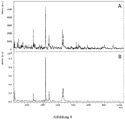
- Figure 4 shows measurement data that illustrate the advantages of the method described here.
- the contacting method according to the invention and the non-contact method from the prior art after 4 h / 4.5 h / 5 h incubation provided consistent results compared to a conventional nutrient solution -Micro-dilution process (20h incubation) at 95% / 100% / 100% or 93% / 93% / 92%, which underlines the great benefit of these processes.
Landscapes
- Chemical & Material Sciences (AREA)
- Health & Medical Sciences (AREA)
- Physics & Mathematics (AREA)
- Life Sciences & Earth Sciences (AREA)
- Analytical Chemistry (AREA)
- General Health & Medical Sciences (AREA)
- Immunology (AREA)
- Biochemistry (AREA)
- General Physics & Mathematics (AREA)
- Pathology (AREA)
- Organic Chemistry (AREA)
- Engineering & Computer Science (AREA)
- Spectroscopy & Molecular Physics (AREA)
- Proteomics, Peptides & Aminoacids (AREA)
- Zoology (AREA)
- Wood Science & Technology (AREA)
- Molecular Biology (AREA)
- Chemical Kinetics & Catalysis (AREA)
- Optics & Photonics (AREA)
- Biotechnology (AREA)
- Genetics & Genomics (AREA)
- Toxicology (AREA)
- Microbiology (AREA)
- Biophysics (AREA)
- Bioinformatics & Cheminformatics (AREA)
- General Engineering & Computer Science (AREA)
- Electrochemistry (AREA)
- Biomedical Technology (AREA)
- Hematology (AREA)
- Clinical Laboratory Science (AREA)
- Other Investigation Or Analysis Of Materials By Electrical Means (AREA)
- Sampling And Sample Adjustment (AREA)
- Investigating Or Analysing Materials By Optical Means (AREA)
Applications Claiming Priority (1)
| Application Number | Priority Date | Filing Date | Title |
|---|---|---|---|
| DE102019101389.5A DE102019101389B4 (de) | 2019-01-21 | 2019-01-21 | Verfahren zur Probenaufbereitung auf einem spektrometrischen Probenträger |
Publications (2)
| Publication Number | Publication Date |
|---|---|
| EP3683564A1 true EP3683564A1 (fr) | 2020-07-22 |
| EP3683564B1 EP3683564B1 (fr) | 2022-03-16 |
Family
ID=69157673
Family Applications (1)
| Application Number | Title | Priority Date | Filing Date |
|---|---|---|---|
| EP20151088.0A Active EP3683564B1 (fr) | 2019-01-21 | 2020-01-10 | Méthode de préparation des échantillons sur un support d'échantillon spectrométrique |
Country Status (8)
| Country | Link |
|---|---|
| US (1) | US11802819B2 (fr) |
| EP (1) | EP3683564B1 (fr) |
| JP (1) | JP6941661B2 (fr) |
| KR (1) | KR102321248B1 (fr) |
| CN (1) | CN111458198B (fr) |
| DE (1) | DE102019101389B4 (fr) |
| DK (1) | DK3683564T3 (fr) |
| ES (1) | ES2911825T3 (fr) |
Cited By (2)
| Publication number | Priority date | Publication date | Assignee | Title |
|---|---|---|---|---|
| CN113984873A (zh) * | 2021-10-28 | 2022-01-28 | 安图实验仪器(郑州)有限公司 | 用于微生物质谱鉴定的多点位吸液系统 |
| US11299763B2 (en) * | 2015-04-13 | 2022-04-12 | Bruker Daltonik Gmbh | Rapid test for microbial resistances by mass spectrometry |
Families Citing this family (1)
| Publication number | Priority date | Publication date | Assignee | Title |
|---|---|---|---|---|
| CN108919605B (zh) * | 2018-07-27 | 2021-12-21 | 京东方科技集团股份有限公司 | 光阻组合物、像素界定层、其制备方法及应用 |
Citations (3)
| Publication number | Priority date | Publication date | Assignee | Title |
|---|---|---|---|---|
| EP1053784A2 (fr) * | 1999-05-21 | 2000-11-22 | Bruker Daltonik GmbH | Traitement d' échantillons dans des solutions à petite surface de contact déterminée |
| WO2018099500A1 (fr) | 2016-11-30 | 2018-06-07 | Bruker Daltonik Gmbh | Préparation d'échantillons microbiens vivants et de microorganismes pour effectuer ensuite une mesure et une évaluation par spectrométrie de masse |
| EP3376202A1 (fr) | 2017-03-16 | 2018-09-19 | Bruker Daltonik GmbH | Séparation de liquide dans des gouttelettes et matériau sédimentaire enfermé à l'intérieur |
Family Cites Families (12)
| Publication number | Priority date | Publication date | Assignee | Title |
|---|---|---|---|---|
| US5397316A (en) | 1993-06-25 | 1995-03-14 | The Procter & Gamble Company | Slitted absorbent members for aqueous body fluids formed of expandable absorbent materials |
| EP0804916A1 (fr) | 1996-04-29 | 1997-11-05 | The Procter & Gamble Company | Article absorbant jetable, avec une structure absorbante munie d'incisions, qui est capable de se déformer pendant l'utilisation |
| DE19754978C2 (de) | 1997-12-11 | 2000-07-13 | Bruker Daltonik Gmbh | Probenträger für die MALDI-Massenspektrometrie nebst Verfahren zur Herstellung der Platten und zum Aufbringen der Proben |
| DE10043042C2 (de) | 2000-09-01 | 2003-04-17 | Bruker Daltonik Gmbh | Verfahren zum Belegen eines Probenträgers mit Biomolekülen für die massenspektrometrische Analyse |
| JP3823156B2 (ja) * | 2003-10-31 | 2006-09-20 | 理学電機工業株式会社 | 蛍光x線分析用液体試料の調整方法 |
| EP2335825A1 (fr) * | 2009-12-21 | 2011-06-22 | F. Hoffmann-La Roche AG | Unité et dispositif pour la préparation de cellules et/ou de particules dans un liquide et procédé d'analyse microscopique |
| DE102010054581A1 (de) | 2010-12-15 | 2012-06-21 | Bruker Daltonik Gmbh | Probenpräparation für die Ionisierung mit matrixunterstützter Laserdesorption |
| US9638636B2 (en) | 2012-06-01 | 2017-05-02 | Vycap B.V. | Microsieve diagnostic device in the isolation and analysis of single cells |
| EP2806275B1 (fr) | 2013-05-23 | 2015-07-01 | Bruker Daltonik GmbH | Détermination de la résistance par spectrométrie de masse par mesure de croissance |
| EP3274690A1 (fr) | 2015-03-24 | 2018-01-31 | Cytotrack APS | Procédé et appareil permettant de fixer, détecter et récupérer une cellule individuelle sur une surface |
| EP3081652B1 (fr) * | 2015-04-13 | 2017-06-28 | Bruker Daltonik GmbH | Test rapide par spectrométrie de masse de résistances |
| CN108780081B (zh) * | 2015-08-10 | 2021-04-09 | Essenlix公司 | 步骤简化、小样品、快速、易使用的生物/化学分析装置和方法 |
-
2019
- 2019-01-21 DE DE102019101389.5A patent/DE102019101389B4/de active Active
- 2019-11-21 JP JP2019210538A patent/JP6941661B2/ja active Active
- 2019-12-10 KR KR1020190163589A patent/KR102321248B1/ko active Active
-
2020
- 2020-01-10 EP EP20151088.0A patent/EP3683564B1/fr active Active
- 2020-01-10 DK DK20151088.0T patent/DK3683564T3/da active
- 2020-01-10 ES ES20151088T patent/ES2911825T3/es active Active
- 2020-01-14 US US16/741,899 patent/US11802819B2/en active Active
- 2020-01-14 CN CN202010035824.8A patent/CN111458198B/zh active Active
Patent Citations (3)
| Publication number | Priority date | Publication date | Assignee | Title |
|---|---|---|---|---|
| EP1053784A2 (fr) * | 1999-05-21 | 2000-11-22 | Bruker Daltonik GmbH | Traitement d' échantillons dans des solutions à petite surface de contact déterminée |
| WO2018099500A1 (fr) | 2016-11-30 | 2018-06-07 | Bruker Daltonik Gmbh | Préparation d'échantillons microbiens vivants et de microorganismes pour effectuer ensuite une mesure et une évaluation par spectrométrie de masse |
| EP3376202A1 (fr) | 2017-03-16 | 2018-09-19 | Bruker Daltonik GmbH | Séparation de liquide dans des gouttelettes et matériau sédimentaire enfermé à l'intérieur |
Non-Patent Citations (2)
| Title |
|---|
| E. A. IDELEVICH ET AL., CLIN. MICROBIOL. INFECT., vol. 7, 2018, pages 738 - 743 |
| GOBOM ET AL., ANAL. CHEM., vol. 73, 2001, pages 434 - 438 |
Cited By (2)
| Publication number | Priority date | Publication date | Assignee | Title |
|---|---|---|---|---|
| US11299763B2 (en) * | 2015-04-13 | 2022-04-12 | Bruker Daltonik Gmbh | Rapid test for microbial resistances by mass spectrometry |
| CN113984873A (zh) * | 2021-10-28 | 2022-01-28 | 安图实验仪器(郑州)有限公司 | 用于微生物质谱鉴定的多点位吸液系统 |
Also Published As
| Publication number | Publication date |
|---|---|
| KR20200090605A (ko) | 2020-07-29 |
| JP6941661B2 (ja) | 2021-09-29 |
| DE102019101389B4 (de) | 2020-08-06 |
| ES2911825T3 (es) | 2022-05-20 |
| JP2020118673A (ja) | 2020-08-06 |
| KR102321248B1 (ko) | 2021-11-03 |
| US20200232889A1 (en) | 2020-07-23 |
| DK3683564T3 (da) | 2022-05-23 |
| US11802819B2 (en) | 2023-10-31 |
| CN111458198A (zh) | 2020-07-28 |
| DE102019101389A1 (de) | 2020-07-23 |
| CN111458198B (zh) | 2023-08-22 |
| EP3683564B1 (fr) | 2022-03-16 |
Similar Documents
| Publication | Publication Date | Title |
|---|---|---|
| EP1311655B1 (fr) | Dispositif et procede pour mettre en contact electrique des cellules biologiques en suspension dans un liquide | |
| DE69627182T2 (de) | Element zum sammeln und transportieren von zu analyserendem probenmaterial und verfahren zur bestimmung eines analyts | |
| EP3683564B1 (fr) | Méthode de préparation des échantillons sur un support d'échantillon spectrométrique | |
| DE102012011647B4 (de) | Analyse von Mikroben aus Mikrokolonien mittels MALDI-Massenspektrometrie | |
| DE102017105600A1 (de) | Trennung von Tropfenflüssigkeit und davon umschlossenem sedimentierten Material | |
| DE3606124A1 (de) | Kolorimetrische pruefvorrichtung zur bestimmung einer spezifischen substanz in einem fluessigen medium, und verfahren zur verwendung der vorrichtung | |
| DE19744649A1 (de) | Zur Zelluntersuchung mit Hilfe der Patch Clamp-Methode bestimmte Vorrichtung und Verfahren | |
| DE10309211A1 (de) | Vorrichtung und Verfahren zur immunologischen Markierung für Gewebedünnschnitte | |
| DE2615546C2 (de) | Vorrichtung zum Züchten einer Kultur von Mikroorganismen | |
| DE102010010975B4 (de) | Objektträgerhalter | |
| DE2115674A1 (de) | Vorrichtung zum Aufsammeln und Züchten von Mikroorganismen | |
| DE69119647T2 (de) | Kapillar-Impfgerät und Anordnung und Verfahren zur Impfung einer Vielzahl von Testfeldern | |
| DE10239739B4 (de) | Vorrichtung und Verfahren zur Durchführung von immunologischen Markierungstechniken für Gewebedünnschnitte | |
| EP3430462B1 (fr) | Dispositif destiné à être utilisé dans un système d'imagerie | |
| DE3872895T2 (de) | Probenentnahmevorrichtung. | |
| EP2243024B1 (fr) | Dispositif et procédé pour détecter des liquides ou des substances de liquides | |
| DE2536163C3 (de) | Membranfilter | |
| AT406310B (de) | Vorrichtung zur messung der migrationsfähigkeit von amöboid beweglichen zellen | |
| DE102010024933A1 (de) | Vorrichtung und Verfahren zur Analyse einer kontaminierten Oberfläche | |
| DE3738982C2 (fr) | ||
| DE202007014762U1 (de) | Anordnung zur Aufbereitung von zu untersuchendem Gewebe sowie Objektträger für zu untersuchendes Gewebe | |
| DE20220299U1 (de) | Biochip-Reader | |
| EP4056272B1 (fr) | Dispositif de maintien proche des éléments membranes respectifs dans les cavités respectives d'une plaque à puits multiples | |
| EP3524350A1 (fr) | Dispositif et procédé d'analyse de liquide | |
| EP1256627A2 (fr) | Utilisation d'alcanes pour la séparation et purification de biopolymers |
Legal Events
| Date | Code | Title | Description |
|---|---|---|---|
| PUAI | Public reference made under article 153(3) epc to a published international application that has entered the european phase |
Free format text: ORIGINAL CODE: 0009012 |
|
| STAA | Information on the status of an ep patent application or granted ep patent |
Free format text: STATUS: REQUEST FOR EXAMINATION WAS MADE |
|
| 17P | Request for examination filed |
Effective date: 20200131 |
|
| AK | Designated contracting states |
Kind code of ref document: A1 Designated state(s): AL AT BE BG CH CY CZ DE DK EE ES FI FR GB GR HR HU IE IS IT LI LT LU LV MC MK MT NL NO PL PT RO RS SE SI SK SM TR |
|
| AX | Request for extension of the european patent |
Extension state: BA ME |
|
| STAA | Information on the status of an ep patent application or granted ep patent |
Free format text: STATUS: EXAMINATION IS IN PROGRESS |
|
| 17Q | First examination report despatched |
Effective date: 20200730 |
|
| RAP1 | Party data changed (applicant data changed or rights of an application transferred) |
Owner name: BRUKER DALTONICS GMBH & CO. KG |
|
| GRAP | Despatch of communication of intention to grant a patent |
Free format text: ORIGINAL CODE: EPIDOSNIGR1 |
|
| STAA | Information on the status of an ep patent application or granted ep patent |
Free format text: STATUS: GRANT OF PATENT IS INTENDED |
|
| RIC1 | Information provided on ipc code assigned before grant |
Ipc: B01L 3/00 20060101ALN20211116BHEP Ipc: B01D 21/00 20060101ALN20211116BHEP Ipc: B01D 17/02 20060101ALN20211116BHEP Ipc: C12Q 1/18 20060101ALN20211116BHEP Ipc: H01J 49/04 20060101ALN20211116BHEP Ipc: G01N 27/64 20060101ALN20211116BHEP Ipc: G01N 21/35 20140101ALN20211116BHEP Ipc: G01N 1/28 20060101ALN20211116BHEP Ipc: G01N 21/3563 20140101ALI20211116BHEP Ipc: G01N 1/40 20060101ALI20211116BHEP Ipc: G01N 1/34 20060101AFI20211116BHEP |
|
| INTG | Intention to grant announced |
Effective date: 20211202 |
|
| GRAS | Grant fee paid |
Free format text: ORIGINAL CODE: EPIDOSNIGR3 |
|
| GRAA | (expected) grant |
Free format text: ORIGINAL CODE: 0009210 |
|
| STAA | Information on the status of an ep patent application or granted ep patent |
Free format text: STATUS: THE PATENT HAS BEEN GRANTED |
|
| AK | Designated contracting states |
Kind code of ref document: B1 Designated state(s): AL AT BE BG CH CY CZ DE DK EE ES FI FR GB GR HR HU IE IS IT LI LT LU LV MC MK MT NL NO PL PT RO RS SE SI SK SM TR |
|
| REG | Reference to a national code |
Ref country code: GB Ref legal event code: FG4D Free format text: NOT ENGLISH |
|
| REG | Reference to a national code |
Ref country code: CH Ref legal event code: EP |
|
| REG | Reference to a national code |
Ref country code: DE Ref legal event code: R096 Ref document number: 502020000788 Country of ref document: DE |
|
| REG | Reference to a national code |
Ref country code: IE Ref legal event code: FG4D Free format text: LANGUAGE OF EP DOCUMENT: GERMAN |
|
| REG | Reference to a national code |
Ref country code: AT Ref legal event code: REF Ref document number: 1476231 Country of ref document: AT Kind code of ref document: T Effective date: 20220415 |
|
| REG | Reference to a national code |
Ref country code: ES Ref legal event code: FG2A Ref document number: 2911825 Country of ref document: ES Kind code of ref document: T3 Effective date: 20220520 |
|
| REG | Reference to a national code |
Ref country code: DK Ref legal event code: T3 Effective date: 20220518 |
|
| REG | Reference to a national code |
Ref country code: NO Ref legal event code: T2 Effective date: 20220316 |
|
| REG | Reference to a national code |
Ref country code: SE Ref legal event code: TRGR |
|
| REG | Reference to a national code |
Ref country code: NL Ref legal event code: FP |
|
| REG | Reference to a national code |
Ref country code: FI Ref legal event code: FGE |
|
| REG | Reference to a national code |
Ref country code: LT Ref legal event code: MG9D |
|
| PG25 | Lapsed in a contracting state [announced via postgrant information from national office to epo] |
Ref country code: RS Free format text: LAPSE BECAUSE OF FAILURE TO SUBMIT A TRANSLATION OF THE DESCRIPTION OR TO PAY THE FEE WITHIN THE PRESCRIBED TIME-LIMIT Effective date: 20220316 Ref country code: LT Free format text: LAPSE BECAUSE OF FAILURE TO SUBMIT A TRANSLATION OF THE DESCRIPTION OR TO PAY THE FEE WITHIN THE PRESCRIBED TIME-LIMIT Effective date: 20220316 Ref country code: HR Free format text: LAPSE BECAUSE OF FAILURE TO SUBMIT A TRANSLATION OF THE DESCRIPTION OR TO PAY THE FEE WITHIN THE PRESCRIBED TIME-LIMIT Effective date: 20220316 Ref country code: BG Free format text: LAPSE BECAUSE OF FAILURE TO SUBMIT A TRANSLATION OF THE DESCRIPTION OR TO PAY THE FEE WITHIN THE PRESCRIBED TIME-LIMIT Effective date: 20220616 |
|
| PG25 | Lapsed in a contracting state [announced via postgrant information from national office to epo] |
Ref country code: LV Free format text: LAPSE BECAUSE OF FAILURE TO SUBMIT A TRANSLATION OF THE DESCRIPTION OR TO PAY THE FEE WITHIN THE PRESCRIBED TIME-LIMIT Effective date: 20220316 Ref country code: GR Free format text: LAPSE BECAUSE OF FAILURE TO SUBMIT A TRANSLATION OF THE DESCRIPTION OR TO PAY THE FEE WITHIN THE PRESCRIBED TIME-LIMIT Effective date: 20220617 |
|
| PG25 | Lapsed in a contracting state [announced via postgrant information from national office to epo] |
Ref country code: SM Free format text: LAPSE BECAUSE OF FAILURE TO SUBMIT A TRANSLATION OF THE DESCRIPTION OR TO PAY THE FEE WITHIN THE PRESCRIBED TIME-LIMIT Effective date: 20220316 Ref country code: SK Free format text: LAPSE BECAUSE OF FAILURE TO SUBMIT A TRANSLATION OF THE DESCRIPTION OR TO PAY THE FEE WITHIN THE PRESCRIBED TIME-LIMIT Effective date: 20220316 Ref country code: RO Free format text: LAPSE BECAUSE OF FAILURE TO SUBMIT A TRANSLATION OF THE DESCRIPTION OR TO PAY THE FEE WITHIN THE PRESCRIBED TIME-LIMIT Effective date: 20220316 Ref country code: PT Free format text: LAPSE BECAUSE OF FAILURE TO SUBMIT A TRANSLATION OF THE DESCRIPTION OR TO PAY THE FEE WITHIN THE PRESCRIBED TIME-LIMIT Effective date: 20220718 Ref country code: EE Free format text: LAPSE BECAUSE OF FAILURE TO SUBMIT A TRANSLATION OF THE DESCRIPTION OR TO PAY THE FEE WITHIN THE PRESCRIBED TIME-LIMIT Effective date: 20220316 Ref country code: CZ Free format text: LAPSE BECAUSE OF FAILURE TO SUBMIT A TRANSLATION OF THE DESCRIPTION OR TO PAY THE FEE WITHIN THE PRESCRIBED TIME-LIMIT Effective date: 20220316 |
|
| PG25 | Lapsed in a contracting state [announced via postgrant information from national office to epo] |
Ref country code: PL Free format text: LAPSE BECAUSE OF FAILURE TO SUBMIT A TRANSLATION OF THE DESCRIPTION OR TO PAY THE FEE WITHIN THE PRESCRIBED TIME-LIMIT Effective date: 20220316 Ref country code: IS Free format text: LAPSE BECAUSE OF FAILURE TO SUBMIT A TRANSLATION OF THE DESCRIPTION OR TO PAY THE FEE WITHIN THE PRESCRIBED TIME-LIMIT Effective date: 20220716 Ref country code: AL Free format text: LAPSE BECAUSE OF FAILURE TO SUBMIT A TRANSLATION OF THE DESCRIPTION OR TO PAY THE FEE WITHIN THE PRESCRIBED TIME-LIMIT Effective date: 20220316 |
|
| REG | Reference to a national code |
Ref country code: DE Ref legal event code: R097 Ref document number: 502020000788 Country of ref document: DE |
|
| PLBE | No opposition filed within time limit |
Free format text: ORIGINAL CODE: 0009261 |
|
| STAA | Information on the status of an ep patent application or granted ep patent |
Free format text: STATUS: NO OPPOSITION FILED WITHIN TIME LIMIT |
|
| 26N | No opposition filed |
Effective date: 20221219 |
|
| PG25 | Lapsed in a contracting state [announced via postgrant information from national office to epo] |
Ref country code: SI Free format text: LAPSE BECAUSE OF FAILURE TO SUBMIT A TRANSLATION OF THE DESCRIPTION OR TO PAY THE FEE WITHIN THE PRESCRIBED TIME-LIMIT Effective date: 20220316 |
|
| PG25 | Lapsed in a contracting state [announced via postgrant information from national office to epo] |
Ref country code: LU Free format text: LAPSE BECAUSE OF NON-PAYMENT OF DUE FEES Effective date: 20230110 |
|
| P01 | Opt-out of the competence of the unified patent court (upc) registered |
Effective date: 20231221 |
|
| PG25 | Lapsed in a contracting state [announced via postgrant information from national office to epo] |
Ref country code: IE Free format text: LAPSE BECAUSE OF NON-PAYMENT OF DUE FEES Effective date: 20230110 |
|
| PG25 | Lapsed in a contracting state [announced via postgrant information from national office to epo] |
Ref country code: MC Free format text: LAPSE BECAUSE OF FAILURE TO SUBMIT A TRANSLATION OF THE DESCRIPTION OR TO PAY THE FEE WITHIN THE PRESCRIBED TIME-LIMIT Effective date: 20220316 |
|
| PG25 | Lapsed in a contracting state [announced via postgrant information from national office to epo] |
Ref country code: MC Free format text: LAPSE BECAUSE OF FAILURE TO SUBMIT A TRANSLATION OF THE DESCRIPTION OR TO PAY THE FEE WITHIN THE PRESCRIBED TIME-LIMIT Effective date: 20220316 |
|
| PGFP | Annual fee paid to national office [announced via postgrant information from national office to epo] |
Ref country code: AT Payment date: 20250417 Year of fee payment: 5 Ref country code: CH Payment date: 20250201 Year of fee payment: 6 |
|
| PG25 | Lapsed in a contracting state [announced via postgrant information from national office to epo] |
Ref country code: CY Free format text: LAPSE BECAUSE OF FAILURE TO SUBMIT A TRANSLATION OF THE DESCRIPTION OR TO PAY THE FEE WITHIN THE PRESCRIBED TIME-LIMIT; INVALID AB INITIO Effective date: 20200110 |
|
| PG25 | Lapsed in a contracting state [announced via postgrant information from national office to epo] |
Ref country code: HU Free format text: LAPSE BECAUSE OF FAILURE TO SUBMIT A TRANSLATION OF THE DESCRIPTION OR TO PAY THE FEE WITHIN THE PRESCRIBED TIME-LIMIT; INVALID AB INITIO Effective date: 20200110 |
|
| PG25 | Lapsed in a contracting state [announced via postgrant information from national office to epo] |
Ref country code: TR Free format text: LAPSE BECAUSE OF FAILURE TO SUBMIT A TRANSLATION OF THE DESCRIPTION OR TO PAY THE FEE WITHIN THE PRESCRIBED TIME-LIMIT Effective date: 20220316 |
|
| REG | Reference to a national code |
Ref country code: CH Ref legal event code: U11 Free format text: ST27 STATUS EVENT CODE: U-0-0-U10-U11 (AS PROVIDED BY THE NATIONAL OFFICE) Effective date: 20260201 |
|
| PGFP | Annual fee paid to national office [announced via postgrant information from national office to epo] |
Ref country code: NL Payment date: 20260121 Year of fee payment: 7 |
|
| REG | Reference to a national code |
Ref country code: AT Ref legal event code: MM01 Ref document number: 1476231 Country of ref document: AT Kind code of ref document: T Effective date: 20250110 |
|
| PGFP | Annual fee paid to national office [announced via postgrant information from national office to epo] |
Ref country code: SE Payment date: 20260121 Year of fee payment: 7 |
|
| PGFP | Annual fee paid to national office [announced via postgrant information from national office to epo] |
Ref country code: GB Payment date: 20260123 Year of fee payment: 7 |
|
| PGFP | Annual fee paid to national office [announced via postgrant information from national office to epo] |
Ref country code: ES Payment date: 20260227 Year of fee payment: 7 |
|
| PGFP | Annual fee paid to national office [announced via postgrant information from national office to epo] |
Ref country code: DK Payment date: 20260126 Year of fee payment: 7 Ref country code: NO Payment date: 20260123 Year of fee payment: 7 Ref country code: DE Payment date: 20260121 Year of fee payment: 7 |
|
| PG25 | Lapsed in a contracting state [announced via postgrant information from national office to epo] |
Ref country code: AT Free format text: LAPSE BECAUSE OF NON-PAYMENT OF DUE FEES Effective date: 20250110 |
|
| PGFP | Annual fee paid to national office [announced via postgrant information from national office to epo] |
Ref country code: BE Payment date: 20260121 Year of fee payment: 7 Ref country code: FI Payment date: 20260129 Year of fee payment: 7 Ref country code: IT Payment date: 20260126 Year of fee payment: 7 |
|
| PGFP | Annual fee paid to national office [announced via postgrant information from national office to epo] |
Ref country code: FR Payment date: 20260123 Year of fee payment: 7 |