EP3689392B1 - Behandlungsvorrichtung zum entfernen von blut aus einem extrakorporalen blutkreislauf - Google Patents
Behandlungsvorrichtung zum entfernen von blut aus einem extrakorporalen blutkreislauf Download PDFInfo
- Publication number
- EP3689392B1 EP3689392B1 EP20157600.6A EP20157600A EP3689392B1 EP 3689392 B1 EP3689392 B1 EP 3689392B1 EP 20157600 A EP20157600 A EP 20157600A EP 3689392 B1 EP3689392 B1 EP 3689392B1
- Authority
- EP
- European Patent Office
- Prior art keywords
- blood
- extracorporeal blood
- treatment apparatus
- blood circuit
- extracorporeal
- Prior art date
- Legal status (The legal status is an assumption and is not a legal conclusion. Google has not performed a legal analysis and makes no representation as to the accuracy of the status listed.)
- Active
Links
Images
Classifications
-
- A—HUMAN NECESSITIES
- A61—MEDICAL OR VETERINARY SCIENCE; HYGIENE
- A61M—DEVICES FOR INTRODUCING MEDIA INTO, OR ONTO, THE BODY; DEVICES FOR TRANSDUCING BODY MEDIA OR FOR TAKING MEDIA FROM THE BODY; DEVICES FOR PRODUCING OR ENDING SLEEP OR STUPOR
- A61M1/00—Suction or pumping devices for medical purposes; Devices for carrying-off, for treatment of, or for carrying-over, body-liquids; Drainage systems
- A61M1/36—Other treatment of blood in a by-pass of the natural circulatory system, e.g. temperature adaptation, irradiation ; Extra-corporeal blood circuits
- A61M1/3621—Extra-corporeal blood circuits
- A61M1/3643—Priming, rinsing before or after use
- A61M1/3644—Mode of operation
- A61M1/3646—Expelling the residual body fluid after use, e.g. back to the body
-
- A—HUMAN NECESSITIES
- A61—MEDICAL OR VETERINARY SCIENCE; HYGIENE
- A61M—DEVICES FOR INTRODUCING MEDIA INTO, OR ONTO, THE BODY; DEVICES FOR TRANSDUCING BODY MEDIA OR FOR TAKING MEDIA FROM THE BODY; DEVICES FOR PRODUCING OR ENDING SLEEP OR STUPOR
- A61M1/00—Suction or pumping devices for medical purposes; Devices for carrying-off, for treatment of, or for carrying-over, body-liquids; Drainage systems
- A61M1/34—Filtering material out of the blood by passing it through a membrane, i.e. hemofiltration or diafiltration
- A61M1/342—Adding solutions to the blood, e.g. substitution solutions
-
- A—HUMAN NECESSITIES
- A61—MEDICAL OR VETERINARY SCIENCE; HYGIENE
- A61M—DEVICES FOR INTRODUCING MEDIA INTO, OR ONTO, THE BODY; DEVICES FOR TRANSDUCING BODY MEDIA OR FOR TAKING MEDIA FROM THE BODY; DEVICES FOR PRODUCING OR ENDING SLEEP OR STUPOR
- A61M1/00—Suction or pumping devices for medical purposes; Devices for carrying-off, for treatment of, or for carrying-over, body-liquids; Drainage systems
- A61M1/34—Filtering material out of the blood by passing it through a membrane, i.e. hemofiltration or diafiltration
- A61M1/342—Adding solutions to the blood, e.g. substitution solutions
- A61M1/3424—Substitution fluid path
- A61M1/3431—Substitution fluid path upstream of the filter
- A61M1/3434—Substitution fluid path upstream of the filter with pre-dilution and post-dilution
-
- A—HUMAN NECESSITIES
- A61—MEDICAL OR VETERINARY SCIENCE; HYGIENE
- A61M—DEVICES FOR INTRODUCING MEDIA INTO, OR ONTO, THE BODY; DEVICES FOR TRANSDUCING BODY MEDIA OR FOR TAKING MEDIA FROM THE BODY; DEVICES FOR PRODUCING OR ENDING SLEEP OR STUPOR
- A61M1/00—Suction or pumping devices for medical purposes; Devices for carrying-off, for treatment of, or for carrying-over, body-liquids; Drainage systems
- A61M1/34—Filtering material out of the blood by passing it through a membrane, i.e. hemofiltration or diafiltration
- A61M1/342—Adding solutions to the blood, e.g. substitution solutions
- A61M1/3424—Substitution fluid path
- A61M1/3437—Substitution fluid path downstream of the filter, e.g. post-dilution with filtrate
-
- A—HUMAN NECESSITIES
- A61—MEDICAL OR VETERINARY SCIENCE; HYGIENE
- A61M—DEVICES FOR INTRODUCING MEDIA INTO, OR ONTO, THE BODY; DEVICES FOR TRANSDUCING BODY MEDIA OR FOR TAKING MEDIA FROM THE BODY; DEVICES FOR PRODUCING OR ENDING SLEEP OR STUPOR
- A61M1/00—Suction or pumping devices for medical purposes; Devices for carrying-off, for treatment of, or for carrying-over, body-liquids; Drainage systems
- A61M1/36—Other treatment of blood in a by-pass of the natural circulatory system, e.g. temperature adaptation, irradiation ; Extra-corporeal blood circuits
- A61M1/3621—Extra-corporeal blood circuits
- A61M1/3622—Extra-corporeal blood circuits with a cassette forming partially or totally the blood circuit
- A61M1/36226—Constructional details of cassettes, e.g. specific details on material or shape
- A61M1/362265—Details of valves
-
- A—HUMAN NECESSITIES
- A61—MEDICAL OR VETERINARY SCIENCE; HYGIENE
- A61M—DEVICES FOR INTRODUCING MEDIA INTO, OR ONTO, THE BODY; DEVICES FOR TRANSDUCING BODY MEDIA OR FOR TAKING MEDIA FROM THE BODY; DEVICES FOR PRODUCING OR ENDING SLEEP OR STUPOR
- A61M1/00—Suction or pumping devices for medical purposes; Devices for carrying-off, for treatment of, or for carrying-over, body-liquids; Drainage systems
- A61M1/36—Other treatment of blood in a by-pass of the natural circulatory system, e.g. temperature adaptation, irradiation ; Extra-corporeal blood circuits
- A61M1/3621—Extra-corporeal blood circuits
- A61M1/3622—Extra-corporeal blood circuits with a cassette forming partially or totally the blood circuit
- A61M1/36226—Constructional details of cassettes, e.g. specific details on material or shape
- A61M1/362266—Means for adding solutions or substances to the blood
-
- A—HUMAN NECESSITIES
- A61—MEDICAL OR VETERINARY SCIENCE; HYGIENE
- A61M—DEVICES FOR INTRODUCING MEDIA INTO, OR ONTO, THE BODY; DEVICES FOR TRANSDUCING BODY MEDIA OR FOR TAKING MEDIA FROM THE BODY; DEVICES FOR PRODUCING OR ENDING SLEEP OR STUPOR
- A61M1/00—Suction or pumping devices for medical purposes; Devices for carrying-off, for treatment of, or for carrying-over, body-liquids; Drainage systems
- A61M1/36—Other treatment of blood in a by-pass of the natural circulatory system, e.g. temperature adaptation, irradiation ; Extra-corporeal blood circuits
- A61M1/3621—Extra-corporeal blood circuits
- A61M1/3626—Gas bubble detectors
-
- A—HUMAN NECESSITIES
- A61—MEDICAL OR VETERINARY SCIENCE; HYGIENE
- A61M—DEVICES FOR INTRODUCING MEDIA INTO, OR ONTO, THE BODY; DEVICES FOR TRANSDUCING BODY MEDIA OR FOR TAKING MEDIA FROM THE BODY; DEVICES FOR PRODUCING OR ENDING SLEEP OR STUPOR
- A61M1/00—Suction or pumping devices for medical purposes; Devices for carrying-off, for treatment of, or for carrying-over, body-liquids; Drainage systems
- A61M1/36—Other treatment of blood in a by-pass of the natural circulatory system, e.g. temperature adaptation, irradiation ; Extra-corporeal blood circuits
- A61M1/3621—Extra-corporeal blood circuits
- A61M1/3643—Priming, rinsing before or after use
-
- A—HUMAN NECESSITIES
- A61—MEDICAL OR VETERINARY SCIENCE; HYGIENE
- A61M—DEVICES FOR INTRODUCING MEDIA INTO, OR ONTO, THE BODY; DEVICES FOR TRANSDUCING BODY MEDIA OR FOR TAKING MEDIA FROM THE BODY; DEVICES FOR PRODUCING OR ENDING SLEEP OR STUPOR
- A61M1/00—Suction or pumping devices for medical purposes; Devices for carrying-off, for treatment of, or for carrying-over, body-liquids; Drainage systems
- A61M1/36—Other treatment of blood in a by-pass of the natural circulatory system, e.g. temperature adaptation, irradiation ; Extra-corporeal blood circuits
- A61M1/3621—Extra-corporeal blood circuits
- A61M1/3643—Priming, rinsing before or after use
- A61M1/3644—Mode of operation
-
- A—HUMAN NECESSITIES
- A61—MEDICAL OR VETERINARY SCIENCE; HYGIENE
- A61M—DEVICES FOR INTRODUCING MEDIA INTO, OR ONTO, THE BODY; DEVICES FOR TRANSDUCING BODY MEDIA OR FOR TAKING MEDIA FROM THE BODY; DEVICES FOR PRODUCING OR ENDING SLEEP OR STUPOR
- A61M1/00—Suction or pumping devices for medical purposes; Devices for carrying-off, for treatment of, or for carrying-over, body-liquids; Drainage systems
- A61M1/36—Other treatment of blood in a by-pass of the natural circulatory system, e.g. temperature adaptation, irradiation ; Extra-corporeal blood circuits
- A61M1/3621—Extra-corporeal blood circuits
- A61M1/3653—Interfaces between patient blood circulation and extra-corporal blood circuit
-
- A—HUMAN NECESSITIES
- A61—MEDICAL OR VETERINARY SCIENCE; HYGIENE
- A61M—DEVICES FOR INTRODUCING MEDIA INTO, OR ONTO, THE BODY; DEVICES FOR TRANSDUCING BODY MEDIA OR FOR TAKING MEDIA FROM THE BODY; DEVICES FOR PRODUCING OR ENDING SLEEP OR STUPOR
- A61M1/00—Suction or pumping devices for medical purposes; Devices for carrying-off, for treatment of, or for carrying-over, body-liquids; Drainage systems
- A61M1/36—Other treatment of blood in a by-pass of the natural circulatory system, e.g. temperature adaptation, irradiation ; Extra-corporeal blood circuits
- A61M1/3621—Extra-corporeal blood circuits
- A61M1/3653—Interfaces between patient blood circulation and extra-corporal blood circuit
- A61M1/3655—Arterio-venous shunts or fistulae
-
- A—HUMAN NECESSITIES
- A61—MEDICAL OR VETERINARY SCIENCE; HYGIENE
- A61M—DEVICES FOR INTRODUCING MEDIA INTO, OR ONTO, THE BODY; DEVICES FOR TRANSDUCING BODY MEDIA OR FOR TAKING MEDIA FROM THE BODY; DEVICES FOR PRODUCING OR ENDING SLEEP OR STUPOR
- A61M2205/00—General characteristics of the apparatus
- A61M2205/12—General characteristics of the apparatus with interchangeable cassettes forming partially or totally the fluid circuit
-
- A—HUMAN NECESSITIES
- A61—MEDICAL OR VETERINARY SCIENCE; HYGIENE
- A61M—DEVICES FOR INTRODUCING MEDIA INTO, OR ONTO, THE BODY; DEVICES FOR TRANSDUCING BODY MEDIA OR FOR TAKING MEDIA FROM THE BODY; DEVICES FOR PRODUCING OR ENDING SLEEP OR STUPOR
- A61M2205/00—General characteristics of the apparatus
- A61M2205/60—General characteristics of the apparatus with identification means
Definitions
- the present invention relates to a blood treatment device according to the preamble of claim 1.
- Extracorporeal blood circuits are typically disposable items and are discarded after use. It may be beneficial to remove fluids from the extracorporeal circulation following a blood treatment session for a variety of reasons. These reasons include hygiene considerations and the cost of disposing of the used extracorporeal blood circuit.
- the document DE10245619 describes a device for returning blood from a blood treatment device, preferably a dialysis device.
- the substituate pump contained in the treatment device displaces the blood by means of appropriately pumped substituate liquid until it is determined in appropriate detectors that instead of blood, substituate liquid flows into the line. From this point on, the blood volume continues to be displaced in a controlled manner until it reaches the line outlet of the corresponding line.
- An object of the present invention is to provide a further treatment device for removing blood from an extracorporeal blood circuit after completing a blood treatment session.
- a device is to be specified for detecting and/or eliminating air which is present within an extracorporeal blood circulation.
- the object of the present invention is achieved by a device having the features of claim 1.
- a "blood treatment session” as discussed herein may include, for example, treatment using hemodialysis, hemofiltration, hemodiafiltration and/or a cell separation procedure. It can be aimed at purifying blood.
- a suitable treatment device is used to carry out such a blood treatment.
- a “treatment device” When in use, a “treatment device” according to the invention has at least one extracorporeal blood circuit or a receiving device for such, at least one blood pump and at least one second conveying device.
- An extracorporeal blood circulation has at least one arterial line section and at least one venous line section. Each of these line sections includes a line interior.
- the extracorporeal blood circuit may be suitable for connecting to a patient's vascular system.
- the extracorporeal blood circulation can also be one that carries blood extracorporeally during the treatment of the patient, but is not connected to the patient's vascular system.
- the “patient's vascular system” here is understood to mean the patient's blood circulation as an anatomical structure, which includes, among other things, postpartum fistulas, shunts and the like, as well as arterial and venous line structures of the body and the like.
- blood pump is to be understood as meaning a conveying device that is suitable and intended for conveying blood in the extracorporeal blood circulation (hereinafter used as a synonym for “configured”).
- a “patient” within the meaning of the present invention can be a human or animal.
- a “second conveying device” is suitable and provided for introducing at least one substituate liquid into the extracorporeal blood circulation.
- a “substitute liquid” can be, for example, any substituate liquid that is customary for use in blood treatment.
- Substitute fluid is a solution that has already been used during the blood treatment session and is therefore already incorporated or can be introduced into the extracorporeal blood circulation via a fluid connection. It can preferably be an isotonic saline solution, such as a 0.9% NaCl solution.
- the substituate liquid can also be understood to mean, for example, a medication introduced via an addition point using a perfusor.
- the substituate liquid can - regardless of its name - also be understood to mean a fluid other than a liquid, the use of which is also possible according to the invention.
- the device according to the invention comprises the step of introducing or introducing liquid into the extracorporeal blood circulation, preferably by operating the second conveying device.
- the substituate liquid introduced or entered into the extracorporeal blood circulation can be conveyed through the extracorporeal blood circulation by operating the blood pump and/or the second delivery device.
- the patient's blood present in the extracorporeal blood circulation after the blood treatment session can be simultaneously displaced both from the arterial line section and from the venous line section of the extracorporeal blood circuit.
- the "simultaneous displacement" of blood from both the arterial line section and the venous line section of the extracorporeal blood circuit means that the blood is expelled from both line sections of the extracorporeal blood circuit at the same time x or in the same time period y by means of the substituate fluid conveyed in the extracorporeal blood circuit removed from the extracorporeal bloodstream.
- the blood present in the extracorporeal bloodstream after a blood treatment session is removed from the extracorporeal bloodstream and can be discarded.
- the present description makes various references to a treatment device for a dialysis treatment such as hemodialysis, the present invention is by no means limited to this device in removing blood from an extracorporeal blood circuit after a dialysis treatment.
- the device according to the invention is suitable for removing or displacing blood from any extracorporeal blood circuit known for use in a variety of extracorporeal blood treatments or all extracorporeal blood treatments.
- the extracorporeal blood circulation can preferably be connected to the patient's vascular system by means of a so-called double needle access or by means of a so-called single needle access.
- a "double needle access" to a patient's vascular system is to be understood as a form of connection in which an arterial connection needle and a venous connection needle are connected to the patient's vascular system and to the extracorporeal blood circulation or its arterial and venous sections.
- DoubleNeedle access is not limited to such an embodiment.
- the device according to the invention can also be used using a single needle approach.
- blood returned from the arterial line section and the venous line section in the direction of the single needle for connection with the patient can meet in a "Y"-shaped bifurcation.
- the "Y"-shaped branch and/or the connecting needle to the patient's vascular system can be provided or designed in a suitable manner, for example by suitable dimensions of the cross section of the components and/or by arranging flow-calming elements, flow-around elements or the like.
- blood is conveyed from the extracorporeal blood circulation while simultaneously operating the blood pump and the second conveying device.
- the blood can preferably be delivered simultaneously and with the same relative progress from both the arterial line section and the venous line section of the extracorporeal blood circulation.
- the blood can alternatively be delivered simultaneously, but with different relative progress, from both the arterial line section and the venous line section of the extracorporeal blood circulation.
- the term (relative) “progress” can here refer to the movement or progression of the blood, for example a blood section, a blood front and the like in a line section (in the arterial or venous line section) of the extracorporeal blood circulation in relation to patients or a Access to the vascular system of the same.
- the term “relative” refers to the progression of the blood in relation to the length of the respective line section of the extracorporeal blood circulation to be flowed through. This means that the progression of the blood in the arterial line section and in the venous line section can, for example, occur at the same speed, relatively speaking. Since one line section can be longer, have a larger diameter, have branches, etc. than the other line section, the relative progression does not correspond to the absolute progression, for example with regard to the specification of exact volume or centimeter information. Rather, the progression can be stated, for example, as a percentage of a line section that has already been drained of blood or a line section that still needs to be drained.
- the equally rapid progression of the blood in differently designed line sections can be achieved, for example, via different rotation speeds of the conveying devices.
- the equally rapid progression can also be achieved, for example, by the amount and location of the addition point of the substituate liquid and the like.
- the arterial line section and/or the venous line section of the extracorporeal blood circuit may be connected to a patient during the performance of the method that is not claimed. As stated above, such a connection can be in the form of a double needle or single needle access.
- the blood displaced from the extracorporeal blood circulation can preferably be substantially or completely returned to the patient's vascular system.
- the blood can be reintroduced or returned to the patient's vascular system via a common access.
- the blood is conveyed until a phase boundary or a mixing area between blood and substituate liquid reaches a detection device which is arranged in or on a section of the extracorporeal blood circuit of the treatment device.
- the detection device can preferably be designed and provided for detecting a qualitative change in the content of the (inside the line of the) extracorporeal blood circuit.
- a “detection device” can be, for example, a - preferably optical - sensor which detects a, for example optical, change in the contents of the inside of the line or a property of the contents.
- the method which is not claimed, can preferably be ended when the detection device detects, for example, the occurrence of the phase boundary or the mixing region between blood and substituate liquid.
- At least two detection devices are arranged in the extracorporeal blood circulation.
- a first detection device in the arterial line section and a second detection device in the venous line section can, for example, be arranged and provided in or at such a distance from the respective patient access, for example from the arterial connection needle or the venous connection needle, such that when the detection device detects the occurrence of a phase boundary or a mixing area between blood and substituate fluid detects that the blood has essentially already been completely returned from the extracorporeal blood circulation into the patient's vascular system.
- the delivery capacity or the delivery rate of the blood pump is controlled or regulated taking into account at least one parameter relating to the extracorporeal blood circulation and/or a delivery performance or a delivery rate of the second delivery device.
- the delivery capacity or the delivery rate of the blood pump can be adjusted, for example, by controlling or regulating a rotation speed of the blood pump.
- the delivery capacity or the delivery rate of the second delivery device can correspond to a predetermined value or predetermined values and, for example, can be stored and read out in a suitable device in or on the extracorporeal blood circulation and / or recorded continuously and - preferably in real time - for dynamic control or regulation of the Delivery capacity or delivery rate of the blood pump can be used.
- control or regulate a delivery rate or a delivery rate of the second delivery device taking into account at least one parameter relating to the extracorporeal blood circulation and / or a delivery rate or a delivery rate of the blood pump.
- a control or regulation of the second conveyor device or a conveying capacity or a conveying rate thereof can be carried out analogously to the procedure specified above.
- parameter can be understood to mean a size and/or property which can be assigned to a component of the extracorporeal blood circuit and/or the second conveying device, for example a volume, for example the volume or the length of the line interior of a line section of the extracorporeal blood circulation, a delivery rate of the second delivery device, a speed, a delivery direction and the like.
- a predetermined amount of substituate liquid is introduced into the interior of the line of the extracorporeal blood circuit by operating the second conveying device.
- a “predetermined amount of substituate liquid or a predetermined amount of substituate liquid” can correspond to a specific delivery volume and/or a specific delivery distance of the blood to be delivered or displaced along the line interior of the extracorporeal blood circuit.
- the introduction of a predetermined amount of substituate liquid can be done, for example, by operating a membrane pump with high-precision metering.
- the amount of substituate liquid can preferably be stored and/or entered in a control device, for example.
- an air detection detector or ABD Air Bubble Detector
- ABD Air Bubble Detector
- a warning can be issued if air is detected in the arterial line section. Regardless of this, blood pumping can be stopped and/or further measures can be taken.
- air can be removed in the arterial line section, hereinafter also referred to as arterial air removal.
- the method used which is not claimed, may be equivalent to venous air removal.
- Arterial air removal may differ in its application for online treatment and standard treatment:
- an external container such as a NaCl bag
- Substitute from the hydraulics - or another source - preferably conveyed into the arterial line section of the hose system via the predilution valve. This happens in such a way that the air there is displaced into the connected container. This is also in Fig. 3 shown. If the hose system is free of air, the container is disconnected and the patient is reconnected to the arterial patient hose or line section. In this way, no air enters and/or remains in the extracorporeal blood system.
- air removal can also take place as follows: If air inclusions are detected, the patient is disconnected both arterially and venously. Both patient tubes or line sections are connected to a container - preferably the previously mentioned NaCl bag - or various containers. Subsequently - preferably after previous security queries - the contents of the container, e.g. NaCl, are sucked into the venous blood hose system or the venous line section by backward pumping by the blood pump, thus conveying the air in the arterial patient hose into the container.
- a container - preferably the previously mentioned NaCl bag - or various containers.
- the container is disconnected and the patient is again connected to the patient tubes.
- the air does not enter and/or remain in the extracorporeal blood system.
- ABD air detection detector
- an arterial air alarm is triggered. This can lead to or consist of immediate closure of the arterial patient tube clamp and/or stopping blood delivery. Air removal can take place as described above. Alternatively can the flow direction can be reversed. In this way, the air can advantageously be separated via the venous drip chamber.
- ABD and the corresponding control are used to check that there is no air in the respective hose section. In this way, it is advantageous to avoid infusing air into the patient.
- a defined volume preferably at least the volume of the blood system up to behind the respective ABP
- a defined volume is initially conveyed further in the previous conveying direction when the air warning is activated, before the actual reversal of the flow direction occurs or is initiated.
- this should only be permissible if the entire preliminary volume has been conveyed without an air warning.
- the user has no possibility of manipulation or intervention between air warning and reversal of flow direction.
- both connection needles remain in the patient's vascular system.
- the blood is displaced by pumping substituate through the predilution port until the venous optical detector no longer detects blood.
- the blood pump should preferably run backwards at the same time.
- the blood pump can preferably run at a very low rate or speed.
- Part of the substituate is thereby pumped into the arterial part of the system and also displaces the blood there towards the patient.
- Both ABDs are active.
- the arterial supply can - as it is comparatively small or very small volumes - can be stopped according to volume control.
- An optical sensor (OD) contained in the ABD can preferably be used for this purpose.
- the return or reinfusion of blood present in the extracorporeal blood circulation after completion of the blood treatment via the patient arterial line or the arterial line section or leg involves the use of a clot catcher.
- the clot catcher is or is arranged in such a way that blood flows through it, which is supplied to the patient by means of the arterial patient line or removed from the extracorporeal blood circulation in another way.
- the clot catcher can be manually inserted into a corresponding blood-carrying arterial section of the extracorporeal blood circulation. This can be done, for example, between a section of the arterial line section and the arterial connection needle.
- the clot catcher can, for example, be inserted between a, in particular originally existing, hose end of the arterial line section and a, in particular originally present, end of the flexible hose section of the arterial connection needle, for example after simple, usual disconnection of the arterial line section from the flexible hose section of the arterial connection needle.
- the clot catcher is inserted after the blood treatment has been completed.
- the clot catcher according to the invention has a mesh size of preferably 10 to 200 micrometers ( ⁇ m) and any intermediate values in this range. In some embodiments of the invention, the mesh size is 40 or 160 micrometers ( ⁇ m).
- the object according to the invention is achieved by a treatment device according to claim 1.
- the advantages that can be achieved with the unclaimed method can also be achieved undiminished with the treatment device according to the invention.
- the treatment device has at least one extracorporeal blood circuit, which has an arterial line section and a venous line section, at least one conveying device for introducing and / or conveying a fluid in the extracorporeal blood circuit and at least one control or regulating device which is suitable and intended for executing or Operate or control or regulate the unclaimed process.
- the “conveying device” for introducing and/or conveying a fluid into or within the extracorporeal blood circuit includes a blood pump arranged on or in the extracorporeal blood circuit for conveying blood within the line interior of the extracorporeal blood circuit.
- the “blood pump” can be designed, for example, as a peristaltic pump or roller pump or any other suitable pump.
- the treatment device according to the invention has at least one second conveying device for introducing at least one substituate liquid into the interior of the line of the extracorporeal blood circuit in order to convey it inside the line.
- the second conveying device can be a peristaltic pump, for example a hose pump or a roller pump.
- a peristaltic pump for example a hose pump or a roller pump.
- another type of pump can also be used,
- a membrane pump in particular a membrane pump with high precision metering, can be used.
- the second conveying device can have supply lines, for example a substituate liquid supply line, to various storage devices, such as substituate liquid storage devices or storage containers with substituate liquid.
- the second conveying device can also have at least one control or regulating device which allows automated introduction and/or conveying of the at least one substituate liquid, for example a predetermined amount of substituate liquid, and is (also) provided for this purpose.
- the second conveying device and its components, in particular its supply lines into the extracorporeal blood circulation preferably represent part of the hose set or hose system for extracorporeal blood treatment. They can be provided on or in the extracorporeal blood circulation. In particular, you can be connected to it in a suitable manner, for example with the help of clamps, connecting pieces or the like.
- the second conveying device can alternatively also be located within the extracorporeal blood circulation.
- the second conveying device can suck in substituate liquid, for example via the substituate liquid supply line.
- a substituate line or substituate liquid supply line is preferably a supply line that can be connected from a substituate source or a substituate liquid supply device.
- the substituate line can be a component or accessory of a tubing set for extracorporeal blood treatment. However, it can also be designed in such a way that it is not a direct part of the extracorporeal blood circulation in the sense that no blood flows through the substituate line.
- the treatment device according to the invention can further, for example, have a treatment device for treating the patient's blood, such as one or more Have blood filters and/or one or more dialyzers, for example a hemodialyzer, and/or one or more absorbers or adsorbers.
- a treatment device for treating the patient's blood such as one or more Have blood filters and/or one or more dialyzers, for example a hemodialyzer, and/or one or more absorbers or adsorbers.
- the treatment device can also contain containers for storing fluids, elements for introducing the fluids, such as hose elements and/or valves, as well as other devices, such as a drip chamber for removing air from the blood during blood treatment and/or sensors and/or or have detectors for detecting various relevant parameters, such as pressure in the extracorporeal blood circulation.
- elements for introducing the fluids such as hose elements and/or valves
- other devices such as a drip chamber for removing air from the blood during blood treatment and/or sensors and/or or have detectors for detecting various relevant parameters, such as pressure in the extracorporeal blood circulation.
- the individual components can be connected to one another in a differential construction, that is, the components can be joined together additively using joining technology, for example by gluing and/or welding such as plastic welding or laser welding.
- the components can be part of an external functional device, such as a blood cassette.
- a blood cassette is, for example, in the applications filed with the DPMA by the applicant of the present invention on April 23, 2009 and June 10, 2009, respectively 10 2009 018 664.6 or. 10 2009 024 468.9 each with the title “ External functional device, blood treatment device for accommodating an external functional device according to the invention, and method” .
- the treatment device according to the invention can have at least one such external functional device, preferably in the form of such a blood cassette.
- the treatment device has at least one control or regulating device which is suitable and intended (i.e. configured) to control a delivery capacity or a delivery rate of the blood pump and / or the second delivery device, taking into account at least one parameter relating to the extracorporeal blood circulation or to regulate.
- the parameter for example data or information in the form of parameters or properties relating to the extracorporeal blood circulation, can be selected from parameters which relate to an internal volume of the arterial line section of the extracorporeal blood, parameters which relate to an internal volume of the venous line section of the extracorporeal blood circuit, parameters, which relate to an addition point for the substituate liquid, such as the location of a predilution addition point for the substituate liquid and/or the location of a postdilution addition point for the substituate liquid, and/or parameters which relate to the delivery capacity or delivery rate of the second delivery device, but without referring to the to be limited to the examples mentioned above.
- the treatment device can have at least one storage device in which the parameter relating to the extracorporeal blood circulation can be stored or stored.
- the “storage device” can be a permanently present storage device, such as a hard drive, and/or an external storage device, such as a CD, a floppy disk, an SD card or SD memory card (Secure Digital Memory Card) and the like, act.
- a permanently present storage device such as a hard drive
- an external storage device such as a CD, a floppy disk, an SD card or SD memory card (Secure Digital Memory Card) and the like, act.
- the treatment device can have at least one input device by means of which the parameter can be stored in a storage device.
- Such an “input device” can be a keyboard, a touch pad, a touch screen, a microphone, a reader and the like.
- the parameter can be entered by a user, for example manually by typing on a keyboard.
- the parameter can also be stored in the storage device by means of transmission from an external data carrier and/or another storage device, for example via an IR interface, Bluetooth, a USB port, Firewire, SATA and the like to the treatment device.
- the parameter After entering or storing the parameter in the storage device, the parameter can be saved permanently. However, it can also only be stored for the duration of a treatment session and, for example, stored temporarily.
- the storage device is suitable and provided or configured to store parameters of different and also different extracorporeal blood circuits.
- the data stored for the tube system or blood tube set used in a treatment session can, for example, be selected before the start of treatment.
- the storage device can be provided on or in at least a section of the extracorporeal blood circuit.
- the storage device can be designed as a barcode and/or 2D code (dot matrix code) and/or RFID chip.
- the treatment device can, for example, automatically read in the data or parameters and make them available to the control or regulating device. It can be provided, for example, on the hose system, for example on the arterial and/or venous line section of the extracorporeal blood circulation.
- the storage device can be provided on or in an external functional device, such as the blood cassette mentioned above.
- the storage device for example, the during production of the Blood cassette determined specifications of the individual components or sections of the blood cassette can be stored.
- the treatment device can preferably further have at least one recording device and/or at least one reading device which is suitable and provided for recording and reading out the external storage device.
- the "receiving device” can be, for example, a card reader, a slot for holding an SD card or a floppy disk, a slot for holding a CD and the like.
- the parameters or data or information stored on the storage device can be read or read after inserting or inserting the storage device into the recording device. This can be done using a reading device, such as a laser.
- the “reading device” can also be an external device or an exposed device of the treatment device, such as a scanner. It is therefore not necessary to insert or insert or introduce the storage device into a receiving device.
- the parameters or data or information can be read out or read by simply placing or holding the storage device in front of the reading device.
- a suitable external storage device can, for example, also be provided in or on a patient card, for example in the form of a chip.
- the read or read parameters can be transmitted to a central processor of a control or regulating device of the treatment device and used, for example, to control or regulate the delivery capacity or delivery rate of the blood pump.
- the treatment device has an extracorporeal blood circulation.
- blood that is in an extracorporeal blood circuit of the treatment device after the end of a blood treatment session can advantageously be quickly removed from both the arterial line section and the venous line section of the extracorporeal blood circuit.
- increased safety for the patient can be offered.
- the spread of clots into the patient's vascular system can be prevented. At least the risk of such a transfer can be reduced.
- the treatment device can, by means of the control device, be able to, on the basis of the data of the internal volumes of all or some sections of the blood tube set, possibly taking into account the location of the selected addition point for the substituate, and / or the predetermined delivery rate or delivery capacity of the substituate pump to automatically calculate the required delivery rate or the required delivery capacity of the blood pump or other delivery device and to control the blood pump or other delivery device accordingly so that a simultaneous displacement of the blood from the usually different volumes of the arterial and venous line sections into the patient can take place.
- the blood pump or another delivery device can be controlled in such a way that the blood can be returned not only at the same time, but also at the same speed.
- the blood can be returned from the two line sections into the patient's vascular system at the same time and with the same progress, an unnecessary or unwanted infusion of substituate fluid into the patient's vascular system after stopping blood treatment.
- the blood can be essentially completely removed from the extracorporeal bloodstream and the extracorporeal bloodstream can be flushed with substituate fluid at the same time, the risk of contamination of third parties or the environment with patient blood can be advantageously reduced. This applies in particular to the disposal of the extracorporeal blood circulation after treatment has ended.
- a blood treatment device for example a hemodialysis device, is selected as the treatment device. It is expressly pointed out that the extracorporeal blood circulation can also be emptied according to the invention without the emptied blood being returned to the patient.
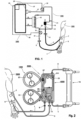
- the normal arrows in the Figure 2 indicate a direction of blood flow.
- the block arrows each indicate a direction of the substituate flow.
- FIG. 1 an extracorporeal blood circulation 1000 of a treatment device 2000 according to the invention with a double needle access to the vascular system of a patient 3000 is shown.
- the extracorporeal blood circulation 1000 has an arterial line section 1 and a venous line section 3.
- the arterial line section 1 is via an arterial patient access, for example, as in Fig. 1 shown, in the form of an arterial connection needle 5, connected to the vascular system of the patient 3000.
- the venous line section 3 is via a venous patient access, for example, as in Fig. 1 shown, in the form of a venous connection needle 7, connected to the vascular system of the patient 3000.
- the arterial line section 1 has an arterial patient hose clamp 9, the venous line section 3 has a venous patient hose clamp 11.
- Fig. 1 Both the arterial patient tube clamp 9 and the venous patient tube clamp 11 are shown in an opened or open state.
- the extracorporeal blood circuit 1000 has a blood pump 13.
- the blood pump 13 is designed as an example of a roller pump.
- the blood pump 13 delivers blood from the patient 3000 through the extracorporeal blood circulation 1000.
- the extracorporeal blood circuit 1000 has a blood treatment device 15, for example a hemodialyzer.
- an arterial pressure sensor 17 is arranged in the arterial line section 1 downstream (based on the delivery direction usual during blood treatment) of the blood pump 13.
- a venous drip chamber 19 and a venous pressure sensor 21 are arranged upstream of the venous drip chamber 19.
- substituate liquid can be supplied from a substituate liquid supply device 25 via a substituate liquid feed line 27 to a predilution addition point 29 for Substitute liquid and / or a postdilution addition point 31 for substituate liquid are introduced into the extracorporeal blood circulation 1000.
- the substituate pump 23 is designed here as an example as a roller pump.
- the treatment device 2000 has a regulating or control device 33.
- the control device 33 is connected to the blood pump 13 via a control line 35 and to the substituate pump 23 via a control line 37. However, it may be sufficient to provide only one regulation or control line, either to the blood pump 13 or to the substituate pump 23, to carry out the method that is not claimed.
- the control device 33 can, for example, control a delivery rate or a delivery capacity of the blood pump 13 depending on operating parameters of the substituate pump 23, for example its delivery rate or delivery capacity.
- control lines 35 and 37 can allow bidirectional communication between the control device 33 and the blood pump 13 or the substituate pump 23.
- Fig. 1 shows a connection of the blood treatment device 2000 according to the invention to the patient's vascular system.
- a connection is not absolutely necessary to implement the blood treatment device according to the invention, but rather only represents a special embodiment and a preferred use.
- the treatment device 2000 has an external functional device, such as a blood cassette 4000.
- the blood cassette 4000 can be a blood cassette as described in the applications filed with the DPMA by the applicant of the present invention on April 23, 2009 and June 10, 2009, each with the title " External functional device, blood treatment device for accommodating an external functional device according to the invention, as well as Method ", see above, is disclosed.
- Fig. 2 shows a phase of a method, not claimed, for removing blood from the extracorporeal blood circuit 1000 after completion of a blood treatment in a special embodiment in which the blood is returned to the patient's vascular system.
- Both the arterial patient tube clamp 9 and the venous patient tube clamp 11 are in an opened or open state.
- the blood pump 13 and the substituate pump 23 are operated.
- the blood pump 13 rotates clockwise and thus against the usual delivery direction during blood treatment (patient - arterial line section - blood treatment device - venous line section - patient).
- the substituate pump 23 rotates counterclockwise.
- the rotation speeds of the blood pump 13 and the substituate pump 23 may be different from each other.
- the rotation speeds of the blood pump 13 and the substituate pump 23 can be identical.
- the blood pump 13 and the substituate pump 23 can be started at the same time and/or rotated for the same (predetermined) period of time.
- the blood pump 13 and the substituate pump 23 can be rotated at different times and/or for different (predetermined) periods of time.
- a predilution addition valve 291 of the predilution addition point 29 is open.
- a postdilution addition valve 311 of the postdilution addition point 31 can also be opened. In the in Fig. 2 However, in the illustration shown, the postdilution addition valve 311 of the postdilution addition point 31 is closed.
- the predilution addition valve 291 and the postdilution addition valve 311 can be designed, for example, as so-called phantom valves, as described in the above-mentioned applications of the present applicant entitled “External functional device, blood treatment device for receiving an external functional device according to the invention, and method” as well as in the Registration 10 2009 012 632.5 (entitled “Sealing device for sealing a volume of a medical treatment arrangement against another volume as well as arrangement and method", filed on March 10, 2009 with the DPMA).
- Substitute liquid can enter the extracorporeal blood circulation 1000 via the predilution addition valve 291.
- Fig. 2 shows the configuration of the blood treatment device 2000 in a snapshot during the blood emptying or blood return process, in which the substituate liquid is introduced into the extracorporeal blood circuit 1000 through the opened predilution addition valve 291 upstream (based on the usual delivery direction during blood treatment).
- the substituate liquid can displace the blood between the predilution addition valve 291 and the venous connection needle 7, i.e. the blood located upstream of the predilution addition valve 291 in the arterial line section 1 and the blood located in the venous line section 3.
- the displaced blood can be returned to the patient's vascular system through the venous connection needle 7.
- the substituate liquid is conveyed through the arterial line section 1 of the extracorporeal blood circuit 1000 upstream of the predilution addition valve 291 through the treatment device 15 and the venous line section 3 to the patient 3000.
- the blood located in the extracorporeal blood circuit 1000 in the conveying direction in front of or downstream of the predilution addition valve 291 is conveyed through the arterial line section 1 to the patient 3000.
- the substituate liquid is introduced from the predilution addition valve 291 into the arterial line section 1 arranged downstream of the predilution addition valve 291 and conveyed in the direction of the patient 3000.
- the simultaneous emptying of the blood from the arterial line section 1 of the extracorporeal blood circuit 1000 and the venous line section 3 of the extracorporeal blood circuit 1000 can, as is preferred, take place with the same progress, i.e. the extent of emptying (e.g. in percent of a line content) of each
- the blood still in line sections 1 and 3 can be identical at any time.
- the emptying or return of the blood from the extracorporeal blood circulation 1000 can be stopped at the same time. For example, just before the substituate liquid reaches the arterial connection needle 5 and correspondingly shortly before the substituate liquid reaches the venous connection needle 7, the blood pump 13 and the substituate pump 23 can be stopped.
- the substituate liquid can also or additionally be introduced into the extracorporeal blood circulation 1000 via the postdilution addition valve 311.
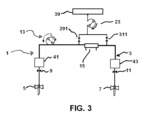
- Fig. 3 shows a schematic sketch of an extracorporeal blood system with an arterial ABD (Air Bubble Detector) or air detection detector for carrying out procedures that are not claimed.
- the components shown are essentially already from the Fig. 1 and 2 known. In comparison to these, only a hydraulic system 39, an arterial ABD (Air Bubble Detector)41 and a venous ABD 43 have been added.
- the pumping directions indicated by solid arrows correspond to the regular directions or the forward directions.
- the pumping direction of the blood pump 13 indicated by dotted lines corresponds to its backward running or suction by the blood pump 13.
Landscapes
- Health & Medical Sciences (AREA)
- Heart & Thoracic Surgery (AREA)
- Vascular Medicine (AREA)
- Biomedical Technology (AREA)
- Engineering & Computer Science (AREA)
- Anesthesiology (AREA)
- Hematology (AREA)
- Life Sciences & Earth Sciences (AREA)
- Animal Behavior & Ethology (AREA)
- General Health & Medical Sciences (AREA)
- Public Health (AREA)
- Veterinary Medicine (AREA)
- Cardiology (AREA)
- External Artificial Organs (AREA)
Description
- Die vorliegende Erfindung betrifft eine Blutbehandlungsvorrichtung gemäß dem Oberbegriff des Anspruchs 1.
- Bei extrakorporaler Blutbehandlung ist großes Augenmerk zu legen auf das Erkennen und Beseitigen von eventuellen Gas- oder Lufteinschlüssen in einem zur Blutbehandlung verwendeten extrakorporalen Blutkreislauf.
- Extrakorporale Blutkreisläufe sind üblicherweise Einweg-Artikel und werden nach ihrer Verwendung entsorgt. Dabei kann es aus verschiedenen Gründen von Vorteil sein, Flüssigkeiten aus dem extrakorporalen Blutkreislauf im Anschluss an eine Blutbehandlungssitzung zu entfernen. Zu diesen Gründen zählen Hygieneaspekte und die Kosten für das Entsorgen des gebrauchten extrakorporalen Blutkreislaufs.
- Das Dokument
DE10245619 beschreibt ein Vorrichtung zur Blutrückgabe aus einer Blutbehandlungsvorrichtung, vorzugsweise einer Dialysevorrichtung. Die in der Behandlungsvorrichtung enthaltene Substituatpumpe verdrängt mittels entsprechend geförderter Substituatflüssigkeit das Blut, bis in entsprechenden Detektoren festgestellt wird, dass statt Blut Substituatflüssigkeit in der Leitung nachströmt. Von diesem Zeitpunkt an wird das Blutvolumen kontrolliert weiterverdrängt, bis es den Leitungsauslass der entsprechenden Leitung erreicht hat. Eine Aufgabe der vorliegenden Erfindung ist, eine weitere Behandlungsvorrichtung zum Entfernen von Blut aus einem extrakorporalen Blutkreislauf nach Beenden einer Blutbehandlungssitzung anzugeben. Ferner soll eine Vorrichtung angegeben werden zum Erkennen und/oder Beseitigen von Luft, welche innerhalb eines extrakorporalen Blutkreislaufs vorliegt. - Die Aufgabe der vorliegenden Erfindung wird durch eine Vorrichtung mit den Merkmalen des Anspruchs 1 gelöst.
- Eine "Blutbehandlungssitzung" wie hier diskutiert kann beispielsweise eine Behandlung mittels Hämodialyse, Hämofiltration, Hämodiafiltration und/oder eines Zellseparationsverfahrens umfassen. Sie kann auf die Reinigung von Blut gerichtet sein.
- Zum Durchführen einer solchen Blutbehandlung wird eine geeignete Behandlungsvorrichtung verwendet.
- Eine erfindungsgemäße "Behandlungsvorrichtung" weist im Gebrauch wenigstens einen extrakorporalen Blutkreislauf oder eine Aufnahmevorrichtung für einen solchen, wenigstens eine Blutpumpe sowie wenigstens eine zweite Fördereinrichtung auf.
- Ein "extrakorporaler Blutkreislauf weist wenigstens einen arteriellen Leitungsabschnitt und wenigstens einen venösen Leitungsabschnitt auf. Jeder dieser Leitungsabschnitte umfasst ein Leitungsinneres.
- Der extrakorporale Blutkreislauf kann geeignet sein, mit dem Gefäßsystem eines Patienten verbunden zu werden. Der extrakorporale Blutkreislauf kann jedoch auch ein solcher sein, welcher bei der Behandlung des Patienten extrakorporal Blut führt, mit dem Gefäßsystem des Patienten jedoch nicht verbunden ist.
- Unter dem "Gefäßsystem des Patienten" ist hier der Blutkreislauf des Patienten als anatomische Struktur zu verstehen, welcher u.a. post partum angelegte Fisteln, Shunts und dergleichen, ferner arterielle und venöse Leitungsstrukturen des Körpers und dergleichen umfasst.
- Unter dem Begriff "Blutpumpe" ist eine Fördereinrichtung zu verstehen, die zum Fördern von Blut im extrakorporalen Blutkreislauf geeignet und vorgesehen (im Weiteren synonym verwendet für "konfiguriert") ist.
- Ein "Patient" im Sinne der vorliegenden Erfindung kann ein Mensch oder Tier sein.
- Eine "zweite Fördereinrichtung" ist zum Einbringen wenigstens einer Substituatflüssigkeit in den extrakorporalen Blutkreislauf geeignet und vorgesehen.
- Eine "Substituatflüssigkeit" kann dabei beispielsweise jede zur Verwendung bei einer Blutbehandlung übliche Substituatflüssigkeit sein. Vorzugsweise ist die Substituatflüssigkeit eine bereits während der Blutbehandlungssitzung verwendete und somit über eine Fluidverbindung bereits in den extrakorporalen Blutkreislauf eingebundene oder einbringbare Lösung. Sie kann vorzugsweise eine isotone Kochsalzlösung sein, wie z.B. eine 0,9%-ige NaCl-Lösung. Unter der Substituatflüssigkeit kann beispielsweise auch ein z.B. mittels Perfusor über eine Zugabestelle eingebrachtes Medikament verstanden werden.
- Unter der Substituatflüssigkeit kann - ungeachtet ihres Namens - erfindungsgemäß auch ein anderes Fluid als eine Flüssigkeit verstanden werden, deren Verwendung sich erfindungsgemäß ebenfalls anbietet.
- Die erfindungsgemäße Vorrichtung umfasst den Schritt des Einbringens oder Eintragens von Flüssigkeit in den extrakorporalen Blutkreislauf, vorzugsweise durch Betreiben der zweiten Fördereinrichtung.
- Die in den extrakorporalen Blutkreislauf eingebrachte oder eingetragene Substituatflüssigkeit kann unter Betreiben der Blutpumpe und/oder der zweiten Fördereinrichtung durch den extrakorporalen Blutkreislauf gefördert werden.
- Mittels der im extrakorporalen Blutkreislauf geförderten Substituatflüssigkeit kann das im extrakorporalen Blutkreislauf nach der Blutbehandlungssitzung vorhandene Blut des Patienten gleichzeitig sowohl aus dem arteriellen Leitungsabschnitt als auch aus dem venösen Leitungsabschnitt des extrakorporalen Blutkreislaufs verdrängt werden.
- Der Begriff "gleichzeitig", wie er hierin verwendet wird, bedeutet, dass sowohl das Fördern von Blut aus dem arteriellen Leitungsabschnitt als auch das Fördern von Blut aus dem venösen Leitungsabschnitt zu ein und demselben Zeitpunkt x und/oder über ein und dieselbe Zeitdauer y erfolgen kann.
- "Gleichzeitig" kann erfindungsgemäß als "simultan" oder "im selben Moment" verstanden werden.
- Das "gleichzeitige Verdrängen" von Blut sowohl aus dem arteriellen Leitungsabschnitt als auch aus dem venösen Leitungsabschnitt des extrakorporalen Blutkreislaufs bedeutet, dass das Blut mittels der im extrakorporalen Blutkreislauf geförderten Substituatflüssigkeit zum gleichen Zeitpunkt x bzw. im gleichen Zeitraum y aus beiden Leitungsabschnitten des extrakorporalen Blutkreislaufs aus dem extrakorporalen Blutkreislauf entfernt wird.
- Das im extrakorporalen Blutkreislauf nach einer Blutbehandlungssitzung vorhandene Blut wird aus dem extrakorporalen Blutkreislauf entfernt und kann verworfen werden.
- Vorteilhafte Weiterbildungen der erfindungsgemäßen Vorrichtung sind jeweils Gegenstand der Unteransprüche.
- Obwohl die vorliegende Beschreibung an verschiedenen Stellen auf eine Behandlungsvorrichtung für eine Dialysebehandlung, wie beispielsweise eine Hämodialyse, Bezug nimmt, ist die vorliegende Erfindung keinesfalls auf diese Vorrichtung beim Entfernen von Blut aus einem extrakorporalen Blutkreislauf nach einer Dialysebehandlung beschränkt.
- Vielmehr ist die erfindungsgemäße Vorrichtung zum Entfernen oder Verdrängen von Blut aus jedem extrakorporalen Blutkreislauf, wie er zur Verwendung in einer Vielzahl von extrakorporalen Blutbehandlungen oder allen extrakorporalen Blutbehandlungen bekannt ist, geeignet.
- Der extrakorporale Blutkreislauf kann vorzugsweise mittels eines so genannten DoubleNeedle-Zugangs oder mittels eines so genannten SingleNeedle-Zugangs mit dem Gefäßsystem des Patienten konnektiert sein.
- Unter einem "DoubleNeedle-Zugang" zum Gefäßsystem eines Patienten ist eine Konnektionsform zu verstehen, bei der jeweils eine arterielle Konnektionsnadel und eine venöse Konnektionsnadel mit dem Gefäßsystem des Patienten und mit dem extrakorporalen Blutkreislauf bzw. dessen arteriellen und venösen Abschnitt konnektiert sind.
- Obwohl die vorliegende Beschreibung beispielhaft anhand eines DoubleNeedle-Zugangs beschrieben ist, ist sie nicht auf eine solche Ausführung beschränkt.
- Die erfindungsgemäße Vorrichtung kann ebenso unter Verwenden eines SingleNeedle-Zugangs benutzt werden. Dabei kann gleichzeitig aus dem arteriellen Leitungsabschnitt und dem venösen Leitungsabschnitt in Richtung zur einzigen Nadel zur Konnektion mit dem Patienten rückgeführtes Blut in einer "Y"-förmigen Aufgabelung aufeinander treffen.
- Zu diesem Zweck können die "Y"- förmige Aufgabelung und/oder die Konnektionsnadel zum Gefäßsystem des Patienten geeignet vorgesehen bzw. ausgestaltet sein, beispielsweise durch geeignete Abmessungen des Querschnitts der Komponenten und/oder durch Anordnen von strömungsberuhigenden Elementen, Umströmungselementen oder dergleichen.
- In einer bevorzugten Ausführungsform wird Blut unter gleichzeitigem Betreiben der Blutpumpe und der zweiten Fördereinrichtung aus dem extrakorporalen Blutkreislauf gefördert.
- Bevorzugt kann das Blut sowohl gleichzeitig als auch mit gleichem relativem Fortschritt sowohl aus dem arteriellen Leitungsabschnitt als auch dem venösen Leitungsabschnitt des extrakorporalen Blutkreislaufs gefördert werden.
- Das Blut kann jedoch alternativ gleichzeitig, jedoch mit unterschiedlichem relativem Fortschritt sowohl aus dem arteriellen Leitungsabschnitt als auch dem venösen Leitungsabschnitt des extrakorporalen Blutkreislaufs gefördert werden.
- Der Begriff (relativer) "Fortschritt" kann sich hierbei auf die Bewegung bzw. das Fortschreiten des Bluts beziehen, z.B. eines Blutabschnitts, einer Blutfront und dergleichen in einem Leitungsabschnitt (im arteriellen oder venösen Leitungsabschnitt) des extrakorporalen Blutkreislaufs in Bezug auf Patienten bzw. einen Zugang zum Gefäßsystem desselben.
- Der Begriff "relativ" bezeichnet dabei das Fortschreiten des Bluts im Verhältnis zu der zu durchströmenden Länge des jeweiligen Leitungsabschnitts des extrakorporalen Blutkreislaufs. D.h., dass das Fortschreiten des Bluts im arteriellen Leitungsabschnitt und im venösen Leitungsabschnitt relativ gesehen beispielsweise gleichschnell erfolgen kann. Da ein Leitungsabschnitt länger, mit größerem Durchmesser, mit Verzweigungen usw. ausgestaltet sein kann als der andere Leitungsabschnitt, entspricht das relative Fortschreiten demnach nicht dem absoluten Fortschreiten zum Beispiel bzgl. der Angabe exakter Volumen- oder Zentimeterangaben. Vielmehr kann das Fortschreiten beispielsweise als Prozentsatz eines von Blut bereits entleerten Leitungsabschnitts oder noch zu entleerenden Leitungsabschnitts angegeben werden.
- Das gleichschnelle Fortschreiten des Bluts in unterschiedlich ausgestalteten Leitungsabschnitten kann beispielsweise über unterschiedliche Rotationsgeschwindigkeiten der Fördereinrichtungen erreicht werden. Das gleichschnelle Fortschreiten kann beispielsweise auch durch die Menge und die Lage der Zugabestelle der Substituatflüssigkeit und dergleichen erreicht werden.
- Der arterielle Leitungsabschnitt und/oder der venöse Leitungsabschnitt des extrakorporalen Blutkreislaufs können während der Durchführung des Verfahrens, das nicht beansprucht wird, mit einem Patienten konnektiert sein. Eine solche Konnektion kann, wie vorstehend angegeben, in Form eines DoubleNeedle- oder eines SingleNeedle-Zugangs ausgeführt sein.
- Das aus dem extrakorporalen Blutkreislauf verdrängte Blut kann vorzugsweise im Wesentlichen oder vollständig in das Gefäßsystem des Patienten rückgeführt werden. Im Falle z.B. eines SingleNeedle-Zugangs kann das Blut über einen gemeinsamen Zugang in das Gefäßsystem des Patienten erneut eingebracht bzw. rückgeführt werden.
- In einem Verfahren, das nicht beansprucht wird, wird das Blut solange gefördert, bis eine Phasengrenze bzw. ein Mischbereich zwischen Blut und Substituatflüssigkeit eine Erfassungseinrichtung erreicht, welche in oder an einem Abschnitt des extrakorporalen Blutkreislaufs der Behandlungsvorrichtung angeordnet ist.
- Die Erfassungseinrichtung kann vorzugsweise zum Erfassen einer qualitativen Änderung des Inhalts des (Leitungsinneren des) extrakorporalen Blutkreislaufs ausgestaltet und vorgesehen sein.
- Eine "Erfassungseinrichtung" kann z.B. ein - vorzugsweise optischer - Sensor sein, der eine, z.B. optische, Änderung des Inhalts des Leitungsinneren oder eine Eigenschaft des Inhalts erfasst.
- Das Verfahren, das nicht beansprucht wird, kann vorzugsweise dann beendet werden, wenn die Erfassungseinrichtung beispielsweise das Auftreten der Phasengrenze bzw. des Mischbereichs zwischen Blut und Substituatflüssigkeit erkennt.
- Besonders bevorzugter Weise sind wenigstens zwei Erfassungseinrichtungen, die gleich oder unterschiedlich ausgestaltet sein können, im extrakorporalen Blutkreislauf angeordnet. Insbesondere kann es von Vorteil sein, eine erste Erfassungseinrichtung im arteriellen Leitungsabschnitt und eine zweite Erfassungseinrichtung im venösen Leitungsabschnitt anzuordnen. Die beiden Erfassungseinrichtungen können beispielsweise in bzw. mit einem solchen Abstand zum jeweiligen Patientenzugang, zum Beispiel zur arteriellen Konnektionsnadel bzw. zur venösen Konnektionsnadel, angeordnet und vorgesehen sein, derart, dass, wenn die Erfassungseinrichtung jeweils das Auftreten einer Phasengrenze bzw. eines Mischbereichs zwischen Blut und Substituatflüssigkeit erkennt, das Blut im Wesentlichen bereits vollständig aus dem extrakorporalen Blutkreislauf in das Gefäßsystem des Patienten rückgeführt wurde.
- In einem Verfahren, das nicht beansprucht wird, wird die Förderleistung oder die Förderrate der Blutpumpe unter Berücksichtigung wenigstens eines Parameters den extrakorporalen Blutkreislauf und/oder eine Förderleistung oder eine Förderrate der zweiten Fördereinrichtung betreffend, gesteuert oder geregelt.
- Die Förderleistung oder die Förderrate der Blutpumpe können beispielsweise durch Steuern oder Regeln einer Rotationsgeschwindigkeit der Blutpumpe eingestellt werden.
- Die Förderleistung oder die Förderrate der zweiten Fördereinrichtung kann einem vorgegebenen Wert bzw. vorgegebenen Werten entsprechen und beispielsweise in einer geeigneten Einrichtung im oder am extrakorporalen Blutkreislauf hinterlegt und auslesbar sein und/oder kontinuierlich erfasst und - vorzugsweise in Echtzeit - zum dynamischen Steuern bzw. Regeln der Förderleistung oder Förderrate der Blutpumpe eingesetzt werden.
- Alternativ oder ergänzend ist in einer weiteren erfindungsgemäßen Ausführungsform vorgesehen, eine Förderleistung oder eine Förderrate der zweiten Fördereinrichtung unter Berücksichtigung wenigstens eines Parameters den extrakorporalen Blutkreislauf und/oder eine Förderleistung oder eine Förderrate der Blutpumpe betreffend, zu steuern oder zu regeln. Eine Steuerung oder Regelung der zweiten Fördereinrichtung bzw. einer Förderleistung oder einer Förderrate derselben kann analog der vorstehend angegebenen Vorgehensweise ausgeführt werden.
- Unter dem Begriff "Parameter" wie vorstehend verwendet kann eine Größe und/oder Eigenschaft zu verstehen sein, welche einer Komponente des extrakorporalen Blutkreislaufs und/oder der zweiten Fördereinrichtung zugeordnet werden kann, beispielsweise ein Volumen, z.B. das Volumen oder die Länge des Leitungsinneren eines Leitungsabschnitts des extrakorporalen Blutkreislaufs, eine Förderrate der zweiten Fördereinrichtung, eine Geschwindigkeit, eine Förderrichtung und dergleichen.
- In einer weiter bevorzugten Ausführungsform wird durch Betreiben der zweiten Fördereinrichtung eine vorbestimmte Menge an Substituatflüssigkeit in das Leitungsinnere des extrakorporalen Blutkreislaufs eingebracht.
- Eine "vorbestimmte Menge an Substituatflüssigkeit bzw. eine vorbestimmte Substituatflüssigkeitsmenge" kann einem bestimmten Fördervolumen und/oder einer bestimmten Förderstrecke des zu fördernden bzw. zu verdrängenden Bluts entlang des Leitungsinneren des extrakorporalen Blutkreislaufs entsprechen. Das Einbringen einer vorbestimmten Menge an Substituatflüssigkeit kann beispielsweise durch Betreiben einer hochgenau dosierenden Membranpumpe erfolgen.
- Die Menge an Substituatflüssigkeit kann vorzugsweise beispielsweise in einer Steuereinrichtung hinterlegt und/oder eingebbar sein.
- In einem Verfahren, das nicht beansprucht wird, erfolgt mittels eines Lufterkennungsdetektors bzw. ABD (Air Bubble Detector), wie er aus dem Stand der Technik bekannt ist und auch weiter unten noch erläutert wird, und welcher in einen arteriellen Schenkel bzw. Leitungsabschnitt eines extrakorporalen Blutkreislaufs oder eines Schlauchsets eingefügt ist, eine Lufterkennung. Es wird darauf hingewiesen, dass der Begriff "Luft" hier nicht einschränkend verstanden werden soll. Die vorliegende Erfindung betrifft gleichermaßen jede Art von Gas.
- Dabei kann eine Warnung beim Erkennen von Luft im arteriellen Leitungsabschnitt ergehen. Unabhängig hiervon kann die Blutförderung angehalten und/oder weitere Maßnahmen ergriffen werden.
- In dieser Situation ist es insbesondere möglich, den Fehler, der zur Luftinfusion geführt hat, zu beheben, sei es automatisch oder durch Personal bzw. den Anwender. Die Warnung kann überbrückt werden, um die Förderung erneut aufzunehmen.
- Auf diese Weise kann die Menge der eingetretenen Luftmenge und des möglicherweise erzeugten Blutschaumvolumens durch rasches Eingreifen vorteilhaft minimiert werden.
- Alternativ oder ergänzend kann bei Erkennen von Lufteinschluss oder bei Ausgabe einer Warnung aufgrund von erkanntem Lufteinschluss eine Luftentfernung im arteriellen Leitungsabschnitt erfolgen, im Folgenden auch als arterielle Luftentfernung bezeichnet. Das dabei eingesetzte Verfahren, das nicht beansprucht wird, kann einer venösen Luftentfernung gleich sein.
- Die arterielle Luftentfernung kann sich in ihrer Anwendung für Onlinebehandlung und Standardbehandlung unterscheiden:
Bei der Onlinebehandlung wird der Patient arteriell dekonnektiert und statt des Patienten ein externes Behältnis, z.B. ein NaCl-Beutel, am arteriellen Patientenschlauch angeschlossen. Anschließend wird - vorzugsweise nach entsprechenden Sicherheitsabfragen - mit Hilfe der Substituatpumpe Substituat aus der Hydraulik - oder einer anderen Quelle - vorzugsweise über das Prädilutions-Ventil in den arteriellen Leitungsabschnitt des Schlauchsystems gefördert. Dies geschieht derart, dass die dort befindliche Luft in das angeschlossene Behältnis verdrängt wird. Dies ist auch inFig. 3 dargestellt. Ist das Schlauchsystem luftfrei, wird das Behältnis dekonnektiert und der Patient erneut mit dem arteriellen Patientenschlauch oder Leitungsabschnitt verbunden. Auf diese Weise gelangt und/oder verbleibt keine Luft in das extrakorporale Blutsystem. - U.a. bei der HD-Behandlung (Hämodialyse) kann eine Luftentfernung allerdings auch wie folgt vonstatten gehen: Bei erkanntem Lufteinschluss wird der Patient sowohl arteriell als auch venös dekonnektiert. Beide Patientenschläuche oder Leitungsabschnitte werden an ein Behältnis - vorzugsweise den zuvor erwähnten NaCl-Beutel - oder verschiedene Behältnisse angeschlossen. Anschließend wird - vorzugsweise nach vorherigen Sicherheitsabfragen - durch Rückwärtsförderung durch die Blutpumpe Inhalt des Behältnisses, z.B. NaCl, in das venöse Blutschlauchsystem bzw. den venösen Leitungsabschnitt gesaugt und damit die im arteriellen Patientenschlauch befindliche Luft in das Behältnis gefördert. Erkennt der Anwender oder eine entsprechende Einrichtung, dass das Schlauchsystem luftfrei ist (hierzu bietet sich eine zusätzliche Kontrolle des venösen Zweigs bzw. Schenkels an), so wird das Behältnis dekonnektiert und wiederum der Patient mit den Patientenschläuchen angeschlossen. Auch hierbei gelangt und/oder verbleibt die Luft nicht in das extrakorporale Blutsystem.
- Neben den beiden letzten der vorstehend beschriebenen Verfahren, die nicht beansprucht sind und welche sich auch als "Vorwarnfunktionen für arteriell angesaugte Luft" bezeichnen lassen, kann unter Einsatz wenigstens eines Lufterkennungsdetektors (im Folgenden auch kurz: ABD) auch ein Verfahren, das auch nicht beansprucht ist, zur sicheren Rückwärtsförderung im extrakorporalen System durchgeführt werden. Bei diesem Verfahren ist eine sichere Rückwärtsförderung von Blut mittels der Blutpumpe vorteilhaft auch bei konnektiertem Patienten möglich.
- Erkennen der ABD und die entsprechende Steuerung dabei arteriell Luft, so wird ein arterieller Luftalarm ausgelöst. Dieser kann zum unverzüglichen Schließen der arteriellen Patientenschlauchklemme und/oder zum Anhalten der Blutförderung führen oder darin bestehen. Dabei kann eine wie oben beschriebene Luftentfernung erfolgen. Alternativ kann die Flussrichtung umgekehrt werden. Die Luft kann auf diese Weise vorteilhaft über die venöse Tropfkammer abgeschieden werden.
- Vorzugsweise wird hierbei mittels ABD und der entsprechenden Steuerung überprüft, dass sich auch im jeweiligen Schlauchabschnitt keine Luft befindet. Auf diese Weise wird vorteilhaft vermieden, dem Patienten Luft zu infundieren.
- Dabei kann folgendes nicht beanspruchtes Verfahren eingesetzt werden: Wird vom Anwender (oder automatisch) eine Flussumkehr angefordert, so wird zunächst bei aktivierter Luftwarnung noch ein definiertes Volumen (vorzugsweise mindestens das Volumen des Blutsystems bis hinter den jeweiligen ABD) weiter in die bisherige Förderrichtung gefördert, bevor die eigentliche Umkehr der Flussrichtung erfolgt bzw. eingeleitet wird. Vorzugsweise soll diese nur zulässig sein, wenn das gesamte Vorvolumen ohne Luftwarnung gefördert worden ist. Vorzugsweise hat der Anwender keine Möglichkeit der Manipulation oder des Eingreifens zwischen Luftwarnung und Umkehr der Flussrichtung. Mittels des vorstehend erläuterten Verfahrens, das nicht beansprucht wird, lässt sich vorteilhaft auch ein Fistelfluss bestimmen.
- Mittels des im arteriellen Schenkel eingesetzten ABD ist ferner eine sog. simultane Reinfusion möglich, wie im Folgenden beschrieben. Dabei soll bevorzugt sein, die Einleitung von Substituat ohne zusätzliche Handlungen des Anwenders wie etwa Umstecken des Konnektors und dergleichen zwischen Prä- und Postdilution umschalten zu können.
- Bei der simultanen Reinfusion verbleiben beide Konnektionsnadeln im Gefäßsystem des Patienten. Im venösen Teil des Schlauchsystems wird das Blut durch Fördern von Substituat über den Prädilutionsport verdrängt, bis der venöse optische Detektor kein Blut mehr erkennt.
- Vorzugsweise soll die Blutpumpe gleichzeitig hierzu rückwärts laufen. Die Blutpumpe kann dabei vorzugsweise mit sehr niedriger Rate oder Geschwindigkeit laufen.
- Ein Teil des Substituats wird hierdurch in den arteriellen Teil des Systems gefördert und verdrängt auch dort das Blut zum Patienten hin. Beide ABDs sind dabei aktiv. Die arterielle Förderung kann - da es sich um vergleichsweise kleine oder sehr kleine Volumina handelt - volumengesteuert angehalten werden. Vorzugsweise kann ein im ABD enthaltener optischer Sensor (OD) hierzu verwendet werden.
- Bei diesem Verfahren, das nicht beansprucht wird, kann bei Auftreten eines arteriellen Luftalarms vorzugsweise nur die Blutpumpe angehalten werden. Die venöse Reinfusion kann dabei weiter erfolgen. Ein hierbei ggf. in Kauf zu nehmender Blutverlust beträgt weniger als 30 ml und ist damit vernachlässigbar bzw. führt nicht zu einer nennenswerten Beeinträchtigung des Patienten oder seines Befindens.
- In bestimmten Verfahren, die nicht beansprucht sind, umfasst die Blutrückgabe bzw. Reinfusion von im extrakorporalen Blutkreislauf nach Beendigen der Blutbehandlung vorhandenen Blut über die arterielle Patientenleitung bzw. den arteriellen Leitungsabschnitt oder Schenkel den Einsatz eines Gerinnselfängers. Der Gerinnselfänger ist oder wird erfindungsgemäß derart angeordnet, um von Blut durchströmt zu werden, welches mittels der arteriellen Patientenleitung dem Patienten zugeführt oder auf andere Weise aus dem extrakorporalen Blutkreislauf entfernt wird.
- Der Gerinnselfänger kann in manchen erfindungsgemäßen Ausführungsformen manuell in einen entsprechenden blutführenden arteriellen Abschnitt des extrakorporalen Blutkreislaufs eingefügt werden. Dies kann beispielsweise zwischen einem Abschnitt des arteriellen Leitungsabschnitts und der arteriellen Konnektionsnadel erfolgen. Der Gerinnselfänger kann beispielsweise zwischen einem, insbesondere ursprünglich vorhandenen, Schlauchende des arteriellen Leitungsabschnitts und einem, insbesondere ursprünglich vorhandenen, Ende des flexiblen Schlauchabschnitts der arteriellen Konnektionsnadel eingefügt werden, beispielsweise nach einfachem, üblichem Dekonnektieren des arteriellen Leitungsabschnitts vom flexiblen Schlauchabschnitt der arteriellen Konnektionsnadel. In bestimmten erfindungsgemäßen Ausführungsformen erfolgt das Einsetzen des Gerinnselfängers nach Abschluss der Blutbehandlung.
- Der Einsatz des Gerinnselfängers umfasst in manchen erfindungsgemäßen Ausführungsformen einen oder mehrere der folgenden Schritte:
- a) Der Gerinnselfänger, der ggf. zunächst aus einer sterilen Umverpackung entnommen werden muss, wird mit einer geeigneten Flüssigkeit, vorzugsweise einer Kochsalzlösung, gefüllt, sofern dies noch nicht der Fall ist.
- b) Die Reinfusion und/oder die Blutförderung durch die Blutpumpe wird durch entsprechende Ansteuerung der Behandlungsvorrichtung unterbrochen. Dies erfolgt in manchen erfindungsgemäßen Ausführungsformen mittels Betätigen eines Soft-Keys der Behandlungsvorrichtung.
- c) Am arteriellen Leitungsabschnitt und an der Schlauchleitung der arteriellen Konnektionsnadel (bzw. in deren Bereich) wird der Blutfluss unterbunden, vorzugsweise mittels zweier Patientenschlauchklemmen. Die Schlauchleitung der arteriellen Konnektionsnadel und der arterielle Leitungsabschnitt können daraufhin voneinander getrennt werden.
- d) Der Gerinnselfänger wird mit der Schlauchleitung der arteriellen Konnektionsnadel verbunden.
- e) Der Gerinnselfänger wird mit dem arteriellen Leitungsabschnitt verbunden.
- f) Sofern vorhanden, werden die beiden Patientenschlauchklemmen (eine an der Schlauchleitung der arteriellen Konnektionsnadel und eine am arteriellen Leitungsabschnitt) geöffnet. In jedem Fall wird der unterbrochene Blutfluss wieder hergestellt.
- g) Die Reinfusion und/oder die Blutförderung durch die Blutpumpe, welche vorübergehend unterbrochen wurde, wird erneut gestartet. Dies kann z.B. mittels eines Soft-Keys an der Behandlungsvorrichtung erfolgen.
- h) Mittels der Behandlungsvorrichtung wird in manchen erfindungsgemäßen Ausführungsformen zunächst ein, vorzugsweise vorbestimmtes, Volumen über den arteriellen Leitungsabschnitt angesaugt. In bestimmten erfindungsgemäßen Ausführungsformen wird erst am Anschluss hieran die simultane Reinfusion mit gleichzeitiger Rückgabe über beide Leitungsabschnitte bzw. Patientenleitungen begonnen.
- Die Reihenfolge der zuvor genannten Schritte a) bis h) kann dabei beliebig variiert werden im Rahmen dessen, was für den Fachmann als möglich erkennbar ist.
- Der erfindungsgemäße Gerinnselfänger weist in bestimmten Ausführungsformen der hierin beschriebenen Erfindung eine Maschenweite von vorzugsweise 10 bis 200 Mikrometer (µm) sowie beliebige Zwischenwerte dieses Bereichs auf. In manchen erfindungsgemäßen Ausführungsformen beträgt die Maschenweite 40 oder 160 Mikrometer (µm).
- Die erfindungsgemäße Aufgabe wird durch eine Behandlungsvorrichtung gemäß Anspruch 1 gelöst. Die mit dem nicht beanspruchten Verfahren erzielbaren Vorteile sind ungeschmälert auch mit der erfindungsgemäßen Behandlungsvorrichtung erzielbar.
- Die erfindungsgemäße Behandlungsvorrichtung weist wenigstens einen extrakorporalen Blutkreislauf, welcher einen arteriellen Leitungsabschnitt und einen venösen Leitungsabschnitt aufweist, wenigstens eine Fördereinrichtung zum Einbringen und/oder Fördern eines Fluids im extrakorporalen Blutkreislauf sowie wenigstens eine Steuer- oder Regeleinrichtung auf, die geeignet und vorgesehen ist zum Ausführen oder Betreiben bzw. Steuern oder Regeln des nicht beanspruchten Verfahrens.
- Die "Fördereinrichtung" zum Einbringen und/oder Fördern eines Fluids in den bzw. innerhalb des extrakorporalen Blutkreislaufs schließt eine an oder in dem extrakorporalen Blutkreislauf angeordnete Blutpumpe zum Fördern von Blut innerhalb des Leitungsinneren des extrakorporalen Blutkreislaufs ein. Die "Blutpumpe" kann z.B. als Schlauchpumpe oder Rollenpumpe oder jede andere geeignete Pumpe ausgeführt sein.
- Ferner weist die erfindungsgemäße Behandlungsvorrichtung wenigstens eine zweite Fördereinrichtung zum Einbringen wenigstens einer Substituatflüssigkeit in das Leitungsinnere des extrakorporalen Blutkreislaufs zu deren Fördern im Leitungsinneren auf. Die zweite Fördereinrichtung kann eine peristaltische Pumpe, z.B. eine Schlauchpumpe oder eine Rollenpumpe, sein. Es kann jedoch auch ein anderer Pumpentyp, z.B. eine Membranpumpe, insbesondere eine hochgenau dosierende Membranpumpe eingesetzt werden.
- Die zweite Fördereinrichtung kann Zuleitungen, beispielsweise eine Substituatflüssigkeitszuleitung, zu verschiedenen Aufbewahrungseinrichtungen, wie Substituatflüssigkeitsvorratseinrichtungen oder Vorratsbehältern mit Substituatflüssigkeit, aufweisen.
- Die zweite Fördereinrichtung kann ferner wenigstens eine Steuer- oder Regeleinrichtung aufweisen, die ein automatisiertes Einbringen und/oder Fördern der wenigstens einen Substituatflüssigkeit, beispielsweise einer vorbestimmten Substituatflüssigkeitsmenge, erlaubt und (auch) hierzu vorgesehen ist.
- Die zweite Fördereinrichtung und ihre Komponenten, insbesondere ihre Zuleitungen in den extrakorporalen Blutkreislauf, stellen vorzugsweise einen Teil des Schlauchsatzes bzw. Schlauchsystems für die extrakorporale Blutbehandlung dar. Sie können an oder im extrakorporalen Blutkreislauf vorgesehen sein. Sie können insbesondere mit diesem in geeigneter Weise, beispielsweise mit Hilfe von Klemmen, Anschlussstutzen oder dergleichen, verbunden sein.
- Die zweite Fördereinrichtung kann sich alternativ auch innerhalb des extrakorporalen Blutkreislaufs befinden. Die zweite Fördereinrichtung kann Substituatflüssigkeit, z.B. über die Substituatflüssigkeitszuleitung, ansaugen.
- Eine Substituatleitung bzw. Substituatflüssigkeitszuleitung ist vorzugsweise eine Zuleitung, die von einer Substituatquelle bzw. einer Substituatflüssigkeitvorratseinrichtung angeschlossen werden kann. Die Substituatleitung kann Bestandteil oder Zubehörteil eines Schlauchsatzes für die extrakorporale Blutbehandlung sein. Sie kann jedoch auch derart ausgestaltet sein, dass sie nicht unmittelbar Bestandteil des extrakorporalen Blutkreislaufs in dem Sinne ist, dass durch die Substituatleitung kein Blut strömt.
- Die erfindungsgemäße Behandlungsvorrichtung kann ferner beispielsweise eine Behandlungseinrichtung zum Behandeln des Bluts des Patienten, wie einen oder mehrere Blutfilter und/oder einen oder mehrere Dialysatoren, beispielsweise einen Hämodialysator, und/oder einen oder mehrere Ab- oder Adsorber, aufweisen.
- Die Behandlungsvorrichtung kann des Weiteren auch Behälter zum Aufbewahren von Fluiden, Elemente zum Einbringen der Fluide, wie beispielsweise Schlauchelemente und/oder Ventile, sowie weitere Einrichtungen, wie z.B. eine Tropfkammer zum Entfernen von Luft aus dem Blut während der Blutbehandlung und/oder Sensoren und/oder Detektoren zum Erfassen verschiedener relevanter Parameter, wie beispielsweise einen Druck im extrakorporalen Blutkreislauf, aufweisen.
- Die einzelnen Komponenten können in Differentialbauweise miteinander verbunden werden, d.h. die Komponenten können additiv durch Fügetechnologie, z.B. durch Kleben und/oder Schweißen wie Kunststoffschweißen oder Laserschweißen, zusammengefügt werden. Die Komponenten können Bestandteil einer externen Funktionseinrichtung, wie beispielsweise einer Blutkassette, sein. Eine solche Blutkassette ist zum Beispiel in den von der Anmelderin der vorliegenden Erfindung am 23. April 2009 bzw. am 10. Juni 2009 beim DPMA hinterlegten Anmeldungen
10 2009 018 664.6 10 2009 024 468.9 - Die erfindungsgemäße Behandlungsvorrichtung kann wenigstens eine derartige externe Funktionseinrichtung, bevorzugt in Form einer solchen Blutkassette, aufweisen.
- Einzelne Komponenten einer Behandlungsvorrichtung gemäß der vorliegenden Erfindung können den in der von der Anmelderin der vorliegenden Erfindung am 11. Februar 2009 beim DPMA hinterlegten Anmeldung
10 2009 008 346.4 - In einer bevorzugten Ausführungsform weist die Behandlungsvorrichtung wenigstens eine Steuer- oder Regeleinrichtung auf, die dazu geeignet und vorgesehen (also konfiguriert) ist, eine Förderleistung oder eine Förderrate der Blutpumpe und/oder der zweiten Fördereinrichtung unter Berücksichtigung wenigstens eines Parameters den extrakorporalen Blutkreislauf betreffend zu steuern oder zu regeln.
- Der Parameter, beispielsweise Daten oder Informationen in Form von Kenngrößen oder Eigenschaften den extrakorporalen Blutkreislauf betreffend, kann ausgewählt sein aus Parametern, die ein Innenvolumen des arteriellen Leitungsabschnitts des extrakorporalen Blut betreffen, Parametern, die ein Innenvolumen des venösen Leitungsabschnitts des extrakorporalen Blutkreislaufs betreffen, Parametern, die eine Zugabestelle für die Substituatflüssigkeit, wie die Lage einer Prädilutions-Zugabestelle für die Substituatflüssigkeit und/oder die Lage einer Postdilutions-Zugabestelle für die Substituatflüssigkeit, betreffen und/oder Parametern, welche die Förderleistung oder Förderrate der zweiten Fördereinrichtung betreffen, ohne jedoch auf die vorstehend genannten Beispiele beschränkt zu sein.
- In einer weiteren bevorzugten Ausführungsform kann die Behandlungsvorrichtung wenigstens eine Speichereinrichtung aufweisen, in welcher der Parameter den extrakorporalen Blutkreislauf betreffend speicherbar oder hinterlegbar ist.
- Bei der "Speichereinrichtung" kann es sich um eine permanent vorhandene Speichereinrichtung, wie beispielsweise eine Festplatte, und/oder um eine externe Speichereinrichtung, wie eine CD, eine Diskette, eine SD-Karte bzw. SD Memory Card (Secure Digital Memory Card) und dergleichen, handeln.
- Die Behandlungsvorrichtung kann wenigstens eine Eingabeeinrichtung aufweisen, mittels welcher der Parameter in einer Speichereinrichtung hinterlegbar ist.
- Eine solche "Eingabeeinrichtung" kann eine Tastatur, ein Touch-Pad, ein Touch-Screen, ein Mikrophon, ein Lesegerät und dergleichen sein.
- Das Eingeben des Parameters kann durch einen Benutzer, zum Beispiel manuell durch Eintippen in eine Tastatur, erfolgen. Das Hinterlagen des Parameters in der Speichereinrichtung kann auch mittels Übertragung von einem externen Datenträger und/oder einer anderen Speichereinrichtung, beispielsweise über eine IR-Schnittstelle, Bluetooth, einen USB-Port, Firewire, SATA und dergleichen in die Behandlungseinrichtung erfolgen.
- Nach Eingeben bzw. Hinterlegen des Parameters in der Speichereinrichtung kann der Parameter dauerhaft abgespeichert werden. Er kann jedoch auch nur für die Dauer einer Behandlungssitzung hinterlegt und beispielsweise temporär gespeichert werden.
- In einer weiteren bevorzugten Ausführungsform ist die Speichereinrichtung geeignet und vorgesehen bzw. konfiguriert, Parameter verschiedener und auch unterschiedlicher extrakorporaler Blutkreisläufe zu speichern. Die für das in einer Behandlungssitzung eingesetzte Schlauchsystem bzw. den Blutschlauchsatz gespeicherten Daten können beispielsweise vor Behandlungsbeginn ausgewählt werden.
- Dies kann insbesondere vorteilhaft sein, wenn verschiedene oder unterschiedliche Arten oder Systeme oder Anordnungen extrakorporaler Blutkreisläufe bzw. von Schlauchsystemen in bzw. an einer Behandlungsvorrichtung eingesetzt werden sollen.
- In einer weiter bevorzugten Ausführungsform kann die Speichereinrichtung an oder in wenigstens einem Abschnitt des extrakorporalen Blutkreislaufs vorgesehen sein. Beispielsweise kann die Speichereinrichtung als Barcode und/oder 2D-Code (Dot-Matrix-Code) und/oder RFID-Chip ausgestaltet sein. Die Behandlungsvorrichtung kann die Daten bzw. Parameter so beispielsweise automatisch einlesen und der Steuer- oder Regeleinrichtung zur Verfügung stellen. Sie kann beispielsweise am Schlauchsystem, z.B. am arteriellen und/oder venösen Leitungsabschnitt des extrakorporalen Blutkreislaufs, vorgesehen sein.
- Die Speichereinrichtung kann an oder in einer externen Funktionseinrichtung, wie beispielsweise der vorstehend erwähnten Blutkassette, vorgesehen sein. In der Speichereinrichtung können dann zum Beispiel die während der Herstellung der Blutkassette ermittelten Spezifikationen der einzelnen Komponenten bzw. Abschnitte der Blutkassette hinterlegt sein.
- Wenn die Speichereinrichtung als externe Speichereinrichtung vorgesehen ist, kann die Behandlungsvorrichtung vorzugsweise ferner wenigstens eine Aufnahmeeinrichtung und/oder wenigstens eine Leseeinrichtung aufweisen, die zum Aufnehmen und Auslesen der externen Speichereinrichtung geeignet und vorgesehen ist.
- Bei der "Aufnahmeeinrichtung" kann es sich zum Beispiel um ein Kartenlesegerät, einen Slot zum Aufnehmen einer SD-Karte oder einer Diskette, einen Einschub zum Aufnehmen einer CD und dergleichen handeln. Die auf der Speichereinrichtung hinterlegten Parameter bzw. Daten bzw. Informationen können nach Einbringen bzw. Einführen bzw. Einschieben der Speichereinrichtung in die Aufnahmeeinrichtung ausgelesen bzw. abgelesen werden. Dies kann mittels einer Leseeinrichtung, wie beispielsweise einem Laser, erfolgen.
- Bei der "Leseeinrichtung" kann es sich auch um eine externe Einrichtung bzw. eine exponierte Einrichtung der Behandlungsvorrichtung handeln, wie beispielsweise einen Scanner. Das Einführen bzw. Einschieben oder Einbringen der Speichereinrichtung in eine Aufnahmeeinrichtung ist somit nicht erforderlich. Die Parameter bzw. Daten oder Informationen können durch einfaches Anordnen bzw. Dagegenhalten der Speichereinrichtung vor die Leseeinrichtung aus- bzw. abgelesen werden.
- Eine geeignete externe Speichereinrichtung kann beispielsweise auch in oder auf einer Patientenkarte, beispielsweise in Form eines Chips, vorgesehen sein.
- Die ausgelesenen bzw. abgelesenen Parameter können an einen zentralen Prozessor einer Steuer- oder Regeleinrichtung der Behandlungsvorrichtung übermittelt und beispielsweise zum Steuern oder Regeln der Förderleistung oder Förderrate der Blutpumpe eingesetzt werden.
- In bestimmten erfindungsgemäßen Ausführungsformen weist die Behandlungsvorrichtung einen extrakorporalen Blutkreislauf auf.
- Mittels der erfindungsgemäßen Vorrichtung kann Blut, das sich nach Beenden einer Blutbehandlungssitzung in einem extrakorporalen Blutkreislauf der Behandlungsvorrichtung befindet, vorteilhaft zügig aus sowohl dem arteriellen Leitungsabschnitt als auch dem venösen Leitungsabschnitt des extrakorporalen Blutkreislaufs entfernt werden.
- Dabei kann in bestimmten erfindungsgemäßen Ausführungsformen eine erhöhte Sicherheit für den Patienten geboten werden. Insbesondere kann eine Gerinnselverschleppung in das Gefäßsystem des Patienten verhindert werden. Zumindest kann die Gefahr einer solchen Verschleppung verringert werden.
- Die erfindungsgemäße Behandlungsvorrichtung kann mittels der Steuereinrichtung in der Lage sein, auf Basis der Daten der Innenvolumina aller oder einiger Abschnitte des Blutschlauchsatzes, ggf. unter Berücksichtigung der Lage der gewählten Zugabestelle für das Substituat, und/oder der vorgegebenen Förderrate oder Förderleistung der Substituatpumpe, die erforderliche Förderrate oder die erforderliche Förderleistung der Blutpumpe oder einer anderen Fördereinrichtung automatisch derart zu berechnen und die Blutpumpe oder andere Fördereinrichtung entsprechend zu steuern, dass eine gleichzeitige Verdrängung des Blut aus den i.d.R. unterschiedlichen Volumina des arteriellen und des venösen Leitungsabschnitts in den Patienten erfolgen kann.
- Besonders vorteilhaft kann die Blutpumpe oder eine andere Fördereinrichtung derart gesteuert werden, dass die Blutrückgabe nicht nur gleichzeitig, sondern auch gleichschnell erfolgen kann. Erfindungsgemäß kann es dadurch vorteilhaft möglich sein, das Entfernen des Bluts aus beiden Leitungsabschnitten des extrakorporalen Blutkreislaufs gleichzeitig abzuschließen. Auf diese Weise können auf besonders vorteilhafte Weise Zeit und Kosten eingespart werden.
- Da das Blut gleichzeitig und mit gleichem Fortschritt aus den beiden Leitungsabschnitten in das Gefäßsystem des Patienten rückgeführt werden kann, kann vorteilhaft eine unnötige oder ungewollte Infusion von Substituatflüssigkeit nach Beenden der Blutbehandlung in das Gefäßsystem des Patienten vermieden werden.
- Da das Blut im Wesentlichen vollständig aus dem extrakorporalen Blutkreislauf entfernt und der extrakorporale Blutkreislauf gleichzeitig mit Substituatflüssigkeit gespült werden kann, kann vorteilhaft die Gefahr einer Kontamination Dritter oder der Umgebung mit Patientenblut vermindert werden. Dies gilt insbesondere für die Entsorgung des extrakorporalen Blutkreislaufs nach Beendigung der Behandlung.
- Im Folgenden wird die vorliegende Erfindung anhand bevorzugter Ausführungsformen derselben unter Bezugnahme auf die Zeichnung beschrieben. In der Zeichnung bezeichnen identische Bezugszeichen gleiche oder identische Elemente. Es gilt:
- Fig. 1
- zeigt eine schematische Übersicht einer beispielhaften erfindungsgemäßen Behandlungsvorrichtung zur Durchführung des Verfahrens, das nicht beansprucht wird;
- Fig. 2
- zeigt schematisch vereinfacht eine Phase während der Durchführung eines erfindungsgemäßen Verfahrens, das nicht beansprucht wird; und
- Fig. 3
- zeigt eine Prinzipskizze eines extrakorporalen Blutsystems mit arteriellem ABD (Air Bubble Detector).
- Zur beispielhaften Erläuterung der vorliegenden Erfindung ist als Behandlungsvorrichtung eine Blutbehandlungsvorrichtung, beispielsweise eine Hämodialysiervorrichtung, ausgewählt. Es wird ausdrücklich darauf hingewiesen, dass die Entleerung des extrakorporalen Blutkreislaufs auch gemäß der Erfindung erfolgen kann ohne dass das entleerte Blut dem Patienten rückgeführt wird.
- Die normalen Pfeile in der
Figur 2 zeigen eine Richtung des Blutstroms an. Die Blockpfeile zeigen jeweils eine Richtung des Substituatstroms an. - In
Fig. 1 ist ein extrakorporaler Blutkreislauf 1000 einer erfindungsgemäßen Behandlungsvorrichtung 2000 mit einem DoubleNeedle-Zugang zum Gefäßsystem eines Patienten 3000 dargestellt. Der extrakorporale Blutkreislauf 1000 weist einen arteriellen Leitungsabschnitt 1 sowie einen venösen Leitungsabschnitt 3 auf. - Der arterielle Leitungsabschnitt 1 ist über einen arteriellen Patientenzugang, beispielsweise, wie in
Fig. 1 gezeigt, in Form einer arteriellen Konnektionsnadel 5, mit dem Gefäßsystem des Patienten 3000 verbunden. Der venöse Leitungsabschnitt 3 ist über einen venösen Patientenzugang, beispielsweise, wie inFig. 1 gezeigt, in Form einer venösen Konnektionsnadel 7, mit dem Gefäßsystem des Patienten 3000 verbunden. - Der arterielle Leitungsabschnitt 1 weist eine arterielle Patientenschlauchklemme 9 auf, der venöse Leitungsabschnitt 3 weist eine venöse Patientenschlauchklemme 11 auf. In
Fig. 1 sind sowohl die arterielle Patientenschlauchklemme 9 als auch die venöse Patientenschlauchklemme 11 in einem geöffneten bzw. offenen Zustand dargestellt. - Der extrakorporale Blutkreislauf 1000 weist eine Blutpumpe 13 auf. Die Blutpumpe 13 ist exemplarisch als Rollenpumpe ausgestaltet. Die Blutpumpe 13 fördert Blut des Patienten 3000 durch den extrakorporalen Blutkreislauf 1000.
- Der extrakorporale Blutkreislauf 1000 weist eine Blutbehandlungseinrichtung 15, beispielsweise einen Hämodialysator, auf.
- Wie in
Fig. 1 gezeigt, ist im arteriellen Leitungsabschnitt 1 ein arterieller Drucksensor 17 stromabwärts (bezogen auf die während einer Blutbehandlung übliche Förderrichtung) von der Blutpumpe 13 angeordnet. - Im venösen Leitungsabschnitt 3 sind eine venöse Tropfkammer 19 und ein venöser Drucksensor 21 stromaufwärts der venösen Tropfkammer 19 angeordnet.
- Mittels einer zweiten Fördereinrichtung, beispielsweise einer Substituatpumpe 23, kann Substituatflüssigkeit aus einer Substituatflüssigkeitsvorratseinrichtung 25 über eine Substituatsflüssigkeitszuleitung 27 an einer Prädilutions-Zugabestelle 29 für Substituatflüssigkeit und/oder einer Postdilutions-Zugabestelle 31 für Substituatflüssigkeit in den extrakorporalen Blutkreislauf 1000 eingebracht werden. Die Substituatpumpe 23 ist hier exemplarisch als Rollenpumpe ausgestaltet.
- Die Behandlungsvorrichtung 2000 weist eine Regel- oder Steuereinrichtung 33 auf. Die Steuereinrichtung 33 ist über eine Steuerleitung 35 mit der Blutpumpe 13 und über eine Steuerleitung 37 mit der Substituatpumpe 23 verbunden. Es kann allerdings genügen, nur eine Regel- oder Steuerleitung, wahlweise zur Blutpumpe 13 oder zur Substituatpumpe 23 vorzusehen zum Ausführen des Verfahrens, das nicht beansprucht wird.
- Die Steuereinrichtung 33 kann beispielsweise eine Förderrate oder eine Förderleistung der Blutpumpe 13 in Abhängigkeit von Betriebsparametern der Substituatpumpe 23, z.B. deren Förderrate oder Förderleistung, steuern.
- Die Steuerleitungen 35 und 37 können eine bidirektionale Kommunikation zwischen der Steuereinrichtung 33 und der Blutpumpe 13 bzw. der Substituatpumpe 23 zulassen.
-
Fig. 1 zeigt eine Verbindung der erfindungsgemäßen Blutbehandlungsvorrichtung 2000 mit dem Gefäßsystem des Patienten. Eine solche Verbindung ist zur Verwirklichung der erfindungsgemäßen Blutbehandlungsvorrichtung jedoch nicht zwingend erforderlich, sondern stellt nur eine besondere Ausgestaltung und eine bevorzugte Nutzung dar. - In
Fig. 2 weist die Behandlungsvorrichtung 2000 eine externe Funktionseinrichtung, wie beispielsweise eine Blutkassette 4000, auf. Die Blutkassette 4000 kann eine Blutkassette sein, wie sie in den von der Anmelderin der vorliegenden Erfindung am 23.April 2009 und am 10. Juni 2009 beim DPMA hinterlegten Anmeldungen mit jeweils dem Titel "Externe Funktionseinrichtung, Blutbehandlungsvorrichtung zum Aufnehmen einer erfindungsgemäßen externen Funktionseinrichtung, sowie Verfahren", siehe oben, offenbart ist. -
Fig. 2 zeigt eine Phase eines Verfahrens, das nicht beansprucht wird, zum Entfernen von Blut aus dem extrakorporalen Blutkreislauf 1000 nach Beendigung einer Blutbehandlung in einer besonderen Ausführungsform, bei welcher das Blut in das Gefäßsystem des Patienten rückgeführt wird. - Sowohl die arterielle Patientenschlauchklemme 9 als auch die venöse Patientenschlauchklemme 11 befinden sich in einem geöffneten bzw. offenen Zustand.
- Die Blutpumpe 13 und die Substituatpumpe 23 werden betrieben.
- Im Folgenden beziehen sich die Begriffe "Uhrzeigersinn" oder "gegen den Uhrzeigersinn" auf die Zeichenebene der
Fig. 2 . Sie sollen dazu dienen, die Förderrichtung der Pumpen während einer Dialysebehandlung und während des Verfahrens, das nicht beansprucht wird, anzugeben: Während eines Blutbehandlungsverfahrens fördern die Blutpumpe 13 und die Substituatpumpe 23 gewöhnlich gegen den Uhrzeigersinn, wie erFig. 2 zu entnehmen wäre. - Während der Durchführung des Verfahrens, das nicht beansprucht wird, rotiert die Blutpumpe 13 im Uhrzeigersinn und damit gegen die während einer Blutbehandlung übliche Förderrichtung (Patient - arterieller Leitungsabschnitt - Blutbehandlungseinrichtung - venöser Leitungsabschnitt - Patient).
- Die Substituatpumpe 23 rotiert gegen den Uhrzeigersinn.
- Die Rotationsgeschwindigkeiten der Blutpumpe 13 und der Substituatpumpe 23 können voneinander verschieden sein. Die Rotationsgeschwindigkeiten der Blutpumpe 13 und der Substituatpumpe 23 können identisch sein. Die Blutpumpe 13 und die Substituatpumpe 23 können zum gleichen Zeitpunkt gestartet werden und/oder für eine gleiche (vorgegebene) Zeitdauer rotieren gelassen werden. Die Blutpumpe 13 und die Substituatpumpe 23 können zu verschiedenen Zeitpunkten und/oder verschiedene (vorgegebene) Zeitdauern lang rotieren gelassen werden.
- Im extrakorporalen Blutkreislauf 1000 befindet sich Blut (einfach schraffierter Bereich). Über die Substituatflüssigkeitszuleitung 27 wird Substituatflüssigkeit eingebracht (mit Kreuzmuster schraffierter Bereich in
Fig. 2 ). - Ein Prädilutions-Zugabeventil 291 der Prädilutions-Zugabestelle 29 ist geöffnet. Alternativ oder zusätzlich kann auch ein Postdilutions-Zugabeventil 311 der Postdilutions-Zugabestelle 31 geöffnet sein. In der in
Fig. 2 gezeigten Darstellung ist das Postdilutions-Zugabeventil 311 der Postdilutions-Zugabestelle 31 jedoch geschlossen. - Das Prädilutions-Zugabeventil 291 und das Postdilutions-Zugabeventil 311 können beispielsweise als so genannte Phantomventile ausgestaltet sein, wie sie in den o.g. Anmeldungen der vorliegenden Anmelderin mit dem Titel "Externe Funktionseinrichtung, Blutbehandlungsvorrichtung zum Aufnehmen einer erfindungsgemäßen externen Funktionseinrichtung, sowie Verfahren" sowie in der Anmeldung
10 2009 012 632.5 - Über das Prädilutions-Zugabeventil 291 kann Substituatflüssigkeit in den extrakorporalen Blutkreislauf 1000 eintreten.
-
Fig. 2 zeigt die Konfiguration der Blutbehandlungsvorrichtung 2000 in einer Momentaufnahme während des Blutentleerungs- bzw. Blutrückführungsprozesses, bei welcher die Substituatflüssigkeit durch das geöffnete Prädilutions-Zugabeventil 291 stromaufwärts (bezogen auf die während einer Blutbehandlung übliche Förderrichtung) in den extrakorporalen Blutkreislauf 1000 eingebracht wird. - Die Substituatflüssigkeit kann das Blut zwischen dem Prädilutions-Zugabeventil 291 und der venösen Konnektionsnadel 7, also das im stromaufwärts des Prädilutions-Zugabeventils 291 befindliche Blut im arteriellen Leitungsabschnitt 1 und das im venösen Leitungsabschnitt 3 befindliche Blut, verdrängen.
- Das verdrängte Blut kann durch die venöse Konnektionsnadel 7 in das Gefäßsystem des Patienten rückgeführt werden.
- Die Substituatflüssigkeit wird durch den arteriellen Leitungsabschnitt 1 des extrakorporalen Blutkreislaufs 1000 stromaufwärts des Prädilutions-Zugabeventils 291 durch die Behandlungseinrichtung 15 und den venösen Leitungsabschnitt 3 zum Patienten 3000 hin gefördert.
- Gleichzeitig wird das im extrakorporalen Blutkreislauf 1000 in Förderrichtung vor dem bzw. stromabwärts des Prädilutions-Zugabeventils 291 befindliche Blut durch den arteriellen Leitungsabschnitt 1 zum Patienten 3000 gefördert.
- Die Substituatflüssigkeit wird dabei vom Prädilutions-Zugabeventil 291 aus in den stromabwärts vom Prädilutions-Zugabeventil 291 angeordneten arteriellen Leitungsabschnitt 1 eingebracht und in Richtung des Patienten 3000 gefördert.
- Das gleichzeitige Entleeren des Bluts aus dem arteriellen Leitungsabschnitt 1 des extrakorporalen Blutkreislaufs 1000 und dem venösen Leitungsabschnitt 3 des extrakorporalen Blutkreislaufs 1000 kann, wie es bevorzugt ist, mit gleichem Fortschritt erfolgen, d.h. das Ausmaß der Entleerung (z.B. in Prozent eines Leitungsinhalts) des sich jeweils noch in den Leitungsabschnitten 1 und 3 befindlichen Bluts kann zu jedem Zeitpunkt identisch sein.
- Das Entleeren bzw. Rückführen des Bluts aus dem extrakorporalen Blutkreislauf 1000 kann gleichzeitig beendet werden. Zum Beispiel können, kurz bevor die Substituatflüssigkeit die arterielle Konnektionsnadel 5 erreicht und entsprechend kurz bevor die Substituatflüssigkeit die venöse Konnektionsnadel 7 erreicht, die Blutpumpe 13 und die Substituatpumpe 23 gestoppt werden.
- Alternativ kann die Substituatflüssigkeit, wie vorstehend bereits erwähnt, auch oder zusätzlich auch über das Postdilutions-Zugabeventil 311 in den extrakorporalen Blutkreislauf 1000 eingebracht werden.
- Die Durchführung des Verfahrens, das nicht beansprucht wird, entspricht aber im Wesentlichen der vorstehend für mittels Prädilution zugeführte Substituatflüssigkeit angegebenen Vorgehensweise, so dass an dieser Stelle auf die obigen Ausführungen verwiesen wird.
-
Fig. 3 zeigt eine Prinzipskizze eines extrakorporalen Blutsystems mit arteriellem ABD (Air Bubble Detector) bzw. Lufterkennungsdetektor zum Ausführen von Verfahren, die nicht beansprucht werden. Die dargestellten Komponenten sind im Wesentlichen bereits aus denFig. 1 und 2 bekannt. Gegenüber diesen hinzugekommen sind lediglich eine Hydraulik 39, ein arterieller ABD (Air Bubble Detector)41 und ein venöser ABD 43. - Die mit durchgezogenen Pfeilen angegebenen Pumprichtungen entsprechend den regulären Richtungen oder den Vorwärtsrichtungen. Die mit Punktlinien angegebene Pumprichtung der Blutpumpe 13 entspricht deren Rückwärtslauf oder einem Ansaugen durch die Blutpumpe 13.
Claims (14)
- Behandlungsvorrichtung (2000) mit- wenigstens einer Einrichtung zum Aufnehmen wenigstens eines extrakorporalen Blutkreislaufs (1000), umfassend einen arteriellen Leitungsabschnitt (1) mit einem Leitungsinneren und einen venösen Leitungsabschnitt (3) mit einem Leitungsinneren;- wenigstens einer an oder in dem extrakorporalen Blutkreislauf (1000) angeordneten Blutpumpe (13) zum Fördern von Blut innerhalb des extrakorporalen Blutkreislaufs (1000);- wenigstens einer zweiten Fördereinrichtung zum Einbringen wenigstens einer Flüssigkeit in den extrakorporalen Blutkreislauf (1000) und/oder zum Fördern der Flüssigkeit im extrakorporalen Blutkreislauf (1000);gekennzeichnet durch- wenigstens eine Steuer- oder Regeleinrichtung (33), die geeignet und vorgesehen ist zum Ausführen eines Verfahrens zum Entfernen von Blut nach Beenden einer Blutbehandlungssitzung mit den Schritten:- Einbringen von Flüssigkeit in den extrakorporalen Blutkreislauf (1000);- Fördern der Flüssigkeit zum gleichzeitigen Austragen von Blut sowohl aus dem arteriellen Leitungsabschnitt (1) und als auch aus dem venösen Leitungsabschnitt (3) des extrakorporalen Blutkreislaufs (1000).
- Behandlungsvorrichtung (2000) nach Anspruch 1, wobei Blut unter gleichzeitigem Betreiben der Blutpumpe (13) und der zweiten Fördereinrichtung aus dem extrakorporalen Blutkreislauf (1000) gefördert wird.
- Behandlungsvorrichtung (2000) nach Anspruch 1 oder 2, wobei Blut mit gleich schnellem relativem Fortschritt sowohl aus dem arteriellen Leitungsabschnitt (1) als auch dem venösen Leitungsabschnitt (3) des extrakorporalen Blutkreislaufs (1000) gefördert wird.
- Behandlungsvorrichtung (2000) nach Anspruch 1 oder 2, wobei das Blut mit unterschiedlichem relativem Fortschritt sowohl aus dem arteriellen Leitungsabschnitt (1) als auch dem venösen Leitungsabschnitt (3) des extrakorporalen Blutkreislaufs (1000) gefördert wird.
- Behandlungsvorrichtung (2000) nach einem der vorangegangenen Ansprüche, welche wenigstens eine in einem Abschnitt des extrakorporalen Blutkreislaufs (1000) angeordnete Erfassungseinrichtung zum Erfassen einer qualitativen Änderung des Inhalts des extrakorporalen Blutkreislaufs aufweist, wobei das Verfahren die Schritte:- Fördern von Blut, bis eine Phasengrenze oder ein Mischbereich zwischen Blut und Flüssigkeit von der Erfassungseinrichtung erkannt wird; und- Beenden des Förderns des Bluts bei Erkennen der Phasengrenze oder des Mischbereichs durch die Erfassungseinrichtung,aufweist.
- Behandlungsvorrichtung (2000) nach einem der vorangegangenen Ansprüche mit wenigstens einer Steuer- oder Regeleinrichtung (33), die dazu geeignet und vorgesehen ist, eine Förderleistung oder eine Förderrate der Blutpumpe (13) und/oder der zweiten Fördereinrichtung unter Berücksichtigung wenigstens eines Parameters den extrakorporalen Blutkreislauf (1000) betreffend zu steuern oder zu regeln.
- Behandlungsvorrichtung (2000) nach Anspruch 6, wobei der Parameter den extrakorporalen Blutkreislauf (1000) betreffend ausgewählt ist aus Parametern, die ein Innenvolumen des arteriellen Leitungsabschnitts (1) des extrakorporalen Blutkreislaufs (1000) betreffen, Parametern, die ein Innenvolumen des venösen Leitungsabschnitts (3) des extrakorporalen Blutkreislaufs (1000) betreffen, Parametern, die eine Zugabestelle für eine Substituatflüssigkeit, wie die Lage einer Prädilutions-Zugabestelle (29) für die Substituatflüssigkeit und/oder die Lage einer Postdilutions-Zugabestelle (31) für die Substituatflüssigkeit, betreffen und/oder Parametern, welche die Förderleistung oder die Förderrate der zweiten Fördereinrichtung betreffen.
- Behandlungsvorrichtung (2000) nach einem der Ansprüche 6 bis 7, wobei die Behandlungsvorrichtung (2000) ferner wenigstens eine Speichereinrichtung aufweist, welche ausgestaltet und vorgesehen ist, den Parameter zu speichern.
- Behandlungsvorrichtung (2000) nach einem der Ansprüche 6 bis 8, wobei die Behandlungsvorrichtung (2000) ferner wenigstens eine Eingabeeinrichtung aufweist, mittels welcher der Parameter in einer Speichereinrichtung hinterlegbar ist.
- Behandlungsvorrichtung (2000) nach einem der Ansprüche 1 bis 9, wobei die Behandlungsvorrichtung (2000) ferner wenigstens eine externe Funktionseinrichtung, insbesondere eine Blutkassette (4000), aufweist.
- Behandlungsvorrichtung (2000) nach einem der Ansprüche 1 bis 10, wobei die Behandlungsvorrichtung eine Dialysiervorrichtung oder eine Hämodialysiervorrichtung ist.
- Behandlungsvorrichtung (2000) nach einem der Ansprüche 1 bis 11, wobei die Blutpumpe (13) als Rollenpumpe ausgestaltet ist.
- Behandlungsvorrichtung (2000) nach einem der Ansprüche 1 bis 12, wobei die zweite Fördereinrichtung als Rollenpumpe ausgestaltet ist.
- Behandlungsvorrichtung (2000) nach einem der Ansprüche 1 bis 13 mit wenigstens einem extrakorporalen Blutkreislauf (1000).
Applications Claiming Priority (5)
| Application Number | Priority Date | Filing Date | Title |
|---|---|---|---|
| DE102009018664A DE102009018664A1 (de) | 2009-04-23 | 2009-04-23 | Externe Funktionseinrichtung, Blutbehandlungsvorrichtung zum Aufnehmen einer erfindungsgemäßen externen Funktionseinrichtung, sowie Verfahren |
| US18565109P | 2009-06-10 | 2009-06-10 | |
| DE102009024606A DE102009024606A1 (de) | 2009-06-10 | 2009-06-10 | Verfahren zum Entfernen von Blut aus einem extrakorporalen Blutkreislauf, Behandlungsvorrichtung sowie Schlauchsystem |
| EP10714206.9A EP2421581B1 (de) | 2009-04-23 | 2010-04-15 | Behandlungsvorrichtung zur extrakorporalen blutbehandlung eines patient |
| PCT/EP2010/002322 WO2010121750A1 (de) | 2009-04-23 | 2010-04-15 | Verfahren zum entfernen von blut aus einem extrakorporalen blutkreislauf, behandlungsvorrichtung sowie schlauchsystem |
Related Parent Applications (1)
| Application Number | Title | Priority Date | Filing Date |
|---|---|---|---|
| EP10714206.9A Division EP2421581B1 (de) | 2009-04-23 | 2010-04-15 | Behandlungsvorrichtung zur extrakorporalen blutbehandlung eines patient |
Publications (2)
| Publication Number | Publication Date |
|---|---|
| EP3689392A1 EP3689392A1 (de) | 2020-08-05 |
| EP3689392B1 true EP3689392B1 (de) | 2024-03-20 |
Family
ID=42992744
Family Applications (2)
| Application Number | Title | Priority Date | Filing Date |
|---|---|---|---|
| EP10714206.9A Active EP2421581B1 (de) | 2009-04-23 | 2010-04-15 | Behandlungsvorrichtung zur extrakorporalen blutbehandlung eines patient |
| EP20157600.6A Active EP3689392B1 (de) | 2009-04-23 | 2010-04-15 | Behandlungsvorrichtung zum entfernen von blut aus einem extrakorporalen blutkreislauf |
Family Applications Before (1)
| Application Number | Title | Priority Date | Filing Date |
|---|---|---|---|
| EP10714206.9A Active EP2421581B1 (de) | 2009-04-23 | 2010-04-15 | Behandlungsvorrichtung zur extrakorporalen blutbehandlung eines patient |
Country Status (3)
| Country | Link |
|---|---|
| US (4) | US9592332B2 (de) |
| EP (2) | EP2421581B1 (de) |
| WO (1) | WO2010121750A1 (de) |
Families Citing this family (32)
| Publication number | Priority date | Publication date | Assignee | Title |
|---|---|---|---|---|
| US8479395B2 (en) | 2009-04-08 | 2013-07-09 | Zephyros, Inc. | Method for improved reinforcement baffling and sealing |
| WO2010121750A1 (de) | 2009-04-23 | 2010-10-28 | Fresenius Medical Care Deutschland Gmbh | Verfahren zum entfernen von blut aus einem extrakorporalen blutkreislauf, behandlungsvorrichtung sowie schlauchsystem |
| DE102011008856A1 (de) | 2011-01-18 | 2012-07-19 | Fresenius Medical Care Deutschland Gmbh | Verfahren zum Durchführen einer Abfrage eines Spezifikationsmerkmals einer medizintechnischen Funktionseinrichtung, medizintechnische Funktionseinrichtung, medizintechnische Behandlungsvorrichtung sowie Steuereinrichtung |
| DE102011108777A1 (de) * | 2011-07-29 | 2013-01-31 | Fresenius Medical Care Deutschland Gmbh | Verfahren zum Entfernen von Blut aus einem extrakorporalen Blutkreislauf sowie Vorrichtungen |
| JP5247864B2 (ja) * | 2011-08-31 | 2013-07-24 | 日機装株式会社 | 血液浄化装置 |
| JP5914106B2 (ja) * | 2012-03-30 | 2016-05-11 | 日機装株式会社 | 血液浄化装置 |
| ES2631579T5 (es) | 2012-05-22 | 2021-05-07 | D Med Consulting Gmbh | Aparato de hemodiálisis |
| DE102012011196A1 (de) * | 2012-06-06 | 2013-12-12 | Fresenius Medical Care Deutschland Gmbh | Vorrichtung zur extrakorporalen Blutbehandlung und Verfahren zur Vorgabe eines initialen Behandlungsmodus für eine extrakorporale Blutbehandlungsvorrichtung |
| DE102012024341B3 (de) * | 2012-12-13 | 2014-02-13 | Fresenius Medical Care Deutschland Gmbh | Vorrichtung und Verfahren zum Überwachen eines extrakorporalen Blutkreislaufs zur Erkennung von Luftblasen |
| JP6147146B2 (ja) | 2013-09-02 | 2017-06-14 | 日機装株式会社 | 血液浄化装置 |
| JP5808062B2 (ja) | 2013-11-11 | 2015-11-10 | 日機装株式会社 | 血液浄化装置及びそのプライミング方法 |
| JP5822317B1 (ja) | 2014-05-12 | 2015-11-24 | 日機装株式会社 | 血液浄化装置 |
| JP5851003B1 (ja) | 2014-09-12 | 2016-02-03 | 日機装株式会社 | 血液浄化装置 |
| JP6517023B2 (ja) | 2015-01-23 | 2019-05-22 | 日機装株式会社 | 血液浄化装置 |
| WO2016161060A1 (en) | 2015-04-03 | 2016-10-06 | Orczy-Timko Benedek | Surgical fluid management system |
| JP6516559B2 (ja) | 2015-05-21 | 2019-05-22 | 日機装株式会社 | 血液浄化装置 |
| EP3315150B1 (de) | 2015-06-24 | 2020-12-09 | Nikkiso Co., Ltd. | Blutreinigungsvorrichtung |
| JP6613062B2 (ja) | 2015-06-24 | 2019-11-27 | 日機装株式会社 | 血液浄化装置及び血液浄化システム |
| DE102015013610A1 (de) * | 2015-10-21 | 2017-04-27 | Fresenius Medical Care Deutschland Gmbh | Vorrichtung, System und Verfahren zur druckbasierten Erkennung eines Gerinnsels |
| JP6017711B2 (ja) * | 2016-01-08 | 2016-11-02 | 日機装株式会社 | 血液浄化装置 |
| JP6017712B2 (ja) * | 2016-01-08 | 2016-11-02 | 日機装株式会社 | 血液浄化装置 |
| JP6017713B2 (ja) * | 2016-01-08 | 2016-11-02 | 日機装株式会社 | 血液浄化装置 |
| JP6111351B1 (ja) | 2016-01-25 | 2017-04-05 | 日機装株式会社 | 血液浄化装置 |
| CN109069723B (zh) * | 2016-03-31 | 2021-09-17 | 旭化成医疗株式会社 | 血液净化系统和其启动加注方法 |
| JP6998112B2 (ja) | 2016-09-12 | 2022-01-18 | 日機装株式会社 | 血液浄化装置 |
| DE102016117725A1 (de) * | 2016-09-20 | 2018-03-22 | Fresenius Medical Care Deutschland Gmbh | Verfahren zum Entfernen von Blut aus einem extrakorporalen Blutkreislauf nach Beendigung einer Blutbehandlungssitzung, Steuerungs- und Regelungseinrichtung sowie Behandlungsvorrichtung zum Durchführen desselben |
| JP6826852B2 (ja) | 2016-09-23 | 2021-02-10 | 日機装株式会社 | 血液浄化装置 |
| DE102017005535A1 (de) * | 2017-06-10 | 2018-12-13 | Fresenius Medical Care Deutschland Gmbh | Vorrichtung zur extrakorporalen Blutbehandlung und Vorrichtung zum Sammeln von Blutgerinnseln sowie Verfahren zum Bestimmen eines hämodynamischen Parameters während einer extrakorporalen Blutbehandlung |
| JP7061509B2 (ja) | 2018-04-26 | 2022-04-28 | 日機装株式会社 | 血液浄化装置 |
| US11160503B2 (en) * | 2019-04-23 | 2021-11-02 | Fresenius Medical Care Holdings, Inc. | Wearable continuous vascular access monitor |
| DE102022102164A1 (de) | 2022-01-31 | 2023-08-03 | Fresenius Medical Care Deutschland Gmbh | Blutbehandlungsvorrichtung mit Schwingvorrichtung |
| US12350413B2 (en) | 2022-06-22 | 2025-07-08 | B. Braun Medical Inc. | Fluid handling systems and methods |
Family Cites Families (35)
| Publication number | Priority date | Publication date | Assignee | Title |
|---|---|---|---|---|
| US4493693A (en) * | 1982-07-30 | 1985-01-15 | Baxter Travenol Laboratories, Inc. | Trans-membrane pressure monitoring system |
| US4898675A (en) * | 1983-08-15 | 1990-02-06 | Lavender Ardis R | System and method for continuously fractionating blood in situ |
| US4552721A (en) * | 1983-08-19 | 1985-11-12 | Baxter Travenol Laboratories, Inc. | Method for disinfecting, for reuse, separation devices for blood and associated fluid lines |
| US5243978A (en) | 1991-10-07 | 1993-09-14 | Medtronic, Inc. | Method and apparatus for wide area antitachycardia pacing |
| US5910252A (en) * | 1993-02-12 | 1999-06-08 | Cobe Laboratories, Inc. | Technique for extracorporeal treatment of blood |
| US5591344A (en) * | 1995-02-13 | 1997-01-07 | Aksys, Ltd. | Hot water disinfection of dialysis machines, including the extracorporeal circuit thereof |
| US5788099A (en) * | 1995-02-13 | 1998-08-04 | Akysys, Ltd. | Vessel for containing batch quantities of dialysate or other physiologic solution chemicals |
| US6979309B2 (en) * | 1997-02-14 | 2005-12-27 | Nxstage Medical Inc. | Systems and methods for performing blood processing and/or fluid exchange procedures |
| US6148233A (en) | 1997-03-07 | 2000-11-14 | Cardiac Science, Inc. | Defibrillation system having segmented electrodes |
| US6726647B1 (en) * | 1998-10-23 | 2004-04-27 | Gambro Ab | Method and device for measuring access flow |
| US7780619B2 (en) * | 1999-11-29 | 2010-08-24 | Nxstage Medical, Inc. | Blood treatment apparatus |
| DE60037408T3 (de) * | 2000-07-07 | 2016-10-13 | Fresenius Medical Care Deutschland Gmbh | Vorrichtung zur Hämodialyse |
| DE10042324C1 (de) * | 2000-08-29 | 2002-02-07 | Fresenius Medical Care De Gmbh | Blutbehandlungseinrichtung und Disposable für eine Blutbehandlungseinrichtung |
| US20080027368A1 (en) * | 2000-09-27 | 2008-01-31 | Sorin Group Usa, Inc. | Disposable cartridge for a blood perfusion system |
| DE10159620C1 (de) * | 2001-12-05 | 2003-08-14 | Fresenius Medical Care De Gmbh | Verfahren und Einrichtung zur Überwachung der Zufuhr von Substitutionsflüssigkeit während einer extrakorporalen Blutbehandlung |
| US6796955B2 (en) * | 2002-02-14 | 2004-09-28 | Chf Solutions, Inc. | Method to control blood and filtrate flowing through an extracorporeal device |
| WO2003090839A1 (en) * | 2002-04-24 | 2003-11-06 | Interpore Orthopaedics | Blood separation and concentration system |
| DE10245619B4 (de) * | 2002-09-11 | 2004-08-26 | Fresenius Medical Care Deutschland Gmbh | Verfahren zur Blutrückgabe aus einer Blutbehandlungsvorrichtung und Vorrichtung zur Durchführung des Verfahrens |
| EP1691882B1 (de) * | 2003-11-07 | 2010-09-08 | NxStage Medical, Inc. | Geräte für den Nachweis von Lecks in blutbearbeitenden Systemen |
| DE10355042B3 (de) * | 2003-11-25 | 2005-06-23 | Fresenius Medical Care Deutschland Gmbh | Verfahren und Vorrichtung zum Erkennen von Störungen des Blutflusses in einem extrakorporalen Blutkreislauf |
| GB0403510D0 (en) | 2004-02-18 | 2004-03-24 | Mantra Internat Ltd | Bioadhesive compositions and their use in medical electrodes |
| TWM258512U (en) * | 2004-02-25 | 2005-03-01 | Carry Computer Eng Co Ltd | A digital voice record apparatus that has phone recording function |
| DE102004023080B4 (de) * | 2004-05-11 | 2009-01-15 | Fresenius Medical Care Deutschland Gmbh | Verfahren und Vorrichtung zur Überwachung der Zufuhr von Substitutionsflüssigkeit während einer extrakorporalen Blutbehandlung |
| US20060194325A1 (en) * | 2005-02-14 | 2006-08-31 | Gable Jennifer H | Fluid handling cassette with a fluid control interface |
| JP4798653B2 (ja) | 2005-11-18 | 2011-10-19 | 日機装株式会社 | 血液浄化装置 |
| EP1872814A1 (de) | 2006-06-27 | 2008-01-02 | Debiotech S.A. | Medizinische Vorrichtung zur Durchführung einer Flüssigkeitsbehandlung |
| DE102006039675B4 (de) | 2006-08-24 | 2015-10-22 | Fresenius Medical Care Deutschland Gmbh | Verfahren und Vorrichtung zum Befüllen einer Zugabevorrichtung eines Therapiegerätes |
| DE102006042120B3 (de) * | 2006-09-07 | 2008-04-03 | Fresenius Medical Care Deutschland Gmbh | Blutbehandlungsgerät und Verfahren zum Entleeren eines Blutschlauchsatzes eines Blutbehandlungsgerätes |
| US20090032469A1 (en) * | 2007-07-31 | 2009-02-05 | Sorin Biomedica Cardio S.R.L. | Filter for body fluids |
| DE102008010948B4 (de) | 2008-02-25 | 2013-10-17 | Fresenius Medical Care Deutschland Gmbh | Verfahren zum Kalibrieren eines Sensors innerhalb einer Kammer; Sensor, Disposable und Behandlungsvorrichtung mit einem solchen Sensor |
| DE102009008346B4 (de) | 2009-02-11 | 2014-11-13 | Fresenius Medical Care Deutschland Gmbh | Verfahren zum Entfernen von Blut aus einem extrakorporalen Blutkreislauf für eine Behandlungsvorrichtung nach Beenden einer Blutbehandlungssitzung und Vorrichtung zum Ausführen desselben |
| DE102009008664A1 (de) | 2009-02-12 | 2010-08-19 | Linde Aktiengesellschaft | Vorrichtung und Verfahren zur Aufkohlung von Stahl |
| DE102009012632A1 (de) | 2009-03-10 | 2010-09-23 | Fresenius Medical Care Deutschland Gmbh | Abdichtungseinrichtung zum Abdichten eines Volumens einer medizinischen Behandlungsanordnung gegen ein weiteres Volumen sowie Anordnung und Verfahren |
| DE102009024468A1 (de) | 2009-06-10 | 2010-12-16 | Fresenius Medical Care Deutschland Gmbh | Externe Funktionseinrichtung, Blutbehandlungsvorrichtung zum Aufnehmen einer erfindungsgemäßen externen Funktionseinrichtung, sowie Verfahren |
| WO2010121750A1 (de) | 2009-04-23 | 2010-10-28 | Fresenius Medical Care Deutschland Gmbh | Verfahren zum entfernen von blut aus einem extrakorporalen blutkreislauf, behandlungsvorrichtung sowie schlauchsystem |
-
2010
- 2010-04-15 WO PCT/EP2010/002322 patent/WO2010121750A1/de not_active Ceased
- 2010-04-15 EP EP10714206.9A patent/EP2421581B1/de active Active
- 2010-04-15 EP EP20157600.6A patent/EP3689392B1/de active Active
- 2010-04-23 US US12/765,928 patent/US9592332B2/en active Active
-
2017
- 2017-01-27 US US15/418,187 patent/US10722639B2/en active Active
-
2020
- 2020-06-17 US US16/904,151 patent/US11957826B2/en active Active
-
2024
- 2024-03-12 US US18/602,722 patent/US20240261484A1/en active Pending
Also Published As
| Publication number | Publication date |
|---|---|
| US20100274172A1 (en) | 2010-10-28 |
| EP3689392A1 (de) | 2020-08-05 |
| EP2421581A1 (de) | 2012-02-29 |
| US20200316284A1 (en) | 2020-10-08 |
| WO2010121750A1 (de) | 2010-10-28 |
| WO2010121750A8 (de) | 2011-01-20 |
| US20240261484A1 (en) | 2024-08-08 |
| US11957826B2 (en) | 2024-04-16 |
| US10722639B2 (en) | 2020-07-28 |
| US20170173250A1 (en) | 2017-06-22 |
| EP2421581B1 (de) | 2020-02-19 |
| US9592332B2 (en) | 2017-03-14 |
Similar Documents
| Publication | Publication Date | Title |
|---|---|---|
| EP3689392B1 (de) | Behandlungsvorrichtung zum entfernen von blut aus einem extrakorporalen blutkreislauf | |
| EP3238765B1 (de) | Vorrichtungen zum ermitteln eines füllvolumens eines extrakorporalen blutkreislaufs | |
| DE4240681C2 (de) | Vorrichtung zur Hämodialyse ohne Antikoagulation | |
| EP2736554B1 (de) | Verfahren zum entfernen von fluid aus einem blutfilter nach beendigung einer blutbehandlungssitzung und behandlungsvorrichtung zum durchführen desselben | |
| EP3160538B1 (de) | Vorrichtung zum entfernen von fluid aus einem blutfilter nach beendigung einer blutbehandlungssitzung mittels flusserhöhung | |
| DE60126817T2 (de) | Verfahren und vorrichtung zur erzeugung eines sterilien infusionsfluids | |
| WO2018109071A1 (de) | Blutbehandlungsvorrichtung zur durchführung einer extrakorporalen blutbehandlung, blutführungsvorrichtung, blutbehandlungssystem | |
| DE102010020838A1 (de) | Ventilanordnung zur Verwendung in einem extrakorporalen Blutkreislauf sowie Verfahren | |
| DE102009024606A1 (de) | Verfahren zum Entfernen von Blut aus einem extrakorporalen Blutkreislauf, Behandlungsvorrichtung sowie Schlauchsystem | |
| EP2583702B1 (de) | Verfahren zum Beenden einer Hämodialyse | |
| WO2018054901A1 (de) | Verfahren zum entfernen von blut aus einem extrakorporalen blutkreislauf nach beendigung einer blutbehandlungssitzung, steuerungs- und regelungseinrichtung sowie behandlungsvorrichtung zum durchführen desselben | |
| EP2736560B1 (de) | Verfahren zum entfernen von blut aus einem extrakorporalen blutkreislauf sowie vorrichtungen | |
| EP3021889B1 (de) | Steuer- oder regelvorrichtung, konfiguriert, um ein verfahren zum steuern einer blutbehandlungsvorrichtung | |
| EP3820542B1 (de) | Steuerungs- und/oder regelungseinrichtung zum entfernen von fluid aus einem blutfilter | |
| DE102010032182B4 (de) | Spülleitung, medizintechnische Funktionseinrichtung, medizintechnische Behandlungsvorrichtung sowie Verfahren | |
| EP4326361A1 (de) | Verfahren zum steuern einer blutbehandlungsvorrichtung, und vorrichtungen | |
| EP3773791B1 (de) | Steuer- oder regelvorrichtung und blutbehandlungsvorrichtung für die single needle-behandlung | |
| DE102019105655A1 (de) | Extrakorporales Blutleitungsset und Blutbehandlungsmaschine | |
| WO2013056830A1 (de) | Verfahren sowie vorrichtungen zum retrograden befüllen wenigstens einer calciumleitung eines extrakorporalen blutkreislaufs |
Legal Events
| Date | Code | Title | Description |
|---|---|---|---|
| PUAI | Public reference made under article 153(3) epc to a published international application that has entered the european phase |
Free format text: ORIGINAL CODE: 0009012 |
|
| STAA | Information on the status of an ep patent application or granted ep patent |
Free format text: STATUS: THE APPLICATION HAS BEEN PUBLISHED |
|
| AC | Divisional application: reference to earlier application |
Ref document number: 2421581 Country of ref document: EP Kind code of ref document: P |
|
| AK | Designated contracting states |
Kind code of ref document: A1 Designated state(s): AT BE BG CH CY CZ DE DK EE ES FI FR GB GR HR HU IE IS IT LI LT LU LV MC MK MT NL NO PL PT RO SE SI SK SM TR |
|
| REG | Reference to a national code |
Ref country code: HK Ref legal event code: DE Ref document number: 40023696 Country of ref document: HK |
|
| STAA | Information on the status of an ep patent application or granted ep patent |
Free format text: STATUS: REQUEST FOR EXAMINATION WAS MADE |
|
| 17P | Request for examination filed |
Effective date: 20210203 |
|
| RBV | Designated contracting states (corrected) |
Designated state(s): AT BE BG CH CY CZ DE DK EE ES FI FR GB GR HR HU IE IS IT LI LT LU LV MC MK MT NL NO PL PT RO SE SI SK SM TR |
|
| GRAP | Despatch of communication of intention to grant a patent |
Free format text: ORIGINAL CODE: EPIDOSNIGR1 |
|
| STAA | Information on the status of an ep patent application or granted ep patent |
Free format text: STATUS: GRANT OF PATENT IS INTENDED |
|
| INTG | Intention to grant announced |
Effective date: 20230601 |
|
| GRAJ | Information related to disapproval of communication of intention to grant by the applicant or resumption of examination proceedings by the epo deleted |
Free format text: ORIGINAL CODE: EPIDOSDIGR1 |
|
| STAA | Information on the status of an ep patent application or granted ep patent |
Free format text: STATUS: REQUEST FOR EXAMINATION WAS MADE |
|
| GRAS | Grant fee paid |
Free format text: ORIGINAL CODE: EPIDOSNIGR3 |
|
| STAA | Information on the status of an ep patent application or granted ep patent |
Free format text: STATUS: GRANT OF PATENT IS INTENDED |
|
| GRAP | Despatch of communication of intention to grant a patent |
Free format text: ORIGINAL CODE: EPIDOSNIGR1 |
|
| INTG | Intention to grant announced |
Effective date: 20231013 |
|
| P01 | Opt-out of the competence of the unified patent court (upc) registered |
Effective date: 20231128 |
|
| GRAA | (expected) grant |
Free format text: ORIGINAL CODE: 0009210 |
|
| STAA | Information on the status of an ep patent application or granted ep patent |
Free format text: STATUS: THE PATENT HAS BEEN GRANTED |
|
| AC | Divisional application: reference to earlier application |
Ref document number: 2421581 Country of ref document: EP Kind code of ref document: P |
|
| AK | Designated contracting states |
Kind code of ref document: B1 Designated state(s): AT BE BG CH CY CZ DE DK EE ES FI FR GB GR HR HU IE IS IT LI LT LU LV MC MK MT NL NO PL PT RO SE SI SK SM TR |
|
| REG | Reference to a national code |
Ref country code: GB Ref legal event code: FG4D Free format text: NOT ENGLISH |
|
| REG | Reference to a national code |
Ref country code: CH Ref legal event code: EP |
|
| REG | Reference to a national code |
Ref country code: IE Ref legal event code: FG4D Free format text: LANGUAGE OF EP DOCUMENT: GERMAN |
|
| REG | Reference to a national code |
Ref country code: DE Ref legal event code: R096 Ref document number: 502010017086 Country of ref document: DE |
|
| PG25 | Lapsed in a contracting state [announced via postgrant information from national office to epo] |
Ref country code: LT Free format text: LAPSE BECAUSE OF FAILURE TO SUBMIT A TRANSLATION OF THE DESCRIPTION OR TO PAY THE FEE WITHIN THE PRESCRIBED TIME-LIMIT Effective date: 20240320 |
|
| REG | Reference to a national code |
Ref country code: LT Ref legal event code: MG9D |
|
| PG25 | Lapsed in a contracting state [announced via postgrant information from national office to epo] |
Ref country code: GR Free format text: LAPSE BECAUSE OF FAILURE TO SUBMIT A TRANSLATION OF THE DESCRIPTION OR TO PAY THE FEE WITHIN THE PRESCRIBED TIME-LIMIT Effective date: 20240621 |
|
| PG25 | Lapsed in a contracting state [announced via postgrant information from national office to epo] |
Ref country code: HR Free format text: LAPSE BECAUSE OF FAILURE TO SUBMIT A TRANSLATION OF THE DESCRIPTION OR TO PAY THE FEE WITHIN THE PRESCRIBED TIME-LIMIT Effective date: 20240320 |
|
| REG | Reference to a national code |
Ref country code: NL Ref legal event code: MP Effective date: 20240320 |
|
| PG25 | Lapsed in a contracting state [announced via postgrant information from national office to epo] |
Ref country code: NO Free format text: LAPSE BECAUSE OF FAILURE TO SUBMIT A TRANSLATION OF THE DESCRIPTION OR TO PAY THE FEE WITHIN THE PRESCRIBED TIME-LIMIT Effective date: 20240620 Ref country code: LT Free format text: LAPSE BECAUSE OF FAILURE TO SUBMIT A TRANSLATION OF THE DESCRIPTION OR TO PAY THE FEE WITHIN THE PRESCRIBED TIME-LIMIT Effective date: 20240320 Ref country code: HR Free format text: LAPSE BECAUSE OF FAILURE TO SUBMIT A TRANSLATION OF THE DESCRIPTION OR TO PAY THE FEE WITHIN THE PRESCRIBED TIME-LIMIT Effective date: 20240320 Ref country code: GR Free format text: LAPSE BECAUSE OF FAILURE TO SUBMIT A TRANSLATION OF THE DESCRIPTION OR TO PAY THE FEE WITHIN THE PRESCRIBED TIME-LIMIT Effective date: 20240621 Ref country code: FI Free format text: LAPSE BECAUSE OF FAILURE TO SUBMIT A TRANSLATION OF THE DESCRIPTION OR TO PAY THE FEE WITHIN THE PRESCRIBED TIME-LIMIT Effective date: 20240320 Ref country code: BG Free format text: LAPSE BECAUSE OF FAILURE TO SUBMIT A TRANSLATION OF THE DESCRIPTION OR TO PAY THE FEE WITHIN THE PRESCRIBED TIME-LIMIT Effective date: 20240320 |
|
| PG25 | Lapsed in a contracting state [announced via postgrant information from national office to epo] |
Ref country code: SE Free format text: LAPSE BECAUSE OF FAILURE TO SUBMIT A TRANSLATION OF THE DESCRIPTION OR TO PAY THE FEE WITHIN THE PRESCRIBED TIME-LIMIT Effective date: 20240320 Ref country code: LV Free format text: LAPSE BECAUSE OF FAILURE TO SUBMIT A TRANSLATION OF THE DESCRIPTION OR TO PAY THE FEE WITHIN THE PRESCRIBED TIME-LIMIT Effective date: 20240320 |
|
| PG25 | Lapsed in a contracting state [announced via postgrant information from national office to epo] |
Ref country code: NL Free format text: LAPSE BECAUSE OF FAILURE TO SUBMIT A TRANSLATION OF THE DESCRIPTION OR TO PAY THE FEE WITHIN THE PRESCRIBED TIME-LIMIT Effective date: 20240320 |
|
| PG25 | Lapsed in a contracting state [announced via postgrant information from national office to epo] |
Ref country code: NL Free format text: LAPSE BECAUSE OF FAILURE TO SUBMIT A TRANSLATION OF THE DESCRIPTION OR TO PAY THE FEE WITHIN THE PRESCRIBED TIME-LIMIT Effective date: 20240320 |
|
| PG25 | Lapsed in a contracting state [announced via postgrant information from national office to epo] |
Ref country code: IS Free format text: LAPSE BECAUSE OF FAILURE TO SUBMIT A TRANSLATION OF THE DESCRIPTION OR TO PAY THE FEE WITHIN THE PRESCRIBED TIME-LIMIT Effective date: 20240720 |
|
| PG25 | Lapsed in a contracting state [announced via postgrant information from national office to epo] |
Ref country code: PT Free format text: LAPSE BECAUSE OF FAILURE TO SUBMIT A TRANSLATION OF THE DESCRIPTION OR TO PAY THE FEE WITHIN THE PRESCRIBED TIME-LIMIT Effective date: 20240722 Ref country code: SM Free format text: LAPSE BECAUSE OF FAILURE TO SUBMIT A TRANSLATION OF THE DESCRIPTION OR TO PAY THE FEE WITHIN THE PRESCRIBED TIME-LIMIT Effective date: 20240320 |
|
| PG25 | Lapsed in a contracting state [announced via postgrant information from national office to epo] |
Ref country code: ES Free format text: LAPSE BECAUSE OF FAILURE TO SUBMIT A TRANSLATION OF THE DESCRIPTION OR TO PAY THE FEE WITHIN THE PRESCRIBED TIME-LIMIT Effective date: 20240320 |
|
| PG25 | Lapsed in a contracting state [announced via postgrant information from national office to epo] |
Ref country code: EE Free format text: LAPSE BECAUSE OF FAILURE TO SUBMIT A TRANSLATION OF THE DESCRIPTION OR TO PAY THE FEE WITHIN THE PRESCRIBED TIME-LIMIT Effective date: 20240320 Ref country code: CZ Free format text: LAPSE BECAUSE OF FAILURE TO SUBMIT A TRANSLATION OF THE DESCRIPTION OR TO PAY THE FEE WITHIN THE PRESCRIBED TIME-LIMIT Effective date: 20240320 |
|
| PG25 | Lapsed in a contracting state [announced via postgrant information from national office to epo] |
Ref country code: PL Free format text: LAPSE BECAUSE OF FAILURE TO SUBMIT A TRANSLATION OF THE DESCRIPTION OR TO PAY THE FEE WITHIN THE PRESCRIBED TIME-LIMIT Effective date: 20240320 |
|
| PG25 | Lapsed in a contracting state [announced via postgrant information from national office to epo] |
Ref country code: SK Free format text: LAPSE BECAUSE OF FAILURE TO SUBMIT A TRANSLATION OF THE DESCRIPTION OR TO PAY THE FEE WITHIN THE PRESCRIBED TIME-LIMIT Effective date: 20240320 |
|
| PG25 | Lapsed in a contracting state [announced via postgrant information from national office to epo] |
Ref country code: SM Free format text: LAPSE BECAUSE OF FAILURE TO SUBMIT A TRANSLATION OF THE DESCRIPTION OR TO PAY THE FEE WITHIN THE PRESCRIBED TIME-LIMIT Effective date: 20240320 Ref country code: SK Free format text: LAPSE BECAUSE OF FAILURE TO SUBMIT A TRANSLATION OF THE DESCRIPTION OR TO PAY THE FEE WITHIN THE PRESCRIBED TIME-LIMIT Effective date: 20240320 Ref country code: RO Free format text: LAPSE BECAUSE OF FAILURE TO SUBMIT A TRANSLATION OF THE DESCRIPTION OR TO PAY THE FEE WITHIN THE PRESCRIBED TIME-LIMIT Effective date: 20240320 Ref country code: PT Free format text: LAPSE BECAUSE OF FAILURE TO SUBMIT A TRANSLATION OF THE DESCRIPTION OR TO PAY THE FEE WITHIN THE PRESCRIBED TIME-LIMIT Effective date: 20240722 Ref country code: PL Free format text: LAPSE BECAUSE OF FAILURE TO SUBMIT A TRANSLATION OF THE DESCRIPTION OR TO PAY THE FEE WITHIN THE PRESCRIBED TIME-LIMIT Effective date: 20240320 Ref country code: IS Free format text: LAPSE BECAUSE OF FAILURE TO SUBMIT A TRANSLATION OF THE DESCRIPTION OR TO PAY THE FEE WITHIN THE PRESCRIBED TIME-LIMIT Effective date: 20240720 Ref country code: ES Free format text: LAPSE BECAUSE OF FAILURE TO SUBMIT A TRANSLATION OF THE DESCRIPTION OR TO PAY THE FEE WITHIN THE PRESCRIBED TIME-LIMIT Effective date: 20240320 Ref country code: EE Free format text: LAPSE BECAUSE OF FAILURE TO SUBMIT A TRANSLATION OF THE DESCRIPTION OR TO PAY THE FEE WITHIN THE PRESCRIBED TIME-LIMIT Effective date: 20240320 Ref country code: CZ Free format text: LAPSE BECAUSE OF FAILURE TO SUBMIT A TRANSLATION OF THE DESCRIPTION OR TO PAY THE FEE WITHIN THE PRESCRIBED TIME-LIMIT Effective date: 20240320 |
|
| PG25 | Lapsed in a contracting state [announced via postgrant information from national office to epo] |
Ref country code: LU Free format text: LAPSE BECAUSE OF NON-PAYMENT OF DUE FEES Effective date: 20240415 |
|
| REG | Reference to a national code |
Ref country code: DE Ref legal event code: R097 Ref document number: 502010017086 Country of ref document: DE |
|
| PG25 | Lapsed in a contracting state [announced via postgrant information from national office to epo] |
Ref country code: LU Free format text: LAPSE BECAUSE OF NON-PAYMENT OF DUE FEES Effective date: 20240415 |
|
| PG25 | Lapsed in a contracting state [announced via postgrant information from national office to epo] |
Ref country code: MC Free format text: LAPSE BECAUSE OF FAILURE TO SUBMIT A TRANSLATION OF THE DESCRIPTION OR TO PAY THE FEE WITHIN THE PRESCRIBED TIME-LIMIT Effective date: 20240320 |
|
| PG25 | Lapsed in a contracting state [announced via postgrant information from national office to epo] |
Ref country code: DK Free format text: LAPSE BECAUSE OF FAILURE TO SUBMIT A TRANSLATION OF THE DESCRIPTION OR TO PAY THE FEE WITHIN THE PRESCRIBED TIME-LIMIT Effective date: 20240320 |
|
| PLBE | No opposition filed within time limit |
Free format text: ORIGINAL CODE: 0009261 |
|
| STAA | Information on the status of an ep patent application or granted ep patent |
Free format text: STATUS: NO OPPOSITION FILED WITHIN TIME LIMIT |
|
| PG25 | Lapsed in a contracting state [announced via postgrant information from national office to epo] |
Ref country code: MC Free format text: LAPSE BECAUSE OF FAILURE TO SUBMIT A TRANSLATION OF THE DESCRIPTION OR TO PAY THE FEE WITHIN THE PRESCRIBED TIME-LIMIT Effective date: 20240320 Ref country code: DK Free format text: LAPSE BECAUSE OF FAILURE TO SUBMIT A TRANSLATION OF THE DESCRIPTION OR TO PAY THE FEE WITHIN THE PRESCRIBED TIME-LIMIT Effective date: 20240320 |
|
| 26N | No opposition filed |
Effective date: 20241223 |
|
| PG25 | Lapsed in a contracting state [announced via postgrant information from national office to epo] |
Ref country code: IE Free format text: LAPSE BECAUSE OF NON-PAYMENT OF DUE FEES Effective date: 20240415 |
|
| PG25 | Lapsed in a contracting state [announced via postgrant information from national office to epo] |
Ref country code: SI Free format text: LAPSE BECAUSE OF FAILURE TO SUBMIT A TRANSLATION OF THE DESCRIPTION OR TO PAY THE FEE WITHIN THE PRESCRIBED TIME-LIMIT Effective date: 20240320 |
|
| REG | Reference to a national code |
Ref country code: AT Ref legal event code: MM01 Ref document number: 1667283 Country of ref document: AT Kind code of ref document: T Effective date: 20240415 |
|
| PGFP | Annual fee paid to national office [announced via postgrant information from national office to epo] |
Ref country code: DE Payment date: 20250319 Year of fee payment: 16 |
|
| PGFP | Annual fee paid to national office [announced via postgrant information from national office to epo] |
Ref country code: CH Payment date: 20250501 Year of fee payment: 16 |
|
| PG25 | Lapsed in a contracting state [announced via postgrant information from national office to epo] |
Ref country code: AT Free format text: LAPSE BECAUSE OF NON-PAYMENT OF DUE FEES Effective date: 20240415 |
|
| PG25 | Lapsed in a contracting state [announced via postgrant information from national office to epo] |
Ref country code: CY Free format text: LAPSE BECAUSE OF FAILURE TO SUBMIT A TRANSLATION OF THE DESCRIPTION OR TO PAY THE FEE WITHIN THE PRESCRIBED TIME-LIMIT; INVALID AB INITIO Effective date: 20100415 |
|
| PG25 | Lapsed in a contracting state [announced via postgrant information from national office to epo] |
Ref country code: HU Free format text: LAPSE BECAUSE OF FAILURE TO SUBMIT A TRANSLATION OF THE DESCRIPTION OR TO PAY THE FEE WITHIN THE PRESCRIBED TIME-LIMIT; INVALID AB INITIO Effective date: 20100415 |
|
| PGFP | Annual fee paid to national office [announced via postgrant information from national office to epo] |
Ref country code: GB Payment date: 20260319 Year of fee payment: 17 |
|
| PGFP | Annual fee paid to national office [announced via postgrant information from national office to epo] |
Ref country code: BE Payment date: 20260319 Year of fee payment: 17 Ref country code: IT Payment date: 20260319 Year of fee payment: 17 |
|
| PGFP | Annual fee paid to national office [announced via postgrant information from national office to epo] |
Ref country code: FR Payment date: 20260320 Year of fee payment: 17 |