EP3697783B1 - Compositions antivirales à large spectre et procédés - Google Patents
Compositions antivirales à large spectre et procédés Download PDFInfo
- Publication number
- EP3697783B1 EP3697783B1 EP18868049.0A EP18868049A EP3697783B1 EP 3697783 B1 EP3697783 B1 EP 3697783B1 EP 18868049 A EP18868049 A EP 18868049A EP 3697783 B1 EP3697783 B1 EP 3697783B1
- Authority
- EP
- European Patent Office
- Prior art keywords
- nr7r8
- straight
- optionally substituted
- mmol
- group
- Prior art date
- Legal status (The legal status is an assumption and is not a legal conclusion. Google has not performed a legal analysis and makes no representation as to the accuracy of the status listed.)
- Active
Links
Classifications
-
- C—CHEMISTRY; METALLURGY
- C07—ORGANIC CHEMISTRY
- C07D—HETEROCYCLIC COMPOUNDS
- C07D417/00—Heterocyclic compounds containing two or more hetero rings, at least one ring having nitrogen and sulfur atoms as the only ring hetero atoms, not provided for by group C07D415/00
- C07D417/14—Heterocyclic compounds containing two or more hetero rings, at least one ring having nitrogen and sulfur atoms as the only ring hetero atoms, not provided for by group C07D415/00 containing three or more hetero rings
-
- A—HUMAN NECESSITIES
- A61—MEDICAL OR VETERINARY SCIENCE; HYGIENE
- A61K—PREPARATIONS FOR MEDICAL, DENTAL OR TOILETRY PURPOSES
- A61K31/00—Medicinal preparations containing organic active ingredients
- A61K31/33—Heterocyclic compounds
- A61K31/395—Heterocyclic compounds having nitrogen as a ring hetero atom, e.g. guanethidine or rifamycins
- A61K31/41—Heterocyclic compounds having nitrogen as a ring hetero atom, e.g. guanethidine or rifamycins having five-membered rings with two or more ring hetero atoms, at least one of which being nitrogen, e.g. tetrazole
- A61K31/425—Thiazoles
- A61K31/427—Thiazoles not condensed and containing further heterocyclic rings
-
- A—HUMAN NECESSITIES
- A61—MEDICAL OR VETERINARY SCIENCE; HYGIENE
- A61K—PREPARATIONS FOR MEDICAL, DENTAL OR TOILETRY PURPOSES
- A61K31/00—Medicinal preparations containing organic active ingredients
- A61K31/33—Heterocyclic compounds
- A61K31/395—Heterocyclic compounds having nitrogen as a ring hetero atom, e.g. guanethidine or rifamycins
- A61K31/435—Heterocyclic compounds having nitrogen as a ring hetero atom, e.g. guanethidine or rifamycins having six-membered rings with one nitrogen as the only ring hetero atom
- A61K31/47—Quinolines; Isoquinolines
- A61K31/4709—Non-condensed quinolines and containing further heterocyclic rings
-
- A—HUMAN NECESSITIES
- A61—MEDICAL OR VETERINARY SCIENCE; HYGIENE
- A61K—PREPARATIONS FOR MEDICAL, DENTAL OR TOILETRY PURPOSES
- A61K31/00—Medicinal preparations containing organic active ingredients
- A61K31/33—Heterocyclic compounds
- A61K31/395—Heterocyclic compounds having nitrogen as a ring hetero atom, e.g. guanethidine or rifamycins
- A61K31/435—Heterocyclic compounds having nitrogen as a ring hetero atom, e.g. guanethidine or rifamycins having six-membered rings with one nitrogen as the only ring hetero atom
- A61K31/47—Quinolines; Isoquinolines
- A61K31/472—Non-condensed isoquinolines, e.g. papaverine
- A61K31/4725—Non-condensed isoquinolines, e.g. papaverine containing further heterocyclic rings
-
- A—HUMAN NECESSITIES
- A61—MEDICAL OR VETERINARY SCIENCE; HYGIENE
- A61K—PREPARATIONS FOR MEDICAL, DENTAL OR TOILETRY PURPOSES
- A61K31/00—Medicinal preparations containing organic active ingredients
- A61K31/33—Heterocyclic compounds
- A61K31/395—Heterocyclic compounds having nitrogen as a ring hetero atom, e.g. guanethidine or rifamycins
- A61K31/435—Heterocyclic compounds having nitrogen as a ring hetero atom, e.g. guanethidine or rifamycins having six-membered rings with one nitrogen as the only ring hetero atom
- A61K31/47—Quinolines; Isoquinolines
- A61K31/4738—Quinolines; Isoquinolines ortho- or peri-condensed with heterocyclic ring systems
- A61K31/4741—Quinolines; Isoquinolines ortho- or peri-condensed with heterocyclic ring systems condensed with ring systems having oxygen as a ring hetero atom, e.g. tubocuraran derivatives, noscapine, bicuculline
-
- A—HUMAN NECESSITIES
- A61—MEDICAL OR VETERINARY SCIENCE; HYGIENE
- A61K—PREPARATIONS FOR MEDICAL, DENTAL OR TOILETRY PURPOSES
- A61K31/00—Medicinal preparations containing organic active ingredients
- A61K31/33—Heterocyclic compounds
- A61K31/395—Heterocyclic compounds having nitrogen as a ring hetero atom, e.g. guanethidine or rifamycins
- A61K31/495—Heterocyclic compounds having nitrogen as a ring hetero atom, e.g. guanethidine or rifamycins having six-membered rings with two or more nitrogen atoms as the only ring heteroatoms, e.g. piperazine or tetrazines
- A61K31/496—Non-condensed piperazines containing further heterocyclic rings, e.g. rifampin, thiothixene or sparfloxacin
-
- A—HUMAN NECESSITIES
- A61—MEDICAL OR VETERINARY SCIENCE; HYGIENE
- A61K—PREPARATIONS FOR MEDICAL, DENTAL OR TOILETRY PURPOSES
- A61K31/00—Medicinal preparations containing organic active ingredients
- A61K31/33—Heterocyclic compounds
- A61K31/395—Heterocyclic compounds having nitrogen as a ring hetero atom, e.g. guanethidine or rifamycins
- A61K31/495—Heterocyclic compounds having nitrogen as a ring hetero atom, e.g. guanethidine or rifamycins having six-membered rings with two or more nitrogen atoms as the only ring heteroatoms, e.g. piperazine or tetrazines
- A61K31/505—Pyrimidines; Hydrogenated pyrimidines, e.g. trimethoprim
- A61K31/506—Pyrimidines; Hydrogenated pyrimidines, e.g. trimethoprim not condensed and containing further heterocyclic rings
-
- A—HUMAN NECESSITIES
- A61—MEDICAL OR VETERINARY SCIENCE; HYGIENE
- A61K—PREPARATIONS FOR MEDICAL, DENTAL OR TOILETRY PURPOSES
- A61K31/00—Medicinal preparations containing organic active ingredients
- A61K31/33—Heterocyclic compounds
- A61K31/395—Heterocyclic compounds having nitrogen as a ring hetero atom, e.g. guanethidine or rifamycins
- A61K31/495—Heterocyclic compounds having nitrogen as a ring hetero atom, e.g. guanethidine or rifamycins having six-membered rings with two or more nitrogen atoms as the only ring heteroatoms, e.g. piperazine or tetrazines
- A61K31/505—Pyrimidines; Hydrogenated pyrimidines, e.g. trimethoprim
- A61K31/513—Pyrimidines; Hydrogenated pyrimidines, e.g. trimethoprim having oxo groups directly attached to the heterocyclic ring, e.g. cytosine
-
- A—HUMAN NECESSITIES
- A61—MEDICAL OR VETERINARY SCIENCE; HYGIENE
- A61K—PREPARATIONS FOR MEDICAL, DENTAL OR TOILETRY PURPOSES
- A61K31/00—Medicinal preparations containing organic active ingredients
- A61K31/33—Heterocyclic compounds
- A61K31/395—Heterocyclic compounds having nitrogen as a ring hetero atom, e.g. guanethidine or rifamycins
- A61K31/535—Heterocyclic compounds having nitrogen as a ring hetero atom, e.g. guanethidine or rifamycins having six-membered rings with at least one nitrogen and one oxygen as the ring hetero atoms, e.g. 1,2-oxazines
- A61K31/5355—Non-condensed oxazines and containing further heterocyclic rings
-
- A—HUMAN NECESSITIES
- A61—MEDICAL OR VETERINARY SCIENCE; HYGIENE
- A61K—PREPARATIONS FOR MEDICAL, DENTAL OR TOILETRY PURPOSES
- A61K31/00—Medicinal preparations containing organic active ingredients
- A61K31/33—Heterocyclic compounds
- A61K31/395—Heterocyclic compounds having nitrogen as a ring hetero atom, e.g. guanethidine or rifamycins
- A61K31/535—Heterocyclic compounds having nitrogen as a ring hetero atom, e.g. guanethidine or rifamycins having six-membered rings with at least one nitrogen and one oxygen as the ring hetero atoms, e.g. 1,2-oxazines
- A61K31/5375—1,4-Oxazines, e.g. morpholine
- A61K31/5377—1,4-Oxazines, e.g. morpholine not condensed and containing further heterocyclic rings, e.g. timolol
-
- A—HUMAN NECESSITIES
- A61—MEDICAL OR VETERINARY SCIENCE; HYGIENE
- A61K—PREPARATIONS FOR MEDICAL, DENTAL OR TOILETRY PURPOSES
- A61K31/00—Medicinal preparations containing organic active ingredients
- A61K31/33—Heterocyclic compounds
- A61K31/395—Heterocyclic compounds having nitrogen as a ring hetero atom, e.g. guanethidine or rifamycins
- A61K31/54—Heterocyclic compounds having nitrogen as a ring hetero atom, e.g. guanethidine or rifamycins having six-membered rings with at least one nitrogen and one sulfur as the ring hetero atoms, e.g. sulthiame
- A61K31/541—Non-condensed thiazines containing further heterocyclic rings
-
- A—HUMAN NECESSITIES
- A61—MEDICAL OR VETERINARY SCIENCE; HYGIENE
- A61K—PREPARATIONS FOR MEDICAL, DENTAL OR TOILETRY PURPOSES
- A61K45/00—Medicinal preparations containing active ingredients not provided for in groups A61K31/00 - A61K41/00
- A61K45/06—Mixtures of active ingredients without chemical characterisation, e.g. antiphlogistics and cardiaca
-
- A—HUMAN NECESSITIES
- A61—MEDICAL OR VETERINARY SCIENCE; HYGIENE
- A61P—SPECIFIC THERAPEUTIC ACTIVITY OF CHEMICAL COMPOUNDS OR MEDICINAL PREPARATIONS
- A61P31/00—Antiinfectives, i.e. antibiotics, antiseptics, chemotherapeutics
- A61P31/12—Antivirals
-
- C—CHEMISTRY; METALLURGY
- C07—ORGANIC CHEMISTRY
- C07D—HETEROCYCLIC COMPOUNDS
- C07D417/00—Heterocyclic compounds containing two or more hetero rings, at least one ring having nitrogen and sulfur atoms as the only ring hetero atoms, not provided for by group C07D415/00
- C07D417/02—Heterocyclic compounds containing two or more hetero rings, at least one ring having nitrogen and sulfur atoms as the only ring hetero atoms, not provided for by group C07D415/00 containing two hetero rings
- C07D417/04—Heterocyclic compounds containing two or more hetero rings, at least one ring having nitrogen and sulfur atoms as the only ring hetero atoms, not provided for by group C07D415/00 containing two hetero rings directly linked by a ring-member-to-ring-member bond
-
- C—CHEMISTRY; METALLURGY
- C07—ORGANIC CHEMISTRY
- C07D—HETEROCYCLIC COMPOUNDS
- C07D491/00—Heterocyclic compounds containing in the condensed ring system both one or more rings having oxygen atoms as the only ring hetero atoms and one or more rings having nitrogen atoms as the only ring hetero atoms, not provided for by groups C07D451/00 - C07D459/00, C07D463/00, C07D477/00 or C07D489/00
- C07D491/02—Heterocyclic compounds containing in the condensed ring system both one or more rings having oxygen atoms as the only ring hetero atoms and one or more rings having nitrogen atoms as the only ring hetero atoms, not provided for by groups C07D451/00 - C07D459/00, C07D463/00, C07D477/00 or C07D489/00 in which the condensed system contains two hetero rings
- C07D491/04—Ortho-condensed systems
- C07D491/056—Ortho-condensed systems with two or more oxygen atoms as ring hetero atoms in the oxygen-containing ring
-
- Y—GENERAL TAGGING OF NEW TECHNOLOGICAL DEVELOPMENTS; GENERAL TAGGING OF CROSS-SECTIONAL TECHNOLOGIES SPANNING OVER SEVERAL SECTIONS OF THE IPC; TECHNICAL SUBJECTS COVERED BY FORMER USPC CROSS-REFERENCE ART COLLECTIONS [XRACs] AND DIGESTS
- Y02—TECHNOLOGIES OR APPLICATIONS FOR MITIGATION OR ADAPTATION AGAINST CLIMATE CHANGE
- Y02A—TECHNOLOGIES FOR ADAPTATION TO CLIMATE CHANGE
- Y02A50/00—TECHNOLOGIES FOR ADAPTATION TO CLIMATE CHANGE in human health protection, e.g. against extreme weather
- Y02A50/30—Against vector-borne diseases, e.g. mosquito-borne, fly-borne, tick-borne or waterborne diseases whose impact is exacerbated by climate change
Definitions
- This document relates to compounds useful for preventing, treating or ameliorating viral infection.
- Influenza A is a case in point. It contributes considerably to the military disease burden, and it also infects a significant portion of the U.S. civilian population each year, causing respiratory illness with serious morbidity and mortality. Every year, 5-20% of the U.S. population is infected with seasonal influenza resulting in >200,000 hospitalizations and ⁇ 24,000 deaths. Moreover, the inevitable emergence of a lethal pandemic influenza A virus poses a serious threat and recent reports of genetic manipulation illustrate the potential of influenza A as a vehicle for biological warfare. Current influenza vaccines are not a solution; their effectiveness has ranged from 10-60% across the past 12 years. Marketed direct acting antiviral therapies for influenza include viral neuraminidase (NA) inhibitors and M2 channel blockers.
- NA neuraminidase
- Additional anti-influenza drugs are being evaluated in clinical trials, including a repurposed antiprotozoal agent that blocks the maturation of viral hemagglutinin by altering its glycosylation via an unknown mechanism.
- Current drugs suffer from rapid emergence of resistance, because they interact directly with virus proteins (direct-acting antivirals, DAAs).
- DAAs direct-acting antivirals
- Replication of the viral RNA genome is highly error prone and this high mutation rate (genetic drift), coupled with reassortment of the segmented viral genome (genetic shift) leads to the rapid evolution of drug-resistant isolates that can be just as infectious as their wild-type counterparts.
- DAAs direct-acting antivirals
- HCMV Human cytomegalovirus
- Organ transplant patients under immunosuppressive therapy are at high risk for viral infections; activation of a latent virus as well as donor or community acquired primary infections can cause significant complications including graft rejection, morbidity, and mortality.
- Herpesviruses e.g. HCMV, HSV-1
- polyomaviruses e.g. BKV and JCV
- hepatitis viruses HBV and HCV
- respiratory viruses e.g. influenza A, adenovirus
- Cytomegalovirus is the most prevalent post-transplant pathogen; HCMV can infect most organs, and despite the availability of HCMV antivirals such as ganciclovir, nephrotoxic side effects and increasing rates of drug-resistance significantly reduce graft and patient survival.
- HCMV-mediated immune modulation can reactivate distinct latent viruses carried by most adults.
- FORGE Life Science, LLC has previously disclosed thiazole-containing compounds which are active against HCMV replication in published patent applications WO 2016/077232 and WO 2016/077240 .
- the compounds of the invention are useful for treating and/or preventing viral infections.
- the compounds of the invention are broad-spectrum antivirals.
- the compounds of the invention block the replication of two very different human pathogens with comparable potency, influenza A, a rapidly replicating orthomyxovirus with an RNA genome, and HCMV, a slowly replicating herpesvirus with a DNA genome.
- the invention also provides compositions for use in a method of preventing, treating and/or ameliorating HCMV infections with compounds of Formula I.
- the invention also provides compositions for use in a method of preventing, treating and/or ameliorating influenza infections with compounds of Formula I.
- compositions for use in a method for treating or preventing a viral infection in a subject include administering a therapeutically effective amount of one or more of the compounds provided herein.
- the compounds of Formula I are useful for preventing, treating and/or ameliorating a virus infection.
- these compounds are broad-spectrum antivirals able to treat a wide variety of infection caused by viruses, such as influenza, coronaviruses, respiratory syncytial virus (RSV), parainfluenza virus, human cytomegalovirus (HCMV) and adenovirus.
- viruses such as influenza, coronaviruses, respiratory syncytial virus (RSV), parainfluenza virus, human cytomegalovirus (HCMV) and adenovirus.
- RSV respiratory syncytial virus
- HCMV human cytomegalovirus
- adenovirus adenovirus
- applicants have demonstrated the broad-spectrum antiviral utility of the compound of Formula I by demonstrating these compounds' ability to block the replication of two very different human pathogens with comparable potency, influenza A, a rapidly replicating orthomyxovirus with an RNA genome, and HCMV, a slowly replicating her
- R3 is selected from the group consisting of: and -SO 2 (C 1-6 alkyl); wherein:
- R4 is selected from the group consisting of: and -SO 2 (C 1-6 alkyl); wherein:
- one of R1 and R2 is H and the other is selected from the group consisting of: wherein:
- Compounds of this embodiment include, but are not limited to: , and.
- R3 is selected from the group consisting of: and -SO 2 (C 1-6 alkyl); wherein:
- R4 is selected from the group consisting of: and -SO 2 (C 1-6 alkyl); wherein:
- R4 is selected from the group consisting of: and -SO 2 (C 1-6 alkyl); wherein: R10 and R11 are independently selected from the group consisting of: H, cyclopropyl, cyclopropylmethyl, cyclobutyl, C 1-4 straight or branched alkyl optionally substituted with -OR12 or -NR7R8, C 1-4 straight or branched alkoxy optionally substituted with NR7R8.
- R3 is selected from the group consisting of: and -SO 2 (C 1-6 alkyl); wherein:
- R4 is selected from the group consisting of: and -SO 2 (C 1-6 alkyl); wherein:
- R3 is selected from the group consisting of: and -SO 2 (C 1-6 alkyl); wherein:
- R4 is selected from the group consisting of: and -SO 2 (C 1-6 alkyl); wherein:
- R4 is selected from the group consisting of: and -SO 2 (C 1-6 alkyl); wherein: R10 and R11 are independently selected from the group consisting of: H, cyclopropyl, cyclopropylmethyl, cyclobutyl, C 1-4 straight or branched alkyl optionally substituted with -OR12 or -NR7R8, C 1-4 straight or branched alkoxy optionally substituted with NR7R8.
- R4 is selected from the group consisting of: and -SO 2 (C 1-6 alkyl); wherein: R9 is selected from the group consisting of: H, cyclopropyl, cyclopropylmethyl, cyclobutyl, cyclopentyl, cyclohexyl, C 1-6 straight or branched alkyl optionally substituted with - OR12 or -NR7R8, and C 1-6 straight or branched alkoxy optionally substituted with -NR7R8.
- R3 is selected from the group consisting of: and -SO 2 (C 1-6 alkyl); wherein:
- R4 is selected from the group consisting of: and -SO 2 (C 1-6 alkyl); wherein:
- compositions for use in a method for treating or preventing a viral infection in a subject comprising administering a therapeutically effective amount of a compound of Formula I, Formula II, Formula III, Formula IV, Formula V, Formula VI, Formula VII, Formula VIII, Formula IX or pharmaceutically acceptable salts or solvates thereof.
- compositions for use in a method for treating or preventing an HCMV infection in a subject by administering a therapeutically effective amount of a compound of Formula I, Formula II, Formula III, Formula IV, Formula V, Formula VI, Formula VII, Formula VIII, Formula IX or pharmaceutically acceptable salts or solvates thereof.
- compositions for use in a method for treating or preventing an influenza infection in a subject by administering a therapeutically effective amount of a compound of Formula I, Formula II, Formula III, Formula IV, Formula V, Formula VI, Formula VII, Formula VIII, Formula IX or pharmaceutically acceptable salts or solvates thereof.
- an antiviral agent can also be administered in conjunction with the compounds and the methods described herein.
- the agent can be any therapeutic agent useful in the treatment of a viral infection, an HCMV infection or an influenza infection.
- an antiviral agent can include acyclovir, docosanol, ribarivin, interferons, and the like; cellulose acetate, carbopol and carrageenan, pleconaril, amantidine, rimantidine, fomivirsen, zidovudine, lamivudine, zanamivir, oseltamivir, brivudine, abacavir, adefovir, amprenavir, arbidol, atazanavir, atripla, cidofovir, combivir, edoxudine, efavirenz, emtricitabine, enfuvirtide, entecavir, famciclovir, fosamprenavir, foscarnet, fo
- a compound provided herein can be administered before, after, or simultaneously with the administration or one or more antiviral agents.
- An antiviral agent provided herein including a pharmaceutically acceptable salt or solvate thereof, can be purchased commercially or prepared using known organic synthesis techniques.
- a pharmaceutical composition is typically formulated to be compatible with its intended route of administration.
- routes of administration include parenteral, e.g., intravenous, intradermal, subcutaneous, oral (e.g., inhalation), transdermal (topical), transmucosal, and rectal administration.
- compositions suitable for injection can include sterile aqueous solutions (where water soluble) or dispersions and sterile powders for the extemporaneous preparation of sterile injectable solutions or dispersions.
- suitable carriers include physiological saline, bacteriostatic water, Cremophor EL TM (BASF, Parsippany, NJ) or phosphate buffered saline (PBS).
- the composition must be sterile and should be fluid to the extent that easy syringability exists.
- the composition should be stable under the conditions of manufacture and storage and must be preserved against the contaminating action of microorganisms such as bacteria and fungi.
- the carrier can be a solvent or dispersion medium containing, for example, water, ethanol, polyol (for example, glycerol, propylene glycol, liquid polyetheylene glycol, and the like), and suitable mixtures thereof.
- the proper fluidity can be maintained, for example, by the use of a coating such as lecithin, by the maintenance of the required particle size in the case of dispersion and by the use of surfactants.
- Prevention of the action of microorganisms can be achieved by various antibacterial and antifungal agents, for example, parabens, chlorobutanol, phenol, ascorbic acid, thimerosal, and the like.
- Sterile injectable solutions can be prepared by incorporating a compound provided herein in the required amount in an appropriate solvent with one or a combination of ingredients enumerated above, as required, followed by filtered sterilization.
- dispersions are prepared by incorporating a compound provided herein into a sterile vehicle, which contains a basic dispersion medium and the required other ingredients from those enumerated above.
- the preferred methods of preparation are vacuum drying and freeze-drying, which yield a powder of a compound provided herein plus any additional desired ingredient from a previously sterile-filtered solution thereof.
- Oral compositions generally include an inert diluent or an edible carrier.
- a compound provided herein can be incorporated with excipients and used in the form of tablets, troches, or capsules, e.g., gelatin capsules.
- Oral compositions can also be prepared using a fluid carrier for use as a mouthwash.
- Pharmaceutically compatible binding agents, and/or adjuvant materials can be included as part of the composition.
- the compounds can be delivered in the form of an aerosol spray from a pressured container or dispenser that contains a suitable propellant, e.g., a gas such as carbon dioxide, or a nebulizer.
- a suitable propellant e.g., a gas such as carbon dioxide, or a nebulizer.
- compositions can also be prepared in the form of suppositories (e.g., with conventional suppository bases such as cocoa butter and other glycerides) or retention enemas for rectal delivery.
- suppositories e.g., with conventional suppository bases such as cocoa butter and other glycerides
- retention enemas for rectal delivery.
- intranasal delivery is possible, as described in, inter alia, Hamajima et al., Clin. Immunol. Immunopathol., 88(2), 205-10 (1998 ).
- Liposomes e.g., as described in U.S. Patent No. 6,472,375
- microencapsulation can also be used.
- Biodegradable targetable microparticle delivery systems can also be used (e.g., as described in U.S. Patent No. 6,471,996 ).
- the therapeutic compounds are prepared with carriers that will protect the therapeutic compounds against rapid elimination from the body, such as a controlled release formulation, including implants and microencapsulated delivery systems.
- a controlled release formulation including implants and microencapsulated delivery systems.
- Biodegradable, biocompatible polymers can be used, such as ethylene vinyl acetate, polyanhydrides, polyglycolic acid, collagen, polyorthoesters, and polylactic acid.
- Such formulations can be prepared using standard techniques, or obtained commercially, e.g., from Alza Corporation and Nova Pharmaceuticals, Inc.
- Liposomal suspensions (including liposomes targeted to selected cells with monoclonal antibodies to cellular antigens) can also be used as pharmaceutically acceptable carriers. These can be prepared according to methods known to those skilled in the art, for example, as described in U.S. Patent No. 4,522,811 .
- the pharmaceutical composition may be administered at once or may be divided into a number of smaller doses to be administered at intervals of time. It is understood that the precise dosage and duration of treatment is a function of the disease being treated and may be determined empirically using known testing protocols or by extrapolation from in vivo or in vitro test data. It is to be noted that concentrations and dosage values may also vary with the severity of the condition to be alleviated. It is to be further understood that for any particular patient, specific dosage regimens should be adjusted over time according to the individual need and the professional judgment of the person administering or supervising the administration of the compositions, and that the concentration ranges set forth herein are exemplary only and are not intended to limit the scope or practice of the claimed compositions.
- compositions containing a compound as described herein in the range of 0.005% to 100% with the balance made up from non-toxic carrier may be prepared. Methods for preparation of these compositions are known to those skilled in the art.
- the contemplated compositions may contain 0.001%-100% of a compound provided herein, in one embodiment 0.1-95%, in another embodiment 75-85%.
- the preparations of one or more compounds provided herein may be given orally, parenterally, topically, or rectally. They are, of course, given by forms suitable for each administration route. For example, they are administered in tablets or capsule form, by injection, inhalation, eye lotion, ointment, suppository, infusion; topically by lotion or ointment; and rectally by suppositories. In some embodiments, administration is oral.
- Actual dosage levels of the active ingredients in the pharmaceutical compositions provided herein may be varied so as to obtain an amount of the active ingredient which is effective to achieve the desired therapeutic response for a particular patient, composition, and mode of administration, without being toxic to the patient.
- compositions provided herein can be provided in an aqueous solution containing about 0.1-10% w/v of a compound disclosed herein, among other substances, for parenteral administration. Typical dose ranges can include from about 0.01 to about 500 mg/kg of body weight per day, given in 1-4 divided doses. Each divided dose may contain the same or different compounds.
- the dosage will be a therapeutically effective amount depending on several factors including the overall health of a patient, and the formulation and route of administration of the selected compound(s).
- a daily dosage of from 0.01 to 2000 mg of the compound is recommended for an adult human patient, and this may be administered in a single dose or in divided doses.
- the amount of active ingredient which can be combined with a carrier material to produce a single dosage form will generally be that amount of the compound which produces a therapeutic effect.
- a "subject,” as used herein, includes both humans and other animals, particularly mammals. Thus, the methods are applicable to both human therapy and veterinary applications.
- the patient is a mammal, for example, a primate. In some embodiments, the patient is a human.
- a “therapeutically effective” amount of a compound provided herein is typically one which is sufficient to prevent, eliminate, ameliorate or reduce the symptoms of a viral infection, including, but not limited to influenza, coronaviruses, respiratory syncytial virus (RSV), parainfluenza virus, human cytomegalovirus (HCMV) and adenovirus infection. It will be appreciated that different concentrations may be employed for prophylaxis than for treatment of an active disease.
- a “virus production inhibiting" amount of a compound provided herein is typically one which is sufficient to achieve a measurable reduction in the amount of virus produced by the cells contacted with the compound.
- a “virus production inhibiting” amount is an amount which inhibits a least 30% of the virus production in untreated cells.
- a “virus production inhibiting” amount is an amount which inhibits a least 50% of the virus production in untreated cells.
- a “virus production inhibiting” amount is an amount which inhibits a least 70% of the virus production in untreated cells.
- a “virus production inhibiting” amount is an amount which inhibits a least 90% of the virus production in untreated cells.
- treatment and “prevention” are art-recognized and include administration of one or more of the compounds or pharmaceutical compositions provided herein. If it is administered prior to clinical manifestation of the unwanted condition (e.g., disease or other unwanted state of the subject) then the treatment is preventative, (i.e., it protects the subject against developing the unwanted condition).
- prevent means to slow or prevent the onset of at least one symptom of a disorder as provided herein. For example, such prevention may be prompted by a likelihood of exposure to an infective agent (e.g., a virus) or when a subject exhibits other symptoms that indicate onset of a disorder (e.g., a metabolic disorder or cardiovascular disorder) may be likely.
- the treatment is therapeutic, (i.e., it is intended to diminish, ameliorate, or stabilize the existing unwanted condition or side effects thereof).
- to "treat” means to ameliorate at least one symptom of a disorder as provided herein.
- a compound provided herein, or salt thereof is substantially isolated.
- substantially isolated it is meant that the compound is at least partially or substantially separated from the environment in which it was formed or detected.
- Partial separation can include, for example, a composition enriched in the compound provided herein.
- Substantial separation can include compositions containing at least about 50%, at least about 60%, at least about 70%, at least about 80%, at least about 90%, at least about 95%, at least about 97%, or at least about 99% by weight of the compound provided herein, or salt thereof. Methods for isolating compounds and their salts are routine in the art.
- pharmaceutically acceptable salt refers to the relatively non-toxic, inorganic and organic acid addition salts of a compound provided herein. These salts can be prepared in situ during the final isolation and purification of a compound provided herein, or by separately reacting the compound in its free base form with a suitable organic or inorganic acid, and isolating the salt thus formed.
- Representative salts include the hydrobromide, hydrochloride, sulfate, bisulfate, phosphate, nitrate, acetate, valerate, oleate, palmitate, stearate, laurate, benzoate, lactate, phosphate, tosylate, citrate, maleate, fumarate, succinate, tartrate, naphthylate, mesylate, glucoheptonate, lactobionate, laurylsulphonate salts, and amino acid salts, and the like.
- sulfate bisulfate
- phosphate nitrate
- acetate valerate
- oleate palmitate
- stearate laurate
- benzoate lactate
- phosphate tosylate
- citrate maleate
- fumarate succinate
- tartrate naphthylate
- mesylate glucoheptonate
- lactobionate lactobionate
- laurylsulphonate salts
- a compound provided herein may contain one or more acidic functional groups and, thus, is capable of forming pharmaceutically acceptable salts with pharmaceutically acceptable bases.
- pharmaceutically acceptable salts refers to the relatively non-toxic inorganic and organic base addition salts of a compound provided herein. These salts can likewise be prepared in situ during the final isolation and purification of the compound, or by separately reacting the purified compound in its free acid form with a suitable base, such as the hydroxide, carbonate, or bicarbonate of a pharmaceutically acceptable metal cation, with ammonia, or with a pharmaceutically acceptable organic primary, secondary, or tertiary amine.
- Representative alkali or alkaline earth salts include the lithium, sodium, potassium, calcium, magnesium, and aluminum salts, and the like.
- Representative organic amines useful for the formation of base addition salts include ethylamine, diethylamine, ethylenediamine, ethanolamine, diethanolamine, piperazine, and the like (see, for example, Berge et al., supra).
- solvate means a compound that further includes a stoichiometric or non-stoichiometric amount of solvent bound by non-covalent intermolecular forces. Where the solvent is water, the solvate is a hydrate.
- pharmaceutically acceptable solvate refers to the relatively non-toxic solvates of a compound provided herein, using a solvent which is, within the sound scope of medical judgement, suitable for use in contact with the tissues of human beings and animals without excessive toxicity, irritation, allergic response or other problem or complication, commensurate with a reasonable benefit/risk ratio.
- alkyl refers to straight and branched chain aliphatic groups having from 1 to 12 carbon atoms, preferably 1-8 carbon atoms, and more preferably 1-6 carbon atoms, which is optionally substituted with one, two or three substituents.
- Preferred alkyl groups include, without limitation, methyl, ethyl, propyl, isopropyl, butyl, isobutyl, secbutyl, tertbutyl, pentyl, and hexyl.
- a "C 0 " alkyl (as in “C 0 -C 3 -alkyl”) is a covalent bond (like "C 0 " hydrocarbyl).
- lower alkyl refers to straight and branched chain aliphatic groups having from 1 to 6 carbon atoms. Unless otherwise specified, the term “alkyl” includes alkenyl, alkynyl and cyclic alkyl groups.
- alkenyl as used herein means an unsaturated straight or branched chain aliphatic group with one or more carbon-carbon double bonds, having from 2 to 12 carbon atoms, preferably 2-8 carbon atoms, and more preferably 2-6 carbon atoms, which is optionally substituted with one, two or three substituents.
- Preferred alkenyl groups include, without limitation, ethenyl, propenyl, butenyl, pentenyl, and hexenyl.
- alkynyl as used herein means an unsaturated straight or branched chain aliphatic group with one or more carbon-carbon triple bonds, having from 2 to 12 carbon atoms, preferably 2-8 carbon atoms, and more preferably 2-6 carbon atoms, which is optionally substituted with one, two or three substituents.
- Preferred alkynyl groups include, without limitation, ethynyl, propynyl, butynyl, pentynyl, and hexynyl.
- heteroalkyl refers to an alkyl group, as defined herein above, wherein one or more carbon atoms in the chain are replaced by a heteratom selected from the group consisting of O, S, and N.
- aryl is a C 6 -C 14 aromatic moiety comprising one to three aromatic rings, which is optionally substituted.
- the aryl group is a C 6 -C 10 aryl group.
- Preferred aryl groups include, without limitation, phenyl, naphthyl, anthracenyl, and fluorenyl.
- a “heterocyclyl” or “heterocyclic” group is a ring structure having from about 3 to about 8 atoms, wherein one or more atoms are selected from the group consisting of N, O, and S.
- the heterocyclic group is optionally substituted on carbon at one or more positions.
- the heterocyclic group is also independently optionally substituted on nitrogen with alkyl, aryl, aralkyl, alkylcarbonyl, alkylsulfonyl, arylcarbonyl, arylsulfonyl, alkoxycarbonyl, aralkoxycarbonyl, or on sulfur with oxo or lower alkyl.
- heterocyclic groups include, without limitation, epoxy, aziridinyl, tetrahydrofuranyl, pyrrolidinyl, piperidinyl, piperazinyl, thiazolidinyl, oxazolidinyl, oxazolidinonyl, and morpholino.
- the heterocyclic group is fused to an aryl, heteroaryl, or cycloalkyl group. Examples of such fused heterocyles include, without limitation, tetrahydroquinoline and dihydrobenzofuran. Specifically excluded from the scope of this term are compounds having adjacent annular O and/or S atoms.
- heteroaryl refers to groups having 5 to 14 ring atoms, preferably 5, 6, 9, or 10 ring atoms; having 6, 10, or 14 ⁇ electrons shared in a cyclic array; and having, in addition to carbon atoms, from one to three heteroatoms per ring selected from the group consisting of N, O, and S.
- a “heteroaralkyl” or “heteroarylalkyl” group comprises a heteroaryl group covalently linked to an alkyl group, either of which is independently optionally substituted or unsubstituted.
- Preferred heteroalkyl groups comprise a C1-C6 alkyl group and a heteroaryl group having 5, 6, 9, or 10 ring atoms.
- Specifically excluded from the scope of this term are compounds having adjacent annular O and/or S atoms.
- Examples of preferred heteroaralkyl groups include pyridylmethyl, pyridylethyl, pyrrolylmethyl, pyrrolylethyl, imidazolylmethyl, imidazolylethyl, thiazolylmethyl, and thiazolylethyl.
- Specifically excluded from the scope of this term are compounds having adjacent annular O and/or S atoms.
- heterocyclyls and heteroaryls include, but are not limited to, acridinyl, azocinyl, benzimidazolyl, benzofuranyl, benzothiofuranyl, benzothiophenyl, benzoxazolyl, benzthiazolyl, benztriazolyl, benztetrazolyl, benzisoxazolyl, benzisothiazolyl, benzimidazolinyl, carbazolyl, 4aH-carbazolyl, carbolinyl, chromanyl, chromenyl, cinnolinyl, decahydroquinolinyl, 2H,6H-1,5,2-dithiazinyl, dihydrofuro[2,3b]tetrahydrofuran, furanyl, furazanyl, imidazolidinyl, imidazolinyl, imidazolyl, 1H-indazolyl, indolen
- a moiety e.g., cycloalkyl, hydrocarbyl, aryl, heteroaryl, heterocyclic, urea, etc.
- a moiety e.g., cycloalkyl, hydrocarbyl, aryl, heteroaryl, heterocyclic, urea, etc.
- the group optionally has from one to four, preferably from one to three, more preferably one or two, non-hydrogen substituents.
- Suitable substituents include, without limitation, halo, hydroxy, oxo (e.g., an annular -CH- substituted with oxo is -C(O)-), nitro, halohydrocarbyl, hydrocarbyl, aryl, aralkyl, alkoxy, aryloxy, amino, acylamino, alkylcarbamoyl, arylcarbamoyl, aminoalkyl, acyl, carboxy, hydroxyalkyl, alkanesulfonyl, arenesulfonyl, alkanesulfonamido, arenesulfonamido, aralkylsulfonamido, alkylcarbonyl, acyloxy, cyano, and ureido groups.
- halogen refers to chlorine, bromine, fluorine, or iodine.
- acyl refers to an alkylcarbonyl or arylcarbonyl substituent.
- acylamino refers to an amide group attached at the nitrogen atom (i.e., R-CO-NH-).
- carbamoyl refers to an amide group attached at the carbonyl carbon atom (i.e., NH 2 -CO-).
- the nitrogen atom of an acylamino or carbamoyl substituent is optionally additionally substituted.
- sulfonamido refers to a sulfonamide substituent attached by either the sulfur or the nitrogen atom.
- amino is meant to include NH 2 , alkylamino, arylamino, and cyclic amino groups.
- ureido refers to a substituted or unsubstituted urea moiety.
- a moiety that is substituted is one in which one or more hydrogens have been independently replaced with another chemical substituent.
- substituted phenyls include 2-flurophenyl, 3,4-dichlorophenyl, 3-chloro-4-fluoro-phenyl, 2-fluor-3-propylphenyl.
- substituted n-octyls include 2,4 dimethyl-5-ethy-octyl and 3-cyclopentyl-octyl. Included within this definition are methylenes (-CH 2 -) substituted with oxygen to form carbonyl-CO-).
- an "unsubstituted” moiety as defined above e.g., unsubstituted cycloalkyl, unsubstituted heteroaryl, etc. means that moiety as defined above that does not have any of the optional substituents for which the definition of the moiety (above) otherwise provides.
- an "aryl” includes phenyl and phenyl substituted with a halo
- "unsubstituted aryl” does not include phenyl substituted with a halo.
- the compounds in the present invention can be prepared using the general reaction scheme set out in the schemes below.
- the following abbreviations are used: NMP, N-methyl-2-pyrrolidone; RT, room temperature; DCM, dichloromethane; DMF, N,N- Dimethylformamide; THF, tetrahydrofuran; DCE, 1,2-dichloroethane; TES or TES-H, triethylsilane; TES, triethoxysilane; TFA, trifluoroacetic acid; EtOAc or EA, ethyl acetate; M, molar; TBAF, tetrabutylammonium fluoride; t-BuOH, t-butanol; MeI, methyl iodide; DMSO, dimethylsulfoxide; MeCN, acetonitrile; XPhos, 2-dicyclohexylphosphino-2',4',6'-
- a base e.g., n-BuLi or sec-BuLi can be reacted with 2-chloro-1,3-thiazole (2) and a suitable aromatic or heteroaromatic aldehyde or ketone of general formula 1 to afford compounds of general structure 3.
- Compounds of general structure 3 can be treated with a suitable reducing agent, e.g., a silane such as triethylsilane and an acid such as trifluoroacetic acid to provide compounds of general structure 4.
- a suitable amine e.g., a substituted or unsubstituted 1,2,3,4-tetrahydroisoquinoline to afford compounds of general structure 5. It will be recognized that compounds of general structure 5 are identical to compounds of Formula I.
- a base e.g., n-BuLi or sec-BuLi or a metal, e.g., Mg or Li
- compounds of general structure 7 can afford compounds of general structure 8.
- Compounds of general structure 8 can be treated with a suitable reducing agent, e.g., a silane such as triethylsilane and an acid such as trifluoroacetic acid to provide compounds of general structure 9.
- a suitable amine e.g., a substituted or unsubstituted 1,2,3,4-tetrahydroisoquinoline can be reacted with 2-chloro-1,3-thiazole (2) to afford compounds of general structure 11.
- Compounds of general structure 11 can be reacted with base, e.g., n-BuLi or sec-BuLi and compounds of general structure 1 to afford compounds of general structure 12.
- Compounds of general structure 12 can be treated with a suitable reducing agent, e.g., a silane such as triethylsilane and an acid such as trifluoroacetic acid to provide compounds of general structure 5.
- compounds of general structure 3 can be treated with a suitable amine, e.g., a substituted or unsubstituted 1,2,3,4-tetrahydroisoquinoline to afford compounds of general structure 12.
- a suitable amine e.g., a substituted or unsubstituted 1,2,3,4-tetrahydroisoquinoline
- Compounds of general formula 12 can be treated as described above to provide compound of general formula 5.
- a suitable amine e.g., a substituted or unsubstituted 1,2,3,4-tetrahydroisoquinoline can be reacted with compounds of general structure 7 to afford compounds of general structure 13.
- a base e.g., n-BuLi or sec-BuLi or a metal, e.g., Mg or Li
- Compounds of general formula 12 can be treated as described above to provide compound of general formula 10.
- cmpounds of general formula 8 can be reacted with a suitable amine, e.g., a substituted or unsubstituted 1,2,3,4-tetrahydroisoquinoline to afford compounds of general formula 14.
- a suitable amine e.g., a substituted or unsubstituted 1,2,3,4-tetrahydroisoquinoline
- Compounds of general formula 14 can be treated as described above to provide compound of general formula 10.
- HCMV cytomegalovirus
- HCMV human cytomegalovirus
- Human MRC5 cells were grown to confluency ( ⁇ 1.0 x 10 ⁇ 4 cells/well) in 96-well plate format in Dulbecco's Modified Eagle Medium (DMEM) supplemented with 10 % fetal bovine serum (FBS) 2 mM L-glutamine, 0.1 mM non-essential amino acids, 10 mM HEPES, and 100 U/ml each of penicillin and streptomycin and infected with an HCMV variant expressing mCherry tagged pUL99 (the product of late viral UL99 gene) at a multiplicity of 0.01 infectious unit (IU) per cell.
- DMEM Dulbecco's Modified Eagle Medium
- FBS fetal bovine serum
- FBS fetal bovine serum
- HEPES 0.1 mM non-essential amino acids
- penicillin and streptomycin infected with an HCMV variant expressing mCherry tagged pUL99 (
- Canine MDCK cells were grown to confluency ( ⁇ 1.0 x 10 ⁇ 4 cells/well) in 96-well plate format in Eagle's Minimal Essential Medium (EMEM) supplemented with 10 % fetal bovine serum (FBS) and 100 U/ml each of penicillin and streptomycin.
- EMEM Eagle's Minimal Essential Medium
- FBS fetal bovine serum
- Wells were washed in lxPBS and infected with an PR8 variant expressing mCherry downstream and separated by a 2A autocleavage site from the NS-1 protein at a multiplicity of 0.01 infectious unit (IU) per cell in serum free EMEM. Assays were performed in triplicate.
- virus containing medium in the cells was replaced with fresh complete medium containing the indicated compounds at 25, 12.5, 6.25, 3.13, 1.56, 0.78, 0.39 ⁇ M or the carrier in which the compounds are dissolved (DMSO) and supplemented with 2.511g/ml TPCK trypsin. Final concentration of DMSO was 0.5 % in each treatment.
- Virus yield in the culture was determined at 3 days post infection by quantification of fluorescent (mCherry positive) cells in each well by fluorescent microscopy. Results were plotted using CDD Vault (CDD Vault was developed by Collaborative Drug Discovery, Inc., 1633 Bayshore Highway, Suite 342, Burlingame, CA 94010) in order to calculate IC50s. Results of compounds tested with this assay are provided in Table 1.
Landscapes
- Health & Medical Sciences (AREA)
- Chemical & Material Sciences (AREA)
- Life Sciences & Earth Sciences (AREA)
- Medicinal Chemistry (AREA)
- Pharmacology & Pharmacy (AREA)
- Animal Behavior & Ethology (AREA)
- General Health & Medical Sciences (AREA)
- Public Health (AREA)
- Veterinary Medicine (AREA)
- Organic Chemistry (AREA)
- Epidemiology (AREA)
- Virology (AREA)
- Oncology (AREA)
- Chemical Kinetics & Catalysis (AREA)
- General Chemical & Material Sciences (AREA)
- Nuclear Medicine, Radiotherapy & Molecular Imaging (AREA)
- Communicable Diseases (AREA)
- Pharmaceuticals Containing Other Organic And Inorganic Compounds (AREA)
- Nitrogen Condensed Heterocyclic Rings (AREA)
- Plural Heterocyclic Compounds (AREA)
- Medicines That Contain Protein Lipid Enzymes And Other Medicines (AREA)
- Medicines Containing Material From Animals Or Micro-Organisms (AREA)
Claims (19)
- Composition comprenant un composé de formule I :
 un parmi X1 et X2 est N et l'autre est S ;X3 et X4 sont sélectionnés indépendamment parmi C et N ; et lorsque X3 est C, il est facultativement substitué avec un méthyle, un éthyle, un propyle, un i-propyle ou un n-propyle ;un parmi R1 et R2 est H et l'autre est un aryle ou cycloalkyle à 5 ou 6 chaînons avec 0 à 3 hétéroatomes de cycle sélectionnés indépendamment parmi N et O et substitué avec 0 à 3 groupes sélectionnés indépendamment parmi :
=O, un C1-6 alkyle linéaire ou ramifié facultativement substitué avec -OR12 ou NR7R8, un C1-6 alcoxy linéaire ou ramifié facultativement substitué avec NR7R8 ou -OR12, et un C3-6 cycloalkyle facultativement substitué avec -R12, -OR12 ou -NR7R8,ou R1 et R2 forment ensemble un aryle ou cycloalkyle à 5 ou 6 chaînons avec 0 à 3 hétéroatomes de cycle sélectionnés indépendamment parmi N et O et substitué avec 0 à 3 groupes sélectionnés indépendamment parmi :
=O, un C1-6 alkyle linéaire ou ramifié facultativement substitué avec -OR12 ou NR7R8, un C1-6 alcoxy linéaire ou ramifié facultativement substitué avec NR7R8 ou -OR12, et un C3-6 cycloalkyle facultativement substitué avec -R12, -OR12 ou -NR7R8 ;R3 est sélectionné parmi H, un halo, -C=CH, -C=N, -OH, -OCF3, -OCHF2, un C1-4 alcoxy linéaire ou ramifié, un -SO2 (C1-6 alkyle), -N(CH3)2, -C(O)NH2, -NHSO2R7, - C(O)NR7R8, et une structure cyclique comprenant un aryle à 5 ou 6 chaînons ou un cycloalkyle à 4, 5 ou 6 chaînons avec 0 à 3 hétéroatomes de cycle sélectionnés indépendamment parmi N, O et S et substitué avec 0 à 2 groupes sélectionnés indépendamment parmi =O, un halo, un C1-6 alkyle linéaire ou ramifié facultativement substitué avec -OR12 ou -NR7R8, un C1-6 alcoxy linéaire ou ramifié facultativement substitué avec -NR7R8 ou -OR12, un -C(O)-C1-6 alkyle et un -C(O)O-C1-6 alkyle ;R4 est sélectionné parmi H, un halo, -C=CH, -C=N, -OH, -OCF3, -OCHF2, un C1-4 alcoxy linéaire ou ramifié, un -SO2(C1-6 alkyle), -N(CH3)2, -C(O)NH2, -NHSO2R7, - C(O)NR7R8, une structure cyclique comprenant un aryle à 5 ou 6 chaînons ou un cycloalkyle à 4, 5 ou 6 chaînons avec 0 à 3 hétéroatomes de cycle sélectionnés indépendamment parmi N, O et S et substitué avec 0 à 2 groupes sélectionnés indépendamment parmi =O, un halo, un C1-6 alkyle linéaire ou ramifié facultativement substitué avec -OR12 ou -NR7R8, un C1-6 alcoxy linéaire ou ramifié facultativement substitué avec -NR7R8 ou -OR12, un -C(O)-C1-6 alkyle et un -C(O)O-C1-6 alkyle,ou le groupe R4 se lie à X4 pour former un aryle ou cycloalkyle à 5 ou 6 chaînons avec 0 à 3 hétéroatomes de cycle sélectionnés indépendamment parmi N, O et S et substitué avec 0 à 2 groupes sélectionnés indépendamment parmi =O, un halo, un C1-6 alkyle linéaire ou ramifié facultativement substitué avec -OR12 ou -NR7R8, un C1-6 alcoxy linéaire ou ramifié facultativement substitué avec -NR7R8 ou -OR12, un -C(O)-C1-6 alkyle et un -C(O)O-C1-6 alkyle ;à condition que :au moins un parmi R3 et R4 soit sélectionné dans le groupe consistant en : H, un halo, -C=CH, -C=N, -OH, -OCF3, -OCHF2, un C1-4 alcoxy linéaire ou ramifié, un -SO2(C1-6 alkyle), -N(CH3)2, -C(O)NH2, -NHSO2R7, et -C(O)NR7R8, etR3 et R4 ne soient pas tous les deux H ;R5 est sélectionné dans le groupe consistant en H, un méthyle, un éthyle, un n-propyle, un isopropyle, un n-butyle, CF3, CH2CF3 et un halo ;R6 est sélectionné dans le groupe consistant en H, un méthyle, un éthyle, un n-propyle, un isopropyle, un n-butyle, CF3, CH2CF3, un halo, un cyclopropylméthyle et un C1-4 alcoxy ;R7 et R8 sont sélectionnés indépendamment, dans chaque instance, parmi H, un C1-6 alkyle linéaire ou ramifié, un C3-6 cycloalkyle, un cyclopropylméthyle et un cyclobutylméthyle ; etR12 est sélectionné indépendamment, dans chaque instance, parmi H et un C1-4 alkyle linéaire ou ramifié,ou un sel ou solvate pharmaceutiquement acceptable de celui-ci. - Composition selon la revendication 1, dans laquelle :
R3 est sélectionné dans le groupe consistant en :
dans laquelle :R9 est sélectionné dans le groupe consistant en : H, un cyclopropyle, un cyclopropylméthyle, un cyclobutyle, un cyclopentyle, un cyclohexyle, un C1-6 alkyle linéaire ou ramifié facultativement substitué avec -OR12 ou -NR7R8, et un C1-6 alcoxy linéaire ou ramifié facultativement substitué avec -NR7R8 ; etR10 et R11 sont sélectionnés indépendamment dans le groupe consistant en : H, un cyclopropyle, un cyclopropylméthyle, un cyclobutyle, un C1-4 alkyle linéaire ou ramifié facultativement substitué avec -OR12 ou -NR7R8, un C1-4 alcoxy linéaire ou ramifié facultativement substitué avec NR7R8. - Composition selon la revendication 1, dans laquelle :
R4 est sélectionné dans le groupe consistant en :
dans laquelle :R9 est sélectionné dans le groupe consistant en : H, un cyclopropyle, un cyclopropylméthyle, un cyclobutyle, un cyclopentyle, un cyclohexyle, un C1-6 alkyle linéaire ou ramifié facultativement substitué avec -OR12 ou -NR7R8, et un C1-6 alcoxy linéaire ou ramifié facultativement substitué avec -NR7R8 ; etR10 et R11 sont sélectionnés indépendamment dans le groupe consistant en : H, un cyclopropyle, un cyclopropylméthyle, un cyclobutyle, un C1-4 alkyle linéaire ou ramifié facultativement substitué avec -OR12 ou -NR7R8, un C1-4 alcoxy linéaire ou ramifié facultativement substitué avec NR7R8. - Composition selon la revendication 1, dans laquelle :un parmi R1 et R2 est H et l'autre est un aryle ou cycloalkyle à 5 ou 6 chaînons avec 1 à 3 hétéroatomes de cycle sélectionnés indépendamment parmi N et O et substitué avec 0 à 2 groupes sélectionnés indépendamment parmi :
=O, un C1-6 alkyle linéaire ou ramifié facultativement substitué avec -OR12 ou -NR7R8, un C1-6 alcoxy linéaire ou ramifié facultativement substitué avec -NR7R8 ou -OR12, un cyclopropyle, un cyclopropylméthyle, un cyclobutyle, un cyclopentyle et un cyclohexyle,ou R1 et R2 forment ensemble un aryle, cycloalkyle ou cycloalcényle à 5 ou 6 chaînons avec 1 à 3 hétéroatomes de cycle sélectionnés indépendamment parmi N et O et substitué avec 0 à 2 groupes sélectionnés indépendamment parmi :
=O, un C1-6 alkyle linéaire ou ramifié facultativement substitué avec -OR12 ou -NR7R8, un C1-6 alcoxy linéaire ou ramifié facultativement substitué avec -NR7R8 ou -OR12, un cyclopropyle, un cyclopropylméthyle, un cyclobutyle, un cyclopentyle et un cyclohexyle. - Composition selon la revendication 4, dans laquelle :
R3 est sélectionné dans le groupe consistant en :
dans laquelle :R9 est sélectionné dans le groupe consistant en : H, un cyclopropyle, un cyclopropylméthyle, un cyclobutyle, un cyclopentyle, un cyclohexyle, un C1-6 alkyle linéaire ou ramifié facultativement substitué avec -OR12 ou -NR7R8, et un C1-6 alcoxy linéaire ou ramifié facultativement substitué avec -NR7R8 ; etR10 et R11 sont sélectionnés indépendamment dans le groupe consistant en : H, un cyclopropyle, un cyclopropylméthyle, un cyclobutyle, un C1-4 alkyle linéaire ou ramifié facultativement substitué avec -OR12 ou -NR7R8, un C1-4 alcoxy linéaire ou ramifié facultativement substitué avec NR7R8 ; ou dans laquelle :
R4 est sélectionné dans le groupe consistant en :
dans laquelle :R9 est sélectionné dans le groupe consistant en : H, un cyclopropyle, un cyclopropylméthyle, un cyclobutyle, un cyclopentyle, un cyclohexyle, un C1-6 alkyle linéaire ou ramifié facultativement substitué avec -OR12 ou -NR7R8, et un C1-6 alcoxy linéaire ou ramifié facultativement substitué avec -NR7R8 ; etR10 et R11 sont sélectionnés indépendamment dans le groupe consistant en : H, un cyclopropyle, un cyclopropylméthyle, un cyclobutyle, un C1-4 alkyle linéaire ou ramifié facultativement substitué avec -OR12 ou -NR7R8, un C1-4 alcoxy linéaire ou ramifié facultativement substitué avec NR7R8 ;ou dans laquelle :
un parmi R1 et R2 est H et l'autre est un aryle ou cycloalkyle à 5 ou 6 chaînons avec au moins un hétéroatome N de cycle et 0 à 2 hétéroatomes de cycle supplémentaires sélectionnés indépendamment parmi N et O et substitué avec 0 à 2 groupes sélectionnés indépendamment parmi :
=O, un C1-6 alkyle linéaire ou ramifié facultativement substitué avec -OR12 ou -NR7R8, un C1-6 alcoxy linéaire ou ramifié facultativement substitué avec -NR7R8 ou -OR12, et un C3-6 cycloalkyle facultativement substitué avec -R12, -OR12 ou -NR7R8. - Composition selon la revendication 5, dans laquelle le composé de formule I est :

- Composition selon la revendication 5, dans laquelle :
R3 est sélectionné dans le groupe consistant en :
dans laquelle :R9 est sélectionné dans le groupe consistant en : H, un cyclopropyle, un cyclopropylméthyle, un cyclobutyle, un cyclopentyle, un cyclohexyle, un C1-6 alkyle linéaire ou ramifié facultativement substitué avec -OR12 ou -NR7R8, et un C1-6 alcoxy linéaire ou ramifié facultativement substitué avec -NR7R8 ; etR10 et R11 sont sélectionnés indépendamment dans le groupe consistant en : H, un cyclopropyle, un cyclopropylméthyle, un cyclobutyle, un C1-4 alkyle linéaire ou ramifié facultativement substitué avec -OR12 ou -NR7R8, un C1-4 alcoxy linéaire ou ramifié facultativement substitué avec NR7R8 :
ou dans laquelle :
R4 est sélectionné dans le groupe consistant en :
dans laquelle :R9 est sélectionné dans le groupe consistant en : H, un cyclopropyle, un cyclopropylméthyle, un cyclobutyle, un cyclopentyle, un cyclohexyle, un C1-6 alkyle linéaire ou ramifié facultativement substitué avec -OR12 ou -NR7R8, et un C1-6 alcoxy linéaire ou ramifié facultativement substitué avec -NR7R8 ; etR10 et R11 sont sélectionnés indépendamment dans le groupe consistant en : H, un cyclopropyle, un cyclopropylméthyle, un cyclobutyle, un C1-4 alkyle linéaire ou ramifié facultativement substitué avec -OR12 ou -NR7R8, un C1-4 alcoxy linéaire ou ramifié facultativement substitué avec NR7R8 ;ou dans laquelle :
un parmi R1 et R2 est H et l'autre est sélectionné dans le groupe consistant en : R9 est sélectionné dans le groupe consistant en : H, un cyclopropyle, un cyclopropylméthyle, un cyclobutyle, un cyclopentyle, un cyclohexyle, un C1-6 alkyle linéaire ou ramifié facultativement substitué avec -OR12 ou -NR7R8, et un C1-6 alcoxy linéaire ou ramifié facultativement substitué avec -NR7R8 ;R10 et R11 sont sélectionnés indépendamment dans le groupe consistant en : H, un cyclopropyle, un cyclopropylméthyle, un cyclobutyle, un C1-4 alkyle linéaire ou ramifié facultativement substitué avec -OR12 ou -NR7R8, un C1-4 alcoxy linéaire ou ramifié facultativement substitué avec NR7R8.
 - Composition selon la revendication 7, dans laquelle le composé de formule I est sélectionné dans le groupe consistant en :

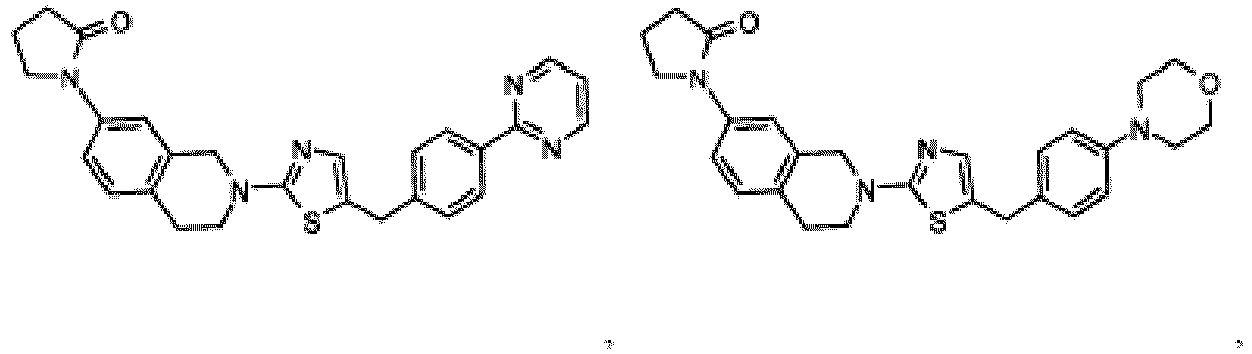

- Composition selon la revendication 7, dans laquelle :
R3 est sélectionné dans le groupe consistant en :
dans laquelle :R9 est sélectionné dans le groupe consistant en : H, un cyclopropyle, un cyclopropylméthyle, un cyclobutyle, un cyclopentyle, un cyclohexyle, un C1-6 alkyle linéaire ou ramifié facultativement substitué avec -OR12 ou -NR7R8, et un C1-6 alcoxy linéaire ou ramifié facultativement substitué avec -NR7R8 ; etR10 et R11 sont sélectionnés indépendamment dans le groupe consistant en : H, un cyclopropyle, un cyclopropylméthyle, un cyclobutyle, un C1-4 alkyle linéaire ou ramifié facultativement substitué avec -OR12 ou -NR7R8, un C1-4 alcoxy linéaire ou ramifié facultativement substitué avec NR7R8 ;ou dans laquelle :
R4 est sélectionné dans le groupe consistant en :
dans laquelle :R9 est sélectionné dans le groupe consistant en : H, un cyclopropyle, un cyclopropylméthyle, un cyclobutyle, un cyclopentyle, un cyclohexyle, un C1-6 alkyle linéaire ou ramifié facultativement substitué avec -OR12 ou -NR7R8, et un C1-6 alcoxy linéaire ou ramifié facultativement substitué avec -NR7R8 ; etR10 et R11 sont sélectionnés indépendamment dans le groupe consistant en : H, un cyclopropyle, un cyclopropylméthyle, un cyclobutyle, un C1-4 alkyle linéaire ou ramifié facultativement substitué avec -OR12 ou -NR7R8, un C1-4 alcoxy linéaire ou ramifié facultativement substitué avec NR7R8. - Composition selon la revendication 9, dans laquelle le composé de formule I est sélectionné dans le groupe consistant en :


- Composition selon la revendication 1, dans laquelle le composé de formule I est

- Composition selon la revendication 1, dans laquelle le composé de formule I est

- Composition selon la revendication 1, dans laquelle le composé de formule I est

- Composition selon la revendication 1, dans laquelle le composé de formule I est

- Composition selon la revendication 1, dans laquelle le composé de formule I est
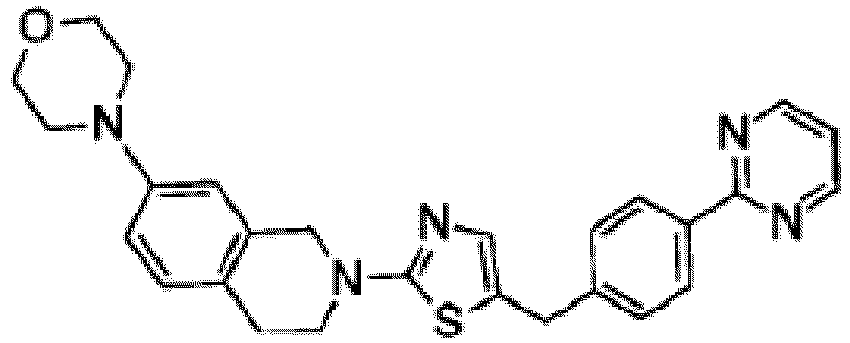
- Composition pharmaceutique comprenant la composition selon l'une quelconque des revendications 1 à 15.
- Composition selon l'une quelconque des revendications 1 à 15 pour son utilisation dans une méthode de traitement ou de prévention d'une infection virale chez un sujet, la méthode comprenant l'administration au sujet d'une quantité thérapeutiquement efficace de ladite composition.
- Composition pour son utilisation selon la revendication 17, dans laquelle la méthode comprend en outre l'administration d'une quantité thérapeutiquement efficace d'un agent antiviral.
- Composition pour son utilisation selon la revendication 18, dans laquelle l'agent antiviral est sélectionné dans le groupe consistant en : l'acyclovir, le docosanol, la ribarivine, les interférons, et analogues ; l'acétate de cellulose, le carbopol et le carraghénane, le pléconaril, l'amantidine, la rimantidine, le fomivirsen, la zidovudine, la lamivudine, le zanamivir, l'oseltamivir, la brivudine, l'abacavir, l'adéfovir, l'amprénavir, l'arbidol, l'atazanavir, l'atripla, le cidofovir, le combivir, l'édoxudine, l'éfavirenz, l'emtricitabine, l'enfuvirtide, l'entécavir, le famciclovir, le fosamprénavir, le foscarnet, le fosfonet, le ganciclovir, le gardasil, l'ibacitabine, l'imunovir, l'idoxuridine, l'imiquimod, l'indinavir, l'inosine, un inhibiteur d'intégrase, le lopinavir, le loviride, le mk-0518, le maraviroc, la moroxydine, le nelfinavir, la névirapine, le nexavir, les analogues de nucléotide et/ou de nucléoside, le penciclovir, le peramivir, la podophyllotoxine, le ritonavir, le saquinavir, la stavudine, le ténofovir, le ténofovir disoproxil, le tipranavir, la trifluridine, le trizivir, la tromantadine, le truvada, le valaciclovir, le valganciclovir, le vicriviroc, la vidarabine, la viramidine, la zalcitabine, les oligonucléotides morpholino, un ribozyme, les inhibiteurs de protéase, un inhibiteur d'assemblage, le brincidofovir, le favipiravir, le nitoxanide, le létermovir, le maribavir, le CMX157, et une combinaison de ceux-ci.
Priority Applications (1)
| Application Number | Priority Date | Filing Date | Title |
|---|---|---|---|
| EP24217936.4A EP4667471A3 (fr) | 2017-10-18 | 2018-10-17 | Compositions antivirales à large spectre et procédés |
Applications Claiming Priority (2)
| Application Number | Priority Date | Filing Date | Title |
|---|---|---|---|
| US201762574067P | 2017-10-18 | 2017-10-18 | |
| PCT/US2018/056379 WO2019079519A1 (fr) | 2017-10-18 | 2018-10-17 | Compositions antivirales à large spectre et procédés |
Related Child Applications (1)
| Application Number | Title | Priority Date | Filing Date |
|---|---|---|---|
| EP24217936.4A Division EP4667471A3 (fr) | 2017-10-18 | 2018-10-17 | Compositions antivirales à large spectre et procédés |
Publications (4)
| Publication Number | Publication Date |
|---|---|
| EP3697783A1 EP3697783A1 (fr) | 2020-08-26 |
| EP3697783A4 EP3697783A4 (fr) | 2023-04-26 |
| EP3697783C0 EP3697783C0 (fr) | 2024-12-11 |
| EP3697783B1 true EP3697783B1 (fr) | 2024-12-11 |
Family
ID=66173872
Family Applications (2)
| Application Number | Title | Priority Date | Filing Date |
|---|---|---|---|
| EP18868049.0A Active EP3697783B1 (fr) | 2017-10-18 | 2018-10-17 | Compositions antivirales à large spectre et procédés |
| EP24217936.4A Pending EP4667471A3 (fr) | 2017-10-18 | 2018-10-17 | Compositions antivirales à large spectre et procédés |
Family Applications After (1)
| Application Number | Title | Priority Date | Filing Date |
|---|---|---|---|
| EP24217936.4A Pending EP4667471A3 (fr) | 2017-10-18 | 2018-10-17 | Compositions antivirales à large spectre et procédés |
Country Status (11)
| Country | Link |
|---|---|
| US (3) | US11459321B2 (fr) |
| EP (2) | EP3697783B1 (fr) |
| JP (2) | JP7342010B2 (fr) |
| KR (1) | KR102822639B1 (fr) |
| CN (2) | CN120518604A (fr) |
| AU (2) | AU2018350999B2 (fr) |
| CA (1) | CA3079396A1 (fr) |
| ES (1) | ES3006445T3 (fr) |
| IL (1) | IL273990B2 (fr) |
| MX (2) | MX2020004475A (fr) |
| WO (1) | WO2019079519A1 (fr) |
Families Citing this family (4)
| Publication number | Priority date | Publication date | Assignee | Title |
|---|---|---|---|---|
| AU2017290785B2 (en) | 2016-07-01 | 2021-11-25 | The Board Of Regents Of The University Of Texas System | Methods, apparatuses, and systems for creating 3-dimensional representations exhibiting geometric and surface characteristics of brain lesions |
| EP3697783B1 (fr) * | 2017-10-18 | 2024-12-11 | Evrys Bio, LLC | Compositions antivirales à large spectre et procédés |
| EP4175646A1 (fr) * | 2020-07-01 | 2023-05-10 | Iachettini, Giampietro | Adénosine nucléoside modifié destiné à être utilisé dans le traitement d'infections virales |
| EP4271675A4 (fr) * | 2020-12-31 | 2024-12-25 | Evrys Bio, LLC | Compositions antitumorales et méthodes |
Family Cites Families (12)
| Publication number | Priority date | Publication date | Assignee | Title |
|---|---|---|---|---|
| US4522811A (en) | 1982-07-08 | 1985-06-11 | Syntex (U.S.A.) Inc. | Serial injection of muramyldipeptides and liposomes enhances the anti-infective activity of muramyldipeptides |
| US5858784A (en) | 1991-12-17 | 1999-01-12 | The Regents Of The University Of California | Expression of cloned genes in the lung by aerosol- and liposome-based delivery |
| US6042820A (en) | 1996-12-20 | 2000-03-28 | Connaught Laboratories Limited | Biodegradable copolymer containing α-hydroxy acid and α-amino acid units |
| US6472375B1 (en) | 1998-04-16 | 2002-10-29 | John Wayne Cancer Institute | DNA vaccine and methods for its use |
| US7795249B2 (en) | 2006-12-22 | 2010-09-14 | Millennium Pharmaceuticals, Inc. | Certain pyrazoline derivatives with kinase inhibitory activity |
| US20150335657A1 (en) * | 2014-05-05 | 2015-11-26 | The Trustees Of Princeton University | Methods for Modulating Sirtuin Enzymes |
| WO2016027879A1 (fr) * | 2014-08-22 | 2016-02-25 | 塩野義製薬株式会社 | Dérivé de pyridone polycyclique possédant une activité inhibitrice d'intégrase |
| US10556894B2 (en) * | 2014-11-10 | 2020-02-11 | Evrys Bio, Llc | Anti-HCMV compositions and methods |
| WO2016077240A2 (fr) | 2014-11-10 | 2016-05-19 | Forge Life Science, Llc | Compositions anti-hcmv et procédés |
| WO2016107832A1 (fr) | 2014-12-30 | 2016-07-07 | F. Hoffmann-La Roche Ag | Nouvelles tétrahydropyridopyrimidines et tétrahydropyridopyridines pour le traitement et la prévention d'une infection par le virus de l'hépatite b |
| WO2016177655A1 (fr) | 2015-05-04 | 2016-11-10 | F. Hoffmann-La Roche Ag | Tétrahydropyridopyrimidines et tétrahydropyridopyridines comme inhibiteurs d'ag hbs (antigène de surface du virus de l'hépatite b) et production d'adn de vhb pour le traitement d'infections par le virus de l'hépatite b |
| EP3697783B1 (fr) * | 2017-10-18 | 2024-12-11 | Evrys Bio, LLC | Compositions antivirales à large spectre et procédés |
-
2018
- 2018-10-17 EP EP18868049.0A patent/EP3697783B1/fr active Active
- 2018-10-17 AU AU2018350999A patent/AU2018350999B2/en active Active
- 2018-10-17 KR KR1020207014239A patent/KR102822639B1/ko active Active
- 2018-10-17 CA CA3079396A patent/CA3079396A1/fr active Pending
- 2018-10-17 JP JP2020542541A patent/JP7342010B2/ja active Active
- 2018-10-17 EP EP24217936.4A patent/EP4667471A3/fr active Pending
- 2018-10-17 US US16/756,734 patent/US11459321B2/en active Active
- 2018-10-17 CN CN202510478537.7A patent/CN120518604A/zh active Pending
- 2018-10-17 MX MX2020004475A patent/MX2020004475A/es unknown
- 2018-10-17 WO PCT/US2018/056379 patent/WO2019079519A1/fr not_active Ceased
- 2018-10-17 ES ES18868049T patent/ES3006445T3/es active Active
- 2018-10-17 IL IL273990A patent/IL273990B2/en unknown
- 2018-10-17 CN CN201880080152.3A patent/CN111819175B/zh active Active
-
2020
- 2020-07-13 MX MX2022016281A patent/MX2022016281A/es unknown
-
2022
- 2022-07-14 US US17/865,060 patent/US12459935B2/en active Active
- 2022-10-18 AU AU2022256094A patent/AU2022256094B2/en active Active
-
2023
- 2023-08-30 JP JP2023140497A patent/JP7817972B2/ja active Active
-
2025
- 2025-09-29 US US19/342,999 patent/US20260092059A1/en active Pending
Also Published As
Similar Documents
| Publication | Publication Date | Title |
|---|---|---|
| JP7817972B2 (ja) | 広域スペクトルの抗ウイルス組成物及び方法 | |
| US11358961B2 (en) | Anti-HCMV compositions and methods | |
| EP3218356B1 (fr) | Compositions anti-hcmv et procédés | |
| RU2813125C2 (ru) | Противовирусные композиции широкого спектра действия и способы | |
| US20240109883A1 (en) | Anti-Tumor Compositions and Methods | |
| BR112020007879B1 (pt) | Composições antivirais de amplo espectro e métodos | |
| NZ731753B2 (en) | Anti-hcmv compositions and methods |
Legal Events
| Date | Code | Title | Description |
|---|---|---|---|
| STAA | Information on the status of an ep patent application or granted ep patent |
Free format text: STATUS: THE INTERNATIONAL PUBLICATION HAS BEEN MADE |
|
| PUAI | Public reference made under article 153(3) epc to a published international application that has entered the european phase |
Free format text: ORIGINAL CODE: 0009012 |
|
| STAA | Information on the status of an ep patent application or granted ep patent |
Free format text: STATUS: REQUEST FOR EXAMINATION WAS MADE |
|
| 17P | Request for examination filed |
Effective date: 20200429 |
|
| AK | Designated contracting states |
Kind code of ref document: A1 Designated state(s): AL AT BE BG CH CY CZ DE DK EE ES FI FR GB GR HR HU IE IS IT LI LT LU LV MC MK MT NL NO PL PT RO RS SE SI SK SM TR |
|
| AX | Request for extension of the european patent |
Extension state: BA ME |
|
| DAV | Request for validation of the european patent (deleted) | ||
| DAX | Request for extension of the european patent (deleted) | ||
| A4 | Supplementary search report drawn up and despatched |
Effective date: 20230328 |
|
| RIC1 | Information provided on ipc code assigned before grant |
Ipc: A61P 31/12 20060101ALI20230322BHEP Ipc: A61K 31/4709 20060101ALI20230322BHEP Ipc: A61K 31/427 20060101ALI20230322BHEP Ipc: C07D 417/14 20060101AFI20230322BHEP |
|
| P01 | Opt-out of the competence of the unified patent court (upc) registered |
Effective date: 20230525 |
|
| STAA | Information on the status of an ep patent application or granted ep patent |
Free format text: STATUS: EXAMINATION IS IN PROGRESS |
|
| 17Q | First examination report despatched |
Effective date: 20231122 |
|
| REG | Reference to a national code |
Ref country code: DE Ref legal event code: R079 Free format text: PREVIOUS MAIN CLASS: C07D0417140000 Ipc: A61K0031427000 Ref document number: 602018077590 Country of ref document: DE |
|
| GRAP | Despatch of communication of intention to grant a patent |
Free format text: ORIGINAL CODE: EPIDOSNIGR1 |
|
| STAA | Information on the status of an ep patent application or granted ep patent |
Free format text: STATUS: GRANT OF PATENT IS INTENDED |
|
| RIC1 | Information provided on ipc code assigned before grant |
Ipc: C07D 491/056 20060101ALI20240206BHEP Ipc: C07D 417/14 20060101ALI20240206BHEP Ipc: A61P 31/12 20060101ALI20240206BHEP Ipc: A61K 45/06 20060101ALI20240206BHEP Ipc: A61K 31/541 20060101ALI20240206BHEP Ipc: A61K 31/5377 20060101ALI20240206BHEP Ipc: A61K 31/5355 20060101ALI20240206BHEP Ipc: A61K 31/506 20060101ALI20240206BHEP Ipc: A61K 31/496 20060101ALI20240206BHEP Ipc: A61K 31/4741 20060101ALI20240206BHEP Ipc: A61K 31/427 20060101AFI20240206BHEP |
|
| INTG | Intention to grant announced |
Effective date: 20240226 |
|
| GRAJ | Information related to disapproval of communication of intention to grant by the applicant or resumption of examination proceedings by the epo deleted |
Free format text: ORIGINAL CODE: EPIDOSDIGR1 |
|
| STAA | Information on the status of an ep patent application or granted ep patent |
Free format text: STATUS: EXAMINATION IS IN PROGRESS |
|
| GRAP | Despatch of communication of intention to grant a patent |
Free format text: ORIGINAL CODE: EPIDOSNIGR1 |
|
| STAA | Information on the status of an ep patent application or granted ep patent |
Free format text: STATUS: GRANT OF PATENT IS INTENDED |
|
| INTC | Intention to grant announced (deleted) | ||
| INTG | Intention to grant announced |
Effective date: 20240705 |
|
| GRAS | Grant fee paid |
Free format text: ORIGINAL CODE: EPIDOSNIGR3 |
|
| GRAA | (expected) grant |
Free format text: ORIGINAL CODE: 0009210 |
|
| STAA | Information on the status of an ep patent application or granted ep patent |
Free format text: STATUS: THE PATENT HAS BEEN GRANTED |
|
| AK | Designated contracting states |
Kind code of ref document: B1 Designated state(s): AL AT BE BG CH CY CZ DE DK EE ES FI FR GB GR HR HU IE IS IT LI LT LU LV MC MK MT NL NO PL PT RO RS SE SI SK SM TR |
|
| REG | Reference to a national code |
Ref country code: GB Ref legal event code: FG4D |
|
| REG | Reference to a national code |
Ref country code: CH Ref legal event code: EP |
|
| REG | Reference to a national code |
Ref country code: IE Ref legal event code: FG4D |
|
| REG | Reference to a national code |
Ref country code: DE Ref legal event code: R096 Ref document number: 602018077590 Country of ref document: DE |
|
| U01 | Request for unitary effect filed |
Effective date: 20250113 |
|
| U07 | Unitary effect registered |
Designated state(s): AT BE BG DE DK EE FI FR IT LT LU LV MT NL PT RO SE SI Effective date: 20250127 |
|
| P04 | Withdrawal of opt-out of the competence of the unified patent court (upc) registered |
Free format text: CASE NUMBER: APP_3704/2025 Effective date: 20250122 |
|
| REG | Reference to a national code |
Ref country code: ES Ref legal event code: FG2A Ref document number: 3006445 Country of ref document: ES Kind code of ref document: T3 Effective date: 20250318 |
|
| PG25 | Lapsed in a contracting state [announced via postgrant information from national office to epo] |
Ref country code: HR Free format text: LAPSE BECAUSE OF FAILURE TO SUBMIT A TRANSLATION OF THE DESCRIPTION OR TO PAY THE FEE WITHIN THE PRESCRIBED TIME-LIMIT Effective date: 20241211 |
|
| PG25 | Lapsed in a contracting state [announced via postgrant information from national office to epo] |
Ref country code: NO Free format text: LAPSE BECAUSE OF FAILURE TO SUBMIT A TRANSLATION OF THE DESCRIPTION OR TO PAY THE FEE WITHIN THE PRESCRIBED TIME-LIMIT Effective date: 20250311 |
|
| PG25 | Lapsed in a contracting state [announced via postgrant information from national office to epo] |
Ref country code: GR Free format text: LAPSE BECAUSE OF FAILURE TO SUBMIT A TRANSLATION OF THE DESCRIPTION OR TO PAY THE FEE WITHIN THE PRESCRIBED TIME-LIMIT Effective date: 20250312 |
|
| PG25 | Lapsed in a contracting state [announced via postgrant information from national office to epo] |
Ref country code: RS Free format text: LAPSE BECAUSE OF FAILURE TO SUBMIT A TRANSLATION OF THE DESCRIPTION OR TO PAY THE FEE WITHIN THE PRESCRIBED TIME-LIMIT Effective date: 20250311 |
|
| PG25 | Lapsed in a contracting state [announced via postgrant information from national office to epo] |
Ref country code: SM Free format text: LAPSE BECAUSE OF FAILURE TO SUBMIT A TRANSLATION OF THE DESCRIPTION OR TO PAY THE FEE WITHIN THE PRESCRIBED TIME-LIMIT Effective date: 20241211 |
|
| PG25 | Lapsed in a contracting state [announced via postgrant information from national office to epo] |
Ref country code: PL Free format text: LAPSE BECAUSE OF FAILURE TO SUBMIT A TRANSLATION OF THE DESCRIPTION OR TO PAY THE FEE WITHIN THE PRESCRIBED TIME-LIMIT Effective date: 20241211 |
|
| PG25 | Lapsed in a contracting state [announced via postgrant information from national office to epo] |
Ref country code: IS Free format text: LAPSE BECAUSE OF FAILURE TO SUBMIT A TRANSLATION OF THE DESCRIPTION OR TO PAY THE FEE WITHIN THE PRESCRIBED TIME-LIMIT Effective date: 20250411 |
|
| PG25 | Lapsed in a contracting state [announced via postgrant information from national office to epo] |
Ref country code: SK Free format text: LAPSE BECAUSE OF FAILURE TO SUBMIT A TRANSLATION OF THE DESCRIPTION OR TO PAY THE FEE WITHIN THE PRESCRIBED TIME-LIMIT Effective date: 20241211 |
|
| PG25 | Lapsed in a contracting state [announced via postgrant information from national office to epo] |
Ref country code: CZ Free format text: LAPSE BECAUSE OF FAILURE TO SUBMIT A TRANSLATION OF THE DESCRIPTION OR TO PAY THE FEE WITHIN THE PRESCRIBED TIME-LIMIT Effective date: 20241211 |
|
| PLBE | No opposition filed within time limit |
Free format text: ORIGINAL CODE: 0009261 |
|
| STAA | Information on the status of an ep patent application or granted ep patent |
Free format text: STATUS: NO OPPOSITION FILED WITHIN TIME LIMIT |
|
| REG | Reference to a national code |
Ref country code: CH Ref legal event code: L10 Free format text: ST27 STATUS EVENT CODE: U-0-0-L10-L00 (AS PROVIDED BY THE NATIONAL OFFICE) Effective date: 20251022 |
|
| REG | Reference to a national code |
Ref country code: CH Ref legal event code: U11 Free format text: ST27 STATUS EVENT CODE: U-0-0-U10-U11 (AS PROVIDED BY THE NATIONAL OFFICE) Effective date: 20251101 |
|
| 26N | No opposition filed |
Effective date: 20250912 |
|
| U20 | Renewal fee for the european patent with unitary effect paid |
Year of fee payment: 8 Effective date: 20251028 |
|
| PGFP | Annual fee paid to national office [announced via postgrant information from national office to epo] |
Ref country code: GB Payment date: 20251022 Year of fee payment: 8 |
|
| PGFP | Annual fee paid to national office [announced via postgrant information from national office to epo] |
Ref country code: CH Payment date: 20251101 Year of fee payment: 8 |
|
| PGFP | Annual fee paid to national office [announced via postgrant information from national office to epo] |
Ref country code: IE Payment date: 20251024 Year of fee payment: 8 |
|
| PGFP | Annual fee paid to national office [announced via postgrant information from national office to epo] |
Ref country code: ES Payment date: 20251216 Year of fee payment: 8 |