EP3771256A1 - Procédé de surveillance de pdcch, dispositif terminal et dispositif réseau - Google Patents
Procédé de surveillance de pdcch, dispositif terminal et dispositif réseau Download PDFInfo
- Publication number
- EP3771256A1 EP3771256A1 EP19776066.3A EP19776066A EP3771256A1 EP 3771256 A1 EP3771256 A1 EP 3771256A1 EP 19776066 A EP19776066 A EP 19776066A EP 3771256 A1 EP3771256 A1 EP 3771256A1
- Authority
- EP
- European Patent Office
- Prior art keywords
- time length
- pdcch
- message
- terminal device
- parameter
- Prior art date
- Legal status (The legal status is an assumption and is not a legal conclusion. Google has not performed a legal analysis and makes no representation as to the accuracy of the status listed.)
- Pending
Links
- 238000000034 method Methods 0.000 title claims abstract description 211
- 238000012544 monitoring process Methods 0.000 title claims abstract description 93
- 230000011664 signaling Effects 0.000 claims description 113
- 238000012545 processing Methods 0.000 claims description 100
- 238000004891 communication Methods 0.000 claims description 93
- 238000003860 storage Methods 0.000 description 17
- 238000010586 diagram Methods 0.000 description 14
- 239000002699 waste material Substances 0.000 description 12
- 230000006870 function Effects 0.000 description 10
- 230000008569 process Effects 0.000 description 9
- 230000005540 biological transmission Effects 0.000 description 6
- 238000004590 computer program Methods 0.000 description 6
- 238000001228 spectrum Methods 0.000 description 6
- 230000006399 behavior Effects 0.000 description 4
- 230000007774 longterm Effects 0.000 description 3
- 238000006243 chemical reaction Methods 0.000 description 2
- 238000005516 engineering process Methods 0.000 description 2
- 230000003993 interaction Effects 0.000 description 2
- 238000007726 management method Methods 0.000 description 2
- 238000004519 manufacturing process Methods 0.000 description 2
- 230000008054 signal transmission Effects 0.000 description 2
- 241001061260 Emmelichthys struhsakeri Species 0.000 description 1
- 230000002776 aggregation Effects 0.000 description 1
- 238000004220 aggregation Methods 0.000 description 1
- 238000003491 array Methods 0.000 description 1
- 230000001413 cellular effect Effects 0.000 description 1
- 230000008859 change Effects 0.000 description 1
- 239000003795 chemical substances by application Substances 0.000 description 1
- 239000012141 concentrate Substances 0.000 description 1
- 238000013500 data storage Methods 0.000 description 1
- 238000011161 development Methods 0.000 description 1
- 230000009977 dual effect Effects 0.000 description 1
- 239000011521 glass Substances 0.000 description 1
- 230000000977 initiatory effect Effects 0.000 description 1
- 238000010295 mobile communication Methods 0.000 description 1
- 230000003287 optical effect Effects 0.000 description 1
- 239000013307 optical fiber Substances 0.000 description 1
- 239000004065 semiconductor Substances 0.000 description 1
- 239000004984 smart glass Substances 0.000 description 1
- 239000007787 solid Substances 0.000 description 1
Images


Classifications
-
- H—ELECTRICITY
- H04—ELECTRIC COMMUNICATION TECHNIQUE
- H04W—WIRELESS COMMUNICATION NETWORKS
- H04W52/00—Power management, e.g. Transmission Power Control [TPC] or power classes
- H04W52/02—Power saving arrangements
- H04W52/0209—Power saving arrangements in terminal devices
- H04W52/0225—Power saving arrangements in terminal devices using monitoring of external events, e.g. the presence of a signal
- H04W52/0229—Power saving arrangements in terminal devices using monitoring of external events, e.g. the presence of a signal where the received signal is a wanted signal
- H04W52/0235—Power saving arrangements in terminal devices using monitoring of external events, e.g. the presence of a signal where the received signal is a wanted signal where the received signal is a power saving command
-
- H—ELECTRICITY
- H04—ELECTRIC COMMUNICATION TECHNIQUE
- H04W—WIRELESS COMMUNICATION NETWORKS
- H04W52/00—Power management, e.g. Transmission Power Control [TPC] or power classes
- H04W52/02—Power saving arrangements
- H04W52/0209—Power saving arrangements in terminal devices
- H04W52/0212—Power saving arrangements in terminal devices managed by the network, e.g. network or access point is leader and terminal is follower
-
- H—ELECTRICITY
- H04—ELECTRIC COMMUNICATION TECHNIQUE
- H04W—WIRELESS COMMUNICATION NETWORKS
- H04W52/00—Power management, e.g. Transmission Power Control [TPC] or power classes
- H04W52/02—Power saving arrangements
- H04W52/0209—Power saving arrangements in terminal devices
- H04W52/0225—Power saving arrangements in terminal devices using monitoring of external events, e.g. the presence of a signal
- H04W52/0248—Power saving arrangements in terminal devices using monitoring of external events, e.g. the presence of a signal dependent on the time of the day, e.g. according to expected transmission activity
-
- H—ELECTRICITY
- H04—ELECTRIC COMMUNICATION TECHNIQUE
- H04L—TRANSMISSION OF DIGITAL INFORMATION, e.g. TELEGRAPHIC COMMUNICATION
- H04L5/00—Arrangements affording multiple use of the transmission path
- H04L5/003—Arrangements for allocating sub-channels of the transmission path
- H04L5/0053—Allocation of signalling, i.e. of overhead other than pilot signals
-
- H—ELECTRICITY
- H04—ELECTRIC COMMUNICATION TECHNIQUE
- H04W—WIRELESS COMMUNICATION NETWORKS
- H04W52/00—Power management, e.g. Transmission Power Control [TPC] or power classes
- H04W52/02—Power saving arrangements
- H04W52/0209—Power saving arrangements in terminal devices
- H04W52/0225—Power saving arrangements in terminal devices using monitoring of external events, e.g. the presence of a signal
-
- H—ELECTRICITY
- H04—ELECTRIC COMMUNICATION TECHNIQUE
- H04W—WIRELESS COMMUNICATION NETWORKS
- H04W52/00—Power management, e.g. Transmission Power Control [TPC] or power classes
- H04W52/02—Power saving arrangements
- H04W52/0209—Power saving arrangements in terminal devices
- H04W52/0225—Power saving arrangements in terminal devices using monitoring of external events, e.g. the presence of a signal
- H04W52/0229—Power saving arrangements in terminal devices using monitoring of external events, e.g. the presence of a signal where the received signal is a wanted signal
-
- H—ELECTRICITY
- H04—ELECTRIC COMMUNICATION TECHNIQUE
- H04W—WIRELESS COMMUNICATION NETWORKS
- H04W76/00—Connection management
- H04W76/20—Manipulation of established connections
- H04W76/28—Discontinuous transmission [DTX]; Discontinuous reception [DRX]
-
- H—ELECTRICITY
- H04—ELECTRIC COMMUNICATION TECHNIQUE
- H04W—WIRELESS COMMUNICATION NETWORKS
- H04W52/00—Power management, e.g. Transmission Power Control [TPC] or power classes
- H04W52/02—Power saving arrangements
- H04W52/0209—Power saving arrangements in terminal devices
-
- H—ELECTRICITY
- H04—ELECTRIC COMMUNICATION TECHNIQUE
- H04W—WIRELESS COMMUNICATION NETWORKS
- H04W52/00—Power management, e.g. Transmission Power Control [TPC] or power classes
- H04W52/02—Power saving arrangements
- H04W52/0209—Power saving arrangements in terminal devices
- H04W52/0212—Power saving arrangements in terminal devices managed by the network, e.g. network or access point is leader and terminal is follower
- H04W52/0216—Power saving arrangements in terminal devices managed by the network, e.g. network or access point is leader and terminal is follower using a pre-established activity schedule, e.g. traffic indication frame
-
- H—ELECTRICITY
- H04—ELECTRIC COMMUNICATION TECHNIQUE
- H04W—WIRELESS COMMUNICATION NETWORKS
- H04W72/00—Local resource management
- H04W72/20—Control channels or signalling for resource management
- H04W72/23—Control channels or signalling for resource management in the downlink direction of a wireless link, i.e. towards a terminal
-
- Y—GENERAL TAGGING OF NEW TECHNOLOGICAL DEVELOPMENTS; GENERAL TAGGING OF CROSS-SECTIONAL TECHNOLOGIES SPANNING OVER SEVERAL SECTIONS OF THE IPC; TECHNICAL SUBJECTS COVERED BY FORMER USPC CROSS-REFERENCE ART COLLECTIONS [XRACs] AND DIGESTS
- Y02—TECHNOLOGIES OR APPLICATIONS FOR MITIGATION OR ADAPTATION AGAINST CLIMATE CHANGE
- Y02D—CLIMATE CHANGE MITIGATION TECHNOLOGIES IN INFORMATION AND COMMUNICATION TECHNOLOGIES [ICT], I.E. INFORMATION AND COMMUNICATION TECHNOLOGIES AIMING AT THE REDUCTION OF THEIR OWN ENERGY USE
- Y02D30/00—Reducing energy consumption in communication networks
- Y02D30/70—Reducing energy consumption in communication networks in wireless communication networks
Definitions
- the present application relates to the field of communications, and more particularly to a method for monitoring Physical Downlink Control Channel (PDCCH), a terminal device and a network device.
- PDCCH Physical Downlink Control Channel
- a terminal device in a Radio Resource Control (RRC) connection state needs to continuously monitor Physical Downlink Control Channel (PDCCH) based on configuration of a PDCCH monitoring window.
- RRC Radio Resource Control
- a network device only initiates scheduling to the terminal device on a small quantity of slots on the PDCCH monitoring window. In other words, that the terminal device monitors continuously the PDCCH based on the configuration of the PDCCH monitoring window will cause power waste. How to reduce power consumption when the terminal device monitors the PDCCH is an urgent problem to be solved.
- Embodiments of the present application provide a method for monitoring Physical Downlink Control Channel (PDCCH), a terminal device, and a network device, by which power consumption can be reduced when the terminal device monitors PDCCH.
- PDCCH Physical Downlink Control Channel
- an embodiment of the present application provides a method for monitoring a PDCCH.
- the method includes: receiving, by a terminal device, a first message sent by a network device, wherein the first message indicates a first time length, and/or indicates whether to monitor a PDCCH within the first time length; monitoring, by the terminal device, the PDCCH according to the first message.
- the terminal device may monitor the PDCCH according to the first message indicating the first time length and/or whether to monitor the PDCCH within the first time length, to avoid power waste caused by continuously monitoring the PDCCH based on the configuration of a PDCCH monitoring window, thereby reducing power consumption when the terminal device monitors the PDCCH.
- receiving, by the terminal device, the first message sent by the network device includes: receiving periodically, by the terminal device, the first message sent by the network device.
- the period in which the terminal device receives the first message is greater than or equal to that in which the terminal device monitors the PDCCH.
- the terminal device may monitor the PDCCH in at least one PDCCH monitoring window according to the first message, thereby reducing power consumption when the terminal device monitors the PDCCH.
- monitoring, by the terminal device, the PDCCH according to the first message includes: determining, by the terminal device, the first time length according to the first message and determining whether to monitor the PDCCH within the first time length according to first configuration information, wherein the first configuration information indicates whether to monitor the PDCCH within the first time length.
- the terminal device may determine the first time length according to the first message, and determine whether to monitor the PDCCH within the first time length according to the first configuration information, to avoid power waste caused by continuously monitoring the PDCCH based on the configuration of the PDCCH monitoring window, thereby reducing power consumption when the terminal device monitors the PDCCH.
- the method before the terminal device determines the first time length according to the first message and determines whether to monitor the PDCCH within the first time length according to the first configuration information, the method further includes: receiving, by the terminal device, the first configuration information sent by the network device through Radio Resource Control (RRC) signaling.
- RRC Radio Resource Control
- the first configuration information is pre-configured to the terminal device.
- the first message is PDCCH, and the first message indicates the first time length through at least one bit in first Downlink Control Information (DCI) transmitted on the first message; determining, by the terminal device, the first time length according to the first message, includes: determining, by the terminal device, the first time length according to the at least one bit.
- DCI Downlink Control Information
- the first message is an identification sequence, and the first message indicates the first time length through at least one identification sequence; determining, by the terminal device, the first time length according to the first message, includes: determining, by the terminal device, the first time length according to the at least one identification sequence.
- if the first message indicates whether to monitor the PDCCH within the first time length, and monitoring, by the terminal device, the PDCCH according to the first message includes: determining, by the terminal device, the first time length according to second configuration information and determining whether to monitor the PDCCH within the first time length according to the first message, wherein the second configuration information indicates the first time length.
- the terminal device may determine the first time length according to the second configuration information, and determine whether to monitor the PDCCH within the first time length according to the first message, to avoid power waste caused by continuously monitoring the PDCCH based on the configuration of the PDCCH monitoring window, thereby reducing power consumption when the terminal device monitors the PDCCH.
- the method before the terminal device determines the first time length according to the second configuration information and determines whether to monitor the PDCCH within the first time length according to the first message, the method further includes: receiving, by the terminal device, the second configuration information sent by the network device through Radio Resource Control (RRC) signaling.
- RRC Radio Resource Control
- the second configuration information is pre-configured to the terminal device.
- the first message is PDCCH
- the first message indicates whether to monitor the PDCCH within the first time length through a first bit in the first DCI transmitted on the first message. Wherein when the first bit is 0, it indicates to monitor the PDCCH within the first time length, and when the first bit is 1, it indicates not to monitor the PDCCH within the first time length.
- Determining, by the terminal device, whether to monitor the PDCCH within the first time length according to the first message includes: if the first bit is 0, determining, by the terminal device, to monitor the PDCCH within the first time length according to the first bit, or, if the first bit is 1, determining, by the terminal device, not to monitor the PDCCH within the first time length according to the first bit.
- the first message is an identification sequence
- the first message indicates through a first identification sequence to monitor the PDCCH within the first time length, and indicates through a second identification sequence not to monitor the PDCCH within the first time length.
- Determining, by the terminal device, whether to monitor the PDCCH within the first time length according to the first message includes: if the first message comprises the first identification sequence, determining, by the terminal device, to monitor the PDCCH within the first time length according to the first identification sequence, or, if the first message comprises the second identification sequence, determining, by the terminal device, not to monitor the PDCCH within the first time length according to the second identification sequence.
- if the first message indicates the first time length and whether to monitor the PDCCH within the first time length; and monitoring, by the terminal device, the PDCCH according to the first message includes: determining, by the terminal device, the first time length and whether to monitor the PDCCH within the first time length according to the first message.
- the first message includes first indication information indicating the first time length and second indication information indicating whether to monitor the PDCCH within the first time length; and determining, by the terminal device, the first time length and whether to monitor the PDCCH within the first time length according to the first message includes: determining, by the terminal device, the first time length according to the first indication information, and determining whether to monitor the PDCCH within the first time length according to the second indication information.
- the terminal device may determine the first time length according to the first indication information in the first message, and determine whether to monitor the PDCCH within the first time length according to the second indication information in the first message, to avoid power waste caused by continuously monitoring the PDCCH based on the configuration of the PDCCH monitoring window, thereby reducing power consumption when the terminal device monitors the PDCCH.
- the first message is PDCCH and/or an identification sequence.
- the first indication information indicates the first time length through at least one bit in the first DCI transmitted on the first message; and determining, by the terminal device, the first time length according to the first indication information, includes: determining, by the terminal device, the first time length according to the at least one bit.
- the first indication information indicates the first time length through at least one identification sequence; and determining, by the terminal device, the first time length according to the first indication information, includes: determining, by the terminal device, the first time length according to the at least one identification sequence.
- the second indication information indicates whether to monitor the PDCCH within the first time length through a first bit in the second DCI transmitted on the first message, wherein when the first bit is 0, it indicates to monitor the PDCCH within the first time length, and when the first bit is 1, it indicates not to monitor the PDCCH within the first time length; and determining, by the terminal device, whether to monitor the PDCCH within the first time length according to the second indication information includes: if the first bit is 0, determining, by the terminal device, to monitor the PDCCH within the first time length according to the first bit, or, if the first bit is 1, determining, by the terminal device, not to monitor the PDCCH within the first time length according to the first bit.
- the second indication information indicates through a first identification sequence to monitor the PDCCH within the first time length, and indicates through a second identification sequence not to monitor the PDCCH within the first time length; and determining, by the terminal device, whether to monitor the PDCCH within the first time length according to the second indication information includes: if the first message comprises the first identification sequence, determining, by the terminal device, to monitor the PDCCH within the first time length according to the first identification sequence, or, if the first message comprises the second identification sequence, determining, by the terminal device, not to monitor the PDCCH within the first time length according to the second identification sequence.
- a unit of the first time length is a time slot or a millisecond.
- the first message includes third indication information indicating a subcarrier spacing corresponding to the first time length or indicating that the subcarrier spacing corresponding to the first time length is consistent with the subcarrier spacing corresponding to the PDCCH.
- the terminal device is in a Radio Resource Control (RRC) connection state.
- RRC Radio Resource Control
- an embodiment of the present application provides a method for monitoring a PDCCH.
- the method includes: sending, by a network device, a first message to a terminal device, wherein the first message indicates a first time length, and/or indicates whether to monitor a PDCCH within the first time length; and sending, by the network device, the PDCCH for the terminal device according to the first message.
- the network device may send the PDCCH for the terminal device according to the first message indicating the first time length and/or whether to monitor the PDCCH within the first time length, to avoid power waste caused by continuously monitoring the PDCCH based on the configuration of the PDCCH monitoring window by the terminal device, thereby reducing power consumption when the terminal device monitors the PDCCH.
- the network device may determine the first message according to its own scheduling situation. For example, the network device may determine the first message in combination with service load of the current entire system and length prediction of scheduling queues, or service characteristics of the terminal device, time delay requirements or other factors.
- sending, by the network device, the first message to the terminal device includes: sending periodically, by the network device, the first message to the terminal device.
- the period in which the network device sends the first message is greater than or equal to that in which the terminal device monitors the PDCCH.
- the method further includes: sending, by the network device, first configuration information to the terminal device through Radio Resource Control (RRC) signaling, wherein the first configuration information indicates whether to monitor the PDCCH within the first time length; sending, by the network device, the PDCCH for the terminal device according to the first message includes: determining, by the network device, the first time length according to the first message, and determining whether to send the PDCCH for the terminal device within the first time length according to the first configuration information.
- RRC Radio Resource Control
- the first message is PDCCH
- the first message indicates the first time length through at least one bit in the first DCI transmitted on the first message
- determining, by the network device, the first time length according to the first message includes: determining, by the network device, the first time length according to the at least one bit.
- the first message is an identification sequence
- the first message indicates the first time length through at least one identification sequence
- determining, by the network device, the first time length according to the first message includes: determining, by the network device, the first time length according to the at least one identification sequence.
- the method further includes: sending, by the network device, second configuration information to the terminal device through RRC signaling, wherein the second configuration information indicates the first time length; sending, by the network device, the PDCCH for the terminal device according to the first message includes: determining, by the network device, the first time length according to the second configuration information, and determining whether to send the PDCCH for the terminal device within the first time length according to the first message.
- the first message is PDCCH
- the first message indicates whether to monitor the PDCCH within the first time length through a first bit in the first DCI transmitted on the first message. Wherein when the first bit is 0, it indicates to monitor the PDCCH within the first time length, and when the first bit is 1, it indicates not to monitor the PDCCH within the first time length.
- Determining, by the network device, whether to send the PDCCH for the terminal device within the first time length according to the first message includes: if the first bit is 0, determining, by the network device, to send the PDCCH for the terminal device within the first time length according to the first bit, or, if the first bit is 1, determining, by the network device, not to send the PDCCH for the terminal device within the first time length according to the first bit.
- the first message is an identification sequence
- the first message indicates through a first identification sequence to monitor the PDCCH within the first time length, and indicates through a second identification sequence not to monitor within the first time length.
- Determining, by the network device, whether to send the PDCCH for the terminal device within the first time length according to the first message includes: if the first message comprises the first identification sequence, determining, by the network device, to send the PDCCH for the terminal device within the first time length according to the first identification sequence, or, if the first message comprises the second identification sequence, determining, by the network device, not to send the PDCCH for the terminal device within the first time length according to the second identification sequence.
- sending, by the network device, the PDCCH for the terminal device according to the first message includes: determining, by the network device, the first time length and whether to send the PDCCH for the terminal device within the first time length according to the first message.
- the first message includes first indication information indicating the first time length and second indication information indicating whether to monitor the PDCCH within the first time length; and determining, by the network device, the first time length and whether to send the PDCCH for the terminal device within the first time length according to the first message includes: determining, by the network device, the first time length according to the first indication information, and determining whether to send the PDCCH for the terminal device within the first time length according to the second indication information.
- the first message is PDCCH and/or an identification sequence.
- the first indication information indicates the first time length through at least one bit in the first DCI transmitted on the first message; and determining, by the network device, the first time length according to the first indication information includes: determining, by the network device, the first time length according to the at least one bit.
- the first indication information indicates the first time length through at least one identification sequence; and determining, by the network device, the first time length according to the first indication information includes: determining, by the network device, the first time length according to the at least one identification sequence.
- the second indication information indicates whether to monitor the PDCCH within the first time length through a first bit in the second DCI transmitted on the first message, wherein when the first bit is 0, it indicates to monitor the PDCCH within the first time length, and when the first bit is 1, it indicates to not monitor the PDCCH within the first time length; and determining, by the network device, whether to send the PDCCH for the terminal device within the first time length according to the second indication information includes: if the first bit is 0, determining, by the network device, to send the PDCCH for the terminal device within the first time length according to the first bit, or, if the first bit is 1, determining, by the network device, not to send the PDCCH for the terminal device within the first time length according to the first bit.
- the second indication information indicates through a first identification sequence to monitor the PDCCH within the first time length, and indicates through a second identification sequence not to monitor the PDCCH within the first time length; and determining, by the network device, whether to send the PDCCH for the terminal device within the first time length according to the second indication information includes: if the first message comprises the first identification sequence, determining, by the network device, to send the PDCCH for the terminal device within the first time length according to the first identification sequence, or, if the first message comprises the second identification sequence, determining, by the network device, not to send the PDCCH for the terminal device within the first time length according to the second identification sequence.
- a unit of the first time length is a time slot or a millisecond.
- the first message includes third indication information indicating a subcarrier spacing corresponding to the first time length or indicating that the subcarrier spacing corresponding to the first time length is consistent with the subcarrier spacing corresponding to the PDCCH.
- the terminal device is in a Radio Resource Control (RRC) connection state.
- RRC Radio Resource Control
- an embodiment of the present application provides a method for monitoring a Physical Downlink Control Channel (PDCCH).
- the method includes: determining, by a terminal device, a first time length according to a first message and a first parameter, wherein the first message indicates a numerical relationship between the first parameter and the first time length, and the first parameter is a Discontinuous Reception (DRX) parameter or a first time parameter; and skipping, by the terminal device, monitoring a PDCCH within the first time length.
- DRX Discontinuous Reception
- the terminal device may determine the first time length according to the first message and the first parameter, and skip monitoring the PDCCH within the first time length, to avoid power waste caused by continuously monitoring the PDCCH based on the configuration of the PDCCH monitoring window, thereby reducing power consumption when the terminal device monitors the PDCCH.
- an embodiment of the present application provides a method for monitoring a Physical Downlink Control Channel (PDCCH).
- the method includes: sending, by a network device, a first message to a terminal device, wherein the first message indicates a numerical relationship between a first parameter and a first time length, and the first parameter is a Discontinuous Reception (DRX) parameter or a first time parameter.
- DRX Discontinuous Reception
- the network device may send the first message to the terminal device, so that the terminal device determines the first time length according to the first message and the first parameter, and skips monitoring the PDCCH within the first time length, to avoid power waste caused by continuously monitoring the PDCCH based on the configuration of the PDCCH monitoring window, thereby reducing power consumption when the terminal device monitors the PDCCH.
- an embodiment of the present application provides a terminal device including a module or unit that may perform the method in the first aspect or any alternative implementation of the first aspect.
- an embodiment of the present application provides a terminal device including a module or unit that may perform the method in the third aspect or any alternative implementation of the third aspect.
- an embodiment of the present application provides a network device including a module or unit that may perform the method in the second aspect or any alternative implementation of the second aspect.
- an embodiment of the present application provides a network device including a module or unit that may perform the method in the fourth aspect or any alternative implementation of the fourth aspect.
- a terminal device in a ninth aspect, includes a processor, a memory, and a communication interface.
- the processor and the memory are connected with the communication interface.
- the memory is configured to store instructions
- the processor is configured to execute the instructions
- the communication interface is configured to communicate with other network elements under the control of the processor.
- a terminal device in a tenth aspect, includes a processor, a memory, and a communication interface.
- the processor and the memory are connected with the communication interface.
- the memory is configured to store instructions
- the processor is configured to execute the instructions
- the communication interface is configured to communicate with other network elements under the control of the processor.
- a network device including a processor, a memory, and a communication interface.
- the processor and the memory are connected with the communication interface.
- the memory is configured to store instructions
- the processor is configured to execute the instructions
- the communication interface is configured to communicate with other network elements under the control of the processor.
- a network device including a processor, a memory, and a communication interface.
- the processor and the memory are connected with the communication interface.
- the memory is configured to store instructions
- the processor is configured to execute the instructions
- the communication interface is configured to communicate with other network elements under the control of the processor.
- a computer storage medium has stored program codes for instructing a computer to execute instructions of the method in the first aspect or any possible implementation of the first aspect.
- a computer storage medium has stored program codes for instructing a computer to execute instructions of the method in the third aspect or any possible implementation of the third aspect.
- a computer storage medium has stored program codes for instructing a computer to execute instructions of the method in the second aspect or any possible implementation of the second aspect.
- a computer storage medium has stored program codes for instructing a computer to execute instructions of the method in the fourth aspect or any possible implementation of the fourth aspect.
- a computer program product including instructions, wherein when being executed on a computer, the computer program product causes the computer to perform the methods described in the above-mentioned various aspects.
- Embodiments of the present application may be applied to various communication systems, such as a Global System of Mobile (GSM) communication system, a Code Division Multiple Access (CDMA) system, a Wideband Code Division Multiple Access (WCDMA) system, a General Packet Radio Service (GPRS), a Long Term Evolution (LTE) system, an Advanced Long Term Evolution (LTE-A) system, a New Radio (NR) system, an NR system evolution system, a LTE-based access to unlicensed spectrum (LTE-U) system, an NR-based access to unlicensed spectrum (NR-U) system, a Universal Mobile Telecommunications System (UMTS), a Wireless Local Area Network (WLAN), Wireless Fidelity (WiFi), a next generation communication system, or other communication systems.
- GSM Global System of Mobile
- CDMA Code Division Multiple Access
- WCDMA Wideband Code Division Multiple Access
- GPRS General Packet Radio Service
- LTE Long Term Evolution
- LTE-A Advanced Long Term Evolution
- D2D Device to Device
- M2M Machine to Machine
- MTC Machine Type Communication
- V2V Vehicle to Vehicle
- the embodiments of the present application may also be applied to these communication systems.
- the communication system in the embodiments of the present application may be applied to a Carrier Aggregation (CA) scenario, a Dual Connectivity (DC) scenario, or a Standalone (SA) scenario.
- CA Carrier Aggregation
- DC Dual Connectivity
- SA Standalone
- the applied spectrum is not limited in the embodiments of the present application.
- the embodiments of the present application may be applied to licensed spectrum, or unlicensed spectrum.
- the terminal device may also be referred to as a User Equipment (UE), an access terminal, a subscriber unit, a subscriber station, a mobile station, a rover station, a remote station, a remote terminal, a mobile device, a user terminal, a terminal, a wireless communication device, a user agent, or a user device, etc.
- UE User Equipment
- the terminal device may be a STATION (ST) in the WLAN, or may be a cellular phone, a cordless phone, a Session Initiation Protocol (SIP) phone, a Wireless Local Loop (WLL) station, a Personal Digital Assistant (PDA), a handheld device with a wireless communication function, a computing device or another processing device connected to a wireless modem, a vehicle-mounted device, a wearable device, or a terminal device in a next generation communication system, such as a terminal device in an NR network or a terminal device in a future evolved Public Land Mobile Network (PLMN).
- ST STATION
- PDA Personal Digital Assistant
- the terminal device may be a wearable device.
- the wearable device may also be called a wearable intelligent device, which is a general term of wearable devices designed intelligently and developed on daily wear using wearable technology, such as glasses, gloves, watches, clothing and shoes.
- the wearable device is a portable device that is worn directly on the body or integrated into the user's clothes or accessories.
- the wearable device not only is a hardware device, but also implements powerful functions through software support, data interaction and cloud interaction.
- Generalized wearable intelligent devices include a device with full features and a large size and full or partial functions which may be implemented without relying on smart phones, for example, a smart watches or smart glasses, as well as a device that only concentrates on a certain application function and needs to be cooperated with other devices such as a smart phone, for example, various smart bracelets and smart jewelry for physical sign observation.
- the network device may be a device for communicating with a mobile device.
- the network device may be an Access Point (AP) in the WLAN, or a Base Transceiver Station (BTS) in GSM or CDMA, or may be a NodeB (NB) in WCDMA, or an Evolutional Node B (eNB or eNodeB) in Long Term Evolution (LTE), or a relay station or an access point, or a vehicle-mounted device, a wearable device, a network device (gNB) in the NR network, or a network device in the future evolved PLMN network.
- AP Access Point
- BTS Base Transceiver Station
- NB NodeB
- eNB or eNodeB Evolutional Node B
- LTE Long Term Evolution
- gNB network device
- gNB network device in the NR network
- future evolved PLMN network future evolved PLMN network
- the network device provides services for a cell
- the terminal device communicates with the network device through transmission resources (e.g., frequency domain resources or spectrum resources) used by the cell.
- the cell may be a cell corresponding to the network device (e.g., a base station), the cell may belong to a macro base station, or may belong to a base station corresponding to a Small cell, here the small cell may include a Metro cell, a Micro cell, a Pico cell, a Femto cell, etc. These small cells have characteristics of small coverage and low transmission power, and are suitable for providing high-speed data transmission services.
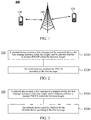
- FIG. 1 exemplifies one network device and two terminal devices.
- the wireless communication system 100 may include multiple network devices, and another quantity of terminal devices may be included within the coverage area of each network device, and this is not restricted in embodiments of the present application.
- the wireless communication system 100 may further include other network entities such as a Mobility Management Entity (MME), an access and mobility management function (AMF), and this is not restricted in embodiments of the present application.
- MME Mobility Management Entity
- AMF access and mobility management function
- the term "article of manufacture” used in the present application encompasses a computer program accessible from any computer-readable device, carrier, or medium.
- the computer-readable medium may include, but is not limited to, a magnetic storage device (such as a hard disk, a floppy disk, or a magnetic tape), a disk (such as a compact disc (CD), a digital versatile disc (Digital Versatile Disc, DVD)), a smart card and a flash storage device (such as an Erasable Programmable Read-Only Storage (EPROM), a card, a stick or a key drive).
- various storage mediums described herein may represent one or more devices and/or other machine-readable mediums for storing information.
- the term "machine-readable medium” may include, but is not limited to, various media capable of storing, containing, and/or carrying instructions and/or data.
- system and “network” are often used interchangeably herein.
- the term “and/or” in this document is merely an association relationship describing associated objects, indicating that there may be three relationships, for example, A and/or B may indicate three situations: A alone, A and B, and B alone.
- the symbol “/” in this document generally indicates that objects before and after the symbol "/" has an "or” relationship.
- FIG. 2 is a schematic flowchart of a method 200 for monitoring PDCCH according to an embodiment of the present application.
- the method 200 may optionally be applied to the system shown in FIG. 1 , but is not limited thereto.
- the method 200 includes at least some of the following contents.
- a terminal device receives a first message sent by a network device, the first message indicates a first time length, and/or indicates whether to monitor PDCCH within the first time length.
- the terminal device may be in a Radio Resource Control (RRC) connection state.
- RRC Radio Resource Control
- the terminal device receives periodically the first message sent by the network device.
- the network device sends periodically the first message to the terminal device.
- the period in which the terminal device receives the first message is greater than or equal to that in which the terminal device monitors the PDCCH.
- the first message in one period may be used for indicating a PDCCH monitoring behavior in at least one PDCCH period.
- the period in which the terminal device monitors the PDCCH is configured, for example, the period in which the terminal device monitors the PDCCH is a period of the PDCCH search space which may be semi-statically configured by the network device to the terminal device.
- the period in which the terminal device receives the first message is greater than or equal to that in which the terminal device monitors the PDCCH.
- the first message in one period may be used for indicating a PDCCH monitoring behavior in at least one PDCCH period.
- the period in which the terminal device monitors the PDCCH is configured, for example, the period in which the terminal device monitors the PDCCH is a period of the PDCCH search space which may be semi-statically configured by the network device to the terminal device.
- the terminal device may continuously monitor the PDCCH based on configuration of the PDCCH monitoring window in a time length other than the first time length, for example, the terminal device may monitor the PDCCH based on configuration information of the PDCCH and/or configuration information of Discontinuous Reception (DRX).
- DRX Discontinuous Reception
- a unit of the first time length is a time slot or a millisecond.
- the first message may further indicate a subcarrier spacing (numerology) corresponding to the first time length, or indicate that the subcarrier spacing corresponding to the first time length is consistent with the subcarrier spacing corresponding to the PDCCH.
- the first message includes third indication information indicating the subcarrier spacing corresponding to the first time length or indicating that the subcarrier spacing corresponding to the first time length is consistent with the subcarrier spacing corresponding to the PDCCH.
- the first time length is a specific time length, if the network device sends periodically the first message to the terminal device, the first time length indicated by the first message sent by the network device in each period is different.
- the terminal device monitors the PDCCH according to the first message.
- the first message indicates the first time length.
- the terminal device determines the first time length according to the first message and determines whether to monitor the PDCCH within the first time length according to first configuration information.
- the first configuration information indicates whether to monitor the PDCCH within the first time length.
- the first configuration information may be dynamically configured to the terminal device by the network device through RRC signaling, or the first configuration information may be pre-configured to the terminal device.
- the first configuration information may indicate that the PDCCH does not need to be monitored within the first time length, and in this case, the terminal device stops monitoring the PDCCH in the first time length.
- the first configuration information may indicate to monitor the PDCCH within the first time length, and in this case, the terminal device monitors the PDCCH within the first time length.
- the first message is PDCCH
- the first message indicates the first time length through at least one bit in first Downlink Control Information (DCI) transmitted on the first message
- DCI Downlink Control Information
- the first DCI is DCI transmitted on the first message.
- the first DCI may be DCI containing only the at least one bit, or the at least one bit may be added to a common DCI for uplink and downlink scheduling.
- time lengths may be indicated through 2 bits in the first DCI. For example, 00 indicates a time length of 0, 01 indicates a time length of 2ms or 2 slots, 10 indicates a time length of 4ms or 4 slots, and 11 indicates a time length of 16ms or 16 slots.
- the first message is an identification sequence
- the first message indicates the first time length through at least one identification sequence
- the terminal device determines the first time length according to the at least one identification sequence.
- the identification sequence 1 indicates a time length of 0
- the identification sequence 2 indicates a time length of 2ms or 2 slots
- the identification sequence 3 indicates a time length of 4ms or 4 slots
- the identification sequence 4 indicates a time length of 16ms or 16 slots.
- the first message may also indicate the first time length by indicating a numerical relationship between a first parameter and the first time length, wherein the first parameter is a Discontinuous Reception (DRX) parameter or a first time parameter.
- the terminal device determines the first time length according to the first message and the first parameter and determines whether to monitor the PDCCH within the first time length according to first configuration information, wherein the first configuration information indicates whether to monitor the PDCCH within the first time length.
- DRX Discontinuous Reception
- the first time parameter is notified by the network device or pre-configured.
- the network device sends the first time parameter to the terminal device through RRC signaling or Media Access Control Control Element (MAC CE) signaling.
- MAC CE Media Access Control Control Element
- the first parameter is one of the following: a drx-on Duration Timer, a drx-Inactivity Timer, a drx-long cycle, and a drx-short cycle.
- the first parameter is the drx-on Duration Timer
- its value may be as follows: 1ms, 2ms, 3ms, 4ms, 5ms, 6ms, 8ms, 10ms, 20ms, 30ms, 40ms, 50ms, 60ms, 80ms, 100ms, 200ms, 300ms, 400ms, 500ms, 600ms, 800ms, 1000ms, 1200ms, 1600ms.
- the first parameter is the drx-long cycle
- its value may be as follows: 10ms, 20ms, 32ms, 40ms, 60ms, 64ms, 70ms, 80ms, 128ms, 160ms, 256ms, 320ms, 512ms, 640ms, 1024ms, 1280ms, 2048ms, 2560ms, 5120ms, 10240ms.
- the first parameter is the drx-short cycle
- its value may be as follows: 2ms, 3ms, 4ms, 5ms, 6ms, 7ms, 8ms, 10ms, 14ms, 16ms, 20ms, 30ms, 32ms, 35ms, 40ms, 64ms, 80ms, 128ms, 256ms, 320ms, 512ms, 640ms.
- the first time parameter may be, for example, 20ms.
- the first parameter may be configured by the network device through RRC signaling or a Media Access Control Control Element (MAC CE).
- MAC CE Media Access Control Control Element
- the first configuration information may be dynamically configured to the terminal device by the network device through RRC signaling, or the first configuration information may be pre-configured to the terminal device.
- the first configuration information may indicate that the PDCCH does not need to be monitored within the first time length, and in this case, the terminal device stops monitoring the PDCCH within the first time length.
- the first configuration information may indicate to monitor the PDCCH within the first time length, and in this case, the terminal device monitors the PDCCH within the first time length.
- the first message is PDCCH
- the first message indicates the first time length by indicating the numerical relationship between the first parameter and the first time length through at least one bit in the first DCI transmitted on the first message
- the terminal device determines the first time length according to the at least one bit and the first parameter.
- the first DCI is DCI transmitted on the first message.
- the first DCI may be DCI containing only the at least one bit, or the at least one bit may be added to common DCI for uplink and downlink scheduling.
- a value of the first parameter is 20ms
- the first message indicates the first time length by indicating the numerical relationship between the first parameter and the first time length through 2 bits in the first DCI transmitted on the first message.
- the value 00 of the first DCI indicates that the first time length is 1/4 of the first parameter, i.e., the first time length is 5ms
- the value 01 of the first DCI indicates that the first time length is 1/2 of the first parameter, i.e., the first time length is 10ms
- the value 10 of the first DCI indicates that the first time length is 3/4 of the first parameter, i.e., the first time length is 15ms
- the value 11 of the first DCI indicates that the first time length is 4/4 of the first parameter, i.e., the first time length is 20ms.
- the ratio of first time length to first parameter in the above Table 1 may be configured by the network device or pre-configured.
- the numerical relationship between the first parameter and the first time length in the above Table 1 is only an example.
- the first time length may be greater than the first parameter, may be equal to the first parameter, or may be less than the first parameter, which is not restricted in the present application.
- the first message is an identification sequence
- the first message indicates the first time length by indicating the numerical relationship between the first parameter and the first time length through at least one identification sequence
- the terminal device determines the first time length according to the at least one identification sequence and the first parameter.
- a value of the first parameter is 20ms
- the first message indicates the first time length by indicating the numerical relationship between the first parameter and the first time length through 4 identification sequences.
- the identification sequence 1 indicates that the first time length is 1/4 of the first parameter, i.e., the first time length is 5ms
- the identification sequence 2 indicates that the first time length is 1/2 of the first parameter, i.e., the first time length is 10ms
- the identification sequence 3 indicates that the first time length is 3/4 of the first parameter, i.e., the first time length is 15ms
- the identification sequence 4 indicates that the first time length is 4/4 of the first parameter, i.e., the first time length is 20ms.
- the ratio of first time length to first parameter in the above Table 2 may be configured by the network device or pre-configured.
- the numerical relationship between the first parameter and the first time length in the above Table 2 is only an example.
- the first time length may be greater than the first parameter, may be equal to the first parameter, or may be less than the first parameter, which is not restricted in the present application.
- the first message indicates whether to monitor the PDCCH within the first time length.
- the terminal device determines the first time length according to second configuration information and determines whether to monitor the PDCCH within the first time length according to the first message, wherein the second configuration information indicates the first time length.
- the second configuration information may be dynamically configured to the terminal device by the network device through RRC signaling, and the second configuration information may also be pre-configured to the terminal device.
- the first message may indicate that the PDCCH does not need to be monitored within the first time length, and in this case, the terminal device stops monitoring the PDCCH within the first time length.
- the first message may indicate to monitor the PDCCH within the first time length, and in this case, the terminal device monitors the PDCCH within the first time length.
- the first message is PDCCH
- the first message indicates whether to monitor the PDCCH within the first time length through a first bit in the first DCI transmitted on the first message, wherein when the first bit is 0, it indicates to monitor the PDCCH within the first time length, and when the first bit is 1, it indicates not to monitor the PDCCH within the first time length.
- the first DCI is DCI transmitted on the first message.
- the first DCI may be DCI containing only the first bit, or the first bit may be added to common DCI for uplink and downlink scheduling.
- the first bit is a specific bit in the first DCI.
- the terminal device determines to monitor the PDCCH within the first time length according to the first bit, or when the first bit is 1, the terminal device determines not to monitor the PDCCH within the first time length according to the first bit.
- the first message is an identification sequence
- the first message indicates through a first identification sequence to monitor the PDCCH within the first time length, and indicates through a second identification sequence not to monitor the PDCCH within the first time length.
- the terminal device determines to monitor the PDCCH within the first time length according to the first identification sequence, or if the first message includes the second identification sequence, the terminal device determines not to monitor the PDCCH within the first time length according to the second identification sequence.
- the first message indicates the first time length and indicates whether to monitor the PDCCH within the first time length.
- the terminal device determines the first time length and whether to monitor the PDCCH within the first time length according to the first message.
- the first message includes first indication information indicating the first time length and second indication information indicating whether to monitor the PDCCH within the first time length
- the terminal device determines the first time length according to the first indication information, and determines whether to monitor the PDCCH within the first time length according to the second indication information.
- the first message is PDCCH and/or an identification sequence.
- the first indication information is PDCCH
- the second indication information is an identification sequence.
- the first indication information is an identification sequence
- the second indication information is PDCCH
- the first indication information is PDCCH
- the second indication information is PDCCH
- the first indication information is an identification sequence
- the second indication information is an identification sequence
- the first indication information is PDCCH
- the first indication information indicates the first time length through at least one bit in the first DCI transmitted on the first message
- the terminal device determines the first time length according to the at least one bit.
- time lengths may be indicated through 2 bits in the first DCI. For example, 00 indicates a time length of 0, 01 indicates a time length of 2ms or 2 slots, 10 indicates a time length of 4ms or 4 slots, and 11 indicates a time length of 16ms or 16 slots.
- the first indication information is an identification sequence
- the first indication information indicates the first time length through at least one identification sequence
- the terminal device determines the first time length according to the at least one identification sequence.
- the identification sequence 1 indicates a time length of 0
- the identification sequence 2 indicates a time length of 2ms or 2 slots
- the identification sequence 3 indicates a time length of 4ms or 4 slots
- the identification sequence 4 indicates a time length of 16ms or 16 slots.
- the second indication information is PDCCH
- the second indication information indicates whether to monitor the PDCCH within the first time length through a first bit in the second DCI transmitted on the first message, wherein when the first bit is 0, it indicates to monitor the PDCCH within the first time length, and when the first bit is 1, it indicates not to monitor the PDCCH within the first time length.
- the terminal device determines to monitor the PDCCH within the first time length according to the first bit, or if the first bit is 1, the terminal device determines not to monitor the PDCCH within the first time length according to the first bit.
- the second indication information is an identification sequence
- the second indication information indicates through a first identification sequence to monitor the PDCCH within the first time length, and indicates through a second identification sequence not to monitor the PDCCH within the first time length.
- the terminal device determines to monitor the PDCCH within the first time length according to the first identification sequence, or if the first message includes the second identification sequence, the terminal device determines not to monitor the PDCCH within the first time length according to the second identification sequence.
- the first DCI and the second DCI transmitted on the first message may be the same DCI
- the DCI includes the at least one bit indicating the first time length and the first bit indicating whether to monitor the PDCCH within the first time length, and the at least one bit does not include the first bit.
- the at least one identification sequence indicating the first time length is different from the first identification sequence and the second identification sequence indicating whether to monitor the PDCCH within the first time length, that is, the at least one identification sequence does not include the first identification sequence and the second identification sequence.
- the first message indicates the first time length and indicates whether to monitor the PDCCH within the first time length
- the first message indicates the first time length by indicating a numerical relationship between a first parameter and the first time length
- the first parameter is a DRX parameter or a first time parameter.
- the terminal device determines the first time length according to the first message and the first parameter, and determines whether to monitor the PDCCH within the first time length according to the first message.
- the first time parameter is notified by the network device or pre-configured.
- the network device sends the first time parameter to the terminal device through RRC signaling or Media Access Control Control Element (MAC CE) signaling.
- MAC CE Media Access Control Control Element
- the first parameter is one of the following: a drx-on Duration Timer, a drx-Inactivity Timer, a drx-long cycle, and a drx-short cycle.
- the first parameter is the drx-on Duration Timer
- its value may be as follows: 1ms, 2ms, 3ms, 4ms, 5ms, 6ms, 8ms, 10ms, 20ms, 30ms, 40ms, 50ms, 60ms, 80ms, 100ms, 200ms, 300ms, 400ms, 500ms, 600ms, 800ms, 1000ms, 1200ms, 1600ms.
- the first parameter is the drx-long cycle
- its value may be as follows: 10ms, 20ms, 32ms, 40ms, 60ms, 64ms, 70ms, 80ms, 128ms, 160ms, 256ms, 320ms, 512ms, 640ms, 1024ms, 1280ms, 2048ms, 2560ms, 5120ms, 10240ms.
- the first parameter is the drx-short cycle
- its value may be as follows: 2ms, 3ms, 4ms, 5ms, 6ms, 7ms, 8ms, 10ms, 14ms, 16ms, 20ms, 30ms, 32ms, 35ms, 40ms, 64ms, 80ms, 128ms, 256ms, 320ms, 512ms, 640ms.
- the first time parameter may be, for example, 20ms.
- the first parameter may be configured by the network device through RRC signaling or a MAC CE.
- the first message includes first indication information and second indication information
- the first indication information indicates the first time length by indicating the numerical relationship between the first parameter and the first time length
- the second indication information indicates whether to monitor the PDCCH within the first time length
- the terminal device determines the first time length according to the first indication information and the first parameter, and determines whether to monitor the PDCCH within the first time length according to the second indication information.
- the first message is PDCCH and/or an identification sequence.
- the first indication information is PDCCH
- the second indication information is an identification sequence.
- the first indication information is an identification sequence
- the second indication information is PDCCH
- the first indication information is PDCCH
- the second indication information is PDCCH
- the first indication information is an identification sequence
- the second indication information is an identification sequence
- the first indication information is PDCCH
- the first indication information indicates the first time length by indicating the numerical relationship between the first parameter and the first time length through at least one bit in the first DCI transmitted on the first message, and the terminal device determines the first time length according to the at least one bit and the first parameter.
- a value of the first parameter is 30ms
- the first message indicates the first time length by indicating the numerical relationship between the first parameter and the first time length through 2 bits in the first DCI transmitted on the first message.
- the value 00 of the first DCI indicates that the first time length is 1/5 of the first parameter, i.e., the first time length is 6ms
- the value 01 of the first DCI indicates that the first time length is 2/5 of the first parameter, i.e., the first time length is 12ms
- the value 10 of the first DCI indicates that the first time length is 3/5 of the first parameter, i.e., the first time length is 18ms
- the value 11 of the first DCI indicates that the first time length is 4/5 of the first parameter, i.e., the first time length is 24ms.
- the ratio of first time length to first parameter in the above Table 3 may be configured by the network device or pre-configured.
- the numerical relationship between the first parameter and the first time length in the above Table 3 is only an example.
- the first time length may be greater than the first parameter, may be equal to the first parameter, or may be less than the first parameter, which is not restricted in the present application.
- the first indication information is an identification sequence
- the first indication information indicates the first time length by indicating the numerical relationship between the first parameter and the first time length through at least one identification sequence
- the terminal device determines the first time length according to the at least one identification sequence and the first parameter.
- a value of the first parameter is 32ms
- the first message indicates the first time length by indicating the numerical relationship between the first parameter and the first time length through 4 identification sequences.
- the identification sequence 1 indicates that the first time length is 1/8 of the first parameter, i.e., the first time length is 4ms
- the identification sequence 2 indicates that the first time length is 1/4 of the first parameter, i.e., the first time length is 8ms
- the identification sequence 3 indicates that the first time length is 3/8 of the first parameter, i.e., the first time length is 12ms
- the identification sequence 4 indicates that the first time length is 1/2 of the first parameter, i.e., the first time length is 16ms.
- the ratio of first time length to first parameter in the above Table 4 may be configured by the network device or pre-configured.
- the numerical relationship between the first parameter and the first time length in the above Table 4 is only an example.
- the first time length may be greater than the first parameter, may be equal to the first parameter, or may be less than the first parameter, which is not restricted in the present application.
- the second indication information is PDCCH
- the second indication information indicates whether to monitor the PDCCH within the first time length through a first bit in the second DCI transmitted on the first message, wherein when the first bit is 0, it indicates to monitor the PDCCH within the first time length, and when the first bit is 1, it indicates not to monitor the PDCCH within the first time length.
- the terminal device determines to monitor the PDCCH within the first time length according to the first bit, or if the first bit is 1, the terminal device determines not to monitor the PDCCH within the first time length according to the first bit.
- the second indication information is an identification sequence
- the second indication information indicates through a first identification sequence to monitor the PDCCH within the first time length, and indicates through a second identification sequence not to monitor the PDCCH within the first time length.
- the terminal device determines to monitor the PDCCH within the first time length according to the first identification sequence, or if the first message includes the second identification sequence, the terminal device determines not to monitor the PDCCH within the first time length according to the second identification sequence.
- the first DCI and the second DCI transmitted on the first message may be the same DCI
- the DCI includes the at least one bit indicating the first time length and the first bit indicating whether to monitor the PDCCH within the first time length, and the at least one bit does not include the first bit.
- the at least one identification sequence indicating the first time length is different from the first identification sequence and the second identification sequence indicating whether to monitor the PDCCH within the first time length, that is, the at least one identification sequence does not include the first identification sequence and the second identification sequence.
- the terminal device may monitor the PDCCH according to the first message indicating the first time length and/or whether to monitor the PDCCH within the first time length, to avoid power waste caused by continuously monitoring the PDCCH based on the configuration of the PDCCH monitoring window, thereby reducing power consumption when the terminal device monitors the PDCCH.
- FIG. 3 is a schematic flowchart of a method 300 for monitoring PDCCH according to an embodiment of the present application.
- the method 300 may optionally be applied to the system shown in FIG. 1 , but is not limited thereto.
- the method 300 includes at least some of the following contents.
- a network device sends a first message to a terminal device, the first message indicates a first time length, and/or indicates whether to monitor the PDCCH within the first time length.
- the network device may determine the first message according to its own scheduling situation. For example, the network device may determine the first message in combination with service load of the current entire system and length prediction of scheduling queues, or service characteristics of the terminal device, time delay requirements and other factors.
- the network device sends the PDCCH for the terminal device according to the first message.
- the network device sends periodically the first message to the terminal device.
- the period in which the network device sends the first message is greater than or equal to that in which the terminal device monitors the PDCCH.
- the method further includes: the network device sends first configuration information to the terminal device through Radio Resource Control (RRC) signaling, wherein the first configuration information indicates whether to monitor the PDCCH within the first time length.
- RRC Radio Resource Control
- Sending, by the network device, the PDCCH for the terminal device according to the first message includes: the network device determines the first time length according to the first message, and determines whether to send the PDCCH for the terminal device within the first time length according to the first configuration information.
- RRC Radio Resource Control
- the terminal device may determine the first time length according to the first message and determine whether to monitor the PDCCH within the first time length according to the first configuration information. That is, the network device needs to configure the first configuration information for the terminal device additionally.
- the first configuration information may be pre-configured on the terminal device side, and in this case, the network device does not need to configure this information for the terminal device additionally.
- the first configuration information may indicate not to monitor the PDCCH within the first time length, and in this case, the terminal device stops monitoring the PDCCH in the first time length.
- the first configuration information may indicate to monitor the PDCCH within the first time length, and in this case, the terminal device monitors the PDCCH in the first time length.
- the first message is PDCCH
- the first message indicates the first time length through at least one bit in first Downlink Control Information (DCI) transmitted on the first message.
- Determining, by the network device, the first time length according to the first message includes: the network device determines the first time length according to the at least one bit.
- DCI Downlink Control Information
- the first DCI is DCI transmitted on the first message.
- the first DCI may be DCI containing only the at least one bit, or the at least one bit may be added to common DCI for uplink and downlink scheduling.
- time lengths may be indicated through 2 bits in the first DCI. For example, 00 indicates a time length of 0, 01 indicates a time length of 2ms or 2 slots, 10 indicates a time length of 4ms or 4 slots, and 11 indicates a time length of 16ms or 16 slots.
- the first message is an identification sequence
- the first message indicates the first time length through at least one identification sequence.
- Determining, by the network device, the first time length according to the first message includes: the network device determines the first time length according to the at least one identification sequence.
- the identification sequence 1 indicates a time length of 0
- the identification sequence 2 indicates a time length of 2ms or 2 slots
- the identification sequence 3 indicates a time length of 4ms or 4 slots
- the identification sequence 4 indicates a time length of 16ms or 16 slots.
- the first message indicates the first time length by indicating a numerical relationship between a first parameter and the first time length.
- the first parameter is a Discontinuous Reception (DRX) parameter or a first time parameter.
- DRX Discontinuous Reception
- the network device sends first configuration information to the terminal device through Radio Resource Control (RRC) signaling, wherein the first configuration information indicates whether to monitor the PDCCH within the first time length.
- RRC Radio Resource Control
- the network device determines the first time length according to the first message and the first parameter, and determines whether to send the PDCCH for the terminal device within the first time length according to the first configuration information.
- the first parameter is one of the following: a drx-on Duration Timer, a drx-Inactivity Timer, a drx-long cycle, and a drx-short cycle.
- the first parameter is the drx-on Duration Timer
- its value may be as follows: 1ms, 2ms, 3ms, 4ms, 5ms, 6ms, 8ms, 10ms, 20ms, 30ms, 40ms, 50ms, 60ms, 80ms, 100ms, 200ms, 300ms, 400ms, 500ms, 600ms, 800ms, 1000ms, 1200ms, 1600ms.
- the first parameter is the drx-long cycle
- its value may be as follows: 10ms, 20ms, 32ms, 40ms, 60ms, 64ms, 70ms, 80ms, 128ms, 160ms, 256ms, 320ms, 512ms, 640ms, 1024ms, 1280ms, 2048ms, 2560ms, 5120ms, 10240ms.
- the first parameter is the drx-short cycle
- its value may be as follows: 2ms, 3ms, 4ms, 5ms, 6ms, 7ms, 8ms, 10ms, 14ms, 16ms, 20ms, 30ms, 32ms, 35ms, 40ms, 64ms, 80ms, 128ms, 256ms, 320ms, 512ms, 640ms.
- the first time parameter may be, for example, 20ms.
- the network device may send the first parameter to the terminal device through RRC signaling or Media Access Control Control Element (MAC CE) signaling.
- MAC CE Media Access Control Control Element
- the network device may send the first time parameter to the terminal device through RRC signaling or MAC CE signaling.
- the network device sends the first configuration information to the terminal device through RRC signaling or MAC CE signaling.
- the first configuration information may indicate not to monitor the PDCCH within the first time length, and in this case, the terminal device stops monitoring the PDCCH within the first time length.
- the first configuration information may indicate to monitor the PDCCH within the first time length, and in this case, the terminal device monitors the PDCCH within the first time length.
- the first message is PDCCH
- the first message indicates the first time length by indicating the numerical relationship between the first parameter and the first time length through at least one bit in the first DCI transmitted on the first message.
- the network device determines the first time length according to the at least one bit and the first parameter.
- the first DCI is DCI transmitted on the first message.
- the first DCI may be DCI containing only the at least one bit, or the at least one bit may be added to common DCI for uplink and downlink scheduling.
- a value of the first parameter is 20ms
- the first message indicates the first time length by indicating the numerical relationship between the first parameter and the first time length through 2 bits in the first DCI transmitted on the first message.
- the value 00 of the first DCI indicates that the first time length is 1/4 of the first parameter, i.e., the first time length is 5ms
- the value 01 of the first DCI indicates that the first time length is 1/2 of the first parameter, i.e., the first time length is 10ms
- the value 10 of the first DCI indicates that the first time length is 3/4 of the first parameter, i.e., the first time length is 15ms
- the value 11 of the first DCI indicates that the first time length is 4/4 of the first parameter, i.e., the first time length is 20ms.
- the first message is an identification sequence
- the first message indicates the first time length by indicating the numerical relationship between the first parameter and the first time length through at least one identification sequence.
- the network device determines the first time length according to the at least one identification sequence and the first parameter.
- a value of the first parameter is 20ms
- the first message indicates the first time length by indicating the numerical relationship between the first parameter and the first time length through 4 identification sequences.
- the identification sequence 1 indicates that the first time length is 1/4 of the first parameter, i.e., the first time length is 5ms
- the identification sequence 2 indicates that the first time length is 1/2 of the first parameter, i.e., the first time length is 10ms
- the identification sequence 3 indicates that the first time length is 3/4 of the first parameter, i.e., the first time length is 15ms
- the identification sequence 4 indicates that the first time length is 4/4 of the first parameter, i.e., the first time length is 20ms.
- the method further includes: the network device sends second configuration information to the terminal device through RRC signaling, wherein the second configuration information indicates the first time length.
- Sending, by the network device, the PDCCH for the terminal device according to the first message includes: the network device determines the first time length according to the second configuration information, and determines whether to send the PDCCH for the terminal device within the first time length according to the first message.
- the first message is PDCCH
- the first message indicates whether to monitor the PDCCH within the first time length through a first bit in the first DCI transmitted on the first message.
- the first bit When the first bit is 0, it indicates to monitor the PDCCH within the first time length, and when the first bit is 1, it indicates not to monitor the PDCCH within the first time length.
- Determining, by the network device, whether to send the PDCCH for the terminal device within the first time length according to the first message includes: if the first bit is 0, the network device determines to send the PDCCH for the terminal device within the first time length according to the first bit, or, if the first bit is 1, the network device determines not to send the PDCCH for the terminal device within the first time length according to the first bit.
- the first message is an identification sequence
- the first message indicates through a first identification sequence to monitor the PDCCH within the first time length, and indicates through a second identification sequence not to monitor the PDCCH within the first time length.
- Determining, by the network device, whether to send the PDCCH for the terminal device within the first time length according to the first message includes: if the first message includes the first identification sequence, the network device determines to send the PDCCH for the terminal device within the first time length according to the first identification sequence, or, if the first message includes the second identification sequence, the network device determines not to send the PDCCH for the terminal device within the first time length according to the second identification sequence.
- sending, by the network device, the PDCCH for the terminal device according to the first message includes: the network device determines the first time length and whether to send the PDCCH for the terminal device within the first time length according to the first message.
- the first message includes first indication information indicating the first time length and second indication information indicating whether to monitor the PDCCH within the first time length.
- Determining, by the network device, the first time length and whether to send the PDCCH for the terminal device within the first time length according to the first message includes: the network device determines the first time length according to the first indication information, and determines whether to send the PDCCH for the terminal device within the first time length according to the second indication information.
- the first message is PDCCH and/or an identification sequence.
- the first indication information indicates the first time length through at least one bit in the first DCI transmitted on the first message. Determining, by the network device, the first time length according to the first indication information includes: the network device determines the first time length according to the at least one bit.
- the first indication information indicates the first time length through at least one identification sequence. Determining, by the network device, the first time length according to the first indication information includes: the network device determines the first time length according to the at least one identification sequence.
- the second indication information indicates whether to monitor the PDCCH within the first time length through a first bit in the second DCI transmitted on the first message, wherein when the first bit is 0, it indicates to monitor the PDCCH within the first time length, and when the first bit is 1, it indicates not to monitor the PDCCH within the first time length.
- Determining, by the network device, whether to send the PDCCH for the terminal device within the first time length according to the second indication information includes: if the first bit is 0, the network device determines to send the PDCCH for the terminal device within the first time length according to the first bit, or, if the first bit is 1, the network device determines not to send the PDCCH for the terminal device within the first time length according to the first bit.
- the second indication information indicates through a first identification sequence to monitor the PDCCH within the first time length, and indicates through a second identification sequence not to monitor the PDCCH within the first time length.
- Determining, by the network device, whether to send the PDCCH for the terminal device within the first time length according to the second indication information includes: if the first message includes the first identification sequence, the network device determines to send the PDCCH for the terminal device within the first time length according to the first identification sequence, or, if the first message includes the second identification sequence, the network device determines not to send the PDCCH for the terminal device within the first time length according to the second identification sequence.
- the first message indicates the first time length and indicates whether to monitor the PDCCH within the first time length
- the first message indicates the first time length by indicating a numerical relationship between a first parameter and the first time length
- the first parameter is a DRX parameter or a first time parameter.
- the network device determines the first time length according to the first message and the first parameter, and determines whether to send the PDCCH for the terminal device within the first time length according to the first message.
- the first parameter is one of the following: a drx-on Duration Timer, a drx-Inactivity Timer, a drx-long cycle, and a drx-short cycle.
- the first parameter is the drx-on Duration Timer
- its value may be as follows: 1ms, 2ms, 3ms, 4ms, 5ms, 6ms, 8ms, 10ms, 20ms, 30ms, 40ms, 50ms, 60ms, 80ms, 100ms, 200ms, 300ms, 400ms, 500ms, 600ms, 800ms, 1000ms, 1200ms, 1600ms.
- the first parameter is the drx-long cycle
- its value may be as follows: 10ms, 20ms, 32ms, 40ms, 60ms, 64ms, 70ms, 80ms, 128ms, 160ms, 256ms, 320ms, 512ms, 640ms, 1024ms, 1280ms, 2048ms, 2560ms, 5120ms, 10240ms.
- the first parameter is the drx-short cycle
- its value may be as follows: 2ms, 3ms, 4ms, 5ms, 6ms, 7ms, 8ms, 10ms, 14ms, 16ms, 20ms, 30ms, 32ms, 35ms, 40ms, 64ms, 80ms, 128ms, 256ms, 320ms, 512ms, 640ms.
- the first time parameter may be, for example, 20ms.
- the network device sends the first parameter to the terminal device through RRC signaling or Media Access Control Control Element (MAC CE) signaling.
- RRC Radio Resource Control Control Element
- MAC CE Media Access Control Element
- the network device sends the first time parameter to the terminal device through RRC signaling or MAC CE signaling.
- the first message includes first indication information and second indication information, wherein the first indication information indicates the first time length by indicating the numerical relationship between the first parameter and the first time length, and the second indication information indicates whether to monitor the PDCCH within the first time length. Further, the network device determines the first time length according to the first indication information and the first parameter, and determines whether to send the PDCCH for the terminal device within the first time length according to the second indication information.
- the first message is PDCCH and/or an identification sequence.
- the first indication information indicates the first time length by indicating the numerical relationship between the first parameter and the first time length through at least one bit in the first DCI transmitted on the first message. Further, the network device determines the first time length according to the at least one bit and the first parameter.
- a value of the first parameter is 30ms
- the first message indicates the first time length by indicating the numerical relationship between the first parameter and the first time length through 2 bits in the first DCI transmitted on the first message.
- the value 00 of the first DCI indicates that the first time length is 1/5 of the first parameter, i.e., the first time length is 6ms
- the value 01 of the first DCI indicates that the first time length is 2/5 of the first parameter, i.e., the first time length is 12ms
- the value 10 of the first DCI indicates that the first time length is 3/5 of the first parameter, i.e., the first time length is 18ms
- the value 11 of the first DCI indicates that the first time length is 4/5 of the first parameter, i.e., the first time length is 24ms.
- the first indication information indicates the first time length by indicating the numerical relationship between the first parameter and the first time length through at least one identification sequence. Further, the network device determines the first time length according to the at least one identification sequence and the first parameter.
- a value of the first parameter is 32ms
- the first message indicates the first time length by indicating the numerical relationship between the first parameter and the first time length through 4 identification sequences.
- the identification sequence 1 indicates that the first time length is 1/8 of the first parameter, i.e., the first time length is 4ms
- the identification sequence 2 indicates that the first time length is 1/4 of the first parameter, i.e., the first time length is 8ms
- the identification sequence 3 indicates that the first time length is 3/8 of the first parameter, i.e., the first time length is 12ms
- the identification sequence 4 indicates that the first time length is 1/2 of the first parameter, i.e., the first time length is 16ms.
- the second indication information indicates whether to monitor the PDCCH within the first time length through a first bit in the second DCI transmitted on the first message, wherein when the first bit is 0, it indicates to monitor the PDCCH within the first time length, and when the first bit is 1, it indicates not to monitor the PDCCH within the first time length.
- the network device determines to send the PDCCH for the terminal device within the first time length according to the first bit.
- the network device determines not to send the PDCCH for the terminal device within the first time length according to the first bit.
- the second indication information indicates through a first identification sequence to monitor the PDCCH within the first time length, and indicates through a second identification sequence not to monitor the PDCCH within the first time length.
- the network device determines to send the PDCCH for the terminal device within the first time length according to the first identification sequence.
- the network device determines not to send the PDCCH for the terminal device within the first time length according to the second identification sequence.
- a unit of the first time length is a time slot or a millisecond.
- the first message includes third indication information indicating a subcarrier spacing corresponding to the first time length or indicating that the subcarrier spacing corresponding to the first time length is consistent with the subcarrier spacing corresponding to the PDCCH.
- the terminal device is in an RRC connection state.
- the network device may make judgment to some extent on whether the terminal device will be scheduled in a future time length according to its own scheduling situation. For example, based on the service load of the current entire system and the length prediction of scheduling queues, e.g., the busy current system and very long scheduling queues, the network device predicts that the currently scheduled terminal device will not be scheduled within a future time length X.
- the network device may send a first message (the first message is PDCCH) to the terminal device, the first message contains DCI of current scheduling, and the DCI of current scheduling carries information indicating the time length X, and an indication that the PDCCH does not need to be monitored within the time length X.
- the terminal device After receiving the first message, the terminal device no longer detects the PDCCH related to data transmission within the time length X from the start of the first message.
- the terminal device may no longer detect the PDCCH related to data transmission within the time length X after the data transmission scheduled by the current DCI is completed and the related ACK feedback is received, thereby ensuring that the PDCCH will not be monitored until the data scheduled by the current DCI is correctly transmitted, so as to avoid missing the PDCCH for scheduling data retransmission.
- the network device may make judgment according to its own scheduling situation, for example, in combination with service load of the current entire system and length prediction of the scheduling queues, or service characteristics of the terminal device, time delay requirements or other factors, to, for example, indicate the terminal device to monitor the PDCCH normally within a time length N according to existing PDCCH configuration information (e.g., Physical Downlink Control Channel Control Resource Set (PDCCH CORESET), configuration of the PDCCH search space) and/or configuration information of the DRX.
- PDCCH configuration information e.g., Physical Downlink Control Channel Control Resource Set (PDCCH CORESET), configuration of the PDCCH search space
- the acts in the method 300 for monitoring PDCCH may refer to the corresponding acts in the method 200 for monitoring PDCCH.
- the related description of the first message, the first parameter, the first configuration information, the second configuration information, and the first time length may refer to the description in the method 200 for monitoring PDCCH, which will not be repeated here for the sake of brevity.
- the network device may send the PDCCH for the terminal device according to the first message indicating the first time length and/or whether to monitor the PDCCH within the first time length, to avoid power waste caused by continuously monitoring the PDCCH based on the configuration of the PDCCH monitoring window by the terminal device, thereby reducing power consumption when the terminal device monitors the PDCCH.
- FIG. 5 is a schematic flowchart of a method 400 for monitoring PDCCH according to an embodiment of the present application.
- the method 400 may optionally be applied to the system shown in FIG. 1 , but is not limited thereto.
- the method 400 includes at least some of the following contents.
- a terminal device determines a first time length according to a first message and a first parameter, wherein the first message indicates a numerical relationship between the first parameter and the first time length, and the first parameter is a Discontinuous Reception (DRX) parameter or a first time parameter.
- DRX Discontinuous Reception
- the terminal device skips monitoring the PDCCH within the first time length.
- the first parameter is one of the following: a drx-on Duration Timer, a drx-Inactivity Timer, a drx-long cycle, and a drx-short cycle.
- the first parameter is the drx-on Duration Timer
- its value may be as follows: 1ms, 2ms, 3ms, 4ms, 5ms, 6ms, 8ms, 10ms, 20ms, 30ms, 40ms, 50ms, 60ms, 80ms, 100ms, 200ms, 300ms, 400ms, 500ms, 600ms, 800ms, 1000ms, 1200ms, 1600ms.
- the first parameter is the drx-long cycle
- its value may be as follows: 10ms, 20ms, 32ms, 40ms, 60ms, 64ms, 70ms, 80ms, 128ms, 160ms, 256ms, 320ms, 512ms, 640ms, 1024ms, 1280ms, 2048ms, 2560ms, 5120ms, 10240ms.
- the first parameter is the drx-short cycle
- its value may be as follows: 2ms, 3ms, 4ms, 5ms, 6ms, 7ms, 8ms, 10ms, 14ms, 16ms, 20ms, 30ms, 32ms, 35ms, 40ms, 64ms, 80ms, 128ms, 256ms, 320ms, 512ms, 640ms.
- the first time parameter may be, for example, 20ms.
- the first parameter may be configured by the network device through Radio Resource Control (RRC) signaling or a Media Access Control Control Element (MAC CE).
- RRC Radio Resource Control
- MAC CE Media Access Control Control Element
- the first time parameter is notified by the network device or pre-configured.
- the network device sends the first time parameter to the terminal device through RRC signaling or MAC CE signaling.
- the terminal device receives the first message sent by the network device.
- the terminal device receives periodically the first message sent by the network device.
- the network device sends periodically the first message to the terminal device.
- the period in which the terminal device receives the first message is greater than or equal to that in which the terminal device monitors the PDCCH.
- the first message in one period may be used for indicating PDCCH monitoring behavior in at least one PDCCH period. It should be understood that the period in which the terminal device monitors the PDCCH is configured, for example, the period in which the terminal device monitors the PDCCH is the period of the PDCCH search space which may be semi-statically configured by the network device to the terminal device.
- the terminal device may continuously monitor the PDCCH based on configuration of the PDCCH monitoring window in a time length other than the first time length, for example, the terminal device may monitor the PDCCH based on configuration information of the PDCCH and/or configuration information of Discontinuous Reception (DRX).
- DRX Discontinuous Reception
- the first message is PDCCH
- the first message indicates the numerical relationship between the first parameter and the first time length through at least one bit in the first DCI transmitted on the first message.
- the terminal device determines the first time length according to the at least one bit and the first parameter.
- the first DCI is DCI transmitted on the first message.
- the first DCI may be DCI containing only the at least one bit, or the at least one bit may be added to common DCI for uplink and downlink scheduling.
- a value of the first parameter is 128ms
- the first message indicates the first time length by indicating the numerical relationship between the first parameter and the first time length through 2 bits in the first DCI transmitted on the first message.
- the value 00 of the first DCI indicates that the first time length is 1/4 of the first parameter, i.e., the first time length is 32ms
- the value 01 of the first DCI indicates that the first time length is 1/2 of the first parameter, i.e., the first time length is 64ms
- the value 10 of the first DCI indicates that the first time length is 3/4 of the first parameter, i.e., the first time length is 96ms
- the value 11 of the first DCI indicates that the first time length is 4/4 of the first parameter, i.e., the first time length is 128ms.
- the ratio of first time length to first parameter in the above Table 5 may be configured by the network device or pre-configured.
- the numerical relationship between the first parameter and the first time length in the above Table 5 is only an example.
- the first time length may be greater than the first parameter, may be equal to the first parameter, or may be less than the first parameter, which is not restricted in the present application.
- the first message is an identification sequence
- the first message indicates the numerical relationship between the first parameter and the first time length through at least one identification sequence.
- the terminal device determines the first time length according to the at least one identification sequence and the first parameter.
- a value of the first parameter is 35ms
- the first message indicates the first time length by indicating the numerical relationship between the first parameter and the first time length through 5 identification sequences.
- the identification sequence 1 indicates that the first time length is 1/5 of the first parameter, i.e., the first time length is 7ms
- the identification sequence 2 indicates that the first time length is 2/5 of the first parameter, i.e., the first time length is 14ms
- the identification sequence 3 indicates that the first time length is 3/5 of the first parameter, i.e., the first time length is 21ms
- the identification sequence 4 indicates that the first time length is 4/5 of the first parameter, i.e., the first time length is 28ms
- the identification sequence 5 indicates that the first time length is 5/5 of the first parameter, i.e., the first time length is 35ms.
- the ratio of first time length to first parameter in the above Table 6 may be configured by the network device or pre-configured.
- the numerical relationship between the first parameter and the first time length in the above Table 6 is only an example.
- the first time length may be greater than the first parameter, may be equal to the first parameter, or may be less than the first parameter, which is not restricted in the present application.
- a unit of the first time length is a time slot or a millisecond.
- the first message includes first indication information
- the first indication information indicates a subcarrier spacing corresponding to the first time length or indicates that the subcarrier spacing corresponding to the first time length is consistent with the subcarrier spacing corresponding to the PDCCH.
- the terminal device is in an RRC connection state.
- the terminal device may determine the first time length according to the first message and the first parameter, and skip monitoring the PDCCH within the first time length, to avoid power waste caused by continuously monitoring the PDCCH based on the configuration of the PDCCH monitoring window, thereby reducing power consumption when the terminal device monitors the PDCCH.
- FIG. 6 is a schematic flowchart of a method 500 for monitoring PDCCH according to an embodiment of the present application.
- the method 500 may optionally be applied to the system shown in FIG. 1 , but is not limited thereto.
- the method 500 includes at least some of the following contents.
- a network device sends a first message to a terminal device, the first message indicates a numerical relationship between a first parameter and a first time length, and the first parameter is a discontinuous reception (DRX) parameter or a first time parameter.
- DRX discontinuous reception
- the terminal device may determine the first time length according to the first message and the first parameter and monitor the PDCCH within the first time length.
- the first parameter is one of the following: a drx-on Duration Timer, a drx-Inactivity Timer, a drx-long cycle, and a drx-short cycle.
- the first parameter is the drx-on Duration Timer
- its value may be as follows: 1ms, 2ms, 3ms, 4ms, 5ms, 6ms, 8ms, 10ms, 20ms, 30ms, 40ms, 50ms, 60ms, 80ms, 100ms, 200ms, 300ms, 400ms, 500ms, 600ms, 800ms, 1000ms, 1200ms, 1600ms.
- the first parameter is the drx-long cycle
- its value may be as follows: 10ms, 20ms, 32ms, 40ms, 60ms, 64ms, 70ms, 80ms, 128ms, 160ms, 256ms, 320ms, 512ms, 640ms, 1024ms, 1280ms, 2048ms, 2560ms, 5120ms, 10240ms.
- the first parameter is the drx-short cycle
- its value may be as follows: 2ms, 3ms, 4ms, 5ms, 6ms, 7ms, 8ms, 10ms, 14ms, 16ms, 20ms, 30ms, 32ms, 35ms, 40ms, 64ms, 80ms, 128ms, 256ms, 320ms, 512ms, 640ms.
- the first time parameter may be, for example, 20ms.
- the network device sends the first parameter to the terminal device through Radio Resource Control (RRC) signaling or a Media Access Control Control Element (MAC CE).
- RRC Radio Resource Control
- MAC CE Media Access Control Control Element
- the network device sends the first time parameter to the terminal device through RRC signaling or MAC CE signaling.
- the network device sends periodically the first message to the terminal device.
- the period in which the network device sends the first message is greater than or equal to that in which the terminal device monitors the PDCCH.
- the period in which the network device sends the first message is greater than or equal to that in which the terminal device monitors the PDCCH.
- the first message in one period may be used for indicating a PDCCH monitoring behavior in at least one PDCCH period.
- the period in which the terminal device monitors the PDCCH is configured, for example, the period in which the terminal device monitors the PDCCH is the period of the PDCCH search space which may be semi-statically configured by the network device to the terminal device.
- the first message is PDCCH
- the first message indicates the numerical relationship between the first parameter and the first time length through at least one bit in the first DCI transmitted on the first message.
- the first DCI is DCI transmitted on the first message.
- the first DCI may be DCI containing only the at least one bit, or the at least one bit may be added to common DCI for uplink and downlink scheduling.
- a value of the first parameter is 128ms
- the first message indicates the first time length by indicating the numerical relationship between the first parameter and the first time length through 2 bits in the first DCI transmitted on the first message.
- the value 00 of the first DCI indicates that the first time length is 1/4 of the first parameter, i.e., the first time length is 32ms
- the value 01 of the first DCI indicates that the first time length is 1/2 of the first parameter, i.e., the first time length is 64ms
- the value 10 of the first DCI indicates that the first time length is 3/4 of the first parameter, i.e., the first time length is 96ms
- the value 11 of the first DCI indicates that the first time length is 4/4 of the first parameter, i.e., the first time length is 128ms.
- the first message is an identification sequence, and the first message indicates the numerical relationship between the first parameter and the first time length through at least one identification sequence.
- a value of the first parameter is 35ms
- the first message indicates the first time length by indicating the numerical relationship between the first parameter and the first time length through 5 identification sequences.
- the identification sequence 1 indicates that the first time length is 1/5 of the first parameter, i.e., the first time length is 7ms
- the identification sequence 2 indicates that the first time length is 2/5 of the first parameter, i.e., the first time length is 14ms
- the identification sequence 3 indicates that the first time length is 3/5 of the first parameter, i.e., the first time length is 21ms
- the identification sequence 4 indicates that the first time length is 4/5 of the first parameter, i.e., the first time length is 28ms
- the identification sequence 5 indicates that the first time length is 5/5 of the first parameter, i.e., the first time length is 35ms.
- a unit of the first time length is a time slot or a millisecond.
- the first message includes first indication information
- the first indication information indicates a subcarrier spacing corresponding to the first time length, or indicates that the subcarrier spacing corresponding to the first time length is consistent with the subcarrier spacing corresponding to the PDCCH.
- the terminal device is in an RRC connection state.
- the acts in the method 500 for monitoring PDCCH may refer to the corresponding acts in the method 400 for monitoring PDCCH.
- the related description of the first message, the first parameter, and the first time length may refer to the description in the method 400 for monitoring PDCCH, which will not be repeated here for the sake of brevity.
- the network device may send the first message to the terminal device, so that the terminal device determines the first time length according to the first message and the first parameter, and skips monitoring the PDCCH within the first time length, to avoid power waste caused by continuously monitoring the PDCCH based on the configuration of the PDCCH monitoring window, thereby reducing power consumption when the terminal device monitors the PDCCH.
- FIG. 7 is a schematic block diagram of a terminal device 600 according to an embodiment of the present application.
- the terminal device 600 includes a communication unit 610 and a processing unit 620.
- the communication unit 610 is configured to receive a first message sent by a network device, the first message indicating a first time length, and/or indicating whether to monitor the PDCCH within the first time length.
- the processing unit 620 is configured to monitor the PDCCH according to the first message.
- the communication unit 610 is specifically configured to receive periodically the first message sent by the network device.
- the period in which the terminal device 600 receives the first message is greater than or equal to that in which the terminal device 600 monitors the PDCCH.
- the processing unit 620 is specifically configured to determine the first time length according to the first message and determine whether to monitor the PDCCH within the first time length according to first configuration information, wherein the first configuration information indicates whether to monitor the PDCCH within the first time length.
- the communication unit 610 is further configured to receive the first configuration information sent by the network device through Radio Resource Control (RRC) signaling.
- RRC Radio Resource Control
- the first configuration information is pre-configured to the terminal device 600.
- the first message is PDCCH, and the first message indicates the first time length through at least one bit in the first DCI transmitted on the first message.
- the processing unit 620 is specifically configured to determine the first time length according to the at least one bit.
- the first message is an identification sequence, and the first message indicates the first time length through at least one identification sequence.
- the processing unit 620 is specifically configured to determine the first time length according to the at least one identification sequence.
- the first message indicates the first time length by indicating a numerical relationship between a first parameter and the first time length, wherein the first parameter is a Discontinuous Reception (DRX) parameter or a first time parameter.
- DRX Discontinuous Reception
- the processing unit 620 is specifically configured to determine the first time length according to the first message and the first parameter, and determine whether to monitor the PDCCH within the first time length according to first configuration information, wherein the first configuration information indicates whether to monitor the PDCCH within the first time length.
- the first parameter is one of the following: a DRX-on duration timer, a DRX-inactivity timer, a DRX-long cycle, and a DRX-short cycle.
- the communication unit 610 is further configured to receive the first parameter sent by the network device through Radio Resource Control (RRC) signaling or Media Access Control Control Element (MAC CE) signaling.
- RRC Radio Resource Control
- MAC CE Media Access Control Element
- the first time parameter is notified by the network device or pre-configured.
- the communication unit 610 is further configured to receive the first configuration information sent by the network device through RRC signaling or MAC CE signaling.
- the first configuration information is pre-configured to the terminal device.
- the first message is PDCCH
- the first message indicates the first time length by indicating the numerical relationship between the first parameter and the first time length through at least one bit in first DCI transmitted on the first message.
- the processing unit 620 is specifically configured to determine the first time length according to the at least one bit and the first parameter.
- the first message is an identification sequence
- the first message indicates the first time length by indicating the numerical relationship between the first parameter and the first time length through at least one identification sequence.
- the processing unit 620 is specifically configured to determine the first time length according to the at least one identification sequence and the first parameter.
- the processing unit 620 is specifically configured to determine the first time length according to second configuration information and determine whether to monitor the PDCCH within the first time length according to the first message, wherein the second configuration information indicates the first time length.
- the communication unit 610 is further configured to receive the second configuration information sent by the network device through RRC signaling.
- the second configuration information is pre-configured to the terminal device 600.
- the first message is PDCCH
- the first message indicates whether to monitor the PDCCH within the first time length through a first bit in first DCI transmitted on the first message. Wherein when the first bit is 0, it indicates to monitor the PDCCH within the first time length, and when the first bit is 1, it indicates not to monitor the PDCCH within the first time length.
- the processing unit 620 is specifically configured to, if the first bit is 0, determine to monitor the PDCCH within the first time length according to the first bit, or, if the first bit is 1, determine not to monitor the PDCCH within the first time length according to the first bit.
- the first message is an identification sequence
- the first message indicates through a first identification sequence to monitor the PDCCH within the first time length, and indicates through a second identification sequence not to monitor the PDCCH within the first time length.
- the processing unit 620 is specifically configured to, if the first message includes the first identification sequence, determine to monitor the PDCCH within the first time length according to the first identification sequence, or, if the first message includes the second identification sequence, determine not to monitor the PDCCH within the first time length according to the second identification sequence.
- the processing unit 620 is specifically configured to determine the first time length and whether to monitor the PDCCH within the first time length according to the first message.
- the first message includes first indication information indicating the first time length and second indication information indicating whether to monitor the PDCCH within the first time length; and the processing unit 620 is specifically configured to determine the first time length according to the first indication information, and determine whether to monitor the PDCCH within the first time length according to the second indication information.
- the first message is PDCCH and/or an identification sequence.
- the first indication information indicates the first time length through at least one bit in the first DCI transmitted on the first message.
- the processing unit 620 is specifically configured to determine the first time length according to the at least one bit.
- the first indication information indicates the first time length through at least one identification sequence.
- the processing unit 620 is specifically configured to determine the first time length according to the at least one identification sequence.
- the second indication information indicates whether to monitor the PDCCH within the first time length through a first bit in second DCI transmitted on the first message, wherein when the first bit is 0, it indicates to monitor the PDCCH within the first time length, and when the first bit is 1, it indicates not to monitor the PDCCH within the first time length.
- the processing unit 620 is specifically configured to, if the first bit is 0, determine to monitor the PDCCH within the first time length according to the first bit, or, if the first bit is 1, determine not to monitor the PDCCH within the first time length according to the first bit.
- the second indication information indicates through a first identification sequence to monitor the PDCCH within the first time length, and indicates through a second identification sequence not to monitor the PDCCH within the first time length.
- the processing unit 620 is specifically configured to, if the first message includes the first identification sequence, determine to monitor the PDCCH within the first time length according to the first identification sequence, or, if the first message includes the second identification sequence, determine not to monitor the PDCCH within the first time length according to the second identification sequence.
- the processing unit 620 is specifically configured to determine the first time length according to the first message and the first parameter, and determine whether to monitor the PDCCH within the first time length according to the message.
- the first parameter is one of the following: a DRX-on duration timer, a DRX-inactivity timer, a DRX-long cycle, and a DRX-short cycle.
- the communication unit 610 is further configured to receive the first parameter sent by the network device through RRC signaling or MAC CE signaling.
- the first time parameter is notified by the network device or pre-configured.
- the first message includes first indication information and second indication information, wherein the first indication information indicates the first time length by indicating the numerical relationship between the first parameter and the first time length, and the second indication information indicates whether to monitor the PDCCH within the first time length.
- the processing unit 620 is specifically configured to determine the first time length according to the first indication information and the first parameter, and determine whether to monitor the PDCCH within the first time length according to the second indication information.
- the first message is PDCCH and/or an identification sequence.
- the first indication information indicates the first time length by indicating the numerical relationship between the first parameter and the first time length through at least one bit in the first DCI transmitted on the first message.
- the processing unit 620 is specifically configured to determine the first time length according to the at least one bit and the first parameter.
- the first indication information indicates the first time length by indicating the numerical relationship between the first parameter and the first time length through at least one identification sequence.
- the processing unit 620 is specifically configured to determine the first time length according to the at least one identification sequence and the first parameter.
- the second indication information indicates whether to monitor the PDCCH within the first time length through a first bit in the second DCI transmitted on the first message, wherein when the first bit is 0, it indicates to monitor the PDCCH within the first time length, and when the first bit is 1, it indicates not to monitor the PDCCH within the first time length.
- the processing unit 620 is specifically configured to, if the first bit is 0, determine to monitor the PDCCH within the first time length according to the first bit, or, if the first bit is 1, determine not to monitor the PDCCH within the first time length according to the first bit.
- the second indication information indicates through a first identification sequence to monitor the PDCCH within the first time length, and indicates through a second identification sequence not to monitor the PDCCH within the first time length.
- the processing unit 620 is specifically configured to, if the first message includes the first identification sequence, determine to monitor the PDCCH within the first time length according to the first identification sequence, or, if the first message includes the second identification sequence, determine not to monitor the PDCCH within the first time length according to the second identification sequence.
- a unit of the first time length is a time slot or a millisecond.
- the first message includes third indication information indicating a subcarrier spacing corresponding to the first time length or indicating that the subcarrier spacing corresponding to the first time length is consistent with the subcarrier spacing corresponding to the PDCCH.
- the terminal device is in an RRC connection state.
- terminal device 600 may correspond to the terminal device in the method 200, and may implement corresponding operations implemented by the terminal device in the method 200. For the sake of brevity, those will not be repeated here.
- FIG. 8 is a schematic block diagram of a network device 700 according to an embodiment of the present application.
- the network device 700 includes a communication unit 710.
- the communication unit 710 is configured to send a first message to a terminal device, the first message indicating a first time length, and/or whether to monitor a PDCCH within the first time length.
- the communication unit 710 is further configured to send the PDCCH for the terminal device according to the first message.
- the communication unit 710 is specifically configured to send periodically the first message to the terminal device.
- the period in which the network device 700 sends the first message is greater than or equal to that in which the terminal device monitors the PDCCH.
- the communication unit 710 is further configured to send first configuration information to the terminal device through RRC signaling, the first configuration information indicates whether to monitor the PDCCH within the first time length.
- the network device 700 further includes a processing unit 720, configured to determine the first time length according to the first message, and determine whether to send the PDCCH for the terminal device within the first time length according to the first configuration information.
- the first message is PDCCH, and the first message indicates the first time length through at least one bit in first Downlink Control Information (DCI) transmitted on the first message.
- DCI Downlink Control Information
- the processing unit 720 is specifically configured to determine the first time length according to the at least one bit.
- the first message is an identification sequence, and the first message indicates the first time length through at least one identification sequence.
- the processing unit 720 is specifically configured to determine the first time length according to the at least one identification sequence.
- the first message indicates the first time length by indicating a numerical relationship between a first parameter and the first time length, wherein the first parameter is a Discontinuous Reception (DRX) parameter or a first time parameter.
- the communication unit 710 is further configured to send first configuration information to the terminal device through Radio Resource Control (RRC) signaling, wherein the first configuration information indicates whether to monitor the PDCCH within the first time length.
- RRC Radio Resource Control
- the network device 700 further includes a processing unit 720, configured to determine the first time length according to the first message and the first parameter, and determine whether to send the PDCCH for the terminal device within the first time length according to the first configuration information.
- a processing unit 720 configured to determine the first time length according to the first message and the first parameter, and determine whether to send the PDCCH for the terminal device within the first time length according to the first configuration information.
- the first parameter is one of the following: a DRX-on duration timer, a DRX-inactivity timer, a DRX-long cycle, and a DRX-short cycle.
- the communication unit 710 is further configured to send the first parameter to the terminal device through RRC signaling or Media Access Control Control Element (MAC CE) signaling.
- MAC CE Media Access Control Control Element
- the communication unit 710 is further configured to send the first time parameter to the terminal device through RRC signaling or MAC CE signaling.
- the communication unit 710 is further configured to send the first configuration parameter to the terminal device through RRC signaling or MAC CE signaling.
- the first message is PDCCH
- the first message indicates the first time length by indicating the numerical relationship between the first parameter and the first time length through at least one bit in the first DCI transmitted on the first message.
- the processing unit 720 is specifically configured to determine the first time length according to the at least one bit and the first parameter.
- the first message is an identification sequence
- the first message indicates the first time length by indicating the numerical relationship between the first parameter and the first time length through at least one identification sequence.
- the processing unit 720 is specifically configured to determine the first time length according to the at least one identification sequence and the first parameter.
- the communication unit is further configured to send second configuration information to the terminal device through RRC signaling, and the second configuration information indicates the first time length.
- the processing unit 720 is specifically configured to determine the first time length according to the second configuration information, and determine whether to send the PDCCH for the terminal device within the first time length according to the first message.
- the first message is PDCCH
- the first message indicates whether to monitor the PDCCH within the first time length through a first bit in first DCI transmitted on the first message. Wherein when the first bit is 0, it indicates to monitor the PDCCH within the first time length, and when the first bit is 1, it indicates not to monitor the PDCCH within the first time length.
- the processing unit 720 is specifically configured to, if the first bit is 0, determine to send the PDCCH for the terminal device within the first time length according to the first bit, or, if the first bit is 1, determine not to send the PDCCH for the terminal device within the first time length according to the first bit.
- the first message is an identification sequence
- the first message indicates through a first identification sequence to monitor the PDCCH within the first time length, and indicates through a second identification sequence not to monitor the PDCCH within the first time length.
- the processing unit 720 is specifically configured to, if the first message includes the first identification sequence, determine to send the PDCCH for the terminal device within the first time length according to the first identification sequence, or, if the first message includes the second identification sequence, determine not to send the PDCCH for the terminal device within the first time length according to the second identification sequence.
- the processing unit 720 is specifically configured to determine the first time length and whether to send the PDCCH for the terminal device within the first time length according to the first message.
- the first message includes first indication information indicating the first time length and second indication information indicating whether to monitor the PDCCH within the first time length.
- the processing unit 720 is specifically configured to determine the first time length according to the first indication information, and determine whether to send the PDCCH for the terminal device within the first time length according to the second indication information.
- the first message is PDCCH and/or an identification sequence.
- the first indication information indicates the first time length through at least one bit in the first DCI transmitted on the first message; and the processing unit 720 is specifically configured to determine the first time length according to the at least one bit.
- the first indication information indicates the first time length through at least one identification sequence; and the processing unit 720 is specifically configured to determine the first time length according to the at least one identification sequence.
- the second indication information indicates whether to monitor the PDCCH within the first time length through a first bit in the second DCI transmitted on the first message, wherein when the first bit is 0, it indicates to monitor the PDCCH within the first time length, and when the first bit is 1, it indicates not to monitor the PDCCH within the first time length.
- the processing unit 720 is specifically configured to, if the first bit is 0, determine to send the PDCCH for the terminal device within the first time length according to the first bit, or, if the first bit is 1, determine not to send the PDCCH for the terminal device within the first time length according to the first bit.
- the second indication information indicates through a first identification sequence to monitor the PDCCH within the first time length, and indicates through a second identification sequence not to monitor the PDCCH within the first time length.
- the processing unit 720 is specifically configured to, if the first message includes the first identification sequence, determine to send the PDCCH for the terminal device within the first time length according to the first identification sequence, or, if the first message includes the second identification sequence, determine not to send the PDCCH for the terminal device within the first time length according to the second identification sequence.
- the network device 700 further includes a processing unit 720, configured to determine the first time length according to the first message and the first parameter, and determine whether to send the PDCCH for the terminal device within the first time length according to the first message.
- the first parameter is one of the following: a DRX-on duration timer, a DRX-inactivity timer, a DRX-long cycle, and a DRX-short cycle.
- the communication unit 720 is further configured to send the first parameter to the terminal device through RRC signaling or MAC CE signaling.
- the communication unit 720 is further configured to send the first time parameter to the terminal device through RRC signaling or MAC CE signaling.
- the first message includes first indication information and second indication information, wherein the first indication information indicates the first time length by indicating the numerical relationship between the first parameter and the first time length, and the second indication information indicates whether to monitor the PDCCH within the first time length.
- the processing unit 720 is specifically configured to determine the first time length according to the first indication information and the first parameter, and determine whether to send the PDCCH for the terminal device within the first time length according to the second indication information.
- the first message is PDCCH and/or an identification sequence.
- the first indication information indicates the first time length by indicating the numerical relationship between the first parameter and the first time length through at least one bit in the first DCI transmitted on the first message.
- the processing unit 720 is specifically configured to determine the first time length according to the at least one bit and the first parameter.
- the first indication information indicates the first time length by indicating the numerical relationship between the first parameter and the first time length through at least one identification sequence.
- the processing unit 720 is specifically configured to determine the first time length according to the at least one identification sequence and the first parameter.
- the second indication information indicates whether to monitor the PDCCH within the first time length through a first bit in the second DCI transmitted on the first message, wherein when the first bit is 0, it indicates to monitor the PDCCH within the first time length, and when the first bit is 1, it indicates not to monitor the PDCCH within the first time length.
- the processing unit 720 is specifically configured to, if the first bit is 0, determine to send the PDCCH for the terminal device within the first time length according to the first bit, or, if the first bit is 1, determine not to send the PDCCH for the terminal device within the first time length according to the first bit.
- the second indication information indicates through a first identification sequence to monitor the PDCCH within the first time length, and indicates through a second identification sequence not to monitor the PDCCH within the first time length.
- the processing unit 720 is specifically configured to, if the first message includes the first identification sequence, determine to send the PDCCH for the terminal device within the first time length according to the first identification sequence, or, if the first message includes the second identification sequence, determine not to send the PDCCH for the terminal device within the first time length according to the second identification sequence.
- a unit of the first time length is a time slot or a millisecond.
- the first message includes third indication information indicating a subcarrier spacing corresponding to the first time length or indicating that the subcarrier spacing corresponding to the first time length is consistent with the subcarrier spacing corresponding to the PDCCH.
- the terminal device is in an RRC connection state.
- the network device 500 may correspond to the network device in the method 300, and may implement corresponding operations implemented by the network device in the method 300. For the sake of brevity, those will not be repeated here.
- FIG. 9 is a schematic block diagram of a terminal device 800 according to an embodiment of the present application.
- the terminal device 800 includes a processing unit 810 and a communication unit 820.
- the processing unit 810 is configured to determine a first time length according to a first message and a first parameter, wherein the first message indicates a numerical relationship between the first parameter and the first time length, and the first parameter is a Discontinuous Reception (DRX) parameter or a first time parameter.
- DRX Discontinuous Reception
- the communication unit 820 is configured to skip monitoring a Physical Downlink Control CHhannel (PDCCH) within the first time length.
- PDCH Physical Downlink Control CHhannel
- the first parameter is one of the following: a DRX-on duration timer, a DRX-inactivity timer, a DRX-long cycle, and a DRX-short cycle.
- the communication unit 820 is further configured to receive the first parameter sent by a network device through Radio Resource Control (RRC) signaling or Media Access Control Control Element (MAC CE) signaling.
- RRC Radio Resource Control
- MAC CE Media Access Control Element
- the first time parameter is notified by the network device or pre-configured.
- the communication unit 820 is further configured to receive the first message sent by a network device.
- the communication unit 820 is specifically configured to receive periodically the first message sent by the network device.
- the period in which the communication unit 820 receives the first message is greater than or equal to that in which the communication unit 820 monitors the PDCCH.
- the first message is PDCCH
- the first message indicates the numerical relationship between the first parameter and the first time length through at least one bit in the first DCI transmitted on the first message.
- the processing unit 810 is specifically configured to determine the first time length according to the at least one bit and the first parameter.
- the first message is an identification sequence
- the first message indicates the numerical relationship between the first parameter and the first time length through at least one identification sequence.
- the processing unit 810 is specifically configured to determine the first time length according to the at least one identification sequence and the first parameter.
- a unit of the first time length is a time slot or a millisecond.
- the first message includes first indication information indicating a subcarrier spacing corresponding to the first time length or indicating that the subcarrier spacing corresponding to the first time length is consistent with the subcarrier spacing corresponding to the PDCCH.
- the terminal device is in an RRC connection state.
- terminal device 800 may correspond to the terminal device in the method 400, and may implement corresponding operations implemented by the terminal device in the method 400. For the sake of brevity, those will not be repeated here.
- FIG. 10 is a schematic block diagram of a network device 900 according to an embodiment of the present application.
- the network device 900 includes a communication unit 910, configured to send a first message to a terminal device, wherein the first message indicates a numerical relationship between a first parameter and a first time length, and the first parameter is a Discontinuous Reception (DRX) parameter or a first time parameter.
- DRX Discontinuous Reception
- the first parameter is one of the following: a DRX-on duration timer, a DRX-inactivity timer, a DRX-long cycle, and a DRX-short cycle.
- the communication unit 910 is further configured to send the first parameter to the terminal device through RRC signaling or MAC CE signaling.
- the communication unit 910 is further configured to send the first time parameter to the terminal device through RRC signaling or MAC CE signaling.
- the communication unit 910 is specifically configured to send periodically the first message to the terminal device.
- the period in which the network device 900 sends the first message is greater than or equal to that in which the terminal device monitors the PDCCH.
- the first message is PDCCH
- the first message indicates the numerical relationship between the first parameter and the first time length through at least one bit in the first DCI transmitted on the first message.
- the first message is an identification sequence, and the first message indicates the numerical relationship between the first parameter and the first time length through at least one identification sequence.
- a unit of the first time length is a time slot or a millisecond.
- the first message includes first indication information indicating a subcarrier spacing corresponding to the first time length or indicating that the subcarrier spacing corresponding to the first time length is consistent with the subcarrier spacing corresponding to the PDCCH.
- the terminal device is in an RRC connection state.
- the network device 900 may correspond to the network device in the method 500, and may implement corresponding operations implemented by the network device in the method 500. For the sake of brevity, those will not be repeated here.
- FIG. 11 shows a schematic block diagram of a device 1000 for signal transmission provided by an embodiment of the present application.
- the device 1000 includes a memory 1010, a transceiver 1020 and a processor 1030.
- the memory 1010 is configured to store a program including codes.
- the transceiver 1020 is configured to communicate with other devices.
- the processor 1030 is configured to execute program codes in the memory 1010.
- the transceiver 1020 is configured to perform specific transmitting and receiving of signals under the driving of the processor 1030.
- the processor 1030 may also implement various operations performed by the terminal device in the method 200 in FIG. 2 , which will not be repeated here for brevity.
- the device 1000 may be a terminal device (e.g., a mobile phone).
- the processor 1030 may also implement various operations performed by the terminal device in the method 400 in FIG. 5 , which will not be repeated here for brevity.
- the device 1000 may be a terminal device (e.g., a mobile phone).
- the processor 1030 may also implement various operations performed by the network device in the method 300 in FIG. 3 , which will not be repeated here for brevity.
- the device 1000 may be a network device (e.g., a base station).
- the processor 1030 may also implement various operations performed by the network device in the method 500 in FIG. 6 , which will not be repeated here for brevity.
- the device 1000 may be a network device (e.g., a base station).
- the processor 1030 may be a Central Processing Unit (CPU), or the processor 1030 may be other general purpose processors, digital signal processors (DSP), application specific integrated circuits (ASIC), Field programmable gate arrays (FPGA) or other programmable logic devices, discrete gate or transistor logic devices, discrete hardware components, etc.
- the general purpose processor may be a microprocessor or the processor may be any conventional processor or the like.
- the memory 1010 may include a read-only memory and a random access memory, and provide instructions and data to the processor 1030.
- a portion of memory 1010 may include non-volatile random access memory.
- the memory 1010 may also store information of device type.
- the transceiver 1020 may be used for implementing signal transmission and reception functions, such as frequency modulation and demodulation functions, or up-conversion and down-conversion functions.
- the device 1000 for wireless communication may be a chip or chipset.
- the acts of the method disclosed in connection with embodiments of the present application may be directly embodied to be completed by an execution of a hardware processor or by a combination of hardware and software modules in a processor.
- the software modules may be located in a storage medium commonly used in the art, such as a random access memory, flash memory, read-only memory, programmable read-only memory or electrically erasable programmable memory, or register.
- the storage medium is located in the memory, and the processor 1030 reads the information in the memory and accomplishes the acts of the method with its hardware. In order to avoid repetition, it will not be described in detail here.
- FIG. 12 is a schematic block diagram of a system chip 1100 according to an embodiment of the present application.
- the system chip 1100 of FIG. 12 includes an input interface 1101, an output interface 1102, a processor 1103 and a memory 1104, and the processor 1103 and the memory 1104 may be connected through internal communication connection lines, and the processor 1103 is used for executing codes in the memory 1104.
- the processor 1103 implements the method performed by the terminal device in the method embodiment. For brevity, it will not be repeated here.
- the processor 1103 implements the method performed by the network device in the method embodiment. For brevity, it will not be repeated here.
- the above embodiments may be implemented in whole or in part by software, hardware, firmware, or any combination thereof.
- the embodiments When the embodiments are implemented through software, they may be implemented in whole or in parts in the form of a computer program product.
- the computer program product includes one or more computer instructions.
- the computer program instructions When the computer program instructions are loaded and executed on a computer, the processes or functions described in the embodiments of the present application are generated in whole or in part.
- the computer may be a general purpose computer, a special purpose computer, a computer network, or other programmable apparatus.
- the computer instructions may be stored in a computer-readable storage medium or transmitted from one computer-readable storage medium to another.
- the computer instructions may be transmitted from one website site, computer, server or data center to another website site, computer, server or data center by a wired (e.g., coaxial cable, optical fiber, digital subscriber line (DSL)) or wireless (e.g., infrared, wireless, microwave and the like) manner.
- the computer-readable storage medium may be any available medium that a computer may access or a data storage device such as a server, a data center, or the like that integrates one or more available medium.
- the available medium may be a magnetic medium (e.g., floppy disk, hard disk, magnetic tape), an optical medium (e.g., DVD), or a semiconductor medium (e.g., Solid State Disk (SSD)) or the like.
- sequence numbers of the various processes do not imply an order of execution of the various processes, the order of execution of the various processes should be determined by functions and internal logics of the various processes, and should not constitute any limitation on implementation processes of the embodiments of the present application.
Landscapes
- Engineering & Computer Science (AREA)
- Signal Processing (AREA)
- Computer Networks & Wireless Communication (AREA)
- Mobile Radio Communication Systems (AREA)
- Telephonic Communication Services (AREA)
- Telephone Function (AREA)
Applications Claiming Priority (2)
| Application Number | Priority Date | Filing Date | Title |
|---|---|---|---|
| PCT/CN2018/080936 WO2019183848A1 (fr) | 2018-03-28 | 2018-03-28 | Procédé de surveillance de pdcch, dispositif terminal et dispositif de réseau |
| PCT/CN2019/074661 WO2019184603A1 (fr) | 2018-03-28 | 2019-02-02 | Procédé de surveillance de pdcch, dispositif terminal et dispositif réseau |
Publications (2)
| Publication Number | Publication Date |
|---|---|
| EP3771256A1 true EP3771256A1 (fr) | 2021-01-27 |
| EP3771256A4 EP3771256A4 (fr) | 2021-05-12 |
Family
ID=68059118
Family Applications (1)
| Application Number | Title | Priority Date | Filing Date |
|---|---|---|---|
| EP19776066.3A Pending EP3771256A4 (fr) | 2018-03-28 | 2019-02-02 | Procédé de surveillance de pdcch, dispositif terminal et dispositif réseau |
Country Status (8)
| Country | Link |
|---|---|
| US (2) | US11665642B2 (fr) |
| EP (1) | EP3771256A4 (fr) |
| JP (2) | JP7288914B2 (fr) |
| KR (3) | KR102729115B1 (fr) |
| CN (3) | CN118741661A (fr) |
| AU (1) | AU2019241028B2 (fr) |
| TW (1) | TWI822745B (fr) |
| WO (2) | WO2019183848A1 (fr) |
Cited By (1)
| Publication number | Priority date | Publication date | Assignee | Title |
|---|---|---|---|---|
| EP4135416A4 (fr) * | 2020-04-27 | 2023-05-24 | Guangdong Oppo Mobile Telecommunications Corp., Ltd. | Procédé de surveillance de canal, dispositif électronique et support de stockage |
Families Citing this family (11)
| Publication number | Priority date | Publication date | Assignee | Title |
|---|---|---|---|---|
| CN117858278A (zh) * | 2019-01-10 | 2024-04-09 | 北京三星通信技术研究有限公司 | 一种物理下行控制信道的监听方法、终端设备及存储介质 |
| US11678336B2 (en) * | 2019-03-29 | 2023-06-13 | Qualcomm Incorporated | Indication design and signaling |
| KR20210051621A (ko) | 2019-10-31 | 2021-05-10 | 삼성전자주식회사 | 무선 통신 시스템에서 단말 전력 소모 감소 방법 및 장치 |
| WO2021120013A1 (fr) * | 2019-12-17 | 2021-06-24 | Oppo广东移动通信有限公司 | Procédé de surveillance d'un signal de réveil, dispositif terminal et dispositif de réseau |
| PH12022551632A1 (en) * | 2020-01-29 | 2023-12-11 | Qualcomm Inc | Positioning measurement/reporting with multiple discontinuous reception groups |
| CN113300806B (zh) | 2020-02-21 | 2022-10-21 | 大唐移动通信设备有限公司 | 物理下行控制信道的检测方法、发送方法、终端及基站 |
| US11838917B2 (en) * | 2020-04-23 | 2023-12-05 | Qualcomm Incorporated | Cross-carrier downlink control information scheduling |
| CN115604794A (zh) * | 2021-07-09 | 2023-01-13 | 华为技术有限公司(Cn) | 一种通信方法及装置 |
| CN115913500B (zh) * | 2021-09-30 | 2025-11-14 | 大唐移动通信设备有限公司 | 确定pdcch监听自适应行为的方法及装置 |
| CN115967975A (zh) * | 2021-10-13 | 2023-04-14 | 华为技术有限公司 | 一种pdcch监听方法及装置 |
| CN117812671A (zh) * | 2022-09-23 | 2024-04-02 | 荣耀终端有限公司 | 非连续接收的方法及装置 |
Family Cites Families (25)
| Publication number | Priority date | Publication date | Assignee | Title |
|---|---|---|---|---|
| US20080225772A1 (en) * | 2007-03-12 | 2008-09-18 | Shugong Xu | Explicit layer two signaling for discontinuous reception |
| KR20080084533A (ko) * | 2007-03-16 | 2008-09-19 | 엘지전자 주식회사 | 이동통신 시스템에서의 데이터 통신 방법 |
| CN101656978B (zh) | 2008-08-22 | 2014-01-01 | 株式会社Ntt都科摩 | 动态指示用户设备改变非连续接收状态的方法及装置 |
| CN102036346B (zh) * | 2009-09-30 | 2015-06-03 | 中兴通讯股份有限公司 | 一种调度信息传输的方法及系统 |
| KR101664279B1 (ko) * | 2010-02-16 | 2016-10-12 | 삼성전자주식회사 | 무선 통신 시스템에서 불연속 수신을 위한 제어 방법 및 장치 |
| US8712401B2 (en) * | 2010-04-16 | 2014-04-29 | Qualcomm Incorporated | Radio link monitoring (RLM) and reference signal received power (RSRP) measurement for heterogeneous networks |
| CN102546074A (zh) * | 2010-12-27 | 2012-07-04 | 中兴通讯股份有限公司 | 多种无线电技术在终端共存时的时分复用通信方法和系统 |
| CN102655666B (zh) * | 2011-03-02 | 2017-06-06 | 中兴通讯股份有限公司 | 一种延迟调度方法及系统 |
| EP2519060A1 (fr) * | 2011-04-28 | 2012-10-31 | Alcatel Lucent | Réglage d'un mode d'économie d'énergie |
| US9521650B2 (en) * | 2012-04-05 | 2016-12-13 | Optis Cellular Technology, Llc | UE wake-up ahead of paging occasions to retrieve paging configuration information when in (long) DRX |
| CN103368763B (zh) * | 2012-04-10 | 2016-03-09 | 华为技术有限公司 | 监听的控制方法及设备 |
| US10103797B2 (en) * | 2013-03-01 | 2018-10-16 | Intel IP Corporation | Quasi co-location and PDSCH resource element mapping signaling for network assisted interference mitigation |
| CN104244380B (zh) * | 2013-06-09 | 2018-05-11 | 华为技术有限公司 | 一种确定ue激活时间的方法及装置 |
| CN104469902B (zh) * | 2013-09-18 | 2018-04-20 | 华为终端(东莞)有限公司 | 一种控制ue与网络侧之间rrc连接状态的方法及装置 |
| US9526112B2 (en) * | 2013-09-30 | 2016-12-20 | Apple Inc. | Control signaling optimization for LTE communications |
| KR102220934B1 (ko) * | 2014-05-07 | 2021-02-26 | 삼성전자 주식회사 | 무선 통신 시스템에서 비연속적 수신을 제어하기 위한 방법, 사용자 장치 및 기지국 |
| US10314078B2 (en) * | 2014-06-05 | 2019-06-04 | Sharp Kabushiki Kaisha | Terminal device, base station apparatus, and method |
| US10159108B2 (en) * | 2015-04-10 | 2018-12-18 | Motorola Mobility Llc | DRX handling in LTE license assisted access operation |
| US10735982B2 (en) * | 2015-05-15 | 2020-08-04 | Kyocera Corporation | Radio terminal and base station for monitoring a physical downlink control channel during a discontinuous reception operation |
| CN106533633B (zh) * | 2015-09-10 | 2020-08-04 | 中国移动通信集团公司 | 信息处理方法、用户设备及基站 |
| KR102043219B1 (ko) * | 2016-01-11 | 2019-11-12 | 텔레호낙티에볼라게트 엘엠 에릭슨(피유비엘) | 접속 모드 drx 동작들을 제어하기 위한 방법 |
| US10904845B2 (en) | 2017-05-15 | 2021-01-26 | Qualcomm Incorporated | Synchronization channel for a wake-up receiver (WUR) in a communication device |
| CN109429310B (zh) | 2017-07-20 | 2021-04-06 | 维沃移动通信有限公司 | 一种drx参数的指示方法、相关设备及系统 |
| CN111183606B (zh) * | 2017-08-10 | 2024-04-16 | 交互数字专利控股公司 | 用于nr的增强型已连接模式drx过程 |
| CN109245876B (zh) * | 2017-09-27 | 2019-09-03 | 华为技术有限公司 | 一种寻呼的方法、通信定时的方法和装置 |
-
2018
- 2018-03-28 WO PCT/CN2018/080936 patent/WO2019183848A1/fr not_active Ceased
-
2019
- 2019-02-02 CN CN202411087515.XA patent/CN118741661A/zh active Pending
- 2019-02-02 EP EP19776066.3A patent/EP3771256A4/fr active Pending
- 2019-02-02 KR KR1020237027083A patent/KR102729115B1/ko active Active
- 2019-02-02 CN CN201980021933.XA patent/CN111903160A/zh active Pending
- 2019-02-02 JP JP2020550664A patent/JP7288914B2/ja active Active
- 2019-02-02 AU AU2019241028A patent/AU2019241028B2/en active Active
- 2019-02-02 WO PCT/CN2019/074661 patent/WO2019184603A1/fr not_active Ceased
- 2019-02-02 KR KR1020227037919A patent/KR102568982B1/ko active Active
- 2019-02-02 KR KR1020207029934A patent/KR102462882B1/ko active Active
- 2019-02-02 CN CN202210709380.0A patent/CN115022948B/zh active Active
- 2019-03-27 TW TW108110638A patent/TWI822745B/zh active
-
2020
- 2020-09-25 US US17/032,974 patent/US11665642B2/en active Active
-
2022
- 2022-10-28 US US18/050,597 patent/US11910323B2/en active Active
-
2023
- 2023-05-29 JP JP2023087800A patent/JP7557008B2/ja active Active
Cited By (2)
| Publication number | Priority date | Publication date | Assignee | Title |
|---|---|---|---|---|
| EP4135416A4 (fr) * | 2020-04-27 | 2023-05-24 | Guangdong Oppo Mobile Telecommunications Corp., Ltd. | Procédé de surveillance de canal, dispositif électronique et support de stockage |
| US12439419B2 (en) | 2020-04-27 | 2025-10-07 | Guangdong Oppo Mobile Telecommunications Corp., Ltd. | Channel monitoring method, electronic device, and storage medium |
Also Published As
| Publication number | Publication date |
|---|---|
| WO2019183848A1 (fr) | 2019-10-03 |
| KR20230121169A (ko) | 2023-08-17 |
| KR20220153662A (ko) | 2022-11-18 |
| CN115022948A (zh) | 2022-09-06 |
| AU2019241028B2 (en) | 2022-11-24 |
| CN115022948B (zh) | 2024-08-02 |
| US11910323B2 (en) | 2024-02-20 |
| KR102568982B1 (ko) | 2023-08-18 |
| JP2021518706A (ja) | 2021-08-02 |
| TW201943299A (zh) | 2019-11-01 |
| TWI822745B (zh) | 2023-11-21 |
| JP7557008B2 (ja) | 2024-09-26 |
| JP2023106571A (ja) | 2023-08-01 |
| AU2019241028A1 (en) | 2020-11-12 |
| JP7288914B2 (ja) | 2023-06-08 |
| KR20200138281A (ko) | 2020-12-09 |
| WO2019184603A1 (fr) | 2019-10-03 |
| US20230108344A1 (en) | 2023-04-06 |
| US20210022079A1 (en) | 2021-01-21 |
| KR102729115B1 (ko) | 2024-11-11 |
| KR102462882B1 (ko) | 2022-11-03 |
| CN118741661A (zh) | 2024-10-01 |
| CN111903160A (zh) | 2020-11-06 |
| US11665642B2 (en) | 2023-05-30 |
| EP3771256A4 (fr) | 2021-05-12 |
Similar Documents
| Publication | Publication Date | Title |
|---|---|---|
| EP3771256A1 (fr) | Procédé de surveillance de pdcch, dispositif terminal et dispositif réseau | |
| EP3840483B1 (fr) | Procédé et dispositif de transmission discontinue | |
| CN110831027B (zh) | 监听物理下行控制信道的方法和通信装置 | |
| US11889423B2 (en) | Communication method and apparatus, and computer-readable storage medium | |
| US12543190B2 (en) | Method and device for PDCCH monitoring | |
| US20220007408A1 (en) | Pdcch monitoring method, terminal device, and network device | |
| CN112740763A (zh) | 无线通信方法、终端设备和网络设备 | |
| WO2020019235A1 (fr) | Procédé de transmission de signal, dispositif de réseau et dispositif terminal | |
| CN114501498B (zh) | 用于确定下行控制信息类型的方法及设备 | |
| EP4080959B1 (fr) | Procédé de commutation, dispositif terminal, dispositif de réseau et système de communication | |
| CN114337969A (zh) | 无线通信方法、终端设备和网络设备 | |
| CN112423370A (zh) | 信号传输的方法、网络设备和终端设备 | |
| US20210243710A1 (en) | Signal transmission method, transmitting terminal device, and receiving terminal device | |
| IL295815A (en) | Physical channel monitoring method and terminal device | |
| US20230379882A1 (en) | Paging method and terminal device | |
| CN115988619B (zh) | 无线通信的方法和终端设备 | |
| EP4683407A1 (fr) | Procédé et appareil de communication | |
| US12328192B2 (en) | Parameter setting method, parameter indication method, terminal device, and network device |
Legal Events
| Date | Code | Title | Description |
|---|---|---|---|
| STAA | Information on the status of an ep patent application or granted ep patent |
Free format text: STATUS: THE INTERNATIONAL PUBLICATION HAS BEEN MADE |
|
| PUAI | Public reference made under article 153(3) epc to a published international application that has entered the european phase |
Free format text: ORIGINAL CODE: 0009012 |
|
| STAA | Information on the status of an ep patent application or granted ep patent |
Free format text: STATUS: REQUEST FOR EXAMINATION WAS MADE |
|
| 17P | Request for examination filed |
Effective date: 20201021 |
|
| AK | Designated contracting states |
Kind code of ref document: A1 Designated state(s): AL AT BE BG CH CY CZ DE DK EE ES FI FR GB GR HR HU IE IS IT LI LT LU LV MC MK MT NL NO PL PT RO RS SE SI SK SM TR |
|
| AX | Request for extension of the european patent |
Extension state: BA ME |
|
| A4 | Supplementary search report drawn up and despatched |
Effective date: 20210413 |
|
| RIC1 | Information provided on ipc code assigned before grant |
Ipc: H04W 52/02 20090101AFI20210407BHEP Ipc: H04W 72/12 20090101ALI20210407BHEP Ipc: H04W 72/04 20090101ALN20210407BHEP |
|
| DAV | Request for validation of the european patent (deleted) | ||
| DAX | Request for extension of the european patent (deleted) | ||
| STAA | Information on the status of an ep patent application or granted ep patent |
Free format text: STATUS: EXAMINATION IS IN PROGRESS |
|
| 17Q | First examination report despatched |
Effective date: 20220303 |