EP3778345A1 - Verfahren zum betreiben eines fahrzeugs und bahnbetriebsgerät - Google Patents
Verfahren zum betreiben eines fahrzeugs und bahnbetriebsgerät Download PDFInfo
- Publication number
- EP3778345A1 EP3778345A1 EP20185621.8A EP20185621A EP3778345A1 EP 3778345 A1 EP3778345 A1 EP 3778345A1 EP 20185621 A EP20185621 A EP 20185621A EP 3778345 A1 EP3778345 A1 EP 3778345A1
- Authority
- EP
- European Patent Office
- Prior art keywords
- vehicle
- control center
- route control
- communication channel
- pause command
- Prior art date
- Legal status (The legal status is an assumption and is not a legal conclusion. Google has not performed a legal analysis and makes no representation as to the accuracy of the status listed.)
- Granted
Links
Images

Classifications
-
- B—PERFORMING OPERATIONS; TRANSPORTING
- B61—RAILWAYS
- B61L—GUIDING RAILWAY TRAFFIC; ENSURING THE SAFETY OF RAILWAY TRAFFIC
- B61L15/00—Indicators provided on the vehicle or train for signalling purposes
- B61L15/0018—Communication with or on the vehicle or train
- B61L15/0027—Radio-based, e.g. using GSM-R
-
- B—PERFORMING OPERATIONS; TRANSPORTING
- B61—RAILWAYS
- B61L—GUIDING RAILWAY TRAFFIC; ENSURING THE SAFETY OF RAILWAY TRAFFIC
- B61L27/00—Central railway traffic control systems; Trackside control; Communication systems specially adapted therefor
- B61L27/10—Operations, e.g. scheduling or time tables
- B61L27/16—Trackside optimisation of vehicle or train operation
-
- B—PERFORMING OPERATIONS; TRANSPORTING
- B61—RAILWAYS
- B61L—GUIDING RAILWAY TRAFFIC; ENSURING THE SAFETY OF RAILWAY TRAFFIC
- B61L27/00—Central railway traffic control systems; Trackside control; Communication systems specially adapted therefor
- B61L27/40—Handling position reports or trackside vehicle data
-
- B—PERFORMING OPERATIONS; TRANSPORTING
- B61—RAILWAYS
- B61L—GUIDING RAILWAY TRAFFIC; ENSURING THE SAFETY OF RAILWAY TRAFFIC
- B61L27/00—Central railway traffic control systems; Trackside control; Communication systems specially adapted therefor
- B61L27/70—Details of trackside communication
-
- B—PERFORMING OPERATIONS; TRANSPORTING
- B61—RAILWAYS
- B61L—GUIDING RAILWAY TRAFFIC; ENSURING THE SAFETY OF RAILWAY TRAFFIC
- B61L15/00—Indicators provided on the vehicle or train for signalling purposes
- B61L15/0058—On-board optimisation of vehicle or vehicle train operation
-
- B—PERFORMING OPERATIONS; TRANSPORTING
- B61—RAILWAYS
- B61L—GUIDING RAILWAY TRAFFIC; ENSURING THE SAFETY OF RAILWAY TRAFFIC
- B61L27/00—Central railway traffic control systems; Trackside control; Communication systems specially adapted therefor
- B61L27/20—Trackside control of safe travel of vehicle or train, e.g. braking curve calculation
- B61L2027/202—Trackside control of safe travel of vehicle or train, e.g. braking curve calculation using European Train Control System [ETCS]
-
- B—PERFORMING OPERATIONS; TRANSPORTING
- B61—RAILWAYS
- B61L—GUIDING RAILWAY TRAFFIC; ENSURING THE SAFETY OF RAILWAY TRAFFIC
- B61L2205/00—Communication or navigation systems for railway traffic
- B61L2205/02—Global system for mobile communication - railways [GSM-R]
Definitions
- the application relates to a method for operating a vehicle.
- the registration concerns a railway operating device.
- the pamphlet WO 2014/114485 A2 is directed to a method and a device for train control.
- One problem to be solved is to specify a method with which a route that includes a communication channel can be operated efficiently.
- Another object to be solved is to specify a railway operating device for such a method.
- the route control center is set up to close the communication channel to the vehicle after a predetermined waiting time if no status information is transmitted during the waiting time and if a pause command has not been sent beforehand.
- UNISIG stands for UNion Industry of SIGnalling, which is a working group of the railway industry association UNIFE.
- a session is to be regarded as ended after a 5-minute radio interruption.
- a session is a coherent time range during which the vehicle can be influenced and monitored by the route control center.
- all information known about the vehicle in the route control center is deleted, including the train data and the last known position of the train.
- the route control center must first receive the train data again and locate the vehicle on the route. Localization can take several minutes, depending on the route topology.
- the session For longer, scheduled stays, for example in a train station, the session must therefore be kept open so that the vehicle does not have to be relocated after the stay.
- permanent radio communication between the vehicle and the line control center is required.
- capacities of a radio network, via which communication between the vehicle and the line control takes place, are occupied without any operational benefit.
- the freely usable package 44 is used to between negotiate with the vehicle and the route control center that the session should be maintained for longer than 5 minutes despite the radio interruption.
- the line control center at the vehicle can command the disconnection of the radio link by means of the packet 44, but the session should continue and the packet 42 is thus replaced in accordance with UNISIG if this has been commanded from an operator station, for example.
- the vehicle can also use a packet 44 to indicate that it would like to continue the session after the radio connection has been re-established.
- the vehicle As soon as the vehicle re-establishes the radio link and is certain that neither position nor train data have changed, it sends a packet 44 to the route control center to enable the session to continue.
- the route control center can then immediately issue a driving license (English Movement Authority or MA for short). There is no time for exchanging train data or for re-localization. If the vehicle is not sure about its position change or change of train data, the normal session setup is started instead, which leads to the deletion of the data still stored in the route control center.
- a driving license English Movement Authority or MA for short
- the method is used to operate many vehicles at the same time, in particular many trains that are located on one or more railway lines.
- the status information is regularly sent from the vehicle to the route control center as long as no pause command is sent. It is possible for the route control center to regularly send status reports to the vehicle.
- the status feedback and the status information can be sent alternately.
- a regular time interval between the sending of two successive status information items is, for example, at least 3 s and / or at most 30 s.
- the status information includes one or more of the following information: train number, train position, train speed, probable braking distance, acceleration.
- the pause command is sent from the route control center to the vehicle. It is possible that the vehicle still confirms receipt of the pause command, but otherwise then no longer uses the communication channel, for example until it receives a communication command that cancels the pause command.
- the pause command is sent from the vehicle to the route control center. It is possible that the line control center confirms the receipt of the pause command, but otherwise the communication channel to the vehicle until a communication command is received that cancels the pause command and / or no longer uses the communication channel for a certain period of time.
- the communication command can be a driver's license, or MA for short, or contain a driver's license.
- the pause command can in particular be a request from the vehicle to maintain the session longer than the waiting time even without communication.
- the previously issued pause command results in the vehicle remaining registered in the route control center even beyond the waiting time.
- the waiting time after which the vehicle is deleted from the route control center without communication is, for example, 5 minutes. or block in the route control center.
- the waiting time is, for example, at least ten times or fifty times an average time span between the sending of two successive status information items.
- the communication channel is a radio connection, in particular a connection according to the Global System for Mobile Communications - Rail standard, GSM-R for short, which is a digital mobile radio system based on the GSM mobile radio standard , but has been expanded for use on the railroad.
- GSM-R Global System for Mobile Communications - Rail standard
- Communication can take place using the protocols CS (Circuit Switching, also called CSD for Circuit Switched Data) or PS (Packet Switching, also called General Packet Radio Service, or GPRS for short).
- CS Circuit Switching
- PS Packet Switching, also called General Packet Radio Service, or GPRS for short
- the communication channel can be based on the UMTS (3G), LTE (3.9G), LTEA (4G) and / or 5G standards.
- the pause command is issued by the route control center if it is foreseeable that the vehicle will still be idle for a period of at least 25% or 50% of the waiting time as planned or unscheduled.
- the pause command is sent in a train station and / or at a traffic junction in order to reduce the utilization of the communication channel.
- the pause command is sent before the vehicle enters an area without the availability of the communication channel.
- the area where the communication channel is not available is, for example, a dead zone that is caused by the failure of a radio station.
- the radio gap is preferably known to the line control center before the pause command is sent.
- the pause command can include a command according to which the vehicle has to report again after a certain period of time and / or when it reaches a certain position.
- the railway operating device is set up to send and / or receive the break command.
- the railway operating device comprises one or more communication devices for the communication channel.
- the at least one communication device is, for example, a radio device.
- the railway operating device is preferably the vehicle or the line control center, but it can also be a line element such as a signal box, a level crossing or a line signaling system.
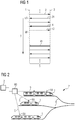
- FIG. 1 a sequence of an exemplary embodiment of a method for influencing a vehicle 1 with a route control center 2 is described schematically. Communication between the vehicle 1 and the route control center 2 by means of a communication channel 5 is illustrated as a function of the time T.
- the vehicle 1 is preferably a train and the route control center 2 is preferably an ETCS route control center.
- the communication channel 5 is preferably a radio link.
- the vehicle 1 sends status information 3 to the route control center 2 at regular time intervals.
- the route control center 2 preferably also sends status feedback 31 back to the vehicle 1 regularly.
- the route control center 2 sends a pause command 4 to the vehicle 1.
- the vehicle 1 sends back a pause confirmation 42.
- the vehicle 1 no longer uses the communication channel 5.
- the pause command 4 is particularly preferably transmitted in a telegram which, according to package 44 of the UNISIG system specifications, is ETCS-compliant. This preferably also applies to all other exemplary embodiments.
- This suspension of the use of the communication channel 5 either lasts for a certain period of time or until the vehicle 1 has reached a certain position or until the route control center 2 sends a communication command 41 to resume communication.
- Deviating from the representation in Figure 1 the pause command 4 and the optional communication command 41 can also originate from vehicle 1 and not from route control center 2.
- the line control center 2 It is possible for the line control center 2 to monitor a period of time ⁇ T which, for example, elapses between two successive status information items 3 and which represents a utilization of the communication channel 5. If the time interval ⁇ T exceeds a limit value, the route control center 2 commands that the communication channel 5 is temporarily not used by the vehicle 1, which is located, for example, in a train station. This enables the utilization of a radio cell in which the vehicle 1 is located to be reduced.
- a predetermined waiting time W of, for example, 5 minutes is exceeded without sending the pause command 4
- all data for train 1 would be deleted in the route control center 2, corresponding to the termination of a session.
- This can be prevented by the pause command 4 and train 1 can resume communication without potentially time-consuming re-initialization of a session.
- the communication is resumed, in particular, by granting a driving license with the communication command 41.
- the railway operations facility operated with the method comprises a train station 7.
- Several of the vehicles 1, which are preferably all trains, are located on a railway line 6 in the train station 7.
- the vehicles 1 are connected for data purposes by means of the communication channel 5 via a radio station 80 with the line control center 2.
- the vehicles 1 each include a communication device 50, for example a radio system with an antenna.
- the route control center 2 can command that this vehicle 1 does not use the communication channel 5 temporarily, at least as long as the vehicle 1 in question is stationary.
- This is in Figure 2 symbolized by the fact that the radio link in question is provided with an X.
- the radio station 80 and the line control center 2 can be relieved and, especially at peak times, a total of more trains 1 can be serviced with the same infrastructure.
- FIG 3 it is illustrated that a train 1 is traveling on the railway line 6.
- the railway line 6 is covered by radio cells 81 which are set up by the radio stations 80.
- one of the radio stations 80 is defective, so that a radio hole 8 results.
- the train 1 with the direction of travel, symbolized by an arrow, towards the radio hole thus soon enters the radio hole 8 known to the route control center 2.
- the line control center 2 can inform the train 1 via the communication channel 5 that the communication channel 5 will temporarily not be available. This applies in particular if it is foreseeable that the train 1, for example a slow-moving freight train, will be in the dead zone for longer than the specified waiting time.
- the session relating to train 1 can then be maintained beyond the specified waiting time due to the pause command in route control center 2 and the train information can remain stored. This means that the session can be prevented from automatically ending after the specified waiting time if there is no communication between the line control center 2 and the train 1.
- FIG 4 a modification of a method is shown in which no pause command is sent. While a first communication channel 5a is being used, the train 1 no longer sends any status information 3 from a certain point in time, for example due to a known radio gap. The line control center 2 waits for the waiting time W to see whether status information 3 is still coming from train 1. If not, the communication channel 5a is closed and the session with train 1 is ended. If train 1 reports again later, the second communication channel 5b is opened and a new session is initialized.
Landscapes
- Engineering & Computer Science (AREA)
- Mechanical Engineering (AREA)
- Train Traffic Observation, Control, And Security (AREA)
- Mobile Radio Communication Systems (AREA)
- Electric Propulsion And Braking For Vehicles (AREA)
Abstract
Description
- Die Anmeldung betrifft ein Verfahren zum Betreiben eines Fahrzeugs. Darüber hinaus betrifft die Anmeldung ein Bahnbetriebsgerät.
- Die Druckschrift
WO 2014/114485 A2 ist auf ein Verfahren und auf eine Vorrichtung zur Zugbeeinflussung gerichtet. - Eine zu lösende Aufgabe liegt darin, ein Verfahren anzugeben, mit dem eine Strecke, die einen Kommunikationskanal umfasst, effizient betreibbar ist. Eine weitere zu lösende Aufgabe liegt darin, ein Bahnbetriebsgerät für ein solches Verfahren anzugeben.
- Diese Aufgaben werden unter anderem durch ein Verfahren und durch ein Bahnbetriebsgerät mit den Merkmalen der unabhängigen Ansprüche gelöst. Bevorzugte Weiterbildungen sind Gegenstand der übrigen Ansprüche.
- In einer Ausführungsform ist das Verfahren zum Betreiben eines Fahrzeugs, insbesondere eines Zugs, eingerichtet und umfasst die Schritte:
- Bereitstellen des Fahrzeugs,
- Bereitstellen einer Streckenzentrale zur Beeinflussung des Fahrzeugs, wobei die Streckenzentrale bevorzugt eine ETCS-Streckenzentrale ist,
- zeitweise regelmäßiges Senden von Statusinformationen über einen Status des Fahrzeugs vom Fahrzeug an die Streckenzentrale, und
- Senden eines Pausekommandos von der Streckenzentrale an das Fahrzeug oder umgekehrt, sodass von einer Nutzung eines Kommunikationskanals zwischen dem Fahrzeug und der Streckenzentrale vorübergehend abgesehen wird.
- Dabei ist die Streckenzentrale dazu eingerichtet, den Kommunikationskanal zum Fahrzeug nach einer vorbestimmten Wartezeit zu schließen, wenn in der Wartezeit keine Übermittlung von Statusinformationen erfolgt, und wenn nicht zuvor ein Pausekommando gesendet wurde.
- Bei Bahnstrecken, die mit dem Europäischen Zugbeeinflussungssystem (englisch: European Train Control System, kurz ETCS) betrieben werden, erfolgt eine Kommunikation zwischen dem Zug und der Streckenzentrale gemäß den UNISIG-Systemspezifikationen, insbesondere gemäß UNISIG: System Requirements Specification, SUBSET-026. Dabei steht UNISIG für UNion Industry of SIGnalling, welche eine Arbeitsgruppe des Eisenbahnindustrie-Verbands UNIFE ist.
- Gemäß UNISIG ist eine Session nach 5 Minuten Funkunterbrechung als beendet zu betrachten. Eine Session ist dabei ein zusammenhängender Zeitbereich, während dem das Fahrzeug durch die Streckenzentrale beeinflussbar ist und überwacht wird. Durch das Sessionende werden alle in der Streckenzentrale über das Fahrzeug bekannten Informationen gelöscht, unter anderem die Zugdaten und die letzte bekannte Position des Zugs. Wenn eine Session beendet und neu aufgebaut werden muss, muss die Streckenzentrale erst wieder die Zugdaten empfangen und das Fahrzeug auf der Strecke lokalisieren. Die Lokalisierung kann je nach Streckentopologie mehreren Minuten dauern.
- Bei längeren planmäßigen Aufenthalten, zum Beispiel in einem Bahnhof, muss daher die Session offengehalten werden, damit nach dem Aufenthalt keine Neulokalisierung des Fahrzeugs erfolgen muss. Zum Offenhalten der Session ist ein permanenter Funkverkehr zwischen dem Fahrzeug und der Streckenzentrale erforderlich. Dadurch werden Kapazitäten eines Funknetzes, über das die Kommunikation zwischen dem Fahrzeug und der Streckenzentrale erfolgt, ohne betrieblichen Nutzen belegt.
- Bei dem hier beschriebenen Verfahren wird das frei nutzbare Paket 44, wie gemäß UNISIG spezifiziert, verwendet, um zwischen dem Fahrzeug und der Streckenzentrale auszuhandeln, dass die Session trotz Funkunterbrechung länger als 5 Minuten aufrechterhalten werden soll.
- Hierfür kann die Streckenzentrale beim Fahrzeug mittels des Pakets 44 den Abbau der Funkverbindung kommandieren, wobei jedoch die Session weiterlaufen soll und damit das Paket 42 gemäß UNISIG ersetzt wird, wenn dies zum Beispiel von einem Bedienplatz kommandiert wurde. Alternativ kann auch das Fahrzeug vor dem Abbau der Funkverbindung mittels eines Pakets 44 mitteilen, dass es die Session nach dem Wiederaufbau der Funkverbindung fortführen möchte.
- Sobald das Fahrzeug die Funkverbindung wieder aufbaut und sich sicher ist, dass sich weder Position noch Zugdaten verändert haben, sendet es ein Paket 44 zur Streckenzentrale, um die Fortsetzung der Session zu ermöglichen. Die Streckenzentrale kann danach sofort eine Fahrerlaubnis (englisch Movement Authority oder kurz MA) erteilen. Die Zeit für den Austausch der Zugdaten sowie für die Neulokalisierung entfällt. Wenn sich das Fahrzeug bezüglich seiner Positionsänderung oder Zugdatenänderung nicht sicher ist, wird stattdessen der normale Sessionaufbau gestartet, welcher zum Löschen der noch in der Streckenzentrale gespeicherten Daten führt.
- Mit der hier beschriebenen Verwendung des in UNISIG spezifizierten "General Purpose"-Pakets 44 wird eine Optimierung des Verhaltens bei unterbrochenen Sessions und dadurch eine Reduzierung der Rüstzeiten beim Sessionaufbau erzielt. Das Verfahren kann insbesondere angewendet werden, wenn die Streckenzentrale und das Fahrzeug die entsprechenden Telegramme im Paket 44 unterstützen. Bestehende UNISIG-Verfahren, und damit die Interoperabilität, werden nicht beeinträchtigt.
- Somit ist es mit dem hier beschriebenen Verfahren zum Beispiel möglich, wenn planmäßig ein längerer Halt eines ETCSgeführten Fahrzeugs geplant ist, die Funkverbindung während dieser Zeit zu unterbrechen und für andere Zwecke zu verwenden. Dadurch kann die Kapazität der Funkverbindung zum Beispiel in Knotenpunkten erhöht werden. Sobald das Fahrzeug seine Fahrt fortsetzen soll, kann die alte Session direkt mit der Erteilung der Fahrerlaubnis fortgesetzt werden, ohne dass in der Streckenzentrale initiale Maßnahmen etwa zur Ortung oder Registrierung des Fahrzeugs notwendig sind, die die Erteilung der Fahrerlaubnis verzögern würden.
- Gemäß zumindest einer Ausführungsform werden mit dem Verfahren viele Fahrzeuge gleichzeitig betrieben, insbesondere viele Züge, die sich auf einer oder auf mehreren Bahnstrecken befinden.
- Gemäß zumindest einer Ausführungsform des Verfahrens bzw. einer seiner oben beschriebenen Ausführungsformen werden die Statusinformationen regelmäßig vom Fahrzeug an die Streckenzentrale gesendet, solange kein Pausekommando gesendet wird. Es ist möglich, dass die Streckenzentrale regelmäßig eine Statusrückmeldung an das Fahrzeug sendet. Die Statusrückmeldungen und die Statusinformationen können abwechselnd gesendet werden. Ein reguläres Zeitintervall zwischen dem Senden zweier aufeinanderfolgender Statusinformationen liegt zum Beispiel bei mindestens 3 s und/oder bei höchstens 30 s.
- Gemäß zumindest einer Ausführungsform des Verfahrens bzw. einer seiner oben beschriebenen Ausführungsformen umfassen die Statusinformationen eine oder mehrere der folgenden Informationen: Zugnummer, Zugposition, Zuggeschwindigkeit, voraussichtlicher Bremsweg, Beschleunigung.
- Gemäß zumindest einer Ausführungsform des Verfahrens bzw. einer seiner oben beschriebenen Ausführungsformen wird das Pausekommando von der Streckenzentrale an das Fahrzeug gesendet. Es ist möglich, dass das Fahrzeug den Erhalt des Pausekommandos noch bestätigt, ansonsten dann aber den Kommunikationskanal zum Beispiel bis zum Erhalt eines Kommunikationsbefehls, der das Pausekommando aufhebt, den Kommunikationskanal nicht mehr nutzt.
- Gemäß zumindest einer Ausführungsform des Verfahrens bzw. einer seiner oben beschriebenen Ausführungsformen wird das Pausekommando vom Fahrzeug an die Streckenzentrale gesendet. Es ist möglich, dass die Streckenzentrale den Erhalt des Pausekommandos noch bestätigt, ansonsten dann aber den Kommunikationskanal hin zum Fahrzeug bis zum Erhalt eines Kommunikationsbefehls, der das Pausekommando aufhebt, und/oder für eine bestimmte Zeitdauer den Kommunikationskanal nicht mehr nutzt.
- Der Kommunikationsbefehl kann eine Fahrerlaubnis, kurz MA, sein oder eine Fahrerlaubnis enthalten. Das Pausekommando kann insbesondere vom Fahrzeug eine Aufforderung sein, die Session auch ohne Kommunikation länger als die Wartezeit aufrecht zu erhalten.
- Gemäß zumindest einer Ausführungsform des Verfahrens bzw. einer seiner oben beschriebenen Ausführungsformen führt das zuvor erteilte Pausekommando dazu, dass das Fahrzeug auch über die Wartezeit hinaus in der Streckenzentrale registriert bleibt. Die Wartezeit, nach der das Fahrzeug ohne Kommunikation aus der Streckenzentrale gestrichen wird, beträgt zum Beispiel 5 min. Durch die Wartezeit wird verhindert, dass defekte Fahrzeuge oder Fahrzeuge an einem defekten Kommunikationskanal zu lange in der Streckenzentrale registriert bleiben und dauerhaft Kapazitäten des Kommunikationskanals und/oder in der Streckenzentrale blockieren. Die Wartezeit beträgt zum Beispiel mindestens das Zehnfache oder Fünfzigfache einer mittleren Zeitspannte zwischen dem Senden zweier aufeinanderfolgender Statusinformationen.
- Gemäß zumindest einer Ausführungsform des Verfahrens bzw. einer seiner oben beschriebenen Ausführungsformen ist der Kommunikationskanal eine Funkverbindung, insbesondere eine Verbindung nach dem Standard Global System for Mobile Communications - Rail, kurz GSM-R, das ein digitales Mobilfunksystem ist, welches auf dem Mobilfunkstandard GSM aufbaut, jedoch für die Verwendung bei der Eisenbahn erweitert wurde. Außerdem kann eine Kommunikation mittels der Protokolle CS (Circuit Switching, auch als CSD für Circuit Switched Data bezeichnet) oder PS (Packet Switching, auch als General Packet Radio Service, kurz GPRS, bezeichnet) erfolgen. Alternativ oder auch in Kombination kann der Kommunikationskanal auf den Standards UMTS (3G), LTE (3.9G), LTEA (4G) und/oder 5G basieren.
- Gemäß zumindest einer Ausführungsform des Verfahrens bzw. einer seiner oben beschriebenen Ausführungsformen wird das Pausekommando von der Streckenzentrale erteilt, wenn absehbar ist, dass das Fahrzeug planmäßig oder außerplanmäßig noch für eine Zeitspanne von mindestens 25 % oder 50 % der Wartezeit stillstehen wird. Insbesondere wird das Pausekommando in einem Bahnhof und/oder an einem Verkehrsknotenpunkt gesendet, um eine Auslastung des Kommunikationskanals zu reduzieren.
- Gemäß zumindest einer Ausführungsform des Verfahrens bzw. einer seiner oben beschriebenen Ausführungsformen wird das Pausekommando gesendet, bevor das Fahrzeug in einen Bereich ohne Verfügbarkeit des Kommunikationskanals eintritt. Der Bereich ohne Verfügbarkeit des Kommunikationskanals ist zum Beispiel ein Funkloch, das durch den Ausfall einer Funkstation bedingt ist. Bevorzugt ist das Funkloch der Streckenzentrale bekannt, bevor das Pausekommando versendet wird. Insbesondere in diesem Fall kann das Pausekommando einen Befehl umfassen, wonach sich das Fahrzeug nach einer bestimmten Zeitspanne und/oder bei Erreichen einer bestimmten Position wieder zu melden hat.
- Darüber hinaus wird ein Bahnbetriebsgerät für ein Verfahren, wie oben beschrieben, angegeben. Merkmale des Bahnbetriebsgeräts sind daher auch für das Verfahren offenbart und umgekehrt.
- In mindestens einer Ausführungsform ist das Bahnbetriebsgerät dazu eingerichtet, das Pausekommande zu senden und/oder zu empfangen. Dazu umfasst das Bahnbetriebsgerät eine oder mehrere Kommunikationseinrichtungen für den Kommunikationskanal. Bei der mindestens einen Kommunikationseinrichtung handelt es sich zum Beispiel um eine Funkeinrichtung. Das Bahnbetriebsgerät ist bevorzugt das Fahrzeug oder die Streckenzentrale, kann aber auch ein Streckenelement wie ein Stellwerk, ein Bahnübergang oder eine Streckensignalanlage sein.
- Die oben genannten Eigenschaften, Merkmale und Vorteile der Erfindung und die Art und Weise, wie diese erreicht werden, werden durch die folgende Beschreibung der Ausführungsbeispiele der Erfindung in Verbindung mit den entsprechenden Figuren weitergehend erläutert, wobei
- Figur 1
- ein schematisches Diagramm eines zeitlichen Ablaufs eines hier beschriebenen Verfahrens zeigt, die
- Figuren 2 und 3
- schematische Darstellungen von Bahnanlagen zeigen, die mit hier beschriebenen Verfahren betrieben werden, und
- Figur 4
- ein schematisches Diagramm eines zeitlichen Ablaufs einer Abwandlung eines Verfahrens zeigt.
- In
Figur 1 ist schematisch ein Ablauf eines Ausführungsbeispiels eines Verfahrens zum Beeinflussen eines Fahrzeugs 1 mit einer Streckenzentrale 2 beschrieben. Dabei ist in Abhängigkeit von der Zeit T eine Kommunikation zwischen dem Fahrzeug 1 und der Streckenzentrale 2 mittels eines Kommunikationskanals 5 veranschaulicht. Das Fahrzeug 1 ist bevorzugt ein Zug und die Streckenzentrale 2 ist bevorzugt eine ETCS-Streckenzentrale. Bei dem Kommunikationskanal 5 handelt es sich bevorzugt um eine Funkverbindung. - Im regulären Betrieb sendet das Fahrzeug 1 in regelmäßigen Zeitabständen Statusinformationen 3 an die Streckenzentrale 2. Die Streckenzentrale 2 sendet bevorzugt ebenso regelmäßig Statusrückmeldungen 31 zurück an das Fahrzeug 1.
- Ist absehbar, dass das Fahrzeug 1 länger stillstehen wird oder sich länger in einem Funkloch aufhalten wird, so sendet die Streckenzentrale 2 ein Pausekommando 4 an das Fahrzeug 1. Optional sendet das Fahrzeug 1 eine Pausebestätigung 42 zurück. Nach Erhalt des Pausekommandos 4 oder optional nach Senden der Pausebestätigung 42 nutzt das Fahrzeug 1 den Kommunikationskanal 5 nicht mehr. Das Pausekommando 4 wird besonders bevorzugt in einem Telegramm, das gemäß Paket 44 der UNISIG-Systemspezifikationen ETCS-konform gestaltet ist, übertragen. Dies gilt bevorzugt auch für alle anderen Ausführungsbeispiele.
- Dieses Aussetzen der Nutzung des Kommunikationskanals 5 dauert entweder für eine bestimmte Zeitspanne an oder bis das Fahrzeug 1 eine bestimmte Position erreicht hat oder bis die Streckenzentrale 2 einen Kommunikationsbefehl 41 zur Wiederaufnahme der Kommunikation sendet.
- Abweichend von der Darstellung in
Figur 1 können das Pausekommando 4 und der optionale Kommunikationsbefehl 41 auch vom Fahrzeug 1 ausgehen und nicht von der Streckenzentrale 2. - Es ist möglich, dass die Streckenzentrale 2 eine Zeitspanne ΔT überwacht, die zum Beispiel zwischen zwei aufeinanderfolgenden Statusinformationen 3 vergeht und eine Auslastung des Kommunikationskanals 5 repräsentiert. Überschreitet die Zeitspanne ΔT einen Grenzwert, befiehlt die Streckenzentrale 2, dass der Kommunikationskanal 5 von dem Fahrzeug 1, das sich zum Beispiel in einem Bahnhof befindet, vorübergehend nicht genutzt wird. Hierdurch ist eine Auslastung einer Funkzelle, in der sich das Fahrzeug 1 befindet, reduzierbar.
- Wird ohne das Senden des Pausekommandos 4 eine vorgegebene Wartezeit W von zum Beispiel 5 Minuten überschritten, so würden in der Streckenzentrale 2 alle Daten zum Zug 1 gelöscht werden, entsprechend einer Beendigung einer Session. Durch das Pausekommando 4 ist dies verhinderbar und der Zug 1 kann ohne potentiell zeitaufwendig Neuinitialisierung einer Session die Kommunikation wieder aufnehmen. Die Kommunikation wird insbesondere durch das Erteilen einer Fahrerlaubnis mit dem Kommunikationsbefehl 41 wieder aufgenommen.
- In
Figur 2 ist gezeigt, dass die Bahnbetriebsanlage, die mit dem Verfahren betrieben wird, einen Bahnhof 7 umfasst. Mehrere der Fahrzeuge 1, die bevorzugt alle Züge sind, befinden sich auf einer Bahnstrecke 6 in dem Bahnhof 7. Die Fahrzeuge 1 sind mittels des Kommunikationskanals 5 per Funk über eine Funkstation 80 mit der Streckenzentrale 2 datentechnisch verbunden. Die Fahrzeuge 1 umfassen je eine Kommunikationseinrichtung 50, zum Beispiel eine Funkanlage mit einer Antenne. - Steht zumindest eines der Fahrzeuge 1 im Bahnhof 7 länger still, so kann die Streckenzentrale 2 befehlen, dass dieses Fahrzeug 1 den Kommunikationskanal 5 zeitweise nicht nutzt, jedenfalls solange das betreffende Fahrzeug 1 stillsteht. Dies ist in
Figur 2 dadurch symbolisiert, dass die betreffende Funkverbindung mit einem X versehen ist. Dadurch lassen sich die Funkstation 80 und die Streckenzentrale 2 entlasten und es können, speziell zu Stoßzeiten, insgesamt mehr Züge 1 mit der gleichen Infrastruktur betreut werden. - In
Figur 3 ist veranschaulicht, dass ein Zug 1 auf der Bahnstrecke 6 unterwegs ist. Die Bahnstrecke 6 ist von Funkzellen 81 abgedeckt, die von den Funkstationen 80 aufgebaut werden. Dabei ist inFigur 3 eine der Funkstationen 80 defekt, sodass ein Funkloch 8 resultiert. - Der Zug 1 mit Fahrtrichtung, symbolisiert durch einen Pfeil, hin zu dem Funkloch fährt somit bald in das der Streckenzentrale 2 bekannte Funkloch 8 ein. Um dadurch eine Betriebsstörung zu verhindern, kann die Streckenzentrale 2 über den Kommunikationskanal 5 dem Zug 1 mitteilen, dass vorübergehend der Kommunikationskanal 5 nicht zur Verfügung stehen wird. Dies gilt insbesondere, falls abzusehen ist, dass sich der Zug 1, zum Beispiel ein langsam fahrender Güterzug, länger als die vorgegebene Wartezeit in dem Funkloch befinden wird. Die den Zug 1 betreffende Session kann dann aufgrund des Pausekommandos in der Streckenzentrale 2 über die vorgegebene Wartezeit hinaus aufrecht erhalten werden und die Zuginformationen können gespeichert bleiben. Das heißt, das automatische Beenden der Session nach der vorgegebenen Wartezeit, wenn keine Kommunikation zwischen der Streckenzentrale 2 und dem Zug 1 erfolgt, kann verhindert werden.
- In
Figur 4 ist eine Abwandlung eines Verfahrens gezeigt, wobei kein Pausekommando gesendet wird. Während der Nutzung eines ersten Kommunikationskanals 5a werden vom Zug 1, beispielsweise aufgrund eines bekannten Funklochs, ab einem bestimmten Zeitpunkt keine Statusinformationen 3 mehr gesendet. Die Streckenzentrale 2 wartet die Wartezeit W ab, ob doch noch Statusinformationen 3 vom Zug 1 kommen. Falls nicht, wird der Kommunikationskanal 5a geschlossen und die Session mit dem Zug 1 wird beendet. Meldet sich der Zug 1 später wieder, wird der zweite Kommunikationskanal 5b geöffnet und es wird eine neue Session initialisiert. - Obwohl die Erfindung anhand von Ausführungsbeispielen detailliert dargestellt und beschrieben wurde, ist die Erfindung nicht auf die offenbarten Ausführungsbeispiele und die darin erläuterten konkreten Merkmalskombinationen beschränkt. Weitere Variationen der Erfindung können von einem Fachmann erhalten werden, ohne den Schutzumfang der beanspruchten Erfindung zu verlassen.
-
- 1
- Fahrzeug
- 2
- Streckenzentrale
- 3
- Statusinformation
- 31
- Statusrückmeldung
- 4
- Pausekommando
- 41
- Kommunikationsbefehl
- 42
- Pausebestätigung
- 5, 5a, 5b
- Kommunikationskanal
- 50
- Kommunikationseinrichtung
- 6
- Bahnstrecke
- 7
- Bahnhof
- 8
- Funkloch
- 80
- Funkstation
- 81
- Funkzelle
- ΔT
- Zeitspanne
- T
- Zeit
- W
- Wartezeit
Claims (9)
- Verfahren zum Betreiben eines Fahrzeugs (1) mit den Schritten:- Bereitstellen des Fahrzeugs (1),- Bereitstellen einer Streckenzentrale (2) zur Beeinflussung des Fahrzeugs (1),- zeitweise regelmäßiges Senden von Statusinformationen (3) über einen Status des Fahrzeugs (1) vom Fahrzeug (1) an die Streckenzentrale (2), und- Senden eines Pausekommandos (4) von der Streckenzentrale (2) an das Fahrzeug (1) oder umgekehrt, sodass von einer Nutzung eines Kommunikationskanals (5) zwischen dem Fahrzeug (1) und der Streckenzentrale (2) vorübergehend abgesehen wird, wobei die Streckenzentrale (2) dazu eingerichtet ist, wenn zuvor kein Pausekommando (4) gesendet wurde, den Kommunikationskanal (5) zum Fahrzeug (1) nach einer vorbestimmten Wartezeit (W) ohne einer Übermittlung von Statusinformationen (3) zu schließen.
- Verfahren nach dem vorhergehenden Anspruch,
bei dem die Streckenzentrale (2), wenn zuvor kein Pausekommando (4) gesendet wurde, nach der vorbestimmten Wartezeit (W) ohne einer Übermittlung von Statusinformationen (3) die zuvor erhaltenen Statusinformationen (3) löscht, sodass das Fahrzeug (1) aus der Streckenzentrale (2) ausgetragen wird, wobei das zuvor erteilte Pausekommando (4) dazu führt, dass das Fahrzeug (1) auch über die Wartezeit (W) hinaus in der Streckenzentrale (2) registriert bleibt. - Verfahren nach einem der vorhergehenden Ansprüche,
bei dem- das Fahrzeug (1) ein Zug ist,- die Streckenzentrale (2) eine ETCS-Streckenzentrale ist und eine Bahnstrecke (6) überwacht,- der Kommunikationskanal (5) eine Funkverbindung ist, und- ein Datenaustausch über den Kommunikationskanal (5) gemäß der UNISIG-Systemspezifikationen erfolgt. - Verfahren nach dem unmittelbar vorhergehenden Anspruch, bei dem das Pausekommando (4) im Paket 44 der UNISIG-Systemspezifikationen übertragen wird.
- Verfahren nach einem der vorhergehenden Ansprüche,
bei dem das Pausekommando (4) von der Streckenzentrale (2) erteilt wird, wenn das Fahrzeug (1) planmäßig für eine Zeitspanne von mindestens 25 % der Wartezeit (W) stillsteht. - Verfahren nach einem der vorhergehenden Ansprüche,
bei dem das Pausekommando (4) in einem Bahnhof (7) gesendet wird, um eine Auslastung des Kommunikationskanals (5) zu reduzieren. - Verfahren nach einem der vorhergehenden Ansprüche,
bei dem das Pausekommando (4) gesendet wird, bevor das Fahrzeug (1) in einen Bereich ohne Verfügbarkeit des Kommunikationskanals (5) eintritt. - Verfahren nach dem unmittelbar vorhergehenden Anspruch,
bei dem der Bereich ohne Verfügbarkeit des Kommunikationskanals (5) ein Funkloch (8) ist, das durch den Ausfall einer Funkstation (80) bedingt ist. - Bahnbetriebsgerät (1, 2), das für ein Verfahren nach einem der vorhergehenden Ansprüche eingerichtet ist,
wobei das Bahnbetriebsgerät (1, 2) mindestens eine Kommunikationseinrichtung (50) für den Kommunikationskanal (5) umfasst.
Applications Claiming Priority (1)
| Application Number | Priority Date | Filing Date | Title |
|---|---|---|---|
| DE102019212194.2A DE102019212194A1 (de) | 2019-08-14 | 2019-08-14 | Verfahren zum Betreiben eines Fahrzeugs und Bahnbetriebsgerät |
Publications (3)
| Publication Number | Publication Date |
|---|---|
| EP3778345A1 true EP3778345A1 (de) | 2021-02-17 |
| EP3778345C0 EP3778345C0 (de) | 2025-04-16 |
| EP3778345B1 EP3778345B1 (de) | 2025-04-16 |
Family
ID=71614716
Family Applications (1)
| Application Number | Title | Priority Date | Filing Date |
|---|---|---|---|
| EP20185621.8A Active EP3778345B1 (de) | 2019-08-14 | 2020-07-14 | Verfahren zum betreiben eines fahrzeugs und bahnbetriebsanlage |
Country Status (3)
| Country | Link |
|---|---|
| EP (1) | EP3778345B1 (de) |
| DE (1) | DE102019212194A1 (de) |
| ES (1) | ES3032966T3 (de) |
Cited By (1)
| Publication number | Priority date | Publication date | Assignee | Title |
|---|---|---|---|---|
| EP4464572A1 (de) | 2023-05-16 | 2024-11-20 | Siemens Mobility GmbH | Verfahren zur etcs-zugbeeinflussung und ersatzeinrichtung |
Citations (2)
| Publication number | Priority date | Publication date | Assignee | Title |
|---|---|---|---|---|
| WO2014114485A2 (de) | 2013-01-25 | 2014-07-31 | Siemens Aktiengesellschaft | Verfahren und vorrichtung zur etcs -l1 - und/oder -l2 - zugbeeinflussung |
| DE102016217900A1 (de) * | 2016-09-19 | 2018-03-22 | Siemens Aktiengesellschaft | Überwachung eines Schienenfahrzeugs |
Family Cites Families (1)
| Publication number | Priority date | Publication date | Assignee | Title |
|---|---|---|---|---|
| EP2631152B1 (de) * | 2012-02-24 | 2015-04-08 | Schweizerische Bundesbahnen SBB | Verfahren und Vorrichtung für die Verwaltung von Ressourcen in einem Schienennetz |
-
2019
- 2019-08-14 DE DE102019212194.2A patent/DE102019212194A1/de active Pending
-
2020
- 2020-07-14 EP EP20185621.8A patent/EP3778345B1/de active Active
- 2020-07-14 ES ES20185621T patent/ES3032966T3/es active Active
Patent Citations (2)
| Publication number | Priority date | Publication date | Assignee | Title |
|---|---|---|---|---|
| WO2014114485A2 (de) | 2013-01-25 | 2014-07-31 | Siemens Aktiengesellschaft | Verfahren und vorrichtung zur etcs -l1 - und/oder -l2 - zugbeeinflussung |
| DE102016217900A1 (de) * | 2016-09-19 | 2018-03-22 | Siemens Aktiengesellschaft | Überwachung eines Schienenfahrzeugs |
Non-Patent Citations (2)
| Title |
|---|
| BORRELLI ANTONIO ET AL: "Formal Verification of Radio Communication Management in Railway Systems Using Model Checking Technique", 2019 IEEE 28TH INTERNATIONAL CONFERENCE ON ENABLING TECHNOLOGIES: INFRASTRUCTURE FOR COLLABORATIVE ENTERPRISES (WETICE), IEEE, 12 June 2019 (2019-06-12), pages 249 - 254, XP033598624, DOI: 10.1109/WETICE.2019.00060 * |
| UNISIG: "ERA * UNISIG * EEIG ERTMS USERS GROUP System Requirements Specification Chapter 3 Principles ERTMS/ETCS System Requirements Specification Chapter 3 Principles", 12 May 2014 (2014-05-12), XP055709049, Retrieved from the Internet <URL:https://www.scribd.com/document/361504251/SUBSET-026-3-v340-pdf> [retrieved on 20201218] * |
Cited By (1)
| Publication number | Priority date | Publication date | Assignee | Title |
|---|---|---|---|---|
| EP4464572A1 (de) | 2023-05-16 | 2024-11-20 | Siemens Mobility GmbH | Verfahren zur etcs-zugbeeinflussung und ersatzeinrichtung |
Also Published As
| Publication number | Publication date |
|---|---|
| EP3778345C0 (de) | 2025-04-16 |
| DE102019212194A1 (de) | 2021-02-18 |
| ES3032966T3 (en) | 2025-07-29 |
| EP3778345B1 (de) | 2025-04-16 |
Similar Documents
| Publication | Publication Date | Title |
|---|---|---|
| EP3102474B1 (de) | Schienenfahrzeug mit einer etcs-bordeinheit, schienenfahrzeug-verband mit mindestens zwei schienenfahrzeugen mit jeweils einer etcs-bordeinheit und verfahren zum steuern eines derartigen schienenfahrzeug-verbands | |
| EP2691255B1 (de) | Verfahren zum betreiben spurgebundener fahrzeuge | |
| EP3448736B1 (de) | Verfahren sowie anordnung zum sichern eines bahnübergangs | |
| WO2014048719A2 (de) | Steuerung eines schienenfahrzeugs | |
| EP3925851A1 (de) | System und verfahren zur durchführung einer einfahrkontrolle für ein schienenfahrzeug | |
| EP3964419A1 (de) | Übertragung von daten zwischen einem spurgebundenen fahrzeug und einer landseitigen einrichtung | |
| EP2790994A2 (de) | System zur steuerung, sicherung und/oder überwachung von fahrwegen spurgebundener fahrzeuge sowie verfahren zum betreiben eines solchen systems | |
| EP3778345B1 (de) | Verfahren zum betreiben eines fahrzeugs und bahnbetriebsanlage | |
| WO2014048736A2 (de) | Steuerung eines schienenfahrzeugs | |
| EP3771612B1 (de) | Streckeneinrichtung und verfahren zum betreiben einer streckeneinrichtung | |
| EP3778349B1 (de) | Fahrzeugbeeinflussungssystem, streckenzentrale und betriebsverfahren für ein fahrzeugbeeinflussungssystem | |
| WO2011042321A1 (de) | Verfahren und vorrichtung zum betreiben einer eisenbahnstrecke | |
| EP2069183B1 (de) | Umschaltbare, sichere einrichtung zum empfangen und/oder aussenden von signalen zur zugbeeinflussung auf einem schienenfahrzeug | |
| EP3374247B1 (de) | Verfahren zum betreiben einer etcs-mobilfunkantennenanordnung und etcs-bahnfahrzeug mit einer etcs-mobilfunkantennenanordnung | |
| EP3109127A1 (de) | Verfahren zur meldung einer ausdehnung einer movement authority von einer streckenzentrale an ein stellwerk | |
| DE102011054422A1 (de) | Zugsicherungssystem | |
| EP1561663A1 (de) | Verfahren und Vorrichtung zur Zugvollständigkeitskontrolle eines schienengebundenen Zuges | |
| EP3541680B1 (de) | Verfahren und eisenbahnkomponente zum übertragen von nachrichten | |
| EP2127936B1 (de) | Verfahren zur Beeinflussung und Begrenzung längsdynamischer Kräfte in einem Zugverband | |
| DE102004048993A1 (de) | System und Verfahren zur Steuerung von schienengebundenen Fahrzeugen, insbesondere von Zügen, mittels einer Steuerzentrale, in Abhängigkeit vom Zustand des Fahrwegs, insbesondere des verfügbaren Reibwertes | |
| DE102011085304A1 (de) | Vorrichtung und Verfahren zur drahtlosen Kommunikation mit einem Schienenfahrzeug | |
| EP3655306B1 (de) | Verfahren und system zum beeinflussen mindestens eines schienenfahrzeuges | |
| EP4470870A1 (de) | Verfahren, feldgerät und zentraleinrichtung zum betreiben ei-ner eisenbahngleisanlage | |
| EP4470869A1 (de) | Verfahren, feldgerät und zentraleinrichtung zum betreiben einer eisenbahngleisanlage | |
| DE19927023A1 (de) | Verfahren zum Vorgeben von Anrufzeitpunkten im Funk-Fahr-Betrieb |
Legal Events
| Date | Code | Title | Description |
|---|---|---|---|
| PUAI | Public reference made under article 153(3) epc to a published international application that has entered the european phase |
Free format text: ORIGINAL CODE: 0009012 |
|
| STAA | Information on the status of an ep patent application or granted ep patent |
Free format text: STATUS: THE APPLICATION HAS BEEN PUBLISHED |
|
| AK | Designated contracting states |
Kind code of ref document: A1 Designated state(s): AL AT BE BG CH CY CZ DE DK EE ES FI FR GB GR HR HU IE IS IT LI LT LU LV MC MK MT NL NO PL PT RO RS SE SI SK SM TR |
|
| AX | Request for extension of the european patent |
Extension state: BA ME |
|
| STAA | Information on the status of an ep patent application or granted ep patent |
Free format text: STATUS: REQUEST FOR EXAMINATION WAS MADE |
|
| 17P | Request for examination filed |
Effective date: 20210304 |
|
| RBV | Designated contracting states (corrected) |
Designated state(s): AL AT BE BG CH CY CZ DE DK EE ES FI FR GB GR HR HU IE IS IT LI LT LU LV MC MK MT NL NO PL PT RO RS SE SI SK SM TR |
|
| STAA | Information on the status of an ep patent application or granted ep patent |
Free format text: STATUS: EXAMINATION IS IN PROGRESS |
|
| 17Q | First examination report despatched |
Effective date: 20220722 |
|
| GRAP | Despatch of communication of intention to grant a patent |
Free format text: ORIGINAL CODE: EPIDOSNIGR1 |
|
| STAA | Information on the status of an ep patent application or granted ep patent |
Free format text: STATUS: GRANT OF PATENT IS INTENDED |
|
| RIC1 | Information provided on ipc code assigned before grant |
Ipc: B61L 27/20 20220101ALN20241121BHEP Ipc: B61L 27/70 20220101ALI20241121BHEP Ipc: B61L 27/40 20220101ALI20241121BHEP Ipc: B61L 27/16 20220101ALI20241121BHEP Ipc: B61L 15/00 20060101AFI20241121BHEP |
|
| INTG | Intention to grant announced |
Effective date: 20241204 |
|
| GRAS | Grant fee paid |
Free format text: ORIGINAL CODE: EPIDOSNIGR3 |
|
| GRAA | (expected) grant |
Free format text: ORIGINAL CODE: 0009210 |
|
| STAA | Information on the status of an ep patent application or granted ep patent |
Free format text: STATUS: THE PATENT HAS BEEN GRANTED |
|
| AK | Designated contracting states |
Kind code of ref document: B1 Designated state(s): AL AT BE BG CH CY CZ DE DK EE ES FI FR GB GR HR HU IE IS IT LI LT LU LV MC MK MT NL NO PL PT RO RS SE SI SK SM TR |
|
| REG | Reference to a national code |
Ref country code: GB Ref legal event code: FG4D Free format text: NOT ENGLISH |
|
| REG | Reference to a national code |
Ref country code: CH Ref legal event code: EP Ref country code: DE Ref legal event code: R096 Ref document number: 502020010821 Country of ref document: DE |
|
| REG | Reference to a national code |
Ref country code: IE Ref legal event code: FG4D Free format text: LANGUAGE OF EP DOCUMENT: GERMAN |
|
| U01 | Request for unitary effect filed |
Effective date: 20250416 |
|
| U07 | Unitary effect registered |
Designated state(s): AT BE BG DE DK EE FI FR IT LT LU LV MT NL PT RO SE SI Effective date: 20250424 |
|
| REG | Reference to a national code |
Ref country code: ES Ref legal event code: FG2A Ref document number: 3032966 Country of ref document: ES Kind code of ref document: T3 Effective date: 20250729 |
|
| U20 | Renewal fee for the european patent with unitary effect paid |
Year of fee payment: 6 Effective date: 20250718 |
|
| REG | Reference to a national code |
Ref country code: CH Ref legal event code: U11 Free format text: ST27 STATUS EVENT CODE: U-0-0-U10-U11 (AS PROVIDED BY THE NATIONAL OFFICE) Effective date: 20251006 |
|
| RAP4 | Party data changed (patent owner data changed or rights of a patent transferred) |
Owner name: SIEMENS MOBILITY GMBH |
|
| U1H | Name or address of the proprietor changed after the registration of the unitary effect |
Owner name: SIEMENS MOBILITY GMBH; DE |
|
| PG25 | Lapsed in a contracting state [announced via postgrant information from national office to epo] |
Ref country code: GR Free format text: LAPSE BECAUSE OF FAILURE TO SUBMIT A TRANSLATION OF THE DESCRIPTION OR TO PAY THE FEE WITHIN THE PRESCRIBED TIME-LIMIT Effective date: 20250717 Ref country code: NO Free format text: LAPSE BECAUSE OF FAILURE TO SUBMIT A TRANSLATION OF THE DESCRIPTION OR TO PAY THE FEE WITHIN THE PRESCRIBED TIME-LIMIT Effective date: 20250716 |
|
| PG25 | Lapsed in a contracting state [announced via postgrant information from national office to epo] |
Ref country code: PL Free format text: LAPSE BECAUSE OF FAILURE TO SUBMIT A TRANSLATION OF THE DESCRIPTION OR TO PAY THE FEE WITHIN THE PRESCRIBED TIME-LIMIT Effective date: 20250416 |
|
| PGFP | Annual fee paid to national office [announced via postgrant information from national office to epo] |
Ref country code: GB Payment date: 20250811 Year of fee payment: 6 |
|
| PG25 | Lapsed in a contracting state [announced via postgrant information from national office to epo] |
Ref country code: HR Free format text: LAPSE BECAUSE OF FAILURE TO SUBMIT A TRANSLATION OF THE DESCRIPTION OR TO PAY THE FEE WITHIN THE PRESCRIBED TIME-LIMIT Effective date: 20250416 |
|
| PG25 | Lapsed in a contracting state [announced via postgrant information from national office to epo] |
Ref country code: RS Free format text: LAPSE BECAUSE OF FAILURE TO SUBMIT A TRANSLATION OF THE DESCRIPTION OR TO PAY THE FEE WITHIN THE PRESCRIBED TIME-LIMIT Effective date: 20250716 |
|
| PG25 | Lapsed in a contracting state [announced via postgrant information from national office to epo] |
Ref country code: IS Free format text: LAPSE BECAUSE OF FAILURE TO SUBMIT A TRANSLATION OF THE DESCRIPTION OR TO PAY THE FEE WITHIN THE PRESCRIBED TIME-LIMIT Effective date: 20250816 |
|
| PG25 | Lapsed in a contracting state [announced via postgrant information from national office to epo] |
Ref country code: SM Free format text: LAPSE BECAUSE OF FAILURE TO SUBMIT A TRANSLATION OF THE DESCRIPTION OR TO PAY THE FEE WITHIN THE PRESCRIBED TIME-LIMIT Effective date: 20250416 |
|
| PGFP | Annual fee paid to national office [announced via postgrant information from national office to epo] |
Ref country code: CH Payment date: 20251006 Year of fee payment: 6 |
|
| PG25 | Lapsed in a contracting state [announced via postgrant information from national office to epo] |
Ref country code: CZ Free format text: LAPSE BECAUSE OF FAILURE TO SUBMIT A TRANSLATION OF THE DESCRIPTION OR TO PAY THE FEE WITHIN THE PRESCRIBED TIME-LIMIT Effective date: 20250416 |
|
| PG25 | Lapsed in a contracting state [announced via postgrant information from national office to epo] |
Ref country code: SK Free format text: LAPSE BECAUSE OF FAILURE TO SUBMIT A TRANSLATION OF THE DESCRIPTION OR TO PAY THE FEE WITHIN THE PRESCRIBED TIME-LIMIT Effective date: 20250416 |
|
| PGFP | Annual fee paid to national office [announced via postgrant information from national office to epo] |
Ref country code: ES Payment date: 20251020 Year of fee payment: 6 |
|
| PLBE | No opposition filed within time limit |
Free format text: ORIGINAL CODE: 0009261 |
|
| STAA | Information on the status of an ep patent application or granted ep patent |
Free format text: STATUS: NO OPPOSITION FILED WITHIN TIME LIMIT |
|
| REG | Reference to a national code |
Ref country code: CH Ref legal event code: L10 Free format text: ST27 STATUS EVENT CODE: U-0-0-L10-L00 (AS PROVIDED BY THE NATIONAL OFFICE) Effective date: 20260225 |
|
| 26N | No opposition filed |
Effective date: 20260119 |