EP3788833B1 - Procédés, dispositif de communications et équipement d'infrastructure - Google Patents
Procédés, dispositif de communications et équipement d'infrastructure Download PDFInfo
- Publication number
- EP3788833B1 EP3788833B1 EP19720679.0A EP19720679A EP3788833B1 EP 3788833 B1 EP3788833 B1 EP 3788833B1 EP 19720679 A EP19720679 A EP 19720679A EP 3788833 B1 EP3788833 B1 EP 3788833B1
- Authority
- EP
- European Patent Office
- Prior art keywords
- tbs
- random access
- access procedure
- permitted
- message
- Prior art date
- Legal status (The legal status is an assumption and is not a legal conclusion. Google has not performed a legal analysis and makes no representation as to the accuracy of the status listed.)
- Active
Links
Images




Classifications
-
- H—ELECTRICITY
- H04—ELECTRIC COMMUNICATION TECHNIQUE
- H04W—WIRELESS COMMUNICATION NETWORKS
- H04W72/00—Local resource management
- H04W72/04—Wireless resource allocation
- H04W72/044—Wireless resource allocation based on the type of the allocated resource
- H04W72/0446—Resources in time domain, e.g. slots or frames
-
- H—ELECTRICITY
- H04—ELECTRIC COMMUNICATION TECHNIQUE
- H04W—WIRELESS COMMUNICATION NETWORKS
- H04W72/00—Local resource management
- H04W72/12—Wireless traffic scheduling
- H04W72/1263—Mapping of traffic onto schedule, e.g. scheduled allocation or multiplexing of flows
-
- H—ELECTRICITY
- H04—ELECTRIC COMMUNICATION TECHNIQUE
- H04W—WIRELESS COMMUNICATION NETWORKS
- H04W72/00—Local resource management
- H04W72/50—Allocation or scheduling criteria for wireless resources
- H04W72/535—Allocation or scheduling criteria for wireless resources based on resource usage policies
-
- H—ELECTRICITY
- H04—ELECTRIC COMMUNICATION TECHNIQUE
- H04W—WIRELESS COMMUNICATION NETWORKS
- H04W74/00—Wireless channel access
- H04W74/002—Transmission of channel access control information
-
- H—ELECTRICITY
- H04—ELECTRIC COMMUNICATION TECHNIQUE
- H04W—WIRELESS COMMUNICATION NETWORKS
- H04W74/00—Wireless channel access
- H04W74/08—Non-scheduled access, e.g. ALOHA
- H04W74/0833—Random access procedures, e.g. with 4-step access
Definitions
- the present disclosure relates to methods and various telecommunications apparatus for the communication of random access procedure messages.
- Recent generation mobile telecommunication systems such as those based on the 3GPP defined UMTS and Long Term Evolution (LTE) architectures, are able to support a wider range of services than simple voice and messaging services offered by previous generations of mobile telecommunication systems.
- LTE Long Term Evolution
- a user is able to enjoy high data rate applications such as mobile video streaming and mobile video conferencing that would previously only have been available via a fixed line data connection.
- newer generation mobile telecommunication systems it is also proposed for newer generation mobile telecommunication systems to support less complex services and devices which make use of the reliable and wide ranging coverage of newer generation mobile telecommunication systems without necessarily needing to rely on the high data rates available in such systems.
- the demand to deploy such networks is therefore strong and the coverage area of these networks, i.e. geographic locations where access to the networks is possible, may be expected to increase ever more rapidly.
- Future wireless communications networks will therefore be expected to routinely and efficiently support communications with a wider range of devices associated with a wider range of data traffic profiles and types than current systems are optimised to support. For example it is expected future wireless communications networks will be expected to efficiently support communications with devices including reduced complexity devices, machine type communication (MTC) devices, high resolution video displays, virtual reality headsets and so on. Some of these different types of devices may be deployed in very large numbers, for example low complexity devices for supporting the "The Internet of Things", and may typically be associated with the transmissions of relatively small amounts of data with relatively high latency tolerance.
- MTC machine type communication
- the Third Generation Partnership Project (3GPP) has proposed in Release 13 of the 3GPP specifications to develop technologies for supporting narrowband (NB)-loT and so-called enhanced MTC (eMTC) operation using a LTE / 4G wireless access interface and wireless infrastructure. More recently there have been proposals to build on these ideas in Release 14 of the 3GPP specifications with so-called enhanced NB-loT (eNB-loT) and further enhanced MTC (feMTC), and in Release 15 of the 3GPP specifications with so-called further enhanced NB-loT (feNB-loT) and even further enhanced MTC (efeMTC).
- eNB-loT enhanced NB-loT
- feMTC further enhanced MTC
- efeMTC further enhanced MTC
- At least some devices making use of these technologies are expected to be low complexity and inexpensive devices requiring relatively infrequent communication of relatively low bandwidth data. It is further expected some of these types of device may be required to operate in areas of relatively poor coverage, for example, in a basement or other location with relatively high penetration loss (e.g. for smart meter type applications), or in remote locations (e.g. for remote monitoring applications), and this has given rise to proposals for enhancing coverage, for example using repeat transmissions.
- Non-patent document "On Early Data Transmission over Message 3" discusses operation of Early Data Transmission (EDT) over message 3 based on agreements relating to transport block size.
- LTE Long Term Evolution
- Figure 1 provides a schematic diagram illustrating some basic functionality of a mobile telecommunications network / system 6 operating generally in accordance with LTE principles, but which may also support other radio access technologies, and which may be adapted to implement embodiments of the disclosure as described herein.
- Various elements of Figure 1 and certain aspects of their respective modes of operation are well-known and defined in the relevant standards administered by the 3GPP (RTM) body, and also described in many books on the subject, for example, Holma H. and Toskala A [5].
- the network 6 includes a plurality of base stations 1 connected to a core network 2. Each base station provides a coverage area 3 (i.e. a cell) within which data can be communicated to and from communications devices 4.
- a coverage area 3 i.e. a cell
- each base station 1 is shown in Figure 1 as a single entity, the skilled person will appreciate that some of the functions of the base station may be carried out by disparate, interconnected elements, such as antennas, remote radio heads, amplifiers, etc. Collectively, one or more base stations may form a radio access network.
- Data is transmitted from base stations 1 to communications devices 4 within their respective coverage areas 3 via a radio downlink (DL).
- Data is transmitted from communications devices 4 to the base stations 1 via a radio uplink (UL).
- the core network 2 routes data to and from the communications devices 4 via the respective base stations 1 and provides functions such as authentication, mobility management, charging and so on.
- Terminal devices may also be referred to as mobile stations, user equipment (UE), user terminal, mobile radio, communications device, and so forth.
- Services provided by the core network 2 may include connectivity to the internet or to external telephony services.
- the core network 2 may further track the location of the communications devices 4 so that it can efficiently contact (i.e. page) the communications devices 4 for transmitting downlink data towards the communications devices 4.
- Base stations which are an example of network infrastructure equipment, may also be referred to as transceiver stations, nodeBs, e-nodeBs, eNB, g-nodeBs, gNB and so forth.
- nodeBs nodeBs
- e-nodeBs nodeBs
- eNB nodeB
- g-nodeBs gNodeBs
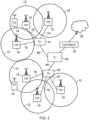
- FIG. 2 An example configuration of a wireless communications network which uses some of the terminology proposed for NR and 5G is shown in Figure 2 .
- a plurality of transmission and reception points (TRPs) 10 are connected to distributed control units (DUs) 41, 42 by a connection interface represented as a line 16.
- DUs distributed control units
- Each of the TRPs 10 is arranged to transmit and receive signals via a wireless access interface within a radio frequency bandwidth available to the wireless communications network.
- DUs distributed control units
- Each of the distributed units 41, 42 are connected to a central unit (CU) 40 (which may be referred to as a controlling node) via an interface 46.
- the central unit 40 is then connected to the a core network 20 which may contain all other functions required to transmit data for communicating to and from the wireless communications devices and the core network 20 may be connected to other networks 30.
- the elements of the wireless access network shown in Figure 2 may operate in a similar way to corresponding elements of an LTE network as described with regard to the example of Figure 1 .
- operational aspects of the telecommunications network represented in Figure 2 and of other networks discussed herein in accordance with embodiments of the disclosure, which are not specifically described (for example in relation to specific communication protocols and physical channels for communicating between different elements) may be implemented in accordance with any known techniques, for example according to currently used approaches for implementing such operational aspects of wireless telecommunications systems, e.g. in accordance with the relevant standards.
- the TRPs 10 of Figure 2 may in part have a corresponding functionality to a base station or eNodeB of an LTE network.
- the communications devices 14 may have a functionality corresponding to the UE devices 4 known for operation with an LTE network.
- operational aspects of a new RAT network may be different to those known from LTE or other known mobile telecommunications standards.
- each of the core network component, base stations and communications devices of a new RAT network will be functionally similar to, respectively, the core network component, base stations and communications devices of an LTE wireless communications network.
- the core network 20 of the new RAT telecommunications system represented in Figure 2 may be broadly considered to correspond with the core network 2 represented in Figure 1
- the respective central units 40 and their associated distributed units / TRPs 10 may be broadly considered to provide functionality corresponding to the base stations 1 of Figure 1
- the term network infrastructure equipment / access node may be used to encompass these elements and more conventional base station type elements of wireless telecommunications systems.
- the responsibility for scheduling transmissions which are scheduled on the radio interface between the respective distributed units and the communications devices may lie with the controlling node / central unit and / or the distributed units / TRPs.
- a communications device 14 is represented in Figure 2 within the coverage area of the first communication cell 12. This communications device 14 may thus exchange signalling with the first central unit 40 in the first communication cell 12 via one of the distributed units 10 associated with the first communication cell 12.
- Figure 2 represents merely one example of a proposed architecture for a new RAT telecommunications system in which approaches in accordance with the principles described herein may be adopted, and the functionality disclosed herein may also be applied in respect of wireless telecommunications systems having different architectures.
- the network infrastructure equipment / access node may comprise a base station, such as an LTE-type base station 1 as shown in Figure 1 which is adapted to provide functionality in accordance with the principles described herein, and in other examples the network infrastructure equipment may comprise a control unit / controlling node 40 and / or a TRP 10 of the kind shown in Figure 2 which is adapted to provide functionality in accordance with the principles described herein.
- a base station such as an LTE-type base station 1 as shown in Figure 1 which is adapted to provide functionality in accordance with the principles described herein
- the network infrastructure equipment may comprise a control unit / controlling node 40 and / or a TRP 10 of the kind shown in Figure 2 which is adapted to provide functionality in accordance with the principles described herein.
- Random Access Random Access (RACH) Procedure and Early Data Transmission (EDT)
- RRC Radio Resource Control
- RRC_IDLE RRC idle mode
- RRC_CONNECTED RRC connected mode
- a terminal device in the idle mode may move to connected mode, for example because it needs to transmit uplink data or respond to a paging request, by undertaking a random access procedure.
- the random access procedure involves the terminal device transmitting a preamble on a physical random access channel and so the procedure is commonly referred to as a RACH or PRACH procedure / process.
- a conventional way for a terminal device (UE) in RRC idle mode to exchange data with a network involves the terminal device first performing an RRC connection procedure (random access procedure) with the network.
- the RRC connection procedure involves the UE initially transmitting a random access preamble (which may be triggered autonomously by the UE determining it has data to transmit to the network or in response to the network instructing the UE to connect to the network). This is followed by RRC control message exchange between the network and UE. After establishing an RRC connection and exchanging the relevant data, the UE may then perform RRC disconnection and move back into idle mode for power saving.
- This conventional approach may for convenience be referred to herein as a legacy approach.
- the random access procedure can be relatively inefficient if the amount of data to be communicated with the network is relatively small, for example in terms of signalling overhead and associated UE power usage.
- a UE to communicate higher-layer / user plane data with the network during the RRC connection procedure itself.
- One approach for this is referred to as Early Data Transmission (EDT) and allows the UE to transmit and/or receive data during the Random Access process whilst in idle mode, thereby communicating the relevant data without the need to complete the establishment of an RRC connection.
- EDT Early Data Transmission
- This can be particularly helpful for infrequent and short messages type of traffic, since EDT would reduce the high overhead for RRC signaling in establishing an RRC connection and performing an RRC disconnection.
- loT is expected to be in power saving mode or long DRX most of the time to conserve battery power.
- the loT device i.e. UE
- the UE would need to reacquire synchronisation, update system information and connect to the network to perform the data exchange, which can take a long time and therefore consume a lot of battery power.
- one of the objectives for Rel-15 loT efeMTC and feNB-loT
- FIG. 3 is a ladder diagram that schematically shows message exchange between a UE and an eNodeB in a typical random access procedure to establish an RRC connection, in this example in an LTE-based network.
- the UE starts the process in step S31 by transmitting a random access request on a physical random access channel (PRACH in an LTE context), i.e. a random access preamble (RACH preamble), to the eNodeB.
- PRACH physical random access channel
- RACH preamble random access preamble
- step S32 when the eNodeB detects this preamble it will respond with a Random Access Response message (RAR), which is also known as Message 2.
- RAR Random Access Response message
- the RAR is scheduled by downlink control information (DCI) carried on a physical downlink control channel, e.g.
- DCI downlink control information
- MTC machine type communication
- CSS Common Search Space
- the RAR itself is transmitted on a physical downlink shared channel (PDSCH) resource allocated via the DCI.
- PDSCH physical downlink shared channel
- the DCI is addressed to an RA-RNTI (random access radio network temporary identifier) which is derived from the time and frequency resources used to transmit the preamble in step S31, and the RAR will indicate which preamble the eNodeB has detected and is responding to. It may be noted that it is possible that multiple UEs may transmit a random access request using the same PRACH preamble and in the same time and frequency resources.
- RA-RNTI random access radio network temporary identifier
- the RAR of step S32 also contains an uplink grant for the preamble the network is responding to so that the UE that transmitted the preamble may use this uplink grant to transmit an RRC Connection Request message, also known as Message 3 to the eNodeB, in step S33.
- Message 3 also contains an indication of an identifier, ID, for the UE (e.g. a C-RNTI (cell radio network temporary identifier) or S-TMSI (system architecture evolution (SAE) temporary mobile subscriber identity) or a 40-bit random number generated by the UE.
- ID an indication of an identifier, for the UE (e.g. a C-RNTI (cell radio network temporary identifier) or S-TMSI (system architecture evolution (SAE) temporary mobile subscriber identity) or a 40-bit random number generated by the UE.
- SAE system architecture evolution
- Message 4 provides contention resolution functionality, for example using a terminal device identifier, such as C-RNTI or S-TMSI, transmitted in Message 3 (when a UE receives a Message 4 that contains a portion of the Message 3 containing the UE ID that it transmitted earlier, it knows that there was no contention on the Message 3 that it had transmitted).
- the RRC connection is complete when the UE transmits Message 5 in step S35 containing an RRC Connection Setup Complete message.
- a previously proposed approach for EDT in uplink is for additional data to be transmitted in association with the RRC connection request message, in Message 3 (step S33 in Figure 3 ).
- Message 3 For the legacy approach to random access, Message 3 carries only control messages and therefore has a limited Transport Block Size (TBS).
- TBS Transport Block Size
- the 3GPP group In order for Message 3 to carry more useful amounts of data, the 3GPP group has agreed to allow for an increase in the TBS for Message 3 to approximately 1000 bits.
- An EDT UE is distinguished from a legacy UE by the preamble used. That is, a set of PRACH resources, including preambles, are reserved for an EDT UE so that the eNodeB is able to recognise which UE is requesting or is capable of EDT.
- the EDT message from the UE can have different sizes depending on the application. Although the eNodeB can recognise an EDT request via the PRACH resource (preamble), it does not know the size of the EDT message. In order to ensure the EDT message can be transmitted, the eNodeB is likely to schedule the largest TBS (e.g. 1000 bits) for the EDT UE (note that this scheduling can be semi-static, i.e. via RRC signaling and hence applying to any EDT transmission from UEs, or dynamic, i.e. via an UL grant message in a RAR Msg 2). If the EDT message is small, e.g. 300 bits, then the UE would have to insert padding bits for the remaining (i.e.
- the EDT UE can select a TBS out of up to 4 possible TBS for its EDT message, that is to say, for EDT transmission the TBS for Message 3 is variable. Hence, the UE can select the TBS (from the 4 possible TBS) that is closest to its EDT message size and therefore minimises padding bits.
- 3GPP also agreed that the eNodeB can broadcast a maximum TBS in the SIBs for each RACH CE level.
- TBS maximum TBS values that the eNodeB can select from, i.e.:
- a lookup table is agreed in 3GPP, where for each of these 8 TBS values, there are 4 corresponding TBS values including the broadcasted maximum TBS value that the UE can select for EDT.
- FIG. 4 shows the sets of subframes in which the EDT is transmitted (as a function of TBS). Irrespective of the transport block size, the starting subframe of the EDT transmission is the same.
- a physical uplink shared channel (PUSCH) transmitted using any of the transport block sizes TBS max , TBS 3 , TBS 2 or TBS 1 (transmitted in accordance with the associated repetition level R max , R 3 , R 2 or R 1 ) will start at time t 0 as shown in Figure 4 , and will end at different times.
- PUSCH physical uplink shared channel
- FIG. 5 schematically shows a wireless communications system 500 according to an embodiment of the present disclosure.
- the wireless communications system 500 in this example may be based broadly around an LTE-type or an NR-type architecture. As such many aspects of the operation of the wireless communications system / network 500 are known and understood and are not described here in detail in the interest of brevity. Operational aspects of the wireless communications system 500 which are not specifically described herein may be implemented in accordance with any known techniques, for example according to the current LTE standards or NR standards.
- the wireless communications system 500 comprises a communications device 510 and infrastructure equipment 520.
- the communications device 510 comprises transceiver circuitry 512 (which may also be referred to as a transceiver / transceiver unit) for transmission and reception of wireless signals and processor circuitry 514 (which may also be referred to as a processor / processor unit or a controller / controller circuitry / controller unit) configured to control the communications device 510.
- the processor circuitry 514 may comprise various sub-units / sub-circuits for providing desired functionality as explained further herein. These sub-units may be implemented as discrete hardware elements or as appropriately configured functions of the processor circuitry.
- the processor circuitry 514 may comprise circuitry which is suitably configured / programmed to provide the desired functionality described herein using conventional programming / configuration techniques for equipment in wireless communications systems.
- the transceiver circuitry 512 and the processor circuitry 514 are schematically shown in Figure 5 as separate elements for ease of representation. However, it will be appreciated that the functionality of these circuitry elements can be provided in various different ways, for example using one or more suitably programmed programmable computer(s), or one or more suitably configured application-specific integrated circuit(s) / circuitry / chip(s) / chipset(s).
- the communications device 510 will in general comprise various other elements associated with its operating functionality, for example a power source, user interface, and so forth, but these are not shown in Figure 5 in the interests of simplicity.
- the eNodeB 520 comprises transceiver circuitry 522 (which may also be referred to as a transceiver / transceiver unit) for transmission and reception of wireless signals and processor circuitry 524 (which may also be referred to as a processor / processor unit or a controller / controller circuitry / controller unit) configured to control the eNodeB 520 to operate in accordance with embodiments of the present disclosure as described herein.
- the processor circuitry 524 may comprise various sub-units / sub-circuits for providing desired functionality as explained further herein. These sub-units may be implemented as discrete hardware elements or as appropriately configured functions of the processor circuitry.
- the processor circuitry 524 may comprise circuitry which is suitably configured / programmed to provide the desired functionality described herein using conventional programming / configuration techniques for equipment in wireless communications systems.
- the transceiver circuitry 522 and the processor circuitry 524 are schematically shown in Figure 5 as separate elements for ease of representation.
- the functionality of these circuitry elements can be provided in various different ways, for example using one or more suitably programmed programmable computer(s), or one or more suitably configured application-specific integrated circuit(s) / circuitry / chip(s) / chipset(s).
- the eNodeB 520 will in general comprise various other elements associated with its operating functionality.
- the transceiver circuitry 512 and the controller circuitry 514 of the communications device 510 are configured in combination to receive 530, from the infrastructure equipment, a scheduling message comprising an indication of an allocation of radio resources to be used for a random access procedure message for the random access procedure, to select 540 a transport block size, TBS, from a plurality of permitted TBS values for the transmission of the random access procedure message, each of the plurality of permitted TBS values being associated with a repetition number, the repetition number being a maximum number of times that the random access procedure message can be transmitted in the allocated radio resources for the each of the permitted TBS values, and to determine 550 whether the selected TBS is lower than a maximum TBS of the plurality of permitted TBS values.
- TBS transport block size
- the transceiver circuitry 512 and the controller circuitry 514 of the communications device 510 are configured in combination to select 560 a starting transmission time for starting the transmission of the random access procedure message from a set of one or more permitted starting transmission times associated with the selected TBS, and to transmit 570 the random access procedure message to the infrastructure equipment in the allocated radio resources using the selected TBS, the repetition number associated with the selected TBS, and the selected starting transmission time. If the selected TBS is equal to the maximum TBS, the controller circuitry 514 of the communications device 510 configures the transceiver circuitry 512 of the communications device 510 to transmit the random access procedure message at a default time relative to the scheduling message 530.
- Embodiments of the present technique therefore, in summary, introduce a variable starting PUSCH transmission time when the selected TBS is smaller than maximum TBS and the repetition for the selected TBS is reduced from what is scheduled in the UL grant.
- each of the (four) TBS values that the UE can select for EDT over Message 3 has one or more predefined start transmission times.
- the 4 TBS are ⁇ TBS 1 , TBS 2 , TBS 3 , TBS max ⁇ which have repetitions ⁇ R 1 , R 2 , R 3 , R max ⁇ respectively.
- TBS max is the maximum TBS that is broadcasted by the eNodeB and the remaining 3 TBS values TBS 1 , TBS 2 and TBS 3 are obtained from a lookup table in the specifications.
- the repetition scheduled in the random access response's (RAR's) UL grant is R max and the UE reduces its repetitions to R 1 , R 2 and R 3 if it selects TBS 1 , TBS 2 and TBS 3 respectively.
- Figure 6 shows the possible starting transmission times for each TBS.
- the possible starting transmission times for each selected TBS are as follows:
- the TBS and different transmission times therefore forms a PUSCH search space at the eNodeB. That is, the eNodeB would blind decode for each possible TBS at each of their corresponding starting times, i.e. the combination of TBS and starting time forms candidates for the eNodeB to blind decode for.
- the search space shown in Figure 6 is one arrangement of PUSCH search space (i.e. TBS and starting transmission times) and other arrangements are feasible.
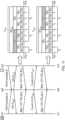
- FIG. 8 Yet another PUSCH search space arrangement is shown in Figure 8 , where for TBS ⁇ TBS max , the candidates of different TBS do not collide. It should be appreciated that different PUSCH search space arrangements can be designed depending on the different repetitions for each TBS and the number of starting times for each TBS.
- contention where two or more UEs use the same PRACH (preamble) can occur during the RACH process.
- two EDT capable UEs, UE1 and UE2 use the same PRACH preamble, they will both receive the same RAR and UL grant.
- UE1 and UE2 would then select one of four TBS and transmit their Message 3 & EDT to the eNodeB. Collision of their EDT Message 3s would occur (see Figure 4 : all the EDT message 3 transmissions start at the same time instant) and the eNodeB may not be able to detect any message from either UE1 or UE2 due to interference.
- UE1 and UE2 can select different transmission times and thereby avoid collision.
- the example is further explained using Figure 9 , where UE1 and UE2 select TBS 3 and TBS 2 respectively.
- both TBs would be transmitted at the same time (as illustrated by Figure 4 ) and the eNodeB may only be able to detect one of the TBs, and/or may require a retransmission from the detected TB.
- UE1 instead of transmitting both TBs at the same time UE1 can transmit TBS 3 at time t 0 and UE2 can transmit TBS 2 at time t 4 and hence the eNodeB avoids collision and can detect both UE1 and UE2's Message 3 and their EDTs.
- the UE selects the transmission time based on its UE ID, such as IMSI or TIMSI.
- UE ID such as IMSI or TIMSI.
- N TX is the number of possible transmission times for TBS M .
- TBS M TBS 1
- N TX 8.
- the communications device selects the starting transmission time based on an identifier of the communications device. It should be appreciated that other functions of UE ID can be used.
- the starting transmission time T TX , for a selected TBS is randomly selected by the UE.
- the communications device randomly selects the starting transmission time from the set of permitted starting transmission times that are allowed for the selected TBS.
- a default starting transmission time is predefined, e.g. in the SIB or specifications.
- the communications device selects a default starting transmission time from the set of permitted starting transmission times.
- the eNodeB will indicate whether the UE can select a different starting transmission time, e.g. using one of the previous arrangements.
- the communications device is configured to receive, from the infrastructure equipment, an indication that the communications device is permitted to select any one of the starting transmission times other than the default starting transmission time from the set of permitted starting transmission times, and to select one of the other starting transmission times or the default starting transmission time.
- This said indication can be semi-static (e.g. RRC configured or broadcast in the SIB) or dynamic, i.e. indicated in the UL grant.
- the eNodeB may ask for a retransmission of Message 3 + EDT if it fails to receive the PUSCH from the UE.
- the communications device is configured to receive, from the infrastructure equipment, an indication that the random access procedure message should be retransmitted.
- the eNodeB would have to blind detect the TBS the UE selected and hence the eNodeB may not know which TBS to use for the retransmission.
- the eNodeB has a better knowledge of the TBS selected by the UE based on its starting time.
- the eNodeB can directly schedule resources for a TB with size TBS 1 for the UE.
- the communications device is configured to receive, from the infrastructure equipment, an allocation of a second set of radio resources to be used for the retransmission of the random access procedure message, the second set of radio resources being allocated by the infrastructure equipment based on the selected TBS for the first transmission of the random access procedure message, and to transmit the random access procedure message to the infrastructure equipment in the second set of radio resources using the selected TBS, the repetition number associated with the selected TBS, and the selected starting transmission time.
- the eNodeB would have to provide an UL grant with sufficient resources for the largest TBS, i.e. TBS max .
- the eNodeB indicates (implicitly) that it is unaware of the TBS selected by the UE in the UL grant for retransmission of Message 3 + EDT by setting the repetition to R max . That is, in the retransmission, if the UL grant for a retransmission of Message 3 + EDT schedules the maximum repetition, R max , the UE will retransmit its previously selected TBS and use a reduced repetition, i.e. same repetition as that used previously.
- the communications device is configured to receive, from the infrastructure equipment, an allocation of a second set of radio resources to be used for the retransmission of the random access procedure message, the second set of radio resources being large enough for the random access procedure message to be transmitted in using the maximum TBS, to receive an indication that the repetition number that should be used for the retransmission of the random access procedure message should be a repetition number associated with the maximum TBS, and to transmit the random access procedure message to the infrastructure equipment in the second set of radio resources using the selected TBS, the repetition number associated with the selected TBS, and the selected starting transmission time.
- UE1 selects TBS 3 with repetition R 3 . If UE1 receives an UL grant for a retransmission of Message 3 + EDT where the repetition is R max , the UE will retransmit TBS 3 using repetition R 3 .
- the communications device is configured to receive, from the infrastructure equipment, an allocation of a second set of radio resources to be used for the retransmission of the random access procedure message, to receive an indication of a repetition number that should be used for the retransmission of the random access procedure message, and to transmit the random access procedure message to the infrastructure equipment in the second set of radio resources using the selected TBS, the indicated repetition number, and the selected starting transmission time.
- the infrastructure equipment may allocate the second set of radio resource such that they are large enough for the communications device to transmit random access procedure message in using the maximum TBS.
- UE1 selects TBS 3 with repetition R 3 . If UE1 receives an UL grant for a retransmission of Message 3 + EDT where the repetition is R X where R X ⁇ Rmax, the UE will retransmit its TBS 3 using repetition R X .
- R X may or may not be equal to R 3 .
- step S101 the UE selects TBS K which is smaller than the maximum TBS, TBS max , and uses the corresponding repetition R K . If there is a retransmission, determined in step S102 through the reception of an indication from the eNodeB, then the UE will check, in step S103, if the scheduled repetition R X , in the UL grant for the retransmission is equal to R max . If it is then the UE will retransmit, as shown in step S104, its TBS K using the previous repetition R K otherwise it retransmits, as shown in step S105, using the scheduled repetition R X . That is, the eNodeB would indicate implicitly whether it is aware of which TBS the UE selected or not using the repetition field.
- the UE will retransmit its Msg3 + EDT using the previous TBS and reuse the previous repetition.
- the communications device is configured to receive, from the infrastructure equipment, an allocation of a second set of radio resources to be used for the retransmission of the random access procedure message, to receive an indication that the maximum TBS should be used for the retransmission of the random access procedure message, and to transmit the random access procedure message to the infrastructure equipment in the second set of radio resources using the selected TBS, the repetition number associated with the selected TBS, and the selected starting transmission time.
- the UE will retransmit its Msg3 + EDT using the previous TBS and will apply the same scaling factor on the repetition indicated in the UL grant. That is to say, the first transmission the scheduled repetition, R K , may be 1000, and in the retransmission this may be scheduled by the eNodeB to be 500.
- the communications device is configured to receive, from the infrastructure equipment, an allocation of a second set of radio resources to be used for the retransmission of the random access procedure message, to receive an indication that the maximum TBS should be used for the retransmission of the random access procedure message, to receive an indication of a repetition number that should be used for the retransmission of the random access procedure message, to apply a scaling factor to the indicated repetition number to generate a scaled repetition number, the scaling factor having been applied to the repetition number associated with the selected TBS for the initial transmission of the random access procedure message and to transmit the random access procedure message to the infrastructure equipment in the second set of radio resources using the selected TBS, the scaled repetition number, and the selected starting transmission time.
- the scaling factor as described in relation to this arrangement of the present technique, may be used in combination with any other arrangements described in the present disclosure.
- the communications device is configured to receive, from the infrastructure equipment, an allocation of a second set of radio resources to be used for the retransmission of the random access procedure message, to receive an indication of a repetition number that should be used for the retransmission of the random access procedure message, to receive an indication that the selected TBS should be used for the retransmission of the random access procedure message, and to transmit the random access procedure message to the infrastructure equipment in the second set of radio resources using the selected TBS, the indicated repetition number (i.e. the repetition number associated with the selected TBS), and the selected starting transmission time.
- the infrastructure equipment may allocate the second set of radio resource such that they are large enough for the communications device to transmit random access procedure message in using the selected TBS.
- the UE will retransmit its selected TBS using a starting time that is different to its previous transmission. This is to avoid the contentious UEs from consistently colliding.
- the communications device is configured to receive, from the infrastructure equipment, an allocation of a second set of radio resources to be used for the retransmission of the random access procedure message, to receive, from the infrastructure equipment, an indication that the communications should retransmit the random access procedure message using a different starting transmission time from the selected starting transmission time, and to transmit the random access procedure message to the infrastructure equipment in the second set of radio resources using the selected TBS, the repetition number associated with the selected TBS, and a starting transmission time from the set of permitted starting transmission times associated with the selected TBS other than the (previously) selected starting transmission time (i.e. the starting transmission time selected for the initial/first transmission which the eNodeB requests is retransmitted).
- FIG. 11 An example is shown in Figure 11 , where two UEs, UE1 and UE2, select the same preamble, i.e. Preamble 5 when transmitting their PRACH thereby causing contention.
- the eNodeB responds with RAR providing an UL grant with repetition set to R max (i.e. repetition for the maximum TBS, TBS max ).
- RAR providing an UL grant with repetition set to R max (i.e. repetition for the maximum TBS, TBS max ).
- UE1 selects TBS 3 and UE2 selects TBS 2 for their Message 3 + EDT PUSCH transmissions.
- UE1 selects time t 0 for its TBS 3 transmission whilst UE2 selects time t 2 for its TBS 2 transmission.
- the UE uses a probability of P TBS to determine whether it should retransmit using the previous starting transmission time or use a different starting transmission time.
- the communications device is configured to receive, from the infrastructure equipment, an allocation of a second set of radio resources to be used for the retransmission of the random access procedure message, to generate a random number, to compare the random number with a probability threshold, and to transmit, the random access procedure message to the infrastructure equipment in the second set of radio resources using the selected TBS, the repetition number associated with the selected TBS, and, dependent on the comparison, a starting transmission time from the set of permitted starting transmission times associated with the selected TBS other than the (previously) selected starting transmission time.
- the communications device will again use the (previously) selected starting transmission time. It can be observed in the example in Figure 11 that only one of the UEs needs to change its transmission time to avoid collision and it is possible that if both UEs change their transmission time they may still collide.
- An example of this arrangement is shown in Figure 12 , here UE1 and UE2 use the same preamble causing contention and similar to the example in Figure 11 , UE1 transmits TBS 3 at time t 0 and UE2 transmits TBS 2 at time t 2 thereby causing collision at the eNodeB.
- the UL grant for the retransmission has a repetition of R max thereby indicating that the UEs will retransmit their selected TBS using the previous numbers of repetitions.
- each UE would evaluate the probability P TBS , e.g. by selecting a random number P RND , between 0 and 1, and if the number is greater than P TBS , it will change its starting transmission time otherwise it will use the starting transmission time in its previous transmission.
- UE1 evaluated that its random number P RND > P TBS and so it changes its starting transmission time to t 4 .
- UE2 has a P RND ⁇ P TBS and so it does not change its starting transmission time and retransmits at time t 2 .
- the value P TBS is static or semi-static, i.e. can be UE-specifically configured, broadcast in the SIB or specified in the specifications.
- the probability threshold is predetermined and known to the communications device.
- the value P TBS is indicated in the UL grant and therefore is dynamic.
- the probability threshold is indicated to the communications device by the infrastructure equipment along with the allocation of the second set of radio resources.
- the probability value may be varied for different UEs, or may be related to the TBS selected by the UE. For example, in the example of Figure 12 , if it were UE2 that changed its starting time, it may change to the candidate starting at time t 0 , and there would therefore still be a collision. However, if it were UE1 that changed its starting time, it would only be able to change to the candidate starting at time t 4 , as is indeed shown in Figure 12 , thus avoiding the collision.
- the eNodeB indicates in the UL grant whether the UE should change to a different starting time or not. This can be indicated using an unused Resource Allocation, MCS and/or TBS state in the DCI.
- the communications device is configured to receive, from the infrastructure equipment, an indication that the communications should retransmit the random access procedure message using a different starting transmission time from the selected starting transmission time.
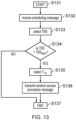
- Figure 13 shows a flow diagram illustrating a process of communications in a communications system in accordance with embodiments of the present technique.
- the process shown by Figure 13 is a method of operating a communications device in a wireless communications system that supports a random access procedure.
- the method begins in step S131.
- the method comprises, in step S132, receiving, from an infrastructure equipment of the wireless communications system, a scheduling message comprising an indication of an allocation of radio resources to be used for a random access procedure message for the random access procedure.
- the process proceeds to step S133, which comprises selecting a transport block size, TBS, from a plurality of permitted TBS values for the transmission of the random access procedure message, each of the plurality of permitted TBS values being associated with a repetition number, the repetition number being a maximum number of times that the random access procedure message can be transmitted in the allocated radio resources for the each of the permitted TBS values.
- the process then proceeds to step S134, which comprises determining whether the selected TBS is lower than a maximum TBS of the plurality of permitted TBS values.
- step S134 If it is determined in step S134 that the selected TBS is lower than a maximum TBS of the plurality of permitted TBS values, the method comprises in step S135 selecting a starting transmission time for starting the transmission of the random access procedure message from a plurality of permitted starting transmission times associated with the selected TBS and, in step S136, transmitting the random access procedure message to the infrastructure equipment in the allocated communications resources using the selected TBS, the repetition number associated with the selected TBS, and the selected starting transmission time. The process ends in step S137. If, alternatively, it is determined in step S134 that the selected TBS is equal to the maximum TBS, the method moves to step S137, where it ends.
- the communications device would simply transmit the random access procedure message to the infrastructure equipment using TBS max at time t 0 (i.e. there is no explicit selection of starting transmission time) as shown in any of Figures 4 or 6 to 9 .
- infrastructure equipment and/or wireless communications networks as herein defined may be further defined in accordance with the various arrangements and embodiments discussed in the preceding paragraphs. For example, though four TBS and repetition levels are shown in the drawings and described above, those skilled in the art would appreciate that this number may be variable, and the respective sizes of each of these may be different from what is shown and described. It would be further appreciated by those skilled in the art that such infrastructure equipment and wireless communications networks as herein defined and described may form part of communications systems other than those defined by the present invention.
- predetermined / predefined information may in general be established, for example, by definition in an operating standard for the wireless telecommunication system, or in previously exchanged signalling between the base station and terminal devices, for example in system information signalling, or in association with radio resource control setup signalling, or in information stored on a SIM card. That is to say, the specific manner in which the relevant predefined information is established and shared between the various elements of the wireless telecommunications system is not of primary significance to the principles of operation described herein.
- Described embodiments may be implemented in any suitable form including hardware, software, firmware or any combination of these. Described embodiments may optionally be implemented at least partly as computer software running on one or more data processors and/or digital signal processors.
- the elements and components of any embodiment may be physically, functionally and logically implemented in any suitable way. Indeed the functionality may be implemented in a single unit, in a plurality of units or as part of other functional units. As such, the disclosed embodiments may be implemented in a single unit or may be physically and functionally distributed between different units, circuitry and/or processors.
Landscapes
- Engineering & Computer Science (AREA)
- Computer Networks & Wireless Communication (AREA)
- Signal Processing (AREA)
- Mobile Radio Communication Systems (AREA)
Claims (13)
- Procédé d'exploitation d'un dispositif de communications (510) dans un système de communications sans fil (500) qui prend en charge une procédure d'accès aléatoire, le procédé comprenant :la réception (530), depuis un équipement d'infrastructure (520) du système de communications sans fil, d'un message d'ordonnancement comprenant une indication d'une allocation de ressources radio à utiliser pour un message de procédure d'accès aléatoire pour la procédure d'accès aléatoire ;la sélection (540) d'une taille de bloc de transport, notée TBS, parmi une pluralité de valeurs de TBS autorisées pour la transmission du message de procédure d'accès aléatoire, chacune de la pluralité de valeurs de TBS autorisées étant associée à un nombre de répétitions, le nombre de répétitions étant un nombre maximal de fois que le message de procédure d'accès aléatoire peut être transmis dans les ressources radio allouées pour chacune des valeurs de TBS autorisées ;la réception, depuis l'équipement d'infrastructure, d'une indication que le dispositif de communications est autorisé à sélectionner l'un quelconque d'un ensemble d'un ou de plusieurs temps de transmission de début autorisés, l'un de l'ensemble de temps de transmission de début autorisés étant un temps de transmission de début par défaut ;la détermination (550) si la TBS sélectionnée est inférieure ou non à une TBS maximale de la pluralité de valeurs de TBS autorisées ; et, s'il est déterminé que la TBS sélectionnée est inférieure à la TBS maximale,la sélection (560) d'un temps de transmission de début pour débuter la transmission du message de procédure d'accès aléatoire, parmi l'ensemble de temps de transmission de début autorisés associé à la TBS sélectionnée sur la base d'un identifiant du dispositif de communications ; etla transmission (570) du message de procédure d'accès aléatoire à l'équipement d'infrastructure dans les ressources radio allouées à l'aide de la TBS sélectionnée, du nombre de répétitions associé à la TBS sélectionnée et du temps de transmission de début sélectionné.
- Procédé selon la revendication 1, dans lequel le dispositif de communications sélectionne aléatoirement le temps de transmission de début.
- Procédé selon la revendication 1, comprenant la réception, depuis l'équipement d'infrastructure, d'une indication que le message de procédure d'accès aléatoire doit être retransmis.
- Procédé selon la revendication 3, comprenant :la réception, depuis l'équipement d'infrastructure, d'une allocation d'un deuxième ensemble de ressources radio à utiliser pour la retransmission du message de procédure d'accès aléatoire, le deuxième ensemble de ressources radio étant alloué par l'équipement d'infrastructure sur la base de la TBS sélectionnée pour la première transmission du message de procédure d'accès aléatoire ; etla transmission du message de procédure d'accès aléatoire à l'équipement d'infrastructure dans le deuxième ensemble de ressources radio à l'aide de la TBS sélectionnée, du nombre de répétitions associé à la TBS sélectionnée et du temps de transmission de début sélectionné.
- Procédé selon la revendication 3, comprenant :la réception, depuis l'équipement d'infrastructure, d'une allocation d'un deuxième ensemble de ressources radio à utiliser pour la retransmission du message de procédure d'accès aléatoire, le deuxième ensemble de ressources radio étant suffisamment important pour que le message de procédure d'accès aléatoire soit transmis à l'aide de la TBS maximale ;la réception d'une indication que le nombre de répétitions devant être utilisé pour la retransmission du message de procédure d'accès aléatoire doit être un nombre de répétitions associé à la TBS maximale ; etla transmission du message de procédure d'accès aléatoire à l'équipement d'infrastructure dans le deuxième ensemble de ressources radio à l'aide de la TBS sélectionnée, du nombre de répétitions associé à la TBS sélectionnée et du temps de transmission de début sélectionné.
- Procédé selon la revendication 3, comprenant :la réception, depuis l'équipement d'infrastructure, d'une allocation d'un deuxième ensemble de ressources radio à utiliser pour la retransmission du message de procédure d'accès aléatoire, le deuxième ensemble de ressources radio étant suffisamment important pour que le message de procédure d'accès aléatoire soit transmis à l'aide de la TBS maximale ;la réception d'une indication d'un nombre de répétitions devant être utilisé pour la retransmission du message de procédure d'accès aléatoire ; etla transmission du message de procédure d'accès aléatoire à l'équipement d'infrastructure dans le deuxième ensemble de ressources radio à l'aide de la TBS sélectionnée, du nombre de répétitions indiqué et du temps de transmission de début sélectionné.
- Procédé selon la revendication 3, comprenant :la réception, depuis l'équipement d'infrastructure, d'une allocation d'un deuxième ensemble de ressources radio à utiliser pour la retransmission du message de procédure d'accès aléatoire, le deuxième ensemble de ressources radio étant suffisamment important pour que le message de procédure d'accès aléatoire soit transmis à l'aide de la TBS sélectionnée ;la réception d'une indication d'un nombre de répétitions devant être utilisé pour la retransmission du message de procédure d'accès aléatoire ; etla transmission du message de procédure d'accès aléatoire à l'équipement d'infrastructure dans le deuxième ensemble de ressources radio à l'aide de la TBS sélectionnée, du nombre de répétitions indiqué et du temps de transmission de début sélectionné.
- Procédé selon la revendication 3, comprenant :la réception, depuis l'équipement d'infrastructure, d'une allocation d'un deuxième ensemble de ressources radio à utiliser pour la retransmission du message de procédure d'accès aléatoire ;la réception d'une indication que la TBS maximale doit être utilisée pour la retransmission du message de procédure d'accès aléatoire ; etla transmission du message de procédure d'accès aléatoire à l'équipement d'infrastructure dans le deuxième ensemble de ressources radio à l'aide de la TBS sélectionnée, du nombre de répétitions associé à la TBS sélectionnée et du temps de transmission de début sélectionné.
- Dispositif de communications (510) destiné à faire partie d'un système de communications sans fil (500) qui prend en charge une première procédure d'accès aléatoire, le système de communications sans fil comprenant un équipement d'infrastructure (520) et le dispositif de communications, le dispositif de communications comprenant une circuiterie d'émetteur-récepteur (512) et une circuiterie de contrôleur (514) qui sont configurées, en combinaison, pour :recevoir (530), depuis l'équipement d'infrastructure, un message d'ordonnancement comprenant une indication d'une allocation de ressources radio à utiliser pour un message de procédure d'accès aléatoire pour la procédure d'accès aléatoire ;sélectionner (540) une taille de bloc de transport, notée TBS, parmi une pluralité de valeurs de TBS autorisées pour la transmission du message de procédure d'accès aléatoire, chacune de la pluralité de valeurs de TBS autorisées étant associée à un nombre de répétitions, le nombre de répétitions étant un nombre maximal de fois que le message de procédure d'accès aléatoire peut être transmis dans les ressources radio allouées pour chacune des valeurs de TBS autorisées ;recevoir, depuis l'équipement d'infrastructure, une indication que le dispositif de communications est autorisé à sélectionner l'un quelconque d'un ensemble d'un ou de plusieurs temps de transmission de début autorisés, l'un de l'ensemble de temps de transmission de début autorisés étant un temps de transmission de début par défaut ;déterminer (550) si la TBS sélectionnée est inférieure ou non à une TBS maximale de la pluralité de valeurs de TBS autorisées ; et, s'il est déterminé que la TBS sélectionnée est inférieure à la TBS maximale,sélectionner (560) un temps de transmission de début pour débuter la transmission du message de procédure d'accès aléatoire, parmi l'ensemble de temps de transmission de début autorisés associé à la TBS sélectionnée sur la base d'un identifiant du dispositif de communications ; ettransmettre (570) le message de procédure d'accès aléatoire à l'équipement d'infrastructure dans les ressources radio allouées à l'aide de la TBS sélectionnée, du nombre de répétitions associé à la TBS sélectionnée et du temps de transmission de début sélectionné.
- Circuiterie pour un dispositif de communications (510) faisant partie d'un système de communications sans fil (500) qui prend en charge une première procédure d'accès aléatoire, le système de communications sans fil comprenant un équipement d'infrastructure (520) et le dispositif de communications, le dispositif de communications comprenant une circuiterie d'émetteur-récepteur (512) et une circuiterie de contrôleur (514) qui sont configurées, en combinaison, pour :recevoir (530), depuis l'équipement d'infrastructure, un message d'ordonnancement comprenant une indication d'une allocation de ressources radio à utiliser pour un message de procédure d'accès aléatoire pour la procédure d'accès aléatoire ;sélectionner (540) une taille de bloc de transport, notée TBS, parmi une pluralité de valeurs de TBS autorisées pour la transmission du message de procédure d'accès aléatoire, chacune de la pluralité de valeurs de TBS autorisées étant associée à un nombre de répétitions, le nombre de répétitions étant un nombre maximal de fois que le message de procédure d'accès aléatoire peut être transmis dans les ressources radio allouées pour chacune des valeurs de TBS autorisées ;recevoir, depuis l'équipement d'infrastructure, une indication que le dispositif de communications est autorisé à sélectionner l'un quelconque d'un ensemble d'un ou de plusieurs temps de transmission de début autorisés, l'un de l'ensemble de temps de transmission de début autorisés étant un temps de transmission de début par défaut ;déterminer (550) si la TBS sélectionnée est inférieure ou non à une TBS maximale de la pluralité de valeurs de TBS autorisées ; et, s'il est déterminé que la TBS sélectionnée est inférieure à la TBS maximale,sélectionner (560) un temps de transmission de début pour débuter la transmission du message de procédure d'accès aléatoire, parmi l'ensemble de temps de transmission de début autorisés associé à la TBS sélectionnée sur la base d'un identifiant du dispositif de communications ; ettransmettre (570) le message de procédure d'accès aléatoire à l'équipement d'infrastructure dans les ressources radio allouées à l'aide de la TBS sélectionnée, du nombre de répétitions associé à la TBS sélectionnée et du temps de transmission de début sélectionné.
- Procédé d'exploitation d'un équipement d'infrastructure (520) faisant partie d'un système de communications sans fil (500) pour prendre en charge une procédure d'accès aléatoire, le procédé comprenant :la transmission (530), à au moins un dispositif de communications (510), d'un message d'ordonnancement comprenant une indication d'une allocation de ressources radio à utiliser pour un message de procédure d'accès aléatoire pour la procédure d'accès aléatoire ;la transmission, à l'au moins un dispositif de communications, d'une indication que l'au moins un dispositif de communications est autorisé à sélectionner l'un quelconque d'un ensemble d'un ou de plusieurs temps de transmission de début autorisés, l'un de l'ensemble de temps de transmission de début autorisés étant un temps de transmission de début par défaut ; etla réception (570) du message de procédure d'accès aléatoire depuis l'au moins un dispositif de communications dans les ressources radio allouées à l'aide d'une taille de bloc de transport, notée TBS, d'une pluralité de valeurs de TBS autorisées pour la transmission du message de procédure d'accès aléatoire, d'un nombre de répétitions associé à la TBS et d'un temps de transmission de début pour débuter la transmission de la procédure d'accès aléatoire appartenant à l'ensemble de temps de transmission de début autorisés,le nombre de répétitions étant un nombre maximal de fois que le message de procédure d'accès aléatoire peut être transmis dans les ressources radio allouées pour chacune des valeurs de TBS autorisées, et la TBS étant inférieure à une TBS maximale de la pluralité de valeurs de TBS.
- Équipement d'infrastructure (520) destiné à faire partie d'un système de communications sans fil (500) pour prendre en charge une procédure d'accès aléatoire, l'équipement d'infrastructure comprenant une circuiterie d'émetteur-récepteur (522) et une circuiterie de contrôleur (524) qui sont configurées, en combinaison, pour :transmettre (530), à au moins un dispositif de communications (510), un message d'ordonnancement comprenant une indication d'une allocation de ressources radio à utiliser pour un message de procédure d'accès aléatoire pour la procédure d'accès aléatoire ;transmettre, à l'au moins un dispositif de communications, une indication que l'au moins un dispositif de communications est autorisé à sélectionner l'un quelconque d'un ensemble d'un ou de plusieurs temps de transmission de début autorisés, l'un de l'ensemble de temps de transmission de début autorisés étant un temps de transmission de début par défaut ; etrecevoir (570) le message de procédure d'accès aléatoire depuis l'au moins un dispositif de communications dans les ressources radio allouées à l'aide d'une taille de bloc de transport, notée TBS, d'une pluralité de valeurs de TBS autorisées pour la transmission du message de procédure d'accès aléatoire, d'un nombre de répétitions associé à la TBS et d'un temps de transmission de début pour débuter la transmission de la procédure d'accès aléatoire appartenant à l'ensemble de temps de transmission de début autorisés,le nombre de répétitions étant un nombre maximal de fois que le message de procédure d'accès aléatoire peut être transmis dans les ressources radio allouées pour chacune des valeurs de TBS autorisées, et la TBS étant inférieure à une TBS maximale de la pluralité de valeurs de TBS.
- Circuiterie pour un équipement d'infrastructure (520) faisant partie d'un système de communications sans fil (500) pour prendre en charge une première procédure d'accès aléatoire, l'équipement d'infrastructure comprenant une circuiterie d'émetteur-récepteur (522) et une circuiterie de contrôleur (524) qui sont configurées, en combinaison, pour :transmettre (530), à au moins un dispositif de communications (510), un message d'ordonnancement comprenant une indication d'une allocation de ressources radio à utiliser pour un message de procédure d'accès aléatoire pour la procédure d'accès aléatoire ;transmettre, à l'au moins un dispositif de communications, une indication que l'au moins un dispositif de communications est autorisé à sélectionner l'un quelconque d'un ensemble d'un ou de plusieurs temps de transmission de début autorisés, l'un de l'ensemble de temps de transmission de début autorisés étant un temps de transmission de début par défaut ; etrecevoir (570) le message de procédure d'accès aléatoire depuis l'au moins un dispositif de communications dans les ressources radio allouées à l'aide d'une taille de bloc de transport, notée TBS, d'une pluralité de valeurs de TBS autorisées pour la transmission du message de procédure d'accès aléatoire, d'un nombre de répétitions associé à la TBS et d'un temps de transmission de début pour débuter la transmission de la procédure d'accès aléatoire appartenant à l'ensemble de temps de transmission de début autorisés,le nombre de répétitions étant un nombre maximal de fois que le message de procédure d'accès aléatoire peut être transmis dans les ressources radio allouées pour chacune des valeurs de TBS autorisées, et la TBS étant inférieure à une TBS maximale de la pluralité de valeurs de TBS.
Applications Claiming Priority (2)
| Application Number | Priority Date | Filing Date | Title |
|---|---|---|---|
| EP18171936 | 2018-05-11 | ||
| PCT/EP2019/061393 WO2019215038A1 (fr) | 2018-05-11 | 2019-05-03 | Procédés, dispositif de communications et équipement d'infrastructure |
Publications (2)
| Publication Number | Publication Date |
|---|---|
| EP3788833A1 EP3788833A1 (fr) | 2021-03-10 |
| EP3788833B1 true EP3788833B1 (fr) | 2023-11-15 |
Family
ID=62455319
Family Applications (1)
| Application Number | Title | Priority Date | Filing Date |
|---|---|---|---|
| EP19720679.0A Active EP3788833B1 (fr) | 2018-05-11 | 2019-05-03 | Procédés, dispositif de communications et équipement d'infrastructure |
Country Status (3)
| Country | Link |
|---|---|
| US (2) | US11533760B2 (fr) |
| EP (1) | EP3788833B1 (fr) |
| WO (1) | WO2019215038A1 (fr) |
Families Citing this family (5)
| Publication number | Priority date | Publication date | Assignee | Title |
|---|---|---|---|---|
| WO2019098713A1 (fr) * | 2017-11-15 | 2019-05-23 | 엘지전자 주식회사 | Procédé permettant d'effectuer une transmission précoce de données pendant d'une procédure d'accès aléatoire dans un système de communication sans fil, et appareil pour cela |
| EP3747227B1 (fr) * | 2018-02-02 | 2022-03-30 | Sony Group Corporation | Procédé de fonctionnement d'un équipement d'infrastructure de réseau, procédé correspondant de fonctionnement d'un dispositif terminal, appareils correspondants et circuits intégrés |
| WO2020191641A1 (fr) * | 2019-03-26 | 2020-10-01 | Oppo广东移动通信有限公司 | Procédé d'accès aléatoire, et dispositif |
| CN115088372B (zh) * | 2019-12-03 | 2025-04-04 | 上海诺基亚贝尔股份有限公司 | 更新用于早期数据传输的配置 |
| EP4262120A4 (fr) * | 2020-12-11 | 2024-01-24 | Beijing Xiaomi Mobile Software Co., Ltd. | Procédé et appareil pour configurer le nombre candidat de transmissions répétées |
Family Cites Families (15)
| Publication number | Priority date | Publication date | Assignee | Title |
|---|---|---|---|---|
| EP1982476B1 (fr) * | 2006-01-20 | 2018-09-05 | Nokia Technologies Oy | Procédure d'accès aléatoire avec couverture améliorée |
| CN104349421B (zh) * | 2013-08-08 | 2020-03-17 | 中兴通讯股份有限公司 | 设备发现方法和用户设备、网络侧设备 |
| WO2016159656A1 (fr) * | 2015-03-30 | 2016-10-06 | Lg Electronics Inc. | Procédé et appareil de désignation d'informations de commande de liaison descendante dans un système de communication sans fil |
| CN108631949A (zh) * | 2017-03-23 | 2018-10-09 | 株式会社Ntt都科摩 | 数据发送方法、数据接收方法、用户设备和基站 |
| EP3636024B1 (fr) * | 2017-05-05 | 2023-08-23 | Samsung Electronics Co., Ltd. | Procédé et appareil pour une transmission en liaison montante dans un système de communication sans fil |
| US10779333B2 (en) * | 2017-09-28 | 2020-09-15 | Apple Inc. | Early data transmission in wireless communication system |
| WO2019098713A1 (fr) * | 2017-11-15 | 2019-05-23 | 엘지전자 주식회사 | Procédé permettant d'effectuer une transmission précoce de données pendant d'une procédure d'accès aléatoire dans un système de communication sans fil, et appareil pour cela |
| CN110062474B (zh) * | 2018-01-19 | 2024-05-10 | 夏普株式会社 | 用户设备、基站和相关方法 |
| EP3744147B1 (fr) * | 2018-01-24 | 2024-03-13 | Telefonaktiebolaget LM Ericsson (publ) | Tbs multiples pour msg3 dans une transmission de données pendant un accès aléatoire |
| US11102764B2 (en) * | 2018-02-07 | 2021-08-24 | Apple Inc. | Minimization of padding and resource wastage in message 3 (MSG3) for early data transmission (EDT) |
| CN110167185B (zh) * | 2018-02-14 | 2022-05-17 | 华为技术有限公司 | 随机接入过程中传输数据的方法和装置 |
| CN113490285B (zh) * | 2018-04-04 | 2022-12-06 | 中兴通讯股份有限公司 | 一种传输方法及装置、计算机可读存储介质 |
| CN111886817B (zh) * | 2018-04-04 | 2021-12-10 | 华为技术有限公司 | 数据传输方法、通信设备及网络设备 |
| WO2019192940A1 (fr) | 2018-04-06 | 2019-10-10 | Sony Corporation | Appareil et procédés de télécommunications comprenant la sélection d'une tbs basée sur une tbs maximale indiquée |
| BR112020021244A2 (pt) * | 2018-04-16 | 2021-02-02 | Nokia Technologies Oy | configuração de tamanho de bloco de transporte |
-
2019
- 2019-05-03 EP EP19720679.0A patent/EP3788833B1/fr active Active
- 2019-05-03 WO PCT/EP2019/061393 patent/WO2019215038A1/fr not_active Ceased
- 2019-05-03 US US17/054,507 patent/US11533760B2/en active Active
-
2022
- 2022-12-19 US US18/067,740 patent/US12075486B2/en active Active
Also Published As
| Publication number | Publication date |
|---|---|
| EP3788833A1 (fr) | 2021-03-10 |
| US20230122044A1 (en) | 2023-04-20 |
| US20210195648A1 (en) | 2021-06-24 |
| US11533760B2 (en) | 2022-12-20 |
| US12075486B2 (en) | 2024-08-27 |
| WO2019215038A1 (fr) | 2019-11-14 |
Similar Documents
| Publication | Publication Date | Title |
|---|---|---|
| US11917659B2 (en) | Telecommunications apparatus and methods including selecting a TBS based on an indicated maximum TBS | |
| US12075486B2 (en) | Method and device for communicating with a selected transport block size | |
| US11864240B2 (en) | Telecommunications apparatus and methods | |
| EP4164316B1 (fr) | Procédés fournissant des autorisations de liaison montante comprenant une configuration de domaine temporel | |
| US20250142637A1 (en) | Systems and methods of enhanced random access procedure | |
| US11743950B2 (en) | Methods, infrastructure equipment and communications device | |
| US11743885B2 (en) | Telecommunications apparatus and methods using a common scheduling message for different random access procedures | |
| US11457471B2 (en) | Methods, communications device and infrastructure equipment | |
| US20220022229A1 (en) | Telecommunications apparatus and methods | |
| EP3834573B1 (fr) | Dispositif de communications, équipement d'infrastructure et procédés | |
| US20250234391A1 (en) | Communications device, infrastructure equipment and methods | |
| EP4668660A1 (fr) | Procédés, dispositifs de communication, et équipement d'infrastructure | |
| CN114175809B (zh) | 对无线通信设备操作的方法和对接入节点操作的方法 | |
| HK1232373B (en) | Base station, user equipment and methods for random access | |
| HK1232373A1 (zh) | 用於隨機接入的基站、用戶設備和方法 |
Legal Events
| Date | Code | Title | Description |
|---|---|---|---|
| STAA | Information on the status of an ep patent application or granted ep patent |
Free format text: STATUS: UNKNOWN |
|
| STAA | Information on the status of an ep patent application or granted ep patent |
Free format text: STATUS: THE INTERNATIONAL PUBLICATION HAS BEEN MADE |
|
| PUAI | Public reference made under article 153(3) epc to a published international application that has entered the european phase |
Free format text: ORIGINAL CODE: 0009012 |
|
| STAA | Information on the status of an ep patent application or granted ep patent |
Free format text: STATUS: REQUEST FOR EXAMINATION WAS MADE |
|
| 17P | Request for examination filed |
Effective date: 20201110 |
|
| AK | Designated contracting states |
Kind code of ref document: A1 Designated state(s): AL AT BE BG CH CY CZ DE DK EE ES FI FR GB GR HR HU IE IS IT LI LT LU LV MC MK MT NL NO PL PT RO RS SE SI SK SM TR |
|
| AX | Request for extension of the european patent |
Extension state: BA ME |
|
| RAP3 | Party data changed (applicant data changed or rights of an application transferred) |
Owner name: SONY GROUP CORPORATION Owner name: SONY EUROPE B.V. |
|
| DAV | Request for validation of the european patent (deleted) | ||
| DAX | Request for extension of the european patent (deleted) | ||
| STAA | Information on the status of an ep patent application or granted ep patent |
Free format text: STATUS: EXAMINATION IS IN PROGRESS |
|
| 17Q | First examination report despatched |
Effective date: 20221117 |
|
| GRAP | Despatch of communication of intention to grant a patent |
Free format text: ORIGINAL CODE: EPIDOSNIGR1 |
|
| STAA | Information on the status of an ep patent application or granted ep patent |
Free format text: STATUS: GRANT OF PATENT IS INTENDED |
|
| INTG | Intention to grant announced |
Effective date: 20230616 |
|
| GRAS | Grant fee paid |
Free format text: ORIGINAL CODE: EPIDOSNIGR3 |
|
| GRAA | (expected) grant |
Free format text: ORIGINAL CODE: 0009210 |
|
| STAA | Information on the status of an ep patent application or granted ep patent |
Free format text: STATUS: THE PATENT HAS BEEN GRANTED |
|
| AK | Designated contracting states |
Kind code of ref document: B1 Designated state(s): AL AT BE BG CH CY CZ DE DK EE ES FI FR GB GR HR HU IE IS IT LI LT LU LV MC MK MT NL NO PL PT RO RS SE SI SK SM TR |
|
| REG | Reference to a national code |
Ref country code: CH Ref legal event code: EP Ref country code: GB Ref legal event code: FG4D |
|
| REG | Reference to a national code |
Ref country code: DE Ref legal event code: R096 Ref document number: 602019041459 Country of ref document: DE |
|
| REG | Reference to a national code |
Ref country code: IE Ref legal event code: FG4D |
|
| REG | Reference to a national code |
Ref country code: NL Ref legal event code: FP |
|
| REG | Reference to a national code |
Ref country code: LT Ref legal event code: MG9D |
|
| PG25 | Lapsed in a contracting state [announced via postgrant information from national office to epo] |
Ref country code: GR Free format text: LAPSE BECAUSE OF FAILURE TO SUBMIT A TRANSLATION OF THE DESCRIPTION OR TO PAY THE FEE WITHIN THE PRESCRIBED TIME-LIMIT Effective date: 20240216 |
|
| PG25 | Lapsed in a contracting state [announced via postgrant information from national office to epo] |
Ref country code: IS Free format text: LAPSE BECAUSE OF FAILURE TO SUBMIT A TRANSLATION OF THE DESCRIPTION OR TO PAY THE FEE WITHIN THE PRESCRIBED TIME-LIMIT Effective date: 20240315 |
|
| PG25 | Lapsed in a contracting state [announced via postgrant information from national office to epo] |
Ref country code: LT Free format text: LAPSE BECAUSE OF FAILURE TO SUBMIT A TRANSLATION OF THE DESCRIPTION OR TO PAY THE FEE WITHIN THE PRESCRIBED TIME-LIMIT Effective date: 20231115 |
|
| REG | Reference to a national code |
Ref country code: AT Ref legal event code: MK05 Ref document number: 1632934 Country of ref document: AT Kind code of ref document: T Effective date: 20231115 |
|
| PG25 | Lapsed in a contracting state [announced via postgrant information from national office to epo] |
Ref country code: AT Free format text: LAPSE BECAUSE OF FAILURE TO SUBMIT A TRANSLATION OF THE DESCRIPTION OR TO PAY THE FEE WITHIN THE PRESCRIBED TIME-LIMIT Effective date: 20231115 |
|
| PG25 | Lapsed in a contracting state [announced via postgrant information from national office to epo] |
Ref country code: ES Free format text: LAPSE BECAUSE OF FAILURE TO SUBMIT A TRANSLATION OF THE DESCRIPTION OR TO PAY THE FEE WITHIN THE PRESCRIBED TIME-LIMIT Effective date: 20231115 |
|
| PG25 | Lapsed in a contracting state [announced via postgrant information from national office to epo] |
Ref country code: LT Free format text: LAPSE BECAUSE OF FAILURE TO SUBMIT A TRANSLATION OF THE DESCRIPTION OR TO PAY THE FEE WITHIN THE PRESCRIBED TIME-LIMIT Effective date: 20231115 Ref country code: IS Free format text: LAPSE BECAUSE OF FAILURE TO SUBMIT A TRANSLATION OF THE DESCRIPTION OR TO PAY THE FEE WITHIN THE PRESCRIBED TIME-LIMIT Effective date: 20240315 Ref country code: GR Free format text: LAPSE BECAUSE OF FAILURE TO SUBMIT A TRANSLATION OF THE DESCRIPTION OR TO PAY THE FEE WITHIN THE PRESCRIBED TIME-LIMIT Effective date: 20240216 Ref country code: ES Free format text: LAPSE BECAUSE OF FAILURE TO SUBMIT A TRANSLATION OF THE DESCRIPTION OR TO PAY THE FEE WITHIN THE PRESCRIBED TIME-LIMIT Effective date: 20231115 Ref country code: BG Free format text: LAPSE BECAUSE OF FAILURE TO SUBMIT A TRANSLATION OF THE DESCRIPTION OR TO PAY THE FEE WITHIN THE PRESCRIBED TIME-LIMIT Effective date: 20240215 Ref country code: AT Free format text: LAPSE BECAUSE OF FAILURE TO SUBMIT A TRANSLATION OF THE DESCRIPTION OR TO PAY THE FEE WITHIN THE PRESCRIBED TIME-LIMIT Effective date: 20231115 Ref country code: PT Free format text: LAPSE BECAUSE OF FAILURE TO SUBMIT A TRANSLATION OF THE DESCRIPTION OR TO PAY THE FEE WITHIN THE PRESCRIBED TIME-LIMIT Effective date: 20240315 |
|
| PGFP | Annual fee paid to national office [announced via postgrant information from national office to epo] |
Ref country code: NL Payment date: 20240418 Year of fee payment: 6 |
|
| PG25 | Lapsed in a contracting state [announced via postgrant information from national office to epo] |
Ref country code: SE Free format text: LAPSE BECAUSE OF FAILURE TO SUBMIT A TRANSLATION OF THE DESCRIPTION OR TO PAY THE FEE WITHIN THE PRESCRIBED TIME-LIMIT Effective date: 20231115 Ref country code: RS Free format text: LAPSE BECAUSE OF FAILURE TO SUBMIT A TRANSLATION OF THE DESCRIPTION OR TO PAY THE FEE WITHIN THE PRESCRIBED TIME-LIMIT Effective date: 20231115 Ref country code: PL Free format text: LAPSE BECAUSE OF FAILURE TO SUBMIT A TRANSLATION OF THE DESCRIPTION OR TO PAY THE FEE WITHIN THE PRESCRIBED TIME-LIMIT Effective date: 20231115 Ref country code: NO Free format text: LAPSE BECAUSE OF FAILURE TO SUBMIT A TRANSLATION OF THE DESCRIPTION OR TO PAY THE FEE WITHIN THE PRESCRIBED TIME-LIMIT Effective date: 20240215 Ref country code: LV Free format text: LAPSE BECAUSE OF FAILURE TO SUBMIT A TRANSLATION OF THE DESCRIPTION OR TO PAY THE FEE WITHIN THE PRESCRIBED TIME-LIMIT Effective date: 20231115 Ref country code: HR Free format text: LAPSE BECAUSE OF FAILURE TO SUBMIT A TRANSLATION OF THE DESCRIPTION OR TO PAY THE FEE WITHIN THE PRESCRIBED TIME-LIMIT Effective date: 20231115 |
|
| PG25 | Lapsed in a contracting state [announced via postgrant information from national office to epo] |
Ref country code: DK Free format text: LAPSE BECAUSE OF FAILURE TO SUBMIT A TRANSLATION OF THE DESCRIPTION OR TO PAY THE FEE WITHIN THE PRESCRIBED TIME-LIMIT Effective date: 20231115 |
|
| PG25 | Lapsed in a contracting state [announced via postgrant information from national office to epo] |
Ref country code: CZ Free format text: LAPSE BECAUSE OF FAILURE TO SUBMIT A TRANSLATION OF THE DESCRIPTION OR TO PAY THE FEE WITHIN THE PRESCRIBED TIME-LIMIT Effective date: 20231115 |
|
| PG25 | Lapsed in a contracting state [announced via postgrant information from national office to epo] |
Ref country code: SK Free format text: LAPSE BECAUSE OF FAILURE TO SUBMIT A TRANSLATION OF THE DESCRIPTION OR TO PAY THE FEE WITHIN THE PRESCRIBED TIME-LIMIT Effective date: 20231115 |
|
| PG25 | Lapsed in a contracting state [announced via postgrant information from national office to epo] |
Ref country code: SM Free format text: LAPSE BECAUSE OF FAILURE TO SUBMIT A TRANSLATION OF THE DESCRIPTION OR TO PAY THE FEE WITHIN THE PRESCRIBED TIME-LIMIT Effective date: 20231115 Ref country code: SK Free format text: LAPSE BECAUSE OF FAILURE TO SUBMIT A TRANSLATION OF THE DESCRIPTION OR TO PAY THE FEE WITHIN THE PRESCRIBED TIME-LIMIT Effective date: 20231115 Ref country code: RO Free format text: LAPSE BECAUSE OF FAILURE TO SUBMIT A TRANSLATION OF THE DESCRIPTION OR TO PAY THE FEE WITHIN THE PRESCRIBED TIME-LIMIT Effective date: 20231115 Ref country code: IT Free format text: LAPSE BECAUSE OF FAILURE TO SUBMIT A TRANSLATION OF THE DESCRIPTION OR TO PAY THE FEE WITHIN THE PRESCRIBED TIME-LIMIT Effective date: 20231115 Ref country code: EE Free format text: LAPSE BECAUSE OF FAILURE TO SUBMIT A TRANSLATION OF THE DESCRIPTION OR TO PAY THE FEE WITHIN THE PRESCRIBED TIME-LIMIT Effective date: 20231115 Ref country code: DK Free format text: LAPSE BECAUSE OF FAILURE TO SUBMIT A TRANSLATION OF THE DESCRIPTION OR TO PAY THE FEE WITHIN THE PRESCRIBED TIME-LIMIT Effective date: 20231115 Ref country code: CZ Free format text: LAPSE BECAUSE OF FAILURE TO SUBMIT A TRANSLATION OF THE DESCRIPTION OR TO PAY THE FEE WITHIN THE PRESCRIBED TIME-LIMIT Effective date: 20231115 |
|
| PGFP | Annual fee paid to national office [announced via postgrant information from national office to epo] |
Ref country code: FR Payment date: 20240418 Year of fee payment: 6 |
|
| REG | Reference to a national code |
Ref country code: DE Ref legal event code: R097 Ref document number: 602019041459 Country of ref document: DE |
|
| PLBE | No opposition filed within time limit |
Free format text: ORIGINAL CODE: 0009261 |
|
| STAA | Information on the status of an ep patent application or granted ep patent |
Free format text: STATUS: NO OPPOSITION FILED WITHIN TIME LIMIT |
|
| 26N | No opposition filed |
Effective date: 20240819 |
|
| PG25 | Lapsed in a contracting state [announced via postgrant information from national office to epo] |
Ref country code: SI Free format text: LAPSE BECAUSE OF FAILURE TO SUBMIT A TRANSLATION OF THE DESCRIPTION OR TO PAY THE FEE WITHIN THE PRESCRIBED TIME-LIMIT Effective date: 20231115 |
|
| PG25 | Lapsed in a contracting state [announced via postgrant information from national office to epo] |
Ref country code: SI Free format text: LAPSE BECAUSE OF FAILURE TO SUBMIT A TRANSLATION OF THE DESCRIPTION OR TO PAY THE FEE WITHIN THE PRESCRIBED TIME-LIMIT Effective date: 20231115 |
|
| REG | Reference to a national code |
Ref country code: CH Ref legal event code: PL |
|
| PG25 | Lapsed in a contracting state [announced via postgrant information from national office to epo] |
Ref country code: MC Free format text: LAPSE BECAUSE OF FAILURE TO SUBMIT A TRANSLATION OF THE DESCRIPTION OR TO PAY THE FEE WITHIN THE PRESCRIBED TIME-LIMIT Effective date: 20231115 |
|
| PG25 | Lapsed in a contracting state [announced via postgrant information from national office to epo] |
Ref country code: LU Free format text: LAPSE BECAUSE OF NON-PAYMENT OF DUE FEES Effective date: 20240503 |
|
| PG25 | Lapsed in a contracting state [announced via postgrant information from national office to epo] |
Ref country code: MC Free format text: LAPSE BECAUSE OF FAILURE TO SUBMIT A TRANSLATION OF THE DESCRIPTION OR TO PAY THE FEE WITHIN THE PRESCRIBED TIME-LIMIT Effective date: 20231115 Ref country code: LU Free format text: LAPSE BECAUSE OF NON-PAYMENT OF DUE FEES Effective date: 20240503 Ref country code: CH Free format text: LAPSE BECAUSE OF NON-PAYMENT OF DUE FEES Effective date: 20240531 |
|
| REG | Reference to a national code |
Ref country code: BE Ref legal event code: MM Effective date: 20240531 |
|
| PG25 | Lapsed in a contracting state [announced via postgrant information from national office to epo] |
Ref country code: IE Free format text: LAPSE BECAUSE OF NON-PAYMENT OF DUE FEES Effective date: 20240503 |
|
| PG25 | Lapsed in a contracting state [announced via postgrant information from national office to epo] |
Ref country code: BE Free format text: LAPSE BECAUSE OF NON-PAYMENT OF DUE FEES Effective date: 20240531 |
|
| PGFP | Annual fee paid to national office [announced via postgrant information from national office to epo] |
Ref country code: DE Payment date: 20250423 Year of fee payment: 7 |
|
| PG25 | Lapsed in a contracting state [announced via postgrant information from national office to epo] |
Ref country code: CY Free format text: LAPSE BECAUSE OF FAILURE TO SUBMIT A TRANSLATION OF THE DESCRIPTION OR TO PAY THE FEE WITHIN THE PRESCRIBED TIME-LIMIT; INVALID AB INITIO Effective date: 20190503 |
|
| PG25 | Lapsed in a contracting state [announced via postgrant information from national office to epo] |
Ref country code: HU Free format text: LAPSE BECAUSE OF FAILURE TO SUBMIT A TRANSLATION OF THE DESCRIPTION OR TO PAY THE FEE WITHIN THE PRESCRIBED TIME-LIMIT; INVALID AB INITIO Effective date: 20190503 |
|
| PG25 | Lapsed in a contracting state [announced via postgrant information from national office to epo] |
Ref country code: FI Free format text: LAPSE BECAUSE OF FAILURE TO SUBMIT A TRANSLATION OF THE DESCRIPTION OR TO PAY THE FEE WITHIN THE PRESCRIBED TIME-LIMIT Effective date: 20231115 |
|
| P01 | Opt-out of the competence of the unified patent court (upc) registered |
Free format text: CASE NUMBER: UPC_APP_0013411_3788833/2025 Effective date: 20251113 |
|
| REG | Reference to a national code |
Ref country code: NL Ref legal event code: MM Effective date: 20250601 |
|
| PG25 | Lapsed in a contracting state [announced via postgrant information from national office to epo] |
Ref country code: NL Free format text: LAPSE BECAUSE OF NON-PAYMENT OF DUE FEES Effective date: 20250601 |
|
| PGFP | Annual fee paid to national office [announced via postgrant information from national office to epo] |
Ref country code: GB Payment date: 20260317 Year of fee payment: 8 |
|
| PG25 | Lapsed in a contracting state [announced via postgrant information from national office to epo] |
Ref country code: FR Free format text: LAPSE BECAUSE OF NON-PAYMENT OF DUE FEES Effective date: 20250531 |