EP3815434B1 - Sendediversitätsmechanismen für energiesparsignal - Google Patents
Sendediversitätsmechanismen für energiesparsignal Download PDFInfo
- Publication number
- EP3815434B1 EP3815434B1 EP19854755.6A EP19854755A EP3815434B1 EP 3815434 B1 EP3815434 B1 EP 3815434B1 EP 19854755 A EP19854755 A EP 19854755A EP 3815434 B1 EP3815434 B1 EP 3815434B1
- Authority
- EP
- European Patent Office
- Prior art keywords
- power saving
- rbs
- bundles
- saving signal
- bundle
- Prior art date
- Legal status (The legal status is an assumption and is not a legal conclusion. Google has not performed a legal analysis and makes no representation as to the accuracy of the status listed.)
- Active
Links
Images



Classifications
-
- H—ELECTRICITY
- H04—ELECTRIC COMMUNICATION TECHNIQUE
- H04W—WIRELESS COMMUNICATION NETWORKS
- H04W52/00—Power management, e.g. Transmission Power Control [TPC] or power classes
- H04W52/02—Power saving arrangements
- H04W52/0209—Power saving arrangements in terminal devices
- H04W52/0212—Power saving arrangements in terminal devices managed by the network, e.g. network or access point is leader and terminal is follower
- H04W52/0216—Power saving arrangements in terminal devices managed by the network, e.g. network or access point is leader and terminal is follower using a pre-established activity schedule, e.g. traffic indication frame
-
- H—ELECTRICITY
- H04—ELECTRIC COMMUNICATION TECHNIQUE
- H04L—TRANSMISSION OF DIGITAL INFORMATION, e.g. TELEGRAPHIC COMMUNICATION
- H04L5/00—Arrangements affording multiple use of the transmission path
- H04L5/0001—Arrangements for dividing the transmission path
- H04L5/0003—Two-dimensional division
- H04L5/0005—Time-frequency
- H04L5/0007—Time-frequency the frequencies being orthogonal, e.g. OFDM(A) or DMT
-
- H—ELECTRICITY
- H04—ELECTRIC COMMUNICATION TECHNIQUE
- H04L—TRANSMISSION OF DIGITAL INFORMATION, e.g. TELEGRAPHIC COMMUNICATION
- H04L5/00—Arrangements affording multiple use of the transmission path
- H04L5/003—Arrangements for allocating sub-channels of the transmission path
- H04L5/0053—Allocation of signalling, i.e. of overhead other than pilot signals
-
- H—ELECTRICITY
- H04—ELECTRIC COMMUNICATION TECHNIQUE
- H04W—WIRELESS COMMUNICATION NETWORKS
- H04W52/00—Power management, e.g. Transmission Power Control [TPC] or power classes
- H04W52/02—Power saving arrangements
- H04W52/0209—Power saving arrangements in terminal devices
- H04W52/0225—Power saving arrangements in terminal devices using monitoring of external events, e.g. the presence of a signal
- H04W52/0229—Power saving arrangements in terminal devices using monitoring of external events, e.g. the presence of a signal where the received signal is a wanted signal
-
- H—ELECTRICITY
- H04—ELECTRIC COMMUNICATION TECHNIQUE
- H04W—WIRELESS COMMUNICATION NETWORKS
- H04W52/00—Power management, e.g. Transmission Power Control [TPC] or power classes
- H04W52/02—Power saving arrangements
- H04W52/0209—Power saving arrangements in terminal devices
- H04W52/0225—Power saving arrangements in terminal devices using monitoring of external events, e.g. the presence of a signal
- H04W52/0229—Power saving arrangements in terminal devices using monitoring of external events, e.g. the presence of a signal where the received signal is a wanted signal
- H04W52/0235—Power saving arrangements in terminal devices using monitoring of external events, e.g. the presence of a signal where the received signal is a wanted signal where the received signal is a power saving command
-
- H—ELECTRICITY
- H04—ELECTRIC COMMUNICATION TECHNIQUE
- H04W—WIRELESS COMMUNICATION NETWORKS
- H04W52/00—Power management, e.g. Transmission Power Control [TPC] or power classes
- H04W52/02—Power saving arrangements
- H04W52/0209—Power saving arrangements in terminal devices
- H04W52/0261—Power saving arrangements in terminal devices managing power supply demand, e.g. depending on battery level
- H04W52/0274—Power saving arrangements in terminal devices managing power supply demand, e.g. depending on battery level by switching on or off the equipment or parts thereof
-
- H—ELECTRICITY
- H04—ELECTRIC COMMUNICATION TECHNIQUE
- H04W—WIRELESS COMMUNICATION NETWORKS
- H04W72/00—Local resource management
- H04W72/04—Wireless resource allocation
-
- H—ELECTRICITY
- H04—ELECTRIC COMMUNICATION TECHNIQUE
- H04W—WIRELESS COMMUNICATION NETWORKS
- H04W76/00—Connection management
- H04W76/20—Manipulation of established connections
- H04W76/28—Discontinuous transmission [DTX]; Discontinuous reception [DRX]
-
- Y—GENERAL TAGGING OF NEW TECHNOLOGICAL DEVELOPMENTS; GENERAL TAGGING OF CROSS-SECTIONAL TECHNOLOGIES SPANNING OVER SEVERAL SECTIONS OF THE IPC; TECHNICAL SUBJECTS COVERED BY FORMER USPC CROSS-REFERENCE ART COLLECTIONS [XRACs] AND DIGESTS
- Y02—TECHNOLOGIES OR APPLICATIONS FOR MITIGATION OR ADAPTATION AGAINST CLIMATE CHANGE
- Y02D—CLIMATE CHANGE MITIGATION TECHNOLOGIES IN INFORMATION AND COMMUNICATION TECHNOLOGIES [ICT], I.E. INFORMATION AND COMMUNICATION TECHNOLOGIES AIMING AT THE REDUCTION OF THEIR OWN ENERGY USE
- Y02D30/00—Reducing energy consumption in communication networks
- Y02D30/70—Reducing energy consumption in communication networks in wireless communication networks
Definitions
- NR new radio
- 3GPP Third Generation Partnership Project
- LTE Long Term Evolution
- RATs new Radio Access Technologies
- US 2018/227156 A1 discloses a method for a user equipment (UE) to receive physical downlink control channels (PDCCHs).
- UE user equipment
- PDCCHs physical downlink control channels
- Embodiments described herein can be implemented into a system using any suitably configured hardware and/or software. In various aspects, embodiments discussed herein can facilitate transmit diversity in connection with power saving signals.
- FIG. 1 illustrated is a block diagram of a system 100 employable at a UE (User Equipment) (e.g., as system 100 1 ) or a BS (Base Station) (e.g., as system 100 2 ) that facilitates communication of power saving signals with transmit diversity, in embodiments.
- UE User Equipment
- BS Base Station
- System 100 can include processor(s) 110 comprising processing circuitry and associated interface(s) (e.g., a communication interface for communicating with communication circuitry 120, a memory interface for communicating with memory 130, etc.), communication circuitry 120 (e.g., comprising circuitry for wired and/or wireless connection(s), e.g., transmitter circuitry (e.g., associated with one or more transmit chains) and/or receiver circuitry (e.g., associated with one or more receive chains), wherein transmitter circuitry and receiver circuitry can employ common and/or distinct circuit elements, or a combination thereof), and a memory 130 (which can comprise any of a variety of storage mediums and can store instructions and/or data associated with one or more of processor(s) 110 or transceiver circuitry 120).
- processor(s) 110 comprising processing circuitry and associated interface(s) (e.g., a communication interface for communicating with communication circuitry 120, a memory interface for communicating with memory 130, etc.)
- communication circuitry 120 e.g., comprising circuit
- system 100 can be included within a user equipment (UE).
- system 100 2 can be included within an Evolved Universal Terrestrial Radio Access Network (E-UTRAN) Node B (Evolved Node B, eNodeB, or eNB), next generation Node B (gNodeB or gNB) or other base station or TRP (Transmit/Receive Point) in a wireless communications network, wherein processor(s) 110 2 , communication circuitry 120 2 , and memory 130 2 can be in a single device or can be included in different devices, such as part of a distributed architecture.
- E-UTRAN Evolved Universal Terrestrial Radio Access Network
- Node B Evolved Node B, eNodeB, or eNB
- next generation Node B gNodeB or gNB
- TRP Transmit/Receive Point
- signaling from a UE to a BS can be generated by processor(s) 110 1 , transmitted by communication circuitry 120 1 , received by communication circuitry 120 2 , and processed by processor(s) 110 2
- signaling from a BS to a UE can be generated by processor(s) 110 2 , transmitted by communication circuitry 120 2 , received by communication circuitry 120 1 , and processed by processor(s) 110 1 .
- UE battery life is an important aspect of the user's experience, which will influence the adoption of 5G (Fifth Generation) handsets and/or services.
- 5G First Generation
- Device energy efficiency can relate to support for the following two aspects: a) Efficient data transmission in a loaded case; b) Low energy consumption when there is no data. Efficient data transmission in a loaded case is demonstrated by the average spectral efficiency. Low energy consumption when there is no data can be estimated by the sleep ratio.
- One efficient UE power saving mechanism is to trigger a UE for network access from a power efficient mode.
- the UE can stay in the power efficient mode, such as micro sleep or OFF period in the long DRX cycle, unless it is informed of network access through a UE power saving framework.
- the network can assist the UE to switch from "network access" mode to "power efficient” mode when there is no traffic to deliver, e.g., dynamic UE transition to sleep with network assistance signal.
- RRC_CONNECTED mode Since more than half of the power consumption in LTE is UE in the access mode, it is important to reduce power consumption during the network access in RRC_CONNECTED mode, which includes the processing of aggregated bandwidth, active RF chain number and active reception/transmission time, and dynamic transition to power efficient mode. Since in the majority of scenarios LTE field TTIs (Transmission Time Intervals) have no data or little data, the power saving scheme for the dynamic adaptation to the different data arrival, traffic in different dimensions, such as carrier, antenna, beamforming, and bandwidth can be considered in RRC_CONNECTED mode for reducing power consumption. Specifically, methods to enhance transitions between "network access" mode and power saving mode can be studied.
- ensuring reliable reception of the network assisted power saving signal at a UE can also reduce power consumption. This is due to the fact that any erroneous reception event on the power saving signal would have negative impact on UE power consumption and/or other communication performance metrics such as communication latency.
- one or more techniques discussed herein can be employed to support transmit diversity for network assisted power saving signals (e.g., which can include wake-up signal (WUS) to indicate to a UE to switch from a UE power efficient/saving mode (PSM) to a network access mode (NAM), and a go-to-sleep (GTS) signal to indicate to the UE to remain in the PSM.
- WUS wake-up signal
- PSM UE power efficient/saving mode
- NAM network access mode
- GTS go-to-sleep
- Various embodiments discussed herein can employ transmit diversity techniques discussed herein for transmission and/or reception of power saving signal(s) (e.g., WUS, GTS), and resulting spectral efficiency.
- power saving signal(s) e.g., WUS, GTS
- RB Resource Block
- precoder cycling can be employed in various embodiments to achieve transmit diversity.
- Two different sets of techniques can be employed by embodiments.
- a first set of embodiments can employ techniques related to RB-bundle configuration based precoder cycling.
- Various such embodiments can employ techniques comprising one or more of the following: (a) Resource block bundle can be configured and the same precoder can be applied to the resources within the resource block bundle; (b) Precoder cycling can be performed across different resource block bundles; (c) Resource block bundle(s) can be configured with time-first or frequency-first RB numbering schemes; (d) the UE can perform coherent combining within the RB-bundle, and non-coherent combining across different RB bundles; (e) Given a configured RB bundle size, power saving signals with different coverage levels can achieve different transmit diversity orders; etc.
- a first set of embodiments can employ techniques related to transmit diversity order configuration based precoder cycling.
- Various such embodiments can employ techniques comprising one or more of the following: (a) The transmit diversity order can be configured for the power saving signals; (b) RB bundle(s) in power saving signal candidate(s) can be constructed to achieve a configured transmit diversity order; (c) RB bundle(s) can be configured with time-first or frequency-first RB numbering schemes; (d) All power saving candidates independent of targeted coverage level can achieve the same configured transmit diversity order.
- Techniques employed in various embodiments can enable transmit diversity for power saving signals. These techniques can significantly enhance the coverage of the power saving signal and consequent overall system spectrum efficiency. Given a SNR operation point, the reduced mis-detection rate and false alarm rate can further optimize the transmission latency and UE power consumption, respectively.
- FIG. 2 illustrated is a diagram showing example power saving signals in WUS (Wake Up Signal) /GTS (Go To Sleep signal) assisted C-DRX (RRC (Radio Resource Control)-Connected mode DRX (Discontinuous Reception)), according to various aspects discussed herein.
- WUS Wike Up Signal
- GTS Go To Sleep signal
- C-DRX Radio Resource Control
- FIG. 2 The basic principle of WUS/GTS assisted C-DRX (RRC-Connected mode DRX) is illustrated in FIG. 2 .
- a UE can be configured with WUS/GTS signal which is associated with each drx-onDuration occasion.
- the UE can enter the "network access mode” (NAM), wherein the MAC entity switches to "Active Time", during the associated drx-onDuration period in which the PDCCH (Physical Downlink Control Channel) monitoring is carried out. Otherwise, if GTS is detected by the UE, the UE can remain in power efficient/saving mode, with the MAC entity in "non-active time" during the associated drx-onDuration occasion so that no PDCCH monitoring is performed.
- NAM network access mode
- the power saving signals can be transmitted in confined time-frequency (TF) resources based on configuration. Additionally, to support link adaptation, several WUS/GTS candidates using different amounts of TF resources can be configured to a UE, and the UE can try to detect whether any of those candidates is received at each configured monitoring window, and can consequently determine the corresponding operation for the associated DRX on-duration. To enhance reception reliability and resulting coverage of power saving signal(s), one or more transmit diversity techniques discussed herein can be applied. Several transmit diversity techniques are discussed herein.
- a parameter e.g., referred to herein as RB-bundle-size
- RRC Radio Resource Control
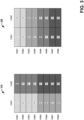
- the RB-bundle (e.g., which can comprise RBs having the same shading) can be constructed from RBs consecutively numbered in the order of frequency first, then in the time domain.
- the RB-bundle (e.g., which can comprise RBs having the same shading) can be constructed by RBs consecutively numbered in the order of time first, then in the frequency domain.
- FIG. 3 shows an example RB-bundle size of four RBs, in various embodiments, a greater or lesser number of RBs can be combined within a RB bundle.
- the RB bundle size can be configured (e.g., via RRC signaling), while in others it can be fixed in the specification.
- the numbering scheme of RB-bundles can be configured by RRC signaling.
- the UE can determine the resources for a power saving signal over which the coherent combining/correlation can be performed.
- coherent combining can be conducted within the RB-bundle, and non-coherent combining can be performed across RB-bundles.
- symbol-based precoder cycling where different precoders can be used for different OFDM symbols
- frequency-dependent precoder cycling where different precoders can be applied for different RB regions with same bandwidth and being located in different frequency part
- time-first RB-bundling For example, to achieve symbol-based PC, the RB-bundle can be constructed by using frequency-first RB numbering and the size of the RB-bundle can be configured to be equal to the bandwidth of power saving signal.
- the RB-bundling can be constructed by using time-first RB numbering and the size of the RB-bundle can be set to be x*y, where x equals to the number of OFDM symbols occupied by the power saving signal (e.g., 1, 2, 3, etc., which can be configured via RRC), and y the number of RBs in frequency domain (e.g., which can be configured via RRC) to apply the same precoder.
- the power saving signal e.g., 1, 2, 3, etc., which can be configured via RRC
- y the number of RBs in frequency domain
- transmit diversity can be provided by using different precoders for different RB bundles.
- the achieved amount of transmit diversity for power saving candidates with different sizes can be different.
- the power saving signal candidates with smaller target coverage level have smaller transmit diversity than those with larger target coverage levels.
- the transmit diversity order can be configured by RRC signaling.
- Example 410 has coverage level-1, while example 420 has Coverage level-2 employing frequency-first bundling and example 430 has Coverage level-2 employing time-first bundling. In various embodiments, other coverage levels can be employed (e.g., configured via RRC).
- FIG. 4 illustrates examples employing the second set of techniques, wherein configured power saving signals can include two coverage level (CL) candidates: a CL-1 candidate of 8 RBs and CL-2 candidates of 16 RBs.
- the transmit diversity order (2 in the examples of FIG. 4 ) as well as the RB bundling direction (e.g., frequency-first as in example 420 or time-first as in example 430) can be configured. Due to the configured transmit diversity order, all the candidates with different CLs can achieve the same transmit diversity.
- the CL-1 candidate has a RB bundle size of 4 RBs and transmit diversity order of 2.
- the CL-2 candidates shown in examples 420 and 430 have RB bundle size of 8 RBs and the same transmit diversity order of 2 as the CL-1 candidate.
- the coverage performance of power saving signals configured by the second set of techniques has a better predictability due to the same order of transmit diversity and linear scaled processing gain from the proportional sequence lengths.
Landscapes
- Engineering & Computer Science (AREA)
- Signal Processing (AREA)
- Computer Networks & Wireless Communication (AREA)
- Mobile Radio Communication Systems (AREA)
- Transceivers (AREA)
- Circuits Of Receivers In General (AREA)
Claims (14)
- Vorrichtung (1001), die konfiguriert ist, um in einer Benutzervorrichtung (engl. User Equipment), UE, eingesetzt zu werden, umfassend:eine Speicherschnittstelle; undeine Verarbeitungsschaltung (110), die konfiguriert ist zum:Verarbeiten eines Energiesparsignals, das mit einer diskontinuierlichen Empfangseinschaltdauer- (engl. Discontinuous Reception On Duration), drx-onDuration-, Gelegenheit assoziiert ist, wobei das Energiesparsignal über einen Satz von Ressourcenblöcken, RBs, empfangen wird, umfassend eine erste Vielzahl von RBs, die mit einem ersten Vorcodierer assoziiert sind, und eine zweite Vielzahl von RBs, die mit einem zweiten Vorcodierer assoziiert sind, wobei der Satz von RBs innerhalb eines konfigurierten Satzes von Zeit- und Frequenzressourcen des Energiesparsignals liegt;dadurch gekennzeichnet, dass die Verarbeitungsschaltung (110) ferner konfiguriert ist zum:
Bestimmen, basierend auf mindestens einem der ersten Vielzahl von RBs oder der zweiten Vielzahl von RBs, einer Signalwellenform des Energiesparsignals oder eines Signalisierungsinhalts des Energiesparsignals, ob das Energiesparsignal eines von zwei Signalen ist: entweder ein Aufwachsignal, WUS, oder ein Go-to-Sleep-Signal, GTS. - Vorrichtung (1001) nach Anspruch 1, wobei das Energiesparsignal das WUS ist, und wobei die Verarbeitungsschaltung (110) ferner konfiguriert ist zum:Bewirken, dass die UE in einen Netzwerkzugriffsmodus, NAM, eintritt, wobei eine Medienzugriffssteuerungs-, MAC-, Entität der UE während einer drx-onDuration-Periode nach der drx-onDuration-Gelegenheit auf "Aktive Zeit" geschaltet wird; undDurchführen einer Überwachung eines physikalischen Downlink-Steuerkanals, PDCCH, während der drx-onDuration-Periode.
- Vorrichtung (1001) nach Anspruch 1, wobei das Energiesparsignal das GTS ist, und wobei die Verarbeitungsschaltung (110) ferner konfiguriert ist zum:
Bewirken, dass die UE in einem Energiesparmodus bleibt, wobei eine Medienzugriffssteuerungs-, MAC-, Entität der UE während einer drx-onDuration-Periode nach der drx-onDuration-Gelegenheit in "Nicht-Aktive Zeit" bleibt, wobei die UE während der drx-onDuration-Periode keine Überwachung eines physikalischen Downlink-Steuerkanals, PDCCH, durchführt. - Vorrichtung (1001) nach Anspruch 1, wobei das Energiesparsignal ein Energiesparsignalkandidat einer Vielzahl von Energiesparsignalkandidaten ist, die für die UE konfiguriert sind, wobei die Verarbeitungsschaltung (110), die konfiguriert ist, um das Energiesparsignal zu verarbeiten, die Verarbeitungsschaltung (110) umfasst, die konfiguriert ist, um eine Detektion zu versuchen, ob ein oder mehrere Energiesparsignalkandidaten der Vielzahl von Energiesparsignalkandidaten während der drx-onDuration-Gelegenheit empfangen wurden.
- Vorrichtung (1001) nach einem der Ansprüche 1-4, wobei der Satz von RBs eine Vielzahl von RB-Bündeln umfasst, wobei jedes RB-Bündel der Vielzahl von RB-Bündeln eine konfigurierte RB-Bündelgröße aufweist, wobei die erste Vielzahl von RBs ein erstes RB-Bündel der Vielzahl von RB-Bündeln ist, und wobei die zweite Vielzahl von RBs ein zweites RB-Bündel der Vielzahl von RB-Bündeln ist.
- Vorrichtung (1001) nach Anspruch 5, wobei der Satz von Zeit- und Frequenzressourcen ein oder mehrere orthogonale Frequenzmultiplex-, OFDM-, Symbole umfasst, und wobei jedes RB-Bündel der Vielzahl von RB-Bündeln y aufeinanderfolgende RBs umfasst, die zuerst in einem Frequenzbereich und dann in einem Zeitbereich nummeriert sind, wobei y die konfigurierte RB-Bündelgröße ist.
- Vorrichtung (1001) nach Anspruch 5, wobei der Satz von Zeit- und Frequenzressourcen ein oder mehrere orthogonale Frequenzmultiplex-, OFDM-, Symbole umfasst, und wobei jedes RB-Bündel der Vielzahl von RB-Bündeln y aufeinanderfolgende RBs umfasst, die zuerst in einem Zeitbereich und dann in einem Frequenzbereich nummeriert sind, wobei y die konfigurierte RB-Bündelgröße ist.
- Vorrichtung (1001) nach Anspruch 5, wobei die Verarbeitungsschaltung (110) konfiguriert ist zum:Durchführen eines kohärenten Kombinierens innerhalb von RB-Bündeln der Vielzahl von RB-Bündeln; undDurchführen eines nicht-kohärenten Kombinierens zwischen RB-Bündeln der Vielzahl von RB-Bündeln.
- Vorrichtung (1001) nach Anspruch 5, wobei der Satz von Zeit- und Frequenzressourcen eine Vielzahl von orthogonalen Frequenzmultiplex-, OFDM-, Symbolen umfasst, und wobei jedes RB-Bündel der Vielzahl von RB-Bündeln mit einem anderen OFDM-Symbol der Vielzahl von OFDM-Symbolen assoziiert ist.
- Vorrichtung (1001) nach Anspruch 5, wobei der Satz von Zeit- und Frequenzressourcen ein oder mehrere orthogonale Frequenzmultiplex-, OFDM-, Symbole umfasst, und wobei jedes OFDM-Symbol des einen oder der mehreren OFDM-Symbole zwei oder mehr RB-Bündel der Vielzahl von RB-Bündeln umfasst.
- Vorrichtung (1001) nach einem der Ansprüche 1-4, wobei der Satz von RBs x RB-Bündel unabhängig von einem Zielabdeckungsniveau umfasst, wobei x gleich einer Sendediversitätsordnung ist, die über Funkressourcensteuerungs-, RRC-, Signalisierung konfiguriert ist.
- Vorrichtung (1002), die konfiguriert ist, um in einer Basisstation eingesetzt zu werden, umfassend:eine Speicherschnittstelle; undeine Verarbeitungsschaltung (110), die konfiguriert ist zum:Erzeugen, für eine Benutzervorrichtung, UE, in einem Energiesparmodus, eines Energiesparsignals für eine diskontinuierliche Empfangseinschaltdauer-, drx-onDuration-, Gelegenheit, wobei das Energiesparsignal ein Aufwachsignal, WUS, oder ein Go-to-Sleep-Signal, GTS, ist;Erzeugen einer Funkressourcensteuerungs-, RRC-, Signalisierung, die eine von einer RB-Bündelgröße des Energiesparsignals oder einer Sendediversitätsordnung des Energiesparsignals konfiguriert; undAbbilden des Energiesparsignals auf einen Satz von Ressourcenblöcken, RBs, umfassend eine erste Vielzahl von RBs, die mit einem ersten Vorcodierer assoziiert sind, und einen anderen zweiten Satz von RBs, die mit einem anderen zweiten Vorcodierer assoziiert sind, wobei der Satz von RBs innerhalb eines konfigurierten Satzes von Zeit- und Frequenzressourcen des Energiesparsignals liegt.
- Vorrichtung (1002) nach Anspruch 12, wobei der Satz von RBs eine Vielzahl von RB-Bündeln umfasst, wobei jedes RB-Bündel der Vielzahl von RB-Bündeln eine konfigurierte RB-Bündelgröße aufweist, wobei die erste Vielzahl von RBs ein erstes RB-Bündel der Vielzahl von RB-Bündeln ist, und wobei die zweite Vielzahl von RBs ein zweites RB-Bündel der Vielzahl von RB-Bündeln ist.
- Vorrichtung (1002) nach den Ansprüchen 12-13, wobei der Satz von Zeit- und Frequenzressourcen ein oder mehrere orthogonale Frequenzmultiplex-, OFDM-, Symbole umfasst.
Priority Applications (1)
| Application Number | Priority Date | Filing Date | Title |
|---|---|---|---|
| EP23208287.5A EP4293949A3 (de) | 2018-08-29 | 2019-08-23 | Sendediversitätsmechanismen für ein stromsparsignal |
Applications Claiming Priority (2)
| Application Number | Priority Date | Filing Date | Title |
|---|---|---|---|
| US201862724430P | 2018-08-29 | 2018-08-29 | |
| PCT/US2019/047843 WO2020046733A1 (en) | 2018-08-29 | 2019-08-23 | Transmit diversity mechanisms for power saving signal |
Related Child Applications (2)
| Application Number | Title | Priority Date | Filing Date |
|---|---|---|---|
| EP23208287.5A Division EP4293949A3 (de) | 2018-08-29 | 2019-08-23 | Sendediversitätsmechanismen für ein stromsparsignal |
| EP23208287.5A Division-Into EP4293949A3 (de) | 2018-08-29 | 2019-08-23 | Sendediversitätsmechanismen für ein stromsparsignal |
Publications (3)
| Publication Number | Publication Date |
|---|---|
| EP3815434A1 EP3815434A1 (de) | 2021-05-05 |
| EP3815434A4 EP3815434A4 (de) | 2022-04-13 |
| EP3815434B1 true EP3815434B1 (de) | 2024-12-18 |
Family
ID=69643064
Family Applications (2)
| Application Number | Title | Priority Date | Filing Date |
|---|---|---|---|
| EP19854755.6A Active EP3815434B1 (de) | 2018-08-29 | 2019-08-23 | Sendediversitätsmechanismen für energiesparsignal |
| EP23208287.5A Pending EP4293949A3 (de) | 2018-08-29 | 2019-08-23 | Sendediversitätsmechanismen für ein stromsparsignal |
Family Applications After (1)
| Application Number | Title | Priority Date | Filing Date |
|---|---|---|---|
| EP23208287.5A Pending EP4293949A3 (de) | 2018-08-29 | 2019-08-23 | Sendediversitätsmechanismen für ein stromsparsignal |
Country Status (4)
| Country | Link |
|---|---|
| US (2) | US11963101B2 (de) |
| EP (2) | EP3815434B1 (de) |
| CN (2) | CN117202330A (de) |
| WO (1) | WO2020046733A1 (de) |
Families Citing this family (9)
| Publication number | Priority date | Publication date | Assignee | Title |
|---|---|---|---|---|
| EP3815434B1 (de) * | 2018-08-29 | 2024-12-18 | Apple Inc. | Sendediversitätsmechanismen für energiesparsignal |
| CN110913482B (zh) * | 2018-09-18 | 2023-04-07 | 大唐移动通信设备有限公司 | 一种节能信号的侦听方法、配置方法、终端及网络侧设备 |
| EP3913955A4 (de) * | 2019-02-15 | 2022-02-09 | Guangdong Oppo Mobile Telecommunications Corp., Ltd. | Verfahren und vorrichtung zur erfassung eines physikalischen downlink-steuerungskanals und endgerät |
| WO2020205652A1 (en) * | 2019-03-29 | 2020-10-08 | Apple Inc. | Physical downlink control channel based wake up signal |
| US11564167B2 (en) * | 2019-04-01 | 2023-01-24 | Apple Inc. | Configurable power saving signal with multiple functionalities in 5G NR |
| CN113940022B (zh) | 2019-04-02 | 2024-09-06 | 苹果公司 | 跨时隙调度功率节省技术 |
| EP3952481A4 (de) * | 2019-05-02 | 2022-05-18 | Samsung Electronics Co., Ltd. | Verfahren und vorrichtung zur energieeinsparung eines endgerätes in einem drahtloskommunikationssystem |
| JP7319229B2 (ja) | 2019-07-05 | 2023-08-01 | 華碩電腦股▲ふん▼有限公司 | 無線通信システムにおける電力節約信号のモニタリングのための方法及び装置 |
| JP7326495B2 (ja) * | 2019-09-29 | 2023-08-15 | オッポ広東移動通信有限公司 | ウェイクアップ信号のモニタリング方法、電子装置及び記憶媒体 |
Family Cites Families (15)
| Publication number | Priority date | Publication date | Assignee | Title |
|---|---|---|---|---|
| GB2467303B (en) * | 2008-08-07 | 2012-07-11 | Icera Inc | Feedback in a wireless communication system |
| EP2621242A1 (de) | 2012-01-26 | 2013-07-31 | Panasonic Corporation | Verbesserter diskontinuierlicher Empfangsbetrieb mit zusätzlichen Aufweckgelegenheiten |
| US9526091B2 (en) * | 2012-03-16 | 2016-12-20 | Intel Corporation | Method and apparatus for coordination of self-optimization functions in a wireless network |
| KR101830745B1 (ko) * | 2013-12-05 | 2018-02-21 | 엘지전자 주식회사 | 기계타입통신을 지원하는 무선 접속 시스템에서 상향링크 전송 전력을 제어하는 방법 및 장치 |
| CN103986682B (zh) | 2014-05-30 | 2015-08-26 | 江苏中兴微通信息科技有限公司 | 一种无线mimo通信系统的通信方法 |
| US10057815B2 (en) * | 2015-05-14 | 2018-08-21 | Qualcomm Incorporated | Physical broadcast channel repetition for evolved machine type communication |
| US10432441B2 (en) * | 2017-02-06 | 2019-10-01 | Samsung Electronics Co., Ltd. | Transmission structures and formats for DL control channels |
| JP7267745B2 (ja) * | 2017-04-24 | 2023-05-02 | エルジー エレクトロニクス インコーポレイティド | 無線通信システムにおいて信号を送受信する方法及びそのための装置 |
| EP4369626A3 (de) * | 2017-05-03 | 2024-07-17 | InterDigital Patent Holdings, Inc. | Strahlbasierte pdcch-übertragung in nr |
| WO2019063479A1 (en) * | 2017-09-28 | 2019-04-04 | Sony Corporation | METHOD AND APPARATUS FOR PAGING FOR A WIRELESS COMMUNICATION SYSTEM |
| US11240756B2 (en) * | 2017-09-28 | 2022-02-01 | Telefonaktiebolaget Lm Ericsson (Publ) | Methods and apparatuses for transmitting a power saving signal |
| US11032047B2 (en) * | 2017-09-29 | 2021-06-08 | Qualcomm Incorporated | Techniques and apparatuses for wakeup signal design and resource allocation |
| US11284477B2 (en) * | 2018-07-24 | 2022-03-22 | Apple Inc. | Downlink control channel signaling for improving UE power consumption |
| JP7232898B2 (ja) * | 2018-08-17 | 2023-03-03 | アイディーエーシー ホールディングス インコーポレイテッド | 無線通信における省電力信号 |
| EP3815434B1 (de) * | 2018-08-29 | 2024-12-18 | Apple Inc. | Sendediversitätsmechanismen für energiesparsignal |
-
2019
- 2019-08-23 EP EP19854755.6A patent/EP3815434B1/de active Active
- 2019-08-23 WO PCT/US2019/047843 patent/WO2020046733A1/en not_active Ceased
- 2019-08-23 US US17/268,509 patent/US11963101B2/en active Active
- 2019-08-23 CN CN202311283830.5A patent/CN117202330A/zh active Pending
- 2019-08-23 EP EP23208287.5A patent/EP4293949A3/de active Pending
- 2019-08-23 CN CN201980056819.0A patent/CN112640538B/zh active Active
-
2023
- 2023-09-27 US US18/475,427 patent/US12376034B2/en active Active
Also Published As
| Publication number | Publication date |
|---|---|
| EP3815434A1 (de) | 2021-05-05 |
| EP3815434A4 (de) | 2022-04-13 |
| EP4293949A3 (de) | 2024-04-17 |
| EP4293949A2 (de) | 2023-12-20 |
| CN112640538A (zh) | 2021-04-09 |
| US20210321333A1 (en) | 2021-10-14 |
| WO2020046733A1 (en) | 2020-03-05 |
| US12376034B2 (en) | 2025-07-29 |
| CN117202330A (zh) | 2023-12-08 |
| CN112640538B (zh) | 2024-08-13 |
| US11963101B2 (en) | 2024-04-16 |
| US20240023022A1 (en) | 2024-01-18 |
Similar Documents
| Publication | Publication Date | Title |
|---|---|---|
| EP3815434B1 (de) | Sendediversitätsmechanismen für energiesparsignal | |
| JP7762279B2 (ja) | 省電力のためのウェイクアップ信号 | |
| CN110226351B (zh) | 用于寻呼接收的时间和频率跟踪方法及用户设备 | |
| CN104769988B (zh) | 信息发送、接收方法及设备 | |
| WO2023183661A2 (en) | System and method for wakeup signal design to facilitate ultra-low power reception | |
| KR20240105415A (ko) | 신호 세트를 송신/수신하는 방법 및 그 장치 | |
| US11895592B2 (en) | Selecting reference signal occasions for wakeup | |
| KR20230038699A (ko) | 사이드링크 통신들을 위한 동기화 신호 블록 파형 설계를 위한 기법들 | |
| WO2020052554A1 (zh) | 通信方法及通信装置 | |
| WO2024125024A1 (en) | Ssb transmission | |
| US10103860B2 (en) | Method for defining PDCCH search space in a communication system using carrier aggregation | |
| WO2024009145A2 (en) | Techniques for interference handling in dynamic time division duplex operation | |
| US20250358071A1 (en) | Techniques for cluster-based synchronization signal block transmission | |
| WO2024093394A1 (en) | Retrieval of system information | |
| EP4604625A1 (de) | Dynamische übertragung eines aufwecksignals | |
| US20250317861A1 (en) | Method and apparatus for transceiving low-power signal | |
| WO2025123719A1 (en) | Wus configuraton | |
| US20250184964A1 (en) | Monitoring paging occasions using a low power radio | |
| EP4586718A1 (de) | Kommunikationsvorrichtung, kommunikationsverfahren und kommunikationssystem | |
| WO2025102802A1 (en) | Methods and apparatuses for time domain resource indication for multi-cell scheduling with one or more channels per scheduled cell | |
| WO2025166568A1 (en) | Devices, methods, and medium for communication | |
| WO2026025998A1 (en) | Lp-wus monitoring | |
| WO2025123697A1 (en) | Lp-wus procedure for user equipment | |
| WO2026016092A1 (en) | Wus indication | |
| US20250193715A1 (en) | Early monitoring indication for a downlink control channel |
Legal Events
| Date | Code | Title | Description |
|---|---|---|---|
| STAA | Information on the status of an ep patent application or granted ep patent |
Free format text: STATUS: THE INTERNATIONAL PUBLICATION HAS BEEN MADE |
|
| PUAI | Public reference made under article 153(3) epc to a published international application that has entered the european phase |
Free format text: ORIGINAL CODE: 0009012 |
|
| STAA | Information on the status of an ep patent application or granted ep patent |
Free format text: STATUS: REQUEST FOR EXAMINATION WAS MADE |
|
| 17P | Request for examination filed |
Effective date: 20210201 |
|
| AK | Designated contracting states |
Kind code of ref document: A1 Designated state(s): AL AT BE BG CH CY CZ DE DK EE ES FI FR GB GR HR HU IE IS IT LI LT LU LV MC MK MT NL NO PL PT RO RS SE SI SK SM TR |
|
| DAV | Request for validation of the european patent (deleted) | ||
| DAX | Request for extension of the european patent (deleted) | ||
| A4 | Supplementary search report drawn up and despatched |
Effective date: 20220314 |
|
| RIC1 | Information provided on ipc code assigned before grant |
Ipc: H04L 5/00 20060101ALI20220308BHEP Ipc: H04W 72/04 20090101ALI20220308BHEP Ipc: H04W 52/02 20090101AFI20220308BHEP |
|
| GRAP | Despatch of communication of intention to grant a patent |
Free format text: ORIGINAL CODE: EPIDOSNIGR1 |
|
| STAA | Information on the status of an ep patent application or granted ep patent |
Free format text: STATUS: GRANT OF PATENT IS INTENDED |
|
| INTG | Intention to grant announced |
Effective date: 20240403 |
|
| GRAJ | Information related to disapproval of communication of intention to grant by the applicant or resumption of examination proceedings by the epo deleted |
Free format text: ORIGINAL CODE: EPIDOSDIGR1 |
|
| STAA | Information on the status of an ep patent application or granted ep patent |
Free format text: STATUS: REQUEST FOR EXAMINATION WAS MADE |
|
| INTC | Intention to grant announced (deleted) | ||
| GRAP | Despatch of communication of intention to grant a patent |
Free format text: ORIGINAL CODE: EPIDOSNIGR1 |
|
| STAA | Information on the status of an ep patent application or granted ep patent |
Free format text: STATUS: GRANT OF PATENT IS INTENDED |
|
| INTG | Intention to grant announced |
Effective date: 20240723 |
|
| GRAS | Grant fee paid |
Free format text: ORIGINAL CODE: EPIDOSNIGR3 |
|
| GRAA | (expected) grant |
Free format text: ORIGINAL CODE: 0009210 |
|
| STAA | Information on the status of an ep patent application or granted ep patent |
Free format text: STATUS: THE PATENT HAS BEEN GRANTED |
|
| AK | Designated contracting states |
Kind code of ref document: B1 Designated state(s): AL AT BE BG CH CY CZ DE DK EE ES FI FR GB GR HR HU IE IS IT LI LT LU LV MC MK MT NL NO PL PT RO RS SE SI SK SM TR |
|
| REG | Reference to a national code |
Ref country code: CH Ref legal event code: EP |
|
| REG | Reference to a national code |
Ref country code: DE Ref legal event code: R096 Ref document number: 602019063776 Country of ref document: DE |
|
| REG | Reference to a national code |
Ref country code: IE Ref legal event code: FG4D |
|
| P01 | Opt-out of the competence of the unified patent court (upc) registered |
Free format text: CASE NUMBER: APP_67179/2024 Effective date: 20241219 |
|
| REG | Reference to a national code |
Ref country code: LT Ref legal event code: MG9D |
|
| PG25 | Lapsed in a contracting state [announced via postgrant information from national office to epo] |
Ref country code: HR Free format text: LAPSE BECAUSE OF FAILURE TO SUBMIT A TRANSLATION OF THE DESCRIPTION OR TO PAY THE FEE WITHIN THE PRESCRIBED TIME-LIMIT Effective date: 20241218 |
|
| PG25 | Lapsed in a contracting state [announced via postgrant information from national office to epo] |
Ref country code: FI Free format text: LAPSE BECAUSE OF FAILURE TO SUBMIT A TRANSLATION OF THE DESCRIPTION OR TO PAY THE FEE WITHIN THE PRESCRIBED TIME-LIMIT Effective date: 20241218 |
|
| PG25 | Lapsed in a contracting state [announced via postgrant information from national office to epo] |
Ref country code: BG Free format text: LAPSE BECAUSE OF FAILURE TO SUBMIT A TRANSLATION OF THE DESCRIPTION OR TO PAY THE FEE WITHIN THE PRESCRIBED TIME-LIMIT Effective date: 20241218 |
|
| PG25 | Lapsed in a contracting state [announced via postgrant information from national office to epo] |
Ref country code: NO Free format text: LAPSE BECAUSE OF FAILURE TO SUBMIT A TRANSLATION OF THE DESCRIPTION OR TO PAY THE FEE WITHIN THE PRESCRIBED TIME-LIMIT Effective date: 20250318 |
|
| REG | Reference to a national code |
Ref country code: NL Ref legal event code: MP Effective date: 20241218 |
|
| PG25 | Lapsed in a contracting state [announced via postgrant information from national office to epo] |
Ref country code: LV Free format text: LAPSE BECAUSE OF FAILURE TO SUBMIT A TRANSLATION OF THE DESCRIPTION OR TO PAY THE FEE WITHIN THE PRESCRIBED TIME-LIMIT Effective date: 20241218 Ref country code: GR Free format text: LAPSE BECAUSE OF FAILURE TO SUBMIT A TRANSLATION OF THE DESCRIPTION OR TO PAY THE FEE WITHIN THE PRESCRIBED TIME-LIMIT Effective date: 20250319 |
|
| PG25 | Lapsed in a contracting state [announced via postgrant information from national office to epo] |
Ref country code: RS Free format text: LAPSE BECAUSE OF FAILURE TO SUBMIT A TRANSLATION OF THE DESCRIPTION OR TO PAY THE FEE WITHIN THE PRESCRIBED TIME-LIMIT Effective date: 20250318 |
|
| PG25 | Lapsed in a contracting state [announced via postgrant information from national office to epo] |
Ref country code: NL Free format text: LAPSE BECAUSE OF FAILURE TO SUBMIT A TRANSLATION OF THE DESCRIPTION OR TO PAY THE FEE WITHIN THE PRESCRIBED TIME-LIMIT Effective date: 20241218 |
|
| REG | Reference to a national code |
Ref country code: AT Ref legal event code: MK05 Ref document number: 1753276 Country of ref document: AT Kind code of ref document: T Effective date: 20241218 |
|
| PG25 | Lapsed in a contracting state [announced via postgrant information from national office to epo] |
Ref country code: SM Free format text: LAPSE BECAUSE OF FAILURE TO SUBMIT A TRANSLATION OF THE DESCRIPTION OR TO PAY THE FEE WITHIN THE PRESCRIBED TIME-LIMIT Effective date: 20241218 |
|
| PG25 | Lapsed in a contracting state [announced via postgrant information from national office to epo] |
Ref country code: PL Free format text: LAPSE BECAUSE OF FAILURE TO SUBMIT A TRANSLATION OF THE DESCRIPTION OR TO PAY THE FEE WITHIN THE PRESCRIBED TIME-LIMIT Effective date: 20241218 |
|
| PG25 | Lapsed in a contracting state [announced via postgrant information from national office to epo] |
Ref country code: ES Free format text: LAPSE BECAUSE OF FAILURE TO SUBMIT A TRANSLATION OF THE DESCRIPTION OR TO PAY THE FEE WITHIN THE PRESCRIBED TIME-LIMIT Effective date: 20241218 |
|
| PG25 | Lapsed in a contracting state [announced via postgrant information from national office to epo] |
Ref country code: IS Free format text: LAPSE BECAUSE OF FAILURE TO SUBMIT A TRANSLATION OF THE DESCRIPTION OR TO PAY THE FEE WITHIN THE PRESCRIBED TIME-LIMIT Effective date: 20250418 |
|
| PG25 | Lapsed in a contracting state [announced via postgrant information from national office to epo] |
Ref country code: PT Free format text: LAPSE BECAUSE OF FAILURE TO SUBMIT A TRANSLATION OF THE DESCRIPTION OR TO PAY THE FEE WITHIN THE PRESCRIBED TIME-LIMIT Effective date: 20250421 |
|
| PG25 | Lapsed in a contracting state [announced via postgrant information from national office to epo] |
Ref country code: EE Free format text: LAPSE BECAUSE OF FAILURE TO SUBMIT A TRANSLATION OF THE DESCRIPTION OR TO PAY THE FEE WITHIN THE PRESCRIBED TIME-LIMIT Effective date: 20241218 |
|
| PG25 | Lapsed in a contracting state [announced via postgrant information from national office to epo] |
Ref country code: RO Free format text: LAPSE BECAUSE OF FAILURE TO SUBMIT A TRANSLATION OF THE DESCRIPTION OR TO PAY THE FEE WITHIN THE PRESCRIBED TIME-LIMIT Effective date: 20241218 Ref country code: AT Free format text: LAPSE BECAUSE OF FAILURE TO SUBMIT A TRANSLATION OF THE DESCRIPTION OR TO PAY THE FEE WITHIN THE PRESCRIBED TIME-LIMIT Effective date: 20241218 |
|
| PG25 | Lapsed in a contracting state [announced via postgrant information from national office to epo] |
Ref country code: SK Free format text: LAPSE BECAUSE OF FAILURE TO SUBMIT A TRANSLATION OF THE DESCRIPTION OR TO PAY THE FEE WITHIN THE PRESCRIBED TIME-LIMIT Effective date: 20241218 |
|
| PG25 | Lapsed in a contracting state [announced via postgrant information from national office to epo] |
Ref country code: CZ Free format text: LAPSE BECAUSE OF FAILURE TO SUBMIT A TRANSLATION OF THE DESCRIPTION OR TO PAY THE FEE WITHIN THE PRESCRIBED TIME-LIMIT Effective date: 20241218 |
|
| PG25 | Lapsed in a contracting state [announced via postgrant information from national office to epo] |
Ref country code: IT Free format text: LAPSE BECAUSE OF FAILURE TO SUBMIT A TRANSLATION OF THE DESCRIPTION OR TO PAY THE FEE WITHIN THE PRESCRIBED TIME-LIMIT Effective date: 20241218 |
|
| PG25 | Lapsed in a contracting state [announced via postgrant information from national office to epo] |
Ref country code: SE Free format text: LAPSE BECAUSE OF FAILURE TO SUBMIT A TRANSLATION OF THE DESCRIPTION OR TO PAY THE FEE WITHIN THE PRESCRIBED TIME-LIMIT Effective date: 20241218 |
|
| REG | Reference to a national code |
Ref country code: DE Ref legal event code: R097 Ref document number: 602019063776 Country of ref document: DE |
|
| PG25 | Lapsed in a contracting state [announced via postgrant information from national office to epo] |
Ref country code: DK Free format text: LAPSE BECAUSE OF FAILURE TO SUBMIT A TRANSLATION OF THE DESCRIPTION OR TO PAY THE FEE WITHIN THE PRESCRIBED TIME-LIMIT Effective date: 20241218 |
|
| PGFP | Annual fee paid to national office [announced via postgrant information from national office to epo] |
Ref country code: DE Payment date: 20250702 Year of fee payment: 7 |
|
| PLBE | No opposition filed within time limit |
Free format text: ORIGINAL CODE: 0009261 |
|
| STAA | Information on the status of an ep patent application or granted ep patent |
Free format text: STATUS: NO OPPOSITION FILED WITHIN TIME LIMIT |
|
| REG | Reference to a national code |
Ref country code: CH Ref legal event code: L10 Free format text: ST27 STATUS EVENT CODE: U-0-0-L10-L00 (AS PROVIDED BY THE NATIONAL OFFICE) Effective date: 20251029 |
|
| 26N | No opposition filed |
Effective date: 20250919 |
|
| REG | Reference to a national code |
Ref country code: CH Ref legal event code: H13 Free format text: ST27 STATUS EVENT CODE: U-0-0-H10-H13 (AS PROVIDED BY THE NATIONAL OFFICE) Effective date: 20260324 |
|
| PG25 | Lapsed in a contracting state [announced via postgrant information from national office to epo] |
Ref country code: MC Free format text: LAPSE BECAUSE OF FAILURE TO SUBMIT A TRANSLATION OF THE DESCRIPTION OR TO PAY THE FEE WITHIN THE PRESCRIBED TIME-LIMIT Effective date: 20241218 |
|
| PG25 | Lapsed in a contracting state [announced via postgrant information from national office to epo] |
Ref country code: LU Free format text: LAPSE BECAUSE OF NON-PAYMENT OF DUE FEES Effective date: 20250823 |