EP3895385B1 - Verfahren und vorrichtungen zur unterstützung eines lokalen netzwerks (lan) - Google Patents
Verfahren und vorrichtungen zur unterstützung eines lokalen netzwerks (lan) Download PDFInfo
- Publication number
- EP3895385B1 EP3895385B1 EP19831683.8A EP19831683A EP3895385B1 EP 3895385 B1 EP3895385 B1 EP 3895385B1 EP 19831683 A EP19831683 A EP 19831683A EP 3895385 B1 EP3895385 B1 EP 3895385B1
- Authority
- EP
- European Patent Office
- Prior art keywords
- upf
- pdu
- pdr
- far
- session
- Prior art date
- Legal status (The legal status is an assumption and is not a legal conclusion. Google has not performed a legal analysis and makes no representation as to the accuracy of the status listed.)
- Active
Links
Images





Classifications
-
- H—ELECTRICITY
- H04—ELECTRIC COMMUNICATION TECHNIQUE
- H04L—TRANSMISSION OF DIGITAL INFORMATION, e.g. TELEGRAPHIC COMMUNICATION
- H04L12/00—Data switching networks
- H04L12/28—Data switching networks characterised by path configuration, e.g. LAN [Local Area Networks] or WAN [Wide Area Networks]
- H04L12/46—Interconnection of networks
- H04L12/4641—Virtual LANs, VLANs, e.g. virtual private networks [VPN]
- H04L12/4645—Details on frame tagging
-
- H—ELECTRICITY
- H04—ELECTRIC COMMUNICATION TECHNIQUE
- H04L—TRANSMISSION OF DIGITAL INFORMATION, e.g. TELEGRAPHIC COMMUNICATION
- H04L45/00—Routing or path finding of packets in data switching networks
- H04L45/74—Address processing for routing
-
- H—ELECTRICITY
- H04—ELECTRIC COMMUNICATION TECHNIQUE
- H04L—TRANSMISSION OF DIGITAL INFORMATION, e.g. TELEGRAPHIC COMMUNICATION
- H04L12/00—Data switching networks
- H04L12/28—Data switching networks characterised by path configuration, e.g. LAN [Local Area Networks] or WAN [Wide Area Networks]
- H04L12/46—Interconnection of networks
- H04L12/4633—Interconnection of networks using encapsulation techniques, e.g. tunneling
-
- H—ELECTRICITY
- H04—ELECTRIC COMMUNICATION TECHNIQUE
- H04L—TRANSMISSION OF DIGITAL INFORMATION, e.g. TELEGRAPHIC COMMUNICATION
- H04L69/00—Network arrangements, protocols or services independent of the application payload and not provided for in the other groups of this subclass
- H04L69/22—Parsing or analysis of headers
Definitions
- LAN local area network
- 5G LAN 5G LAN
- FIG. 1 illustrates a 5G network architecture 100.
- NSF Network Slice Selection Function
- AUSF Authentication Server Function
- UDM Unified Data Management
- AMF Access and Mobility Management Function
- SMF Session Management Function
- PCF Policy Control Function
- AF Application Function
- the 5G core network aims at separating user plane and control plane.
- the user plane typically carries user traffic while the control plane carries signaling in the network.
- a UPF is in the user plane and all other network functions (NFs) shown, i.e., AMF, SMF, PCF, AF, AUSF, and UDM, are in the control plane.
- NFs network functions
- Separating the user and control planes helps each plane resource to be scaled independently. It also allows UPFs to be deployed separately from control plane functions in a distributed fashion. In this architecture, UPFs may be deployed very close to UEs to shorten the Round Trip Time (RTT) between UEs and data network for some applications requiring low latency.
- RTT Round Trip Time
- the core 5G network architecture is composed of modularized functions.
- the AMF and SMF are independent functions in the control plane. Separated AMF and SMF allow independent evolution and scaling.
- Other control plane functions like PCF and AUSF can be separated as shown in FIG. 1 .
- Modularized function design enables the 5G core network to support various services flexibly.
- 3GPP SA2 has conducted a study on 5GS Enhanced support of Vertical and LAN Services and arrived at a solution described in subclause 6.29 and 8.3 (parts thereof are reproduced below) to be used as base for normative work.
- 5G LAN-type service is provided by the 5G system based on the architecture defined in rel-15, with the additional enhancement:
- the UE can access the 5G LAN-type service by establishing a PDU Session targeting the DNN associated with the 5G-LAN group.
- the PDU session establishment request message (5G LAN-VN DNN, etc.) is sent from UE to the SMF, as defined in release 15.
- the SMF may contact the DN AAA in order to authenticate and authorize the UE for accessing 5G LAN-type service to the intended 5G-LAN group.
- the SMF determines the traffic routing approach by correlating all the PDU session contexts targeting the same DNN associated with the 5G-LAN group, (e.g. local switch, between two UPFs via Nx interface, via N6 interface).
- SMF stores all the PDU session contexts targeting the same DNN associated with the 5G-LAN group. SMF stores the traffic routing policy for a 5G-LAN group which is retrieved from the PCF or locally configured.
- SMF generates PDU forwarding rules and provides them to the UPF.
- UPF enforces local traffic switching based on extension of the Release 15 mechanisms as described in TS 23.501 [3], clause 5.6.10.2 and clause 5.8.2.5.
- PDR and FAR provide information that may explicitly indicate whether an uplink traffic flow is routed to the DN or to another PDU session anchor UPF (via Nx interface) or locally routed.
- the packets for different 5G-LAN group may be marked with respective VLAN tagging by UPF.
- SMF is enhanced to determine the traffic routing approach for 5G-LAN type-service.
- N4 interface is enhanced that SMF instructs UPF how to route the traffic for 5G-LAN type-service;
- Solution #29 is concluded as the conclusion for key issue 4 and 5.
- GPSI is used to uniquely identify the 5G-LAN group member.
- the NEF shall expose a new set of service API to manage (e.g. add/delete) 5G-LAN group and 5G-LAN member.
- US 2018192390 is considered to represent background art.
- US 2018192390 refers to methods by which User Plane (UP) management information is exchanged between an Application Function (AF) supporting one or more applications and a Slice Management Function (SMF) configured to manage traffic flows in a given slice of the network.
- the exchange of UP management information may be initiated from either the AF or the SMF.
- the UP management information provided by the AF may comprise traffic requirements of applications supported by the AF.
- the UP management information provided by the SM may comprise operator policy information or events, and the AF may respond with information of traffic requirements of applications supported by the AF.
- systems and methods enable an SMF to control new forwarding behavior in the UPF to support locally switched and Nx-based forwarding.
- the solutions described herein also enable a UPF to efficiently handle direct forwarding between two Packet Forwarding Control Protocol (PFCP sessions) (a.k.a., N4 sessions), e.g. for a "local switch.”
- PFCP sessions Packet Forwarding Control Protocol
- N4 sessions Packet Forwarding Control Protocol
- a SMF can configure a UPF using PFCP signaling such that the UPF is able to forward traffic from one UE to another UE for the case when both UEs are served by the UPF ("local Switch").
- This may include receiving user plane traffic with a destination towards another UE from a UE in the uplink direction, where the UPF is able to send the traffic in the downlink direction to another UE pertaining to the same 5G-LAN group. This may be accomplished without use of an external network DN, for instance, without N6.
- a SMF can configure two or more UPFs using PFCP signaling so that the UPFs are able to forward the traffic from one UE to another, for the case when the UEs are served by different UPFs.
- This may be understood as "Nx-based forwarding.” This may include receiving user plane traffic with a destination towards another UE from a UE in the uplink direction in the first UPF, where the first UPF is instructed to forward the traffic to a second UPF, which is instructed to send the traffic in the downlink direction to the destination UE pertaining to the same 5G-LAN group. In some instance, there may be one or more intermediate UPFs between the first and second UPFs.
- a method for supporting a local area network includes a UPF receiving a transmission (e.g., a GTP-U PDU transmitted by a access network node or a PDU transmitted by another UPF over an Nx interface) comprising a protocol data unit, PDU, transmitted by a first user equipment, UE, wherein the PDU includes at least a destination address of a second UE.
- the method also includes the UPF using information included in the transmission to find a first packet detection rule, PDR, matching information included in the transmission (e.g.
- the first PDR identifies a first forwarding action rule, FAR, wherein the first FAR includes an indication (e.g., Destination Interface set to "5G-LAN internal") indicating that the PDU requires further ingress processing (i.e., indicating that another PDR matching process is needed for the PDU).
- the method also includes the UPF enforcing the first FAR (e.g., sending the PDU to the UPF's routing engine using the network instance identifier and the 5G LAN Internal interface as included in the FAR, so that the routing engine can perform the another PDR matching process to find a second PDR for the PDU).
- the method also include the UPF finding a second PDR for the PDU (e.g., the second PDR is found after identifying a second N4 session for the PDU and by matching the PDU with packet detection information, PDI, included in the second PDR), wherein the second PDR identifies a second FAR.
- the method also includes the UPF enforcing the second FAR, wherein enforcing the second FAR comprises using information included in the second FAR to forward the PDU to the second UE.
- the method includes a UPF receiving a transmission (e.g., a GTP-U PDU transmitted by a access network node or a PDU transmitted by another UPF over an Nx interface) comprising a protocol data unit, PDU, transmitted by a first user equipment, UE, wherein the PDU includes at least a destination address of a second UE.
- the method also includes the UPF using information included in the transmission to find a first Packet Detection Rule, PDR, matching information included in the transmission (e.g.
- the first PDR identifies a first forwarding action rule, FAR, wherein the first FAR includes an indication (e.g., Destination Interface set to "5G-LAN internal") indicating that the PDU requires further ingress processing (i.e., indicating that another PDR matching process is needed for the PDU).
- the method also includes the UPF obtaining information included in the first FAR (e.g., reading the value of the Destination Interface IE included in the FAR).
- the method also includes the UPF, after obtaining the information included the first FAR, identifying an N4 session.
- the method also includes the UPF, after identifying the N4 session, finding a default PDR associated with the N4 session, wherein the default PDR identifies a default FAR and/or a default URR, wherein the default FAR is configured to cause the UPF to transmit the PDU to a Session Management Function, SMF, or the default URR is configured to cause the UPF to transmit to the SMF a PFCP Session Report Request message comprising at least a portion of the PDU (e.g., the destination IP address included in an IP header of the PDU).
- SMF Session Management Function
- the method includes the SMF receiving a transmission transmitted by a first user plane function, UPF, as a result of the first UPF determining that a PDU is not routable, wherein the PDU includes a source address field containing an address of a first UE and a destination address field containing an address of a second UE, and wherein the transmission comprises 1) the PDU or 2) a PFCP Session Report Request message that comprises the address of the second UE.
- the method also includes the SMF determining a UPF that is currently serving the second UE.
- the method also includes the SMF, after determining the UPF that is currently serving the second UE, provisioning to the first UPF a PDR for enabling the first UPF to route towards the second UE PDUs that are addressed to the second UE.
- the method includes the SMF generating a first packet detection rule, PDR, associated with a first N4 session associated with a first UE or associated with a 5G LAN group, the first PDR containing a forwarding action rule, FAR, identifier for identifying a first FAR.
- the method also includes the SMF generating the first FAR, wherein the first FAR includes an indication (e.g., Destination Interface set to "5G-LAN internal") indicating that the PDUs that match the first PDR require further ingress processing (i.e., indicating that another PDR matching process is needed for the PDUs).
- the method also includes the SMF providing the first PDR and the first FAR to a first user plane function, UPF (e.g., the UPF selected to serve the first UE).
- UPF user plane function
- network functionality may be implemented either as a network element on dedicated hardware, as a software instance running on a dedicated hardware, or as a virtualized function instantiated on an appropriate platform, e.g., a cloud infrastructure.
- Nx-based forwarding may require that UL/DL traffic is switched in the UPF between a N4 session for a PDU Session (belonging to a 5G-LAN group member) and a shared tunnel (Nx) between two UPFs.
- a shared tunnel Nx
- QoS, usage reporting, etc. requirements on this shared tunnel e.g. to enforce all packets on a tunnel to a certain bit rate or to count the volume on the shared tunnel
- an N4 session (PFCP session) for the shared tunnel in addition to the N4 sessions for the PDU Sessions, can be used. This could allow specific QER(s) and URR(s) associated with the shared tunnel to be implemented.
- the SMF can instruct the UPF to forward traffic between two N4 sessions within the UPF.
- local switching in a UPF is provided.
- local switch forwarding in the UPF may require that UL/DL traffic is switched in the UPF between an N4 session for a PDU Session (belonging to a 5G-LAN group member) and another N4 session (belonging to another 5G-LAN group member).
- the UPF receives an UL packet for one PDU Session and performs the related processing (PDR, QER, URR, FAR) and sends it as a DL transmission on another PDU Session after performing the related processing for that PDU Session (PDR, QER, URR, FAR).
- the egress for the UL processing can be connected to the ingress of the DL processing.
- a FAR for the UL PDU can inform the UPF that the PDU requires further ingress processing (e.g., the FAR instructs the UPF to send the PDU back to its routing engine so that the UPF can match the PDU to another PDR).
- a new value for "Source Interface” and “Destination Interface” is provided to denote a UPF-internal interface.
- a new value of "Internal” or “5G-LAN” or combination (“5G LAN Internal”) can be added to inform the UPF that the PDU requires further ingress processing.
- Current acceptable values for the Source Interface and Destination Interface information elements include: Access (0), Core (1), SGi-LAN/N6-LAN (2), CP-Function (3), and LI Function (4). See 3GPP TS 29.244 v. 15.4.0 (hereafter "TS 29.44”). The values 5 to 15 are currently not being used.
- the Network Instance value could, for example, be set to a value identifying a particular 5G-LAN group (e.g., 5G_LAN_Group_01, 5G_LAN_Group_02, 5G_LAN_Group_03, ..., or 5G_LAN_Group_01_Nx, 5G_LAN_Group_02_Nx,).
- 5G-LAN group e.g., 5G_LAN_Group_01, 5G_LAN_Group_02, 5G_LAN_Group_03, ..., or 5G_LAN_Group_01_Nx, 5G_LAN_Group_02_Nx,).
- UPF-internal interface several new values for "Source Interface” and “Destination Interface” is provided to denote a UPF-internal interface.
- These multiple new source/destination interface may be named “5G_LAN_Group01” (used for local switch when both communication parties(UEs) are served by the same UPF) and "SG_LAN_Group01_Nx (used when both communication parties (UEs) are served by the different UPFs), "5G_LAN_Group02” and “5G_LAN_Group02_Nx”, “"5G_LAN_Group03” and “5G_LAN_Group03_Nx”, for different 5G LAN group 01, 02 and 03.
- the PDU is not sent back for another round of ingress processing, i.e. classification based on active PDRs to identify the N4 session and matching PDR, as this could be inefficient in some scenarios since the SMF knows already based on destination address what the target N4 Session is. Rather, and in order to instruct the UPF about the target N4 Session and to avoid inefficiencies, a UPF can determine target N4 Session based on packet inspection, the new value for Source/Destination Interface could be used together with a new parameter in the FAR that indicates target N4 sessions.
- the FAR could contain the N4 session ID (SEID) corresponding to the PDU Session where the DL traffic is to be forwarded.
- SEID N4 session ID
- the UPF would then, based on the FAR for UL traffic, explicitly know which N4 session to apply and would not have to again determine the N4 session based on the PDR for DL traffic. This could improve efficiency in the UPF.
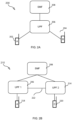
- FIGs. 2A and 2B illustrate first and second use cases according to embodiments.
- the use case of FIG. 2A can be considered a local switch, while the use case of FIG. 2B can be understood as an example of Nx-based forwarding.
- a system 200 is illustrated with a single UPF 206 controlled by an SMF 208, for example, via an N4 session between the functions.
- the UPF node 206 serves UE-A 202 and UE-B 204.
- the PDUs transmitted by the UEs may be received by a RAN node (e.g., gNB) (not shown in FIG. 2A ) and then forwarded by the RAN node to UPF 206.
- a RAN node e.g., gNB
- the SMF 208 configures UPF 206 using PFCP signaling.
- the SMF 208 can provide the UPF with both a set of Packet Detection Rules (PDRs) and Forwarding Action Rules (FARs), which define how traffic from UEs 202, 204 is handled.
- PDRs Packet Detection Rules
- FARs Forwarding Action Rules
- the UPF is able to forward traffic from one UE to another UE (e.g., from UE-A 202 to UE-B 204) for the case when both UEs are served by the same UPF ("local Switch") and are part of a 5G-LAN group.
- UPF 206 can forward the traffic without the use of a DN, for instance, without N6. However, because UPF 206 has one or more PDRs/FARs for both UEs, it can still apply the necessary rules without using the DN. For instance, for a communication from UE-A 202 to UE-B 204, UPF 206 may apply the appropriate PDR/FAR to: (1) recognize the traffic as intended for another UE served by the same UPF/group; (2) apply the appropriate actions (e.g., QoS, counting and/or charging); and (3) forward the traffic to the second UE-B 204.
- PDR/FAR for a communication from UE-A 202 to UE-B 204, UPF 206 may apply the appropriate PDR/FAR to: (1) recognize the traffic as intended for another UE served by the same UPF/group; (2) apply the appropriate actions (e.g., QoS, counting and/or charging); and (3) forward the traffic to the second UE-B 204.
- forwarding to the second UE-B 204 comprises applying the appropriate, PDR/FAR for that UE, including for instance appropriate QoS, counting and/or charging.
- PDR/FAR for that UE
- all rules are applied as if a DN over N6 were used, without the need for the DN. This is further illustrated in FIG. 3A .
- a system 210 is illustrated with two UPFs - UPF1 206 and UPF2 214 - which are both controlled by an SMF 208, for example, via respective N4 sessions between the functions.
- the UPFs 206, 214 handle communications between the respective UEs 218 and 220.
- there is a tunnel connection 222 between the UPFs 206, 214 e.g., an Nx tunnel.
- the SMF 208 can instruct two or more UPFs, e.g. UPFs 206, 214 using PFCP signaling such that the UPFs are able to forward the traffic from one UE to another on the same LAN without use of an external DN, e.g., via N6. This could include from UE 218 to UE 220 even though the UEs are served by different UPFs.
- the tunnel connection 222 may be used for such "Nx-based forwarding."
- UPF1 206 has user plane traffic from UE 218 with a destination towards another UE (e.g., UE 220) in the uplink direction
- UPF 1 206 is instructed to forward the traffic to the second UPF2 214, which is instructed to send the traffic in the downlink direction to destination UE pertaining to the same 5G-LAN group. This is further illustrated in FIG. 3B . Though not illustrated, in some instances, there may be one or more intermediate UPFs between the first and second UPFs.
- the SMF 208 provides each of the UPFs 206, 214 with both a set of Packet Detection Rules (PDRs) and Forwarding Action Rules (FARs), which define how traffic from the respective UEs 218,220 is handled.
- PDRs Packet Detection Rules
- FARs Forwarding Action Rules
- the first UPF is able to forward traffic from the first UE to the second UE (e.g., from UE-A 218 to UE-B 220) using a tunnel connection 222 to the second UPF.
- the UPFs can route the traffic without the use of an external network DN, for instance, without N6.
- the UPFs have the necessary PDR/FAR for the respective UEs, the appropriate rules are still applied.
- UPF 206 may apply the appropriate PDR/FAR to: (1) recognize the traffic as intended for another UE within the same group on a different UPF; (2) apply the appropriate actions (e.g., QoS, counting and/or charging); and (3) forward the traffic to the second UPF via a tunnel connection.
- the second UPF e.g., UPF2 2114 applies the appropriate PDRs/FARs such that all appropriate actions are applied to the traffic. In this respect, all rules are applied as if a DN were used, without the need for the DN.
- a new forwarding table is created for a new destination interface.
- An indicator of destination may be called, for example, "5G-LAN_GROUP" or "Internal.” Such an indicator may allow a UPF faster lookup in the forwarding table for "5G-LAN.”
- the UPF is informed that the PFCP Session is applicable for a 5G-LAN communication, so that UE's address should be added into the forwarding table for "5G-LAN" at PFCP Session Establishment for a given PDU session. This could be used to enable one or more of a local switch (as in FIG. 2A ) and Nx-based forwarding (as in FIG. 2B ).
- a control plane function e.g. the SMF, controls one or more UPFs.
- the SMF may provision a UL PDR/FAR to send UE-to-UE traffic to "5G-LAN.”
- An uplink (UL) PDR may be provisioned to identify UE-to-UE traffic from the originating UE, either via a Service Data Flow (SDF) filter where the destination IP address is another UE's address, e.g. a range of destination IP addresses (for the addresses range reserved for the group), or an ethernet packet filter when destination MAC address is another UE's MAC address, or a pre-configured application ID.
- SDF Service Data Flow
- This PDR will thus detect packets from originating UE that are destined to a specific target UE.
- An UL Forwarding Action Rule can be provisioned to forward the traffic into "5G-LAN Internal".
- this FAR will instruct the UPF to make direct forwarding (e.g., "local switch” or “Nx based forwarding") depending on the details in the FAR.
- control plane may also provision a DL PDR/FAR to receive UE-to-UE traffic from "5G-LAN.”
- a DL PDR is provided to receive the traffic from "5G-LAN.” In some embodiments, this PDR is the same as the one for forwarding DL traffic from SGi or N6.
- a DL FAR may be provisioned to forward the UE-UE traffic to the destination UE.
- the PDR/FAR for a given UE and session at the UPF may be updated to accommodate traffic within a 5G-LAN. According to embodiments, this may be accomplished by a "push" or "pull" type arrangement between the UPF(s) and the SMF. For instance, when a new UE joins a 5G-LAN group, update PDR/FARs may be pushed to the respective UPF(s) for subsequent handling of messaging to/from such a UE. In other instances, the UPF(s) may obtain updated (or first) PDR/FARs for communications to/from a particular UE as needed upon recognition.
- the UPF when the UPF receives a packet transmitted by a first UE that is destined for a second UE on the same 5G-LAN as the first UE, the UPF will identify a first N4 session and match the packet to a first PDR within the first N4 session.
- This first PDR points to a first FAR for the packet and the first FAR indicates that the packet requires further ingress processing, thereby causing the UPF to look for a second PDR that matches the packet (e.g., the UPF will identify a second N4 session corresponding to the packet and then look for a PDR within the second N4 session that matches the packet).
- a default PDR within the second N4 session may be defined with least precedence value to catch any unknown traffic.
- this default PDR points to a FAR that instructs the UPF to forward the packet the SMF.
- the default PDR points to a URR with a new reporting trigger, for instance called "5G-LAN traffic," that instructs the UPF to send to the SMF a PFCP Session Report Request message comprising at least a portion of the packet (e.g., at least the destination network address included in a network layer header of the packet).
- the SMF can determine which UPF is serving the destination UE, and provision the relevant PDR/FAR to the first UPF, and any intermediate UPFs (for potential communication from a UE served by the UPF to the same destination UE), to enable it forward the traffic to that UPF.
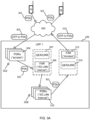
- FIG. 3A further illustrates an example embodiment.
- UE A transmits a PDU 301 (e.g., an IP packet) that is received at a RAN 300.
- the RAN 300 e.g., a base station within the RAN
- the RAN 300 then transmits the GTP-U PDU 303 to UPF 206 and UPF 206 receives the transmission (i.e., the GTP-U PDU).
- PDU 301 includes the address of UE B as the destination address of PDU 301 (i.e., PDU 301 is destined for UE B).
- UPF 206 uses information included in the GTP-U PDU 303 to find a first PDR 304 matching information included in the GTP-U PDU 303 (e.g. a source address and a destination address of the PDU transmitted by UE A).
- the step of using information included in the GTP-U PDU 303 to find the first PDR 304 comprises using information included in the GTP-U PDU 303, e.g., a local Tunnel Endpoint Identifier (TEID) identifying a tunnel endpoint at a receiving entity and allocated earlier for the PDU session of the UE A (to receive GTP-U PDU from a access network) to identify a first N4 session (e.g., an N4 session corresponding to PDU 301 transmitted by the first UE) prior to finding the first PDR 304.
- TEID local Tunnel Endpoint Identifier
- the UPF 206 finds the first PDR by searching the set of PDRs 302 within the first N4 session for the first matching PDR 304 (e.g., the UPF searches the set of one or more PDRs 302 in precedence order until it finds a PDR having PDI matching the PDU transmitted by UE A).
- the first PDR 304 identifies a first FAR 306 (i.e., the first PDR 304 includes a FAR ID that identifies the first FAR 306).
- the first PDR 304 may also identify one or more QoS enforcement rules (QERs) and/or one or more usage reporting rules (URRs) 307, and the UPF will apply the QER(s) and/or the URR(s) with respect to PDU 301.
- QERs QoS enforcement rules
- URRs usage reporting rules
- the first FAR 306 includes an indication (e.g., Destination Interface set to "5G-LAN internal") indicating that PDU 301 requires further ingress processing (i.e., indicating that another PDR matching process is needed for PDU 301).
- the UPF 206 then enforces the first FAR 306.
- enforcing the first FAR 306 includes UPF 206 sending the PDU to the UPF's routing engine using the network instance identifier and the 5G LAN Internal interface as included in the FAR, so that the routing engine can perform the another PDR matching process to find a second PDR 310 for the PDU 301 (second PDR 310 may include a Source Interface IE set to "5G-LAN Internal").
- the first FAR 306 includes a network instance IE that includes a network instance identifier that identifies a particular LAN group.
- the routing engine upon again processing PDU 301 identifies a second N4 session for PDU 301 and then searches a set of PDRs 308 within the second N4 session for the second matching PDR 310 (e.g., the UPF searches the set of one or more PDRs 308 in precedence order until it finds a PDR having PDI matching PDU 301).
- the second matching PDR 310 points to a second FAR 312.
- the second PDR 310 may also identify one or more QoS enforcement rules (QERs) and/or one or more usage reporting rules (URRs) 314, and the UPF will apply the QER(s) and/or the URR(s) 314 with respect to PDU 301.
- QERs QoS enforcement rules
- URRs usage reporting rules
- the UPF 206 then enforces the second FAR 312, wherein enforcing the second FAR comprises UPF 206 using information included in the second FAR (e.g., the value of the second FAR's Destination Interface IE) to forward the PDU to the UE B.
- the value of the second FAR's Destination Interface IE is set to Access.
- the same rules are applied to PDU 301 as if the PDU for UE B had been received via an N6 interface (i.e., from a data network (DN)).
- UPF 206 Before UPF 206 forwards PDU 301 to UE B, UPF 206 adds a header to PDU 301 based on outer header creation information included in the second FAR 312, thereby generating a second GTP-U PDU 319 that consists of the outer header and PDU 301. That is, UPF 206 forwards PDU 301 to UE B by transmitting GTP-U PDU 319 to RAN 300, which will then transmit PDU 301 to UE B.
- FIG. 3B illustrates another example embodiment.
- UE A transmits a PDU 351 (e.g., an IP packet) that is received at a RAN 300.
- the RAN 300 adds a GTP-U header to the PDU 351, thereby generating a GTP-U PDU 353 that contains the GTP-U header and PDU 351.
- the RAN 300 then transmits the GTP-U PDU 353 to UPF 206 and UPF 206 receives the transmission (i.e., the GTP-U PDU).
- the PDU 351 includes the address of UE C as the destination address of PDU 351 (i.e., PDU 351 is destined for UE C).
- UPF 206 uses information included in the GTP-U PDU 353 to find a first PDR matching information included in the GTP-U PDU 353 (e.g. a source address and a destination address of the PDU transmitted by UE A).
- the matching PDR is PDR 304.
- the first PDR 304 identifies FAR 306 and may also identify one or more QoS enforcement rules (QERs) and/or one or more usage reporting rules (URRs) 307, and the UPF will apply the QER(s) and/or the URR(s) with respect to PDU 351.
- QERs QoS enforcement rules
- URRs usage reporting rules
- the first FAR 306 includes an indication indicating that the PDU 351 requires further ingress processing (i.e., indicating that another PDR matching process is needed for the PDU 351).
- the UPF 206 then enforces the first FAR 306.
- enforcing the first FAR 306 includes UPF 206 sending the PDU 351 and the network instance identifier included in the FAR to the 5G LAN Internal interface of the UPF's routing engine so that the routing engine can perform another PDR matching process to find a second PDR 360 for the PDU 351 (second PDR 360 may include a Source Interface IE set to "5G-LAN Internal").
- the first FAR 306 includes a network instance IE that includes a network instance identifier that identifies a particular LAN group.
- the routing engine upon again processing the PDU 351 identifies a second N4 session and then searches a set of PDRs 358 within the second N4 session for the second matching PDR 360 (e.g., the UPF searches the set of one or more PDRs 358 in precedence order until it finds a PDR having PDI matching PDU 351).
- the second matching PDR 360 points to a second FAR 362.
- the second PDR 360 may also identify one or more QoS enforcement rules (QERs) and/or one or more usage reporting rules (URRs) 364, and the UPF will apply the QER(s) and/or the URR(s) 364 with respect to PDU 351.
- QERs QoS enforcement rules
- URRs usage reporting rules
- the UPF 206 then enforces the second FAR 362, wherein enforcing the second FAR comprises UPF 206 using information included in the second FAR (e.g., the value of the second FAR's Destination Interface IE) to forward the PDU to the UE C.
- the value of the second FAR's Destination Interface IE is set to 5G LAN Nx, therefore, UPF 206 forward PDU 351 to UE C by transmitting PDU 351 to UPF 214.
- UPF 206 adds a header to PDU 351 based on outer header creation information included in the second FAR 360, thereby generating a second GTP-U PDU 369 that consists of the outer header and PDU 351.
- UPF 206 then forwards PDU 351 to UE C by transmitting GTP-U PDU 369 to UPF 214, which will then transmit PDU 351 to UE C via RAN 390.
- UPF 214 upon receiving GTP-U PDU 369, UPF 214 uses information included in the GTP-U PDU 369 to find a PDR 196 matching information included in the GTP-U PDU 369 (e.g. a source address and a destination address of the PDU transmitted by UE A).
- the step of using information included in the GTP-U PDU 369 to find PDR 196 comprises using information included in the GTP-U PDU 369, e.g., a local TEID, to identify a first N4 session (e.g., the N4 session corresponding to a 5G LAN group to which UE A and UE C belong) prior to finding the first PDR 196.
- a first N4 session e.g., the N4 session corresponding to a 5G LAN group to which UE A and UE C belong
- the UPF 214 finds PDR 196 by searching the set of PDRs 382 within the identified N4 session (e.g., the UPF 214 searches the set of one or more PDRs 382 in precedence order until it finds a PDR 196 having PDI matching PDU 351).
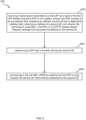
- FIG. 4 is a flow chart illustrating a process 400, according to one embodiment, for supporting communication between a first UE, such as UE 202 (a.k.a., UE A) and a second UE, such as UE 204 (a.k.a., UE B) or UE 220 (a.k.a., UE C), camping on a local area network, LAN (e.g., a 5G LAN).
- LAN e.g., a 5G LAN
- Process 400 is performed by UPF 206.
- Process 400 may begin in step s402.
- Step s402 comprises UPF 206 receiving a transmission (e.g., GTP-U PDU 303 transmitted by a access network node or a PDU transmitted by another UPF over an Nx interface) comprising a PDU transmitted by UE A (e.g., PDU 301 or PDU 351) (hereafter "the UE PDU), wherein the UE PDU includes at least a destination address of the second UE.
- the transmission comprises an outer header (e.g., GTP-U header) to which PDU 301 is appended.
- Steps s404 comprises UPF 206 using information included in the transmission to find a first PDR (e.g., PDR 304) matching information included in the transmission (e.g. a source address and a destination address of the UE PDU), wherein the first PDR identifies a first FAR (e.g., FAR 306).
- a first PDR e.g., PDR 304
- FAR e.g., FAR 306
- the step of using information included in the transmission to find the first PDR comprises UPF 206 using information included in the transmission (e.g., a local TEID allocated earlier for the PDU session of the UE A (to receive GTP-U PDU from a access network) or a local TEID allocated earlier for an N4 session created for a specific 5G LAN group (to receive GTP-U PDU from the first UPF)) to identify a first N4 session (e.g., an N4 session corresponding to the 5G LAN group or an N4 session corresponding to the PDU transmitted by the UE A) prior to finding the first PDR, and the first PDR is associated with the identified N4 session.
- a first N4 session e.g., an N4 session corresponding to the 5G LAN group or an N4 session corresponding to the PDU transmitted by the UE A
- the first PDR includes an instruction to remove the outer header (e.g., the GTP-U header to which the UE PDU is appended).
- the first PDR includes first PDI to enable UPF 206 to identify the PDU as pertaining to a 5G LAN group traffic (e.g,, the PDI specifies a source and destination address range, or any other significant bit(s) in the PDU which can be used to identify the application used for the communication within a given 5G LAN group).
- the PDI specifies a source and destination address range, or any other significant bit(s) in the PDU which can be used to identify the application used for the communication within a given 5G LAN group).
- the first FAR includes an indication (e.g., Destination Interface set to "5G-LAN internal”) indicating that the UE PDU requires further ingress processing (i.e., indicating that another PDR matching process is needed for the PDU).
- an indication e.g., Destination Interface set to "5G-LAN internal”
- the UE PDU requires further ingress processing (i.e., indicating that another PDR matching process is needed for the PDU).
- the first FAR further includes a Network Instance IE that contains a network instance value identifying a particular 5G LAN group (i.e., a LAN group to which the first UE and the second UE belong).
- a Network Instance IE that contains a network instance value identifying a particular 5G LAN group (i.e., a LAN group to which the first UE and the second UE belong).
- Step s406 comprises UPF 206 enforcing the first FAR (e.g., sending the PDU and the network instance identifier included in the FAR to the 5G LAN Internal interface of the UPF's routing engine so that the routing engine can perform the another PDR matching process to find a second PDR that for the PDU).
- the Destination Interface IE of the first FAR contains an interface value (e.g., a value greater than 4 and less than 16), and the indication indicating that the PDU requires further ingress processing is the interface value of the Destination Interface IE.
- Step s408 comprises UPF 206 finding a second PDR (e.g., PDR 310 or PDR 360) for the PDU, where the second PDR identifies a second FAR (e.g., FAR 312 or FAR 362).
- the second PDR is found after identifying a second N4 session for the PDU and by matching the PDU with packet detection information, PDI, included in the second PDR.
- the second PDR includes second PDI to match the PDU incoming from the source interface, e.g. 5G LAN Internal, and a network domain (e.g., IP domain) specific for the 5G LAN group traffic identified by a Network Instance.
- the second PDI includes at least a packet flow description where the destination IP address is set to the IP address belonging to the second UE.
- the second N4 session is an N4 session created for a PDU session of the second UE or the second N4 session is an N4 session created for a specific 5G LAN Group which is shared by all UEs pertaining to a same 5G LAN group, to enable communication for UEs when they are served by different UPFs.
- Step s410 comprises UPF 206 enforcing the second FAR, wherein enforcing the second FAR comprises using information included in the second FAR to forward the PDU to the second UE.
- UPF 206 serves the second UE and forwarding the PDU to the second UE comprises UPF 206 forwarding the PDU to an access network node (e.g., a 5G-AN node) using a tunnel (e.g., an N3 GTP-U tunnel) established between UPF 206 and the access network node.
- the second FAR includes a Destination Interface IE containing an interface value set to Access (i.e., set to 0).
- forwarding the PDU to the second UE comprises UPF 206 forwarding the PDU to a second UPF (e.g., UPF 214) (which may be the UPF serving the second UE or a UPF between UPF 206 and the UPF serving the second UE) using a tunnel (e.g., an N9 GTP-U tunnel) established between UPF 206 and the second UPF.
- the second FAR may include a Destination Interface IE containing an interface value (e.g., "5G LAN Nx") that indicates that the UPF should forward the PDU to the second UPF using a tunnel established between UPF 206 and the second UPF.
- the second FAR includes a Destination Interface IE containing an interface value (e.g., Core) that indicates that the UPF should forward the PDU to a packet data network over an N6 interface.
- an interface value e.g., Core
- the second FAR further includes a Network Instance IE identifying a network domain (e.g., an IP domain) specific for 5G LAN group traffic.
- a Network Instance IE identifying a network domain (e.g., an IP domain) specific for 5G LAN group traffic.
- the second PDR includes a Source Interface IE containing an interface value that is set to the same value as the interface value of the Destination Interface IE included in the first FAR, and the second PDR includes a Network Instance IE containing an network instance value that is set to the same value as the network instance value of the Network Instance IE included in the first FAR.
- FIG. 5 is a flow chart illustrating a process 500, according to one embodiment, for supporting communication between a first UE, such as UE 202 (a.k.a., UE A) and a second UE, such as UE 204 (a.k.a., UE C) or UE 220 (a.k.a., UE C), camping on a local area network, LAN (e.g., a 5G LAN).
- LAN e.g., a 5G LAN
- Process 500 is performed by UPF 206.
- Process 500 may begin in step s502.
- Step s502 comprises UPF 206 receiving a transmission (e.g., GTP-U PDU 303 transmitted by a access network node or a PDU transmitted by another UPF over an Nx interface) comprising a PDU transmitted by UE A (e.g., PDU 351) (hereafter "the UE PDU"), wherein the UE PDU includes at least a destination address of the second UE.
- the transmission comprises an outer header (e.g., GTP-U header) to which the UE PDU is appended.
- Steps s504 comprises UPF 206 using information included in the transmission to find a first PDR (e.g., PDR 304) matching information included in the transmission (e.g. a source address and a destination address of the UE PDU), wherein the first PDR identifies a first FAR (e.g., FAR 306).
- the step of using information included in the transmission to find the first PDR comprises UPF 206 using information included in the transmission to identify a first N4 session prior to finding the first PDR. That is, after identifying the N4 session, UPF matches the UE PDU to a PDR that is within the N4 session.
- Step s506 comprises UPF 206 obtaining information included in the first FAR.
- UPF 206 reads the value of the Destination Interface (DI) IE included in the FAR.
- DI Destination Interface
- the value of the DI IE indicates that the UE PDU requires further ingress processing (i.e., indicating that another PDR matching process is needed for the PDU).
- UPF 206 determines, based on the information, that further ingress processing is required for the UE PDU.
- UPF 206 determines an N4 session for the UE PDU (e.g., UPF 206 determines the N4 session based on information included in the UE PDU).
- step s508 comprises UPF 206, after obtaining the information included the first FAR, identifying the N4 session.
- the default PDR identifies a default FAR and/or a default URR.
- the default FAR is configured to cause the UPF to transmit the UE PDU to a SMF.
- the default URR is configured to cause the UPF to transmit to the SMF a PFCP Session Report Request message comprising at least a portion of the PDU (e.g., the destination IP address included in an IP header of the PDU).
- process 500 may further includes UPF 206 transmitting the PDU to the SMF. After transmitting the PDU to the SMF, UPF 206 receives from the SMF a second PDR associated with the N4 session and a second FAR, wherein the second PDR includes a FAR identifier identifying the second FAR.
- process 500 may further includes UPF 206 transmitting the PFCP Session Report Request message to the SMF. After transmitting the PFCP Session Report Request message to the SMF, UPF 206 receives from the SMF a second PDR associated with the second N4 session and a second FAR, wherein the second PDR includes a FAR identifier identifying the second FAR.
- FIG. 6 is a flowchart illustrating a process 600, according to one embodiment, for providing rules to a UPF.
- Process 600 is performed by an SMF.
- Process 600 may begin in step s602.
- Step s602 comprises the SMF receiving a transmission transmitted by a first UPF as a result of the first UPF determining that a PDU is not routable, wherein the PDU includes a source address field containing an address of a first UE and a destination address field containing an address of a second UE, and wherein the transmission comprises 1) the PDU or 2) a PFCP Session Report Request message that comprises the address of the second UE.
- Step s604 comprises the SMF determining a UPF that is currently serving the second UE.
- Step s606 comprises the SMF, after determining the UPF that is currently serving the second UE, provisioning to the first UPF a PDR for enabling the first UPF to route towards the second UE PDUs that are addressed to the second UE.
- the PDR is in an N4 session specifically created for a 5G LAN group to which the first and second UEs belong.
- process 600 also includes the SMF provisioning to a second UPF a second PDR for enabling the second UPF to route towards the second UE PDUs that are addressed to the second UE and intended for the said 5G LAN group.
- the second PDR includes an instruction to remove the outer header of the PDU received from the Source Interface 5G LAN Nx and a network domain specific (e.g. an IP domain) identified by the Network Instance, and the said second PDR is associated with a FAR.
- the FAR includes a Destination Interface IE containing an interface value (e.g., "5G LAN Internal”) and Network Instance is set to a value specific for the 5G LAN Group that indicates that the second UPF enforcing the FAR, e.g. by sending the PDU to the UPF's routing engine using the network instance identifier and the 5G LAN Internal interface as included in the FAR, so that the routing engine can perform the another PDR matching process to find another PDR in second UEs N4 session that for the PDU).
- an interface value e.g., "5G LAN Internal”
- Network Instance is set to a value specific for the 5G LAN Group that indicates that the second UPF enforcing the FAR, e.g. by sending the PDU to the UPF's routing engine using the network instance identifier and the 5G LAN Internal interface as included in the FAR, so that the routing engine can perform the another PDR matching process to find another PDR in second UEs N4 session
- the SMF generates the PDR based on the UPF that is currently serving the second UE. For example, if a UPF different than the first UPF is serving the second UE, then the PDR will contain a FAR identifier that identifies a FAR having a Destination Interface IE set to, e.g., 5G LAN Nx, and a Network Instance identifying a network domain (e.g. a IP domain) specific for the 5G LAN group traffic, whereas if the first UPF is serving the second UE, then PDR will contain a FAR identifier that identifies a FAR having a Destination Interface IE set to, e.g., Access.
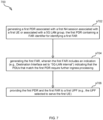
- FIG. 7 is a flowchart illustrating a process 700, according to one embodiment, for providing rules to a UPF.
- Process 700 is performed by an SMF.
- Process 700 may begin in step s702.
- Steps s702 comprises the SMF generating a first PDR associated with a first N4 session associated with a first UE or associated with a 5G LAN group, the first PDR containing a FAR identifier for identifying a first FAR.
- Step s704 comprises the SMF generating the first FAR, wherein the first FAR includes an indication (e.g., Destination Interface set to "5G-LAN internal") indicating that the PDUs that match the first PDR require further ingress processing (i.e., indicating that another PDR matching process is needed for the PDUs).
- an indication e.g., Destination Interface set to "5G-LAN internal”
- the PDUs that match the first PDR require further ingress processing (i.e., indicating that another PDR matching process is needed for the PDUs).
- Step s706 comprises the SMF providing the first PDR and the first FAR to a first UPF (e.g., the UPF selected to serve the first UE).
- a first UPF e.g., the UPF selected to serve the first UE.
- the SMF provides the first PDR to the first UPF by transmitting to the first UPF a session request (e.g., a session creation request or a session modification request) comprising the first PDR.
- a session request e.g., a session creation request or a session modification request
- process 700 also includes the SMF generating a second PDR associated with a second N4 session, the second PDR containing a FAR identifier for identifying a second FAR; the SMF generating the second FAR; and the SMF providing the second PDR and the second FAR to the first UPF, wherein the Destination Interface IE of the second FAR is set to Core, Access, or 5G LAN Nx (e.g., a value greater than 4 and less than 16).
- the second PDR is associated with an N4 session created for a specific 5G LAN group and the Destination Interface IE of the second FAR is set to 5G LAN Nx.
- the second PDR is associated with an N4 session associated with a second UE and the Destination Interface IE of the second FAR is set to Access.
- the Network Instance IE of the second FAR is set to a value identifying a network domain (e.g. a IP domain) specific for the 5G LAN group traffic.
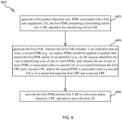
- FIG. 8 is a flowchart illustrating a process 800 for supporting a LAN (e.g., a 5G LAN).
- Process 800 may begin in step s802.
- Step s802 comprises generating a first packet detection rule, PDR, associated with a first user equipment, UE, the first PDR containing a forwarding action rule, FAR, identifier for identifying a first FAR.
- Step s804 comprises generating the first FAR, wherein the first FAR includes: i) an indication (e.g., "Internal” and/or "5G-LAN") indicating that at least a second PDR (e.g., an ingress PDR) should be applied to packets that match the first PDR (e.g., a packet that matches packet detection information (PDI) included in the first PDR) and/or ii) an identifier (e.g., "internal,” "5G-LAN,” and/or an N4 session identifier) for use in identifying a set of one or more PDRs (e.g., a set of PDRs whose source interface attribute is set to the identifier (e.g., set to "internal” or "5G-LAN”).
- an indication e.g., "Internal” and/or "5G-LAN”
- a second PDR e.g., an ingress PDR
- an identifier
- the set of one or more PDRs is associated with i) a second UE or ii) a tunnel between the first UPF and a second UPF, and/or the second PDR is associated with i) a second UE or ii) a tunnel between the first UPF and a second UPF.
- the PDI of the first PDR comprises one or more match fields against which packets are matched.
- Steps s806 comprises providing the first PDR and the first FAR to a first user plane function, UPF, selected to serve the first UE.
- Steps s802-s806, in some embodiments, are performed by an SMF.
- the first FAR includes the identifier
- the identifier included in the first FAR is an N4 session identifier identifying an N4 session associated with the second UE
- each PDR included in the set of one or more PDRs contains the N4 session identifier
- the method is performed by a session management function, SMF, that provides session management functions for both the first UE and the second UE.
- SMF session management function
- the SMF generates the first PDR and the first FAR after the second UE connects to the LAN.
- the SMF provides the first PDR to the first UPF by transmitting to the first UPF a session modification request comprising the first PDR.
- the process further comprises the SMF receiving a transmission from the first UPF comprising an identifier (e.g., an IP address) associated with the second UE; and determining a UPF that is currently serving the second UE, wherein the SMF generates the first FAR based on the UPF that is currently serving the second UE.
- an identifier e.g., an IP address
- the UPF serving the second UE is the second UPF and the set of PDRs and/or the second PDR is associated with the tunnel between the first UPF and the second UPF.
- the UPF serving the second UE is the first UPF and the set of PDRs and/or the second PDR is associated with an N4 session identifier associated with the second UE.
- the transmission from the first UPF comprises an uplink (UL) packet transmitted by the first UE, wherein the UL packet comprises an IP address allocated to the second UE.
- UL uplink
- the transmission from the first UPF comprises a Session Report Request message.
- the FAR includes a destination interface attribute
- the indication is a destination interface value (e.g., "internal” and/or "5G-LAN”) for the destination interface attribute.
- the second PDR includes an indicator indicating that the second PDR applies to locally switched traffic (e.g., applies to a packet having a source that is on the LAN and having a destination that is on the LAN) and the method further includes providing the second PDR to the first UPF, or the set of PDRs includes a second PDR that includes an indicator indicating that the second PDR applies to locally switched traffic (e.g., applies to a packet having a source that is on the LAN and having a destination that is on the LAN) and the method further includes providing the second PDR to the first UPF.
- the set of PDRs includes a second PDR that includes an indicator indicating that the second PDR applies to locally switched traffic (e.g., applies to a packet having a source that is on the LAN and having a destination that is on the LAN) and the method further includes providing the second PDR to the first UPF.
- the second PDR has a source interface attribute
- an indicator indicating that the second PDR applies to locally switched traffic is a source interface attribute value of the source interface attribute of the second PDR.
- the first FAR includes: i) the indication that at least a second PDR should be applied to packets that match the first PDR, and ii) the identifier (e.g., an N4 session identifier) for use in identifying a set of one or more PDRs, wherein the set of PDRs includes the second PDR
- the identifier e.g., an N4 session identifier
- FIG. 9 is a flowchart illustrating a process 900 for supporting a LAN (e.g., a 5G LAN).
- Process 900 may begin in step s902.
- Step s902 comprises a first user plane function, UPF, receiving a transmission (e.g., a GTP-U PDU transmitted by a access network node) comprising a protocol data unit, PDU, transmitted by a first user equipment, UE, wherein the PDU includes a destination address of a second UE.
- a transmission e.g., a GTP-U PDU transmitted by a access network node
- PDU protocol data unit
- Step s904 comprises the first user plane function using information included in the transmission (e.g., a destination address of the PDU) to identify a first rule (e.g., a Packet Detection Rule, PDR) for the PDU, wherein the first rule identifies a first forwarding action rule, FAR.
- a first rule e.g., a Packet Detection Rule, PDR
- Step s906 comprises after identifying the first rule, the first UPF retrieving the first FAR.
- Step s908 comprises the first UPF using information included in the first FAR to identify a second rule for the PDU, wherein the second rule identifies a second FAR.
- Step s910 comprises after identifying the second rule, the first UPF retrieving the second FAR.
- Step s912 comprises the first UPF using information included in the second FAR to forward the PDU to the second UE.
- Steps s902-s912, in some embodiments, are performed by an UPF.
- the first UPF serves the second UE and forwarding the PDU to the second UE comprises the UPF forwarding the PDU to an access network node (e.g., a 5G-AN node) using a tunnel (e.g., an N3 GTP-U tunnel) established between the first UPF and the access network node.
- an access network node e.g., a 5G-AN node
- a tunnel e.g., an N3 GTP-U tunnel
- a second UPF serves the second UE and forwarding the PDU to the second UE comprises the first UPF forwarding the PDU to the second UPF using a tunnel (e.g., an N9 GTP-U tunnel) established between the first UPF and the second UPF.
- a tunnel e.g., an N9 GTP-U tunnel
- forwarding the PDU to the second UE comprises the first UPF forwarding the PDU to a packet data network (e.g., using an N6 interface).
- the first rule comprises a usage reporting rule, URR, identifier identifying a first URR
- the second rule comprise a usage reporting rule, URR, identifier identifying a second URR
- the method further comprises: (1) the first UPF applying the first URR with respect to the PDU; and (2) the first UPF applying the second URR with respect to the PDU.
- the first URR identifies a method for measuring a network resource usage
- applying the first URR with respect to the PDU comprises measuring the network resource usage with respect to the PDU.
- the method further comprises the first UPF receiving a transmission transmitted by a UE wherein the transmission comprises a PDU that contains a destination address of a third UE; the first UPF determining that the PDU matches a default PDR containing a FAR identifier that identifiers a third FAR; the first UPF retrieving the third FAR, wherein the third FAR instructs the first UPF to forward the PDU to a session management function; and the first UPF forwarding the PDU to the SMF as instructed by the third FAR.
- the method further comprises the first UPF receiving a transmission transmitted by a UE wherein the transmission comprises a PDU that contains a destination address of a third UE; the first UPF determining that the PDU matches a default PDR containing a rule identifier that identifiers a URR; the first UPF retrieving the URR, wherein the URR instructs the first UPF to send to the SMF a report (e.g., a report containing the destination address of the third UE); and the first UPF sending the report to the SMF as instructed by the URR.
- a report e.g., a report containing the destination address of the third UE
- FIG. 10 is a flowchart illustrating a process 1000 for supporting a LAN (e.g., a 5G LAN).
- Process 1000 may begin in step s1002.
- Step s1002 comprises generating a packet detection rule, PDR, identifying a forwarding action rule, FAR, wherein said PDR and/or FAR define how to route traffic from a first User Equipment, UE, of said LAN to a second UE of said LAN.
- Step s1004 comprises providing said PDR to a user plane function, UPF, wherein said UPF is associated with said first UE and said second UE, wherein said PDR and/or FAR enable said UPF to apply ingress and egress actions (e.g., QoS, charging, and counting) for both the first and second UE.
- UPF user plane function
- PDR and/or FAR enable said UPF to apply ingress and egress actions (e.g., QoS, charging, and counting) for both the first and second UE.
- Steps s1002 and s1004 are performed by an SMF.
- said PDR and/or FAR define how to route said traffic from said first UE to said second UE without use of an external Data Network (DN) (e.g., via N6).
- DN Data Network
- FIG. 11 is a flowchart illustrating a process 1100 for supporting a LAN (e.g., a 5G LAN).
- Process 1100 may begin in step s1102.
- Step s1102 comprises generating a first packet detection rule, PDR, identifying a forwarding action rule, FAR, wherein said PDR and/or FAR define how to route traffic from a first User Equipment, UE, of said LAN to a second UE of said LAN.
- Step s1104 comprises providing said PDR to a first user plane function, UPF, wherein said UPF is associated with said first UE, wherein said FAR comprises one or more instructions for said first UPF to route said traffic to a second UPF via a tunnel connection between said first and second UPFs, wherein said second UPF is associated with said second UE.
- Steps s1102 and s1104, in some embodiments, are performed by an SMF.
- said PDR and/or FAR define how to route said traffic from a said first UE to said second UE without use of an external Data Network (DN) (e.g., via N6).
- DN Data Network
- FIG. 12 is a flowchart illustrating a process 1000 for supporting a LAN (e.g., a 5G LAN).
- Process 1000 may begin in step s1202.
- Step s1202 comprises a first user plane function, UPF, receiving a transmission from a first user equipment, UE, of said LAN, wherein said transmission is intended for a second UE of said LAN.
- UPF first user plane function
- Step s1204 comprises forwarding said transmission to said second UE, wherein said UPF is associated with both said first UE and said second UE, and wherein said receiving and forwarding comprise applying ingress and egress actions (e.g., QoS, charging, and counting) for both the first and second UE for said transmission.
- ingress and egress actions e.g., QoS, charging, and counting
- Steps s1202 and S1204, in some embodiments, are performed by a UPF.
- FIG. 13 is a flowchart illustrating a process 1300 for supporting a LAN (e.g., a 5G LAN).
- Process 1300 may begin in step s1302.
- Step s1302 comprises a first user plane function, UPF, receiving a transmission from a first user equipment, UE, of said LAN, wherein said transmission is intended for a second UE of said LAN.
- UPF first user plane function
- Step s1304 comprises forwarding said transmission to said second UE, wherein said forwarding comprises sending said transmission over a tunnel connection between said first UPF and a second UPF according to a packet detection rule, PDR, identifying a forwarding action rule, FAR, identifying said second UPF (e.g., the FAR contains an address allocated to the second UPF).
- PDR packet detection rule
- FAR forwarding action rule
- Steps s1302 and S1304, in some embodiments, are performed by a UPF.
- a node and signal flow diagram for system 1500 is provided according to some embodiments.
- the SMF when the SMF gets the query for a destination UE (UE2 in this example), it will install a PDR (to identify the UE-UE traffic towards UE2) and FAR (to forward the traffic to the UPF2) in both UPF1 and UPF3.
- PDR to identify the UE-UE traffic towards UE2
- FAR to forward the traffic to the UPF2
- the forwarding table in the UPFs will be completed.
- UE 1 would like to communicate to the UE2
- such UE-to-UE traffic is sent to the UPF2
- UPF2 has no entry to forward the traffic to the UE2, as local switch part for UE2 is removed once the UE2 is left.
- a PDR is installed (to identify traffic towards UE2), and a FAR (towards UPF2) on UPF3 to enable any UEs behind UPF3 to communicate to UE2 in the future.
- a tunnel is provided between each of the UPFs 1-3, respectively.
- new PDR/FARs are provided. This could occur, for instance, upon establishing a new N3 or N4 session fur such a UE.
- an apparatus is provided that is adapted to perform the steps of any of FIGs. 4-13 .
- a computer program comprising instructions which, when executed on at least one processor, cause the at least one processor to carry out a process according to any of FIGs. 4-13 .
- a carrier is provided containing the computer program, wherein the carrier is one of an electronic signal, optical signal, radio signal, or computer readable storage medium.
- an apparatus for supporting a local area network, LAN comprising a processor and a memory, said memory containing instructions executable by said processor whereby said apparatus is operative to perform the steps of any of FIGs. 4-13 .
- a computer program comprising computer program code stored on a non-transitory computer readable medium is provided, which, when run on a network node causes the network node to perform the steps of any of FIGs. 4-13 .
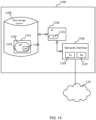
- FIG. 15 is a block diagram of an apparatus 1100, which may implement a UPF and/or an SMF, according to some embodiments.
- apparatus 1100 may comprise: processing circuitry (PC) 1102, which may include one or more processors (P) 1155 (e.g., a general purpose microprocessor and/or one or more other processors, such as an application specific integrated circuit (ASIC), field-programmable gate arrays (FPGAs), and the like), which processors may be co-located in a single housing or in a single data center or may be geographically distributed; a network interface 1148 comprising a transmitter (Tx) 1145 and a receiver (Rx) 1147 for enabling apparatus 1100 to transmit data to and receive data from other nodes connected to a network 110 (e.g., an Internet Protocol (IP) network) to which network interface 1148 is connected; and a local storage unit (a.k.a., "data storage system”) 1108, which may include one or more non-volatile storage devices and
- IP Internet Protocol
- CPP 1141 includes a computer readable medium (CRM) 1142 storing a computer program (CP) 1143 comprising computer readable instructions (CRI) 1144.
- CRM 1142 may be a non-transitory computer readable medium, such as, magnetic media (e.g., a hard disk), optical media, memory devices (e.g., random access memory, flash memory), and the like.
- the CRI 1144 of computer program 1143 is configured such that when executed by PC 1102, the CRI causes apparatus 1100 to perform steps described herein (e.g., steps described herein with reference to any of the flowcharts).
- apparatus 1100 may be configured to perform steps described herein without the need for code. That is, for example, PC 1102 may consist merely of one or more ASICs. Hence, the features of the embodiments described herein may be implemented in hardware and/or software.
- network functionality may be implemented either as a network element on dedicated hardware, as a software instance running on a dedicated hardware, or as a virtualized function instantiated on an appropriate platform, e.g., a cloud infrastructure.
- a virtual network capable of supporting 5G LAN-type service may be referred to as 5G LAN-virtual network, or for simplicity reasons simply referred to as 5G VN.
- VN Abbreviation VN e.g. used in par. 0007, 6.29.1.3, PDU session management 5G LAN-type service, of the Background.
- 5G LAN group when herein referring to 5G LAN group, what is considered may be 5G VN group, and/or when herein referring to 5G LAN internal (switching), what is considered may be 5G VN internal (switching).
- interfaces for which no number yet has been assigned are referred to as x.
- interfaces for which no number yet has been assigned are referred to as x.
- Nx For 5G system architecture interfaces are referred to as N, together with a number. I.e., interface Nx referred to herein simply refers to an interface of a 5G system architecture not yet assigned a specific number.
- the Nx interface is an N19 interface.
- an Nx interface may be a N19 interface, and/or by Nx forwarding N19 forwarding is considered.
- 5G LAN Nx may be a 5G VN N19 (interface).
- This appendix discusses solutions for how SMF can control the different traffic forwarding options used with 5G-LAN and proposes a way forward.
- the impact to N4 and UPF to support the above options is analyzed.
- the first approach (N6-based) requires nothing new as it is supported by the rel-15 baseline.
- the second approach (Nx based) and third approach (local switch) may or may not require enhancements to N4 depending on the requirements. This is further analyzed below.
- Rel-15 has some implied support for this, but it is targeting Ethernet PDU Sessions only and it is not explicit, e.g. as described in TS 23.501, clause 5.8.2.5: Local policies in UPF associated with the Network Instance can prevent local traffic switching in the UPF between PDU Sessions either for unicast traffic only or for any traffic. In the case where UPF policies prevent local traffic switching for any traffic (thus for broadcast/multicast traffic) some mechanism such as ARP/ND proxying or local multicast group handling is needed to ensure that upper layer protocol can run on the Ethernet PDU sessions.
- the UPF would need to receive an UL packet for one PDU Session and perform the related processing (PDR, QER, URR, FAR) and send it as DL on another PDU Session after performing the related processing for that PDU Session (PDR, QER, URR, FAR).
- PDR, QER, URR, FAR related processing
- a question here is how the egress for the UL processing can be connected to the ingress of the DL processing. For example, can a FAR for the UL traffic be connected to a PDR for DL traffic?
- the SMF can e.g. provide a specific Network Instance value in the FAR that the UPF will interpret such that the traffic should not be sent onto any external interface but rather be fed back to internal processing (PDR classification) again.
- the same Network Instance value can then be used in the PDR(s) for UEs belonging to the same 5G-LAN group, though a Network Instance normally denotes an IP domain outside the UPF and it is connected to either a Source Interface or a Destination Interface. This option has no new N4 requirements but SMF-UPF interoperability may be limited.
- the Network Instance value could still be used to ensure traffic separation between 5G-LAN groups, to ensure that traffic from one 5G-LAN group does not get mixed with traffic for another 5G-LAN group or for non-5G-LAN group related traffic.
- the Network Instance value could e.g. be set to a value representing the 5G-LAN group.
- Proposal 1 A new value ("5G LAN internal") for "Destination Interface” and “Source Interface” to denote local switch is defined. This together with a number of Network Instances for each 5G LAN Group respectively to ensure traffic separation provides a consistent and interoperable solution for local switch.
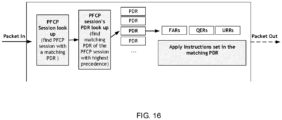
- FIG. 16 illustrates the handling in UPF.
- the packet forwarding model as shown in FIG. 16 the incoming packets will be matched in the UPF in two steps, first to find the PFCP Session, then to match one of PDRs in that PFCP Session.
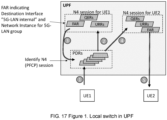
- FIG. 17 So, to support the Local Switch scenario an example is provided in FIG. 17 .
- UE1 and UE2 belong to a 5G LAN group 1, and they have a PSA in the same UPF.
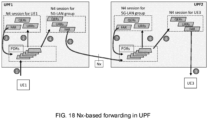
- Nx based forwarding requires that UL/DL data traffic is switched between a PDU Session (for a UE which is a 5G-LAN group member) controlled by a N4 session served by a UPF and another PDU session (for another UE which is member of the same 5G-LAN group) controlled by another N4 session served by another UPF.
- the UL/DL data traffic is carried in a shared tunnel (Nx) per 5G LAN Group between the two UPFs.
- a N4 session may have a PDR with a certain destination MAC address of another 5G-LAN group member, and a FAR instructing the UPF to send the matching packets with the TEID of the shared tunnel.
- the packets would be enforced according to the PDU Session's QER, URR etc.
- the CP function has to provision a PDR in the UE1's N4 Session, to forward the packets towards the UPF2; this applies to all UEs in the UPF 1 who want to communicate with the UE3 in the UPF2.
- the CP function has to provision a PDR in the UE1's N4 Session, to forward the packets towards the UPF2; this applies to all UEs in the UPF 1 who want to communicate with the UE3 in the UPF2.
- the UE3 is moving from UPF2 to UPF3
- there are many PDRs that need to be updated while those UEs in the UPF1 may not communicate to the UE3 at all, that is not scalable.
- only one PDR needs to be updated.
- the CP function need provision a PDR to match the packets received from Nx local TEID. This is applicable to all UE's N4 sessions where they may receive packets from Nx.
- Nx session for sake of describing the solution
- This allows specific QER(s) and URR(s) associated with the shared tunnel, which can apply different QoS policy for different 5G LAN Groups.
- the N4 session for the shared tunnel(s) would also allow to define a single PDR to match incoming packets with different source UE IP address to a UE served by the receiving UPF, and is thus more scalable that using the individual N4 sessions for each PDU Session.
- the SMF can instruct the UPF to forward traffic between two N4 sessions (one is for a PDU Session, the other is for Nx Session) within a UPF, which is basically the same as for the "local switch" discussed above.
- Proposal 2 For Nx based forwarding, the SMF creates a group-level N4 session (for the Nx tunnels) and the same principle as for "local switch" is used to map up-link traffic from a PDU Session to the group-level N4 session.
- Proposal 3 A new value for "Destination Interface” and “Source Interface” to denote Nx based forwarding (5G LAN Nx”) is defined.
- the UPF may NOT be able to find a PDR to match the packets, i.e. neither a PDR pertaining to a N4 Session where the UE is served by the same UPF (local switch scenario) nor a PDR in the N4 session created to match the 5G LAN Group 1 incoming and outing traffic in this UPF (Nx based forwarding).
- the UPF shall be instructed to report this to the SMF; and this includes the following alternatives:
- the UPF would need to receive an UL packet for one PDU Session and perform the related processing (PDR, QER, URR, FAR) and send it as DL on another PDU Session after performing the related processing for that PDU Session (PDR, QER, URR, FAR).
- PDR, QER, URR, FAR related processing
- a question here is how the egress for the UL processing can be connected to the ingress of the DL processing. For example, can a FAR for the UL traffic be connected to a PDR for DL traffic?
- the SMF can e.g. provide a specific Network Instance value in the FAR that the UPF will interpret such that the traffic should not be sent onto any external interface but rather be fed back to internal processing (PDR classification) again.
- the same Network Instance value can then be used in the PDR(s) for UEs belonging to the same 5G-LAN group, though a Network Instance normally denotes an IP domain outside the UPF and it is connected to either a Source Interface or a Destination Interface. This option has no new N4 requirements but SMF-UPF interoperability may be limited.
- the Network Instance value could still be used to ensure traffic separation between 5G-LAN groups, to ensure that traffic from one 5G-LAN group does not get mixed with traffic for another 5G-LAN group or for non-5G-LAN group related traffic.
- the Network Instance value could e.g. be set to a value representing the 5G-LAN group.
- Proposal 1 A new value ("5G LAN internal") for "Destination Interface” and “Source Interface” to denote local switch is defined. This together with a number of Network Instances for each 5G LAN Group respectively to ensure traffic separation provides a consistent and interoperable solution for local switch.
- FIG. 16 illustrates the handling in UPF.
- the packet forwarding model as shown in FIG. 16 the incoming packets will be matched in the UPF in two steps, first to find the PFCP Session, then to match one of PDRs in that PFCP Session.
- FIG. 17 So, to support the Local Switch scenario an example is provided in FIG. 17 .
- UE1 and UE2 belong to a 5G LAN group 1, and they have a PSA in the same UPF.
- Nx based forwarding requires that UL/DL data traffic is switched between a PDU Session (for a UE which is a 5G-LAN group member) controlled by a N4 session served by a UPF and another PDU session (for another UE which is member of the same 5G-LAN group) controlled by another N4 session served by another UPF.
- the UL/DL data traffic is carried in a shared tunnel (Nx) per 5G LAN Group between the two UPFs.
- a N4 session may have a PDR with a certain destination MAC address of another 5G-LAN group member, and a FAR instructing the UPF to send the matching packets with the TEID of the shared tunnel.
- the packets would be enforced according to the PDU Session's QER, URR etc.
- the CP function has to provision a PDR in the UE1's N4 Session, to forward the packets towards the UPF2; this applies to all UEs in the UPF 1 who want to communicate with the UE3 in the UPF2.
- the CP function has to provision a PDR in the UE1's N4 Session, to forward the packets towards the UPF2; this applies to all UEs in the UPF 1 who want to communicate with the UE3 in the UPF2.
- the UE3 is moving from UPF2 to UPF3
- there are many PDRs that need to be updated while those UEs in the UPF1 may not communicate to the UE3 at all, that is not scalable.
- only one PDR needs to be updated.
- the CP function need provision a PDR to match the packets received from Nx local TEID. This is applicable to all UE's N4 sessions where they may receive packets from Nx.
- Nx session for sake of describing the solution
- This allows specific QER(s) and URR(s) associated with the shared tunnel, which can apply different QoS policy for different 5G LAN Groups.
- the N4 session for the shared tunnel(s) would also allow to define a single PDR to match incoming packets with different source UE IP address to a UE served by the receiving UPF, and is thus more scalable that using the individual N4 sessions for each PDU Session.
- the SMF can instruct the UPF to forward traffic between two N4 sessions (one is for a PDU Session, the other is for Nx Session) within a UPF, which is basically the same as for the "local switch" discussed above.
- Proposal 2 For Nx based forwarding, the SMF creates a group-level N4 session (for the Nx tunnels) and the same principle as for "local switch" is used to map up-link traffic from a PDU Session to the group-level N4 session.
- Proposal 3 A new value for "Destination Interface” and “Source Interface” to denote Nx based forwarding (5G LAN Nx”) is defined.
- the UPF may NOT be able to find a PDR to match the packets, i.e. neither a PDR pertaining to a N4 Session where the UE is served by the same UPF (local switch scenario) nor a PDR in the N4 session created to match the 5G LAN Group 1 incoming and outing traffic in this UPF (Nx based forwarding).
- the UPF shall be instructed to report this to the SMF; and this includes the following alternatives:
Landscapes
- Engineering & Computer Science (AREA)
- Computer Networks & Wireless Communication (AREA)
- Signal Processing (AREA)
- Computer Security & Cryptography (AREA)
- Data Exchanges In Wide-Area Networks (AREA)
- Mobile Radio Communication Systems (AREA)
- Small-Scale Networks (AREA)
Claims (22)
- Verfahren zum Unterstützen von Kommunikation zwischen UEs (202, 204, 218, 220), die in einem lokalen Netzwerk, LAN, campen, wobei das Verfahren von einer Benutzerebenenfunktion, UPF (206), durchgeführt wird, wobei das Verfahren Folgendes umfasst:(s402) Empfangen einer Übertragung, die eine Protokolldateneinheit, PDU (301, 351), umfasst, die von einer ersten Benutzerausrüstung, UE (202, 218), übertragen wurde, wobei die PDU (301, 351) mindestens eine Zieladresse einer zweiten UE (204, 220) beinhaltet;(s404) Verwenden von in der Übertragung beinhalteten Informationen, um eine erste Paketerkennungsregel, PDR (304), zu finden, die mit den in der Übertragung beinhalteten Informationen übereinstimmt, wobei die erste PDR (304) eine erste Weiterleitungsaktionsregel, FAR (306), identifiziert, wobei die erste FAR (306) eine Angabe beinhaltet, die angibt, dass die PDU weitere Eingangsverarbeitung erfordert;(s406) Durchsetzen der ersten FAR (306);(s408) Finden einer zweiten PDR (310, 360) für die PDU, wobei die zweite PDR (310, 360) eine zweite FAR (312, 362) identifiziert; und(s410) Durchsetzen der zweiten FAR (312, 362), wobei Durchsetzen der zweiten FAR (312, 362) Verwenden von in der zweiten FAR (312, 362) beinhalteten Informationen umfasst, um die PDU (301, 351) an die zweite UE (204, 220) weiterzuleiten.
- Verfahren nach Anspruch 1, wobei der Schritt des Verwendens von in der Übertragung beinhalteten Informationen zum Finden der ersten PDR (304) Verwenden von in der Übertragung beinhalteten Informationen zum Identifizieren einer ersten N4-Sitzung vor Finden der ersten PDR (304) umfasst und
die erste PDR (304) der identifizierten N4-Sitzung zugeordnet ist. - Verfahren nach einem vorstehenden Anspruch, wobeidie Übertragung einen äußeren Header umfasst, an den die PDU (301, 351) angehängt ist, unddie erste PDR (304) eine Anweisung zum Entfernen des äußeren Headers beinhaltet.
- Verfahren nach einem vorstehenden Anspruch, wobei
die erste PDR (304) eine erste PDI beinhaltet, um es der ersten UPF (206, 218) zu ermöglichen, die PDU (301, 351) als zu einem 5G-LAN-Gruppenverkehr gehörend zu identifizieren. - Verfahren nach einem der vorstehenden Ansprüche, wobeidie erste FAR (306) ein Zielschnittstelleninformationselement, IE, beinhaltet, das einen Schnittstellenwert enthält, unddie Angabe, die angibt, dass die PDU (301, 351) eine weitere Eingangsverarbeitung erfordert, der Schnittstellenwert des Zielschnittstellen-IE ist.
- Verfahren nach Anspruch 5, wobei die erste FAR (306) weiter ein Netzwerkinstanz-IE beinhaltet, das einen Netzwerkinstanzwert enthält, der eine bestimmte 5G-LAN-Gruppe identifiziert.
- Verfahren nach Anspruch 1, wobei
die zweite PDR (310, 360) eine zweite PDI beinhaltet, die mit der von der Quellschnittstelle eingehenden PDU (301, 351) übereinstimmt, sowie eine Netzwerkdomäne, die für den von einer Netzwerkinstanz identifizierten 5G-LAN-Gruppenverkehr spezifisch ist. - Verfahren nach Anspruch 7, wobei
die zweite PDI mindestens eine Paketflussbeschreibung beinhaltet, wo die Ziel-IP-Adresse auf die IP-Adresse eingestellt ist, die zu der zweiten UE (204, 220) gehört. - Verfahren nach Anspruch 1, wobei
die zweite N4-Sitzung eine N4-Sitzung ist, die für eine PDU-Sitzung (301, 351) der zweiten UE (204, 220) erstellt wurde, oder die zweite N4-Sitzung eine N4-Sitzung ist, die für eine spezifische 5G-LAN-Gruppe erstellt wurde, die von allen UEs, die zu einer gleichen 5G-LAN-Gruppe gehören, gemeinsam genutzt wird, um Kommunikation für UEs, wenn sie von verschiedenen UPFs bedient werden, und Weiterleiten der Pakete direkt an das Paketdatennetzwerk über N6 zu ermöglichen. - Verfahren nach einem der vorstehenden Ansprüche, wobei die erste UPF (206) die zweite UE (204, 220) bedient und Weiterleiten der PDU (301, 351) an die zweite UE (204, 220) Weiterleiten der PDU (301, 351) durch die UPF (206) an einen Zugangsnetzwerkknoten unter Verwendung eines zwischen der ersten UPF (206) und dem Zugangsnetzwerkknoten eingerichteten Tunnels umfasst.
- Verfahren nach Anspruch 10, wobei die zweite FAR (312) ein Zielschnittstellen-IE beinhaltet, das einen auf Zugriff gesetzten Schnittstellenwert enthält.
- Verfahren nach einem der vorstehenden Ansprüche, wobei
Weiterleiten der PDU (351) an die zweite UE (218) Folgendes umfasst:Weiterleiten der PDU (351) an eine zweite UPF (214) durch die erste UPF (206) unter Verwendung eines zwischen der ersten UPF (206) und der zweiten UPF (214) eingerichteten Tunnels oderWeiterleiten der PDU (351) durch die erste UPF (206) an ein Paketdatennetzwerk. - Verfahren nach Anspruch 12, wobei die zweite FAR (362) ein Zielschnittstellen-IE beinhaltet, das einen Schnittstellenwert enthält, der angibt, dass die erste UPF (206) die PDU (351) unter Verwendung eines zwischen der ersten UPF (206) und der zweiten UPF (214) eingerichteten Tunnels an die zweite UPF (214) weiterleiten soll.
- Verfahren nach Anspruch 12, wobei die zweite FAR (362) ein Zielschnittstellen-IE beinhaltet, das einen Schnittstellenwert enthält, der angibt, dass die UPF (206) die PDU (351) über eine N6-Schnittstelle an ein Paketdatennetzwerk weiterleiten soll.
- Verfahren nach Anspruch 13, wobei die zweite FAR (362) weiter ein Netzwerkinstanz-IE beinhaltet, das eine Netzwerkdomäne identifiziert, die für den 5G-LAN-Gruppenverkehr spezifisch ist.
- Verfahren nach einem der Ansprüche 6 bis 9, wobeidie zweite PDR (310, 360) ein Quellschnittstellen-IE beinhaltet, das einen Schnittstellenwert enthält, der auf denselben Wert wie der Schnittstellenwert des Zielschnittstellen-IE gesetzt ist, das im ersten FAR (306) beinhaltet ist, unddie zweite PDR (310, 360) ein Netzwerkinstanz-IE beinhaltet, das einen Netzwerkinstanzwert enthält, der auf denselben Wert wie der Netzwerkinstanzwert des Netzwerkinstanz-IE gesetzt ist, das im ersten FAR (306) beinhaltet ist.
- Verfahren nach einem der vorstehenden Ansprüche, wobeidie erste PDR (304) einen Nutzungsberichtsregel-, URR-, Identifizierer umfasst, der eine erste URR identifiziert,die zweite PDR (310, 360) einen URR-Identifizierer umfasst, der eine zweite URR identifiziert, unddas Verfahren weiter umfasst:Anwenden der ersten URR in Bezug auf die PDU (301, 351) durch die erste UPF (206); undAnwenden der zweiten URR in Bezug auf die PDU (301, 351) durch die erste UPF (206).
- Verfahren nach Anspruch 17, wobeidie erste URR ein Verfahren zum Messen einer Netzwerkressourcennutzung identifiziert undAnwenden der ersten URR in Bezug auf die PDU (301, 351) Messen der Netzwerkressourcennutzung in Bezug auf die PDU (301, 351) umfasst.
- Verfahren zum Unterstützen von Kommunikation zwischen UEs (202, 204, 218, 220), die in einem lokalen Netzwerk, LAN, campen, wobei das Verfahren von einer Benutzerebenenfunktion, UPF (206), durchgeführt wird, wobei das Verfahren Folgendes umfasst:(s502) Empfangen einer Übertragung, die eine Protokolldateneinheit, PDU (301, 351), umfasst, die von einer ersten Benutzerausrüstung, UE (202, 218), übertragen wurde, wobei die PDU (301, 351) mindestens eine Zieladresse einer zweiten UE (204, 220) beinhaltet;(s504) Verwenden der in der Übertragung beinhalteten Informationen, um eine erste Paketerkennungsregel, PDR (304), zu finden, die mit den in der Übertragung beinhalteten Informationen übereinstimmt, wobei die erste PDR (304) eine erste Weiterleitungsaktionsregel, FAR (306), identifiziert, wobei die erste FAR (306) eine Angabe beinhaltet, die angibt, dass die PDU (301, 351) weitere Eingangsverarbeitung erfordert.(s506) Erhalten von Informationen, die in der ersten FAR (306) beinhaltet sind;nach Erhalten der Informationen, die in der ersten FAR (306) beinhaltet sind, Identifizieren einer N4-Sitzung; undnach Identifizieren der N4-Sitzung (s510), Finden einer Standard-PDR (304), die der N4-Sitzung zugeordnet ist, wobei die Standard-PDR (304) eine Standard-FAR (306) und/oder eine Standard-URR (307) identifiziert, wobeidie Standard-FAR (306) so konfiguriert ist, dass sie die UPF (206) veranlasst, die PDU (301, 351) an eine Sitzungsmanagementfunktion, SMF (208), zu übertragen, oderdie Standard-URR (307) so konfiguriert ist, dass sie die UPF (206) veranlasst, eine PFCP-Sitzungsberichtsanforderungsnachricht, die zumindest einen Abschnitt der PDU (301, 351) umfasst, an die SMF (208) zu übertragen.
- Verfahren nach Anspruch 19, weiter umfassend:Übertragen der PDU (301, 351) an die SMF (208); undnach Übertragen der PDU (301, 351) an die SMF (208), Empfangen von der SMF (208) einer zweiten PDR (310, 360), die der zweiten N4-Sitzung zugeordnet ist, und Empfangen einer zweiten FAR (312, 362), wobei die zweite PDR (310, 360) einen FAR-Identifizierer beinhaltet, der die zweite FAR (312, 362) identifiziert.
- Verfahren nach Anspruch 19, weiter umfassend:Übertragen der PFCP-Sitzungsberichtsanforderungsnachricht an die SMF (208); undnach Übertragen der PFCP-Sitzungsberichtsanforderungsnachricht an die SMF (208), Empfangen von der SMF (206) einer zweiten PDR (310, 360), die der zweiten N4-Sitzung zugeordnet ist, und Empfangen einer zweiten FAR (312, 362) , wobei die zweite PDR (310, 360) einen FAR-Identifizierer beinhaltet, der die zweite FAR (312, 362) identifiziert.
- Einrichtung (1500), die eine Benutzerebenenfunktion, UPF (206), implementiert, wobei die UPF (206) angepasst ist, die Schritte eines der vorstehenden Ansprüche 1 bis 21 durchzuführen.
Applications Claiming Priority (3)
| Application Number | Priority Date | Filing Date | Title |
|---|---|---|---|
| US201962792551P | 2019-01-15 | 2019-01-15 | |
| US201962806996P | 2019-02-18 | 2019-02-18 | |
| PCT/EP2019/086086 WO2020148062A1 (en) | 2019-01-15 | 2019-12-18 | Methods and apparatuses for supporting a local area network (lan) |
Publications (2)
| Publication Number | Publication Date |
|---|---|
| EP3895385A1 EP3895385A1 (de) | 2021-10-20 |
| EP3895385B1 true EP3895385B1 (de) | 2024-06-26 |
Family
ID=69104404
Family Applications (1)
| Application Number | Title | Priority Date | Filing Date |
|---|---|---|---|
| EP19831683.8A Active EP3895385B1 (de) | 2019-01-15 | 2019-12-18 | Verfahren und vorrichtungen zur unterstützung eines lokalen netzwerks (lan) |
Country Status (7)
| Country | Link |
|---|---|
| US (1) | US20220150166A1 (de) |
| EP (1) | EP3895385B1 (de) |
| JP (2) | JP7274582B2 (de) |
| CN (3) | CN113302880B (de) |
| BR (1) | BR112021012912A2 (de) |
| MX (1) | MX2021008244A (de) |
| WO (1) | WO2020148062A1 (de) |
Families Citing this family (37)
| Publication number | Priority date | Publication date | Assignee | Title |
|---|---|---|---|---|
| US11128563B2 (en) * | 2018-06-22 | 2021-09-21 | Sorenson Ip Holdings, Llc | Incoming communication routing |
| US12238076B2 (en) * | 2018-10-02 | 2025-02-25 | Arista Networks, Inc. | In-line encryption of network data |
| CN111510977B (zh) * | 2019-01-30 | 2021-06-08 | 华为技术有限公司 | 一种移动性管理方法及装置 |
| CN116346604A (zh) * | 2019-05-07 | 2023-06-27 | 华为技术有限公司 | 一种路由规则的配置方法及通信装置 |
| CN111953576B (zh) * | 2019-05-17 | 2021-07-09 | 华为技术有限公司 | 虚拟网络通信方法、设备及系统 |
| US11284462B2 (en) | 2019-12-17 | 2022-03-22 | Cisco Technology, Inc. | Techniques for providing a third generation partnership project (3GPP) fabric anchor for an enterprise fabric |
| US11582066B2 (en) | 2019-12-19 | 2023-02-14 | Cisco Technology, Inc. | Techniques for extending a cellular quality of service bearer through an enterprise fabric |
| CN113133079B (zh) * | 2019-12-31 | 2024-09-13 | 华为技术有限公司 | 路由配置方法及装置 |
| CN115442290A (zh) * | 2020-05-30 | 2022-12-06 | 华为技术有限公司 | 发送和接收消息的方法、装置和通信系统 |
| CN114205854B (zh) * | 2020-09-17 | 2024-07-05 | 华为技术有限公司 | 数据传输及链路质量检测方法、通信装置及存储介质 |
| US12477316B2 (en) | 2020-09-30 | 2025-11-18 | Nokia Technologies Oy | Network slice local switching at a distributed unit |
| WO2022069931A1 (en) * | 2020-10-01 | 2022-04-07 | Telefonaktiebolaget Lm Ericsson (Publ) | Methods providing consolidation of policies and related network nodes |
| GB2600920B (en) * | 2020-11-04 | 2022-12-28 | Metaswitch Networks Ltd | Network slicing |
| US11350312B1 (en) | 2021-02-04 | 2022-05-31 | Verizon Patent And Licensing Inc. | Systems and methods for dynamic rule determination for user plane data in a wireless network |
| US20220279056A1 (en) * | 2021-02-26 | 2022-09-01 | Parallel Wireless, Inc. | Mechanism for Provisioning Source IP for Tunneled Packets From User Plane |
| WO2022245622A1 (en) | 2021-05-19 | 2022-11-24 | Cisco Technology, Inc. | Device address rotation management protocol for a wireless local area network |
| US11855960B2 (en) | 2021-05-19 | 2023-12-26 | Cisco Technology, Inc. | Device address rotation management protocol for a wireless local area network |
| US11956150B1 (en) * | 2021-05-24 | 2024-04-09 | T-Mobile Innovations Llc | Programmable networking device for packet processing and security |
| US12267915B2 (en) | 2021-06-23 | 2025-04-01 | Cisco Technology, Inc. | Device address rotation method to protect against unconsented tracking |
| CN115665762A (zh) * | 2021-07-09 | 2023-01-31 | 中国电信股份有限公司 | 局域网本地交换控制方法和系统、用户面功能网元 |
| US11558466B1 (en) | 2021-07-19 | 2023-01-17 | Cisco Technology, Inc. | Packet forwarding control protocol (PFCP) message service using a remote procedure call (RPC) based protocol suitable for PFCP connection sharing |
| CN113923660B (zh) * | 2021-10-09 | 2023-08-29 | 中国联合网络通信集团有限公司 | 一种终端接入局域网的认证方法、设备及存储介质 |
| CN116419327A (zh) * | 2021-12-31 | 2023-07-11 | 中国移动通信有限公司研究院 | Upf的选择方法、装置、网元及存储介质 |
| WO2023156295A1 (en) * | 2022-02-15 | 2023-08-24 | Telefonaktiebolaget Lm Ericsson (Publ) | Methods, network nodes, media for supporting ethernet bridging on user plane |
| WO2023185015A1 (zh) * | 2022-03-29 | 2023-10-05 | 华为技术有限公司 | 通信方法、通信装置及通信系统 |
| US12532377B2 (en) | 2022-04-01 | 2026-01-20 | Cisco Technology, Inc. | Station association continuity across access point MAC address rotations |
| US11902246B2 (en) | 2022-04-28 | 2024-02-13 | Cisco Technology, Inc. | Central scheduling for enterprise wireless randomizing changing/rotating MAC address |
| US12192770B2 (en) | 2022-04-28 | 2025-01-07 | Cisco Technology, Inc. | Identifying rogue wireless devices using MAC address rotation techniques |
| CN117135757A (zh) * | 2022-05-19 | 2023-11-28 | 中国移动通信有限公司研究院 | 一种通信方法、装置、通信设备和存储介质 |
| CN114867079B (zh) * | 2022-05-23 | 2024-04-16 | 中国联合网络通信集团有限公司 | 一种通信方法、装置及存储介质 |
| US20230396557A1 (en) * | 2022-06-01 | 2023-12-07 | Atayalan, Inc. | Universal gateway for policy-aware traffic forwarding for multiple types of network traffic |
| CN117459902A (zh) * | 2022-07-18 | 2024-01-26 | 中国电信股份有限公司 | 一种数据包传输方法及虚拟网络组 |
| US12376002B2 (en) | 2022-07-26 | 2025-07-29 | Cisco Technology, Inc. | Optimization for virtual network group broadcast data traffic processing in mobile networks |
| CN117750384A (zh) * | 2022-09-15 | 2024-03-22 | 中兴通讯股份有限公司 | 一种用户面功能upf网元部署、信令处理方法及系统 |
| KR20240039519A (ko) * | 2022-09-19 | 2024-03-26 | 주식회사 케이티 | 단말간 통신을 지원하는 vlan 서비스 방법 및 그 장치 |
| CN117835168A (zh) * | 2022-09-29 | 2024-04-05 | 中国电信股份有限公司 | 虚拟网络群组的组播通信方法、通信系统及相关设备 |
| CN115550308B (zh) * | 2022-12-01 | 2023-03-14 | 卓望数码技术(深圳)有限公司 | 一种5glan组网方法、装置、计算机设备及存储介质 |
Family Cites Families (16)
| Publication number | Priority date | Publication date | Assignee | Title |
|---|---|---|---|---|
| US9106546B1 (en) * | 2012-07-26 | 2015-08-11 | Google Inc. | Explicit congestion notification in mixed fabric network communications |
| WO2014093900A1 (en) * | 2012-12-13 | 2014-06-19 | Huawei Technologies Co., Ltd. | Content based traffic engineering in software defined information centric networks |
| US10708757B2 (en) * | 2016-07-29 | 2020-07-07 | Lg Electronics Inc. | Method and apparatus for performing cell specification procedure for network slice-based NR in wireless communication system |
| US10531420B2 (en) * | 2017-01-05 | 2020-01-07 | Huawei Technologies Co., Ltd. | Systems and methods for application-friendly protocol data unit (PDU) session management |
| US11228949B2 (en) * | 2017-01-06 | 2022-01-18 | Samsung Electronics Co., Ltd. | Intra-RAT handover for next generation system |
| WO2018137232A1 (zh) * | 2017-01-26 | 2018-08-02 | 华为技术有限公司 | 数据处理的方法、控制面节点和用户面节点 |
| US10448239B2 (en) * | 2017-02-06 | 2019-10-15 | Qualcomm Incorporated | Mechanism to enable optimized user plane anchoring for minimization of user plane relocation due to user equipment mobility |
| US10575220B2 (en) * | 2017-03-21 | 2020-02-25 | Electronics And Telecommunications Research Institute | Session management method based on reallocation of PDU session anchor device, and device performing the session management method |
| SG11201811730TA (en) * | 2017-04-19 | 2019-01-30 | Lg Electronics Inc | Method for processing pdu session establishment procedure and amf node |
| CN110679192B (zh) * | 2017-06-23 | 2021-05-11 | 华为技术有限公司 | 实现业务连续性的方法、设备及系统 |
| CN110324246B (zh) * | 2018-03-31 | 2021-12-24 | 华为技术有限公司 | 一种通信方法及装置 |
| US10511669B2 (en) * | 2018-04-26 | 2019-12-17 | Verizon Patent And Licensing Inc. | Programmable user plane function |
| CN110650514B (zh) * | 2018-06-26 | 2021-06-01 | 华为技术有限公司 | 路径更新方法、设备及系统 |
| CN110662308B (zh) * | 2018-06-30 | 2021-11-09 | 华为技术有限公司 | 一种通信方法及装置 |
| US11445335B2 (en) * | 2018-08-17 | 2022-09-13 | Huawei Technologies Co., Ltd. | Systems and methods for enabling private communication within a user equipment group |
| CN111200791B (zh) * | 2018-11-19 | 2021-07-09 | 华为技术有限公司 | 群组通信方法、设备及系统 |
-
2019
- 2019-12-18 CN CN201980089069.7A patent/CN113302880B/zh active Active
- 2019-12-18 MX MX2021008244A patent/MX2021008244A/es unknown
- 2019-12-18 JP JP2021537181A patent/JP7274582B2/ja active Active
- 2019-12-18 BR BR112021012912-0A patent/BR112021012912A2/pt unknown
- 2019-12-18 US US17/422,955 patent/US20220150166A1/en active Pending
- 2019-12-18 EP EP19831683.8A patent/EP3895385B1/de active Active
- 2019-12-18 CN CN202211260652.XA patent/CN115766337A/zh active Pending
- 2019-12-18 WO PCT/EP2019/086086 patent/WO2020148062A1/en not_active Ceased
- 2019-12-18 CN CN202211260763.0A patent/CN115766338A/zh active Pending
-
2023
- 2023-05-01 JP JP2023075794A patent/JP7603098B2/ja active Active
Also Published As
| Publication number | Publication date |
|---|---|
| CN113302880B (zh) | 2022-11-01 |
| JP2023109789A (ja) | 2023-08-08 |
| BR112021012912A2 (pt) | 2021-09-14 |
| MX2021008244A (es) | 2021-08-16 |
| JP7603098B2 (ja) | 2024-12-19 |
| WO2020148062A1 (en) | 2020-07-23 |
| CN115766337A (zh) | 2023-03-07 |
| JP2022517176A (ja) | 2022-03-07 |
| CN113302880A (zh) | 2021-08-24 |
| JP7274582B2 (ja) | 2023-05-16 |
| CN115766338A (zh) | 2023-03-07 |
| EP3895385A1 (de) | 2021-10-20 |
| US20220150166A1 (en) | 2022-05-12 |
Similar Documents
| Publication | Publication Date | Title |
|---|---|---|
| EP3895385B1 (de) | Verfahren und vorrichtungen zur unterstützung eines lokalen netzwerks (lan) | |
| US11831458B2 (en) | Provisioning of multicast and broadcast services with different quality of service levels | |
| KR102548777B1 (ko) | 통신 방법 및 디바이스 | |
| US20230019215A1 (en) | TSC-5G QoS MAPPING WITH CONSIDERATION OF ASSISTANCE TRAFFIC INFORMATION AND PCC RULES FOR TSC TRAFFIC MAPPING AND 5G QoS FLOWS BINDING | |
| CN115039425A (zh) | 通过使用情况监控事件扩展Npcf_EventExposure | |
| CN113691969A (zh) | 通信方法和装置 | |
| EP4192184A1 (de) | Pdu-sitzungsaufbauverfahren, endgerätevorrichtung und chipsystem | |
| US12010202B2 (en) | Data unit in wireless system | |
| CN113595911B (zh) | 数据转发方法、装置、电子设备及存储介质 | |
| US12255829B2 (en) | Data unit processing | |
| CN113038590B (zh) | 时间同步方法、电子设备及存储介质 | |
| CN113950077A (zh) | 路由配置方法及装置 | |
| WO2017209367A1 (ko) | 무선통신 시스템에서 서비스 별로 단말의 인증을 수행하기 위한 방법 및 이를 위한 장치 | |
| US20260059470A1 (en) | Network Slice Provision Management | |
| US20250280348A1 (en) | Multiple Paths | |
| CN114126085B (zh) | 工业现场总线通信方法、装置、电子设备及存储介质 | |
| US20240179647A1 (en) | Timing Service Type for Timing Resiliency Service | |
| US20250370521A1 (en) | Communication method and communication apparatus | |
| CN115665822B (zh) | 流量异常处理方法、装置、用户面功能实体及存储介质 | |
| KR20250169337A (ko) | 5g 시스템에서 개인 iot 네트워크의 세션 관리 방법 | |
| CN120786335A (zh) | 通信方法和通信装置 | |
| KR20260003008A (ko) | 방송 네트워크 기반 이동 통신 멀티캐스트 브로드캐스트 서비스 송수신 방법 및 장치 | |
| WO2025167553A1 (zh) | 通信方法和相关装置 | |
| CN119729483A (zh) | 通信方法、装置和系统 | |
| CN120659039A (zh) | 一种通信方法及装置 |
Legal Events
| Date | Code | Title | Description |
|---|---|---|---|
| STAA | Information on the status of an ep patent application or granted ep patent |
Free format text: STATUS: UNKNOWN |
|
| STAA | Information on the status of an ep patent application or granted ep patent |
Free format text: STATUS: THE INTERNATIONAL PUBLICATION HAS BEEN MADE |
|
| PUAI | Public reference made under article 153(3) epc to a published international application that has entered the european phase |
Free format text: ORIGINAL CODE: 0009012 |
|
| STAA | Information on the status of an ep patent application or granted ep patent |
Free format text: STATUS: REQUEST FOR EXAMINATION WAS MADE |
|
| 17P | Request for examination filed |
Effective date: 20210714 |
|
| AK | Designated contracting states |
Kind code of ref document: A1 Designated state(s): AL AT BE BG CH CY CZ DE DK EE ES FI FR GB GR HR HU IE IS IT LI LT LU LV MC MK MT NL NO PL PT RO RS SE SI SK SM TR |
|
| STAA | Information on the status of an ep patent application or granted ep patent |
Free format text: STATUS: EXAMINATION IS IN PROGRESS |
|
| 17Q | First examination report despatched |
Effective date: 20211222 |
|
| DAV | Request for validation of the european patent (deleted) | ||
| DAX | Request for extension of the european patent (deleted) | ||
| GRAP | Despatch of communication of intention to grant a patent |
Free format text: ORIGINAL CODE: EPIDOSNIGR1 |
|
| STAA | Information on the status of an ep patent application or granted ep patent |
Free format text: STATUS: GRANT OF PATENT IS INTENDED |
|
| INTG | Intention to grant announced |
Effective date: 20240216 |
|
| GRAS | Grant fee paid |
Free format text: ORIGINAL CODE: EPIDOSNIGR3 |
|
| GRAA | (expected) grant |
Free format text: ORIGINAL CODE: 0009210 |
|
| STAA | Information on the status of an ep patent application or granted ep patent |
Free format text: STATUS: THE PATENT HAS BEEN GRANTED |
|
| AK | Designated contracting states |
Kind code of ref document: B1 Designated state(s): AL AT BE BG CH CY CZ DE DK EE ES FI FR GB GR HR HU IE IS IT LI LT LU LV MC MK MT NL NO PL PT RO RS SE SI SK SM TR |
|
| REG | Reference to a national code |
Ref country code: GB Ref legal event code: FG4D |
|
| REG | Reference to a national code |
Ref country code: CH Ref legal event code: EP |
|
| REG | Reference to a national code |
Ref country code: DE Ref legal event code: R096 Ref document number: 602019054329 Country of ref document: DE |
|
| REG | Reference to a national code |
Ref country code: NL Ref legal event code: FP |
|
| PG25 | Lapsed in a contracting state [announced via postgrant information from national office to epo] |
Ref country code: BG Free format text: LAPSE BECAUSE OF FAILURE TO SUBMIT A TRANSLATION OF THE DESCRIPTION OR TO PAY THE FEE WITHIN THE PRESCRIBED TIME-LIMIT Effective date: 20240626 |
|
| PG25 | Lapsed in a contracting state [announced via postgrant information from national office to epo] |
Ref country code: FI Free format text: LAPSE BECAUSE OF FAILURE TO SUBMIT A TRANSLATION OF THE DESCRIPTION OR TO PAY THE FEE WITHIN THE PRESCRIBED TIME-LIMIT Effective date: 20240626 Ref country code: HR Free format text: LAPSE BECAUSE OF FAILURE TO SUBMIT A TRANSLATION OF THE DESCRIPTION OR TO PAY THE FEE WITHIN THE PRESCRIBED TIME-LIMIT Effective date: 20240626 |
|
| REG | Reference to a national code |
Ref country code: LT Ref legal event code: MG9D |
|
| PG25 | Lapsed in a contracting state [announced via postgrant information from national office to epo] |
Ref country code: GR Free format text: LAPSE BECAUSE OF FAILURE TO SUBMIT A TRANSLATION OF THE DESCRIPTION OR TO PAY THE FEE WITHIN THE PRESCRIBED TIME-LIMIT Effective date: 20240927 |
|
| PG25 | Lapsed in a contracting state [announced via postgrant information from national office to epo] |
Ref country code: LV Free format text: LAPSE BECAUSE OF FAILURE TO SUBMIT A TRANSLATION OF THE DESCRIPTION OR TO PAY THE FEE WITHIN THE PRESCRIBED TIME-LIMIT Effective date: 20240626 |
|
| PG25 | Lapsed in a contracting state [announced via postgrant information from national office to epo] |
Ref country code: NO Free format text: LAPSE BECAUSE OF FAILURE TO SUBMIT A TRANSLATION OF THE DESCRIPTION OR TO PAY THE FEE WITHIN THE PRESCRIBED TIME-LIMIT Effective date: 20240926 Ref country code: LV Free format text: LAPSE BECAUSE OF FAILURE TO SUBMIT A TRANSLATION OF THE DESCRIPTION OR TO PAY THE FEE WITHIN THE PRESCRIBED TIME-LIMIT Effective date: 20240626 Ref country code: HR Free format text: LAPSE BECAUSE OF FAILURE TO SUBMIT A TRANSLATION OF THE DESCRIPTION OR TO PAY THE FEE WITHIN THE PRESCRIBED TIME-LIMIT Effective date: 20240626 Ref country code: GR Free format text: LAPSE BECAUSE OF FAILURE TO SUBMIT A TRANSLATION OF THE DESCRIPTION OR TO PAY THE FEE WITHIN THE PRESCRIBED TIME-LIMIT Effective date: 20240927 Ref country code: FI Free format text: LAPSE BECAUSE OF FAILURE TO SUBMIT A TRANSLATION OF THE DESCRIPTION OR TO PAY THE FEE WITHIN THE PRESCRIBED TIME-LIMIT Effective date: 20240626 Ref country code: BG Free format text: LAPSE BECAUSE OF FAILURE TO SUBMIT A TRANSLATION OF THE DESCRIPTION OR TO PAY THE FEE WITHIN THE PRESCRIBED TIME-LIMIT Effective date: 20240626 Ref country code: RS Free format text: LAPSE BECAUSE OF FAILURE TO SUBMIT A TRANSLATION OF THE DESCRIPTION OR TO PAY THE FEE WITHIN THE PRESCRIBED TIME-LIMIT Effective date: 20240926 |
|
| REG | Reference to a national code |
Ref country code: AT Ref legal event code: MK05 Ref document number: 1698597 Country of ref document: AT Kind code of ref document: T Effective date: 20240626 |
|
| PG25 | Lapsed in a contracting state [announced via postgrant information from national office to epo] |
Ref country code: PT Free format text: LAPSE BECAUSE OF FAILURE TO SUBMIT A TRANSLATION OF THE DESCRIPTION OR TO PAY THE FEE WITHIN THE PRESCRIBED TIME-LIMIT Effective date: 20241028 |
|
| PG25 | Lapsed in a contracting state [announced via postgrant information from national office to epo] |
Ref country code: PT Free format text: LAPSE BECAUSE OF FAILURE TO SUBMIT A TRANSLATION OF THE DESCRIPTION OR TO PAY THE FEE WITHIN THE PRESCRIBED TIME-LIMIT Effective date: 20241028 |
|
| PG25 | Lapsed in a contracting state [announced via postgrant information from national office to epo] |
Ref country code: PL Free format text: LAPSE BECAUSE OF FAILURE TO SUBMIT A TRANSLATION OF THE DESCRIPTION OR TO PAY THE FEE WITHIN THE PRESCRIBED TIME-LIMIT Effective date: 20240626 |
|
| PG25 | Lapsed in a contracting state [announced via postgrant information from national office to epo] |
Ref country code: EE Free format text: LAPSE BECAUSE OF FAILURE TO SUBMIT A TRANSLATION OF THE DESCRIPTION OR TO PAY THE FEE WITHIN THE PRESCRIBED TIME-LIMIT Effective date: 20240626 |
|
| PG25 | Lapsed in a contracting state [announced via postgrant information from national office to epo] |
Ref country code: AT Free format text: LAPSE BECAUSE OF FAILURE TO SUBMIT A TRANSLATION OF THE DESCRIPTION OR TO PAY THE FEE WITHIN THE PRESCRIBED TIME-LIMIT Effective date: 20240626 Ref country code: IS Free format text: LAPSE BECAUSE OF FAILURE TO SUBMIT A TRANSLATION OF THE DESCRIPTION OR TO PAY THE FEE WITHIN THE PRESCRIBED TIME-LIMIT Effective date: 20241026 |
|
| PG25 | Lapsed in a contracting state [announced via postgrant information from national office to epo] |
Ref country code: CZ Free format text: LAPSE BECAUSE OF FAILURE TO SUBMIT A TRANSLATION OF THE DESCRIPTION OR TO PAY THE FEE WITHIN THE PRESCRIBED TIME-LIMIT Effective date: 20240626 |
|
| PG25 | Lapsed in a contracting state [announced via postgrant information from national office to epo] |
Ref country code: RO Free format text: LAPSE BECAUSE OF FAILURE TO SUBMIT A TRANSLATION OF THE DESCRIPTION OR TO PAY THE FEE WITHIN THE PRESCRIBED TIME-LIMIT Effective date: 20240626 Ref country code: SK Free format text: LAPSE BECAUSE OF FAILURE TO SUBMIT A TRANSLATION OF THE DESCRIPTION OR TO PAY THE FEE WITHIN THE PRESCRIBED TIME-LIMIT Effective date: 20240626 |
|
| PG25 | Lapsed in a contracting state [announced via postgrant information from national office to epo] |
Ref country code: ES Free format text: LAPSE BECAUSE OF FAILURE TO SUBMIT A TRANSLATION OF THE DESCRIPTION OR TO PAY THE FEE WITHIN THE PRESCRIBED TIME-LIMIT Effective date: 20240626 Ref country code: SM Free format text: LAPSE BECAUSE OF FAILURE TO SUBMIT A TRANSLATION OF THE DESCRIPTION OR TO PAY THE FEE WITHIN THE PRESCRIBED TIME-LIMIT Effective date: 20240626 |
|
| PG25 | Lapsed in a contracting state [announced via postgrant information from national office to epo] |
Ref country code: SM Free format text: LAPSE BECAUSE OF FAILURE TO SUBMIT A TRANSLATION OF THE DESCRIPTION OR TO PAY THE FEE WITHIN THE PRESCRIBED TIME-LIMIT Effective date: 20240626 Ref country code: SK Free format text: LAPSE BECAUSE OF FAILURE TO SUBMIT A TRANSLATION OF THE DESCRIPTION OR TO PAY THE FEE WITHIN THE PRESCRIBED TIME-LIMIT Effective date: 20240626 Ref country code: RO Free format text: LAPSE BECAUSE OF FAILURE TO SUBMIT A TRANSLATION OF THE DESCRIPTION OR TO PAY THE FEE WITHIN THE PRESCRIBED TIME-LIMIT Effective date: 20240626 Ref country code: PL Free format text: LAPSE BECAUSE OF FAILURE TO SUBMIT A TRANSLATION OF THE DESCRIPTION OR TO PAY THE FEE WITHIN THE PRESCRIBED TIME-LIMIT Effective date: 20240626 Ref country code: IS Free format text: LAPSE BECAUSE OF FAILURE TO SUBMIT A TRANSLATION OF THE DESCRIPTION OR TO PAY THE FEE WITHIN THE PRESCRIBED TIME-LIMIT Effective date: 20241026 Ref country code: ES Free format text: LAPSE BECAUSE OF FAILURE TO SUBMIT A TRANSLATION OF THE DESCRIPTION OR TO PAY THE FEE WITHIN THE PRESCRIBED TIME-LIMIT Effective date: 20240626 Ref country code: EE Free format text: LAPSE BECAUSE OF FAILURE TO SUBMIT A TRANSLATION OF THE DESCRIPTION OR TO PAY THE FEE WITHIN THE PRESCRIBED TIME-LIMIT Effective date: 20240626 Ref country code: CZ Free format text: LAPSE BECAUSE OF FAILURE TO SUBMIT A TRANSLATION OF THE DESCRIPTION OR TO PAY THE FEE WITHIN THE PRESCRIBED TIME-LIMIT Effective date: 20240626 Ref country code: AT Free format text: LAPSE BECAUSE OF FAILURE TO SUBMIT A TRANSLATION OF THE DESCRIPTION OR TO PAY THE FEE WITHIN THE PRESCRIBED TIME-LIMIT Effective date: 20240626 |
|
| PG25 | Lapsed in a contracting state [announced via postgrant information from national office to epo] |
Ref country code: IT Free format text: LAPSE BECAUSE OF FAILURE TO SUBMIT A TRANSLATION OF THE DESCRIPTION OR TO PAY THE FEE WITHIN THE PRESCRIBED TIME-LIMIT Effective date: 20240626 |
|
| REG | Reference to a national code |
Ref country code: DE Ref legal event code: R097 Ref document number: 602019054329 Country of ref document: DE |
|
| PG25 | Lapsed in a contracting state [announced via postgrant information from national office to epo] |
Ref country code: DK Free format text: LAPSE BECAUSE OF FAILURE TO SUBMIT A TRANSLATION OF THE DESCRIPTION OR TO PAY THE FEE WITHIN THE PRESCRIBED TIME-LIMIT Effective date: 20240626 |
|
| PLBE | No opposition filed within time limit |
Free format text: ORIGINAL CODE: 0009261 |
|
| STAA | Information on the status of an ep patent application or granted ep patent |
Free format text: STATUS: NO OPPOSITION FILED WITHIN TIME LIMIT |
|
| 26N | No opposition filed |
Effective date: 20250327 |
|
| PG25 | Lapsed in a contracting state [announced via postgrant information from national office to epo] |
Ref country code: MC Free format text: LAPSE BECAUSE OF FAILURE TO SUBMIT A TRANSLATION OF THE DESCRIPTION OR TO PAY THE FEE WITHIN THE PRESCRIBED TIME-LIMIT Effective date: 20240626 |
|
| REG | Reference to a national code |
Ref country code: CH Ref legal event code: PL |
|
| PG25 | Lapsed in a contracting state [announced via postgrant information from national office to epo] |
Ref country code: LU Free format text: LAPSE BECAUSE OF NON-PAYMENT OF DUE FEES Effective date: 20241218 |
|
| PG25 | Lapsed in a contracting state [announced via postgrant information from national office to epo] |
Ref country code: SE Free format text: LAPSE BECAUSE OF FAILURE TO SUBMIT A TRANSLATION OF THE DESCRIPTION OR TO PAY THE FEE WITHIN THE PRESCRIBED TIME-LIMIT Effective date: 20240626 |
|
| REG | Reference to a national code |
Ref country code: BE Ref legal event code: MM Effective date: 20241231 |
|
| PG25 | Lapsed in a contracting state [announced via postgrant information from national office to epo] |
Ref country code: BE Free format text: LAPSE BECAUSE OF NON-PAYMENT OF DUE FEES Effective date: 20241231 |
|
| PG25 | Lapsed in a contracting state [announced via postgrant information from national office to epo] |
Ref country code: FR Free format text: LAPSE BECAUSE OF NON-PAYMENT OF DUE FEES Effective date: 20241231 |
|
| PG25 | Lapsed in a contracting state [announced via postgrant information from national office to epo] |
Ref country code: CH Free format text: LAPSE BECAUSE OF NON-PAYMENT OF DUE FEES Effective date: 20241231 |
|
| PG25 | Lapsed in a contracting state [announced via postgrant information from national office to epo] |
Ref country code: IE Free format text: LAPSE BECAUSE OF NON-PAYMENT OF DUE FEES Effective date: 20241218 |
|
| PGFP | Annual fee paid to national office [announced via postgrant information from national office to epo] |
Ref country code: GB Payment date: 20251229 Year of fee payment: 7 |
|
| PGFP | Annual fee paid to national office [announced via postgrant information from national office to epo] |
Ref country code: NL Payment date: 20251226 Year of fee payment: 7 |
|
| PGFP | Annual fee paid to national office [announced via postgrant information from national office to epo] |
Ref country code: DE Payment date: 20251229 Year of fee payment: 7 |