EP3952936B1 - Procédé de prévention de la dégradation et de la dégénérescence du tissu utilisé dans une bioprothèse - Google Patents
Procédé de prévention de la dégradation et de la dégénérescence du tissu utilisé dans une bioprothèse Download PDFInfo
- Publication number
- EP3952936B1 EP3952936B1 EP19924063.1A EP19924063A EP3952936B1 EP 3952936 B1 EP3952936 B1 EP 3952936B1 EP 19924063 A EP19924063 A EP 19924063A EP 3952936 B1 EP3952936 B1 EP 3952936B1
- Authority
- EP
- European Patent Office
- Prior art keywords
- tissue
- solution
- fixed
- oxygen
- bioprosthesis
- Prior art date
- Legal status (The legal status is an assumption and is not a legal conclusion. Google has not performed a legal analysis and makes no representation as to the accuracy of the status listed.)
- Active
Links
Images


Classifications
-
- A—HUMAN NECESSITIES
- A61—MEDICAL OR VETERINARY SCIENCE; HYGIENE
- A61F—FILTERS IMPLANTABLE INTO BLOOD VESSELS; PROSTHESES; DEVICES PROVIDING PATENCY TO, OR PREVENTING COLLAPSING OF, TUBULAR STRUCTURES OF THE BODY, e.g. STENTS; ORTHOPAEDIC, NURSING OR CONTRACEPTIVE DEVICES; FOMENTATION; TREATMENT OR PROTECTION OF EYES OR EARS; BANDAGES, DRESSINGS OR ABSORBENT PADS; FIRST-AID KITS
- A61F2/00—Filters implantable into blood vessels; Prostheses, i.e. artificial substitutes or replacements for parts of the body; Appliances for connecting them with the body; Devices providing patency to, or preventing collapsing of, tubular structures of the body, e.g. stents
- A61F2/02—Prostheses implantable into the body
- A61F2/24—Heart valves ; Vascular valves, e.g. venous valves; Heart implants, e.g. passive devices for improving the function of the native valve or the heart muscle; Transmyocardial revascularisation [TMR] devices; Valves implantable in the body
- A61F2/2412—Heart valves ; Vascular valves, e.g. venous valves; Heart implants, e.g. passive devices for improving the function of the native valve or the heart muscle; Transmyocardial revascularisation [TMR] devices; Valves implantable in the body with soft flexible valve members, e.g. tissue valves shaped like natural valves
- A61F2/2415—Manufacturing methods
-
- A—HUMAN NECESSITIES
- A61—MEDICAL OR VETERINARY SCIENCE; HYGIENE
- A61L—METHODS OR APPARATUS FOR STERILISING MATERIALS OR OBJECTS IN GENERAL; DISINFECTION, STERILISATION OR DEODORISATION OF AIR; CHEMICAL ASPECTS OF BANDAGES, DRESSINGS, ABSORBENT PADS OR SURGICAL ARTICLES; MATERIALS FOR BANDAGES, DRESSINGS, ABSORBENT PADS OR SURGICAL ARTICLES
- A61L27/00—Materials for grafts or prostheses or for coating grafts or prostheses
- A61L27/36—Materials for grafts or prostheses or for coating grafts or prostheses containing ingredients of undetermined constitution or reaction products thereof, e.g. transplant tissue, natural bone, extracellular matrix
- A61L27/3604—Materials for grafts or prostheses or for coating grafts or prostheses containing ingredients of undetermined constitution or reaction products thereof, e.g. transplant tissue, natural bone, extracellular matrix characterised by the human or animal origin of the biological material, e.g. hair, fascia, fish scales, silk, shellac, pericardium, pleura, renal tissue, amniotic membrane, parenchymal tissue, fetal tissue, muscle tissue, fat tissue, enamel
- A61L27/3625—Vascular tissue, e.g. heart valves
-
- A—HUMAN NECESSITIES
- A61—MEDICAL OR VETERINARY SCIENCE; HYGIENE
- A61L—METHODS OR APPARATUS FOR STERILISING MATERIALS OR OBJECTS IN GENERAL; DISINFECTION, STERILISATION OR DEODORISATION OF AIR; CHEMICAL ASPECTS OF BANDAGES, DRESSINGS, ABSORBENT PADS OR SURGICAL ARTICLES; MATERIALS FOR BANDAGES, DRESSINGS, ABSORBENT PADS OR SURGICAL ARTICLES
- A61L27/00—Materials for grafts or prostheses or for coating grafts or prostheses
- A61L27/36—Materials for grafts or prostheses or for coating grafts or prostheses containing ingredients of undetermined constitution or reaction products thereof, e.g. transplant tissue, natural bone, extracellular matrix
- A61L27/3683—Materials for grafts or prostheses or for coating grafts or prostheses containing ingredients of undetermined constitution or reaction products thereof, e.g. transplant tissue, natural bone, extracellular matrix subjected to a specific treatment prior to implantation, e.g. decellularising, demineralising, grinding, cellular disruption/non-collagenous protein removal, anti-calcification, crosslinking, supercritical fluid extraction, enzyme treatment
- A61L27/3687—Materials for grafts or prostheses or for coating grafts or prostheses containing ingredients of undetermined constitution or reaction products thereof, e.g. transplant tissue, natural bone, extracellular matrix subjected to a specific treatment prior to implantation, e.g. decellularising, demineralising, grinding, cellular disruption/non-collagenous protein removal, anti-calcification, crosslinking, supercritical fluid extraction, enzyme treatment characterised by the use of chemical agents in the treatment, e.g. specific enzymes, detergents, capping agents, crosslinkers, anticalcification agents
-
- A—HUMAN NECESSITIES
- A61—MEDICAL OR VETERINARY SCIENCE; HYGIENE
- A61L—METHODS OR APPARATUS FOR STERILISING MATERIALS OR OBJECTS IN GENERAL; DISINFECTION, STERILISATION OR DEODORISATION OF AIR; CHEMICAL ASPECTS OF BANDAGES, DRESSINGS, ABSORBENT PADS OR SURGICAL ARTICLES; MATERIALS FOR BANDAGES, DRESSINGS, ABSORBENT PADS OR SURGICAL ARTICLES
- A61L2400/00—Materials characterised by their function or physical properties
- A61L2400/02—Treatment of implants to prevent calcification or mineralisation in vivo
-
- A—HUMAN NECESSITIES
- A61—MEDICAL OR VETERINARY SCIENCE; HYGIENE
- A61L—METHODS OR APPARATUS FOR STERILISING MATERIALS OR OBJECTS IN GENERAL; DISINFECTION, STERILISATION OR DEODORISATION OF AIR; CHEMICAL ASPECTS OF BANDAGES, DRESSINGS, ABSORBENT PADS OR SURGICAL ARTICLES; MATERIALS FOR BANDAGES, DRESSINGS, ABSORBENT PADS OR SURGICAL ARTICLES
- A61L2430/00—Materials or treatment for tissue regeneration
- A61L2430/20—Materials or treatment for tissue regeneration for reconstruction of the heart, e.g. heart valves
-
- A—HUMAN NECESSITIES
- A61—MEDICAL OR VETERINARY SCIENCE; HYGIENE
- A61L—METHODS OR APPARATUS FOR STERILISING MATERIALS OR OBJECTS IN GENERAL; DISINFECTION, STERILISATION OR DEODORISATION OF AIR; CHEMICAL ASPECTS OF BANDAGES, DRESSINGS, ABSORBENT PADS OR SURGICAL ARTICLES; MATERIALS FOR BANDAGES, DRESSINGS, ABSORBENT PADS OR SURGICAL ARTICLES
- A61L2430/00—Materials or treatment for tissue regeneration
- A61L2430/40—Preparation and treatment of biological tissue for implantation, e.g. decellularisation, cross-linking
Definitions
- the present invention relates to a process to avert enzymatic degradation and tissue degeneration of bovine pericardium tissue, used in bioprosthesis for implant application and bioprosthesis made thereby.
- the method of the present invention helps in manufacturing integrated fixed bovine pericardial bioprosthesis.
- Tissue integrity is vitally important feature for the bioprosthesis made out of this for implant applications.
- bioprosthesis could be heart valves, stent grafts or any other such as surgical patches, etc.
- tissue integrity Under normal environment of temperature, humidity, air or some traditional fixation methods, it is always a challenge to achieve tissue integrity and its stability. Under such conditions, normal tissue, treated tissue or any other treated tissue develop cracks, tanned in colour, loses its mechanical strength including elasticity & characteristics, etc. over period of time.
- Heart valve replacement or repair with biological origin material lost its attraction over a period of time due to various problems associated with the biological materials such as calcification, durability, storage of device and also poor performance in comparison to mechanical devices. Poor performance of bioprosthesis is due to tissue degeneration and calcification, the pathophysiology remains still unclear for both.
- Calcification refers to the deposition of calcium phosphate salt and associated minerals on tissue surface, phospholipid-based cell membranes are known to be a key material for calcification. Tissue degradation resulting in mechanical failure of heart valves initiates with collagen fiber disruption over a period of time that result in stress concentrations forming at weak points in bioprosthesis.
- Fiber disruption, orientation changes, fatigue-induced fiber damage and degenerative changes to apparent mechanical properties have been found to correlate with Extra Cellular Matrix (ECM) component loss such as glycosaminoglycan leeching and elastin degeneration. It has also been shown that oxidative stress may also play a significant role in tissue leaflet structural degradation.
- Glutaric dialdehyde (CHO(CH 2 ) 3 CHO) used for the cross-linking of tissue is also known to play a role in calcification. Specifically, the free aldehyde groups and carboxylic acids that did not form cross-links with tissue collagen are understood to have cytotoxicity and augment tissue calcifications most.
- US 6878168 discloses a method for mitigating post-implantation calcification of a bioprosthetic material, said method comprising the steps of:
- US7559953 discloses a method of preparing a fixed biological tissue, the method comprising:
- US 6322593 discloses a method for treating biological tissue in which a cross-linked biological tissue containing free aldehyde groups is reacted with a suitable neutralization agent in order to chemically block the aldehyde groups from reactivity toward cellular proteins. Also provided is the cross-linked biological tissue so produced which is substantially free of reactive aldehyde groups and, as a result, exhibits reduced toxicity and improved biocompatibility.
- US2006/154230 describes a method of preparing a bioprosthesis, said method comprising the steps of treating harvested and rinsed bovine pericardium tissue samples with a glutaraldehyde solution for fixation. After fixation the tissue can be formed, e.g. using a laser, and then subjected to a bioburden reduction process by means of a solution comprising detergents as polysorbate 80, and optionally ethanol and/or glutaraldehyde. The tissue samples are then rinsed again, sterilized and stored.
- MHVs mechanical heart valves
- BHVs bioprosthetic heart valves
- MHVs are made of synthetic material (e.g., polymers, metal, and carbon), whereas BHVs are made of biologic tissues which are mounted on a fabric covered metal frame.
- MHVs are more durable, but their thrombogenicity and need for long-term anticoagulant therapy make them unsuitable for patients in some age groups especially older age groups.
- BHVs are safe to implant, functionally similar to the native aortic valve, do not require long-term anticoagulant therapy, and are hence associated with reduced risk of haemorrhage.
- conventional fixation methods associated with degeneration of fixed tissue internal structure such as collagen fiber and other Extra Cellular Components (ECM). Tissue degradation occurs due to collagen fiber disruption.
- Glutaric dialdehyde (CHO(CH 2 ) 3 CHO) bonds results allowing collagen fibers to slowly lose structural integrity. Therefore, there is a need of providing an improved method of tissue treatment and improved bioprosthesis made from such treated tissue.
- It is the principal object of the present invention is to provide autolysis free and integrated fixed bovine tissue used for manufacturing of bioprosthesis.
- Another object of the present invention is to provide integrated fixed tissue manufacturing method under low-oxygen environment and in low concentration of Glutaric dialdehyde storage solution to maintain fundamental characteristics of fixed bovine pericardial tissue.
- It is another object of the present invention is to provide a bovine pericardial tissue treated with basic buffers and repeatedly washed during chemical treatment under low-oxygen atmosphere cabinet, thus averting enzymatic degradation of fixed tissue.
- Yet another object of the present invention is to provide a fixed tissue having negligible carboxylic acid content over surface, reduced calcification sites thus reduces calcification of fixed pericardial tissue.
- It is a further object of the present invention is to provide fixed tissue which is autolysis free, mechanically and chemically stable and durable resulting in ultimately enhanced bioprosthesis integrity and so the shelf life.
- It is another object of the invention is to provide laser cut tissue leaflets which is cut into transverse mode to avoid tear and wear of heart valve leaflets.
- the present invention provides a process for treatment to avert enzymatic degradation and tissue degeneration of bovine pericardium tissue, used for making bioprosthesis for implant application, comprising the steps of collecting and harvesting raw bovine pericardial tissue; chemically cross-linking the rinsed tissue to generate fixed tissue; laser cutting said fixed tissue to produce tissue leaflet; chemically treating said tissue leaflet with AAS; chemically sterilising and storing the fixed bovine pericardium tissue to maintain the structural integrity and characteristics; and wherein all the above steps are carried out in a low-oxygen and controlled temperature environment.
- Said low-oxygen environment has an oxygen content of 8-10%.
- the said controlled temperature is in the range of 18-20 °C during processing and 8-10 °C during storing.
- said rinsing with chilled saline solution follows every chemical and physical treatment step till sterilisation and storing.
- Rinsing with chilled saline solution is carried out by providing continuous shower of chilled saline solution under low-oxygen and controlled temperature environment.
- the chemical cross-linking is carried out using 0.625% Glutaric dialdehyde buffered solution.
- the chemical cross-linking is carried out with continuous circular flow of glutaric dialdehyde at rate of 0.8L/min.
- cross-linking step is carried out for 35 minutes.
- Preferably said storing of fixed pericardium tissue is carried out using 0.625% Glutaric dialdehyde buffered solution.
- the invention also provides a process for making bioprosthesis for implant application, comprising the steps of collecting and harvesting raw bovine pericardial tissue; chemically crosslinking the rinsed tissue to generate fixed tissue; laser cutting said fixed tissue to produce tissue leaflet; chemically treating said tissue leaflet with AAS; chemically sterilising and storing the fixed bovine pericardium tissue to maintain the structural integrity and characteristics; and fabricating bioprosthesis from such fixed tissue under moist condition using sprinkled saline flow; and wherein all the above steps are carried out in a low-oxygen and controlled temperature environment, wherein the low-oxygen environment has an oxygen content of 8-10%, and the controlled temperature is in the range of 18-20 °C during processing and 8-10 °C during storing.
- the invention also provides a bioprosthesis for implant application manufactured with the treated bovine pericardium tissue by the above method.
- the bioprosthesis is selected from heart valves, stent grafts and surgical patches.
- the present invention discloses a method of manufacturing integrated fixed bovine pericardial tissue with enhanced stability, durability and susceptible to longer shelf life. Further, the invention discloses a method for manufacturing integrated fixed bovine pericardial bioprosthesis under low-oxygen environment related to field of cardiovascular repair, reconstruction, specifically heart valve replacement & repair, etc.
- low-oxygen environment aids in enhancing the chemical reactivity of tissue with processing chemicals and avoid putrefactive changes by removing dead colonies, toxic substances, etc; also prevents oxidation stress on fixed tissue and degradation of storage chemical solution.
- the process of the invention comprises of collection and harvesting of raw pericardial tissue under hygienic condition and low-oxygen environment with continuous shower of saline, basic salt solution rinsing process, chemical fixation to make stable cross-linked tissue which avert structural deterioration and deprivation, fixed tissue laser cutting processes, aldehyde storage to prevent enzymatic degradation, AAS based liquid chemical sterilization and low concentration storage solution.
- the raw bovine pericardium can generally be collected and harvested from the slaughterhouse inspected and approved by the FDA and complies the procedure described as per ISO 13485 and ISO 22442 -1, -2, -3.
- raw bovine pericardium is obtained from the local slaughterhouse, placed in chilled phosphate-buffered saline (PBS, 0.1 M, pH 7.4) having temperature range between 2-8 °C and immediately transferred to laboratory for further treatment.
- Raw tissues rinsed with normal saline and are freed from adherent fat at 18-20 °C temperature.
- raw bovine hearts with pericardium intact, collected from the FDA approved abattoir where the history and data of an animal is maintained as per standard and regulatory norms.
- the raw pericardial tissue is dissected and removed from the heart by cutting along the base of the heart, leaving the remaining tissue intact.
- the raw pericardium tissue having uniform thickness is transferred to the laboratory in buffered saline to maintain tissue structural integrity and electrolytic balance. The raw tissue is rinsed, and trimmed of external fat, adherent material in the laboratory.
- the raw bovine pericardium is collected from the bovine whose upper age limit is below 24 months with healthy condition (Transmissible Spongiform Encephalopathy-TSE/ Bovine Spongiform Encephalopathy-BSE level free).
- the health data and record is monitored and maintained in the slaughterhouse.
- the bovine heart is immediately transferred into low-oxygen chamber where the temperature of cabinet is controlled to 18-20 °C.
- the raw tissue is typically harvested by surgical cutting from animal's heart. It is trimmed or cut to size and washed with de-ionized water, basic salt solution, saline or other suitable washing solution. Continuous shower of chilled saline is maintained while collection and harvesting procedure is performed to avert deprivation and prevent putrefactive changes of living cells.
- the shower of chilled saline maintains the electrolytic pH balance for such period of time and avoids putrefactive changes in raw tissue
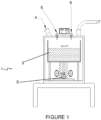
- Figure 1 shows an apparatus (1) capable of providing continuous shower of chilled saline on heart valve or heat valve pericardium tissue during collection and harvesting.
- the device comprising an airtight container having a saline pot (3) which continuous supply of saline water to the collected bovine heart or pericardium tissue (2) kept at a suitable position at a predetermined distance inside the device.
- a nitrogen inlet (4), temperature analyser (5), an oxygen analyser (6) and a vent line (7) are also provided in the apparatus for maintain suitable low oxygen environment.
- the raw bovine pericardium is placed in phosphate-buffered saline (PBS, 0.1 M, pH 7.4 ⁇ 0.2) and immediately transported to laboratory. The entire operation is done preferably within 20-40 minutes; more preferably 30 minutes in low-oxygen environment ranges from 8 - 10 %. Oxygen content of surrounding environment is measured using conventional oxygen analyser, which has selectable measurement range from 0.1-25% volume Oz. Low-oxygen condition prevents oxidative stress on living cells and maintains structural integrity of collagen fibres. Harvested raw tissue is further rinsed it with normal saline and freed from adherent fat.
- PBS phosphate-buffered saline
- adherent material of fats, blood vessels and clots are removed from the pericardial tissue, it is repeatedly rinsed with basic saline salt solution to maintain electrolytic balance and prevents damage to the living cells before cross-linking process.
- raw tissue is rinsed with basic saline salt solution for thrice to remove traces of adherent material.
- raw pericardial tissue is rinsed with chilled 0.9% saline solution by putting the tissue in stainless steel (SS) bath at room temperature with relative humidity of 55%. Initially, chilled 0.9% saline solution is poured in a stainless steel bath and bovine pericardium is placed there, which is already trimmed and washed previously while collection. Then, raw pericardium tissue is rinsed repeatedly, till all debris and remaining fatty material washed off. After rinsing process, fresh & chilled saline solution is again poured in SS bath and then rinsed the tissue from both sides.
- SS stainless steel
- the raw bovine pericardium is placed in phosphate-buffered saline (PBS, 0.1 M, pH 7.4 ⁇ 0.2) at 18-20 °C temperature. Further, rinsed the tissue thrice with chilled 0.9% saline and freed from adherent fat to completely remove fatty matter by placing inside SS bath before trimming and cutting of raw tissue. Once, the excess material is removed out and rinsed with chilled 0.9% saline the rinsed pericardial tissue is inspected for holes, damaged surface and thickness of the tissue.
- PBS phosphate-buffered saline
- Thickness of the rinsed tissue is measured with conventional thickness gauge. This tissue is again washed with normal saline solution and further subjected to the cross-linking or GA fixation process. Rinsing with chilled 0.9% saline removes bad odour from the living cells and gives enrichment of electrolytic balance to the living cells of the tissue. The entire rinsing process with saline solution is completed within 05-15 minutes, preferably within 09-12 minutes.
- Glutaric dialdehyde fixation is a tissue preservation process used in the manufacture of bioprosthetic heart valves.
- the objective of cross-linking process is to produce integrated, stable, durable, and biologically inert fixed tissue that is suitable for medical implantation.
- Collagen a principle tissue protein, provides strength and resistance to breaking stresses in tissue and plays a critical role in its long-term durability.
- Fixation of rinsed bovine tissue is carried out by using aqueous Glutaric dialdehyde solution conventionally, as Glutaric dialdehyde having dual aldehyde groups with highest cross-link stability with collagen fibre composites.
- Glutaric dialdehyde treatment changes the collagen properties and renders the tissue which is acceptable in the human host.
- Cross-linking process is shown to increase stability and strength of the fixed pericardium tissue, thus suitable for the fabrication or manufacturing of bioprosthesis.
- cross-linking agents/chemicals can be incorporated for the fixation of rinsed bovine pericardium or any other biological tissue as depicted in below table as fixative to make non-reactive tissue;
- fresh aqueous 0.625% Glutaric dialdehyde (CHO(CH 2 ) 3 CHO) solution is prepared and then vacuum filtered at normal-oxygen environment to remove any unwanted particles.
- Figure 2 shows a piece of rinsed pericardial tissue (2) positioned on SS tray (8) in a fixation frame (9) with a locking system (10).
- FF Flat Flange
- the circulatory pump is attached at an inlet at one flange of FF tank and outlet of solution at the other end.
- medical grade nitrogen (N 2 ) gas pipe is attached to remove air and oxygen from the FF tank, while oxygen (Oz) analyser and temperature sensor are attached to other probes.
- FF Flat Flange
- Circulatory pump is connected to the FF Tank for proper circulation of cross-linking solution, as it enhances cross-linking capability with the rinsed tissue and provides stable bonding in the tissue protein with the fixatives.
- the circulation of solution also provides better adherence/contact of rinsed tissue to upper and lower surface.
- circulation mechanism enhances floating capability of rinsed bovine pericardium, which is positioned in a fixative frame, and maintained at 18-20 °C temperature for 30 minutes - 50 minutes.
- the resulting tissue becomes golden yellowish in colour having thickness in range between 0.32mm-0.48 mm.
- other thickness range of tissue such as 0.40mm-0.55mm or 0.30mm-0.50mm, etc. can achieved utilizing same process.
- cross-linking process utilizes a neutral pressure and continuous circulation of fixatives i.e. Glutaric dialdehyde in low-oxygen chamber that helps to preserve the natural elasticity of the collagen matrix and enhances cross-link stability of collagen molecules present in rinsed bovine tissue.
- fixatives i.e. Glutaric dialdehyde in low-oxygen chamber that helps to preserve the natural elasticity of the collagen matrix and enhances cross-link stability of collagen molecules present in rinsed bovine tissue.
- Glutaric dialdehyde used in the process is Analytical grade reagent with assay not less than 25%.
- Cross-linking process allows Glutaric dialdehyde to form stable cross-link with collagen molecule of lysine chains that result in durable fibrous tissue structures having long-term performance properties suited for bioprosthetic heart valve and pericardial patches application.
- rinsed bovine pericardium is placed in a SS bath containing normal 0.9% saline solution.
- the rinsed tissue is washed repeatedly, preferably thrice for 03 minutes each at 18-20 °C temperature with saline and positioned in a fixation frame.
- the advantages of placing smooth surface upper side is that it enhances cross-linking aptitude, efficiency and also increase robustness of tissue.
- rinsed tissue should be firm to make total surface available for in-contact with fixative agents/solution. Excess tissue may be trimmed if necessary. All the frames containing rinsed tissue are placed in a FF tank for cross-linking process.
- Glutaric dialdehyde solution in aqueous medium with water for injection (WFI) as solvent is prepared as depicted in Table-2, in a clean and low-oxygen cabinet to avoid contamination and degradation of Glutaric dialdehyde to uphold its physical and chemical characteristics.
- the significance to use low-oxygen cabinet for preparation of cross-linking solution is to preserve chemical properties of Glutaric dialdehyde solution by maintaining 18-20 °C working area temperature and prevents contamination with toxins which can affect cross-linking outcome to the rinsed tissue.
- WFI enhances the Glutaric dialdehyde stability and reduces degradation and avoid any unwanted growth of microorganisms.
- FF tank For cross-linking process, approximately 5 liters of filtered fixative solution is poured in FF tank and 8-10 circular frames containing rinsed tissue are placed. The frame may be left floating in the FF tank.
- Cross-linking solution remains in circulation to make more effective cross-linking process with rinsed bovine pericardial tissue.
- the flow rate is maintained to 0.5-2L/minute, preferably 1.3 L/minute - 2.2L/minute, more preferably 0.8 L/minute -1.1L/minute.
- Tissue immersion period is set for approximately 20 minutes -50 minutes, preferably 30 minutes -40 minutes or more preferably 35 minutes.
- Temperature of FF tank and surrounding environment is maintained to 18 °C - 20 °C.
- cross-linked tissue is stored in a 0.625% aqueous Glutaric dialdehyde buffer solution for a period of 6 days -10 days, preferable 7 days -9 days or more preferably 08 days to enhance durability and stability of fixed tissue. Maintaining the temperature of fixation increases the rate of diffusion of the fixative into the tissue and to speed up the rate of chemical reaction between the fixative and tissue components such as -NH 2 groups of protein, thus it provide "integrated" and "durable" fixed bovine pericardial tissue.
- Glutaric dialdehyde reacts with the side-chains of proteins to form reactive hydroxy-methyl groups.
- Glutaric dialdehyde also reacts with some groups in unsaturated lipids.
- Laser cutting system is employed for the cutting of fixed tissue leaflet used for the heart valve fabrication.
- Figure 4 shows the laser cutting tray, in which an SS tray (9') is provided for laser cutting the fixated tissue (2').
- the method of cutting material employs a plotted laser cutting system in low-oxygen environment.
- the laser cutting system is computer controlled and includes a laser with a motion system.
- the laser precisely cuts tissue according to a predetermined pattern as designated by the computer which matches the criteria specified in heart valve leaflet design.
- the laser energy is transformed into thermal energy, thus produces the specific shape leaflet and can be positioned in a heart valve frame to construct device.
- a fixed pericardium tissue is placed over SS laser cutting plate and source of laser beam (13) as shown in Figure 5 , is supplied under low-oxygen environment.
- the laser cut bovine pericardium is stored into a 0.625% Glutaric dialdehyde to keep moist and stored under low-oxygen environment at oxygen content 8-10% and temperature 8-10 °C.
- the laser cut bovine pericardium is stored at 8-10 °C temperature under vacuum sealed storage jar with 80ml of 0.625% Glutaric dialdehyde solution for the storage purpose under low-oxygen environment till its further use.
- Phospholipids of biological tissue can act as a substrate for calcification thus reduces shelf life of tissue so various alcohol solutions in combination with aldehyde and surfactant are used to eliminate these calcifiable materials.
- ethanol is used to extract phospholipids in combination of aldehyde i.e. Formaldehyde and surfactant e.g. Tween-80.
- the other low-molecular weight alcohols such as methanol and isopropanol are also incorporated to effectively diminish calcification of laser cut tissue leaflets, which increases the stability, integrity and performance of bioprosthesis.
- Phosphorus which is present inside the phospholipids are the potential binding site for the calcium to extract the phospholipids will mitigate the in-vivo calcification after implantation.
- AAS contains alcohols which has similar structures with phospholipids and thus extracts from the laser cut tissue leaflets. Longer chain alcohols have a more similar structure with phospholipids, and they are known to replace phospholipids molecules, thus removing phospholipids molecules more efficiently.
- AAS acts as an anti-calcification treatment and a bio-burden reduction step enhance shelf-life of bioprosthesis.
- the cross-linker is not limited to formaldehyde or Glutaric dialdehyde, but it can be selected from various categories such as, Carbodiimides, epoxides and other combination with aldehydes e.g. Glyceraldehyde, etc.
- Tissue treatment with organic solvents (ethanol, octanol, and octanediol) is incorporated to remove residual phospholipid content which is binding substrate for the calcium.
- Polysorbate 80/ Tween-80 is a non-ionic surfactant and emulsifier derived from polyethoxylated sorbitan and oleic acid.
- a surfactant is characterized by its tendency to adsorb at surfaces and interfaces.
- Tween-80 also removes acidic type of phospholipids from the tissue which is directly linked with tissue shelf life.
- the surfactant can be selected from the category of anionic surfactant or a non-ionic surfactant or a mixture thereof.
- anionic surfactants are sodium dodecyl sulfate, sodium dodecyl sulfoacetate and examples of non-ionic surfactants are octylphenoxy polyethoxy ethanol, polyoxyethylene, tween-80 or tween-60.
- the laser cut tissue leaflets are immersed in AAS solution for 1 hour to 20 hours at low-oxygen environment where the oxygen content is maintained in between 8-10% inside the Polypropylene (PP) storage jar. During this immersion period, the AAS solution is maintained at a temperature of 25 °C - 45 °C. Increasing the temperature enhances the chemical reaction thus removes phospholipids, which is prone to calcification.
- the AAS solution is prepared under low-oxygen atmosphere; the laser cut tissue leaflets are further subjected to bio-burden reduction process which is also called as AAS treatment.
- the laser cut tissue is placed in a vacuum sealed storage jar containing approximately 50 ml -90 ml of AAS solution, more preferably 75-85ml under orbital shaker for gentle fluid movement.
- This jar is placed in orbital shaker at temperature of 25 °C to 45 °C, more preferably 37 °C to 40 °C with gentle fluid movement for the period of 3 hours - 6 hours. Due to gentle shaking, the bioburden reduction process is typically completed within short span of period.
- the AAS treated (fixed) tissue is washed with de-ionized water or saline solution or phosphate buffer saline and further stored in 0.625% Glutaric dialdehyde solution under low-oxygen environment to maintain structural integrity and properties of fixed bovine pericardial tissue.
- the fixed tissue is further utilized for the heart valve fabrication under controlled environmental condition i.e. under Laminar Air Flow (LAF).
- LAF Laminar Air Flow
- the fixed tissue must be kept moist at all time, a saline flow sprinkled at regular interval which keeps tissue moist during fabrication process.
- the heart valve or bioprosthesis is then sterilized using Liquid Chemical (LC) sterilization process.
- LC Liquid Chemical
- the exposure time from tissue collection to fixation process at temperature between 18-20 °C is shown in figure 6 . Exposure time under low-oxygen environment prevents morphological, chemical properties of tissue thus enhance integrity of fixed bovine pericardial tissue/bioprosthesis.
- the sterilized bioprosthesis is then packed and stored in low-oxygen environment to enhance stability of the bioprosthesis.
- the fresh pericardial tissue is dissected and removed from the heart by cutting along the base of the heart, leaving the remaining tissue intact.
- the raw pericardium tissue having uniform thickness is transported to the laboratory in buffered saline. The fresh tissue is rinsed, and trimmed of external fat, adherent material in the laboratory.
- pericardial tissue Collected pericardial tissue is rinsed with chilled 0.9% saline solution by putting the tissue in stainless steel (SS) bath at room temperature & normal-oxygen environment of the air with humidity of 55%. Initially, 100ml of chilled 0.9% saline solution is poured in a stainless steel bath and placed bovine pericardium which is already trimmed and washed previously while collection. Then, pericardium tissue is rinsed repeatedly till all debris and remaining fatty material washed off. After multiple rinsing, fresh chilled saline solution of volume 500ml is again poured in SS bath and then rinsed tissue from both surface of tissue and transported for the cross-linking process.
- SS stainless steel
- the cross-linked tissue is additionally processed for the bioburden reduction step to remove unwanted debris, dead colonies, toxins and extracts cholesterol uptake thus reduces calcification and enhances the integrity and so the shelf life of fixed pericardium tissue.
- AAS solution is prepared under dry cabinet at normal-oxygen environment.
- the cross-linked tissue is placed in a vacuum sealed storage jar containing approximately 50 ml -90 ml of AAS solution, more preferably 80ml under orbital shaker for gentle fluid movement. This jar is placed in orbital shaker at temperature of 37 °C to 40 °C with gentle fluid movement for 03 hours.
- the AAS treated (Fixed) tissue is washed with de-ionized water or saline solution or phosphate buffer saline and stored in 0.625% Glutaric dialdehyde solution.
- the fixed tissues are tested periodically for its mechanical strength (tissue tensile strength) at interval of initial, 03 months, 06 months, 09 months and 12 months.
- tissue tensile strength tissue tensile strength
- Table 6 Time Interval, Months All tissue processes are performed under normal-oxygen environment of air Fixed Tissue Tensile Strength (N) Stored at 25-30 °C Temperature Stored at 8-10 °C Temperature Low-oxygen Environment Normal-oxygen Environment Low-oxygen Environment Normal-oxygen Environment Initial 12.52 12.52 12.52 12.52 03 months 12.41 11.79 12.49 12.21 06 months 12.03 11.29 12.46 11.41 09 months 11.48 10.21 12.24 10.39 12 months 09.83 08.01 11.03 09.13
- Fresh bovine pericardium is collected from the TSE/BSE free animal whose upper age limit is less than 24 months at FDA approved abattoir.
- the heart pericardium is dissected as per ISO standards i.e. ISO22442 and separated from the heart under continuous shower of 0.9% chilled saline solution.
- the fresh pericardium tissue having identical thickness is transported to the laboratory in chilled saline to sustain electrolytic balance in living cells to evade putrefactive changes in tissue.
- the raw tissue is then rinsed, and trimmed out external fat, blood vessels and other adherent material in the laboratory under low-oxygen cabinet with continuous shower of chilled saline over tissue.
- the resulting tissue surface is inspected for holes, cracks and other debris.
- Approved quality raw pericardium tissue is further stored under low-oxygen environment to prevent oxidative damage to the tissue and transported for the cross-linking process in the laboratory.
- Flat flange tank assembly equipped with low-oxygen environment and temperature sensor is used for improved cross-linking process to enhance fixation capabilities and competence of tissue.
- Low-oxygen environment is maintained inside the FF tank i.e. oxygen content of surrounding environment is 8-10% and working temperature is kept in between 18-20 °C.
- Low-oxygen chamber aid in preservation the natural elasticity of the collagen matrix and enhances cross-link stability of collagen molecules.
- pericardial tissue 10 pieces of pericardial tissue is positioned in a fixation frame to hold the tissue in stretch frame. Pour fixative solution in FF tank and place 10 pieces of pericardium. FF tank is further connected to pump for cross-linking solution circulation and O 2 analyser and temperature sensor is attached. The flow rate is maintained between 1.3 L/minute and 2.2L/minute. Tissue immersion period is set for 35 minutes at 18 °C - 20 °C temperature. After that, cross-linked tissue is stored in a 0.625% aqueous Glutaric dialdehyde buffer solution for a period of 08 days in low-oxygen environment.
- the cross-linked tissue is additionally processed for the bioburden reduction step to remove unwanted debris, dead colonies, toxins and extracts phospholipids, reduce cholesterol uptake thus inhibit calcification and enhances integrity of fixed pericardium tissue.
- the tissue is placed in a vacuum sealed storage jar containing approximately 50 ml -90 ml of AAS solution, more preferably 80ml under orbital shaker for gentle fluid movement. This jar is placed in orbital shaker at temperature of 37 °C to 40 °C with gentle fluid movement for 03 hours.
- the AAS treated (Fixed) tissue is washed with de-ionized water or saline solution or phosphate buffer saline and stored in 0.625% Glutaric dialdehyde solution at various conditions as mentioned below.
- the fixed tissues are tested periodically for mechanical strength (Tissue tensile strength) at interval of initials, 03 months, 06 months, 09 months and 12 months.
- tissue tensile strength tissue tensile strength
- Table 7 Time Interval, Month All tissue processes are performed under low-oxygen environment Fixed Tissue Tensile Strength (N) Stored at 25-30 °C Temperature Stored at 8-10 °C Temperature Low-oxygen Environment Normal-oxygen Environment Low-oxygen Environment Normal-oxygen Environment Initial 16.98 16.98 16.98 16.98 03 months 16.71 15.91 16.94 16.13 06 months 15.99 14.36 16.89 15.55 09 months 15.61 12.24 16.85 14.25 12 months 14.87 11.34 16.83 13.82
- bovine pericardial tissue under low-oxygen environment as mentioned above provide resulting tissue which shows distinct advantage in its integrity with higher tensile strength, minimum cracks & ruptures, clean and smooth surface, light in colour thereby providing higher stability in compare to bovine tissue processed at normal-oxygen environment of air described in example 1.
- processed fixed tissue under low-oxygen environment is further tested for in-vitro hemodynamic performance as per ISO-5840 by fabricating heart valve.
Landscapes
- Health & Medical Sciences (AREA)
- Life Sciences & Earth Sciences (AREA)
- Engineering & Computer Science (AREA)
- Biomedical Technology (AREA)
- Chemical & Material Sciences (AREA)
- Chemical Kinetics & Catalysis (AREA)
- Veterinary Medicine (AREA)
- Oral & Maxillofacial Surgery (AREA)
- Public Health (AREA)
- General Health & Medical Sciences (AREA)
- Transplantation (AREA)
- Animal Behavior & Ethology (AREA)
- Cardiology (AREA)
- Botany (AREA)
- Dermatology (AREA)
- Molecular Biology (AREA)
- Medicinal Chemistry (AREA)
- Epidemiology (AREA)
- Heart & Thoracic Surgery (AREA)
- Vascular Medicine (AREA)
- Zoology (AREA)
- Urology & Nephrology (AREA)
- General Chemical & Material Sciences (AREA)
- Manufacturing & Machinery (AREA)
- Materials For Medical Uses (AREA)
- Agricultural Chemicals And Associated Chemicals (AREA)
Claims (10)
- Procédé de traitement pour prévenir la dégradation enzymatique et la dégénérescence tissulaire du tissus péricardique bovin, utilisé pour fabriquer une bioprothèse devant être utilisée pour un implant, comprenant les étapes de- collecte et récolte de tissu péricardique bovin cru ;- réticulation chimique du tissu rincé pour générer un tissu fixé ;- découpage au laser dudit tissu fixé pour produire une valvule de tissu ;- traitement chimique de ladite valvule de tissu avec une solution AAS, 1 litre de solution AAS étant constitué de 2,40 g de Na2HPO4, 0,416 g de KH2PO4, 12,00 ml de Polysorbate-80, 243 ml d'éthanol à 99,97%, 108,19 ml de formaldéhyde à 37 % et 637,0 ml d'eau pour injection ;- stérilisation chimique et stockage du tissu péricardique fixé pour maintenir l'intégrité structurale et les caractéristiques, et dans lequeltoutes les étapes ci-dessus sont exécutées dans un environnement appauvri en oxygène et à température contrôlée, dans lequel l'environnement appauvri en oxygène comporte une teneur en oxygène de 8-10 % et dans lequel la température contrôlée est dans la gamme de 18-20°C pendant le traitement et de 8-10°C pendant le stockage.
- Procédé selon la revendication 1, dans lequel le rinçage avec une solution saline réfrigérée comportant une température entre 2 et 8°C suit chaque étape de traitement chimique et physique jusqu'à la stérilisation et le stockage.
- Procédé selon la revendication 2, dans lequel le rinçage avec la solution saline réfrigérée est réalisé par la fourniture d'une pulvérisation continue de la solution saline réfrigérée dans un environnement appauvri en oxygène et à température contrôlée.
- Procédé selon la revendication 1, dans lequel la réticulation chimique est réalisée au moyen d'une solution tamponnée de glutaraldéhyde à 0,625 %.
- Procédé selon la revendication 1, dans lequel la réticulation chimique est réalisée avec un flux circulaire continu de glutaraldéhyde à un débit de 0,8 L/min.
- Procédé selon les revendications 4 et 5, dans lequel l'étape de réticulation est réalisée pendant 35 minutes.
- Procédé selon la revendication 1, dans lequel le stockage du tissu péricardique fixé est réalisé au moyen d'une solution tamponnée de glutaraldéhyde à 0,625 %.
- Procédé de fabrication d'une bioprothèse devant être utilisée pour un implant selon la revendication 1, comprenant les étapes de- collecte et récolte de tissu péricardique bovin cru ;- réticulation chimique du tissu rincé pour générer un tissu fixé ;- découpage au laser dudit tissu fixé pour produire une valvule de tissu ;- traitement chimique de ladite valvule de tissu avec une solution AAS, 1 litre de solution AAS étant constitué de 2,40 g de Na2HPO4, 0,416 g de KH2PO4, 12,00 ml de Polysorbate-80, 243 ml d'éthanol à 99,97 %, 108,19 ml de formaldéhyde à 37 % et 637,0 ml d'eau pour injection ;- stérilisation chimique et stockage du tissu péricardique bovin fixé pour maintenir l'intégrité structurale et les caractéristiques, et- fabrication d'une bioprothèse à partir dudit tissu fixé dans une condition humide au moyen d'une pulvérisation de flux salin, et dans lequeltoutes les étapes ci-dessus sont exécutées dans un environnement appauvri en oxygène et à température contrôlée, l'environnement appauvri en oxygène comportant une teneur en oxygène de 8-10 % et la température contrôlée étant dans la gamme de 18-20°C pendant le traitement et de 8-10°C pendant le stockage.
- Bioprothèse destinée à être utilisée pour un implant, fabriquée avec le tissu péricardique bovin traité par le procédé selon les revendications 1-7.
- Bioprothèse selon la revendication 9, qui est sélectionnée parmi : valvules cardiaques, endoprothèses greffées et timbres chirurgicaux.
Applications Claiming Priority (2)
| Application Number | Priority Date | Filing Date | Title |
|---|---|---|---|
| IN201921014508 | 2019-04-10 | ||
| PCT/IN2019/050959 WO2020208644A1 (fr) | 2019-04-10 | 2019-12-27 | Procédé de prévention de la dégradation et de la dégénérescence du tissu utilisé dans une bioprothèse |
Publications (3)
| Publication Number | Publication Date |
|---|---|
| EP3952936A1 EP3952936A1 (fr) | 2022-02-16 |
| EP3952936A4 EP3952936A4 (fr) | 2022-08-24 |
| EP3952936B1 true EP3952936B1 (fr) | 2024-09-11 |
Family
ID=72750474
Family Applications (1)
| Application Number | Title | Priority Date | Filing Date |
|---|---|---|---|
| EP19924063.1A Active EP3952936B1 (fr) | 2019-04-10 | 2019-12-27 | Procédé de prévention de la dégradation et de la dégénérescence du tissu utilisé dans une bioprothèse |
Country Status (5)
| Country | Link |
|---|---|
| US (1) | US12419994B2 (fr) |
| EP (1) | EP3952936B1 (fr) |
| CN (1) | CN113646015B (fr) |
| ES (1) | ES2988778T3 (fr) |
| WO (1) | WO2020208644A1 (fr) |
Families Citing this family (4)
| Publication number | Priority date | Publication date | Assignee | Title |
|---|---|---|---|---|
| US20220331488A1 (en) * | 2021-04-18 | 2022-10-20 | TissX, Inc. | Prosthetic Tissue Treatment For Desirable Mechanical Properties |
| IT202100025796A1 (it) * | 2021-10-08 | 2023-04-08 | Biocompatibility Innovation Srl | Metodo per la preparazione di superfici, in particolare di protesi cardiache |
| CA3230427A1 (fr) * | 2021-10-06 | 2023-04-13 | Filippo Naso | Procede de preparation de surfaces, en particulier de prothese cardiaque |
| CN118699602A (zh) * | 2024-07-12 | 2024-09-27 | 南京圣德医疗科技有限公司 | 一种激光处理生物薄膜的方法 |
Family Cites Families (11)
| Publication number | Priority date | Publication date | Assignee | Title |
|---|---|---|---|---|
| US6214054B1 (en) * | 1998-09-21 | 2001-04-10 | Edwards Lifesciences Corporation | Method for fixation of biological tissues having mitigated propensity for post-implantation calcification and thrombosis and bioprosthetic devices prepared thereby |
| US6322593B1 (en) | 1999-04-09 | 2001-11-27 | Sulzer Carbomedics Inc. | Method for treating cross-linked biological tissues |
| US7547322B2 (en) * | 2001-07-19 | 2009-06-16 | The Cleveland Clinic Foundation | Prosthetic valve and method for making same |
| US6878168B2 (en) * | 2002-01-03 | 2005-04-12 | Edwards Lifesciences Corporation | Treatment of bioprosthetic tissues to mitigate post implantation calcification |
| BR0305562A (pt) * | 2002-07-16 | 2004-09-28 | Edwards Lifesciences Corp | Redução acentuada de fosfolipìdio e atenuação da calcificação de materiais biológicos |
| US7989157B2 (en) * | 2005-01-11 | 2011-08-02 | Medtronic, Inc. | Solution for storing bioprosthetic tissue used in a biological prosthesis |
| US8445278B2 (en) * | 2005-03-01 | 2013-05-21 | Medtronic, Inc. | Process for producing decellularized biological tissues |
| DK1948259T3 (en) * | 2005-10-26 | 2017-04-10 | Genesis Tech Ltd | ACELLULAR BIOabsorbable Tissue Regeneration Matrices Produced by Incubation of ACELLULAR BLOOD PRODUCTS |
| US9101691B2 (en) * | 2007-06-11 | 2015-08-11 | Edwards Lifesciences Corporation | Methods for pre-stressing and capping bioprosthetic tissue |
| CN108785747A (zh) * | 2018-07-07 | 2018-11-13 | 四川大学 | 一种提高生物材料抗钙化性能的处理方法及其生物材料 |
| CN110917399A (zh) * | 2019-12-09 | 2020-03-27 | 沛嘉医疗科技(苏州)有限公司 | 生物材料的抗钙化方法及生物材料 |
-
2019
- 2019-12-27 EP EP19924063.1A patent/EP3952936B1/fr active Active
- 2019-12-27 ES ES19924063T patent/ES2988778T3/es active Active
- 2019-12-27 WO PCT/IN2019/050959 patent/WO2020208644A1/fr not_active Ceased
- 2019-12-27 CN CN201980095165.2A patent/CN113646015B/zh active Active
- 2019-12-27 US US17/441,488 patent/US12419994B2/en active Active
Also Published As
| Publication number | Publication date |
|---|---|
| US20220176018A1 (en) | 2022-06-09 |
| WO2020208644A1 (fr) | 2020-10-15 |
| ES2988778T3 (es) | 2024-11-21 |
| CN113646015B (zh) | 2023-01-10 |
| US12419994B2 (en) | 2025-09-23 |
| EP3952936A1 (fr) | 2022-02-16 |
| CN113646015A (zh) | 2021-11-12 |
| EP3952936A4 (fr) | 2022-08-24 |
| BR112021019488A2 (pt) | 2021-11-30 |
Similar Documents
| Publication | Publication Date | Title |
|---|---|---|
| EP3952936B1 (fr) | Procédé de prévention de la dégradation et de la dégénérescence du tissu utilisé dans une bioprothèse | |
| EP1843659B1 (fr) | Procede pour traiter un tissu biologique | |
| US10722613B2 (en) | Method of preparing calcification-resistant bioprosthetic tissue | |
| EP2606723B1 (fr) | Tissu biologique pour implantation chirurgicale | |
| CA2393438C (fr) | Traitements anti-calcification pour biomatieres fixes | |
| AU767210B2 (en) | Crosslinking of bioprosthetic material to mitigate post-implantation calcification | |
| JP6244031B2 (ja) | 無細胞コラーゲン組織及び無細胞コラーゲン組織を含む人工弁膜の処理方法 | |
| KR102897784B1 (ko) | 외과적 이식용 생물 조직의 준비 방법 | |
| US20060110370A1 (en) | Treatments for reduction of cytotoxicity and viral contamination of implantable medical devices | |
| US20110224779A1 (en) | Thin collagen tissue for medical device applications | |
| RU2809478C2 (ru) | Способ предотвращения разложения и дегенерации ткани, используемой в биопротезах | |
| RU2741224C1 (ru) | Способ обработки биологической ткани для имплантируемого биопротеза | |
| BR112021019488B1 (pt) | Processo para prevenção da degradação e da degeneração de tecidos usados em bioprótese | |
| RU2827554C2 (ru) | Способ получения биологической ткани для хирургической имплантации | |
| RU2827028C1 (ru) | Способ предимплантационной обработки биологических протезов для сердечно-сосудистой хирургии | |
| WO2011115612A1 (fr) | Tissu collagène mince pour des applications de dispositifs médicaux | |
| CN121570647A (zh) | 一种生物瓣膜材料及其制备方法 | |
| HK40043705A (en) | Method for preparing biological tissue for surgical implantation | |
| CN120227511A (zh) | 生物干膜及其应用和制备方法 | |
| EP2772274A1 (fr) | Procédé pour le traitement de matériaux composés de fibres de collagène d'origine animale |
Legal Events
| Date | Code | Title | Description |
|---|---|---|---|
| STAA | Information on the status of an ep patent application or granted ep patent |
Free format text: STATUS: THE INTERNATIONAL PUBLICATION HAS BEEN MADE |
|
| PUAI | Public reference made under article 153(3) epc to a published international application that has entered the european phase |
Free format text: ORIGINAL CODE: 0009012 |
|
| STAA | Information on the status of an ep patent application or granted ep patent |
Free format text: STATUS: REQUEST FOR EXAMINATION WAS MADE |
|
| 17P | Request for examination filed |
Effective date: 20211110 |
|
| AK | Designated contracting states |
Kind code of ref document: A1 Designated state(s): AL AT BE BG CH CY CZ DE DK EE ES FI FR GB GR HR HU IE IS IT LI LT LU LV MC MK MT NL NO PL PT RO RS SE SI SK SM TR |
|
| DAV | Request for validation of the european patent (deleted) | ||
| DAX | Request for extension of the european patent (deleted) | ||
| A4 | Supplementary search report drawn up and despatched |
Effective date: 20220722 |
|
| RIC1 | Information provided on ipc code assigned before grant |
Ipc: A61F 2/24 20060101ALI20220718BHEP Ipc: A61L 27/36 20060101AFI20220718BHEP |
|
| P01 | Opt-out of the competence of the unified patent court (upc) registered |
Effective date: 20230519 |
|
| GRAP | Despatch of communication of intention to grant a patent |
Free format text: ORIGINAL CODE: EPIDOSNIGR1 |
|
| STAA | Information on the status of an ep patent application or granted ep patent |
Free format text: STATUS: GRANT OF PATENT IS INTENDED |
|
| INTG | Intention to grant announced |
Effective date: 20240412 |
|
| GRAS | Grant fee paid |
Free format text: ORIGINAL CODE: EPIDOSNIGR3 |
|
| GRAA | (expected) grant |
Free format text: ORIGINAL CODE: 0009210 |
|
| STAA | Information on the status of an ep patent application or granted ep patent |
Free format text: STATUS: THE PATENT HAS BEEN GRANTED |
|
| AK | Designated contracting states |
Kind code of ref document: B1 Designated state(s): AL AT BE BG CH CY CZ DE DK EE ES FI FR GB GR HR HU IE IS IT LI LT LU LV MC MK MT NL NO PL PT RO RS SE SI SK SM TR |
|
| REG | Reference to a national code |
Ref country code: GB Ref legal event code: FG4D |
|
| REG | Reference to a national code |
Ref country code: CH Ref legal event code: EP |
|
| REG | Reference to a national code |
Ref country code: DE Ref legal event code: R096 Ref document number: 602019058956 Country of ref document: DE |
|
| REG | Reference to a national code |
Ref country code: IE Ref legal event code: FG4D |
|
| REG | Reference to a national code |
Ref country code: ES Ref legal event code: FG2A Ref document number: 2988778 Country of ref document: ES Kind code of ref document: T3 Effective date: 20241121 |
|
| REG | Reference to a national code |
Ref country code: LT Ref legal event code: MG9D |
|
| PG25 | Lapsed in a contracting state [announced via postgrant information from national office to epo] |
Ref country code: NO Free format text: LAPSE BECAUSE OF FAILURE TO SUBMIT A TRANSLATION OF THE DESCRIPTION OR TO PAY THE FEE WITHIN THE PRESCRIBED TIME-LIMIT Effective date: 20241211 |
|
| REG | Reference to a national code |
Ref country code: NL Ref legal event code: MP Effective date: 20240911 |
|
| PG25 | Lapsed in a contracting state [announced via postgrant information from national office to epo] |
Ref country code: GR Free format text: LAPSE BECAUSE OF FAILURE TO SUBMIT A TRANSLATION OF THE DESCRIPTION OR TO PAY THE FEE WITHIN THE PRESCRIBED TIME-LIMIT Effective date: 20241212 Ref country code: FI Free format text: LAPSE BECAUSE OF FAILURE TO SUBMIT A TRANSLATION OF THE DESCRIPTION OR TO PAY THE FEE WITHIN THE PRESCRIBED TIME-LIMIT Effective date: 20240911 |
|
| PG25 | Lapsed in a contracting state [announced via postgrant information from national office to epo] |
Ref country code: BG Free format text: LAPSE BECAUSE OF FAILURE TO SUBMIT A TRANSLATION OF THE DESCRIPTION OR TO PAY THE FEE WITHIN THE PRESCRIBED TIME-LIMIT Effective date: 20240911 |
|
| PG25 | Lapsed in a contracting state [announced via postgrant information from national office to epo] |
Ref country code: LV Free format text: LAPSE BECAUSE OF FAILURE TO SUBMIT A TRANSLATION OF THE DESCRIPTION OR TO PAY THE FEE WITHIN THE PRESCRIBED TIME-LIMIT Effective date: 20240911 |
|
| PG25 | Lapsed in a contracting state [announced via postgrant information from national office to epo] |
Ref country code: HR Free format text: LAPSE BECAUSE OF FAILURE TO SUBMIT A TRANSLATION OF THE DESCRIPTION OR TO PAY THE FEE WITHIN THE PRESCRIBED TIME-LIMIT Effective date: 20240911 |
|
| PG25 | Lapsed in a contracting state [announced via postgrant information from national office to epo] |
Ref country code: RS Free format text: LAPSE BECAUSE OF FAILURE TO SUBMIT A TRANSLATION OF THE DESCRIPTION OR TO PAY THE FEE WITHIN THE PRESCRIBED TIME-LIMIT Effective date: 20241211 |
|
| PG25 | Lapsed in a contracting state [announced via postgrant information from national office to epo] |
Ref country code: RS Free format text: LAPSE BECAUSE OF FAILURE TO SUBMIT A TRANSLATION OF THE DESCRIPTION OR TO PAY THE FEE WITHIN THE PRESCRIBED TIME-LIMIT Effective date: 20241211 Ref country code: NO Free format text: LAPSE BECAUSE OF FAILURE TO SUBMIT A TRANSLATION OF THE DESCRIPTION OR TO PAY THE FEE WITHIN THE PRESCRIBED TIME-LIMIT Effective date: 20241211 Ref country code: LV Free format text: LAPSE BECAUSE OF FAILURE TO SUBMIT A TRANSLATION OF THE DESCRIPTION OR TO PAY THE FEE WITHIN THE PRESCRIBED TIME-LIMIT Effective date: 20240911 Ref country code: HR Free format text: LAPSE BECAUSE OF FAILURE TO SUBMIT A TRANSLATION OF THE DESCRIPTION OR TO PAY THE FEE WITHIN THE PRESCRIBED TIME-LIMIT Effective date: 20240911 Ref country code: GR Free format text: LAPSE BECAUSE OF FAILURE TO SUBMIT A TRANSLATION OF THE DESCRIPTION OR TO PAY THE FEE WITHIN THE PRESCRIBED TIME-LIMIT Effective date: 20241212 Ref country code: FI Free format text: LAPSE BECAUSE OF FAILURE TO SUBMIT A TRANSLATION OF THE DESCRIPTION OR TO PAY THE FEE WITHIN THE PRESCRIBED TIME-LIMIT Effective date: 20240911 Ref country code: BG Free format text: LAPSE BECAUSE OF FAILURE TO SUBMIT A TRANSLATION OF THE DESCRIPTION OR TO PAY THE FEE WITHIN THE PRESCRIBED TIME-LIMIT Effective date: 20240911 |
|
| REG | Reference to a national code |
Ref country code: AT Ref legal event code: MK05 Ref document number: 1722130 Country of ref document: AT Kind code of ref document: T Effective date: 20240911 |
|
| PG25 | Lapsed in a contracting state [announced via postgrant information from national office to epo] |
Ref country code: NL Free format text: LAPSE BECAUSE OF FAILURE TO SUBMIT A TRANSLATION OF THE DESCRIPTION OR TO PAY THE FEE WITHIN THE PRESCRIBED TIME-LIMIT Effective date: 20240911 |
|
| PG25 | Lapsed in a contracting state [announced via postgrant information from national office to epo] |
Ref country code: PT Free format text: LAPSE BECAUSE OF FAILURE TO SUBMIT A TRANSLATION OF THE DESCRIPTION OR TO PAY THE FEE WITHIN THE PRESCRIBED TIME-LIMIT Effective date: 20250113 Ref country code: IS Free format text: LAPSE BECAUSE OF FAILURE TO SUBMIT A TRANSLATION OF THE DESCRIPTION OR TO PAY THE FEE WITHIN THE PRESCRIBED TIME-LIMIT Effective date: 20250111 |
|
| PG25 | Lapsed in a contracting state [announced via postgrant information from national office to epo] |
Ref country code: RO Free format text: LAPSE BECAUSE OF FAILURE TO SUBMIT A TRANSLATION OF THE DESCRIPTION OR TO PAY THE FEE WITHIN THE PRESCRIBED TIME-LIMIT Effective date: 20240911 Ref country code: SM Free format text: LAPSE BECAUSE OF FAILURE TO SUBMIT A TRANSLATION OF THE DESCRIPTION OR TO PAY THE FEE WITHIN THE PRESCRIBED TIME-LIMIT Effective date: 20240911 |
|
| PG25 | Lapsed in a contracting state [announced via postgrant information from national office to epo] |
Ref country code: AT Free format text: LAPSE BECAUSE OF FAILURE TO SUBMIT A TRANSLATION OF THE DESCRIPTION OR TO PAY THE FEE WITHIN THE PRESCRIBED TIME-LIMIT Effective date: 20240911 Ref country code: EE Free format text: LAPSE BECAUSE OF FAILURE TO SUBMIT A TRANSLATION OF THE DESCRIPTION OR TO PAY THE FEE WITHIN THE PRESCRIBED TIME-LIMIT Effective date: 20240911 |
|
| PG25 | Lapsed in a contracting state [announced via postgrant information from national office to epo] |
Ref country code: CZ Free format text: LAPSE BECAUSE OF FAILURE TO SUBMIT A TRANSLATION OF THE DESCRIPTION OR TO PAY THE FEE WITHIN THE PRESCRIBED TIME-LIMIT Effective date: 20240911 Ref country code: PL Free format text: LAPSE BECAUSE OF FAILURE TO SUBMIT A TRANSLATION OF THE DESCRIPTION OR TO PAY THE FEE WITHIN THE PRESCRIBED TIME-LIMIT Effective date: 20240911 |
|
| PG25 | Lapsed in a contracting state [announced via postgrant information from national office to epo] |
Ref country code: SK Free format text: LAPSE BECAUSE OF FAILURE TO SUBMIT A TRANSLATION OF THE DESCRIPTION OR TO PAY THE FEE WITHIN THE PRESCRIBED TIME-LIMIT Effective date: 20240911 |
|
| REG | Reference to a national code |
Ref country code: DE Ref legal event code: R097 Ref document number: 602019058956 Country of ref document: DE |
|
| PG25 | Lapsed in a contracting state [announced via postgrant information from national office to epo] |
Ref country code: MC Free format text: LAPSE BECAUSE OF FAILURE TO SUBMIT A TRANSLATION OF THE DESCRIPTION OR TO PAY THE FEE WITHIN THE PRESCRIBED TIME-LIMIT Effective date: 20240911 |
|
| PG25 | Lapsed in a contracting state [announced via postgrant information from national office to epo] |
Ref country code: DK Free format text: LAPSE BECAUSE OF FAILURE TO SUBMIT A TRANSLATION OF THE DESCRIPTION OR TO PAY THE FEE WITHIN THE PRESCRIBED TIME-LIMIT Effective date: 20240911 |
|
| PLBE | No opposition filed within time limit |
Free format text: ORIGINAL CODE: 0009261 |
|
| STAA | Information on the status of an ep patent application or granted ep patent |
Free format text: STATUS: NO OPPOSITION FILED WITHIN TIME LIMIT |
|
| REG | Reference to a national code |
Ref country code: CH Ref legal event code: PL |
|
| PG25 | Lapsed in a contracting state [announced via postgrant information from national office to epo] |
Ref country code: LU Free format text: LAPSE BECAUSE OF NON-PAYMENT OF DUE FEES Effective date: 20241227 |
|
| 26N | No opposition filed |
Effective date: 20250612 |
|
| PG25 | Lapsed in a contracting state [announced via postgrant information from national office to epo] |
Ref country code: SE Free format text: LAPSE BECAUSE OF FAILURE TO SUBMIT A TRANSLATION OF THE DESCRIPTION OR TO PAY THE FEE WITHIN THE PRESCRIBED TIME-LIMIT Effective date: 20240911 |
|
| REG | Reference to a national code |
Ref country code: BE Ref legal event code: MM Effective date: 20241231 |
|
| PG25 | Lapsed in a contracting state [announced via postgrant information from national office to epo] |
Ref country code: BE Free format text: LAPSE BECAUSE OF NON-PAYMENT OF DUE FEES Effective date: 20241231 |
|
| PG25 | Lapsed in a contracting state [announced via postgrant information from national office to epo] |
Ref country code: CH Free format text: LAPSE BECAUSE OF NON-PAYMENT OF DUE FEES Effective date: 20241231 |
|
| PG25 | Lapsed in a contracting state [announced via postgrant information from national office to epo] |
Ref country code: IE Free format text: LAPSE BECAUSE OF NON-PAYMENT OF DUE FEES Effective date: 20241227 |
|
| PGFP | Annual fee paid to national office [announced via postgrant information from national office to epo] |
Ref country code: DE Payment date: 20251126 Year of fee payment: 7 |
|
| PGFP | Annual fee paid to national office [announced via postgrant information from national office to epo] |
Ref country code: GB Payment date: 20251204 Year of fee payment: 7 |
|
| PGFP | Annual fee paid to national office [announced via postgrant information from national office to epo] |
Ref country code: IT Payment date: 20251204 Year of fee payment: 7 |
|
| PGFP | Annual fee paid to national office [announced via postgrant information from national office to epo] |
Ref country code: FR Payment date: 20251204 Year of fee payment: 7 |
|
| PGFP | Annual fee paid to national office [announced via postgrant information from national office to epo] |
Ref country code: ES Payment date: 20260113 Year of fee payment: 7 |