EP3965013A1 - Klassifizierer für maschinelles lernen unter verwendung von metadaten - Google Patents
Klassifizierer für maschinelles lernen unter verwendung von metadaten Download PDFInfo
- Publication number
- EP3965013A1 EP3965013A1 EP20195160.5A EP20195160A EP3965013A1 EP 3965013 A1 EP3965013 A1 EP 3965013A1 EP 20195160 A EP20195160 A EP 20195160A EP 3965013 A1 EP3965013 A1 EP 3965013A1
- Authority
- EP
- European Patent Office
- Prior art keywords
- training
- classifier
- data
- quality
- image
- Prior art date
- Legal status (The legal status is an assumption and is not a legal conclusion. Google has not performed a legal analysis and makes no representation as to the accuracy of the status listed.)
- Withdrawn
Links
Images


Classifications
-
- G—PHYSICS
- G06—COMPUTING OR CALCULATING; COUNTING
- G06F—ELECTRIC DIGITAL DATA PROCESSING
- G06F18/00—Pattern recognition
- G06F18/20—Analysing
- G06F18/21—Design or setup of recognition systems or techniques; Extraction of features in feature space; Blind source separation
- G06F18/217—Validation; Performance evaluation; Active pattern learning techniques
-
- G—PHYSICS
- G06—COMPUTING OR CALCULATING; COUNTING
- G06N—COMPUTING ARRANGEMENTS BASED ON SPECIFIC COMPUTATIONAL MODELS
- G06N3/00—Computing arrangements based on biological models
- G06N3/02—Neural networks
- G06N3/08—Learning methods
-
- G—PHYSICS
- G06—COMPUTING OR CALCULATING; COUNTING
- G06F—ELECTRIC DIGITAL DATA PROCESSING
- G06F18/00—Pattern recognition
- G06F18/20—Analysing
- G06F18/21—Design or setup of recognition systems or techniques; Extraction of features in feature space; Blind source separation
- G06F18/214—Generating training patterns; Bootstrap methods, e.g. bagging or boosting
-
- G—PHYSICS
- G06—COMPUTING OR CALCULATING; COUNTING
- G06N—COMPUTING ARRANGEMENTS BASED ON SPECIFIC COMPUTATIONAL MODELS
- G06N20/00—Machine learning
-
- G—PHYSICS
- G06—COMPUTING OR CALCULATING; COUNTING
- G06N—COMPUTING ARRANGEMENTS BASED ON SPECIFIC COMPUTATIONAL MODELS
- G06N3/00—Computing arrangements based on biological models
- G06N3/02—Neural networks
- G06N3/04—Architecture, e.g. interconnection topology
- G06N3/042—Knowledge-based neural networks; Logical representations of neural networks
-
- G—PHYSICS
- G06—COMPUTING OR CALCULATING; COUNTING
- G06N—COMPUTING ARRANGEMENTS BASED ON SPECIFIC COMPUTATIONAL MODELS
- G06N3/00—Computing arrangements based on biological models
- G06N3/02—Neural networks
- G06N3/04—Architecture, e.g. interconnection topology
- G06N3/0464—Convolutional networks [CNN, ConvNet]
-
- G—PHYSICS
- G06—COMPUTING OR CALCULATING; COUNTING
- G06N—COMPUTING ARRANGEMENTS BASED ON SPECIFIC COMPUTATIONAL MODELS
- G06N3/00—Computing arrangements based on biological models
- G06N3/02—Neural networks
- G06N3/08—Learning methods
- G06N3/09—Supervised learning
-
- G—PHYSICS
- G06—COMPUTING OR CALCULATING; COUNTING
- G06N—COMPUTING ARRANGEMENTS BASED ON SPECIFIC COMPUTATIONAL MODELS
- G06N5/00—Computing arrangements using knowledge-based models
- G06N5/04—Inference or reasoning models
-
- G—PHYSICS
- G06—COMPUTING OR CALCULATING; COUNTING
- G06T—IMAGE DATA PROCESSING OR GENERATION, IN GENERAL
- G06T7/00—Image analysis
- G06T7/0002—Inspection of images, e.g. flaw detection
- G06T7/0012—Biomedical image inspection
-
- G—PHYSICS
- G16—INFORMATION AND COMMUNICATION TECHNOLOGY [ICT] SPECIALLY ADAPTED FOR SPECIFIC APPLICATION FIELDS
- G16H—HEALTHCARE INFORMATICS, i.e. INFORMATION AND COMMUNICATION TECHNOLOGY [ICT] SPECIALLY ADAPTED FOR THE HANDLING OR PROCESSING OF MEDICAL OR HEALTHCARE DATA
- G16H50/00—ICT specially adapted for medical diagnosis, medical simulation or medical data mining; ICT specially adapted for detecting, monitoring or modelling epidemics or pandemics
- G16H50/20—ICT specially adapted for medical diagnosis, medical simulation or medical data mining; ICT specially adapted for detecting, monitoring or modelling epidemics or pandemics for computer-aided diagnosis, e.g. based on medical expert systems
-
- G—PHYSICS
- G06—COMPUTING OR CALCULATING; COUNTING
- G06N—COMPUTING ARRANGEMENTS BASED ON SPECIFIC COMPUTATIONAL MODELS
- G06N5/00—Computing arrangements using knowledge-based models
- G06N5/01—Dynamic search techniques; Heuristics; Dynamic trees; Branch-and-bound
-
- G—PHYSICS
- G06—COMPUTING OR CALCULATING; COUNTING
- G06N—COMPUTING ARRANGEMENTS BASED ON SPECIFIC COMPUTATIONAL MODELS
- G06N5/00—Computing arrangements using knowledge-based models
- G06N5/02—Knowledge representation; Symbolic representation
- G06N5/022—Knowledge engineering; Knowledge acquisition
- G06N5/025—Extracting rules from data
-
- G—PHYSICS
- G06—COMPUTING OR CALCULATING; COUNTING
- G06T—IMAGE DATA PROCESSING OR GENERATION, IN GENERAL
- G06T2207/00—Indexing scheme for image analysis or image enhancement
- G06T2207/20—Special algorithmic details
- G06T2207/20081—Training; Learning
Definitions
- the presently disclosed subject matter relates to a training method for a classifier, a system for training a classifier, a system for applying a classifier, a workstation, an imaging apparatus, and a computer readable medium.
- AI/ML Artificial intelligence
- ML machine learning
- AI/ML software to learn from real-world feedback (training) and improve its performance (adaptation) makes these technologies uniquely situated among software as a medical device (SaMD) and a rapidly expanding area of research and development.
- SaMD medical device
- the FDA's vision is that with appropriately tailored regulatory oversight, AI/ML-based SaMD will deliver safe and effective software functionality that improves the quality of care that patients receive.
- the image classifier may receive as input a radiograph and produce as output a classification of the image, e.g., the presence or absence of an abnormality, or a classification of the type of abnormality, if any.
- a classification of the image e.g., the presence or absence of an abnormality, or a classification of the type of abnormality, if any.
- Such a classifier may assist radiologist in interpreting radiographs.
- a known system is disclosed in the paper 'MURA: Large Dataset for Abnormality Detection in Musculoskeletal Radiographs' by Pranav Rajpurkar , et al.
- the known system is trained for recognizing abnormalities in upper extremity abnormalities, e.g., finger, wrist, humerus, and so on.
- upper extremity abnormalities that may be classified from a radiograph include fractures; hardware, e.g., a forearm showing a screw fixation and/or an operative plate; degenerative joint diseases; lesions; subluxations, and so on.
- the known model groups all abnormalities in a single group. However, it would also be possible to classify the individual type of abnormality.
- the known model is a feed-forward 169-layer convolutional neural network that outputs a probability of abnormality when provided with a radiograph as input. If multiple views are available an overall probability of abnormality is determined as the arithmetic mean of the abnormality probabilities output by the network for each image. Input images are scaled and normalized.
- the weights of the network were initialized with weights from a model pretrained on ImageNet. During training of the network an initial learning rate is decayed each time the validation loss plateaus after an epoch.
- the known model was trained on a dataset containing 14,863 musculoskeletal studies of the upper extremity, where each study contains one or more views and was manually labelled by radiologists as either normal or abnormal at the time of diagnostic clinical radiographic interpretation.
- ground-truth labels are not ideal. Agreement between radiologist is sometimes low, even among a small group of six radiologists assessing a small test set under test conditions. The quality of the ground-truth labels obtained from many more radiologist taken under a range of conditions will not be much better. The inventor realized that not all experts are able to deliver quality labels at the same level and consistency rate. Moreover, the number of human errors will differ depending on the time of the day, day of the week, and potentially many other factors. At the same time, the ground-truth quality has an impact on the overall model performance.
- ground-truth label can vary significantly.
- sensor data that are more or less likely to have an incorrect label can be identified from information associated with the sensor data, e.g., the so-called meta-data.
- the meta indicates information on the origin of the ground-truth label.
- the meta-data can be used to approximate which sensor data are more or less likely to have correct ground-truth labels. This information can be used to train a classifier less aggressively on the noisier labels, e.g., a lower learning rate, or a lower priority.
- a classifier especially one based on a neural network, is capable of learning in spite of noise, the learning will be faster and the end-result more accurate if noise is taken into account during training. Some percentage of the sensor data that has the noisiest labels can be ignored during training altogether.
- Distinguishing among ground-truth labels in training a machine learnable model on the basis of quality provides advantages. For example, the quality of the machine learnable model improves, training is less susceptible to noise and training may proceed faster.
- quality measures into the machine learning workflow.
- a good example is to modulate the learning rate with a quality measure-so that high quality training samples have more impact on the trained machine learnable model.
- Another approach is to prioritize high quality training samples, e.g., include them in training iterations more often. Low quality training samples may be excluded from training altogether.
- ground truth data e.g., ground-truth labels
- Such methods and systems may be applied in a machine learning task where the ground truth is produced by humans, e.g., domain experts. In the latter situation, the quality of ground-truth labels will vary, e.g., due to different levels of expertise, experience, timing, and so on.
- a particular important application is image classification, especially medical image classification. Other image classification tasks in which an embodiment may be applied are indicated herein.
- the classifier may be applied to sensor data.
- sensor data may be obtained from a sensor device.
- the sensor device may give technical data regarding a physical object in the environment of the sensor device.
- the object may be a machine, e.g., indicating a technical state of the machine, a traffic scene, e.g., indicating traffic signs, vehicles and the like.
- An object may be a human or animal body, e.g., indicating a medical aspect of the body.
- a good example of sensor data is an image which may be obtained from an imaging device.
- a quality estimator may translate meta-data in a numerical value indicating the quality of the ground-truth label or labels.
- the quality estimates may be rule based. For example, results of studies on radiological performance may be encoded into rules.
- An advantage of a rule-based system is ease of modification, and high explainability.
- the quality estimator may comprise a machine learnable model, trained on pairs of meta-data and quality scores. The latter may be determined by domain experts, and/or may be automatically generated.
- a workstation or imaging apparatus e.g., a medical workstation or imaging apparatus may be configured to apply an embodiment of the training method.
- the classifier may be applied to novel sensor data, e.g., obtained from a sensor device.
- the sensor data may comprise an image obtained from an image device.
- the classifier may be fine-tuned, e.g., further trained using sensor data, e.g. images and labels obtained during the use-phase.
- An aspect disclosed herein is a system for training a classifier, and a system for applying a classifier.
- a system and/or device configured for training a classifier is an electronic system and/or device.
- the system may be a computer.
- the training method described herein may be applied in a wide range of practical applications.
- Such practical applications include training image classifiers to assist medial decision makers, for quality control, or in other image classifiers, e.g., to recognize objects in road scenes.
- multi-dimensional image data e.g., to two-dimensional (2D), three-dimensional (3D) or four-dimensional (4D) images, acquired by various acquisition modalities such as, but not limited to, standard X-ray Imaging, Computed Tomography (CT), Magnetic Resonance Imaging (MRI), Ultrasound (US), Positron Emission Tomography (PET), Single Photon Emission Computed Tomography (SPECT), and Nuclear Medicine (NM).
- CT Computed Tomography
- MRI Magnetic Resonance Imaging
- US Ultrasound
- PET Positron Emission Tomography
- SPECT Single Photon Emission Computed Tomography
- NM Nuclear Medicine
- An embodiment of the method may be implemented on a computer as a computer implemented method, or in dedicated hardware, or in a combination of both.
- Executable code for an embodiment of the method may be stored on a computer program product.
- Examples of computer program products include memory devices, optical storage devices, integrated circuits, servers, online software, etc.
- the computer program product comprises non-transitory program code stored on a computer readable medium for performing an embodiment of the method when said program product is executed on a computer.
- the computer program comprises computer program code adapted to perform all or part of the steps of an embodiment of the method when the computer program is run on a computer.
- the computer program is embodied on a computer readable medium.
- a system and a method are provided to treat ground truth labels individually, and to exploit the relevant domain-specific metadata.
- a ground-truth quality score is obtained for each sample, e.g., computed using a further model.
- the ground-truth quality score may be utilized in improved training of the image classifier.
- Embodiments are also useful for in-product learning environments. In an in-product learning environment, the images and associated ground-truth labels assigned by domain experts are collected, e.g., on a daily or weekly basis, and used for further training of the image classifier. This has the appeal that the image classifier improves while it is used.
- the ground-truth label(s) are typically produced by many domain experts with various expertise level in such a setting. Using quality estimates can improve the further learning that can be obtained from in-product learning. Improved learning from noisy GT labels increases the quality of resulting image classifier, which in turn helps the adoption of AI in healthcare.
- Embodiments use classification of images as a motivating example; however, the method may be applied to training machine learnable models on any domain data, e.g., sensor data, which is labeled by domain experts.
- sensor data may comprise a collection of sensor readings, e.g., temperature, pressure and the like, measured at multiple points in a machine, e.g., a motor, an industrial plant, etc.
- Image data could be part of the sensor data, but this is not needed.
- Ground-truth labels may indicate whether a sensor data, e.g., a collection of sensor data items, are abnormal or not, e.g., are safe or not. Other labels or classifications are possible.
- Ground truth data may indicate a particular problem.
- such training data may be collected by recording said sensor data together with information that indicates if a human operator intervened in the system or not.
- the trained model will be able to predict whether an intervention is warranted.
- Some human operators have little experience, less training or are less reliable for other reasons, e.g., time of day.
- their intervention decisions may be made to carry less weight in training.
- embodiments described below for images may be directly modified to other sensor data.
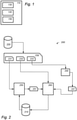
- Figure 1 schematically shows an example of an embodiment of a system 110 for training an image classifier.
- the system 110 of figure 1 may be used to train an image classifier.
- System 110 may also be configured to evaluate the image classifier.
- System 110 may comprise a processor system 130, a storage 140, and a communication interface 150.
- Storage 140 may comprise local storage, e.g., a local hard drive or electronic memory.
- Storage 140 may comprise non-local storage, e.g., cloud storage. In the latter case, storage 140 may comprise a storage interface to the non-local storage.
- the storage may comprise image data, e.g., radiograph image data, training data, model parameters, and so on.
- the System 110 may communicate internally, with other systems, external storage, input devices, output devices, imaging devices, and so on over a computer network.
- the computer network may be an internet, an intranet, a LAN, a WLAN, etc.
- the computer network may be the Internet.
- the system comprises a connection interface which is arranged to communicate within the system or outside the system as needed.
- the connection interface may comprise a connector, e.g., a wired connector, e.g., an Ethernet connector, an optical connector, etc., or a wireless connector, e.g., an antenna, e.g., a Wi-Fi, 4G or 5G antenna.
- Internal and/or external communication may also use a proprietary communication protocol, e.g., a bus.
- the communication interface 150 may be used to send or receive digital data.
- communication interface 150 may be used to receive an input image for providing the image to the image classifier, and/or to transmit an output of the image classifier, e.g., one more labels, e.g., to a display, a user of the system, etc.
- communication interface 150 may be used to send and/or receive model parameters, training data, etc.
- system 110 may be implemented in a processor system, e.g., one or more processor circuits, e.g., microprocessors, examples of which are shown herein.
- System 110 may comprise multiple processors, which may be distributed over different locations.
- system 110 may use cloud computing.
- FIG. 2 may be used as a blueprint of a possible functional organization of the processor system.
- the processor circuit(s) are not shown separate from the units in these figures.
- the functional units shown in figure 2 and the like may be wholly or partially implemented in computer instructions that are stored at system 110, e.g., in an electronic memory of system 110, and are executable by a microprocessor of system 110.
- functional units are implemented partially in hardware, e.g., as coprocessors, e.g., neural network coprocessors, and partially in software stored and executed on system 110. Part or all of system 110 may be implemented in a single device.
- Figure 2 schematically shows an example of an embodiment of a system 200 for training an image classifier.
- system 200 may be implemented on a system such as system 110.
- system 200 may be implemented on a computer, either a single computer or multiple computers, e.g., a distributed computing system.
- System 200 may be implemented in a workstation or imaging apparatus.
- System 200 may be implemented in a server, e.g., accessible over a computer network, such as the Internet. Other examples are disclosed herein.
- Image classifier 250 is configured to take at least an image as input to classify the image.
- image classifier may comprise a machine learnable model to classify the image.
- image classifier 250 comprises a neural network.
- the image classifier may be configured to output a label classifying the image.
- the image classifier may have one or multiple output nodes, that produce a likelihood, e.g., a probability, that a particular label applies to the image.
- a useful image classifier might have only a single output, e.g., normal/abnormal. For example, a value between 0 and 1 may be generated indicating a likelihood that the image is abnormal.
- the image classifier may have multiple outputs, e.g., indicating which of multiple abnormalities applies to the input image.
- the image classifier may comprise multiple layers, including, e.g., one or more convolutional layers, ReLu layers, pooling layers, fully-connected layers, etc.
- the model may be a feed-forward network.
- the network may be of the design described in the background.
- Embodiments may be applied to different image classification domains; associating a ground-truth quality score per training sample is applicable across various domains.
- the image classifier in an embodiment may be configured for face recognition, visual geolocation, gesture recognition, object recognition, driver assistance, e.g., identifying objects on the road, image tagging, quality control, e.g., recognizing a defect in an image of manufactured product, and so on.
- a particular important application are medical image classifiers. Not only are medical image classifiers important in their own right, getting an accurate output is especially important for this application.
- the problem of varying quality of ground-truth labels, in a way that can be predicted from meta-data was observed in this particular setting.
- an image classifier can be trained on previously
- the image classifier is a medical image classifier.
- the ground-truth label may indicate a medical abnormality in the image.
- the image may be obtained from various types of imaging devices.
- the imaging device may be a camera, e.g., a visible light camera, an infrared camera, etc.
- an image classifier configured to recognize traffic signs in images may use a regular camera, e.g., sensitive for visible light.
- the imaging device may also be configured for other modalities, e.g., in the field of medical image classification.
- the image may be multi-dimensional image data, e.g., to two-dimensional (2D), three-dimensional (3D) or four-dimensional (4D) images, acquired by various acquisition modalities such as, but not limited to, standard X-ray Imaging, Computed Tomography (CT), Magnetic Resonance Imaging (MRI), Ultrasound (US), Positron Emission Tomography (PET), Single Photon Emission Computed Tomography (SPECT), and Nuclear Medicine (NM).
- CT Computed Tomography
- MRI Magnetic Resonance Imaging
- US Ultrasound
- PET Positron Emission Tomography
- SPECT Single Photon Emission Computed Tomography
- NM Nuclear Medicine
- the images may be radiographs of upper extremities.
- the ground-truth labels may indicate if a medical abnormality is visible in the image, e.g., as described in the background.
- heart problems may be diagnosed from an MRI image, etc.
- FIG. 2 shows an image classifier storage 210.
- Storage 210 stores weights that characterize the image classifier; for example, these may be the weights that configure the neural nodes in a neural network.
- the weights for the image classifier may be initialized. This may be done randomly, or taken from a pre-trained network, etc.
- the network weights may be pre-trained in part and randomized in part, e.g., randomized in one or more final layers.
- FIG. 2 shows a training storage 220 comprising multiple training samples.
- One training sample 230 is shown.
- a training sample comprises: a training image 231, a ground-truth label 232 and meta-data 233.
- the training of the image classifier is configured so that image classifier learns to reproduce a ground-truth label 232 when given the training image 231.
- the training image 231 may be as indicated herein, e.g., a radiograph, MRI image, etc.
- the ground-truth labels are produced by domain-experts.
- the ground-truth label may be produced by a domain-expert who judges, or reads, the training-image.
- training data may be obtained by having one or more domain experts judging a collection of training images to provide the ground-truth labels.
- a good source of ground-truth data is to obtain them from domain experts as they supply their diagnosis of the image; for example, ground-truth data may be extracted from reports written by domain-experts concerning one or more images.
- the ground-truth labels may be produced by radiologists.
- the ground truth labels may be noisy.
- some domain experts may be less accurate than others.
- a domain expert may be more accurate at some times of the day or week than others, or may be more accurate for some topics than for others.
- Meta-data 233 provides information on the origin of the ground-truth label.
- Meta-data may comprise various types of information.
- one type of information may relate to the domain-expert him- or herself.
- meta-data relating to the domain expert may comprise one or more of: the domain expert identifier, the domain expert's specialty and/or the domain expert's subspecialty, the domain expert's years of experience, case volume, number of past cases, etc.
- one type of information may relate to the creation of the ground-truth label.
- meta-data relating to the creation of the ground-truth label may comprise one or more of: a timestamp when the label was created, the duration of creation, (sub-)specialties associated with ground-truth label or the report in which it is reported, a creation location, etc.
- one type of information may relate to the image and/or exam for which the ground-truth label was created.
- meta-data relating to the image and/or exam may comprise one or more of: an image modality, an exam type, a clinical need for the image.
- a label may be the presence or absence of a medical abnormality.
- Medical labels in particular the presence or absence of an abnormality may be extracted from radiology reports. Such labels may be curated by hand, or they may be collected automatically. For example, reports may be created by filling in a template or the like in which the labels may be entered in a label field. The label or labels and meta-data may be extracted from the template by a computer program.
- labels and/or meta-data may be extracted from a domain expert report such as a medical radiologist report using a further AI model, e.g., a natural language processing (NLP) model.
- NLP natural language processing
- the NLP model may extract the domain specific metadata and/or GT label(s) for every data sample and store it together with the image.
- an extraction system may be presented with multiple reports of domain experts associated with one or more images.
- the extraction system may be configured to collect ground-truth labels and meta-data from various sources.
- ground-truth labels and meta-data may be extracted from a report.
- meta-data may be extracted from system information, e.g., file creation data, total editing time, etc.
- the extracting system extracts the ground-truth labels and metadata obtained from multiple reports and store it together with the image as a training sample. Training data may also be curated by hand, or using a partially automated system. The use of an NLP model to extract labels of meta-data, although convenient, is not needed.
- Metadata could also be used directly by an image classifier, e.g., as additional features included in the input together with the input image.
- quality instead of or in addition to using quality measures to manage the training process, it is possible to configure the machine learnable classifier to receive quality correlated inputs directly.
- quality either as a combined score, or even as a number of individual sub-scores per measured quality dimension, may be used in training as explicit input features, e.g., next to the problem domain data, e.g., imaging data. This has the advantage that the machine learning can pick up on the optimal combination.
- Validation can be done, e.g., against a high-quality domain expert.
- Image classifier 250 may be trained with a machine learning training algorithm appropriate for the type of image classifier.
- System 200 may comprise a machine learning part 260 configured with the machine learning training algorithm.
- the machine learning training algorithm may be based on gradient descend.
- neural network based image classifiers may be trained using a gradient descend training algorithm.
- one may employ the Adams training suite.
- to train image classifier 250 one may iteratively obtain a training sample or batch of training samples from the training storage and apply the machine learning training algorithm.
- one applies the image classifier 250 to a training sample and then modifies the parameters, e.g., weights of the image classifier 250 so that its output will be closer to the desired output, e.g., close to the ground-truth label.
- System 200 comprises a quality estimator 240.
- Quality estimator 240 is configured to apply a quality estimation function to meta-data 233 of the training sample 230, thus obtaining a quality estimation 241 of the ground-truth label 232 of the training sample.
- the quality estimator 240 may provide a numerical estimate.
- There are various ways to configure the quality estimation examples of which are provided herein.
- the quality estimation 241 may be used to reduce the negative impact of potential noisy data on the training of image classifier 250.
- system 200 e.g., machine learning training part 260 or quality estimator 240 may determine a learning rate from the quality estimation.
- the determination may be a look-up table, a function, an algorithm or the like.
- the quality estimation may be directly expressed as a learning rate.
- a training sample with a high quality estimate may be use with a high learning rate, while a training sample with a lower quality estimate may be used with a lower learning rate.
- the quality estimation could be used in other ways, e.g., prioritizing training samples, removing low quality samples, etc.
- a quality estimation may be expressed as a number, e.g., a floating-point number, e.g., between 0 and 1, between -1 and +1.
- a quality estimation may be a value, around 1, for example, lower estimated quality may correspond to values below one, and higher estimated quality corresponding to values above one.
- a default learning rate may be multiplied with the quality estimation.
- This approach has the advantage that conventional learning rate schedule may be used, adapted by the quality estimates. For example, learning rates may decrease according to the schedule, say a decrease in subsequent epochs. A given learning rate may be multiplied with the quality estimate.
- a function may be applied to a quality estimate to obtain the learning rate. The function may be a look-up table, e.g., mapping quality estimate ranges to a learning rate.
- the machine learning part 260 e.g., the machine learning algorithm implemented by it, may be configured to take as input the learning rate. For example, a magnitude of the modification depending on the learning rate. For example, in case of gradient descend, a derivative of the error may be multiplied with the learning rate.
- machine learning part 260 may take as input a current set of weights, e.g., as stored in storage 210, and a training image 231, a determined label 251, e.g., the label produced for the current training image using the current set of weights, a ground-truth label 232 for the image, and a learning rate.
- the machine learning part 260 is configured to determine a new set of weights so that an image classifier with the new set of weight approximates the ground-truth label closer.
- the size of the modifications made to the weights may depend on the size of the error, but in particular also depend on the size of the learning rate.
- An advantage of modulating learning rate in dependency on the quality estimate is that noisy estimates can still be used in training and need not be discarded, at least not all of them. Even if noise is present, noisy data still contains useful information, by modulating the learning rate the noisier data can still be used, but more trustworthy data can be given a higher significance.
- a quality score may be used, e.g., in the context of neural network based models, to adjust the learning rate, e.g., a hyper parameter that influences to what extent the optimizer adjusts the weights in the model such that they approximate better the desired results.
- the learning rate e.g., a hyper parameter that influences to what extent the optimizer adjusts the weights in the model such that they approximate better the desired results.
- Lowering this rate for ground-truth samples with lower quality means that the model learns from them, though to a lesser extent than those with a high quality score.
- the model still learns from all samples, but samples with a low quality score are taken with a grain of salt. This enables one to effectively utilize all data samples but to learn more from those with a higher quality score.
- the quality estimate may be used to filter the training data. For example, training samples with a quality estimate below a threshold may not be taken into account. In an embodiment, training samples with a high quality estimation are prioritized over training samples with a lower quality estimation. For example, a training sample with a higher quality estimate may be used in more training iterations than one with a lower quality estimate. Filtering the training data on quality estimates may be done with or without modulating the learning rate from a quality estimates.
- training may be batched on multiple images with a similar quality estimates, which may use a similar learning rate.
- system 200 is configured to determine the quality estimate first for multiple training samples from the training storage. From the multiple one or more batches may be selected having a similar quality estimate. For example, all or part of the training samples may be binned in dependence upon the quality estimate.
- Machine learning part 260 may be configured to process a batch using the same learning rate. Batched training is more efficient, and is compatible with using quality estimates.
- multiple training samples may be stored in a training storage 2220.
- a quality estimator 240 may determine a quality estimate for the training samples.
- Image classifier may be configured to compute a determined label for a training image.
- a machine learning part may modify the image classifier weights to improve the determined label, wherein high-quality training samples are given more weight than low-quality training samples.
- Figure 3 schematically shows an example of an embodiment of a system 300 for applying an image classifier.
- System 300 may also be implemented on a system such as shown in figure 1 .
- the image classifier may be applied.
- System 300 for applying an image classifier may be connected to an imaging device 270 to receive an image 271.
- device 270 may be a radiography device for obtaining X-ray images.
- device 270 may be an MRI device.
- System 300 may comprise an image classifier 250, e.g., trained by an embodiment.
- System 300 may be configured to receive image 271 and provide it to the image classifier 250 to obtain a determined label 252.
- System 300 may comprise a display or the like to display the label 252, possibly in conjunction with image 271.
- Image 271 is typically a novel image, e.g., an image that image classifier 250 has never seen in training.
- System 300 may use a computer network to receive image 271 from imaging device 270, and/or may use a computer network to deliver the image 271 and determined label 252 to a display.
- system 300 does not require quality estimator 240 or machine learning part 260. These parts may be discarded one the training is complete. On the other hand, they may also be retained; For example, a system, e.g., system 110, may be configured for both training and usage. For example, having quality estimator 240 or machine learning part 260 has the advantage that further fine-tuning of the model may be done locally, e.g., after deploying image classifier 250.
- an image classifier may have a training phase in which it is configured and a usage phase in which it is deployed. However, it is possible to switch back and forth between these phases. For example, one may train a model, then use it on novel images, and later return to training for additional training, e.g., fine-tuning of the model.
- System 300 with or without training facilities may be included in a workstation or imaging apparatus, and the like.
- the label may be a ground-truth label from a domain expert.
- the novel image and label may be used for fine-tuning.
- an embodiment may be done for the additional training as well, for example, a quality estimate may be obtained as in an embodiment, which in turn may be used to adapt the training, e.g., change the learning rate.
- Performance of domain experts is not consistent throughout the day, but subject to diurnal and circadian rhythms. During the day performance changes. Moreover, it is known that there is a temporary drop in performance after lunch. In addition to time of day, many other factors have been shown to contribute to the likelihood of incorrect ground-truth labels, these include, for example: the radiologist's level of experience, and fatigue, e.g., the number of consecutive hours an individual has been awake, caseload, and case transition.
- the review paper "Effects of time of day on radiological interpretation", by A.S. Alshabibi, M.E. Suleiman, K.A. Tapia, P.C. Brennan studies the accurate interpretation of radiological images with a view to improve patient outcomes by developing reading protocols for radiologist. The paper gives an overview of some of the factors that are known to impact radiologist performance.
- the quality estimator summarizes these factors into a quality estimate, e.g., a numerical estimate that indicates the likelihood that the ground-truth label is correct. For example, if the training samples were portioned into a set with low quality estimates and one with high quality estimates then less noise would be expected in the ground-truth labels in the second set.
- a quality estimator may be implemented in various ways.
- the quality estimator may apply a set of rules to the meta-data to compute the quality estimate. For example, favorable elements according to the rules, e.g., high experience, low fatigue, may lead to a higher quality score, while unfavorable elements, e.g., performing a reading just after lunch, may lead to a lower quality score.
- a time of day may be mapped to a quality estimate, e.g., using a look-up table, possibly further modified using other meta-data elements.
- a quality estimate e.g., using a look-up table, possibly further modified using other meta-data elements.
- Two further quality estimator embodiments are described with respect to figures 4 and figure 5 .
- Figure 4 schematically shows an example of an embodiment of a quality estimator 400.
- Figure 4 shows meta-data 430 comprising meta-data attributes 431-433.
- meta-data attribute 431 may indicate the time of day the ground-truth was evaluated by the domain-expert.
- meta-data attribute 432 may indicate whether the (sub)specialty of the domain expert matches the domain of the image.
- meta-data attribute 432 may be positive if the image is an image of a finger while the domain expert has fingers as a specialty, and negative if not.
- meta-data attribute 433 may indicate the number of hours the domain expert was awake when the reading was done. More, fewer, and/or different choices of meta-data attributes are possible, e.g., as summarized above.
- Quality estimator may initialize a default quality estimate.
- the default estimate may be set to 1, or 0, or the like.
- Quality estimator 400 may comprise quality estimate modifiers 421-423 that are configured to modify estimate 411, up or downward depending on finding positive or negative elements.
- the modifiers may be associated with particular meta-data elements, and modify the estimate 411 upwards or downwards.
- a reading taking just after lunch may receive a downward adjustment
- a reading taken by a domain expert many years of experience may receive an upward adjustment
- the modifies may be organized in a rule base, or a decision tree or the like.
- a final quality estimate 412 is obtained.
- the modifier may multiply with a factor, or add or subtract from a quality estimate.
- a modifier may add or subtract points to a quality score, where a higher score is likely to correspond to a higher quality ground-truth label.
- Figure 5 schematically shows an example of an embodiment of a system 500 for training a quality estimator.
- System 500 uses a trained image classifier to train a second model as a quality estimator.
- Image classifier may be trained on the training set, e.g., stored in training storage 220.
- Image classifier 255 may be trained conventionally, e.g., without regard for the meta-data, e.g., without estimating ground-truth quality.
- Image classifier 255 may also be trained according to an embodiment, e.g., using a quality estimator according to figure 4 , or some other embodiment.
- Image classifier 255 is preferably fully trained so that labels produced by it are a good approximation of expert classifications.
- System 500 uses image classifier 255 to associate the training samples with a determined quality estimate. For example, consider training sample 230 comprising a training image 231, a ground-truth label 232 and meta-data 233. Image classifier 255 is applied to training image 231 to obtain a determined label 253. A comparator 510 compares the image classifier output 253 to the ground-truth label 232 to determine a determined quality estimate 511. For example, if the ground-truth label 232 and determined label 253 are each numerical values, e.g., between 0 and 1, then the determined quality estimate may be their squared difference. If multiple labels are output, then the determined quality estimate may be distance between the two vectors, e.g., a Euclidean distance or the like. Many other distance measures are known, e.g., L1, L2, L-infinity norm and so on.
- the determined quality estimate may be used to train a quality estimator 560.
- machine learning part 540 may be configured with a machine learning algorithm to train the quality estimator 560 to map meta-data to a determined quality estimate, e.g., to map meta-data 233 to determined quality estimate 511.
- Quality estimator 560 may comprise a neural network, but this is not necessary;
- quality estimator 560 may comprise some other machine learning model, e.g., random forests.
- the input to a machine learning quality estimator may be a vector that defines the meta-data.
- components of the vector may indicate a value of a defined aspect of meta-data.
- a component of a vector may indicate years of experience.
- a component may indicate time of day, etc.
- quality estimator can be used to train an image classifier, possibly even on the same training set used to train the quality estimator 560.
- the training may be applied to a new image classifier, e.g., to train classifier 250 from initialized weights, or may be used to fine-tune, e.g., retrain, additionally train, image classifier 255.
- Quality estimator 560 may also be used for in-product training. For example, an image classifier may be fine-tuned on images obtained during a usage phase.
- its input may include data that is associated with the accuracy of the domain experts but not with the accuracy of image classifier 255.
- the input may exclude data that is correlated or correlated too much with the accuracy of image classifier 255.
- the quality estimator may learn in which fields the image classifier 255 underperforms rather than where the ground-truth labels are less accurate.
- a quality estimate may be scaled for different fields; For example, a quality estimate for an image may be scaled with respect to the average quality in its field, e.g., multiplied with average quality overall divided average quality in the field.
- Another approach is to combined machine-learning and rule-based quality estimators, wherein the meta-data which is correlated with the accuracy of the image classifier is handled in the rule-based estimator.
- a computer implemented system and/or method for training an image classifier comprising and/or the system being configured for obtaining initial weights for the image classifier, the multiple weights of the image classifier characterizing the image classifier; accessing a training storage comprising multiple training samples, a training sample comprising: a training image, a ground-truth label and meta-data indicating information on the origin of the ground-truth label; and training the image classifier by iteratively; obtaining a training sample from the training storage, applying a quality estimator to the meta-data of the training sample, obtaining a quality estimation of the ground-truth label of the training sample, determining a learning rate from the quality estimation, and applying an iteration of a machine learning algorithm configured with the determined learning-rate to the training-image and ground-truth label, modifying the multiple weights.
- the quality estimate may be used to impact the machine learning in other ways, e.g., by prioritizing or eliminating parts of the training data.
- a communication interface may be included, e.g., selected from various alternatives.
- the interface may be a network interface to a local or wide area network, e.g., the Internet, a storage interface to an internal or external data storage, a keyboard, an application interface (API), etc.
- the systems may have a user interface, which may include well-known elements such as one or more buttons, a keyboard, display, touch screen, etc.
- the user interface may be arranged for accommodating user interaction for starting training of an image classifier, applying an image classifier, training a quality estimator and so on.
- Storage e.g., storage 210 and/or 220, in these systems may be implemented as an electronic memory, say a flash memory, or magnetic memory, say hard disk or the like, or optical memory, e.g., a DVD. Storage may comprise multiple discrete memories together making up the storage. Storage may comprise a temporary memory, say a RAM.
- the various systems may be implemented in a device or in multiple devices. For example, storage and/or processing may be offloaded to cloud services.
- these systems comprise one or more microprocessors which executes appropriate software stored at the system; for example, that software may have been downloaded and/or stored in a corresponding memory, e.g., a volatile memory such as RAM or a non-volatile memory such as Flash.
- the systems may, in whole or in part, be implemented in programmable logic, e.g., as field-programmable gate array (FPGA).
- FPGA field-programmable gate array
- the systems may be implemented, in whole or in part, as a so-called application-specific integrated circuit (ASIC), e.g., an integrated circuit (IC) customized for their particular use.
- ASIC application-specific integrated circuit
- the circuits may be implemented in CMOS, e.g., using a hardware description language such as Verilog, VHDL, etc.
- the systems comprise one more circuits configured to implement all or part of an embodiment, e.g., of units described herein.
- the circuits may be a processor circuit and storage circuit, the processor circuit executing instructions represented electronically in the storage circuits.
- a processor circuit may be implemented in a distributed fashion, e.g., as multiple sub-processor circuits.
- a storage may be distributed over multiple distributed sub-storages.
- Part or all of the memory may be an electronic memory, magnetic memory, etc.
- the storage may have volatile and a non-volatile part.
- Part of the storage may be read-only.
- Figure 6 schematically shows an example of an embodiment of a method for training an image classifier.
- the image classifier is configured to receive an image as input and to produce a label as output.
- the image classifier may also produce multiple labels as output.
- output may be a vector, the components of which indicate the likelihood that a label associated with the component applies to the image.
- the training may be configured so that the vector sums to 1, though that is not necessary; For example, on label may correspond to 'normal' and other to a specific abnormality.
- Method 600 comprises
- the method may have a training phase for applying learning, e.g., supervised learning, to the image classifier, and a use phase in which the trained image classifier is used to classify novel images. Training and use phases may alternate.
- the image classifier may be fine-tuned, e.g., receive additional training, on images obtained during the use phase. The fine-tuning may use a similar method as method 600, including obtaining a quality estimation of a label.
- a state-of-the-art image classifier may be used to obtain estimates of the quality of ground-truth labels, which in turn may be used to train a quality estimator.
- a training method may comprise
- the first trained image classifier may be comparable to human performance on some types of images, while it may be less good for other types of images. Countermeasures may be taken to avoid that the quality estimator predicts on which images the image classifier do less well, rather than predicting when the domain experts may do less well.
- the quality estimator may be trained only on meta-data which is correlated to the quality of the domain expert who created the ground truth label, but uncorrelated to the relative quality of the first image classifier for that image; for example, time of day, time of week, years of experience, are suitable inputs, as they do not correlate with the subject matter of the image. For example, the image itself, the domain expert's (sub)specialty (assuming the latter is correlated), are less suited. Other approaches to avoiding correlation with the image classifier may be used. Correlation could be established empirically.
- step 634 may be executed, at least partially, in parallel for multiple training images. Moreover, a given step may not have finished completely before a next step is started.
- Embodiments of the method may be executed using software, which comprises instructions for causing a processor system to perform method 600.
- Software may only include those steps taken by a particular sub-entity of the system.
- the software may be stored in a suitable storage medium, such as a hard disk, a floppy, a memory, an optical disc, etc.
- the software may be sent as a signal along a wire, or wireless, or using a data network, e.g., the Internet.
- the software may be made available for download and/or for remote usage on a server.
- Embodiments of the method may be executed using a bitstream arranged to configure programmable logic, e.g., a field-programmable gate array (FPGA), to perform the method.
- FPGA field-programmable gate array
- the presently disclosed subject matter also extends to computer programs, particularly computer programs on or in a carrier, adapted for putting the presently disclosed subject matter into practice.
- the program may be in the form of source code, object code, a code intermediate source, and object code such as partially compiled form, or in any other form suitable for use in the implementation of an embodiment of the method.
- An embodiment relating to a computer program product comprises computer executable instructions corresponding to each of the processing steps of at least one of the methods set forth. These instructions may be subdivided into subroutines and/or be stored in one or more files that may be linked statically or dynamically.
- Another embodiment relating to a computer program product comprises computer executable instructions corresponding to each of the devices, units and/or parts of at least one of the systems and/or products set forth.
- Figure 7a shows a computer readable medium 1000 having a writable part 1010, and a computer readable medium 1001 also having a writable part.
- a computer readable medium may comprise a computer program 1020.
- Computer readable medium 1000 and 1001 may store data wherein the data indicates one or more of the following:
- the computer program 1020 comprises instructions for causing a processor system to perform a training method according to an embodiment.
- the computer program 1020 may be embodied on the computer readable medium 1000 as physical marks or by magnetization of the computer readable medium 1000.
- any other suitable embodiment is conceivable as well.
- the computer readable medium 1000 is shown here as an optical disc, the computer readable medium 1000 may be any suitable computer readable medium, such as a hard disk, solid state memory, flash memory, etc., and may be non-recordable or recordable.
- the computer program 1020 comprises instructions for causing a processor system to perform said training method.
- FIG. 7b shows in a schematic representation of a processor system 1140 according to an embodiment of a training system.
- the processor system comprises one or more integrated circuits 1110.
- the architecture of the one or more integrated circuits 1110 is schematically shown in Figure 7b .
- Circuit 1110 comprises a processing unit 1120, e.g., a CPU, for running computer program components to execute a method according to an embodiment and/or implement its modules or units.
- Circuit 1110 comprises a memory 1122 for storing programming code, data, etc. Part of memory 1122 may be read-only.
- Circuit 1110 may comprise a communication element 1126, e.g., an antenna, connectors or both, and the like.
- Circuit 1110 may comprise a dedicated integrated circuit 1124 for performing part or all of the processing defined in the method.
- Processor 1120, memory 1122, dedicated IC 1124 and communication element 1126 may be connected to each other via an interconnect 1130, say a bus.
- the processor system 1110 may be arranged for contact and/or contact-less communication, using an antenna and/or connectors, respectively.
- processor system 1140 e.g., the training system, e.g., device may comprise a processor circuit and a memory circuit, the processor being arranged to execute software stored in the memory circuit.
- the processor circuit may be an Intel Core i7 processor, ARM Cortex-R8, etc.
- the processor circuit may be ARM Cortex M0.
- the memory circuit may be an ROM circuit, or a non-volatile memory, e.g., a flash memory.
- the memory circuit may be a volatile memory, e.g., an SRAM memory.
- the device may comprise a non-volatile software interface, e.g., a hard drive, a network interface, etc., arranged for providing the software.
- the various components may be duplicated in various embodiments.
- the processor 1120 may include multiple microprocessors that are configured to independently execute the methods described herein or are configured to perform steps or subroutines of the methods described herein such that the multiple processors cooperate to achieve the functionality described herein.
- the various hardware components may belong to separate physical systems.
- the processor 1120 may include a first processor in a first server and a second processor in a second server.
- any reference signs placed between parentheses shall not be construed as limiting the claim.
- Use of the verb 'comprise' and its conjugations does not exclude the presence of elements or steps other than those stated in a claim.
- the article 'a' or 'an' preceding an element does not exclude the presence of a plurality of such elements.
- Expressions such as "at least one of' when preceding a list of elements represent a selection of all or of any subset of elements from the list.
- the expression, "at least one of A, B, and C” should be understood as including only A, only B, only C, both A and B, both A and C, both B and C, or all of A, B, and C.
- the presently disclosed subject matter may be implemented by hardware comprising several distinct elements, and by a suitably programmed computer.
- the device claim enumerating several parts several of these parts may be embodied by one and the same item of hardware. Measures recited in mutually different dependent claims can advantageously be combined.
Landscapes
- Engineering & Computer Science (AREA)
- Theoretical Computer Science (AREA)
- Physics & Mathematics (AREA)
- Data Mining & Analysis (AREA)
- Health & Medical Sciences (AREA)
- General Physics & Mathematics (AREA)
- Evolutionary Computation (AREA)
- Artificial Intelligence (AREA)
- General Engineering & Computer Science (AREA)
- Software Systems (AREA)
- Biomedical Technology (AREA)
- General Health & Medical Sciences (AREA)
- Computing Systems (AREA)
- Mathematical Physics (AREA)
- Medical Informatics (AREA)
- Life Sciences & Earth Sciences (AREA)
- Computer Vision & Pattern Recognition (AREA)
- Computational Linguistics (AREA)
- Molecular Biology (AREA)
- Biophysics (AREA)
- Public Health (AREA)
- Bioinformatics & Cheminformatics (AREA)
- Evolutionary Biology (AREA)
- Bioinformatics & Computational Biology (AREA)
- Databases & Information Systems (AREA)
- Pathology (AREA)
- Epidemiology (AREA)
- Primary Health Care (AREA)
- Nuclear Medicine, Radiotherapy & Molecular Imaging (AREA)
- Radiology & Medical Imaging (AREA)
- Quality & Reliability (AREA)
- Image Analysis (AREA)
Priority Applications (2)
| Application Number | Priority Date | Filing Date | Title |
|---|---|---|---|
| EP20195160.5A EP3965013A1 (de) | 2020-09-08 | 2020-09-08 | Klassifizierer für maschinelles lernen unter verwendung von metadaten |
| US17/351,311 US20220076078A1 (en) | 2020-09-08 | 2021-06-18 | Machine learning classifier using meta-data |
Applications Claiming Priority (1)
| Application Number | Priority Date | Filing Date | Title |
|---|---|---|---|
| EP20195160.5A EP3965013A1 (de) | 2020-09-08 | 2020-09-08 | Klassifizierer für maschinelles lernen unter verwendung von metadaten |
Publications (1)
| Publication Number | Publication Date |
|---|---|
| EP3965013A1 true EP3965013A1 (de) | 2022-03-09 |
Family
ID=72432780
Family Applications (1)
| Application Number | Title | Priority Date | Filing Date |
|---|---|---|---|
| EP20195160.5A Withdrawn EP3965013A1 (de) | 2020-09-08 | 2020-09-08 | Klassifizierer für maschinelles lernen unter verwendung von metadaten |
Country Status (2)
| Country | Link |
|---|---|
| US (1) | US20220076078A1 (de) |
| EP (1) | EP3965013A1 (de) |
Families Citing this family (7)
| Publication number | Priority date | Publication date | Assignee | Title |
|---|---|---|---|---|
| US11164016B2 (en) * | 2018-05-17 | 2021-11-02 | Uatc, Llc | Object detection and property determination for autonomous vehicles |
| JP7503213B2 (ja) * | 2020-12-15 | 2024-06-19 | マース インコーポレーテッド | ペットの放射線医学画像を評価するためのシステム及び方法 |
| US12112837B2 (en) * | 2021-06-30 | 2024-10-08 | Ilango Ramanujam | Method and system for automating clinical data standards |
| US12430876B1 (en) * | 2022-02-11 | 2025-09-30 | Amazon Technologies, Inc. | Training an artificial intelligence model based on soft information |
| US20250239366A1 (en) * | 2022-03-15 | 2025-07-24 | Bayer Healthcare Llc | System, method, and computer program product for managing automated healthcare data applications using artificial intelligence |
| US12273521B2 (en) * | 2022-07-12 | 2025-04-08 | Google Llc | Obtaining video quality scores from inconsistent training quality scores |
| WO2024039017A1 (en) * | 2022-08-16 | 2024-02-22 | Samsung Electronics Co., Ltd. | Method and apparatus for managing quality of data |
Citations (1)
| Publication number | Priority date | Publication date | Assignee | Title |
|---|---|---|---|---|
| US20190340763A1 (en) * | 2018-05-07 | 2019-11-07 | Zebra Medical Vision Ltd. | Systems and methods for analysis of anatomical images |
Family Cites Families (5)
| Publication number | Priority date | Publication date | Assignee | Title |
|---|---|---|---|---|
| US10275877B2 (en) * | 2015-06-12 | 2019-04-30 | International Business Machines Corporation | Methods and systems for automatically determining diagnosis discrepancies for clinical images |
| KR101880678B1 (ko) * | 2016-10-12 | 2018-07-20 | (주)헬스허브 | 기계학습을 통한 의료영상 판독 및 진단 통합 시스템 |
| US10692019B2 (en) * | 2018-07-06 | 2020-06-23 | Capital One Services, Llc | Failure feedback system for enhancing machine learning accuracy by synthetic data generation |
| US11011257B2 (en) * | 2018-11-21 | 2021-05-18 | Enlitic, Inc. | Multi-label heat map display system |
| EP3719811A1 (de) * | 2019-04-02 | 2020-10-07 | Siemens Healthcare Diagnostics Inc. | Konsistenz von datenkennzeichnungen bei der medizinischen bildverarbeitung zur zellklassifizierung |
-
2020
- 2020-09-08 EP EP20195160.5A patent/EP3965013A1/de not_active Withdrawn
-
2021
- 2021-06-18 US US17/351,311 patent/US20220076078A1/en not_active Abandoned
Patent Citations (1)
| Publication number | Priority date | Publication date | Assignee | Title |
|---|---|---|---|---|
| US20190340763A1 (en) * | 2018-05-07 | 2019-11-07 | Zebra Medical Vision Ltd. | Systems and methods for analysis of anatomical images |
Non-Patent Citations (3)
| Title |
|---|
| A.S. ALSHABIBIM.E. SULEIMANK.A. TAPIAP.C. BRENNAN, EFFECTS OF TIME OF DAY ON RADIOLOGICAL INTERPRETATION |
| MOSTAFA DEHGHANI ET AL: "Learning to Learn from Weak Supervision by Full Supervision", ARXIV.ORG, CORNELL UNIVERSITY LIBRARY, 201 OLIN LIBRARY CORNELL UNIVERSITY ITHACA, NY 14853, 30 November 2017 (2017-11-30), XP081298600 * |
| PRANAV RAJPURKAR, MURA: LARGE DATASET FOR ABNORMALITY DETECTION IN MUSCULOSKELETAL RADIOGRAPHS |
Also Published As
| Publication number | Publication date |
|---|---|
| US20220076078A1 (en) | 2022-03-10 |
Similar Documents
| Publication | Publication Date | Title |
|---|---|---|
| EP3965013A1 (de) | Klassifizierer für maschinelles lernen unter verwendung von metadaten | |
| US11922348B2 (en) | Generating final abnormality data for medical scans based on utilizing a set of sub-models | |
| US11631175B2 (en) | AI-based heat map generating system and methods for use therewith | |
| US11457871B2 (en) | Medical scan artifact detection system and methods for use therewith | |
| US20190088359A1 (en) | System and Method for Automated Analysis in Medical Imaging Applications | |
| CN111127389A (zh) | 用于医疗保健的可扩展人工智能模型生成系统和方法 | |
| US12217361B1 (en) | Apparatus and method for generating a three-dimensional (3D) model of cardiac anatomy based on model uncertainty | |
| Ogiela et al. | Natural user interfaces in medical image analysis | |
| EP4339961A1 (de) | Verfahren und systeme zur bereitstellung einer vorlagendatenstruktur für einen medizinischen bericht | |
| EP4343687A1 (de) | Bildsegmentierung mit verbesserter expertenführung | |
| US12176081B2 (en) | Customized exceptions for intelligent protocoling | |
| Vasilevski | Meta-learning for clinical and imaging data fusion for improved deep learning inference | |
| US20200073537A1 (en) | Processing a user input in relation to an image | |
| US20260087784A1 (en) | Training image curation via hidden feature concatenation | |
| Pyar | Transfer Learning-Based Segmentation of Pneumonia from Chest X-Rays Images | |
| US12249023B2 (en) | Interpretable task-specific dimensionality reduction | |
| US20250245829A1 (en) | Apparatus and method for generating a three-dimensional (3d) model of patients organ | |
| US20250209737A1 (en) | Apparatus and method for generating a three-dimensional (3d) model of cardiac anatomy with an overlay | |
| Shyni et al. | Advancements in Dental Age Estimation: A Comprehensive Review of Convolutional Neural Networks and Ethical Considerations | |
| Ardalan | Detection and Classification of Femur Fractures Using Deep Learning | |
| Mahiruna et al. | Magnetic Resonance Imaging for Breast Cancer Classification Using Convolutional Neural Networks | |
| EP3920190A1 (de) | Vorspannungsdetektion in sensorsignalen | |
| Hosseini et al. | Artificial Intelligence in Modern Healthcare | |
| Ippoliti | Use of apriori information for anatomical segmentation of medical images |
Legal Events
| Date | Code | Title | Description |
|---|---|---|---|
| PUAI | Public reference made under article 153(3) epc to a published international application that has entered the european phase |
Free format text: ORIGINAL CODE: 0009012 |
|
| STAA | Information on the status of an ep patent application or granted ep patent |
Free format text: STATUS: THE APPLICATION HAS BEEN PUBLISHED |
|
| AK | Designated contracting states |
Kind code of ref document: A1 Designated state(s): AL AT BE BG CH CY CZ DE DK EE ES FI FR GB GR HR HU IE IS IT LI LT LU LV MC MK MT NL NO PL PT RO RS SE SI SK SM TR |
|
| STAA | Information on the status of an ep patent application or granted ep patent |
Free format text: STATUS: THE APPLICATION IS DEEMED TO BE WITHDRAWN |
|
| 18D | Application deemed to be withdrawn |
Effective date: 20220910 |