EP4000403A1 - Verfahren zur herstellung eines lebensmittelprodukts auf der basis von schalentieren - Google Patents
Verfahren zur herstellung eines lebensmittelprodukts auf der basis von schalentieren Download PDFInfo
- Publication number
- EP4000403A1 EP4000403A1 EP21209221.7A EP21209221A EP4000403A1 EP 4000403 A1 EP4000403 A1 EP 4000403A1 EP 21209221 A EP21209221 A EP 21209221A EP 4000403 A1 EP4000403 A1 EP 4000403A1
- Authority
- EP
- European Patent Office
- Prior art keywords
- minutes
- shell
- preparation
- sterilization
- mollusc
- Prior art date
- Legal status (The legal status is an assumption and is not a legal conclusion. Google has not performed a legal analysis and makes no representation as to the accuracy of the status listed.)
- Pending
Links
- 241000237852 Mollusca Species 0.000 title claims abstract description 66
- 238000000034 method Methods 0.000 title claims abstract description 51
- 238000004519 manufacturing process Methods 0.000 title claims abstract description 15
- 235000013305 food Nutrition 0.000 title claims description 20
- 230000008569 process Effects 0.000 claims abstract description 29
- 241000237858 Gastropoda Species 0.000 claims description 40
- 238000002360 preparation method Methods 0.000 claims description 37
- 230000001954 sterilising effect Effects 0.000 claims description 33
- 238000004659 sterilization and disinfection Methods 0.000 claims description 30
- 239000005417 food ingredient Substances 0.000 claims description 19
- 238000010438 heat treatment Methods 0.000 claims description 16
- 238000001816 cooling Methods 0.000 claims description 15
- 239000004615 ingredient Substances 0.000 claims description 13
- 241000237536 Mytilus edulis Species 0.000 claims description 12
- 235000020638 mussel Nutrition 0.000 claims description 12
- 235000021056 liquid food Nutrition 0.000 claims description 11
- 235000021055 solid food Nutrition 0.000 claims description 11
- 239000007788 liquid Substances 0.000 claims description 9
- 238000002788 crimping Methods 0.000 claims description 8
- XLYOFNOQVPJJNP-UHFFFAOYSA-N water Substances O XLYOFNOQVPJJNP-UHFFFAOYSA-N 0.000 claims description 8
- 238000007710 freezing Methods 0.000 claims description 7
- 238000010411 cooking Methods 0.000 claims description 6
- 150000003839 salts Chemical class 0.000 claims description 6
- 230000008014 freezing Effects 0.000 claims description 5
- 235000015170 shellfish Nutrition 0.000 claims description 5
- 235000002639 sodium chloride Nutrition 0.000 claims description 5
- 240000000254 Agrostemma githago Species 0.000 claims description 4
- 235000009899 Agrostemma githago Nutrition 0.000 claims description 4
- 241000196324 Embryophyta Species 0.000 claims description 4
- 241000237509 Patinopecten sp. Species 0.000 claims description 4
- 125000003118 aryl group Chemical group 0.000 claims description 4
- 235000013399 edible fruits Nutrition 0.000 claims description 4
- 239000011521 glass Substances 0.000 claims description 4
- 235000020637 scallop Nutrition 0.000 claims description 4
- 238000007789 sealing Methods 0.000 claims description 4
- 244000080208 Canella winterana Species 0.000 claims description 3
- 235000008499 Canella winterana Nutrition 0.000 claims description 3
- 235000008534 Capsicum annuum var annuum Nutrition 0.000 claims description 3
- 240000000467 Carum carvi Species 0.000 claims description 3
- 235000005747 Carum carvi Nutrition 0.000 claims description 3
- 235000005979 Citrus limon Nutrition 0.000 claims description 3
- 244000131522 Citrus pyriformis Species 0.000 claims description 3
- 244000303040 Glycyrrhiza glabra Species 0.000 claims description 3
- 235000006200 Glycyrrhiza glabra Nutrition 0.000 claims description 3
- 235000013628 Lantana involucrata Nutrition 0.000 claims description 3
- 235000006677 Monarda citriodora ssp. austromontana Nutrition 0.000 claims description 3
- 244000179684 Passiflora quadrangularis Species 0.000 claims description 3
- 235000011266 Passiflora quadrangularis Nutrition 0.000 claims description 3
- WHGYBXFWUBPSRW-FOUAGVGXSA-N beta-cyclodextrin Chemical compound OC[C@H]([C@H]([C@@H]([C@H]1O)O)O[C@H]2O[C@@H]([C@@H](O[C@H]3O[C@H](CO)[C@H]([C@@H]([C@H]3O)O)O[C@H]3O[C@H](CO)[C@H]([C@@H]([C@H]3O)O)O[C@H]3O[C@H](CO)[C@H]([C@@H]([C@H]3O)O)O[C@H]3O[C@H](CO)[C@H]([C@@H]([C@H]3O)O)O3)[C@H](O)[C@H]2O)CO)O[C@@H]1O[C@H]1[C@H](O)[C@@H](O)[C@@H]3O[C@@H]1CO WHGYBXFWUBPSRW-FOUAGVGXSA-N 0.000 claims description 3
- 229940017545 cinnamon bark Drugs 0.000 claims description 3
- 229940076988 freshmint Drugs 0.000 claims description 3
- 235000013372 meat Nutrition 0.000 claims description 3
- 239000002184 metal Substances 0.000 claims description 3
- 235000008390 olive oil Nutrition 0.000 claims description 3
- 239000004006 olive oil Substances 0.000 claims description 3
- 229940115632 snail preparation Drugs 0.000 claims description 3
- 235000013599 spices Nutrition 0.000 claims description 3
- 240000004160 Capsicum annuum Species 0.000 claims description 2
- 235000007862 Capsicum baccatum Nutrition 0.000 claims description 2
- 235000007265 Myrrhis odorata Nutrition 0.000 claims description 2
- 241000237502 Ostreidae Species 0.000 claims description 2
- 241000237988 Patellidae Species 0.000 claims description 2
- 235000012550 Pimpinella anisum Nutrition 0.000 claims description 2
- 244000277583 Terminalia catappa Species 0.000 claims description 2
- 235000009319 Terminalia catappa Nutrition 0.000 claims description 2
- 241000863480 Vinca Species 0.000 claims description 2
- 235000013339 cereals Nutrition 0.000 claims description 2
- 239000003795 chemical substances by application Substances 0.000 claims description 2
- 235000013409 condiments Nutrition 0.000 claims description 2
- 235000015203 fruit juice Nutrition 0.000 claims description 2
- LPLVUJXQOOQHMX-QWBHMCJMSA-N glycyrrhizinic acid Chemical compound O([C@@H]1[C@@H](O)[C@H](O)[C@H](O[C@@H]1O[C@@H]1C([C@H]2[C@]([C@@H]3[C@@]([C@@]4(CC[C@@]5(C)CC[C@@](C)(C[C@H]5C4=CC3=O)C(O)=O)C)(C)CC2)(C)CC1)(C)C)C(O)=O)[C@@H]1O[C@H](C(O)=O)[C@@H](O)[C@H](O)[C@H]1O LPLVUJXQOOQHMX-QWBHMCJMSA-N 0.000 claims description 2
- 235000021374 legumes Nutrition 0.000 claims description 2
- 235000011477 liquorice Nutrition 0.000 claims description 2
- 235000013336 milk Nutrition 0.000 claims description 2
- 239000008267 milk Substances 0.000 claims description 2
- 210000004080 milk Anatomy 0.000 claims description 2
- 239000000203 mixture Substances 0.000 claims description 2
- 235000020636 oyster Nutrition 0.000 claims description 2
- 239000003755 preservative agent Substances 0.000 claims description 2
- 235000015192 vegetable juice Nutrition 0.000 claims description 2
- 235000013311 vegetables Nutrition 0.000 claims description 2
- 241000238586 Cirripedia Species 0.000 claims 1
- 240000007673 Origanum vulgare Species 0.000 claims 1
- 240000004760 Pimpinella anisum Species 0.000 claims 1
- 238000010586 diagram Methods 0.000 claims 1
- ATJFFYVFTNAWJD-UHFFFAOYSA-N Tin Chemical compound [Sn] ATJFFYVFTNAWJD-UHFFFAOYSA-N 0.000 description 7
- 239000007787 solid Substances 0.000 description 5
- 238000009924 canning Methods 0.000 description 4
- 239000000796 flavoring agent Substances 0.000 description 4
- 235000019634 flavors Nutrition 0.000 description 4
- 235000021189 garnishes Nutrition 0.000 description 4
- 101100536354 Drosophila melanogaster tant gene Proteins 0.000 description 3
- 241000237367 Helix aspersa Species 0.000 description 3
- 241001441828 Helix lucorum Species 0.000 description 3
- 238000004806 packaging method and process Methods 0.000 description 3
- 238000004321 preservation Methods 0.000 description 3
- 241000237364 Achatina fulica Species 0.000 description 2
- 241000393427 Cepaea hortensis Species 0.000 description 2
- 241000250593 Helix cincta Species 0.000 description 2
- 240000005183 Lantana involucrata Species 0.000 description 2
- 241001552465 Massylaea vermiculata Species 0.000 description 2
- 241001465754 Metazoa Species 0.000 description 2
- 241001183823 Tyrrhenaria ceratina Species 0.000 description 2
- 235000014121 butter Nutrition 0.000 description 2
- 239000006071 cream Substances 0.000 description 2
- 235000012041 food component Nutrition 0.000 description 2
- 230000036541 health Effects 0.000 description 2
- 238000011534 incubation Methods 0.000 description 2
- 238000012423 maintenance Methods 0.000 description 2
- 238000009928 pasteurization Methods 0.000 description 2
- 239000000523 sample Substances 0.000 description 2
- 235000015067 sauces Nutrition 0.000 description 2
- 241000894007 species Species 0.000 description 2
- 238000005303 weighing Methods 0.000 description 2
- 244000291564 Allium cepa Species 0.000 description 1
- 235000002732 Allium cepa var. cepa Nutrition 0.000 description 1
- 240000002234 Allium sativum Species 0.000 description 1
- 235000002566 Capsicum Nutrition 0.000 description 1
- 235000002568 Capsicum frutescens Nutrition 0.000 description 1
- 241001125441 Caucasotachea vindobonensis Species 0.000 description 1
- 241001137881 Cepaea nemoralis Species 0.000 description 1
- 241001349467 Elona quimperiana Species 0.000 description 1
- 235000001453 Glycyrrhiza echinata Nutrition 0.000 description 1
- 235000017382 Glycyrrhiza lepidota Nutrition 0.000 description 1
- 241001383269 Helix aspersa aspersa Species 0.000 description 1
- 241000330927 Helix aspersa maxima Species 0.000 description 1
- 241000237369 Helix pomatia Species 0.000 description 1
- 241001125831 Istiophoridae Species 0.000 description 1
- 241001024254 Lepas anserifera Species 0.000 description 1
- 235000007688 Lycopersicon esculentum Nutrition 0.000 description 1
- 229920000881 Modified starch Polymers 0.000 description 1
- 239000004368 Modified starch Substances 0.000 description 1
- 240000009023 Myrrhis odorata Species 0.000 description 1
- 241000286899 Otala lactea Species 0.000 description 1
- 241000089868 Otala punctata Species 0.000 description 1
- 239000006002 Pepper Substances 0.000 description 1
- 240000009164 Petroselinum crispum Species 0.000 description 1
- 235000016761 Piper aduncum Nutrition 0.000 description 1
- 240000003889 Piper guineense Species 0.000 description 1
- 235000017804 Piper guineense Nutrition 0.000 description 1
- 235000008184 Piper nigrum Nutrition 0.000 description 1
- 241001247145 Sebastes goodei Species 0.000 description 1
- 240000003768 Solanum lycopersicum Species 0.000 description 1
- 241000287073 Xerosecta cespitum Species 0.000 description 1
- 241000096547 Zonites Species 0.000 description 1
- 230000006978 adaptation Effects 0.000 description 1
- 244000052616 bacterial pathogen Species 0.000 description 1
- 238000010276 construction Methods 0.000 description 1
- 235000021438 curry Nutrition 0.000 description 1
- 230000006378 damage Effects 0.000 description 1
- 238000009792 diffusion process Methods 0.000 description 1
- 238000009826 distribution Methods 0.000 description 1
- 238000005485 electric heating Methods 0.000 description 1
- 235000013312 flour Nutrition 0.000 description 1
- 235000004611 garlic Nutrition 0.000 description 1
- 235000008216 herbs Nutrition 0.000 description 1
- 238000001802 infusion Methods 0.000 description 1
- 229940010454 licorice Drugs 0.000 description 1
- 239000000463 material Substances 0.000 description 1
- 238000002156 mixing Methods 0.000 description 1
- 235000019426 modified starch Nutrition 0.000 description 1
- 235000011197 perejil Nutrition 0.000 description 1
- 230000000750 progressive effect Effects 0.000 description 1
- 230000009993 protective function Effects 0.000 description 1
- 238000012827 research and development Methods 0.000 description 1
- 230000035939 shock Effects 0.000 description 1
- 229910001220 stainless steel Inorganic materials 0.000 description 1
- 239000010935 stainless steel Substances 0.000 description 1
Images

Classifications
-
- A—HUMAN NECESSITIES
- A23—FOODS OR FOODSTUFFS; TREATMENT THEREOF, NOT COVERED BY OTHER CLASSES
- A23L—FOODS, FOODSTUFFS OR NON-ALCOHOLIC BEVERAGES, NOT OTHERWISE PROVIDED FOR; PREPARATION OR TREATMENT THEREOF
- A23L17/00—Food-from-the-sea products; Fish products; Fish meal; Fish-egg substitutes; Preparation or treatment thereof
- A23L17/40—Shell-fish
-
- A—HUMAN NECESSITIES
- A23—FOODS OR FOODSTUFFS; TREATMENT THEREOF, NOT COVERED BY OTHER CLASSES
- A23B—PRESERVATION OF FOODS, FOODSTUFFS OR NON-ALCOHOLIC BEVERAGES; CHEMICAL RIPENING OF FRUIT OR VEGETABLES
- A23B2/00—Preservation of foods or foodstuffs, in general
- A23B2/70—Preservation of foods or foodstuffs, in general by treatment with chemicals
- A23B2/704—Preservation of foods or foodstuffs, in general by treatment with chemicals in the form of gases, e.g. fumigation; Compositions or apparatus therefor
- A23B2/708—Preservation of foods or foodstuffs, in general by treatment with chemicals in the form of gases, e.g. fumigation; Compositions or apparatus therefor in a controlled atmosphere, e.g. partial vacuum, comprising only CO2, N2, O2 or H2O
-
- A—HUMAN NECESSITIES
- A23—FOODS OR FOODSTUFFS; TREATMENT THEREOF, NOT COVERED BY OTHER CLASSES
- A23B—PRESERVATION OF FOODS, FOODSTUFFS OR NON-ALCOHOLIC BEVERAGES; CHEMICAL RIPENING OF FRUIT OR VEGETABLES
- A23B4/00—Preservation of meat, sausages, fish or fish products
- A23B4/005—Preserving by heating
- A23B4/0053—Preserving by heating with gas or liquids, with or without shaping, e.g. in form of powder, granules or flakes
- A23B4/0056—Preserving by heating with gas or liquids, with or without shaping, e.g. in form of powder, granules or flakes with packages, or with shaping in the form of blocks or portions
-
- A—HUMAN NECESSITIES
- A23—FOODS OR FOODSTUFFS; TREATMENT THEREOF, NOT COVERED BY OTHER CLASSES
- A23L—FOODS, FOODSTUFFS OR NON-ALCOHOLIC BEVERAGES, NOT OTHERWISE PROVIDED FOR; PREPARATION OR TREATMENT THEREOF
- A23L17/00—Food-from-the-sea products; Fish products; Fish meal; Fish-egg substitutes; Preparation or treatment thereof
- A23L17/50—Molluscs
-
- B—PERFORMING OPERATIONS; TRANSPORTING
- B65—CONVEYING; PACKING; STORING; HANDLING THIN OR FILAMENTARY MATERIAL
- B65B—MACHINES, APPARATUS OR DEVICES FOR, OR METHODS OF, PACKAGING ARTICLES OR MATERIALS; UNPACKING
- B65B25/00—Packaging other articles presenting special problems
- B65B25/001—Packaging other articles presenting special problems of foodstuffs, combined with their conservation
-
- B—PERFORMING OPERATIONS; TRANSPORTING
- B65—CONVEYING; PACKING; STORING; HANDLING THIN OR FILAMENTARY MATERIAL
- B65B—MACHINES, APPARATUS OR DEVICES FOR, OR METHODS OF, PACKAGING ARTICLES OR MATERIALS; UNPACKING
- B65B3/00—Packaging plastic material, semiliquids, liquids or mixed solids and liquids, in individual containers or receptacles, e.g. bags, sacks, boxes, cartons, cans, or jars
-
- B—PERFORMING OPERATIONS; TRANSPORTING
- B65—CONVEYING; PACKING; STORING; HANDLING THIN OR FILAMENTARY MATERIAL
- B65B—MACHINES, APPARATUS OR DEVICES FOR, OR METHODS OF, PACKAGING ARTICLES OR MATERIALS; UNPACKING
- B65B55/00—Preserving, protecting or purifying packages or package contents in association with packaging
- B65B55/02—Sterilising, e.g. of complete packages
-
- B—PERFORMING OPERATIONS; TRANSPORTING
- B65—CONVEYING; PACKING; STORING; HANDLING THIN OR FILAMENTARY MATERIAL
- B65B—MACHINES, APPARATUS OR DEVICES FOR, OR METHODS OF, PACKAGING ARTICLES OR MATERIALS; UNPACKING
- B65B7/00—Closing containers or receptacles after filling
- B65B7/02—Closing containers or receptacles deformed by, or taking-up shape, of, contents, e.g. bags, sacks
-
- B—PERFORMING OPERATIONS; TRANSPORTING
- B65—CONVEYING; PACKING; STORING; HANDLING THIN OR FILAMENTARY MATERIAL
- B65B—MACHINES, APPARATUS OR DEVICES FOR, OR METHODS OF, PACKAGING ARTICLES OR MATERIALS; UNPACKING
- B65B7/00—Closing containers or receptacles after filling
- B65B7/16—Closing semi-rigid or rigid containers or receptacles not deformed by, or not taking-up shape of, contents, e.g. boxes or cartons
-
- B—PERFORMING OPERATIONS; TRANSPORTING
- B65—CONVEYING; PACKING; STORING; HANDLING THIN OR FILAMENTARY MATERIAL
- B65B—MACHINES, APPARATUS OR DEVICES FOR, OR METHODS OF, PACKAGING ARTICLES OR MATERIALS; UNPACKING
- B65B2220/00—Specific aspects of the packaging operation
- B65B2220/14—Adding more than one type of material or article to the same package
Definitions
- the present application relates to a process for the manufacture of a long-life agri-food product based on molluscs associated with their shell. It also relates to a long-life agri-food product, of the canned type, based on molluscs associated with their shell.
- the technical field of the invention is that of the manufacture of long-life agri-food products, of the canned type, and in particular that of the manufacture of agri-food products based on molluscs of the gastropod class.
- molluscs associated with their shell and associated with an accompanying garnish The preparation of molluscs associated with their shell and associated with an accompanying garnish is inspired by the traditional preparations of these molluscs, the methods of preparation and the garnishes being characteristic of different culinary traditions. These products, prepared and consumed immediately, are very popular, it is nevertheless desirable to have long-life agri-food products based on molluscs associated with their shell and with recipe improvements and adaptations of the preparation and treatment process, in order to to have an appreciated quality product and to facilitate the distribution and the diffusion of these products and to allow their consumption.
- a process for preparing snails consisting in taking live snails, scalding them in their shells and removing them, then putting the snail flesh in cans subjected to autoclaving.
- the document EN 2600500 relates to a preparation of snails combined with snail butter, in the absence of a shell, the butter completely surrounding the snail to form an edible unit preserved by freezing.
- the inventor has now developed a process for manufacturing a long-life food product, in which the molluscs associated with their shell are contained in a suitable container, such as a sterilized tin can.
- This process gives the agri-food product thus obtained a flavor and a consistency close to, or even identical to, said agri-food product when it is freshly prepared, while allowing the consumer to be served more quickly and with an aspect as fresh as when the preparation is carried out on site.
- the molluscs maintain an attractive appearance for the consumer because they are associated with their shell, which itself has the same appearance as when it is fresh
- the presence of the shell around the mollusc prevents its flesh from disintegrating during preparation steps, and thus ensures an effective protective function during manufacture.
- the method according to the invention also allows the packaging of a preparation of molluscs associated with their shell in order to be able to transport and consume it easily.
- the method according to the invention also makes it possible to have an agri-food product whose preservation for a long period is easy and safe.
- a method according to the invention comprises providing a shell-associated mollusc preparation, said preparation preferably comprising at least said shell-associated mollusc, at least one food ingredient solid, and/or at least one liquid food ingredient, and particularly preferably at least said mollusk associated with its shell, at least one solid food ingredient, and at least one liquid food ingredient.
- liquid and solid food ingredients are added directly, separately or mixed, into the container intended to be sterilized.
- liquid and solid food ingredients are mixed (previously) in order to obtain a garnish of the sauce or broth type, which will be added to the container intended to be sterilized.
- the molluscs associated with their shell can be mixed or associated with at least one solid food ingredient and/or at least one liquid food ingredient, or coated with a garnish chosen from a large number of recipes.
- mollusc associated with its shell is preferably meant a mollusc physically associated with its own shell or a mollusc isolated from its shell then put back together and mixed with a shell previously detached, and preferably a mollusk physically associated with its own shell.
- the mollusc used in step i) is associated with a shell (its own shell or another shell which becomes the shell which covers it).
- said mollusk in said preparation of mollusk associated with its shell, said mollusk is alive.
- said mollusc in said mollusc preparation associated with its shell, said mollusc has undergone a heat treatment, in particular a heat treatment chosen from: pre-cooking, cooking, freezing, deep-freezing and one of their mixtures, such as for example the combination of pre-cooking and freezing or cooking and freezing.
- a heat treatment chosen from: pre-cooking, cooking, freezing, deep-freezing and one of their mixtures, such as for example the combination of pre-cooking and freezing or cooking and freezing.
- said shell mollusc is chosen from the following molluscs: snail, mussel, spearfish, sea almond, periwinkle, cockle, whelk, cockle, scallop, razor clam, oyster, abalone, clam, limpet, scallop, goose barnacle, clam, telline, and any shelled mollusc authorized for human consumption.
- said shelled mollusc is chosen from molluscs of the gastropod class, particularly preferably molluscs of the terrestrial gastropod class, and more particularly preferably snails.
- the method of the invention is particularly suitable for such species since it makes it possible to guarantee tender flesh and maintenance of their flavor as well as the ingredients which accompany them, such as aromatic plants, while guaranteeing a long conservation.
- said mollusk is preferably a snail.
- Said snail may be chosen from the following species and subspecies of snails authorized for human consumption: Helix aspersa aspersa (little grey), Helix aspersa maxima (large grey), Helix aspersa elata, Helix aspersa, Helix aspersa major, Helix pomatia (Burgundy snail), Helix sanga delicium, Helix ceratina, Helix lucorum, Otala lactea, Otala punctata, Xerosecta cespitum, Eobania vermiculata, Euparipha, Eobania vermiculata, Cepaea vindobonensis, Achatina fulica (giant African snail), Helix cincta (Greek snail ), Helix cincta (Veneto snail), Cepaea hortensis (garden snail), Cepeae nemoralis (wood snail), Elona quimperiana (Quimper snail), Zonite
- the supply of the preparation of said mollusc comprises the supply of at least one mollusc associated with its shell, the supply of at least one liquid food ingredient, and the supply of at least one solid (i.e. non-liquid) food ingredient.
- said mollusc associated with its shell, the at least one liquid ingredient and the at least one non-liquid ingredient are either mixed before filling the containers, or added separately to the containers.
- the molluscs are introduced into the containers, followed by the liquid and/or solid ingredients previously mixed together to produce a broth or a sauce.
- the containers used in the method of the invention are resistant to heat treatment iv) and are made of a material allowing contact with food products in such a way that they do not present any health risk for the consumer.
- said at least one liquid food ingredient is chosen from: water, milk, fruit juice, vegetable juice, and any other consumable food liquid.
- said at least one solid food ingredient is chosen from: salt, sugar, aromatic plants, spices, food condiments, preservatives and food preparation agents, fruits, barks fruits, vegetables, legumes, cereals, meats, and any other solid food. This ingredient may optionally be subjected to heat treatment.
- step i) preferably comprises the following sub-steps: supply of at least one mollusk associated with its shell, supply of at least one solid food ingredient, supply of at least one liquid food ingredient, weighing shellfish, solid and liquid food ingredients.
- the order of the steps before filling the containers may vary.
- Step ii) consists of introducing into a suitable container the shellfish preparation obtained in step i).
- Filling step ii) preferably comprises filling the containers with the molluscs, filling the containers with at least one solid food ingredient, and filling the containers with at least one liquid food ingredient.
- the order of the steps during the filling of the containers may vary.
- Steps iii) of crimping, capping, screwing, sealing, or clipping of the filled containers, and iv) of sterilization or canning then take place.
- Step iii) allows the hermetic closure of the containers. It is performed by crimping, capping, screwing, sealing, or clipping, and preferably by crimping, or capping.
- Stage iv) is a stage which guarantees the long preservation of the molluscs while retaining their flavor. This involves the application of a heat treatment to the filled and hermetically sealed containers of step iii). It is a sterilization or canning step
- Canning is understood to mean a process including heat treatment with airtight packaging (airtight containers), while sterilization does not necessarily include this airtight packaging step and is generally limited to heat treatment as such.
- Appertization or sterilization is different from pasteurization in that it implements sufficient temperatures for the destruction of all the germs, which is not the case with pasteurization.
- the preparation of step i) is a shelled snail preparation comprising shelled snails and one or more of the following ingredients: water, fresh mint, liquorice sticks, caraway seeds , anise, piece of cinnamon bark, salt, oregano, bay leaves, small dried red peppers, dried grenadine peel, fresh orange peel, fresh lemon peel, olive oil.
- This recipe is commonly referred to as "Delicious Shelled Snail Recipe”.
- Other food product ingredients may also be added depending on the type of preparation desired.
- the preparation of step i) is a shelled snail preparation comprising shelled snails and one or more of the following ingredients: tomatoes, onion, garlic, herbs (such as parsley), spices, aromatic plants, meats, salt and pepper.
- Other food product ingredients may also be added depending on the type of preparation desired.
- the counterpressure is preferably between 1.5 and 2.5 bar.
- the counterpressure is preferably lower than that of the preceding steps a), and b), particularly preferably between 0 and 2.5 bar, and more particularly preferably between 0.1 and 2.0 bar.
- Steps a) to c), and in particular the adjustment of the time/temperature couple during steps a) to c), make it possible to obtain snails which can be kept for a long time while guaranteeing that their flavor is maintained.
- Steps a) to c) are preferably carried out using an autoclave, in particular an autoclave sold by the company AURIOL under the trade name "Autoclave electric heating Type 50 4/4 AS stainless steel construction" which is equipped with a control box called AUTRONIC III and which includes a research and development option consisting of four core probes supplied with their accessories.
- an autoclave in particular an autoclave sold by the company AURIOL under the trade name "Autoclave electric heating Type 50 4/4 AS stainless steel construction" which is equipped with a control box called AUTRONIC III and which includes a research and development option consisting of four core probes supplied with their accessories.
- the temperature is measured using one or more probes present in the autoclave.
- Cooling can be done using cold water vapor or cold water.
- the cooling can be done in progressive stages to promote uniform cooling and avoid thermal shocks, such as for example with cooling temperatures Tf1, Tf2, Tf3, etc. which gradually decrease by stage of 5 to 20 min, the difference between the temperatures of two stages (e.g. between Tf1 and Tf2, between Tf2 and Tf3, etc.) possibly being at least 10°C, preferably between 20 and 40° C (terminals included).
- thermal shocks such as for example with cooling temperatures Tf1, Tf2, Tf3, etc. which gradually decrease by stage of 5 to 20 min, the difference between the temperatures of two stages (e.g. between Tf1 and Tf2, between Tf2 and Tf3, etc.) possibly being at least 10°C, preferably between 20 and 40° C (terminals included).
- the heat treatment is carried out so as to obtain a sterilizing value of between 3 minutes and 100 minutes (limits included), preferably between 3 minutes and 50 minutes (limits included), and in a particularly preferred between 3 minutes and 20 minutes (limits included). Below 3 minutes, the stability of the food product is not guaranteed. Above 100 minutes, the manufacturing cost is too high.
- Steps b′) and c′) correspond to one and the same step of applying the sterilization temperature Ts for a sterilization period (called the sterilization plateau time).
- the containers are chosen from: metal containers such as metal tin cans, glass containers, in particular glass bottles or glass jars, and sterilisable bags.
- metal containers such as metal tin cans
- glass containers in particular glass bottles or glass jars
- sterilisable bags can be of any shape.
- the containers used in the process of the invention preferably have a volumetric capacity greater than 50 ml, and more preferably still greater than 100 ml.
- the containers used in the method of the invention preferably have a volumetric capacity less than or equal to 25 L.
- the food product obtained has great stability.
- high stability is meant a product which satisfies standard NF V08-401 and/or standard NF V08-408.
- a second subject of the invention is an agri-food product comprising at least one mollusk associated with its shell, with the exception of an agri-food product comprising stuffed mussels.
- Such a food product has the advantages of long preservation and maintenance of excellent taste properties.
- the food product is preferably in the form of a can or tin.
- Said mollusk associated with its shell is as defined in the first object of the invention.
- Said food product is preferably obtained according to the method as defined in the first object of the invention.
- Said agri-food product is quickly and easily served for their consumption.
- the figure 1 schematically represents an embodiment of a method according to the invention.
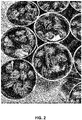
- the figure 2 represents a photograph of a product according to the invention.
- EXAMPLE 1 Process for the manufacture of an agri-food product according to the invention comprising snails
- a preparation of snails is made from “petit gris” snails or “gros gris” snails.
- a food product as defined in the invention or obtained according to the process as defined in the invention is, for example, a crimped tin can comprising approximately 20 "small gray” snails, i.e. 158 g of snails including the shell, and approximately 252 g broth; or comprising around 12 “gros gris” snails, i.e. 157 g of snails including the shell, and around 260 g of broth.
- the preparation includes the following solid and liquid ingredients: water, fresh mint, licorice stick, caraway seed, cinnamon bark, salt, oregano, bay leaves, dried chili peppers, dried grenadine peel, fresh orange peel, fresh lemon peel, and olive oil.
- the method comprises the weighing of the ingredients of the preparation, the mixing of the ingredients, and the production of a broth by adding water.
- the broth can be produced according to different infusion times, for example at 100° C. for a period of between 30 minutes and 180 minutes (limits included).
- tin cans are filled with snails previously cooked then frozen, then the snails are covered with the broth until covered.
- the tin cans are closed by crimping during step iii), then sterilized during step iv) by means of a plateau at 120° C. for 30 minutes.
- step iv The schedule used during the heat treatment of step iv) is described in Table 1 below. ⁇ b>TABLE 1 ⁇ /b> Stage Duration (minutes) Temperature (°C) Pressure (Bar) A climb in temperature 50 120 1.8 Sterilization 30 120 1.8 Cooling 10 90 1.7 10 50 1.3 5 30 0.8 10 30 0.2
- the product obtained is represented by figure 2 . Its appearance and its taste qualities are very satisfactory. Also, the results of stability control analyzes of the product obtained in the food laboratory have made it possible to conclude that the product is stable during incubation. The analyzes confirmed that the product complies with the rules of hygiene of foodstuffs and specifically those applicable to foodstuffs of animal origin.
- EXAMPLE 2 Process for manufacturing an agri-food product according to the invention comprising molds
- a product is made by making a preparation of mussels according to recipes called “Mussels marinaires”, “Mussels marinaires with cream” “Mussels marinaires with curry cream”, in which the flour is replaced by modified starch.
- Cans of preserves are filled with mussels which are then covered with a broth, leaving a head space of at least one centimeter (275 g of mussels for 350 g of broth with pieces).
- the tin cans are closed [step iii)] then sterilized [step iv)] by means of a plateau at 118° C. for 35 minutes.
- step iv) The schedule used during the heat treatment of step iv) is described in Table 2 below. ⁇ b>TABLE 2 ⁇ /b> Stage Duration (minutes) Temperature (°C) Pressure (Bar) A climb in temperature 50 120 1.8 Sterilization 23 120 1.8 Cooling 10 90 1.7 10 50 1.3 5 30 0.8 10 30 0.2
Landscapes
- Engineering & Computer Science (AREA)
- Life Sciences & Earth Sciences (AREA)
- Mechanical Engineering (AREA)
- Polymers & Plastics (AREA)
- Chemical & Material Sciences (AREA)
- Food Science & Technology (AREA)
- Zoology (AREA)
- Wood Science & Technology (AREA)
- Marine Sciences & Fisheries (AREA)
- Health & Medical Sciences (AREA)
- Nutrition Science (AREA)
- Meat, Egg Or Seafood Products (AREA)
- General Preparation And Processing Of Foods (AREA)
- Food Preservation Except Freezing, Refrigeration, And Drying (AREA)
Applications Claiming Priority (1)
| Application Number | Priority Date | Filing Date | Title |
|---|---|---|---|
| FR2011927A FR3116416A1 (fr) | 2020-11-20 | 2020-11-20 | Procédé de fabrication d'un produit agroalimentaire à base de mollusques" |
Publications (1)
| Publication Number | Publication Date |
|---|---|
| EP4000403A1 true EP4000403A1 (de) | 2022-05-25 |
Family
ID=74860034
Family Applications (1)
| Application Number | Title | Priority Date | Filing Date |
|---|---|---|---|
| EP21209221.7A Pending EP4000403A1 (de) | 2020-11-20 | 2021-11-19 | Verfahren zur herstellung eines lebensmittelprodukts auf der basis von schalentieren |
Country Status (3)
| Country | Link |
|---|---|
| EP (1) | EP4000403A1 (de) |
| FR (1) | FR3116416A1 (de) |
| MA (1) | MA51926B1 (de) |
Citations (5)
| Publication number | Priority date | Publication date | Assignee | Title |
|---|---|---|---|---|
| EP0242183A1 (de) * | 1986-04-16 | 1987-10-21 | Ridwan Limited | Verfahren zum Behandeln und Verpacken von Muscheln oder anderen zweischaligen Meeresfrüchten |
| FR2600500A1 (fr) | 1986-06-27 | 1987-12-31 | Courbeyre Edouard | Preparation d'escargots ou analogues, prete a etre cuisinee, et procedes d'obtention de celle-ci |
| EP0721743A1 (de) * | 1995-01-12 | 1996-07-17 | John Charles Turner | Verbessertes Verfahren zur Herstellung eines Schalentier-Produktes und erhaltenes Produkt |
| ES2093564A1 (es) * | 1995-06-05 | 1996-12-16 | Abuin Manuel Castelo | Procedimiento para coccion de mariscos. |
| EP1829456A1 (de) * | 2006-03-03 | 2007-09-05 | Conservas Selectas Mar de Couso, S.A. | Verfahren zum Verpacken von konservierten zweischaligen Weichtieren und so hergestelltes Konservenprodukt |
Family Cites Families (1)
| Publication number | Priority date | Publication date | Assignee | Title |
|---|---|---|---|---|
| FR2496412A1 (fr) | 1980-12-24 | 1982-06-25 | Panzani Dominique | Produit alimentaire a consommation differee a base de moules en coquille |
-
2020
- 2020-11-20 FR FR2011927A patent/FR3116416A1/fr active Pending
- 2020-12-02 MA MA51926A patent/MA51926B1/fr unknown
-
2021
- 2021-11-19 EP EP21209221.7A patent/EP4000403A1/de active Pending
Patent Citations (5)
| Publication number | Priority date | Publication date | Assignee | Title |
|---|---|---|---|---|
| EP0242183A1 (de) * | 1986-04-16 | 1987-10-21 | Ridwan Limited | Verfahren zum Behandeln und Verpacken von Muscheln oder anderen zweischaligen Meeresfrüchten |
| FR2600500A1 (fr) | 1986-06-27 | 1987-12-31 | Courbeyre Edouard | Preparation d'escargots ou analogues, prete a etre cuisinee, et procedes d'obtention de celle-ci |
| EP0721743A1 (de) * | 1995-01-12 | 1996-07-17 | John Charles Turner | Verbessertes Verfahren zur Herstellung eines Schalentier-Produktes und erhaltenes Produkt |
| ES2093564A1 (es) * | 1995-06-05 | 1996-12-16 | Abuin Manuel Castelo | Procedimiento para coccion de mariscos. |
| EP1829456A1 (de) * | 2006-03-03 | 2007-09-05 | Conservas Selectas Mar de Couso, S.A. | Verfahren zum Verpacken von konservierten zweischaligen Weichtieren und so hergestelltes Konservenprodukt |
Also Published As
| Publication number | Publication date |
|---|---|
| MA51926A1 (fr) | 2022-06-30 |
| MA51926B1 (fr) | 2022-09-30 |
| FR3116416A1 (fr) | 2022-05-27 |
Similar Documents
| Publication | Publication Date | Title |
|---|---|---|
| RU2157635C1 (ru) | Способ консервирования сельскохозяйственной продукции | |
| EP0482322B2 (de) | Nahrungsmittel mit langer Haltbarkeit | |
| JP2002142712A (ja) | 生唐辛子の連続的な殺菌・乾燥による衛生乾燥唐辛子の製造方法及びその装置 | |
| EP0087667A1 (de) | Verfahren zur Herstellung der Garnierung eines Nahrungsmittels aus pulveriger Masse und Garnierung, getrennt verpackt. | |
| EP1610617B1 (de) | Verfahren zur behandlung von avocado und verfahren zur herstellung von guacamole | |
| Chaudhary et al. | Post harvest technology of papaya fruits & its value added products-A review | |
| KR101841431B1 (ko) | 갈변방지와 조직감을 향상시킨 복숭아 다이스 및 그 제조방법 | |
| Artes et al. | Post-harvest technological treatments of pomegranate and preparation of derived products | |
| JP2011147391A (ja) | 皮付き完熟果実を使用したシラップ漬けの製造方法及びそれにより製造された皮付き完熟果実のシラップ漬け | |
| EP4000403A1 (de) | Verfahren zur herstellung eines lebensmittelprodukts auf der basis von schalentieren | |
| JP2019511250A (ja) | 保存安定性を有する食品組成物 | |
| Kader | Fresh-cut mangos as a value-added product (literature review and interviews) | |
| JP4451225B2 (ja) | 密封容器入り低温殺菌食品及びその製法 | |
| EP3075900B1 (de) | Verfahren zum übertragen eines räuchergeschmacks auf eine essbare substanz | |
| Inobeme et al. | Common techniques in food processing technologies | |
| EP3595460B1 (de) | Verfahren zur herstellung einer pflanzenzusammensetzung | |
| WO2005090166A1 (fr) | Procede de fabrication de plats en sauce | |
| EP3501288B1 (de) | Verpackungsverfahren von rohem fisch für den transport und seine endgültige verpackung | |
| FR3088173A1 (fr) | Fabrication d'une substance comestible ayant un gout fume a faible teneur en hydrocarbures aromatiques polycycliques | |
| US20060216385A1 (en) | Method of treating avocados and method of preparing guacamole therefrom | |
| FR3070832A1 (fr) | Procede de conservation d'aliments crus | |
| EP3262957B1 (de) | Hochdruckbehandlung von lebensmitteln enthaltend eine komponentenkombination | |
| FR3060948B1 (fr) | Procede d'emboitage a cru de poissons dont la flaveur est susceptible de se degrader au cours du temps | |
| KR20170055690A (ko) | 장기보존 및 관능성이 우수한 인삼과 견과류가 혼합된 꿀 절임 식품 제조 방법 및 그 방법에 의해 제조된 인삼과 견과류가 혼합된 꿀 절임 식품 | |
| FR3029393A1 (fr) | Composition alimentaire pour la realisation de sauce adaptee a un rechauffage a la vapeur |
Legal Events
| Date | Code | Title | Description |
|---|---|---|---|
| PUAI | Public reference made under article 153(3) epc to a published international application that has entered the european phase |
Free format text: ORIGINAL CODE: 0009012 |
|
| STAA | Information on the status of an ep patent application or granted ep patent |
Free format text: STATUS: THE APPLICATION HAS BEEN PUBLISHED |
|
| AK | Designated contracting states |
Kind code of ref document: A1 Designated state(s): AL AT BE BG CH CY CZ DE DK EE ES FI FR GB GR HR HU IE IS IT LI LT LU LV MC MK MT NL NO PL PT RO RS SE SI SK SM TR |
|
| STAA | Information on the status of an ep patent application or granted ep patent |
Free format text: STATUS: REQUEST FOR EXAMINATION WAS MADE |
|
| 17P | Request for examination filed |
Effective date: 20221117 |
|
| RBV | Designated contracting states (corrected) |
Designated state(s): AL AT BE BG CH CY CZ DE DK EE ES FI FR GB GR HR HU IE IS IT LI LT LU LV MC MK MT NL NO PL PT RO RS SE SI SK SM TR |