EP4025629B1 - Oligomère ou polymère, composition, utilisation de l'oligomère ou du polymère et intermédiaire - Google Patents
Oligomère ou polymère, composition, utilisation de l'oligomère ou du polymère et intermédiaire Download PDFInfo
- Publication number
- EP4025629B1 EP4025629B1 EP20742728.7A EP20742728A EP4025629B1 EP 4025629 B1 EP4025629 B1 EP 4025629B1 EP 20742728 A EP20742728 A EP 20742728A EP 4025629 B1 EP4025629 B1 EP 4025629B1
- Authority
- EP
- European Patent Office
- Prior art keywords
- tert
- butyl
- oils
- oligomer
- agents
- Prior art date
- Legal status (The legal status is an assumption and is not a legal conclusion. Google has not performed a legal analysis and makes no representation as to the accuracy of the status listed.)
- Active
Links
Classifications
-
- C—CHEMISTRY; METALLURGY
- C08—ORGANIC MACROMOLECULAR COMPOUNDS; THEIR PREPARATION OR CHEMICAL WORKING-UP; COMPOSITIONS BASED THEREON
- C08G—MACROMOLECULAR COMPOUNDS OBTAINED OTHERWISE THAN BY REACTIONS ONLY INVOLVING UNSATURATED CARBON-TO-CARBON BONDS
- C08G79/00—Macromolecular compounds obtained by reactions forming a linkage containing atoms other than silicon, sulfur, nitrogen, oxygen, and carbon with or without the latter elements in the main chain of the macromolecule
- C08G79/02—Macromolecular compounds obtained by reactions forming a linkage containing atoms other than silicon, sulfur, nitrogen, oxygen, and carbon with or without the latter elements in the main chain of the macromolecule a linkage containing phosphorus
-
- A—HUMAN NECESSITIES
- A23—FOODS OR FOODSTUFFS; TREATMENT THEREOF, NOT COVERED BY OTHER CLASSES
- A23B—PRESERVATION OF FOODS, FOODSTUFFS OR NON-ALCOHOLIC BEVERAGES; CHEMICAL RIPENING OF FRUIT OR VEGETABLES
- A23B20/00—Preservation of edible oils or fats
- A23B20/30—Preservation of other edible oils or fats, e.g. shortenings or cooking oils
-
- A—HUMAN NECESSITIES
- A23—FOODS OR FOODSTUFFS; TREATMENT THEREOF, NOT COVERED BY OTHER CLASSES
- A23D—EDIBLE OILS OR FATS, e.g. MARGARINES, SHORTENINGS OR COOKING OILS
- A23D9/00—Other edible oils or fats, e.g. shortenings or cooking oils
- A23D9/02—Other edible oils or fats, e.g. shortenings or cooking oils characterised by the production or working-up
- A23D9/04—Working-up
-
- C—CHEMISTRY; METALLURGY
- C08—ORGANIC MACROMOLECULAR COMPOUNDS; THEIR PREPARATION OR CHEMICAL WORKING-UP; COMPOSITIONS BASED THEREON
- C08G—MACROMOLECULAR COMPOUNDS OBTAINED OTHERWISE THAN BY REACTIONS ONLY INVOLVING UNSATURATED CARBON-TO-CARBON BONDS
- C08G79/00—Macromolecular compounds obtained by reactions forming a linkage containing atoms other than silicon, sulfur, nitrogen, oxygen, and carbon with or without the latter elements in the main chain of the macromolecule
- C08G79/02—Macromolecular compounds obtained by reactions forming a linkage containing atoms other than silicon, sulfur, nitrogen, oxygen, and carbon with or without the latter elements in the main chain of the macromolecule a linkage containing phosphorus
- C08G79/04—Phosphorus linked to oxygen or to oxygen and carbon
-
- C—CHEMISTRY; METALLURGY
- C08—ORGANIC MACROMOLECULAR COMPOUNDS; THEIR PREPARATION OR CHEMICAL WORKING-UP; COMPOSITIONS BASED THEREON
- C08K—Use of inorganic or non-macromolecular organic substances as compounding ingredients
- C08K5/00—Use of organic ingredients
- C08K5/0008—Organic ingredients according to more than one of the "one dot" groups of C08K5/01 - C08K5/59
- C08K5/005—Stabilisers against oxidation, heat, light, ozone
-
- C—CHEMISTRY; METALLURGY
- C08—ORGANIC MACROMOLECULAR COMPOUNDS; THEIR PREPARATION OR CHEMICAL WORKING-UP; COMPOSITIONS BASED THEREON
- C08K—Use of inorganic or non-macromolecular organic substances as compounding ingredients
- C08K5/00—Use of organic ingredients
- C08K5/0008—Organic ingredients according to more than one of the "one dot" groups of C08K5/01 - C08K5/59
- C08K5/0066—Flame-proofing or flame-retarding additives
-
- C—CHEMISTRY; METALLURGY
- C08—ORGANIC MACROMOLECULAR COMPOUNDS; THEIR PREPARATION OR CHEMICAL WORKING-UP; COMPOSITIONS BASED THEREON
- C08K—Use of inorganic or non-macromolecular organic substances as compounding ingredients
- C08K5/00—Use of organic ingredients
- C08K5/49—Phosphorus-containing compounds
- C08K5/51—Phosphorus bound to oxygen
- C08K5/52—Phosphorus bound to oxygen only
- C08K5/521—Esters of phosphoric acids, e.g. of H3PO4
-
- C—CHEMISTRY; METALLURGY
- C08—ORGANIC MACROMOLECULAR COMPOUNDS; THEIR PREPARATION OR CHEMICAL WORKING-UP; COMPOSITIONS BASED THEREON
- C08L—COMPOSITIONS OF MACROMOLECULAR COMPOUNDS
- C08L101/00—Compositions of unspecified macromolecular compounds
-
- C—CHEMISTRY; METALLURGY
- C08—ORGANIC MACROMOLECULAR COMPOUNDS; THEIR PREPARATION OR CHEMICAL WORKING-UP; COMPOSITIONS BASED THEREON
- C08L—COMPOSITIONS OF MACROMOLECULAR COMPOUNDS
- C08L85/00—Compositions of macromolecular compounds obtained by reactions forming a linkage in the main chain of the macromolecule containing atoms other than silicon, sulfur, nitrogen, oxygen and carbon; Compositions of derivatives of such polymers
- C08L85/02—Compositions of macromolecular compounds obtained by reactions forming a linkage in the main chain of the macromolecule containing atoms other than silicon, sulfur, nitrogen, oxygen and carbon; Compositions of derivatives of such polymers containing phosphorus
-
- C—CHEMISTRY; METALLURGY
- C09—DYES; PAINTS; POLISHES; NATURAL RESINS; ADHESIVES; COMPOSITIONS NOT OTHERWISE PROVIDED FOR; APPLICATIONS OF MATERIALS NOT OTHERWISE PROVIDED FOR
- C09D—COATING COMPOSITIONS, e.g. PAINTS, VARNISHES OR LACQUERS; FILLING PASTES; CHEMICAL PAINT OR INK REMOVERS; INKS; CORRECTING FLUIDS; WOODSTAINS; PASTES OR SOLIDS FOR COLOURING OR PRINTING; USE OF MATERIALS THEREFOR
- C09D185/00—Coating compositions based on macromolecular compounds obtained by reactions forming in the main chain of the macromolecule a linkage containing atoms other than silicon, sulfur, nitrogen, oxygen, and carbon; Coating compositions based on derivatives of such polymers
- C09D185/02—Coating compositions based on macromolecular compounds obtained by reactions forming in the main chain of the macromolecule a linkage containing atoms other than silicon, sulfur, nitrogen, oxygen, and carbon; Coating compositions based on derivatives of such polymers containing phosphorus
-
- C—CHEMISTRY; METALLURGY
- C09—DYES; PAINTS; POLISHES; NATURAL RESINS; ADHESIVES; COMPOSITIONS NOT OTHERWISE PROVIDED FOR; APPLICATIONS OF MATERIALS NOT OTHERWISE PROVIDED FOR
- C09D—COATING COMPOSITIONS, e.g. PAINTS, VARNISHES OR LACQUERS; FILLING PASTES; CHEMICAL PAINT OR INK REMOVERS; INKS; CORRECTING FLUIDS; WOODSTAINS; PASTES OR SOLIDS FOR COLOURING OR PRINTING; USE OF MATERIALS THEREFOR
- C09D7/00—Features of coating compositions, not provided for in group C09D5/00; Processes for incorporating ingredients in coating compositions
- C09D7/40—Additives
- C09D7/48—Stabilisers against degradation by oxygen, light or heat
-
- C—CHEMISTRY; METALLURGY
- C09—DYES; PAINTS; POLISHES; NATURAL RESINS; ADHESIVES; COMPOSITIONS NOT OTHERWISE PROVIDED FOR; APPLICATIONS OF MATERIALS NOT OTHERWISE PROVIDED FOR
- C09K—MATERIALS FOR MISCELLANEOUS APPLICATIONS, NOT PROVIDED FOR ELSEWHERE
- C09K21/00—Fireproofing materials
- C09K21/06—Organic materials
- C09K21/12—Organic materials containing phosphorus
-
- C—CHEMISTRY; METALLURGY
- C09—DYES; PAINTS; POLISHES; NATURAL RESINS; ADHESIVES; COMPOSITIONS NOT OTHERWISE PROVIDED FOR; APPLICATIONS OF MATERIALS NOT OTHERWISE PROVIDED FOR
- C09K—MATERIALS FOR MISCELLANEOUS APPLICATIONS, NOT PROVIDED FOR ELSEWHERE
- C09K21/00—Fireproofing materials
- C09K21/14—Macromolecular materials
-
- C—CHEMISTRY; METALLURGY
- C10—PETROLEUM, GAS OR COKE INDUSTRIES; TECHNICAL GASES CONTAINING CARBON MONOXIDE; FUELS; LUBRICANTS; PEAT
- C10M—LUBRICATING COMPOSITIONS; USE OF CHEMICAL SUBSTANCES EITHER ALONE OR AS LUBRICATING INGREDIENTS IN A LUBRICATING COMPOSITION
- C10M153/00—Lubricating compositions characterised by the additive being a macromolecular compound containing phosphorus
-
- C—CHEMISTRY; METALLURGY
- C11—ANIMAL OR VEGETABLE OILS, FATS, FATTY SUBSTANCES OR WAXES; FATTY ACIDS THEREFROM; DETERGENTS; CANDLES
- C11C—FATTY ACIDS FROM FATS, OILS OR WAXES; CANDLES; FATS, OILS OR FATTY ACIDS BY CHEMICAL MODIFICATION OF FATS, OILS, OR FATTY ACIDS OBTAINED THEREFROM
- C11C1/00—Preparation of fatty acids from fats, fatty oils, or waxes; Refining the fatty acids
- C11C1/02—Preparation of fatty acids from fats, fatty oils, or waxes; Refining the fatty acids from fats or fatty oils
Definitions
- the present invention relates to an oligomer or polymer or a composition containing this oligomer or polymer, which are particularly suitable as a stabilizer for organic materials.
- Organic materials such as plastics are subject to aging processes that ultimately lead to a loss of the desired properties such as mechanical characteristics.
- This process known as autoxidation, starts from radical chain cleavage through mechanochemical processes or through UV radiation in the presence of oxygen and leads to changes in the polymer chain, such as in the molecular weight or the formation of new chemical groups.
- Stabilizers are therefore used to prevent or at least delay this aging.
- Important representatives of stabilizers are antioxidants that interfere with the radicals formed during autoxidation and thus interrupt the degradation process.
- primary antioxidants which can react directly with oxygen-containing free radicals or C radicals
- secondary antioxidants which react with intermediately formed hydroperoxides (see. C. Kröhnkeetal.
- Antioxidants in Ullmann's encyclopedia of industrial chemistry Wiley-VCH Verlag, Weinheim 2015 ).
- Typical examples of primary antioxidants are phenolic antioxidants, amines and lactones.
- Classes of secondary antioxidants are phosphorus compounds such as phosphites and phosphonites, but also organo-sulfur compounds such as thioethers or disulfides. In practice, primary and secondary antioxidants are often combined, which leads to a synergistic effect.
- Plastics made from fossil raw materials such as crude oil or natural gas are increasingly being supplemented or replaced by plastics based on renewable raw materials that are accessible via biotechnological processes.
- the primary and secondary antioxidants used for this (and for plastics made from fossil raw materials) are still not entirely based on renewable raw materials.
- a further challenge for antioxidants, particularly for food applications and for the use of plastics at elevated temperatures, is to keep the migration from the plastic and the volatility of the products used as low as possible without negatively affecting the effectiveness.
- tocopherols vitamin E
- secondary antioxidants e.g. AI Malaika, Macromol. Symp. 2001, 176, 107 .
- Tocopherols can be isolated from natural substances such as wheat germ oil, sunflower oil or olive oil.
- substances with high molecular weight especially oligomers or polymers, can preferably be used.
- the known oligomeric and polymeric antioxidants are not based on renewable raw materials and/or do not contain a 6-hydroxychroman core.
- the object of the present invention was therefore to provide effective oligomeric and polymeric antioxidants based partly or largely on renewable raw materials.
- oligomer or polymer is used in the context of the present invention generally in accordance with the definition given by the IUPAC, as in Pure Appl. Chem. 2016; 88 (10-11): 1073-1100 defined.
- an oligomer is understood to be a molecule that has 3-10 repeating units
- a polymer is understood to be a molecule that has more than 10 repeating units. This generally results in average molecular weights (number average) of about 1000 to 4000 for an oligomer and more than 4000 for a polymer.
- the oligomers or polymers according to the present invention have a high effectiveness.
- R 1 is defined according to the following formula IIa.
- oligomer or polymer contains the following repeating unit according to formula III, where D is the same or different at each occurrence and is a functionality derived from a diol.
- the functionality derived from a diol is a functionality derived from an aliphatic, aromatic or heterocyclic diol.
- the oligomer or copolymer is a cooligomer or copolymer, i.e. contains at least two different repeating units which are based on the repeating unit according to formula I.
- oligomer or polymer has the following repeating units according to formula I, which correspond to the following definitions according to formula III and IIIa:
- R 1 , D and x are defined as above and the definition of D' corresponds to the definition of D, with the proviso that D and D' are derived from different diols.
- the diol-derived group D as used above in formula III may be selected from one or more diols as previously listed under a) or b).
- the diol-derived group D' may, for example, be a diol selected from a diol as previously described under c).
- the molar ratio of repeating units III to IIIa can be from 0.1:99.9 to 50:50, preferably from 0.5:99.5 to 10:90.
- the present invention also relates to a composition
- a composition comprising at least one organic component to be stabilized and at least one oligomer or polymer according to the invention as described above.
- the composition contains at least one oligomer or polymer in a proportion by weight, based on the entire composition, of 0.01 to 5.0 parts by weight, preferably 0.02 to 2.0 parts by weight, particularly preferably 0.05 to 1.0 parts by weight.
- polymers specified under a) to r) are copolymers, they can be in the form of random, block or tapered structures.
- polymers mentioned can be in the form of linear, branched, star-shaped or hyperbranched structures.
- polymers specified under a) to r) are stereoregular polymers, they can be in the form of isotactic, stereotactic, but also atactic forms or as stereoblock copolymers.
- the polymers specified under a) to r) can have both amorphous and (partially) crystalline morphologies.
- polystyrene resins mentioned under a) can also be cross-linked, e.g. cross-linked polyethylene, which is then called X-PE.
- the present compounds can be used to stabilize rubbers and elastomers.
- These can be natural rubber (NR) or synthetic rubber materials.
- Other suitable rubbers and elastomers are in particular butadiene rubber (BR), styrene-butadiene rubber (SBR), chlorobutadiene rubber (CR), acrylonitrile-butadiene rubber (NBR), hydrogenated acrylonitrile-butadiene rubber (HNBR), ethylene-propylene-diene rubber (EPDM), butyl rubber (IIR), ethylene-epichlorohydrin rubber (ECO) or ethylene acrylate rubber (AEM).
- BR butadiene rubber
- SBR styrene-butadiene rubber
- CR chlorobutadiene rubber
- NBR acrylonitrile-butadiene rubber
- HNBR hydrogenated acrylonitrile-butadiene rubber
- EPDM ethylene-propylene-diene rubber
- IIR ethylene-epich
- polymers made from renewable raw materials such as polylactic acid (PLA), polyhydroxybutyric acid, polyhydroxyvaleric acid, polybutylene succinate (PBS) or polybutylene succinate-co-adipate (PBSA).
- compositions contains at least one additive selected from the group consisting of primary antioxidants, secondary antioxidants, UV absorbers, light stabilizers, metal deactivators, filler deactivators, antiozonants, nucleating agents, antinucleating agents, impact strength improvers, plasticizers, lubricants, rheology modifiers, thixotropic agents, chain extenders, processing aids, mold release agents, flame retardants, pigments, dyes, optical brighteners, antimicrobial agents, antistatic agents, slip agents, antiblocking agents, coupling agents, crosslinking agents, anticrosslinking agents, hydrophilizing agents, hydrophobizing agents, adhesion promoters, dispersants, compatibilizers, oxygen scavengers, acid scavengers, blowing agents, prodegradants, defoaming aids, odor scavengers, marking agents, antifogging agents, fillers and reinforcing agents.
- additives selected from the group consisting of primary antioxidants, secondary antioxidants, UV
- the compositions contain in particular acid scavengers, e.g. based on salts of long-chain acids such as calcium stearate, magnesium stearate, zinc stearate, aluminum stearate, calcium laurate, Calcium lactate, calcium stearoyl-2-lactylate or hydrotalcites, in particular synthetic hydrotalcites based on aluminium, magnesium and zinc, as well as hydrocalumites, zeolites and/or alkaline earth oxides such as calcium oxide and magnesium oxide and/or alkaline earth carbonates such as calcium carbonate, magnesium carbonate or dolomite and/or hydroxides such as brucite.
- acid scavengers e.g. based on salts of long-chain acids such as calcium stearate, magnesium stearate, zinc stearate, aluminum stearate, calcium laurate, Calcium lactate, calcium stearoyl-2-lactylate or hydrotalcites, in particular synthetic hydrotalcites based on aluminium, magnesium and
- compositions contain light stabilizers from the group of hindered amines (HALS) and/or dispersants and/or filler deactivators.
- HALS hindered amines
- Suitable primary antioxidants (A) are phenolic antioxidants, amines and lactones. Ascorbic acid can also be used as a primary antioxidant.
- Suitable amine antioxidants include: N,N'-Di-isopropyl-p-phenylenediamine, N,N'-Di-sec-butyl-p-phenylenediamine, N,N'-Bis(1,4-dimethyl-pentyl)-p-phenylenediamine, N,N'-Bis(1-ethyl-3-methylpentyl)-p-phenylenediamine, N,N'-Bis(1-methyl-heptyl)-p-phenylenediamine, N,N'-Dicyclohexyl-p-phenylenediamine, N,N'-diphenyl-p-phenylenediamine, N,N'-bis(2-naphthyl)-p-phenylenediamine, N-isopropyl-N'-phenyl-p-phenylenediamine, N-(1,3-dimethyl-butyl)-N'-phen
- p,p'-di-tert-octyldiphenylamine 4-n-butylaminophenol, 4-Butyrylaminophenol, 4-Nonanoylaminophenol, 4-Dodecanoylaminophenol, 4-Octadecanoylaminophenol, Bis(4-methoxyphenyl)amine, 2,6-Di-tert-butyl-4-dimethylaminomethylphenol, 2,4'-Diaminodiphenylmethane, 4,4'-Diaminodiphenylmethane, N,N,N',N'-Tetra-methyl-4,4'-diaminodiphenylmethane, 1,2-Bis[(2-methyl-phenyl)amino]ethane, 1,2-Bis(phenylamino)propane, (o-Tolyl)biguanide, Bis[4-(1',3'-dimethylbutyl)phenyl]amine, tert -o
- hydroxylamines or N-oxides are hydroxylamines or N-oxides (nitrones), such as N,N-dialkylhydroxylamines, N,N-dibenzylhydroxylamine, N,N-dilaurylhydroxylamine, N,N-distearylhydroxylamine, N-benzyl- ⁇ -phenylnitrone, N-octadecyl- ⁇ -hexadecylnitrone, and Genox EP (SI Group) according to the formula:
- Suitable lactones are benzofuranones and indolinones such as 3-(4-(2-acetoxyethoxy)phenyl]-5,7-di-tert-butyl-benzofuran-2-one, 5,7-di-tert-butyl-3-[ 4-(2-stearoyloxyethoxy)phenyl]benzofuran-2-one, 3,3'-bis[5,7-di-tert-butyl-3-(4-(2-hydroxyethoxy]phenyl)benzofuran-2-one), 5,7-di-tert-butyl-3-(4 -eth-oxy-phenyl)benzofuran-2-one, 3-(4-acetoxy-3,5-dimethylphenyl)-5,7-di-tert-butyl-benzofuran-2-one, 3-(3,5-dimethyl-4-pivaloyloxyphenyl)-5,7-di-tert-butyl-benzofuran
- Suitable secondary antioxidants are phosphorus compounds such as phosphites and phosphonites, and organosulfur compounds such as sulfides and disulfides.
- Suitable phosphites/phosphonites are, for example: Triphenyl phosphite, diphenylalkyl phosphites, phenyldialkyl phosphites, tri(nonylphenyl) phosphite, trilauryl phosphites, trioctadecyl phosphite, distearylpentaerythritol diphosphite, tris-(2,4-di- tert -butylphenyl) phosphite, diisodecylpentaerythritol diphosphite, Bis(2,4-di- tert -butylphenyl)pentaerythritol diphosphite, bis(2,4-di-cumylphenyl)pentaerythritol diphosphite, bis(2,6-di- tert -butyl-4-methylphenyl)p
- Particularly preferred phosphites/phosphonites are:
- Suitable sulfur compounds are, for example, distearyl thiodipropionate, dilauryl thiodipropionate; ditridecyl dithiopropionate, ditetradecyl thiodipropionate, 3-(dodecylthio)-, 1,1'-[2,2-bis[[3-(dodecylthio)-1-oxopropoxy]methyl]-1,3-propanediyl]propanoic acid ester.
- Suitable light stabilizers are, for example, compounds based on 2-(2'-hydroxyphenyl)benzotriazoles, 2-hydroxybenzophenones, esters of benzoic acids, acrylates, oxamides and 2-(2-hydroxyphenyl)-1,3,5-triazines.
- Suitable 2-(2'-hydroxyphenyl)benzotriazoles are, for example, 2-(2'-hydroxy-5'methyl-phenyl)benzotriazole, 2-(3',5'-di- tert -butyl-2'-hydroxyphenyl)benzotriazole , 2-(5'- tert -butyl-2'-hydroxy-phenyl)benzotriazole, 2-(2'-Hydroxy-5'-(1,1,3,3-tetramethylbutyl)phenyl)benzotriazole, 2-(3',5'-di- tert -butyl-2'-hydroxyphenyl)-5-chlorobenzotriazole , 2-(3'- tert -butyl-2'-hydroxy-5'-methylphenyl-5-chloro-benzotriazole, 2-(3'-sec-butyl-5'- tert -butyl-2'-hydroxy-phenyl)benzotriazole, 2-(
- Suitable 2-hydroxybenzophenones are, for example, 4-hydroxy, 4-methoxy, 4-octyloxy, 4-decyloxy-4-dodecyloxy, 4-benzyloxy, 4,2',4'-trihydroxy and 2'-hydroxy-4 '4'-dimethyoxy derivatives of 2-hydroxybenzophenones.
- Suitable acrylates are, for example, ethyl ⁇ -cyano- ⁇ , ⁇ -diphenylacrylate, isooctyl ⁇ -cyano- ⁇ , ⁇ -diphenylacrylate, methyl ⁇ -carbomethoxycinnamate, methyl ⁇ -cyano- ⁇ -methyl-p-methoxycinnamate, butyl ⁇ -cyano- ⁇ -methyl-p-methoxycinnamate, methyl ⁇ -carbomethoxy-p-methoxycinnamate and N-( ⁇ -carbo-methoxy- ⁇ -cyanovinyl)-2-methylindoline.
- Suitable esters of benzoic acids are, for example, 4-tert-butylphenyl salicylate, phenyl salicylate, octylphenyl salicylate, dibenzoylresorcinol, bis(4-tert-butylbenzoyl)resorcinol, benzoylresorcinol, 2,4-di- tert -butylphenyl-3,5-di-tert-butyl-4-hydroxybenzoate, hexadecyl-3,5-di- tert -butyl-4-hydroxybenzoate, octa-decyl-3,5-di- tert -butyl-4-hydroxybenzoate, 2-methyl-4,6-di- tert -butylphenyl-3,5-di- tert -butyl-4-hydroxybenzoate.
- Suitable oxamides are, for example, 4,4'-dioctyloxyoxanilide, 2,2'-diethoxyoxanilide, 2,2'-dioctyloxy-5,5'-di- tert -butoxanilide, 2,2'-didodecyloxy-5,5'-di- tert -butoxanilide, 2-ethoxy-2'-ethyloxanilide, N,N'-bis(3-dimethylaminopropyl)oxamide, 2-ethoxy-5- tert -butyl-2'-ethoxanilide and its mixtures with 2-ethoxy-2'-ethyl-5,4'-di- tert -butoxanilide, mixtures of o- and p-methoxy-disubstituted oxanilides and mixtures of o- and p-ethoxy-disubstituted
- Suitable 2-(2-hydroxyphenyl)-1,3,5-triazines are, for example, 2,4,6-tris(2-hydroxy-4-octyloxy-phenyl)-1,3,5-triazine, 2-(2- Hydroxy-4-octyloxyphenyl)-4,6-bis(2,4-dimethylphenyl)-1,3,5-triazine, 2-(2,4-Dihydroxyphenyl)-4,6-bis(2,4-dimethylphenyl)-1,3,5-triazine, 2,4-Bis(2-hydroxy-4-propyloxy-phenyl)-6- (2,4-dimethylphenyl)-1,3,5-triazine, 2-(2-Hydroxy-4-octyloxyphenyl)-4,6-bis(4-methylphenyl-1,3,5-triazine, 2-(2-Hydroxy-4-dodecyloxyphenyl)-4,6-bis(2,4-dimethyl
- Suitable metal deactivators are, for example, N,N'-diphenyloxamide, N-salicylal-N'-salicyloylhydrazine, N,N'-bis(salicyloyl)hydrazine, N,N'-bis(3,5-di-tert-butyl-4-hydroxyphenylpropionyl)hydrazine, 3-salicyloylamino-1,2,4-triazole, bis(benzylidene)oxalyldihydrazide, oxanilide, isophthaloyldihydrazide, sebacoylbisphenylhydrazide, N,N'-diacetyladipoyldihydrazide, N,N'-bis(salicyloyl)oxylyldihydrazide, N,N'-bis(salicyloyl)thiopropionyldihydrazide.
- Suitable hindered amines are, for example, 1,1-bis(2,2,6,6-tetramethyl-4-piperidyl)succinate, bis(1,2,2,6,6-pentamethyl-4-piperidyl)sebazate, bis(1-octyloxy-2,2,6,6-tetramethyl-4-piperidyl)sebazate, bis(1,2,2,6,6-pentamethyl-4-piperidyl)-n-butyl-3,5-di-tert-butyl-4-hydroxybenzylmalonate, the condensation product of 1-(2-hydroxyethyl)-2,2,6,6-tetramethyl-4-hydroxypiperidine and succinic acid, linear or cyclic condensation products of N,N'-bis(2,2,6,6-tetramethyl-4-piperidyl)hexamethylenediamine and 4-tert-octylamino-2,6-dichloro-1,3,5-triazine, tris(2,2,
- Particularly preferred hindered amines are the following:
- Preferred oligomeric and polymeric hindered amines have the following structures: where in the aforementioned compounds n represents an integer from 3 to 100.
- Suitable dispersants include: Polyacrylates, e.g. copolymers with long-chain side groups, polyacrylate block copolymers, alkylamides: e.g. N,N'-1,2-ethanediylbisoctadecanamide, sorbitan esters, e.g. monostearyl sorbitan esters, titanates and zirconates, reactive copolymers with functional groups e.g. polypropylene-co-acrylic acid, polypropylene-co-maleic anhydride, polyethylene-co-glycidyl methacrylate, polystyrene-alt-maleic anhydride polysiloxanes: e.g.
- dimethylsilanediol-ethylene oxide copolymer polyphenylsiloxane copolymer, amphiphilic copolymers: e.g. polyethylene-block-polyethylene oxide, dendrimers, e.g. dendrimers containing hydroxyl groups.
- Suitable nucleating agents are, for example, talc, alkali or alkaline earth salts of mono- and polyfunctional carboxylic acids such as benzoic acid, succinic acid, adipic acid, e.g. sodium benzoate, zinc glycerolate, aluminum hydroxy-bis(4- tert -butyl)benzoate, benzylidene sorbitols such as 1,3:2,4-bis(benzylidene)sorbitol or 1,3:2,4-bis(4-methylbenzylidene)sorbitol, 2,2'-methylene-bis-(4,6-di- tert -butylphenyl)phosphate, and trisamides and diamides such as trimesic acid tricyclohexylamide, trimesic acid tri(4-methylcyclohexylamide), trimesic acid tri(tert-butylamide), N,N',N"-1,3,5-benzenetriyl
- Suitable antinucleating agents are azine dyes such as nigrosine.
- Suitable fillers and reinforcing materials are, for example, synthetic or natural materials such as calcium carbonate, silicates, glass fibers, glass beads (solid or hollow), talc, mica, kaolin, barium sulfate, metal oxides and metal hydroxides, soot, graphite, carbon nanotubes, graphene, wood flour or fibers from natural products such as cellulose or synthetic fibers.
- Other suitable fillers are hydrotalcites or zeolites or layered silicates such as montmorillonite, bentonite, beidelite, mica, hectorite, saponite, vermiculite, ledikite, magadite, illite, kaolinite, wollastonite, attapulgite.
- Suitable pigments can be inorganic or organic in nature.
- Inorganic pigments include titanium dioxide, zinc oxide, zinc sulfide, iron oxide, ultramarine, carbon black, organic pigments include anthraquinones, anthanthrones, benzimidazolones, quinacridones, diketopyrrolopyrroles, dioxazines, indanthrenes, isoindolinones, azo compounds, perylenes, phthalocyanines or pyranthrones.
- Other suitable pigments are metal-based effect pigments or metal oxide-based pearlescent pigments.
- Suitable chain extenders for the linear molecular weight build-up of polycondensation polymers such as polyesters or polyamides are, for example, diepoxides, bis-oxazolines, bis-oxazolones, bis-oxazines, diisocyanates, dianhydrides, bis-acyl lactams, bis-maleimides, dicyanates, carbodiimides.
- Other suitable chain extenders are polymeric compounds such as polystyrene-polyacrylate-polyglycidyl (meth)acrylate copolymers, polystyrene-maleic anhydride copolymers and polyethylene-maleic anhydride copolymers.
- Suitable optical brighteners include bisbenzoxazoles, phenylcoumarins or bis(styryl)biphenyls and in particular optical brighteners of the formulas:
- Suitable filler deactivators are, for example, polysiloxanes, polyacrylates, in particular block copolymers such as polymethacrylic acid-polyalkylene oxide or polyglycidyl (meth)acrylates and their copolymers, e.g. with styrene and epoxides, e.g. of the following structures:
- Suitable antistatic agents include ethoxylated alkylamines, fatty acid esters, alkyl sulfonates and polymers such as polyetheramides.
- Suitable antiozonants are the above-mentioned amines such as N,N'-diisopropyl-p-phenylenediamine, N,N'-di-sec-butyl-p-phenylenediamine, N,N'-bis-(1,4-dimethylpentyl)-p-phenylenediamine, N,N'-dicyclohexyl-p-phenylenediamine, N-isopropyl-N'-phenyl-p-phenylenediamine, N-(1,3-dimethylbutyl)-N'-phenyl-p-phenylenediamine, N-(1-methylheptyl)-N'-phenyl-p-phenylenediamine, N-cyclohexyl-N'-phenyl-p-phenylenediamine
- Suitable additives for increasing the molecular weight of polycondensation polymers are diepoxides, bis-oxazolines, bis-oxazolones, bis-oxazines, diisocyanates, dianhydrides, bis-acyl lactams, bis-maleimides, dicyanates, carbodiimides.
- chain extenders are polymeric compounds such as polystyrene-polyacrylate-polyglycidyl (meth)acrylate copolymers, polystyrene-maleic anhydride copolymers and polyethylene-maleic anhydride copolymers.
- Suitable additives for increasing electrical conductivity include the antistatic agents mentioned above, carbon black and carbon compounds such as carbon nanotubes and graphene, metal powders such as copper powder and conductive polymers such as polypyrroles, polyanilines and polythiophenes.
- Suitable additives for increasing thermal conductivity include aluminum nitrides and boron nitrides.
- Suitable infrared-active additives include aluminum silicates, hydrotalcites or dyes such as phthalocyanines or anthraquinones.
- Suitable demoulding aids include silicones, soaps and waxes such as montan waxes.
- Suitable impact modifiers are, for example, ethylene copolymers with acrylates, methacrylates and/or ethylenically unsaturated carboxylic acids, which can be completely or partially neutralized, for example with zinc, or copolymers of ethylene, propylene and dienes, as well as core-shell particles, for example of polybutyl acrylate and polymethyl methacrylate.
- Compatibilizers or compatibilizers are used, for example, in thermodynamically immiscible blends or in recycled material blends and contain structural elements of the respective blend components that are mixed.
- Suitable compatibilizers for polyolefin blends are, for example, olefin block copolymers consisting of ethylene, propylene and alpha-olefins such as 1-octene.
- compatibilizers particularly for compatibilizing polar polymers such as PET or polyamides and non-polar polymers such as PP or PE, are, for example, polypropylene-g-maleic anhydride, polyethylene-g-maleic anhydride, polypropylene-g-acrylic acid, polyethylene-g-acrylic acid, poly(ethylene-co-maleic anhydride), SBS-g-maleic anhydride or SEBS-g-maleic anhydride.
- Suitable crosslinking agents are, for example, peroxides such as dialkyl peroxides, alkyl aryl peroxides, peroxy esters, peroxy carbonates, diacyl peroxides, peroxy ketals, silanes such as vinyltrimethoxysilane, vinyltriethoxysilane, vinyltriacetoxysilane, vinyltris(2-methoxyethoxy)silane, 3-methacryloyloxypropyltrimethoxysilane, vinyldimethoxymethylsilane or ethylene-vinylsilane copolymers.
- peroxides such as dialkyl peroxides, alkyl aryl peroxides, peroxy esters, peroxy carbonates, diacyl peroxides, peroxy ketals
- silanes such as vinyltrimethoxysilane, vinyltriethoxysilane, vinyltriacetoxysilane, vinyltris(2-methoxyethoxy)silane, 3-meth
- Suitable prodegradants are additives that specifically accelerate or control the degradation of a polymer in the environment.
- Examples are transition metal fatty acid esters, e.g. of manganese or iron, which accelerate the oxidative and/or photooxidative degradation of e.g. polyolefins, or enzymes that induce the hydrolytic degradation of e.g. aliphatic polyesters.
- Suitable chemical blowing agents are, for example, azo compounds such as azodicarboxylic acid diamide, sulfonyl semicarbazides such as p-toluenesulfonyl semicarbazide, tetrazoles such as 5-phenyltetrazole, hydrazides such as p-toluenesulfonyl hydrazide, 4,4'-oxibis(benzenesulfonyl)hydrazide, N-nitroso compounds such as N,N'-dinitrosopentamethylenetetramine or carbonates such as sodium hydrogen carbonate or zinc carbonate.
- azo compounds such as azodicarboxylic acid diamide
- sulfonyl semicarbazides such as p-toluenesulfonyl semicarbazide
- tetrazoles such as 5-phenyltetrazole
- hydrazides such as p-tolu
- Suitable slip agents are, for example, amide waxes such as erucic acid amide or oleic acid amide.
- Suitable anti-blocking agents include silica, talc or zeolites.
- Suitable antifogging additives include ethoxylated sorbitan esters, ethoxylated fatty acid alcohols or ethoxylated alkylamine esters.
- Suitable biocides include quaternary ammonium salts or silver salts, colloidal silver or silver complexes or natural product derivatives such as chitosan
- Suitable aldehyde scavengers are amines, hydroxylamines, polyvinyl alcohol, zeolites or cyclodextrins
- suitable formaldehyde scavengers are melamine derivatives such as benzoguanamine or urea derivatives such as allantoin.
- Suitable odor-binding or odor-preventing substances are silicates such as calcium silicate, zeolites or salts of hydroxy fatty acids such as zinc riceneolate.
- Suitable marking agents include fluorescent dyes or rare earths.
- Suitable demoulding aids include montan waxes.
- the present invention relates to the use of an oligomer or polymer according to the invention as a stabilizer for organic materials.
- the oligomers or polymers according to the present invention are suitable as stabilizers for plastics in the form of injection-molded parts, foils or films, foams, fibers, cables and pipes, profiles, hollow bodies, tapes, membranes, such as geomembranes, or adhesives that are produced via extrusion, injection molding, blow molding, calendering, pressing processes, spinning processes, rotomoulding, e.g. for the electrical and electronics industry, construction industry, transport industry (cars, aircraft, ships, trains), for medical applications, for household and electrical appliances, vehicle parts, consumer goods, packaging, furniture, textiles.
- Another area of application is paints, colors and coatings, as well as the stabilization of oils, fats and lubricants against thermal, actinic or oxidative degradation or as flame retardants.
- the additive according to the invention which can be present as a powder, liquid, oil, compacted, on a carrier material, as granules, solution or flakes, is mixed with the polymer to be stabilized, the polymer matrix is converted into the melt and then cooled.
- the additive is also possible to introduce the additive into a polymer melt in a molten state.
- these can be added to the polymers separately, in the form of liquids, powders, granules or compacted products, or together with the additive composition according to the invention as described above.
- the additive composition described above and any additional additives are incorporated into the plastic using conventional processing methods, whereby the polymer is melted and mixed with the additive composition according to the invention and any other additives, preferably using mixers, kneaders and extruders.
- Preferred processing machines are extruders such as single-screw extruders, twin-screw extruders, planetary roller extruders, ring extruders and co-kneaders, which are preferably equipped with vacuum degassing. Processing can take place under air or under inert gas conditions.
- additive compositions according to the invention can be prepared and introduced in the form of so-called masterbatches or concentrates which contain, for example, 10-90% of the compositions according to the invention in a polymer.
- Synthesis Example 2 Synthesis of a polymeric phosphite with isosorbide units
- Example 2 A similar setup was used as in Example 1. 1.5015 g (10.3 mmol) of isosorbide, 8 ml (36.1 mmol) of triethylamine and 20 ml of acetonitrile are added to the tocopherol phosphorus dichloride. After one hour at room temperature, 2 ml (49.3 mmol) of methanol are added. The product is purified in toluene. The purity of the polyphosphite is determined using 1 H and 31 P NMR spectra.
- Synthesis Example 3 Synthesis of a copolymer containing isosorbide and piperidine units
- Example 2 A similar setup was used as in Example 1. 0.2063 g (1.0 mmol) of 4-hydroxy-2,2,6,6-tetramethylpiperidine-1-ethanol, 4 ml (28.9 mmol) of triethylamine and 20 ml of chloroform are added to the tocopherol phosphorus dichloride. After one hour, 1.3467 g (9.2 mmol) of isosorbide, 5.5 ml (39.7 mmol) of triethylamine and 20 ml of acetonitrile are added to the reaction mixture. After one hour at room temperature, 2 ml (49.3 mmol) of methanol are added. The product is purified in toluene. The purity of the polyphosphite is determined using 1 H and 31 P NMR spectra.
- Example 2 A similar setup was used as in Example 1. 1.1290 g (10.3 mmol) of hydroquinone, 8 ml (36.1 mmol) of triethylamine and 20 ml of acetonitrile are added to the tocopherol phosphorus dichloride. After one hour at room temperature, 2 ml (49.3 mmol) of methanol are added. The product is purified in toluene. The purity of the polyphosphite is determined using 1 H and 31 P NMR spectra were determined.
- Synthesis Example 5 Synthesis of a copolymer containing hydroquinone and piperidine units
- Example 2 A similar setup was used as in Example 1. 0.2065 g (1.0 mmol) of 4-hydroxy-2,2,6,6-tetramethylpiperidine-1-ethanol, 4 ml (28.9 mmol) of triethylamine and 20 ml of chloroform are added to the tocopherol phosphorus dichloride. After one hour, 1.0189 g (9.2 mmol) of hydroquinone, 5.5 ml (39.7 mmol) of triethylamine and 20 ml of acetonitrile are added to the reaction mixture. After one hour at room temperature, 2 ml (49.3 mmol) of methanol are added. The product is purified in toluene. The purity of the polyphosphite is determined using 1 H and 31 P NMR spectra.
- Example 2 A similar setup was used as in Example 1. 1.1952 g (10.3 mmol) of 1,4-cyclohexanediol, 8 ml (36.1 mmol) of triethylamine and 20 ml of acetonitrile are added to the tocopherol phosphorus dichloride. After one hour at room temperature, 2 ml (49.3 mmol) of methanol are added. The product is purified in toluene. The purity of the polyphosphite is determined using 1 H and 31 P NMR spectra.
- Synthesis Example 7 Synthesis of a polyphosphite with vanillyl alcohol units
- Example 2 A similar setup was used as in Example 1. 1.5862 g (10.3 mmol) of vanillyl alcohol, 8 ml (36.1 mmol) of triethylamine and 20 ml of acetonitrile are added to the tocopherol phosphorus dichloride. After one hour at room temperature, 2 ml (49.3 mmol) of methanol are added. The product is purified in toluene. The purity of the polyphosphite is determined using 1 H and 31 P NMR spectra.
- Synthesis Example 8 Synthesis of a polyphosphite with 1,6-hexanediol units
- Example 2 A similar setup was used as in Example 1. 1.2158 g (10.3 mmol) of 1,6-hexanediol, 8 ml (36.1 mmol) of triethylamine and 20 ml of acetonitrile are added to the tocopherol phosphorus dichloride. After one hour at room temperature, 2 ml (49.3 mmol) of methanol are added. The product is purified in toluene. The purity of the polyphosphite is determined using 1 H and 31 P NMR spectra.
- Example 2 A similar setup was used as in Example 1. To the tocopherol phosphoric dichloride 2.0713 g (10.3 mmol) of hydroxyethyl-4-hydroxytetramethylpiperidine, 8 ml (36.1 mmol) of triethylamine and 20 ml of acetonitrile are added. After one hour at room temperature, 2 ml (49.3 mmol) of methanol are added. The product is purified in toluene. The purity of the polyphosphite is determined by means of 1 H and 31 P NMR spectra.
- the polymers according to the invention have a higher residual force than the comparative examples, which results in a higher stabilizing effect.
- the phosphites were processed with and without a phenolic stabilizer (ADK STAB AO 60, pentaerythritol tetrakis(3-(3,5-di-tert-butyl-4-hydroxyphenyl)propionate)) using a ThermoScientificProcess 11 5 times at 230°C.
- ADK STAB AO 60 pentaerythritol tetrakis(3-(3,5-di-tert-butyl-4-hydroxyphenyl)propionate)
- the lowest MFR value i.e. the best stabilizing effect, is obtained with the stabilizers according to the invention.
- Example 3 Multiple extrusions at 260 °C
- the stabilizers according to the invention achieve the lowest MFR value, i.e. the best stabilizer effect, even at high temperatures (260 °C).
Landscapes
- Chemical & Material Sciences (AREA)
- Organic Chemistry (AREA)
- Chemical Kinetics & Catalysis (AREA)
- Polymers & Plastics (AREA)
- Medicinal Chemistry (AREA)
- Health & Medical Sciences (AREA)
- Engineering & Computer Science (AREA)
- Life Sciences & Earth Sciences (AREA)
- Materials Engineering (AREA)
- Wood Science & Technology (AREA)
- Oil, Petroleum & Natural Gas (AREA)
- General Chemical & Material Sciences (AREA)
- Food Science & Technology (AREA)
- Microbiology (AREA)
- Zoology (AREA)
- Compositions Of Macromolecular Compounds (AREA)
- Polymers With Sulfur, Phosphorus Or Metals In The Main Chain (AREA)
Claims (15)
- Oligomère ou polymère, comprenant comme élément structurel une structure de formule générale I
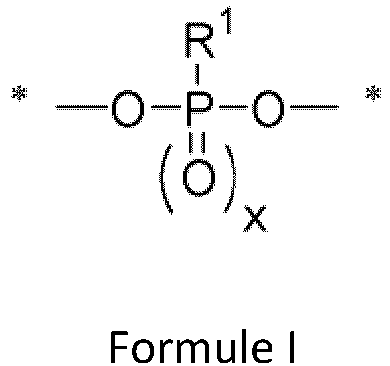 R1 est défini selon la formule II ci-dessousdans lequel
 R est identique ou différent à chaque occurrence et est choisi dans le groupe constitué par l'hydrogène ou des radicaux alkyle linéaires ou ramifiés ayant de 1 à 36 atomes de carbone, etx est égal à 0 ou 1.
 - Oligomère ou polymère selon la revendication 1, caractérisé en ce que R1 est défini selon la formule IIa ci-dessous

- Oligomère ou polymère selon l'une quelconque des revendications précédentes, contenant le motif répétitif ci-dessous selon la formule III
 D est identique ou différent à chaque occurrence et est une fonctionnalité dérivée d'un diol.
 - Oligomère ou polymère selon la revendication précédente, caractérisé en ce que la fonctionnalité dérivée d'un diol est une fonctionnalité dérivée d'un diol aliphatique, aromatique ou hétérocyclique.
- Oligomère ou polymère selon l'une quelconque des deux revendications précédentes, caractérisé en ce que la fonctionnalité dérivée d'un diola) est une fonctionnalité dérivée d'un diol aliphatique et est de manière préférée dérivée de l'éthylène glycol, du 1,3-propylène glycol, du 1,2-propylène glycol, du 1,4-butanediol, du 1,5-pentanediol, du 1,6-hexanediol, du 1,12-dodécanediol, du 1,4-cyclohexanediol, du 1,3-cyclohexanediol et/ou du 1,4-cyclohexanediméthanolb) est une fonctionnalité dérivée d'un diol aromatique et est de manière préférée dérivée de l'hydroquinone, du résorcinol, du 1,5-, 2,6- ou 2,7-dihydroxynaphtalène, de l'alcool vanillique ou des diols ci-dessous


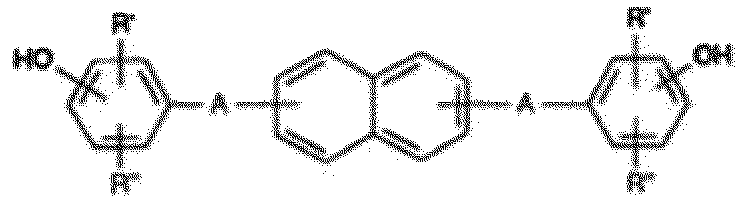 A représente une liaison directe, -O-, -SO2-, -C(O)-, -CH(CH3)- ou - C(CH3)2-, etR' et R" sont identiques ou différents à chaque occurrence et sont choisis dans le groupe constitué par des radicaux alkyle linéaires ou ramifiés ayant de 1 à 36 atomes de carbone,c) est une fonctionnalité dérivée d'un diol hétérocyclique et est de manière préférée dérivée idéalement de l'hydroxyéthyl-4-hydroxytétraméthylpipéridine, du 1,4-dithian-2,5-diol, oud) est une fonctionnalité dérivée des diols ci-dessous 2,3-diméthoxy-1,4-butanediol,


- Oligomère ou polymère selon l'une quelconque des revendications précédentes, caractérisé en ce que le motif répétitif selon la formule I est définie en fonction des motifs répétitifs ci-dessous selon les formules III et Illa

- Oligomère ou polymère selon la revendication précédente, caractérisé en ce que le rapport molaire entre les motifs répétitifs III et Illa est compris entre 0,1:99,9 et 50:50, de manière préférée entre 0,5:99,5 et 10:90.
- Oligomère ou polymère selon l'une quelconque des revendications précédentes, caractérisé en ce que x est égal à 0 pour toutes les unités de répétition de formule I ou l'oligomère ou le polymère contient à la fois des unités de répétition motifs répétitifs de formule I pour lesquelles x = 0 et des motifs répétitifs de formule I pour lesquelles x = 1, dans lequel le rapport molaire entre les motifs répétitifs de formule I pour lesquelles x = 0 et les motifs répétitifs de formule I pour lesquelles x = 1 est compris entre 50:50 et <100:>0, de manière préférée compris entre 90:10 et 99,9:0,1.
- Composition contenant au moins un composant organique à stabiliser ainsi qu'au moins un oligomère ou polymère selon l'une quelconque des revendications précédentes.
- Composition selon la revendication précédente, caractérisée en ce que le au moins un oligomère ou polymère est contenu en une proportion en poids, par rapport à la composition totale, comprise entre 0,01 et 5,0 parts en poids, idéalement comprise entre 0,02 et 2,0 parts en poids, particulièrement idéalement comprise entre 0,05 et 1,0 part en poids.
- Composition selon l'une quelconque des deux revendications précédentes, caractérisée en ce que le au moins un composant organique à stabiliser est choisi dans le groupe constitué par• les matières plastiques, en particulier les matières plastiques thermoplastiques, élastomères ou duromères,• au moins une huile, une graisse ou une cire, en particulier les huiles minérales, les graisses ou les huiles végétales ou les graisses ou les huiles animales, par exemple l'huile de palme, l'huile d'olive, l'huile de colza, l'huile de lin, l'huile de soja, l'huile de tournesol, l'huile de ricin, les huiles de poisson ou le suif de boeuf, ainsi que les huiles, graisses ou cires à base, par exemple, d'esters synthétiques,• les lubrifiants minéraux ou synthétiques, les huiles hydrauliques, les huiles pour moteurs, les huiles pour turbines, les huiles pour boîtes de vitesses, les fluides de travail des métaux ou les graisses lubrifiantes, et• les monomères polymérisables, en particulier les monomères polymérisables par voie radicalaire, en particulier les monomères qui peuvent être polymérisés par voie radicalaire grâce à des agents d'amorçage tels que des peroxydes ou l'oxygène, par exemple les esters acryliques, les esters méthacryliques, l'acrylonitrile, les styrènes ou le chlorure de vinyle.
- Composition selon l'une quelconque des revendications 10 à 12, contenant au moins un additif choisi dans le groupe constitué par les antioxydants primaires, les antioxydants secondaires, les absorbeurs d'UV, les stabilisants à la lumière, les désactivateurs métalliques, les désactivateurs de charge, les anti-ozonants, les agents de nucléation, les agents antinucléants, les améliorateurs de résistance aux chocs, les plastifiants, les lubrifiants, les modificateurs de rhéologie, les agents thixotropes, les allongeurs de chaîne, les auxiliaires de traitement, les auxiliaires de démoulage, les retardateurs de flamme, les pigments, les colorants, les azurants optiques, les agents antimicrobiens, les antistatiques, les agents glissants, les anti-bloquants, les agents de couplage, les agents de réticulation, les agents anti-réticulants, les agents hydrophilisants, les agents hydrofuges, les promoteurs d'adhérence, les dispersants, les compatibilisateurs, les capteurs d'oxygène, les capteurs d'acide, les agents propulseurs, les additifs de dégradation, les auxiliaires anti-mousse, les pièges à odeurs, les agents de marquage, les agents anti-buée, les matières de charge et de renforcement.
- Utilisation d'un oligomère ou d'un polymère selon l'une quelconque des revendications 1 à 8 comme stabilisant pour des matériaux organiques.
- Utilisation d'un oligomère ou d'un polymère selon la revendication précédente, comme stabilisant contre• la dégradation thermique, actinique ou oxydative des matières plastiques, ou comme retardateur de flamme pour des matières plastiques,• la dégradation thermique, actinique ou oxydative des vernis, peintures et revêtements (enduits)• la dégradation thermique, actinique ou oxydative des huiles, graisses ou cires, en particulier des huiles minérales, des graisses ou huiles végétales ou des graisses ou huiles animales, par exemple l'huile de palme, l'huile d'olive, l'huile de colza, l'huile de lin, l'huile de soja, l'huile de tournesol, l'huile de ricin, les huiles de poisson ou le suif de boeuf, ainsi que les huiles, graisses ou cires à base, par exemple, d'esters synthétiques,• la dégradation thermique, actinique ou oxydative des lubrifiants minéraux ou synthétiques, des huiles hydrauliques, des huiles pour moteurs, des huiles pour turbines, des huiles pour boîtes de vitesses, de fluides de travail des métaux ou des graisses lubrifiantes, ou• contre la polymérisation et/ou l'oxydation prématurée(s) des monomères polymérisables, en particulier les monomères qui peuvent être polymérisés par voie radicalaire grâce à des agents d'amorçage tels que des peroxydes ou l'oxygène, par exemple les esters acryliques, les esters méthacryliques, l'acrylonitrile, les styrènes ou le chlorure de vinyle.
- Masse moulée ou pièce moulée, pouvant être fabriquée à partir d'une composition de matière plastique selon les revendications précédentes, en particulier sous forme de pièces moulées par injection, de feuilles, de films, de mousses, de fibres, de câbles, de tuyaux, de profilés, de corps creux, de rubans, de membranes et/ou d'adhésifs.
Applications Claiming Priority (2)
| Application Number | Priority Date | Filing Date | Title |
|---|---|---|---|
| DE102019213606.0A DE102019213606B4 (de) | 2019-09-06 | 2019-09-06 | Oligomer oder polymer, zusammensetzung sowie verwendung des oligomers oder polymers |
| PCT/EP2020/070333 WO2021043489A1 (fr) | 2019-09-06 | 2020-07-17 | Oligomère ou polymère, composition, utilisation de l'oligomère ou du polymère et intermédiaire |
Publications (3)
| Publication Number | Publication Date |
|---|---|
| EP4025629A1 EP4025629A1 (fr) | 2022-07-13 |
| EP4025629B1 true EP4025629B1 (fr) | 2025-01-08 |
| EP4025629C0 EP4025629C0 (fr) | 2025-01-08 |
Family
ID=71670267
Family Applications (1)
| Application Number | Title | Priority Date | Filing Date |
|---|---|---|---|
| EP20742728.7A Active EP4025629B1 (fr) | 2019-09-06 | 2020-07-17 | Oligomère ou polymère, composition, utilisation de l'oligomère ou du polymère et intermédiaire |
Country Status (7)
| Country | Link |
|---|---|
| US (1) | US12545765B2 (fr) |
| EP (1) | EP4025629B1 (fr) |
| JP (1) | JP7682166B2 (fr) |
| KR (1) | KR102875001B1 (fr) |
| CN (1) | CN114616264B (fr) |
| DE (1) | DE102019213606B4 (fr) |
| WO (1) | WO2021043489A1 (fr) |
Families Citing this family (7)
| Publication number | Priority date | Publication date | Assignee | Title |
|---|---|---|---|---|
| DE102019200596A1 (de) | 2019-01-17 | 2020-07-23 | Fraunhofer-Gesellschaft zur Förderung der angewandten Forschung e.V. | Verwendung einer additivzusammensetzung zum kontrollierten beschleunigten abbau von kondensationspolymeren |
| DE102019204160A1 (de) | 2019-03-26 | 2020-10-01 | Fraunhofer-Gesellschaft zur Förderung der angewandten Forschung e.V. | Verfahren zur Stabilisierung von thermoplastischen Kunststoff-Rezyklaten sowie stabilisierte Kunststoffzusammensetzungen und hieraus hergestellte Formmassen und Formteile |
| DE102019210040A1 (de) | 2019-07-08 | 2021-01-14 | Fraunhofer-Gesellschaft zur Förderung der angewandten Forschung e.V. | Verwendung von phenolisch substituierten Zuckerderivaten als Stabilisatoren, Kunststoffzusammensetzung, Verfahren zur Stabilisierung von Kunststoffen sowie phenolisch substituierte Zuckerderivate |
| JP2025152097A (ja) * | 2024-03-28 | 2025-10-09 | 出光興産株式会社 | 潤滑油組成物 |
| CN118273133B (zh) * | 2024-05-16 | 2024-10-22 | 苏州瑞高新材料股份有限公司 | 一种汽车内饰用tpee复合材料及制备方法和应用 |
| CN118667281B (zh) * | 2024-08-26 | 2024-12-13 | 江苏冠联新材料科技股份有限公司 | 一种耐温绝缘型的epdm混炼胶 |
| CN120535721B (zh) * | 2025-07-24 | 2025-11-21 | 山东一诺威聚氨酯股份有限公司 | 高静刚度高阻尼低压变聚氨酯弹性体及其制备方法 |
Family Cites Families (35)
| Publication number | Priority date | Publication date | Assignee | Title |
|---|---|---|---|---|
| US2612488A (en) * | 1950-11-02 | 1952-09-30 | Standard Oil Dev Co | Stabilization of organic materials with aryl polyphosphites |
| JPS5454978A (en) | 1977-10-12 | 1979-05-01 | Mitsui Petrochem Ind Ltd | Antioxidant from chromane derivates |
| JPS59219295A (ja) | 1983-05-30 | 1984-12-10 | Senjiyu Seiyaku Kk | リン酸ジエステルまたはその塩およびそれらの製造法 |
| JPS62265299A (ja) | 1985-12-18 | 1987-11-18 | Senjiyu Seiyaku Kk | α―トコフェロールとウリジンとのリン酸ジエステル,そのハロゲン置換体もしくはこれらの塩およびそれらの製造法 |
| TW338768B (en) | 1994-06-02 | 1998-08-21 | Ciba Sc Holding Ag | Oligometic HALS phosphites and HALS phosphonites as stabilizers |
| JPH09165394A (ja) * | 1995-10-13 | 1997-06-24 | Senju Pharmaceut Co Ltd | 新規リン酸ジエステル |
| CA2186654A1 (fr) * | 1995-10-13 | 1997-04-14 | Masayuki Nakamura | Diester phosphorique |
| JPH1143436A (ja) | 1997-07-25 | 1999-02-16 | Showa Denko Kk | 末梢血流障害予防・治療剤 |
| JP2001002690A (ja) * | 1999-06-17 | 2001-01-09 | Senju Pharmaceut Co Ltd | リン酸ジエステルの製造法 |
| KR100365070B1 (ko) | 2000-08-29 | 2002-12-16 | 주식회사 태평양 | 토코페롤 유도체 및 그의 제조방법 |
| DE10160138A1 (de) * | 2001-12-07 | 2003-06-12 | Bayer Ag | Flammgeschütze Formmassen |
| JP2003286413A (ja) | 2002-03-28 | 2003-10-10 | Asahi Denka Kogyo Kk | 合成樹脂組成物 |
| WO2004024810A2 (fr) * | 2002-09-11 | 2004-03-25 | Ciba, Specialty Chemicals Holding Inc. | Stabilisation de matières organiques |
| JP3908156B2 (ja) | 2002-11-26 | 2007-04-25 | 株式会社日立製作所 | 連動要素構成データ作成方法及び装置 |
| JP3898629B2 (ja) | 2002-11-27 | 2007-03-28 | 日本メナード化粧品株式会社 | 化粧料 |
| WO2008028858A1 (fr) | 2006-09-08 | 2008-03-13 | Ciba Holding Inc. | Phosphites et phosphonites polymères liquides utilisés comme agents stabilisants |
| DE102012022482A1 (de) | 2012-11-19 | 2014-05-22 | Fraunhofer-Gesellschaft zur Förderung der angewandten Forschung e.V. | Polymerzusammensetzung mit verbesserter Langzeitstabilität, hieraus hergestellte Formteile sowie Verwendungszwecke |
| DE102013005307A1 (de) | 2013-03-25 | 2014-09-25 | Fraunhofer-Gesellschaft zur Förderung der angewandten Forschung e.V. | Verwendung von organischen Oxyimiden als Flammschutzmittel für Kunststoffe sowie flammgeschützte Kunststoffzusammensetzung und hieraus hergestelltem Formteil |
| DE102014210214A1 (de) | 2014-05-28 | 2015-12-03 | Fraunhofer-Gesellschaft zur Förderung der angewandten Forschung e.V. | Verwendung von Oxyimid-enthaltenden Copolymeren oder Polymeren als Flammschutzmittel, Stabilisatoren, Rheologiemodifikatoren für Kunststoffe, Initiatoren für Polymerisations- und Pfropfprozesse, Vernetzungs- oder Kopplungsmittel sowie solche Copolymere oder Polymere enthaltende Kunststoffformmassen |
| DE102014211276A1 (de) | 2014-06-12 | 2015-12-17 | Fraunhofer-Gesellschaft zur Förderung der angewandten Forschung e.V. | Verwendung von Hydroxybenzotriazol-Derivaten und/oder Hydroxy-Indazol-Derivaten als Flammschutzmittel für Kunststoffe sowie flammgeschützte Kunststoffformmasse |
| JP2016050196A (ja) * | 2014-08-29 | 2016-04-11 | 昭和電工株式会社 | 皮膚色改善剤及び皮膚色改善用組成物 |
| DE102014218811A1 (de) | 2014-09-18 | 2016-03-24 | Fraunhofer-Gesellschaft zur Förderung der angewandten Forschung e.V. | Verwendung von phosphorhaltigen organischen Oxyimiden als Flammschutzmittel, Radikalgeneratoren und/oder als Stabilisatoren für Kunststoffe, flammgeschützte Kunststoffzusammensetzung, Verfahren zu deren Herstellung sowie Formteile, Lacke und Beschichtungen |
| DE102014218810B3 (de) | 2014-09-18 | 2016-01-28 | Fraunhofer-Gesellschaft zur Förderung der angewandten Forschung e.V. | Verwendung von organischen Oxyimidsalzen als Flammschutzmittel, flammengeschützte Kunststoffzusammensetzung, Verfahren zur ihrer Herstellung sowie Formteil, Lack oder Beschichtung |
| DE102014225488A1 (de) | 2014-12-10 | 2016-06-16 | Fraunhofer-Gesellschaft zur Förderung der angewandten Forschung e.V. | Polymerzusammensetzung mit verzögertem Kristallisationsverhalten, das Kristallisationsverhalten beeinflussende Additivzusammensetzung, Verfahren zur Herabsetzung des Kristallisationspunktes sowie Verwendung einer Additivzusammensetzung |
| DE102015211632A1 (de) | 2015-06-23 | 2016-12-29 | Fraunhofer-Gesellschaft zur Förderung der angewandten Forschung e.V. | Polymerzusammensetzung mit verzögertem Kristallisationsverhalten, das Kristallisationsverhalten beeinflussende Additivzusammensetzung, Verfahren zur Herabsetzung des Kristallisationspunktes sowie Verwendung einer Additivzusammensetzung |
| DE102016221346A1 (de) | 2016-10-28 | 2018-05-03 | Fraunhofer-Gesellschaft zur Förderung der angewandten Forschung e.V. | Verfahren zur Herstellung eines Polymerisates durch Nitroxyl-kontrollierte Polymerisation sowie Polymerisat |
| DE102017203164A1 (de) | 2017-02-27 | 2018-08-30 | Fraunhofer-Gesellschaft zur Förderung der angewandten Forschung e.V. | Effiziente phosphorhaltige Stabilisatoren auf Basis von Diphenyl-amin und heterocyclischer Diphenylamin-Derivate |
| DE102017212772B3 (de) | 2017-07-25 | 2018-01-25 | Fraunhofer-Gesellschaft zur Förderung der angewandten Forschung e.V. | Halogenfreie Sulfonsäureester und/oder Sulfinsäureester als Flammschutzmittel in Kunststoffen, diese enthaltende Kunststoffzusammensetzungen und deren Verwendung |
| DE102017217312A1 (de) | 2017-09-28 | 2019-03-28 | Fraunhofer-Gesellschaft zur Förderung der angewandten Forschung e.V. | Verfahren zur Stabilisierung von halogenfreien thermoplastischen Kunststoff-Rezyklaten sowie stabilisierte Kunststoffzusammensetzungen und hieraus hergestellte Formmassen und Formteile |
| DE102017220555A1 (de) | 2017-11-17 | 2019-05-23 | Fraunhofer-Gesellschaft zur Förderung der angewandten Forschung e.V. | Verbindungen mit stabilisierender Wirkung, Verfahren zu deren Herstellung, Zusammensetzung enthaltend diese stabilisierenden Verbindungen, Verfahren zur Stabilisierung einer organischen Komponente sowie Verwendung von stabilisierenden Verbindungen |
| JP2019219295A (ja) * | 2018-06-20 | 2019-12-26 | 株式会社クボタ | ウエハ検査装置およびウエハ検査方法 |
| DE102018218120A1 (de) | 2018-10-23 | 2020-04-23 | Fraunhofer-Gesellschaft zur Förderung der angewandten Forschung e.V. | Verfahren zur Stabilisierung von thermoplastischer Kunststoffneuware sowie stabilisierte Kunststoffzusammensetzungen, hieraus hergestellte Formmassen und Formteile, Stabilisator-Zusammensetzungen sowie Verwendungen hiervon |
| DE102019200596A1 (de) | 2019-01-17 | 2020-07-23 | Fraunhofer-Gesellschaft zur Förderung der angewandten Forschung e.V. | Verwendung einer additivzusammensetzung zum kontrollierten beschleunigten abbau von kondensationspolymeren |
| DE102019200905A1 (de) | 2019-01-24 | 2020-07-30 | Fraunhofer-Gesellschaft zur Förderung der angewandten Forschung e.V. | Verfahren zur Stabilisierung von halogenfreien thermoplastischen Kunststoff-Rezyklaten, Kunststoff-Zusammensetzung, Stabilisator-Zusammensetzung sowie Verwendung der Stabilisator-Zusammensetzung |
| DE102019204160A1 (de) | 2019-03-26 | 2020-10-01 | Fraunhofer-Gesellschaft zur Förderung der angewandten Forschung e.V. | Verfahren zur Stabilisierung von thermoplastischen Kunststoff-Rezyklaten sowie stabilisierte Kunststoffzusammensetzungen und hieraus hergestellte Formmassen und Formteile |
-
2019
- 2019-09-06 DE DE102019213606.0A patent/DE102019213606B4/de active Active
-
2020
- 2020-07-17 WO PCT/EP2020/070333 patent/WO2021043489A1/fr not_active Ceased
- 2020-07-17 JP JP2022514749A patent/JP7682166B2/ja active Active
- 2020-07-17 EP EP20742728.7A patent/EP4025629B1/fr active Active
- 2020-07-17 CN CN202080061948.1A patent/CN114616264B/zh active Active
- 2020-07-17 KR KR1020227010873A patent/KR102875001B1/ko active Active
- 2020-07-17 US US17/640,174 patent/US12545765B2/en active Active
Also Published As
| Publication number | Publication date |
|---|---|
| JP7682166B2 (ja) | 2025-05-23 |
| CN114616264A (zh) | 2022-06-10 |
| DE102019213606B4 (de) | 2022-04-21 |
| KR20220062318A (ko) | 2022-05-16 |
| EP4025629A1 (fr) | 2022-07-13 |
| WO2021043489A1 (fr) | 2021-03-11 |
| CN114616264B (zh) | 2024-03-01 |
| US20220340717A1 (en) | 2022-10-27 |
| DE102019213606A1 (de) | 2021-04-22 |
| JP2022547090A (ja) | 2022-11-10 |
| EP4025629C0 (fr) | 2025-01-08 |
| US12545765B2 (en) | 2026-02-10 |
| KR102875001B1 (ko) | 2025-10-21 |
Similar Documents
| Publication | Publication Date | Title |
|---|---|---|
| EP4025629B1 (fr) | Oligomère ou polymère, composition, utilisation de l'oligomère ou du polymère et intermédiaire | |
| US12421372B2 (en) | Method of stabilizing virgin thermoplastic material and stabilized plastics compositions, moulding compounds and mouldings produced therefrom, stabilizer compositions and uses thereof | |
| EP3194486B1 (fr) | Utilisation de sels d'oxymides organiques comme retardateurs de flamme, composition de matières plastiques ignifugée, procédé pour les produire ainsi que pièce moulée, vernis ou revêtement | |
| EP3585833B1 (fr) | Stabilisateurs efficaces contenant du phosphore, à base de diphénylamine et de dérivés de diphénylamine hétérocycliques | |
| EP3688081A1 (fr) | Procédé pour stabiliser des produits recyclés à base de matières plastiques thermoplastiques sans halogènes et compositions de matières plastiques stabilisées ainsi que masses à mouler et pièces moulées fabriquées a partir de celles-ci | |
| EP3914641A1 (fr) | Procédé permettant de stabiliser des produits de recyclage en matière synthétique, thermoplastiques, exempts d'halogènes, composition en matière synthétique, composition stabilisatrice et utilisation de la composition stabilisatrice | |
| WO2021191364A1 (fr) | Utilisation de sels d'acide hydroxycinnamique pour la stabilisation de matériaux organiques, matériau organique stabilisé, procédé de stabilisation de matériaux organiques, stabilisateurs spécifiques et compositions stabilisantes | |
| DE102021202103A1 (de) | Verwendung einer Stabilisatorzusammensetzung zur Stabilisierung von halogenfreien thermoplastischen Kunststoff-Recyclaten, eine Stabilisatorzusammensetzung, ein Masterbatch oder Konzentrat, eine stabilisierte Kunststoffzusammensetzung, hier ein Verfahren zur Stabilisierung von halogenfreien thermoplastischen Kunststoff-Recyclaten sowie Verwendung von Zusammensetzungen | |
| EP4214275A1 (fr) | Utilisation de dieugénol, d'oligomères et/ou de polymères d'eugénol pour stabiliser des matériaux organiques, composition de matière plastique stabilisée, composition de stabilisant et procédé de stabilisation de matériaux organiques | |
| US12552913B2 (en) | Use of phenolically substituted sugar derivatives as stabilisers, plastic composition, method for stabilising plastics and phenolically substituted sugar derivatives | |
| DE102020203987A1 (de) | Verwendung von substituierten Zimtsäureestern als Stabilisatoren für organische Materialien, tabilisiertes organisches Material, Verfahren zur Stabilisierung von organischen Materialien sowie spezifische Zimtsäureester | |
| WO2023083884A1 (fr) | Stabilisants à base d'acide syringique, d'acide vanillique, d'acide isovanillque ou d'acide 5-hydroxyvératrique, composition plastique, procédé de stabilisation d'une composition plastique et composition stabilisante | |
| WO2023156222A1 (fr) | Stabilisants polymères à base d'acides méthoxy-hydroxy benzoïques, composition plastique, procédé de stabilisation d'une composition plastique et composition stabilisante | |
| DE102022206466A1 (de) | Verwendung einer Stabilisatorzusammensetzung zur Stabilisierung von halogenfreier thermoplastischer Kunststoff-Neuware, Stabilisatorzusammensetzung, ein Masterbatch oder Konzentrat, eine stabilisierte Kunststoffzusammensetzung, Verfahren zur Stabilisierung von halogenfreien thermoplastischen Kunststoff-Neuware sowie Verwendung der Zusammensetzung |
Legal Events
| Date | Code | Title | Description |
|---|---|---|---|
| STAA | Information on the status of an ep patent application or granted ep patent |
Free format text: STATUS: UNKNOWN |
|
| STAA | Information on the status of an ep patent application or granted ep patent |
Free format text: STATUS: THE INTERNATIONAL PUBLICATION HAS BEEN MADE |
|
| PUAI | Public reference made under article 153(3) epc to a published international application that has entered the european phase |
Free format text: ORIGINAL CODE: 0009012 |
|
| STAA | Information on the status of an ep patent application or granted ep patent |
Free format text: STATUS: REQUEST FOR EXAMINATION WAS MADE |
|
| 17P | Request for examination filed |
Effective date: 20220317 |
|
| AK | Designated contracting states |
Kind code of ref document: A1 Designated state(s): AL AT BE BG CH CY CZ DE DK EE ES FI FR GB GR HR HU IE IS IT LI LT LU LV MC MK MT NL NO PL PT RO RS SE SI SK SM TR |
|
| GRAP | Despatch of communication of intention to grant a patent |
Free format text: ORIGINAL CODE: EPIDOSNIGR1 |
|
| STAA | Information on the status of an ep patent application or granted ep patent |
Free format text: STATUS: GRANT OF PATENT IS INTENDED |
|
| INTG | Intention to grant announced |
Effective date: 20240729 |
|
| GRAS | Grant fee paid |
Free format text: ORIGINAL CODE: EPIDOSNIGR3 |
|
| GRAA | (expected) grant |
Free format text: ORIGINAL CODE: 0009210 |
|
| STAA | Information on the status of an ep patent application or granted ep patent |
Free format text: STATUS: THE PATENT HAS BEEN GRANTED |
|
| AK | Designated contracting states |
Kind code of ref document: B1 Designated state(s): AL AT BE BG CH CY CZ DE DK EE ES FI FR GB GR HR HU IE IS IT LI LT LU LV MC MK MT NL NO PL PT RO RS SE SI SK SM TR |
|
| REG | Reference to a national code |
Ref country code: GB Ref legal event code: FG4D Free format text: NOT ENGLISH |
|
| REG | Reference to a national code |
Ref country code: CH Ref legal event code: EP |
|
| REG | Reference to a national code |
Ref country code: DE Ref legal event code: R096 Ref document number: 502020010158 Country of ref document: DE |
|
| REG | Reference to a national code |
Ref country code: IE Ref legal event code: FG4D Free format text: LANGUAGE OF EP DOCUMENT: GERMAN |
|
| U01 | Request for unitary effect filed |
Effective date: 20250120 |
|
| U07 | Unitary effect registered |
Designated state(s): AT BE BG DE DK EE FI FR IT LT LU LV MT NL PT RO SE SI Effective date: 20250128 |
|
| PG25 | Lapsed in a contracting state [announced via postgrant information from national office to epo] |
Ref country code: RS Free format text: LAPSE BECAUSE OF FAILURE TO SUBMIT A TRANSLATION OF THE DESCRIPTION OR TO PAY THE FEE WITHIN THE PRESCRIBED TIME-LIMIT Effective date: 20250408 |
|
| PG25 | Lapsed in a contracting state [announced via postgrant information from national office to epo] |
Ref country code: PL Free format text: LAPSE BECAUSE OF FAILURE TO SUBMIT A TRANSLATION OF THE DESCRIPTION OR TO PAY THE FEE WITHIN THE PRESCRIBED TIME-LIMIT Effective date: 20250108 |
|
| PG25 | Lapsed in a contracting state [announced via postgrant information from national office to epo] |
Ref country code: ES Free format text: LAPSE BECAUSE OF FAILURE TO SUBMIT A TRANSLATION OF THE DESCRIPTION OR TO PAY THE FEE WITHIN THE PRESCRIBED TIME-LIMIT Effective date: 20250108 |
|
| PG25 | Lapsed in a contracting state [announced via postgrant information from national office to epo] |
Ref country code: NO Free format text: LAPSE BECAUSE OF FAILURE TO SUBMIT A TRANSLATION OF THE DESCRIPTION OR TO PAY THE FEE WITHIN THE PRESCRIBED TIME-LIMIT Effective date: 20250408 Ref country code: IS Free format text: LAPSE BECAUSE OF FAILURE TO SUBMIT A TRANSLATION OF THE DESCRIPTION OR TO PAY THE FEE WITHIN THE PRESCRIBED TIME-LIMIT Effective date: 20250508 |
|
| PG25 | Lapsed in a contracting state [announced via postgrant information from national office to epo] |
Ref country code: HR Free format text: LAPSE BECAUSE OF FAILURE TO SUBMIT A TRANSLATION OF THE DESCRIPTION OR TO PAY THE FEE WITHIN THE PRESCRIBED TIME-LIMIT Effective date: 20250108 |
|
| PG25 | Lapsed in a contracting state [announced via postgrant information from national office to epo] |
Ref country code: GR Free format text: LAPSE BECAUSE OF FAILURE TO SUBMIT A TRANSLATION OF THE DESCRIPTION OR TO PAY THE FEE WITHIN THE PRESCRIBED TIME-LIMIT Effective date: 20250409 |
|
| U20 | Renewal fee for the european patent with unitary effect paid |
Year of fee payment: 6 Effective date: 20250729 |
|
| PG25 | Lapsed in a contracting state [announced via postgrant information from national office to epo] |
Ref country code: SM Free format text: LAPSE BECAUSE OF FAILURE TO SUBMIT A TRANSLATION OF THE DESCRIPTION OR TO PAY THE FEE WITHIN THE PRESCRIBED TIME-LIMIT Effective date: 20250108 |
|
| PGFP | Annual fee paid to national office [announced via postgrant information from national office to epo] |
Ref country code: GB Payment date: 20250724 Year of fee payment: 6 |
|
| PG25 | Lapsed in a contracting state [announced via postgrant information from national office to epo] |
Ref country code: CZ Free format text: LAPSE BECAUSE OF FAILURE TO SUBMIT A TRANSLATION OF THE DESCRIPTION OR TO PAY THE FEE WITHIN THE PRESCRIBED TIME-LIMIT Effective date: 20250108 |
|
| PG25 | Lapsed in a contracting state [announced via postgrant information from national office to epo] |
Ref country code: SK Free format text: LAPSE BECAUSE OF FAILURE TO SUBMIT A TRANSLATION OF THE DESCRIPTION OR TO PAY THE FEE WITHIN THE PRESCRIBED TIME-LIMIT Effective date: 20250108 |
|
| PLBE | No opposition filed within time limit |
Free format text: ORIGINAL CODE: 0009261 |
|
| STAA | Information on the status of an ep patent application or granted ep patent |
Free format text: STATUS: NO OPPOSITION FILED WITHIN TIME LIMIT |
|
| REG | Reference to a national code |
Ref country code: CH Ref legal event code: L10 Free format text: ST27 STATUS EVENT CODE: U-0-0-L10-L00 (AS PROVIDED BY THE NATIONAL OFFICE) Effective date: 20251119 |
|
| 26N | No opposition filed |
Effective date: 20251009 |
|
| REG | Reference to a national code |
Ref country code: CH Ref legal event code: H13 Free format text: ST27 STATUS EVENT CODE: U-0-0-H10-H13 (AS PROVIDED BY THE NATIONAL OFFICE) Effective date: 20260224 |