EP4047276B1 - Halteschiene für flächenheizungsrohre - Google Patents
Halteschiene für flächenheizungsrohre Download PDFInfo
- Publication number
- EP4047276B1 EP4047276B1 EP22154498.4A EP22154498A EP4047276B1 EP 4047276 B1 EP4047276 B1 EP 4047276B1 EP 22154498 A EP22154498 A EP 22154498A EP 4047276 B1 EP4047276 B1 EP 4047276B1
- Authority
- EP
- European Patent Office
- Prior art keywords
- rail
- holding rail
- pipe
- longitudinal direction
- heating pipes
- Prior art date
- Legal status (The legal status is an assumption and is not a legal conclusion. Google has not performed a legal analysis and makes no representation as to the accuracy of the status listed.)
- Active
Links
Images


Classifications
-
- F—MECHANICAL ENGINEERING; LIGHTING; HEATING; WEAPONS; BLASTING
- F24—HEATING; RANGES; VENTILATING
- F24D—DOMESTIC- OR SPACE-HEATING SYSTEMS, e.g. CENTRAL HEATING SYSTEMS; DOMESTIC HOT-WATER SUPPLY SYSTEMS; ELEMENTS OR COMPONENTS THEREFOR
- F24D3/00—Hot-water central heating systems
- F24D3/12—Tube and panel arrangements for ceiling, wall, or underfloor heating
- F24D3/14—Tube and panel arrangements for ceiling, wall, or underfloor heating incorporated in a ceiling, wall or floor
- F24D3/141—Tube mountings specially adapted therefor
- F24D3/142—Tube mountings specially adapted therefor integrated in prefab construction elements
-
- F—MECHANICAL ENGINEERING; LIGHTING; HEATING; WEAPONS; BLASTING
- F24—HEATING; RANGES; VENTILATING
- F24D—DOMESTIC- OR SPACE-HEATING SYSTEMS, e.g. CENTRAL HEATING SYSTEMS; DOMESTIC HOT-WATER SUPPLY SYSTEMS; ELEMENTS OR COMPONENTS THEREFOR
- F24D3/00—Hot-water central heating systems
- F24D3/12—Tube and panel arrangements for ceiling, wall, or underfloor heating
- F24D3/14—Tube and panel arrangements for ceiling, wall, or underfloor heating incorporated in a ceiling, wall or floor
- F24D3/141—Tube mountings specially adapted therefor
-
- F—MECHANICAL ENGINEERING; LIGHTING; HEATING; WEAPONS; BLASTING
- F24—HEATING; RANGES; VENTILATING
- F24D—DOMESTIC- OR SPACE-HEATING SYSTEMS, e.g. CENTRAL HEATING SYSTEMS; DOMESTIC HOT-WATER SUPPLY SYSTEMS; ELEMENTS OR COMPONENTS THEREFOR
- F24D13/00—Electric heating systems
- F24D13/02—Electric heating systems solely using resistance heating, e.g. underfloor heating
- F24D13/022—Electric heating systems solely using resistance heating, e.g. underfloor heating resistances incorporated in construction elements
- F24D13/024—Electric heating systems solely using resistance heating, e.g. underfloor heating resistances incorporated in construction elements in walls, floors, ceilings
-
- Y—GENERAL TAGGING OF NEW TECHNOLOGICAL DEVELOPMENTS; GENERAL TAGGING OF CROSS-SECTIONAL TECHNOLOGIES SPANNING OVER SEVERAL SECTIONS OF THE IPC; TECHNICAL SUBJECTS COVERED BY FORMER USPC CROSS-REFERENCE ART COLLECTIONS [XRACs] AND DIGESTS
- Y02—TECHNOLOGIES OR APPLICATIONS FOR MITIGATION OR ADAPTATION AGAINST CLIMATE CHANGE
- Y02B—CLIMATE CHANGE MITIGATION TECHNOLOGIES RELATED TO BUILDINGS, e.g. HOUSING, HOUSE APPLIANCES OR RELATED END-USER APPLICATIONS
- Y02B30/00—Energy efficient heating, ventilation or air conditioning [HVAC]
Definitions
- the invention relates to a retaining rail for surface heating pipes according to the preamble of claim 1.
- a retaining rail is for example in EN 31 01 717 A1 disclosed.
- various support rails for the pipes carrying the heat transfer fluid are known, whereby the support rails and the pipe are embedded in a concrete casting compound that is to be hardened.
- the EP2679923B1 Support rails that comprise two longitudinal profiles that run parallel to the longitudinal direction of the rail and are spaced apart from one another and that together form several pipe holders that extend transversely to the longitudinal direction of the rail and are open at the top.
- the disadvantage of such support rails is that an even distribution of the liquid concrete casting compound is hardly achieved during embedding due to the specified rail geometry, which can lead to the formation of cavities or, in the worst case, stress cracks in the hardened concrete.
- the invention is therefore based on the object of designing a retaining rail of the type described above in such a way that, despite simple manufacturing and assembly conditions, the formation of cavities and stress cracks in the hardened concrete are largely avoided.
- the invention solves the problem with the features of claim 1.
- the invention is based on the knowledge that the flow behavior of the poured concrete can be influenced in an advantageous manner if the profile section of the holding rail assigned to the spacers runs continuously in a wave-like manner, i.e. assumes a continuous wave shape with wave humps and wave troughs, so that corners or tapered contours in particular are avoided.
- the improved flow behavior when pouring the holding rails leads to a more homogeneous distribution of the concrete casting compound in the formwork used for pouring, so that ultimately stress cracks in the hardened concrete can be largely avoided.
- the wave humps form the spacers, with the wave humps resting on the formwork in the area of the corresponding wave hump crests during the pouring process.
- the holding rail according to the invention is preferably manufactured as a one-piece plastic component.
- the distribution of the concrete casting compound is achieved while simultaneously saving rail material by limiting each pipe holder in the longitudinal direction of the rail by exactly two profile cross connectors, which each have a spring-loaded locking lug that protrudes inwards into the pipe holders.
- the profile cross connectors are preferably designed in such a way that the formation of a support surface beneath a pipe held by the pipe holder is avoided, ie that the area beneath the pipe remains free and the concrete casting compound can also flow into this free space.
- it can be provided in particular that the two longitudinal profiles running parallel in the longitudinal direction of the rail at a distance from one another are connected exclusively via the profile cross connectors, i.e. that the two longitudinal profiles are not connected via an additional longitudinal profile.
- the spacers formed by the wave humps each have a preferably cylindrical support body in the area of the wave hump crest.
- the support body can also have other cross-sectional shapes.
- the support body essentially forms a support disk. This means that the diameter of the spacer is large in comparison to its height.
- the longitudinal profiles have several fastening holes for fastening devices on the pipe support side in the longitudinal direction of the rail, in particular for fastening the retaining rail to a formwork.
- the hole axis of the fastening holes preferably runs both orthogonal to the longitudinal direction of the rail and orthogonal to the longitudinal direction of the pipe support.
- a locking connector for positively and non-positively engaging behind a locking receptacle of an adjacent holding rail can be provided at a free end of the holding rail, whereas a locking receptacle that can be positively and non-positively engaged behind by a locking connector of an adjacent holding rail is provided at the opposite free end.
- the locking connector preferably has a substantially T-shaped head, with the locking receptacle forming a corresponding T-profile.
- Holding rails according to the invention can thus be connected to one another in a simple manner by pushing them onto one another transversely to the longitudinal direction of the rail and transversely to the longitudinal direction of the pipe receptacle.
- the retaining rails according to the invention can also be used in conjunction with exposed concrete, it is proposed that the retaining rail be made of a translucent plastic. The retaining rail therefore has no inherent color and is therefore no longer visible when the concrete has hardened.
- the functionality of the holding rail according to the invention can be further increased if the longitudinal profiles on their side opposite the pipe holders comprise additional pipe holders that are open at the bottom, for example for capillary tubes, capillary tube mats and/or heating pipes equipped with an electric heater.
- additional pipe holders are preferably arranged in a trough of the wave-shaped profile section.
- the pipe holders can be formed by clamping arms attached to the longitudinal profiles and pointing downwards between two spacers.
- a support rail according to the invention can be equipped in particular with core heating pipes inserted in pipe receptacles and with surface heating pipes inserted in pipe receptacles that are open at the bottom.
- the core heating pipes are used to control the temperature of a concrete core into which the support rail is cast, in particular for heating in cold seasons and for cooling in warm seasons. In the transition period between summer and winter, when the core heating is ineffective or too slow, low-energy radiant heat can be emitted using the surface heating pipes, which are arranged particularly close to the surface.
- the surface heating pipes inserted into pipe holders that are open at the bottom can be capillary tubes, capillary tube mats and/or heating pipes equipped with an electric heater.
- the advantage of heating pipes equipped with an electric heater is that they can be operated directly with solar power if necessary.
- a holding rail according to the invention comprises two longitudinal profiles 1 running parallel in the longitudinal direction S of the rail at a distance from one another.
- the longitudinal profiles 1 together form a plurality of pipe receptacles 2 which each extend transversely to the longitudinal direction S of the rail in a pipe receptacle longitudinal direction R and are open at the top for receiving, for example, surface heating pipes 3.
- each pipe receptacle 2 is delimited in the longitudinal direction S of the rail by exactly two profile cross connectors 4, each of which has a resilient locking lug 5 protruding inwards into the pipe receptacles 2.
- Each pipe receptacle 2 is thus delimited in the longitudinal direction S of the rail by locking lugs 5 protruding inwards into the pipe receptacles 2.
- the two longitudinal profiles 1 running parallel in the longitudinal direction S of the rail at a distance from one another are connected transversely to the longitudinal direction S of the rail exclusively via the profile cross connectors 4.
- the longitudinal profiles 1 each have, on their side opposite the pipe holders 2, a profile section 6 which runs uniformly undulating in the longitudinal direction S of the rail and has several wave humps 7 and several wave troughs 8.
- the wave humps 7 each form spacers 9 for specifying a distance between the pipe holders 2 and a spatial surface or a formwork 10.
- the spacers 9 formed by the wave bosses 7 each have a preferably cylindrical support body 11 in the area of the wave boss crest.
- the longitudinal profiles 1 comprise several fastening holes 12 for fastening means on the pipe receiving side in the longitudinal direction S of the rail.
- the hole axis of the fastening holes 12 runs both orthogonal to the longitudinal direction S of the rail and orthogonal to the pipe receiving longitudinal direction R.
- the longitudinal profiles also have, on their side opposite the pipe holders 2, additional pipe holders 13, which are open at the bottom, for capillary tube mats, which Fig. 2 by surface heating tubes 14, in particular a tubular capillary or the like.
- FIG.2 A retaining rail is shown schematically, which is embedded in a concrete mass of a ceiling, a wall or similar, indicated by crossed hatching. Any concrete reinforcement is obligatory, but not shown.
- the retaining rails each have a T-shaped locking connector 15 at a free end for positively and non-positively engaging behind a locking receptacle 16 of an adjacent retaining rail.
- the retaining rails each have a locking receptacle 16 at the opposite free end that can be positively and non-positively engaged behind by a locking connector 15 of an adjacent retaining rail.
- the locking connectors 15 have a substantially T-shaped head, with the locking receptacle 16 accordingly forming a corresponding T-profile. Retaining rails according to the invention can thus be connected to one another in a simple manner by pushing them onto one another transversely to the longitudinal direction S of the rail and transversely to the longitudinal direction R of the pipe receptacle.
- the pipe holders 13 are formed by clamping arms 17 attached to the longitudinal profiles 1 and pointing downwards between two spacers 9.
- the clamping arms 17 are formed on the inside or bottom of the longitudinal profiles 1 and each form a support clamped on one side.
- Each pair of these clamping arms 17 in turn forms a pipe holder 13, with the two clamping arm ends of each pipe holder 13 being bent towards each other.
- Core heating pipes namely the surface heating pipes 3, are inserted into the pipe holders 2 of the support rail, and surface heating pipes 14 are inserted into the pipe holders 13 that are open at the bottom.
- the surface heating pipes 14 used in pipe holders 13 are in particular capillary tubes, capillary tube mats ( Fig. 2 and 3 right) and/or with an electric heater ( Fig. 2 and 3 left) equipped heating pipes.
Landscapes
- Engineering & Computer Science (AREA)
- Physics & Mathematics (AREA)
- Thermal Sciences (AREA)
- Chemical & Material Sciences (AREA)
- Combustion & Propulsion (AREA)
- Mechanical Engineering (AREA)
- General Engineering & Computer Science (AREA)
- Supports For Pipes And Cables (AREA)
- Forms Removed On Construction Sites Or Auxiliary Members Thereof (AREA)
- Railway Tracks (AREA)
- Moulds, Cores, Or Mandrels (AREA)
Description
- Die Erfindung bezieht sich auf eine Halteschiene für Flächenheizungsrohre gemäß dem Oberbegriff des Anspruchs 1. Solch eine Halteschiene ist beispielsweise in
DE 31 01 717 A1 offenbart. - Im Zusammenhang mit der Klimatisierung von Räumen mithilfe von Flächenheizungen sind diverse Halteschienen für die das Wärmeträgerfluid führenden Rohrleitungen bekannt, wobei die Halteschienen samt Rohrleitung in einer auszuhärtenden Betonvergussmasse eingebettet werden. Beispielsweise offenbart die
EP 2679923 B1 Halteschienen, die zwei parallel in Schienenlängsrichtung mit Abstand zueinander verlaufende Längsprofile umfassen und die gemeinsam mehrere sich jeweils quer zur Schienenlängsrichtung erstreckende, nach oben hin offene Rohraufnahmen ausbilden. Nachteilig an derartigen Halteschienen ist jedoch der Umstand, dass eine gleichmäßige Verteilung der flüssigen Betonvergussmasse beim Einbetten bedingt durch die vorgegebene Schienengeometrie kaum erreicht wird, sodass es zu einer Lunkerbildung bzw. schlimmstenfalls zu Spannungsrissen im ausgehärteten Beton kommen kann. - Der Erfindung liegt somit die Aufgabe zugrunde, eine Halteschiene der eingangs geschilderten Art so auszugestalten, dass trotz einfacher Fertigungs-und Montagebedingungen Lunkerbildungen und Spannungsrisse im ausgehärteten Beton weitgehend vermieden werden.
- Die Erfindung löst die gestellte Aufgabe mit den Merkmalen des Anspruchs 1.
- Der Erfindung liegt die Erkenntnis zugrunde, dass sich das Strömungsverhalten des eingegossenen Betons auf vorteilhafte Weise beeinflussen lässt, wenn der den Abstandshaltern zugeordnete Profilabschnitt der Halteschiene stetig wellenförmig verläuft, d.h. eine stetige Wellenform mit Wellenbuckeln und Wellentälern annimmt, sodass insbesondere Ecken bzw. spitz zulaufende Konturen vermieden werden. Das verbesserte Strömungsverhalten beim Vergießen der Halteschienen führt dazu, dass eine homogenere Verteilung der Betonvergussmasse in der beim Vergießen zum Einsatz kommenden Schalung erreicht wird, sodass letztlich Spannungsrisse im ausgehärteten Beton weitgehend vermieden werden können. Die Wellenbuckel bilden erfindungsgemäß die Abstandshalter, wobei die Wellenbuckel beim Vergussvorgang jeweils im Bereich der entsprechenden Wellenbuckelscheitel auf der Schalung aufliegen. Vorzugsweise ist jeder Rohraufnahme genau ein Wellenbuckel zugeordnet. Dabei können der Schmiegekreis der jeweiligen Rohraufnahme und der Schmiegekreis des ihr zugeordneten Wellenbuckels im Wesentlichen denselben Kreismittelpunkt aufweisen. Für besonders günstige Herstellungsbedingungen ist die erfindungsgemäße Halteschiene vorzugsweise als einstückiges Kunststoffbauteil gefertigt.
- Erfindungsgemäß wird Verteilung der Betonvergussmasse bei gleichzeitiger Schienenmaterialeinsparung bewirkt, indem jede Rohraufnahme in Schienenlängsrichtung durch genau zwei Profilquerverbinder begrenzt ist, die jeweils eine nach innen in die Rohraufnahmen vorragende federnde Rastnase aufweisen. Die Profilquerverbinder sind vorzugsweise dergestalt, dass die Ausbildung einer Auflagefläche unterhalb eines von der Rohraufnahme aufgenommen Rohres vermieden wird, d.h. dass jener Bereich unterhalb des Rohres frei bleibt und die Betonvergussmasse auch in diesen Freiraum fließen kann. Dazu kann es insbesondere vorgesehen sein die zwei parallel in Schienenlängsrichtung mit Abstand zueinander verlaufenden Längsprofile ausschließlich über die Profilquerverbinder zu verbinden, die beiden Längsprofile also nicht über ein zusätzliches Längsprofil zu verbinden.
- Damit auch dünnflüssigere Anteile der Betonvergussmasse die Halteschiene beim Vergussvorgang unterlaufen können, sodass eine homogene Verteilung der Betonvergussmasse weiter begünstigt wird, empfiehlt es sich, dass die durch die Wellenbuckel gebildeten Abstandshalter jeweils im Bereich des Wellenbuckelscheitels einen vorzugsweise zylinderförmigen Auflagekörper aufweisen. Grundsätzlich kann der Auflagekörper aber auch andere Querschnittsformen aufweisen. Besonders bevorzugt bildet der Auflagekörper im Wesentlichen eine Auflagescheibe. Dies bedeutet, dass der Durchmesser des Abstandshalters groß ist im Vergleich zu dessen Höhe.
- Um bei einfachen Fertigungsbedingungen für die Halteschienen gleichzeitig deren Montagebedingungen weiter zu verbessern, wird vorgeschlagen, dass die Längsprofile rohraufnahmenseitig in Schienenlängsrichtung mehrere Befestigungslöcher für Befestigungsmittel, insbesondere zur Befestigung der Halteschiene an einer Schalung, aufweisen. Die Lochachse der Befestigungslöcher verläuft vorzugsweise sowohl orthogonal zur Schienenlängsrichtung, als auch orthogonal zur Rohraufnahmelängsrichtung. Zufolge dieser Maßnahmen wird eine einfach vorzunehmende Befestigung der Halteschienen auf der Schalung, beispielswiese durch Edelstahlnägel als Befestigungsmittel, ermöglicht.
- Damit die erfindungsgemäßen Halteschienen an unterschiedliche Montageanforderungen angepasst werden können, ist es vorteilhaft, dass diese auf einfache Weise lösbar miteinander verbunden werden können. Beispielsweise kann an einem freien Ende der Halteschiene ein Rastverbinder zum form- und kraftschlüssigen Hintergreifen einer Rastaufnahme einer benachbarten Halteschiene vorgesehen sein, wohingegen am gegenüberliegenden freien Ende eine von einem Rastverbinder einer benachbarten Halteschiene form- und kraftschlüssig hintergreifbare Rastaufnahme vorgesehen ist. Vorzugsweise weist der Rastverbinder einen im Wesentlichen T-förmigen Kopf auf, wobei die Rastaufnahme dementsprechend ein dazu korrespondierendes T-Profil ausbildet. Erfindungsgemäße Halteschienen können somit auf einfache Weise miteinander verbunden werden, indem diese quer zur Schienenlängsrichtung und quer zur Rohraufnahmelängsrichtung aufeinandergeschoben werden.
- Um ein ansprechenderes Erscheinungsbild des ausgehärteten Betons zu ermöglichen, sodass die erfindungsgemäßen Halteschienen auch im Zusammenhang mit Sichtbeton eingesetzt werden können, wird vorgeschlagen, dass die Halteschiene aus einem transluzenten Kunststoff gefertigt ist. Die Halteschiene weist somit keine Eigenfarbe auf und ist daher im ausgehärteten Zustand des Betons auch nicht mehr sichtbar.
- Die Funktionalität der erfindungsgemäßen Halteschiene kann weiter erhöht werden, wenn die Längsprofile auf ihrer den Rohraufnahmen gegenüberliegenden Seite zusätzliche, nach unten hin offene Rohraufnahmen, beispielsweise für Kapillarrohre, Kapillarrohrmatten und/oder mit einer elektrischen Heizung ausgestattete Heizrohre umfasst. Beispielsweise kann dadurch ein kombinierter Einsatz von Rohrleitungen und Kapillarrohrmatten ermöglicht werden. Es ist aber auch denkbar, dass die erfindungsgemäßen Halteschienen ausschließlich Kapillarrohrmatten führen, sodass die oberen, von der Raumfläche abgewandten Rohraufnahmen unbesetzt bleiben. Vorzugsweise ist die zusätzliche Rohraufnahme in einem Wellental des wellenförmig verlaufenden Profilabschnittes angeordnet.
- Um die Struktur der Halteschiene nicht zu schwächen und ein Eingießen der chien in Beton trotdem bestmöglich zu erlauben, ohne Lufteinschlüsse in Kauf nehmen zu müssen, können die Rohraufnahmen von an den Längsprofilen angesetzten, zwischen zwei Abstandshaltern nach unten weisenden Klemmarmen gebildet sein.
- Eine erfindungsgemäße Halteschiene kann insbesondere mit in Rohraufnahmen eingesetzten Kernheizrohren und mit in nach unten hin offene Rohraufnahmen eingesetzten Oberflächenheizrohren ausgestattet sein. Die Kernheizrohre dienen dabei zur Temperierung eines Betonkernes, in welchen die Halteschiene eingegossen ist, insbesondere zum Heizen in kalten und zum Kühlen in warmen Jahreszeiten. In der Übergangszeit zwischen Sommer und Winter, in der die Kernheizung uneffektiv bzw. zu träge ist, kann mit den Oberflächenheizrohren, die besonders Oberflächennahe angeordnet sind, energiearm Strahlungswärme abgegeben werden.
- Die in nach unten hin offene Rohraufnahmen eingesetzten Oberflächenheizrohre können Kapillarrohre, Kapillarrohrmatten und/oder mit einer elektrischen Heizung ausgestattete Heizrohre sein. Der Vorteil mit einer elektrischen Heizung ausgestatteter Heizrohre besteht darin, dass diese gegebenenfalls unmittelbar mit Solarstrom betrieben werden können.
- In der Zeichnung ist der Erfindungsgegenstand beispielsweise dargestellt. Es zeigen
-
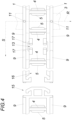
Fig. 1 einen schematischen Schrägriss einer erfindungsgemäßen Halteschiene in einem Ausschnitt, -
Fig. 2 eine Draufsicht zweier nicht miteinander verbundener, erfindungsgemäßer Halteschienen in einem kleineren Maßstab, -
Fig. 3 eine derFig. 2 entsprechende Darstellung, allerdings in verbundenem Zustand, und -
Fig. 4 eine schematische Vorderansicht einer erfindungsgemäßen, in eine Betonvergussmasse eingebettete Halteschiene in einem Ausschnitt. - Eine erfindungsgemäße Halteschiene umfasst zwei parallel in Schienenlängsrichtung S mit Abstand zueinander verlaufende Längsprofile 1. Die Längsprofile 1 bilden gemeinsam mehrere sich jeweils quer zur Schienenlängsrichtung S in einer Rohraufnahmelängsrichtung R erstreckende, nach oben hin offene Rohraufnahmen 2 zur Aufnahme von z.B. Flächenheizungsrohren 3 aus. Erfindungsgemäß ist jede Rohraufnahme 2 in Schienenlängsrichtung S durch genau zwei Profilquerverbinder 4 begrenzt, die jeweils eine nach innen in die Rohraufnahmen 2 vorragende federnde Rastnase 5 aufweisen. Damit ist jede Rohraufnahme 2 in Schienenlängsrichtung S von nach innen in die Rohraufnahmen 2 vorragenden Rastnasen 5 begrenzt. Die zwei parallel in Schienenlängsrichtung S mit Abstand zueinander verlaufenden Längsprofile 1 sind quer zur Schienenlängsrichtung S ausschließlich über die Profilquerverbinder 4 verbunden.
- Die Längsprofile 1 weisen jeweils an ihrer den Rohraufnahmen 2 gegenüberliegenden Seite einen in Schienenlängsrichtung S gleichmäßig wellenförmig verlaufenden Profilabschnitt 6 mit mehreren Wellenbuckeln 7 und mehreren Wellentälern 8 auf. Die Wellenbuckel 7 bilden jeweils Abstandshalter 9 zur Vorgabe eines Abstandes zwischen den Rohraufnahmen 2 und einer Raumfläche bzw. einer Schalung 10 aus.
- Die durch die Wellenbuckel 7 gebildeten Abstandshalter 9 weisen gemäß der gezeigten Ausführungsform jeweils im Bereich des Wellenbuckelscheitels einen vorzugsweise zylinderförmigen Auflagekörper 11 auf. Darüber hinaus umfassen die Längsprofile 1 rohraufnahmenseitig in Schienenlängsrichtung S mehrere Befestigungslöcher 12 für Befestigungsmittel. Die Lochachse der Befestigungslöcher 12 verläuft im vorliegenden Fall sowohl orthogonal zur Schienenlängsrichtung S, als auch orthogonal zur Rohraufnahmelängsrichtung R.
- Die Längsprofile weisen außerdem auf ihrer den Rohraufnahmen 2 gegenüberliegenden Seite zusätzliche, nach unten hin offene Rohraufnahmen 13 für Kapillarrohrmatten auf, die in
Fig. 2 durch Oberflächenheizrohre 14, insbesondere eine Rohrkapillare od. dgl. angedeutet wird. - In
Fig. 2 wird schematisch eine Halteschiene gezeigt, die in eine mit gekreuzter Schraffur angedeutete Betonmasse einer Decke, einer Wand od. dgl. eingebettet ist. Eine etwaige Betonarmierung ist zwar obligat, aber nicht eingezeichnet. - Wie dies aus
Fig. 1 hervorgeht, weisen die Halteschienen jeweils an einem freien Ende einen T-förmigen Rastverbinder 15 zum form- und kraftschlüssigen Hintergreifen einer Rastaufnahme 16 einer benachbarten Halteschiene auf. Außerdem weisen die Halteschienen jeweils am gegenüberliegenden freien Ende eine von einem Rastverbinder 15 einer benachbarten Halteschiene form- und kraftschlüssig hintergreifbare Rastaufnahme 16 auf. Die Rastverbinder 15 weisen einen im Wesentlichen T-förmigen Kopf auf, wobei die Rastaufnahme 16 dementsprechend ein dazu korrespondierendes T-Profil ausbildet. Erfindungsgemäße Halteschienen können somit auf einfache Weise miteinander verbunden werden, indem diese quer zur Schienenlängsrichtung S und quer zur Rohraufnahmelängsrichtung R aufeinandergeschoben werden. - Gemäß
Fig. 3 und4 sind die Rohraufnahmen 13 von an den Längsprofilen 1 angesetzten, zwischen zwei Abstandshaltern 9 nach unten weisenden Klemmarmen 17 gebildet. Die Klemmarme 17 sind innen bzw. unten an die Längsprofile 1 angeformt und bilden je einen einseitig eingespannten Träger. Je ein Paar dieser Klemmarme 17 bildet wiederum eine Rohraufnahme 13 aus, wobei die beiden Klemmarmenden einer jeden Rohraufnahme 13 aufeinander zugebogen sind. - In die Rohraufnahmen 2 der Halteschiene sind Kernheizrohre, nämlich die Flächenheizungsrohre 3, und in die nach unten hin offene Rohraufnahmen 13 Oberflächenheizrohre 14 eingesetzt. Die in nach unten hin offene Rohraufnahmen 13 eingesetzten Oberflächenheizrohre 14 sind insbesondere Kapillarrohre, Kapillarrohrmatten (
Fig. 2 u. 3 rechts) und/oder mit einer elektrischen Heizung (Fig. 2 u. 3 links) ausgestattete Heizrohre.
Claims (9)
- Halteschiene für Flächenheizungsrohre (3), die zwei parallel in Schienenlängsrichtung (S) mit Abstand zueinander verlaufende Längsprofile (1) umfasst, die gemeinsam mehrere sich jeweils quer zur Schienenlängsrichtung (S) erstreckende, nach oben hin offene Rohraufnahmen (2) ausbilden und wobei jede Rohraufnahme (2) in Schienenlängsrichtung (S) von nach innen in die Rohraufnahmen (2) vorragenden Rastnasen (5) begrenzt ist, wobei die Längsprofile (1) jeweils an ihrer den Rohraufnahmen (2) gegenüberliegenden Seite einen in Schienenlängsrichtung (S) stetig wellenförmig verlaufenden Profilabschnitt (6) mit mehreren Wellenbuckeln (7) aufweisen, die jeweils Abstandshalter (9) zur Vorgabe eines Abstandes zwischen den Rohraufnahmen (2) und einer Raumfläche ausbilden, dadurch gekennzeichnet, dass jede Rohraufnahme (2) in Schienenlängsrichtung (S) durch genau zwei Profilquerverbinder (4) begrenzt ist, die jeweils eine nach innen in die Rohraufnahmen (2) vorragende federnde Rastnase (5) aufweisen.
- Halteschiene nach Anspruch 1, dadurch gekennzeichnet, dass die zwei parallel in Schienenlängsrichtung (S) mit Abstand zueinander verlaufenden Längsprofile (1) ausschließlich über die Profilquerverbinder (4) verbunden sind.
- Halteschiene nach Anspruch 1 oder 2, dadurch gekennzeichnet, dass die durch die Wellenbuckel (7) gebildeten Abstandshalter (9) jeweils im Bereich des Wellenbuckelscheitels einen, vorzugsweise zylinderförmigen, Auflagekörper (11) aufweisen.
- Halteschiene nach einem der Ansprüche 1 bis 3, dadurch gekennzeichnet, dass an einem freien Ende der Halteschiene ein Rastverbinder (17) zum form- und kraftschlüssigen Hintergreifen einer Rastaufnahme (16) einer benachbarten Halteschiene vorgesehen ist, und dass am gegenüberliegenden freien Ende eine von einem Rastverbinder (17) einer benachbarten Halteschiene form- und kraftschlüssig hintergreifbare Rastaufnahme (16) vorgesehen ist.
- Halteschiene nach einem der Ansprüche 1 bis 4, dadurch gekennzeichnet, dass die Halteschiene aus einem transluzenten Kunststoff gefertigt ist.
- Halteschiene nach einem der Ansprüche 1 bis 5, dadurch gekennzeichnet, dass die Längsprofile (1) auf ihrer den Rohraufnahmen (2) gegenüberliegenden Seite zusätzliche, nach unten hin offene Rohraufnahmen (13) umfassen.
- Halteschiene nach Anspruch 6, dadurch gekennzeichnet, dass die nach unten hin offenen Rohraufnahmen (13) von an den Längsprofilen (1) angesetzten, zwischen zwei Abstandshaltern (9) nach unten weisenden Klemmarmen (17) gebildet sind.
- Halteschiene nach Anspruch 6 oder 7 mit in Rohraufnahmen (2) eingesetzten Kernheizrohren und mit in nach unten hin offene Rohraufnahmen (13) eingesetzten Oberflächenheizrohren (14).
- Halteschiene nach Anspruch 8, dadurch gekennzeichnet, dass die in nach unten hin offene Rohraufnahmen (13) eingesetzten Oberflächenheizrohre (14) Kapillarrohre, Kapillarrohrmatten und/oder mit einer elektrischen Heizung ausgestattete Heizrohre sind.
Priority Applications (1)
| Application Number | Priority Date | Filing Date | Title |
|---|---|---|---|
| HUU2300196U HU5930U (hu) | 2021-02-22 | 2022-02-01 | Tartósín felületfûtési csövekhez |
Applications Claiming Priority (1)
| Application Number | Priority Date | Filing Date | Title |
|---|---|---|---|
| ATGM50026/2021U AT17539U1 (de) | 2021-02-22 | 2021-02-22 | Halteschiene |
Publications (2)
| Publication Number | Publication Date |
|---|---|
| EP4047276A1 EP4047276A1 (de) | 2022-08-24 |
| EP4047276B1 true EP4047276B1 (de) | 2024-05-29 |
Family
ID=80221926
Family Applications (1)
| Application Number | Title | Priority Date | Filing Date |
|---|---|---|---|
| EP22154498.4A Active EP4047276B1 (de) | 2021-02-22 | 2022-02-01 | Halteschiene für flächenheizungsrohre |
Country Status (5)
| Country | Link |
|---|---|
| EP (1) | EP4047276B1 (de) |
| AT (1) | AT17539U1 (de) |
| DE (1) | DE202021106881U1 (de) |
| HU (2) | HU5930U (de) |
| PL (1) | PL4047276T3 (de) |
Families Citing this family (2)
| Publication number | Priority date | Publication date | Assignee | Title |
|---|---|---|---|---|
| AT526536B1 (de) | 2023-07-06 | 2024-04-15 | Ke Kelit Gmbh | Halteschiene für Flächenheizungs- und/oder Flächenkühlungsrohre |
| AT527203B1 (de) | 2024-03-27 | 2024-12-15 | Ke Kelit Gmbh | Vorrichtung zum Verbinden von Halteschienen |
Family Cites Families (8)
| Publication number | Priority date | Publication date | Assignee | Title |
|---|---|---|---|---|
| DE3101717A1 (de) * | 1981-01-21 | 1982-08-26 | Artus 5060 Bergisch Gladbach Feist | Aus metallischem flachmaterial bestehende schiene zum fixieren der heizrohre einer flaechenheizung |
| DE3108573A1 (de) * | 1981-03-06 | 1982-10-28 | Risse, Ernst, 4620 Castrop-Rauxel | Kunststoffprofilleiste mit an der oberseite befestigten rohraufnahmeelementen zum verlegen und fixieren des heizungsrohres einer fussbodenheizung |
| DE50009278D1 (de) * | 2000-01-19 | 2005-02-24 | Sager Ag Duerrenaesch | Armierungs-Distanzhalter zum Verlegen einer Lage von Armierungseisen gegenüber einer Schalung für die Herstellung einer Betonkonstruktion |
| DE102004035580A1 (de) * | 2004-07-22 | 2006-02-16 | Rehau Ag + Co. | Verfahren zur Herstellung eines vorgefertigten mit Stabstahl bewehrten Bauelements, insbesondere eines Decken- oder Wandelements, mit wenigstens einer Rohrleitung zur Raumtemperierung und Halteschiene zur Verwendung bei diesem Verfahren |
| DE102005039648A1 (de) * | 2004-08-18 | 2006-03-02 | BeKa-Heiz- und Kühlmatten GmbH | Positioniermittel, Verfahren zur Herstellung und zur Einbringung eines Positioniermittels |
| AT502685B1 (de) * | 2005-11-16 | 2007-05-15 | Wavin Bv | Deckensystem zur aufnahme von kühl- oder heizrohren |
| CA2718754C (en) * | 2009-10-29 | 2012-01-24 | Flextherm Inc. | Wire installation tool for heating wire support meshing |
| AT513069B1 (de) | 2012-06-27 | 2014-08-15 | Ke Kelit Kunststoffwerk Gmbh | Vorrichtung zum Klimatisieren eines Raumes |
-
2021
- 2021-02-22 AT ATGM50026/2021U patent/AT17539U1/de unknown
- 2021-12-17 DE DE202021106881.7U patent/DE202021106881U1/de active Active
-
2022
- 2022-02-01 EP EP22154498.4A patent/EP4047276B1/de active Active
- 2022-02-01 HU HUU2300196U patent/HU5930U/hu unknown
- 2022-02-01 HU HUE22154498A patent/HUE067845T2/hu unknown
- 2022-02-01 PL PL22154498.4T patent/PL4047276T3/pl unknown
Also Published As
| Publication number | Publication date |
|---|---|
| AT17539U1 (de) | 2022-07-15 |
| EP4047276A1 (de) | 2022-08-24 |
| HUE067845T2 (hu) | 2024-11-28 |
| DE202021106881U1 (de) | 2022-01-20 |
| PL4047276T3 (pl) | 2024-09-30 |
| HU5930U (hu) | 2025-09-28 |
Similar Documents
| Publication | Publication Date | Title |
|---|---|---|
| EP4047276B1 (de) | Halteschiene für flächenheizungsrohre | |
| EP1770337A1 (de) | Noppenplatte mit Zwischennoppen | |
| EP2466028B1 (de) | Bauelement mit Rohrleitungen und Verfahren zur Herstellung eines Bauelementes | |
| DE3109866C2 (de) | Verlegeplatte zum flächigen Verlegen von Rohrleitungen, insbesondere bei einer Fußbodenheizung | |
| EP0074490A2 (de) | Fussboden mit integrierter Warmwasser-Fussbodenheizung | |
| DE102007055134A1 (de) | Baufertigelement mit Kühl-/Heizfunktion sowie Decken-Kühl-/Heizsystem | |
| DE4108524C2 (de) | Vorrichtung zur Installation von Rohren oder Schläuchen | |
| DE3425019A1 (de) | Bodenplatte fuer einen aufgestaenderten boden und aus solchen bodenplatten gebildeter boden | |
| EP0097653A1 (de) | Anlage zum temperieren eines raumes. | |
| DE4201552A1 (de) | Wandverkleidungselement | |
| DE102011114684B4 (de) | Rohrträger für ein Flächentemperiersystem in Betonböden, -wänden und -decken | |
| DE10060971C1 (de) | Deckenelement | |
| EP1719852B1 (de) | Abstandshalter für ein Bewehrungselement eines Stahlbeton-Bauteils, insbesondere einer Stahlbetondecke | |
| EP3869108B1 (de) | Fussbodenheizungssystem | |
| EP0267146B1 (de) | Armierungskorb | |
| DE10253867A1 (de) | Vorrichtung zum Austausch von Wärme und/oder Kälte mit Feststoffen oder Feststoffgemischen und Verfahren zur Herstellung eines Beton- oder Ortbetonteils | |
| CH665667A5 (de) | Isolierplattenanordnung. | |
| DE19735258C2 (de) | Haltegitter zum Halten eines Rohres für eine Flächenheizung oder Flächenkühlung mit gebogenen und geradlinigen Abschnitten | |
| DE102009037064B4 (de) | Absorber zum Erwärmen eines Fluids | |
| AT13655U1 (de) | Kühldeckenelement | |
| DE10259961A1 (de) | Vorgefertigtes Bauelement, insbesondere Decken- oder Wandbauelement aus einem ausgehärteten Material sowie Verfahren zur Herstellung eines solchen Bauelements | |
| AT411914B (de) | Belagsplatte | |
| DE202004015984U1 (de) | Gittermatte und Fertigelementdecke mit einer Gittermatte | |
| AT411915B (de) | Belagsplatte | |
| DE9106704U1 (de) | Halteelement für strangförmige Bauteile, insbesondere für Rohre oder Schläuche |
Legal Events
| Date | Code | Title | Description |
|---|---|---|---|
| PUAI | Public reference made under article 153(3) epc to a published international application that has entered the european phase |
Free format text: ORIGINAL CODE: 0009012 |
|
| STAA | Information on the status of an ep patent application or granted ep patent |
Free format text: STATUS: THE APPLICATION HAS BEEN PUBLISHED |
|
| AK | Designated contracting states |
Kind code of ref document: A1 Designated state(s): AL AT BE BG CH CY CZ DE DK EE ES FI FR GB GR HR HU IE IS IT LI LT LU LV MC MK MT NL NO PL PT RO RS SE SI SK SM TR |
|
| STAA | Information on the status of an ep patent application or granted ep patent |
Free format text: STATUS: REQUEST FOR EXAMINATION WAS MADE |
|
| 17P | Request for examination filed |
Effective date: 20230123 |
|
| RBV | Designated contracting states (corrected) |
Designated state(s): AL AT BE BG CH CY CZ DE DK EE ES FI FR GB GR HR HU IE IS IT LI LT LU LV MC MK MT NL NO PL PT RO RS SE SI SK SM TR |
|
| GRAP | Despatch of communication of intention to grant a patent |
Free format text: ORIGINAL CODE: EPIDOSNIGR1 |
|
| STAA | Information on the status of an ep patent application or granted ep patent |
Free format text: STATUS: GRANT OF PATENT IS INTENDED |
|
| INTG | Intention to grant announced |
Effective date: 20240306 |
|
| GRAS | Grant fee paid |
Free format text: ORIGINAL CODE: EPIDOSNIGR3 |
|
| GRAA | (expected) grant |
Free format text: ORIGINAL CODE: 0009210 |
|
| STAA | Information on the status of an ep patent application or granted ep patent |
Free format text: STATUS: THE PATENT HAS BEEN GRANTED |
|
| AK | Designated contracting states |
Kind code of ref document: B1 Designated state(s): AL AT BE BG CH CY CZ DE DK EE ES FI FR GB GR HR HU IE IS IT LI LT LU LV MC MK MT NL NO PL PT RO RS SE SI SK SM TR |
|
| REG | Reference to a national code |
Ref country code: CH Ref legal event code: EP |
|
| REG | Reference to a national code |
Ref country code: IE Ref legal event code: FG4D Free format text: LANGUAGE OF EP DOCUMENT: GERMAN |
|
| REG | Reference to a national code |
Ref country code: DE Ref legal event code: R096 Ref document number: 502022000940 Country of ref document: DE |
|
| REG | Reference to a national code |
Ref country code: NL Ref legal event code: FP |
|
| REG | Reference to a national code |
Ref country code: LT Ref legal event code: MG9D |
|
| PG25 | Lapsed in a contracting state [announced via postgrant information from national office to epo] |
Ref country code: IS Free format text: LAPSE BECAUSE OF FAILURE TO SUBMIT A TRANSLATION OF THE DESCRIPTION OR TO PAY THE FEE WITHIN THE PRESCRIBED TIME-LIMIT Effective date: 20240929 |
|
| PG25 | Lapsed in a contracting state [announced via postgrant information from national office to epo] |
Ref country code: BG Free format text: LAPSE BECAUSE OF FAILURE TO SUBMIT A TRANSLATION OF THE DESCRIPTION OR TO PAY THE FEE WITHIN THE PRESCRIBED TIME-LIMIT Effective date: 20240529 |
|
| REG | Reference to a national code |
Ref country code: SK Ref legal event code: T3 Ref document number: E 44726 Country of ref document: SK |
|
| PG25 | Lapsed in a contracting state [announced via postgrant information from national office to epo] |
Ref country code: HR Free format text: LAPSE BECAUSE OF FAILURE TO SUBMIT A TRANSLATION OF THE DESCRIPTION OR TO PAY THE FEE WITHIN THE PRESCRIBED TIME-LIMIT Effective date: 20240529 Ref country code: FI Free format text: LAPSE BECAUSE OF FAILURE TO SUBMIT A TRANSLATION OF THE DESCRIPTION OR TO PAY THE FEE WITHIN THE PRESCRIBED TIME-LIMIT Effective date: 20240529 |
|
| PG25 | Lapsed in a contracting state [announced via postgrant information from national office to epo] |
Ref country code: GR Free format text: LAPSE BECAUSE OF FAILURE TO SUBMIT A TRANSLATION OF THE DESCRIPTION OR TO PAY THE FEE WITHIN THE PRESCRIBED TIME-LIMIT Effective date: 20240830 |
|
| PG25 | Lapsed in a contracting state [announced via postgrant information from national office to epo] |
Ref country code: ES Free format text: LAPSE BECAUSE OF FAILURE TO SUBMIT A TRANSLATION OF THE DESCRIPTION OR TO PAY THE FEE WITHIN THE PRESCRIBED TIME-LIMIT Effective date: 20240529 |
|
| PG25 | Lapsed in a contracting state [announced via postgrant information from national office to epo] |
Ref country code: LV Free format text: LAPSE BECAUSE OF FAILURE TO SUBMIT A TRANSLATION OF THE DESCRIPTION OR TO PAY THE FEE WITHIN THE PRESCRIBED TIME-LIMIT Effective date: 20240529 |
|
| PG25 | Lapsed in a contracting state [announced via postgrant information from national office to epo] |
Ref country code: NO Free format text: LAPSE BECAUSE OF FAILURE TO SUBMIT A TRANSLATION OF THE DESCRIPTION OR TO PAY THE FEE WITHIN THE PRESCRIBED TIME-LIMIT Effective date: 20240829 Ref country code: LV Free format text: LAPSE BECAUSE OF FAILURE TO SUBMIT A TRANSLATION OF THE DESCRIPTION OR TO PAY THE FEE WITHIN THE PRESCRIBED TIME-LIMIT Effective date: 20240529 Ref country code: IS Free format text: LAPSE BECAUSE OF FAILURE TO SUBMIT A TRANSLATION OF THE DESCRIPTION OR TO PAY THE FEE WITHIN THE PRESCRIBED TIME-LIMIT Effective date: 20240929 Ref country code: HR Free format text: LAPSE BECAUSE OF FAILURE TO SUBMIT A TRANSLATION OF THE DESCRIPTION OR TO PAY THE FEE WITHIN THE PRESCRIBED TIME-LIMIT Effective date: 20240529 Ref country code: GR Free format text: LAPSE BECAUSE OF FAILURE TO SUBMIT A TRANSLATION OF THE DESCRIPTION OR TO PAY THE FEE WITHIN THE PRESCRIBED TIME-LIMIT Effective date: 20240830 Ref country code: FI Free format text: LAPSE BECAUSE OF FAILURE TO SUBMIT A TRANSLATION OF THE DESCRIPTION OR TO PAY THE FEE WITHIN THE PRESCRIBED TIME-LIMIT Effective date: 20240529 Ref country code: ES Free format text: LAPSE BECAUSE OF FAILURE TO SUBMIT A TRANSLATION OF THE DESCRIPTION OR TO PAY THE FEE WITHIN THE PRESCRIBED TIME-LIMIT Effective date: 20240529 Ref country code: BG Free format text: LAPSE BECAUSE OF FAILURE TO SUBMIT A TRANSLATION OF THE DESCRIPTION OR TO PAY THE FEE WITHIN THE PRESCRIBED TIME-LIMIT Effective date: 20240529 Ref country code: RS Free format text: LAPSE BECAUSE OF FAILURE TO SUBMIT A TRANSLATION OF THE DESCRIPTION OR TO PAY THE FEE WITHIN THE PRESCRIBED TIME-LIMIT Effective date: 20240829 |
|
| REG | Reference to a national code |
Ref country code: HU Ref legal event code: AG4A Ref document number: E067845 Country of ref document: HU |
|
| PG25 | Lapsed in a contracting state [announced via postgrant information from national office to epo] |
Ref country code: DK Free format text: LAPSE BECAUSE OF FAILURE TO SUBMIT A TRANSLATION OF THE DESCRIPTION OR TO PAY THE FEE WITHIN THE PRESCRIBED TIME-LIMIT Effective date: 20240529 |
|
| PG25 | Lapsed in a contracting state [announced via postgrant information from national office to epo] |
Ref country code: EE Free format text: LAPSE BECAUSE OF FAILURE TO SUBMIT A TRANSLATION OF THE DESCRIPTION OR TO PAY THE FEE WITHIN THE PRESCRIBED TIME-LIMIT Effective date: 20240529 |
|
| PG25 | Lapsed in a contracting state [announced via postgrant information from national office to epo] |
Ref country code: CZ Free format text: LAPSE BECAUSE OF FAILURE TO SUBMIT A TRANSLATION OF THE DESCRIPTION OR TO PAY THE FEE WITHIN THE PRESCRIBED TIME-LIMIT Effective date: 20240529 |
|
| PG25 | Lapsed in a contracting state [announced via postgrant information from national office to epo] |
Ref country code: RO Free format text: LAPSE BECAUSE OF FAILURE TO SUBMIT A TRANSLATION OF THE DESCRIPTION OR TO PAY THE FEE WITHIN THE PRESCRIBED TIME-LIMIT Effective date: 20240529 |
|
| PG25 | Lapsed in a contracting state [announced via postgrant information from national office to epo] |
Ref country code: SM Free format text: LAPSE BECAUSE OF FAILURE TO SUBMIT A TRANSLATION OF THE DESCRIPTION OR TO PAY THE FEE WITHIN THE PRESCRIBED TIME-LIMIT Effective date: 20240529 |
|
| PG25 | Lapsed in a contracting state [announced via postgrant information from national office to epo] |
Ref country code: SM Free format text: LAPSE BECAUSE OF FAILURE TO SUBMIT A TRANSLATION OF THE DESCRIPTION OR TO PAY THE FEE WITHIN THE PRESCRIBED TIME-LIMIT Effective date: 20240529 Ref country code: RO Free format text: LAPSE BECAUSE OF FAILURE TO SUBMIT A TRANSLATION OF THE DESCRIPTION OR TO PAY THE FEE WITHIN THE PRESCRIBED TIME-LIMIT Effective date: 20240529 Ref country code: EE Free format text: LAPSE BECAUSE OF FAILURE TO SUBMIT A TRANSLATION OF THE DESCRIPTION OR TO PAY THE FEE WITHIN THE PRESCRIBED TIME-LIMIT Effective date: 20240529 Ref country code: DK Free format text: LAPSE BECAUSE OF FAILURE TO SUBMIT A TRANSLATION OF THE DESCRIPTION OR TO PAY THE FEE WITHIN THE PRESCRIBED TIME-LIMIT Effective date: 20240529 Ref country code: CZ Free format text: LAPSE BECAUSE OF FAILURE TO SUBMIT A TRANSLATION OF THE DESCRIPTION OR TO PAY THE FEE WITHIN THE PRESCRIBED TIME-LIMIT Effective date: 20240529 |
|
| REG | Reference to a national code |
Ref country code: DE Ref legal event code: R097 Ref document number: 502022000940 Country of ref document: DE |
|
| PLBE | No opposition filed within time limit |
Free format text: ORIGINAL CODE: 0009261 |
|
| STAA | Information on the status of an ep patent application or granted ep patent |
Free format text: STATUS: NO OPPOSITION FILED WITHIN TIME LIMIT |
|
| PG25 | Lapsed in a contracting state [announced via postgrant information from national office to epo] |
Ref country code: SI Free format text: LAPSE BECAUSE OF FAILURE TO SUBMIT A TRANSLATION OF THE DESCRIPTION OR TO PAY THE FEE WITHIN THE PRESCRIBED TIME-LIMIT Effective date: 20240529 |
|
| PGFP | Annual fee paid to national office [announced via postgrant information from national office to epo] |
Ref country code: CH Payment date: 20250301 Year of fee payment: 4 |
|
| PGFP | Annual fee paid to national office [announced via postgrant information from national office to epo] |
Ref country code: PL Payment date: 20250122 Year of fee payment: 4 |
|
| PGFP | Annual fee paid to national office [announced via postgrant information from national office to epo] |
Ref country code: SK Payment date: 20250120 Year of fee payment: 4 |
|
| 26N | No opposition filed |
Effective date: 20250303 |
|
| P01 | Opt-out of the competence of the unified patent court (upc) registered |
Free format text: CASE NUMBER: APP_17217/2025 Effective date: 20250409 |
|
| PG25 | Lapsed in a contracting state [announced via postgrant information from national office to epo] |
Ref country code: SE Free format text: LAPSE BECAUSE OF FAILURE TO SUBMIT A TRANSLATION OF THE DESCRIPTION OR TO PAY THE FEE WITHIN THE PRESCRIBED TIME-LIMIT Effective date: 20240529 |
|
| PG25 | Lapsed in a contracting state [announced via postgrant information from national office to epo] |
Ref country code: MC Free format text: LAPSE BECAUSE OF FAILURE TO SUBMIT A TRANSLATION OF THE DESCRIPTION OR TO PAY THE FEE WITHIN THE PRESCRIBED TIME-LIMIT Effective date: 20240529 |
|
| PG25 | Lapsed in a contracting state [announced via postgrant information from national office to epo] |
Ref country code: LU Free format text: LAPSE BECAUSE OF NON-PAYMENT OF DUE FEES Effective date: 20250201 |
|
| REG | Reference to a national code |
Ref country code: BE Ref legal event code: MM Effective date: 20250228 |
|
| PG25 | Lapsed in a contracting state [announced via postgrant information from national office to epo] |
Ref country code: BE Free format text: LAPSE BECAUSE OF NON-PAYMENT OF DUE FEES Effective date: 20250228 |
|
| PG25 | Lapsed in a contracting state [announced via postgrant information from national office to epo] |
Ref country code: IE Free format text: LAPSE BECAUSE OF NON-PAYMENT OF DUE FEES Effective date: 20250201 |
|
| REG | Reference to a national code |
Ref country code: CH Ref legal event code: U11 Free format text: ST27 STATUS EVENT CODE: U-0-0-U10-U11 (AS PROVIDED BY THE NATIONAL OFFICE) Effective date: 20260301 |
|
| PGFP | Annual fee paid to national office [announced via postgrant information from national office to epo] |
Ref country code: NL Payment date: 20260220 Year of fee payment: 5 |
|
| PGFP | Annual fee paid to national office [announced via postgrant information from national office to epo] |
Ref country code: HU Payment date: 20260211 Year of fee payment: 5 |
|
| PGFP | Annual fee paid to national office [announced via postgrant information from national office to epo] |
Ref country code: DE Payment date: 20260213 Year of fee payment: 5 |
|
| PGFP | Annual fee paid to national office [announced via postgrant information from national office to epo] |
Ref country code: AT Payment date: 20260301 Year of fee payment: 5 |
|
| PGFP | Annual fee paid to national office [announced via postgrant information from national office to epo] |
Ref country code: IT Payment date: 20260220 Year of fee payment: 5 |
|
| PGFP | Annual fee paid to national office [announced via postgrant information from national office to epo] |
Ref country code: FR Payment date: 20260224 Year of fee payment: 5 |