EP4296685A1 - Dispositif d'analyse automatique et procédé d'aspiration d'échantillon dans un dispositif d'analyse automatique - Google Patents
Dispositif d'analyse automatique et procédé d'aspiration d'échantillon dans un dispositif d'analyse automatique Download PDFInfo
- Publication number
- EP4296685A1 EP4296685A1 EP22754764.3A EP22754764A EP4296685A1 EP 4296685 A1 EP4296685 A1 EP 4296685A1 EP 22754764 A EP22754764 A EP 22754764A EP 4296685 A1 EP4296685 A1 EP 4296685A1
- Authority
- EP
- European Patent Office
- Prior art keywords
- sample
- dispensing mechanism
- liquid level
- dispensing
- distal end
- Prior art date
- Legal status (The legal status is an assumption and is not a legal conclusion. Google has not performed a legal analysis and makes no representation as to the accuracy of the status listed.)
- Pending
Links
Images


Classifications
-
- G—PHYSICS
- G01—MEASURING; TESTING
- G01N—INVESTIGATING OR ANALYSING MATERIALS BY DETERMINING THEIR CHEMICAL OR PHYSICAL PROPERTIES
- G01N35/00—Automatic analysis not limited to methods or materials provided for in any single one of groups G01N1/00 - G01N33/00; Handling materials therefor
- G01N35/10—Devices for transferring samples or any liquids to, in, or from, the analysis apparatus, e.g. suction devices, injection devices
- G01N35/1009—Characterised by arrangements for controlling the aspiration or dispense of liquids
- G01N35/1016—Control of the volume dispensed or introduced
-
- G—PHYSICS
- G01—MEASURING; TESTING
- G01N—INVESTIGATING OR ANALYSING MATERIALS BY DETERMINING THEIR CHEMICAL OR PHYSICAL PROPERTIES
- G01N35/00—Automatic analysis not limited to methods or materials provided for in any single one of groups G01N1/00 - G01N33/00; Handling materials therefor
- G01N35/00584—Control arrangements for automatic analysers
- G01N35/00722—Communications; Identification
- G01N35/00732—Identification of carriers, materials or components in automatic analysers
-
- G—PHYSICS
- G01—MEASURING; TESTING
- G01N—INVESTIGATING OR ANALYSING MATERIALS BY DETERMINING THEIR CHEMICAL OR PHYSICAL PROPERTIES
- G01N35/00—Automatic analysis not limited to methods or materials provided for in any single one of groups G01N1/00 - G01N33/00; Handling materials therefor
- G01N35/00584—Control arrangements for automatic analysers
- G01N35/00722—Communications; Identification
- G01N35/00732—Identification of carriers, materials or components in automatic analysers
- G01N2035/00742—Type of codes
- G01N2035/00752—Type of codes bar codes
-
- G—PHYSICS
- G01—MEASURING; TESTING
- G01N—INVESTIGATING OR ANALYSING MATERIALS BY DETERMINING THEIR CHEMICAL OR PHYSICAL PROPERTIES
- G01N35/00—Automatic analysis not limited to methods or materials provided for in any single one of groups G01N1/00 - G01N33/00; Handling materials therefor
- G01N35/00584—Control arrangements for automatic analysers
- G01N35/00722—Communications; Identification
- G01N35/00732—Identification of carriers, materials or components in automatic analysers
- G01N2035/00742—Type of codes
- G01N2035/00782—Type of codes reprogrammmable code
-
- G—PHYSICS
- G01—MEASURING; TESTING
- G01N—INVESTIGATING OR ANALYSING MATERIALS BY DETERMINING THEIR CHEMICAL OR PHYSICAL PROPERTIES
- G01N35/00—Automatic analysis not limited to methods or materials provided for in any single one of groups G01N1/00 - G01N33/00; Handling materials therefor
- G01N35/10—Devices for transferring samples or any liquids to, in, or from, the analysis apparatus, e.g. suction devices, injection devices
- G01N35/1009—Characterised by arrangements for controlling the aspiration or dispense of liquids
- G01N2035/1025—Fluid level sensing
Definitions
- the present invention relates to techniques of an automatic analyzer used for chemical analysis and a method for controlling the automatic analyzer, and more particularly, to an automatic analyzer having a sample dispensing sequence capable of dispensing a trace amount sample and a sample aspiration method in the automatic analyzer.
- PTL 1 describes a sample measurement method in which first measurement related to a blood coagulation test and second measurement related to a test different from the blood coagulation test are performed.
- the sample measurement method includes: dispensing a sample used for the first measurement into a first container from a sample container; dispensing a sample used for the second measurement into a second container different from the first container from the sample container from which the sample used for the first measurement has been dispensed; performing the first measurement based on the sample dispensed into the first container; and performing the second measurement based on the sample dispensed into the second container.
- the automatic analyzer refers to a device that causes a biological sample (also referred to as a sample or the like) such as blood to react with an analysis reagent that specifically reacts with a measurement target component in the sample, and detects, by a spectroscopic method such as electrochemical luminescence, a complex generated by the reaction. All of the steps from detection of the measurement target component to output of a result are automatically performed.
- a biological sample also referred to as a sample or the like
- an analysis reagent that specifically reacts with a measurement target component in the sample
- a spectroscopic method such as electrochemical luminescence
- Such an automatic analyzer includes a step in which a probe aspirates a sample (hereinafter referred to as a sample dispensing sequence).
- a sample dispensing sequence in the related art is basically performed based on the following four steps.
- a sample amount that can be collected may be extremely small.
- the dead volume is reduced using a container dedicated to a trace amount sample, and the trace amount sample is dispensed.
- a reduction in a sample dispensing amount can not only reduce burden of a patient but also reduce a reagent amount and a detergent amount, which leads to a reduction in running cost of a laboratory. Therefore, the need for a trace amount sample is high.
- the invention provides an automatic analyzer and a sample aspiration method in the automatic analyzer capable of further analyzing a trace amount sample as compared with the related art.
- the invention includes a plurality of units for solving the above problems, and as an example thereof, the invention includes: a sample dispensing mechanism configured to dispense a sample held by a sample container; a liquid level detector configured to detect a liquid level of the sample; and a control unit configured to control an operation of the sample dispensing mechanism.
- the control unit is configured to control, when the sample is to be aspirated, the sample dispensing mechanism such that, after the liquid level is detected, a distal end of the sample dispensing mechanism is dropped and stopped below the liquid level, then the distal end of the sample dispensing mechanism is elevated and stopped, and then the distal end is further dropped while aspirating the sample.
- FIGS. 1 to 8 An embodiment of an automatic analyzer and a sample aspiration method in the automatic analyzer according to the invention will be described with reference to FIGS. 1 to 8 .
- the same or corresponding components are denoted by the same or similar reference signs, and the repeated description of these components may be omitted.
- FIG. 1 is a perspective view of an automatic analyzer according to the present embodiment.
- an automatic analyzer 100 is a device for dispensing a sample and a reagent into reaction containers 2 to cause reaction, and measuring the reacted liquid.
- the automatic analyzer 100 includes a reaction disk 1, a reagent disk 11, a sample transportation mechanism 22, reagent dispensing mechanisms 7, 8, 9, and 10, a reagent pump 23, sample dispensing mechanisms 13 and 14, a sample pump 24, a washing mechanism 3, a light source 4a, a spectrophotometer 4, stirring mechanisms 5 and 6, a washing pump 25, washing tanks 30, 31, 32, and 33, ordinary washing tanks 15 and 16, drying mechanisms 17 and 18, a special washing tank 19, a control unit 26, and the like.
- the reaction containers 2 are arranged on a circumference of the reaction disk 1.
- the sample transportation mechanism 22 that moves a rack 21 is disposed near the reaction disk 1.
- Sample containers 20 is placed on the rack 21.
- the sample is held in the sample containers 20.
- the sample containers 20 are placed on the rack 21, and are carried by the sample transportation mechanism 22.
- the rotatable and vertically movable sample dispensing mechanisms 13 and 14 are disposed, and dispensing probes 13a and 14a are provided.
- the sample pump 24 is connected to the dispensing probes 13a and 14a via a syringe.
- the dispensing probes 13a and 14a move while drawing an arc around a rotation axis, and perform sample dispensing from the sample containers 20 to the reaction containers 2.
- the sample dispensing mechanisms 13 and 14 are provided with liquid level detectors 27 and 28 that detect whether the distal ends of the dispensing probes 13a and 14a are in contact with a liquid level L1 (see FIG. 3 or the like) of the sample.
- the liquid level detectors 27 and 28 are implemented with, for example, static capacitance sensors, and are not limited to the static capacitance sensors.
- the liquid level detectors 27 and 28 can be optical sensors that emit light to the sample containers 20 from a side surface and detect the liquid level L1 based on the presence or absence of detection of reflected waves, cameras that capture images of the sample containers 20 and process the images, or the like.
- the reagent disk 11 has a structure in which a plurality of reagent bottles 12 accommodating the reagent can be mounted on a circumference of the reagent disk 11.
- the reagent disk 11 is kept cold and is covered with a cover having an aspiration port (not shown).
- the rotatable and vertically movable reagent dispensing mechanisms 7, 8, 9, and 10 are disposed, and each includes a reagent dispensing probe.
- the reagent pump 23 is connected to the reagent dispensing probe via a syringe.
- the reagent dispensing probe moves while drawing an arc around a rotation axis, accesses an inside of the reagent disk 11, and dispenses the reagent from the reagent bottle 12 into the reaction containers 2.
- the washing mechanism 3, the light source 4a, the spectrophotometer 4, and the stirring mechanisms 5 and 6 are disposed around the reaction disk 1.
- the washing pump 25 is connected to the washing mechanism 3 that washes the used reaction containers 2.
- the washing tanks 30, 31, 32, and 33 are respectively disposed in operation ranges of the reagent dispensing mechanisms 7, 8, 9, and 10, the ordinary washing tank 15, the drying mechanism 17, the special washing tank 19 are disposed in an operation trajectory of the sample dispensing mechanism 13, and the ordinary washing tank 16, the drying mechanism 18, and the special washing tank 19 are disposed in the operation trajectory of the sample dispensing mechanism 13.
- the special washing tanks or the drying mechanisms can be disposed in operation trajectories of the reagent dispensing mechanisms 7, 8, 9, and 10. Washing tanks (not shown) are disposed in operation trajectories of the stirring mechanisms 5 and 6.
- a container identifying unit 29 is a mechanism that identifies a type of the sample containers 20, and can be, for example, a bar code reader that reads bar codes attached to the sample containers 20, an RFID reader that reads information of RFID tags provided on the sample containers 20 or the rack 21, and a camera that captures images of the sample containers 20 and processes the images to identify the type of the sample containers 20.
- the type of the container identifying unit 29 is not particularly limited.
- the container identifying unit 29 is not limited to a form in which information of the sample containers 20 is received by a user from the control unit 26 or another system, and can be a form of a processing unit that identifies the type based on detection information of the liquid level L1 of the sample detected by the liquid level detectors 27 and 28.
- the container identifying unit 29 identifies whether the sample containers 20 are containers for a "general sample” accommodating a specified amount of the sample or containers for a "trace amount sample” accommodating a small amount of the sample (for example, about 30 ul to 50 ⁇ l).
- the control unit 26 determines whether sample dispensing processing is to be executed for the "general sample” or for the "trace amount sample”.
- the control unit 26 is implemented with a computer or the like, is connected to each mechanism in the automatic analyzer including the sample dispensing mechanisms 13 and 14, controls the operations thereof, and performs arithmetic processing for obtaining a concentration of a predetermined component in the sample.
- the configuration of the automatic analyzer 100 is not limited to a biochemical analyzer that analyzes biochemical analysis items as shown in FIG. 1 , and can be an analyzer that analyzes other analysis items, such as an immune analyzer that analyzes immune analysis items.
- a form of the biochemical analyzer is not limited to that shown in FIG. 1 , and an analyzer for measuring other analysis items, for example, an electrolyte, can be separately mounted.
- the automatic analyzer 100 is not limited to a single analysis module configuration as shown in FIG. 1 , and can be implemented such that two or more analysis modules, such as analysis modules capable of measuring various same or different analysis items or pretreatment modules performing pretreatment, are connected by a transfer device.
- Sample analysis processing performed by the automatic analyzer 100 as described above is generally executed in the following order.
- the sample in the sample containers 20 placed on the rack 21 is dispensed into the reaction containers 2 on the reaction disk 1 by the dispensing probe 13a of the sample dispensing mechanism 13 and the dispensing probe 14a of the sample dispensing mechanism 14.
- the container type of the sample containers 20 is identified by the container identifying unit 29 when the sample containers 20 are transported to the vicinity of the reaction disk 1 by the sample transportation mechanism 22.
- the reagent to be used for analysis is dispensed, by the reagent dispensing mechanisms 7, 8, 9, and 10, from the reagent bottle 12 on the reagent disk 11 into the reaction containers 2 into which the sample has been dispensed earlier. Subsequently, a mixture of the sample and the reagent in the reaction containers 2 is stirred by the stirring mechanism 5.
- a luminous intensity of the transmitted light is measured by the spectrophotometer 4.
- the luminous intensity measured by the spectrophotometer 4 is transmitted to the control unit 26 via an A/D converter and an interface. Then, the control unit 26 performs calculation to obtain the concentration of the predetermined component in the sample. A result is displayed on a display unit (not shown) or the like, or stored in a storage unit (not shown).
- FIG. 2 is a diagram showing a dispensing operation of a general sample in the automatic analyzer according to the embodiment.
- a dispensing operation of the sample dispensing mechanism 13 of the two sample dispensing mechanisms 13 and 14 will be described as an example. Since an operation and a mechanism of the sample dispensing mechanism 14 are the same as those of the sample dispensing mechanism 13, the details thereof will be omitted.
- the sample dispensing mechanism 13 is similarly shown as an example in the following description, and the same applies to the sample dispensing mechanism 14.
- the sample dispensing mechanism 13 moves from the ordinary washing tank 15 to a sample aspiration position C1 on the sample container 20.
- the dispensing probe 13a is dropped at the sample aspiration position C1, and the dispensing probe 13a is immersed in the sample accommodated in the sample container 20.
- a syringe operates to aspirate the sample, and then the dispensing probe 13a is elevated.
- the sample dispensing mechanism 13 moves from the sample aspiration position C1 to the ordinary washing tank 15.
- an outer wall of the dispensing probe 13a is washed with water (external washing).
- the sample dispensing mechanism 13 moves to a sample discharge position C2 on the predetermined reaction container 2 on the reaction disk 1
- the dispensing probe 13a is dropped, the syringe is operated to discharge the sample, and when the discharge of the sample is completed, the dispensing probe 13a is elevated.
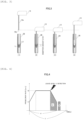
- FIG. 3 is a diagram showing the dispensing operation of the general sample in the automatic analyzer according to the embodiment.
- FIG. 4 is a diagram showing a drop operation of the sample dispensing mechanism during dispensing of the general sample in the automatic analyzer according to the embodiment.
- the dispensing probe 13a is moved onto the sample container 20.
- the dispensing probe 13a is dropped until a distal end 13b of the liquid level detector 27 comes into contact with the liquid level L1.
- the drop operation of the sample dispensing mechanism 13 is performed with acceleration and deceleration as shown in FIG. 4 .
- the dispensing probe 13a After the start of the drop operation, the dispensing probe 13a is dropped while accelerating a drop rate from an initial rate f1 to a rate f2. After the distal end 13b detects the liquid level L1, the drop rate f2 of the dispensing probe 13a starts to be reduced, and stops at the final rate f1 when the distal end 13b is inserted into the sample by a certain amount (h1).
- the insertion amount h1 of the distal end 13b into the sample corresponds to a predetermined area S1 in FIG. 4 .
- the syringe is operated to aspirate the sample.
- the dispensing probe 13a is further dropped. A drop amount at this time corresponds to a predetermined area S2 in FIG. 4 .
- the dispensing probe 13a is elevated after the aspiration is completed.
- a series of dispensing operations shown in FIG. 3 (the dispensing probe 13a of the sample dispensing mechanism 13 and the dispensing probe 14a of the sample dispensing mechanism 14 are dropped and stopped below the liquid level L1, and then further dropped while aspirating the sample) is referred to as a general sample dispensing mode (second mode) in the invention.
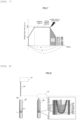
- FIG. 5 is a diagram showing a dispensing operation when the trace amount sample is dispensed by the dispensing sequence of the general sample in the automatic analyzer according to the embodiment.
- FIG. 6 is a diagram showing a trace amount dispensing operation in which a slight elevation operation is added.
- FIG. 7 is a diagram showing a drop operation of the sample dispensing mechanism during dispensing of the trace amount sample.
- FIG. 8 is a diagram showing a state in which the trace amount sample is dispensed using a trace amount sample dispensing sequence.
- a height from a bottom of the sample container 20 to the liquid level L1 is smaller than that in the case of the general sample.
- the distal end 13b is dropped as shown in (2) of FIG. 3 in a case where a height H from the bottom of the sample container 20 to the liquid level L1 is smaller than the insertion amount h1 of the distal end 13b into the sample, and when the distal end 13b is further dropped as shown in (3) of FIG. 3 in a case where the height H is smaller than an insertion amount (insertion amount h1 + further drop amount S2) at the time of completion of the aspiration, the distal end 13b strongly comes into contact with the bottom of the sample container 20.
- the distal end 13b When such strong contact occurs, the distal end 13b is blocked in this state, and an aspiration failure case occurs.
- the device determines that abnormal drop is detected when the distal end 13b excessively comes into contact with the bottom of the container, and the trace amount sample cannot be dispensed.
- the automatic analyzer 100 when the trace amount sample is to be dispensed, in order to prevent the distal end 13b from coming into contact with the bottom of the container during the aspiration of the syringe, it is necessary to reduce the insertion amount of the distal end 13b into the sample to be smaller than that in the general sample dispensing mode.
- the control unit 26 controls the sample dispensing mechanisms 13 and 14 such that, after the liquid level L1 is detected, the dispensing probe 13a of the sample dispensing mechanism 13 and the dispensing probe 14a of the sample dispensing mechanism 14 are dropped and stopped below the liquid level L1, then the dispensing probe 13a of the sample dispensing mechanism 13 and the dispensing probe 14a of the sample dispensing mechanism 14 are elevated and stopped, and then the dispensing probes 13a and 14a are further dropped while aspirating the sample.
- This operation mode is referred to as a trace amount dispensing mode (first mode).
- first mode the details of the trace amount dispensing mode (first mode) will be described with reference to FIG. 6 .
- the control unit 26 of the automatic analyzer 100 executes one of the trace amount dispensing mode (first mode) and the general sample dispensing mode (second mode) according to the type of the sample container 20 identified by the container identifying unit 29.
- the dispensing probe 13a is moved onto the sample container 20.
- the dispensing probe 13a is dropped until the distal end 13b detects the liquid level using the static capacitance type liquid level detector 27.
- This step corresponds to a step of dropping and stopping the distal ends 13b of the dispensing probe 13a of the sample dispensing mechanism 13 and the dispensing probe 14a of the sample dispensing mechanism 14 below the liquid level L1.
- An insertion amount h3 of the distal end 13b into the sample at this time corresponds to a predetermined area S3 in FIG. 7 , and the control unit 26 sets the insertion amount h3 to a position closer to the liquid level L1, that is, sets the insertion amount h3 smaller than the insertion amount h1 when the dispensing probe 13a of the sample dispensing mechanism 13 and the dispensing probe 14a of the sample dispensing mechanism 14 are dropped and stopped below the liquid level L1 in the second mode shown in (2) of FIG. 3 .
- the insertion amount h3 is preferably determined based on a shape of a target container and a minimum sample amount.
- FIG. 7 shows a state of the drop operation of the sample dispensing mechanism 13 at this time.
- a drop rate f3 when the dispensing probe 13a of the sample dispensing mechanism 13 and the dispensing probe 14a of the sample dispensing mechanism 14 are dropped and stopped below the liquid level L1 is set to be smaller than the drop rate f2 when the dispensing probe 13a of the sample dispensing mechanism 13 and the dispensing probe 14a of the sample dispensing mechanism 14 are dropped below the liquid level L1 in the second mode.
- the drop rate f3 is preferably smaller than the drop rate f2 within a range in which the dispensing operation of the sample falls within one analysis cycle even when the dispensing probe 13a of the sample dispensing mechanism 13 and the dispensing probe 14a of the sample dispensing mechanism 14 are elevated and stopped.
- the dispensing probe 13a is slightly elevated.
- An elevation rate at this time can be the above-described rate f1, and is not limited thereto.
- This step corresponds to a step of elevating and stopping the dispensing probe 13a of the sample dispensing mechanism 13 and the dispensing probe 14a of the sample dispensing mechanism 14.
- a time t3 required until the slight elevation operation is completed is small in a slight elevation operation amount, and is basically sufficiently shorter than the time t2 required for the drop operation of the dispensing probe 13a. Therefore, it can be said that the influence on the analysis cycle is small.
- a drop amount at this time corresponds to the predetermined area S2 in FIG. 6 a, and can be the same as that in the general sample dispensing mode.
- the drop amount can be the same.
- the drop amount is not limited to the same amount, and can be reduced within a range in which a specified amount of aspiration is possible without colliding with the bottom surface of the container.
- an insertion amount h of the distal end 13b into the sample is reduced as compared with the general sample mode, and an aspiration operation can be performed while preventing the distal end 13b from strongly coming into contact with the bottom of the container even for the trace amount sample.
- a processing capacity of the device is not reduced.
- the control unit 26 controls the sample dispensing mechanisms 13 and 14 such that, after the liquid level L1 is detected, the dispensing probe 13a of the sample dispensing mechanism 13 and the dispensing probe 14a of the sample dispensing mechanism 14 are dropped and stopped below the liquid level L1, then the dispensing probe 13a of the sample dispensing mechanism 13 and the dispensing probe 14a of the sample dispensing mechanism 14 are elevated and stopped, and then the dispensing probes 13a and 14a are further dropped while aspirating the sample.
- the control unit 26 has the second mode of controlling the sample dispensing mechanisms 13 and 14 such that the dispensing probe 13a of the sample dispensing mechanism 13 and the dispensing probe 14a of the sample dispensing mechanism 14 are dropped and stopped below the liquid level L1, and then further dropped while aspirating the sample.
- the general sample is dispensed in the above-described trace amount dispensing mode, since there is a possibility that a supernatant or a component corresponding thereto is dispensed, it is possible to avoid dispensing the supernatant or the component corresponding thereto when the general sample containing a specified amount of the sample is dispensed in the second mode, and it is possible to reliably perform accurate analysis.
- the control unit 26 sets the insertion amount h3 when the dispensing probe 13a of the sample dispensing mechanism 13 and the dispensing probe 14a of the sample dispensing mechanism 14 are dropped and stopped below the liquid level L1 to a position that is closer to the liquid level L1 than is a position of the insertion amount h1 when the dispensing probe 13a of the sample dispensing mechanism 13 and the dispensing probe 14a of the sample dispensing mechanism 14 are dropped and stopped below the liquid level L1 in the second mode. Therefore, it is possible to prevent the distal end 13b from excessively coming into contact with the bottom of the container and to prevent the abnormal drop detection from being determined.
- the device further includes the container identifying unit 29 that identifies the type of the sample container 20.
- the control unit 26 can selectively use the first mode and the second mode with high accuracy by executing, according to the type of the sample container 20 identified by the container identifying unit 29, one of the second mode and a mode in which the sample dispensing mechanisms 13 and 14 are controlled such that the dispensing probe 13a of the sample dispensing mechanism 13 and the dispensing probe 14a of the sample dispensing mechanism 14 are dropped and stopped below the liquid level L1, then the dispensing probe 13a of the sample dispensing mechanism 13 and the dispensing probe 14a of the sample dispensing mechanism 14 are elevated and stopped, and then the dispensing probes 13a and 14a are further dropped while aspirating the sample.
- control unit 26 elevates the dispensing probe 13a of the sample dispensing mechanism 13 and the dispensing probe 14a of the sample dispensing mechanism 14 in a range in which the distal ends are not separated from the liquid level L1, and thus it is possible to reliably avoid empty aspiration at the time of further dropping during aspiration.
Landscapes
- Physics & Mathematics (AREA)
- Health & Medical Sciences (AREA)
- Life Sciences & Earth Sciences (AREA)
- Chemical & Material Sciences (AREA)
- Analytical Chemistry (AREA)
- Biochemistry (AREA)
- General Health & Medical Sciences (AREA)
- General Physics & Mathematics (AREA)
- Immunology (AREA)
- Pathology (AREA)
- Automatic Analysis And Handling Materials Therefor (AREA)
Applications Claiming Priority (2)
| Application Number | Priority Date | Filing Date | Title |
|---|---|---|---|
| JP2021023092 | 2021-02-17 | ||
| PCT/JP2022/003085 WO2022176556A1 (fr) | 2021-02-17 | 2022-01-27 | Dispositif d'analyse automatique et procédé d'aspiration d'échantillon dans un dispositif d'analyse automatique |
Publications (2)
| Publication Number | Publication Date |
|---|---|
| EP4296685A1 true EP4296685A1 (fr) | 2023-12-27 |
| EP4296685A4 EP4296685A4 (fr) | 2024-12-25 |
Family
ID=82931392
Family Applications (1)
| Application Number | Title | Priority Date | Filing Date |
|---|---|---|---|
| EP22754764.3A Pending EP4296685A4 (fr) | 2021-02-17 | 2022-01-27 | Dispositif d'analyse automatique et procédé d'aspiration d'échantillon dans un dispositif d'analyse automatique |
Country Status (5)
| Country | Link |
|---|---|
| US (1) | US20240142487A1 (fr) |
| EP (1) | EP4296685A4 (fr) |
| JP (1) | JP7494375B2 (fr) |
| CN (1) | CN116724238A (fr) |
| WO (1) | WO2022176556A1 (fr) |
Families Citing this family (3)
| Publication number | Priority date | Publication date | Assignee | Title |
|---|---|---|---|---|
| US20220268796A1 (en) * | 2021-02-19 | 2022-08-25 | Roche Molecular Systems, Inc. | Method of Operating a Laboratory Instrument |
| EP4575508A1 (fr) * | 2023-12-22 | 2025-06-25 | Tecan Trading AG | Procédé, programme informatique et appareil d'automatisation de laboratoire pour aspirer un liquide d'un flacon, contrôleur pour commander l'appareil d'automatisation de laboratoire et support lisible par ordinateur |
| WO2025197528A1 (fr) * | 2024-03-21 | 2025-09-25 | 株式会社日立ハイテク | Dispositif d'analyse automatique |
Family Cites Families (15)
| Publication number | Priority date | Publication date | Assignee | Title |
|---|---|---|---|---|
| JPS5011486A (fr) * | 1973-06-01 | 1975-02-05 | ||
| JP3869112B2 (ja) * | 1998-03-24 | 2007-01-17 | オリンパス株式会社 | 液体吸引方法 |
| JP3451014B2 (ja) * | 1998-06-05 | 2003-09-29 | アロカ株式会社 | ノズル装置 |
| KR100930143B1 (ko) * | 2006-01-27 | 2009-12-07 | 가부시끼가이샤 도시바 | 자동 분석 장치와 프로브 승강 방법 |
| JP5199785B2 (ja) * | 2008-08-20 | 2013-05-15 | ベックマン コールター, インコーポレイテッド | 血液サンプル検出方法、血液サンプル分注方法、血液サンプル分析方法、分注装置および血液サンプル種類検出方法 |
| JP5374092B2 (ja) * | 2008-08-20 | 2013-12-25 | ベックマン コールター, インコーポレイテッド | 自動分析装置および血液サンプル分析方法 |
| JP2010216876A (ja) * | 2009-03-13 | 2010-09-30 | Beckman Coulter Inc | 分析装置および分注プローブ洗浄方法 |
| JP5606843B2 (ja) * | 2010-09-14 | 2014-10-15 | 株式会社東芝 | 自動分析装置 |
| JP5736280B2 (ja) * | 2011-09-06 | 2015-06-17 | 株式会社日立ハイテクノロジーズ | 自動分析装置 |
| JP7075213B2 (ja) * | 2017-12-28 | 2022-05-25 | シスメックス株式会社 | 検体測定方法および検体測定装置 |
| JP7177596B2 (ja) * | 2018-02-27 | 2022-11-24 | シスメックス株式会社 | 検体測定装置及び検体測定方法 |
| JP6995085B2 (ja) * | 2019-05-31 | 2022-01-14 | 日本電子株式会社 | 自動分析装置及び自動分析装置の制御方法 |
| WO2022139793A1 (fr) * | 2020-12-21 | 2022-06-30 | Tecan Trading Ag | Réduction de volume mort et procédé associé |
| WO2023210174A1 (fr) * | 2022-04-27 | 2023-11-02 | 株式会社日立ハイテク | Dispositif d'analyse automatique et procédé de commande pour celui-ci |
| WO2025197528A1 (fr) * | 2024-03-21 | 2025-09-25 | 株式会社日立ハイテク | Dispositif d'analyse automatique |
-
2022
- 2022-01-27 US US18/272,225 patent/US20240142487A1/en active Pending
- 2022-01-27 EP EP22754764.3A patent/EP4296685A4/fr active Pending
- 2022-01-27 WO PCT/JP2022/003085 patent/WO2022176556A1/fr not_active Ceased
- 2022-01-27 CN CN202280010127.4A patent/CN116724238A/zh active Pending
- 2022-01-27 JP JP2023500680A patent/JP7494375B2/ja active Active
Also Published As
| Publication number | Publication date |
|---|---|
| EP4296685A4 (fr) | 2024-12-25 |
| JP7494375B2 (ja) | 2024-06-03 |
| US20240142487A1 (en) | 2024-05-02 |
| JPWO2022176556A1 (fr) | 2022-08-25 |
| CN116724238A (zh) | 2023-09-08 |
| WO2022176556A1 (fr) | 2022-08-25 |
Similar Documents
| Publication | Publication Date | Title |
|---|---|---|
| EP4296685A1 (fr) | Dispositif d'analyse automatique et procédé d'aspiration d'échantillon dans un dispositif d'analyse automatique | |
| JP5178830B2 (ja) | 自動分析装置 | |
| US9513305B2 (en) | Multiple cleaning stations for a dispensing probe | |
| EP3415921B1 (fr) | Analyseur automatisé | |
| US11971426B2 (en) | Automatic analysis device | |
| US11965903B2 (en) | Automated analyzer and method of controlling automated analyzer | |
| CN113785205B (zh) | 自动分析装置 | |
| US20190011471A1 (en) | Sample Rack Conveyance Device, Automatic Analysis System, and Sample Rack Recovery Method for Sample Rack Conveyance Device | |
| JP2011242264A (ja) | 自動分析装置 | |
| US20190033334A1 (en) | Sample Rack Conveyance Device and Automatic Analysis System | |
| JP4416579B2 (ja) | 自動分析装置 | |
| EP3971579B1 (fr) | Appareil d'analyse automatique | |
| JPH10232234A (ja) | 自動分析装置 | |
| US20130079919A1 (en) | Sample processing apparatus and a method of controlling a sample processing apparatus | |
| EP3578994A1 (fr) | Analyseur automatique | |
| JP5487275B2 (ja) | 自動分析装置 | |
| JP6791690B2 (ja) | 自動分析装置 | |
| JP2005164506A (ja) | 自動分析装置 | |
| JP3109443U (ja) | 自動分析装置 | |
| US8845964B2 (en) | Sample analyzer and method for controling a sample analyzer | |
| JP7054616B2 (ja) | 自動分析装置 | |
| US20230069747A1 (en) | Automatic analyzing apparatus | |
| JP7768728B2 (ja) | 自動分析装置および方法 | |
| EP4733769A1 (fr) | Dispositif d'analyse automatique | |
| EP4379390A1 (fr) | Dispositif d'analyse automatique et procédé de guidage utilisé dans un dispositif d'analyse automatique |
Legal Events
| Date | Code | Title | Description |
|---|---|---|---|
| STAA | Information on the status of an ep patent application or granted ep patent |
Free format text: STATUS: THE INTERNATIONAL PUBLICATION HAS BEEN MADE |
|
| PUAI | Public reference made under article 153(3) epc to a published international application that has entered the european phase |
Free format text: ORIGINAL CODE: 0009012 |
|
| STAA | Information on the status of an ep patent application or granted ep patent |
Free format text: STATUS: REQUEST FOR EXAMINATION WAS MADE |
|
| 17P | Request for examination filed |
Effective date: 20230918 |
|
| AK | Designated contracting states |
Kind code of ref document: A1 Designated state(s): AL AT BE BG CH CY CZ DE DK EE ES FI FR GB GR HR HU IE IS IT LI LT LU LV MC MK MT NL NO PL PT RO RS SE SI SK SM TR |
|
| DAV | Request for validation of the european patent (deleted) | ||
| DAX | Request for extension of the european patent (deleted) | ||
| A4 | Supplementary search report drawn up and despatched |
Effective date: 20241125 |
|
| RIC1 | Information provided on ipc code assigned before grant |
Ipc: G01N 35/10 20060101AFI20241119BHEP |
|
| STAA | Information on the status of an ep patent application or granted ep patent |
Free format text: STATUS: EXAMINATION IS IN PROGRESS |