EP4316676A1 - Procédé de revêtement d'un article, utilisation pour le revêtement d'un article, et composition polymérisable - Google Patents
Procédé de revêtement d'un article, utilisation pour le revêtement d'un article, et composition polymérisable Download PDFInfo
- Publication number
- EP4316676A1 EP4316676A1 EP22779432.8A EP22779432A EP4316676A1 EP 4316676 A1 EP4316676 A1 EP 4316676A1 EP 22779432 A EP22779432 A EP 22779432A EP 4316676 A1 EP4316676 A1 EP 4316676A1
- Authority
- EP
- European Patent Office
- Prior art keywords
- polymerizable monomer
- polymerizable
- article
- polymerizable composition
- solvent
- Prior art date
- Legal status (The legal status is an assumption and is not a legal conclusion. Google has not performed a legal analysis and makes no representation as to the accuracy of the status listed.)
- Pending
Links
- 239000000203 mixture Substances 0.000 title claims abstract description 180
- 239000011248 coating agent Substances 0.000 title claims abstract description 91
- 238000000576 coating method Methods 0.000 title claims abstract description 89
- 238000000034 method Methods 0.000 title claims abstract description 57
- 239000000178 monomer Substances 0.000 claims abstract description 216
- 239000002904 solvent Substances 0.000 claims abstract description 98
- 239000007788 liquid Substances 0.000 claims abstract description 58
- 239000007787 solid Substances 0.000 claims abstract description 10
- 230000000379 polymerizing effect Effects 0.000 claims abstract description 6
- 230000000844 anti-bacterial effect Effects 0.000 claims description 67
- 230000000840 anti-viral effect Effects 0.000 claims description 65
- 125000000524 functional group Chemical group 0.000 claims description 22
- 230000001747 exhibiting effect Effects 0.000 claims description 19
- 238000005507 spraying Methods 0.000 claims description 12
- 238000003892 spreading Methods 0.000 claims description 7
- 239000000243 solution Substances 0.000 description 42
- 238000002156 mixing Methods 0.000 description 35
- 239000004094 surface-active agent Substances 0.000 description 23
- 230000014759 maintenance of location Effects 0.000 description 21
- 238000006116 polymerization reaction Methods 0.000 description 19
- 239000007864 aqueous solution Substances 0.000 description 18
- 239000006185 dispersion Substances 0.000 description 17
- VIYWVRIBDZTTMH-UHFFFAOYSA-N 2-[4-[2-[4-[2-(2-methylprop-2-enoyloxy)ethoxy]phenyl]propan-2-yl]phenoxy]ethyl 2-methylprop-2-enoate Chemical compound C1=CC(OCCOC(=O)C(=C)C)=CC=C1C(C)(C)C1=CC=C(OCCOC(=O)C(C)=C)C=C1 VIYWVRIBDZTTMH-UHFFFAOYSA-N 0.000 description 14
- 230000000052 comparative effect Effects 0.000 description 14
- DNIAPMSPPWPWGF-UHFFFAOYSA-N Propylene glycol Chemical compound CC(O)CO DNIAPMSPPWPWGF-UHFFFAOYSA-N 0.000 description 12
- PEDCQBHIVMGVHV-UHFFFAOYSA-N Glycerol Natural products OCC(O)CO PEDCQBHIVMGVHV-UHFFFAOYSA-N 0.000 description 11
- NIXOWILDQLNWCW-UHFFFAOYSA-N acrylic acid group Chemical group C(C=C)(=O)O NIXOWILDQLNWCW-UHFFFAOYSA-N 0.000 description 11
- XLYOFNOQVPJJNP-UHFFFAOYSA-N water Substances O XLYOFNOQVPJJNP-UHFFFAOYSA-N 0.000 description 11
- LFQSCWFLJHTTHZ-UHFFFAOYSA-N Ethanol Chemical compound CCO LFQSCWFLJHTTHZ-UHFFFAOYSA-N 0.000 description 10
- 150000003512 tertiary amines Chemical class 0.000 description 10
- 230000007774 longterm Effects 0.000 description 9
- 239000003112 inhibitor Substances 0.000 description 8
- 239000007921 spray Substances 0.000 description 8
- 235000011187 glycerol Nutrition 0.000 description 7
- VNQXSTWCDUXYEZ-UHFFFAOYSA-N 1,7,7-trimethylbicyclo[2.2.1]heptane-2,3-dione Chemical compound C1CC2(C)C(=O)C(=O)C1C2(C)C VNQXSTWCDUXYEZ-UHFFFAOYSA-N 0.000 description 6
- 239000012153 distilled water Substances 0.000 description 6
- FZUGPQWGEGAKET-UHFFFAOYSA-N parbenate Chemical compound CCOC(=O)C1=CC=C(N(C)C)C=C1 FZUGPQWGEGAKET-UHFFFAOYSA-N 0.000 description 6
- 235000019333 sodium laurylsulphate Nutrition 0.000 description 6
- 238000003756 stirring Methods 0.000 description 6
- DBMJMQXJHONAFJ-UHFFFAOYSA-M Sodium laurylsulphate Chemical compound [Na+].CCCCCCCCCCCCOS([O-])(=O)=O DBMJMQXJHONAFJ-UHFFFAOYSA-M 0.000 description 5
- -1 glycerin fatty acid esters Chemical class 0.000 description 5
- NIXOWILDQLNWCW-UHFFFAOYSA-M Acrylate Chemical compound [O-]C(=O)C=C NIXOWILDQLNWCW-UHFFFAOYSA-M 0.000 description 4
- 239000012298 atmosphere Substances 0.000 description 4
- 150000001875 compounds Chemical class 0.000 description 4
- 238000004898 kneading Methods 0.000 description 4
- 239000000463 material Substances 0.000 description 4
- 230000003287 optical effect Effects 0.000 description 4
- 150000003242 quaternary ammonium salts Chemical group 0.000 description 4
- LYCAIKOWRPUZTN-UHFFFAOYSA-N Ethylene glycol Chemical compound OCCO LYCAIKOWRPUZTN-UHFFFAOYSA-N 0.000 description 3
- 125000000217 alkyl group Chemical group 0.000 description 3
- 235000014113 dietary fatty acids Nutrition 0.000 description 3
- 230000000694 effects Effects 0.000 description 3
- 229930195729 fatty acid Natural products 0.000 description 3
- 239000000194 fatty acid Substances 0.000 description 3
- JEGUKCSWCFPDGT-UHFFFAOYSA-N h2o hydrate Chemical compound O.O JEGUKCSWCFPDGT-UHFFFAOYSA-N 0.000 description 3
- VLKZOEOYAKHREP-UHFFFAOYSA-N n-Hexane Chemical compound CCCCCC VLKZOEOYAKHREP-UHFFFAOYSA-N 0.000 description 3
- 150000003839 salts Chemical group 0.000 description 3
- 238000005303 weighing Methods 0.000 description 3
- BTLXPCBPYBNQNR-UHFFFAOYSA-N 1-hydroxyanthraquinone Chemical compound O=C1C2=CC=CC=C2C(=O)C2=C1C=CC=C2O BTLXPCBPYBNQNR-UHFFFAOYSA-N 0.000 description 2
- RBGUKBSLNOTVCD-UHFFFAOYSA-N 1-methylanthracene-9,10-dione Chemical compound O=C1C2=CC=CC=C2C(=O)C2=C1C=CC=C2C RBGUKBSLNOTVCD-UHFFFAOYSA-N 0.000 description 2
- JKNCOURZONDCGV-UHFFFAOYSA-N 2-(dimethylamino)ethyl 2-methylprop-2-enoate Chemical compound CN(C)CCOC(=O)C(C)=C JKNCOURZONDCGV-UHFFFAOYSA-N 0.000 description 2
- CSCPPACGZOOCGX-UHFFFAOYSA-N Acetone Chemical compound CC(C)=O CSCPPACGZOOCGX-UHFFFAOYSA-N 0.000 description 2
- 241000894006 Bacteria Species 0.000 description 2
- JLTDJTHDQAWBAV-UHFFFAOYSA-N N,N-dimethylaniline Chemical compound CN(C)C1=CC=CC=C1 JLTDJTHDQAWBAV-UHFFFAOYSA-N 0.000 description 2
- 241001135549 Porcine epidemic diarrhea virus Species 0.000 description 2
- BLRPTPMANUNPDV-UHFFFAOYSA-N Silane Chemical compound [SiH4] BLRPTPMANUNPDV-UHFFFAOYSA-N 0.000 description 2
- 241000073709 Swine enteric coronavirus Species 0.000 description 2
- 241000700605 Viruses Species 0.000 description 2
- ULQMPOIOSDXIGC-UHFFFAOYSA-N [2,2-dimethyl-3-(2-methylprop-2-enoyloxy)propyl] 2-methylprop-2-enoate Chemical compound CC(=C)C(=O)OCC(C)(C)COC(=O)C(C)=C ULQMPOIOSDXIGC-UHFFFAOYSA-N 0.000 description 2
- 239000003443 antiviral agent Substances 0.000 description 2
- 125000001797 benzyl group Chemical group [H]C1=C([H])C([H])=C(C([H])=C1[H])C([H])([H])* 0.000 description 2
- ZGCZDEVLEULNLJ-UHFFFAOYSA-M benzyl-dimethyl-(2-prop-2-enoyloxyethyl)azanium;chloride Chemical compound [Cl-].C=CC(=O)OCC[N+](C)(C)CC1=CC=CC=C1 ZGCZDEVLEULNLJ-UHFFFAOYSA-M 0.000 description 2
- QUZSUMLPWDHKCJ-UHFFFAOYSA-N bisphenol A dimethacrylate Chemical class C1=CC(OC(=O)C(=C)C)=CC=C1C(C)(C)C1=CC=C(OC(=O)C(C)=C)C=C1 QUZSUMLPWDHKCJ-UHFFFAOYSA-N 0.000 description 2
- 235000010354 butylated hydroxytoluene Nutrition 0.000 description 2
- 239000000919 ceramic Substances 0.000 description 2
- 238000005516 engineering process Methods 0.000 description 2
- 238000001704 evaporation Methods 0.000 description 2
- 239000000835 fiber Substances 0.000 description 2
- 239000000945 filler Substances 0.000 description 2
- 239000011521 glass Substances 0.000 description 2
- 239000012535 impurity Substances 0.000 description 2
- 239000002609 medium Substances 0.000 description 2
- 229910052751 metal Inorganic materials 0.000 description 2
- 239000002184 metal Substances 0.000 description 2
- 150000002739 metals Chemical class 0.000 description 2
- 230000007935 neutral effect Effects 0.000 description 2
- 239000002245 particle Substances 0.000 description 2
- 239000008055 phosphate buffer solution Substances 0.000 description 2
- 239000004033 plastic Substances 0.000 description 2
- 229920003023 plastic Polymers 0.000 description 2
- 230000005855 radiation Effects 0.000 description 2
- 229910000077 silane Inorganic materials 0.000 description 2
- 239000000126 substance Substances 0.000 description 2
- 150000003510 tertiary aliphatic amines Chemical class 0.000 description 2
- 150000003513 tertiary aromatic amines Chemical class 0.000 description 2
- FZGFBJMPSHGTRQ-UHFFFAOYSA-M trimethyl(2-prop-2-enoyloxyethyl)azanium;chloride Chemical compound [Cl-].C[N+](C)(C)CCOC(=O)C=C FZGFBJMPSHGTRQ-UHFFFAOYSA-M 0.000 description 2
- RRHXZLALVWBDKH-UHFFFAOYSA-M trimethyl-[2-(2-methylprop-2-enoyloxy)ethyl]azanium;chloride Chemical compound [Cl-].CC(=C)C(=O)OCC[N+](C)(C)C RRHXZLALVWBDKH-UHFFFAOYSA-M 0.000 description 2
- 239000002023 wood Substances 0.000 description 2
- PUPZLCDOIYMWBV-UHFFFAOYSA-N (+/-)-1,3-Butanediol Chemical compound CC(O)CCO PUPZLCDOIYMWBV-UHFFFAOYSA-N 0.000 description 1
- MSAHTMIQULFMRG-UHFFFAOYSA-N 1,2-diphenyl-2-propan-2-yloxyethanone Chemical compound C=1C=CC=CC=1C(OC(C)C)C(=O)C1=CC=CC=C1 MSAHTMIQULFMRG-UHFFFAOYSA-N 0.000 description 1
- DKEGCUDAFWNSSO-UHFFFAOYSA-N 1,8-dibromooctane Chemical compound BrCCCCCCCCBr DKEGCUDAFWNSSO-UHFFFAOYSA-N 0.000 description 1
- CXTPIHZYOGDSLV-UHFFFAOYSA-N 1-bromoanthracene-9,10-dione Chemical compound O=C1C2=CC=CC=C2C(=O)C2=C1C=CC=C2Br CXTPIHZYOGDSLV-UHFFFAOYSA-N 0.000 description 1
- BOCJQSFSGAZAPQ-UHFFFAOYSA-N 1-chloroanthracene-9,10-dione Chemical compound O=C1C2=CC=CC=C2C(=O)C2=C1C=CC=C2Cl BOCJQSFSGAZAPQ-UHFFFAOYSA-N 0.000 description 1
- DRIRMYPZOAOUPR-UHFFFAOYSA-N 10,10-dioxothioxanthen-9-one Chemical compound C1=CC=C2C(=O)C3=CC=CC=C3S(=O)(=O)C2=C1 DRIRMYPZOAOUPR-UHFFFAOYSA-N 0.000 description 1
- YEZOVIIHKKPUOS-UHFFFAOYSA-N 10-oxothioxanthen-9-one Chemical compound C1=CC=C2C(=O)C3=CC=CC=C3S(=O)C2=C1 YEZOVIIHKKPUOS-UHFFFAOYSA-N 0.000 description 1
- SPSPIUSUWPLVKD-UHFFFAOYSA-N 2,3-dibutyl-6-methylphenol Chemical compound CCCCC1=CC=C(C)C(O)=C1CCCC SPSPIUSUWPLVKD-UHFFFAOYSA-N 0.000 description 1
- BRKORVYTKKLNKX-UHFFFAOYSA-N 2,4-di(propan-2-yl)thioxanthen-9-one Chemical compound C1=CC=C2C(=O)C3=CC(C(C)C)=CC(C(C)C)=C3SC2=C1 BRKORVYTKKLNKX-UHFFFAOYSA-N 0.000 description 1
- BTJPUDCSZVCXFQ-UHFFFAOYSA-N 2,4-diethylthioxanthen-9-one Chemical compound C1=CC=C2C(=O)C3=CC(CC)=CC(CC)=C3SC2=C1 BTJPUDCSZVCXFQ-UHFFFAOYSA-N 0.000 description 1
- OPLCSTZDXXUYDU-UHFFFAOYSA-N 2,4-dimethyl-6-tert-butylphenol Chemical compound CC1=CC(C)=C(O)C(C(C)(C)C)=C1 OPLCSTZDXXUYDU-UHFFFAOYSA-N 0.000 description 1
- LCHAFMWSFCONOO-UHFFFAOYSA-N 2,4-dimethylthioxanthen-9-one Chemical compound C1=CC=C2C(=O)C3=CC(C)=CC(C)=C3SC2=C1 LCHAFMWSFCONOO-UHFFFAOYSA-N 0.000 description 1
- HWSSEYVMGDIFMH-UHFFFAOYSA-N 2-[2-[2-(2-methylprop-2-enoyloxy)ethoxy]ethoxy]ethyl 2-methylprop-2-enoate Chemical compound CC(=C)C(=O)OCCOCCOCCOC(=O)C(C)=C HWSSEYVMGDIFMH-UHFFFAOYSA-N 0.000 description 1
- JUVSRZCUMWZBFK-UHFFFAOYSA-N 2-[n-(2-hydroxyethyl)-4-methylanilino]ethanol Chemical compound CC1=CC=C(N(CCO)CCO)C=C1 JUVSRZCUMWZBFK-UHFFFAOYSA-N 0.000 description 1
- SQOUGRMFFXWSRY-UHFFFAOYSA-N 2-chloro-7-(trifluoromethyl)thioxanthen-9-one Chemical compound C1=C(Cl)C=C2C(=O)C3=CC(C(F)(F)F)=CC=C3SC2=C1 SQOUGRMFFXWSRY-UHFFFAOYSA-N 0.000 description 1
- MPNXSZJPSVBLHP-UHFFFAOYSA-N 2-chloro-n-phenylpyridine-3-carboxamide Chemical compound ClC1=NC=CC=C1C(=O)NC1=CC=CC=C1 MPNXSZJPSVBLHP-UHFFFAOYSA-N 0.000 description 1
- FPKCTSIVDAWGFA-UHFFFAOYSA-N 2-chloroanthracene-9,10-dione Chemical compound C1=CC=C2C(=O)C3=CC(Cl)=CC=C3C(=O)C2=C1 FPKCTSIVDAWGFA-UHFFFAOYSA-N 0.000 description 1
- KMNCBSZOIQAUFX-UHFFFAOYSA-N 2-ethoxy-1,2-diphenylethanone Chemical compound C=1C=CC=CC=1C(OCC)C(=O)C1=CC=CC=C1 KMNCBSZOIQAUFX-UHFFFAOYSA-N 0.000 description 1
- SJEBAWHUJDUKQK-UHFFFAOYSA-N 2-ethylanthraquinone Chemical compound C1=CC=C2C(=O)C3=CC(CC)=CC=C3C(=O)C2=C1 SJEBAWHUJDUKQK-UHFFFAOYSA-N 0.000 description 1
- BQZJOQXSCSZQPS-UHFFFAOYSA-N 2-methoxy-1,2-diphenylethanone Chemical compound C=1C=CC=CC=1C(OC)C(=O)C1=CC=CC=C1 BQZJOQXSCSZQPS-UHFFFAOYSA-N 0.000 description 1
- ZWVCZSFSZUTSCR-UHFFFAOYSA-N 2-methylprop-2-enoic acid;1-phenoxyethane-1,2-diol Chemical compound CC(=C)C(O)=O.OCC(O)OC1=CC=CC=C1 ZWVCZSFSZUTSCR-UHFFFAOYSA-N 0.000 description 1
- MYISVPVWAQRUTL-UHFFFAOYSA-N 2-methylthioxanthen-9-one Chemical compound C1=CC=C2C(=O)C3=CC(C)=CC=C3SC2=C1 MYISVPVWAQRUTL-UHFFFAOYSA-N 0.000 description 1
- DYRJLHNVMSBZLR-UHFFFAOYSA-N 2-nitrothioxanthen-9-one Chemical compound C1=CC=C2C(=O)C3=CC([N+](=O)[O-])=CC=C3SC2=C1 DYRJLHNVMSBZLR-UHFFFAOYSA-N 0.000 description 1
- KTALPKYXQZGAEG-UHFFFAOYSA-N 2-propan-2-ylthioxanthen-9-one Chemical compound C1=CC=C2C(=O)C3=CC(C(C)C)=CC=C3SC2=C1 KTALPKYXQZGAEG-UHFFFAOYSA-N 0.000 description 1
- VVBLNCFGVYUYGU-UHFFFAOYSA-N 4,4'-Bis(dimethylamino)benzophenone Chemical compound C1=CC(N(C)C)=CC=C1C(=O)C1=CC=C(N(C)C)C=C1 VVBLNCFGVYUYGU-UHFFFAOYSA-N 0.000 description 1
- GZEYLLPOQRZUDF-UHFFFAOYSA-N 7-(dimethylamino)-4-methylchromen-2-one Chemical compound CC1=CC(=O)OC2=CC(N(C)C)=CC=C21 GZEYLLPOQRZUDF-UHFFFAOYSA-N 0.000 description 1
- NLZUEZXRPGMBCV-UHFFFAOYSA-N Butylhydroxytoluene Chemical compound CC1=CC(C(C)(C)C)=C(O)C(C(C)(C)C)=C1 NLZUEZXRPGMBCV-UHFFFAOYSA-N 0.000 description 1
- 208000025721 COVID-19 Diseases 0.000 description 1
- QSJXEFYPDANLFS-UHFFFAOYSA-N Diacetyl Chemical group CC(=O)C(C)=O QSJXEFYPDANLFS-UHFFFAOYSA-N 0.000 description 1
- OFSAUHSCHWRZKM-UHFFFAOYSA-N Padimate A Chemical compound CC(C)CCOC(=O)C1=CC=C(N(C)C)C=C1 OFSAUHSCHWRZKM-UHFFFAOYSA-N 0.000 description 1
- 239000002202 Polyethylene glycol Substances 0.000 description 1
- VYPSYNLAJGMNEJ-UHFFFAOYSA-N Silicium dioxide Chemical compound O=[Si]=O VYPSYNLAJGMNEJ-UHFFFAOYSA-N 0.000 description 1
- 241000194019 Streptococcus mutans Species 0.000 description 1
- GSEJCLTVZPLZKY-UHFFFAOYSA-N Triethanolamine Chemical compound OCCN(CCO)CCO GSEJCLTVZPLZKY-UHFFFAOYSA-N 0.000 description 1
- NJSSICCENMLTKO-HRCBOCMUSA-N [(1r,2s,4r,5r)-3-hydroxy-4-(4-methylphenyl)sulfonyloxy-6,8-dioxabicyclo[3.2.1]octan-2-yl] 4-methylbenzenesulfonate Chemical compound C1=CC(C)=CC=C1S(=O)(=O)O[C@H]1C(O)[C@@H](OS(=O)(=O)C=2C=CC(C)=CC=2)[C@@H]2OC[C@H]1O2 NJSSICCENMLTKO-HRCBOCMUSA-N 0.000 description 1
- UKMBKKFLJMFCSA-UHFFFAOYSA-N [3-hydroxy-2-(2-methylprop-2-enoyloxy)propyl] 2-methylprop-2-enoate Chemical compound CC(=C)C(=O)OCC(CO)OC(=O)C(C)=C UKMBKKFLJMFCSA-UHFFFAOYSA-N 0.000 description 1
- GUCYFKSBFREPBC-UHFFFAOYSA-N [phenyl-(2,4,6-trimethylbenzoyl)phosphoryl]-(2,4,6-trimethylphenyl)methanone Chemical compound CC1=CC(C)=CC(C)=C1C(=O)P(=O)(C=1C=CC=CC=1)C(=O)C1=C(C)C=C(C)C=C1C GUCYFKSBFREPBC-UHFFFAOYSA-N 0.000 description 1
- 238000010521 absorption reaction Methods 0.000 description 1
- PYKYMHQGRFAEBM-UHFFFAOYSA-N anthraquinone Natural products CCC(=O)c1c(O)c2C(=O)C3C(C=CC=C3O)C(=O)c2cc1CC(=O)OC PYKYMHQGRFAEBM-UHFFFAOYSA-N 0.000 description 1
- 150000004056 anthraquinones Chemical class 0.000 description 1
- QVGXLLKOCUKJST-UHFFFAOYSA-N atomic oxygen Chemical compound [O] QVGXLLKOCUKJST-UHFFFAOYSA-N 0.000 description 1
- LHMRXAIRPKSGDE-UHFFFAOYSA-N benzo[a]anthracene-7,12-dione Chemical compound C1=CC2=CC=CC=C2C2=C1C(=O)C1=CC=CC=C1C2=O LHMRXAIRPKSGDE-UHFFFAOYSA-N 0.000 description 1
- RWCCWEUUXYIKHB-UHFFFAOYSA-N benzophenone Chemical compound C=1C=CC=CC=1C(=O)C1=CC=CC=C1 RWCCWEUUXYIKHB-UHFFFAOYSA-N 0.000 description 1
- 239000012965 benzophenone Substances 0.000 description 1
- 239000007621 bhi medium Substances 0.000 description 1
- VYHBFRJRBHMIQZ-UHFFFAOYSA-N bis[4-(diethylamino)phenyl]methanone Chemical compound C1=CC(N(CC)CC)=CC=C1C(=O)C1=CC=C(N(CC)CC)C=C1 VYHBFRJRBHMIQZ-UHFFFAOYSA-N 0.000 description 1
- 229930006711 bornane-2,3-dione Natural products 0.000 description 1
- WQHCGPGATAYRLN-UHFFFAOYSA-N chloromethane;2-(dimethylamino)ethyl prop-2-enoate Chemical compound ClC.CN(C)CCOC(=O)C=C WQHCGPGATAYRLN-UHFFFAOYSA-N 0.000 description 1
- AWBODRPXZKRHKS-UHFFFAOYSA-N chloromethane;n-[3-(dimethylamino)propyl]prop-2-enamide Chemical compound ClC.CN(C)CCCNC(=O)C=C AWBODRPXZKRHKS-UHFFFAOYSA-N 0.000 description 1
- CEJFYGPXPSZIID-UHFFFAOYSA-N chloromethylbenzene;2-(dimethylamino)ethyl prop-2-enoate Chemical compound ClCC1=CC=CC=C1.CN(C)CCOC(=O)C=C CEJFYGPXPSZIID-UHFFFAOYSA-N 0.000 description 1
- 230000003247 decreasing effect Effects 0.000 description 1
- 238000000151 deposition Methods 0.000 description 1
- IOMDIVZAGXCCAC-UHFFFAOYSA-M diethyl-bis(prop-2-enyl)azanium;chloride Chemical compound [Cl-].C=CC[N+](CC)(CC)CC=C IOMDIVZAGXCCAC-UHFFFAOYSA-M 0.000 description 1
- VFHVQBAGLAREND-UHFFFAOYSA-N diphenylphosphoryl-(2,4,6-trimethylphenyl)methanone Chemical compound CC1=CC(C)=CC(C)=C1C(=O)P(=O)(C=1C=CC=CC=1)C1=CC=CC=C1 VFHVQBAGLAREND-UHFFFAOYSA-N 0.000 description 1
- XPKFLEVLLPKCIW-UHFFFAOYSA-N ethyl 4-(diethylamino)benzoate Chemical compound CCOC(=O)C1=CC=C(N(CC)CC)C=C1 XPKFLEVLLPKCIW-UHFFFAOYSA-N 0.000 description 1
- MKVYSRNJLWTVIK-UHFFFAOYSA-N ethyl carbamate;2-methylprop-2-enoic acid Chemical compound CCOC(N)=O.CC(=C)C(O)=O.CC(=C)C(O)=O MKVYSRNJLWTVIK-UHFFFAOYSA-N 0.000 description 1
- 238000011156 evaluation Methods 0.000 description 1
- 238000009472 formulation Methods 0.000 description 1
- 230000007062 hydrolysis Effects 0.000 description 1
- 238000006460 hydrolysis reaction Methods 0.000 description 1
- 230000001771 impaired effect Effects 0.000 description 1
- DBQGARDMYOMOOS-UHFFFAOYSA-N methyl 4-(dimethylamino)benzoate Chemical compound COC(=O)C1=CC=C(N(C)C)C=C1 DBQGARDMYOMOOS-UHFFFAOYSA-N 0.000 description 1
- 239000003595 mist Substances 0.000 description 1
- 239000004570 mortar (masonry) Substances 0.000 description 1
- JZBZLRKFJWQZHU-UHFFFAOYSA-N n,n,2,4,6-pentamethylaniline Chemical compound CN(C)C1=C(C)C=C(C)C=C1C JZBZLRKFJWQZHU-UHFFFAOYSA-N 0.000 description 1
- DZXAIYQRCQALGE-UHFFFAOYSA-N n,n,2,4-tetramethylaniline Chemical compound CN(C)C1=CC=C(C)C=C1C DZXAIYQRCQALGE-UHFFFAOYSA-N 0.000 description 1
- GYVGXEWAOAAJEU-UHFFFAOYSA-N n,n,4-trimethylaniline Chemical compound CN(C)C1=CC=C(C)C=C1 GYVGXEWAOAAJEU-UHFFFAOYSA-N 0.000 description 1
- ISGXOWLMGOPVPB-UHFFFAOYSA-N n,n-dibenzylaniline Chemical compound C=1C=CC=CC=1CN(C=1C=CC=CC=1)CC1=CC=CC=C1 ISGXOWLMGOPVPB-UHFFFAOYSA-N 0.000 description 1
- IRRRAJMWQGSBKY-UHFFFAOYSA-N n,n-diethyl-2,4,6-trimethylaniline Chemical compound CCN(CC)C1=C(C)C=C(C)C=C1C IRRRAJMWQGSBKY-UHFFFAOYSA-N 0.000 description 1
- HKJNHYJTVPWVGV-UHFFFAOYSA-N n,n-diethyl-4-methylaniline Chemical compound CCN(CC)C1=CC=C(C)C=C1 HKJNHYJTVPWVGV-UHFFFAOYSA-N 0.000 description 1
- OTLDLKLSNZMTTA-UHFFFAOYSA-N octahydro-1h-4,7-methanoindene-1,5-diyldimethanol Chemical compound C1C2C3C(CO)CCC3C1C(CO)C2 OTLDLKLSNZMTTA-UHFFFAOYSA-N 0.000 description 1
- 239000003960 organic solvent Substances 0.000 description 1
- 229910052760 oxygen Inorganic materials 0.000 description 1
- 239000001301 oxygen Substances 0.000 description 1
- LXTZRIBXKVRLOA-UHFFFAOYSA-N padimate a Chemical compound CCCCCOC(=O)C1=CC=C(N(C)C)C=C1 LXTZRIBXKVRLOA-UHFFFAOYSA-N 0.000 description 1
- 238000010422 painting Methods 0.000 description 1
- 239000000049 pigment Substances 0.000 description 1
- 229920001223 polyethylene glycol Polymers 0.000 description 1
- 238000002360 preparation method Methods 0.000 description 1
- MILWSGRFEGYSGM-UHFFFAOYSA-N propane-1,2-diol;propane-1,2,3-triol Chemical compound CC(O)CO.OCC(O)CO MILWSGRFEGYSGM-UHFFFAOYSA-N 0.000 description 1
- KSOMQZOHPWJPMM-UHFFFAOYSA-N propyl 4-(diethylamino)benzoate Chemical compound CCCOC(=O)C1=CC=C(N(CC)CC)C=C1 KSOMQZOHPWJPMM-UHFFFAOYSA-N 0.000 description 1
- SCNYCWQULCHALD-UHFFFAOYSA-N propyl 4-(dimethylamino)benzoate Chemical compound CCCOC(=O)C1=CC=C(N(C)C)C=C1 SCNYCWQULCHALD-UHFFFAOYSA-N 0.000 description 1
- 230000000717 retained effect Effects 0.000 description 1
- 239000002210 silicon-based material Substances 0.000 description 1
- 230000002123 temporal effect Effects 0.000 description 1
- YRHRIQCWCFGUEQ-UHFFFAOYSA-N thioxanthen-9-one Chemical compound C1=CC=C2C(=O)C3=CC=CC=C3SC2=C1 YRHRIQCWCFGUEQ-UHFFFAOYSA-N 0.000 description 1
- OEIXGLMQZVLOQX-UHFFFAOYSA-N trimethyl-[3-(prop-2-enoylamino)propyl]azanium;chloride Chemical compound [Cl-].C[N+](C)(C)CCCNC(=O)C=C OEIXGLMQZVLOQX-UHFFFAOYSA-N 0.000 description 1
Images


Classifications
-
- B—PERFORMING OPERATIONS; TRANSPORTING
- B05—SPRAYING OR ATOMISING IN GENERAL; APPLYING FLUENT MATERIALS TO SURFACES, IN GENERAL
- B05D—PROCESSES FOR APPLYING FLUENT MATERIALS TO SURFACES, IN GENERAL
- B05D7/00—Processes, other than flocking, specially adapted for applying liquids or other fluent materials to particular surfaces or for applying particular liquids or other fluent materials
- B05D7/24—Processes, other than flocking, specially adapted for applying liquids or other fluent materials to particular surfaces or for applying particular liquids or other fluent materials for applying particular liquids or other fluent materials
-
- C—CHEMISTRY; METALLURGY
- C09—DYES; PAINTS; POLISHES; NATURAL RESINS; ADHESIVES; COMPOSITIONS NOT OTHERWISE PROVIDED FOR; APPLICATIONS OF MATERIALS NOT OTHERWISE PROVIDED FOR
- C09D—COATING COMPOSITIONS, e.g. PAINTS, VARNISHES OR LACQUERS; FILLING PASTES; CHEMICAL PAINT OR INK REMOVERS; INKS; CORRECTING FLUIDS; WOODSTAINS; PASTES OR SOLIDS FOR COLOURING OR PRINTING; USE OF MATERIALS THEREFOR
- C09D5/00—Coating compositions, e.g. paints, varnishes or lacquers, characterised by their physical nature or the effects produced; Filling pastes
- C09D5/14—Paints containing biocides, e.g. fungicides, insecticides or pesticides
-
- A—HUMAN NECESSITIES
- A01—AGRICULTURE; FORESTRY; ANIMAL HUSBANDRY; HUNTING; TRAPPING; FISHING
- A01N—PRESERVATION OF BODIES OF HUMANS OR ANIMALS OR PLANTS OR PARTS THEREOF; BIOCIDES, e.g. AS DISINFECTANTS, AS PESTICIDES OR AS HERBICIDES; PEST REPELLANTS OR ATTRACTANTS; PLANT GROWTH REGULATORS
- A01N37/00—Biocides, pest repellants or attractants, or plant growth regulators containing organic compounds containing a carbon atom having three bonds to hetero atoms with at the most two bonds to halogen, e.g. carboxylic acids
- A01N37/18—Biocides, pest repellants or attractants, or plant growth regulators containing organic compounds containing a carbon atom having three bonds to hetero atoms with at the most two bonds to halogen, e.g. carboxylic acids containing the group —CO—N<, e.g. carboxylic acid amides or imides; Thio analogues thereof
- A01N37/20—Biocides, pest repellants or attractants, or plant growth regulators containing organic compounds containing a carbon atom having three bonds to hetero atoms with at the most two bonds to halogen, e.g. carboxylic acids containing the group —CO—N<, e.g. carboxylic acid amides or imides; Thio analogues thereof containing the group, wherein Cn means a carbon skeleton not containing a ring; Thio analogues thereof
-
- A—HUMAN NECESSITIES
- A01—AGRICULTURE; FORESTRY; ANIMAL HUSBANDRY; HUNTING; TRAPPING; FISHING
- A01N—PRESERVATION OF BODIES OF HUMANS OR ANIMALS OR PLANTS OR PARTS THEREOF; BIOCIDES, e.g. AS DISINFECTANTS, AS PESTICIDES OR AS HERBICIDES; PEST REPELLANTS OR ATTRACTANTS; PLANT GROWTH REGULATORS
- A01N37/00—Biocides, pest repellants or attractants, or plant growth regulators containing organic compounds containing a carbon atom having three bonds to hetero atoms with at the most two bonds to halogen, e.g. carboxylic acids
- A01N37/44—Biocides, pest repellants or attractants, or plant growth regulators containing organic compounds containing a carbon atom having three bonds to hetero atoms with at the most two bonds to halogen, e.g. carboxylic acids containing at least one carboxylic group or a thio analogue, or a derivative thereof, and a nitrogen atom attached to the same carbon skeleton by a single or double bond, this nitrogen atom not being a member of a derivative or of a thio analogue of a carboxylic group, e.g. amino-carboxylic acids
-
- A—HUMAN NECESSITIES
- A01—AGRICULTURE; FORESTRY; ANIMAL HUSBANDRY; HUNTING; TRAPPING; FISHING
- A01P—BIOCIDAL, PEST REPELLANT, PEST ATTRACTANT OR PLANT GROWTH REGULATORY ACTIVITY OF CHEMICAL COMPOUNDS OR PREPARATIONS
- A01P1/00—Disinfectants; Antimicrobial compounds or mixtures thereof
-
- C—CHEMISTRY; METALLURGY
- C08—ORGANIC MACROMOLECULAR COMPOUNDS; THEIR PREPARATION OR CHEMICAL WORKING-UP; COMPOSITIONS BASED THEREON
- C08F—MACROMOLECULAR COMPOUNDS OBTAINED BY REACTIONS ONLY INVOLVING CARBON-TO-CARBON UNSATURATED BONDS
- C08F2/00—Processes of polymerisation
-
- C—CHEMISTRY; METALLURGY
- C08—ORGANIC MACROMOLECULAR COMPOUNDS; THEIR PREPARATION OR CHEMICAL WORKING-UP; COMPOSITIONS BASED THEREON
- C08F—MACROMOLECULAR COMPOUNDS OBTAINED BY REACTIONS ONLY INVOLVING CARBON-TO-CARBON UNSATURATED BONDS
- C08F2/00—Processes of polymerisation
- C08F2/46—Polymerisation initiated by wave energy or particle radiation
- C08F2/48—Polymerisation initiated by wave energy or particle radiation by ultraviolet or visible light
-
- C—CHEMISTRY; METALLURGY
- C08—ORGANIC MACROMOLECULAR COMPOUNDS; THEIR PREPARATION OR CHEMICAL WORKING-UP; COMPOSITIONS BASED THEREON
- C08F—MACROMOLECULAR COMPOUNDS OBTAINED BY REACTIONS ONLY INVOLVING CARBON-TO-CARBON UNSATURATED BONDS
- C08F222/00—Copolymers of compounds having one or more unsaturated aliphatic radicals, each having only one carbon-to-carbon double bond, and at least one being terminated by a carboxyl radical and containing at least one other carboxyl radical in the molecule; Salts, anhydrides, esters, amides, imides, or nitriles thereof
- C08F222/10—Esters
- C08F222/1006—Esters of polyhydric alcohols or polyhydric phenols
- C08F222/102—Esters of polyhydric alcohols or polyhydric phenols of dialcohols, e.g. ethylene glycol di(meth)acrylate or 1,4-butanediol dimethacrylate
-
- C—CHEMISTRY; METALLURGY
- C08—ORGANIC MACROMOLECULAR COMPOUNDS; THEIR PREPARATION OR CHEMICAL WORKING-UP; COMPOSITIONS BASED THEREON
- C08F—MACROMOLECULAR COMPOUNDS OBTAINED BY REACTIONS ONLY INVOLVING CARBON-TO-CARBON UNSATURATED BONDS
- C08F222/00—Copolymers of compounds having one or more unsaturated aliphatic radicals, each having only one carbon-to-carbon double bond, and at least one being terminated by a carboxyl radical and containing at least one other carboxyl radical in the molecule; Salts, anhydrides, esters, amides, imides, or nitriles thereof
- C08F222/10—Esters
- C08F222/1006—Esters of polyhydric alcohols or polyhydric phenols
- C08F222/102—Esters of polyhydric alcohols or polyhydric phenols of dialcohols, e.g. ethylene glycol di(meth)acrylate or 1,4-butanediol dimethacrylate
- C08F222/1025—Esters of polyhydric alcohols or polyhydric phenols of dialcohols, e.g. ethylene glycol di(meth)acrylate or 1,4-butanediol dimethacrylate of aromatic dialcohols
-
- C—CHEMISTRY; METALLURGY
- C08—ORGANIC MACROMOLECULAR COMPOUNDS; THEIR PREPARATION OR CHEMICAL WORKING-UP; COMPOSITIONS BASED THEREON
- C08F—MACROMOLECULAR COMPOUNDS OBTAINED BY REACTIONS ONLY INVOLVING CARBON-TO-CARBON UNSATURATED BONDS
- C08F222/00—Copolymers of compounds having one or more unsaturated aliphatic radicals, each having only one carbon-to-carbon double bond, and at least one being terminated by a carboxyl radical and containing at least one other carboxyl radical in the molecule; Salts, anhydrides, esters, amides, imides, or nitriles thereof
- C08F222/10—Esters
- C08F222/12—Esters of phenols or saturated alcohols
- C08F222/20—Esters containing oxygen in addition to the carboxy oxygen
-
- C—CHEMISTRY; METALLURGY
- C09—DYES; PAINTS; POLISHES; NATURAL RESINS; ADHESIVES; COMPOSITIONS NOT OTHERWISE PROVIDED FOR; APPLICATIONS OF MATERIALS NOT OTHERWISE PROVIDED FOR
- C09D—COATING COMPOSITIONS, e.g. PAINTS, VARNISHES OR LACQUERS; FILLING PASTES; CHEMICAL PAINT OR INK REMOVERS; INKS; CORRECTING FLUIDS; WOODSTAINS; PASTES OR SOLIDS FOR COLOURING OR PRINTING; USE OF MATERIALS THEREFOR
- C09D135/00—Coating compositions based on homopolymers or copolymers of compounds having one or more unsaturated aliphatic radicals, each having only one carbon-to-carbon double bond, and at least one being terminated by a carboxyl radical, and containing at least another carboxyl radical in the molecule, or of salts, anhydrides, esters, amides, imides or nitriles thereof; Coating compositions based on derivatives of such polymers
- C09D135/02—Homopolymers or copolymers of esters
-
- C—CHEMISTRY; METALLURGY
- C09—DYES; PAINTS; POLISHES; NATURAL RESINS; ADHESIVES; COMPOSITIONS NOT OTHERWISE PROVIDED FOR; APPLICATIONS OF MATERIALS NOT OTHERWISE PROVIDED FOR
- C09D—COATING COMPOSITIONS, e.g. PAINTS, VARNISHES OR LACQUERS; FILLING PASTES; CHEMICAL PAINT OR INK REMOVERS; INKS; CORRECTING FLUIDS; WOODSTAINS; PASTES OR SOLIDS FOR COLOURING OR PRINTING; USE OF MATERIALS THEREFOR
- C09D4/00—Coating compositions, e.g. paints, varnishes or lacquers, based on organic non-macromolecular compounds having at least one polymerisable carbon-to-carbon unsaturated bond ; Coating compositions, based on monomers of macromolecular compounds of groups C09D183/00 - C09D183/16
-
- C—CHEMISTRY; METALLURGY
- C09—DYES; PAINTS; POLISHES; NATURAL RESINS; ADHESIVES; COMPOSITIONS NOT OTHERWISE PROVIDED FOR; APPLICATIONS OF MATERIALS NOT OTHERWISE PROVIDED FOR
- C09D—COATING COMPOSITIONS, e.g. PAINTS, VARNISHES OR LACQUERS; FILLING PASTES; CHEMICAL PAINT OR INK REMOVERS; INKS; CORRECTING FLUIDS; WOODSTAINS; PASTES OR SOLIDS FOR COLOURING OR PRINTING; USE OF MATERIALS THEREFOR
- C09D5/00—Coating compositions, e.g. paints, varnishes or lacquers, characterised by their physical nature or the effects produced; Filling pastes
Definitions
- the present invention relates to a method of coating an article, use for coating an article, and a polymerizable composition.
- One aspect of the invention is to provide a method of coating an article, which achieves long-term retention of antibacterial properties and antiviral properties.
- One aspect of the present invention is a method of coating an article.
- the method includes: applying a polymerizable composition onto an article; and polymerizing the polymerizable composition applied onto the article.
- the polymerizable composition includes a first polymerizable monomer and a solution dispersed in the first polymerizable monomer.
- the solution includes a first solvent and a second polymerizable monomer dissolved in the first solvent.
- the first polymerizable monomer is a liquid
- the second polymerizable monomer is a solid.
- a method of coating an article which achieves long-term retention of antibacterial properties and antiviral properties, can be provided.
- the method of coating an article according to the present embodiment includes applying a polymerizable composition onto an article, and polymerizing the polymerizable composition applied onto the article.
- the coating encompasses covering a surface of an article with the polymerizable composition.
- the article is a subject to which the polymerizable composition is applied.
- the material of the article (subject) is not particularly limited.
- the polymerizable composition can be applied to various materials, such as metals, ceramics, plastics, wood, fibers, and the like.
- the coating also includes a case where the polymerizable composition is fixed or adhered on a surface of an article, part of which remains exposed, without completely covering the surface of the article with the polymerizable composition.
- the application is preferably spraying, jetting, or spreading.
- the spraying encompasses ejecting a liquid in the state of a mist.
- the jetting encompasses ejecting a liquid linearly.
- the spreading encompasses spreading or painting a liquid.
- a spray can (or a spray container) is filled with the polymerizable composition (may be also referred to as a coating liquid or coating agent hereinafter), and the polymerizable composition can be sprayed from a nozzle a spout angle of which is adjusted.
- the spray container is shaken before use, if necessary, so that the coating liquid contained therein is stirred, and the spray container is used after stirring the coating liquid therein.
- the polymerizable composition is spread on a surface of an article (subject) by an applicator, such as a flat brush, a round brush, and the like.
- a volatile solvent may be added to the coating liquid to reduce the viscosity of the coating liquid. If the coating agent is cured with the volatile solvent remaining therein, a mechanical strength of a resulting cured product is reduced. In the case where the volatile solvent is added, therefore, curing is ideally performed after evaporating the volatile solvent.
- the application of the polymerizable composition onto an article is carried out by spraying, jetting, or spreading, thus a process of fixing the polymerizable composition on a surface of an article is easily carried out.
- the polymerizable composition is polymerized and cured on the surface of the article to fix the polymerizable composition on the article in the cured state.
- An embodiment of the polymerization of the polymerizable composition is not particularly limited.
- sequential polymerization, chain polymerization, a combination of sequential polymerization and chain polymerization, or the like may be used.
- the polymerization of the polymerizable composition applied onto the article preferably includes performing light irradiation on the polymerizable composition applied onto the article.
- the polymerizable composition applied onto the article is polymerized and cured by light irradiation to form a cured product (or a cured body), and the cured product of the polymerizable composition is fixed on the article.
- the light irradiation is, for example, to irradiate the polymerizable composition with electromagnetic waves in the wavelength range of 350 nm to 500 nm.
- the electromagnetic waves having wavelengths of 380 nm or shorter are ultraviolet rays, and the electromagnetic waves having wavelengths of longer than 380 nm are visible rays.
- the polymerization of the polymerizable composition includes performing light irradiation on the polymerizable composition applied onto the article in the method of coating an article according to the present embodiment, polymerization of the polymerizable composition is accelerated at the surface of the article, and the curing time of the polymerizable composition can be shortened. As a result of the light irradiation, moreover, the polymerization curing of the polymerizable composition is efficiently progressed, and stability of the polymerizable composition fixed on the article can be enhanced.
- the polymerizable composition applied onto the article includes a first polymerizable monomer, and a solution dispersed in the first polymerizable monomer, where the solution includes a first solvent and a second polymerizable monomer dissolved in the first solvent.
- the above-described polymerizable composition can be obtained, for example, by mixing the first polymerizable monomer, the second polymerizable monomer, and the first solvent (referred to as a mixing step hereinafter).
- the first polymerizable monomer is a liquid
- the second polymerizable monomer is a solid
- the first polymerizable monomer is present as a liquid at 25°C and 1.01 ⁇ 10 5 Pa (referred to as ambient temperature and ambient pressure)
- the second polymerizable monomer is present as a solid at ambient temperature and ambient pressure.
- the second polymerizable monomer cannot be homogeneously distributed in the first polymerizable monomer because it is difficult to control particle diameters of the second polymerizable monomer. In this case, the appearance of the polymerizable composition cured on the article is impaired.
- functions (or performance) derived from the second polymerizable monomer are not desirably imparted to the article, or even if the functions are imparted, the long-term retention of the functions cannot be achieved.
- the second polymerizable monomer can be homogeneously distributed in the polymerizable composition.
- the appearance of the cured body of the polymerizable composition cured on the article can be improved, the functions (or performance) derived from the second polymerizable monomer can be imparted to the article, and the functions can last for a long period.
- antibacterial properties can be imparted to the cured body of the polymerizable composition.
- antiviral properties can be imparted to the cured body of the polymerizable composition.
- the mass ratio of the first solvent to the second polymerizable monomer is preferably from 0.01 to 5, more preferably from 0.1 to 2. If the mass ratio of the first solvent to the second polymerizable monomer is 0.01 or greater, stability is improved when the second polymerizable monomer is dissolved in the first solvent. If the mass ratio of the first solvent to the second polymerizable monomer is 5 or less, the mechanical strength of the cured body of the polymerizable composition is improved.
- a mass ratio of the first polymerizable monomer to the sum of the second polymerizable monomer and the first solvent is preferably from 0.1 to 100, more preferably from 0.5 to 50. If the mass ratio of the first polymerizable monomer to the sum of the second polymerizable monomer and the first solvent is 0.1 or greater, the mechanical strength of the cured body of the polymerizable composition is improved. If the mass ratio of the first polymerizable monomer to the sum of the second polymerizable monomer and the first solvent is 100 or less, the cured body of the polymerizable composition has the improved performance derived from the second polymerizable monomer.
- a surfactant may be added at the time when the first polymerizable monomer, the second polymerizable monomer, and the first solvent are mixed.
- the surfactant is not particularly limited, except that the surfactant can improve dispersibility of a solution.
- the surfactant include sodium lauryl sulfate, glycerin fatty acid esters, and the like.
- One of the above surfactants may be used alone, or two or more of the above surfactants may be used in combination.
- the mixing step at the time when the first polymerizable monomer, the second polymerizable monomer, and the first solvent are mixed, other components, such as a photoinitiator, tertiary amines, a polymerization inhibitor, and the like, are preferably added, followed by kneading the resulting mixture.
- other components such as a photoinitiator, tertiary amines, a polymerization inhibitor, and the like, are preferably added, followed by kneading the resulting mixture.
- the polymerizable composition is applied by jetting or spraying
- other components are preferably substantially free from fillers so as not to cause clogging of a nozzle.
- substantially free from means that components, such as fillers and the like, are intentionally excluded from the formulation.
- the components, from which the polymerizable composition is substantially free may be included in the polymerizable composition as inevitable impurities.
- the content of the components included as inevitable impurities is preferably less than 1% by mass.
- glass and/or pigments may be added as other components to improve the mechanical strength or to reduce transparency of the polymerizable composition coated on the article.
- a second solvent may be added to the polymerizable composition, which is to be a coating liquid, to reduce the viscosity of the coating liquid, in consideration of preventing poor workability of the polymerizable composition serving as the coating liquid. If the polymerizable composition is cured with the second solvent remaining therein, the mechanical strength of the cured product of the polymerizable composition is decreased. Therefore, the polymerizable composition is preferably cured by light irradiation after evaporating the second solvent.
- Other components may be added to the first polymerizable monomer, the second polymerizable monomer, and/or the first solvent before mixing the first polymerizable monomer, the second polymerizable monomer, and the first solvent in the mixing step. Moreover, other components may be added after mixing the first polymerizable monomer, the second polymerizable monomer, and the first solvent in the mixing step.
- the mixing step may include dissolving the second polymerizable monomer in the first solvent to prepare a solution, and mixing the solution with the first polymerizable monomer.
- the second polymerizable monomer As the solution, in which the second polymerizable monomer is dissolved in the first solvent, is mixed with the first polymerizable monomer, the second polymerizable monomer can be more homogeneously dispersed in the polymerizable composition. As a result, the appearance of the cured body of the polymerizable composition can be improved, as well as imparting a function or performance derived from the second polymerizable monomer to the cured body of the polymerizable composition, and the long-term retention of the functions (or performance) derived from the second polymerizable monomer can be improved.
- the appearance of the cured body of the polymerizable composition and the long-term retention of the functions (or performance) derived from the second polymerizable monomer can be improved further.
- the appearance of the cured body of the polymerizable composition and the long-term retention of the functions (or performance) derived from the second polymerizable monomer can be improved further.
- the second polymerizable may be allowed to absorb the moisture in the atmosphere to dissolve the second polymerizable monomer with the water of the atmosphere.
- Examples of the method of mixing the solution, in which the second polymerizable monomer is dissolved in the first solvent, with the first polymerizable monomer include: a method of kneading the solution and the first polymerizable monomer using a planetary centrifugal mixer; a method of mixing the solution and the first polymerizable monomer using a magnetic stirrer; a method of mixing the solution and the first polymerizable monomer by a stirring device equipped with a stirring blade; and the like.
- a surfactant may be added or may not be added at the time when the solution and the first polymerizable monomer are mixed.
- the surfactant is not particularly limited, except that the surfactant can improve dispersibility of the solution.
- examples of the surfactant include sodium lauryl sulfate, glycerin fatty acid esters, and the like.
- One of the above surfactants may be used alone, or two or more of the above-surfactants may be used in combination.
- Other components may be added to the solution and/or the first polymerizable monomer before mixing. Moreover, other components may be added after mixing the solution and the first polymerizable monomer.
- the mixing step may include: dissolving at least part of the first polymerizable monomer and the second polymerizable monomer in a second solvent to prepare a solution; removing the second solvent from the solution to prepare a dispersion liquid, in which the second polymerizable monomer is dispersed in the at least part of the first polymerizable monomer; and mixing the dispersion liquid and the first solvent.
- the second polymerizable monomer As the dispersion liquid, in which the second polymerizable monomer is dispersed in the first polymerizable monomer, is mixed with the first solvent in the mixing step, the second polymerizable monomer can be more homogeneously distributed in the polymerizable composition. As a result, as well as imparting functions derived from the second polymerizable monomer to the cured body of the polymerizable composition, the appearance of the cured body of the polymerizable composition and the long-term retention of the functions (or performance) derived from the second polymerizable monomer can be improved further.
- the appearance of the cured body of the polymerizable composition and the long-term retention of the functions (or performance) derived from the second polymerizable monomer can be improved further.
- the appearance of the cured body of the polymerizable composition and the long-term retention of the functions (or performance) derived from the second polymerizable monomer can be improved further.
- the dispersion liquid and the remaining first polymerizable monomer are mixed.
- the timing for mixing the dispersion liquid and the remaining first polymerizable monomer is not particularly limited, but the remaining first polymerizable monomer is preferably mixed at the time when the dispersion liquid and the first solvent are mixed.
- the mass ratio of the second polymerizable monomer to at least part of the first polymerizable monomer is preferably from 0.01 to 100, more preferably from 0.05 to 50.
- the mass ratio between the first polymerizable monomer and the second polymerizable monomer is from 0.01 to 100, the dispersion liquid that is obtained by removing the second solvent from the solution achieves a desirable dispersion state.
- Examples of the method of mixing the dispersion liquid and the first solvent include: a method of stirring the dispersion liquid and the first solvent; a method of mixing the dispersion liquid and the first solvent using a magnetic stirrer; a method of mixing the dispersion liquid and the first solvent using a stirring device equipped with a stirring blade; and the like.
- a surfactant may be added at the time when the dispersion liquid and the first solvent are mixed.
- the surfactant is not particularly limited, except that the surfactant can improve dispersibility of the solution.
- examples of the surfactant include sodium lauryl sulfate, glycerin fatty acid esters, and the like.
- One of the above surfactants may be used alone, or two or more of the above surfactants may be used in combination.
- the mixing step after mixing the dispersion liquid and the first solvent, other components, such as a photoinitiator, tertiary amines, a polymerization inhibitor, and the like, are preferably added, followed by kneading the resulting mixture.
- other components such as a photoinitiator, tertiary amines, a polymerization inhibitor, and the like, are preferably added, followed by kneading the resulting mixture.
- Other components may be added to the dispersion liquid and/or the first solvent before mixing. Moreover, other components may be added at the time when the dispersion liquid and the first solvent are mixed.
- the first polymerizable monomer is insoluble in the first solvent.
- the first polymerizable monomer is preferably (meth)acrylate, more preferably polyfunctional (meth)acrylate including two or more (meth)acryloyloxy groups.
- Examples of the first polymerizable monomer include ethoxylated bisphenol A dimethacrylate, neopentyl glycol dimethacrylate, urethane dimethacrylate, glycerol dimethacrylate, triethylene glycol dimethacrylate, tricyclodecane dimethanol dimethacrylate, and the like.
- One of the above first polymerizable monomers may be used alone, or two or more of the above first polymerizable monomers may be used in combination.
- the content of the first polymerizable monomer used for the method of coating an article of the present embodiment is not particularly limited.
- the content of the first polymerizable monomer is preferably 1% by mass or greater and 99.9% by mass or less, more preferably 1.5% by mass or greater and 79% by mass or less, and yet more preferably 2% by mass or greater and 49% by mass or less.
- the content of the first polymerizable monomer in the polymerizable composition is 1% by mass or greater, the mechanical strength of the cured product of the polymerizable composition is improved. If the content of the first polymerizable monomer is 99.9% by mass or less, the cured product of the polymerizable composition has improved functions or performance derived from the second polymerizable monomer.
- the second polymerizable monomer is soluble in the first solvent, but is insoluble in the first polymerizable monomer.
- the second polymerizable monomer is preferably (meth)acrylate, more preferably monofunctional (meth)acrylate including one (meth)acryloyloxy group.
- the second polymerizable monomer preferably has a functional group exhibiting either antibacterial properties or antiviral properties, or both.
- the functional group exhibiting either antibacterial properties or antiviral properties, or both encompasses a case where one functional group exhibits both antibacterial properties and antiviral properties, and a case where one functional group is either an antibacterial group or an antiviral group.
- the functional group exhibiting antibacterial properties and antiviral properties also encompasses a case where the second polymerizable monomer includes a functional group exhibiting antibacterial properties and a functional group exhibiting antiviral properties.
- the functional group exhibiting either antibacterial properties or antiviral properties, or both is not particularly limited.
- Examples of the functional group exhibiting either antibacterial properties or antiviral properties, or both, include quaternary ammonium salt groups and the like.
- the quaternary ammonium salt groups can function as antiviral groups, as well as functioning as antibacterial groups.
- Examples of the second polymerizable monomer including the functional group exhibiting either antibacterial properties or antiviral properties, or both include: monofunctional polymerizable monomers, such as 2-(methacryloyloxy)ethyltrimethylammonium chloride, (3-acrylamidepropyl)trimethylammonium chloride, (2-(acryloyloxy)ethyl)trimethylammonium chloride, N-(2-acryloyloxyethyl)-N-benzyl-N,N-dimethylammonium chloride, a dimethylaminopropyl acrylamide methyl chloride quaternary salt, a dimethylaminoethyl acrylate methyl chloride quaternary salt, a dimethylaminoethyl acrylate benzyl chloride quaternary salt, and the like; and polyfunctional monomers, such as a diallyl quaternary ammonium salt (e.g., diallyldimethylammonium chloride, diallyl
- One of the above second polymerizable monomers including the functional group exhibiting either antibacterial properties or antiviral properties, or both may be used alone, or two or more of the above second polymerizable monomers including the functional group exhibiting either antibacterial properties or antiviral properties, or both, may be used in combination.
- Examples of the second polymerizable monomer including neither an antibacterial group nor an antiviral group include phenoxyethylene glycol methacrylate, dimethylaminoethyl methacrylate, and the like.
- One of the above second polymerizable monomers including neither an antibacterial group nor an antiviral group may be used alone, or two or more of the above second polymerizable monomers including neither an antibacterial group nor an antiviral group may be used in combination.
- the content of the second polymerizable monomer in the polymerizable composition is not particularly limited.
- the content of the second polymerizable monomer in the polymerizable composition is preferably 0.01% by mass or greater and 99% by mass or less, more preferably 0.02% by mass or greater and 79% by mass or less, and yet more preferably 0.03% by mass or greater and 49% by mass or less.
- the content of the second polymerizable monomer in the polymerizable composition is 0.01% by mass or greater, the functions or performance of the cured product of the polymerizable composition derived from the second polymerizable monomer is improved. If the content of the second polymerizable monomer in the polymerizable composition is 99% by mass or less, the mechanical strength of the cured body of the polymerizable composition is improved.
- Examples of the first solvent include water, glycerin, propylene glycol, ethylene glycol, polyethylene glycol having an average molecular weight of 1,200 or less, butylene glycol, and the like.
- One of the above first solvents may be used alone, or two or more of the above first solvents may be used in combination.
- the content of the first solvent in the polymerizable composition is not particularly limited.
- the content of the first solvent in the polymerizable composition is preferably 0.01% by mass or greater and 40% by mass or less, more preferably 0.02% by mass or greater and 35% by mass or less, and yet more preferably 0.03% by mass or greater and 30% by mass or less.
- the content of the first solvent in the polymerizable composition of the present embodiment is 0.01% by mass or greater, the function or performance of the cured body of the polymerizable composition derived from the second polymerizable monomer is improved. If the content of the first solvent in the polymerizable composition of the present embodiment is 40% by mass or less, the mechanical strength of the cured body of the polymerizable composition is improved.
- Examples of the second solvent include organic solvents (e.g., ethanol, acetone, hexane, etc.) and the like.
- organic solvents e.g., ethanol, acetone, hexane, etc.
- One of the above second solvents may be used alone, or two or more of the above second solvents may be used in combination.
- the content of the second solvent in the solution is not particularly limited.
- the content of the second solvent in the solution is preferably 10% by mass or greater and 99% by mass or less. If the content of the second solvent in the solution is 10% by mass or greater, the stability of the solubility of the polymerizable monomers is improved. If the content of the second solvent in the solution is 99% by mass or less, the second solvent is easily removed from the solution.
- photoinitiator examples include camphorquinone, phenylbis(2,4,6-trimethylbenzoyl)phosphine oxide, 2,4,6-trimethylbenzoyldiphenyl phosphine oxide, benzyl ketal, diacetyl ketal, benzyl dimethyl ketal, benzyl diethyl ketal, benzyl bis(2-methoxyethyl)ketal, 4,4'-dimethyl(benzyldimethylketal), anthraquinone, 1-chloroanthraquinone, 2-chloroanthraquinone, 1,2-benzanthraquinone, 1-hydroxyanthraquinone, 1-methylanthraquinone, 2-ethylanthraquinone, 1-bromoanthraquinone, thioxanthone, 2-isopropylthioxanthone, 2-nitrothioxanthone, 2-methylthiox
- the tertiary amines may be tertiary aliphatic amines or tertiary aromatic amines.
- the tertiary amines are preferably tertiary aromatic amines, more preferably alkyl p-dialkylaminobenzoate.
- tertiary aliphatic amines examples include N,N-dimethylaminoethyl methacrylate, triethanolamine, and the like.
- alkyl p-dialkylaminobenzoate examples include methyl p-dimethylaminobenzoate, ethyl p-dimethylaminobenzoate, propyl p-dimethylaminobenzoate, amyl p-dimethylaminobenzoate, isoamyl p-dimethylaminobenzoate, ethyl p-diethylaminobenzoate, propyl p-diethylaminobenzoate, and the like.
- tertiary amines other than the alkyl p-dialkylaminobenzoate include 7-dimethylamino-4-methylcoumarin, N,N-dimethylaniline, N,N-dibenzylaniline, N,N-dimethyl-p-toluidine, N,N-diethyl-p-toluidine, N,N-bis(2-hydroxyethyl)-p-toluidine, N,N,2,4,6-pentamethylaniline, N,N,2,4-tetramethylaniline, N,N-diethyl-2,4,6-trimethylaniline, and the like.
- One of the above tertiary amines may be used alone, or two or more of the above tertiary amines may be used in combination.
- polymerization inhibitor examples include dibutylhydroxytoluene (Synonym: 2,6-di-tert-butyl-p-cresol), 6-tert-butyl-2,4-xylenol, and the like.
- One of the above polymerization inhibitors may be used alone, or two or more of the above polymerization inhibitors may be used in combination.
- the polymerizable composition includes a first polymerizable monomer, in which a solution is dispersed.
- the solution includes a first solvent and a second polymerizable monomer dissolved in the first solvent.
- the first polymerizable monomer is a liquid
- the second polymerizable monomer is a solid.
- an embodiment of the use of the polymerizable composition according to the present embodiment is not particularly limited.
- an embodiment of the use of the polymerizable composition is the above-described method of coating an article.
- the method of coating an article including applying a polymerizable composition onto an article, and polymerizing the polymerizable composition applied onto the article, is one embodiment of the use of the polymerizable composition for coating an article according to the present embodiment.
- the first polymerizable monomer used in the above-described method of coating an article can be used as the first polymerizable monomer in the use of the polymerizable composition according to the present embodiment.
- the second polymerizable monomer used in the above-described method of coating an article can be used as the second polymerizable monomer in the use of the polymerizable composition according to the present embodiment.
- the first solvent used in the above-described method of coating an article can be used as the first solvent in the use of the polymerizable composition according to the present embodiment.
- the first polymerizable monomer, the second polymerizable monomer, and the first solvent used in the above-described method of coating an article are used in the use of the polymerizable composition for coating an article according to the present embodiment, the same effects as obtained in the above-described method of coating an article can be obtained.
- the second polymerizable monomer can be homogeneously distributed in the polymerizable composition. Therefore, the use of the polymerizable composition according to the present embodiment can improve the appearance of the cured body of the polymerizable composition cured on the article, and as well as imparting functions (or performance) derived from the second polymerizable monomer to the article, the functions can last for a long period.
- the second polymerizable monomer preferably includes a functional group exhibiting either antibacterial properties or antiviral properties, or both.
- the second polymerizable monomer including a functional group exhibiting either antibacterial properties or antiviral properties, or both the second polymerizable monomer including an antibacterial group and/or antiviral group used in the above-described method of coating an article can be used.
- quaternary ammonium salt group and the like used in the above-described method of coating an article can be used as the antibacterial group and/or the antiviral group used in the second polymerizable monomer.
- the second polymerizable monomer includes an antibacterial group and/or antiviral group in the use of the polymerizable composition according to the present embodiment
- antibacterial properties can be imparted to the cured body of the polymerizable composition as the function derived from the second polymerizable monomer.
- antiviral properties can be imparted to the cured body of the polymerizable composition as the function derived from the second polymerizable monomer.
- the polymerizable composition of the present embodiment is a polymerizable composition used to coat an article.
- the polymerizable composition includes a first polymerizable monomer, in which a solution is dispersed, where the solution includes a first solvent and a second polymerizable monomer dissolved in the first solvent.
- the first polymerizable monomer is a liquid
- the second polymerizable monomer is a solid.
- the polymerizable composition according to the present embodiment is not particularly limited.
- the polymerizable composition used in the above-described method of coating an article may be used as it is.
- the first polymerizable monomer used in the polymerizable composition of the present embodiment the first polymerizable monomer used in the above-described method of coating an article can be used.
- the content of the first polymerizable monomer in the polymerizable composition can be same as the content of the first polymerizable monomer used in the above-described method of coating an article.
- the second polymerizable monomer used in the polymerizable composition of the present embodiment moreover, the second polymerizable monomer used in the above-described method of coating an article can be used.
- the content of the second polymerizable monomer in the polymerizable composition can be the same content of the second polymerizable monomer used in the above-described method of coating an article.
- the first solvent used in the polymerizable composition of the present embodiment furthermore, the first solvent used in the above-described method of coating an article may be used.
- the content of the first solvent in the polymerizable composition can be the same content of the first solvent used in the above-described method of coating an article.
- the polymerizable composition of the present embodiment may include a second solvent and a surfactant.
- the content of the second solvent in the polymerizable composition can be the same content of the second solvent used in the above-described method of coating an article.
- the content of the surfactant in the polymerizable composition can be the same content of the surfactant used in the above-described method of coating an article.
- the polymerizable composition of the present embodiment may include other components, such as a photoinitiator, tertiary amines, a polymerization inhibitor, and the like.
- the first polymerizable monomer, the second polymerizable monomer, and the first solvent used in the above-described method of coating an article are used in the polymerizable composition of the present embodiment, the same effects as obtained in the above-described method of coating an article can be obtained.
- the second polymerizable monomer can be homogeneously distributed in the polymerizable composition. Therefore, the polymerizable composition of the present embodiment can improve the appearance of the cured body of the polymerizable composition cured on the article, and as well as imparting functions (or performance) derived from the second polymerizable monomer to the article, the functions can last for a long period.
- the second polymerizable monomer preferably includes a functional group exhibiting either antibacterial properties or antiviral properties, or both.
- the second polymerizable monomer including a functional group exhibiting either antibacterial properties or antiviral properties, or both the second polymerizable monomer including an antibacterial group and/or antiviral group used in the above-described method of coating an article can be used.
- quaternary ammonium salt group and the like used in the above-described method of coating an article can be used as the antibacterial group and/or the antiviral group used in the second polymerizable monomer.
- the second polymerizable monomer includes an antibacterial group and/or antiviral group in the polymerizable composition according to the present embodiment
- antibacterial properties can be imparted to the cured body of the polymerizable composition as the functions derived from the second polymerizable monomer.
- antiviral properties can be imparted to the cured body of the polymerizable composition as the functions derived from the second polymerizable monomer.
- the polymerizable composition of the present embodiment is not particularly limited, except that the polymerizable composition is used to coat an article.
- the polymerizable composition of the present embodiment is used to impart performance, such as antibacterial properties, antiviral properties, and the like, to an article.
- the material of an article to which the polymerizable composition of the present embodiment is applied is not particularly limited.
- the polymerizable composition can be applied to various materials, such as metals, ceramics, plastics, wood, fibers, and the like.
- MTMAC 2-(methacryloyloxy)ethyltrimethylammonium chloride
- the coating liquid was poured into a spray container, then the coating liquid was evenly sprayed onto an acrylic plate of 5 cm ⁇ 5 cm with a thickness of 5 mm.
- the sprayed coating liquid was irradiated with light for 5 minutes by an LED that emitted light having wavelengths of from 365 nm to 465 nm at radiation intensity of 1,200 mW/cm 2 to polymerize the coating liquid, to thereby prepare a coated test piece.
- Fig. 1 illustrates a state after evenly spraying the coating liquid onto the acrylic plate, but before light irradiation by the LED in Example 1.
- a coated test piece was obtained in the same manner as in Example 1, except that the obtained coating liquid was used.
- a coated test piece was obtained in the same manner as in Example 1, except that the obtained coating liquid was used.
- the weighed MTMAC was left to stand in the atmosphere having the temperature of 23°C and relative humidity of 50% for 3.5 hours so that the MTMAC was allowed to absorb the moisture (water vapor) in the atmosphere to prepare an MTMAC aqueous solution. After the absorption of the mixture, the mass of the weighing dish was increased by 1 g.
- a coated test piece was obtained in the same manner as in Example 1, except that the obtained MTMAC aqueous solution was used.
- a coated test piece was obtained in the same manner as in Example 1, except that the MTMAC glycerin solution was used instead of the MTMAC aqueous solution.
- a coated test piece was obtained in the same manner as in Example 1, except that the obtained coating liquid was used.
- AATMAC (3-acrylamidopropyl)trimethylammonium chloride
- a coated test piece was obtained in the same manner as in Example 1, except that the AATMAC aqueous solution was used instead of the MTMAC aqueous solution.
- ATMAC (2-(acryloyloxy)ethyl)trimethylammonium chloride
- a coated test piece was obtained in the same manner as in Example 1, except that the ATMAC aqueous solution was used instead of the MTMAC aqueous solution.
- ABDMAC N-(2-acryloyloxyethyl)-N-benzyl-N,N-dimethylammonium chloride
- a coated test piece was obtained in the same manner as in Example 1, except that the ABDMAC aqueous solution was used instead of the MTMAC aqueous solution.
- the coating liquid was placed into a spray container and spraying of the coating liquid was attempted, but clogging with the solids occurred. Therefore, the coating liquid was evenly spread on an acrylic plate of 5 cm ⁇ 5 cm with a thickness of 5 mm using a round brush.
- the coating liquid was irradiated with light for 5 minutes by an LED emitting light having wavelengths of 365 nm to 465 nm at radiation intensity of 1,200 mW/cm 2 to polymerize the coating liquid, to thereby prepare a coated test piece.
- Fig. 2 illustrates a state after evenly spraying the coating liquid onto the acrylic plate but before light irradiation by the LED in Comparative Example 2.
- a 35% ethanol solution of a compound represented by the following chemical formula was poured into a spray container, then the ethanol solution was evenly sprayed onto an acrylic plate of 5 cm ⁇ 5 cm with a thickness of 10 mm.
- the sprayed coating liquid was left to stand for 30 minutes at room temperature to evaporate the ethanol, to thereby obtain a test piece coated with the following compound.
- test piece Next, the appearance of the test piece, antibacterial properties, retention of antibacterial properties, antiviral properties, and retention of antiviral properties were evaluated.
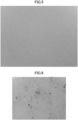
- Fig. 3 is an optical microscopic photograph depicting the state after evenly spraying the coating liquid onto the acrylic plate but before light irradiation with the LED in Example 1 with the magnification of ⁇ 100.
- Fig. 4 is an optical microscopic photograph depicting the state after evenly spraying the coating liquid onto the acrylic plate but before light irradiation with the LED in Comparative Example 2 with the magnification of ⁇ 100.
- Fig. 5 depicts the appearance of the test piece (after curing) of Example 1
- Fig. 6 depicts the appearance of the test piece (after curing) of Comparative Example 2.
- the criteria for the appearance of the test piece are as follows.
- the antibacterial properties of the test piece were evaluated in accordance with JIS Z 2801:2012 Antibacterial products-Test for antibacterial activity and efficacy.
- S. mutans As a test bacteria, S. mutans was used.
- the criteria for the antibacterial properties of the test piece are as follows.
- test piece After immersing the test piece in a neutral phosphate buffer solution for one month, the antibacterial properties of the test piece were evaluated in the same manner as described above.
- the antiviral properties of the test piece were evaluated in accordance with ISO 21702 antiviral activity (non-fibrous product), using the Swine enteric coronavirus (Porcine epidemic diarrhea virus) as a test virus.
- the Swine enteric coronavirus (Porcine epidemic diarrhea virus) is an enveloped virus.
- the criteria for the antiviral properties of the test piece are as follows.
- test piece After immersing the test piece in a neutral phosphate buffer solution for one month, the antiviral properties of the test piece were evaluated in the same manner as described above.
- Example 1 it was considered that, in Example 1, the solution 40, in which the second polymerizable monomer was dissolved in the first solvent, was homogeneously dispersed (diameters of droplets of the solution 40, in which the second polymerizable monomer was dissolved in the first solvent were small) in the first polymerizable monomer 30 in the polymerizable composition 20 fixed on the surface of the acrylic plate (article) 10, before curing.
- Comparative Example 2 Since the test piece of Comparative Example 2 was produced without the first solvent, the appearance, the retention of antibacterial properties, and the retention of antiviral properties were all inadequate. As depicted in Fig. 2 , for example, it was considered that, in Comparative Example 2, the second polymerizable monomer 50 was not homogeneously dispersed in the first polymerizable monomer 30 (particle diameters of the second polymerizable monomers 50 were coarse) in the polymerizable composition 20 fixed on the acrylic plate (article) 10 before curing.
- test piece of Comparative Example 3 exhibited antibacterial and antiviral properties temporarily because of the temporal binding of the compound to the glass surface by the silane treatment. As the silane treatment reversibly progresses through hydrolysis, both the antibacterial properties and the antiviral properties were not retained.
Landscapes
- Chemical & Material Sciences (AREA)
- Life Sciences & Earth Sciences (AREA)
- Organic Chemistry (AREA)
- Engineering & Computer Science (AREA)
- Wood Science & Technology (AREA)
- Health & Medical Sciences (AREA)
- Materials Engineering (AREA)
- Chemical Kinetics & Catalysis (AREA)
- Medicinal Chemistry (AREA)
- Polymers & Plastics (AREA)
- Plant Pathology (AREA)
- Pest Control & Pesticides (AREA)
- Zoology (AREA)
- Environmental Sciences (AREA)
- Agronomy & Crop Science (AREA)
- Dentistry (AREA)
- General Health & Medical Sciences (AREA)
- General Chemical & Material Sciences (AREA)
- Paints Or Removers (AREA)
- Application Of Or Painting With Fluid Materials (AREA)
- Polymerisation Methods In General (AREA)
Applications Claiming Priority (2)
| Application Number | Priority Date | Filing Date | Title |
|---|---|---|---|
| JP2021062314A JP7786014B2 (ja) | 2021-03-31 | 2021-03-31 | 物品の被覆方法、物品の被覆のための使用、及び重合性組成物 |
| PCT/JP2022/002287 WO2022209202A1 (fr) | 2021-03-31 | 2022-01-21 | Procédé de revêtement d'un article, utilisation pour le revêtement d'un article, et composition polymérisable |
Publications (2)
| Publication Number | Publication Date |
|---|---|
| EP4316676A1 true EP4316676A1 (fr) | 2024-02-07 |
| EP4316676A4 EP4316676A4 (fr) | 2025-03-05 |
Family
ID=83458617
Family Applications (1)
| Application Number | Title | Priority Date | Filing Date |
|---|---|---|---|
| EP22779432.8A Pending EP4316676A4 (fr) | 2021-03-31 | 2022-01-21 | Procédé de revêtement d'un article, utilisation pour le revêtement d'un article, et composition polymérisable |
Country Status (6)
| Country | Link |
|---|---|
| US (1) | US12600867B2 (fr) |
| EP (1) | EP4316676A4 (fr) |
| JP (1) | JP7786014B2 (fr) |
| KR (1) | KR102930990B1 (fr) |
| CN (1) | CN117062677A (fr) |
| WO (1) | WO2022209202A1 (fr) |
Family Cites Families (15)
| Publication number | Priority date | Publication date | Assignee | Title |
|---|---|---|---|---|
| JPS4830075B1 (fr) | 1970-09-29 | 1973-09-17 | ||
| US3909255A (en) | 1973-12-03 | 1975-09-30 | Keuffel & Esser Co | Electrolytically induced polymerization utilizing zinc and alkali metal sulfite |
| US4942112A (en) | 1988-01-15 | 1990-07-17 | E. I. Du Pont De Nemours And Company | Photopolymerizable compositions and elements for refractive index imaging |
| JPH07316467A (ja) * | 1994-05-27 | 1995-12-05 | Nippon Oil & Fats Co Ltd | 帯電防止コーティング樹脂組成物、帯電防止高分子フィルム及びその製造法 |
| JPH10296895A (ja) | 1997-04-23 | 1998-11-10 | Kawamura Inst Of Chem Res | 表面親水性成形物、その製造方法、印刷原版及び画像形成方法 |
| JP2001261721A (ja) * | 2000-03-21 | 2001-09-26 | Mitsubishi Rayon Co Ltd | ラジカル重合性組成物、及びその製造方法 |
| DE10139574A1 (de) | 2001-08-10 | 2003-02-20 | Creavis Tech & Innovation Gmbh | Erhalt des Lotus-Effektes durch Verhinderung des Mikrobenwachstums auf selbstreinigenden Oberflächen |
| JP5320008B2 (ja) * | 2007-10-05 | 2013-10-23 | 高知県 | 防汚・抗菌剤、防汚・抗菌性塗装材、防汚・抗菌剤組成物および防汚・抗菌処理方法 |
| JP2009215519A (ja) | 2008-03-13 | 2009-09-24 | Fujifilm Corp | 光硬化性コーティング組成物、オーバープリント及びその製造方法 |
| CN107006510B (zh) | 2008-12-25 | 2023-01-03 | 国立大学法人广岛大学 | 抗菌剂固定化方法及抗病毒剂固定化方法 |
| JP6104263B2 (ja) | 2012-09-26 | 2017-03-29 | Rimtec株式会社 | 重合性組成物および樹脂成形体の製造方法 |
| JP7417609B2 (ja) * | 2019-07-12 | 2024-01-18 | 株式会社ジーシー | 抗菌ポリマー粒子を含む組成物 |
| US11697694B2 (en) | 2020-05-29 | 2023-07-11 | Gc Corporation | Method of manufacturing polymerizable composition, polymerizable composition, and cured product |
| JP7764675B2 (ja) * | 2020-05-29 | 2025-11-06 | 株式会社ジーシーMfg | 重合性組成物の製造方法、重合性組成物、及び硬化物 |
| JP7106238B2 (ja) | 2021-02-01 | 2022-07-26 | 株式会社大一商会 | 遊技機 |
-
2021
- 2021-03-31 JP JP2021062314A patent/JP7786014B2/ja active Active
-
2022
- 2022-01-21 US US18/550,179 patent/US12600867B2/en active Active
- 2022-01-21 KR KR1020237033186A patent/KR102930990B1/ko active Active
- 2022-01-21 EP EP22779432.8A patent/EP4316676A4/fr active Pending
- 2022-01-21 CN CN202280024335.XA patent/CN117062677A/zh active Pending
- 2022-01-21 WO PCT/JP2022/002287 patent/WO2022209202A1/fr not_active Ceased
Also Published As
| Publication number | Publication date |
|---|---|
| US20240166885A1 (en) | 2024-05-23 |
| KR102930990B1 (ko) | 2026-02-24 |
| JP7786014B2 (ja) | 2025-12-16 |
| CN117062677A (zh) | 2023-11-14 |
| JP2022157851A (ja) | 2022-10-14 |
| KR20230148255A (ko) | 2023-10-24 |
| US12600867B2 (en) | 2026-04-14 |
| WO2022209202A1 (fr) | 2022-10-06 |
| EP4316676A4 (fr) | 2025-03-05 |
Similar Documents
| Publication | Publication Date | Title |
|---|---|---|
| Antonucci et al. | Synthesis and characterization of dimethacrylates containing quaternary ammonium functionalities for dental applications | |
| Ikemura et al. | A review of the development of radical photopolymerization initiators used for designing light-curing dental adhesives and resin composites | |
| Machado et al. | Triclosan-loaded chitosan as antibacterial agent for adhesive resin | |
| Ye et al. | Effect of photoinitiators on the in vitro performance of a dentin adhesive exposed to simulated oral environment | |
| Shajii et al. | Effect of filler content on the profile of released biodegradation products in micro-filled bis-GMA/TEGDMA dental composite resins | |
| JP3443188B2 (ja) | 硬化性組成物 | |
| Meereis et al. | Stability of initiation systems in acidic photopolymerizable dental material | |
| EP3888617A1 (fr) | Kit de matériau adhésif dentaire | |
| JP7417609B2 (ja) | 抗菌ポリマー粒子を含む組成物 | |
| JP7764675B2 (ja) | 重合性組成物の製造方法、重合性組成物、及び硬化物 | |
| EP4316676A1 (fr) | Procédé de revêtement d'un article, utilisation pour le revêtement d'un article, et composition polymérisable | |
| CN108976470B (zh) | 1,4-二(2-苯硫基苯基)-1,3-丁二炔作为紫外光吸收剂的应用 | |
| JP5683337B2 (ja) | 化学重合型歯科用接着性組成物 | |
| US20230312768A1 (en) | Method of manufacturing polymerizable composition, polymerizable composition, and cured product | |
| EP2928446B1 (fr) | Composition de vernis a ongles photoreticulable | |
| JP7754441B2 (ja) | 歯科用組成物の製造方法、及び歯科用組成物 | |
| WO2014034788A1 (fr) | Composition durcissable à usage dentaire | |
| EP4403159A1 (fr) | Méthode de production d'une prothèse dentaire | |
| JP2023149301A (ja) | 抗菌性を有する人工爪組成物 | |
| US20110244113A1 (en) | Method of tooth surface treatment | |
| KR101680748B1 (ko) | 원적외선 및 음이온 방출효과를 갖는 젤 폴리시 조성물 | |
| JPS63112611A (ja) | 硬化性組成物 | |
| EP4434346A1 (fr) | Agent antiviral | |
| JPH0469311A (ja) | 可視光重合硬化性組成物 | |
| EP3771461A1 (fr) | Matériau d'obturation dentaire et composition dentaire polymérisable |
Legal Events
| Date | Code | Title | Description |
|---|---|---|---|
| STAA | Information on the status of an ep patent application or granted ep patent |
Free format text: STATUS: THE INTERNATIONAL PUBLICATION HAS BEEN MADE |
|
| PUAI | Public reference made under article 153(3) epc to a published international application that has entered the european phase |
Free format text: ORIGINAL CODE: 0009012 |
|
| STAA | Information on the status of an ep patent application or granted ep patent |
Free format text: STATUS: REQUEST FOR EXAMINATION WAS MADE |
|
| 17P | Request for examination filed |
Effective date: 20230921 |
|
| AK | Designated contracting states |
Kind code of ref document: A1 Designated state(s): AL AT BE BG CH CY CZ DE DK EE ES FI FR GB GR HR HU IE IS IT LI LT LU LV MC MK MT NL NO PL PT RO RS SE SI SK SM TR |
|
| DAV | Request for validation of the european patent (deleted) | ||
| DAX | Request for extension of the european patent (deleted) | ||
| A4 | Supplementary search report drawn up and despatched |
Effective date: 20250131 |
|
| RIC1 | Information provided on ipc code assigned before grant |
Ipc: C09D 5/00 20060101ALI20250127BHEP Ipc: C08F 2/00 20060101ALI20250127BHEP Ipc: C09D 4/00 20060101ALI20250127BHEP Ipc: B05D 7/24 20060101AFI20250127BHEP |