EP4349355A1 - Antimikrobielles und antivirales mittel, antimikrobielles und antivirales element und verfahren zur herstellung eines antimikrobiellen und antiviralen mittels - Google Patents
Antimikrobielles und antivirales mittel, antimikrobielles und antivirales element und verfahren zur herstellung eines antimikrobiellen und antiviralen mittels Download PDFInfo
- Publication number
- EP4349355A1 EP4349355A1 EP24154674.6A EP24154674A EP4349355A1 EP 4349355 A1 EP4349355 A1 EP 4349355A1 EP 24154674 A EP24154674 A EP 24154674A EP 4349355 A1 EP4349355 A1 EP 4349355A1
- Authority
- EP
- European Patent Office
- Prior art keywords
- antimicrobial
- lactobacillus
- antiviral agent
- agent according
- antiviral
- Prior art date
- Legal status (The legal status is an assumption and is not a legal conclusion. Google has not performed a legal analysis and makes no representation as to the accuracy of the status listed.)
- Pending
Links
Images




Classifications
-
- A—HUMAN NECESSITIES
- A61—MEDICAL OR VETERINARY SCIENCE; HYGIENE
- A61K—PREPARATIONS FOR MEDICAL, DENTAL OR TOILETRY PURPOSES
- A61K35/00—Medicinal preparations containing materials or reaction products thereof with undetermined constitution
- A61K35/66—Microorganisms or materials therefrom
- A61K35/74—Bacteria
-
- A—HUMAN NECESSITIES
- A61—MEDICAL OR VETERINARY SCIENCE; HYGIENE
- A61P—SPECIFIC THERAPEUTIC ACTIVITY OF CHEMICAL COMPOUNDS OR MEDICINAL PREPARATIONS
- A61P31/00—Antiinfectives, i.e. antibiotics, antiseptics, chemotherapeutics
- A61P31/12—Antivirals
- A61P31/14—Antivirals for RNA viruses
- A61P31/16—Antivirals for RNA viruses for influenza or rhinoviruses
-
- C—CHEMISTRY; METALLURGY
- C12—BIOCHEMISTRY; BEER; SPIRITS; WINE; VINEGAR; MICROBIOLOGY; ENZYMOLOGY; MUTATION OR GENETIC ENGINEERING
- C12N—MICROORGANISMS OR ENZYMES; COMPOSITIONS THEREOF; PROPAGATING, PRESERVING, OR MAINTAINING MICROORGANISMS; MUTATION OR GENETIC ENGINEERING; CULTURE MEDIA
- C12N1/00—Microorganisms; Compositions thereof; Processes of propagating, maintaining or preserving microorganisms or compositions thereof; Processes of preparing or isolating a composition containing a microorganism; Culture media therefor
- C12N1/20—Bacteria; Culture media therefor
-
- A—HUMAN NECESSITIES
- A61—MEDICAL OR VETERINARY SCIENCE; HYGIENE
- A61K—PREPARATIONS FOR MEDICAL, DENTAL OR TOILETRY PURPOSES
- A61K35/00—Medicinal preparations containing materials or reaction products thereof with undetermined constitution
- A61K35/66—Microorganisms or materials therefrom
- A61K35/74—Bacteria
- A61K35/741—Probiotics
- A61K35/744—Lactic acid bacteria, e.g. enterococci, pediococci, lactococci, streptococci or leuconostocs
- A61K35/747—Lactobacilli, e.g. L. acidophilus or L. brevis
-
- A—HUMAN NECESSITIES
- A61—MEDICAL OR VETERINARY SCIENCE; HYGIENE
- A61K—PREPARATIONS FOR MEDICAL, DENTAL OR TOILETRY PURPOSES
- A61K36/00—Medicinal preparations of undetermined constitution containing material from algae, lichens, fungi or plants, or derivatives thereof, e.g. traditional herbal medicines
- A61K36/18—Magnoliophyta (angiosperms)
- A61K36/185—Magnoliopsida (dicotyledons)
- A61K36/23—Apiaceae or Umbelliferae (Carrot family), e.g. dill, chervil, coriander or cumin
- A61K36/232—Angelica
-
- A—HUMAN NECESSITIES
- A61—MEDICAL OR VETERINARY SCIENCE; HYGIENE
- A61K—PREPARATIONS FOR MEDICAL, DENTAL OR TOILETRY PURPOSES
- A61K36/00—Medicinal preparations of undetermined constitution containing material from algae, lichens, fungi or plants, or derivatives thereof, e.g. traditional herbal medicines
- A61K36/18—Magnoliophyta (angiosperms)
- A61K36/185—Magnoliopsida (dicotyledons)
- A61K36/28—Asteraceae or Compositae (Aster or Sunflower family), e.g. chamomile, feverfew, yarrow or echinacea
- A61K36/282—Artemisia, e.g. wormwood or sagebrush
-
- A—HUMAN NECESSITIES
- A61—MEDICAL OR VETERINARY SCIENCE; HYGIENE
- A61K—PREPARATIONS FOR MEDICAL, DENTAL OR TOILETRY PURPOSES
- A61K36/00—Medicinal preparations of undetermined constitution containing material from algae, lichens, fungi or plants, or derivatives thereof, e.g. traditional herbal medicines
- A61K36/18—Magnoliophyta (angiosperms)
- A61K36/185—Magnoliopsida (dicotyledons)
- A61K36/81—Solanaceae (Potato family), e.g. tobacco, nightshade, tomato, belladonna, capsicum or jimsonweed
-
- A—HUMAN NECESSITIES
- A61—MEDICAL OR VETERINARY SCIENCE; HYGIENE
- A61K—PREPARATIONS FOR MEDICAL, DENTAL OR TOILETRY PURPOSES
- A61K9/00—Medicinal preparations characterised by special physical form
- A61K9/06—Ointments; Bases therefor; Other semi-solid forms, e.g. creams, sticks, gels
-
- A—HUMAN NECESSITIES
- A61—MEDICAL OR VETERINARY SCIENCE; HYGIENE
- A61P—SPECIFIC THERAPEUTIC ACTIVITY OF CHEMICAL COMPOUNDS OR MEDICINAL PREPARATIONS
- A61P31/00—Antiinfectives, i.e. antibiotics, antiseptics, chemotherapeutics
- A61P31/04—Antibacterial agents
-
- A—HUMAN NECESSITIES
- A61—MEDICAL OR VETERINARY SCIENCE; HYGIENE
- A61P—SPECIFIC THERAPEUTIC ACTIVITY OF CHEMICAL COMPOUNDS OR MEDICINAL PREPARATIONS
- A61P31/00—Antiinfectives, i.e. antibiotics, antiseptics, chemotherapeutics
- A61P31/10—Antimycotics
-
- A—HUMAN NECESSITIES
- A61—MEDICAL OR VETERINARY SCIENCE; HYGIENE
- A61P—SPECIFIC THERAPEUTIC ACTIVITY OF CHEMICAL COMPOUNDS OR MEDICINAL PREPARATIONS
- A61P31/00—Antiinfectives, i.e. antibiotics, antiseptics, chemotherapeutics
- A61P31/12—Antivirals
-
- C—CHEMISTRY; METALLURGY
- C12—BIOCHEMISTRY; BEER; SPIRITS; WINE; VINEGAR; MICROBIOLOGY; ENZYMOLOGY; MUTATION OR GENETIC ENGINEERING
- C12N—MICROORGANISMS OR ENZYMES; COMPOSITIONS THEREOF; PROPAGATING, PRESERVING, OR MAINTAINING MICROORGANISMS; MUTATION OR GENETIC ENGINEERING; CULTURE MEDIA
- C12N1/00—Microorganisms; Compositions thereof; Processes of propagating, maintaining or preserving microorganisms or compositions thereof; Processes of preparing or isolating a composition containing a microorganism; Culture media therefor
- C12N1/04—Preserving or maintaining viable microorganisms
-
- C—CHEMISTRY; METALLURGY
- C12—BIOCHEMISTRY; BEER; SPIRITS; WINE; VINEGAR; MICROBIOLOGY; ENZYMOLOGY; MUTATION OR GENETIC ENGINEERING
- C12R—INDEXING SCHEME ASSOCIATED WITH SUBCLASSES C12C - C12Q, RELATING TO MICROORGANISMS
- C12R2001/00—Microorganisms ; Processes using microorganisms
- C12R2001/01—Bacteria or Actinomycetales ; using bacteria or Actinomycetales
-
- Y—GENERAL TAGGING OF NEW TECHNOLOGICAL DEVELOPMENTS; GENERAL TAGGING OF CROSS-SECTIONAL TECHNOLOGIES SPANNING OVER SEVERAL SECTIONS OF THE IPC; TECHNICAL SUBJECTS COVERED BY FORMER USPC CROSS-REFERENCE ART COLLECTIONS [XRACs] AND DIGESTS
- Y02—TECHNOLOGIES OR APPLICATIONS FOR MITIGATION OR ADAPTATION AGAINST CLIMATE CHANGE
- Y02A—TECHNOLOGIES FOR ADAPTATION TO CLIMATE CHANGE
- Y02A50/00—TECHNOLOGIES FOR ADAPTATION TO CLIMATE CHANGE in human health protection, e.g. against extreme weather
- Y02A50/30—Against vector-borne diseases, e.g. mosquito-borne, fly-borne, tick-borne or waterborne diseases whose impact is exacerbated by climate change
Definitions
- the present invention relates to an antimicrobial and antiviral agent, an antimicrobial and antiviral member, and a method of manufacturing the antimicrobial and antiviral agent.
- Patent Literature 1 discloses the use of Lactobacillus pentosus derived from Alpinia zerumbet for eradicating Helicobacter pylori. However, Patent Literature 1 discloses that a concentrated fermentation liquor of Alpinia zerumbet has no effect on candida.
- Patent Literature 2 discloses that Lactobacillus reuteri produces an antimicrobial substance called reuterin and can inhibit proliferation of bacteria including salmonellae and some fungi. Patent Literature 2 also discloses the use of Lactobacillus fermentum for the treatment and prevention of skin disorders. Patent Literature 2 further discloses the use of Lactobacillus reuteri for the prevention or treatment of skin disorders caused by pathogenic microbes such as Staphylococcus aureus, Streptococcus pyogenes, and Propionibacterium acnes, and for the prevention or treatment of methicillin-resistant Staphylococcus aureus (MRSA) infection.
- MRSA methicillin-resistant Staphylococcus aureus
- Patent Literature 3 discloses that Lactobacillus plantarum can suppress proliferation of Gram-negative bacteria such as Escherichia coli, Klebsiella pneumoniae, Pseudomonas aeruginosa, and Staphylococcus aureus and Gram-positive bacteria but cannot suppress proliferation of fungi such as Candida albicans and Candida parapsilosis.
- Patent Literature 4 discloses that Lactobacillus casei KE01 can reduce Escherichia coli over several weeks.
- Patent Literature 5 discloses that Lactobacillus gasseri can reduce Salmonella enteritidis.
- Patent Literature 6 discloses that a biofilm consisting of yeast and Lactobacillus plantarum ML11-11 can reduce Bacillus subtilis.
- Patent Literature 7 discloses that Lactobacillus pentosus can suppress proliferation of candida. However, Patent Literature 7 does not disclose that Lactobacillus pentosus can reduce candida.
- alcohols may be used as an antimicrobial agent
- some bacteria that form spores such as Bacillus cereus, Bacillus subtilis, and Bacillus subtilis var. natto, are alcohol-resistant. Alcohols can cause side effects such as a rash and skin irritation.
- antimicrobial agents comprising a synthetic compound as an active ingredient may irritate the affected areas and cause symptoms of contact dermatitis with itch and pain. Therefore, it is desirable to develop an antimicrobial and antiviral agent that contains a naturally occurring component as an active ingredient and is effective against microbes including various classes of fungi and viruses.
- the present invention which has been achieved in light of such circumstances, aims to provide an antimicrobial and antiviral agent that comprises a naturally occurring component as an active ingredient and is effective against microbes including various classes of fungi and viruses, an antimicrobial and antiviral member, and a method of manufacturing the antimicrobial and antiviral agent.
- the antimicrobial and antiviral agent according to one aspect of the present invention includes Lactobacillus derived from Artemisia indica var. maximowiczii.
- the antimicrobial and antiviral agent according to one aspect of the present invention also includes a secretion from Lactobacillus derived from Artemisia indica var. maximowiczii.
- the antimicrobial and antiviral agent according to one aspect of the present invention includes Lactobacillus, wherein the Lactobacillus is at least one species selected from the group consisting of parafarraginis, parabuchneri, buchneri, harbinensis, vini, and nagelii.
- the antimicrobial and antiviral agent according to one aspect of the present invention also includes a secretion from Lactobacillus, wherein the Lactobacillus is at least one species selected from the group consisting of parafarraginis, parabuchneri, buchneri, harbinensis, vini, and nagelii.
- the antimicrobial and antiviral member according to one aspect of the present invention includes a member and the antimicrobial and antiviral agent disposed on a surface of the member.
- a method of manufacturing the antimicrobial and antiviral agent according to one aspect of the present invention includes fermenting a plant to provide a fermentation liquor containing Lactobacillus.
- the present invention provides an antimicrobial and antiviral agent that comprises a naturally occurring component as an active ingredient and is effective against microbes including various classes of fungi and viruses, an antimicrobial and antiviral member, and a method of manufacturing the antimicrobial and antiviral agent.
- the antimicrobial and antiviral agent according to the first embodiment of the present invention includes at least one selected from the group consisting of Lactobacillus and a secretion from Lactobacillus.
- Lactobacillus is a species of lactobacilli and is a Gram-positive facultative anaerobe. Lactobacillus ferments sugar to produce lactic acid.
- Lactobacillus inhabits the living bodies of animals including human, Lactobacillus derived from plants is preferable for the Lactobacillus according to the first embodiment.
- the Lactobacillus according to the first embodiment can be extracted from fermented plants.
- the plants include, but not limited to, Artemisia indica var. maximowiczii, Angelica keiskei, Isodonis Herba, and Theobroma cacao.
- Lactobacillus derived from Artemisia indica var. maximowiczii include Lactobacillus parafarraginis, Lactobacillus parabuchneri, Lactobacillus buchneri, and Lactobacillus harbinensis.
- Examples of Lactobacillus derived from Angelica keiskei include Lactobacillus vini and Lactobacillus nagelii.
- the antimicrobial and antiviral agent according to the first embodiment may include a plurality of Lactobacillus species.
- the antimicrobial and antiviral agent according to the first embodiment can reduce fungi (molds).
- the antimicrobial and antiviral agent according to the first embodiment can reduce for example 80% or more, 85% or more, 90% or more, or 95% or more of the fungi within 24 hours.
- Examples of the fungi include, but not limited to, Trichophyton, Candida, Cryptococcus, and Aspergillus.
- the antimicrobial and antiviral agent according to the first embodiment can be used as a therapeutic agent for mycosis.
- the mycosis includes, but not limited to, trichophytosis, candidosis, cryptococcosis, and aspergillosis.
- the antimicrobial and antiviral agent according to the first embodiment can reduce Gram-negative and Gram-positive bacteria.
- the antimicrobial and antiviral agent according to the first embodiment can reduce for example 80% or more, 85% or more, 90% or more, or 95% or more of the Gram-negative and Gram-positive bacteria within 24 hours.
- the Gram-negative bacteria include, but not limited to, Escherichia coli, Salmonella enterica, Vibrio parahaemolyticus, Klebsiella pneumoniae, Pseudomonas aeruginosa, and the like.
- the Gram-positive bacteria include, but not limited to, methicillin-resistant Staphylococcus aureus (MRSA), Bacillus cereus which forms spores, Bacillus subtilis, and the like.
- MRSA methicillin-resistant Staphylococcus aureus
- Bacillus cereus which forms spores, Bacillus subtilis, and the like.
- the antimicrobial and antiviral agent according to the first embodiment can reduce viruses.
- the antimicrobial and antiviral agent according to the first embodiment can reduce for example 80% or more, 85% or more, 90% or more, or 95% or more of the viruses within 24 hours.
- the viruses include enveloped viruses which are viruses with envelope and non-enveloped viruses which are viruses without envelope.
- the viruses also include DNA and RNA viruses.
- DNA viruses with envelope include, but not limited to, human herpes virus, vaccinia virus, hepatitis B virus, and the like.
- RNA viruses with envelope include, but not limited to, influenza virus, SARS coronavirus, RS virus, mumps virus, Lassa virus, dengue virus, rubella virus, human immunodeficiency virus, measles virus, hepatitis C virus, Ebola virus, yellow fever virus, Japanese encephalitis virus, and the like.
- DNA viruses without envelope include, but not limited to, adenovirus, B19 virus, papovavirus, human papillomavirus, and the like.
- RNA viruses without envelope include, but not limited to, norovirus, polioviruses, echovirus, hepatitis A virus, hepatitis E virus, rhinovirus, astrovirus, rotavirus, coxsackievirus, enterovirus, sapovirus, and the like.
- the antimicrobial and antiviral agent according to the first embodiment can be used as a disinfectant against viruses.
- the antimicrobial and antiviral agent according to the first embodiment includes an effective amount of Lactobacillus and/or an effective amount of a secretion from Lactobacillus.
- the effective amount refers to an amount necessary to exert an antimicrobial or antiviral effect and thus will be appropriately determined depending on microbes, viruses, and symptoms of interest.
- the antimicrobial and antiviral agent according to the first embodiment includes Lactobacillus, for example, in a concentration of 0.001 wt% or more, 0.005 wt% or more, or 0.01 wt% or more.
- the antimicrobial and antiviral agent according to the first embodiment also includes Lactobacillus, for example, in a concentration of 20 wt% or less, 15 wt% or less, or 10 wt% or less but may include Lactobacillus in a higher concentration. However, the viscosity tends to increase with increasing the concentration of Lactobacillus.
- the Lactobacillus contained in the antimicrobial and antiviral agent according to the first embodiment may be a living bacterium or a bacterium killed, for example, by heat treatment. Therefore, the antimicrobial and antiviral agent according to the first embodiment may include a killed bacterium of Lactobacillus.
- the Lactobacillus may be a dried bacterial product.
- the killed bacterium or dried bacterial product of Lactobacillus also has an antimicrobial and antiviral effect.
- the killed bacterium or dried bacterial product of Lactobacillus can be easily transported and stored over an extended period.
- the antimicrobial and antiviral agent according to the first embodiment may be, for example, a liquid, a cream, an ointment, a plaster, a gel, a wax, or a spray.
- the antimicrobial and antiviral agent according to the first embodiment is also administered in, for example, a disinfectant, a skin external medicine including a therapeutic agent for application, an eye drop, and an internal medicine.
- the antimicrobial and antiviral agent according to the first embodiment can be applied to, for example, human skin including fingers and toes, hair, mouth cavity, eyeball, and the like.
- the antimicrobial and antiviral agent according to the first embodiment can also be applied to, for example, cooking devices, walls and floors of buildings such as hospitals, and furniture such as a desk.
- the antimicrobial and antiviral agent according to the first embodiment may appropriately include, in addition to Lactobacillus, components blended for cosmetics and pharmaceuticals depending on its purpose such as a liquid fat, a solid fat, a wax, a hydrocarbon, a higher fatty acid, a higher alcohol, an ester, a silicone, an anionic surfactant, a cationic surfactant, an amphoteric surfactant, a nonionic surfactant, a humectant, a water-soluble polymer, a thickening agent, a film-forming agent, a sequestering agent, a lower alcohol, a polyhydric alcohol, saccharides, amino acids, organic amines, a pH adjusting agent, skin nutrients, vitamins, an antioxidant, a flavor, a powder, a coloring material, and water.
- components blended for cosmetics and pharmaceuticals depending on its purpose such as a liquid fat, a solid fat, a wax, a hydrocarbon, a higher fatty acid, a higher alcohol,
- the antimicrobial and antiviral agent according to the first embodiment may appropriately include depending on its purpose, in addition to Lactobacillus, an antimicrobial substance or an antiviral substance.
- Lactobacillus and a secretion from Lactobacillus to be used as an active ingredient in the antimicrobial and antiviral agent according to the first embodiment can reduce microbes including various classes of fungi and viruses causing various diseases such as food poisoning. Lactobacillus and a secretion from Lactobacillus to be used as an active ingredient in the antimicrobial and antiviral agent according to the first embodiment can also reduce Bacillus cereus which forms alcohol-resistant spores.
- Lactobacillus which is a naturally occurring lactic acid bacterium, to be used as an active ingredient in the antimicrobial and antiviral agent according to the first embodiment has no or little deleterious effects including side effects and thus is safe when administered to human.
- the antimicrobial and antiviral agent according to the first embodiment to be given as a skin external medicine has no or little deleterious effects including side effects in the event of accidental ingestion by infants, children, or elderly persons because Lactobacillus is an edible lactic acid bacterium and can be easily degraded by digestive enzymes in the intestinal tract. The same holds true for the secretion of Lactobacillus.
- the antimicrobial and antiviral agent according to the first embodiment is produced by fermenting a plant to provide a fermentation liquor containing Lactobacillus.
- a fermentation liquor containing Lactobacillus When the plant is fermented, salts and sugars such as molasses are added to the plant.
- the fermentation is performed at a temperature of, for example, 30°C.
- the resulting fermentation liquor has a hydrogen ion exponent (pH) of about 4.0.
- a secretion from Lactobacillus may be extracted from the fermentation liquor.
- the resulting fermentation liquor may be heated to kill Lactobacillus contained in the fermentation liquor.
- the fermentation liquor may also be spray dried to provide a dried bacterial product of Lactobacillus.
- the dried bacterial product can be prepared by lyophilization, hot-air drying, or the like.
- the resulting fermentation liquor, bacterium of Lactobacillus, or dried bacterial product of Lactobacillus may be added to soymilk which may be fermented to provide a soymilk fermentation liquor.
- the soymilk fermentation liquor also has an antimicrobial and antiviral effect.
- the antimicrobial and antiviral member according to the second embodiment includes a member and the antimicrobial and antiviral agent according to the first embodiment disposed on a surface of the member.
- the member is solid and is made of a material including, but not limited to, for example, metal, resin, glass, ceramic, and wood.
- the antimicrobial and antiviral agent according to the first embodiment is blended into a paint, a dye, a pigment, various resins, a synthetic rubber, a latex, a film, a fiber, or the like and the material having the antimicrobial and antiviral agent blended is applied, disposed, or laminated onto a surface of the member.
- concentration of the antimicrobial and antiviral agent blended in the material may include, but not limited to, 0.001 wt% or more, 0.005 wt% or more, or 0.01 wt% or more and 20 wt% or less, 15 wt% or less, or 10 wt% or less.
- Example 1 Lactobacillus derived from Artemisia indica var. maximowiczii
- the weight was removed.
- the second pickle barrel was charged with 10 L of chlorine-free water for rinse and the pickled Artemisia indica var. maximowiczii leaves and 10 kg of the pickle juice were added to the water.
- the third pickle barrel was provided and a wire gauze filter was placed on the opening of the third pickle barrel.
- the pickled Artemisia indica var. maximowiczii leaves were taken from the second pickle barrel in small portions while being kneaded and washed by hand.
- the Artemisia indica var. maximowiczii leaves were squeezed by lightly pressing them with the palm to the wire gauze filter on the opening of the third pickle barrel to obtain pickle juice.
- the pickle juice left in the second pickle juice was filtered through the wire gauze filter.
- molasses (Hateruma brown sugar) and crude salt were added to final concentrations of 10 wt% and 3 wt% respectively to the pickle juice in the third pickle barrel and dissolved in the pickle juice.
- the ambient temperature of the third pickle barrel was then increased to about 30°C to start fermentation. At first, effervescence was observed with large bubbles which were then gradually changed to small bubbles, and finally the effervescence subsided. About 1 week after the effervescence subsided, pH was near 3.8.
- the pickle juice at that time was used as an Artemisia indica var. maximowiczii fermentation liquor.
- a portion of the resulting Artemisia indica var. maximowiczii fermentation liquor was heated at 70°C for 30 minutes to kill bacteria and provide a heat-treated Artemisia indica var. maximowiczii fermentation liquor.
- a non-heat-treated Artemisia indica var. maximowiczii fermentation liquor was analyzed with a next generation sequencer (MiSeq, Illumina, Inc.), and the Artemisia indica var. maximowiczii fermentation liquor contained Lactobacillus parafarraginis, Lactobacillus parabuchneri, Lactobacillus buchneri, Lactobacillus harbinensis, and the like, as shown in Figure 1 .
- the next generation sequencer may be called high-throughput sequencer. Numerical values in the table in Figure 1 represent the number of bacterial species contained in the Artemisia indica var. maximowiczii fermentation liquor.
- Example 2 Lactobacillus derived from Angelica keiskei
- the weight was removed.
- the second pickle barrel was charged with 10 L of chlorine-free water for rinse and the pickled Angelica keiskei and 10 kg of the pickle juice were added to the water.
- the third pickle barrel was provided and a wire gauze filter was placed on the opening of the third pickle barrel.
- the pickled Angelica keiskei was taken from the second pickle barrel in small portions while being kneaded and washed by hand.
- the Angelica keiskei was squeezed by lightly pressing it with the palm to the wire gauze filter on the opening of the third pickle barrel to obtain pickle juice.
- the pickle juice left in the second pickle juice was filtered through the wire gauze filter.
- molasses and crude salt were added to final concentrations of 10 wt% and 3 wt% respectively to the pickle juice in the third pickle barrel and dissolved in the pickle juice.
- the ambient temperature of the third pickle barrel was then increased to about 30°C to start fermentation.
- effervescence was observed with large bubbles which were then gradually changed to small bubbles, and finally the effervescence subsided.
- pH was near 4.0.
- the pickle juice at that time was used as an Angelica keiskei fermentation liquor.
- a portion of the resulting Angelica keiskei fermentation liquor was heated at 70°C for 30 minutes to kill bacteria and provide a heat-treated Angelica keiskei fermentation liquor.
- a non-heat-treated Angelica keiskei fermentation liquor was analyzed with a next generation sequencer (MiSeq, Illumina, Inc.), and the Angelica keiskei fermentation liquor contained species vini, nagelii, and the like, as shown in Figure 2 . It is noted that numerical values in the table in Figure 2 represent the number of bacterial species contained in the Angelica keiskei fermentation liquor.
- Soymilk was heat-sterilized for about 30 minutes by heating it to 70°C.
- To the heat-sterilized soymilk was added the non-heat-treated Artemisia indica var. maximowiczii fermentation liquor prepared in Example 1 to a final concentration of about 10 wt% and stirred thoroughly.
- Soymilk containing the heat-treated Artemisia indica var. maximowiczii fermentation liquor was then fermented at 37°C for 24 hours. After fermentation, solid substances were removed by filtration to provide a soymilk fermentation liquor containing Lactobacillus.
- Staphylococcus aureus and MRSA were provided as Gram-positive cocci; Bacillus subtilis and Bacillus cereus were provided as Gram-positive bacilli; Escherichia coli, Salmonella enterica, Vibrio parahaemolyticus, and Klebsiella pneumoniae were provided as Gram-negative cocci; and Pseudomonas aeruginosa was provided as a Gram-negative bacillus.
- Trichophyton and Candida were provided as fungi.
- 10 mL of the soymilk fermentation liquor containing Lactobacillus prepared in Example 1 was inoculated with 0.1 mL of a fungal suspension containing Trichophyton or Candida in a concentration of 10 7 /mL and allowed to act at 25°C.
- the viable cell count of the inoculated fungus was measured over time for 24 hours.
- 10 mL of 1/15 mol/L in a concentration of a phosphate buffer, pH 7.2 was inoculated with 0.1 mL of the fungal suspension and allowed to act at 25°C.
- the viable cell count of the inoculated fungus was measured over time for 24 hours.
- the soymilk fermentation liquor containing Lactobacillus decreased the Trichophyton and Candida provided within 24 hours.
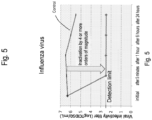
- the culture supernatant containing influenza virus A (H1N1) was provided as an enveloped virus.
- the culture supernatant containing norovirus (feline calicivirus) was also provided as a non-enveloped virus.
- These virus-containing culture supernatants were 10-fold serially diluted with purified water.
- an antiviral test was performed at room temperature to determine 50% Tissue Culture Infectious Dose (TCID50). The antiviral test was performed at Japan Food Research Laboratories.
- the soymilk fermentation liquor containing Lactobacillus decreased the infectivity titer of influenza virus within 1 hour.
- the soymilk fermentation liquor containing Lactobacillus also decreased the infectivity titer of norovirus within 24 hours.
- the non-heat-treated Artemisia indica var. maximowiczii fermentation liquor prepared in Example 1 was spray-dried to provide a dried fungus of Lactobacillus.
- the dried fungus was suspended in water and glycerin to a concentration of 10 parts by weight to provide a Lactobacillus suspension according to Example 7.
- the Lactobacillus suspension was added to Trichophyton and colony-forming unit (CFU) of Trichophyton was measured, which revealed that, as shown in Figure 7 , the Lactobacillus suspension killed Trichophyton within 24 hours.
- CFU colony-forming unit
- each of the embodiments and Examples as described above is intended to facilitate understanding of the present invention but not to limit the interpretation of the present invention.
- the present invention may be altered or modified without departing from the spirit thereof and includes equivalents thereof. That is to say, the design of each of the embodiments and Examples appropriately changed by those skilled in the art is within the scope of the present invention as long as it includes a feature of the present invention.
- each element comprised in each of the embodiments and Examples is not limited to the exemplified elements and may be appropriately changed.
- Any of the embodiments and Examples is also exemplary and thus, needless to say, components described in other embodiments may be partially substituted or combined. These partial substitution and combination are also within the scope of the present invention as long as they include a feature of the present invention.
Landscapes
- Health & Medical Sciences (AREA)
- Life Sciences & Earth Sciences (AREA)
- Chemical & Material Sciences (AREA)
- Natural Medicines & Medicinal Plants (AREA)
- General Health & Medical Sciences (AREA)
- Medicinal Chemistry (AREA)
- Animal Behavior & Ethology (AREA)
- Veterinary Medicine (AREA)
- Public Health (AREA)
- Pharmacology & Pharmacy (AREA)
- Organic Chemistry (AREA)
- Microbiology (AREA)
- Engineering & Computer Science (AREA)
- Virology (AREA)
- Mycology (AREA)
- Biotechnology (AREA)
- Epidemiology (AREA)
- Oncology (AREA)
- Nuclear Medicine, Radiotherapy & Molecular Imaging (AREA)
- General Chemical & Material Sciences (AREA)
- Chemical Kinetics & Catalysis (AREA)
- Communicable Diseases (AREA)
- Molecular Biology (AREA)
- Medical Informatics (AREA)
- Alternative & Traditional Medicine (AREA)
- Botany (AREA)
- Zoology (AREA)
- Bioinformatics & Cheminformatics (AREA)
- Genetics & Genomics (AREA)
- Wood Science & Technology (AREA)
- Biochemistry (AREA)
- Tropical Medicine & Parasitology (AREA)
- Biomedical Technology (AREA)
- General Engineering & Computer Science (AREA)
- Pulmonology (AREA)
- Medicines Containing Material From Animals Or Micro-Organisms (AREA)
- Medicines Containing Plant Substances (AREA)
- Micro-Organisms Or Cultivation Processes Thereof (AREA)
- Agricultural Chemicals And Associated Chemicals (AREA)
- Preparation Of Compounds By Using Micro-Organisms (AREA)
Applications Claiming Priority (3)
| Application Number | Priority Date | Filing Date | Title |
|---|---|---|---|
| JP2016117443 | 2016-06-13 | ||
| EP17813247.8A EP3470075B1 (de) | 2016-06-13 | 2017-06-12 | Antimikrobielles agens zur therapeutischen verwendung gegen pilze |
| PCT/JP2017/021563 WO2017217350A1 (ja) | 2016-06-13 | 2017-06-12 | 抗菌抗ウイルス薬、抗菌抗ウイルス部材、及び抗菌抗ウイルス薬の製造方法 |
Related Parent Applications (2)
| Application Number | Title | Priority Date | Filing Date |
|---|---|---|---|
| EP17813247.8A Division-Into EP3470075B1 (de) | 2016-06-13 | 2017-06-12 | Antimikrobielles agens zur therapeutischen verwendung gegen pilze |
| EP17813247.8A Division EP3470075B1 (de) | 2016-06-13 | 2017-06-12 | Antimikrobielles agens zur therapeutischen verwendung gegen pilze |
Publications (1)
| Publication Number | Publication Date |
|---|---|
| EP4349355A1 true EP4349355A1 (de) | 2024-04-10 |
Family
ID=60663251
Family Applications (2)
| Application Number | Title | Priority Date | Filing Date |
|---|---|---|---|
| EP24154674.6A Pending EP4349355A1 (de) | 2016-06-13 | 2017-06-12 | Antimikrobielles und antivirales mittel, antimikrobielles und antivirales element und verfahren zur herstellung eines antimikrobiellen und antiviralen mittels |
| EP17813247.8A Active EP3470075B1 (de) | 2016-06-13 | 2017-06-12 | Antimikrobielles agens zur therapeutischen verwendung gegen pilze |
Family Applications After (1)
| Application Number | Title | Priority Date | Filing Date |
|---|---|---|---|
| EP17813247.8A Active EP3470075B1 (de) | 2016-06-13 | 2017-06-12 | Antimikrobielles agens zur therapeutischen verwendung gegen pilze |
Country Status (5)
| Country | Link |
|---|---|
| US (3) | US20190125806A1 (de) |
| EP (2) | EP4349355A1 (de) |
| JP (7) | JPWO2017217350A1 (de) |
| CN (2) | CN116036137A (de) |
| WO (1) | WO2017217350A1 (de) |
Families Citing this family (8)
| Publication number | Priority date | Publication date | Assignee | Title |
|---|---|---|---|---|
| EP4349355A1 (de) | 2016-06-13 | 2024-04-10 | Murata Manufacturing Co., Ltd. | Antimikrobielles und antivirales mittel, antimikrobielles und antivirales element und verfahren zur herstellung eines antimikrobiellen und antiviralen mittels |
| CN119700829A (zh) * | 2018-10-30 | 2025-03-28 | 株式会社村田制作所 | 热休克蛋白基因表达调节剂、医药品、化妆品和热休克蛋白基因表达调节剂的制造方法 |
| JP7522043B2 (ja) * | 2018-12-07 | 2024-07-24 | 森永乳業株式会社 | ノロウイルス感染抑制用組成物 |
| WO2021059986A1 (ja) * | 2019-09-25 | 2021-04-01 | 株式会社村田製作所 | コラーゲン産生亢進剤、医薬品、化粧品、及びコラーゲン産生亢進剤の製造方法 |
| JP7529394B2 (ja) * | 2019-11-15 | 2024-08-06 | 株式会社明治 | ウイルス増殖を抑制するための組成物 |
| CN114343087B (zh) * | 2022-03-21 | 2022-06-07 | 北京挑战农业科技有限公司 | 一种提高对虾养殖存活率和生长速度的发酵饲料 |
| CN116286436B (zh) * | 2022-08-02 | 2023-11-17 | 岳阳渔美康生物科技有限公司 | 一株类布氏乳杆菌、其微生态制剂及其制备方法 |
| CN116064301B (zh) * | 2022-09-22 | 2024-12-24 | 广西大学 | 一株类布氏乳杆菌及其应用 |
Citations (18)
| Publication number | Priority date | Publication date | Assignee | Title |
|---|---|---|---|---|
| WO1997036603A1 (en) * | 1996-04-02 | 1997-10-09 | Commonwealth Scientific And Industrial Research Organisation | Biocontrol agents for use in treatment of opportunistic infections |
| JP2007308504A (ja) | 2001-10-12 | 2007-11-29 | Univ Of Reading | ラクトバシルス・ペントサス株を含む組成物およびそれらの使用 |
| KR20090083505A (ko) * | 2008-01-30 | 2009-08-04 | 주식회사 바이오랜드 | 락토바실러스 퍼멘텀 bljh101을 이용한인삼추출물의 발효물을 제조하는 방법 및 이를 함유하는조성물 |
| JP2010195778A (ja) | 2000-12-18 | 2010-09-09 | Probiohealth Llc | ラクトバシラス−カゼイke01株から得られたプロバイオティック化合物 |
| JP2010215641A (ja) | 2004-03-04 | 2010-09-30 | Elc Management Llc | ラクトバチルス(Lactobacillus)抽出物による皮膚の処置方法 |
| KR20100111570A (ko) * | 2009-04-07 | 2010-10-15 | 농업회사법인조인주식회사 | 약쑥 발효물을 포함하는 유해세균 억제용 사료 첨가제의 제조방법 및 상기 사료 첨가제 급여에 의한 계란의 생산방법 |
| JP2012147759A (ja) | 2011-01-14 | 2012-08-09 | Snowden Co Ltd | ヘリコバクター・ピロリ及びその他の病原菌を抑制するラクトバシラス属乳酸菌を含有する新規納豆 |
| KR101188342B1 (ko) * | 2010-05-27 | 2012-10-05 | 주식회사 미래자원엠엘 | 독성이 줄어든 식물 추출물 및 식물 추출물의 독성을 줄이는 방법 |
| WO2012141540A2 (ko) * | 2011-04-13 | 2012-10-18 | 씨제이제일제당 (주) | 바이러스 감염 억제 활성을 갖는 신규 분리한 락토바실러스 퍼멘텀 균주 |
| JP2013053089A (ja) * | 2011-09-02 | 2013-03-21 | Univ Of Tokyo | ウイルス疾患の予防・治療剤 |
| JP2013150598A (ja) | 2011-12-27 | 2013-08-08 | Nihon Univ | 連続発酵法 |
| JP2013188196A (ja) * | 2012-02-16 | 2013-09-26 | Kanazawa Univ | ウイルス感染予防乳酸菌組成物及びウイルス感染予防乳酸発酵食品 |
| WO2014172758A1 (en) * | 2013-04-23 | 2014-10-30 | International Marketing Partnerships Pty Ltd | Bacterial strains having antimicrobial activity and biocontrol compositions comprising the same |
| US20140356338A1 (en) * | 2011-05-12 | 2014-12-04 | PROBIONIC Co., Ltd. | Rice-fermented food composition containing rice saccharified liquid fermented with kimchi lactic acid bacteria as active ingredient and having antibacterial and antiviral effects |
| JP2014230541A (ja) | 2008-06-10 | 2014-12-11 | バイオガイア・エイビーBiogaia AB | ラクトバシラス・ロイテリのロイテリン産生機構の制御活性化 |
| WO2015140299A1 (en) * | 2014-03-20 | 2015-09-24 | Universiteit Antwerpen | Oronasopharyngeal probiotics |
| JP2015193619A (ja) | 2014-03-28 | 2015-11-05 | 株式会社丸海きあら | ピロリ菌の殺菌方法 |
| KR20160012514A (ko) * | 2014-07-24 | 2016-02-03 | (주)세레코 | 애엽 발효물을 포함하는 항염성 화장료 조성물 및 이의 제조 방법 |
Family Cites Families (9)
| Publication number | Priority date | Publication date | Assignee | Title |
|---|---|---|---|---|
| JP2006248902A (ja) * | 2005-03-08 | 2006-09-21 | Clean Eco Kk | 歯磨き及びその製造方法 |
| JP2010246398A (ja) * | 2009-04-10 | 2010-11-04 | Asama Chemical Co Ltd | 新規抗菌性ペプチド |
| JP2011140453A (ja) * | 2010-01-06 | 2011-07-21 | Tadatoshi Karatsu | 発酵薬草乾燥物の製造方法および発酵薬草粉末 |
| KR101198572B1 (ko) * | 2010-07-09 | 2012-11-06 | 경희대학교 산학협력단 | 미생물 감염증 치료 또는 개선용 조성물 |
| CN104171178A (zh) * | 2014-07-18 | 2014-12-03 | 上海交通大学 | 明日叶发酵茶的制作工艺 |
| EP3217992A4 (de) * | 2014-11-10 | 2018-07-18 | National Institutes Of Health | Probiotische therapeutische anwendungen |
| JP2016097039A (ja) * | 2014-11-21 | 2016-05-30 | 末吉 業幸 | 乳酸菌を吸着させた光触媒加工物 |
| KR101757623B1 (ko) * | 2016-02-19 | 2017-07-17 | 대한민국 | 락토바실러스 플란타룸 kcc-10 및 이를 포함하는 조성물 |
| EP4349355A1 (de) | 2016-06-13 | 2024-04-10 | Murata Manufacturing Co., Ltd. | Antimikrobielles und antivirales mittel, antimikrobielles und antivirales element und verfahren zur herstellung eines antimikrobiellen und antiviralen mittels |
-
2017
- 2017-06-12 EP EP24154674.6A patent/EP4349355A1/de active Pending
- 2017-06-12 EP EP17813247.8A patent/EP3470075B1/de active Active
- 2017-06-12 WO PCT/JP2017/021563 patent/WO2017217350A1/ja not_active Ceased
- 2017-06-12 CN CN202310053325.5A patent/CN116036137A/zh active Pending
- 2017-06-12 CN CN201780035221.4A patent/CN109310720A/zh active Pending
- 2017-06-12 JP JP2018523882A patent/JPWO2017217350A1/ja active Pending
-
2018
- 2018-10-30 JP JP2018204221A patent/JP2019038832A/ja active Pending
- 2018-12-13 US US16/218,763 patent/US20190125806A1/en not_active Abandoned
-
2021
- 2021-01-22 JP JP2021008839A patent/JP2021073244A/ja active Pending
- 2021-01-22 JP JP2021008788A patent/JP2021073243A/ja active Pending
- 2021-09-08 US US17/468,765 patent/US11944651B2/en active Active
-
2022
- 2022-10-07 JP JP2022162450A patent/JP2022176376A/ja active Pending
- 2022-10-07 JP JP2022162264A patent/JP2022176372A/ja active Pending
-
2024
- 2024-03-01 US US18/593,410 patent/US20240197793A1/en active Pending
- 2024-07-09 JP JP2024109971A patent/JP2024124543A/ja active Pending
Patent Citations (18)
| Publication number | Priority date | Publication date | Assignee | Title |
|---|---|---|---|---|
| WO1997036603A1 (en) * | 1996-04-02 | 1997-10-09 | Commonwealth Scientific And Industrial Research Organisation | Biocontrol agents for use in treatment of opportunistic infections |
| JP2010195778A (ja) | 2000-12-18 | 2010-09-09 | Probiohealth Llc | ラクトバシラス−カゼイke01株から得られたプロバイオティック化合物 |
| JP2007308504A (ja) | 2001-10-12 | 2007-11-29 | Univ Of Reading | ラクトバシルス・ペントサス株を含む組成物およびそれらの使用 |
| JP2010215641A (ja) | 2004-03-04 | 2010-09-30 | Elc Management Llc | ラクトバチルス(Lactobacillus)抽出物による皮膚の処置方法 |
| KR20090083505A (ko) * | 2008-01-30 | 2009-08-04 | 주식회사 바이오랜드 | 락토바실러스 퍼멘텀 bljh101을 이용한인삼추출물의 발효물을 제조하는 방법 및 이를 함유하는조성물 |
| JP2014230541A (ja) | 2008-06-10 | 2014-12-11 | バイオガイア・エイビーBiogaia AB | ラクトバシラス・ロイテリのロイテリン産生機構の制御活性化 |
| KR20100111570A (ko) * | 2009-04-07 | 2010-10-15 | 농업회사법인조인주식회사 | 약쑥 발효물을 포함하는 유해세균 억제용 사료 첨가제의 제조방법 및 상기 사료 첨가제 급여에 의한 계란의 생산방법 |
| KR101188342B1 (ko) * | 2010-05-27 | 2012-10-05 | 주식회사 미래자원엠엘 | 독성이 줄어든 식물 추출물 및 식물 추출물의 독성을 줄이는 방법 |
| JP2012147759A (ja) | 2011-01-14 | 2012-08-09 | Snowden Co Ltd | ヘリコバクター・ピロリ及びその他の病原菌を抑制するラクトバシラス属乳酸菌を含有する新規納豆 |
| WO2012141540A2 (ko) * | 2011-04-13 | 2012-10-18 | 씨제이제일제당 (주) | 바이러스 감염 억제 활성을 갖는 신규 분리한 락토바실러스 퍼멘텀 균주 |
| US20140356338A1 (en) * | 2011-05-12 | 2014-12-04 | PROBIONIC Co., Ltd. | Rice-fermented food composition containing rice saccharified liquid fermented with kimchi lactic acid bacteria as active ingredient and having antibacterial and antiviral effects |
| JP2013053089A (ja) * | 2011-09-02 | 2013-03-21 | Univ Of Tokyo | ウイルス疾患の予防・治療剤 |
| JP2013150598A (ja) | 2011-12-27 | 2013-08-08 | Nihon Univ | 連続発酵法 |
| JP2013188196A (ja) * | 2012-02-16 | 2013-09-26 | Kanazawa Univ | ウイルス感染予防乳酸菌組成物及びウイルス感染予防乳酸発酵食品 |
| WO2014172758A1 (en) * | 2013-04-23 | 2014-10-30 | International Marketing Partnerships Pty Ltd | Bacterial strains having antimicrobial activity and biocontrol compositions comprising the same |
| WO2015140299A1 (en) * | 2014-03-20 | 2015-09-24 | Universiteit Antwerpen | Oronasopharyngeal probiotics |
| JP2015193619A (ja) | 2014-03-28 | 2015-11-05 | 株式会社丸海きあら | ピロリ菌の殺菌方法 |
| KR20160012514A (ko) * | 2014-07-24 | 2016-02-03 | (주)세레코 | 애엽 발효물을 포함하는 항염성 화장료 조성물 및 이의 제조 방법 |
Non-Patent Citations (5)
| Title |
|---|
| BADWAIK LAXMIKANT S ET AL: "Production and Purification of Anti-Bacterial Biometabolite from Wild-TypeLactobacillus, Isolated from Fermented Bamboo Shoot: Future Suggestions and a Proposed System for Secondary Metabolite Onsite Recovery During Continuous Fermentation", APPLIED BIOCHEMISTRY AND BIOTECHNOLOGY, HUMANA PRESS INC, NEW YORK, vol. 175, no. 4, 29 November 2014 (2014-11-29), pages 1915 - 1925, XP035446920, ISSN: 0273-2289, [retrieved on 20141129], DOI: 10.1007/S12010-014-1415-Z * |
| PARISA SHOKRYAZDAN ET AL: "Probiotic Potential of Lactobacillus Strains with Antimicrobial Activity against Some Human Pathogenic Strains", BIOMED RESEARCH INTERNATIONAL, vol. 2014, 1 January 2014 (2014-01-01), pages 1 - 16, XP055448761, ISSN: 2314-6133, DOI: 10.1155/2014/927268 * |
| VEGA LEAL-SANCHEZ, M. ET AL.: "Fermentation profile and optimization of green olive fermentation using Lactobacillus plantarum LPCO10 as a starter culture", FOOD MICROBIOLOGY, vol. 20, 1 January 2003 (2003-01-01), pages 421 - 430, XP055640616, Retrieved from the Internet <URL:https://www.sciencedirect.com/science/article/pii/S0740002002001478/pdfft?md5=463cb9eb0de6f9115cba590da679462a&pid=1-s2.0-S0740002002001478-main.pdf> * |
| ZELIHA YILDIRIM ET AL: "Characterization of buchnericin LB produced by Lactobacillus buchneri LB", TURKISH JOURNAL OF BIOLOGY, 1 January 2001 (2001-01-01), pages 73 - 82, XP055640707, Retrieved from the Internet <URL:http://citeseerx.ist.psu.edu/viewdoc/download?doi=10.1.1.498.6044&rep=rep1&type=pdf> * |
| ZHU ZHANG ET AL: "Effects of spray drying on Lactobacillus plantarum BM-1 viability, resistance to simulated gastrointestinal digestion, and storage stability", DRYING TECHNOLOGY., vol. 34, no. 2, 25 January 2016 (2016-01-25), US, pages 177 - 184, XP093044708, ISSN: 0737-3937, DOI: 10.1080/07373937.2015.1021009 * |
Also Published As
| Publication number | Publication date |
|---|---|
| US20190125806A1 (en) | 2019-05-02 |
| EP3470075A4 (de) | 2020-04-15 |
| US20240197793A1 (en) | 2024-06-20 |
| JPWO2017217350A1 (ja) | 2019-02-21 |
| EP3470075B1 (de) | 2024-03-20 |
| JP2022176376A (ja) | 2022-11-25 |
| CN116036137A (zh) | 2023-05-02 |
| US11944651B2 (en) | 2024-04-02 |
| JP2024124543A (ja) | 2024-09-12 |
| JP2019038832A (ja) | 2019-03-14 |
| US20210401899A1 (en) | 2021-12-30 |
| JP2021073243A (ja) | 2021-05-13 |
| JP2021073244A (ja) | 2021-05-13 |
| CN109310720A (zh) | 2019-02-05 |
| WO2017217350A1 (ja) | 2017-12-21 |
| EP3470075A1 (de) | 2019-04-17 |
| JP2022176372A (ja) | 2022-11-25 |
Similar Documents
| Publication | Publication Date | Title |
|---|---|---|
| US11944651B2 (en) | Antimicrobial and antiviral agent, antimicrobial and antiviral member, and method for producing antimicrobial and antiviral agent | |
| CN105148253B (zh) | 皮肤黏膜抗菌组合物 | |
| US20150264935A1 (en) | Semi-Fluidic Composition for Lubricating, Moisture Retaining, Disinfecting, Sterilizing and Method Using the Same | |
| JP2006507378A (ja) | 安定化酸化還元特性を有する組成物および酸化還元特性の安定化法 | |
| CN104705358A (zh) | 一种灭菌消毒剂及其制作方法和用途 | |
| TW201124090A (en) | Powdery malted rice extract composition | |
| CN109497093A (zh) | 一种消毒液 | |
| TWI538682B (zh) | The use of the extract toon | |
| CN101491245B (zh) | 一种含林蛙抗菌肽的消毒制剂及其制备方法和应用 | |
| CN111329862B (zh) | 四氢嘧啶、乙醇复配消毒剂及其制备方法和用途 | |
| CN111246871A (zh) | 对病毒和细菌有抑制作用的组合物 | |
| EP3846629A1 (de) | Entkeimung von sprossen/keimlingen, verwendung eines gemisches aus teig mit entkeimten sprossen/keimlingen und backwaren hergestellt aus dem gemisch | |
| CN107094877A (zh) | 一种大米复合保鲜剂 | |
| CN104000767B (zh) | 一种女性护理液及其制备方法 | |
| KR102066821B1 (ko) | 천연복합 화장품 방부제 조성물 | |
| US20220202696A1 (en) | Agent for promoting collagen production, medicament, cosmetic, and method for manufacturing agent for promoting collagen production | |
| KR20170034559A (ko) | 방부제 조성물 및 이를 포함하는 화장료 조성물 | |
| KR101684601B1 (ko) | 친환경 한방 소독제 조성물 | |
| KR102307673B1 (ko) | 천연 피부보호 조성물 | |
| CN107496207A (zh) | 一种具有抑菌抗炎活性的桂枝挥发油及其制备方法和应用 | |
| CN106420923A (zh) | 一种黄芩酮生物活性作用物与聚六亚甲基双胍组合消毒液及其制备方法 | |
| CN120201999A (zh) | 抗微生物组合物 | |
| KR20220141724A (ko) | 소독용 조성물의 제조방법 | |
| TW200534799A (en) | Natural food preservative | |
| CN104224569A (zh) | 一种含有百里香酚聚醚络合物的漱口液 |
Legal Events
| Date | Code | Title | Description |
|---|---|---|---|
| PUAI | Public reference made under article 153(3) epc to a published international application that has entered the european phase |
Free format text: ORIGINAL CODE: 0009012 |
|
| STAA | Information on the status of an ep patent application or granted ep patent |
Free format text: STATUS: THE APPLICATION HAS BEEN PUBLISHED |
|
| AC | Divisional application: reference to earlier application |
Ref document number: 3470075 Country of ref document: EP Kind code of ref document: P |
|
| AK | Designated contracting states |
Kind code of ref document: A1 Designated state(s): AL AT BE BG CH CY CZ DE DK EE ES FI FR GB GR HR HU IE IS IT LI LT LU LV MC MK MT NL NO PL PT RO RS SE SI SK SM TR |
|
| STAA | Information on the status of an ep patent application or granted ep patent |
Free format text: STATUS: REQUEST FOR EXAMINATION WAS MADE |
|
| 17P | Request for examination filed |
Effective date: 20241008 |
|
| RBV | Designated contracting states (corrected) |
Designated state(s): AL AT BE BG CH CY CZ DE DK EE ES FI FR GB GR HR HU IE IS IT LI LT LU LV MC MK MT NL NO PL PT RO RS SE SI SK SM TR |
|
| STAA | Information on the status of an ep patent application or granted ep patent |
Free format text: STATUS: EXAMINATION IS IN PROGRESS |
|
| 17Q | First examination report despatched |
Effective date: 20250710 |