EP4365189B1 - Prévention de la réduction de liaisons disulfures pendant la production recombinante de polypeptides - Google Patents
Prévention de la réduction de liaisons disulfures pendant la production recombinante de polypeptides Download PDFInfo
- Publication number
- EP4365189B1 EP4365189B1 EP24160370.3A EP24160370A EP4365189B1 EP 4365189 B1 EP4365189 B1 EP 4365189B1 EP 24160370 A EP24160370 A EP 24160370A EP 4365189 B1 EP4365189 B1 EP 4365189B1
- Authority
- EP
- European Patent Office
- Prior art keywords
- antibody
- antibodies
- thioredoxin
- reduction
- cell culture
- Prior art date
- Legal status (The legal status is an assumption and is not a legal conclusion. Google has not performed a legal analysis and makes no representation as to the accuracy of the status listed.)
- Active
Links
Images














Classifications
-
- C—CHEMISTRY; METALLURGY
- C12—BIOCHEMISTRY; BEER; SPIRITS; WINE; VINEGAR; MICROBIOLOGY; ENZYMOLOGY; MUTATION OR GENETIC ENGINEERING
- C12N—MICROORGANISMS OR ENZYMES; COMPOSITIONS THEREOF; PROPAGATING, PRESERVING, OR MAINTAINING MICROORGANISMS; MUTATION OR GENETIC ENGINEERING; CULTURE MEDIA
- C12N1/00—Microorganisms; Compositions thereof; Processes of propagating, maintaining or preserving microorganisms or compositions thereof; Processes of preparing or isolating a composition containing a microorganism; Culture media therefor
- C12N1/38—Chemical stimulation of growth or activity by addition of chemical compounds which are not essential growth factors; Stimulation of growth by removal of a chemical compound
-
- C—CHEMISTRY; METALLURGY
- C07—ORGANIC CHEMISTRY
- C07K—PEPTIDES
- C07K14/00—Peptides having more than 20 amino acids; Gastrins; Somatostatins; Melanotropins; Derivatives thereof
-
- A—HUMAN NECESSITIES
- A61—MEDICAL OR VETERINARY SCIENCE; HYGIENE
- A61K—PREPARATIONS FOR MEDICAL, DENTAL OR TOILETRY PURPOSES
- A61K39/00—Medicinal preparations containing antigens or antibodies
- A61K39/395—Antibodies; Immunoglobulins; Immune serum, e.g. antilymphocytic serum
- A61K39/39591—Stabilisation, fragmentation
-
- A—HUMAN NECESSITIES
- A61—MEDICAL OR VETERINARY SCIENCE; HYGIENE
- A61P—SPECIFIC THERAPEUTIC ACTIVITY OF CHEMICAL COMPOUNDS OR MEDICINAL PREPARATIONS
- A61P37/00—Drugs for immunological or allergic disorders
- A61P37/02—Immunomodulators
-
- A—HUMAN NECESSITIES
- A61—MEDICAL OR VETERINARY SCIENCE; HYGIENE
- A61P—SPECIFIC THERAPEUTIC ACTIVITY OF CHEMICAL COMPOUNDS OR MEDICINAL PREPARATIONS
- A61P5/00—Drugs for disorders of the endocrine system
-
- C—CHEMISTRY; METALLURGY
- C07—ORGANIC CHEMISTRY
- C07K—PEPTIDES
- C07K1/00—General methods for the preparation of peptides, i.e. processes for the organic chemical preparation of peptides or proteins of any length
- C07K1/14—Extraction; Separation; Purification
-
- C—CHEMISTRY; METALLURGY
- C07—ORGANIC CHEMISTRY
- C07K—PEPTIDES
- C07K1/00—General methods for the preparation of peptides, i.e. processes for the organic chemical preparation of peptides or proteins of any length
- C07K1/14—Extraction; Separation; Purification
- C07K1/16—Extraction; Separation; Purification by chromatography
- C07K1/22—Affinity chromatography or related techniques based upon selective absorption processes
-
- C—CHEMISTRY; METALLURGY
- C07—ORGANIC CHEMISTRY
- C07K—PEPTIDES
- C07K16/00—Immunoglobulins [IG], e.g. monoclonal or polyclonal antibodies
- C07K16/18—Immunoglobulins [IG], e.g. monoclonal or polyclonal antibodies against material from animals or humans
- C07K16/28—Immunoglobulins [IG], e.g. monoclonal or polyclonal antibodies against material from animals or humans against receptors, cell surface antigens or cell surface determinants
-
- C—CHEMISTRY; METALLURGY
- C07—ORGANIC CHEMISTRY
- C07K—PEPTIDES
- C07K16/00—Immunoglobulins [IG], e.g. monoclonal or polyclonal antibodies
- C07K16/18—Immunoglobulins [IG], e.g. monoclonal or polyclonal antibodies against material from animals or humans
- C07K16/28—Immunoglobulins [IG], e.g. monoclonal or polyclonal antibodies against material from animals or humans against receptors, cell surface antigens or cell surface determinants
- C07K16/2863—Immunoglobulins [IG], e.g. monoclonal or polyclonal antibodies against material from animals or humans against receptors, cell surface antigens or cell surface determinants against receptors for growth factors, growth regulators
-
- C—CHEMISTRY; METALLURGY
- C07—ORGANIC CHEMISTRY
- C07K—PEPTIDES
- C07K16/00—Immunoglobulins [IG], e.g. monoclonal or polyclonal antibodies
- C07K16/18—Immunoglobulins [IG], e.g. monoclonal or polyclonal antibodies against material from animals or humans
- C07K16/28—Immunoglobulins [IG], e.g. monoclonal or polyclonal antibodies against material from animals or humans against receptors, cell surface antigens or cell surface determinants
- C07K16/2887—Immunoglobulins [IG], e.g. monoclonal or polyclonal antibodies against material from animals or humans against receptors, cell surface antigens or cell surface determinants against CD20
-
- C—CHEMISTRY; METALLURGY
- C07—ORGANIC CHEMISTRY
- C07K—PEPTIDES
- C07K16/00—Immunoglobulins [IG], e.g. monoclonal or polyclonal antibodies
- C07K16/18—Immunoglobulins [IG], e.g. monoclonal or polyclonal antibodies against material from animals or humans
- C07K16/32—Immunoglobulins [IG], e.g. monoclonal or polyclonal antibodies against material from animals or humans against translation products of oncogenes
-
- C—CHEMISTRY; METALLURGY
- C12—BIOCHEMISTRY; BEER; SPIRITS; WINE; VINEGAR; MICROBIOLOGY; ENZYMOLOGY; MUTATION OR GENETIC ENGINEERING
- C12N—MICROORGANISMS OR ENZYMES; COMPOSITIONS THEREOF; PROPAGATING, PRESERVING, OR MAINTAINING MICROORGANISMS; MUTATION OR GENETIC ENGINEERING; CULTURE MEDIA
- C12N5/00—Undifferentiated human, animal or plant cells, e.g. cell lines; Tissues; Cultivation or maintenance thereof; Culture media therefor
- C12N5/0018—Culture media for cell or tissue culture
-
- C—CHEMISTRY; METALLURGY
- C07—ORGANIC CHEMISTRY
- C07K—PEPTIDES
- C07K2317/00—Immunoglobulins specific features
- C07K2317/10—Immunoglobulins specific features characterized by their source of isolation or production
- C07K2317/14—Specific host cells or culture conditions, e.g. components, pH or temperature
-
- C—CHEMISTRY; METALLURGY
- C07—ORGANIC CHEMISTRY
- C07K—PEPTIDES
- C07K2317/00—Immunoglobulins specific features
- C07K2317/20—Immunoglobulins specific features characterized by taxonomic origin
- C07K2317/24—Immunoglobulins specific features characterized by taxonomic origin containing regions, domains or residues from different species, e.g. chimeric, humanized or veneered
-
- C—CHEMISTRY; METALLURGY
- C07—ORGANIC CHEMISTRY
- C07K—PEPTIDES
- C07K2317/00—Immunoglobulins specific features
- C07K2317/30—Immunoglobulins specific features characterized by aspects of specificity or valency
- C07K2317/31—Immunoglobulins specific features characterized by aspects of specificity or valency multispecific
Definitions
- the invention concerns methods for preventing the reduction of disulfide bonds during the recombinant production of disulfide-containing polypeptides as set out in the claims.
- recombinant proteins are produced by cell culture, using either eukaryotic cells, such as mammalian cells, or prokaryotic cells, such as bacterial cells, engineered to produce the protein of interest by insertion of a recombinant plasmid containing the nucleic acid encoding the desired protein.
- eukaryotic cells such as mammalian cells
- prokaryotic cells such as bacterial cells
- the conformation of the protein including its tertiary structure, must be maintained during its purification and isolation, and the protein's multiple functional groups must be protected from degradation.
- Mammalian cells have become the dominant system for the production of mammalian proteins for clinical applications, primarily due to their ability to produce properly folded and assembled heterologous proteins, and their capacity for post-translational modifications.
- Chinese hamster ovary (CHO) cells, and cell lines obtained from various other mammalian sources such as, for example, mouse myeloma (NS0), baby hamster kidney (BHK), human embryonic kidney (HEK-293) and human retinal cells, such as the PER.C6 ® cell line isolated from a human retinal cell, which provides human glycosylation characteristics, and is able to naturally produce antibodies that match human physiology,. have been approved by regulatory agencies for the production of biopharmaceutical products.
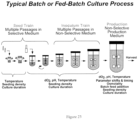
- a small number of transformed recombinant host cells are allowed to grow in culture for several days (see, e.g ., Figure 23 ). Once the cells have undergone several rounds of replication, they are transferred to a larger container where they are prepared to undergo fermentation.
- the media in which the cells are grown and the levels of oxygen, nitrogen and carbon dioxide that exist during the production cycle may have a significant impact on the production process. Growth parameters are determined specifically for each cell line and these parameters are measured frequently to assure optimal growth and production conditions.
- the recombinant protein can be harvested.
- the cells are engineered to secrete the polypeptide into the cell culture media, so the first step in the purification process is to separate the cells from the media.
- harvesting includes centrifugation and filtration to produce a Harvested Cell Culture Fluid (HCCF).
- HCCF Harvested Cell Culture Fluid
- the media is then subjected to several additional purification steps that remove any cellular debris, unwanted proteins, salts, minerals or other undesirable elements.
- the recombinant protein is highly pure and is suitable for human therapeutic use.
- the instant invention generally relates to a method for preventing reduction of disulfide bonds in polypeptides expressed in recombinant host cells, as defined in the claims.
- the thioredoxin inhibitor is added to the pre-harvest culture fluid.
- the thioredoxin inhibitor is added to the harvested culture fluid.
- the thioredoxin inhibitor is a direct inhibitor of thioredoxin.
- the thioredoxin inhibitor may, for example, be an alkyl-2-imidazolyl disulfide or a naphthoquinone spiroketal derivative.
- the thioredoxin inhibitor is a specific inhibitor of thioredoxin reductase.
- the thioredoxin inhibitor is a gold complex, where the gold complex may, for example, be aurothioglucose (ATG) or aurothiomalate (ATM). While the effective inhibitory concentration may vary, it typically is between about 0.1 mM and 1 mM. Similarly, the minimum effective inhibitory concentration varies depending on the nature of the polypeptide and overall circumstances, and is typically reached when the ATG or ATG concentration is at least about four-times of thioreduxin concentration in the pre-harvest or harvested culture fluid.
- ATG aurothioglucose
- ATM aurothiomalate
- the thioredoxin inhibitor is cupric sulfate, added in a concentration between about 5 ⁇ M and about 100 ⁇ M, or between about 10 ⁇ M and about 80 ⁇ M, or between about 15 ⁇ M and about 50 ⁇ M.
- the thioredoxin inhibitor is an inhibitor of G6PD, which is pyridoxal 5'-phosphate, 1 fluoro-2,4 dinitrobenzene, dehydroepiandrosterone (DHEA) or epiandrosterone (EA).
- Typical effective inhibitor concentrations of DHEA are between abour 0.05 mM and about 5 mM, or between about 0.1 mM and about 2.5 mM.
- the thioredoxin inhibitor is an inhibitor of hexokinase activity, which is ethylenediamine tetraacetic acid (EDTA) added in a concentration between about 10 mM and about 50 mM, or about 20 mM and about 40 mM.
- EDTA ethylenediamine tetraacetic acid
- the inhibitor of hexokinase activity is selected from the group consisting of sorbose-1-phosphate, polyphosphates, 6-deoxy-6-fluoroglucose, 2-C-hydroxy-methylglucose, xylose, and lyxose.
- the thioredoxin inhibitor is an antibody specifically binding to a thioredoxin reductase.
- the thioredoxin inhibitor is a measure indirectly resulting in the inhibition of thioredoxin activity.
- the invention includes air sparging the harvested culture fluid of the recombinant host cells.
- air sparging can be combined with the use of direct thioredoxin inhibitors, such as those listed above.
- polypeptides are therapeutic monoclonal antibodies that bind to HER2.
- the HER2 antibodies may, for example, comprise a heavy and/or light chain variable domain sequence selected from the group consisting of SEQ ID NO: 16, 17, 18, and 19.
- the recombinant host cells are eukaryotic host cells, such as mammalian host cells, including, for example, Chinese Hamster Ovary (CHO) cells.
- mammalian host cells including, for example, Chinese Hamster Ovary (CHO) cells.
- the term “reduction” is used to refer to the reduction of one or more disulfide bonds of the protein or antibody.
- the terms “ocrelizumab reduction” is used interchangeably with the term “ocrelizumab disulfide bond reduction” and the term “antibody (Ab) reduction” is used interchangeably with the term “antibody (Ab) disulfide bond reduction.”
- reduction or “disulfide bond reduction” are used in the broadest sense, and include complete and partial reduction and reduction of some or all of the disulfide bonds, interchain or intrachain, present in a protein such as an antibody.
- protein is meant a sequence of amino acids for which the chain length is sufficient to produce the higher levels of tertiary and/or quaternary structure. This is to distinguish from “peptides” or other small molecular weight drugs that do not have such structure.
- the protein herein will have a molecular weight of at least about 15-20 kD, preferably at least about 20 kD.
- proteins encompassed within the definition herein include all mammalian proteins, in particular, therapeutic and diagnostic proteins, such as therapeutic and diagnostic antibodies, and, in general proteins that contain one or more disulfide bonds, including multi-chain polypeptides comprising one or more inter- and/or intrachain disulfide bonds.
- therapeutic protein or “therapeutic polypeptide” refers to a protein that is used in the treatment of disease, regardless of its indication or mechanism of action. In order for therapeutic proteins to be useful in the clinic it must be manufactured in large quantities.
- Manufacturing scale production of therapeutic proteins, or other proteins, utilize cell cultures ranging from about 400L to about 80,000 L, depending on the protein being produced and the need. Typically such manufacturing scale production utilizes cell culture sizes from about 400 L to about 25,000 L. Within this range, specific cell culture sizes such as 4,000 L, about 6,000 L, about 8,000, about 10,000, about 12,000 L, about 14,000 L, or about 16,000 L are utilized.
- therapeutic antibody refers to an antibody that is used in the treatment of disease.
- a therapeutic antibody may have various mechanisms of action.
- a therapeutic antibody may bind and neutralize the normal function of a target associated with an antigen.
- a monoclonal antibody that blocks the activity of the of protein needed for the survival of a cancer cell causes the cell's death.
- Another therapeutic monoclonal antibody may bind and activate the normal function of a target associated with an antigen.
- a monoclonal antibody can bind to a protein on a cell and trigger an apoptosis signal.
- Yet another monoclonal antibody may bind to a target antigen expressed only on diseased tissue; conjugation of a toxic payload (effective agent), such as a chemotherapeutic or radioactive agent, to the monoclonal antibody can create an agent for specific delivery of the toxic payload to the diseased tissue, reducing harm to healthy tissue.
- a toxic payload such as a chemotherapeutic or radioactive agent
- a "biologically functional fragment" of a therapeutic antibody will exhibit at least one if not some or all of the biological functions attributed to the intact antibody, the function comprising at least specific binding to the target antigen.
- diagnosis protein refers to a protein that is used in the diagnosis of a disease.
- diagnostic antibody refers to an antibody that is used as a diagnostic reagent for a disease.
- the diagnostic antibody may bind to a target antigen that is specifically associated with, or shows increased expression in, a particular disease.
- the diagnostic antibody may be used, for example, to detect a target in a biological sample from a patient, or in diagnostic imaging of disease sites, such as tumors, in a patient.
- a "biologically functional fragment" of a diagnostic antibody will exhibit at least one if not some or all of the biological functions attributed to the intact antibody, the function comprising at least specific binding to the target antigen.
- “Purified” means that a molecule is present in a sample at a concentration of at least 80-90% by weight of the sample in which it is contained.
- the protein, including antibodies, which is purified is preferably essentially pure and desirably essentially homogeneous (i.e. free from contaminating proteins etc.).
- An "essentially pure” protein means a protein composition comprising at least about 90% by weight of the protein, based on total weight of the composition, preferably at least about 95% by weight.
- the protein is an antibody.
- Antibodies (Abs) and “immunoglobulins” (Igs) are glycoproteins having the same structural characteristics. While antibodies exhibit binding specificity to a specific antigen, immunoglobulins include both antibodies and other antibody-like molecules which generally lack antigen specificity. Polypeptides of the latter kind are, for example, produced at low levels by the lymph system and at increased levels by myelomas.
- antibody is used in the broadest sense and specifically covers monoclonal antibodies (including full length antibodies which have an immunoglobulin Fc region), antibody compositions with polyepitopic specificity, bispecific antibodies, diabodies, and single-chain molecules such as scFv molecules, as well as antibody fragments.
- a monoclonal antibody refers to an antibody obtained from a population of substantially homogeneous antibodies, i.e., the individual antibodies comprising the population are identical except for possible mutations, e.g ., naturally occurring mutations, that may be present in minor amounts. Thus, the modifier “monoclonal” indicates the character of the antibody as not being a mixture of discrete antibodies.
- such a monoclonal antibody typically includes an antibody comprising a polypeptide sequence that binds a target, wherein the target-binding polypeptide sequence was obtained by a process that includes the selection of a single target binding polypeptide sequence from a plurality of polypeptide sequences.
- the selection process can be the selection of a unique clone from a plurality of clones, such as a pool of hybridoma clones, phage clones, or recombinant DNA clones.
- a selected target binding sequence can be further altered, for example, to improve affinity for the target, to humanize the target binding sequence, to improve its production in cell culture, to reduce its immunogenicity in vivo, to create a multispecific antibody, etc., and that an antibody comprising the altered target binding sequence is also a monoclonal antibody of this invention.
- each monoclonal antibody of a monoclonal antibody preparation is directed against a single determinant on an antigen.
- monoclonal antibody preparations are advantageous in that they are typically uncontaminated by other immunoglobulins.
- the modifier "monoclonal” indicates the character of the antibody as being obtained from a substantially homogeneous population of antibodies, and is not to be construed as requiring production of the antibody by any particular method.
- the monoclonal antibodies to be used in accordance with the present invention may be made by a variety of techniques, including, for example, the hybridoma method ( e.g., Kohler et al., Nature, 256: 495 (1975 ); Harlow et al., Antibodies: A Laboratory Manual, (Cold Spring Harbor Laboratory Press, 2nd ed.
- the monoclonal antibodies herein specifically include "chimeric" antibodies in which a portion of the heavy and/or light chain is identical with or homologous to corresponding sequences in antibodies derived from a particular species or belonging to a particular antibody class or subclass, while the remainder of the chain(s) is identical with or homologous to corresponding sequences in antibodies derived from another species or belonging to another antibody class or subclass, as well as fragments of such antibodies, so long as they exhibit the desired biological activity ( U.S. Patent No. 4,816,567 ; and Morrison et al., Proc. Natl. Acad. Sci. USA 81:6851-6855 (1984 )).
- Humanized forms of non-human (e.g., murine) antibodies are chimeric antibodies that contain minimal sequence derived from non-human immunoglobulin.
- a humanized antibody is a human immunoglobulin (recipient antibody) in which residues from a hypervariable region of the recipient are replaced by residues from a hypervariable region of a non-human species (donor antibody) such as mouse, rat, rabbit, or nonhuman primate having the desired specificity, affinity, and/or capacity.
- donor antibody such as mouse, rat, rabbit, or nonhuman primate having the desired specificity, affinity, and/or capacity.
- framework region (FR) residues of the human immunoglobulin are replaced by corresponding non-human residues.
- humanized antibodies may comprise residues that are not found in the recipient antibody or in the donor antibody. These modifications may be made to further refine antibody performance.
- a humanized antibody will comprise substantially all of at least one, and typically two, variable domains, in which all or substantially all of the hypervariable loops correspond to those of a non-human immunoglobulin, and all or substantially all the FRs are those of a human immunoglobulin sequence.
- the humanized antibody optionally will also comprise at least a portion of an immunoglobulin constant region (Fc), typically that of a human immunoglobulin.
- Fc immunoglobulin constant region
- the humanized antibody includes a Primatized TM antibody wherein the antigen-binding region of the antibody is derived from an antibody produced by immunizing macaque monkeys with the antigen of interest.
- a "human antibody” is one which possesses an amino acid sequence which corresponds to that of an antibody produced by a human and/or has been made using any of the techniques for making human antibodies as disclosed herein. This definition of a human antibody specifically excludes a humanized antibody comprising non-human antigen-binding residues.
- affinity matured antibody is one with one or more alterations in one or more CDRs/HVRs thereof which result in an improvement in the affinity of the antibody for antigen, compared to a parent antibody which does not possess those alteration(s).
- Preferred affinity matured antibodies will have nanomolar or even picomolar affinities for the target antigen.
- Affinity matured antibodies are produced by procedures known in the art. Marks et al., Bio/Technology 10:779-783 (1992 ) describes affinity maturation by V H and V L domain shuffling. Random mutagenesis of CDR/HVR and/or framework residues is described by: Barbas et al., Proc Nat. Acad. Sci.
- variable region or “variable domain” of an antibody refers to the amino-terminal domains of the heavy or light chain of the antibody.
- the variable domain of the heavy chain may be referred to as "V H .”
- the variable domain of the light chain may be referred to as "V L .” These domains are generally the most variable parts of an antibody and contain the antigen-binding sites.
- variable refers to the fact that certain portions of the variable domains differ extensively in sequence among antibodies and are used in the binding and specificity of each particular antibody for its particular antigen. However, the variability is not evenly distributed throughout the variable domains of antibodies. It is concentrated in three segments called complementarity-determining regions (CDRs) or hypervariable regions (HVRs) both in the light-chain and the heavy-chain variable domains. The more highly conserved portions of variable domains are called the framework regions (FR).
- CDRs complementarity-determining regions
- HVRs hypervariable regions
- FR framework regions
- the variable domains of native heavy and light chains each comprise four FR regions, largely adopting a beta-sheet configuration, connected by three CDRs, which form loops connecting, and in some cases forming part of, the beta-sheet structure.
- the CDRs in each chain are held together in close proximity by the FR regions and, with the CDRs from the other chain, contribute to the formation of the antigen-binding site of antibodies (see Kabat et al., Sequences of Proteins of Immunological Interest, Fifth Edition, National Institute of Health, Bethesda, MD (1991 )).
- the constant domains are not involved directly in the binding of an antibody to an antigen, but exhibit various effector functions, such as participation of the antibody in antibody-dependent cellular toxicity.
- the "light chains" of antibodies (immunoglobulins) from any vertebrate species can be assigned to one of two clearly distinct types, called kappa ( ⁇ ) and lambda ( ⁇ ), based on the amino acid sequences of their constant domains.
- antibodies can be assigned to different classes.
- the heavy chain constant domains that correspond to the different classes of immunoglobulins are called a, d, e, g, and m, respectively.
- An antibody may be part of a larger fusion molecule, formed by covalent or non-covalent association of the antibody with one or more other proteins or peptides.
- full length antibody “intact antibody” and “whole antibody” are used herein interchangeably to refer to an antibody in its substantially intact form, not antibody fragments as defined below.
- Antibody fragments comprise only a portion of an intact antibody, wherein the portion retains at least one, and as many as most or all, of the functions normally associated with that portion when present in an intact antibody.
- an antibody fragment comprises an antigen binding site of the intact antibody and thus retains the ability to bind antigen.
- an antibody fragment for example one that comprises the Fc region, retains at least one of the biological functions normally associated with the Fc region when present in an intact antibody, such as FcRn binding, antibody half life modulation, ADCC function and complement binding.
- an antibody fragment is a monovalent antibody that has an in vivo half life substantially similar to an intact antibody.
- such an antibody fragment may comprise an antigen binding arm linked to an Fc sequence capable of conferring in vivo stability to the fragment.
- Papain digestion of antibodies produces two identical antigen-binding fragments, called “Fab” fragments, each with a single antigen-binding site, and a residual "Fc” fragment, whose name reflects its ability to crystallize readily. Pepsin treatment yields an F(ab') 2 fragment that has two antigen-combining sites and is still capable of cross-linking antigen.
- the Fab fragment contains the heavy- and light-chain variable domains and also contains the constant domain of the light chain and the first constant domain (CH1) of the heavy chain.
- Fab' fragments differ from Fab fragments by the addition of a few residues at the carboxy terminus of the heavy chain CH1 domain including one or more cysteines from the antibody hinge region.
- Fab'-SH is the designation herein for Fab' in which the cysteine residue(s) of the constant domains bear a free thiol group.
- F(ab')2 antibody fragments originally were produced as pairs of Fab' fragments which have hinge cysteines between them. Other chemical couplings of antibody fragments are also known.
- Fv is the minimum antibody fragment which contains a complete antigen-binding site.
- a two-chain Fv species consists of a dimer of one heavy- and one light-chain variable domain in tight, non-covalent association.
- scFv single-chain Fv
- one heavy- and one light-chain variable domain can be covalently linked by a flexible peptide linker such that the light and heavy chains can associate in a "dimeric" structure analogous to that in a two-chain Fv species. It is in this configuration that the three CDRs of each variable domain interact to define an antigen-binding site on the surface of the V H -V L dimer.
- the six CDRs confer antigen-binding specificity to the antibody.
- Single-chain Fv or “scFv” antibody fragments comprise the V H and V L domains of an antibody, wherein these domains are present in a single polypeptide chain.
- the scFv polypeptide further comprises a polypeptide linker between the V H and V L domains which enables the scFv to form the desired structure for antigen binding.
- diabodies refers to small antibody fragments with two antigen-binding sites, which fragments comprise a heavy-chain variable domain (V H ) connected to a light-chain variable domain (V L ) in the same polypeptide chain (V H -V L ).
- V H heavy-chain variable domain
- V L light-chain variable domain
- Diabodies may be bivalent or bispecific. Diabodies are described more fully in, for example, EP 404,097 ; WO93/1161 ; Hudson et al., (2003) Nat. Med. 9:129-134 ; and Hollinger et al., Proc. Natl. Acad. Sci. USA 90: 6444-6448 (1993 ). Triabodies and tetrabodies are also described in Hudson et al., (2003) Nat. Med. 9:129-134 .
- the antibodies bind to HER2.
- a "biologically functional fragment" of an antibody comprises only a portion of an intact antibody, wherein the portion retains at least one, and as many as most or all, of the functions normally associated with that portion when present in an intact antibody.
- a biologically functional fragment of an antibody comprises an antigen binding site of the intact antibody and thus retains the ability to bind antigen.
- a biologically functional fragment of an antibody for example one that comprises the Fc region, may retain at least one of the biological functions normally associated with the Fc region when present in an intact antibody, such as FcRn binding, antibody half life modulation, ADCC function and complement binding.
- a biologically functional fragment of an antibody may be a monovalent antibody that has an in vivo half life substantially similar to an intact antibody.
- such a biologically functional fragment of an antibody may comprise an antigen binding arm linked to an Fc sequence capable of conferring in vivo stability to the fragment.
- thioredoxin inhibitor and “Trx inhibitor” are used interchangeably, and include all agents and measures effective in inhibiting thioredoxin activity.
- thioredoxin (Trx) inhibitors include all agents and measures blocking any component of the Trx, G6PD and/or hexokinase enzyme systems.
- the thioredoxin inhibitors used in the methods of the invention are defined in the claims.
- “inhibition” includes complete elimination (blocking) and reduction of thioredoxin activity, and, consequently, complete or partial elimination of disulfide bond reduction in a protein, such as an antibody.
- an “isolated” antibody is one which has been identified and separated and/or recovered from a component of its natural environment. Contaminant components of its natural environment are materials which would interfere with research, diagnostic or therapeutic uses for the antibody, and may include enzymes, hormones, and other proteinaceous or nonproteinaceous solutes.
- an antibody is purified (1) to greater than 95% by weight of antibody as determined by, for example, the Lowry method, and in some embodiments, to greater than 99% by weight; (2) to a degree sufficient to obtain at least 15 residues of N-terminal or internal amino acid sequence by use of, for example, a spinning cup sequenator, or (3) to homogeneity by SDS-PAGE under reducing or nonreducing conditions using, for example, Coomassie blue or silver stain.
- Isolated antibody includes the antibody in situ within recombinant cells since at least one component of the antibody's natural environment will not be present. Ordinarily, however, isolated antibody will be prepared by at least one purification step.
- Protein A and “ProA” are used interchangeably herein and encompasses Protein A recovered from a native source thereof, Protein A produced synthetically (e.g. by peptide synthesis or by recombinant techniques), and variants thereof which retain the ability to bind proteins which have a C H 2/C H 3 region, such as an Fc region.
- Protein A can be purchased commercially from Repligen, GE Healthcare and Fermatech. Protein A is generally immobilized on a solid phase support material.
- the term “ProA” also refers to an affinity chromatography resin or column containing chromatographic solid support matrix to which is covalently attached Protein A.
- chromatography refers to the process by which a solute of interest in a mixture is separated from other solutes in a mixture as a result of differences in rates at which the individual solutes of the mixture migrate through a stationary medium under the influence of a moving phase, or in bind and elute processes.
- affinity chromatography and "protein affinity chromatography” are used interchangeably herein and refer to a protein separation technique in which a protein of interest or antibody of interest is reversibly and specifically bound to a biospecific ligand.
- the biospecific ligand is covalently attached to a chromatographic solid phase material and is accessible to the protein of interest in solution as the solution contacts the chromatographic solid phase material.
- the protein of interest e.g., antibody, enzyme, or receptor protein
- Binding of the protein of interest to the immobilized ligand allows contaminating proteins or protein impurities to be passed through the chromatographic medium while the protein of interest remains specifically bound to the immobilized ligand on the solid phase material.
- the specifically bound protein of interest is then removed in active form from the immobilized ligand with low pH, high pH, high salt, competing ligand, and the like, and passed through the chromatographic column with the elution buffer, free of the contaminating proteins or protein impurities that were earlier allowed to pass through the column.
- Any component can be used as a ligand for purifying its respective specific binding protein, e.g. antibody.
- non-affinity chromatography and “non-affinity purification” refer to a purification process in which affinity chromatography is not utilized.
- Non-affinity chromatography includes chromatographic techniques that rely on non-specific interactions between a molecule of interest (such as a protein, e.g. antibody) and a solid phase matrix.
- a “cation exchange resin” refers to a solid phase which is negatively charged, and which thus has free cations for exchange with cations in an aqueous solution passed over or through the solid phase.
- a negatively charged ligand attached to the solid phase to form the cation exchange resin may, e.g ., be a carboxylate or sulfonate.
- Commercially available cation exchange resins include carboxy-methyl-cellulose, sulphopropyl (SP) immobilized on agarose (e.g. SP-SEPHAROSE FAST FLOW TM or SP-SEPHAROSE HIGH PERFORMANCE TM , from GE Healthcare) and sulphonyl immobilized on agarose (e.g.
- a "mixed mode ion exchange resin” refers to a solid phase which is covalently modified with cationic, anionic, and hydrophobic moieties.
- a commercially available mixed mode ion exchange resin is BAKERBOND ABX TM (J.T. Baker, Phillipsburg, NJ) containing weak cation exchange groups, a low concentration of anion exchange groups, and hydrophobic ligands attached to a silica gel solid phase support matrix.
- anion exchange resin is used herein to refer to a solid phase which is positively charged, e.g. having one or more positively charged ligands, such as quaternary amino groups, attached thereto.
- commercially available anion exchange resins include DEAE cellulose, QAE SEPHADEX TM and FAST Q SEPHAROSE TM (GE Healthcare).
- a “buffer” is a solution that resists changes in pH by the action of its acid-base conjugate components.
- Various buffers which can be employed depending, for example, on the desired pH of the buffer are described in Buffers. A Guide for the Preparation and Use of Buffers in Biological Systems, Gueffroy, D., ed. Calbiochem Corporation (1975 ).
- the buffer has a pH in the range from about 2 to about 9, alternatively from about 3 to about 8, alternatively from about 4 to about 7 alternatively from about 5 to about 7.
- Non-limiting examples of buffers that will control the pH in this range include MES, MOPS, MOPSO, Tris, HEPES, phosphate, acetate, citrate, succinate, and ammonium buffers, as well as combinations of these.
- the "loading buffer” is that which is used to load the composition comprising the polypeptide molecule of interest and one or more impurities onto the ion exchange resin.
- the loading buffer has a conductivity and/or pH such that the polypeptide molecule of interest (and generally one or more impurities) is/are bound to the ion exchange resin or such that the protein of interest flows through the column while the impurities bind to the resin.
- the "intermediate buffer” is used to elute one or more impurities from the ion exchange resin, prior to eluting the polypeptide molecule of interest.
- the conductivity and/or pH of the intermediate buffer is/are such that one or more impurity is eluted from the ion exchange resin, but not significant amounts of the polypeptide of interest.
- wash buffer when used herein refers to a buffer used to wash or re-equilibrate the ion exchange resin, prior to eluting the polypeptide molecule of interest. Conveniently, the wash buffer and loading buffer may be the same, but this is not required.
- the "elution buffer” is used to elute the polypeptide of interest from the solid phase.
- the conductivity and/or pH of the elution buffer is/are such that the polypeptide of interest is eluted from the ion exchange resin.
- a “regeneration buffer” may be used to regenerate the ion exchange resin such that it can be re-used.
- the regeneration buffer has a conductivity and/or pH as required to remove substantially all impurities and the polypeptide of interest from the ion exchange resin.
- substantially similar denotes a sufficiently high degree of similarity between two numeric values (for example, one associated with an antibody of the invention and the other associated with a reference/comparator antibody), such that one of skill in the art would consider the difference between the two values to be of little or no biological and/or statistical significance within the context of the biological characteristic measured by said values (e.g., Kd values).
- the difference between said two values is, for example, less than about 50%, less than about 40%, less than about 30%, less than about 20%, and/or less than about 10% as a function of the reference/comparator value.
- vector is intended to refer to a nucleic acid molecule capable of transporting another nucleic acid to which it has been linked.
- plasmid refers to a circular double stranded DNA into which additional DNA segments may be ligated.
- phage vector refers to a viral vector, wherein additional DNA segments may be ligated into the viral genome.
- viral vector capable of autonomous replication in a host cell into which they are introduced (e.g., bacterial vectors having a bacterial origin of replication and episomal mammalian vectors).
- vectors e.g., non-episomal mammalian vectors
- vectors can be integrated into the genome of a host cell upon introduction into the host cell, and thereby are replicated along with the host genome.
- certain vectors are capable of directing the expression of genes to which they are operatively linked.
- Such vectors are referred to herein as "recombinant expression vectors," or simply, "expression vectors.”
- expression vectors of utility in recombinant DNA techniques are often in the form of plasmids.
- plasmid and vector may be used interchangeably as the plasmid is the most commonly used form of vector.
- Percent (%) amino acid sequence identity with respect to a reference polypeptide sequence is defined as the percentage of amino acid residues in a candidate sequence that are identical with the amino acid residues in the reference polypeptide sequence, after aligning the sequences and introducing gaps, if necessary, to achieve the maximum percent sequence identity, and not considering any conservative substitutions as part of the sequence identity. Alignment for purposes of determining percent amino acid sequence identity can be achieved in various ways that are within the skill in the art, for instance, using publicly available computer software such as BLAST, BLAST-2, ALIGN or Megalign (DNASTAR) software. Those skilled in the art can determine appropriate parameters for aligning sequences, including any algorithms needed to achieve maximal alignment over the full length of the sequences being compared.
- % amino acid sequence identity values are generated using the sequence comparison computer program ALIGN-2.
- the ALIGN-2 sequence comparison computer program was authored by Genentech, Inc., and the source code has been filed with user documentation in the U.S. Copyright Office, Washington D.C., 20559, where it is registered under U.S. Copyright Registration No. TXU510087.
- the ALIGN-2 program is publicly available from Genentech, Inc., South San Francisco, California, or may be compiled from the source code.
- the ALIGN-2 program should be compiled for use on a UNIX operating system, preferably digital UNIX V4.0D. All sequence comparison parameters are set by the ALIGN-2 program and do not vary.
- % amino acid sequence identity of a given amino acid sequence A to, with, or against a given amino acid sequence B is calculated as follows:
- Percent (%) nucleic acid sequence identity is defined as the percentage of nucleotides in a candidate sequence that are identical with the nucleotides in a reference Factor D-encoding sequence, after aligning the sequences and introducing gaps, if necessary, to achieve the maximum percent sequence identity. Alignment for purposes of determining percent nucleic acid sequence identity can be achieved in various ways that are within the skill in the art, for instance, using publicly available computer software such as BLAST, BLAST-2, ALIGN or Megalign (DNASTAR) software. Those skilled in the art can determine appropriate parameters for measuring alignment, including any algorithms needed to achieve maximal alignment over the full length of the sequences being compared. Sequence identity is then calculated relative to the longer sequence, i.e. even if a shorter sequence shows 100% sequence identity wit a portion of a longer sequence, the overall sequence identity will be less than 100%.
- Treatment refers to both therapeutic treatment and prophylactic or preventative measures. Those in need of treatment include those already with the disorder as well as those in which the disorder is to be prevented. “Treatment” herein encompasses alleviation of the disease and of the signs and symptoms of the particular disease.
- a “disorder” is any condition that would benefit from treatment with the protein. This includes chronic and acute disorders or diseases including those pathological conditions which predispose the mammal to the disorder in question.
- disorders to be treated herein include carcinomas and allergies.
- mammal for purposes of treatment refers to any animal classified as a mammal, including humans, non-human higher primates, other vertebrates, domestic and farm animals, and zoo, sports, or pet animals, such as dogs, horses, cats, cows, etc.
- the mammal is human.
- Interfering RNA or "small interfering RNA (siRNA)” is a double stranded RNA molecule less than about 30 nucleotides in length that reduces expression of a target gene. Interfering RNAs may be identified and synthesized using known methods ( Shi Y., Trends in Genetics 19(1):9-12 (2003 ), WO/2003056012 and WO2003064621 ), and siRNA libraries are commercially available, for example from Dharmacon, Colorado. Frequently, siRNAs can be successfully designed to target the 5' end of a gene.
- the present invention concerns methods for the prevention of the reduction of disulfide bonds of proteins during recombinant production as defined in the claims.
- the invention concerns methods for preventing the reduction of disulfide bonds of recombinant proteins during processing following fermentation.
- the methods of the invention are particulary valuable for large scale production of disulfide bond containing proteins, such as at a manufacturing scale. In one embodiment, the methods of the invention are useful for large scale protein production at a scale of greater than 5,000 L.
- disulfide bond reduction occurs during processing of the Harvested Cell Culture Fluid (HCCF) produced during manufacturing of recombinant proteins that contain disulfide bonds.
- HCCF Harvested Cell Culture Fluid
- this reduction is observed after cell lysis, especially mechanical cell lysis during harvest operations, when it reaches a certain threshold, such as, for example, from about 30% to about 70%, or from about 40% to about 60%, or from about 50% to about 60% total cell lysis.
- This threshold will vary, depending on the nature of the protein (e.g. antibody) produced, the recombinant host, the production system, production parameters used, and the like, and can be readily determined experimentally.
- Such reduction might result from a variety of factors and conditions during the manufacturing process, and might be caused by a variety of reducing agents.
- the present invention is based, at least in part, on the recognition that the root cause of this reduction is an active thioredoxin (Trx) or thioredoxin-like system in the HCCF.
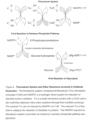
- Trx The Trx enzyme system, composed of Trx, thioredoxin reductase (TrxR) and NADPH, is a hydrogen donor system for reduction of disulfide bonds in proteins.
- Trx is a small monomeric protein with a CXXC active site motif that catalyzes many redox reactions through thiol-disulfide exchange.
- the oxidized Trx can be reduced by NADPH via TrxR.
- the reduced Trx is then able to catalyze the reduction of disulfides in proteins.
- the NADPH required for thioredoxin system is provided via reactions in pentose phosphate pathway and glycolysis.
- NADPH which is required for activity of the Trx system is provided by glucose-6-phosphate dehyrogenase (G6PD) activity, which generates NADPH from glucose and ATP by hexokinase (see Figure 4 ).
- G6PD glucose-6-phosphate dehyrogenase
- These cellular enzymes (Trx system, G6PD, and hexokinase) along with their substrates are released into the CCF upon cell lysis, allowing reduction to occur. Accordingly, disulfide reduction can be prevented by inhibitors of the Trx enzyme system or upstream enzyme systems providing components for an active Trx system, such as G6PD and hexokinase activity.
- LDH Lactate Dehydrogenase
- Trx inhibitors are typically added to the cell culture fluid (CCF), which contains the recombinant host cells and the culture media, and/or to the harvested cell culture fluid (HCCF), which is obtained after harvesting by centrifugation, filtration, or similar separation methods.
- CCF cell culture fluid
- HCCF harvested cell culture fluid
- the Trx inhibitors may be added before harvest and/or during harvest, preferably before harvest.
- palmarumycin CP 1 2 To inhibit Trx Addition of aurothioglucose (ATG) or aurothiomalate (ATM) To inhibit TrxR Air sparging To deplete G6P and NADPH; oxidizing agent Cystine Oxidizing agent Oxidized glutathione Oxidizing agents pH Adjustment to below 6.0 To reduce thiol-disulfide exchange rate and Trx system activity 1 Applied to CCF prior to harvest or in HCCF immediately after harvest. 2 Currently not available commercially.
- Trx inhibitors for use in the methods of the present invention include, (1) direct inhibitors of Trx, such as alkyl-2-imidazolyl disulfides and related compounds (e.g., 1 methylpropyl-2-imidazolyl disulfide) (Kirkpatrick et al., 1998 and 1999, supra ) and naphthoquinone spiroketal derivatives ( e.g., palmarumycin CP 1 ) (Wipf et al., 2001, supra ); (2) specific inhibitors of TrxR, including gold complexes, such as aurothioglucose (ATG) and aurothiomalate (ATM) ( see, e.g., the review by Gromer et al., 2004), which are examples of irreversible inhibitors of TrxR; (3) inhibitors of G6PD, selected from pyridoxal 5'-phosphate and 1 fluoro-2,4 dinitrobenzene (Milhausen and Levy 1975
- Trx inhibitors for use in the methods of the present invention also include the use of targeted antibodies.
- targeted siRNAs or antisense nucleotides are available from public databases to select sequences for targeting enzymes in different organisms. See Example 9 below for examples of the genes of the E. coli and mouse Trx system.
- Air sparging can be performed to reach an endpoint percentage of saturation; for example, air sparging can be continued until the HCCF is about 100% saturated with air, or it can be continued until the HCCR is about 30% saturated with air, or until it is between about 100% saturated to about 30% saturated with air.
- the minimum amount of dissolved oxygen (dO 2 ) required for the desired inhibitory effect also depends on the antibody or other recombinant protein produced. Thus, for example, about 10% dO 2 (or about 10 sccm for continuous stream) will have the desired effect during the production of antibody 2H7 (Variant A), while Apomab might require a higher (about 30%) dO 2 .
- another non-directed method usable to block the reduction of the recombinant protein is lowering the pH of the HCCF.
- the non-directed approaches can also be combined with each other and/or with the use of one or more Trx inhibitors.
- Disulfide bond reduction can be inhibited ( i.e., partially or fully blocked) by using one or more Trx inhibitors and/or applying non-directed approaches following completion of the cell culture process, preferably to CCF prior to harvest or in the HCCF immediately after harvest.
- the optimal time and mode of application and effective amounts depend on the nature of the protein to be purified, the recombinant host cells, and the specific production method used. Determination of the optimal parameters is well within the skill of those of ordinary skill in the art.
- cupric sulfate in the form of pentahydrate or the anhydrous form
- CCF or HCCF in the concentration range of from about 5 ⁇ M to about 100 ⁇ M, such as from about 10 ⁇ M to about 80 ⁇ M, preferably from about 15 ⁇ M to about 50 ⁇ M.
- copper e.g. about 0.04 ⁇ M CuSO 4 for the CHO cell cultures used in the Examples herein
- this amount is in addition to the copper, if any, already present in the cell culture.
- Any copper (II) salt can be used instead of CuSO 4 as long as solubility is not an issue.
- copper acetate and copper chloride which are both soluble in water, can be used instead of CuSO 4 .
- the minimum effective concentration may also depend on the antibody produced and the stage where the inhibitor is used. Thus, for example, when cupric sulfate is added pre-lysis, for antibody 2H7 (Variant A) the minimum effective concentration is about 30 ⁇ M, for Apomab is about 75 ⁇ M, and for antibody Variant C (see Table 2) is about 50 ⁇ M.
- EDTA can be used in a wide concentration range, depending on the extent of cell lysis, the recombinant host cell used, and other parameters of the production process.
- EDTA can be typically added in a concentration of between about 5 mM to about 60 mM, such as from about 10 mM to about 50 mM, or from about 20 mM to about 40 mM, depending on the extent of cell lysis.
- concentrations of EDTA will suffice, while for a cell lysis of about 75% - 100%, the required EDTA concentration is higher, such as, for example, from about 20 mM to about 40 mM.
- the minimum effective concentration may also depend on the antibody produced. Thus, for example, for antibody 2H7 (Variant A) the minimum effective EDTA concentration is about 10 mM.
- DHEA as a Trx inhibitor is typically effective at a lower concentration, such as for example, in the concentration range from about 0.05 mM to about 5 mM, preferably from about 0.1 mM to about 2.5 mM.
- Trx inhibitors such as aurothioglucose (ATG) and aurothiomalate (ATM) inhibit reduction of disulfide bonds in the ⁇ M concentration range.
- ATG or ATM may be added in a concentration between about 0.1 mM to about 1 mM. While the minimum inhibitory concentration varies depending on the actual conditions, for ATG and ATM typically it is around 4 x TrxR concentration.
- the mammalian host cells used in the manufacturing process are chinese hamster ovary (CHO) cells ( Urlaub et al., Proc. Natl. Acad. Sci. USA 77:4216 (1980 )).
- Other mammalian host cells include, without limitation, monkey kidney CV1 line transformed by SV40 (COS-7, ATCC CRL 1651); human embryonic kidney line (293 or 293 cells subcloned for growth in suspension culture), Graham et al., J. Gen Virol. 36:59 (1977 )); baby hamster kidney cells (BHK, ATCC CCL 10); mouse sertoli cells (TM4, Mather, Biol. Reprod.
- monkey kidney cells (CV1 ATCC CCL 70); African green monkey kidney cells (VERO-76, ATCC CRL-1587); human cervical carcinoma cells (HELA, ATCC CCL 2); canine kidney cells (MDCK, ATCC CCL 34); buffalo rat liver cells (BRL 3A, ATCC CRL 1442); human lung cells (W138, ATCC CCL 75); human liver cells (Hep G2, HB 8065); mouse mammary tumor (MMT 060562, ATCC CCL51); TRI cells ( Mather et al., Annals N.Y. Acad. Sci.
- MRC 5 cells MRC 5 cells; FS4 cells; a human hepatoma line (Hep G2); and myeloma or lymphoma cells ( e.g. Y0, J558L, P3 and NS0 cells) (see US Patent No. 5,807,715 ).
- a preferred host cell for the production of the polypeptides herein is the CHO cell line DP12 (CHO K1 dhfr-). This is one of the best known CHO cell lines, widely used in laboratory practice ( see, for example, EP 0,307,247, published March 15, 1989 ). In addition, other CHO-K1 (dhfr - ) cell lines are known and can be used in the methods of the present invention.
- the mammalian host cells used to produce peptides, polypeptides and proteins can be cultured in a variety of media.
- Commercially available media such as Ham's F10 (Sigma), Minimal Essential Medium ((MEM), Sigma), RPMI-1640 (Sigma), and Dulbecco's Modified Eagle's Medium ((DMEM, Sigma) are suitable for culturing the host cells.
- 4,767,704 ; 4,657,866 ; 4,927,762 ; or 4,560,655 ; WO 90/03430 ; WO 87/00195 ; U.S. Pat. No. Re. 30,985 ; or U.S. Pat. No. 5,122,469 , may be used as culture media for the host cells.
- any of these media may be supplemented as necessary with hormones and/or other growth factors (such as insulin, transferrin, or epidermal growth factor), salts (such as sodium chloride, calcium, magnesium, and phosphate), buffers (such as HEPES), nucleosides (such as adenosine and thymidine), antibiotics (such as Gentamycin TM drug), trace elements (defined as inorganic compounds usually present at final concentrations in the micromolar range), and glucose or an equivalent energy source. Any other necessary supplements may also be included at appropriate concentrations that would be known to those skilled in the art.
- the culture conditions such as temperature, pH, and the like, are those previously used with the host cell selected for expression, and will be apparent to the ordinarily skilled artisan.
- a protocol for the production, recovery and purification of recombinant antibodies in mammalian, such as CHO, cells may include the following steps: Cells may be cultured in a stirred tank bioreactor system and a fed batch culture, procedure is employed. In a preferred fed batch culture the mammalian host cells and culture medium are supplied to a culturing vessel initially and additional culture nutrients are fed, continuously or in discrete increments, to the culture during culturing, with or without periodic cell and/or product harvest before termination of culture.
- the fed batch culture can include, for example, a semi-continuous fed batch culture, wherein periodically whole culture (including cells and medium) is removed and replaced by fresh medium.
- Fed batch culture is distinguished from simple batch culture in which all components for cell culturing (including the cells and all culture nutrients) are supplied to the culturing vessel at the start of the culturing process.
- Fed batch culture can be further distinguished from perfusion culturing insofar as the supernate is not removed from the culturing vessel during the process (in perfusion culturing, the cells are restrained in the culture by, e.g., filtration, encapsulation, anchoring to microcarriers etc. and the culture medium is continuously or intermittently introduced and removed from the culturing vessel).
- the cells of the culture may be propagated according to any scheme or routine that may be suitable for the particular host cell and the particular production plan contemplated. Therefore, a single step or multiple step culture procedure may be employed.
- a single step culture the host cells are inoculated into a culture environment and the processes are employed during a single production phase of the cell culture.
- a multi-stage culture can be used.
- cells may be cultivated in a number of steps or phases. For instance, cells may be grown in a first step or growth phase culture wherein cells, possibly removed from storage, are inoculated into a medium suitable for promoting growth and high viability. The cells may be maintained in the growth phase for a suitable period of time by the addition of fresh medium to the host cell culture.
- fed batch or continuous cell culture conditions may be devised to enhance growth of the mammalian cells in the growth phase of the cell culture.
- cells are grown under conditions and for a period of time that is maximized for growth.
- Culture conditions such as temperature, pH, dissolved oxygen (dO 2 ) and the like, are those used with the particular host and will be apparent to the ordinarily skilled artisan.
- the pH is adjusted to a level between about 6.5 and 7.5 using either an acid (e.g., CO 2 ) or a base (e.g., Na2CO 3 or NaOH).
- a suitable temperature range for culturing mammalian cells such as CHO cells is between about 30°C to 38°C, and a suitable dO 2 is between 5-90% of air saturation.
- the cells may be used to inoculate a production phase or step of the cell culture.
- the production phase or step may be continuous with the inoculation or growth phase or step.
- the cell culture environment during the production phase of the cell culture is typically controlled.
- factors affecting cell specific productivity of the mammalian host cell may be manipulated such that the desired sialic acid content is achieved in the resulting glycoprotein.
- the production phase of the cell culture process is preceded by a transition phase of the cell culture in which parameters for the production phase of the cell culture are engaged. Further details of this process are found in U.S. Patent No. 5,721,121 , and Chaderjian et al., Biotechnol. Prog. 21(2):550-3 (2005 ).
- the first step of a purification process involves lysis of the cell, which can be done by a variety of methods, including mechanical shear, osmotic shock, or enzymatic treatments. Such disruption releases the entire contents of the cell into the homogenate, and in addition produces subcellular fragments that are difficult to remove due to their small size. These are generally removed by differential centrifugation or by filtration. The same problem arises, although on a smaller scale, with directly secreted proteins due to the natural death of cells and release of intracellular host cell proteins and components in the course of the protein production run.
- the desired protein is separated from impurities when the impurities specifically adhere to the column, and the protein of interest does not, that is, the protein of interest is present in the "flow-through.”
- purification of recombinant proteins from the cell culture of mammalian host cells may include one or more affinity (e.g. protein A) and/or ion exchange chomarographic steps.
- Ion exchange chromatography is a chromatographic technique that is commonly used for the purification of proteins.
- ion exchange chromatography charged patches on the surface of the solute are attracted by opposite charges attached to a chromatography matrix, provided the ionic strength of the surrounding buffer is low. Elution is generally achieved by increasing the ionic strength (i.e. conductivity) of the buffer to compete with the solute for the charged sites of the ion exchange matrix.
- Changing the pH and thereby altering the charge of the solute is another way to achieve elution of the solute.
- the change in conductivity or pH may be gradual (gradient elution) or stepwise (step elution). In the past, these changes have been progressive; i.e., the pH or conductivity is increased or decreased in a single direction.
- yeast host cells such as common baker's yeast or Saccharomyces cerevisiae
- suitable vectors include episomally-replicating vectors based on the 2-micron plasmid, integration vectors, and yeast artificial chromosome (YAC) vectors.
- yeast suitable for recombinant production of heterologous proteins include Schizosaccharomyces pombe ( Beach and Nurse, Nature, 290: 140 (1981 ); EP 139,383 published 2 May 1985 ); Kluyveromyces hosts ( U.S. Pat. No.
- K. lactis MW98-8C, CBS683, CBS4574; Louvencourt et al., J. Bacteriol., 737 (1983 )
- K. fragilis ATCC 12,424)
- K. bulgaricus ATCC 16,045)
- K. wickeramii ATCC 24,178
- K. waltii ATCC 56,500
- K. drosophilarum ATCC 36,906; Van den Berg et al., Bio/Technology, 8: 135 (1990)
- K. thermotolerans K.
- Aspergillus hosts such as A. nidulans ( Ballance et al., Biochem. Biophys. Res. Commun., 112: 284 289 (1983 ); Tilburn et al., Gene, 26: 205 221 (1983 ); Yelton et al., Proc. Natl. Acad. Sci. USA, 81: 1470 1474 (1984 )) and A. niger ( Kelly and Hynes, EMBO J., 4: 475 479 (1985 )).
- Methylotropic yeasts are suitable herein and include, but are not limited to, yeast capable of growth on methanol selected from the genera consisting of Hansenula, Candida, Kloeckera, Pichia, Saccharomyces, Torulopsis, and Rhodotorula.
- yeast capable of growth on methanol selected from the genera consisting of Hansenula, Candida, Kloeckera, Pichia, Saccharomyces, Torulopsis, and Rhodotorula.
- a list of specific species that are exemplary of this class of yeasts may be found in C. Anthony, The Biochemistry of Methylotrophs, 269 (1982 ). Expression systems for the listed and other yeasts are well known in the art and/or are commercially available.
- suitable vectors include baculoviral vectors.
- suitable expression vectors include vectors derived from the Ti plasmid of Agrobacterium tumefaciens.
- Cell lysis is typically accomplished using mechanical disruption techniques such as homogenization or head milling. While the protein of interest is generally effectively liberated, such techniques have several disadvantages ( Engler, Protein Purification Process Engineering, Harrison eds., 37 55 (1994 )). Temperature increases, which often occur during processing, may result in inactivation of the protein. Moreover, the resulting suspension contains a broad spectrum of contaminating proteins, nucleic acids, and polysaccharides. Nucleic acids and polysaccharides increase solution viscosity, potentially complicating subsequent processing by centrifugation, cross-flow filtration, or chromatography. Complex associations of these contaminants with the protein of interest can complicate the purification process and result in unacceptably low yields. Improved methods for purification of heterologous polypeptides from microbial fermentation broth or homogenate are described, for example, in U.S. Patent No. 7,169,908 .
- the methods of the present invention are used to prevent the reduction of inter- and/or intrachain disulfide bonds of therapeutic antibodies.
- Antibodies within the scope of the present invention include, but are not limited to: Trastuzumab (HERCEPTIN ® ) ( Carter et al., Proc. Natl. Acad. Sci. USA, 89:4285-4289 (1992 ), U.S. Patent No. 5,725,856 ).
- the methods of the present invention are used for the production of the following antibodies.
- a recombinant humanized version of the murine HER2 antibody 4D5 (huMAb4D5-8, rhuMAb HER2, trastuzumab or HERCEPTIN ® ; U.S. Patent No. 5,821,337 ) is clinically active in patients with HER2-overexpressing metastatic breast cancers that have received extensive prior anti-cancer therapy ( Baselga et al., J. Clin. Oncol. 14:737-744 (1996 )).
- Trastuzumab received marketing approval from the Food and Drug Administration (FDA) September 25, 1998 for the treatment of patients with metastatic breast cancer whose tumors overexpress the HER2 protein.
- FDA Food and Drug Administration
- the anti-HER2 antibodies comprise the following V L and V H domain sequences:
- the anti-HER2 antibodies comprise the V L (SEQ ID NO:18) and V H (SEQ ID NO:19) domain sequences of trastuzumab as shown in Figure 21 and Figure 22 , respectively.
- HER2 antibodies with various properties have been described in Tagliabue et al., Int. J. Cancer 47:933-937 (1991 ); McKenzie et al., Oncogene 4:543-548 (1989 ); Maier et al., Cancer Res. 51:5361-5369 (1991 ); Bacus et al., Molecular Carcinogenesis 3:350-362 (1990 ); Stancovski et al., PNAS (USA) 88:8691-8695 (1991 ); Bacus et al., Cancer Research 52:2580-2589 (1992 ); Xu et al., Int. J.
- the antibodies and other recombinant proteins herein can be produced by well known techniques of recombinant DNA technology.
- the skilled practitioner could generate antibodies directed against an antigen of interest, e.g ., using the techniques described below.
- the antibodies herein are directed against an antigen of interest, which is HER2.
- Soluble antigens or fragments thereof, optionally conjugated to other molecules, can be used as immunogens for generating antibodies.
- immunogens for transmembrane molecules, such as receptors, fragments of these (e.g. the extracellular domain of a receptor) can be used as the immunogen.
- transmembrane molecules such as receptors
- fragments of these e.g. the extracellular domain of a receptor
- cells expressing the transmembrane molecule can be used as the immunogen.
- Such cells can be derived from a natural source (e.g. cancer cell lines) or may be cells which have been transformed by recombinant techniques to express the transmembrane molecule.
- a protein that is immunogenic in the species to be immunized e.g ., keyhole limpet hemocyanin, serum albumin, bovine th
- Animals are immunized against the antigen, immunogenic conjugates, or derivatives by combining, e.g., 100 ⁇ g or 5 ⁇ g of the protein or conjugate (for rabbits or mice, respectively) with 3 volumes of Freund's complete adjuvant and injecting the solution intradermally at multiple sites.
- the animals are boosted with 1/5 to 1/10 the original amount of antigen or conjugate in Freund's complete adjuvant by subcutaneous injection at multiple sites.
- Seven to 14 days later the animals are bled and the serum is assayed for antibody titer. Animals are boosted until the titer plateaus.
- the animal is boosted with the conjugate of the same antigen, but conjugated to a different protein and/or through a different cross-linking reagent.
- Conjugates also can be made in recombinant cell culture as protein fusions.
- aggregating agents such as alum are suitably used to enhance the immune response.
- Monoclonal antibodies may be made using the hybridoma method first described by Kohler et al., Nature, 256:495 (1975 ), or may be made by recombinant DNA methods ( U.S. Patent No. 4,816,567 ).
- a mouse or other appropriate host animal such as a hamster or macaque monkey
- lymphocytes that produce or are capable of producing antibodies that will specifically bind to the protein used for immunization.
- lymphocytes may be immunized in vitro. Lymphocytes then are fused with myeloma cells using a suitable fusing agent, such as polyethylene glycol, to form a hybridoma cell ( Goding, Monoclonal Antibodies: Principles and Practice, pp.59-103 (Academic Press, 1986 )).
- the hybridoma cells thus prepared are seeded and grown in a suitable culture medium that preferably contains one or more substances that inhibit the growth or survival of the unfused, parental myeloma cells.
- a suitable culture medium that preferably contains one or more substances that inhibit the growth or survival of the unfused, parental myeloma cells.
- the culture medium for the hybridomas typically will include hypoxanthine, aminopterin, and thymidine (HAT medium), which substances prevent the growth of HGPRT-deficient cells.
- Preferred myeloma cells are those that fuse efficiently, support stable high-level production of antibody by the selected antibody-producing cells, and are sensitive to a medium such as HAT medium.
- preferred myeloma cell lines are murine myeloma lines, such as those derived from MOPC-21 and MPC-11 mouse tumors available from the Salk Institute Cell Distribution Center, San Diego, California USA, and SP-2 or X63-Ag8-653 cells available from the American Type Culture Collection, Rockville, Maryland USA.
- Human myeloma and mouse-human heteromyeloma cell lines also have been described for the production of human monoclonal antibodies ( Kozbor, J. Immunol., 133:3001 (1984 ); Brodeur et al., Monoclonal Antibody Production Techniques and Applications, pp. 51-63 (Marcel Dekker, Inc., New York, 1987 )).
- Culture medium in which hybridoma cells are growing is assayed for production of monoclonal antibodies directed against the antigen.
- the binding specificity of monoclonal antibodies produced by hybridoma cells is determined by immunoprecipitation or by an in vitro binding assay, such as radioimmunoassay (RIA) or enzyme-linked immunoabsorbent assay (ELISA).
- RIA radioimmunoassay
- ELISA enzyme-linked immunoabsorbent assay
- the clones may be subcloned by limiting dilution procedures and grown by standard methods ( Goding, Monoclonal Antibodies: Principles and Practice, pp.59-103 (Academic Press, 1986 )). Suitable culture media for this purpose include, for example, D-MEM or RPMI-1640 medium.
- the hybridoma cells may be grown in vivo as ascites tumors in an animal.
- the monoclonal antibodies secreted by the subclones are suitably separated from the culture medium, ascites fluid, or serum by conventional immunoglobulin purification procedures such as, for example, Protein A-Sepharose, hydroxyapatite chromatography, gel electrophoresis, dialysis, or affinity chromatography.
- immunoglobulin purification procedures such as, for example, Protein A-Sepharose, hydroxyapatite chromatography, gel electrophoresis, dialysis, or affinity chromatography.
- Protein A chromatography procedure described herein is used.
- DNA encoding the monoclonal antibodies is readily isolated and sequenced using conventional procedures (e.g., by using oligonucleotide probes that are capable of binding specifically to genes encoding the heavy and light chains of the monoclonal antibodies).
- the hybridoma cells serve as a preferred source of such DNA.
- the DNA may be placed into expression vectors, which are then transfected into host cells such as simian COS cells, Chinese hamster ovary (CHO) cells, or myeloma cells that do not otherwise produce immunoglobulin protein, to obtain the synthesis of monoclonal antibodies in the recombinant host cells.
- the DNA also may be modified, for example, by substituting the coding sequence for human heavy- and light-chain constant domains in place of the homologous murine sequences ( U.S. Patent No. 4,816,567 ; Morrison, et al., Proc. Natl Acad. Sci. USA, 81:6851 (1984 )), or by covalently joining to the immunoglobulin coding sequence all or part of the coding sequence for a non-immunoglobulin polypeptide.
- non-immunoglobulin polypeptides are substituted for the constant domains of an antibody, or they are substituted for the variable domains of one antigen-combining site of an antibody to create a chimeric bivalent antibody comprising one antigen-combining site having specificity for an antigen and another antigen-combining site having specificity for a different antigen.
- monoclonal antibodies can be isolated from antibody phage libraries generated using the techniques described in McCafferty et al., Nature, 348:552-554 (1990 ). Clackson et al., Nature, 352:624-628 (1991 ) and Marks et al., J. Mol. Biol., 222:581-597 (1991 ) describe the isolation of murine and human antibodies, respectively, using phage libraries.
- a humanized antibody has one or more amino acid residues introduced into it from a source which is non-human. These non-human amino acid residues are often referred to as "import" residues, which are typically taken from an "import” variable domain. Humanization can be essentially performed following the method of Winter and co-workers ( Jones et al., Nature, 321:522-525 (1986 ); Riechmann et al., Nature, 332:323-327 (1988 ); Verhoeyen et al., Science, 239:1534-1536 (1988 )), by substituting rodent CDRs or CDR sequences for the corresponding sequences of a human antibody. Accordingly, such "humanized” antibodies are chimeric antibodies ( U.S. Patent No.
- humanized antibodies are typically human antibodies in which some CDR residues and possibly some FR residues are substituted by residues from analogous sites in rodent antibodies.
- variable domains both light and heavy
- sequence of the variable domain of a rodent antibody is screened against the entire library of known human variable-domain sequences.
- the human sequence which is closest to that of the rodent is then accepted as the human FR for the humanized antibody ( Sims et al., J. Immunol., 151:2296 (1993 )).
- Another method uses a particular framework derived from the consensus sequence of all human antibodies of a particular subgroup of light or heavy chains. The same framework may be used for several different humanized antibodies ( Carter et al., Proc. Natl. Acad. Sci. USA, 89:4285 (1992 ); Presta et al., J. Immnol., 151:2623 (1993 )).
- humanized antibodies are prepared by a process of analysis of the parental sequences and various conceptual humanized products using three-dimensional models of the parental and humanized sequences.
- Three-dimensional immunoglobulin models are commonly available and are familiar to those skilled in the art.
- Computer programs are available which illustrate and display probable three-dimensional conformational structures of selected candidate immunoglobulin sequences. Inspection of these displays permits analysis of the likely role of the residues in the functioning of the candidate immunoglobulin sequence, i.e., the analysis of residues that influence the ability of the candidate immunoglobulin to bind its antigen.
- FR residues can be selected and combined from the recipient and import sequences so that the desired antibody characteristic, such as increased affinity for the target antigen(s), is achieved.
- the CDR residues are directly and most substantially involved in influencing antigen binding.
- transgenic animals e.g., mice
- transgenic animals e.g., mice
- J H antibody heavy-chain joining region
- Human antibodies can also be derived from phage-display libraries ( Hoogenboom et al., J. Mol. Biol., 227:381 (1991 ); Marks et al., J. Mol. Biol., 222:581-597 (1991 ); Vaughan et al., Nature Biotech 14:309 (1996 )).
- antibody fragments Traditionally, these fragments were derived via proteolytic digestion of intact antibodies (see, e.g., Morimoto et al., Journal of Biochemical and Biophysical Methods 24:107-117 (1992 ) and Brennan et al., Science, 229:81 (1985 )). However, these fragments can now be produced directly by recombinant host cells.
- the antibody fragments can be isolated from the antibody phage libraries discussed above.
- Fab'-SH fragments can be directly recovered from E. coli and chemically coupled to form F(ab') 2 fragments ( Carter et al., Bio/Technology 10:163-167 (1992 )).
- F(ab') 2 fragments can be isolated directly from recombinant host cell culture.
- Other techniques for the production of antibody fragments will be apparent to the skilled practitioner.
- Multispecific antibodies have binding specificities for at least two different antigens. While such molecules normally will only bind two antigens (i.e. bispecific antibodies, BsAbs), antibodies with additional specificities such as trispecific antibodies are encompassed by this expression when used herein.
- bispecific antibodies are known in the art. Traditional production of full length bispecific antibodies is based on the coexpression of two immunoglobulin heavy chain-light chain pairs, where the two chains have different specificities ( Millstein et al., Nature, 305:537-539 (1983 )). Because of the random assortment of immunoglobulin heavy and light chains, these hybridomas (quadromas) produce a potential mixture of 10 different antibody molecules, of which only one has the correct bispecific structure. Purification of the correct molecule, which is usually done by affinity chromatography steps, is rather cumbersome, and the product yields are low. Similar procedures are disclosed in WO 93/08829 , and in Traunecker et al., EMBO J., 10:3655-3659 (1991 ).
- the interface between a pair of antibody molecules can be engineered to maximize the percentage of heterodimers which are recovered from recombinant cell culture.
- the preferred interface comprises at least a part of the C H 3 domain of an antibody constant domain.
- one or more small amino acid side chains from the interface of the first antibody molecule are replaced with larger side chains (e.g. tyrosine or tryptophan).
- Compensatory "cavities" of identical or similar size to the large side chain(s) are created on the interface of the second antibody molecule by replacing large amino acid side chains with smaller ones (e.g. alanine or threonine). This provides a mechanism for increasing the yield of the heterodimer over other unwanted end-products such as homodimers.
- Bispecific antibodies include cross-linked or "heteroconjugate" antibodies.
- one of the antibodies in the heteroconjugate can be coupled to avidin, the other to biotin.
- Such antibodies have, for example, been proposed to target immune system cells to unwanted cells ( US Patent No. 4,676,980 ), and for treatment of HIV infection ( WO 91/00360 , WO 92/200373 , and EP 03089 ).
- Heteroconjugate antibodies may be made using any convenient cross-linking methods. Suitable cross-linking agents are well known in the art, and are disclosed in US Patent No. 4,676,980 , along with a number of cross-linking techniques.
- bispecific antibodies can be prepared using chemical linkage.
- Brennan et al., Science, 229: 81 (1985 ) describe a procedure wherein intact antibodies are proteolytically cleaved to generate F(ab') 2 fragments. These fragments are reduced in the presence of the dithiol complexing agent sodium arsenite to stabilize vicinal dithiols and prevent intermolecular disulfide formation.
- the Fab' fragments generated are then converted to thionitrobenzoate (TNB) derivatives.
- One of the Fab'-TNB derivatives is then reconverted to the Fab'-thiol by reduction with mercaptoethylamine and is mixed with an equimolar amount of the other Fab'-TNB derivative to form the bispecific antibody.
- the bispecific antibodies produced can be used as agents for the selective immobilization of enzymes.
- bispecific antibodies have been produced using leucine zippers.
- the leucine zipper peptides from the Fos and Jun proteins were linked to the Fab' portions of two different antibodies by gene fusion.
- the antibody homodimers were reduced at the hinge region to form monomers and then re-oxidized to form the antibody heterodimers. This method can also be utilized for the production of antibody homodimers.
- the fragments comprise a heavy-chain variable domain (V H ) connected to a light-chain variable domain (V L ) by a linker which is too short to allow pairing between the two domains on the same chain. Accordingly, the V H and V L domains of one fragment are forced to pair with the complementary V L and V H domains of another fragment, thereby forming two antigen-binding sites.
- V H and V L domains of one fragment are forced to pair with the complementary V L and V H domains of another fragment, thereby forming two antigen-binding sites.
- sFv single-chain Fv
- the antibodies can be "linear antibodies” as described in Zapata et al., Protein Eng. 8(10):1057-1062 (1995 ). Briefly, these antibodies comprise a pair of tandem Fd segments (V H -C H 1-V H -C H 1) which form a pair of antigen binding regions. Linear antibodies can be bispecific or monospecific.
- Antibodies with more than two valencies are contemplated.
- trispecific antibodies can be prepared. Tutt et al., J. Immunol. 147: 60 (1991 ).
- the simplest and most straightforward immunoadhesin design combines the binding domain(s) of the adhesin (e.g. the extracellular domain (ECD) of a receptor) with the hinge and Fc regions of an immunoglobulin heavy chain.
- ECD extracellular domain
- nucleic acid encoding the binding domain of the adhesin will be fused C-terminally to nucleic acid encoding the N-terminus of an immunoglobulin constant domain sequence, however N-terminal fusions are also possible.
- the encoded chimeric polypeptide will retain at least functionally active hinge, C H 2 and C H 3 domains of the constant region of an immunoglobulin heavy chain. Fusions are also made to the C-terminus of the Fc portion of a constant domain, or immediately N-terminal to the C H 1 of the heavy chain or the corresponding region of the light chain.
- the precise site at which the fusion is made is not critical; particular sites are well known and may be selected in order to optimize the biological activity, secretion, or binding characteristics of the immunoadhesin.
- the adhesin sequence may be fused to the N-terminus of the Fc domain of immunoglobulin G 1 (IgG 1 ). It is possible to fuse the entire heavy chain constant region to the adhesin sequence. However, more preferably, a sequence beginning in the hinge region just upstream of the papain cleavage site which defines IgG Fc chemically ( i.e. residue 216, taking the first residue of heavy chain constant region to be 114), or analogous sites of other immunoglobulins is used in the fusion.
- the adhesin amino acid sequence may be fused to (a) the hinge region and C H 2 and C H 3 or (b) the C H 1, hinge, C H 2 and C H 3 domains, of an IgG heavy chain.
- the immunoadhesins are assembled as multimers, and particularly as heterodimers or heterotetramers.
- these assembled immunoglobulins will have known unit structures.
- a basic four chain structural unit is the form in which IgG, IgD, and IgE exist.
- a four chain unit is repeated in the higher molecular weight immunoglobulins; IgM generally exists as a pentamer of four basic units held together by disulfide bonds.
- IgA globulin, and occasionally IgG globulin may also exist in multimeric form in serum. In the case of multimer, each of the four units may be the same or different.
- AC L -AC L AC H -(AC H , AC L -AC H , AC L -V H C H , or V L C L -AC H ); AC L -AC H -(AC L -AC H , AC L -V H C H , V L C L -AC H , or V L C L -V H C H ) AC L -V H C H -(AC H , or AC L -V H C H , or V L C L -AC H ); V L C L -AC H -(AC L -V H C H , or V L C L -AC H ); and (A-Y) n -(V L C L -V H C H ) 2 ,
- the adhesin sequences can be inserted between immunoglobulin heavy chain and light chain sequences, such that an immunoglobulin comprising a chimeric heavy chain is obtained.
- the adhesin sequences may be fused to the 3' end of an immunoglobulin heavy chain in each arm of an immunoglobulin, either between the hinge and the C H 2 domain, or between the C H 2 and C H 3 domains. Similar constructs have been reported by Hoogenboom, et al., Mol. Immunol. 28:1027-1037 (1991 ).
- an immunoglobulin light chain might be present either covalently associated to an adhesin-immunoglobulin heavy chain fusion polypeptide, or directly fused to the adhesin.
- DNA encoding an immunoglobulin light chain is typically coexpressed with the DNA encoding the adhesin-immunoglobulin heavy chain fusion protein.
- the hybrid heavy chain and the light chain will be covalently associated to provide an immunoglobulin-like structure comprising two disulfide-linked immunoglobulin heavy chain-light chain pairs.
- Immunoadhesins are most conveniently constructed by fusing the cDNA sequence encoding the adhesin portion in-frame to an immunoglobulin cDNA sequence.
- fusion to genomic immunoglobulin fragments can also be used (see, e.g. Aruffo et al., Cell 61:1303-1313 (1990 ); and Stamenkovic et al., Cell 66:1133-1144 (1991 )).
- the latter type of fusion requires the presence of Ig regulatory sequences for expression.
- cDNAs encoding IgG heavy-chain constant regions can be isolated based on published sequences from cDNA libraries derived from spleen or peripheral blood lymphocytes, by hybridization or by polymerase chain reaction (PCR) techniques.
- the cDNAs encoding the "adhesin" and the immunoglobulin parts of the immunoadhesin are inserted in tandem into a plasmid vector that directs efficient expression in the chosen host cells.
- Materials and devices used in the experiments described in the experimental examples include: stainless steel vials (mini-tanks, Flow Components, Dublin, CA; short (50 cc) and tall (55 cc)); dialysis tubing (Spectra/Por, 6-8000 MWCO, cat. # 132645), 0.22 ⁇ m filter (Millipore Millipak Gamma Gold cat. # MPGL04GH2); phosphate buffered saline (PBS, EMD, cat. # 6506); ethylenediaminetetraacetic acid (EDTA, Sigma, cat. # E4884); ⁇ -nicotinamide adenine dinucleotide phosphate (NADPH, Calbiochem, cat.
- stainless steel vials mini-tanks, Flow Components, Dublin, CA; short (50 cc) and tall (55 cc)
- dialysis tubing Spectra/Por, 6-8000 MWCO, cat. # 132645), 0.22 ⁇ m filter
- Trx Sigma. cat. # T8690
- TrxR Sigma, cat. # T9698
- All chemicals and reagents were used as received with no further purification.
- Stock solutions of EDTA 250 mM, pH 7.5
- CuSO 4 (10 mM)
- ATG (30 mM
- ATM (30 mM)
- NADPH 75 mM
- G6P 300 mM
- Complete lysis of CCF was achieved by high pressure homogenization using a Microfluidics HC-8000 homogenizer.
- the pressure regulator of the instrument was set to 4,000-8,000 psi, and the CCF was pulled in through the homogenizer to obtain complete cell lysis (membrane breakage) after a single pass.
- the CCF homogenate was collected once water was purged through the system.
- the homogenate was transferred to centrifuge bottles and centrifuged in a Sorval RC-3B rotor centrifuge at 4,500 rpm for 30 minutes at 20 °C.
- centrate was decanted and then depth filtered followed by 0.22 ⁇ m sterile filtration using a peristaltic pump with silicon tubing to generate the final HCCF from the homogenized CCF (100% cell lysis).
- the CCF was centrifuged straight from the fermentor without any homogenization and then the centrate was filtered with a sterile 0.22 ⁇ m filter to generate the HCCF.
- a laminar flow hood was used in handling all mini-tanks and all materials used in the HCCF incubation experiments were either autoclaved or rinsed using 70% isopropanol to minimize bacterial contamination.
- a dialysis experiment was carried out in order to determine whether the components causing reduction of ocrelizumab were small molecules or macromolecules (i.e. enzymes).
- a sample of 3 mL of purified and formulated ocrelizumab (30.2 mg/mL) was dialyzed against 1 L of phosphate buffered saline (PBS, 10 mM pH 7.2) for 24 hours and the PBS was changed after 8 hours. The concentration of the ocrelizumab sample was then adjusted to 1 mg/mL using the absorbance at 280 nm. Aliquots were stored at -70 °C prior to use. Dialysis tubing was hydrated overnight in a 0.05% azide solution and rinsed with sterile water prior to use.
- PBS phosphate buffered saline
- the HCCF obtained from homogenization of CCF from a 3-L fermentor was thawed and filtered through a 0.22 ⁇ m Millipak filter using a peristaltic pump.
- Six short mini-tanks were filled with 30 mL of HCCF each.
- 500 ⁇ L of ocrelizumab sample in sealed dialysis tubing was added.
- the mini-tanks were sealed and loaded into a bench top mixer (Barnstead Lab-Line MAX Q 4000) operating at 35 rpm and ambient temperature.
- one mini-tank was removed from the mixer, and aliquots of the HCCF (in the mini-tank) and ocrelizumab sample (in the dialysis bag) were taken and stored at -70 °C until analyzed with the free thiol assay and the Bioanalyzer assay (described below).
- a tall mini-tank was filled with 27 mL of HCCF.
- various reagents NADPH, G6P, inhibitors of G6PD or TrxR
- PBS 10 mM pH 7.2
- the mini-tanks were sealed and loaded into a bench top mixer running at 35 rpm and ambient temperature.
- the exteriors of the mini-tanks were sterilized with 70% IPA and opened in a laminar flow hood for the removal of an aliquot.
- the mini-tanks were then re-scaled and loaded back into the bench top mixer. All aliquots were stored at -70 °C until analyzed with the free thiol assay and Bioanalyzer assay (described below).
- TrxR rat liver
- lyophilized Trx human was reconstituted with PBS (10 mM, pH 7.2) yielding a 500 ⁇ M solution.
- a solution of 20 mM NADPH and 10 mM ATG and ATM solutions were prepared in water.
- a standard curve using GSH was generated in PBS (10 mM, pH 6.0 ⁇ 0.05). From a 110 mM GSH solution, standards were prepared at concentrations of 0, 5.5, 11, 22, 44, 55, 110 and 550 ⁇ M through serial dilution. From an acetonitrile stock solution of mBB (10 mM stored at -20 °C), a 100 ⁇ M solution of mBB was prepared in PBS (10 mM, pH 10.0 ⁇ 0.05) and stored away from light.
- a stock solution of either 250 mM EDTA or 50 mM CuSO 4 was added to the CCF prior to homogenization to evaluate a range of final concentrations to prevent antibody disulfide reduction.
- these solutions were then mixed with the HCCF generated from the non-homogenized CCF (also containing EDTA or CuSO 4 ) in order to dilute and decrease the total level of cell lysis to below the 100% maximum.
- a stock solution of 1 M acetic acid was added to a final blended HCCF solution (homogenized CCF and non-homogenized CCF) to decrease the pH of the solution to prevent antibody disulfide reduction.
- each HCCF solution (containing EDTA, CuSO 4 , acetic acid, or no addition for the control) was held in a 50 mL 316L stainless steel vial.
- the vial was sealed with a clamp, and the solution was not aerated or agitated.
- the vial was stored at room temperature (18 - 22 °C). At pre-determined time points, the solution was removed and purified over a lab scale protein A affinity resin.
- Antibody in harvested cell culture fluid samples can be captured and purified using a specific affinity chromatography resin.
- Protein A resin (Millipore, Prosep-vA High Capacity) was selected as the affinity resin for antibody purification.
- the resin was packed in a 0.66 cm inner diameter glass column (Omnifit ® ) with a 14 cm bed height resulting in a 4.8 mL final column volume. Chromatography was performed using an AKTA Explorer 100 chromatography system (GE Healthcare).
- the resin was exposed to buffers and HCCF at a linear flow rate between 350-560 cm/hr.
- the resin was equilibrated with 25 mM Tris, 25 mM NaCl, 5 mM EDTA, pH 7.1.
- the resin was loaded between 5 -15 mg antibody per mL of resin.
- the antibody concentration in the HCCF was determined using an immobilized protein A HPLC column (Applied Biosystems, POROS A). After loading, the resin was washed with 25 mM Tris, 25 mM NaCl, 5 mM EDTA, 0.5 M TMAC, pH 7.1, and then the antibody was eluted using 0.1M acetic acid, pH 2.9.
- Elution pooling was based on UV absorbance at 280 nm measured inline after the column.
- the purified elution pools were pH-adjusted using 1 M Sodium HEPES to pH 5.0-5.5. After regeneration of the resin with 0.1M phosphoric acid, the same or similar packed resins were used for subsequent purification of other HCCF solutions.
- the antibody concentration in the purified protein A pool was measured using UV spectrometry at 280 nm.
- the purified protein A elution pools were analyzed by the Bioanalyzer assay to quantitate the percentage of intact antibody at 150 kDa molecular weight.
- a dialysis experiment was designed and carried out to determine if the reduction of ocrelizumab was caused by small reducing molecules or macromolecules (e.g., enzymes).
- purified intact ocrelizumab was placed in a dialysis bag with a molecular weight cut off (MWCO) of 7000 and incubated the dialysis bag in HCCF containing ocrelizumab in a stainless steel mini-tank.
- MWCO molecular weight cut off
- Trx system was tested for its ability to reduce ocrelizumab in vitro by incubating intact ocrelizumab with Trx, TrxR, and NADPH.
- the Bioanalyzer results indicate that ocrelizumab was reduced in vitro by the Trx system ( Figure 5 ).
- the rate of reduction in this in vitro system appears to be slower than that in the HCCF (for example when compared to the reduction shown in Figure 2 ). This is likely due to lower concentrations of the enzymes (Trx and Trx-R) and/or the buffer system used in the in vitro reaction because reaction rate of Trx system is dependent on both the enzyme concentrations and buffer systems.
- Cupric sulfate is known for its ability to provide oxidizing redox potential and has been used in the cell culture processes to minimize free thiol ( i.e., minimize unpaired cysteine) levels in recombinant antibody molecules (Chaderjian et al., 2005, supra ). Cupric sulfate was tested for efficacy in inhibiting the Trx system in vitro and the subsequent reduction of ocrelizumab. In this in vitro reduction experiment, the buffer system was changed from PBS to histidine sulfate to avoid the formation of insoluble Cu 3 (PO 4 ) 2 .
- FIG 8 shows that ocrelizumab was readily reduced by the Trx system in the histidine sulfate buffer (even faster than in PBS buffer).
- the addition of CuSO 4 to this reaction clearly inhibits the ocrelizumab reduction ( Figure 9 ).
- TrxR aurothioglucose
- ATM aurothiomalate
- Trx system was active in the HCCF and reduced ocrelizumab as observed in the manufacturing runs resulting in reduced antibody molecules or in the lab scale experiments, both gold compounds (ATG and ATM) should be able to inhibit the reduction of ocrelizumab in HCCF.
- Figure 10 shows that ocrelizumab was readily reduced in an HCCF from homogenized CCT generated from a 3-L fermentor after a period of incubation. However, the ocrelizumab reduction event was completely inhibited when either 1 mM ATG or ATM was added to the HCCF ( Figures 11 and 12 ). These results demonstrated that the Trx system is active in the HCCF and is directly responsible for the reduction of ocrelizumab.
- the reduction of disulfides by the Trx system requires the reducing equivalents from NADPH ( Figure 4 ).
- the main cellular metabolic pathway that provides NADPH for all reductive biosynthesis reactions is the pentose phosphate pathway.
- the enzymes in this pathway must be still active in the HCCF in order to keep the Trx system active.
- the first step in the pentose phosphate pathway (catalyzed by G6PD) must be active to reduce NADP + to NADPH while converting G6P to 6-phosphogluconolactone.
- G6P is most likely produced from glucose and adenosine 5'-triphosphate (ATP) by the hexokinase activity in HCCF.
- ATP adenosine 5'-triphosphate
- HCCF The reducing activity in the HCCF appeared to be transitory in some cases and may be inhibited over time under certain storage conditions or after multiple freeze/thaw cycles. HCCF that has fully lost reducing activity provided an opportunity to explore the role of NADPH and G6P in the reduction of ocrelizumab by Trx system.
- the hexokinase catalyzes the transfer of phosphate group from Mg2+-ATP to glucose, a reaction that requires the complexation of Mg2+ with ATP (Hammes & Kochavi, 1962a & 1962b, supra). Since EDTA is a metal ion chelator, especially for Mg2+, it can be an effective inhibitor of hexokinase. The observation that an excess amount of EDTA can effectively block the reduction indicates the involvement of hexokinase (i.e. providing G6P) in the mechanism of ocrelizumab reduction.
- EDTA blocks the reduction of ocrelizumab by eliminating the hexokinase activity and thereby reducing the G6P level available for G6PD, and subsequently the NADPH level available for the Trx system.
- EDTA is every effective in blocking the reduction of ocrelizumab in fresh HCCF, it was unable to prevent the reduction of ocerlizumab in the beta run HCCF in which the Trx system activity was lost then reactivated by the addition of G6P.
- the reduction of ocrelizumab was observed in an HCCF incubation experiment in which 5 mM G6P and 20 mM EDTA (final concentrations) were added to the beta run HCCF that had fully lost reducing activity ( Figure 18 ).
- no reduction was seen in the control incubation experiment in which no G6P and EDTA were added.
- the EDTA used in this manner may therefore inhibit neither the Trx system nor the G6PD, and may function as an inhibitor for hexokinase, which produces the G6P for the G6PD. Without G6P, the Trx system would not be supplied with the necessary NADPH for activity.
- Dehydroepiandrosterone as well as other similar G6PD inhibitors, effectively blocks G6PD activity (Gordon et al., 1995, supra ) .
- G6PD inhibitors also prevent the reduction of an antibody in HCCF, for example, ocrelizumab, by blocking the generation of NADPH.
- the ability of DHEA to inhibit the reduction of orcelizumab is demonstrated in an HCCF incubation experiment. Adding DHEA to a HCCF prevents antibody reduction.
- DHEA is typically used in the concentration range from about 0.05 mM to about 5 mM. DHEA is also typically used in the concentration range from about 0.1 mM to about 2.5 mM.
- HCCFs Four different HCCFs were stored and held in the stainless steel vials. The solutions were similar in the amount of cell lysis, which were generated by diluting HCCF from homogenized CCF with HCCF from non-homogenized CCF. For example, 150 mL of the first lysed solution was mixed with 50 mL of the second solution, respectively.
- the four HCCF mixtures evaluated in this study contained either: (1) 20 mM EDTA, (2) 30 ⁇ M CuSO 4 , (3) 15 mM acetic acid (pH 5.5), and (4) no chemical inhibitor was added for the control solution.
- the design of targeted siRNAs or antisense nucleotides to the genes as found in CHO cells may be done by using publicly available sequences such as those for E. coli thioredoxin TrxA (SEQ ID NO:30), E. coli thioredoxin reductase TrxB (SEQ ID NO:31); mouse thioredoxin 1 (SEQ ID NO:32), mouse thioreodoxin 2 (SEQ ID NO:33), mouse thioredoxin reductase 1 (SEQ ID NO:34), and mouse thioredoxin reductase 2 (SEQ ID NO:35).
- E. coli thioredoxin TrxA SEQ ID NO:30
- E. coli thioredoxin reductase TrxB SEQ ID NO:31
- mouse thioredoxin 1 SEQ ID NO:32
- mouse thioreodoxin 2 SEQ ID NO:33
- mouse thioredoxin 1 The sequence of mouse thioredoxin 1 is:
- mouse thioreodoxin 2 The sequence of mouse thioreodoxin 2 is:
- mouse thioredoxin reductase 1 The sequence of mouse thioredoxin reductase 1 is:
- mouse thioredoxin reductase 2 The sequence of mouse thioredoxin reductase 2 is:
- TrxR rat liver
- lyophilized Trx human was reconstituted with PBS (10 mM, pH 7.2) yielding a 500 ⁇ M solution.
- a solution of 20 mM NADPH and 10 mM ATG and ATM solutions were prepared in water.
- reaction buffer (10 mM histidine, 10 mM Na2SO4, 137 mM NaCl, 2.5 mM KCl, pH 7.0), 25 ⁇ L NADPH, 16 ⁇ L formulated ocrelizumab solution (30.2 mg/mL) and 5 ⁇ L Trx were gently mixed.
- the reaction was initiated by the addition of 17.5 ⁇ L TrxR.
- the reaction was incubated at room temperature for 24 hours. Aliquots of 20 ⁇ L were taken at each sampling time-point and stored at -70 °C until analyzed by the Bioanalyzer assay.
- Figure 24 shows a digital gel-like image from Bioanalyzer analysis (each lane representing a time point) showing that incubation of intact ocrelizumab ("2H7," a humanized anti-CD20 antibody, referred to as "Variant A" above) (1 mg/mL) with 0.1 ⁇ M TrxR (rat liver), 5 ⁇ M Trx (human) and 1 mM NADPH in 10 mM histidine sulfate buffer results in the reduction of ocrelizumab in less than one hour.
- 2H7 a humanized anti-CD20 antibody
- Aurothioglucose was added to the ocrelizumab mixture described above, at the following concentrations: 1 mM; 0.6 ⁇ M (6:1 ATG:TrxR); 0.4 ⁇ M (4:1 ATG:TrxR); and 0.2 ⁇ M (2:1 ATG:TrxR).
- aurothioglucose added at concentrations 1 mM, 0.6 ⁇ M, and 0.4 ⁇ M effectively inhibits the reduction of ocrelizumab by the thioredoxin system.
- aurothioglucose added at a concentration of 0.2 ⁇ M cannot inhibit ocrelizumab reduction after 24 hours.
- ATM Aurothiomalate
- CuSO 4 was added to the ocrelizumab mixture described above, at concentrations of 20 ⁇ M (4:1 Cu 2+ :Trx) ; 10 ⁇ m (2:1 Cu 2+ :Trx); and 5 ⁇ M (1:1 Cu 2+ :Trx).
- CuSO 4 effectively inhibits thioredoxin-induced reduction of ocrelizumab at concentrations of 20 ⁇ M and 10 ⁇ M ( Figures 31 and 32 ), but the 5 ⁇ M concentration is insufficient to result in a complete inhibition of reduction ( Figure 33 ).
- Cystamine was added to the ocrelizumab mixture describe above at the following concentrations: 532 ⁇ M (20:1 cystamine:2H7 (Variant A) disulfide); 266 ⁇ M (10:1 cystamine:2H7 (Variant A) disulfide); 133 ⁇ M (5:1 cystamine:2H7 disulfide); and 26.6 ⁇ M (1:1 cystamine:2H7 (Variant A) disulfide).
- cystamine effectively inhibits thioredoxin-induced reduction of ocrelizumab at concentrations of 532 ⁇ M (20:1 cystamine:2H7 (Variant A) disulfide) and 266 ⁇ M (10:1 cystamine:2H7 (Variant A)) ( Figures 34 and 35 ) but the 133 ⁇ M (5:1 cystamine:2H7 (Variant A) disulfide) and 26.6 ⁇ M (1:1 cystamine:2H7 (Variant A) disulfide) concentrations are insufficient to inhibit the reduction of ocrelizumab after 24 hours ( Figures 36 and 37 ).
- Cystine was added to the ocrelizumab mixture described above at a concentration of 2.6 mM. As shown in Figure 38 , at this concentration cystine effectively inhibits reduction of ocrelizumab by the thioredoxin system. It is noted that the minimum effective concentration of cystine (just as the effective minimum concentration of other inhibitors) depends on the actual circumstances, and might be different for different proteins, such as antibodies, and might vary depending on the timing of addition. Thus, for example, if cystine is added pre-lysis, the minimum effective concentration for antibody 2H7 (Variant A) is about 1.3 mM, for Apomab about 1 mM and for antibody Variant C about 4.5 mM. When cystine is added in the cell culture medium.
- the minimum effective concentration typically is somewhat higher, and is about 5.2 mM for 2H7 (Variant A), 6 mM for Apomab and 9 mM for antibody Variant C.
- the minimum effective inhibitory concentration is about 40x of the antibody concentration ( in ⁇ M).
- GSSG was added to the ocrelizumab mixture described above at a concentration of 2.6 mM. As shown in Figure 39 , at this concentration GSSG effectively inhibits reduction of ocrelizumab by the thioredoxin system. It is noted, however, that the minimum effective concentration of oxidize glutathione (just as that of the other inhibitors) depends on the actual circumstances, such as, for example, on the nature of the protein (e.g. antibody) produced and the timing of addition. For example, for antibody 2H7 (Variant A) the minimum effective concentration is about 1.3 mM for addition prior to lysis.
- Figure 40 shows a digital gel-like image from Bioanalyzer analysis (each lane representing a time point) showing that incubation of intact ocrelizumab ("2H7," a humanized anti-CD20 antibody, Variant A) (1 mg/mL) with 10 ⁇ g/mL hexokinase, 50 ⁇ g/mL glucose-6-phosphate dehydrogenase, 5 ⁇ M thioredoxin, 0.1 ⁇ M thoredoxin reductase, 2 mM glucose, 0.6 mM ATP, 2 mM Mg 2+ , and 2 mM NADP in 50 mM histidine sulfate buffered at pH 7.38 results in the reduction of ocrelizumab in about one hour. Addition of 0.1 mM HDEA, a known glucose-6-phosphate dehydrogenase inhibitor does not inhibit the reduction.
- 2H7 a humanized anti-CD20 antibody, Variant A
Landscapes
- Chemical & Material Sciences (AREA)
- Health & Medical Sciences (AREA)
- Organic Chemistry (AREA)
- Life Sciences & Earth Sciences (AREA)
- Medicinal Chemistry (AREA)
- General Health & Medical Sciences (AREA)
- Immunology (AREA)
- Genetics & Genomics (AREA)
- Biochemistry (AREA)
- Molecular Biology (AREA)
- Biophysics (AREA)
- Proteomics, Peptides & Aminoacids (AREA)
- Engineering & Computer Science (AREA)
- Bioinformatics & Cheminformatics (AREA)
- Biotechnology (AREA)
- Microbiology (AREA)
- Analytical Chemistry (AREA)
- Zoology (AREA)
- Wood Science & Technology (AREA)
- Biomedical Technology (AREA)
- Pharmacology & Pharmacy (AREA)
- Veterinary Medicine (AREA)
- Animal Behavior & Ethology (AREA)
- Public Health (AREA)
- General Chemical & Material Sciences (AREA)
- Mycology (AREA)
- Epidemiology (AREA)
- General Engineering & Computer Science (AREA)
- Chemical Kinetics & Catalysis (AREA)
- Nuclear Medicine, Radiotherapy & Molecular Imaging (AREA)
- Tropical Medicine & Parasitology (AREA)
- Virology (AREA)
- Oncology (AREA)
- Cell Biology (AREA)
- Endocrinology (AREA)
- Diabetes (AREA)
- Gastroenterology & Hepatology (AREA)
- Peptides Or Proteins (AREA)
- Preparation Of Compounds By Using Micro-Organisms (AREA)
- Medicines Containing Antibodies Or Antigens For Use As Internal Diagnostic Agents (AREA)
Claims (18)
- Procédé de prévention de la réduction de liaisons disulfures dans des anticorps exprimés dans des cellules hôtes recombinantes pendant le traitement qui suit la fermentation, comprenant, après l'achèvement du processus de culture cellulaire, l'ajout d'un inhibiteur de la thiorédoxine au fluide de culture cellulaire pré-récolte ou récolté des cellules hôtes recombinantes ou le barbotage d'air dans le fluide de culture cellulaire pré-récolte ou récolté des cellules hôtes recombinantes, dans lequel les cellules hôtes recombinantes sont des cellules hôtes eucaryotes, dans lequel les anticorps exprimés dans les cellules hôtes recombinantes sont des anticorps monoclonaux thérapeutiques qui se lient à HER2, et dans lequel l'inhibiteur de la thiorédoxine est :(i) un inhibiteur direct de la thiorédoxine ;(ii) un inhibiteur spécifique de la thiorédoxine réductase ;(iii) du sulfate cuprique(a) ajouté à une concentration entre environ 5 µM et environ 100 µM ;(b) ajouté à une concentration entre environ 10 µM et environ 80 µM ; ou(c) ajouté à une concentration entre environ 15 µM et environ 50 µM ;(iv) un inhibiteur de G6PD, choisi dans le groupe constitué par le 5'-phosphate de pyridoxal, le 1-fluoro-2,4-dinitrobenzène, la déshydroépiandrostérone (DHEA) et l'épiandrostérone (EA) ;(v) un inhibiteur d'activité de l'hexokinase, lequel inhibiteur est (a) de l'EDTA ajouté à une concentration entre environ 10 mM et environ 50 mM ; ou (b) choisi dans le groupe constitué par le 1-phosphate de sorbose, les polyphosphates, le 6-désoxy-6-fluoroglucose, le 2-C-hydroxy-méthylglucose, le xylose et le lyxose ; ou(vi) un anticorps se liant spécifiquement à une thiorédoxine réductase.
- Procédé selon la revendication 1(i), dans lequel l'inhibiteur de la thiorédoxine est un disulfure d'alkyl-2-imidazolyle ou un dérivé spirocétal de la naphtoquinone.
- Procédé selon la revendication 1(ii), dans lequel l'inhibiteur de la thiorédoxine est un complexe d'or.
- Procédé selon la revendication 3, dans lequel le complexe d'or est l'aurothioglucose (ATG) ou l'aurothiomalate (ATM), et, éventuellement, ledit ATG ou ledit ATM est ajouté à une concentration entre environ 0,1 mM et environ 1 mM.
- Procédé selon la revendication 1(iii), dans lequel le sulfate cuprique est sous la forme d'un pentahydrate ou sous forme anhydre.
- Procédé selon la revendication 1(iv), dans lequel l'inhibiteur est la DHEA et dans lequel ladite DHEA est ajoutée à une concentration (a) entre environ 0,05 mM et environ 5 mM, ou (b) entre environ 0,1 mM et environ 2,5 mM.
- Procédé selon la revendication 1(v)(a), dans lequel l'EDTA est ajouté à une concentration entre environ 20 mM et environ 40 mM.
- Procédé selon l'une quelconque des revendications précédentes, dans lequel :a) l'inhibiteur de la thiorédoxine est ajouté au fluide de culture cellulaire avant récolte ou dans le fluide de culture cellulaire récolté immédiatement après récolte ; oub) le barbotage d'air dans le fluide de culture cellulaire pré-récolte ou récolté des cellules hôtes recombinantes comprend le barbotage dans le fluide de culture cellulaire avant récolte ou le barbotage du fluide de culture cellulaire récolté immédiatement après récolte.
- Procédé selon la revendication 1, dans lequel le procédé comprend, après l'achèvement du processus de culture cellulaire, le barbotage d'air dans le fluide de culture cellulaire pré-récolte.
- Procédé selon la revendication 1, dans lequel le procédé comprend le barbotage d'air dans le fluide de culture cellulaire récolté.
- Procédé selon la revendication 10, dans lequel le barbotage d'air est poursuivi jusqu'à ce que le fluide de culture récolté soit au moins environ 30 % saturé en air, ou soit d'au moins environ 100 % à au moins environ 30 % saturé en air.
- Procédé selon l'une quelconque des revendications précédentes, dans lequel les anticorps monoclonaux thérapeutiques sont des anticorps IgG1.
- Procédé selon l'une quelconque des revendications précédentes, dans lequel les anticorps monoclonaux thérapeutiques comprennent un domaine variable de chaîne légère (VL) de SEQ ID NO : 16 et un domaine variable de chaîne lourde (VH) de SEQ ID NO : 17.
- Procédé selon l'une quelconque des revendications précédentes dans lequel les cellules hôtes eucaryotes sont des cellules hôtes de mammifère et, éventuellement, sont des cellules d'ovaire de hamster chinois (CHO).
- Procédé selon l'une quelconque des revendications précédentes, dans lequel les anticorps exprimés dans les cellules hôtes recombinantes sont produits à une échelle de plus de 5 000 L.
- Procédé selon l'une quelconque des revendications précédentes, dans lequel les cellules hôtes recombinantes sont cultivées dans un système de bioréacteur à cuve agitée avec une procédure de culture à alimentation semi-discontinue.
- Procédé selon l'une quelconque des revendications précédentes comprenant en outre l'étape de récupération des anticorps du fluide de culture cellulaire récolté (HCCF).
- Procédé selon l'une quelconque des revendications précédentes comprenant en outre l'étape de purification des anticorps du fluide de culture cellulaire récolté (HCCF).
Priority Applications (2)
| Application Number | Priority Date | Filing Date | Title |
|---|---|---|---|
| SI200832221T SI4365189T1 (sl) | 2007-07-09 | 2008-07-08 | Preprečevanje redukcije disulfidne vezi med rekombinantno proizvodnjo polipeptidov |
| HRP20250424TT HRP20250424T3 (hr) | 2007-07-09 | 2008-07-08 | Prevencija redukcije disulfidne veze tijekom rekombinantne proizvodnje polipeptida |
Applications Claiming Priority (7)
| Application Number | Priority Date | Filing Date | Title |
|---|---|---|---|
| US94867707P | 2007-07-09 | 2007-07-09 | |
| EP23153140.1A EP4219522A3 (fr) | 2007-07-09 | 2008-07-08 | Prévention de la réduction de liaisons disulfures pendant la production recombinante de polypeptides |
| PCT/US2008/069395 WO2009009523A2 (fr) | 2007-07-09 | 2008-07-08 | Prévention de la réduction des liaisons disulfure au cours de la production recombinante de polypeptides |
| EP17196350.7A EP3327026B1 (fr) | 2007-07-09 | 2008-07-08 | Prévention de la réduction des liaisons de disulfure pendant la production recombinante de polypeptides |
| EP12178200.7A EP2586788B1 (fr) | 2007-07-09 | 2008-07-08 | Prévention de la réduction des liaisons de disulfure pendant la production recombinante de polypeptides |
| EP08781481.0A EP2188302B1 (fr) | 2007-07-09 | 2008-07-08 | Prévention de la réduction des liaisons disulfure au cours de la production recombinante de polypeptides |
| EP19181777.4A EP3597659B1 (fr) | 2007-07-09 | 2008-07-08 | Prévention de la réduction des liaisons de disulfure pendant la production recombinante de polypeptides |
Related Parent Applications (6)
| Application Number | Title | Priority Date | Filing Date |
|---|---|---|---|
| EP17196350.7A Division EP3327026B1 (fr) | 2007-07-09 | 2008-07-08 | Prévention de la réduction des liaisons de disulfure pendant la production recombinante de polypeptides |
| EP19181777.4A Division EP3597659B1 (fr) | 2007-07-09 | 2008-07-08 | Prévention de la réduction des liaisons de disulfure pendant la production recombinante de polypeptides |
| EPPCT/EP2023/153140 Previously-Filed-Application | 2008-07-08 | ||
| EP23153140.1A Division EP4219522A3 (fr) | 2007-07-09 | 2008-07-08 | Prévention de la réduction de liaisons disulfures pendant la production recombinante de polypeptides |
| EP12178200.7A Division EP2586788B1 (fr) | 2007-07-09 | 2008-07-08 | Prévention de la réduction des liaisons de disulfure pendant la production recombinante de polypeptides |
| EP08781481.0A Division EP2188302B1 (fr) | 2007-07-09 | 2008-07-08 | Prévention de la réduction des liaisons disulfure au cours de la production recombinante de polypeptides |
Publications (3)
| Publication Number | Publication Date |
|---|---|
| EP4365189A2 EP4365189A2 (fr) | 2024-05-08 |
| EP4365189A3 EP4365189A3 (fr) | 2024-08-14 |
| EP4365189B1 true EP4365189B1 (fr) | 2025-02-19 |
Family
ID=39791340
Family Applications (8)
| Application Number | Title | Priority Date | Filing Date |
|---|---|---|---|
| EP08781481.0A Revoked EP2188302B1 (fr) | 2007-07-09 | 2008-07-08 | Prévention de la réduction des liaisons disulfure au cours de la production recombinante de polypeptides |
| EP23172637.3A Withdrawn EP4245766A3 (fr) | 2007-07-09 | 2008-07-08 | Prévention de la réduction de liaisons disulfures pendant la production recombinante de polypeptides |
| EP24160370.3A Active EP4365189B1 (fr) | 2007-07-09 | 2008-07-08 | Prévention de la réduction de liaisons disulfures pendant la production recombinante de polypeptides |
| EP23214759.5A Pending EP4335863A3 (fr) | 2007-07-09 | 2008-07-08 | Prévention de la réduction de liaisons disulfures pendant la production recombinante de polypeptides |
| EP19181777.4A Active EP3597659B1 (fr) | 2007-07-09 | 2008-07-08 | Prévention de la réduction des liaisons de disulfure pendant la production recombinante de polypeptides |
| EP17196350.7A Revoked EP3327026B1 (fr) | 2007-07-09 | 2008-07-08 | Prévention de la réduction des liaisons de disulfure pendant la production recombinante de polypeptides |
| EP23153140.1A Pending EP4219522A3 (fr) | 2007-07-09 | 2008-07-08 | Prévention de la réduction de liaisons disulfures pendant la production recombinante de polypeptides |
| EP12178200.7A Revoked EP2586788B1 (fr) | 2007-07-09 | 2008-07-08 | Prévention de la réduction des liaisons de disulfure pendant la production recombinante de polypeptides |
Family Applications Before (2)
| Application Number | Title | Priority Date | Filing Date |
|---|---|---|---|
| EP08781481.0A Revoked EP2188302B1 (fr) | 2007-07-09 | 2008-07-08 | Prévention de la réduction des liaisons disulfure au cours de la production recombinante de polypeptides |
| EP23172637.3A Withdrawn EP4245766A3 (fr) | 2007-07-09 | 2008-07-08 | Prévention de la réduction de liaisons disulfures pendant la production recombinante de polypeptides |
Family Applications After (5)
| Application Number | Title | Priority Date | Filing Date |
|---|---|---|---|
| EP23214759.5A Pending EP4335863A3 (fr) | 2007-07-09 | 2008-07-08 | Prévention de la réduction de liaisons disulfures pendant la production recombinante de polypeptides |
| EP19181777.4A Active EP3597659B1 (fr) | 2007-07-09 | 2008-07-08 | Prévention de la réduction des liaisons de disulfure pendant la production recombinante de polypeptides |
| EP17196350.7A Revoked EP3327026B1 (fr) | 2007-07-09 | 2008-07-08 | Prévention de la réduction des liaisons de disulfure pendant la production recombinante de polypeptides |
| EP23153140.1A Pending EP4219522A3 (fr) | 2007-07-09 | 2008-07-08 | Prévention de la réduction de liaisons disulfures pendant la production recombinante de polypeptides |
| EP12178200.7A Revoked EP2586788B1 (fr) | 2007-07-09 | 2008-07-08 | Prévention de la réduction des liaisons de disulfure pendant la production recombinante de polypeptides |
Country Status (24)
| Country | Link |
|---|---|
| US (18) | US20090053786A1 (fr) |
| EP (8) | EP2188302B1 (fr) |
| JP (5) | JP5687057B2 (fr) |
| KR (6) | KR20190140090A (fr) |
| CN (4) | CN112480255B (fr) |
| AU (2) | AU2008275229B2 (fr) |
| BR (1) | BRPI0812603B1 (fr) |
| CA (2) | CA2691692C (fr) |
| DE (1) | DE17196350T1 (fr) |
| DK (2) | DK3597659T5 (fr) |
| ES (5) | ES2659829T3 (fr) |
| FI (1) | FI3597659T3 (fr) |
| HR (4) | HRP20250424T3 (fr) |
| HU (5) | HUE037633T2 (fr) |
| IL (6) | IL202934B (fr) |
| LT (2) | LT3327026T (fr) |
| MX (3) | MX354993B (fr) |
| PL (5) | PL4365189T3 (fr) |
| PT (2) | PT3327026T (fr) |
| SG (3) | SG10201406411XA (fr) |
| SI (5) | SI3597659T1 (fr) |
| TR (1) | TR201802088T4 (fr) |
| TW (4) | TW202124409A (fr) |
| WO (1) | WO2009009523A2 (fr) |
Families Citing this family (84)
| Publication number | Priority date | Publication date | Assignee | Title |
|---|---|---|---|---|
| ES2672640T3 (es) | 2003-11-05 | 2018-06-15 | Roche Glycart Ag | Moléculas de unión a antígeno con afinidad de unión a receptores Fc y función efectora incrementadas |
| US8911964B2 (en) | 2006-09-13 | 2014-12-16 | Abbvie Inc. | Fed-batch method of making human anti-TNF-alpha antibody |
| TWI456062B (zh) | 2006-09-13 | 2014-10-11 | Abbvie Inc | 細胞培養改良 |
| KR20190140090A (ko) | 2007-07-09 | 2019-12-18 | 제넨테크, 인크. | 폴리펩티드의 재조합 생산 동안의 디술피드 결합 환원의 방지 |
| TWI472339B (zh) | 2008-01-30 | 2015-02-11 | Genentech Inc | 包含結合至her2結構域ii之抗體及其酸性變異體的組合物 |
| TW201014605A (en) | 2008-09-16 | 2010-04-16 | Genentech Inc | Methods for treating progressive multiple sclerosis |
| AU2009347206C1 (en) | 2008-10-20 | 2016-12-08 | Abbvie Inc. | Isolation and purification of antibodies using Protein A affinity chromatography |
| MX2011004201A (es) | 2008-10-20 | 2011-05-24 | Abbott Lab | Desactivacion viral durante purificacion de anticuerpos. |
| ES2551854T3 (es) * | 2009-04-30 | 2015-11-24 | Ablynx N.V. | Procedimiento para la producción de anticuerpos de dominio |
| PE20120622A1 (es) * | 2009-06-17 | 2012-05-26 | Abbott Biotherapeutics Corp | Anticuerpos anti-vegf y sus usos |
| CN104059955A (zh) | 2009-08-11 | 2014-09-24 | 弗·哈夫曼-拉罗切有限公司 | 在无谷氨酰胺的细胞培养基中的蛋白质生产 |
| AR078161A1 (es) | 2009-09-11 | 2011-10-19 | Hoffmann La Roche | Formulaciones farmaceuticas muy concentradas de un anticuerpo anti cd20. uso de la formulacion. metodo de tratamiento. |
| ES2594893T3 (es) * | 2009-12-16 | 2016-12-23 | Abbvie Biotherapeutics Inc. | Anticuerpos anti HER2 y sus usos |
| CA2794631A1 (fr) * | 2010-03-31 | 2011-10-06 | Universite De Geneve | Preparations d'anticorps stabilises et utilisations correspondantes |
| TW201302793A (zh) | 2010-09-03 | 2013-01-16 | Glaxo Group Ltd | 新穎之抗原結合蛋白 |
| CN101974535B (zh) * | 2010-11-03 | 2012-12-19 | 北京天广实生物技术股份有限公司 | 新型抗ErbB2人源化抗体MIL12的制备及其应用 |
| US11214610B2 (en) | 2010-12-01 | 2022-01-04 | H. Lundbeck A/S | High-purity production of multi-subunit proteins such as antibodies in transformed microbes such as Pichia pastoris |
| US9067988B2 (en) | 2010-12-01 | 2015-06-30 | Alderbio Holdings Llc | Methods of preventing or treating pain using anti-NGF antibodies |
| US9884909B2 (en) | 2010-12-01 | 2018-02-06 | Alderbio Holdings Llc | Anti-NGF compositions and use thereof |
| US9539324B2 (en) | 2010-12-01 | 2017-01-10 | Alderbio Holdings, Llc | Methods of preventing inflammation and treating pain using anti-NGF compositions |
| JP6190723B2 (ja) | 2010-12-01 | 2017-08-30 | アルダーバイオ ホールディングス エルエルシー | 抗ngf組成物およびその使用 |
| US9078878B2 (en) | 2010-12-01 | 2015-07-14 | Alderbio Holdings Llc | Anti-NGF antibodies that selectively inhibit the association of NGF with TrkA, without affecting the association of NGF with p75 |
| EP2702077A2 (fr) | 2011-04-27 | 2014-03-05 | AbbVie Inc. | Procédé de contrôle du profil de galactosylation de protéines exprimées de manière recombinante |
| CN102911265B (zh) * | 2011-08-05 | 2014-02-05 | 王革 | 一种人神经生长因子的重组变异体及其制备方法 |
| AU2013240280A1 (en) * | 2012-03-27 | 2014-10-16 | Genentech, Inc. | Improved harvest operations for recombinant proteins |
| US9067990B2 (en) | 2013-03-14 | 2015-06-30 | Abbvie, Inc. | Protein purification using displacement chromatography |
| US9150645B2 (en) | 2012-04-20 | 2015-10-06 | Abbvie, Inc. | Cell culture methods to reduce acidic species |
| WO2013158273A1 (fr) | 2012-04-20 | 2013-10-24 | Abbvie Inc. | Procédés de modulation de la distribution de variant de lysine c-terminal |
| US9249182B2 (en) | 2012-05-24 | 2016-02-02 | Abbvie, Inc. | Purification of antibodies using hydrophobic interaction chromatography |
| US9650411B2 (en) | 2012-08-07 | 2017-05-16 | Kyowa Hakko Kirin Co., Ltd. | Method of purifying protein |
| HK1211981A1 (en) | 2012-09-02 | 2016-06-03 | Abbvie Inc. | Methods to control protein heterogeneity |
| US9512214B2 (en) | 2012-09-02 | 2016-12-06 | Abbvie, Inc. | Methods to control protein heterogeneity |
| WO2014054744A1 (fr) * | 2012-10-03 | 2014-04-10 | 協和発酵キリン株式会社 | Procédé de prévention de la réduction de polypeptide par l'ajout d'acide aminé à un milieu de culture liquide |
| US20140154255A1 (en) | 2012-11-30 | 2014-06-05 | Abbvie Biotherapeutics Inc. | Anti-vegf antibodies and their uses |
| SG11201507230PA (en) | 2013-03-12 | 2015-10-29 | Abbvie Inc | Human antibodies that bind human tnf-alpha and methods of preparing the same |
| WO2014151878A2 (fr) | 2013-03-14 | 2014-09-25 | Abbvie Inc. | Procédés pour la modulation des profils de glycosylation de protéines de traitements à base de protéines recombinantes au moyen de monosaccharides et d'oligosaccharides |
| US9017687B1 (en) | 2013-10-18 | 2015-04-28 | Abbvie, Inc. | Low acidic species compositions and methods for producing and using the same using displacement chromatography |
| US8921526B2 (en) | 2013-03-14 | 2014-12-30 | Abbvie, Inc. | Mutated anti-TNFα antibodies and methods of their use |
| RU2019115089A (ru) | 2013-04-16 | 2019-06-11 | Дженентек, Инк. | Варианты пертузумаба и их аналитическая характеристика |
| WO2015009699A1 (fr) * | 2013-07-15 | 2015-01-22 | Ketter Patrick | Méthodes et compositions destinées à prévenir ou traiter les infections bactériennes |
| US9598667B2 (en) | 2013-10-04 | 2017-03-21 | Abbvie Inc. | Use of metal ions for modulation of protein glycosylation profiles of recombinant proteins |
| US9085618B2 (en) | 2013-10-18 | 2015-07-21 | Abbvie, Inc. | Low acidic species compositions and methods for producing and using the same |
| US9181337B2 (en) | 2013-10-18 | 2015-11-10 | Abbvie, Inc. | Modulated lysine variant species compositions and methods for producing and using the same |
| US8946395B1 (en) | 2013-10-18 | 2015-02-03 | Abbvie Inc. | Purification of proteins using hydrophobic interaction chromatography |
| US20150139988A1 (en) | 2013-11-15 | 2015-05-21 | Abbvie, Inc. | Glycoengineered binding protein compositions |
| KR20160088930A (ko) * | 2013-12-04 | 2016-07-26 | 이뮤노젠 아이엔씨 | 항체 생산용 조성물 및 항체 생성 방법 |
| US9620278B2 (en) * | 2014-02-19 | 2017-04-11 | General Electric Company | System and method for reducing partial discharge in high voltage planar transformers |
| US10647777B2 (en) * | 2014-05-28 | 2020-05-12 | Genzyme Corporation | Methods of controlling the formation of disulfide bonds in protein solutions |
| US9840553B2 (en) | 2014-06-28 | 2017-12-12 | Kodiak Sciences Inc. | Dual PDGF/VEGF antagonists |
| AR103172A1 (es) * | 2014-12-22 | 2017-04-19 | Novartis Ag | Reducción selectiva de residuos de cisteina en anticuerpos il-17 |
| MX383558B (es) * | 2015-08-12 | 2025-03-14 | Pfizer | Cisteinas de anticuerpo con capuchon y sin capuchon y su uso en conjugacion de anticuerpo-farmaco |
| LT4209499T (lt) | 2015-08-13 | 2024-11-25 | Amgen Inc. | Antigeną surišančių baltymų įkrautas giluminis filtravimas |
| KR102799807B1 (ko) | 2015-12-30 | 2025-04-24 | 코디악 사이언시스 인코포레이티드 | 항체 및 이의 접합체 |
| EP3426288A4 (fr) | 2016-04-15 | 2019-10-30 | Alder Biopharmaceuticals, Inc. | Anticorps anti-pacap et leurs utilisations |
| US20190112357A1 (en) * | 2016-05-10 | 2019-04-18 | Medimmune, Llc | Prevention of protein disulfide bond reduction |
| BR112018073133A2 (pt) * | 2016-05-10 | 2019-04-30 | Genentech Inc | métodos de diminuição das ligações trissulfeto durante a produção recombinante de polipeptídeos |
| US10975409B2 (en) | 2016-06-10 | 2021-04-13 | Lonza Ltd | Method for stabilizing proteins |
| WO2018002036A1 (fr) | 2016-06-28 | 2018-01-04 | Zaklady Farmaceutyczne Polpharma Sa | Production recombinante d'anticorps monoclonaux |
| CN106366160B (zh) * | 2016-10-11 | 2019-06-14 | 厦门大学 | 基于二硫键精准配对构建富含二硫键多肽分子骨架的方法 |
| EP3541413A2 (fr) | 2016-11-21 | 2019-09-25 | Polpharma Biologics S.A. | Formulations pharmaceutiques aqueuses |
| CN110662552A (zh) | 2016-11-30 | 2020-01-07 | 昂科梅德制药有限公司 | 包含tigit结合剂的癌症治疗方法 |
| US20190316096A1 (en) | 2016-12-28 | 2019-10-17 | Kyowa Hakko Kirin Co | Method for selecting cell |
| EP3615070A1 (fr) * | 2017-04-26 | 2020-03-04 | Bristol-Myers Squibb Company | Procédés de production d'anticorps qui réduisent au minimum la réduction de liaison disulfure |
| WO2018208743A1 (fr) * | 2017-05-09 | 2018-11-15 | Bristol-Myers Squibb Company | Procédé de contrôle de la formation d'une couleur rose pendant la fabrication d'anticorps |
| US10913795B2 (en) | 2017-05-17 | 2021-02-09 | Immunogen, Inc. | Compositions and methods for antibody production |
| WO2019040671A1 (fr) * | 2017-08-22 | 2019-02-28 | Biogen Ma Inc. | Procédés de purification d'anticorps présentant des agrégats réduits à poids moléculaire élevé |
| TW201927335A (zh) * | 2017-10-02 | 2019-07-16 | 美商拜耳保健有限責任公司 | 防止雙硫鍵於細胞培養收集物中還原之方法 |
| TW201923069A (zh) * | 2017-10-02 | 2019-06-16 | 美商拜耳保健有限責任公司 | 以亞硒酸鹽防止細胞培養收獲物中雙硫鍵還原之方法 |
| US11447547B1 (en) | 2017-12-13 | 2022-09-20 | Amgen Inc. | Method of antigen-binding protein production |
| MX2020009152A (es) | 2018-03-02 | 2020-11-09 | Kodiak Sciences Inc | Anticuerpos de il-6 y constructos de fusion y conjugados de los mismos. |
| CN112074604A (zh) * | 2018-05-04 | 2020-12-11 | 西格马-奥尔德里奇有限责任公司 | 具有修饰的宿主细胞蛋白概况的工程改造的细胞 |
| WO2020028616A1 (fr) * | 2018-08-02 | 2020-02-06 | Lonza Ltd | Procédés de fabrication d'une protéine de recombinaison comprenant une liaison disulfure |
| ES2944837T3 (es) | 2018-11-08 | 2023-06-26 | Sutro Biopharma Inc | Cepas de E. coli con citoplasma oxidativo |
| WO2020201296A1 (fr) | 2019-04-01 | 2020-10-08 | The Automation Partnership (Cambridge) Ltd. | Procédé de fonctionnement pour un système de culture cellulaire |
| CN114144436A (zh) | 2019-07-24 | 2022-03-04 | H.隆德贝克有限公司 | 抗mGluR5抗体及其用途 |
| CA3157509A1 (fr) | 2019-10-10 | 2021-04-15 | Kodiak Sciences Inc. | Procedes de traitement d'un trouble oculaire |
| US12014835B2 (en) | 2020-02-19 | 2024-06-18 | Vanderbilt University | Methods for evaluating therapeutic benefit of combination therapies |
| US12351850B2 (en) | 2020-04-30 | 2025-07-08 | Sutro Biopharma, Inc. | Methods of producing full-length antibodies using E. coli |
| CN113480652B (zh) * | 2021-07-30 | 2023-04-07 | 成都景泽生物制药有限公司 | 一种重组cho细胞发酵培养生产重组egfr抗体活性分子的方法 |
| WO2023049687A1 (fr) | 2021-09-21 | 2023-03-30 | Bristol-Myers Squibb Company | Procédés de régulation du taux d'oxygène dissous (do) dans une solution comprenant une protéine recombinante dans un récipient de stockage |
| KR20240102971A (ko) | 2021-11-16 | 2024-07-03 | 제넨테크, 인크. | 모수네투주맙을 이용하여 전신 홍반성 루푸스(sle)를 치료하기 위한 방법과 조성물 |
| IL319534A (en) * | 2022-09-15 | 2025-05-01 | Sanofi Sa | Methods for determining the susceptibility of proteins to redox reactions |
| WO2024249568A1 (fr) | 2023-05-30 | 2024-12-05 | Paragon Therapeutics, Inc. | Compositions d'anticorps anti-intégrine alpha4beta7 et procédés d'utilisation |
| CN121889424A (zh) | 2023-08-14 | 2026-04-17 | 派拉冈医疗公司 | α4β7整联蛋白结合蛋白及使用方法 |
Citations (1)
| Publication number | Priority date | Publication date | Assignee | Title |
|---|---|---|---|---|
| US20040138424A1 (en) * | 2001-03-09 | 2004-07-15 | Kozo Takeda | Method of purifying protein |
Family Cites Families (274)
| Publication number | Priority date | Publication date | Assignee | Title |
|---|---|---|---|---|
| US524474A (en) * | 1894-08-14 | Seed-planter | ||
| US670534A (en) * | 1900-07-27 | 1901-03-26 | Oliver L Carmical | Seeding-machine and fertilizer-distributer. |
| US1369649A (en) * | 1920-01-02 | 1921-02-22 | George A Gieseler | Pneumatic conveying mechanism |
| US2062295A (en) * | 1932-11-22 | 1936-12-01 | Niagara Sprayer And Chemical C | Crop duster |
| US2171205A (en) * | 1937-08-26 | 1939-08-29 | Louis A Zinke | Powder distributing attachment for tractors |
| US2193738A (en) * | 1938-05-21 | 1940-03-12 | Nat Conveyors Co Inc | Pneumatic conveyer |
| US2559183A (en) * | 1946-12-10 | 1951-07-03 | Lawton L Barnett | Transplanter drill set |
| US2671690A (en) * | 1948-02-21 | 1954-03-09 | Ehrenkrook Karl Von | Forced air sprayer and duster |
| US2937049A (en) * | 1949-10-18 | 1960-05-17 | Osawa Hirosaburo | Method of and an apparatus for carrying coals out of a vertical shaft with the aid of heavy liquid in the coal mine |
| US2814531A (en) * | 1956-04-27 | 1957-11-26 | Clough Equipment Co | Balanced pneumatic conveying systems for pulverulent material |
| US3207560A (en) * | 1962-12-26 | 1965-09-21 | Monsanto Co | Unloading device |
| US3197261A (en) * | 1964-03-09 | 1965-07-27 | Simpson Herbert Corp | System for feeding and transporting materials |
| US3386474A (en) * | 1965-05-26 | 1968-06-04 | Chemagro Corp | Diverter valve for finely divided solids |
| US3515315A (en) * | 1966-01-24 | 1970-06-02 | Kidd Designs Ltd Archie | Combined seed and fertilizer drills for agricultural use |
| US3387895A (en) * | 1966-12-29 | 1968-06-11 | Combustion Eng | Non-clogging splitter unit for dividing the flow of fluid-conveyed material |
| FR1558490A (fr) * | 1967-12-27 | 1969-02-28 | ||
| US3543704A (en) * | 1968-08-05 | 1970-12-01 | Deere & Co | Seed planter |
| US3845702A (en) | 1970-04-01 | 1974-11-05 | Mies Filter Prod Inc | Apparatus for cooking chicken |
| DE2440888C3 (de) * | 1974-08-27 | 1978-11-23 | Waeschle Maschinenfabrik Gmbh, 7980 Ravensburg | Anlage zum aufeinanderfolgenden Beschicken mehrerer, hintereinander an eine pneumatische Förderleitung über Abscheider angeschlossener Entnahmestationen mit Schüttgut |
| US4049494A (en) | 1975-09-04 | 1977-09-20 | The United States Of America As Represented By The Secretary Of Agriculture | Vaccine production process |
| US4036408A (en) * | 1975-12-24 | 1977-07-19 | Acf Industries, Incorporated | Hopper having means for directing blasts of gas to a discharge outlet or the hopper |
| US4280419A (en) * | 1977-03-21 | 1981-07-28 | International Harvester Company | Pneumatic system for conveying granular material |
| USRE30985E (en) | 1978-01-01 | 1982-06-29 | Serum-free cell culture media | |
| FR2413974A1 (fr) | 1978-01-06 | 1979-08-03 | David Bernard | Sechoir pour feuilles imprimees par serigraphie |
| US4200412A (en) * | 1978-04-20 | 1980-04-29 | Dynamic Air Incorporated | Control for pneumatic conveying system |
| US4264243A (en) * | 1979-01-04 | 1981-04-28 | Dundee Cement Company | Constant vacuum barge unloading system |
| US4515893A (en) | 1979-04-26 | 1985-05-07 | Ortho Pharmaceutical Corporation | Hybrid cell line for producing complement-fixing monoclonal antibody to human T cells |
| US4244522A (en) * | 1979-08-31 | 1981-01-13 | Deere & Company | Liquid storage and distribution apparatus for agricultural implements |
| CA1126587A (fr) * | 1980-07-11 | 1982-06-29 | Daniel W. Kelm | Coupelle doseuse sur semoir |
| US4413935A (en) * | 1981-06-29 | 1983-11-08 | Combustion Engineering, Inc. | Flow splitter for dividing a stream of pulverulent material into multiple streams |
| GB2112506A (en) * | 1981-12-30 | 1983-07-20 | Shell Int Research | Distributing valve |
| US4943529A (en) | 1982-05-19 | 1990-07-24 | Gist-Brocades Nv | Kluyveromyces as a host strain |
| DE3239897A1 (de) * | 1982-10-28 | 1984-05-03 | Trützschler GmbH & Co KG, 4050 Mönchengladbach | Verfahren und vorrichtung zur foerderung von faserfoermigen stoffen, insbesondere von in luft schwebend gefoerderten textilen faserflocken bei spinnereivorbereitungsmaschinen |
| US4560655A (en) | 1982-12-16 | 1985-12-24 | Immunex Corporation | Serum-free cell culture medium and process for making same |
| US4657866A (en) | 1982-12-21 | 1987-04-14 | Sudhir Kumar | Serum-free, synthetic, completely chemically defined tissue culture media |
| US4620948A (en) | 1982-12-22 | 1986-11-04 | Genentech, Inc. | Purification and activity assurance of precipitated heterologous proteins |
| US4816567A (en) | 1983-04-08 | 1989-03-28 | Genentech, Inc. | Recombinant immunoglobin preparations |
| AU3145184A (en) | 1983-08-16 | 1985-02-21 | Zymogenetics Inc. | High expression of foreign genes in schizosaccharomyces pombe |
| US4767704A (en) | 1983-10-07 | 1988-08-30 | Columbia University In The City Of New York | Protein-free culture medium |
| US4562779A (en) * | 1984-01-26 | 1986-01-07 | Briggs Manufacturing, Inc. | Foldable drill implement |
| DE3420616A1 (de) * | 1984-06-02 | 1985-12-05 | Alb. Klein Gmbh & Co Kg, 5241 Niederfischbach | Vorrichtung und verfahren zur steuerung eines schleusvorganges fuer ein haufwerk von schuettgutpartikeln |
| US5672347A (en) | 1984-07-05 | 1997-09-30 | Genentech, Inc. | Tumor necrosis factor antagonists and their use |
| US5807715A (en) | 1984-08-27 | 1998-09-15 | The Board Of Trustees Of The Leland Stanford Junior University | Methods and transformed mammalian lymphocyte cells for producing functional antigen-binding protein including chimeric immunoglobulin |
| US4879231A (en) | 1984-10-30 | 1989-11-07 | Phillips Petroleum Company | Transformation of yeasts of the genus pichia |
| US4572798A (en) | 1984-12-06 | 1986-02-25 | Cetus Corporation | Method for promoting disulfide bond formation in recombinant proteins |
| US4652630A (en) | 1985-02-22 | 1987-03-24 | Monsanto Company | Method of somatotropin naturation |
| US5523215A (en) | 1985-03-28 | 1996-06-04 | Chiron Corporation | Enhanced purification and expression of insoluble recombinant proteins |
| GB8516415D0 (en) | 1985-06-28 | 1985-07-31 | Celltech Ltd | Culture of animal cells |
| US4676980A (en) | 1985-09-23 | 1987-06-30 | The United States Of America As Represented By The Secretary Of The Department Of Health And Human Services | Target specific cross-linked heteroantibodies |
| US4738770A (en) * | 1985-11-25 | 1988-04-19 | Cities Service Oil And Gas Corp. | Apparatus and method of removal of catalyst blockage from reactor recycle pumps |
| US5091178A (en) | 1986-02-21 | 1992-02-25 | Oncogen | Tumor therapy with biologically active anti-tumor antibodies |
| US4927762A (en) | 1986-04-01 | 1990-05-22 | Cell Enterprises, Inc. | Cell culture medium with antioxidant |
| GB8610600D0 (en) | 1986-04-30 | 1986-06-04 | Novo Industri As | Transformation of trichoderma |
| IL85035A0 (en) | 1987-01-08 | 1988-06-30 | Int Genetic Eng | Polynucleotide molecule,a chimeric antibody with specificity for human b cell surface antigen,a process for the preparation and methods utilizing the same |
| US4779765A (en) * | 1987-04-13 | 1988-10-25 | Deere & Company | Fertilizer divider for dual air system |
| US4793743A (en) * | 1987-04-29 | 1988-12-27 | Morris Rod-Weeder Company Ltd. | Air seeder purging system |
| IL87737A (en) | 1987-09-11 | 1993-08-18 | Genentech Inc | Method for culturing polypeptide factor dependent vertebrate recombinant cells |
| US5091313A (en) | 1988-08-05 | 1992-02-25 | Tanox Biosystems, Inc. | Antigenic epitopes of IgE present on B cell but not basophil surface |
| US5720937A (en) | 1988-01-12 | 1998-02-24 | Genentech, Inc. | In vivo tumor detection assay |
| US4872785A (en) * | 1988-01-22 | 1989-10-10 | Schrage Timothy L | Shut-off means for air-actuated planter |
| US4843983A (en) * | 1988-02-02 | 1989-07-04 | Deere & Company | Pneumatic manifold quick coupling |
| US5506126A (en) | 1988-02-25 | 1996-04-09 | The General Hospital Corporation | Rapid immunoselection cloning method |
| HUT53672A (en) | 1988-02-25 | 1990-11-28 | Gen Hospital Corp | Quick immunoselective cloning process |
| US4861579A (en) | 1988-03-17 | 1989-08-29 | American Cyanamid Company | Suppression of B-lymphocytes in mammals by administration of anti-B-lymphocyte antibodies |
| EP0420937B1 (fr) | 1988-06-21 | 1994-11-09 | Genentech, Inc. | Compositions therapeutiques pour le traitement de l'infarctus du myocarde |
| AU632065B2 (en) | 1988-09-23 | 1992-12-17 | Novartis Vaccines And Diagnostics, Inc. | Cell culture medium for enhanced cell growth, culture longevity and product expression |
| US6048728A (en) | 1988-09-23 | 2000-04-11 | Chiron Corporation | Cell culture medium for enhanced cell growth, culture longevity, and product expression |
| US4981952A (en) | 1988-10-04 | 1991-01-01 | Eli Lilly And Company | Method for the purification of vitamin K-dependent proteins |
| GB8823869D0 (en) | 1988-10-12 | 1988-11-16 | Medical Res Council | Production of antibodies |
| DK167639B1 (da) * | 1988-11-16 | 1993-12-06 | Kongskilde Maskinfabrik As | Maskine til saaning af granuleret materiale |
| US5530101A (en) | 1988-12-28 | 1996-06-25 | Protein Design Labs, Inc. | Humanized immunoglobulins |
| ATE144281T1 (de) | 1989-04-28 | 1996-11-15 | Rhein Biotech Proz & Prod Gmbh | Hefezellen der gattung-schwanniomyces |
| EP0402226A1 (fr) | 1989-06-06 | 1990-12-12 | Institut National De La Recherche Agronomique | Vecteurs de transformation de la levure yarrowia |
| DE3920358A1 (de) | 1989-06-22 | 1991-01-17 | Behringwerke Ag | Bispezifische und oligospezifische, mono- und oligovalente antikoerperkonstrukte, ihre herstellung und verwendung |
| ES2096590T3 (es) | 1989-06-29 | 1997-03-16 | Medarex Inc | Reactivos biespecificos para la terapia del sida. |
| FR2649120B1 (fr) | 1989-06-30 | 1994-01-28 | Cayla | Nouvelle souche et ses mutants de champignons filamenteux, procede de production de proteines recombinantes a l'aide de ladite souche et souches et proteines obtenues selon ce procede |
| WO1991001367A1 (fr) | 1989-07-20 | 1991-02-07 | Bioeng, Inc. | Rupture de cellules microbiennes a l'aide de fluides supercritiques et extraction a partir de celles-ci |
| DE69017793T2 (de) | 1989-08-21 | 1995-08-24 | Takeda Chemical Industries Ltd | Produktion von menschlichen Nervenwachstumsfaktoren. |
| US5033914A (en) * | 1989-09-29 | 1991-07-23 | Cyclonaire Corporation | High efficiency feeder apparatus for pneumatic conveying lines |
| SG59931A1 (en) | 1989-10-16 | 1999-02-22 | Amgen Inc | Stem cell factor |
| GB2237288A (en) | 1989-10-18 | 1991-05-01 | Celltech Ltd | Amplification of a heterologous gene in recombinant eukaryotic host cells |
| EP1690934A3 (fr) | 1990-01-12 | 2008-07-30 | Abgenix, Inc. | Génération d'anticorps xenogéniques |
| DE69132709T2 (de) | 1990-06-29 | 2002-06-20 | Large Scale Biology Corp., Vacaville | Melaninproduktion durch transformierte mikroorganismen |
| US5625126A (en) | 1990-08-29 | 1997-04-29 | Genpharm International, Inc. | Transgenic non-human animals for producing heterologous antibodies |
| ATE300615T1 (de) | 1990-08-29 | 2005-08-15 | Genpharm Int | Transgene mäuse fähig zur produktion heterologer antikörper |
| US5545806A (en) | 1990-08-29 | 1996-08-13 | Genpharm International, Inc. | Ransgenic non-human animals for producing heterologous antibodies |
| US5633425A (en) | 1990-08-29 | 1997-05-27 | Genpharm International, Inc. | Transgenic non-human animals capable of producing heterologous antibodies |
| US5661016A (en) | 1990-08-29 | 1997-08-26 | Genpharm International Inc. | Transgenic non-human animals capable of producing heterologous antibodies of various isotypes |
| US5122469A (en) | 1990-10-03 | 1992-06-16 | Genentech, Inc. | Method for culturing Chinese hamster ovary cells to improve production of recombinant proteins |
| US5069583A (en) * | 1990-10-26 | 1991-12-03 | Caldwell Lawrence G | Device for changing flow paths in a pneumatic conveying system |
| JP3021040B2 (ja) | 1990-11-23 | 2000-03-15 | ヘキスト・マリオン・ルセル | 少なくとも1個の分子内ジスルフィド結合を含有する蛋白質を相当する還元された組替え蛋白質を5.0以下のpHで酸化することによって製造する方法 |
| GB2251249B (en) | 1990-12-28 | 1995-06-21 | Mogam Biotech Res Inst | High-density medium for animal cell culture |
| US5494381A (en) * | 1991-04-11 | 1996-02-27 | The Young Industries, Inc. | Apparatus and method for pneumatically conveying bulk materials |
| EP0586505A1 (fr) | 1991-05-14 | 1994-03-16 | Repligen Corporation | Anticorps d'heteroconjugues pour le traitement des infections a l'hiv |
| US5161473A (en) * | 1991-05-17 | 1992-11-10 | Deere & Company | Seed distribution system and method for a seeding implement |
| EP1400536A1 (fr) | 1991-06-14 | 2004-03-24 | Genentech Inc. | Procédé pour fabriquer des anticorps humanisés |
| GB9114948D0 (en) | 1991-07-11 | 1991-08-28 | Pfizer Ltd | Process for preparing sertraline intermediates |
| CA2113813C (fr) | 1991-08-14 | 2005-04-12 | Paula M. Jardieu | Variants d'immunoglobulines specifiques des recepteurs fc epsilon |
| WO1993008829A1 (fr) | 1991-11-04 | 1993-05-13 | The Regents Of The University Of California | Compositions induisant la destruction de cellules infectees par l'hiv |
| WO1993010260A1 (fr) | 1991-11-21 | 1993-05-27 | The Board Of Trustees Of The Leland Stanford Junior University | Utilisation de la neuraminidase extracellulaire pour lutter contre la degradation d'oligosaccharides de la glycoproteine |
| AU675929B2 (en) | 1992-02-06 | 1997-02-27 | Curis, Inc. | Biosynthetic binding protein for cancer marker |
| US5240355A (en) * | 1992-05-22 | 1993-08-31 | Nol-Tec Systems, Inc. | Dense phase transporter pneumatic conveying system |
| EP0655924A4 (fr) | 1992-06-30 | 1996-09-11 | Oncologix Inc | COMBINAISON D'ANTICORPS MONOCLONAUX ANTI-erbB-2 ET PROCEDE POUR SON UTILISATION. |
| US5456909A (en) | 1992-08-07 | 1995-10-10 | T Cell Sciences, Inc. | Glycoform fractions of recombinant soluble complement receptor 1 (sCR1) having extended half-lives in vivo |
| EP0656064B1 (fr) * | 1992-08-17 | 1997-03-05 | Genentech, Inc. | Immunoadhesines bispecifiques |
| WO1994004188A1 (fr) | 1992-08-21 | 1994-03-03 | Genentech, Inc. | Procede pour traiter une affection ayant pour origine l'antigene 1 associe a la fonction lymphocytaire |
| US7744877B2 (en) | 1992-11-13 | 2010-06-29 | Biogen Idec Inc. | Expression and use of anti-CD20 Antibodies |
| US5736137A (en) | 1992-11-13 | 1998-04-07 | Idec Pharmaceuticals Corporation | Therapeutic application of chimeric and radiolabeled antibodies to human B lymphocyte restricted differentiation antigen for treatment of B cell lymphoma |
| MD1367C2 (ro) | 1992-11-13 | 2000-11-30 | Idec Pharmaceuticals Corporation | Metode de tratament al limfomului celulelor B, anticorpi anti-CD20, hibridom. |
| US5581476A (en) | 1993-01-28 | 1996-12-03 | Amgen Inc. | Computer-based methods and articles of manufacture for preparing G-CSF analogs |
| US5379706A (en) * | 1993-04-07 | 1995-01-10 | Agco Corporation | Seed distribution system for planters and drills |
| AU5752594A (en) * | 1993-04-20 | 1994-11-03 | Deere & Company | Air separation tube for a pneumatic delivery system |
| US5407305A (en) * | 1993-04-29 | 1995-04-18 | Semco, Inc. | Continuous dense phase conveying method utilizing high pressure gas at predetermined gas pressures within a conveying pipe |
| US5417972A (en) | 1993-08-02 | 1995-05-23 | The Board Of Trustees Of The Leland Stanford Junior University | Method of killing B-cells in a complement independent and an ADCC independent manner using antibodies which specifically bind CDIM |
| US5663304A (en) | 1993-08-20 | 1997-09-02 | Genentech, Inc. | Refolding of misfolded insulin-like growth factor-I |
| US5595721A (en) | 1993-09-16 | 1997-01-21 | Coulter Pharmaceutical, Inc. | Radioimmunotherapy of lymphoma using anti-CD20 |
| DK0733207T3 (da) | 1993-12-10 | 1998-04-20 | Genentech Inc | Fremgangsmåder til diagnose af allergi og screening af anti-allergi-terapeutika |
| DK0739214T3 (da) | 1994-01-18 | 1998-10-07 | Genentech Inc | Fremgangsmåde til behandling af parasitinfektionerunder anvendelse af IgE antagonister |
| US5702946A (en) | 1994-03-03 | 1997-12-30 | Genentech, Inc. | Anti-IL-8 monoclonal antibodies for treatment of inflammatory disorders |
| GB9413127D0 (en) | 1994-06-30 | 1994-08-24 | Philips Electronics Uk Ltd | Data processing apparatus |
| US5639635A (en) | 1994-11-03 | 1997-06-17 | Genentech, Inc. | Process for bacterial production of polypeptides |
| US5575225A (en) * | 1995-02-27 | 1996-11-19 | Unverferth Manufacturing Company, Inc. | Air-powered apparatus for filling grain drills and method of using same |
| US5731168A (en) | 1995-03-01 | 1998-03-24 | Genentech, Inc. | Method for making heteromultimeric polypeptides |
| IL117645A (en) | 1995-03-30 | 2005-08-31 | Genentech Inc | Vascular endothelial cell growth factor antagonists for use as medicaments in the treatment of age-related macular degeneration |
| DE19513676A1 (de) | 1995-04-11 | 1996-10-17 | Behringwerke Ag | Cytoplasmatische Expression von Antikörpern, Antikörperfragmenten und Antikörperfragmentfusionsmolekülen in E.coli |
| CA2219361C (fr) | 1995-04-27 | 2012-02-28 | Abgenix, Inc. | Anticorps humains derives d'une xenosouris immunisee |
| EP0823941A4 (fr) | 1995-04-28 | 2001-09-19 | Abgenix Inc | Anticorps humains derives de xeno-souris immunisees |
| EP0827409A1 (fr) * | 1995-05-15 | 1998-03-11 | Cedars-Sinai Medical Center | Composition et procede d'inhibition du rejet des greffons heterologues |
| US5721121A (en) | 1995-06-06 | 1998-02-24 | Genentech, Inc. | Mammalian cell culture process for producing a tumor necrosis factor receptor immunoglobulin chimeric protein |
| US5830761A (en) | 1995-06-07 | 1998-11-03 | Genetics Institute, Inc. | Medium and methods for culturing mammalian cho cells |
| AU6267896A (en) | 1995-06-07 | 1996-12-30 | Imclone Systems Incorporated | Antibody and antibody fragments for inhibiting the growth oftumors |
| US5783186A (en) | 1995-12-05 | 1998-07-21 | Amgen Inc. | Antibody-induced apoptosis |
| US5854067A (en) * | 1996-01-19 | 1998-12-29 | Board Of Regents, The University Of Texas System | Hexokinase inhibitors |
| IL125255A (en) | 1996-01-23 | 2002-02-10 | Genentech Inc | Anti-cd18 antibodies for treating stroke |
| US5813801A (en) * | 1996-06-28 | 1998-09-29 | Mac Equipment, Inc. | Dense phase particulate conveying system and method with continuous air leakage management |
| US5714388A (en) | 1996-08-14 | 1998-02-03 | Bayer Corporation | Apparatus and method for detecting chemiluminescent light |
| US7147851B1 (en) | 1996-08-15 | 2006-12-12 | Millennium Pharmaceuticals, Inc. | Humanized immunoglobulin reactive with α4β7 integrin |
| US5749682A (en) * | 1996-09-10 | 1998-05-12 | Renfro Corporation | Article collection and distribution system |
| US5912327A (en) | 1996-09-30 | 1999-06-15 | Human Genome Sciences, Inc. | Method of purifying chemokines from inclusion bodies |
| US6365575B1 (en) | 1996-10-24 | 2002-04-02 | Vanderbilt University | Gene delivery and expression in areas inaccessible to direct protein delivery |
| ES2293662T3 (es) | 1996-11-15 | 2008-03-16 | Genentech, Inc. | Purificacion de neurotrofinas. |
| US6037454A (en) | 1996-11-27 | 2000-03-14 | Genentech, Inc. | Humanized anti-CD11a antibodies |
| EP0950067B1 (fr) * | 1996-11-27 | 2007-08-29 | Genentech, Inc. | Purification par affinite de polypeptide sur une matrice de proteines a |
| WO1998023761A1 (fr) | 1996-11-27 | 1998-06-04 | Genentech, Inc. | ANTICORPS ANTI-CD11a HUMANISES |
| EP1500329B1 (fr) | 1996-12-03 | 2012-03-21 | Amgen Fremont Inc. | Les anticorps humains qui lient en particulier l'alpha de TNF humain |
| US6306393B1 (en) | 1997-03-24 | 2001-10-23 | Immunomedics, Inc. | Immunotherapy of B-cell malignancies using anti-CD22 antibodies |
| US20020032315A1 (en) * | 1997-08-06 | 2002-03-14 | Manuel Baca | Anti-vegf antibodies |
| JP3957765B2 (ja) | 1997-04-07 | 2007-08-15 | ジェネンテク・インコーポレイテッド | 抗vegf抗体 |
| EP0981618B2 (fr) | 1997-05-15 | 2011-08-24 | Genentech, Inc. | Anticorps anti-apo-2 |
| EP0999853B1 (fr) | 1997-06-13 | 2003-01-02 | Genentech, Inc. | Formulation stabilisee renfermant un anticorps |
| US6171586B1 (en) | 1997-06-13 | 2001-01-09 | Genentech, Inc. | Antibody formulation |
| US5927217A (en) * | 1997-06-16 | 1999-07-27 | Conserva Pak Seeding Systems | Metering particulate material |
| US6955917B2 (en) | 1997-06-20 | 2005-10-18 | Bayer Healthcare Llc | Chromatographic method for high yield purification and viral inactivation of antibodies |
| ATE296315T1 (de) | 1997-06-24 | 2005-06-15 | Genentech Inc | Galactosylierte glykoproteine enthaltende zusammensetzungen und verfahren zur deren herstellung |
| US5994511A (en) | 1997-07-02 | 1999-11-30 | Genentech, Inc. | Anti-IgE antibodies and methods of improving polypeptides |
| AU8296098A (en) | 1997-07-08 | 1999-02-08 | Board Of Regents, The University Of Texas System | Compositions and methods for homoconjugates of antibodies which induce growth arrest or apoptosis of tumor cells |
| US5878679A (en) * | 1997-08-18 | 1999-03-09 | Deere & Company | Product disconnect for metering device |
| WO1999022764A1 (fr) | 1997-10-31 | 1999-05-14 | Genentech, Inc. | Compositions renfermant des glycoformes de glycoproteine et methodes afferentes |
| KR100253916B1 (ko) | 1997-12-29 | 2000-05-01 | 김충환 | 사람 인슐린 전구체의 제조방법 |
| WO1999038963A1 (fr) | 1998-01-30 | 1999-08-05 | Genesense Technologies, Inc. | Sequences oligonucleotidiques complementaires des genes de la thioredoxine reductase et leurs procedes d'utilisation pour la modulation de la croissance cellulaire |
| US6242195B1 (en) | 1998-04-02 | 2001-06-05 | Genentech, Inc. | Methods for determining binding of an analyte to a receptor |
| US6194551B1 (en) | 1998-04-02 | 2001-02-27 | Genentech, Inc. | Polypeptide variants |
| ES2292236T3 (es) | 1998-04-02 | 2008-03-01 | Genentech, Inc. | Variantes de anticuerpos y sus fragmentos. |
| US6528624B1 (en) | 1998-04-02 | 2003-03-04 | Genentech, Inc. | Polypeptide variants |
| ES2434961T5 (es) | 1998-04-20 | 2018-01-18 | Roche Glycart Ag | Ingeniería de glicosilación de anticuerpos para mejorar la citotoxicidad celular dependiente del anticuerpo |
| CZ302070B6 (cs) | 1998-04-21 | 2010-09-29 | Micromet Ag | Jednoretezcový multifunkcní polypeptid, polynukleotid, vektor obsahující tento polynukleotid, bunka transfekovaná tímto polynukleotidem, prostredek obsahující tento polypeptid, polynukleotid nebo vektor a jejich použití a zpusob identifikace aktiváto |
| US6047652A (en) * | 1998-05-12 | 2000-04-11 | Case Corporation | Seed planter distribution system |
| EP1241250A3 (fr) | 1998-05-15 | 2003-03-19 | Genentech, Inc. | Protéine humaine semblable à la déhydrgénase et acides nucléiques le codant |
| CA2340091C (fr) | 1998-08-11 | 2013-02-05 | Idec Pharmaceuticals Corporation | Therapies d'association contre les lymphomes malins a cellules b par l'administration d'anticorps anti-cd20 |
| BRPI9913018B8 (pt) | 1998-08-27 | 2021-07-06 | Lg Chemical Ltd | processo para a preparaÇço de somatotropina ativa a partir de corpésculos de inclusço. |
| WO2000015665A2 (fr) | 1998-09-14 | 2000-03-23 | Pedersen Lars Oestergaard | Procede de production d'une proteine fonctionnelle de la superfamille des immunoglobulines |
| US6224866B1 (en) | 1998-10-07 | 2001-05-01 | Biocrystal Ltd. | Immunotherapy of B cell involvement in progression of solid, nonlymphoid tumors |
| US6298797B1 (en) * | 1998-11-05 | 2001-10-09 | Flexi-Coil Ltd. | Nurse inductor apparatus for air seeders |
| KR20010099788A (ko) | 1998-11-09 | 2001-11-09 | 케네쓰 제이. 울코트 | Bmt 또는 pbsc 이식을 받은 환자의 키메라항-cd20 항체 치료법 |
| EP1131093A4 (fr) | 1998-11-09 | 2002-05-02 | Idec Pharma Corp | Traitement d'affections malignes hematologiques associees a des cellules tumorales en circulation au moyen d'un anticorps chimere anti-cd 20 |
| HU230769B1 (hu) | 1999-01-15 | 2018-03-28 | Genentech Inc. | Módosított effektor-funkciójú polipeptid-változatok |
| US6897044B1 (en) | 1999-01-28 | 2005-05-24 | Biogen Idec, Inc. | Production of tetravalent antibodies |
| EP1035172A3 (fr) | 1999-03-12 | 2002-11-27 | Fuji Photo Film Co., Ltd. | Composé azométhinique et encre magenta huileuse |
| EP1048732A1 (fr) * | 1999-04-26 | 2000-11-02 | F. Hoffmann-La Roche Ag | Procédé de préparation des protéine secretées sous une forme pliée naturelle |
| MXPA01011279A (es) | 1999-05-07 | 2002-07-02 | Genentech Inc | Tratamiento de enfermedades autoinmunes con antagonistas que se unene a los marcadores de superficie, de celulas b. |
| US6946129B1 (en) | 1999-06-08 | 2005-09-20 | Seattle Genetics, Inc. | Recombinant anti-CD40 antibody and uses thereof |
| CA2375912C (fr) | 1999-06-09 | 2014-03-11 | Immunomedics, Inc. | Immunotherapie de troubles auto-immuns a l'aide d'anticorps ciblant les cellules b |
| ITMI991299A1 (it) | 1999-06-11 | 2000-12-11 | Consiglio Nazionale Ricerche | Uso di anticorpi contro antigeni di superficie per il trattamento della malattia trapianto contro ospite |
| DE19930748C2 (de) | 1999-07-02 | 2001-05-17 | Infineon Technologies Ag | Verfahren zur Herstellung von EEPROM- und DRAM-Grabenspeicherzellbereichen auf einem Chip |
| WO2001003734A1 (fr) | 1999-07-12 | 2001-01-18 | Genentech, Inc. | Blocage d'une reponse immunitaire a un antigene etranger au moyen d'un antagoniste de liaison a cd20 |
| JP3833533B2 (ja) | 1999-07-30 | 2006-10-11 | ジェネンテック・インコーポレーテッド | 荷電濾過膜とその用途 |
| US6451284B1 (en) | 1999-08-11 | 2002-09-17 | Idec Pharmaceuticals Corporation | Clinical parameters for determining hematologic toxicity prior to radioimmunotheraphy |
| CN100389825C (zh) | 1999-08-11 | 2008-05-28 | 拜奥根Idec公司 | 用抗cd20抗体治疗累及骨髓的非霍奇金淋巴瘤患者 |
| US8557244B1 (en) | 1999-08-11 | 2013-10-15 | Biogen Idec Inc. | Treatment of aggressive non-Hodgkins lymphoma with anti-CD20 antibody |
| AU6929100A (en) | 1999-08-23 | 2001-03-19 | Biocrystal Limited | Methods and compositions for immunotherapy of b cell involvement in promotion ofa disease condition comprising multiple sclerosis |
| AUPQ296799A0 (en) | 1999-09-20 | 1999-10-14 | Unisearch Limited | A cell-membrane impermeable trivalent organoarsenical derivative and use thereof |
| US6872563B1 (en) * | 1999-10-05 | 2005-03-29 | President And Fellows Of Harvard College | Compositions and methods for production of disulfide bond containing proteins in host cells |
| AU778199B2 (en) | 1999-10-29 | 2004-11-25 | Genentech Inc. | Anti-prostate stem cell antigen (PSCA) antibody compositions and methods of use |
| US20020006404A1 (en) | 1999-11-08 | 2002-01-17 | Idec Pharmaceuticals Corporation | Treatment of cell malignancies using combination of B cell depleting antibody and immune modulating antibody related applications |
| US6426208B1 (en) | 1999-11-12 | 2002-07-30 | Harbor-Ucla Research And Education Institute | Recombinant α-L-iduronidase, methods for producing and purifying the same and methods for treating diseases caused by deficiencies thereof |
| US6808902B1 (en) | 1999-11-12 | 2004-10-26 | Amgen Inc. | Process for correction of a disulfide misfold in IL-1Ra Fc fusion molecules |
| WO2001046453A1 (fr) | 1999-12-22 | 2001-06-28 | Novo Nordisk A/S | Methode de replissement extractif de polypeptides « brouilles » a chaine unique |
| AU2001247737A1 (en) | 2000-03-24 | 2001-10-08 | Chiron Corporation | Methods of therapy for non-hodgkin's lymphoma using a combination of an antibodyto cd20 and interleuking-2 |
| US20030185796A1 (en) | 2000-03-24 | 2003-10-02 | Chiron Corporation | Methods of therapy for non-hodgkin's lymphoma |
| CN1981868A (zh) | 2000-03-31 | 2007-06-20 | 拜奥根Idec公司 | 抗细胞因子抗体或拮抗剂与抗-cd20在b细胞淋巴瘤治疗中的联合应用 |
| CN101289511A (zh) | 2000-04-11 | 2008-10-22 | 杰南技术公司 | 多价抗体及其应用 |
| AU5914201A (en) | 2000-04-25 | 2001-11-07 | Idec Pharma Corp | Intrathecal administration of rituximab for treatment of central nervous system lymphomas |
| US20030009301A1 (en) | 2000-05-30 | 2003-01-09 | M.B. Anand | Integrated utility meter-reading, billing, payment and usage management system |
| CA2411102A1 (fr) | 2000-06-20 | 2001-12-27 | Idec Pharmaceutical Corporation | Traitement de maladies associees aux cellules beta telles que les maladies auto-immunes a caractere malin par combinaison anticorps anti-cd20 froid/anticorps anti-cd22 radiomarque |
| AU2001270134B2 (en) | 2000-06-22 | 2006-06-15 | University Of Iowa Research Foundation | Methods for enhancing antibody-induced cell lysis and treating cancer |
| SG136804A1 (en) | 2000-07-12 | 2007-11-29 | Idec Pharma Corp | Treatment of b cell malignancies using combination of b cell depleting antibody and immune modulating antibody related applications |
| US6548276B2 (en) | 2000-09-06 | 2003-04-15 | The Board Of Trustees Of The Leland Stanford Junior University | Enhanced in vitro synthesis of active proteins containing disulfide bonds |
| US7041479B2 (en) * | 2000-09-06 | 2006-05-09 | The Board Of Trustess Of The Leland Stanford Junior University | Enhanced in vitro synthesis of active proteins containing disulfide bonds |
| CA2422076A1 (fr) | 2000-09-18 | 2002-03-21 | Idec Pharmaceutical Corporation | Polytherapie pour le traitement de maladies auto-immunes utilisant une combinaison d'anticorps d'immunoregulation/de depletion de cellules b |
| US20040185535A1 (en) | 2003-03-21 | 2004-09-23 | Giles Wilson | Industrial-scale serum-free production of recombinant FVII in mammalian cells |
| US20020128448A1 (en) | 2000-10-20 | 2002-09-12 | Idec Pharmaceuticals Corporation | Variant IgG3 Rituxan and therapeutic use thereof |
| US20070292411A1 (en) * | 2000-11-08 | 2007-12-20 | Human Genome Sciences, Inc. | Antibodies That Immunospecifically Bind to TRAIL Receptors |
| AU2002327164A1 (en) | 2001-01-29 | 2002-12-09 | Idec Pharmaceuticals Corporation | Engineered tetravalent antibodies and methods of use |
| BR0206985A (pt) | 2001-01-29 | 2005-04-19 | Idec Pharma Corp | Anticorpos modificados e métodos de uso |
| US20030103971A1 (en) | 2001-11-09 | 2003-06-05 | Kandasamy Hariharan | Immunoregulatory antibodies and uses thereof |
| JP2005505494A (ja) | 2001-02-23 | 2005-02-24 | イミュネックス・コーポレーション | 活性タンパク質の回収増加 |
| US20030040095A1 (en) | 2001-03-16 | 2003-02-27 | Achille Arini | Method for the production of pharmaceutically active recombinant proteins |
| US20030003097A1 (en) | 2001-04-02 | 2003-01-02 | Idec Pharmaceutical Corporation | Recombinant antibodies coexpressed with GnTIII |
| IL157946A0 (en) | 2001-04-02 | 2004-03-28 | Genentech Inc | Combination therapy |
| WO2003061694A1 (fr) | 2001-05-10 | 2003-07-31 | Seattle Genetics, Inc. | Immunosuppression de la reponse immune humorale par des anticorps anti-cd20 |
| AU2002316230A1 (en) | 2001-06-13 | 2002-12-23 | Genentech, Inc. | Methods of culturing animal cells and polypeptide production in animal cells |
| WO2002102312A2 (fr) | 2001-06-14 | 2002-12-27 | Intermune, Inc. | Therapie combinee faisant appel a l'interferon gamma et a des anticorps specifiques des cellules b |
| US7321026B2 (en) | 2001-06-27 | 2008-01-22 | Skytech Technology Limited | Framework-patched immunoglobulins |
| EP2180044A1 (fr) | 2001-08-03 | 2010-04-28 | GlycArt Biotechnology AG | Variantes de glycosylation d'anticorps dotées de cytotoxicité cellulaire dépendante des anticorps améliorée |
| US7718387B2 (en) | 2001-09-20 | 2010-05-18 | Board Of Regents, The University Of Texas System | Measuring circulating therapeutic antibody, antigen and antigen/antibody complexes using ELISA assays |
| EP1434857B1 (fr) | 2001-10-02 | 2007-08-01 | Novo Nordisk Health Care AG | Technique de production de proteines de recombinaison dans des cellules eucaryotes |
| HUP0600342A3 (en) | 2001-10-25 | 2011-03-28 | Genentech Inc | Glycoprotein compositions |
| US6852680B2 (en) | 2001-10-26 | 2005-02-08 | Ethyl Corporation | Dithiocarbamates containing alkylthio and hydroxy substituents |
| US20060040348A1 (en) | 2001-11-13 | 2006-02-23 | Minmin Qin | Methods for producing and purifying recombinant alpha-L-iduronidase |
| JP2005538034A (ja) | 2001-12-07 | 2005-12-15 | カイロン コーポレイション | 非ホジキンリンパ腫の治療方法 |
| GB0130955D0 (en) | 2001-12-24 | 2002-02-13 | Cancer Res Ventures | Expression system |
| US20040093621A1 (en) | 2001-12-25 | 2004-05-13 | Kyowa Hakko Kogyo Co., Ltd | Antibody composition which specifically binds to CD20 |
| US20030166282A1 (en) | 2002-02-01 | 2003-09-04 | David Brown | High potency siRNAS for reducing the expression of target genes |
| KR101033196B1 (ko) | 2002-02-14 | 2011-05-09 | 이뮤노메딕스, 인코오포레이티드 | 항-cd20 항체 및 그 융합 단백질 및 이들의 이용방법 |
| US20030219870A1 (en) | 2002-03-23 | 2003-11-27 | George Georgiou | Secretion of proteins with multiple disulfide bonds in bacteria and uses thereof |
| US20040132140A1 (en) | 2002-04-09 | 2004-07-08 | Kyowa Hakko Kogyo Co., Ltd. | Production process for antibody composition |
| EA200401325A1 (ru) | 2002-04-09 | 2005-04-28 | Киова Хакко Когио Ко., Лтд. | Клетки с модифицированным геномом |
| CA2478925C (fr) | 2002-04-26 | 2016-06-07 | Robert Lee Fahrner | Purification de proteines basee sur la non affinite |
| US20030219818A1 (en) | 2002-05-10 | 2003-11-27 | Bohen Sean P. | Methods and compositions for determining neoplastic disease responsiveness to antibody therapy |
| US20040029229A1 (en) * | 2002-05-20 | 2004-02-12 | Reeves Philip J. | High level protein expression system |
| AU2002345829A1 (en) | 2002-06-24 | 2004-01-06 | Dr. Reddy's Laboratories Ltd. | Process for preparing g-csf |
| GB0216648D0 (en) | 2002-07-18 | 2002-08-28 | Lonza Biologics Plc | Method of expressing recombinant protein in CHO cells |
| US7189811B2 (en) | 2002-09-06 | 2007-03-13 | National Institute Of Immunology | Process for solubilization of recombinant proteins expressed as inclusion body |
| ES2558303T3 (es) * | 2002-09-11 | 2016-02-03 | Chugai Seiyaku Kabushiki Kaisha | Método de purificación de proteínas |
| US20040138428A1 (en) | 2002-10-18 | 2004-07-15 | Gerardo Zapata | System and method for cleaving antibodies |
| JP2006517415A (ja) | 2003-01-09 | 2006-07-27 | ジェネンテック・インコーポレーテッド | ポリペプチドの精製 |
| PL212317B1 (pl) | 2003-01-31 | 2012-09-28 | Organon Nv | Sposób izolacji bialka zawierajacego wiazania disulfidowe w natywnej konformacji |
| AU2004210088A1 (en) * | 2003-02-06 | 2004-08-19 | Micromet Ag | Trimeric polypeptide construct to induce an enduring T cell response |
| EP1648940B1 (fr) * | 2003-07-28 | 2016-04-27 | Genentech, Inc. | Reduction de la lixiviation de la proteine a lors de la chromatographie d'affinite sur la proteine a |
| JP4740138B2 (ja) | 2003-10-10 | 2011-08-03 | ノボ ノルディスク ヘルス ケア アクチェンゲゼルシャフト | 真核生物細胞におけるポリペプチドの大規模生産方法及びそれに適した培養容器 |
| JP4713567B2 (ja) | 2004-03-01 | 2011-06-29 | アレス トレーディング ソシエテ アノニム | 哺乳類細胞のil−18bpの産生のための無血清細胞培地の使用 |
| KR101270829B1 (ko) | 2004-09-23 | 2013-06-07 | 제넨테크, 인크. | 시스테인 유전자조작 항체 및 접합체 |
| US7435804B2 (en) | 2004-10-19 | 2008-10-14 | Phage Biotechnology, Inc. | Method for obtaining single chain antibodies to human interferon α2b |
| JP5553963B2 (ja) * | 2004-10-22 | 2014-07-23 | アムジエン・インコーポレーテツド | 組換え抗体をリフォールディングする方法 |
| WO2006060083A1 (fr) | 2004-10-22 | 2006-06-08 | Amgen Inc. | Methodes de repliement de polypeptides |
| GB0425534D0 (en) | 2004-11-19 | 2004-12-22 | Celltech R&D Ltd | Process for obtaining antibodies |
| JP2006186521A (ja) | 2004-12-27 | 2006-07-13 | Leader Electronics Corp | チューナのビットエラーレート(ber)測定の方法および装置 |
| US8029783B2 (en) | 2005-02-02 | 2011-10-04 | Genentech, Inc. | DR5 antibodies and articles of manufacture containing same |
| DOP2006000029A (es) | 2005-02-07 | 2006-08-15 | Genentech Inc | Antibody variants and uses thereof. (variantes de un anticuerpo y usos de las mismas) |
| WO2007062090A2 (fr) | 2005-11-23 | 2007-05-31 | Genentech, Inc. | Procedes et compositions lies a des analyses de lymphocytes b |
| WO2007103521A2 (fr) | 2006-03-07 | 2007-09-13 | Novartis Ag | Prevention du defaut d'incorporation de la norvaline et de la norleucine dans des proteines recombinantes |
| TWI456062B (zh) | 2006-09-13 | 2014-10-11 | Abbvie Inc | 細胞培養改良 |
| WO2008127305A2 (fr) | 2006-11-01 | 2008-10-23 | Biogen Idec Ma Inc. | Procédé d'isolement de biomacromolécules utilisant un faible ph et des cations divalents |
| WO2008083288A2 (fr) | 2006-12-29 | 2008-07-10 | Gloucester Pharmaceuticals | Préparation de la romidepsine |
| US8467449B2 (en) * | 2007-01-08 | 2013-06-18 | Qualcomm Incorporated | CAVLC enhancements for SVC CGS enhancement layer coding |
| CA2682292A1 (fr) | 2007-03-30 | 2008-10-09 | Medimmune, Llc | Formulation aqueuse comportant un anticorps anti-interferon alpha humain |
| WO2008135498A2 (fr) | 2007-05-04 | 2008-11-13 | Novo Nordisk A/S | Prévention contre la dégradation protéique dans des cultures de cellule de mammifère |
| KR20190140090A (ko) | 2007-07-09 | 2019-12-18 | 제넨테크, 인크. | 폴리펩티드의 재조합 생산 동안의 디술피드 결합 환원의 방지 |
| EP2330180A3 (fr) | 2007-07-12 | 2011-07-20 | Michael Laurence Murphy | Émulsion lipidique hydroalcoolique et émulsifiant pour une utilisation dans celle-ci |
| BRPI1010068A2 (pt) | 2009-07-24 | 2016-03-15 | Hoffmann La Roche | "sistema agitador, dispositivo, método para cultivo de células animais, método para produzir um polipeptídeo, uso de um sistema agitador e dispositivos para cultivar células animais" |
| KR20160088930A (ko) | 2013-12-04 | 2016-07-26 | 이뮤노젠 아이엔씨 | 항체 생산용 조성물 및 항체 생성 방법 |
| WO2015198451A1 (fr) | 2014-06-26 | 2015-12-30 | 楽天株式会社 | Dispositif, procédé et programme informatiques |
| JP2022506682A (ja) | 2018-11-05 | 2022-01-17 | アビスタ ファーマ ソリューションズ,インコーポレーテッド | 化合物 |
| IT201900007998A1 (it) | 2019-06-04 | 2020-12-04 | Benelli Armi Spa | Calcio per arma |
-
2008
- 2008-07-08 KR KR1020197036352A patent/KR20190140090A/ko not_active Ceased
- 2008-07-08 LT LT17196350T patent/LT3327026T/lt unknown
- 2008-07-08 LT LTEP19181777.4T patent/LT3597659T/lt unknown
- 2008-07-08 EP EP08781481.0A patent/EP2188302B1/fr not_active Revoked
- 2008-07-08 SI SI200832205T patent/SI3597659T1/sl unknown
- 2008-07-08 DE DE17196350.7T patent/DE17196350T1/de active Pending
- 2008-07-08 JP JP2010516193A patent/JP5687057B2/ja active Active
- 2008-07-08 ES ES12178200.7T patent/ES2659829T3/es active Active
- 2008-07-08 BR BRPI0812603-8A patent/BRPI0812603B1/pt active IP Right Grant
- 2008-07-08 WO PCT/US2008/069395 patent/WO2009009523A2/fr not_active Ceased
- 2008-07-08 SI SI200832221T patent/SI4365189T1/sl unknown
- 2008-07-08 CN CN202011172162.5A patent/CN112480255B/zh active Active
- 2008-07-08 MX MX2013012717A patent/MX354993B/es unknown
- 2008-07-08 SI SI200832097T patent/SI3327026T1/sl unknown
- 2008-07-08 EP EP23172637.3A patent/EP4245766A3/fr not_active Withdrawn
- 2008-07-08 ES ES17196350T patent/ES2751022T3/es active Active
- 2008-07-08 SI SI200831955T patent/SI2586788T1/en unknown
- 2008-07-08 KR KR1020107002755A patent/KR20100061442A/ko not_active Abandoned
- 2008-07-08 SI SI200831956T patent/SI2188302T1/en unknown
- 2008-07-08 HU HUE12178200A patent/HUE037633T2/hu unknown
- 2008-07-08 PL PL24160370.3T patent/PL4365189T3/pl unknown
- 2008-07-08 EP EP24160370.3A patent/EP4365189B1/fr active Active
- 2008-07-08 KR KR1020217004772A patent/KR102262298B1/ko active Active
- 2008-07-08 DK DK19181777.4T patent/DK3597659T5/da active
- 2008-07-08 SG SG10201406411XA patent/SG10201406411XA/en unknown
- 2008-07-08 ES ES08781481.0T patent/ES2655474T3/es active Active
- 2008-07-08 PL PL12178200T patent/PL2586788T3/pl unknown
- 2008-07-08 HU HUE08781481A patent/HUE037162T2/hu unknown
- 2008-07-08 PL PL08781481T patent/PL2188302T3/pl unknown
- 2008-07-08 US US12/217,745 patent/US20090053786A1/en not_active Abandoned
- 2008-07-08 HR HRP20250424TT patent/HRP20250424T3/hr unknown
- 2008-07-08 PL PL17196350T patent/PL3327026T3/pl unknown
- 2008-07-08 MX MX2010000196A patent/MX2010000196A/es active IP Right Grant
- 2008-07-08 CA CA2691692A patent/CA2691692C/fr active Active
- 2008-07-08 EP EP23214759.5A patent/EP4335863A3/fr active Pending
- 2008-07-08 PL PL19181777.4T patent/PL3597659T3/pl unknown
- 2008-07-08 MX MX2018003826A patent/MX389347B/es unknown
- 2008-07-08 PT PT171963507T patent/PT3327026T/pt unknown
- 2008-07-08 PT PT191817774T patent/PT3597659T/pt unknown
- 2008-07-08 EP EP19181777.4A patent/EP3597659B1/fr active Active
- 2008-07-08 ES ES24160370T patent/ES3022264T3/es active Active
- 2008-07-08 KR KR1020167023443A patent/KR101851580B1/ko active Active
- 2008-07-08 SG SG10201913363VA patent/SG10201913363VA/en unknown
- 2008-07-08 EP EP17196350.7A patent/EP3327026B1/fr not_active Revoked
- 2008-07-08 SG SG10202005450PA patent/SG10202005450PA/en unknown
- 2008-07-08 HR HRP20230461TT patent/HRP20230461T3/hr unknown
- 2008-07-08 CN CN200880105932.5A patent/CN101932591B/zh active Active
- 2008-07-08 EP EP23153140.1A patent/EP4219522A3/fr active Pending
- 2008-07-08 KR KR1020157008711A patent/KR101643514B1/ko active Active
- 2008-07-08 DK DK17196350T patent/DK3327026T3/da active
- 2008-07-08 HU HUE19181777A patent/HUE061746T2/hu unknown
- 2008-07-08 CN CN202411270087.4A patent/CN119241636A/zh active Pending
- 2008-07-08 TR TR2018/02088T patent/TR201802088T4/tr unknown
- 2008-07-08 ES ES19181777T patent/ES2941738T3/es active Active
- 2008-07-08 CN CN201610815117.4A patent/CN107090017A/zh active Pending
- 2008-07-08 EP EP12178200.7A patent/EP2586788B1/fr not_active Revoked
- 2008-07-08 FI FIEP19181777.4T patent/FI3597659T3/fi active
- 2008-07-08 KR KR1020187010775A patent/KR102055873B1/ko active Active
- 2008-07-08 HU HUE17196350A patent/HUE046992T2/hu unknown
- 2008-07-08 HU HUE24160370A patent/HUE071111T2/hu unknown
- 2008-07-08 AU AU2008275229A patent/AU2008275229B2/en active Active
- 2008-07-08 CA CA3113365A patent/CA3113365A1/fr not_active Abandoned
- 2008-07-09 TW TW109131532A patent/TW202124409A/zh unknown
- 2008-07-09 TW TW108105684A patent/TWI702225B/zh active
- 2008-07-09 TW TW105130528A patent/TWI666217B/zh active
- 2008-07-09 TW TW097125921A patent/TWI574974B/zh active
-
2009
- 2009-12-24 IL IL202934A patent/IL202934B/en active IP Right Grant
-
2012
- 2012-01-19 US US13/354,223 patent/US8574869B2/en active Active
-
2013
- 2013-04-10 AU AU2013203411A patent/AU2013203411C9/en active Active
- 2013-10-01 US US14/043,758 patent/US20140128575A1/en not_active Abandoned
-
2014
- 2014-01-30 JP JP2014016227A patent/JP6030079B2/ja active Active
-
2015
- 2015-03-16 IL IL237754A patent/IL237754A0/en unknown
- 2015-03-16 IL IL237755A patent/IL237755B/en active IP Right Grant
-
2016
- 2016-07-10 IL IL246683A patent/IL246683A0/en unknown
- 2016-10-14 JP JP2016202283A patent/JP2017046706A/ja active Pending
-
2017
- 2017-04-17 US US15/488,917 patent/US20170313780A1/en not_active Abandoned
-
2018
- 2018-02-08 JP JP2018021368A patent/JP6721621B2/ja active Active
- 2018-04-26 HR HRP20180673TT patent/HRP20180673T1/hr unknown
- 2018-06-07 IL IL259860A patent/IL259860A/en unknown
-
2019
- 2019-01-04 US US16/240,592 patent/US10759866B2/en active Active
- 2019-10-21 HR HRP20191905TT patent/HRP20191905T1/hr unknown
-
2020
- 2020-02-11 IL IL272591A patent/IL272591A/en unknown
- 2020-02-12 JP JP2020021092A patent/JP2020105180A/ja active Pending
- 2020-04-13 US US16/847,317 patent/US10906986B2/en active Active
- 2020-04-13 US US16/847,309 patent/US10808037B1/en active Active
- 2020-11-02 US US17/087,313 patent/US11639395B2/en active Active
- 2020-12-16 US US17/124,314 patent/US11078294B2/en active Active
-
2023
- 2023-03-31 US US18/194,471 patent/US12098211B2/en active Active
- 2023-04-20 US US18/304,286 patent/US11976127B1/en active Active
- 2023-05-01 US US18/310,448 patent/US11999791B2/en active Active
-
2024
- 2024-01-11 US US18/410,876 patent/US11987637B1/en active Active
- 2024-01-11 US US18/410,949 patent/US11987638B1/en active Active
- 2024-04-26 US US18/648,209 patent/US12145997B2/en active Active
- 2024-09-04 US US18/824,681 patent/US12173080B1/en active Active
- 2024-11-08 US US18/942,276 patent/US20250243291A1/en active Pending
-
2025
- 2025-09-12 US US19/328,055 patent/US12528875B2/en active Active
Patent Citations (1)
| Publication number | Priority date | Publication date | Assignee | Title |
|---|---|---|---|---|
| US20040138424A1 (en) * | 2001-03-09 | 2004-07-15 | Kozo Takeda | Method of purifying protein |
Also Published As
Similar Documents
| Publication | Publication Date | Title |
|---|---|---|
| EP4365189B1 (fr) | Prévention de la réduction de liaisons disulfures pendant la production recombinante de polypeptides | |
| HK40108732A (en) | Prevention of disulfide bond reduction during recombinant production of polypeptides | |
| HK40108732B (en) | Prevention of disulfide bond reduction during recombinant production of polypeptides | |
| HK40102746A (en) | Prevention of disulfide bond reduction during recombinant production of polypeptides | |
| HK40096815A (en) | Prevention of disulfide bond reduction during recombinant production of polypeptides | |
| AU2018201301B2 (en) | Prevention of disulfide bond reduction during recombinant production of polypeptides | |
| HK40019662A (en) | Prevention of disulfide bond reduction during recombinant production of polypeptides | |
| HK40019662B (en) | Prevention of disulfide bond reduction during recombinant production of polypeptides | |
| HK1151536B (en) | Prevention of disulfide bond reduction during recombinant production of polypeptides | |
| HK1144436B (en) | Prevention of disulfide bond reduction during recombinant production of polypeptides | |
| HK1144436A (en) | Prevention of disulfide bond reduction during recombinant production of polypeptides |
Legal Events
| Date | Code | Title | Description |
|---|---|---|---|
| PUAI | Public reference made under article 153(3) epc to a published international application that has entered the european phase |
Free format text: ORIGINAL CODE: 0009012 |
|
| STAA | Information on the status of an ep patent application or granted ep patent |
Free format text: STATUS: REQUEST FOR EXAMINATION WAS MADE |
|
| 17P | Request for examination filed |
Effective date: 20240228 |
|
| AC | Divisional application: reference to earlier application |
Ref document number: 2188302 Country of ref document: EP Kind code of ref document: P Ref document number: 2586788 Country of ref document: EP Kind code of ref document: P Ref document number: 3327026 Country of ref document: EP Kind code of ref document: P Ref document number: 3597659 Country of ref document: EP Kind code of ref document: P Ref document number: 4219522 Country of ref document: EP Kind code of ref document: P |
|
| AK | Designated contracting states |
Kind code of ref document: A2 Designated state(s): AT BE BG CH CY CZ DE DK EE ES FI FR GB GR HR HU IE IS IT LI LT LU LV MC MT NL NO PL PT RO SE SI SK TR |
|
| REG | Reference to a national code |
Ref country code: DE Ref legal event code: R079 Ref document number: 602008065165 Country of ref document: DE Free format text: PREVIOUS MAIN CLASS: C07K0014000000 Ipc: C07K0001000000 |
|
| PUAL | Search report despatched |
Free format text: ORIGINAL CODE: 0009013 |
|
| STAA | Information on the status of an ep patent application or granted ep patent |
Free format text: STATUS: EXAMINATION IS IN PROGRESS |
|
| RIC1 | Information provided on ipc code assigned before grant |
Ipc: C07K 14/00 20060101ALI20240702BHEP Ipc: C07K 1/00 20060101AFI20240702BHEP |
|
| AK | Designated contracting states |
Kind code of ref document: A3 Designated state(s): AT BE BG CH CY CZ DE DK EE ES FI FR GB GR HR HU IE IS IT LI LT LU LV MC MT NL NO PL PT RO SE SI SK TR |
|
| RIC1 | Information provided on ipc code assigned before grant |
Ipc: C07K 14/00 20060101ALI20240709BHEP Ipc: C07K 1/00 20060101AFI20240709BHEP |
|
| 17Q | First examination report despatched |
Effective date: 20240726 |
|
| RBV | Designated contracting states (corrected) |
Designated state(s): AT BE BG CH CY CZ DE DK EE ES FI FR GB GR HR HU IE IS IT LI LT LU LV MC MT NL NO PL PT RO SE SI SK TR |
|
| REG | Reference to a national code |
Ref country code: HK Ref legal event code: DE Ref document number: 40108732 Country of ref document: HK |
|
| GRAP | Despatch of communication of intention to grant a patent |
Free format text: ORIGINAL CODE: EPIDOSNIGR1 |
|
| STAA | Information on the status of an ep patent application or granted ep patent |
Free format text: STATUS: GRANT OF PATENT IS INTENDED |
|
| TPAC | Observations filed by third parties |
Free format text: ORIGINAL CODE: EPIDOSNTIPA |
|
| GRAS | Grant fee paid |
Free format text: ORIGINAL CODE: EPIDOSNIGR3 |
|
| INTG | Intention to grant announced |
Effective date: 20241128 |
|
| GRAA | (expected) grant |
Free format text: ORIGINAL CODE: 0009210 |
|
| STAA | Information on the status of an ep patent application or granted ep patent |
Free format text: STATUS: THE PATENT HAS BEEN GRANTED |
|
| P01 | Opt-out of the competence of the unified patent court (upc) registered |
Free format text: CASE NUMBER: APP_66707/2024 Effective date: 20241217 |
|
| RAP1 | Party data changed (applicant data changed or rights of an application transferred) |
Owner name: F. HOFFMANN-LA ROCHE AG |
|
| AC | Divisional application: reference to earlier application |
Ref document number: 2188302 Country of ref document: EP Kind code of ref document: P Ref document number: 2586788 Country of ref document: EP Kind code of ref document: P Ref document number: 3327026 Country of ref document: EP Kind code of ref document: P Ref document number: 3597659 Country of ref document: EP Kind code of ref document: P Ref document number: 4219522 Country of ref document: EP Kind code of ref document: P |
|
| AK | Designated contracting states |
Kind code of ref document: B1 Designated state(s): AT BE BG CH CY CZ DE DK EE ES FI FR GB GR HR HU IE IS IT LI LT LU LV MC MT NL NO PL PT RO SE SI SK TR |
|
| REG | Reference to a national code |
Ref country code: GB Ref legal event code: FG4D |
|
| REG | Reference to a national code |
Ref country code: CH Ref legal event code: EP |
|
| REG | Reference to a national code |
Ref country code: DE Ref legal event code: R096 Ref document number: 602008065165 Country of ref document: DE |
|
| REG | Reference to a national code |
Ref country code: IE Ref legal event code: FG4D |
|
| REG | Reference to a national code |
Ref country code: NL Ref legal event code: FP |
|
| REG | Reference to a national code |
Ref country code: SE Ref legal event code: TRGR |
|
| REG | Reference to a national code |
Ref country code: HR Ref legal event code: T1PR Ref document number: P20250424 Country of ref document: HR |
|
| REG | Reference to a national code |
Ref country code: ES Ref legal event code: FG2A Ref document number: 3022264 Country of ref document: ES Kind code of ref document: T3 Effective date: 20250528 |
|
| REG | Reference to a national code |
Ref country code: GR Ref legal event code: EP Ref document number: 20250400724 Country of ref document: GR Effective date: 20250514 |
|
| PG25 | Lapsed in a contracting state [announced via postgrant information from national office to epo] |
Ref country code: FI Free format text: LAPSE BECAUSE OF FAILURE TO SUBMIT A TRANSLATION OF THE DESCRIPTION OR TO PAY THE FEE WITHIN THE PRESCRIBED TIME-LIMIT Effective date: 20250219 |
|
| PGFP | Annual fee paid to national office [announced via postgrant information from national office to epo] |
Ref country code: PL Payment date: 20250625 Year of fee payment: 18 |
|
| PGFP | Annual fee paid to national office [announced via postgrant information from national office to epo] |
Ref country code: GB Payment date: 20250619 Year of fee payment: 18 |
|
| REG | Reference to a national code |
Ref country code: LT Ref legal event code: MG9D |
|
| PG25 | Lapsed in a contracting state [announced via postgrant information from national office to epo] |
Ref country code: IS Free format text: LAPSE BECAUSE OF FAILURE TO SUBMIT A TRANSLATION OF THE DESCRIPTION OR TO PAY THE FEE WITHIN THE PRESCRIBED TIME-LIMIT Effective date: 20250619 Ref country code: NO Free format text: LAPSE BECAUSE OF FAILURE TO SUBMIT A TRANSLATION OF THE DESCRIPTION OR TO PAY THE FEE WITHIN THE PRESCRIBED TIME-LIMIT Effective date: 20250519 |
|
| PGFP | Annual fee paid to national office [announced via postgrant information from national office to epo] |
Ref country code: NL Payment date: 20250620 Year of fee payment: 18 Ref country code: BE Payment date: 20250619 Year of fee payment: 18 |
|
| PG25 | Lapsed in a contracting state [announced via postgrant information from national office to epo] |
Ref country code: LV Free format text: LAPSE BECAUSE OF FAILURE TO SUBMIT A TRANSLATION OF THE DESCRIPTION OR TO PAY THE FEE WITHIN THE PRESCRIBED TIME-LIMIT Effective date: 20250219 Ref country code: PT Free format text: LAPSE BECAUSE OF FAILURE TO SUBMIT A TRANSLATION OF THE DESCRIPTION OR TO PAY THE FEE WITHIN THE PRESCRIBED TIME-LIMIT Effective date: 20250620 |
|
| PGFP | Annual fee paid to national office [announced via postgrant information from national office to epo] |
Ref country code: FR Payment date: 20250619 Year of fee payment: 18 |
|
| PG25 | Lapsed in a contracting state [announced via postgrant information from national office to epo] |
Ref country code: BG Free format text: LAPSE BECAUSE OF FAILURE TO SUBMIT A TRANSLATION OF THE DESCRIPTION OR TO PAY THE FEE WITHIN THE PRESCRIBED TIME-LIMIT Effective date: 20250219 |
|
| PGFP | Annual fee paid to national office [announced via postgrant information from national office to epo] |
Ref country code: GR Payment date: 20250623 Year of fee payment: 18 |
|
| PGFP | Annual fee paid to national office [announced via postgrant information from national office to epo] |
Ref country code: TR Payment date: 20250630 Year of fee payment: 18 |
|
| PGFP | Annual fee paid to national office [announced via postgrant information from national office to epo] |
Ref country code: IE Payment date: 20250623 Year of fee payment: 18 |
|
| PGFP | Annual fee paid to national office [announced via postgrant information from national office to epo] |
Ref country code: SI Payment date: 20250627 Year of fee payment: 18 Ref country code: SE Payment date: 20250619 Year of fee payment: 18 |
|
| REG | Reference to a national code |
Ref country code: HR Ref legal event code: ODRP Ref document number: P20250424 Country of ref document: HR Payment date: 20250630 Year of fee payment: 18 |
|
| REG | Reference to a national code |
Ref country code: HU Ref legal event code: AG4A Ref document number: E071111 Country of ref document: HU |
|
| PGFP | Annual fee paid to national office [announced via postgrant information from national office to epo] |
Ref country code: HU Payment date: 20250714 Year of fee payment: 18 |
|
| PGFP | Annual fee paid to national office [announced via postgrant information from national office to epo] |
Ref country code: ES Payment date: 20250801 Year of fee payment: 18 |
|
| PG25 | Lapsed in a contracting state [announced via postgrant information from national office to epo] |
Ref country code: DK Free format text: LAPSE BECAUSE OF FAILURE TO SUBMIT A TRANSLATION OF THE DESCRIPTION OR TO PAY THE FEE WITHIN THE PRESCRIBED TIME-LIMIT Effective date: 20250219 |
|
| PGFP | Annual fee paid to national office [announced via postgrant information from national office to epo] |
Ref country code: DE Payment date: 20250620 Year of fee payment: 18 |
|
| PGFP | Annual fee paid to national office [announced via postgrant information from national office to epo] |
Ref country code: IT Payment date: 20250619 Year of fee payment: 18 |
|
| PGFP | Annual fee paid to national office [announced via postgrant information from national office to epo] |
Ref country code: HR Payment date: 20250722 Year of fee payment: 18 |
|
| PGFP | Annual fee paid to national office [announced via postgrant information from national office to epo] |
Ref country code: AT Payment date: 20250623 Year of fee payment: 18 |
|
| PGFP | Annual fee paid to national office [announced via postgrant information from national office to epo] |
Ref country code: CH Payment date: 20250801 Year of fee payment: 18 |
|
| PG25 | Lapsed in a contracting state [announced via postgrant information from national office to epo] |
Ref country code: CZ Free format text: LAPSE BECAUSE OF FAILURE TO SUBMIT A TRANSLATION OF THE DESCRIPTION OR TO PAY THE FEE WITHIN THE PRESCRIBED TIME-LIMIT Effective date: 20250219 Ref country code: EE Free format text: LAPSE BECAUSE OF FAILURE TO SUBMIT A TRANSLATION OF THE DESCRIPTION OR TO PAY THE FEE WITHIN THE PRESCRIBED TIME-LIMIT Effective date: 20250219 |
|
| PGFP | Annual fee paid to national office [announced via postgrant information from national office to epo] |
Ref country code: RO Payment date: 20250701 Year of fee payment: 18 |
|
| PG25 | Lapsed in a contracting state [announced via postgrant information from national office to epo] |
Ref country code: SK Free format text: LAPSE BECAUSE OF FAILURE TO SUBMIT A TRANSLATION OF THE DESCRIPTION OR TO PAY THE FEE WITHIN THE PRESCRIBED TIME-LIMIT Effective date: 20250219 |
|
| REG | Reference to a national code |
Ref country code: DE Ref legal event code: R097 Ref document number: 602008065165 Country of ref document: DE |
|
| PLBE | No opposition filed within time limit |
Free format text: ORIGINAL CODE: 0009261 |
|
| STAA | Information on the status of an ep patent application or granted ep patent |
Free format text: STATUS: NO OPPOSITION FILED WITHIN TIME LIMIT |
|
| 26N | No opposition filed |
Effective date: 20251120 |
|
| PG25 | Lapsed in a contracting state [announced via postgrant information from national office to epo] |
Ref country code: LU Free format text: LAPSE BECAUSE OF NON-PAYMENT OF DUE FEES Effective date: 20250708 |