EP4534714A1 - Joint soudé en alliage inoxydable austénitique et matériau de soudage en alliage inoxydable austénitique - Google Patents
Joint soudé en alliage inoxydable austénitique et matériau de soudage en alliage inoxydable austénitique Download PDFInfo
- Publication number
- EP4534714A1 EP4534714A1 EP23811851.7A EP23811851A EP4534714A1 EP 4534714 A1 EP4534714 A1 EP 4534714A1 EP 23811851 A EP23811851 A EP 23811851A EP 4534714 A1 EP4534714 A1 EP 4534714A1
- Authority
- EP
- European Patent Office
- Prior art keywords
- content
- weld metal
- less
- further preferably
- austenitic stainless
- Prior art date
- Legal status (The legal status is an assumption and is not a legal conclusion. Google has not performed a legal analysis and makes no representation as to the accuracy of the status listed.)
- Pending
Links
Images



Classifications
-
- C—CHEMISTRY; METALLURGY
- C22—METALLURGY; FERROUS OR NON-FERROUS ALLOYS; TREATMENT OF ALLOYS OR NON-FERROUS METALS
- C22C—ALLOYS
- C22C38/00—Ferrous alloys, e.g. steel alloys
- C22C38/18—Ferrous alloys, e.g. steel alloys containing chromium
- C22C38/40—Ferrous alloys, e.g. steel alloys containing chromium with nickel
- C22C38/58—Ferrous alloys, e.g. steel alloys containing chromium with nickel with more than 1.5% by weight of manganese
-
- B—PERFORMING OPERATIONS; TRANSPORTING
- B23—MACHINE TOOLS; METAL-WORKING NOT OTHERWISE PROVIDED FOR
- B23K—SOLDERING OR UNSOLDERING; WELDING; CLADDING OR PLATING BY SOLDERING OR WELDING; CUTTING BY APPLYING HEAT LOCALLY, e.g. FLAME CUTTING; WORKING BY LASER BEAM
- B23K35/00—Rods, electrodes, materials, or media, for use in soldering, welding, or cutting
- B23K35/02—Rods, electrodes, materials, or media, for use in soldering, welding, or cutting characterised by mechanical features, e.g. shape
- B23K35/0255—Rods, electrodes, materials, or media, for use in soldering, welding, or cutting characterised by mechanical features, e.g. shape for use in welding
- B23K35/0261—Rods, electrodes or wires
-
- B—PERFORMING OPERATIONS; TRANSPORTING
- B23—MACHINE TOOLS; METAL-WORKING NOT OTHERWISE PROVIDED FOR
- B23K—SOLDERING OR UNSOLDERING; WELDING; CLADDING OR PLATING BY SOLDERING OR WELDING; CUTTING BY APPLYING HEAT LOCALLY, e.g. FLAME CUTTING; WORKING BY LASER BEAM
- B23K35/00—Rods, electrodes, materials, or media, for use in soldering, welding, or cutting
- B23K35/22—Rods, electrodes, materials, or media, for use in soldering, welding, or cutting characterised by the composition or nature of the material
- B23K35/24—Selection of soldering or welding materials proper
- B23K35/30—Selection of soldering or welding materials proper with the principal constituent melting at less than 1550°C
- B23K35/3053—Fe as the principal constituent
- B23K35/3066—Fe as the principal constituent with Ni as next major constituent
-
- B—PERFORMING OPERATIONS; TRANSPORTING
- B23—MACHINE TOOLS; METAL-WORKING NOT OTHERWISE PROVIDED FOR
- B23K—SOLDERING OR UNSOLDERING; WELDING; CLADDING OR PLATING BY SOLDERING OR WELDING; CUTTING BY APPLYING HEAT LOCALLY, e.g. FLAME CUTTING; WORKING BY LASER BEAM
- B23K35/00—Rods, electrodes, materials, or media, for use in soldering, welding, or cutting
- B23K35/22—Rods, electrodes, materials, or media, for use in soldering, welding, or cutting characterised by the composition or nature of the material
- B23K35/24—Selection of soldering or welding materials proper
- B23K35/30—Selection of soldering or welding materials proper with the principal constituent melting at less than 1550°C
- B23K35/3053—Fe as the principal constituent
- B23K35/308—Fe as the principal constituent with Cr as next major constituent
-
- B—PERFORMING OPERATIONS; TRANSPORTING
- B23—MACHINE TOOLS; METAL-WORKING NOT OTHERWISE PROVIDED FOR
- B23K—SOLDERING OR UNSOLDERING; WELDING; CLADDING OR PLATING BY SOLDERING OR WELDING; CUTTING BY APPLYING HEAT LOCALLY, e.g. FLAME CUTTING; WORKING BY LASER BEAM
- B23K35/00—Rods, electrodes, materials, or media, for use in soldering, welding, or cutting
- B23K35/22—Rods, electrodes, materials, or media, for use in soldering, welding, or cutting characterised by the composition or nature of the material
- B23K35/24—Selection of soldering or welding materials proper
- B23K35/30—Selection of soldering or welding materials proper with the principal constituent melting at less than 1550°C
- B23K35/3053—Fe as the principal constituent
- B23K35/308—Fe as the principal constituent with Cr as next major constituent
- B23K35/3086—Fe as the principal constituent with Cr as next major constituent containing Ni or Mn
-
- C—CHEMISTRY; METALLURGY
- C22—METALLURGY; FERROUS OR NON-FERROUS ALLOYS; TREATMENT OF ALLOYS OR NON-FERROUS METALS
- C22C—ALLOYS
- C22C38/00—Ferrous alloys, e.g. steel alloys
- C22C38/001—Ferrous alloys, e.g. steel alloys containing N
-
- C—CHEMISTRY; METALLURGY
- C22—METALLURGY; FERROUS OR NON-FERROUS ALLOYS; TREATMENT OF ALLOYS OR NON-FERROUS METALS
- C22C—ALLOYS
- C22C38/00—Ferrous alloys, e.g. steel alloys
- C22C38/002—Ferrous alloys, e.g. steel alloys containing In, Mg, or other elements not provided for in one single group C22C38/001 - C22C38/60
-
- C—CHEMISTRY; METALLURGY
- C22—METALLURGY; FERROUS OR NON-FERROUS ALLOYS; TREATMENT OF ALLOYS OR NON-FERROUS METALS
- C22C—ALLOYS
- C22C38/00—Ferrous alloys, e.g. steel alloys
- C22C38/004—Very low carbon steels, i.e. having a carbon content of less than 0,01%
-
- C—CHEMISTRY; METALLURGY
- C22—METALLURGY; FERROUS OR NON-FERROUS ALLOYS; TREATMENT OF ALLOYS OR NON-FERROUS METALS
- C22C—ALLOYS
- C22C38/00—Ferrous alloys, e.g. steel alloys
- C22C38/005—Ferrous alloys, e.g. steel alloys containing rare earths, i.e. Sc, Y, Lanthanides
-
- C—CHEMISTRY; METALLURGY
- C22—METALLURGY; FERROUS OR NON-FERROUS ALLOYS; TREATMENT OF ALLOYS OR NON-FERROUS METALS
- C22C—ALLOYS
- C22C38/00—Ferrous alloys, e.g. steel alloys
- C22C38/02—Ferrous alloys, e.g. steel alloys containing silicon
-
- C—CHEMISTRY; METALLURGY
- C22—METALLURGY; FERROUS OR NON-FERROUS ALLOYS; TREATMENT OF ALLOYS OR NON-FERROUS METALS
- C22C—ALLOYS
- C22C38/00—Ferrous alloys, e.g. steel alloys
- C22C38/04—Ferrous alloys, e.g. steel alloys containing manganese
-
- C—CHEMISTRY; METALLURGY
- C22—METALLURGY; FERROUS OR NON-FERROUS ALLOYS; TREATMENT OF ALLOYS OR NON-FERROUS METALS
- C22C—ALLOYS
- C22C38/00—Ferrous alloys, e.g. steel alloys
- C22C38/06—Ferrous alloys, e.g. steel alloys containing aluminium
-
- C—CHEMISTRY; METALLURGY
- C22—METALLURGY; FERROUS OR NON-FERROUS ALLOYS; TREATMENT OF ALLOYS OR NON-FERROUS METALS
- C22C—ALLOYS
- C22C38/00—Ferrous alloys, e.g. steel alloys
- C22C38/18—Ferrous alloys, e.g. steel alloys containing chromium
- C22C38/40—Ferrous alloys, e.g. steel alloys containing chromium with nickel
- C22C38/42—Ferrous alloys, e.g. steel alloys containing chromium with nickel with copper
-
- C—CHEMISTRY; METALLURGY
- C22—METALLURGY; FERROUS OR NON-FERROUS ALLOYS; TREATMENT OF ALLOYS OR NON-FERROUS METALS
- C22C—ALLOYS
- C22C38/00—Ferrous alloys, e.g. steel alloys
- C22C38/18—Ferrous alloys, e.g. steel alloys containing chromium
- C22C38/40—Ferrous alloys, e.g. steel alloys containing chromium with nickel
- C22C38/44—Ferrous alloys, e.g. steel alloys containing chromium with nickel with molybdenum or tungsten
-
- C—CHEMISTRY; METALLURGY
- C22—METALLURGY; FERROUS OR NON-FERROUS ALLOYS; TREATMENT OF ALLOYS OR NON-FERROUS METALS
- C22C—ALLOYS
- C22C38/00—Ferrous alloys, e.g. steel alloys
- C22C38/18—Ferrous alloys, e.g. steel alloys containing chromium
- C22C38/40—Ferrous alloys, e.g. steel alloys containing chromium with nickel
- C22C38/46—Ferrous alloys, e.g. steel alloys containing chromium with nickel with vanadium
-
- C—CHEMISTRY; METALLURGY
- C22—METALLURGY; FERROUS OR NON-FERROUS ALLOYS; TREATMENT OF ALLOYS OR NON-FERROUS METALS
- C22C—ALLOYS
- C22C38/00—Ferrous alloys, e.g. steel alloys
- C22C38/18—Ferrous alloys, e.g. steel alloys containing chromium
- C22C38/40—Ferrous alloys, e.g. steel alloys containing chromium with nickel
- C22C38/48—Ferrous alloys, e.g. steel alloys containing chromium with nickel with niobium or tantalum
-
- C—CHEMISTRY; METALLURGY
- C22—METALLURGY; FERROUS OR NON-FERROUS ALLOYS; TREATMENT OF ALLOYS OR NON-FERROUS METALS
- C22C—ALLOYS
- C22C38/00—Ferrous alloys, e.g. steel alloys
- C22C38/18—Ferrous alloys, e.g. steel alloys containing chromium
- C22C38/40—Ferrous alloys, e.g. steel alloys containing chromium with nickel
- C22C38/50—Ferrous alloys, e.g. steel alloys containing chromium with nickel with titanium or zirconium
-
- C—CHEMISTRY; METALLURGY
- C22—METALLURGY; FERROUS OR NON-FERROUS ALLOYS; TREATMENT OF ALLOYS OR NON-FERROUS METALS
- C22C—ALLOYS
- C22C38/00—Ferrous alloys, e.g. steel alloys
- C22C38/18—Ferrous alloys, e.g. steel alloys containing chromium
- C22C38/40—Ferrous alloys, e.g. steel alloys containing chromium with nickel
- C22C38/52—Ferrous alloys, e.g. steel alloys containing chromium with nickel with cobalt
-
- C—CHEMISTRY; METALLURGY
- C22—METALLURGY; FERROUS OR NON-FERROUS ALLOYS; TREATMENT OF ALLOYS OR NON-FERROUS METALS
- C22C—ALLOYS
- C22C38/00—Ferrous alloys, e.g. steel alloys
- C22C38/18—Ferrous alloys, e.g. steel alloys containing chromium
- C22C38/40—Ferrous alloys, e.g. steel alloys containing chromium with nickel
- C22C38/54—Ferrous alloys, e.g. steel alloys containing chromium with nickel with boron
-
- F—MECHANICAL ENGINEERING; LIGHTING; HEATING; WEAPONS; BLASTING
- F16—ENGINEERING ELEMENTS AND UNITS; GENERAL MEASURES FOR PRODUCING AND MAINTAINING EFFECTIVE FUNCTIONING OF MACHINES OR INSTALLATIONS; THERMAL INSULATION IN GENERAL
- F16B—DEVICES FOR FASTENING OR SECURING CONSTRUCTIONAL ELEMENTS OR MACHINE PARTS TOGETHER, e.g. NAILS, BOLTS, CIRCLIPS, CLAMPS, CLIPS OR WEDGES; JOINTS OR JOINTING
- F16B5/00—Joining sheets or plates, e.g. panels, to one another or to strips or bars parallel to them
- F16B5/08—Joining sheets or plates, e.g. panels, to one another or to strips or bars parallel to them by means of welds or the like
Definitions
- the present disclosure relates to a welded joint and a welding material, and more particularly relates to an austenitic stainless alloy welded joint and an austenitic stainless alloy welding material.
- An austenitic stainless alloy welded joint is produced by welding an austenitic stainless alloy material.
- An austenitic stainless alloy welded joint includes a base metal that consists of austenitic stainless alloy, and a weld metal.
- Austenitic stainless alloy welded joints are used in welded structures of chemical plant facilities such as thermal power boilers, oil refineries, and petrochemical plants. Examples of the welded structures of the chemical plant facilities include peripheral equipment of a distillation column, reheating furnace tubes, reaction tubes, heat exchangers, piping, and the like. Some of the members used in the welded structures of these chemical plant facilities are used in environments which are high-temperature environments of 600 to 700°C and which contain a corrosive fluid containing sulfides and/or chlorides. In the present description, an environment which is a high-temperature environment of 600 to 700°C and which contains a corrosive fluid containing sulfides and/or chlorides is referred to as a "high-temperature corros
- polythionic acid SCC stress-corrosion cracking
- Naphthenic acids are cyclic saturated hydrocarbons that have one or more carboxyl groups. Naphthenic acids do not cause SCC as in polythionic acids, but instead cause general corrosion. Accordingly, it is preferable for the weld metal of a welded joint used in the aforementioned plant facilities to be excellent not only in polythionic acid SCC resistance but also in naphthenic acid corrosion resistance.
- the weld metal of a welded joint to be used for a long time in a high-temperature environment is required to have excellent age-toughness.
- weld metal of a welded joint which is required to have polythionic acid SCC resistance, naphthenic acid corrosion resistance, and age-toughness, it is also required to suppress weld hot cracking during welding.
- the weld metal of an austenitic stainless alloy welded joint to be used in a high-temperature corrosive environment described above is required to have weld hot cracking resistance, polythionic acid SCC resistance, naphthenic acid corrosion resistance, and excellent age-toughness.
- Patent Literature 1 Japanese Patent Application Publication No. 2003-166039
- Patent Literature 2 International Application Publication No. WO2009/044802
- a heat resistant austenitic steel disclosed in Patent Literature 1 consists of, in mass%, C: 0.005 to less than 0.03%, Si: 0.05 to 0.4%, Mn: 0.5 to 2%, P: 0.01 to 0.04%, S: 0.0005 to 0.005%, Cr: 18 to 20%, Ni: 7 to 11%, Nb: 0.2 to 0.5%, V: 0.2 to 0.5%, Cu: 2 to 4%, N: 0.10 to 0.30%, and B: 0.0005 to 0.0080%, with the balance being Fe and unavoidable impurities.
- the total of the contents of Nb and V is 0.6% or more, and the solubility of Nb in the steel is 0.15% or more.
- N/14 ⁇ Nb/93 + V/51, and Cr - 16C - 0.5Nb - V ⁇ 17.5 are satisfied.
- the polythionic acid SCC resistance is increased by reducing the content of C and regulating the relation among Cr and C, Nb, and V.
- An austenitic stainless steel disclosed in Patent Literature 2 contains, in mass%, C: less than 0.04%, Si: 1.5% or less, Mn: 2% or less, Cr: 15 to 25%, Ni: 6 to 30%, N: 0.02 to 0.35%, and sol. Al: 0.03% or less, and also contains one or more types among Nb: 0.5% or less, Ti: 0.4% or less, V: 0.4% or less, Ta: 0.2% or less, Hf: 0.2% or less, and Zr: 0.2% or less, with the balance being Fe and impurities.
- the polythionic acid SCC resistance is increased by setting the content of C at less than 0.05%.
- the embrittlement cracking resistance in a heat affected zone (HAZ) is increased.
- Patent Literature 1 and Patent Literature 2 there is no discussion regarding the weld metal of the welded joint.
- An objective of the present disclosure is to provide an austenitic stainless alloy welded joint including a weld metal that is excellent in weld hot cracking resistance, polythionic acid SCC resistance, naphthenic acid corrosion resistance, and age-toughness, and an austenitic stainless alloy welding material that is used in the austenitic stainless alloy welded joint.
- An austenitic stainless alloy welded joint according to the present disclosure is as follows.
- An austenitic stainless alloy welded joint including:
- An austenitic stainless alloy welding material according to the present disclosure is as follows.
- An austenitic stainless alloy welding material having a chemical composition consisting of, in mass%,
- the weld metal of the austenitic stainless alloy welded joint according to the present disclosure is excellent in weld hot cracking resistance, polythionic acid SCC resistance, naphthenic acid corrosion resistance, and age-toughness.
- the austenitic stainless alloy welding material according to the present disclosure serves as a raw material for a weld metal that achieves the advantageous effects described above.
- the present inventors conducted studies regarding means for increasing the weld hot cracking resistance, the polythionic acid SCC resistance, the naphthenic acid corrosion resistance, and the age-toughness of a weld metal of an austenitic stainless alloy welded joint. As a result, the present inventors obtained the following findings.
- the present inventors conducted studies regarding the chemical composition of a base metal constituting an austenitic stainless alloy welded joint. As a result, the present inventors considered that, from the viewpoint of the weld hot cracking resistance, the polythionic acid SCC resistance, the naphthenic acid corrosion resistance, and the age-toughness of the weld metal, it is appropriate for the base metal of an austenitic stainless alloy welded joint to satisfy the following Feature 1.
- the chemical composition of the base metal consists of, in mass%, C: 0.030% or less, Si: 0.10 to 1.00%, Mn: 0.20 to 2.00%, P: 0.040% or less, S: 0.010% or less, Cr: 16.0 to 25.0%, Ni: 10.0 to 30.0%, Mo: 0.1 to 5.0%, Nb: 0.20 to 1.00%, N: 0.05 to 0.30%, sol.
- Al 0.001 to 0.100%
- B 0 to 0.0080%
- Cu 0 to 5.00%
- W 0 to 5.00%
- Co 0 to 1.00%
- V 0 to 1.00%
- Ta 0 to 0.20%
- Hf 0 to 0.20%
- Ca 0 to 0.010%
- Mg 0 to 0.010%
- rare earth metal 0 to 0.100%, with the balance being Fe and impurities.
- the present inventors also conducted studies regarding the chemical composition of a weld metal of an austenitic stainless alloy welded joint. As a result, the present inventors considered that, by the chemical composition of the weld metal satisfying the following Feature 2, the weld hot cracking resistance, the polythionic acid SCC resistance, the naphthenic acid corrosion resistance, and the age-toughness will increase.
- the chemical composition of the weld metal consists of, in mass%, C: 0.020% or less, Si: 0.01 to 1.00%, Mn: 0.20 to 2.00%, P: 0.030% or less, S: 0.010% or less, Cr: 16.0 to 25.0%, Ni: 15.0 to 40.0%, Mo: 2.5 to 5.0%, Nb: 0.10 to 2.00%, N: 0.05 to 0.30%, sol.
- the present inventors conducted further studies regarding means for increasing the weld hot cracking resistance, the polythionic acid SCC resistance, the naphthenic acid corrosion resistance, and the age-toughness of the weld metal. As a result, it was revealed that by the weld metal of the welded joint further satisfying the following Feature 3 and Feature 4, the weld hot cracking resistance, the polythionic acid SCC resistance, the naphthenic acid corrosion resistance, and the age-toughness is sufficiently increased in the weld metal of the welded joint.
- FIG. 1 is a plan view illustrating one example of an austenitic stainless alloy welded joint 1 of the present embodiment.
- the austenitic stainless alloy welded joint 1 of the present embodiment includes a base metal 10 and a weld metal 20.
- the weld metal 20 is formed by butting together ends of a pair of the base metals 10 whose ends have been beveled, and thereafter performing welding.
- the welding is, for example, gas tungsten arc welding (GTAW), shielded metal arc welding (SMAW), flux cored arc welding (FCAW), gas metal arc welding (GMAW), or submerged arc welding (SAW).
- GTAW gas tungsten arc welding
- SMAW shielded metal arc welding
- FCAW flux cored arc welding
- GMAW gas metal arc welding
- SAW submerged arc welding
- FIG. 1 a direction in which the weld metal 20 extends is defined as a "weld metal extending direction L".
- a direction perpendicular to the weld metal extending direction L in plan view is defined as a "weld metal width direction W”.
- a direction that is perpendicular to the weld metal extending direction L and the weld metal width direction W is defined as a "weld metal thickness direction T”.
- FIG. 2 is a cross-sectional view illustrating a state in which the austenitic stainless alloy welded joint 1 shown in FIG. 1 has been cut in the weld metal width direction W. As illustrated in FIG. 1 and FIG. 2 , the weld metal 20 is formed between the pair of base metals 10.
- FIG. 3 is a cross-sectional view illustrating a state in which the austenitic stainless alloy welded joint 1 shown in FIG. 1 has been cut in the weld metal extending direction L.
- FIG. 4 is a cross-sectional view illustrating a state in which the austenitic stainless alloy welded joint 1 has been cut in the weld metal extending direction L, which is different from FIG. 3 .
- the shape of the base metal 10 may be a plate shape. Further, as illustrated in FIG. 4 , the base metal 10 may be formed in the shape of an alloy pipe. Although not illustrated in the drawings, the base metal 10 may also be formed in the shape of a bar or a section shape steel.
- the austenitic stainless alloy welded joint 1 of the present embodiment satisfies the following Feature 1 to Feature 4.
- the chemical composition of the base metal 10 consists of, in mass%, C: 0.030% or less, Si: 0.10 to 1.00%, Mn: 0.20 to 2.00%, P: 0.040% or less, S: 0.010% or less, Cr: 16.0 to 25.0%, Ni: 10.0 to 30.0%, Mo: 0.1 to 5.0%, Nb: 0.20 to 1.00%, N: 0.05 to 0.30%, sol.
- Al 0.001 to 0.100%
- B 0 to 0.0080%
- Cu 0 to 5.00%
- W 0 to 5.00%
- Co 0 to 1.00%
- V 0 to 1.00%
- Ta 0 to 0.20%
- Hf 0 to 0.20%
- Ca 0 to 0.010%
- Mg 0 to 0.010%
- rare earth metal 0 to 0.100%, with the balance being Fe and impurities.
- the chemical composition of the weld metal 20 consists of, in mass%, C: 0.020% or less, Si: 0.01 to 1.00%, Mn: 0.20 to 2.00%, P: 0.030% or less, S: 0.010% or less, Cr: 16.0 to 25.0%, Ni: 15.0 to 40.0%, Mo: 2.5 to 5.0%, Nb: 0.10 to 2.00%, N: 0.05 to 0.30%, sol.
- the chemical composition of the base metal 10 of the austenitic stainless alloy welded joint 1 of the present embodiment contains the following elements.
- Carbon (C) is unavoidably contained. That is, the content of C is more than 0%.
- C forms Cr carbides (M 23 C 6 -type carbides) at grain boundaries of the base metal 10. Dissolved Cr decreases due to the formation of the Cr carbides. Consequently, the polythionic acid SCC resistance of the base metal 10 decreases. Therefore, the content of C is 0.030% or less.
- the content of C is preferably as low as possible. However, excessively reducing the content of C will raise the production cost. Therefore, in industrial production, a preferable lower limit of the content of C is 0.001%, and more preferably is 0.002%.
- a preferable upper limit of the content of C is 0.025%, more preferably is 0.020%, further preferably is 0.018%, further preferably is 0.016%, and further preferably is 0.015%.
- Si deoxidizes the alloy. If the content of Si is less than 0.10%, the aforementioned advantageous effect will not be sufficiently obtained even if the contents of other elements are within the range of the present embodiment. On the other hand, if the content of Si is more than 1.00%, sigma phase ( ⁇ phase) will precipitate in the base metal 10, and the age-toughness of the alloy will decrease. Therefore, the content of Si is 0.10 to 1.00%.
- a preferable lower limit of the content of Si is 0.15%, more preferably is 0.17%, further preferably is 0.18%, further preferably is 0.20%, and further preferably is 0.25%.
- a preferable upper limit of the content of Si is 0.95%, more preferably is 0.90%, further preferably is 0.85%, further preferably is 0.80%, further preferably is 0.75%, further preferably is 0.70%, further preferably is 0.50%, and further preferably is 0.45%.
- Manganese (Mn) deoxidizes the alloy. Mn also stabilizes austenite and suppresses a decrease in the age-toughness of the base metal 10. If the content of Mn is less than 0.20%, the aforementioned advantageous effects will not be sufficiently obtained even if the contents of other elements are within the range of the present embodiment. On the other hand, if the content of Mn is more than 2.00%, the high-temperature strength of the base metal 10 will decrease. Therefore, the content of Mn is 0.20 to 2.00%.
- a preferable lower limit of the content of Mn is 0.30%, more preferably is 0.35%, further preferably is 0.40%, further preferably is 0.50%, further preferably is 0.60%, further preferably is 0.70%, and further preferably is 0.80%.
- a preferable upper limit of the content of Mn is 1.90%, more preferably is 1.85%, further preferably is 1.80%, further preferably is 1.75%, further preferably is 1.70%, further preferably is 1.60%, and further preferably is 1.50%.
- Phosphorus (P) is an impurity that is unavoidably contained. That is, the content of P is more than 0%. If the content of P is more than 0.040%, even if the contents of other elements are within the range of the present embodiment, the weld hot cracking resistance of the base metal 10 will decrease. Therefore, the content of P is 0.040% or less.
- the content of P is preferably as low as possible. However, excessively reducing the content of P will raise the production cost. Therefore, in industrial production, a preferable lower limit of the content of P is 0.001%, and more preferably is 0.002%.
- a preferable upper limit of the content of P is 0.035%, more preferably is 0.032%, further preferably is 0.028%, and further preferably is 0.026%.
- S Sulfur
- S is an impurity that is unavoidably contained. That is, the content of S is more than 0%. If the content of S is more than 0.010%, even if the contents of other elements are within the range of the present embodiment, the weld hot cracking resistance of the base metal 10 will decrease. Therefore, the content of S is 0.010% or less.
- the content of S is preferably as low as possible. However, excessively reducing the content of S will raise the production cost. Therefore, in industrial production, a preferable lower limit of the content of S is 0.001%.
- a preferable upper limit of the content of S is 0.007%, more preferably is 0.006%, further preferably is 0.005%, further preferably is 0.004%, and further preferably is 0.003%.
- Chromium (Cr) increases the polythionic acid SCC resistance of the base metal 10. If the content of Cr is less than 16.0%, the aforementioned advantageous effect will not be sufficiently obtained even if the contents of other elements are within the range of the present embodiment. On the other hand, if the content of Cr is more than 25.0%, the age-toughness of the base metal 10 will decrease. Therefore, the content of Cr is 16.0 to 25.0%.
- a preferable lower limit of the content of Cr is 16.5%, more preferably is 17.0%, further preferably is 17.2%, and further preferably is 17.4%.
- a preferable upper limit of the content of Cr is 24.0%, more preferably is 23.0%, and further preferably is 22.0%.
- Nickel (Ni) stabilizes austenite and increases the age-toughness of the base metal 10. If the content of Ni is less than 10.0%, the aforementioned advantageous effect will not be sufficiently obtained even if the contents of other elements are within the range of the present embodiment. On the other hand, if the content of Ni is more than 30.0%, the aforementioned advantageous effect will be saturated, and furthermore, the production cost will increase. Therefore, the content of Ni is 10.0 to 30.0%.
- a preferable lower limit of the content of Ni is 11.0%, more preferably is 12.0%, further preferably is 13.0%, and further preferably is 13.5%.
- a preferable upper limit of the content of Ni is 27.0%, more preferably is 26.0%, further preferably is 25.0%, further preferably is 22.0%, further preferably is 20.0%, further preferably is 18.0%, and further preferably is 17.0%.
- Molybdenum (Mo) forms a sulfide film on the surface of the base metal 10 during use under a high-temperature corrosive environment of 600 to 700°C in such a way that dissolved Mo in the base metal 10 combines with S in the usage environment.
- the naphthenic acid corrosion resistance is increased by the formation of this sulfide film. If the content of Mo is less than 0.1%, the aforementioned advantageous effect will not be sufficiently obtained even if the contents of other elements are within the range of the present embodiment. On the other hand, if the content of Mo is more than 5.0%, weld hot cracking may occur in a HAZ during welding and the age-toughness may decrease. Therefore, the content of Mo is 0.1 to 5.0%.
- a preferable lower limit of the content of Mo is 0.2%, more preferably is 0.3%, further preferably is 0.5%, further preferably is 1.0%, further preferably is 1.5%, and further preferably is 2.0%.
- a preferable upper limit of the content of Mo is 4.5%, and more preferably is 4.0%.
- Niobium (Nb) is an element which, during use under a high-temperature corrosive environment of 600 to 700°C, combines with C to form MX-type carbo-nitrides and thereby reduces the amount of dissolved C in the base metal 10. As a result, the polythionic acid SCC resistance of the base metal 10 increases. If the content of Nb is less than 0.20%, the aforementioned advantageous effect will not be sufficiently obtained even if the contents of other elements are within the range of the present embodiment. On the other hand, if the content of Nb is more than 1.00%, ⁇ -ferrite will form and the age-toughness of the base metal 10 will decrease. Therefore, the content of Nb is 0.20 to 1.00%.
- a preferable lower limit of the content of Nb is 0.25%, more preferably is 0.28%, further preferably is 0.30%, and further preferably is 0.32%.
- a preferable upper limit of the content of Nb is 0.90%, more preferably is 0.85%, further preferably is 0.80%, further preferably is 0.70%, and further preferably is 0.65%.
- N Nitrogen (N) dissolves in the matrix (parent phase) and stabilizes austenite, thereby increasing the high-temperature strength of the base metal 10. N also forms fine carbo-nitrides in grains, which increases the high-temperature strength of the base metal 10. If the content of N is less than 0.05%, the aforementioned advantageous effect will not be sufficiently obtained even if the contents of other elements are within the range of the present embodiment. On the other hand, if the content of N is more than 0.30%, Cr nitrides will form at grain boundaries. In such a case, the polythionic acid SCC resistance and the naphthenic acid corrosion resistance in a heat affected zone (HAZ) of the base metal 10 will decrease. Therefore, the content of N is 0.05 to 0.30%.
- a preferable lower limit of the content of N is 0.06%, more preferably is 0.07%, further preferably is 0.08%, and further preferably is 0.10%.
- a preferable upper limit of the content of N is 0.25%, more preferably is 0.20%, and further preferably is 0.19%.
- Aluminum (Al) deoxidizes the alloy. If the content of Al is less than 0.001%, the aforementioned advantageous effect will not be sufficiently obtained even if the contents of other elements are within the range of the present embodiment. On the other hand, if the content of Al is more than 0.100%, the cleanliness of the alloy will decrease, and the workability and ductility of the alloy will decrease. Therefore, the content of Al is 0.001 to 0.100%.
- a preferable lower limit of the content of Al is 0.002%, and more preferably is 0.003%.
- a preferable upper limit of the content of Al is 0.050%, more preferably is 0.030%, further preferably is 0.026%, and further preferably is 0.025%.
- the content of Al means the content of acid-soluble Al (sol. Al).
- the balance of the chemical composition of the base metal 10 of the austenitic stainless alloy welded joint 1 according to the present embodiment is Fe and impurities.
- impurities means substances which are mixed in from ore and scrap used as the raw material or from the production environment or the like when industrially producing the aforementioned base metal 10, and which are not intentionally contained but are permitted within a range that does not adversely affect the base metal 10 of the austenitic stainless alloy welded joint 1 of the present embodiment.
- the chemical composition of the base metal 10 of the austenitic stainless alloy welded joint 1 of the present embodiment may further contain, in lieu of a part of Fe, one element or more selected from the group consisting of:
- a preferable lower limit of the content of B is 0.0001%, more preferably is 0.0005%, further preferably is 0.0010%, further preferably is 0.0015%, further preferably is 0.0018%, further preferably is 0.0020%, and further preferably is 0.0022%.
- a preferable upper limit of the content of B is less than 0.0060%, more preferably is 0.0050%, and further preferably is 0.0040%.
- Copper (Cu) is an optional element, and does not have to be contained. That is, Cu may be 0%. In a case where Cu is contained, that is, when the content of Cu is more than 0%, during use under a high-temperature corrosive environment of 600 to 700°C, Cu precipitates as a Cu phase in the grains, and increases the high-temperature strength of the base metal 10 by precipitation strengthening. If even a small amount of Cu is contained, the aforementioned advantageous effect will be obtained to a certain extent. However, if the content of Cu is more than 5.00%, the hot workability and weldability of the alloy will decrease. Therefore, the content of Cu is 0 to 5.00%.
- a preferable lower limit of the content of Cu is 0.01%, more preferably is 0.05%, further preferably is 0.10%, further preferably is 0.50%, further preferably is 1.00%, further preferably is 2.00%, and further preferably is 2.50%.
- a preferable upper limit of the content of Cu is 4.50%, more preferably is 4.00%, further preferably is 3.80%, further preferably is 3.70%, further preferably is 3.60%, further preferably is 3.50%, and further preferably is 3.00%.
- Tungsten (W) is an optional element, and does not have to be contained. That is, W may be 0%. In a case where W is contained, that is, when the content of W is more than 0%, W dissolves in the matrix (parent phase) and increases the high-temperature strength of the base metal 10 of the austenitic stainless alloy welded joint 1. If even a small amount of W is contained, the aforementioned advantageous effect will be obtained to a certain extent. However, if the content of W is more than 5.00%, the stability of austenite will decrease, and the age-toughness of the base metal 10 will decrease. Therefore, the content of W is 0 to 5.00%.
- a preferable lower limit of the content of W is 0.01%, more preferably is 0.02%, further preferably is 0.05%, and further preferably is 0.10%.
- a preferable upper limit of the content of W is 4.50%, more preferably is 4.00%, and further preferably is 3.50%.
- Co Co
- the content of Co may be 0%.
- Co when the content of Co is more than 0%, Co stabilizes austenite and increases the high-temperature strength of the base metal 10 of the austenitic stainless alloy welded joint 1. If even a small amount of Co is contained, the aforementioned advantageous effect will be obtained to a certain extent. However, if the content of Co is more than 1.00%, the raw material cost will increase. Therefore, the content of Co is 0 to 1.00%.
- a preferable lower limit of the content of Co is 0.01%, more preferably is 0.02%, further preferably is 0.03%, and further preferably is 0.10%.
- a preferable upper limit of the content of Co is 0.90%, more preferably is 0.80%, and further preferably is 0.60%.
- the chemical composition of the base metal 10 according to the present embodiment may further contain one element or more selected from the group consisting of V, Ta, and Hf in lieu of a part of Fe.
- Each of these elements is an optional element, and does not have to be contained. When contained, each of the elements V, Ta, and Hf increases the polythionic acid SCC resistance of the base metal 10.
- Vanadium (V) is an optional element, and does not have to be contained. That is, the content of V may be 0%. In a case where V is contained, that is, when the content of V is more than 0%, during use under a high-temperature corrosive environment of 600 to 700°C, V combines with C to form carbo-nitrides. As a result, dissolved C in the base metal 10 decreases, and the polythionic acid SCC resistance of the base metal 10 increases. If even a small amount of V is contained, the aforementioned advantageous effect will be obtained to a certain extent. However, if the content of V is more than 1.00%, ⁇ -ferrite will form and the age-toughness of the base metal 10 will decrease. Therefore, the content of V is 0 to 1.00%.
- a preferable lower limit of the content of V is 0.01%, more preferably is 0.05%, and further preferably is 0.10%.
- a preferable upper limit of the content of V is 0.90%, more preferably is 0.80%, further preferably is 0.60%, further preferably is 0.40%, and further preferably is 0.20%.
- Tantalum (Ta) is an optional element, and does not have to be contained. That is, the content of Ta may be 0%. In a case where Ta is contained, that is, when the content of Ta is more than 0%, during use under a high-temperature corrosive environment of 600 to 700°C, Ta combines with C to form carbo-nitrides. As a result, dissolved C in the base metal 10 decreases, and the polythionic acid SCC resistance of the base metal 10 increases. If even a small amount of Ta is contained, the aforementioned advantageous effect will be obtained to a certain extent. However, if the content of Ta is more than 0.20%, ⁇ -ferrite will form and the age-toughness of the base metal 10 will decrease. Therefore, the content of Ta is 0 to 0.20%.
- a preferable lower limit of the content of Ta is 0.01%, and more preferably is 0.02%.
- a preferable upper limit of the content of Ta is 0.18%, more preferably is 0.16%, and further preferably is 0.14%.
- Hafnium (Hf) is an optional element, and does not have to be contained. That is, the content of Hf may be 0%. In a case where Hf is contained, that is, when the content of Hf is more than 0%, during use under a high-temperature corrosive environment of 600 to 700°C, Hf combines with C to form carbo-nitrides. As a result, dissolved C in the base metal 10 decreases and the polythionic acid SCC resistance of the base metal 10 increases. If even a small amount of Hf is contained, the aforementioned advantageous effect will be obtained to a certain extent. However, if the content of Hf is more than 0.20%, ⁇ -ferrite will form and the creep strength, toughness, and weldability of the base metal 10 will decrease. Therefore, the content of Hf is 0 to 0.20%.
- a preferable lower limit of the content of Hf is 0.01%, and more preferably is 0.02%.
- a preferable upper limit of the content of Hf is 0.18%, more preferably is 0.16%, and further preferably is 0.14%.
- the chemical composition of the base metal 10 according to the present embodiment may further contain one element or more selected from the group consisting of Ca, Mg, and rare earth metal (REM) in lieu of a part of Fe.
- Each of these elements is an optional element, and does not have to be contained.
- Ca, Mg, and rare earth metal each increases the hot workability of the base metal.
- Calcium (Ca) is an optional element, and does not have to be contained. That is, the content of Ca may be 0%. In a case where Ca is contained, that is, when the content of Ca is more than 0%, Ca immobilizes O (oxygen) and S (sulfur) as inclusions, and thereby increases the hot workability of the base metal 10. If even a small amount of Ca is contained, the aforementioned advantageous effect will be obtained to a certain extent. However, if the content of Ca is more than 0.010%, the hot workability and creep ductility of the base metal 10 will decrease. Therefore, the content of Ca is 0 to 0.010%.
- a preferable lower limit of the content of Ca is 0.001%, and more preferably is 0.002%.
- a preferable upper limit of the content of Ca is 0.008%, more preferably is 0.006%, and further preferably is 0.004%.
- Magnesium (Mg) is an optional element, and does not have to be contained. That is, the content of Mg may be 0%. In a case where Mg is contained, that is, when the content of Mg is more than 0%, Mg immobilizes O (oxygen) and S (sulfur) as inclusions, and thereby increases the hot workability of the base metal 10. If even a small amount of Mg is contained, the aforementioned advantageous effect will be obtained to a certain extent. However, if the content of Mg is more than 0.010%, the hot workability and creep ductility of the base metal 10 will decrease. Therefore, the content of Mg is 0 to 0.010%.
- a preferable lower limit of the content of Mg is 0.001%, and more preferably is 0.002%.
- a preferable upper limit of the content of Mg is 0.008%, more preferably is 0.006%, and further preferably is 0.004%.
- Rare earth metal 0 to 0.100%
- Rare earth metal is an optional element, and does not have to be contained. That is, the content of REM may be 0%. In a case where REM is contained, that is, when the content of REM is more than 0%, REM immobilizes O (oxygen) and S (sulfur) as inclusions, and thereby increases the hot workability of the base metal. If even a small amount of REM is contained, the aforementioned advantageous effect will be obtained to a certain extent. However, if the content of REM is more than 0.100%, the hot workability and creep ductility of the base metal will decrease. Therefore, the content of REM is 0 to 0.100%.
- a preferable lower limit of the content of REM is 0.001%, and more preferably is 0.002%.
- a preferable upper limit of the content of REM is 0.080%, and more preferably is 0.060%.
- REM includes at least one or more elements among Sc, Y, and lanthanoids (elements from La with atomic number 57 through Lu with atomic number 71), and the term “content of REM” means the total content of these elements.
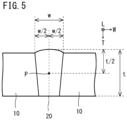
- FIG. 5 is a cross-sectional view perpendicular to the weld metal extending direction L of the austenitic stainless alloy welded joint 1 of the present embodiment.
- the width of the surface of the weld metal 20 is defined as w (mm).
- the thickness of the weld metal 20 at the center portion of the width w is defined as t (mm).
- a region which is the width center portion of the weld metal 20 and is also the thickness center portion of the weld metal 20 (that is, a portion at a depth of t/2 from the surface of the weld metal 20) is defined as a region P.
- the chemical composition of the region P is defined as the chemical composition of the weld metal 20.
- the chemical composition of the weld metal 20 contains the following elements.
- Carbon (C) is unavoidably contained. That is, the content of C is more than 0%.
- C forms Cr carbides (M 23 C 6 -type carbides) at grain boundaries of the weld metal 20.
- Cr carbides By forming the Cr carbides, dissolved Cr is reduced. Consequently, the polythionic acid SCC resistance of the weld metal 20 decreases. Therefore, the content of C is 0.020% or less.
- the content of C is preferably as low as possible. However, excessively reducing the content of C will raise the production cost. Therefore, in industrial production, a preferable lower limit of the content of C is 0.001%, and more preferably is 0.005%.
- a preferable upper limit of the content of C is 0.019%, more preferably is 0.018%, further preferably is 0.017%, and further preferably is 0.015%.
- Silicon (Si) deoxidizes the weld metal 20 during welding. If the content of Si is less than 0.01%, the aforementioned advantageous effect will not be sufficiently obtained even if the contents of other elements are within the range of the present embodiment. On the other hand, if the content of Si is more than 1.00%, the age-toughness of the weld metal 20 will decrease. Therefore, the content of Si is 0.01 to 1.00%.
- a preferable lower limit of the content of Si is 0.02%, more preferably is 0.03%, further preferably is 0.05%, and further preferably is 0.10%.
- a preferable upper limit of the content of Si is 0.95%, more preferably is 0.90%, further preferably is 0.80%, further preferably is 0.76%, further preferably is 0.65%, further preferably is 0.40%, and further preferably is 0.35%.
- Manganese (Mn) deoxidizes the weld metal 20 during welding. If the content of Mn is less than 0.20%, the aforementioned advantageous effect will not be sufficiently obtained even if the contents of other elements are within the range of the present embodiment. On the other hand, if the content of Mn is more than 2.00%, the high-temperature strength of the weld metal 20 will decrease.
- the content of Mn is 0.20 to 2.00%.
- a preferable lower limit of the content of Mn is 0.25%, more preferably is 0.28%, further preferably is 0.30%, further preferably is 0.35%, and further preferably is 0.40%.
- a preferable upper limit of the content of Mn is 1.90%, more preferably is 1.85%, further preferably is 1.80%, further preferably is 1.75%, further preferably is 1.70%, further preferably is 1.50%, and further preferably is 1.30%.
- Phosphorus (P) is an impurity that is unavoidably contained. That is, the content of P is more than 0%. If the content of P is more than 0.030%, even if the contents of other elements are within the range of the present embodiment, the weld hot cracking resistance of the weld metal 20 will decrease. Therefore, the content of P is 0.030% or less.
- the content of P is preferably as low as possible. However, excessively reducing the content of P will raise the production cost. Therefore, in industrial production, a preferable lower limit of the content of P is 0.001%, more preferably is 0.002%, and further preferably is 0.003%.
- a preferable upper limit of the content of P is 0.025%, and more preferably is 0.020%.
- S Sulfur
- S is an impurity that is unavoidably contained. That is, the content of S is more than 0%. If the content of S is more than 0.010%, even if the contents of other elements are within the range of the present embodiment, the weld hot cracking resistance of the weld metal 20 will decrease. Therefore, the content of S is 0.010% or less.
- the content of S is preferably as low as possible. However, excessively reducing the content of S will raise the production cost. Therefore, in industrial production, a preferable lower limit of the content of S is 0.001%, and more preferably is 0.002%.
- a preferable upper limit of the content of S is 0.009%, and more preferably is 0.007%.
- Chromium (Cr) increases the polythionic acid SCC resistance of the weld metal 20. If the content of Cr is less than 16.0%, the aforementioned advantageous effect will not be sufficiently obtained even if the contents of other elements are within the range of the present embodiment. On the other hand, if the content of Cr is more than 25.0%, the age-toughness of the weld metal 20 will decrease. Therefore, the content of Cr is 16.0 to 25.0%.
- a preferable lower limit of the content of Cr is 16.5%, and more preferably is 17.0%.
- a preferable upper limit of the content of Cr is 24.5%, more preferably is 24.0%, further preferably is 23.5%, and further preferably is 23.0%.
- Nickel (Ni) stabilizes austenite and increases the age-toughness of the weld metal 20. If the content of Ni is less than 15.0%, the aforementioned advantageous effect will not be sufficiently obtained even if the contents of other elements are within the range of the present embodiment. On the other hand, if the content of Ni is more than 40.0%, the aforementioned advantageous effect will be saturated, and furthermore, the production cost will increase. Therefore, the content of Ni is 15.0 to 40.0%.
- a preferable lower limit of the content of Ni is 15.5%, more preferably is 16.0%, further preferably is 17.0%, further preferably is 18.0%, and further preferably is 19.0%.
- a preferable upper limit of the content of Ni is 39.0%, more preferably is 38.0%, further preferably is 36.5%, further preferably is 35.0%, and further preferably is 33.0%.
- Molybdenum (Mo) suppresses the formation of Cr carbides (M 23 C 6 -type carbides) at grain boundaries in the weld metal 20 during use under a high-temperature corrosive environment of 600 to 700°C. By this means, Mo increases the polythionic acid SCC resistance of the weld metal 20. In addition, Mo forms a sulfide film on the surface of the weld metal 20 when the welded joint is being used under a high-temperature corrosive environment in such a way that dissolved Mo in the weld metal 20 combines with S in the usage environment. The naphthenic acid corrosion resistance of the weld metal 20 is increased by formation of the sulfide film.
- the content of Mo is less than 2.5%, the aforementioned advantageous effects will not be sufficiently obtained even if the contents of other elements are within the range of the present embodiment.
- the content of Mo is more than 5.0%, sufficient age-toughness will not be obtained. Therefore, the content of Mo is 2.5 to 5.0%.
- a preferable lower limit of the content of Mo is 2.6%, more preferably is 2.7%, and further preferably is 2.8%.
- a preferable upper limit of the content of Mo is 4.5%, and more preferably is 4.0%.
- Niobium (Nb) is an element which, during use under a high-temperature corrosive environment of 600 to 700°C, combines with C to form MX-type carbo-nitrides and thereby reduces the amount of dissolved C in the weld metal 20. As a result, the polythionic acid SCC resistance of the weld metal 20 increases.
- the formed MX-type carbo-nitrides of Nb also increase the creep strength. If the content of Nb is less than 0.10%, the aforementioned advantageous effects will not be sufficiently obtained even if the contents of other elements are within the range of the present embodiment.
- the content of Nb is more than 2.00%, ⁇ -ferrite will form and the long-term creep strength, toughness, and weldability of the weld metal 20 will decrease. Therefore, the content of Nb is 0.10 to 2.00%.
- a preferable lower limit of the content of Nb is 0.11%, more preferably is 0.12%, further preferably is 0.15%, and further preferably is 0.20%.
- a preferable upper limit of the content of Nb is 1.90%, more preferably is 1.80%, further preferably is 1.40%, further preferably is 1.00%, further preferably is 0.75%, further preferably is 0.70%, and further preferably is 0.65%.
- N Nitrogen (N) dissolves in the matrix (parent phase) and stabilizes austenite, thereby increasing the high-temperature strength of the weld metal 20. N also forms fine carbo-nitrides in grains, which increases the high-temperature strength of the weld metal 20. If the content of N is less than 0.05%, the aforementioned advantageous effect will not be sufficiently obtained even if the contents of other elements are within the range of the present embodiment. On the other hand, if the content of N is more than 0.30%, Cr nitrides will form at grain boundaries, and consequently the polythionic acid SCC resistance and the naphthenic acid corrosion resistance in the weld metal 20 will decrease. Therefore, the content of N is 0.05 to 0.30%.
- a preferable lower limit of the content of N is 0.06%, more preferably is 0.07%, further preferably is 0.08%, and further preferably is 0.10%.
- a preferable upper limit of the content of N is 0.28%, and more preferably is 0.25%.
- Aluminum (Al) deoxidizes the weld metal 20 during welding. If the content of Al is less than 0.001%, the aforementioned advantageous effect will not be sufficiently obtained even if the contents of other elements are within the range of the present embodiment. On the other hand, if the content of Al is more than 0.100%, the ductility of the weld metal 20 will decrease. Therefore, the content of Al is 0.001 to 0.100%.
- a preferable lower limit of the content of Al is 0.002%, and more preferably is 0.010%.
- a preferable upper limit of the content of Al is 0.085%, more preferably is 0.080%, further preferably is 0.060%, further preferably is 0.040%, further preferably is 0.030%, further preferably is 0.025%, and further preferably is 0.020%.
- the content of Al means the content of acid-soluble Al (sol. Al).
- B Boron (B) segregates to grain boundaries during use under a high-temperature corrosive environment of 600 to 700°C, and thereby increases the grain boundary strength. As a result, under a high-temperature corrosive environment of 600 to 700°C, the high-temperature strength of the weld metal 20 increases. If the content of B is less than 0.0010%, the aforementioned advantageous effect will not be sufficiently obtained even if the contents of other elements are within the range of the present embodiment. On the other hand, if the content of B is more than 0.0050%, the weld hot cracking resistance of the weld metal 20 will decrease. Therefore, the content of B is 0.0010 to 0.0050%.
- a preferable lower limit of the content of B is 0.0011%, more preferably is 0.0012%, further preferably is 0.0015%, further preferably is 0.0020%, and further preferably is 0.0030%. If the content of B in the weld metal 20 is 0.0030% or more, in particular, excellent creep strength will be obtained in the welded joint 1.
- a preferable upper limit of the content of B is 0.0045%, more preferably is 0.0040%, and further preferably is 0.0035%.
- the balance of the chemical composition of the weld metal 20 of the austenitic stainless alloy welded joint 1 according to the present embodiment is Fe and impurities.
- impurities means substances which, when forming the weld metal 20, are mixed in from the welding material that is the raw material or from the environment during welding, and which are not intentionally contained but are permitted within ranges within which the impurities do not adversely affect the weld metal 20.
- the chemical composition of the weld metal 20 of the austenitic stainless alloy welded joint 1 of the present embodiment may further contain, in lieu of a part of Fe, one element or more selected from the group consisting of:
- the chemical composition of the weld metal 20 according to the present embodiment may further contain one element or more selected from the group consisting of Cu, W, and Co in lieu of a part of Fe. Each of these elements increases the creep strength of the weld metal 20.
- Copper (Cu) is an optional element, and does not have to be contained. That is, Cu may be 0%. In a case where Cu is contained, that is, when the content of Cu is more than 0%, during use under a high-temperature corrosive environment of 600 to 700°C, Cu precipitates as a Cu phase in the grains, and increases the high-temperature strength of the weld metal 20 by precipitation strengthening. If even a small amount of Cu is contained, the aforementioned advantageous effect will be obtained to a certain extent. However, if the content of Cu is more than 5.00%, the weldability of the alloy will decrease. Therefore, the content of Cu is 0 to 5.00%.
- a preferable lower limit of the content of Cu is 0.01%, more preferably is 0.05%, further preferably is 0.10%, further preferably is 0.50%, further preferably is 1.00%, further preferably is 2.00%, and further preferably is 2.50%.
- a preferable upper limit of the content of Cu is 4.50%, more preferably is 4.00%, further preferably is 3.80%, further preferably is 3.70%, further preferably is 3.60%, further preferably is 3.50%, and further preferably is 1.90%.
- Tungsten (W) is an optional element, and does not have to be contained. That is, W may be 0%. In a case where W is contained, that is, when the content of W is more than 0%, W dissolves in the matrix (parent phase) and increases the high-temperature strength of the weld metal 20. If even a small amount of W is contained, the aforementioned advantageous effect will be obtained to a certain extent. However, if the content of W is more than 5.00%, the stability of austenite will decrease, and the age-toughness of the weld metal 20 will decrease. Therefore, the content of W is 0 to 5.00%.
- a preferable lower limit of the content of W is 0.01%, more preferably is 0.02%, further preferably is 0.05%, and further preferably is 0.10%.
- a preferable upper limit of the content of W is 4.50%, more preferably is 4.00%, further preferably is 3.80%, and further preferably is 3.50%.
- Co Co
- the content of Co may be 0%.
- Co when the content of Co is more than 0%, Co stabilizes austenite and increases the high-temperature strength of the weld metal 20. If even a small amount of Co is contained, the aforementioned advantageous effect will be obtained to a certain extent. However, if the content of Co is more than 1.00%, the raw material cost will increase. Therefore, the content of Co is 0 to 1.00%.
- a preferable lower limit of the content of Co is 0.01%, more preferably is 0.02%, further preferably is 0.03%, and further preferably is 0.10%.
- a preferable upper limit of the content of Co is 0.90%, more preferably is 0.80%, further preferably is 0.60%, further preferably is 0.50%, and further preferably is 0.45%.
- the chemical composition of the weld metal 20 according to the present embodiment may further contain one element or more selected from the group consisting of V, Ta, and Hf in lieu of a part of Fe.
- Each of these elements is an optional element, and does not have to be contained. When contained, each of the elements V, Ta, and Hf increases the polythionic acid SCC resistance of the weld metal 20.
- Vanadium (V) is an optional element, and does not have to be contained. That is, the content of V may be 0%. In a case where V is contained, that is, when the content of V is more than 0%, during use under a high-temperature corrosive environment of 600 to 700°C, V combines with C to form carbo-nitrides. As a result, dissolved C in the weld metal 20 decreases and the polythionic acid SCC resistance of the weld metal 20 increases. If even a small amount of V is contained, the aforementioned advantageous effect will be obtained to a certain extent. However, if the content of V is more than 1.00%, ⁇ -ferrite will form and the age-toughness of the weld metal 20 will decrease. Therefore, the content of V is 0 to 1.00%.
- a preferable lower limit of the content of V is 0.01%, more preferably is 0.05%, and further preferably is 0.10%.
- a preferable upper limit of the content of V is 0.90%, more preferably is 0.80%, further preferably is 0.60%, further preferably is 0.40%, further preferably is 0.20%, further preferably is 0.15%, and further preferably is 0.10%.
- Tantalum (Ta) is an optional element, and does not have to be contained. That is, the content of Ta may be 0%. In a case where Ta is contained, that is, when the content of Ta is more than 0%, during use under a high-temperature corrosive environment of 600 to 700°C, Ta combines with C to form carbo-nitrides. As a result, dissolved C in the weld metal 20 decreases and the polythionic acid SCC resistance of the weld metal 20 increases. If even a small amount of Ta is contained, the aforementioned advantageous effect will be obtained to a certain extent. However, if the content of Ta is more than 0.20%, ⁇ -ferrite will form and the age-toughness of the weld metal 20 will decrease. Therefore, the content of Ta is 0 to 0.20%.
- a preferable lower limit of the content of Ta in order to further effectively increase the polythionic acid SCC resistance is 0.01%, and more preferably is 0.02%.
- a preferable upper limit of the content of Ta is 0.18%, more preferably is 0.16%, and further preferably is 0.14%.
- Hafnium (Hf) is an optional element, and does not have to be contained. That is, the content of Hf may be 0%. In a case where Hf is contained, that is, when the content of Hf is more than 0%, during use under a high-temperature corrosive environment of 600 to 700°C, Hf combines with C to form carbo-nitrides. As a result, dissolved C in the weld metal 20 decreases and the polythionic acid SCC resistance of the weld metal 20 increases. If even a small amount of Hf is contained, the aforementioned advantageous effect will be obtained to a certain extent. However, if the content of Hf is more than 0.20%, ⁇ -ferrite will form and the creep strength, toughness, and weldability of the weld metal 20 will decrease. Therefore, the content of Hf is 0 to 0.20%.
- the chemical composition of the weld metal 20 according to the present embodiment may further contain one element or more selected from the group consisting of Ca, Mg, and rare earth metal in lieu of a part of Fe.
- Each of these elements is an optional element, and does not have to be contained.
- Ca, Mg, and rare earth metal each increases the ductility of the weld metal 20.
- Calcium (Ca) is an optional element, and does not have to be contained. That is, the content of Ca may be 0%. In a case where Ca is contained, that is, when the content of Ca is more than 0%, Ca immobilizes O (oxygen) and S (sulfur) as inclusions, and thereby increases the ductility of the weld metal 20. If even a small amount of Ca is contained, the aforementioned advantageous effect will be obtained to a certain extent. However, if the content of Ca is more than 0.010%, the ductility of the weld metal 20 will decrease. Therefore, the content of Ca is 0 to 0.010%.
- a preferable lower limit of the content of Ca is more than 0%, more preferably is 0.001%, and further preferably is 0.002%.
- a preferable upper limit of the content of Ca is 0.008%, more preferably is 0.006%, and further preferably is 0.004%.
- Magnesium (Mg) is an optional element, and does not have to be contained. That is, the content of Mg may be 0%. In a case where Mg is contained, that is, when the content of Mg is more than 0%, Mg immobilizes O (oxygen) and S (sulfur) as inclusions, and thereby increases the ductility of the weld metal 20. If even a small amount of Mg is contained, the aforementioned advantageous effect will be obtained to a certain extent. However, if the content of Mg is more than 0.010%, the ductility of the weld metal 20 will decrease. Therefore, the content of Mg is 0 to 0.010%.
- a preferable lower limit of the content of Mg is more than 0%, more preferably is 0.001%, and further preferably is 0.002%.
- a preferable upper limit of the content of Mg is 0.008%, more preferably is 0.006%, and further preferably is 0.004%.
- Rare earth metal 0 to 0.100%
- Rare earth metal is an optional element, and does not have to be contained. That is, the content of REM may be 0%. In a case where REM is contained, that is, when the content of REM is more than 0%, REM immobilizes O (oxygen) and S (sulfur) as inclusions, and thereby increases the ductility of the weld metal 20. If even a small amount of REM is contained, the aforementioned advantageous effect will be obtained to a certain extent. However, if the content of REM is more than 0.100%, the ductility of the weld metal 20 will decrease. Therefore, the content of REM is 0 to 0.100%.
- a preferable lower limit of the content of REM is more than 0%, more preferably is 0.001%, and further preferably is 0.002%.
- a preferable upper limit of the content of REM is 0.080%, and more preferably is 0.060%.
- F1 defined by Formula (1) is 2.30 or less.
- F1 130B + 8C + 0.025Cr + 0.25Mn + 0.08Mo + 0.6Nb + 12P + 7.6S + 0.78Si + 0.012W (1)
- F1 is an index relating to the weld hot cracking resistance of the weld metal 20.
- the elements B, C, Cr, Mn, Mo, Nb, P, S, Si, and W each promote weld hot cracking during welding. If F1 that is composed of the contents of these elements is more than 2.30, even if the other features, that is, Feature 1, Feature 2, and Feature 4 are satisfied, the weld hot cracking resistance in the weld metal 20 will decrease.
- F 1 is 2.30 or less, on the precondition that Feature 1, Feature 2, and Feature 4 are satisfied, sufficient weld hot cracking resistance will be obtained in the weld metal 20. Therefore, F1 is 2.30 or less.
- a preferable upper limit of F1 is 2.28, more preferably is 2.25, further preferably is 2.22, further preferably is 2.20, further preferably is 2.18, further preferably is 2.15, further preferably is 2.10, and further preferably is 2.05. Note that, F1 is a value (a value to the hundredths place) obtained by rounding off the thousandths place of the obtained value.
- F2 is an index relating to the degree of Mo segregation in the square region of the weld metal 20.
- the content of Mo is high. Although Mo increases the naphthenic acid corrosion resistance, Mo tends to segregate to grain boundaries.
- [Mo] H means the content of Mo in regions where the content of Mo is higher than the average value [Mo] AVE in the square region. That is, [Mo] H is an index of the content of segregated Mo.
- [Mo] L means the content of Mo in regions where the content of Mo is lower than the average value [Mo] AVE in the square region. That is, [Mo] L is an index of the content of Mo in regions other than regions where Mo is segregated.
- F2 can be measured by the following method.
- the square region is partitioned into minute square sections of 100 ⁇ m ⁇ 100 ⁇ m. Each minute square section is then subjected to elemental analysis.
- the accelerating voltage is to be set to 15 kV, the irradiation current to 400 nA, the beam diameter to 2 ⁇ m, and the integration time to 0.1 seconds.
- Mo is set as the element to be measured, and the content of Mo in percent by mass in each minute square section is determined.
- the arithmetic average value of all of the contents of Mo (mass%) obtained is defined as [Mo] AVE .
- minute square sections in which the content of Mo is higher than [Mo] AVE and minute square sections in which the content of Mo is lower than [Mo] AVE are separated. Minute square sections in which the content of Mo is the same as [Mo] AVE are excluded.
- the arithmetic average value of the contents of Mo of the minute square sections in which the content of Mo is higher than [Mo] AVE is defined as [Mo] H .
- the arithmetic average value of the contents of Mo of the minute square sections in which the content of Mo is lower than [Mo] AVE is defined as [Mo] L .
- F2 is determined using Formula (2).
- An austenitic stainless alloy welding material having a chemical composition consisting of, in mass%, C: 0.020% or less, Si: 0.01 to 1.00%, Mn: 0.20 to 2.00%, P: 0.030% or less, S: 0.010% or less, Cr: 16.0 to 25.0%, Ni: 15.0 to 40.0%, Mo: 2.5 to 5.0%, Nb: 0.10 to 2.00%, N: 0.05 to 0.30%, sol.
- the actions, the preferable lower limit, and the preferable upper limit of each element in the chemical composition of the austenitic stainless alloy welding material are the same as the actions, the preferable lower limit, and the preferable upper limit of each of the corresponding elements in the chemical composition of the weld metal 20.
- the weld metal 20 is formed by welding an austenitic stainless alloy welding material having the above chemical composition to the base metal 10 by a welding method that is described later. In a case where the chemical composition of the austenitic stainless alloy welding material deviates from the aforementioned range, the weld metal 20 cannot be formed.
- the austenitic stainless alloy welded joint 1 of the present embodiment satisfies Feature 1 to Feature 4. Therefore, in the weld metal 20, sufficient weld hot cracking resistance is obtained, sufficient polythionic acid SCC resistance is obtained, sufficient naphthenic acid corrosion resistance is obtained, and sufficient age-toughness is obtained.
- the method for producing the austenitic stainless alloy welded joint 1 that is described hereunder is one example for producing the austenitic stainless alloy welded joint 1 of the present embodiment. Accordingly, the austenitic stainless alloy welded joint 1 composed as described above may also be produced by a production method other than the production method described hereunder. However, the production method described hereunder is a preferable example of the method for producing the austenitic stainless alloy welded joint 1 of the present embodiment.
- One example of the production method includes the following processes.
- a base metal 10 that satisfies Feature 1 is prepared.
- the shape of the base metal 10 is not particularly limited. As mentioned above, the base metal 10 may be an alloy plate or may be an alloy pipe. The base metal 10 may be a bar or may be a section shape steel.
- the base metal preparation process includes the following processes.
- a molten alloy satisfying Feature 1 is produced.
- the molten alloy is produced using an electric furnace, an AOD (Argon Oxygen Decarburization) furnace, or a VOD (Vacuum Oxygen Decarburization) furnace.
- the produced molten alloy is subjected to a well-known degassing treatment.
- the molten alloy subjected to the degassing treatment is used to produce a starting material.
- the method for producing the starting material is, for example, a continuous casting process.
- a continuous casting material (starting material) is produced by the continuous casting process.
- the continuous casting material is, for example, a slab, a bloom, or a billet.
- the molten alloy may also be used to produce an ingot by an ingot-making process.
- the prepared starting material (continuous casting material or ingot) is subjected to hot working to produce the base metal.
- the starting material is subjected to hot rolling to produce an alloy plate as the base metal 10.
- the starting material is subjected to hot extrusion or hot piercing-rolling or the like to produce an alloy pipe as the base metal 10.
- the specific method for performing the hot working is not particularly limited, and it suffices to perform hot working according to the shape of the end product.
- the working end temperature of the hot working is, for example, 1000°C or more, and more preferably is 1050°C or more.
- the term "working end temperature" means the temperature of the base metal 10 immediately after the final hot working is completed.
- the base metal after the hot working process may be subjected to cold working.
- the cold working is, for example, cold drawing or cold rolling.
- the cold working is, for example, cold rolling or the like.
- the prepared base metal 10 is subjected to welding to produce the austenitic stainless alloy welded joint 1.
- a bevel is formed at an end of the base metal 10.
- Two of the base metals 10 in which the bevel is formed are prepared.
- the bevels of the prepared base metals 10 are butted together.
- welding is performed on the pair of beveled portions that are butted together using an austenitic stainless alloy welding material having the chemical composition described above to thereby form the weld metal 20 having the chemical composition described above.
- the austenitic stainless alloy welding material is produced by the following method.
- a molten alloy having the chemical composition described above is produced.
- the aforementioned molten alloy is produced using an electric furnace, an AOD furnace, or a VOD furnace.
- the produced molten alloy is subjected to a well-known degassing treatment.
- a starting material (a continuous casting material or an ingot) is produced from the molten alloy that underwent the degassing treatment.
- the starting material is subjected to well-known hot working to produce an austenitic stainless alloy welding material in a wire shape.
- the method for welding the base metal 10 using the austenitic stainless alloy welding material is, for example, gas tungsten arc welding (GTAW), shielded metal arc welding (SMAW), flux cored arc welding (FCAW), gas metal arc welding (GMAW), or submerged arc welding (SAW).
- GTAW gas tungsten arc welding
- SMAW shielded metal arc welding
- FCAW flux cored arc welding
- GMAW gas metal arc welding
- SAW submerged arc welding
- the bevel is formed at the end face or side face of each alloy plate. If the base metals 10 are alloy pipes, the bevel is formed at a leading end of the pipe in the axial direction of the alloy pipe. If the base metals 10 are alloy pipes, for example, the austenitic stainless alloy welded joint 1 is formed by performing peripheral welding.
- welding is performed so as to satisfy the following conditions.
- interlayer temperature means, in multi-layer welding, the surface temperature (°C) of the layer of the weld zone immediately before starting welding of the next layer.
- the interlayer temperature is 150°C or less
- each interlayer temperature after each layer is formed is 150°C or less.
- the interlayer temperature of Condition 2 means that the maximum temperature of one or a plurality of interlayer temperatures is 150°C or less.
- the cooling rate CR at 1300°C can be measured by the following method. During welding in the welding process, a thermocouple is inserted into the molten pool to obtain a cooling curve. The cooling rate CR (°C/sec) at 1300°C is determined from the obtained cooling curve.
- the welding speed V (mm/sec) is determined based on the setting of the movement speed of the welding torch of the welding device, and in the case of peripheral welding of an alloy pipe, the welding speed V (mm/sec) is determined based on the setting of the movement speed of the welding device or the positioner (rotary device).
- the weld metal 20 that satisfies Feature 2 to Feature 4 can be formed.
- An austenitic stainless alloy welded joint satisfying Feature 1 to Feature 4 can be produced by the above production process.
- a method for producing the austenitic stainless alloy welded joint 1 according to the present embodiment is not limited to the production method described above. As long as the austenitic stainless alloy welded joint 1 satisfying Feature 1 to Feature 4 can be produced, the austenitic stainless alloy welded joint 1 may also be produced by another method.
- the advantageous effects of the austenitic stainless alloy welded joint of the present embodiment are described more specifically by way of examples.
- the conditions adopted in the following examples are one example of conditions adopted for confirming the feasibility and advantageous effects of the austenitic stainless alloy welded joint of the present embodiment. Accordingly, the austenitic stainless alloy welded joint of the present embodiment is not limited to this one example of conditions.
- each molten alloy was used to produce an ingot with an outer diameter of 120 mm and a weight of 30 kg.
- Each ingot was subjected to hot forging to produce an alloy plate with a thickness of 30 mm.
- hot rolling was performed to obtain an alloy plate with a thickness of 15 mm.
- the working end temperature during hot rolling was 1050°C or more for each of the alloy plates.
- the alloy plate after hot rolling was subjected to a solution treatment.
- the solution treatment temperature was 1150°C, and the solution treatment time was 10 minutes.
- the base metal after the solution treatment was water-cooled.
- Welding materials having the chemical compositions shown in Table 2-1 and Table 2-2 were prepared. In the chemical composition of each welding material number, the balance other than the elements listed in Table 2-1 and Table 2-2 was Fe and impurities.
- Each molten alloy was used to produce an ingot with an outer diameter of 120 mm and a weight of 30 kg.
- Each ingot was subjected to hot forging and hot rolling, cold rolling, and a heat treatment by well-known methods to produce a weld wire (an austenitic stainless alloy welding material) with an outer diameter of 1.2 mm.
- the base metals described in Table 1-1 and Table 1-2 and the welding materials described in Table 2-1 and Table 2-2 were used to produce austenitic stainless alloy welded joints by the following production method.
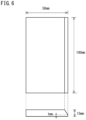
- each alloy plate had a groove face at a side face extending in the longitudinal direction.
- the groove face was a V-type groove face having a groove angle of 30° and a root thickness of 1 mm.
- a restraint plate 30 was prepared.
- the two base metals (plate materials) 10 were arranged on the restraint plate 30. At this time, the groove faces of the two base metals 10 were butted together. After arranging the two base metals 10, the circumferences of the base metals 10 were restraint-welded using a covered electrode.
- the covered electrode had a chemical composition corresponding to the chemical composition of "ENiCrMo-3" defined in JIS Z 3224 (2010).
- the welding materials described in Table 2-1 and Table 2-2 were used to perform multi-layer welding by gas tungsten arc welding (GTAW) to form weld metals.
- GTAW gas tungsten arc welding
- the heat input (kJ/mm) during welding, the maximum temperature (°C) of the interlayer temperature in each layer in the multi-layer welding, the welding speed V (°C/sec), the cooling rate CR (mm/sec) at 1300°C, and FA were as shown in the column "Heat input (kJ/mm)", the column “Interlayer temperature (°C)", the column “Welding speed V (mm/sec)", and the column “Cooling rate CR (°C/sec)” of the column “Welding conditions", and the column “FA” in Table 4.
- An austenitic stainless alloy welded joint of each weld metal number was produced by the above production process.
- the chemical composition at a location which was at the width-center position and also the thickness-center position of the weld metal of the austenitic stainless alloy welded joint of each weld metal number was measured by a well-known composition analysis method in accordance with JIS G0321: 2017. Specifically, a machined chip was taken from a region P that was the width center portion of the weld metal and was also the thickness center portion of the weld metal using a drill. The taken machined chip was dissolved in acid to obtain a liquid solution. The liquid solution was subjected to ICP-AES (Inductively Coupled Plasma Atomic Emission Spectrometry) to perform elemental analysis of the chemical composition.
- ICP-AES Inductively Coupled Plasma Atomic Emission Spectrometry
- the content of C and the content of S were determined by a well-known high-frequency combustion method (combustion-infrared absorption method).
- the content of N and the content of O were determined using a well-known inert gas fusion-thermal conductivity method.
- the produced austenitic stainless alloy welded joints were subjected to the following tests.
- F2 in the weld metal of each test number was determined based on the method described above in the section [F2 measurement method]. The determined F2 values are shown in Table 4.
- the weld hot cracking resistance of the austenitic stainless alloy welded joint of each weld metal number was evaluated by the following method.
- Ten test specimens for microstructure observation of a cross section perpendicular to the weld line were taken from a portion of the weld metal of the austenitic stainless alloy welded joint of each weld metal number.
- the size of each test specimen was set to 15 mm ⁇ 30 mm ⁇ 10 mm.
- a surface corresponding to a cross section perpendicular to the weld line was adopted as an "observation surface".
- the observation surface was 15 ⁇ 30 mm.
- the observation surface was mirror polished and then etched using a mixed acid.
- the surface of the etched test specimen was observed using an optical microscope with a magnification of 200 ⁇ . Further, whether or not weld hot cracking had occurred within the weld metal of the observation surface was determined by visual observation.
- the evaluation results are shown in Table 4. If a crack was not confirmed in the weld metal of any of the 10 test specimens that were taken, it was determined that sufficient weld hot cracking resistance was obtained ("E (Excellent)" in Table 4). On the other hand, if a crack was confirmed in even one of the 10 test specimens, it was determined that sufficient weld hot cracking resistance was not obtained ("NA (Not Accepted)" in Table 4). Note that, for those test numbers for which "NA" was determined as the result of the weld hot cracking resistance evaluation test, the tests from Test 3 onward were not conducted.
- the polythionic acid SCC resistance of the weld metal of the austenitic stainless alloy welded joint of each weld metal number was evaluated by the following method.
- the austenitic stainless alloy welded joint of each weld metal number was subjected to an aging treatment at 650°C for 3000 hours.
- a plate-shaped test specimen 40 having a thickness of 2 mm, a width of 10 mm, and a length of 75 mm that included the region P as illustrated in FIG. 8 was fabricated from each austenitic stainless alloy welded joint after the aging treatment.
- the thickness of 2 mm of the plate-shaped test specimen 40 corresponded to the length in the weld metal thickness direction T
- the length of 75 mm of the plate-shaped test specimen 40 corresponded to the length in the weld metal width direction W
- the width of 10 mm of the plate-shaped test specimen 40 corresponded to the length in the weld metal extending direction L.
- Each plate-shaped test specimen 40 was fabricated in a manner so that the region P of the weld metal 20 was located at the center position of the length of 75 mm of the plate-shaped test specimen 40.
- a polythionic acid SCC resistance evaluation test was performed in accordance with "Stress corrosion cracking test for stainless steels" in JIS G 0576: 2001. Specifically, each plate-shaped test specimen was bent around a punch having an inside radius of 5 mm to form a U-bend shape (the curved portion corresponded to the weld metal). The plate-shaped test specimen with the U-bend shape was then immersed in Wackenroder solution (a solution prepared by blowing a large amount of H 2 S gas into a H 2 SO 3 saturated aqueous solution made by blowing SO 2 gas into distilled water) at normal temperature for 100 hours.
- Wackenroder solution a solution prepared by blowing a large amount of H 2 S gas into a H 2 SO 3 saturated aqueous solution made by blowing SO 2 gas into distilled water
- the plate-shaped test specimen was subjected to microscopic observation at a magnification of 500 ⁇ to check for the presence of a crack in the weld metal portion of the plate-shaped test specimen, and whether or not a crack was present was confirmed.
- the evaluation results are shown in Table 4. If a crack was not confirmed in the weld metal portion of the test specimen, it was determined that sufficient polythionic acid SCC resistance was obtained in the weld metal ("E" in Table 4). On the other hand, if a crack was confirmed in the weld metal portion of the test specimen, it was determined that sufficient polythionic acid SCC resistance was not obtained ("NA" in Table 4).
- the naphthenic acid corrosion resistance of the weld metal of the austenitic stainless alloy welded joint of each weld metal number was evaluated by the following method.
- a weld metal test specimen including the region P was taken from the austenitic stainless alloy welded joint of each weld metal number.
- a test specimen having a thickness of 3 mm, a width of 10 mm, and a length of 30 mm and which included the region P was fabricated.
- the thickness of 3 mm of the test specimen corresponded to the length in the weld metal thickness direction T
- the length of 30 mm of the test specimen corresponded to the length in the weld metal width direction W
- the width of 10 mm of the test specimen corresponded to the length in the weld metal extending direction L.
- the test specimen was fabricated in a manner so that the region P was the center portion in the longitudinal direction and also the center portion in the thickness direction of the test specimen.
- test solution 100% cyclohexanecarboxylic acid solution
- each test specimen was ultrasonically cleaned using acetone for 3 minutes.
- the difference between the mass of the test specimen before the test and the mass of the test specimen after ultrasonic cleaning was calculated as the corrosion loss.
- the corrosion rate (mm/y) was determined based on the surface area and specific gravity of the test specimen, and the test time. The evaluation results are shown in Table 4. If the corrosion rate was 0.010 mm/y or less, it was determined that sufficient naphthenic acid corrosion resistance was obtained in the weld metal. On the other hand, if the corrosion rate was more than 0.010 mm/y, it was determined that sufficient naphthenic acid corrosion resistance was not obtained.
- the age-toughness of the weld metal of the austenitic stainless alloy welded joint of each weld metal number was evaluated by the following method.
- a V-notch test specimen 50 including the region P was fabricated from the position illustrated in FIG. 9 of the austenitic stainless alloy welded joint of each weld metal number.
- the width of the test specimen 50 was made 10 mm
- the thickness was made 10 mm
- the length was made 55 mm.
- the thickness of 10 mm of the test specimen corresponded to the length in the weld metal thickness direction T
- the width of 10 mm of the test specimen corresponded to the length in the weld metal width direction W
- the length of 55 mm of the test specimen corresponded to the length in the weld metal extending direction L.
- the test specimen 50 was fabricated in a manner so that the region P of the weld metal 20 was located at the width-center position of the test specimen 50.
- a V-notch was formed at a position at the center of the length of the test specimen 50.
- the V-notch angle was made 45°
- the notch depth was made 2 mm
- the radius of the bottom of the notch was made 0.25 mm.
- Three of the V-notch test specimens 50 were fabricated.
- test specimens 50 were subjected to an aging treatment in which each test specimen 50 was held at 650°C for 1000 hours. After being held for 1000 hours, the test specimens were allowed to cool to normal temperature.
- the test specimens after the aging treatment were subjected to a Charpy impact test in accordance with JIS Z 2242: 2005 at normal temperature in an air atmosphere.
- the arithmetic average value of the three values of impact energy (J/cm 2 ) obtained by the test was defined as the value of impact energy (J/cm 2 ) after high-temperature aging treatment of the relevant test number.
- the evaluation results are shown in Table 4. If the obtained value of impact energy was 20 J/cm 2 or more, it was determined that sufficient age-toughness was obtained in the weld metal. On the other hand, if the obtained value of impact energy was less than 20 J/cm 2 , it was determined that sufficient age-toughness was not obtained in the weld metal.
Landscapes
- Chemical & Material Sciences (AREA)
- Engineering & Computer Science (AREA)
- Mechanical Engineering (AREA)
- Materials Engineering (AREA)
- Metallurgy (AREA)
- Organic Chemistry (AREA)
- General Engineering & Computer Science (AREA)
- Arc Welding In General (AREA)
Applications Claiming Priority (2)
| Application Number | Priority Date | Filing Date | Title |
|---|---|---|---|
| JP2022084625 | 2022-05-24 | ||
| PCT/JP2023/019346 WO2023228979A1 (fr) | 2022-05-24 | 2023-05-24 | Joint soudé en alliage inoxydable austénitique et matériau de soudage en alliage inoxydable austénitique |
Publications (2)
| Publication Number | Publication Date |
|---|---|
| EP4534714A1 true EP4534714A1 (fr) | 2025-04-09 |
| EP4534714A4 EP4534714A4 (fr) | 2025-09-10 |
Family
ID=88919409
Family Applications (1)
| Application Number | Title | Priority Date | Filing Date |
|---|---|---|---|
| EP23811851.7A Pending EP4534714A4 (fr) | 2022-05-24 | 2023-05-24 | Joint soudé en alliage inoxydable austénitique et matériau de soudage en alliage inoxydable austénitique |
Country Status (5)
| Country | Link |
|---|---|
| US (1) | US20250333827A1 (fr) |
| EP (1) | EP4534714A4 (fr) |
| JP (1) | JP7828015B2 (fr) |
| CN (1) | CN119234050A (fr) |
| WO (1) | WO2023228979A1 (fr) |
Families Citing this family (1)
| Publication number | Priority date | Publication date | Assignee | Title |
|---|---|---|---|---|
| JP2025112513A (ja) * | 2024-01-19 | 2025-08-01 | 株式会社神戸製鋼所 | 被覆アーク溶接棒、溶接継手及び溶接金属 |
Family Cites Families (6)
| Publication number | Priority date | Publication date | Assignee | Title |
|---|---|---|---|---|
| JP2003166039A (ja) | 2001-04-25 | 2003-06-13 | Nippon Steel Corp | 鋭敏化特性、高温強度および耐食性に優れたオーステナイト系耐熱鋼とその製造方法 |
| CN104611624B (zh) | 2007-10-04 | 2018-04-03 | 新日铁住金株式会社 | 奥氏体系不锈钢 |
| JP6225598B2 (ja) * | 2013-09-24 | 2017-11-08 | 新日鐵住金株式会社 | オーステナイト系ステンレス鋼溶接材料 |
| CN121344482A (zh) * | 2018-02-28 | 2026-01-16 | 日本制铁株式会社 | 奥氏体系不锈钢焊接接头 |
| US12054797B2 (en) * | 2019-07-25 | 2024-08-06 | Nippon Steel Corporation | Austenitic stainless steel material and welded joint |
| EP4089195A4 (fr) * | 2020-01-10 | 2024-03-20 | Nippon Steel Corporation | Matériau d'acier inoxydable austénitique |
-
2023
- 2023-05-24 WO PCT/JP2023/019346 patent/WO2023228979A1/fr not_active Ceased
- 2023-05-24 CN CN202380041634.9A patent/CN119234050A/zh active Pending
- 2023-05-24 EP EP23811851.7A patent/EP4534714A4/fr active Pending
- 2023-05-24 JP JP2024523327A patent/JP7828015B2/ja active Active
- 2023-05-24 US US18/866,689 patent/US20250333827A1/en active Pending
Also Published As
| Publication number | Publication date |
|---|---|
| WO2023228979A1 (fr) | 2023-11-30 |
| JP7828015B2 (ja) | 2026-03-11 |
| JPWO2023228979A1 (fr) | 2023-11-30 |
| EP4534714A4 (fr) | 2025-09-10 |
| US20250333827A1 (en) | 2025-10-30 |
| CN119234050A (zh) | 2024-12-31 |
Similar Documents
| Publication | Publication Date | Title |
|---|---|---|
| KR102466688B1 (ko) | 오스테나이트계 스테인리스강 용접 이음 | |
| CN115341144B (zh) | 奥氏体系不锈钢钢材和焊接接头 | |
| JP6904359B2 (ja) | オーステナイト系ステンレス鋼 | |
| EP2677056B1 (fr) | Acier inoxydable duplex | |
| JP7277752B2 (ja) | オーステナイト系ステンレス鋼材 | |
| KR102810752B1 (ko) | 오스테나이트계 스테인리스 강재 | |
| EP2676763A1 (fr) | Joint d'acier inoxydable duplex soudé | |
| KR102124914B1 (ko) | 오스테나이트계 스테인리스강 | |
| JP7260767B2 (ja) | 溶接継手、及び、その溶接継手の製造に用いられる溶接材料 | |
| EP4509619A1 (fr) | Matériau d'alliage | |
| EP4534714A1 (fr) | Joint soudé en alliage inoxydable austénitique et matériau de soudage en alliage inoxydable austénitique | |
| WO2024204622A1 (fr) | Matériau d'alliage | |
| WO2023190526A1 (fr) | Matériau d'alliage nicrfe | |
| US20250332651A1 (en) | Ni-Fe-Cr ALLOY WELDED JOINT | |
| CN117120649B (zh) | 双相不锈钢焊接接头 | |
| JP5780212B2 (ja) | Ni基合金 |
Legal Events
| Date | Code | Title | Description |
|---|---|---|---|
| STAA | Information on the status of an ep patent application or granted ep patent |
Free format text: STATUS: THE INTERNATIONAL PUBLICATION HAS BEEN MADE |
|
| PUAI | Public reference made under article 153(3) epc to a published international application that has entered the european phase |
Free format text: ORIGINAL CODE: 0009012 |
|
| STAA | Information on the status of an ep patent application or granted ep patent |
Free format text: STATUS: REQUEST FOR EXAMINATION WAS MADE |
|
| 17P | Request for examination filed |
Effective date: 20241212 |
|
| AK | Designated contracting states |
Kind code of ref document: A1 Designated state(s): AL AT BE BG CH CY CZ DE DK EE ES FI FR GB GR HR HU IE IS IT LI LT LU LV MC ME MK MT NL NO PL PT RO RS SE SI SK SM TR |
|
| DAV | Request for validation of the european patent (deleted) | ||
| DAX | Request for extension of the european patent (deleted) | ||
| A4 | Supplementary search report drawn up and despatched |
Effective date: 20250811 |
|
| RIC1 | Information provided on ipc code assigned before grant |
Ipc: C22C 38/00 20060101AFI20250805BHEP Ipc: B23K 35/30 20060101ALI20250805BHEP Ipc: C22C 38/58 20060101ALI20250805BHEP Ipc: B23K 35/02 20060101ALI20250805BHEP Ipc: C22C 38/02 20060101ALI20250805BHEP Ipc: C22C 38/04 20060101ALI20250805BHEP Ipc: C22C 38/42 20060101ALI20250805BHEP Ipc: C22C 38/44 20060101ALI20250805BHEP Ipc: C22C 38/46 20060101ALI20250805BHEP Ipc: C22C 38/48 20060101ALI20250805BHEP Ipc: C22C 38/50 20060101ALI20250805BHEP Ipc: C22C 38/52 20060101ALI20250805BHEP Ipc: C22C 38/54 20060101ALI20250805BHEP |