EP4557185A1 - Verfahren und vorrichtung zur automatischen analyse des lernens mindestens einer klasse durch ein datenklassifizierungsmodell - Google Patents
Verfahren und vorrichtung zur automatischen analyse des lernens mindestens einer klasse durch ein datenklassifizierungsmodell Download PDFInfo
- Publication number
- EP4557185A1 EP4557185A1 EP24212782.7A EP24212782A EP4557185A1 EP 4557185 A1 EP4557185 A1 EP 4557185A1 EP 24212782 A EP24212782 A EP 24212782A EP 4557185 A1 EP4557185 A1 EP 4557185A1
- Authority
- EP
- European Patent Office
- Prior art keywords
- classes
- class
- model
- candidate
- witness
- Prior art date
- Legal status (The legal status is an assumption and is not a legal conclusion. Google has not performed a legal analysis and makes no representation as to the accuracy of the status listed.)
- Pending
Links
Images



Classifications
-
- G—PHYSICS
- G06—COMPUTING OR CALCULATING; COUNTING
- G06N—COMPUTING ARRANGEMENTS BASED ON SPECIFIC COMPUTATIONAL MODELS
- G06N20/00—Machine learning
-
- G—PHYSICS
- G06—COMPUTING OR CALCULATING; COUNTING
- G06N—COMPUTING ARRANGEMENTS BASED ON SPECIFIC COMPUTATIONAL MODELS
- G06N3/00—Computing arrangements based on biological models
- G06N3/02—Neural networks
- G06N3/04—Architecture, e.g. interconnection topology
- G06N3/0464—Convolutional networks [CNN, ConvNet]
-
- G—PHYSICS
- G06—COMPUTING OR CALCULATING; COUNTING
- G06N—COMPUTING ARRANGEMENTS BASED ON SPECIFIC COMPUTATIONAL MODELS
- G06N3/00—Computing arrangements based on biological models
- G06N3/02—Neural networks
- G06N3/08—Learning methods
Definitions
- the present invention relates to a method for automatic analysis of unlearning of at least one class by a data classification model.
- the invention also relates to an associated device and an associated computer program.
- the invention also relates to a method and device for generating a data classification model by machine learning that does not reveal unlearned classes.
- the invention lies in the field of security for applications using artificial intelligence.
- This type of classification model has a very large number of parameters, the values of which are calculated and updated dynamically. It is necessary to learn the values of the parameters defining a classification model, the learning (also called training) of the parameters being carried out in a training phase on very large quantities of data.
- classification models take input data, for example in vector or matrix form, of a known type, and provide as output a classification into a plurality of output classes, for example represented in the form of a vector whose components are output values, also called "logits", each component of the vector corresponding to a class. The higher the output value, the more the corresponding class is predicted by the classification model.
- the input data are images, of predetermined dimensions
- the classification labels represent predetermined classes, for example representative of types of object present in the scene represented by the image, according to the intended application.
- the input data used for learning comes either from public databases or from databases private.
- training data comes either from public databases or from databases private.
- example data also called instances, of each of the output classes.
- unlearning makes it possible to obtain a classification model in a new set of output classes, while taking advantage of the learning of the initial classification model. This method is more efficient, and therefore less expensive in terms of resource use, than a complete re-learning of a classification model.
- Machine unlearning methods for training data, classes or variables of a machine learning classification model have been developed recently.
- the aim of the invention is then to propose a method for automatic analysis of unlearning of at least one class by a data classification model, making it possible to verify the unlearning of one or more candidate classes.
- the subject of the invention is a method for automatically analyzing the unlearning of at least one class by a data classification model, called the target model, the target model having been previously trained by machine learning for a classification of data into P output classes, the method receiving as input the target model in the form of a target module for extracting characteristics represented in a latent space, and a target module for classifying the characteristics into P output classes, and a database comprising instances of each of the P output classes and instances of Q candidate classes distinct from the P output classes, the target model having been obtained from an initial model for classifying the data into initial classes, by unlearning at least one class called the forgotten class, among said initial classes, the initial classification model not being provided.
- the proposed method makes it possible to determine whether one or more of the candidate classes are part of the forgotten classes, in the absence of any knowledge of the initial classification model.
- the automatic unlearning analysis method according to the invention may also have one or more of the characteristics below, taken independently or in any technically conceivable combination.
- the first determination further comprises, for each candidate class and each witness model, an implementation of the witness module for extracting the characteristics of said witness model to obtain a vector of characteristics in the associated latent space, and a calculation of a second homogeneity value per candidate class and per witness model.
- the method further comprises training a normality algorithm on the second homogeneity values calculated for the candidate classes for all the control models.
- the second determination implements, for said target model and each of the witness models, a refinement re-learning of at least one candidate class.
- the method comprises an evaluation per candidate class of a first refinement retraining rate by the target model, and second refinement retraining rates by the witness models.
- the invention relates to a device for automatically analyzing the unlearning of at least one class by a data classification model, called the target model, the target model having been previously trained by machine learning for a classification of data into P output classes, the device receiving as input the target model in the form of a target module for extracting characteristics represented in a latent space, and a target module for classifying the characteristics into P output classes, and a database comprising instances of each of the P output classes and instances of Q candidate classes distinct from the P output classes, the target model having been obtained from an initial model for classifying the data into initial classes, by unlearning at least one class called the forgotten class, among said initial classes, the initial classification model not being provided.
- the device is advantageously configured to implement an automatic unlearning analysis method as briefly described above.
- the invention relates to an information recording medium, on which are stored software instructions for the execution of an automatic unlearning analysis method as briefly described above, when these instructions are executed by a programmable electronic device.
- the invention relates to a computer program comprising software instructions which, when implemented by a programmable electronic device, implement an automatic unlearning analysis method as briefly described above.
- the unlearning step b) implements a first unlearning method
- said modification c3) of the MC classification model implements a second unlearning method of the or each chosen class, the second unlearning method being distinct from the first unlearning method.
- steps c1) to c3) are iterated until verification indicates sufficient security.
- the invention relates to a device for generating a data classification model by machine learning secure against the unlearning of one or more classes initially learned for the classification, comprising a calculation processor configured to execute a method for generating a data classification model by machine learning secure against the unlearning of one or more classes initially learned for the classification as briefly described above.
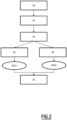
- FIG. 1 schematically represents the main modules of a device 2 for automatic analysis of unlearning of at least one candidate class by a target classification model.
- the device 2 is a programmable electronic device, e.g. a computer. In a variant not shown, the device 2 is formed from a plurality of programmable electronic devices connected to each other.
- the device 2 comprises at least one calculation processor 4, at least one electronic memory unit 6, adapted to communicate via a communication bus 5. For the sake of simplification, only one calculation processor 4 and only one electronic memory unit 6 are shown.
- the device 2 also comprises a communication interface with remote devices, by a chosen communication protocol, for example a wired protocol and/or a radio communication protocol, as well as a man-machine interface; these interfaces are produced in a conventional manner and are not represented in the Figure 1 .
- a chosen communication protocol for example a wired protocol and/or a radio communication protocol, as well as a man-machine interface; these interfaces are produced in a conventional manner and are not represented in the Figure 1 .
- the target model MC is supplied as input to the device, and stored in the electronic memory unit 6.
- the target MC model is an input data classification model previously trained by machine learning on a training dataset, the training dataset used not being provided.
- the target model has been previously trained to classify input data into P output classes CS 1 ...CS P , where P is a positive integer.
- the target model MC is provided in the form of a target feature extraction module 10, the features being represented in a latent space 12, and a target classification module 14, configured for classification of the features, represented in the latent space 12, into P output classes.
- Each of the modules 10; 14 is for example provided in the form of executable code.
- the dimension T of the latent space is dependent on the target model applied.
- the target model is a multi-layer neural network.
- a neural network comprises an ordered succession of layers of neurons, each of which takes its inputs from the outputs of the previous layer.
- each layer consists of neurons that take their inputs from the outputs of the neurons in the previous layer, or from the input variables for the first layer.
- more complex neural network structures can be considered with a layer that can be connected to a layer further away than the immediately preceding layer.
- Each neuron is also associated with an operation, that is, a type of processing, to be carried out by said neuron within the corresponding processing layer.
- Each layer is connected to other layers by a plurality of synapses.
- a synaptic weight is associated with each synapse, and each synapse forms a connection between two neurons. It is often a real number, which takes both positive and negative values. In some cases, the synaptic weight is a complex number.
- Each neuron is capable of performing a weighted sum of the value(s) received from the neurons of the previous layer, each value then being multiplied by the respective synaptic weight of each synapse, or connection, between said neuron and the neurons of the previous layer, then applying an activation function, typically a non-linear function, to said weighted sum, and delivering at the output of said neuron, in particular to the neurons of the following layer connected to it, the value resulting from the application of the activation function.
- the activation function makes it possible to introduce non-linearity into the processing carried out by each neuron.
- the sigmoid function, the hyperbolic tangent function, the Heaviside function are examples of activation functions.
- each neuron is also capable of applying, in addition, a multiplicative factor, and an additive bias, to the output of the activation function, and the value delivered at the output of said neuron is then the product of the multiplicative factor value and the value from the activation function, added to the bias.
- a convolutional neural network is also sometimes called a convolutional neural network or by the acronym CNN which refers to the English term “ Convolutional Neural Networks”.
- each neuron in a single layer has exactly the same connection pattern as its neighboring neurons, but at different input positions.
- the connection pattern is called a convolution kernel, or more commonly, a " kernel .”
- a fully connected layer of neurons is one in which the neurons in that layer are each connected to all the neurons in the previous layer.
- Such a type of layer is more often referred to as a “ fully connected ” layer, and sometimes referred to as a “dense layer.”
- the values of the weights, multipliers and biases if applicable are learned during a machine learning phase to perform the classification task.
- the invention applies to all types of neural networks.
- the target model MC is a multi-layer neural network
- the target feature extraction module 10 comprises the layers of the neural network up to the penultimate layer of the multi-layer neural network
- the target classification module 14, also called “classification head” comprises the last layer.
- the structure and parameters forming the target MC model, and in particular the structure and parameters of the target feature extraction module, are also provided as input to the unlearning analysis device and method.
- the device 2 receives as input a database 16 comprising data of the type of input data of the target model.
- the database 16 comprises class example data, also called instances, which are, on the one hand, instances 18 of each of the P output classes, denoted CS 1 ... CS P , and instances 20 of Q candidate classes, denoted CC 1 ...CC Q .
- the instances 18 of the database 16 are a priori different from the instances of the training database used during the training of the target model, the training database being a priori not provided.
- the numbers P and Q are positive integers.
- the number Q of candidate classes is greater than or equal to 1.
- the candidate classes are all distinct from the P output classes.
- Candidate classes are the classes that are the focus of the automatic unlearning analysis process.
- the target model is likely to have been obtained by unlearning at least one class, called the forgotten class, from an initial data classification model of the same type as the input data of the target model.
- the initial classification model itself having been trained by machine learning to classify the data into initial classes, the initial classes being at least partly distinct from the P output classes of the target model.
- the described automatic unlearning analysis method does not take as input either the initial classification model or the initial classes.
- the method is executed in the absence of knowledge about the initial classification model, and also in the absence of knowledge about the unlearning method and, where appropriate, relearning, implementation.
- the processor 4 is configured to implement a module 30 for generating witness models MT 1 ... MT N by machine learning, referenced by references 22 1 ...22 N in the figure, the number N being a variable of the method implemented.
- Each witness model MT i is a classification model composed of a witness module for extracting features 24 i represented in the form of a feature vector in a latent space 12 i, of the same dimension as the latent space 12. and a witness classification module 26 i , configured for a classification of the features, represented in the latent space 12, into a chosen number R of witness classes.
- the control classes are chosen from the output classes CS 1 ...CS P and the candidate classes CS 1 ...CS Q .
- the number R of control classes is between P and P+Q.
- each 22 -day witness model is learned by machine learning on a separate partition of the data in database 16.
- each witness model 22 j is learned from a partition comprising instances of at least a first subset of the output classes CS 1 ...CS P and at least a second subset of the candidate classes CS 1 ...CS Q .
- the R witness classes comprise output classes and/or candidate classes.
- At least one of the control models is trained to learn the P output classes.
- control model(s) for which the control classes are the same as the output classes is carried out with the objective of obtaining a classification that is substantially identical, in particular with a similar statistical distribution, to that of the target model on the output classes that are part of the control classes.
- each control model for which the control classes are the same as the output classes “mimics” as best as possible the target model for the common classification task.
- the other control models are trained for the classification of the R chosen control classes by a learning process analogous to that implemented for the control models for which the control classes are the same as the output classes.
- the witness models thus generated are used for learning determination methods to determine whether a candidate class is one of the classes forgotten by an unlearning method applied to the initial classification model from which the target model is derived.
- Such a determination method applies for each candidate class and provides as output a binary prediction (forgotten class or not) and an associated prediction score, the prediction score indicating the reliability of the prediction and making it possible to determine a probability that the candidate class is a forgotten class.
- the processor 4 is configured to implement the first determination module 32 and/or the second determination module 34.
- the processor 4 further comprises a module 36 for calculating a final score as a function of the first prediction score and/or the second prediction score.
- the first determination module 32 and the second determination module 34 are implemented, because their results are complementary, and the final score obtained is more reliable.
- the modules 30, 32, 34, 36 are produced in the form of software instructions forming a computer program, which, when executed by a programmable electronic device, implements a method of automatic analysis of unlearning of at least one class by a data classification model according to the invention.
- the modules 30, 32, 34, 36 are each produced in the form of programmable logic components, such as FPGAs ( Field Programmable Gate Array ), microprocessors, GPGPU components ( General-purpose processing on graphics processing), or even dedicated integrated circuits, such as ASICs ( Application Specific Integrated Circuit).
- programmable logic components such as FPGAs ( Field Programmable Gate Array ), microprocessors, GPGPU components ( General-purpose processing on graphics processing), or even dedicated integrated circuits, such as ASICs ( Application Specific Integrated Circuit).
- the computer program comprising software instructions is further capable of being recorded on a non-transitory, computer-readable information recording medium.
- This computer-readable medium is, for example, a medium capable of store electronic instructions and be coupled to a bus of a computer system.
- this medium is an optical disk, a magneto-optical disk, a ROM memory, a RAM memory, any type of non-volatile memory (e.g. EPROM, EEPROM, FLASH, NVRAM), a magnetic card or an optical card.
- FIG. 2 is a synopsis of the main steps of a method for automatic analysis of unlearning of at least one class according to one embodiment.
- the method comprises a step 40 of recovering on the one hand, the target model provided in the form of a target module for extracting target characteristics and a target module for classifying into P output classes, and instances of a database, comprising instances of the P output classes of the target model and instances of Q candidate classes, distinct from the output classes.
- the method also comprises a step of increasing the number of instances (not shown) for example by image processing when the instance data are digital images (e.g. rotation, translation, vertical or horizontal flipping). This makes it possible in particular to ensure that a sufficient number of instances is available for the calculation of witness models, described below.
- the method then comprises a step 42 of partitioning the instances into a plurality of partitions, so as to generate distinct partitions for training the witness models.
- N distinct partitions are calculated, for the training of N witness models, each partition containing instances of R classes chosen from the output classes CS 1 ...CS P and the candidate classes CC 1 ...CC Q .
- the sizes of the distinct partitions can be different, depending on the number Ri of classes for each MTi control model.
- Each partition includes a first subset of instances intended for training a witness model and a second subset of test or validation instances of a training model.
- the method then includes learning 44 of N witness models.
- Each witness model MT i is trained by machine learning to classify instances into R i witness classes.
- the Ri witness classes include classes among the output classes CS 1 ...CS P and classes among the candidate classes CC 1 ...CC Q .
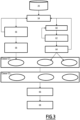
- the method implements, using the target model, the calculated witness models and the instances received as input, respectively a first determination step 46 and/or a second determination step 48, which are described in detail below.
- the method implements the first determination 46 and the second determination 48, these steps each providing a respective result RES1 and RES2, for each of the candidate classes.
- the respective results are binary predictions and prediction scores, for each of the candidate classes, the binary prediction indicating the prediction for the candidate class to be part of the classes said to be missed by the target model.
- the first determination 46 is performed based on homogeneity values calculated for each candidate class, in the respective latent space of each model, for the target model and for each control model.
- the second determination 48 is performed based on a characteristic of re-learning additional classes among said candidate classes by the target model and the control models.
- the method then comprises a step 50 of calculating a final score per candidate class.
- step 50 implements an aggregation of the respective results.
- aggregation is performed by calculating an average of the first and second scores.
- step 50 implements a simple resumption of the probability scores calculated by the determination step implemented.
- the final score calculated then makes it possible to determine, for each candidate class, whether it is one of the classes forgotten during re-training of the target model from an initial model not provided.
- the first determination is performed by homogeneity values calculated for each candidate class, on the one hand in the latent space of the target model, on the other hand in the latent space for each control model.
- the method comprises a step 54 of extracting the instances of one of the candidate classes.
- each of its instances E jk is provided as input to the target feature extraction module, which is executed (step 56) to obtain a T-dimensional feature vector V c jk in the latent space.
- Step 56 is repeated for each of the candidate classes, and the obtained feature vectors are stored.
- the method then comprises a calculation 58 of a first homogeneity value, for each candidate class, from the set of characteristic vectors obtained with the target model, for all instances of the candidate classes CC 1... CC Q .
- the first homogeneity value, for each candidate class is representative of the spatial homogeneity of the set of feature vectors (or cluster) of the candidate class in the latent space.
- the method comprises the implementation for each witness model, selected in step 60, the implementation of the witness module for extracting the characteristics on each instance of the candidate class (step 62) to obtain respective characteristic vectors of dimension T, and the iteration of step 62 for each candidate class, then the calculation 64 of a second homogeneity value per candidate class and per witness model, the calculation 64 being analogous to the calculation carried out in step 58.
- first and second homogeneity values are obtained in the latent space for each candidate class CC 1 ... CC Q , by applying the target model and each of the control models.
- the first determination then includes a step 66 of learning a normality algorithm on the second homogeneity values previously calculated on the control models.
- an "isolation forest” algorithm is implemented, which calculates an anomaly score for each observation in a dataset.
- step 66 performs a learning of anomaly scores for each candidate class, as a function of the second homogeneity values calculated, depending on whether the candidate class has been learned or not by the witness models.
- the method finally comprises a step 68 of applying the algorithm with the first homogeneity values obtained for each candidate class CC j to calculate an associated anomaly score.
- the anomaly score per class is then transformed into a first prediction score of whether the candidate class CC j is a forgotten class.
- step 66 of learning a normality algorithm implements the DBSCAN algorithm (for “Density-Based Spatial Clustering of Applications with Noise” or the LOF algorithm (for “Local Outlier Factor”), known in the field of artificial intelligence for unsupervised anomaly detection.
- DBSCAN for “Density-Based Spatial Clustering of Applications with Noise”
- LOF for “Local Outlier Factor”
- the second determination is performed based on a characteristic of retraining additional classes among said candidate classes by the target model and the control models.
- the method comprises, for subsets of the instances selected in step 70 forming a training data set, a refinement re-learning (in English “fine-tuning”).
- the method implements refinement retraining of all candidate classes for a plurality of complete passes of the training datasets, each pass also being called an epoch.
- the performance of the refinement relearning is then analyzed for each candidate class.
- a learning performance is represented by a curve representing the classification accuracy of instances of the candidate class as a function of epochs.
- Refinement retraining is applied, from the target model in step 72, using the previously trained target feature extraction module.
- the refinement retraining modifies the target classification module to move from P output classes to P' output classes, P' being equal to P increased by the number of classes included in the subset of instances selected in step 70.
- P' P+Q, or in other words, the subset of instances selected in step 70 includes instances for all Q candidate classes.
- the method further comprises an evaluation 74 of the re-learning speed of each candidate class by the target model, called first re-learning speed.
- the re-learning speed is evaluated by the average learning accuracy obtained by the model considered at each epoch.
- the method comprises implementing for each witness model, selected in step 76, a re-learning of refinement (in English “fine-tuning”) in step 78, using the witness module of extraction of characteristics previously trained.
- the refinement re-learning modifies the classification witness module of the witness model considered to go from R witness classes to R' witness classes, R' being equal to R increased by the number of classes included in the subset of instances selected in step 70.
- R' R+Q, or in other words, the subset of instances selected in step 70 includes instances for all Q candidate classes.
- step 80 For each witness model, an evaluation of a second re-learning speed, analogous to that carried out in step 74 for the target model, is carried out in step 80.
- the method then comprises a comparison 82 of the second re-learning speeds, for each candidate class, between the witness models, with knowledge of the set of witness classes of each witness model.
- the re-learning speed is higher in the refinement re-learning phase when the candidate class considered is part of the control classes, i.e. was learned during the learning of the control model considered compared to the learning speed in the re-learning phase of refinement when the candidate class considered is not part of the witness classes of the witness model considered.
- the method then comprises a step 84 of calculating, for each candidate class, one or more values representative of the first re-learning speed of the target model, for example among the values listed above.
- the method then comprises a step 86 of comparing, for each candidate class, the value(s) representative of the first relearning speed of the model with the values representative of the second relearning speed depending on whether or not the candidate class belonged to the classes learned by the control models.
- the method comprises, for each candidate class, a determination of the second binary prediction (forgotten class or not) and of a second associated prediction score. For example, if, for a candidate class, the or each representative value of the first re-learning speed is closer to a representative value of the second re-learning speed corresponding to the control models having initially learned the candidate class, the second binary prediction predicts that the candidate class is a forgotten class.
- the proposed method allows to verify the unlearning of classes, and consequently constitutes an important intermediate step in the development of a secure classification model.
- the unlearning methods were developed to avoid a complete re-training, consuming computational and energy resources, of a classification model in practical cases where initially learned classes are considered sensitive. In particular, this applies to the classification of industrial data, relating to industrial processes implemented by a legitimate owner. It is then critical to be able to verify the unlearning before distributing the classification model, in order to ensure that the classification model does not reveal information relating to the data or unlearned classes.
- the proposed automatic unlearning analysis method finds a final score indicating a probability that a candidate class is a forgotten class greater than a predetermined threshold, a correction of the target data classification model should be applied.
- FIG. 5 is a synopsis of the main steps of a process 100 for generating a secure machine learning data classification model, guaranteeing the unlearning of one or more classes initially learned for classification.
- the method 100 for generating a secure machine learning MC data classification model is implemented by a computing processor of a programmable electronic device.
- the method is implemented in the form of executable software bricks, forming a computer program.
- the method 100 comprises a step 90 of training an MC classification model on a training data set, according to any known machine learning method chosen.
- the method 100 then comprises a step 92 of unlearning, by a chosen unlearning method, a CA class.
- the embodiment is described for a CA class, but applies analogously to unlearning a plurality of initially learned classes.
- the method 100 then comprises an implementation 94 of the method for automatic analysis of unlearning of at least one class for the candidate class CA relative to the classification model MC, and a final score 95 making it possible to determine an associated probability that the candidate class CA is a forgotten class.
- a 96 security condition check based on the final score and/or the probability that the candidate class is a forgotten class, is then implemented. For example, this check consists of determining whether the probability that the candidate class CA is a forgotten class is less than a predetermined threshold.
- the process ends, the MC classification model is considered secure.
- the method further comprises a step 98 of modifying the classification model MC, for example by implementing another method of unlearning the class CA among the known unlearning methods, see in particular the article: “Towards Unbounded Machine Unlearning” by M. Kurmanji et al, published in 2023, https://arxiv.org/abs/2302.09880 .
- This other (or second) learning method may differ from the first learning method implemented in step 92 by its parameters or be a method completely different from the first unlearning method.
- Steps 94 to 98 are preferably iterated until a secure classification model is obtained.
- step 94 is implemented for a plurality of candidate classes for forgetting, and the final scores obtained are compared with each other, which makes it possible to determine whether the unlearning of the candidate class CA is effective relative to other candidate classes.
- the invention makes it possible to improve the security of machine learning classification models with respect to the revelation, from the model, of unlearned classes.
Landscapes
- Engineering & Computer Science (AREA)
- Theoretical Computer Science (AREA)
- Physics & Mathematics (AREA)
- Software Systems (AREA)
- Computing Systems (AREA)
- Artificial Intelligence (AREA)
- Mathematical Physics (AREA)
- General Physics & Mathematics (AREA)
- Data Mining & Analysis (AREA)
- Evolutionary Computation (AREA)
- General Engineering & Computer Science (AREA)
- Biomedical Technology (AREA)
- Molecular Biology (AREA)
- General Health & Medical Sciences (AREA)
- Computational Linguistics (AREA)
- Biophysics (AREA)
- Life Sciences & Earth Sciences (AREA)
- Health & Medical Sciences (AREA)
- Computer Vision & Pattern Recognition (AREA)
- Medical Informatics (AREA)
- Image Analysis (AREA)
- Investigating Or Analysing Biological Materials (AREA)
- Information Retrieval, Db Structures And Fs Structures Therefor (AREA)
Applications Claiming Priority (1)
| Application Number | Priority Date | Filing Date | Title |
|---|---|---|---|
| FR2312497A FR3155330A1 (fr) | 2023-11-15 | 2023-11-15 | Procédé et dispositif d'analyse automatique de désapprentissage d'au moins une classe par un modèle de classification de données |
Publications (1)
| Publication Number | Publication Date |
|---|---|
| EP4557185A1 true EP4557185A1 (de) | 2025-05-21 |
Family
ID=90721089
Family Applications (1)
| Application Number | Title | Priority Date | Filing Date |
|---|---|---|---|
| EP24212782.7A Pending EP4557185A1 (de) | 2023-11-15 | 2024-11-13 | Verfahren und vorrichtung zur automatischen analyse des lernens mindestens einer klasse durch ein datenklassifizierungsmodell |
Country Status (2)
| Country | Link |
|---|---|
| EP (1) | EP4557185A1 (de) |
| FR (1) | FR3155330A1 (de) |
-
2023
- 2023-11-15 FR FR2312497A patent/FR3155330A1/fr active Pending
-
2024
- 2024-11-13 EP EP24212782.7A patent/EP4557185A1/de active Pending
Non-Patent Citations (2)
| Title |
|---|
| AYUSH K TARUN ET AL: "Fast Yet Effective Machine Unlearning", ARXIV.ORG, CORNELL UNIVERSITY LIBRARY, 201 OLIN LIBRARY CORNELL UNIVERSITY ITHACA, NY 14853, 12 July 2022 (2022-07-12), XP091268274 * |
| M. KURMANJI ET AL., TOWARDS UNBOUNDED MACHINE UNLEARNING, 2023, Retrieved from the Internet <URL:https://arxiv.org/abs/2302.09880> |
Also Published As
| Publication number | Publication date |
|---|---|
| FR3155330A1 (fr) | 2025-05-16 |
Similar Documents
| Publication | Publication Date | Title |
|---|---|---|
| US11585918B2 (en) | Generative adversarial network-based target identification | |
| CN110674920B (zh) | 用于二元神经网络的概率性训练 | |
| EP2795831B1 (de) | Biometrische identifikation durch filterung und sichere mehrparteien-berechnung | |
| WO2018019452A1 (fr) | Procede et dispositif d'identification de modes d'emission radar | |
| CN115409099B (zh) | 一种物联网流量异常检测模型建立方法及检测方法 | |
| EP4099228A1 (de) | Verbessertes maschinelles lernen ohne anmerkungen durch adaptive gruppierungen in offenen klassensätzen | |
| WO2020208153A1 (fr) | Procede de definition d'un chemin | |
| WO2020190951A1 (en) | Neural network trained by homographic augmentation | |
| FR2661265A1 (fr) | Systeme neuronal de classification et procede de classification utilisant un tel systeme. | |
| WO2021009364A1 (fr) | Procédé d'identification de données aberrantes dans d'un jeu de données d'entrée acquises par au moins un capteur | |
| EP4557185A1 (de) | Verfahren und vorrichtung zur automatischen analyse des lernens mindestens einer klasse durch ein datenklassifizierungsmodell | |
| EP1792278B1 (de) | Verfahren zur detektion und nachverfolgung von punktuellen zielen in einem optoelektronischen überwachungssystem | |
| EP4557166A1 (de) | Verfahren und vorrichtung zur bestimmung der zugehörigkeit zu trainingsdaten zum trainieren eines datenklassifizierungsmodells durch maschinelles lernen | |
| US20230267349A1 (en) | Smart training and smart deployment of machine learning models | |
| FR3160495A1 (fr) | Procédé de classification de signaux, dispositif et programme d’ordinateur associés | |
| EP4322061A1 (de) | Elektronische vorrichtung und datenverarbeitungsverfahren mit mindestens einem selbstadaptiven künstlichen intelligenzmodell mit lokalem lernen, elektronisches system und computerprogramm dafür | |
| FR3117646A1 (fr) | Méthode de compression d’un réseau de neurones artificiel | |
| FR3101715A1 (fr) | Procédé et système multimodal d’identification d’objets | |
| EP4557131A1 (de) | Verfahren und vorrichtung zur geomarkierung eines semantischen segmentierungsmodells von durch maschinelles lernen gezielten bildern | |
| EP4254270A1 (de) | Verfahren und elektronische vorrichtung zur verarbeitung von daten über ein neuronales netzwerk mit verbesserter resistenz gegen angriffe durch gradientannäherung, computerprogramm und elektronisches system dafür | |
| Mendonça et al. | Data selective deep neural networks for image classification | |
| EP4579531A1 (de) | Computersystem, implementierungsverfahren und computerprogrammproduktsatz dafür | |
| FR3159697A1 (fr) | Méthode de comparaison de deux dactylogrammes | |
| EP4394651A1 (de) | Computerimplementiertes verfahren zur indexierung mehrerer indexierter texte und suchverfahren dafür | |
| EP4607479A1 (de) | Verfahren und system zur kodierung einer liste von minutien eines fingerabdruckgramms |
Legal Events
| Date | Code | Title | Description |
|---|---|---|---|
| PUAI | Public reference made under article 153(3) epc to a published international application that has entered the european phase |
Free format text: ORIGINAL CODE: 0009012 |
|
| STAA | Information on the status of an ep patent application or granted ep patent |
Free format text: STATUS: THE APPLICATION HAS BEEN PUBLISHED |
|
| AK | Designated contracting states |
Kind code of ref document: A1 Designated state(s): AL AT BE BG CH CY CZ DE DK EE ES FI FR GB GR HR HU IE IS IT LI LT LU LV MC ME MK MT NL NO PL PT RO RS SE SI SK SM TR |
|
| STAA | Information on the status of an ep patent application or granted ep patent |
Free format text: STATUS: REQUEST FOR EXAMINATION WAS MADE |
|
| 17P | Request for examination filed |
Effective date: 20251023 |