EP4583511A1 - Procédé et dispositif de codage/décodage d'image destinés à signaler des paramètres hrd, et support d'enregistrement lisible par ordinateur sur lequel un flux binaire est stocké - Google Patents
Procédé et dispositif de codage/décodage d'image destinés à signaler des paramètres hrd, et support d'enregistrement lisible par ordinateur sur lequel un flux binaire est stocké Download PDFInfo
- Publication number
- EP4583511A1 EP4583511A1 EP23860944.0A EP23860944A EP4583511A1 EP 4583511 A1 EP4583511 A1 EP 4583511A1 EP 23860944 A EP23860944 A EP 23860944A EP 4583511 A1 EP4583511 A1 EP 4583511A1
- Authority
- EP
- European Patent Office
- Prior art keywords
- hrd
- picture
- image
- flag
- information
- Prior art date
- Legal status (The legal status is an assumption and is not a legal conclusion. Google has not performed a legal analysis and makes no representation as to the accuracy of the status listed.)
- Pending
Links
Images





Classifications
-
- H—ELECTRICITY
- H04—ELECTRIC COMMUNICATION TECHNIQUE
- H04N—PICTORIAL COMMUNICATION, e.g. TELEVISION
- H04N19/00—Methods or arrangements for coding, decoding, compressing or decompressing digital video signals
- H04N19/10—Methods or arrangements for coding, decoding, compressing or decompressing digital video signals using adaptive coding
- H04N19/102—Methods or arrangements for coding, decoding, compressing or decompressing digital video signals using adaptive coding characterised by the element, parameter or selection affected or controlled by the adaptive coding
- H04N19/103—Selection of coding mode or of prediction mode
- H04N19/105—Selection of the reference unit for prediction within a chosen coding or prediction mode, e.g. adaptive choice of position and number of pixels used for prediction
-
- H—ELECTRICITY
- H04—ELECTRIC COMMUNICATION TECHNIQUE
- H04N—PICTORIAL COMMUNICATION, e.g. TELEVISION
- H04N19/00—Methods or arrangements for coding, decoding, compressing or decompressing digital video signals
- H04N19/44—Decoders specially adapted therefor, e.g. video decoders which are asymmetric with respect to the encoder
-
- H—ELECTRICITY
- H04—ELECTRIC COMMUNICATION TECHNIQUE
- H04N—PICTORIAL COMMUNICATION, e.g. TELEVISION
- H04N19/00—Methods or arrangements for coding, decoding, compressing or decompressing digital video signals
- H04N19/10—Methods or arrangements for coding, decoding, compressing or decompressing digital video signals using adaptive coding
- H04N19/102—Methods or arrangements for coding, decoding, compressing or decompressing digital video signals using adaptive coding characterised by the element, parameter or selection affected or controlled by the adaptive coding
- H04N19/132—Sampling, masking or truncation of coding units, e.g. adaptive resampling, frame skipping, frame interpolation or high-frequency transform coefficient masking
-
- H—ELECTRICITY
- H04—ELECTRIC COMMUNICATION TECHNIQUE
- H04N—PICTORIAL COMMUNICATION, e.g. TELEVISION
- H04N19/00—Methods or arrangements for coding, decoding, compressing or decompressing digital video signals
- H04N19/10—Methods or arrangements for coding, decoding, compressing or decompressing digital video signals using adaptive coding
- H04N19/134—Methods or arrangements for coding, decoding, compressing or decompressing digital video signals using adaptive coding characterised by the element, parameter or criterion affecting or controlling the adaptive coding
- H04N19/146—Data rate or code amount at the encoder output
-
- H—ELECTRICITY
- H04—ELECTRIC COMMUNICATION TECHNIQUE
- H04N—PICTORIAL COMMUNICATION, e.g. TELEVISION
- H04N19/00—Methods or arrangements for coding, decoding, compressing or decompressing digital video signals
- H04N19/10—Methods or arrangements for coding, decoding, compressing or decompressing digital video signals using adaptive coding
- H04N19/169—Methods or arrangements for coding, decoding, compressing or decompressing digital video signals using adaptive coding characterised by the coding unit, i.e. the structural portion or semantic portion of the video signal being the object or the subject of the adaptive coding
- H04N19/184—Methods or arrangements for coding, decoding, compressing or decompressing digital video signals using adaptive coding characterised by the coding unit, i.e. the structural portion or semantic portion of the video signal being the object or the subject of the adaptive coding the unit being bits, e.g. of the compressed video stream
-
- H—ELECTRICITY
- H04—ELECTRIC COMMUNICATION TECHNIQUE
- H04N—PICTORIAL COMMUNICATION, e.g. TELEVISION
- H04N19/00—Methods or arrangements for coding, decoding, compressing or decompressing digital video signals
- H04N19/70—Methods or arrangements for coding, decoding, compressing or decompressing digital video signals characterised by syntax aspects related to video coding, e.g. related to compression standards
Definitions
- the present disclosure relates to an image encoding/decoding method and apparatus and, more particularly, to an image encoding/decoding method and apparatus for signaling a hypothetical reference decoder (HRD) related parameter and a computer-readable recording medium storing a bitstream generated by the image encoding method/apparatus of the present disclosure.
- HRD hypothetical reference decoder
- HD images high definition (HD) images and ultra high definition (UHD) images
- UHD images ultra high definition
- Another object of the present disclosure is to provide a method of transmitting a bitstream generated by an image encoding method or apparatus according to the present disclosure.
- Another object of the present disclosure is to provide a recording medium storing a bitstream generated by an image encoding method or apparatus according to the present disclosure.
- Another object of the present disclosure is to provide a recording medium storing a bitstream received, decoded and used to reconstruct an image by an image decoding apparatus according to the present disclosure.
- An image decoding method performed by an image decoding apparatus may comprise determining whether a reference sample resampling (RPR) operation is allowed and performing a hypothetical reference decoder (HRD) operation based on the RPR operation being allowed.
- the HRD operation may comprise at least one of an operation of determining conformance of a bitstream including encoded video data to a video coding standard, an operation of determining conformance of a video decoder to the video coding standard, or an HRD picture output timing signaling operation.
- the HRD operation may be performed by updating a schedule index selected for a hypothetical stream scheduler (HSS).
- An image encoding method performed by an image encoding apparatus may comprise determining whether a reference sample resampling (RPR) operation is allowed and encoding reference sample resampling allowance information and encoding a hypothetical reference decoder (HRD) parameter for a HRD operation based on the RPR operation being allowed.
- the HRD operation may comprise at least one of an operation of determining conformance of a bitstream including encoded video data to a video coding standard, an operation of determining conformance of a video decoder to the video coding standard, or an HRD picture output timing signaling operation.
- the HRD operation may be performed by updating a schedule index for a hypothetical stream scheduler (HSS).
- a transmission method may transmit the bitstream generated by the image encoding apparatus or the image encoding method of the present disclosure.
- a computer-readable recording medium may store the bitstream generated by the image encoding apparatus or the image encoding method of the present disclosure.
- parentheses used in the present disclosure may mean “for example”. Specifically, when “prediction (intra prediction” is described, “intra prediction” may be proposed as an example of “prediction”. In other words, “prediction” of the present disclosure is not limited to “intra prediction” and “intra prediction” may be proposed as an example of “prediction”. In addition, even when “prediction (that is, intra prediction)" is described, “intra prediction” may be proposed as an example of "prediction”.
- the encoding unit 12 may encode an input video/image.
- the encoding unit 12 may perform a series of procedures such as prediction, transform, and quantization for compression and coding efficiency.
- the encoding unit 12 may output encoded data (encoded video/image information) in the form of a bitstream.
- the image encoding apparatus 100 may include an image partitioner 110, a subtractor 115, a transformer 120, a quantizer 130, a dequantizer 140, an inverse transformer 150, an adder 155, a filter 160, a memory 170, an inter predictor 180, an intra predictor 185 and an entropy encoder 190.
- the inter predictor 180 and the intra predictor 185 may be collectively referred to as a "predictor".
- the transformer 120, the quantizer 130, the dequantizer 140 and the inverse transformer 150 may be included in a residual processor.
- the residual processor may further include the subtractor 115.
- All or at least some of the plurality of components configuring the image encoding apparatus 100 may be configured by one hardware component (e.g., an encoder or a processor) in some embodiments.
- the memory 170 may include a decoded picture buffer (DPB) and may be configured by a digital storage medium.
- DPB decoded picture buffer
- the residual signal may not be transmitted.
- the motion vector of the neighboring block may be used as a motion vector predictor, and the motion vector of the current block may be signaled by encoding a motion vector difference and an indicator for a motion vector predictor.
- the motion vector difference may mean a difference between the motion vector of the current block and the motion vector predictor.
- the predictor may generate a prediction signal based on various prediction methods and prediction techniques described below. For example, the predictor may not only apply intra prediction or inter prediction but also simultaneously apply both intra prediction and inter prediction, in order to predict the current block.
- a prediction method of simultaneously applying both intra prediction and inter prediction for prediction of the current block may be called combined inter and intra prediction (CIIP).
- the predictor may perform intra block copy (IBC) for prediction of the current block. Intra block copy may be used for content image/video coding of a game or the like, for example, screen content coding (SCC).
- IBC is a method of predicting a current picture using a previously reconstructed reference block in the current picture at a location apart from the current block by a predetermined distance.
- the location of the reference block in the current picture may be encoded as a vector (block vector) corresponding to the predetermined distance.
- IBC basically performs prediction in the current picture, but may be performed similarly to inter prediction in that a reference block is derived within the current picture. That is, IBC may use at least one of the inter prediction techniques described in the present disclosure.
- the prediction signal generated by the predictor may be used to generate a reconstructed signal or to generate a residual signal.
- the subtractor 115 may generate a residual signal (residual block or residual sample array) by subtracting the prediction signal (predicted block or prediction sample array) output from the predictor from the input image signal (original block or original sample array).
- the generated residual signal may be transmitted to the transformer 120.
- the transformer 120 may generate transform coefficients by applying a transform technique to the residual signal.
- the transform technique may include at least one of a discrete cosine transform (DCT), a discrete sine transform (DST), a karhunen-loève transform (KLT), a graph-based transform (GBT), or a conditionally non-linear transform (CNT).
- DCT discrete cosine transform
- DST discrete sine transform
- KLT karhunen-loève transform
- GBT graph-based transform
- CNT conditionally non-linear transform
- the GBT means transform obtained from a graph when relationship information between pixels is represented by the graph.
- the CNT refers to transform acquired based on a prediction signal generated using all previously reconstructed pixels.
- the transform process may be applied to square pixel blocks having the same size or may be applied to blocks having a variable size rather than square.
- the quantizer 130 may quantize the transform coefficients and transmit them to the entropy encoder 190.
- the entropy encoder 190 may encode the quantized signal (information on the quantized transform coefficients) and output a bitstream.
- the information on the quantized transform coefficients may be referred to as residual information.
- the quantizer 130 may rearrange quantized transform coefficients in a block type into a one-dimensional vector form based on a coefficient scanning order and generate information on the quantized transform coefficients based on the quantized transform coefficients in the one-dimensional vector form.
- the entropy encoder 190 may perform various encoding methods such as, for example, exponential Golomb, context-adaptive variable length coding (CAVLC), context-adaptive binary arithmetic coding (CABAC), and the like.
- the entropy encoder 190 may encode information necessary for video/image reconstruction other than quantized transform coefficients (e.g., values of syntax elements, etc.) together or separately.
- Encoded information e.g., encoded video/image information
- NALs network abstraction layers
- the video/image information may further include information on various parameter sets such as an adaptation parameter set (APS), a picture parameter set (PPS), a sequence parameter set (SPS), or a video parameter set (VPS).
- the video/image information may further include general constraint information.
- the signaled information, transmitted information and/or syntax elements described in the present disclosure may be encoded through the above-described encoding procedure and included in the bitstream.
- the bitstream may be transmitted over a network or may be stored in a digital storage medium.
- the network may include a broadcasting network and/or a communication network, and the digital storage medium may include various storage media such as USB, SD, CD, DVD, Blu-ray, HDD, SSD, and the like.
- a transmitter (not shown) transmitting a signal output from the entropy encoder 190 and/or a storage unit (not shown) storing the signal may be included as internal/external element of the image encoding apparatus 100. Alternatively, the transmitter may be provided as the component of the entropy encoder 190.
- the quantized transform coefficients output from the quantizer 130 may be used to generate a residual signal.
- the residual signal residual block or residual samples
- the residual signal may be reconstructed by applying dequantization and inverse transform to the quantized transform coefficients through the dequantizer 140 and the inverse transformer 150.
- the adder 155 adds the reconstructed residual signal to the prediction signal output from the inter predictor 180 or the intra predictor 185 to generate a reconstructed signal (reconstructed picture, reconstructed block, reconstructed sample array). If there is no residual for the block to be processed, such as a case where the skip mode is applied, the predicted block may be used as the reconstructed block.
- the adder 155 may be called a reconstructor or a reconstructed block generator.
- the generated reconstructed signal may be used for intra prediction of a next block to be processed in the current picture and may be used for inter prediction of a next picture through filtering as described below.
- the filter 160 may improve subjective/objective image quality by applying filtering to the reconstructed signal.
- the filter 160 may generate a modified reconstructed picture by applying various filtering methods to the reconstructed picture and store the modified reconstructed picture in the memory 170, specifically, a DPB of the memory 170.
- the various filtering methods may include, for example, deblocking filtering, a sample adaptive offset, an adaptive loop filter, a bilateral filter, and the like.
- the filter 160 may generate various information related to filtering and transmit the generated information to the entropy encoder 190 as described later in the description of each filtering method.
- the information related to filtering may be encoded by the entropy encoder 190 and output in the form of a bitstream.
- the modified reconstructed picture transmitted to the memory 170 may be used as the reference picture in the inter predictor 180.
- inter prediction is applied through the image encoding apparatus 100, prediction mismatch between the image encoding apparatus 100 and the image decoding apparatus may be avoided and encoding efficiency may be improved.
- the DPB of the memory 170 may store the modified reconstructed picture for use as a reference picture in the inter predictor 180.
- the memory 170 may store the motion information of the block from which the motion information in the current picture is derived (or encoded) and/or the motion information of the blocks in the picture that have already been reconstructed.
- the stored motion information may be transmitted to the inter predictor 180 and used as the motion information of the spatial neighboring block or the motion information of the temporal neighboring block.
- the memory 170 may store reconstructed samples of reconstructed blocks in the current picture and may transfer the reconstructed samples to the intra predictor 185.
- the image decoding apparatus 200 may include an entropy decoder 210, a dequantizer 220, an inverse transformer 230, an adder 235, a filter 240, a memory 250, an inter predictor 260 and an intra predictor 265.
- the inter predictor 260 and the intra predictor 265 may be collectively referred to as a "predictor”.
- the dequantizer 220 and the inverse transformer 230 may be included in a residual processor.
- All or at least some of a plurality of components configuring the image decoding apparatus 200 may be configured by a hardware component (e.g., a decoder or a processor) according to an embodiment.
- the memory 250 may include a decoded picture buffer (DPB) or may be configured by a digital storage medium.
- DPB decoded picture buffer
- the image decoding apparatus 200 which has received a bitstream including video/image information, may reconstruct an image by performing a process corresponding to a process performed by the image encoding apparatus 100 of FIG. 2 .
- the image decoding apparatus 200 may perform decoding using a processing unit applied in the image encoding apparatus.
- the processing unit of decoding may be a coding unit, for example.
- the coding unit may be acquired by partitioning a coding tree unit or a largest coding unit.
- the reconstructed image signal decoded and output through the image decoding apparatus 200 may be reproduced through a reproducing apparatus (not shown).
- the image decoding apparatus 200 may receive a signal output from the image encoding apparatus of FIG. 2 in the form of a bitstream.
- the received signal may be decoded through the entropy decoder 210.
- the entropy decoder 210 may parse the bitstream to derive information (e.g., video/image information) necessary for image reconstruction (or picture reconstruction).
- the video/image information may further include information on various parameter sets such as an adaptation parameter set (APS), a picture parameter set (PPS), a sequence parameter set (SPS), or a video parameter set (VPS).
- the video/image information may further include general constraint information.
- the image decoding apparatus may further decode picture based on the information on the parameter set and/or the general constraint information.
- Signaled/received information and/or syntax elements described in the present disclosure may be decoded through the decoding procedure and obtained from the bitstream.
- the entropy decoder 210 decodes the information in the bitstream based on a coding method such as exponential Golomb coding, CAVLC, or CABAC, and output values of syntax elements required for image reconstruction and quantized values of transform coefficients for residual.
- the information related to the prediction among the information decoded by the entropy decoder 210 may be provided to the predictor (the inter predictor 260 and the intra predictor 265), and the residual value on which the entropy decoding was performed in the entropy decoder 210, that is, the quantized transform coefficients and related parameter information, may be input to the dequantizer 220.
- information on filtering among information decoded by the entropy decoder 210 may be provided to the filter 240.
- a receiver (not shown) for receiving a signal output from the image encoding apparatus may be further configured as an internal/external element of the image decoding apparatus 200, or the receiver may be a component of the entropy decoder 210.
- the image decoding apparatus may be referred to as a video/image/picture decoding apparatus.
- the image decoding apparatus may be classified into an information decoder (video/image/picture information decoder) and a sample decoder (video/image/picture sample decoder).
- the information decoder may include the entropy decoder 210.
- the sample decoder may include at least one of the dequantizer 220, the inverse transformer 230, the adder 235, the filter 240, the memory 250, the inter predictor 160 or the intra predictor 265.
- the dequantizer 220 may dequantize the quantized transform coefficients and output the transform coefficients.
- the dequantizer 220 may rearrange the quantized transform coefficients in the form of a two-dimensional block. In this case, the rearrangement may be performed based on the coefficient scanning order performed in the image encoding apparatus.
- the dequantizer 220 may perform dequantization on the quantized transform coefficients by using a quantization parameter (e.g., quantization step size information) and obtain transform coefficients.
- a quantization parameter e.g., quantization step size information
- the inverse transformer 230 may inversely transform the transform coefficients to obtain a residual signal (residual block, residual sample array).
- the predictor may generate the prediction signal based on various prediction methods (techniques) which will be described later.
- the intra predictor 265 may predict the current block by referring to the samples in the current picture.
- the description of the intra predictor 185 is equally applied to the intra predictor 265.
- the inter predictor 260 may derive a predicted block for the current block based on a reference block (reference sample array) specified by a motion vector on a reference picture.
- motion information may be predicted in units of blocks, subblocks, or samples based on correlation of motion information between the neighboring block and the current block.
- the motion information may include a motion vector and a reference picture index.
- the motion information may further include inter prediction direction (L0 prediction, L1 prediction, Bi prediction, etc.) information.
- the neighboring block may include a spatial neighboring block present in the current picture and a temporal neighboring block present in the reference picture.
- the inter predictor 260 may configure a motion information candidate list based on neighboring blocks and derive a motion vector of the current block and/or a reference picture index based on the received candidate selection information.
- Inter prediction may be performed based on various prediction modes, and the information on the prediction may include information indicating a mode of inter prediction for the current block.
- the adder 235 may generate a reconstructed signal (reconstructed picture, reconstructed block, reconstructed sample array) by adding the obtained residual signal to the prediction signal (predicted block, predicted sample array) output from the predictor (including the inter predictor 260 and/or the intra predictor 265). If there is no residual for the block to be processed, such as when the skip mode is applied, the predicted block may be used as the reconstructed block.
- the description of the adder 155 is equally applicable to the adder 235.
- the adder 235 may be called a reconstructor or a reconstructed block generator.
- the generated reconstructed signal may be used for intra prediction of a next block to be processed in the current picture and may be used for inter prediction of a next picture through filtering as described below.
- the embodiments described in the filter 160, the inter predictor 180, and the intra predictor 185 of the image encoding apparatus 100 may be equally or correspondingly applied to the filter 240, the inter predictor 260, and the intra predictor 265 of the image decoding apparatus 200.
- FIG. 4 shows an example of a schematic picture decoding procedure, to which embodiment(s) of the present disclosure is applicable.
- step S410 may be performed by the entropy decoder 210
- step S420 may be performed by a predictor including the predictors 265 and 260
- step S430 may be performed by a residual processor 220 and 230
- step S440 may be performed by the adder 235
- step S450 may be performed by the filter 240.
- Step S410 may include the information decoding procedure described in the present disclosure
- step S420 may include the inter/intra prediction procedure described in the present disclosure
- step S430 may include a residual processing procedure described in the present disclosure
- step S440 may include the block/picture reconstruction procedure described in the present disclosure
- step S450 may include the in-loop filtering procedure described in the present disclosure.
- the modified reconstructed picture may be output as a decoded picture, stored in a decoded picture buffer (DPB) of a memory 250 and used as a reference picture in the inter prediction procedure when decoding the picture later.
- the in-loop filtering procedure (S450) may be omitted.
- the reconstructed picture may be output as a decoded picture, stored in a DPB of a memory 250, and used as a reference picture in the inter prediction procedure when decoding the picture later.
- the in-loop filtering procedure may include a deblocking filtering procedure, a sample adaptive offset (SAO) procedure, an adaptive loop filter (ALF) procedure and/or a bi-lateral filter procedure, as described above, some or all of which may be omitted.
- one or some of the deblocking filtering procedure, the sample adaptive offset (SAO) procedure, the adaptive loop filter (ALF) procedure and/or the bi-lateral filter procedure may be sequentially applied or all of them may be sequentially applied.
- the SAO procedure may be performed.
- the ALF procedure may be performed. This may be similarly performed even in the encoding apparatus.
- FIG. 5 shows an example of a schematic picture encoding procedure, to which embodiment(s) of the present disclosure is applicable.
- step S510 may be performed by the predictors 185 and 180
- step S520 may be performed by a residual processor 115, 120 and 130
- step S530 may be performed in the entropy encoder 190.
- Step S510 may include the inter/intra prediction procedure described in the present disclosure
- step S520 may include the residual processing procedure described in the present disclosure
- step S530 may include the information encoding procedure described in the present disclosure.
- the picture encoding procedure may schematically include not only a procedure for encoding and outputting information for picture reconstruction (e.g., prediction information, residual information, partitioning information, etc.) in the form of a bitstream but also a procedure for generating a reconstructed picture for a current picture and a procedure (optional) for applying in-loop filtering to a reconstructed picture, as described with respect to FIG. 2 .
- the encoding apparatus may derive (modified) residual samples from a quantized transform coefficient through the dequantizer 140 and the inverse transformer 150, and generate the reconstructed picture based on the prediction samples which are output of step S510 and the (modified) residual samples.
- the reconstructed picture generated in this way may be equal to the reconstructed picture generated in the decoding apparatus.
- the modified reconstructed picture may be generated through the in-loop filtering procedure for the reconstructed picture.
- the modified reconstructed picture may be stored in the decoded picture buffer or a memory 170, and may be used as a reference picture in the inter prediction procedure when encoding the picture later, similarly to the decoding apparatus. As described above, in some cases, some or all of the in-loop filtering procedure may be omitted.
- (in-loop) filtering related information (parameter) may be encoded in the entropy encoder 190 and output in the form of a bitstream, and the decoding apparatus may perform the in-loop filtering procedure using the same method as the encoding apparatus based on the filtering related information.
- noise occurring during image/video coding such as blocking artifact and ringing artifact, may be reduced and subjective/objective visual quality may be improved.
- the encoding apparatus and the decoding apparatus may derive the same prediction result, picture coding reliability may be increased and the amount of data to be transmitted for picture coding may be reduced.
- the picture reconstruction procedure may be performed not only in the image decoding apparatus but also in the image encoding apparatus.
- a reconstructed block may be generated based on intra prediction/inter prediction in units of blocks, and a reconstructed picture including reconstructed blocks may be generated.
- a current picture/slice/tile group is an I picture/slice/tile group
- blocks included in the current picture/slice/tile group may be reconstructed based on only intra prediction.
- the current picture/slice/tile group is a P or B picture/slice/tile group
- blocks included in the current picture/slice/tile group may be reconstructed based on intra prediction or inter prediction.
- inter prediction may be applied to some blocks in the current picture/slice/tile group and intra prediction may be applied to the remaining blocks.
- the color component of the picture may include a luma component and a chroma component and the methods and embodiments of the present disclosure are applicable to both the luma component and the chroma component unless explicitly limited in the present disclosure.
- Coded video/image according to the present disclosure may be, for example, processed according to the coding layer and structure described below.
- FIG. 6 is a view showing a layer structure for a coded image.
- VCL data including compressed image data may be generated or a supplemental enhancement information (SEI) message additionally required for a decoding process of an image or a parameter set including information such as a picture parameter set (PPS), a sequence parameter set (SPS) or a video parameter set (VPS) may be generated.
- SEI Supplemental Enhancement Information
- a NAL unit type may be specified according to the RBSP data structure included in the corresponding NAL unit, and information on the NAL unit type may be stored in a NAL unit header and signaled. For example, this may be largely classified into a VCL NAL unit type and a non-VCL NAL unit type depending on whether the NAL unit includes information on an image (slice data).
- the VCL NAL unit type may be classified according to the property and type of the picture included in the VCL NAL unit, and the Non-VCL NAL unit type may be classified according to the type of a parameter set.
- NAL unit type specified according to the type of the parameter set/information included in the Non-VCL NAL unit type will be listed below.
- the above-described NAL unit types may have syntax information for a NAL unit type, and the syntax information may be stored in a NAL unit header and signaled.
- the syntax information may be nal_unit_type, and the NAL unit types may be specified using nal_unit_type values.
- one picture may include a plurality of slices, and one slice may include a slice header and slice data.
- one picture header may be further added to a plurality of slices (slice header and slice data set) in one picture.
- the picture header may include information/parameters commonly applicable to the picture.
- the slice header may include information/parameters commonly applicable to the slice.
- the APS APS syntax
- PPS PPS syntax
- the SPS SPS syntax
- the VPS may information/parameters commonly applicable to multiple layers.
- the DCI DCI syntax
- DCI syntax may include information/parameters related to decoding capability.
- a high level syntax may include at least one of the APS syntax, the PPS syntax, the SPS syntax, the VPS syntax, the DCI syntax, the picture header syntax or the slice header syntax.
- a low level syntax may include, for example, a slice data syntax, a CTU syntax, a coding unit syntax, a transform unit syntax, etc.
- image/video information encoded in the encoding apparatus and signaled to the decoding apparatus in the form of a bitstream may include not only in-picture partitioning related information, intra/inter prediction information, residual information, in-loop filtering information but also information on the slice header, information on the picture header, information on the APS, information on the PPS, information on the SPS, information on the VPS and/or information on the DCI.
- the image/video information may further include general constraint information and/or information on a NAL unit header.
- ols_output_layer_flag[ i ][ j ] equal to a second value (e.g., 0) may specify that a layer with a layer identifier nuh layer_i equal to vps_layer_id[ j ] is not an output layer of an i-th OLS.
- vps_general_hrd_params_present_flag When each_layer_is_an_ols_flag is equal to a second value (e.g., 0), vps_general_hrd_params_present_flag may be signaled.
- vps_general_hrd_params_present_flag a first value (e.g., 1) may specify that the general_hrd_parameters( ) syntax structure and other HRD parameters are present in the VPS.
- vps_general_hrd_params_present_flag equal to a second value (e.g., 0) may specify that the general_hrd_parameters( ) syntax structure and other HRD parameters are not present in the VPS.
- the value thereof When vps_general_hrd_params_present_flag is not present, the value thereof may be inferred to be equal to a second value (e.g.
- the general_hrd_parameters( ) syntax structure that applies to the i-th OLS may be present in a sequence parameter set (SPS) referred to by the layer in the i-th OLS.
- SPS sequence parameter set
- vps_sublayer_cpb_params_present_flag may be signaled when vps_max_sublayers_minus1 is greater than 0.
- vps_sublayer_cpb_params_present_flag equal to a first value (e.g., 1) may specify that the i-th ols_hrd_parameters( ) syntax structure in the VPS contains a HRD parameter for the sublayers with a temporal layer identifier TemporalId in the range of 0 to hrd_max_tid[ i ], inclusive.
- vps_sublayer_cpb_params_present_flag may specify that the i-th ols_hrd_parameters( ) syntax structure in the VPS contains a HRD parameter for the sublayer with a temporal layer identifier TemporalId equal to hrd_max_tid[ i ] only.
- vps_max_sublayers_minus1 is equal to 0, vps_sublayer_cpb_params_present_flag may be inferred to be equal to a second value (e.g., 0).
- vps_sublayer_cpb_params_present _flag is equal to a second value (e.g., 0)
- the HRD parameter for the sublayers with TemporalId in the range of 0 to hrd_max_tid[ i ] - 1, inclusive are inferred to be the same as that for the sublayer with a temporal layer identifier TemporalId equal to hrd_max_tid[ i ].
- num_ols_hrd_params_minus1 plus 1 may specify the number of ols_hrd_parameters( ) syntax structures in the VPS.
- num_ols_hrd_params_minus1 may be in the range of 0 to TotalNumOlss - 1.
- TotalNumOlss may specify the total number of OLSs specified by the VPS.
- the HRD parameter may mean ols_hrd_parameters( ). Accordingly, the number of HRD parameter syntax structures may mean the number of ols_hrd_parameters( ) syntax structures.
- hrd_max_tid[ i ] may be signaled when vps_max_sublayers _minus1 is greater than 0 and vps_all_layers_same_num_sublayers_flag is equal to a second value (e.g., 0).
- hrd_max_tid[ i ] may specify the temporal layer identifier TemporalId of the highest sublayer for which the related HRD parameter is contained in the i-th ols_hrd_parameters( ) syntax structure.
- hrd_max_tid[ i ] may be in the range of 0 to vps_max_sublayers_minus1, inclusive. When vps_max_sublayers_minus1 is equal to 0, the value of hrd_max_tid[ i ] may be inferred to be equal to 0. When vps_max _sublayers _minus1 is greater than 0 and vps_all_layers_same_num_sublayers_flag is equal to 1, the value of hrd_max_tid[ i ] may be inferred to be equal to vps_max_sublayers_minus1.
- a variable firstSubLayer specifying the temporal layer identifier TemporalId of a first sublayer may be derived to be 0 or hrd_max_tid[ i ] based on vps_sublayer_cpb_params_present_flag. Specifically, when vps_sublayer_cpb_params_present_flag is equal to 1, firstSubLayer may be derived to be 0, and, otherwise, firstSubLayer may be derived to be hrd_max_tid[ i ]. Based on the derived firstSubLayer and hrd_max_tid[ i ], the ols_hrd_parameters( ) syntax structure may be signaled.
- ols_hrd_idx[ i] may be signaled.
- ols_hrd_idx[ i ] may be signaled for the i-th OLS, when the number (NumLayersInOls[ i ]) of layers contained in the i-th OLS is greater than 1.
- ols_hrd_idx[ i ] specifies the index, to the list of ols_hrd_parameters( ) syntax structures in the VPS, of the ols_hrd_parameters( ) syntax structure that applies to the i-th OLS.
- the value of ols_hrd_idx[[ i ] may be in the range of 0 to num_ols_hrd_params_minus1, inclusive.
- the ols_hrd_parameters( ) syntax structure that applies to the i-th OLS may be present in an SPS referred to by the layer in the i-th OLS.
- ols_hrd_idx[ i ] is the index of ols_hrd_parameters( ) that applies to an i-th OLS or an i-th multi-layer OLS and may be referred to as mapping information between a (multi-layer) OLS and a HRD parameter syntax structure (ols_hrd_parameters( )).
- the HRD parameter may be signaled for each output layer set (OLS).
- a hypothetical reference decoder is a hypothetical decoder model that specifies constraints on the variability of conforming NAL unit streams or conforming byte streams that an encoding process may produce.
- the HRD parameter may be included and signaled in a VPS as described with reference to FIG. 7 or may be included and signaled in an SPS.
- FIG. 8 is a view illustrating the syntax structure of an SPS for signaling a HRD parameter according to an embodiment of the present disclosure.
- sps_ptl_dpb_hrd_params_present_flag a first value (e.g., 1) may specify that a profile_tier_level( ) syntax structure and a dpb_parameters( ) syntax structure are present in the SPS.
- profile_tier_level( ) may be a syntax structure for transmitting parameters for a profile tier level
- dpb_parameters( ) may be a syntax structure for transmitting decoded picture buffer (DPB) parameters.
- sps_ptl_dpb_hrd_params_present_flag a first value (e.g., 1) may specify that a general_hrd_parameters( ) syntax structure and an ols_hrd_parameters( ) syntax structure may be present in an SPS.
- sps_ptl_dpbhrd_params_present _flag a second value (e.g., 0) may specify that the above-described four syntax structures are not present in the SPS.
- the value of sps_ptl_dpb_hrd_params_present_flag may be equal to the value of vps_independent_layer_flag [ GeneralLayerIdx[ nuh layer_id ] ]. That is, the value of sps_ptl_dpb_hrd_params_present _flag may be encoded as the value of vps_independent_layer_flag[ GeneralLayerIdx[ nuh_layer_id ] ].
- vps_independent_layer_flag[ i ] may be a syntax element included and transmitted in the VPS.
- vps_independent_layer_flag[ i ] equal to a first value (e.g., 1) may specify that a layer with an index i is an independent layer which does not use inter-layer prediction.
- vps_independent_layer_flag[ i ] equal to a second value (e.g., 0) may specify that a layer with an index i may use inter-layer prediction.
- vps_independent_layer_flag [ i ] is not present, the value thereof is inferred to be equal to a first value (e.g., 1).
- sps_ptl_dpb_hrd_params_present_flag When sps_ptl_dpb_hrd_params_present_flag is equal to 1, sps_general_hrd_params_present_flag may be signaled.
- sps_general_hrd_params _present_flag a first value (e.g., 1) may specify that the SPS includes a general_hrd_parameters( ) syntax structure and an ols_hrd_parameters( ) syntax structure.
- sps_general_hrd_params_present_flag a second value (e.g., 0) may specify that the SPS does not include a general_hrd_parameters( ) syntax structure or an ols_hrd_parameters( ) syntax structure.
- sps_max_sublayers_minus1 when sps_max_sublayers_minus1 is greater than 0, sps_sublayer_cpb_params_present_flag may be signaled.
- sps_max_sublayers_minus1 plus 1 may specify the maximum number of temporal sublayers which may be present in each coded layer video sequence (CLVS) referring to the SPS.
- sps_sublayer_cpb_params_present_flag a first value (e.g., 1) may specify that the ols_hrd_parameters( ) syntax structure in the SPS includes a HRD parameter for sublayers with the temporal layer identifer TemporalId in the range of 0 to sps_max_sublayers_minus1, inclusive.
- sps_sublayer_cpb_params_present_flag a second value (e.g., 0) may specify that the ols_hrd_parameters( ) syntax structure in the SPS includes a HRD parameter for the sublayer with the temporal layer identifier TemporalId equal to sps_max_sublayers_minus1 only.
- TemporalId a parameter for the sublayer with the temporal layer identifier TemporalId equal to sps_max_sublayers_minus1 only.
- the value of sps_sublayer _cpb_params_present_flag is inferred to be equal to a second value (e.g., 0).
- the HRD parameter for the sublayers with the temporal layer identifier TemporalId in the range of 0 to sps_max_sublayers_minus1 - 1, inclusive, are inferred to be the same as that for the sublayer with the temperal layer identifier TemporalId equal to sps _max _sublayers _minus1 .
- FIG. 9 is a view illustrating a general_hrd_parameters( ) syntax structure according to an embodiment of the present disclosure.
- the general_hrd_parameters( ) syntax structure may include some of the sequence-level HRD parameter used in the HRD operations. It is a requirement of bitstream conformance that the content of the general_hrd_parameters( ) present in any VPSs or SPSs in the bitstream shall be identical.
- the general_hrd_parameters( ) syntax structure may apply to all OLSs specified by the VPS.
- the general_hrd_parameters( ) syntax structure may apply to the OLS that contains only the lowest layer among the layers that refer to the SPS. In this case, the lowest layer is an independent layer.
- the general_hrd_parameters( ) syntax structure is a HRD parameter and may include syntax elements such as num_units_in_tick, time_scale, and general_nal_hrd_params_present_flag.
- the HRD parameter shown in FIG. 9 may have the same meanings as the conventional HRD parameter. Accordingly, a detailed description of HRD parameter that are less relevant to the present disclosure will be omitted.
- FIG. 10 is a view illustrating an ols_hrd_parameters( ) syntax structure according to an embodiment of the present disclosure.
- OLSs When the ols_hrd_parameters( ) syntax structure is included in a VPS, OLSs, to which the ols_hrd_parameters( ) syntax structure applies, may be specified by the VPS.
- the ols_hrd_parameters( ) syntax structure When the ols_hrd_parameters( ) syntax structure is included in an SPS, the ols_hrd_parameters( ) syntax structure may apply to an OLS that contains the lowest layer among the layers that refer to the SPS. In this case, the lowest layer is an independent layer.
- the ols_hrd_parameters( ) syntax structure is a HRD parameter and may include syntax elements such as fixed_pic_rate_flag, fixed_pic_rate_within_cvs_flag, and elemental_duration _in_tc_minus1.
- the HRD parameter shown in FIG. 10 may have the same meanings as the conventional HRD parameter. Accordingly, a detailed description of HRD parameter that are less relevant to the present disclosure will be omitted.
- FIG. 11 is a view illustrating a sublayer_hrd_parameters( ) syntax structure according to an embodiment of the present disclosure.
- the sublayer_hrd_parameters( ) syntax structure may be included and signaled in the ols_hrd_parameters( ) syntax structure of FIG. 10 .
- the sublayer_hrd_parameters( ) syntax structure is a HRD parameter and may include syntax elements such as bit_rate_value_minus1, cpb_size_value_minus1, and cpb_size_du_value_minus1.
- the HRD parameter shown in FIG. 11 may have the same meanings as the conventional HRD parameter. Accordingly, a detailed description of HRD parameter that are less relevant to the present disclosure will be omitted.
- an output time may be a time when a reconstructed picture is to be output from a DPB.
- the output time may be specified by the HRD according to the output timing DPB operation.
- the HRD parameters may be signaled through the general_hrd_parameters( ) syntax structure and the ols_hrd_parameters( ) syntax structure.
- the general_hrd_parameters( ) syntax structure and the ols_hrd_parameters( ) syntax structure may be included and signaled in the VPS or may be included and signaled in the SPS.
- the value of BitRate[ Htid ][ ScIdx1 ] or CpbSize[ Htid ][ ScIdx1 ] may be different from the value of BitRate[ Htid ][ ScIdx0 ] or CpbSize[ Htid ][ ScIdx0 ] for the ScIdx0 value of ScIdx used for the previous AU. Otherwise, the HSS will continue to operate with the previous values of ScIdx, BitRate[ Htid ][ ScIdx ], and CpbSize[ Htid ][ ScIdx ]. This case may be suitable for the splicing case.
- the HRD and general timing parameters may need to be updated because the bitstreams may undergo major changes starting at the splicing point.
- Conditions related to changes in picture resolution may change when splicing occurs.
- such functionality e.g., the ability to change the selected schedule index when the resolution changes
- is not defined/allowed which may cause problems.
- HRD operation and timing signaling has several challenges.
- timing signaling and operation may be problematic when reference picture resampling (RPR) is applicable.
- RPR reference picture resampling
- coded media/video is transmitted/delivered from the encoder to the decoder
- current HRD-related operation and timing signaling is based on the assumption that certain conditions (e.g., network bandwidth) do not change within the coded video sequence (CVS) or coded layered video sequence (CLVS).
- CVS coded video sequence
- CLVS coded layered video sequence
- timing signaling is present at the beginning of the CVS, i.e., at the access unit (AU) carrying the IRAP or GDR picture, and conformance testing is initialized only at the beginning of the CVS.
- the selected ScIdx may be updated.
- the timing for CPB and DPB operations in the current block and blocks following the current block in decoding order may need to utilize HRD parameter, BP SEI, PT SEI, DUI SEI according to the new/updated ScIdx.
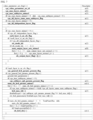
- the syntax pps_extension_flag may indicate whether pps_extension_data_flag may be present in the PPS RBSP syntax structure.
- a first value (e.g., 0) may indicate that pps_extension_data_flag is not present, and a second value (e.g., 1) may indicate that pps_extension_data_flag may be present.
- the syntax pps _hrd_parameters_update_present_flag may indicate whether general timing and HRD parameter may be present.
- a first value (e.g., 0) may indicate that general timing and HRD parameter are not present, and a second value (e.g., 1) may indicate that general timing and HRD parameter are present. If the current syntax is not present in the bitstream, the value of the flag may be inferred to be 0.
- updated parameter and timing information may be provided for conformance test/timing operations and may be used to update the derivation of timing of a decoding operation (e.g., arrival of a picture in CPB, removal of a picture from CPB, removal of a picture from DPB, etc.).
- Reinitialization of the updated parameter and timing information/timing operation/conformance test may be performed on a picture with temporalID equal to 0 in the middle of the CVS and/or a picture referencing at least one reference picture with a different resolution/picture size.
- additional HRD parameter may be present in association with a particular picture and may be used for updating or reinitializing the conformance test/timing operation.
- the additional HRD parameter may be present in a picture parameter set (PPS) referenced by the picture.
- PPS picture parameter set
- the additional HRD parameter may be present in a picture header of the picture. There may be a flag specifying whether the additional HRD parameter are present in the PPS or the picture header.
- the values of ScIdx, BitRate[Htid][ScIdx], and CpbSize[Htid][ScIdx] may be constrained as follows:
- the content of the general_timing_hrd_parameters() syntax structure selected for the AU including AU m and the previous AU may be different.
- RPR may be applicable (i.e., sps_res_change_in_clvs_allowed_flag value is 1) and the picture sizes of the coded pictures of the current AU and the previous AU may be different, where the temporalId of the current AU may be 0.
- HSS selects a BitRate[ Htid ][ ScIdx ] or CpbSize[ Htid ][ ScIdx ] value that is different from the value of the previous AU, the following may apply:
- CpbSize[ Htid ][ ScIdx ] is larger than the previous CPB size, it may be applied to the initial CPB arrival time of the current AU.
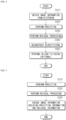
- FIG. 12 is a view for explaining an example of an image encoding method to which an embodiment according to the present disclosure may be applied.
- An image decoding apparatus may obtain image/video information from a bitstream (S1310). At this time, the image/video information may include information related to a HRD parameter.
- FIG. 14 is a view for explaining another example of an image decoding method to which an embodiment according to the present disclosure may be applied.
- the information related to the HRD parameter may include at least one of the information/syntax elements described in relation to at least one of the embodiments of the present disclosure.
- DPB management may be performed based on a HRD parameter. For example, prior to decoding of the current picture, deletion of picture(s) from the DPB and/or output of (decoded) picture(s) may be performed based on the HRD parameter.
- the reference sample resampling operation may include an operation of upscaling or downscaling when the resolutions of a reference picture and a current picture are different, and since this is the same as described above, a duplicate description is omitted.
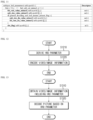
- a hypothetical reference decoder (HRD) operation may be performed (S1520).
- the HRD operation may include an operation of updating output timing derivation based on the updated HRD parameter and output timing information.
- the output timing derivation described above may include deriving at least one of an arrival timing of a picture in CPB, a removal timing of a picture in CPB, or a removal timing of a picture in DPB.
- the HRD operation (e.g., an operation of determining conformance of a bitstream to a video coding standard) may be performed a number of times derived based on a product of a first variable indicating the number of AUs of BitstreamToDecode associated with a BP SEI message applicable to TargetOlsIdx and a second variable associated with a value of general_du_hrd_params_present_flag.
- the HRD operation may include at least one of an operation of determining conformance of a bitstream including encoded video data to a video coding standard, an operation of determining conformance of a video decoder to the video coding standard, or an HRD picture output timing signaling operation, wherein the HRD operation may be performed by updating a schedule index for a hypothetical stream scheduler (HSS).
- HSS hypothetical stream scheduler
- bitstream transmission method includes transmitting a bitstream generated by an image encoding method
- the image encoding method may include the image encoding method of FIG. 16
- the bitstream recording medium may be a recording medium that stores the bitstream generated by the image encoding method.
- the image encoding method may include the image encoding method of FIG. 16 .
- Various embodiments of the present disclosure may be implemented in hardware, firmware, software, or a combination thereof.
- the present disclosure can be implemented with application specific integrated circuits (ASICs), Digital signal processors (DSPs), digital signal processing devices (DSPDs), programmable logic devices (PLDs), field programmable gate arrays (FPGAs), general processors, controllers, microcontrollers, microprocessors, etc.
- ASICs application specific integrated circuits
- DSPs Digital signal processors
- DSPDs digital signal processing devices
- PLDs programmable logic devices
- FPGAs field programmable gate arrays
- general processors controllers, microcontrollers, microprocessors, etc.
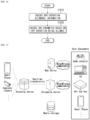
- FIG. 17 is a view showing a content streaming system, to which an embodiment of the present disclosure is applicable.
- the content streaming system may largely include an encoding server, a streaming server, a web server, a media storage, a user device, and a multimedia input device.
- the encoding server compresses content input from multimedia input devices such as a smartphone, a camera, a camcorder, etc. into digital data to generate a bitstream and transmits the bitstream to the streaming server.
- multimedia input devices such as smartphones, cameras, camcorders, etc. directly generate a bitstream
- the encoding server may be omitted.
- the streaming server transmits the multimedia data to the user device based on a user's request through the web server, and the web server serves as a medium for informing the user of a service.
- the web server may deliver it to a streaming server, and the streaming server may transmit multimedia data to the user.
- the content streaming system may include a separate control server.
- the control server serves to control a command/response between devices in the content streaming system.
Landscapes
- Engineering & Computer Science (AREA)
- Multimedia (AREA)
- Signal Processing (AREA)
- Compression Or Coding Systems Of Tv Signals (AREA)
Applications Claiming Priority (4)
| Application Number | Priority Date | Filing Date | Title |
|---|---|---|---|
| US202263403711P | 2022-09-03 | 2022-09-03 | |
| US202263403710P | 2022-09-03 | 2022-09-03 | |
| US202263404503P | 2022-09-07 | 2022-09-07 | |
| PCT/KR2023/013080 WO2024049269A1 (fr) | 2022-09-03 | 2023-09-01 | Procédé et dispositif de codage/décodage d'image destinés à signaler des paramètres hrd, et support d'enregistrement lisible par ordinateur sur lequel un flux binaire est stocké |
Publications (1)
| Publication Number | Publication Date |
|---|---|
| EP4583511A1 true EP4583511A1 (fr) | 2025-07-09 |
Family
ID=90098393
Family Applications (1)
| Application Number | Title | Priority Date | Filing Date |
|---|---|---|---|
| EP23860944.0A Pending EP4583511A1 (fr) | 2022-09-03 | 2023-09-01 | Procédé et dispositif de codage/décodage d'image destinés à signaler des paramètres hrd, et support d'enregistrement lisible par ordinateur sur lequel un flux binaire est stocké |
Country Status (5)
| Country | Link |
|---|---|
| EP (1) | EP4583511A1 (fr) |
| JP (1) | JP2025527904A (fr) |
| KR (1) | KR20250060888A (fr) |
| CN (1) | CN119790657A (fr) |
| WO (1) | WO2024049269A1 (fr) |
Family Cites Families (5)
| Publication number | Priority date | Publication date | Assignee | Title |
|---|---|---|---|---|
| US9351005B2 (en) * | 2012-09-24 | 2016-05-24 | Qualcomm Incorporated | Bitstream conformance test in video coding |
| US8989508B2 (en) * | 2012-09-28 | 2015-03-24 | Sharp Kabushiki Kaisha | Electronic device for signaling a sub-picture buffer parameter |
| US10390087B2 (en) * | 2014-05-01 | 2019-08-20 | Qualcomm Incorporated | Hypothetical reference decoder parameters for partitioning schemes in video coding |
| HUE064367T2 (hu) * | 2019-06-04 | 2024-03-28 | Huawei Tech Co Ltd | Inter kódolás videókódolásban több réteg támogatásával |
| EP4144090A4 (fr) * | 2020-05-22 | 2023-06-21 | Beijing Bytedance Network Technology Co., Ltd. | Améliorations d'extraction de sous-flux binaire de sous-image |
-
2023
- 2023-09-01 JP JP2025513270A patent/JP2025527904A/ja active Pending
- 2023-09-01 WO PCT/KR2023/013080 patent/WO2024049269A1/fr not_active Ceased
- 2023-09-01 EP EP23860944.0A patent/EP4583511A1/fr active Pending
- 2023-09-01 KR KR1020257009579A patent/KR20250060888A/ko active Pending
- 2023-09-01 CN CN202380062661.4A patent/CN119790657A/zh active Pending
Also Published As
| Publication number | Publication date |
|---|---|
| JP2025527904A (ja) | 2025-08-22 |
| WO2024049269A1 (fr) | 2024-03-07 |
| KR20250060888A (ko) | 2025-05-07 |
| CN119790657A (zh) | 2025-04-08 |
Similar Documents
| Publication | Publication Date | Title |
|---|---|---|
| US12294716B2 (en) | Image encoding/decoding method and device for signaling HLS, and computer-readable recording medium in which bitstream is stored | |
| US11902556B2 (en) | Mixed NAL unit type-based image encoding/decoding method and device, and method for transmitting bitstream | |
| US20250294189A1 (en) | Image encoding/decoding method and device for signaling hrd parameters, and computer-readable recording medium in which bitstream is stored | |
| US20260082083A1 (en) | Image encoding/decoding method and device for signaling information relating to ptl, dpb, and hrd in sps, and computer-readable recording medium storing bitstream | |
| US12556681B2 (en) | Image encoding/decoding method and device for signaling DPB-related information and PTL-related information, and computer-readable recording medium in which bitstream is stored | |
| US12184880B2 (en) | Image encoding/decoding method and apparatus for determining sublayer on basis of whether or not to make reference between layers, and method for transmitting bitstream | |
| US20250119591A1 (en) | Video encoding/decoding method and apparatus for signaling dpb parameter, and computer-readable recording medium storing bitstream | |
| US20230224469A1 (en) | Image encoding/decoding method and apparatus for determining whether or not to refer to parameter set on basis of output layer set, and method for transmitting bitstream | |
| US20230188714A1 (en) | Image encoding/decoding method and device for signaling aps identifier, and computer-readable recording medium in which bitstream is stored | |
| US20230143648A1 (en) | Method and apparatus for encoding/decoding image, on basis of available slice type information for gdr or irap picture, and recording medium storing bitstream | |
| EP4583511A1 (fr) | Procédé et dispositif de codage/décodage d'image destinés à signaler des paramètres hrd, et support d'enregistrement lisible par ordinateur sur lequel un flux binaire est stocké | |
| EP4329308A1 (fr) | Procédé et dispositif de codage/décodage d'image basés sur un message sei comprenant des informations d'identifiant de couche, et procédé de transmission de flux binaire | |
| US12363333B2 (en) | Image encoding/decoding method and apparatus based on sublayer level information, and recording medium storing bitstream | |
| US12483729B2 (en) | Image encoding/decoding method and apparatus for signaling picture output timing information, and computer-readable recording medium storing bitstream | |
| US12132918B2 (en) | Image encoding/decoding method and apparatus for signaling information about number of DPB parameters, and computer-readable recording medium storing bitstream | |
| US20230062754A1 (en) | Image encoding/decoding method and apparatus for signaling ptl-related information, and computer-readable recording medium in which bitstream is stored | |
| US20230224483A1 (en) | Image encoding/decoding method and apparatus for signaling picture output information, and computer-readable recording medium in which bitstream is stored |
Legal Events
| Date | Code | Title | Description |
|---|---|---|---|
| STAA | Information on the status of an ep patent application or granted ep patent |
Free format text: STATUS: THE INTERNATIONAL PUBLICATION HAS BEEN MADE |
|
| PUAI | Public reference made under article 153(3) epc to a published international application that has entered the european phase |
Free format text: ORIGINAL CODE: 0009012 |
|
| STAA | Information on the status of an ep patent application or granted ep patent |
Free format text: STATUS: REQUEST FOR EXAMINATION WAS MADE |
|
| 17P | Request for examination filed |
Effective date: 20250402 |
|
| AK | Designated contracting states |
Kind code of ref document: A1 Designated state(s): AL AT BE BG CH CY CZ DE DK EE ES FI FR GB GR HR HU IE IS IT LI LT LU LV MC ME MK MT NL NO PL PT RO RS SE SI SK SM TR |
|
| DAV | Request for validation of the european patent (deleted) | ||
| DAX | Request for extension of the european patent (deleted) |