WO1991001640A1 - Novel combined compositions for combatting pests - Google Patents
Novel combined compositions for combatting pests Download PDFInfo
- Publication number
- WO1991001640A1 WO1991001640A1 PCT/HU1990/000055 HU9000055W WO9101640A1 WO 1991001640 A1 WO1991001640 A1 WO 1991001640A1 HU 9000055 W HU9000055 W HU 9000055W WO 9101640 A1 WO9101640 A1 WO 9101640A1
- Authority
- WO
- WIPO (PCT)
- Prior art keywords
- activity
- combined composition
- mixture
- pyrethroid
- agent
- Prior art date
- Legal status (The legal status is an assumption and is not a legal conclusion. Google has not performed a legal analysis and makes no representation as to the accuracy of the status listed.)
- Ceased
Links
Classifications
-
- A—HUMAN NECESSITIES
- A01—AGRICULTURE; FORESTRY; ANIMAL HUSBANDRY; HUNTING; TRAPPING; FISHING
- A01N—PRESERVATION OF BODIES OF HUMANS OR ANIMALS OR PLANTS OR PARTS THEREOF; BIOCIDES, e.g. AS DISINFECTANTS, AS PESTICIDES OR AS HERBICIDES; PEST REPELLANTS OR ATTRACTANTS; PLANT GROWTH REGULATORS
- A01N53/00—Biocides, pest repellants or attractants, or plant growth regulators containing cyclopropane carboxylic acids or derivatives thereof
Definitions
- This invention relates to novel combined composi ⁇ tions for combatting plant, animal and sanitarian as well as forestry, horticultural and warehouse pests, which contain a pyrethroid-type insecticide as an insec ⁇ ticidally active ingredient and at least one fungicide inhibiting the ergosterol biosynthesis, optionally piperonylbutoxide as activity-strengthening agent and other additives.
- the present invention is based on the surprising recognition that the insecticidal activity of fungicides inhibiting the biosynthesis or ergosterol, which are used both as medicines and plant-protective agents, are cap ⁇ able to extraordinarily increase the insecticidal effi ⁇ ciency of the pyrethroids.
- Ergosterol is an indispensable constituent of the fungal cell membrane. When the biosyntheis of ergo ⁇ sterol is blocked by any inhibitor, the fungus will be destroyed due to the lack of ergosterol, eventually on effect of the precursors accumulated.
- inhibitors of the ergosterol biosynthesis is so highly specific that they have no influence on the activity of microsomal oxidases contain- i ⁇ g an other cytochrome P-450 component ⁇ Plant-Pathoge ⁇ nic Fungi" (in Hungarian), ed. L. Vaj ⁇ a, Mez ⁇ gazdasagi Kbnyvkiad ⁇ , page 119, Budapest 19877.
- triterpenes in opposition to diterpenes and monoterpenes, triterpenes (stigmasterol, sitosterol, squale ⁇ e or ergosterol) are not metabolized or are metabolized only after induction to a very low extent and nonspecifically by a microsomal oxidase preparation arising from the larvae of a moth (Spodoptera frugiperda) /J. Chem. Ecol. 1_3_, 423 (1987)7.
- compositions according to the invention can be used in the common manner, e.g. by dipping, sprin ⁇ kling, spraying, spreading, fuming, dusting, bathing, impregnating the packaging material and the like.
- the amount applied depends on the aim of the use and in general amounts to 2 - 25 g/hectare (hereinafter abbre ⁇ viated: g/ha) or 0.10 - 2 g/ha of active ingredient combination, respectively calculated for 100 g of seed- -grains or propagating material.
- the combined composi ⁇ tions according to the invention can be used together with herbicides, insecticides, growth-regulating agents or fertilizers and disinfectants (for extending the possibilities of utilization and protection).
- an activating agent or a further synergistic agent e.g. piperonylbutoxide
- a further synergistic agent e.g. piperonylbutoxide
- the combination according to the invention can be formulated to the usual compositions, such as solutions, emulsion concentrates, suspensions, powders, sprayable powders, dusting powders, pastes, granulates, aerosols, dressing composition and the like.
- the combination of the active ingredients is dissolved or dispersed or ground in the usual diluting agents, e.g. in liquid solvents, in gases liquefied under pressure and/or with solid carriers, optionally in the presence of a surface active additive or they are formulated in an other known way.
- Suitable liquid solvents are e.g. : mineral oil fractions with a medium or high boiling point such as kerosi ⁇ e or gas oil, vegetable oils or oils of animal origin; aliphatic, cyclic and aromatic hydrocarbons such as toluene, xylene, alkylated naphthalenes, cyclo- hexane, paraffin or their derivatives such as lower alcohols, glycols, esters, ketones and haloge ⁇ ated hydrocarbons, e.g. butanol, ethylene glycol, methyl ethyl keton, cyclohexanone, chloroform, chlroobenzene; or a polar solvent, e.g.
- Suitable liquefied gases are e.g. the propellant gases of common aerosols, e.g. halogenated hydrocarbons such as freon as well as butane, propane, nitrogen or carbon dioxide.
- Suitable solid carriers may be e.g. mineral grists of native origin, stone grists such as kaoline, clays, talc, chalk, quartz, attapulgite, mont orillonite, diatomaceous earth, siliceous earth or artificial -mineral grists, e.g. highly dispersed silicic acid, aluminum oxide and silicates.
- crushed native minerals e.g. calcite, marble, chalk, dolomite, synthetic granulates prepared from an organic or inorga ⁇ nic grist as well as granulates prepared form an organic material such as sawdust, maize stalk and stump, tobacco stalk, poppy wastes or bran of furfurol may be employed.
- Preferable surface active additives are emulsifying and/or dispersing agents and/or antifoaming agents, e.g.: alkaline metal, alkaline earth metal and ammonium salts of ligninsulfo ⁇ ic, ⁇ aphthalenesulfonic and phenol- sulfo ⁇ ic acids; alkylaryl sulfonates, alkyl sulfates, alkyl sulfonates; alkaline and alkaline earth metal salts of dibutylnaphthalenesulfo ⁇ ic acid; lauryl ether sulfate, fatty alcohol sulfates; alkaline metal and alkaline earth metal salts of fatty acids; salts of sulfated hexadecanols , heptadecanols and octadecanols; salts of sulfated fatty alcohol glycol ethers; condensa ⁇ tion products from sulfo ⁇ ated
- various wett- able powders and disp ⁇ rsifiable granulates containing the active ingredients in a total amount of 1 to 95 % by weight may be prepared. It is suitable to add an anionic and/or ⁇ onionic surface active agent in an amount of 0.1 to 10 by weight as auxiliary material. For this purpose e.g.
- Other additives are: an anti-adhesive (in an amount of 0.5 to 10 ..,% by weight), adhesive (in an amount of 1 to 2 % by weight) and filling or carrier material (in an amount of 10 to 60 % by weight) .
- an emulsion concentrate may also be prepared.
- This composition preferably contains the active ingredients in a total amount of 5 to 50 % by weight together with 50 to 95 % by weight of an additive providing a stable- emulsion when the emulsion concentrate is emulsified with water or in the presence of water.
- auxiliary material 0.1 to 2 % by weight of a tenside and/or 0.1 to 5 % by weight of a stabilizing agent and an amount of an organic solvent supplementing the mixture up to 100 % by weight. It is preferable to employ a mixture of anionic and nonionic tensides as tenside.
- anionic te ⁇ sides are e.g. the following products:
- alkylaryl sulfonic acids e.g. calcium (sodium, potassium) dodecyl be ⁇ zenesulfonate such as:
- Preferred nonionic tensides are e.g.: - No ⁇ yl and tributylphe ⁇ ol polyethylene glycol ethers such as:
- Ethoxylated amines such as: G-3525 (ethoxylated alkylamine) (Atlas) G-3684 (ethoxylated alkylamine) (Atlas) GENAMIN S (ethoxylated stearyla ine) (Hoechst.) NEOVADINE AL (ethoxylated alkylamine) (Ciba-Geigy)
- NINISOL 110 (Ciba-Geigy)
- Ready mixtures of tensides e.g. the Geronol (Rhone- Poulenc) products may also be used: from these e.g. FF/4 is a mixture of ethoxylated alkylphenols and calcium dodecylbenzenesulfonate in isobutanol; and the product M S is a mixture of calcium dodecylbenze ⁇ esulfonate , ethoxylated amines and ethoxylated fatty acids in iso ⁇ butanol .
- FF/4 is a mixture of ethoxylated alkylphenols and calcium dodecylbenzenesulfonate in isobutanol
- the product M S is a mixture of calcium dodecylbenze ⁇ esulfonate , ethoxylated amines and ethoxylated fatty acids in iso ⁇ butanol .
- Useful solvents for the above purpose are aromatic solvent mixtures as well as xylene, cyclohexanol, butanol methyl ethyl ketone, isopropanol and the like.
- the active ingredient combination according to the invention may also be applied in the form of an aerosol spray.
- Various liquefied gases such as freon or mixture of propane and butane may be used as propel- lant.
- Suitable solvents which are used in an amount supplementing the mixture up to 100 % by weight are as follows: - Aromatic solvents, e.g. xylene or toluene;
- aliphatic or cycloaliphatic alcohols e.g. butanol, isopropanol, cyclohexanol; aliphatic ketones, e.g. acetone, methyl ethyl ketone, diethyl ketone; - oils of plant, animal or mineral origin, e.g. olive oil, sunflower oil, rape-seed oil, petroleum, kreolin; or mixtures of aliphatic hydrocarbons, e.g. kerosine; and
- a preferred suspension concentrate according to the invention contains the active ingredients in a total amount of 0.1 to 30 % by weight, optionally together with 2 to 30 % by weight of piperonylbutoxide and 99.9 to 40 % by weight of additives such as 1 to 10 % by weight of a surface active agent, 5 to 10 % by weight of an anti-freezing agent, 50 to 90 % by weight of a diluting agent or a carrier, 0.2 to 0.3 % by weight of a viscosity-increaseing agent and 0.1 to 0.3 % by weight, of an anti-foa ing agent.
- additives such as 1 to 10 % by weight of a surface active agent, 5 to 10 % by weight of an anti-freezing agent, 50 to 90 % by weight of a diluting agent or a carrier, 0.2 to 0.3 % by weight of a viscosity-increaseing agent and 0.1 to 0.3 % by weight, of an anti-foa ing agent.
- the granulate contains the active ingredients in a total amount of 1 to 20 % by weight as well as optional ly 2 to 30 % by weight of piperonylbutoxide together with 80 to 99 % by weight of an additives such as * 5 to 15 % by weight of a diluent and 70 to 80 by weight of a solid carrier.
- the combined composition according to the present invention may contain 2 , -di(tert-butyl)-4-methylphe ⁇ ol , 2,2-dimethyl-4-sulfo ⁇ ylme hyl-l,2-dihydroquinoline, hydro.quinone, hydroquinone monomethyl ether, benzophenone, 2,2 ,4-trimethyl-l , 2-dihydroquinoli ⁇ e and/or phenyl salicylate derivative as a ⁇ tioxidant in an amount of 0.01 to 1 % by weight calculated for the active in ⁇ gredient.
- the activity-strengthening substances used in the combinations according to the present invention in themselves are fungicidal agents widely and success- fully used, which maintain and in certain cases even increase their fungicidal effectiveness in their mixtures according to the claims. This provides their reasonable incorporation into technologies of plant protection and gives a possibility for simul- ta ⁇ eous protection with enhanced efficiency against pests and pathogens.
- the activity-strengthening substances used in the combinations according to the invention increase not only the contact insecticidal effectiveness but, after resorptio ⁇ into the plants, they enhance also 10
- Example 1 The insecticidal effectiveness of combinations according to the present invention is hereinafter illustrated on the domestic fly (Musca domestica). Female flies of 2 to 4 days age (obtained from WHO) with normal sensitivity were used in these examinations. The active agents were dissolved in 2-ethoxy-ethanol and applied in drops of 0.2 ,ul onto the dorsal cuticle of the thorax of flies mildly narcotized by carbon dioxide.
- the pretreatment was carried out with 500 ng/0.5 /Ul/female fly of propiconazole 1 hour before the treatment.
- the pretreatments did not induce any symptom or death.
- the pretreatments did not induce any symptom or death
- the pretreatments did not induce any symptom or death.
- the pretreatments did not induce any symptom or death.
- the evaluation was started on the day following the treatment and then performed on the 2nd, 3rd and 4th days, too. In course of the evaluation, the dead larvae were counted. The effectiveness of the treatments was characterized by the percentage value of the deaths.
- Death % (1 ) x 100 x 2 wherein means the number of (living) individuals after the treatment; means the number of individuals before treatment. The average values are shown in Table 5.
Landscapes
- Life Sciences & Earth Sciences (AREA)
- Agronomy & Crop Science (AREA)
- Pest Control & Pesticides (AREA)
- Plant Pathology (AREA)
- Health & Medical Sciences (AREA)
- Engineering & Computer Science (AREA)
- Dentistry (AREA)
- General Health & Medical Sciences (AREA)
- Wood Science & Technology (AREA)
- Zoology (AREA)
- Environmental Sciences (AREA)
- Agricultural Chemicals And Associated Chemicals (AREA)
Abstract
The invention relates to novel combined compositions for combatting plant, animal and sanitarian as well as forestry, horticultural and warehouse pests. These compositions contain a pyrethroid-type insecticide as an insecticidally active ingredient and at least one fungicide inhibiting the ergosterol biosynthesis as activity-strengthening agent as well as optionally piperonylbutoxide and other additives. The advantages of the compositions according to the invention consist therein that the activity-strengthening substances used are fungicidal agents widely used and have an advantageous toxicology. The activity-strengthening agent exerts a synergistic effect together with the pyrethroid-type insecticide. The combinations according to the invention bear an outstanding importance in the protection of stored crops.
Description
NOVEL COMBINED COMPOSITIONS FOR COMBATTING PESTS
This invention relates to novel combined composi¬ tions for combatting plant, animal and sanitarian as well as forestry, horticultural and warehouse pests, which contain a pyrethroid-type insecticide as an insec¬ ticidally active ingredient and at least one fungicide inhibiting the ergosterol biosynthesis, optionally piperonylbutoxide as activity-strengthening agent and other additives.
In the last years, the most recently developed class of active agents, i.e. pyrethroids have obtained a continuously increasing importance. However, some uπ- desired side effects were also observed during their intense utilization. Due to their contact mode cf action, they kill not only the arthropods damaging cultivated plants but frequently the useful ento ophages , too, consuming those. By decreasing the number of the natural enemies, the rate of repeated multiplication of the pests is enhanced, which may influence the specific use of agents, too. In extreme cases, the excessive and un¬ advised use of the agents may lead to such a decrease in the number of useful entomophages that, due to the lack of regulation, the agriculturally indifferent arthropods, playing an unimportant role in the fauna, may rise to be so-called "man-made" pests (A. W. A. 3rown: "Ecology of Pesticides'^ Wiley-Sons, 1978).
An other problem is connected with the strongly specific action mechanism of pyrethroids causing a higher risk of the development of resistance than it is against the traditional agents.
The present invention is based on the surprising recognition that the insecticidal activity of fungicides inhibiting the biosynthesis or ergosterol, which are used both as medicines and plant-protective agents, are cap¬ able to extraordinarily increase the insecticidal effi¬ ciency of the pyrethroids.
Ergosterol is an indispensable constituent of the fungal cell membrane. When the biosyntheis of ergo¬ sterol is blocked by any inhibitor, the fungus will be destroyed due to the lack of ergosterol, eventually on effect of the precursors accumulated.
Each of the compounds inhibiting the biosynthesis of ergosterol, which are known up to the present, acts on the intermediate reactions of enzymatic processes playing a role in the trans ormation of laπosterol to ergosterol ("The Biochemical Mode of Action", eds. 3 . R. Corbett, K. Wright and A. C. Baillie, Academic Press, London, pages 256-268, 1984). These processes catalyzed by the cytochrome P-450 system of fungi are characterized by a high grade of substrate- and species-specifity /Pestic. Sci. 1_5, 133 (1984)7. On the one hand, this led to the description of selectively utilizable pathogeπ- -specific inhibitors and on the other hand, this led to the recognition that the effect of the individual inhi¬ bitors on various species cannot be predicted "Fungicide Chemistry: Advances and Practical Applications", eds. M. B. Green and D. A. Spilker, ACS Symposium Series, pages 25 to 51, 1986). The diversity appearing in the species-specificity of inhibitors is characteristic of the whole living world /Biochimie 63__ 743 (1987)7- It is known that the azole-type fungicides in¬ hibiting the ergosterol biosynthesis (azaconazole , penconazole, propiconazole , imazalil, myconazole, clotrimazole , bifeπazole, ketoconazole, itracoπazole , flucoπazole) inhibit only the functioning of fungal microsomal cytochrome P-450 system and practically, they possess no effect on that of the plants of higher order and on that of mammals /Pestic. Sci. _\_, 289 (1987)7. The effect of inhibitors of the ergosterol biosynthesis is so highly specific that they have no influence on the activity of microsomal oxidases contain-
iπg an other cytochrome P-450 component ^Plant-Pathoge¬ nic Fungi" (in Hungarian), ed. L. Vajπa, Mezόgazdasagi Kbnyvkiadό, page 119, Budapest 19877.
Characteristically, in opposition to diterpenes and monoterpenes, triterpenes (stigmasterol, sitosterol, squaleπe or ergosterol) are not metabolized or are metabolized only after induction to a very low extent and nonspecifically by a microsomal oxidase preparation arising from the larvae of a moth (Spodoptera frugiperda) /J. Chem. Ecol. 1_3_, 423 (1987)7.
The facts discussed above indicate that inhibitors of the enzymes participating of the biosynthesis of ergosterol have no effect on the microsomal enzymes of insects. No other mechanism of action is known from the literature, through which these inhibitors might exert an influence on the efficiency of pyrethroid-type insec¬ ticides used against insects.
It has been recognized during our investigations that the insecticidal activity of pyrethroids was sig- πificantly enhanced by the addition of several fungicides inhibiting the biosynthesis of ergosterol.
The combined compositions according to the invention can be used in the common manner, e.g. by dipping, sprin¬ kling, spraying, spreading, fuming, dusting, bathing, impregnating the packaging material and the like. The amount applied depends on the aim of the use and in general amounts to 2 - 25 g/hectare (hereinafter abbre¬ viated: g/ha) or 0.10 - 2 g/ha of active ingredient combination, respectively calculated for 100 g of seed- -grains or propagating material. The combined composi¬ tions according to the invention can be used together with herbicides, insecticides, growth-regulating agents or fertilizers and disinfectants (for extending the possibilities of utilization and protection). It may be preferable to add an activating agent
or a further synergistic agent, e.g. piperonylbutoxide to the combination. Thereby, the efficiency of the active ingredient will be increased without enhancing the toxicity on warm-blooded animals.
The combination according to the invention can be formulated to the usual compositions, such as solutions, emulsion concentrates, suspensions, powders, sprayable powders, dusting powders, pastes, granulates, aerosols, dressing composition and the like. The combination of the active ingredients is dissolved or dispersed or ground in the usual diluting agents, e.g. in liquid solvents, in gases liquefied under pressure and/or with solid carriers, optionally in the presence of a surface active additive or they are formulated in an other known way.
Suitable liquid solvents are e.g. : mineral oil fractions with a medium or high boiling point such as kerosiπe or gas oil, vegetable oils or oils of animal origin; aliphatic, cyclic and aromatic hydrocarbons such as toluene, xylene, alkylated naphthalenes, cyclo- hexane, paraffin or their derivatives such as lower alcohols, glycols, esters, ketones and halogeπated hydrocarbons, e.g. butanol, ethylene glycol, methyl ethyl keton, cyclohexanone, chloroform, chlroobenzene; or a polar solvent, e.g. di ethyl orma ide, dimethyl sulfoxide or N-methylpyrrolidone. Suitable liquefied gases are e.g. the propellant gases of common aerosols, e.g. halogenated hydrocarbons such as freon as well as butane, propane, nitrogen or carbon dioxide.
Suitable solid carriers may be e.g. mineral grists of native origin, stone grists such as kaoline, clays, talc, chalk, quartz, attapulgite, mont orillonite, diatomaceous earth, siliceous earth or artificial -mineral grists, e.g. highly dispersed silicic acid, aluminum oxide and silicates. As carriers for granulates, crushed
native minerals, e.g. calcite, marble, chalk, dolomite, synthetic granulates prepared from an organic or inorga¬ nic grist as well as granulates prepared form an organic material such as sawdust, maize stalk and stump, tobacco stalk, poppy wastes or bran of furfurol may be employed. Preferable surface active additives are emulsifying and/or dispersing agents and/or antifoaming agents, e.g.: alkaline metal, alkaline earth metal and ammonium salts of ligninsulfoπic, πaphthalenesulfonic and phenol- sulfoπic acids; alkylaryl sulfonates, alkyl sulfates, alkyl sulfonates; alkaline and alkaline earth metal salts of dibutylnaphthalenesulfoπic acid; lauryl ether sulfate, fatty alcohol sulfates; alkaline metal and alkaline earth metal salts of fatty acids; salts of sulfated hexadecanols , heptadecanols and octadecanols; salts of sulfated fatty alcohol glycol ethers; condensa¬ tion products from sulfoπated naphthalene and naphthalene derivatives with formaldehyde; polyoxyethyleπe octylpheny ether; ethoxylated isooctylphenol , octylpheπol and πoπylphenol; alkylpheπyl polyglycol ether, tributyl- pheπyl polyglycol ether; alkylaryl polyether alcohol; isotridecyl alcohol; condensation products of fatty alcohols with ethylene oxide; ethoxylated castor oil; polyoxyethyleπe alkyl ether; ethoxylated polyoxypropylene lauryl alcohol polyglycol ether acetal; sorbitol esters; sulfit wastes; as well as methylcellulose.
According to the present invention, various wett- able powders and dispεrsifiable granulates containing the active ingredients in a total amount of 1 to 95 % by weight may be prepared. It is suitable to add an anionic and/or πonionic surface active agent in an amount of 0.1 to 10 by weight as auxiliary material. For this purpose e.g. the alkaline metal salts of alkyl or aryl sulfoπic acids, alkaline, metal salts of the condeπsa- tion products of alkylarylsulfonic acids with form-
aldehyde, alkylaryl polyglycol ethers, sulfated higher alcohols, polyethylene oxides, sulfated fatty alcohols, fatty acid polyglycol ethers and other, commercially available surface active agents may be employed. Other additives are: an anti-adhesive (in an amount of 0.5 to 10 ..,% by weight), adhesive (in an amount of 1 to 2 % by weight) and filling or carrier material (in an amount of 10 to 60 % by weight) .
According to the present invention, an emulsion concentrate may also be prepared. This composition preferably contains the active ingredients in a total amount of 5 to 50 % by weight together with 50 to 95 % by weight of an additive providing a stable- emulsion when the emulsion concentrate is emulsified with water or in the presence of water.
It is suitable to use as auxiliary material 0.1 to 2 % by weight of a tenside and/or 0.1 to 5 % by weight of a stabilizing agent and an amount of an organic solvent supplementing the mixture up to 100 % by weight. it is preferable to employ a mixture of anionic and nonionic tensides as tenside. Preferred anionic teπsides are e.g. the following products:
- Calcium salts of alkylaryl sulfonic acids, e.g. calcium (sodium, potassium) dodecyl beπzenesulfonate such as:
SULFARIL-50 (United Chemical Works, Hungary) MARLON AFR (HUls)
- Mono- and diesters of phosphoric acid, e.g. mono- qr di(oxyethylaryl) ester of orthophosphoric acid such as:
"•Gafac RM 520" (GAF)
- Mono- or di(oxyethylalkyl) ester of orthophosphoric acid such as "SURFACTANT QS-5" (Rohm and Haas). Preferred nonionic tensides are e.g.:
- Noπyl and tributylpheπol polyethylene glycol ethers such as:
ANTAROX, IGEPAL (GAF) ARKOPAL, EMULSOGEN (Hoechst) AVOLAN, EMULSIFIER (Bayer) DOWTAX (DOW) CATAREX (Shell) RENEX Atlas)
- Adducts of fatty alcohols with ethylene oxide such as:
BRIJ (Atlas) DISPERSOL A (ICI) GENAPOL S-XD (Hoechst)
- Ethoxylated amines such as: G-3525 (ethoxylated alkylamine) (Atlas) G-3684 (ethoxylated alkylamine) (Atlas) GENAMIN S (ethoxylated stearyla ine) (Hoechst.) NEOVADINE AL (ethoxylated alkylamine) (Ciba-Geigy)
- Esters of fatty acids with polyethylene glycol such as:
MYRJ 49 (Atlas)
MYRJ 51 (Atlas)
MW3 52 (Atlas)
MYRJ 53 (Atlas) SIOTOL AF (ICI)
NINISOL 110 (Ciba-Geigy)
Ready mixtures of tensides, e.g. the Geronol (Rhone- Poulenc) products may also be used: from these e.g. FF/4 is a mixture of ethoxylated alkylphenols and calcium dodecylbenzenesulfonate in isobutanol; and the product M S is a mixture of calcium dodecylbenzeπesulfonate , ethoxylated amines and ethoxylated fatty acids in iso¬ butanol .
Useful solvents for the above purpose are aromatic solvent mixtures as well as xylene, cyclohexanol, butanol
methyl ethyl ketone, isopropanol and the like.
The active ingredient combination according to the invention may also be applied in the form of an aerosol spray. Various liquefied gases such as freon or mixture of propane and butane may be used as propel- lant.
Suitable solvents which are used in an amount supplementing the mixture up to 100 % by weight are as follows: - Aromatic solvents, e.g. xylene or toluene;
- aliphatic or cycloaliphatic alcohols, e.g. butanol, isopropanol, cyclohexanol; aliphatic ketones, e.g. acetone, methyl ethyl ketone, diethyl ketone; - oils of plant, animal or mineral origin, e.g. olive oil, sunflower oil, rape-seed oil, petroleum, kreolin; or mixtures of aliphatic hydrocarbons, e.g. kerosine; and
- water. A preferred suspension concentrate according to the invention contains the active ingredients in a total amount of 0.1 to 30 % by weight, optionally together with 2 to 30 % by weight of piperonylbutoxide and 99.9 to 40 % by weight of additives such as 1 to 10 % by weight of a surface active agent, 5 to 10 % by weight of an anti-freezing agent, 50 to 90 % by weight of a diluting agent or a carrier, 0.2 to 0.3 % by weight of a viscosity-increaseing agent and 0.1 to 0.3 % by weight, of an anti-foa ing agent. The granulate contains the active ingredients in a total amount of 1 to 20 % by weight as well as optional ly 2 to 30 % by weight of piperonylbutoxide together with 80 to 99 % by weight of an additives such as* 5 to 15 % by weight of a diluent and 70 to 80 by weight of a solid carrier.
The combined composition according to the present invention may contain 2 , -di(tert-butyl)-4-methylpheπol , 2,2-dimethyl-4-sulfoπylme hyl-l,2-dihydroquinoline, hydro.quinone, hydroquinone monomethyl ether, benzophenone, 2,2 ,4-trimethyl-l , 2-dihydroquinoliπe and/or phenyl salicylate derivative as aπtioxidant in an amount of 0.01 to 1 % by weight calculated for the active in¬ gredient.
The advantages of the combinations according to the invention can be summarized without any demand on com¬ pleteness as follows: 1. The material costs of treatments are reduced by decrease in the amount of active ingredient required to achieve the desired effectiveness. 2. The load of the environment by nature-alien substances is decreased.
3. The activity-strengthening substances used in the combinations according to the present invention in themselves are fungicidal agents widely and success- fully used, which maintain and in certain cases even increase their fungicidal effectiveness in their mixtures according to the claims. This provides their reasonable incorporation into technologies of plant protection and gives a possibility for simul- taπeous protection with enhanced efficiency against pests and pathogens.
4. The activity-strengheπing substances used in the
• combinations according to the invention are commer¬ cially available agents which are regarded as toxico- logically advantageous and the use of which bears only a low risk concerning the safety.
5. The activity-strengthening substances used in the combinations according to the invention increase not only the contact insecticidal effectiveness but, after resorptioπ into the plants, they enhance also
10
the effectiveness against sucking and biting pests whereby the spectrum of activity of pyrethroids is broadened.
6. The combinations according to the invention bear an outstanding importance in the protection of stored crops, where the approved values of residues are critically judged in the cases of both the crops serving as fodders or human alimentation.
7. The combined treatments exert an excellent effect against the phenotypically resistant pests and sig¬ nificantly slow down the rate of the development of resistance.
8. Due to the systemic character of the activity- -strengthening substances used in the combinations according to the invention, the toxicity of pyreth¬ roids exerted on the useful entomophages is signifi¬ cantly reduced by the decrease in the effective dose.
In our description the so-called common or ISO names were used for the denomination of the compounds. The chemical nomenclature of these names is known (IUPAC; CA.) e.g. from the 8th Edition of "The Pesticide Manual" or from "Agricultural Chemicals" compiled by W. T. Thompson, or from other known handbooks. Exceptions are: chinmix, which is an isomer mixture of defined ratio of cypermethrin, wherein cis:trans = 4:6 and (lR)-cis-(S):(lS)-cis-(R) = 1:1 and (lR)-traπs- -(S):(lS)-trans-(R)=l:l; and transmix, which is an isomer mixture of defined ratio of cypermethrin, wherein cis:traπs = 0:1 and (lR)-trans-(S) :(lS)-traπs-(R) = 1:1. The effectiveness of combinations according to the present invention will hereinafter be illustrated in some biological examples without any demand on complete*
ness and without any restriction of those involved in the appended Claims.
Biological Examples
Example 1 The insecticidal effectiveness of combinations according to the present invention is hereinafter illustrated on the domestic fly (Musca domestica). Female flies of 2 to 4 days age (obtained from WHO) with normal sensitivity were used in these examinations. The active agents were dissolved in 2-ethoxy-ethanol and applied in drops of 0.2 ,ul onto the dorsal cuticle of the thorax of flies mildly narcotized by carbon dioxide.
20 flies for each dose and 10 flies for each repeti¬ tion were used. The examinations were carried out in 2 to 3 repetitions. After the treatments, the flies were placed in plastic dishes covered with sieve cloth and, supplied with sugar as food.
After 24 hours the dead flies were counted and the mortality ratio was expressed as percentage. The results are summarized in Table 1.
Table 1


The pretreatment was carried out with 500 ng/0.5 /Ul/female fly of propiconazole 1 hour before the treatment. The pretreatments did not induce any symptom or death.
It is unambiguously shown by the Table that the otherwise ineffective pretreatments with 500 ng of propiconazole significantly increased the ef ectiveness of all pyrethroids investigated by about 40 to 60 %.
Example 2
The synergistic effect of several structurally different inhibitors of the ergosterol biosynthesis is shown in Table 2. The investigation was carried out as described in Example 1.
Table 2
Pretreatment Treatment Mortality (%) during 24 hours Increase in effect
Dose (πg/fly) Alone After pretreatment (%)
Propiconazole Bioresmethrin
500 ng 40 ng 65.0 100 35 Etaconazole Tetramethrin
500 πg 200 ng 37.5 82.5 45
1000 ng 200 πg 37.5 100 62.5
Fenarimol Tetramethrin
500 πg 200 πg 37.5 100 62.5 Fenarimol Chinmix
200 πg 4 πg 50.0 92.5 42.5 Bitertanol Chinmix
500 πg 4 ng 50.0 85.0 35.0 Dichlobutrazole Chinmix
500 ng 4 πg 50.0 92.5 42.5
200 ng 4 πg 50 90 40 Flutriafol Chinmix
500 ng 4 πg 5.0 100 50
100 ng 4 πg 50 100 50 50 πg 4 πg 50 92.5 42.5


Table 2 (coπtd. )
Pretreatment Treatment Mortality (%) during 24 hours Increase in effect
Dose (ng/fly) Alone After pretreatment (%)
Prochloraz Cypermethrin 500 πg 10 πg 55 92.5 37.5 200 ng 10 πg 55 90.0 35.0
The pretreatments did not induce any symptom or death
I

Example 3
The syπergistic effect of various pretreatments with propiconazole on chinmix is shown in Table 3. The investigation was carried out as described in Example 1
Table 3
Pretreatment Treatment Mortality (%) during 24 hours Increase in propiconazole Chinmix ' Alone effect (%)
After pretreatment

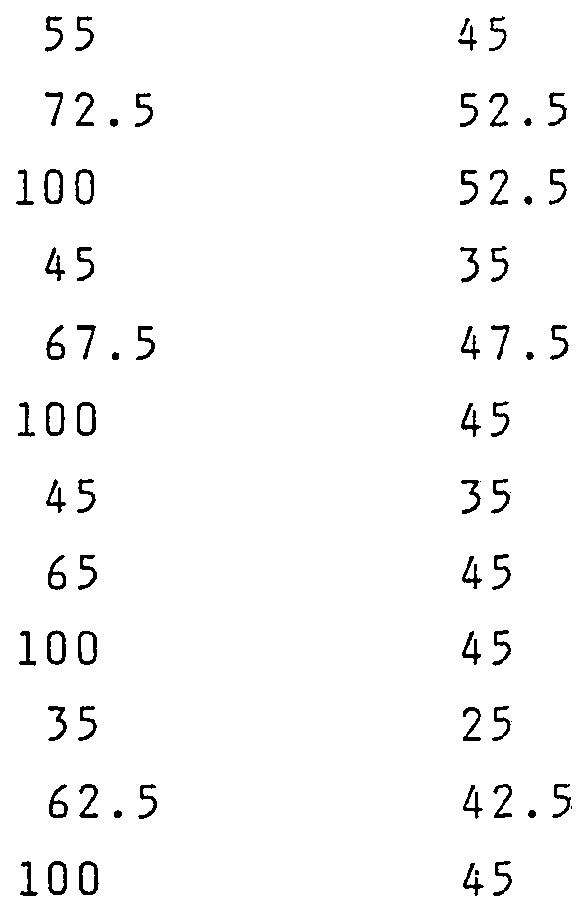
The pretreatments did not induce any symptom or death.
Example 4
The synergistic effect of treatments with various s ereoisomers of propiconazole on chinmix is shown in Table 4. The investigation was carried out as described in Example 1.
Table 4
Pretreatment with 100 ng Effect of 3.4 ng of Increase in of propiconazole chinmix mortality (%) effect (%)
30
Racemate 65 35
(2S,4R) 82.5 52.5
(2R,4S) 60 30
(2R,4R) 77.5 47.5
(2S,4S) 82.5 52.5
Piperonylbutoxide 85 55
The pretreatments did not induce any symptom or death.
Example 5
These investigations were carried out by using L^-grade larvae of mothes (Agrotis segetu ) collected from field in 4 parallel experiments and in 2 repeti¬ tions. The cultivating vessel of 2 litres volume was filled up to its half volume with earth. Subsequently 5 caterpillars were placed in each cultivating vessel. After a short rest period, while the larvae withdrew into the earth, barley plants treated with the composi¬ tions or combinations, respectively listed in Table 5 and then desiccated were put into the cultivating vessels,
The evaluation was started on the day following the treatment and then performed on the 2nd, 3rd and 4th days, too. In course of the evaluation, the dead larvae were counted. The effectiveness of the treatments was characterized by the percentage value of the deaths.
Death % = (1 ) x 100 x2
wherein means the number of (living) individuals after the treatment; means the number of individuals before treatment. The average values are shown in Table 5.

No insecticidal effectiveness was shown by fungicidal treatments alone. In these examinations, the commer¬ cially available compositions Vigil (dichlobutrazole), Impact (flutriafol) , Tilt (propiconazole), Bayletoπ (triadimefon) , and Chinmix 5 EC (chinmix) were used.
Example 6
The synergistic effect with chinmix of several fungicides inhibiting the biosynthesis of ergosterol is shown on pyrethroid-resistant flies in Table 6. The chinmix-resistance of the flies used in these examinations was developed in laboratory by means of selection pressure in such a way that 800 to 2000 flies of both sexes were topically treated with an LD6n-LDgr) dose of chinmix in each generation and the surviving individuals were further propagated. Otherwise, the method described in Example 1 was followed.
Table 6
Pretreatment with 500 ng Effect of 400 ng of Increase in effect chinmix mortality (%) mortality (%)
65
Propiconazole 100 > 35
Bitertanol 100 > 35
Fenarimol 100 > 35
Flutriafol 100 > 35
Prochloraz 100 > 35
Etaconazole 100 > 35
Triadimefon 100 > 35
The pretreatments did not induce any symptom or death,
Claims
1. A combined composition against plant, animal and sanitarian as well as forestry pests and pathogens, which c o m p r i s e s a pyrethroid-type insecticide as active ingredient and at least one fungicide inhibiting the ergosterol biosynthesis as activity-strengthening agent as well as optionally piperonylbutoxide and other auxiliaries .
2. A combined composition as claimed in claim 1, which comp r i s e s bifeπthrin and/or cyfluthrin, cyhalo- thrin, cypermethrin, deltamethrin, fenpropathrin , fen- valerate, flucythrinate, fluvalinate, permethriπ, tetra¬ methrin, allethrin, bioallethrin, bioresmethrin, res- methrin, tefluthrin and pyrethrin or their mixture in a defined ratio as pyrethroid-type insecticide.
3. A combined composition as claimed in claim 1, which c o mp r i s e s triarimol, fenarimol, nuarimol, ancymidol or the mixture thereof as activity-streπgthen- ing agent.
4. A combined composition as claimed' in claim 1, which c o m p r i s e s dichlopeπteπol , uπicoπazole, tria- peπtheπol or the mixture thereof as activity-strengthen¬ ing agent.
5. A combined composition as claimed in claim 1, which c o mp r i s e s ketaconazole, propiconazole, eta- conazole or a mixture thereof as activity-strengthen¬ ing agent.
6. A combined composition as claimed in claim 1, which comp r i s e s clotrimazole, bifonazole, triadimefon, triadimenol, pachlobutrazole, dichlobutrazole, bitertanol or a mixture thereof as activity-strengthening agent.
7. A combined composition as claimed in claim 1, which co m p r i s e s miconazole, prochloraz, tioconazole, imazalil, penconazole, feπapanil, flutriafol or a mixture thereof as activity-strengthening agent.
8. A combined composition as claimed in claim 1, which c o m p r i s e s tridemorph, dodemorph and/or triforine as activity-strengthening agent.
9. A combined composition as claimed in claim 1, which c omp r i s e s the pyrethroid-type insecticide related to the activity-strengthening fungicide in a ratio of 1:2 to 1:40.
Priority Applications (5)
| Application Number | Priority Date | Filing Date | Title |
|---|---|---|---|
| DK90910861T DK0436692T4 (en) | 1989-07-31 | 1990-07-30 | Combined pesticide preparations |
| US07/687,938 US5389662A (en) | 1989-07-31 | 1990-07-30 | Combined compositions |
| DE69015794T DE69015794T2 (en) | 1989-07-31 | 1990-07-30 | COMBINED PESTICIDE COMPOSITIONS. |
| EP90910861A EP0436692B2 (en) | 1989-07-31 | 1990-07-30 | Novel combined compositions for combatting pests |
| HK98103148A HK1003966A1 (en) | 1989-07-31 | 1990-07-30 | Novel combined compositions for combatting pests |
Applications Claiming Priority (2)
| Application Number | Priority Date | Filing Date | Title |
|---|---|---|---|
| HU3913/89 | 1989-07-31 | ||
| HU893913A HU206605B (en) | 1989-07-31 | 1989-07-31 | Synergetic artropodicide compositions containing pyrethroides as active components |
Publications (1)
| Publication Number | Publication Date |
|---|---|
| WO1991001640A1 true WO1991001640A1 (en) | 1991-02-21 |
Family
ID=10966037
Family Applications (1)
| Application Number | Title | Priority Date | Filing Date |
|---|---|---|---|
| PCT/HU1990/000055 Ceased WO1991001640A1 (en) | 1989-07-31 | 1990-07-30 | Novel combined compositions for combatting pests |
Country Status (10)
| Country | Link |
|---|---|
| US (2) | US5389662A (en) |
| EP (1) | EP0436692B2 (en) |
| JP (1) | JP2852124B2 (en) |
| AT (1) | ATE116523T1 (en) |
| DE (1) | DE69015794T2 (en) |
| DK (1) | DK0436692T4 (en) |
| ES (1) | ES2067037T5 (en) |
| HK (1) | HK1003966A1 (en) |
| HU (1) | HU206605B (en) |
| WO (1) | WO1991001640A1 (en) |
Cited By (10)
| Publication number | Priority date | Publication date | Assignee | Title |
|---|---|---|---|---|
| WO1994002020A1 (en) * | 1992-07-17 | 1994-02-03 | Zeneca Limited | Pesticidal compositions |
| WO1995011786A1 (en) * | 1993-10-26 | 1995-05-04 | Bayer Aktiengesellschaft | Timber protecting medium containing a copper compound |
| WO1995012314A1 (en) * | 1993-11-04 | 1995-05-11 | Rhone Poulenc Agrochimie | Combinations of a fungicide having an azole group with an insecticide having a pyrazole, pyrrole or phenylimidazole group |
| FR2711893A1 (en) * | 1993-11-04 | 1995-05-12 | Rhone Poulenc Agrochimie | Combination of a fungicide having an azole group with an insecticide having a pyrazole, pyrrole or phenylimidazole group |
| GB2264641B (en) * | 1992-03-05 | 1995-09-13 | Sandoz Ltd | Fungicidal compositions |
| US5506251A (en) * | 1994-11-16 | 1996-04-09 | Rohm And Haas Company | Synergisic insecticidal compositions |
| EP2250902A1 (en) * | 2006-12-22 | 2010-11-17 | Bayer CropScience AG | Pesticide composition comprising fosethyl-aluminium and an insecticide active substance |
| WO2011076724A3 (en) * | 2009-12-23 | 2011-11-24 | Bayer Cropscience Ag | Pesticidal compound mixtures |
| EP2548440A1 (en) * | 2011-03-03 | 2013-01-23 | Quimica De Munguia, S.A. | Product for treatment of plants |
| CN118625817A (en) * | 2024-08-14 | 2024-09-10 | 成都信息工程大学 | A multi-agent task allocation and path planning method in industrial environments |
Families Citing this family (6)
| Publication number | Priority date | Publication date | Assignee | Title |
|---|---|---|---|---|
| US8110608B2 (en) | 2008-06-05 | 2012-02-07 | Ecolab Usa Inc. | Solid form sodium lauryl sulfate (SLS) pesticide composition |
| US8993011B2 (en) * | 2009-05-15 | 2015-03-31 | Ecoflora Agro Sas | Swinglea glutinosa leaves derived material in combination with pyrethroids for control of acari |
| US8932654B2 (en) * | 2009-05-15 | 2015-01-13 | Ecoflora Agro S.A.S. | Swinglea glutinosa leaves derived material in combination with avermectins for control of acari |
| US20100291241A1 (en) * | 2009-05-15 | 2010-11-18 | Jaime Toro Restrepo | METHOD OF PRODUCTION OF EXTRACT DERIVED FROM Swinglea Glutinosa LEAVES |
| US8968757B2 (en) | 2010-10-12 | 2015-03-03 | Ecolab Usa Inc. | Highly wettable, water dispersible, granules including two pesticides |
| JP7605407B2 (en) * | 2019-04-09 | 2024-12-24 | アース製薬株式会社 | Method for enhancing the effectiveness of termite control agents |
Citations (3)
| Publication number | Priority date | Publication date | Assignee | Title |
|---|---|---|---|---|
| US3492402A (en) * | 1967-02-01 | 1970-01-27 | Mclaughlin Gormley King Co | Pyrethroid insecticidal compositions containing an emulsifier and a bacterio-fungistat |
| DE3339840A1 (en) * | 1982-11-09 | 1984-05-10 | Chinoin Gyógyszer és Vegyészeti Termékek Gyára RT., Budapest | PIPERONYLBUTOXYD CYCLODEXTRIN INCLUDING COMPLEXES AND METHOD FOR THE PRODUCTION THEREOF |
| DE3605287A1 (en) * | 1984-08-20 | 1987-08-20 | Werner & Mertz Gmbh | Composition for destroying dust mites together with other small pests and/or fungi, and use of this composition |
Family Cites Families (6)
| Publication number | Priority date | Publication date | Assignee | Title |
|---|---|---|---|---|
| US3683078A (en) * | 1969-10-13 | 1972-08-08 | Cpc International Inc | Transparent toxicant compositions |
| DE3040499A1 (en) * | 1980-10-28 | 1982-06-03 | Basf Ag, 6700 Ludwigshafen | WOOD PRESERVATIVES |
| US4648988A (en) * | 1983-12-21 | 1987-03-10 | Janssen Pharmaceutica, N.V. | Water-dilutable wood-preserving liquids |
| CA1275108A (en) * | 1985-01-16 | 1990-10-09 | Laszlo Pap | Insecticidal composition comprising more than one active ingredients |
| GB8504871D0 (en) * | 1985-02-26 | 1985-03-27 | Ici Plc | Heterocyclic compounds |
| US5013746A (en) * | 1988-04-08 | 1991-05-07 | Janssen Pharmaceutica N.V. | Imazalil containing synergistic compositions |
-
1989
- 1989-07-31 HU HU893913A patent/HU206605B/en not_active IP Right Cessation
-
1990
- 1990-07-30 JP JP2510428A patent/JP2852124B2/en not_active Expired - Lifetime
- 1990-07-30 DE DE69015794T patent/DE69015794T2/en not_active Expired - Lifetime
- 1990-07-30 HK HK98103148A patent/HK1003966A1/en not_active IP Right Cessation
- 1990-07-30 WO PCT/HU1990/000055 patent/WO1991001640A1/en not_active Ceased
- 1990-07-30 AT AT90910861T patent/ATE116523T1/en not_active IP Right Cessation
- 1990-07-30 US US07/687,938 patent/US5389662A/en not_active Expired - Fee Related
- 1990-07-30 EP EP90910861A patent/EP0436692B2/en not_active Expired - Lifetime
- 1990-07-30 DK DK90910861T patent/DK0436692T4/en active
- 1990-07-30 ES ES90910861T patent/ES2067037T5/en not_active Expired - Lifetime
-
1994
- 1994-09-09 US US08/303,712 patent/US5424327A/en not_active Expired - Fee Related
Patent Citations (3)
| Publication number | Priority date | Publication date | Assignee | Title |
|---|---|---|---|---|
| US3492402A (en) * | 1967-02-01 | 1970-01-27 | Mclaughlin Gormley King Co | Pyrethroid insecticidal compositions containing an emulsifier and a bacterio-fungistat |
| DE3339840A1 (en) * | 1982-11-09 | 1984-05-10 | Chinoin Gyógyszer és Vegyészeti Termékek Gyára RT., Budapest | PIPERONYLBUTOXYD CYCLODEXTRIN INCLUDING COMPLEXES AND METHOD FOR THE PRODUCTION THEREOF |
| DE3605287A1 (en) * | 1984-08-20 | 1987-08-20 | Werner & Mertz Gmbh | Composition for destroying dust mites together with other small pests and/or fungi, and use of this composition |
Non-Patent Citations (1)
| Title |
|---|
| CHEMICAL ABSTRACTS, Volume 107, No. 23, issued 7 December 1987, (Columbus, Ohio, USA), G. ERDOS et al., "Compositions for Controlling Insects and/or Fungi Containing Pyrethroid Derivatives and a Synthetic Vehicle Dispersed in Water as Active Agents", page 223, Abstract No. 213613s; & HU,A,41 373. * |
Cited By (16)
| Publication number | Priority date | Publication date | Assignee | Title |
|---|---|---|---|---|
| GB2264641B (en) * | 1992-03-05 | 1995-09-13 | Sandoz Ltd | Fungicidal compositions |
| AU678976B2 (en) * | 1992-07-17 | 1997-06-19 | Sopra | Pesticidal compositions |
| WO1994002020A1 (en) * | 1992-07-17 | 1994-02-03 | Zeneca Limited | Pesticidal compositions |
| WO1995011786A1 (en) * | 1993-10-26 | 1995-05-04 | Bayer Aktiengesellschaft | Timber protecting medium containing a copper compound |
| WO1995012314A1 (en) * | 1993-11-04 | 1995-05-11 | Rhone Poulenc Agrochimie | Combinations of a fungicide having an azole group with an insecticide having a pyrazole, pyrrole or phenylimidazole group |
| FR2711893A1 (en) * | 1993-11-04 | 1995-05-12 | Rhone Poulenc Agrochimie | Combination of a fungicide having an azole group with an insecticide having a pyrazole, pyrrole or phenylimidazole group |
| FR2712144A1 (en) * | 1993-11-04 | 1995-05-19 | Rhone Poulenc Agrochimie | Association of an azole fungicide with a pyrazole, pyrrole or phenylimidazole insecticide. |
| CN1078043C (en) * | 1993-11-04 | 2002-01-23 | 罗纳-普朗克农业化学公司 | Combinations of a fungicide having an azole group with an insecticide having a pyrazole, pyrrole or phenylimidazole group |
| US5877194A (en) * | 1993-11-04 | 1999-03-02 | Rhone-Poulenc Agrochimie | Combinations of a fungicide containing an azole group with an insecticide containing a pyrazole, pyrrole or phenylimidazole group |
| US5571829A (en) * | 1994-11-16 | 1996-11-05 | Rohm And Haas Company | Synergistic insecticidal compositions |
| US5510363A (en) * | 1994-11-16 | 1996-04-23 | Rohm And Haas Company | Synergistic insecticidal compositions |
| US5506251A (en) * | 1994-11-16 | 1996-04-09 | Rohm And Haas Company | Synergisic insecticidal compositions |
| EP2250902A1 (en) * | 2006-12-22 | 2010-11-17 | Bayer CropScience AG | Pesticide composition comprising fosethyl-aluminium and an insecticide active substance |
| WO2011076724A3 (en) * | 2009-12-23 | 2011-11-24 | Bayer Cropscience Ag | Pesticidal compound mixtures |
| EP2548440A1 (en) * | 2011-03-03 | 2013-01-23 | Quimica De Munguia, S.A. | Product for treatment of plants |
| CN118625817A (en) * | 2024-08-14 | 2024-09-10 | 成都信息工程大学 | A multi-agent task allocation and path planning method in industrial environments |
Also Published As
| Publication number | Publication date |
|---|---|
| JP2852124B2 (en) | 1999-01-27 |
| ATE116523T1 (en) | 1995-01-15 |
| DK0436692T3 (en) | 1995-03-13 |
| JPH04500816A (en) | 1992-02-13 |
| EP0436692B1 (en) | 1995-01-04 |
| US5424327A (en) | 1995-06-13 |
| ES2067037T5 (en) | 1999-06-16 |
| HU206605B (en) | 1992-12-28 |
| EP0436692B2 (en) | 1999-04-21 |
| HUT54873A (en) | 1991-04-29 |
| DE69015794D1 (en) | 1995-02-16 |
| ES2067037T3 (en) | 1995-03-16 |
| DE69015794T2 (en) | 1995-06-22 |
| EP0436692A1 (en) | 1991-07-17 |
| US5389662A (en) | 1995-02-14 |
| DK0436692T4 (en) | 1999-10-25 |
| HK1003966A1 (en) | 1998-11-13 |
Similar Documents
| Publication | Publication Date | Title |
|---|---|---|
| EP0436692B1 (en) | Novel combined compositions for combatting pests | |
| CA2211105C (en) | Insecticidal combinations including an insecticide from the chloronicotinyl family and an insecticide having a pyrazole, pyrrole or phenylimidazole group | |
| CA2573806C (en) | A synergistic insecticidal composition containing chloronicotynyle and pyrethroids compounds | |
| KR100445863B1 (en) | Wood preservative | |
| HK1003966B (en) | Novel combined compositions for combatting pests | |
| WO2004103388A2 (en) | Insect repellent | |
| EA012465B1 (en) | Selective insecticides for controlling insects and/or arachnides, use thereof and a method for controlling insects and/or arachnides | |
| JPS595102A (en) | Compositions for controlling plant diseases, methods for their preparation and methods for using them to protect plants | |
| EP0942651B1 (en) | Insecticidal and miticidal compositions | |
| JPH07101813A (en) | Germicidal/fungicidal composition | |
| CA2649484A1 (en) | Method of preventing or reducing insecticidal resistance | |
| JP4055021B2 (en) | Insecticides and acaricides | |
| AU2001283913B2 (en) | Fungicidal compositions based on fludioxonil | |
| AU2015101421A4 (en) | A synergistic insecticidal composition | |
| AU2001283913A1 (en) | Fungicidal compositions based on fludioxonil | |
| US20200216409A1 (en) | Manufacturing Method For and Insecticidal Compositions Comprising Thiocyclam Hydrochloride | |
| USH1400H (en) | Fungicide | |
| EP0913089A1 (en) | Synergistic herbicidal composition containing R-imazethapyr and R-imazapyr and method for controlling weeds therewith | |
| US20130090360A1 (en) | Method for protecting rice from being infected by fungi | |
| KR101879472B1 (en) | Pest-control composition and pest-control method | |
| Crowe et al. | The use of pyrethrum formulations to control Antestiopsis on coffee in East Africa | |
| US5981596A (en) | Method for the control of resistant populations of lepidoptera | |
| Yaduraju et al. | Bioefficacy and selectivity of tralkoxydim with and without 2, 4-D and fluroxypyr | |
| JP2002003310A (en) | Insecticidal/miticidal composition | |
| US4902703A (en) | Fungicidal active compound combinations |
Legal Events
| Date | Code | Title | Description |
|---|---|---|---|
| AK | Designated states |
Kind code of ref document: A1 Designated state(s): JP US |
|
| AL | Designated countries for regional patents |
Kind code of ref document: A1 Designated state(s): AT BE CH DE DK ES FR GB IT LU NL SE |
|
| WWE | Wipo information: entry into national phase |
Ref document number: 1990910861 Country of ref document: EP |
|
| WWP | Wipo information: published in national office |
Ref document number: 1990910861 Country of ref document: EP |
|
| WWG | Wipo information: grant in national office |
Ref document number: 1990910861 Country of ref document: EP |