6,9-BIS(AMINO SUBSTITUTED)BBNZO[g]PHTHALAZINE-5,10-DIO-NES AS ANTITUMOR AGENTS
Certain 1,4-bis[(aminoalkyl)amino]anthracene-9,10-diones have been reported which show antitumor activity in clinical trials. Of particular interest has been ametantrone, 1,4-bis { [ 2-(2-hydroxyethylamino)ethyl]amino]anthracene-9,10-dione and mitoxantrone, 5,8-dihydroxy-1,4-bis{[2-(2-hydroxyethylamino)ethyl]amino]anthracene-9,10-dione. (Zee-Cheng et al., J. Med. Chem., (1978), 21, -291-4; Cheng et al., "Progress in Medicinal Chemistry", Ellis, G.P. and West, G.B., eds.; Elsevier: Amsterdam, 1983; pp. 20, 83 and references cited therein). Mitoxantrone is a broad spectrum oncolytic agent, whose activity is similar to that of the anthracycline antibiotic doxorubicin. Clinical trials have demonstrated that mitoxantrone has particularly promising activity in the treatment of advanced breast cancer, acute leukemia and lymphoma (Legha, Drugs of Today, (1984), 20, 629). Although animal studies have demonstrated a diminished cardiotoxicity in comparison to doxorubicin, some clinical cardiotoxicity has been observed also with mitoxantrone, mostly in patients previously treated with doxorubicin (R. Stuart Harris et al., Lancet, (1984), 219, and references cited therein).
Ametantrone has been reported to be, in animals, about 10-fold less potent and cardiotoxic than mitoxantrone. Because a delayed toxicity is observed only with mitoxantrone after administration of the two drugs by the i.p. route to non-tumor bearing rats at equieffec
tive antitumor dosages, it is suggested that the presence of the 5,8-dihydroxy substitution in mitoxantrone might be implicated in the delayed deaths (Corbet et al., Cancer Chemother. Pharmacol., (1981), 6, 161).
In addition, both mitoxantrone and ametantrone have a remarkable myelodepressive toxicity and both compounds show cross-resistance to cell hystotypes developing resistance against doxorubicin mediated by overexpression of glycoprotein P. Such a resistance, which is named multidrug resistance, involves a number of antitumor antibiotics, among which amsacrine and podophyllotoxinic derivatives, and it is one of the main reasons for therapeutical failures in the treatment of solid tumors with said antibiotics.
Therefore, search is required for novel anthracenedione antitumor agents, having a higher therapeutical index than mitoxantrone and being effective both in inhibiting or delaying the growth of those solid tumors which are more refractory to chemotherapeutic treatment (such as lung, breast and colon tumors) and against tumor histotypes developing multidrug resistance.
In the search for safer, active analogues of anthracenediones, compounds bearing hydroxysubstituents and/or (aminoalkyl)amino side chains at various positions on the anthracene-9,10-dione nucleus have been studied (C.C. Cheng et al., Drugs of the Future, (1983), 8, 229) without notable improvement.
Aza- and diaza anthracene-9,10-diones such as 6,9-bis(ethoxycarbonylamino)benzo[g]quinoline-5,10-dione (1) , 6,9-bis(ethoxycarbonylamino)benzo[g]isoquinoline-5,10-dione (2), 6,9-bis(ethoxycarbonylamino)benzo[g]-
quinazoline-5,10-dione (2), were disclosed by Potts et al. (Synthesis, (1983, 31). These compounds were reported to be related to the antitumor 1,4-bis[(aminoalkyl)amino]anthracene-9,10-diones; however no antitumor activity data was reported for any of the above compounds. 1-[(aminoalkyl)amino] derivatives (4) of 6,9-dihydroxybenzo[g]isoquinoline-5,10-dione related to mitoxantrone have been disclosed as DNA intercalators but they were completely devoid of any "in vitro" or "in vivo" antitumor activity (Croisy-Delcey et al., Eur. J. Med. Chem., (1988), 23, 101-106).
The 6,9-bis[(aminoalkyl)amino]benzo[g]quinoline-5,10-diones of formulas 5a-d (see Table I) were disclosed in J. Med. Chem. (1985), 28, 1124-26, where they were referred to as 5,8-bis[ (aminoakyl)amino]-1-azaanthracenediones.
As reported in table II hereinbelow reported the prior art compounds 5 are clearly less active than the corresponding carbocyclic analogues (6).
In fact, as reported in table II, the compound 5a and 5b are less cytotoxic than the analogues 6a and 6b. Moreover the compound 5a, which is poorly cytotoxic in vitro, is inactive in vivo, and it is both less active and less potent than the carbocyclic analogue 6a.
Even though the introduction of an heteroatom is a common process in the medicinal chemistry, its effect must be evaluated case by case.
In this particular case of aza-analogues of anthracenediones the prior art teachings clearly show that the introduction of a nitrogen atom into the anthracenedione skeleton is detrimental for antitumor
activity. In fact the aza-substituted anthracenediones are less cytotoxic than the corresponding anthracenediones and inactive "in vivo".
Thus a person skilled in the art, would have not considered the introduction of heteroatoms into the anthracenedione skeleton as a possible way to obtain more effective antitumor agents.
It is well known that the screening for the discovery of the antitumor agent mitoxantrone (J. Med. Chem., (1978), 21, 291-4) among a number of analogues has been carried out by using the experimental model of murine leukemia P388: this model is then predictive of antitumor activity in humans at least for this class of antitumor antibiotics. Many other clinically active antitumor antibiotics are active on murine leukemias P388 and L1210 such as m-amsacrine and doxorubicin.
Moreover mitoxantrone has shown good activity in other significative experimental tumors such as murine Lewis lung carcinoma and MXl human mammary carcinoma.
We have now discovered that the compounds of the invention 6,9-bis[(aminoalkyl)amino]benzo[g]isoquinoline-5,10-diones are active as antitumor agents: they are highly effective against murine leukemias L1210 and P388 and against Lewis lung carcinoma and MX1 human mammary carcinoma.
Table II
Antitumor activity of prior art compounds 5 and 6 against murine L 1210 leukemia ( from J. Med. Chem . ( 1985 ) , 28 , 1124-1126 )
in vitro in vivo
ID50 (μg/ml) Dose (mg/kg) T/C
5a 0.16 50 130
5b 2.4 100 toxic 5c 1.7
6a 0.08 30 150
6b 0.30
Contrarily to the teachings of the prior art, now it has surprisingly been found that benzo[g]phthalazine-5,10-dione analogues substituted at the 6- and 9-positions by variously substituted amino groups, have a remarkable in vivo antitumor activity.
The compounds of the invention have the following formula (I)
wherein
X is -OH or -NHR 2:
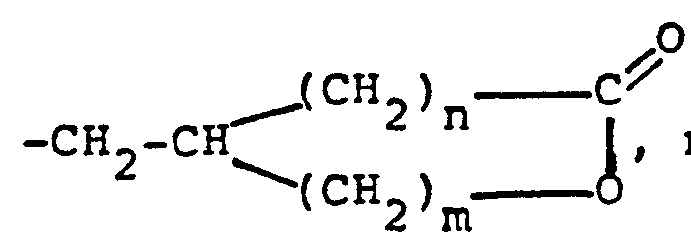
R1 and R2, which can be the same or different, are hydrogen; (C1-C10)-alkyl; phenyl; (C1-C10)-aralkyl; (C2-C10)-alkyl containing at least one of the following substituents: -O-R.
said (C2-C10)-alkyl chain being optionally interrupted
by one or more oxygen atoms, by one or more groups of formula and optionally containing one or more double or t
riple bonds or hydroxy groups;
Ra is hydrogen; (C1-C10)-alkyl; phenyl; (C7-C10)- aralkyl; (C2-C10)-alkyl substituted with one or more hydroxy groups and/or groups of formula
wherein R
d is (C
1-C
10)-alkyl,
(C6-C10)-aralkyl; phenyl;
Rb and Rc, which are the same or different, are hydrogen; (C1-C10)-alkyl; (C1-C10)-aralkyl; phenyl;
(C2-C10)-alkyl substituted with one or more hydroxy groups; one of Rb and Rc is a
group, R
d being as defined above; or R
b and
Rc , taken together with the nitrogen atom which they are linked to, form an aziridine ring or a 5-6 membered heterocyclic aromatic or non aromatic ring, optionally containing one or more heteroatoms such as nitrogen, oxygen and sulfur;
n and m are independently zero or the integers 1 and 2, with the proviso that m and n cannot be zero at the same time;
in form of free bases or pharmaceutically acceptable salts thereof.
The present invention also relates to the tautomeric forms, the racemic and diastereoisomeric mixtures of the compounds of formula (I) as well as to the sin
gle enantiomers and diastereoisomers thereof.
Examples of pharmaceutically acceptable acids which can salify compounds (I) are inorganic acids, such as hydrochloric, hydrobromic, sulfuric, phosphoric, pyrophosphoric acids or organic acids, such as acetic, propionic, citric, benzoic, lactic, maleic, malic, fumaric, succinic, tartaric, glutamic, aspartic, gluconic, ascorbic acids or other conventionally used acids.
In compounds (I), the words "phenyl" and "5-6 membered heterocyclic ring" mean phenyl rings or heterocyclic rings which can optionally contain substituents such as (C1-C4)-alkyl groups; CF3; halogen atoms; nitro, amino, acetylamino, formylamino, dimethylamino, diethylamino, hydroxy, methoxy and ethoxy groups.
Preferred examples of 5-6 membered aromatic or non aromatic heterocyclic rings containing at least an oxygen or nitrogen atom are, for example, 1-imidazolyl, 1-pyrrolyl, 1-tetrahydropyrrolyl, 1-pyrazolyl, 1-aziridinyl, 4-morpholinyl, 1-piperidinyl, 1-piperazinyl, 1- (4-methyl)piperazinyl, 1-(4-benzyl)piperazinyl, 4-(3-methoxy)morpholinyl, 4-(3-cyano)morpholinyl.
Preferred examples of (C7-C10)-aralkyl groups are benzyl and 4-methoxybenzyl.
When in compounds (I) one of R1 and R2 is a straight or branched (C2-C10)-alkyl group, optionally interrupted by one or more hetero-atoms, at least 2 carbon atoms are preferably present between said hetero-atoms.
Preferred examples of straight or branched (C1-C10)-alkyl groups are methyl, ethyl, n-propyl, secpropyl, n-butyl, sec-butyl, tert-butyl, n-hexyl, n
pentyl.
Particularly preferred are compounds (I) in which R1 is a substituted (C2-C10)-alkyl group, selected from the group consisting of :
- residues of formula -(CH2)p-OH, wherein p is an integer from 2 to 4;
- residues of formula -(CH2)p-NH2 wherein p is as above defined;
- residues of formula -(CH2)p-NH-(CH2-) -OH, wherein p and q are independently an integer from 2 to 4;
- residues of formula - wherein p is
as defined above and Rd is (C1-C6)-alkyl or phenyl;
- residues of formula -(CH
2)
pNR
bR
c, wherein p is as de-fined above and R
b and R
c are (C
1-C
6)-alkyl groups or, taken together with the nitrogen atom, they form an aziridino, pyrrolidino, morpholino, piperazino, N-methylpiperazino, N-benzylpiperazino, piperidino ring; - residues of formula m and n being
preferably 1;
- X is OH or NHR2, wherein R2 has the same meanings as R1, defined above.
Specific examples of preferred compounds of the invention are the following ones:
6,9-bis[N-(2-dimethylaminoethyl)amino]benzo[g]phthalazine-5,10-dione;
6,9-bis[N-(2-aminoethyl)amino]benzo[g]phthalazine-5,10-dione;
6,9-bis[N-(3-aminopropyl)amino]benzo[g]phthalazine- 5,10-dione;
6,9-bis[N-(4-aminobutyl)amino]benzo[g]phthalazine-5,10- dione;
6,9-bis[N-(2-diethylaminoethyl)amino]benzo[g]phthalazi- ne-5,10-dione;
6,9-bis[N-{2-(2-hydroxyethylamino)ethyl)amino]benzo[g]- phthalazine-5 , 10-dione ;
6-[N-(2-(2-hydroxyethylamino)ethyl)amino]-9-[N-(2-dimethylaminoethyl)amino]benzo[g]phthalazine-5,10-dione;
6-[N-(2-(2-hydroxyethylamino)ethyl)amino]-9-[N-(2-aminoethyl)amino]benzo[g]phthalazine-5,10-dione;
6-[N-(1,1-bis(hydroxymethyl)methyl)amino]-9-[N-(2-dimethylaminoethyl)amino]benzo[g]phthalazine-5,10-dione; 6-[N-(2-dimethylaminoethyl)amino]-9-[N-(2-aminoethyl)-amino]benzo[g]phthalazine-5,10-dione;
6,9-bis[N-(2-(4-morpholinyl)ethyl)amino]benzo[g]phthalazine-5,10-dione;
6,9-bis[N-(2-(1-pyrrolidinyl)ethyl)amino]benzotg]phthalazine-5,10-dione;
6,9-bis[N-(2-(1-aziridinyl)ethyl)amino]benzo[g]phthala¬zine-5 , 10-dione ;
6,9-bis[N-(2-hydroxypropyl)amino]benzo[g]phthalazine- 5,10-dione;
6-[N-((2-oxotetrahydropyran-4-yl)methyl)amino]-9-[N-(2-dimethylaminoethyl)amino]benzo[g]phthalazine-5,10-dione;
6,9-bis[N-[2-(methylcarbamoylamino)ethyl]amino]benzo- [g]phthalazine-5,10-dione;
6,9-bis[N-[2-(phenylcarbamoylamino)ethyl]amino]benzo- [g]phthalazine-5,10-dione;
6-[N-(2-dimethylaminoethyl)amino]-9-hydroxybenzo[g]-phthalazine-5,10-dione;
6-[N-(2-(2-hydroxyethylamino)ethyl)amino]-9-hydroxybenzo[g]phthalazine-5,10-dione;
The compounds of the invention wherein X is the -NHR2 group can be prepared by reacting a compound of formula (II)
wherein Rd is as defined above, with a compound of formula (III)
H2N-Rx (III) wherein Rx is indifferently one of R1 and R2, or a group which can be converted into R1 and R2 by removing the amino- or hydroxy-protecting groups which can optionally be present, to give a compound of formula (la)
which can subsequently be subjected to one or more of the following reaction steps:
a) when Rx is different from R1 and R2, Rx is transformed into R1 and R2, to give a compound of formula (I);
b) when Rx is one of the groups defined above for R1 and R2 , Rx can be converted into another R1 and R2
group to give another compound of formula (I);
c) salification and/or solvation of the obtained compound of formula (I) or separation of the isomers thereof.
Alternatively, compounds (I) wherein X= NHR2 with R2 different from R1, can be prepared by reacting a compound of formula (II) with an equivalent of a compound of formula (IV)
H2N-R'1 (IV) wherein R'1 has the same meanings as R1 or it is a group which can be converted into R1 by removing the amino- or hydroxy-protecting groups which are optionally present, to give an intermediate of formula (V)
wherein R'1 and Rd are as above defined, which in its turn can be reacted with a compound of formula (VI)
H2N-R'2 (VI) wherein R'2 has the same meanings as R2 or it is a group which can be converted into R2 by removing the amino- or hydroxy-protecting groups which are optionally present, to give an intermediate of formula (lb)
wherein R'
1 and R'
2 are as above defined, which can be subjected to one or more of the following reaction steps:
a) when either or both of R' and R' is different from R1 and R2, R'1 and R'2 are transformed into R1 and
R2;
b) when R'1 and R'2 are the same as R1 and R2, R'1 and/or R'2 can be converted into another R. and R2 group, to give another compound of formula (I); c) salification and/or solvation of the obtained compound of formula (I) or separation of the isomers thereof.
Alternatively, if desired, compounds (I) wherein X is the -NHR2 group, can be prepared by reacting a leuco compound of formula (VII)
with a compound of formula (III), followed by spontaneous oxidation during the working-up of the reaction mixture, to give a compound of formula (la) which then can be subjected to one or more of the above described steps, to give a compound of formula (I) wherein X is the -NHR2 group.
Compounds (I) wherein X is the -OH group can be prepared by hydrolysis of intermediate (V) with an alkali or alkaline-earth metal hydroxide, carbonate or hydrogen carbonate, to give a compound of formula (Ic)
wherein R'1 is as above defined, which compound can be subjected to one or more of the following reaction steps :
a) when R'1 is different from R1, R'1 is transformed into R1, to give a compound (I) wherein X is -OH; b) when R'1 is the same as R1, R'1 can be converted into another R1 group to give another compound of formula (I) wherein X is -OH;
c) salification and/or solvation of the compound of formula (I) or separation of the isomers thereof.
Compounds of formula (II) can be obtained by the multi-step process shown in scheme I below
The reaction of compounds (II) with amines (III) can be carried out in the presence of a stoichiometric amount or an excess of compounds (III) in the presence of a solvent such as the compound (III) itself, pyridine, picoline, quinoline, N,N,N',N'-tetramethylethylenediamine and the like, chloroform, methylene chloride, 1,1,1-trichloroethane and the like, optionally in the presence of an inorganic base such as an alkali or alkaline-earth carbonate or hydrogen carbonate or an organic base such as a trialkylamine, e.g. triethylamine, at a temperature from 0°C to the reflux temperature of the solvent and for a time ranging from a few hours to some days, depending on the used experimental conditions. Preferably, the reaction is carried out by reacting compounds (II) in the presence of a molar excess of amine (III) in pyridine at room temperature.
If compounds of formula (I) are desired in which X is the -NHR2 group and R1 is different from R2, it is sufficient reacting compounds (II) with at least an equivalent of an amine (IV), to obtain intermediate (V) which can in its turn be reacted with at least one more equivalent of an amine (VI). Also in this case the reaction is generally carried out in pyridine at room temperature.
Reaction of leuco compounds (VII), which can be obtained in situ from compounds (IX) by reduction with a reducing agent such as sodium dithionite in the presence of an inorganic base such as an alkali or alkaline-earth metal hydroxide or carbonate, with amines (III), can be carried out by reacting a stoichiometric amount or an excess of amine (III) in a solvent such as
a C1-C4 alcohol, water or mixtures thereof. The reaction can be performed at a temperature from 0ºC to the reflux temperature of the solvent.
Reaction of intermediate (V) with of an alkali or alkaline-earth metal hydroxide or carbonate, to give a compound of formula (Ic), is generally carried out using a stoichiometric amount or an excess of hydroxide or carbonate, in a solvent such as water, a C1-C4 alcohol or mixtures thereof, at a temperature from 0ºC to the solvent's reflux temperature.
The reaction is preferably performed in ethanol, using sodium hydroxide, at reflux temperature.
The removal of primary- or secondary-amine protecting groups or hydroxy-protecting groups optionally present in compounds of formulae (Ia), (lb) or (Ic) can be carried out according to well-known methods, such as by hydrolysis of the esters and amides of compounds of formulae (la), (lb) or (Ic) with organic or inorganic acids or bases, or by selective cleavage of the protecting groups, using suitable reducing and oxidizing agents; the preferred reagent of course depending on the nature of the protecting group.
The multi-step process by which compounds of formula (II) are prepared includes reacting 5,8-dihydroxynaphtho[2,3-c]furane-4,9-dione (VIII) with 80% hydrazine at room temperature, to give 6,9-dihydroxybenzo[g]phthalazine-5,10-dione (IX), which in its turn is reacted with an alkyl, aralkyl or arylsulfonyl chloride of formula (X), to yield compounds of
formula (II).
Reaction of 6,9-dihydroxybenzo[g]ρhthalazine-5,10-dione (IX) with an alkyl, aralkyl or arylsulfonyl chloride is generally carried out in the presence of a stoichiometric amount or a slight excess of the sulfonyl chloride in a solvent such as chloroform, methylene chloride, 1,1,1-trichloroethane, pyridine, collidine, lutidine and the like, or mixtures thereof, optionally in the presence of an organic or inorganic base, or according to Schotten-Baumann method, at a temperature from room temperature to the reflux temperature of the solvent. The reaction is preferably performed using ptoluenesulfonyl chloride in pyridine at room temperature.
Conpound (VIII) is known and can be prepared as described in J. Chem. Res. (M), (1979), 3510-3518.
Compounds (III) are commercially available or they can be prepared according to known methods. Useful teachings for preparing some compounds of formula (III) can be found in J. Org. Chem. (1959), 24, 818-820; J. Med. Chem. (1980), 33 , 112-117; J. Med. Chem., (1981), 34, 184-189; Synthetic Comm., (1990), 20(16), 2559-2564.
The compounds of the invention, when administered to animals bearing experimental tumors such as P388 murine leukemia, P388/DOXO doxorubicin-resistant P388 murine leukemia, Lewis lung carcinoma, MXl human mammary carcinoma, LOVO human colorectal tumor, LOVO/DOXO doxorubicin-resistant human colorectal tumor, induce a statistically significant regression in the experimental tumors compared to the control animals treated with the only vehicle (water or physiological saline solution)
when the compounds of the invention are administered in the form of pharmaceutically acceptable acid salts, or acid solutions tolerated for the intravenous administration, such as 1% citric acid, 5% lactic acid, when the compounds are used as the free bases). The activity of the induced regression is directly proportional to the used dosage (dose-related pharmacological effect) and to the dosage scheme (e.g. single administration in the day after tumor transplant or repeated administrations at days 3, 5, 9 or 3, 5, 9, 14 after the tumor transplant). The compounds of the invention, when administered at the maximum tolerated doses, induce a higher regression of experimental tumors than that caused by doxorubicin and mitoxantrone, at the maximum tolerated doses, under the same experimental conditions. Particularly, the compounds of the invention are markedly more effective than the control drugs in inhibiting the growth of solid tumors which are doxorubicin- and mitoxantrone-resistant.
Therefore, the available experimental data prove that the compounds of the invention have the following features:
- they have a higher therapeutic index than mitoxantrone, since the range of therapeutically effective tolerated doses in the animal is markedly wider than that of mitoxantrone;
- they are effective in inhibiting growth of hematological and solid experimental tumors, such .as murine leukemias, murine lung solid tumors, human mammary and colon solid tumors;
- they are effective against experimental solid tumors
which are doxorubicin- and mitoxantrone-resistant (multidrug-resistant).
Therefore, due to these characteristics, the compounds of the invention can be used as the active ingredients in therapeutical compositions for the regression and/or the treatment of tumors in mammals, when administered in amounts ranging from 1 mg to about 0.4 g per kg body weight per day. A preferred dosage regimen for optimum results would be from about 1.0 to about 50 mg per kg body weight per day, using unitary dosages so as to administer from about 70 mg to about 3.5 g of active compound to a subject of about 70 kg body weight, in a 24 hour period. This dosage regimen can be adjusted to provide optimum therapeutical response. For example, several divided doses can be administered according to the requirements of the therapeutical situation. A remarkable practical advantage is that the active compound can be administered by the oral, intravenous, intramuscular or subcutaneous routes.
The compositions of the present invention containing compounds of formula (I) can be used for the treatment of blood cancer diseases such as leukemia or other solid and non-solid tumors such as lung carcinoma, colon carcinoma, melanocarcinoma and mammary tumors. As used herein, by regression or treatment is meant arresting or delaying the growth of the tumor. Suitable administration forms for intravenous injection are physiological sterile solutions. For the intramuscular or intraperitoneal administrations, oily or aqueous injectable preparations are also suitable, whe
reas suitable forms for the oral administrations are liquid or solid preparations such as syrups, capsules, tablets, and the like.
The invention is further illustrated by the following examples.
EXAMPLE 1
At 0°C and under magnetic stirring 5,8-dihydroxynaphtho[2,3-c]furane-4,9-dione (2.12 g) is added portionwise during 20 min to 80% hydrazine hydrate (18 ml). The reaction mixture is left under stirring at room temperature for 17 hrs, then it is carefully poured into 60 ml of 6N HCl, while cooling to 0ºC. The obtained precipitate is filtered, washed with water, then it is suspended in 40 ml of 1N NaOH. The mixture is heated to 80ºC for 15 min, cooled to room temperature and left under stirring under a slight air flow for 18 hrs. Upon addition of concentrated HCl (3.1 ml) and dilution with water (15 ml), a red precipitate is obtained which is filtered, washed first with water, then with some methanol, and finally dried to give 1.98 g of 6,9-dihydroxybenzo[g]phthalazine-5,10-dione; m.p. >220ºC, H-NMR (CDCl3) δ: 7,47, s, 2H; 10,07, s, 2H; 12,65, s, 2H, (exchangeable with D2O).
EXAMPLE 2
Under a nitrogen atmosphere, 4-toluenesulfonyl chloride (2.60 g) is added portionwise during 2 min, to a stirred suspension of 6,9-dihydroxybenzo[g]phthalazine-5,10-dione (1.50 g) in anhydrous pyridine (15 ml) and the obtained mixture is left under stirring at room temperature for 23 hrs. Subsequently the solvent is distilled off under reduced pressure and the
obtained residue is purified by column chromatography (SiO2; eluent: dichloromethane/ethyl acetate 20:1) to give yellow-orange crystals of 6,9-bis(4-toluenesulfonyloxy)benzo[g]phthalazine-5,10-dione (1.57 g); m.p. > 230ºC (from CHCl3); 1H-NMR (CDCl3)δ: 2,47, s, 6H; 7,40, d, 4H; 7,65, s, 2H; 7,90, d, 4H; 9,80, s, 2H.
EXAMPLE 3
N,N-dimethylethylenediamine (1.0 ml) is added to a solution of 6,9-bis(4-toluenesulfonyloxy)benzo[g]-phthalazine-5,10-dione (0.16 g) in anhydrous pyridine (10 ml) and the resulting mixture is left under stirring at room temperature under a nitrogen atmosphere for 24 hrs. After distilling off the solvent under reduced pressure, the obtained residue is redissolved in CHCl3 (50 ml) and washed with a 3% NaHCO3 solution (2 × 15 ml). The aqueous phases are discarded. The organic phase is dried over Na2SO4 and, after distilling off the solvent under reduced pressure, the obtained residue is purified by column chromatography (SiO2; eluent: chloroform/methanol/triethylamine 95:4:1) and subsequent recrystallization from dichloromethane/pentane to give blue crystals of 6,9-bis[N-(2-dimethylaminoethyl)amino]benzo[g]phthalazine-5,10-dione, (36 mg); m.p. 188-189°C; 1H-NMR (CDCl3) : 2,35, s, 12H; 2,68,t, 4H; 3,57, q, 4H; 7,35, s, 2H; 9,95, s, 2H; 11,42, br.t., 2H (exchangeable with D2O); UV (HCl 0,1N): λmax(nm), E1%(cm): 245 (475); 279 (337); 351 (106); 684 (337)
H.P.L.C.: Lichrospher 100 RP18 (5 μm); eluent: 10 mM sodium heptanesulfonate + 10 mM KH2PO4 in water/acetonitrile/dioxane (70:20:10), pH 3 (H3PO4); eluent flow
rate: 1 ml/min; retention time: 4.50 min.
EXAMPLE 4
Under a nitrogen atmosphere and with stirring a mixture of 6,9-dihydroxybenzo[g]phthalazine-5,10-dione (63 mg), sodium dithionite (97 mg) and anhydrous sodium hydrogen carbonate (17 mg) in anhydrous degased ethanol (7 ml) is heated to reflux for 1.5 hrs. 1-Amino-3-di- methylaminopropane (0.43 ml) is subsequently added and heating is continued for further 12 hours. After distilling off the solvent under reduced pressure, the obtained residue is taken up into chloroform (15 ml) and left under stirring at room temperature, in an open flask, for 30 min. The solvent is distilled off again under reduced pressure and the residue is purified by column chromatography (SiO2; eluent: chloroform/methanol/triethylamine 95:5:1). Blue crystals of 6,9-bis[N- (3-dimethylaminopropyl)amino]benzo[g]phthalazine-5,10-dione (15 mg) are obtained; 1H-NMR (CDCl3)δ: 2,01, m, 4H; 2,35, s, 12H; 2,55, t, 4H; 3,55, q, 4H; 7,36, s, 2H; 9,96, s, 2H; 11,15, br.t., 2H (exchangeable with D20).
EXAMPLE 5
Under a nitrogen atmosphere N,N-dimethylethylenediamine (0.11 ml) is added to a stirred suspension of 6,9-bis(4-toluenesulfonyloxy)benzo[g]phthalazine-5,10- dione (300 mg) in anhydrous pyridine (5 ml), cooled to 0*C. After 6 hrs at 0ºC, the reaction mixture is allowed to warm to room temperature and after 17 hrs the solvent is distilled off under reduced pressure and the residue is purified by column chromatography (SiO2; eluent: chloroform/methanol 100:5). Purple crystals of
9-[N-(2-dimethylaminoethyl)amino]-6-(4-toluenesulfonyloxy)benzo[g]phthalazine-5,10-dione (118 mg) are obtained; 1Η-NMR (CDCl3)δ: 2,45, 8, 9H; 2,72, t, 2H; 3,47, q, 2H; 7,17, d, 1H; 7,32, d, 2H; 7,48, d, 1H; 7,85, d, 2H; 9,67, s, 1H; 9,95, s, 1H; 10,25, br.t., 1H.
EXAMPLE 6
Following the procedure described in Example 5, the following compounds are prepared:
9- [N-(2-(2-hydroxyethylamino)ethyl)amino]-6-(4-toluenesuIfonyloxy)benzo[g]phthalazine-5,10-dione;
9-[N-(2-tert-butoxycarbonylaminoethyl)amino]-6-(4-to-luenesulfonyloxy)benzo[g]phthalazine-5,10-dione.
EXAMPLE 7
N-(Tert-butoxycarbonyl)ethylenediamine (Synthetic Comm., 20, 2559, (1990)) (340 mg) is added to a suspension of 9-[N-(2-dimethylaminoethyl)amino]-6-(4-toluenesulfonyloxy)benzo[g]phthalazine-5,10-dione (195 mg) in anhydrous pyridine (5 ml) and the resulting mixture is heated to 50°C for 8 hrs, under a nitrogen atmosphere, with stirring. The solvent is distilled off under reduced pressure and the residue is purified by column chromatography (SiO2; eluent: chloroform/methanol/triethylamine 95:4:1), to give blue crystals of 6-[N-(2-tert-butoxycarbonylaminoethyl)amino]-9-[N-(2-dimethyl-aminoethyl)amino]benzo[g]phthalazine-5,10-dione (120 mg); 1H-NMR (CDCl3)δ: 1,53, s, 9H; 2,34, s, 6H; 2,72, t, 2H; 3,51, q, 2H; 3,60÷3,78, m, 4H; 5,60, m, 1H; 7,30, d, 1H; 7,51, d, 1H; 9,85, s, 1H; 9,96, s, 1H; 10,40, br.t., 1H; 10,63, br.t., 1H.
EXAMPLE 8
Following the procedure described in Example 3,
using N-(tert-butoxycarbonyl)ethylenediamine, blue crystals of 6, 9-bis [N-(2-tert-butoxycarbonylaminoethyl)- amino]benzo[g]phthalazine-5,10-dione are obtained, m.p. 209-210ºC; 1H-NMR (CDCl3)δ: 1,55, s, 18H; 3,50, q, 4H; 3,70, q, 4H; 5,50, m, 2H (exchangeable with D2O); 7,49, s, 2H; 9,85, s, 2H; 11,65, m, 2H (exchangeable with D2O).
Gaseous HCl is bubbled through a solution of the above compound (245 mg) in anhydrous chloroform (200 ml) until the end of formation of a precipitate, which is filtered under a nitrogen atmosphere, washed with dichloromethane and dried to give 175 mg of 6,9-bis [N- (2-aminoethyl)amino]benzo[g]phthalazine-5,10-dione trihydrochlorids. m.p. > 225ºC 1H-NMR (D2O) δ: 3,35, t, 4H; 3,35, br.m, 4H; 7,40, br.s, 2H; 9,43, s, 2H.
U.V. (H2O): λmax (nm); E1/0 (cm): 245(457); 279(300); 342(95); 669(334).
H.P.L.C: lichrospher 100 RP 18, eluent: 2 g/l sodium heptanesulfonate in water/acetonitrile/dioxane 75/25/5, pH 3 with K3PO4; eluent flow rate: 1 ml/min.; λ = 230 nm; retention time: 4.13 min.
EXAMPLE 9
A solution of 6.9 N HCl in methanol (0.58 ml) is added to a solution of 6,9-bis[N-(2-dimethylaminoethyl)amino]benzo[g]phthalazine-5,10-dione (0,33 g) in chloroform (30 ml), while cooling with ice-water. After 30 min the mixture is diluted with diethyl ether (30 ml) and the obtained precipitate is filtered and washed with diethyl ether, to give 6,9-bis[N-(2-dimethylaminoethyl)amino]benzo[g]phthalazine-5,10-dione trihydrochloride (0.35 g).
EXAMPLE 10
Following the procedures described in Examples 3,
4, 7 and 8, the following compounds are prepared, which are isolated as the free bases:
6,9-bis[N-(4-aminobutyl)amino]benzo[g]phthalazine-5,10-dione
6,9-bis[N-(2-diethylaminoethyl)amino]benzo[g]phthalazine-5,10-dione
1H-NMR (CDCl3)δ : 1,12, t, 12H; 2,60, q, 8H; 2,74, t, 4H; 3,53, q, 4H; 7,31, s, 2H; 9,55, s, 2H; 11,23, t,
2H;
6,9-bis[N-(2-(2-hydroxyethylamino)ethyl)amino]benzo[g]-phthalazine-5,10-dione
1H-MMR (CDCl3) δ: 2,96, t, 4H; 3,07, t, 4H; 3,52, q, 4H; 3,82, q, 4H; 7,05, s, 2H; 9,53, s, 2H; 11,30, br.t., 2H;
6-[N-(2-(2-hydroxyethylamino)ethyl)amino]-9-[N-(2-aminoethyl)amino]benzo[g]phthalazine-5,10-dione
1H-NMR (CDCl3) δ: 2,97, t, 2H; 3,08, t, 2H; 3,17, t, 2H; 3,55, n, 4H; 3,83, t, 2H; 7,02, d, 1H; 7,25, d, 1H;
9,62, s, 1H; 9,80, s, 1H; 11,21, t. 1H; 11,30, t, 1H;
6-[N-(1,1-bis(hydroxymethyl)methyl)amino]-9-[N-(2-dimethylaminoethyl)amino]benzo[g]phthalazine-5,10-dione
1H-NMR (CDCl3) δ s 2,37, s, 6H; 2,70, t, 2H; 3,57, q, 2H; 3,80÷3,92, m, 5H; 7,20, d, 1H; 7,35, d, 1H; 9,65, s, 1H; 9,88, s, 1H;
6,9-bis[N-(2-(4-morpholiny1)ethyl)amino]benzo[g]phtha¬lazine-5,10-dione
1H-NMR (CDCl3)δ : 2,53, m, 8H; 2,78, t, 4H; 3,58, q, 4H; 3,75, m, 8H; 7,29, s, 2H; 9,58, s, 2H; 11,30, br.t., 2H;
6,9-bis[N-(2-(1-pyrrolidinyl)ethyl)amino]benzo[g]phthalazine-5,10-dione
1H-NMR (CDCl3) δ : 1,85, m, 8H; 2,68, m, 8H; 2,88, t, 4E; 3,63, g, 4H; 7,26, s, 2H; 9,55, s, 2H; 11,25, t, 2H;
6,9-bis[N-(2-(1-aziridinyl)ethyl)amino]benzo[g]phthalazine-5,10-dione
1H-NMR (CDCl3) δ: 1,62, s, 8H; 2,60, t, 4H; 3,69, q, 4H; 7,23, s, 2H; 9,57, s, 2H; 11,31, t, 2H;
6,9-bis[N-(3-hydroxypropyl)amino]benzo[g]phthalazine- 5,10-dione
1H-NMH (CDCl3) δ: 2,06, ra, 4H; 3,58, q, 4H; 3,63, t, 4H; 4,37, br.s., 2H; 7,29, s, 2H; 9,45, s, 2H; 11,60, t, 2H;
6-[N-(2-(2-hydroxyethylamino)ethyl)amino]-9-[N-(2-dimethylaminoethyl)amino]benzo[g]phthalazine-5,10-dione 1H-NMH (CDCl3) B : 2,36, s, 6H; 2,69, t, 2H; 2,99, m, 2H; 3,10, t, 2H; 3,55, m, 411; 3,73, t, 2H; 7,28, d, 1H; 7,51, d, 1H; 9,70, s, 1H; 9,93, s, 1H; 10,25, br.t., 1H; 10,51, br.t., 1H;
6,9-bis[N-[3-(tert-butoxycarbonylamino)propyl]amino]-benzo[g]phthalazine-5,10-dione
6-[N-(2-dimethylaminoethyl)amino]-9-[N-[2-(tert-butoxycarbonylamino)ethyl]amino]benzo[g]phthalazine-5,10-dione
6,9-bis[N-[2-(methylcarbamoylamino)ethyl]amino]benzo-[g]phthalazine-5,10-dione
6,9-bis[N-[2-(phsnylcarbamoylamino)ethyl]amino]benzo-[g]phthalazine-5,10-dione
EXAMPLE 11
Following the procedures described in Examples 8
and 9, using the appropriate free bases as the starting products, the following compounds are prepared:
6,9-bis[N-(3-aminopropyl)amino]benzo[g]phthalazine-5,10-dione trihydrochloride
1H-NMR (D2O) δ: 2,25, m, 4H; 3,25, t, 4H; 3,78, t, 4H; 7,30, s, 2H; 9,57, s, 2H;
6,9-bis[N-(4-aminobutyl)amino]benzo[g]phthalazine-5,10-dione trihydrochloride
1H-NMR (D2O)δ : 2,15, m, 8H; 3,27, t, 4H; 3,76, t, 4H; 7,28, s, 2H; 9,58, s, 2H;
6-[N-(2-dimethylaminoethyl)amino]-9-[N-(2-aminoethyl)-amino]benzo[g]phthalazine-5,10-dione trihydrochloride 1H-NMR (D2O) δ: 2,60, s, 6H; 2,90, t, 2H; 3,31, t, 2H; 3,85, n, 411; 7,32, d, 1H; 7,43, d, 1H; 9,50, s, 1H; 9,71, s, 1H.
EXAMPLE 12
20% NaOH (0.1 ml) is added to a solution of 9-[N-(2-dimethylaminoethyl)amino]-6-(4-toluenesulfonyloxy)-benzo[g]phthalazine-5,10-dione (46 mg) in 95° ethanol (2 ml) and the obtained mixture is heated to 50°C for 4 hrs. After cooling to room temperature, the reaction mixture is concentrated to small volume, neutralized with 1N HCl, saturated with sodium chloride and extracted with chloroform (5 × 4 ml). The combined extracts are dried, the solvent is distilled off under reduced pressure and the obtained residue is purified by column chromatography (silica gel; eluent: chloroform/methanol 95/5) to give 6-[N-(2-dimethylaminoethyl)amino]-9-hy¬droxybenzo[g]phthalazine-5,10-dione.
EXAMPLE 13
Following the procedure described in Example 12,
6-[N-(2-(2-hydroxyethylamino)ethyl)amino]-9-hydroxybenzo[g]phthalazine-5,10-dione is prepared.