WO1992015566A1 - Nitrogen oxides of aza- and diaza-anthracenedione derivatives as antitumor agents - Google Patents
Nitrogen oxides of aza- and diaza-anthracenedione derivatives as antitumor agents Download PDFInfo
- Publication number
- WO1992015566A1 WO1992015566A1 PCT/EP1992/000421 EP9200421W WO9215566A1 WO 1992015566 A1 WO1992015566 A1 WO 1992015566A1 EP 9200421 W EP9200421 W EP 9200421W WO 9215566 A1 WO9215566 A1 WO 9215566A1
- Authority
- WO
- WIPO (PCT)
- Prior art keywords
- formula
- compounds
- alkyl
- compound
- dione
- Prior art date
- Legal status (The legal status is an assumption and is not a legal conclusion. Google has not performed a legal analysis and makes no representation as to the accuracy of the status listed.)
- Ceased
Links
Classifications
-
- C—CHEMISTRY; METALLURGY
- C07—ORGANIC CHEMISTRY
- C07D—HETEROCYCLIC COMPOUNDS
- C07D401/00—Heterocyclic compounds containing two or more hetero rings, having nitrogen atoms as the only ring hetero atoms, at least one ring being a six-membered ring with only one nitrogen atom
- C07D401/02—Heterocyclic compounds containing two or more hetero rings, having nitrogen atoms as the only ring hetero atoms, at least one ring being a six-membered ring with only one nitrogen atom containing two hetero rings
- C07D401/12—Heterocyclic compounds containing two or more hetero rings, having nitrogen atoms as the only ring hetero atoms, at least one ring being a six-membered ring with only one nitrogen atom containing two hetero rings linked by a chain containing hetero atoms as chain links
-
- A—HUMAN NECESSITIES
- A61—MEDICAL OR VETERINARY SCIENCE; HYGIENE
- A61P—SPECIFIC THERAPEUTIC ACTIVITY OF CHEMICAL COMPOUNDS OR MEDICINAL PREPARATIONS
- A61P35/00—Antineoplastic agents
-
- C—CHEMISTRY; METALLURGY
- C07—ORGANIC CHEMISTRY
- C07D—HETEROCYCLIC COMPOUNDS
- C07D221/00—Heterocyclic compounds containing six-membered rings having one nitrogen atom as the only ring hetero atom, not provided for by groups C07D211/00 - C07D219/00
- C07D221/02—Heterocyclic compounds containing six-membered rings having one nitrogen atom as the only ring hetero atom, not provided for by groups C07D211/00 - C07D219/00 condensed with carbocyclic rings or ring systems
- C07D221/04—Ortho- or peri-condensed ring systems
- C07D221/06—Ring systems of three rings
- C07D221/08—Aza-anthracenes
Definitions
- This invention is directed to nitrogen oxides of aza and diaza anthracenediones, and more particularly, to 6,9-substituents which are (aminoalkyl) amino substituents. These compounds have been shown to have antitumor activity in vitro and in vivo.
- Mitoxantrone is a broad spectrum oncolytic agent, whose activity is similar to that of the anthracycline antibiotic doxorubicin. Clinical trials have demonstrated that mitoxantrone has particularly promising activity in the treatment of advanced breast cancer, acute leukemia and lymphoma (Legha, Drugs of Today, (1984), 20, 629).
- both mitoxantrone and ametantrone have a remarkable myelodepressive toxicity and both compounds show cross-resistance to cell hystotypes developing resistance against doxorubicin mediated by overexpression of glycoprotein P.
- Such a resistance which is named multidrug resistance, involves a number of antitumor antibiotics, among which amsacrine and podophyllctoxinic derivatives, and it is one of the main reasons for therapeutical failures in the treatment of solid tumors with said antibiotics.
- search is required for novel anthracenedione antitumor agents-, having a higher therapeutical index than mitoxantrone and being effective both in inhibiting or delaying the growth of those solid tumors which are more refractory to chemotherapeutic treatment (such as lung, breast and colon tumors) and against tumor histotypes developing multidrug resistance.
- chemotherapeutic treatment such as lung, breast and colon tumors
- Aza- and diaza anthracene-9,10-diones such as 6,9- bis(ethoxycarbonylamino)benzo[g]quinoline-5,10-dione (1), 6,9-bis(ethoxycarbonylamino)benzo[g]isoguinoline- 5,10-dione ( 2 ), 6,9-bis(ethoxycarbonylamino)benzo[g]quinazoline-5,10-dione (3), were disclosed by Potts et al. (Synthesis, (1983, 31).
- the compound 5a and 5b are less cytotoxic than the analogues 6a and 6b.
- the compound 5a which is poorly cytotoxic in vitro, is inactive in vivo, and it is both less active and less potent than the carbocyclic analogue 6a.
- mitoxantrone has shown good activity in other significative experimental tumors such as murine Lewis lung carcinoma and MX1 human mammary carcinoma.
- nitrogen oxides of aza and diaza anthracene-9,10-diones are active as antitumor agents: they are highly effective against murine leukemias L1210 and P388 and against Lewis lung carcinoma and MX1 human mammary carcinoma.
- X, Y and Z are CH, N or N ⁇ O thus forming an azine or diazine ring, with the proviso that:
- R is hydrogen; (C 1 -C 10 )-alkyl; phenyl; (C 7 -C 10 )- aralkyl; (C 2 -C 10 )-alkyl having one or two substituents selected from -OR 1 , -NR 2 R 3 ;
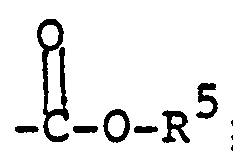
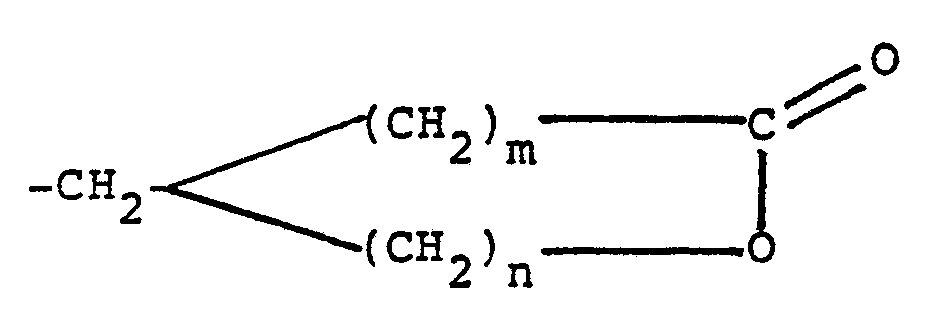
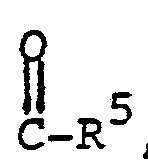
- R is hydrogen; phenyl; (C 7 -C 10 )-aralkyl; (C 1 -C 10 )-alkyl; or a group of formula: ; ; ; C 2 -C 6 alkyl optionally substituted by -N-R 2 R 3 ;
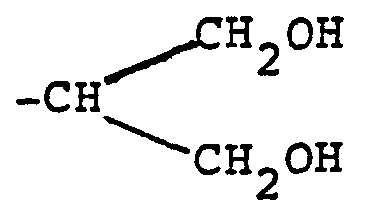
- R 2 and R 3 which can be the same or different, are hydrogen; (C 1 -C 10 -alkyl; (C 2 -C 10 )-alkyl substituted with one or two hydroxy groups; (C 7 -C 10 )-aralkyl; phenyl; or one of R 2 or R 3 is a group of formula , , , or R 2 2 and R 3 ,
- R 4 is hydrogen; (C 1 -C 10 -alkyl; (C 2 -C 10 )-hydroxyalkyl; a C 2 -C 10 alkyl substituted by NR 2 R 3 ; (C 7 -C 10 )-aralkyl; phenyl; , , ; ;
- R 5 is (C 1 -C 10 )-alkyl; (C 7 -C 10 )-aralkyl; phenyl;
- n and n are independently zero or the integers 1 and 2, with the proviso that m and n cannot be zero at the same time; and the pharmaceutically acceptable salts thereof.
- the present invention also relates to the tautomeric forms, the racemic and diastereoisomeric mixtures of the compounds of formula (I) as well as the single enantiomers and diastereoisomers thereof.
- Examples of pharmaceutically acceptable acids which can salify compounds (I) are inorganic acids, such as hydrochloric, hydrobromic, sulfuric, phosphoric, pyrophosphoric acids or organic acids, such as acetic, propionic, citric, benzoic, lactic, maleic, malic, fumaric, succinic, tartaric, glutamic, aspartic, gluconic, ascorbic acids or other conventionally used acids.
- inorganic acids such as hydrochloric, hydrobromic, sulfuric, phosphoric, pyrophosphoric acids or organic acids, such as acetic, propionic, citric, benzoic, lactic, maleic, malic, fumaric, succinic, tartaric, glutamic, aspartic, gluconic, ascorbic acids or other conventionally used acids.
- azine and diazine rings containing at least one nitrogen-oxide function are those represented by the following formulae:
- phenyl and “5-6 membered heterocyclic ring” mean phenyl rings or heterocyclic rings which can optionally contain substituents such as (C 1 -C 4 )-alkyl groups; CF 3 ; halogen atoms; nitro, amino, acetylamino, formylamino, dimethylamino, diethylamino, hydroxy, methoxy and ethoxy groups.
- the NR 2 R 3 substituent is a 5-6 member aromatic or not aromatic heterocyclic ring which might contain another heteroatom such as oxygen, sulfur or nitrogen
- preferred examples of said heterocyclic rings containing at least one oxygen or nitrogen atom are 1- imidazolyl, 1-pyrrolyl, 1-tetrahydropyrrolyl, 1-pyrazolyl, 1-pyrrolydinyl, 4-morpholinyl, 1-piperidinyl, 1- piperazinyl, 1-(4-methyl)piperazinyl, 1-(4-benzyl)piperazinyl, 4-(3-methoxy)morpholinyl, 4-(3-cyano)morpholinyl.
- (C 7 -C 10 )-aralkyl groups are benzyl and 4-methoxybenzyl.
- (C 1 -C 10 )-alkyl groups are methyl, ethyl, n-propyl, sec-propyl, n-butyl, sec-butyl, tert-butyl, n-hexyl and n-pentyl.
- R is a (C 2 -C 10 )-alkyl group, optionally interrupted by one or more hetero-atoms, at least 2 carbon atoms are preferably present between said hetero-atoms.
- R is a substituted (C 2 -C 10 )-alkyl group, selected from the group consisting of :
- R 5 is (C 1 -C 6 ) -alkyl or phenyl ; - residues of formula -(CH 2 ) p -NH-(CH 2 ) q -OH wherein p and q are independently an integer selected from the group of 2,3 or 4;
- the compounds of the invention of formula (I) can be prepared by reacting a compound of formula (II)
- X, Y and Z are as defined above;
- W is a fluorine atom or a group, R 5 being as
- R a when R is one of the groups defined above for R in compounds of formula (I), and in which case the compounds of formula (Ia) are the same as the compounds of formula (I), R a can be optionally converted into another R a group to give another compound of formula
- reaction of compound (II) with a compound of formula (III) is generally carried out in the presence of a stoichiometric amount or a slight molar excess of compound (III) in a solvent such as methylene chloride, chloroform, 1,1,1-trichloroethane, dimethoxyethane, te- trahydrofuran, dimethylformamide, N,N,N',N'-tetramethylethylenediamine, pyridine, picoline, quinoline and mixtures thereof, or, if desired, using compound (III) itself as the solvent, optionally in the presence of an inorganic base such as an alkali or alkaline-earth carbonate or hydrogen carbonate or an organic base such as triethylamine or other tertiary amines, at a temperature from 0oC to the reflux temperature of the solvent.
- a solvent such as methylene chloride, chloroform, 1,1,1-trichloroethane, dimethoxye
- reaction is carried out in pyridine at 50oC, using from 2 to 5 equivalents of compound (III) per equivalent of compound (II).
- the optional removal of primary- or secondaryamine protecting groups or hydroxy-protecting groups optionally present in compounds of formula (la) can be carried out according to well-known methods, such as hydrolysis of the esters and amides of compounds of formula (la) with organic or inorganic acids or bases, or selective cleavage of the protecting groups, using suitable reducing and oxidizing agents, the preferred reagent of course depending on the nature of the protecting group.
- X', Y 1 and Z 1 have the same meanings as X, Y and Z, with the exclusion of N ⁇ O, so as to form an azine or diazine ring;
- oxidizing agents such as peracids, peroxides or salts thereof.
- the oxidation of compounds (IV) to give compounds of formula (II) is generally carried out using a stoichiometric amount or a slight excess of an oxidizing agent, in a solvent such as chloroform, methylene chloride, 1,2-dichloroethane, acetic acid, optionally in the presence or in the absence of an alkali or alkaline-earth metal carbonate or bicarbonate, at a temperature from 0°C to the reflux temperature of the solvent and for a time ranging from a few hours to some days, depending on the experimental conditions.
- a solvent such as chloroform, methylene chloride, 1,2-dichloroethane, acetic acid
- Examples of the oxidizing agents which can effectively be used to oxidize compounds of formula (IV) to compounds of formula (II) include hydrogen peroxide; peracetic, trifluoroperacetic, perbenzoic and m-chloroperbenzoic acids; monoperoxyphthalic acid or the magnesium salt thereof; persuccinic acid.
- the reaction is preferably effected using at least 1,2 equivalents of an organic peracid, such as m-chloroperbenzoic acid, per nitrogen-oxide function which is desired, in a solvent such as methylene chloride.
- Compounds (IV) can be prepared by means of a multi-step process, including a Friedel-Crafts condensation between a compound of formula (V)
- the reaction of a compound of formula (V) with para-difluorobenzene, to give the compounds of formula (VI) and (VIa), is generally carried out in the presence of at least two equivalents of a Lewis acid, such as AlCl 3 , AlBr 3 , ZnCl 2 and the like.
- a Lewis acid such as AlCl 3 , AlBr 3 , ZnCl 2 and the like.
- the reaction is performed preferably using para-difluorobenzene as the solvent, in the presence of an amount of aluminium trichloride which can range from 2.5 to 4.0 moles per mole of compound (V) at 90°C for some hours.
- Cyclization of the compounds of formulae (VI) and (VIa) to give a compound of formula (IV) in which W is fluorine can be carried out using condensing agents such as polyphosphoric acid, PPE, sulfuric acid, oleum and the like, at temperature from room temperature to 180°C.
- condensing agents such as polyphosphoric acid, PPE, sulfuric acid, oleum and the like, at temperature from room temperature to 180°C.
- cyclization is effected using 20% SO 3 oleum at 140°C for about 10 hours.
- Bis-acylation of a 1,4-dialkoxybenzene with a compound of formula (V) is preferably carried out using 1,4-dimethoxybenzene, in an eutectic mixture of aluminium chloride and sodium chloride at 180oC, and it generally is completed in a few minutes.
- reaction is carried out in the presence of a stoichiometric amount or a slight excess of a compound of formula (VIII) in a solvent, such as methylene chloride, chloroform, dimethoxyethane, tetrahydrofuran, dimethylformamide, pyridine or mixtures thereof, in the optional presence of an organic or inorganic base, or according to Schotten-Baumann method, at a temperature from 0oC to the reflux temperature of the solvent.
- a solvent such as methylene chloride, chloroform, dimethoxyethane, tetrahydrofuran, dimethylformamide, pyridine or mixtures thereof
- reaction is carried out in pyridine at room temperature and it is complete after 48 hours.
- X', Y' and Z' are as defined above, by reaction with an appropriate dehydrating agent, such as carboxylic acid anhydrides (e.g. acetic or trifluoroacetic anhydrides), carbodiimides, such as N,N'-dicyclohexylcarbodiimide, methoxyacetylene, phosphoric anhydride and the like.
- an appropriate dehydrating agent such as carboxylic acid anhydrides (e.g. acetic or trifluoroacetic anhydrides), carbodiimides, such as N,N'-dicyclohexylcarbodiimide, methoxyacetylene, phosphoric anhydride and the like.
- Acetic anhydride at a temperature from 80°C to the solvent's reflux temperature, or N,N'-dicyclohexylcarbodiimide in an aprotic solvent at a temperature from 20°C to the solvent's reflux temperature, are preferred reaction conditions.
- the evaluation of the "in vitro" cytotoxic activity of the compounds of the invention was performed using a human colon adenocarcinoma cell line (Lovo) isolated from a metastatic nodule and a subline with aquired resistance to a number of antitumor agents, among which doxorubicin, VP-16 and vincristine.
- This subline (named Lovo/DX) shows reduced accumulation of doxorubicin and overexpression of a protein (Grandi, M., Geroni, C., Giuliani, F.C., British J. Cancer, (1986), 54, 515).
- the compounds were tested according to the MTT assay (Mosman, T.
- representative compounds of this invention were equally cytotoxic as ametantrone in the Lovo cell line.
- a representative compound of the invention such as 6, 9-bis [N-(2-dimethylaminoethyl)amino]benzo[g]isoquinoline-5,10-dione-2-oxide, described in example 12 of the experimental section, showed an IC 50 of 0.44 ⁇ g/ml (144 hours drug-exposure) while ametantrone in the same experimental conditions showed an IC 50 of 0.33 ⁇ 0.1 ⁇ g/ml.
- a resistance index RI (defined as the ratio of the IC 50 for the resistant cell line to the IC 50 for the sensitive cell line) as high as 101.2 was found, showing that this subline did have an acquired resistance to ametantrone.
- P 388 Murine leukemia cells were intravenously (iv) injected in CD2Fl mice. Treatment was initiated approximately 24 hours after tumor transplantation and dosages of the drug were administered iv according to preestablished protocols, usually at 3-day intervals. The studies were done over a 60 day period and the date of death for each animal was recorded. The % T/C was determined using the median survival time (MST) for each group according to the formula
- a representative compound of this invention namely 6,9-bis ⁇ [2-(amino)ethyl]amino ⁇ benzo[g]isoquinoline-5,10-dione-2-oxide as the dimaleate salt described in example 13 showed an activity superior to that of mitoxantrone.
- this representative compound of the invention showed antileukemic activity over a wide range of well tolerated dosages and in particular it was active at dosages which were lower than the maximum tolerated dose, providing indication for a more favourable therapeutic index in comparison to mitoxantrone; The results are shown in table (IV)
- R CH 2 CH 2 N(CH 3 ) 2
- CD2F1 mice were transplanted iv with 10 cells/mouse. Treatment was given iv on days 1,4,7 after tumor transplantation (day 0).
- the antitumor activity of representative compounds of this invention was evaluated also in the L 1210 murine leukemia model.
- L 1210 leukemia cells were intravenously (iv) injected in CD2Fl mice and treatment was initiated approximately 24 hours after tumor transplantation. Dosages of the drugs were administered iv according to preestablished protocols, usually at 3-day intervals. The studies were done over a 60-day period and the date of death for each animal was recorded. The % T/C was determined using the median survival time (MST) for each group according to the formula
- % T/C [(MST treated) /(MST control)] ⁇ 100.
- CD2F1 mice were transplanted iv with 10 cells/mou se. Treatment was given iv on days 1,4,7 after tumor transplantation (day 0).
- Representative compounds of the invention when administered to test animals bearing experimental tumors such as P388/DOXO doxorubicin-resistant murine leukemia P388, Lewis lung carcinoma, human mammary carcinoma MXl, LOVO human colorectal tumor, LOVO/DOXO doxorubicin-resistant human colorectal tumor, induce a statistically significant regression in the experimental tumors compared to the control animals treated with the only vehicle.
- the activity of the induced regression is directly proportional to the used dosage (pharmacological dose-related effect) and to the dosage scheme (e.g. single administration in the day after tumor transplantation or repeated administrations at days 3, 5, 9 or 3, 5, 9, 14 after the tumor implantation).
- the compounds of the invention when administered at their maximum tolerated doses, induce a higher regression of these experimental tumors than that caused by doxorubicin and mitoxantrone, at their maximum tolerated doses, under the same experimental conditions.
- the compounds of the invention are markedly more effective than the control drugs in inhibiting the growth of solid tumors which are doxorubicin- and mitoxantrone-resistant.
- liquid and solid experimental tumors such as murine leukemias, murine lung solid tumors, human mammary and colon solid tumors which are predictive of good results in human;
- the compounds of the invention are expected to be operative against human leukemias and solid tumors and they can be used as the active ingredients in therapeutical compositions for the regression and/or the treatment of tumors in mammals, when administered in amounts ranging from 0.001 g to about 0.4 g per kg body weight per day.
- a preferred dosage regimen for optimum results would be from about 0.001 g to about 0.05 g per kg body weight per day, using unitary dosages so as to administer from about 0.07 g to about 3.5 g of active compound to a subject of about 70 kg body weight, in a 24 hour period.
- This dosage regimen can be adjusted to provide optimum therapeutical response. For example, several divided doses can be administered according to the requirements of the therapeutical situation.
- a remarkable practical advantage is that the active compound can be administered by the oral, intravenous, intramuscular or subcutaneous routes.
- compositions of the present invention containing compounds of formula (I) can be used for the treatment of blood cancer diseases such as leukemia or other solid and non-solid tumors such as lung carcinoma, colon carcinoma, melanocarcinoma and mammary tumors.
- blood cancer diseases such as leukemia or other solid and non-solid tumors such as lung carcinoma, colon carcinoma, melanocarcinoma and mammary tumors.
- by regression or treatment is meant arresting or delaying the growth of the tumor.
- Suitable administration forms for intravenous injection are physiological sterile solutions.
- oily or aqueous injectable preparations are also suitable
- suitable forms for the oral administrations are liquid or solid preparations such as syrups, capsules, tablets and the like.
- Example 1 pyridine-2,3-dicarboxylic acid anhydride, m.p. 134-136°C, and pyrazine-2,3-dicarboxylic acid anhydride, m.p. 190°C (dec.) are prepared.
- the obtained precipitate is separated by filtration and washed with water to give a mixture of 4-(2',5'-difluorobenzoyl)piridine- 3-carboxylic acid and 3- (2',5'-difluorobenzoyl)piridine-4-carboxylic acid (3.02 g, m.p. 217.5-222°C).
- Said acid mixture (3.0 g), without any further purifications, is added to 20% SO 3 oleum (7.5 ml) and the obtained mixture is heated for 2 hrs in oil-bath, kept at 135-140°C.
- said acid mixture (0.40 g) in 30% SO 3 oleum (1.0 ml) is heated for 6 hrs in oil-bath at 155-165oC.
- the obtained mixture is subsequently treated as described in Example 3, to give 6,9-difluorobenzo[g]quinoline-5,10-dione in form of a yellow solid, m.p. 251-252oC (0.102 g).
- a mixture of pyrazine-2,3-dicarboxylic acid anhydride (1.0 g), aluminium chloride (2.3 g) and 1,4-difluorobenzene (22 ml) is reacted according to the procedure described in Example 3, to give crude 3-(2',5'-difluorobenzoyl)-2-pyrazinecarboxylic acid, which is purified by dissolution in chloroform (85 ml), filtration of the insoluble material and extraction of the chloroform solution with a sodium bicarbonate saturated solution.
- the combined extracts are acidified with 10% sulfuric acid and extracted with chloroform, to give, after distillation of the solvent, said acid (1.24 g), m.p. 149-150oC.
- This compound is then treated (0.28 g) with 30% SO 3 oleum (1.5 ml) at 140oC for 6 hrs, as described in Example 3, to give 6,9-difluorobenzo[g]quinoxaline-5,10-dione in form of a yellow solid, m.p. 230°C (dec.) (0.19 g).
- a finely ground mixture of pyridine-3,4-dicarboxy lie acid anhydride (4.81 g) and 1,4-dimethoxybenzene (3.08 g) is added in portions in about 3 min to a melted mixture of aluminium chloride (60 g) and sodium chloride (12 g) at 180°C. At the end of the addition the mixture is kept at this temperature for 5 more min, then, while it is still hot and fluid, it is carefully poured into a 0.7N sulfuric acid solution, cooling with an ice-bath.
- N,N-Dimethylethylenediamine (0.33 ml) is added to a suspension of 6,9-difluorobenzo[g]isoquinoline-5,10- dione-2-oxide (0.20 g) in anhydrous pyridine (5 ml) kept under stirring at 67oC.
- the reaction mixture is kept at this temperature for 5 hrs, then it is left at room temperature overnight.
- the obtained solution is applied on a silica gel chromatography column, which is eluted first with ethyl acetate, then with 4/1 v/v ethyl acetate/methanol, finally with 16/4/0.2 v/v/v chloroform/ methanol/conc. ammonia.
- reaction mixture is kept at this temperature for 5 min, then it is allowed to cool to room temperature. After two hrs, the separated solid is filtered, washed with methanol (0.5 ml) and ethyl ether and subsequently recrystallized at 70-80°C by dissolution in water (4 ml) and reprecipitation with absolute ethanol (20 ml) to give 6,9-bis[N-(2- aminoethyl)amino]benzo[g]isoquinoline-5,10-dione-2- oxide dimaleate 1.5 H-,0, m.p. 183.5oC (dec.) (0.36 g).
Landscapes
- Organic Chemistry (AREA)
- Chemical & Material Sciences (AREA)
- Health & Medical Sciences (AREA)
- Life Sciences & Earth Sciences (AREA)
- General Health & Medical Sciences (AREA)
- Nuclear Medicine, Radiotherapy & Molecular Imaging (AREA)
- General Chemical & Material Sciences (AREA)
- Pharmacology & Pharmacy (AREA)
- Chemical Kinetics & Catalysis (AREA)
- Animal Behavior & Ethology (AREA)
- Medicinal Chemistry (AREA)
- Public Health (AREA)
- Veterinary Medicine (AREA)
- Pharmaceuticals Containing Other Organic And Inorganic Compounds (AREA)
- Nitrogen Condensed Heterocyclic Rings (AREA)
- Medicines Containing Material From Animals Or Micro-Organisms (AREA)
- Plural Heterocyclic Compounds (AREA)
Abstract
Description




Claims







Priority Applications (3)
| Application Number | Priority Date | Filing Date | Title |
|---|---|---|---|
| JP4504948A JPH06505244A (en) | 1991-03-08 | 1992-02-27 | Nitric oxides of aza- and diaza-anthracenedione derivatives as antitumor agents |
| EP92905365A EP0639183B1 (en) | 1991-03-08 | 1992-02-27 | Nitrogen oxides of aza- and diaza-anthracenedione derivatives, their preparation and their use as antitumor agents |
| DE69226091T DE69226091D1 (en) | 1991-03-08 | 1992-02-27 | NITROGEN OXIDES OF AZA AND DIAZAANTHRACENDION DERIVATIVES, THEIR PRODUCTION AND THEIR USE AS ANTITUARY AGENTS |
Applications Claiming Priority (2)
| Application Number | Priority Date | Filing Date | Title |
|---|---|---|---|
| ITMI910618A IT1244755B (en) | 1991-03-08 | 1991-03-08 | NITROGEN OXIDES OF AZA- AND DIAZA-ANTHROCENEDIONIC DERIVATIVES AS ANTI-CANCER DRUGS |
| ITMI91A000618 | 1991-03-08 |
Publications (1)
| Publication Number | Publication Date |
|---|---|
| WO1992015566A1 true WO1992015566A1 (en) | 1992-09-17 |
Family
ID=11358951
Family Applications (1)
| Application Number | Title | Priority Date | Filing Date |
|---|---|---|---|
| PCT/EP1992/000421 Ceased WO1992015566A1 (en) | 1991-03-08 | 1992-02-27 | Nitrogen oxides of aza- and diaza-anthracenedione derivatives as antitumor agents |
Country Status (13)
| Country | Link |
|---|---|
| EP (1) | EP0639183B1 (en) |
| JP (1) | JPH06505244A (en) |
| AT (2) | ATE167856T1 (en) |
| AU (1) | AU1276892A (en) |
| DE (1) | DE69226091D1 (en) |
| IE (1) | IE920704A1 (en) |
| IL (1) | IL101157A (en) |
| IT (1) | IT1244755B (en) |
| MX (1) | MX9200919A (en) |
| NZ (1) | NZ241856A (en) |
| TW (1) | TW197426B (en) |
| WO (1) | WO1992015566A1 (en) |
| ZA (1) | ZA921648B (en) |
Cited By (3)
| Publication number | Priority date | Publication date | Assignee | Title |
|---|---|---|---|---|
| CN103787970A (en) * | 2014-01-14 | 2014-05-14 | 北京万全德众医药生物技术有限公司 | Technology for preparing 6,9-difluoro benzisothiazol-5,10-diketone employing one-pot method |
| CN104557704A (en) * | 2013-10-28 | 2015-04-29 | 北京凯莱天成医药科技有限公司 | Preparation method of pixantrone maleate |
| CN106366036A (en) * | 2016-08-18 | 2017-02-01 | 湖北丽益医药科技有限公司 | 6, 9-bis[(2-aminoethyl)amino]benzo[g]isoquinoline-5, 10-dione dimaleate and synthesis technology thereof |
-
1991
- 1991-03-08 IT ITMI910618A patent/IT1244755B/en active IP Right Grant
-
1992
- 1992-02-27 AU AU12768/92A patent/AU1276892A/en not_active Abandoned
- 1992-02-27 EP EP92905365A patent/EP0639183B1/en not_active Expired - Lifetime
- 1992-02-27 JP JP4504948A patent/JPH06505244A/en active Pending
- 1992-02-27 WO PCT/EP1992/000421 patent/WO1992015566A1/en not_active Ceased
- 1992-02-27 AT AT92905365T patent/ATE167856T1/en not_active IP Right Cessation
- 1992-02-27 DE DE69226091T patent/DE69226091D1/en not_active Expired - Lifetime
- 1992-03-02 AT AT92905252T patent/ATE123220T1/en not_active IP Right Cessation
- 1992-03-03 MX MX9200919A patent/MX9200919A/en unknown
- 1992-03-05 IL IL10115792A patent/IL101157A/en not_active IP Right Cessation
- 1992-03-05 NZ NZ241856A patent/NZ241856A/en unknown
- 1992-03-05 TW TW081101691A patent/TW197426B/zh active
- 1992-03-05 IE IE070492A patent/IE920704A1/en unknown
- 1992-03-05 ZA ZA921648A patent/ZA921648B/en unknown
Non-Patent Citations (1)
| Title |
|---|
| JOURNAL OF MEDICINAL CHEMISTRY. vol. 28, no. 8, 1985, WASHINGTON US pages 1124 - 1126; A.P. KRAPCHO: 'Synthesis and antineoplastic evaluations of 5,8-bis[(aminoalkyl)amino]-1-azaa nthracene-9,10-diones' cited in the application * |
Cited By (5)
| Publication number | Priority date | Publication date | Assignee | Title |
|---|---|---|---|---|
| CN104557704A (en) * | 2013-10-28 | 2015-04-29 | 北京凯莱天成医药科技有限公司 | Preparation method of pixantrone maleate |
| CN104557704B (en) * | 2013-10-28 | 2017-05-10 | 北京凯莱天成医药科技有限公司 | Preparation method of pixantrone maleate |
| CN103787970A (en) * | 2014-01-14 | 2014-05-14 | 北京万全德众医药生物技术有限公司 | Technology for preparing 6,9-difluoro benzisothiazol-5,10-diketone employing one-pot method |
| CN106366036A (en) * | 2016-08-18 | 2017-02-01 | 湖北丽益医药科技有限公司 | 6, 9-bis[(2-aminoethyl)amino]benzo[g]isoquinoline-5, 10-dione dimaleate and synthesis technology thereof |
| CN106366036B (en) * | 2016-08-18 | 2019-07-09 | 湖北丽益医药科技有限公司 | Bis- [(2- amino-ethyl) amino] benzo [g] isoquinolin -5,10- diketone 2-maleates of 6,9- and its synthesis technology |
Also Published As
| Publication number | Publication date |
|---|---|
| IL101157A (en) | 1996-07-23 |
| JPH06505244A (en) | 1994-06-16 |
| EP0639183A1 (en) | 1995-02-22 |
| IE920704A1 (en) | 1992-09-09 |
| AU1276892A (en) | 1992-10-06 |
| ATE123220T1 (en) | 1995-06-15 |
| ITMI910618A0 (en) | 1991-03-08 |
| ITMI910618A1 (en) | 1992-09-08 |
| DE69226091D1 (en) | 1998-08-06 |
| TW197426B (en) | 1993-01-01 |
| IT1244755B (en) | 1994-08-08 |
| EP0639183B1 (en) | 1998-07-01 |
| NZ241856A (en) | 1994-12-22 |
| MX9200919A (en) | 1992-09-30 |
| ZA921648B (en) | 1992-11-25 |
| ATE167856T1 (en) | 1998-07-15 |
Similar Documents
| Publication | Publication Date | Title |
|---|---|---|
| KR100191193B1 (en) | Hexacyclic compound | |
| AU608580B2 (en) | 1,4-disubstituted piperazine compounds, their production and use | |
| WO2004101570A1 (en) | Sulfur-containing naphthoylimide derivatives | |
| RU2129546C1 (en) | 6,9-bis-(aminosubstituted)-benzo[g]isoquinoline-5,10-diones, method of their synthesis, pharmaceutical composition on their basis, a method of tumor suppression in mammals | |
| EP0555347A1 (en) | SUBSTITUTED INDOLIZINO 1,2-b]QUINOLINONES | |
| US6815442B2 (en) | Quinoxalinones for enhancing chemotherapy | |
| BG63305B1 (en) | Pharmaceutical piperazine derivatives | |
| EP0639183B1 (en) | Nitrogen oxides of aza- and diaza-anthracenedione derivatives, their preparation and their use as antitumor agents | |
| EP0273401B1 (en) | Isoindolin-1-one derivative and antiarrhythmic agent | |
| Bu et al. | Synthesis and cytotoxic activity of N-[(alkylamino) alkyl] carboxamide derivatives of 7-oxo-7H-benz [de] anthracene, 7-oxo-7H-naphtho [1, 2, 3-de] quinoline, and 7-oxo-7H-benzo [e] perimidine | |
| EP0536208B1 (en) | 1,2-dihydro-3h-dibenzisoquinoline-1,3-dione anticancer agents | |
| EP0662076B1 (en) | 2-aminoalkyl-5-aminoalkylamino substituted isoquinoindazole-6-(2h)-ones with antitumour activity | |
| US3435036A (en) | Di- and triphenylpropyl piperazine pyrimidyl and quinazolinyl compounds | |
| WO1998039300A1 (en) | CYCLOALKA[b]PYRIDINE-3-CARBONYLGUANIDINE DERIVATIVES, PROCESS FOR PRODUCING THE SAME, AND DRUGS CONTAINING THE SAME | |
| JPH09512539A (en) | Dihydrodibenzo (DE, H) isoquinoline derivatives and their use as anticancer agents | |
| US5519029A (en) | 2-aminoalkyl-5-aminoalkylamino substituted-isoquinoindazole-6(2H)-ones | |
| EP0785191B1 (en) | Fused indan derivatives and salts thereof | |
| US5596097A (en) | Hetero-annulated indazoles | |
| EP0574433B1 (en) | 6,9-BIS(AMINO SUBSTITUTED)BENZO g]PHTHALAZINE-5,10-DIONES AS ANTITUMOR AGENTS | |
| US7071203B2 (en) | Pharmaceutically acceptable salts of 20(s)-camptothecins | |
| US5604246A (en) | 2-aminoalkyl-5-aminoalkylamino substituted-isoquinoindazole-6(2H)-ones | |
| US5162320A (en) | 1,4-bis(alkylamino)-2,3-diaza-anthracene-9,10-diones | |
| AU780528B2 (en) | Fused azepinone cyclin dependent kinase inhibitors | |
| US20030212061A1 (en) | Aza-thioxanthenones with antitumor activity | |
| WO1994005641A1 (en) | 4-SUBSTITUTED 6,9,-BIS (SUBSTITUTED-AMINO) BENZO [g] ISOQUINOLINE-5,10,DIONES |
Legal Events
| Date | Code | Title | Description |
|---|---|---|---|
| AK | Designated states |
Kind code of ref document: A1 Designated state(s): AU BB BG BR CA CS FI HU JP KP KR LK MG MN MW NO PL RO RU SD US |
|
| AL | Designated countries for regional patents |
Kind code of ref document: A1 Designated state(s): AT BE BF BJ CF CG CH CI CM DE DK ES FR GA GB GN GR IT LU MC ML MR NL SE SN TD TG |
|
| DFPE | Request for preliminary examination filed prior to expiration of 19th month from priority date (pct application filed before 20040101) | ||
| ENP | Entry into the national phase |
Ref country code: US Ref document number: 1993 108582 Date of ref document: 19930907 Kind code of ref document: A Format of ref document f/p: F |
|
| WWE | Wipo information: entry into national phase |
Ref document number: 1992905365 Country of ref document: EP |
|
| NENP | Non-entry into the national phase |
Ref country code: CA |
|
| WWP | Wipo information: published in national office |
Ref document number: 1992905365 Country of ref document: EP |
|
| WWG | Wipo information: grant in national office |
Ref document number: 1992905365 Country of ref document: EP |